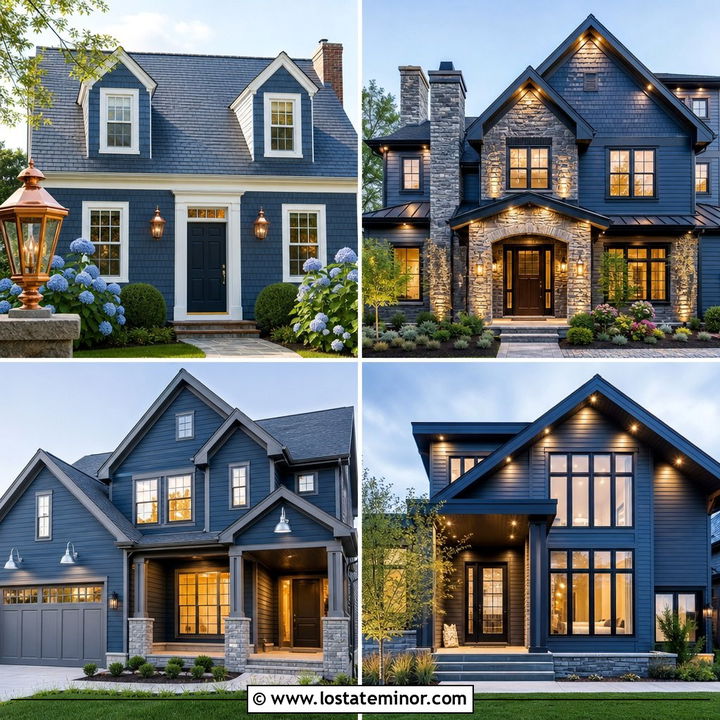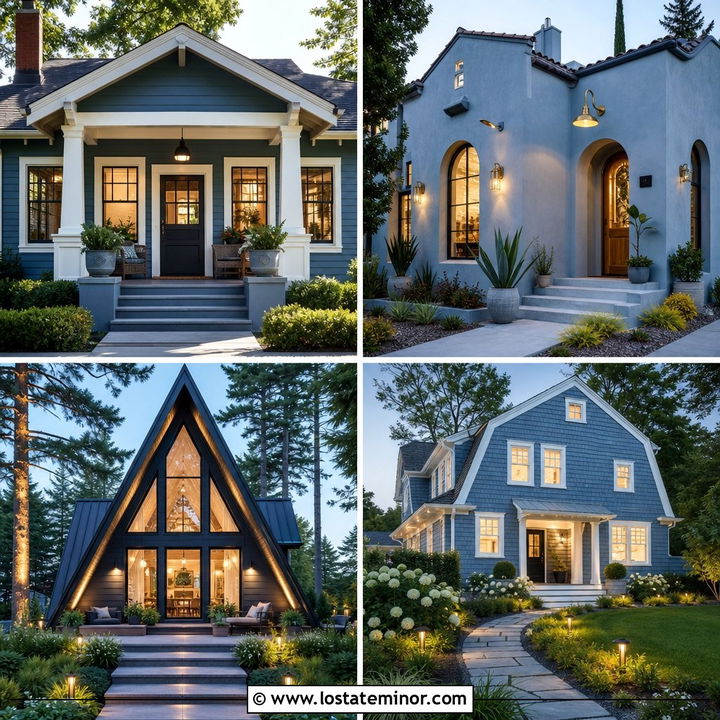
Sage green creates a calm, grounded exterior that works across farmhouse, Craftsman, ranch, Colonial, cottage, and modern architecture. The right lighting makes this versatile color even stronger by defining the entry, emphasizing natural materials, and improving the home’s presence after sunset. Sage also coordinates beautifully with warm brick, cool stone, white trim, black accents, and natural wood. However, exterior samples should always be viewed outdoors because surrounding materials and changing daylight affect how green paint appears. () The complete schemes below combine specific sage paint colors with porch fixtures, garage lights, pathway illumination, landscaping, roofing, and architectural details. Use these 30 Sage Green House Design With Lighting Ideas to build a cohesive exterior rather than choosing fixtures or colors in isolation.
1. Sage Green House With Black Lantern Sconces
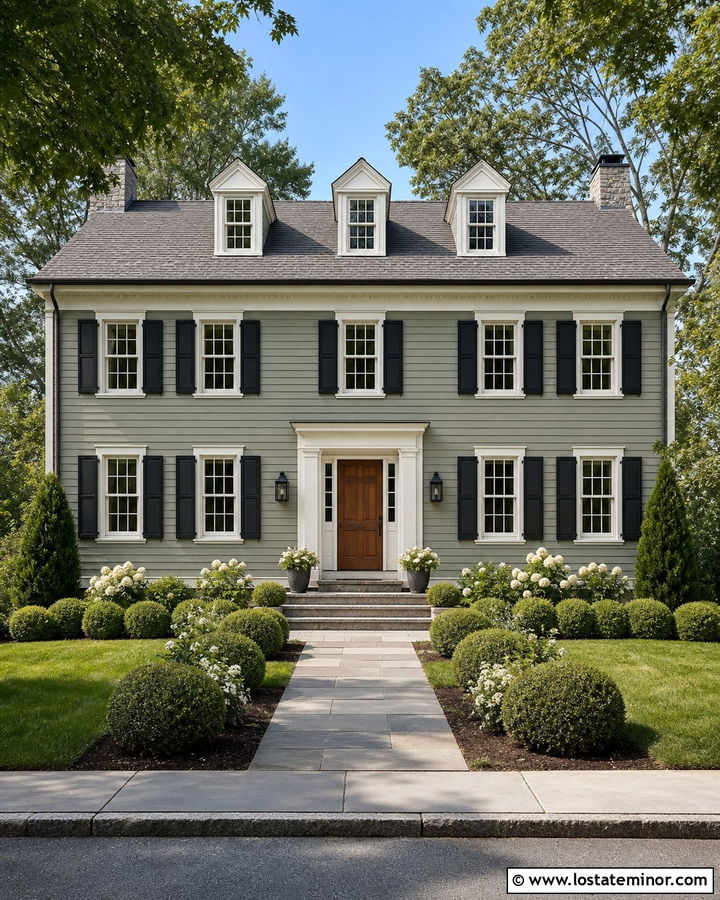
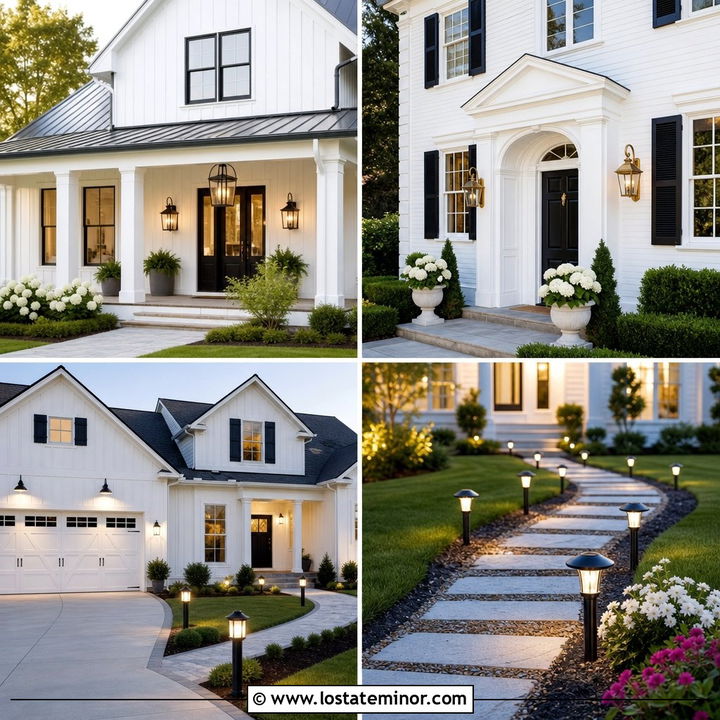
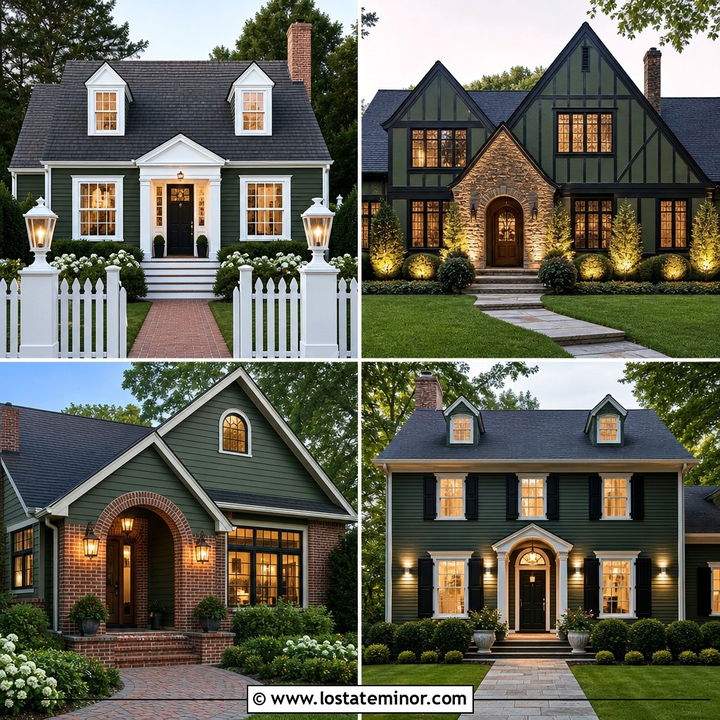
Crisp contrast gives a sage green house a polished, easy-to-recognize facade. Paint traditional lap siding in Benjamin Moore Saybrook Sage, then outline the windows, porch posts, and roof edges with warm white trim. Large black lantern sconces beside the front door connect naturally to black shutters, gutters, and metal furniture. Choose lanterns with simple rectangular frames instead of heavily decorative scrollwork. A medium-stained oak door prevents the scheme from feeling too stark. Charcoal roof shingles and a gray stone walkway ground the softer green siding. This complete look suits a Colonial, Cape Cod, or traditional two-story home. Keep the landscaping structured with boxwoods, white flowers, and low ornamental grasses so the strong black lighting fixtures remain visible without overwhelming the entrance.
2. Sage Green House With Brass Porch Pendant
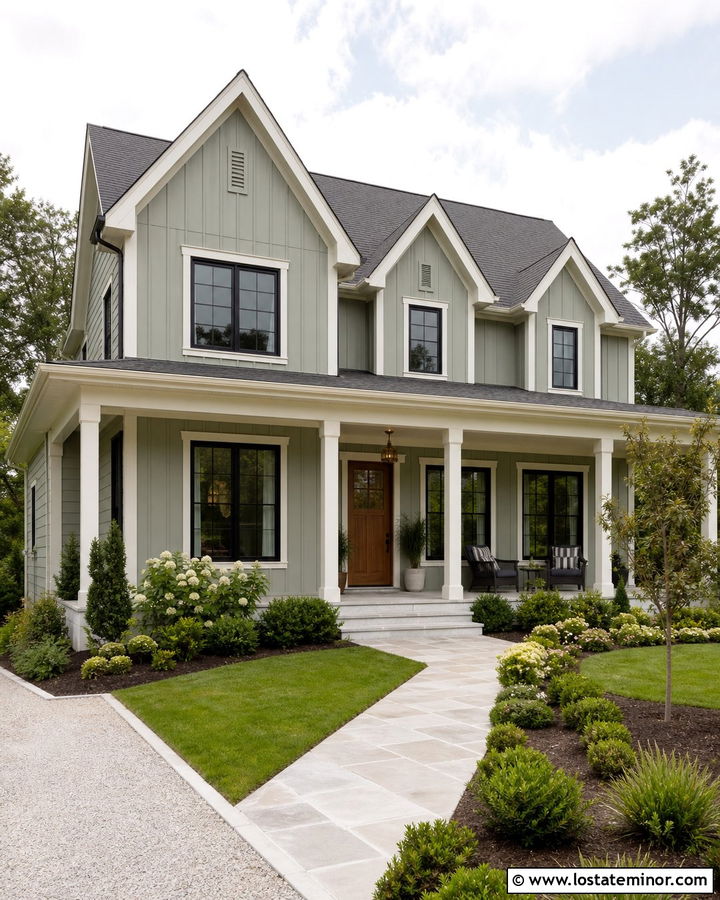
A warm brass pendant can bring softness and character to a sage green exterior. Use Sherwin-Williams Svelte Sage on board-and-batten siding, creamy white around the windows, and natural cedar on the front door. Center an aged brass pendant above the porch seating area where it can visually anchor the entry. Matching brass door hardware adds continuity without making every accent metallic. A medium-gray roof keeps the palette balanced, while limestone porch flooring introduces gentle beige undertones. This combination works especially well on a modern farmhouse with a deep front porch, simple columns, and black-framed windows. Select an outdoor-rated pendant with clear glass and a restrained shape. The brass, cedar, and limestone warm up the cool gray undertones in the sage green body color.
3. Sage Green House With Copper Gooseneck Lights
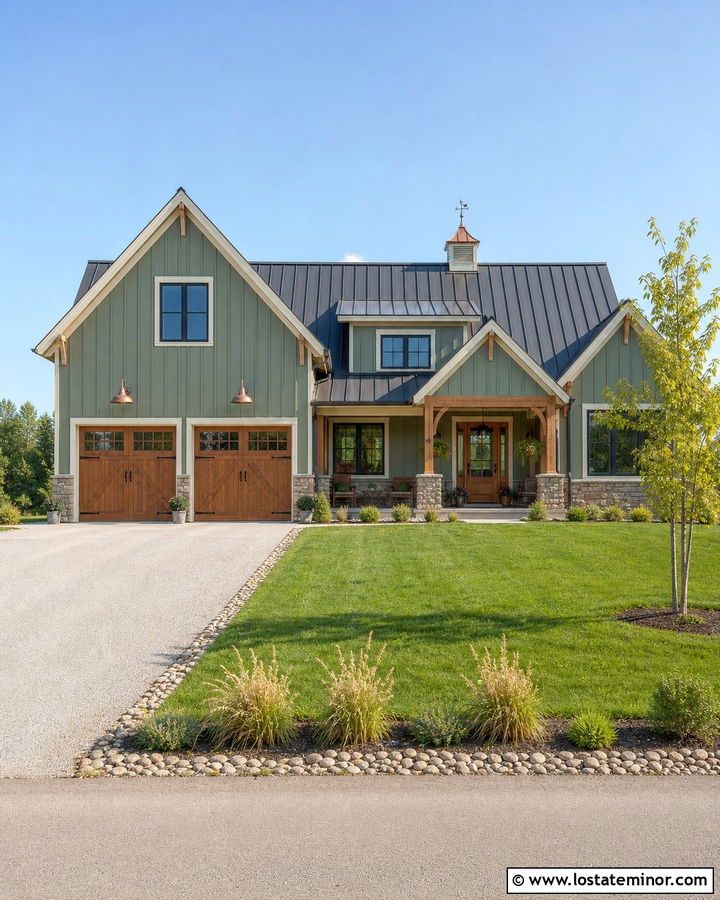
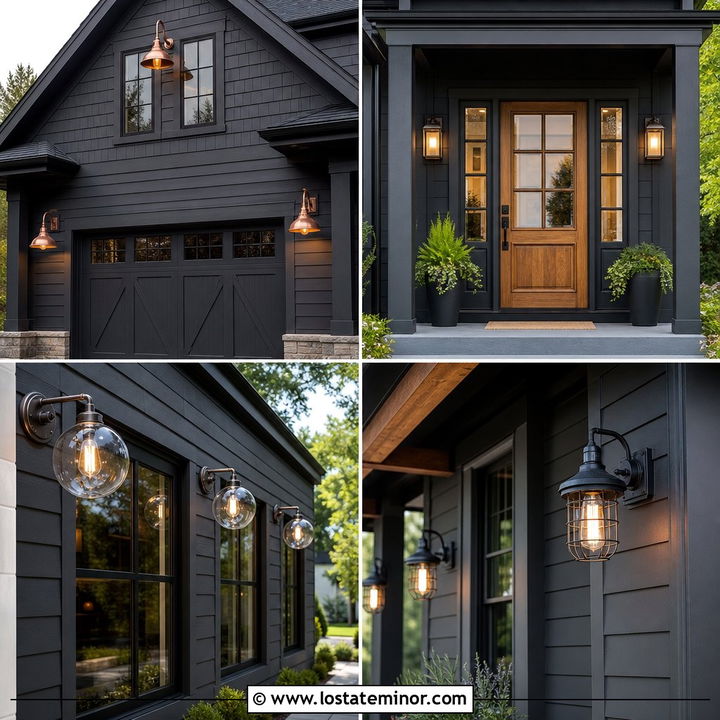
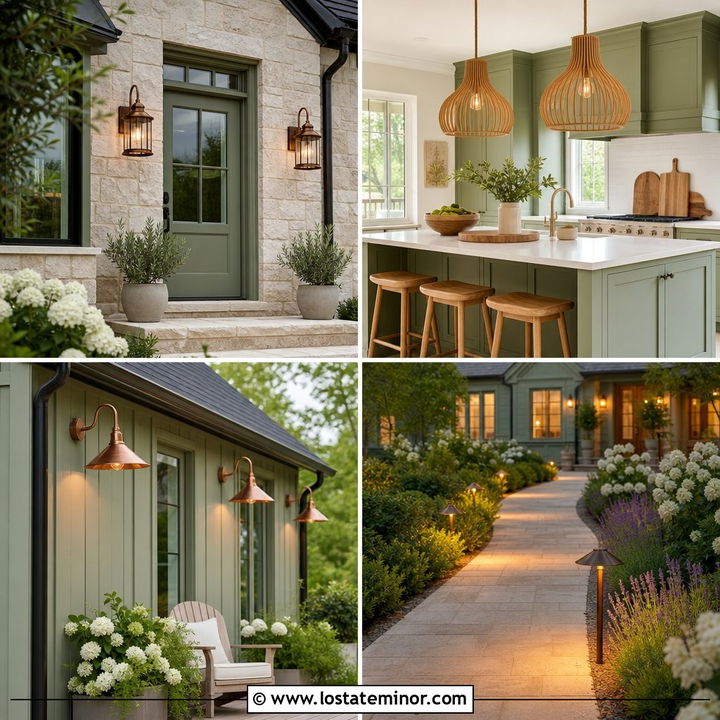
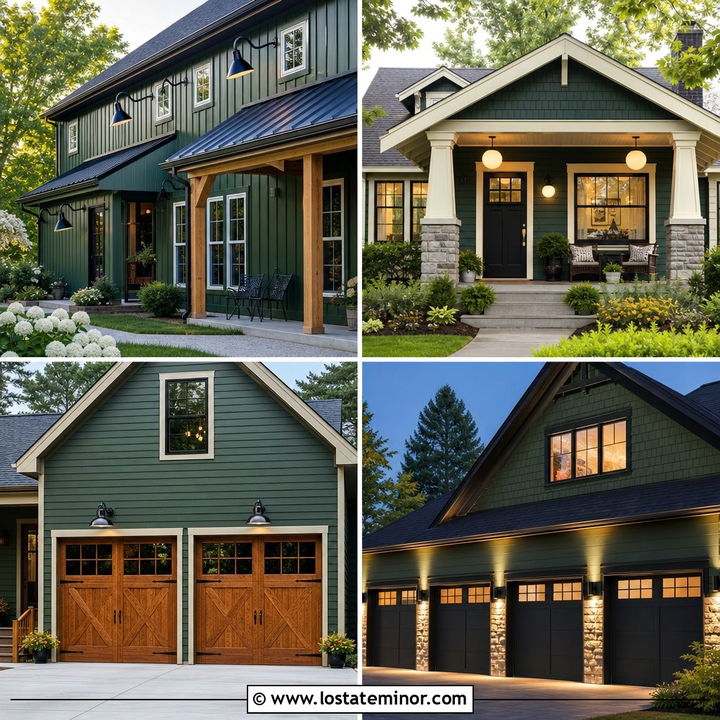
Copper gooseneck lights create a functional focal point above garage doors, side entries, or covered walkways. Paint a barn-inspired farmhouse in Sherwin-Williams Clary Sage and pair it with ivory trim, cedar garage doors, and a charcoal standing-seam roof. Position one downward-facing copper fixture above each garage bay for a balanced arrangement. The copper will begin bright and gradually develop a natural patina that relates beautifully to the muted green siding. Repeat the metal sparingly through gutters or a porch planter. Stone along the foundation adds weight to the broad facade, while a gravel-edged driveway supports the rural character. This lighting scheme looks intentional because every material feels earthy. It is particularly effective on homes with tall gables, simple rooflines, and substantial wooden details.
4. Sage Green House With Bronze Craftsman Lanterns
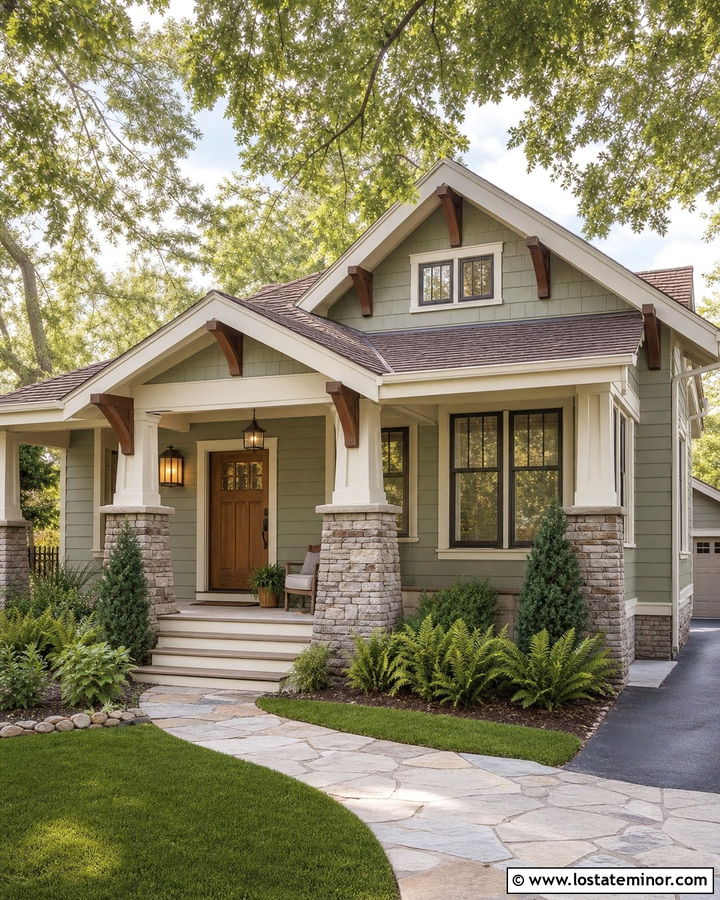
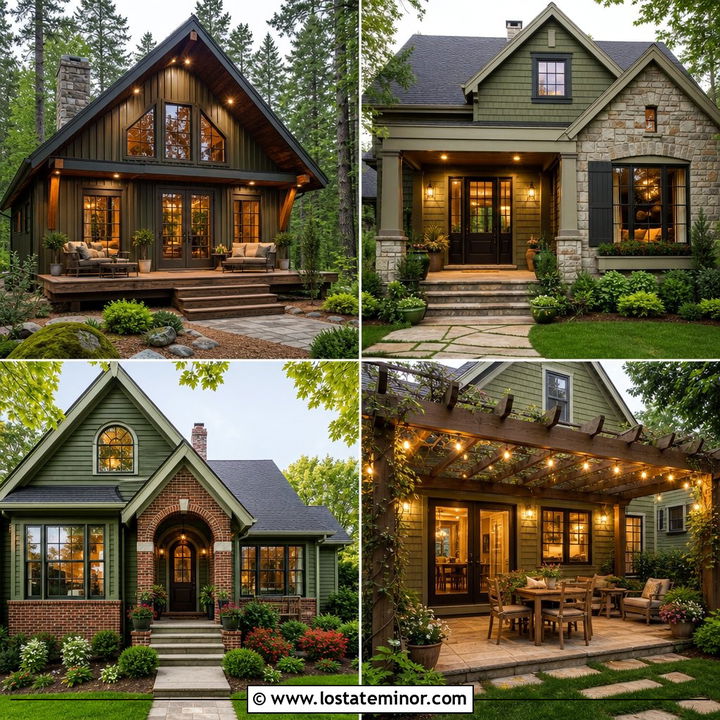
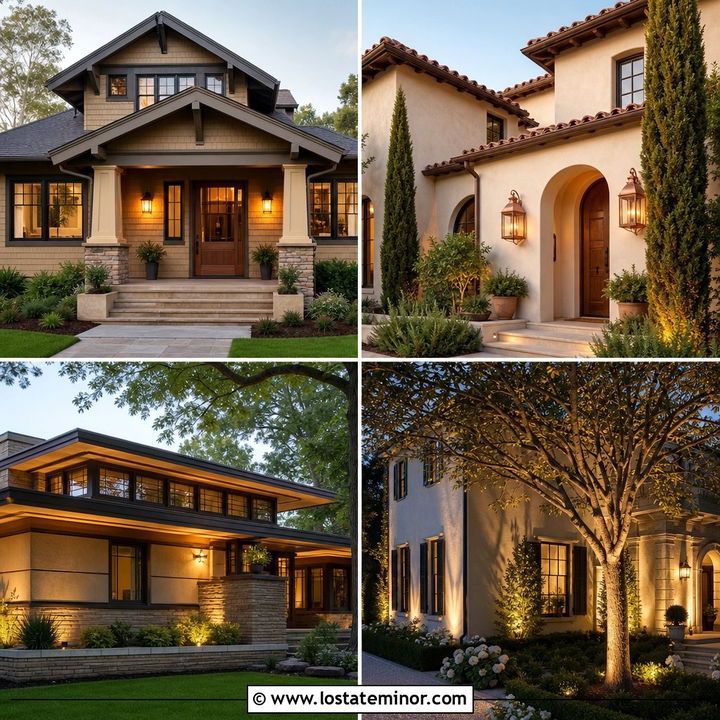
Imagine a low, welcoming porch framed by tapered columns and softly textured stone. Benjamin Moore October Mist gives a Craftsman exterior a subtle sage green body color that complements natural materials without hiding architectural detail. Use dark bronze lanterns with amber-toned or seeded glass beside the front door and on the column bases. Cream trim, stained oak brackets, and mossy gray stone complete the warm palette. Deep brown roof shingles will feel more connected than cool black roofing on this particular scheme. Choose fixtures with square lines and visible metal framing to echo the home’s substantial proportions. Bronze house numbers and door hardware can repeat the finish. Layered shrubs, ferns, and a curved flagstone path make the exterior feel established, comfortable, and carefully composed.
5. Sage Green House With White Coastal Sconces
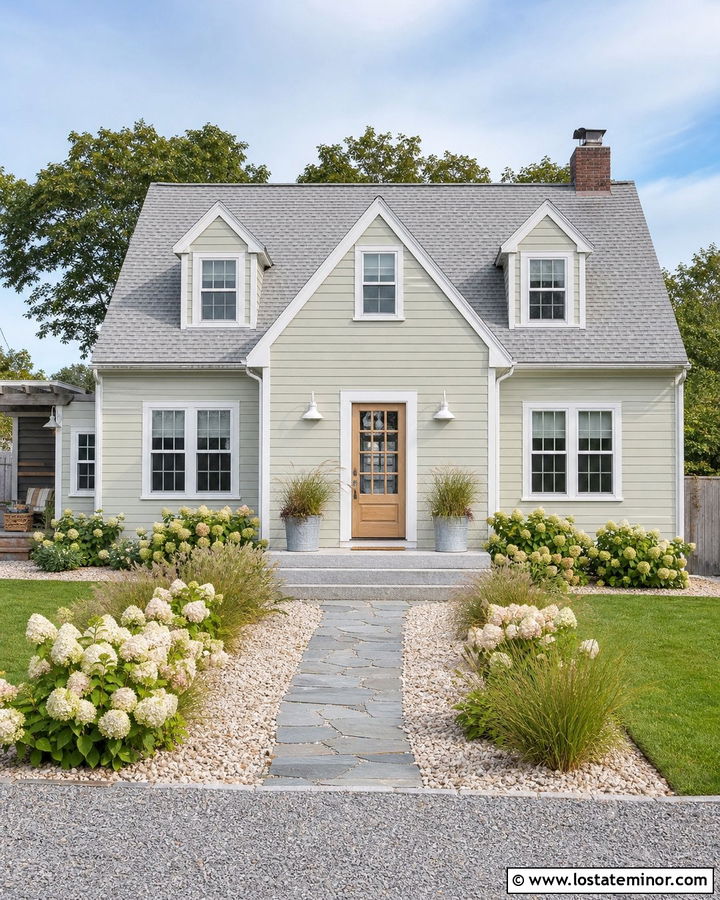
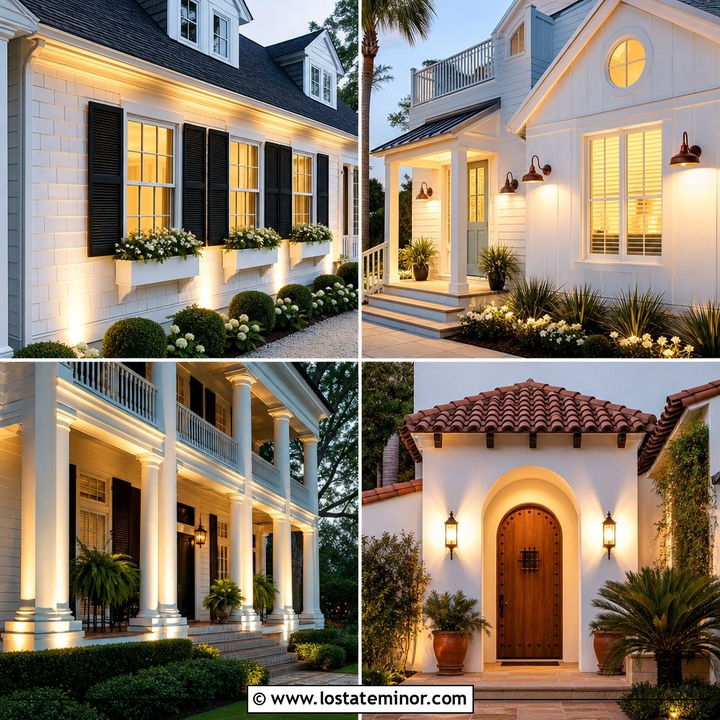
Can sage green work on a bright coastal home? A pale shade such as Benjamin Moore Hollingsworth Green looks fresh beside clean white trim, pale gray roofing, and weathered wood details. Install simple white outdoor sconces near the front entrance and garage so they blend into the trim rather than creating dark contrast. A light oak door, white porch railing, and galvanized metal accents maintain the airy palette. Choose wide fixtures that cast light downward without appearing bulky against narrow siding. This complete combination suits a Cape Cod, coastal cottage, or compact beach bungalow. Add crushed-shell-colored gravel, hydrangeas, ornamental grasses, and a straight stone walkway. The softer lighting finish allows the gentle sage siding to remain the main feature while still giving the facade a finished, coordinated appearance.
6. Sage Green House With Modern Cylinder Lights
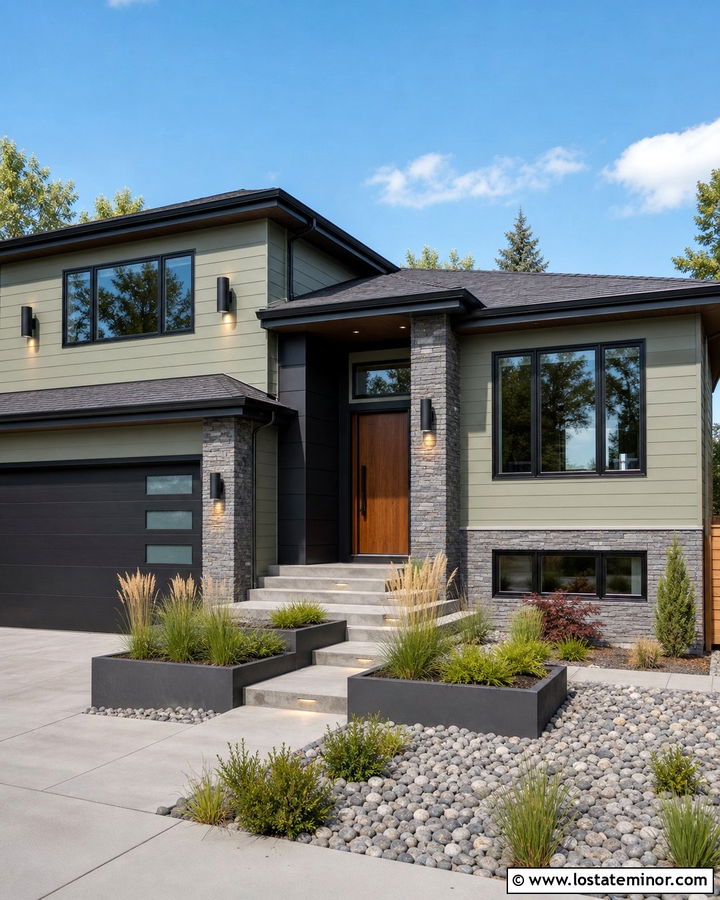
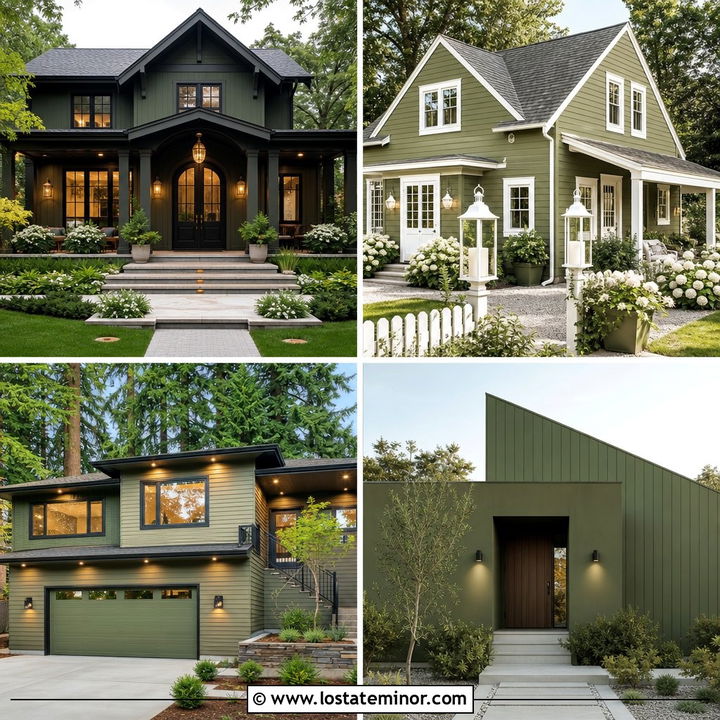
Modern cylinder lights provide clean definition without adding visual clutter. Cover a contemporary split-level home in Sherwin-Williams Evergreen Fog, using smooth horizontal siding on the main level and charcoal panels around the entry. Matte black up-and-down cylinder sconces can frame the front door, illuminate a tall stone section, and repeat beside the garage. Keep the window frames black and select a flat-panel walnut door for warmth. A low-slope charcoal roof and wide concrete steps strengthen the modern geometry. The sage green prevents the darker materials from feeling cold, while the streamlined fixtures support the architecture rather than competing with it. Finish the yard with rectangular planting beds, feather reed grass, river rock, and concrete pavers. This balanced scheme feels contemporary, natural, and welcoming from the street.
7. Sage Green House With Farmhouse Barn Lights
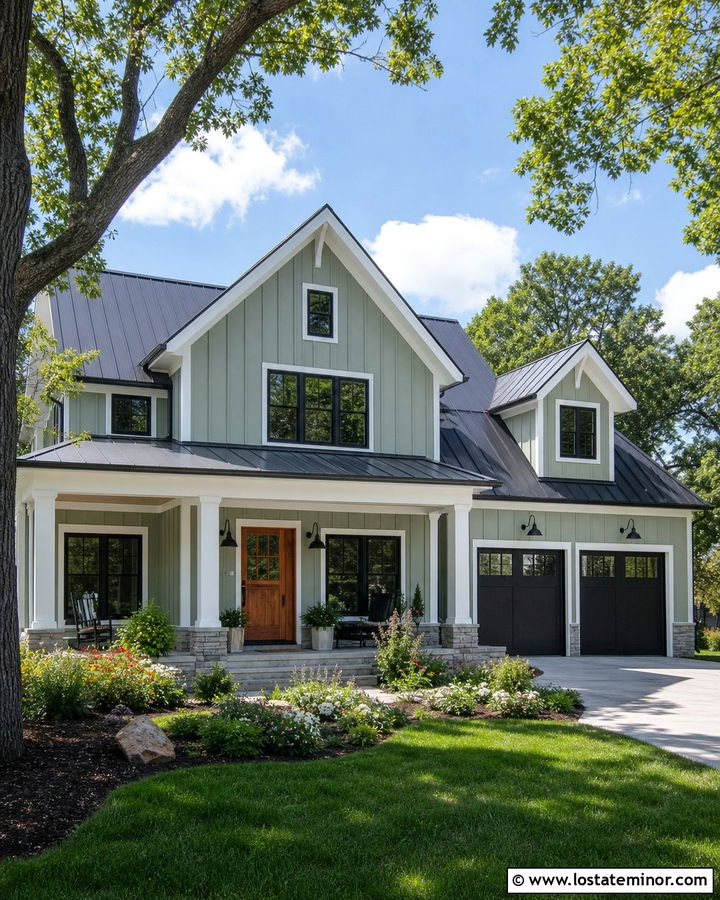
Classic barn lights make practical accents for a sage green farmhouse, particularly above doors and utility areas. Use Behr Sage Green ICC-77 on vertical board-and-batten siding, bright white on the trim, and matte black on the roof and windows. Wide black barn lights above the front door and garage doors reinforce the simple agricultural lines. Their curved shades should direct illumination downward instead of exposing bright bulbs. Black hardware, gutters, and porch furniture tie the fixtures into the full exterior. Add a honey-colored wood door and matching porch swing to soften the monochromatic accents. A stone foundation, broad lawn, and informal plantings complete the rural setting. This approach feels updated but not overly trendy because the lighting has a clear purpose and directly supports the farmhouse architecture.
8. Sage Green House With Colonial Gas Lanterns
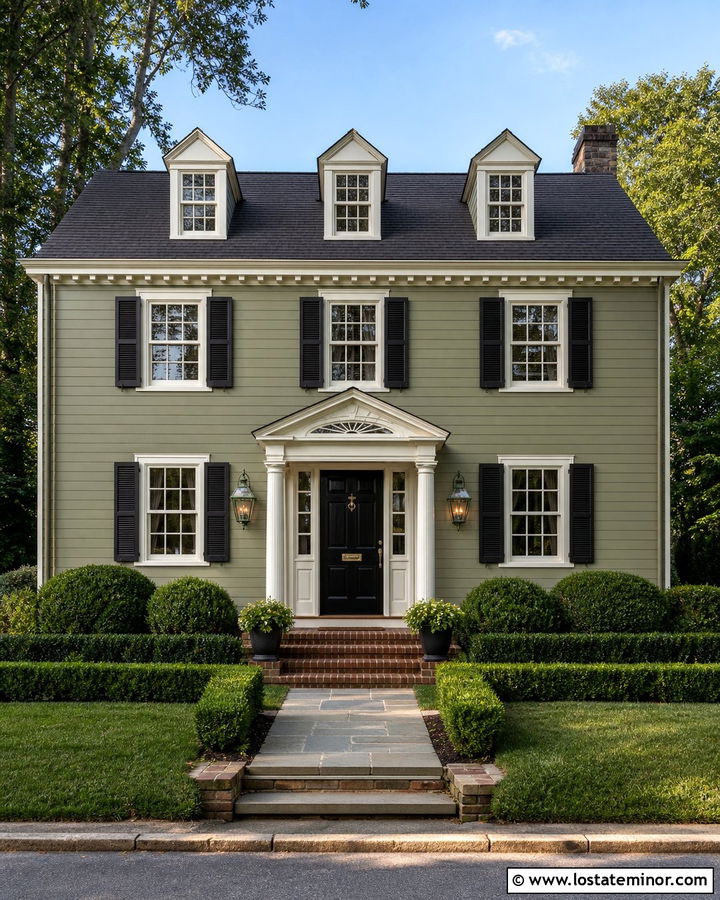
A symmetrical Colonial facade benefits from lighting that feels equally balanced. Paint the clapboard siding Benjamin Moore Saybrook Sage, highlight the windows and cornice with soft white, and use deep charcoal shutters for structure. Place traditional gas-style electric lanterns on both sides of a glossy black front door. A third hanging lantern can center beneath the portico when ceiling height allows. Antique brass or aged copper finishes add warmth and suit the formal architecture better than industrial fixtures. Keep fixture sizes consistent with the tall doorway and substantial columns. Brick steps, a slate walkway, and clipped evergreen hedges reinforce the orderly design. The result is a complete sage green exterior with historic character, practical illumination, and enough contrast to make the central entrance easy to identify from the street.
9. Sage Green House With Path Lighting
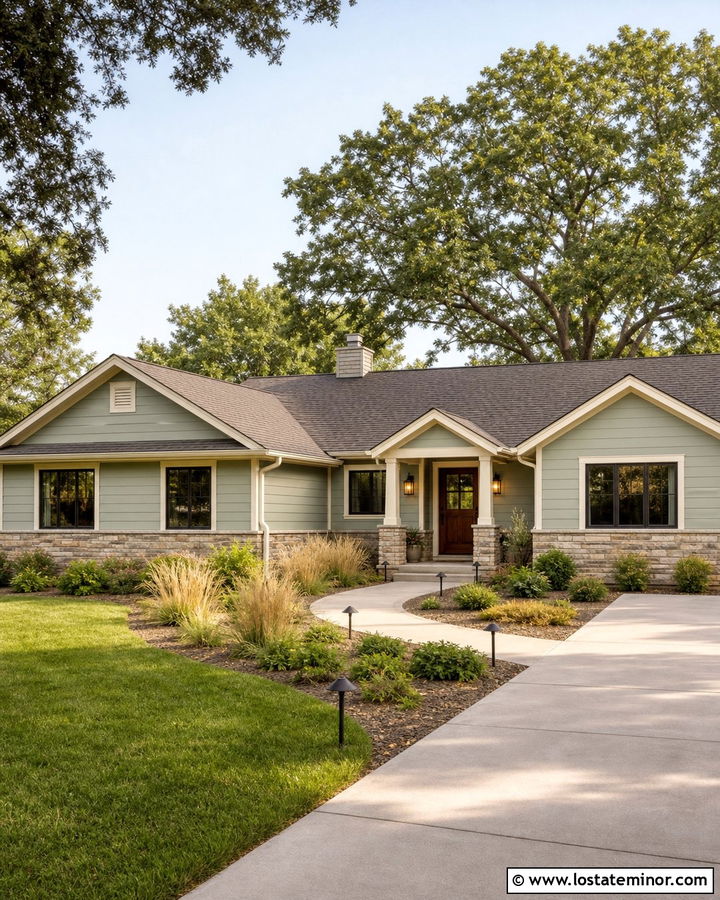
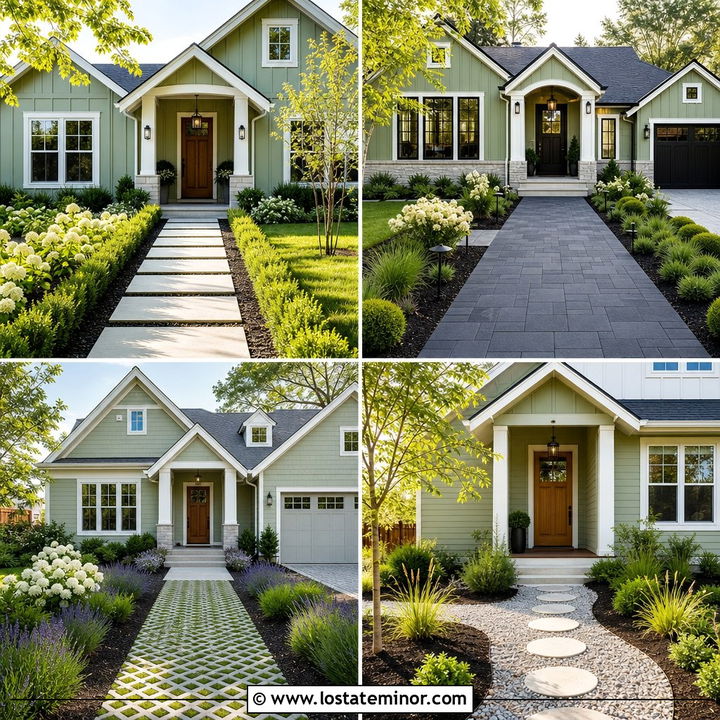
Sometimes the most effective lighting begins well before the porch. A sage green ranch painted in Sherwin-Williams Softened Green can feel more inviting when low path lights guide visitors from the sidewalk to the entry. Pair the muted siding with cream trim, a walnut front door, and tan stone around the foundation. Select simple dark bronze path lights and stagger them through planting beds instead of placing them in rigid runway-like rows. Matching bronze wall lanterns beside the door connect the pathway to the house. A brown-gray roof and warm concrete walkway keep the scheme relaxed. Use broad ornamental grasses and low shrubs that will not cover the light sources. This layered plan draws attention across the ranch’s wide horizontal facade while giving the recessed entrance more visual importance.
10. Sage Green House With Stone Uplighting
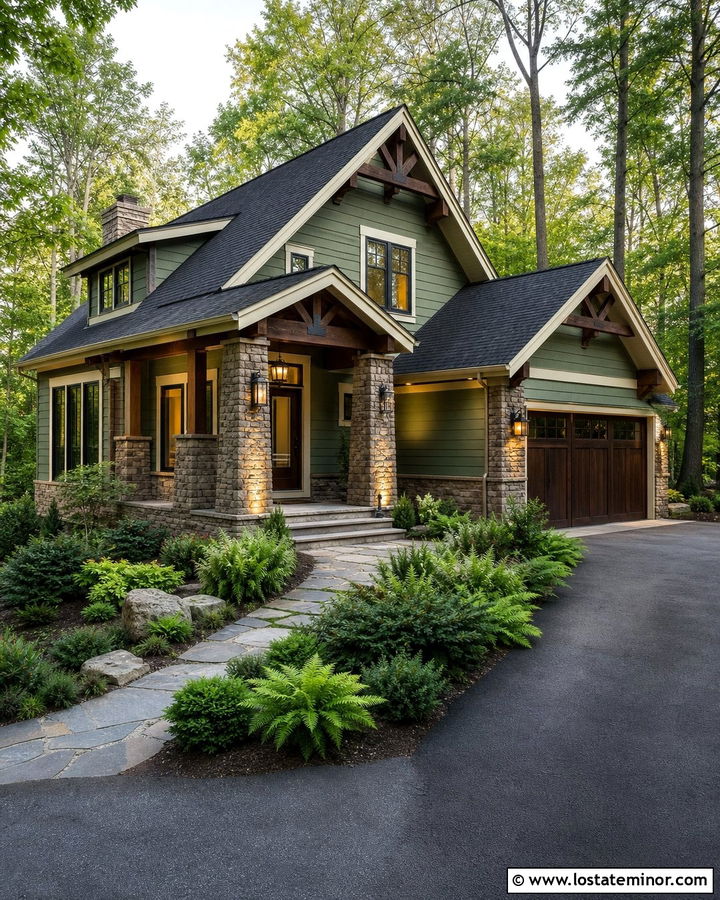
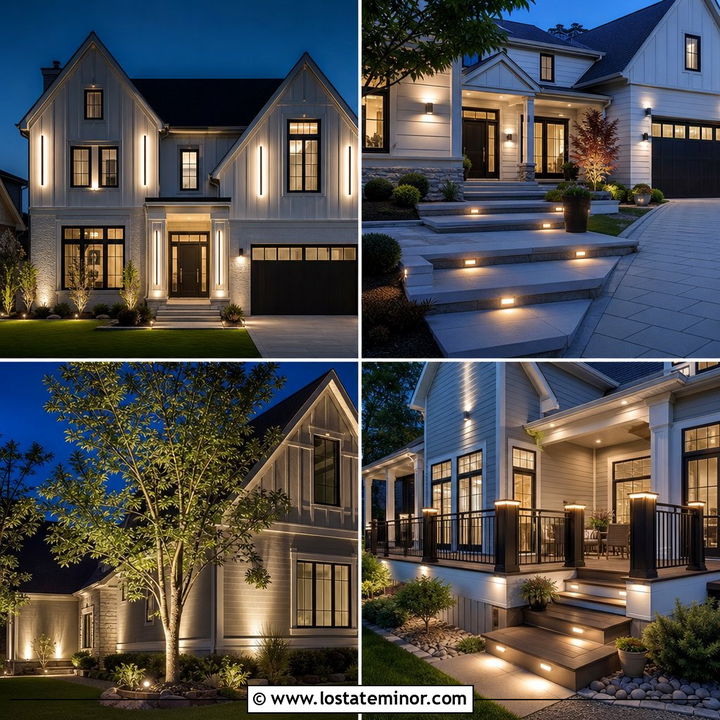
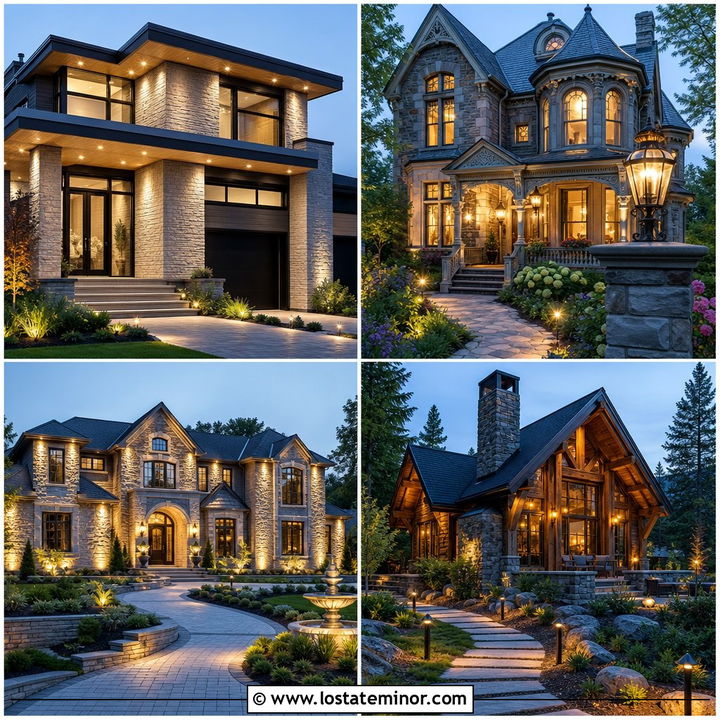
Textured stone deserves lighting that reveals its depth without overpowering the paint color. Choose Benjamin Moore High Park for a medium sage green Craftsman exterior, then add warm gray fieldstone across the foundation and porch columns. Small, carefully aimed landscape lights can wash the stone with gentle illumination from below. Use dark bronze porch lanterns, cream trim, and stained fir beams to support the earthy materials. The uplights should focus on selected columns or stone surfaces rather than flooding the entire facade. A charcoal roof keeps the upper portion visually grounded. During the day, the layered stone adds dimension against the green siding. After dark, the targeted lighting makes the texture more noticeable. Ferns, low junipers, and a natural flagstone walkway complete this woodland-inspired curb-appeal scheme.
11. Sage Green House With Recessed Porch Lights
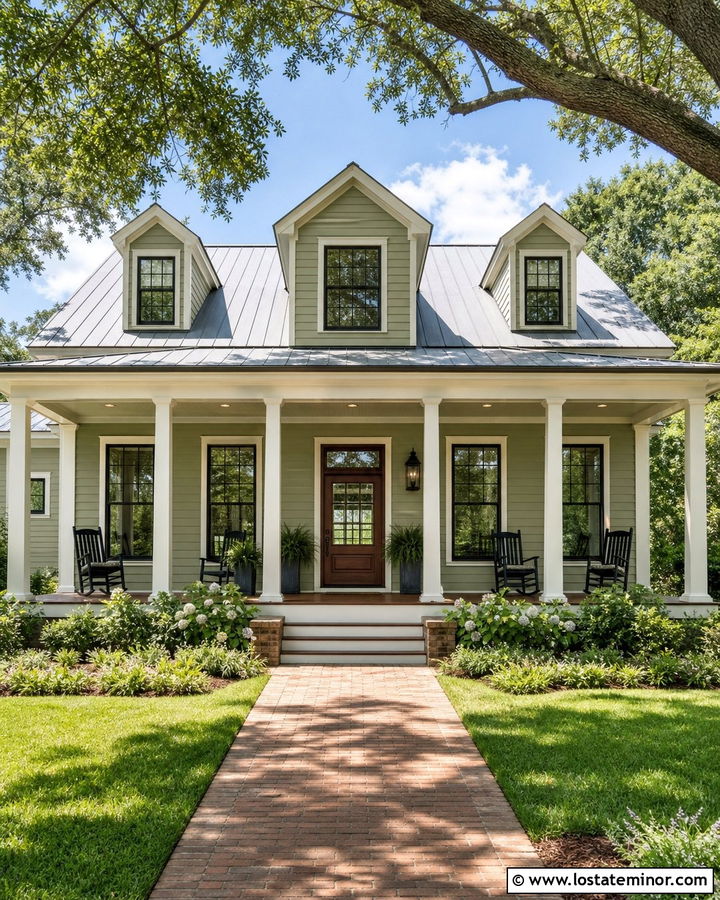
A deep porch needs even illumination, but too many visible fixtures can distract from its architecture. Paint a Southern farmhouse in Sherwin-Williams Clary Sage with creamy trim, black-framed windows, and a stained mahogany door. Install small recessed lights evenly across the porch ceiling, placing them above circulation and seating areas rather than filling every available space. A single black lantern beside the door gives the entry a decorative focal point. Warm wood porch flooring and simple white columns maintain a comfortable, traditional appearance. Add black rocking chairs and planters to repeat the window color. The concealed ceiling lights help the porch feel open and uncluttered, while the sage siding remains prominent. A metal roof, brick walkway, mature shade trees, and layered foundation plants complete the gracious full-house design.
12. Sage Green House With Garage Coach Lights
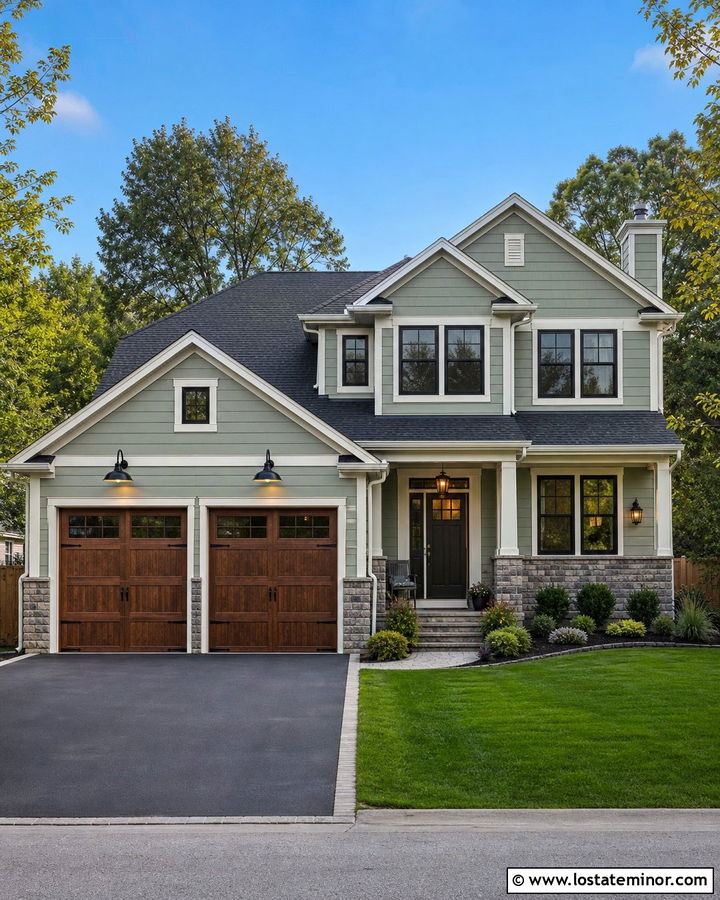
Garage doors often occupy a large part of the front elevation, so their lighting should support the complete house. Use Behr Sage Green ICC-77 on a suburban two-story exterior with warm white trim and medium-stained wood garage doors. Oversized black coach lights placed beside each door add definition and break up the broad garage area. Match them with a slightly larger lantern near the main entrance. Black window frames, gutters, and house numbers make the fixture finish feel deliberate. Gray-brown stone around the garage foundation introduces texture, while a charcoal architectural-shingle roof adds contrast above. Keep the driveway clear and frame it with low shrubs rather than tall plants. This coordinated plan turns a garage-dominant facade into a balanced sage green exterior with a clearly visible, welcoming entry.
13. Sage Green House With Tree Spotlights
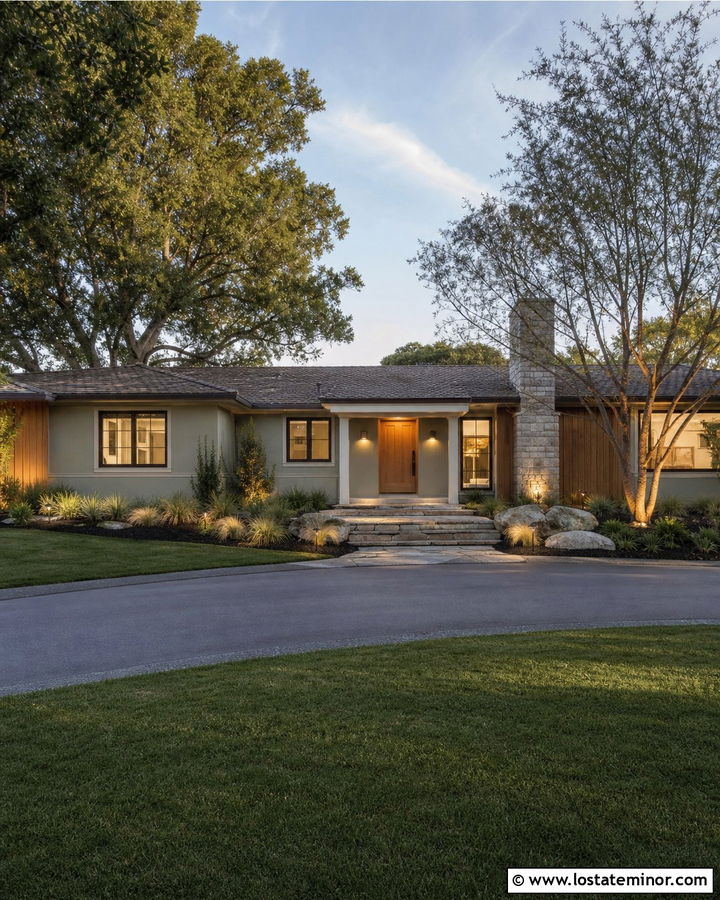
Mature trees can become part of the exterior composition when the lighting is placed with restraint. Paint a midcentury ranch in Benjamin Moore October Mist, adding off-white trim, dark bronze windows, and a natural teak front door. Use shielded spotlights at the base of one or two specimen trees to emphasize their trunks and canopies. Similar low-level fixtures can highlight the home’s stone chimney or recessed entrance. Avoid lighting every plant, since selective illumination creates a calmer and more organized view. A low-pitched brown roof, horizontal cedar accents, and irregular flagstone steps reinforce the midcentury character. During daylight, the soft sage blends easily with the wooded yard. The planned lighting then connects the architecture to the landscape while preserving a comfortable residential atmosphere after sunset.
14. Sage Green House With Solar Walkway Lights
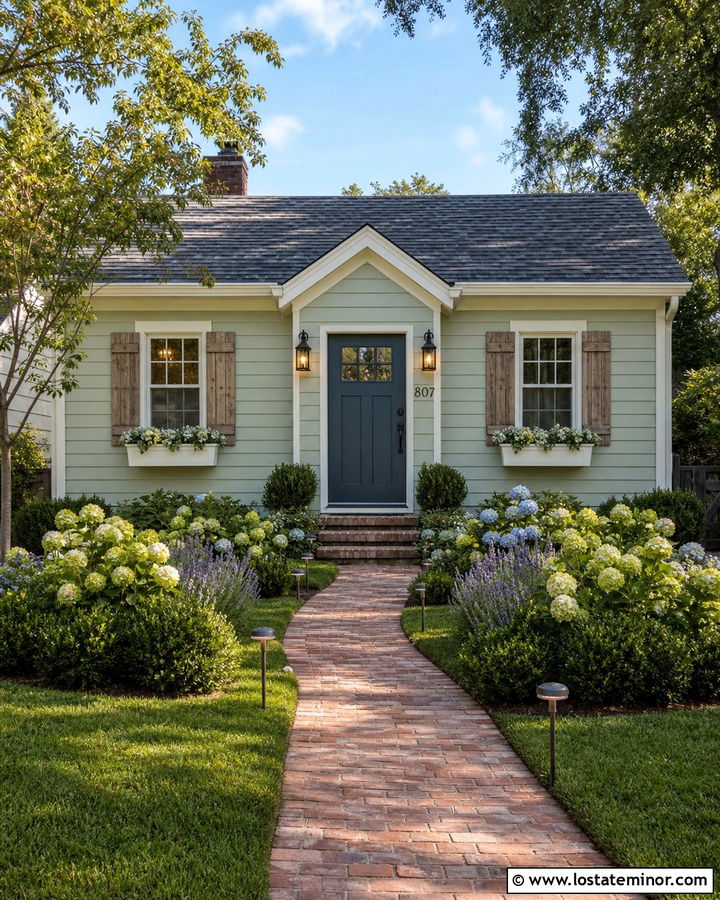
Solar walkway lights offer a straightforward option when running new wiring is difficult. Give a compact cottage Benjamin Moore Hollingsworth Green siding, warm white trim, a muted blue-gray front door, and weathered cedar shutters. Choose low-profile solar fixtures with dark metal housings so they disappear into the planting beds during daylight. Space them along a curved brick path and use brighter wired lanterns at the porch for dependable entry lighting. This combination keeps the solar lights in a supporting role instead of relying on them for the entire facade. A soft gray roof and white window boxes maintain the cottage palette. Lavender, salvia, hydrangeas, and clipped shrubs can frame the walkway. The finished house feels charming and cohesive, with lighting that emphasizes the journey toward the front door.
15. Sage Green House With Porch String Lights
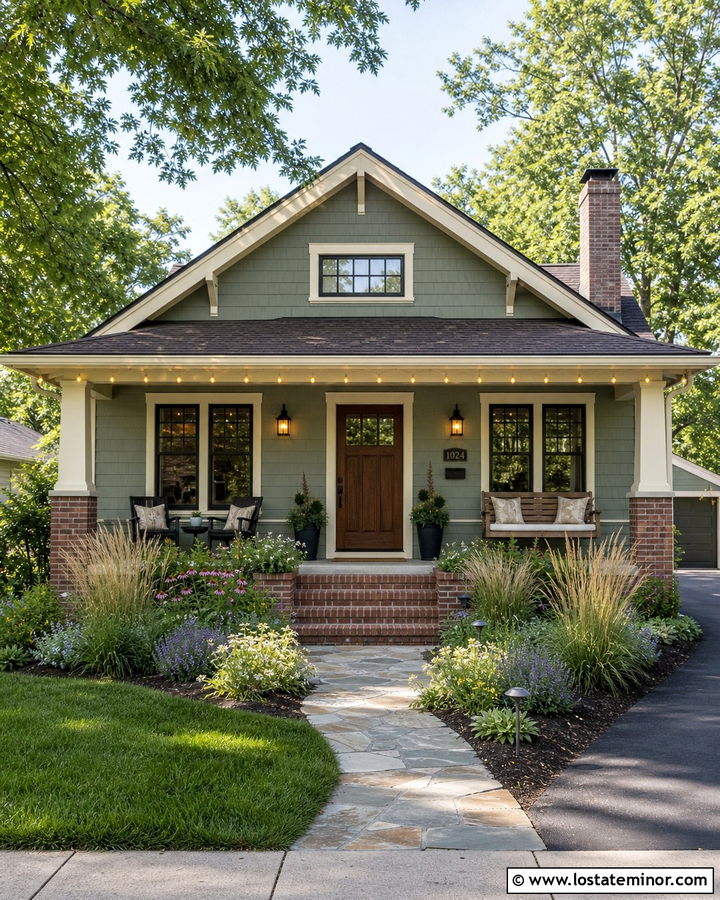
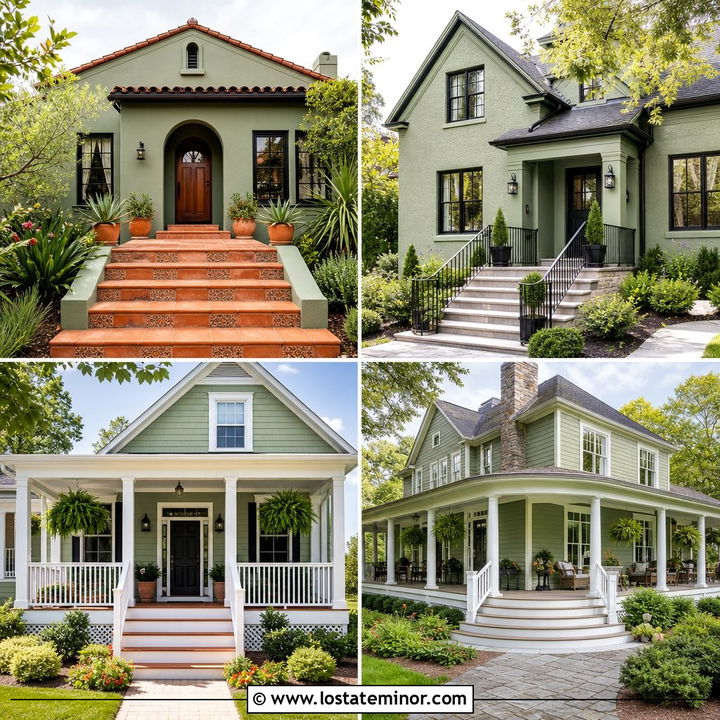
A bungalow porch can feel especially welcoming with neatly installed string lighting. Paint the shingle siding Sherwin-Williams Svelte Sage and use warm cream on the columns, railings, and window trim. Hang outdoor-rated string lights in straight, evenly spaced lines beneath the porch roof rather than allowing them to sag randomly across the facade. Bronze wall lanterns beside the front door provide the primary entry illumination. A rich oak door, brick steps, and dark brown roof add warmth to the cool sage body color. Choose simple porch furniture with cream cushions and rust-colored accents. The string lights should define the seating zone without becoming the only visible feature. Native grasses, flowering perennials, and a narrow stone path complete this relaxed bungalow exterior and its comfortable outdoor living area.
16. Sage Green House With Dark-Sky Downlights
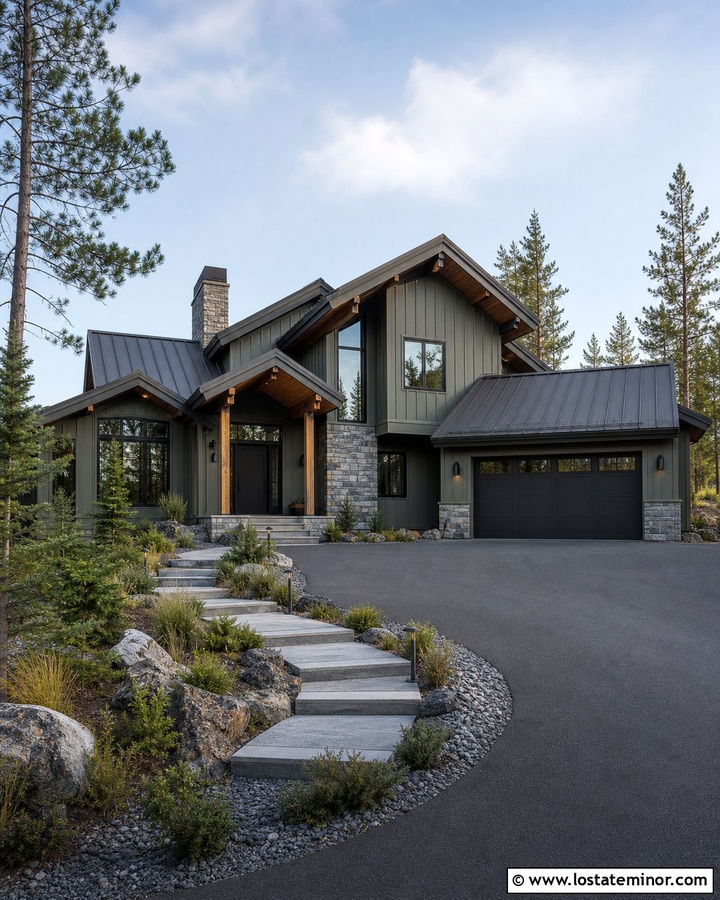
Responsible lighting can also look refined and architectural. Use Sherwin-Williams Evergreen Fog on a contemporary mountain home with black windows, a charcoal metal roof, and broad cedar soffits. Fully shielded black downlights mounted near the entry and garage direct illumination toward steps and walking surfaces. Low-level, warm-colored lighting with timers or sensors limits unnecessary glare and spill beyond the property. () Add narrow step lights along the stone stairs and avoid fixtures that send exposed light upward. The deep sage green connects the house to pine trees and gray ledgestone, while cedar brings warmth to the modern structure. Use gravel beds, native shrubs, and restrained landscaping. This full exterior feels sophisticated because the lighting is purposeful, quiet, and carefully integrated with the architecture.
17. Sage Green House With Motion Sensor Floodlights
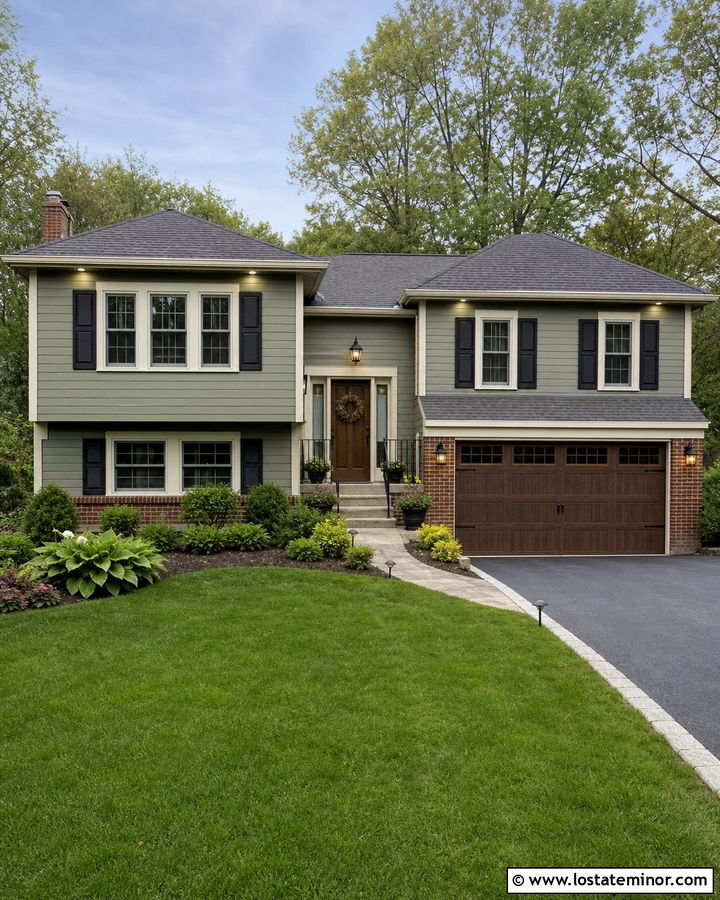
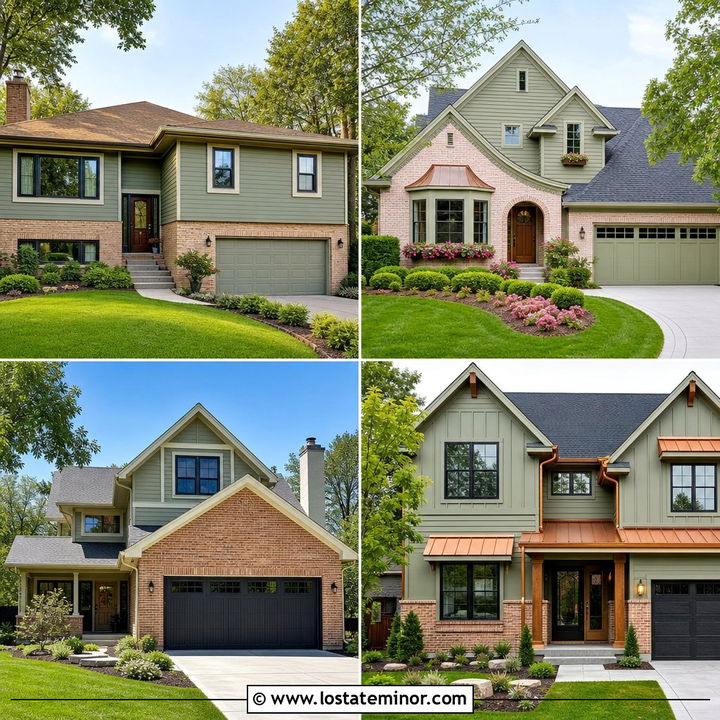
Security lighting does not need to dominate an attractive exterior. Paint a practical split-level home in Benjamin Moore Saybrook Sage with ivory trim, charcoal shutters, and a medium-gray roof. Place compact motion-sensor floodlights beneath the side and rear eaves, aiming them toward driveways, gates, and service paths instead of neighboring properties. Select housings that match the charcoal gutters so they blend into the roofline. At the front, use traditional black lanterns and low path lights for a more welcoming appearance. A stained wood garage door and red-brown brick foundation warm the green facade. Adjustable settings allow the brighter fixtures to operate only when needed. This combination supports visibility around the property while keeping the curb-facing lighting decorative, proportional, and consistent with the home’s traditional character.
18. Sage Green House With Cedar Beam Pendant
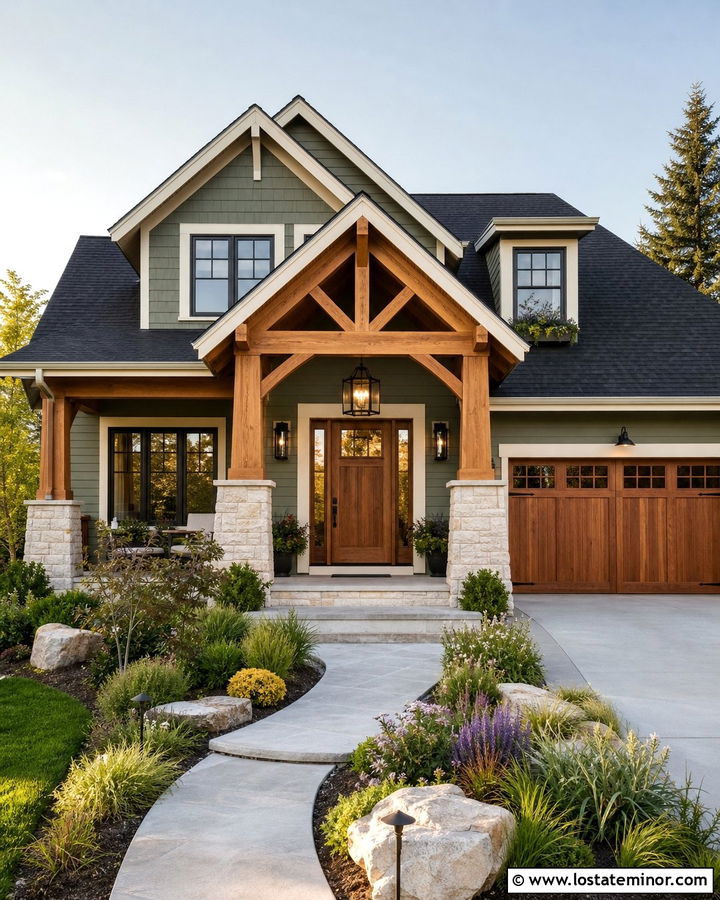
Exposed cedar beams can turn a simple porch into the main feature of a sage green home. Apply Sherwin-Williams Clary Sage to lap siding, use creamy white around windows, and stain the porch beams a clear honey brown. Center a substantial black-and-glass pendant between the beams so the fixture feels connected to the porch structure. Matching black sconces can flank a natural cedar front door. Choose a dark gray roof and warm limestone porch floor to balance the green and wood. This combination works well on a transitional Craftsman with a broad gable and tapered stone columns. Repeat cedar on the garage door or decorative brackets, but keep the amount controlled. The complete design feels warm and handcrafted, with the pendant giving the sheltered entrance a clear visual center.
19. Sage Green House With Brick Chimney Uplights
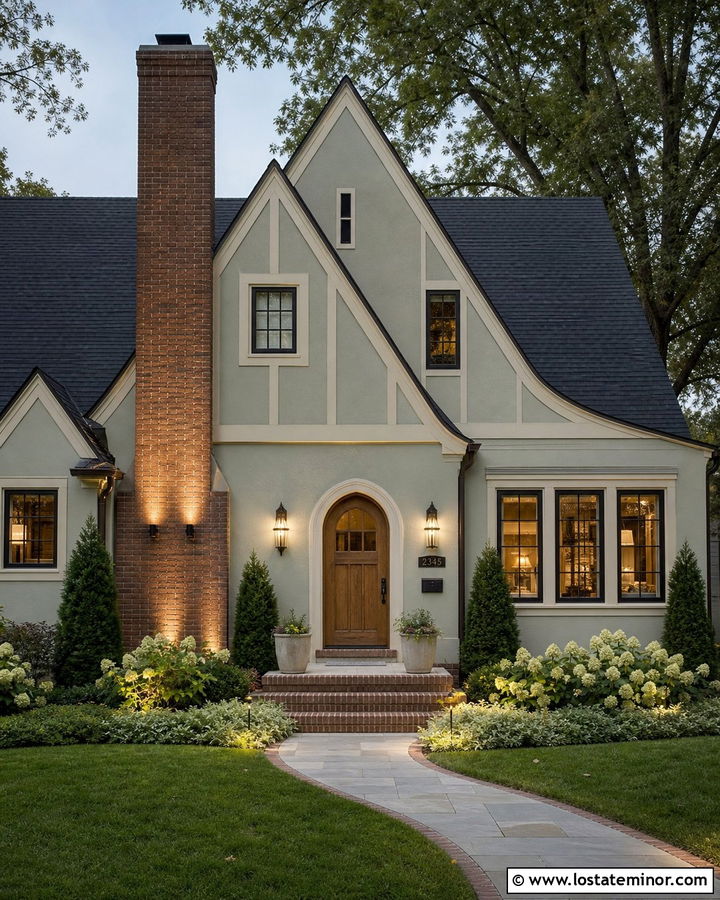
Red brick and sage green create an established, traditional palette when their undertones are carefully coordinated. Paint a Tudor-inspired exterior Benjamin Moore October Mist and keep the trim a warm, muted cream. Preserve the original red-brown brick chimney, front steps, and lower walls. Small ground-mounted uplights can emphasize the chimney’s height and textured masonry. Use dark bronze lanterns near the arched wooden door to relate to the brick’s warmer tones. A steep charcoal roof and bronze gutters give the architecture stronger definition. Avoid brilliant white trim because it may appear disconnected from the aged masonry. Plant deep green yews, pale flowering shrubs, and ground cover around the lighting. This full-house scheme allows the sage siding, historic brick, roofline, and architectural lighting to work as one balanced composition.
20. Sage Green House With Window Box Lighting
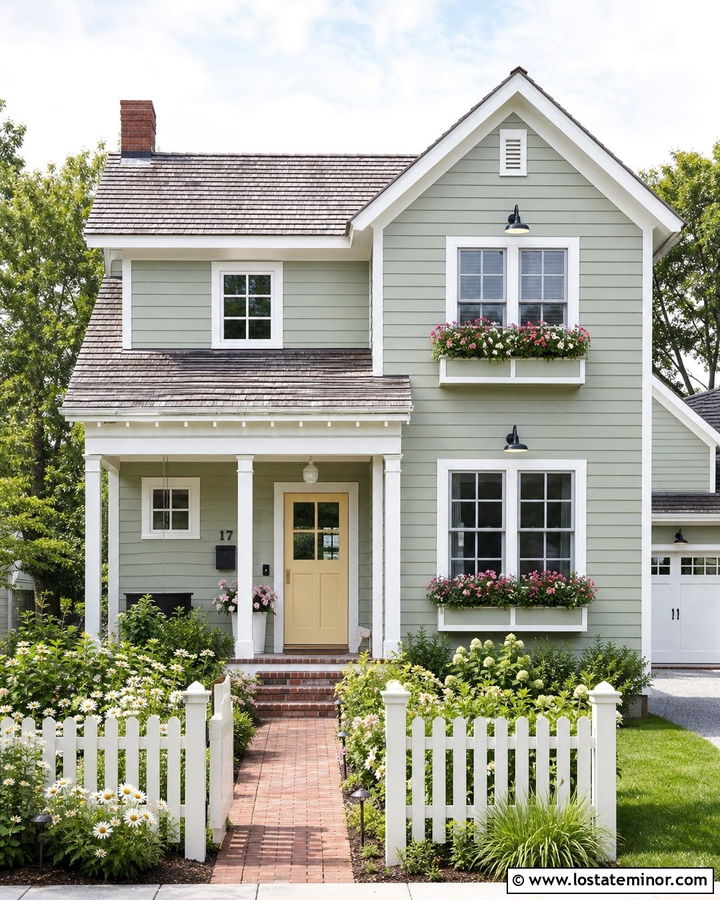
Window boxes add daytime charm, while discreet lighting can make them part of the evening facade. Choose Benjamin Moore Hollingsworth Green for a two-story cottage, then pair it with white trim, a soft yellow front door, and gray cedar-shake roofing. Install small downward-facing lights above the main first-floor window boxes. The fixtures should match the white trim or dark window hardware so they do not appear random. Fill the boxes with white flowers, trailing greenery, and compact seasonal plants. A white porch pendant and low black path lights complete the layered plan. Keep illumination soft to avoid flattening the plants or creating glare through the windows. A brick walkway, picket fence, and informal garden support the cottage character while the sage green siding gives the colorful details a calm background.
21. Sage Green House With Pergola Lighting
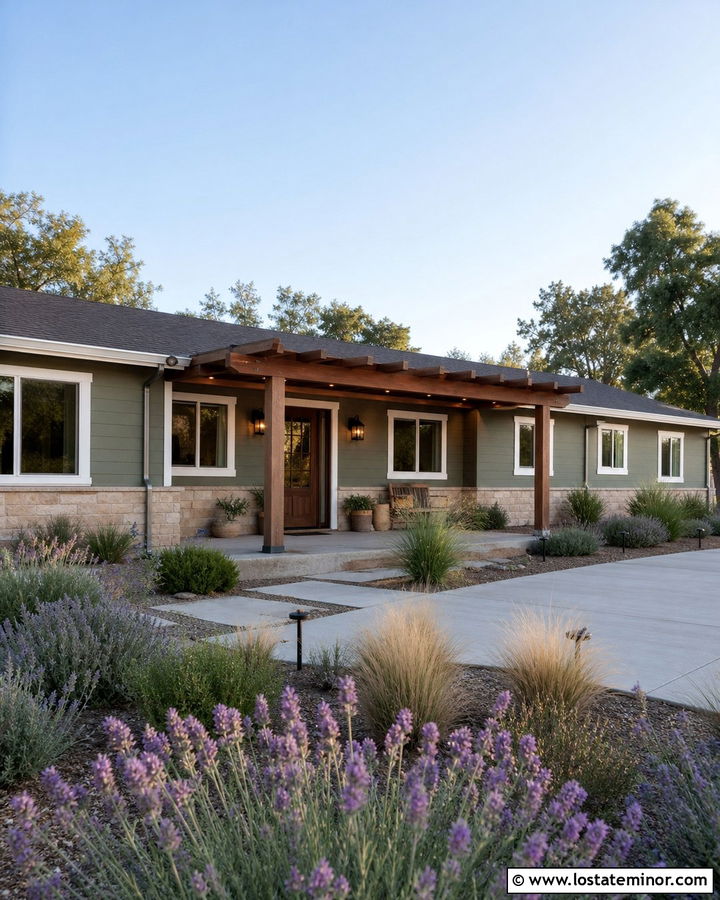
A front pergola can provide shade, architectural depth, and a natural place for integrated lighting. Paint a California ranch in Behr Sage Green ICC-77, using warm white trim and a medium walnut front door. Build the pergola from cedar and install small recessed downlights beneath its beams. Bronze wall sconces beside the door should repeat the brown tones in the wood. Keep the low roof a deep charcoal and introduce light beige stone along the foundation. The pergola’s horizontal lines extend the ranch facade and make the entrance easier to identify. Drought-tolerant grasses, flowering sage, gravel, and large concrete pavers reinforce the relaxed landscape. With each material repeated at least once, the complete exterior feels coordinated rather than decorated with separate features that do not relate to one another.
22. Sage Green House With Deck Step Lights
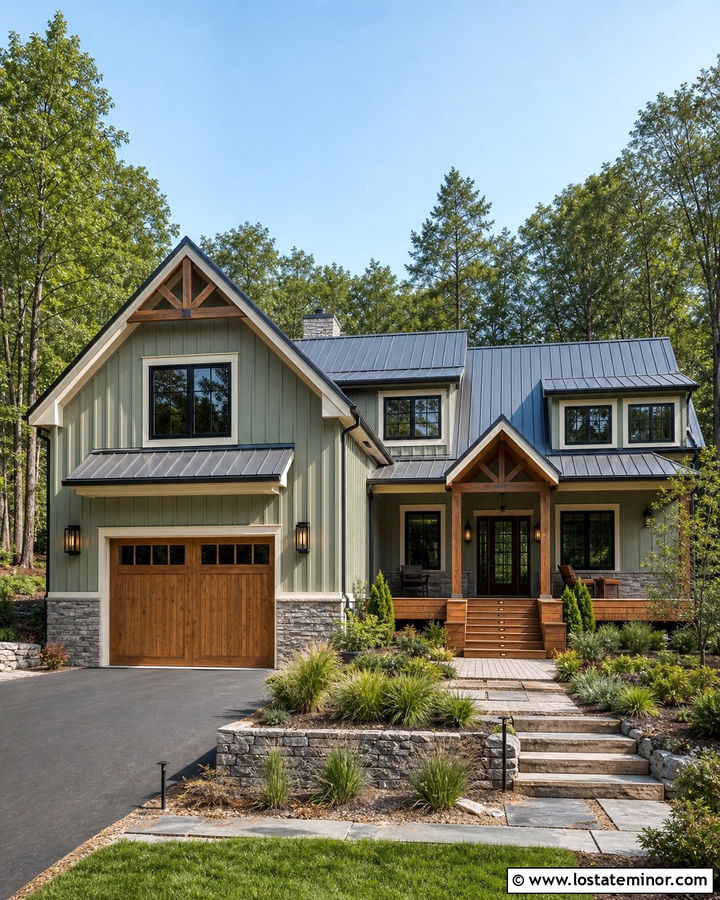
A raised entry deck needs lighting that clearly defines changes in level. Use Sherwin-Williams Svelte Sage on a rustic-modern home with black window frames, cream trim, and a natural cedar deck. Install compact step lights into the stair risers, placing them at consistent intervals for an orderly appearance. Black cylinder sconces can illuminate the door and connect with the windows and roof. Carry the cedar onto porch posts or a garage door so the deck does not feel like an isolated addition. A charcoal standing-seam roof and gray stone foundation provide durable-looking contrast. Surround the stairs with grasses and low shrubs that will not block the light. This complete design makes the elevated entry feel visually connected to the house while maintaining the sage green exterior’s soft, nature-inspired character.
23. Sage Green House With Double Door Lanterns
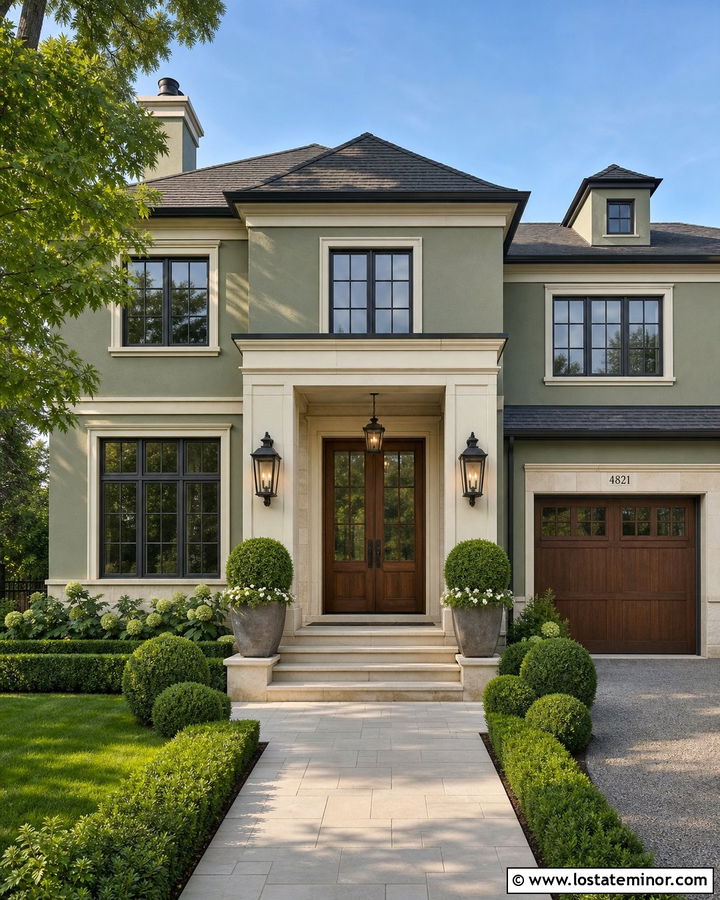
Double front doors call for lighting with enough scale to match the wider entry. Paint a grand transitional home Benjamin Moore High Park, adding creamy limestone, off-white trim, and dark bronze windows. Place tall bronze lanterns outside the doors rather than squeezing them between the two panels. A simple hanging fixture beneath the portico can provide another balanced layer. Choose walnut doors with narrow glass inserts and repeat the wood on the garage. The deeper sage green body color prevents the large facade from appearing washed out beside extensive stonework. A brown-charcoal roof and bronze gutters complete the upper portion. Formal shrubs, symmetrical planters, and a wide paver walkway reinforce the entry’s proportions. The lighting, doors, stone, and paint work together to create a strong central focal point.
24. Sage Green House With Carriage House Lighting
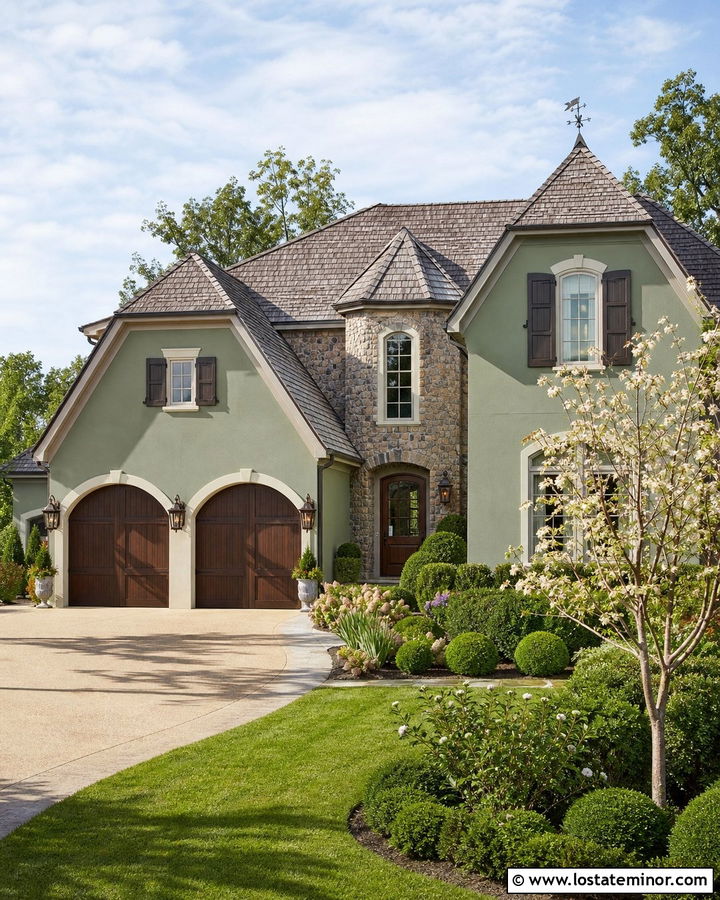
Carriage-style lighting suits a home with arched garage doors and traditional architectural details. Apply Benjamin Moore Saybrook Sage to the main siding, soft cream to the trim, and dark brown to shutters and gutters. Choose warm wood garage doors with divided upper windows. Mount substantial bronze carriage lanterns between the bays and repeat a coordinating fixture beside the front door. A mixed tan-and-gray stone base helps connect the brown accents to the green siding. Use a roof with weathered brown shingles rather than a stark black finish. This scheme works well for a suburban European-inspired home or spacious traditional cottage. Keep the landscaping layered but controlled, with rounded shrubs and a few flowering trees. Properly scaled lights prevent the garage elevation from looking broad, blank, or visually disconnected.
25. Sage Green House With Modern Bollard Lights
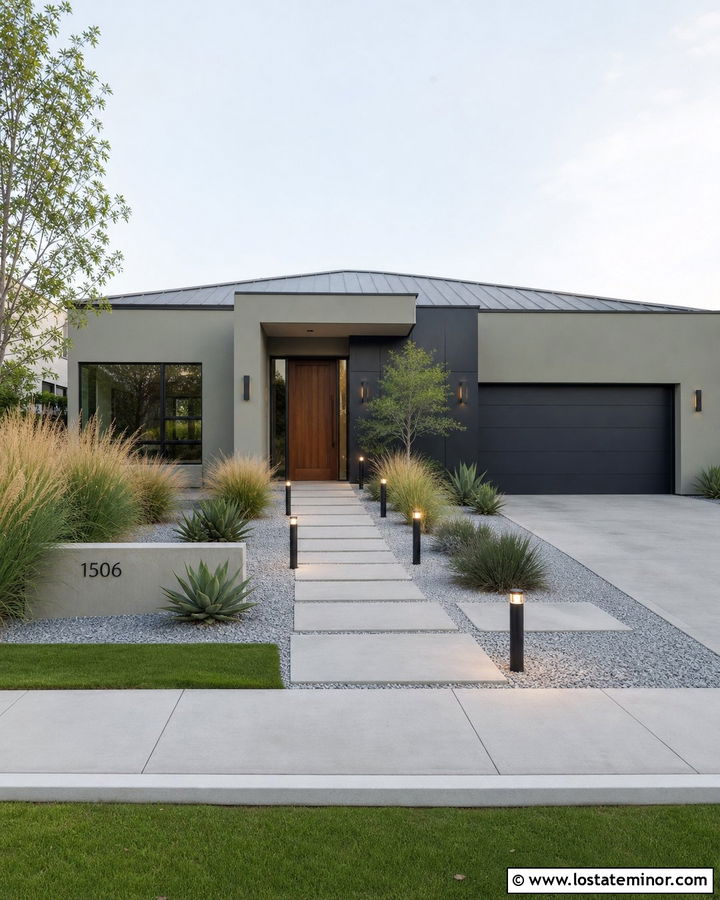
Low bollard lights can reinforce the geometry of a minimalist sage green home. Paint a one-story contemporary exterior Sherwin-Williams Evergreen Fog and combine it with charcoal fiber-cement panels, black window frames, and a flat walnut door. Place slim black bollards along large concrete pavers leading from the sidewalk to the entrance. Their spacing should follow the walkway’s rhythm rather than creating an overly bright line. Rectangular wall lights beside the door and garage continue the streamlined shape. Add a low-slope metal roof, smooth stucco sections, and pale gray gravel beds. Sculptural grasses, agaves, and one small ornamental tree keep the landscaping clean. The muted green softens the sharp architecture, while the dark lighting fixtures give the complete facade structure and a consistent modern identity.
26. Sage Green House With Porch Fan Lighting
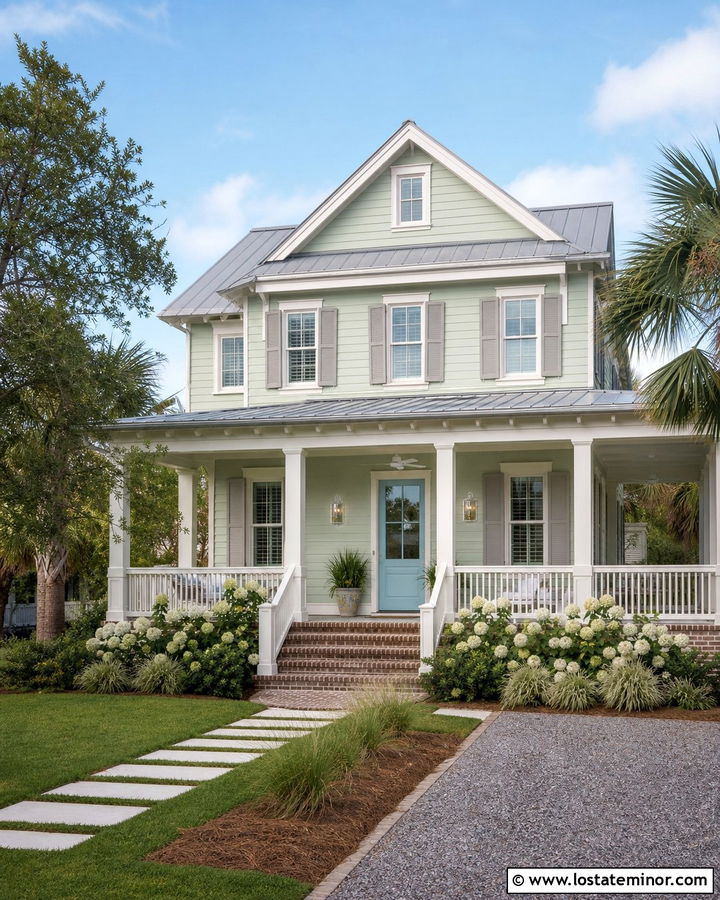
In a warm climate, a porch fan with an integrated light can serve comfort and appearance at the same time. Paint a Southern coastal home Benjamin Moore Hollingsworth Green with white trim, pale gray shutters, and a light blue front door. Choose a simple white outdoor-rated ceiling fan that blends into the painted porch ceiling. Add traditional white or brushed nickel sconces beside the door for more focused entry lighting. Wide porch steps, white railings, and natural brick flooring create a relaxed foundation for the pale sage siding. A silver-gray metal roof keeps the palette bright. Use palm-like grasses, hydrangeas, and shade-tolerant plants around the porch. The fan fixture should feel visually quiet, allowing the columns, shutters, and cheerful front door to shape the home’s character.
27. Sage Green House With Illuminated House Numbers
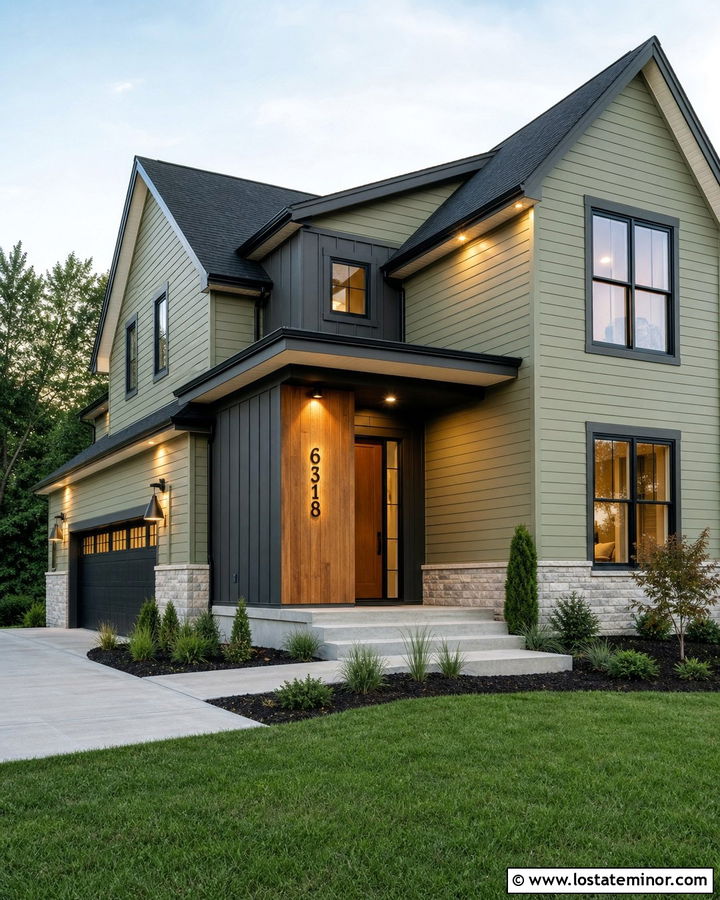
Illuminated house numbers can become a practical design feature on a modern sage green facade. Use Sherwin-Williams Clary Sage on horizontal siding, warm white on the soffits, and charcoal around a recessed entry. Mount backlit black numbers on a cedar panel beside the front door, leaving enough open space for easy visibility. Black downlights above the panel and matching wall sconces near the garage create a coordinated lighting family. Repeat cedar on the door and porch ceiling to warm the gray-green paint. A medium charcoal roof, smooth concrete walkway, and pale stone foundation complete the material palette. Keep the landscaping low around the number panel. This ensures the feature remains visible while the overall house still feels residential, approachable, and connected to its natural surroundings.
28. Sage Green House With Eave Wash Lights
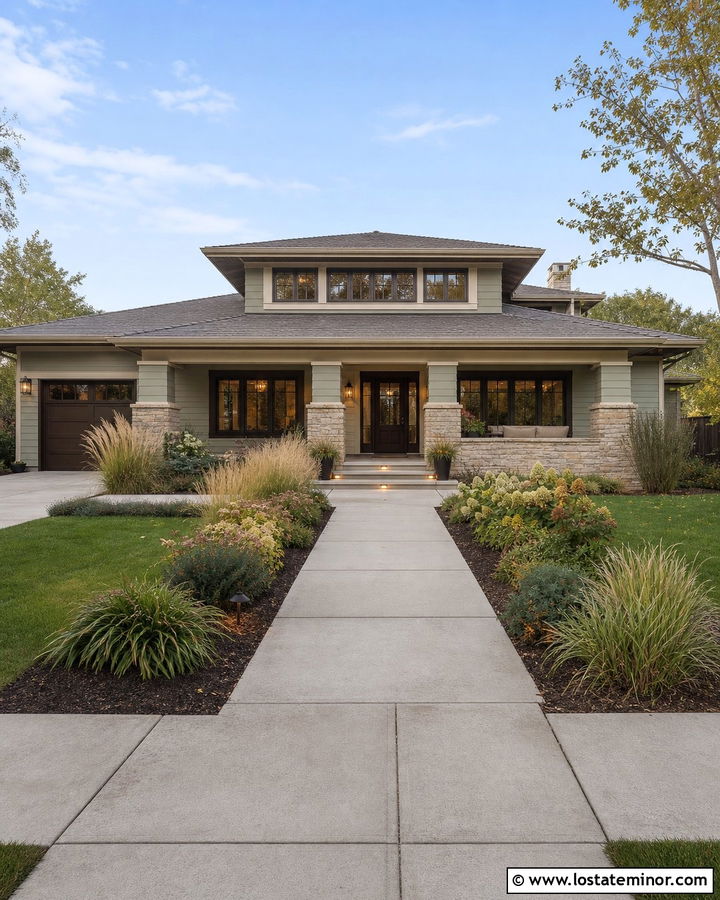
Subtle eave lighting can reveal architectural form when fixtures are concealed and carefully aimed. Paint a Prairie-style home in Benjamin Moore October Mist with cream trim, deep bronze windows, and broad cedar soffits. Install small shielded lights beneath selected eaves to wash the sage walls gently rather than illuminating the roof or sky. Bronze porch lanterns and low step lights provide practical illumination closer to the ground. A low-pitched brown-gray roof emphasizes the home’s horizontal lines, while tan stone columns add texture. Avoid placing lights at every roof corner; a few purposeful locations will create a cleaner result. Wide planting beds, ornamental grasses, and a straight concrete walkway support the architecture. The complete scheme emphasizes layered rooflines, earthy materials, and the muted green exterior without excessive brightness.
29. Sage Green House With Courtyard Wall Lights
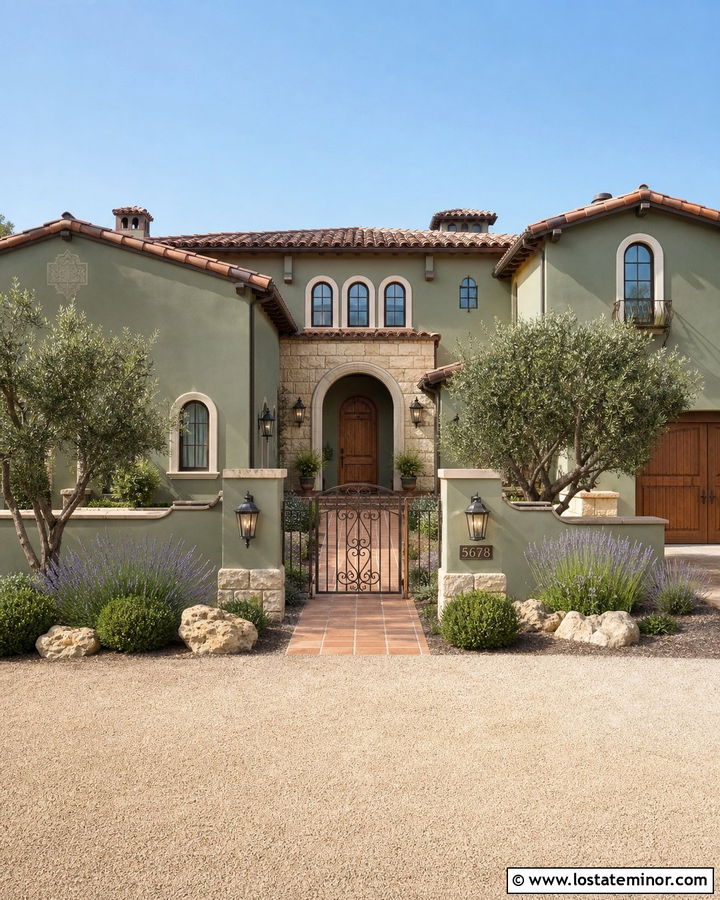
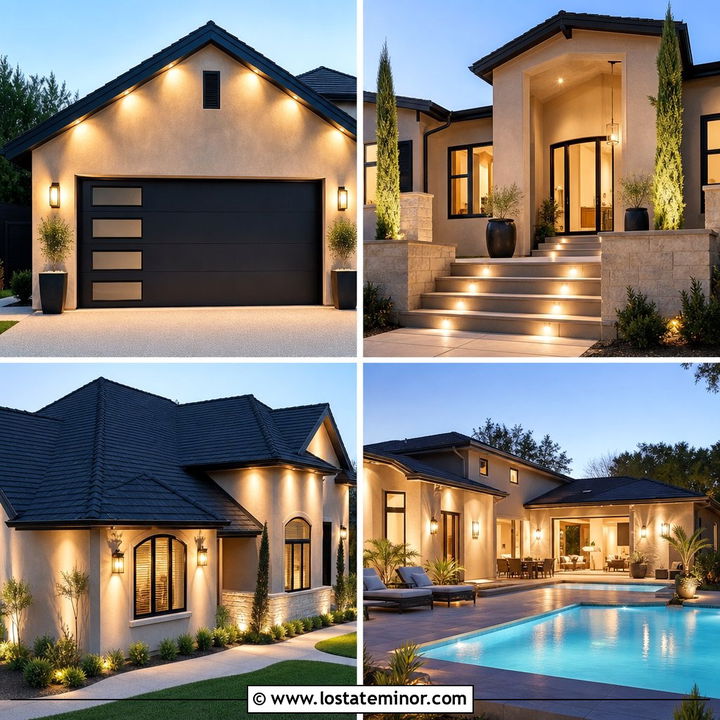
An enclosed front courtyard needs lighting that connects the outer gate to the main entrance. Paint a Spanish-influenced stucco home a custom muted sage green similar to Behr Sage Green ICC-77. Use warm cream around arched windows and dark bronze on the doors, gates, and lighting. Mount simple bronze wall lanterns at the courtyard entrance, along the stucco walls, and beside the front door. A red-brown clay tile roof and natural terracotta paving introduce warmth, preventing the sage from appearing too cool. Add a wooden garage door and rough limestone accents for further texture. Olive trees, rosemary, lavender, and gravel beds support the dry-climate setting. Repeating one fixture family throughout the courtyard creates a clear visual path and gives the entire property a unified exterior identity.
30. Sage Green House With Layered Exterior Lighting
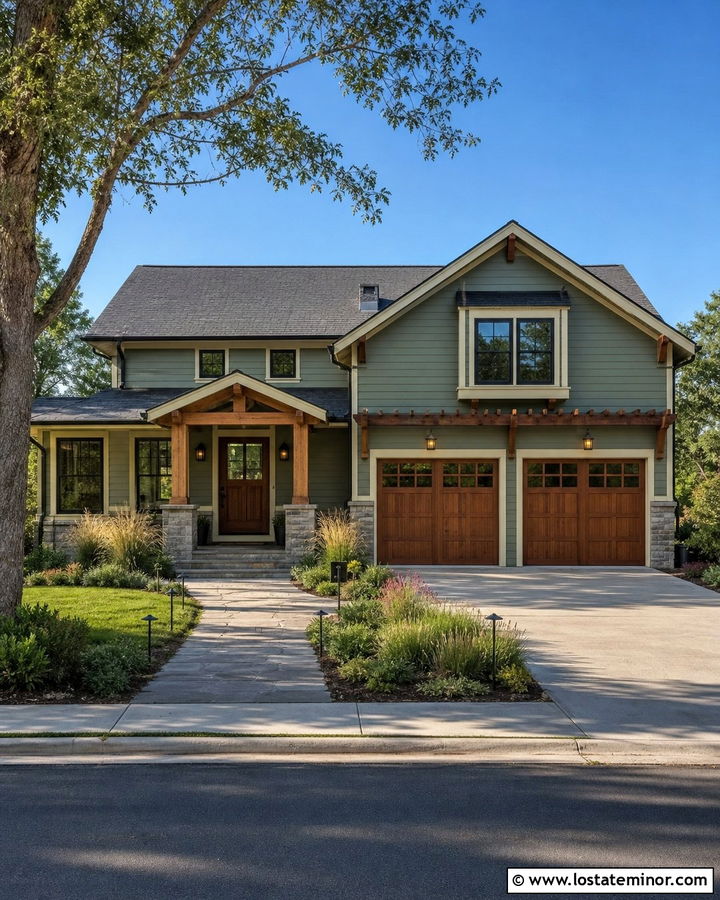
The most complete exterior plan combines several lighting types without making the property look overlit. Cover a large contemporary Craftsman in Benjamin Moore High Park, using cream trim, black windows, cedar beams, and gray ledgestone. Place substantial black lanterns at the front door, recessed lights beneath the porch, low fixtures along the walkway, and selected spotlights near one tree and stone column. Keep all fixtures within a consistent black or dark bronze finish. A charcoal roof and walnut garage door give the facade enough depth to balance the medium sage siding. Timers, dimmers, and motion controls can help different layers operate only when useful. Structured shrubs, native grasses, and a wide stone path finish this cohesive curb-appeal design without distracting from the architecture.
Conclusion:
These 30 Sage Green House Design With Lighting Ideas show how paint, fixtures, materials, and landscaping can create one unified exterior. Black lanterns bring definition, while brass, bronze, copper, and cedar add warmth. Modern downlights and bollards support clean architecture, and traditional pendants or carriage lights enhance historic details. Before committing, test sage paint samples beside the actual roof, brick, stone, and trim. Then view them in morning sun, afternoon light, and shade. Select outdoor-rated fixtures that match the home’s proportions and direct illumination where it is useful. A thoughtful combination of wall lights, porch fixtures, path lighting, and controlled landscape illumination will make a sage green house feel welcoming, balanced, and distinctive.

Related posts: