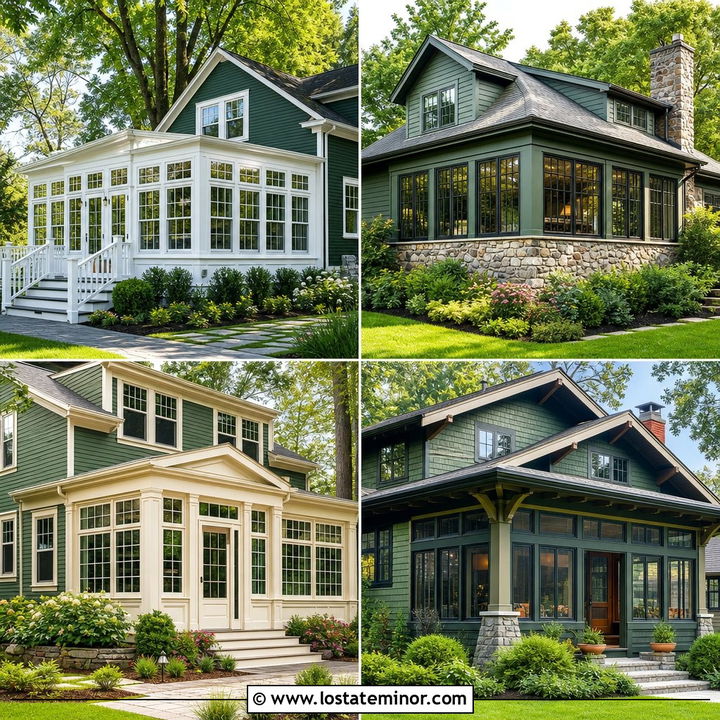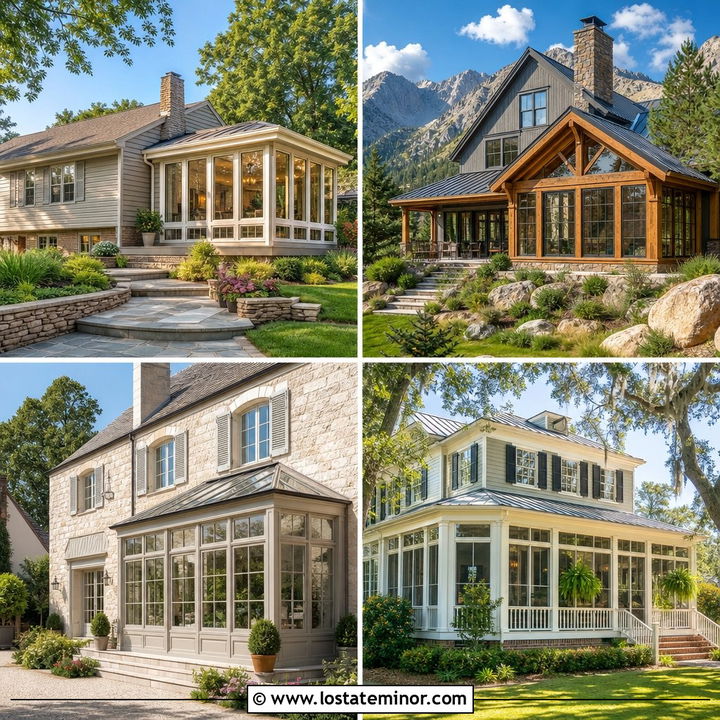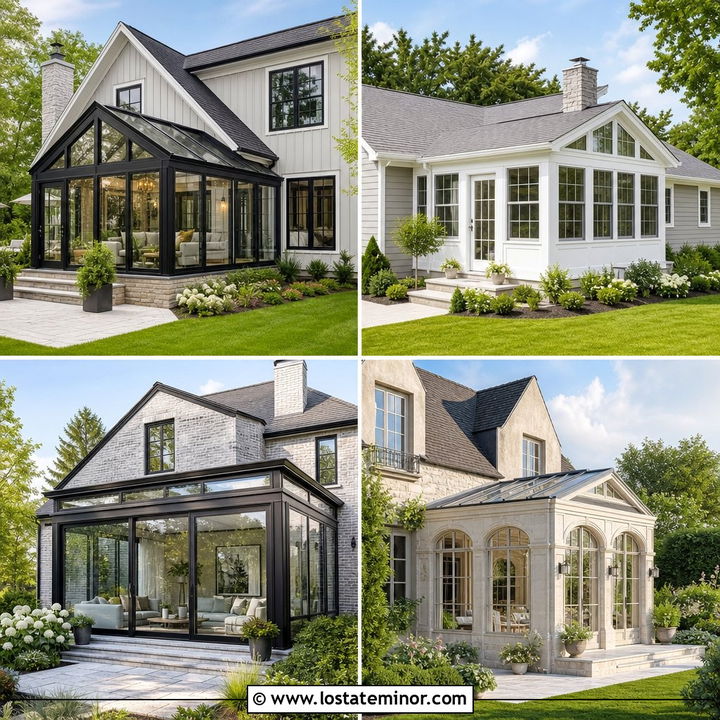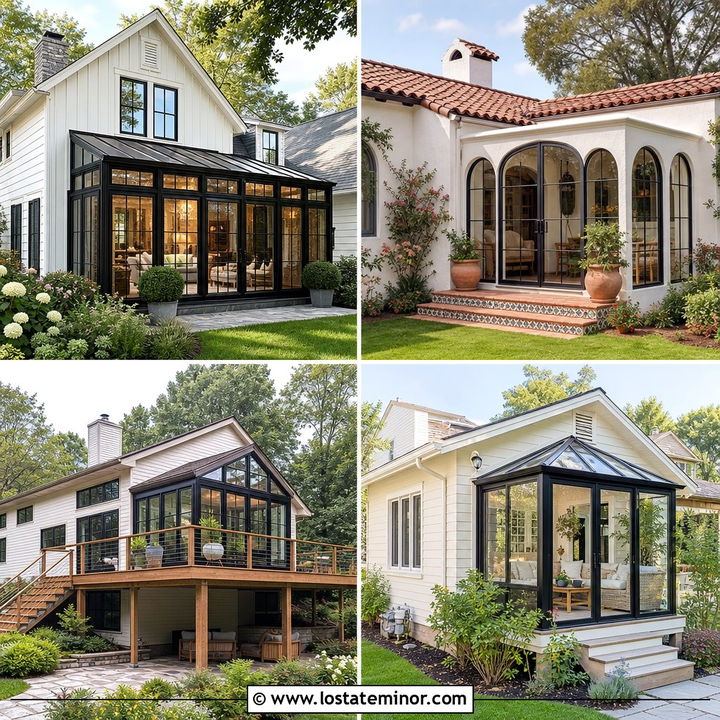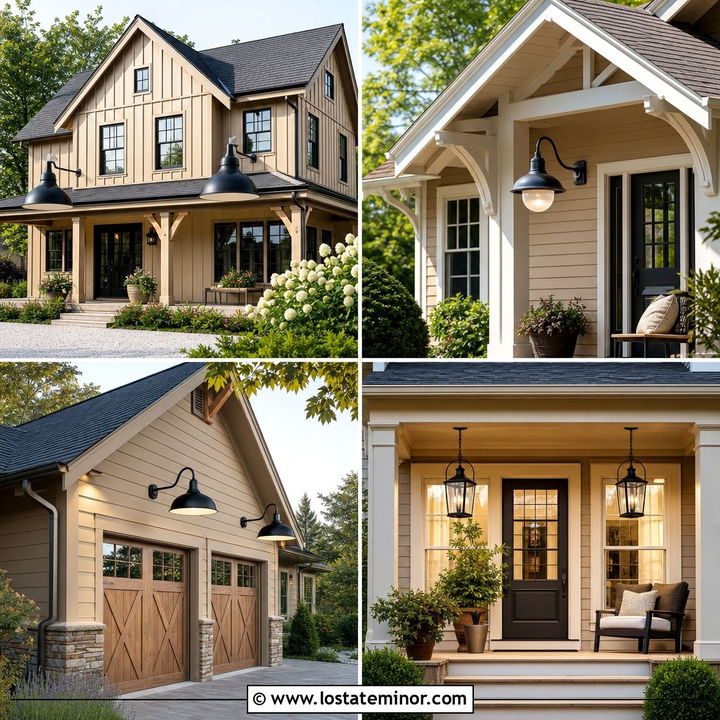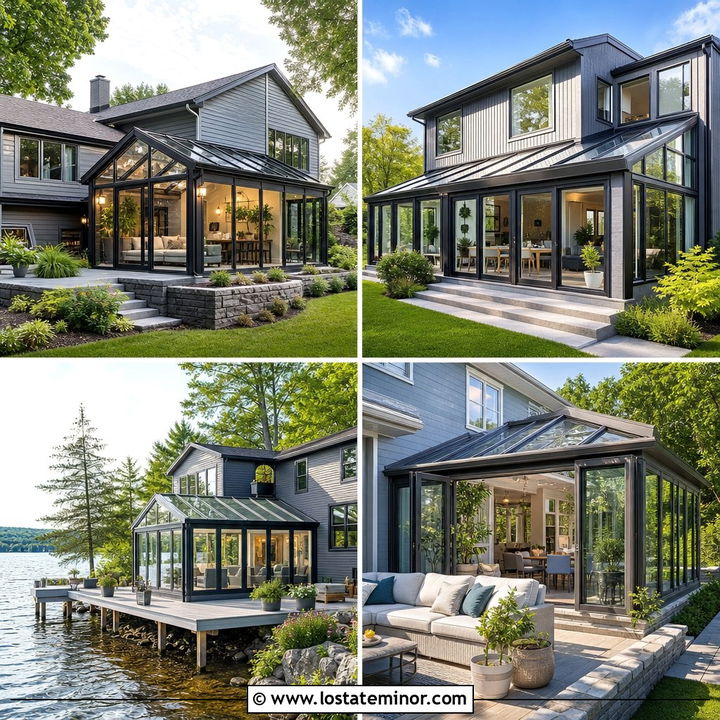
A warm white exterior becomes even more welcoming when the lighting, materials, and architectural details work as one complete design. These 30 Warm White House Design With Lighting Ideas explore full-house combinations for farmhouses, ranch homes, cottages, Colonials, modern builds, and more. Instead of depending on one bright fixture, each look uses layered illumination around the entry, facade, paths, landscaping, or roofline. Warm-white outdoor bulbs between 2700K and 3000K generally complement creamy paint, brick, stone, wood, bronze, and copper especially well. () Thoughtful fixture placement also provides practical visibility without washing out the exterior. Use these complete color and lighting schemes to find the right balance of warmth, contrast, character, and curb appeal in 30 Warm White House Design With Lighting Ideas.

1. Warm White Farmhouse With Black Sconces
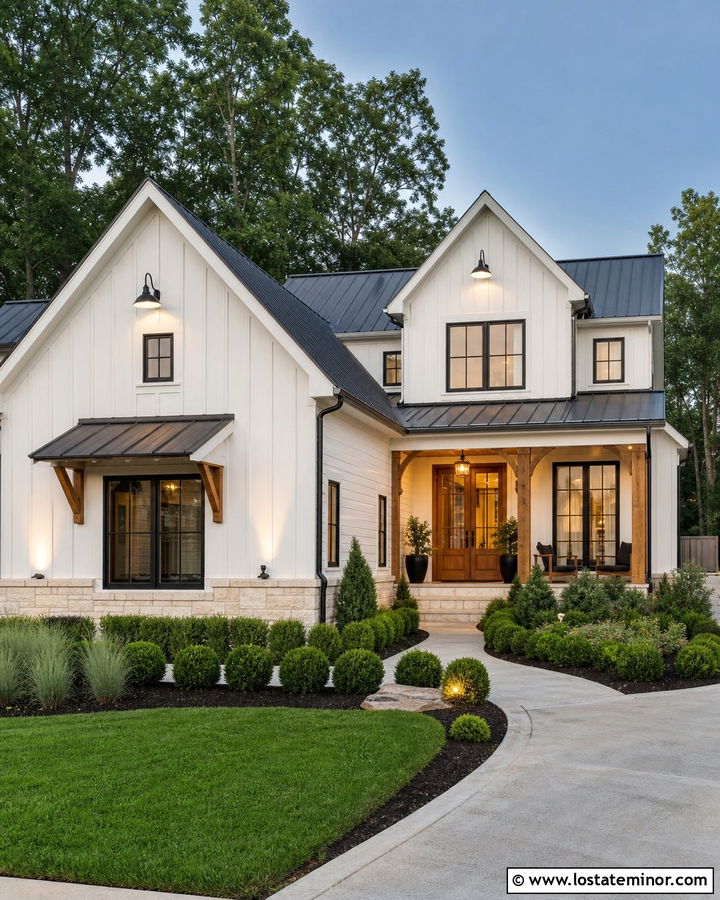
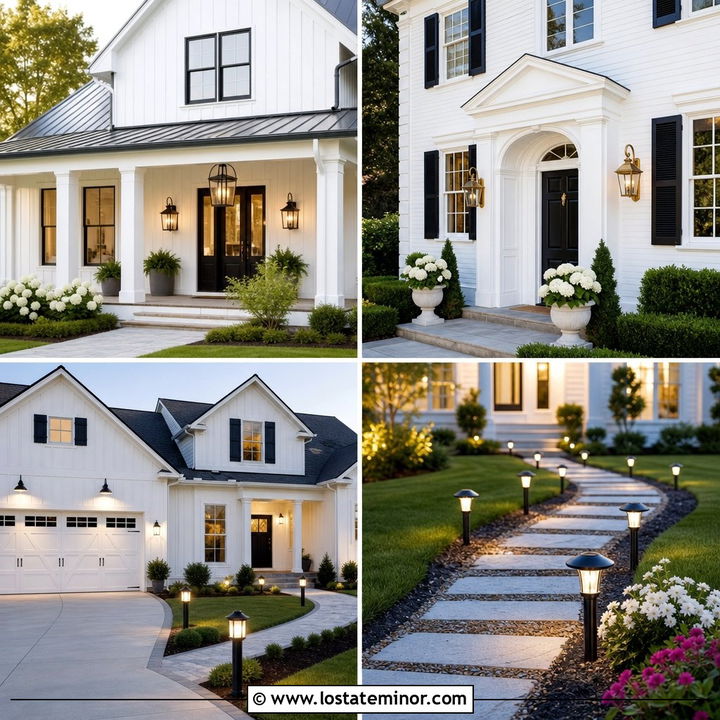
Sherwin-Williams Alabaster gives a modern farmhouse a soft white body color without creating a cold, clinical appearance. Use it across board-and-batten siding, then add black-framed windows, black gutters, and a charcoal metal porch roof for clear contrast. Oversized black sconces beside the front door and garage should provide warm 2700K illumination. Their dark finish looks connected to the windows during daylight hours. A medium-stained oak door and matching porch posts prevent the black-and-white palette from feeling too sharp. Finish the facade with pale limestone skirting, simple foundation shrubs, and path lights directed toward the walkway rather than the street. The result is a balanced farmhouse exterior that looks clean in daylight and comfortably illuminated after sunset.
2. Warm White Colonial With Brass Lanterns
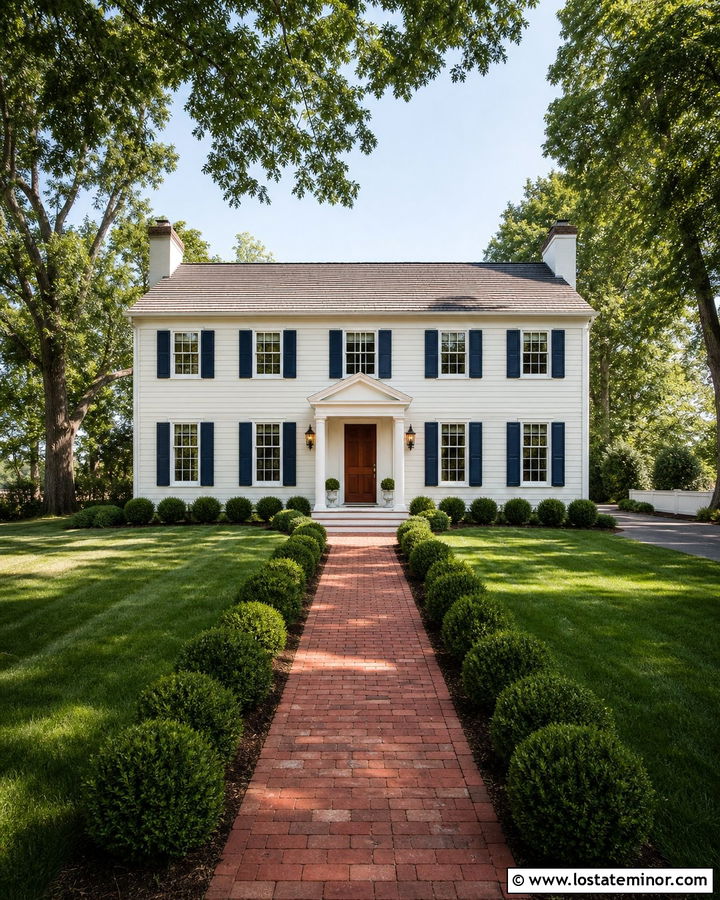
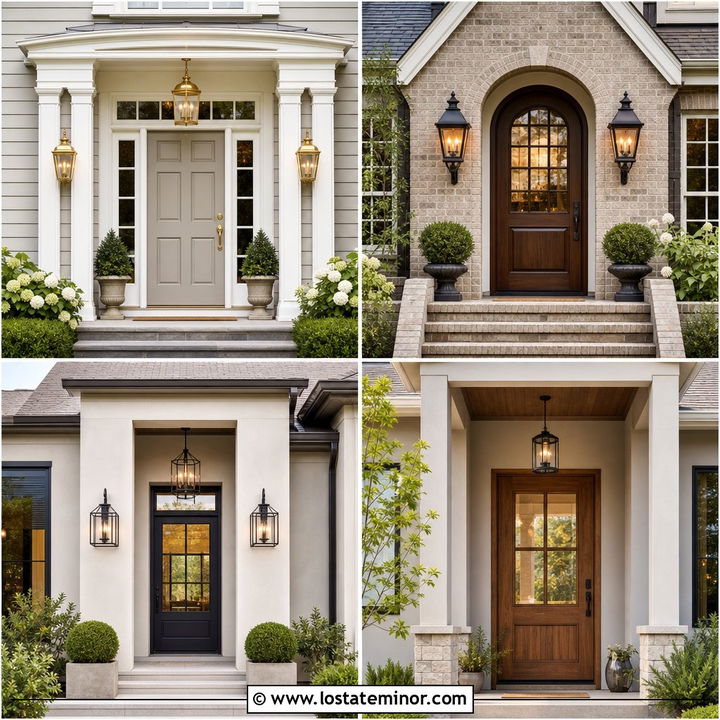
Could a traditional Colonial feel lighter without losing its formal character? Benjamin Moore White Dove creates a warm white foundation for symmetrical clapboard siding, divided-light windows, and a centered entrance. Paint the shutters a deep historical navy and keep the trim slightly cleaner white for gentle definition. A pair of aged brass lanterns should frame a polished mahogany front door, while a coordinating hanging lantern fills the covered entry with soft light. Small shielded path fixtures can lead through clipped boxwood beds toward a red brick walkway. Brass works particularly well here because its warmth connects the creamy siding, wood door, and brick. Keep fixture sizes generous enough to match the two-story facade, but avoid using so many lights that the Colonial architecture loses its calm symmetry.
3. Warm White Craftsman With Stone Uplighting
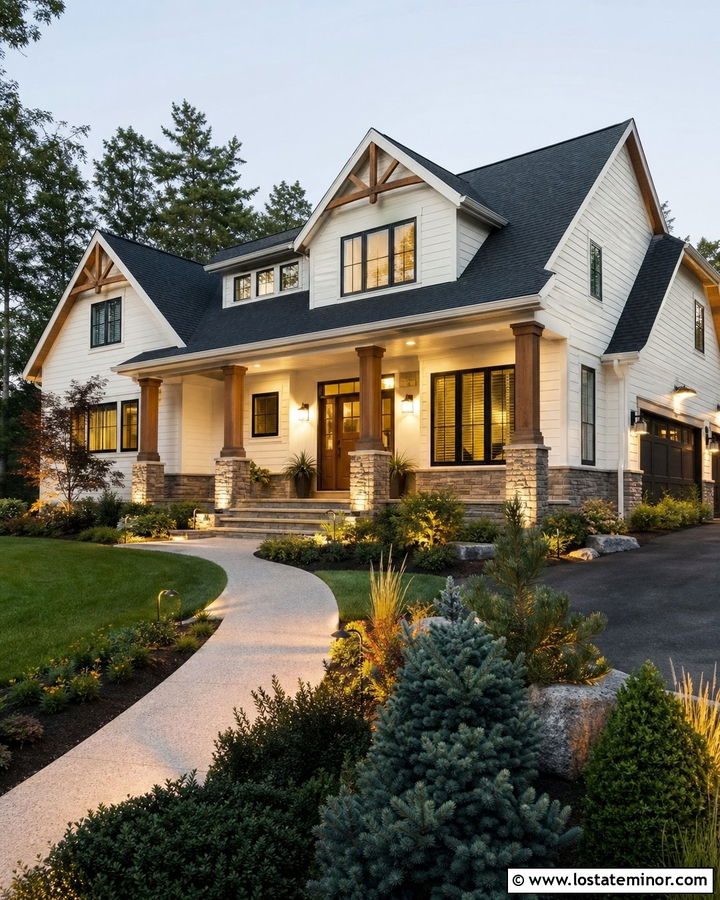
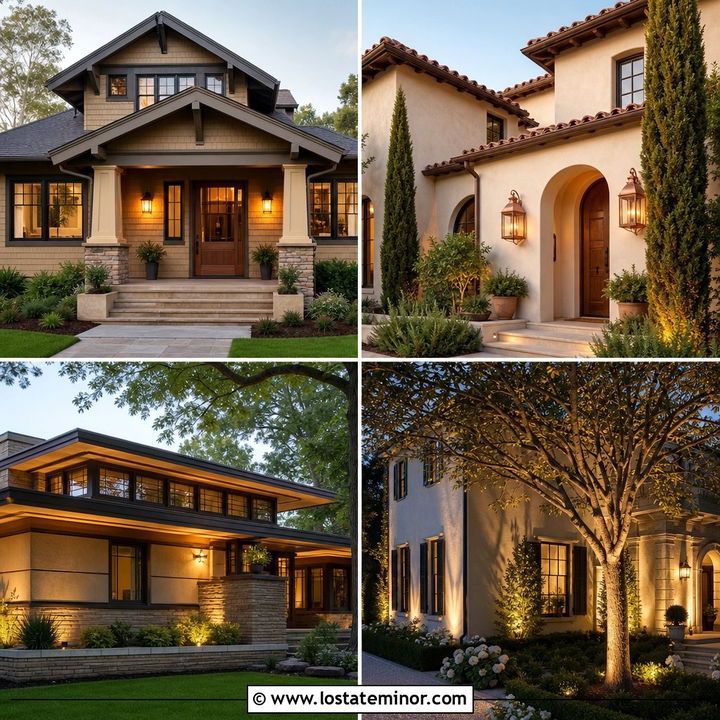
Natural materials make a Craftsman exterior feel grounded, even when most of the house is painted warm white. Cover the horizontal siding in Sherwin-Williams Greek Villa, then use warm cedar for the front door, porch ceiling, brackets, and tapered columns. A substantial fieldstone porch base adds gray, brown, and sandy tones that support the creamy paint. Place low-glare uplights near the stone columns so their texture remains visible without producing harsh hotspots. Bronze Craftsman sconces beside the door can provide the primary entry light, while subtle step lights improve visibility across the porch. Keep the roof medium charcoal and the trim close to the body color. Layered ornamental grasses, low evergreens, and a curved walkway complete this relaxed, handcrafted curb-appeal scheme.
4. Warm White Ranch With Path Lighting
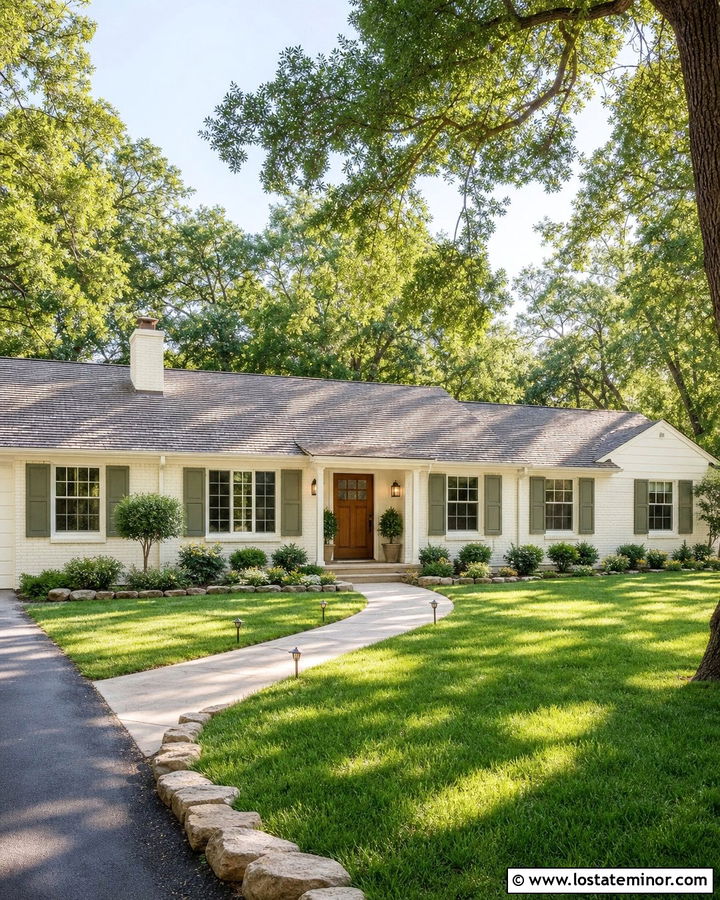
A long ranch facade benefits from lighting that creates rhythm instead of concentrating every fixture near the front door. Paint the brick and horizontal siding Benjamin Moore Swiss Coffee for a unified warm white exterior. Add muted olive shutters, a walnut front door, and bronze gutters to establish an earthy palette. Along the front walkway, use low mushroom-style path lights with wide, downward-facing illumination. Space them between planting groups rather than arranging them like runway markers. Dark bronze wall lights can highlight the entry and garage without competing with the simple roofline. A weathered gray roof and natural stone edging keep the scheme casual. This approach visually breaks up the wide elevation while making the entrance easier to identify from the driveway and street.
5. Warm White Cottage With Copper Porch Lights
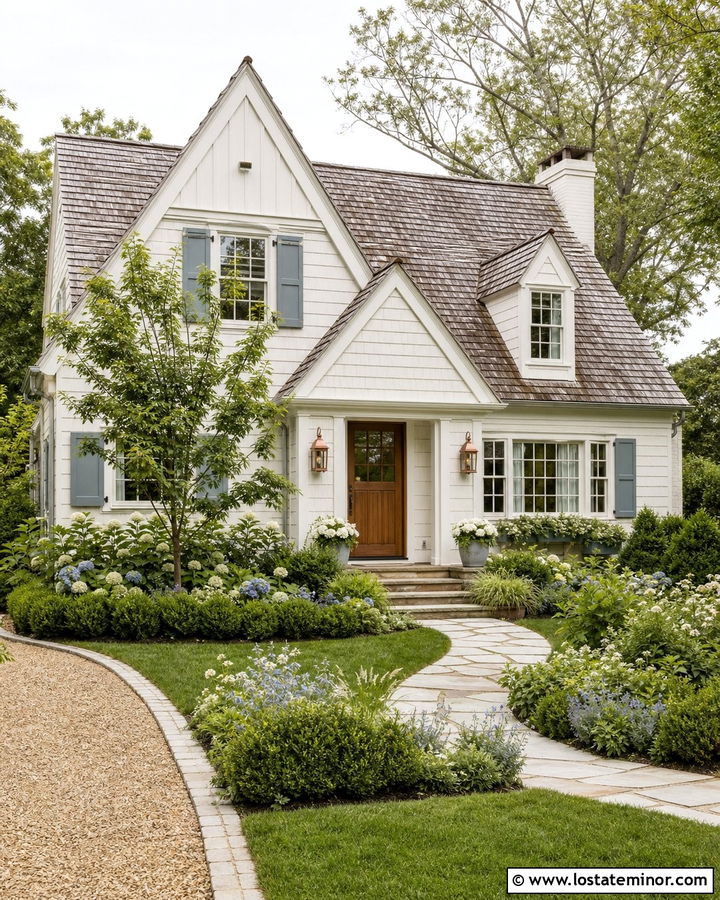
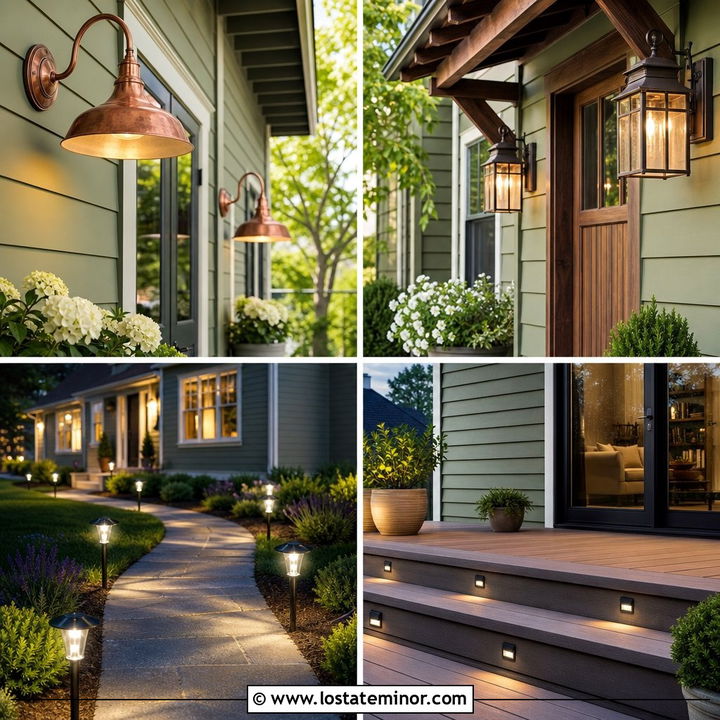
A cozy cottage can carry more color and texture than a large minimalist home. Benjamin Moore Seapearl offers a gentle warm white backdrop for lap siding, arched windows, and a steep gabled roof. Pair it with dusty blue shutters, a stained oak door, and a weathered cedar shingle roof. Unlacquered copper sconces on either side of the entrance introduce a warm metallic accent that will develop character over time. A small copper pendant under the porch roof reinforces the look without overwhelming the facade. Use tiny low-voltage lights among flowering borders and illuminate one ornamental tree from below. The complete design feels collected and approachable because the warm white paint, copper, wood, and garden colors share a naturally softened appearance.
6. Warm White Modern House With Linear Lighting
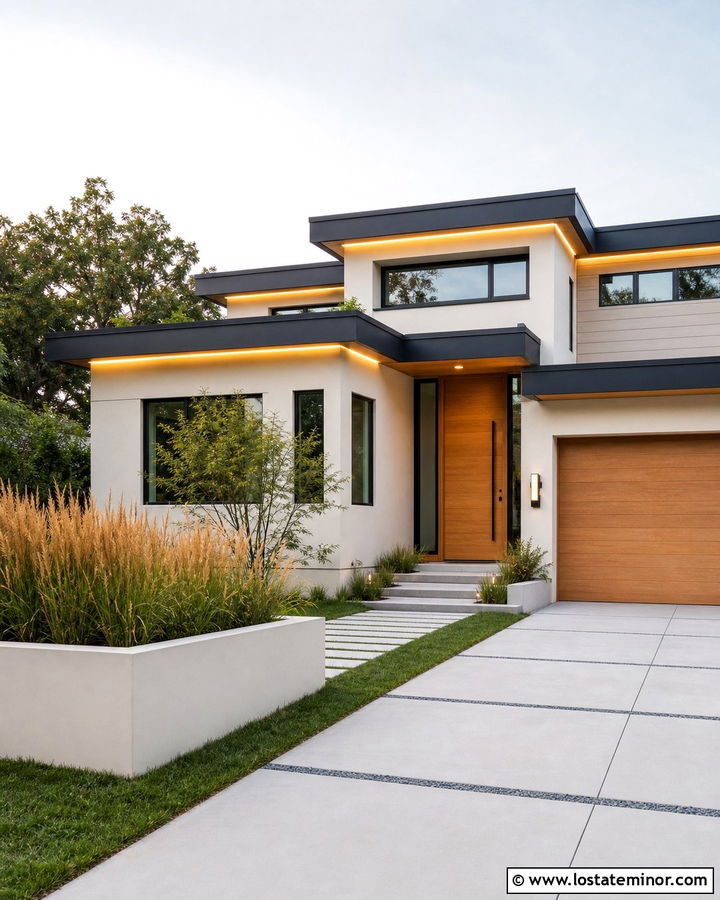
For a modern house, warm white paint can soften angular architecture while preserving its crisp geometry. Use Sherwin-Williams Shoji White on smooth stucco walls and fiber-cement panels. Contrast the body with charcoal window frames, a flat dark roof, and a natural white oak garage door. Concealed linear lighting beneath roof overhangs can trace the building’s horizontal planes without exposing individual bulbs. Add recessed step lights along the concrete entry and one narrow wall washer beside the oversized pivot door. The lighting should emphasize structure, not cover the entire facade in equal brightness. Minimal grasses, rectangular planting beds, and large concrete pavers extend the clean lines into the landscape. This scheme feels contemporary yet comfortable because wood and warm illumination balance the black architectural accents.
7. Warm White Cape Cod With Window Box Lighting
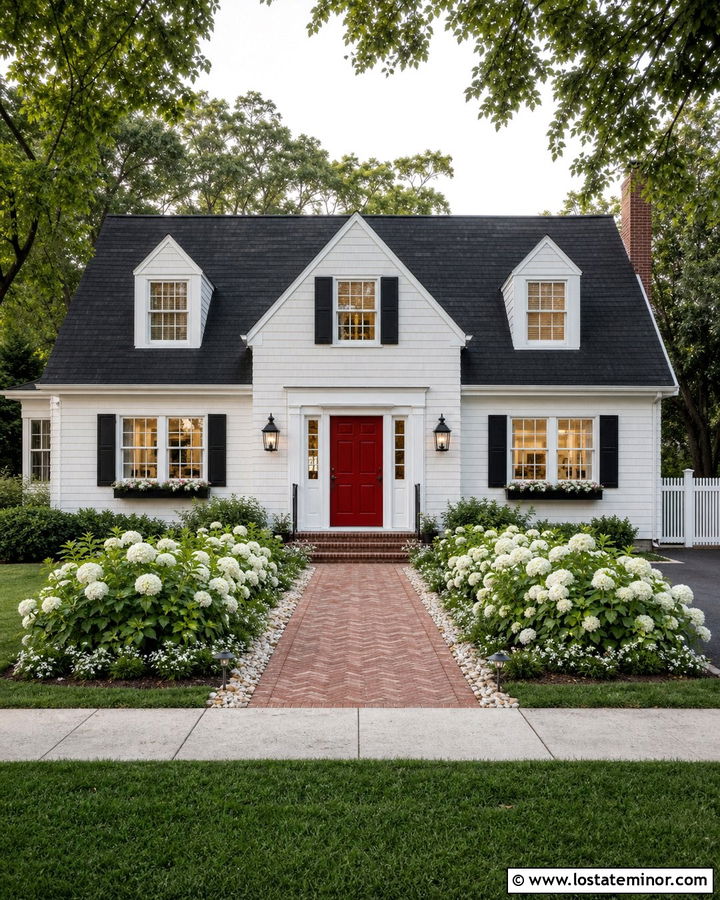
Benjamin Moore Simply White brings a cheerful, lightly warmed finish to a compact Cape Cod exterior. Use it on shingle siding and trim, then introduce black shutters, a cranberry red front door, and a charcoal roof for classic coastal contrast. Traditional lantern sconces can flank the doorway, while miniature downlights placed discreetly beneath the second-story window boxes illuminate flowers and textured shingles. The small accent lights should remain hidden during the day. Add low path fixtures beside a brick walkway, keeping them below the surrounding hydrangeas. White fencing and a shell-covered garden edge reinforce the coastal character without making the property feel themed. This complete look gives the small facade depth while maintaining the tidy symmetry associated with Cape Cod homes.
8. Warm White Tudor With Timber Accent Lighting
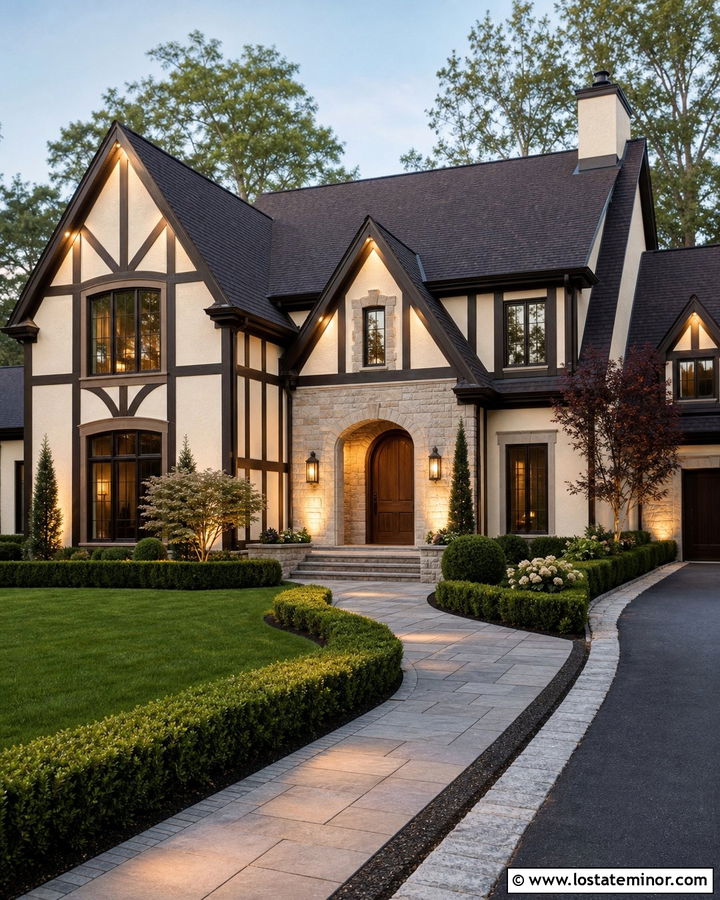
Warm white stucco offers a softer alternative to the strong cream-and-brown contrast often seen on Tudor homes. Paint the main exterior Benjamin Moore Ballet White, then retain dark walnut half-timbering, bronze windows, and a deep brown roof. Concealed downlights beneath projecting gables can gently reveal the timber pattern without producing long, distracting shadows. Place one old-world bronze lantern near the arched wood door and use narrow uplights to emphasize stonework around the entry. Repeating the same warm color temperature throughout keeps the materials visually connected. A curved flagstone walk, clipped evergreen hedges, and a small ornamental tree complete the setting. The combination respects Tudor architecture while making the facade feel lighter, cleaner, and more approachable from the curb.
9. Warm White Mediterranean House With Stucco Wall Wash
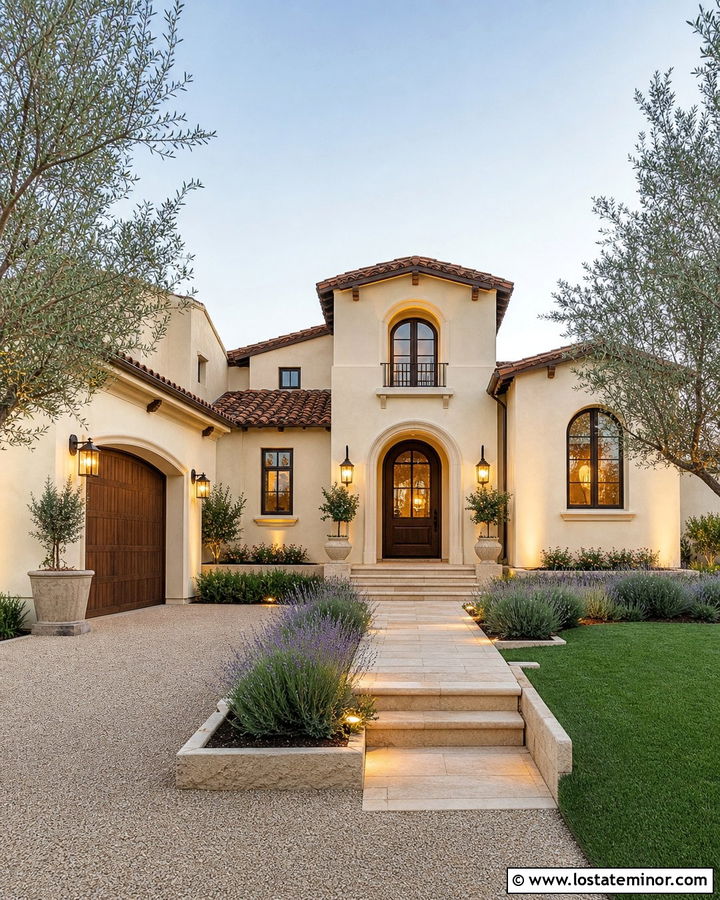
Sun-washed stucco and warm lighting create a natural pairing on Mediterranean architecture. Sherwin-Williams Creamy provides a softly golden white body color that complements a terracotta tile roof, dark bronze windows, and a richly stained arched door. Install shielded wall-wash fixtures near the base of broad stucco sections so the illumination travels smoothly upward. Avoid narrow beams that create sharp cones on the simple walls. Wrought-iron lanterns can frame the entrance, while low step lights define the tiled porch. Add limestone planters, olive trees, lavender, and warm gravel around the foundation. The roof remains the strongest color, but the lighting gives the warm white stucco enough dimension to hold its own. This scheme feels established, inviting, and appropriate for sunny regional landscapes.
10. Warm White Bungalow With Pendant Porch Light
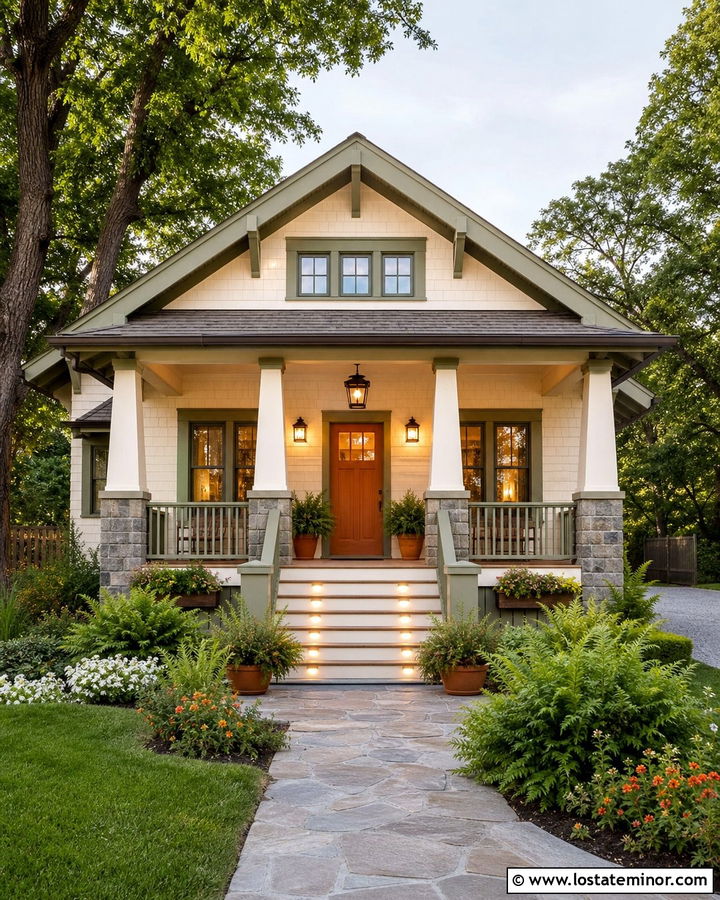
A deep bungalow porch needs more than a small light mounted beside the door. Cover the clapboard siding in Benjamin Moore Navajo White, then add moss green trim, natural cedar shingles, and a burnt orange front door. Hang one substantial bronze pendant from the center of the porch so it illuminates the seating area and entrance together. Matching wall sconces can sit beside the door at a lower brightness level. Use recessed step lights in the porch stairs and a few shielded uplights around the tapered columns. The layered approach prevents the broad porch roof from making the facade appear shadowy. Ferns, native flowering plants, and a stone walkway support the bungalow’s informal character while the warm white siding keeps the overall exterior fresh.
11. Warm White Split-Level With Garage Lighting
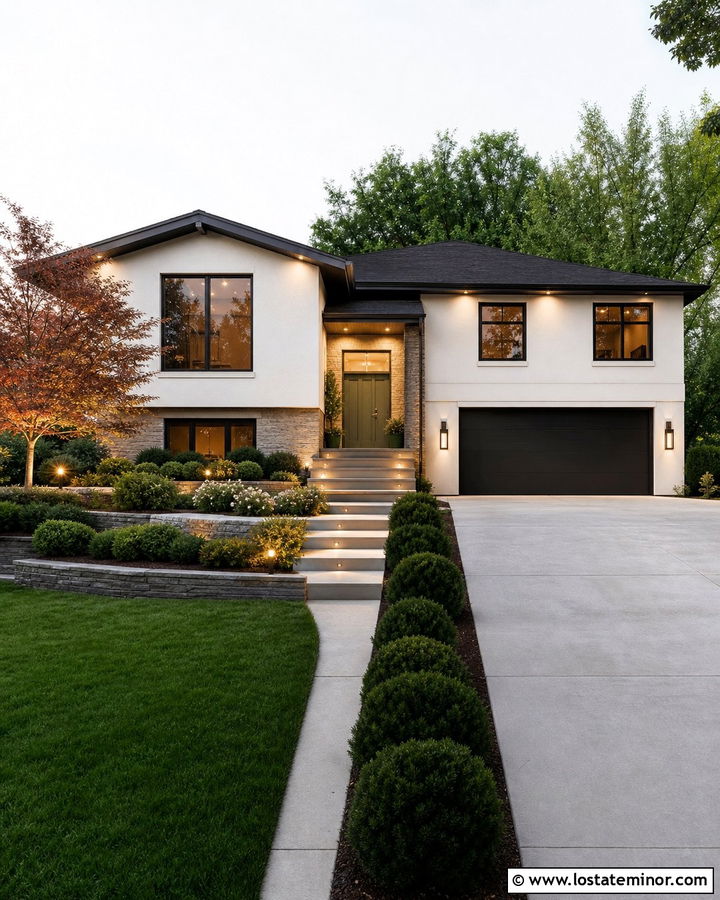
Split-level homes often have a visually dominant garage, so lighting must help reconnect it to the entrance. Paint the siding and brick Sherwin-Williams Natural Choice, a warm off-white that works with taupe stone and dark brown roofing. Use a muted sage front door to draw attention away from the garage. Instead of placing one bright fixture above the garage, mount two medium bronze sconces beside the doors and add a discreet linear light beneath the overhang. Repeat the bronze finish at the raised entry. Step lights can guide visitors up the staggered walkway, while one tree uplight balances the opposite end of the facade. This complete scheme distributes attention across the house and makes the split-level proportions feel more intentional.
12. Warm White Brick House With Entry Lanterns
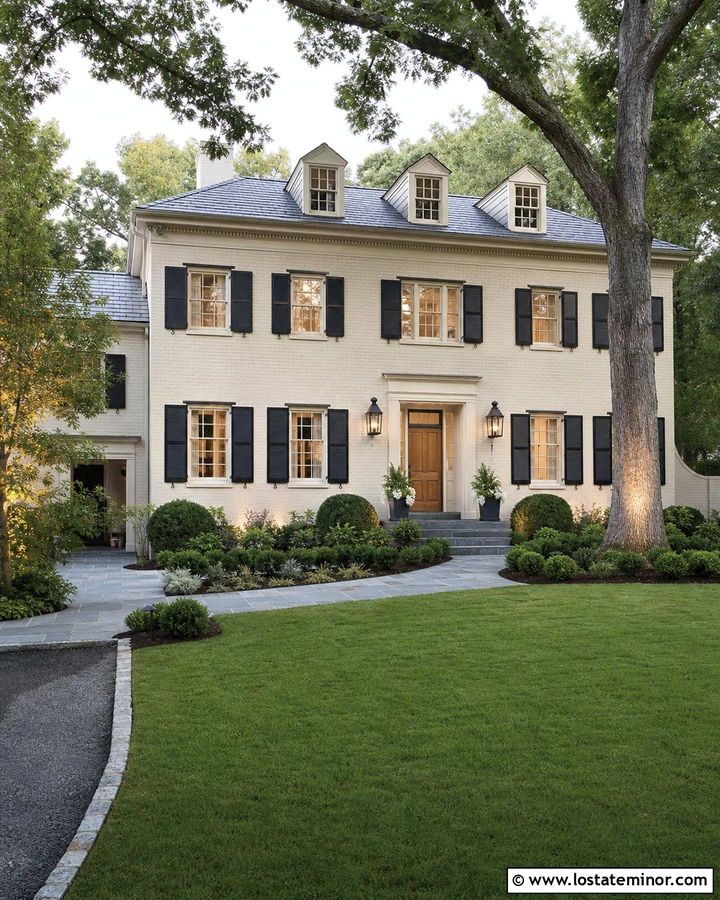
Painted brick gains noticeable depth when light grazes its textured surface. Benjamin Moore Pale Oak creates a warm white and light greige appearance that feels softer than a pure white coating. Pair it with creamy trim, black shutters, and a medium oak front door. Tall iron lanterns should flank the entrance, with their size scaled to the surrounding brick arch or portico. A hanging lantern can be added when the porch ceiling is high enough to accommodate it. Keep landscape lighting restrained, using low path fixtures and one broad uplight on a mature tree. A slate walkway and layered green shrubs ground the pale exterior. Together, the warm white brick, dark metal, natural wood, and measured lighting create a refined traditional facade.
13. Warm White Board And Batten House With Gooseneck Lights
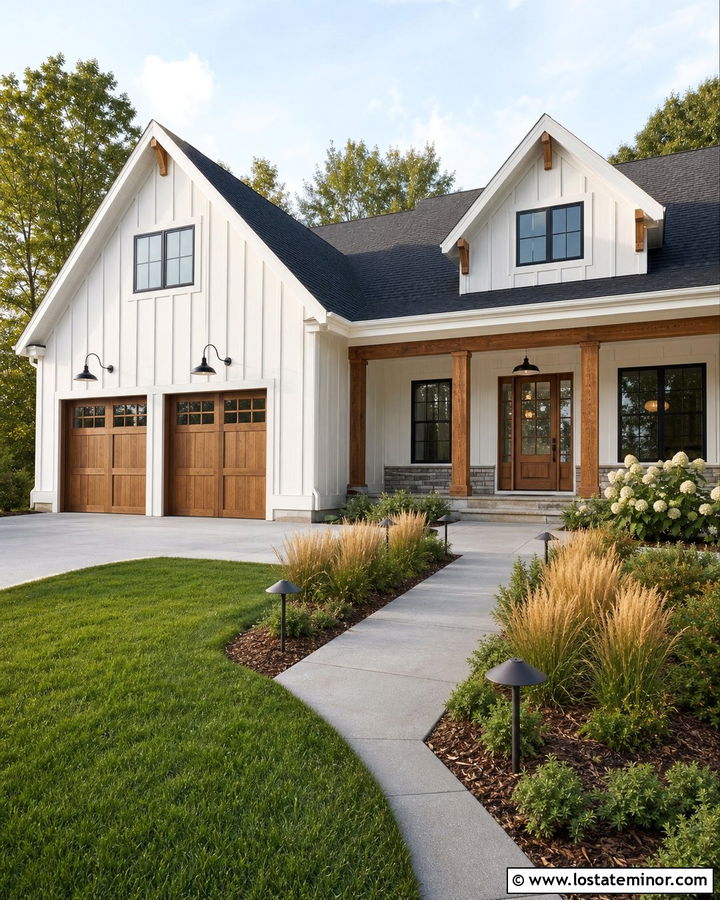
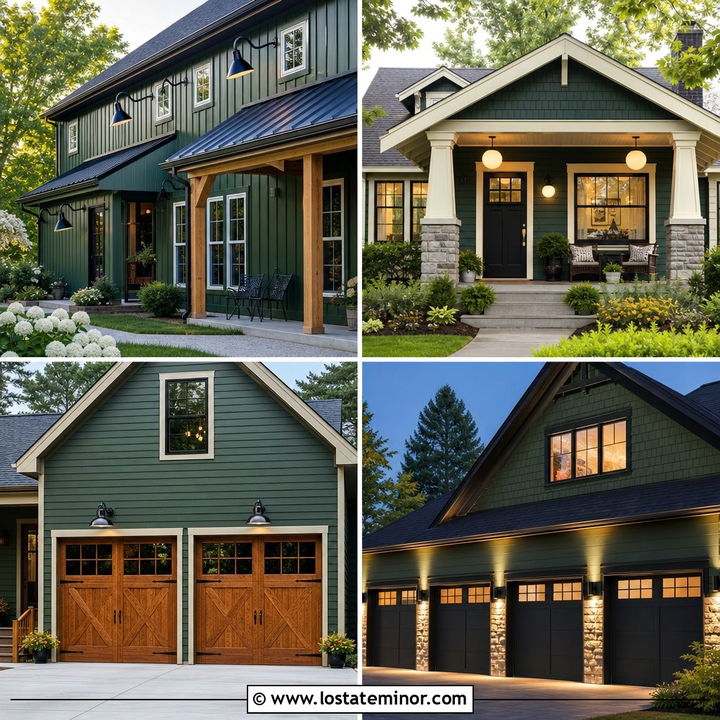
Vertical siding creates strong shadows, making fixture placement especially important. Paint a one-and-a-half-story house Sherwin-Williams Oyster White, then combine the warm white board-and-batten siding with black windows, a charcoal roof, and cedar garage doors. Position matte black gooseneck lights above the garage bays so their shades direct illumination downward. Use matching farmhouse sconces around the main entry rather than repeating gooseneck fixtures everywhere. Cedar porch columns and a natural wood door warm the high-contrast palette during the day. At ground level, simple path lights can lead through ornamental grasses and white flowering shrubs. The lighting follows the home’s practical farmhouse character while the warm exterior paint prevents the large sections of vertical siding from looking stark or industrial.
14. Warm White Coastal House With Bronze Sconces
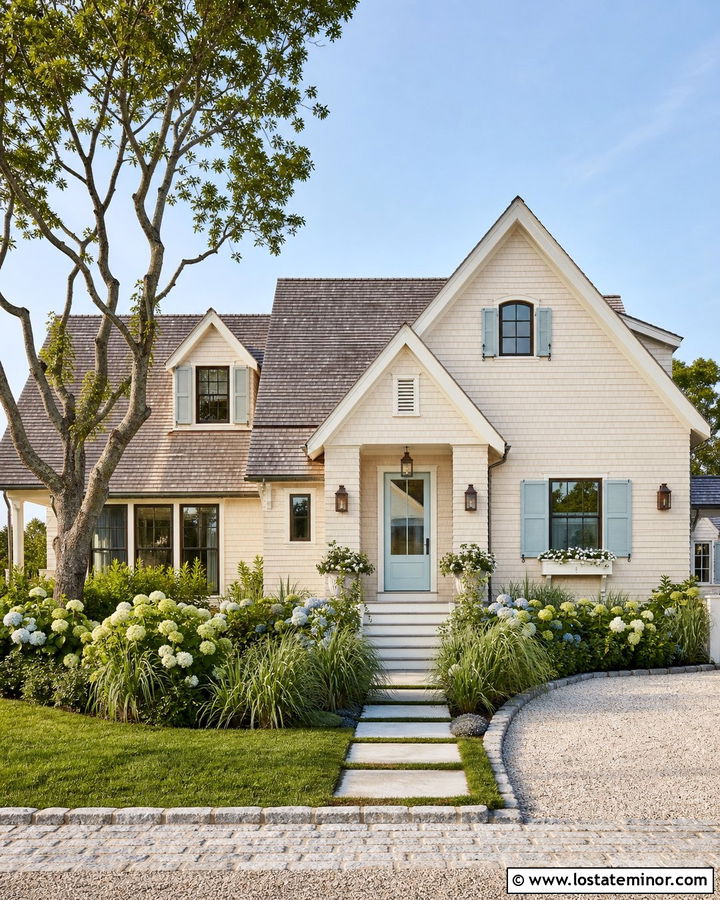
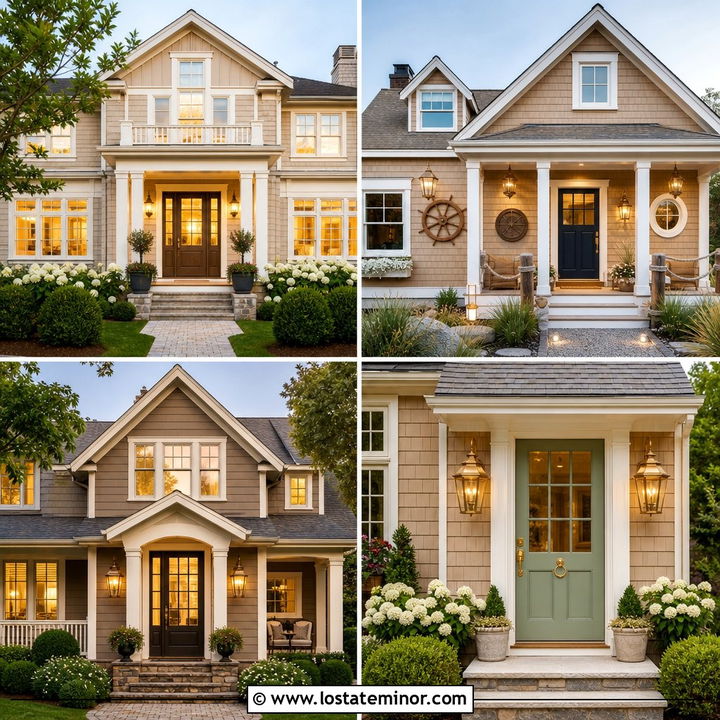
A coastal exterior can look bright and relaxed without relying on icy white siding. Benjamin Moore Soft Chamois brings a subtle creamy tone to cedar shingles or lap siding. Pair it with light blue-gray shutters, a pale aqua door, bronze windows, and a weathered gray roof. Bronze sconces with clear glass can frame the entry and illuminate the porch with a warm, even glow. Use low-profile fixtures along the sandy stone walkway, taking care to direct light downward. A small uplight beneath a sculptural palm or windswept ornamental tree adds depth to the landscape. White hydrangeas, beach grasses, and natural gravel complete the palette. The bronze details keep the delicate coastal colors grounded and help the entire house feel welcoming rather than washed out.
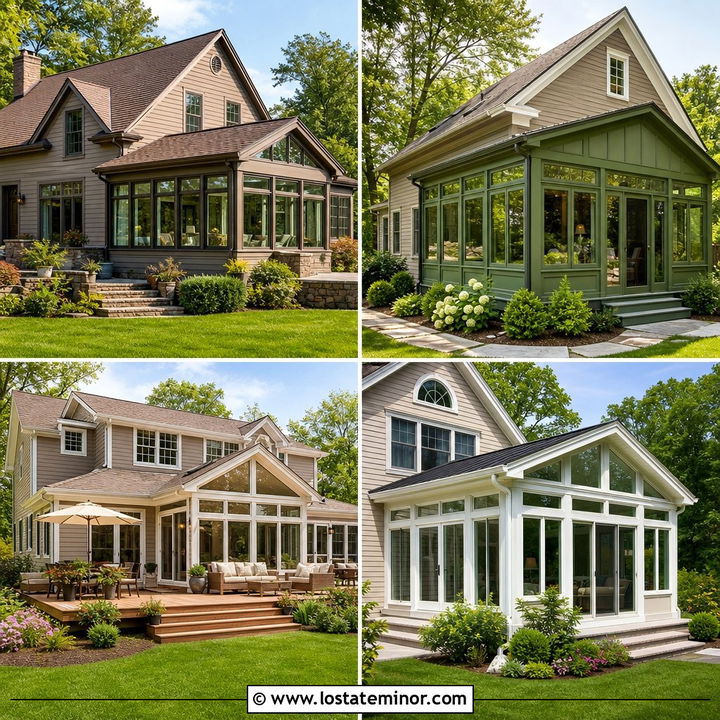
15. Warm White Prairie House With Wide Beam Lighting
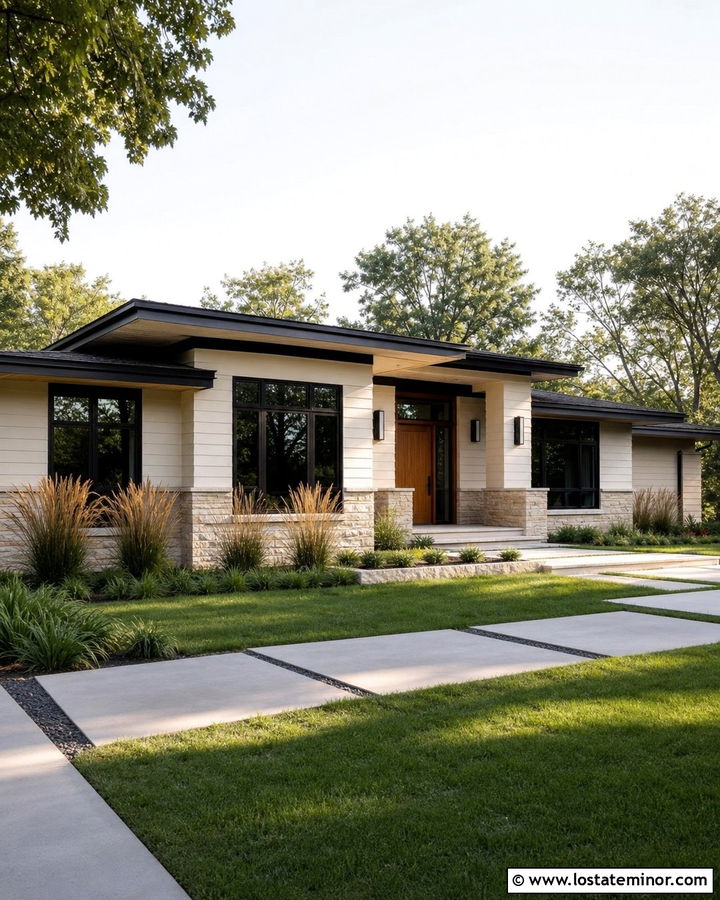
Prairie architecture emphasizes long horizontal lines, so the lighting should reinforce that direction. Apply Benjamin Moore Natural Cream to stucco and horizontal siding, then use dark bronze window bands, deep eaves, and warm buff stone around the foundation. Wide-beam fixtures placed near the ground can softly illuminate broad wall sections and stone piers. Recessed lights beneath the extended roofline should be spaced carefully, leaving calm areas between pools of light. A low-profile wood front door and bronze garage door continue the horizontal composition. Finish the yard with layered grasses, flat concrete pavers, and low shrubs that do not hide the architecture. The warm white body color brightens the wide facade, while the measured lighting highlights its structure without turning every surface into a focal point.
16. Warm White French Country House With Lantern Lighting
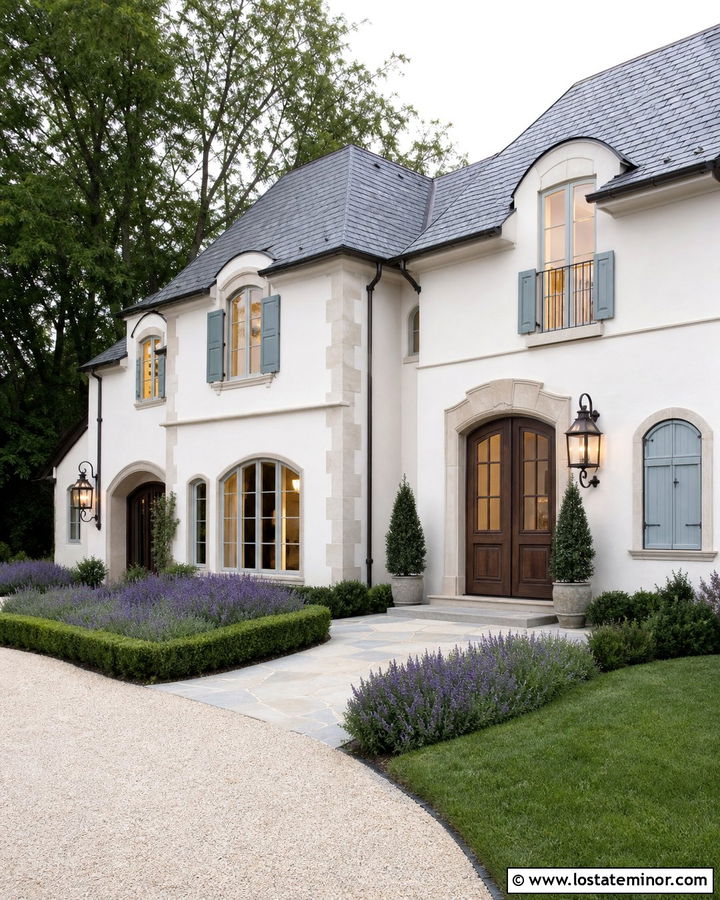
Sherwin-Williams Aesthetic White creates a warm, muted background for a French country exterior with limestone, steep rooflines, and arched openings. Keep the trim close to the body color, then add soft blue-gray shutters and a medium-stained double front door. A pair of traditional electric lanterns with a gas-flame appearance can establish a romantic entry focal point without introducing a different fixture style. Use discreet uplighting around the stone corners and one small downlight beneath each major gable. The roof can be charcoal slate or weathered brown, depending on the stone tones. Lavender borders, clipped hedges, and a pale gravel drive finish the landscape. This complete scheme combines rustic texture and formal balance without making the warm white facade feel overly ornate.
17. Warm White Midcentury House With Globe Lights
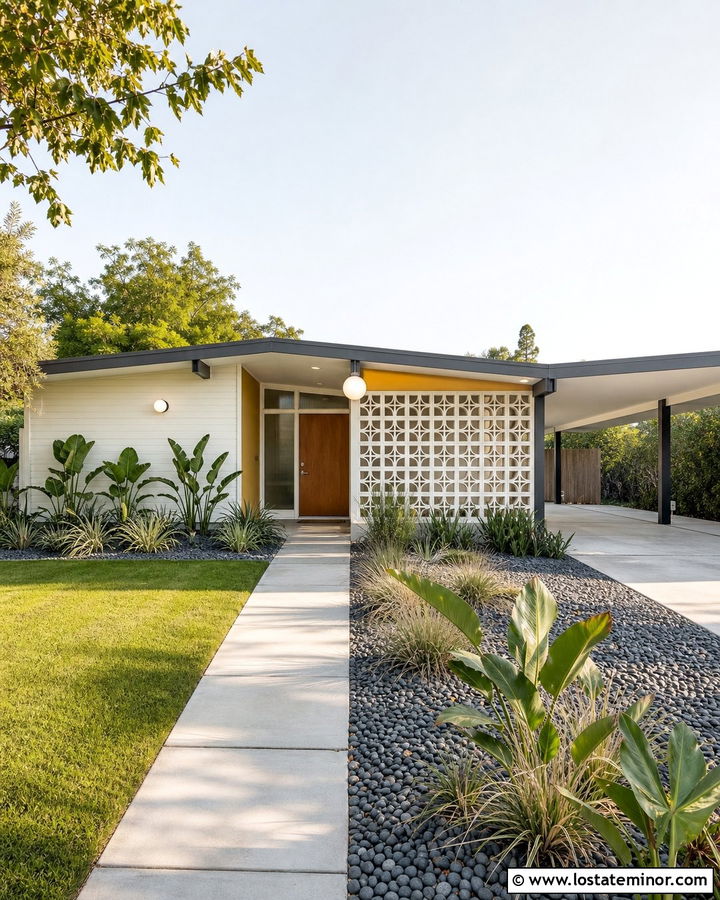
Midcentury homes respond well to lighting that is simple, sculptural, and slightly playful. Paint the stucco or narrow horizontal siding Sherwin-Williams White Duck. Add a walnut front door, charcoal fascia, and muted ochre panels near the carport or entry. Milk-glass globe sconces introduce a period-appropriate shape and spread softer light than exposed directional fixtures. Repeat one globe as a ceiling-mounted porch light, but keep the remaining landscape lighting nearly invisible. Low fixtures can wash a breeze-block wall, illuminate the address area, and mark the concrete path. Use broad-leaf plants, ornamental grasses, and dark river rock around the foundation. The warm white paint modernizes the exterior while walnut, ochre, and glowing globes preserve its recognizable midcentury personality.
18. Warm White Victorian House With Decorative Lanterns
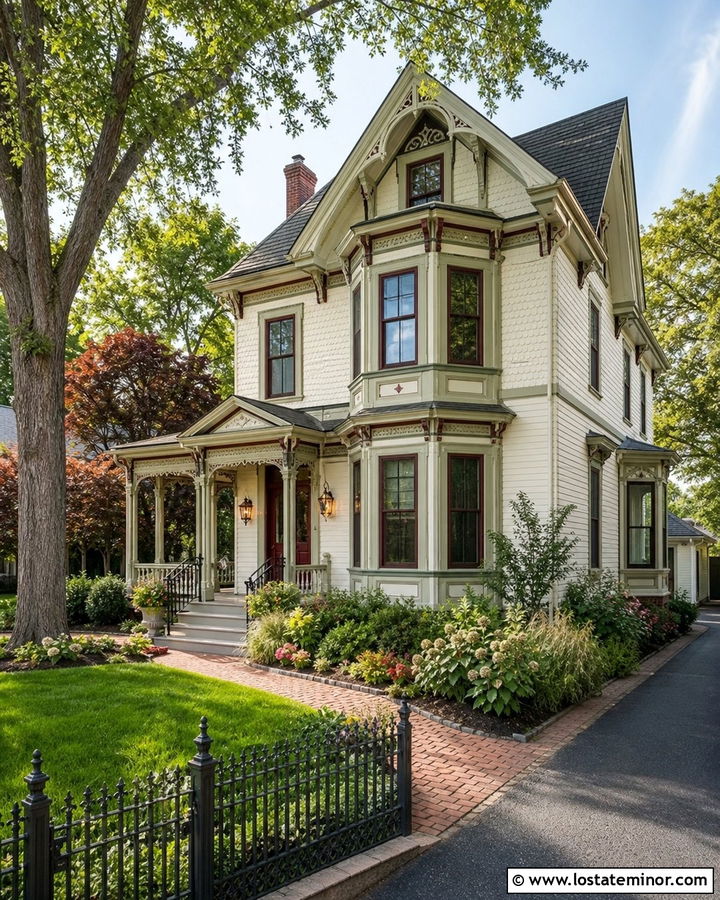
Detailed Victorian architecture needs controlled illumination so brackets, trim, and shingles remain visible without looking busy. Benjamin Moore Swiss Coffee works well as the primary warm white, paired with muted sage trim, burgundy accents, and a dark gray roof. Decorative bronze lanterns can frame the double front doors, while a coordinating pendant hangs beneath the porch. Add narrow uplights at the base of the tower or bay window to reveal vertical details. Avoid outlining every gable with lights, since the architecture already provides abundant visual interest. A brick path, flowering borders, and an iron fence complete the traditional setting. Keeping most of the body one warm white allows the accent colors and carefully selected fixtures to organize the elaborate facade.
19. Warm White Southern House With Column Uplighting
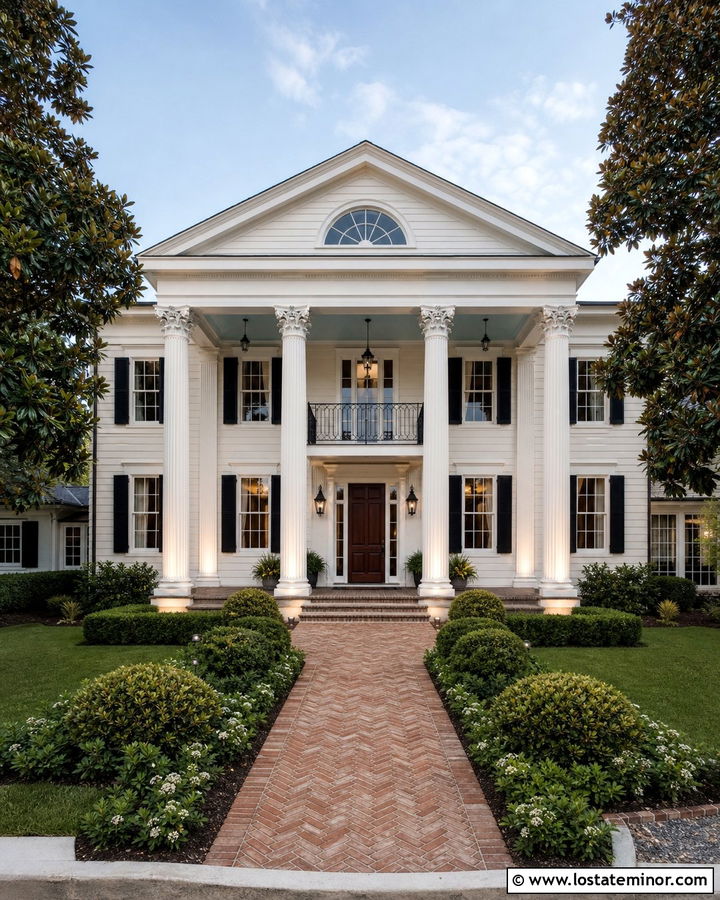
Tall porch columns are the defining feature of many Southern homes, and soft uplighting can give them presence across the full facade. Paint the siding and columns Benjamin Moore White Dove, then add pale blue porch ceilings, black shutters, and a stained mahogany door. Place narrow, shielded uplights near the base of selected columns rather than lighting every one equally. Traditional black lanterns beside the entrance and subtle ceiling lights along the porch provide practical illumination. A red brick walkway connects the warm white exterior to the landscape, while magnolias, clipped hedges, and layered foundation plants soften the formal symmetry. The resulting house feels grand but not glaring. Its lighting emphasizes architectural repetition while maintaining a comfortable, residential sense of warmth.
20. Warm White Desert House With Low Landscape Lighting
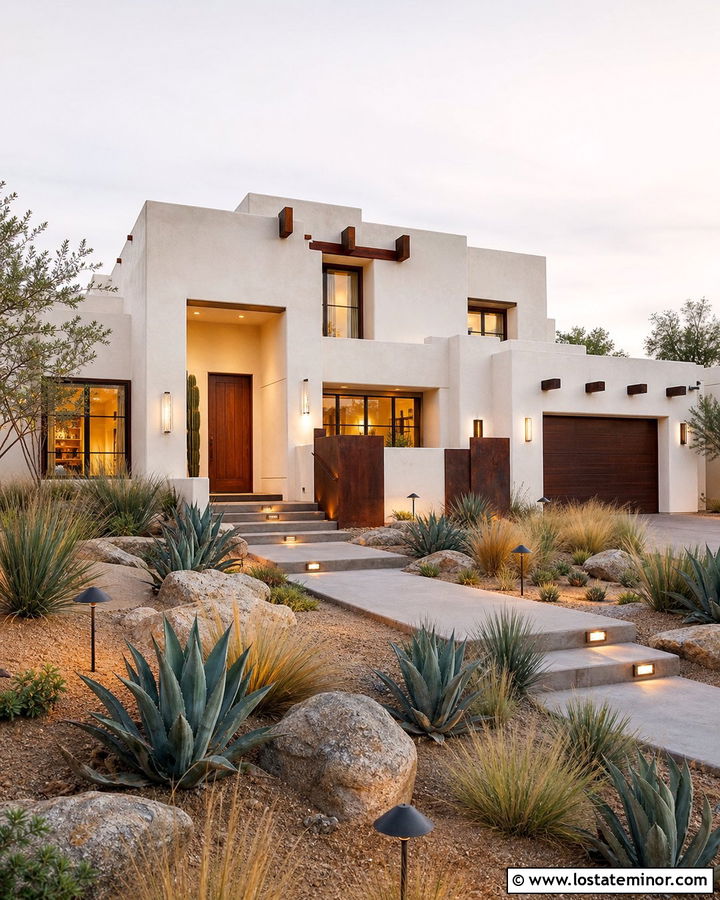
In a desert setting, warm white stucco can blend gracefully with sand, stone, and drought-tolerant planting. Use Sherwin-Williams Casa Blanca across a low-profile Southwestern exterior, then add rust-colored metal accents, dark bronze windows, and a natural mesquite front door. Keep the lighting close to the ground with hooded path fixtures, recessed step lights, and small uplights beneath agave or sculptural desert trees. A gentle wall wash can highlight one broad stucco plane, but much of the facade should remain softly illuminated. Gravel, decomposed granite, boulders, and clusters of native grasses complete the yard. The restrained plan reduces visual clutter while allowing the creamy exterior, textured landscape, and warm metal finishes to form one cohesive regional scheme.
21. Warm White Mountain House With Timber Downlighting
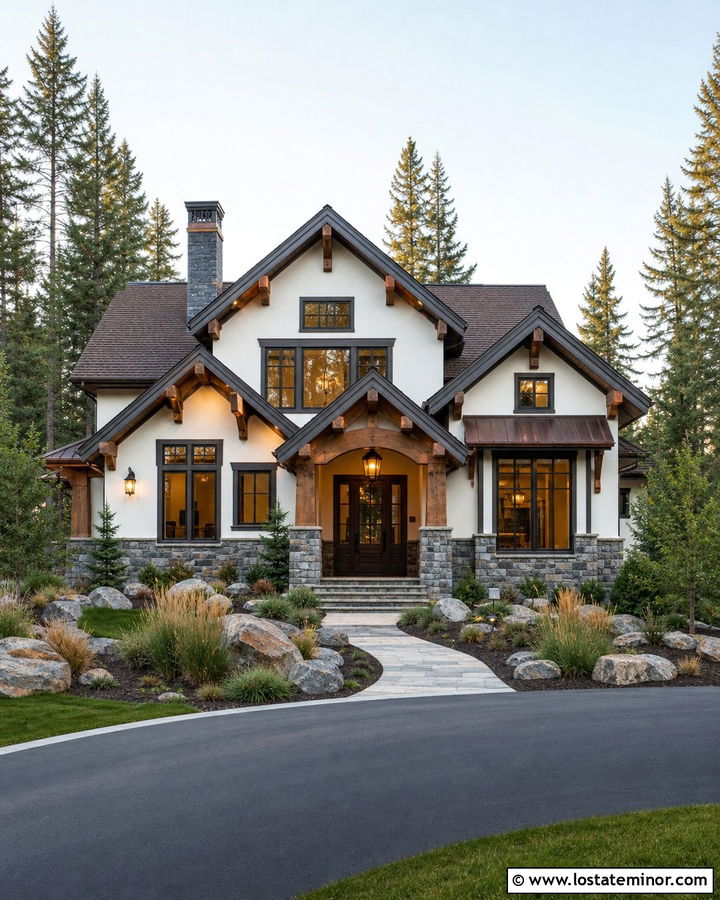
A mountain home can use warm white siding to balance heavy stone and dark timber. Paint the lap siding Sherwin-Williams Divine White, then add stained beams, charcoal windows, and a mixed-gray stone foundation. Install shielded downlights beneath the timber gables so the wood grain and stone remain visible. Rustic bronze sconces can frame the front door, while recessed stair lights improve visibility across the raised porch. Use a medium brown roof that relates to the beams instead of introducing solid black overhead. Native grasses, evergreen shrubs, boulders, and a gently curving drive connect the architecture to its setting. This complete look feels bright enough for a wooded property, yet the timber, masonry, and warm lighting keep it from appearing overly polished.
22. Warm White Lake House With Deck Step Lighting
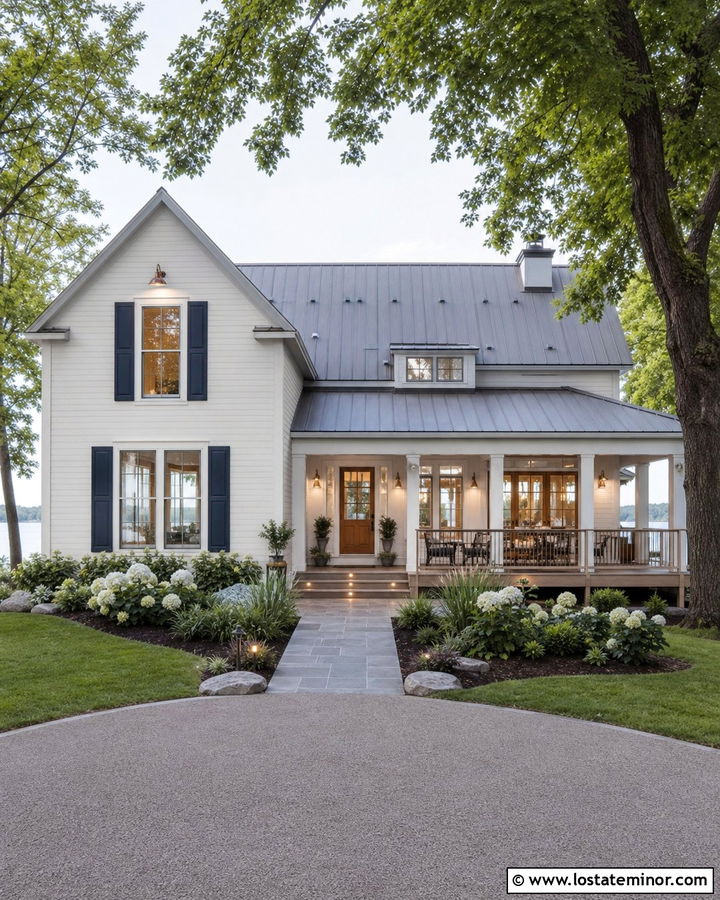
A lake house should feel open and casual from both the driveway and outdoor living areas. Benjamin Moore Seapearl gives the siding a softly warmed white finish, complemented by slate blue shutters, a cedar front door, and a weathered gray metal roof. Integrate small recessed lights into the deck stairs and railing posts rather than adding bulky fixtures across the structure. Bronze wall sconces can illuminate the entrance and side doors, while downlights beneath the porch roof define seating areas. Keep bulbs consistent in color temperature so the decks and facade appear connected. Natural stone paths, hydrangeas, native grasses, and mature shade trees complete the relaxed setting. The result is a practical full-house scheme with attractive lighting that does not compete with the surrounding landscape.
23. Warm White Townhouse With Narrow Beam Sconces
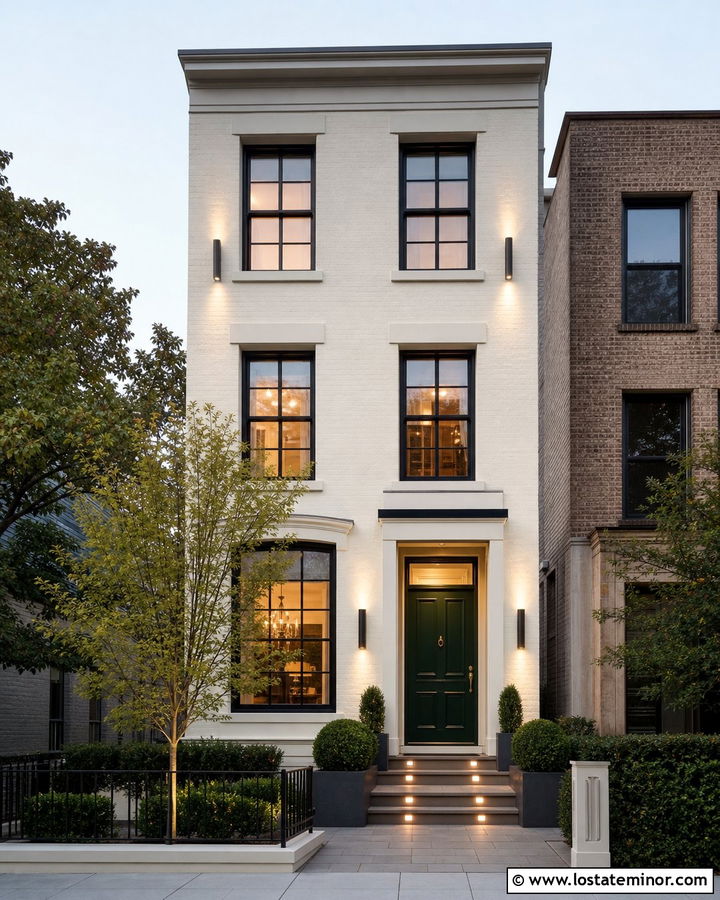
A narrow townhouse facade requires lighting that adds height without spilling into neighboring windows. Paint brick or smooth stucco Benjamin Moore Maritime White, then use black-framed windows, a deep forest green door, and antique brass hardware. Tall, slim sconces with narrow downward beams can frame the entrance and emphasize the vertical proportions. A small recessed light above the house number improves visibility without creating a bright patch across the entire wall. Add discreet step lights along the compact stoop and use one carefully positioned uplight for a narrow ornamental tree. Dark planters and clipped greenery provide structure at ground level. This scheme gives a small urban exterior polish and identity while keeping the warm white body color as the calm connecting element.
24. Warm White Spanish House With Arched Entry Lighting
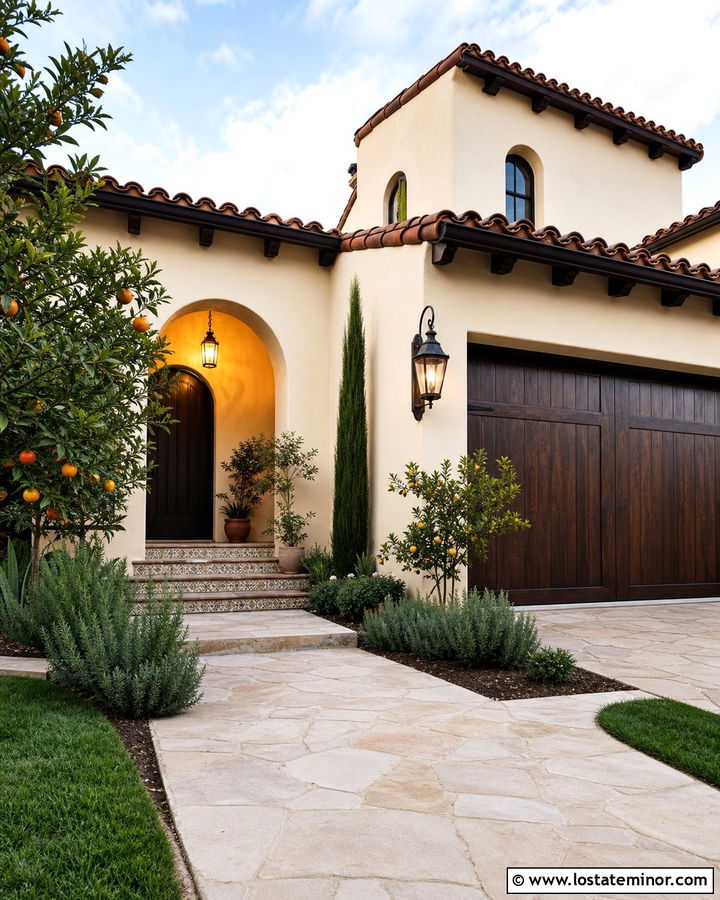
Arches, textured stucco, and clay roof tiles become richer when the lighting follows their curves. Use Benjamin Moore Mayonnaise as the warm white exterior, then add terracotta roofing, dark wood garage doors, and wrought-iron window details. Concealed downlights inside the arched entry can produce an even glow without exposing the bulb from the street. Place iron lanterns beside the main door and low uplights near selected stucco columns. Keep the garage lighting simple so the entry remains the visual focus. A patterned tile riser, pale stone walkway, citrus trees, and rosemary borders extend the warm palette into the yard. Every element supports the architecture, creating a Spanish-inspired exterior that feels bright during the day and gently layered when illuminated.
25. Warm White Barndominium With Barn Lights
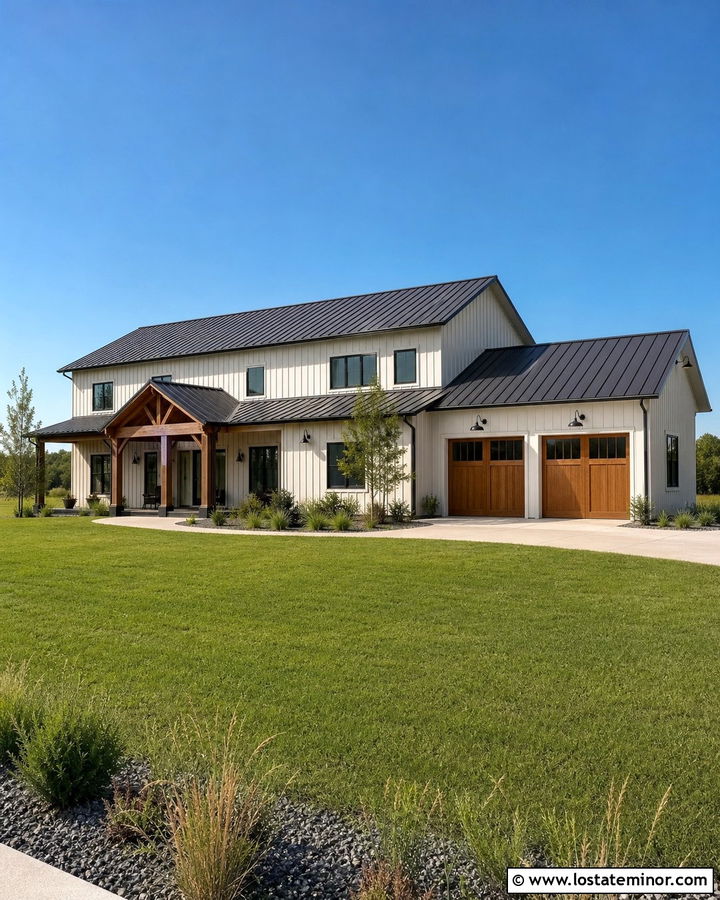
The broad walls and simple roof of a barndominium call for large fixtures with practical proportions. Cover the vertical metal or board-and-batten siding in Sherwin-Williams Greek Villa, then use a charcoal standing-seam roof, black-framed windows, and stained cedar doors. Oversized black barn lights can sit above garage doors and side entrances, directing illumination downward across the wall. Add simpler black sconces near the main porch and low step lights around the concrete approach. A timber-framed awning gives the entrance warmth and helps distinguish it from the utility areas. Gravel borders, native grasses, young shade trees, and a clean driveway complete the property. The warm white exterior keeps the large building approachable, while consistent black fixtures sharpen its agricultural character.
26. Warm White Scandinavian House With Minimal Lighting
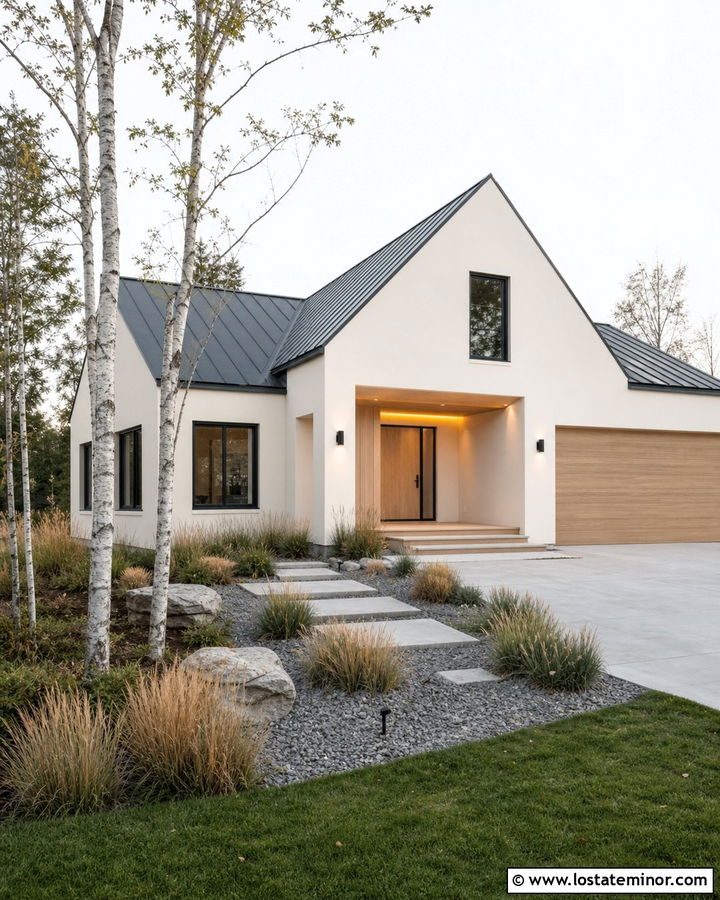
A Scandinavian-influenced exterior works best when every fixture has a clear purpose. Paint the simple gabled facade Sherwin-Williams Pearly White and combine it with pale natural wood, charcoal window frames, and a matte gray metal roof. Use compact black cylinder sconces that cast light both upward and downward beside the entrance. Concealed linear lighting beneath a slim wood canopy can define the front door without adding decorative clutter. Along the walkway, choose low black fixtures with shielded illumination and generous spacing. A gravel garden, large stepping stones, birch trees, and soft grasses support the calm palette. The warm white siding prevents the minimalist house from feeling cold, while the limited lighting arrangement preserves its uncluttered lines and natural material focus.
27. Warm White Traditional House With Post Lights
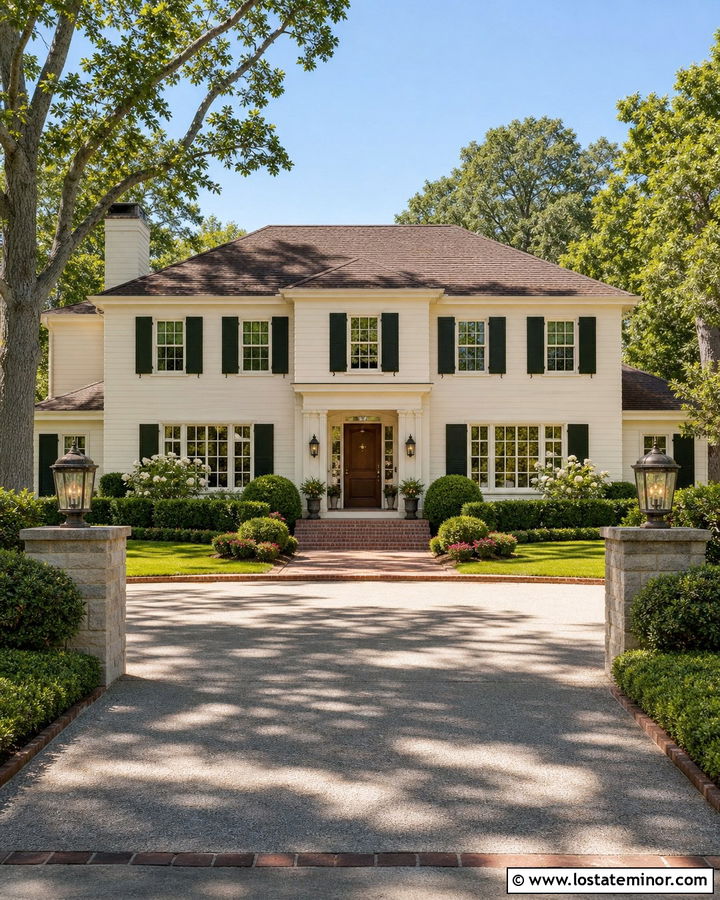
Post lights can strengthen the approach to a traditional home when their placement relates to the driveway, walk, and entrance. Paint the siding Benjamin Moore Navajo White, then add dark green shutters, cream trim, a walnut door, and a medium brown roof. Position two bronze post lanterns near the start of the front walkway or at low masonry pillars beside the driveway. Match their glass and metal finish to the sconces around the door. Smaller path lights can fill visibility gaps without competing with the taller posts. Brick edging, boxwoods, flowering shrubs, and a broad lawn complete the familiar suburban setting. This cohesive plan creates a gracious arrival while allowing the warm white house and symmetrical architecture to remain the primary visual features.
28. Warm White Contemporary House With Recessed Eave Lighting
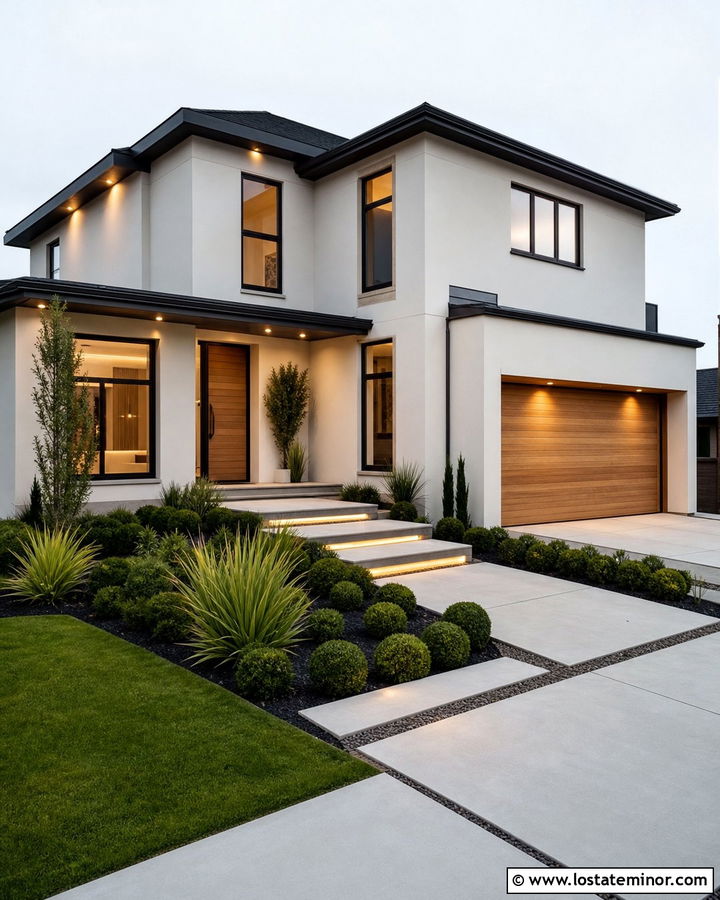
Recessed eave lighting can look sophisticated when it is used selectively rather than installed in an uninterrupted row. Apply Benjamin Moore Dove Wing to a contemporary facade with mixed stucco and horizontal siding. Pair the warm white body with graphite windows, a black roof, and honey-toned wood around the garage and entry. Place recessed lights above the front door, major wall transitions, and selected planting areas. Leave enough space between fixtures to preserve natural shadow. Add one linear step light beneath each floating concrete tread and a narrow wall sconce near the house number. Structured shrubs, ornamental grasses, and rectangular pavers echo the architecture. The wood and creamy paint soften the dark metal, producing a contemporary exterior with warmth and restraint.
29. Warm White House With Tree Moonlighting
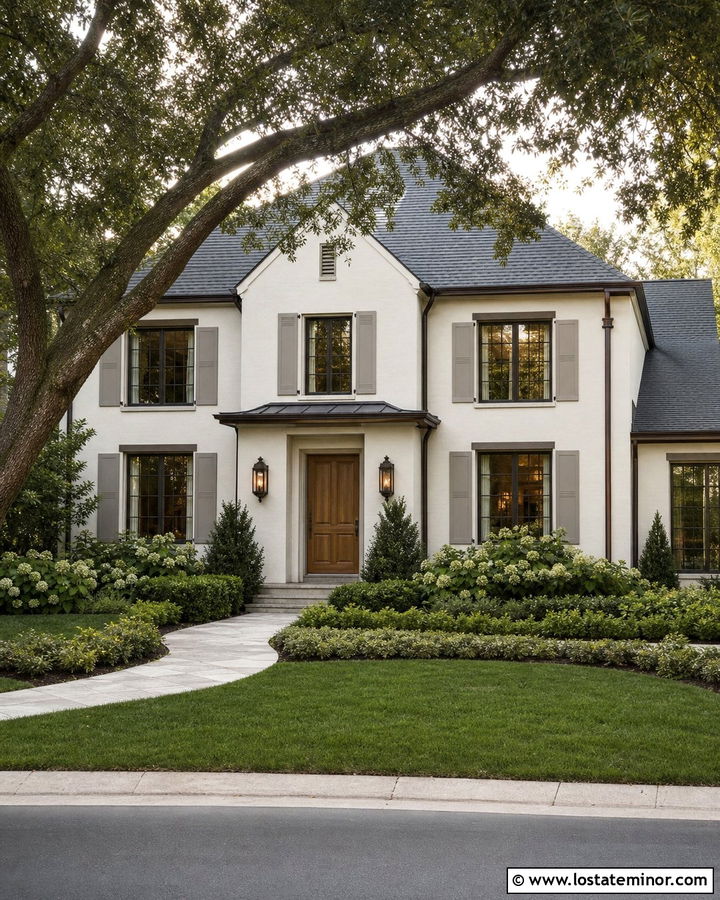
Mature trees provide an opportunity to light the entire property rather than only the building. Paint a classic two-story exterior Sherwin-Williams Alabaster and pair it with greige shutters, a medium oak door, bronze gutters, and a charcoal roof. Install shielded fixtures high within one large tree, directing soft light downward through the branches. The resulting pattern can gently reveal the walkway, lawn, and warm white facade. Add bronze sconces around the entrance and a few low fixtures near the steps, but keep them dimmer than the overhead landscape lighting. Curved planting beds and layered shrubs help catch the filtered light. This whole-property approach makes the house feel naturally connected to its yard while avoiding the flat appearance created by bright facade lighting alone.
30. Warm White House With Layered Curb Appeal Lighting
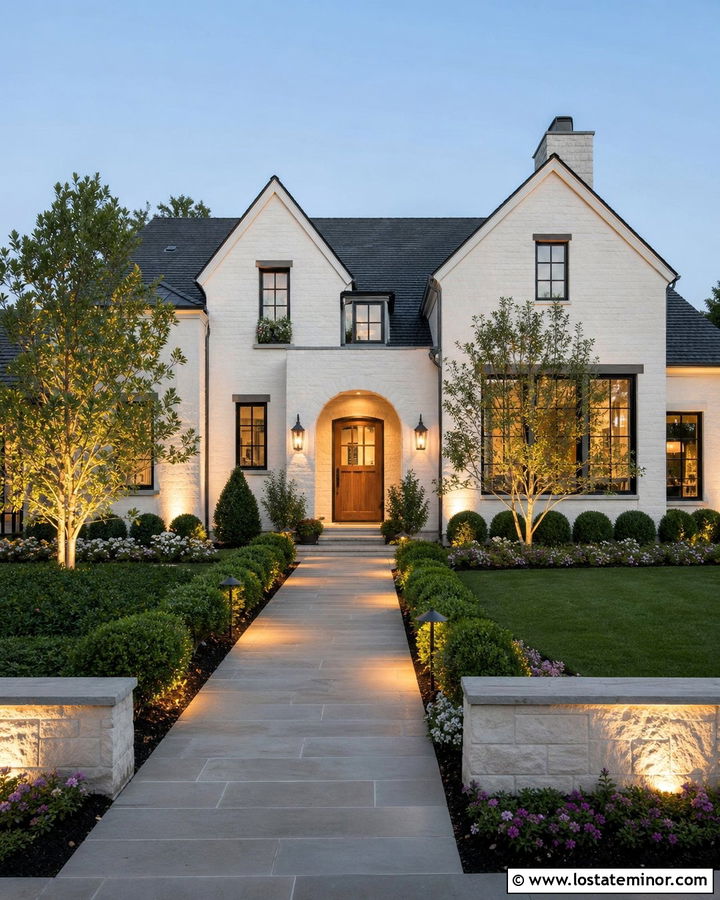
The most complete lighting plan combines several subtle layers instead of relying on one dominant source. Use Benjamin Moore White Dove on a transitional house with black windows, limestone accents, a stained oak door, and a weathered charcoal roof. Begin with bronze entry sconces, then add recessed porch lighting, shielded path fixtures, stone uplights, and one tree-mounted downlight. Illuminate the garage at a lower level so it supports rather than controls the composition. Fixtures should share a warm color temperature and compatible finishes, even when their shapes differ. Boxwoods, ornamental trees, flowering borders, and a broad stone walkway help carry the light through the property. This balanced scheme gives every major exterior feature a role while preserving comfortable shadows and a welcoming residential atmosphere.
Conclusion:
Successful 30 Warm White House Design With Lighting Ideas should treat paint, architecture, fixtures, and landscaping as parts of one exterior plan. Start with a warm white that complements the home’s roof, masonry, and natural daylight. Next, repeat one metal finish across the most visible fixtures. Layer entry, path, architectural, and landscape lighting instead of expecting one bright floodlight to handle everything. Warm 2700K to 3000K illumination is commonly used to create a softer residential appearance, especially around creamy paint and natural materials. () Before installation, evaluate the house from the street and common approach routes. The best finished design remains attractive during the day, provides useful visibility, and feels comfortably illuminated without making every surface equally bright.

Related posts: