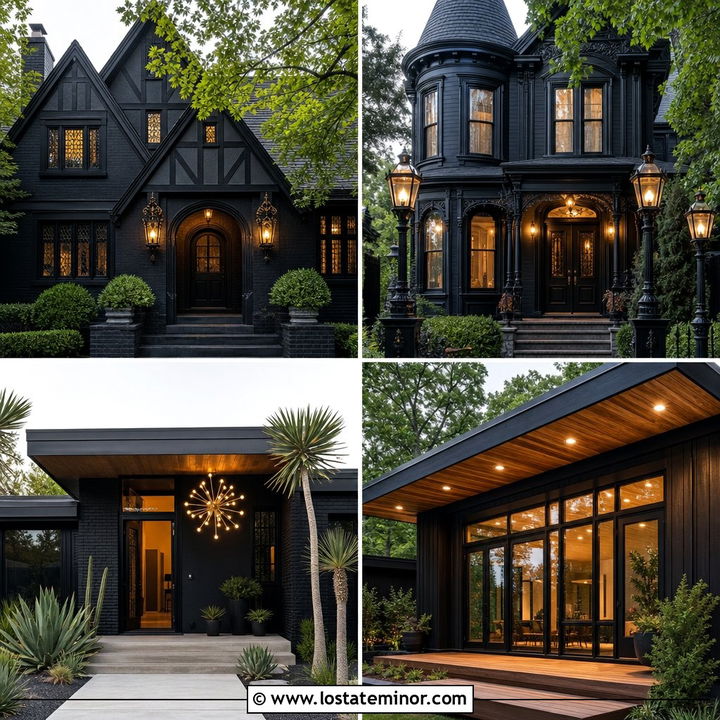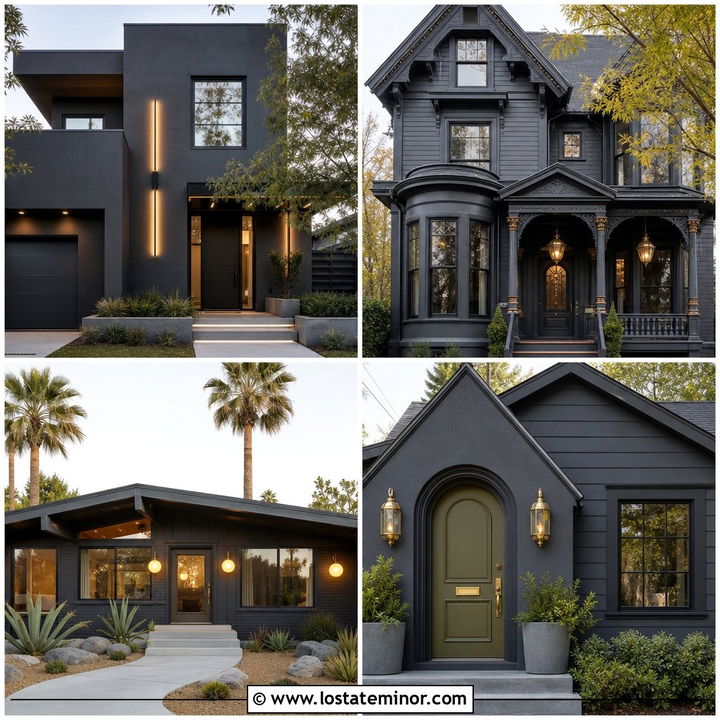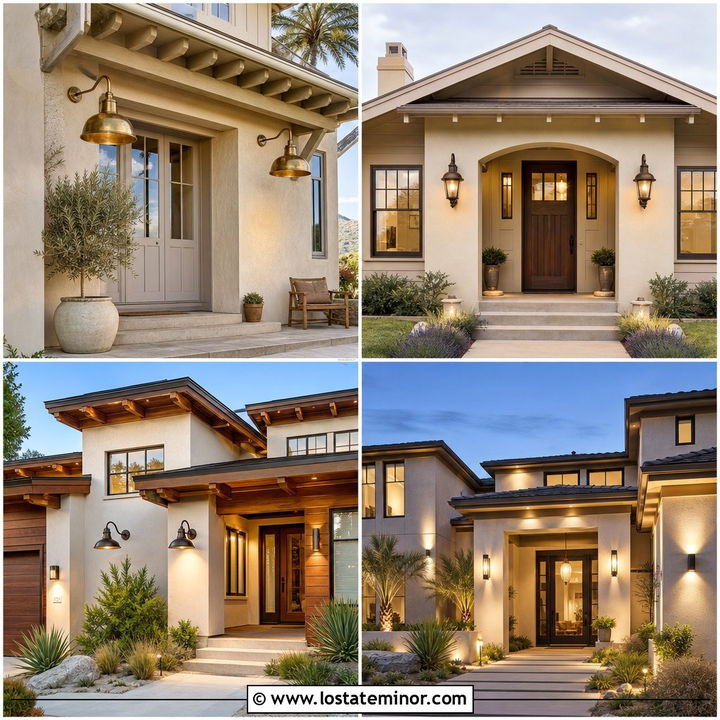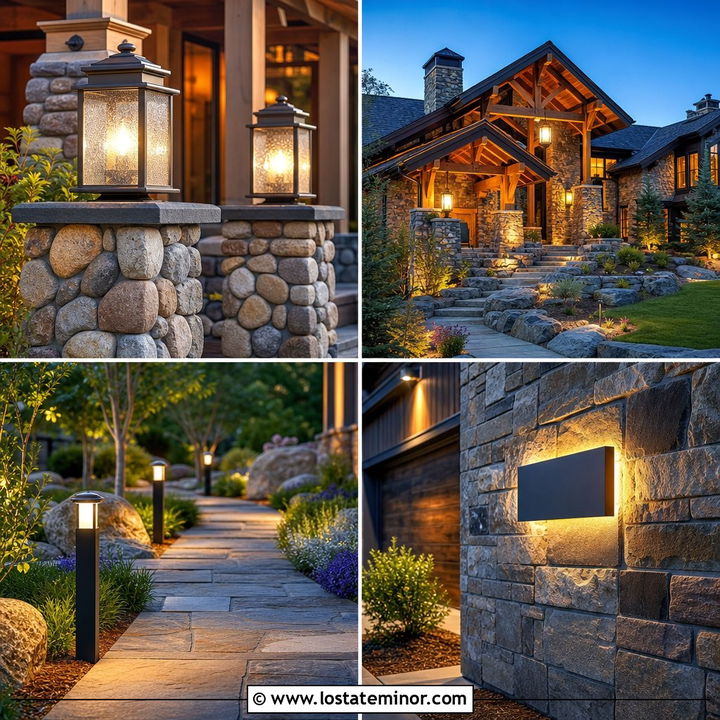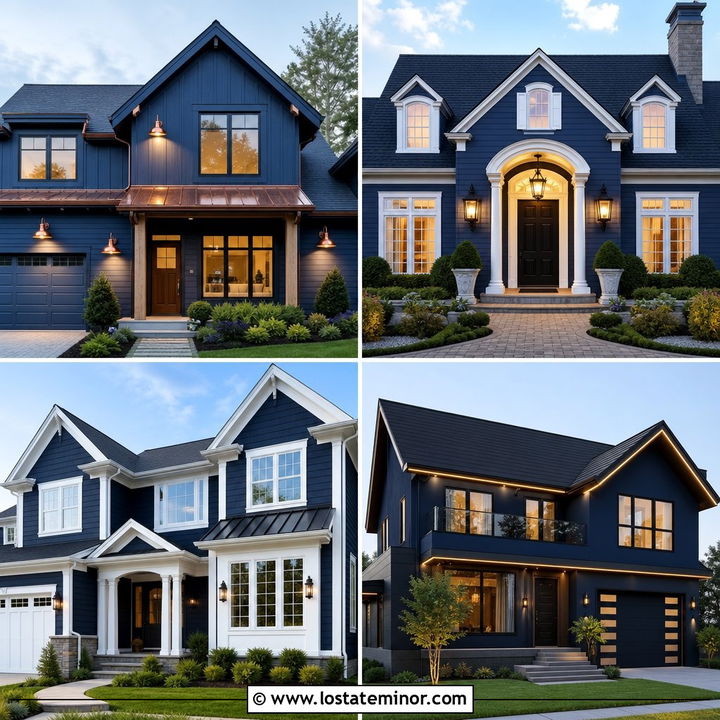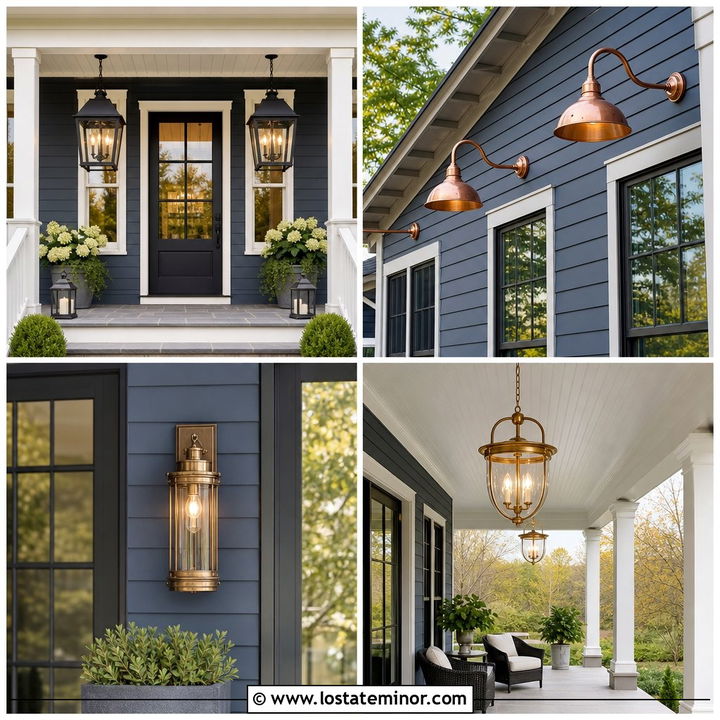
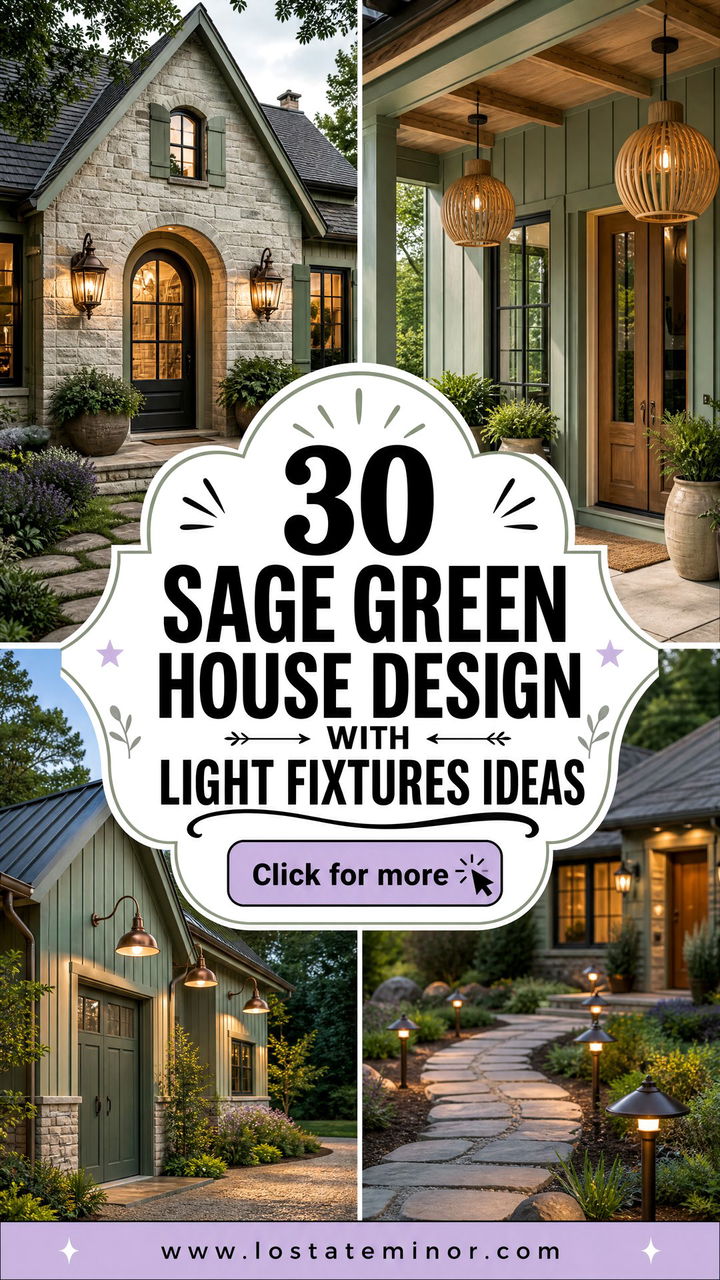
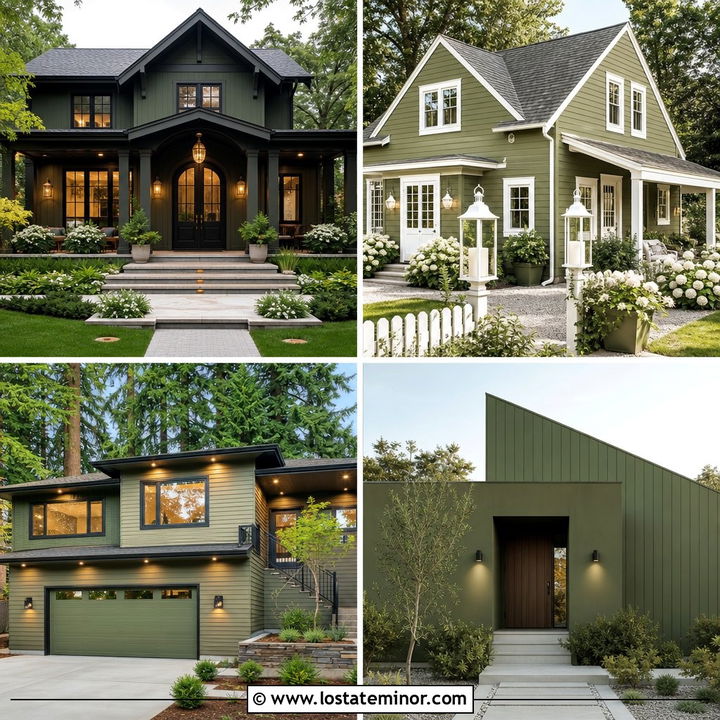
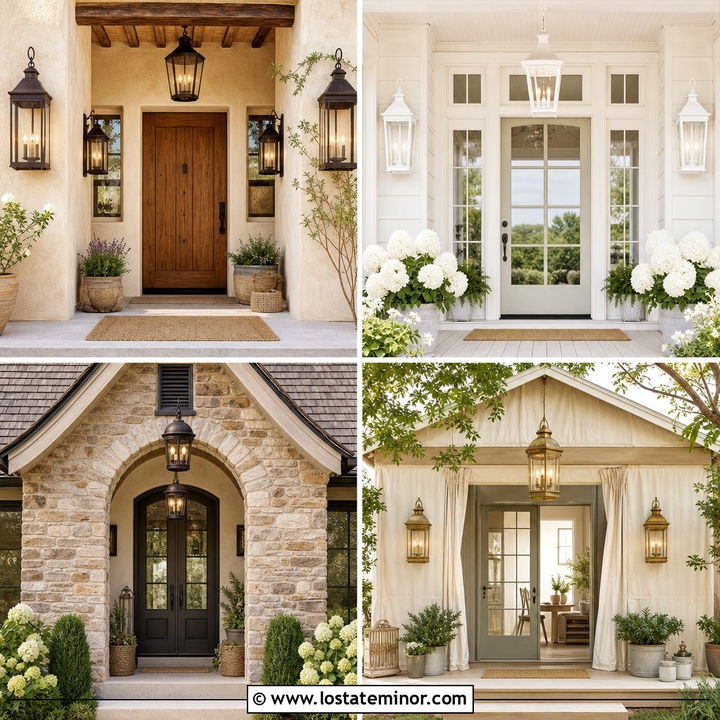
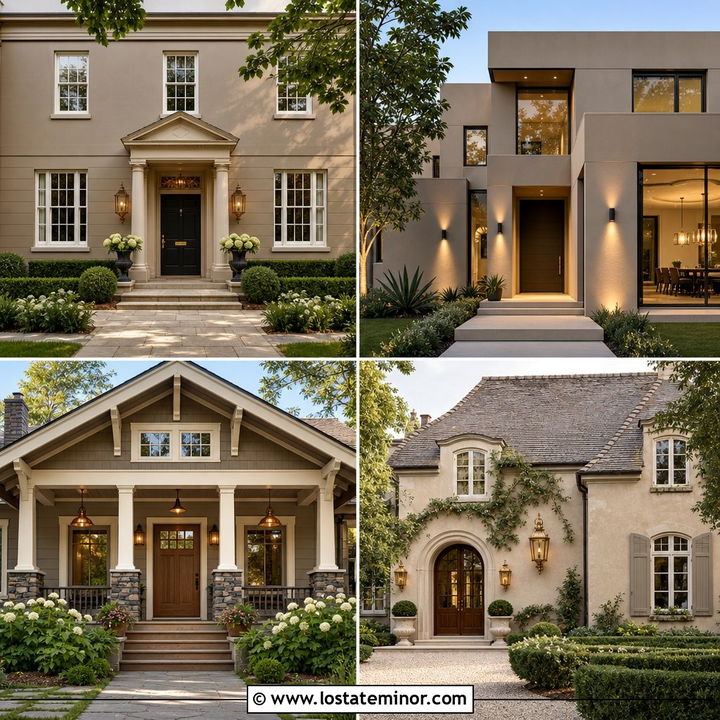
Sage green siding creates a calm, nature-connected backdrop, while the right outdoor lighting gives the facade definition, balance, and character. **30 Sage Green House Design With Light Fixtures Ideas** explores complete exterior schemes rather than isolated sconces or paint swatches. Sage remains a popular exterior choice because its muted green-gray appearance works with many architectural materials, including stone, brick, wood, and metal. Black, bronze, brass, and weathered copper fixtures provide especially useful contrast, while clear, seeded, or frosted glass can change the overall mood. () Whether your home is traditional, modern, rustic, or coastal, these combinations offer practical inspiration for building a coordinated facade. Explore the complete exterior looks in **30 Sage Green House Design With Light Fixtures Ideas**.
1. Sage Green Farmhouse With Black Barn Lights
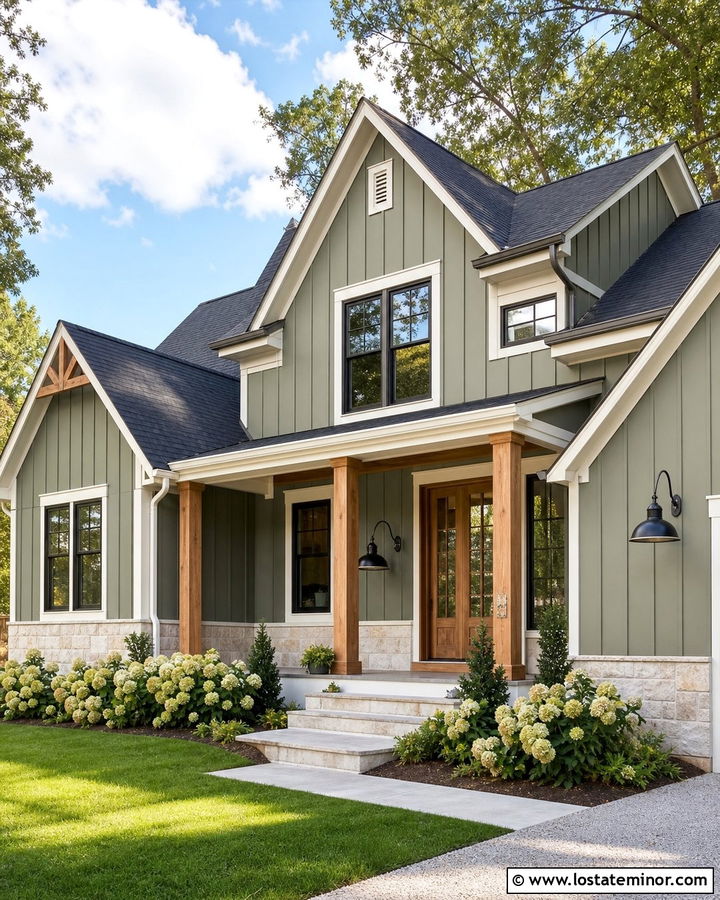
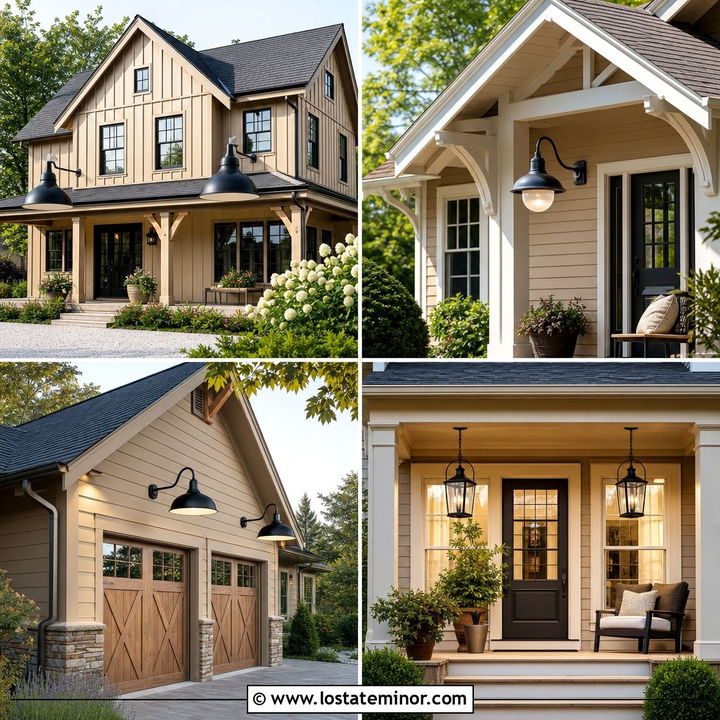
A sage green modern farmhouse gains crisp definition from oversized black barn lights. Place one gooseneck fixture above each garage bay and matching sconces beside the front door. The repeated finish connects separate parts of a wide facade. Use vertical sage green board-and-batten siding with warm white trim to emphasize the tall rooflines. A natural cedar front door, porch ceiling, and supporting posts prevent the black details from feeling severe. Charcoal roof shingles provide another dark element, creating a smooth visual transition from the fixtures to the roof. Complete the exterior with a pale stone foundation, simple concrete walkway, and softly structured landscaping. The result feels modern and clean without losing the welcoming warmth associated with farmhouse architecture.
2. Sage Green Craftsman With Bronze Lanterns
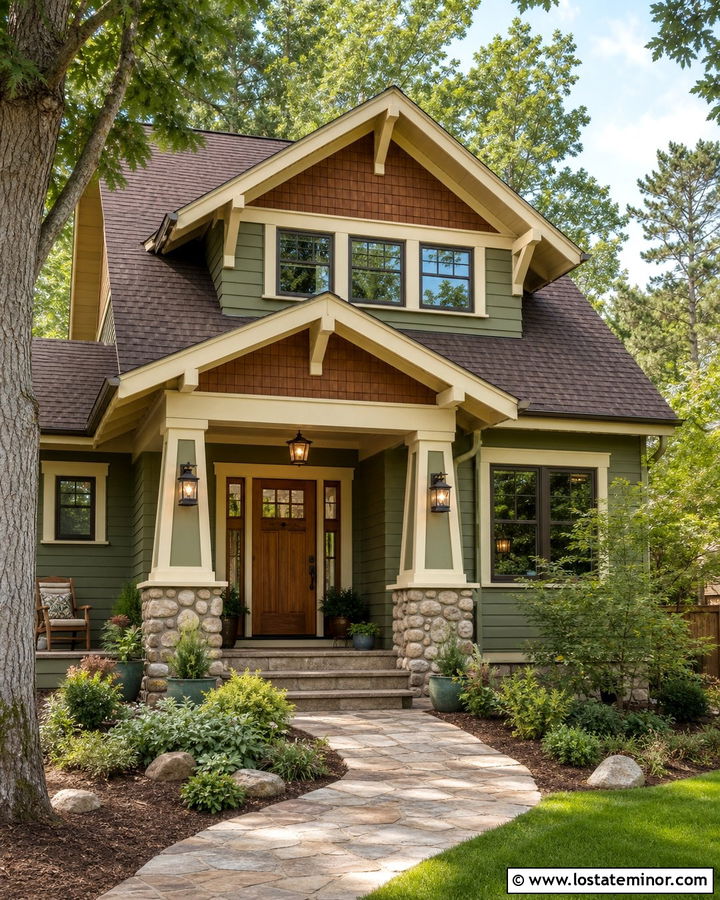
What makes a sage green Craftsman feel warm rather than overly muted? Oil-rubbed bronze lanterns provide the depth this earthy exterior often needs. Choose substantial rectangular wall lanterns with seeded glass and mount them beside the front door and garage. Sage green lap siding can cover the main facade, while cedar shakes in the gables introduce natural variation. Cream trim highlights tapered porch columns and deep roof eaves without producing a sharp contrast. Add a medium-stained oak door, brown architectural shingles, and a river-rock porch foundation. Bronze house numbers and door hardware will repeat the fixture finish in smaller doses. Layered shrubs and a curved stone walkway finish the scheme, creating a grounded Craftsman exterior with rich textures and balanced curb appeal.
3. Sage Green Colonial With Brass Wall Sconces
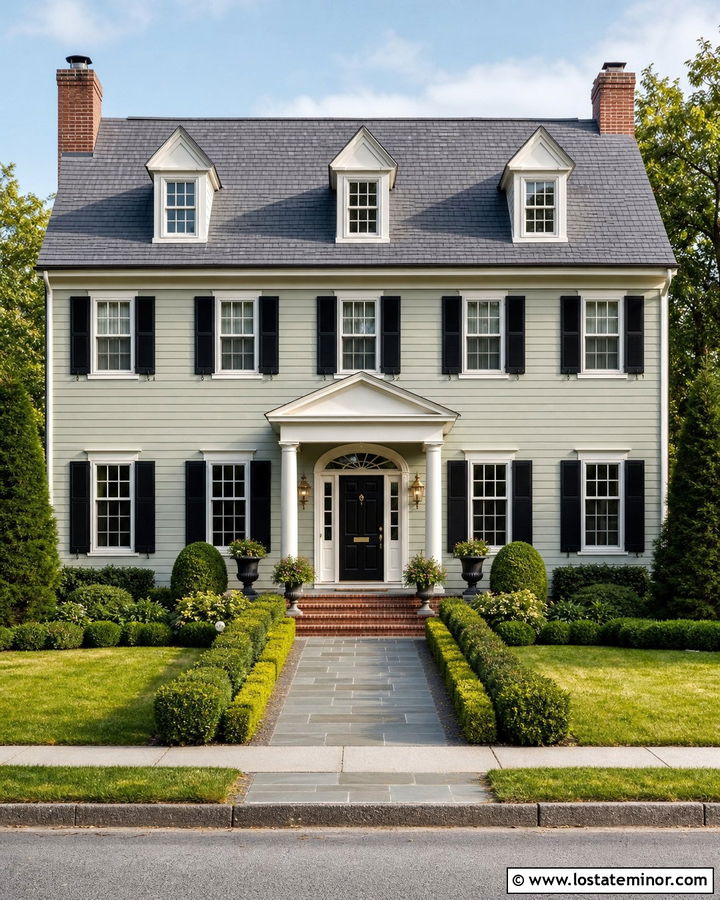
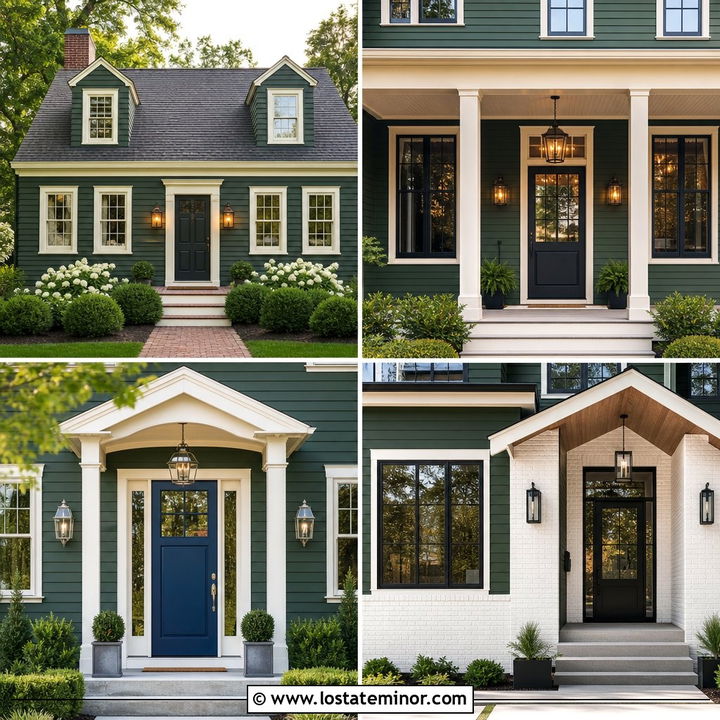
A symmetrical Colonial exterior gives polished brass lighting a natural place to shine. Cover the house in medium sage green clapboard siding and use creamy white around the windows, cornice, columns, and front entry. Install traditional brass wall lanterns on both sides of a glossy black six-panel door. Their warm metallic finish softens the contrast between the green body and dark doorway. Black shutters, a slate-gray roof, and matching iron railings keep the formal palette visually anchored. Because Colonial facades depend on order, select fixtures that are appropriately scaled and perfectly aligned with the door casing. Brick steps and a straight bluestone walkway reinforce the classic structure. Low boxwood hedges and symmetrical planters complete this refined, welcoming exterior arrangement.
4. Sage Green Ranch With Modern Cylinder Lights
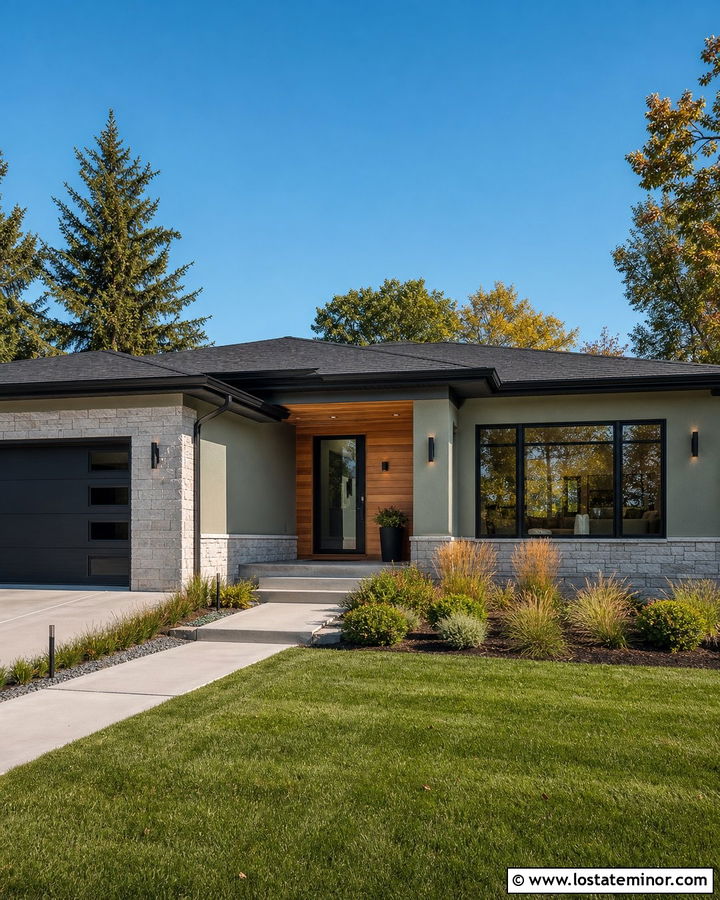
Long, low ranch homes benefit from lighting that strengthens their horizontal architecture. Pair pale sage green siding with slim black cylinder sconces that cast light upward and downward. Install the fixtures beside the front entry, between garage doors, and along any long wall facing the driveway. Charcoal fascia, dark window frames, and a low-profile black roof connect the lighting to the rest of the facade. Warm cedar cladding around the entrance creates a focal point and prevents the scheme from appearing too cool. Add light gray stone across the lower portion of the house for texture. Broad planting beds, ornamental grasses, and a simple concrete path suit the streamlined design. This complete look gives an older ranch a noticeably fresher, more architectural presence.
5. Sage Green Bungalow With Copper Porch Lights
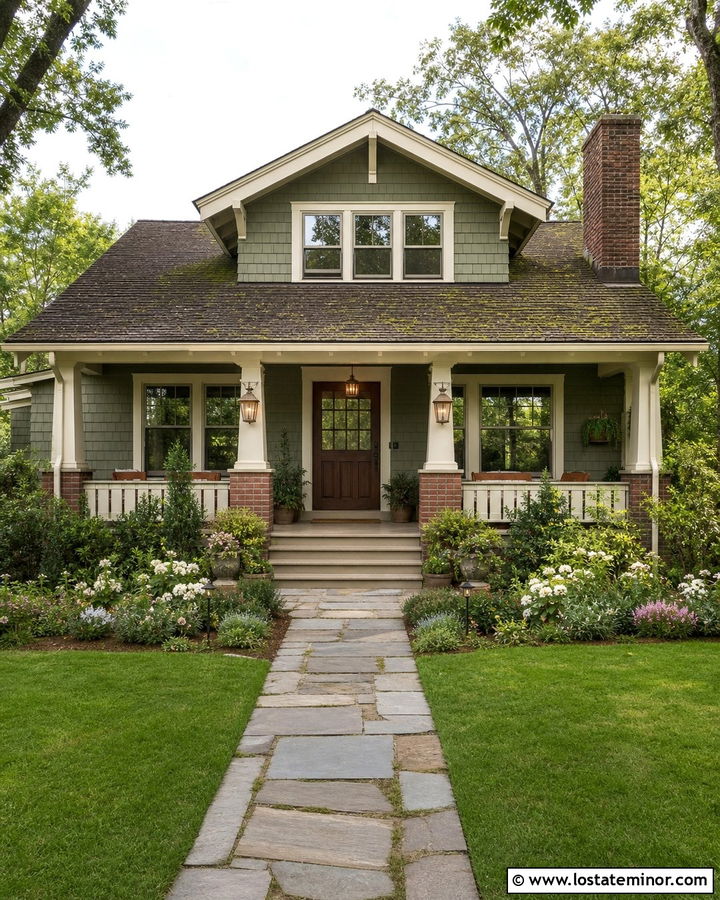
Imagine a compact sage green bungalow glowing beneath weathered copper porch lights. Copper adds warmth against the muted siding and gradually develops a distinctive aged surface, making it especially fitting for a character-rich home. Use sage green shingles or narrow clapboards with soft ivory trim around the windows and porch. Hang a copper pendant above the porch seating area, then add matching wall lanterns beside a stained mahogany door. A mossy brown roof, brick porch piers, and wood-framed screens support the relaxed color palette. Keep the walkway informal with irregular flagstone and low flowering plants. Copper gutters can extend the lighting finish across the facade, but they are optional. Even small copper details will make the bungalow feel layered, established, and inviting.
6. Sage Green Cape Cod With White Lanterns
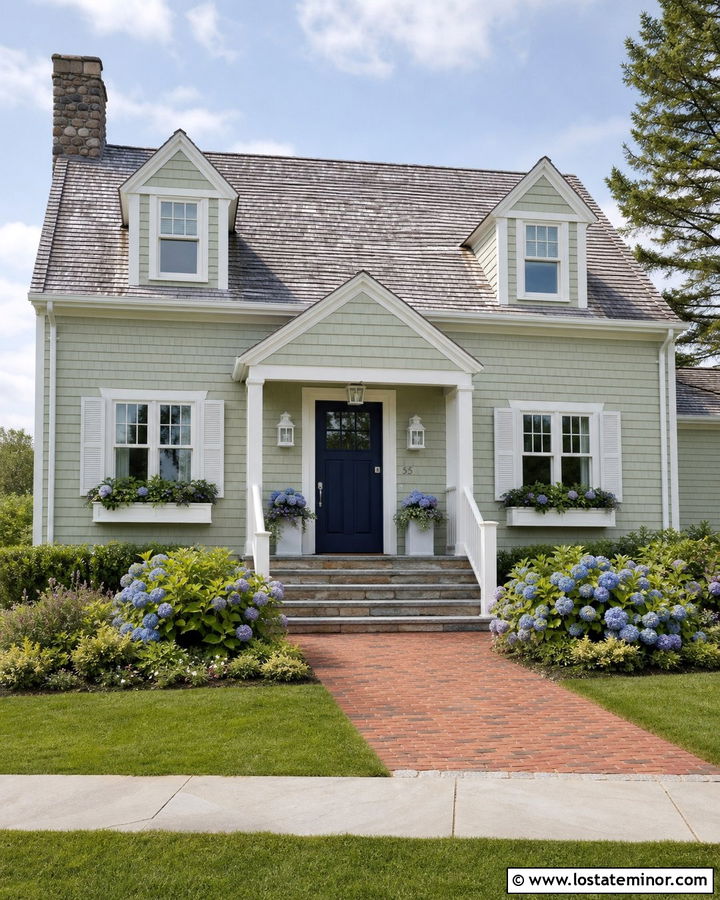
White exterior lanterns give a sage green Cape Cod a light, cheerful appearance. This combination works particularly well on a smaller facade where heavy black fixtures might dominate the entry. Choose simple white wall lanterns with clear glass and mount them beside a navy blue front door. Repeat the white finish on window trim, corner boards, porch railings, and the garage door. Soft sage green shingles add texture without distracting from the balanced architecture. Weathered gray roof shingles support the coastal character, while natural stone steps give the pale palette a sturdy foundation. Include white window boxes, hydrangeas, and a neat brick walkway for classic curb appeal. The finished house feels bright and familiar, with lighting that blends gracefully into the trim.
7. Sage Green Cottage With Antique Brass Lights
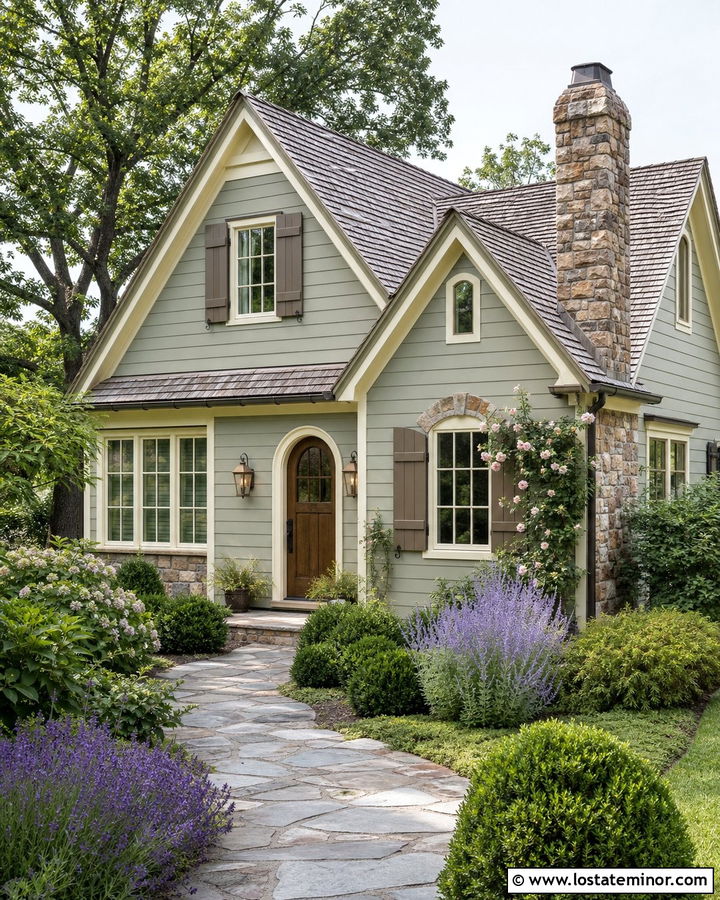
Curved garden beds and antique brass lights can turn a simple sage green cottage into a storybook exterior without looking theatrical. Select small lantern-style sconces with softly aged brass frames and textured glass. Mount them beside an arched wood door and under the covered porch. Use dusty sage green stucco or lap siding for the body, then add warm cream trim and muted brown shutters. A rustic oak door and irregular fieldstone chimney introduce deeper natural tones. Instead of making every metal detail match perfectly, combine aged brass lighting with dark bronze hardware for a collected appearance. A winding flagstone path, lavender, climbing roses, and clipped shrubs frame the complete facade. The scheme feels personal, warm, and gently connected to its garden setting.
8. Sage Green Tudor With Leaded Glass Lanterns
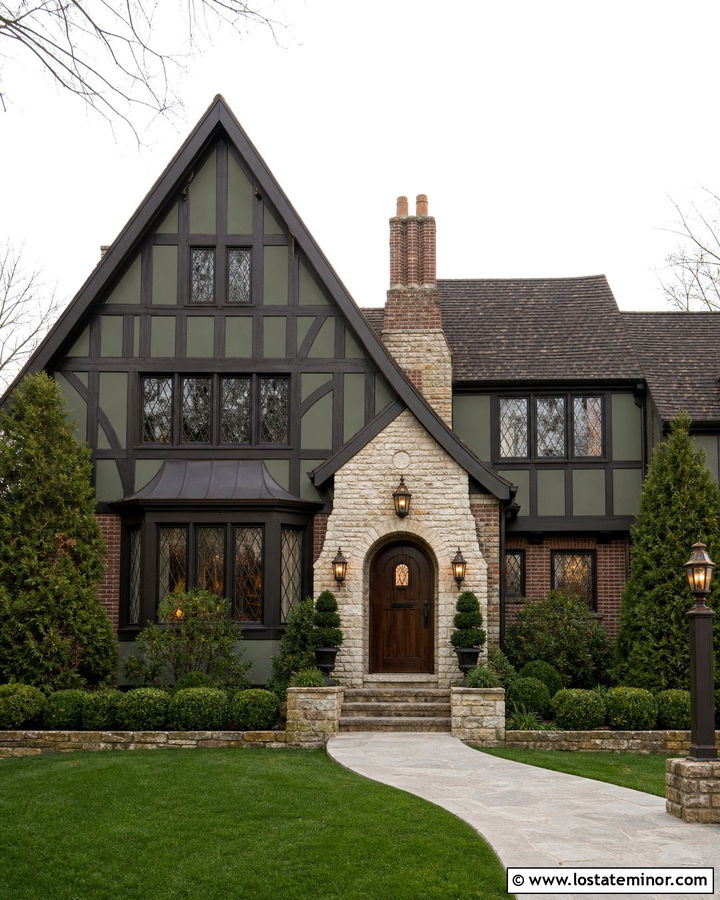
A Tudor house already has strong architectural contrast, so its lighting should support that structure. Paint the stucco or upper siding a subdued sage green, while keeping the half-timbering and window frames deep brown. Install bronze lanterns with leaded or diamond-patterned glass beside the heavy arched front door. These fixtures echo the divided windows and traditional detailing without introducing an unrelated shape. Cream stone, dark brick, and a weathered wood door create a rich base for the muted green. Use a charcoal-brown roof to connect the timbers, lantern frames, and masonry shadows. A curved walkway and restrained evergreen landscaping keep attention on the facade. This combination gives Tudor architecture an earthy update while preserving its distinctive old-world character and visual weight.
9. Sage Green Split-Level With Globe Sconces
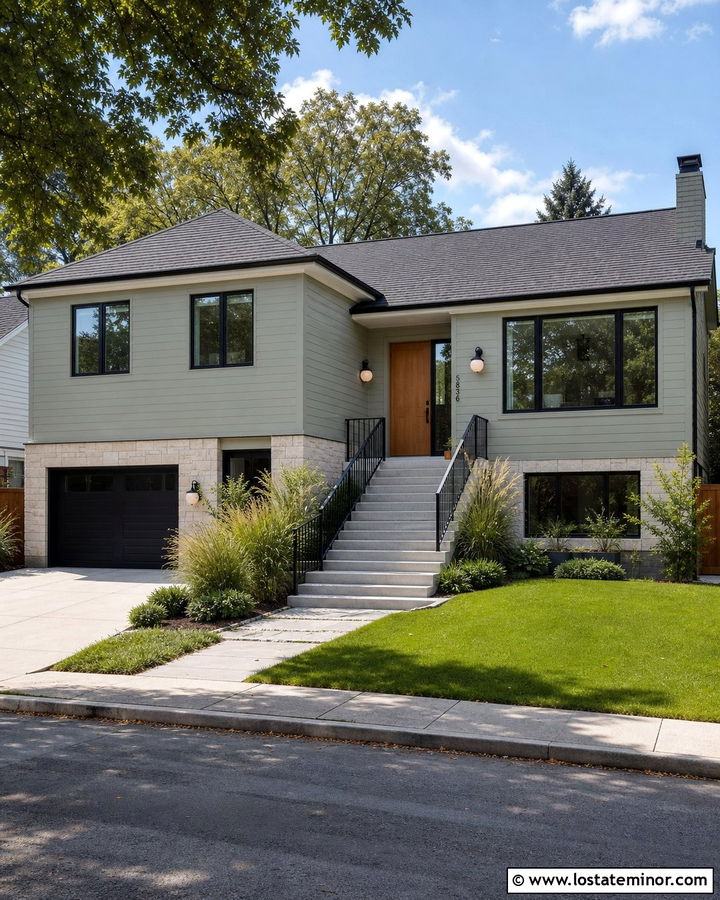
A split-level facade can feel visually disconnected because its windows, garage, and entry sit at different heights. Matching globe sconces help create a repeated design line. Paint the primary siding a light sage green and use warm white trim around the windows. Add matte black globe lights beside the recessed front door and on both sides of the garage. Black window frames and a black handrail reinforce the fixtures without overpowering the green. A honey-toned wood door adds needed warmth, while pale limestone cladding unifies the lower level. Keep the landscaping low near the entry so the lights and doorway remain visible. Broad concrete steps, layered grasses, and a clean driveway complete an approachable update that respects the home’s original mid-century proportions.
10. Sage Green Victorian With Decorative Lanterns
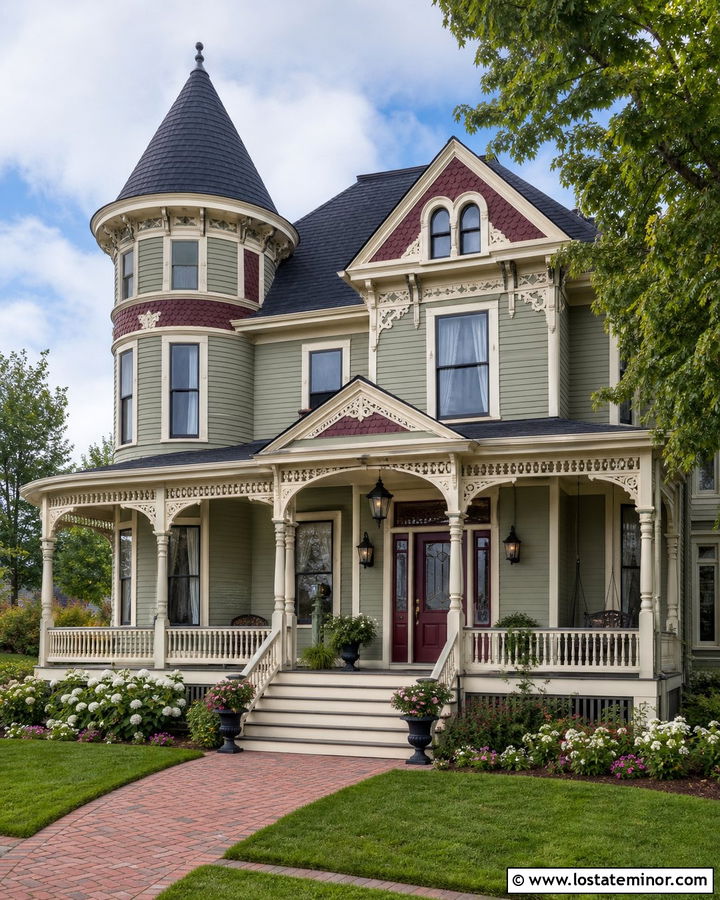
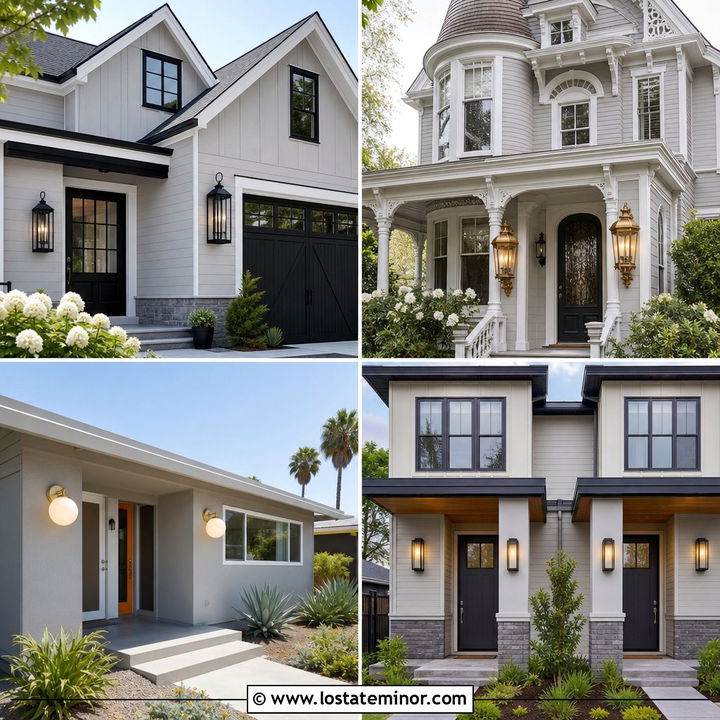
Detailed Victorian architecture calls for fixtures with enough presence to complement brackets, trim, and ornamental siding. A soft sage green body provides a calm base for creamy white gingerbread trim and deep burgundy accents. Place decorative black lanterns with curved arms beside the front door and along the wraparound porch. A larger coordinating pendant can hang above the main porch steps. Use burgundy on the door, narrow trim details, or selected shingles rather than covering every decorative feature. Black roof shingles and dark porch furniture help distribute the fixture color across the exterior. Turned columns, patterned shingles, and painted railings remain visible against the restrained palette. This thoughtful scheme celebrates Victorian detail while keeping the overall facade organized and comfortably balanced.
11. Sage Green Coastal House With Nickel Lights
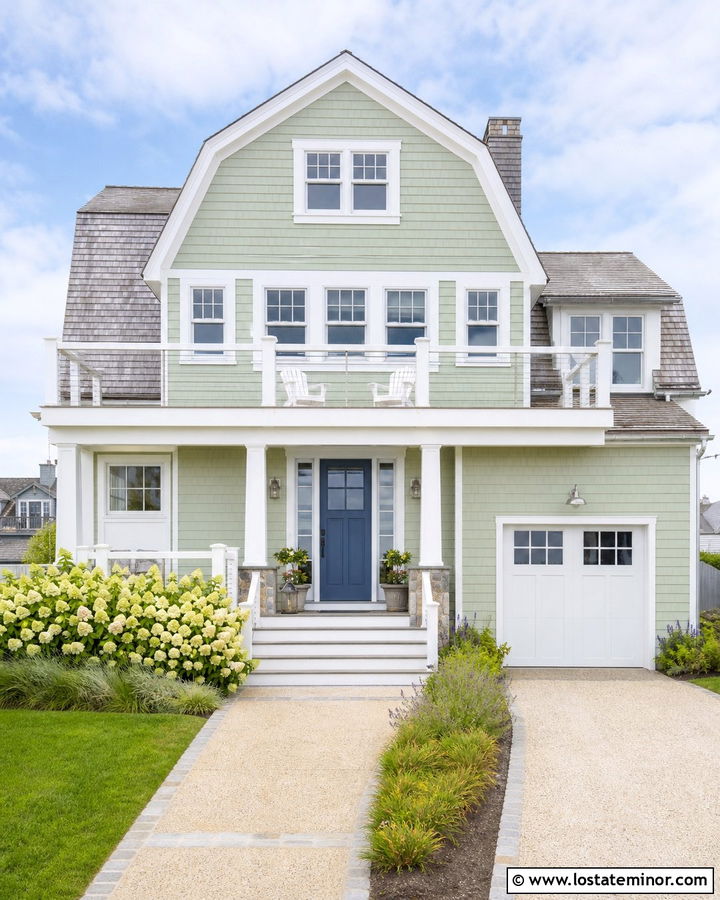
Brushed nickel or marine-inspired silver lights create a refreshing accent on a coastal sage green exterior. Choose compact bulkhead sconces or clean lanterns with clear glass and weather-resistant metal frames. Soft sage green shingle siding should remain the dominant color, supported by bright white trim and a medium blue front door. A weathered gray roof, cable railings, and pale stone steps add quiet coastal texture. Install matching fixtures beside the entry, near the garage, and around covered outdoor living areas for consistency. Avoid too many unrelated nautical details; the lighting shape and airy color scheme are enough to establish the mood. Dune grasses, hydrangeas, and a shell-colored walkway complete a bright house that feels relaxed, practical, and appropriate for its surroundings.
12. Sage Green Mediterranean House With Iron Lights
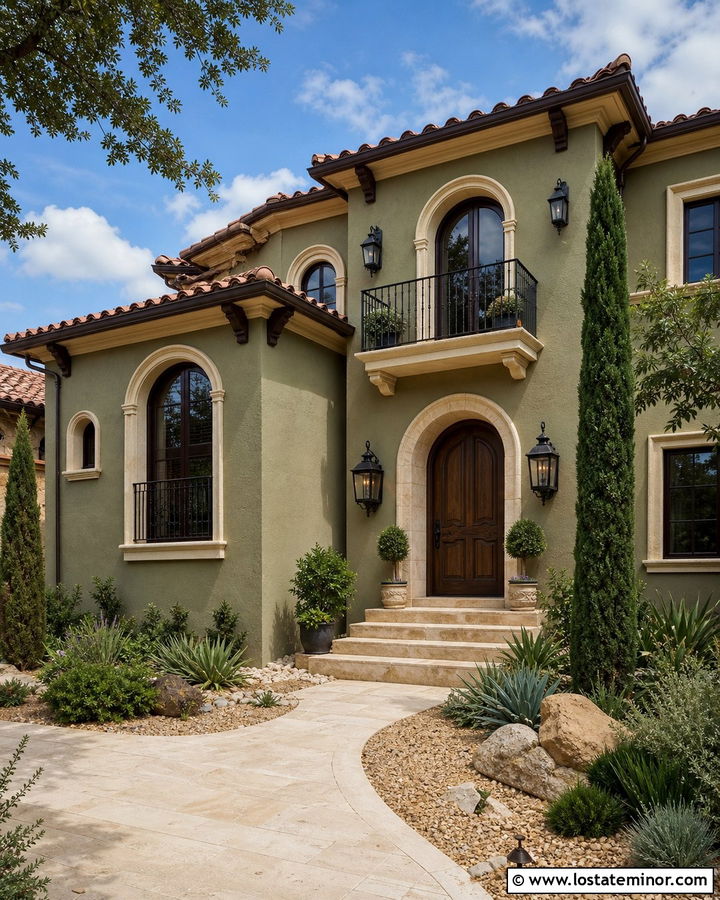
Warm stucco, terracotta roofing, and forged iron lighting give sage green a distinctly Mediterranean direction. Use a dusty, olive-leaning sage green on the stucco walls and creamy beige around arched windows and doors. Large black iron lanterns with amber-free clear glass can flank a dark walnut entry door. Add a coordinating pendant beneath the covered portico to highlight the central arch. Terracotta roof tiles bring warmth overhead, while limestone steps and a low stone wall ground the facade. Black balcony rails, window grilles, and door hardware repeat the lantern finish in controlled amounts. Drought-tolerant landscaping, gravel beds, and sculptural evergreens complement the earthy colors. The complete exterior feels sun-washed and established while maintaining a clear, balanced palette.
13. Sage Green Mid-Century House With Cone Lights
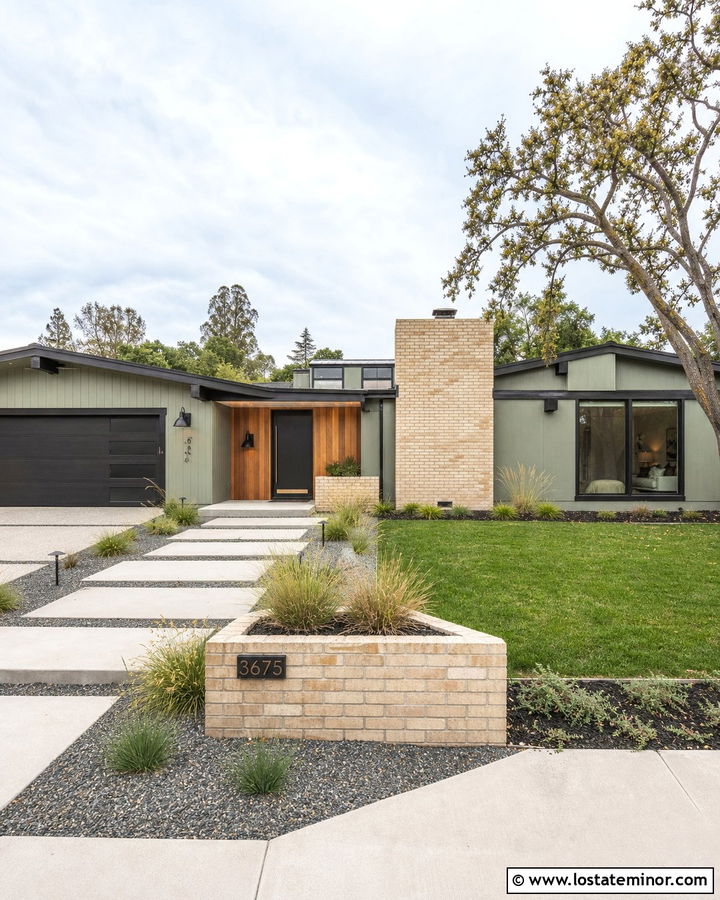
Sharp cone-shaped wall lights fit naturally on a sage green mid-century home. Select matte black fixtures with simple profiles and place them beside the front door, carport, and garage. A muted sage green exterior softens the house’s geometric lines, while dark charcoal trim outlines the low roof and broad windows. Introduce warm wood through vertical cedar siding around the recessed entrance. This creates a clear focal point without disrupting the horizontal facade. Buff-colored brick can remain on a chimney or planter wall to add original period texture. Finish the setting with rectangular concrete pavers, gravel, ornamental grasses, and one sculptural tree. The coordinated lighting, wood, and dark trim make the sage exterior feel intentional rather than like a cosmetic update applied to an older structure.
14. Sage Green Modern House With Linear LED Sconces
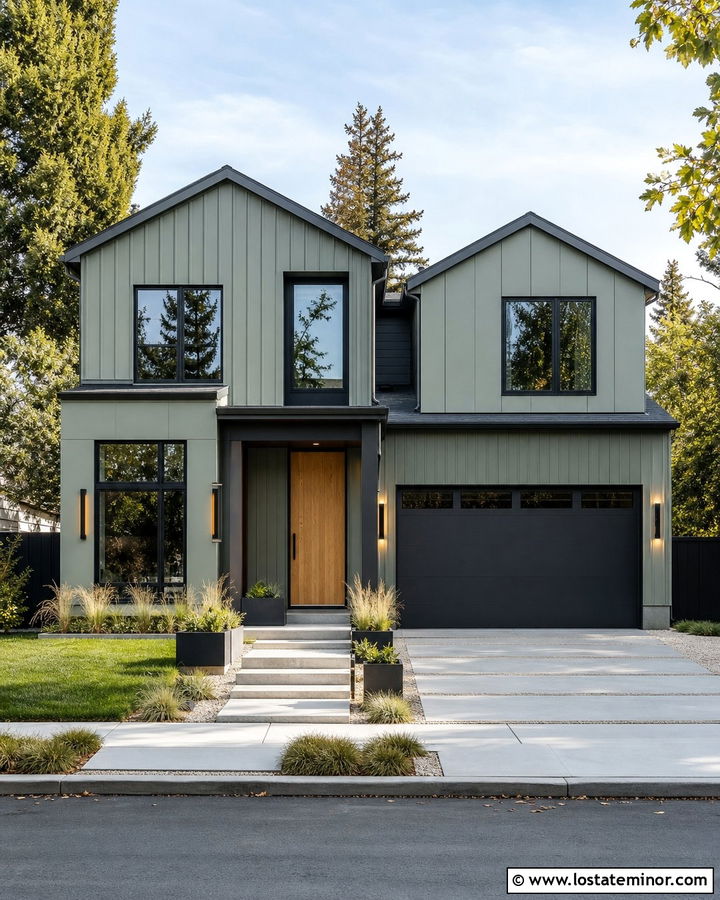
Clean linear sconces make sage green feel contemporary and architectural. On a modern two-story home, use a medium sage green across broad fiber-cement panels and vertical siding. Add charcoal window frames, fascia, and garage doors for crisp contrast. Narrow black LED sconces can sit beside the oversized pivot door and create a repeated rhythm across the garage wall. Keep the lighting warm-neutral rather than amber so the siding remains visually true. A natural oak or teak entry door offers a welcome break from the cooler surfaces. Concrete steps, black metal planters, and pale gravel support the minimal facade. Carefully placed grasses and low shrubs soften the geometry. This exterior proves that sage green can work successfully with modern forms, restrained materials, and streamlined lighting.
15. Sage Green Rustic House With Lodge Lanterns
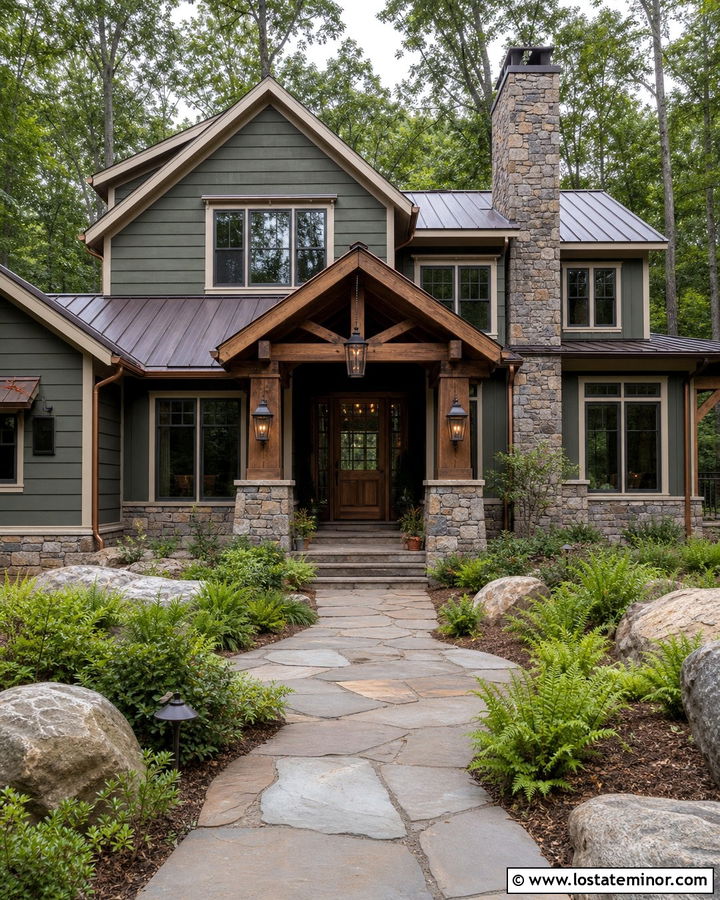
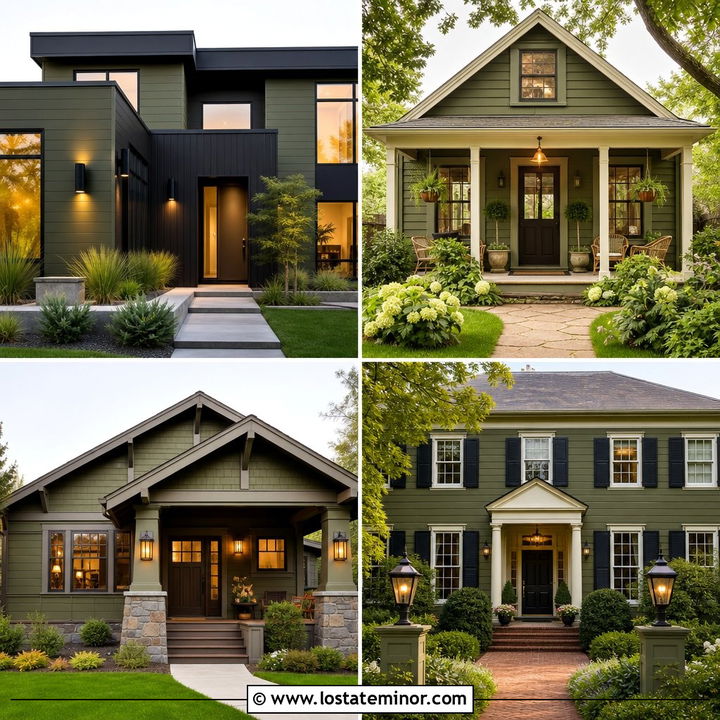
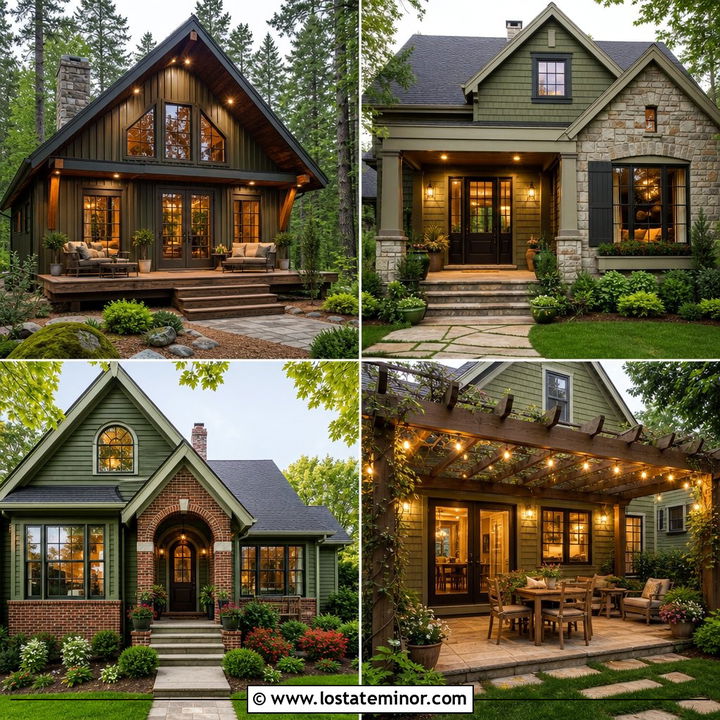
On a wooded property, a deeper sage green exterior can settle naturally into the landscape. Pair horizontal wood siding with oversized lodge lanterns in a dark bronze finish. Mount them on stone porch columns and beside a substantial stained timber door. Cream window trim provides gentle contrast, while cedar beams and brackets add warmth across the roofline. Use rugged gray-brown stone around the foundation, chimney, and porch steps to support the rustic character. A dark brown metal roof connects visually with the fixture frames and timber accents. Keep the yard natural but cared for, using native shrubs, ferns, boulders, and a wide gravel or flagstone path. The complete house feels sturdy and comfortable, with lighting that matches the scale of the materials and setting.
16. Sage Green Brick House With Black Lanterns
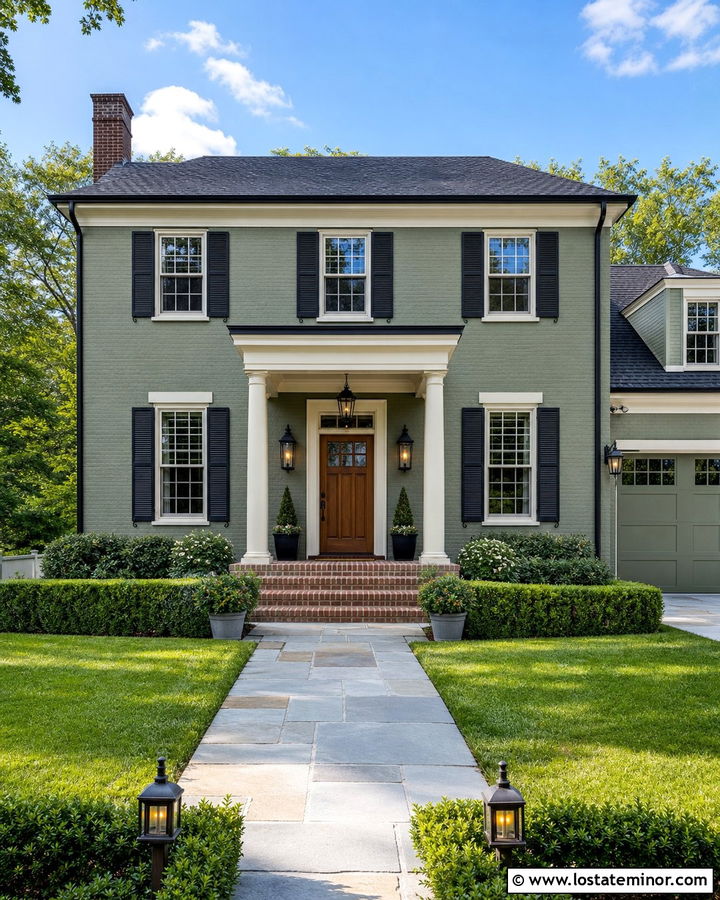
Painted brick gives sage green extra depth because the mortar lines remain visible beneath the color. Choose a muted gray-sage finish and pair it with tall matte black lanterns on both sides of the front entrance. Use warm white for the cornice, window trim, and porch columns to keep the facade bright. A natural walnut door prevents the black-and-white accents from making the exterior feel too rigid. Black shutters, gutters, and a charcoal roof distribute the dark finish evenly. If the house includes an attached garage, paint the garage door sage green so it blends into the body rather than becoming the largest visual feature. Brick steps, clipped hedges, and a straight stone path complete this polished exterior, which works especially well for traditional suburban architecture.
17. Sage Green Stone House With Bronze Sconces
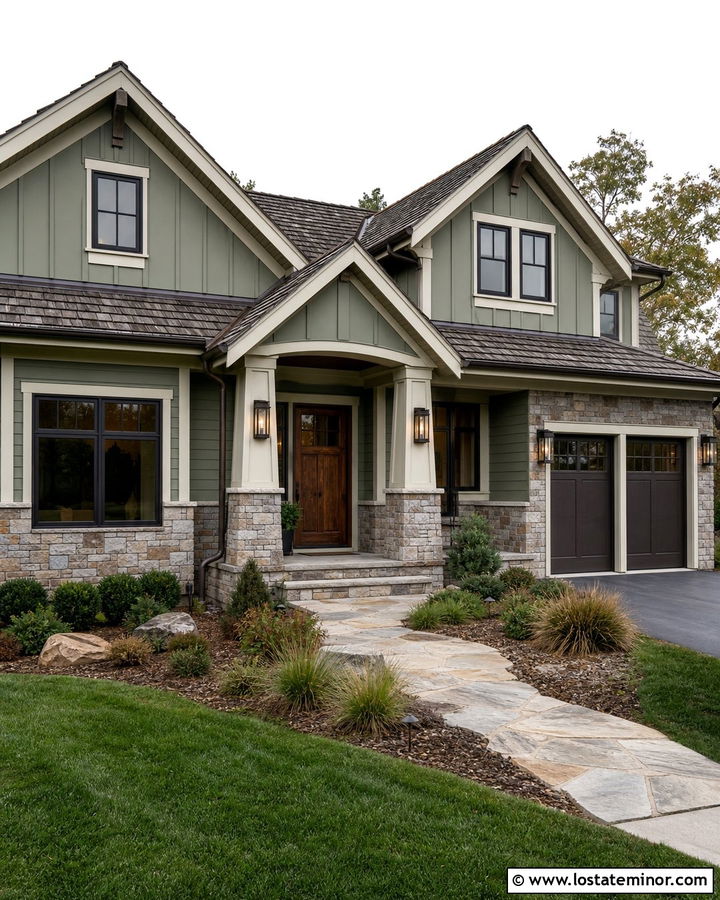
When a facade includes substantial natural stone, select a sage green that shares its warm gray undertones. Apply the green to lap siding, gables, or board-and-batten sections above the masonry. Architectural bronze sconces can bridge the painted areas and the stone because their brown-black finish relates naturally to both materials. Install rectangular lanterns beside a medium-stained wood door and on the garage columns. Use soft cream trim rather than stark white, then choose a weathered brown roof to maintain the earthy balance. Bronze gutters and dark window frames may be added for continuity. A broad flagstone walkway, native grasses, and layered evergreen shrubs help connect the house to the landscape. The finished exterior feels cohesive because every color appears to come from the stone itself.
18. Sage Green House With Red Brick And Copper Lights
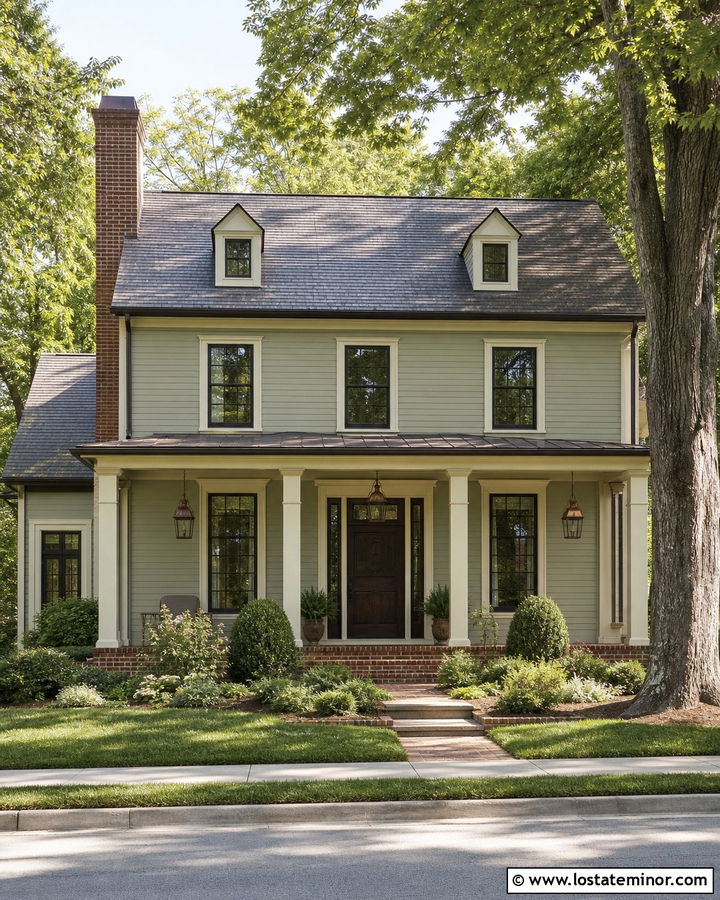
Existing red brick can become a valuable part of a sage green exterior when its warmth is repeated elsewhere. Keep brick on the chimney, porch foundation, or lower walls, then use medium sage green siding above it. Weathered copper lanterns are an excellent bridge between the red masonry and green paint. Place them beside a deep brown front door and above the garage. Cream trim softens the color transition, while a charcoal-brown roof keeps the entire palette grounded. Avoid adding bright red shutters, which could make the brick feel overly dominant. Instead, use dark bronze or brown window accents. Simple foundation plantings, brick-edged beds, and a neutral concrete walkway finish the design. The house feels updated, yet the original masonry still looks purposeful and well integrated.
19. Sage Green House With Cedar And Black Sconces
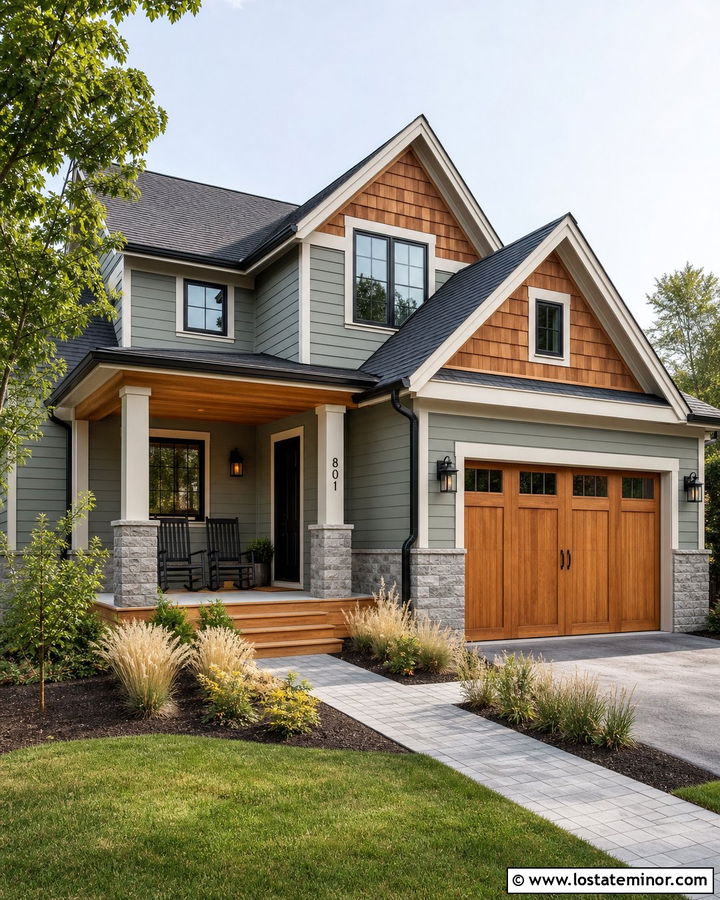
Fresh cedar brings out the organic warmth hidden inside gray-toned sage green. Use sage green lap siding across the main house, then add natural cedar to the front door, porch ceiling, garage door, or selected gable. Matte black sconces provide a strong outline between these softer materials. Choose simple rectangular lights with clear glass and repeat them at the entry and garage. Warm white window trim keeps the facade from becoming too dark. A charcoal roof and black gutters connect the lighting to the roofline, while pale gray stone along the foundation introduces another useful texture. Keep the cedar additions limited and balanced so they look deliberate. A straight paver walkway, ornamental grasses, and dark mulch complete this versatile exterior for a contemporary Craftsman or transitional home.
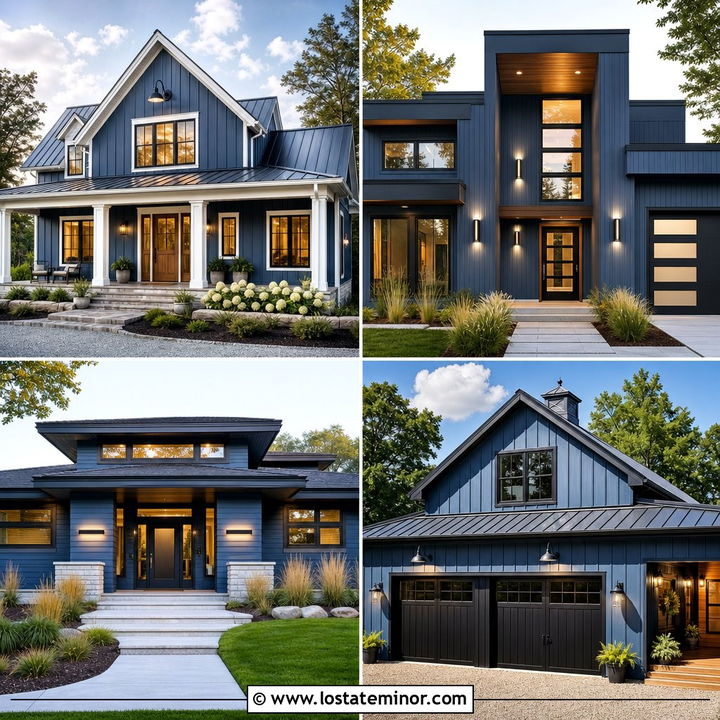
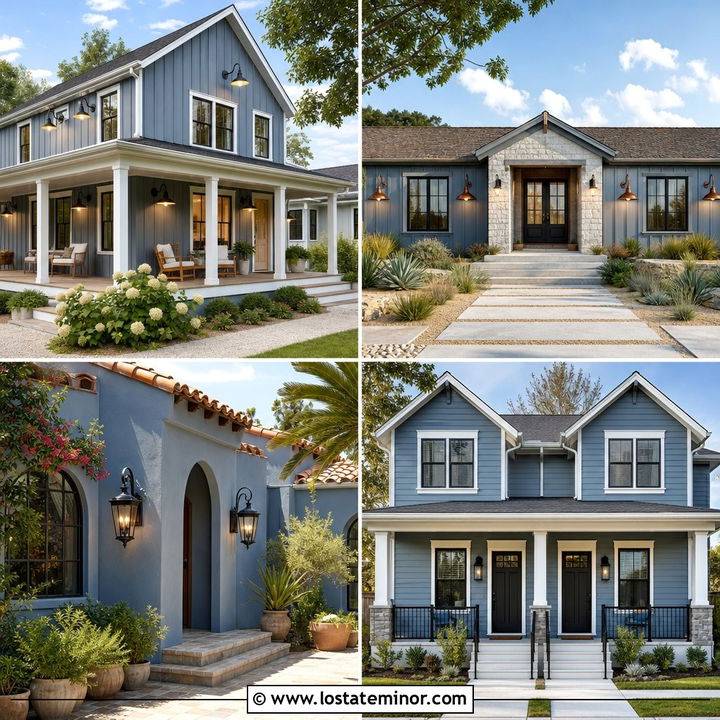
20. Sage Green House With Cream Trim And Bronze Lights
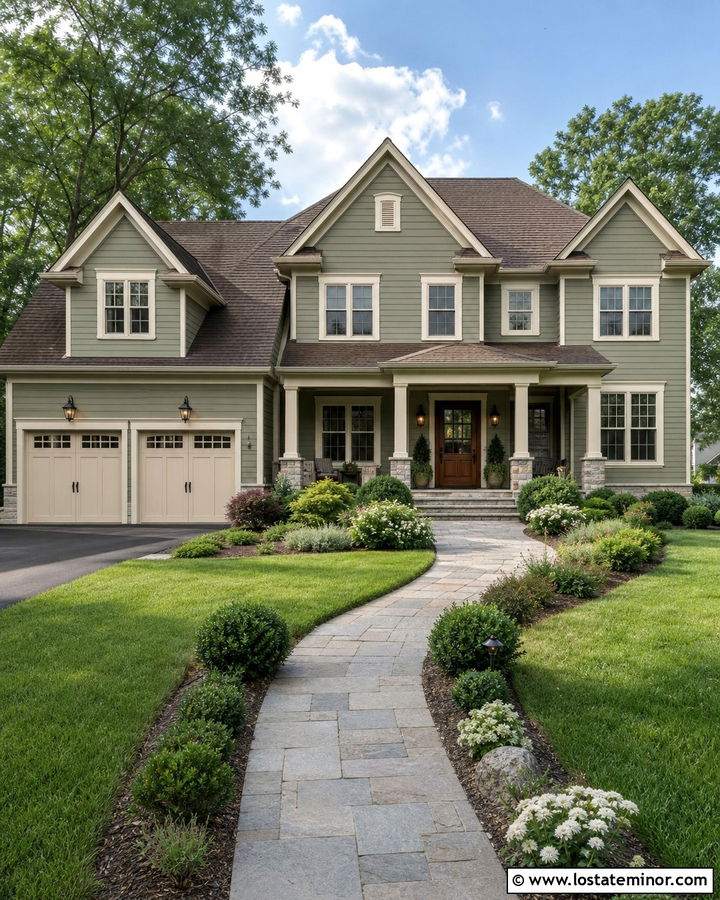
Cream trim creates a softer transition than bright white, making it ideal for an earthy sage green exterior. This pairing works especially well on a traditional two-story house with lap siding, dormers, and a covered entrance. Add bronze carriage lanterns beside a stained wood door and repeat the finish on the garage lights, house numbers, and door hardware. A warm brown roof supports the cream and bronze accents. Use cream on columns, window frames, fascia, and garage doors for a complete, consistent scheme. Stone porch steps in beige and gray can connect the warm and cool tones. Finish the frontage with curved planting beds, rounded shrubs, and a brick or stone walkway. The result feels comfortable and timeless without depending on sharp black-and-white contrast.
21. Sage Green House With Charcoal Trim And Up-Down Lights
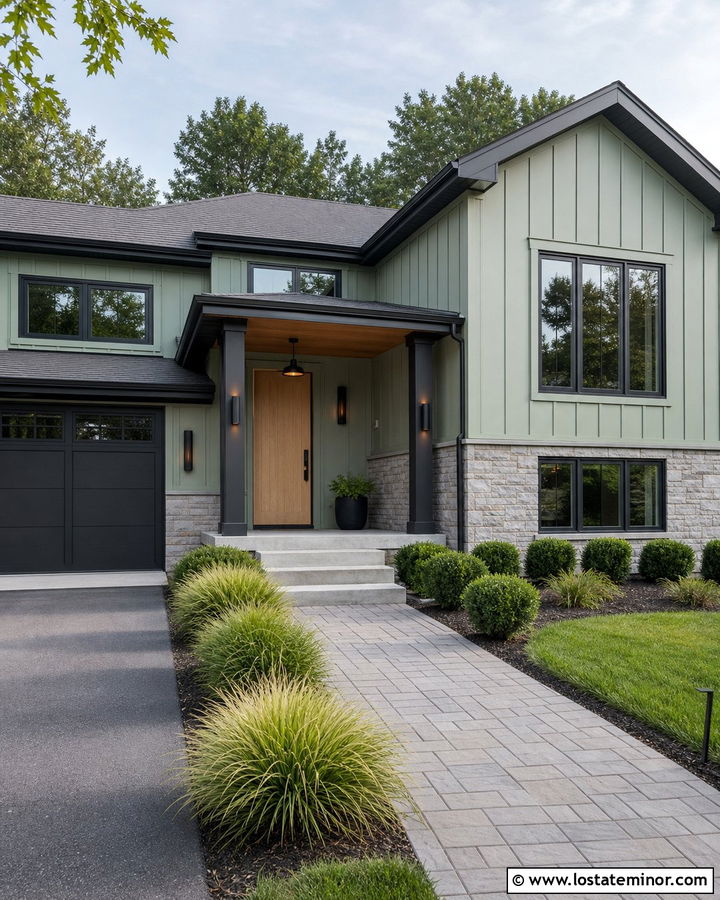
Charcoal trim transforms sage green into a stronger, more contemporary exterior palette. Paint the siding a light or medium sage so there is enough contrast around the windows, fascia, and doors. Slim charcoal up-and-down lights should match the trim closely, allowing their shape to blend into the architecture during the day. Position them beside the main entrance, along the garage, and on any projecting wall sections. Add a light oak front door to warm the dark outlining. A pale concrete porch and cool gray stone foundation keep the facade clean and understated. Use charcoal roof shingles to complete the dark framework. Straight planting beds, clipped grasses, and large-format pavers reinforce the tailored look. This scheme suits modern, transitional, and updated split-level houses particularly well.
22. Sage Green House With White Trim And Carriage Lights
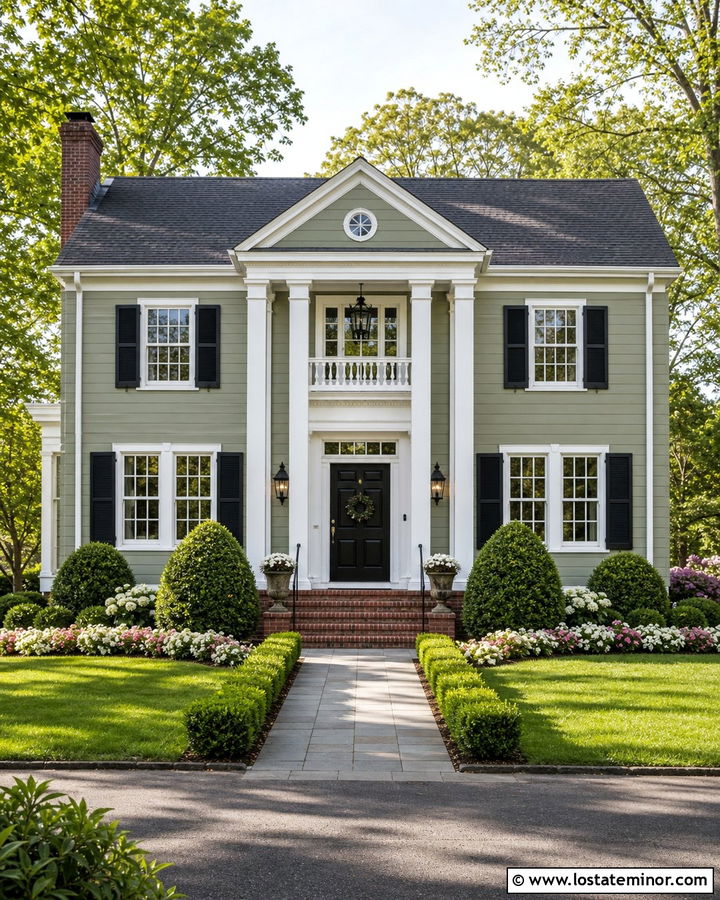
Few combinations feel as familiar as sage green siding, white trim, and black carriage lights. The key is choosing fixtures large enough to remain visible against a broad facade. Use medium sage green clapboards with bright white corner boards, window casings, porch rails, and columns. Flank a glossy black or stained wood front door with tall lanterns, then add matching lights beside the garage. Black shutters and a charcoal roof repeat the fixture color without overwhelming the softer body paint. Red brick steps can add traditional warmth, while gray stone offers a quieter alternative. Symmetrical shrubs, seasonal flowers, and a clean walkway support the approachable design. This complete exterior works for Colonial, Georgian, Cape Cod, and many traditional suburban homes.
23. Sage Green House With Natural Wood Pendant Lights
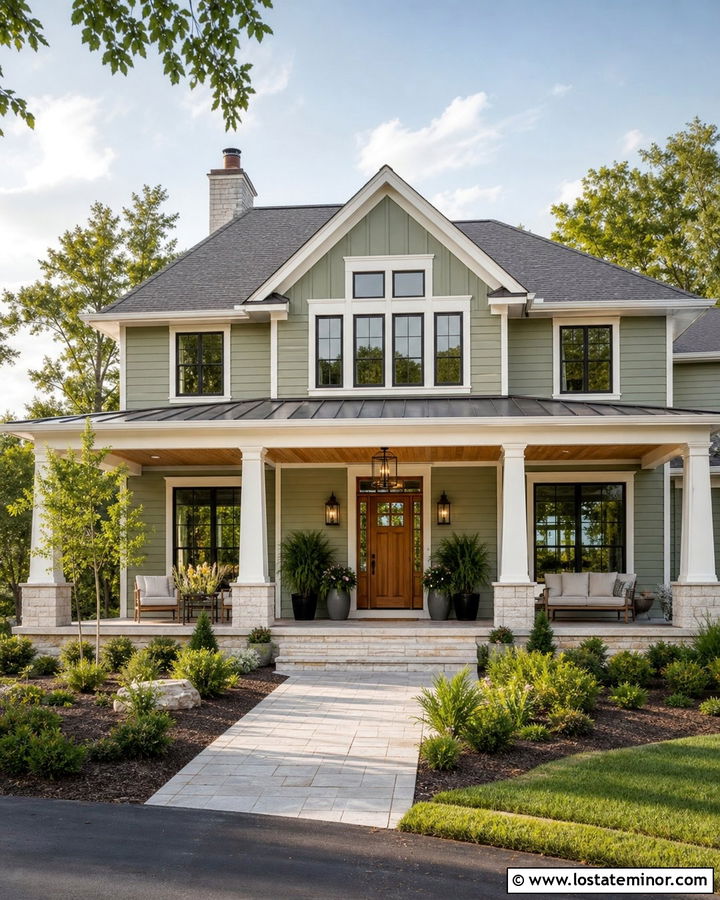
A covered porch creates an opportunity to combine wall lighting with a statement pendant. Paint the home a warm sage green and use ivory trim around the porch columns, railings, and windows. Hang a woven-look, wood-framed, or weather-protected timber pendant above the central seating area. Matching bronze wall sconces can flank the front door without competing with the larger fixture. Repeat natural wood on the door, porch ceiling, and column wraps to connect the pendant to the architecture. A medium gray roof and pale stone foundation keep the palette balanced. Comfortable porch furniture, oversized planters, and layered landscaping make the entrance feel complete. The overall effect is relaxed and welcoming, with lighting that strengthens the connection between the sage facade and its wood accents.
24. Sage Green House With Copper Gooseneck Lights
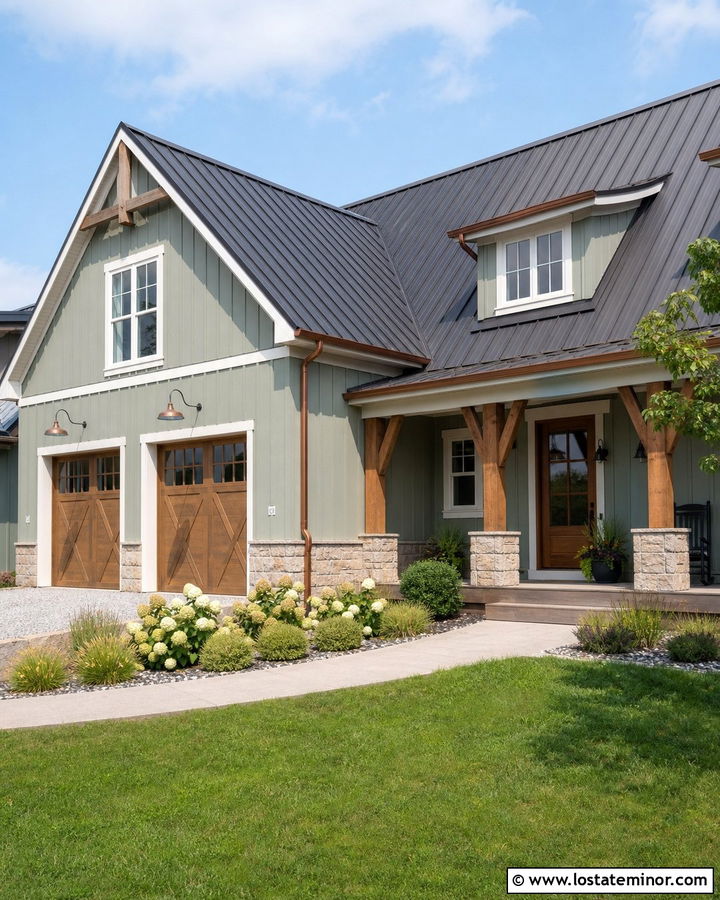
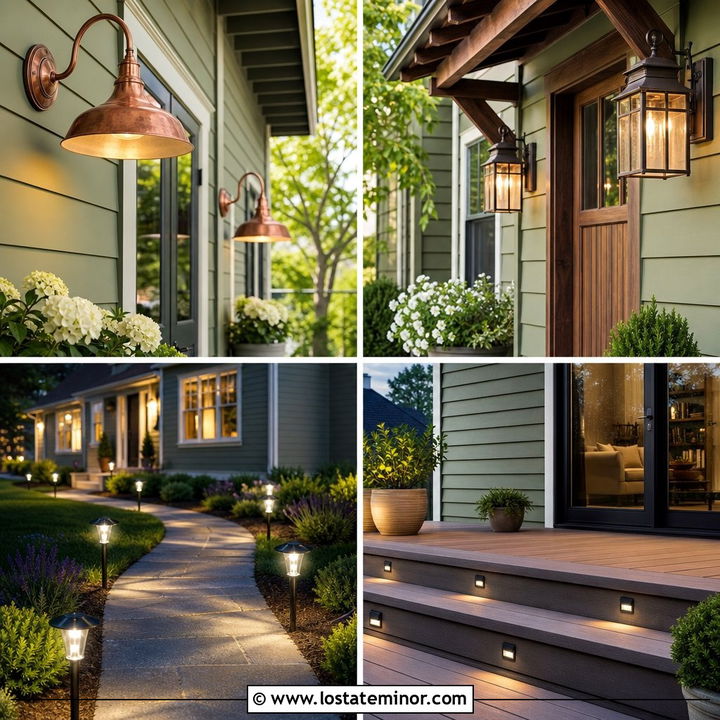
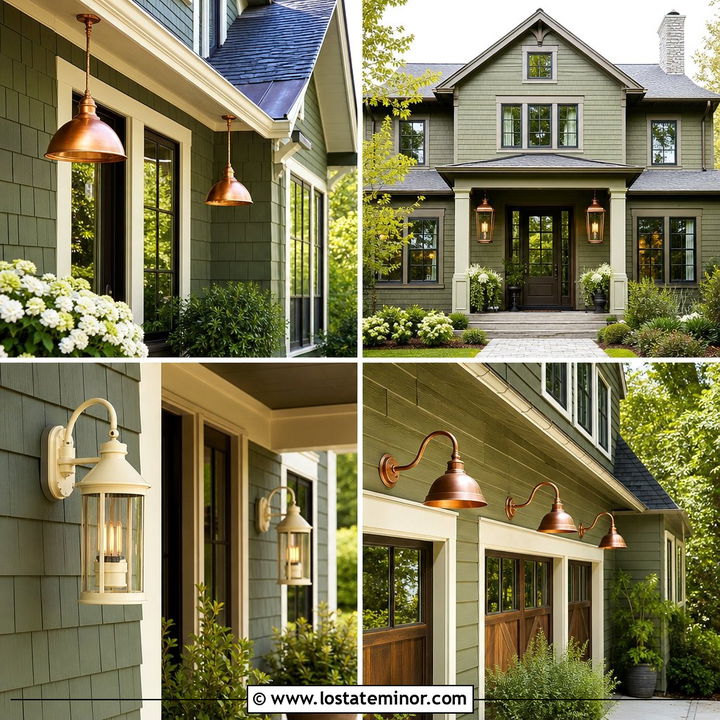
Copper gooseneck lights can give sage green siding a practical farmhouse character with a warmer finish than black. Install the fixtures above garage doors, side entrances, or a covered porch work area. Use a medium gray-green sage on vertical board-and-batten siding and creamy white on the trim. A stained cedar front door, timber porch posts, and copper gutters reinforce the warmth of the fixtures. Choose a deep brown or charcoal metal roof so the copper remains the main decorative metal. A stone skirt in mixed beige and gray helps connect all parts of the palette. Keep the landscaping simple with hydrangeas, grasses, and a wide gravel-edged walkway. The finished exterior feels functional, thoughtfully coordinated, and distinctive without relying on overly decorative architectural details.
25. Sage Green House With Glass Box Sconces
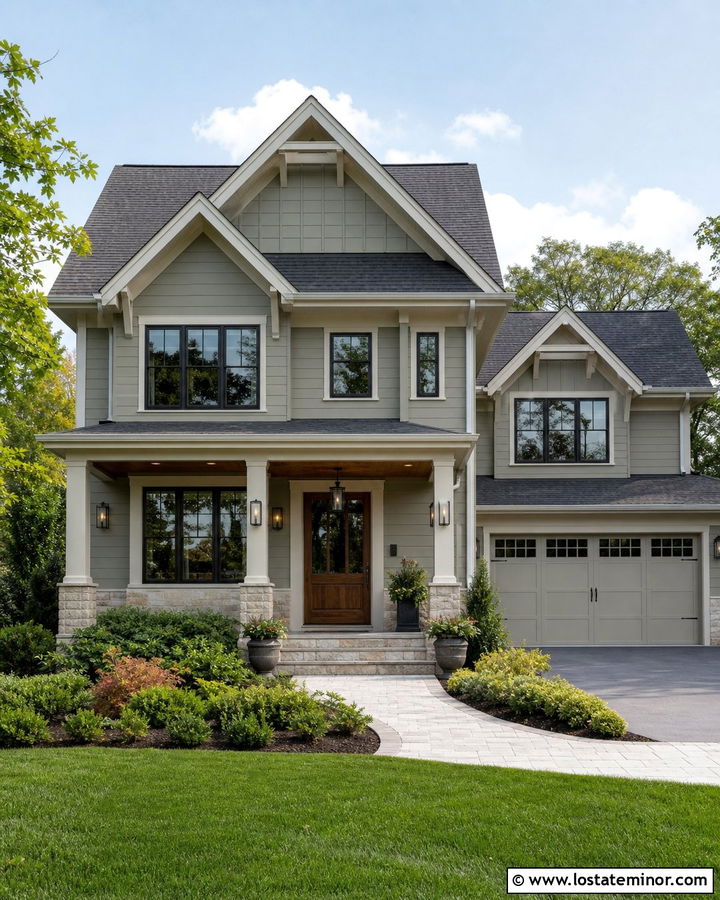
Clear glass box sconces give a sage green house a light, transitional appearance. Their open structure is especially useful beside narrow doors or garage bays where a heavier lantern could feel crowded. Paint smooth lap siding a soft sage green and use warm white trim for a clean border. Black-framed sconces can coordinate with slim black windows, gutters, and a dark gray roof. Bring warmth to the entrance through a walnut door and cedar porch ceiling. Light limestone or whitewashed brick across the foundation keeps the exterior airy. Since clear fixtures reveal the bulbs, choose simple shapes and a comfortable light appearance. Neatly layered shrubs, a pale paver path, and subtle porch planters complete a polished facade that fits comfortably between traditional and modern design.
26. Sage Green House With Frosted Globe Lights
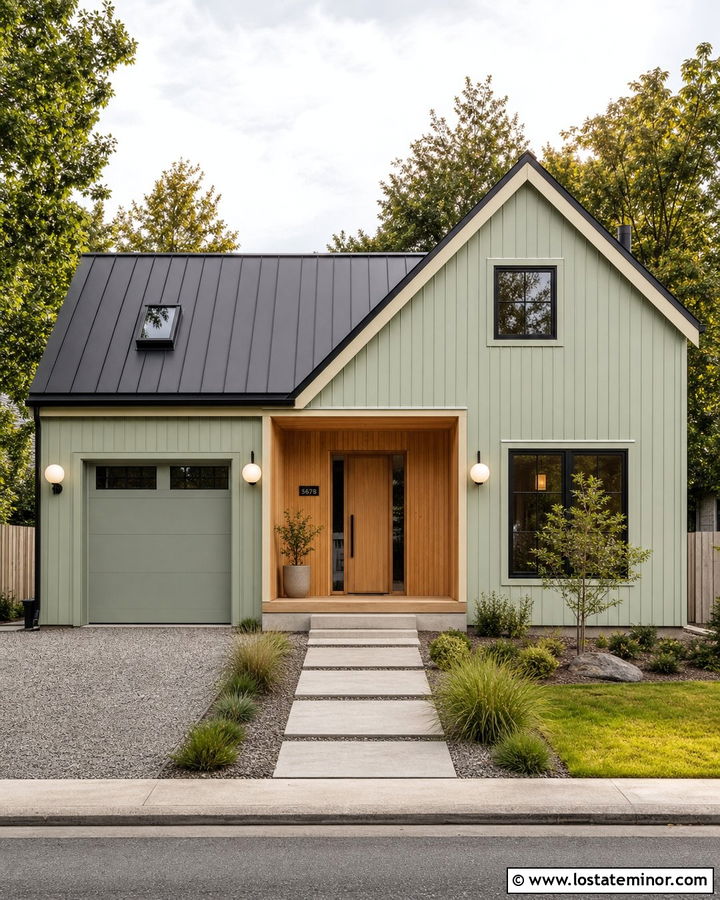
Frosted globe fixtures introduce a soft shape that contrasts beautifully with straight siding lines and angular roof forms. On a sage green Scandinavian-inspired house, use simple globe sconces beside the front door and along a sheltered porch. Black or dark bronze fixture arms provide definition, while the white glass connects to pale trim. Cover the facade in narrow vertical sage green siding, then add natural birch- or oak-toned wood around the entrance. A charcoal standing-seam roof creates a clean cap above the lighter walls. Keep the garage door sage green for a visually uninterrupted facade. Minimal landscaping with grasses, small trees, gravel, and broad concrete pavers supports the streamlined design. The complete exterior feels friendly and modern rather than stark or excessively industrial.
27. Sage Green House With Dark Bronze Path Lights
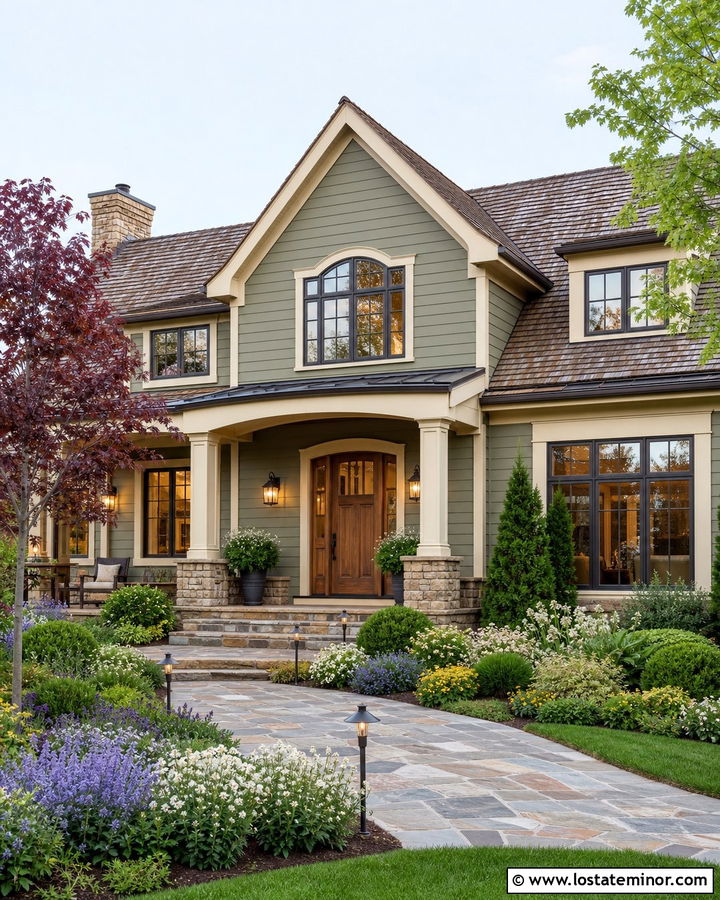
Exterior lighting should extend beyond the walls when the walkway plays a major role in the curb view. Pair a warm sage green house with dark bronze lanterns beside the front door and coordinating low path lights along a curved stone walkway. Cream trim, a stained oak door, and a weathered brown roof create an inviting base. Bronze works well here because it blends into the garden during daylight while still repeating the entry fixtures. Use natural fieldstone around the porch foundation and steps to connect the house with the path. Layered shrubs, flowering perennials, and small ornamental trees can frame the approach without hiding the facade. This coordinated arrangement makes the entire front yard feel considered, leading attention naturally from the curb to the sage green entrance.
28. Sage Green House With Black Post Lanterns
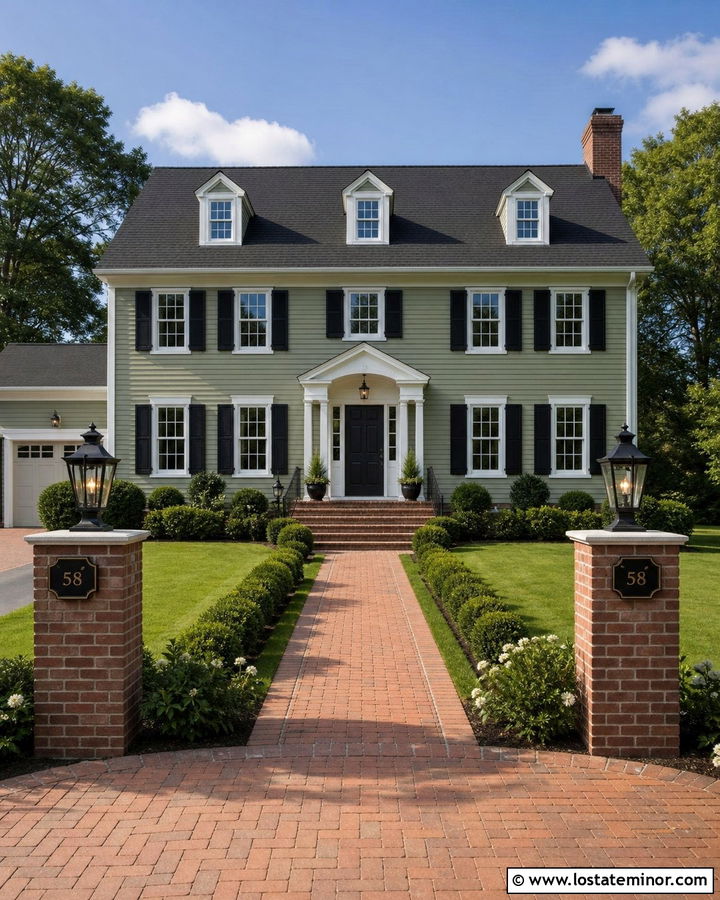
A long driveway or broad front lawn can make a house feel visually distant. Black post lanterns help establish a clear approach while connecting the property entrance to the facade. Use medium sage green siding with crisp white trim and a black front door. Match the post lanterns to traditional black wall fixtures beside the entrance and garage. Black shutters, iron railings, and charcoal roof shingles distribute the dark finish evenly. Brick columns at the driveway entrance can support the lanterns and relate to brick porch steps near the house. A straight walkway, clipped hedges, and balanced foundation plantings maintain the formal appearance. This complete scheme suits Colonial and Georgian-inspired homes where symmetry, repetition, and a clearly defined entrance are important to the curb appeal.
29. Sage Green House With Recessed Porch Lighting
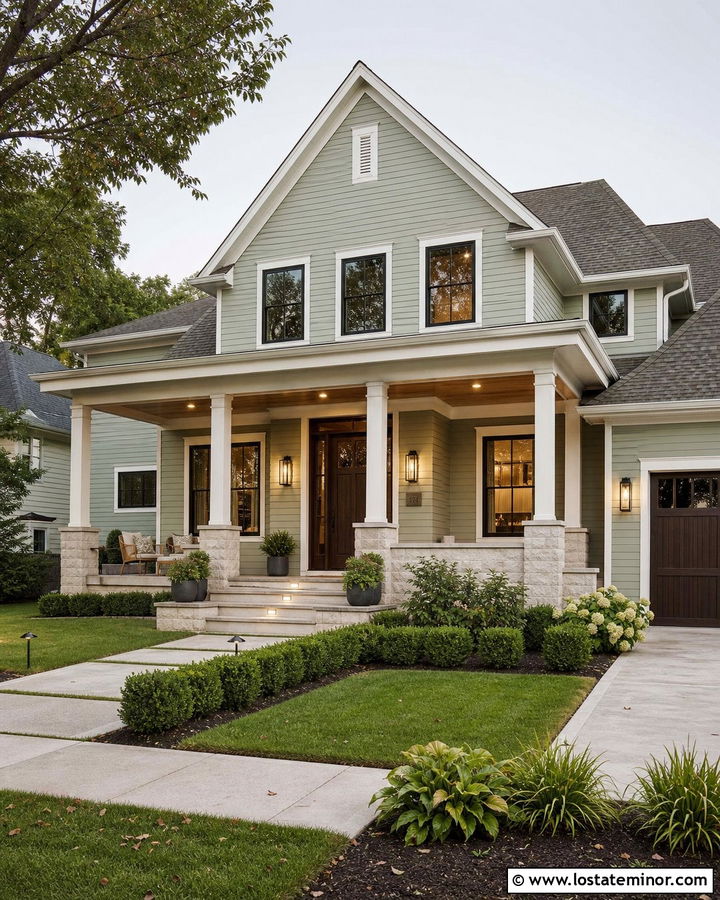
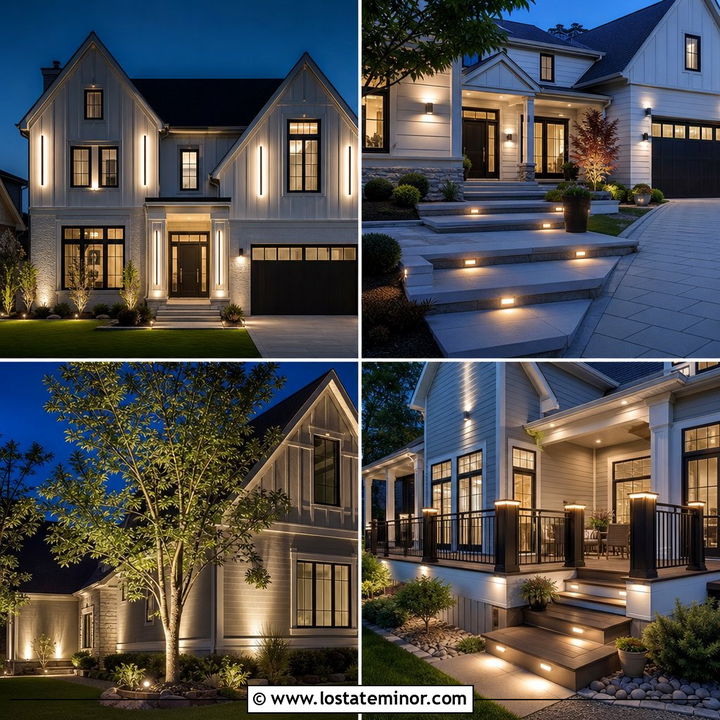
Recessed lighting can keep a porch ceiling visually quiet while allowing decorative wall fixtures to command attention. Paint a transitional home in light sage green and use warm white trim across the windows, fascia, and columns. Install small recessed fixtures in a pale wood porch ceiling, then flank the dark walnut front door with streamlined bronze sconces. The hidden overhead lights provide broad illumination, while the sconces give the entry a finished daytime appearance. Use bronze hardware, dark brown gutters, and a charcoal-brown roof to repeat the fixture finish. Pale limestone around the porch and garage adds texture without making the palette busy. Low hedges, broad steps, and a straight walkway complete an orderly exterior that feels welcoming, layered, and thoughtfully illuminated.
30. Sage Green House With Mixed Outdoor Lighting
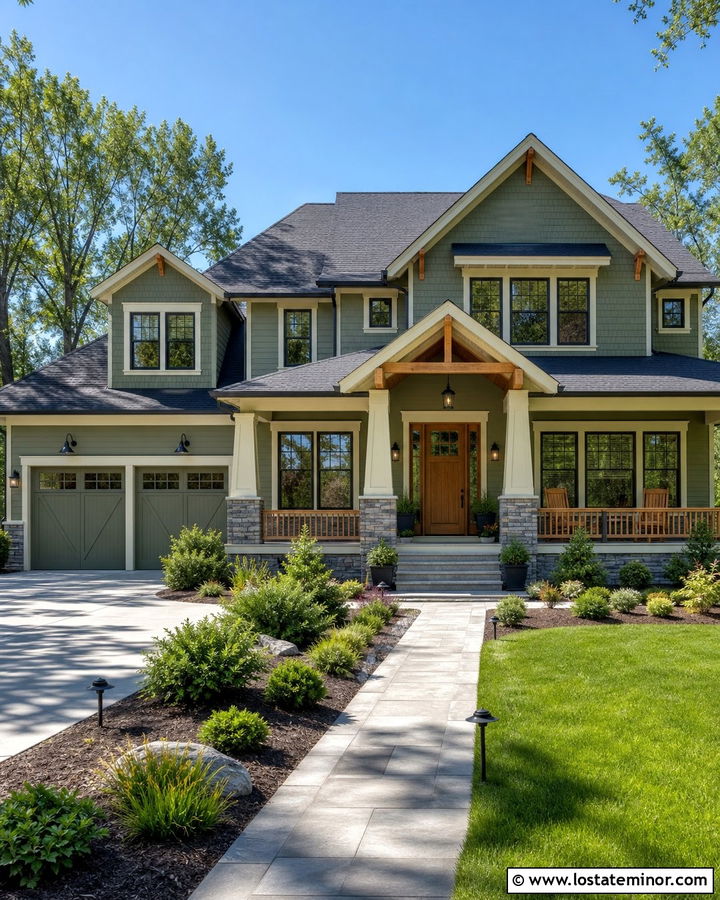
A large house often needs more than one fixture type, but every light should share a visual language. Combine black wall lanterns at the front door, gooseneck lights over the garage, and a hanging pendant beneath the porch. Keep all fixtures in the same matte black finish with similarly shaped shades or glass panels. Medium sage green siding, warm white trim, cedar porch details, and a charcoal roof form the supporting palette. Add gray stone at the foundation and around the entry to give the larger facade texture. Matching black path lights may line the walkway, but use them sparingly. Repeating finish, scale, and shape allows varied lighting to feel coordinated. The complete exterior appears polished from curb to doorway rather than assembled one fixture at a time.
Conclusion:
The best sage green exterior combines paint, lighting, trim, roofing, doors, and natural materials into one coordinated view. Black fixtures create definition, bronze adds earthy depth, brass offers traditional warmth, and copper develops character over time. Fixture scale matters just as much as finish, especially beside garages, tall doors, and broad porches. Before committing, compare paint samples beside the roof, masonry, and chosen metal in bright and shaded conditions. Then repeat the fixture finish through hardware or smaller architectural accents. The complete looks in **30 Sage Green House Design With Light Fixtures Ideas** can help you shape an exterior that feels calm, balanced, welcoming, and appropriate for your home’s architecture.

Related posts: