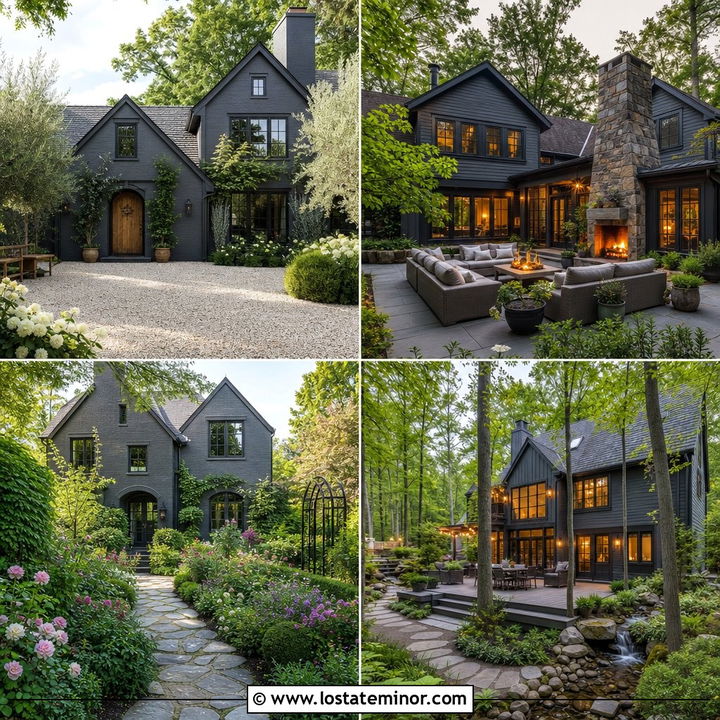
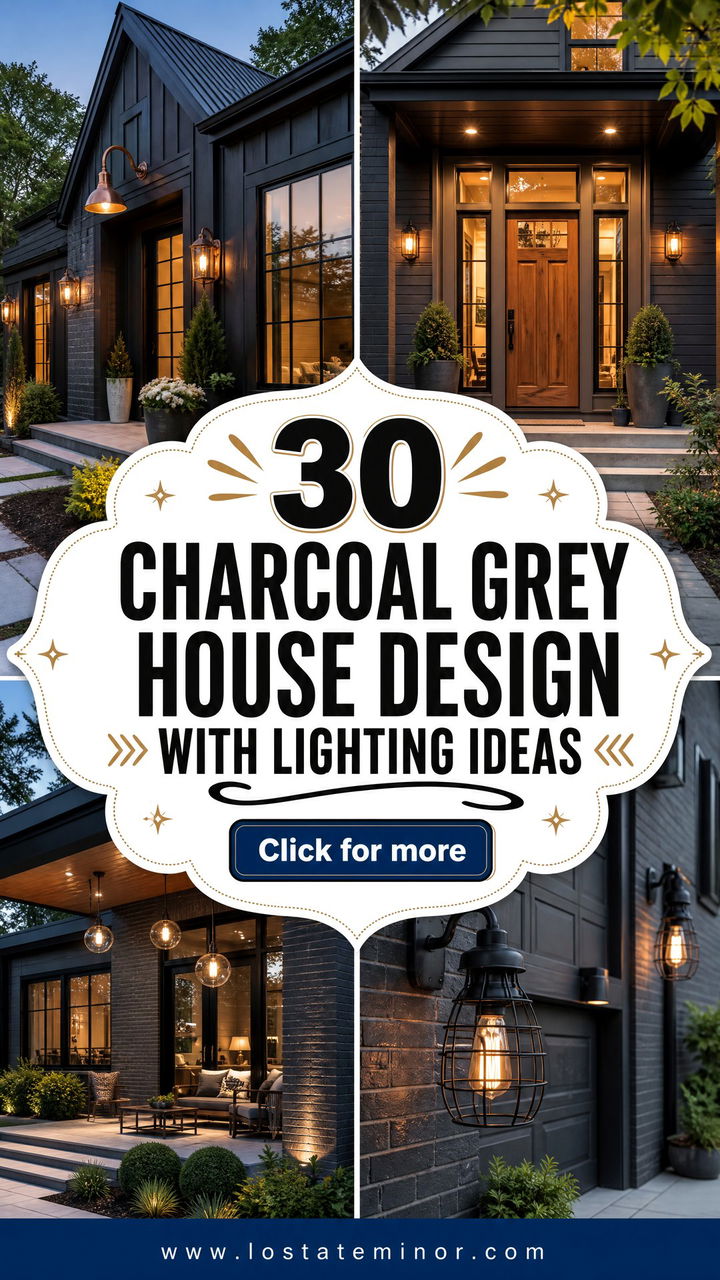
A charcoal exterior can look crisp, dramatic, or warmly inviting depending on the materials and lighting around it. These 30 Charcoal Grey House Design With Lighting Ideas explore complete curb-appeal schemes rather than treating fixtures as an afterthought. You will find charcoal siding paired with white trim, natural wood, stone, brick, black windows, and thoughtfully placed exterior lights. Because deep gray paint can reveal different undertones as sunlight changes, it helps to coordinate it with permanent features such as roofing, masonry, and paving before choosing fixtures. () Each look below also considers architectural style, fixture finish, scale, and placement. Whether you prefer a traditional lantern or streamlined LED lighting, use these 30 Charcoal Grey House Design With Lighting Ideas to plan a balanced exterior.
1. Charcoal Grey House With Black Wall Sconces
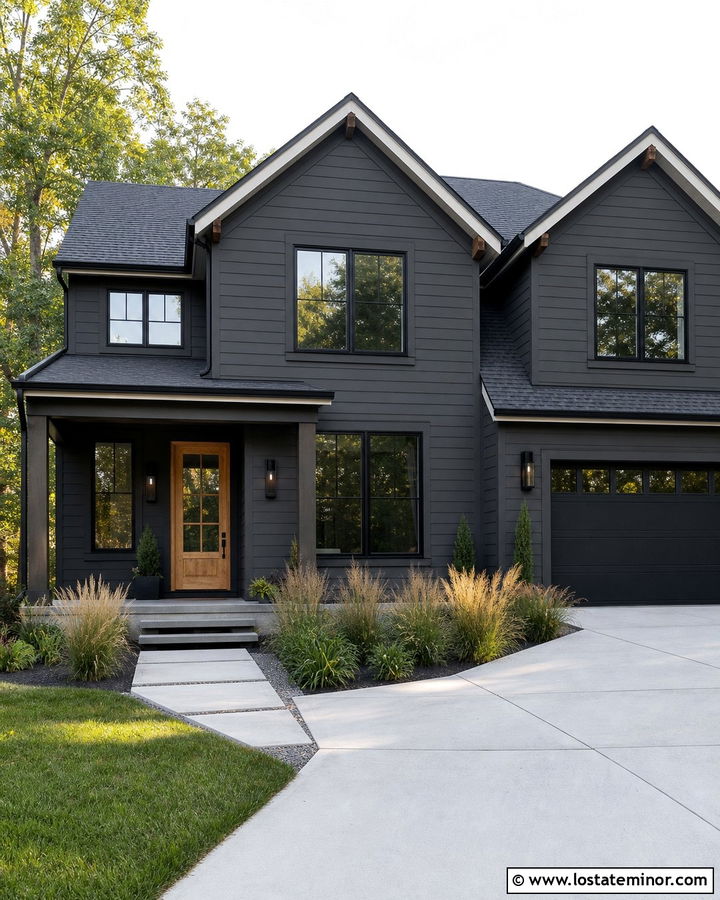
Matte black wall sconces create a clean connection between charcoal grey siding, dark window frames, and a black roof. This complete scheme works especially well on a modern two-story house with horizontal lap siding and a simple covered entry. Place one rectangular sconce on each side of a natural oak front door to warm the darker palette. Matching fixtures beside the garage add repetition without making the facade feel busy. Use soft white trim only around the soffits and selected architectural edges. Pale concrete paving and ornamental grasses brighten the foreground. The result feels modern but not cold because the wood door and landscaping soften the black-and-charcoal combination. Choose fixtures with clear glass and simple frames to preserve the streamlined appearance.
2. Charcoal Grey House With Brass Porch Lanterns
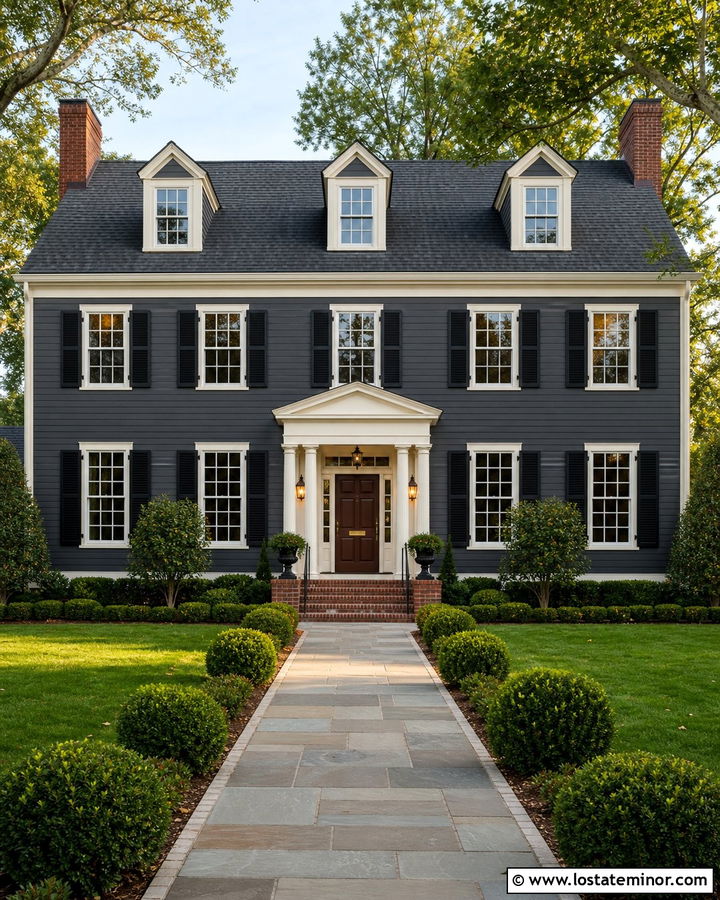
Warm brass porch lanterns bring a refined glow to a charcoal grey colonial exterior. Their golden finish stands out against the deep siding while complementing a medium-stained mahogany front door. Keep the window trim creamy white rather than stark white to support the warmer metals. Symmetrical lanterns can flank the entrance, while a coordinating hanging fixture centers the covered portico. Black shutters and a charcoal architectural-shingle roof give the facade structure. Red brick steps introduce another warm material without competing with the lighting. For a polished result, repeat the brass finish in the door hardware and house numbers. Boxwood hedges, a straight stone walkway, and balanced foundation planting complete this formal charcoal exterior and reinforce the traditional colonial architecture.
3. Charcoal Grey House With Cedar Porch Lighting
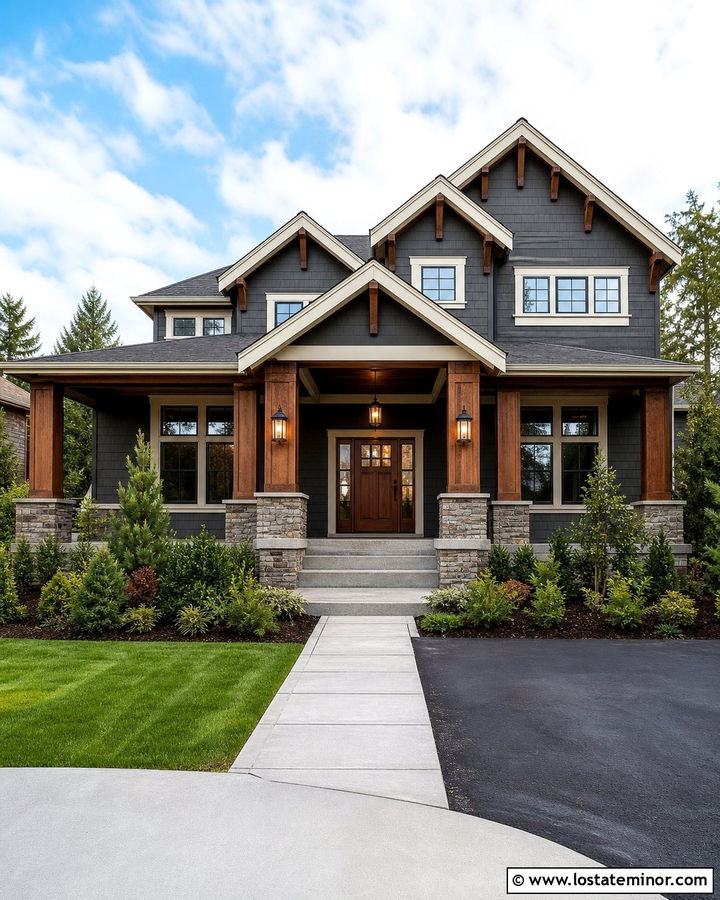
Imagine a charcoal grey craftsman softened by cedar columns, exposed beams, and a rich wood front door. Dark bronze lanterns mounted on the cedar posts tie the warm timber to the cool siding without creating harsh contrast. A low, wide pendant can hang beneath the porch ceiling to illuminate the entrance while emphasizing the horizontal roofline. Cream trim around the windows and gables keeps the scheme relaxed. Add a gray stone foundation with subtle brown veining to connect the siding and wood tones. Wide concrete steps and layered evergreen planting give the home a grounded appearance. This approach is ideal when a charcoal facade feels too dark or severe. Natural wood and warm lighting introduce enough variation to make the whole exterior feel welcoming.
4. Charcoal Grey House With White Trim And Lanterns
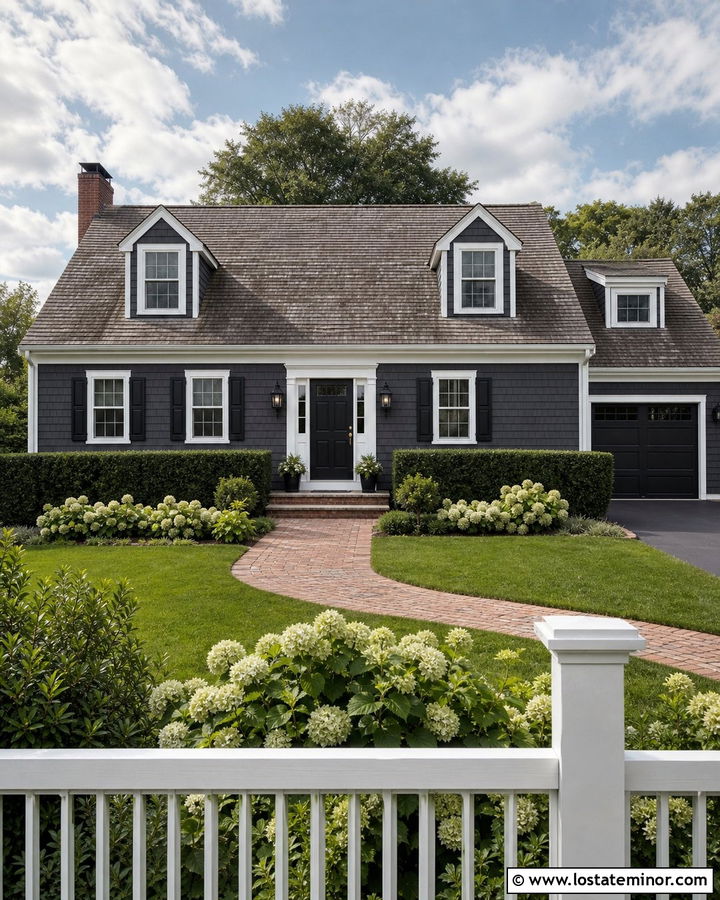
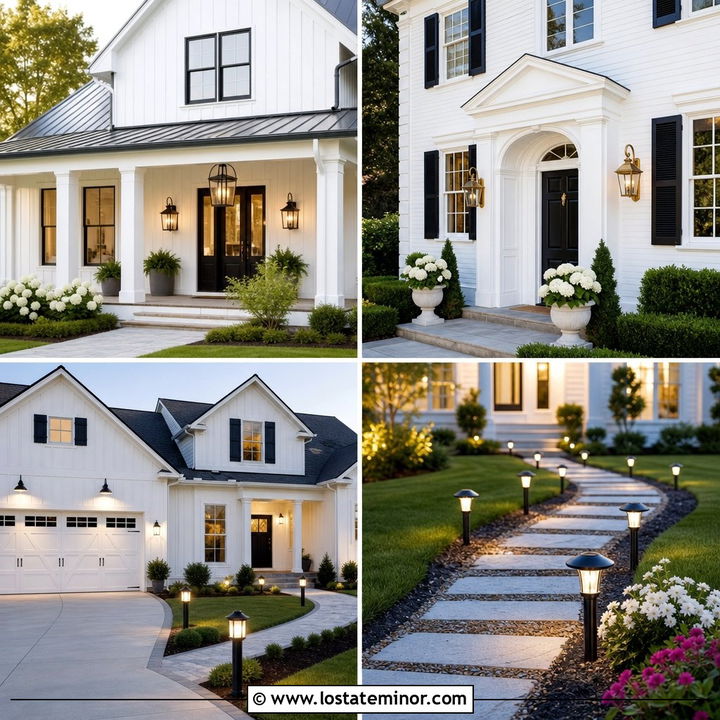
Crisp white trim gives a charcoal grey Cape Cod exterior an instantly recognizable outline. Traditional black lanterns then add definition without introducing another competing color. Use charcoal grey shingles across the body, bright white on the corner boards and dormers, and black on the shutters and front door. Place appropriately scaled lanterns beside the entrance and smaller matching fixtures near a side-facing garage. A weathered gray roof keeps the palette cohesive while allowing the white details to remain visible. Hydrangeas, clipped hedges, and a curved brick walkway prevent the dark exterior from feeling rigid. This complete combination suits a compact home because the high-contrast trim highlights its proportions. Keep the fixture glass clear and the metalwork simple for a fresh look.
5. Charcoal Grey House With Recessed Soffit Lighting
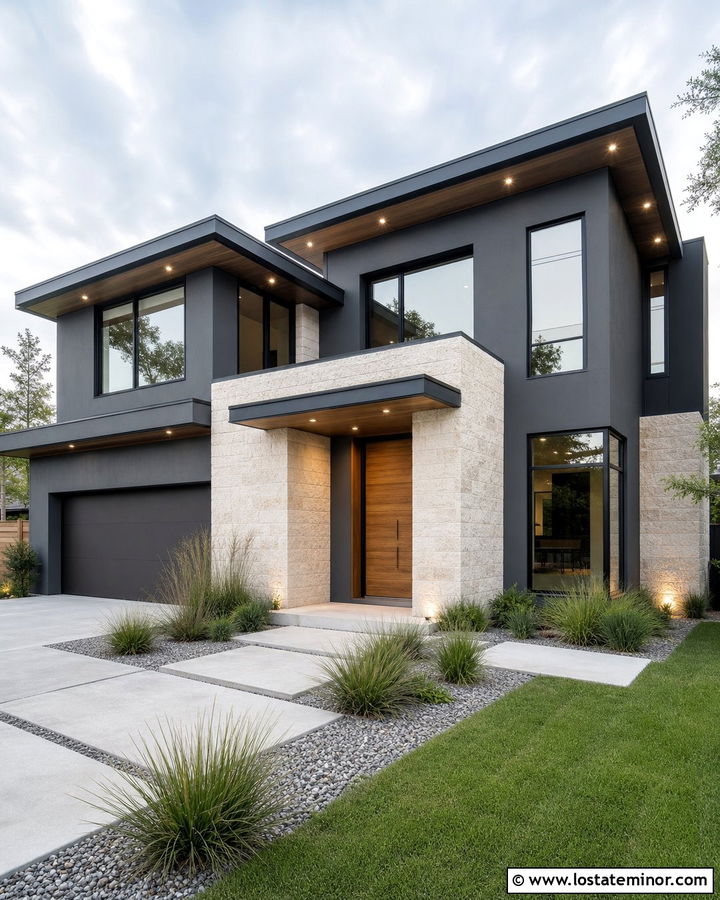
Recessed soffit lighting can sharpen the architecture of a charcoal grey contemporary house without adding visible decorative fixtures. Position small lights beneath projecting roof sections, around the entrance canopy, and above textured wall panels. The controlled placement emphasizes depth rather than washing the entire facade in brightness. Pair smooth charcoal stucco with black-framed windows, a flush natural wood door, and light limestone near the entry. A flat or low-pitched black metal roof continues the modern palette. Large concrete pavers, gravel beds, and structured grasses keep the landscaping minimal. Avoid installing too many lights in a continuous row, which can make the exterior look commercial. A few carefully spaced fixtures will reveal the roofline, doorway, and material changes more effectively.
6. Charcoal Grey House With Copper Exterior Lights
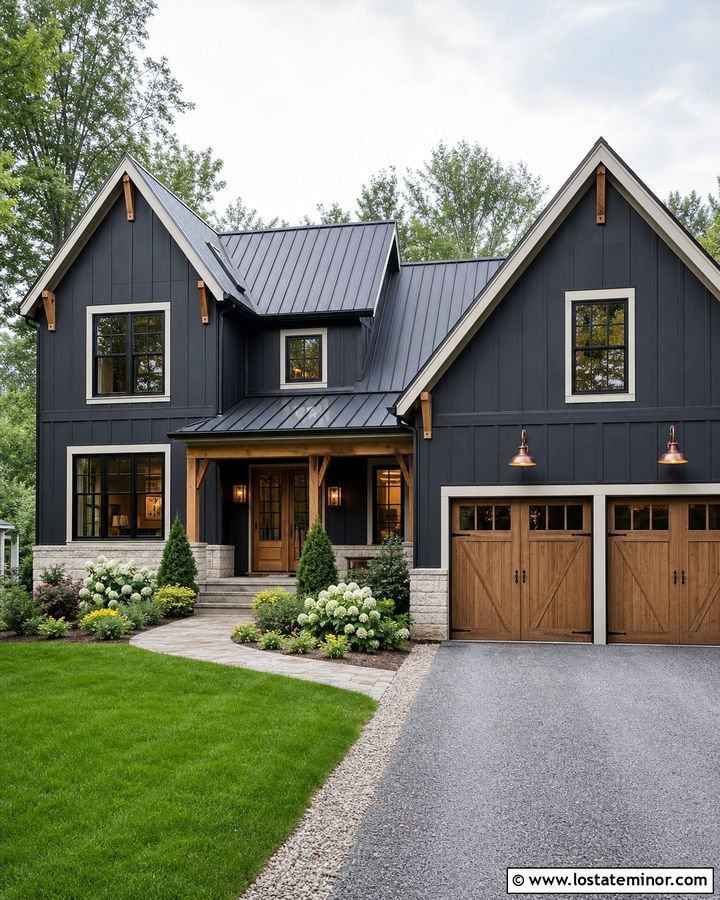
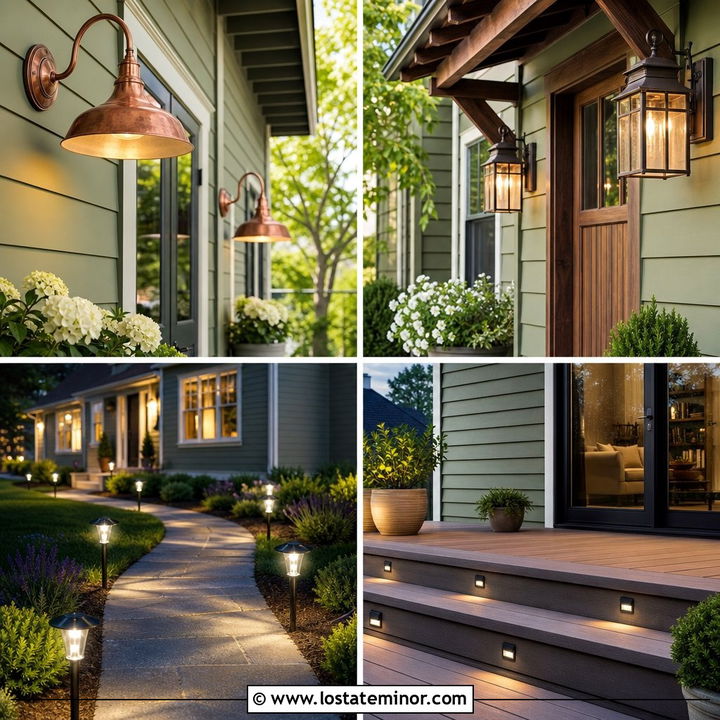
Copper exterior lights add character to a charcoal grey farmhouse because the metal introduces a warm, living finish. Use gooseneck lights above garage doors and matching copper lanterns beside a stained wood entrance. Over time, the fixtures can develop a distinctive patina that works naturally with weathered wood and masonry. Board-and-batten charcoal siding gives the facade strong vertical lines, while soft white trim outlines the roof and windows. A standing-seam charcoal roof keeps the major surfaces tonal. Add pale stone around the porch foundation and use cedar brackets beneath the gables. The combination feels collected rather than overly coordinated. To keep copper as the main decorative metal, select understated dark hardware for secondary features such as gutters, railings, and mailbox details.
7. Charcoal Grey House With Stone Columns And Uplights
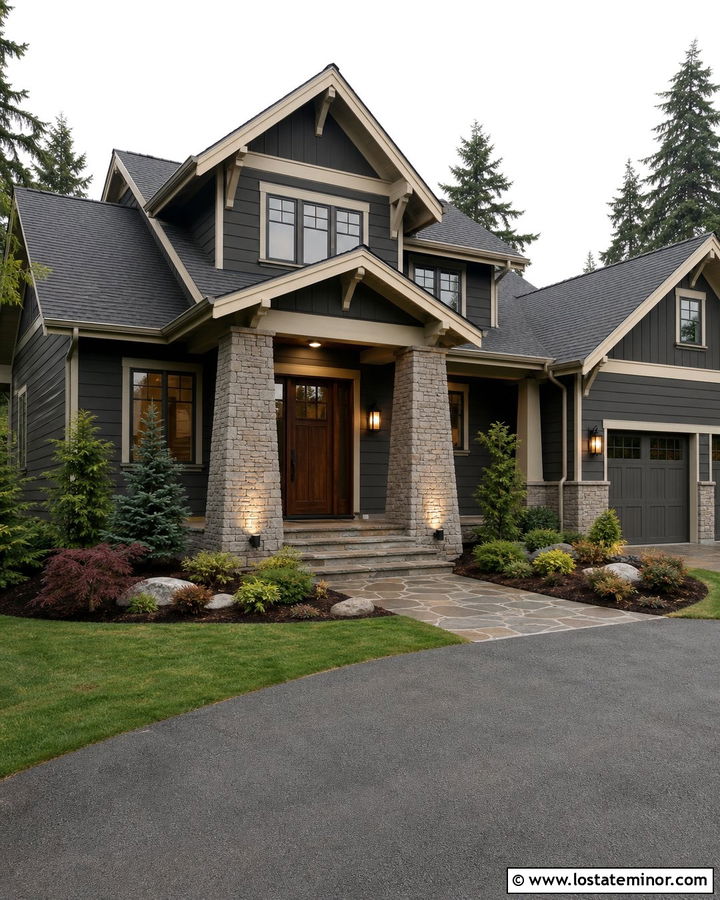
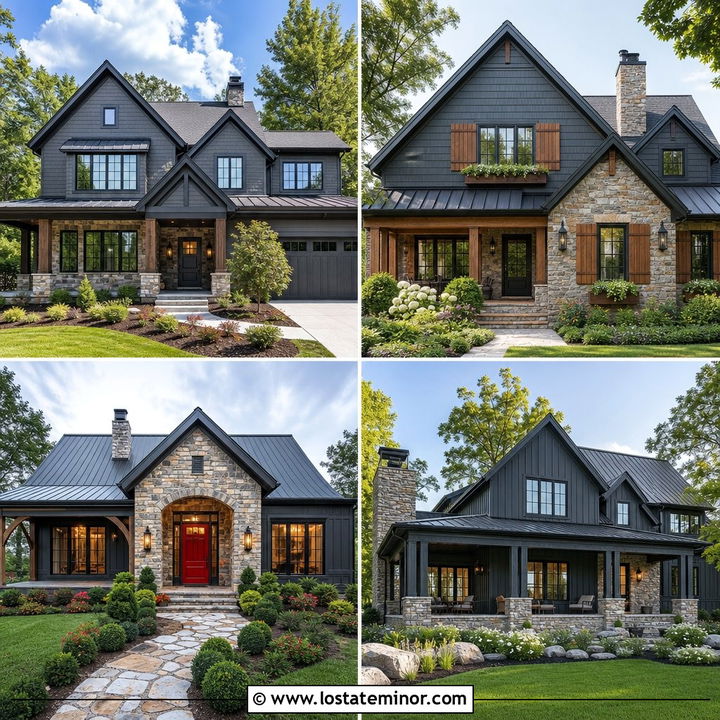
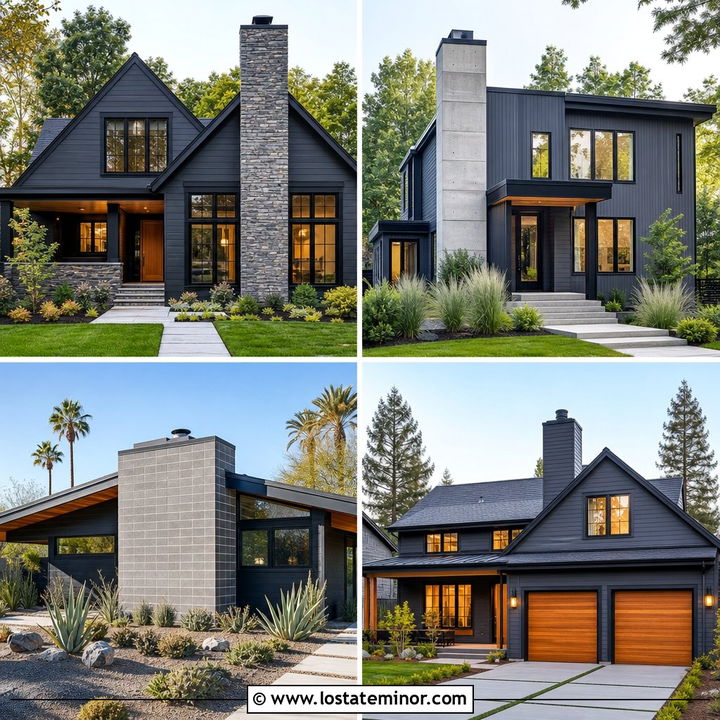
Stone columns look especially substantial against charcoal grey siding when low uplights reveal their texture. This scheme suits a craftsman or mountain-inspired house with broad eaves and a deep front porch. Choose stone containing gray, taupe, and soft brown tones so it bridges the charcoal body and natural wood accents. Bronze fixtures can sit discreetly at the base of the columns, directing controlled light upward across the masonry. Add dark bronze sconces beside a walnut front door for another layer of illumination. Cream fascia and window trim prevent the facade from becoming too shadowy. A mixed-material walkway, evergreen shrubs, and small ornamental trees complete the setting. The lighting should emphasize the columns and entrance rather than overpower the full exterior.
8. Charcoal Grey House With Modern Linear Lighting
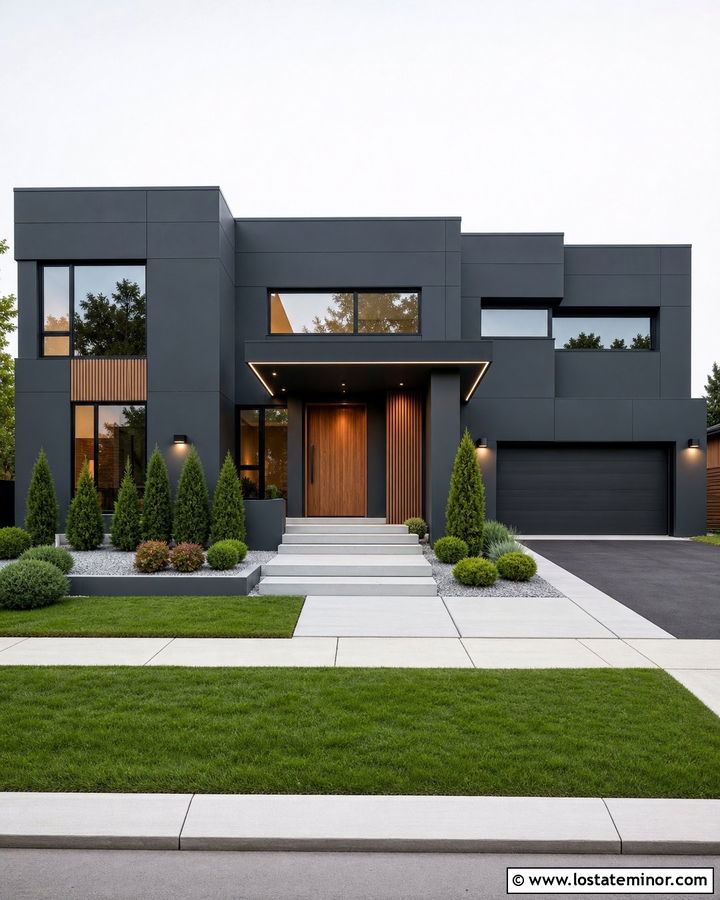
Linear lighting reinforces the strong geometry of a charcoal grey modern home. Slim horizontal fixtures can be integrated beneath an entry canopy, along a floating porch roof, or over a wide garage opening. Pair charcoal fiber-cement panels with vertical cedar slats and black-framed windows for a layered facade. A warm wood pivot door introduces a welcoming focal point, while pale concrete steps brighten the lower elevation. Keep the linear fixtures black or charcoal so they nearly disappear in daylight. Their form should follow the architecture instead of looking like an added decoration. Structured shrubs, gravel planting beds, and a broad walkway continue the clean composition. This complete look works best when the lighting lines align with doors, windows, and major facade divisions.
9. Charcoal Grey House With Farmhouse Gooseneck Lights
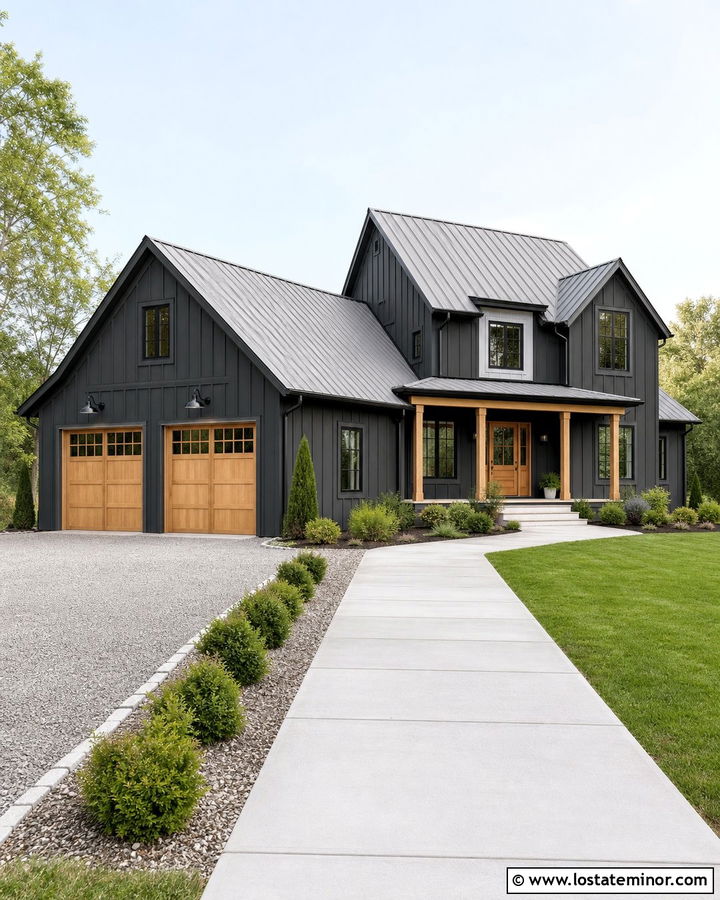
Black gooseneck lights bring practical farmhouse character to charcoal grey board-and-batten siding. Install them above carriage-style garage doors, beside a covered entrance, or over a small porch seating area. Their curved arms soften the straight vertical siding while the wide shades direct attention downward. Use warm white trim, a natural cedar front door, and light oak garage doors to balance the deep charcoal body. A pale gray metal roof offers a lighter upper surface without breaking the neutral palette. Black gutters, window frames, and door hardware repeat the fixture finish. Complete the setting with a gravel-edged driveway, simple foundation shrubs, and a wide concrete path. Consistent fixture shapes help the garage and entrance read as parts of one coordinated exterior.
10. Charcoal Grey House With Oversized Entry Pendants
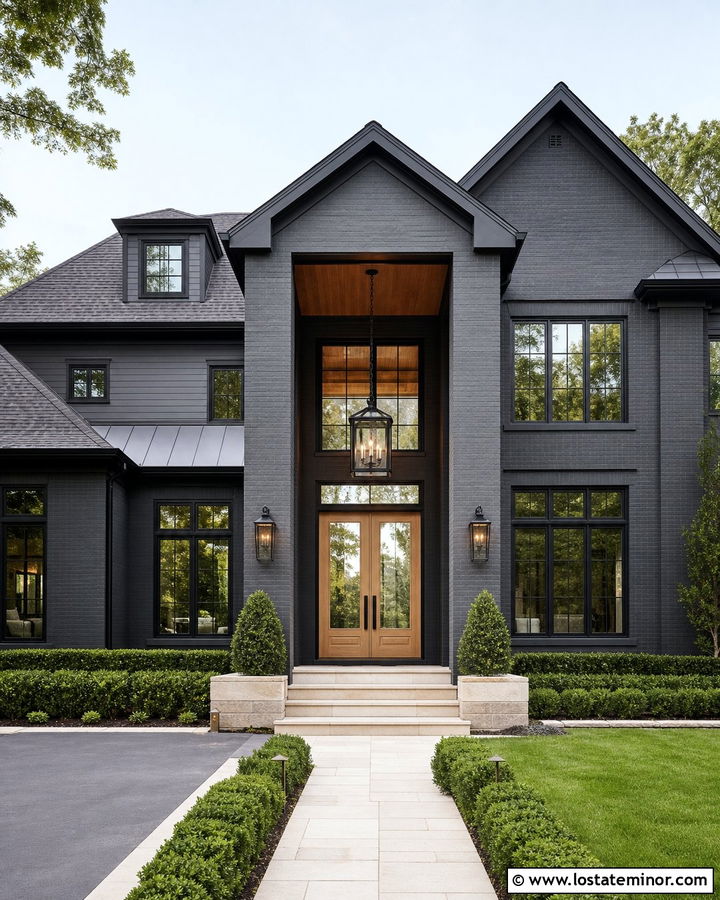
A tall covered entry deserves lighting with enough scale to match its architecture. On a charcoal grey transitional house, an oversized black-framed pendant can fill the vertical space above a double front door without blocking the view. Choose clear glass and a simple geometric frame to complement black windows and iron railings. Charcoal painted brick across the lower facade adds texture, while smooth charcoal siding on the upper level creates subtle variation. White oak doors and porch ceilings bring warmth overhead and at eye level. Keep other fixtures smaller so the pendant remains the visual anchor. Low boxwood hedges and broad limestone steps support the balanced entrance. This approach makes a large portico feel furnished, intentional, and connected to the complete facade.
11. Charcoal Grey House With Brick And Bronze Lighting
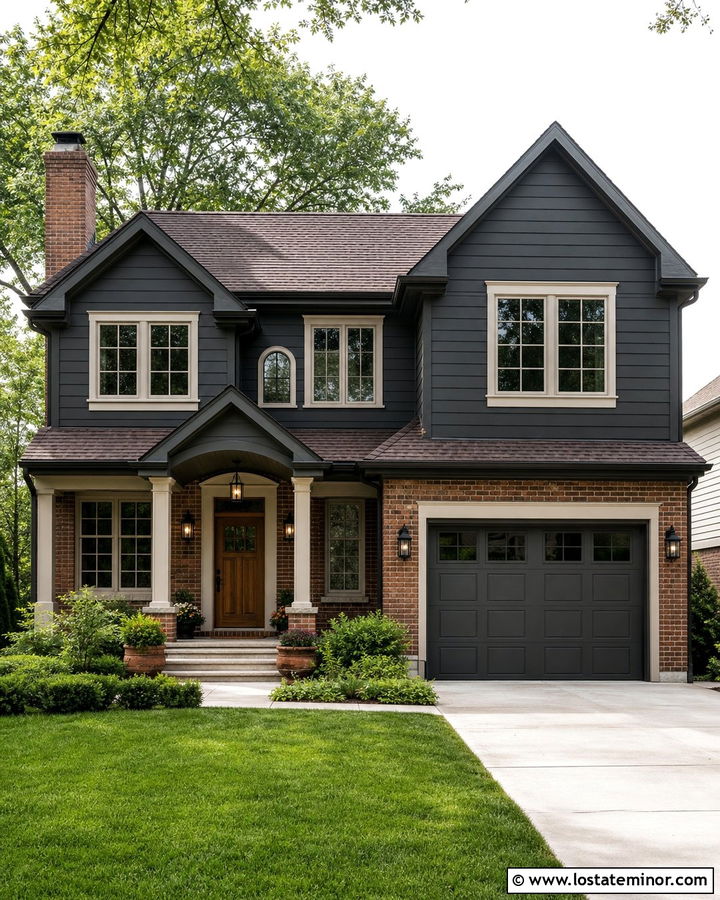
Existing brick can make a charcoal grey exterior feel warmer and more established. Keep red or brown brick on the lower level, then use charcoal grey siding on the upper story and gables. Dark bronze lanterns connect naturally with both materials because their finish is softer than solid black. Position them beside a stained oak door and across the garage elevation for visual continuity. Cream window trim picks up lighter tones in the mortar, while a deep brown roof supports the brick. Avoid adding bright accent colors that could compete with the masonry. Instead, use terracotta planters, green shrubs, and a warm concrete walkway. This complete scheme preserves the character of the brick while giving the house a more current charcoal-grey identity.
12. Charcoal Grey House With Path Lighting
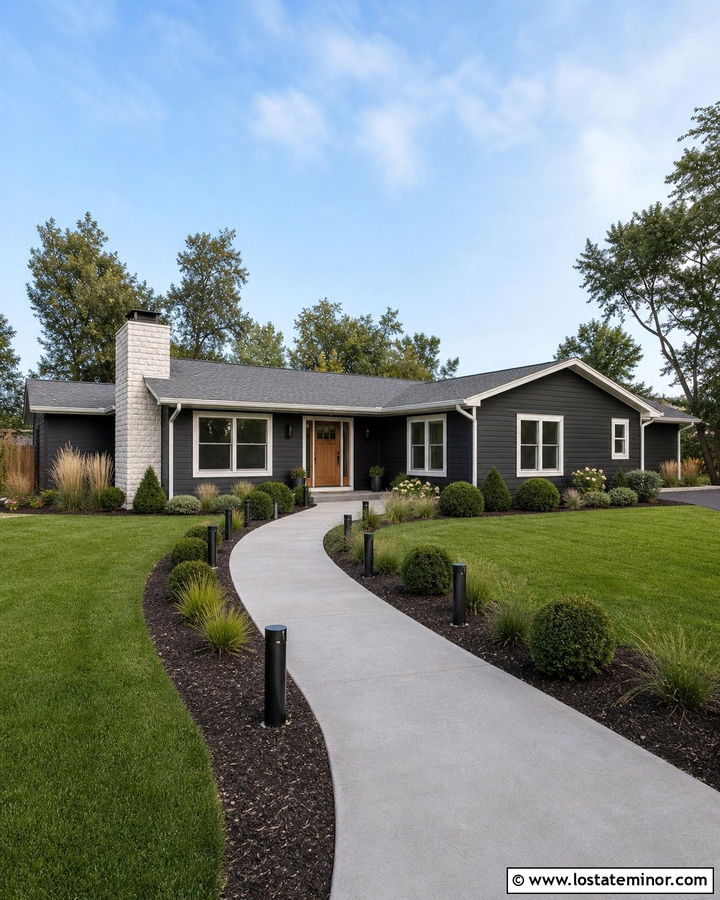
Path lighting can make the walkway part of a charcoal grey home’s overall design. Start with a low-profile ranch exterior featuring charcoal lap siding, warm white trim, and a cedar front door. Install small black bollard lights along one side of a curved concrete path rather than creating an overly formal runway. Matching black sconces at the entrance help the separate lighting layers feel coordinated. A medium-gray roof and pale stone chimney break up the long, dark facade. Use low grasses and rounded evergreen shrubs that will not hide the fixtures. The pathway should lead the eye naturally toward the porch during the day as well as after sunset. Simple, evenly finished fixtures keep the landscape and architecture connected without cluttering the front yard.
13. Charcoal Grey House With Garage Door Lighting
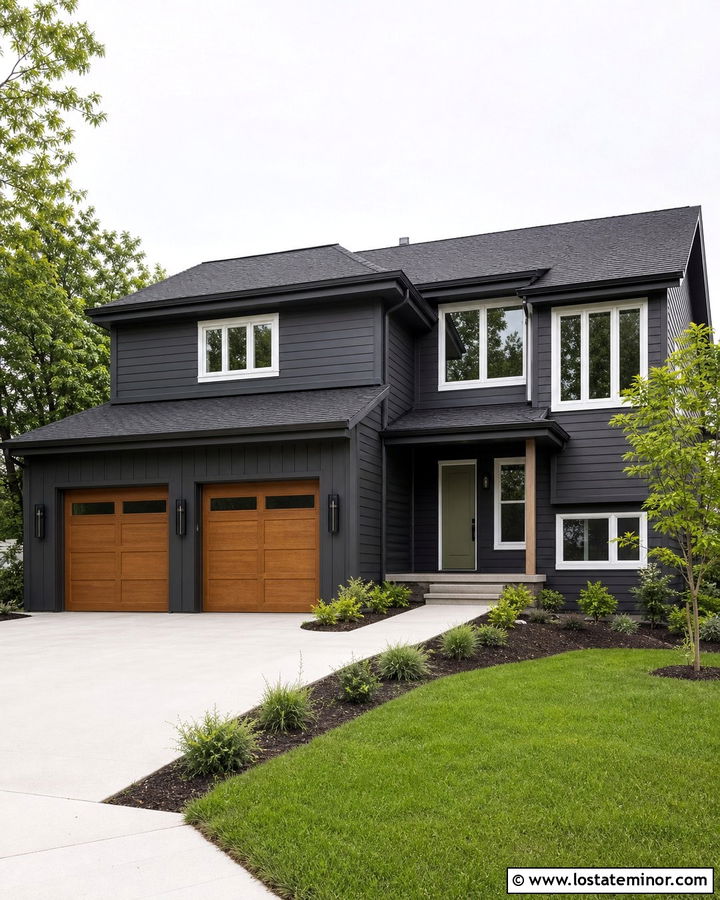
Garage lighting matters when the doors occupy a large portion of the front elevation. A charcoal grey split-level can look more balanced with warm wood garage doors and slim black sconces installed between each bay. Use downward-facing fixtures to highlight the wood grain rather than flooding the driveway. Continue charcoal grey siding across both levels, then add white trim around selected windows for contrast. A black roof and matching gutters help the sconces blend with the upper facade. Near the entrance, repeat the same fixture family in a smaller size beside a muted olive door. Low planting beds and a broad concrete driveway maintain an uncluttered foreground. This arrangement turns the garage into a coordinated architectural feature instead of a separate utility area.
14. Charcoal Grey House With Wood Door And Side Lights
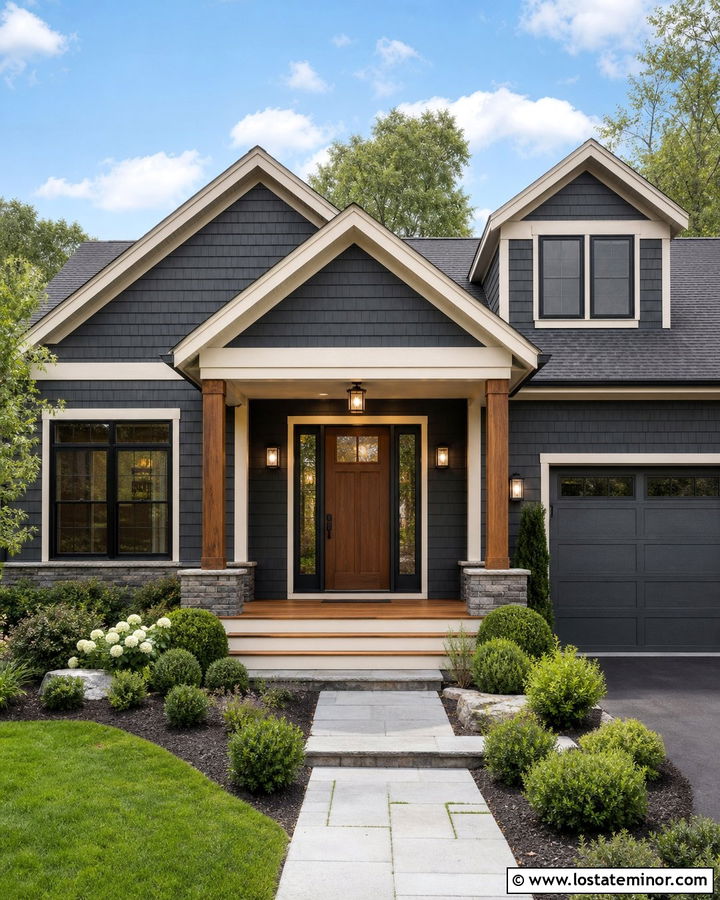
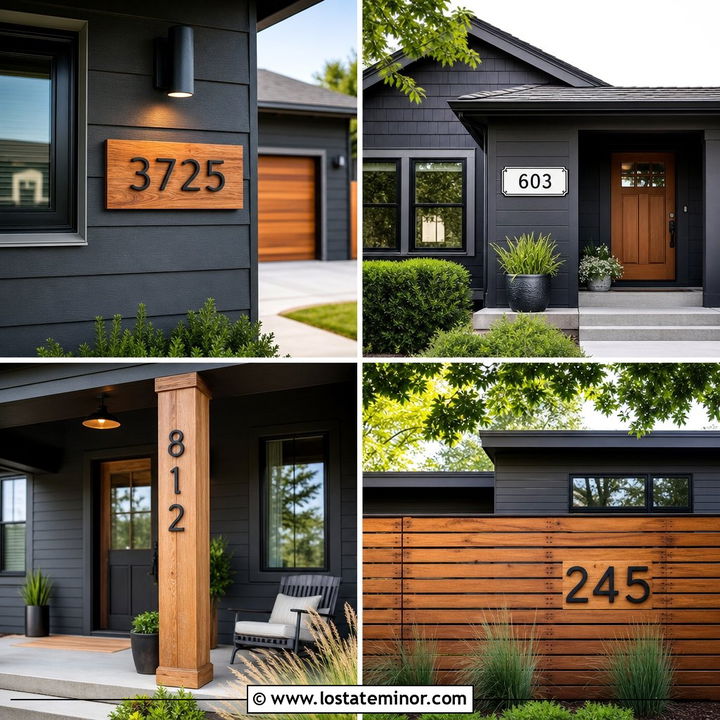
A natural wood door becomes more noticeable when narrow lights frame it against charcoal grey siding. Choose tall black sconces that echo the proportions of the door and adjacent windows. This scheme suits a modern bungalow with charcoal cedar shingles, creamy trim, and a covered porch supported by square wood posts. Use a medium walnut stain on the door and porch floor to create warmth at the center of the facade. A dark gray roof keeps the upper elevation quiet. Stone steps and layered shrubs can lead toward the entrance without hiding the lighting. Keep the sconce width modest so the fixtures do not crowd the trim. Together, the door, lighting, and timber details create a clear focal point within the darker exterior.

15. Charcoal Grey House With White Brick And Sconces
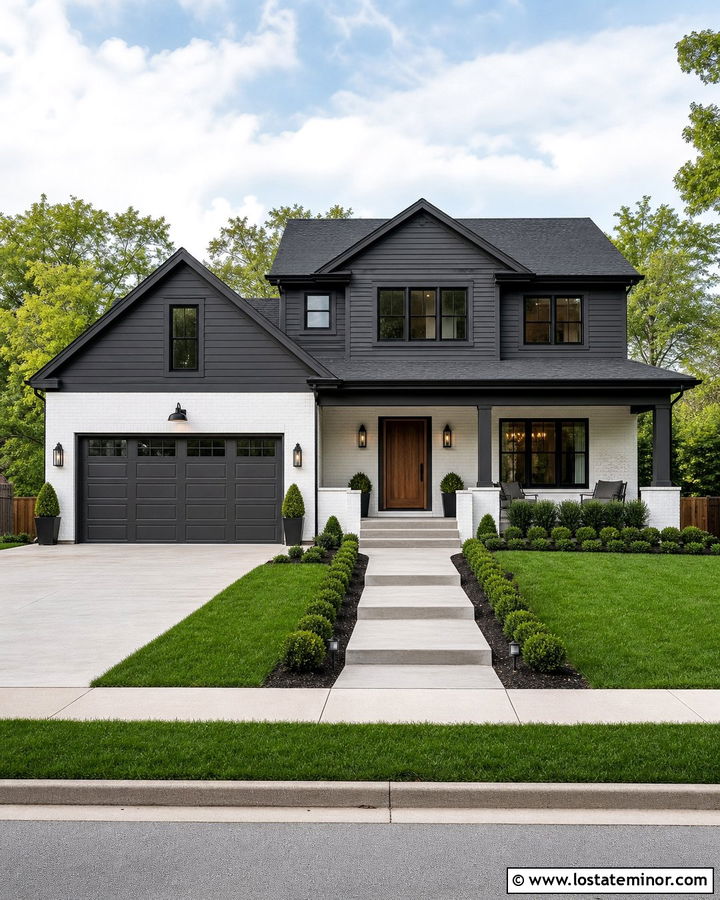
White brick can brighten a charcoal grey exterior while preserving a strong, neutral look. Use white-painted brick on the lower level and charcoal grey lap siding across the upper story. Black sconces with frosted glass can flank the entrance and garage, tying into black window frames and a dark roof. A medium-tone wood front door prevents the black, white, and charcoal palette from feeling too sharp. Consider a charcoal garage door so it recedes against the upper siding rather than becoming another bright block. Concrete steps, clipped shrubs, and a straight walkway support the clean transitional architecture. The lighting should be simple and substantial. Small decorative fixtures can look lost against the high-contrast materials, especially on a broad two-story facade.
16. Charcoal Grey House With Porch Ceiling Lights
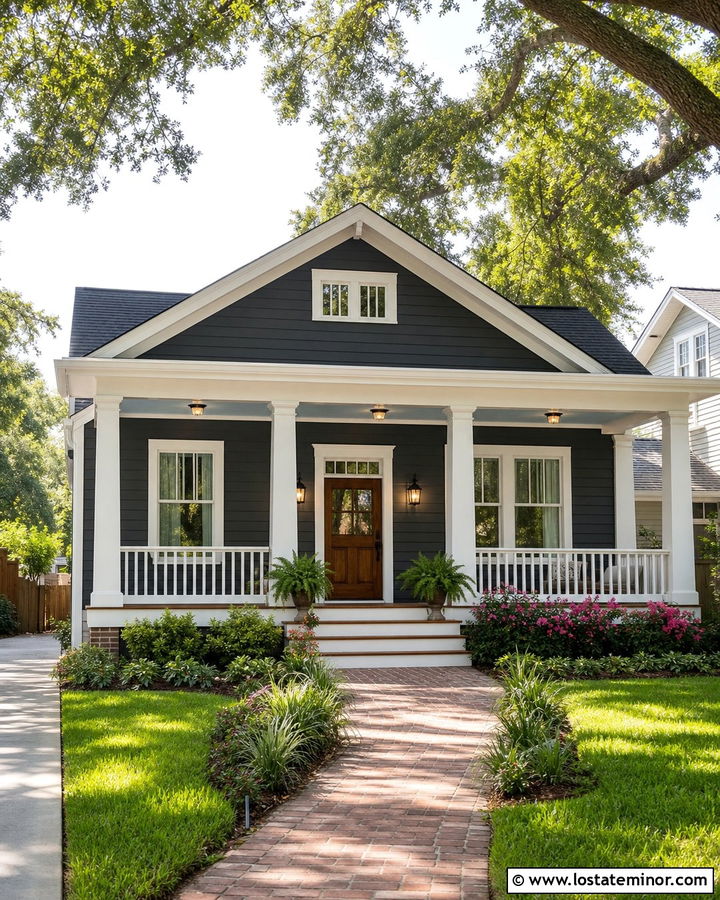
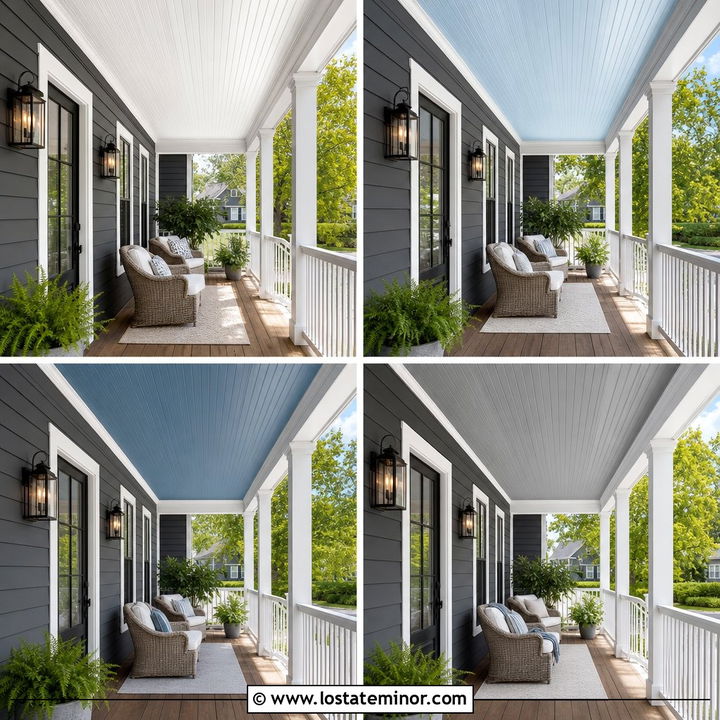
A deep porch needs more than one wall fixture to feel visually balanced. On a charcoal grey Southern bungalow, combine ceiling-mounted lights with traditional lanterns beside the door. Paint the lap siding deep charcoal grey, use warm white for the trim and railings, and introduce a pale blue porch ceiling for gentle contrast. A stained wood door and natural porch floor keep the palette grounded. Space the ceiling fixtures according to the porch bays so they align with columns and windows. Black metal finishes work well with a dark roof and simple railing details. Ferns, flowering shrubs, and a brick walkway soften the formal lines. This layered approach illuminates the entrance, porch floor, and architectural rhythm as one complete design rather than relying on a single bright fixture.
17. Charcoal Grey House With Black Shutters And Lanterns
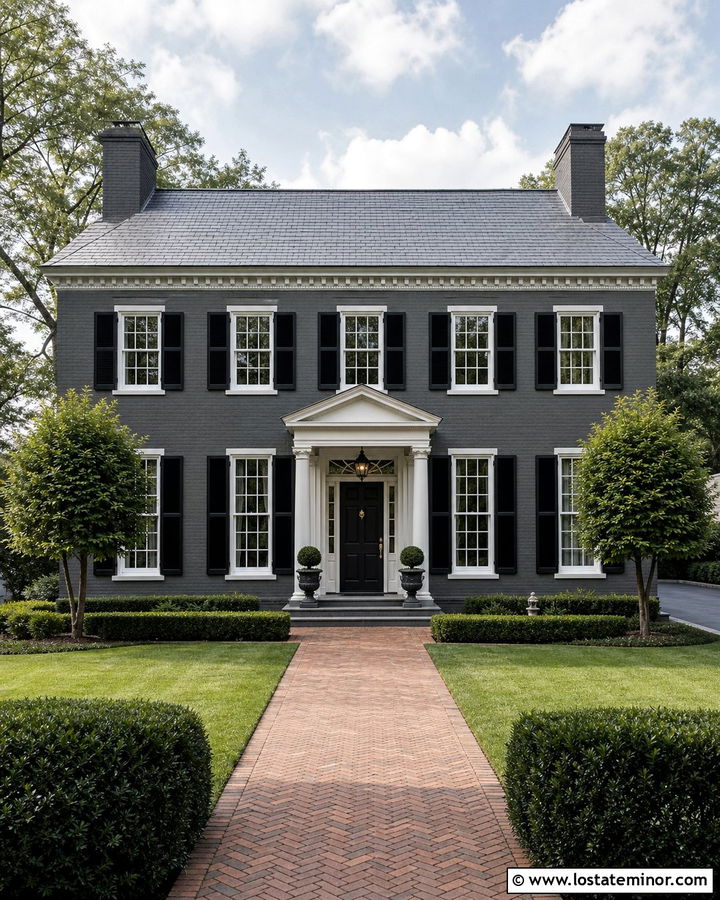
Black shutters and lanterns create a classic frame around a charcoal grey Georgian facade. To keep the dark colors from merging, use a slightly lighter charcoal on the brick or siding and a true black on the shutters, door, and fixtures. Bright white window trim adds a narrow line of separation. Place traditional lanterns on both sides of the centered entrance, then add a coordinating hanging lantern beneath the portico. A slate-gray roof complements the body without introducing a warmer undertone. Symmetrical boxwoods, small trees, and a straight brick path reinforce the architecture. The finished exterior feels formal but approachable. Carefully selected fixture scale is important because undersized lanterns can disappear beside tall doors, shutters, and wide expanses of masonry.
18. Charcoal Grey House With Cedar Garage Doors And Lights
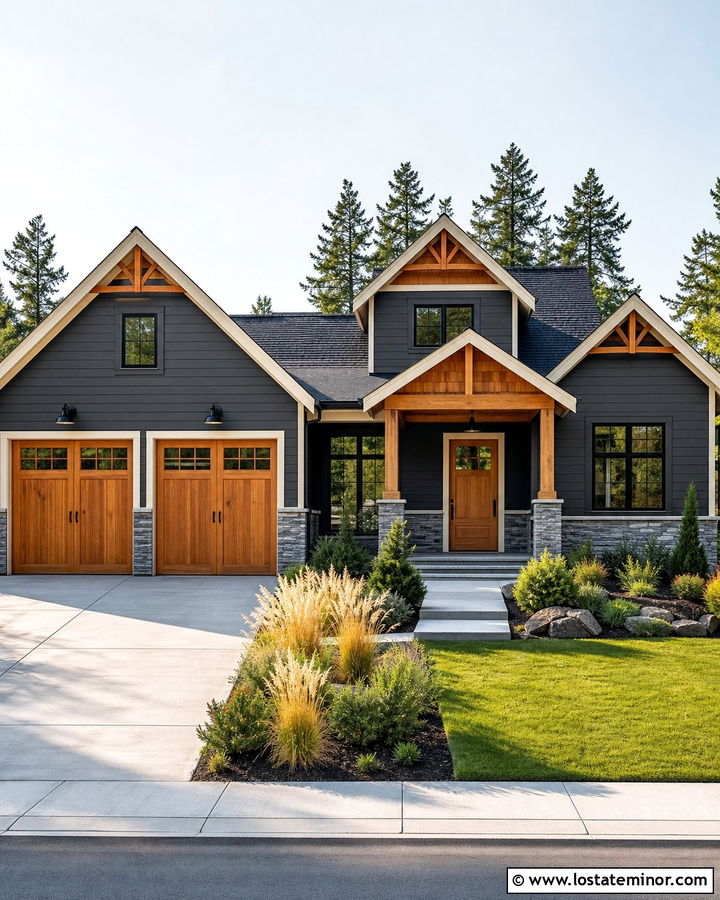
Cedar garage doors offer a broad area of warmth against charcoal grey siding. On a modern craftsman, pair two cedar doors with black cylinder lights mounted between and above the bays. Continue the cedar finish on the front door, porch brackets, and selected gable details so the garage does not feel isolated. Charcoal horizontal siding, black windows, and a dark roof establish the background. Cream trim beneath the eaves adds a softer boundary around the roofline. Gray stone at the foundation connects the charcoal body to the driveway. Use drought-tolerant grasses and low evergreens to maintain a practical landscape. The repeated wood tones and controlled lighting create a complete composition in which the large garage feels integrated with the entrance and upper facade.
19. Charcoal Grey House With Landscape Tree Uplighting
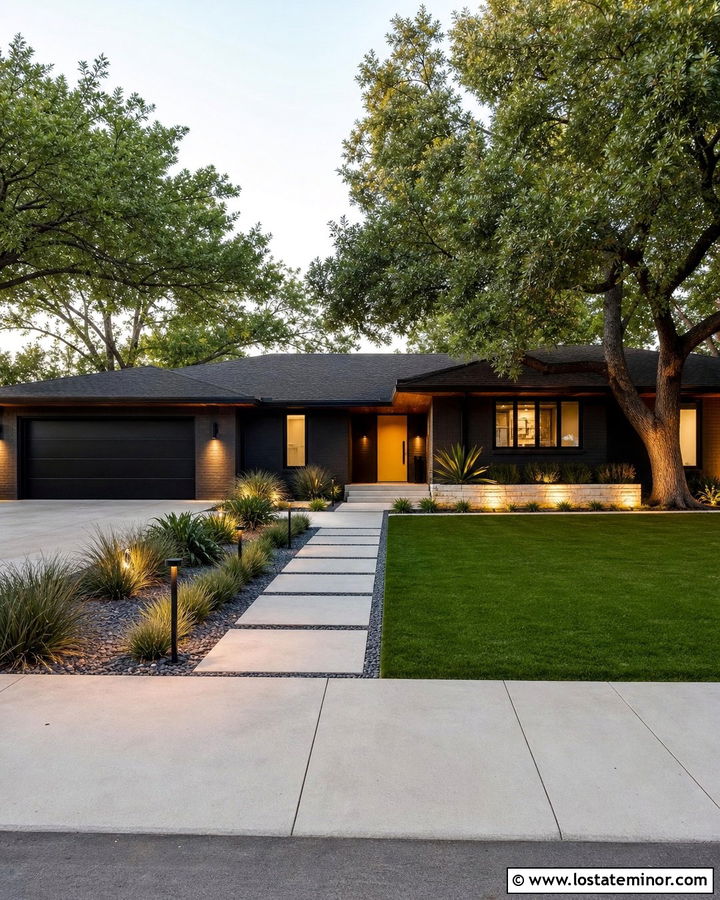
Mature trees can frame a charcoal grey house beautifully when the lighting and landscaping share the same plan. Use discreet uplights at the bases of two feature trees, then continue with low path fixtures leading to the porch. The house itself might be a charcoal grey mid-century ranch with black-framed windows, warm wood soffits, and a mustard-yellow front door. Simple black sconces beside the entrance echo the landscape fixtures. A low stone planter and pale concrete path provide contrast against the dark siding. Keep the tree lighting focused within the canopy rather than directed toward neighboring properties or windows. This complete look gives the broad, horizontal home greater depth. It also lets the garden support the architecture without overwhelming the charcoal color scheme.
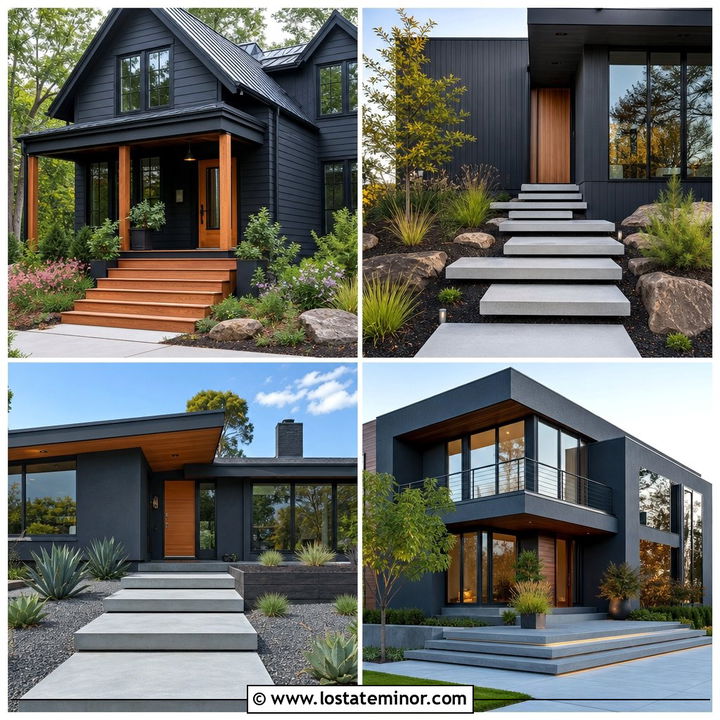

20. Charcoal Grey House With Glass Globe Lighting
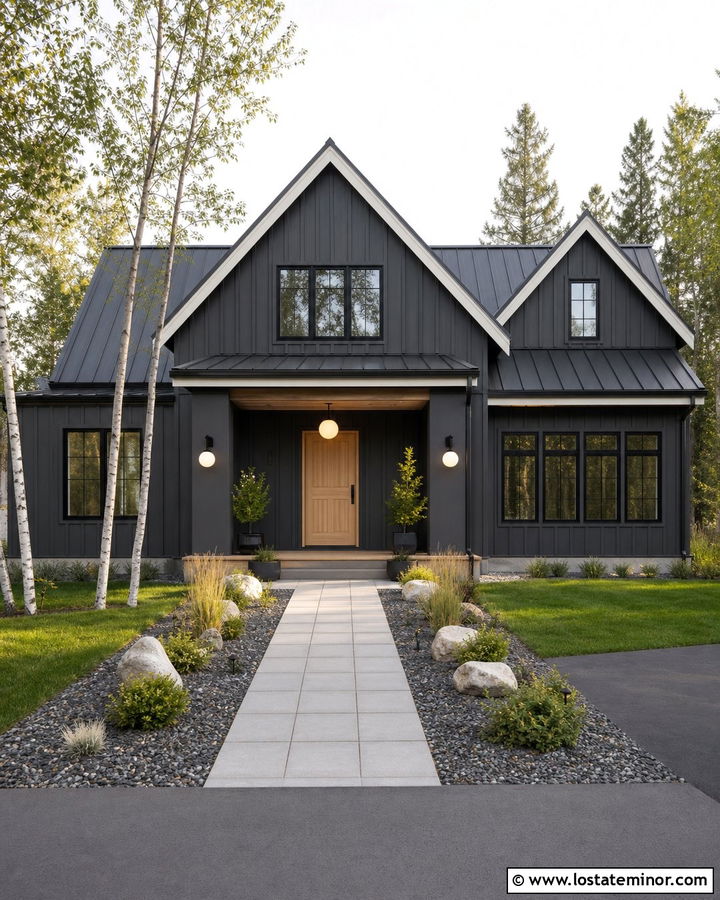
Glass globe lights bring a softer shape to a charcoal grey exterior dominated by straight rooflines and rectangular windows. On a Scandinavian-inspired house, use opal globe sconces beside a pale oak door and a matching globe pendant beneath the porch canopy. Vertical charcoal siding makes the facade feel taller, while warm white trim and light wood soften its depth. A simple black metal roof gives the house a clean outline. Choose uncomplicated mounting arms so the globes remain the main decorative detail. Gravel beds, small birch trees, and a straight paver walkway support the restrained palette. The rounded fixtures create enough contrast to feel intentional but not playful. Repeat the globe shape sparingly to avoid making the exterior look overly themed.
21. Charcoal Grey House With Industrial Cage Lights
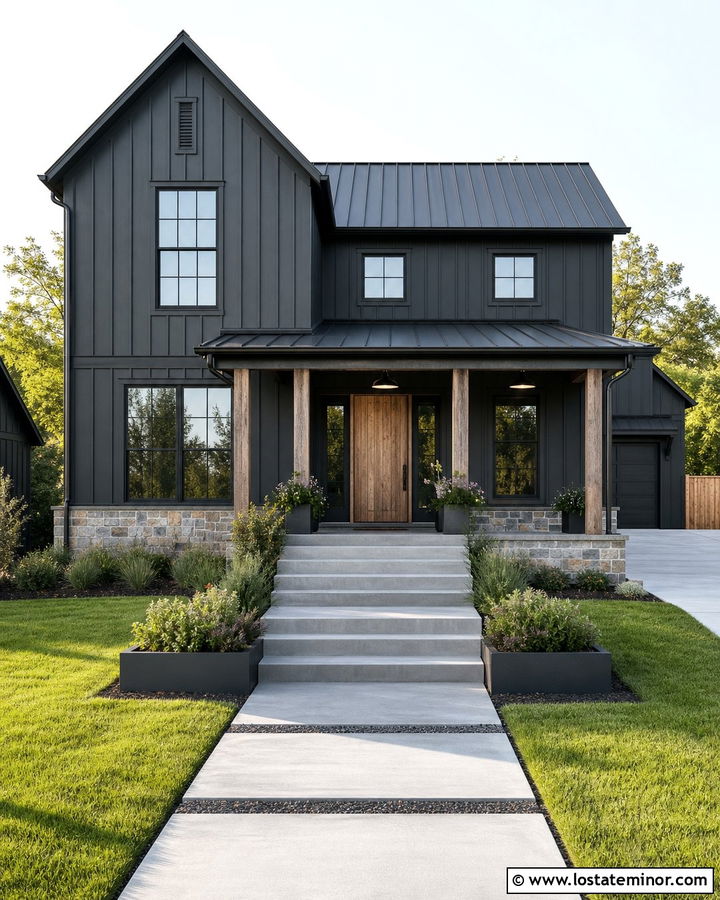
Industrial cage lights suit a charcoal grey urban farmhouse or converted-barn exterior. Their black metal frames echo steel windows, dark gutters, and a standing-seam roof. Install them beside a wide wood door and above a side-facing garage, where the sturdy design feels proportional to the architecture. Charcoal board-and-batten siding creates a strong backdrop, while a stone foundation and reclaimed wood porch posts introduce texture. Use warm white on small areas of trim so the facade does not lose definition. Broad concrete steps and structured planters can reinforce the practical, unfussy character. Choose cage fixtures with simple glass enclosures rather than overly distressed finishes. This keeps the industrial influence polished and makes it suitable for a modern residential setting.
22. Charcoal Grey House With Low Step Lighting
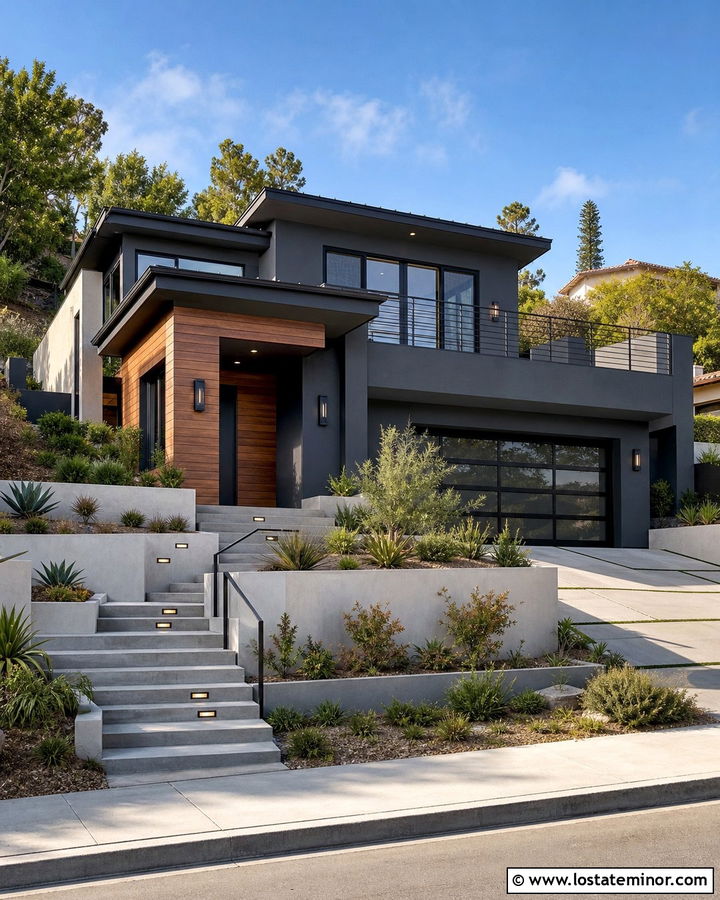
Integrated step lights can make a raised entrance feel like part of the architecture. Picture a charcoal grey hillside home with broad concrete stairs leading to a recessed wood front door. Small rectangular fixtures set into the stair walls provide a clean visual rhythm. Match their dark finish to black windows, railings, and the low-slope metal roof. Smooth charcoal stucco can cover the primary walls, while horizontal cedar cladding defines the entry volume. Add pale retaining walls and drought-resistant planting to brighten the foreground. Wall sconces near the door should remain simple so they do not compete with the steps. This design works best when the fixtures align with stair treads and architectural joints, giving the entire approach a planned, built-in appearance.
23. Charcoal Grey House With Coastal Lantern Lighting
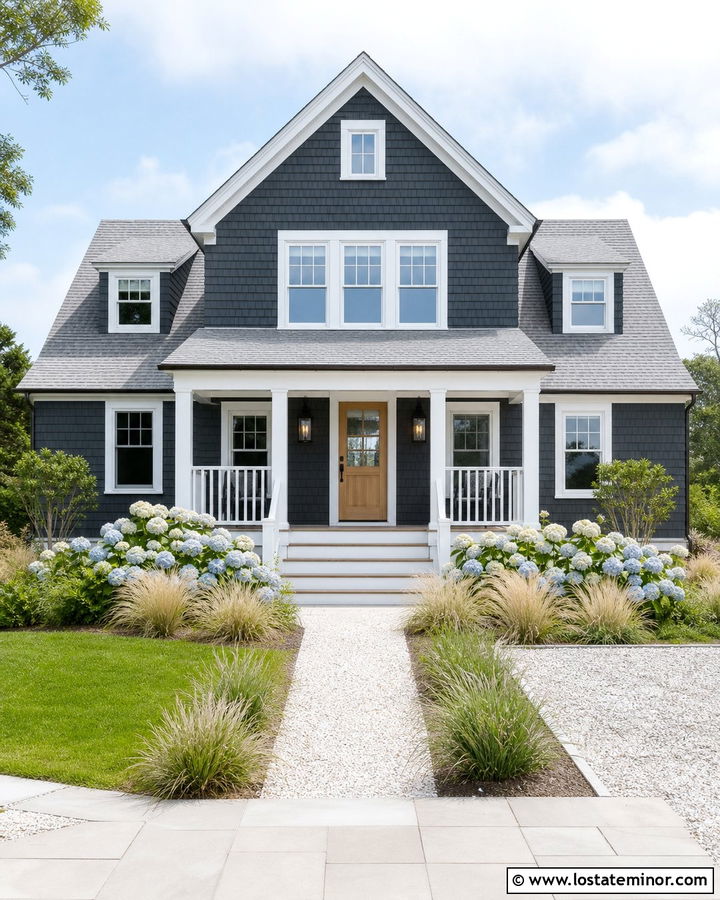
Charcoal grey can work in a coastal setting when it is balanced with fresh white details and weathered natural materials. Use charcoal shingle siding on a coastal cottage, then add bright white trim, railings, and porch columns. A light wood door and pale gray roof keep the facade breezy. Black coastal lanterns with simple seeded glass can flank the entrance and repeat near a detached garage. Avoid overly nautical shapes or decorative symbols. The materials and proportions should suggest the setting more subtly. Beach grasses, hydrangeas, crushed-shell paths, and light stone paving soften the dark siding. This complete palette feels grounded near the water while maintaining enough contrast to highlight the windows, porch, roofline, and welcoming front entrance.
24. Charcoal Grey House With Mid-Century Wall Lights
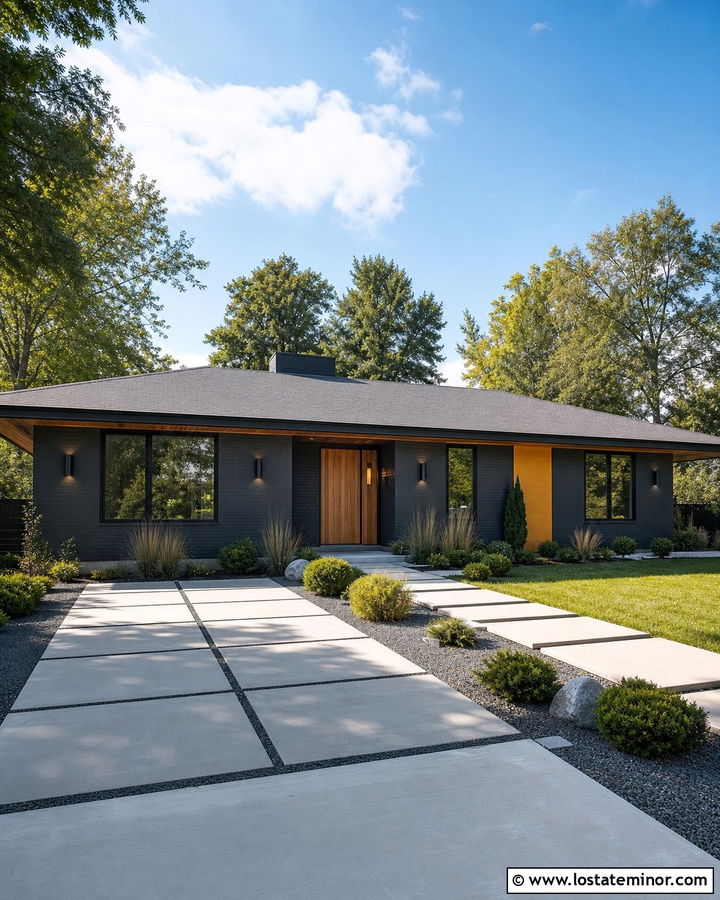
Mid-century wall lights can transform a simple charcoal grey ranch without changing its basic architecture. Choose compact cone or hourglass sconces in matte black, aged brass, or a mixed-metal finish. Place them beside a warm walnut door and near the carport entrance. Paint the long horizontal siding charcoal grey, keep the soffits natural wood, and use black around the windows. A low gray roof reinforces the home’s horizontal shape. One accent panel in ochre or muted olive can add period-appropriate color without dominating the facade. Complete the setting with large concrete pavers, gravel, ornamental grasses, and sculptural shrubs. The fixtures should feel functional and graphic, supporting the home’s clean lines rather than introducing ornate traditional details.
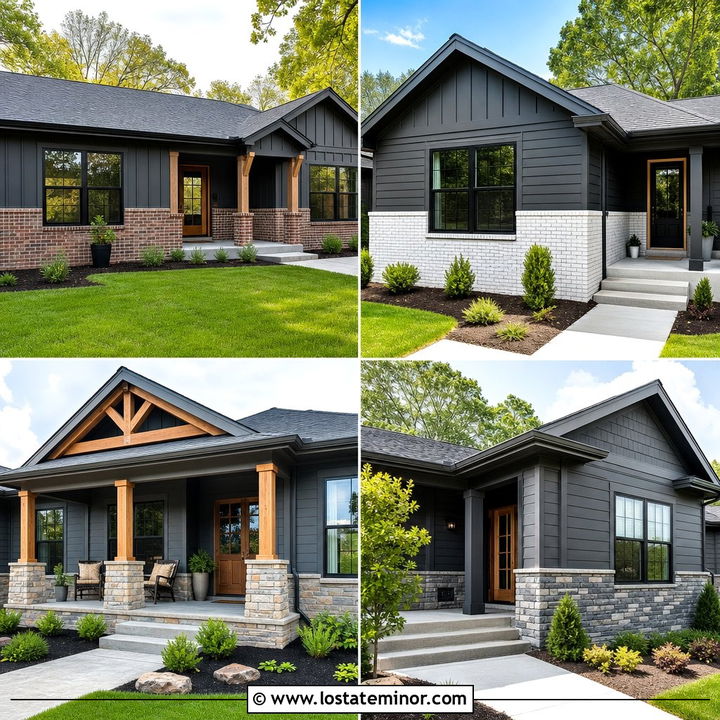
25. Charcoal Grey House With Tudor Lantern Lighting
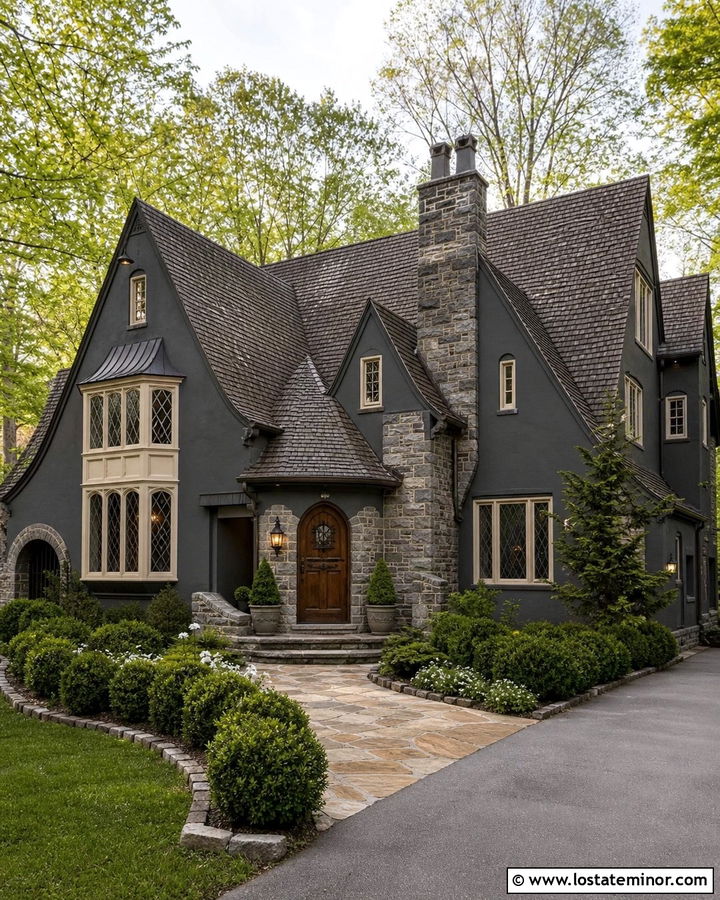
Traditional lanterns bring warmth and detail to a charcoal grey Tudor exterior. Use charcoal-painted stucco or masonry between dark timber details, then introduce creamy trim around the leaded windows. A stained arched wood door should remain the main focal point, framed by aged bronze lanterns with a subtle old-world shape. Stone around the entry and chimney adds texture, while a brown-gray roof supports the warmer materials. Keep garage lighting within the same family but select simpler, smaller fixtures. Curved planting beds, evergreen hedges, and an irregular flagstone path suit the architecture better than rigid modern landscaping. The charcoal paint updates the home, while the door, masonry, and lighting preserve the depth and character expected from a Tudor facade.
26. Charcoal Grey House With Minimal Cylinder Lights
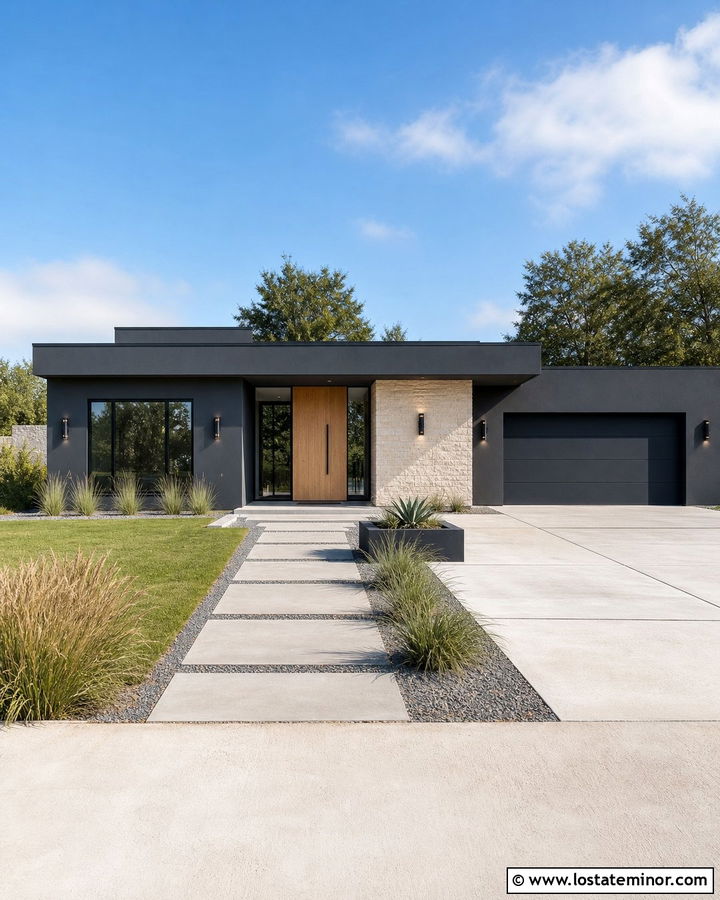
Cylinder lights are a strong choice for a charcoal grey minimalist house because their shape remains visually quiet. Use black up-and-down cylinders along smooth stucco walls, beside the recessed entrance, and near the garage. Pair the charcoal grey body with black windows, a flat dark roof, and one large section of pale limestone. A natural oak pivot door adds warmth without disrupting the restrained palette. Concrete pavers and simple grasses continue the clean geometry across the yard. Space the fixtures according to the wall composition rather than placing one beside every opening. Too many cylinders can create unnecessary patterns. A limited number will emphasize the entrance, stone texture, and major facade planes while maintaining the uncluttered appearance that makes this exterior scheme successful.
27. Charcoal Grey House With Rustic Wood Beam Lighting
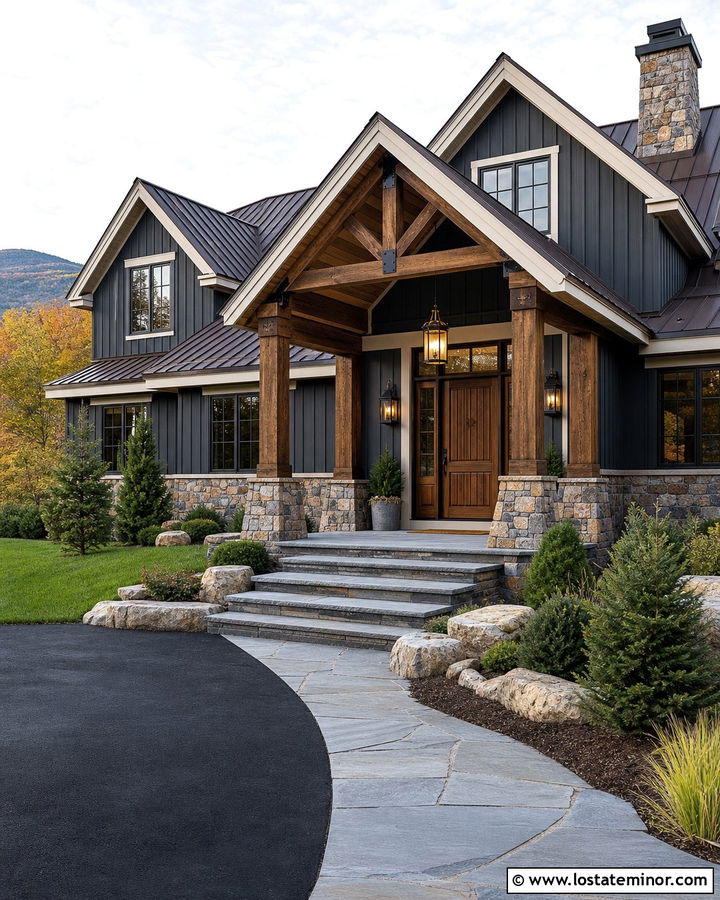
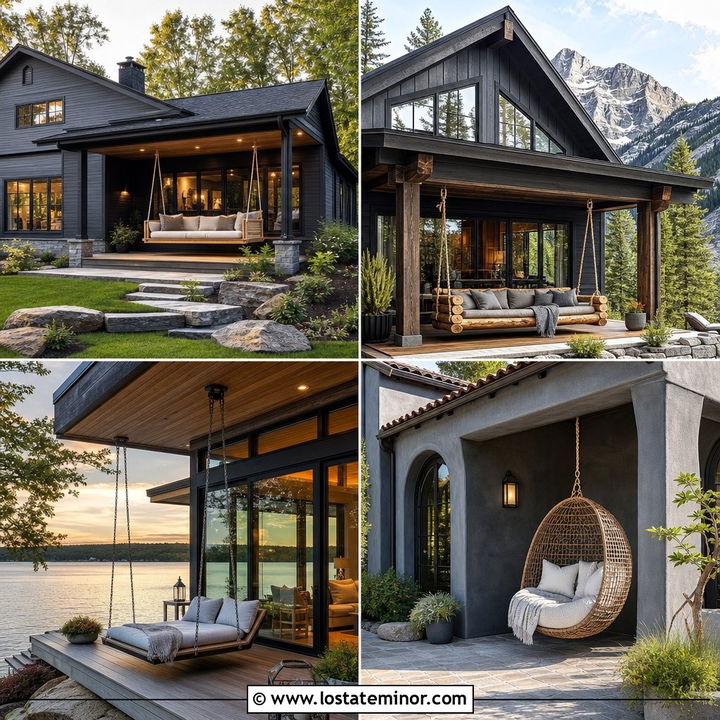
Rustic wood beams can support pendant lights beneath the porch of a charcoal grey mountain home. Use heavy cedar posts and exposed rafters against deep charcoal lap siding, then add large dark bronze pendants with clear glass. Matching wall lanterns can frame a substantial wood front door. A fieldstone base containing gray and brown tones visually connects the siding, fixtures, and timber. Keep the window trim warm off-white and choose a dark brown metal roof rather than solid black. Wide stone steps and naturalistic evergreen planting complete the setting. The fixtures should be large enough to hold their own beneath the beams. Together, the charcoal body, warm timber, stone, and bronze lighting create a substantial yet comfortable exterior.
28. Charcoal Grey House With Red Front Door Lighting
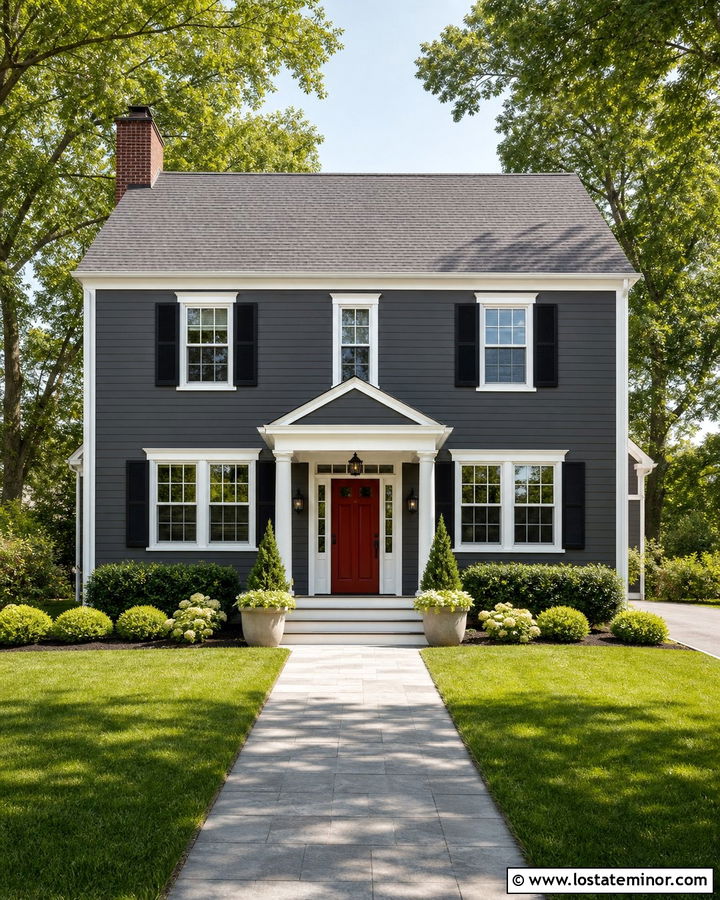
A red front door gives a charcoal grey house a confident focal point, but the lighting should frame the color rather than compete with it. On a traditional two-story home, use charcoal lap siding, crisp white trim, black shutters, and a rich heritage-red door. Place classic black lanterns on both sides of the entrance and repeat them near the garage. A medium-gray roof prevents the upper facade from becoming too heavy. White porch columns create a brighter transition between the dark body and bold door. Use red sparingly elsewhere; neutral planters and green landscaping will let the entrance remain special. The combination feels familiar and energetic while retaining the polished appearance of a coordinated black, white, charcoal, and red palette.
29. Charcoal Grey House With Olive Door And Warm Lights
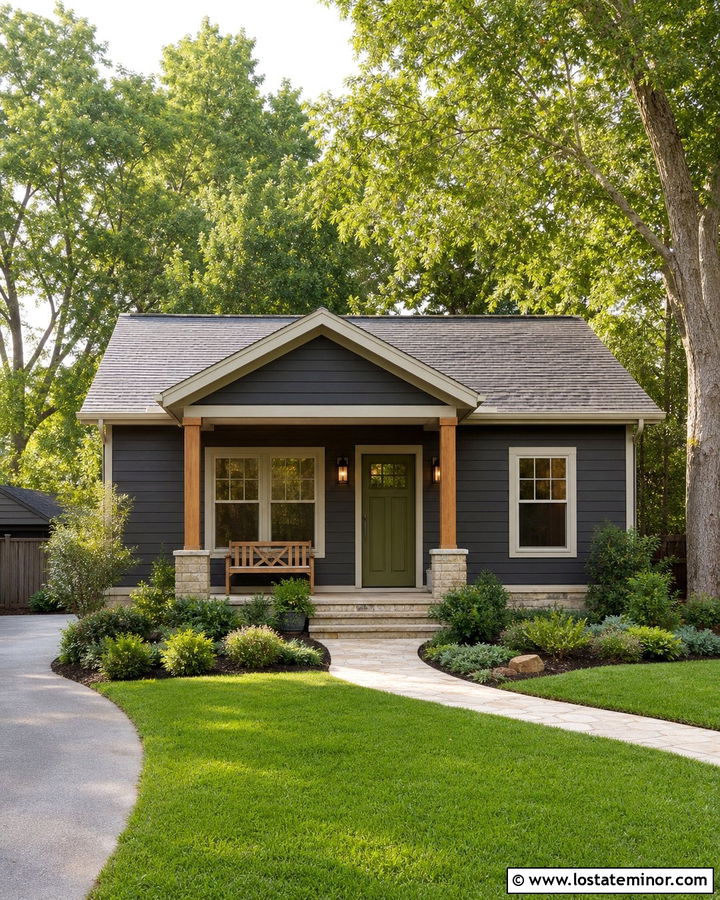
An olive green door offers a quieter alternative to bright accent colors on a charcoal grey house. The muted green connects naturally with shrubs, grasses, and mature trees. Pair it with warm bronze sconces, creamy trim, and charcoal horizontal siding on a compact cottage or bungalow. A weathered gray roof and light stone foundation maintain the subdued palette. Add cedar porch posts or a natural wood bench to echo the warmth of the fixtures. The entrance lighting can feature amber-toned glass, but the fixture itself should remain simple and appropriately scaled. A curved path, layered foundation planting, and soft groundcover complete the relaxed look. Charcoal, olive, bronze, and wood work together particularly well in a leafy suburban landscape.
30. Charcoal Grey House With Layered Exterior Lighting
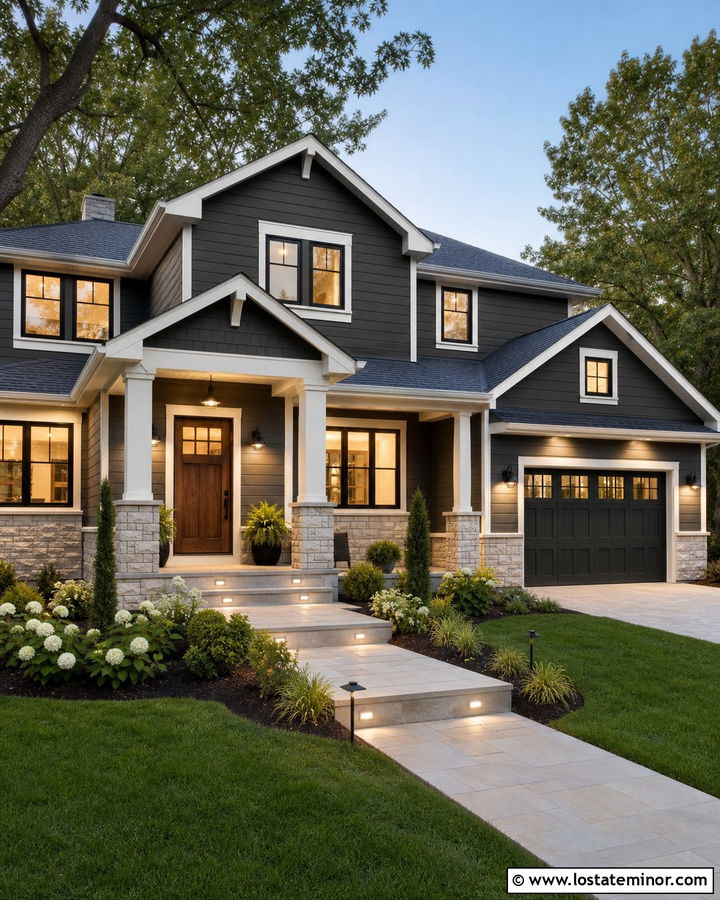
The most complete charcoal grey exterior combines several lighting layers instead of relying on one oversized fixture. Start with wall sconces at the entrance and garage. Add a porch pendant for overhead illumination, subtle step lights for level changes, and restrained landscape fixtures along the walkway. Keep the fixture finish consistent, such as matte black or dark bronze. A transitional home can pair charcoal grey siding with white trim, a walnut door, black windows, light stone, and a medium-gray roof. Before committing to the body color, test a large sample on more than one wall and review it at different times, since natural light and surrounding materials can shift how gray appears. () Thoughtful spacing will keep the layered scheme cohesive rather than overlit.
Conclusion:
These 30 Charcoal Grey House Design With Lighting Ideas show how color, architecture, materials, and fixtures can work together across the entire facade. Black sconces create modern definition, while brass, bronze, and copper bring warmth to deep grey siding. Natural wood, white trim, brick, and stone can further control how bold or inviting the house feels. Select fixtures that match the scale and lines of the architecture, then repeat their finish in a few useful details. For a balanced plan, illuminate the entrance first and support it with garage, porch, path, or landscape lighting where needed. Most importantly, treat paint and lighting as one complete curb-appeal scheme rather than two separate decorating decisions.

Related posts: