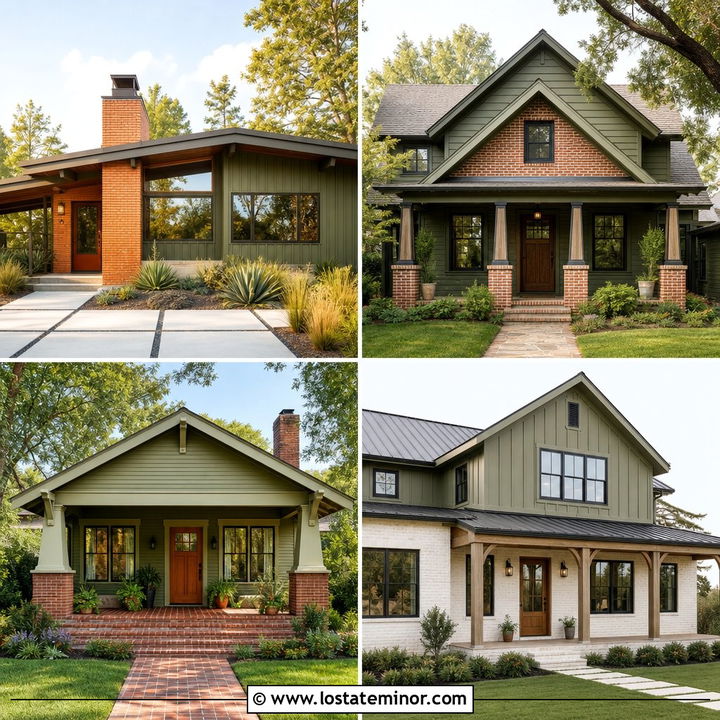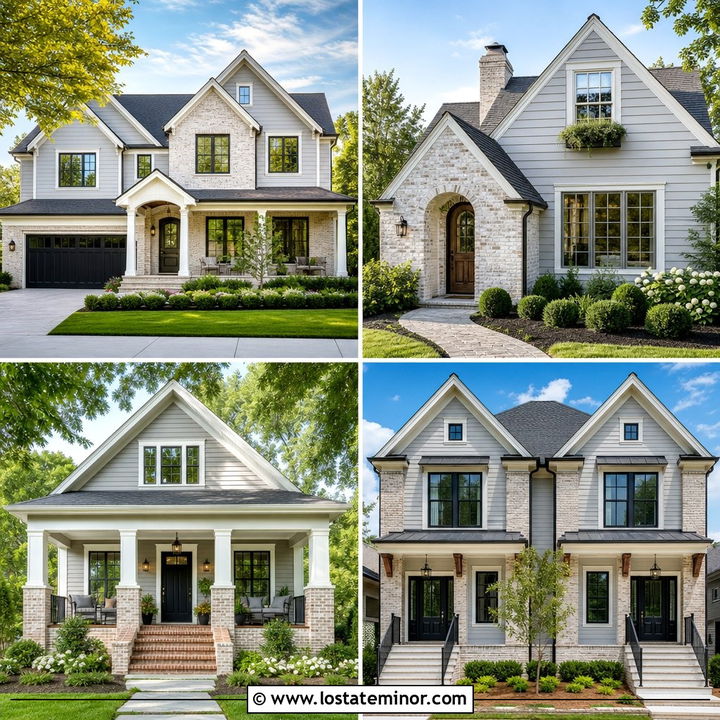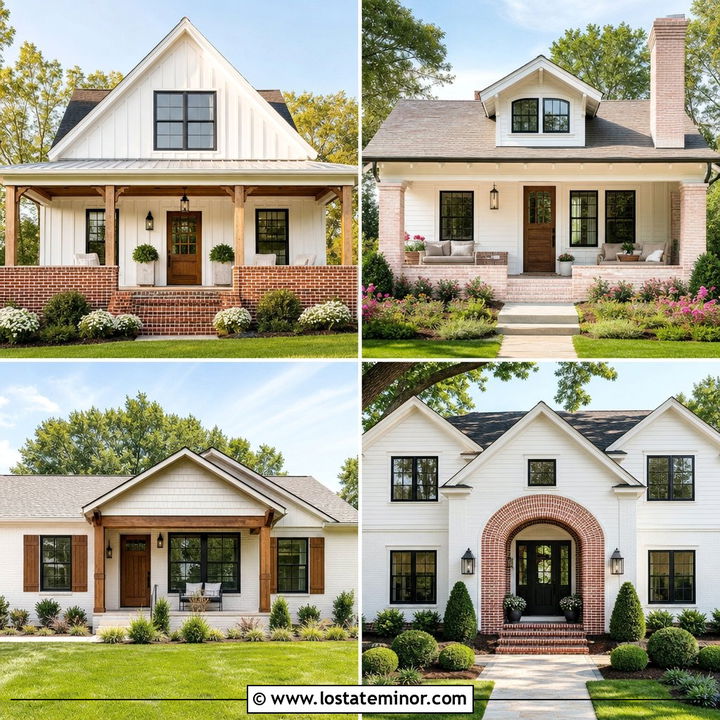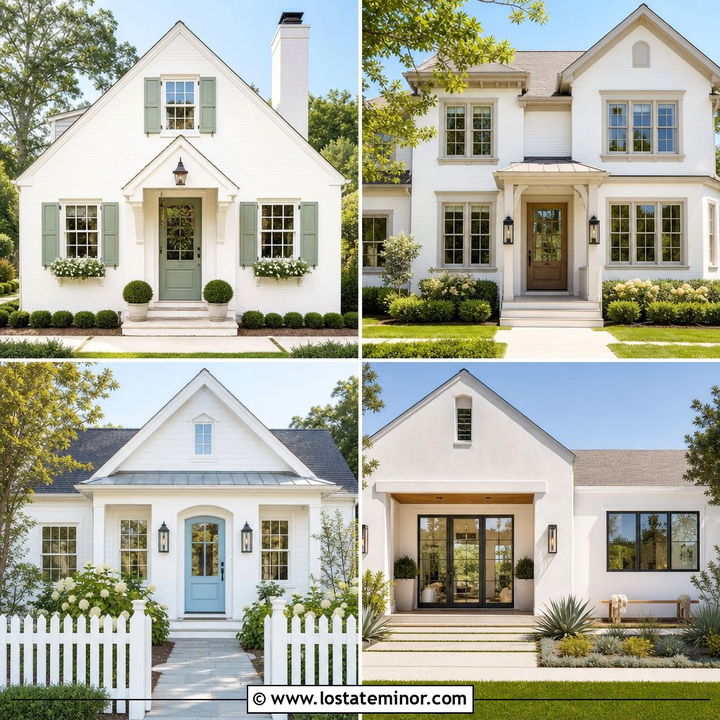
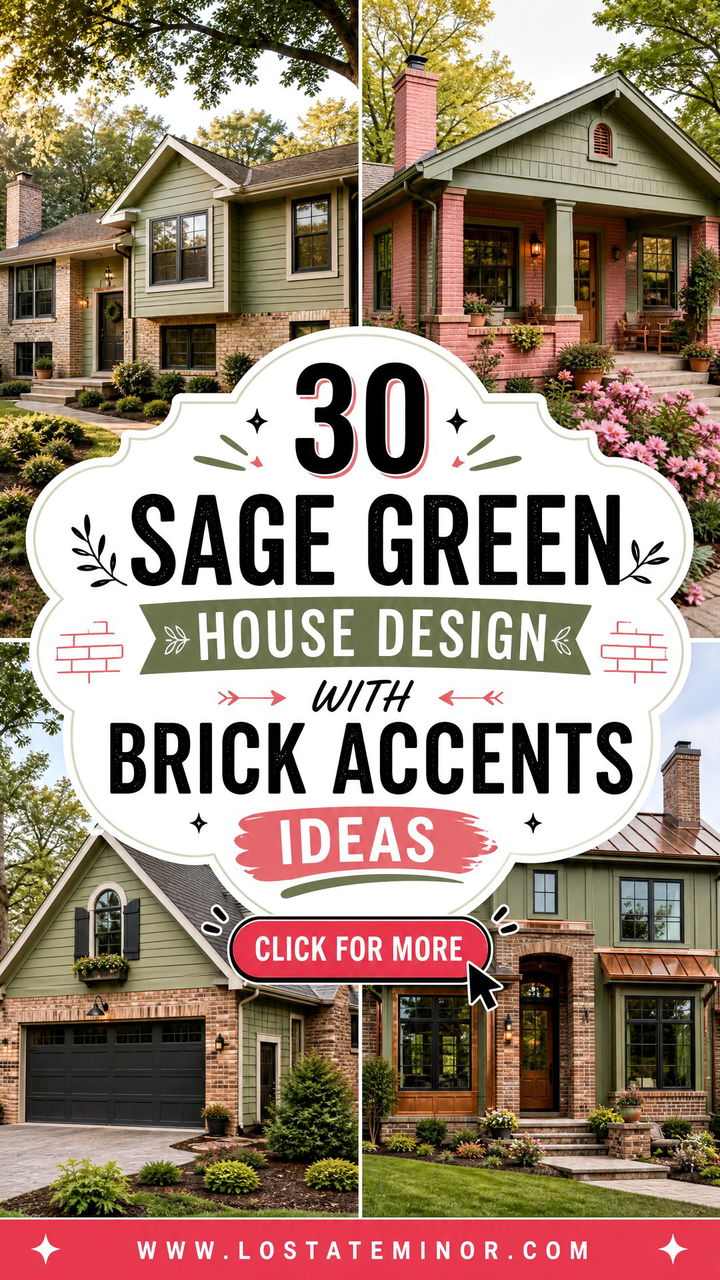
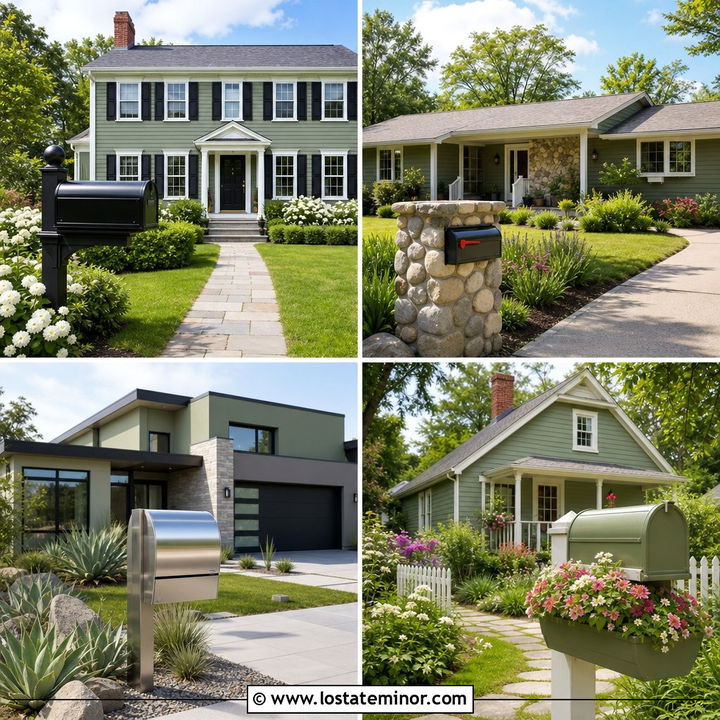
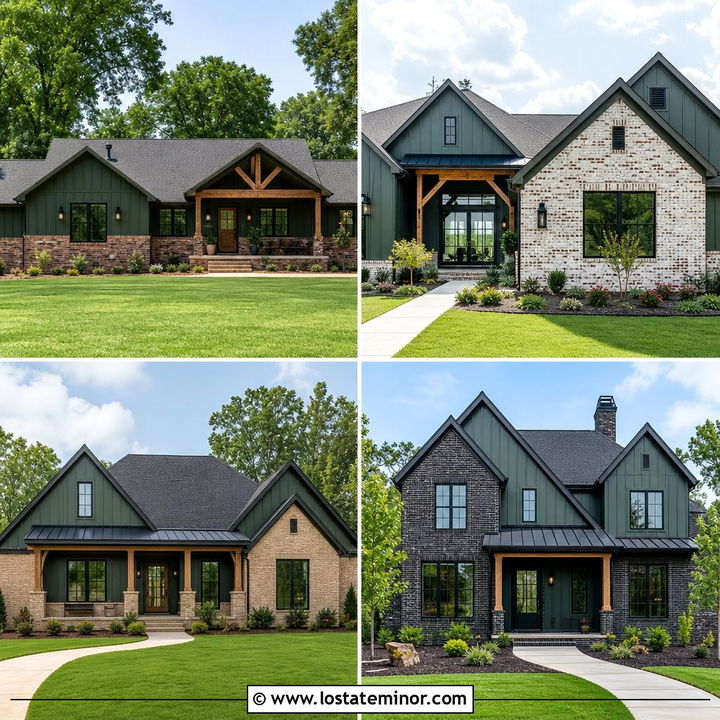
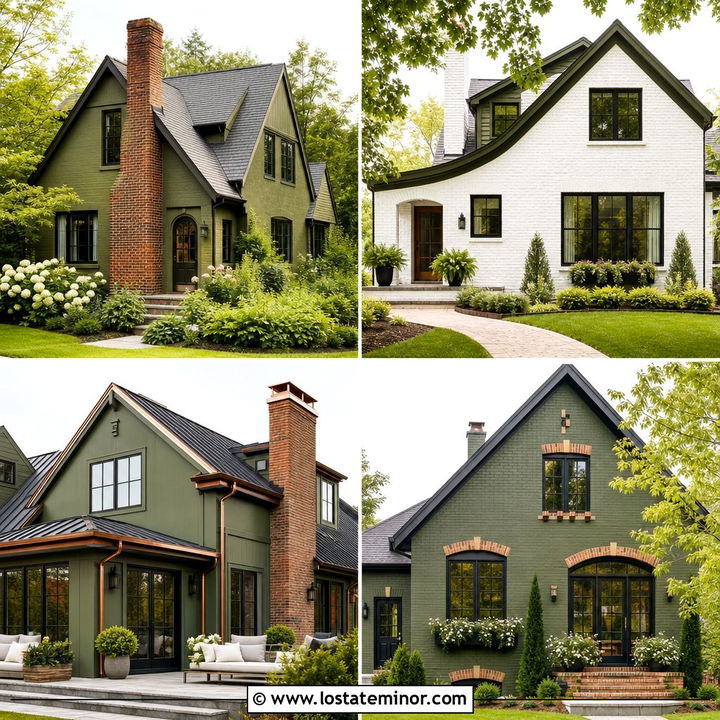
Sage green brings a soft, natural character to an exterior, while brick adds warmth, texture, and architectural weight. The strongest combinations treat the siding, masonry, trim, roof, front door, and landscaping as one connected palette rather than separate choices. Brick undertones matter too. Orange-red masonry feels balanced beside warmer sage, while taupe, cream, or gray brick suits cooler green-gray paint. Roof color, fixed stonework, pathways, and mature landscaping should also guide the final scheme. () From traditional ranch homes to clean modern builds, these complete designs offer practical ways to create a welcoming facade without hiding the brick’s natural texture. Explore the following **30 Sage Green House Design With Brick Accents Ideas** for coordinated curb appeal inspiration.
1. Sage Green Ranch With Red Brick
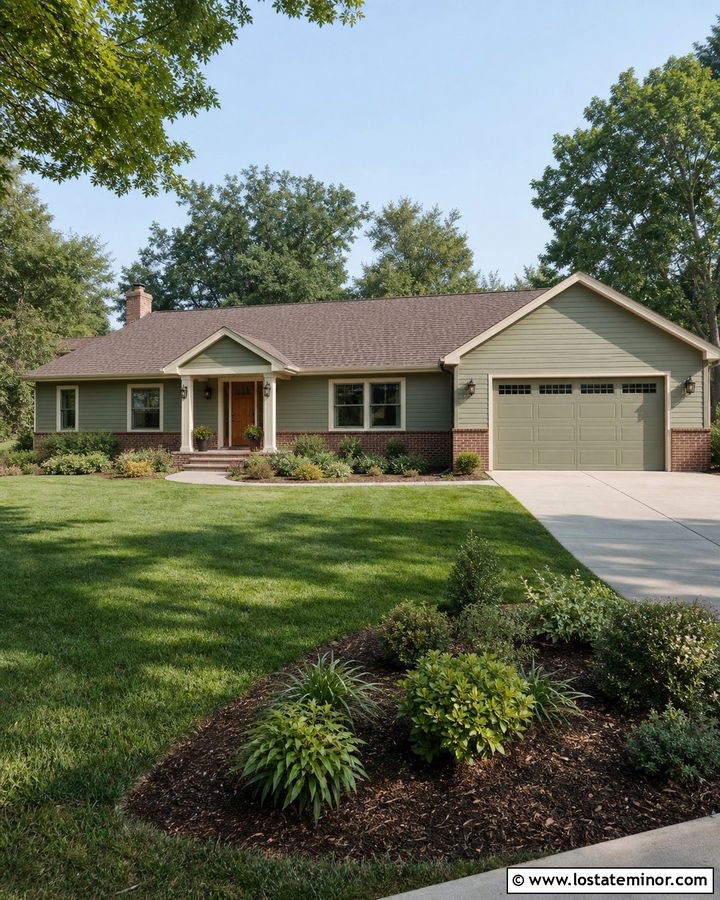
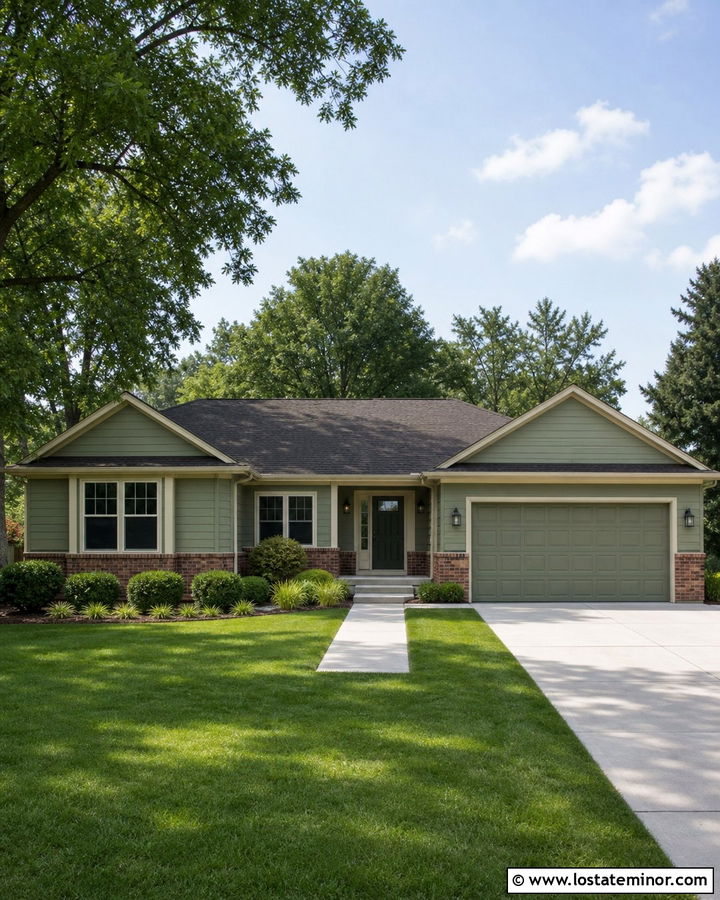
A long, low ranch house looks refreshed when sage green horizontal siding meets classic red brick along the lower facade. Choose a warm, muted sage that can hold its own beside the brick’s rusty orange and brown undertones. Soft cream trim is usually gentler than bright white and creates a smooth transition between the two materials. A medium brown architectural-shingle roof helps ground the wide roofline, while a stained oak front door repeats the brick’s warmth. Paint the garage door sage green so it blends into the body instead of dominating the elevation. Finish the design with bronze lighting, curved planting beds, evergreen shrubs, and an open walkway that emphasizes the home’s welcoming horizontal proportions.
2. Sage Green Farmhouse With Whitewashed Brick
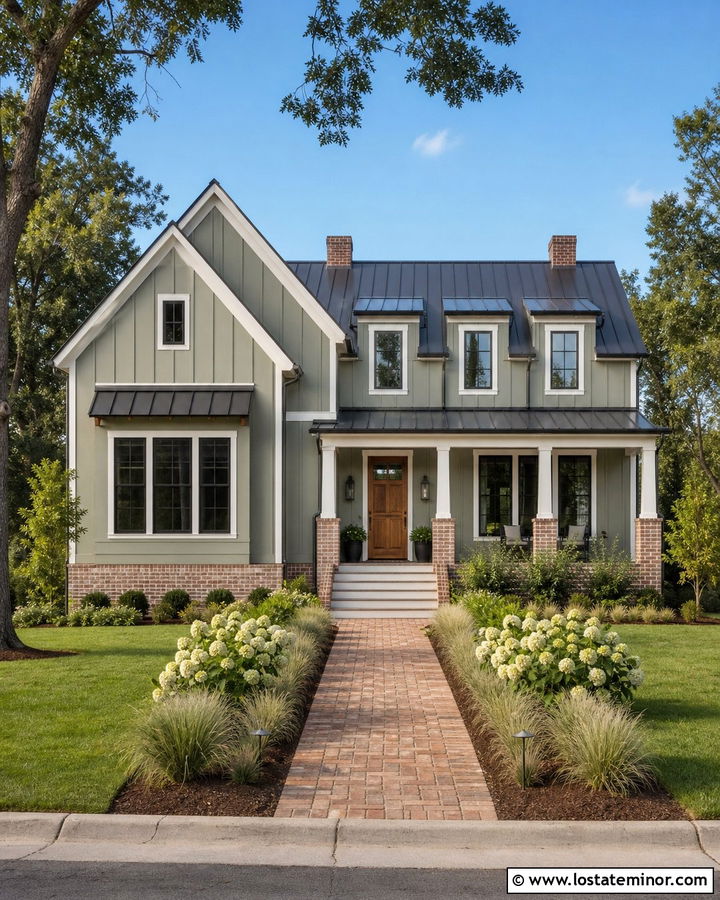
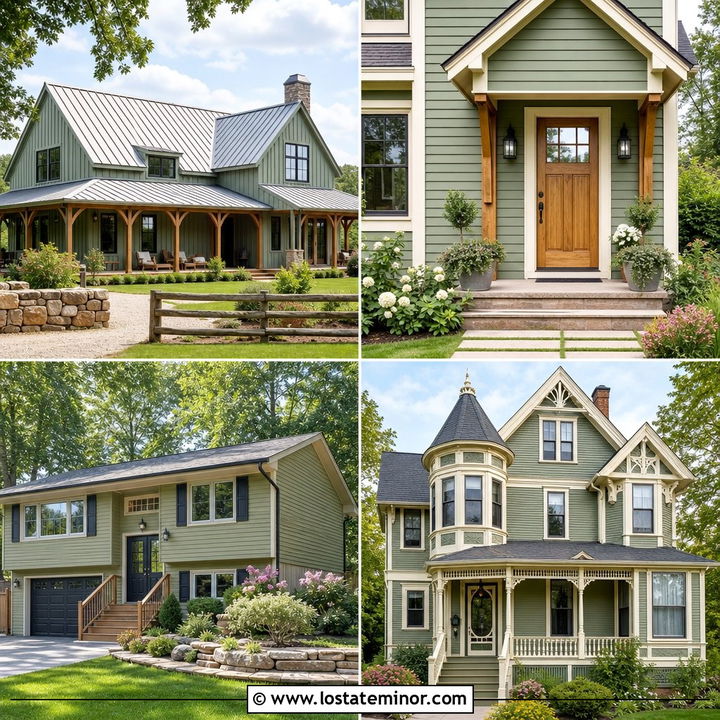
Could a farmhouse exterior feel fresh without becoming overly stark? Pair medium sage green board-and-batten siding with softly whitewashed brick around the foundation, chimney, and porch columns. The thin, translucent finish should allow some red and tan variation to remain visible, giving the masonry a relaxed, timeworn look. Use warm white on the window trim, fascia, and porch railings to connect the brick wash with the architecture. A charcoal standing-seam metal roof introduces clean contrast, while a natural cedar front door prevents the palette from feeling cold. Black barn lights and simple gutters add definition. Hydrangeas, ornamental grasses, and a straight brick walkway complete this balanced modern farmhouse exterior without competing with the main materials.
3. Sage Green Craftsman With Brick Porch Columns
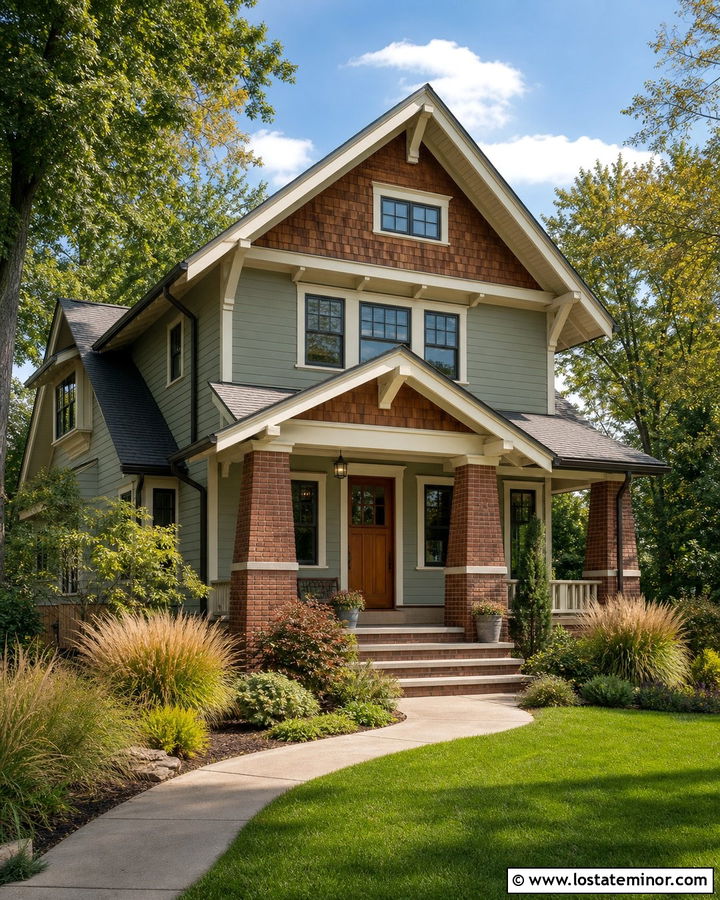
Substantial brick porch columns give a sage green Craftsman home the visual strength this architectural style needs. Use an earthy green-gray on lap siding, then introduce cedar shingles beneath the front gables for a subtle material change. Traditional red-brown brick works beautifully on wide column bases and low porch walls because its warmth complements natural wood details. Cream trim can highlight exposed rafters, tapered columns, window casings, and decorative brackets without creating harsh contrast. Select a deep bronze or weathered brown roof to reinforce the grounded palette. A fir front door with divided glass adds handcrafted character. Layered foundation shrubs, native grasses, and a gently curved walkway soften the masonry and make the entire facade feel established within the landscape.
4. Sage Green Colonial With Brick Foundation
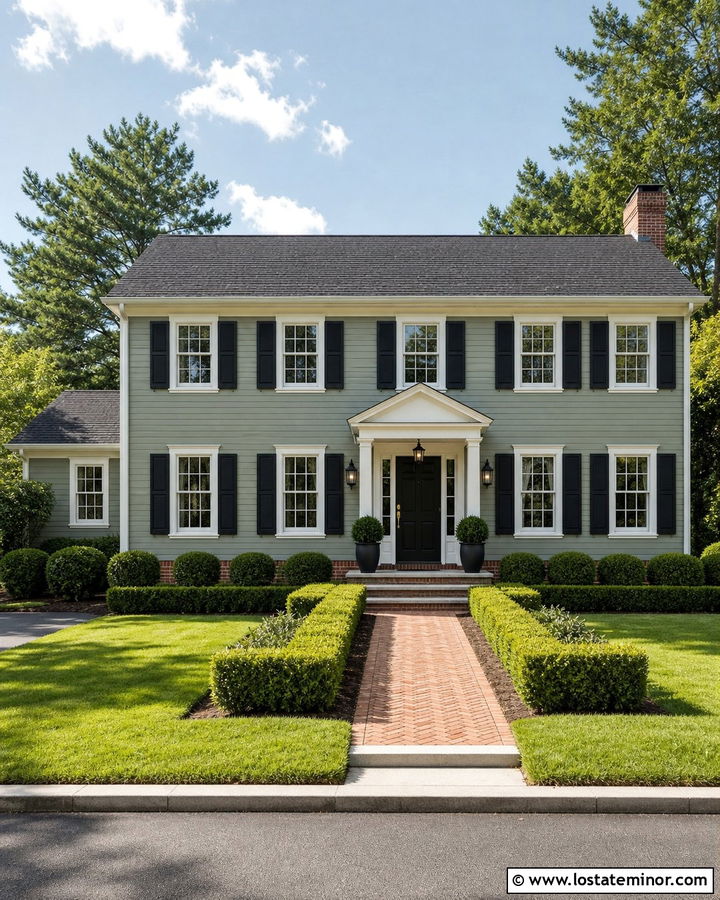
Symmetry becomes the star when a two-story Colonial combines sage green clapboard siding with a traditional brick foundation. A balanced green with restrained gray undertones keeps the tall facade elegant rather than overly colorful. Crisp ivory trim should outline the evenly spaced windows, corner boards, entry surround, and dentil molding. Retain unpainted red brick below the siding and repeat it in a straight front walkway for a cohesive connection to the property. Black shutters, iron lanterns, and a glossy black front door add formal contrast. A dark charcoal roof prevents the upper story from appearing top-heavy. Keep the landscaping equally structured with paired shrubs, clipped hedges, and matching planters positioned around the centered entrance.
5. Sage Green Bungalow With Dark Brick
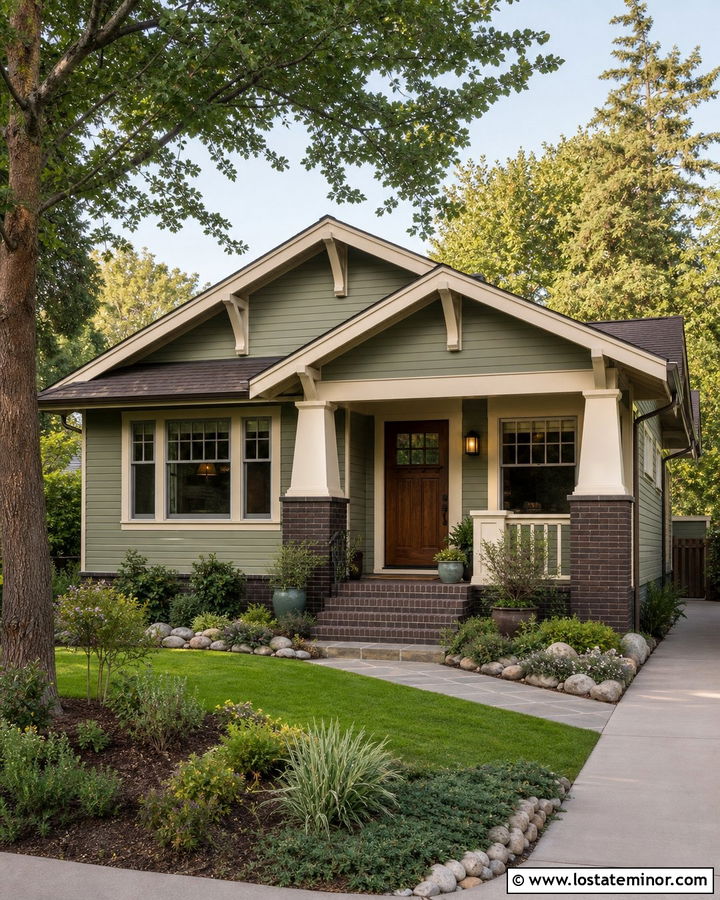
A compact bungalow gains depth from muted sage siding paired with dark brown brick across the porch foundation and broad front steps. This richer masonry provides a sturdy visual base beneath a low-pitched roof and generous overhangs. Warm cream trim is ideal for highlighting window grids, exposed beams, fascia boards, and tapered porch columns. Bring in a medium walnut front door and matching porch ceiling to soften the contrast between the green body and dark brick. Bronze gutters, house numbers, and lighting maintain the warm direction of the scheme. A deep brown roof ties everything together. Frame the facade with low native plants, ground-cover beds, and a narrow stone-edged path so the bungalow remains open, charming, and easy to see.
6. Sage Green Split-Level With Tan Brick
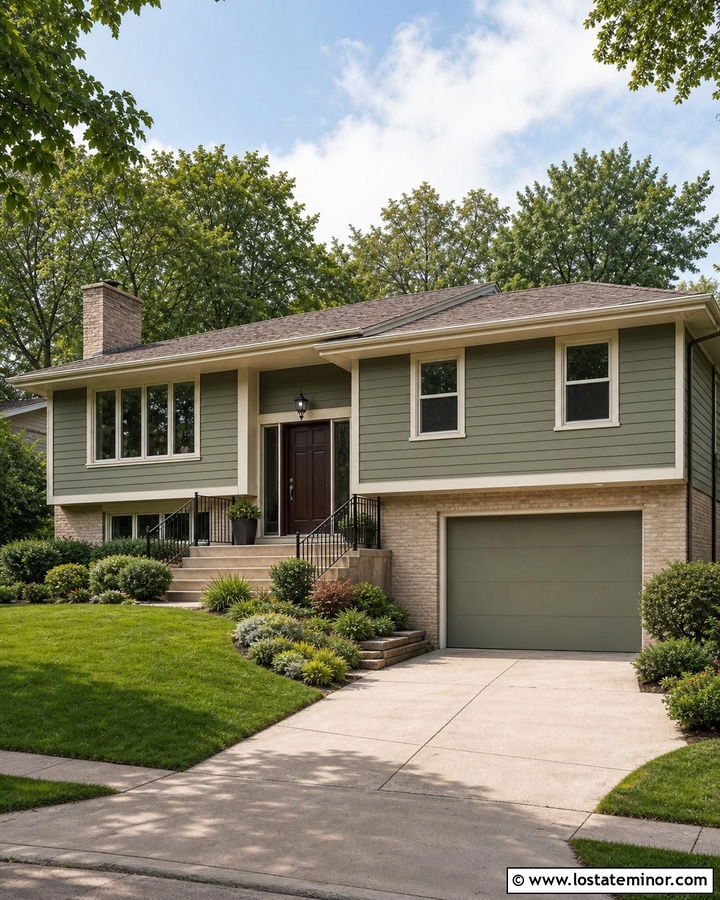
Split-level houses often contain several competing sections, so a limited exterior palette can create much-needed unity. Cover the upper level in soft sage green lap siding and preserve tan or buff brick across the lower story. The paint should have warm beige undertones that relate to the masonry rather than fighting it. Use creamy off-white around windows, soffits, and fascia, then paint the garage door the same sage as the siding. A dark walnut front door creates a strong focal point between the levels. Choose a weathered brown-gray roof that bridges the green and tan materials. Broad steps, simple black railings, and layered shrubs can visually connect the raised entrance with the lawn while making the asymmetrical facade feel intentional.
7. Sage Green Cottage With Painted Brick
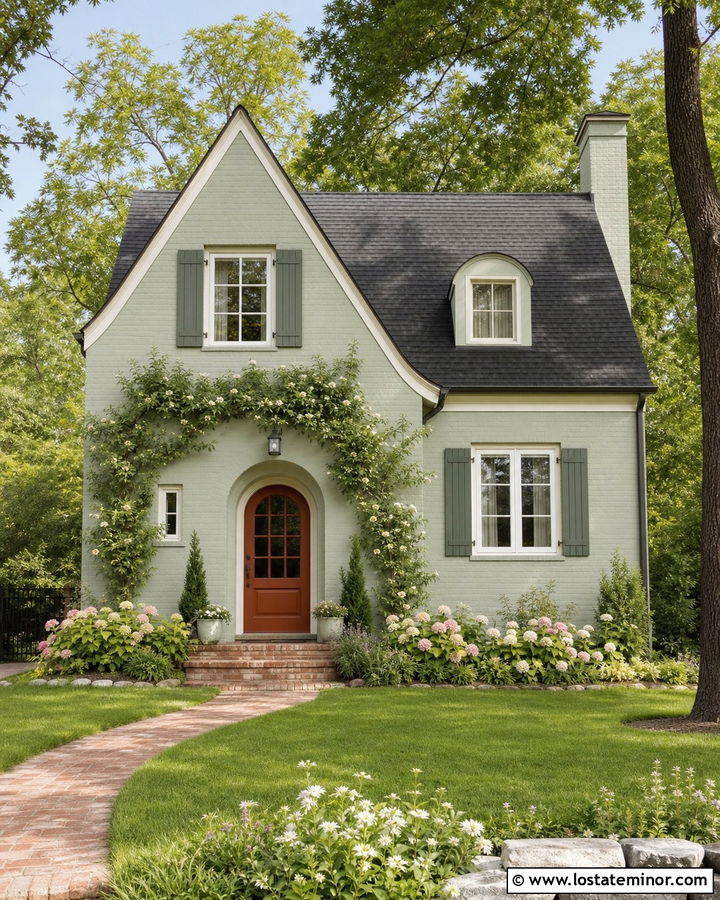
Soft sage green painted brick gives a cottage exterior a unified, storybook appearance while preserving the texture of the masonry. Use a breathable masonry coating in a light, dusty sage and apply the same general color to adjacent siding for a calm, nearly monochromatic facade. Slightly deeper sage shutters can frame the windows without introducing an unrelated hue. Choose warm white for the eaves, window trim, porch posts, and arched entry surround. A faded terracotta front door provides a cheerful but earthy accent, while a charcoal roof keeps the design grounded. Complete the setting with a winding brick path, flowering borders, climbing greenery, and informal foundation plants. The result feels charming and detailed rather than busy or artificially coordinated.
8. Sage Green Cape Cod With Brick Chimney
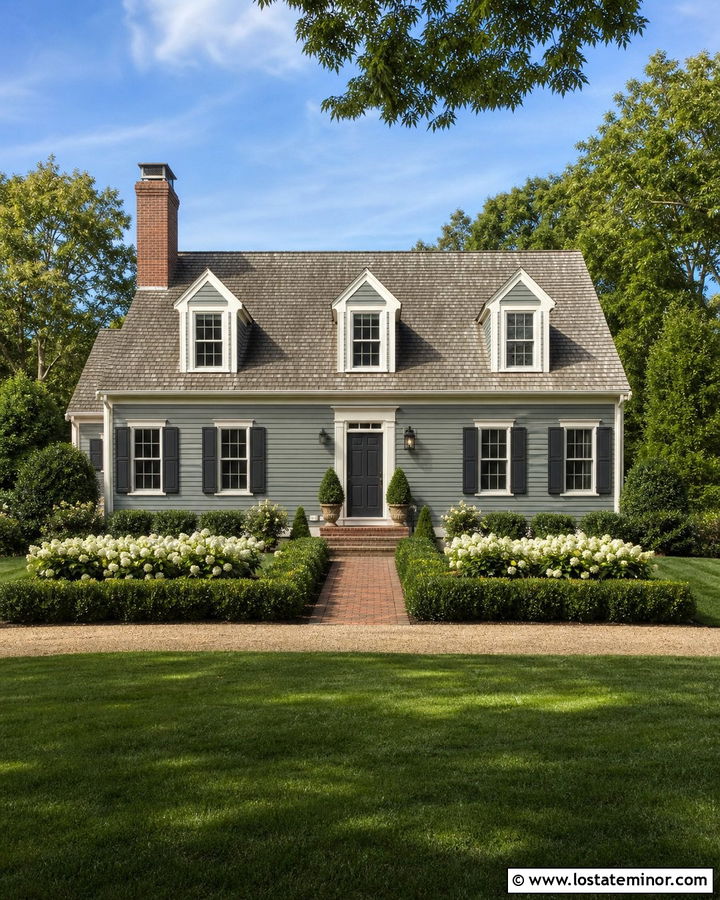
A prominent brick chimney can become an attractive anchor on a sage green Cape Cod exterior. Select a midtone sage with subtle blue-gray undertones to balance red brick without making either material appear brighter. Warm white trim should define the dormers, window casings, fascia, and simple front portico. Add charcoal shutters and a matching front door for a traditional contrast that works well beneath a weathered gray roof. Leave the chimney unpainted so its varied red and brown tones introduce authentic texture above the roofline. A brick walkway can repeat the material at ground level and draw attention toward the centered entrance. Boxwood borders, white flowering shrubs, and an uncluttered lawn reinforce the house’s tidy, symmetrical character.
9. Sage Green Tudor With Brick Gables
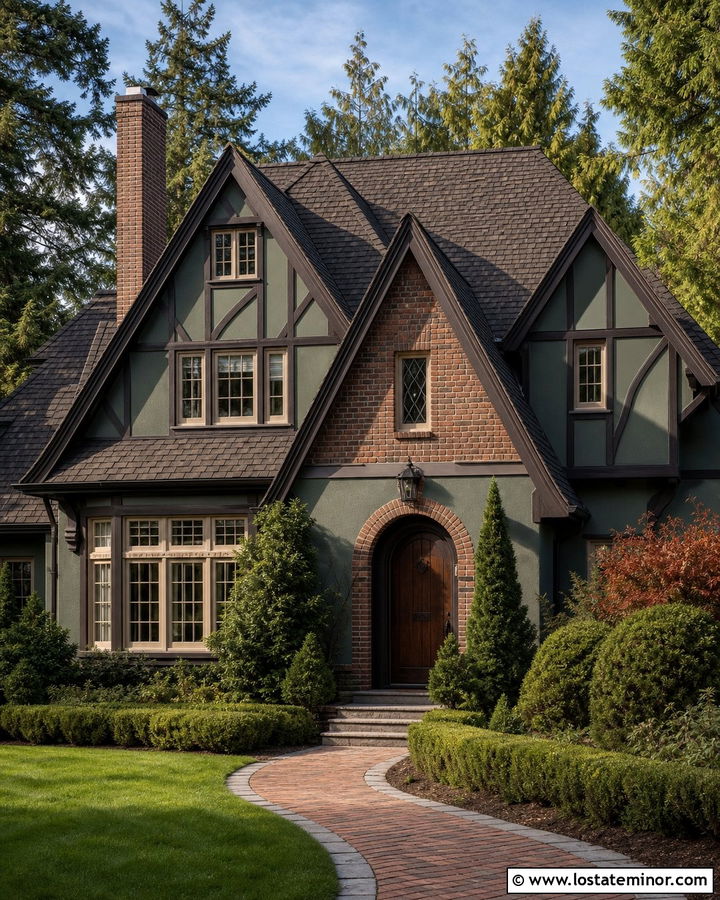
The mix of steep rooflines and decorative masonry on a Tudor home pairs naturally with a deep, subdued sage green. Use the paint on stucco or siding panels between dark timber details, then retain deep red and brown brick across the lower walls and front gables. Cream window trim keeps the elevation from becoming too dark, while espresso-brown beams connect visually with the brick’s deepest tones. An arched stained-wood door suits the architecture and creates a warm focal point beneath the entry gable. Select a dimensional charcoal-brown roof that complements the home’s layered roofline. Mature evergreens, loosely clipped hedges, and a curved stone-and-brick walkway help the house feel established, traditional, and connected to its shaded surroundings.
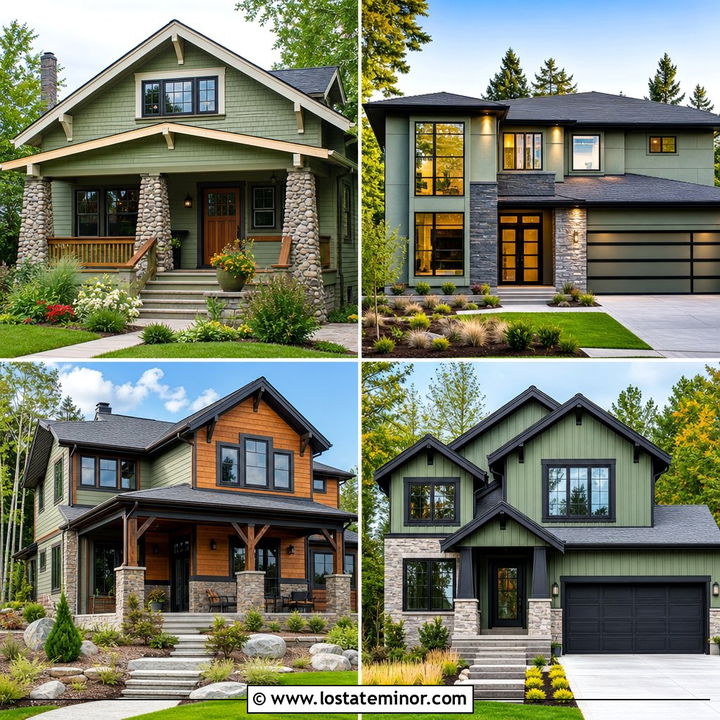
10. Sage Green Contemporary House With Gray Brick
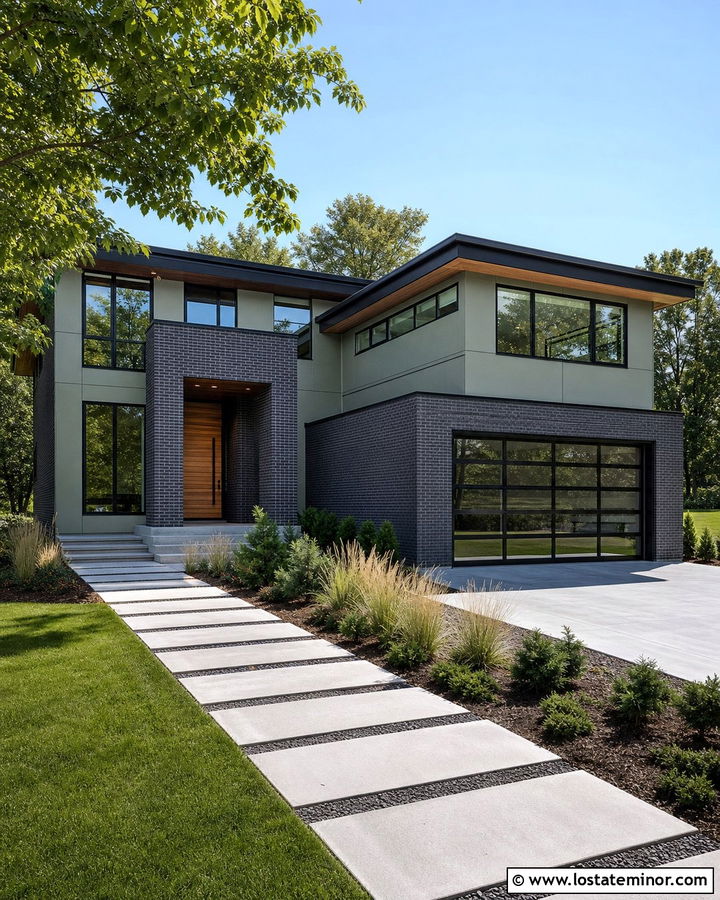
Clean-lined architecture calls for a restrained sage green and gray brick combination. Apply a cool green-gray finish to broad fiber-cement panels or smooth stucco, then use medium charcoal brick on a projecting entry wall and lower garage volume. Black-framed windows sharpen the facade, while matching metal fascia creates a continuous outline around the simple roof forms. A warm cedar pivot door adds one controlled natural accent and keeps the cool palette from feeling sterile. Paint the garage door sage green or charcoal so it recedes into its section. Use large concrete pavers, architectural grasses, and low evergreen masses instead of fussy foundation beds. This complete exterior feels modern and distinctive, yet the muted colors remain comfortable within a suburban setting.
11. Sage Green House With Cream Brick
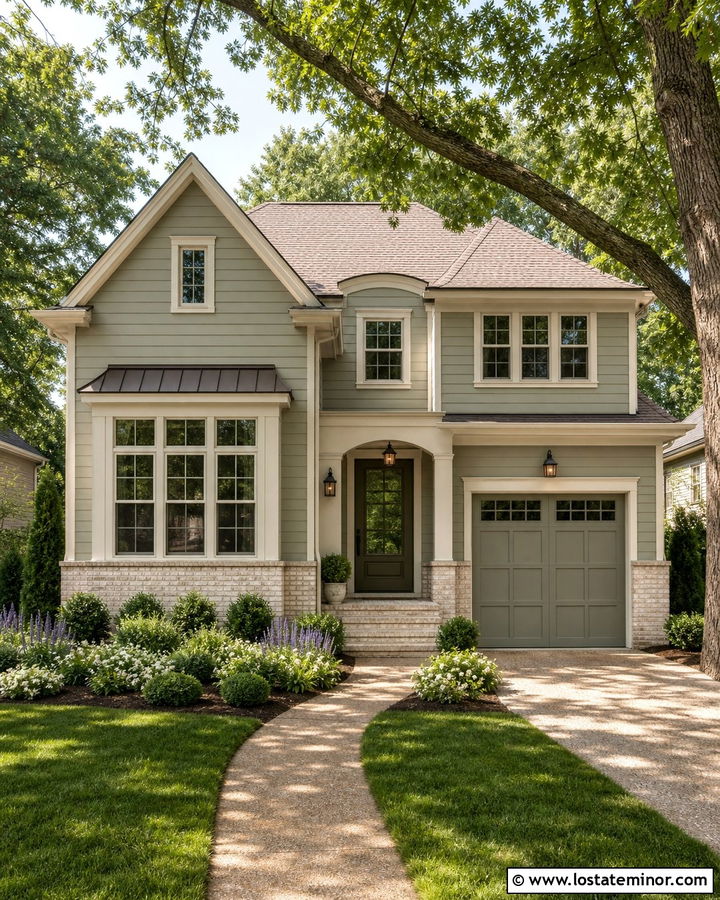
Cream brick creates a light, low-contrast foundation for a pale sage green house. Choose a gentle green with warm gray undertones and use it across lap siding, gables, and the garage door. Soft ivory trim will blend naturally with the brick while still outlining windows and roof edges. For definition, introduce an olive-green front door and aged bronze exterior lights instead of relying on stark black. A medium taupe roof connects the warm masonry to the green siding without adding another strong color. Keep gutters and downspouts close to the trim color for a polished finish. Lavender, white flowers, rounded shrubs, and a pale aggregate walkway reinforce the calm palette while ensuring the house remains visible against its landscaping.
12. Sage Green House With German Schmear Brick
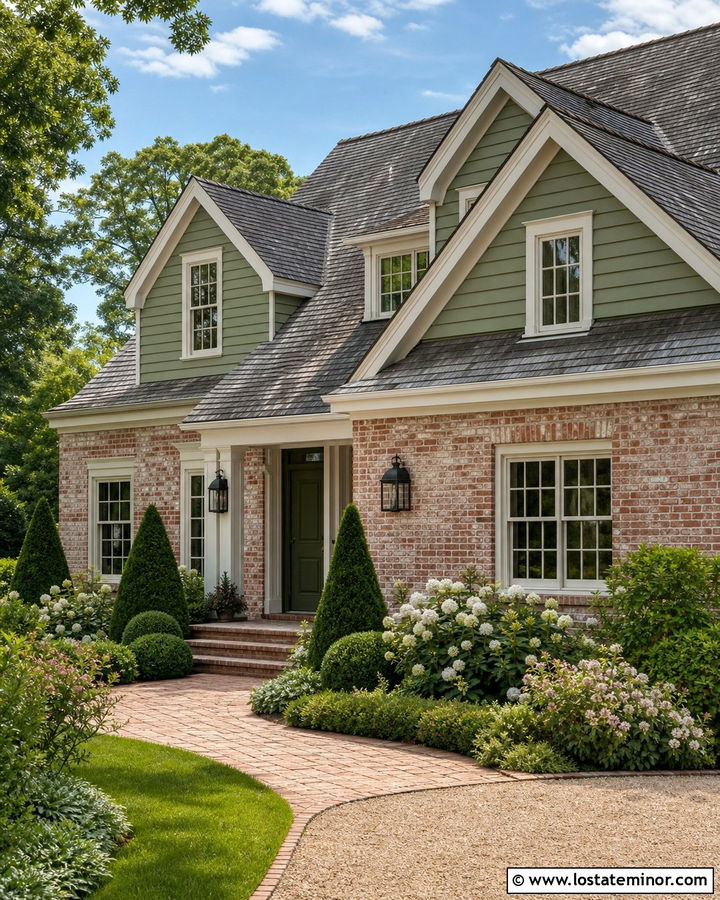
German schmear brick brings layered texture to a sage green exterior because the irregular mortar finish softens strong red and brown masonry tones. Use medium sage siding above the brick, allowing the green to relate to both the pale mortar and exposed clay colors. Warm white trim around windows, eaves, and porch posts creates a natural continuation of the schmear. A dark olive front door introduces depth without shifting away from the earthy palette. Choose a weathered charcoal roof and matte black lights for a modest amount of contrast. This combination works especially well on a French country or transitional home with multiple gables. Loose flowering shrubs, clipped evergreens, and a gently curving brick-edged walkway complete the relaxed, established appearance.
13. Sage Green House With Limewashed Brick
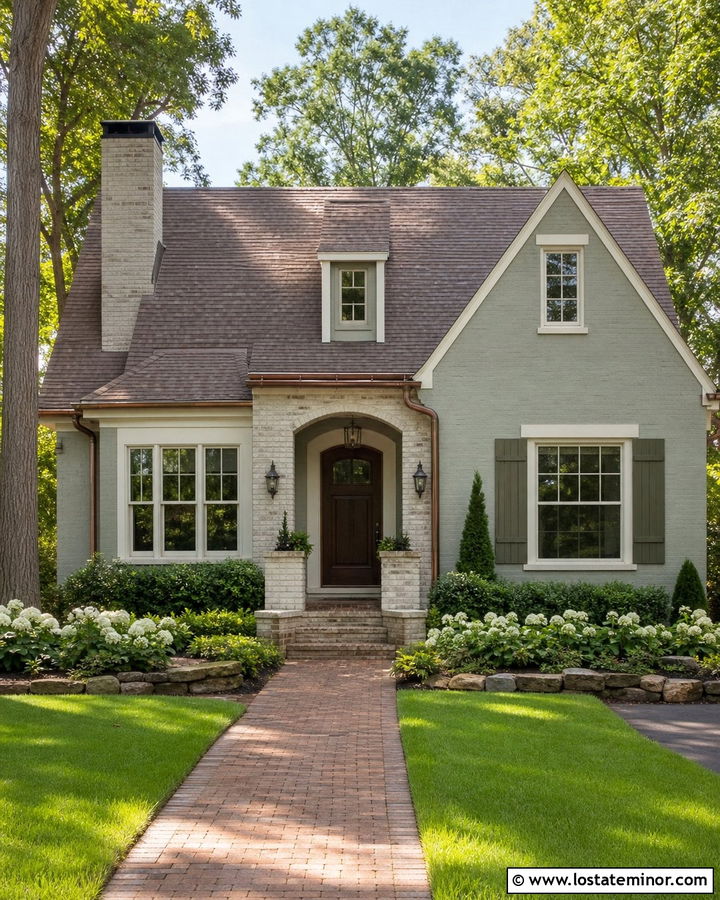
Limewashed brick gives a sage green home an airy, softened facade without completely concealing the masonry’s original character. Choose pale gray-beige limewash over warm red brick, leaving controlled areas of variation visible around the chimney, porch, and foundation. Medium sage lap siding above the brick adds enough color to distinguish the architectural levels. Use creamy white on trim, porch columns, and window frames, then introduce a dark bronze front door for contrast. A brown-gray shingle roof keeps the palette warm and natural. Copper gutters can develop a patina that complements the green over time. Finish the design with stone-edged beds, white flowering plants, and a brick walkway whose deeper color recalls the masonry beneath the wash.
14. Sage Green House With Black Brick Accents
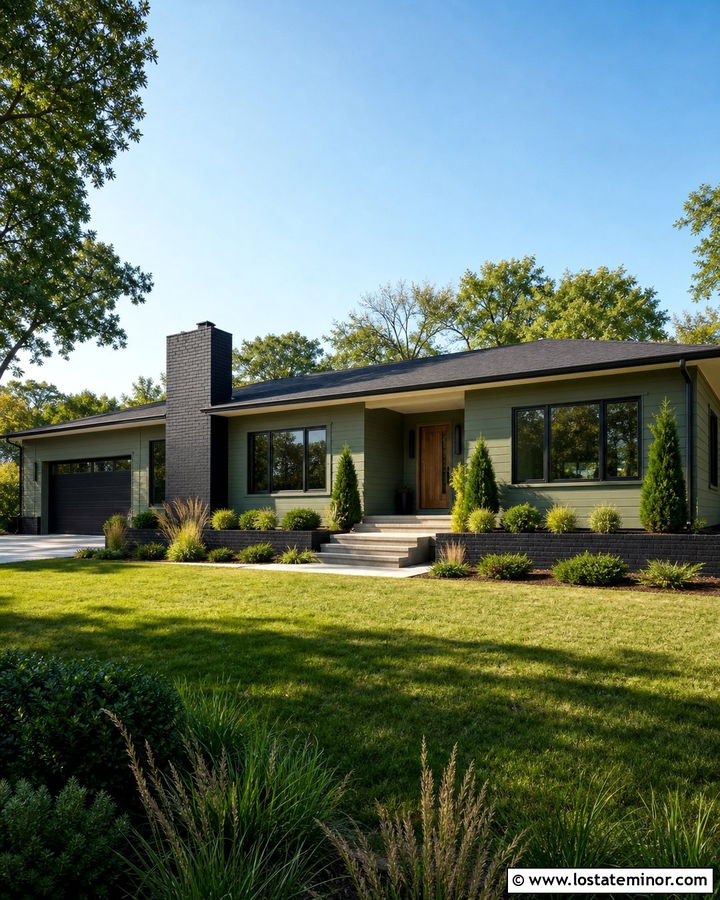
For stronger contrast, pair medium sage green siding with black brick on the foundation, chimney, or projecting garage wall. The brick should have a matte or slightly weathered surface so it feels architectural rather than glossy. Repeat black on window frames, gutters, and streamlined porch lights to distribute the dark color across the facade. Warm white soffits and porch ceilings provide relief between the green and black areas. A natural oak front door adds warmth and becomes the welcoming focal point. Choose charcoal roofing that blends into the black accents without making the entire upper section appear heavy. Simple concrete steps, ornamental grasses, and restrained evergreen landscaping support the contemporary palette while allowing the contrasting exterior materials to remain clearly visible.
15. Sage Green House With Pink Brick
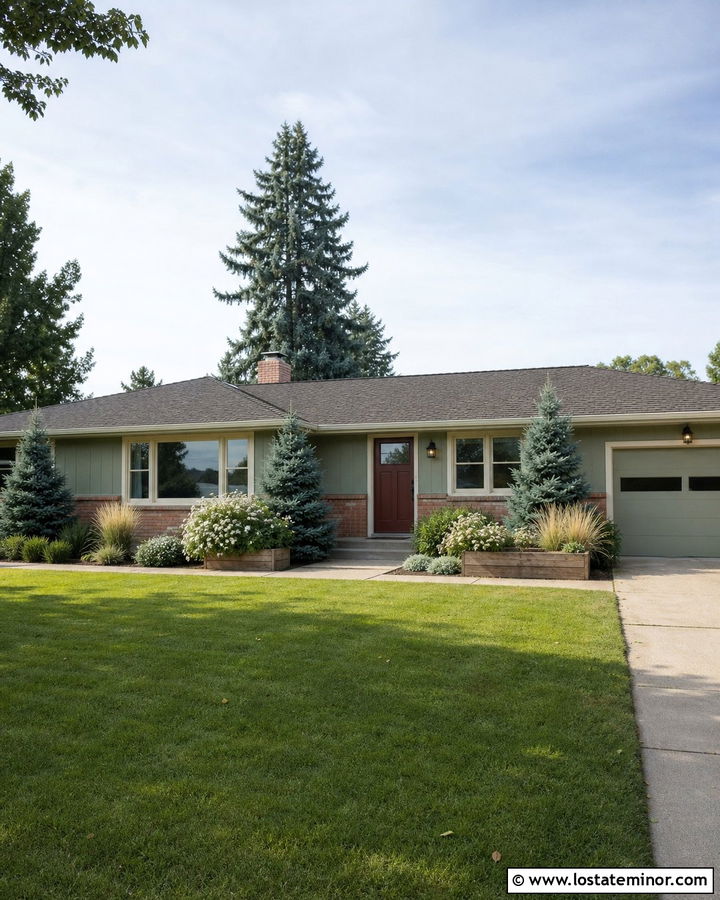
Older pink or salmon brick can look surprisingly balanced beside a warm, dusty sage green. Instead of attempting to hide the masonry, select siding paint with beige or muted olive undertones that reduces the brick’s rosy intensity. Use soft cream rather than brilliant white for window trim, eaves, and porch details. A deep burgundy-brown front door can echo the brick’s darkest shades while adding a clear focal point. Choose a warm gray-brown roof to bridge the pink masonry and green siding. Bronze hardware and simple wood planters continue the earthy direction. Finish with blue-green evergreens, pale ornamental grasses, and white flowers. These cooler landscape notes help neutralize the warm brick while keeping the complete exterior inviting and intentionally coordinated.
16. Sage Green House With Orange Brick
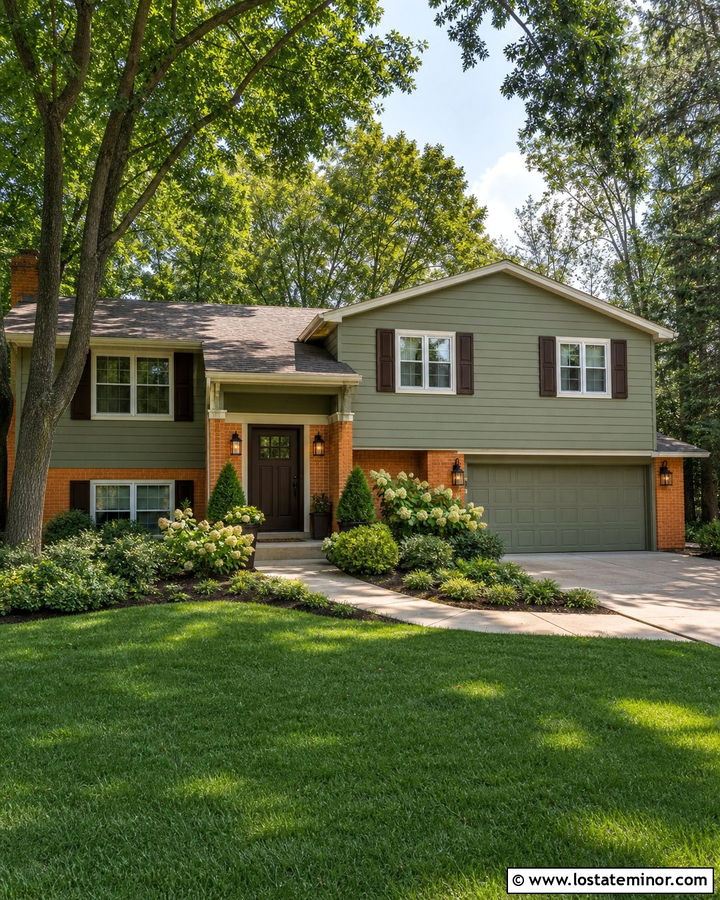
Bright orange brick needs a sage green that is muted enough to create balance but warm enough to avoid a sharp clash. Look for an earthy, olive-leaning sage and apply it to the siding, upper gables, and garage door. Tan trim works better than pure white because it connects with the brick’s golden mortar and sunbaked undertones. Add a dark chocolate front door, brown shutters, and bronze lanterns to introduce deeper accents. A weathered brown roof will keep the palette cohesive from top to bottom. Avoid adding more bright colors to the facade. Instead, use layered green shrubs, ivory flowers, and a simple brick or concrete walkway. The controlled scheme allows the original masonry to feel warmer and more purposeful.
17. Sage Green House With Taupe Brick
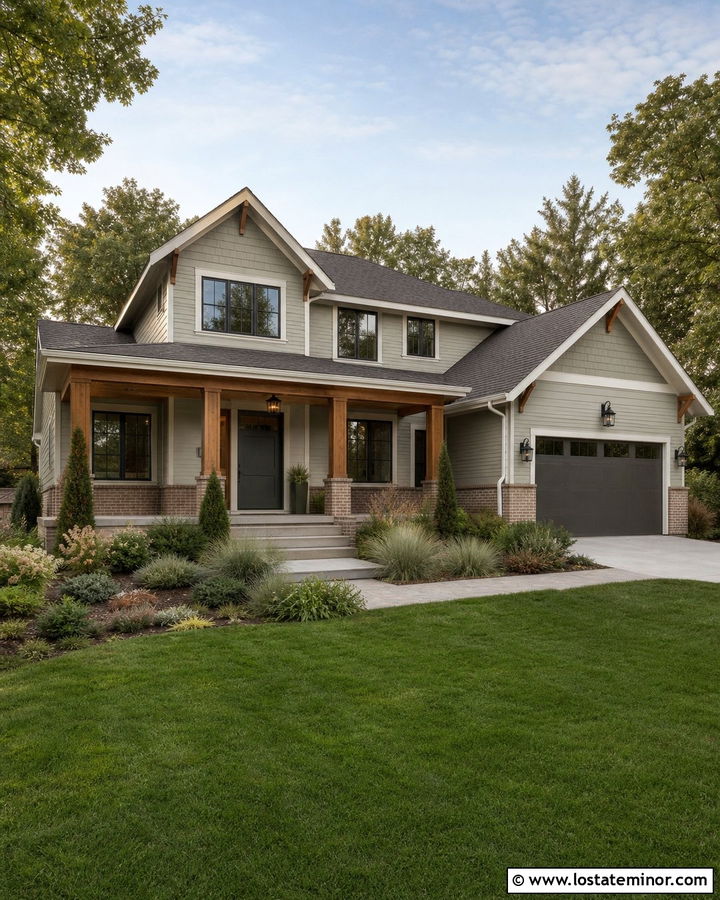
Taupe brick and sage green create a subtle exterior that depends on texture and value changes rather than sharp color contrast. Use a medium-light sage on the main siding and a deeper green on shutters or the front door. Warm off-white trim will provide enough definition around windows and rooflines without breaking the gentle palette. Select a charcoal-taupe roof that echoes the masonry’s gray-brown variation. If the house includes a garage, painting its door sage green helps preserve the quiet, continuous look. Natural wood porch beams can introduce warmth, while bronze lights add a refined finishing touch. Use structured grasses, evergreen shrubs, and pale gravel or concrete paving to frame the house without distracting from its softly layered neutral colors.
18. Sage Green House With Brown Brick
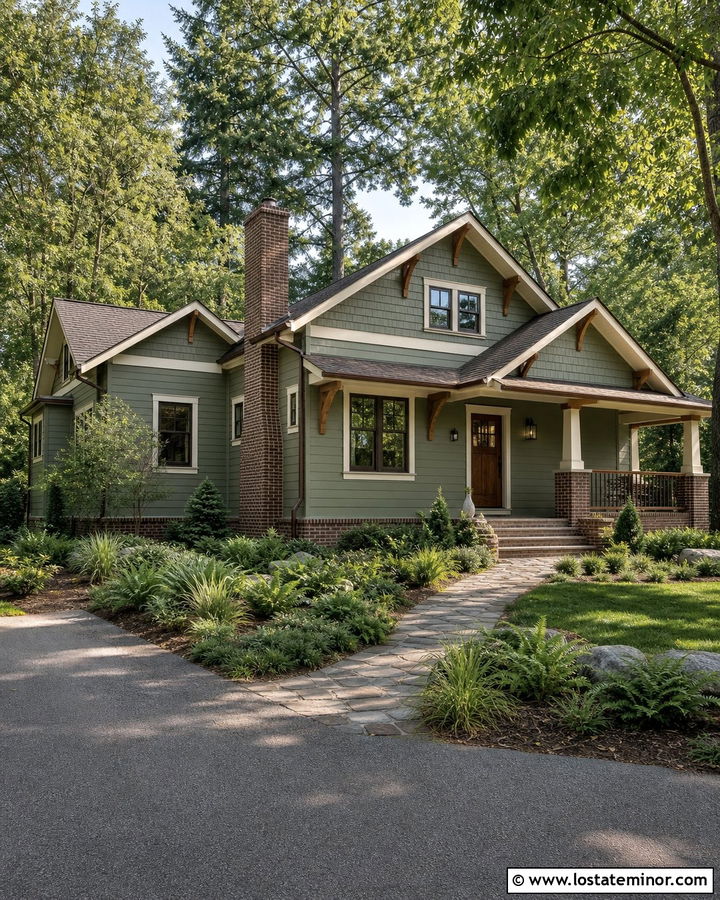
Rich brown brick gives sage green siding an especially grounded and natural appearance. Choose a medium sage with enough depth to remain visible beside the dark masonry. Use the brick across the lower facade, porch walls, and chimney, then repeat its warmth through a stained walnut front door and exposed wood beams. Cream trim can highlight window frames and eaves while keeping the overall palette welcoming. A dark brown architectural-shingle roof ties the upper facade to the brick below. Consider bronze gutters and lantern-style lighting rather than black fixtures, which may feel disconnected from the warm materials. Layer ferns, ornamental grasses, and evergreen shrubs around a flagstone walkway to create a complete exterior that feels comfortable in a wooded or suburban landscape.
19. Sage Green House With Reclaimed Brick
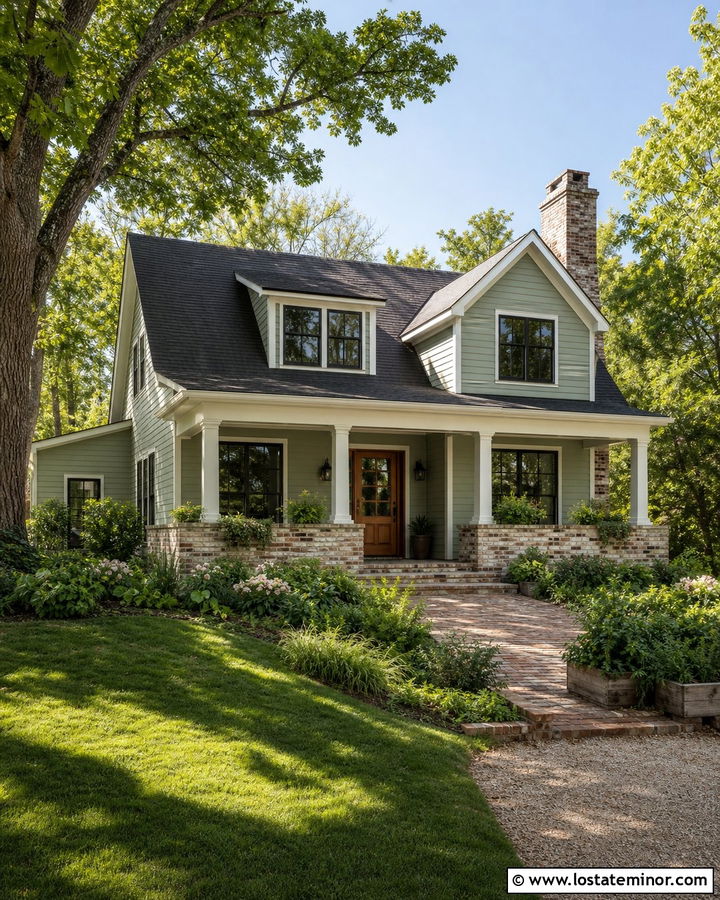
Reclaimed brick introduces irregular reds, browns, creams, and weathered gray tones, making it an appealing partner for restrained sage green. Use the masonry on a porch wall, chimney, foundation, or arched entry rather than scattering small patches across the facade. A balanced green-gray siding color will calm the brick’s variation and provide a consistent backdrop. Choose antique white trim and a medium oak front door to support the aged character without making the home look overly rustic. Charcoal roofing and dark bronze windows add clean structure to the mixed materials. Repeat reclaimed brick in walkway edging or porch steps for continuity. Informal native plants and simple wooden planters finish the exterior while allowing the naturally varied masonry to remain the defining feature.
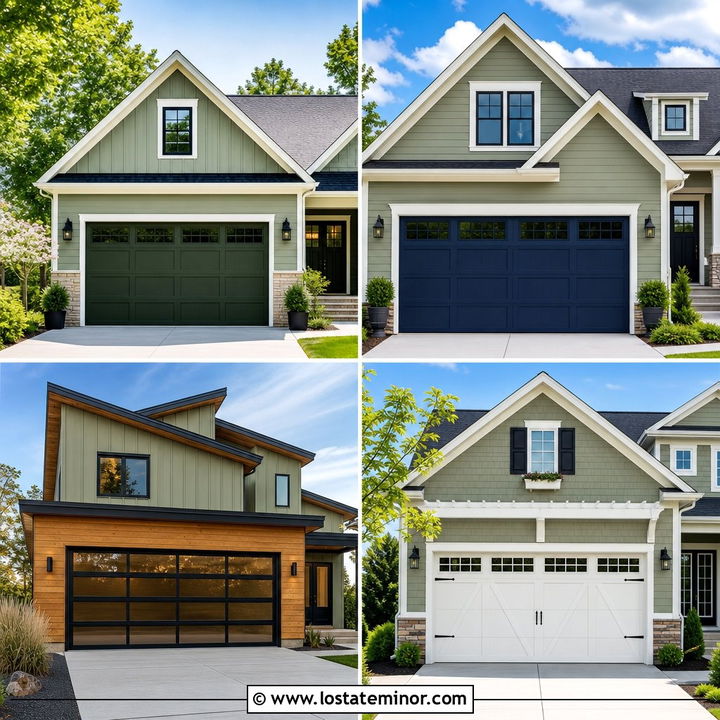
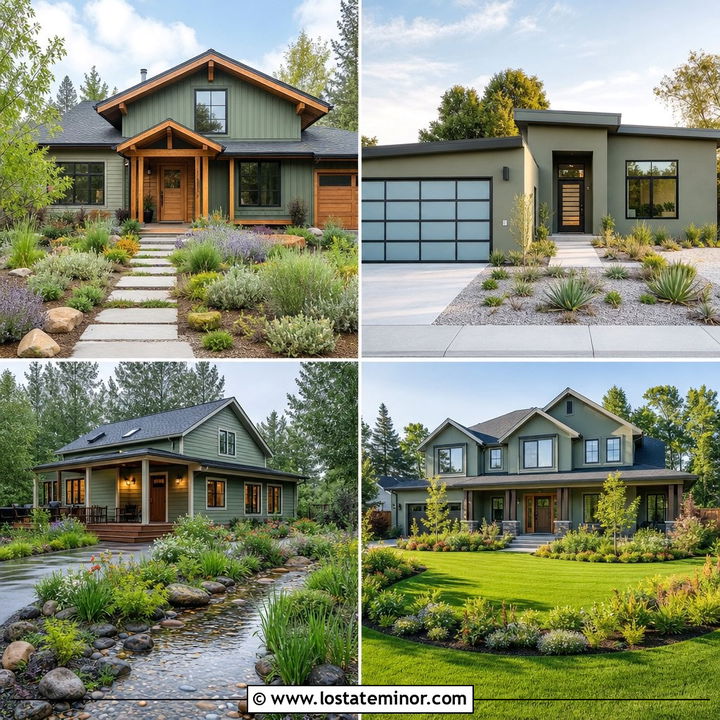
20. Sage Green House With Brick Archway
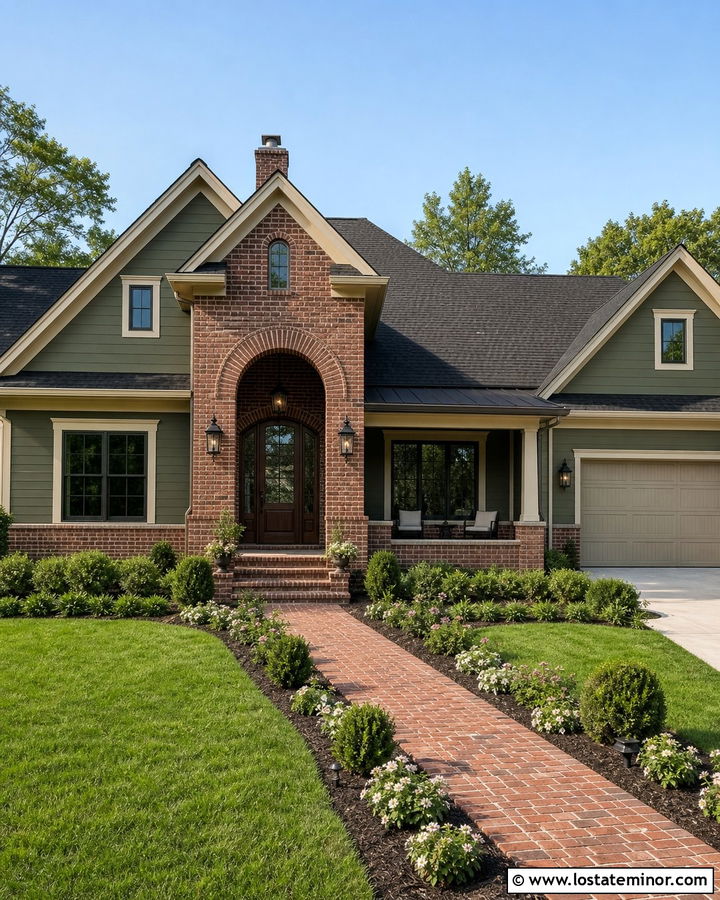
A brick archway can turn an ordinary sage green entrance into the architectural focus of the entire home. Use warm red-brown brick around a recessed front door and continue the masonry across a short porch wall or lower facade. Medium sage siding provides quiet contrast and allows the arch’s shape and texture to stand out. Paint trim and porch soffits a warm cream, then choose a stained mahogany door that fits naturally within the masonry opening. Black iron lanterns and a charcoal roof provide crisp definition without overwhelming the earthy scheme. A straight brick walkway reinforces the entrance axis, while clipped shrubs and low flowering borders keep the approach open. The completed facade feels substantial, welcoming, and thoughtfully composed.
21. Sage Green House With Brick Garage
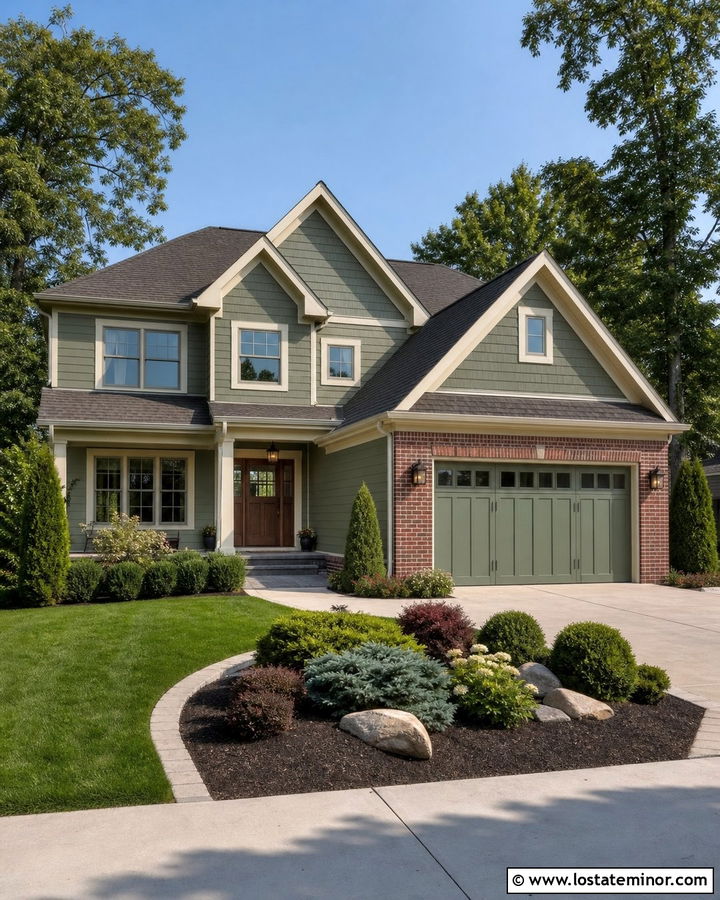
When brick surrounds a prominent garage, the remaining exterior colors should help reduce its visual weight. Use soft sage green siding across the main house and paint the garage door the same green so it blends into the composition. Retain red-brown brick around the garage opening and lower walls, then add cream trim to connect the siding with lighter mortar. A stained wood front door draws attention away from the driveway and toward the entrance. Choose a dark gray-brown roof that relates to both materials. Matching bronze lights can unify the garage and porch areas. Add a landscaped island, narrow evergreen beds, and an unobstructed walkway to strengthen the path to the front door while softening the driveway’s broad paved surface.
22. Sage Green House With Brick Front Steps
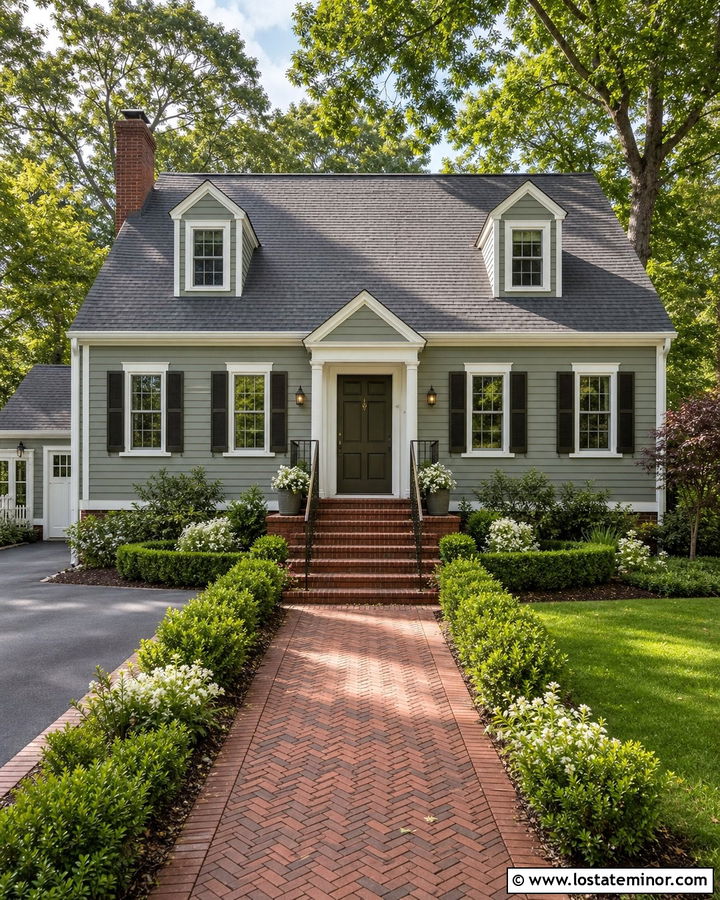
Brick front steps provide a practical way to introduce masonry without covering a large portion of the house. Pair warm red or red-brown steps with sage green clapboard siding and creamy white trim for a welcoming traditional exterior. Continue the brick into the walkway or small porch floor so the steps do not look like an isolated material. A black or deep olive front door gives the entry enough contrast, while natural wood porch furniture can add warmth. Choose a charcoal roof and simple bronze railings that complement rather than conceal the masonry. Low boxwoods, flowering perennials, and matching planters should frame the staircase without narrowing it. This scheme works especially well on Colonial, cottage, and Cape Cod facades.
23. Sage Green House With Brick Wainscoting
Brick wainscoting adds texture and durability to the lower portion of a sage green exterior while keeping the facade visually balanced. Use red-brown or variegated tan brick up to the window sills, then continue with sage lap siding above it. A substantial cream transition board can create a clean separation between the materials. Repeat cream on window trim, fascia, and porch columns, and choose a dark olive front door for a connected accent. A charcoal-brown roof anchors the design without competing with the masonry. Keep the garage door sage so the horizontal brick line remains continuous. Rounded shrubs, low grasses, and a broad concrete walkway help showcase the two-part facade and maintain a polished, approachable suburban appearance.
24. Sage Green House With Brick Porch Floor
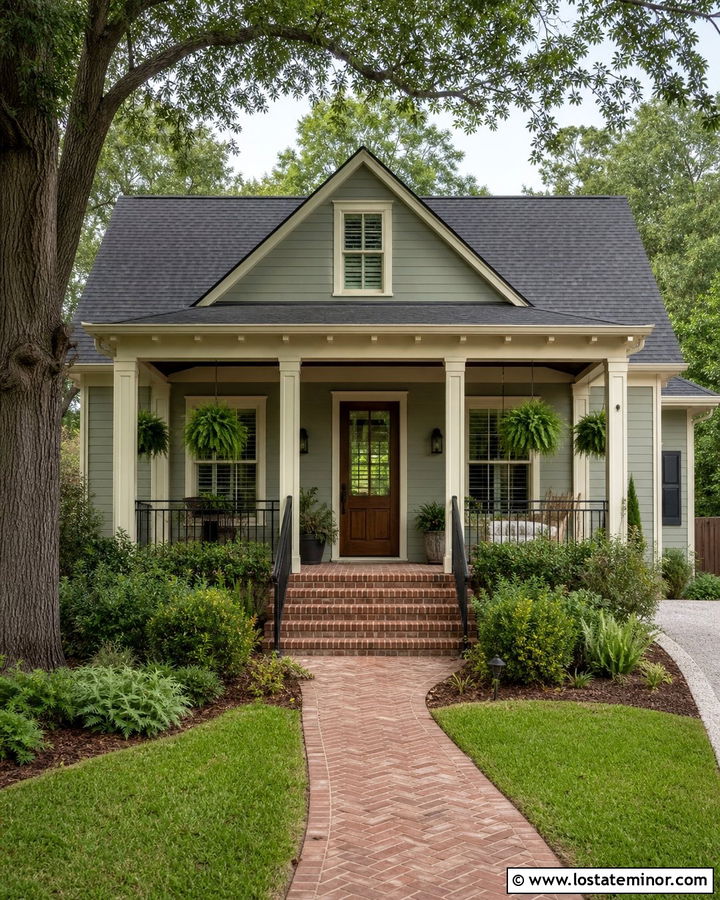
The warm texture of a brick porch floor can enrich a sage green exterior even when the house has little masonry elsewhere. Use dusty sage siding with cream trim and simple square porch columns to create a calm frame around the red-brown herringbone floor. A natural cedar door draws out the warm clay tones, while dark bronze lights and railings add definition. Continue the brick down the steps or into the walkway for a deliberate material transition. A medium charcoal roof keeps the facade grounded without overpowering the softer colors. Hanging ferns, layered foundation shrubs, and a neat lawn create an inviting setting. Keep porch furnishings limited so the brick pattern and coordinated entrance remain clearly visible from the curb.
25. Sage Green House With Brick Shutters
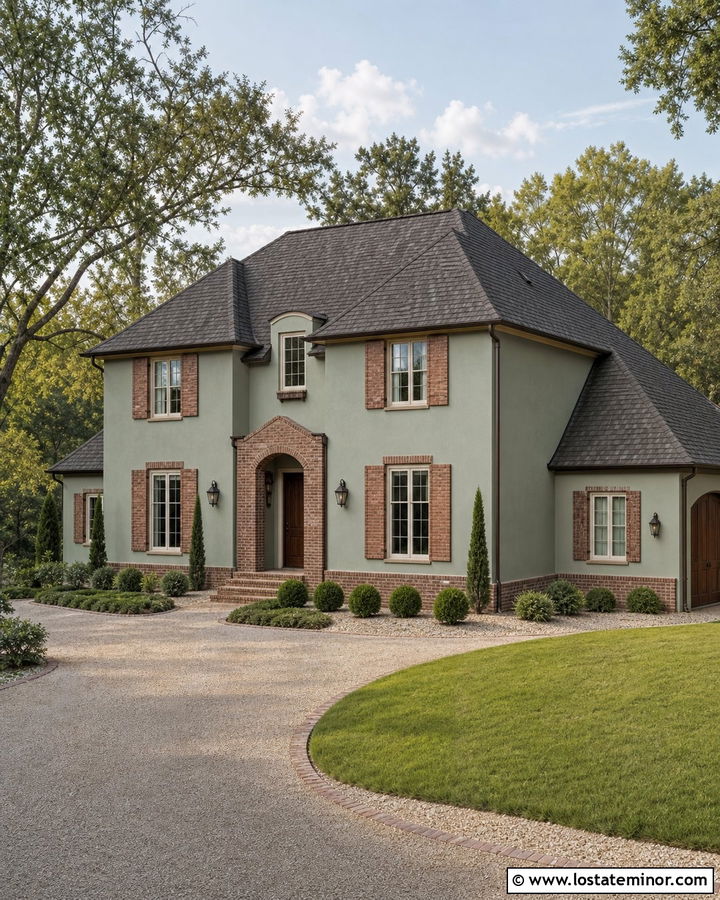
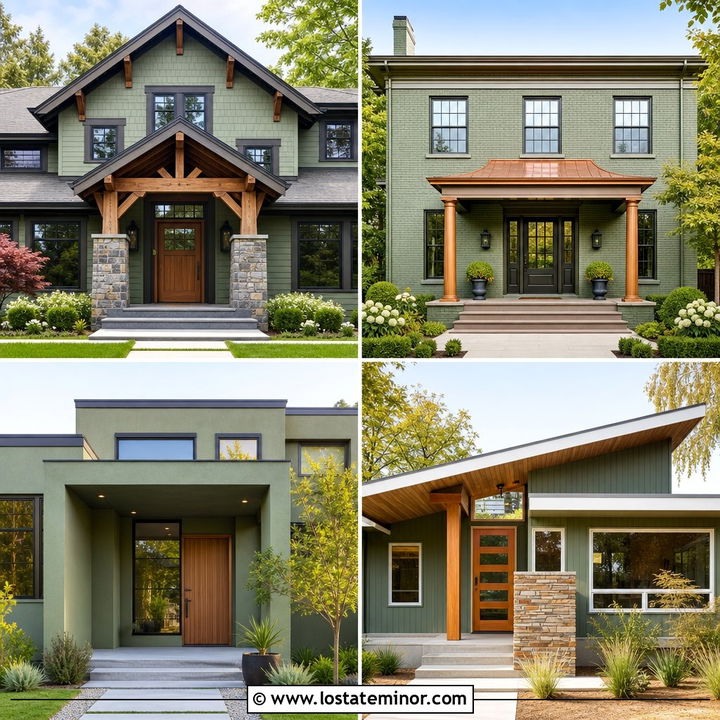
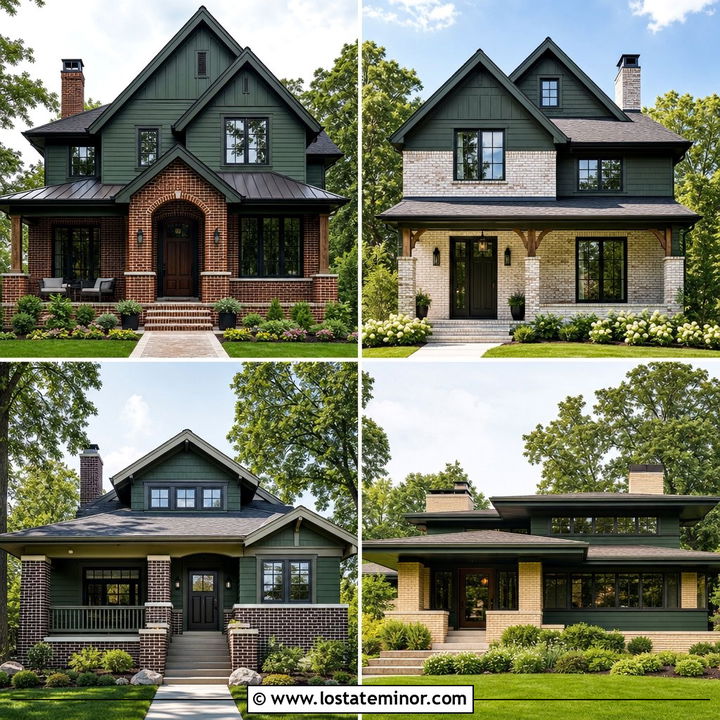
Brick shutters offer unusual texture and permanent architectural definition on a stucco or siding exterior. Surround selected windows with slim red-brown brick panels that resemble traditional shutters, then use muted sage green across the main walls. Cream window frames provide a light buffer between the glass and masonry. Repeat brick around the entrance or along a low foundation section so the shutter treatment feels integrated rather than decorative. A dark wood front door and charcoal-brown roof complement the earthy palette. Keep other accents restrained, using bronze lights and simple gutters. This approach suits Mediterranean, French country, and transitional homes with substantial window openings. Low hedges and pale gravel beds allow the brick details to remain visible without making the elevation feel crowded.
26. Sage Green House With Brick Chimney And Porch
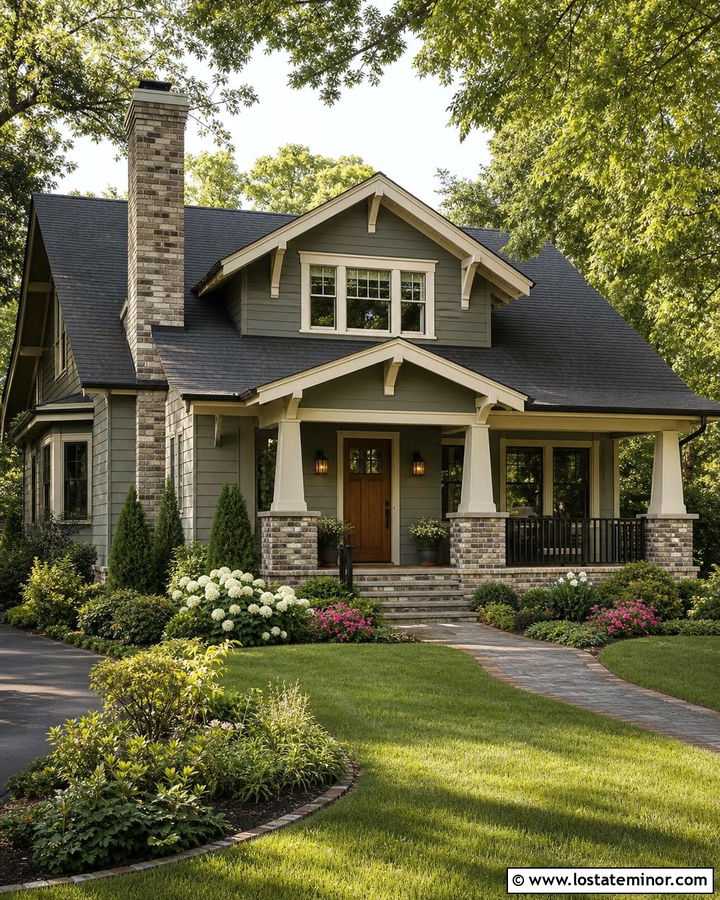
Repeating brick in two meaningful locations creates a balanced exterior. On a sage green home, use the same warm, variegated brick for a tall chimney and the porch foundation or column bases. This repetition moves the eye across the facade and makes the materials feel intentional. Choose a warm green-gray body color with creamy trim around windows, eaves, and porch posts. A medium walnut front door can bridge the green siding and red-brown masonry. Select a charcoal roof with subtle brown variation to complement the chimney. Bronze lanterns and simple black railings provide controlled contrast. Finish with layered evergreens, flowering shrubs, and a brick-edged path that reinforces the masonry without introducing another competing surface.
27. Sage Green House With Brick And Cedar
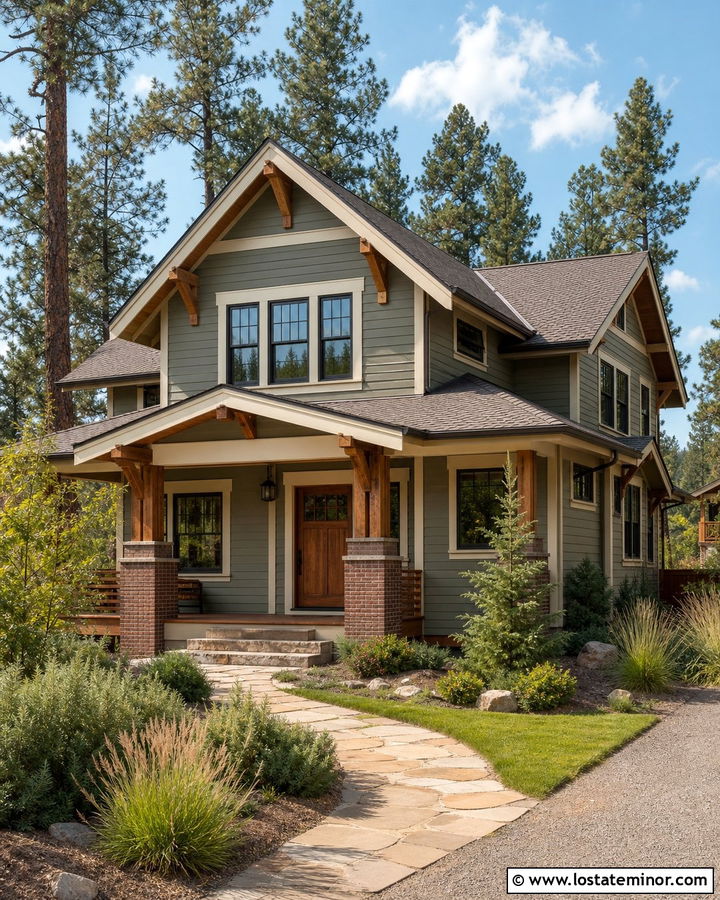
Sage green, red-brown brick, and cedar create a layered natural palette that feels warm without becoming overly rustic. Apply muted sage to the main horizontal siding, use brick along the foundation and porch columns, and reserve cedar for the front door, gable brackets, and porch ceiling. Cream trim can separate the three materials and keep architectural edges clear. A dark brown-gray roof supports the warm direction of the design. Choose bronze fixtures because they relate more naturally to cedar and brick than bright silver finishes. On a Craftsman or mountain-influenced suburban home, broad steps and sturdy columns will give the materials enough visual space. Native grasses, evergreen shrubs, and a flagstone path complete the cohesive exterior.
28. Sage Green House With Brick And Black Trim
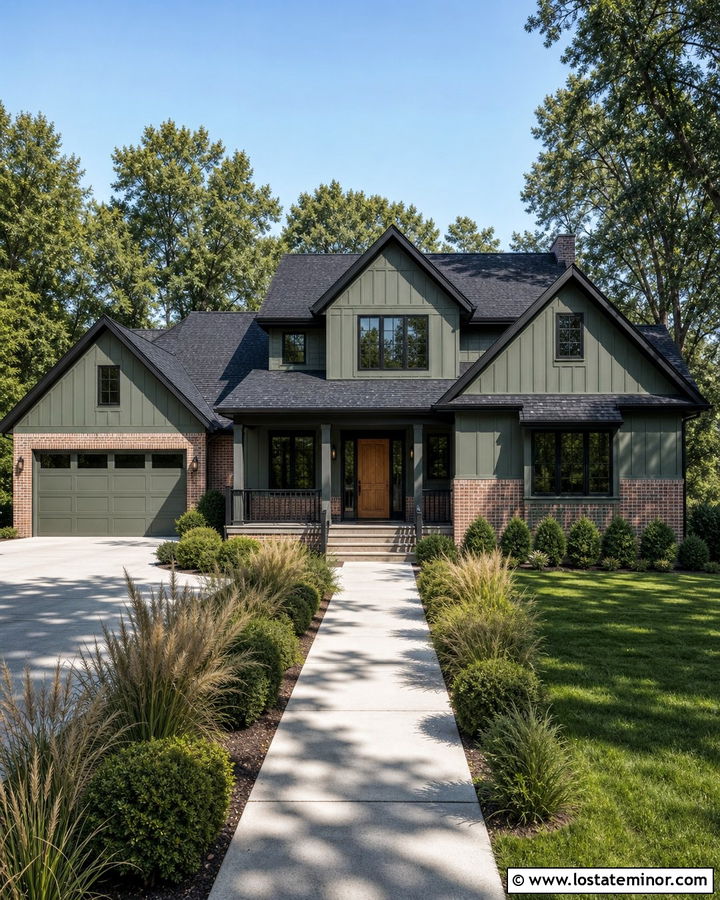
Black trim gives sage green siding and traditional brick a cleaner, more contemporary edge. Use a midtone sage across the house body, retain red or dark brown brick on the lower facade, and introduce matte black window frames, gutters, railings, and fascia. The front door can be natural oak to prevent the palette from feeling too severe. Paint the garage door sage green so the black remains a precise outline rather than a large color block. A charcoal roof will merge with the trim and simplify the upper elevation. This combination suits transitional, modern farmhouse, and updated ranch architecture. Keep the landscaping structured with ornamental grasses, clipped shrubs, and a wide concrete walkway that reflects light toward the darker exterior details.
29. Sage Green House With Brick And White Trim
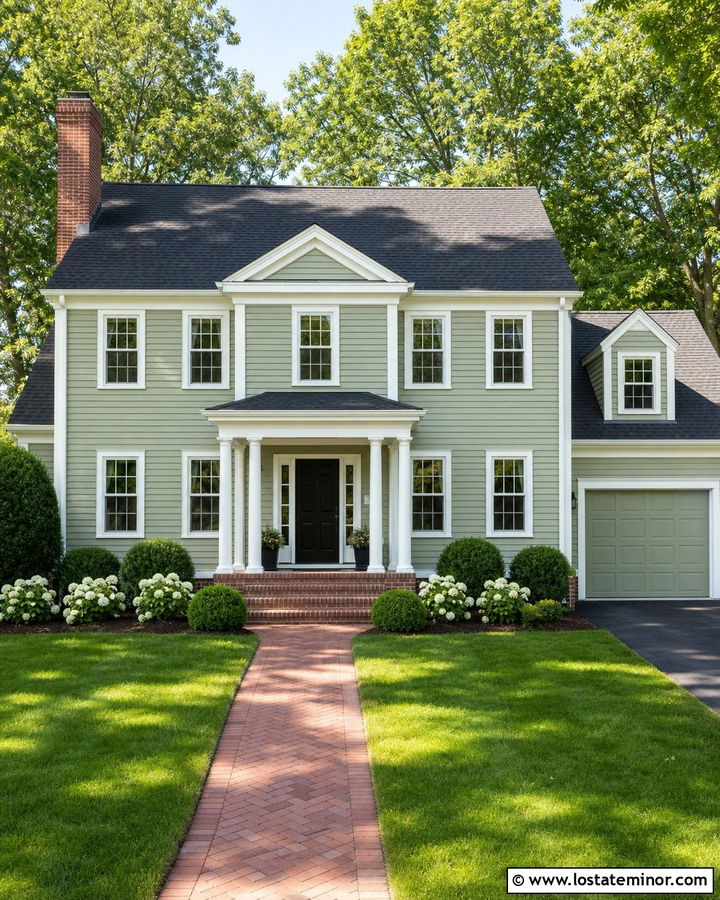
Crisp white trim produces a bright, familiar frame around sage green siding and red brick. For the most balanced result, use an understated sage rather than a highly saturated green. Apply white to window casings, porch columns, fascia, railings, and the garage surround, but keep larger surfaces sage so the contrast does not become too busy. Natural brick should remain visible on the foundation, chimney, or entry wall. A navy, black, or stained wood front door can add depth at the center of the facade. Choose a neutral charcoal roof that does not compete with the red masonry. Symmetrical shrubs, white flowering plants, and a clean brick walkway reinforce the classic palette and create a polished street-facing presentation.
30. Sage Green House With Brick And Copper Accents
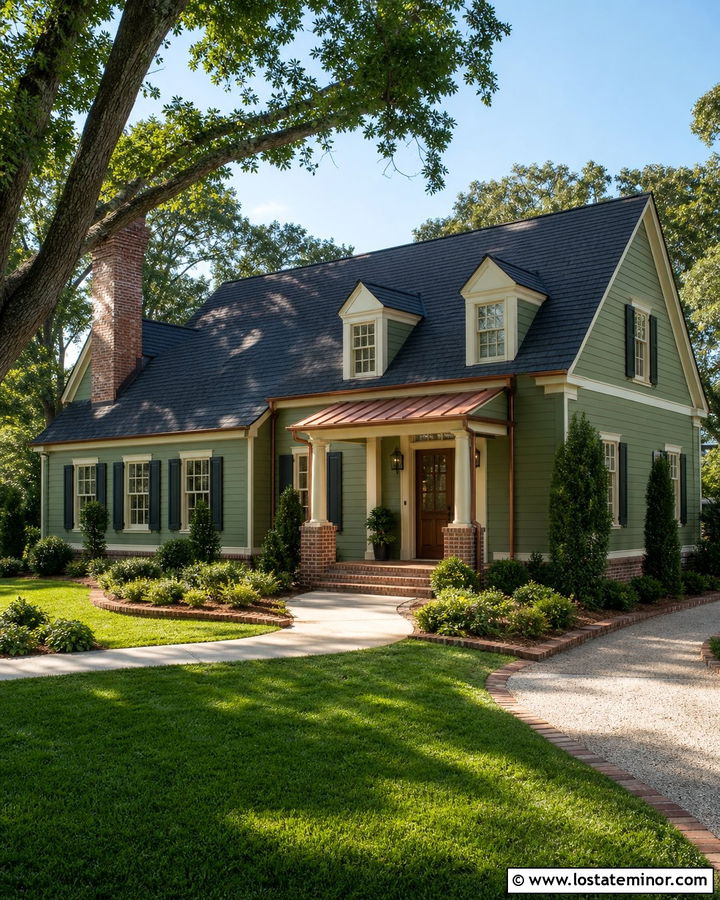
Copper accents add warmth and character to a sage green and brick exterior, especially as the metal develops a natural green-brown patina. Use medium sage siding with warm red-brown brick across the foundation, chimney, and porch bases. Introduce copper through gutters, downspouts, porch roof panels, or small awnings rather than covering large areas. Cream trim keeps the materials visually separated, while a stained walnut front door supports their warm undertones. A dark charcoal roof provides a quiet background for the metal details. This palette suits Craftsman, cottage, French country, and traditional homes. Finish with evergreen plantings, brick-edged beds, and a gently curved walkway, allowing the copper to function as a refined accent within the complete exterior scheme.
Conclusion:
These **30 Sage Green House Design With Brick Accents Ideas** show how flexible this earthy exterior combination can be. Sage siding can calm bright orange brick, refresh traditional red masonry, or create soft contrast against cream, taupe, brown, and charcoal brick. The key is to coordinate every fixed feature before choosing paint. Study the brick undertones, roof color, mortar, windows, and hardscaping in different daylight conditions. Then select trim, doors, wood, and metal finishes that connect those materials. Always test large paint samples directly beside the masonry before committing. With a thoughtful whole-house palette, sage green and brick can make ranch, farmhouse, Colonial, Craftsman, cottage, and contemporary exteriors feel cohesive and welcoming.

Related posts: