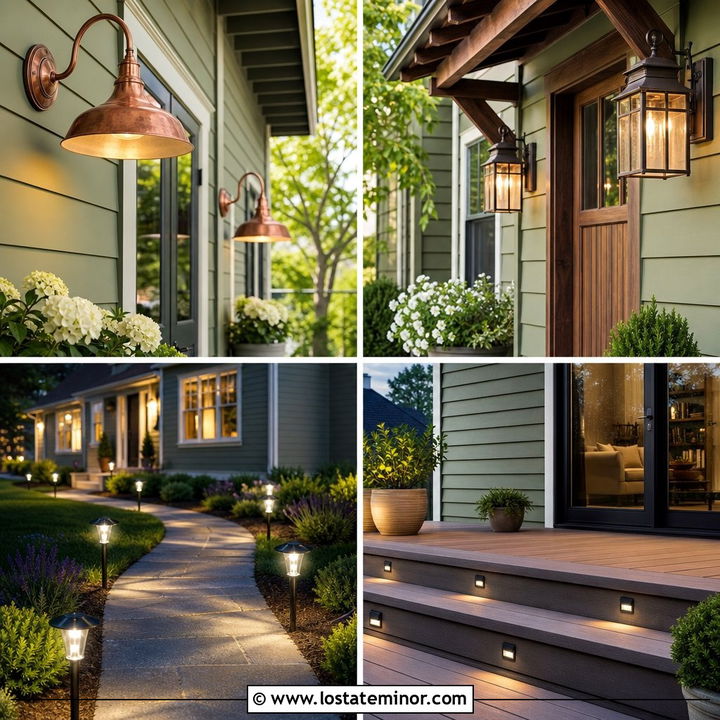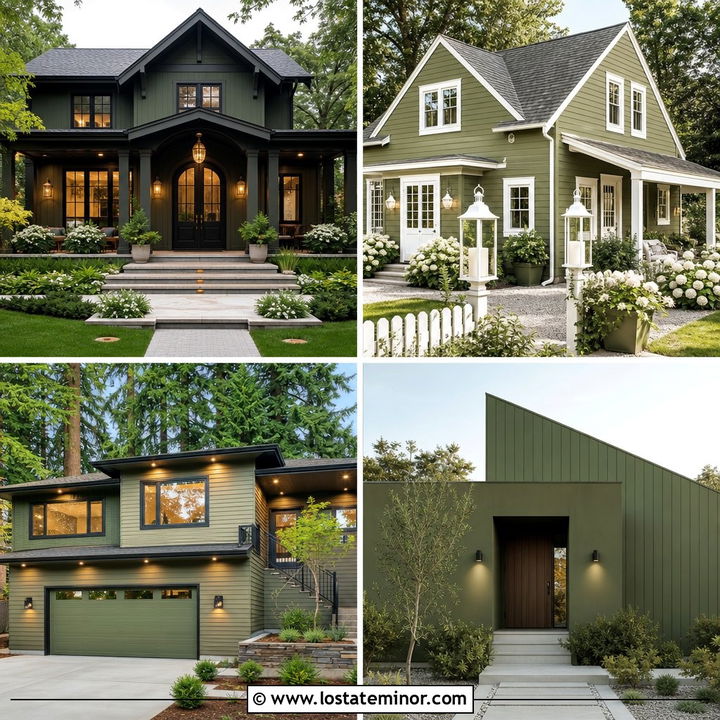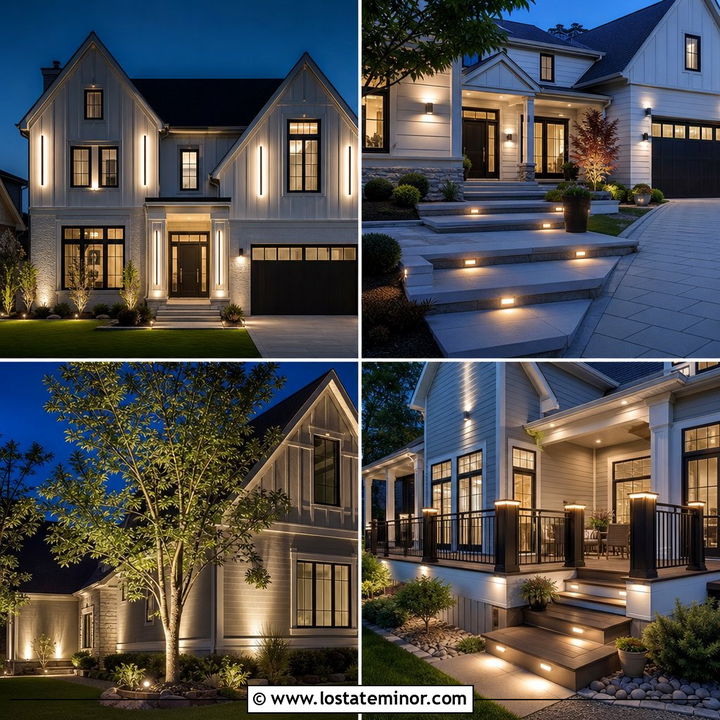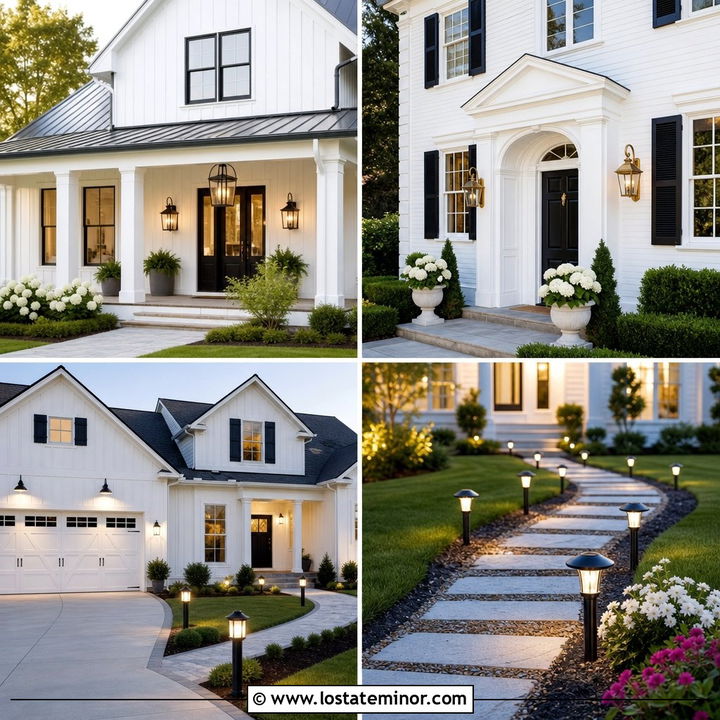
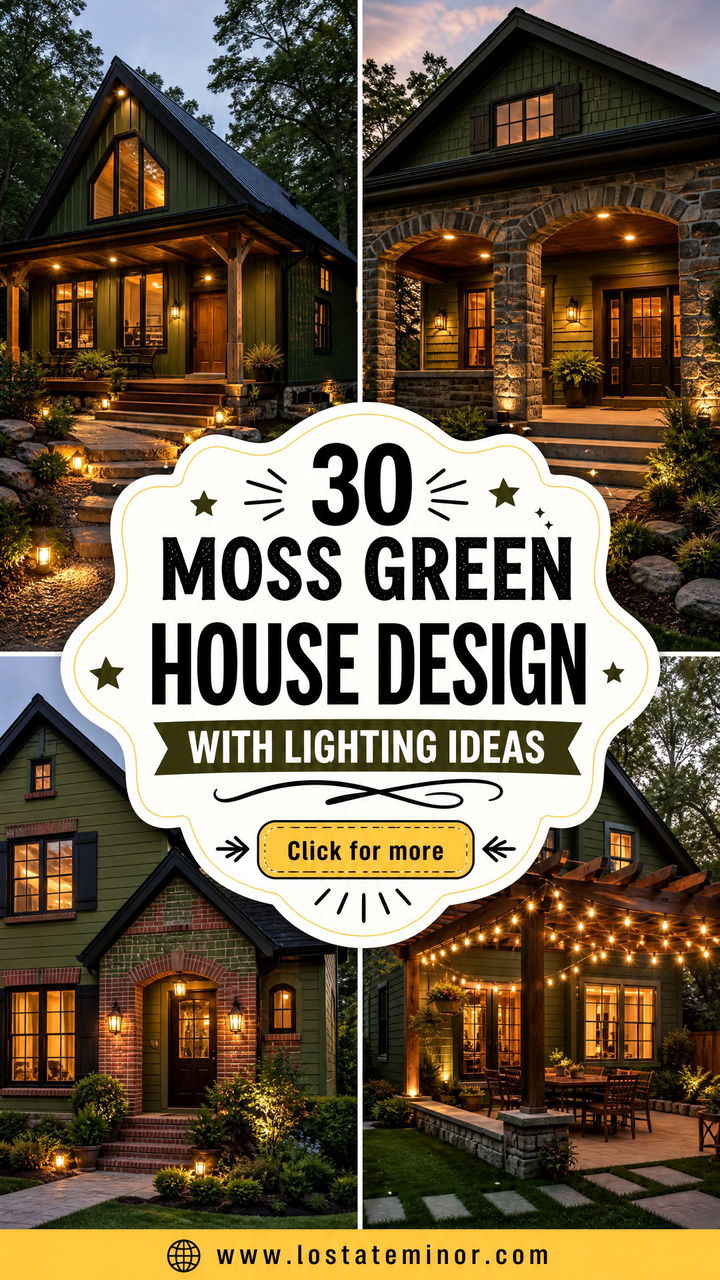
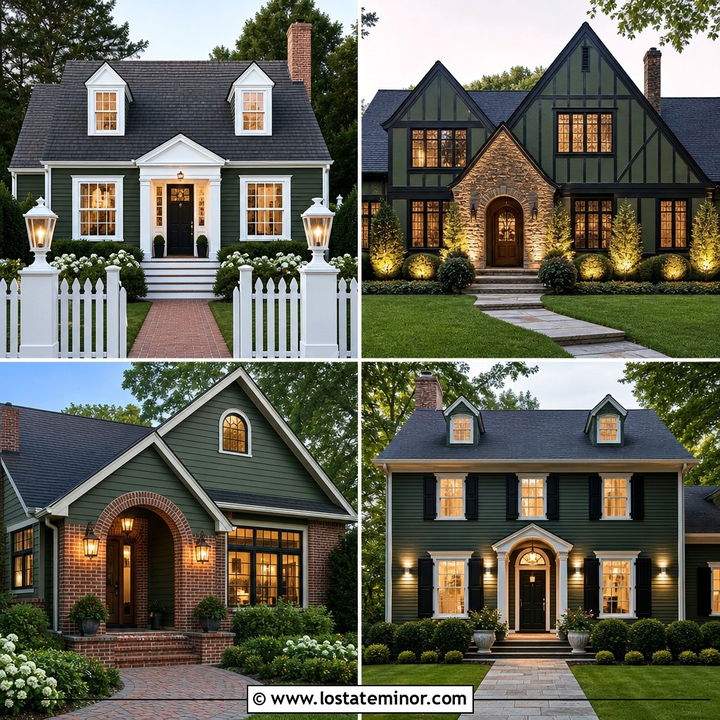
Moss green creates a grounded, nature-inspired exterior that feels welcoming across many home styles. It works especially well with wood, stone, brick, black metal, and warm neutral trim. Thoughtful outdoor lighting makes this earthy color even more appealing by defining the entry, highlighting architectural details, and improving visibility around walkways. The best fixtures should support the home’s complete design rather than look like separate decorative pieces. Scale, placement, finish, and light temperature all matter when coordinating sconces, pendants, uplights, and landscape fixtures. These 30 Moss Green House Design With Lighting Ideas explore complete exterior schemes for ranch homes, cottages, farmhouses, Craftsman houses, and modern properties. Browse the following complete looks to find practical inspiration in 30 Moss Green House Design With Lighting Ideas.
1. Moss Green Craftsman House With Copper Lanterns
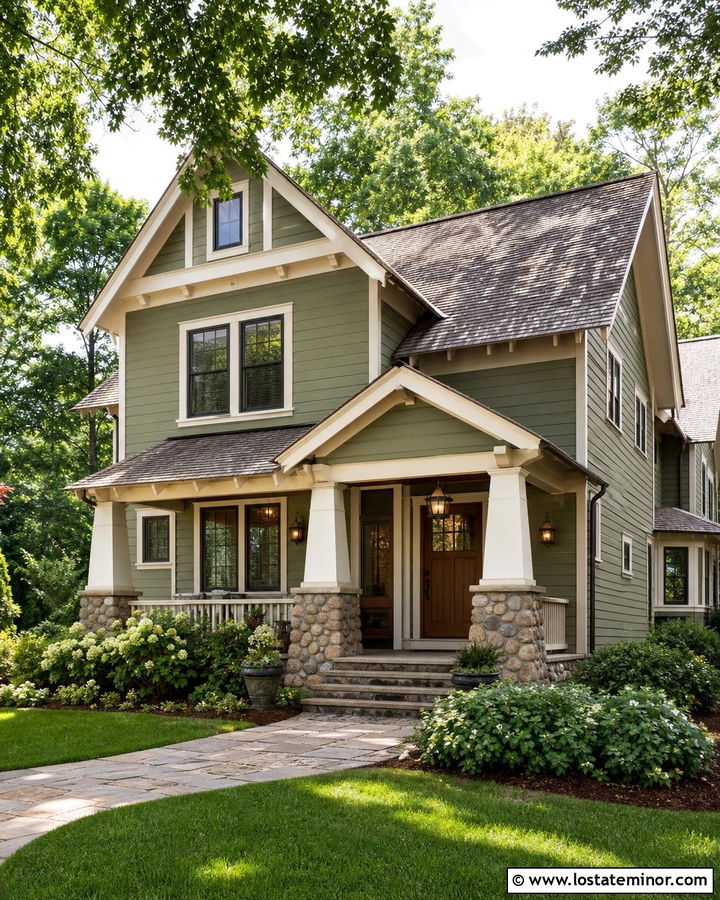
A Craftsman exterior gives moss green plenty of natural texture to work with. Use the color on horizontal lap siding, then add creamy white trim around the windows and beneath the deep roofline. Tapered porch columns can rest on warm fieldstone bases, while a stained oak front door reinforces the earthy palette. Install aged copper lanterns on both sides of the entry so the metal develops a rich finish over time. A matching copper pendant centered above the porch steps makes the entrance feel balanced. Dark bronze gutters and a weathered brown roof complete the scheme. Keep foundation landscaping low enough that the stonework and porch lighting remain visible from the street. This combination feels handcrafted, warm, and appropriate for a leafy suburban neighborhood.
2. Moss Green Farmhouse With Black Barn Lights
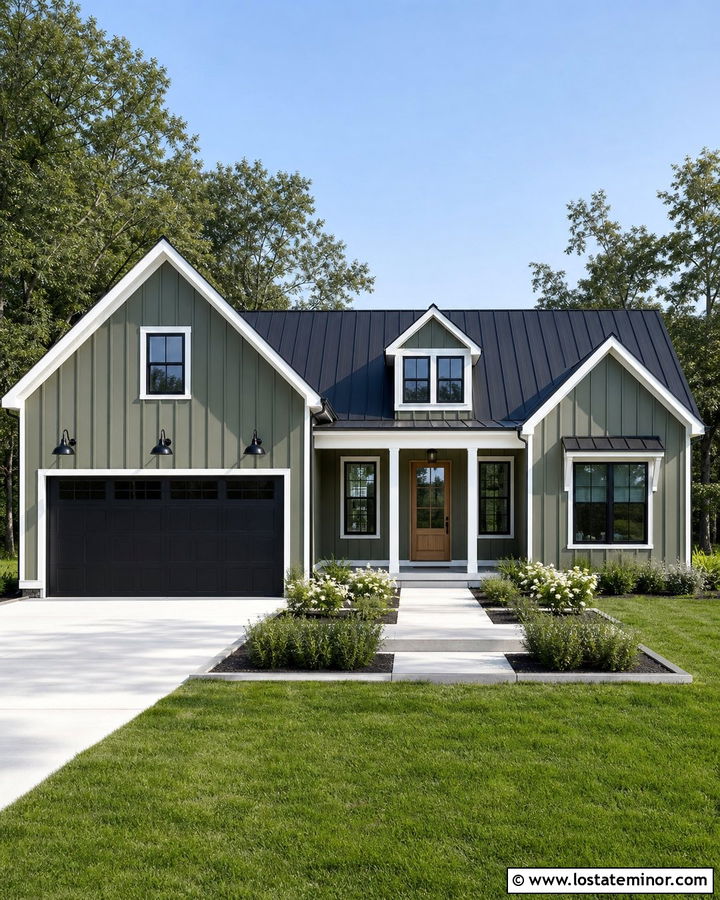
Clean lines can make moss green feel fresh instead of rustic. Cover a modern farmhouse in vertical board-and-batten siding, using crisp white for the fascia, porch columns, and window trim. A matte black standing-seam roof creates strong contrast without competing with the green body color. Place oversized black barn lights above the garage doors and use smaller matching sconces beside the front entry. A natural cedar door and coordinating porch ceiling prevent the black accents from making the facade feel severe. Simple concrete steps, black-framed windows, and rectangular planting beds support the streamlined look. Select fixtures with wide shades that direct light downward. This keeps illumination focused on doors and walkways while allowing the moss green siding to remain the main feature.
3. Moss Green Colonial House With Brass Sconces
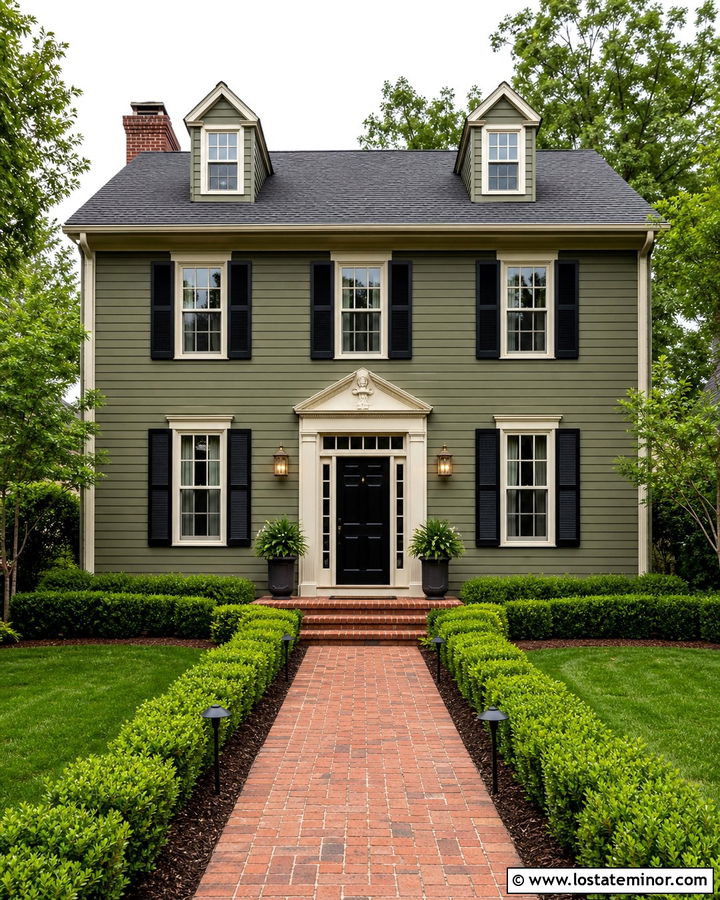
Symmetry is the key to making a moss green Colonial exterior feel polished. Paint the clapboard siding moss green and define its traditional shape with soft ivory corner boards, cornices, and window trim. Black shutters add structure, while a glossy black front door creates a formal focal point. Place substantial aged-brass sconces on both sides of the entrance, aligning them with the upper portion of the door. Their warm metal finish brings subtle brightness to the deep green facade. Use matching brass details for the door knocker and address numbers. A charcoal roof and red brick walkway add familiar Colonial materials without overwhelming the palette. Clipped shrubs, evenly spaced path lights, and matching planters maintain the balanced appearance from the sidewalk to the front steps.
4. Moss Green Ranch House With Globe Lights
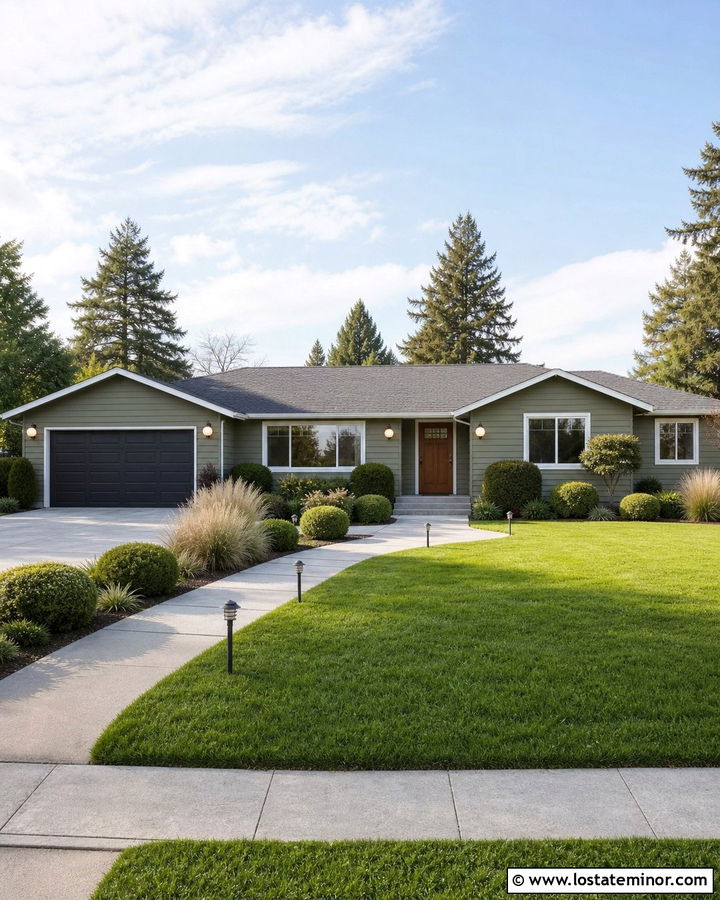
Can a simple ranch house feel distinctive without a major renovation? Moss green siding paired with warm white trim immediately gives a long, low facade more character. Use a medium-gray shingle roof to keep the palette relaxed, then introduce round opal-glass globe sconces beside the door and garage. Their curved shape softens the home’s horizontal roofline. A walnut-stained front door and matching slatted porch screen add warmth near the entrance. Low-voltage path lights can guide attention along a gently curved concrete walkway. Keep their profile short so they do not visually divide the front yard. Layered ornamental grasses and rounded shrubs echo the globe fixtures. The finished exterior feels approachable and updated while respecting the ranch home’s straightforward architecture.
5. Moss Green Cottage With White Lanterns
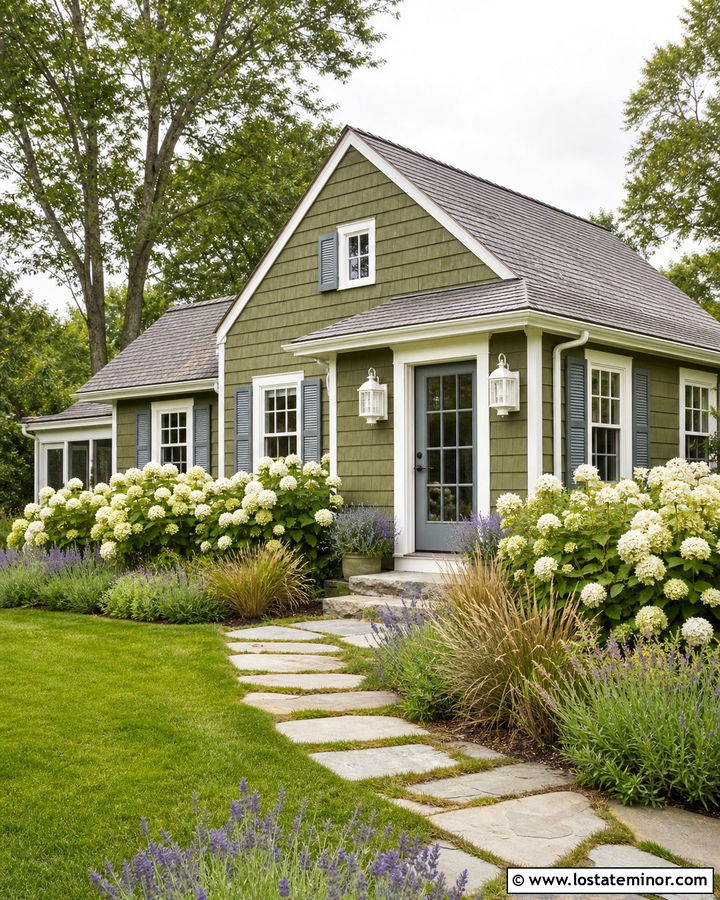
A small cottage can carry moss green beautifully when the surrounding details stay light. Apply the color to cedar shingles or textured lap siding, then frame the facade with creamy white trim and a pale gray roof. White lantern sconces beside a divided-light front door create a charming, cohesive entrance. Add a compact hanging lantern beneath the porch roof if the ceiling height allows comfortable clearance. Soft blue-gray shutters provide a gentle contrast that does not overpower the green. Use irregular flagstone for the path and plant lavender, hydrangeas, and feathery grasses around the foundation. Low garden lights tucked between plants can illuminate the walkway without exposing the fixtures too prominently. This complete look feels cheerful, established, and well suited to a garden-focused property.
6. Moss Green Bungalow With Mission Lighting
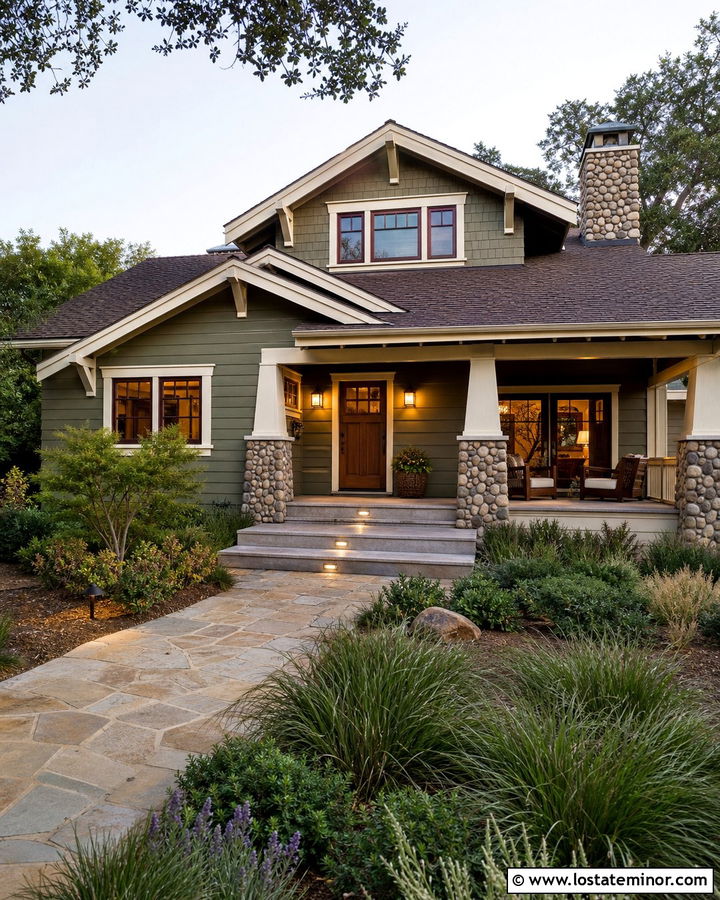
Warm wood and geometric lighting bring out the handcrafted character of a moss green bungalow. Choose moss green lap siding with deep olive shingles in the front gable for subtle tonal variation. Cream trim keeps the roof brackets, tapered columns, and multi-pane windows clearly defined. A medium walnut front door can become the central accent, especially when framed by square Mission-style sconces in an oil-rubbed bronze finish. Add a coordinating rectangular pendant beneath the porch ceiling. Amber-toned glass is attractive, but the bulbs should still provide clear, comfortable illumination around the steps. River rock column bases and a dark brown roof connect the house to the landscape. Finish with broad planting beds and discreet step lights built into the porch risers for safer nighttime access.
7. Moss Green Cape Cod With Coastal Lanterns
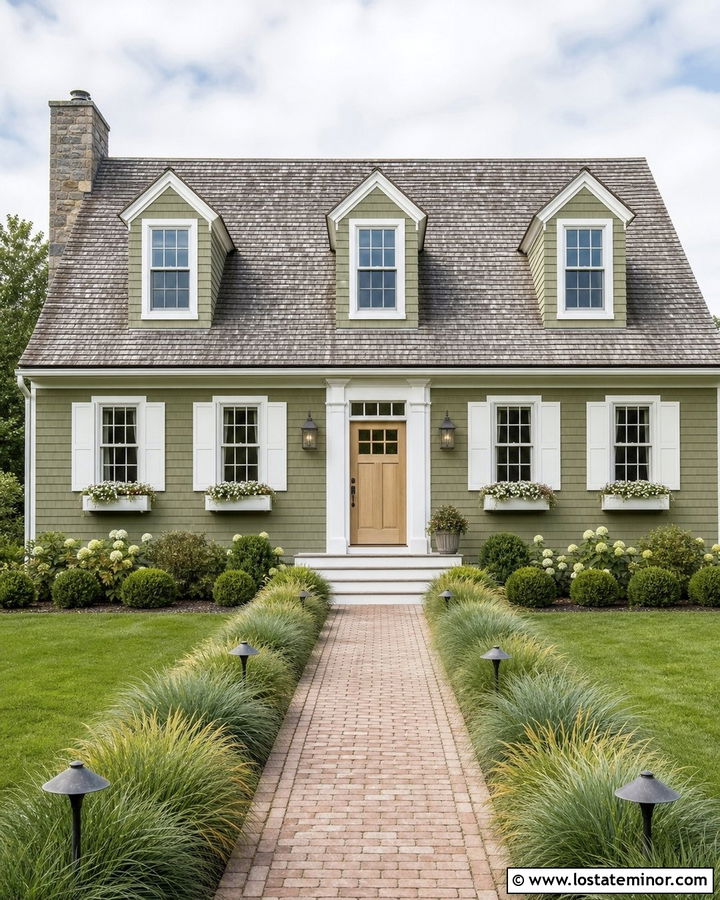
Moss green offers a softer alternative to navy on a traditional Cape Cod house. Use it across shingle siding, then introduce bright white trim, simple white shutters, and a weathered gray roof. A pale natural-wood door adds relaxed warmth without pulling the exterior too far into a rustic direction. Flank the entrance with streamlined coastal lanterns in a brushed nickel or weathered zinc finish. Their clean frames coordinate naturally with gray roofing and white trim. If dormers are present, small downward-facing fixtures can gently highlight their siding and window boxes. A straight brick walkway and evenly spaced low path lights reinforce the home’s tidy proportions. Salt-tolerant grasses and rounded evergreens complete a coastal-inspired landscape that also works in ordinary suburban settings far from the shoreline.
8. Moss Green Tudor House With Leaded Glass Lanterns
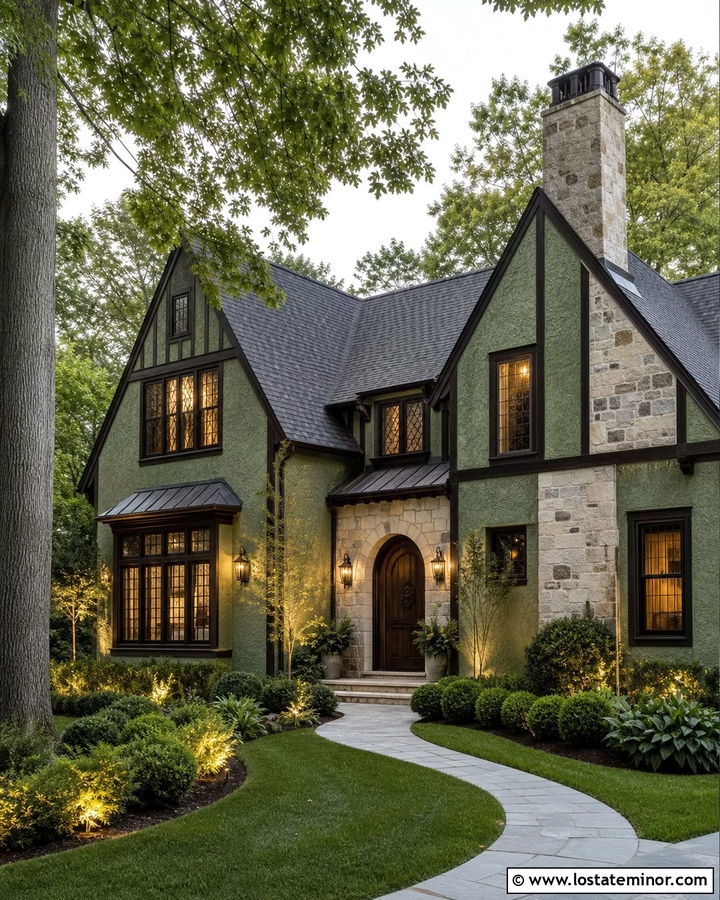
The rich surface details of a Tudor home allow moss green to look deep and sophisticated. Use the color on stucco panels or shingle sections while keeping exposed timber trim in dark espresso brown. Cream masonry, a steep charcoal roof, and an arched stained-wood door complete the old-world palette. Select blackened-bronze lanterns with leaded or seeded glass to complement the architecture. One statement pendant can hang inside the recessed entry, while smaller wall lanterns illuminate secondary doors. Ground-mounted uplights aimed carefully at the chimney and front gable help reveal texture after sunset. Avoid placing fixtures where they wash out the timber pattern. Curved stone paths, clipped hedges, and layered woodland plants give the house a settled appearance and connect the moss green surfaces to their surroundings.
9. Moss Green Split-Level With Linear Sconces
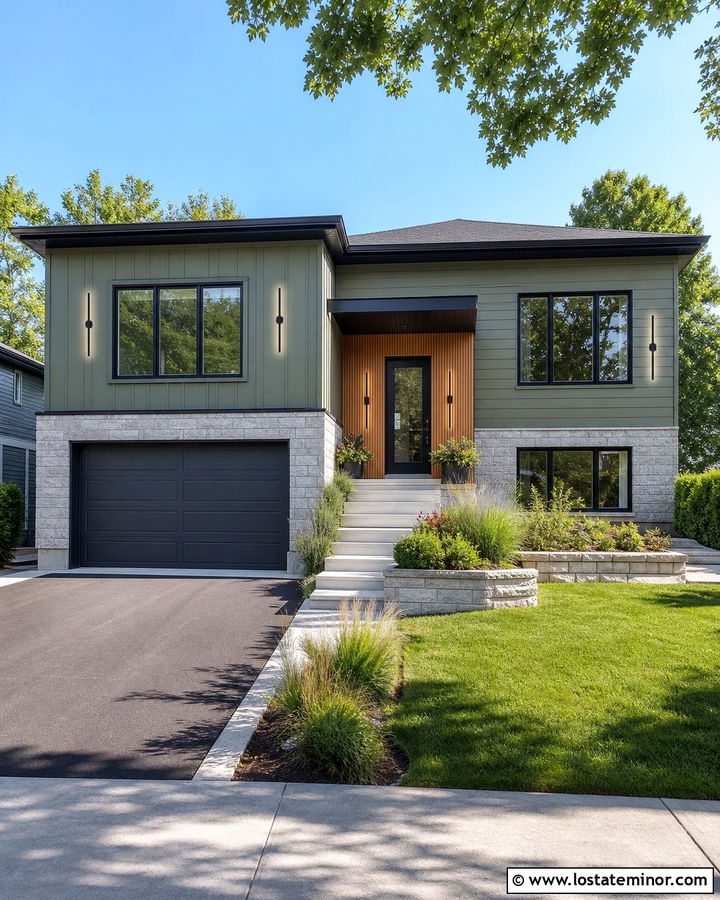
A split-level house often benefits from exterior details that visually organize its different elevations. Paint the primary siding moss green, then use charcoal gray on the garage door and lower-level masonry. Warm white trim around the windows keeps the facade from becoming too dark. Slim black linear sconces can be installed beside the front door and between garage bays, creating a consistent vertical rhythm. A flat black canopy above the entrance gives the modest doorway more presence. Add recessed lights beneath the canopy and low step lights along the raised walkway. Horizontal cedar slats near the entry introduce warmth and help connect the upper and lower portions of the house. Simple lawn edges and structured planting beds complete this clean, practical update without requiring major architectural changes.
10. Moss Green Midcentury House With Cylinder Lights
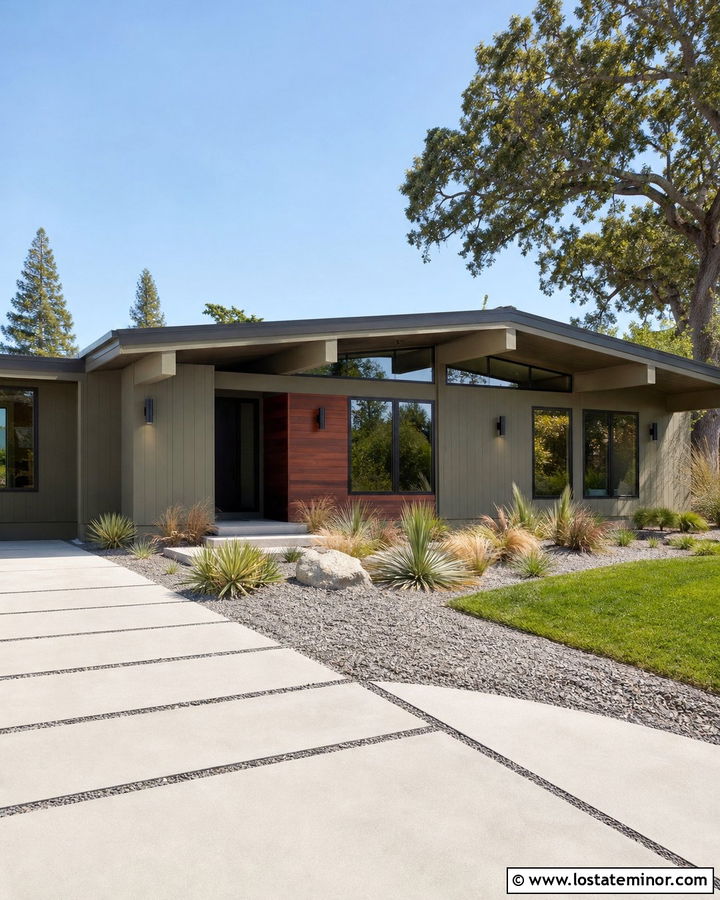
Picture a moss green midcentury home surrounded by sculptural plants and broad concrete pavers. The muted exterior color makes a strong background for natural redwood siding around the entrance. Paint the fascia and exposed beams deep charcoal, then preserve large windows with narrow black frames. Matte black cylinder sconces can direct light both upward and downward, emphasizing the home’s clean geometry. Place them on solid wall sections rather than between crowded window groupings. Recessed soffit lights provide additional coverage beneath deep eaves, while small landscape spotlights highlight ornamental trees. A low-slope gray roof and matching charcoal garage door keep the composition visually quiet. Gravel beds, yucca, grasses, and low shrubs support the architecture without blocking the lighting or distinctive horizontal lines.
11. Moss Green Victorian House With Hanging Lanterns
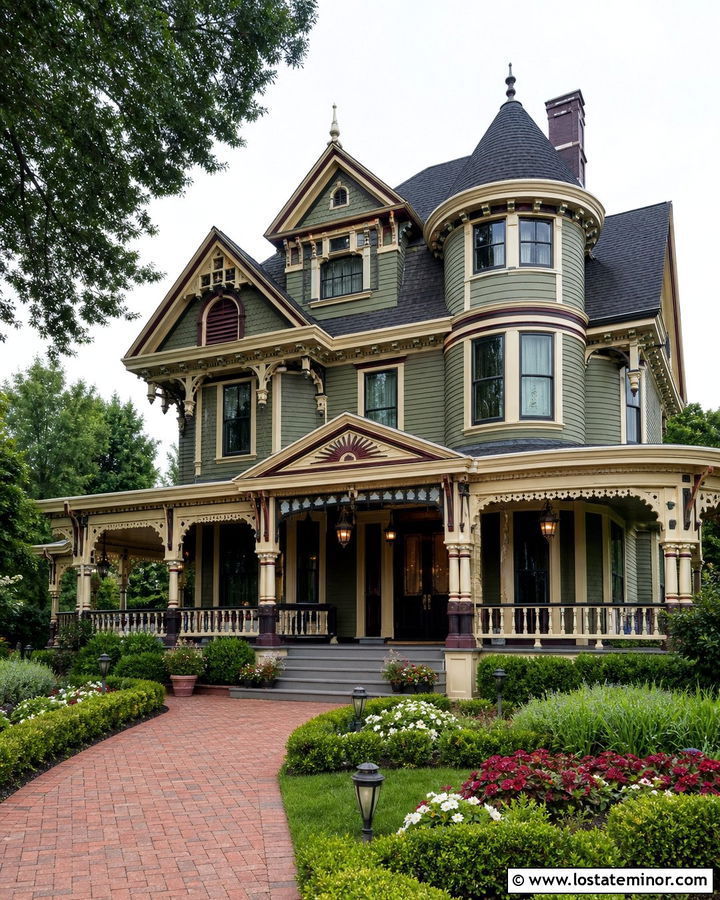
Moss green can simplify an ornate Victorian facade while preserving its historic personality. Use the green as the primary body color, creamy white on decorative trim, and muted burgundy for small accents on brackets or window sashes. A dark charcoal roof grounds the detailed upper stories. Choose traditional black hanging lanterns for the porch and coordinating wall fixtures beside the door. Several modestly sized fixtures usually look more balanced than one oversized pendant on a long veranda. Decorative post lights can mark the walkway entrance if they repeat the same black finish. Keep bulbs consistent across every fixture so the porch appears unified. A brick path, layered flower beds, and a painted porch floor in warm gray complete a colorful but controlled exterior with inviting curb appeal.
12. Moss Green Cabin With Rustic Downlights
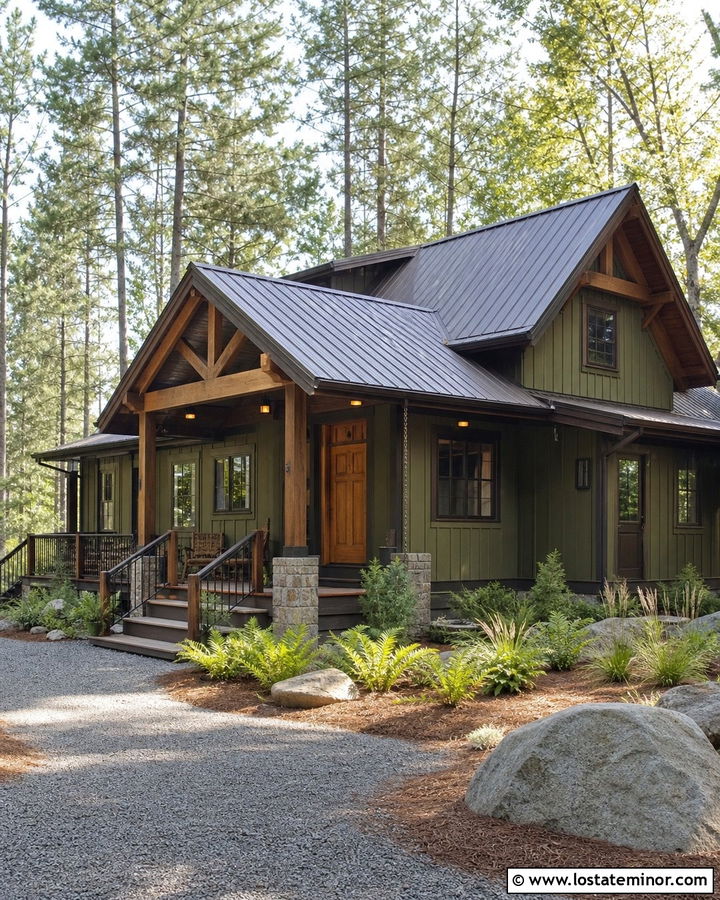
A woodland cabin should feel connected to its setting without disappearing into the trees. Moss green board siding creates that connection, while dark brown trim and a natural stone foundation supply depth. Use cedar beams, a solid wood front door, and a brown metal roof to build a warm material palette. Rustic shielded downlights mounted beneath the eaves can illuminate the walls without producing excessive glare. Black metal sconces with simple hoods work well beside the entry and utility doors. Add small recessed lights beneath a covered porch and low fixtures along the gravel path. Keep illumination close to active areas rather than flooding the entire property. Ferns, native grasses, boulders, and pine mulch reinforce the forest character while leaving clear views of the complete moss green facade.
13. Moss Green Contemporary House With LED Wall Washers
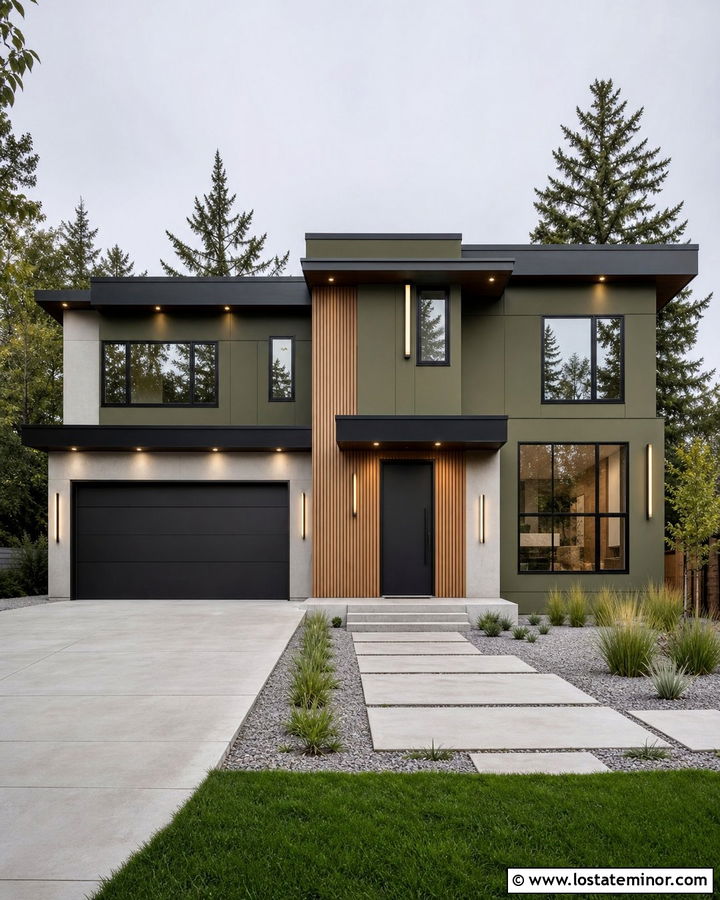
For a sharper interpretation of moss green, use it on smooth fiber-cement panels across a contemporary two-story exterior. Combine the green with light concrete, black-framed windows, and vertical cedar siding around the recessed entrance. Narrow LED wall washers can highlight tall sections of the facade and emphasize the clean panel layout. Install concealed strip lighting beneath floating roof edges or entry canopies for a refined architectural effect. A minimalist black pivot door and flat-panel garage door keep the design cohesive. Use lighting sparingly so every illuminated line has a clear purpose. Large rectangular pavers, ornamental grasses, and gravel beds support the geometry of the house. The finished scheme proves that earthy moss green can feel streamlined and urban when paired with precise materials and restrained lighting.
14. Moss Green Brick House With Bronze Coach Lights
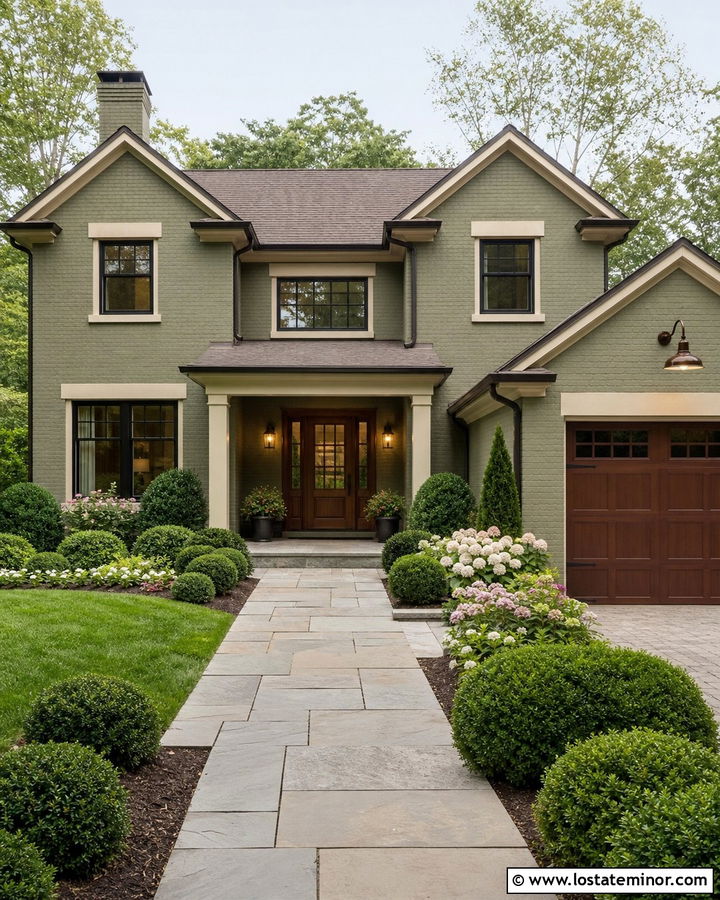
Painting brick moss green can unify a facade with mismatched masonry or previous repairs. Maintain the brick texture by using an appropriate coating system, then add warm cream trim around the windows and roofline. A stained mahogany front door and dark bronze gutters enrich the earthy color combination. Large bronze coach lights should be scaled to the height and width of the entrance rather than chosen as small decorative accents. Place a coordinating pendant under the porch and matching lights beside the garage. A medium brown roof ties the metal and wood finishes together. Keep landscaping formal but not rigid, using boxwood, flowering shrubs, and a broad stone walkway. The completed exterior feels substantial and welcoming, with lighting that complements the brick instead of visually competing with its texture.
15. Moss Green Stone House With Recessed Porch Lights
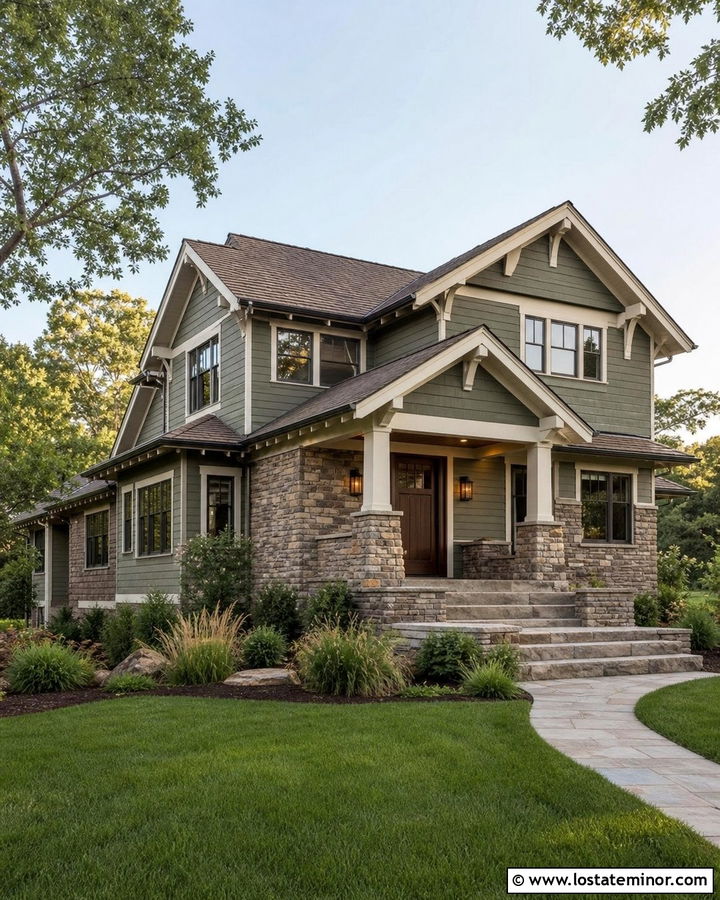
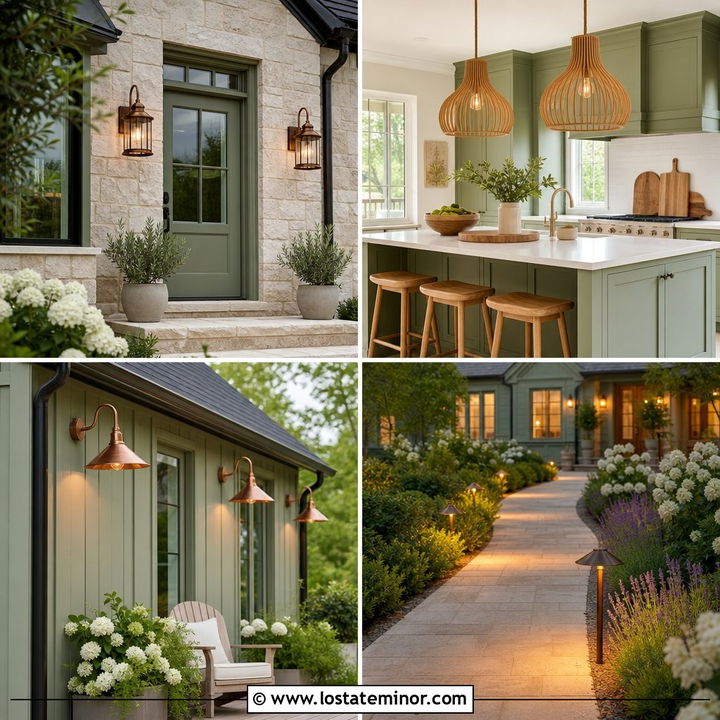
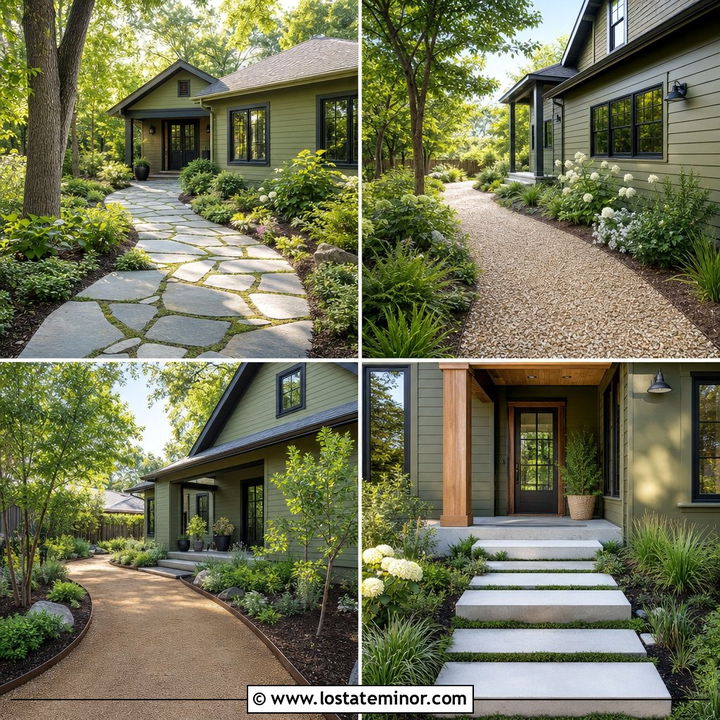
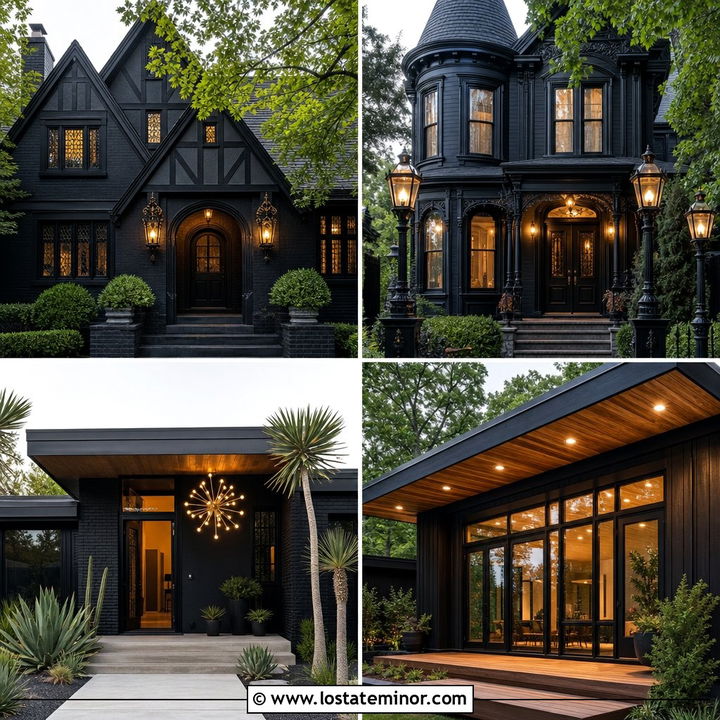
When a house already has prominent stonework, moss green should support rather than conceal it. Apply the color to upper-level siding and gables, then choose a warm off-white for trim. Gray and tan stone can remain the dominant material around the lower walls, chimney, and porch columns. Recessed porch lights keep the ceiling uncluttered and allow the masonry to attract attention. Add compact dark-bronze sconces beside the front door for an extra decorative layer. Ground-mounted fixtures can graze the stone surfaces, revealing their uneven texture without creating harsh bright spots. Use a walnut door, weathered brown roof, and bronze gutters to connect the materials. Broad stone steps, native plants, and low path lighting complete an exterior that feels naturally integrated and carefully planned.
16. Moss Green House With Cedar Garage Doors
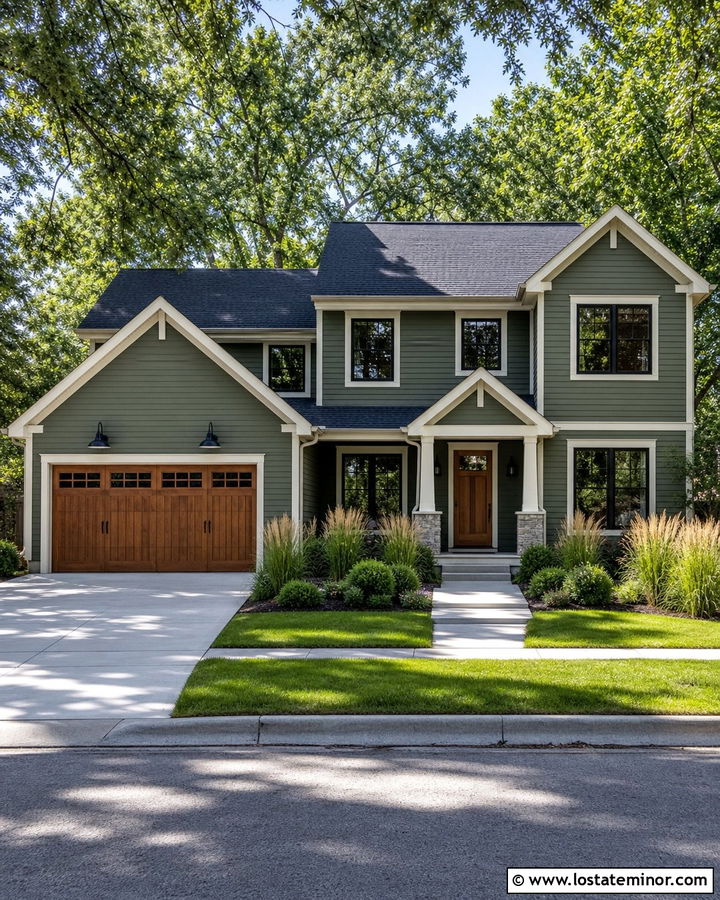
Warm cedar garage doors can transform a moss green exterior, especially when the garage occupies much of the front facade. Use moss green siding with understated cream trim and a charcoal roof. Select garage doors with simple horizontal cedar boards rather than overly decorative panels. Black gooseneck lights mounted above each door provide clear visual rhythm and direct illumination onto the driveway. Repeat the cedar on the front door or porch ceiling so the garage does not feel like an isolated feature. Black-framed windows and matching gutters strengthen the contemporary color scheme. Keep driveway borders clean, adding grasses and low shrubs instead of tall plants that hide the wood. The resulting design feels balanced because the lighting, green siding, and cedar accents repeat across the entire house.
17. Moss Green House With Red Brick Accents
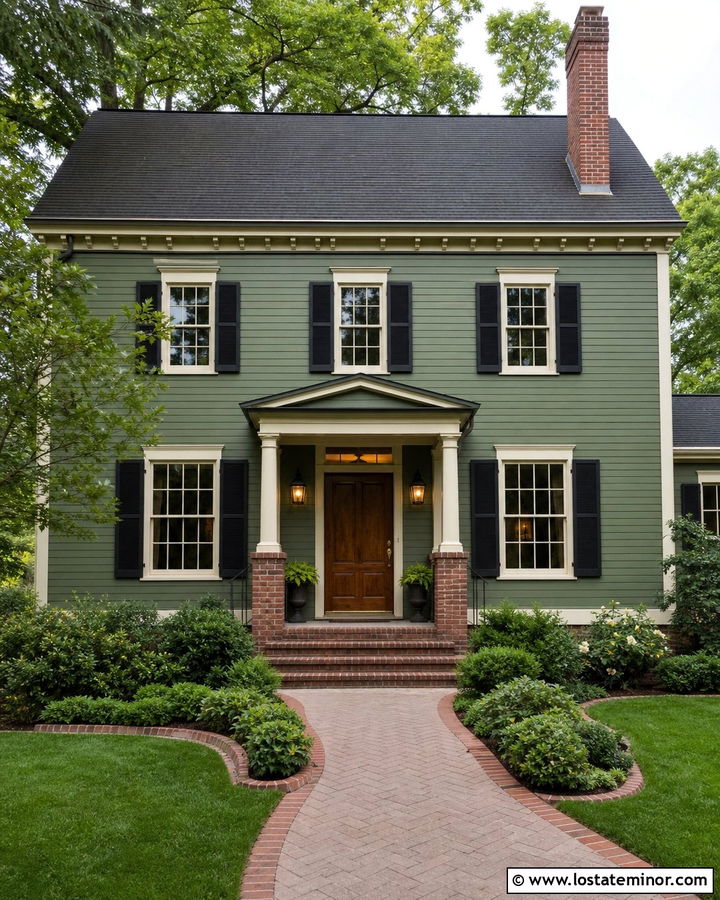
Existing red brick can look surprisingly natural beside moss green siding. Choose a muted moss tone with brown undertones, then use warm ivory for the trim instead of stark white. Preserve brick around the foundation, chimney, or porch columns to bring warmth and history to the exterior. Dark bronze lanterns connect visually with the brick’s deeper tones. Install a pair beside the wooden front door and another set at the garage. A brown-black roof helps bridge the green siding and red masonry. Avoid adding too many unrelated accent colors; black shutters or a dark wood door are enough. Curved brick edging, foundation shrubs, and soft landscape lighting create continuity from the house to the yard. This scheme feels layered and established rather than overly matched.
18. Moss Green House With Black Window Frames
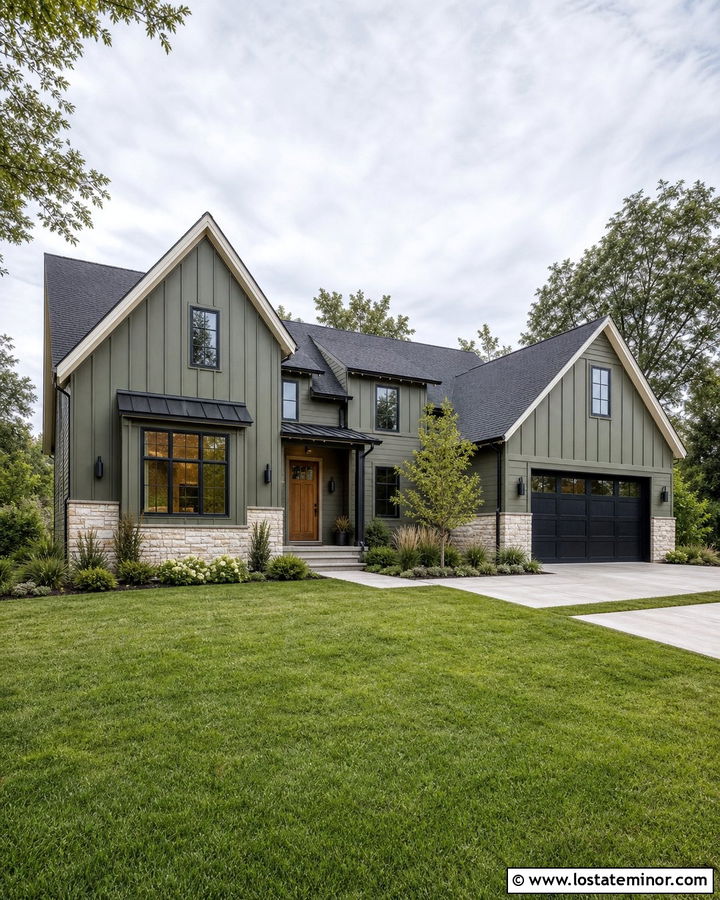
Black windows create a strong graphic outline against moss green siding. This combination works especially well on a transitional home with simple gables, mixed siding, and a covered entry. Keep the roof charcoal and use a restrained warm white only on narrow fascia boards. A natural oak front door prevents the dark outlines from feeling cold. Choose rectangular black sconces that repeat the proportions of the windows, placing them beside the entry and garage. Recessed soffit lights can provide broader illumination without adding more visible fixtures. If the home has stone accents, use a pale limestone or light gray ledgestone to brighten the lower facade. Straight concrete paths and neatly layered plants complete a crisp exterior in which every black detail appears intentional against the muted green body color.
19. Moss Green House With Cream Trim
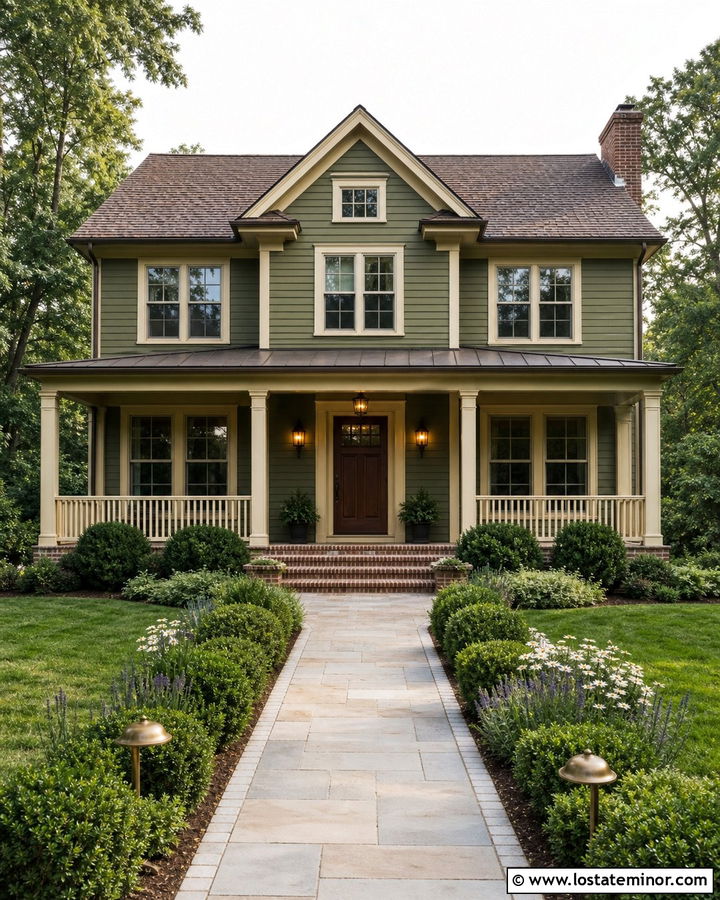
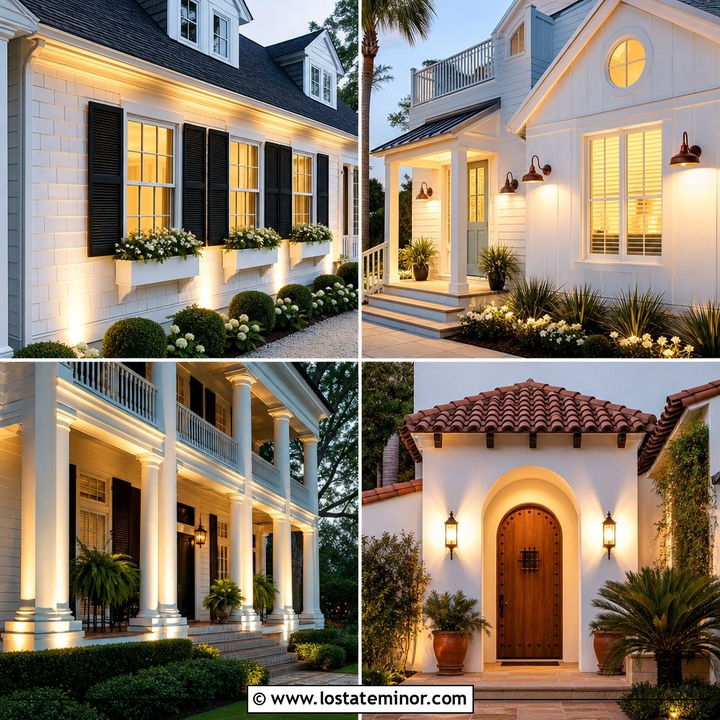
Cream trim produces a softer contrast than pure white and brings warmth to moss green siding. It is particularly effective on a traditional two-story house with divided-light windows, modest roof overhangs, and a centered entrance. Continue the cream color across the fascia, window casings, porch columns, and garage surrounds. Use a dark walnut front door and brown architectural shingles to anchor the light accents. Antique-brass lanterns provide a natural bridge between cream paint and brown materials. Place matching fixtures at the door, garage, and side entry to maintain consistency. Small path lights with aged-brass caps can carry the finish into the landscape. Brick steps, rounded shrubs, and flowering perennials create a friendly setting that makes the complete moss green scheme feel comfortable rather than formal.
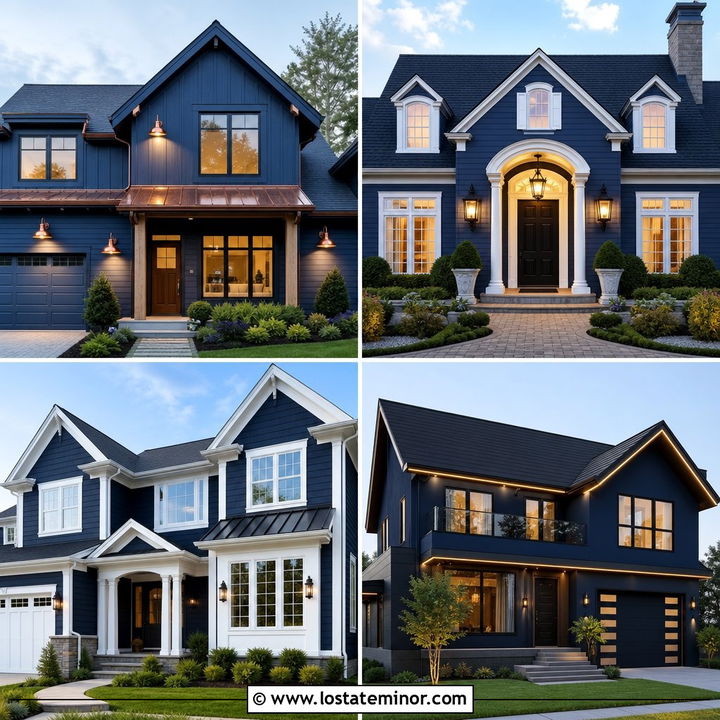
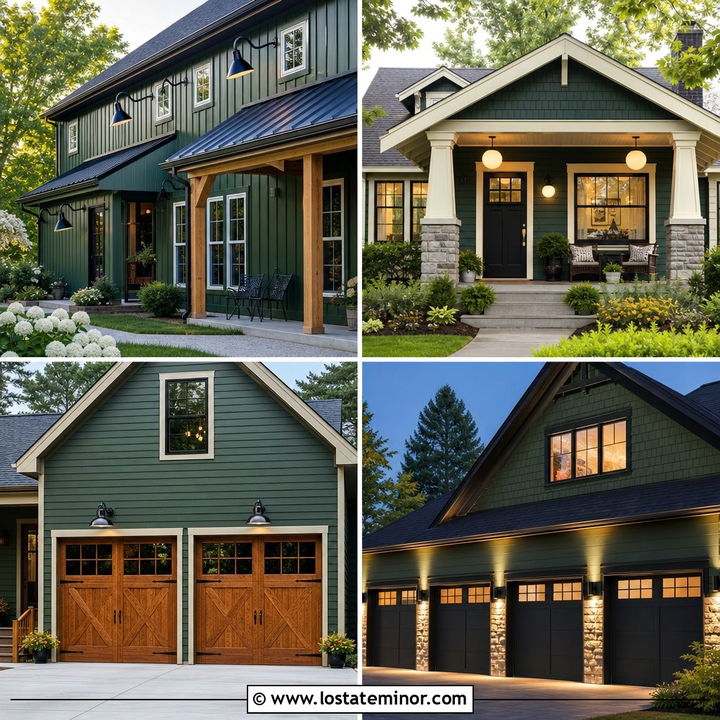
20. Moss Green House With Charcoal Trim
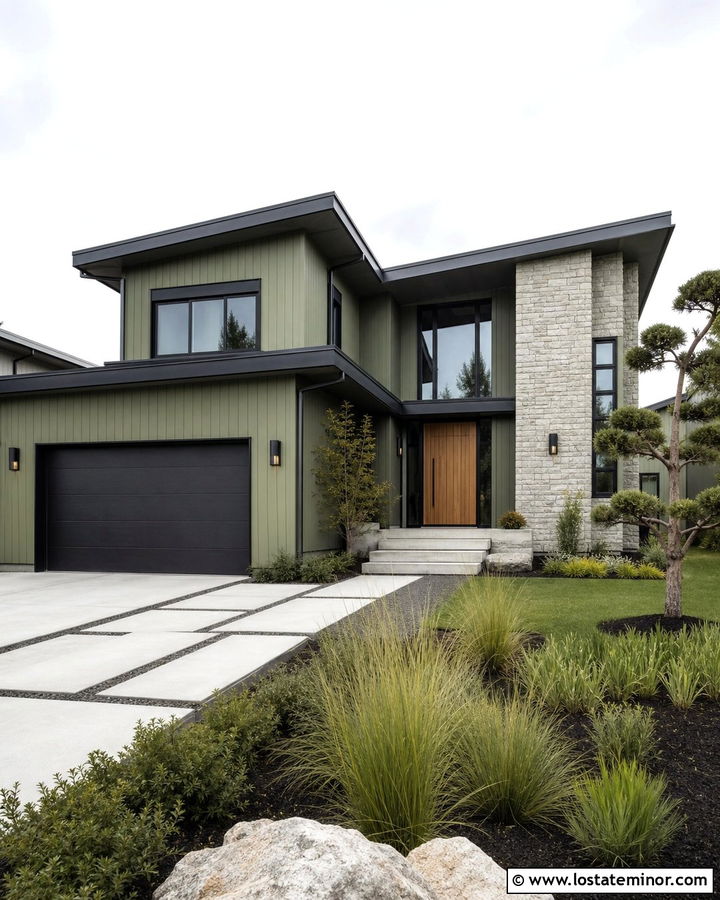
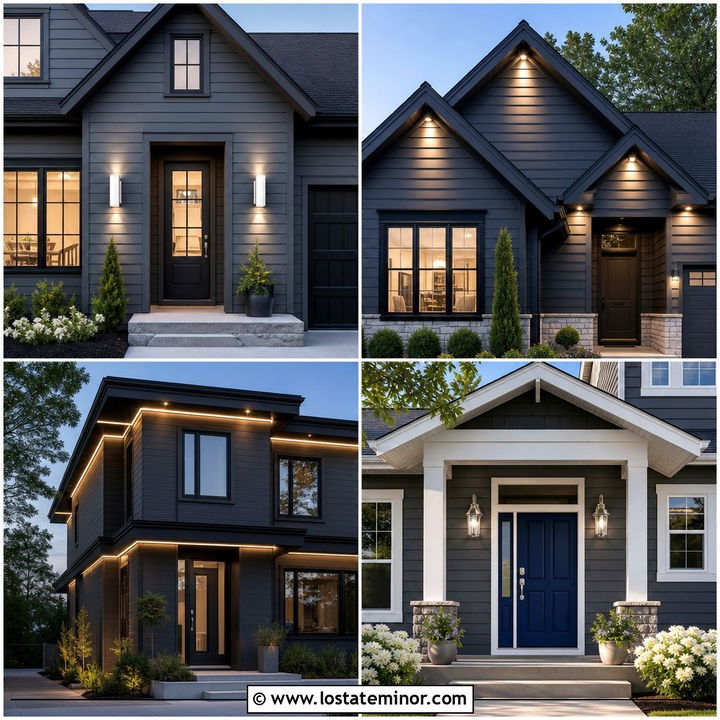
A darker trim strategy gives moss green a dramatic, modern edge. Paint window casings, fascia, gutters, and the garage door charcoal gray, creating a low-contrast transition that allows the architecture to feel unified. A vertical-grain cedar front door becomes the warm focal point. Choose charcoal cylinder sconces with subtle upward and downward beams to highlight the entrance walls. Similar fixtures can be placed between garage doors or along a covered side passage. Use pale concrete steps and light gray stone accents to prevent the overall exterior from becoming visually heavy. Strategic landscape uplights can brighten small trees and textured grasses near the facade. This complete scheme looks especially effective on angular homes with asymmetrical rooflines, large windows, and a simple planting plan.
21. Moss Green House With White Porch Columns
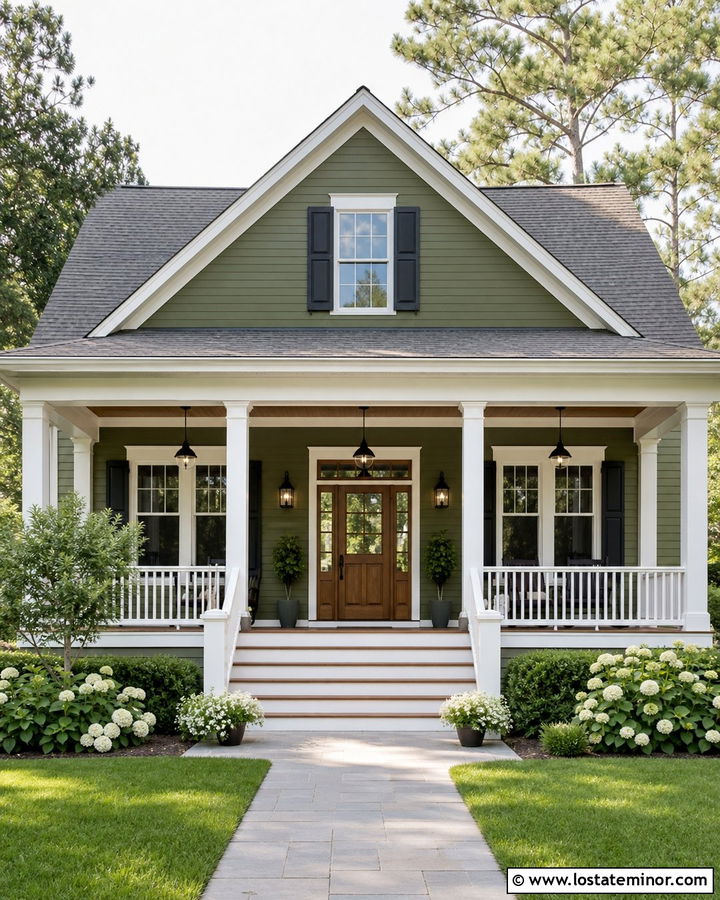
White porch columns provide a clean frame for moss green siding and make a broad front porch feel open. Use the green across the main body, with warm white on the columns, railings, window trim, and ceiling. A medium-gray roof and natural wood porch floor keep the palette practical. Black lantern sconces beside the front door add definition, while evenly spaced black pendants can organize a long porch. Center each pendant within a seating or doorway zone rather than placing fixtures at random intervals. Recessed step lights improve visibility without interrupting the white railings. Add a stained wood door and black shutters for balanced contrast. Hydrangeas, low hedges, and a wide walkway create a classic curb-appeal setting that feels welcoming during the day and well organized after sunset.
22. Moss Green House With Stone Porch Columns
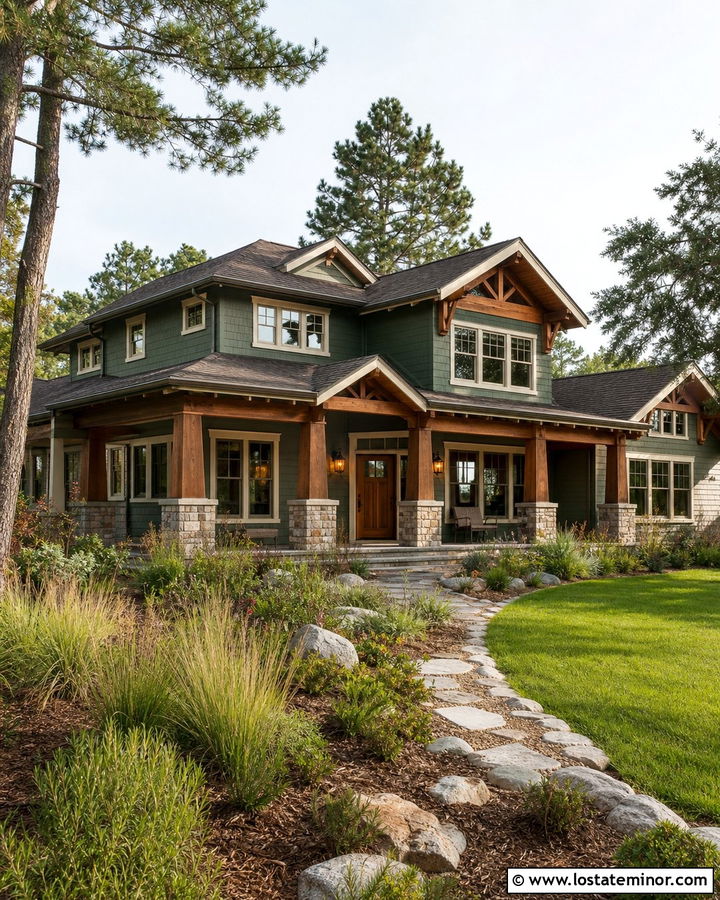
Solid stone porch columns give a moss green exterior an immediate sense of weight and craftsmanship. Choose mixed gray-brown stone for the bases and use stained timber posts above them. Warm cream trim can outline the windows and roof while remaining softer than bright white. Bronze lantern sconces installed on the columns or beside the entry reinforce the natural color palette. Add a matching pendant above the central porch landing and recessed lights near steps. The fixtures should illuminate the stone texture without overpowering it. A dark brown roof, cedar door, and wood porch ceiling complete the layered design. Continue the material story into the yard with a stone-edged walkway, natural mulch, and informal native planting. The result suits Craftsman, lodge, and rustic transitional homes equally well.
23. Moss Green House With Copper Gutters
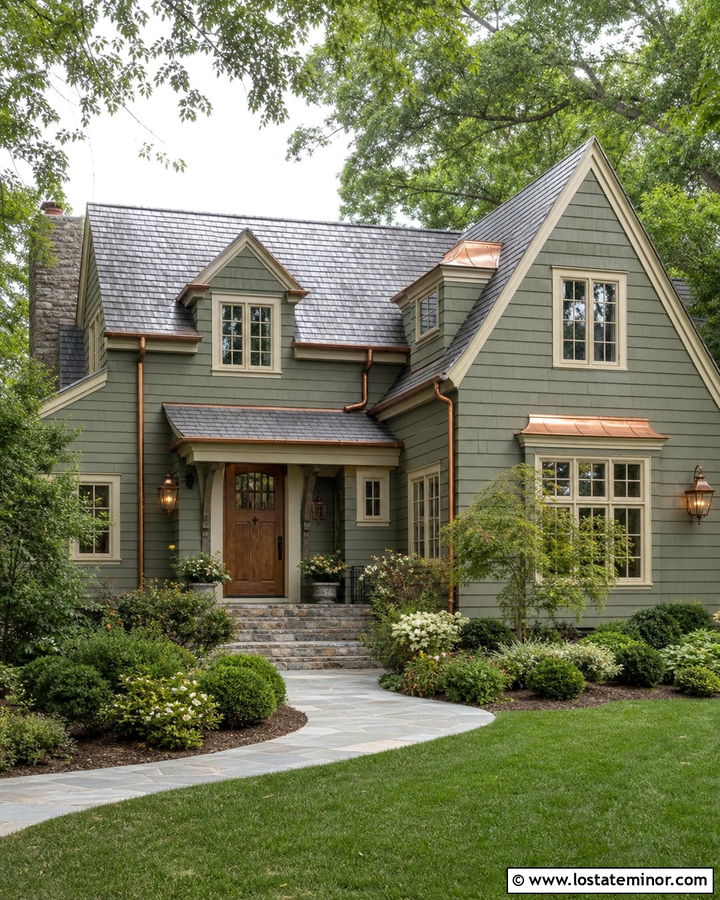
Fresh copper gutters create a striking line against moss green siding, and their changing finish can add character over time. Keep the trim creamy white or pale beige so the copper and green remain the most noticeable elements. A slate-gray roof provides a quiet neutral background. Repeat the copper finish through lantern-style sconces, porch pendants, and small roof details. Natural wood at the front door adds another warm layer without distracting from the metalwork. Because copper is visually distinctive, avoid mixing it with shiny chrome or cool silver fixtures. Soft landscape uplights can emphasize the gutters, gables, and front tree canopy as one coordinated composition. Stone steps, clipped shrubs, and a curved walkway support this refined exterior, which works particularly well on cottages and traditional homes.
24. Moss Green House With Covered Porch Lighting
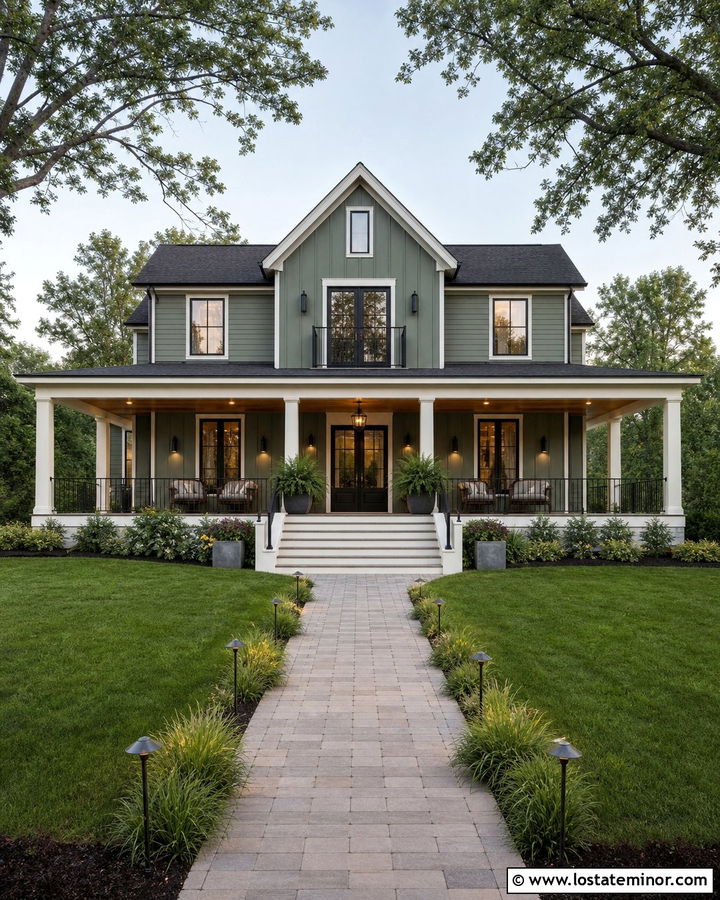
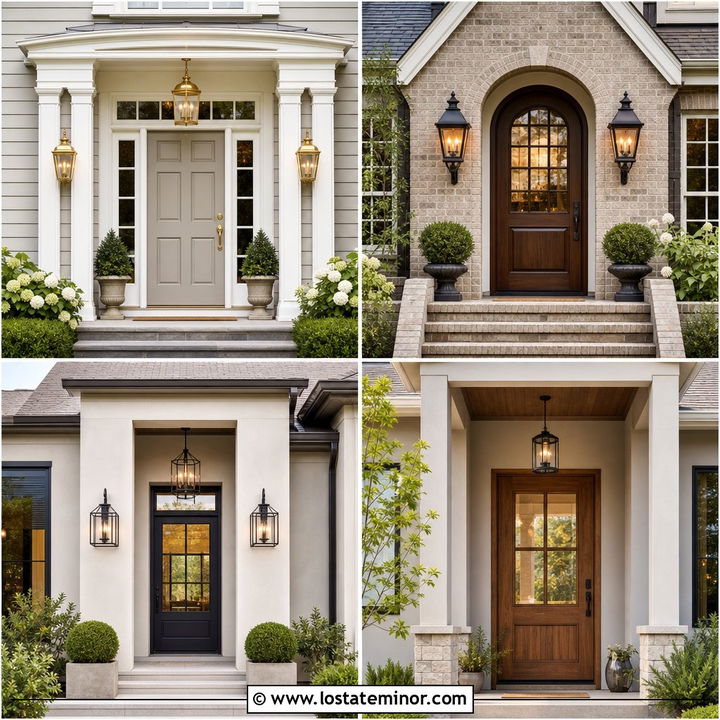
A deep covered porch needs more than one bright fixture near the door. Start with a moss green exterior, ivory trim, a stained plank ceiling, and warm gray porch flooring. Install a centered pendant above the main entry, then add recessed ceiling lights along the length of the porch for even coverage. Wall sconces beside the door provide decorative detail at eye level. If the porch includes seating, a damp-rated ceiling fan with an integrated light can improve comfort and visibility. Keep all metal finishes consistent, such as matte black or dark bronze. White columns and black railings create a clear frame around the green facade. Wide front steps, layered planters, and low path lights extend the welcoming effect from the porch to the sidewalk.
25. Moss Green House With Garage Lighting
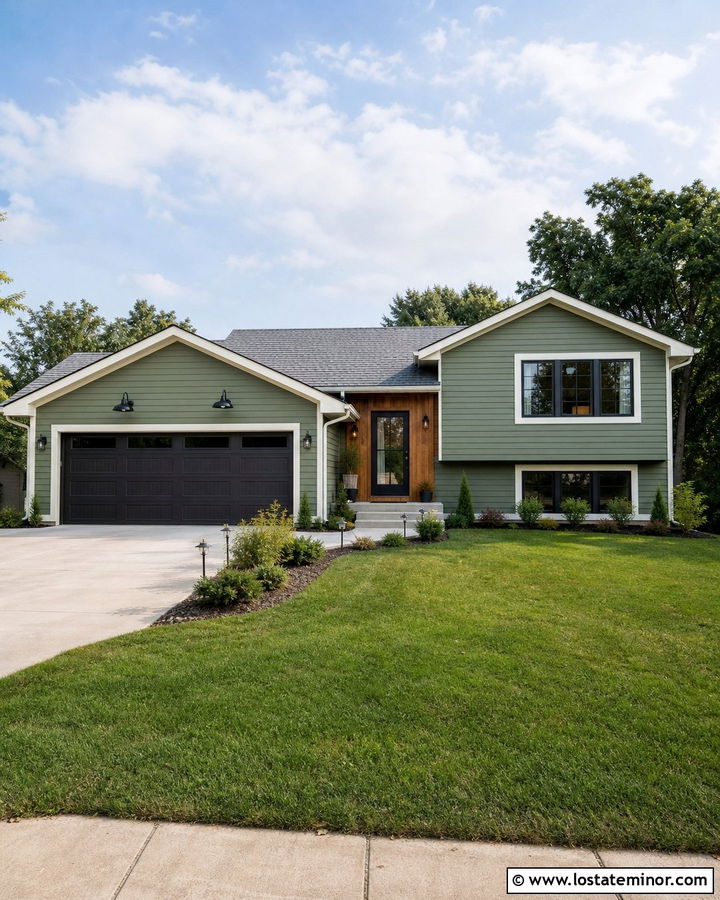
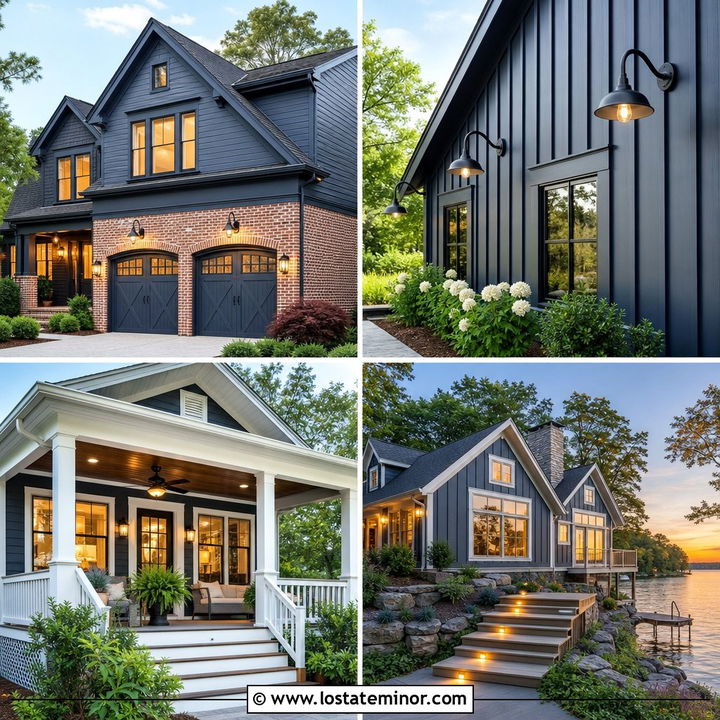
Garage lighting should support the complete facade instead of making the driveway look excessively bright. Paint the siding moss green and select warm white trim with charcoal garage doors. Place one downward-facing barn light above each garage bay, spacing the fixtures evenly across the wall. If there is limited clearance, use compact shielded sconces between the doors. Repeat the same finish beside the front entry so the garage and porch feel related. A cedar door or wood accent panel can soften the large expanse of painted surfaces. Add low lights along the driveway edge only where guidance is needed. Clean foundation planting, a medium-gray roof, and black window frames complete the composition. This approach works especially well on ranch, split-level, and modern farmhouse exteriors.
26. Moss Green House With Pathway Lighting
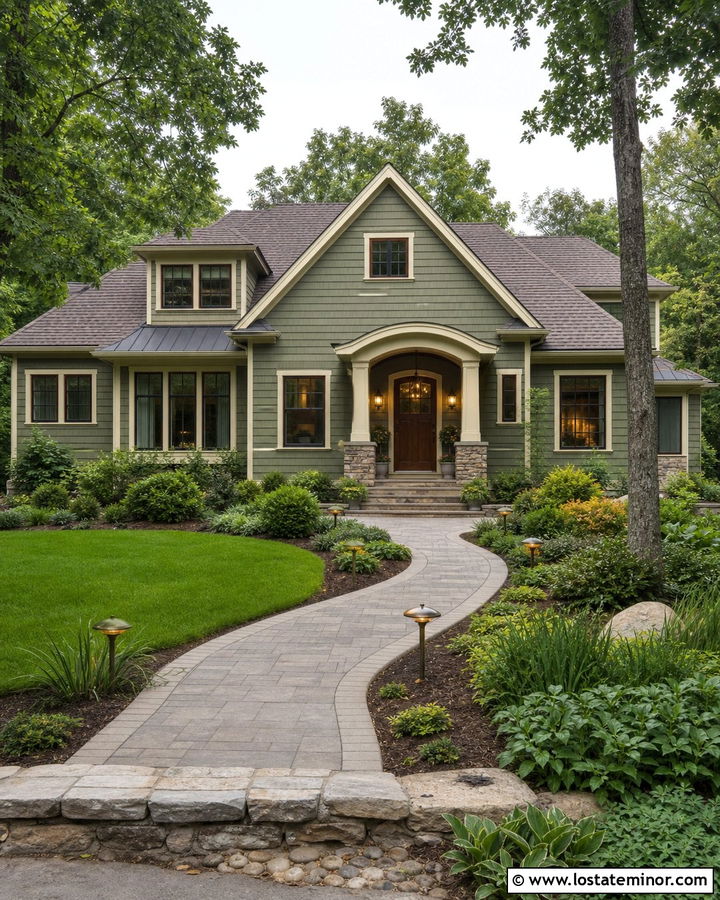
A beautiful moss green house can lose curb appeal if the approach feels dark or poorly defined. Build the exterior palette with moss green siding, cream trim, a walnut front door, and a gray-brown roof. Then create a gently curved walkway using stone or large concrete pavers. Install low, shielded path lights at alternating intervals rather than lining both sides like a runway. Bronze fixtures blend naturally with mulch and greenery during the day. Matching bronze sconces at the porch create a visual destination at the end of the path. Use small uplights for one or two specimen trees, but leave quieter areas of the yard unlit. Layered shrubs and ground cover soften the route while keeping the fixtures, steps, and complete house facade clearly visible.
27. Moss Green House With Landscape Uplighting
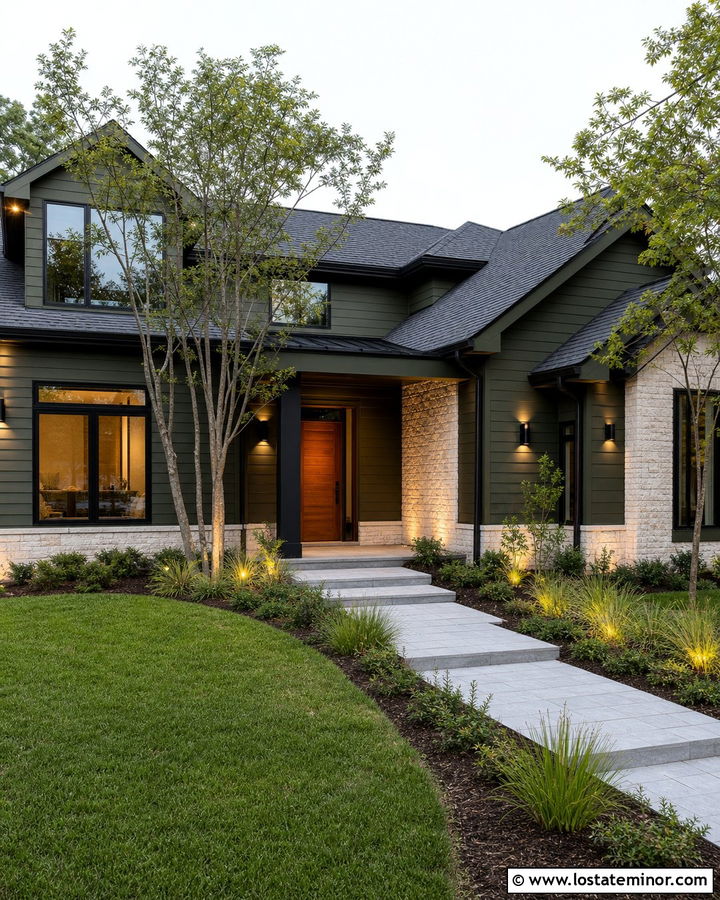
Thoughtful uplighting can reveal the texture of a moss green facade and its surrounding landscape. Use the color on lap siding with black window frames, a cedar front door, and light limestone accents. Position narrow-beam uplights near columns, gables, or mature trees instead of aiming broad floodlights across the entire house. This creates distinct layers and preserves visual depth. Black wall sconces at the entry provide functional illumination, while small recessed lights handle porch steps. Keep the fixtures concealed behind low plants whenever possible, but ensure foliage will not block the beams as it grows. A charcoal roof and dark gutters maintain the strong architectural outline. Ornamental grasses, multi-stem trees, and a pale paver walkway complete this modern, landscape-focused exterior scheme.
28. Moss Green House With Deck Step Lights
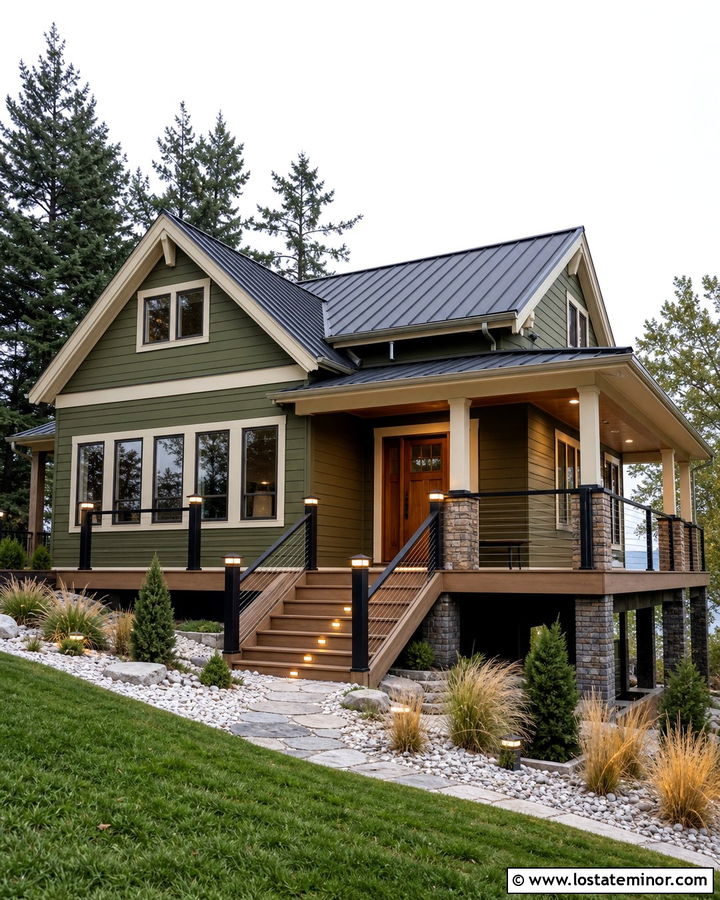
A raised front deck or side-entry deck can become an intentional part of a moss green exterior. Pair the green siding with a natural cedar deck, black cable railings, and cream window trim. Install small recessed lights in the stair risers to define each step without shining directly toward approaching guests. Low post-cap lights can mark deck corners, while black sconces beside the door provide broader coverage. Keep the deck stain close to the front door color for a unified appearance. A dark gray metal roof and black gutters tie the railing and fixtures into the facade. Surround the structure with ornamental grasses, low evergreens, and gravel drainage beds. This complete scheme works well for contemporary cabins, sloped-lot homes, and casual suburban properties.
29. Moss Green House With Pergola String Lights
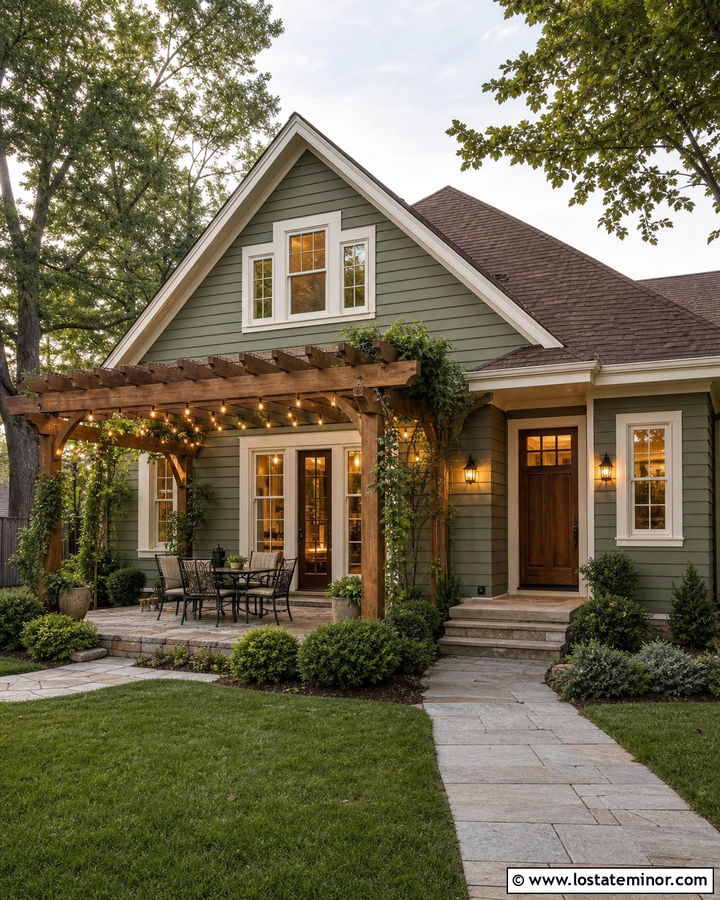
A front or side pergola can give a simple moss green house more architectural character. Paint the siding moss green, use creamy white trim, and build the pergola from cedar or another warm-toned wood. Outdoor-rated string lights can follow the structure’s beams in straight, carefully spaced rows. Avoid excessive loops that make the installation appear temporary. Add dark bronze sconces beside nearby doors and low lights around the patio edge to create a layered plan. A brown-gray roof, wood front door, and stone paver terrace complete the relaxed palette. Climbing vines can soften the pergola, but keep growth away from bulbs and electrical connections. The completed exterior feels social and welcoming while maintaining a neat curb-appeal view from the street.
30. Moss Green Modern House With Hidden Lighting
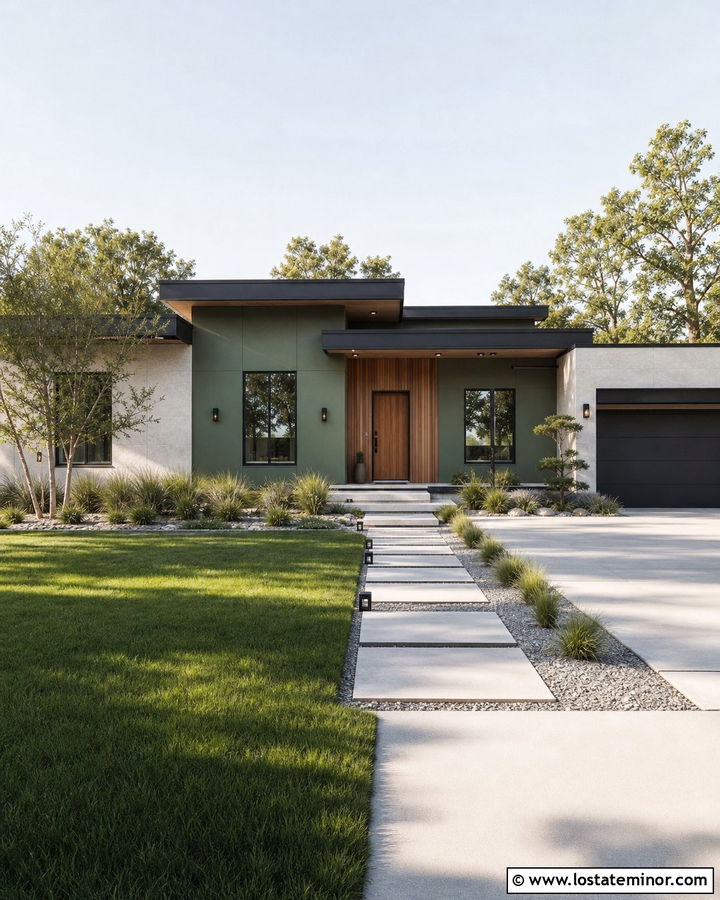
Hidden lighting supports a clean modern exterior because the illumination is visible while most fixtures remain out of sight. Use moss green fiber-cement panels with black windows, pale concrete walls, and vertical cedar near the entrance. Concealed LED strips can sit beneath a floating canopy, along a recessed porch ceiling, or under broad steps. Small black downlights may be added where stronger task lighting is required. Continue the streamlined look with a flush cedar door, flat charcoal roof, and simple garage panels. Avoid outlining every edge of the building; select only the roofline, entrance, or walkway as the main lighting feature. Rectangular pavers, gravel, clipped grasses, and sculptural trees keep the landscaping controlled. The full design feels sophisticated without losing moss green’s natural warmth.
Conclusion:
A successful moss green exterior combines the body color, architecture, materials, landscaping, and lighting as one complete composition. Cream trim creates softness, black details add definition, and cedar, brick, stone, or copper bring natural warmth. Lighting should guide visitors, improve visibility, and reveal important features without overpowering the house. Begin with the entrance, steps, and main walkway before adding decorative uplights or secondary fixtures. Keep finishes consistent and select sizes that suit the scale of the facade. Most importantly, test the moss green paint in different daylight conditions before making a final choice. With these 30 Moss Green House Design With Lighting Ideas, you can create a comfortable, distinctive home with lasting curb appeal.

Related posts: