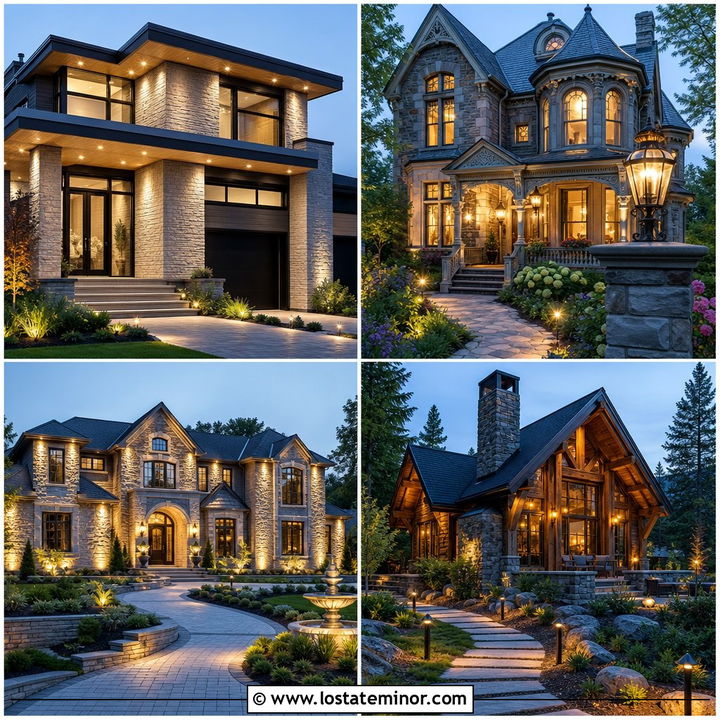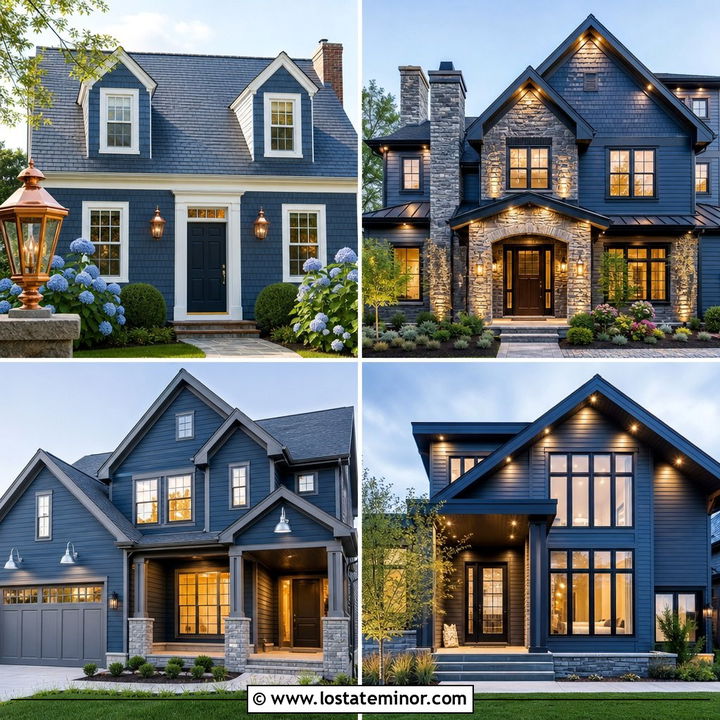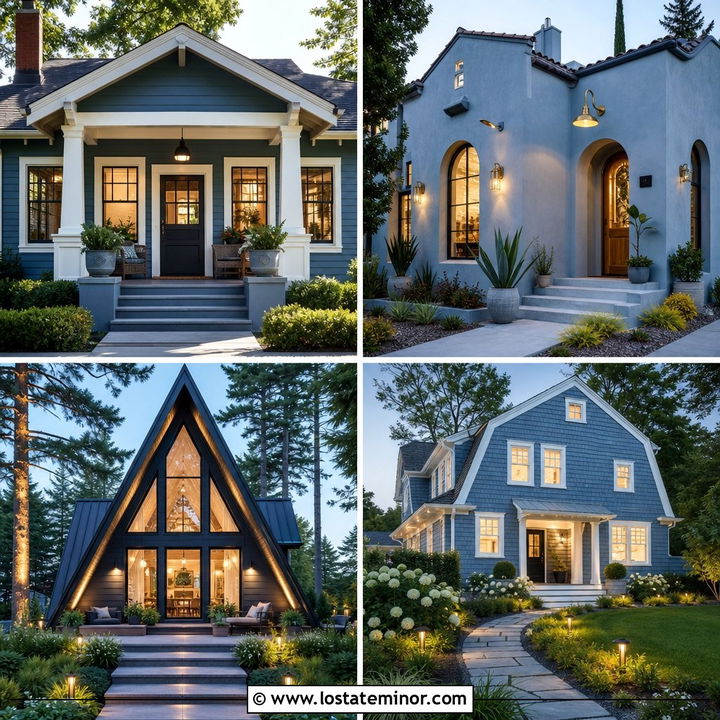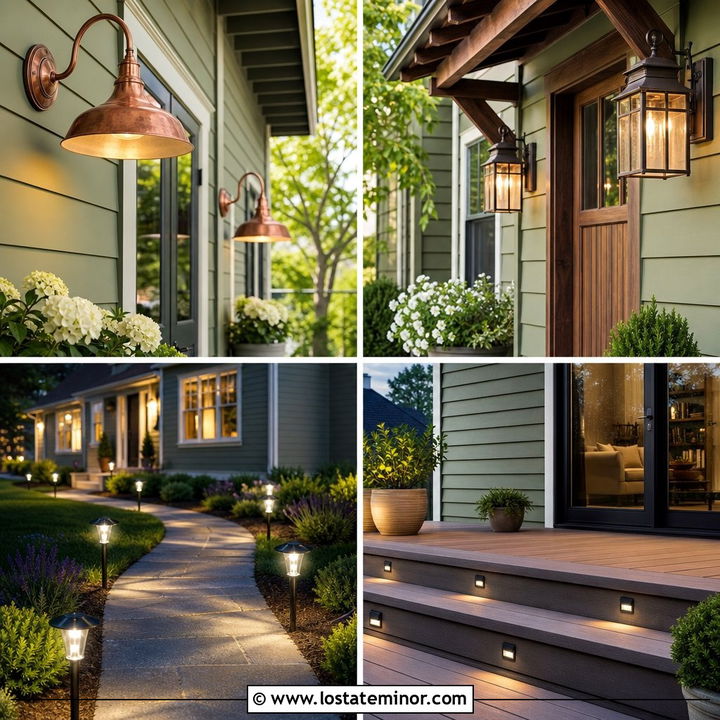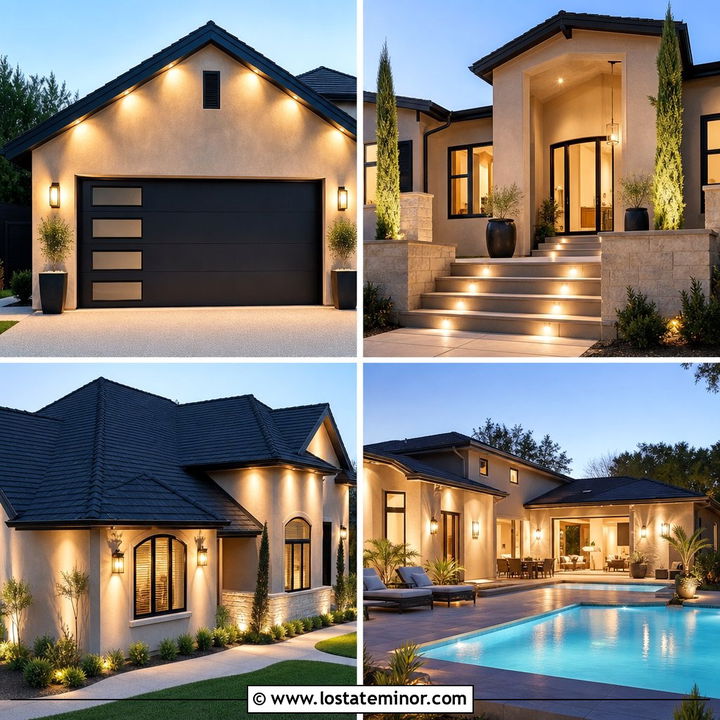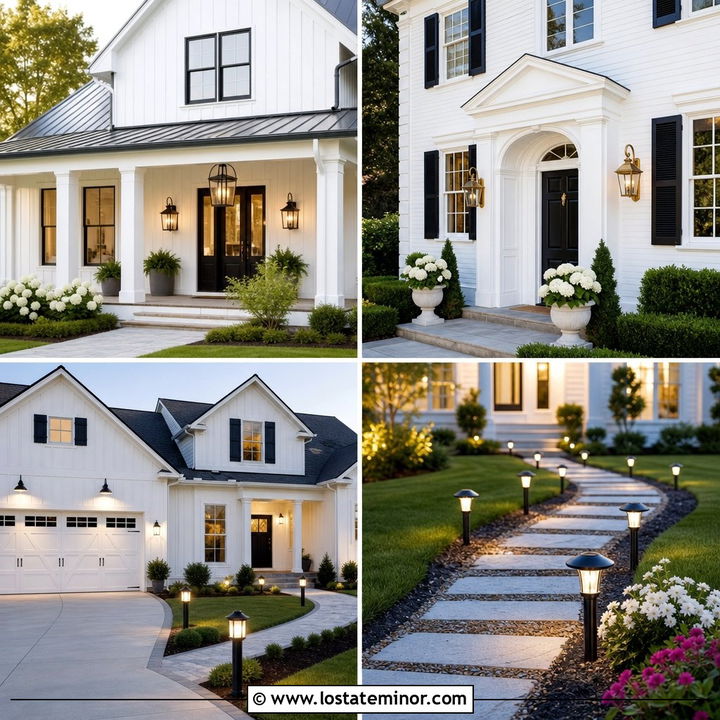
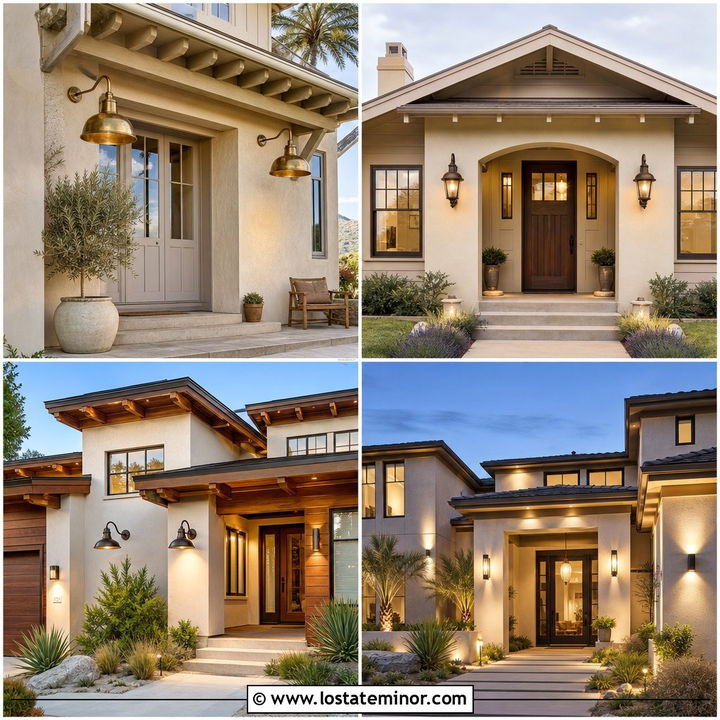
Taupe gives a home warmth, depth, and a polished neutral base without feeling as stark as white or as heavy as dark gray. The best exterior schemes treat paint and lighting as one complete design. Siding, trim, roofing, doors, masonry, and fixtures should share compatible undertones. Because taupe can look warmer, cooler, lighter, or grayer as daylight changes, test large samples beside permanent materials before painting. () After the color palette is settled, use lanterns, sconces, pendants, uplights, and path lights to emphasize the architecture rather than overwhelm it. The following 30 Taupe House Design With Lighting Ideas explore complete exterior looks for different homes, settings, and budgets.

1. Warm Taupe Craftsman With Bronze Lanterns
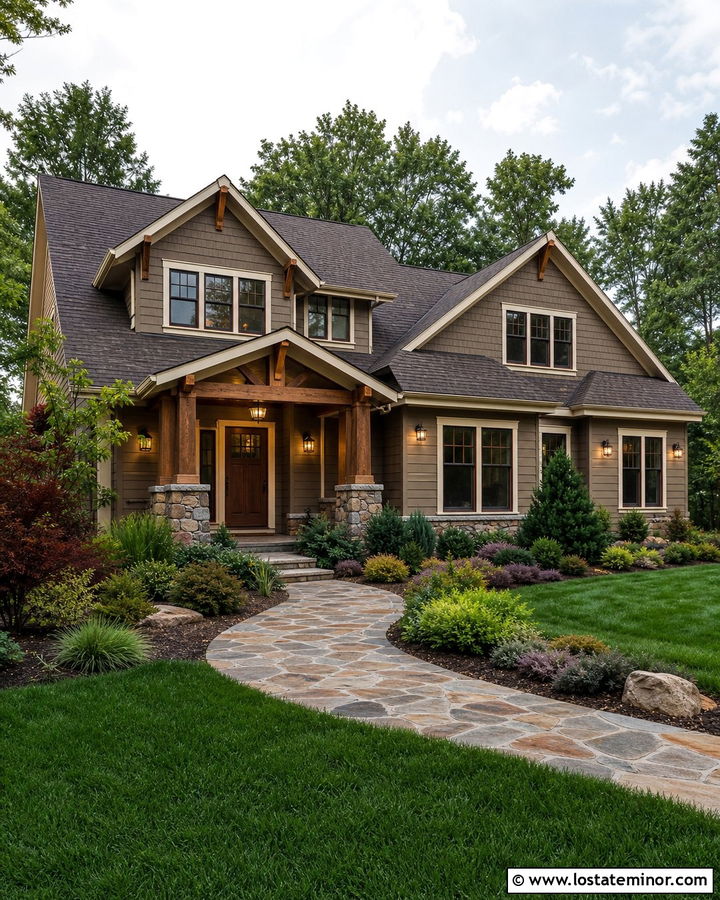
Warm taupe lap siding gives a Craftsman home an inviting, grounded appearance. Pair it with creamy white trim so the tapered columns, deep eaves, and divided-light windows remain clearly defined. A walnut-stained front door and matching porch beams introduce natural warmth, while a fieldstone foundation connects the house to the landscape. Install substantial oil-rubbed bronze lanterns beside the door and smaller coordinating sconces near the garage. The dark metal contrasts with taupe without looking overly sharp. Low-voltage path lights can continue that bronze finish along a curved stone walkway. Choose warm light that softly reveals the wood and masonry textures. A charcoal-brown roof completes this comfortable exterior scheme and prevents the palette from becoming too beige.
2. Light Taupe Colonial With Black Sconces
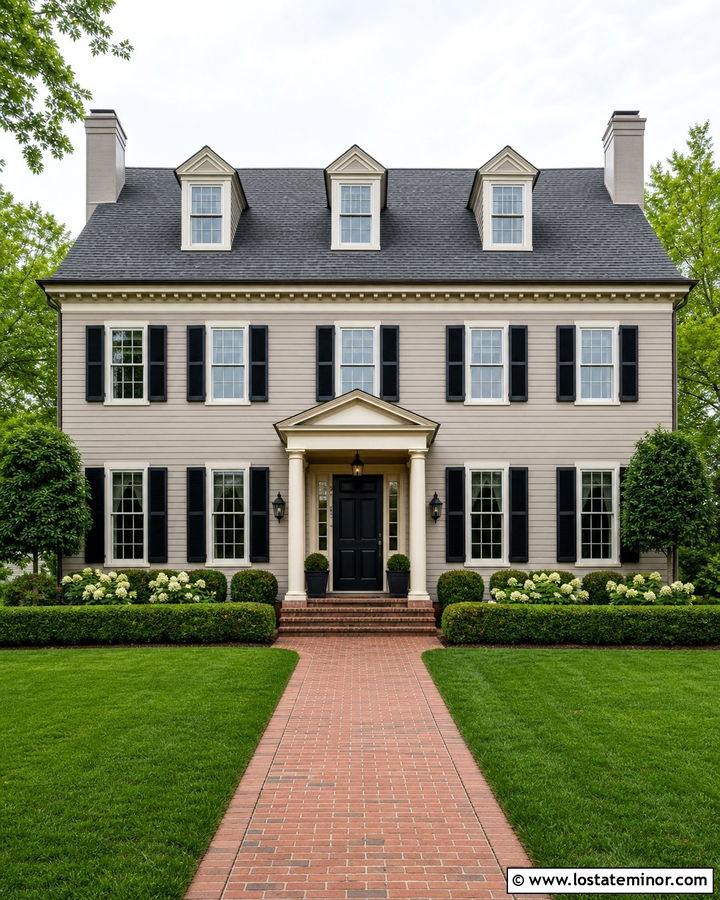
Does a traditional Colonial need a high-contrast black-and-white palette? Not necessarily. Light taupe siding creates a softer backdrop while preserving the home’s balanced, symmetrical character. Use clean off-white trim around the windows, cornices, and entry columns. Then add black shutters, a black paneled front door, and slim black wall sconces for definition. Lantern-style sconces should be tall enough to match the scale of the doorway without covering decorative trim. A dark gray architectural-shingle roof supports the black accents while remaining less severe than solid black. Finish the entrance with a straight brick walkway and clipped evergreen shrubs. Small path lights placed at generous intervals provide practical illumination without distracting from the strong symmetry of the complete facade.
3. Taupe Modern Farmhouse With Oversized Lanterns
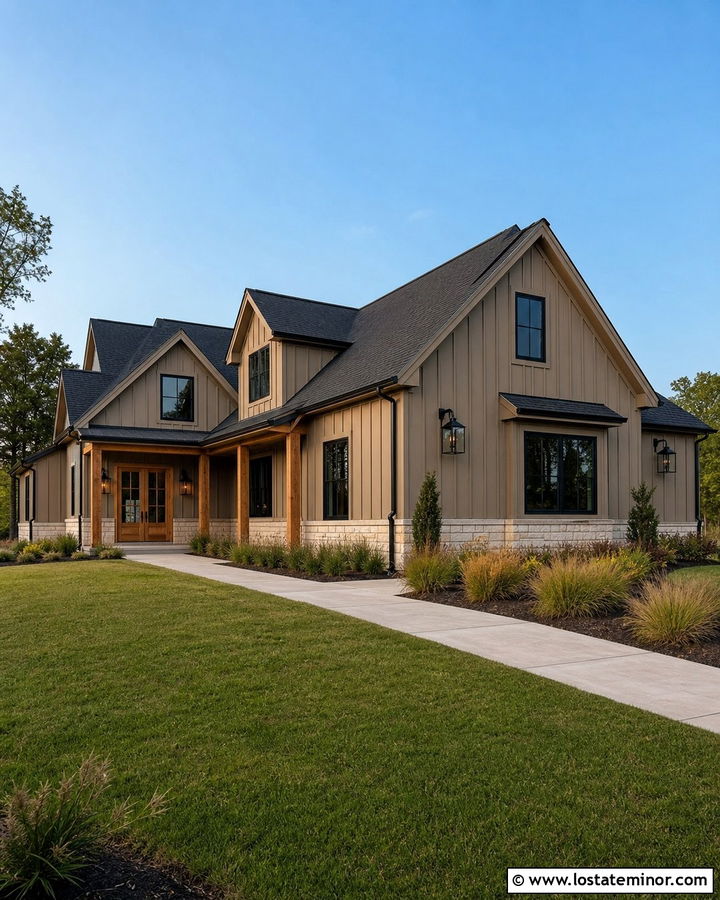
A modern farmhouse feels warmer when soft taupe board-and-batten replaces predictable white siding. Keep the window frames, gutters, and standing-seam porch roof matte black to establish crisp vertical and horizontal lines. Natural cedar columns and a medium-stained double front door prevent the neutral exterior from looking too industrial. Oversized black lanterns can flank the entrance, while matching fixtures frame the garage doors. Their simple rectangular shapes complement the clean architecture better than highly decorative lamps. Add recessed porch ceiling lights for even coverage beneath the deep roof. A pale limestone foundation, charcoal roof, wide concrete walkway, and loose ornamental grasses complete the design. The result is contemporary but welcoming, with every light fixture reinforcing the home’s strong architectural rhythm.
4. Cool Taupe Ranch With Modern Up And Down Lights
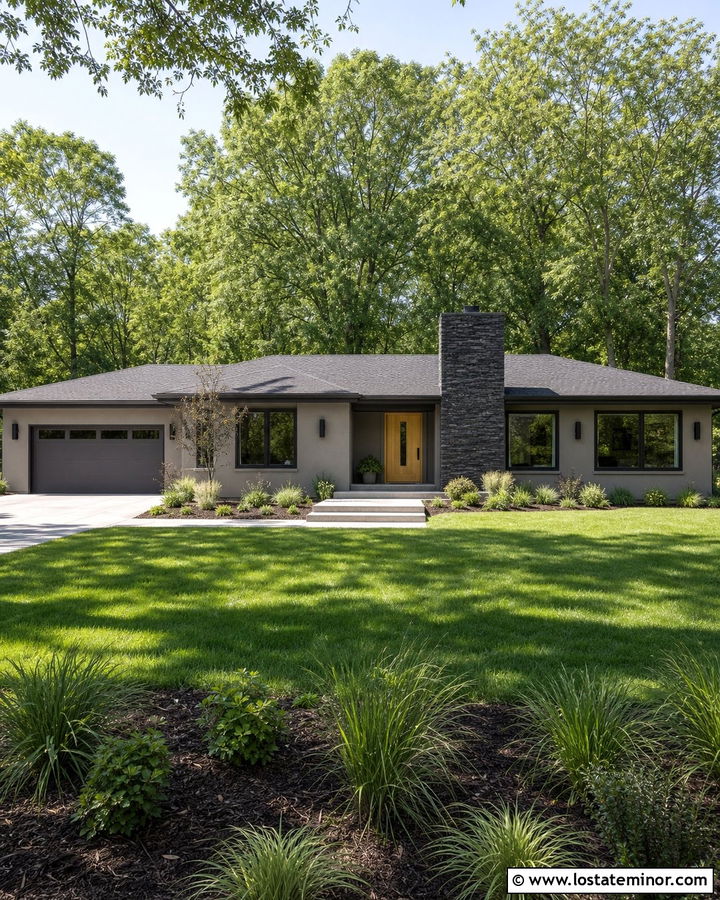
Cool taupe gives a long, low ranch house a fresh appearance without fighting its midcentury proportions. Paint the horizontal siding a gray-leaning taupe and use charcoal trim around broad windows and the garage. A natural oak front door adds needed warmth near the center of the facade. Install narrow black up-and-down sconces on the stone entry wall and between garage bays. These fixtures direct light vertically, making a single-story elevation feel taller after sunset. Under the eaves, discreet recessed lights can brighten the porch without creating visible clutter. Use dark gray stacked stone on the chimney and entry columns to repeat the roof color. Simple foundation grasses, low shrubs, and a wide stepping-stone walkway preserve the ranch home’s clean horizontal character.
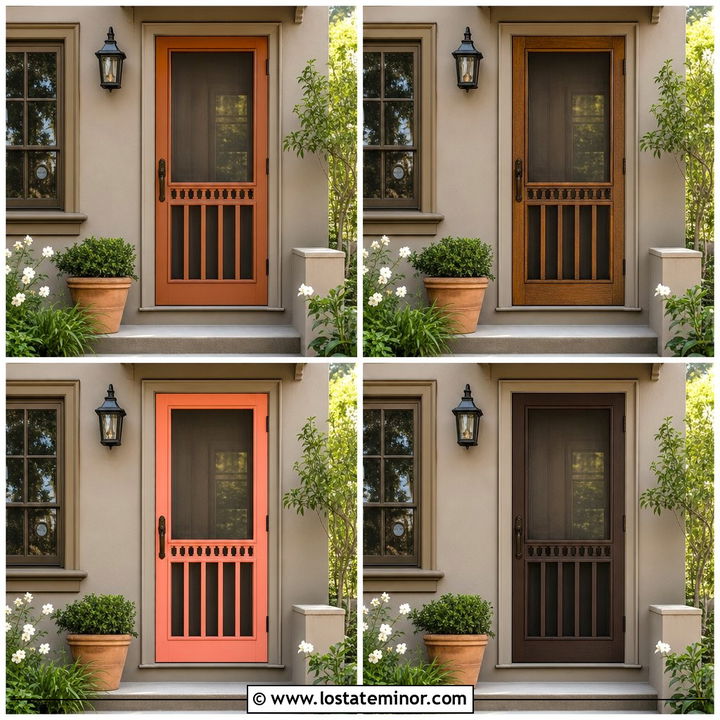
5. Taupe Cape Cod With Brass Porch Lights
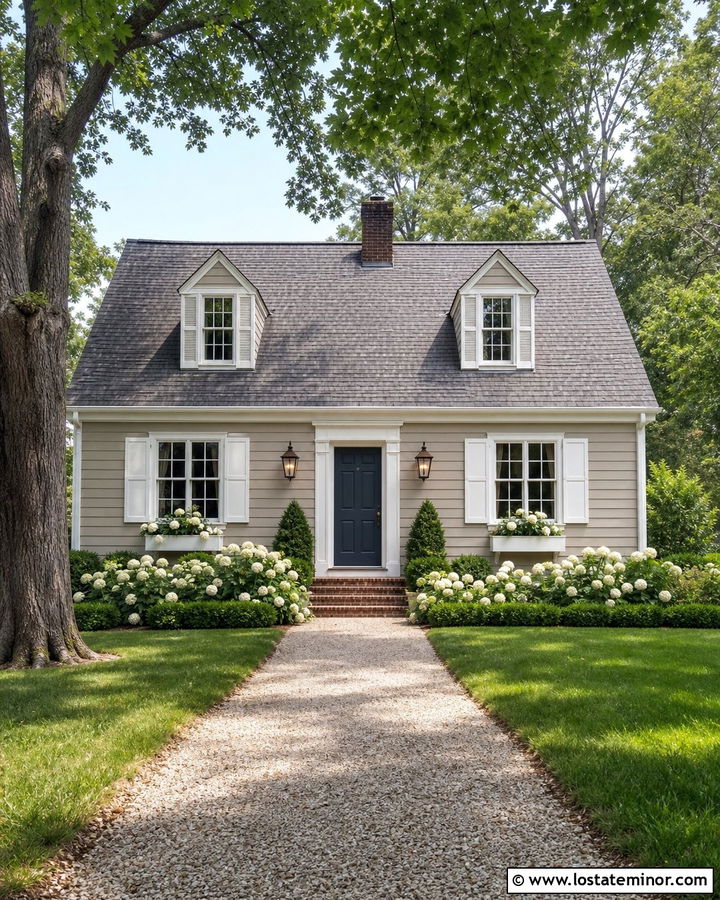
A compact Cape Cod benefits from a taupe exterior that feels gentle rather than visually heavy. Choose a light mushroom taupe for the shingle siding, then frame it with warm white trim, white window boxes, and traditional white shutters. A muted navy front door supplies classic coastal contrast without overpowering the small facade. A pair of aged brass lanterns beside the door brings warmth and character to the entry. Brass works especially well when repeated through the door hardware, house numbers, and mailbox. Add one understated ceiling fixture beneath the porch roof rather than filling the exterior with numerous lights. Weathered gray roof shingles, a brick step, hydrangeas, and a shell-colored gravel path complete a relaxed scheme that remains polished in every season.
6. Dark Taupe Tudor With Copper Lighting
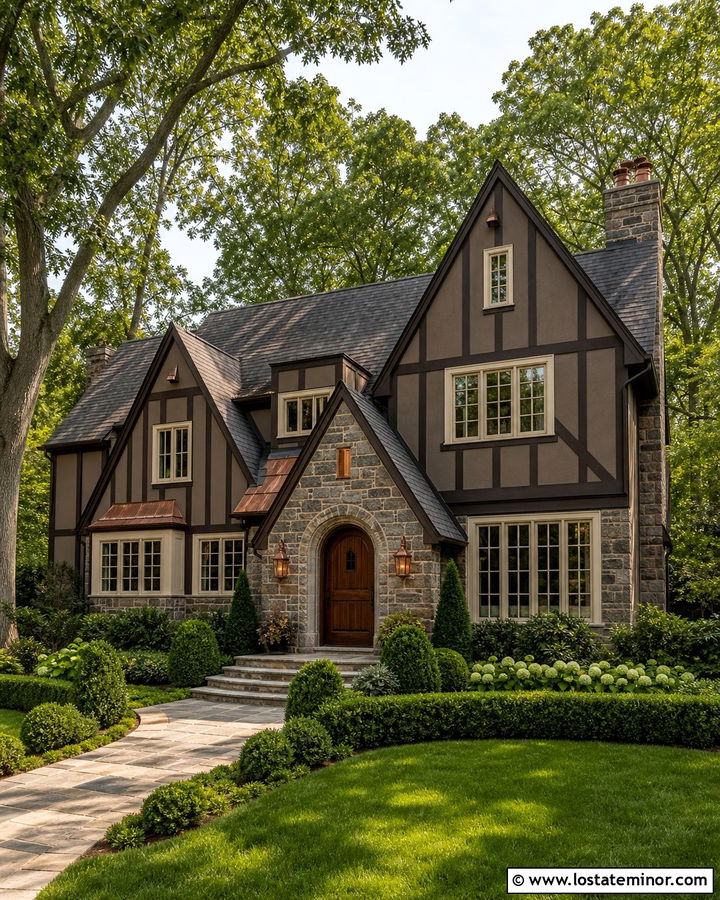
Rich taupe stucco can modernize a Tudor exterior while preserving its distinctive craftsmanship. Use a deeper brown-gray taupe between the exposed timber details, then finish those beams in dark espresso. Cream window trim keeps the facade from becoming too shadowed beneath steep rooflines. A heavy arched wood door and irregular brown-gray stone reinforce the traditional architecture. Copper lanterns are a natural choice because their warm finish complements both taupe and stained wood. Place one pendant under the recessed entry arch and matching wall lanterns near the garage. Copper gutters or small roof accents can repeat the metal in a controlled way. Soft landscape uplights aimed at the stone chimney and mature trees add depth, while avoiding harsh light across the entire front wall.
7. Taupe Contemporary House With Linear LED Lighting
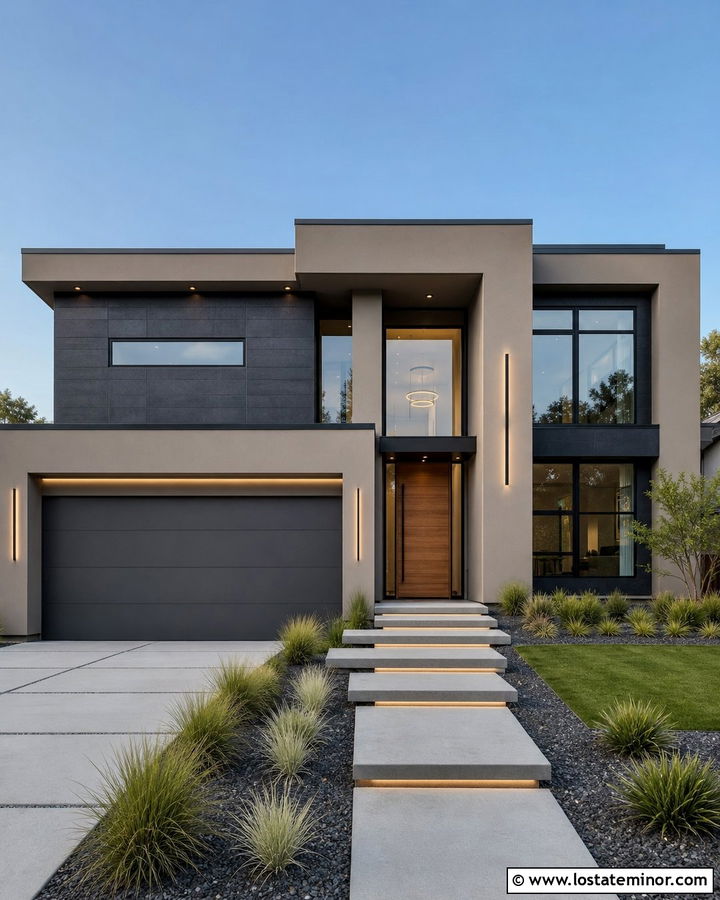
Smooth taupe stucco creates an understated background for contemporary architecture. Select a balanced gray-brown shade and combine it with charcoal fiber-cement panels, black-framed windows, and a clear-finished wood pivot door. Instead of decorative lanterns, use slim linear LED fixtures beneath floating roof edges and along the recessed entrance. Their concealed placement keeps the facade uncluttered while emphasizing its geometric forms. Vertical blade sconces can mark the doorway and garage without competing with large windows. Continue the clean look with broad concrete steps, dark gravel beds, and structured ornamental grasses. A flat or low-slope charcoal roof visually anchors the design. The wood, taupe, and black palette feels warm enough for a residential setting but still reflects the home’s modern construction.
8. Taupe Bungalow With Craftsman Porch Lights
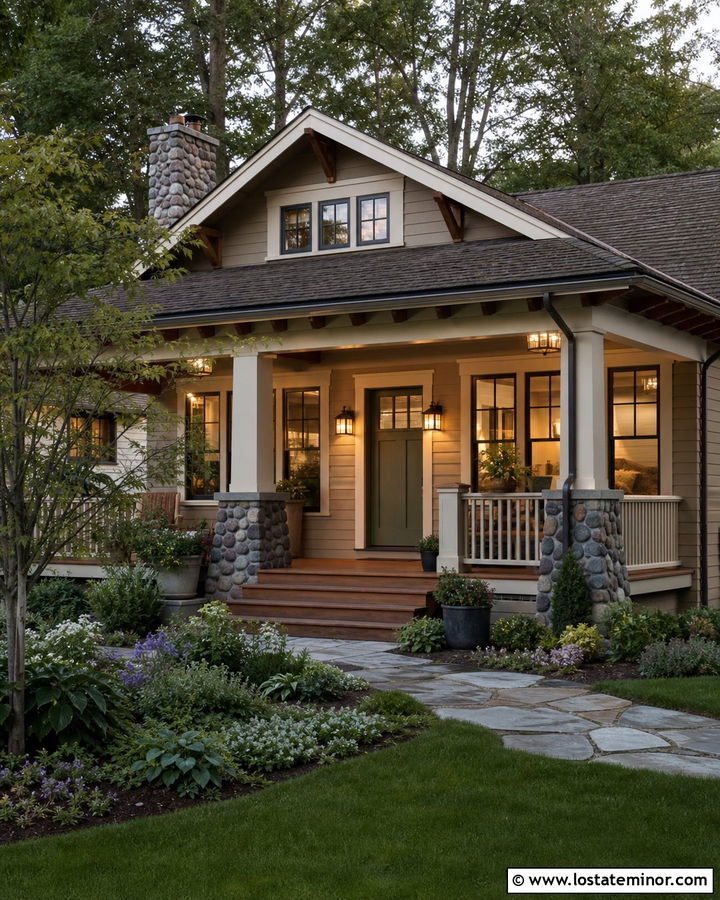
Picture a shaded bungalow with a generous porch, chunky columns, and layered garden beds. Medium taupe clapboard siding helps the structure feel settled into that greenery. Use ivory trim around the windows and roofline, then stain the porch floor, steps, and exposed rafters a warm chestnut brown. A moss-green front door adds a quiet nature-inspired accent. Square Craftsman lanterns with bronze frames and amber-textured glass can flank the entry. Add a coordinating pendant centered over the porch seating area and low path lights near the steps. River-rock column bases introduce another earthy texture while connecting the color scheme. A weathered brown roof and copper-toned gutters finish the bungalow without adding a disconnected metal or color to the exterior.
9. Taupe French Country House With Iron Lanterns
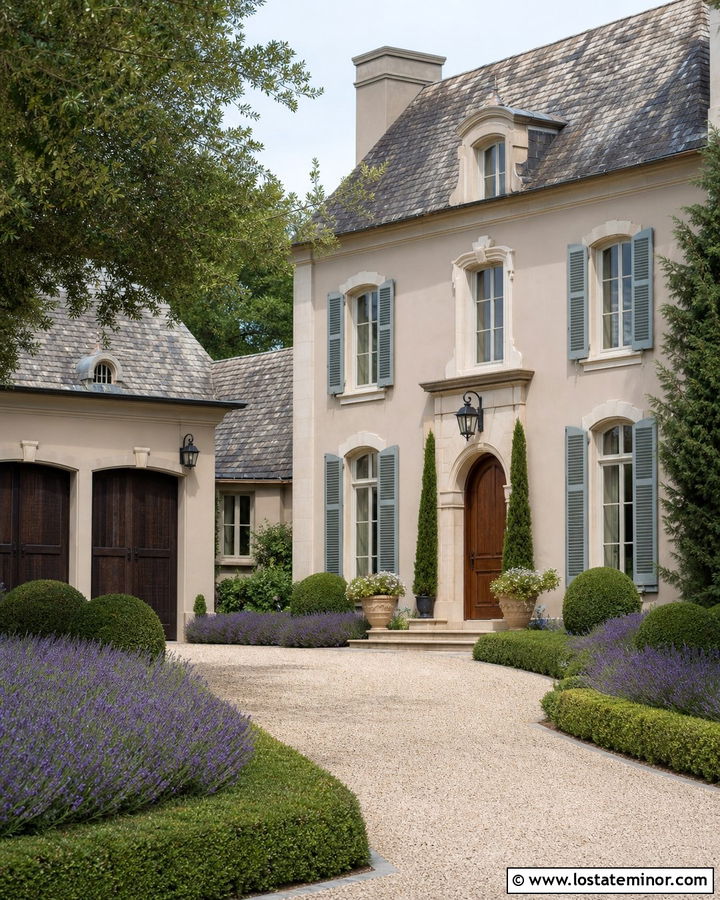
A French country exterior can carry taupe beautifully across stucco, stone, and painted wood. Choose a pale warm taupe for the main walls, creamy limestone around the entrance, and soft ivory on the window trim. Blue-gray shutters give the facade a subdued accent that feels appropriate beside an aged slate roof. Large black iron lanterns should frame the arched front door and repeat near carriage-style garage doors. Their traditional silhouettes provide definition against the light stucco. A hanging lantern inside the covered entry can illuminate the threshold while remaining protected from weather. Add lavender, clipped boxwoods, gravel paths, and rustic stone edging around the front garden. These natural details soften the formal architecture and reinforce the quiet gray-brown undertones of the taupe finish.
10. Taupe Split-Level With Minimal Black Lighting
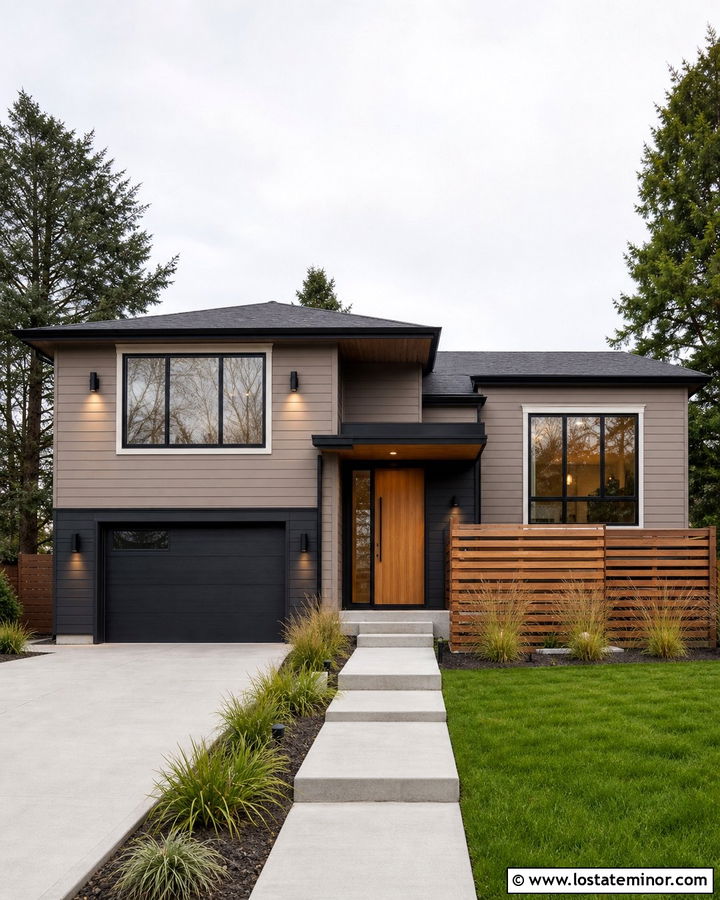
Updating a split-level is easier when color and lighting help organize its uneven facade. Cover the main siding in a medium cool taupe, then use charcoal on the lower level or garage section to create a strong visual base. Warm white trim around the windows keeps the upper story bright. A cedar front door and matching horizontal screen introduce natural texture at the entrance. Choose compact black cylinder sconces rather than oversized traditional lanterns, which can make a modest entry feel crowded. One fixture beside the door and two evenly spaced garage lights are usually enough. Add recessed lighting beneath the small entry canopy and subtle step lights along the raised walkway. Straight planting beds and low grasses support the home’s refreshed, streamlined appearance.
11. Taupe Prairie House With Horizontal Lighting
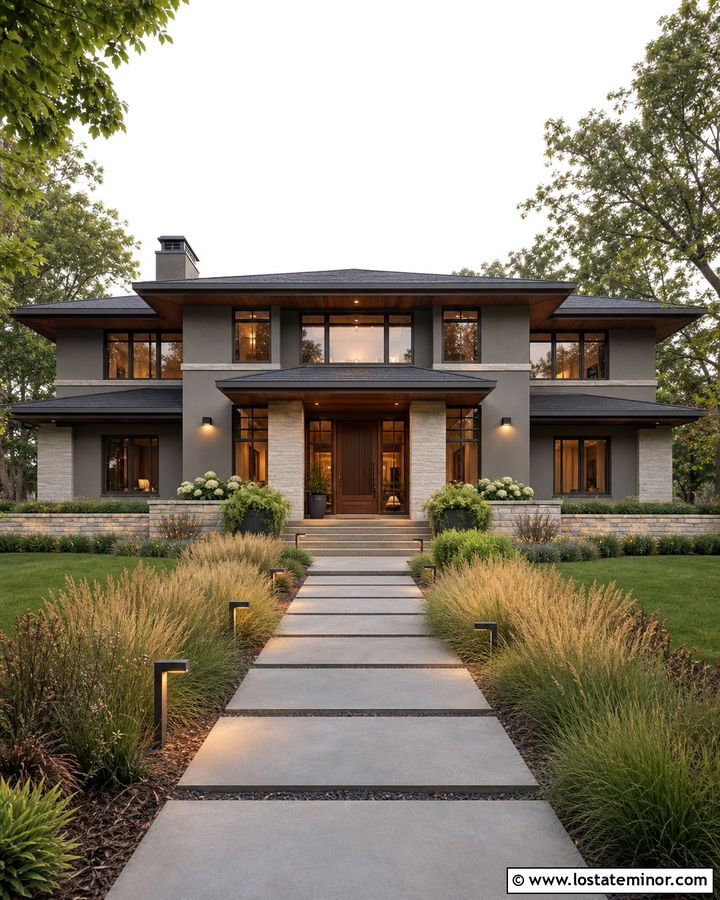
Broad roof overhangs and strong horizontal lines define a Prairie-style home, so its lighting should follow the same direction. Use a medium taupe stucco or lap siding for the body, paired with dark bronze trim and warm wood soffits. Cream limestone bands can emphasize the foundation and low porch walls. Select wide rectangular sconces that cast light downward across the entrance rather than tall lanterns that interrupt the architecture. Recessed fixtures under the extended eaves can gently wash the walls and reveal the layered roofline. Add low-profile path lights beside long concrete pavers to continue the horizontal effect into the yard. Bronze window frames, a walnut front door, and a deep brown roof create a coordinated exterior that feels substantial, orderly, and connected to the landscape.
12. Taupe Mediterranean House With Wall Lanterns
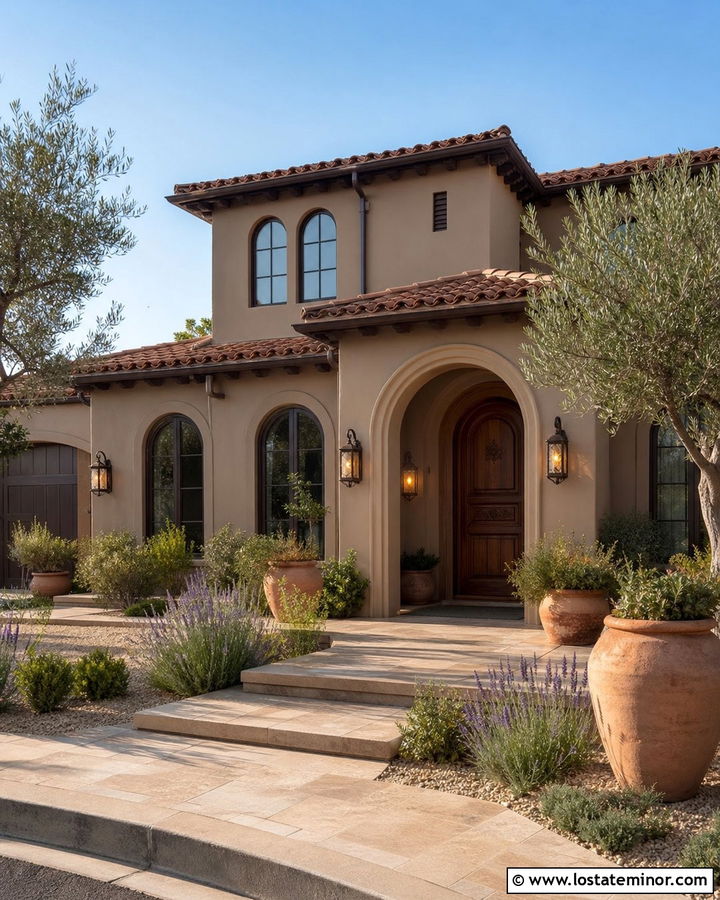
Sun-washed taupe stucco offers a softer alternative to yellow or cream on a Mediterranean home. Pair it with a terracotta tile roof, dark brown window frames, and a carved walnut front door. Keep the trim only slightly lighter than the body color so arched openings and decorative details remain subtle. Traditional bronze wall lanterns with seeded glass can flank the entry and repeat along the garage. A hanging lantern works well beneath a covered loggia or deep arched porch. Use small uplights to accent palm trunks, olive trees, or textured stucco columns without flooding the entire facade. Warm limestone paving and drought-tolerant landscaping support the earth-toned palette. The completed exterior feels cohesive because the lighting, roof, door, and taupe walls share warm undertones.
13. Taupe Cottage With White Trim And Lanterns
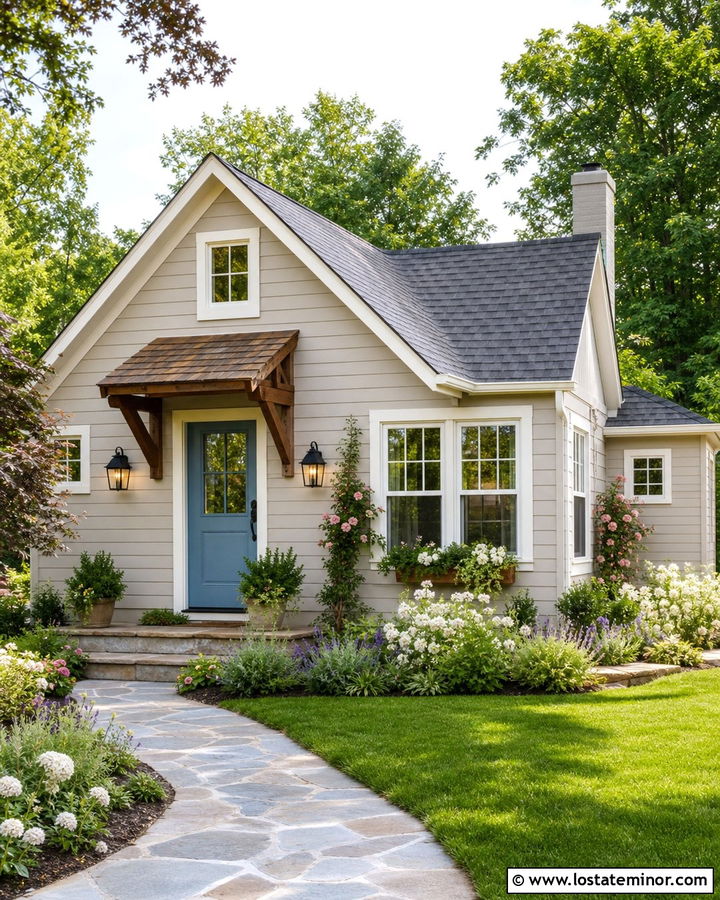
Soft taupe siding makes a small cottage look welcoming, especially when paired with generous white trim. Choose a light putty-colored taupe for the walls, creamy white for the fascia and window casings, and dusty blue for the front door. Add a cedar porch ceiling or small timber awning to warm the entrance. Traditional black lanterns can provide enough contrast to remain visible without dominating the compact facade. Mount one lantern on each side of the door and use tiny path lights along an informal flagstone walk. A medium-gray roof keeps the palette balanced, while climbing roses, flowering shrubs, and layered perennials provide color. This design relies on thoughtful scale, ensuring every fixture and accent suits the cottage rather than making it appear smaller.
14. Taupe Midcentury Modern House With Globe Lights
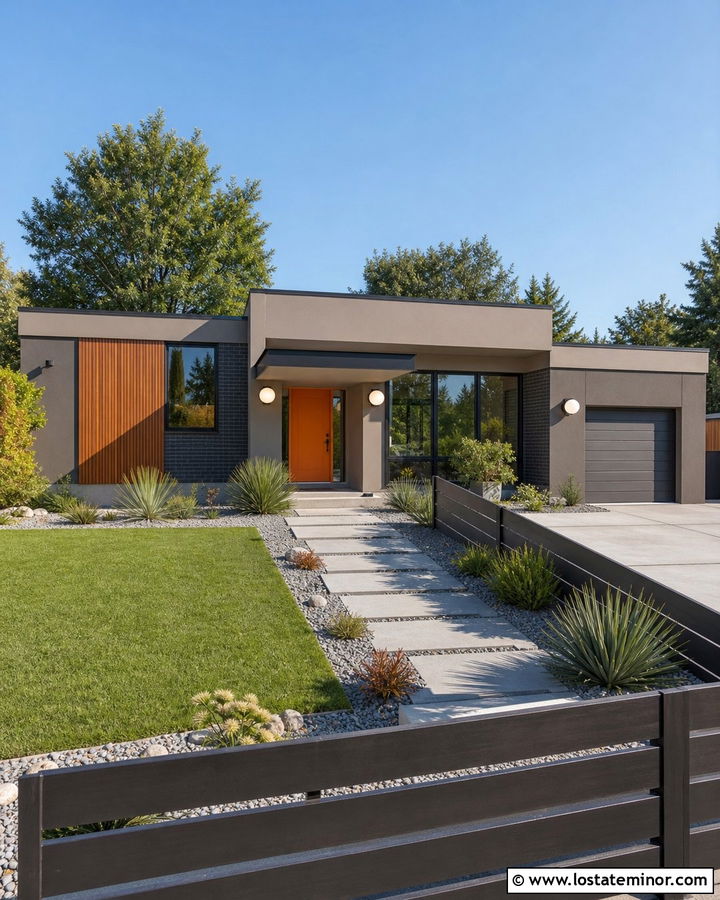
Midcentury architecture welcomes lighting that feels simple, sculptural, and slightly playful. Paint the broad wall surfaces a cool midtone taupe, then combine them with dark charcoal brick and vertical cedar siding. A mustard, teal, or burnt orange front door can become the controlled color accent. Install frosted globe sconces near the door and garage, choosing black or aged brass mounting hardware that connects with the window frames. A globe pendant beneath a flat-roof entry canopy continues the period-inspired look. Concealed lighting under the soffit can reveal the long roof plane without distracting from it. Complete the exterior with concrete pavers, decorative gravel, sculptural shrubs, and a low horizontal fence. The taupe background allows the wood, masonry, and lighting shapes to remain noticeable.
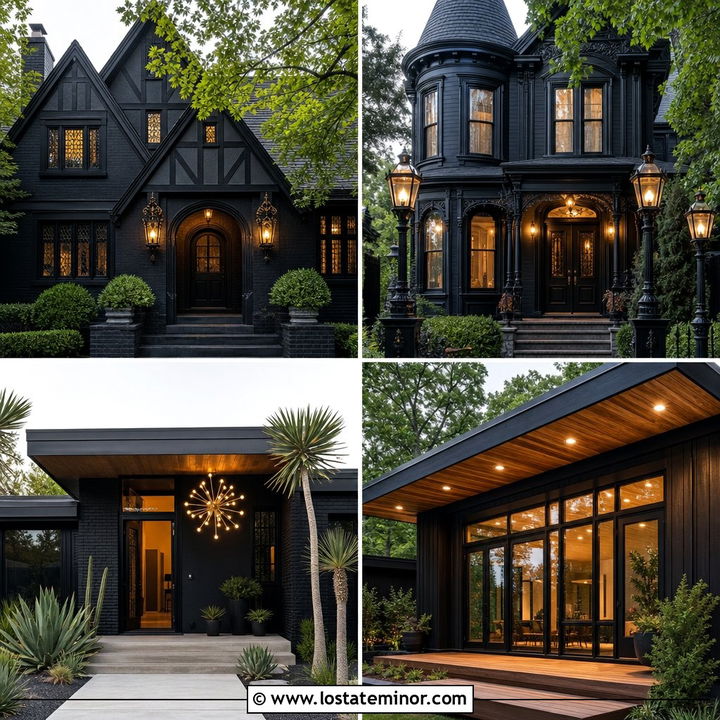
15. Taupe Mountain House With Stone And Uplighting
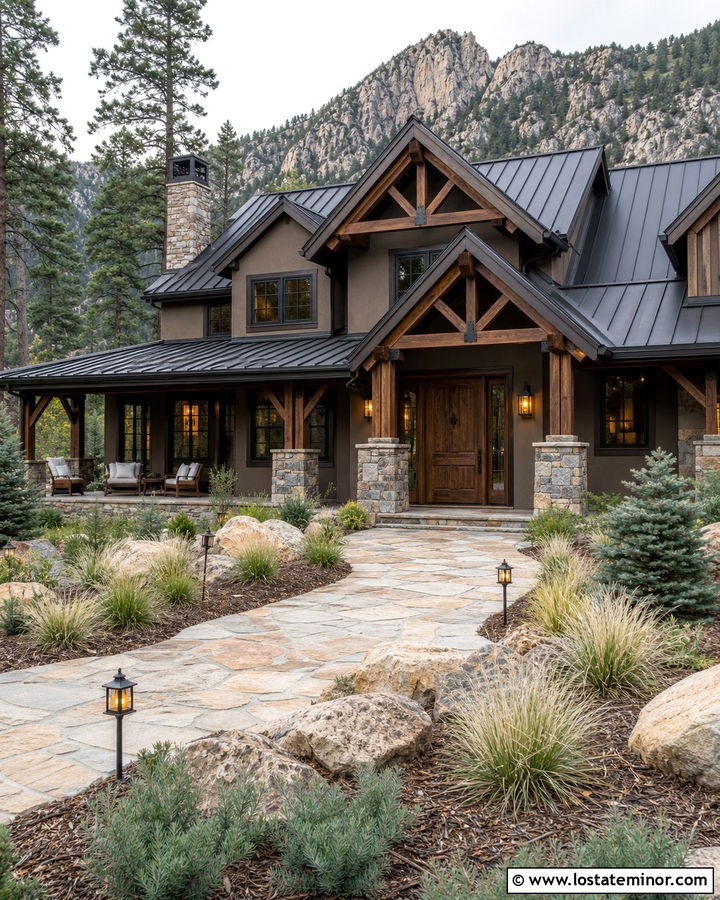
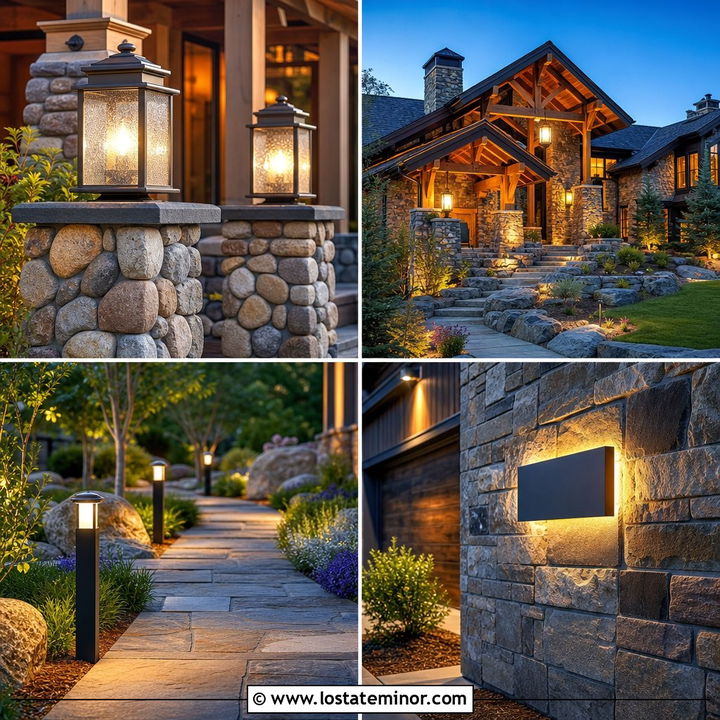
A mountain house needs an exterior palette strong enough to sit comfortably among rocks, trees, and changing weather. Deep taupe siding provides that grounding effect while coordinating with a rugged gray-brown stone base. Use espresso trim, black-framed windows, and large natural timber beams under the gables. An oversized wood door can anchor the recessed entry. Dark bronze lanterns mounted on the stone columns introduce functional light without looking overly polished. Add discreet uplights at the foundation to reveal the masonry texture and selected beams. Downlights beneath the wide eaves can improve visibility around the porch while limiting glare. A charcoal metal roof, native grasses, boulders, and a wide stone walkway complete the substantial exterior and help the house blend naturally into its wooded setting.
16. Coastal Taupe House With Nickel Lighting
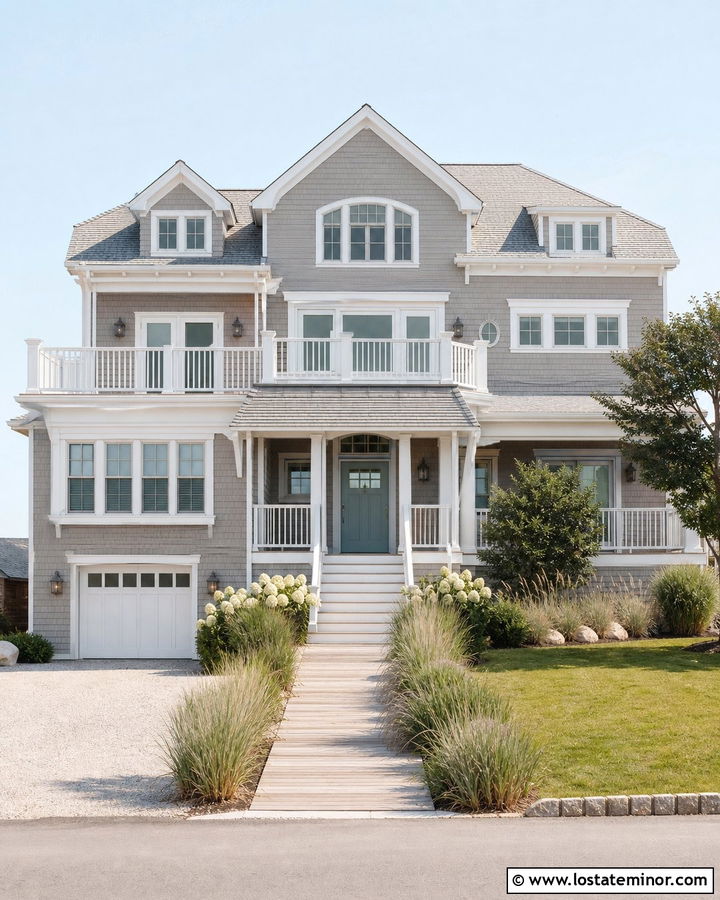
Taupe can work near the coast when it leans light, airy, and slightly gray. Use weathered driftwood taupe on shingle siding, crisp white on the trim and railings, and muted sea-glass blue on the front door. A pale gray roof keeps the upper half of the house from feeling dark. Choose brushed nickel or weather-resistant pewter lanterns rather than warm bronze fixtures. These cooler metals coordinate with the siding and coastal environment. Place lanterns beside the entrance, then add simple ceiling lights beneath the covered porch. Small downlights on porch posts can illuminate stairs without cluttering the railings. Beach grasses, hydrangeas, shell-colored gravel, and a natural wood boardwalk complete the facade. The full scheme feels coastal without relying on overly literal nautical decorations.
17. Taupe Georgian House With Traditional Lanterns
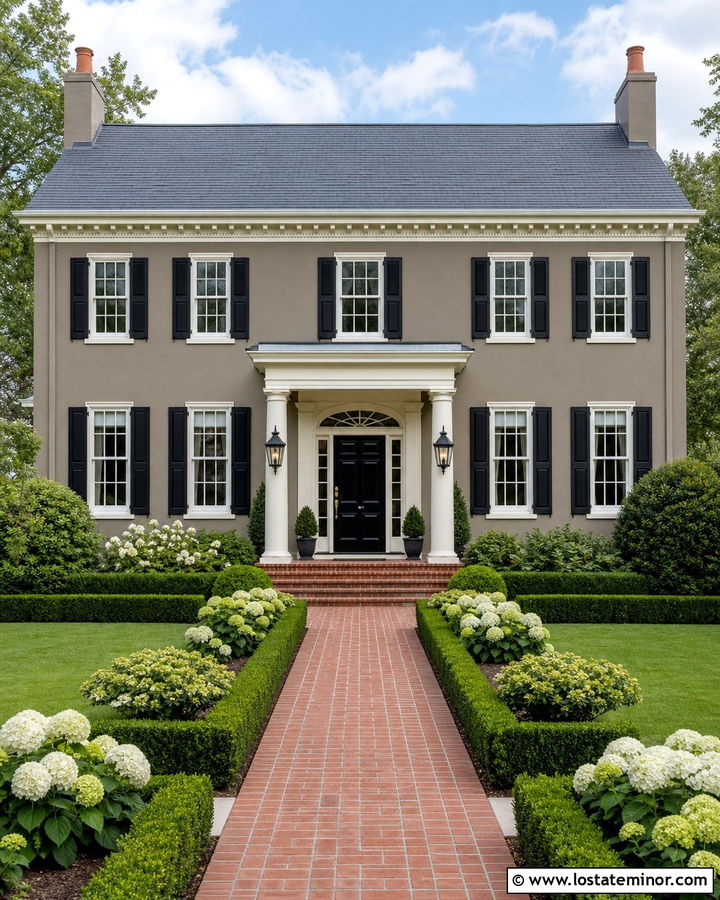
Formal Georgian architecture looks balanced when every exterior element follows its strong symmetry. Paint the brick or siding a refined medium taupe and use creamy white for the cornice, columns, and window surrounds. Black shutters and a glossy black front door provide crisp definition. Position matching brass or black carriage lanterns on both sides of the entrance, keeping them proportional to the door and transom. If the portico is deep enough, add one centered hanging lantern instead of multiple recessed fixtures. Low landscape lights can illuminate the straight brick walk and clipped hedges without drawing attention away from the facade. A dark slate-colored roof completes the scheme. Taupe softens the contrast between black and white, giving this traditional home a more approachable, updated appearance.
18. Taupe Victorian House With Layered Porch Lighting
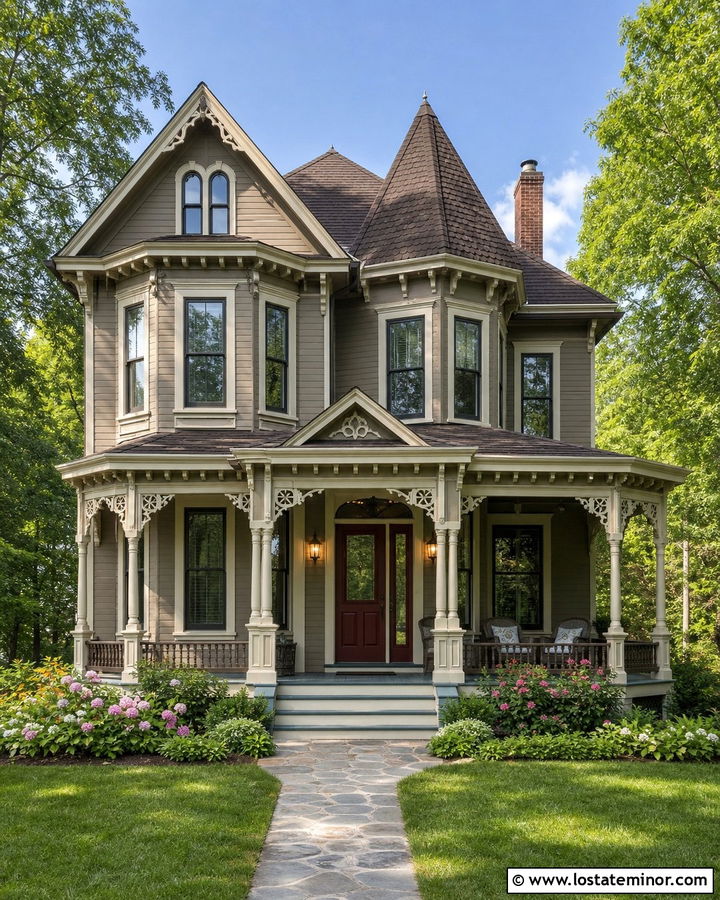
A Victorian exterior already contains abundant trim and ornament, so taupe can quiet the composition without hiding its character. Use a medium warm taupe on the main siding, cream on the decorative trim, and a darker mocha taupe on fish-scale shingles or upper gables. A deep burgundy front door introduces historic color in a controlled area. Choose decorative bronze wall lanterns that echo the scrollwork and porch brackets. Add a coordinating hanging pendant at the center of the porch and small step lights near the stairs. Avoid placing bright fixtures beside every architectural detail. The lighting should reveal the layered facade rather than compete with it. A dark brown roof, painted porch floor, and structured flowering garden complete the richly detailed yet cohesive exterior.
19. Taupe American Foursquare With Mission Lights
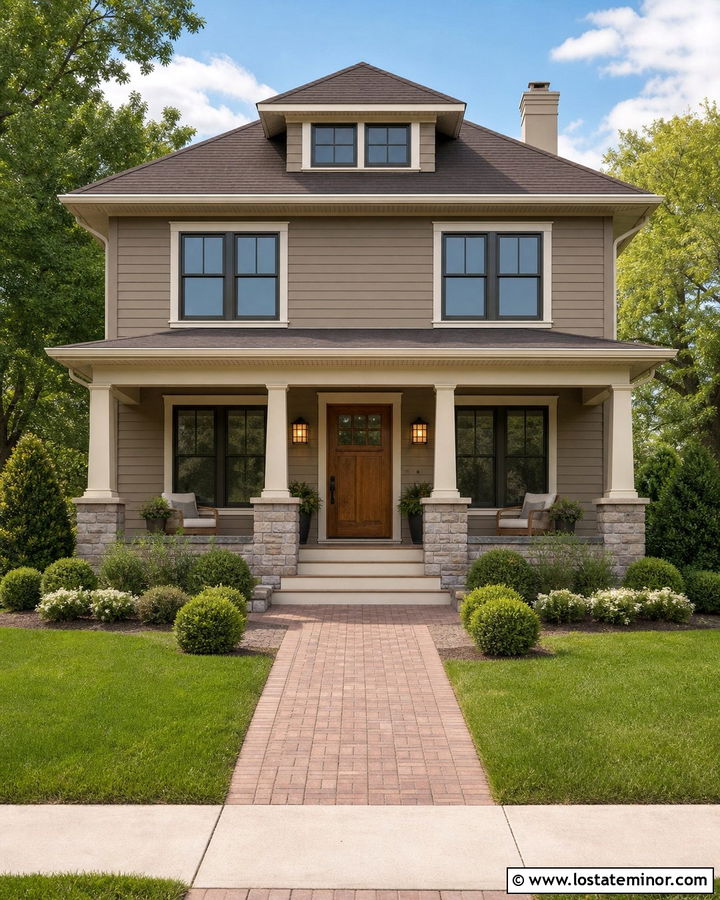
The straightforward geometry of an American Foursquare pairs naturally with a restrained taupe palette. Cover the siding in a medium mushroom taupe and use warm cream across the wide porch columns, window trim, and deep eaves. Dark olive or black window sashes provide definition, while a quarter-sawn oak door adds authentic warmth. Mission-style bronze sconces with square frames can flank the entrance and repeat beside the porch steps. A larger coordinating pendant centered beneath the porch roof gives the seating area practical illumination. Use low path lights sparingly along a straight concrete or brick walkway. Stone column bases and a brown-gray roof reinforce the home’s substantial shape. The finished scheme respects the architecture while making the porch feel comfortable, visible, and welcoming.
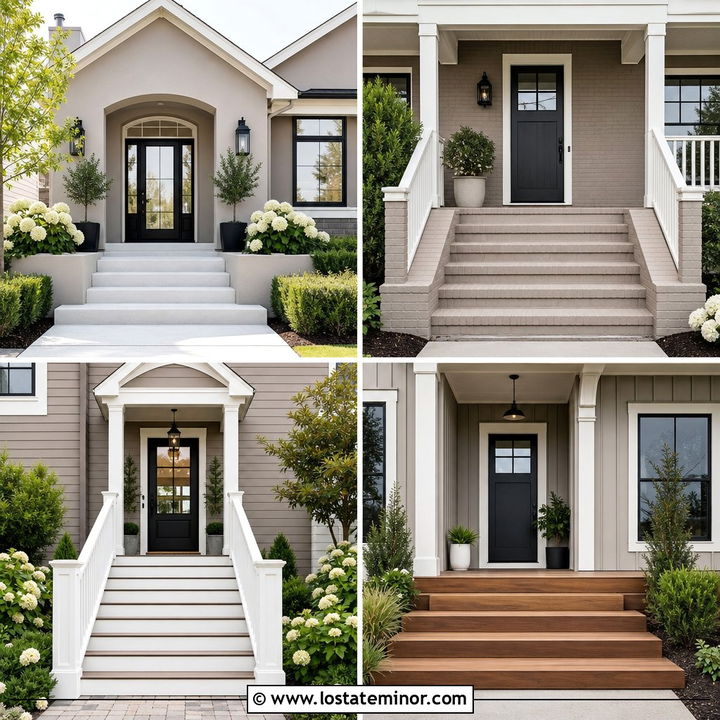
20. Taupe Southwestern House With Recessed Lighting
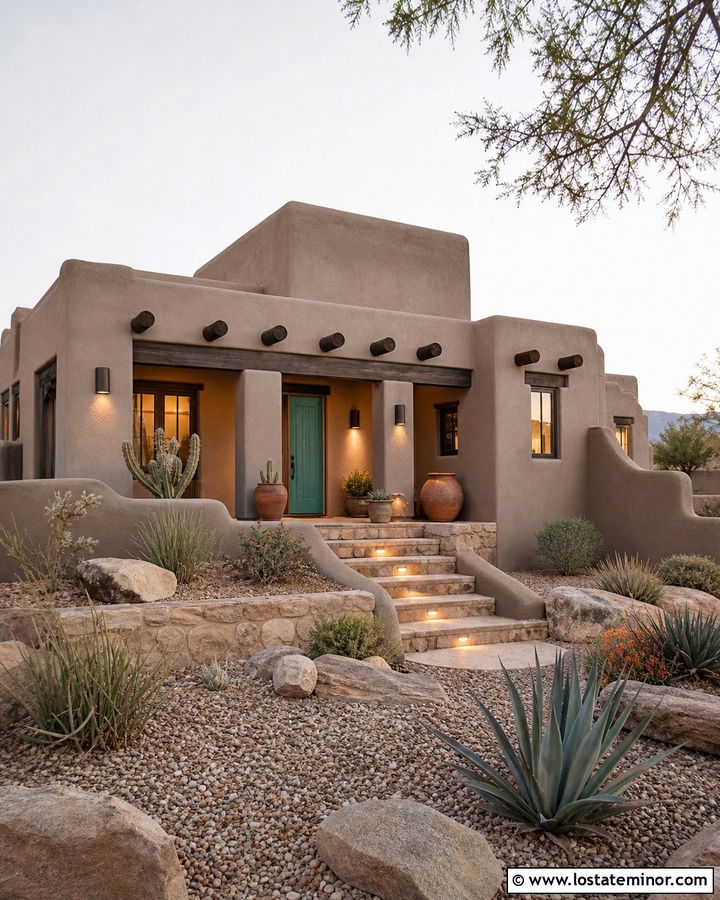
Smooth taupe stucco complements the rounded forms and earthy materials of a Southwestern home. Select a warm desert taupe with subtle brown undertones, then pair it with deep chocolate beams, vigas, and window frames. A turquoise or muted blue-green front door offers a regional accent without overwhelming the neutral walls. Use compact bronze sconces that cast light downward across the stucco. Recessed lights beneath a portal or covered entry preserve the clean architecture, while low step lights improve visibility along curved masonry stairs. Terracotta pots, gravel beds, agave, and weathered stone make the exterior feel connected to its setting. Finish the flat or low parapet roof in a compatible sandy tone so the complete house reads as one continuous, grounded composition.
21. Taupe Lake House With Cedar And Path Lights
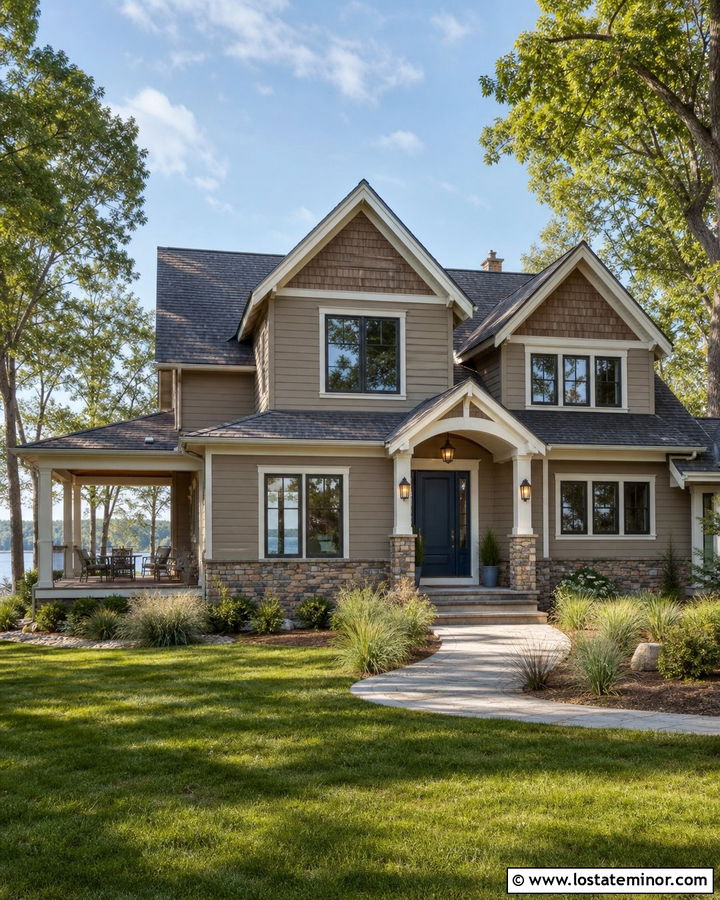
A taupe lake house can feel relaxed while still maintaining a finished, intentional facade. Choose a cool taupe for the horizontal siding and combine it with cedar shingles in the upper gables. Soft white trim brightens the windows, while a deep blue front door reflects the waterside setting. Dark bronze lanterns work well beside the entry and garage because they coordinate with both taupe and natural wood. Add shielded path lights along the walkway so visitors can move safely without excessive brightness spreading across the yard. Recessed fixtures beneath the porch roof can illuminate seating and highlight the cedar ceiling. A weathered charcoal roof, natural stone foundation, native grasses, and informal shrubs complete this comfortable exterior, allowing the architecture to blend with the surrounding shoreline landscape.
22. Taupe Two-Story House With Garage Lighting
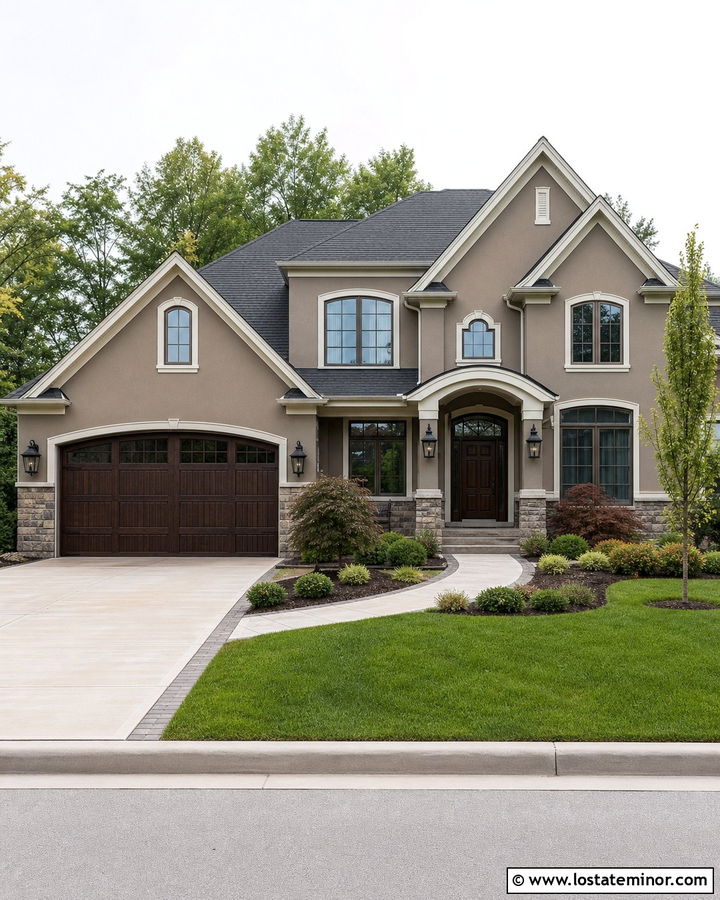
On a large two-story suburban home, lighting can prevent the garage from looking detached from the main entrance. Paint the body a balanced medium taupe and use creamy white trim to define windows, rooflines, and columns. Select dark walnut for the front door and garage doors so both areas share a common finish. Matte black lanterns can frame the entry and appear between the garage bays, creating a consistent rhythm across the wide facade. Add recessed lights beneath the front porch but avoid an overly bright row above the garage. A charcoal roof and mixed gray-brown stone base visually anchor the home. Layered shrubs, ornamental trees, and a curved walkway soften its scale while directing attention toward the illuminated entrance rather than the driveway.
23. Taupe Brick House With Brass Entry Lighting
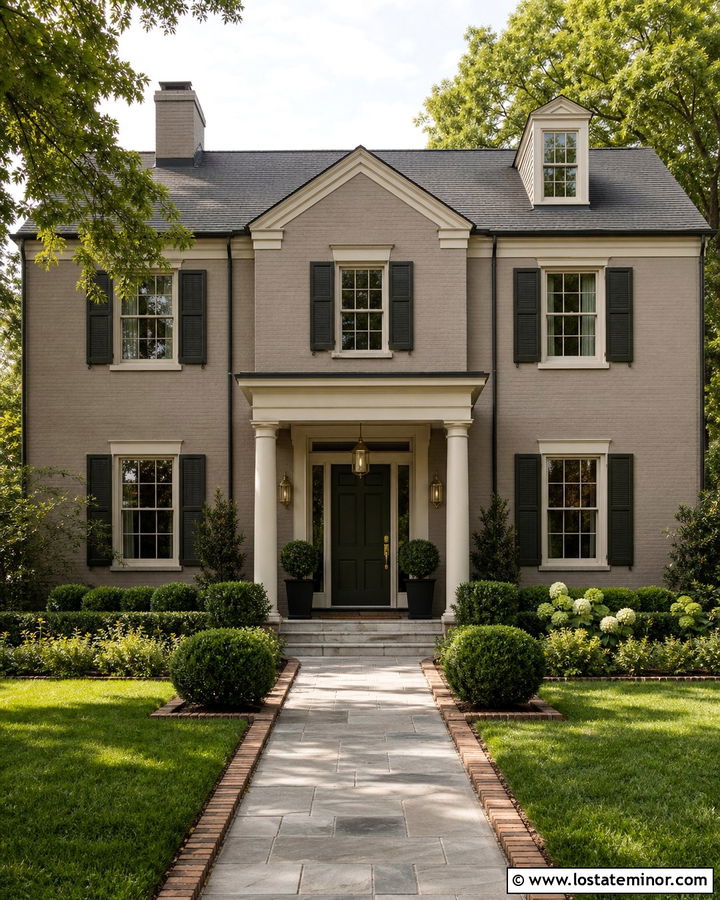
Painted taupe brick offers visible texture that becomes especially attractive when lighting grazes the masonry. Choose a light warm taupe for the brick and an ivory white for the trim, columns, and soffits. A dark olive or stained mahogany front door adds a rich focal point. Install aged brass lanterns on both sides of the entrance, positioning them so their light spreads gently across the brick surface. A brass pendant under the portico can reinforce the welcoming entry without requiring additional decorative fixtures. Keep the roof dark gray and repeat that color through gutters or small metal accents. Boxwoods, brick-edged beds, and a straight stone walk create a traditional frame. The restrained palette allows the brick texture and warm metal lighting to carry the design.
24. Taupe Barndominium With Gooseneck Lights
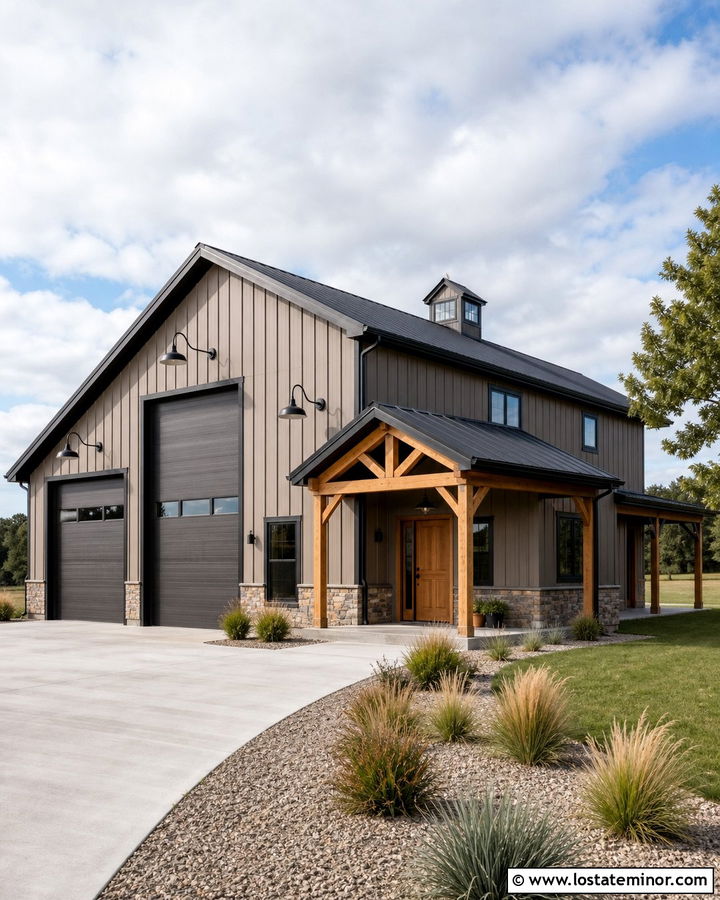
A barndominium needs fixtures that match its broad walls, tall doors, and agricultural profile. Use medium taupe vertical metal siding with charcoal trim, a matching charcoal roof, and natural wood around the entrance. Large black gooseneck lights placed above garage or workshop doors provide the right visual scale. Choose simpler wall sconces beside the main entry so it remains distinct from the utility areas. Recessed lighting beneath a timber porch can make the front seating space feel more residential. Add a stone wainscot to soften the metal exterior and connect the building to the landscape. A gravel-edged concrete driveway, native grasses, and a few structured trees finish the property. Taupe keeps the large structure approachable while black and wood supply clear architectural contrast.
25. Taupe English Cottage With Copper Lanterns
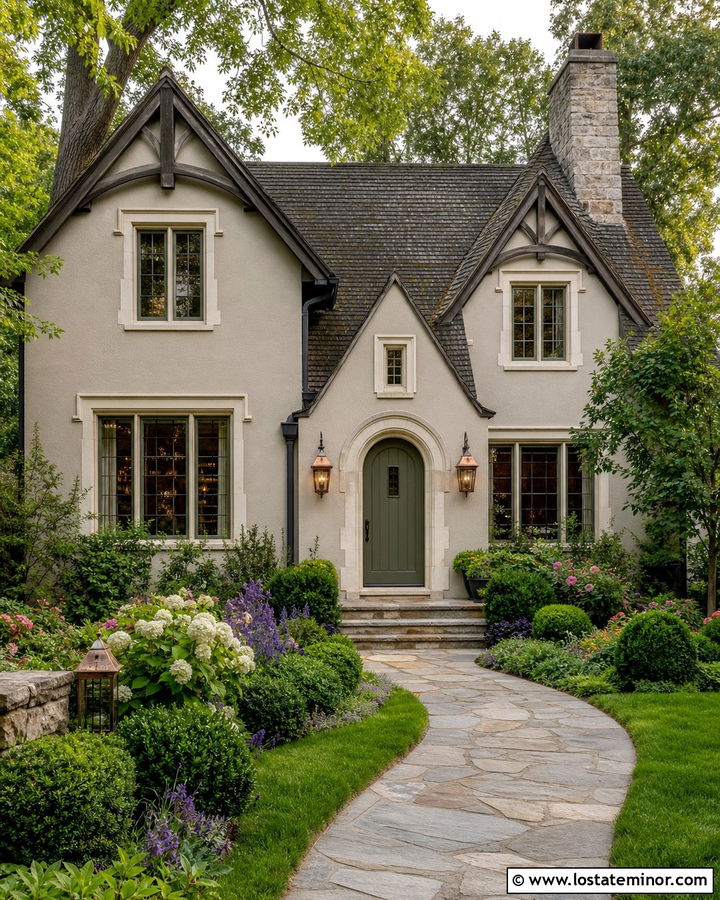
An English cottage gains depth from a muted taupe exterior with warm, weathered accents. Apply soft mushroom taupe to stucco or textured siding, then use creamy stone around arched windows and the entry. A moss-green door and dark brown timber details connect the house to its garden. Copper lanterns can frame the doorway and gradually develop a finish that complements the natural palette. Install small shielded path lights among the planting beds instead of lining the walkway in a rigid row. A steep charcoal roof, stone chimney, curved flagstone path, and abundant flowering borders complete the storybook form without relying on overly decorative accessories. The taupe walls create a calm bridge between the cool roof, green door, warm copper, and varied garden colors.
26. Taupe Spanish Revival House With Iron Lighting
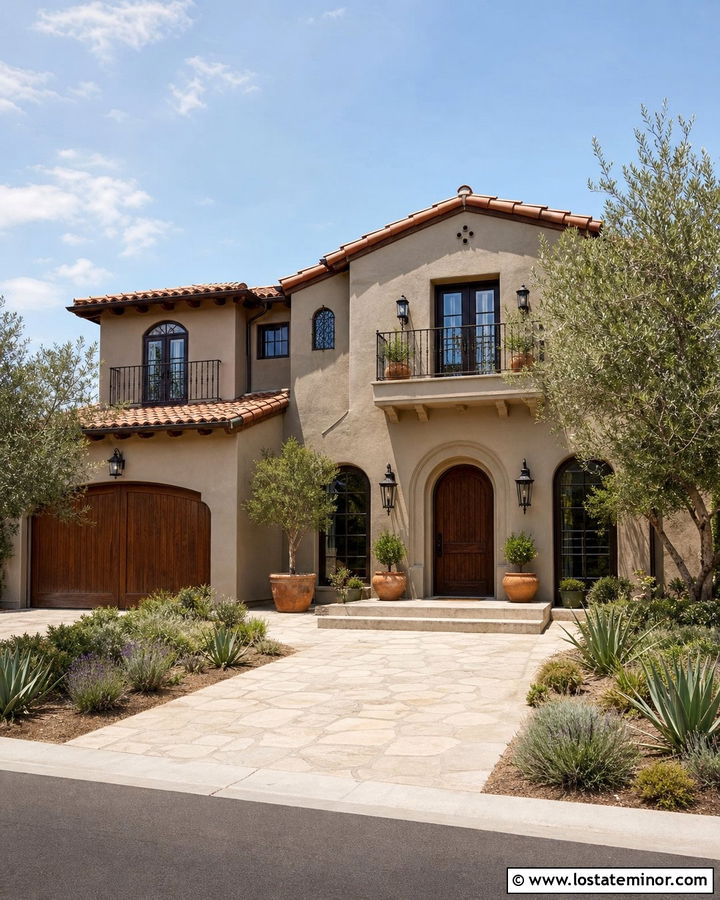
Taupe stucco gives Spanish Revival architecture a grounded, sophisticated alternative to bright white. Use a warm clay taupe on the walls, dark bronze on the window frames, and rich walnut on the arched front door and garage. Terracotta roof tiles contribute natural red-brown variation that pairs comfortably with the body color. Choose hand-forged black iron lanterns beside the entrance and garage, repeating their finish through balcony rails and door hardware. A hanging lantern beneath the entry arcade can become the central lighting feature. Add low uplights near textured columns or a mature olive tree to create depth after dark. Pale stone paving, terracotta planters, and drought-tolerant landscaping complete a cohesive exterior built around earthy color, substantial materials, and traditional metalwork.
27. Taupe Townhouse With Compact Wall Lights
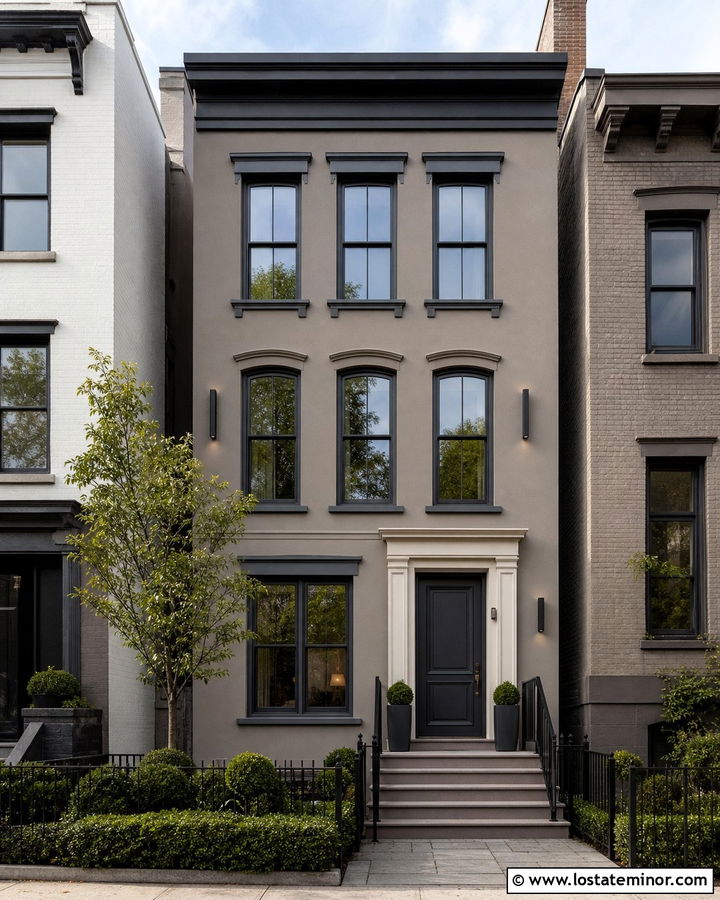
A narrow townhouse needs an exterior plan that adds definition without consuming valuable visual space. Paint the main brick or stucco a cool medium taupe and use charcoal around windows, cornices, and the front door. If neighboring facades are dark, a warm white door surround can make the entrance easier to identify. Choose compact vertical wall lights with narrow profiles for both sides of the doorway. A concealed downlight beneath the small canopy can brighten the lock and threshold without adding another visible fixture. Use matching black house numbers, railings, and planters to connect the lighting to the wider design. A tidy paved walk, clipped shrubs, and one ornamental tree provide curb appeal while allowing the taupe facade and clearly defined entrance to remain the main focus.
28. Taupe Rambler With Wood Porch And Step Lights
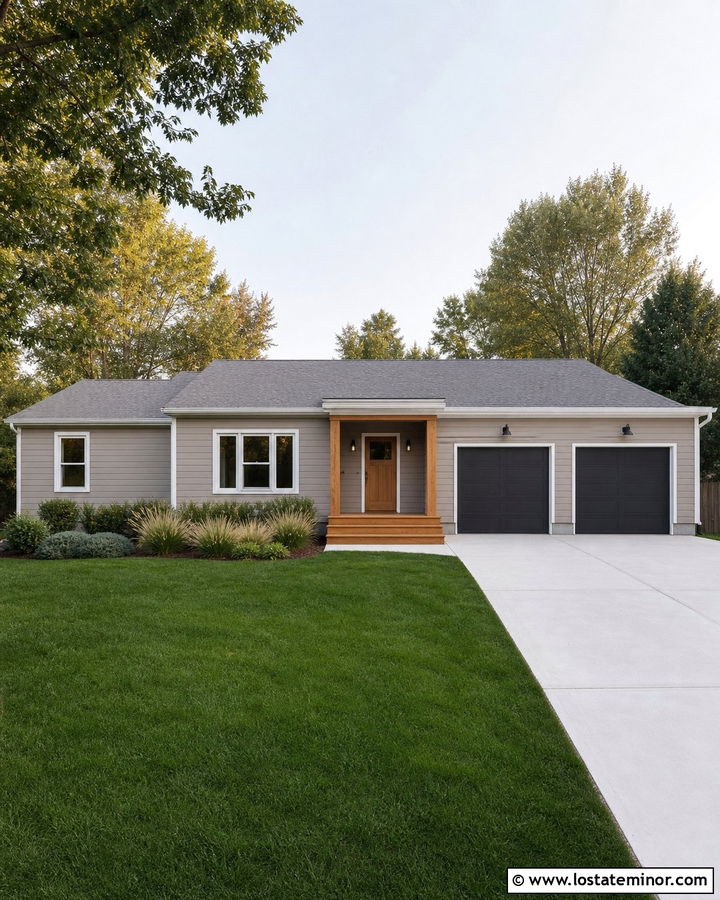
A low rambler becomes more inviting when a natural wood porch interrupts the long stretch of taupe siding. Choose a light gray-taupe for the body, warm white for the window trim, and cedar for the porch posts, ceiling, steps, and front door. Charcoal garage doors and a medium-gray roof provide visual weight at both ends of the house. Simple black sconces can flank the entrance, while recessed porch lights offer broad, even coverage. Integrate small step lights directly into the wooden risers for safer movement without adding fixtures to the railing. Low foundation shrubs and horizontal ornamental grasses maintain the home’s relaxed proportions. The finished exterior balances soft neutral color, warm wood, and practical lighting while preserving the rambler’s approachable single-story character.
29. Taupe Modern Gable House With Vertical Sconces
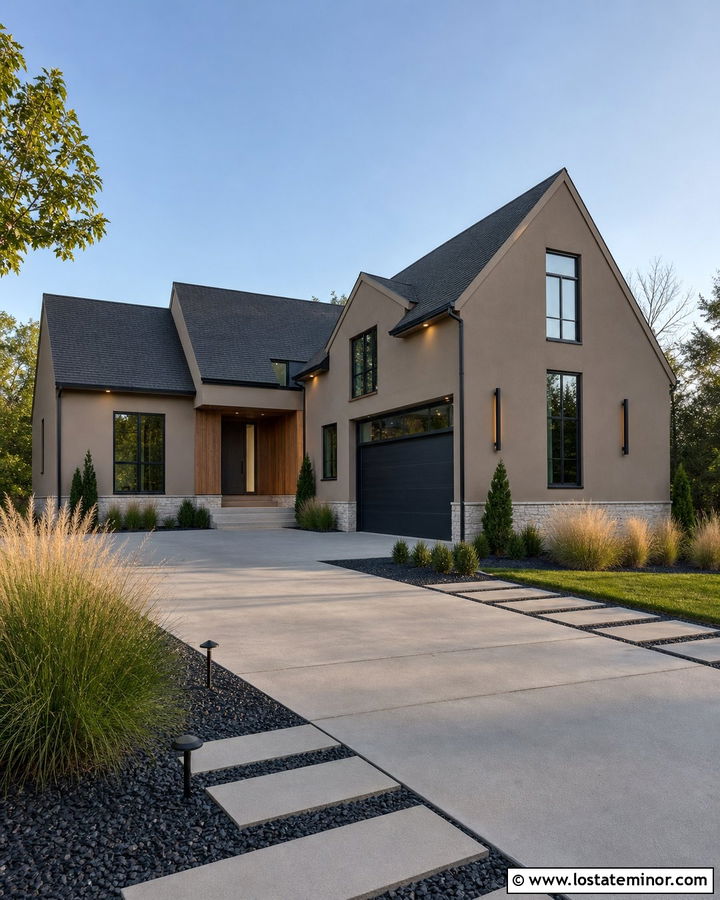
A modern gable house looks striking when its simple roof forms are outlined by contrasting materials. Use warm taupe vertical siding across the main volumes, then add black window frames, charcoal roofing, and cedar panels around the recessed entry. Tall vertical sconces can flank the front door and repeat on the garage wall, emphasizing the height of the gables. Concealed lights beneath the roof overhangs provide a soft wall wash without adding decorative clutter. A pale stone foundation adds texture and keeps the dark roof from feeling disconnected from the taupe siding. Complete the curb view with broad concrete pavers, black gravel, low grasses, and carefully placed trees. Every feature supports the clean geometry while the taupe exterior prevents the modern palette from feeling cold.
30. Taupe Rustic Cabin With Dark Bronze Lighting
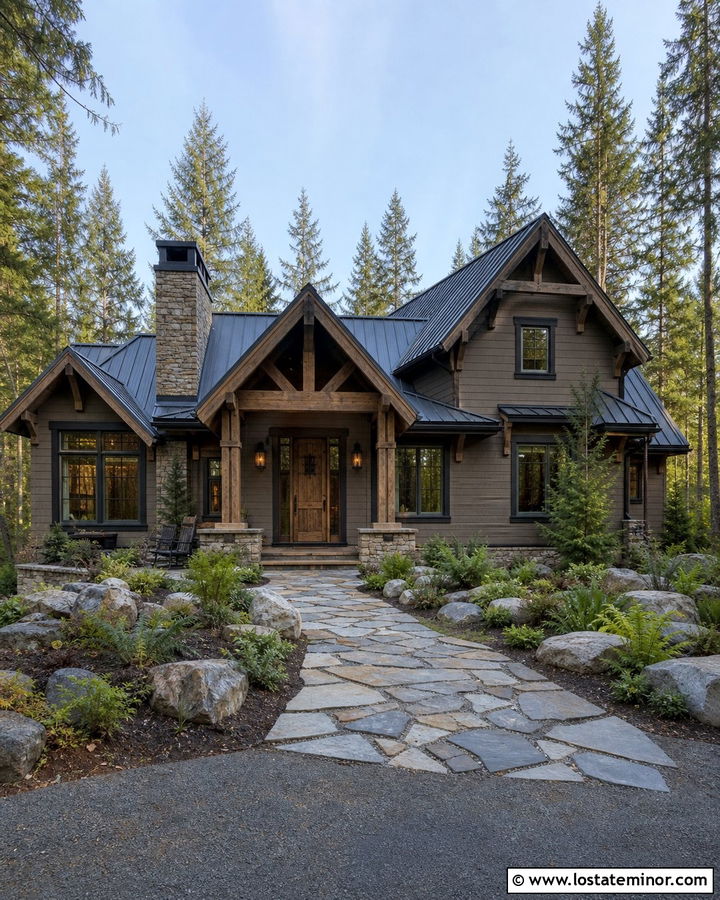
Deep taupe siding gives a rustic cabin character without disappearing completely into a wooded landscape. Combine it with black-brown trim, rough cedar beams, and a natural stone chimney that includes both warm and cool tones. A heavy plank front door can match the timber porch columns for a unified entrance. Choose dark bronze lanterns with simple lodge-inspired shapes, placing them beside the door and on stone column faces. Add discreet downlights beneath the porch beams to reveal the wood grain and provide useful coverage. Shielded path lights can guide visitors along an irregular stone walkway while protecting the quiet setting from unnecessary glare. A charcoal metal roof, native ferns, boulders, and evergreen trees complete this durable taupe exterior with layered natural texture.
Conclusion:
A successful taupe exterior is more than one neutral paint color. It is a coordinated composition of siding, trim, roofing, masonry, doors, landscaping, and appropriately scaled fixtures. Warm taupes work naturally with bronze, copper, wood, and cream, while cooler versions pair well with black, pewter, charcoal, and crisp white. Lighting should guide visitors, improve visibility, and reveal important architectural features without making the facade excessively bright. Test paint samples in direct sun, shade, and changing daylight before making the final selection. Whether your home is traditional, rustic, coastal, or contemporary, these 30 Taupe House Design With Lighting Ideas offer practical ways to build welcoming, balanced curb appeal.

Related posts: