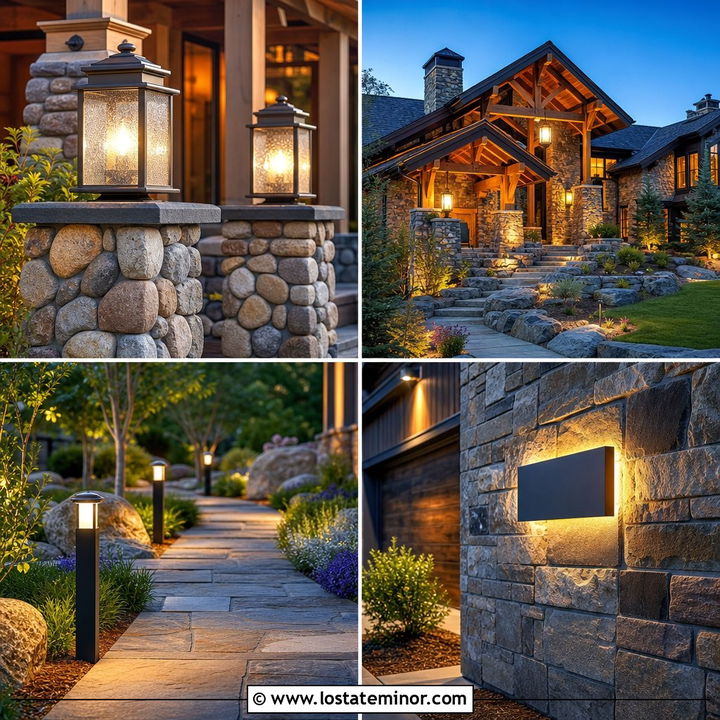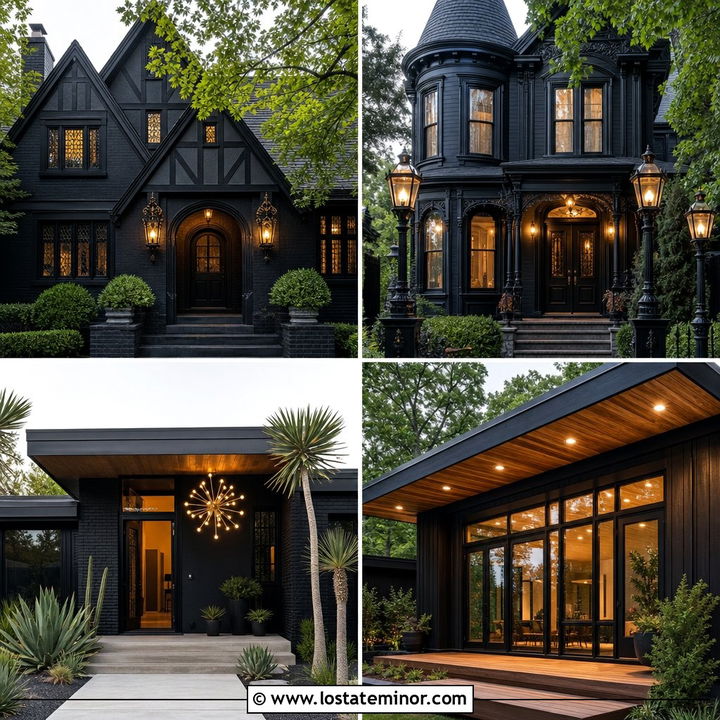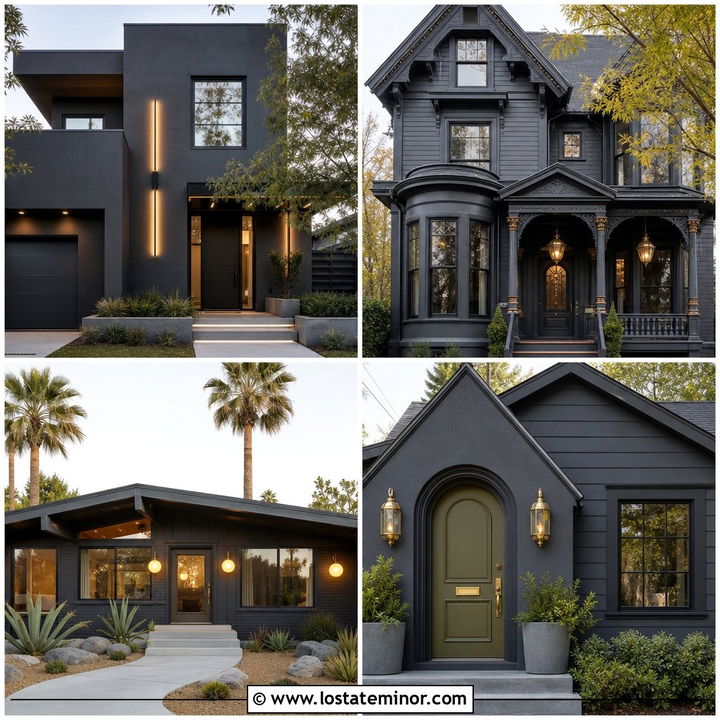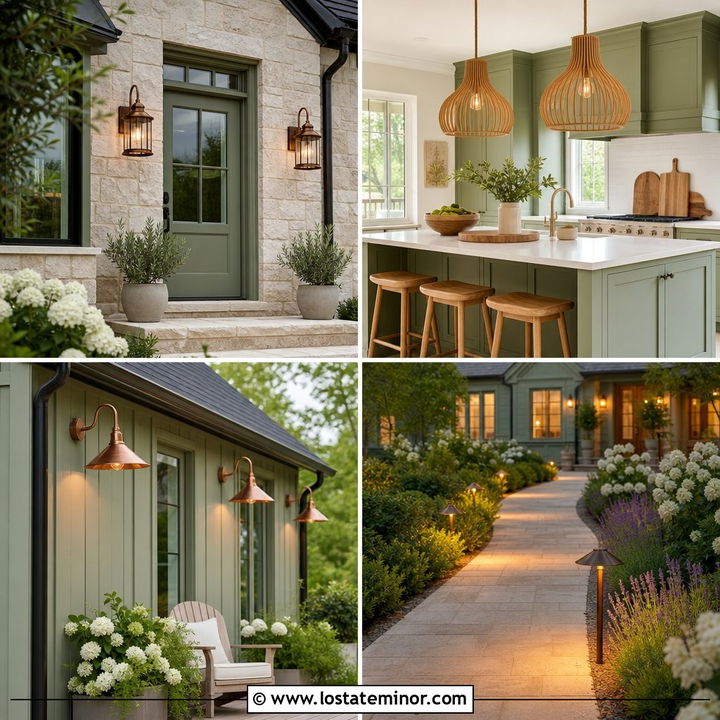
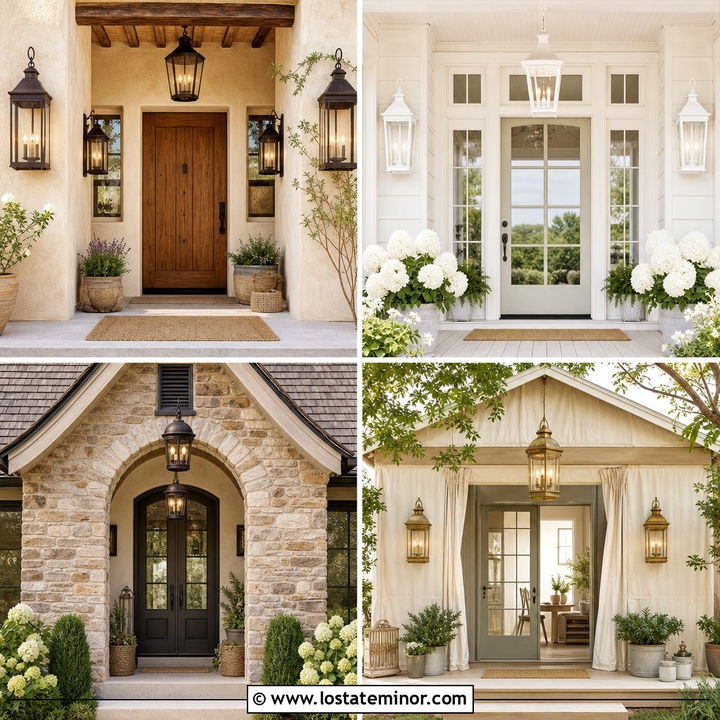
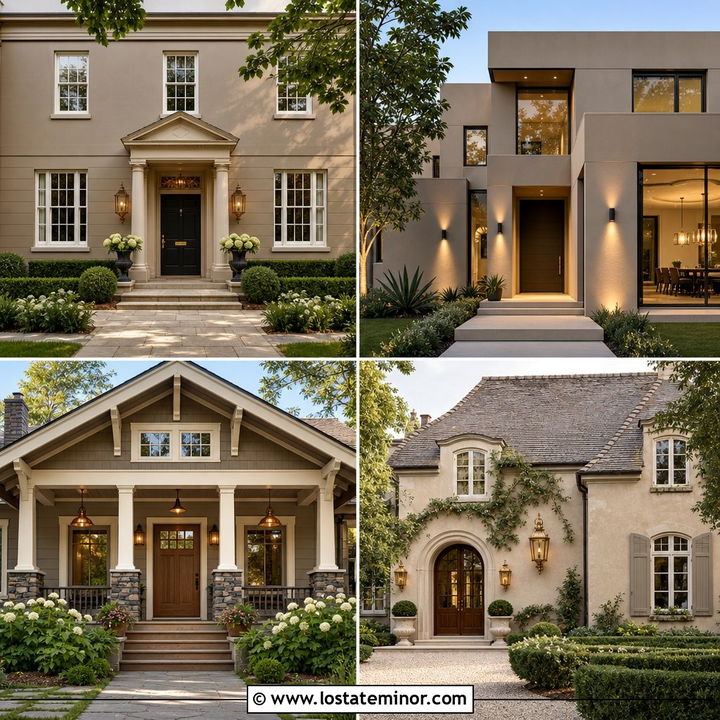
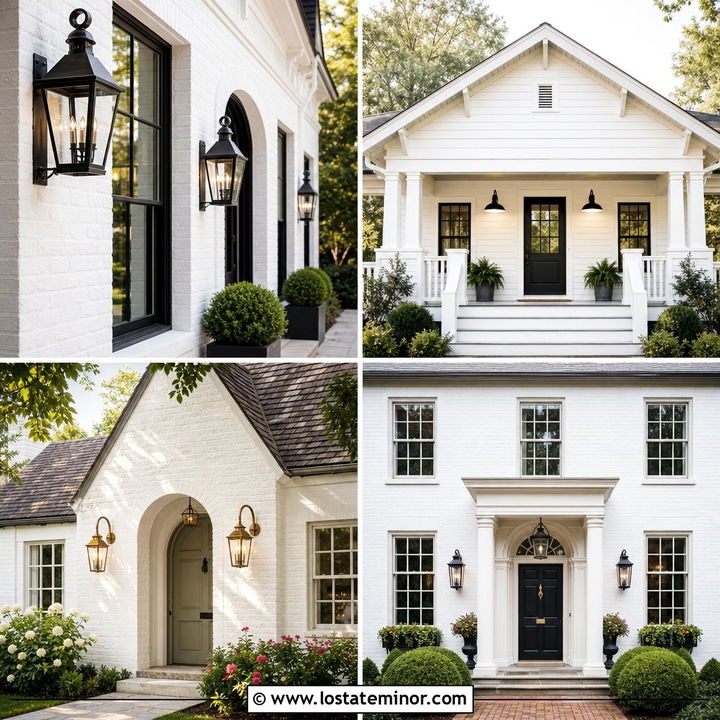
A sand-colored exterior brings warmth, softness, and natural curb appeal to almost any home. The best 30 Sand House Design With Light Fixtures Ideas treat siding, trim, roofing, doors, masonry, and outdoor lighting as one coordinated scheme. Sandy beige also offers a flexible middle ground between bright white and deep tan, pairing easily with black metal, aged brass, copper, bronze, stone, and natural wood. () Fixture size matters just as much as finish. Large lanterns can balance a tall entry, while streamlined sconces suit simple rooflines and smaller facades. Landscape and pathway lighting can complete the look without competing with the architecture. Explore these complete exterior combinations for practical, polished 30 Sand House Design With Light Fixtures Ideas.

1. Sand House With Black Lantern Light Fixtures
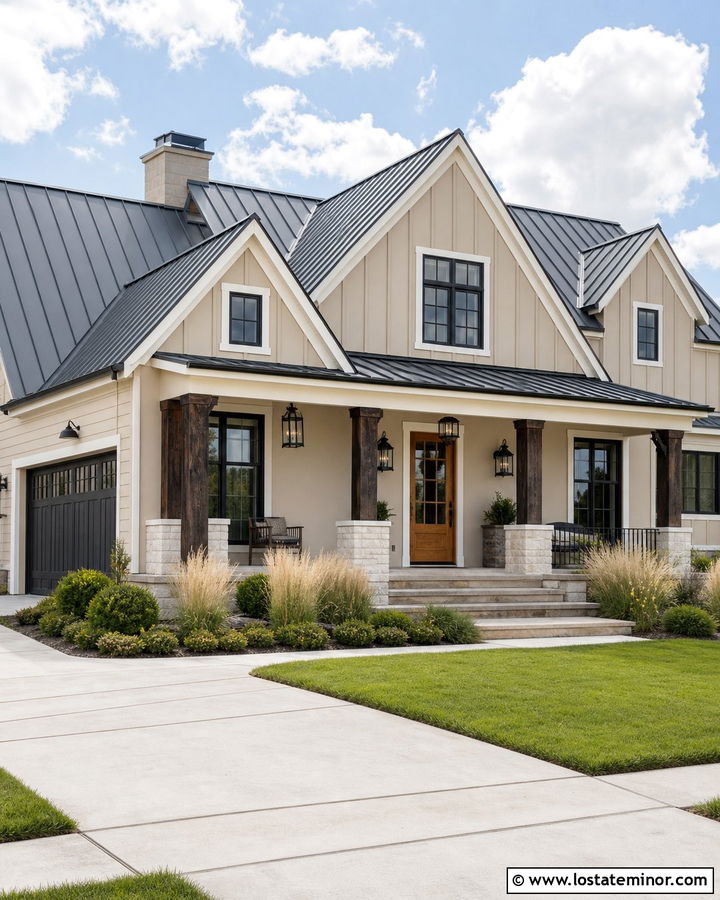
Matte black lanterns give a sand-colored house crisp definition without making the exterior feel too dark. This combination works especially well on a modern farmhouse with sandy beige board-and-batten siding, warm white trim, and a charcoal metal roof. Place two tall lantern sconces beside a medium-toned oak front door. Matching fixtures above the garage create balance across the facade. Black-framed windows repeat the fixture finish, while pale limestone around the porch keeps the palette warm. Use simple landscaping with boxwoods, ornamental grasses, and a straight concrete walkway. The finished house feels clean and current because the black details outline important architectural features. Choosing larger lanterns also prevents the lighting from looking undersized against broad siding panels and high porch columns.
2. Sand House With Aged Brass Light Fixtures
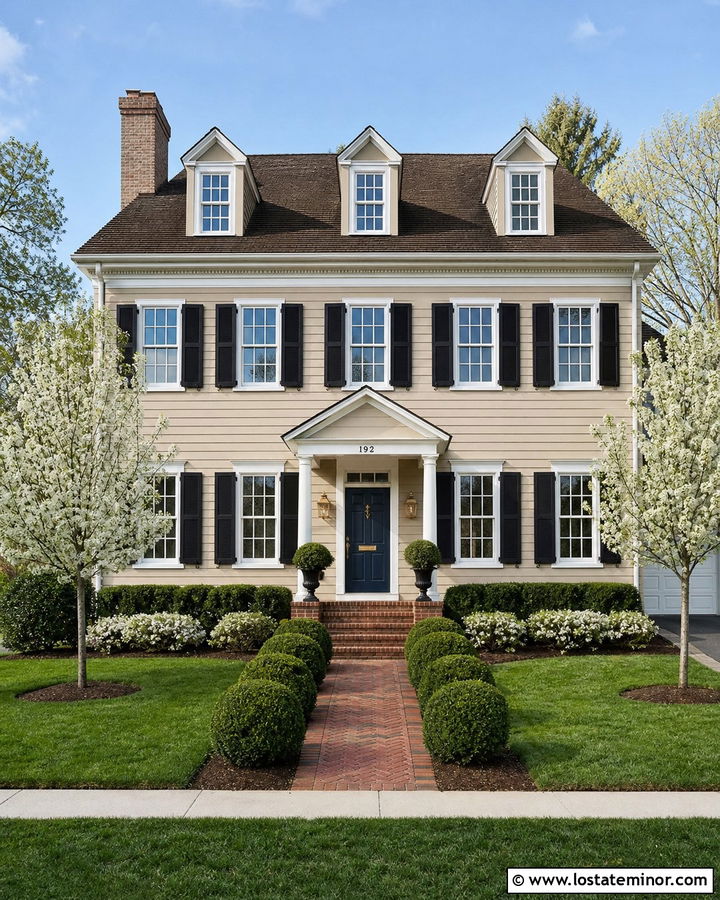
Aged brass fixtures add a soft golden accent to a traditional sand house without creating harsh contrast. Picture a two-story Colonial with warm sand clapboard siding, creamy white trim, black shutters, and a dark brown roof. A pair of aged brass lanterns beside a deep navy front door introduces a refined focal point. Small brass post lights can continue the finish along a brick walkway. Keep the metal slightly weathered rather than bright and polished, which helps it relate naturally to the warm siding. Red brick porch steps and foundation details add depth at the base of the house. This complete scheme feels established and welcoming. It is particularly effective when the hardware, house numbers, and door knocker share the same muted brass finish.
3. Sand Craftsman House With Bronze Sconces
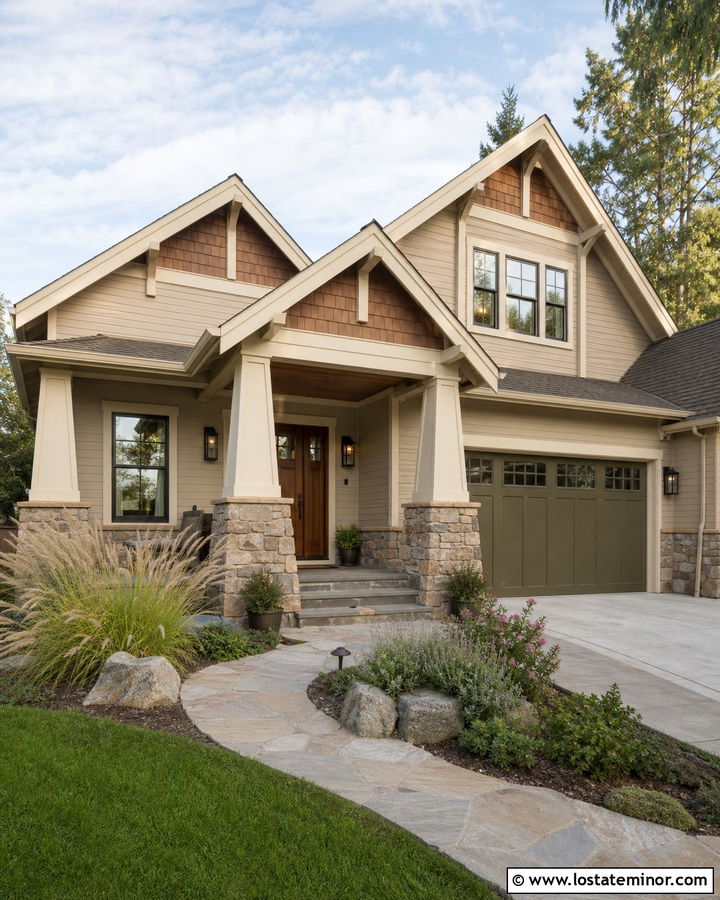
Warm bronze sconces feel right at home beside the substantial woodwork of a Craftsman exterior. Use sandy tan lap siding with creamy trim, dark bronze window frames, and cedar shingles in the front gable. Wide tapered porch columns can sit on bases made from tan, cream, and gray fieldstone. Mount square bronze-and-glass sconces on both sides of a stained walnut front door. Their simple geometric shape supports the Craftsman architecture without looking overly decorative. Repeat the bronze finish on the garage lights and address numbers for consistency. A muted olive garage door can add an earthy note while remaining connected to the landscape. Finish the curb appeal with layered shrubs, native grasses, and a gently curved stone path leading toward the illuminated porch.
4. Sand Coastal House With Copper Lanterns
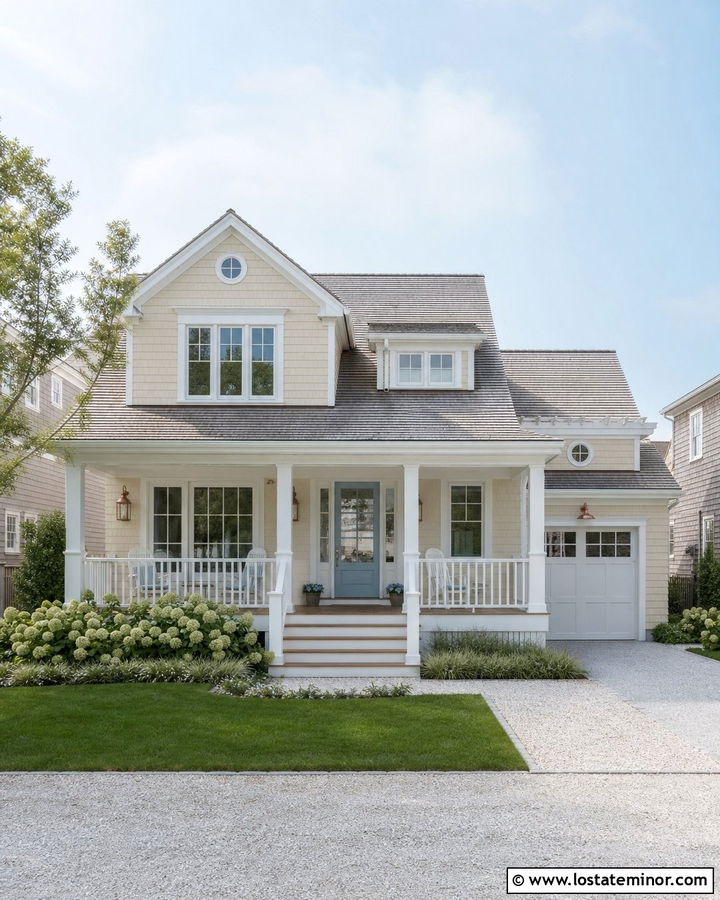
Copper lanterns bring changing color and natural character to a relaxed coastal facade. Start with pale sand shake siding, bright white trim, and a soft gray architectural-shingle roof. A sea-glass blue front door introduces a gentle coastal accent without turning the house into a themed design. Install copper lantern sconces beside the entry and a coordinating hanging lantern beneath the covered porch. The warm metal complements the sandy siding, while its developing patina can eventually echo the blue-green door. White porch railings and pale natural-wood decking keep the exterior airy. Add beach grasses, hydrangeas, crushed-shell pathways, and low evergreen shrubs around the foundation. The entire scheme feels light and breezy, yet the substantial lanterns give the entry enough visual weight to anchor the facade.
5. Sand Cape Cod House With White Globe Lights
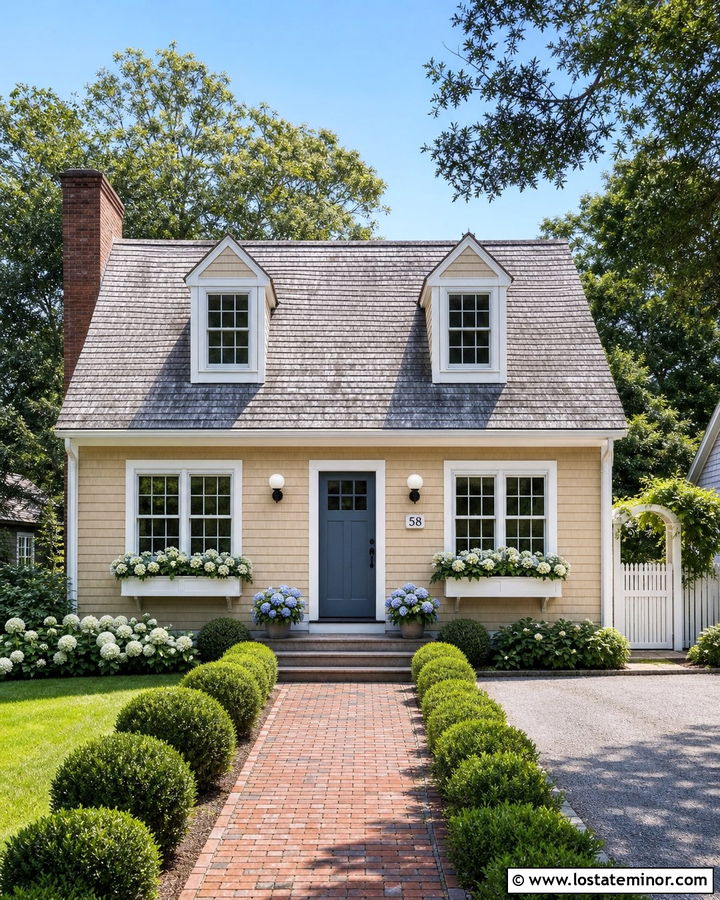
White globe fixtures create a simple, cheerful finish on a compact sand-colored Cape Cod. Choose soft sandy beige shingles, crisp white window trim, and weathered gray roofing. A muted blue-gray front door adds cool contrast while remaining understated. Place round white globe sconces beside the door and use a matching ceiling-mounted globe beneath the small entry portico. Because the fixtures blend with the trim, their curved shapes become the main visual feature rather than their finish. White window boxes, dormers, and porch rails help distribute the accent color across the facade. A brick walkway brings warmth back into the scheme, while hydrangeas and clipped boxwoods frame the entry. This balanced exterior looks approachable, uncluttered, and well suited to a smaller traditional home.
6. Sand Modern House With Up And Down Lights
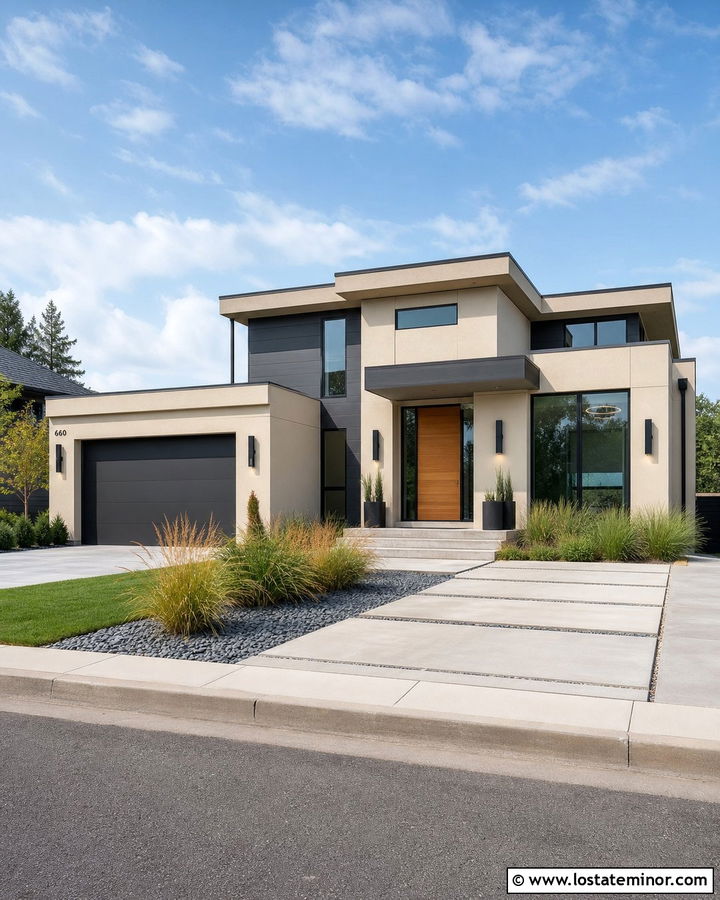
Slim up-and-down sconces emphasize the clean geometry of a sand-colored modern home. Use smooth warm sand stucco across the primary walls, then add charcoal fiber-cement panels around the garage and upper level. Black-framed windows, a flat roofline, and a natural cedar front door complete the contemporary palette. Position matte black cylinder lights beside the entrance, between garage bays, and along one prominent wall. The vertical beams produced by this fixture type can visually heighten broad stucco surfaces after sunset. Keep the placement symmetrical and avoid crowding every available section of wall. A concrete driveway, oversized pavers, decorative gravel, and sculptural grasses reinforce the streamlined design. The sand color softens the angular architecture, while the black fixtures provide enough contrast to make every elevation feel intentional.
7. Sand Mediterranean House With Iron Lanterns
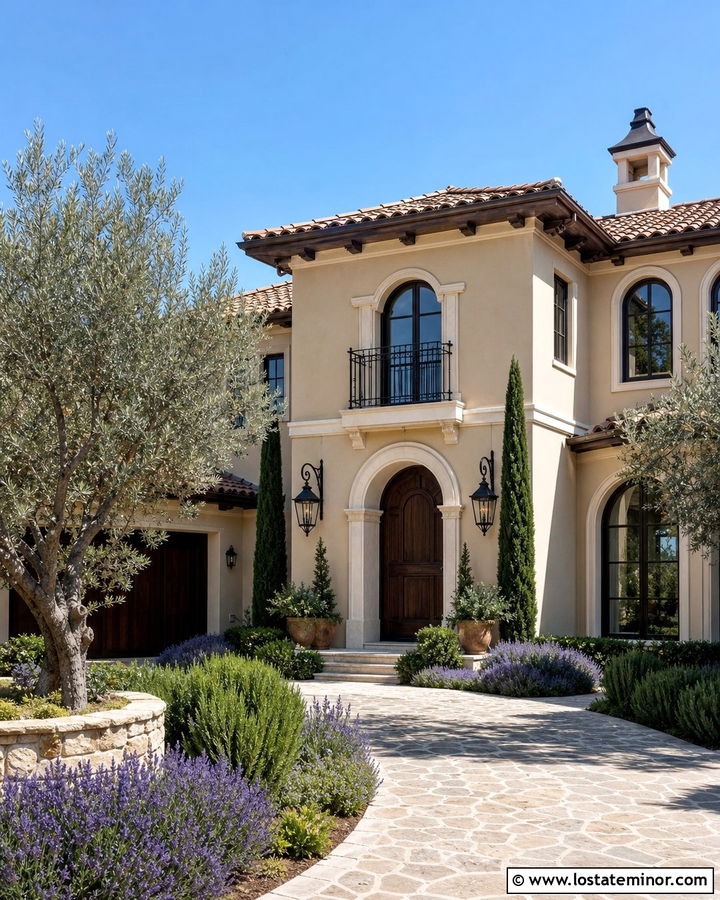
Large iron lanterns complement the arches, textured walls, and substantial roof of a Mediterranean sand house. Cover the exterior in warm sandy stucco and pair it with a red-brown clay tile roof. Dark walnut doors, bronze window frames, and cream limestone accents create a layered earth-tone palette. Oversized black iron lanterns can flank the arched entry, while a coordinating pendant hangs from the vaulted porch ceiling. Choose fixtures with clear or lightly seeded glass so their decorative frames remain visible. A smaller version can appear beside the garage without competing with the main entrance. Curved planting beds, olive trees, rosemary, lavender, and a warm stone walkway strengthen the natural setting. Together, the sandy walls and dark metalwork create a grand exterior that still feels relaxed and inviting.
8. Sand Ranch House With Seeded Glass Sconces
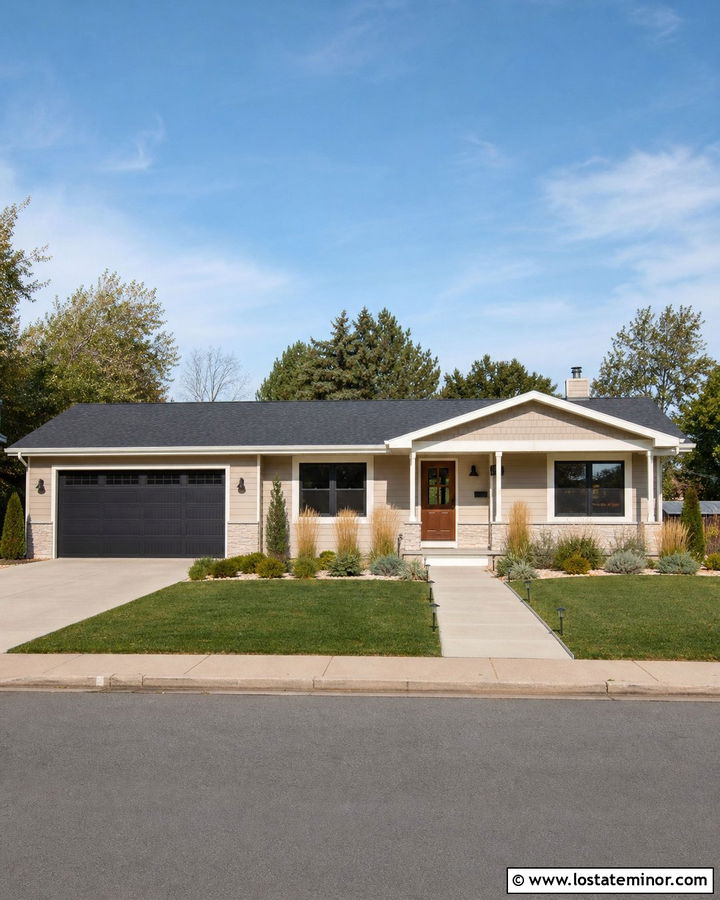
Seeded glass sconces offer subtle texture for a one-story ranch that needs an approachable update. Paint the horizontal siding a medium sandy beige and use warm white around the windows, fascia, and garage. A medium charcoal roof provides definition without overpowering the long, low facade. Install broad black sconces with seeded glass beside a stained wood front door and on both sides of the garage. The textured glass adds visual interest while preserving the ranch’s straightforward character. A low stone veneer skirt in cream and taupe can connect the wall color to the ground. Add a wide concrete walkway, simple foundation shrubs, and ornamental grasses to emphasize the horizontal lines. This scheme refreshes an older ranch without forcing contemporary elements onto architecture that is naturally modest and practical.
9. Sand Bungalow With Mission Light Fixtures
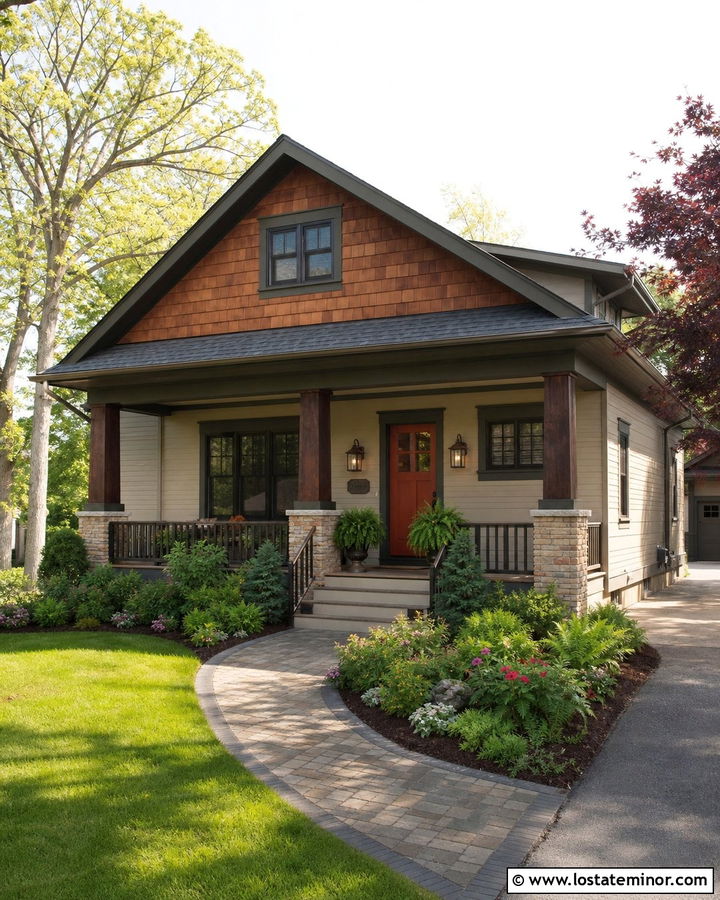
Mission-style fixtures echo the handcrafted details found on a classic bungalow. Select warm sand clapboard siding, deep olive trim, and natural cedar shingles beneath the front gable. The porch columns can feature dark-stained wood over square stone bases, creating a grounded entrance. Use bronze Mission sconces with geometric glass panels beside a rich russet front door. A coordinating hanging fixture works well above the center of the porch. Repeat the bronze finish on house numbers, mailbox details, and stair railings, but keep those supporting elements restrained. Cream and gray river rock around the foundation can pull the exterior colors together. Ferns, low evergreens, and a curved paver path complete the setting. The result feels authentic to bungalow architecture while giving the entire house a polished, cohesive appearance.
10. Sand Split-Level House With Cylinder Sconces
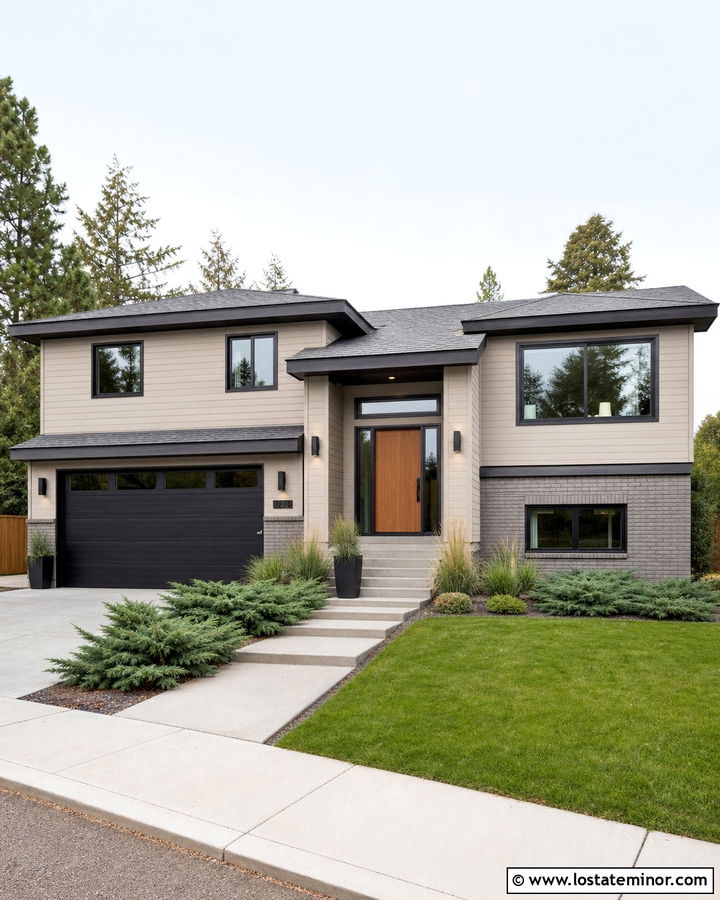
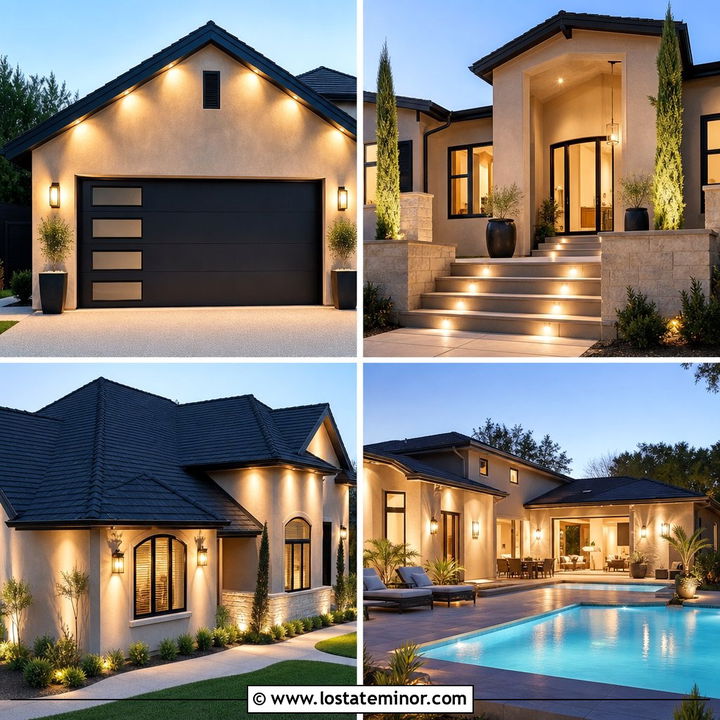
A split-level home benefits from lighting that visually connects its staggered sections. Use light sand siding on the upper level, warm gray brick below, and charcoal trim around the windows. A black garage door and medium oak front door add contrast at different points across the facade. Install streamlined black cylinder sconces beside the entrance and between the garage doors. Their vertical form helps counter the strong horizontal lines common to split-level architecture. A matching fixture near the upper-level windows can balance the taller side of the house when electrical placement allows. Keep landscaping low and organized with ornamental grasses, spreading junipers, and broad concrete steps. This complete update makes the exterior look more unified while allowing the original brick and practical split-level structure to remain recognizable.
11. Sand House With A Porch Pendant Light
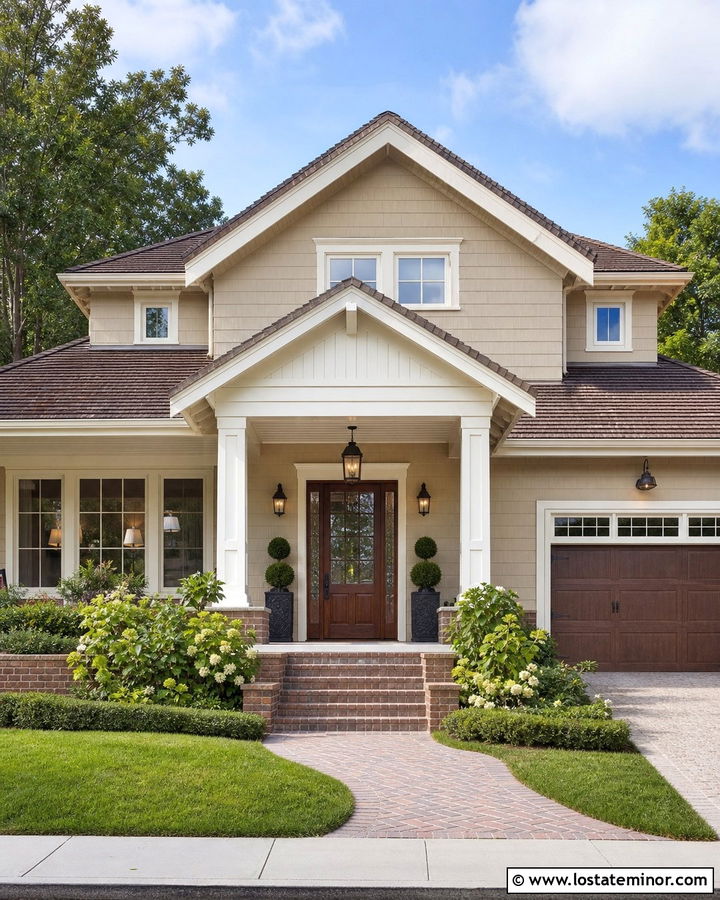
A substantial porch pendant can become the centerpiece of a sand-colored traditional home. Choose sandy beige lap siding, creamy white trim, and a medium brown shingle roof. Frame the porch with square white columns and add a stained mahogany front door for warmth. Hang one large black-and-brass pendant directly above the entry, making sure it does not interfere with the door swing or sightlines. Smaller coordinating wall lanterns can flank the doorway and repeat above the garage. A brick porch floor introduces texture and connects naturally with the beige siding. Keep the ceiling light in proportion to the covered area rather than selecting a small decorative fixture. Layered shrubs, flowering perennials, and a straight brick walkway complete a welcoming exterior that feels carefully planned from roofline to front steps.
12. Sand Contemporary House With Recessed Soffit Lights
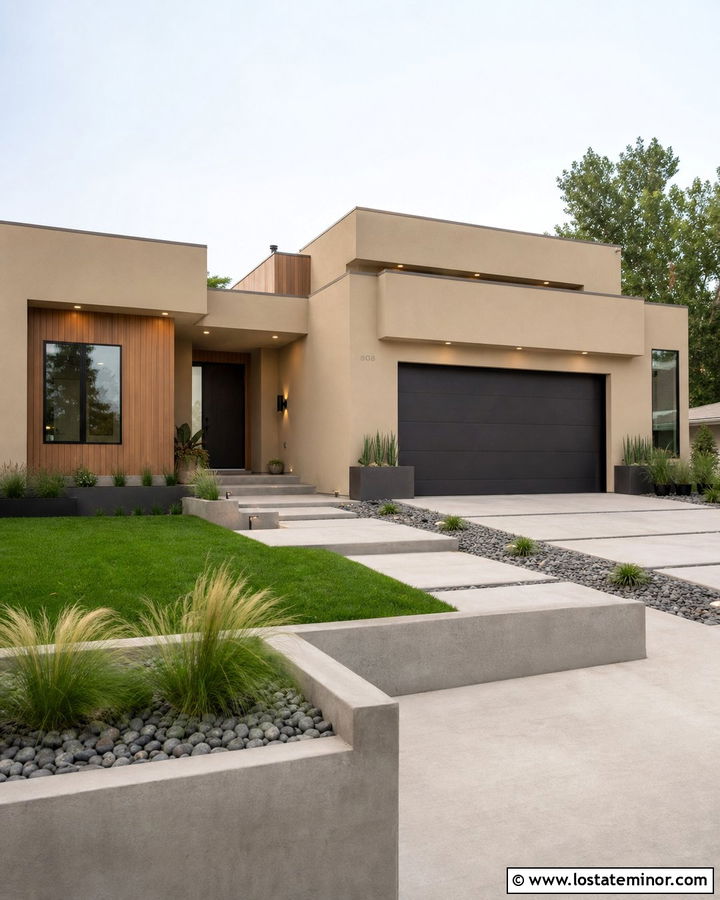
Recessed soffit lighting keeps a contemporary sand house visually clean while drawing attention to its structure. Use smooth pale sand stucco with white oak cladding around the entry and matte charcoal panels on the garage. Deep roof overhangs provide ideal locations for evenly spaced recessed fixtures. The housings should blend into the soffit rather than creating a row of obvious dark circles. Add one simple black wall sconce beside the oversized pivot door to identify the entrance. Large windows, flat roof sections, and a glass garage door strengthen the modern composition. Keep the landscape minimal with rectangular planters, broad concrete slabs, river rock, and neatly grouped grasses. The warm sand color prevents the home from appearing sterile, while concealed lighting preserves its uninterrupted lines and sophisticated curb appeal.
13. Sand Farmhouse With Gooseneck Garage Lights
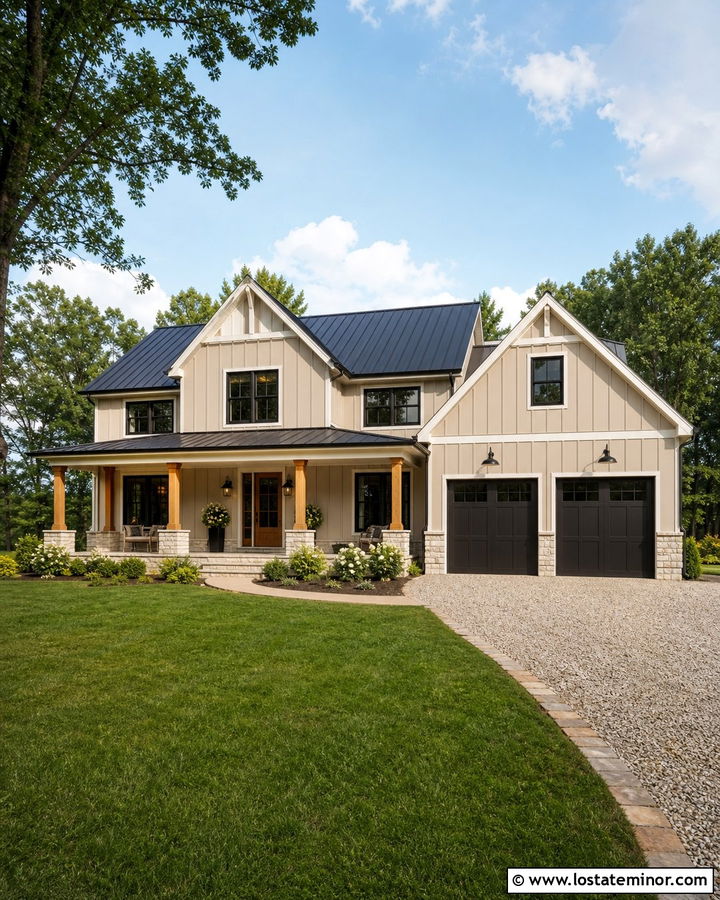
Gooseneck lights add practical character above the garage of a sand-colored farmhouse. Cover the home in light sand board-and-batten siding with warm white corner trim and a dark charcoal standing-seam roof. Use stained cedar on the porch ceiling, columns, and front door to soften the contrast. Three matte black gooseneck fixtures can be centered above a wide carriage-style garage door. Match them with simple black lanterns at the entry rather than using the same fixture everywhere. Black windows and gutters help connect both lighting shapes across the exterior. A pale stone foundation prevents the design from becoming overly graphic. Complete the setting with a gravel-edged driveway, flowering shrubs, and a broad farmhouse porch. The fixtures feel decorative, but their size and placement also suit the home’s practical agricultural influence.
14. Sand Colonial House With Post Lanterns
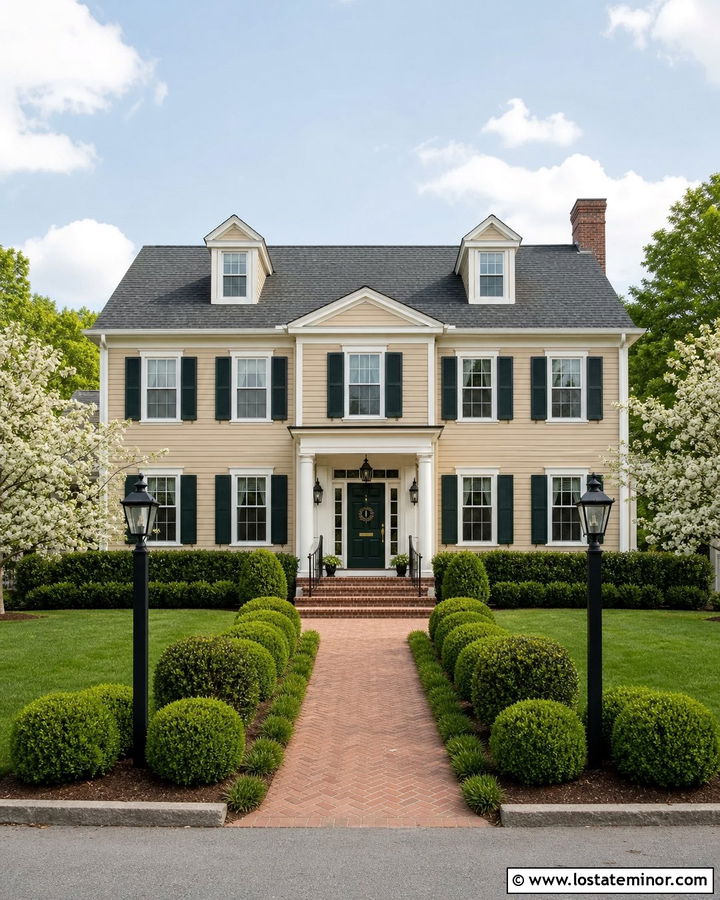
Post lanterns can give a formal sand Colonial a stronger connection to the street. Choose classic sandy tan siding, bright white trim, dark green shutters, and a charcoal roof. A glossy dark green front door ties the shutters to the center of the facade. Place traditional black lantern sconces on each side of the door, then add two matching post lights where the front walkway begins. The posts should frame the path without blocking the view of the house. Red brick steps and a herringbone walkway provide a timeless foundation for the warm neutral palette. Symmetrical boxwoods, small flowering trees, and balanced window plantings reinforce the architecture. Using one consistent lantern family across the entry and landscape helps the entire property feel organized rather than decorated in separate stages.
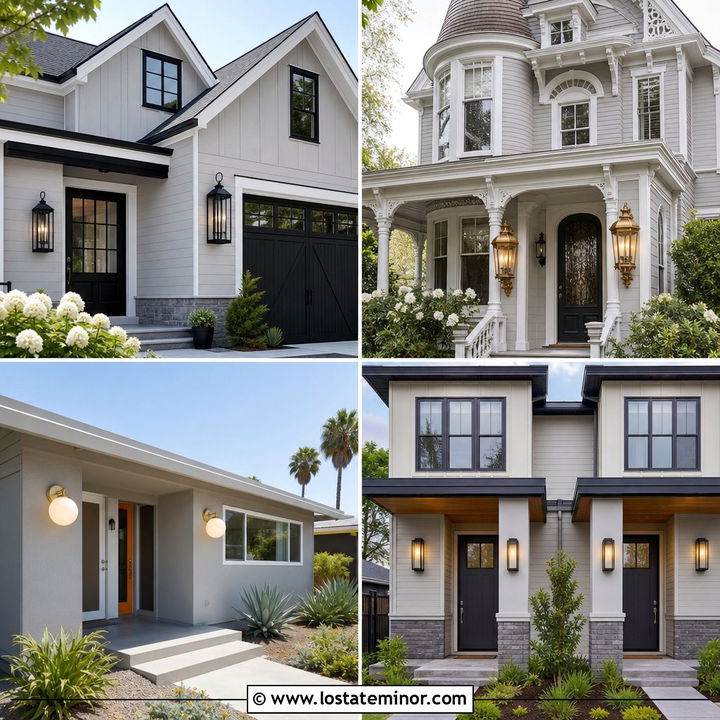
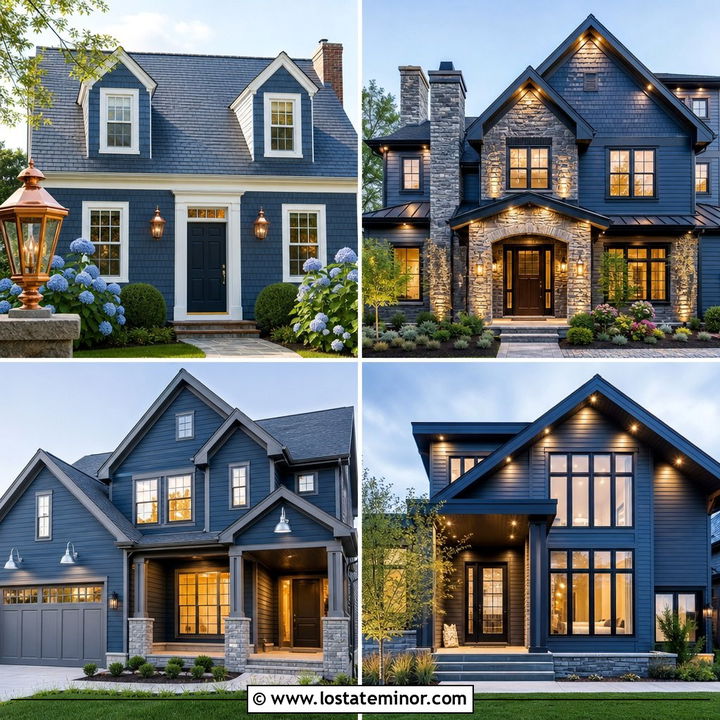
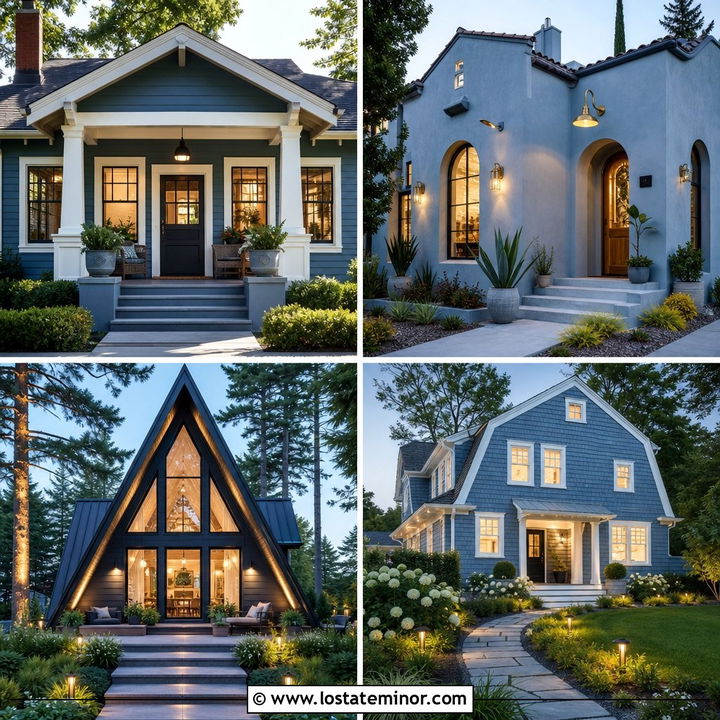
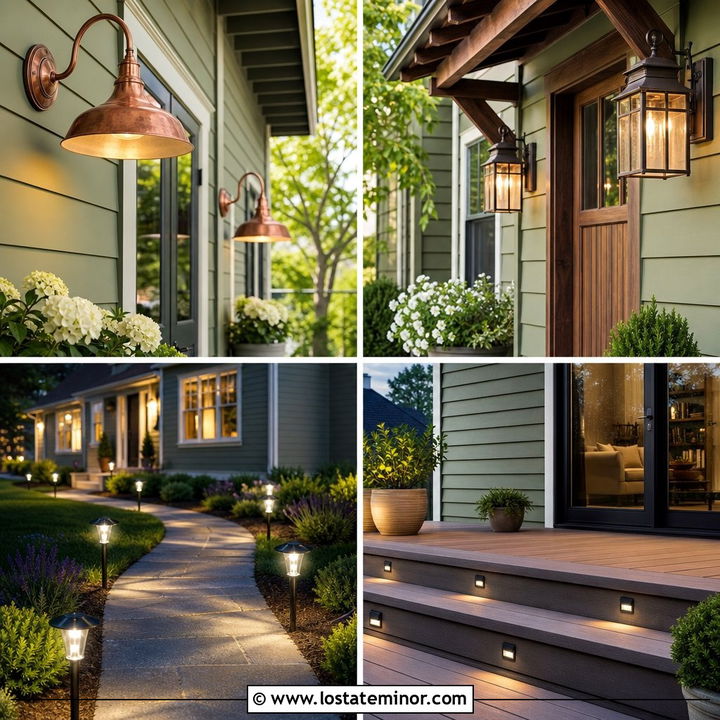
15. Sand Cottage With Path Light Fixtures
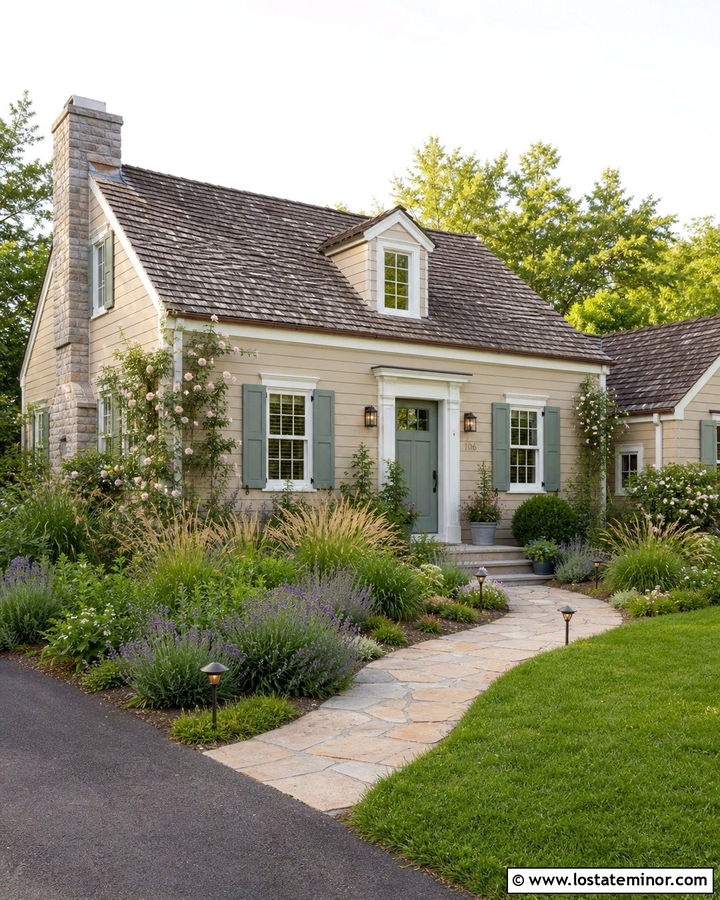
Low path lights create a welcoming approach to a small sand-colored cottage while allowing the house to remain the focal point. Use warm sandy clapboard siding, ivory trim, and a softly weathered brown roof. A dusty sage front door and matching shutters bring a natural color into the scheme. Choose small aged-bronze path fixtures that cast light downward onto a curved flagstone walkway. Pair them with compact bronze lanterns at the entry so the metals remain consistent. Avoid lining the path like a runway; stagger the lights among low plants for a softer arrangement. Climbing roses, lavender, ornamental grasses, and informal foundation shrubs enhance the cottage character. The complete design feels warm and layered, with lighting that supports safe movement while blending quietly into the garden and architecture.
16. Sand Stone House With Landscape Uplights
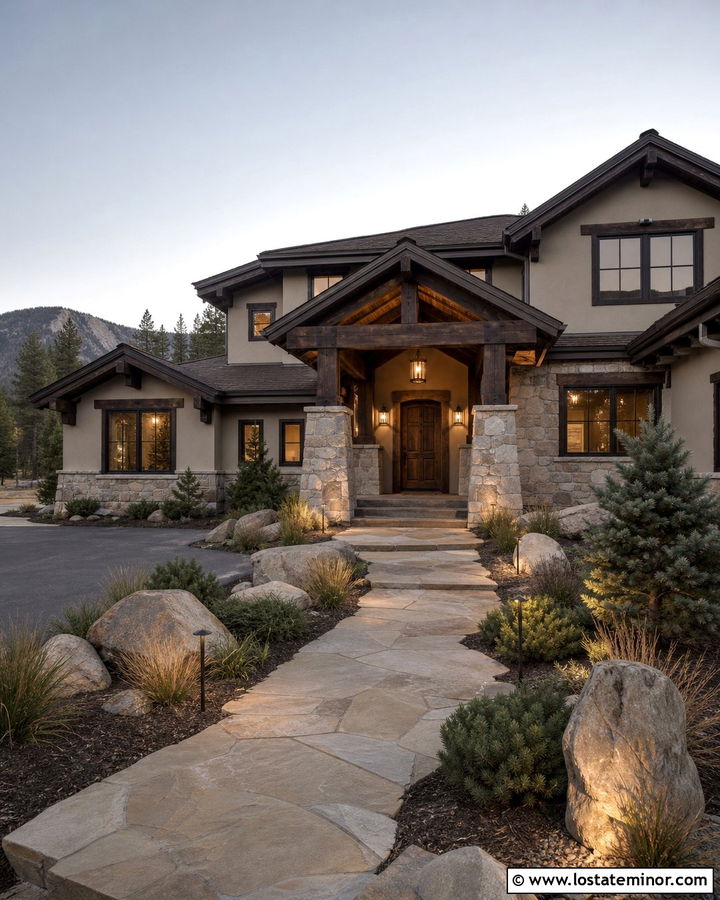
Landscape uplights can highlight the natural masonry of a sand-colored mountain home. Combine medium sand siding with cream, taupe, and gray stacked stone across the lower facade and chimney. Dark bronze trim, a deep brown roof, and a heavy timber porch give the exterior a grounded presence. Use compact bronze uplights near the stone columns and chimney, aiming them carefully so the textured surfaces receive gentle, even illumination. Matching shielded sconces beside the timber front door can identify the entrance without producing glare. Large windows and exposed beams strengthen the lodge-inspired architecture. Surround the house with native grasses, boulders, evergreen shrubs, and a wide stone walkway. The sand siding bridges the lighter stone and darker wood, helping every material appear connected within one natural exterior palette.
17. Sand House With Porch Step Lights
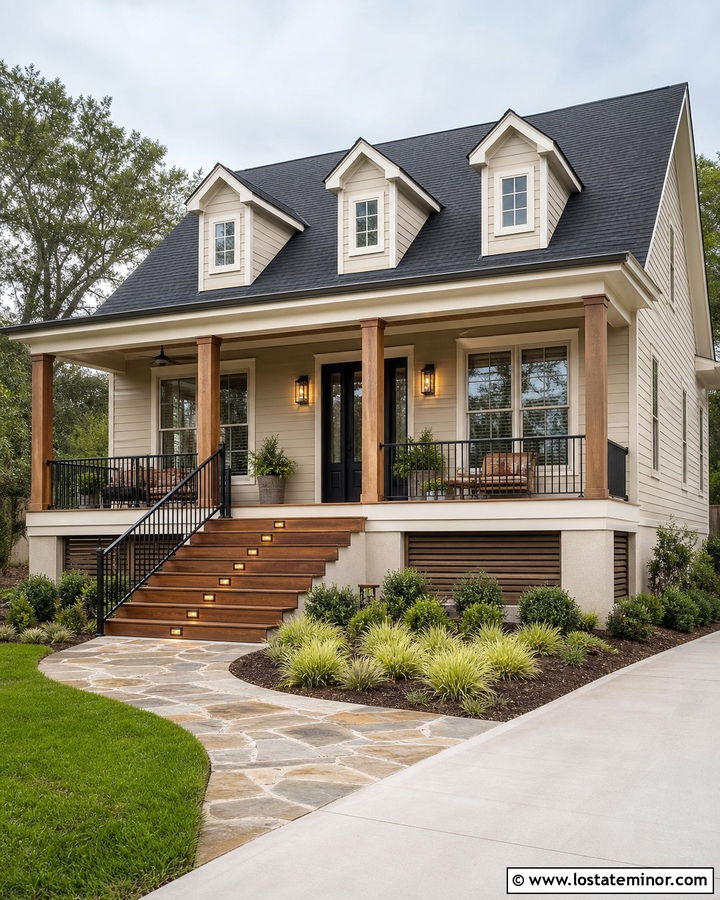
Integrated step lights improve the appearance and function of an elevated sand house porch. Start with soft sand lap siding, creamy trim, and a muted charcoal roof. Use natural cedar for the porch decking, stair treads, columns, and front door. Small rectangular bronze fixtures can be recessed into the stair risers, producing a clean detail without adding bulky hardware. Pair them with larger bronze-and-glass sconces on each side of the entrance. Black railings provide a subtle outline around the warm wood and beige siding. Keep the number of step lights appropriate to the width of the staircase so the arrangement looks balanced. Low shrubs, grasses, and a stone path can frame the porch. This layered scheme makes the front elevation feel finished while maintaining a comfortable, understated character.
18. Sand House With Under-Eave Light Fixtures
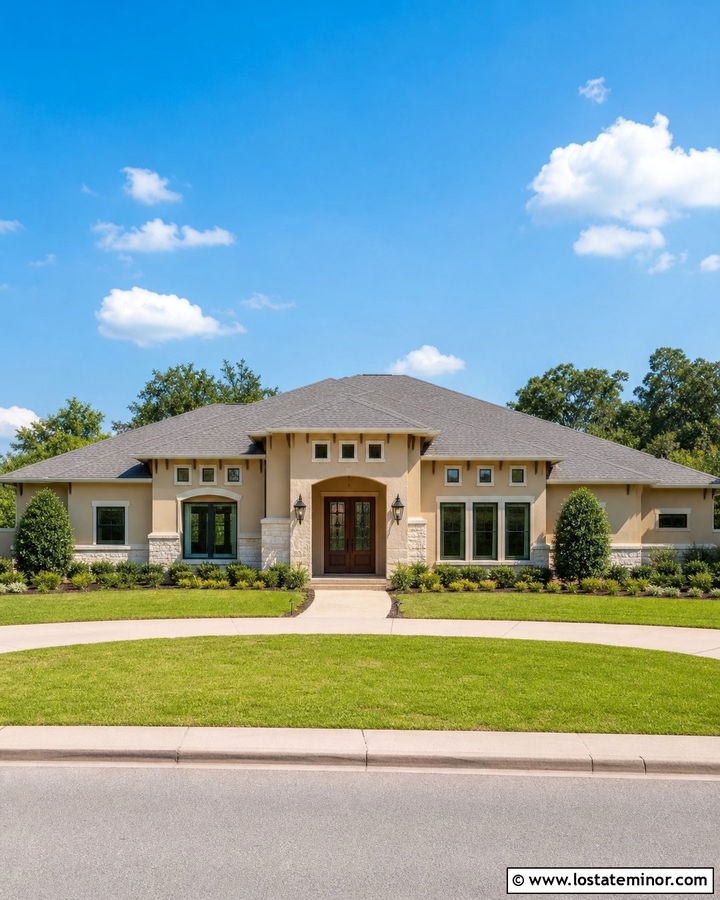
Under-eave fixtures can reveal the full shape of a wide sand house after sunset while remaining discreet during the day. Choose pale sandy beige siding, crisp cream trim, and a medium gray hip roof. This approach works particularly well on a spacious suburban ranch with deep overhangs. Use small directional fixtures beneath the eaves to wash selected walls rather than illuminating every inch of the facade. Add black lantern sconces beside a walnut front door and above the garage for visible decorative detail. Cream limestone around the entry introduces another warm texture. A broad lawn, symmetrical foundation plants, and a gently curved driveway support the house’s horizontal proportions. The hidden fixtures and decorative lanterns perform different roles, but matching dark finishes help them read as one coordinated exterior lighting plan.
19. Sand Desert House With Dark-Sky Fixtures
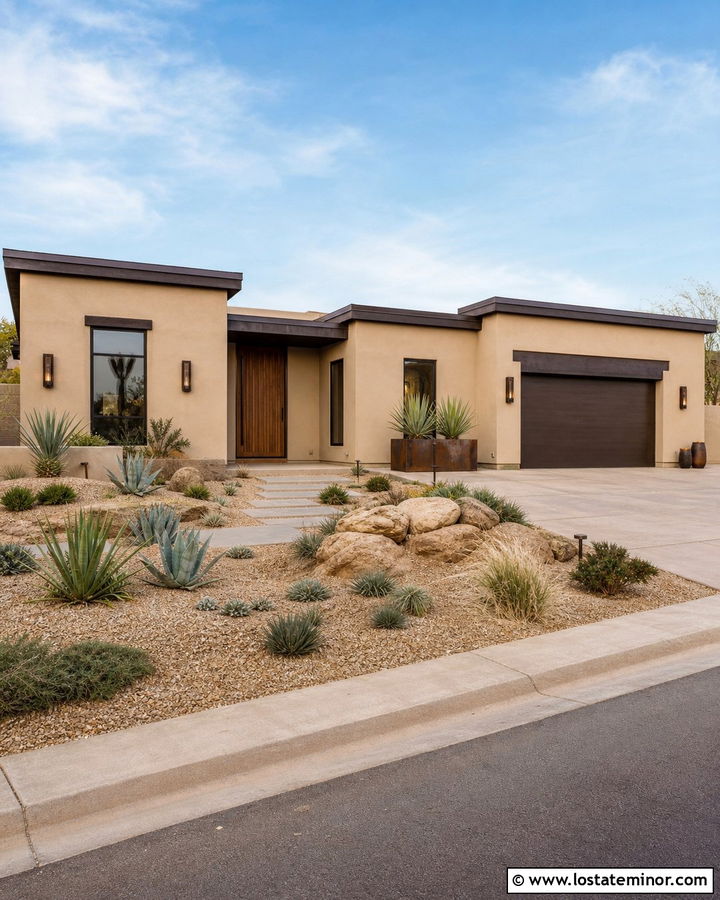
A desert-inspired sand house looks most natural with shielded fixtures that direct illumination toward the ground. Use warm desert sand stucco, weathered steel accents, and deep bronze window frames. A flat or low-sloped roof keeps the architecture closely connected to the landscape. Install simple dark bronze sconces beside the recessed wood entry and along the garage wall. Select covered designs that conceal the bulb and reduce unnecessary upward brightness. Add low path lights only at changes in elevation or direction. Rust-colored stone, gravel beds, agave, yucca, and drought-tolerant grasses reinforce the dry-climate palette. The sand exterior blends into its surroundings, while dark metal provides controlled definition. This restrained approach allows the house, landscaping, and lighting fixtures to work together without making the facade feel overlit or visually busy.
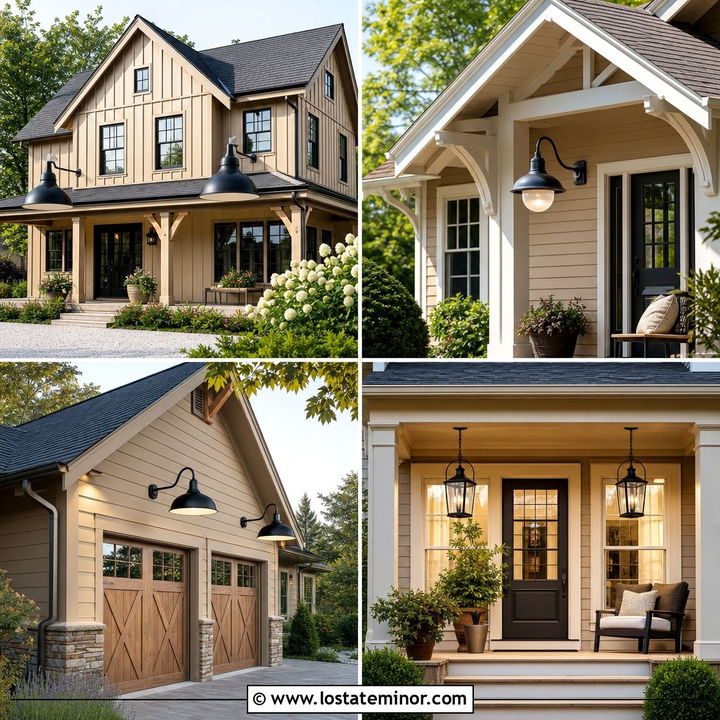
20. Sand Coastal House With Nautical Lanterns
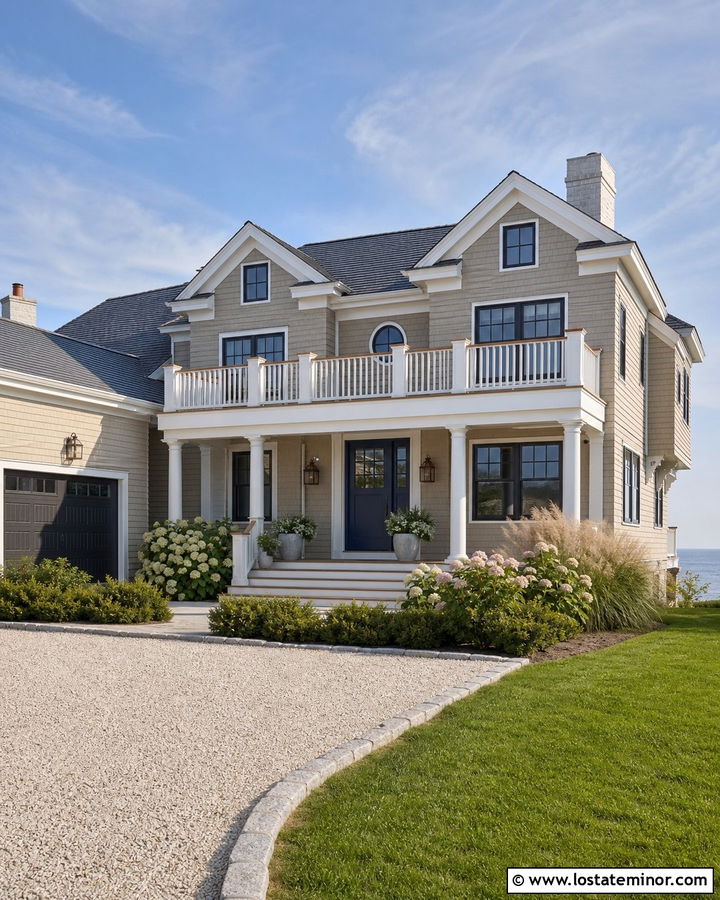
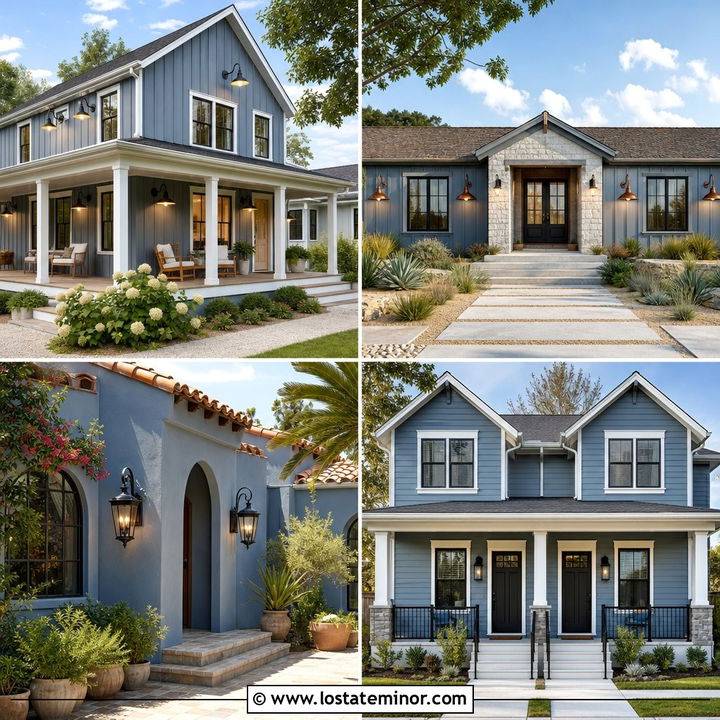
Nautical lanterns can support a coastal sand house when their maritime details remain simple. Use light sandy shingle siding, white trim, and a blue-gray roof. A rich navy front door supplies a confident focal point, while natural cedar appears on the porch decking and upper balcony. Mount weather-resistant bronze lanterns with clear glass beside the door and garage. A coordinating ceiling fixture can hang beneath the porch, but avoid repeating obvious nautical symbols around the exterior. White railings, black-framed windows, and pale stone steps keep the architecture crisp. Plant hydrangeas, beach grasses, and low junipers along a crushed-stone walkway. The bronze fixtures warm the cool coastal accents and connect with the cedar, resulting in a balanced exterior rather than a heavily themed beach-house display.
21. Sand Farmhouse With An Outdoor Chandelier
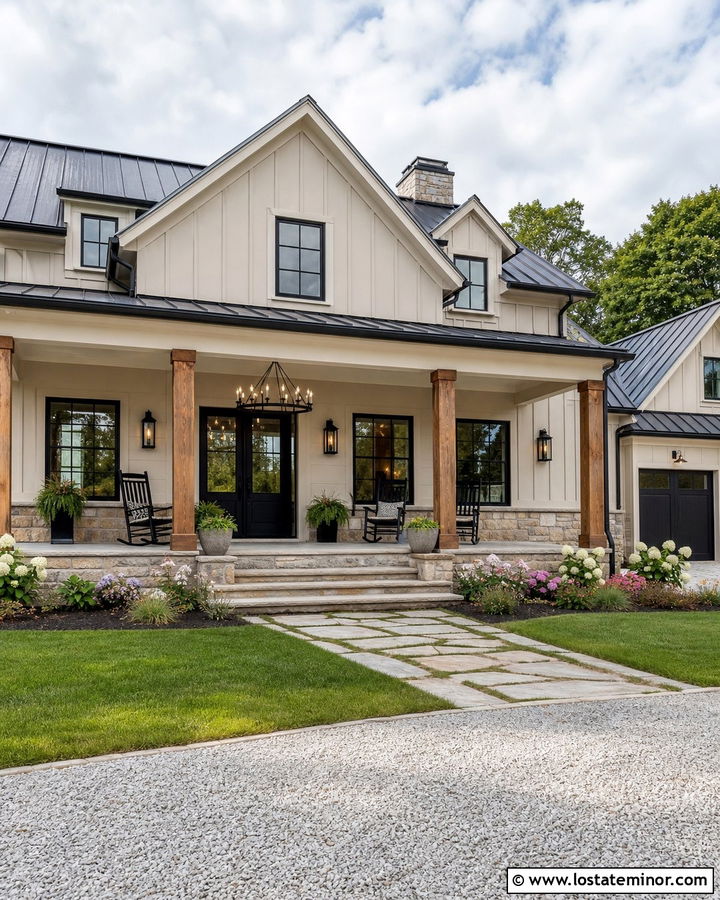
An outdoor chandelier gives a deep farmhouse porch a clear visual center. Choose warm sand horizontal siding, creamy white board-and-batten gables, and a black metal roof. Thick cedar posts and a matching front door add organic contrast. Hang a large black iron chandelier above the porch seating area, leaving comfortable clearance beneath the fixture. Use coordinating black wall lanterns beside the entrance and garage to distribute the finish across the facade. A pale limestone skirt can soften the transition between the siding and foundation. Black-framed windows provide another repeated detail without overwhelming the sand color. Add rocking chairs, simple planters, flowering shrubs, and a wide flagstone path. The chandelier should complement the house’s scale, making the porch feel like a true outdoor room instead of an undecorated passageway.
22. Sand Mid-Century House With Globe Sconces
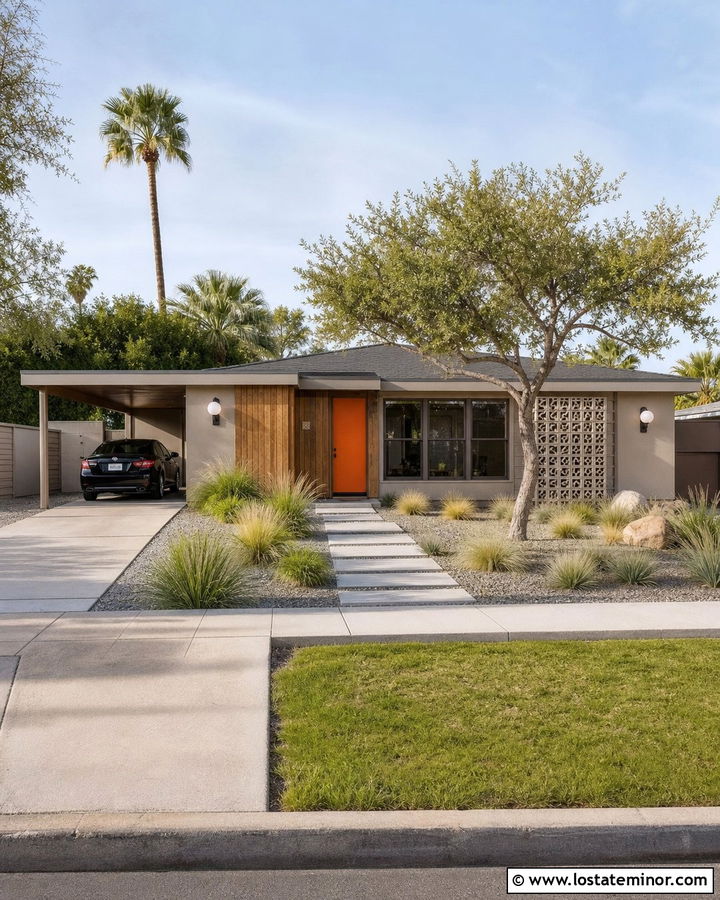
Globe sconces add period-appropriate curves to a low-profile mid-century sand house. Use smooth warm sand stucco with horizontal cedar siding around the recessed entry. Dark bronze window frames, a low charcoal roof, and a muted orange front door create an earthy retro palette. Place opal glass globe sconces on compact bronze bases beside the door and along the carport wall. Their round shape offers a pleasing contrast to the home’s flat planes and strong horizontal lines. Keep additional ornament minimal so the fixtures remain distinctive. A breeze-block screen can add texture near the entrance without changing the restrained color scheme. Finish the landscape with broad concrete pavers, decorative gravel, sculptural grasses, and one small ornamental tree. The complete exterior feels authentic, warm, and refreshed rather than artificially retro.
23. Sand Tudor House With Leaded Glass Lanterns
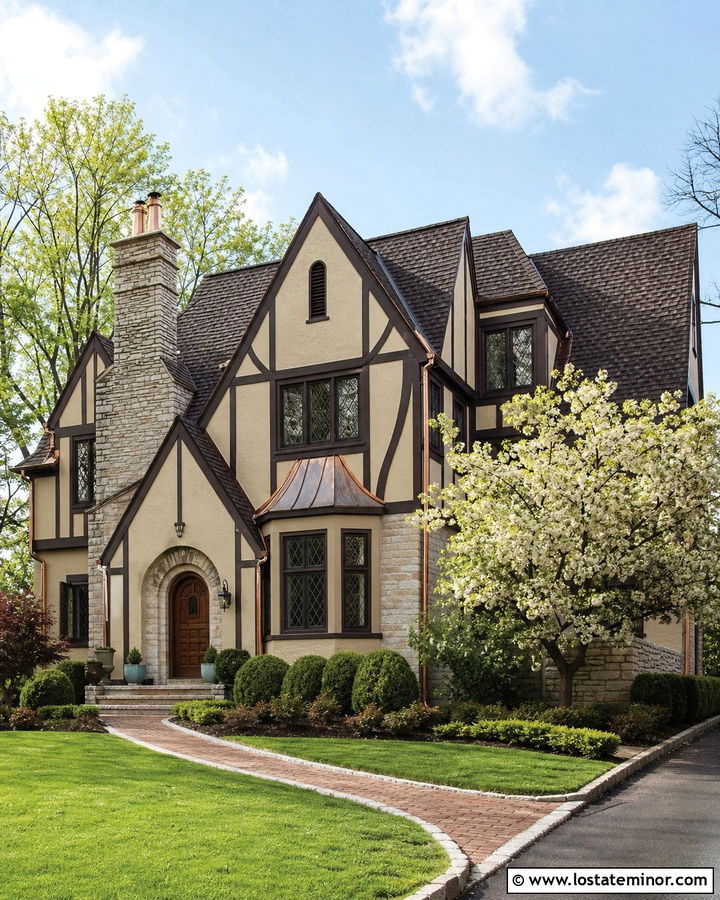
Leaded glass lanterns echo the detailed windows and steep rooflines of a sand-colored Tudor. Apply sandy beige stucco between dark brown half-timbering, then use warm cream stone around the arched entry. A deep brown roof and stained oak front door maintain the traditional palette. Install blackened bronze lanterns with simple leaded glass beside the entrance and on the garage elevation. The fixture pattern should complement the windows without copying them too closely. Copper gutters can introduce a material that will age gracefully alongside the dark trim. Keep foundation plants controlled so the distinctive architecture remains visible from the street. A curved brick walkway, clipped yews, and one flowering tree complete the setting. The sand walls brighten the historically dark style while preserving its familiar handcrafted character.
24. Sand French Country House With Curved Sconces
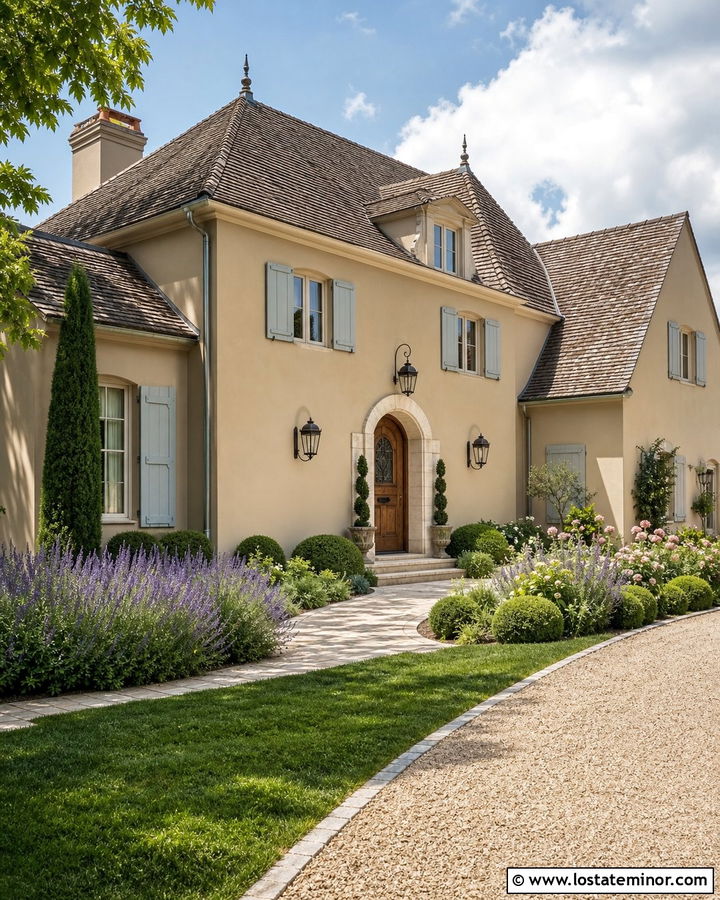
Curved lantern sconces soften the stonework and steep roof of a French country sand house. Use warm sand stucco with cream limestone around the windows, entry, and lower facade. A weathered brown roof, pale blue-gray shutters, and an arched oak door create a relaxed European-inspired palette. Mount generously sized bronze sconces with curved arms beside the entrance. Smaller coordinating fixtures can appear near the garage, but the doorway should receive the most decorative pair. A hanging lantern beneath a recessed porch provides another layer without introducing a different finish. Curved planting beds filled with lavender, roses, and clipped shrubs reflect the shape of the entry. The beige walls, soft blue accents, masonry, and aged bronze work together to make the substantial exterior feel warm rather than formal or imposing.
25. Sand Prairie House With Geometric Sconces
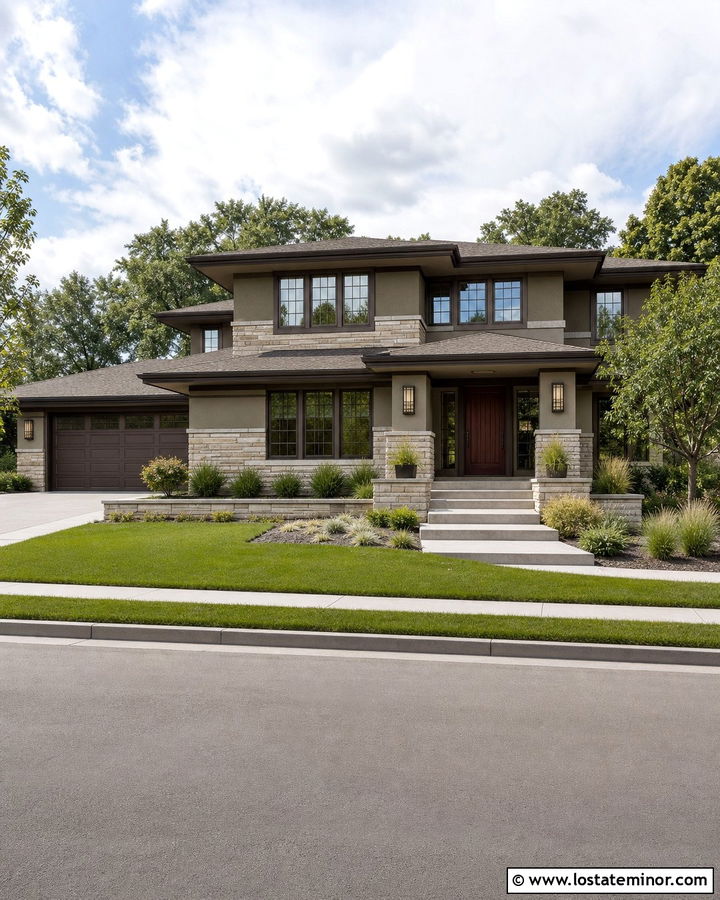
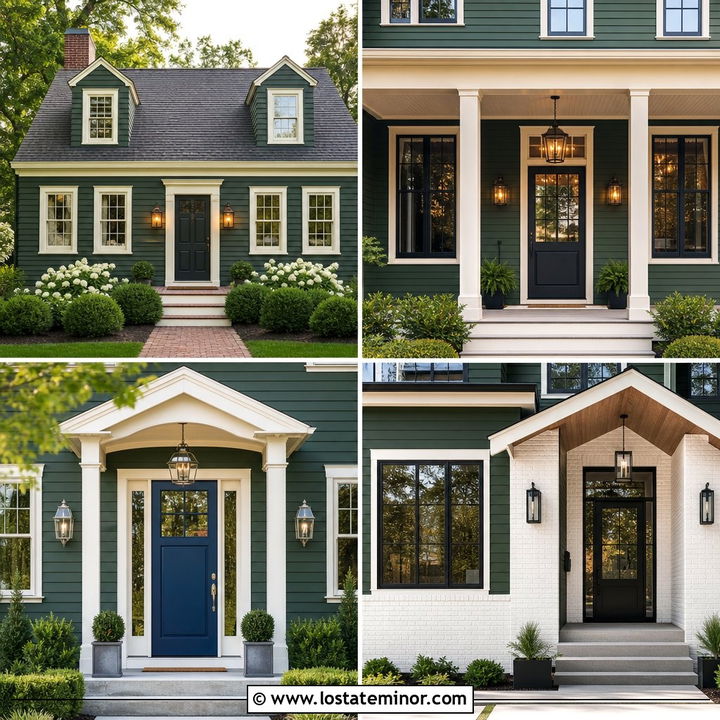
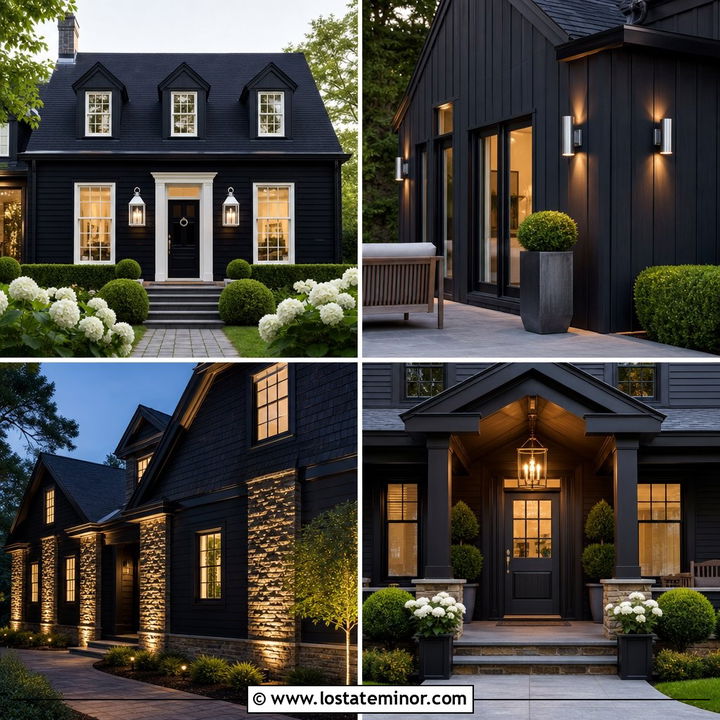
Geometric sconces reinforce the long horizontal lines of a Prairie-style sand house. Select medium sand stucco, deep brown trim, and bands of natural stone in warm gray and tan. A broad low-pitched roof with extended eaves establishes the architectural shape. Use rectangular bronze sconces with amber or frosted glass beside the front door and between garage bays. Their clean grid design can relate to divided-light windows without becoming overly ornate. A rich mahogany door adds depth at the center of the facade. Wide concrete steps, low masonry walls, and linear planting beds continue the horizontal emphasis into the landscape. Choose grasses, spreading shrubs, and compact trees rather than tall foundation plants. This complete scheme feels grounded and intentional, with lighting that follows the house’s geometry instead of competing against it.
26. Sand House With Black And Brass Fixtures
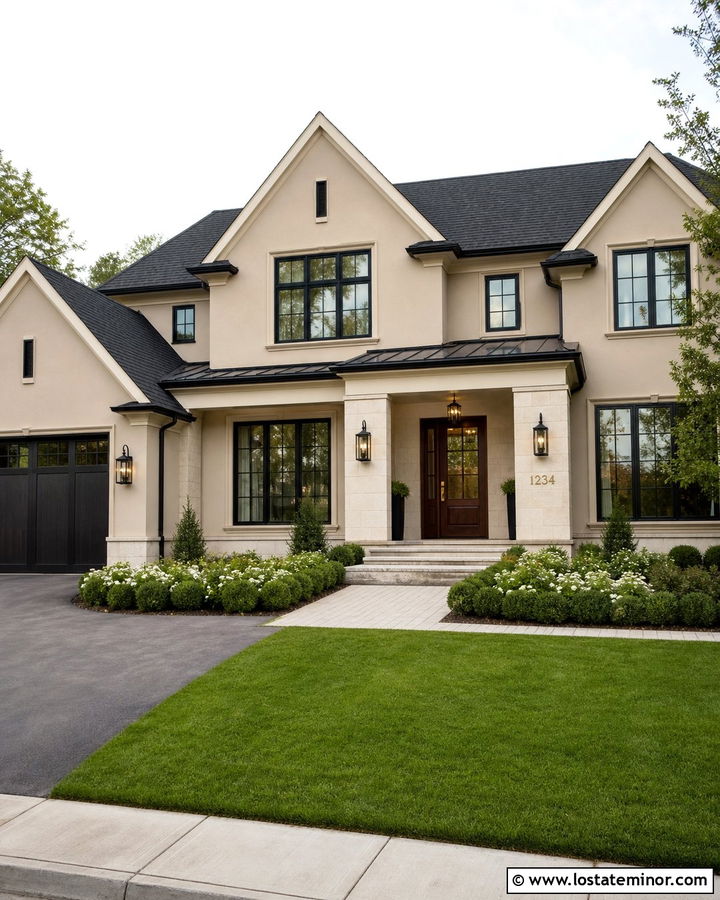
Mixing black and brass can add depth to a sand house when each finish has a clear role. Use light sand siding, creamy trim, black windows, and a charcoal roof as the architectural foundation. Place black lantern bodies beside the entry and garage, then choose fixtures with small aged-brass caps, sockets, or interior details. Repeat brass on the door handle and house numbers while keeping larger elements, such as gutters and railings, black. A medium walnut front door prevents the palette from feeling too sharp. Pale stone porch columns introduce texture without adding another strong color. Symmetrical shrubs, white flowers, and a straight paver walkway complete the polished facade. The controlled metal combination feels collected and upscale because the brass works as a limited accent rather than a competing primary finish.
27. Sand House With Brushed Nickel Light Fixtures
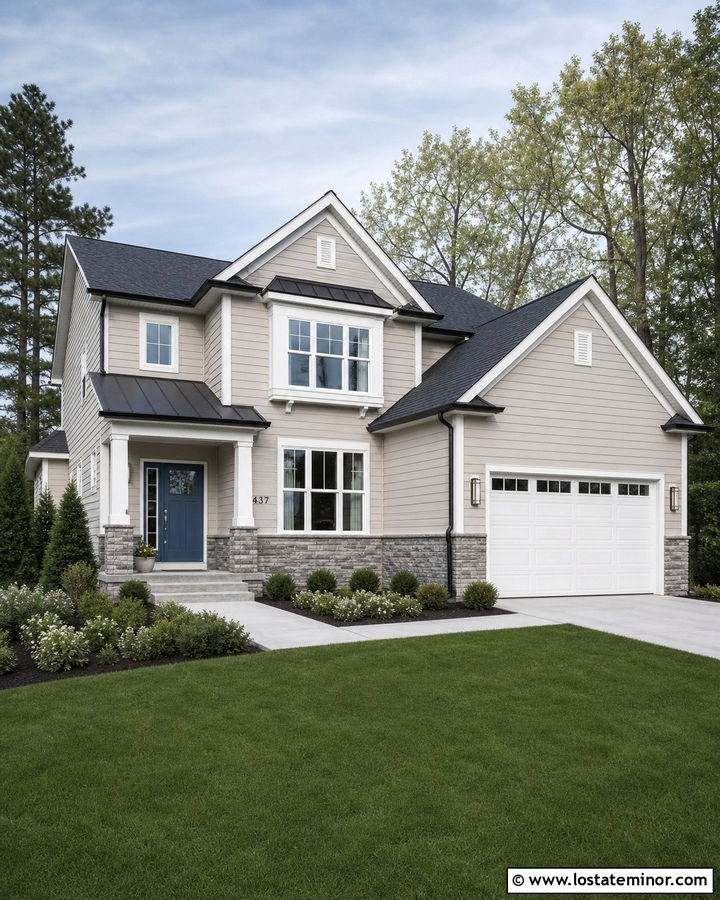
Brushed nickel fixtures provide a cool, understated contrast on a pale sand contemporary home. Choose soft greige-sand siding, bright white trim, and a slate-gray roof. Silver-gray stone around the garage and entry can connect the fixture finish to the architecture. Use simple brushed nickel sconces with frosted glass beside a medium blue front door. Similar fixtures above the garage should have clean rectangular forms rather than ornate traditional frames. White window frames keep the facade bright, while charcoal gutters outline the roof without introducing excessive black. A smooth concrete driveway, rectangular walkway, and organized evergreen landscaping support the crisp palette. This approach is especially useful when the house already contains cool roofing or stone. The sandy body color adds enough warmth to prevent the silver-toned details from feeling clinical.
28. Sand House With Bronze Fixtures And Cedar Accents
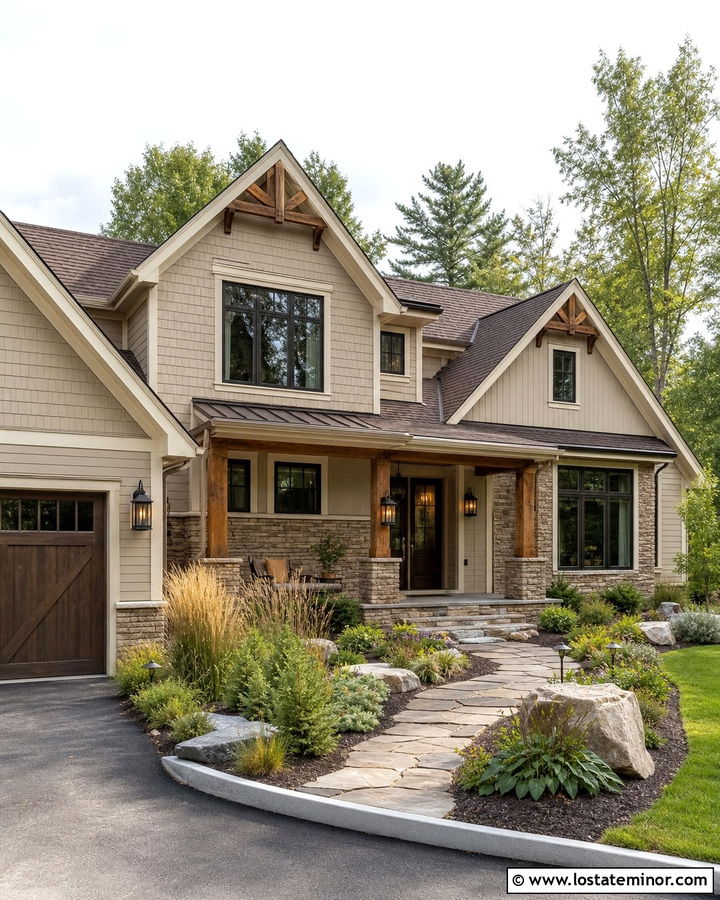
Bronze fixtures and cedar accents create a naturally layered look against sand-colored siding. Use warm sand fiber-cement lap siding with cream trim and a dark brown architectural-shingle roof. Add cedar beneath the front gable, around the garage door, and on the porch columns. Deep bronze window frames help bridge the dark roofing and warm wood. Install broad bronze lanterns beside the front door and garage, choosing clear glass and simple frames. A cream-and-taupe stone foundation adds another organic texture without breaking the quiet palette. Keep the cedar stain medium rather than orange so it remains harmonious with the beige siding. Native grasses, evergreen shrubs, boulders, and a curved flagstone walkway complete the exterior. Every material feels connected, giving the house warmth without relying on a bold painted accent.
29. Sand House With White Light Fixtures
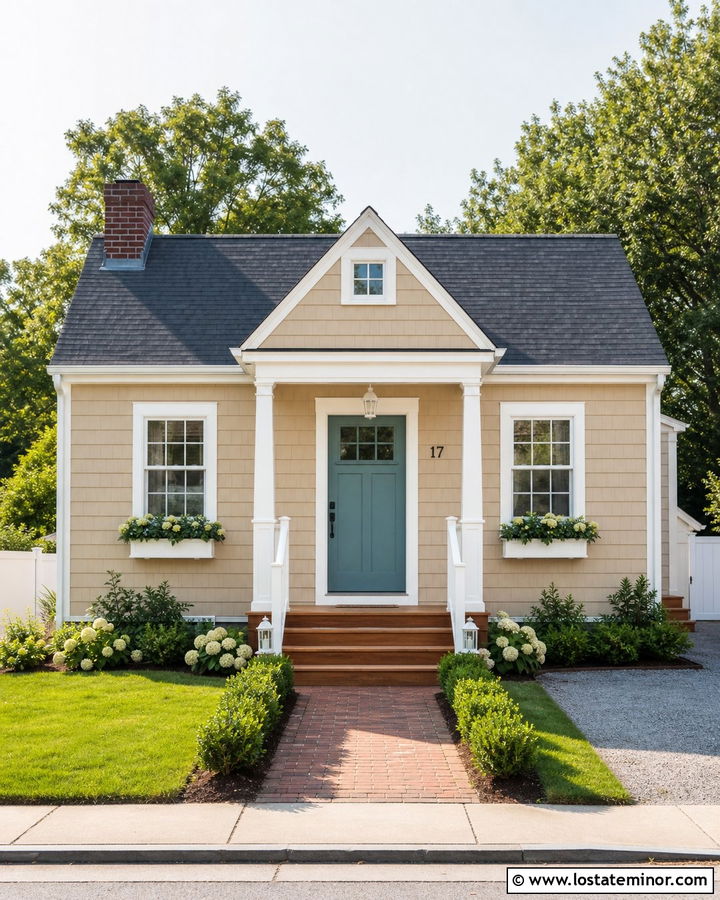
White fixtures can make a small sand house appear brighter and less visually crowded. Choose soft golden-sand siding, crisp white trim, and a medium gray roof. Use streamlined white lanterns beside a cheerful muted teal front door and above a single garage. Since the fixtures blend into the trim, select versions with clear outlines and enough height to remain noticeable. White porch columns, window frames, and railings distribute the finish evenly around the facade. Natural wood porch decking adds warmth beneath the lighter palette, while a narrow brick walkway introduces subtle red-brown variation. Frame the house with hydrangeas, boxwoods, and a neatly maintained lawn. The result feels fresh and approachable. It is an effective combination for cottages, starter homes, and compact suburban properties with limited wall space around the entrance.
30. Sand House With Layered Exterior Lighting
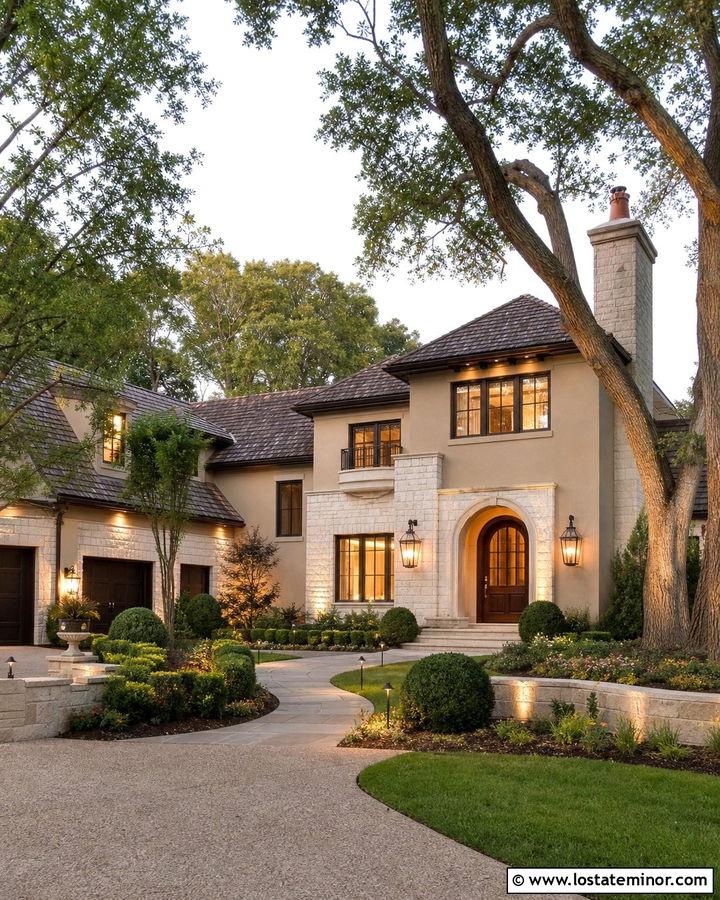
Layered lighting gives a large sand house depth by combining decorative and discreet fixtures. Start with warm sand stucco, creamy stone accents, dark bronze windows, and a weathered brown roof. Use large bronze lanterns at the front door, smaller matching sconces near the garage, recessed lights beneath the porch, and shielded path fixtures along the walkway. Carefully aimed uplights can emphasize stone columns and one mature tree without washing the entire property in brightness. Keeping the fixture finish consistent prevents the different lighting types from feeling disconnected. Warm exterior lighting is especially flattering to beige, cream, stone, wood, bronze, and copper palettes. () Layering also allows each fixture to handle a specific task while supporting the home’s complete architectural composition and welcoming curb appeal.
Conclusion:
The strongest 30 Sand House Design With Light Fixtures Ideas coordinate far more than siding and wall sconces. Roofing, trim, doors, masonry, windows, landscaping, and fixture finishes should support one complete exterior palette. Black provides sharp contrast, while bronze, brass, and copper enhance the warmth of sandy beige. White and brushed nickel can create a lighter or cooler result. Fixture shape should also respect the architecture, whether the home is a ranch, Colonial, bungalow, farmhouse, or contemporary build. Finally, combine decorative entry lights with practical garage, pathway, step, or landscape lighting where needed. This balanced approach produces a sand-colored house that looks attractive, functional, and thoughtfully finished from the curb.

Related posts: