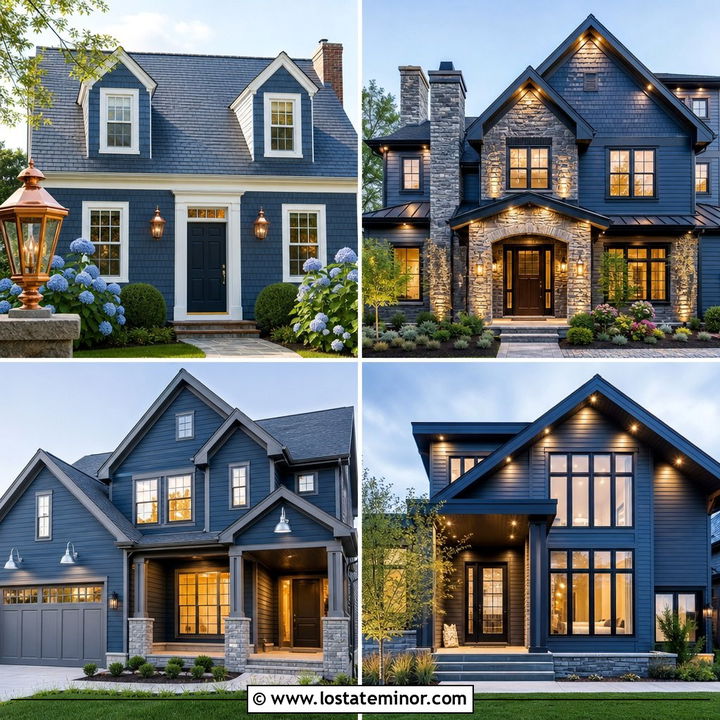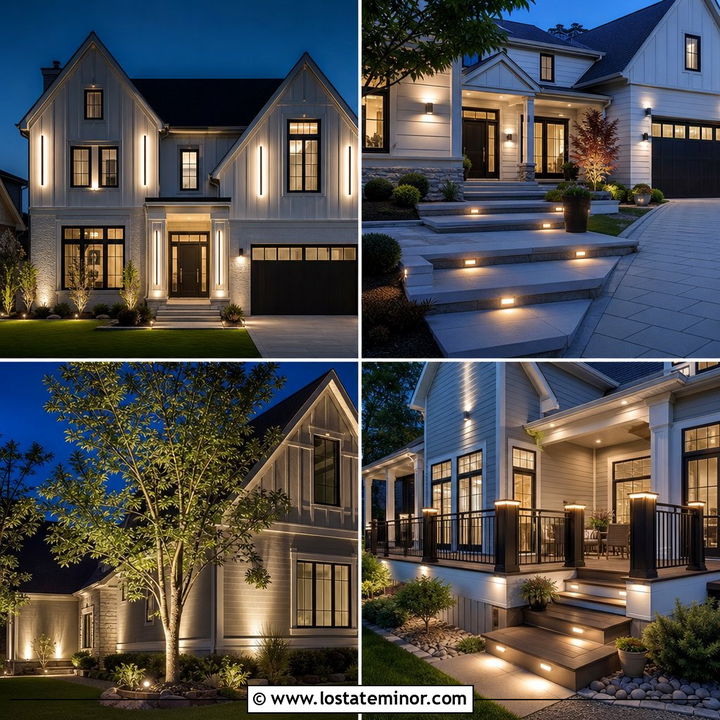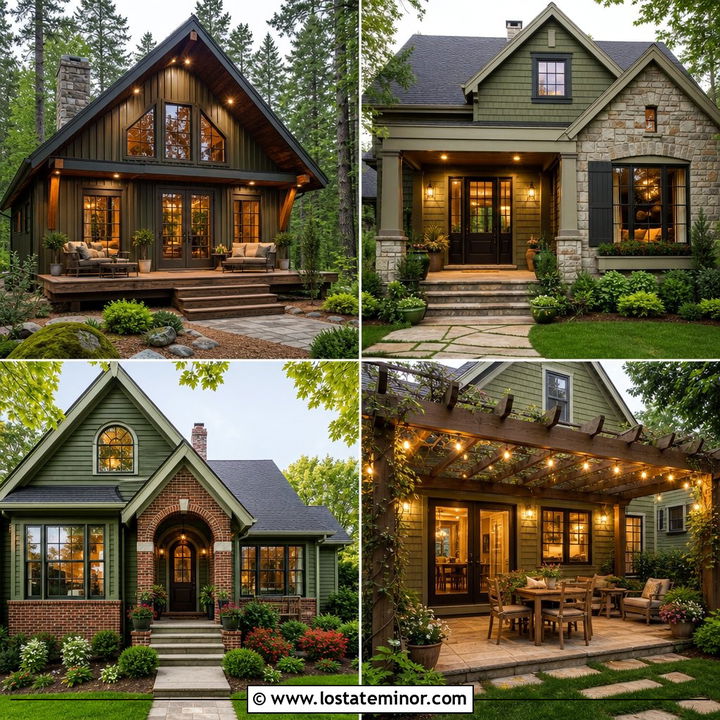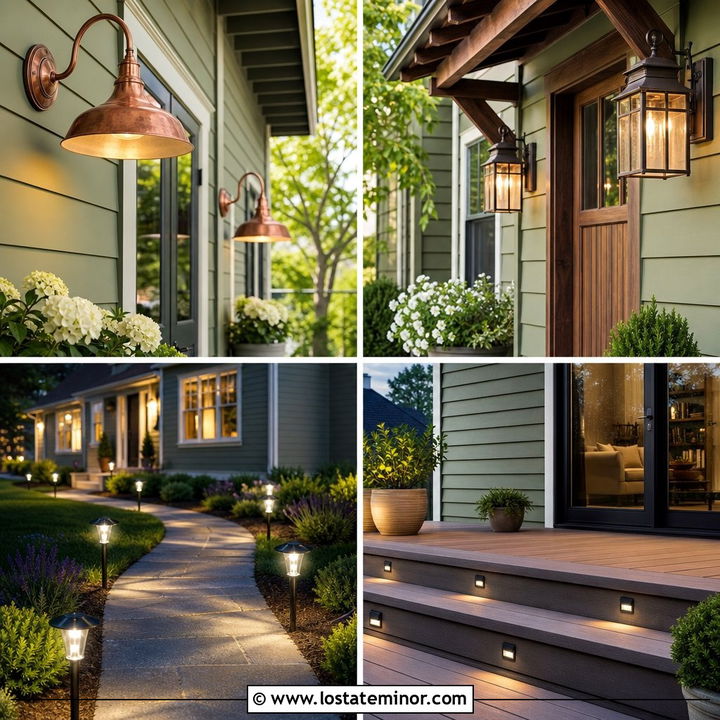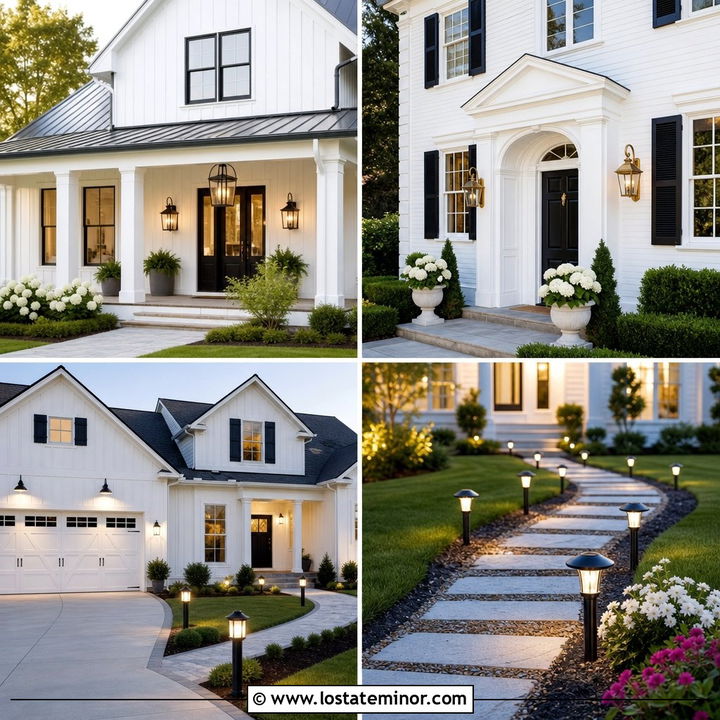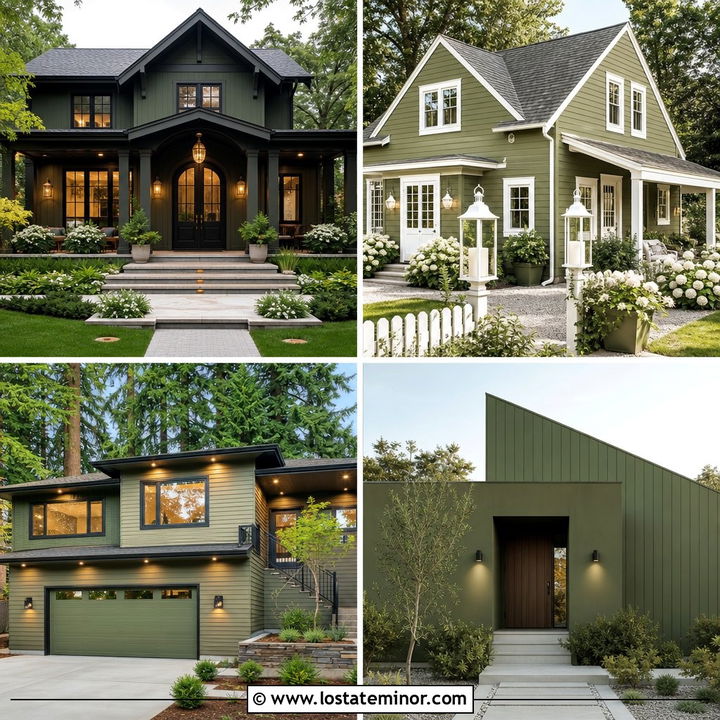
Dusty blue gives a home’s exterior a calm, welcoming character without feeling overly cool or predictable. The color sits comfortably between blue and gray, so it works with crisp white trim, natural wood, charcoal roofing, brick, and stone. Thoughtful exterior lighting makes this versatile shade even more appealing. Black lanterns can create sharp contrast, while brass, bronze, and copper fixtures add warmth. Layering porch lights with pathway, garage, and landscape lighting also creates a polished look across the entire property. The key is treating the siding, trim, materials, and fixtures as one coordinated design. The complete exterior combinations below offer practical inspiration for anyone exploring **30 Dusty Blue House Design With Lighting Ideas**.

1. Dusty Blue Craftsman With Black Lanterns
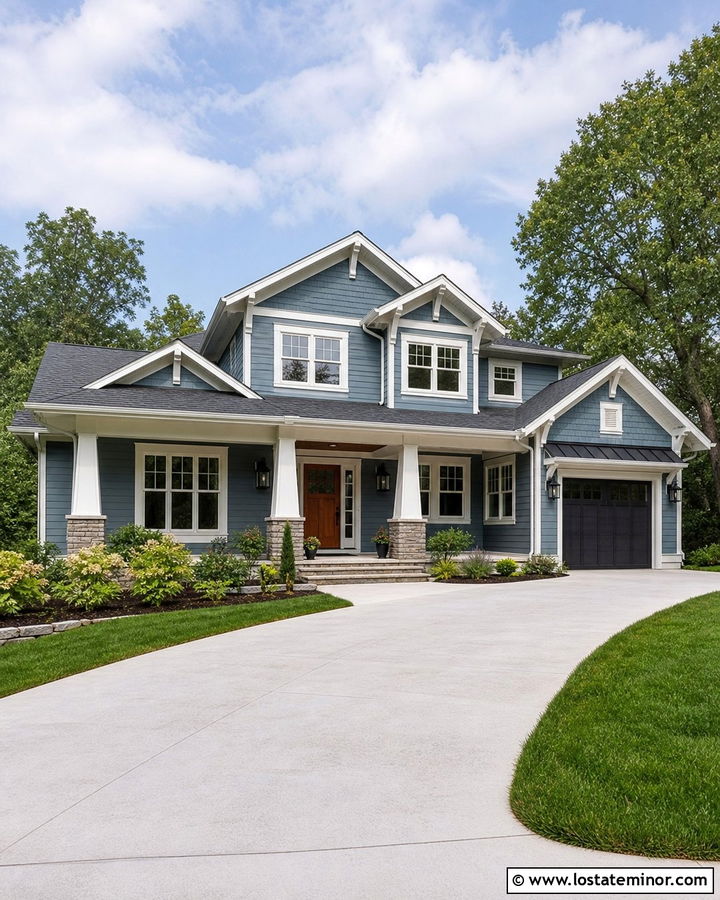
A dusty blue Craftsman feels balanced when strong black fixtures frame its most important architectural features. Choose muted blue-gray lap siding, creamy white trim, and a medium charcoal roof. Large black lantern sconces beside the front door establish a clear focal point without competing with tapered porch columns. Repeat that finish on the railings, house numbers, and garage hardware for continuity. Natural cedar on the door and porch ceiling keeps the cool siding from looking flat. Low path lights can softly define a stone walkway and layered planting beds. Select lanterns that are substantial enough for the broad Craftsman facade. Small fixtures may disappear against wide columns, deep eaves, and textured siding.
2. Dusty Blue Farmhouse With Gooseneck Lights
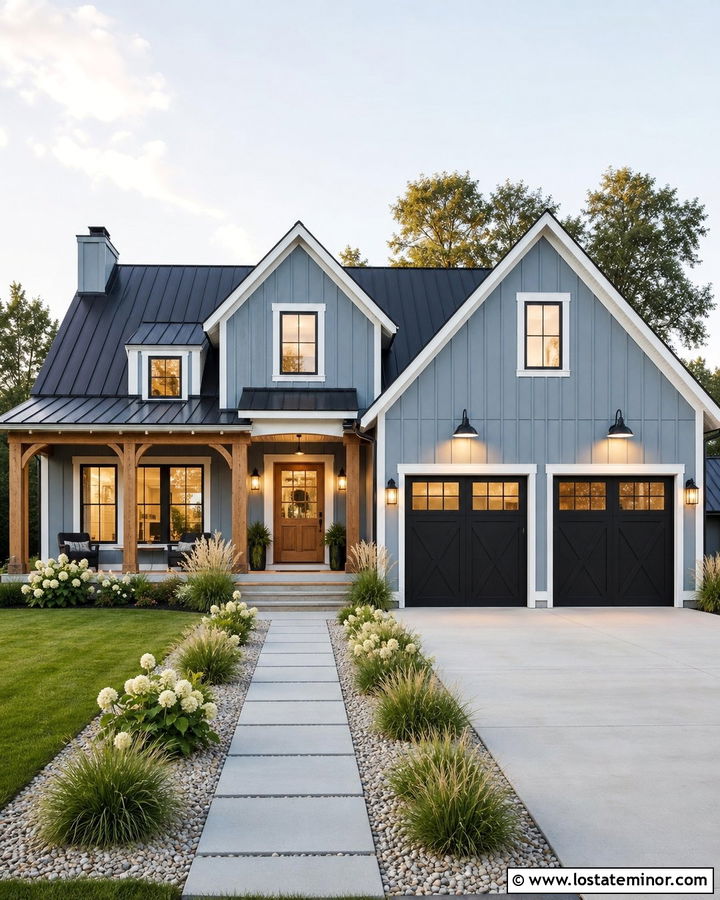
Wide porches and simple rooflines make a dusty blue farmhouse an ideal setting for classic gooseneck lighting. Cover the main facade in dusty blue board-and-batten siding, then add bright white trim and a matte black metal roof. Black gooseneck lights above the garage and side entry bring a practical agricultural detail to the design. Use matching lantern sconces around a stained oak front door so the entrance receives equal visual weight. Warm white bulbs help soften the blue and make the wood accents appear richer. Cedar porch posts, black gutters, and pale stone foundation details complete the palette. Keep the landscaping relaxed with ornamental grasses, hydrangeas, and a straight gravel-edged walkway.
3. Dusty Blue Colonial With Brass Lanterns
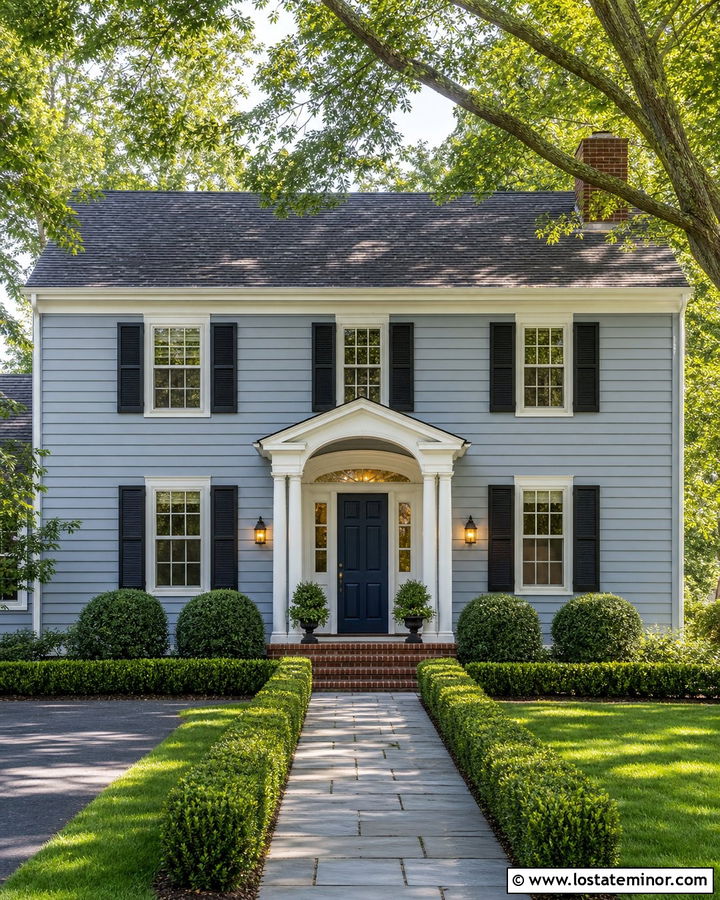
Could a traditional Colonial feel fresh without losing its symmetry? Dusty blue clapboard siding offers an easy update when paired with warm white trim, black shutters, and polished or aged brass lanterns. Place matching lanterns on both sides of a deep navy front door to emphasize the centered entrance. A brass hanging light beneath the portico adds another layer while preserving the home’s formal arrangement. Choose a dark charcoal roof to ground the lighter facade. Neatly clipped boxwoods, brick steps, and a straight walkway support the orderly architecture. Brass should also appear in restrained details, such as the door knocker and handle. Repeating the finish sparingly gives the exterior a coordinated appearance rather than an overly decorative one.
4. Dusty Blue Ranch With Globe Sconces
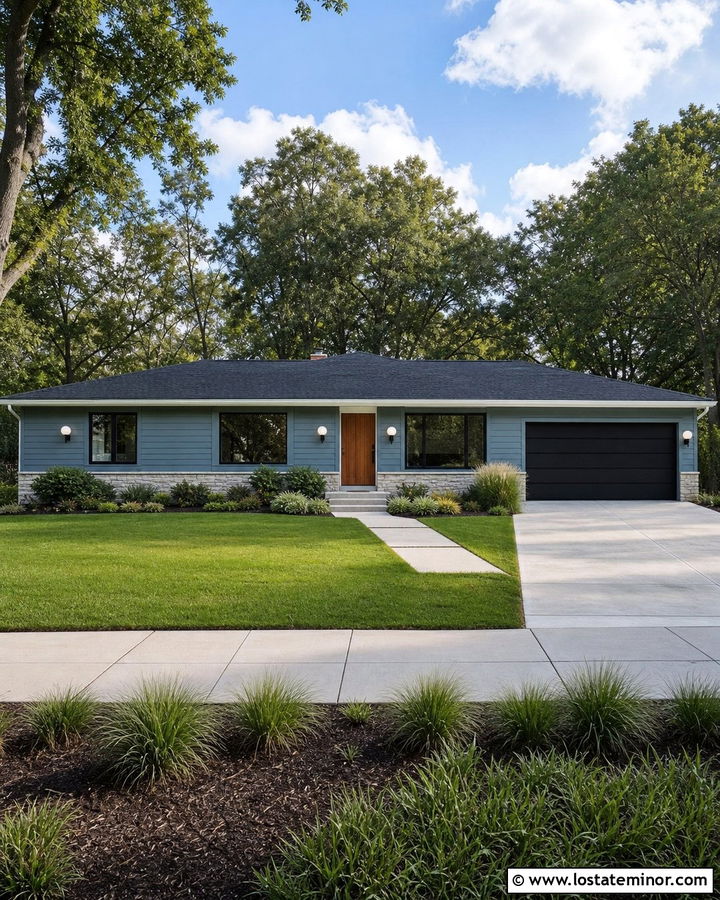
A long ranch facade benefits from lighting that breaks up its horizontal shape. Muted dusty blue siding, warm white fascia, and a low charcoal roof form a simple base for round globe sconces. Install opal glass globes beside the front door and between wide garage bays to create a steady visual rhythm. Black fixture bases connect the lights to dark window frames and slim metal railings. A honey-toned wood door adds necessary warmth, while light gray stone along the foundation gives the single-story home more texture. Use low-profile pathway lights rather than tall posts, which can interrupt the ranch’s clean lines. Broad planting beds with grasses and compact evergreens help frame the entire facade without covering the windows.
5. Dusty Blue Cape Cod With Copper Lanterns
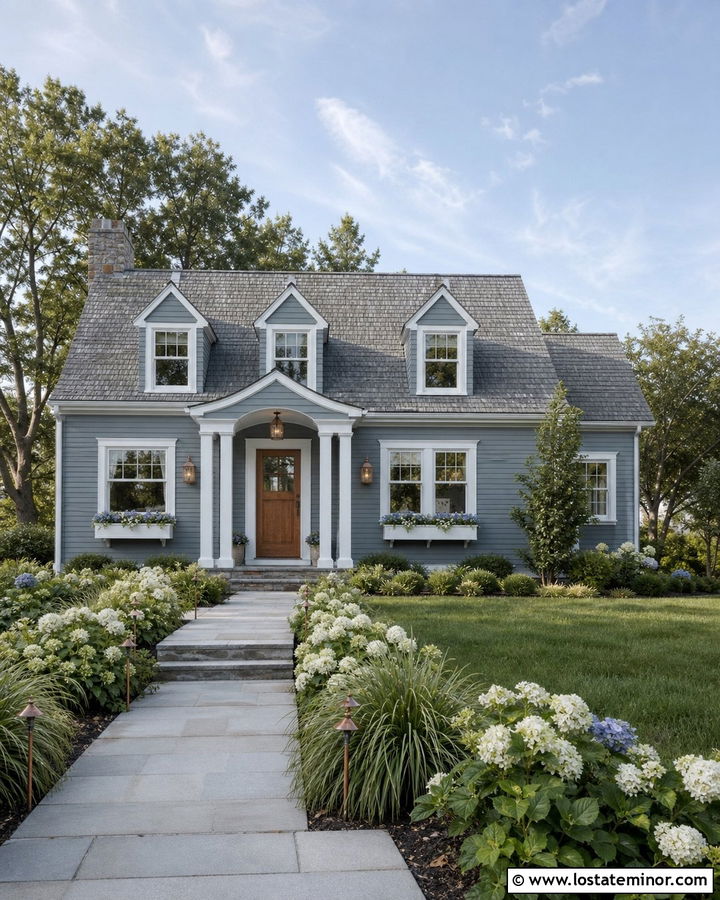
Weathered copper brings warmth and coastal character to a dusty blue Cape Cod exterior. Paint the shingles or narrow lap siding a soft dusty blue, then outline the windows, dormers, and entry with clean white trim. Copper lanterns beside a natural wood door create an attractive contrast and will develop more character over time. Add a compact copper pendant beneath the covered entry if the ceiling height allows it. Gray roof shingles, white window boxes, and a pale stone walkway maintain the light coastal palette. Rather than filling the yard with decorative fixtures, use a few low path lights along the walkway. Their gentle illumination supports the entrance while allowing the dormers, symmetrical windows, and copper accents to remain the strongest details.
6. Dusty Blue Modern House With Cylinder Lights
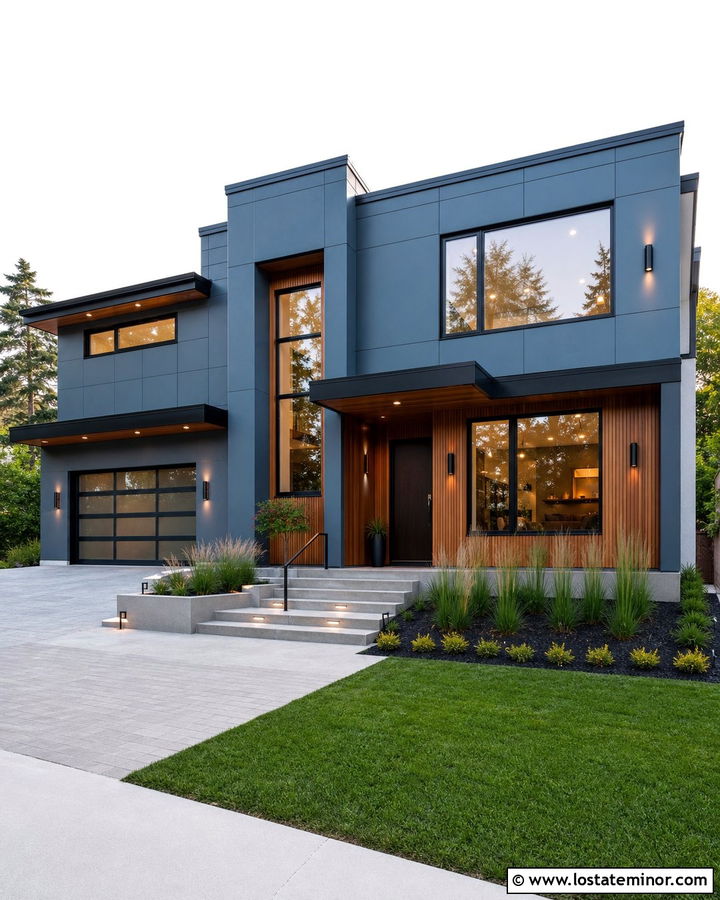
Clean architecture calls for exterior lighting with an equally simple profile. A modern home finished in dusty blue fiber-cement panels looks crisp with black-framed windows, charcoal trim, and warm wood cladding around the entrance. Slim black cylinder sconces can cast light upward and downward, emphasizing tall walls and geometric rooflines. Match them with concealed lighting beneath the entry canopy and subtle recessed fixtures above the garage. The combined effect should define the architecture instead of flooding the facade with brightness. Concrete steps, rectangular planters, and linear ornamental grasses reinforce the modern layout. Keep the garage door close to the siding color so it blends into the composition, allowing the wood entry and controlled pools of light to become the main focal points.
7. Dusty Blue Bungalow With A Porch Pendant
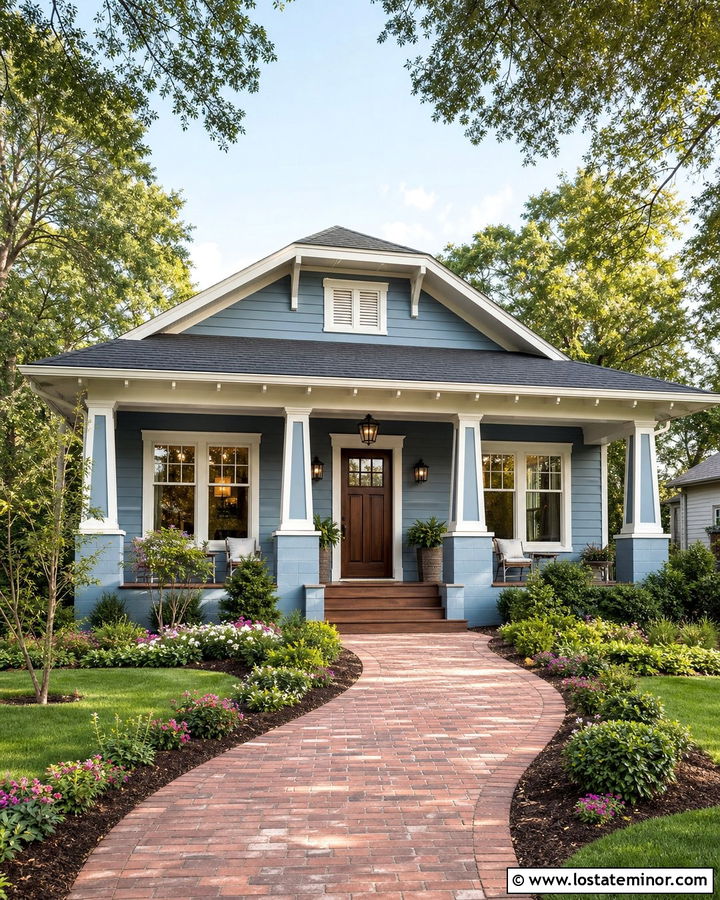
A covered bungalow porch naturally creates a cozy setting for a centered pendant light. Use dusty blue clapboard siding with soft cream trim, a dark gray roof, and a warm walnut front door. A black metal pendant with clear glass can hang above the entry, while smaller matching sconces sit near the door and porch steps. This layered arrangement gives the compact facade depth without introducing too many fixture types. Stained wood porch flooring and tapered columns warm the blue-gray palette. Add low step lights to improve visibility without drawing attention away from the decorative pendant. Curved planting beds, flowering shrubs, and a brick walkway support the bungalow’s informal character. Keep fixture proportions moderate so the lighting complements rather than overwhelms the small porch.
8. Dusty Blue Split-Level With Garage Sconces
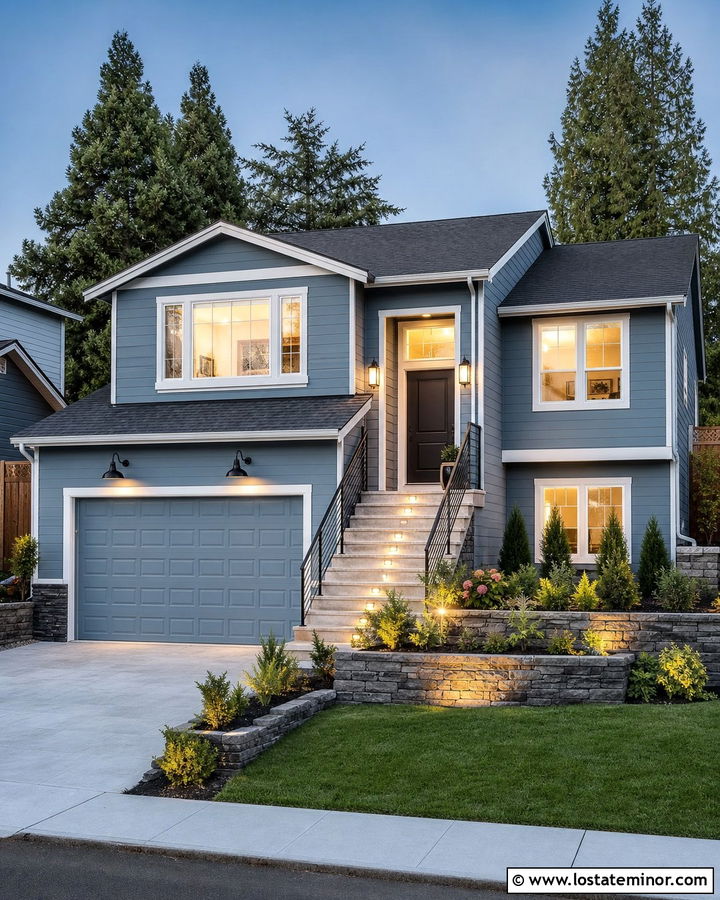
On a split-level home, the garage often occupies much of the street-facing facade. Dusty blue siding can visually soften that area, especially when the garage door is painted the same blue-gray shade. Mount oversized black sconces on both sides of the door to frame it rather than making it disappear completely. Near the elevated front entry, use coordinating wall lanterns and discreet lights beneath the stair railing. White trim around the windows brightens the upper story, while a charcoal roof and dark foundation anchor the design. Light stone retaining walls can connect the different levels of the yard. Finish with pathway lighting along the stairs and driveway edge, creating a clear route to the entrance and a more balanced overall composition.
9. Dusty Blue Cottage With White Lanterns
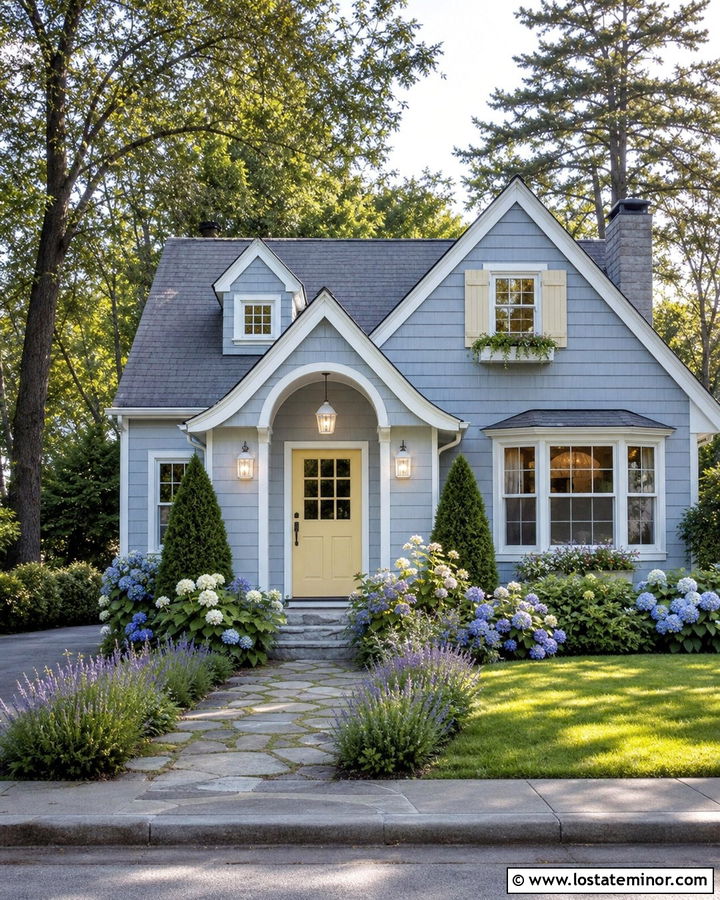
White exterior lights create a softer look than black fixtures and can be especially charming on a small cottage. Pair dusty blue shingle siding with creamy white trim, white shutters, and compact white lantern sconces. A pale yellow or natural oak front door introduces a gentle point of warmth. Choose fixtures with clear glass so they remain visually light against the blue facade. A matching white pendant can illuminate a small covered porch without making the entry feel crowded. Add a gray shingle roof and a narrow flagstone walkway bordered by lavender, hydrangeas, and low evergreen plants. Repeating white across the trim, lights, railing, and window boxes keeps the cottage coordinated while allowing the dusty blue body color to remain the dominant feature.
10. Dusty Blue Coastal House With Nickel Lights
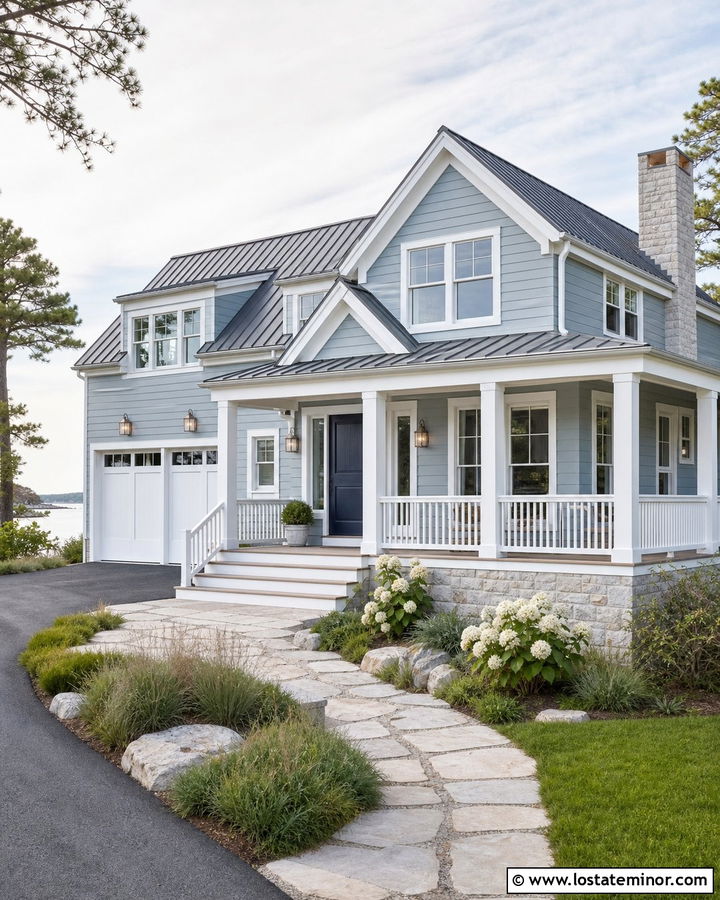
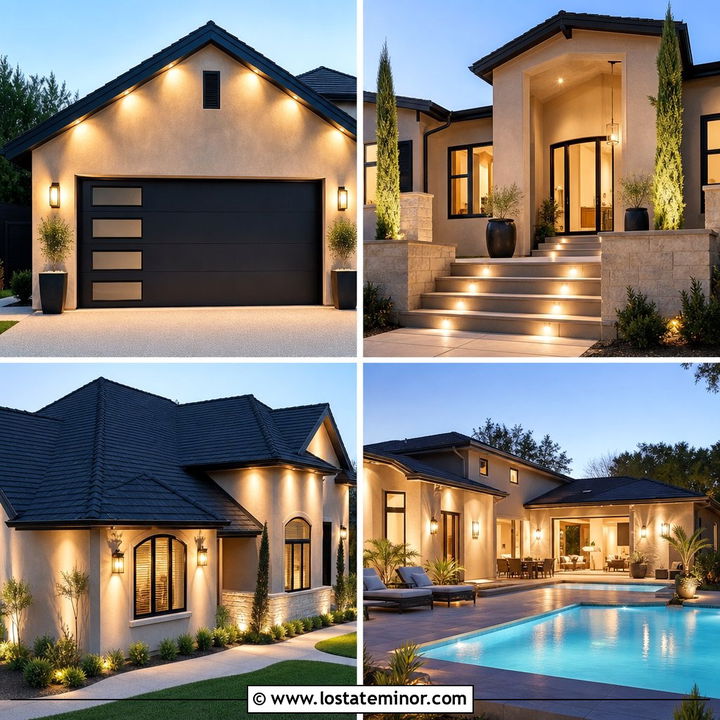
Brushed nickel lighting gives a dusty blue coastal exterior a clean, airy finish. Cover the house in muted blue-gray lap siding and use bright white around the windows, porch columns, and railings. Nickel lanterns with clear seeded glass work well beside a navy front door, especially when matching metal appears on the door hardware. A gray standing-seam roof adds a subtle reflective quality without introducing heavy contrast. Use shielded step lights along the porch and low fixtures beside a sandy stone walkway. Driftwood-toned decking and pale limestone can add natural texture throughout the exterior. To keep the scheme relaxed, avoid mixing too many dark finishes. The nickel, white trim, and gray roof should collectively brighten the dusty blue facade.
11. Dusty Blue Tudor With Bronze Lighting
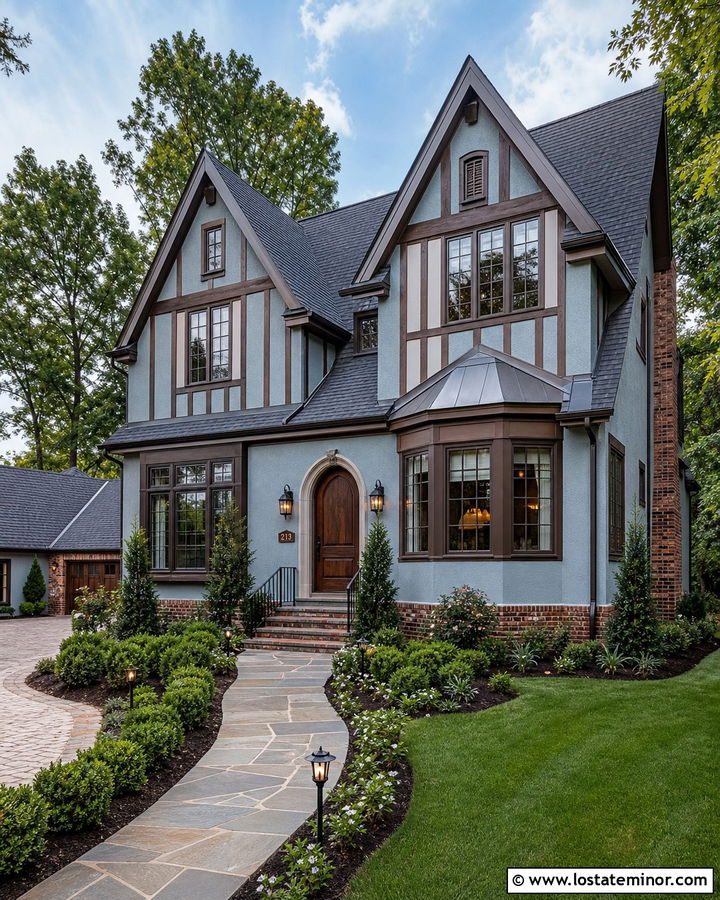
Dusty blue can update Tudor architecture while allowing its distinctive lines to remain visible. Use the color on stucco or upper-story siding, then retain dark brown timber details and warm cream trim. Oil-rubbed bronze lanterns complement the deep wood tones and look natural beside an arched walnut door. Place one substantial fixture on each side of the entrance and smaller coordinating lights near the garage. Warm illumination can emphasize the textured stucco, brick foundation, and steep roofline. A dark brown or charcoal roof keeps the palette grounded. Curved stone paths, clipped shrubs, and low landscape lights support the home’s traditional character. The finished exterior feels refreshed because the dusty blue lightens the facade without erasing the Tudor’s historic contrast.
12. Dusty Blue Victorian With Coach Lamps
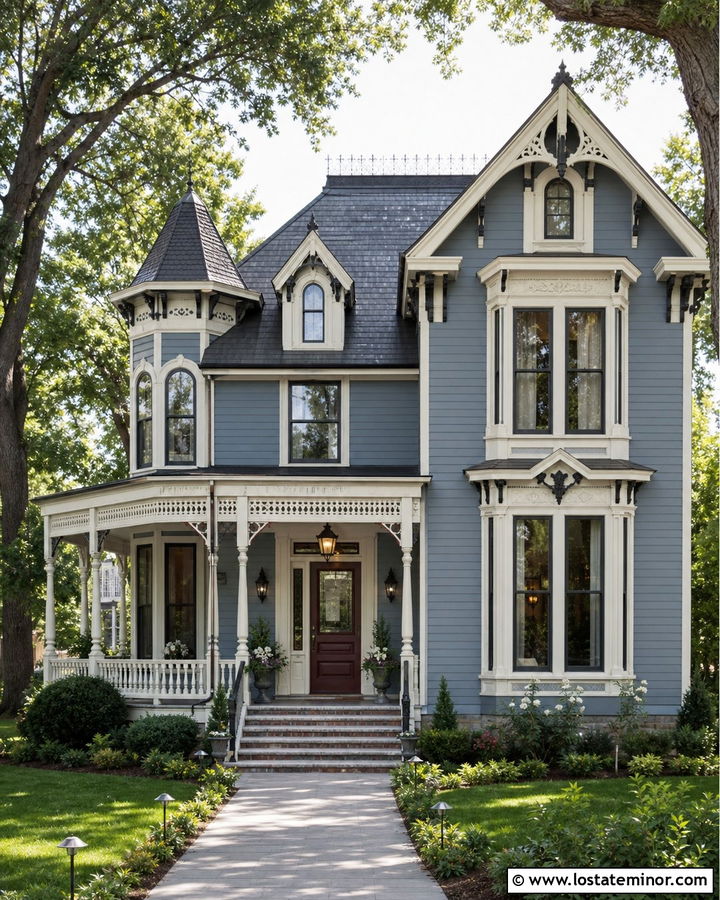
Decorative Victorian details become easier to appreciate when color and lighting are carefully controlled. Apply dusty blue to the primary siding, creamy white to gingerbread trim, and charcoal gray to selected brackets or window sashes. Traditional black coach lamps beside a burgundy front door give the entrance a strong, historically inspired focal point. Add a hanging lantern beneath the porch and small concealed fixtures near detailed columns. These layers illuminate the craftsmanship without covering the facade in excessive decorative hardware. A slate-colored roof and natural brick steps add depth at ground level. Use simple pathway lights and structured planting beds so the yard does not compete with the architecture. The restrained palette lets the ornate trim, lighting, and blue-gray siding work together clearly.
13. Dusty Blue Stucco House With Aged Brass Lights
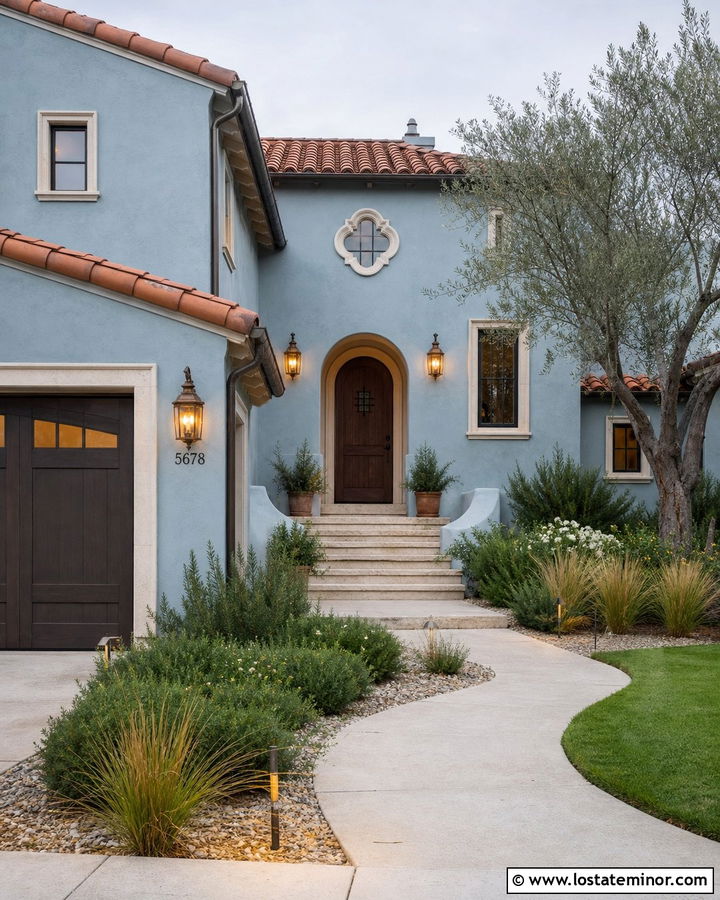
Dusty blue stucco creates a distinctive exterior that feels softer than conventional white or beige. Combine it with creamy trim, warm terracotta roofing, and an arched wood front door for a Mediterranean-influenced look. Aged brass lanterns suit this palette because their warm finish connects visually with both the roof and door. Mount substantial sconces beside the entry, then repeat smaller versions near the garage and courtyard gate. Gentle wall-washing lights can reveal the stucco texture and curved architectural details. Use pale limestone around the steps and foundation to bridge the warm and cool colors. Olive trees, rosemary, ornamental grasses, and gravel beds complete the landscape. The dusty blue body keeps the traditional materials feeling lighter and more current.
14. Dusty Blue Prairie House With Linear Sconces
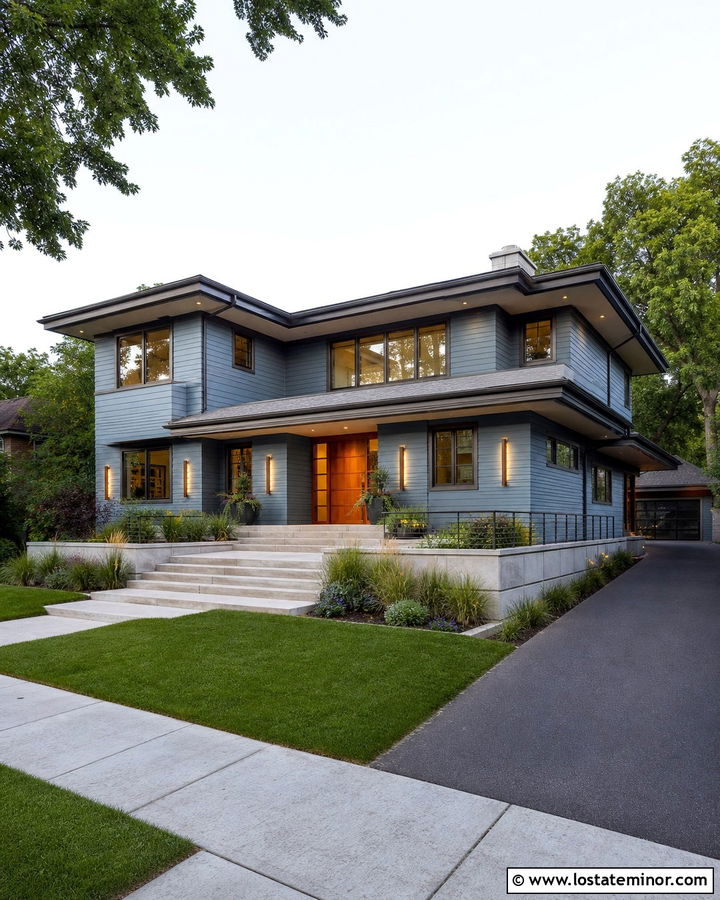
Strong horizontal lines define Prairie architecture, so the lighting should follow the same visual direction. Use dusty blue horizontal siding with dark bronze window frames, broad cream soffits, and a low hipped roof. Long rectangular sconces can sit beside the entry and garage, adding light without introducing ornate shapes. Warm wood panels around the front door provide an earthy contrast to the muted blue. Continue the linear theme with wide concrete steps, horizontal railings, and low planting beds. Recessed lights beneath the deep eaves can illuminate the facade while remaining almost invisible during the day. Avoid tall lanterns that conflict with the home’s low profile. A coordinated mix of bronze, wood, cream, and dusty blue preserves the grounded Prairie character.
15. Dusty Blue A-Frame With Architectural Uplighting
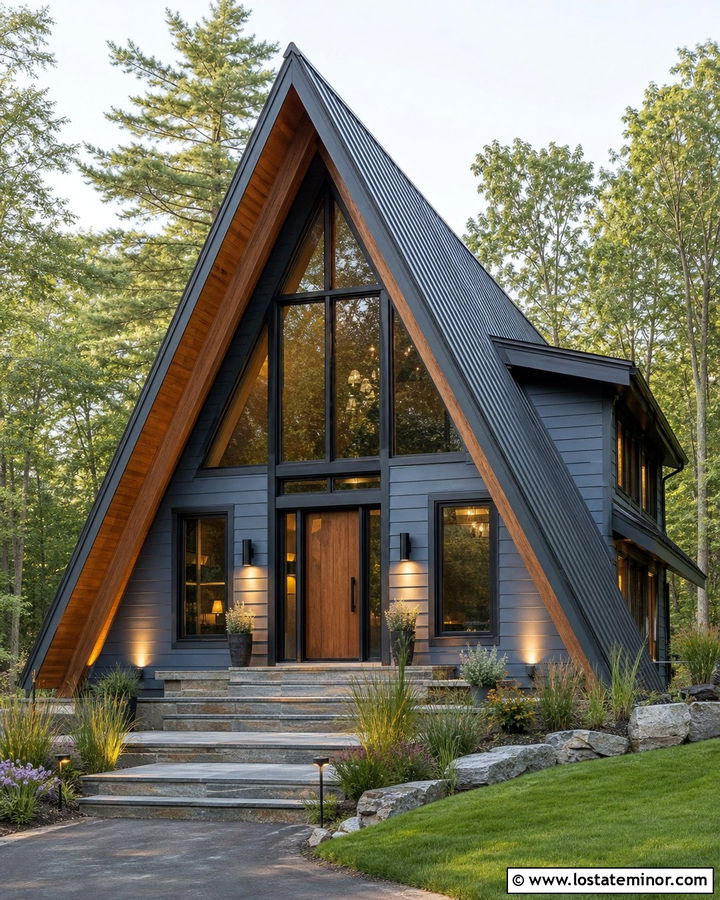
An A-frame’s steep roofline deserves lighting that draws attention upward. Cover the lower exterior and gable sections in dusty blue siding, then frame large windows with charcoal trim. Natural cedar beams and a cedar front door introduce warmth beneath the dramatic roof. Position discreet uplights near the foundation to wash the angled facade and reveal the height of the structure. Black cylinder sconces around the entrance provide focused task lighting without interrupting the triangular design. A dark metal roof creates a strong outline against the blue-gray siding. Stone steps, native grasses, and mature trees help the home settle naturally into its setting. Keep the uplighting controlled and evenly spaced so it highlights the architecture instead of producing harsh or uneven patches.
16. Dusty Blue Shingle House With Path Lighting
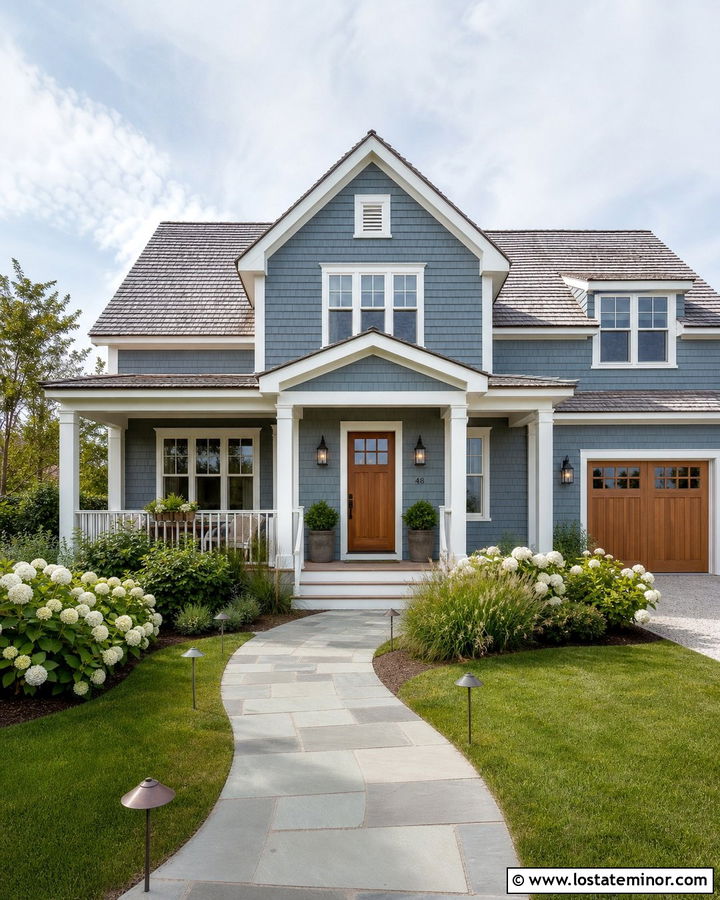
Texture becomes the main attraction on a dusty blue shingle house, and understated lighting keeps that texture visible. Pair blue-gray cedar shingles with warm white trim, a weathered gray roof, and a natural teak front door. Bronze lanterns beside the entry reinforce the relaxed coastal palette. Along the curved front walk, install low shielded path lights that direct illumination downward onto the paving rather than toward the windows. Small accent lights can also reveal ornamental grasses and layered hydrangeas. Stone porch steps and simple wood railings make the design feel established and comfortable. Maintain consistent fixture finishes across the porch and landscape. Too many different metals can distract from the subtle variation in the shingles, which should remain the defining feature of the exterior.
17. Dusty Blue House With Red Brick And Recessed Lights
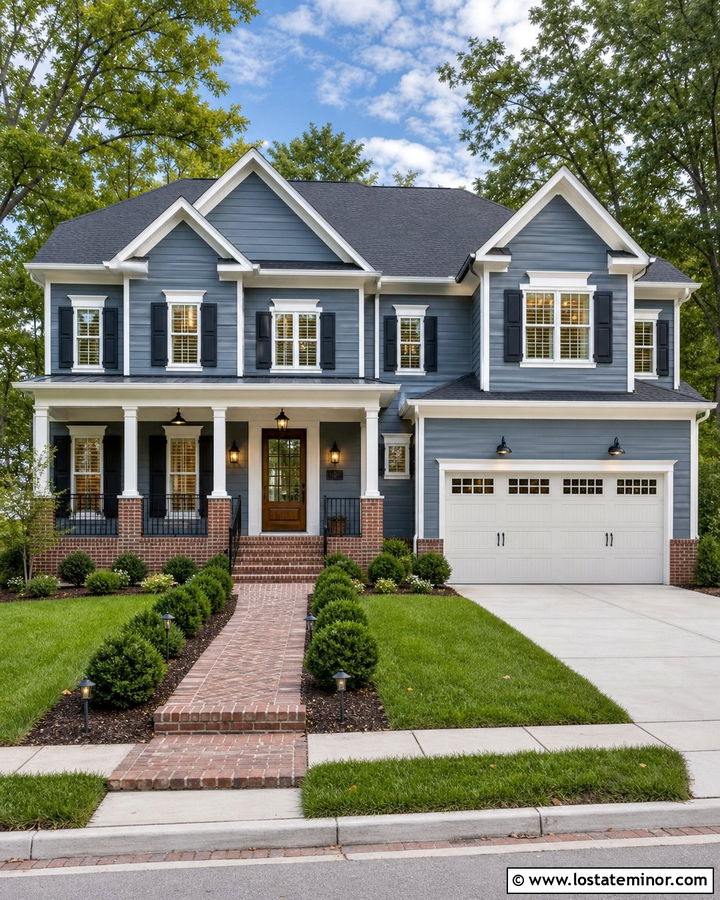
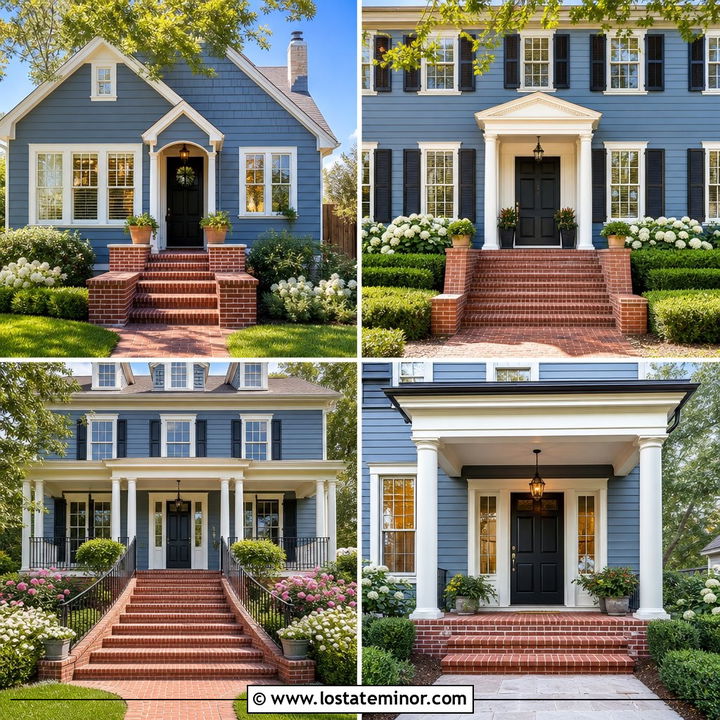
Red brick adds welcome warmth beneath dusty blue siding, especially when the brick appears on the lower facade, steps, or chimney. Use creamy white trim to connect the two materials and a charcoal roof to provide a neutral cap. Black recessed porch lights keep the ceiling uncluttered, allowing the brick and siding combination to command attention. Add simple black lantern sconces beside a medium-stained wood door and garage. Warm white illumination will bring out the brick’s earthy red and brown variations. A brick walkway with low landscape lighting can extend the material into the front yard. Keep shutters minimal or omit them if the brick already supplies enough detail. This creates a balanced exterior with color, texture, and practical lighting in equal measure.
18. Dusty Blue House With Stone And Landscape Lights
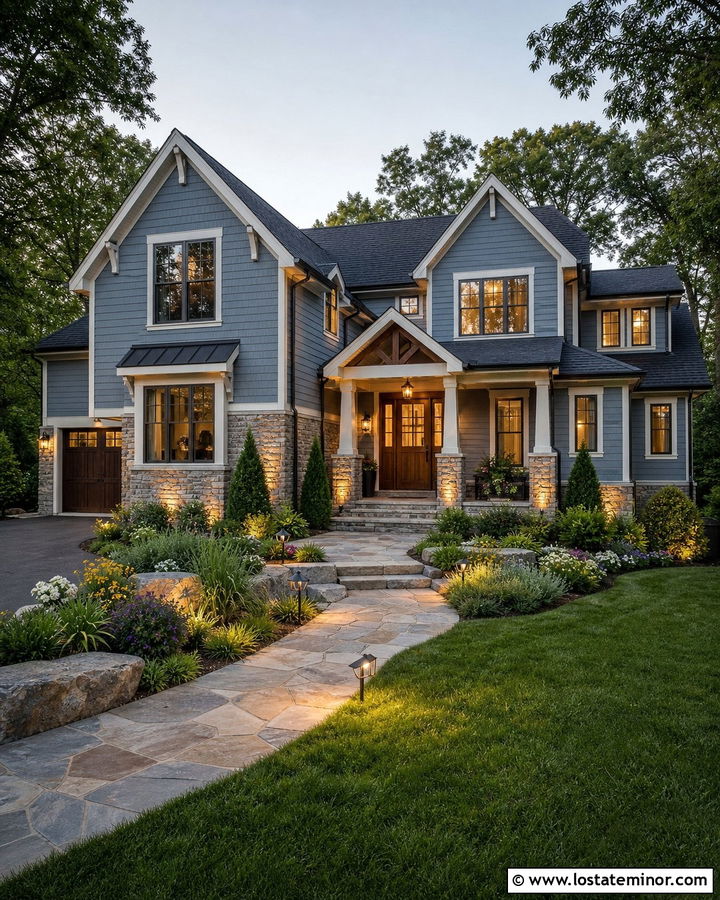
A substantial stone foundation can ground dusty blue siding and make the cool color feel connected to the landscape. Select stone containing gray, beige, and subtle brown tones, then use warm white trim and a charcoal roof. Bronze or black lanterns beside a stained wood door should coordinate with the darker colors within the masonry. Add low-voltage accent lights at the base of the stone, aiming them carefully across the texture rather than directly at the street. Path lights can guide visitors through layered shrubs and perennial beds. The lighting should reveal the stone without making it brighter than the entrance. By spreading illumination across the facade, walkway, and landscaping, the entire home feels more complete instead of depending on one overly bright porch fixture.
19. Dusty Blue House With Cedar Porch Lighting
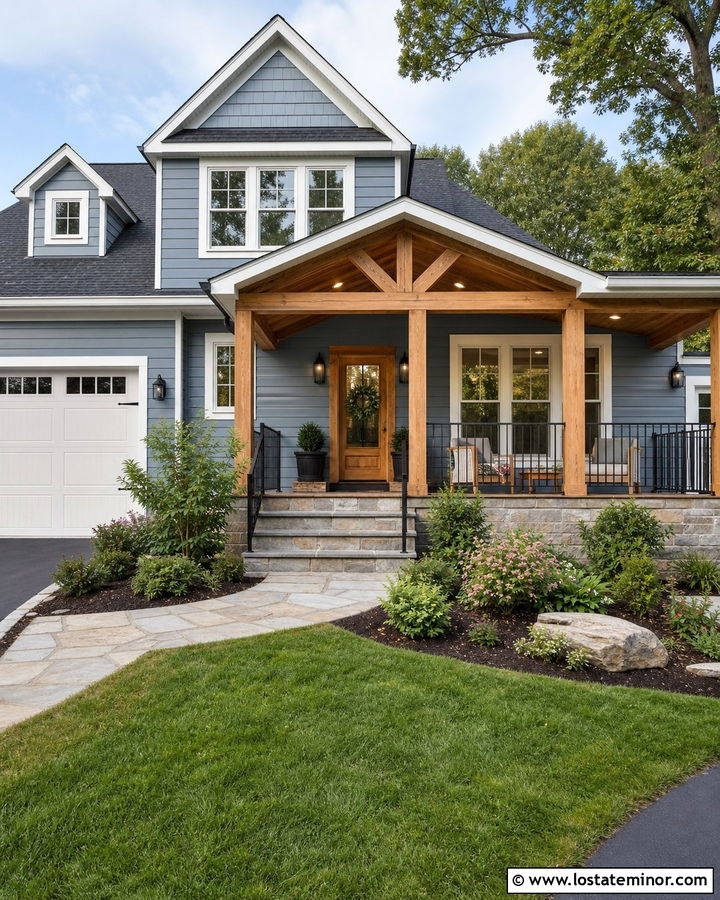
Few combinations warm dusty blue as naturally as a cedar porch. Use muted blue-gray siding across the main house, crisp white window trim, and a dark charcoal roof. Leave the porch columns, beams, and ceiling in a clear cedar stain. Black lantern sconces beside a cedar front door provide contrast, while small recessed lights in the porch ceiling illuminate the wood grain. Gentle lighting beneath the railing can define the porch edge without adding visible fixtures. Repeat black on the gutters and metal railings to connect the upper and lower parts of the facade. Broad stone steps and informal planting beds finish the look. The porch becomes a warm transitional zone between the cool siding, green yard, and welcoming front entrance.
20. Dusty Blue House With Charcoal Trim And Downlights
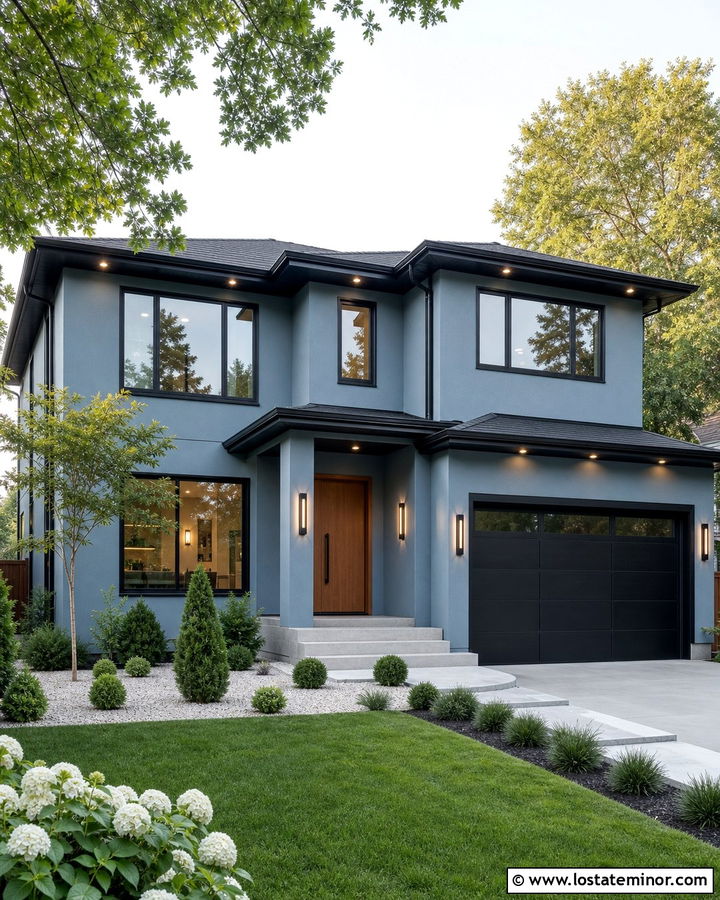
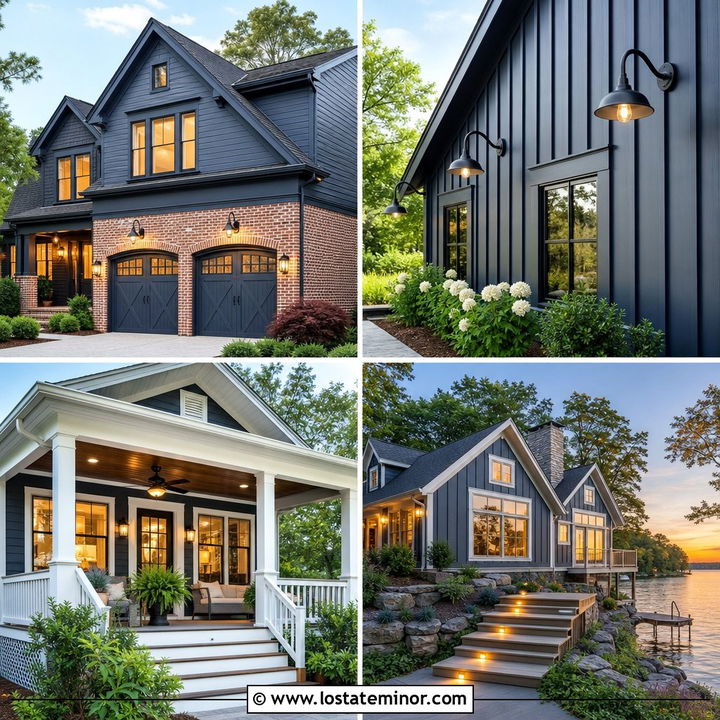
Charcoal trim gives dusty blue siding a more dramatic, modern appearance than traditional white. Apply the dark color to window frames, fascia, gutters, and the garage door, but keep the main siding soft enough to preserve contrast. Black downlights mounted beneath the eaves can create measured columns of illumination across the facade. Use matching vertical sconces beside a natural wood front door to make the entry warmer and easier to identify. A black or charcoal roof unifies the darker details. Light concrete steps and pale gravel beds prevent the scheme from feeling too heavy. Select fixtures with controlled beams rather than exposed bulbs. Focused light will show the dusty blue accurately while emphasizing clean lines, architectural depth, and carefully placed landscaping.
21. Dusty Blue House With White Trim And Gas-Style Lanterns
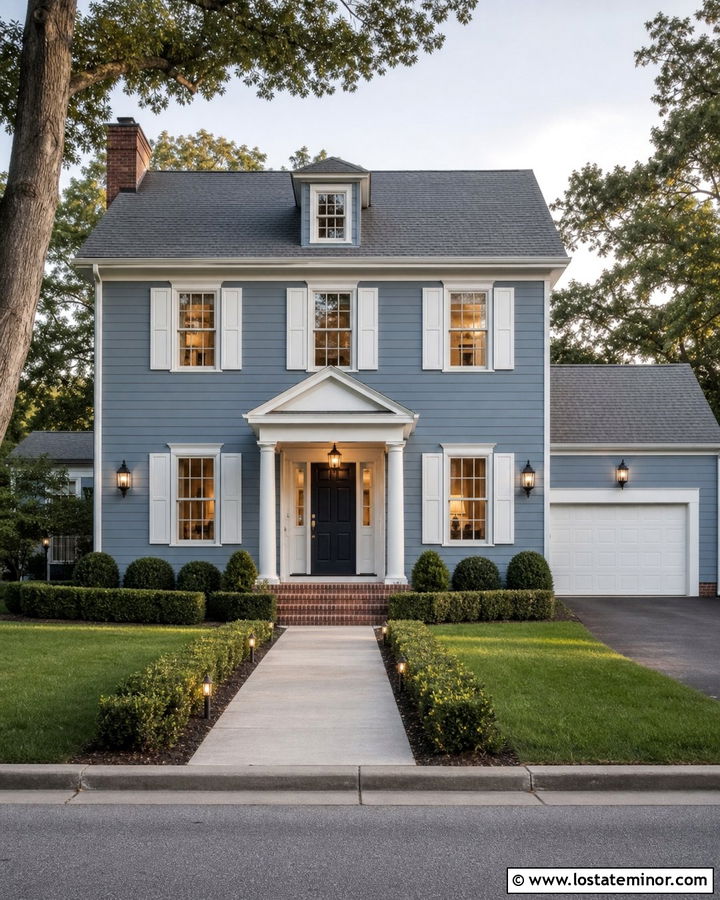
For a traditional exterior with plenty of character, pair dusty blue siding and crisp white trim with gas-style lanterns. Modern electric versions can provide the same classic silhouette without requiring an open flame. Position black or aged brass lanterns on both sides of a dark navy door. Add a coordinating hanging fixture beneath a white portico for a layered entrance. A medium-gray roof keeps the palette restrained, while brick steps add a modest amount of warmth. White columns, shutters, and window casings should remain bright enough to define the architecture clearly. Keep landscape lighting simple, using low fixtures along the walkway and near the porch steps. The result combines historical character with a practical, easy-to-maintain exterior lighting arrangement.
22. Dusty Blue House With Black Shutters And A Lamp Post
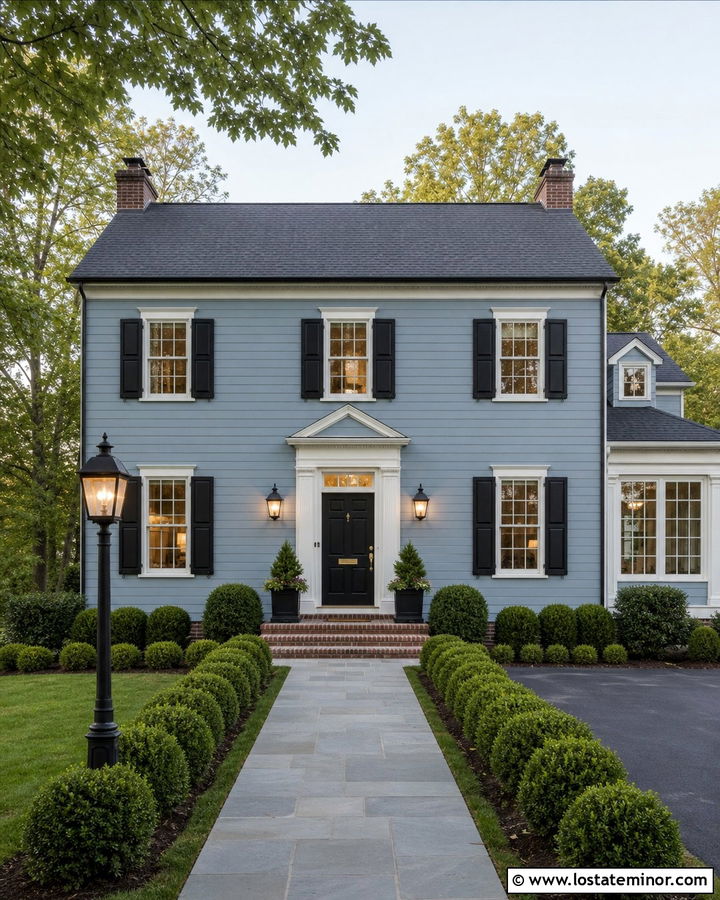
A front-yard lamp post can connect the home to the street when its finish matches other exterior details. Use dusty blue clapboard siding, warm white trim, black shutters, and a black front door. Place traditional black lantern sconces beside the entry and repeat their shape on a post near the walkway. Keeping all three fixtures from the same visual family makes the arrangement intentional. Brick steps and a charcoal roof add depth, while clipped hedges reinforce the formal look. Position the lamp post where it helps define the walkway without blocking windows or competing with the front door. The black accents give the dusty blue facade a crisp outline, and the repeated lighting creates a smooth visual path from the curb to the entrance.
23. Dusty Blue House With A Wood Door And Warm Sconces
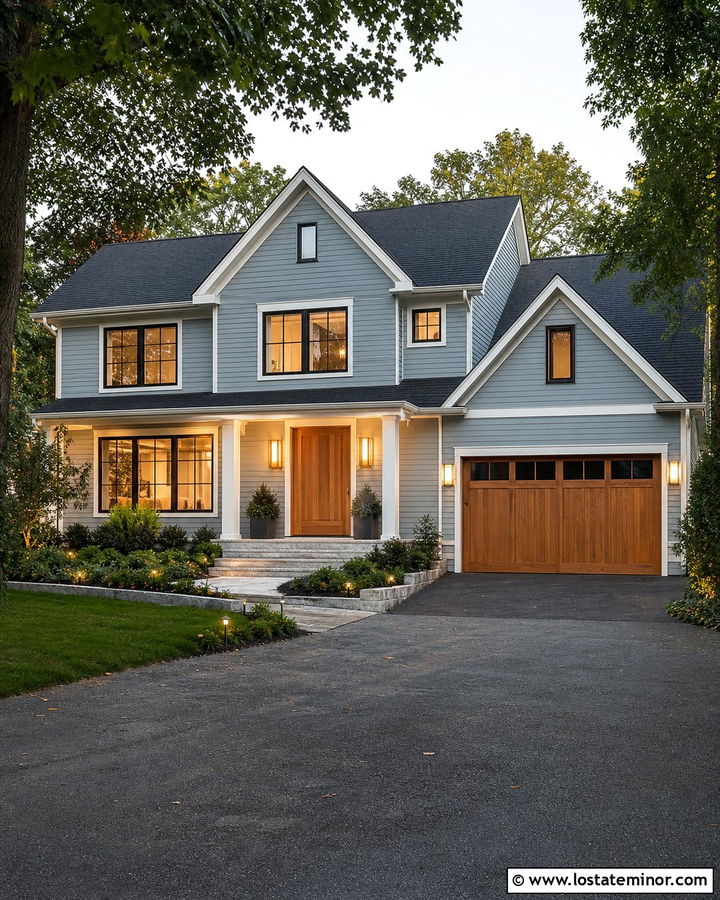
Sometimes one strong natural material is enough to transform a cool exterior palette. Set a wide oak or cedar front door against dusty blue siding, then frame it with simple bronze sconces and warm white trim. The lighting should cast a gentle glow across the door’s grain and the surrounding blue-gray facade. Repeat the wood on porch beams, a garage door, or a small section of vertical siding to balance the entrance. A charcoal roof and black window frames provide structure without pulling attention from the wood. Use pale stone steps and low pathway lights to complete the approach. This full-house combination works across ranch, transitional, and contemporary architecture because it mixes approachable color with clean contrast and natural texture.
24. Dusty Blue House With Brick Walkway Lighting
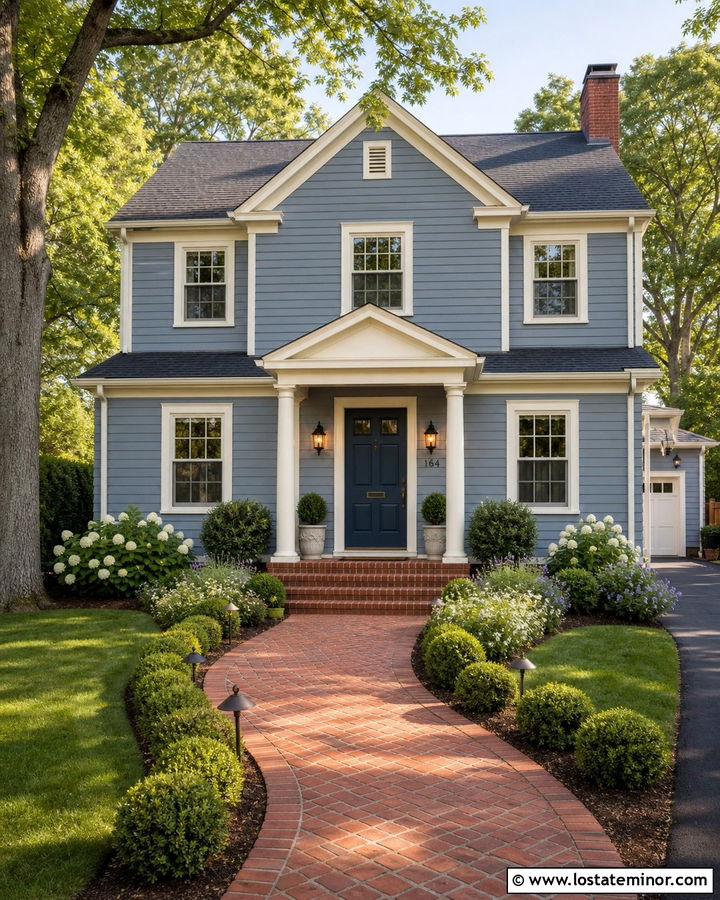
A brick walkway can bring warmth through the yard before visitors even reach a dusty blue house. Pair the siding with cream trim, a dark gray roof, and a deep blue front door. Traditional bronze lanterns around the entrance relate naturally to the walkway’s red and brown tones. Place low, shielded path lights at measured intervals so the bricks remain visible without looking lined by runway lights. Brick porch steps can continue the same material up to the door, creating a clear connection between the landscaping and architecture. Keep planting beds curved and full, using boxwoods, flowering shrubs, and ground cover to soften the hard surfaces. The finished design feels cohesive because the warm brick and lighting balance the cool blue-gray body color.
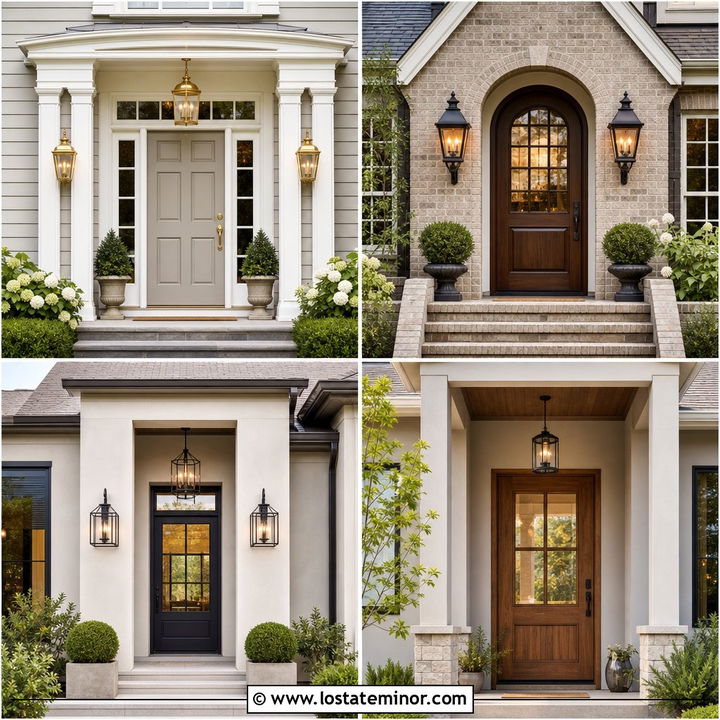
25. Dusty Blue House With Carriage Garage Lights
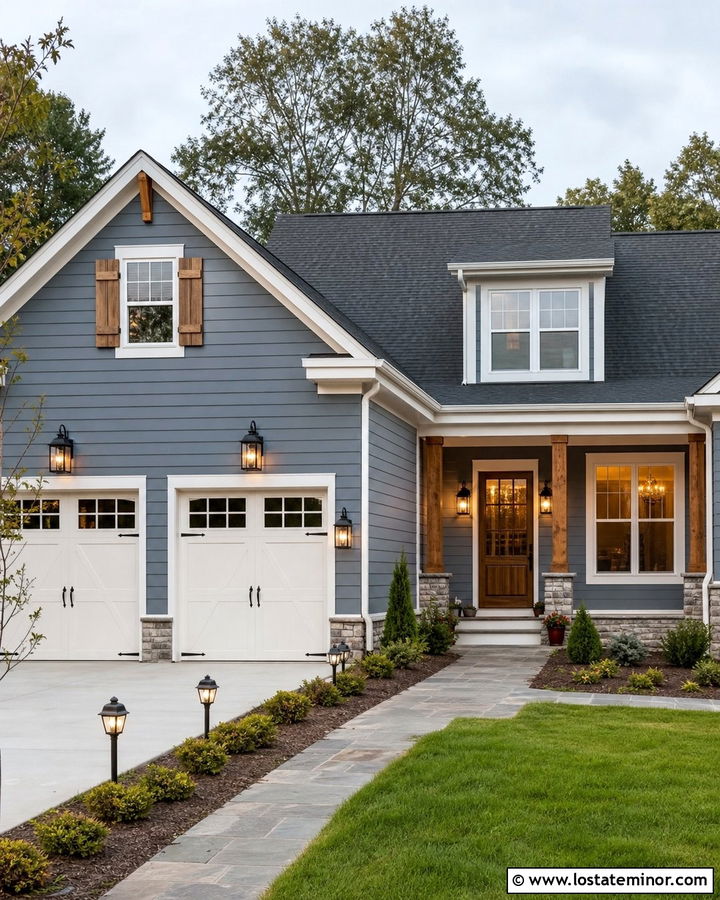
Carriage-style fixtures can make a prominent garage look integrated with the rest of a dusty blue exterior. Paint the garage door either dusty blue for a quiet appearance or warm white to match the trim. Mount generously sized black lanterns on both sides and, on a wide door, add one centered above it. Repeat the same lantern family beside the main entrance so the garage does not feel like a separate design. Natural wood door details and stone around the foundation bring warmth and texture. A charcoal roof supports the black fixtures without creating excessive contrast. Complete the facade with driveway-edge lighting and low shrubs. Consistent fixture scale and finish will help the entire street-facing elevation look organized, balanced, and intentionally designed.
26. Dusty Blue Porch With Integrated Step Lights
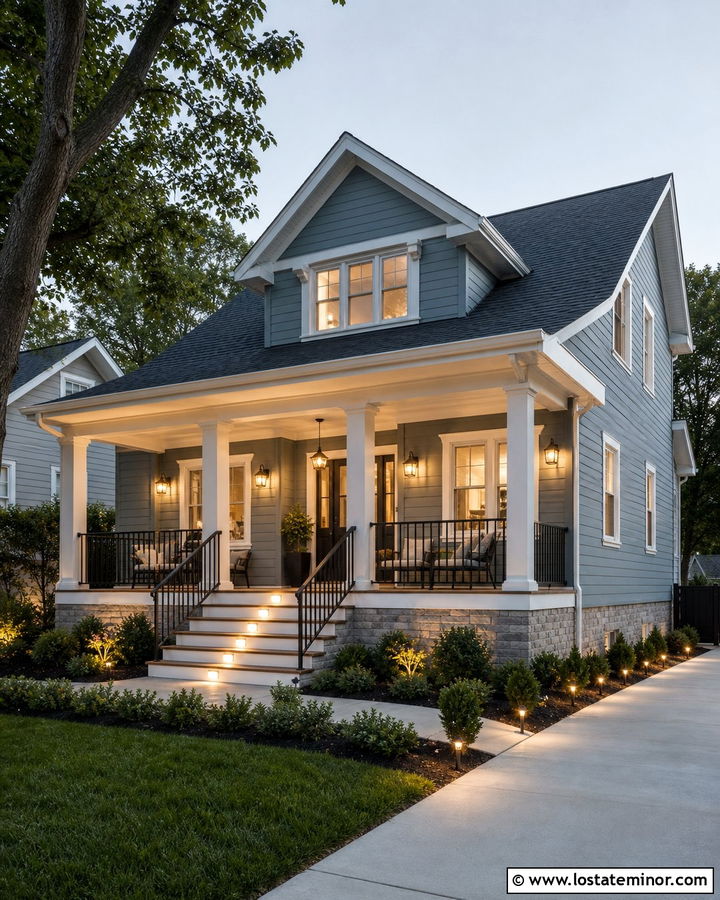
Integrated step lighting makes a dusty blue porch feel polished while reducing dependence on one bright overhead fixture. Use blue-gray siding, white columns, black railings, and a medium-stained wood porch floor. Small recessed lights fitted into the stair risers can illuminate each level with minimal visual clutter. Pair them with black lantern sconces beside the door and a simple pendant under the porch roof. A charcoal shingle roof and pale stone foundation keep the palette grounded. Continue the lighting along the walkway with short, shielded fixtures that complement the black railing. Keep the bulbs consistent in color so the entrance does not appear patchy. Together, the siding, wood floor, trim, railings, and layered lighting create a unified front elevation.
27. Dusty Blue House With Dormer And Soffit Lighting
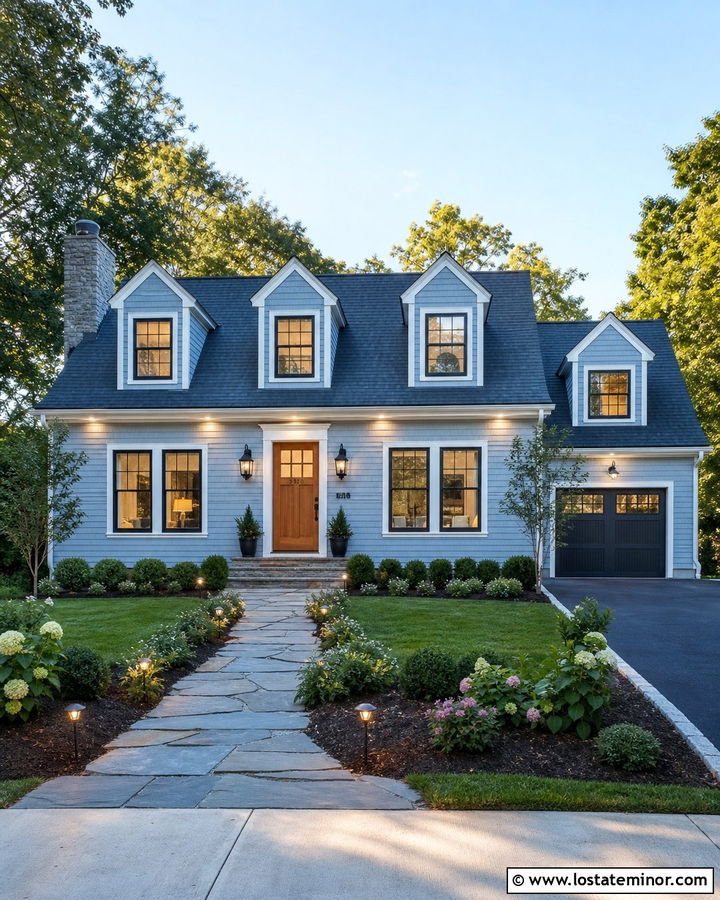
Dormers can disappear after sunset unless the lighting plan addresses the upper portion of the facade. On a dusty blue Cape Cod or traditional two-story house, use white dormer trim, a charcoal roof, and black window accents. Small recessed soffit lights beneath the eaves can gently reveal the siding and roofline. Keep them spaced evenly and use restrained brightness to avoid washing out the dusty blue. At ground level, install black lanterns beside a natural wood or navy front door. A few path lights can connect the driveway and entry without competing with the upper lighting. This top-to-bottom approach gives the house a balanced appearance. It also makes dormers, gables, and trim visible as part of one coordinated exterior composition.
28. Dusty Blue House With A Lit Pergola
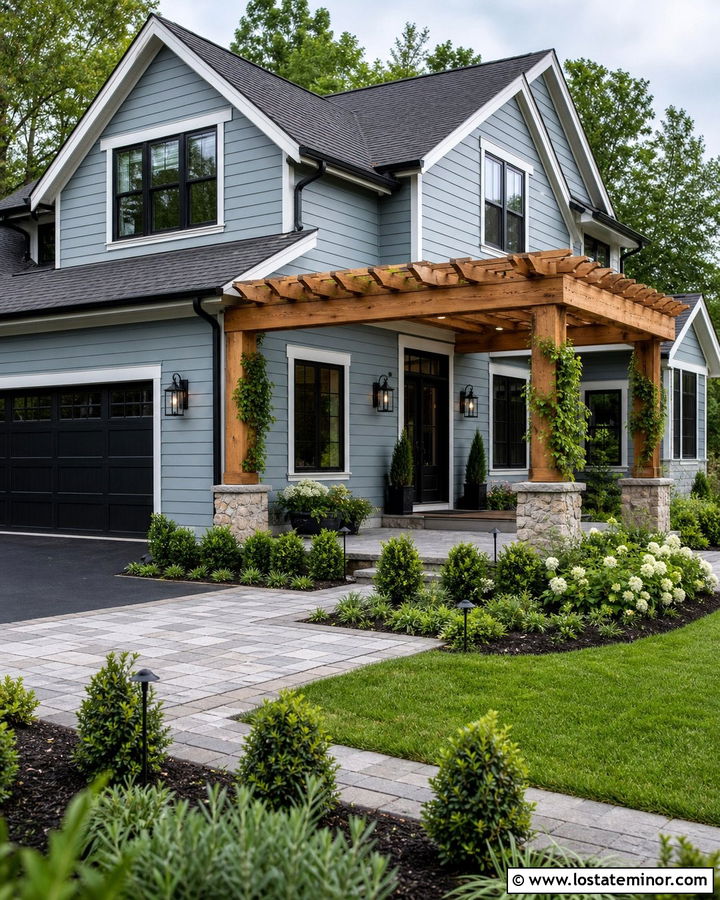
A front pergola can add useful depth to a flat dusty blue facade. Build it from natural cedar or paint it warm white to match the window trim. Recessed downlights within the beams provide clean illumination over the entry or attached patio, while black lantern sconces frame the front door. Use dusty blue lap siding, a charcoal roof, and black-framed windows to create a balanced transitional palette. Stone columns at the pergola base can connect the structure to the foundation. Surround the area with climbing greenery, structured shrubs, and a broad paver walkway. Keep all wiring concealed so the woodwork remains visually clean. The illuminated pergola should appear integrated with the home rather than attached as a separate decorative feature.
29. Dusty Blue House With Illuminated House Numbers
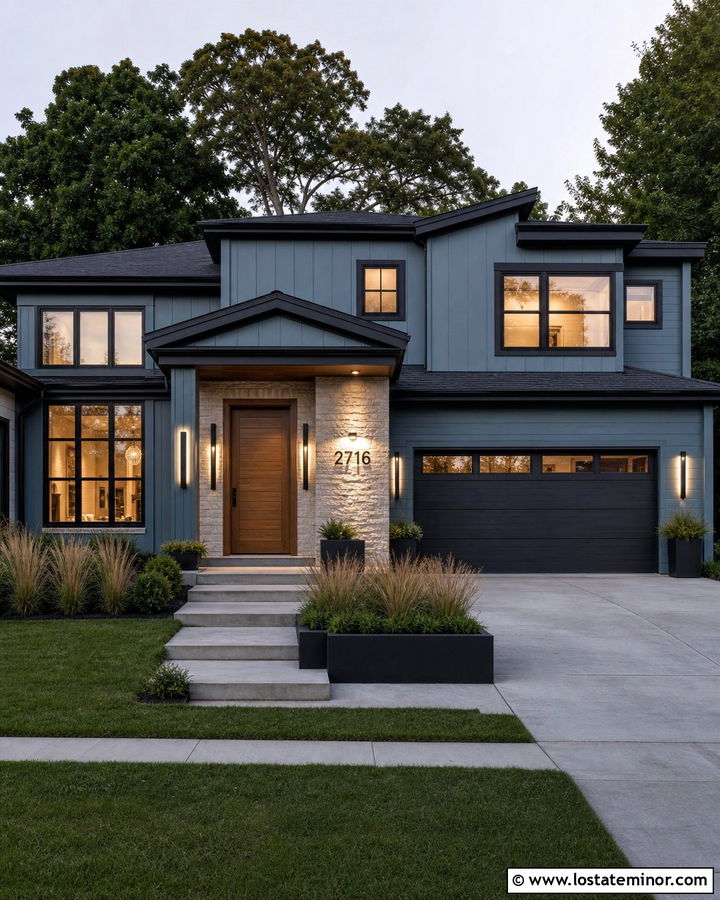
Illuminated house numbers can become part of a complete contemporary exterior rather than a small afterthought. Use dusty blue panel siding with charcoal trim, black-framed windows, and a warm wood front door. Mount large black or brushed metal numbers on a pale stone section near the entry. A narrow downlight above them provides clear, controlled illumination and connects visually with linear sconces beside the door. Repeat the same fixture finish around the garage for consistency. Concrete steps, rectangular planters, and low ornamental grasses complement the clean architecture. Keep the number display simple and proportionate to the wall. When the siding, stone, door, and lighting are coordinated, this functional detail can strengthen the facade’s overall curb appeal.
30. Dusty Blue House With Layered Exterior Lighting
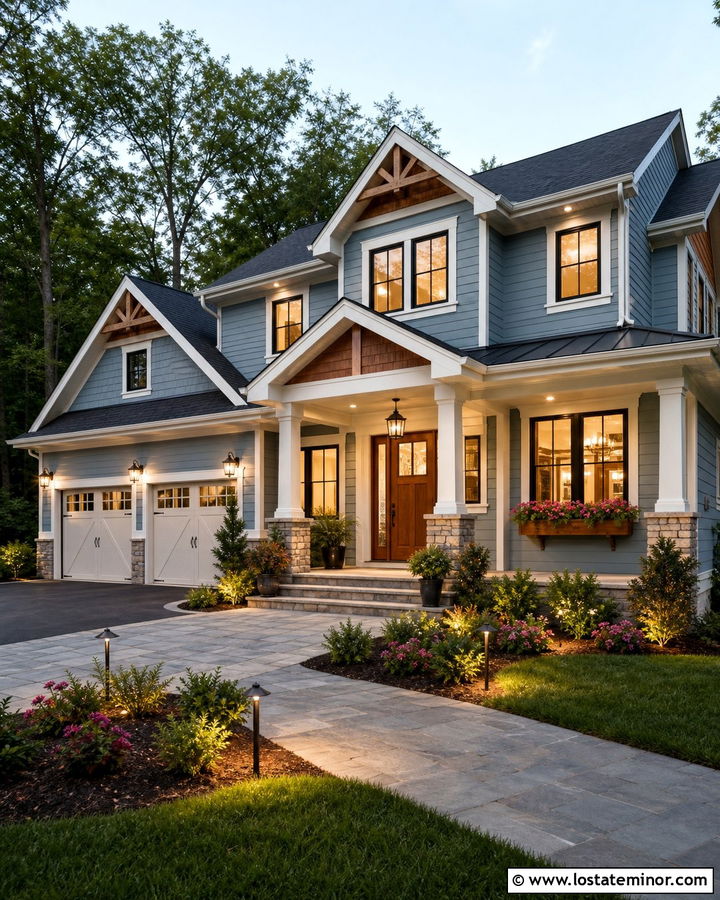
The most complete dusty blue exterior uses several lighting layers instead of relying on one powerful fixture. Begin with dusty blue siding, warm white trim, a charcoal roof, and a natural wood front door. Add black lanterns at the entrance, smaller coordinating lights at the garage, recessed porch fixtures, low path lights, and carefully aimed landscape accents. Each layer should perform a separate task while sharing a similar finish and light color. Use stone along the foundation and cedar on selected architectural details to warm the blue-gray palette. Keep fixtures shielded and brightness balanced so no area dominates the property. This coordinated approach highlights the facade, improves the walkway, and creates a polished relationship between the house and surrounding landscape.
Conclusion:
Dusty blue is versatile enough to suit cozy cottages, traditional Colonials, low ranch homes, modern farmhouses, and contemporary facades. Its gray undertone pairs especially well with warm wood, white trim, charcoal details, brick, and natural stone. Exterior lighting completes the palette by adding contrast, warmth, and architectural definition. Choose fixtures that fit the home’s scale, repeat one or two metal finishes, and spread illumination across the entrance, garage, pathways, and landscaping. Most importantly, view every selection as part of a complete curb-appeal plan. These **30 Dusty Blue House Design With Lighting Ideas** show how coordinated colors, materials, and fixtures can make an exterior look welcoming and thoughtfully finished.

Related posts: