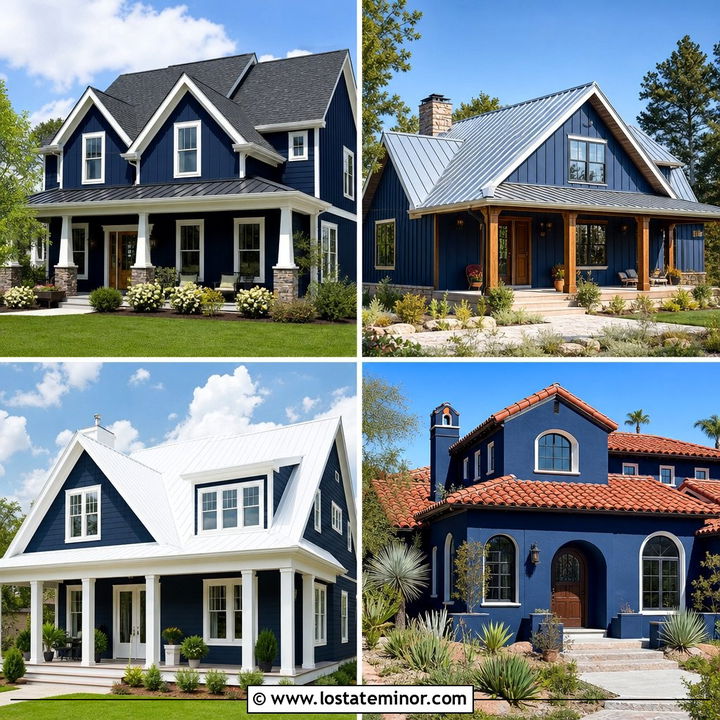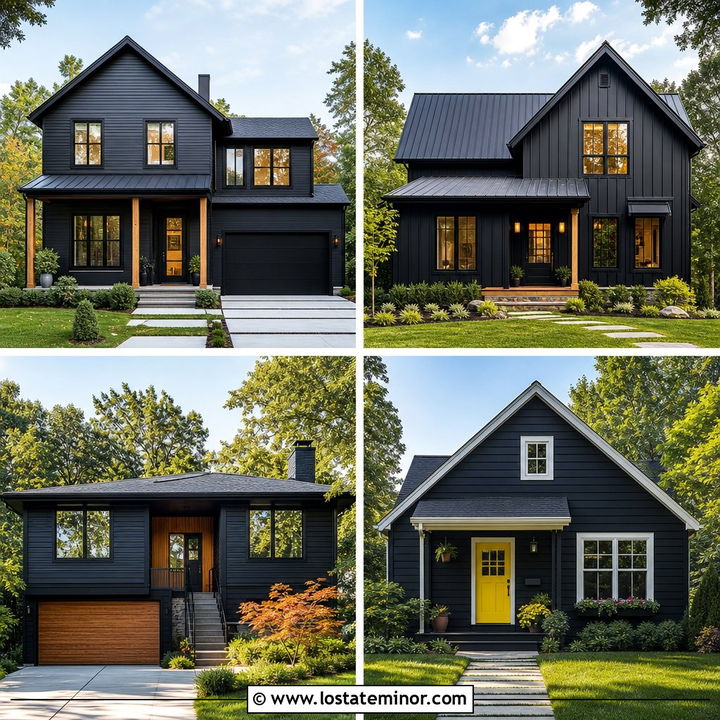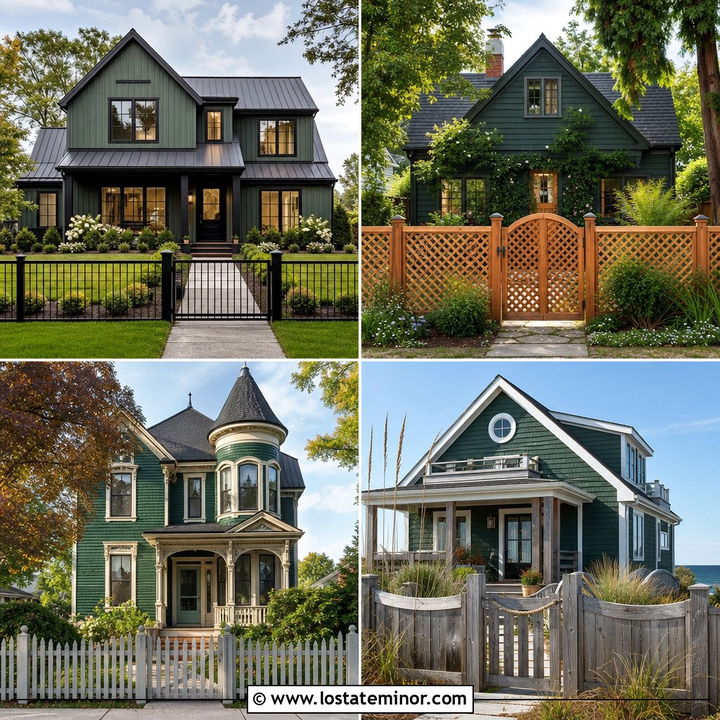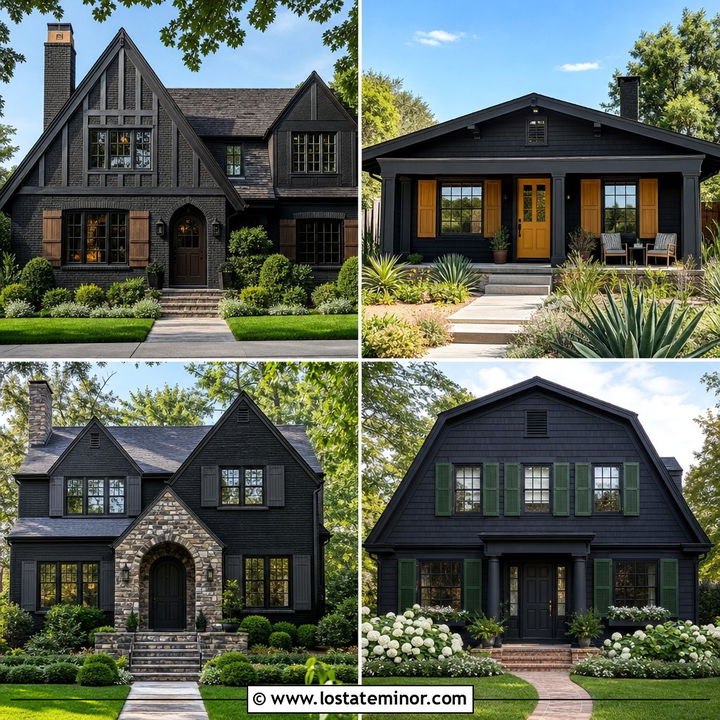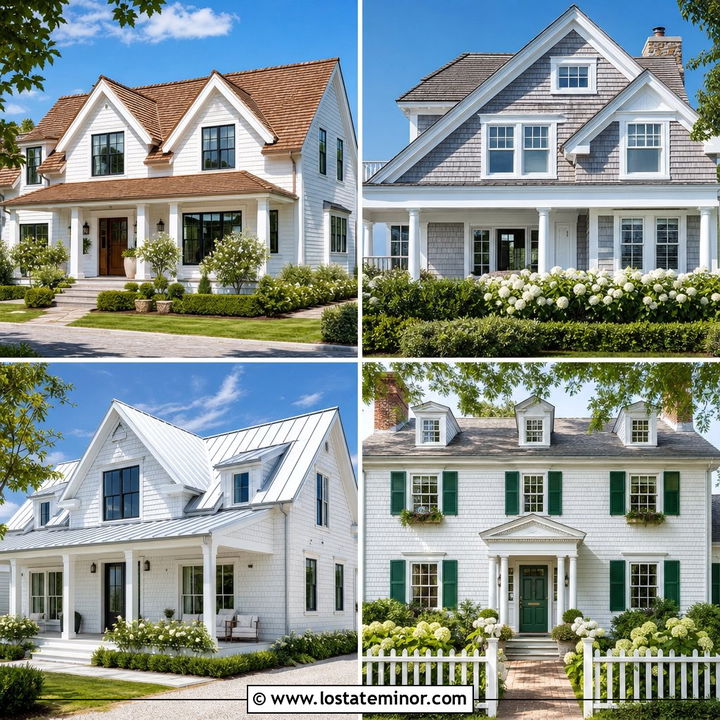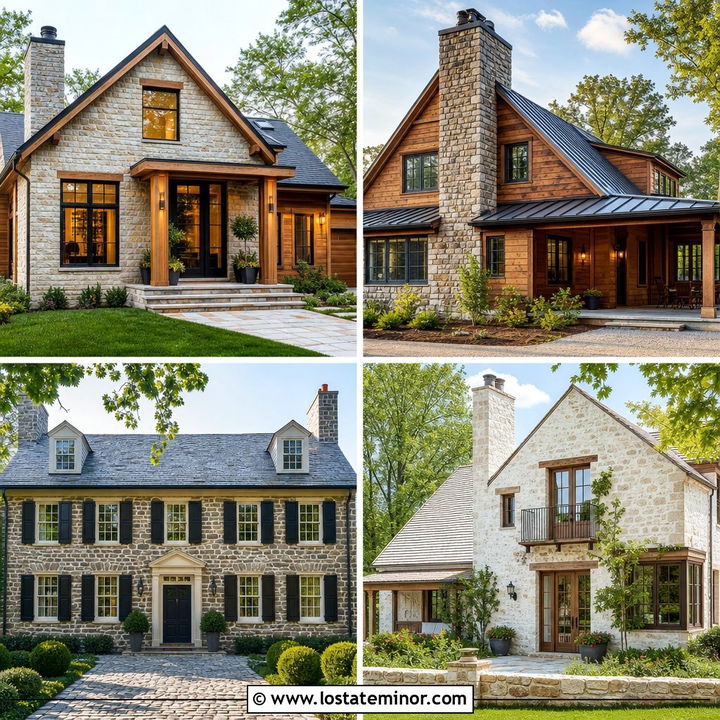
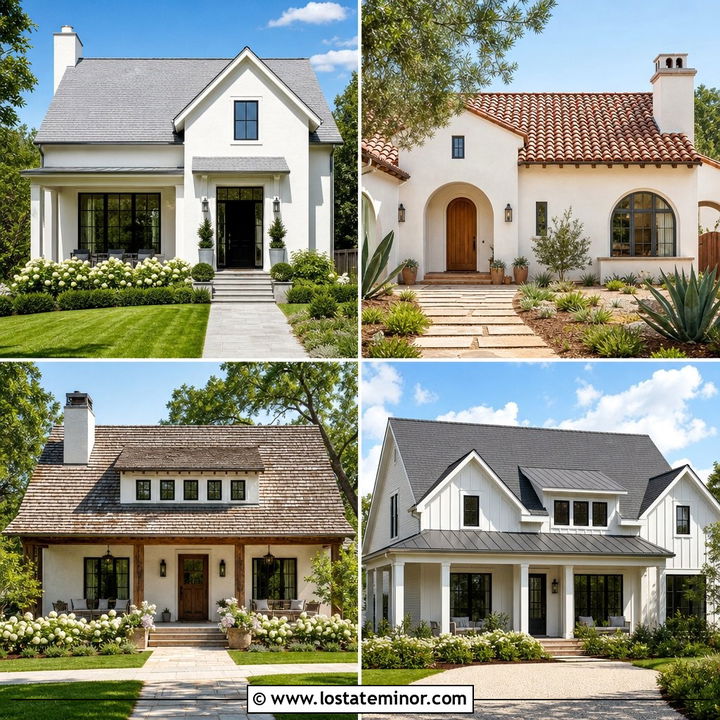
Warm white siding can soften a home’s facade, flatter natural materials, and create a welcoming backdrop for almost any roof. The strongest combinations coordinate the white’s creamy, beige, or subtle greige undertone with roofing, trim, masonry, doors, and landscaping. Warm brown roofs create an earthy effect, while charcoal and black add sharper contrast. Terracotta, copper, cedar, and colored metal bring more character. Matching warm materials with warm undertones is a reliable starting point, but architecture and fixed finishes should guide the final palette. Testing exterior paint beside roofing and stone in changing daylight is also essential. () The complete looks below explore 30 Warm White House Design With Roof Ideas for traditional, modern, rustic, and coastal homes.

1. Warm White House With Black Shingle Roof
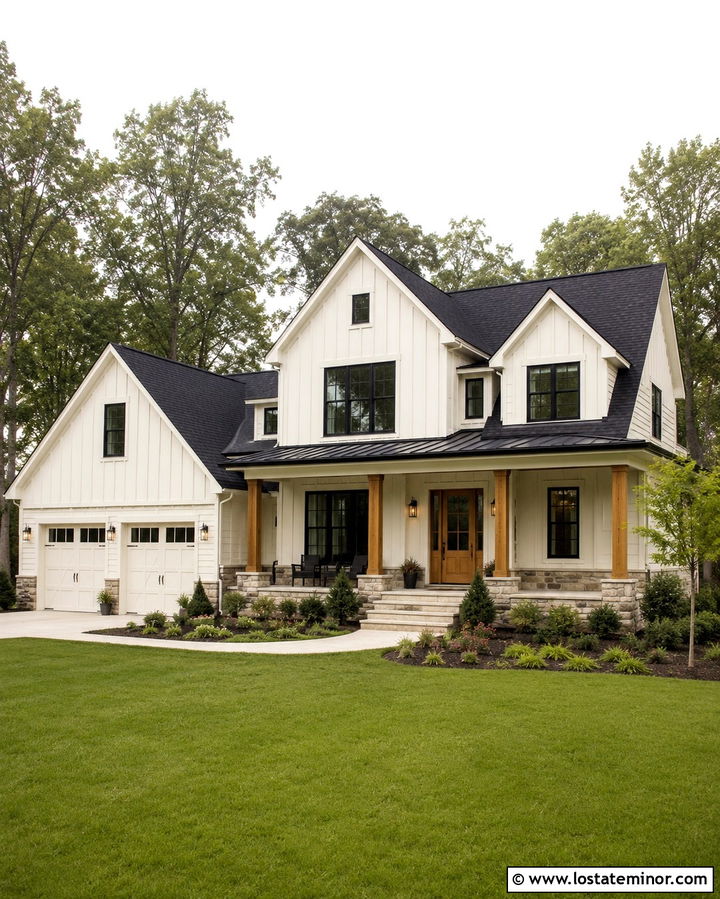
A black shingle roof gives a warm white exterior crisp definition without making the house feel cold. Choose creamy white lap siding, soft white trim, and black window frames to repeat the roof color across the facade. A medium-tone oak front door keeps the contrast from becoming too severe. This palette suits a modern farmhouse, Colonial, or updated suburban home with strong rooflines. If the roof covers a large portion of the front elevation, select textured architectural shingles instead of a completely flat black product. Natural stone around the foundation can soften the transition between the dark roof and pale walls. Finish the look with simple black sconces, light concrete steps, and layered evergreen landscaping.
2. Warm White House With Charcoal Roof
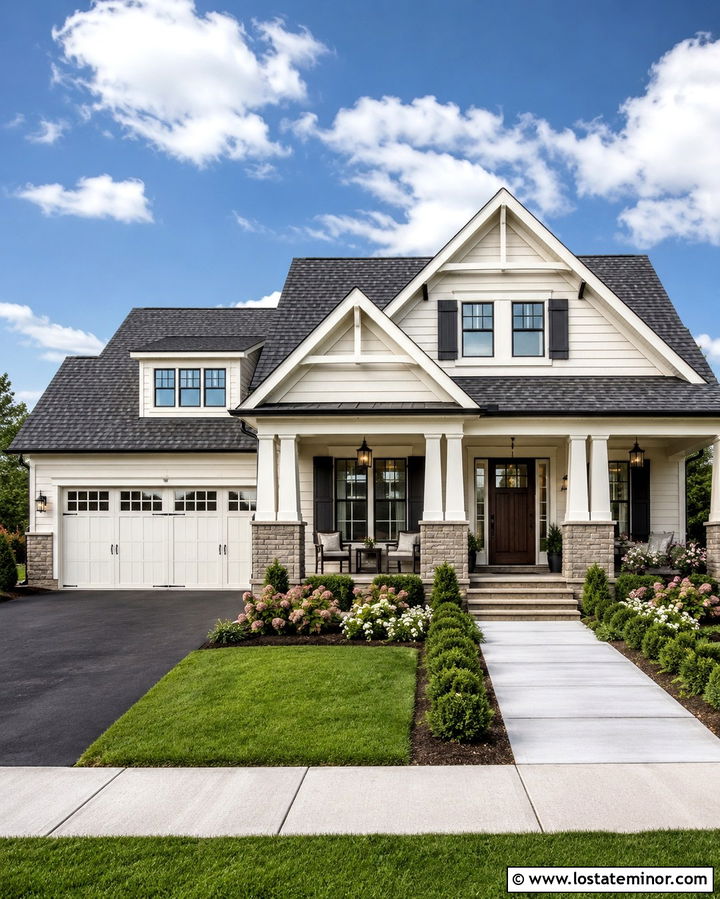
Charcoal roofing feels gentler than pure black while still outlining dormers, gables, and covered porches. Pair it with a balanced warm white such as Sherwin-Williams Alabaster, then add medium charcoal shutters or window sashes. A stained walnut door introduces an inviting natural note. This complete palette works especially well on Craftsman houses because the softer roof color complements tapered columns, stone piers, and exposed wood details. Keep gutters close to the trim color when you want them to disappear. Alternatively, use charcoal gutters to trace a clean roof edge. Choose stone containing gray, tan, and cream so every major color appears somewhere in the masonry. The result feels polished, comfortable, and easy to maintain.
3. Warm White House With Slate Gray Roof
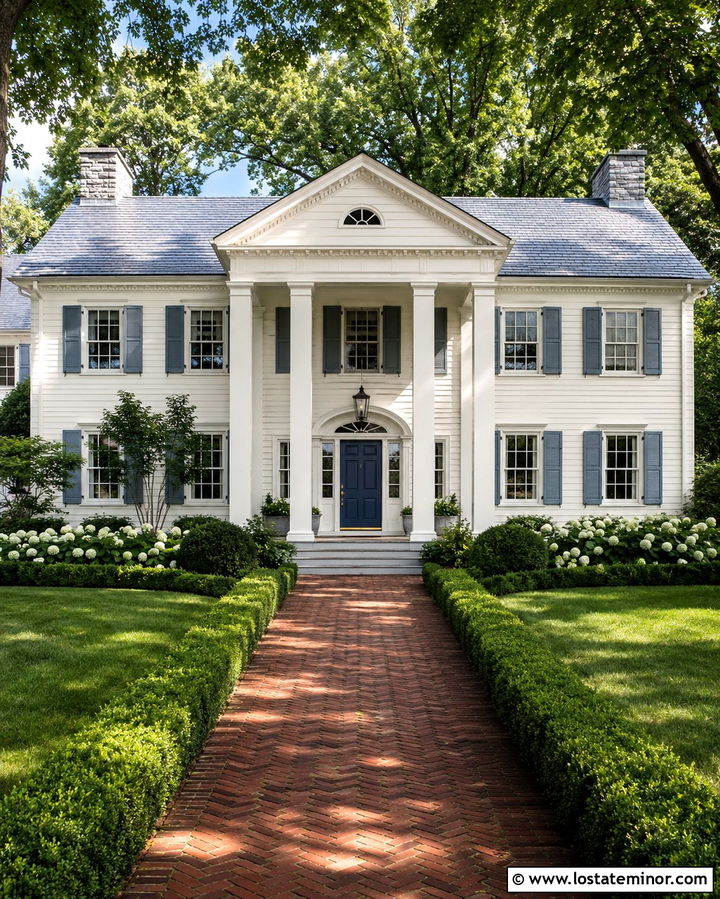
Imagine a warm white Colonial framed by a refined slate gray roof and muted blue-gray shutters. The gray brings visual weight to the upper half of the house, while the creamy siding prevents the overall exterior from looking overly cool. Use bright but warm trim around symmetrical windows, then introduce a deep navy front door for understated color. A red brick walkway can add another layer of warmth without competing with the roof. This scheme is particularly useful for homes with formal architecture because the restrained palette emphasizes proportion and symmetry. Select slate gray shingles with limited color variation for a cleaner finish. Boxwoods, hydrangeas, and a balanced pair of porch lights reinforce the tidy, traditional curb appeal.
4. Warm White House With Weathered Wood Roof
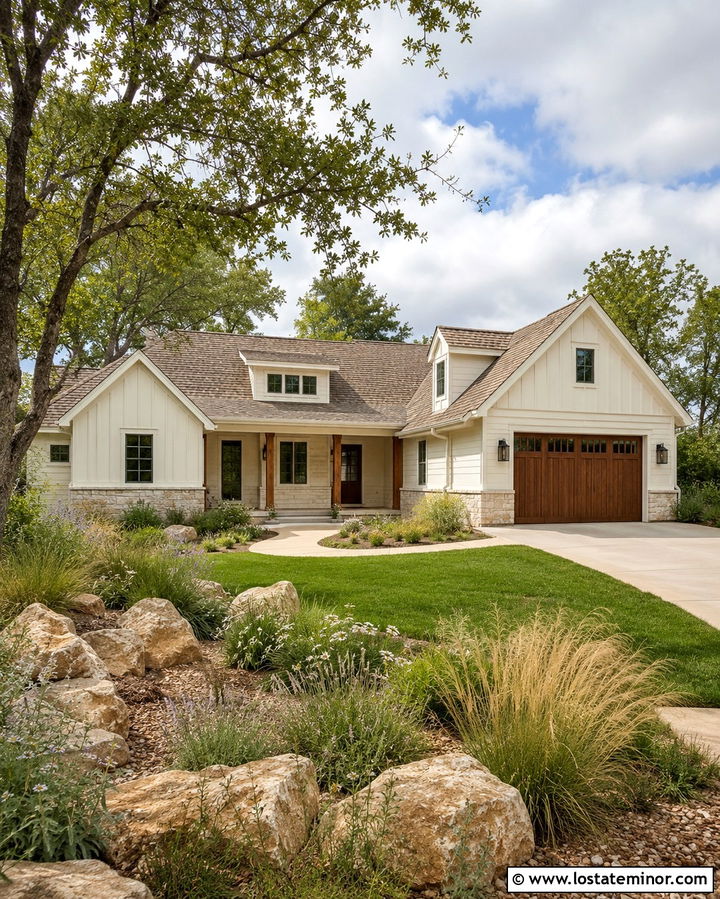
Weathered wood shingles combine brown, taupe, and softened gray, making them a flexible match for warm white siding. On a ranch house, use creamy board-and-batten in the gables and horizontal lap siding across the main facade. Add a medium brown garage door, cedar porch posts, and antique bronze fixtures. These repeated warm accents connect the roof to the lower part of the exterior. Avoid cool gray trim, which can make the siding and roofing appear disconnected. Instead, select ivory trim that is slightly lighter than the body. A stone skirt containing tan and gray will bridge the entire palette. Informal ornamental grasses, low shrubs, and a curved walkway complete this approachable, nature-inspired suburban look.
5. Warm White House With Dark Brown Roof
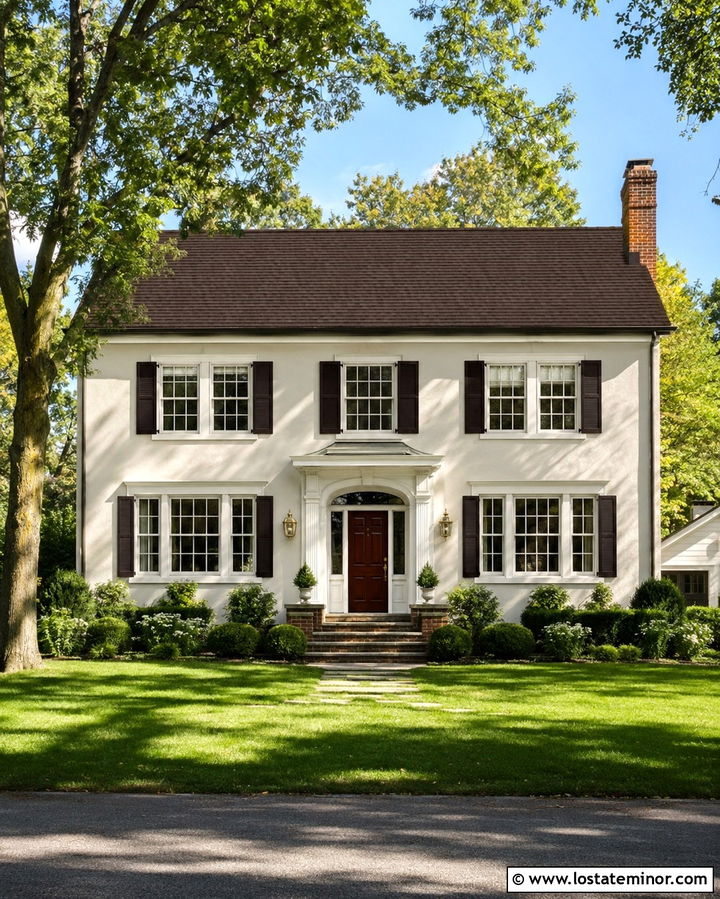
Dark brown roofing creates rich contrast while preserving the warmth of an ivory or cream exterior. This combination works beautifully on a traditional two-story house with divided-light windows and substantial white trim. Repeat the roof’s depth through espresso shutters, dark bronze gutters, and a deep brown garage door. A mahogany front door can serve as the warmer focal point. If the house includes brick, choose a blend with muted red, brown, and cream rather than bright orange tones. The layered brown palette makes the warm white body appear brighter but never stark. Add brass-toned door hardware and softly colored foundation plants. The finished exterior feels established and welcoming, especially in wooded neighborhoods or areas with mature landscaping.
6. Warm White House With Chocolate Brown Roof
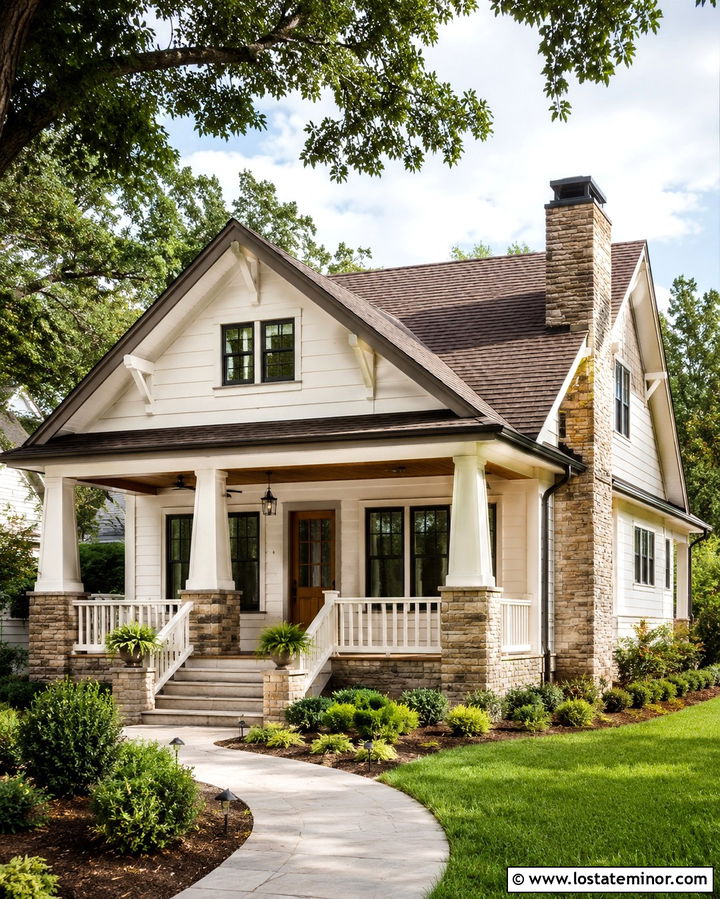
A chocolate brown roof can turn a simple warm white bungalow into a cozy, carefully coordinated home. Use creamy stucco or smooth siding for the body, then frame it with warm white trim that has minimal yellow. Dark chocolate fascia and window sashes can repeat the roofing in smaller amounts. Bring balance to the entry with a medium cedar door and matching porch ceiling. Because chocolate roofing is visually heavy, lighter porch flooring and open railings will keep the facade from feeling weighed down. A tan stone chimney is another useful bridge between the dark roof and soft walls. Surround the house with green foliage and pale gravel paths, allowing the brown-and-white palette to remain the main curb-appeal feature.
7. Warm White House With Cedar Shake Roof
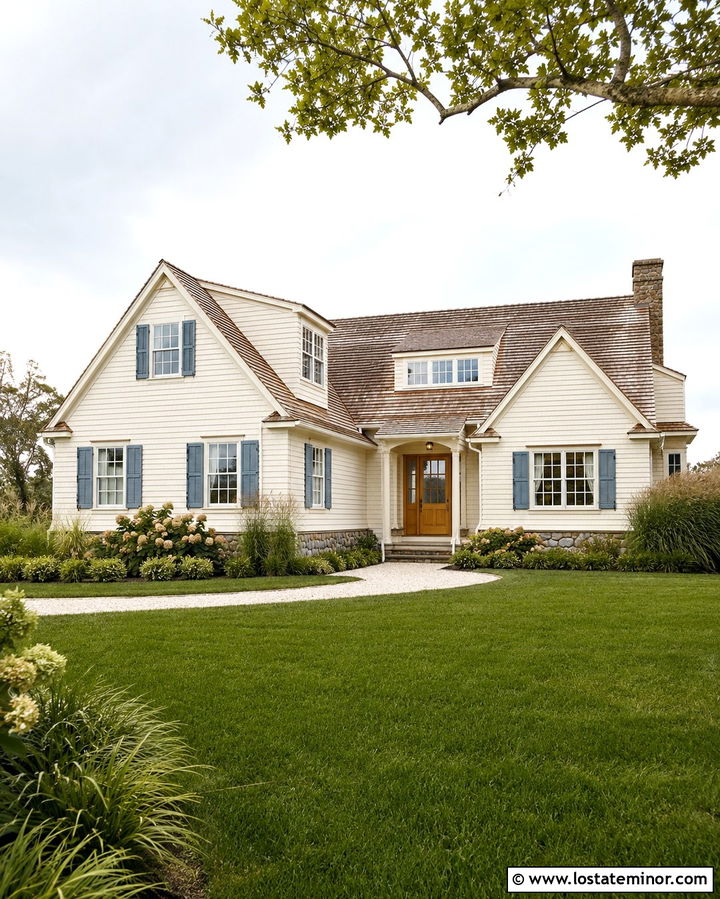
Few combinations look as naturally relaxed as warm white siding beneath a cedar shake roof. Fresh cedar starts with honey and amber tones, then gradually develops a softer weathered character. Pair the roof with Benjamin Moore White Dove siding, cream trim, and a clear-finished oak door. A Cape Cod or coastal cottage provides the ideal setting for this palette, especially with simple dormers and a covered entry. Keep shutters muted, using sage green or weathered blue instead of black. Natural fieldstone along the foundation can support the roof’s organic texture. Since cedar already creates movement, limit decorative color changes elsewhere. Hydrangeas, native grasses, and a crushed-shell or light gravel walkway complete the casual, coastal curb appeal.
8. Warm White House With Terracotta Tile Roof
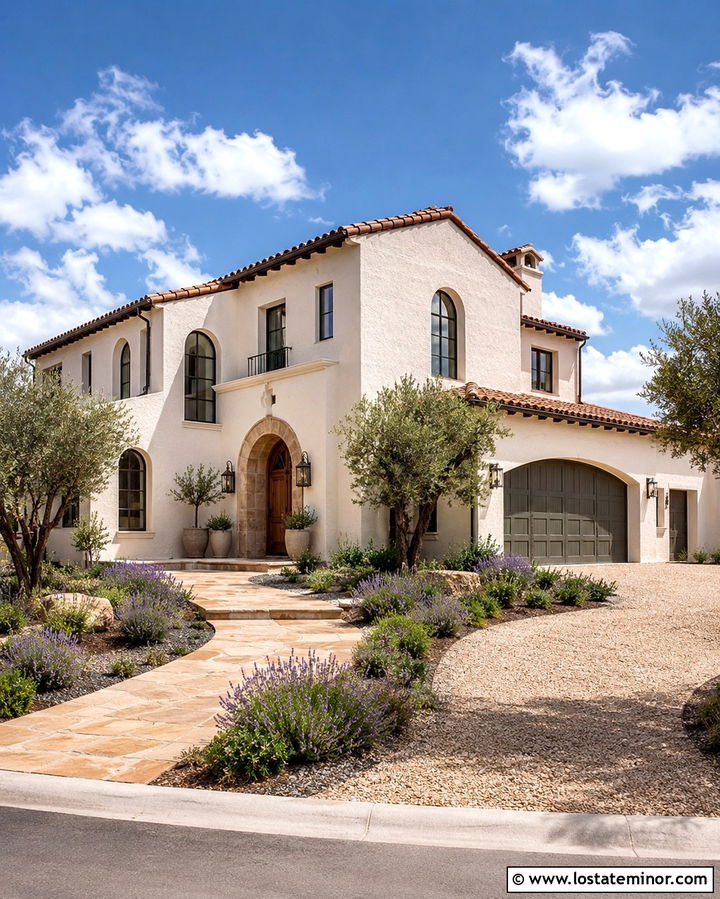
Terracotta roof tiles bring an unmistakable sun-warmed character to a creamy white stucco exterior. Let the roof remain the dominant color, then use restrained accents such as dark bronze windows, natural oak doors, and sandy stone. This scheme works especially well on Mediterranean and Spanish Revival houses with arched openings, deep eaves, and textured walls. A muted olive front gate or garage door can connect the home to surrounding greenery. Avoid icy white trim because it may look disconnected from the earthy roof. Instead, continue the same warm white across walls, columns, and cornices, changing the sheen rather than the color. Olive trees, lavender, gravel beds, and a clay-toned walkway reinforce the cohesive, regionally inspired exterior.
9. Warm White House With Red Clay Tile Roof
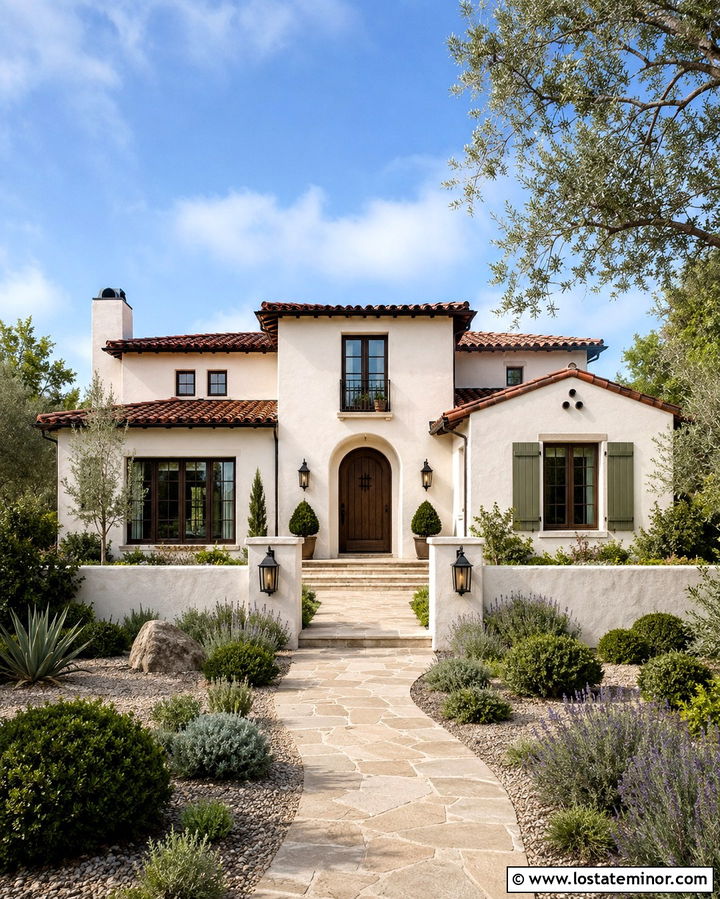
A red clay tile roof creates more contrast than muted terracotta, so the surrounding palette should remain simple. Choose a soft cream stucco that has enough warmth to complement the tile without appearing yellow. Dark brown wood windows, an arched walnut door, and bronze lanterns provide grounding accents. This full-house treatment is ideal for a Spanish Colonial home with a low-pitched roof, courtyard wall, and rounded architectural details. Introduce limestone steps or pale sandstone around the entry to brighten the lower facade. If shutters are part of the architecture, paint them a restrained olive green. The red roof, cream walls, dark wood, and green landscaping form a timeless scheme that feels colorful without becoming visually crowded.
10. Warm White House With Copper Roof
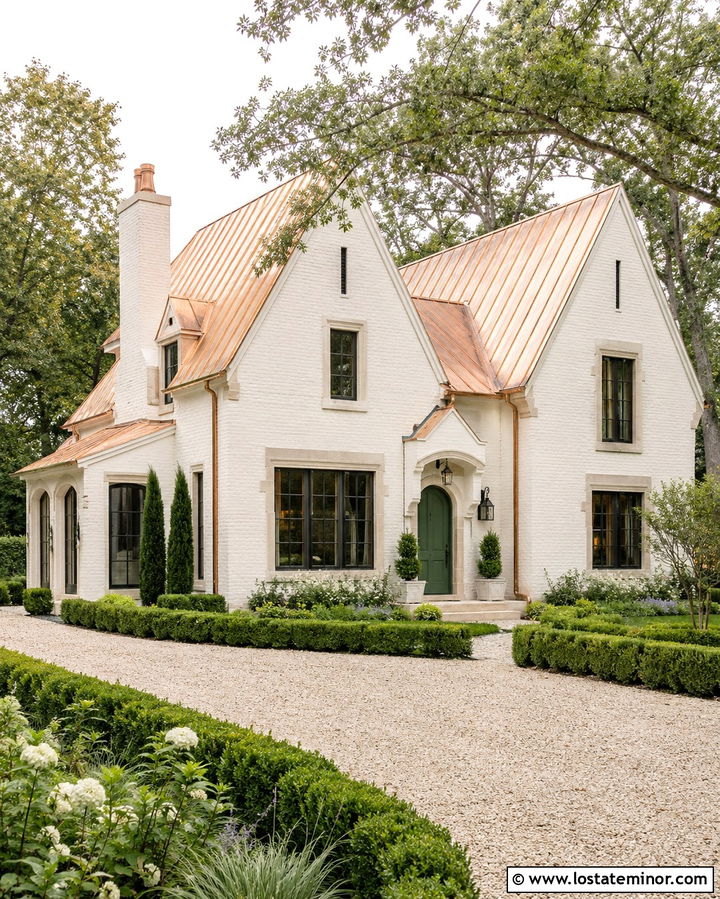
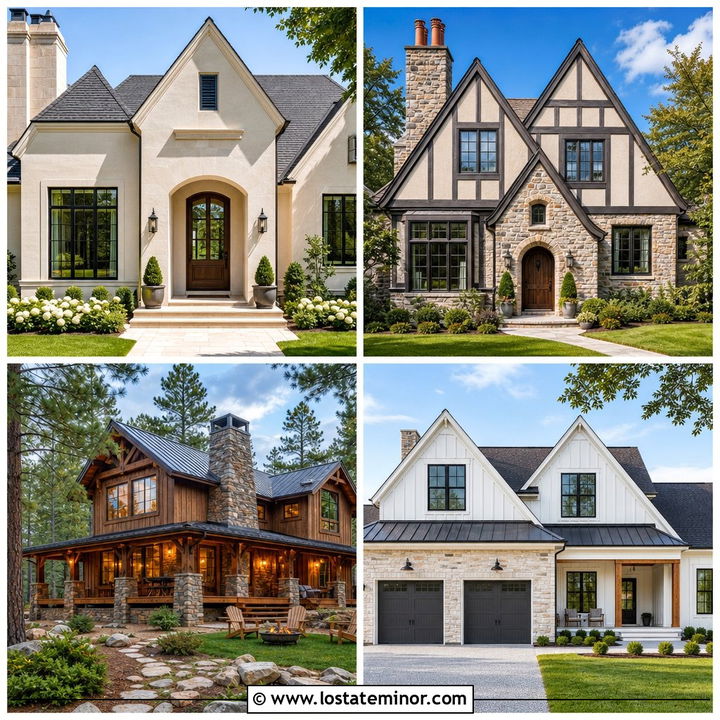
A copper roof brings craftsmanship and changing natural color to an elegant warm white exterior. Use copper on the entire roof of a smaller cottage or as a prominent porch and bay-window roof on a larger house. Creamy painted brick, pale limestone trim, and dark bronze windows support the metal’s warm glow. An aged green door can subtly reference the patina copper develops over time. For a more classic approach, choose a walnut door and uncluttered black hardware. Keep additional ornament controlled because the metal already supplies texture and shine. This combination suits French country, Tudor-inspired, and refined cottage architecture. Structured hedges, pea gravel, and mature trees provide a calm landscape around the distinctive roof treatment.
11. Warm White House With Black Metal Roof
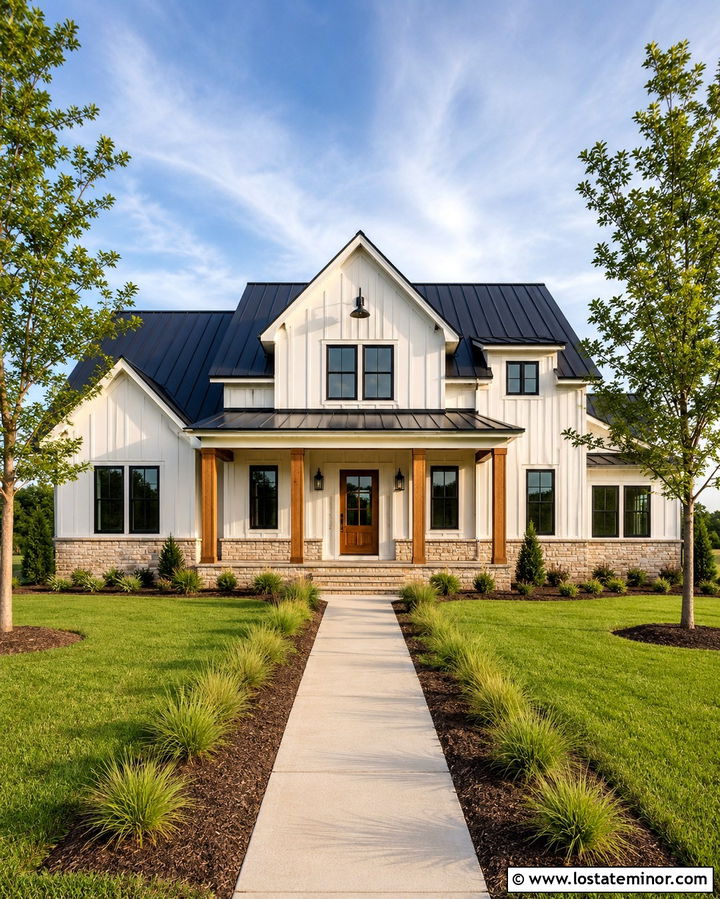
Clean vertical seams make a black metal roof an excellent partner for a warm white modern farmhouse. Use soft ivory board-and-batten siding, broad white fascia, and black windows to create a clear architectural rhythm. Natural cedar can appear on porch columns, the front door, and selected gable details. These wood elements prevent the monochrome palette from feeling too graphic. If the house has an attached garage, consider warm white doors with black handles rather than large solid-black doors. A stone foundation in pale gray and tan will visually anchor the building. Finish the property with a straight concrete walkway, clipped grasses, and young shade trees. The result is crisp, modern, and warm enough for a welcoming family home.
12. Warm White House With Bronze Metal Roof
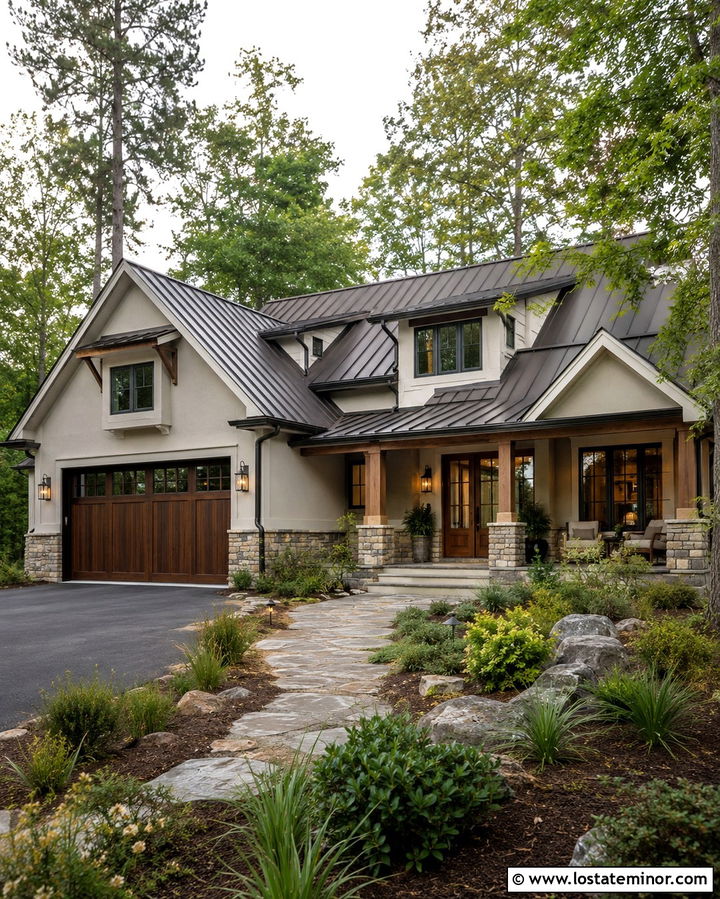
Bronze metal roofing offers depth without the sharp contrast produced by black. It pairs naturally with creamy stucco, ivory siding, tan stone, and stained wood. On a contemporary Craftsman house, use dark bronze standing-seam roofing over the main structure and porch. Repeat that finish on window frames, gutters, and restrained exterior lighting. A medium walnut garage door and front door will connect the metal to the landscape. Keep the trim close to the warm white body color so the roof and wood remain the main features. This palette looks especially attractive among trees because brown-bronze surfaces echo trunks and branches. Informal stone paths and layered native planting complete the grounded, quietly sophisticated exterior design.
13. Warm White House With Galvanized Metal Roof
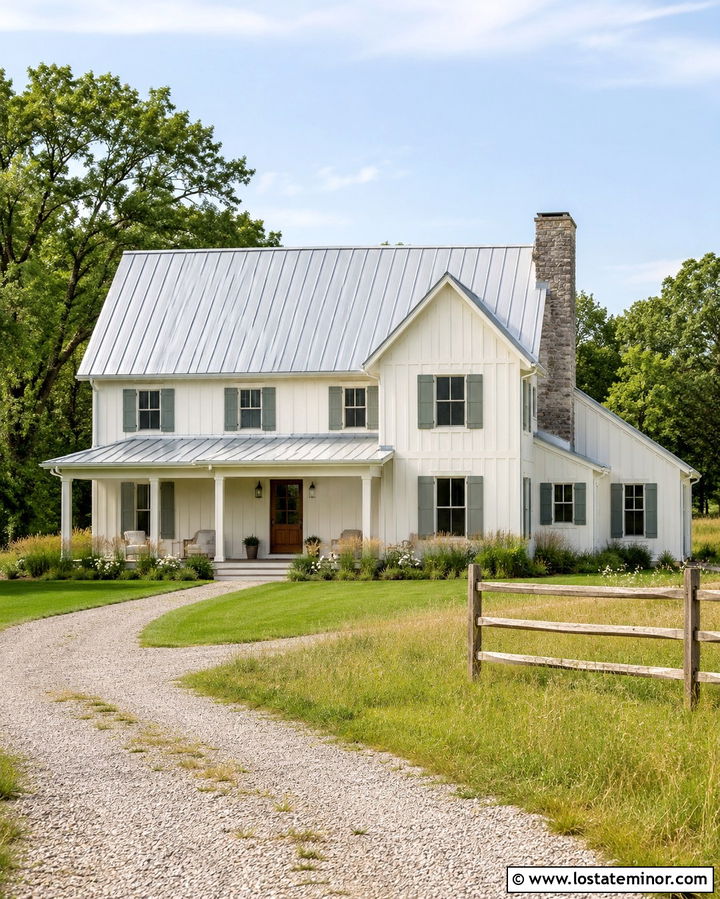
A galvanized silver roof can look bright and casual when combined with the right warm white. Select a light creamy exterior with only a subtle beige undertone, avoiding whites that are strongly yellow. Soft gray-green shutters help connect the reflective roof to the landscape, while a natural wood door adds necessary warmth. This combination is well suited to a simple farmhouse, rural cottage, or low-profile ranch with deep roof overhangs. Use warm white gutters and fascia to create a clean transition between the walls and metal. A gray stone chimney can repeat the cooler notes overhead. Add gravel, split-rail fencing, meadow-inspired plants, and a broad lawn to give the complete exterior a relaxed country character.
14. Warm White House With Light Gray Metal Roof
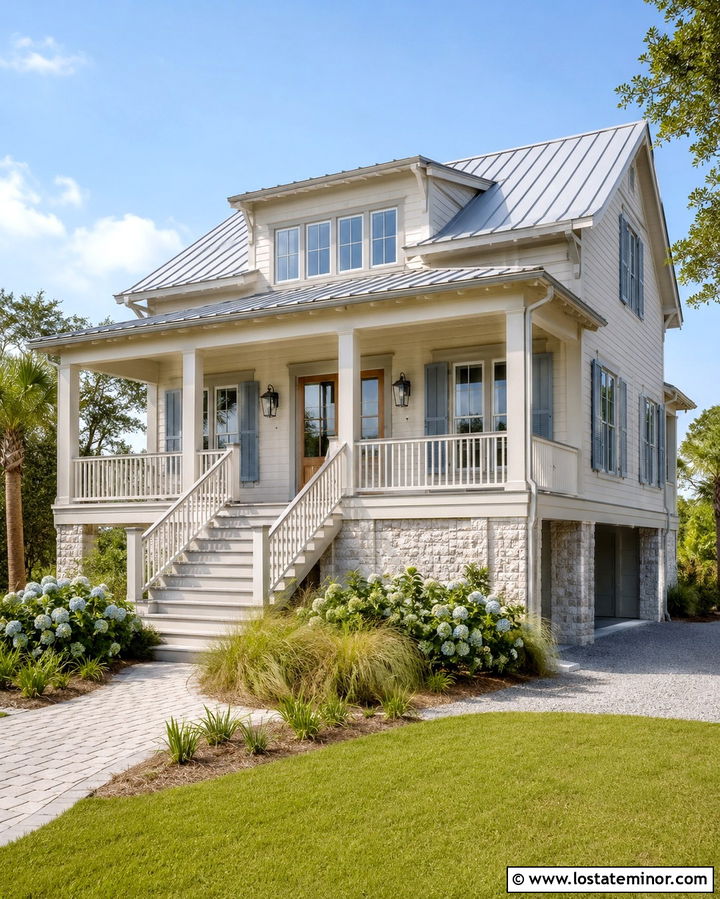
Light gray metal roofing creates an airy, low-contrast look on a warm white coastal house. Pair a pale greige-white exterior with soft gray trim, blue-gray shutters, and a washed oak front door. The roof should be visibly gray rather than bright silver, allowing it to complement the siding without disappearing. This scheme works on raised coastal cottages, beach houses, and homes with broad porches. White railings keep the facade open, while light natural stone provides texture at ground level. Consider painting the porch ceiling a very soft blue for a subtle coastal accent. Dune grasses, hydrangeas, and a pale paver walkway complete the setting. The finished palette feels fresh, sunlit, and pleasantly understated.
15. Warm White House With Taupe Shingle Roof
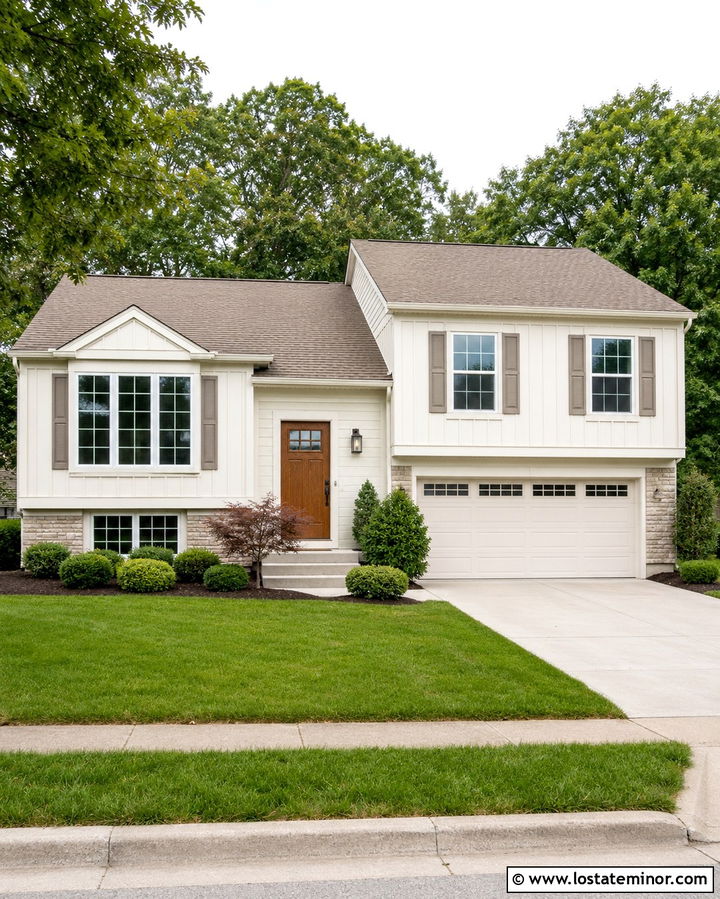
Taupe shingles blend gray and brown, giving homeowners a softer alternative to strongly colored roofing. Pair them with Sherwin-Williams Shoji White siding, creamy trim, and mushroom-colored shutters. A medium oak front door adds texture while staying within the calm neutral palette. This combination can update a split-level house without forcing major architectural changes. Use warm white on the garage door to reduce its visual size, then repeat taupe through the foundation stone and porch flooring. Black hardware may feel too harsh here, so consider aged bronze or dark pewter instead. Rounded shrubs and ornamental trees will reinforce the exterior’s gentle character. The final design looks coordinated, approachable, and suitable for many suburban settings.
16. Warm White House With Greige Roof
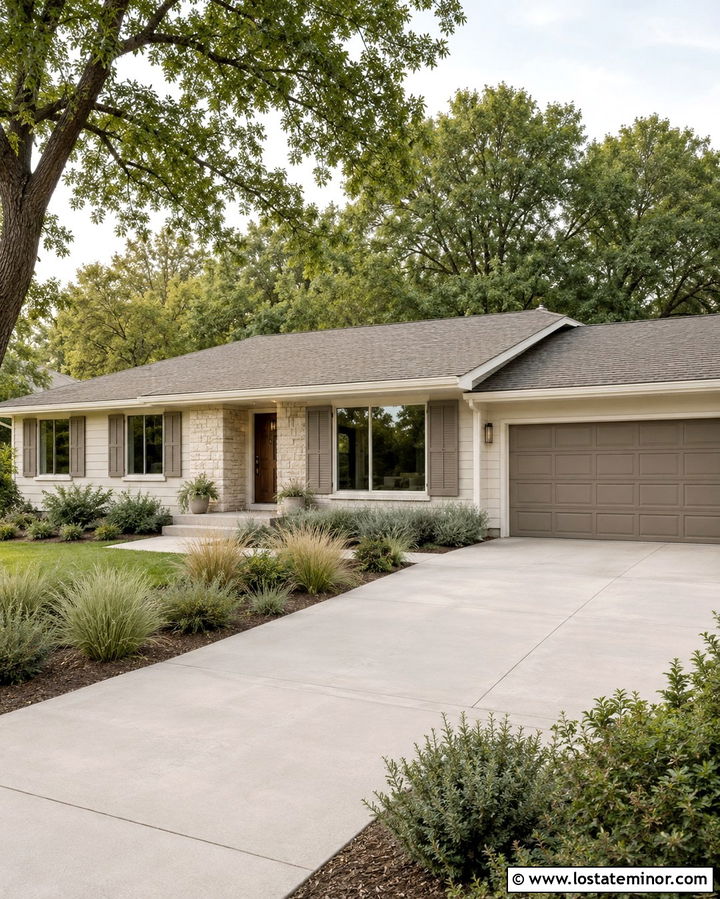
Could a roof almost blend into the siding and still create dimension? A medium greige roof proves that it can. Combine it with an off-white exterior that carries balanced beige and gray undertones. Use slightly deeper greige on shutters, garage doors, and selected trim to form a layered tonal palette. A dark walnut front door gives the eye a clear destination. This quiet color scheme works especially well on a wide ranch house where extreme roof contrast might dominate the low elevation. Add creamy limestone or pale mixed stone around the entry for texture. Keep gutters warm white so the roofline remains smooth. Sage shrubs, soft grasses, and a clean concrete drive complete the understated, updated facade.
17. Warm White House With Sand Beige Tile Roof
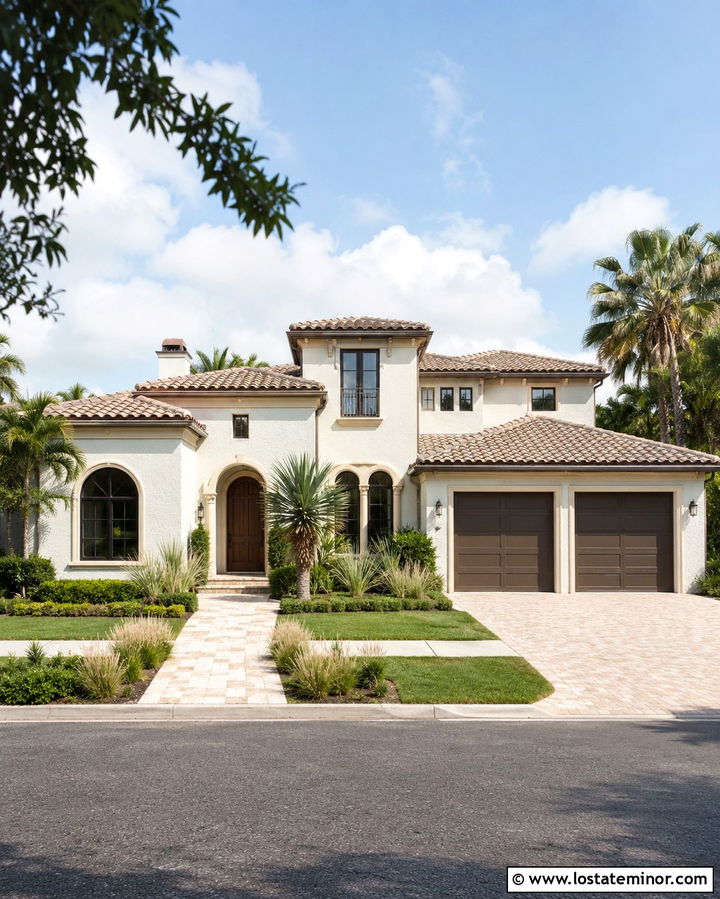
Sand beige roof tiles create a light, sun-washed exterior that feels right at home in warm climates. Pair the roof with creamy stucco, ivory trim, and soft bronze window frames. A medium brown wood door adds just enough depth at the entrance. This palette suits a Florida, Southwestern, or Mediterranean-inspired house with shallow roof slopes and arched openings. Avoid using beige on every surface at the same value. Instead, create definition with darker garage doors, textured stone bases, or shadowed porch recesses. Pale travertine pavers can connect the walkway to the roof without overwhelming the warm white walls. Palm-like plants, ornamental grasses, and tidy green hedges provide fresh color around the calm neutral architecture.
18. Warm White House With Green Metal Roof
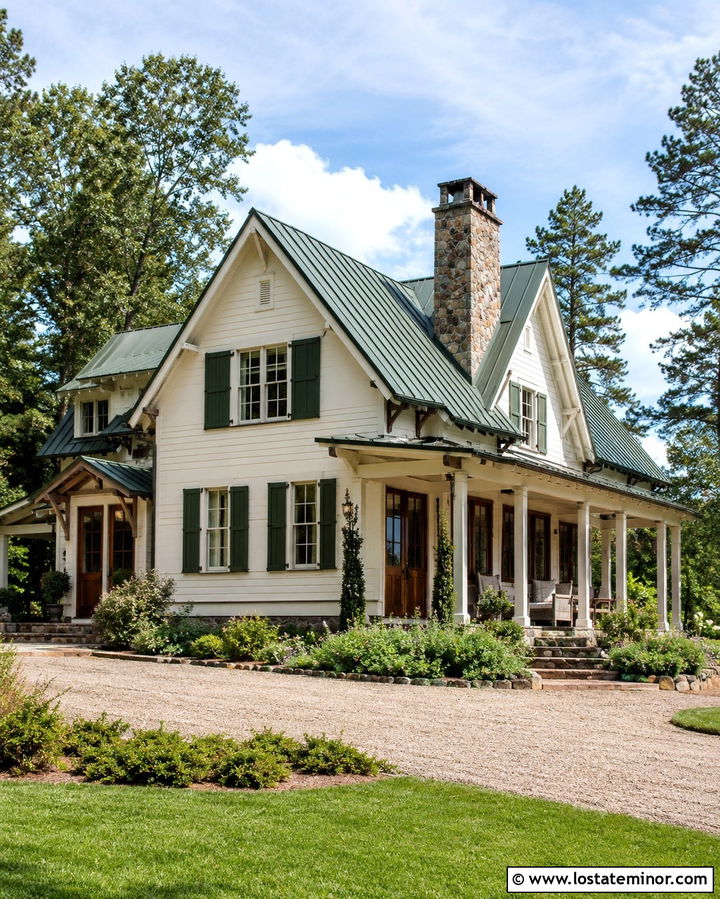
A muted green metal roof gives a warm white house color without sacrificing its natural, timeless appeal. Choose deep forest green for a traditional farmhouse or softer olive green for a rustic cottage. Cream siding, warm white trim, and stained cedar doors will keep the scheme earthy. Repeat the green on shutters or a small garden gate, but avoid covering every accent in the same shade. A stone chimney containing mossy gray, brown, and cream can unite the roof with the facade. This look is particularly effective on properties surrounded by mature trees. A gravel drive, simple porch, and layered native landscaping allow the structure to settle naturally into its environment while maintaining a distinctive curb presence.
19. Warm White House With Blue Gray Roof
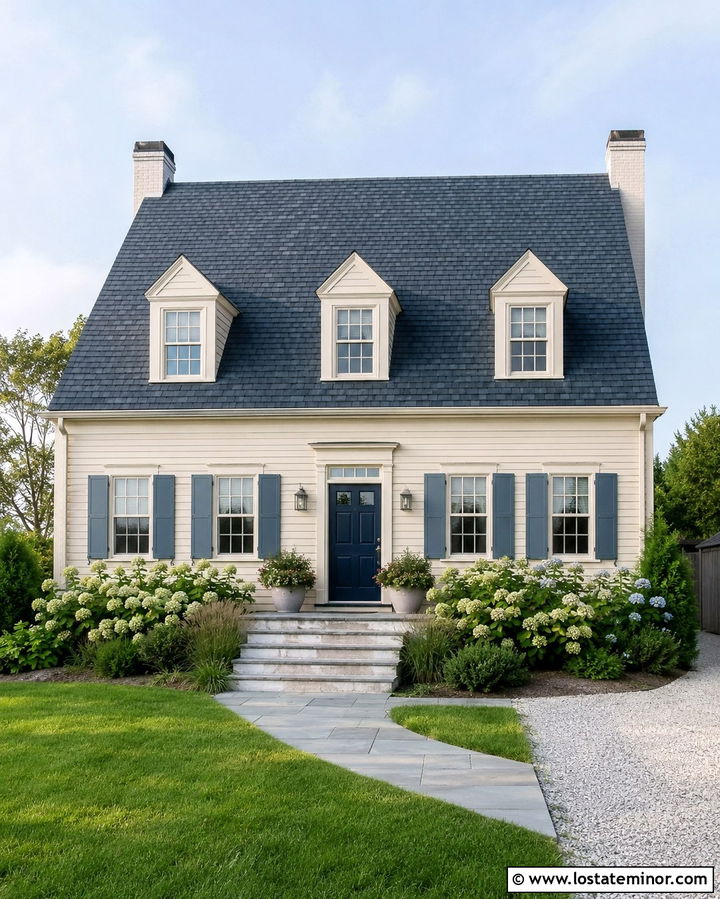
Blue-gray roofing brings restrained color to warm white siding and works particularly well near water. Use an ivory body color with a subtle gray undertone, then add slate blue shutters and a navy front door. White trim should remain warm enough to relate to the siding. This complete palette suits a shingle-style home, Cape Cod, or traditional coastal cottage with dormer windows and an inviting front porch. Incorporate weathered gray decking and pale stone to support the roof color. Brushed nickel or dark pewter fixtures will feel more connected than warm brass in this scheme. Hydrangeas, sea grasses, and a light gray walkway complete the exterior, producing a relaxed coastal look without obvious nautical decorations.
20. Warm White House With Natural Slate Roof
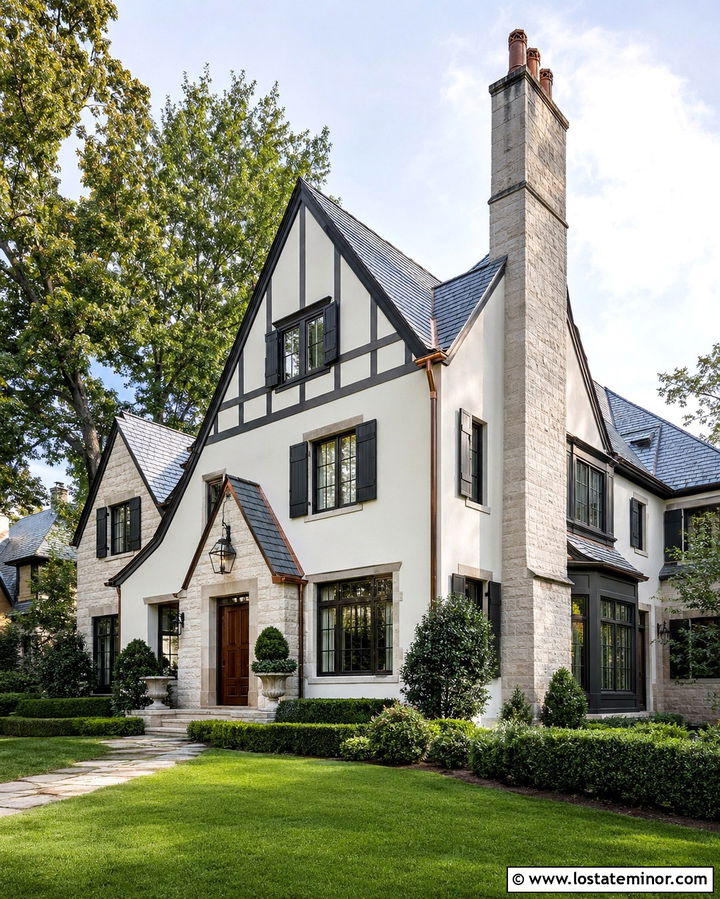
Natural slate adds fine texture and subtle variation to a formal warm white home. Depending on the source, slate may contain charcoal, blue-gray, green, or muted purple notes. Select an ivory exterior that harmonizes with the dominant roof tone, then use dark gray shutters and black-green accents. A substantial walnut door adds warmth and balances the stone roofing. This combination looks especially appropriate on Tudor, Georgian, and French-inspired houses with steep gables and tall chimneys. Use limestone, aged brick, or smooth stucco rather than competing multicolored masonry. Copper gutters can contribute another traditional material and develop character gradually. Formal hedges, mature trees, and a stone walkway complete the dignified, long-established appearance.
21. Warm White House With Synthetic Slate Roof
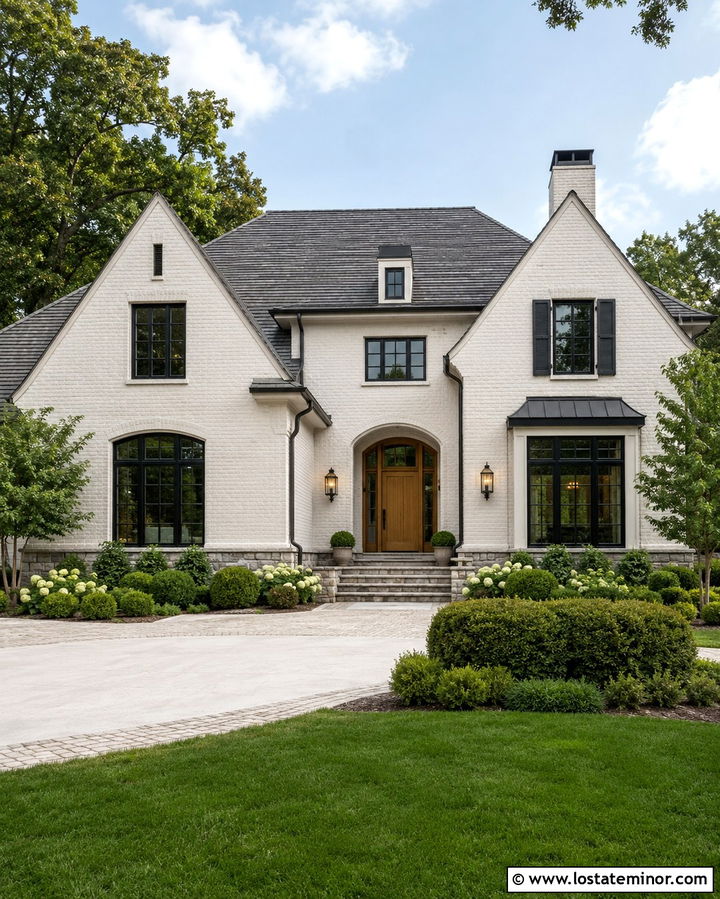
Synthetic slate can create the ordered appearance of stone roofing on a warm white house while supporting a cleaner, more uniform palette. Choose a medium charcoal product with subtle tonal differences rather than dramatic multicolor pieces. Pair it with creamy painted brick, warm white trim, black windows, and a natural oak door. This combination suits a new traditional home where classic proportions meet simplified details. Match the gutters to the roof for a defined edge, or paint them warm white when the facade already includes many dark lines. A restrained gray-and-tan stone base will connect both main colors. Balanced landscaping, broad entry steps, and symmetrical porch lights finish the polished but approachable exterior.
22. Warm White House With Brown Gray Shingle Roof
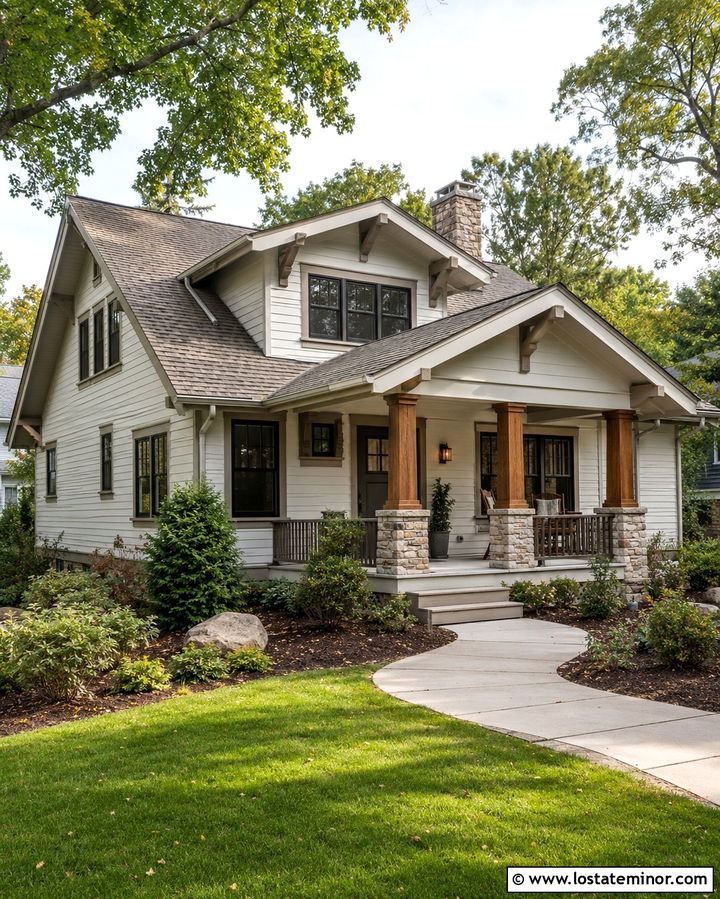
Brown-gray shingles are useful when a property contains both warm and cool fixed materials. Their blended coloring can connect creamy siding with gray stone, brown brick, or weathered wood. On a Craftsman bungalow, combine a warm white body with taupe trim, dark bronze windows, and cedar porch columns. A deep olive door adds subtle color while complementing the earthy roof. Keep the gable details simple because variegated shingles already create visual movement. If the masonry is busy, limit it to porch piers and the lower foundation. A warm gray walkway and mulched planting beds will continue the balanced undertones into the yard. This adaptable scheme feels natural, layered, and forgiving during future exterior updates.
23. Warm White House With Red Metal Roof
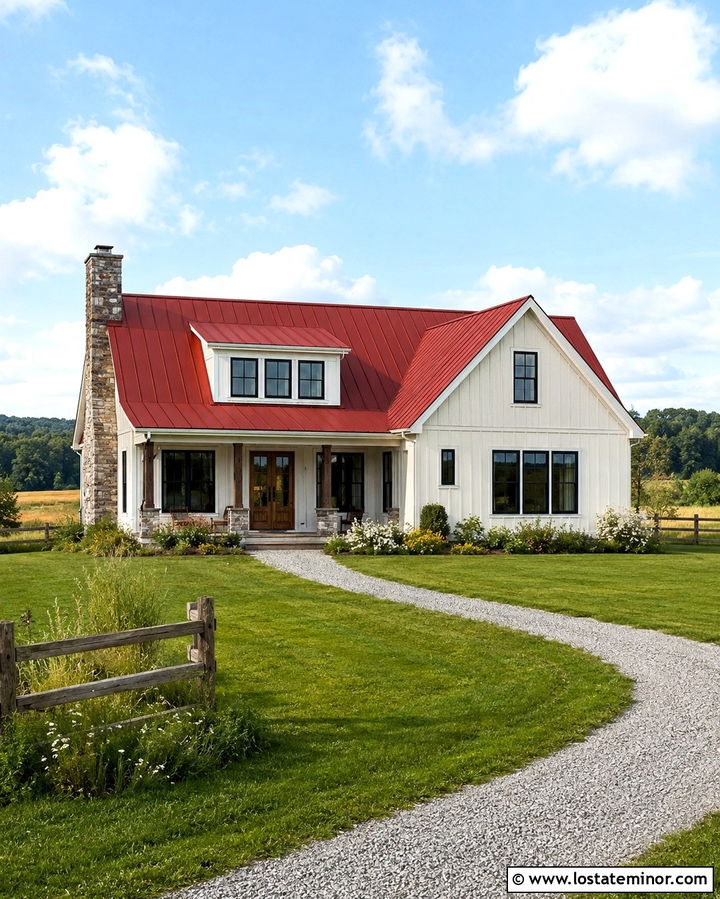
A muted red metal roof can give a warm white farmhouse memorable personality without looking overly bright. Choose barn red, oxblood, or deep russet rather than a highly saturated primary red. Pair it with creamy lap siding, warm white trim, and medium brown wood doors. Black window frames add a small amount of modern definition. Use red only on the roof so it remains a deliberate focal point. A stone chimney with rusty brown and gray pieces can gently repeat the color. This scheme works best on simple architecture with a clear roof shape, such as a farmhouse, cottage, or rural barn-style home. Meadow grasses, broad lawns, and gravel paths reinforce its welcoming countryside character.
24. Warm White House With White Metal Roof
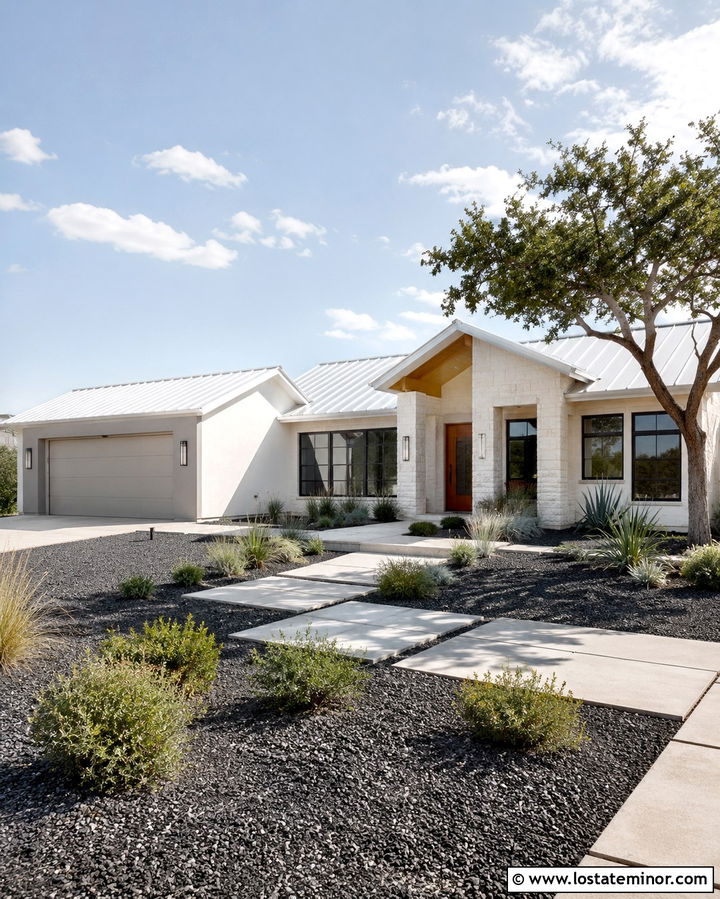
A white metal roof and warm white exterior create a bright tonal scheme suited to sunny regions and modern architecture. To avoid a flat appearance, use a creamy body color, a cleaner warm white for the trim, and pale taupe around the garage or entry. Natural wood soffits and a rich teak door supply contrast and texture. On a contemporary ranch, deep roof overhangs will produce shadows that help define the light surfaces. Introduce charcoal only in small amounts through window frames and lighting. Pale limestone walls, drought-tolerant plants, and light concrete paving extend the clean palette into the landscape. The complete house feels open and modern while retaining enough warmth to remain comfortable and inviting.
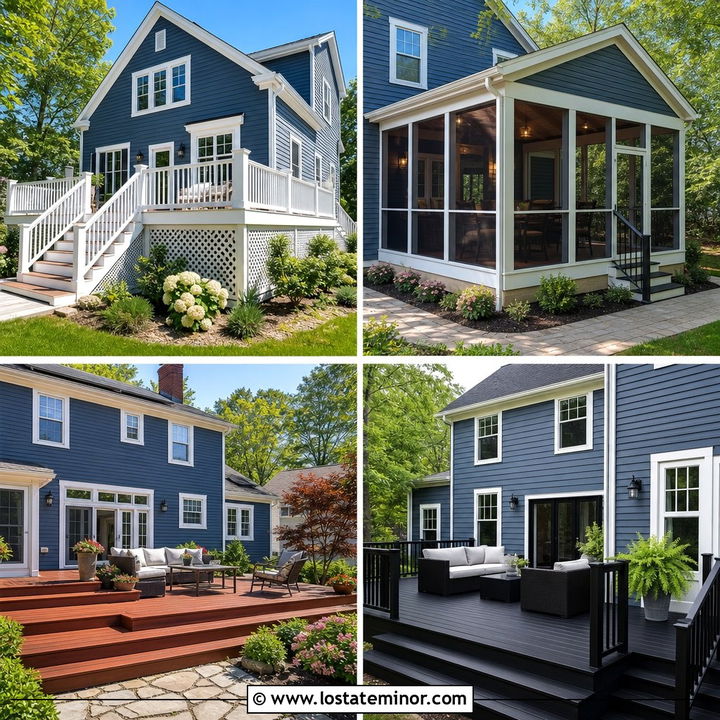
25. Warm White House With Cool Roof Shingles
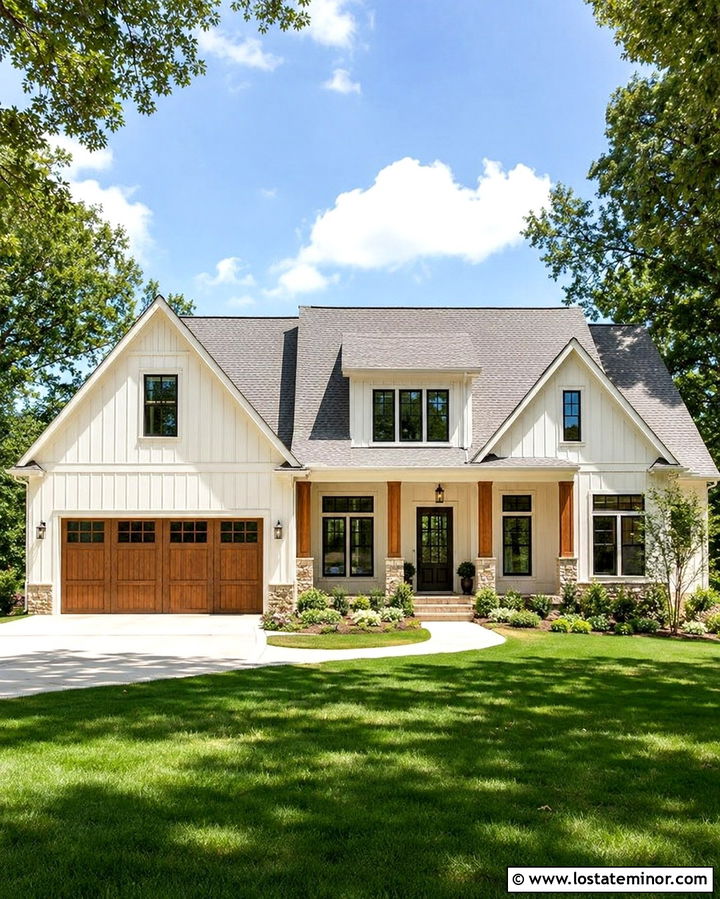
Light-colored cool roof shingles can be incorporated without making a warm white exterior appear washed out. Select shingles in pale taupe or light warm gray, then pair them with cream siding and slightly brighter ivory trim. A cedar garage door, wood porch columns, and a dark bronze front door create needed visual anchors. This design works on a sunny suburban home with a broad, visible roof. Keep fascia close to the roof color if you want a continuous upper plane, or match it to the trim for more architectural definition. Use tan stone around the foundation to strengthen the warm undertones. Deep green shrubs and shade trees add contrast around the otherwise light and reflective exterior scheme.
26. Warm White House With Dark Gray Mansard Roof
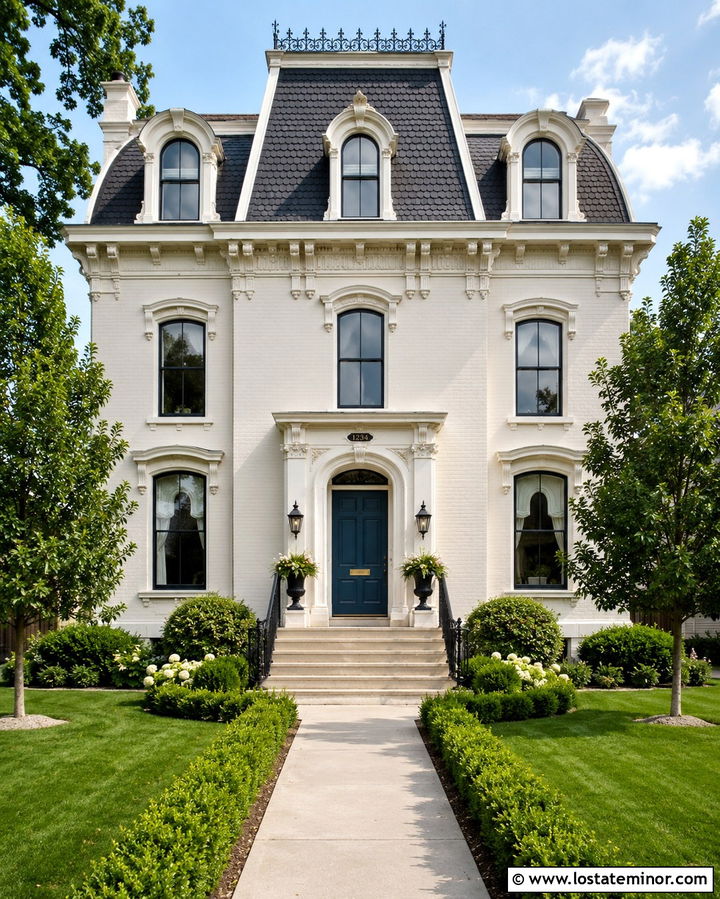
A dark gray mansard roof naturally dominates the facade, so warm white walls provide an effective visual counterweight. Use creamy stucco or painted brick below the roof and repeat dark gray on dormer trim and window sashes. A deep blue front door can introduce color while remaining formal. This combination is ideal for French Second Empire-inspired homes or renovated residences with a mansard profile. Keep decorative moldings in a consistent soft white so the architecture is easy to read. Pale limestone steps and black iron railings add structure without competing with the roof. Symmetrical hedges, small ornamental trees, and a straight walkway reinforce the stately design while the warm body color keeps it from feeling severe.
27. Warm White House With Weathered Gray Gambrel Roof
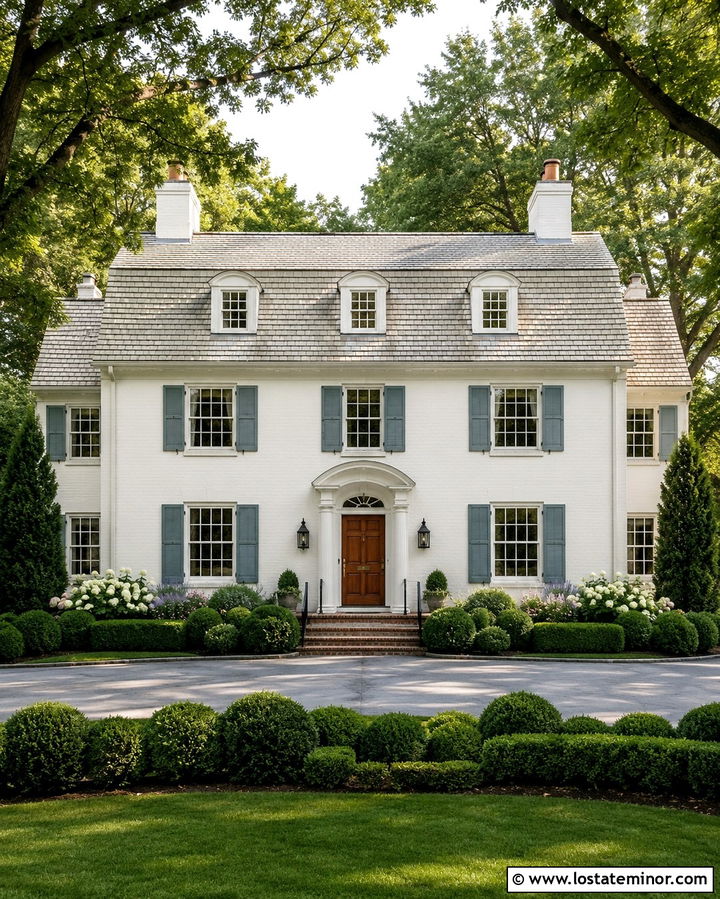
A weathered gray gambrel roof gives a warm white Dutch Colonial house a familiar and balanced profile. Pair the shingles with creamy clapboard siding, soft white trim, and muted blue-green shutters. A cherry or mahogany front door adds warmth at the center of the facade. Because the gambrel roof is visually large, choose shingles with moderate variation and avoid busy high-contrast blends. Small dormers should use the same warm white siding to maintain continuity. Brick steps, black iron handrails, and traditional lanterns complete the architecture. Surround the entrance with clipped hedges and seasonal flowering plants. The combination feels historic and established while still looking bright enough for an updated suburban property.
28. Warm White House With Flat Charcoal Roof
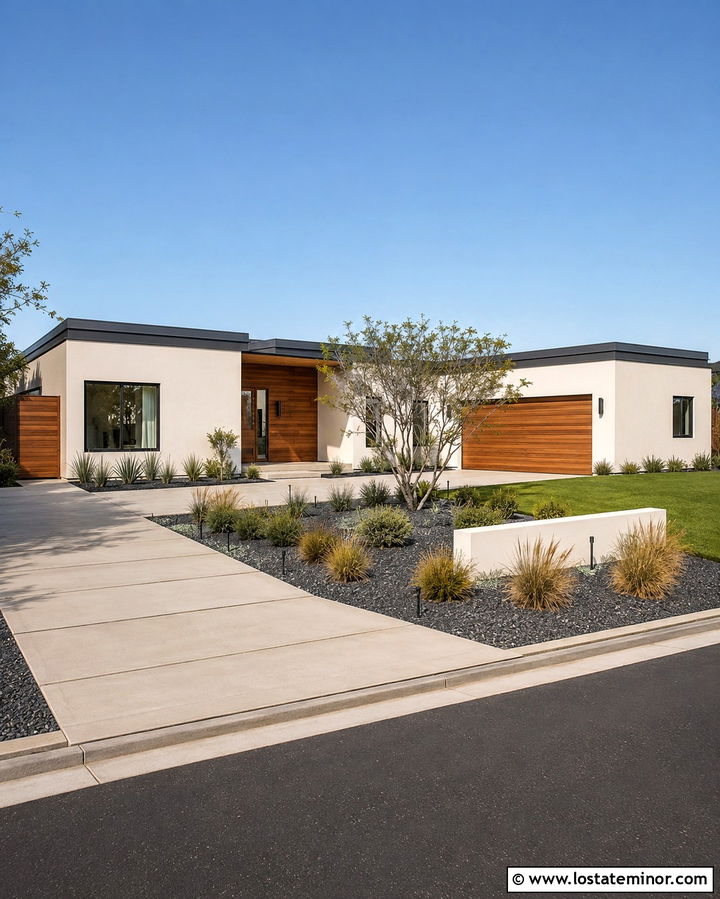
A flat charcoal roof brings a strong horizontal edge to a warm white modern house. Although much of the roofing may be hidden behind a parapet, dark fascia and metal coping can make the roofline an intentional design feature. Use warm white stucco, charcoal window frames, and natural cedar siding around the entry. A matching cedar garage door balances the large wall surfaces and gives the facade an inviting focal point. Pale concrete pavers and dark gravel provide a simple connection between architecture and landscaping. Choose structured grasses, low shrubs, and one sculptural tree instead of overly formal beds. The completed exterior feels minimal and precise, yet the creamy walls and wood accents prevent it from looking cold.
29. Warm White House With Multi Gable Black Roof
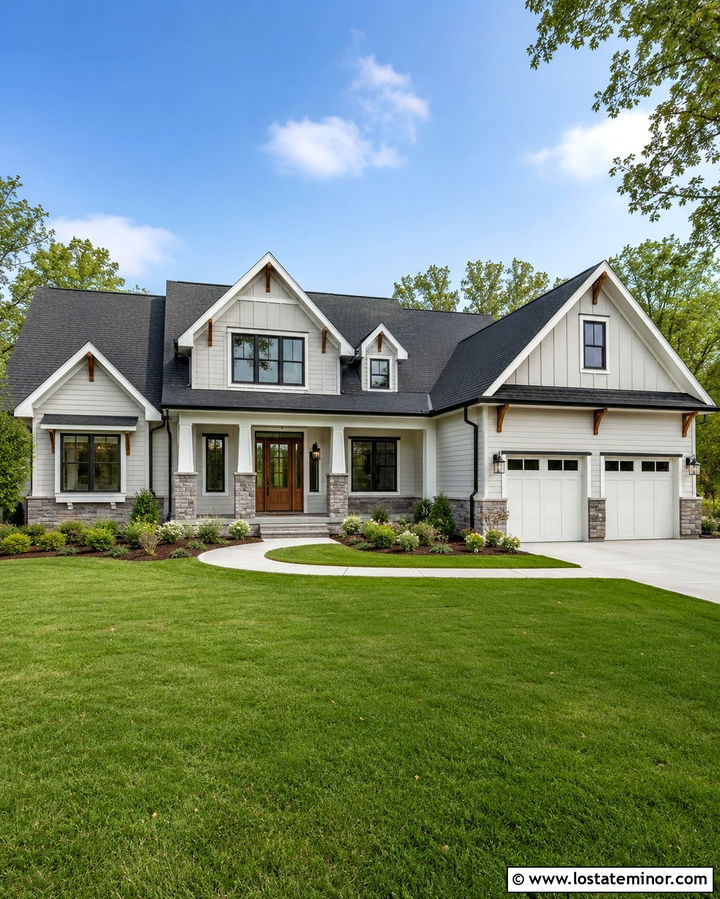
Multiple gables create plenty of roof surface, making color balance especially important. A dimensional black shingle roof can unify the complex shape of a large warm white house. Use creamy siding across the main facade, then add stone selectively around the porch and lower walls. Black windows and gutters repeat the roof, while cedar gable brackets and a stained front door soften the contrast. Keep the garage doors warm white so they do not become another oversized dark feature. This scheme works well on modern Craftsman and new traditional architecture. Broad foundation beds, balanced trees, and a gently curved walkway help frame the wide elevation. The result is detailed and substantial without appearing visually chaotic.
30. Warm White House With Solar Panel Roof
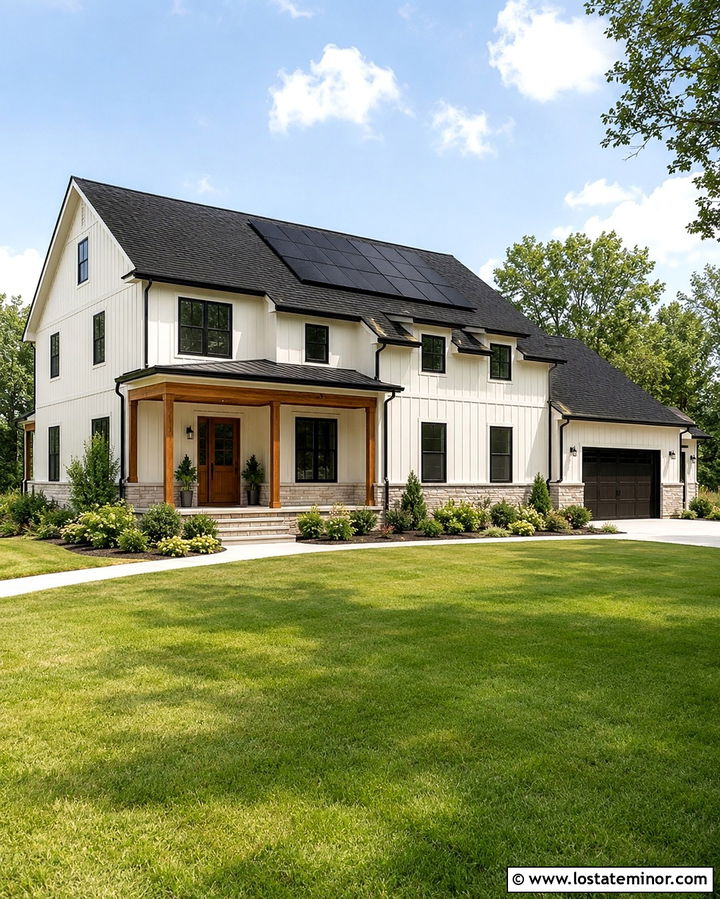
Solar panels can become part of a coordinated exterior rather than looking like an afterthought. Begin with a charcoal or black roof so dark panels blend into the overall roof plane. Pair it with a warm white contemporary farmhouse exterior, black windows, and restrained dark gutters. A cedar front door and matching porch ceiling add natural warmth below. Arrange panels in a clean rectangular group whenever the roof structure allows, leaving consistent margins around the edges. Avoid adding too many competing accent colors elsewhere. Pale gray stone, simple concrete paths, and layered green planting will support the crisp palette. This complete approach makes practical roof equipment feel compatible with the home’s modern, carefully planned curb appeal.
Conclusion:
The best warm white exterior begins with the roof rather than treating it as a separate decision. Black and charcoal create definition, while brown, taupe, cedar, and weathered shingles produce softer transitions. Terracotta, copper, green metal, and blue-gray roofing can add character when doors, trim, masonry, and landscaping repeat their undertones thoughtfully. Always compare large paint samples beside the real roof in morning light, strong afternoon sun, and shade. Also account for stone, brick, windows, gutters, and neighboring homes before committing. Whether the goal is modern contrast or traditional warmth, these 30 Warm White House Design With Roof Ideas offer complete palettes that can be adapted to different architectural styles, climates, and budgets.

Related posts: