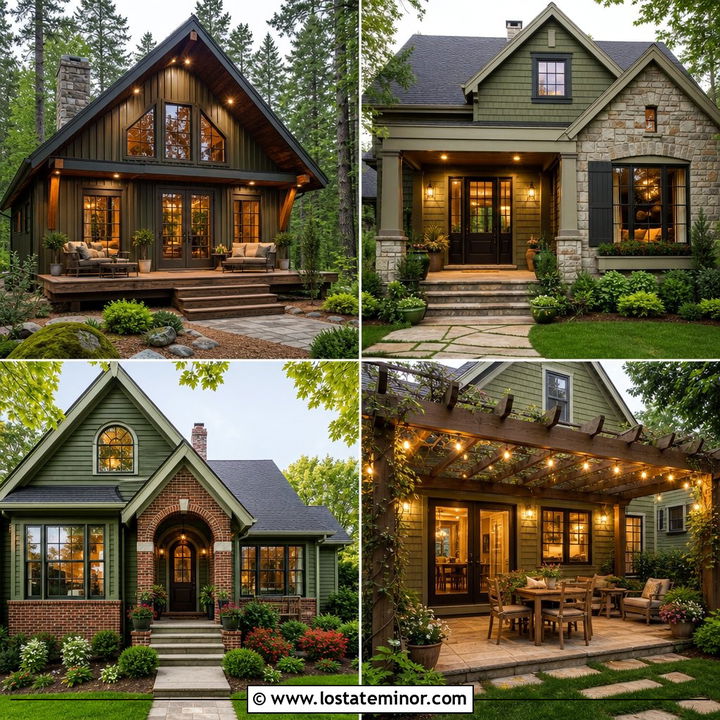
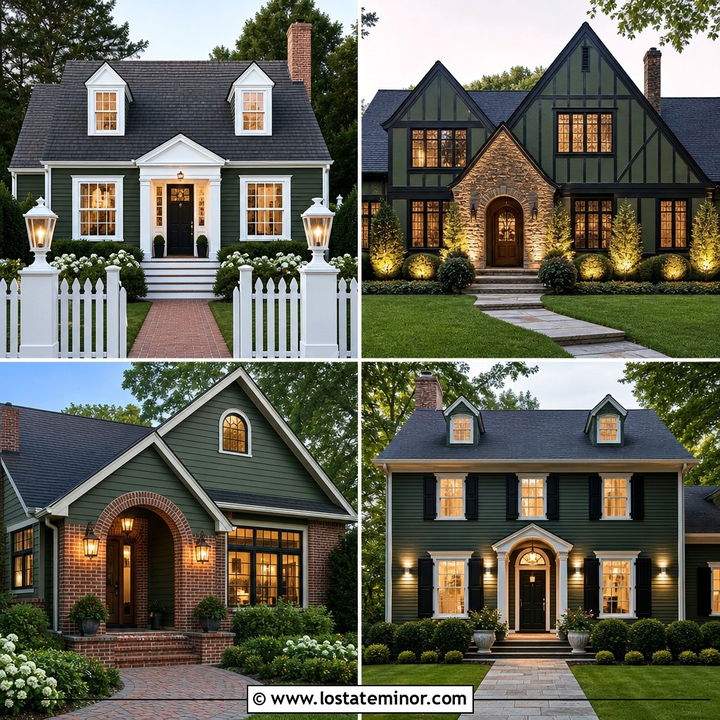
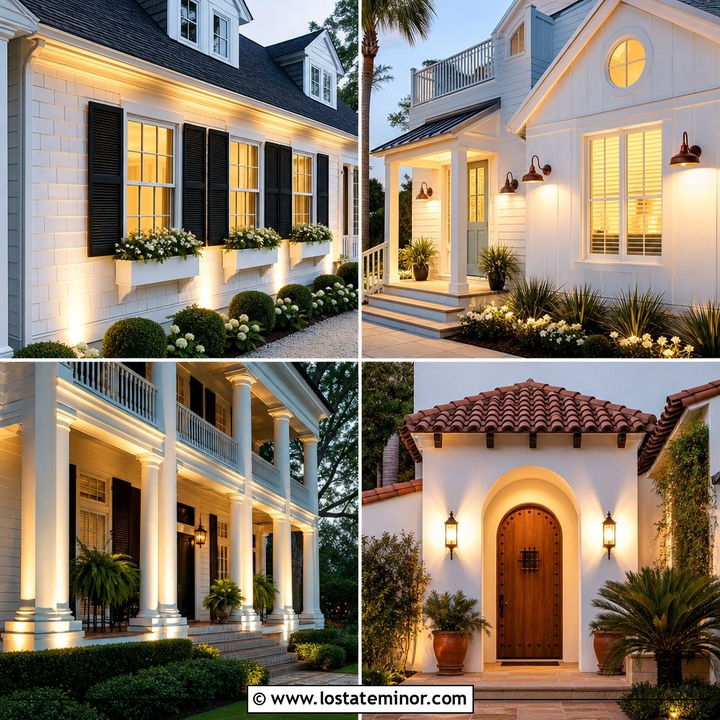
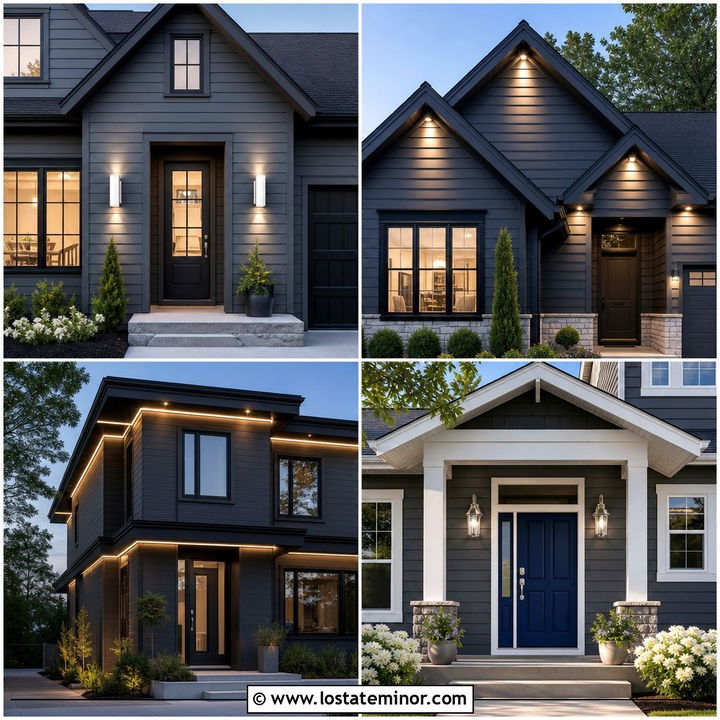
Olive green brings a grounded, nature-inspired character to a home, but exterior lighting determines whether that color looks inviting or overly dark after sunset. The best **30 Olive Green House Design With Lighting Ideas** coordinate siding, trim, roofing, masonry, doors, and fixtures as one complete curb-appeal plan. Warm metals and natural wood highlight olive’s earthy undertones. Black fixtures create stronger definition, while layered path, porch, and architectural lighting improve depth across the facade. Current exterior trends also favor earthy greens, warmer trim colors, and lower-contrast palettes that feel connected to the landscape. () Whether your home is a farmhouse, ranch, bungalow, or modern build, the following **30 Olive Green House Design With Lighting Ideas** offer practical combinations worth considering.
1. Olive Green Farmhouse With Black Lanterns
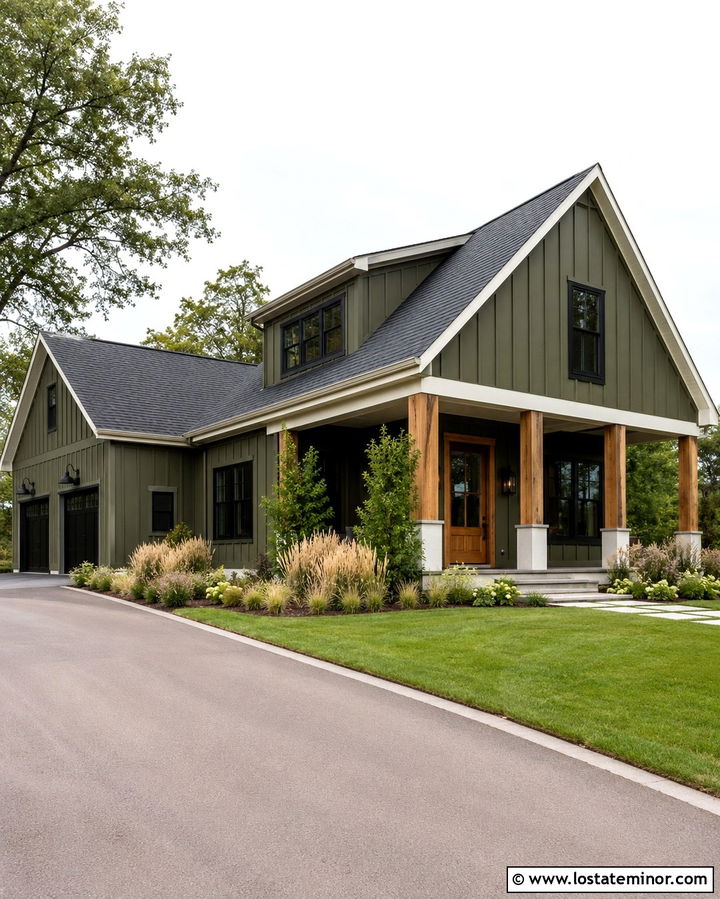
A modern farmhouse looks balanced when muted olive green board-and-batten siding meets creamy white trim and a charcoal shingle roof. Instead of using small fixtures that disappear against the facade, install oversized matte black lanterns beside the front door and garage. Their simple frames echo black window sashes without making the exterior feel overly industrial. A medium-stained oak door and matching porch columns add warmth between the green siding and dark metal. Soft recessed lights beneath the porch roof illuminate the entry from above. Keep the landscaping relaxed with ornamental grasses, clipped shrubs, and a straight stone walkway. The entire scheme feels fresh in daylight and clearly defined after sunset.
2. Olive Green Craftsman With Copper Sconces
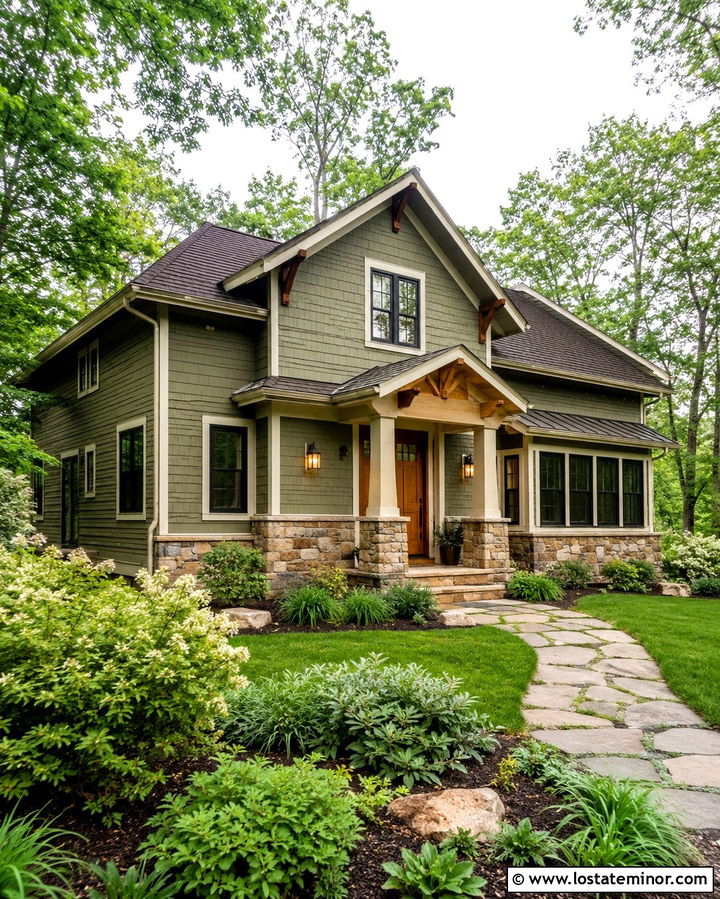
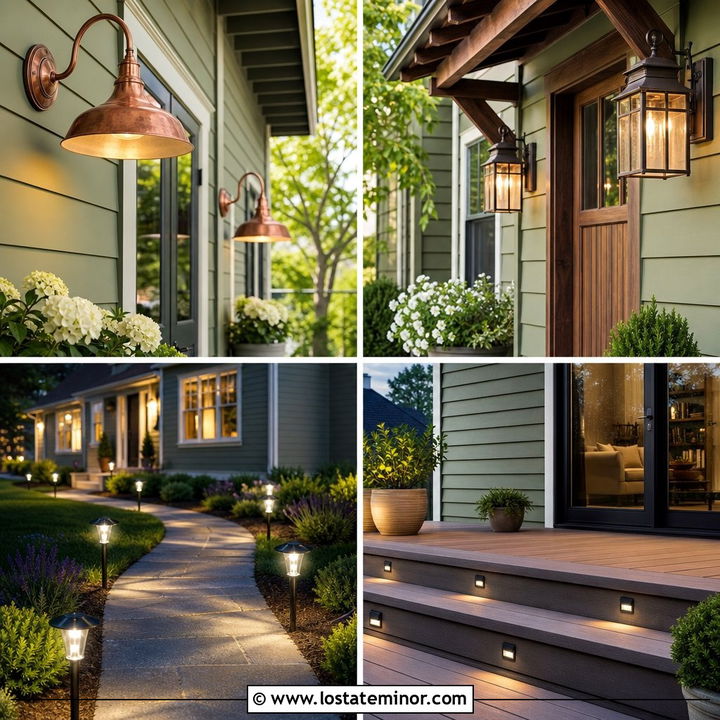
Weathered copper lighting fits naturally on an olive green Craftsman because both finishes have warm, organic undertones. Use medium olive lap siding with ivory trim, cedar brackets, and a stone foundation in mixed taupe and brown. Copper sconces mounted beside a stained wood door become attractive decorative accents even when they are switched off. As the finish develops a patina, it blends more closely with the siding and surrounding greenery. Add low-voltage lights beneath the porch steps to make the entrance easier to navigate. A dark brown architectural shingle roof grounds the palette. Deep planting beds, native shrubs, and a curved flagstone path complete this comfortable, established exterior look.
3. Dark Olive Green House With Brass Lighting
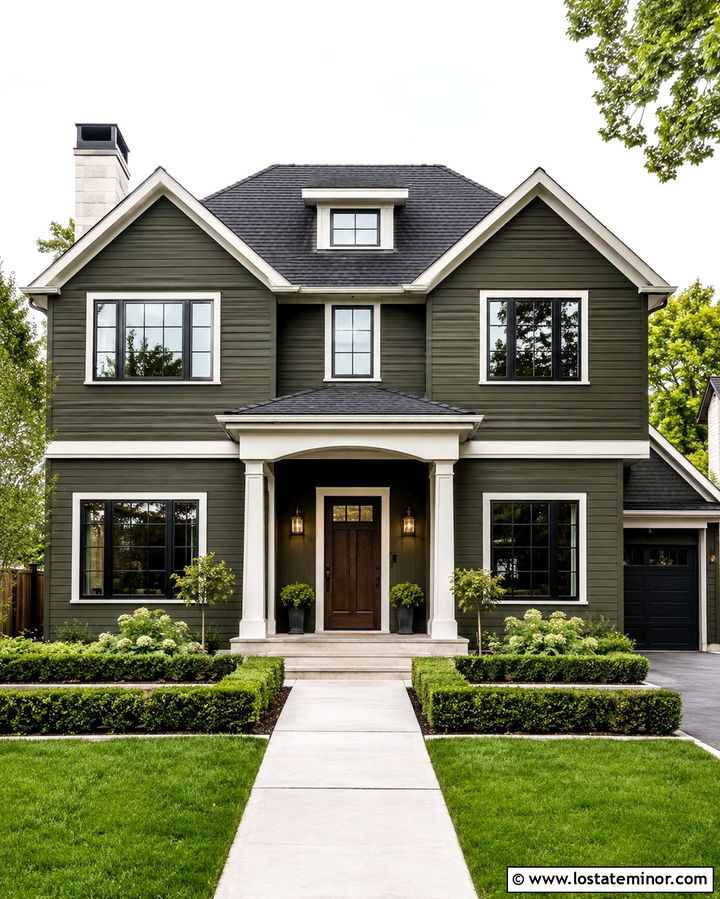
Deep olive siding can make a simple home feel more substantial, especially when it is paired with restrained brass details. Choose a dark olive green body, warm off-white trim, black-framed windows, and a walnut front door. Aged brass sconces beside the entrance provide a rich contrast without looking shiny or formal. Repeat the metal sparingly on the door hardware and address numbers. For better balance, use discreet black downlights under the eaves rather than adding brass fixtures everywhere. Light limestone around the porch keeps the lower facade from becoming too heavy. This combination works especially well on a transitional two-story home with symmetrical windows, structured landscaping, and a broad concrete walkway.
4. Light Olive Green Cottage With White Lanterns
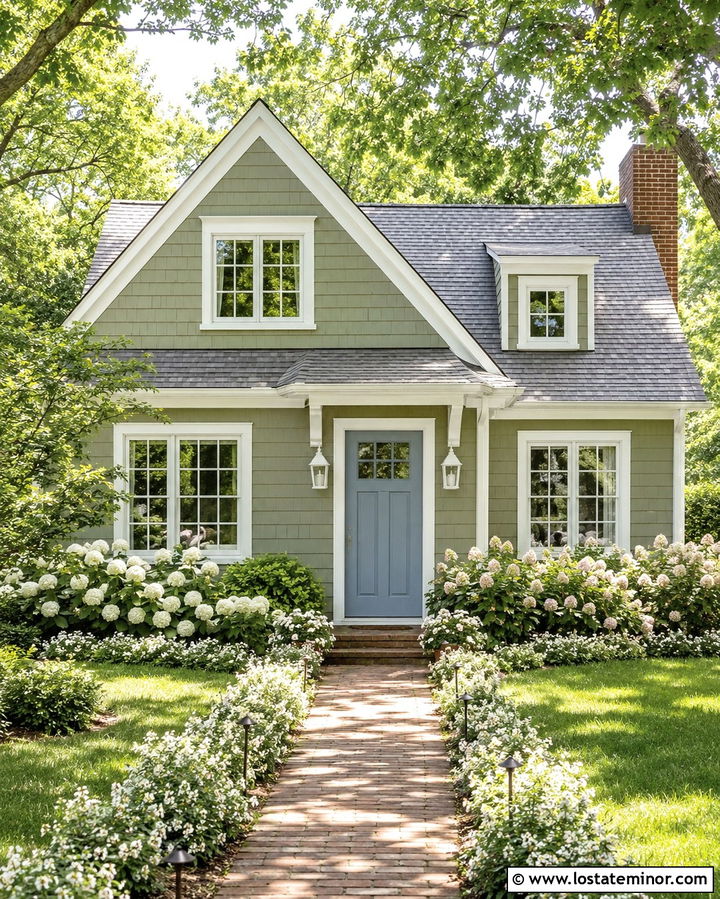
Picture a small cottage surrounded by flowering shrubs and mature shade trees. Light olive green shingles give the facade a gentle connection to the garden, while soft white trim makes the windows and porch railings look clean. White lantern-style sconces nearly blend into the trim, which helps the compact exterior feel less cluttered. Use warm LED bulbs so the entrance remains welcoming rather than stark. A pale gray roof, natural brick chimney, and dusty blue front door bring subtle variety to the palette. Finish the setting with a narrow brick walkway and low path lights tucked among the plants. This scheme is cheerful, practical, and particularly flattering on homes with storybook architectural details.
5. Olive Green Ranch With Modern Wall Lights
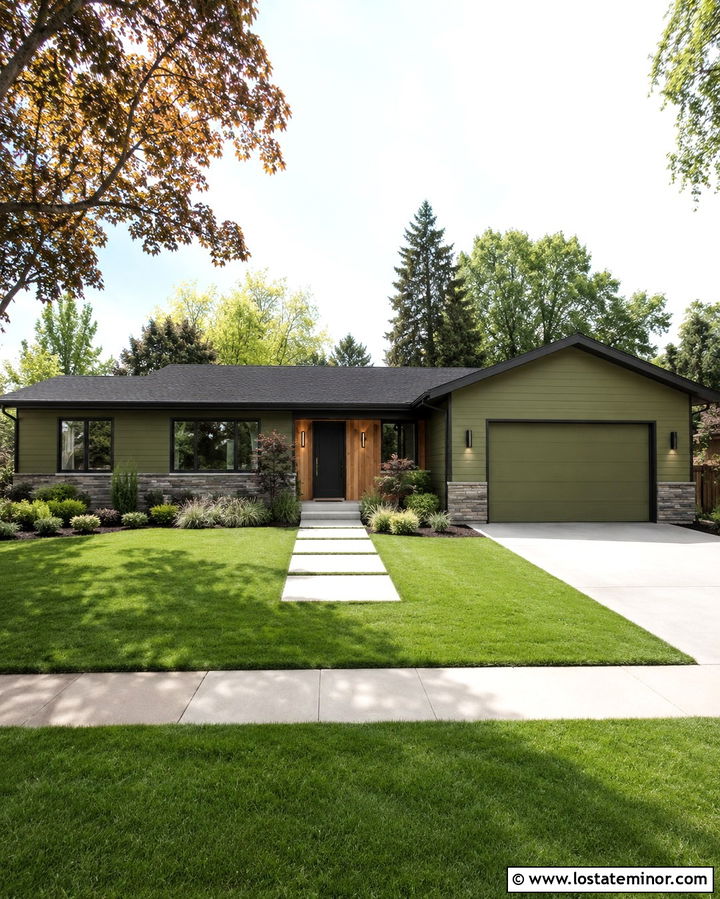
Long ranch facades often need lighting that visually breaks up their horizontal shape. Cover the exterior in mid-tone olive green lap siding, then use charcoal trim, a matching garage door, and a warm cedar entry. Slim black wall lights can be installed beside the front door, garage, and major window groupings to create an even rhythm. Choose shielded fixtures that direct illumination downward and keep the individual pools of light controlled. Warm gray stone across the lower facade adds texture without interrupting the streamlined appearance. A low black roof and simple concrete path suit the home’s proportions. Add spreading shrubs and ornamental trees rather than tall foundation plants that could cover the lighting.
6. Olive Green Colonial With Bronze Lanterns
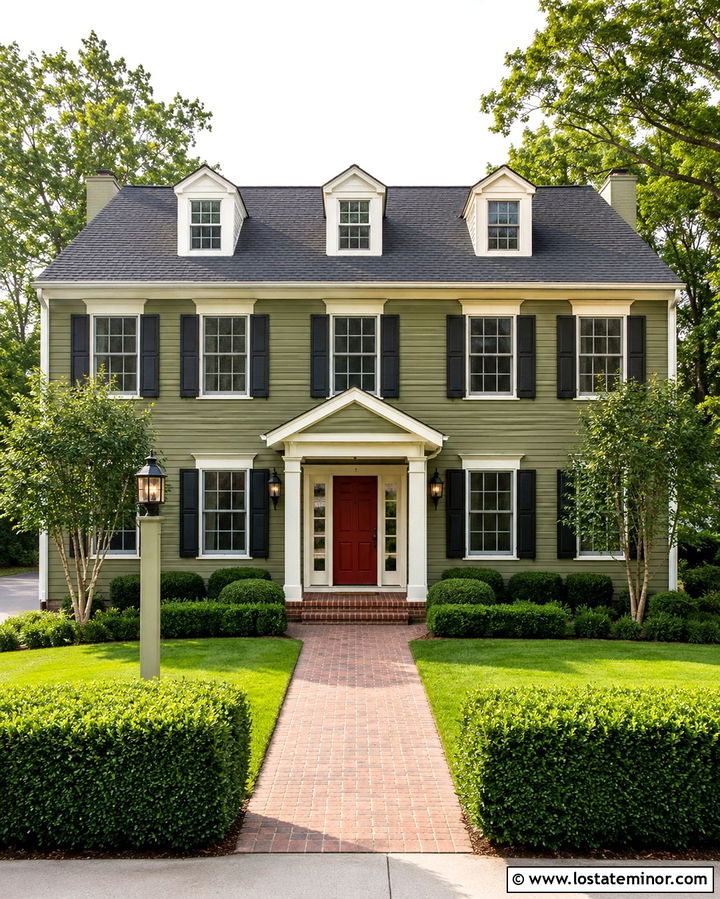
Symmetry is central to a Colonial exterior, so the lighting should reinforce the architecture. Select classic olive green clapboard siding, creamy white trim, black shutters, and a deep red front door. Place matching oil-rubbed bronze lanterns on both sides of the entrance to establish a clear focal point. Smaller coordinated fixtures can illuminate side entries without competing with the main doorway. A traditional post lantern near the front walk adds another useful layer while supporting the historic character. Keep the roof dark charcoal and the porch floor natural brick. Boxwood borders, evenly spaced trees, and a straight walkway complete the orderly design. The result feels traditional but richer than a standard neutral exterior.
7. Olive Green Bungalow With Porch Pendant Lights
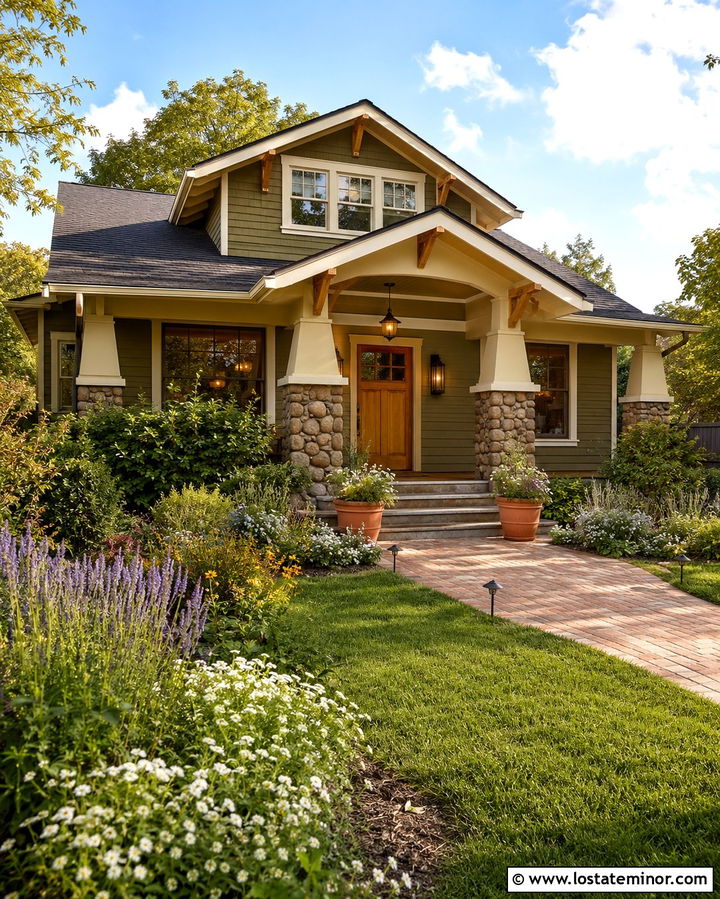
A welcoming bungalow benefits from lighting that emphasizes its deep front porch. Use earthy olive green siding with warm cream trim, tapered stone columns, and exposed cedar rafters. A large bronze pendant centered above the porch creates a strong visual anchor and casts light across the seating area. Matching wall sconces beside the front door provide direct illumination where it is needed most. Select a honey-toned wood door to complement the amber-brown notes in the olive paint. Terracotta planters and a red-brown brick walkway introduce additional warmth. Low garden lights can highlight the porch steps and foundation plants. This layered plan makes the low roofline feel cozy rather than shadowed or enclosed.
8. Olive Green Cape Cod With Window Uplighting
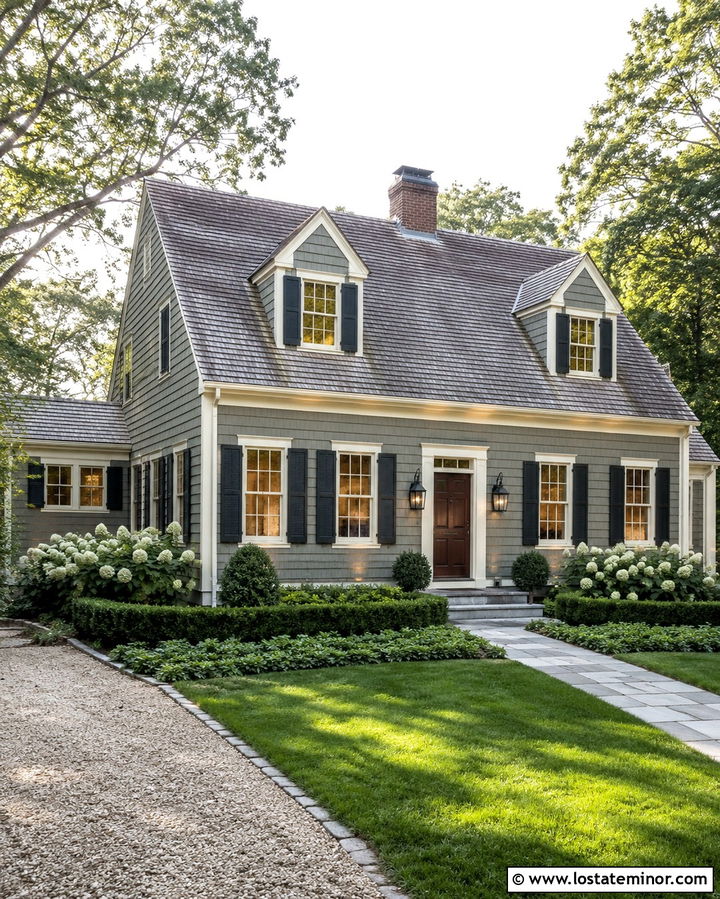
An olive green Cape Cod can look charming and polished when its simple architecture receives carefully placed lighting. Paint the shingle siding a soft gray-olive, then add crisp ivory trim, charcoal shutters, and a natural mahogany door. Small landscape uplights aimed toward the dormers reveal the roofline and upper windows without overwhelming the compact facade. Use classic black lanterns at the entrance for definition. A weathered gray roof keeps the scheme coastal and understated, while a pale stone path brightens the foreground. Hydrangeas, clipped hedges, and low ground cover soften the edges. Keep the uplights hidden behind planting material so viewers notice the illuminated architecture rather than the fixtures themselves.
9. Olive Green Split-Level With Garage Lighting
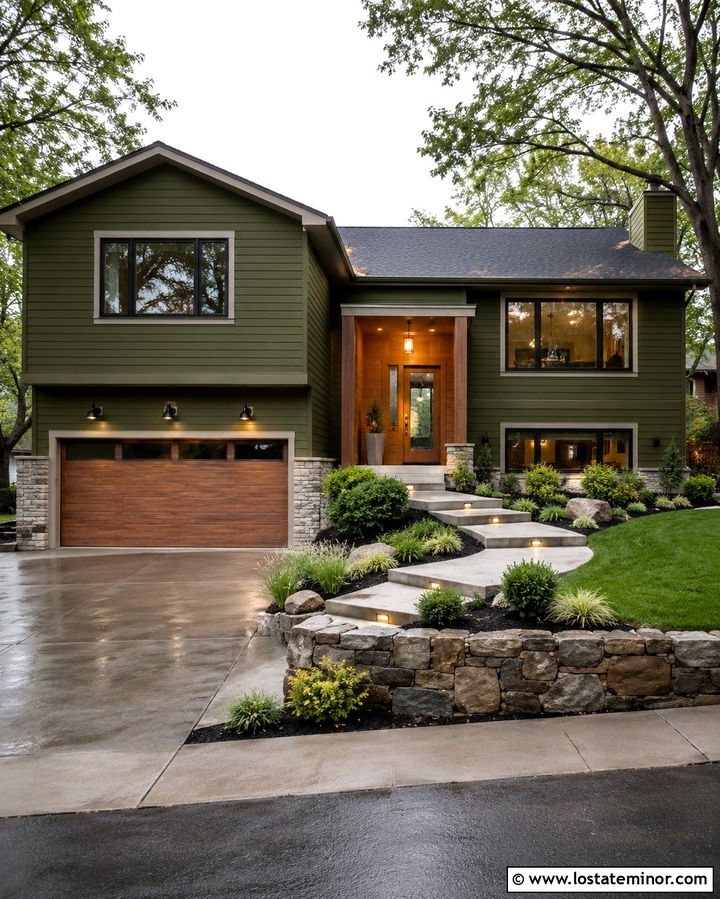
On a split-level home, the garage often occupies a large portion of the street-facing exterior. Olive green horizontal siding helps unify the different levels, while a warm wood-look garage door turns the widest feature into an intentional accent. Install streamlined black lights on both sides of the garage and another pair near the recessed entry. Their consistent finish ties the two sections together. Soft greige trim reduces harsh contrast around the windows, and charcoal shingles ground the angled rooflines. Add step lights to any stairs leading from the driveway to the front door. Layered shrubs, a retaining wall, and a gently curved walkway make the elevation changes feel organized and approachable.
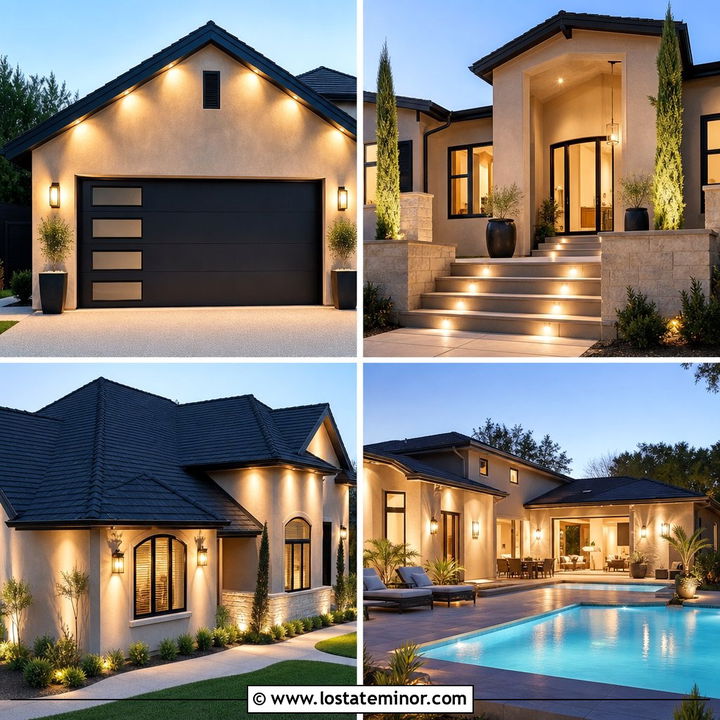
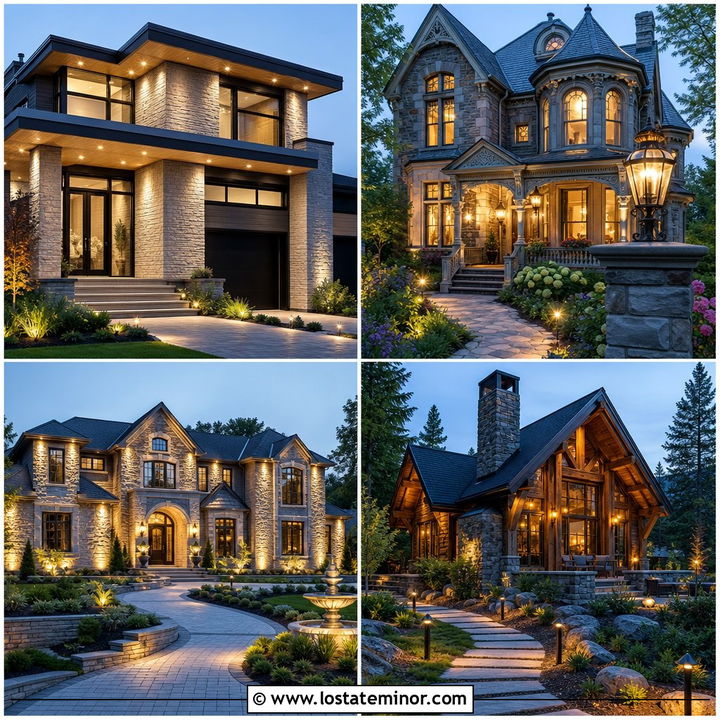
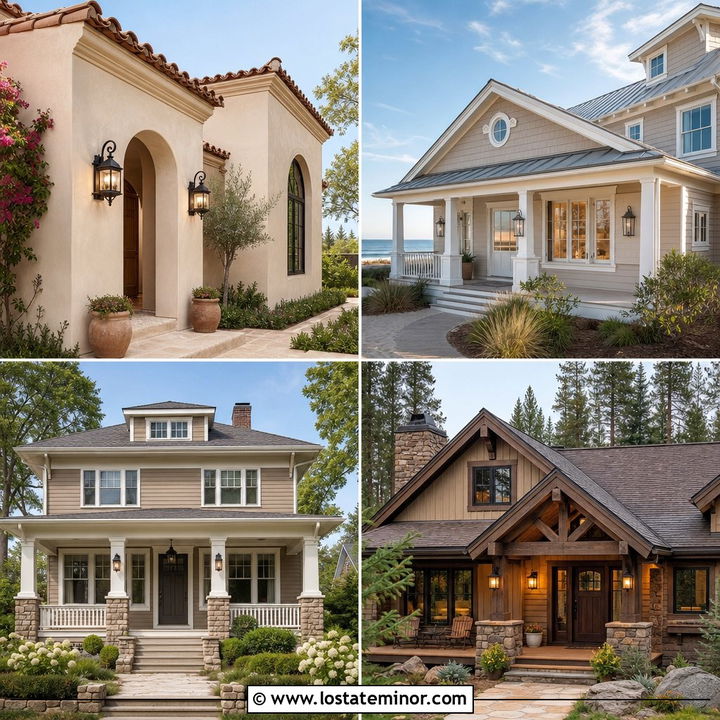
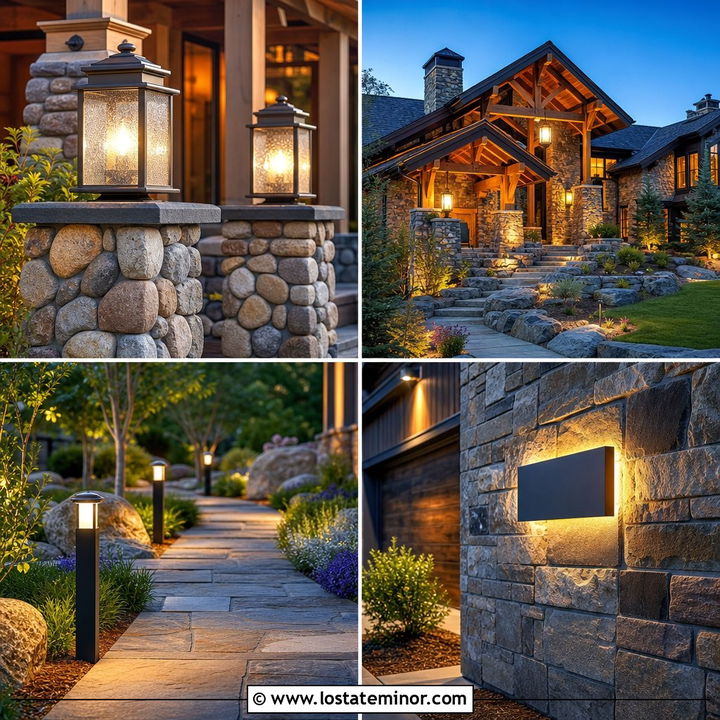
10. Olive Green Tudor With Leaded Glass Lanterns
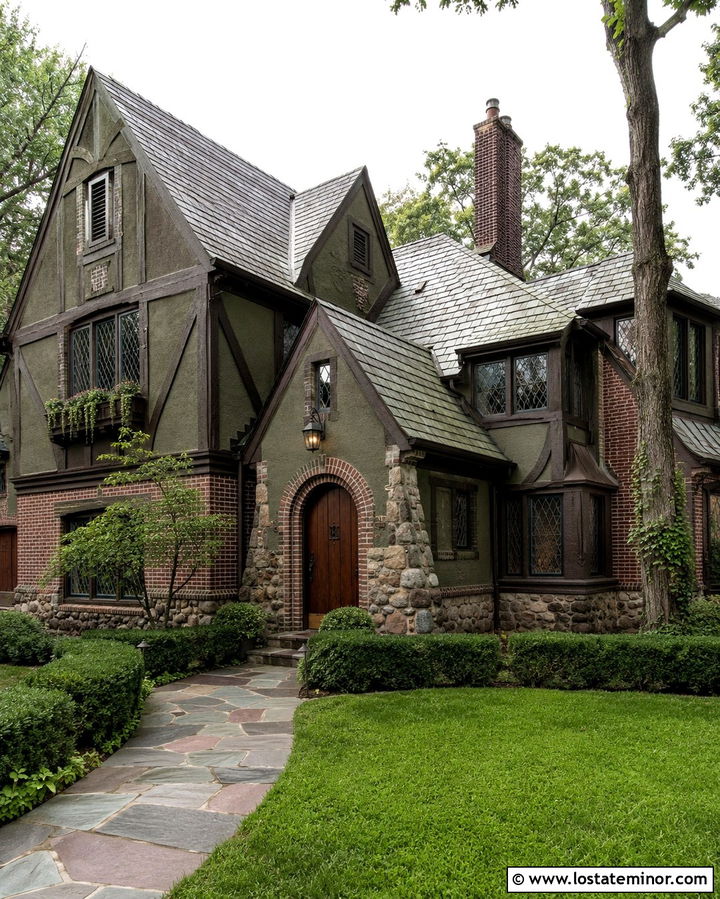
Tudor architecture can support a darker, more detailed olive green palette. Apply deep olive paint to the stucco or siding while keeping the half-timbering, window trim, and gutters dark chocolate brown. Leaded glass lanterns with aged bronze frames suit the steep gables and traditional masonry. Mount one substantial fixture beside an arched wood door and use smaller matching sconces near secondary entries. Red-brown brick, irregular fieldstone, and a weathered slate roof create a layered Old World foundation. Warm lighting brings out those textures without washing away the green. Plant ivy sparingly and frame the walkway with low hedges. The finished exterior feels established, dramatic, and appropriately detailed.
11. Olive Green Modern House With Linear Lighting
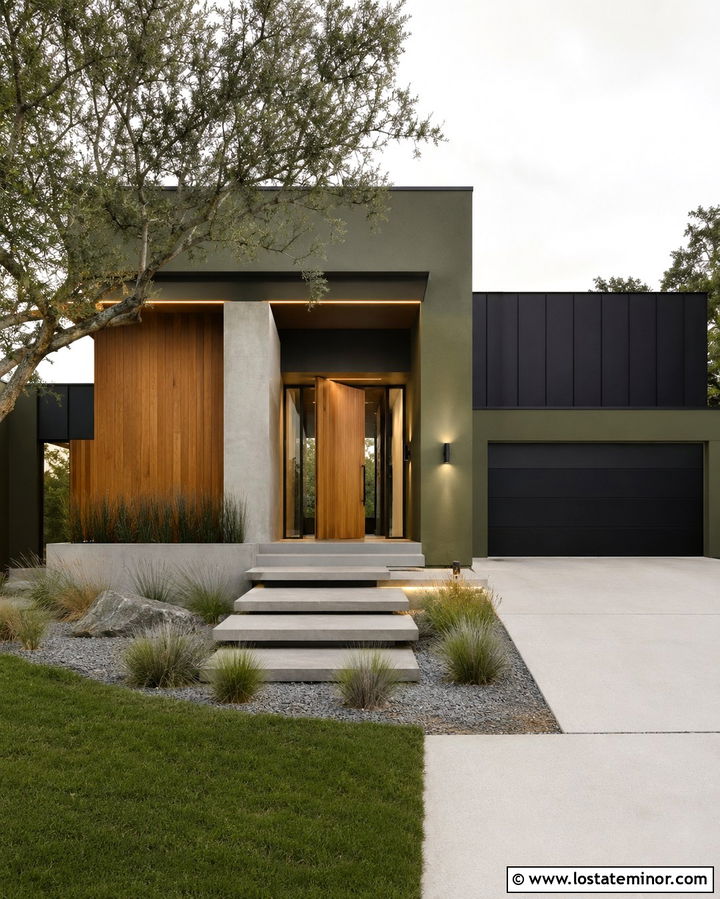
Clean architecture calls for lighting that feels integrated rather than decorative. Choose a dark olive green vertical siding for the main volumes, then combine it with black metal panels, pale concrete, and warm cedar cladding. Narrow linear lights can be recessed beneath roof overhangs to define each horizontal plane. Add simple black sconces near the entry and garage, keeping their shapes rectangular and understated. A pivot-style wood door provides warmth at the center of the composition. Use concealed lighting along floating concrete steps to strengthen the modern effect and improve visibility. Structured grasses, gravel beds, and one sculptural tree finish the landscape. The olive color softens the sharp geometry and helps the building settle into its surroundings.
12. Olive Green Victorian With Decorative Sconces
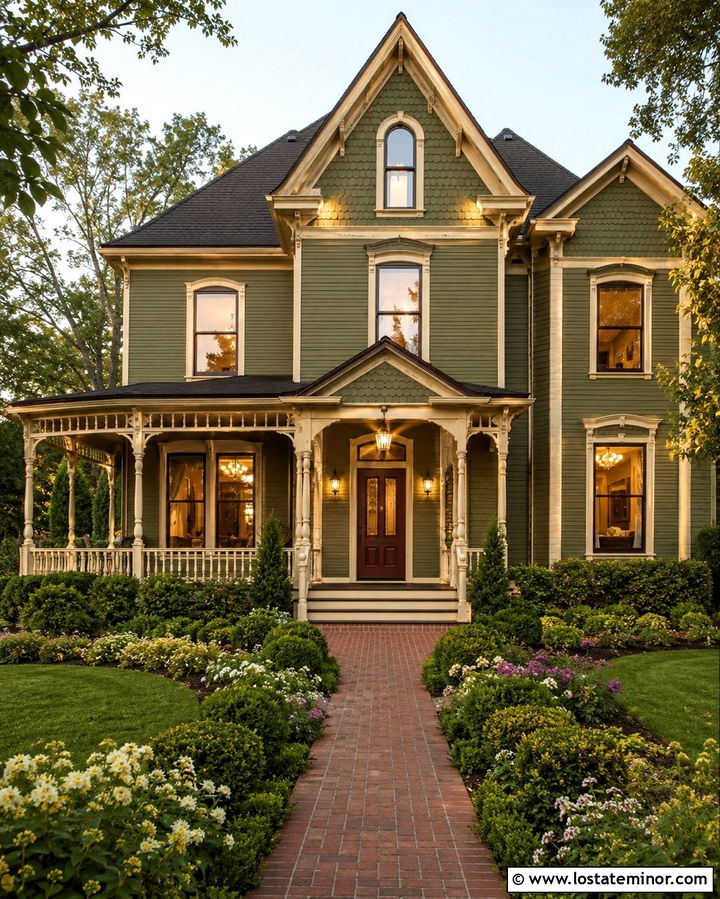
A Victorian facade offers many architectural details, so the color and lighting plan should create order. Use medium olive green siding as the dominant color, creamy beige on the trim, and deep burgundy for selective accents such as the front door and small gable details. Decorative bronze sconces with curved arms complement turned porch posts and patterned shingles. A hanging porch lantern can illuminate the entrance without crowding the ornamental door casing. Small uplights placed near the foundation reveal the tower or front gable after sunset. Avoid outlining every feature with light. Instead, highlight only the primary architectural elements. A brick walkway, layered flower beds, and a dark roof complete this historic but livable exterior.
13. Olive Green House With Cedar Porch Lights
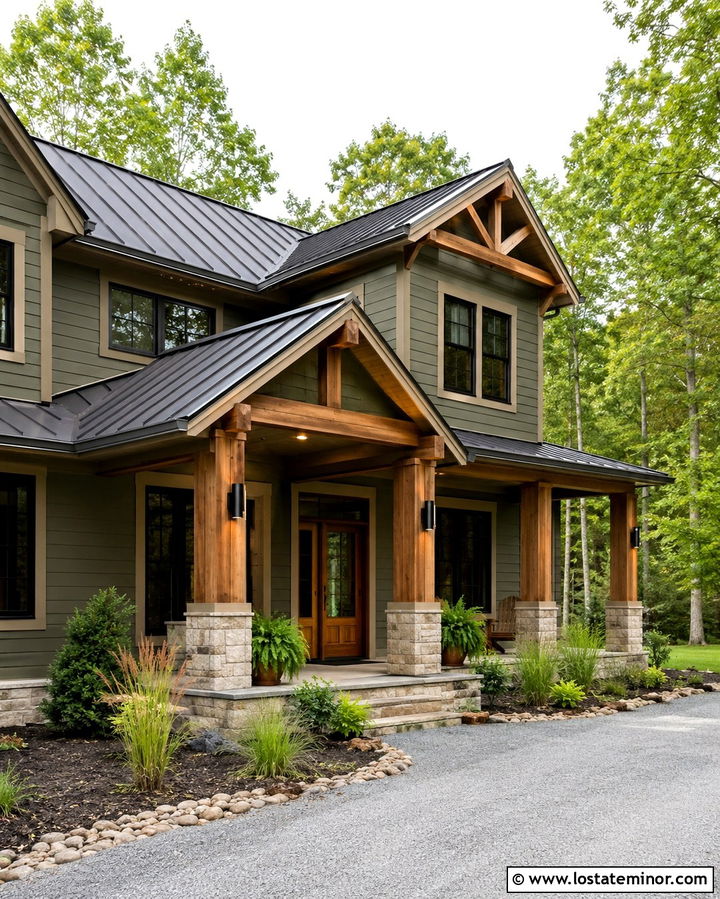
Natural cedar can keep olive green siding from appearing flat, especially on a home with a wide covered porch. Use muted olive lap siding, sandy beige trim, cedar beams, and a charcoal metal roof. Black cylinder lights mounted against the cedar columns create a crisp contrast and direct illumination toward the steps. Add recessed ceiling lights for general porch visibility, but space them evenly to prevent bright spots. A matching cedar front door and porch ceiling make the wood feel purposeful rather than randomly added. Pale stone around the foundation provides another natural texture. Ferns, grasses, and a gravel-edged walkway strengthen the relaxed woodland character of this complete exterior scheme.
14. Olive Green House With Stone Accent Lighting
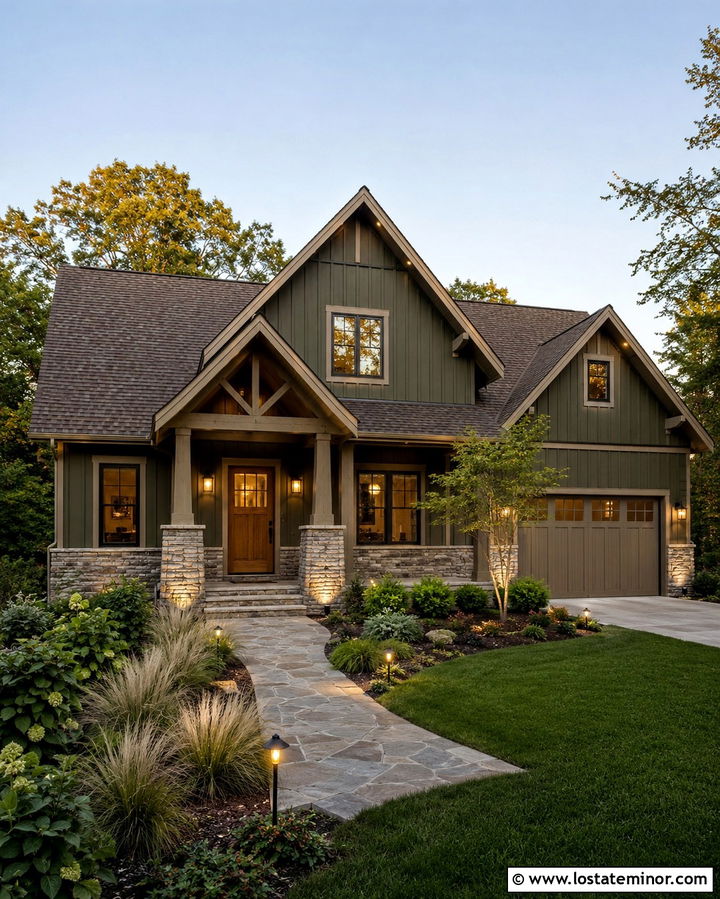
Stone looks most convincing when its colors connect with the siding and roof. Pair dark olive green board-and-batten with warm gray ledgestone, taupe trim, and a weathered brown shingle roof. Place compact uplights at the base of the stone columns and chimney to reveal their texture. Warm black lanterns beside a medium-oak door add practical entry lighting without distracting from the masonry. Avoid overly bright fixtures, which can flatten the stone and create glare. A few low path lights can lead from the driveway to the porch while maintaining visual continuity. Use broad-leaved shrubs and native grasses around the fixtures. The finished facade feels layered, grounded, and carefully coordinated from roof to landscaping.
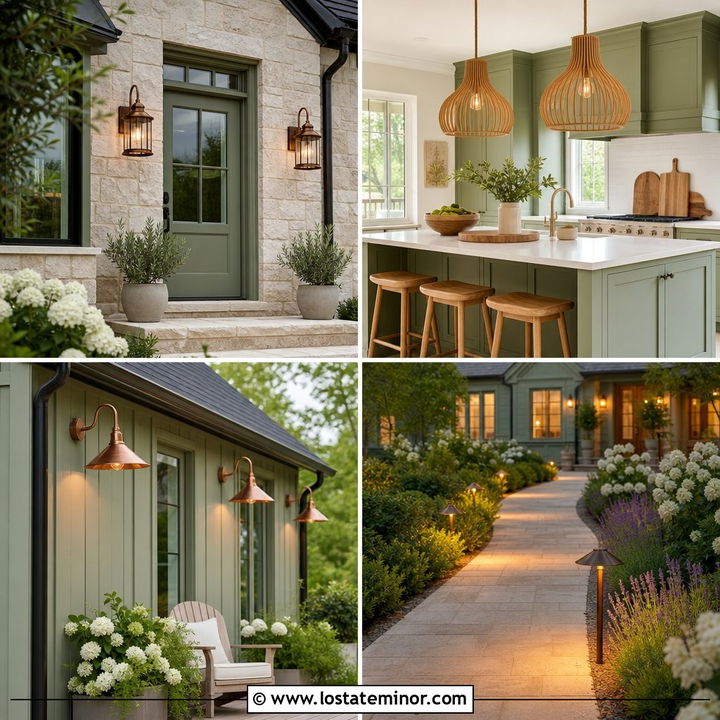
15. Olive Green Brick House With Downlights
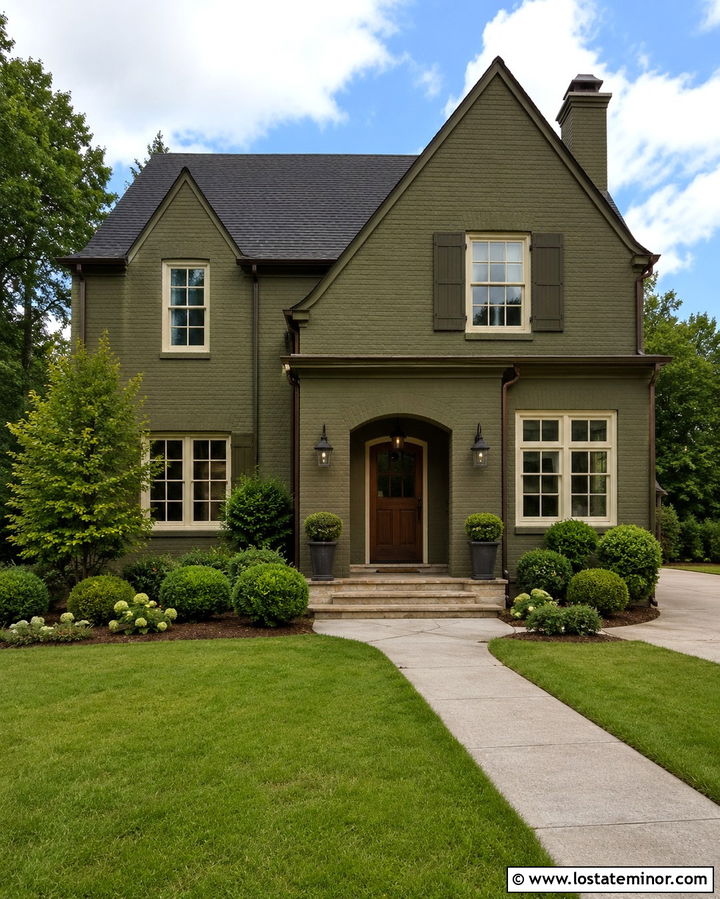
Painting an older brick exterior olive green can unify uneven masonry while preserving its texture. Choose a deep, smoky olive for the brick and a slightly darker olive for the shutters. Warm ivory trim around the windows prevents the facade from becoming too somber. Downward-facing black sconces beside the front door and garage create neat cones of light across the painted brick. This makes the masonry texture visible while limiting unnecessary glare. A medium walnut door and dark bronze gutters support the earthy palette. Add a pale limestone porch floor and simple concrete walkway for contrast. Rounded shrubs, small trees, and restrained garden lighting keep the renovation classic instead of making it feel overly trendy.
16. Olive Green Stucco House With Up And Down Lights
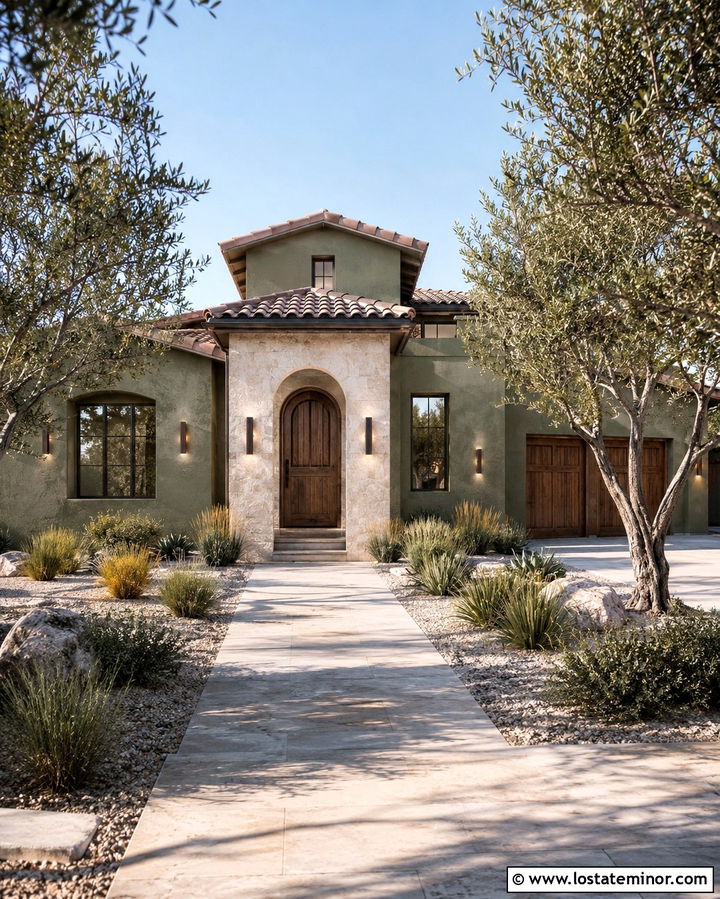
Smooth stucco makes an excellent background for sculptural lighting. Coat the exterior in a warm, dusty olive green and combine it with dark bronze window frames, a clay tile roof, and a medium-stained wood door. Tall up-and-down sconces can cast symmetrical beams across the stucco, emphasizing the height of the walls and the simplicity of the finish. Repeat the fixtures near the garage for consistency, but keep the spacing generous. Cream-colored stone around the entry adds a light transitional surface between the green walls and wood door. Drought-tolerant grasses, gravel, and olive trees suit the earthy color scheme. A wide walkway and open planting design ensure the lighting remains visible from the curb.
17. Olive Green Board And Batten With Gooseneck Lights
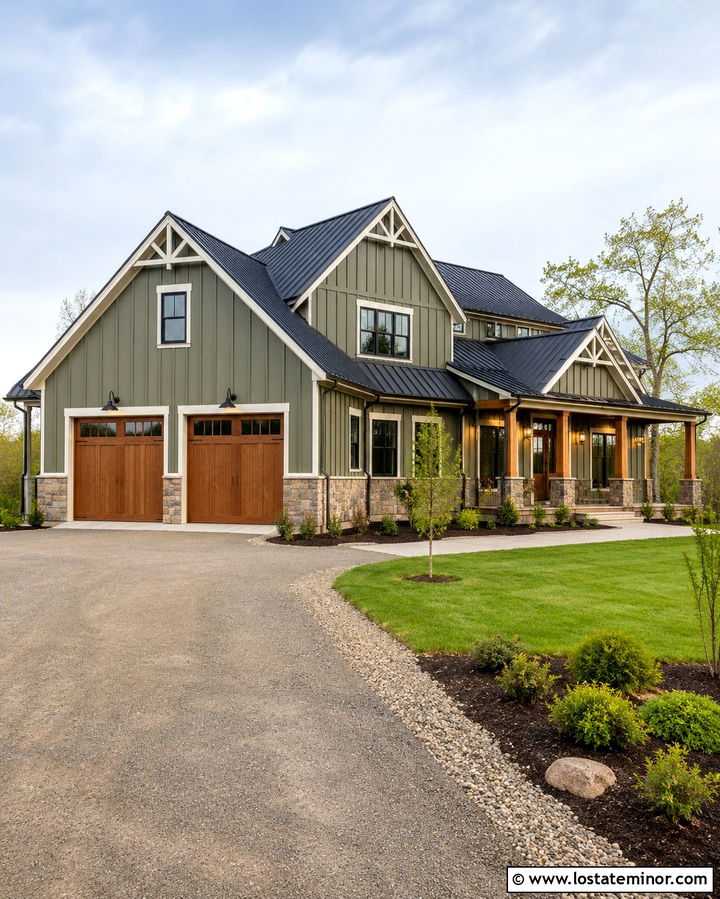
Gooseneck fixtures bring a casual, functional character to olive green board-and-batten siding. Start with a medium-dark olive exterior, warm white trim, a black metal roof, and a natural cedar garage door. Place black gooseneck lights above the garage bays so their curved arms repeat the shape of other dark architectural details. A matching fixture can illuminate a side entrance, while simple lanterns frame the main front door. Keep the bulbs warm and the shades broad enough to direct light downward. Stone porch bases and cedar columns prevent the palette from feeling too stark. A gravel-edged driveway, young trees, and low shrubs finish this modern country exterior without adding unnecessary decoration.
18. Olive Green Shingle House With Coastal Lanterns
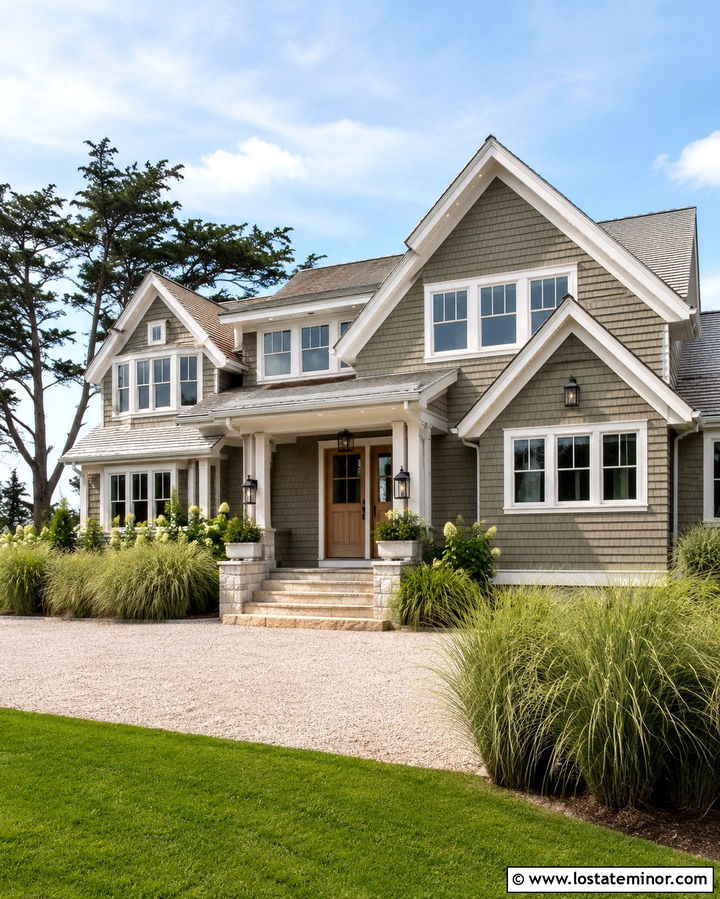
Olive green can work near the coast when the color is softened with gray and paired with lighter materials. Cover a relaxed shingle-style home in faded olive green, then add warm white trim, a light gray roof, and a bleached oak front door. Weather-resistant black coastal lanterns beside the doors provide clear contrast against the muted siding. Add small shielded lights under upper-level eaves to define the layered roofline. Pale stone steps and a sand-colored driveway keep the foreground bright. Beach grasses, hydrangeas, and wind-shaped evergreens support the setting without turning the house into a themed design. The complete palette feels natural, airy, and distinctive while remaining connected to the surrounding landscape.
19. Olive Green Lake House With Deck Lighting
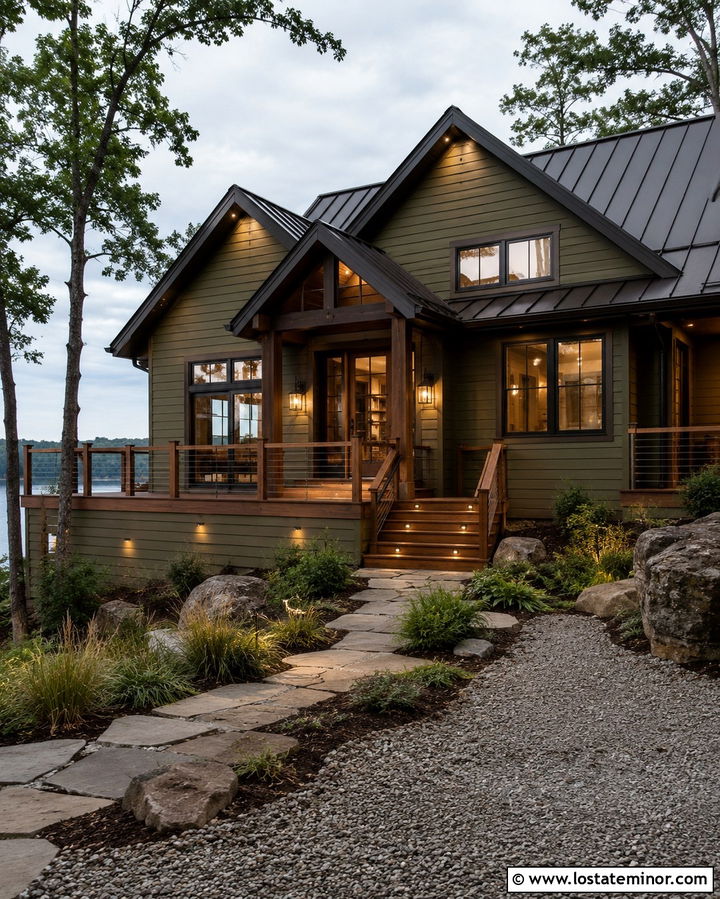
A lake house should feel welcoming from both the driveway and the water. Select earthy olive green siding, warm taupe trim, and a dark brown standing-seam roof. Use natural cedar for the deck, railings, and broad entrance steps. Small recessed deck lights can be built into stair risers and railing posts, allowing the woodwork to remain the visual focus. Bronze lanterns beside the doors coordinate with the brown roof and window frames. Add subtle downlights beneath the eaves to illuminate the green facade from above. Native grasses, boulders, and a winding stone path make the house feel rooted in its site. The olive-and-cedar combination provides warmth without competing with the view.
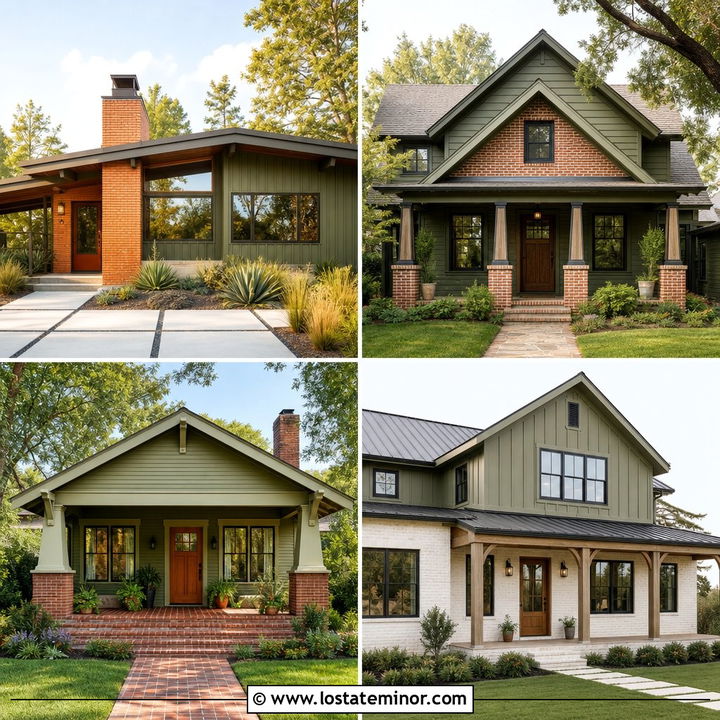
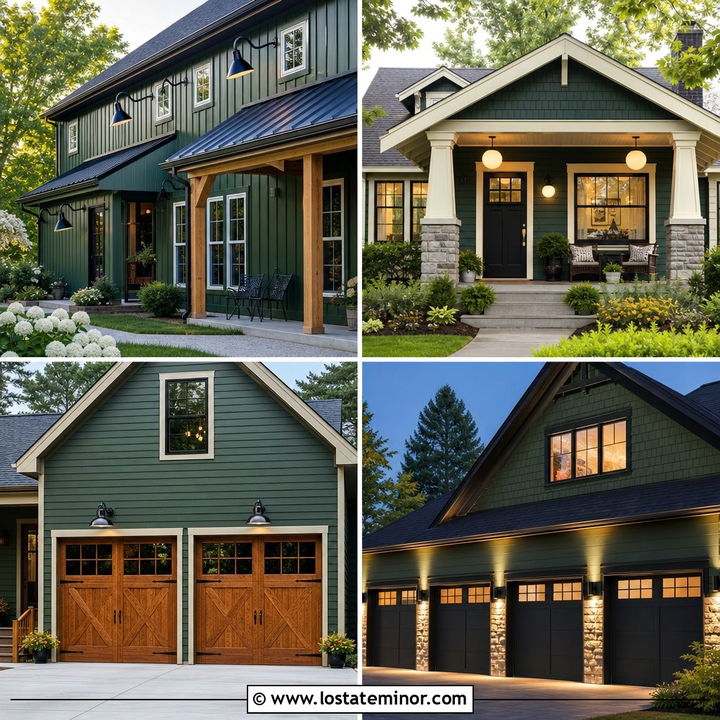
20. Olive Green Cabin With Rustic Lanterns
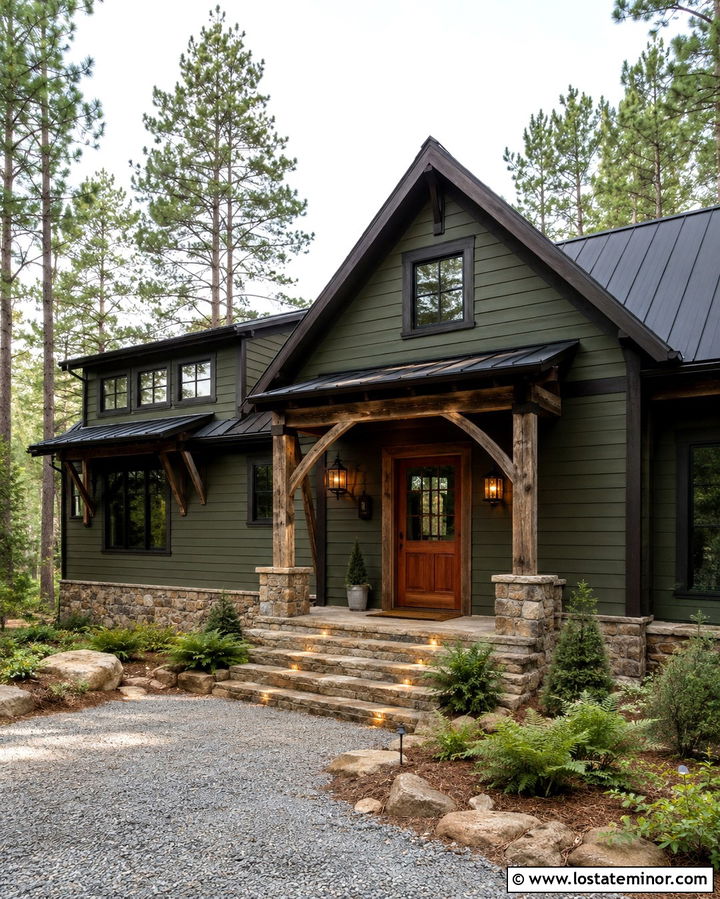
A cabin exterior gains depth from a darker olive paint that blends into wooded surroundings. Use deep olive green siding with dark brown trim, a black metal roof, and rough-sawn timber porch posts. Rustic lanterns in an aged iron finish suit the sturdy materials, especially when their glass is clear and their bulbs are softly diffused. Mount fixtures beside the front door and along the porch rather than relying on one overly bright ceiling light. Low step lighting improves visibility across uneven stone surfaces. A reddish cedar door offers a restrained touch of warmth. Complete the design with fieldstone, pine trees, ferns, and a natural gravel drive for a practical woodland appearance.
21. Olive Green Mediterranean House With Iron Sconces
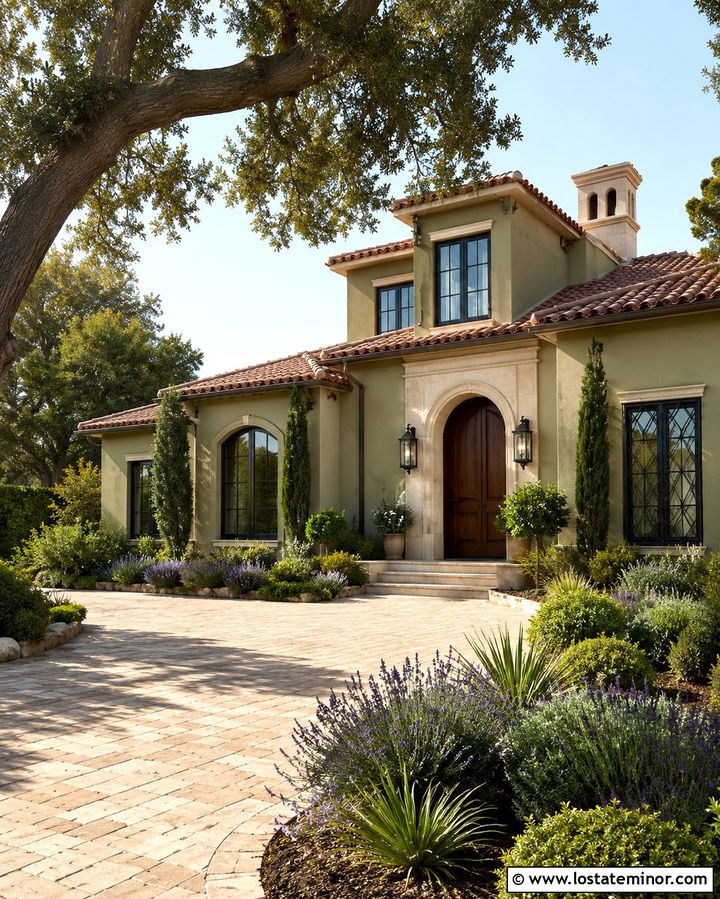
Mediterranean architecture gives olive green a sun-warmed, Old World character. Choose muted olive stucco, creamy limestone trim, a terracotta tile roof, and a heavy stained wood door. Large black iron sconces with seeded glass can frame the arched entrance and echo the window grilles. Add smaller fixtures along a covered courtyard or garage wall for a cohesive finish. Soft landscape uplights placed near columns and mature trees strengthen the home’s evening presence. Use pale pavers in the driveway and walkway to reflect light and balance the darker walls. Lavender, rosemary, ornamental grasses, and clipped evergreens provide texture. The complete scheme feels rich and established without depending on excessive ornament.
22. Olive Green Prairie House With Horizontal Lighting
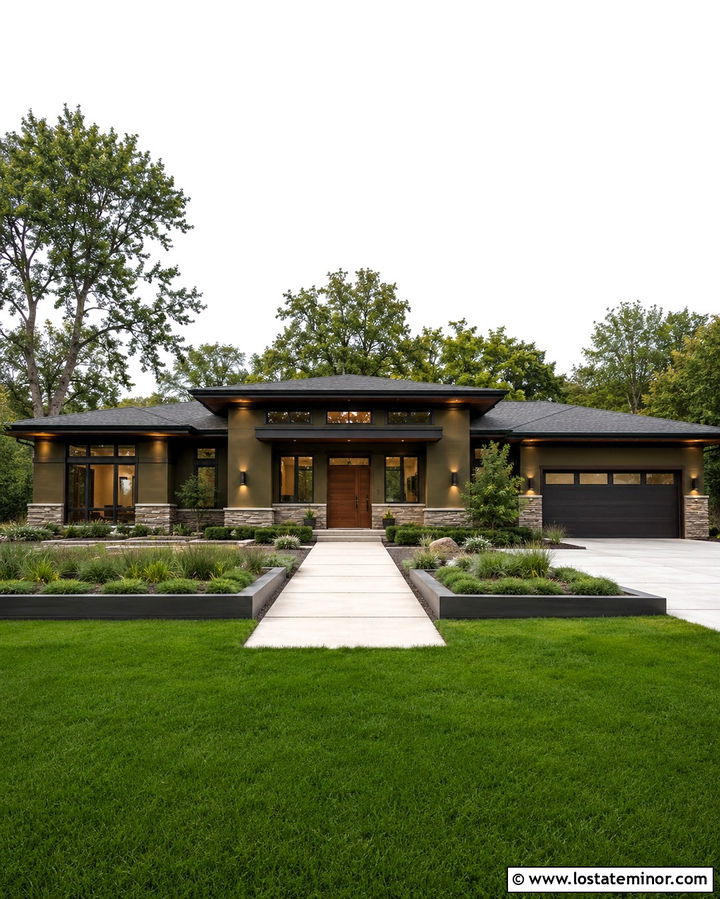
A Prairie-style home benefits from lighting that follows its long rooflines and low proportions. Apply a brown-leaning olive green to the horizontal siding, then use dark bronze trim, tan stone, and a low charcoal roof. Wide rectangular sconces can cast light downward across the entrance and garage while supporting the home’s geometric form. Install subtle linear lighting beneath the deepest overhangs to reinforce the layered architecture. A flat-panel wood door brings natural warmth to the center of the facade. Keep the landscape broad and horizontal with low grasses, spreading shrubs, and rectangular planting beds. A straight concrete walkway and open lawn preserve the clean sightline across the entire house.
23. Olive Green Duplex With Matching Entry Lights
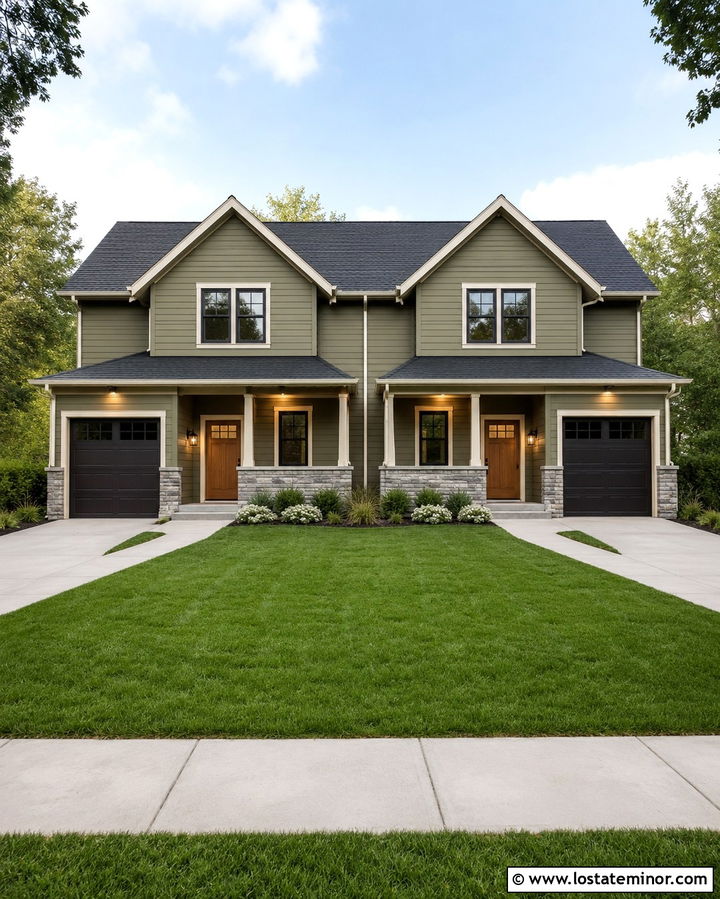
Exterior lighting can help a duplex feel cohesive while still giving each entrance an individual identity. Use one olive green body color across the full building, complemented by cream trim, charcoal roofing, and matching dark garage doors. Install identical black lanterns beside both entrances so the facade remains balanced. Different natural wood door tones can provide subtle distinction without dividing the building into conflicting color schemes. Recessed porch lights and low path fixtures should also follow the same placement on each side. Add shared foundation planting with repeating shrubs and grasses. A centered walkway that branches toward the two doors makes the arrangement easy to understand and gives the olive green exterior a polished, unified appearance.
24. Olive Green Townhouse With Entry Sconces
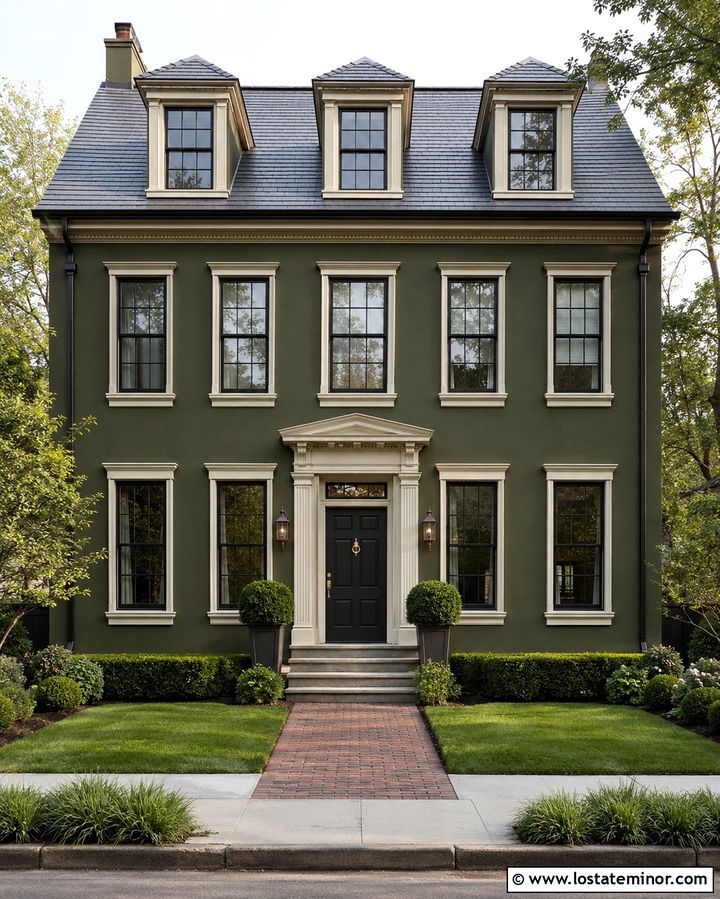
A narrow townhouse facade needs a focused lighting plan that does not overwhelm its limited width. Paint the siding a refined dark olive green and use warm white trim around tall windows. A black door with aged brass hardware creates a strong entrance, while two slender brass sconces add warmth without occupying too much wall space. If the doorway is recessed, include a small ceiling fixture for practical overhead illumination. Dark charcoal roofing and black gutters keep the upper facade visually quiet. Use a narrow brick path, clipped shrubs, and symmetrical planters to frame the entrance. The combination makes the vertical townhouse feel elegant, clearly defined, and welcoming from the sidewalk.
25. Olive Green Midcentury House With Globe Lights
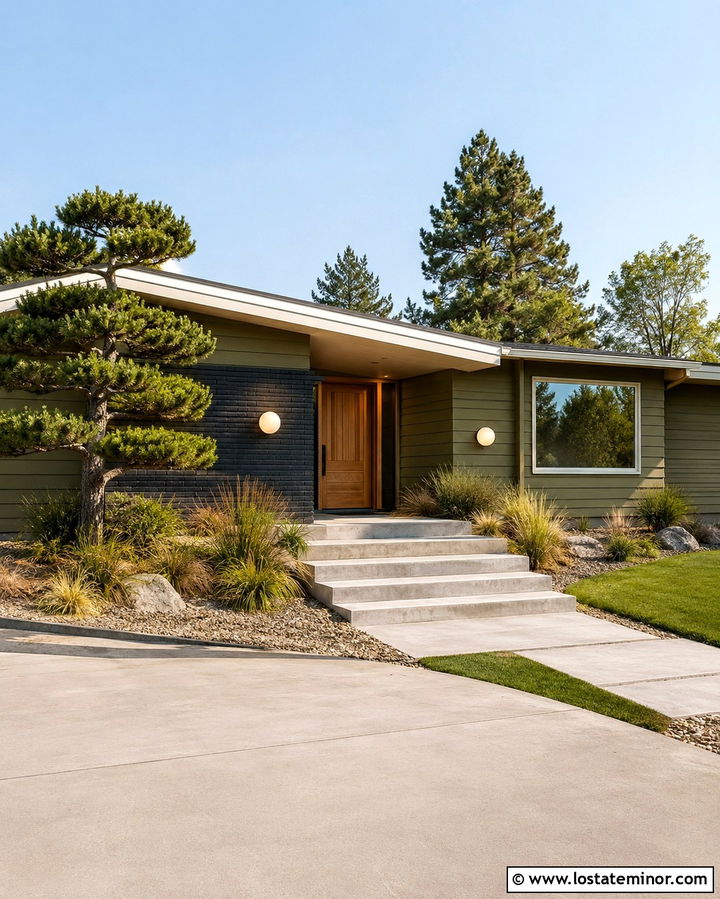
A midcentury home can handle a playful lighting shape when the rest of the palette remains restrained. Use warm olive green horizontal siding with cream fascia, charcoal brick, and a honey-toned front door. Frosted globe sconces beside the entrance bring period character while producing a soft, even glow. Repeat one globe fixture near the garage rather than filling the facade with identical lights. Large windows, a low roof, and broad concrete steps maintain the home’s horizontal emphasis. Add gravel beds, ornamental grasses, and one sculptural tree for an updated landscape. The rounded lights contrast pleasantly with the straight roofline, while the green, cream, wood, and charcoal colors remain calm and cohesive.
26. Olive Green House With Solar Path Lights
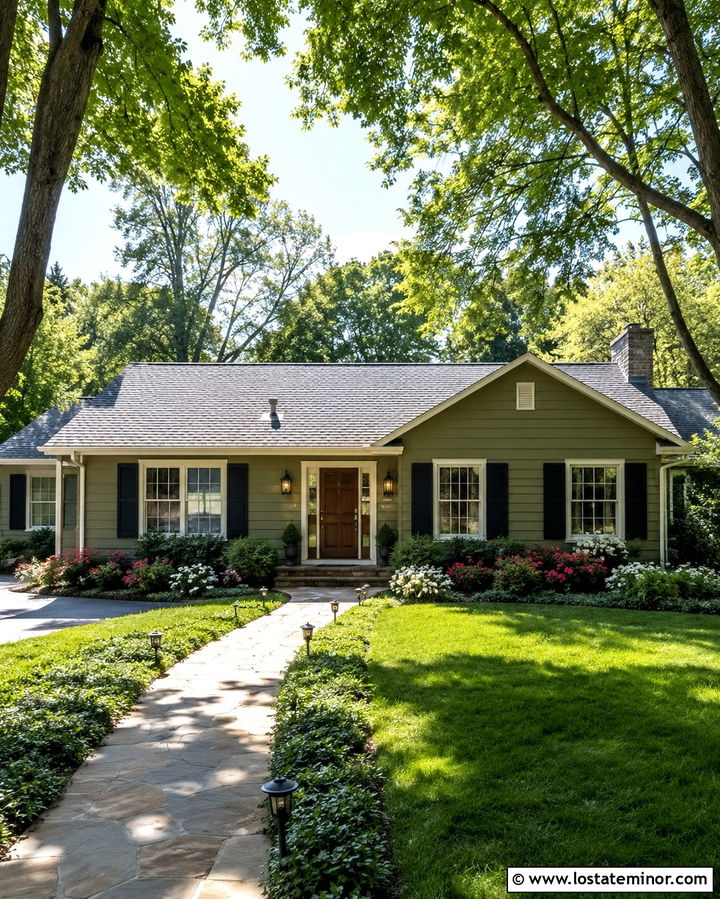
Solar path lights can complement an olive green exterior when the fixtures are simple, evenly spaced, and appropriately scaled. Pair medium olive siding with beige trim, a walnut door, black shutters, and a weathered gray roof. Choose low black path lights that direct illumination toward the walkway instead of shining outward. Continue the black finish on the porch lanterns and door hardware to make the solar fixtures feel connected to the house. A curved flagstone path creates opportunities for gentle pools of light among ground cover and small shrubs. Keep the solar panels unobstructed by dense plants. This approachable scheme can improve the nighttime arrival experience without requiring elaborate changes to the facade.
27. Olive Green House With Lit Porch Columns
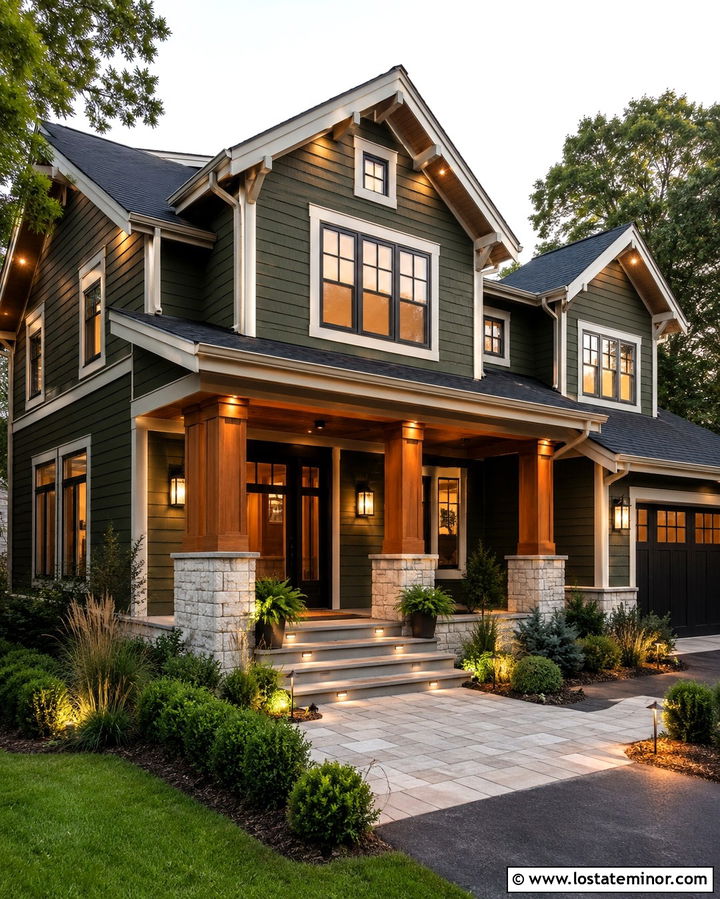
Porch columns can become a defining feature when color, materials, and lighting are planned together. Cover the main house in dark olive green siding and use warm white trim, a charcoal roof, and pale stone column bases. Wrap the upper columns in natural cedar, then install compact black downlights near the top. The light should wash softly over the wood and stone rather than point toward the street. Black lanterns beside the front door complete the fixture package. A stained wood porch ceiling adds another warm surface overhead. Wide steps, structured shrubs, and a straight paver walkway lead attention toward the illuminated entry, giving the entire facade a strong sense of depth.
28. Olive Green House With Garage Accent Lights
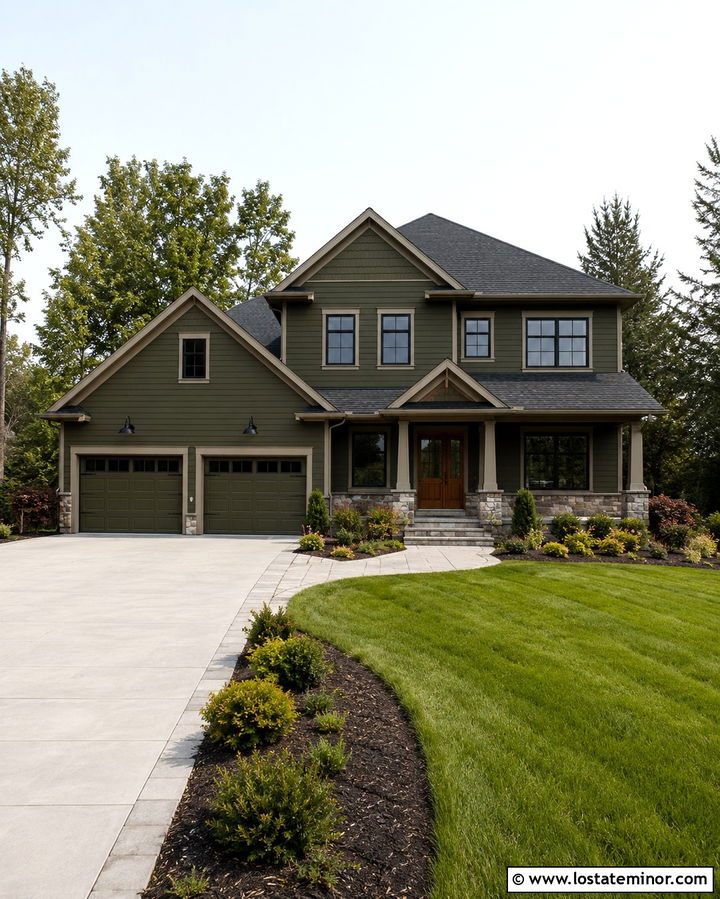
A three-car garage can dominate a facade unless its color and lighting are carefully controlled. Use dark olive green siding with matching olive garage doors to reduce visual contrast. Warm greige trim, black window frames, and a natural wood front door keep the scheme varied but disciplined. Install broad black sconces above or between the garage doors, directing light downward across the panels. Choose fixtures large enough to suit the width of the structure. Stone around the entry shifts attention back toward the front door, where a pair of coordinated lanterns creates a welcoming focal point. Trees, layered shrubs, and a walkway separated from the driveway further balance this practical suburban exterior.
29. Olive Green House With Landscape Uplights
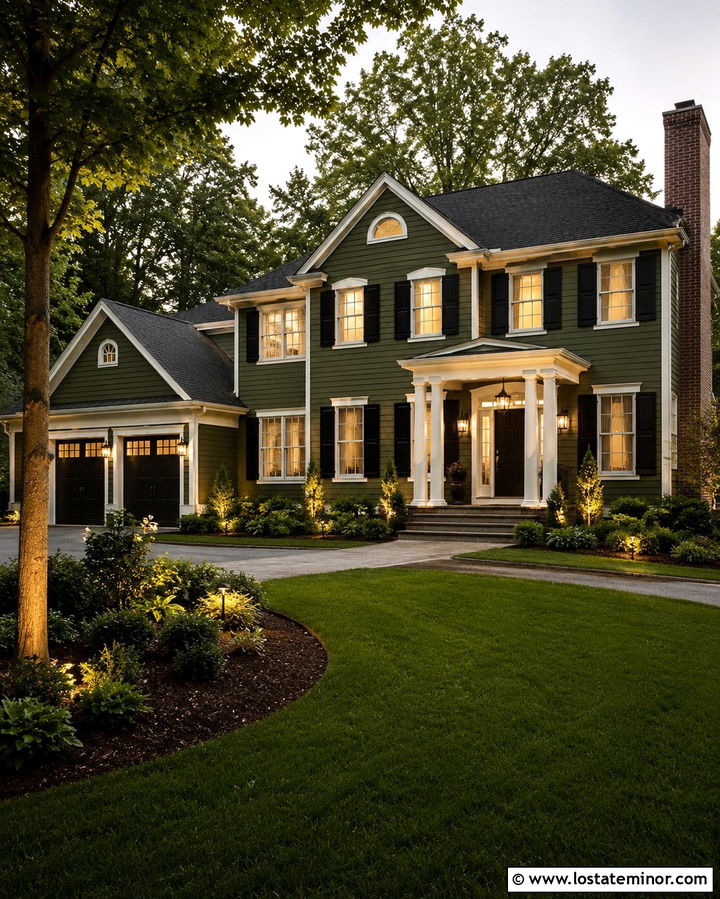
Landscape uplighting works best when it reveals both plants and architecture. Paint a traditional two-story home medium olive green, then add soft ivory trim, a black front door, dark shutters, and a charcoal roof. Place shielded uplights near selected trees and aim a few toward important facade features such as the porch columns or front gable. Avoid lighting every wall evenly, since gentle variation produces more depth. Classic black lanterns at the entrance connect the landscape fixtures with the house. Curved planting beds, mature trees, and a wide lawn provide space for the light to spread naturally. The resulting scheme presents the olive exterior as part of the landscape rather than a separate object.
30. Monochromatic Olive Green House With Minimal Lighting
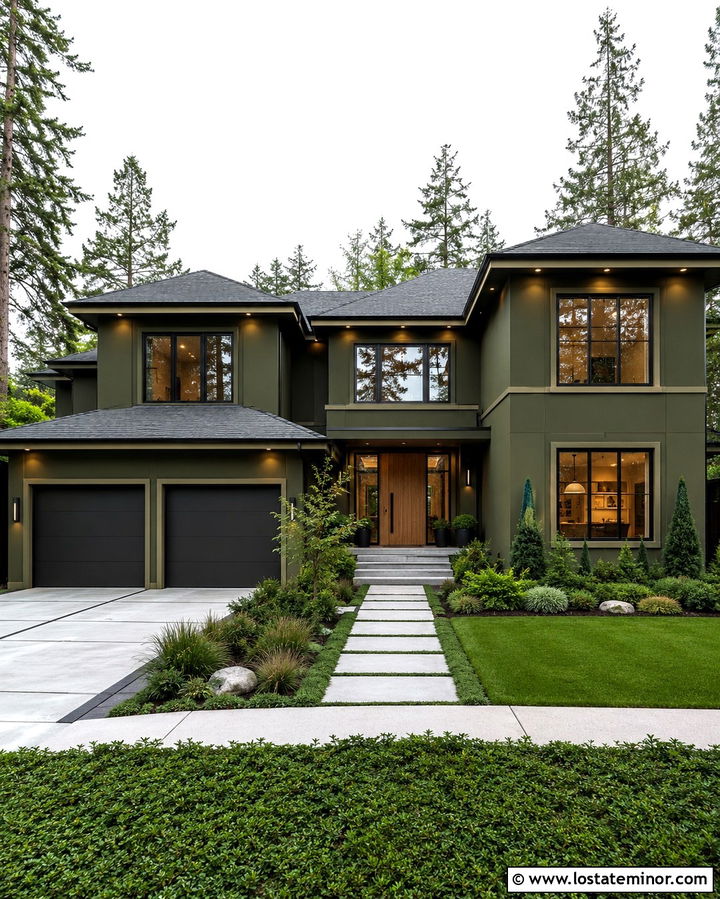
A monochromatic exterior can make olive green feel modern, calm, and closely connected to nature. Use deep olive siding with trim, soffits, and garage doors painted in slightly lighter or darker olive tones. Black-framed windows and a natural oak front door provide the only strong contrast. Select minimal black cylinder sconces that blend into the shadows around the entry and garage. Concealed downlights beneath the eaves can reveal the tonal changes without introducing decorative clutter. Continue the restrained approach with gray stone steps, a charcoal roof, and simple concrete pavers. Layered grasses and evergreen shrubs soften the architecture. This complete look feels sophisticated because every color, fixture, and material serves a clear purpose.
Conclusion:
These **30 Olive Green House Design With Lighting Ideas** show how exterior color and illumination can work together to shape the entire curb-appeal experience. Olive siding feels especially cohesive beside natural wood, warm stone, cream trim, black metal, copper, and aged brass. The right fixture style should support the home’s architecture instead of competing with it. Begin with practical lighting at doors, steps, walkways, and garage areas. Then add restrained architectural or landscape lighting for depth. Before committing, view olive paint samples in direct sun, shade, and changing daylight. A thoughtful combination of color, materials, and layered lighting will help the exterior feel welcoming, balanced, and visually complete.

Related posts: