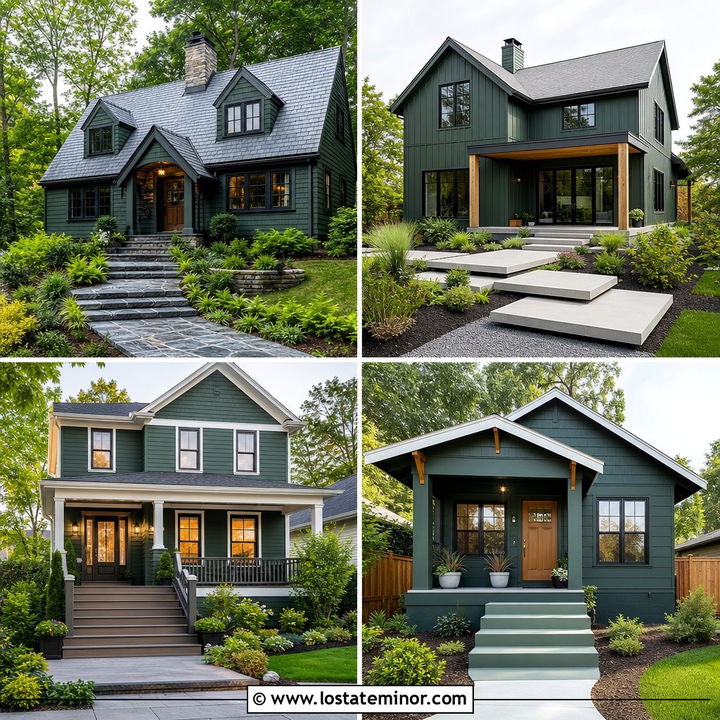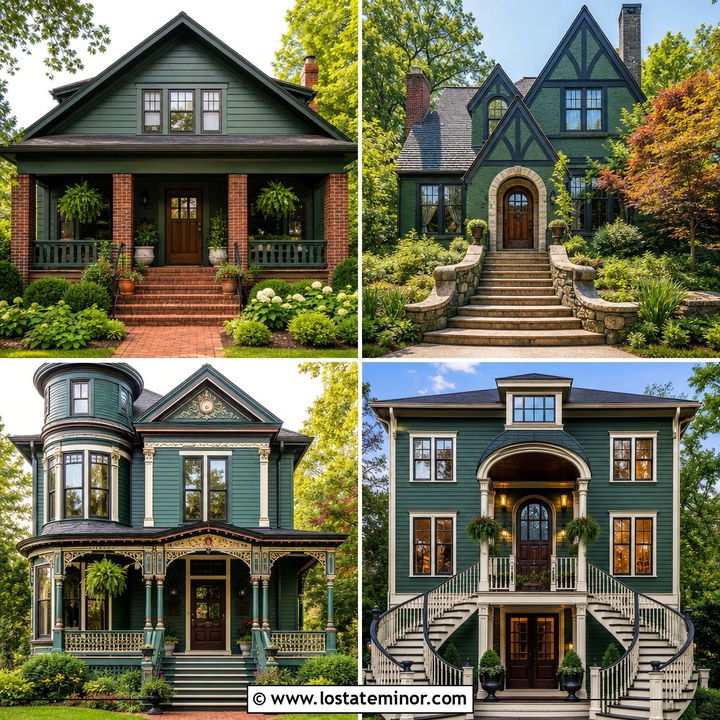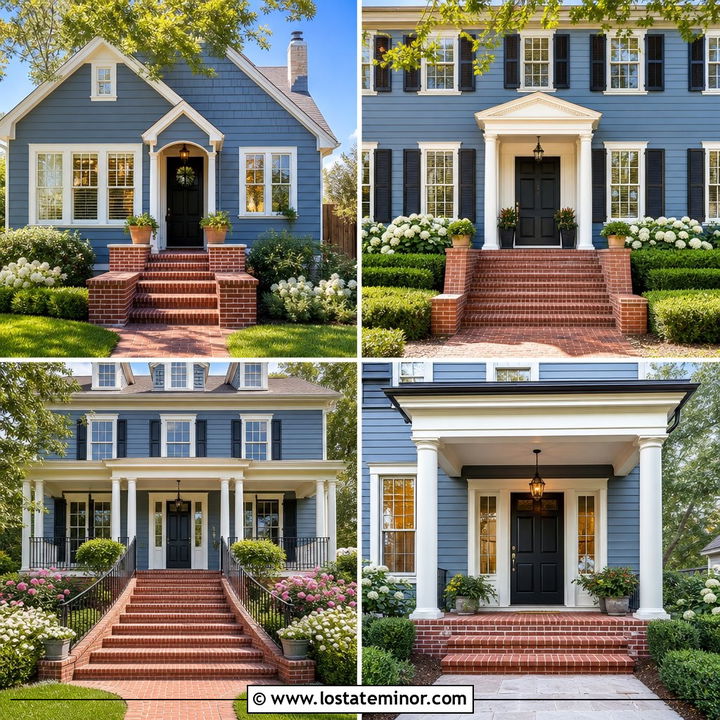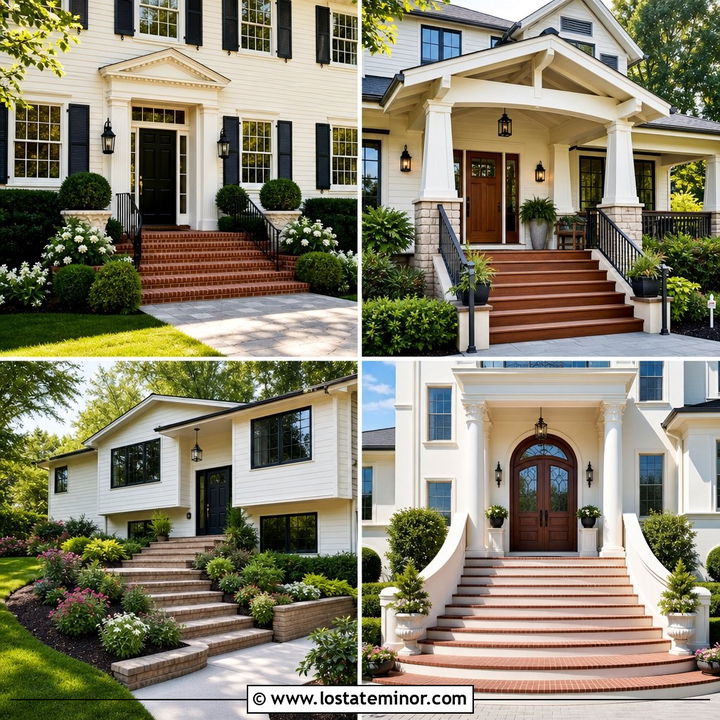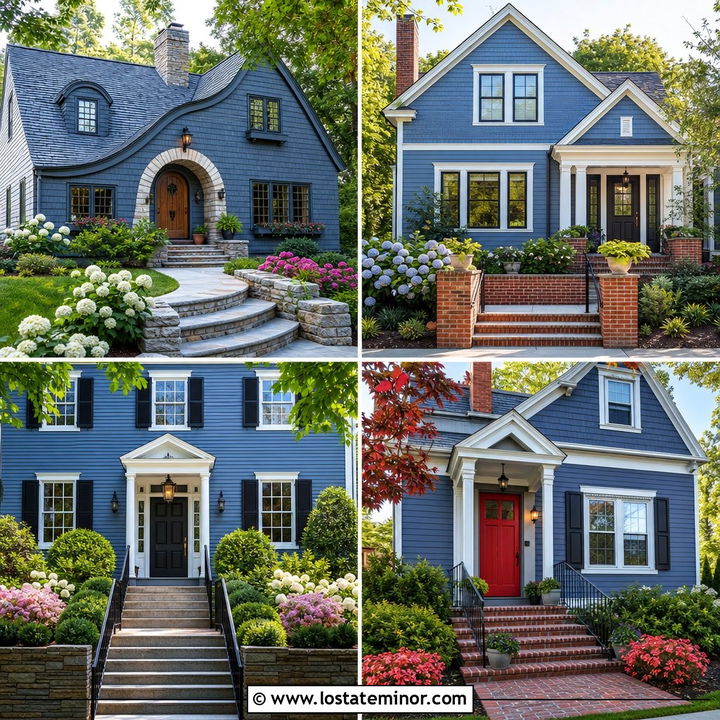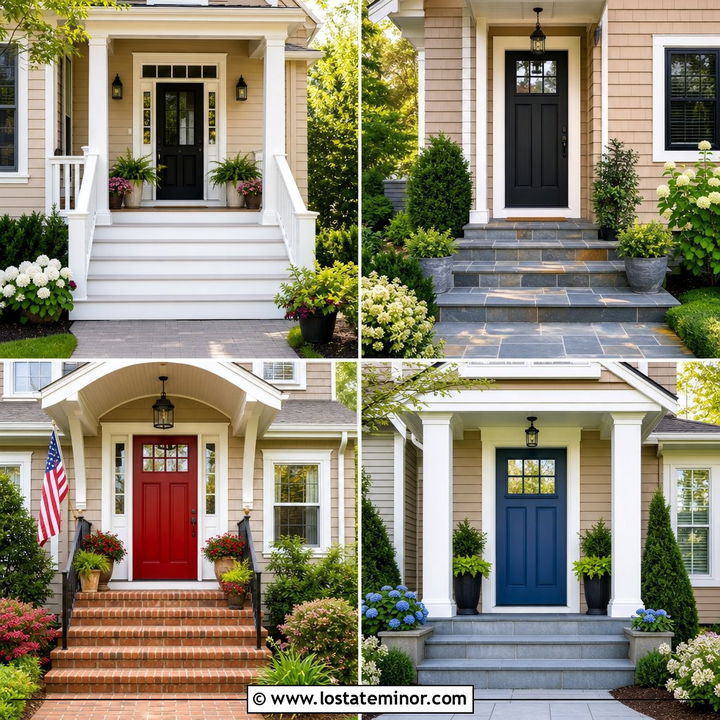
A sage green exterior creates a calm, grounded look that works with traditional homes, modern builds, and everything in between. The entry steps can make that color scheme feel even more intentional. Brick brings warmth, limestone feels refined, and stained wood adds a relaxed natural finish. Trim, roofing, railings, doors, and landscaping also influence how the green appears from the street. These 30 Sage Green House Design With Steps Ideas explore complete exterior combinations rather than isolated stair details. Each look connects the siding to the entrance, porch, architectural materials, and surrounding yard. Whether you are refreshing concrete steps or planning a new front entry, you will find practical inspiration throughout these 30 Sage Green House Design With Steps Ideas.
1. Sage Green House With White Concrete Steps
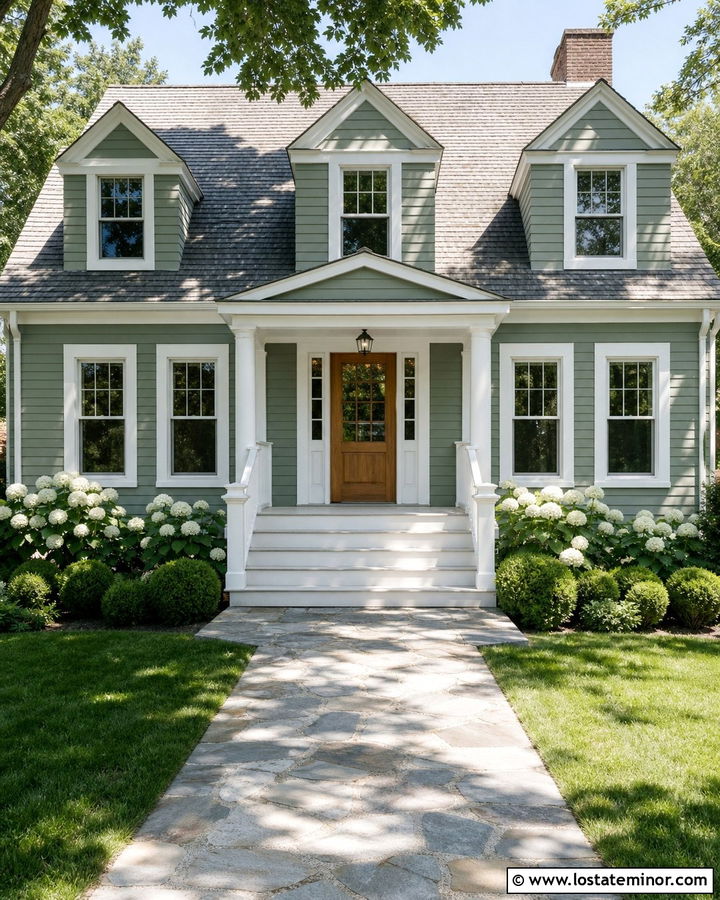
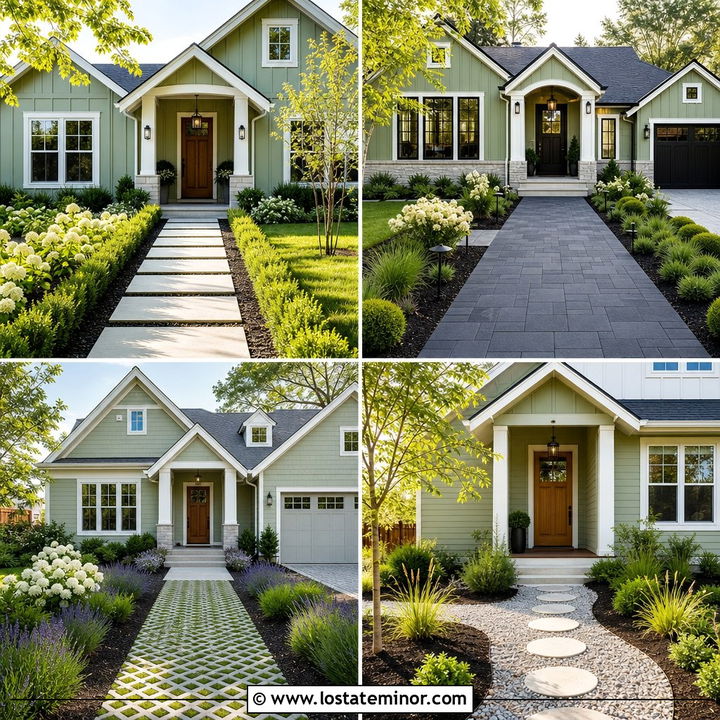
Bright white concrete steps give a sage green house a clean, welcoming entrance. This combination works especially well on a Cape Cod or traditional cottage with simple lap siding. Use crisp white on the window trim, porch columns, stair risers, and railings to connect the entry to the rest of the facade. A medium-gray shingle roof keeps the palette balanced without making it feel too dark. Consider a natural oak front door for warmth and polished brass hardware for a classic finishing touch. Low boxwoods, white hydrangeas, and a straight stone walkway can reinforce the tidy appearance. Choose a slip-resistant masonry coating for the steps so the light finish remains practical during wet weather.
2. Sage Green House With Red Brick Steps
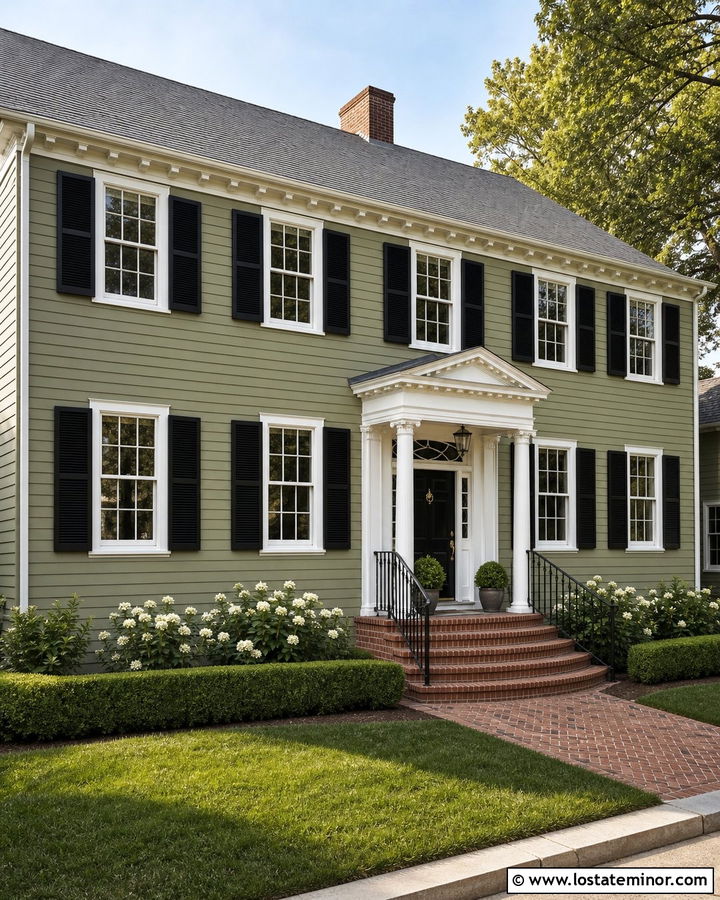
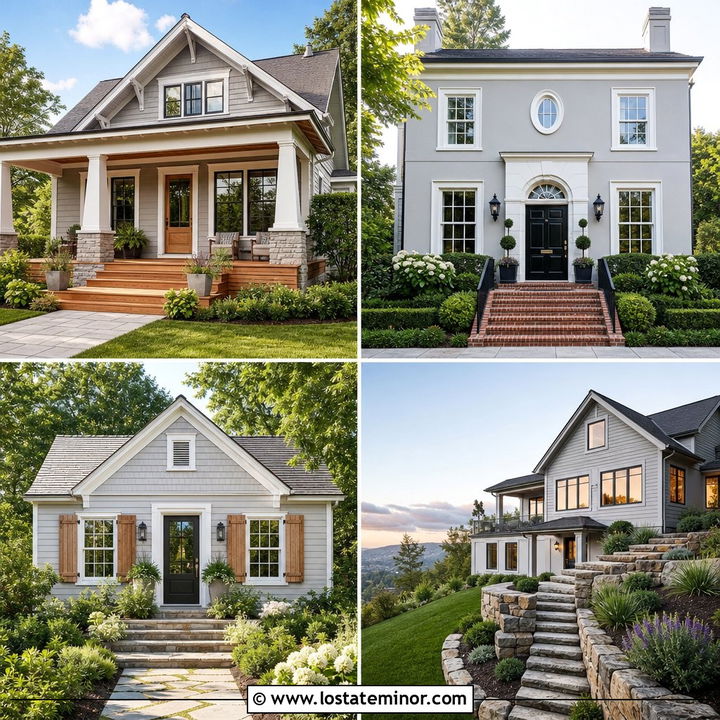
Red brick steps add rich color and traditional character to muted sage green siding. The red and brown undertones in weathered brick warm up the green while giving the entrance a permanent, established look. This pairing suits a Colonial house with symmetrical windows, white trim, black shutters, and a centered front door. Paint the door deep charcoal or glossy black to repeat the darker tones in the roof and metal railings. A simple brick walkway can extend the material into the yard and make the entrance feel connected to the landscape. If the existing brick looks overly orange, use a subtle limewash to soften it. Keep foundation plantings restrained so the detailed masonry remains visible from the curb.
3. Sage Green House With Natural Stone Steps
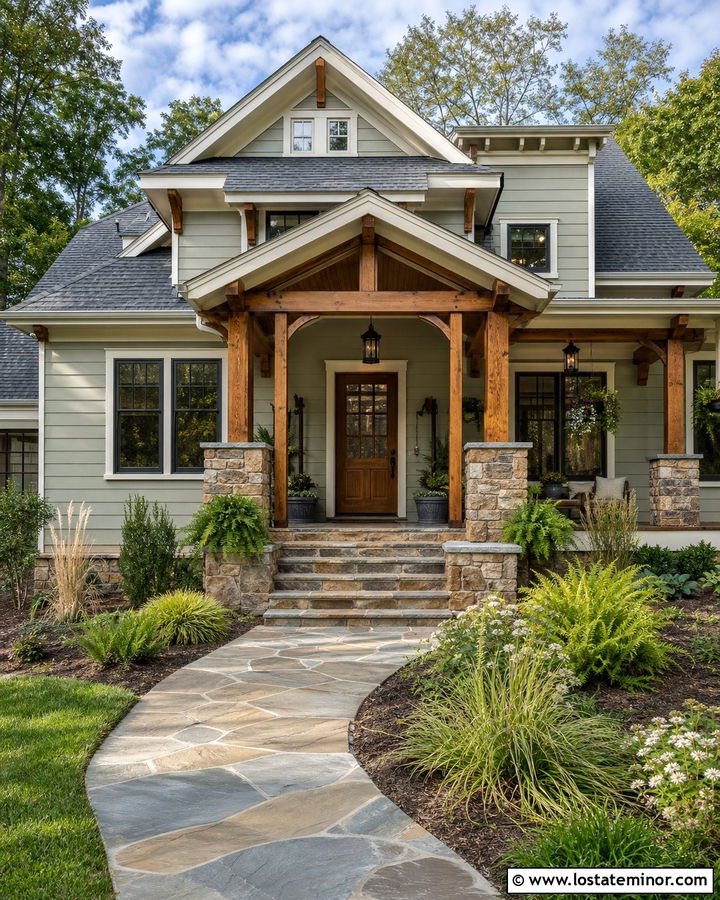
Natural stone steps make sage green siding feel closely connected to the surrounding landscape. Irregular bluestone or fieldstone works beautifully on a Craftsman home with broad eaves, tapered columns, and exposed wood details. Use warm white trim instead of stark white to maintain the earthy character. A stained cedar front door and matching porch beams can bring out the tan and brown variations within the stone. Finish the exterior with a charcoal roof and dark bronze fixtures for definition. Plant ornamental grasses, ferns, and low evergreen shrubs around the steps to soften their edges. Wide stone treads are particularly attractive when the house sits above street level because they create a gradual, substantial approach to the entrance.
4. Sage Green House With Cedar Porch Steps
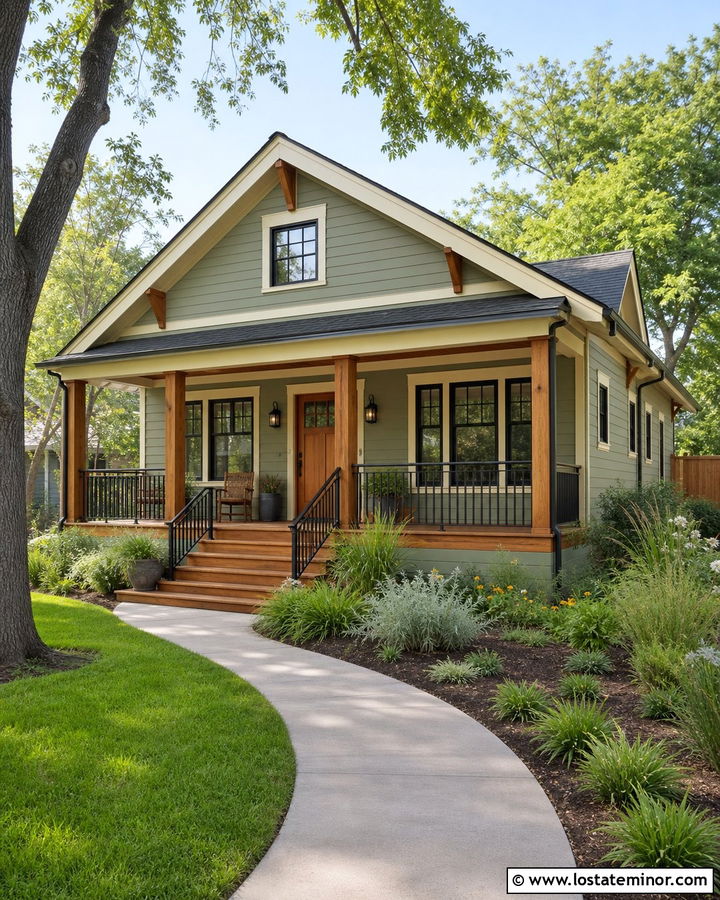
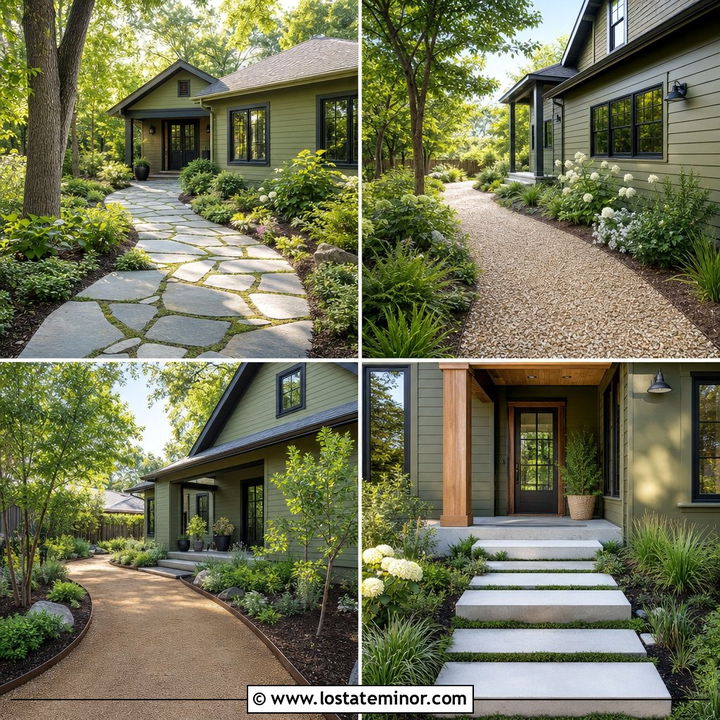
Warm cedar steps provide an inviting contrast against a cool sage green exterior. The pairing is ideal for a bungalow with horizontal siding, deep roof overhangs, and a compact covered porch. Repeat the cedar on the porch floor, support posts, and front door so the stairs feel like part of a complete exterior plan. Cream trim can gently outline the windows without competing with the natural wood grain. Black metal railings and a dark architectural shingle roof introduce enough contrast to sharpen the softer colors. Use a penetrating exterior stain that allows the cedar texture to remain visible. A curved walkway, native grasses, and layered shrubs will complete the casual, garden-friendly curb appeal of this approachable scheme.
5. Sage Green House With Black Front Steps
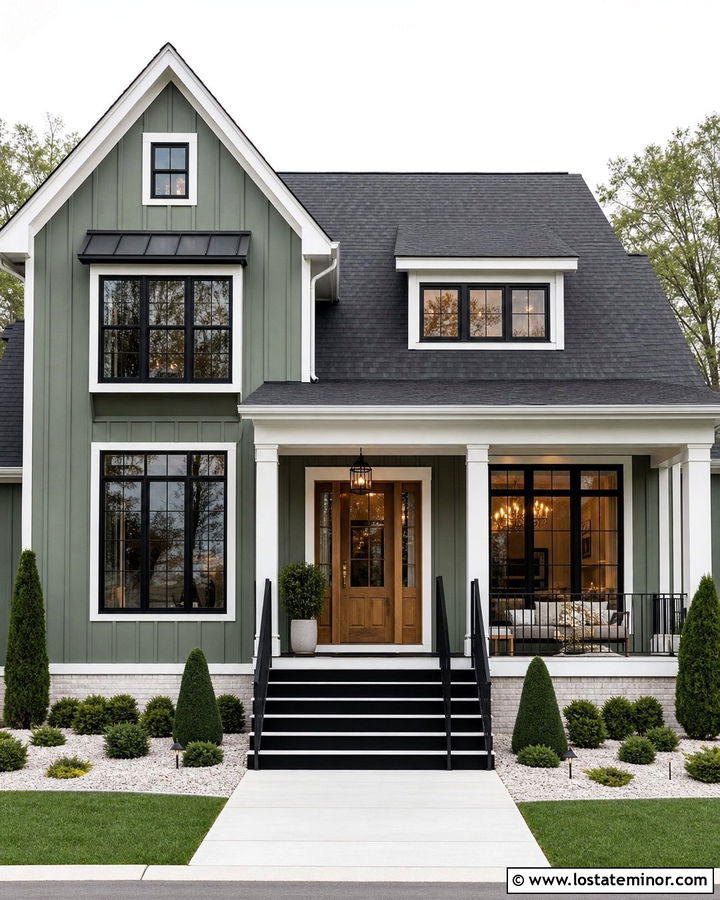
Black front steps bring modern structure to a soft sage green house. This high-contrast treatment works best when black appears in several other places, including the windows, gutters, porch railing, lighting, and roof. On a modern farmhouse, combine sage green board-and-batten siding with black stair treads, white trim, and a natural wood front door. The white prevents the overall palette from becoming heavy, while the wood adds warmth near the entrance. Keep the steps wide and simple, with straight edges that complement the vertical siding. Pale gravel beds, sculpted evergreens, and a rectangular concrete walkway can reinforce the clean design. A durable charcoal-black porch coating will hide everyday dirt more effectively than a pale stair finish.
6. Sage Green House With Gray Stone Steps
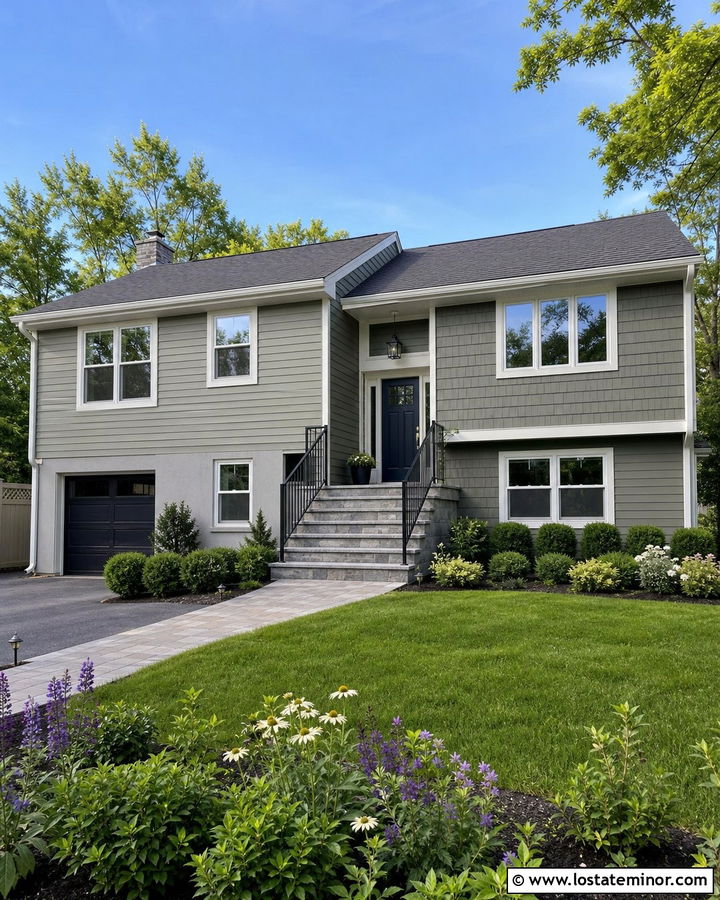
Soft gray stone steps create a balanced transition between sage green siding and a charcoal roof. This versatile combination fits a split-level home where the front staircase is especially visible from the street. Use light gray on the foundation and retaining walls to visually connect the raised entrance to the ground. White window trim will brighten the facade, while a navy front door adds controlled color without clashing with the green. Choose rectangular stone treads for a neat, updated effect rather than an overly rustic finish. Slim black railings can keep the staircase visually open. Add rounded shrubs and flowering perennials along both sides of the steps to soften the elevation change and guide attention toward the front door.
7. Sage Green House With Wide Porch Steps
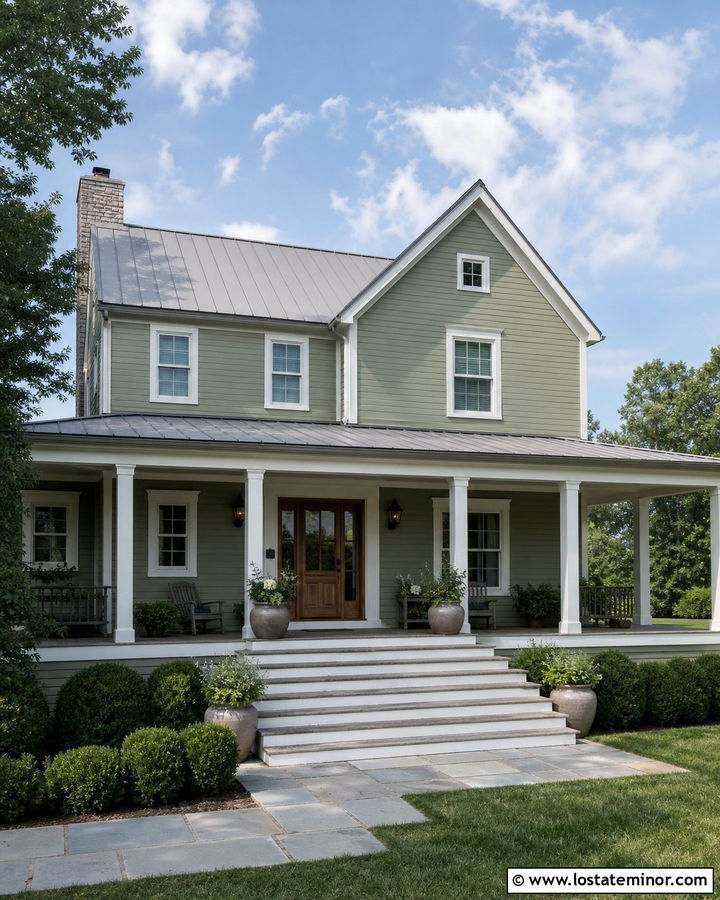
Wide porch steps can make a sage green farmhouse appear more gracious and approachable. Extend the stairs across most of the porch rather than limiting them to the width of the doorway. This creates a natural transition between the yard and the outdoor living area. Paint the risers warm white and use medium-gray composite boards on the treads and porch floor. White square columns, a stained wood door, and galvanized metal roofing will complete the relaxed farmhouse palette. Large planters placed at the outer corners can define the entrance without narrowing the walking space. A broad flagstone path and symmetrical landscaping will emphasize the welcoming proportions. Include low step lighting for safer movement without adding visually bulky fixtures.
8. Sage Green House With Curved Brick Steps
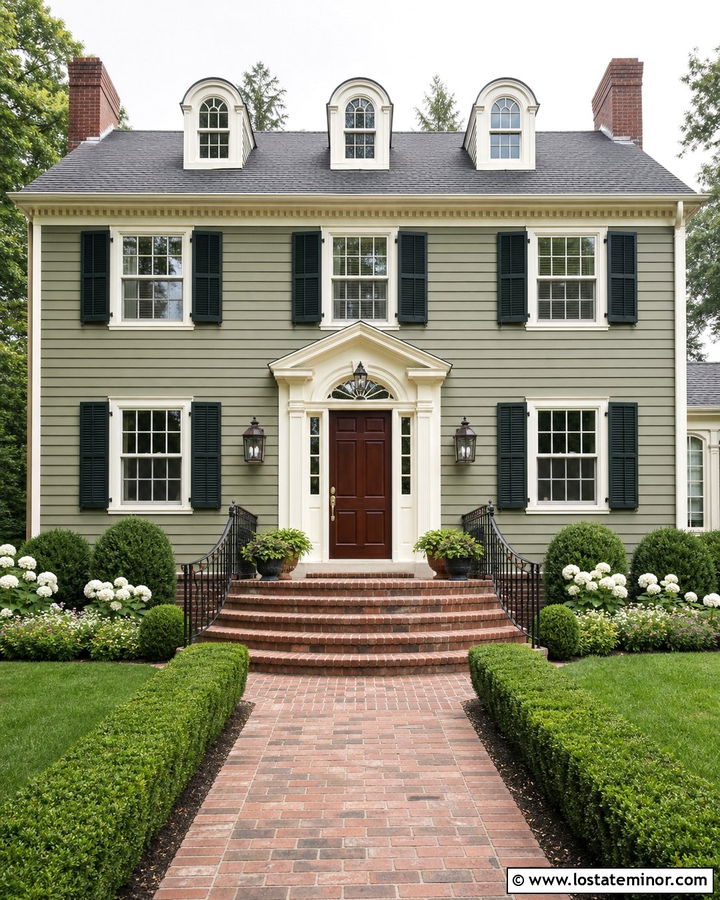
Curved brick steps can soften the straight lines of a sage green Colonial Revival exterior. Their rounded shape creates a more generous approach to a formal centered entrance. Select muted red brick with brown and charcoal variation so the masonry feels aged rather than overly bright. Cream trim, dark green shutters, and a mahogany front door will produce a layered heritage palette. Match the brick on the walkway or porch foundation to keep the materials consistent. Traditional black lanterns and curved iron railings can follow the shape of the steps while adding definition. Frame the entry with clipped boxwoods and low flowering borders. The result feels polished and established, yet the sage siding keeps the overall house from appearing too formal.
9. Sage Green House With Limestone Steps
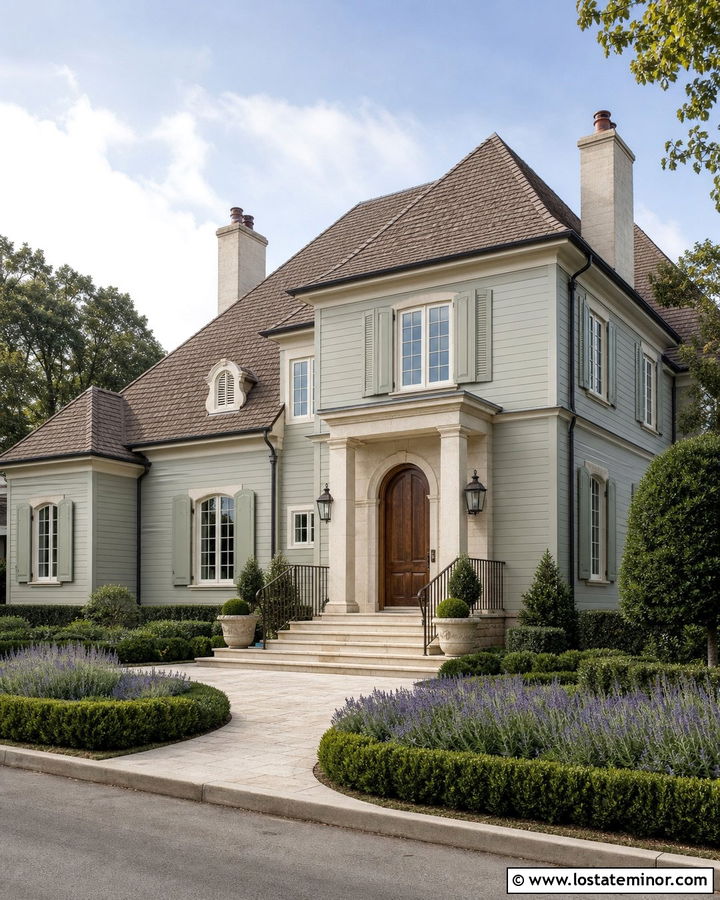
Pale limestone steps bring understated elegance to a sage green exterior. The creamy stone can highlight the warm undertones in the siding, particularly on a French country or European-inspired house. Pair the steps with off-white stucco accents, sage lap siding, and a soft brown roof. A medium-stained arched wood door can become the focal point without introducing an unrelated color. Use dark bronze railings, gutters, and lanterns to outline the lighter materials. Limestone can also appear around the foundation or lower porch columns, creating a deliberate connection between the staircase and architecture. Lavender, clipped shrubs, and loose flowering plants will enhance the natural palette. Seal porous stone appropriately to help reduce discoloration in exposed entry areas.
10. Sage Green House With Painted Wood Steps
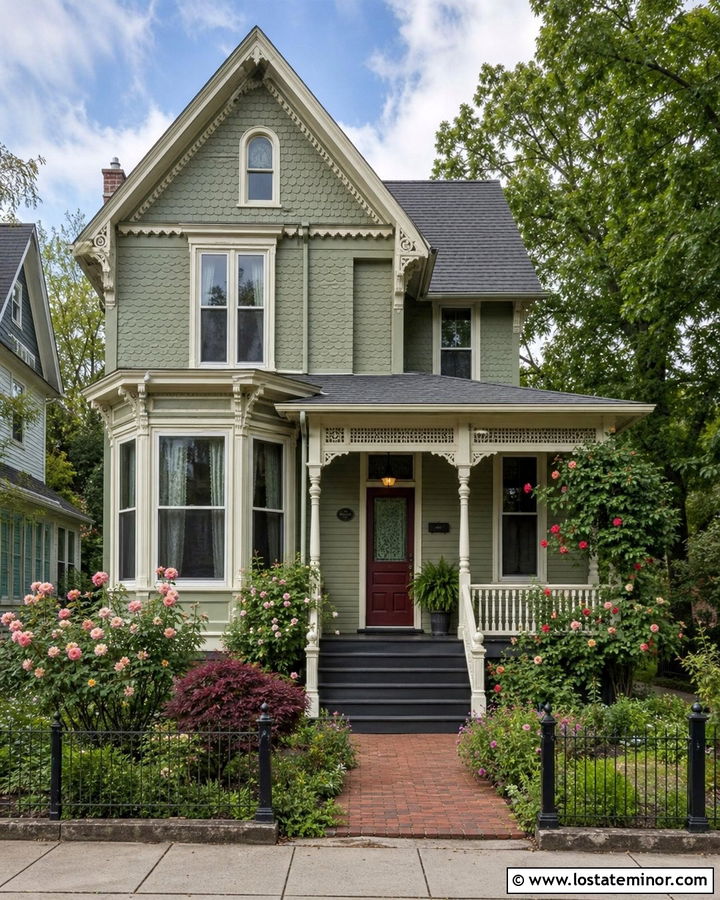
Painted wood steps offer an affordable way to coordinate an older porch with sage green siding. For a Victorian cottage, choose a medium charcoal floor color that contrasts with the green while hiding regular foot traffic. Repeat the charcoal on the porch floor, stair treads, and narrow decorative details. Cream railings, window trim, and ornate brackets will preserve the home’s historic character. A muted burgundy front door can provide a warm focal point without overwhelming the subtle body color. Repair loose boards and prepare the surface carefully before applying exterior porch paint. Cottage landscaping with climbing roses, flowering shrubs, and a narrow brick path will complete the look. Keep decorative colors limited so the detailed architecture remains coherent rather than busy.
11. Sage Green House With Bluestone Steps
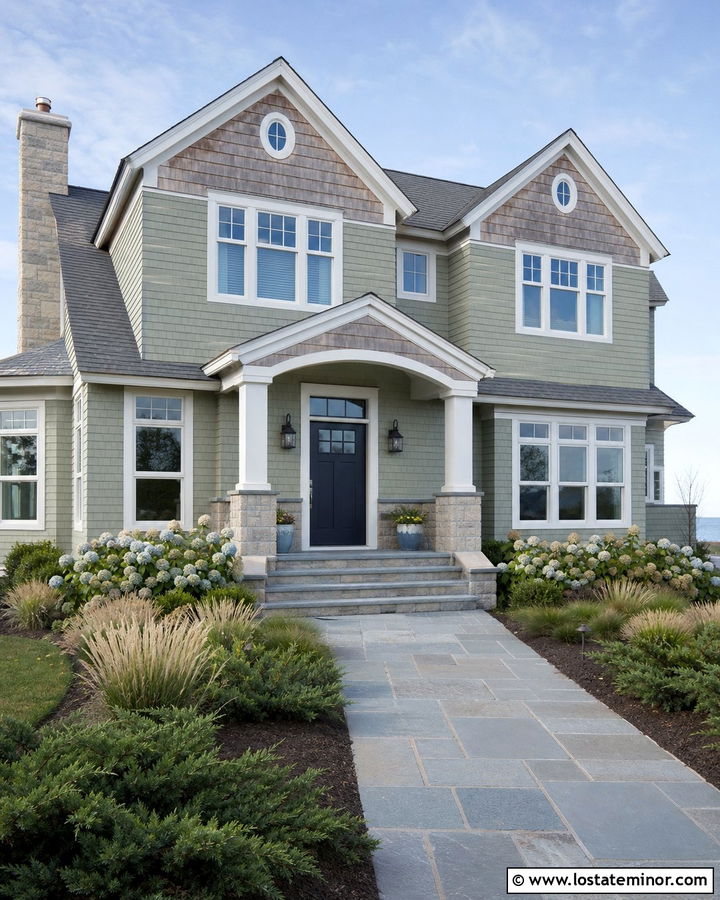
Bluestone steps introduce cool blue-gray tones that complement a muted sage green house. This scheme looks particularly natural on a Shingle-style home with cedar accents and an informal coastal landscape. Use soft white trim around the windows and porch, then add a navy door to strengthen the blue undertones in the stone. Weathered cedar shingles on upper gables can add texture without taking attention away from the entry. A deep gray roof and black lanterns will anchor the lighter facade. Continue bluestone into the walkway for a seamless approach from sidewalk to porch. Coastal grasses, hydrangeas, and low junipers can surround the hardscape. The completed exterior feels relaxed, substantial, and well suited to changing natural light.
12. Sage Green House With Terracotta Tile Steps
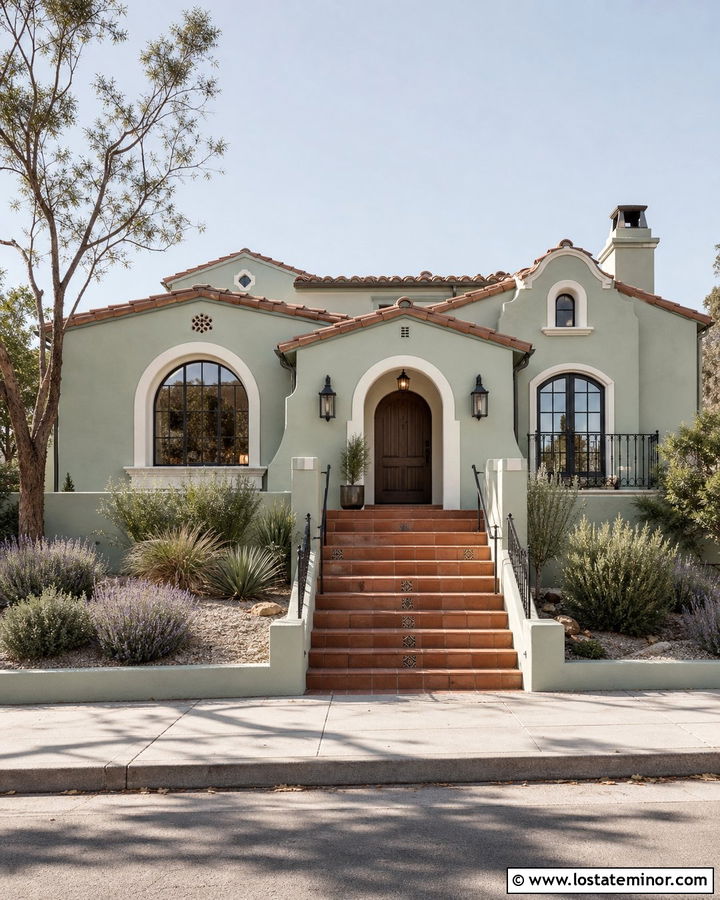
Terracotta tile steps can bring sun-washed warmth to a sage green stucco or Mediterranean-inspired exterior. The earthy orange-red tile provides contrast while still belonging to a nature-based color palette. Use creamy white around arched windows and on the porch walls, then add a dark stained wood door for depth. A clay tile roof will repeat the stair color and make the entire scheme feel intentional. Black iron railings, simple lanterns, and restrained hardware suit the architecture without adding unnecessary decoration. Choose exterior-rated, slip-resistant tile that can handle local weather conditions. Drought-tolerant landscaping with lavender, rosemary, ornamental grasses, and gravel beds will frame the steps while strengthening the warm, relaxed character of the complete house.
13. Sage Green House With Floating Concrete Steps
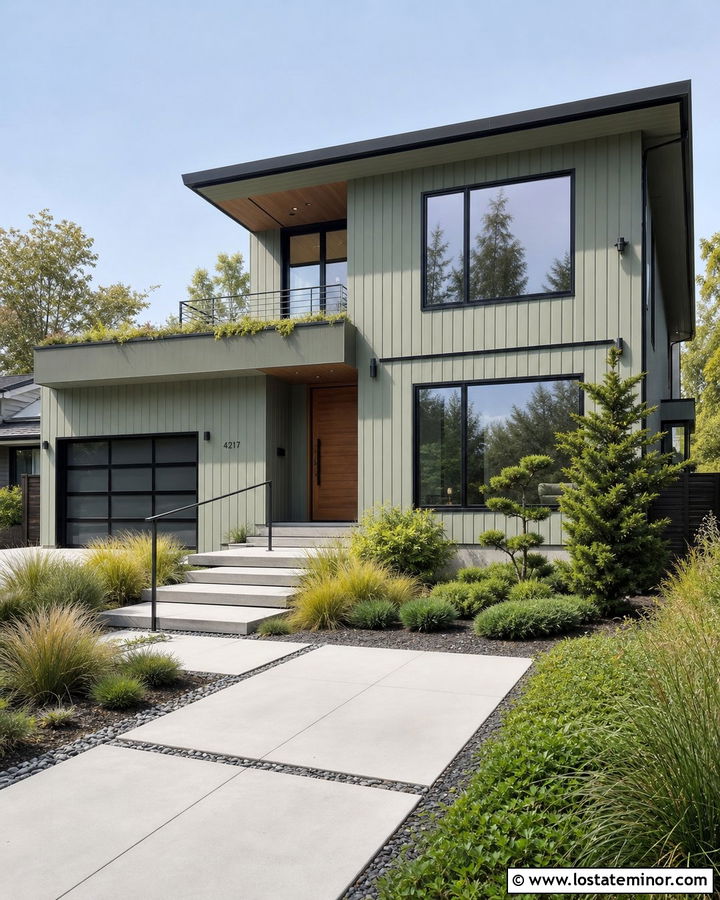
Floating concrete steps give sage green siding a clean contemporary edge. The individual slabs appear lighter than a solid staircase and allow landscaping to fill the spaces around the entry. This approach suits a low-profile modern house with flat or shallow rooflines, black-framed windows, and vertical sage siding. Keep the concrete in a natural light gray finish and use a frameless or slim black handrail where required. A walnut-toned front door adds warmth to the restrained palette. Repeat concrete in the driveway edging or rectangular walkway to create visual continuity. Low grasses, ground covers, and sculptural evergreen plants can soften the geometry. Bright daylight will reveal the subtle relationship between the cool concrete and gray-green exterior.
14. Sage Green House With Dark Brown Steps
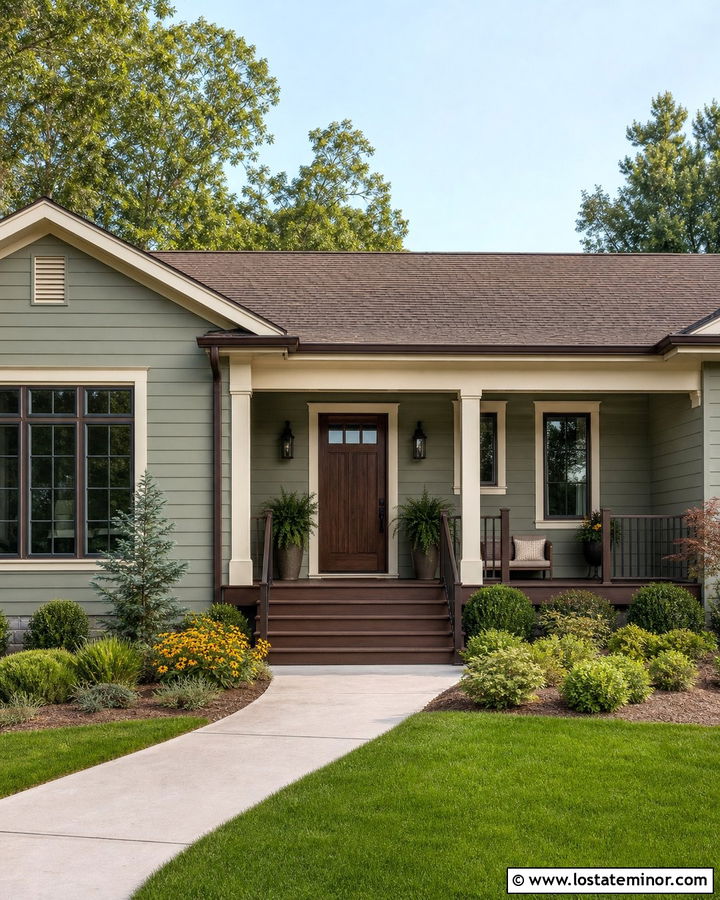
Dark brown steps create a warm, practical foundation for a sage green ranch house. The deeper stair color works particularly well with a brown shingle roof, bronze gutters, and cream window trim. Use a medium walnut front door to bridge the dark steps and lighter siding. If the porch is wood, continue the same rich brown finish across its floor to avoid a disconnected patchwork of colors. Simple cream columns and bronze railings can keep the low facade visually organized. A wide concrete walkway and layered foundation shrubs will make the entrance easier to identify from the curb. Brown also tends to feel less severe than black, making it a comfortable choice for homeowners who want contrast without a highly modern appearance.
15. Sage Green House With White Brick Steps
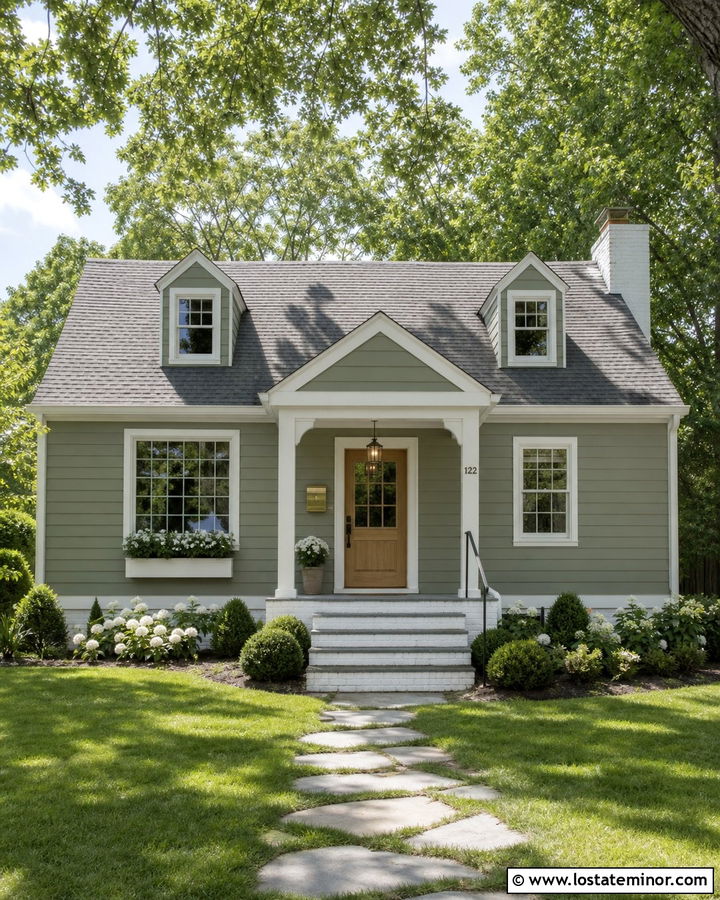
White brick steps create a bright transition into a sage green cottage or compact suburban home. Unlike smooth white concrete, brick adds texture and visible pattern to the entrance. Use a warm, slightly creamy white rather than a cold blue-white so the steps coordinate with the muted siding. Repeat this shade on the trim, porch columns, and foundation. A pale wood door and brushed brass fixtures will maintain the light, welcoming effect. Consider using darker gray caps on the stair treads to add durability and define each level. A cottage garden with white flowers, rounded shrubs, and a stepping-stone walkway can reinforce the gentle palette. Keep the roof medium gray to provide enough contrast above the light-colored entry.
16. Sage Green House With Charcoal Tile Steps
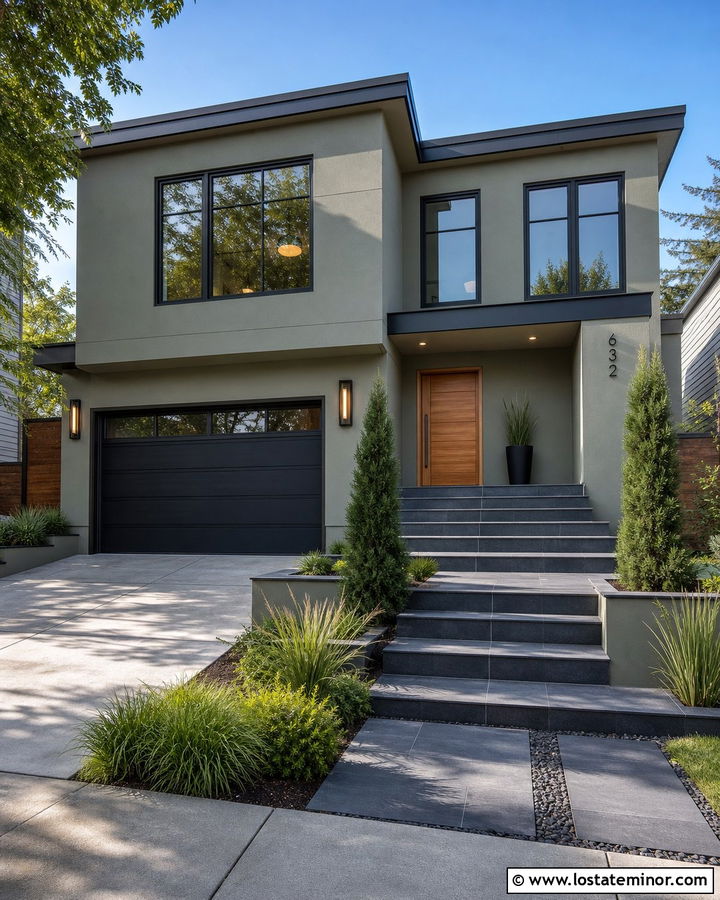
Charcoal tile steps can give a sage green exterior a polished urban appearance. Large-format porcelain tiles with a stone-like texture are especially effective on a contemporary two-story house. Pair the steps with smooth sage siding, black windows, charcoal garage doors, and minimal white trim. A natural teak front door can prevent the palette from feeling too cool. Carry the charcoal tile onto the entry landing so the staircase reads as a complete architectural feature. Choose an exterior product with a textured, slip-resistant surface and suitable freeze-thaw performance for the location. Narrow planting beds with grasses and compact evergreens will complement the streamlined facade. The dark entry grounds the house while allowing the muted green walls to remain clearly visible.
17. Sage Green House With Fieldstone Steps
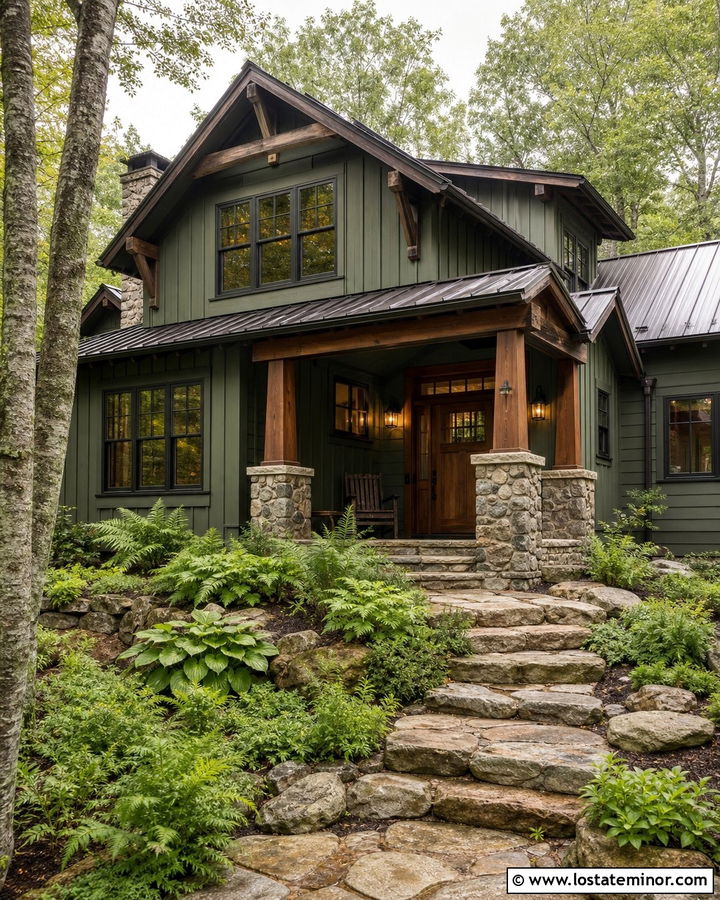
Rugged fieldstone steps enhance the woodland character of a sage green cabin or rustic Craftsman house. Look for stone containing gray, brown, tan, and mossy tones so it connects naturally to the siding and surrounding trees. Use stained timber beams, bronze window frames, and a dark brown metal roof to continue the earthy palette. A heavy wood front door can reinforce the substantial entrance. Keep the mortar color soft and natural rather than bright white. Irregular planting pockets filled with ferns, hostas, and low ground covers will help the steps settle into the landscape. Low-voltage lighting tucked beside the treads can improve visibility while remaining discreet. The finished exterior should feel integrated with its setting rather than sharply separated from it.
18. Sage Green House With Brick And Stone Steps
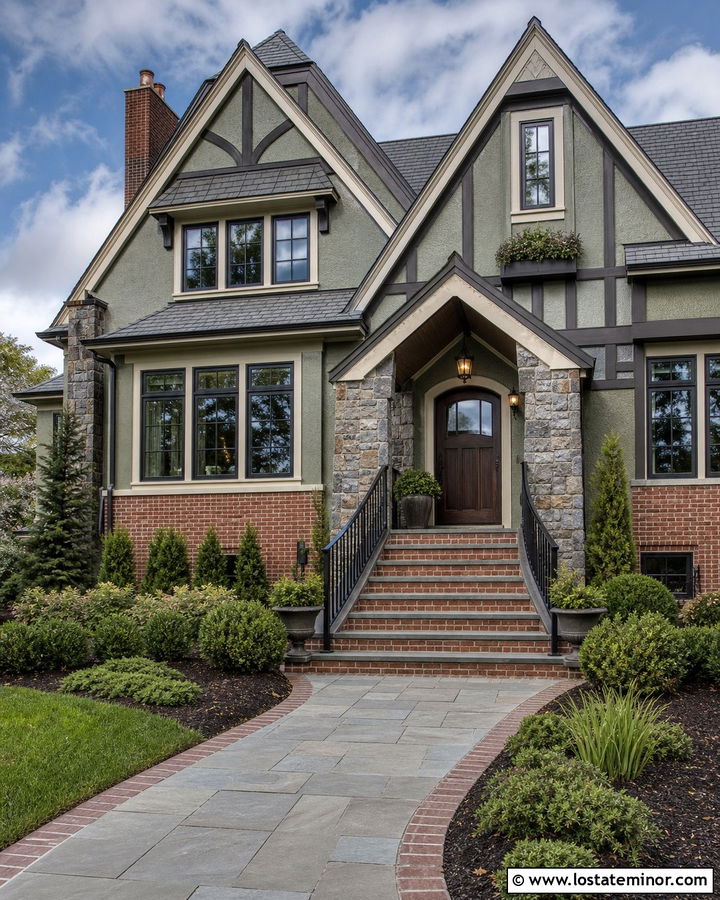
Combining brick and stone gives a sage green home a layered, custom entrance. Use red-brown brick for the stair risers and smooth gray stone for the tread caps. This creates visual depth while providing a comfortable walking surface. The combination works beautifully on a Tudor-inspired house with sage stucco or siding, cream trim, and dark timber details. Select a deep brown front door and black iron railings to echo the darker masonry tones. Repeat the brick around the foundation and use stone on the porch columns to unify the materials. Keep the landscaping simple, with evergreen shrubs and a gently curved walkway. Limiting the palette to a few repeated finishes prevents the mixed masonry from making the exterior look overly complicated.
19. Sage Green House With Composite Deck Steps
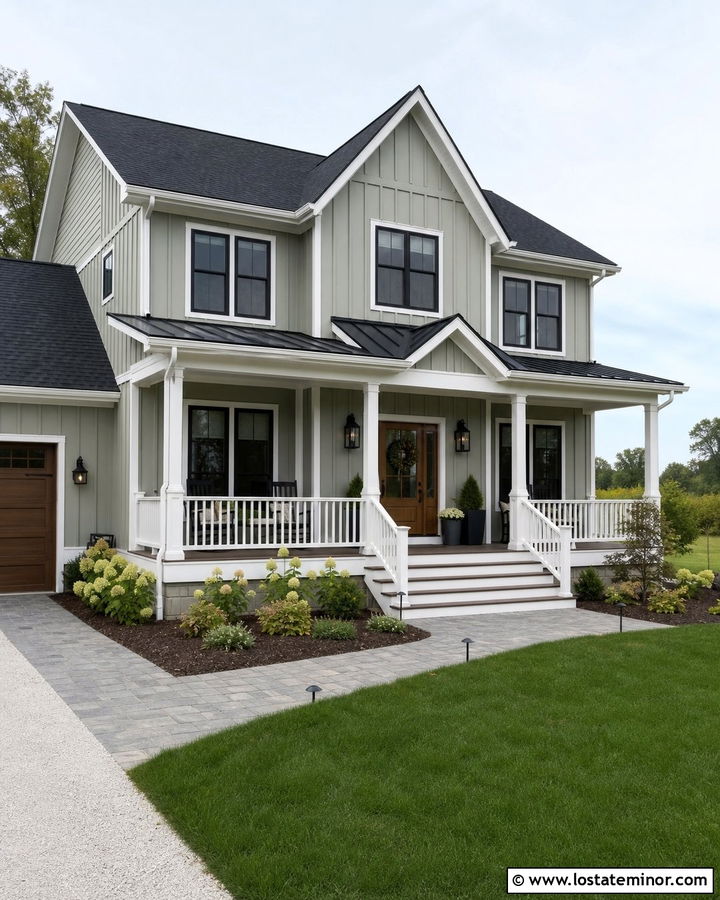
Composite deck steps provide a low-maintenance entrance for a sage green modern farmhouse or suburban family home. Choose a warm gray-brown board color that resembles weathered wood without matching the green too closely. Use the same boards across the porch floor and stair treads, then finish the risers and railings in white. Sage board-and-batten siding, black windows, and a cedar front door will create a balanced four-color palette. Wide stair treads can make the porch feel more accessible and visually connected to the lawn. Add simple black lights beneath the handrail or along the risers for discreet illumination. Structured foundation beds and a straight paver walkway will support the clean, durable character of this practical exterior design.
20. Sage Green House With Black Iron Railings
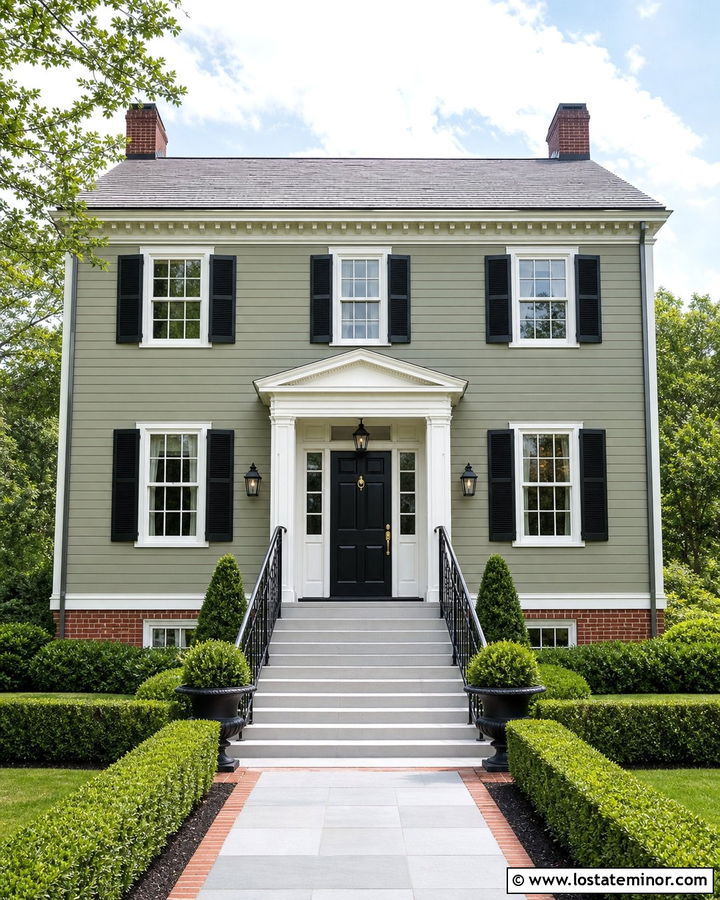
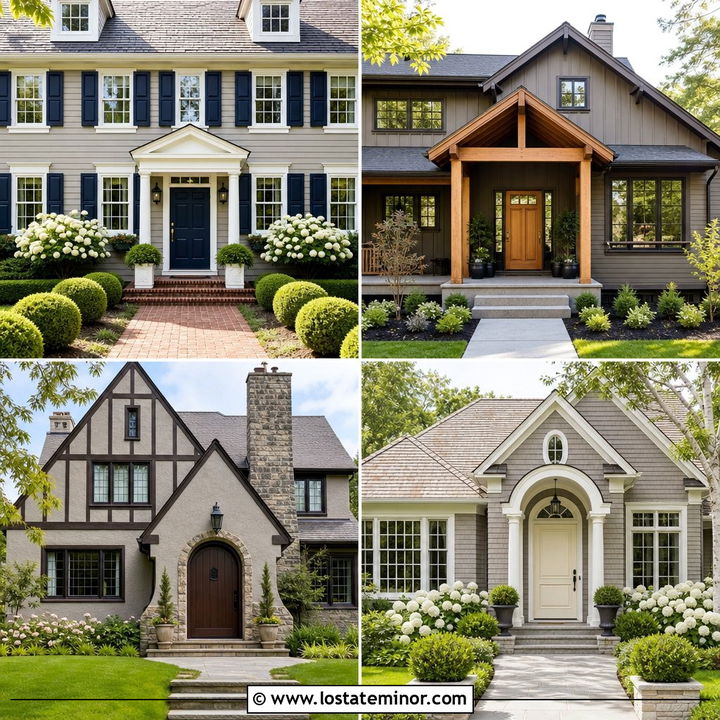
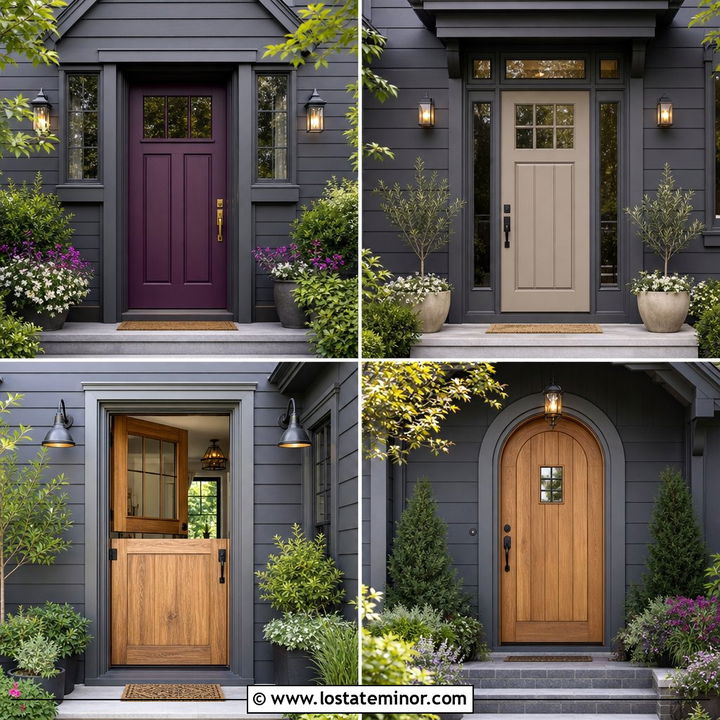
Black iron railings can turn simple masonry steps into a strong design feature on a sage green house. Their narrow profile creates definition without hiding the entrance or making a small porch feel enclosed. Pair them with pale gray concrete steps, warm white trim, and a black front door for a cohesive traditional scheme. This combination works particularly well on a brick-and-siding Georgian or Colonial home. Repeat black on the shutters, lanterns, house numbers, and gutters, but avoid adding it to every available surface. Red brick foundation details can supply warmth beneath the green. Symmetrical planters and clipped shrubs will complete the formal entrance. Choose railings with restrained shapes so the stair design remains classic and easy to maintain.
21. Sage Green House With White Porch Railings
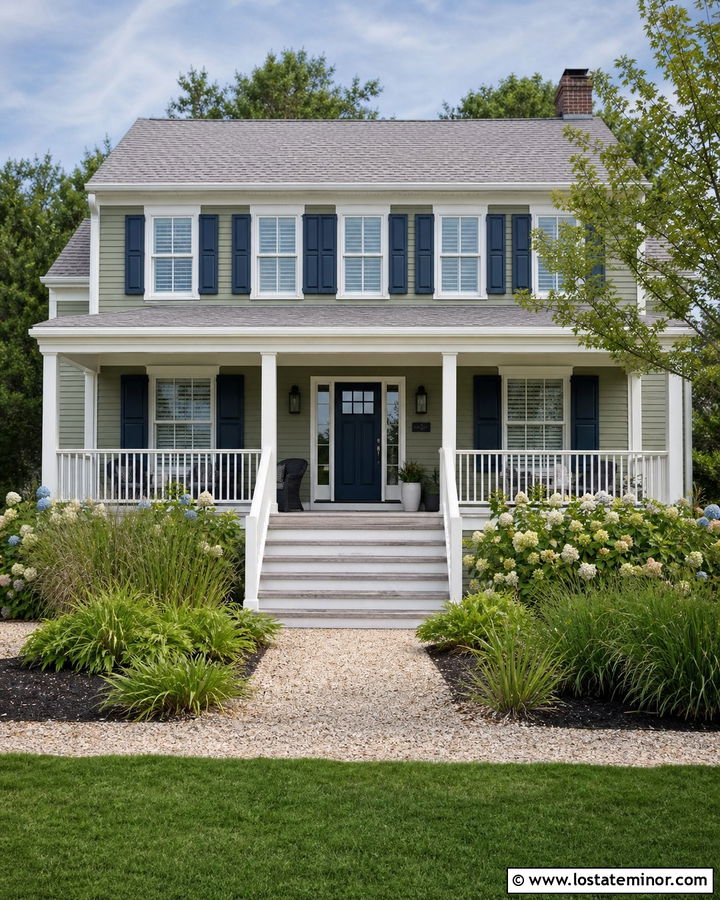
White porch railings create a fresh outline against sage green siding and make an elevated entrance feel lighter. This pairing fits a coastal cottage, Cape Cod, or traditional two-story house with a generous front porch. Paint the stair risers and railing system the same clean white, then use weathered gray boards for the treads and porch floor. A navy blue front door can add a strong but familiar focal point. Continue the navy on small shutters or porch furniture accents rather than large surfaces. A gray roof, white-framed windows, and simple lanterns will complete the breezy exterior. Hydrangeas, ornamental grasses, and a light gravel path can soften the architectural lines while preserving the home’s bright, orderly curb appeal.
22. Sage Green House With Stone Landing Steps
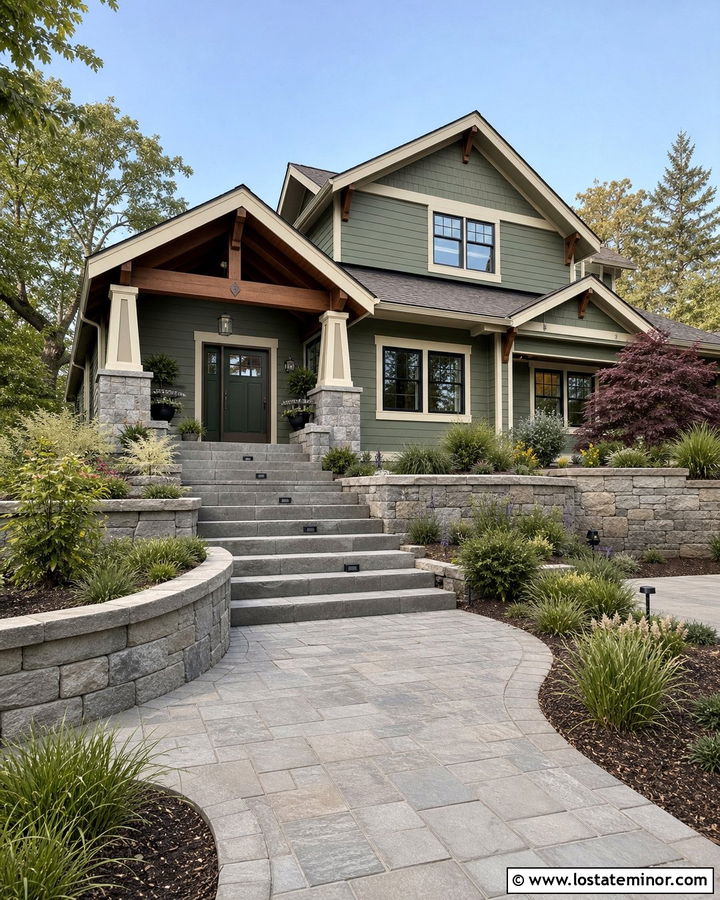
A broad stone landing can make the steps of a sage green house feel more substantial and functional. Instead of running one narrow staircase directly to the door, create a generous landing that allows the entrance to breathe. This layout works well for an elevated craftsman or hillside home. Use large gray stone slabs on the landing and steps, then repeat the material on the column bases and retaining walls. Cream trim, cedar beams, and a dark green door can layer the facade without introducing excessive contrast. Built-in planters beside the landing provide room for seasonal greenery while protecting circulation space. Integrate small stair lights into the stonework. The finished approach will feel carefully planned, grounded, and appropriately scaled to the house.
23. Sage Green House With Split Entry Steps
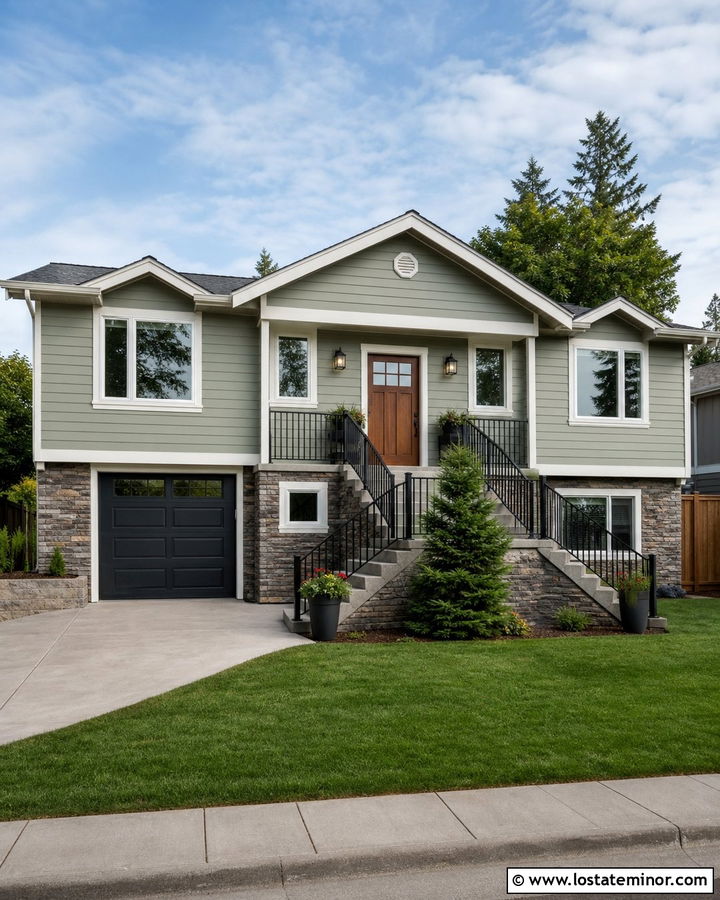
Split entry steps can add symmetry and presence to a raised sage green home. Two short staircases meeting at a central landing often look more inviting than one steep flight. This arrangement is practical for a wide split-level facade or an elevated ranch with a prominent front door. Finish the steps in medium-gray concrete and use black metal railings for crisp definition. Warm white trim and a cedar door will soften the green-and-gray combination. Add stone veneer around the lower level to visually support the elevated siding. Low shrubs can fill the space between the staircases, while matching planters mark both approaches. Keep the driveway and walkway patterns simple so the unusual staircase remains the main architectural feature of the front elevation.
24. Sage Green House With Side Entry Steps
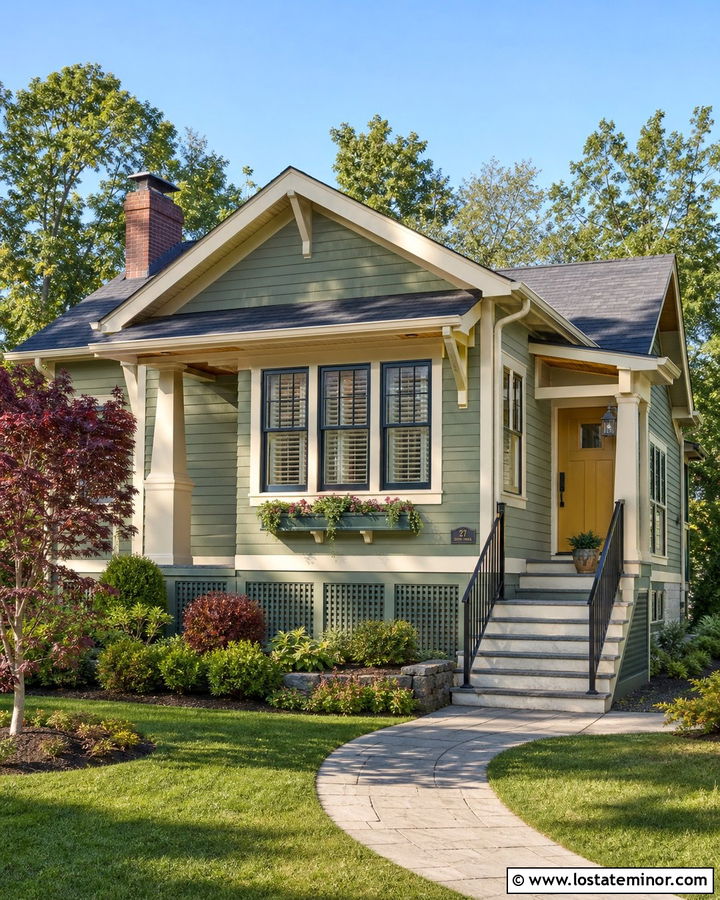
Side-facing steps can keep a compact sage green bungalow entrance from projecting too far into the front yard. Turn the staircase parallel to the porch and use an open black railing to maintain clear views of the facade. Gray stone treads, white risers, and a natural wood porch floor create a balanced transition between the house and landscape. Continue sage siding around the porch foundation or use matching lattice panels for a finished appearance. A mustard yellow front door can introduce cheerful contrast while remaining warm enough to suit the green. Position a curved walkway so visitors naturally reach the first step. Layered shrubs and a small ornamental tree can frame the entrance without concealing the side-oriented staircase from arriving guests.
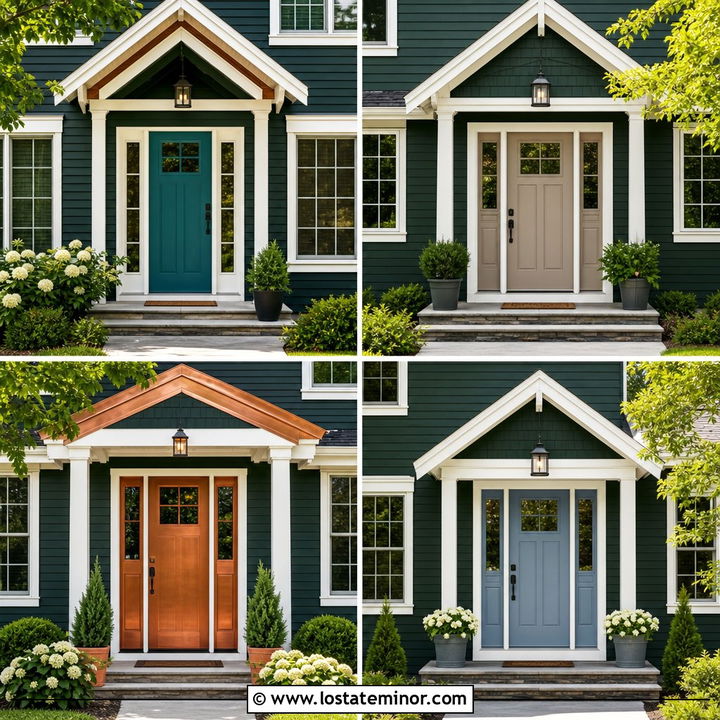
25. Sage Green House With Tiled Stair Risers
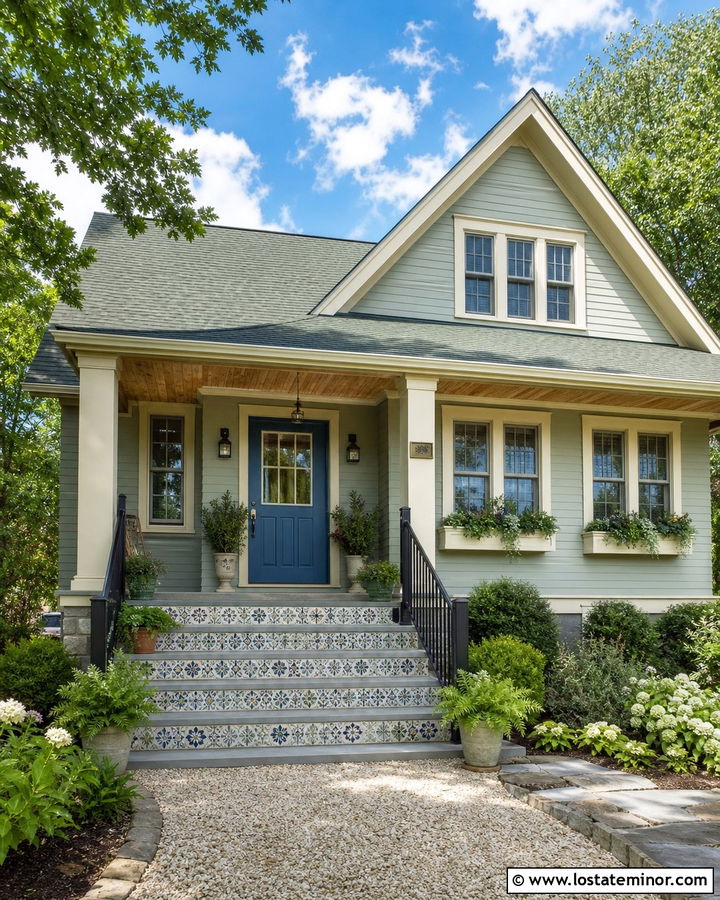
Patterned tile risers add a handcrafted accent to a sage green cottage without covering the entire staircase in color. Keep the treads natural stone or warm gray concrete, then use blue, cream, and muted green tiles on the vertical surfaces. The limited placement makes the pattern visible from the street while preserving a practical walking surface. Pair the steps with creamy trim, a medium-blue front door, and a weathered wood porch ceiling. Simple black railings can prevent the overall design from becoming too decorative. Repeat one tile color in window boxes or planters for subtle coordination. This look is especially effective in warm climates, where lush planting, gravel paths, and bright natural light support the relaxed, colorful entry.
26. Sage Green House With Extra Wide Concrete Steps
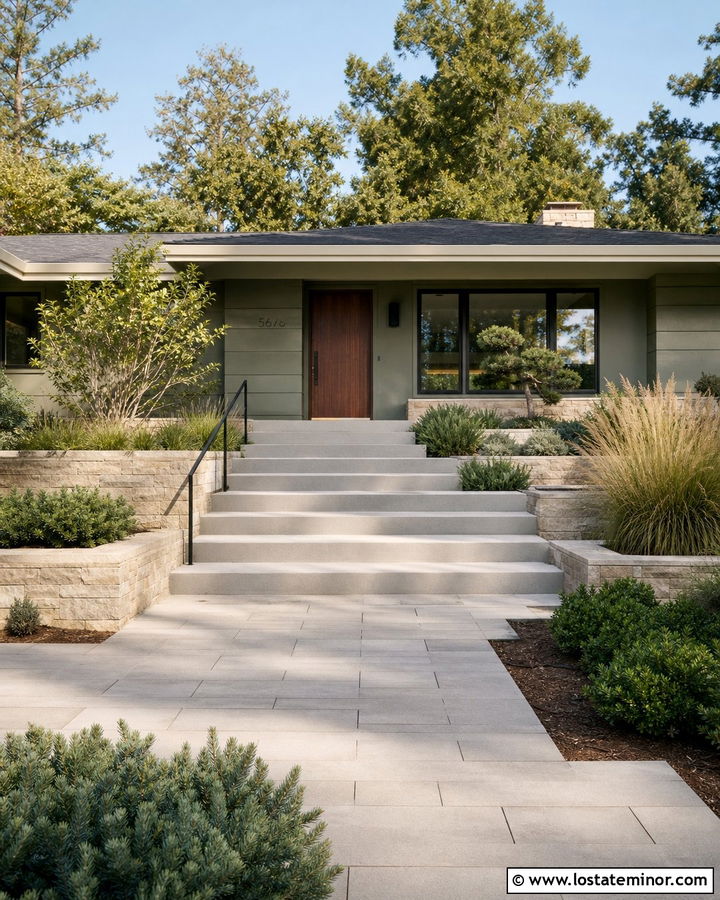
Extra-wide concrete steps give a sage green midcentury ranch a stronger connection to its front yard. Use long, shallow treads that follow the horizontal shape of the house rather than a narrow staircase that interrupts it. A warm light-gray finish will complement the green without creating harsh contrast. Pair the facade with cream fascia, a dark charcoal roof, and a walnut slab door. Low brick or stone retaining walls can frame the staircase and provide space for integrated planters. Avoid ornate railings; a simple linear black handrail will better suit the architecture. Broad pavers, sculptural shrubs, and ornamental grasses can continue the horizontal composition. The overall entrance should feel open, comfortable, and visually anchored to the landscape.
27. Sage Green House With Granite Steps
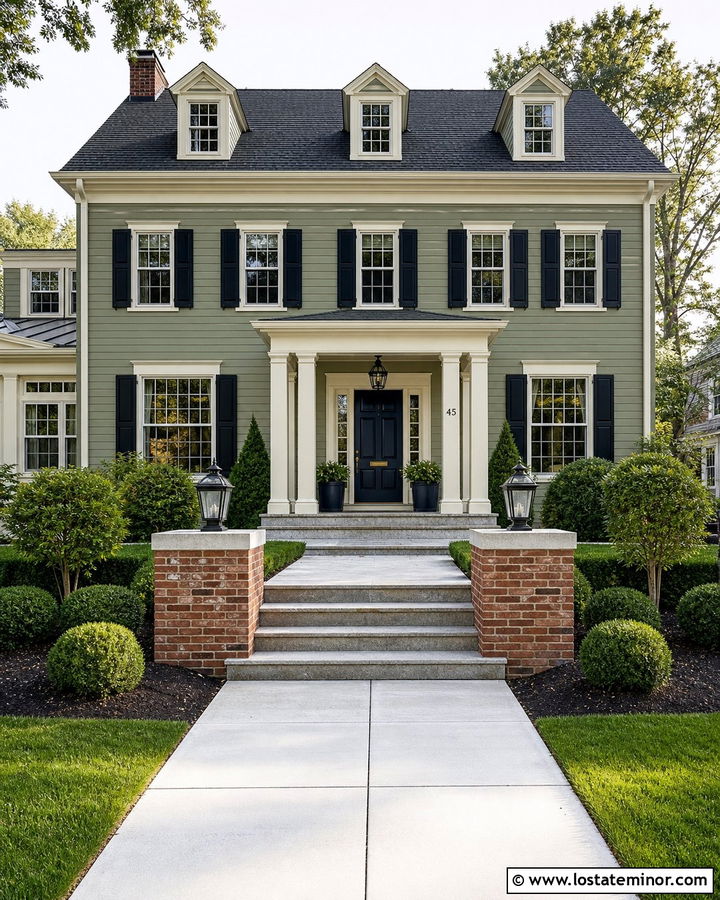
Granite steps offer durability and a refined appearance for a sage green traditional home. Choose gray granite with subtle warm flecks so it coordinates with both the muted siding and cream-colored trim. Solid rectangular treads are especially attractive beneath a small covered portico with square columns. Add a deep navy door, black lanterns, and a charcoal roof for contrast. Granite can also cap low brick cheek walls on either side of the staircase, bringing together cool and warm exterior materials. Keep the surrounding walkway in simple concrete or coordinating stone rather than introducing another competing pattern. Neatly clipped shrubs and two large entrance planters will emphasize symmetry. The result feels formal enough for a Colonial facade but still approachable and practical.
28. Sage Green House With Pea Gravel Steps
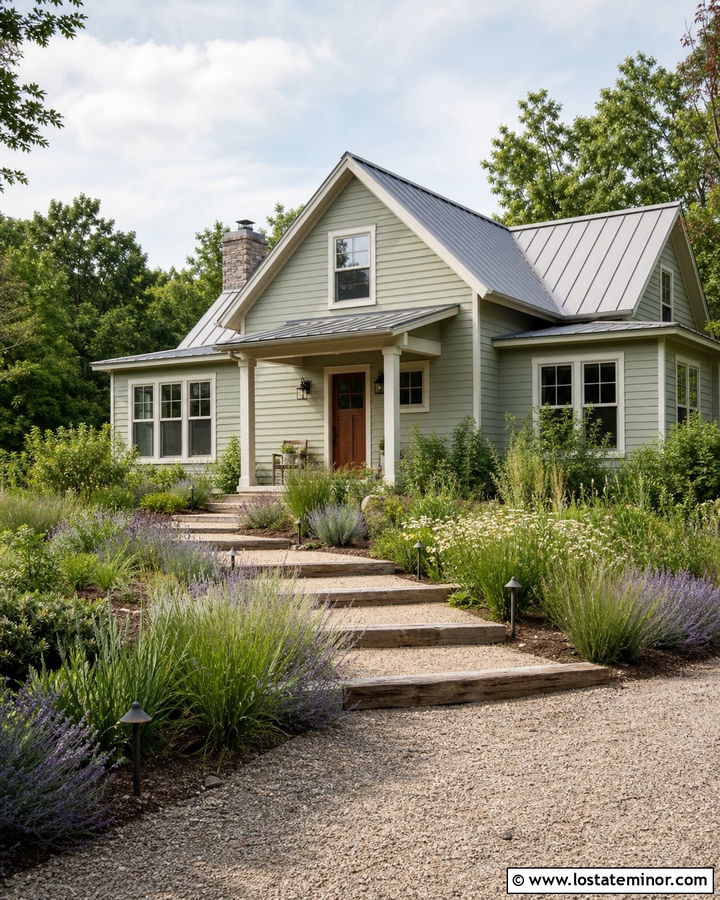
Pea gravel steps can create a casual, landscape-focused entrance for a sage green country cottage. Build the staircase with sturdy timber or stone edging so the gravel remains contained and each tread is clearly defined. Weathered wood borders will complement sage siding, cream trim, and a warm brown front door. Use a soft gray metal roof to keep the palette relaxed. This treatment works best on a gently sloped yard where only a few broad steps are required. Surround the path with lavender, native grasses, flowering perennials, and informal shrubs. Add simple path lights along the edges for visibility. The loose texture of the gravel makes the house feel naturally connected to the garden rather than separated by a formal paved approach.
29. Sage Green House With Covered Entry Steps
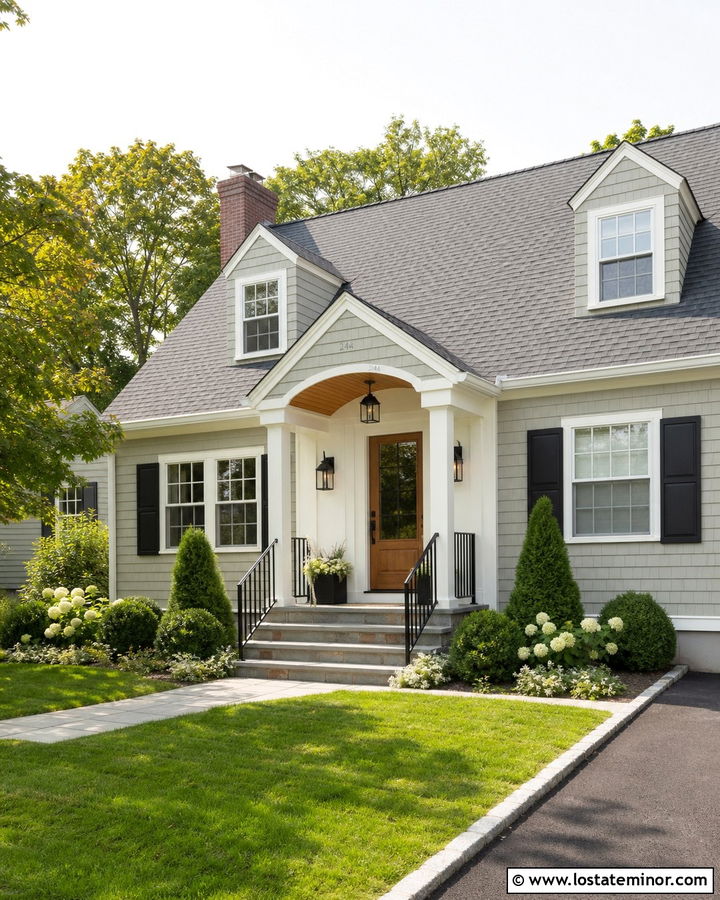
Covering the entrance steps improves their visual importance while giving a sage green home a more complete front elevation. A small gabled portico can transform a plain ranch, Cape Cod, or two-story suburban house. Paint the siding muted sage, use warm white on the portico trim and columns, and finish the steps in medium-gray stone. A natural wood door and matching ceiling can introduce warmth beneath the covered area. Repeat the roof material and pitch from the main house so the portico looks original rather than attached later. Black lanterns and simple railings will provide definition. Frame the approach with a straight walkway, evergreen shrubs, and low flowers, keeping the view toward the newly emphasized entrance open.
30. Sage Green House With Wraparound Porch Steps
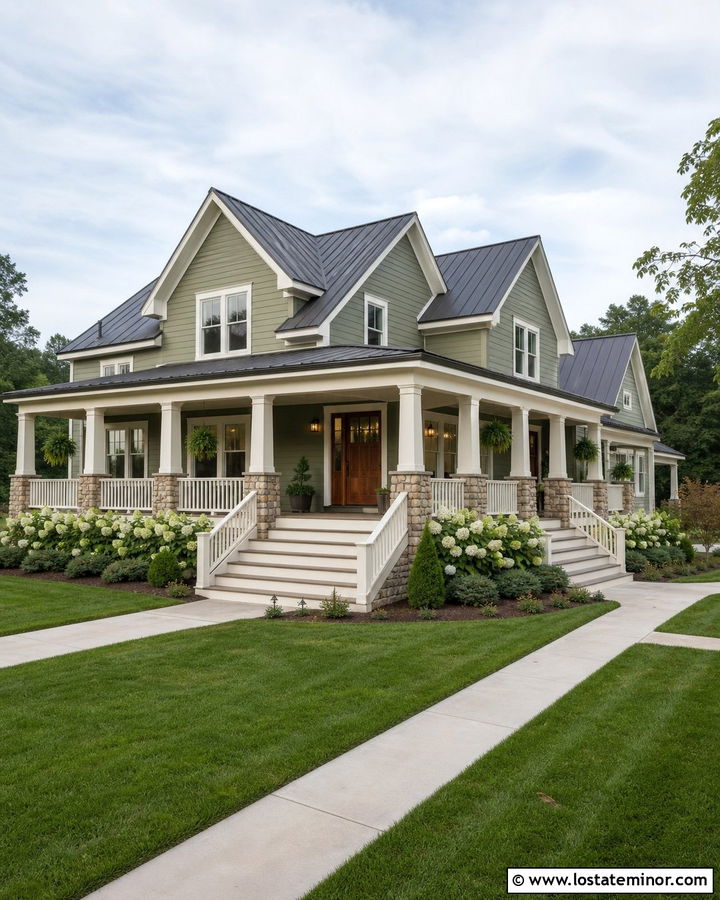
Wraparound porch steps can create an expansive, welcoming finish for a sage green farmhouse. Rather than using one small central staircase, add broad steps at the main entrance and a second set near the side yard. Use warm gray decking for the treads and porch floor, then paint the risers, columns, and railings creamy white. Sage lap siding, a standing-seam charcoal roof, and a stained wood front door will complete the relaxed exterior palette. Stone bases beneath the porch columns can add texture and visually anchor the large structure. Plant hydrangeas and low evergreens around the porch foundation while keeping both stairways easy to see. The repeated steps make the porch feel connected to the yard from several directions.
Conclusion:
The best entry steps should complement the color, architecture, and proportions of the entire facade. Sage green provides a flexible background for brick, stone, concrete, wood, tile, and composite materials. White details make it feel fresh, dark accents add definition, and warm natural finishes bring out its earthy character. Before making a final choice, compare material samples beside the siding in direct sun and shade. Also consider traction, drainage, maintenance, railings, and local weather. Small details such as step lighting and coordinated planters can make the entrance feel complete. Use these 30 Sage Green House Design With Steps Ideas to create a cohesive approach that looks attractive from the sidewalk to the front door.

Related posts: