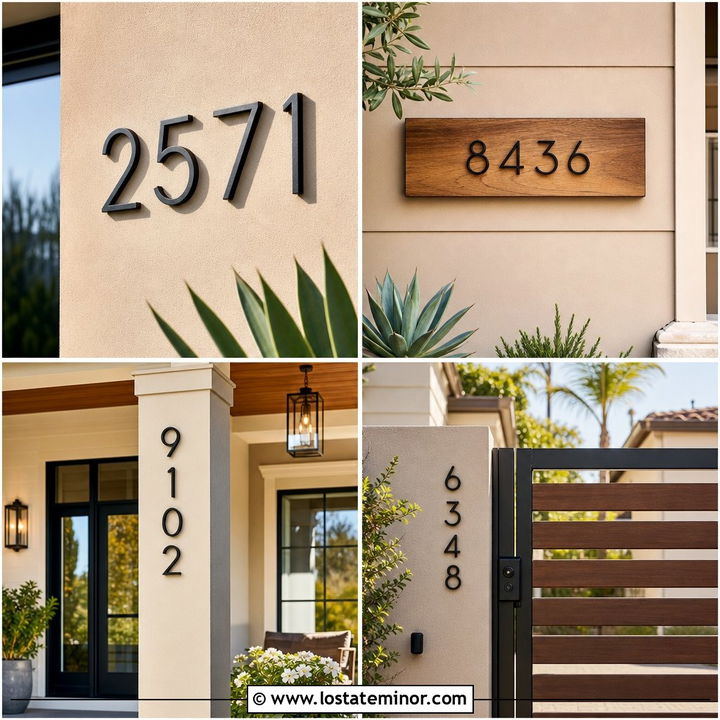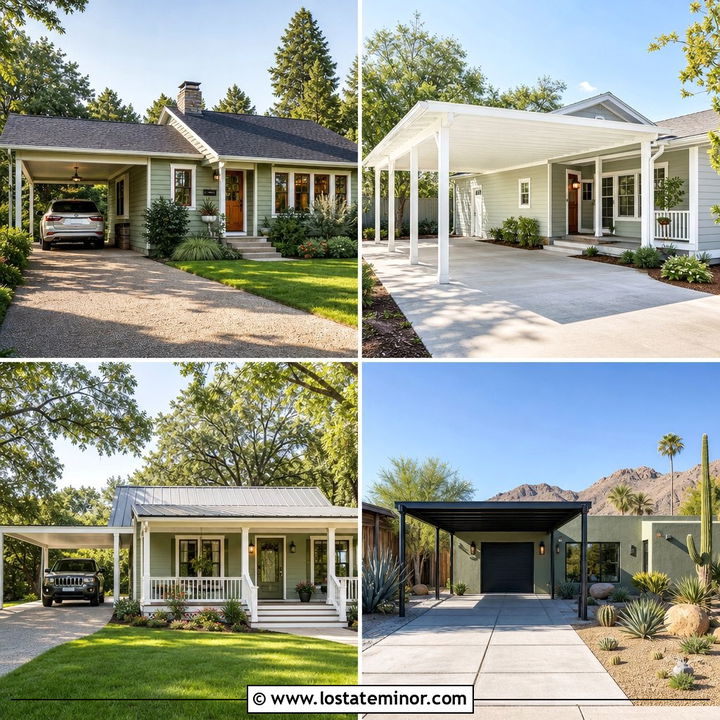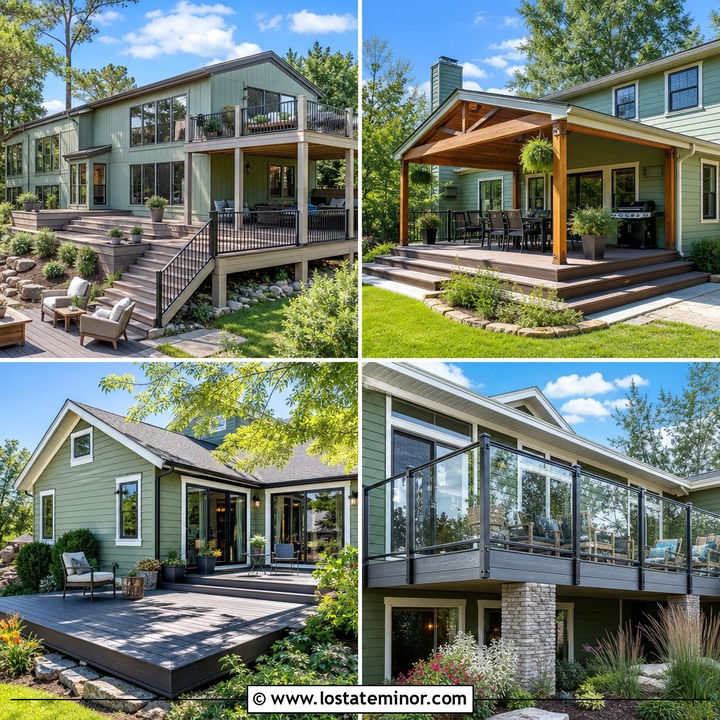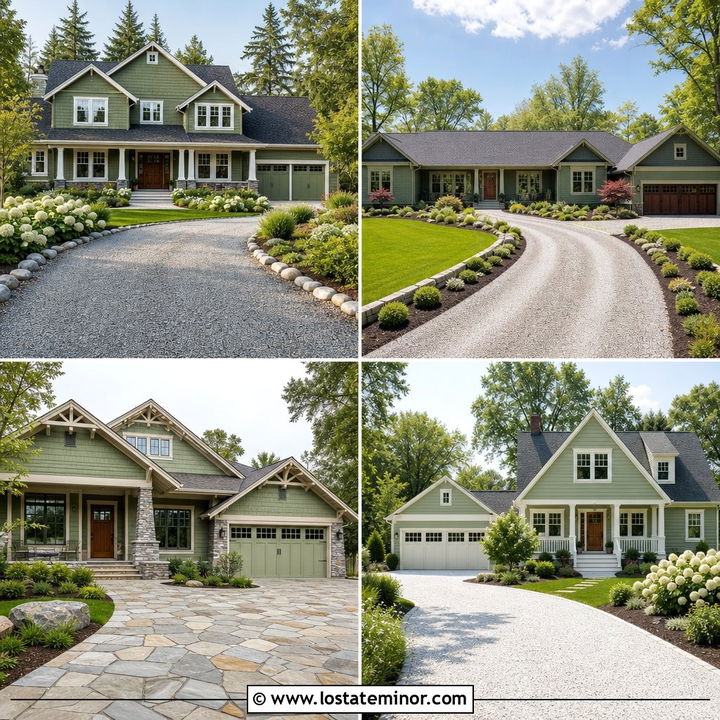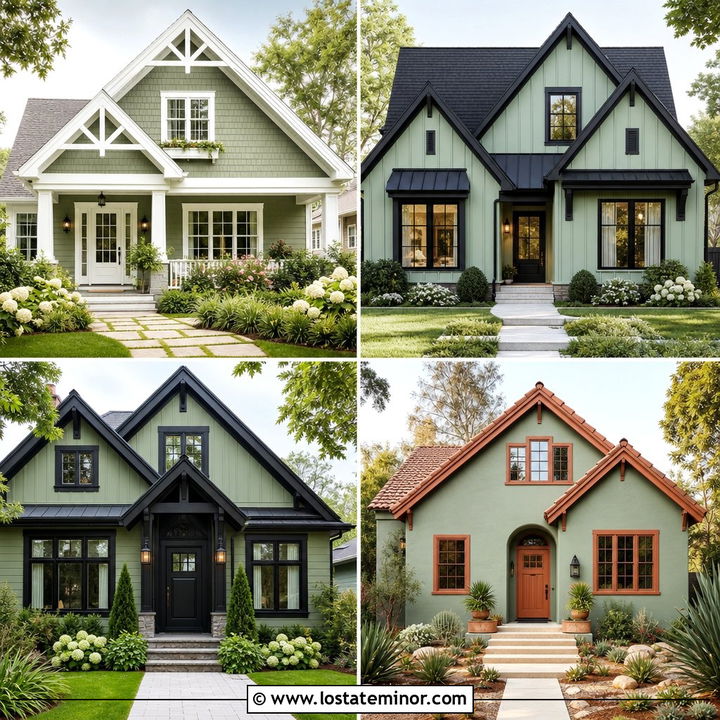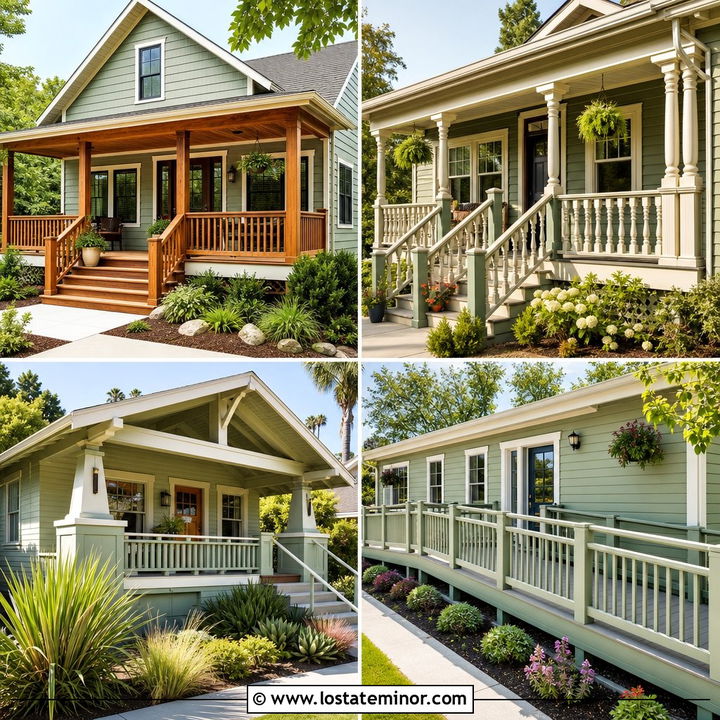
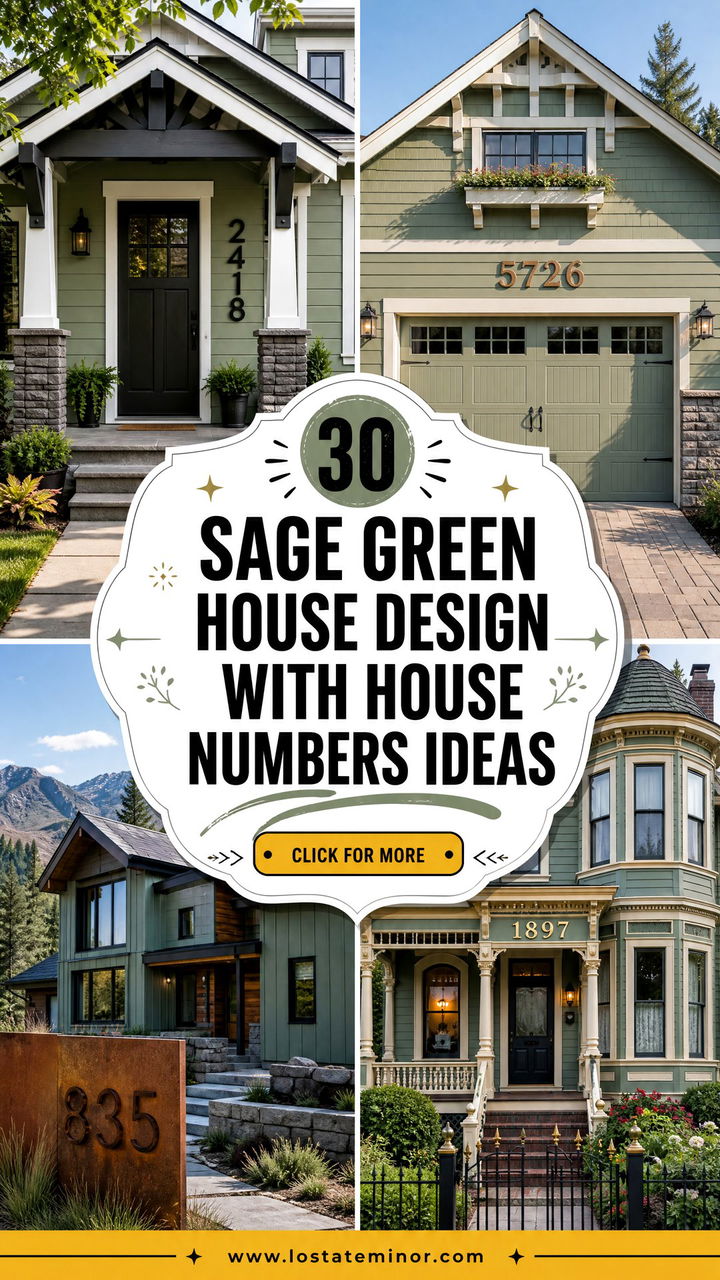
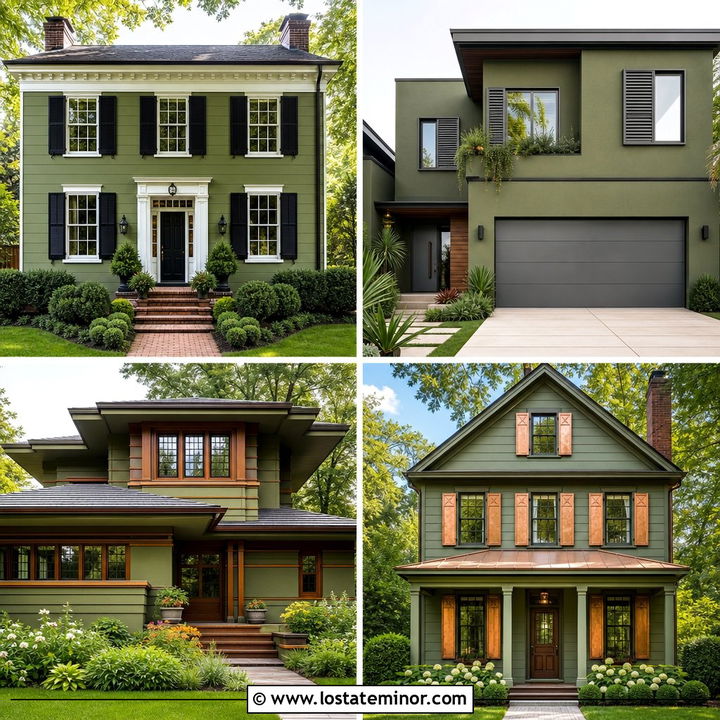
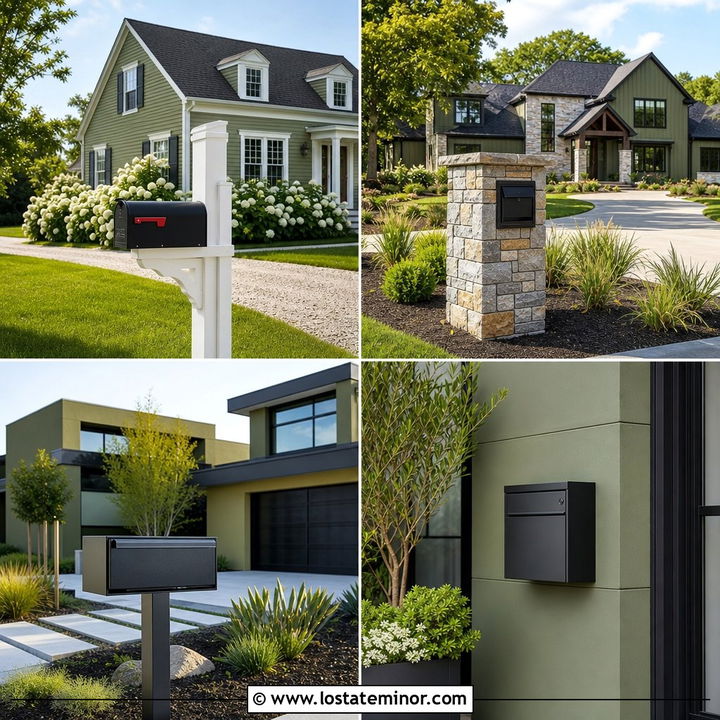
Sage green creates a calm, welcoming exterior that works beautifully with wood, brick, stone, and many roofing colors. The right house numbers can make this nature-inspired siding feel even more intentional. In these 30 Sage Green House Design With House Numbers Ideas, every look treats the address display as part of a complete exterior scheme. You will find modern metal numbers, traditional plaques, ceramic tiles, wood address boards, and illuminated designs. Each option also considers trim, doors, roofing, landscaping, and architectural style. Good visibility matters, so choose numbers that are large, high-contrast, and easy to spot from the street. Explore different materials and placements throughout these 30 Sage Green House Design With House Numbers Ideas.
1. Sage Green Craftsman With Black House Numbers
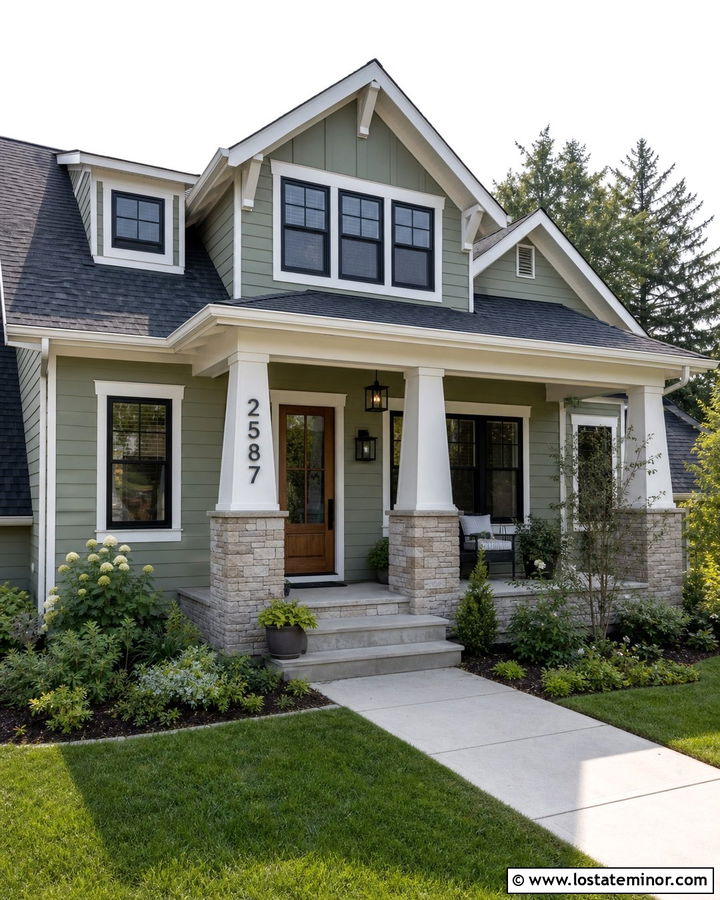
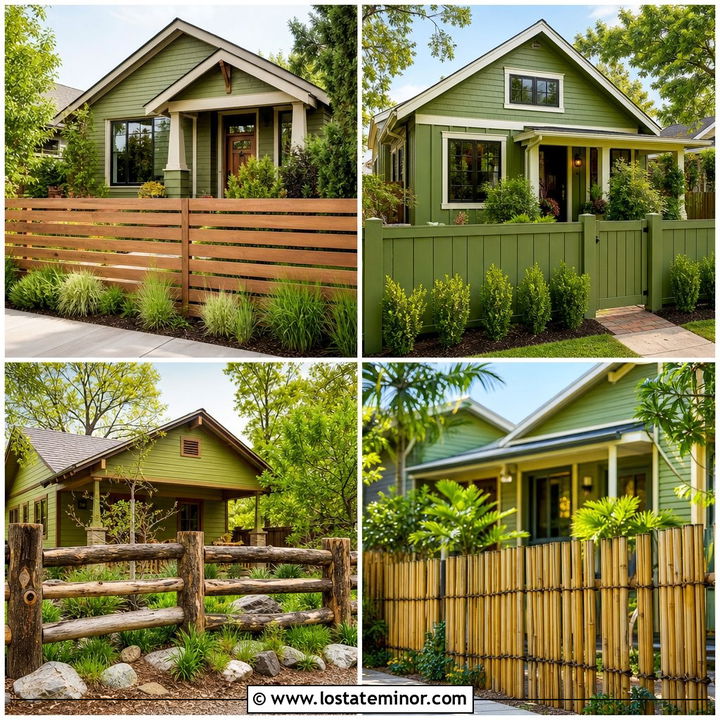
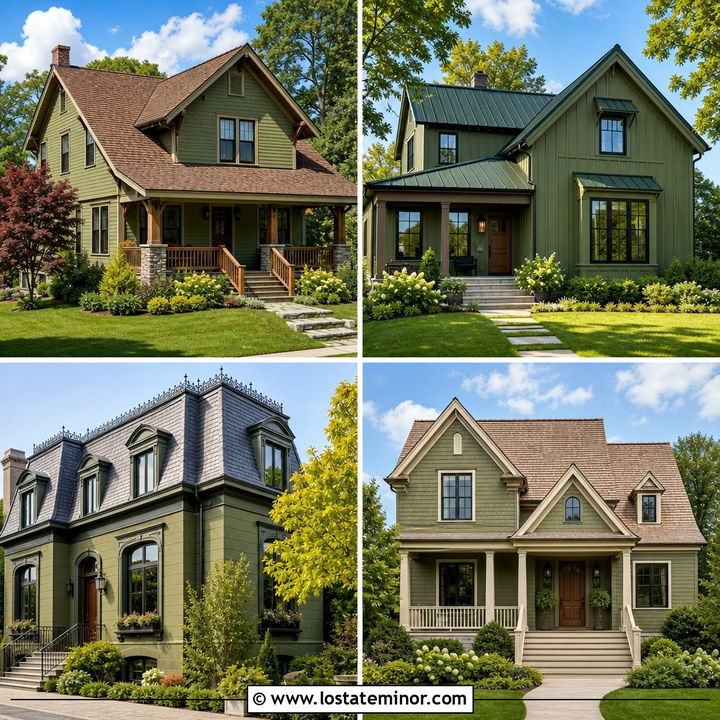
A sage green Craftsman feels grounded and welcoming when crisp white trim outlines the roof, windows, and tapered porch columns. Add oversized matte black house numbers beside a warm cedar front door for strong contrast. Mounting the numbers vertically makes a narrow wall section feel taller and gives the entrance a clean focal point. Black porch lights, simple railings, and dark window screens repeat the number finish across the facade. A charcoal architectural-shingle roof keeps the palette balanced without overpowering the green siding. Complete the exterior with stone porch bases, a straight concrete walkway, and layered shrubs. This combination suits homeowners who want traditional Craftsman character with a clear, modern address display.
2. Sage Green Colonial With Brass House Number Plaque
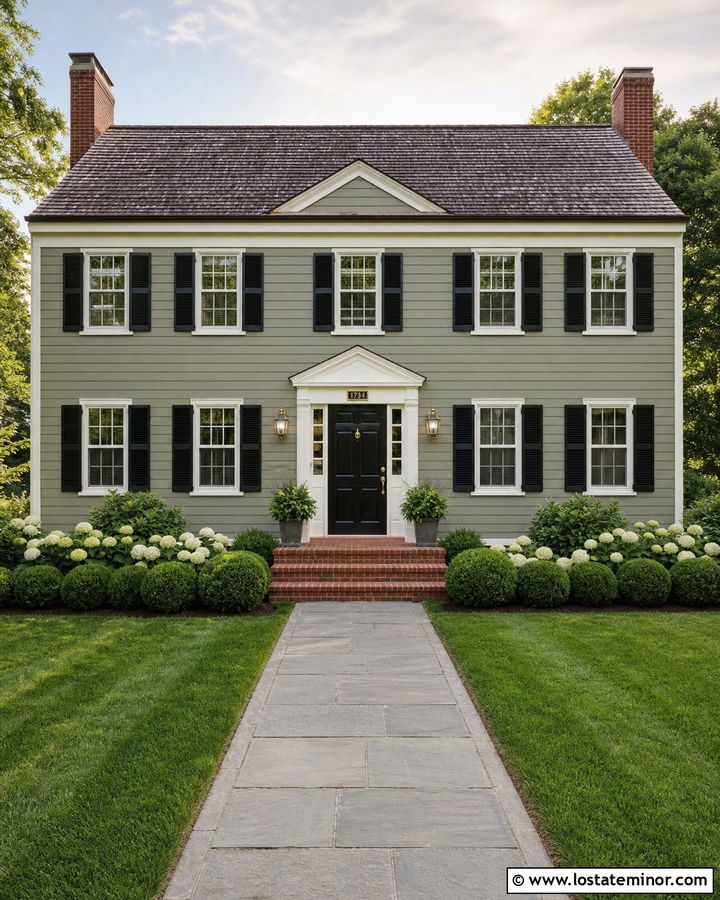
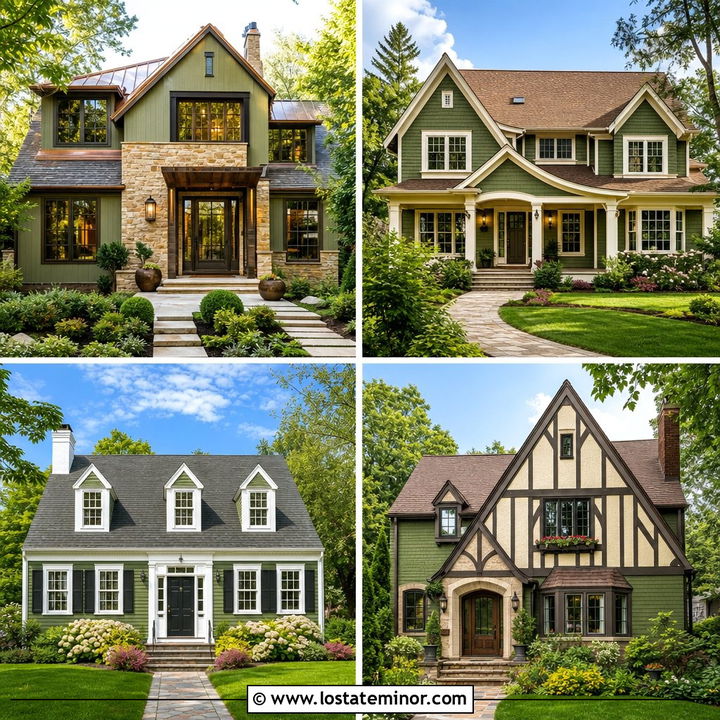
Can a traditional Colonial handle a warmer metallic detail? A rectangular brass house number plaque adds quiet elegance to symmetrical sage green siding, cream trim, and evenly spaced black shutters. Place the plaque above the door or beside the entry where it can be read without competing with the architecture. A deep black front door anchors the center of the facade, while brass door hardware and lanterns connect with the address plaque. Red brick steps introduce natural warmth beneath the muted green body color. Keep the foundation landscaping balanced on both sides with boxwoods, hydrangeas, and low flowering borders. The result feels refined and established rather than overly formal or dated.
3. Sage Green Farmhouse With Cedar House Number Sign
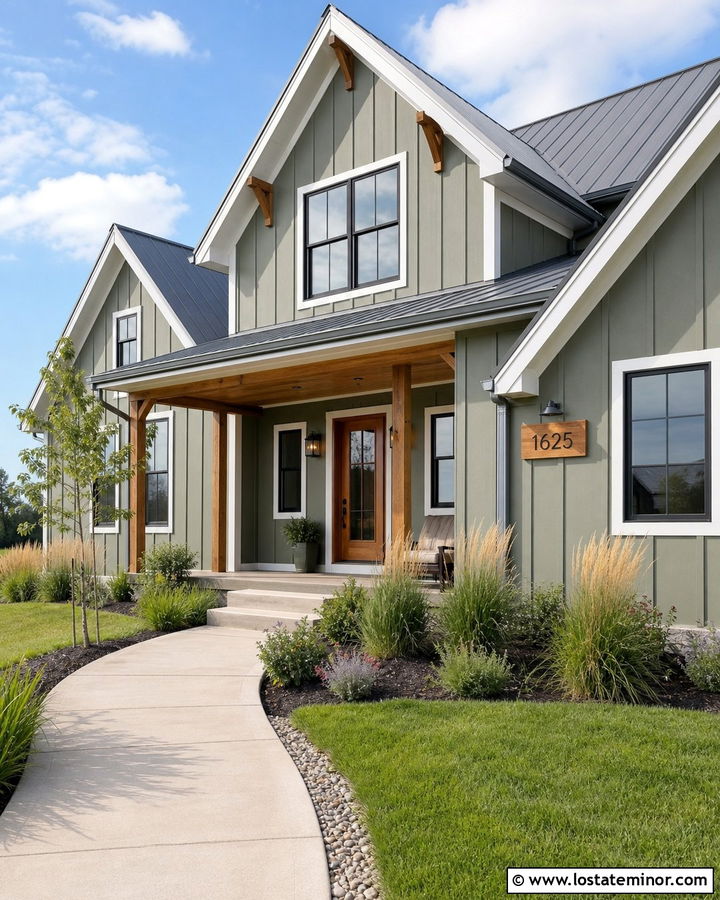
Natural cedar brings instant warmth to a sage green modern farmhouse. Use vertical board-and-batten siding, soft white trim, and a medium-gray metal roof as the foundation of the exterior palette. A wide cedar address board with black numbers can be mounted near the front door or against a porch column. Repeat the wood tone on the door, porch ceiling, and simple support brackets so the sign feels integrated. Black-framed windows and barn-style lights add definition without making the house look too dark. Finish the setting with a gravel-edged walkway, ornamental grasses, and young shade trees. This complete scheme feels fresh, relaxed, and especially suitable for rural or suburban properties.
4. Sage Green Ranch With White House Numbers
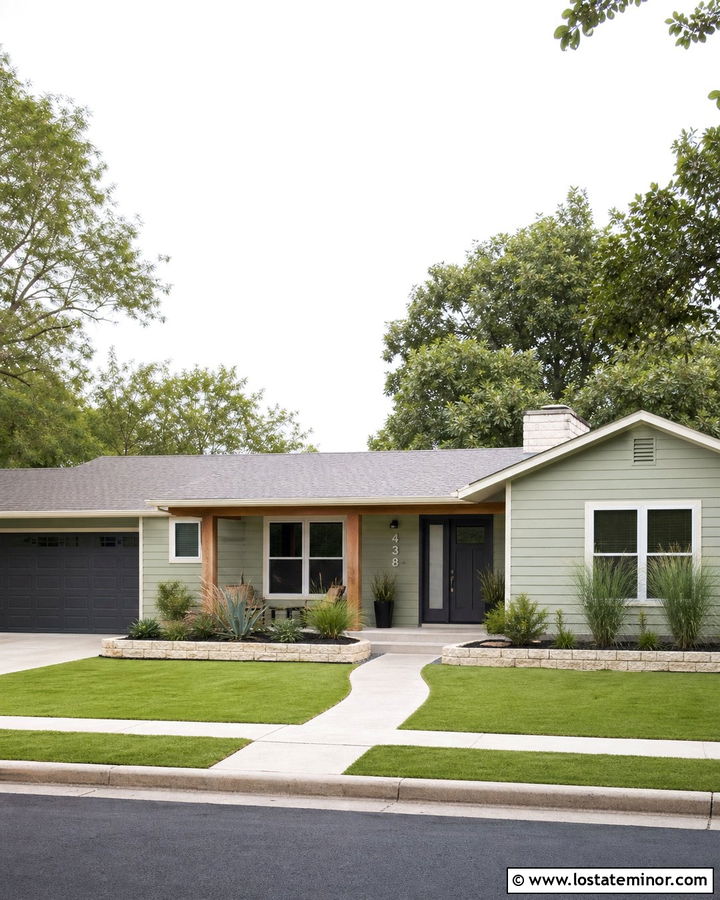
Low ranch homes benefit from address numbers that are bright, simple, and easy to locate. Paint the horizontal siding a medium sage green and use warm white on the fascia, window trim, and garage frame. Large white house numbers beside a charcoal gray front door create clear contrast while connecting with the trim. Choose a clean sans-serif font to update the long, simple facade. A light gray roof, limestone planter walls, and natural oak porch details keep the palette airy. Use curved planting beds to soften the straight roofline and draw attention toward the entrance. This approach gives an older ranch stronger curb appeal without requiring major structural changes or decorative additions.
5. Sage Green Bungalow With Bronze House Numbers
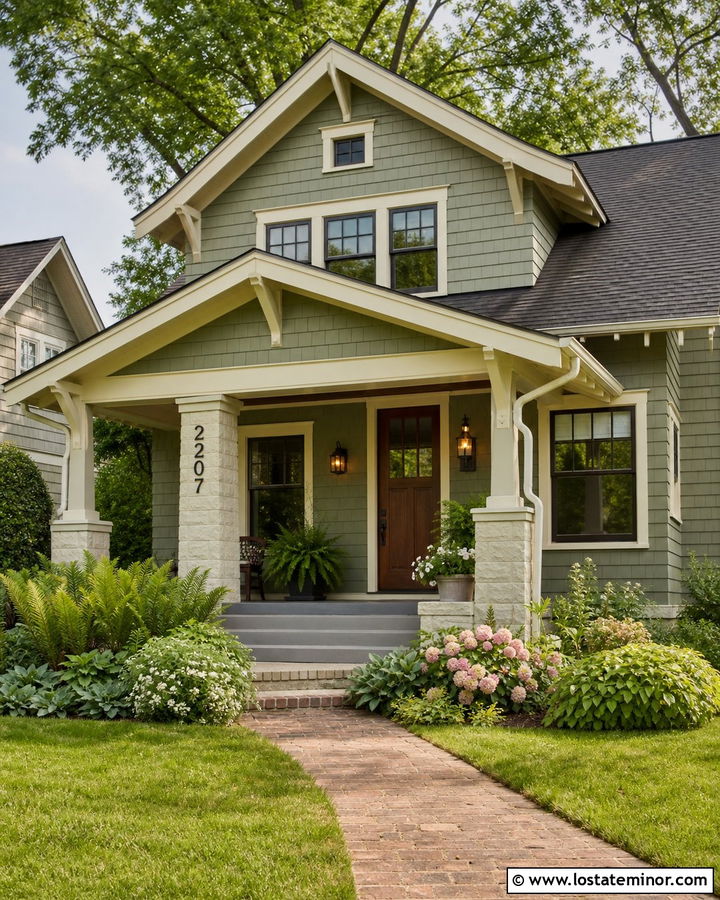
Soft sage green shingles give a bungalow rich texture, especially when paired with creamy trim and dark bronze accents. Mount substantial oil-rubbed bronze house numbers on a pale stone porch column where their darker finish remains readable. A stained wood front door, bronze lantern, and matching mailbox help the numbers belong to the full exterior design. Keep the porch floor a warm gray and use a weathered charcoal roof to balance the earthy color scheme. Ferns, hostas, flowering shrubs, and a short brick walkway reinforce the bungalow’s garden-friendly personality. The finished home feels handcrafted and comfortable, while the address remains visible enough for guests, deliveries, and emergency responders approaching from the street.
6. Sage Green Modern House With Floating Steel Numbers
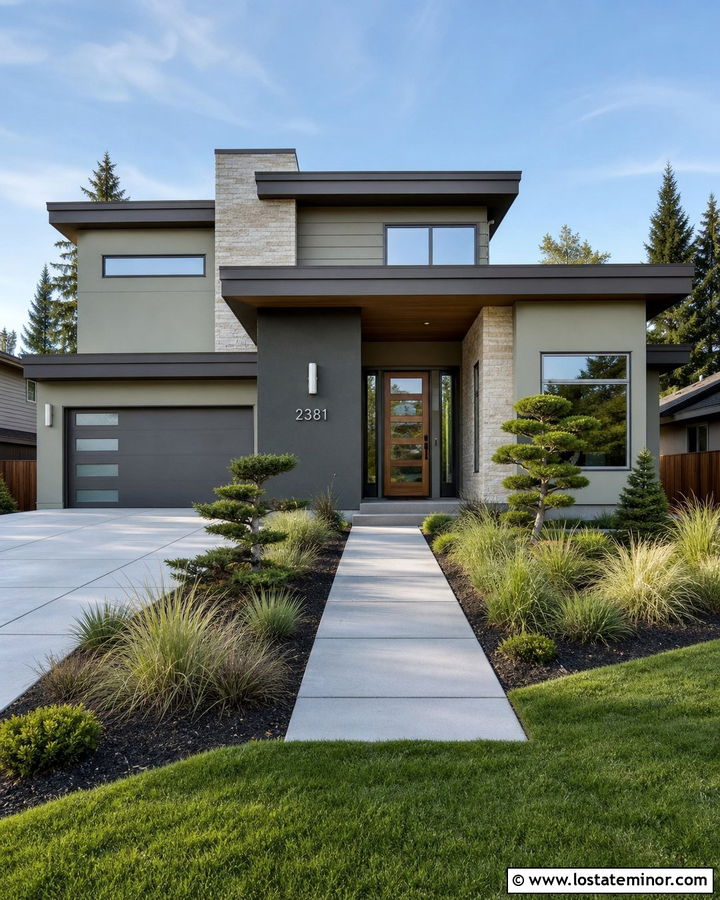
A streamlined modern house calls for house numbers with clean lines and dimensional depth. Cover the main facade in a cool gray-sage green, then introduce charcoal panels around the garage and entry. Brushed stainless steel numbers installed with floating mounts create subtle shadows against the darker entry wall. The metallic finish also works with silver window frames and a modern glass front door. Use smooth stucco, horizontal siding, and natural stone in broad sections rather than small decorative patches. Minimal landscaping with ornamental grasses and sculptural evergreens keeps the architecture visible. A wide concrete path and flat roofline finish this crisp scheme, allowing the sage green to feel contemporary rather than cottage-inspired.
7. Sage Green Split-Level With Black Numbers On Brick
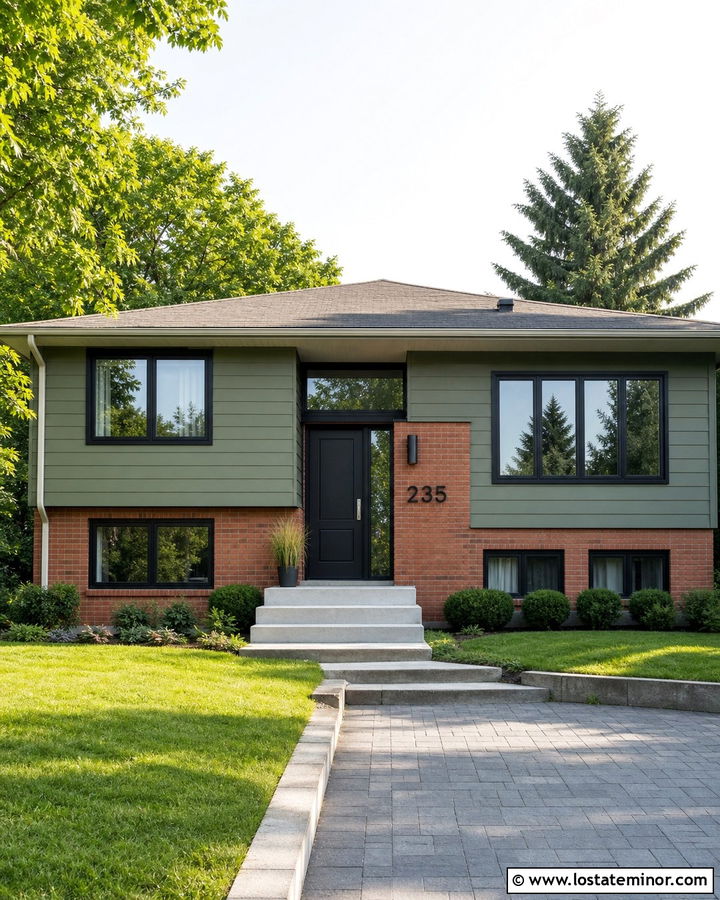
A split-level exterior often includes several materials, so the house numbers should connect them instead of adding another competing detail. Refresh the upper siding with dusty sage green and retain warm red brick across the lower level. Large matte black numbers mounted directly on the brick provide readable contrast and coordinate with black window frames. Paint the front door a deep charcoal and use soft cream on the fascia to bridge the green and brick tones. A black railing and simple cylinder lights give the entrance a more current appearance. Broad steps, neat foundation shrubs, and a paved driveway help organize the asymmetrical facade. This combination modernizes the home while respecting its original masonry.
8. Sage Green Cape Cod With Cream House Numbers
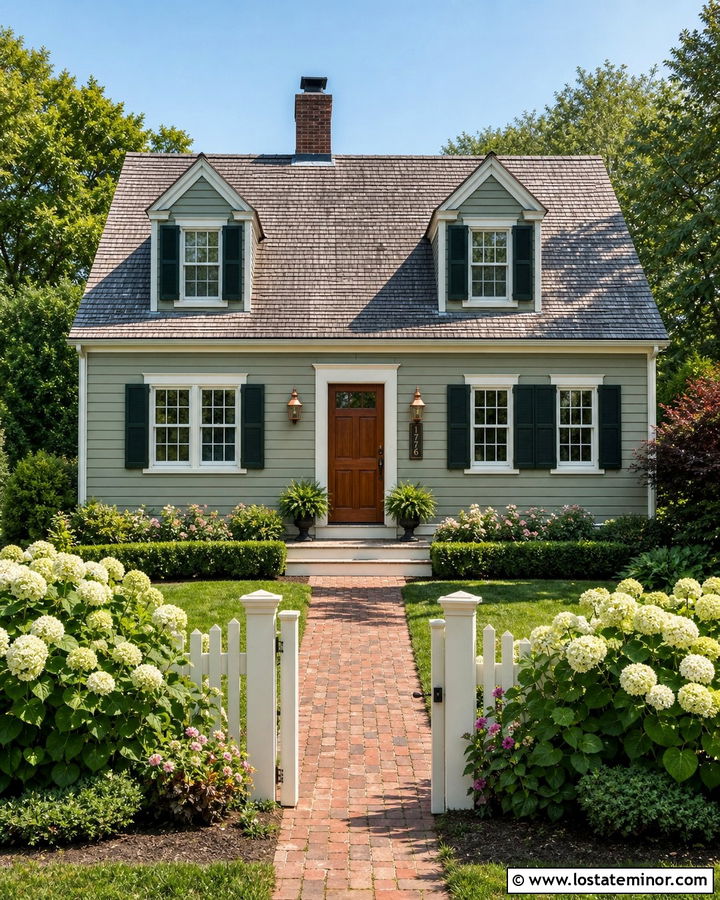
Picture a compact Cape Cod surrounded by hydrangeas and a neatly clipped lawn. Muted sage green clapboard siding looks classic with creamy white trim, a weathered gray roof, and dark green shutters. Cream house numbers can be mounted on a narrow charcoal plaque beside the front door, making them visible while preserving the home’s traditional character. Use a natural mahogany door to add warmth between the cooler green and gray surfaces. Copper lanterns and a matching mailbox can develop a soft patina over time. A brick walkway, low picket fence, and symmetrical planting beds complete the cottage setting. Every element supports an inviting facade that feels established, balanced, and easy to maintain.
9. Sage Green Tudor With Copper House Numbers
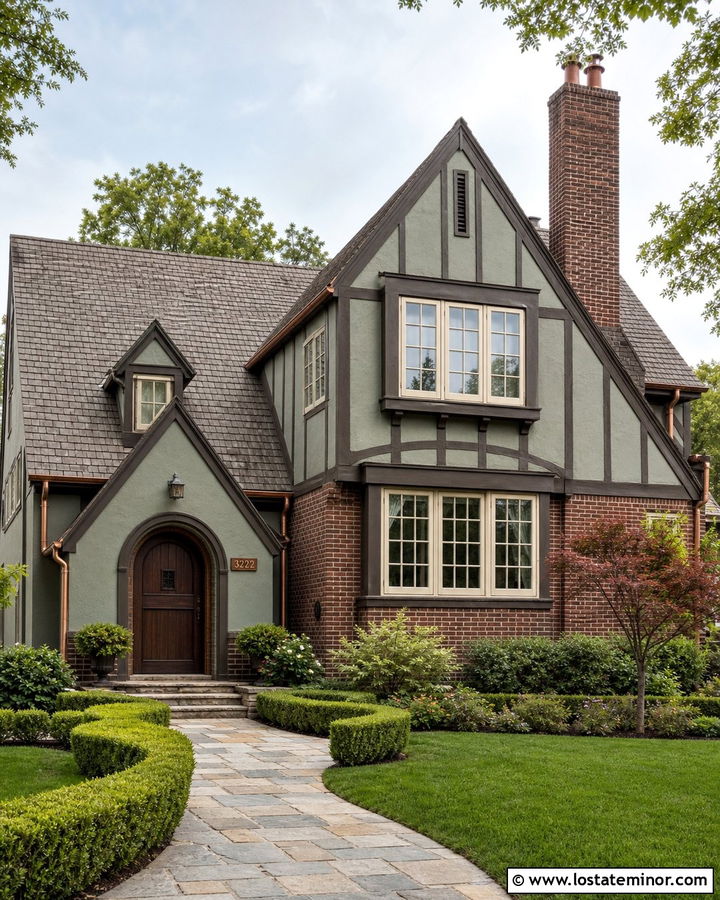
Sage green can soften a Tudor exterior without hiding its distinctive architectural lines. Apply a deeper gray-sage color to the stucco sections while keeping the half-timber details dark brown. A copper house number plaque mounted beside an arched wood door brings warmth to the green, brown, and brick palette. Copper gutters or a small entry roof can repeat the metal finish for a more coordinated appearance. Preserve red brick around the chimney and lower facade to reinforce the home’s historic character. Cream window trim prevents the exterior from becoming too shadowy. Add a curved stone path, clipped hedges, and small ornamental trees. The finished look feels timeless, detailed, and naturally suited to Tudor architecture.
10. Sage Green Farmhouse With Backlit House Numbers
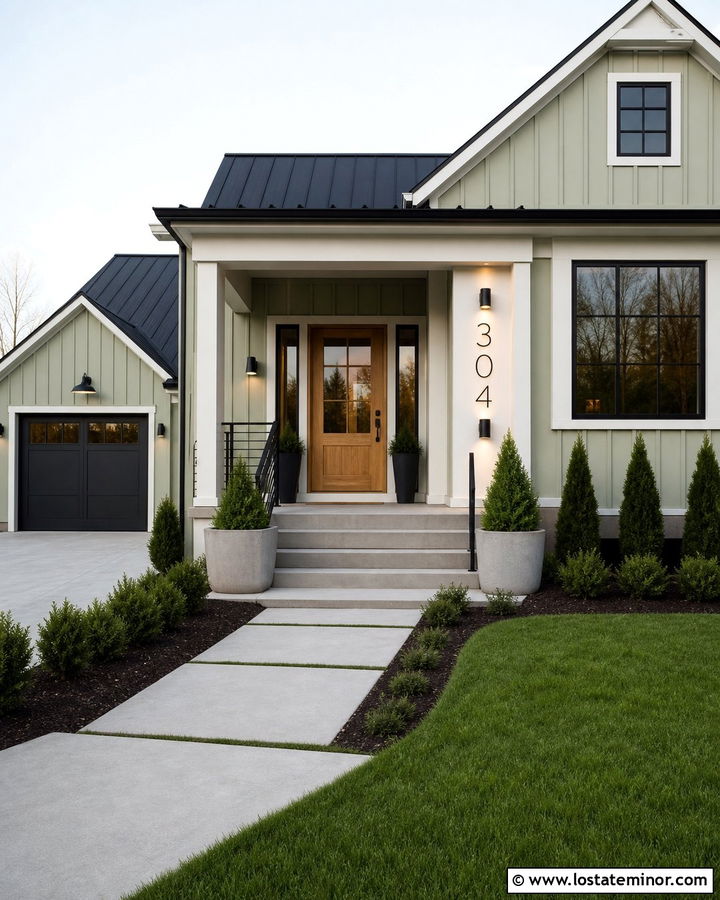
Backlit house numbers give a sage green farmhouse a polished focal point during the day and better visibility after sunset. Choose pale sage green board-and-batten siding with bright white trim and a black standing-seam roof. Install large black numbers on a smooth white panel near the covered entry, using concealed lighting to create a soft outline behind each digit. Black-framed windows, porch sconces, and simple railings repeat the strong accent color. A medium-tone oak door keeps the high-contrast scheme from feeling cold. Wide porch steps, concrete planters, and structured evergreen landscaping support the clean farmhouse design. In bright daylight, the numbers still look crisp and architectural rather than dependent on illumination.
11. Sage Green Stucco House With Wood Numbers
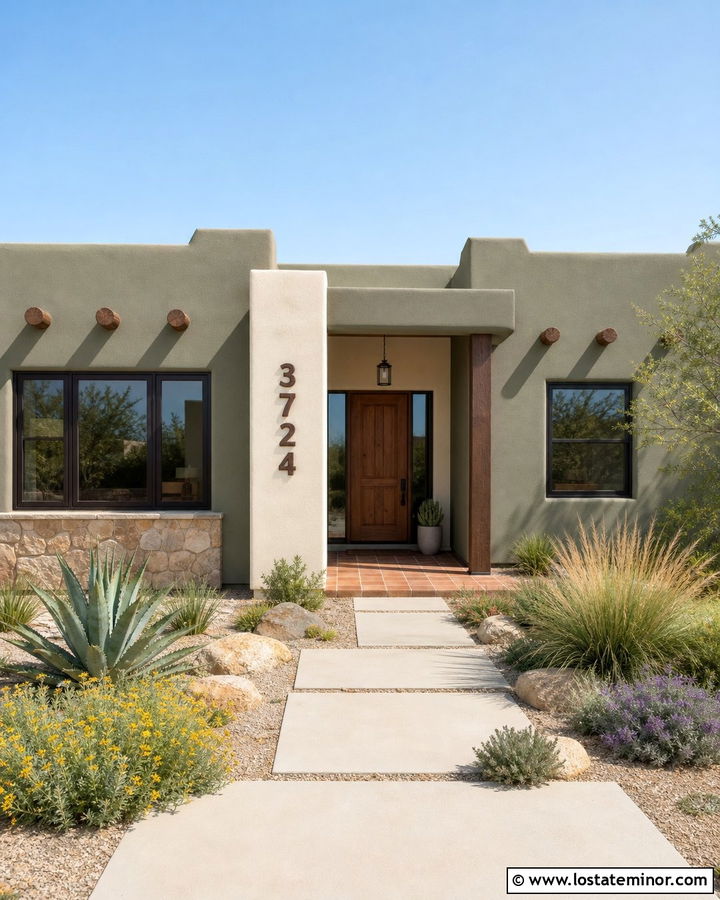
Warm sage green stucco creates a quiet backdrop for handcrafted wood house numbers. This treatment works especially well on a Southwestern-inspired home with a low roofline, exposed beams, and a recessed entrance. Mount thick walnut numbers on a cream stucco panel near the door so the natural grain remains noticeable. Use the same wood tone for the front door and overhead beams. Terracotta porch tile and sandy stone accents add warmth, while dark bronze windows provide needed definition. Keep the landscaping drought-conscious with agave, ornamental grass, gravel, and a few flowering desert plants. The complete design feels earthy and regionally appropriate, with the address display contributing texture instead of looking like attached hardware.
12. Sage Green Coastal Cottage With Navy Number Plaque
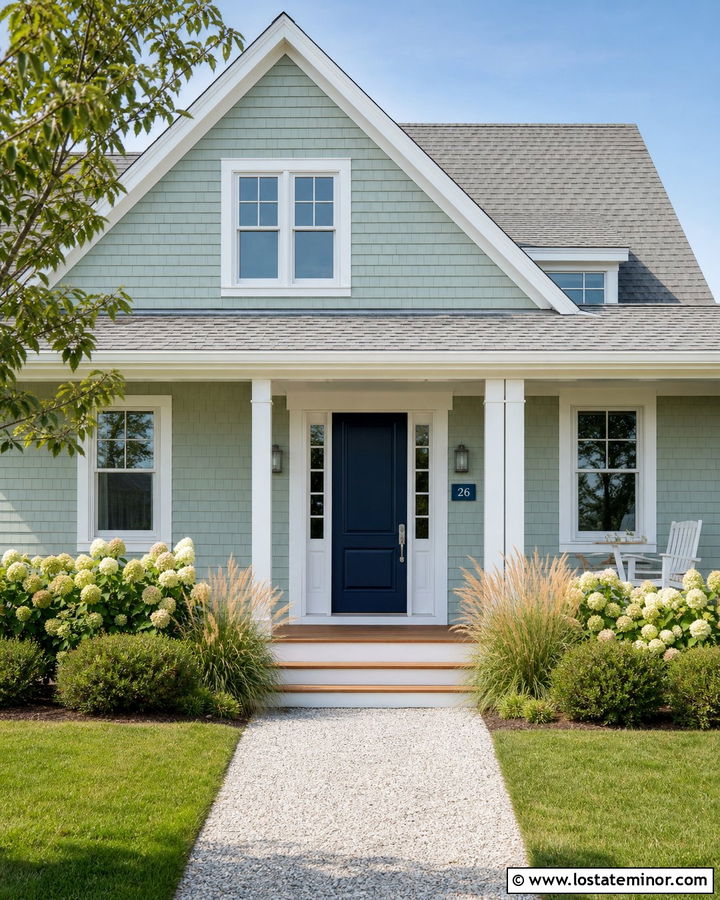
A coastal cottage does not need bright blue siding to feel connected to the shore. Soft blue-sage green shingles pair beautifully with white trim, a pale gray roof, and a navy house number plaque. Position the plaque beside a navy front door to create a clear entrance that can be recognized from the sidewalk. White numbers keep the display sharp and repeat the surrounding trim color. Add natural cedar porch flooring and brushed nickel hardware for subtle warmth and shine. Hydrangeas, beach grass, and a crushed-shell-style path reinforce the casual coastal mood. The restrained palette feels breezy in bright sunlight while remaining practical for a neighborhood far beyond the immediate waterfront.
13. Sage Green Cottage With Slate House Number Sign
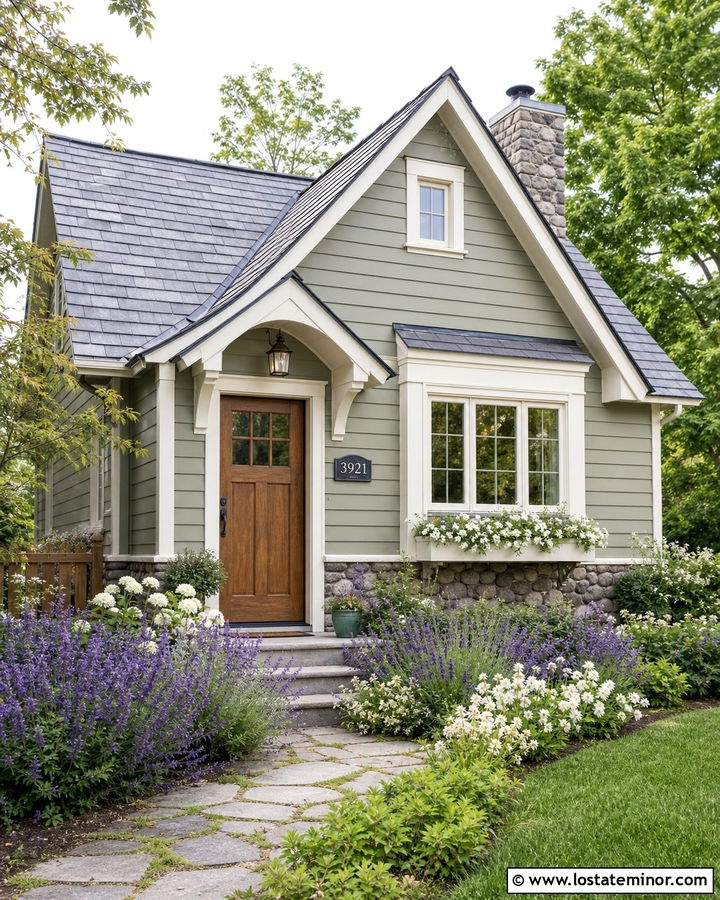
Rough slate gives a small sage green cottage an organic address feature that feels permanent and substantial. Select a warm, slightly muted sage for the lap siding and use ivory trim around the windows, eaves, and porch. A rectangular charcoal slate sign with engraved cream numbers can sit beside a medium-brown wood door. Repeat the slate tone on the roof and stepping-stone walkway to create visual continuity. A river-rock foundation or low stone wall adds another natural texture without overwhelming the compact facade. Plant lavender, white flowers, and loosely shaped shrubs around the path. This combination works because the cool slate grounds the gentle green, while wood and ivory prevent the exterior from appearing flat.
14. Sage Green Contemporary House With Vertical Brass Numbers
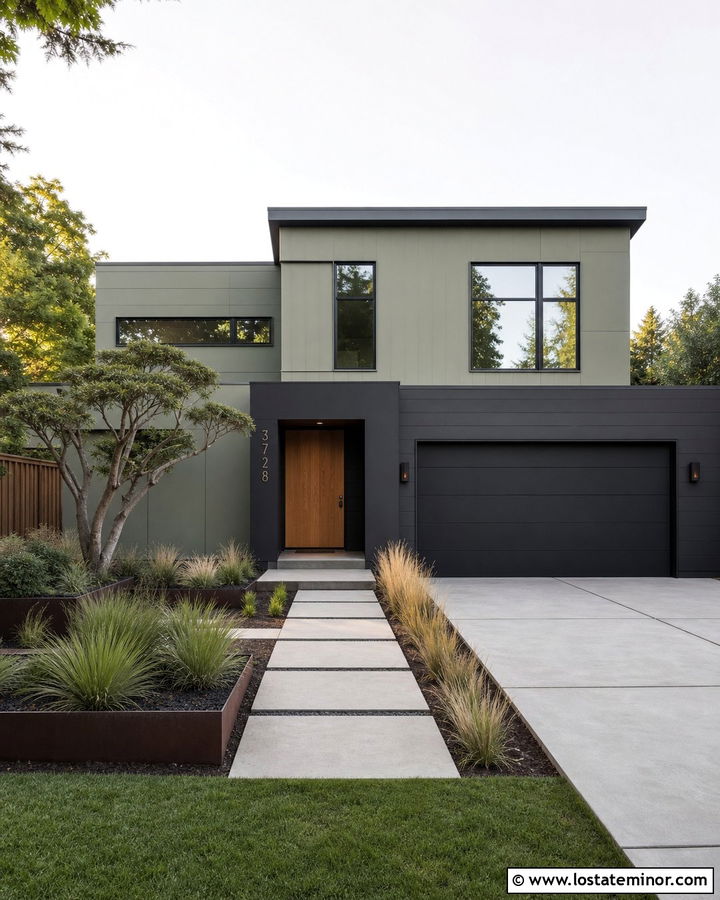
Vertical brass numbers create a striking line beside the entrance of a contemporary sage green home. Use smooth sage-colored fiber-cement panels across the main volume and charcoal gray cladding around the garage. Mount slim brushed brass digits on a narrow dark panel, arranging them from top to bottom for a tailored appearance. A flush natural wood door and warm exterior lighting repeat the golden undertones of the metal. Black-framed windows and a low-slope roof maintain the home’s modern geometry. Keep the landscaping simple with rectangular beds, ornamental grasses, and a single sculptural tree. The mix of muted green, charcoal, wood, and brass feels sophisticated while keeping the house number placement practical and clearly connected to the entry.
15. Sage Green Porch With White Column Numbers
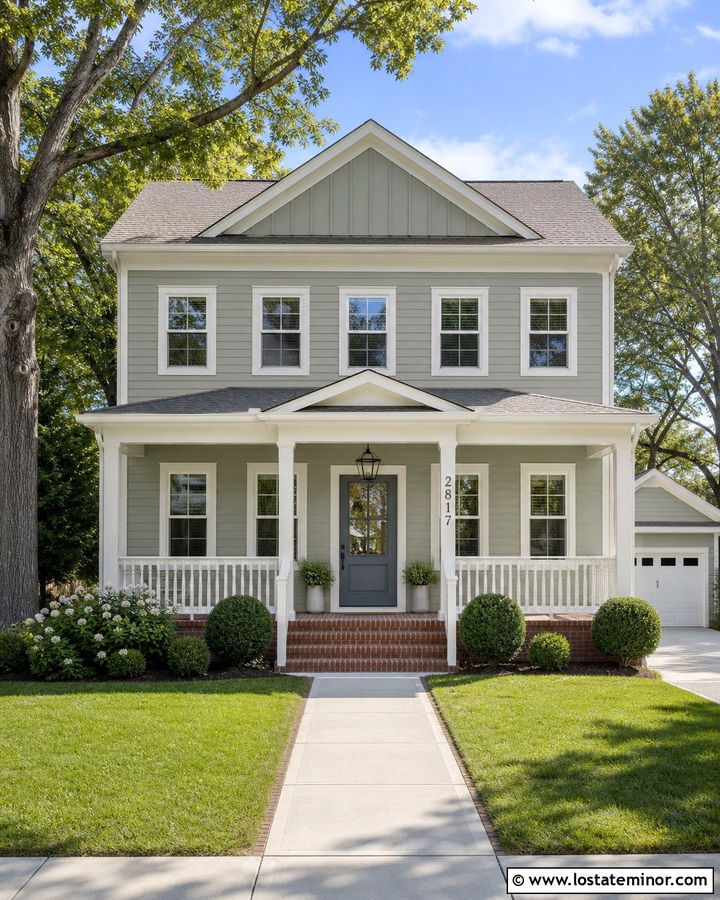
House numbers placed on a porch column can guide attention toward an entrance that is partly hidden from the street. Paint a traditional two-story home a gentle sage green, then use clean white for the porch columns, railings, and window trim. Install tall black numbers vertically on the column nearest the walkway. Their dark finish will remain easy to see against the white background. A muted blue front door adds personality without disrupting the calm palette. Include a gray shingle roof, red brick porch floor, and black hanging lantern for balanced contrast. Symmetrical shrubs and a straight walkway emphasize the entry. This arrangement is especially helpful when there is limited wall space beside the door.
16. Sage Green Mediterranean House With Tile Numbers
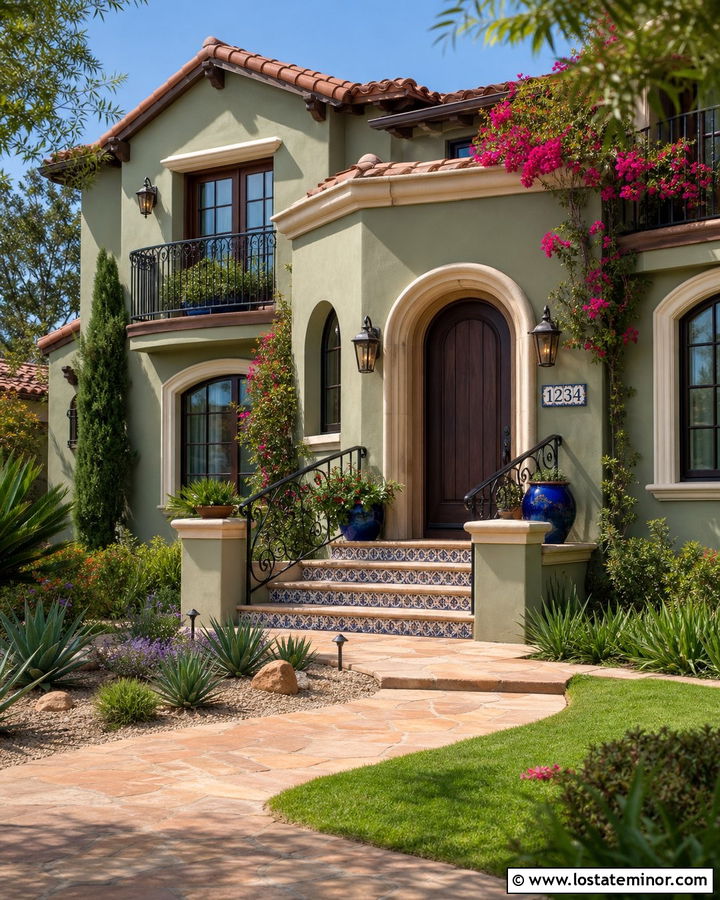
Hand-painted ceramic house numbers give a sage green Mediterranean exterior a colorful but controlled detail. Choose a dusty olive-sage stucco body with cream trim, a clay tile roof, and a dark stained arched door. Arrange blue-and-white number tiles inside a shallow frame near the entrance, where they can be read clearly from the front path. Use blue glazed planters and small patterned stair risers to connect the address tiles with the broader exterior. Wrought iron railings and bronze lanterns provide darker accents. Drought-tolerant landscaping, warm gravel, and flowering vines complete the scene. The result feels personal and decorative, yet the limited repetition prevents the ceramic pattern from overwhelming the architecture.
17. Sage Green French Country House With Iron Numbers
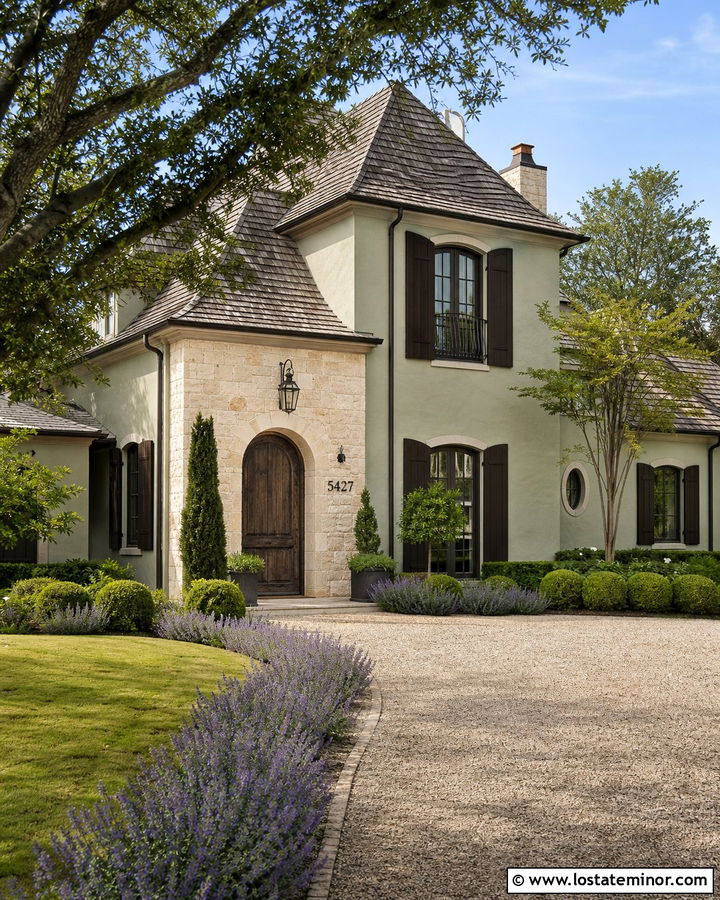
A French country home looks naturally at ease in soft sage green stucco with creamy limestone details. Black wrought iron house numbers fit this architecture when they use a simple, readable typeface rather than elaborate scrollwork. Mount them on a light stone section beside the arched front door for maximum contrast. Dark brown shutters, a weathered wood door, and black lanterns create depth across the broad facade. A warm gray roof complements the sage without introducing another dominant color. Complete the approach with a curved gravel driveway, clipped shrubs, lavender borders, and small ornamental trees. The exterior feels graceful but approachable, and the iron numbers become part of the established architectural rhythm.
18. Sage Green Craftsman With Bronze Garage Numbers
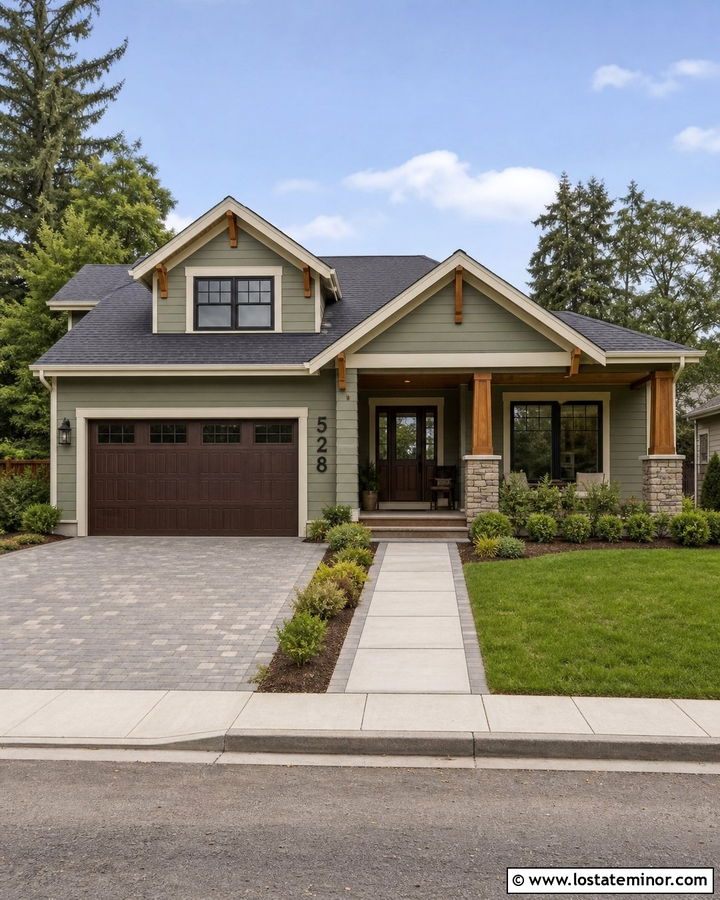
When a front door is difficult to see from the road, the area beside the garage can offer a better address location. Use medium sage green lap siding on a wide Craftsman home with cream trim, stone column bases, and a dark brown garage door. Mount oversized bronze numbers on the sage wall between the garage and entry. Their warm finish connects with the brown door, cedar brackets, and porch ceiling. A charcoal roof and black-framed windows add definition without distracting from the numbers. Keep shrubs low beneath the address so plants do not block visibility as they grow. This practical arrangement creates a clear visual path from the driveway toward the covered front porch.
19. Sage Green Midcentury House With Oversized Black Numbers
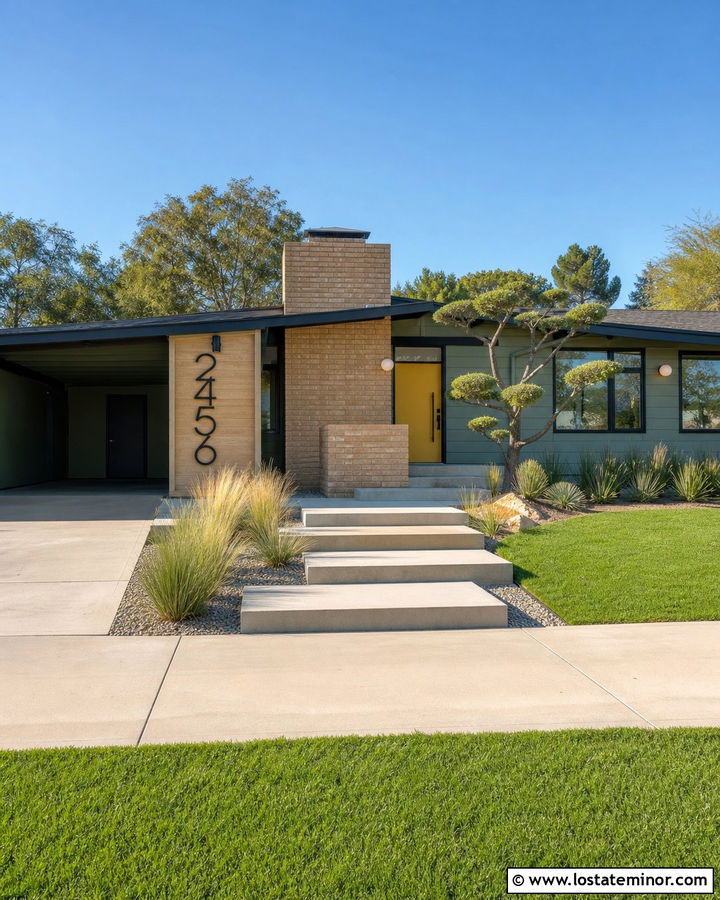
A long midcentury facade can support oversized house numbers without looking unbalanced. Paint the horizontal siding a cool, smoky sage green and retain warm tan brick around the entrance and chimney. Install large black numbers on a pale wood panel near the carport, using a simple geometric font that suits the home’s era. A mustard yellow front door brings cheerful contrast, while black window frames and globe lights repeat the number color. Keep the roof low and charcoal gray to preserve the original silhouette. Broad concrete steps, gravel beds, ornamental grasses, and one sculptural tree complete the landscape. The complete look feels retro-inspired but clean enough for a current suburban setting.
20. Sage Green Traditional House With Silver Numbers
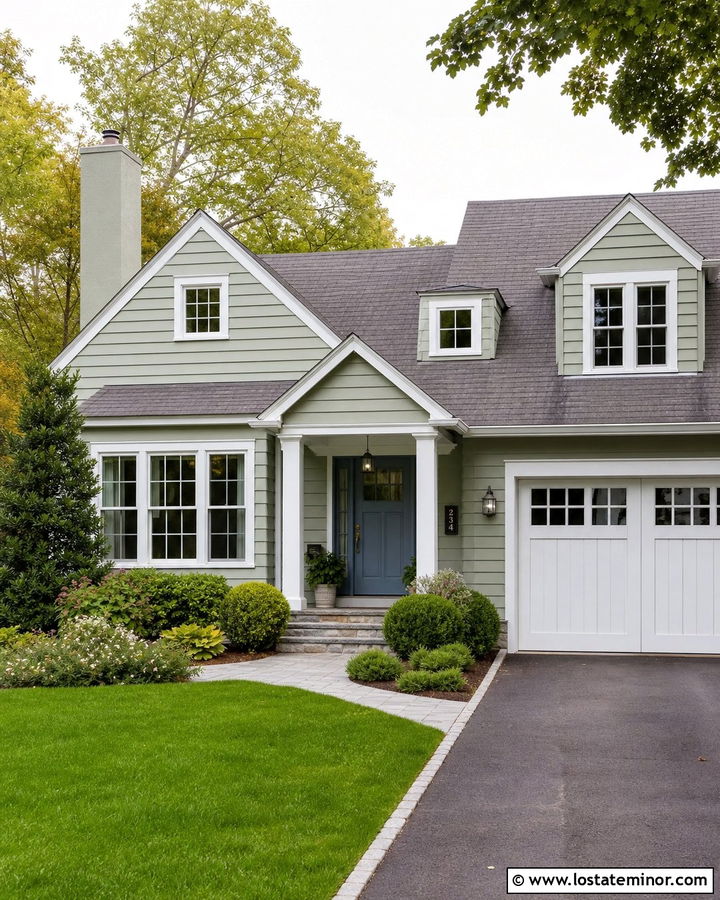
Brushed silver house numbers can brighten a shaded entrance without creating the sharpness of pure white. Use a balanced sage green on the siding of a traditional suburban home, with soft white trim and a medium-gray roof. Mount the silver numbers on a narrow charcoal board beside a dusty blue front door. This darker backing prevents the reflective finish from disappearing in strong daylight. Nickel door hardware, silver-toned porch lights, and gray stone steps repeat the cool metallic note. White garage doors keep the facade light, while neatly layered shrubs soften its width. The resulting scheme is calm and familiar, with enough contrast to make the entrance and address easy to locate.
21. Sage Green Mountain House With Corten Steel Numbers
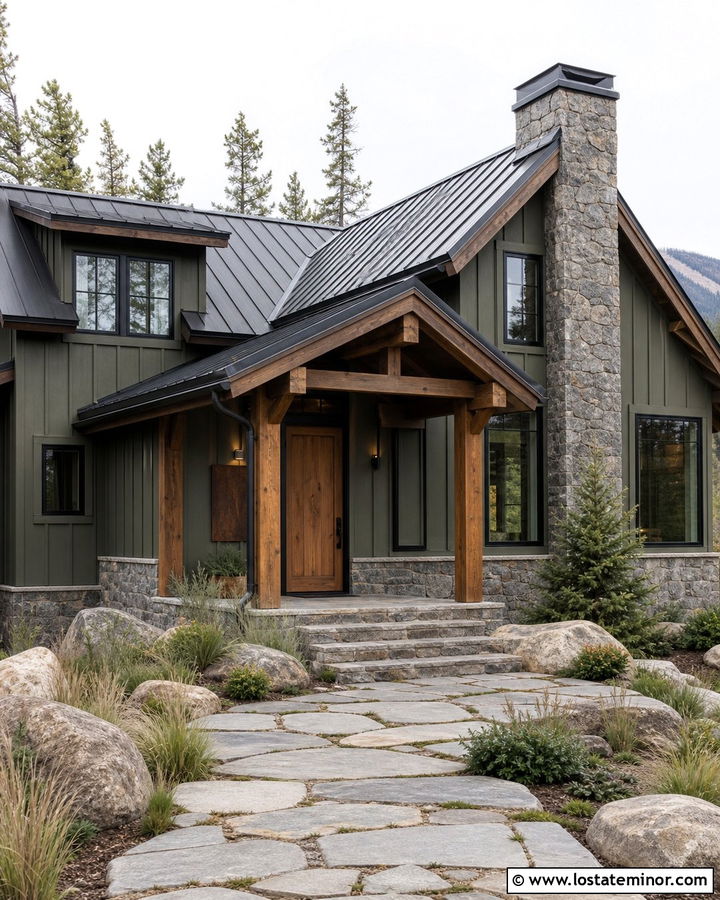
Weathered steel adds rich rust color to a sage green mountain house surrounded by stone and timber. Choose a deep, earthy sage for the board-and-batten siding and use charcoal on the roof, windows, and garage. A Corten steel address plate beside the entrance introduces warm orange-brown tones that connect with exposed cedar beams. Use local-looking gray stone across the foundation and chimney to ground the larger facade. A solid wood door reinforces the natural material palette. Keep the numbers cut large enough to remain legible against the variegated steel surface. Native grasses, boulders, evergreens, and a broad stone path complete a rugged exterior that still feels carefully organized.
22. Sage Green Georgian House With Cream Number Plaque
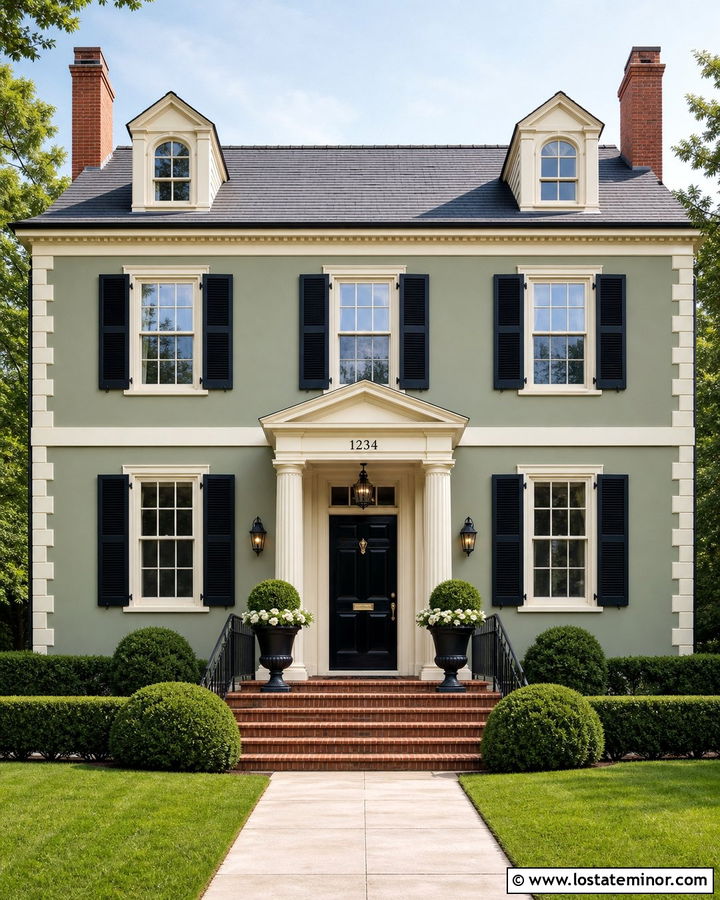
Symmetry is the defining feature of a Georgian-inspired facade, so the address display should support its orderly layout. Paint the brick or siding a muted heritage sage green and highlight the cornice, window surrounds, and central portico with warm cream. Place a cream house number plaque with black lettering above the glossy black front door. Matching black shutters, iron railings, and lanterns give the pale green exterior a strong framework. Red brick steps preserve a traditional connection to the architecture. Use paired planters and evenly shaped foundation shrubs to maintain the balanced composition. This restrained approach makes the numbers easy to find while keeping the front entrance as the home’s unmistakable focal point.
23. Sage Green Minimalist House With Concrete Numbers
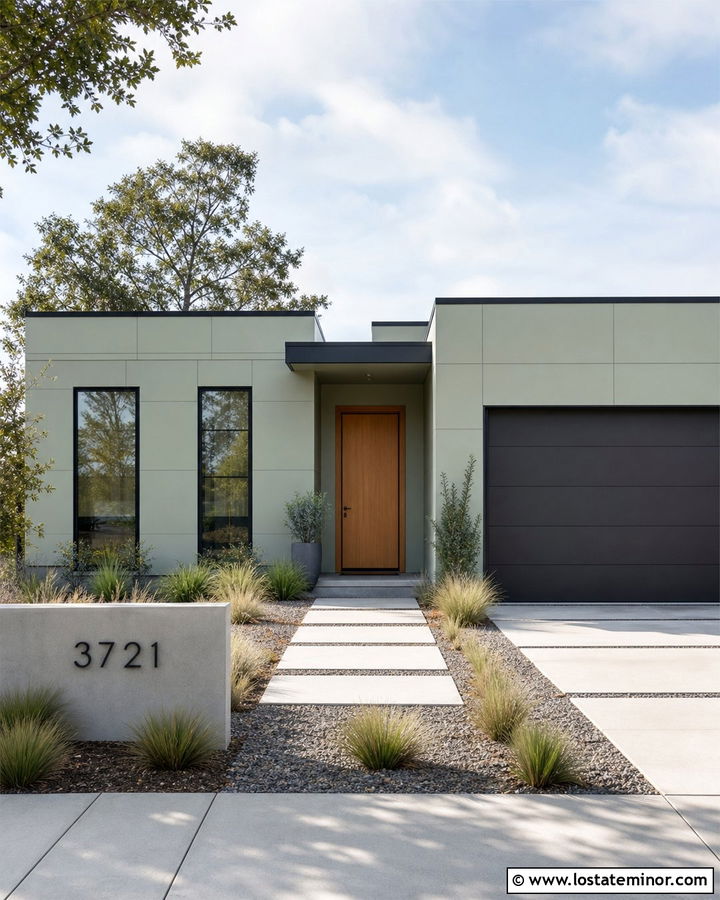
Concrete house numbers offer an understated option for a minimalist sage green exterior. Use smooth, pale sage fiber-cement panels on a compact box-shaped house with black-framed windows and a flat or low-slope roof. Cast dark charcoal numbers into a freestanding light concrete address wall positioned beside the front walkway. The small structure can also conceal landscape lighting or utility features. A natural oak front door softens the clean lines, while gravel, square stepping stones, and low grasses keep the yard uncluttered. Limit the exterior palette to sage, black, concrete gray, and wood. Because every material has a defined role, the address marker feels architectural and intentional rather than like an accessory added after construction.
24. Sage Green Victorian House With Gold Numbers
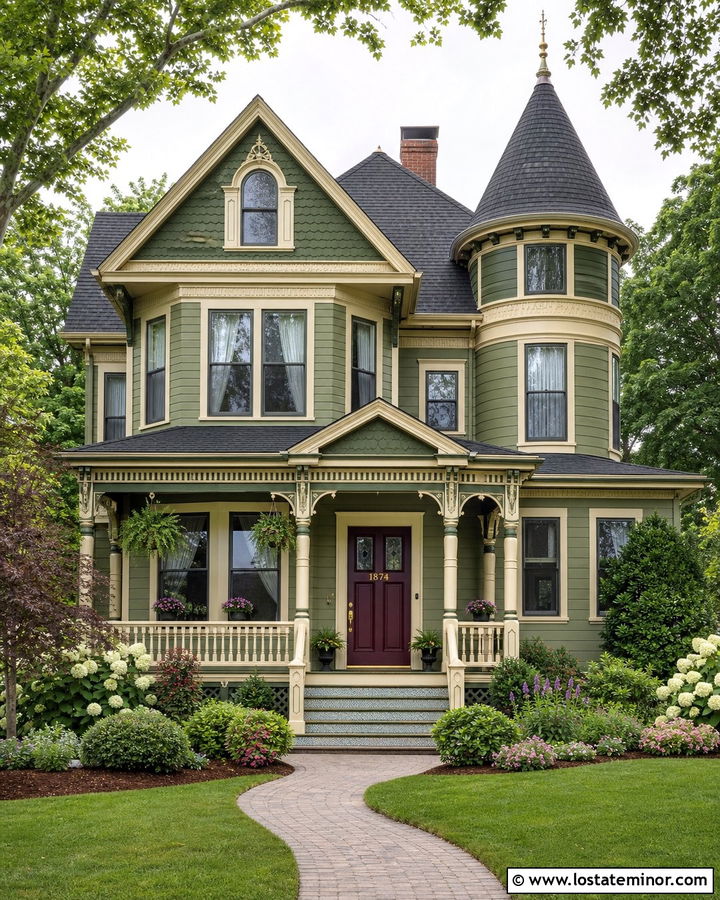
Victorian architecture offers plenty of detail, so house numbers should be decorative without becoming difficult to read. Use soft sage green on the main clapboard siding, cream on the elaborate trim, and a deeper green on selected shingles or brackets. Polished gold numbers mounted on a burgundy front door create a rich focal point beneath the covered porch. Repeat the gold finish sparingly on the door hardware and porch light. A charcoal roof keeps the upper portion of the house visually grounded. Turned columns, a patterned porch floor, and layered flower beds reinforce the historic character. The finished scheme feels colorful and expressive while maintaining a clear hierarchy around the entrance and address.
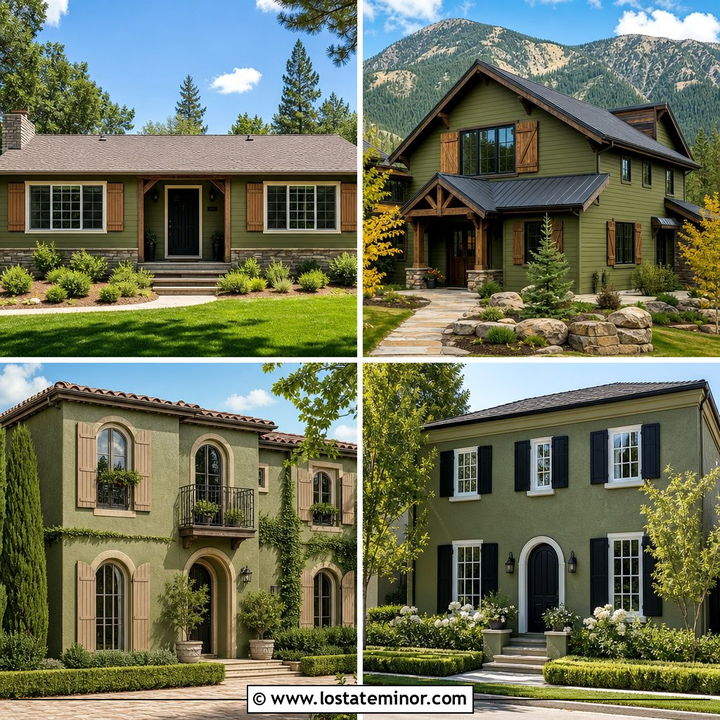
25. Sage Green Stone Ranch With Black House Numbers
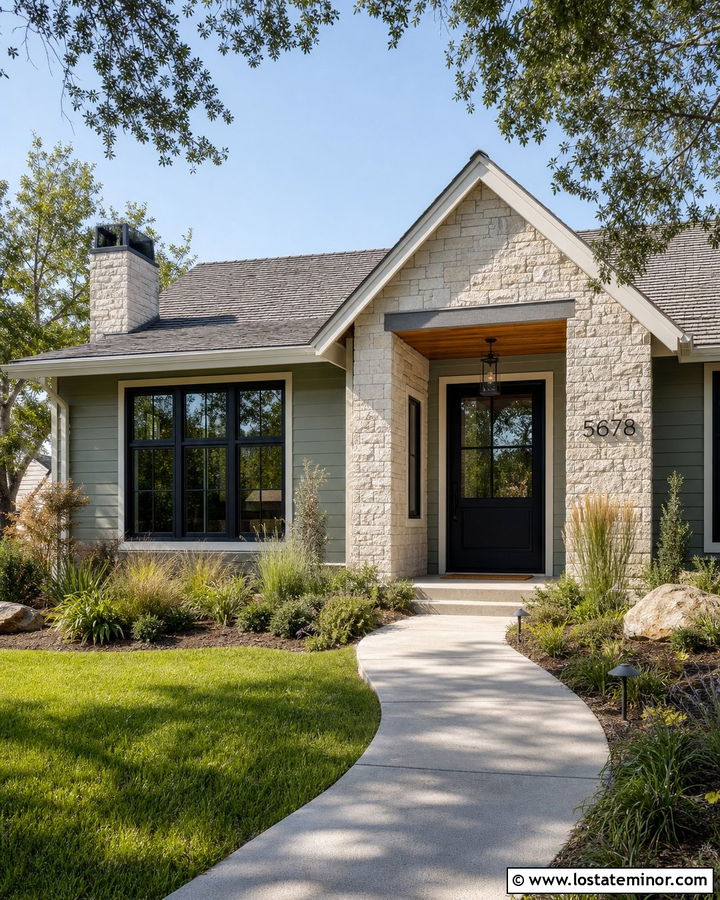
Natural stone can make sage green siding look warmer and more connected to the landscape. On a broad ranch house, use muted sage lap siding above a foundation and entry wall faced with beige-gray fieldstone. Place bold matte black house numbers directly on a light stone section near the front door. A black door, window frames, and garage lights repeat the dark accent across the facade. Choose warm white trim and a weathered gray roof to keep the scheme from feeling heavy. A wood porch bench or cedar ceiling introduces one more organic material. Finish with broad planting beds, native grasses, and a gently curved walkway that directs attention toward the highly visible address.
26. Sage Green Modern House With Cedar Screen Numbers
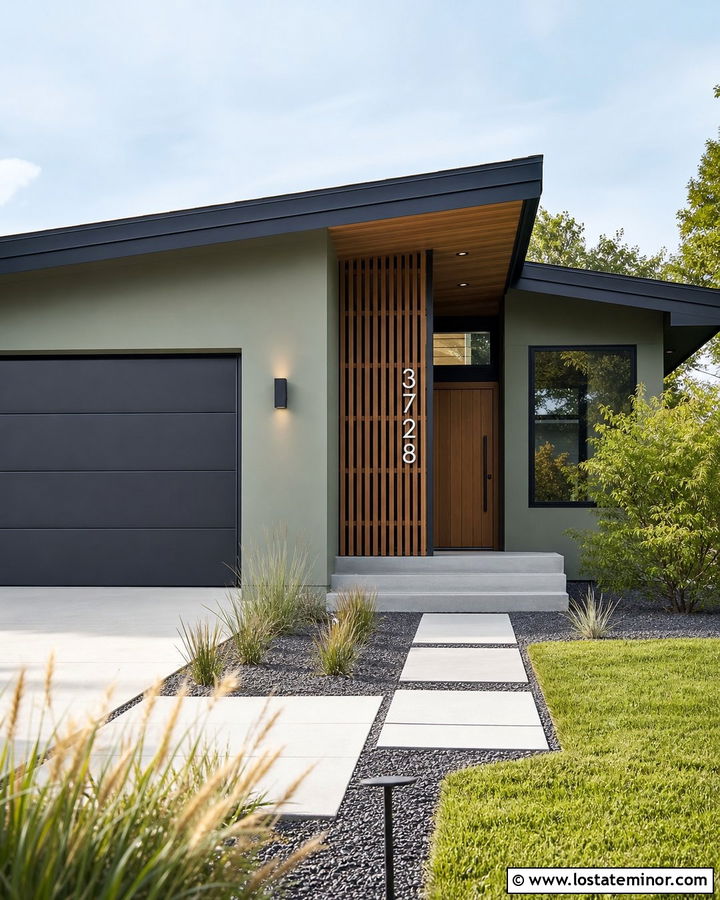
A cedar privacy screen can become an attractive background for house numbers on a modern sage green home. Paint the main siding a desaturated sage green and use charcoal panels around the garage and upper windows. Add a vertical cedar slat screen near the recessed entrance, then mount clean white numbers across its warm wood surface. The spacing between the slats adds texture, while the light digits remain easy to recognize. Repeat cedar on the front door and soffit to distribute the wood naturally. Black window frames, concrete steps, and minimalist landscaping sharpen the design. The screen can partially hide bins or utilities while also giving the entry a more prominent visual identity.
27. Sage Green Suburban House With Bronze Number Plaque
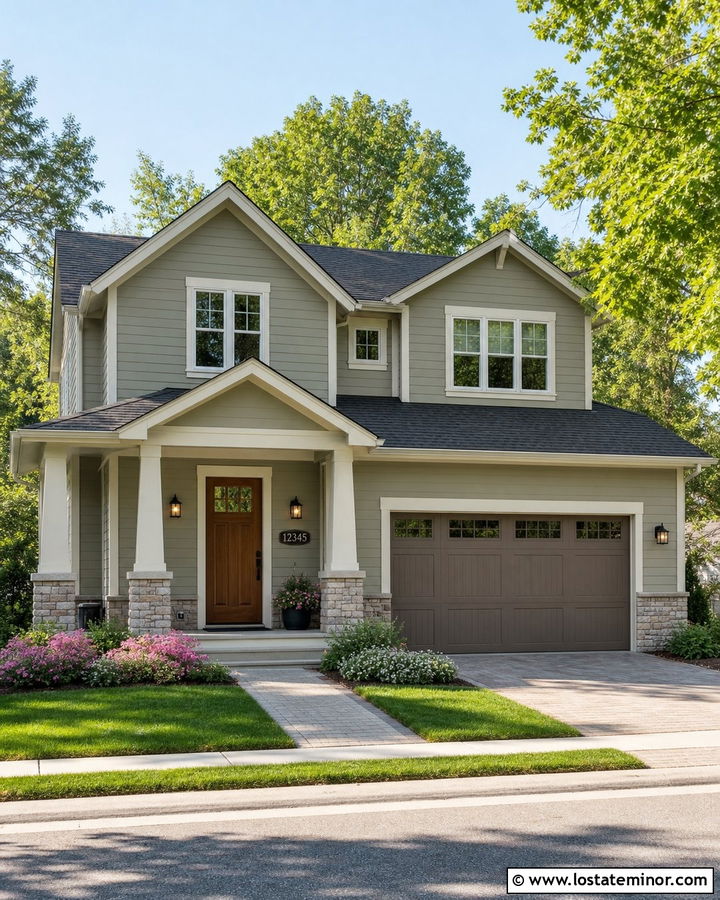
A familiar suburban facade can feel more polished with a carefully coordinated number plaque. Choose medium-light sage green siding, warm white trim, and a taupe garage door for a soft neutral foundation. Mount a dark bronze plaque with cream numbers beside a stained wood front door. Bronze lanterns, door hardware, and garage handles repeat the plaque finish in several useful locations. Use gray-beige stone around the porch base to connect the taupe garage and green siding. A charcoal shingle roof adds contrast above without making the house look severe. Neat lawn edges, flowering shrubs, and a paved walkway complete this approachable scheme, which can suit many planned neighborhoods and common home layouts.
28. Sage Green Bungalow With Charcoal Numbers And Yellow Door
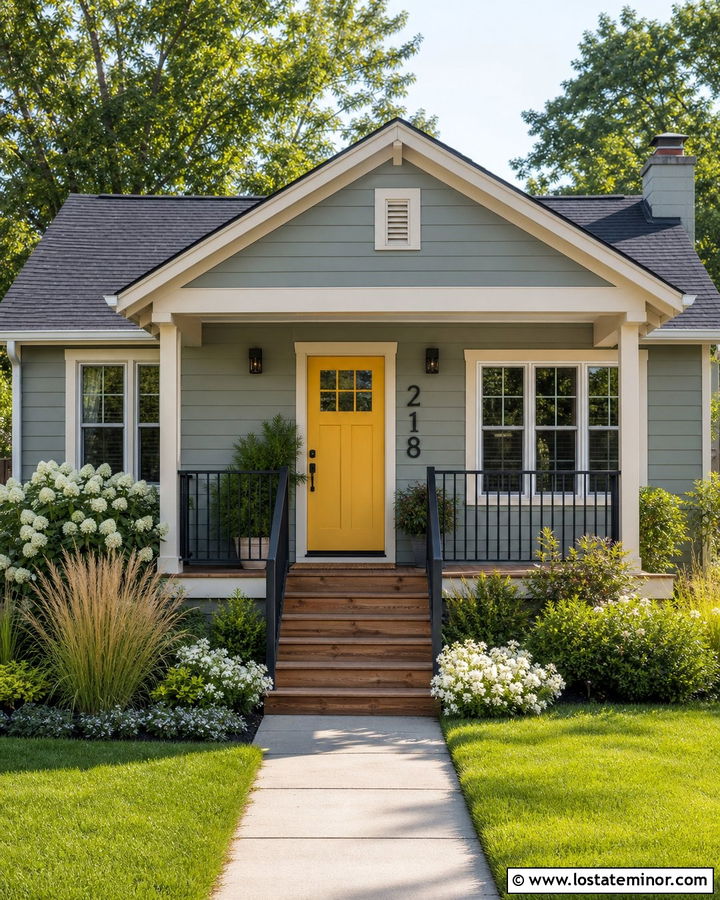
A sunny yellow front door can make muted sage green siding feel lively without overwhelming a small bungalow. Balance the door with creamy trim, a charcoal roof, and large charcoal house numbers mounted beside the entrance. The numbers should have simple shapes that remain clear against the lighter green wall. Use charcoal porch lights and railings to distribute the dark accent across the facade. Natural wood steps or a stained porch floor add warmth between the green and yellow surfaces. Surround the path with white flowers, ornamental grasses, and compact shrubs. This cheerful complete exterior works particularly well on a modest home where a small amount of contrasting color can transform the entire street-facing view.
29. Sage Green Cottage With Brass Numbers Over The Door
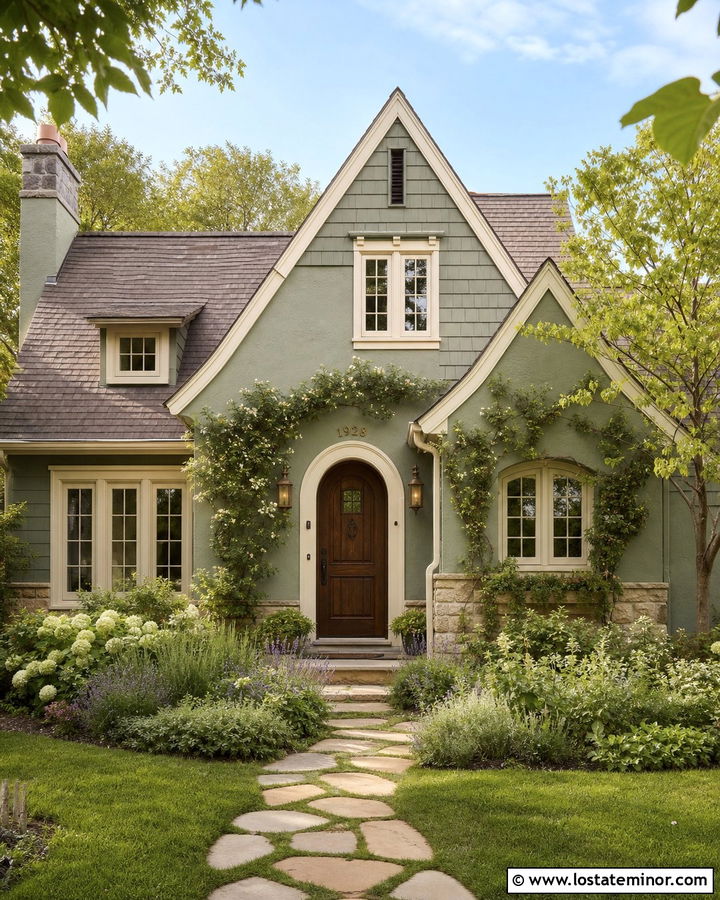
An arched cottage entrance offers a natural location for a centered address display. Coat the stucco or shingle facade in warm sage green, then outline the arch, windows, and roof edges with soft ivory trim. Install medium-size aged brass numbers above the dark wood door, where the gentle metallic finish can catch daylight. Brass lanterns and door hardware repeat the material without becoming too shiny. A brown-gray roof and light stone foundation support the earthy palette. Use an irregular flagstone path, flowering vines, and informal garden beds to frame the doorway. The arrangement feels charming and balanced, while the raised number placement keeps the address visible above seasonal plants and porch decorations.
30. Sage Green Duplex With Separate House Numbers
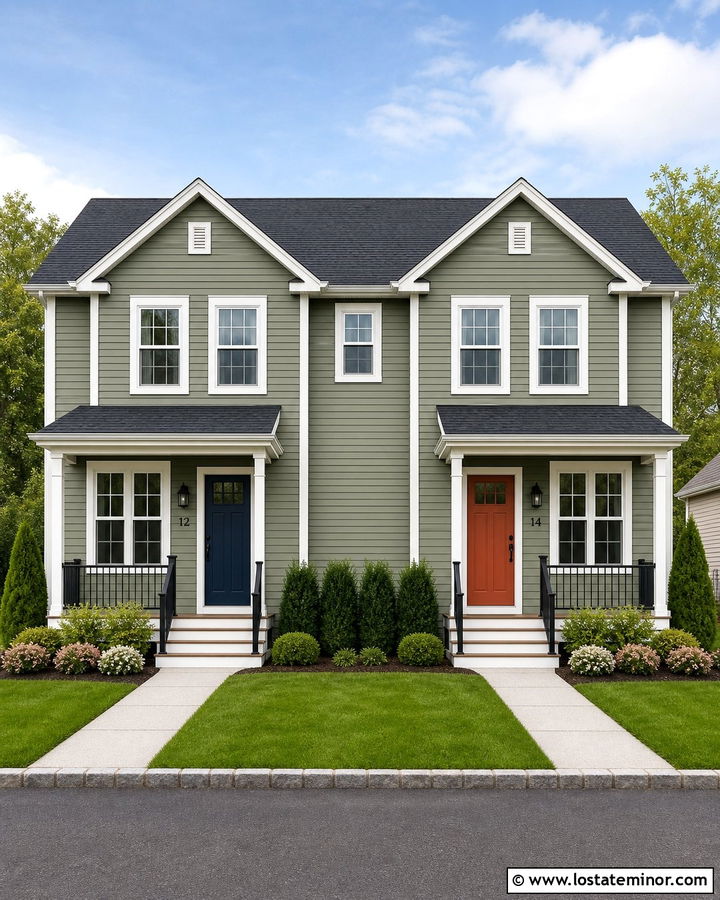
A duplex needs address numbers that clearly distinguish both entrances while preserving one coordinated exterior. Use the same muted sage green siding across the full building, with bright white trim and a charcoal roof. Give each entry a different but compatible door color, such as deep navy and warm terracotta. Mount matching black house numbers beside each door at the same height and distance from the frames. Repeating the font, scale, and placement makes the facade orderly, while the door colors help visitors identify the correct unit. Black porch lights and railings connect both sides. Separate walkways, low hedges, and mirrored planting beds provide definition without making the shared exterior feel divided or visually cluttered.
Conclusion:
The most successful sage green exterior treats house numbers as part of the entire curb-appeal plan. Number size, finish, background contrast, and placement should work with the siding, trim, front door, roof, and surrounding materials. Black and bronze provide dependable definition, while brass, copper, wood, tile, and stainless steel can reinforce a specific architectural character. Before installation, view the proposed location from the street and check whether porch columns, shadows, or mature plants affect visibility. You can also repeat the number material through lighting or door hardware for a more cohesive result. Use these 30 Sage Green House Design With House Numbers Ideas to create a welcoming, attractive, and easy-to-find home.

Related posts: