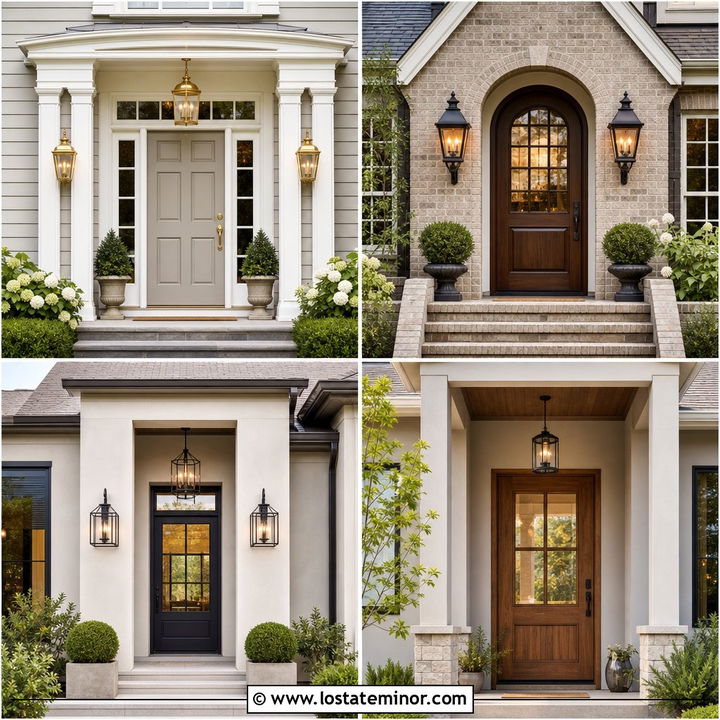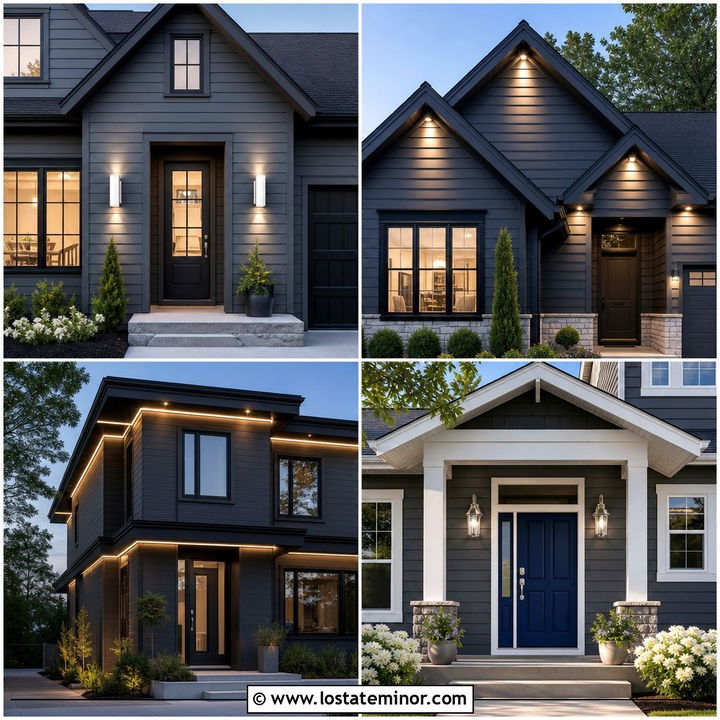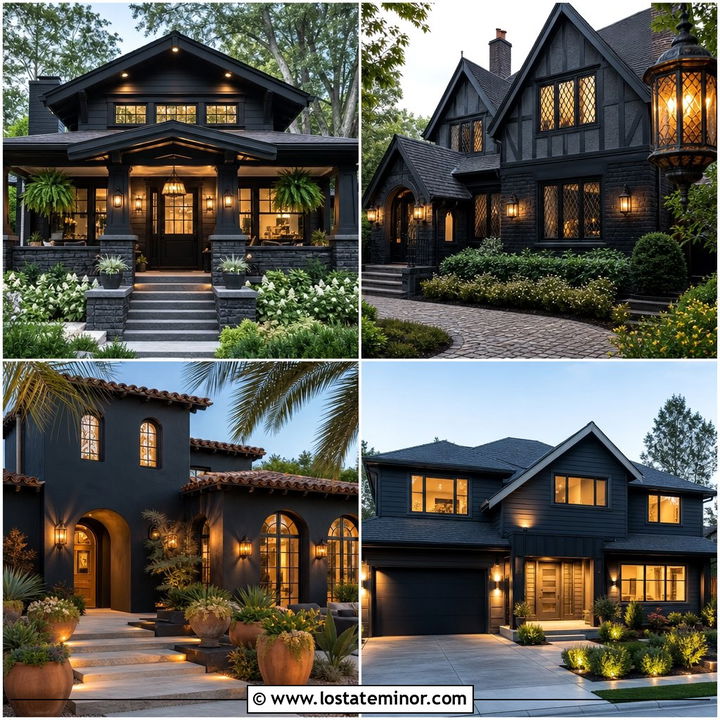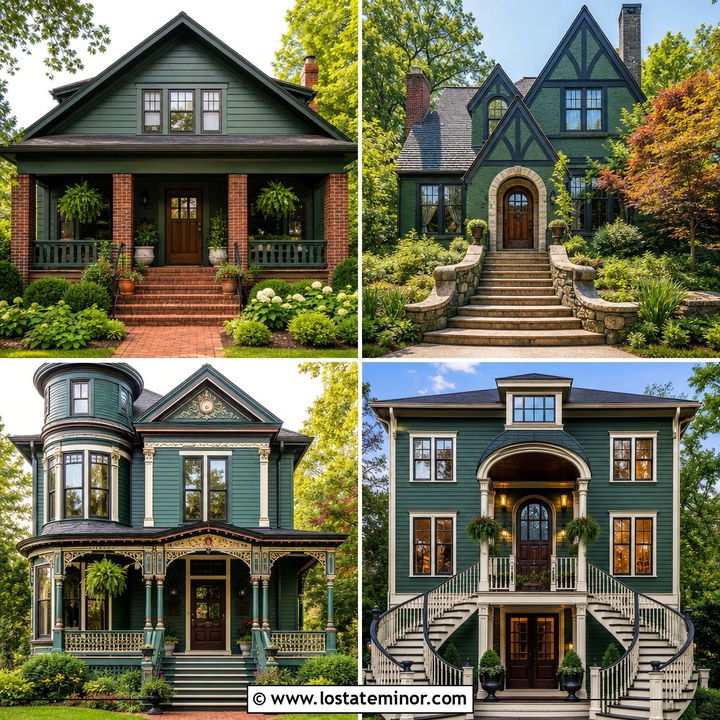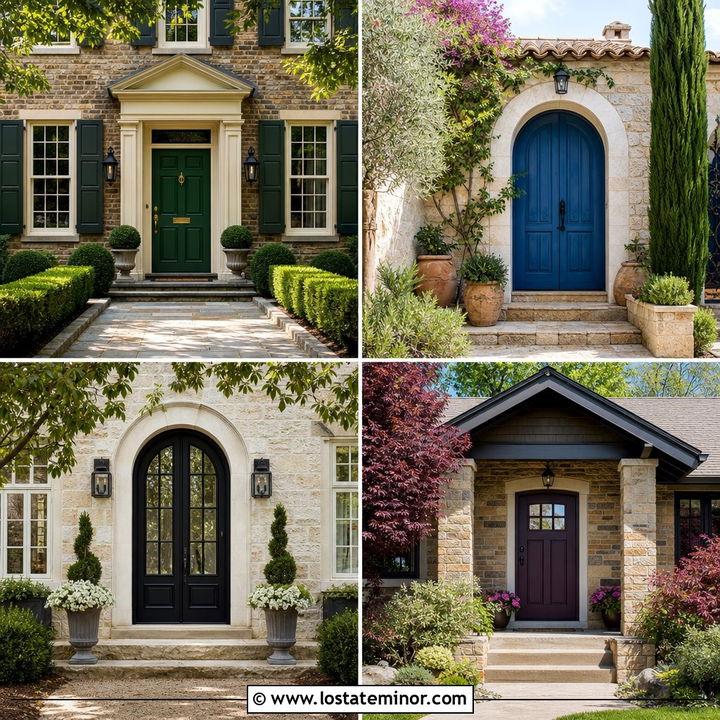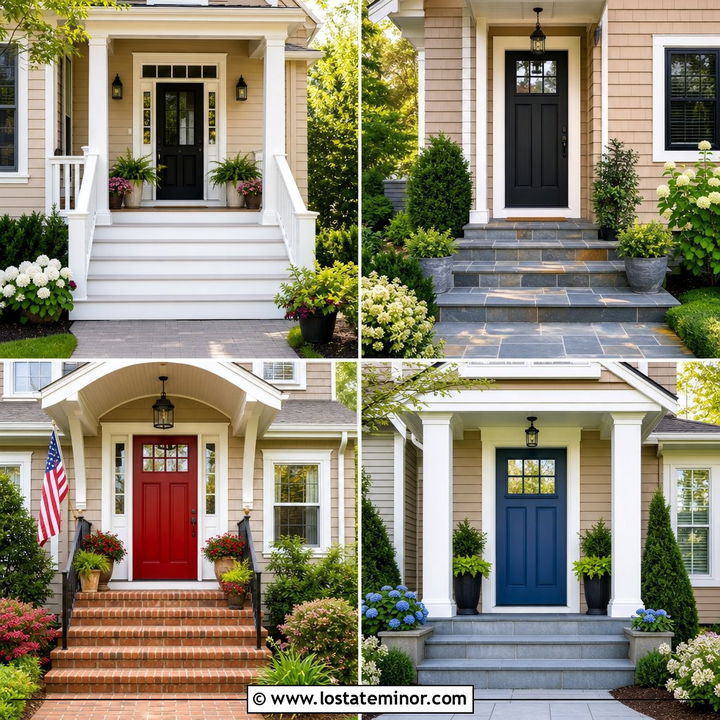
Beige exteriors can feel warm, refined, and welcoming when the lighting supports the home’s architecture. The best 30 Beige House Design With Lighting Ideas go beyond installing one basic porch fixture. They combine layered lighting with coordinated trim, doors, roofing, masonry, and landscaping. Black lanterns can sharpen a traditional facade, while brass sconces bring warmth to modern beige siding. Path lights, soffit lighting, uplights, and step fixtures also improve safety while making the entire property feel polished. Select warm LEDs around 2700K to 3000K so beige paint, natural wood, brick, and stone retain their inviting tones. The complete exterior looks below explore practical, attractive, and adaptable 30 Beige House Design With Lighting Ideas.

1. Beige Colonial House With Black Lanterns
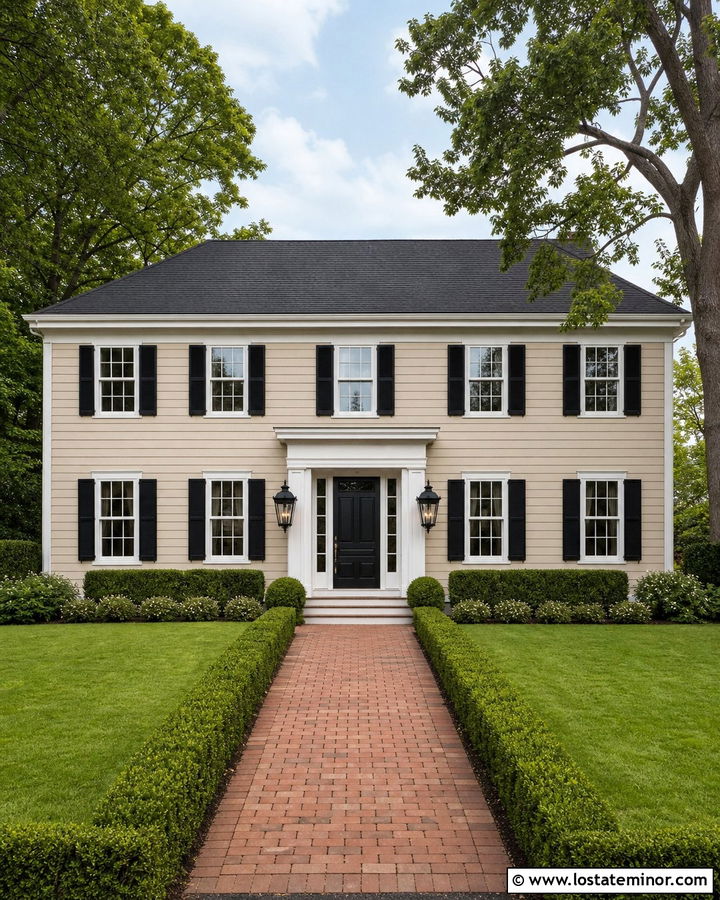
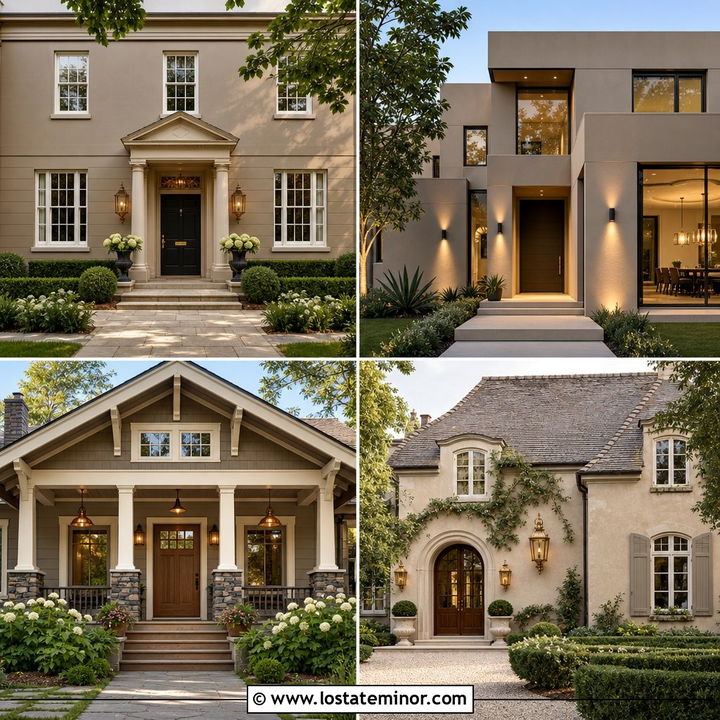
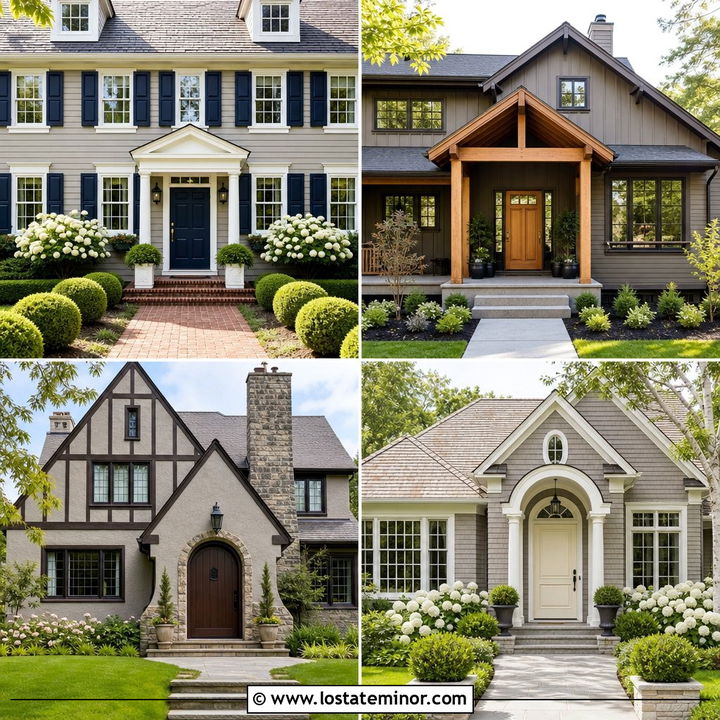
A symmetrical beige Colonial exterior becomes more defined when oversized black lanterns frame the entrance. Choose warm beige clapboard siding, crisp white trim, black shutters, and a dark charcoal roof for balanced contrast. A glossy black door can reinforce the formal character, while brass door hardware adds a small touch of warmth. Mount the lanterns slightly above eye level and size them generously enough to suit the tall facade. Additional lanterns beside the garage create continuity across the property. Low path lights along a straight brick walkway provide another practical layer without distracting from the architecture. Use warm white bulbs instead of cool LEDs, which can make the beige siding look gray or washed out.
2. Beige Craftsman House With Bronze Sconces
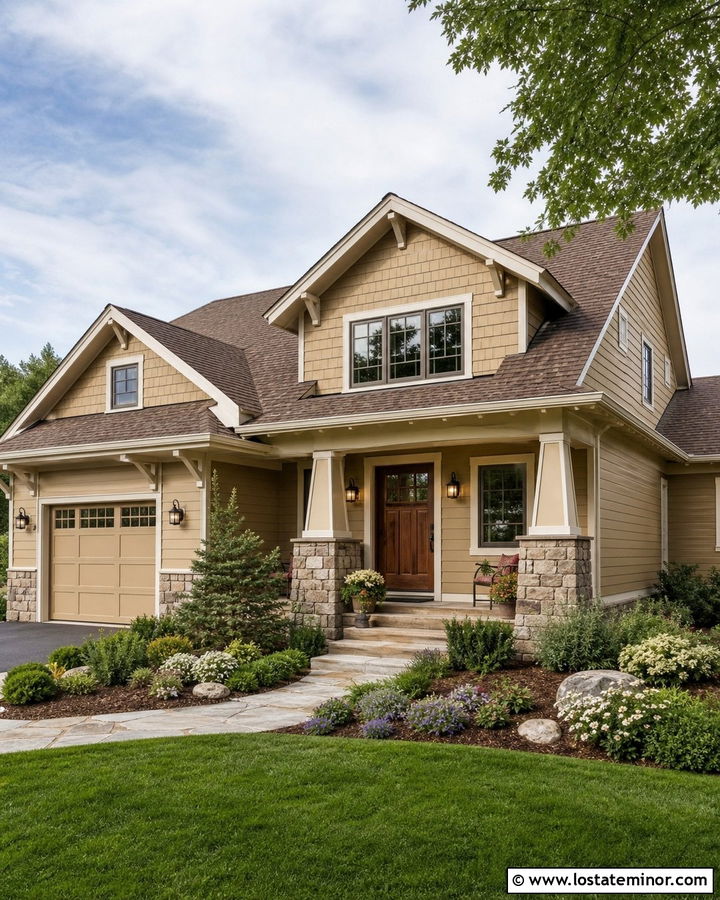
Can a beige Craftsman exterior feel rich without using bold color? Oil-rubbed bronze sconces provide depth while preserving the home’s relaxed, natural character. Pair sandy beige lap siding with cream trim, tapered stone columns, a stained oak door, and deep brown roof shingles. Select lantern-shaped sconces with simple lines rather than highly ornate details. Their dark bronze finish will connect naturally with the roof, door hardware, and earthy stonework. Recessed porch lights can illuminate the seating area, while discreet uplights emphasize the column bases. Keep every bulb at the same warm color temperature. This coordinated lighting plan makes the entry easier to navigate and allows the beige, wood, and stone materials to read as one complete scheme.
3. Beige Ranch House With Garage Lighting
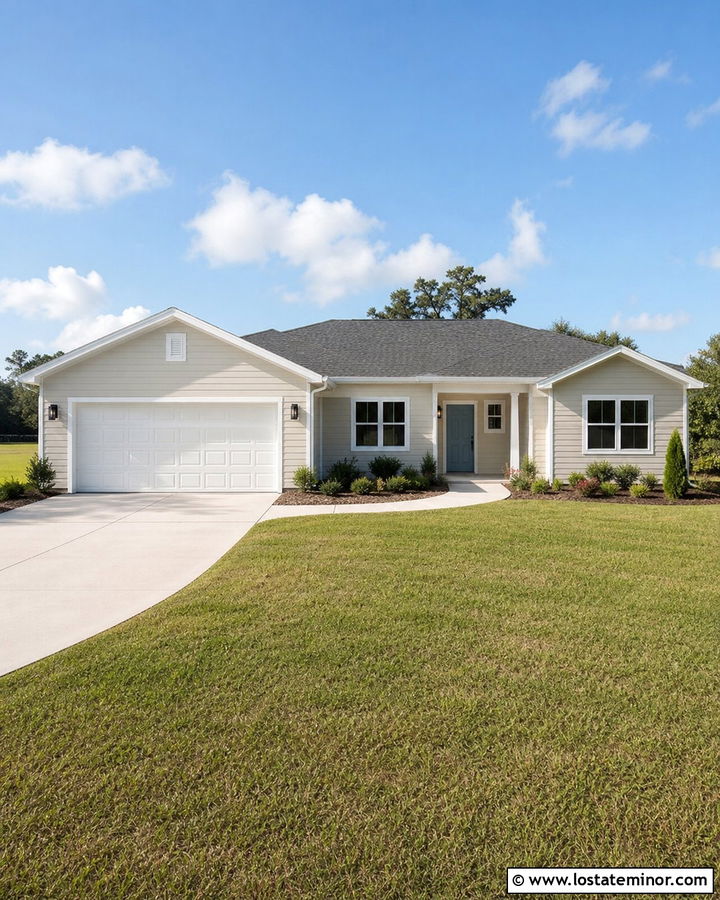
A wide ranch home needs lighting that visually connects the garage and front entrance. Start with light beige horizontal siding, white trim, a medium-gray roof, and a muted blue front door. Install simple black cylinder lights between the garage doors or place matching downward-facing sconces on both outer sides. Their focused beams add definition to a long facade without creating excessive glare. Repeat the black finish on the porch fixture, mailbox, and house numbers for consistency. Small path lights can guide visitors from the driveway to the entrance. Foundation shrubs should remain low enough that they do not cover the fixtures. This approach breaks up the ranch home’s horizontal proportions and creates a clearer, more welcoming focal point.
4. Beige Farmhouse With Gooseneck Lights
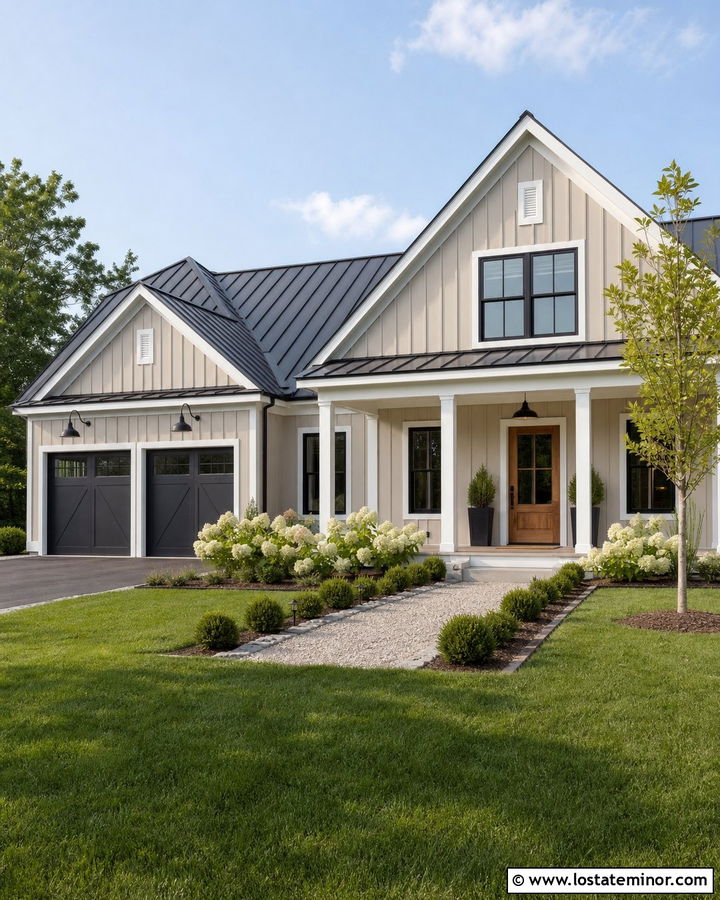
Black gooseneck lights give a beige modern farmhouse a clean, practical appearance. Use creamy beige board-and-batten siding with white corner trim, black-framed windows, a charcoal metal roof, and a natural wood front door. Place broad-shade gooseneck fixtures above the garage doors and beside a covered side entrance. Their curved arms soften the strong vertical siding lines while directing light downward. A large black pendant centered over the front porch can carry the same finish into the main entry. For a cohesive result, match the guttering, door hardware, and porch furniture frames to the lighting. Warm bulbs prevent the palette from becoming stark and allow the beige siding and cedar accents to maintain their comfortable farmhouse warmth.
5. Beige Cottage With Brass Porch Lights
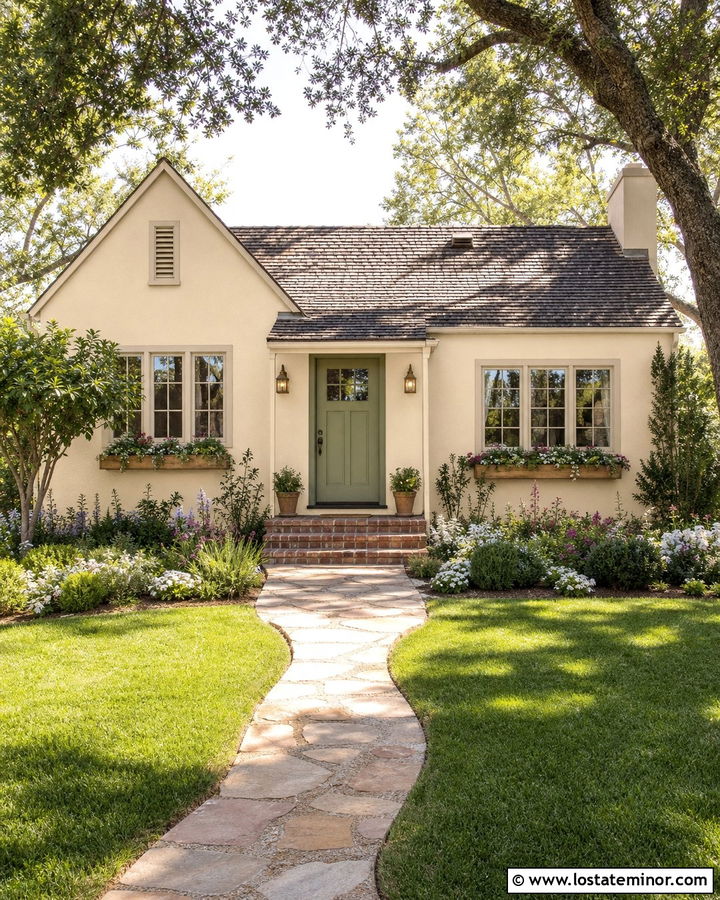
Soft brass lighting can give a small beige cottage an inviting, collected look. Pair light linen-beige siding with warm white trim, a sage green door, weathered brick steps, and a brown-gray shingle roof. Compact brass sconces with clear glass are ideal beside the door because they add character without overpowering a modest facade. A small hanging lantern beneath the porch ceiling can provide ambient illumination over the landing. Continue the warm metal finish through the door knocker and planter details. Curved path lights should remain simple and low, allowing flowering borders to frame the walkway. Over time, an unlacquered brass finish develops a natural patina that works especially well with cottage gardens, aged brick, and understated beige paint.
6. Beige Modern House With Up And Down Lights
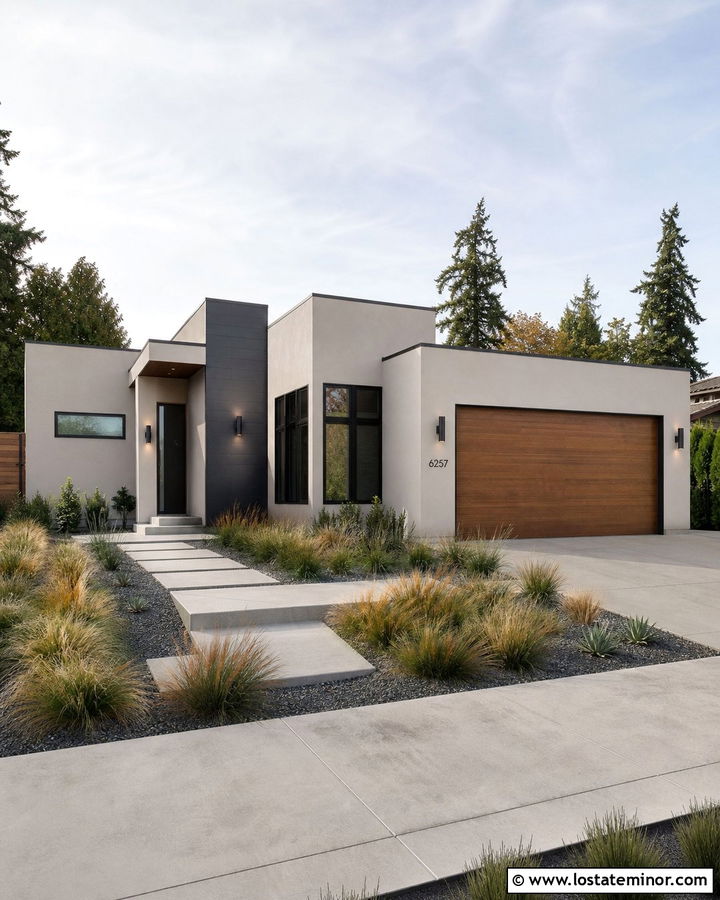
A streamlined beige modern home benefits from fixtures that create graphic columns of light. Cover the main volumes in warm greige stucco, then add charcoal panels, black window frames, a flat roof, and a natural cedar garage door. Install rectangular up-and-down sconces on uninterrupted wall sections near the entry and garage. Their controlled beams accentuate the home’s height and clean geometry. Recessed lighting beneath roof overhangs can brighten the walkway without adding visual clutter. Use fewer fixtures at a larger scale instead of scattering small lights across every surface. Dark bronze or matte black finishes will connect with the windows and fascia. The resulting design feels architectural, intentional, and warmer than a sharply contrasting black-and-white modern exterior.
7. Beige Mediterranean House With Copper Lanterns
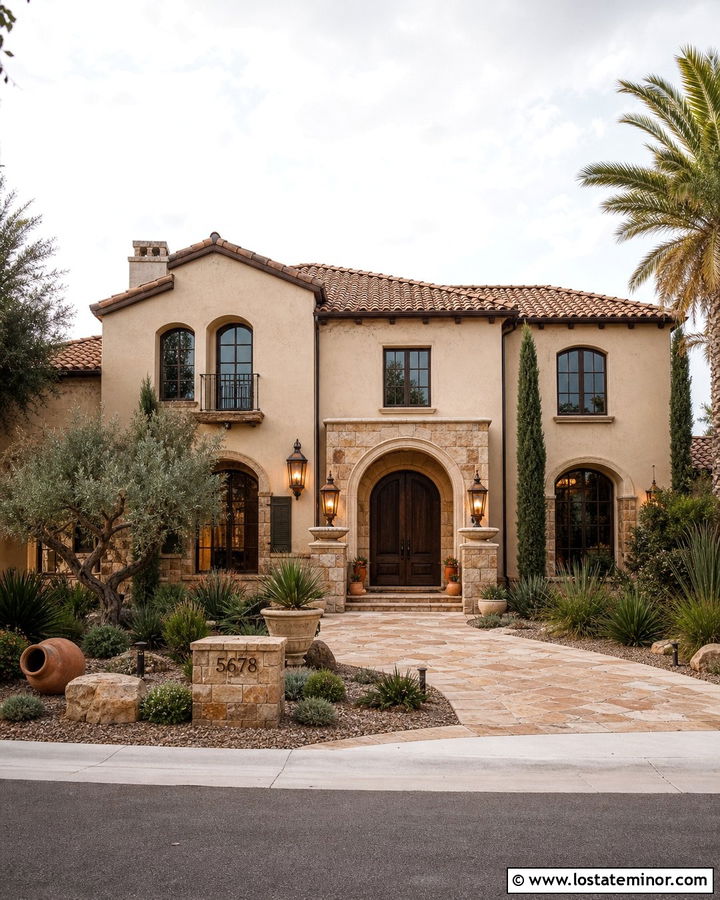
Sun-washed beige stucco and aged copper lanterns create a natural pairing on a Mediterranean exterior. Complete the scheme with a terracotta tile roof, dark wood doors, cream window trim, and warm stone around the entrance. Large copper wall lanterns can frame an arched doorway, while smaller coordinating fixtures mark side doors and garage bays. As the copper develops a patina, it becomes even more compatible with the earthy materials. Place subtle uplights near palms, olive trees, or textured stucco walls to add depth around the facade. Amber-looking bulbs should be avoided because they may distort the exterior color. A balanced warm white produces a welcoming glow while still revealing the true beige, rust, brown, and cream tones.
8. Beige Cape Cod House With Nautical Lights
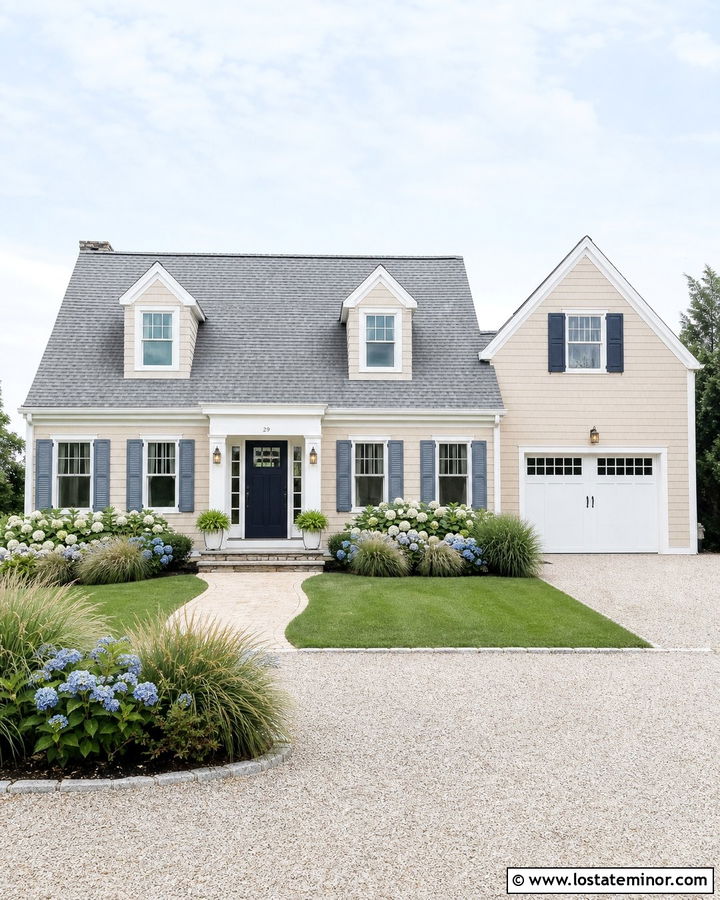
A beige Cape Cod exterior can adopt subtle coastal character through weather-resistant nautical lighting. Choose pale sandy beige shingles, white trim, blue-gray shutters, a navy front door, and a medium-gray roof. Round or caged wall lights in aged brass work well beside the entrance and attached garage. They reference marine design without turning the home into a themed display. A compact hanging fixture can illuminate a covered porch, while low path lights define a shell or stone walkway. Keep the fixture shapes simple and repeat only one metal finish throughout the facade. Salt-tolerant grasses, hydrangeas, and clipped shrubs reinforce the coastal palette. Warm white illumination prevents the beige shingles from appearing cold under evening conditions.
9. Beige Bungalow With Hanging Porch Lights
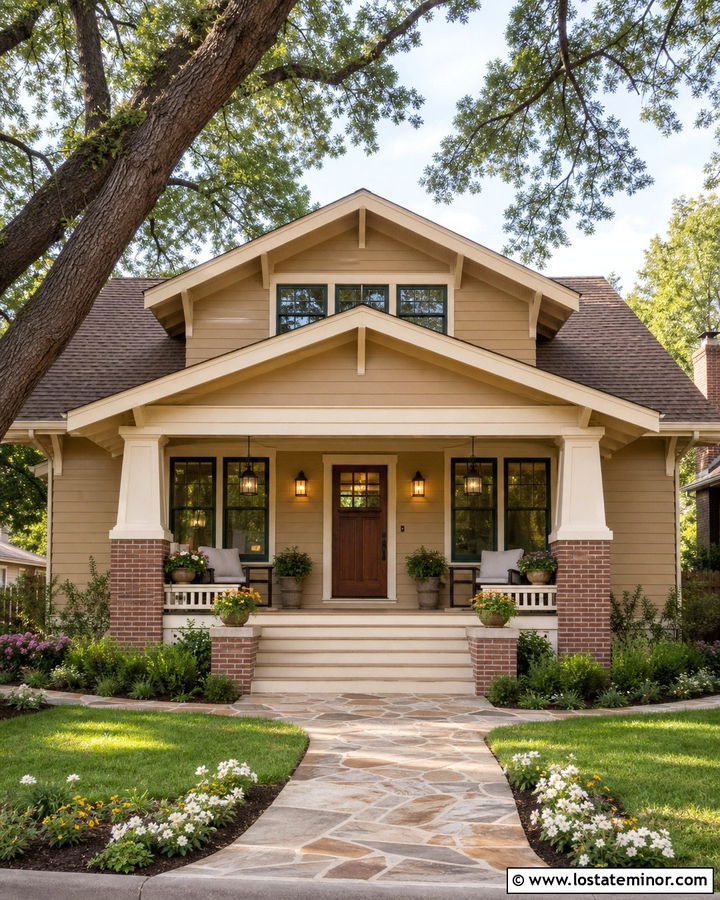
The deep porch of a beige bungalow offers an ideal location for layered overhead lighting. Pair warm tan-beige siding with ivory trim, dark green window frames, tapered brick columns, and a stained mahogany door. Two schoolhouse-style pendants or compact lanterns can be spaced evenly along the porch ceiling. This provides comfortable ambient light for seating while highlighting exposed beams and handcrafted details. Add matching wall sconces beside the door for practical task lighting. The fixtures should hang high enough to preserve clear sightlines from the yard. Soft landscape lights around the steps and planting beds complete the approach. This arrangement celebrates the bungalow’s broad porch rather than concentrating all illumination around one small entrance fixture.
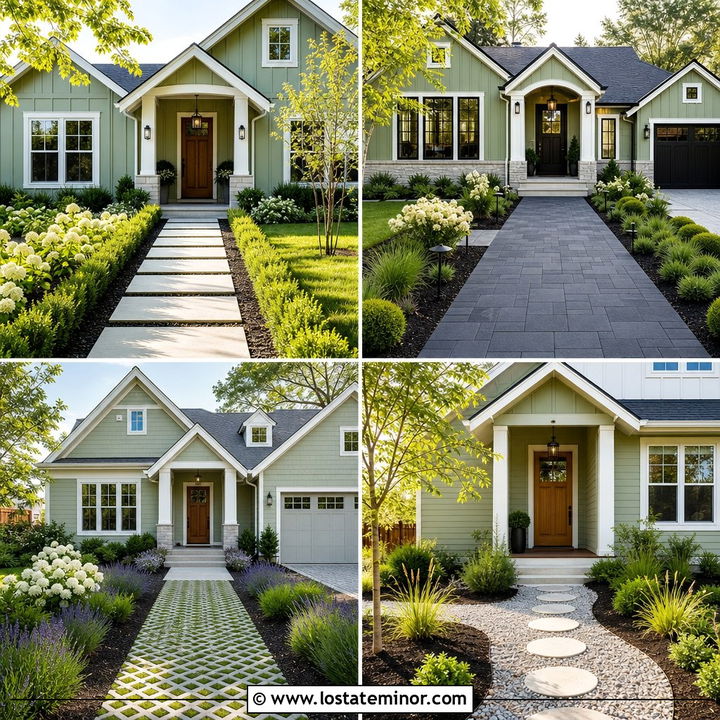
10. Beige Tudor House With Leaded Glass Lanterns
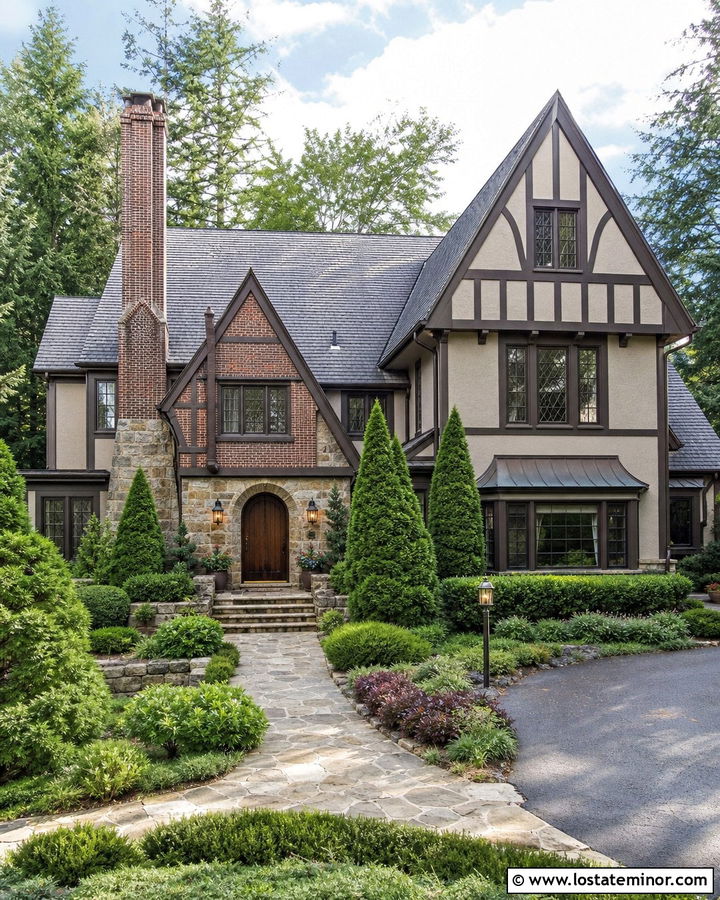
A beige Tudor exterior gains authentic character from dark lanterns with seeded or leaded glass. Use warm beige stucco between dark brown half-timbering, then add cream window trim, red-brown brick, and a steep charcoal roof. Place substantial lantern sconces beside the arched wood entrance and repeat a smaller version near the garage. Their textured glass introduces a handcrafted quality that complements the irregular masonry and decorative timber. Ground-level uplights can reveal the brick chimney and steep gables, but the beams should remain narrow and controlled. Select warm LEDs that flatter the brown undertones in the facade. Black may feel too sharp here, so an aged iron or deep bronze fixture finish usually creates a more integrated exterior palette.
11. Beige Split-Level House With Recessed Soffit Lights
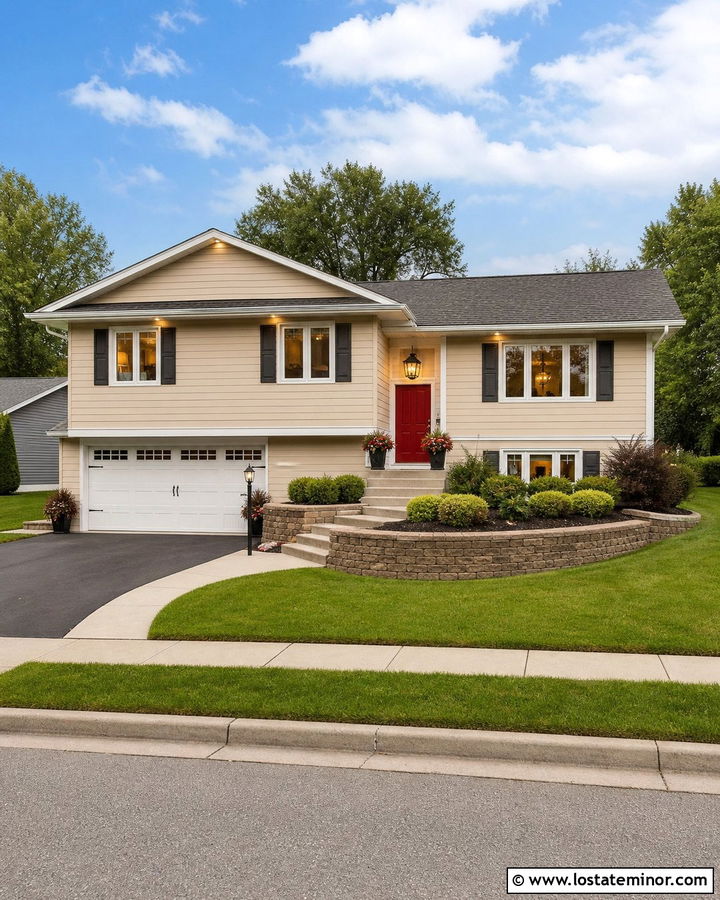
Thoughtful lighting can unify a beige split-level home with several rooflines and entrance heights. Choose neutral beige siding, white fascia, charcoal shutters, a deep red front door, and gray architectural shingles. Small recessed soffit lights can be spaced above the entry, garage, and upper facade to create an even rhythm. Avoid installing too many fixtures, since closely spaced lights may produce a distracting dotted effect. Add one larger wall lantern beside the front door to establish a clear destination. Low-voltage step lights make raised landings and changes in elevation easier to see. The dark fixture trim should coordinate with the shutters or roof. This layered plan brings visual order to an asymmetrical exterior while keeping the overall presentation approachable.
12. Beige Brick House With Dark Bronze Lights
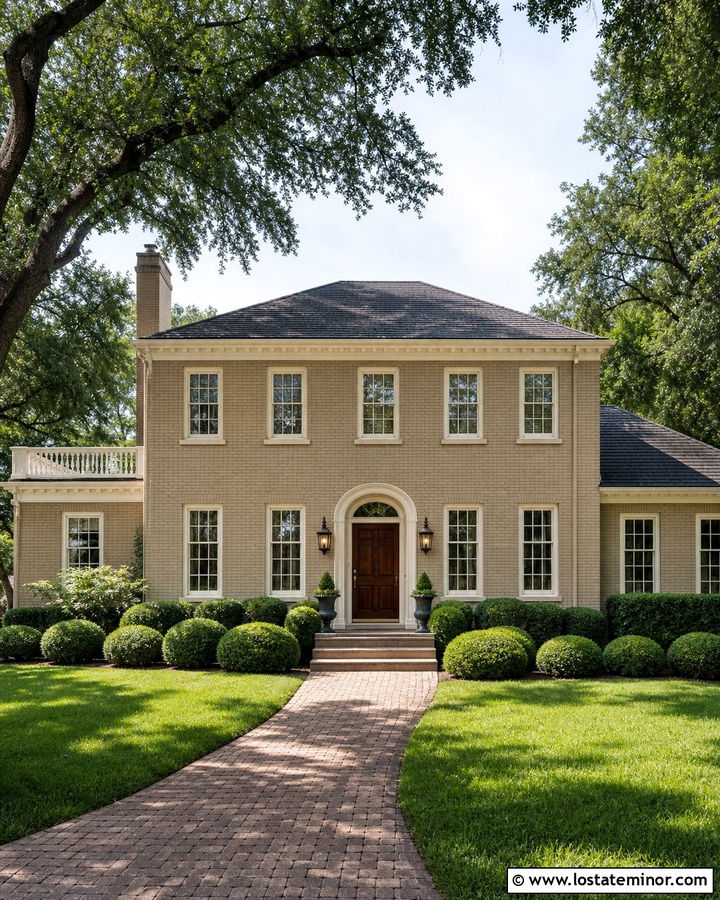
Beige brick has subtle color variation that looks especially attractive beside deep bronze lighting. Build the scheme around creamy beige masonry, off-white trim, a dark walnut door, and a weathered charcoal roof. Traditional bronze lanterns can sit beside the entrance and garage, connecting the brick’s warm flecks with the darker architectural details. Choose clear glass when you want a brighter, cleaner look or seeded glass for softer character. Narrow uplights positioned near the corners can graze the brick and reveal its texture. Keep the beams away from bedroom windows and direct all path fixtures toward the ground. Repeating bronze on the gutters, door hardware, and address plaque helps every exterior element feel selected as part of one coordinated design.
13. Beige Stucco House With Wall Wash Lighting
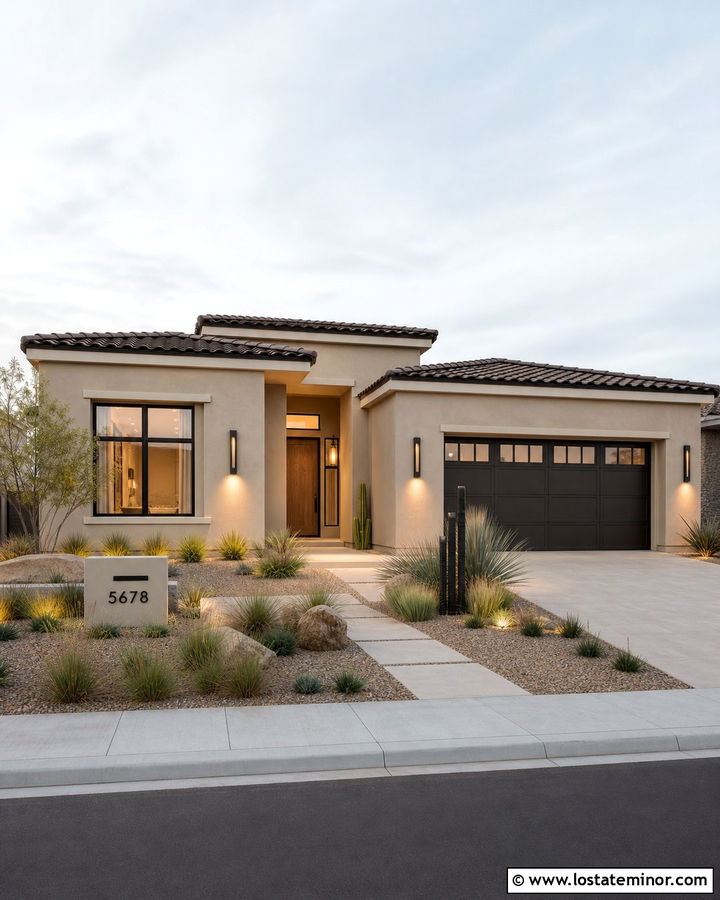
Smooth beige stucco can look flat when it lacks architectural shadows. Wall wash lighting introduces soft depth across broad exterior surfaces without requiring additional color. Pair warm sand-colored stucco with cream trim, black-framed windows, a walnut front door, and a low-profile brown tile roof. Position shielded fixtures near the base of selected walls so they cast a broad, even layer of light upward. Highlight one or two primary surfaces instead of washing the entire house. Minimal black sconces beside the entry provide task lighting and connect with the windows. Drought-tolerant grasses, gravel beds, and low masonry walls complete the contemporary landscape. The combination feels refined because the lighting reveals texture while the neutral palette remains calm and cohesive.
14. Beige Stone House With Landscape Uplights
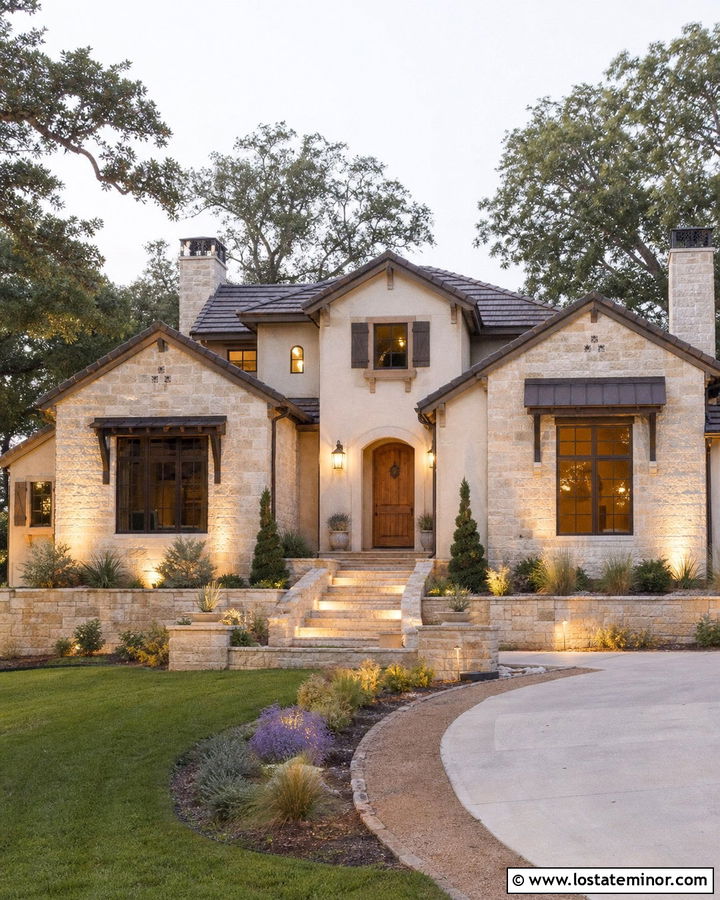
A beige stone facade already offers natural dimension, so the lighting should reveal rather than overpower it. Choose buff limestone or sandstone for the main exterior, paired with creamy stucco, dark bronze windows, a cedar door, and brown-gray roofing. Install narrow-beam uplights at the base of important stone columns, gables, or a chimney. Varying the fixture distances slightly can prevent the facade from looking too uniformly lit. Use downward-facing porch lights around doors and steps to provide practical illumination. Dark bronze housings blend more discreetly into soil and planting beds than shiny metal finishes. Evergreen shrubs and ornamental grasses soften the stonework. Together, the warm beige masonry, natural wood, and restrained lighting produce an upscale but grounded curb-appeal design.
15. Beige Prairie House With Horizontal Lighting
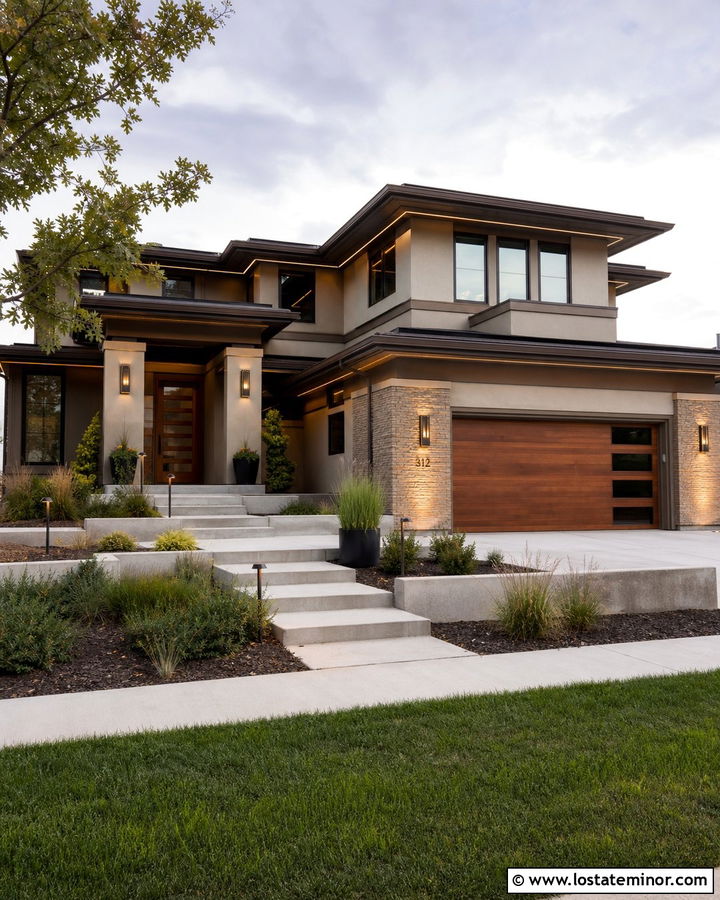
Long rooflines and strong horizontal details define a Prairie-style house, and the lighting should follow that geometry. Use a muted taupe-beige exterior with dark brown trim, wide roof overhangs, amber-toned stone, and a wood garage door. Slim linear lights beneath the soffits can emphasize the home’s broad proportions without cluttering the facade. Horizontal wall sconces near the entrance reinforce the same visual direction. Add recessed step lights along low terraces or wide concrete stairs for safety. The fixtures should remain mostly concealed so the architecture receives attention rather than the hardware. Native grasses and layered foundation planting help settle the house into its surroundings. Warm, controlled illumination complements the earthy beige and brown palette while preserving the Prairie home’s low, grounded presence.
16. Beige Victorian House With Traditional Lanterns
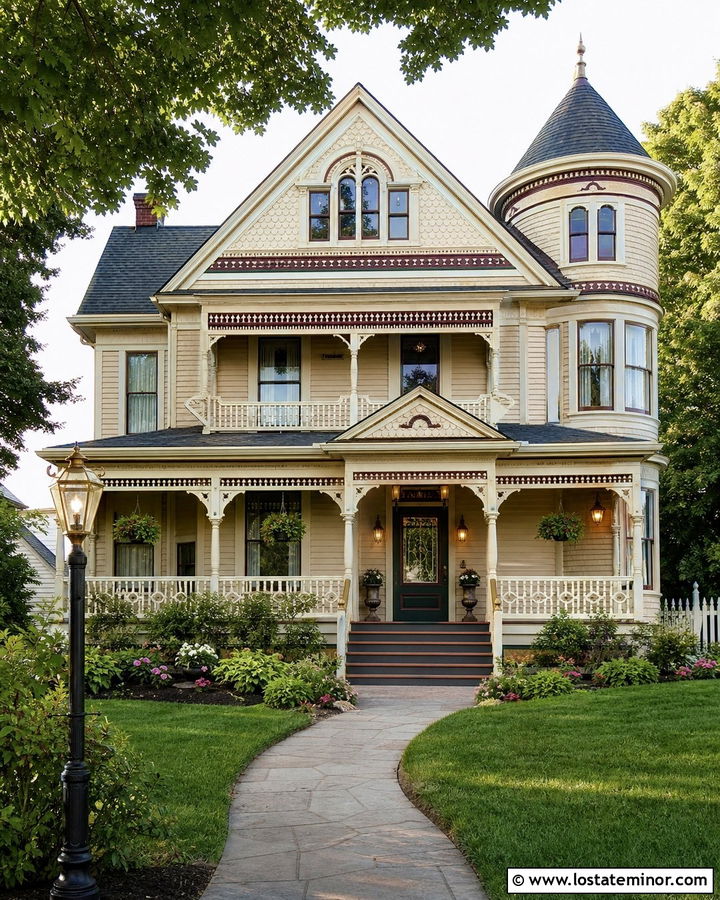
Detailed Victorian architecture requires lighting with enough presence to match the decorative facade. Select a soft biscuit-beige body color, ivory trim, muted burgundy accents, a dark green door, and a slate-gray roof. Ornate black or aged-brass lanterns can frame the entrance without competing with brackets, railings, and patterned shingles. If the porch is large, add a coordinating hanging lantern centered above the steps. Keep the fixture designs related, but not necessarily identical, to achieve a naturally collected appearance. Small post lights near a front gate can extend the traditional character toward the sidewalk. Warm white bulbs flatter the layered paint scheme and prevent pale trim from turning blue. The final exterior feels historic, welcoming, and carefully maintained rather than overly decorated.
17. Beige Midcentury House With Globe Lights
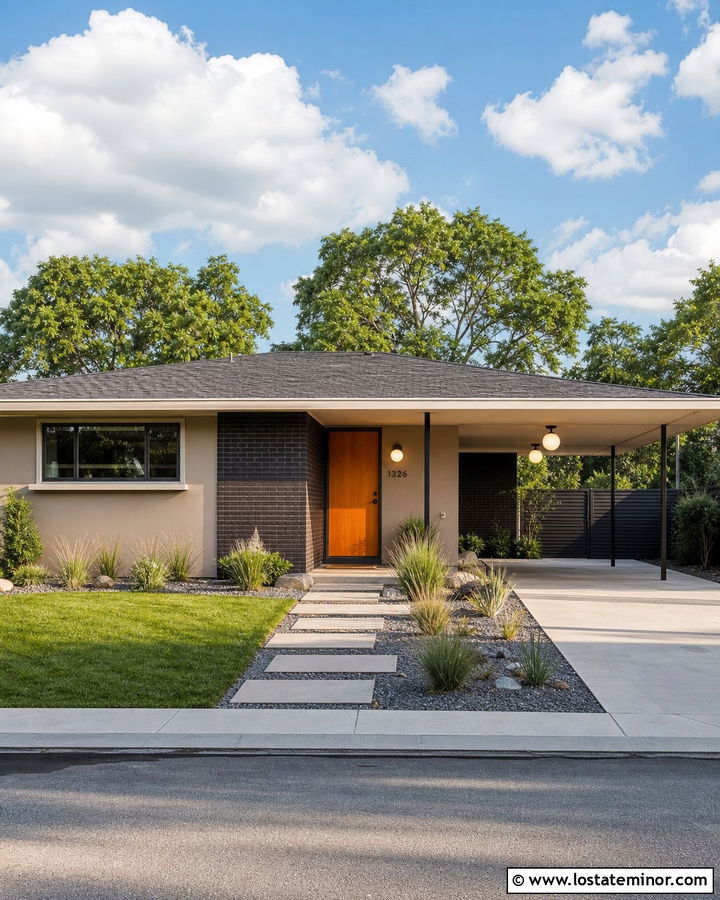
Globe lighting brings a period-appropriate accent to a beige midcentury exterior. Combine warm putty-beige siding with dark brown brick, cream fascia, an orange-toned wood door, and a low charcoal roof. A frosted globe sconce beside the entrance creates a recognizable focal point, while smaller coordinating globes can appear beneath a carport or covered breezeway. Keep the mounting plates black, brass, or bronze to connect with other exterior hardware. Low mushroom-shaped path lights can guide the route through geometric landscaping without disrupting the home’s clean lines. Large concrete pavers, ornamental grasses, and gravel reinforce the design. The rounded fixtures provide a welcome contrast to horizontal rooflines and rectangular windows while keeping the neutral exterior playful but authentic.
18. Beige Coastal House With White Lanterns
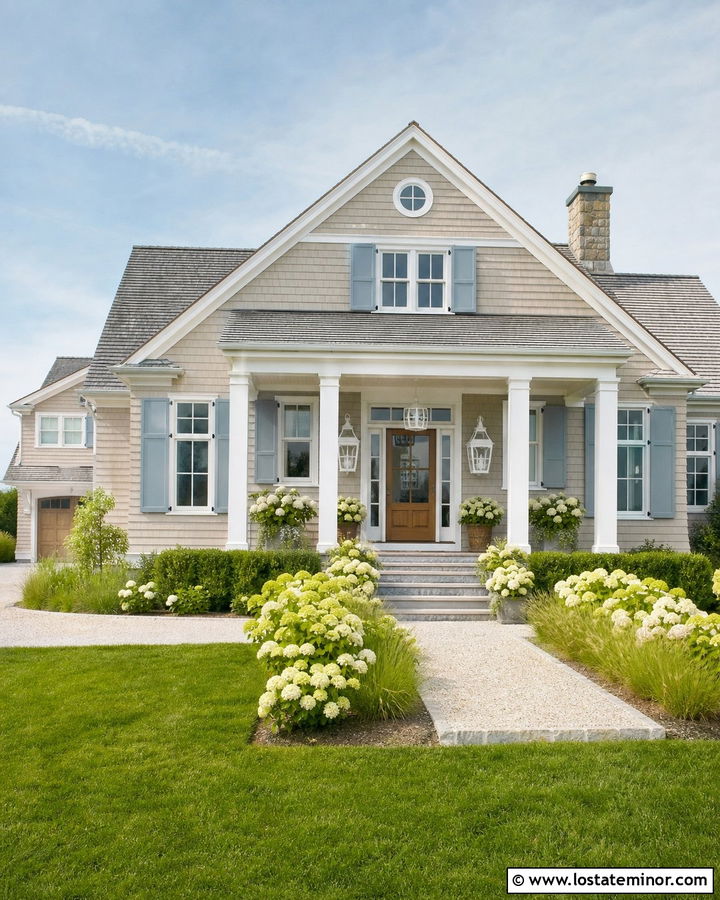
White lanterns can blend beautifully into a pale beige coastal exterior while preserving a breezy, low-contrast facade. Use light sand-beige shake siding with bright white trim, sea-glass blue shutters, a natural oak door, and a weathered gray roof. Mount generously sized white lanterns beside the entrance and garage so they remain visible against the warmer siding. Select corrosion-resistant materials and enclosed glass for better performance in exposed coastal conditions. A white hanging pendant can brighten a covered porch without introducing another dark accent. Low brass or bronze path lights may be used discreetly within the landscaping. Hydrangeas, dune grasses, and a shell-toned walkway complete the setting. The result feels airy in daylight and gently welcoming when illuminated.
19. Beige French Country House With Aged Iron Lights
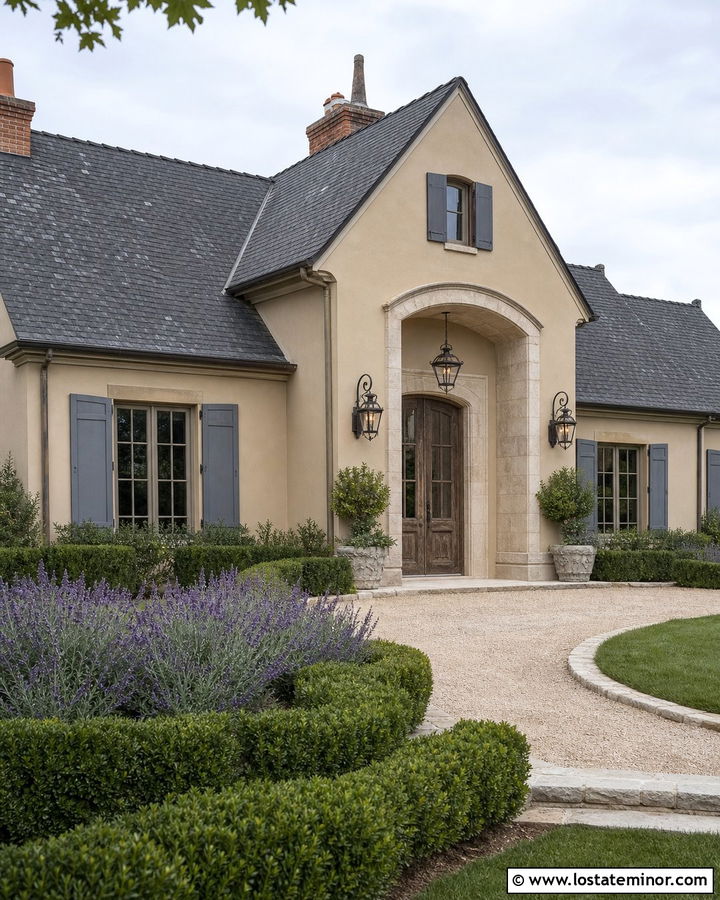
A beige French country home looks most cohesive when the lighting has an aged, handcrafted finish. Pair creamy limestone and beige stucco with pale taupe trim, a distressed wood door, blue-gray shutters, and a steep charcoal roof. Curved aged-iron lanterns should frame the entrance and repeat near the garage or side courtyard. A larger hanging lantern can anchor a deep arched portico. Avoid fixtures with overly shiny black surfaces, which may appear too new beside rustic stone and timber. Concealed uplights around the stone walls and mature trees add depth without competing with the facade. Lavender, clipped hedges, and gravel paths support the relaxed European influence while remaining appropriate for a polished American suburban property.
20. Beige Spanish House With Courtyard Lighting
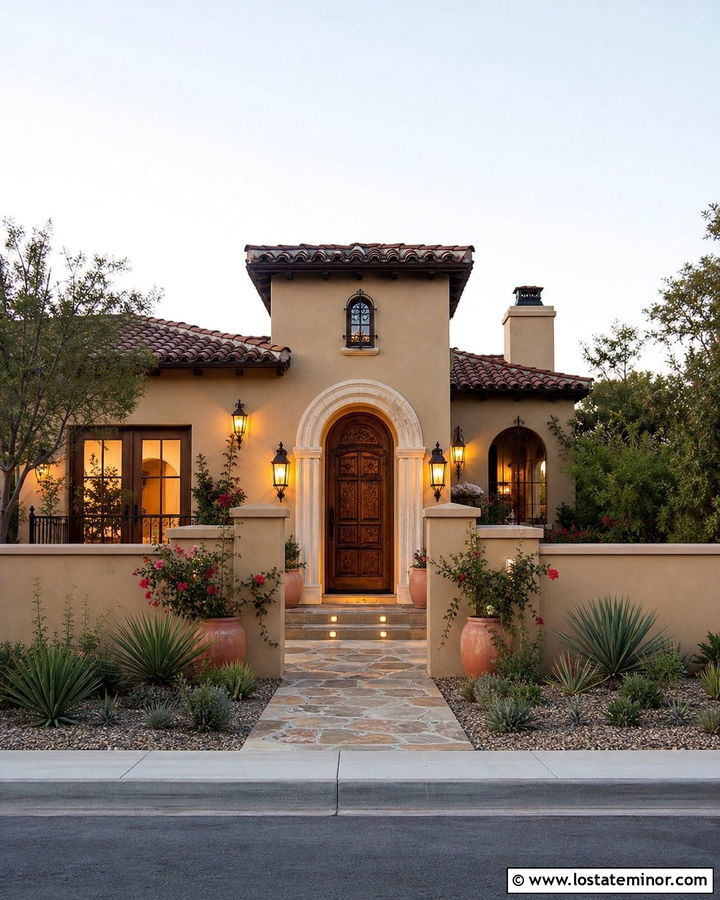
A Spanish-style beige house can use lighting to define its entry courtyard and layered masonry. Begin with warm adobe-beige stucco, cream trim, a dark carved wood door, wrought-iron accents, and a red clay tile roof. Install black iron lanterns on both sides of the doorway and repeat them along the courtyard walls. Recessed step lights can clarify elevation changes without disrupting the traditional architecture. Use a few concealed uplights to accent an arch, chimney, or sculptural tree. The lighting should remain warm and softly focused, allowing the stucco texture and tile colors to stay natural. Terracotta pots, gravel, flowering vines, and a low stucco wall complete a welcoming exterior that feels intimate rather than excessively illuminated.
21. Beige House With Wood Garage Doors And Sconces
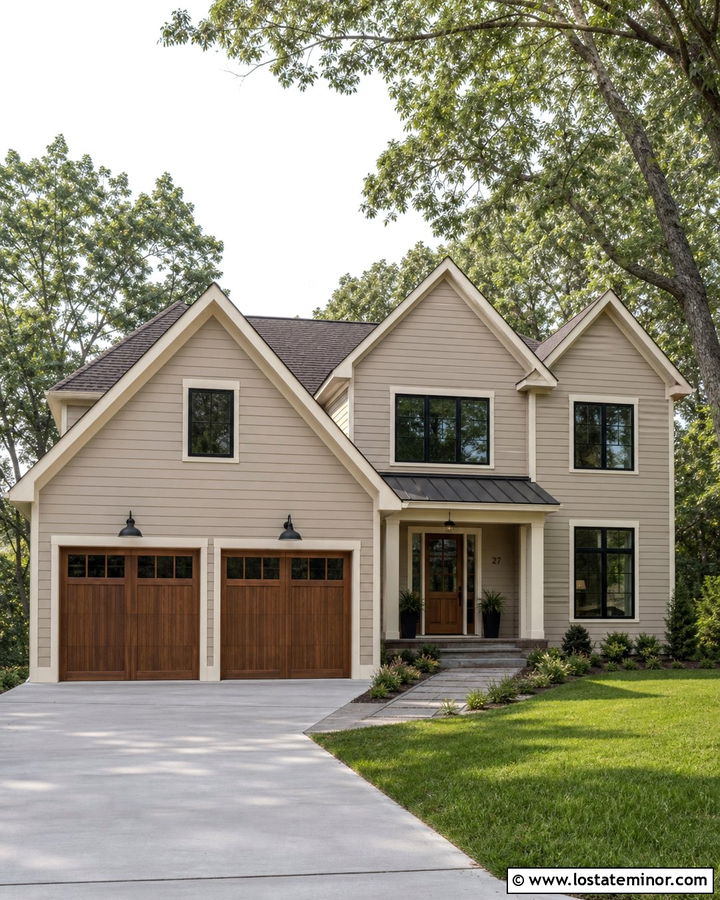
Natural wood garage doors can become an attractive design feature instead of a large visual distraction. Pair medium beige siding with cream trim, black windows, cedar garage doors, and a dark brown roof. Install substantial black sconces between and beside the doors to create a deliberate rhythm across the facade. Downward-facing fixtures are especially effective because they emphasize the wood grain while limiting glare toward the street. Repeat the same fixture family at the main entrance, but choose a slightly different size for proper scale. A stained wood front door will connect the garage to the porch. Simple foundation planting and a clean concrete driveway keep the view balanced. This palette feels warm, modern, and coordinated throughout the entire property.
22. Beige House With Covered Porch Pendants
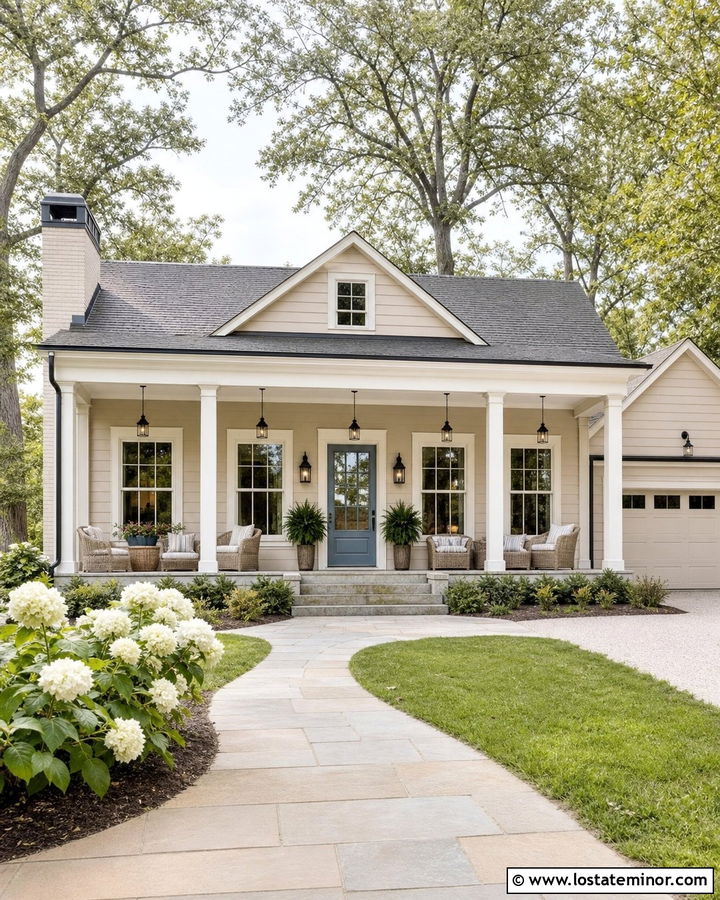
A deep covered porch deserves more than a single fixture beside the front door. Set the scene with soft beige siding, white columns, a pale blue door, gray shingles, and natural stone porch flooring. Install two or three pendant lanterns along the porch ceiling, spacing them evenly with the columns and seating areas. Their scale should suit the ceiling height and remain clear of normal walking paths. Matching wall sconces can frame the entry for stronger task lighting. Use dimmable warm LEDs so the porch can shift between functional brightness and a softer everyday setting. Wicker seating, blue-gray textiles, and layered shrubs complete the design. The lighting becomes part of the full facade rather than appearing like an isolated accessory.
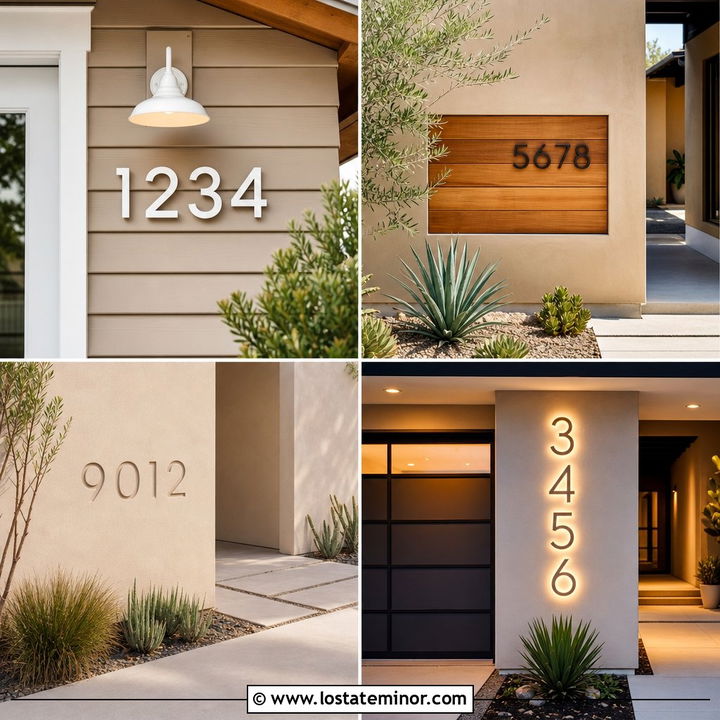
23. Beige House With Illuminated House Numbers
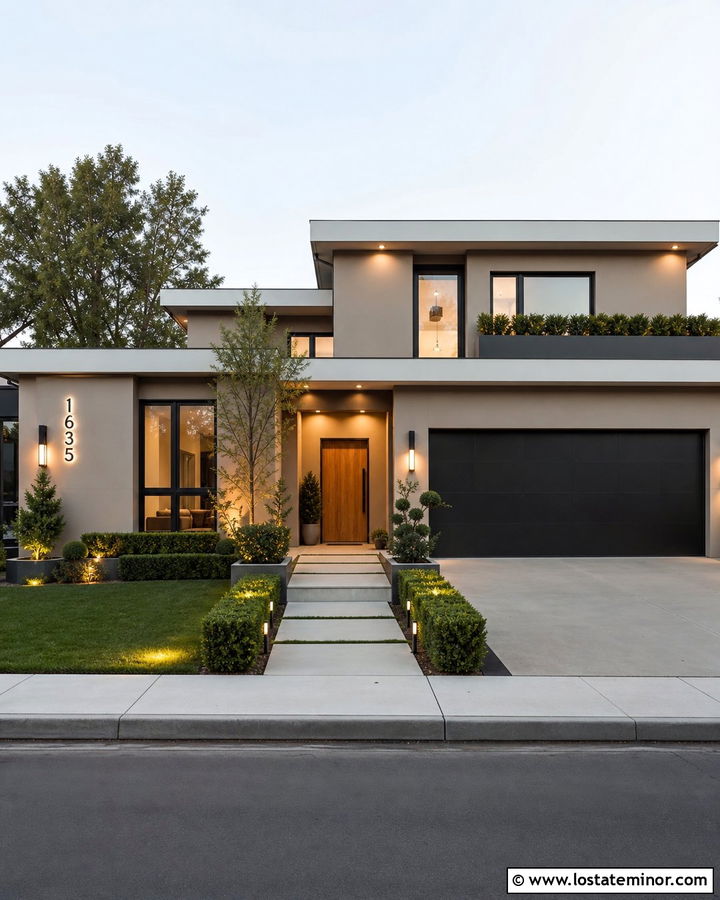
Illuminated house numbers add a useful modern detail to a simple beige exterior. Choose light greige-beige stucco with white trim, charcoal windows, a black garage door, and a medium wood entrance. Mount backlit metal numbers on an uncluttered wall near the door or garage where they remain visible from the street. Soft halo lighting gives the numbers definition without producing harsh brightness. Minimal cylinder sconces can repeat the black or bronze finish on nearby walls. Add recessed lighting beneath the entry canopy and low path lights along the walkway. Keep the typography simple and proportionate to the facade. This small upgrade improves nighttime visibility while helping a basic neutral house look more finished, contemporary, and thoughtfully planned.
24. Beige House With Driveway Bollard Lights
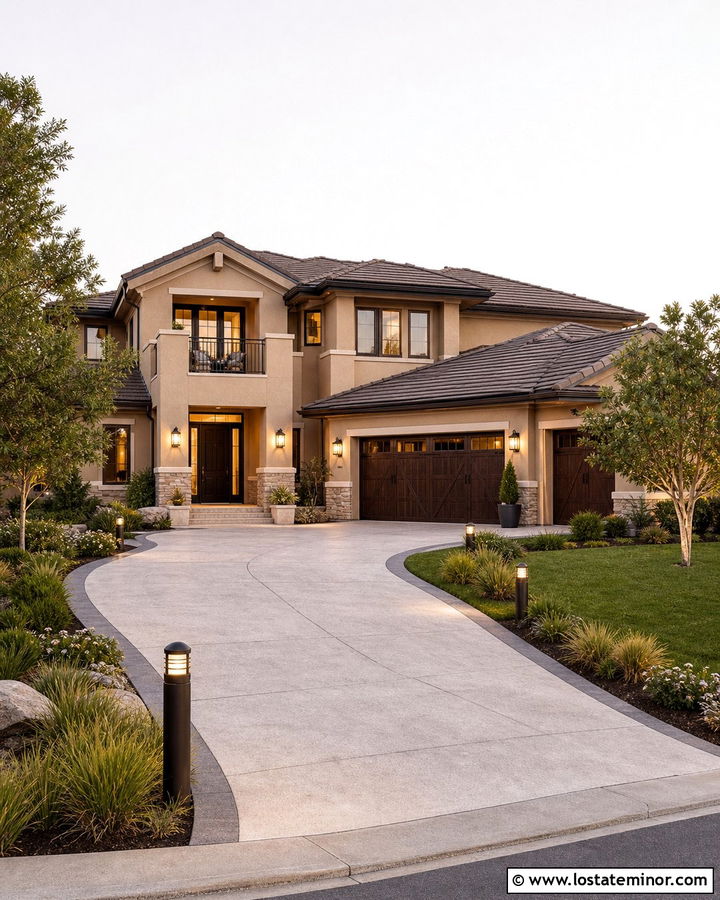
Bollard lights can connect a long driveway to a beige home while improving orientation around the property. Pair warm tan-beige siding with ivory trim, bronze windows, a dark wood garage door, and a brown-gray roof. Choose short, shielded bollards that direct light toward the pavement rather than outward toward neighboring homes. Space them at key transitions instead of lining the entire driveway like a runway. Matching bronze wall fixtures around the garage and entrance create visual continuity. Use landscape beds to soften each bollard base and keep the wiring concealed. A curving walkway, ornamental trees, and layered grasses help integrate the fixtures into the yard. This complete approach feels more refined than treating driveway lighting as a separate utility feature.
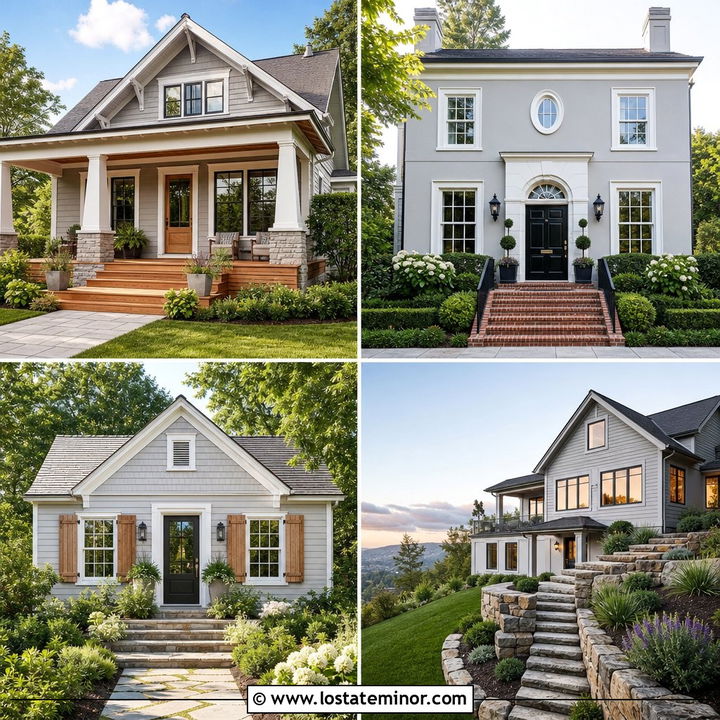
25. Beige House With Step And Railing Lights
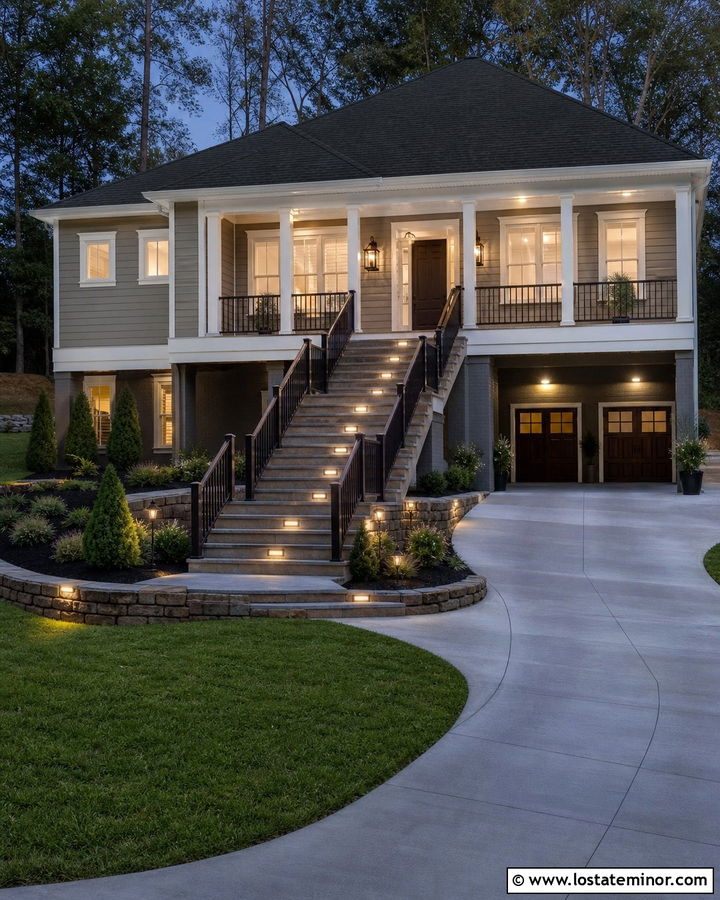
A raised beige home with broad front steps needs lighting that improves safety without overwhelming the entrance. Use mushroom-beige siding, white trim, black railings, a walnut door, and a dark gray roof. Small recessed lights installed in stair risers can illuminate each tread with minimal glare. Add tiny downward-facing fixtures beneath railing posts when the steps are wide or turn at a landing. Black wall lanterns beside the door connect visually with the railings and provide general porch light. Select one warm color temperature for every fixture so the materials remain consistent. Stone retaining walls, evergreen shrubs, and a gently curved path frame the elevation. The integrated lighting makes the entrance look architectural, polished, and easy to approach.
26. Beige House With Tree Uplighting
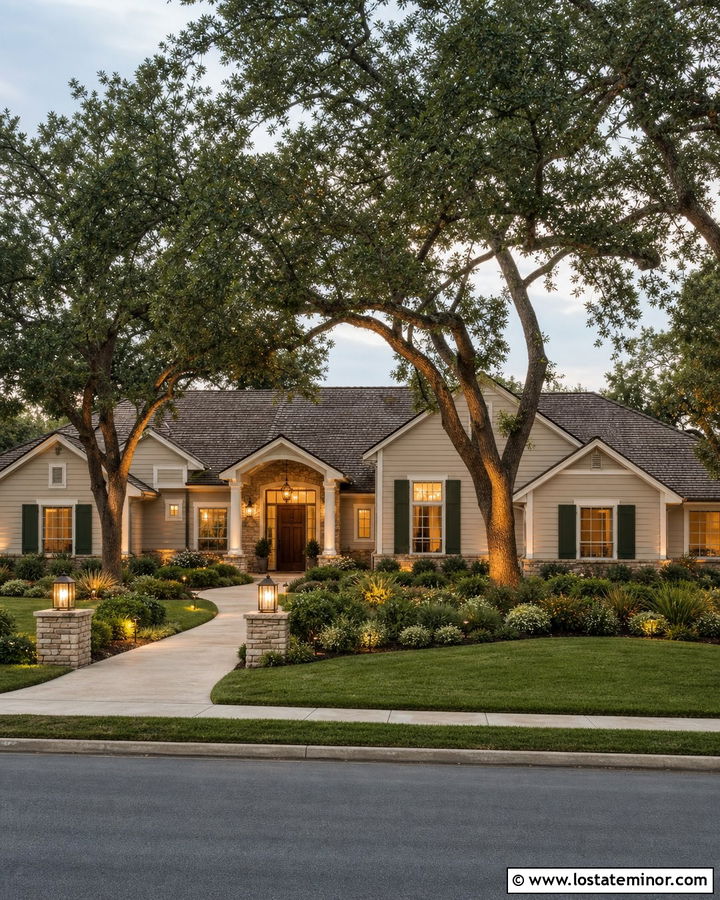
Mature trees can help a beige house feel established, especially when selective uplighting connects the landscaping to the architecture. Choose soft taupe-beige siding with cream trim, dark green shutters, a stained oak door, and a weathered brown roof. Position narrow-beam landscape fixtures near one or two prominent trees, aiming the light into the canopy rather than toward the street. Keep additional planting beds more softly lit to preserve contrast. Bronze porch lanterns and low path lights support the warm natural palette. Avoid illuminating every tree equally, which can flatten the yard and distract from the entrance. The layered landscape creates depth around the facade while allowing the beige exterior to remain the calm visual anchor of the complete property.
27. Beige House With Brick Path Lighting
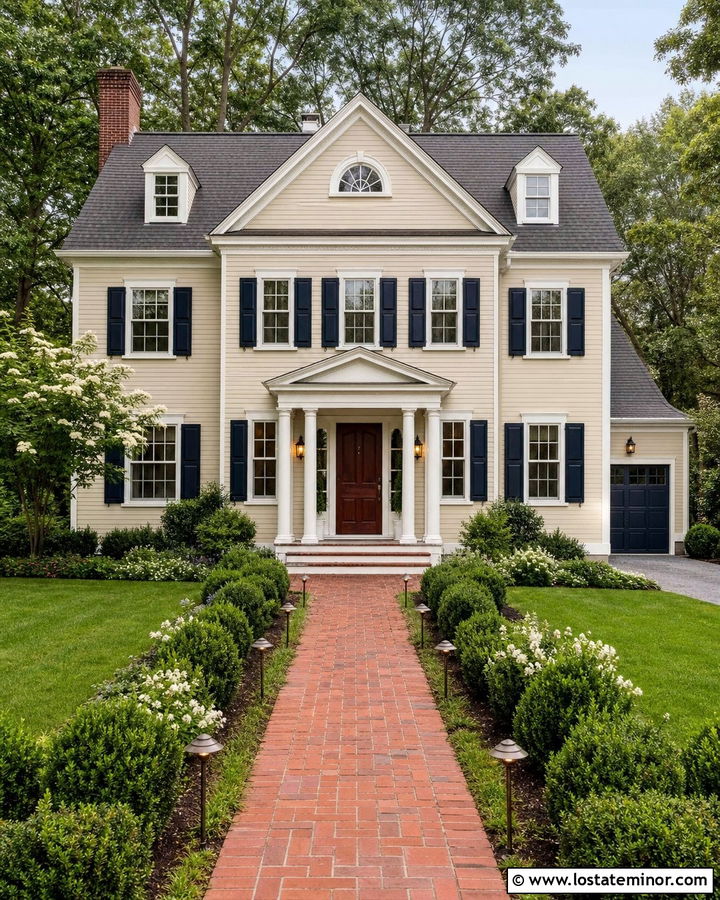
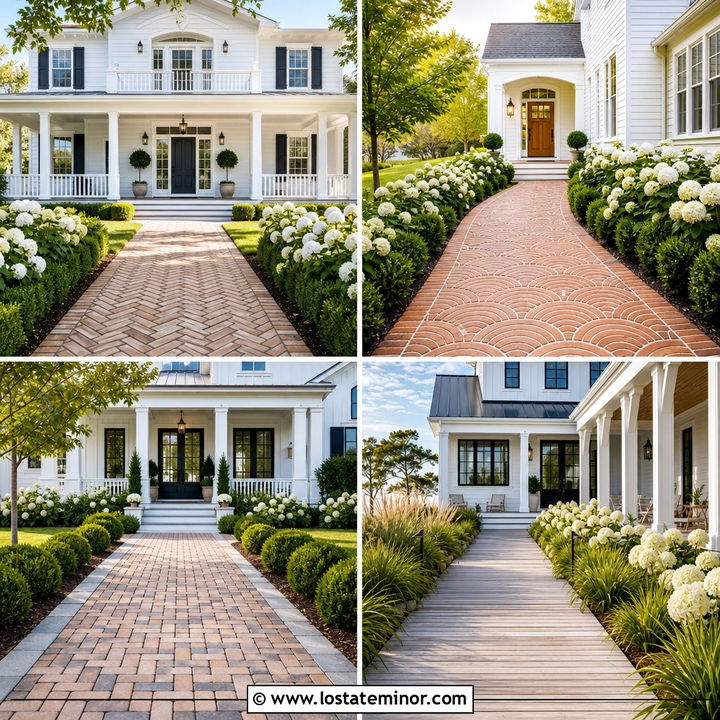
A brick walkway introduces warmth and texture to a beige exterior, and low path lighting makes that route more visible. Pair creamy beige clapboard siding with white trim, dark navy shutters, a mahogany door, and a charcoal shingle roof. Choose compact bronze path lights with shielded tops that direct illumination onto the bricks and surrounding plants. Stagger the fixtures instead of placing them in rigid pairs, which creates a more natural landscape. Traditional bronze lanterns at the porch continue the material and finish toward the house. Boxwood, flowering perennials, and low ground cover soften the walkway edges. The red-brown brick, deep blue accents, and warm beige siding produce a timeless scheme that works especially well on traditional suburban homes.
28. Beige House With Pergola String Lighting
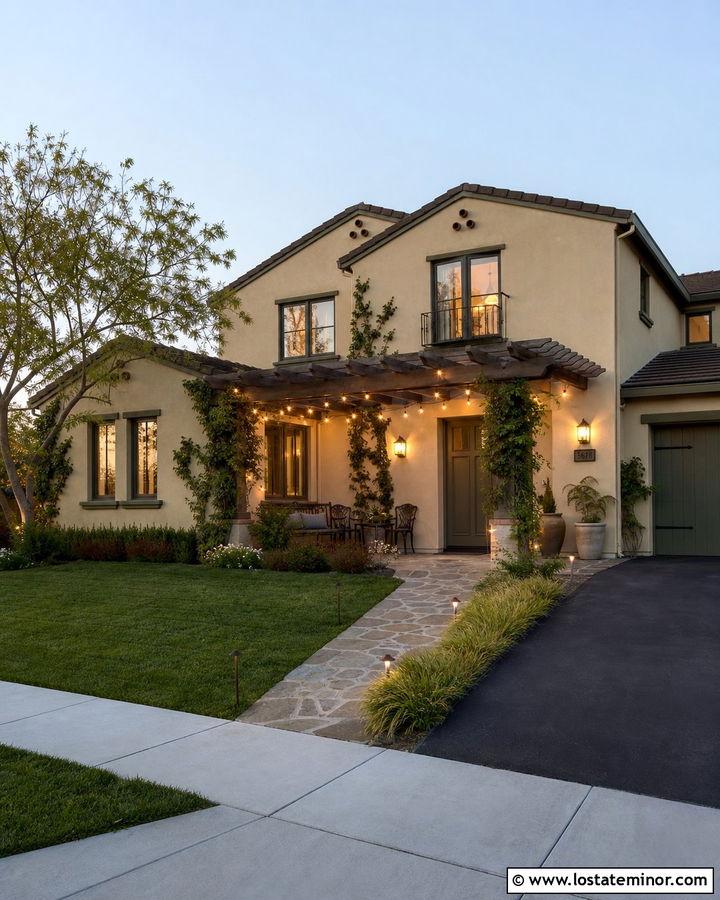
A front or side-entry pergola can give a beige home more architectural character when it is integrated carefully. Use warm linen-beige stucco or siding with cream trim, a cedar pergola, a muted olive door, and a medium-brown roof. Concealed downlights in the pergola beams provide dependable task lighting, while a restrained strand of commercial-style warm bulbs adds softer ambient light. Keep cords straight and neatly secured so the installation feels permanent rather than temporary. Bronze sconces beside the entrance coordinate with the wood and roof tones. Climbing vines, large planters, and a stone walkway help the pergola settle into the overall landscape. The complete exterior feels comfortable, casual, and ready for everyday outdoor use.
29. Beige House With Smart Exterior Lighting
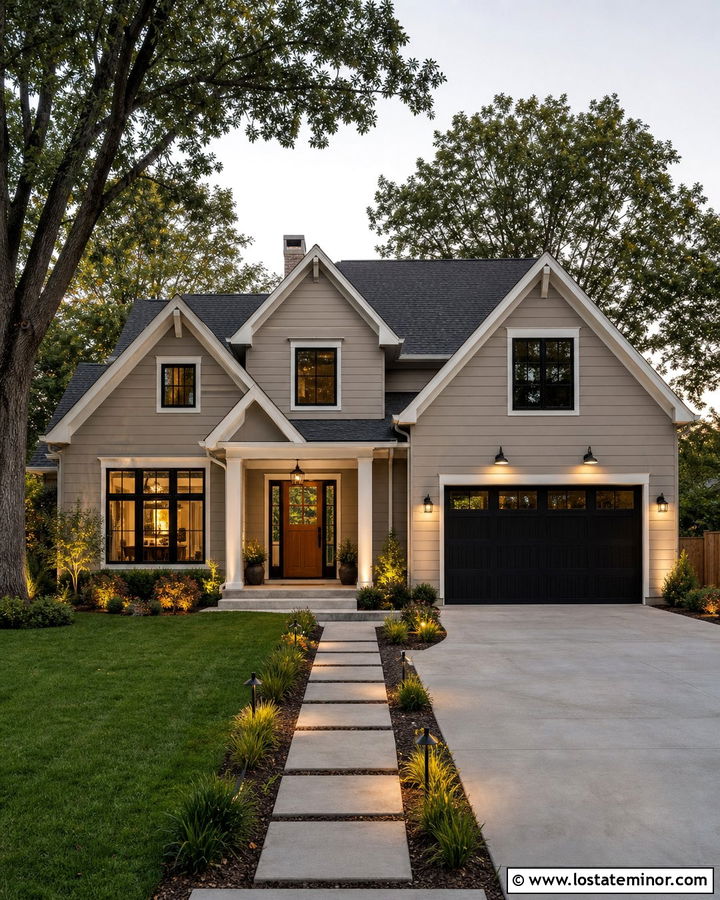
Smart controls allow a beige home to use multiple lighting layers without wasting energy or creating unnecessary brightness. Build the scheme around balanced beige siding, white trim, black windows, a natural wood door, and a charcoal roof. Combine porch lanterns, garage sconces, path lights, and limited landscape uplights on separate control zones. Timers can lower decorative lighting later at night, while motion activation keeps task areas functional when needed. Select fixtures with similar finishes so the technology remains visually discreet. Warm-dimming LEDs are useful when brighter entry light is occasionally required. The automation should support the architecture rather than become the main attraction. With careful zoning, the entire facade can appear polished, welcoming, and appropriately illuminated for different activities.
30. Beige Luxury House With Layered Lighting
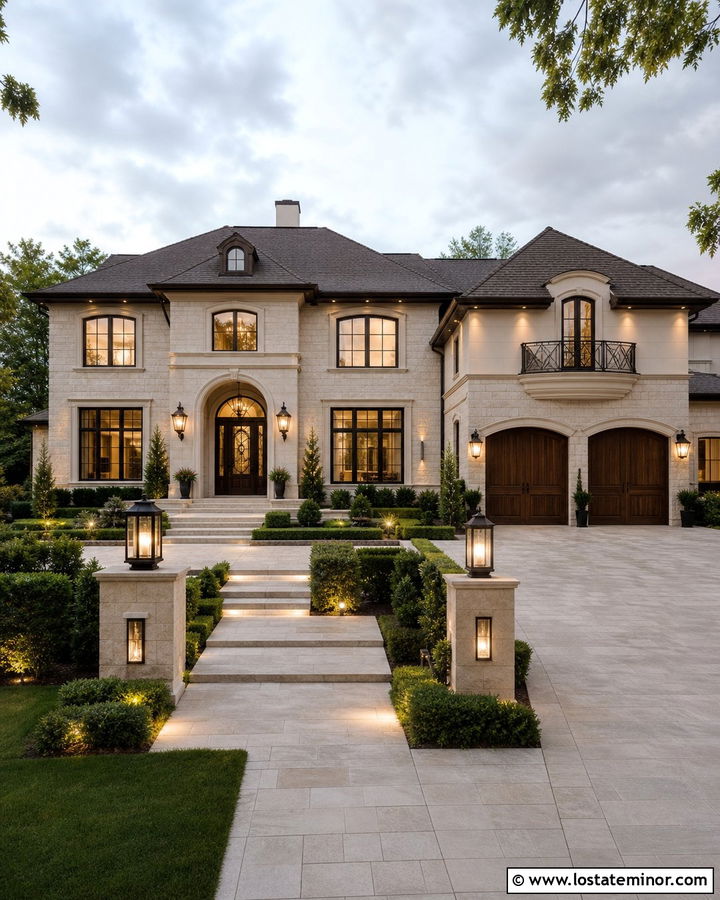
A large beige home requires several lighting layers to prevent the facade from looking flat or uneven. Combine pale stone-beige stucco with cream limestone, dark bronze windows, stained wood garage doors, and a deep brown roof. Use substantial entrance lanterns, restrained soffit lights, garage sconces, path fixtures, and narrow-beam landscape uplights. Each layer should serve a separate purpose and share the same warm color temperature. Highlight the main doorway, selected columns, and one or two mature trees rather than illuminating every architectural feature. Bronze fixtures blend naturally with the masonry and wood accents. Formal hedges, a wide stone walkway, and an open driveway preserve a clear view. The result feels sophisticated because the lighting is balanced, not simply bright.
Conclusion:
The most successful 30 Beige House Design With Lighting Ideas treat paint, fixtures, architecture, and landscaping as one connected plan. Begin with the beige undertone, then select lighting finishes that repeat colors already found in the roof, doors, windows, or masonry. Black creates crisp contrast, bronze feels grounded, and brass or copper adds welcoming warmth. Layer porch, path, garage, step, and landscape lighting only where each type has a clear purpose. Warm white bulbs generally complement beige better than cool blue light. Finally, choose fixture sizes that match the scale of the facade. With thoughtful placement and consistent finishes, exterior lighting can make any beige house feel distinctive, polished, safe, and inviting.

Related posts: