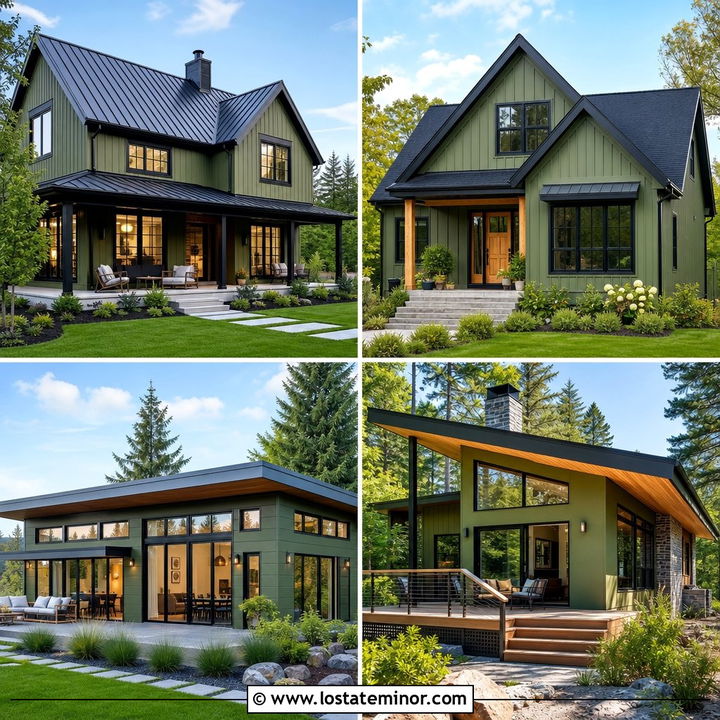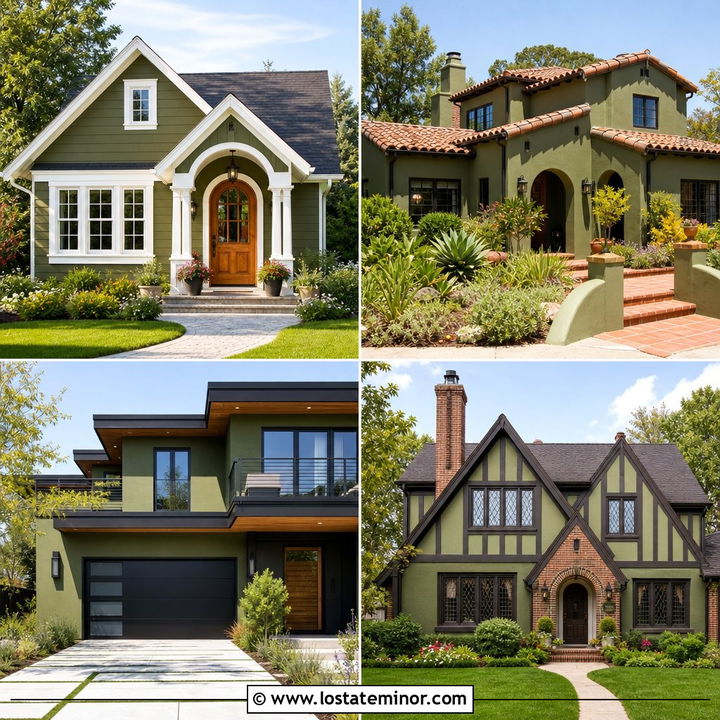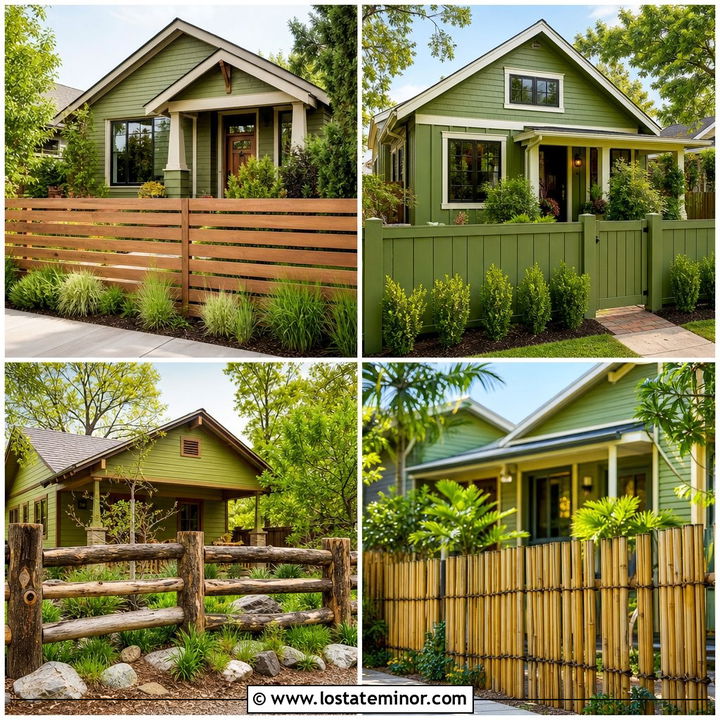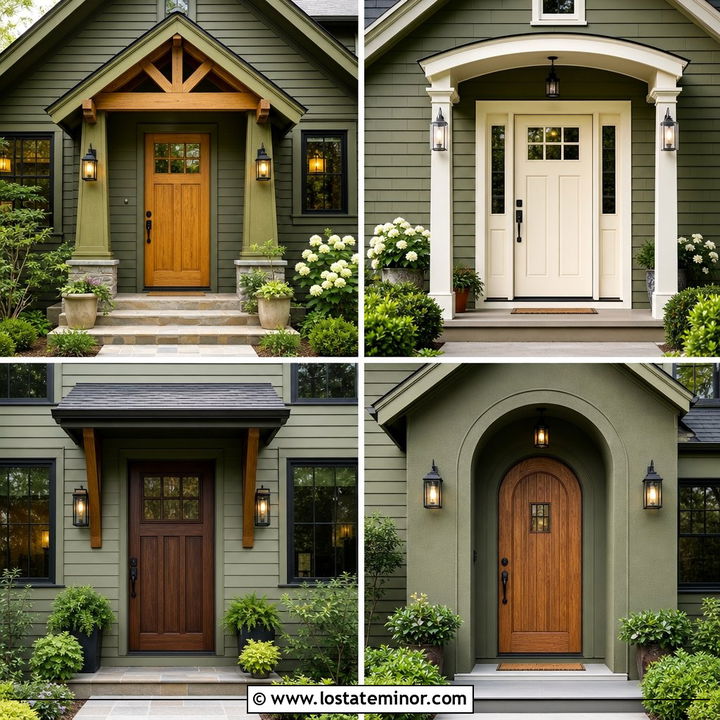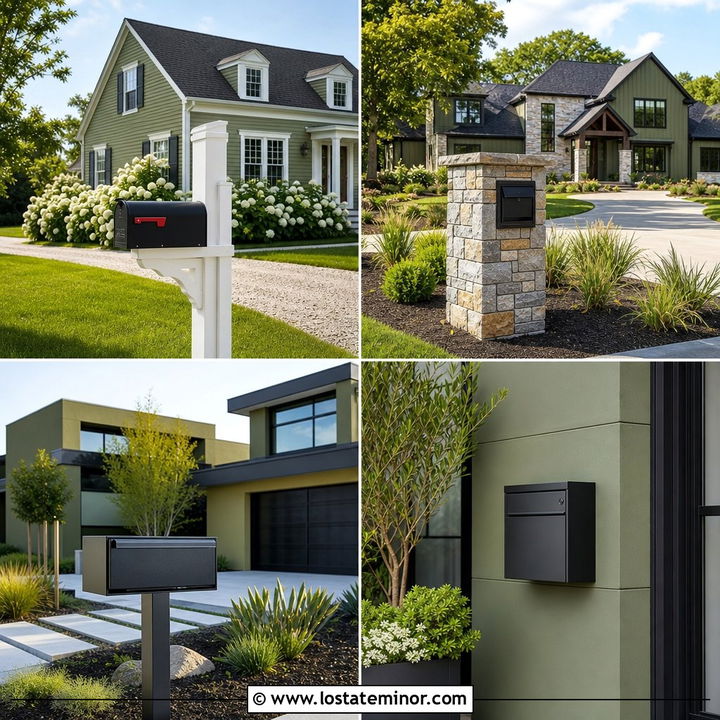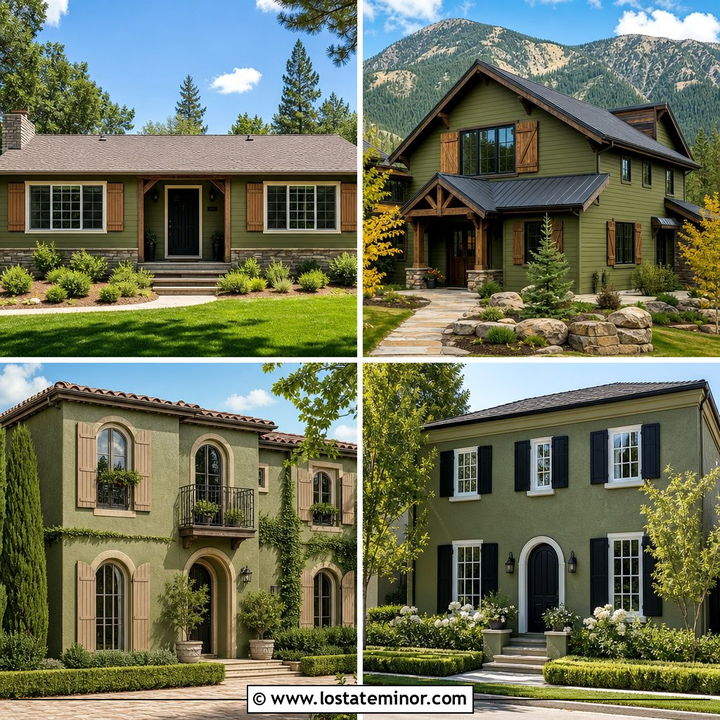
The best **30 Olive Green House Design With Roof Ideas** show how siding, roofing, trim, masonry, and woodwork can create one balanced exterior palette. Olive green is especially versatile because it can read warm, muted, or gray depending on the shade and natural light. It also complements many common roofing colors, including black, charcoal, brown, bronze, and weathered gray. Roofing should guide the overall scheme because it is usually a long-term exterior material, while existing brick, stone, and landscaping can influence which olive undertone looks most natural. () Always test exterior colors beside the actual roofing in morning and afternoon light before committing. The complete looks below explore distinctive architecture, materials, and palettes through **30 Olive Green House Design With Roof Ideas**.
1. Olive Green House With Black Shingle Roof
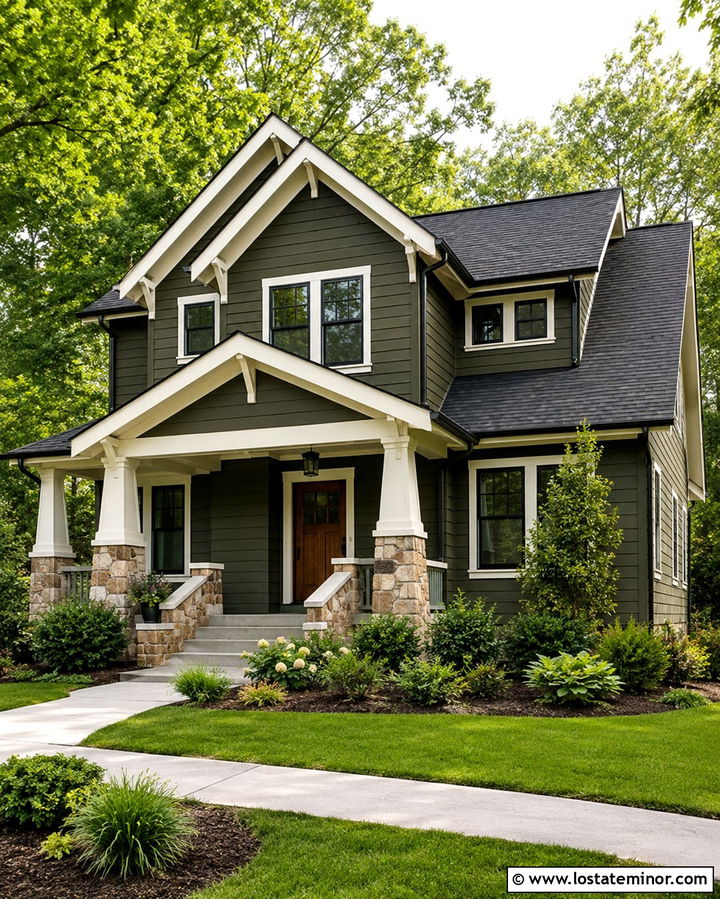
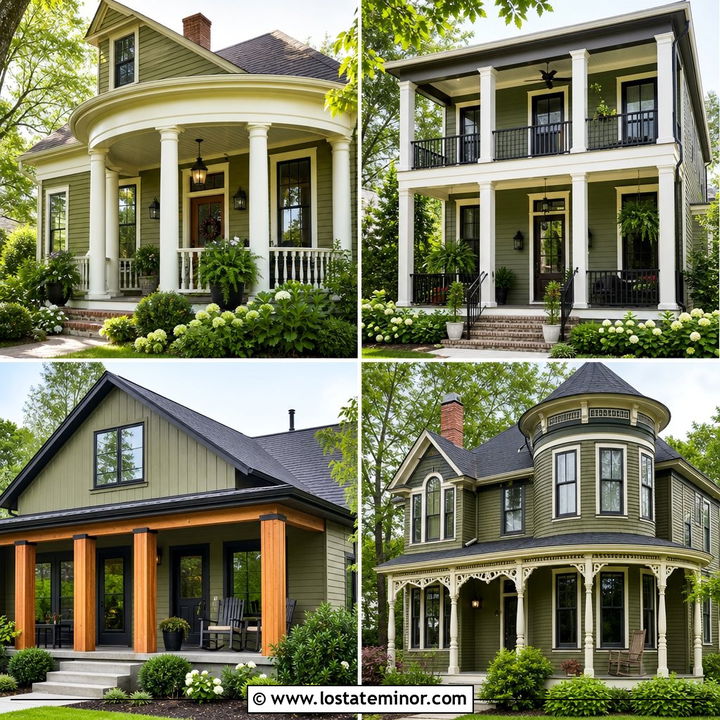
A black architectural shingle roof gives an olive green house a clean, defined outline without making the facade feel overly modern. Use a medium olive on horizontal lap siding, then add warm white trim around the windows, fascia, and porch columns. A walnut-stained front door introduces natural warmth between the green body and dark roof. Black gutters, lanterns, and window frames can repeat the roofing color in smaller amounts, making the entire exterior feel intentional. This combination works especially well on a traditional Craftsman with broad eaves and tapered columns. Keep the foundation stone warm and muted rather than blue-gray. A simple concrete walkway, layered evergreen shrubs, and ornamental grasses will complete the welcoming, grounded curb appeal.
2. Olive Green House With Charcoal Metal Roof
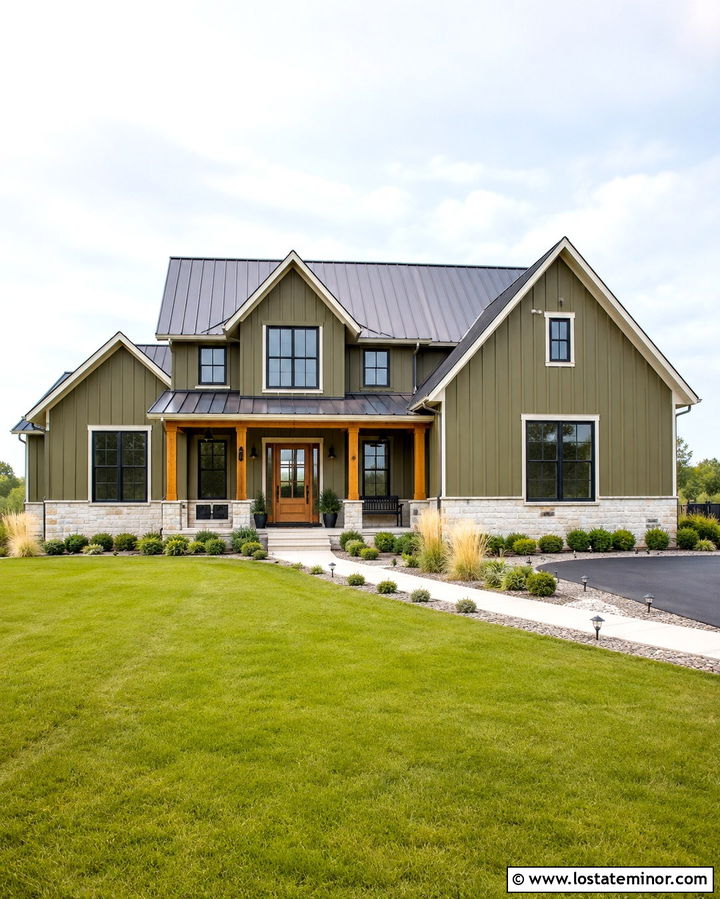
Standing-seam charcoal roofing gives olive green siding a sharper architectural character. The pairing is ideal for a modern farmhouse because the roof provides clean lines while the earthy body color softens the overall effect. Choose board-and-batten siding in a deep, slightly gray olive. Finish the windows and gutters in charcoal, but use creamy white on the fascia and porch ceiling to prevent the facade from appearing too dark. Natural cedar posts and a matching plank front door add enough warmth to bridge the cool metal and green siding. A pale stone skirt can lighten the base. Complete the exterior with a gravel-edged walkway, clipped shrubs, and a broad lawn so the strong vertical siding and roof seams remain the main visual features.
3. Olive Green House With Weathered Wood Roof
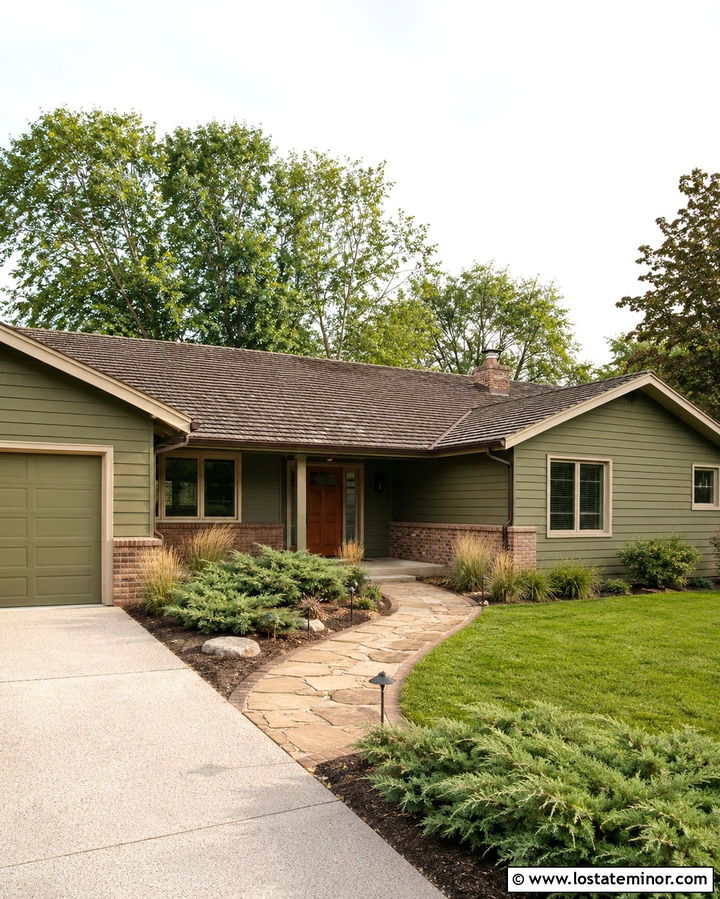
Weathered wood shingles contain brown, gray, and taupe tones that sit comfortably beside a warm olive green exterior. This flexible combination suits a one-story ranch with horizontal siding and a low, wide roofline. Select an olive shade with brown undertones, then use soft cream for the trim and garage door. A muted clay or rust-colored front door can create a modest focal point without overpowering the natural palette. Repeat dark bronze on the gutters, porch light, and door hardware. If the home has brick, choose earthy red or brown brick rather than a bright orange finish. Broad foundation beds, low junipers, and a curved flagstone path reinforce the relaxed character while giving the simple ranch facade more dimension.
4. Olive Green House With Bronze Metal Roof
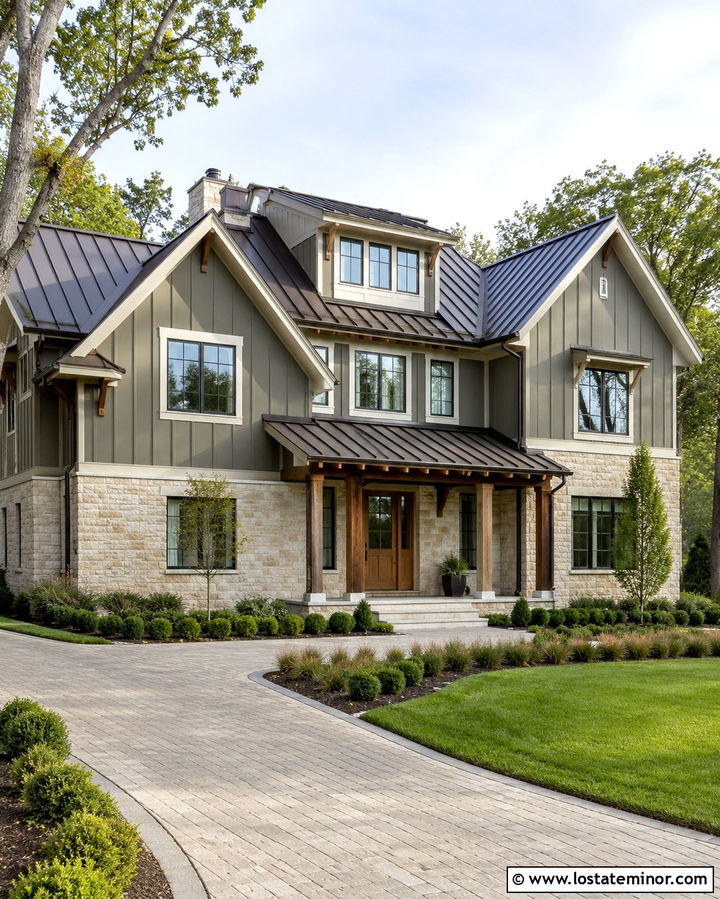
Dark bronze metal roofing brings warmth and depth to olive green without producing the stronger contrast of solid black. This scheme looks polished on a transitional home with multiple gables, mixed siding, and a covered entry. Use muted olive lap siding across the main walls and slightly darker olive board-and-batten in the gables. Cream trim keeps the roofline crisp, while stained oak doors and porch beams connect naturally with the bronze roof. Carry bronze onto the gutters, window frames, and garage hardware for continuity. Warm limestone around the entry can brighten the facade and provide subtle texture. Finish the look with structured boxwoods, airy grasses, and a wide paver driveway that complements the stone without introducing another competing color.
5. Olive Green House With Cedar Shake Roof
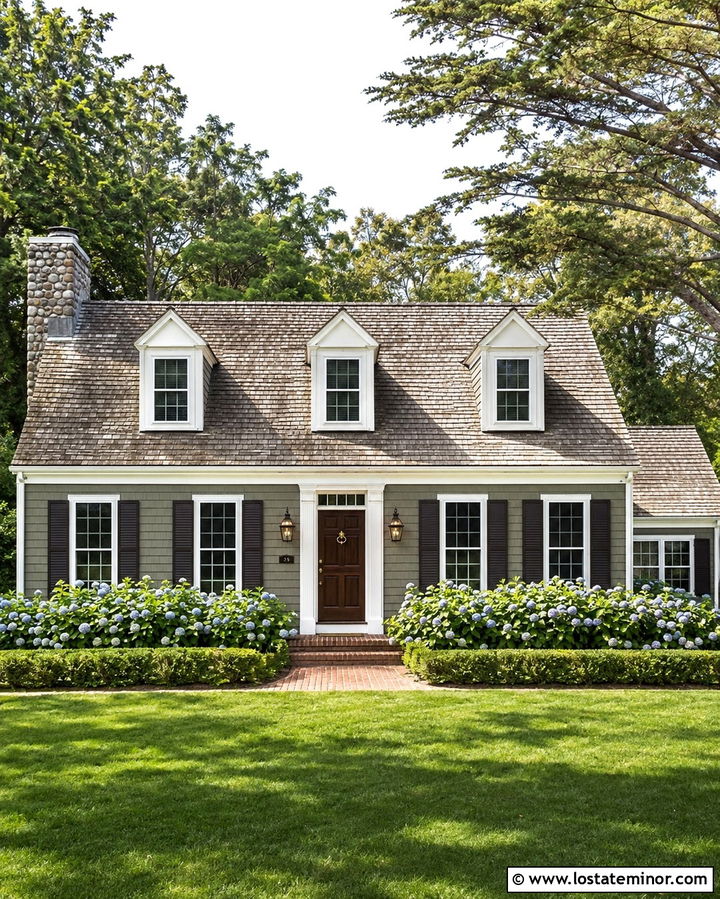
A cedar shake roof creates a rich, natural partner for olive green siding, especially as the wood develops a softer weathered finish. Use this combination on a Cape Cod house with symmetrical dormers, cedar shingles, and a welcoming central entrance. A medium olive body color will provide enough contrast against the warm roof while still feeling connected to the surrounding landscape. Paint the trim creamy white and select a deep brown door with simple brass hardware. Stone steps and a fieldstone chimney can introduce more organic texture without making the exterior busy. Keep shutters optional; if used, choose dark olive rather than black. Hydrangeas, low hedges, and a brick walkway will soften the structured facade and support its traditional coastal character.
6. Olive Green House With Terracotta Tile Roof
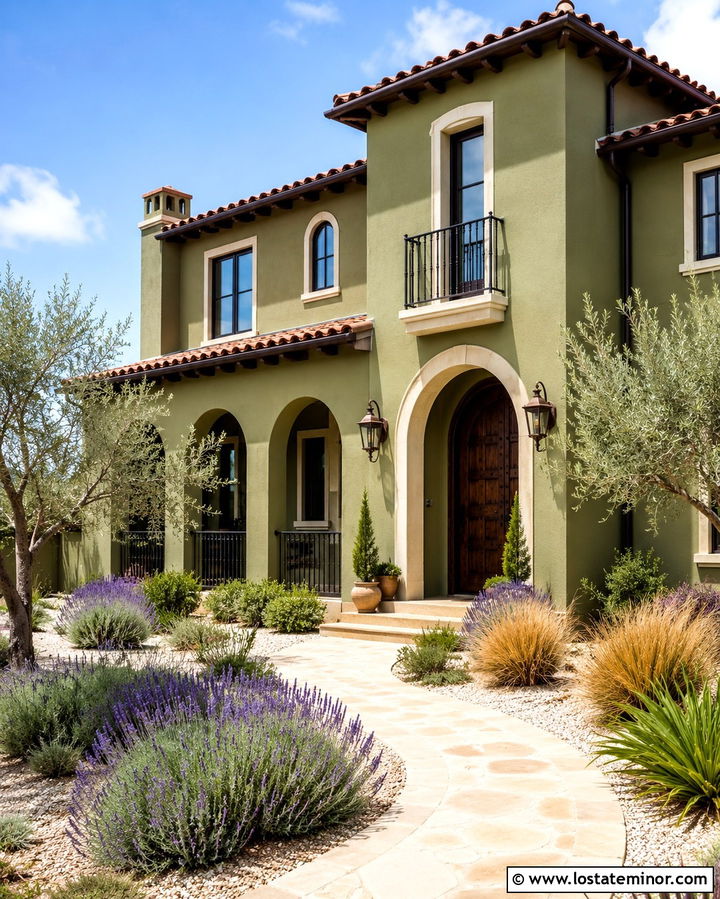
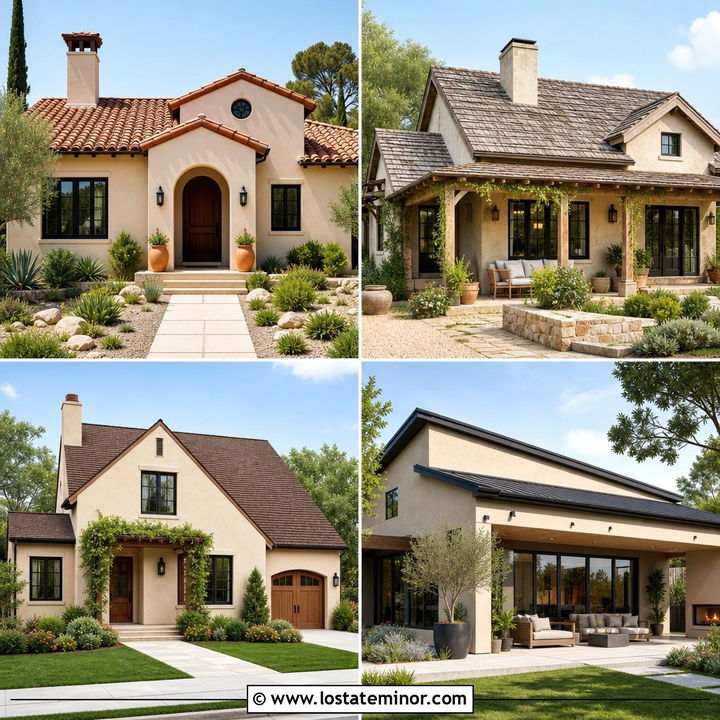
Terracotta roof tiles can make olive green feel sunnier and more Mediterranean. The key is selecting a warm olive with subtle yellow or bronze undertones rather than a cool blue-green shade. Apply it to smooth stucco walls on a Mediterranean-inspired home, then use creamy beige around the windows, arches, and cornice details. A dark stained wood door will anchor the entrance, while bronze lanterns and wrought iron railings echo the roof’s earthy depth. Keep decorative tile limited so it does not compete with the strong roof color. Gravel beds, olive trees, lavender, and drought-tolerant grasses make appropriate landscape companions. A curved stone walkway and low stucco wall can complete this warm, cohesive exterior without distracting from the roofline.
7. Olive Green House With Natural Slate Roof
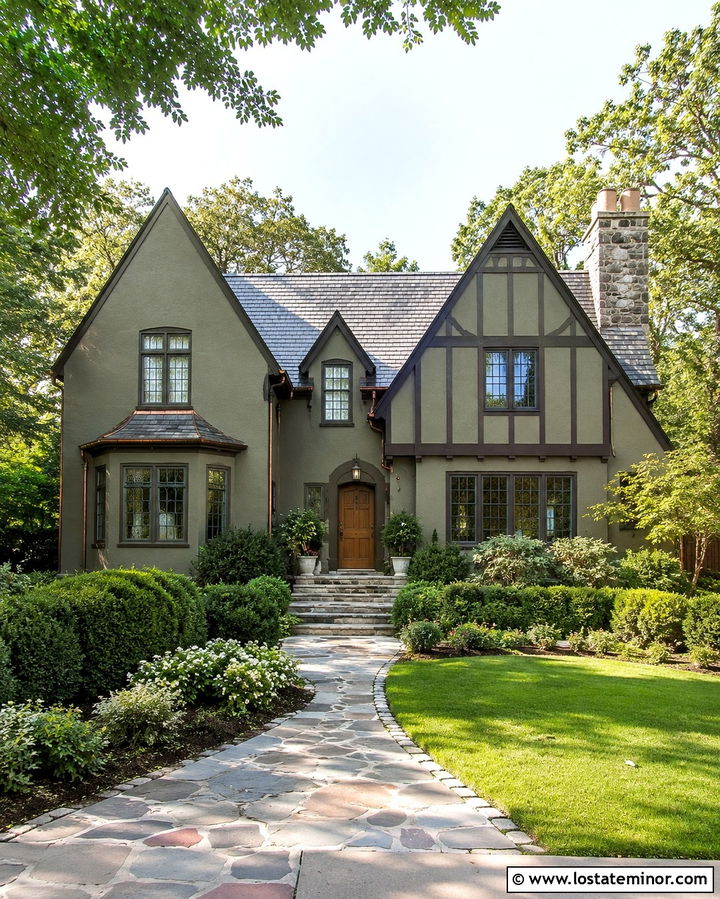
Natural slate roofing adds subtle blue, charcoal, and gray variations that can refine a dark olive exterior. This sophisticated scheme is particularly effective on a Tudor home with steep gables, leaded windows, and decorative timbering. Use deep olive green on the stucco or siding, soft greige on the trim, and near-black brown on the half-timber details. The front door can be stained medium oak to introduce a warmer note beneath the cool slate. Add gray fieldstone around the base or chimney so the roof has a related material at ground level. Copper gutters will slowly develop character while providing restrained contrast. Mature trees, clipped hedges, and an irregular flagstone walk can make the home feel established and beautifully integrated with its setting.
8. Olive Green House With Light Gray Metal Roof
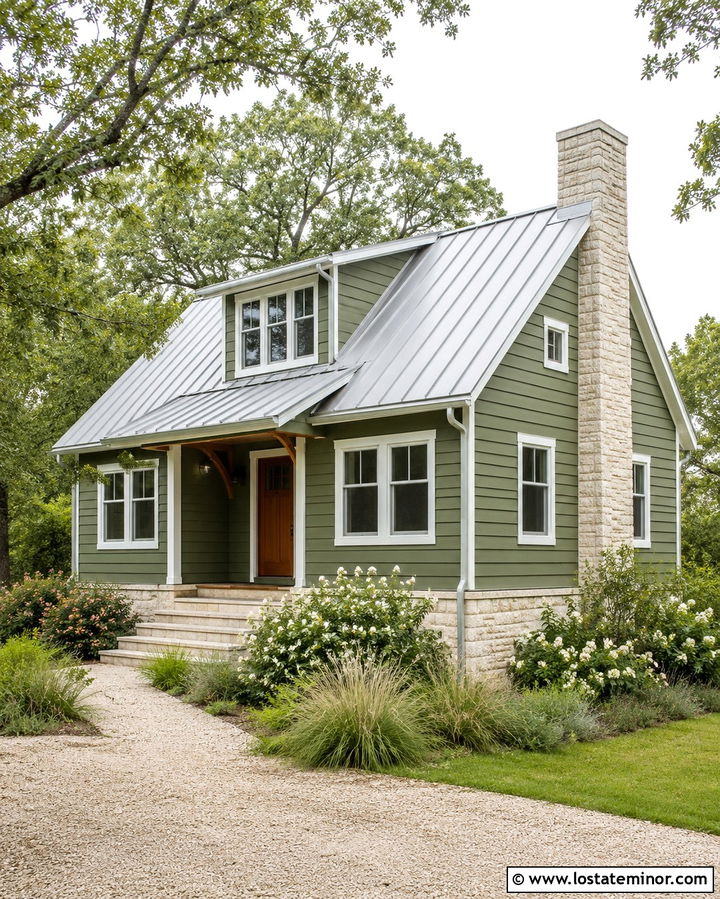
A light gray metal roof can brighten olive siding and create an airy exterior suited to sunny or warm climates. Choose a dusty olive body color with noticeable gray undertones so the transition between the walls and roof feels smooth. On a cottage-style house, combine horizontal siding with white window trim, simple porch columns, and a pale natural-wood door. The light roof reflects attention toward the home’s roof shape, so keep gutters and fascia in a similar gray or clean white. A low stone foundation in cream and soft gray adds texture without weighing down the facade. Use native grasses, flowering shrubs, and a crushed-stone path to maintain the relaxed appearance. The finished house should feel fresh, approachable, and naturally colorful rather than overly contrasted.
9. Olive Green House With Copper Roof
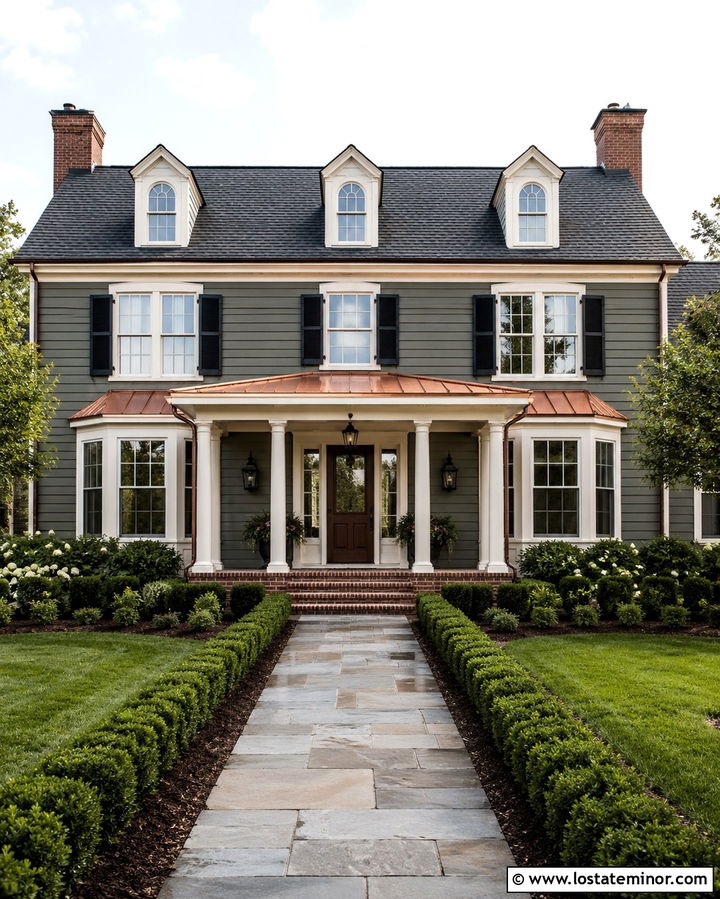
Copper roofing creates a memorable accent against olive green, particularly when used on porch roofs, bay windows, or small dormers rather than every roof plane. Start with rich olive siding on a stately Colonial house and use warm ivory on the corner boards, window trim, and classical entry surround. A polished mahogany front door can balance the warmth of new copper. As the metal ages, its changing finish will remain compatible with the natural green palette. Keep the main roof in dark charcoal shingles so the copper details remain special. Traditional brick steps, black lanterns, and simple brass hardware finish the composition. Symmetrical hedges, small ornamental trees, and a straight stone walkway reinforce the formal architecture without competing with the distinctive roof accents.
10. Olive Green House With Brown Shingle Roof
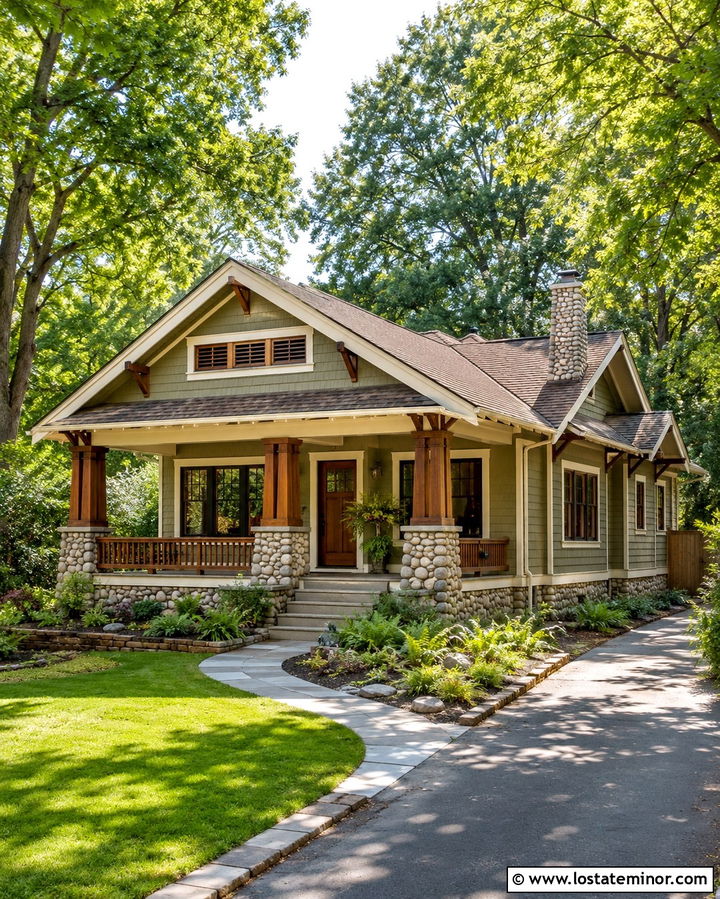
A brown shingle roof can make an olive green exterior feel warm, comfortable, and well suited to a wooded setting. Choose a roof blend containing several earthy browns rather than one flat chocolate tone. A bungalow with olive clapboard siding, cream trim, and exposed wood rafters is a natural fit for this palette. Use medium-stained cedar on the porch columns and front door to connect the roof to the lower half of the house. Dark bronze window frames and lighting add definition without introducing harsh black. A river-rock foundation or chimney can supply additional brown and gray notes. Surround the home with ferns, native shrubs, and a gently curved walkway. The result feels layered and inviting while preserving the bungalow’s handcrafted architectural personality.
11. Olive Green House With Red Metal Roof
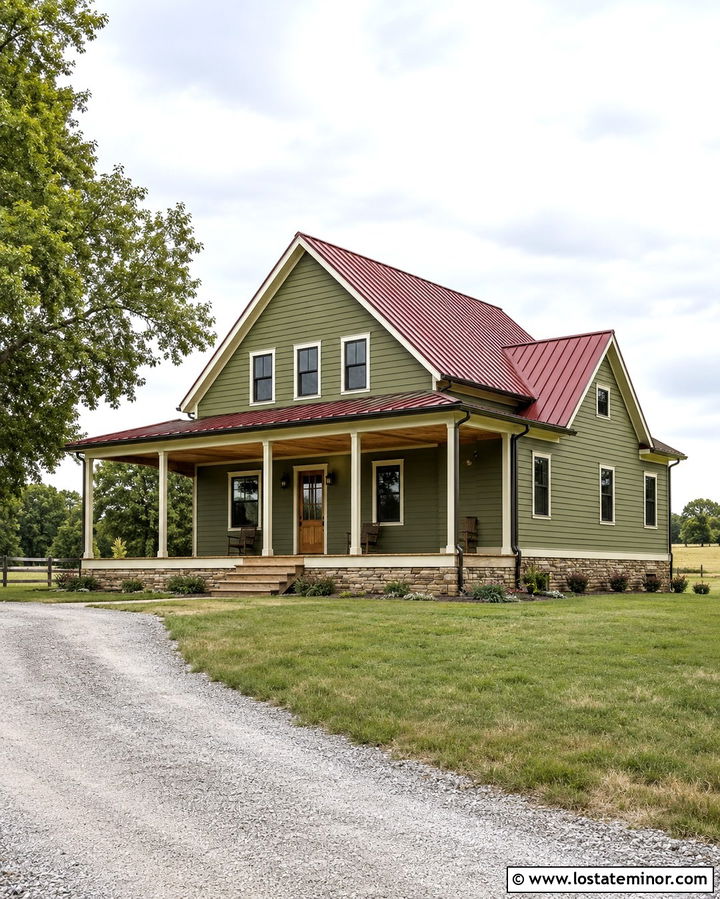
For a more expressive exterior, pair muted olive green with a deep barn-red metal roof. The green must remain subdued so the combination feels architectural rather than seasonal. This approach suits a rural farmhouse with simple lap siding, a broad front porch, and a practical gabled roof. Use warm cream for the trim, porch railing, and window casings. Natural wood on the front door and porch ceiling prevents the red and green from becoming the only dominant colors. Choose black or dark bronze for small hardware details. A stone foundation in tan and gray can further ground the palette. Complete the setting with a gravel driveway, meadow-style plantings, and a restrained fence, allowing the strong roof silhouette to provide most of the home’s personality.
12. Olive Green House With Dark Green Roof
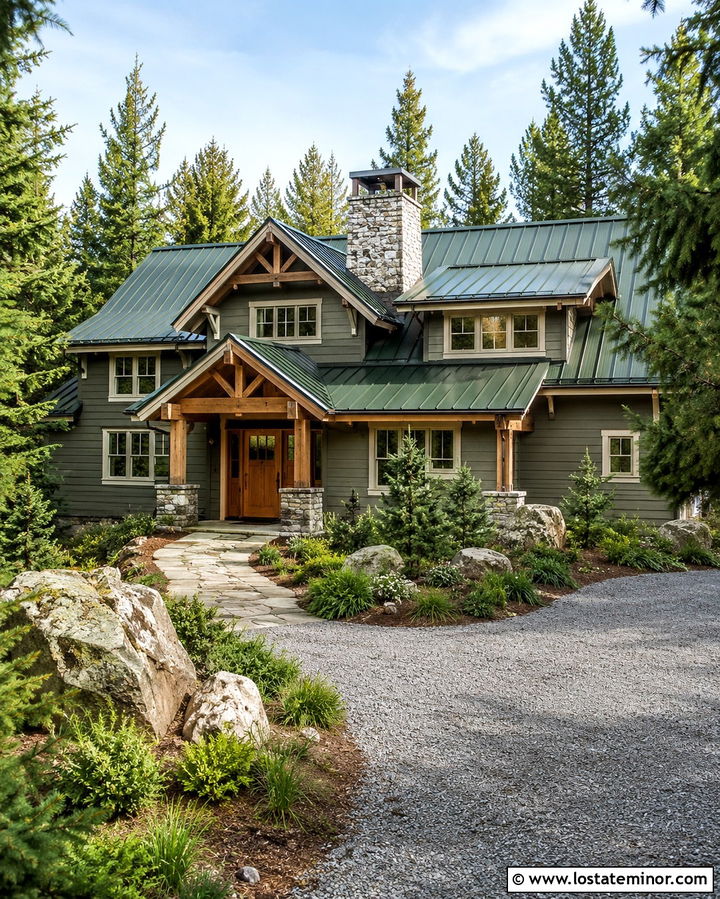
A tonal green exterior can look remarkably cohesive when the roof is clearly darker than the siding. Use medium olive green on the walls and a deep forest green metal roof overhead. This combination works well for a mountain cabin with broad eaves, exposed rafters, and a covered timber porch. Cream window trim provides separation, while a natural cedar door and heavy wood beams keep the design from feeling monochromatic. Add rough gray stone to the chimney and foundation for contrast and durability. Match the gutters to the roof so they disappear into the roofline. Evergreen trees, boulders, and low native plantings will blend the house into its surroundings. The varied textures ensure the similar greens feel layered rather than flat or overly matched.
13. Olive Green House With White Metal Roof
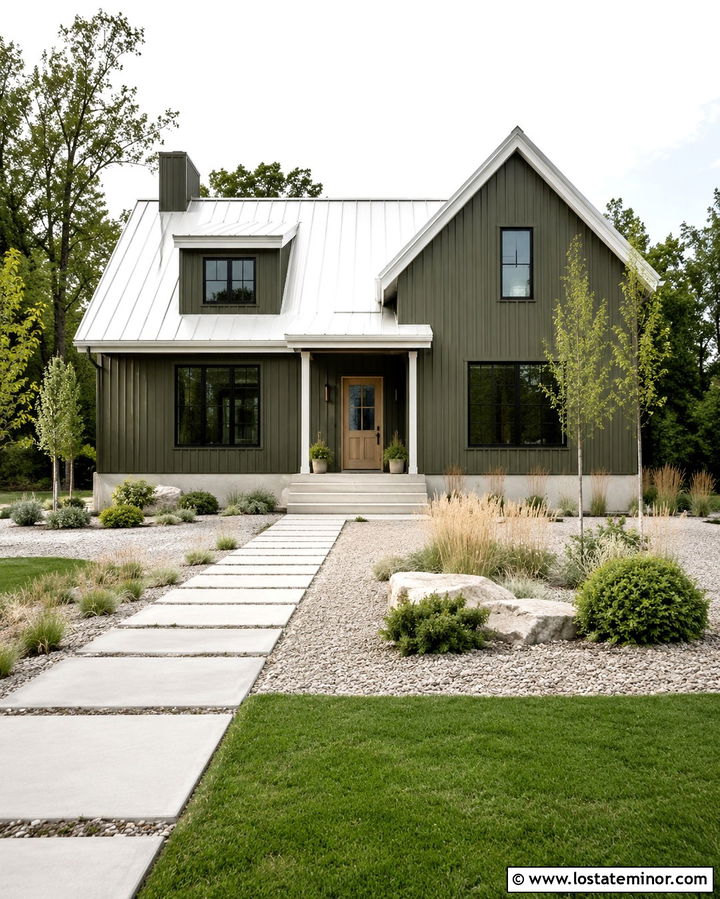
A bright white metal roof gives olive green walls an unexpected, crisp finish. It can be especially successful on a small modern cottage or Scandinavian-inspired home with simple roof geometry. Select a medium-dark olive for the vertical siding so the white roof has enough contrast to define the structure. Continue white onto the fascia and window trim, then add pale natural wood around the recessed entry. Black window frames and minimal exterior lights can provide small, controlled accents. Keep the foundation light gray to maintain the clean appearance. A narrow concrete path, decorative gravel, ornamental grasses, and a few sculptural shrubs suit the pared-back architecture. The complete palette feels modern and bright while allowing the olive facade to remain the dominant curb-appeal feature.
14. Olive Green House With Blue Gray Roof
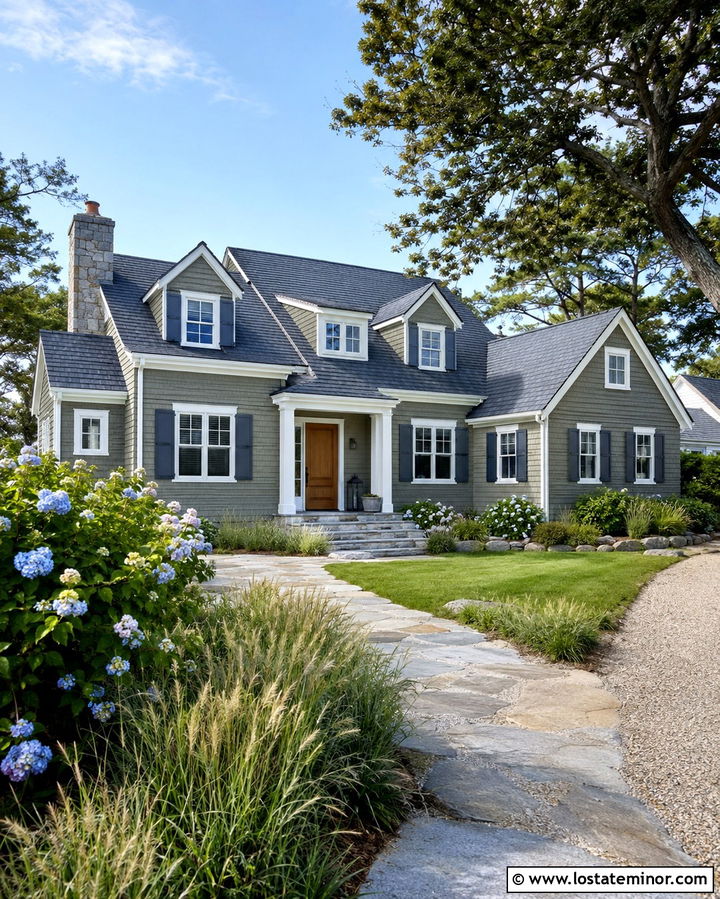
Blue-gray roofing brings out the cooler qualities of muted olive siding. This balanced combination is attractive on a coastal Cape Cod or shingle-style house where the goal is color without excessive contrast. Use a gray olive on cedar shingles or lap siding, then apply soft white to the dormers, window frames, and porch railings. A medium-toned oak door warms the cool palette and creates a welcoming center. Blue-gray shutters may be included, but they should be slightly darker than the roof so they remain visible. Pale granite steps and a weathered stone walkway support the coastal character. Finish with hydrangeas, beach grasses, and low evergreen shrubs. The house will feel calm and regionally appropriate without relying on the more predictable blue-and-white exterior scheme.
15. Olive Green House With Clay Barrel Tile Roof
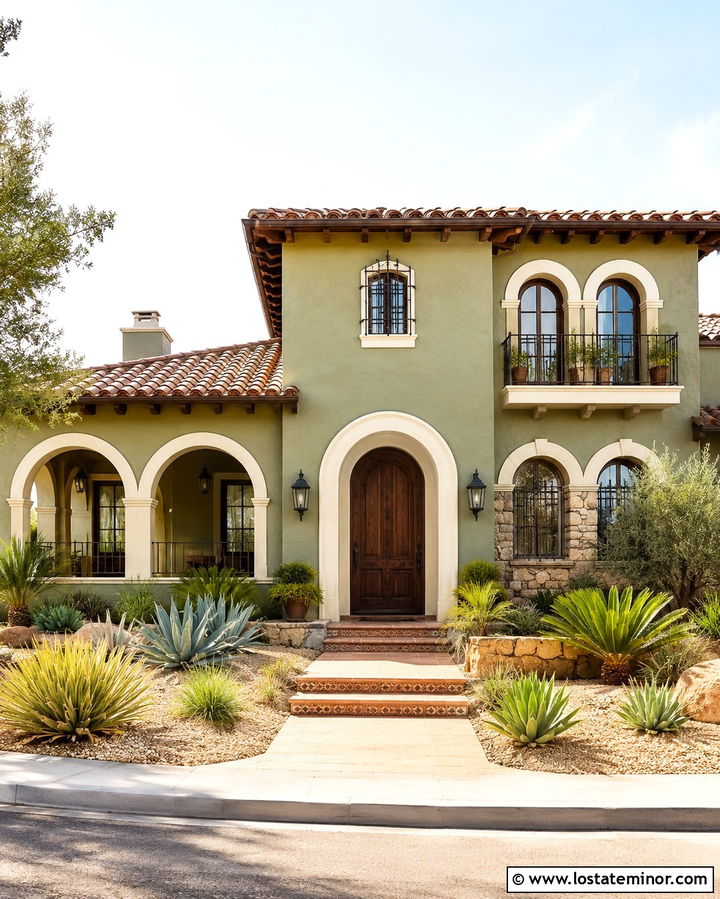
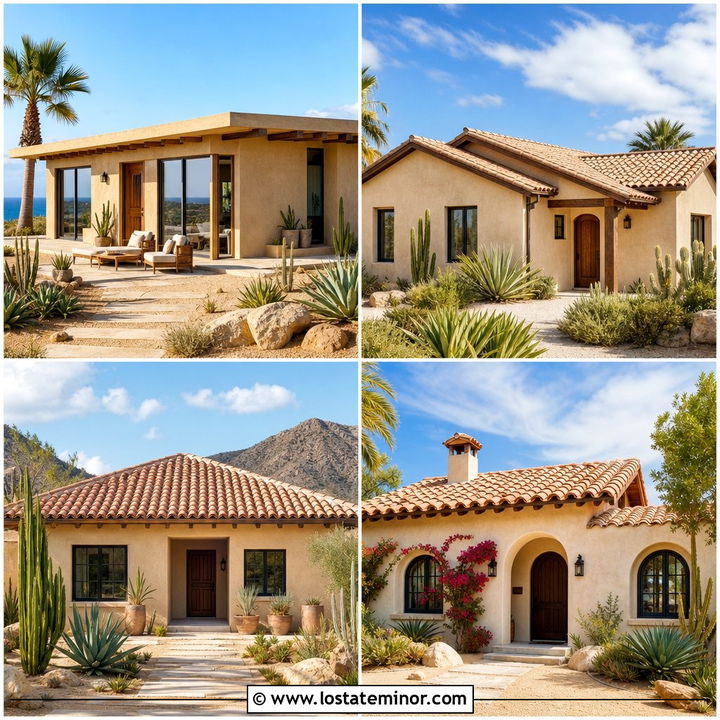
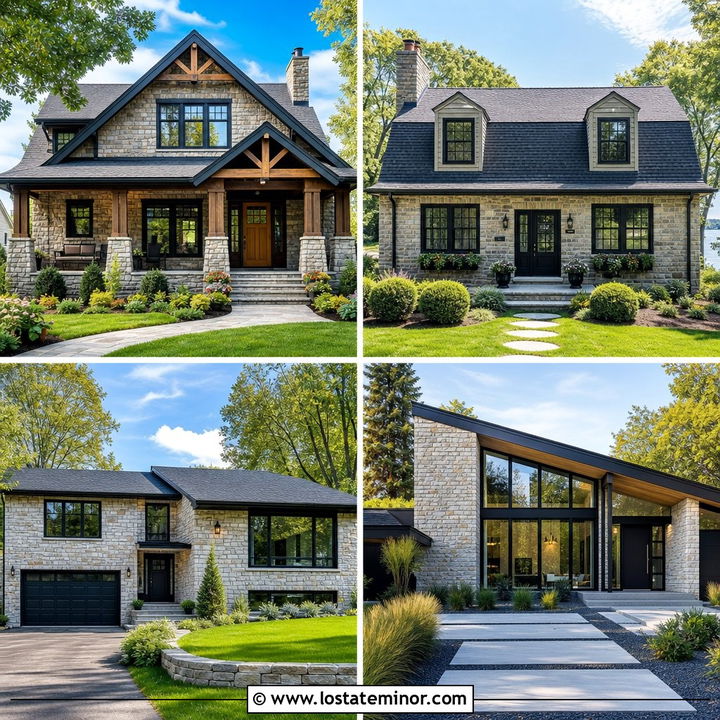
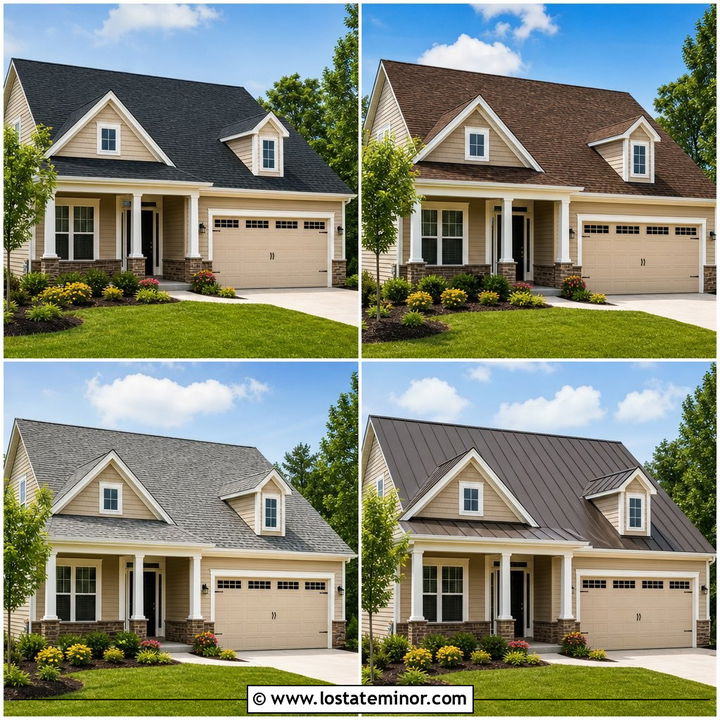
Clay barrel tiles have strong curves and natural color movement, making them a beautiful roof choice for an olive green Spanish Revival house. Use a dusty, sun-washed olive on smooth stucco walls rather than highly saturated green. Cream trim around the arched windows and roofline will soften the transition to the warm clay tiles. Choose a carved dark wood front door and repeat the wood on exposed porch beams. Black iron railings, window grilles, and lanterns add definition in controlled amounts. Consider tan stone around the entry or lower walls for extra texture. Drought-tolerant landscaping, pale gravel, succulents, and a tiled front path complete the setting. Every material should feel warm, matte, and gently aged rather than glossy or sharply contrasting.
16. Olive Green House With Black Flat Roof
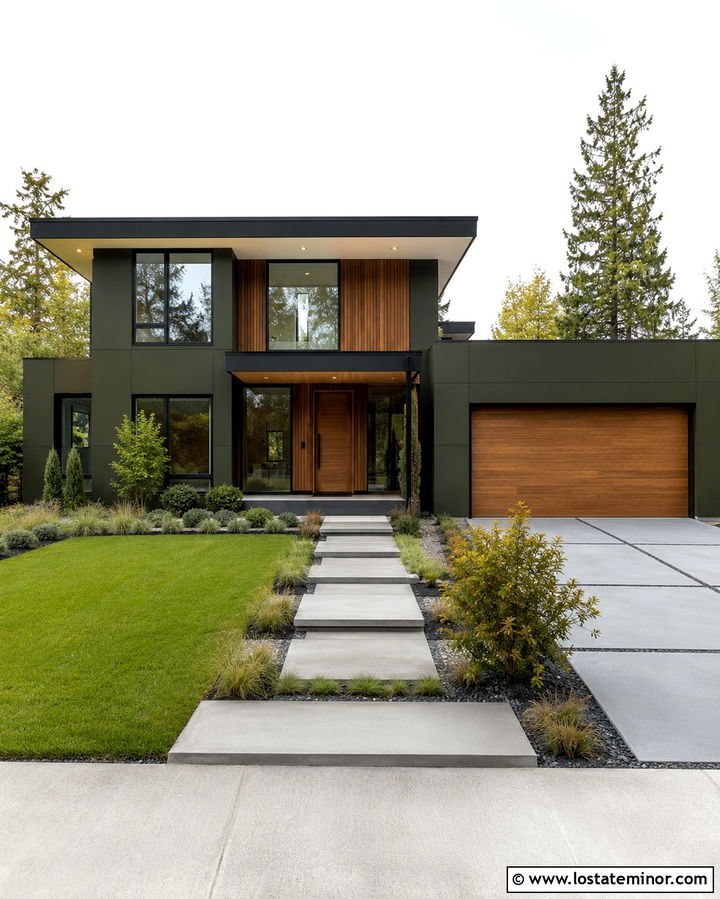
A flat black roof creates a strong horizontal cap on an olive green modern house. Apply deep olive to smooth fiber-cement panels or stucco, then break up the facade with warm wood cladding around the entrance and garage. Black-framed windows should connect visually with the roof, while narrow off-white soffits can stop the upper edge from looking too heavy. A flush wood front door and matching garage door bring warmth to the streamlined architecture. Use charcoal concrete or dark stone sparingly at the foundation. Clean landscape beds, low grasses, sculptural shrubs, and large concrete pavers reinforce the modern geometry. The contrast between olive, black, and wood creates plenty of visual impact without requiring extra ornament, shutters, or complicated decorative details.
17. Olive Green House With Gambrel Roof
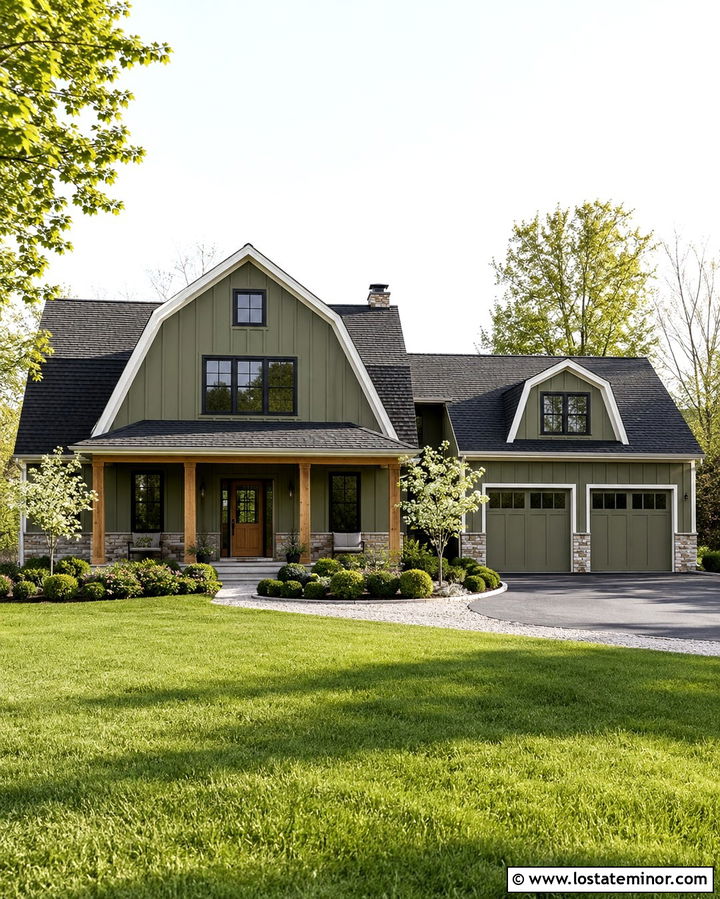
An olive green house with a gambrel roof can blend traditional barn character with a more polished residential finish. Cover the roof in charcoal architectural shingles and use medium olive board-and-batten siding across the main facade. Warm white trim should outline the gambrel shape, windows, and porch without covering too much of the green. A natural cedar front door, porch posts, and simple brackets introduce rustic texture. Paint the garage doors olive to reduce their visual size, then add black hardware for definition. A stone skirt in tan and weathered gray will anchor the tall roofline. Use a wide gravel-edged driveway, clipped shrubs, and small flowering trees to create an orderly setting that still feels relaxed and appropriate for farmhouse-inspired architecture.
18. Olive Green House With Mansard Slate Roof
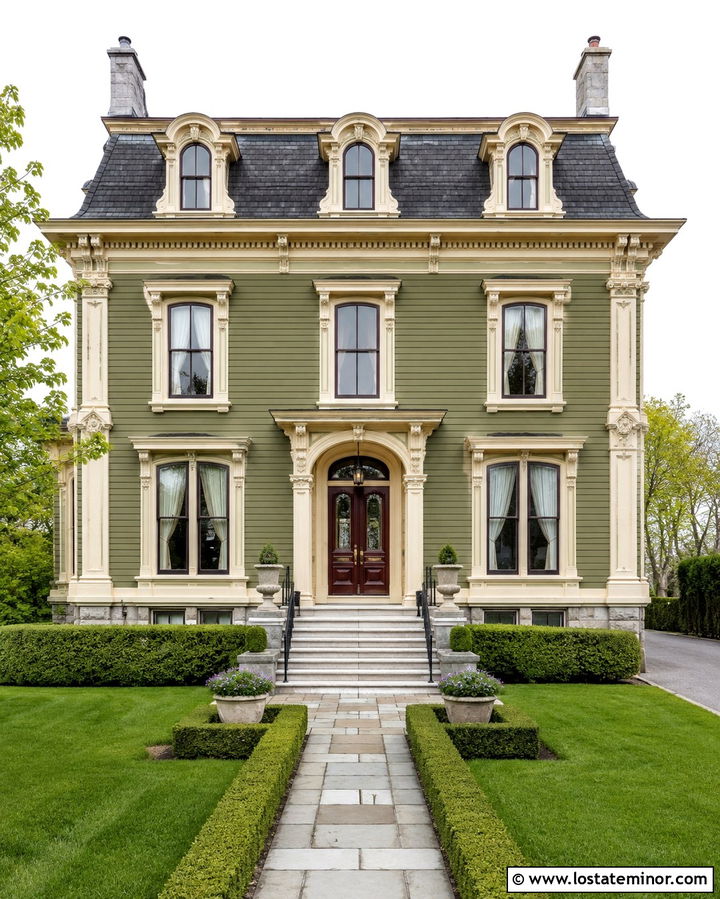
A mansard roof naturally occupies a large portion of the facade, so the relationship between roofing and siding deserves careful attention. Pair dark slate shingles with a muted historical olive on the walls of a French-inspired or Second Empire home. Use creamy ivory trim around tall windows, dormers, and decorative cornices to separate the two dark surfaces. A burgundy-brown front door can add restrained warmth while remaining compatible with the period character. Black iron railings and aged brass fixtures complete the detailed facade. If masonry is present, select soft gray limestone rather than bright red brick. Formal hedges, symmetrical planters, and a straight stone path will support the architecture. The finished palette feels rich and traditional without becoming overly heavy or somber.
19. Olive Green House With Low Pitch Bronze Roof
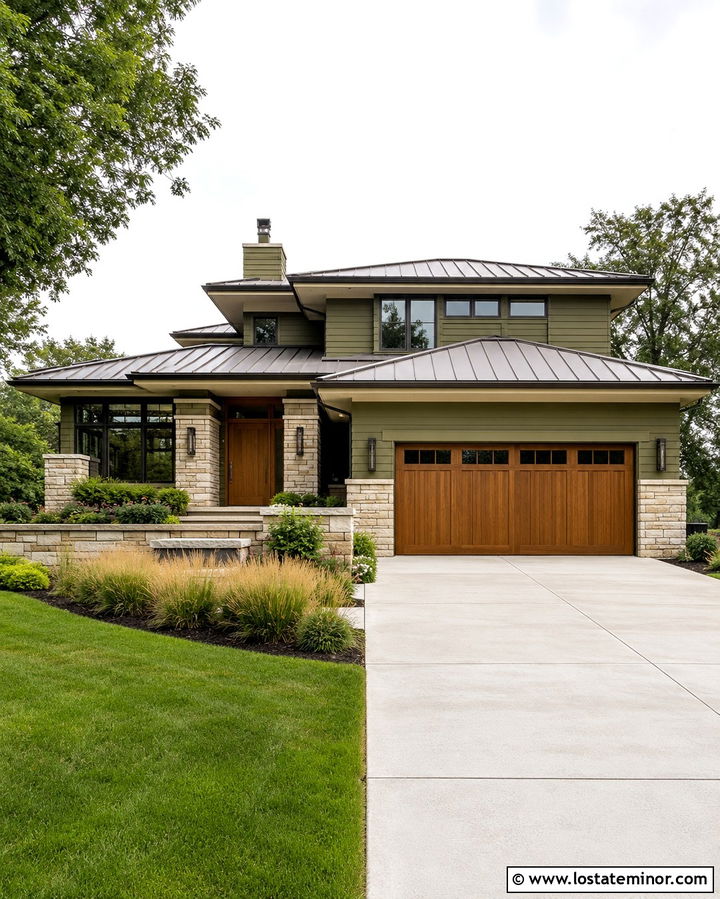
A low-pitch bronze metal roof works beautifully on a Prairie-style house because it emphasizes the architecture’s long horizontal lines. Use warm olive stucco or lap siding beneath broad overhangs, then repeat dark bronze on the window frames, gutters, and slim porch railings. Cream soffits can lighten the shadowed areas under the roof. Incorporate medium-toned wood on the front door, garage door, and a few structural beams to strengthen the organic palette. Horizontal limestone around the foundation will echo the home’s low profile and add quiet texture. Choose landscaping with layered grasses, broad shrubs, and low retaining walls rather than tall foundation plants. The combination produces a grounded exterior that feels closely connected to the site while remaining clean, deliberate, and comfortable.
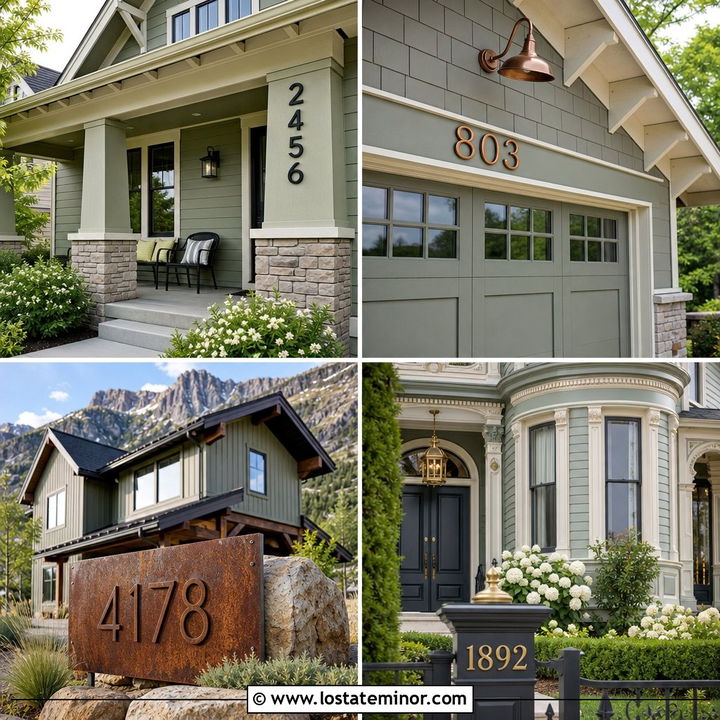
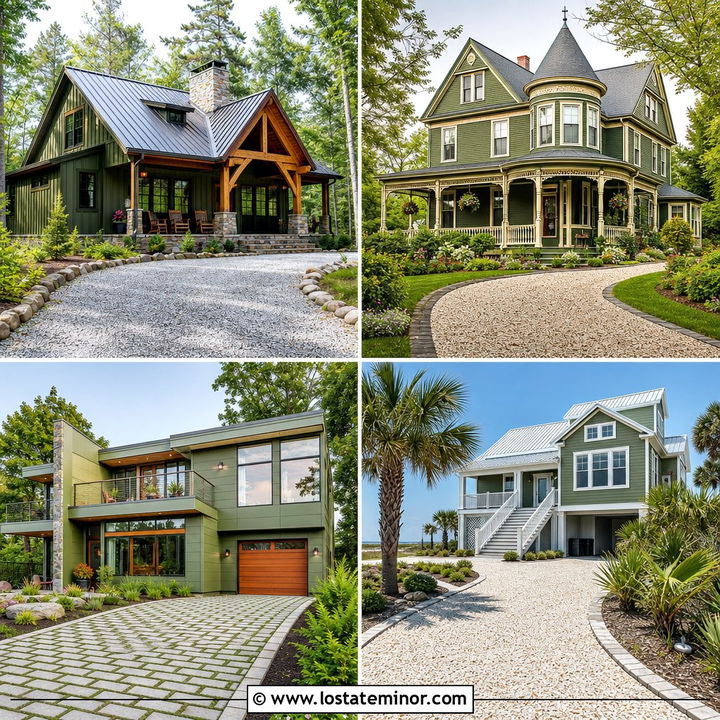
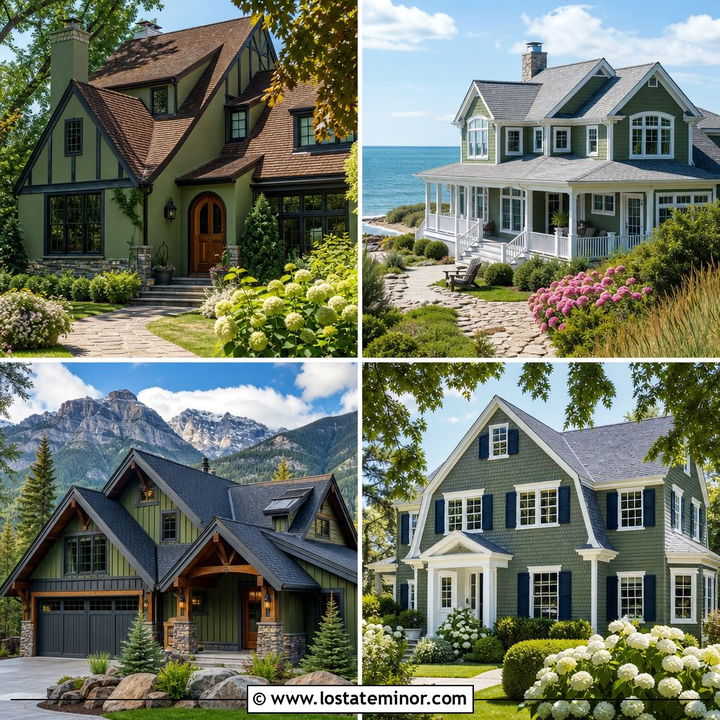
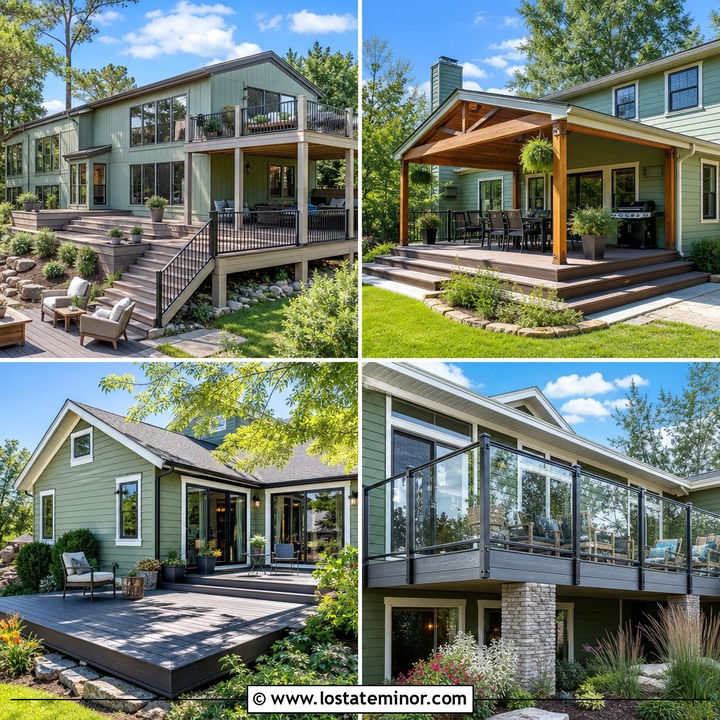
20. Olive Green House With Mixed Metal And Shingle Roof
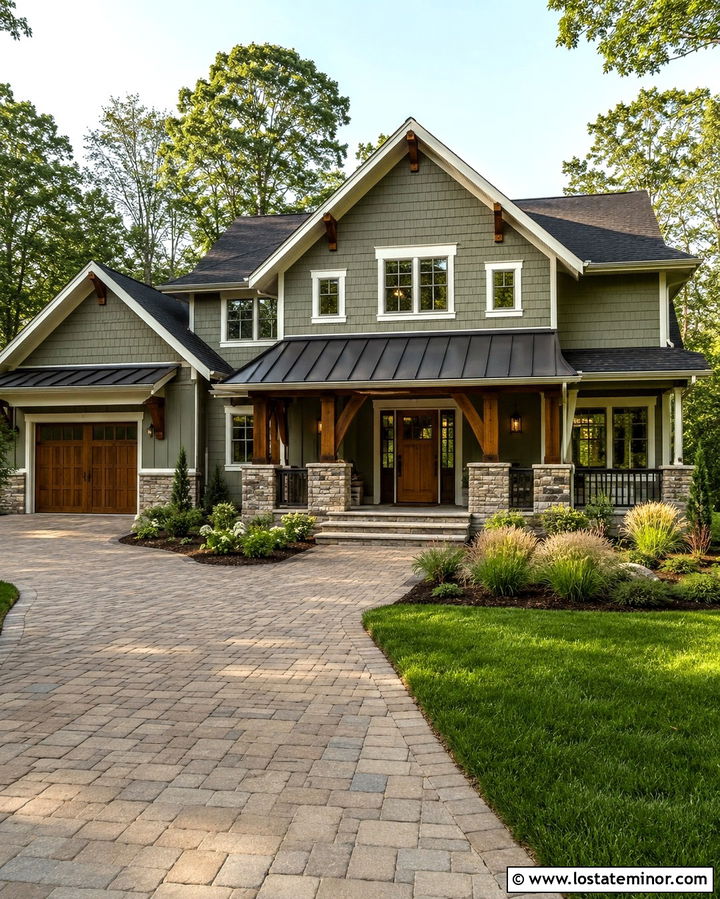
Homes with multiple roof sections can use two roofing materials to clarify the architecture. Place charcoal shingles on the main roof and dark bronze standing-seam metal over the porch, bay window, or garage. Medium olive siding unifies the different roof surfaces, while warm white trim keeps each roofline easy to read. This layered approach suits a large Craftsman or transitional home with several gables. Add stained timber brackets beneath the porch and repeat the wood on the front door. Use tan-gray stone around the columns and lower walls to bridge the olive, bronze, and charcoal tones. A broad paver driveway and structured planting beds will keep the busy facade organized. Limit additional accent colors so the mixed roofing looks purposeful instead of unnecessarily complicated.
21. Olive Green House With Black Roof And Solar Panels
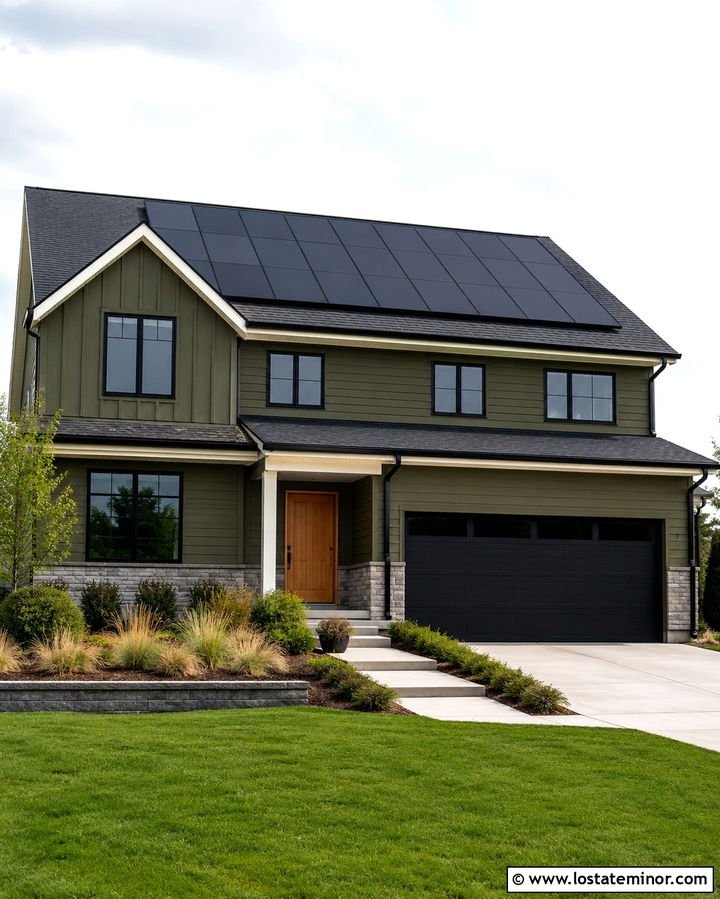
Black solar panels can integrate naturally into a black shingle roof when the surrounding house palette is planned carefully. Use dark olive siding on a contemporary suburban home, then repeat black on the windows, gutters, and garage door. Warm white fascia provides a thin line of separation around the roof without highlighting every joint. Add a natural wood front door and matching porch soffit to soften the dark materials. Panels look most unified when arranged in clean rectangular groups that follow the roof geometry. Pale concrete steps and low gray stone can brighten the foundation. Complete the facade with simple hedges, native grasses, and a clear walkway. The resulting exterior feels current and practical while maintaining strong curb appeal and a controlled three-color palette.
22. Olive Green House With Stone Coated Steel Roof
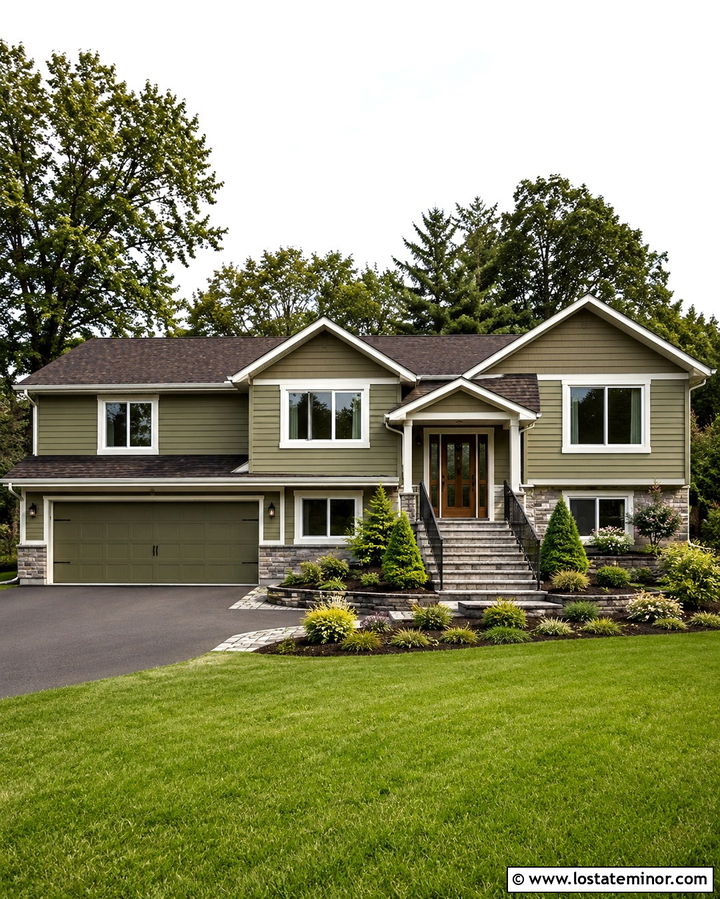
Stone-coated steel roofing can provide the textured appearance of shingles or tile while complementing an olive green facade. Choose a charcoal-brown roof finish containing subtle color variation, then use warm olive lap siding on a split-level home. Paint the trim a soft bone white and keep the garage door close to the siding color so it does not dominate the lower level. A stained wood entry door can serve as the main focal point. Add warm gray stone around the exposed foundation to connect the upper and lower sections of the facade. Black lights, house numbers, and railings offer just enough contrast. Tiered planting beds, broad steps, and a neat driveway will help the split-level architecture appear balanced, welcoming, and visually connected.
23. Olive Green House With Zinc Roof
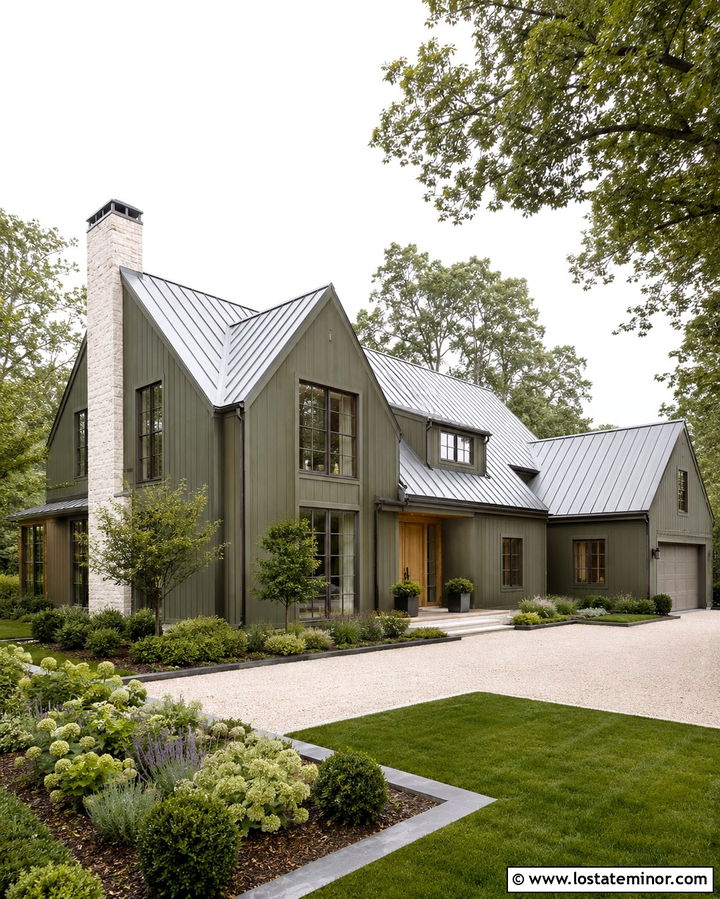
A zinc roof adds a soft silvery-gray surface that changes gently with daylight, making it an elegant partner for dark olive green. Use this scheme on a contemporary European-inspired home with steep roof planes, minimal eaves, and tall windows. Cover the walls in olive vertical siding, then add light warm-gray trim rather than bright white. Natural oak around the entrance can warm the cool metal, while dark bronze window frames create depth. Consider using pale limestone on one chimney or entry wall to repeat the roof’s quiet mineral quality. Keep gutters matched to the zinc for a continuous finish. A gravel courtyard, linear planting beds, and neatly shaped shrubs will complement the restrained architecture. The final exterior feels distinctive without depending on bright or trendy accent colors.
24. Olive Green House With Rusted Metal Roof
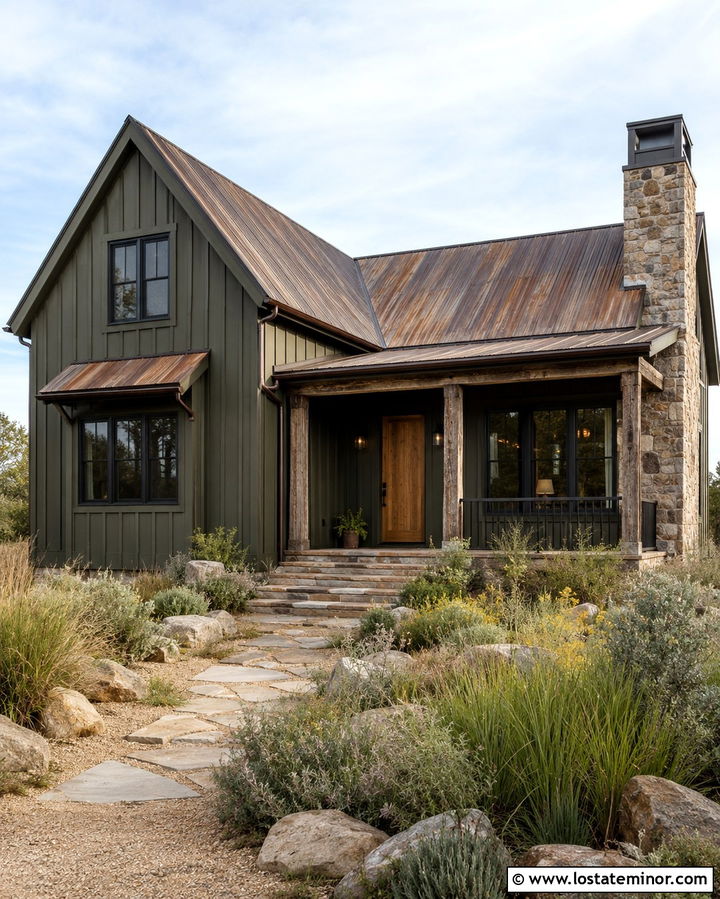
A rusted metal roof creates a rugged, earthy contrast with olive green siding. This look is best suited to a cabin, rural retreat, or modern rustic home where weathered materials feel appropriate. Use a deep, brown-based olive on board-and-batten walls, then add charcoal window frames and dark bronze gutters. Rough cedar beams, a plank front door, and a covered porch reinforce the natural character. Choose gray-brown fieldstone for the chimney and foundation so the red-orange roof does not feel isolated. The rust color should be repeated only subtly through planters or warm-toned gravel. Surround the home with meadow grasses, native shrubs, and a simple stone path. These softer landscape elements keep the strong roofing material from making the complete facade feel industrial.
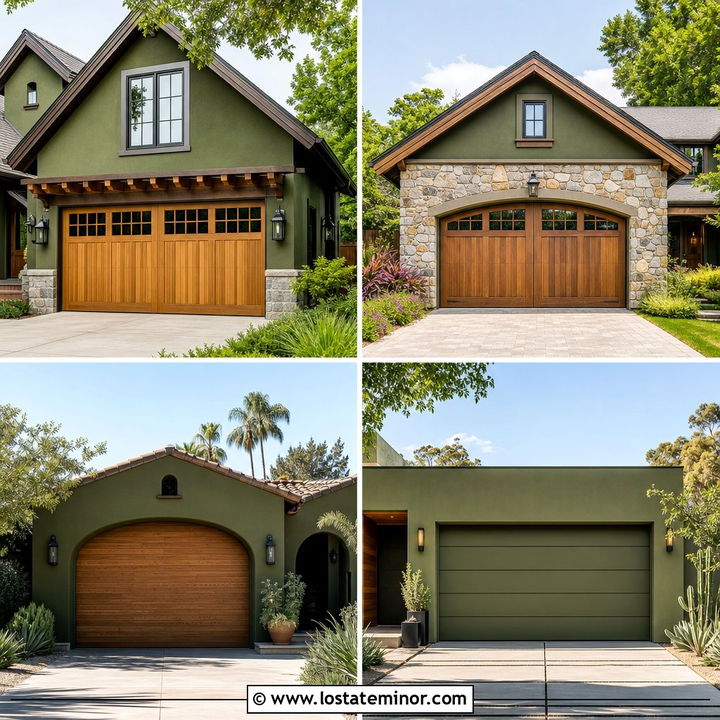
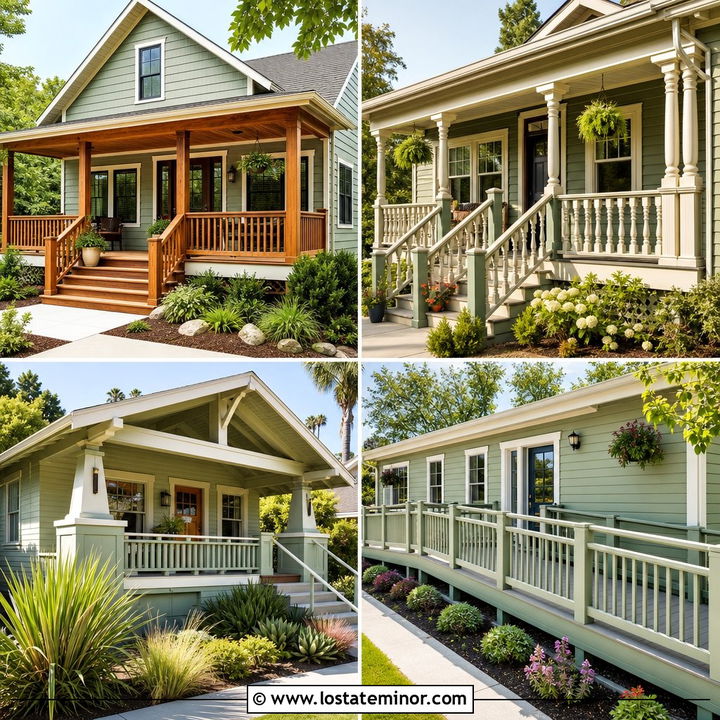
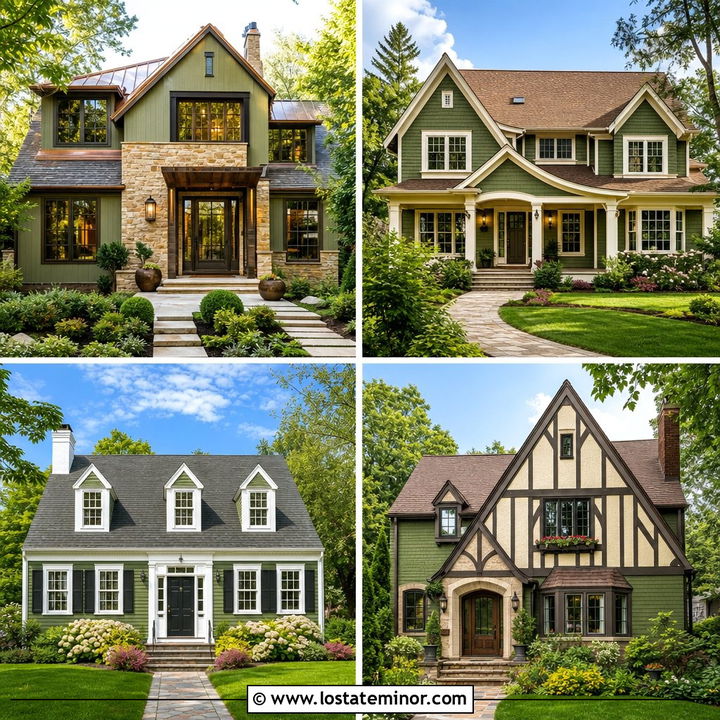
25. Olive Green House With Taupe Shingle Roof
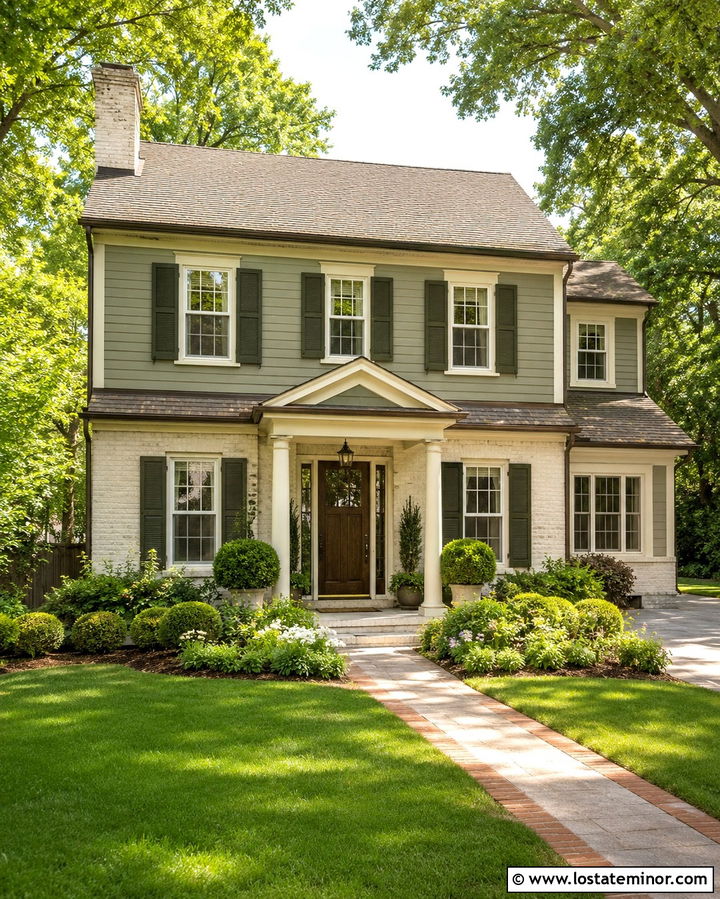
Taupe shingles offer a quiet option for homeowners who want the roof to support rather than dominate an olive exterior. Choose a warm gray-brown roof blend and pair it with soft olive siding on a traditional two-story home. Cream trim will maintain a gentle palette, while dark olive shutters add depth around the windows without introducing black. A medium walnut door gives the entrance a clear but understated focal point. If the facade includes brick, limewash it in a warm off-white or select brick with beige and brown variation. Bronze gutters and lanterns connect the roof and wood accents. Rounded shrubs, a brick-edged path, and layered perennial beds will provide welcoming curb appeal while preserving the home’s calm, neutral, and highly adaptable color scheme.
26. Olive Green House With Cream Tile Roof
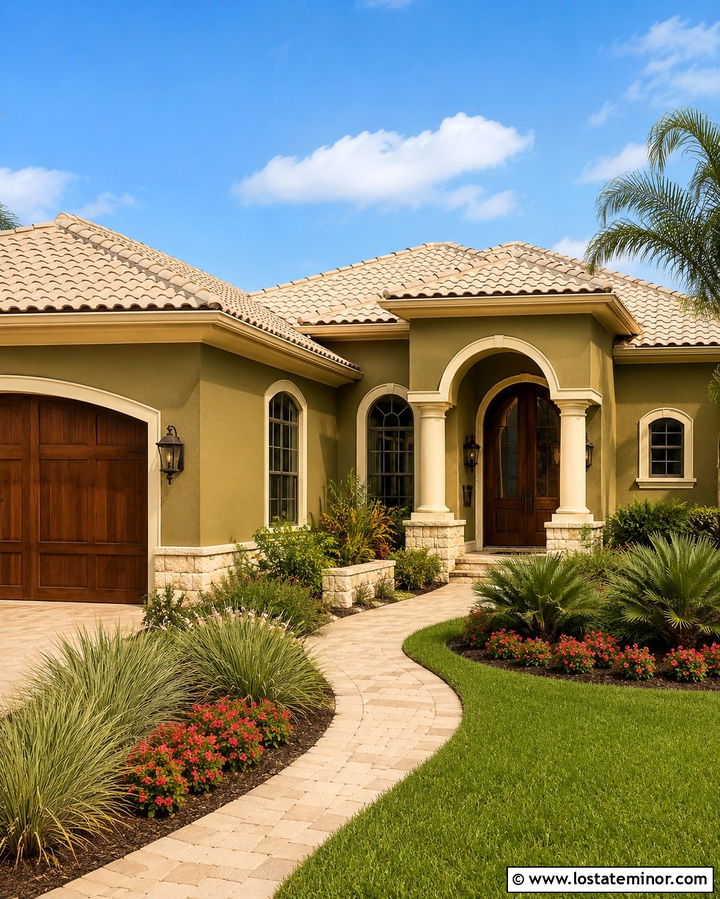
A cream tile roof can lighten olive green walls and create an appealing exterior for a warm-climate home. Select a medium olive stucco with golden undertones and combine it with pale cream concrete tiles. Use a slightly deeper cream on the window surrounds and columns so architectural details remain visible. A rich brown wood door, matching garage door, and bronze fixtures provide the necessary visual weight at ground level. Add buff limestone around the base or entrance to connect the light roof with the walls. Avoid stark white, which may make the roof appear dingy by comparison. Palm-like plants, ornamental grasses, flowering shrubs, and a curved paver walkway can frame the home. The overall scheme feels bright, natural, and comfortable under strong sunlight.
27. Olive Green House With Charcoal Roof And Brick
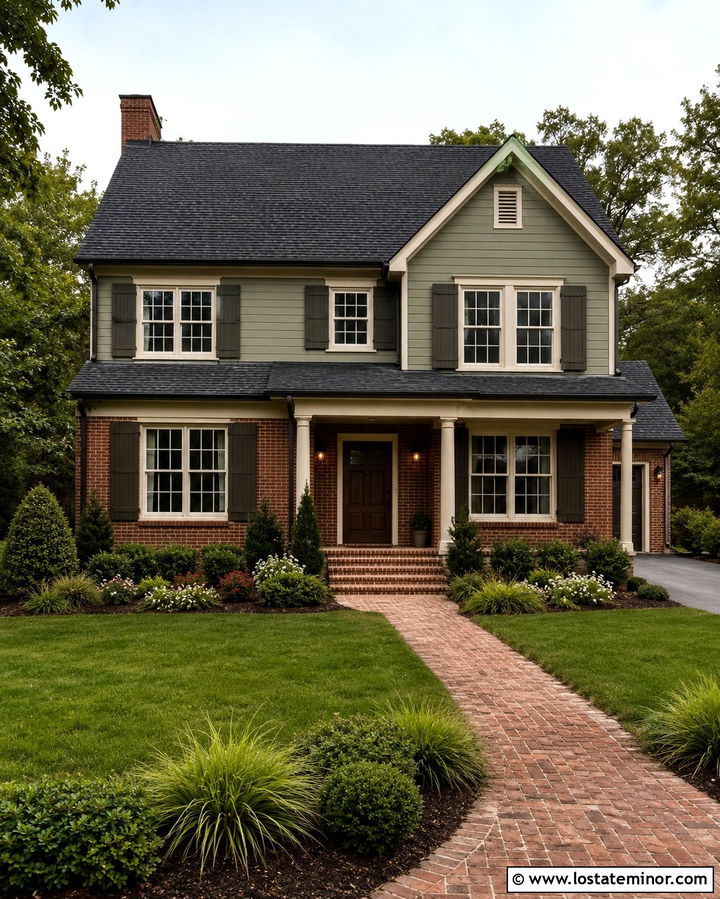
Existing brick can become an attractive bridge between olive green siding and charcoal roofing. On a traditional suburban house, apply muted olive to the upper siding or gables while leaving warm red-brown brick exposed across the lower level. A charcoal shingle roof will add structure and tone down the brick’s warmer notes. Use creamy white around the windows and eaves, then paint shutters deep olive or charcoal. A walnut-stained front door helps connect the brick and siding. Keep gutters charcoal so they blend into the roof edge. Repeat brick in the walkway or porch steps, but use it sparingly elsewhere. Evergreen shrubs, soft grasses, and small flowering plants will complete a balanced exterior in which the original masonry looks intentional rather than like a limitation.
28. Olive Green House With Black Metal Roof And Stone
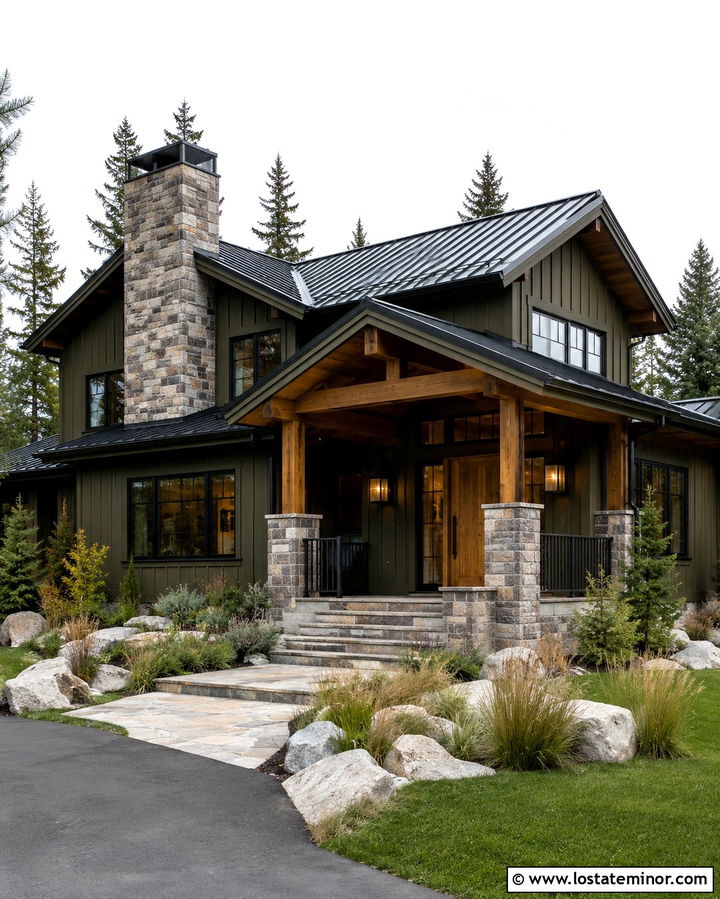
Black standing-seam roofing and natural stone give an olive green exterior a bold mountain-inspired presence. Use deep olive board-and-batten siding on a modern lodge with steep gables, large windows, and a substantial covered porch. Black window frames, gutters, and railings should repeat the roof finish. Introduce warm cedar on structural beams, porch ceilings, and the oversized front door to keep the dark palette inviting. Select stone with gray, tan, and subtle brown variations so it connects every major exterior color. Continue the masonry around the chimney and column bases for balance. A stone walkway, native grasses, evergreen trees, and natural boulders will integrate the house with the landscape. The finished exterior feels dramatic, durable, and carefully layered rather than simply dark.
29. Olive Green House With Medium Gray Roof And Wood Accents
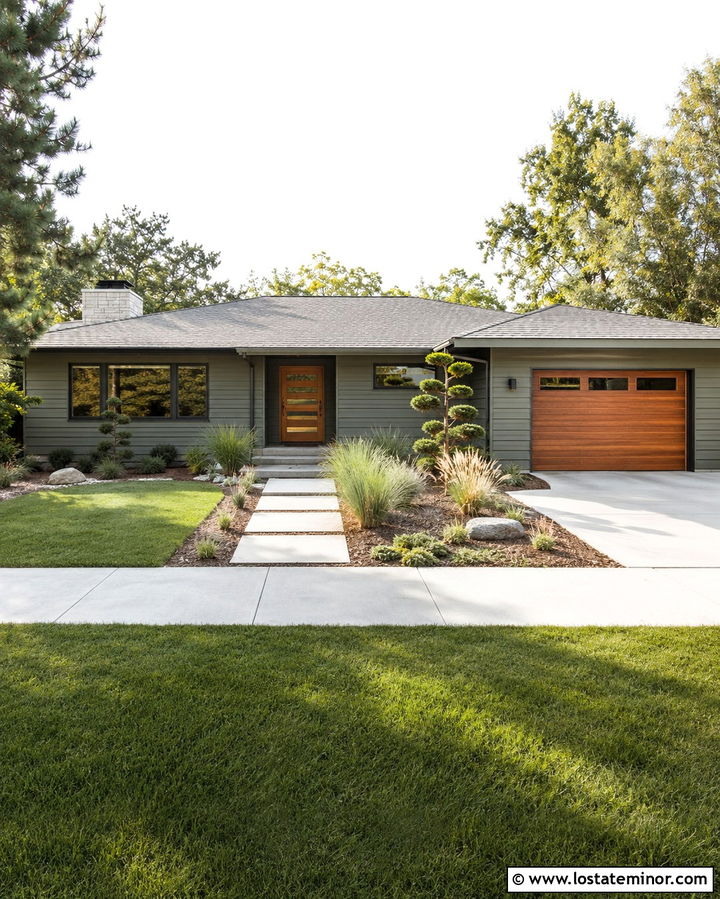
A medium gray roof gives olive green siding enough contrast without producing a severe black-and-green combination. This scheme is a good match for a midcentury ranch with a low roof, broad windows, and an asymmetrical entrance. Use gray olive on horizontal siding, warm white on the fascia, and charcoal on the window frames. Natural cedar can highlight the front door, garage door, and one vertical accent wall. Keep the masonry simple with pale gray stacked stone around the chimney or entry. A straight concrete walkway and low-profile landscape beds will reinforce the house’s horizontal form. Add ornamental grasses and sculptural evergreen shrubs instead of formal hedges. The complete exterior feels updated and colorful while still respecting the understated lines of midcentury architecture.
30. Olive Green House With Cool Gray Coastal Roof
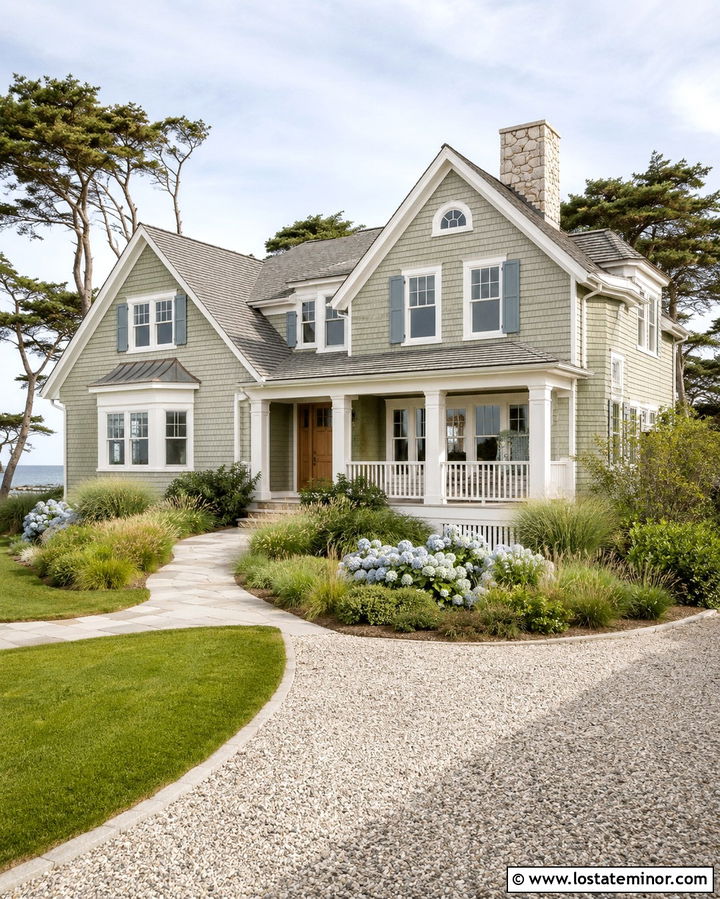
Cool gray shingles can give olive green a lighter, breezier character when used on a coastal cottage. Choose a faded gray olive for cedar-shingle siding and pair it with crisp but slightly softened white trim. The roofing should include pale and medium gray variation rather than a single dark tone. Add a weathered oak front door, white porch railings, and understated blue-gray shutters. A stone chimney built with pale coastal granite can connect the roof and siding while adding texture. Keep metal details in brushed nickel or muted pewter instead of black. Hydrangeas, beach grasses, shell-colored gravel, and a curved flagstone walk will frame the facade naturally. This relaxed palette provides coastal personality without making the house look themed or overly decorative.
Conclusion:
These **30 Olive Green House Design With Roof Ideas** demonstrate how roofing material, undertones, trim, masonry, and wood accents shape the complete exterior. Black and charcoal roofs create crisp definition, while brown, bronze, cedar, and clay produce a warmer, earthier result. Lighter gray, white, zinc, and cream roofs can make olive siding feel fresher and more contemporary. Before choosing a final scheme, compare large painted samples beside the roof, brick, stone, and permanent landscaping at different times of day. Keep the palette focused, repeat the roof color through small details, and introduce natural wood where additional warmth is needed. A coordinated approach will make olive green feel intentional, enduring, and appropriate for the home’s architecture.

Related posts: