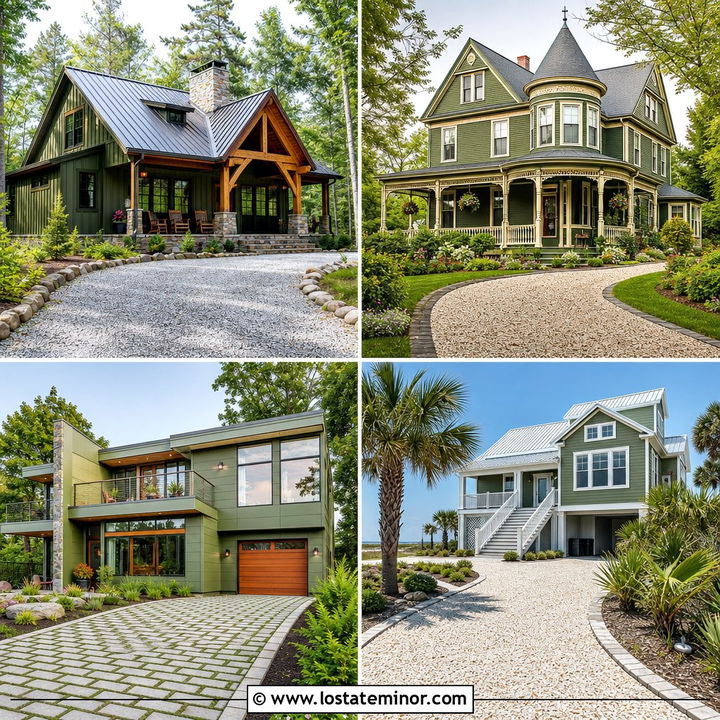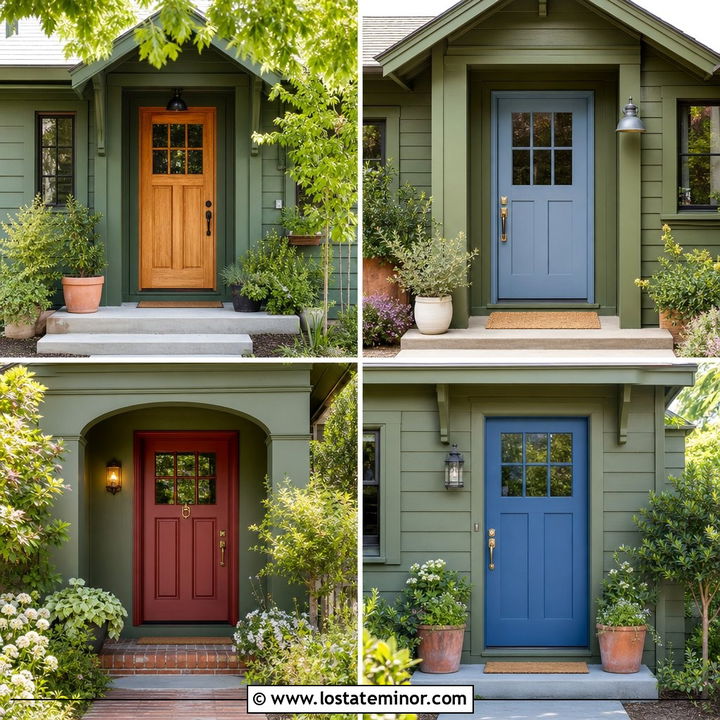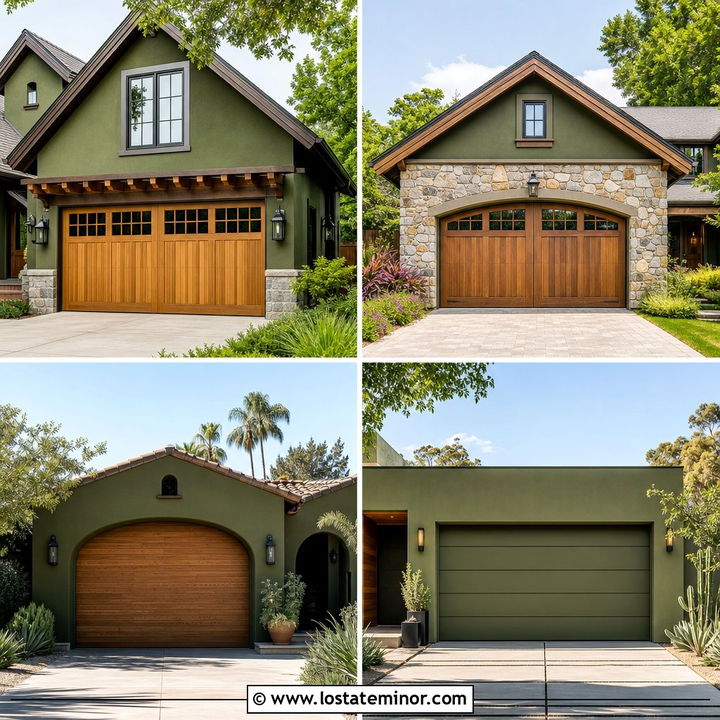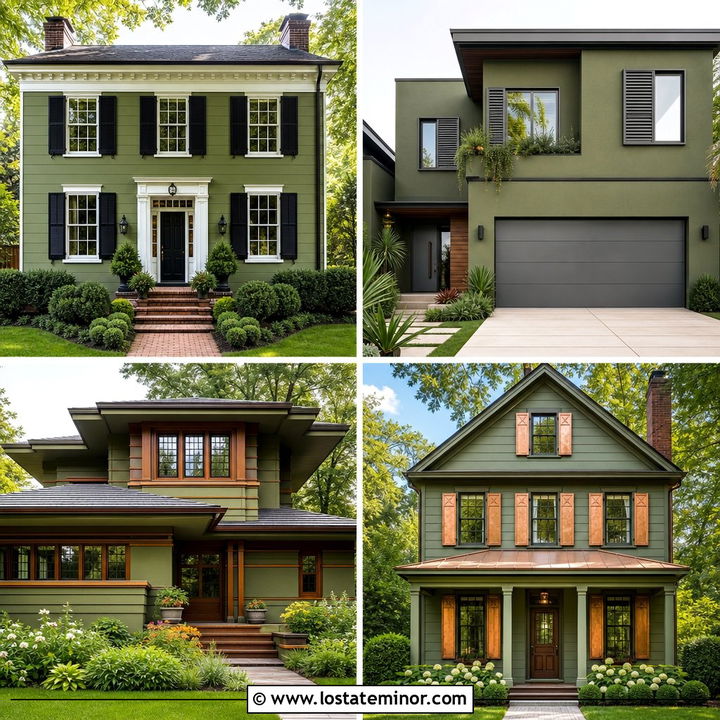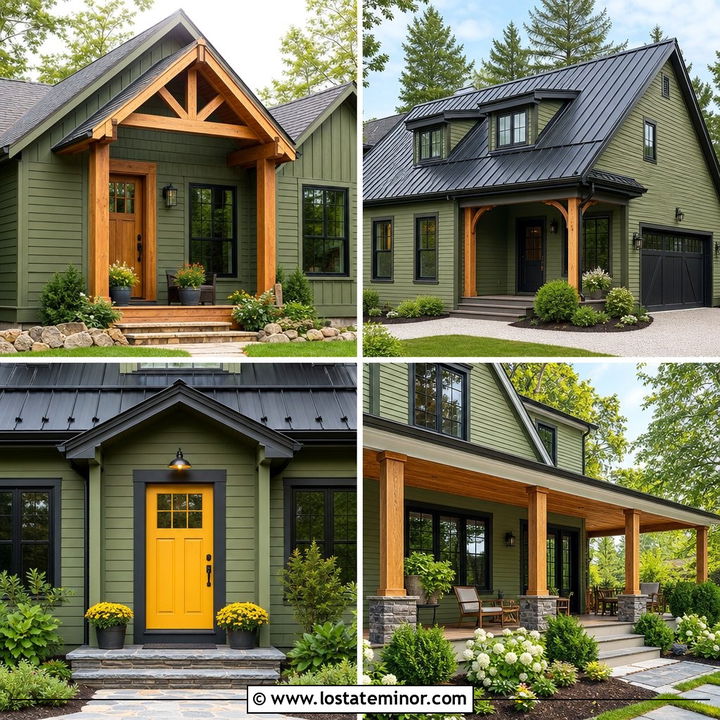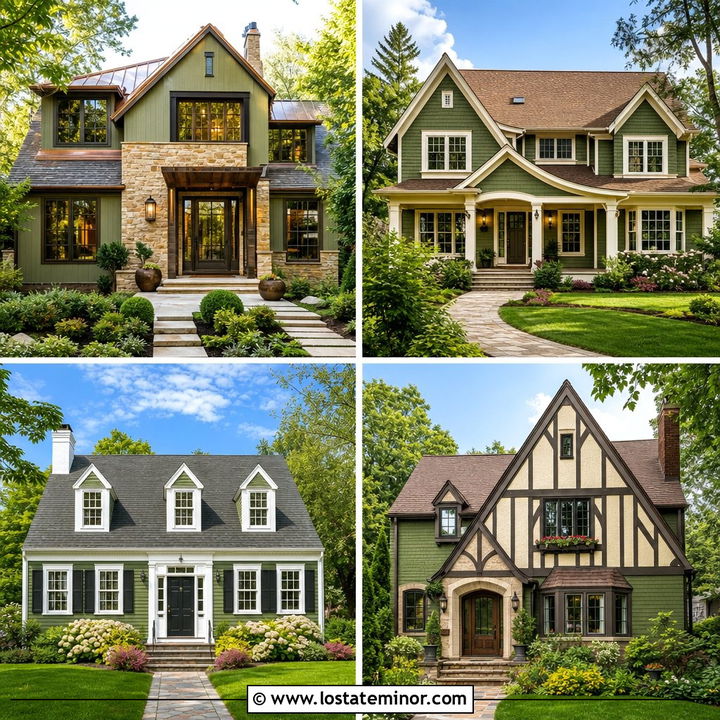
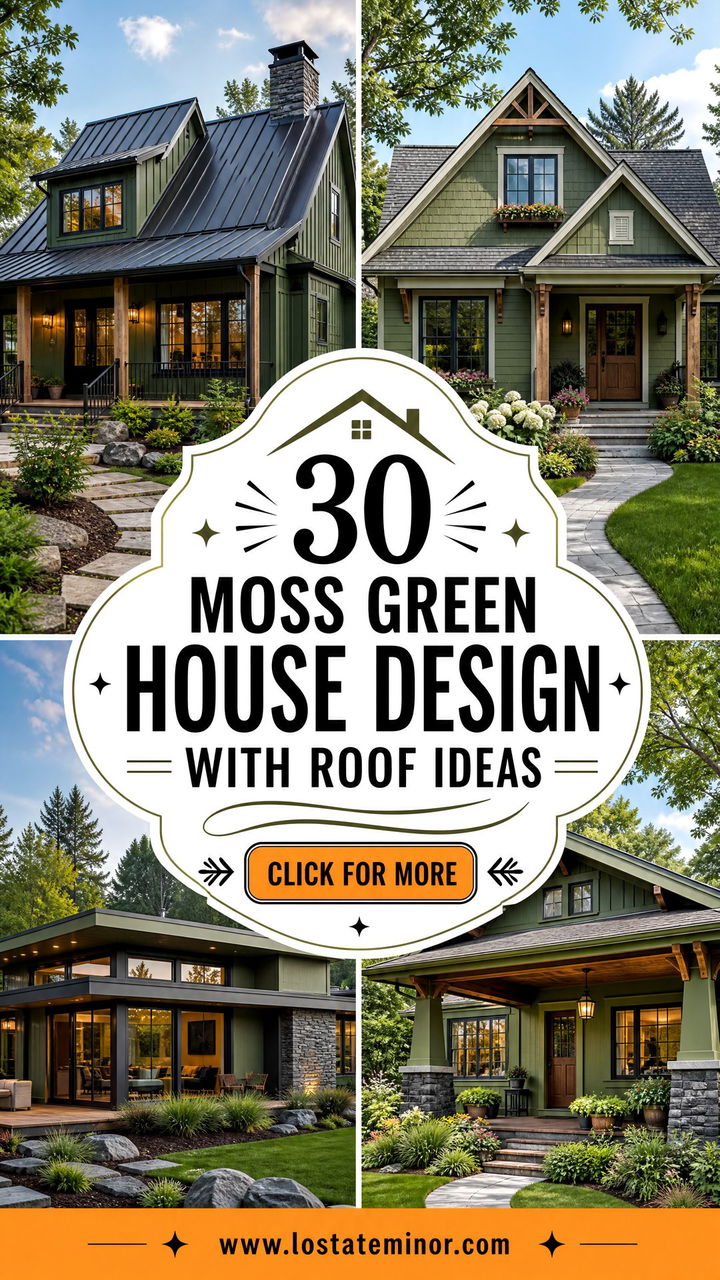
Moss green gives a home a grounded, welcoming look that feels naturally connected to trees, lawns, stone, and warm wood. The right roof makes this earthy exterior color even more effective. Charcoal shingles add crisp contrast, brown roofing creates warmth, and metal panels can shift the design toward farmhouse, rustic, or modern architecture. These 30 Moss Green House Design With Roof Ideas explore complete exterior schemes rather than isolated color samples. Each look considers siding, roofing, trim, doors, masonry, and landscaping as one coordinated composition. You will also find options for ranch homes, cottages, Craftsman houses, Colonials, cabins, and contemporary builds. Use these practical 30 Moss Green House Design With Roof Ideas to create a balanced exterior that suits your home and surroundings.
1. Moss Green House With Charcoal Roof
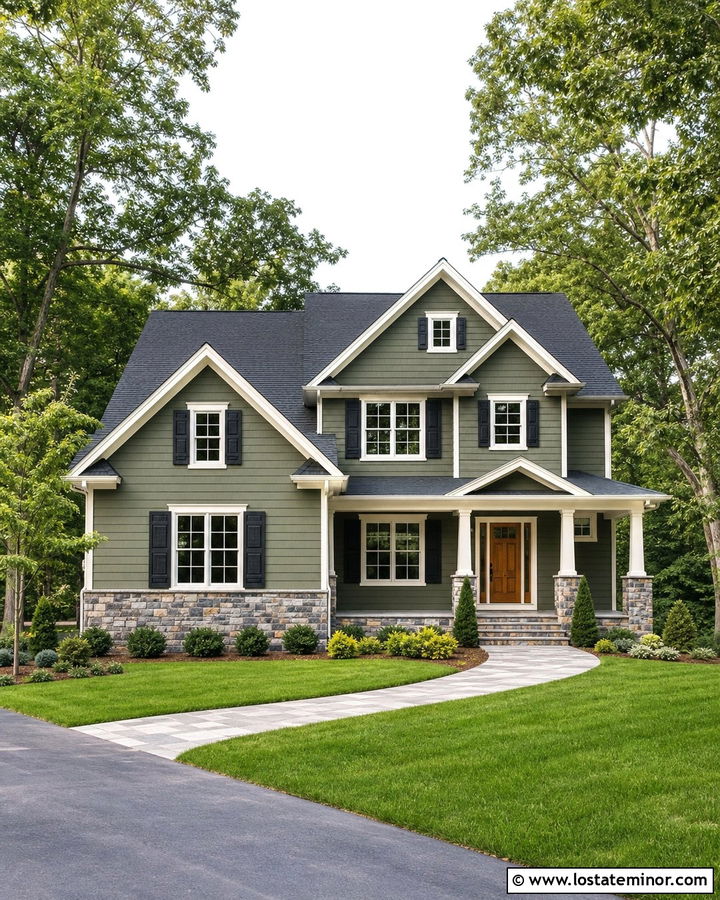
A charcoal roof gives moss green siding strong definition without introducing a competing color. This pairing works especially well on a traditional two-story home with horizontal lap siding and several front-facing gables. Choose a warm white for the fascia, window trim, and porch columns to keep the darker colors from feeling heavy. A medium-stained oak door adds warmth at eye level, while charcoal shutters connect the windows to the roof. For the foundation and porch steps, use mixed gray stone with subtle brown undertones. The varied masonry helps bridge the cool roof and earthy green walls. Keep the garage door moss green or soft white, depending on whether you want it to blend in or appear more prominent.
2. Moss Green House With Black Metal Roof
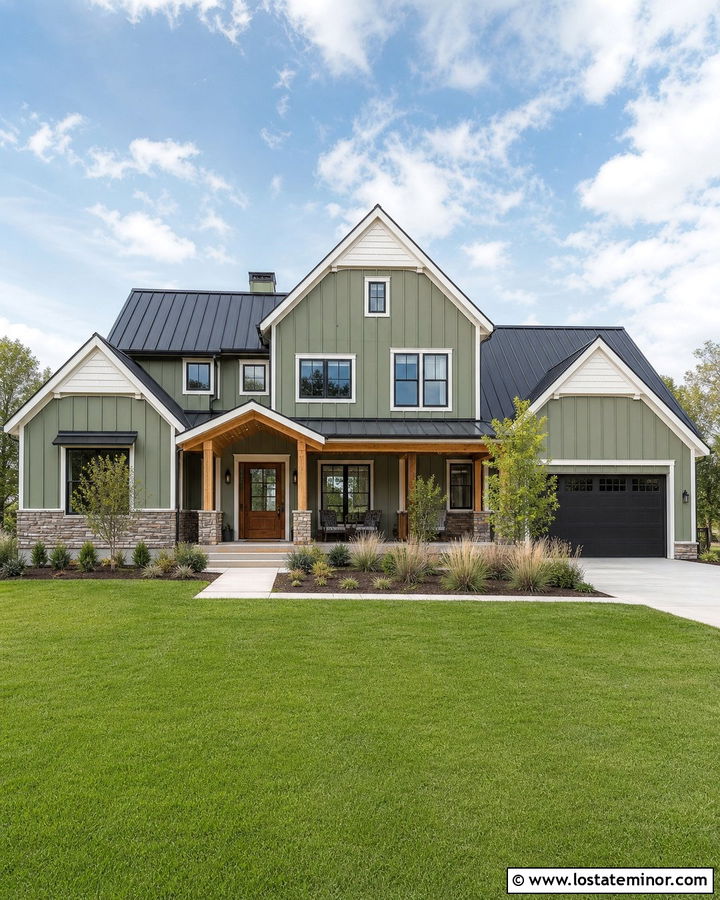
What makes a moss green exterior feel instantly sharper? A clean black standing-seam roof can transform the color into a confident modern farmhouse scheme. Use vertical board-and-batten siding to emphasize the tall rooflines and simple geometry. Crisp white trim around the windows, eaves, and porch creates controlled contrast, while black-framed windows repeat the roof color. A natural cedar front door and matching porch ceiling prevent the black and white details from overpowering the green. Add a low stone base in warm gray or beige for another organic texture. This design looks best when the gutters and downspouts match the black roof. Simple grasses, clipped shrubs, and a wide concrete walkway complete the uncluttered farmhouse appearance.
3. Moss Green House With Brown Shingle Roof
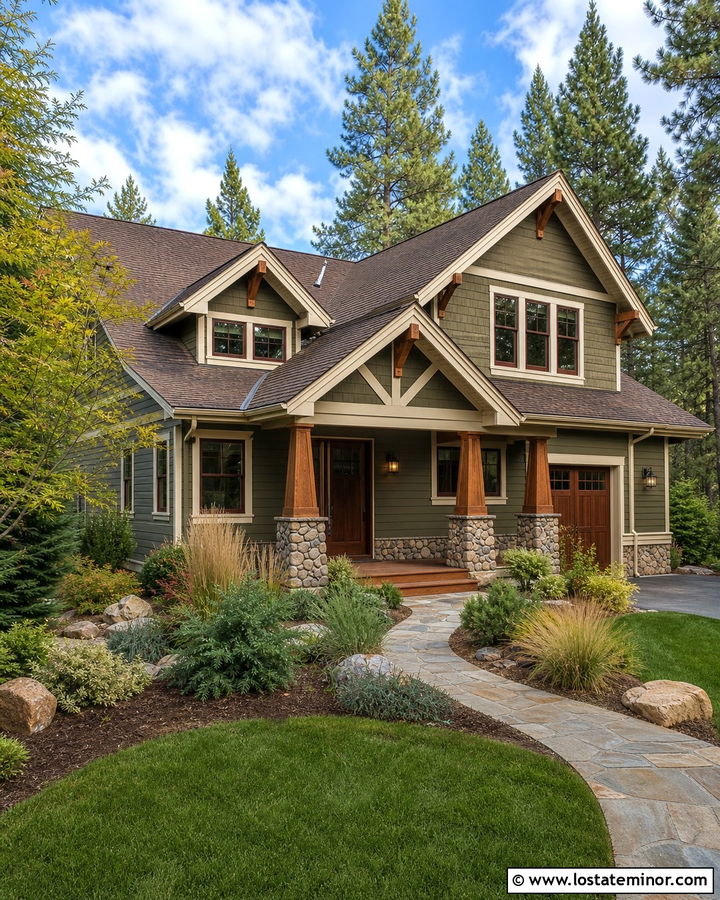
A brown shingle roof brings out the warmer olive and yellow undertones found in moss green paint. The combination is especially inviting on a Craftsman home with deep eaves, tapered porch columns, and exposed roof brackets. Use creamy beige trim instead of brilliant white so the contrast remains soft and natural. A walnut front door, cedar porch posts, and bronze exterior lights reinforce the brown roof. River rock or fieldstone can cover the porch piers and chimney, creating a seamless transition between the house and landscape. Dark bronze gutters are less noticeable than white ones in this palette. Layer the yard with native grasses, evergreen shrubs, and a curved stone walkway for relaxed, established curb appeal.
4. Moss Green House With Weathered Gray Roof
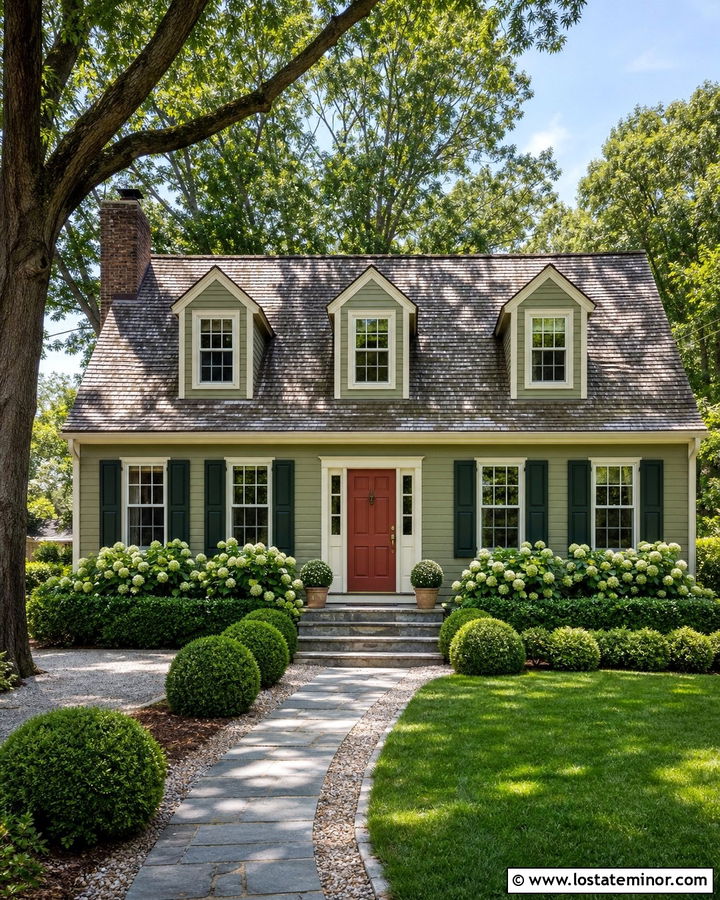
Soft gray shingles let moss green siding remain the main feature while giving the home a calm, balanced finish. Try this combination on a Cape Cod house with symmetrical windows, dormers, and a centered entry. Paint the trim a gentle off-white that has a neutral or slightly warm undertone. This will look less stark beside the muted roof. Deep green shutters can add dimension without moving away from the natural palette. For a brighter focal point, use a muted brick-red front door with aged brass hardware. Gray stone steps and a light gravel walkway repeat the roof color at ground level. Hydrangeas, boxwoods, and low flowering borders give the compact facade a polished but approachable character.
5. Moss Green House With Copper Roof
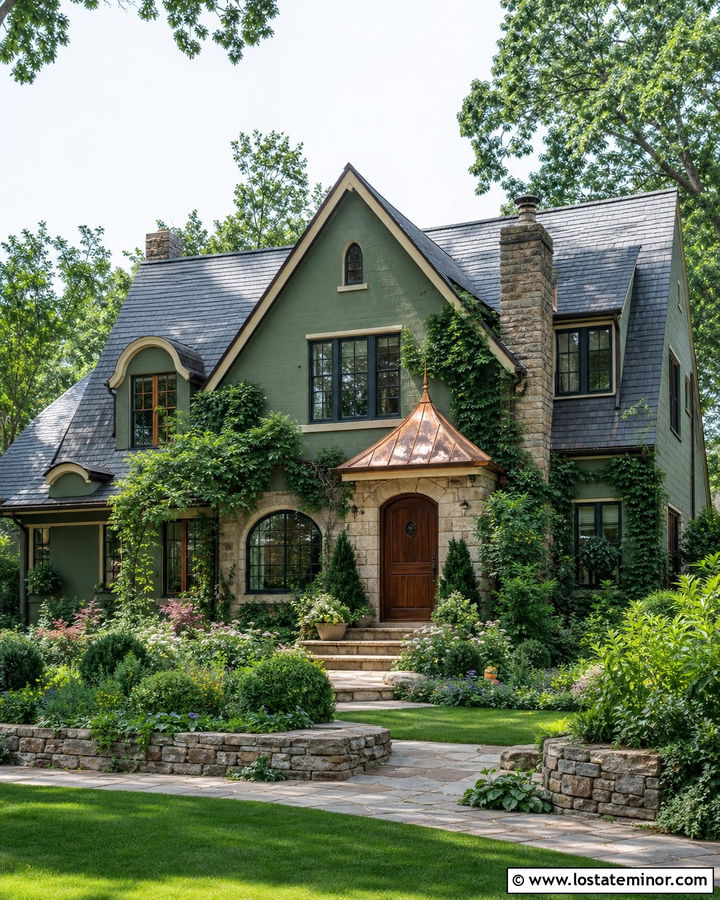
Copper roofing adds a rich architectural accent to moss green without covering the entire house in an expensive specialty material. Install copper over a curved entry roof, bay window, or small porch while using dark gray shingles on the main roof. The metal begins bright and gradually develops a natural patina that complements green siding. Warm ivory trim keeps the exterior sophisticated, while dark bronze windows and gutters provide definition. Choose a stained mahogany door to echo the copper’s warm tones. This scheme works beautifully on an English cottage with steep gables, stone walls, and divided-light windows. Use irregular flagstone paths, layered garden beds, and climbing greenery to support the home’s old-world, garden-focused appearance.
6. Moss Green House With Bronze Metal Roof
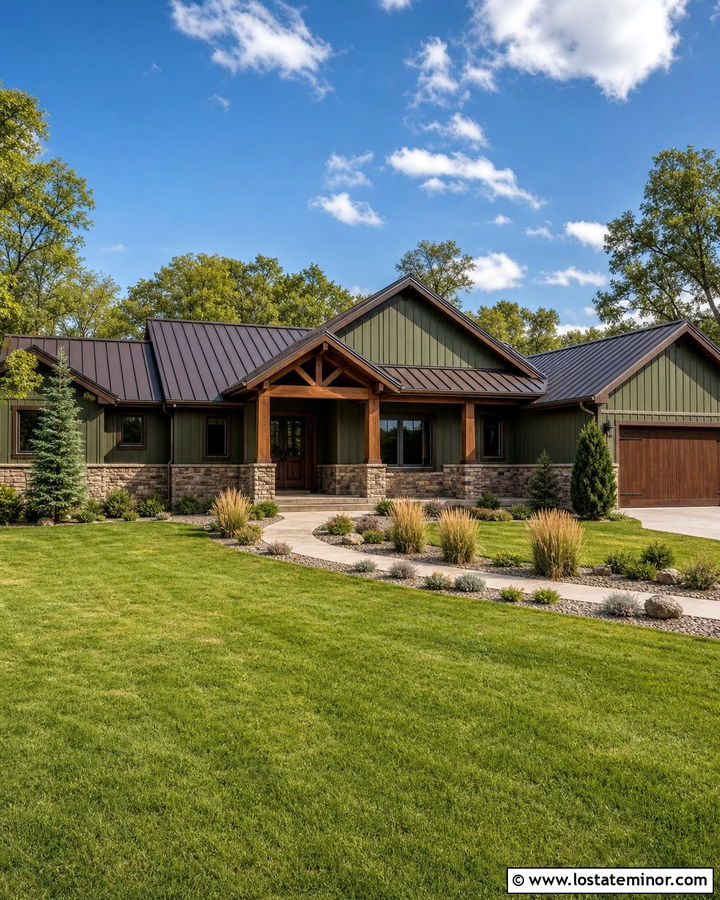
A bronze metal roof offers a softer alternative to black while maintaining the crisp lines of standing-seam panels. Pair it with moss green board-and-batten siding on a rustic ranch or contemporary country home. The brown undertone in bronze connects naturally with cedar posts, wood soffits, and a stained front door. Use warm taupe trim around the windows and roofline to create gentle separation rather than sharp contrast. A stone wainscot with beige, gray, and rust tones can visually anchor the long facade. Match the gutters and exterior lights to the bronze roofing for a coordinated result. Broad foundation beds, ornamental grasses, and a simple gravel-edged walkway keep the setting informal and reinforce the earthy exterior palette.
7. Moss Green House With Light Gray Roof
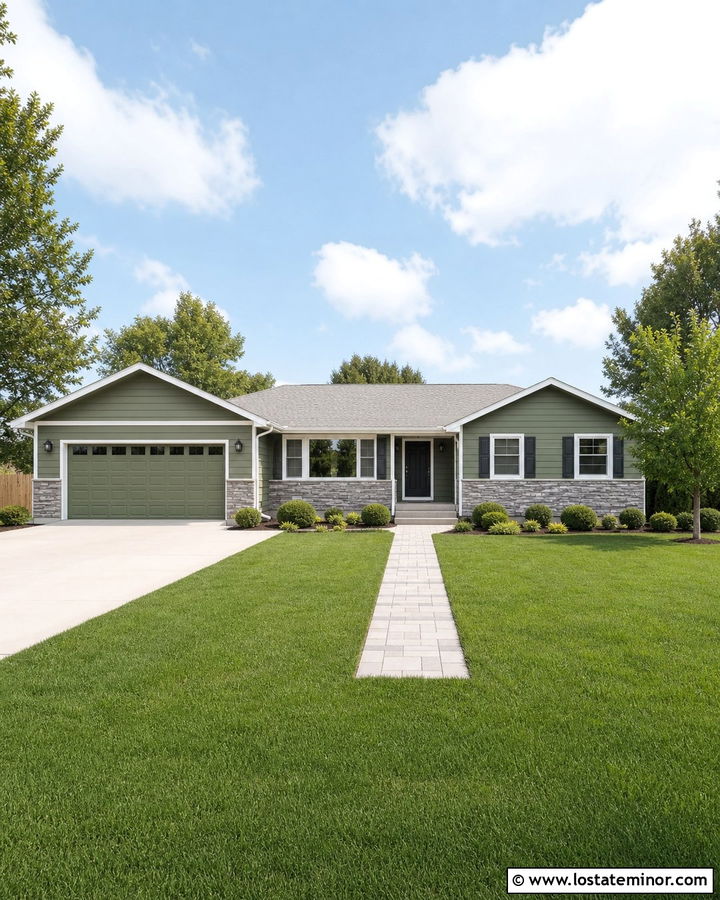
A pale gray roof can brighten moss green siding and make a smaller house feel more open from the street. This combination suits a single-story ranch with a low roofline and broad front windows. Use soft white trim to outline the fascia and window frames without creating excessive contrast. A deep charcoal front door gives the center of the home a needed visual anchor. You can repeat that color on slim shutters or modern porch lights. Light gray stacked stone around the foundation connects the roof to the lower facade. If the garage occupies a large portion of the front elevation, paint it moss green to reduce its visual weight. Fresh lawn, rounded shrubs, and a straight paver path maintain a clean suburban look.
8. Moss Green House With Slate Roof
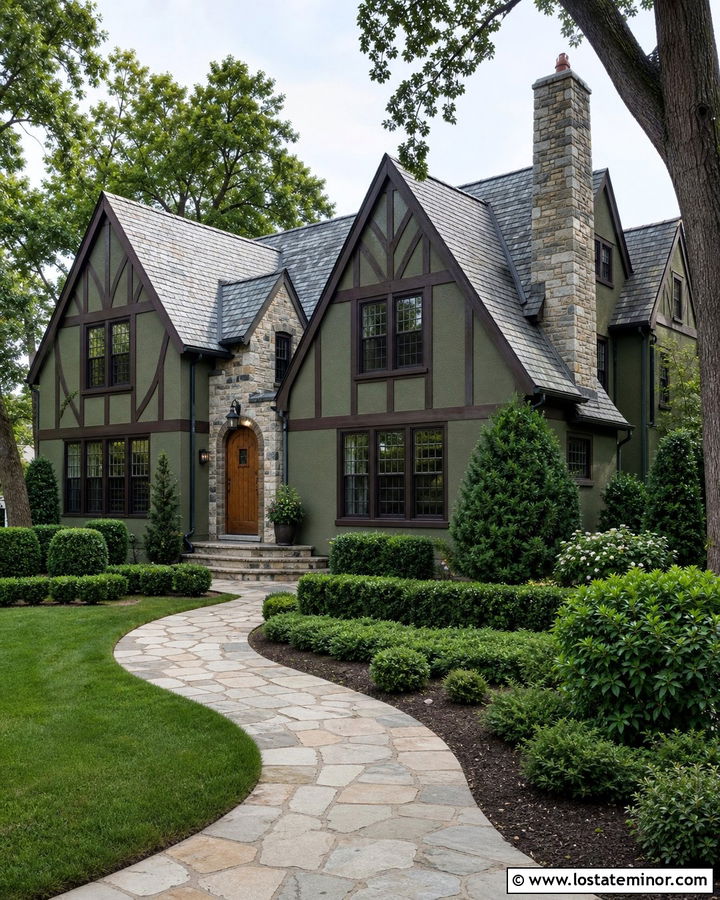
Natural slate gives a moss green exterior depth through subtle variations of gray, blue, green, and charcoal. It is an excellent match for a Tudor-inspired house with steep gables, prominent chimneys, and asymmetrical windows. Use warm cream trim around windows and beneath roof edges, then add dark brown timber details to reinforce the historic character. A heavy oak door with black hardware becomes a natural focal point. Stone cladding in muted gray and tan can cover the chimney and lower walls, tying together the roof, siding, and wood. Because slate already has visible texture, keep shutters and decorative accents limited. Structured hedges, mature shade trees, and a winding stone walkway complete the dignified, established exterior.
9. Moss Green House With Cedar Shake Roof
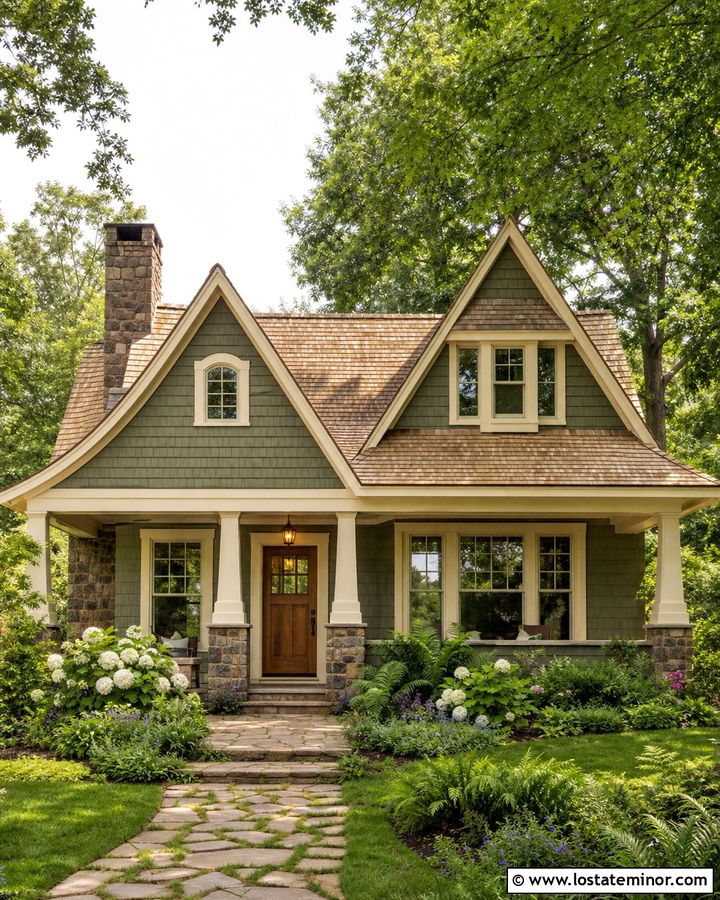
Cedar shakes make moss green siding feel warm, relaxed, and closely connected to a wooded setting. Use the pairing on a storybook cottage or compact bungalow with a steep roof and welcoming front porch. Fresh cedar will introduce golden and reddish tones, while weathered cedar develops a softer gray-brown appearance. Both stages work with muted green. Select cream trim for windows and porch railings, then use a medium brown front door to connect with the roof. Moss green shingles in the upper gables can add texture without changing the palette. Stone porch supports and irregular garden paths strengthen the handcrafted look. Surround the home with ferns, flowering shrubs, and layered woodland plants rather than highly formal landscaping.
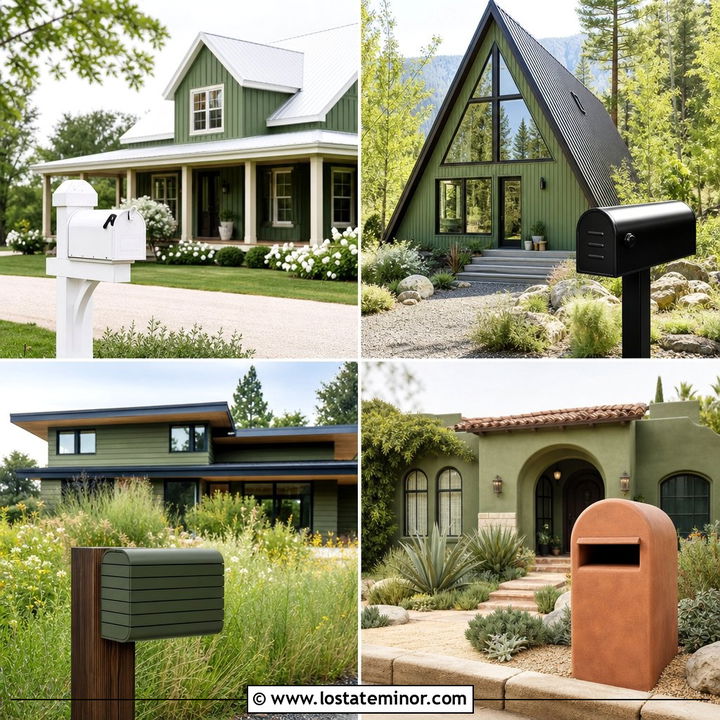
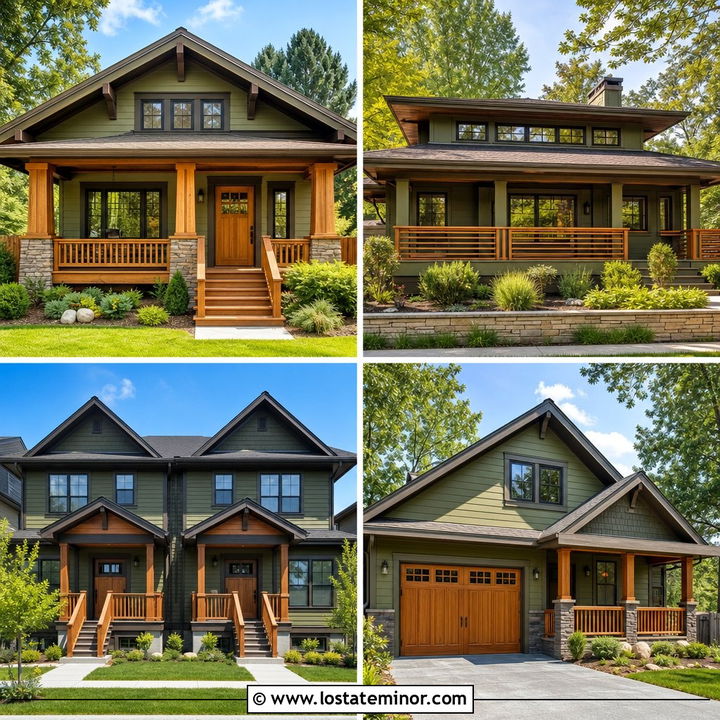
10. Moss Green House With Red Brick Chimney
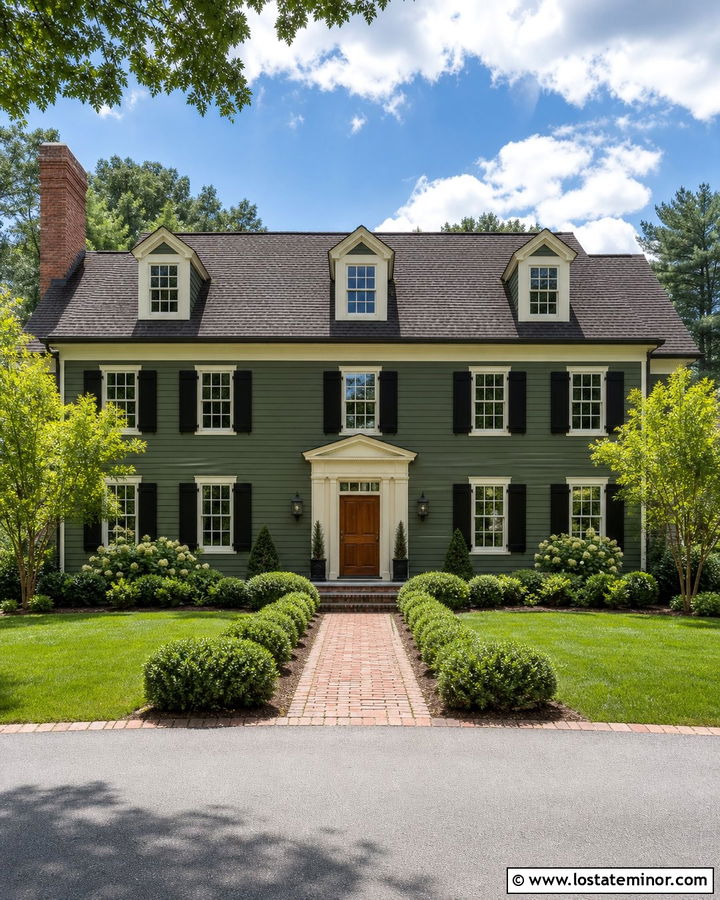
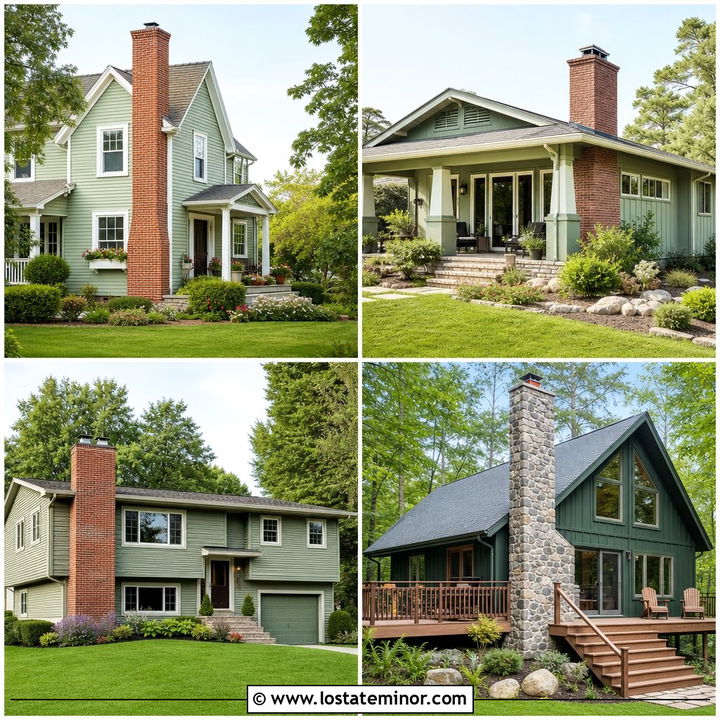
The muted quality of moss green can sit comfortably beside a warm red brick chimney, especially when the roof contains brown or charcoal tones. Apply the green to horizontal siding on a Colonial or traditional suburban home, then use creamy white trim around the windows and roofline. Black shutters create definition and help connect a dark shingle roof to the facade. Choose a natural wood or muted black front door so the brick remains the warmest feature. Avoid adding several other red accents, which can make the palette feel overly busy. A brick-edged walkway can repeat the chimney material in a controlled way. Symmetrical shrubs and small ornamental trees support the orderly architecture while softening the contrast between brick and green.
11. Moss Green House With Gable Roof
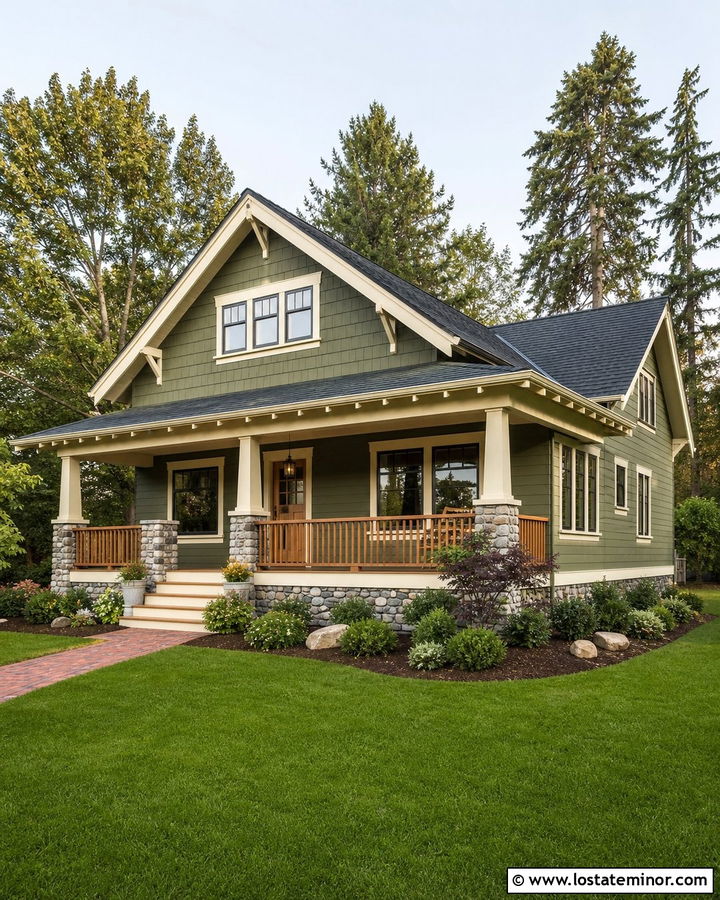
A simple gable roof allows moss green siding to become the defining feature of a modest home. This design works particularly well for a bungalow with a wide porch and one dominant front-facing gable. Cover the roof in charcoal architectural shingles for clean contrast. Use cream trim along the fascia, porch columns, windows, and gable details to reveal the structure clearly. A cedar door and matching porch railing bring warmth into the center of the facade. Consider moss green shake siding inside the gable to add texture while maintaining one body color. A low stone foundation gives the house a finished base. Curved garden beds and a short brick walkway can make the straightforward roofline feel more welcoming and visually layered.
12. Moss Green House With Hip Roof
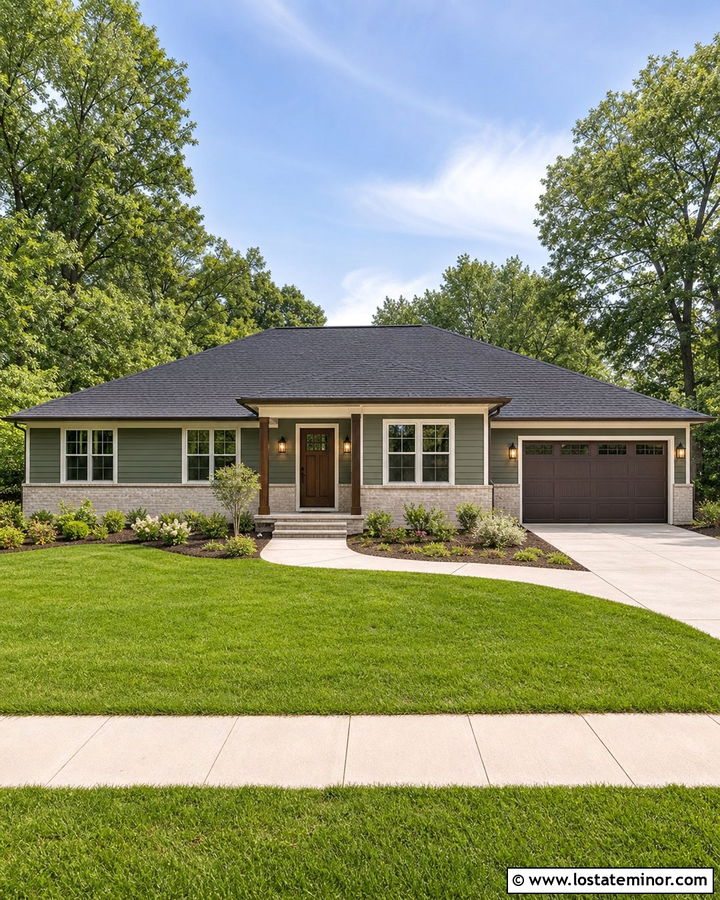
The broad, continuous shape of a hip roof creates a calm silhouette that pairs naturally with an earthy moss green exterior. Choose medium charcoal shingles to give the roof definition while keeping the overall palette restrained. On a one-story ranch, use warm white for the fascia, window trim, and porch ceiling. A dark walnut door provides a strong centerpiece beneath the extended roofline. If the house includes brick, limewashing it in a soft taupe can help it blend with the green siding and gray roofing. Bronze gutters and lights offer a gentler finish than black fixtures. Frame the facade with low shrubs and broad planting beds, ensuring that tall landscaping does not hide the horizontal architecture or the attractive roof shape.
13. Moss Green House With Cross-Gable Roof
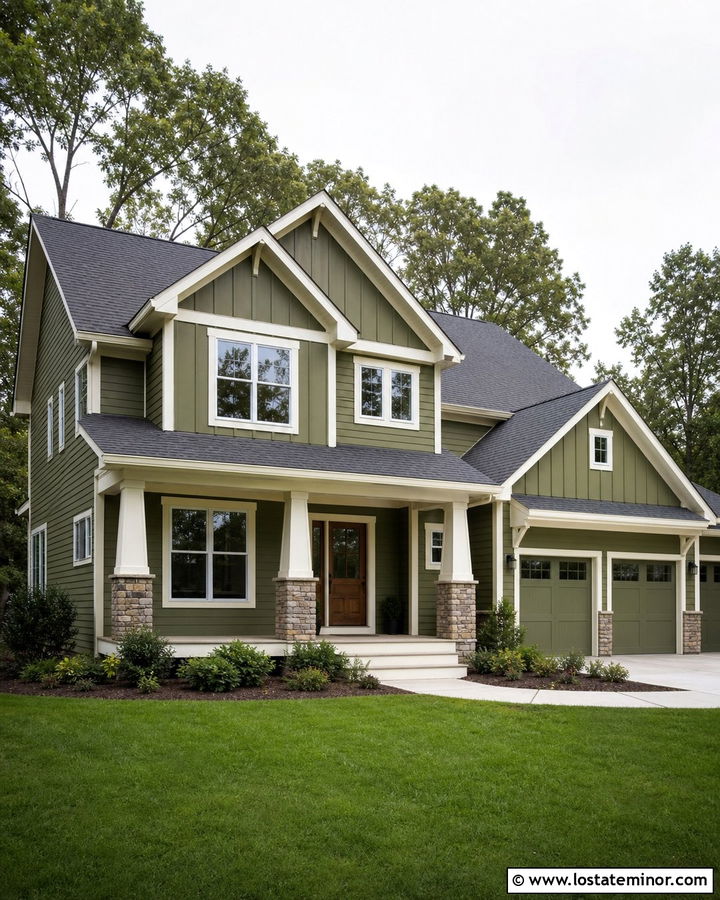
Multiple gables create natural opportunities to add depth to a moss green exterior. Cover the main walls in horizontal lap siding, then use moss green board-and-batten or cedar-style shingles inside the gable peaks. A dark gray roof will separate the complex rooflines from the siding without competing with them. Keep the trim warm white so every gable, window group, and fascia edge remains clear. A medium wood front door balances the cool gray roof and brings warmth near the entrance. Stone wrapping around the porch columns can help ground the detailed upper facade. Since cross-gable houses already have plenty of architectural movement, use simple landscaping and a restrained material palette to prevent the complete exterior from looking visually crowded.
14. Moss Green House With Gambrel Roof
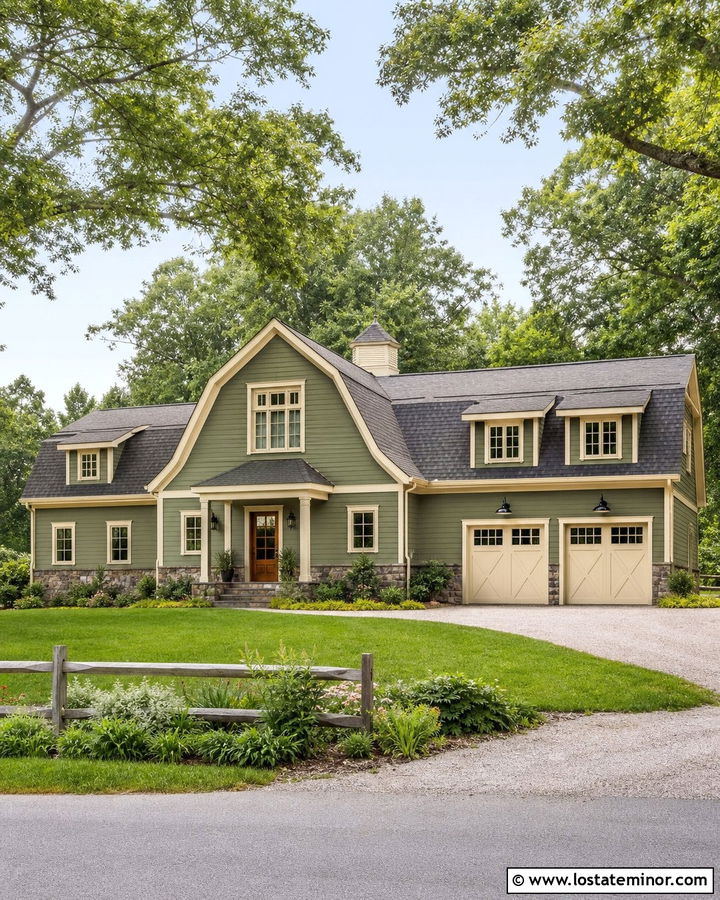
A gambrel roof gives moss green siding a classic barn-inspired character without requiring an all-white farmhouse palette. Use dark brown or weathered charcoal shingles to emphasize the roof’s distinctive double slope. Warm cream trim works well around the eaves, dormers, windows, and traditional carriage-style garage doors. For the entrance, select a stained wood door or a deep burgundy door used as one controlled accent. Black barn lights add definition without taking attention away from the roof. A stone foundation in brown and gray tones can make the house look more settled into the site. Split-rail fencing, large shade trees, and relaxed planting beds support the country influence while keeping the design suitable for a modern suburban property.
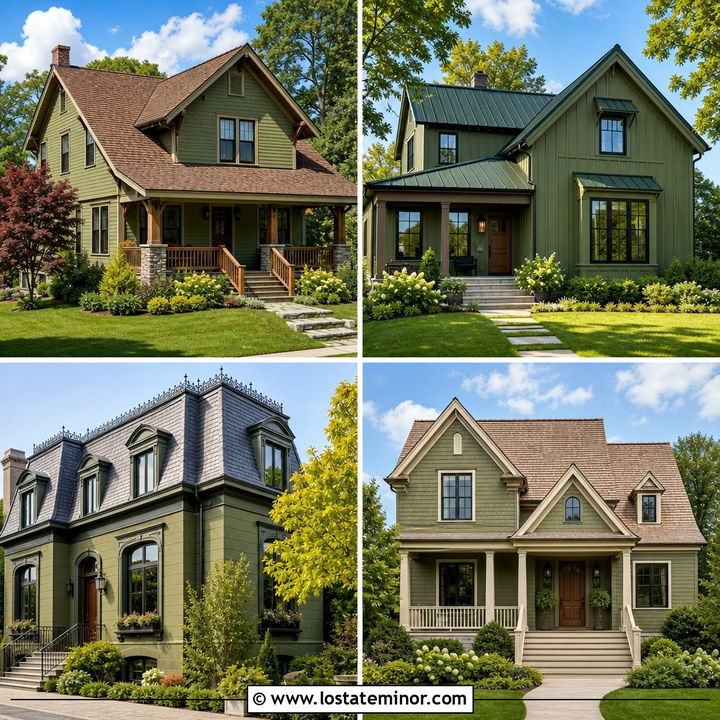
15. Moss Green House With Shed Roof
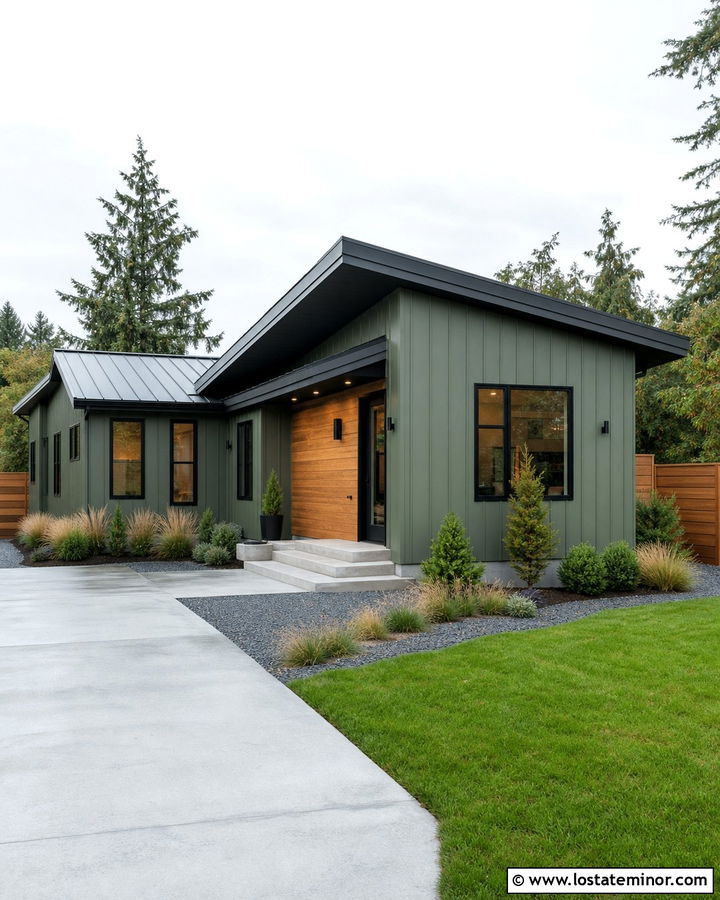
Clean roof planes and moss green siding form a modern exterior that still feels connected to nature. Use a low-sloping black metal shed roof on a contemporary home with large windows and an asymmetrical facade. Vertical siding strengthens the roof’s directional lines, while black window frames connect the glass openings to the metal above. Instead of white trim, use narrow charcoal trim for a seamless, understated finish. Warm cedar cladding around the entry prevents the dark details from becoming too severe. A smooth concrete walkway, horizontal wood fence, and simple gravel beds complement the architecture. Add sculptural grasses and compact evergreens for softness. This combination feels modern and bold, yet the muted green keeps it from appearing cold or overly industrial.
16. Moss Green House With Low-Slope Roof
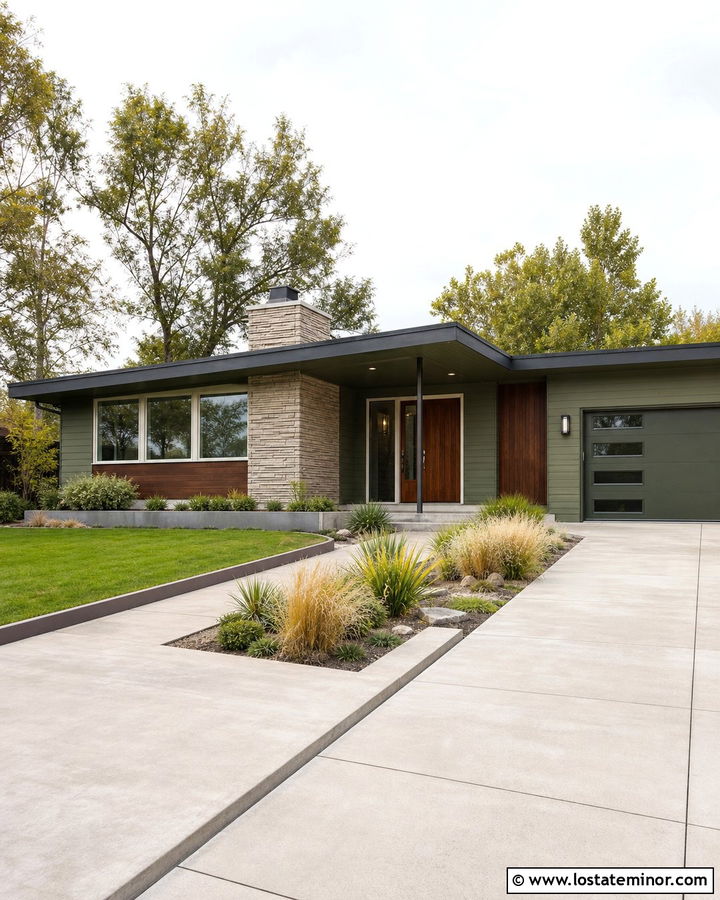
A low-slope roof gives a moss green house a relaxed midcentury profile. Select dark charcoal roofing with matching fascia so the roof appears as one crisp horizontal band. Moss green lap siding can cover the main walls, while warm wood panels highlight the recessed entry or garage area. Use off-white window frames if you want a lighter, more approachable look, or black frames for stronger modern contrast. An orange-toned walnut front door makes an effective period-inspired accent. Keep masonry low and horizontal, using stacked stone around the planter walls or chimney. A wide concrete path, geometric planting beds, and drought-tolerant grasses reinforce the architecture. The final design should feel streamlined but not bare, with green providing warmth and personality.
17. Moss Green House With Steep Black Roof
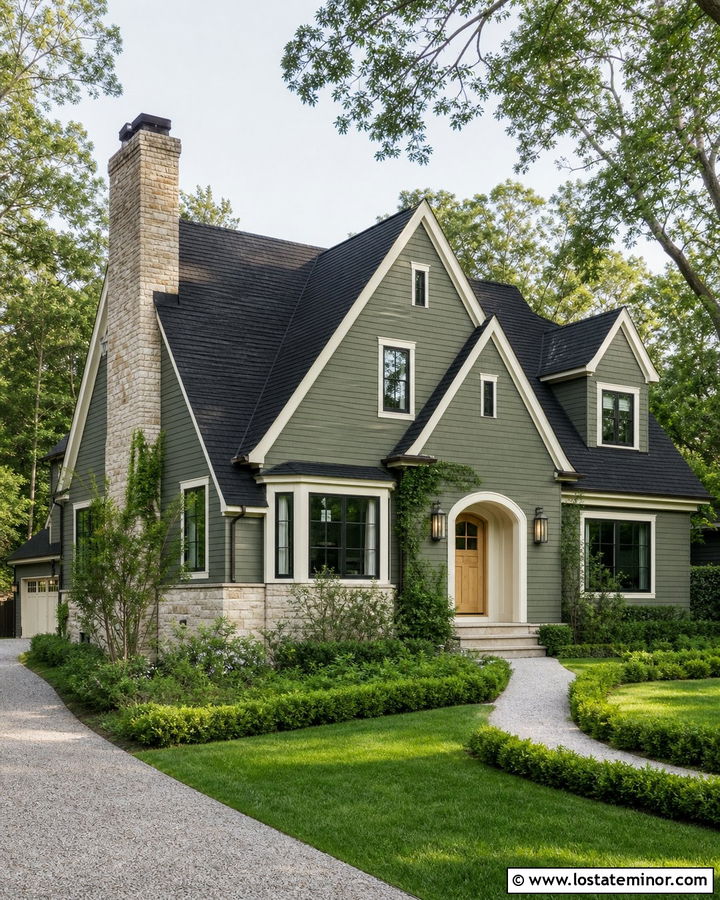
A steep black roof creates a dramatic outline above moss green walls, making it ideal for a tall cottage or modern European-inspired home. Balance the dark roof with warm white window trim and narrow fascia boards. Use black-framed windows selectively so the openings feel connected to the roof without disappearing into the siding. A pale oak door introduces warmth and helps visitors locate the entrance beneath the dominant roofline. Light limestone around the base and chimney brightens the lower facade. Keep decorative details minimal because the roof shape already provides strong visual interest. Soft hedges, climbing plants, and a curved gravel path can temper the bold architecture. This complete scheme feels distinctive while remaining grounded in a natural, muted color family.
18. Moss Green House With White Trim And Gray Roof
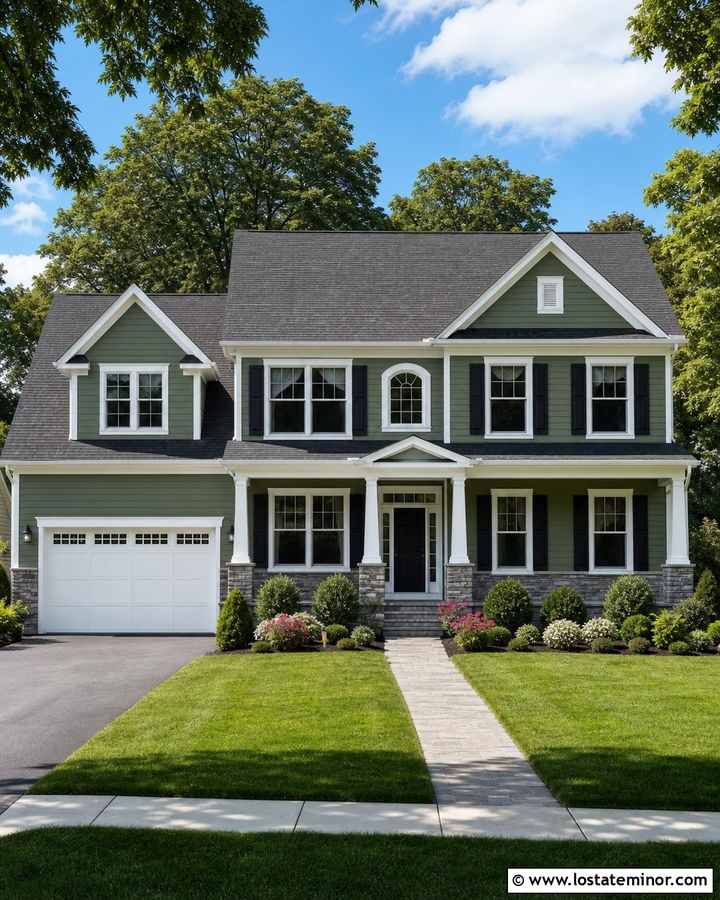
Moss green, white, and gray form a dependable exterior palette that adapts easily to many neighborhoods. Apply moss green lap siding to a traditional two-story home, then use clean white trim around the windows, corners, porch, and roofline. Choose a medium gray shingle roof rather than very pale silver or near-black charcoal. The middle value creates a comfortable transition between the green body and white details. A black front door and matching shutters provide small areas of stronger contrast. Add gray stone around the porch base to repeat the roof color closer to eye level. Keep the garage door white if it sits beneath a front-facing gable. Balanced foundation shrubs and seasonal flowers give this versatile house scheme a finished, welcoming appearance.
19. Moss Green House With Cream Trim And Brown Roof
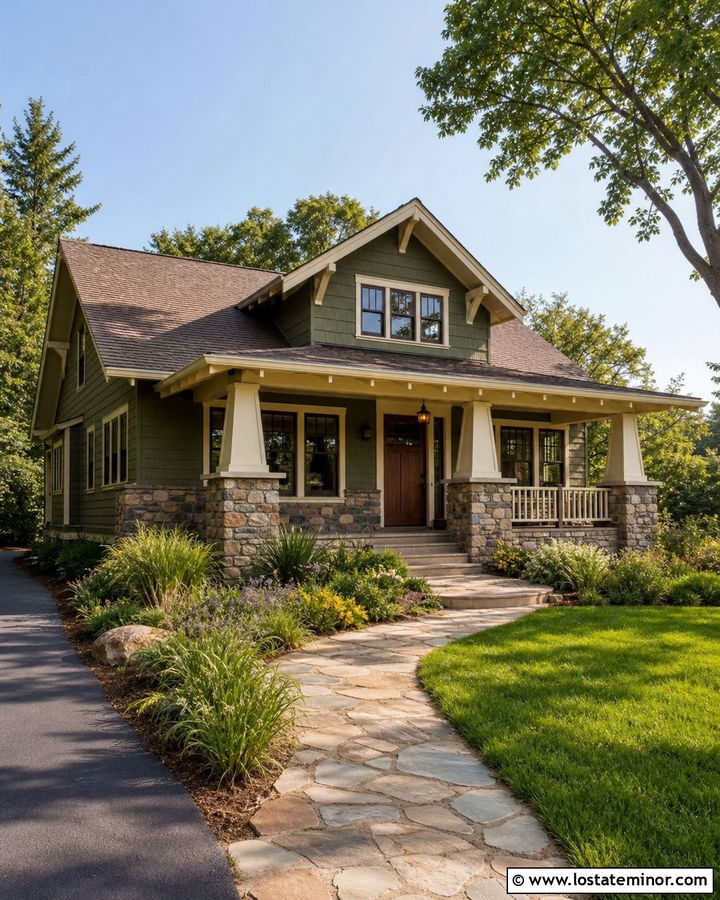
Warm cream trim softens moss green siding and creates a natural bridge to a brown roof. This scheme is particularly effective on a Craftsman bungalow, where the trim can highlight wide eaves, porch beams, window casings, and tapered columns. Use dimensional brown shingles containing a mix of chocolate, tan, and muted charcoal rather than one flat color. A rich walnut door strengthens the warm palette, while dark bronze hardware adds definition. Cover the porch piers with fieldstone that includes both gray and brown pieces. This will connect every major exterior color. The home should feel layered but cohesive. Native grasses, low flowering plants, and a natural stone path complete the relaxed look without introducing colors that distract from the architecture.
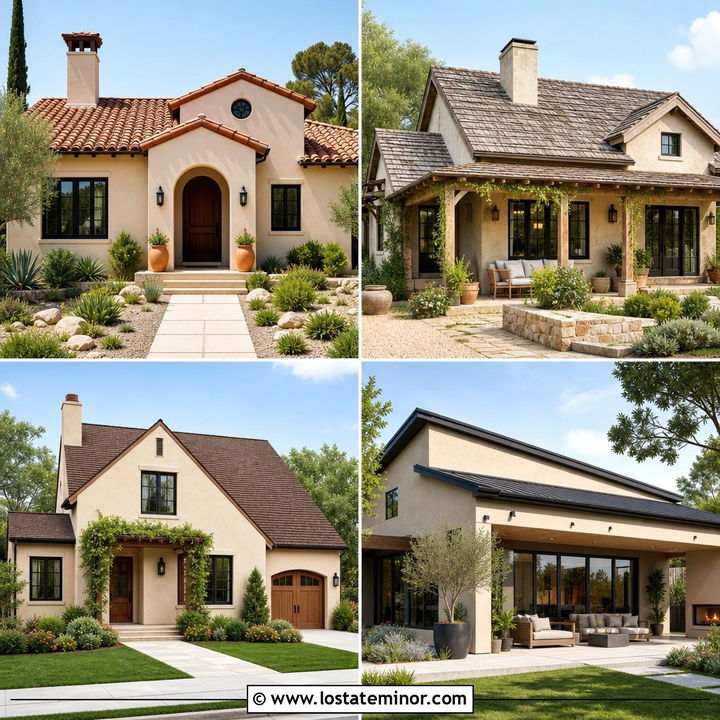
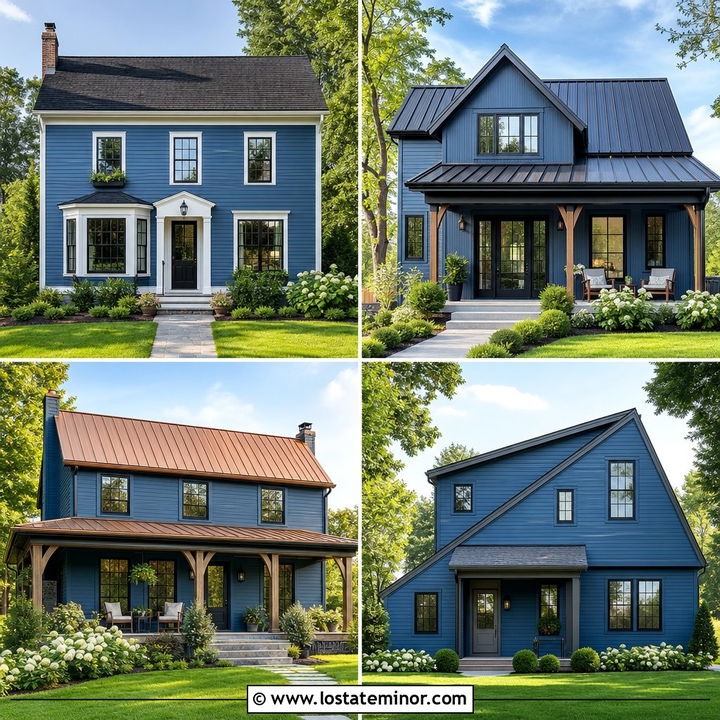
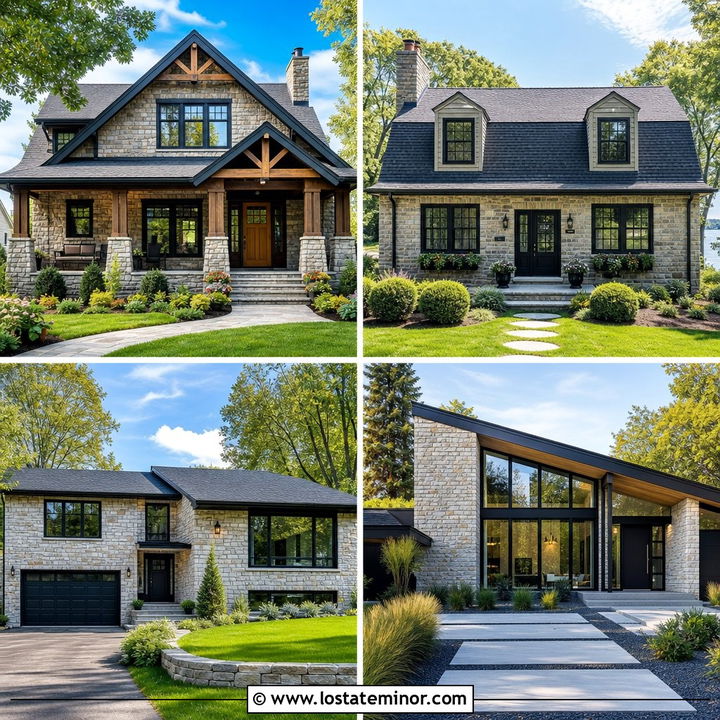
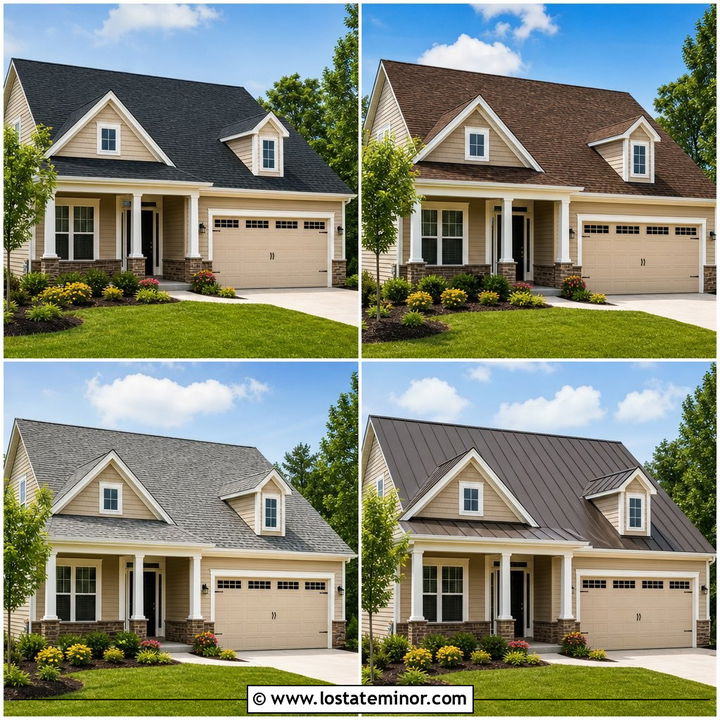
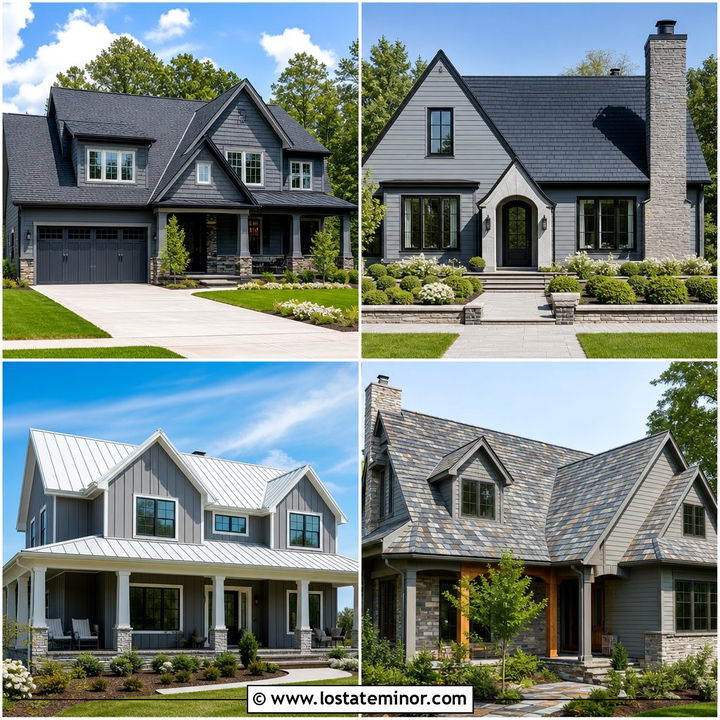
20. Moss Green House With Black Trim And Black Roof
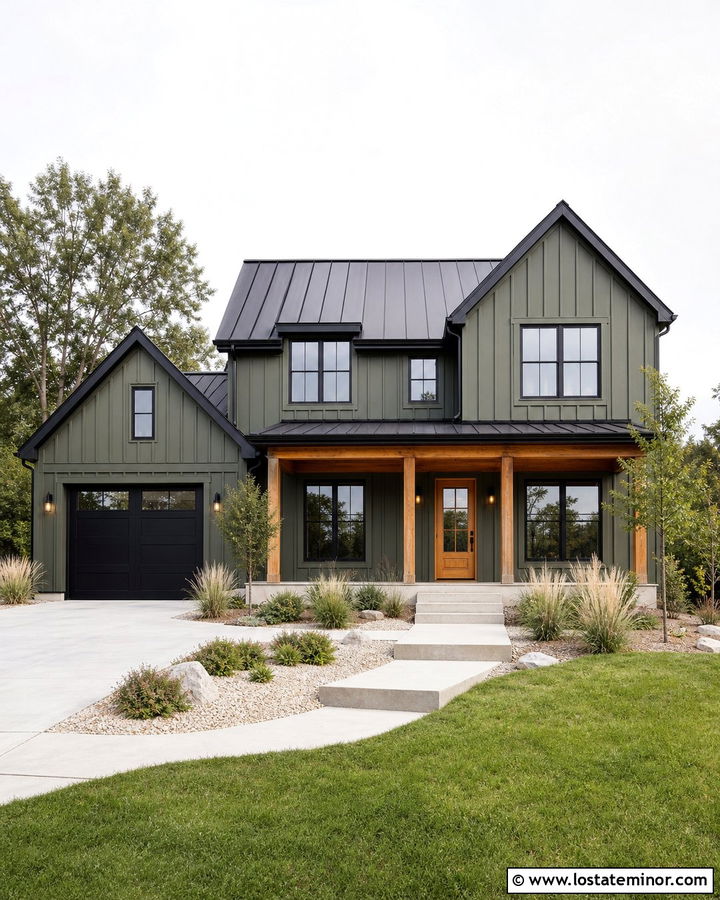
For a bolder design, surround moss green siding with black trim and a matching black roof. The result works best on a contemporary farmhouse or modern two-story home with simple windows and limited ornament. Vertical board-and-batten siding keeps the green surface visually clean. Use matte black for the standing-seam roof, gutters, window frames, porch lights, and garage door. Then introduce warm wood through the front door, porch ceiling, and a small section of cedar cladding. These natural details prevent the facade from feeling flat or severe. Light gray concrete steps and pale gravel beds brighten the ground plane. Choose airy grasses and loosely shaped shrubs instead of dense foundation plantings, allowing the strong green-and-black architecture to remain visible from the street.
21. Moss Green House With Natural Wood Trim And Gray Roof
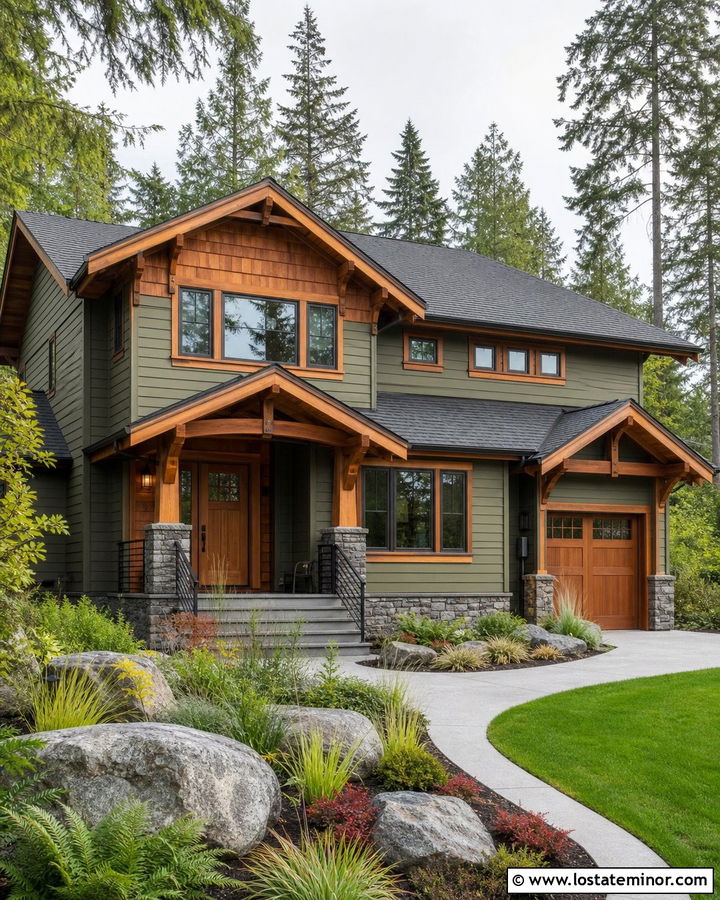
Natural wood trim can make a moss green house feel handcrafted and inviting. Use cedar or Douglas fir around the windows, fascia, porch beams, and front door, but keep the application controlled so the house does not resemble a cabin unless that is the goal. A medium gray roof provides a neutral top that lets both materials remain visible. This scheme suits a Northwest-inspired contemporary house with broad eaves and mixed horizontal and vertical siding. Add charcoal metal railings for contrast and gray stone along the foundation for texture. Protect exposed wood with an exterior-grade finish that preserves its warm appearance. Ferns, ornamental grasses, boulders, and a gently curved walkway help connect the home’s natural color scheme to the surrounding yard.
22. Moss Green House With Stone Accent And Charcoal Roof
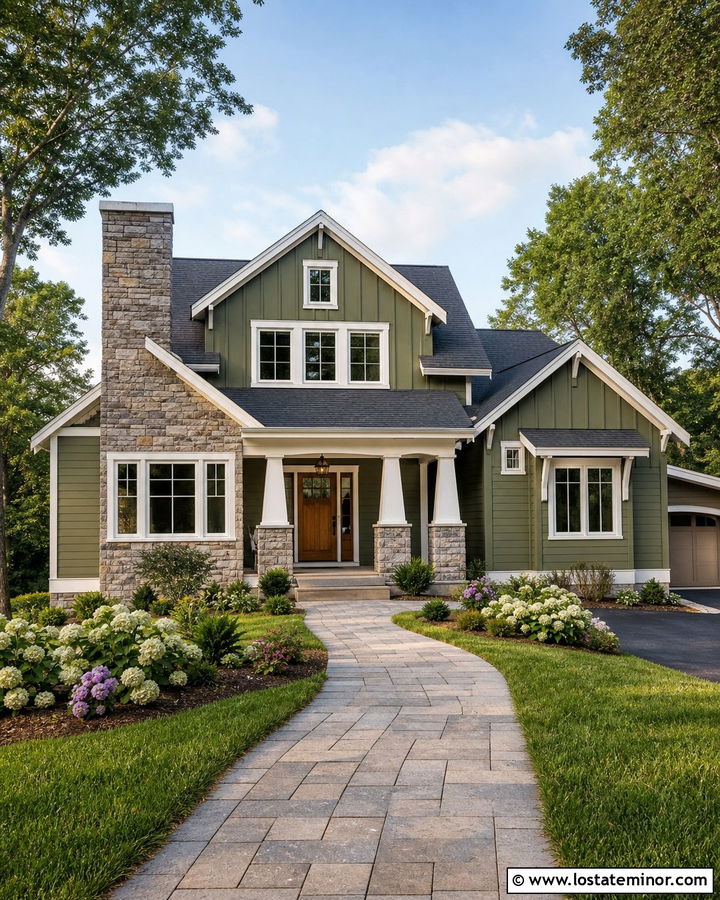
Stone gives a moss green exterior weight and permanence, especially when it includes colors found in both the siding and roof. Choose a charcoal shingle roof, warm white trim, and mixed ledgestone with gray, beige, and muted brown variation. Apply the stone to the lower walls, porch columns, and chimney rather than scattering small patches across unrelated areas. The consistent placement makes the material look structural. Moss green lap siding can cover the main walls, while board-and-batten siding adds subtle contrast in the gables. Use a medium-stained wood door and dark bronze lights to warm the entry. A paver walkway containing gray and tan tones completes the connection. This complete look works well on Craftsman, mountain, and transitional suburban homes.
23. Moss Green House With Brick Accent And Black Roof
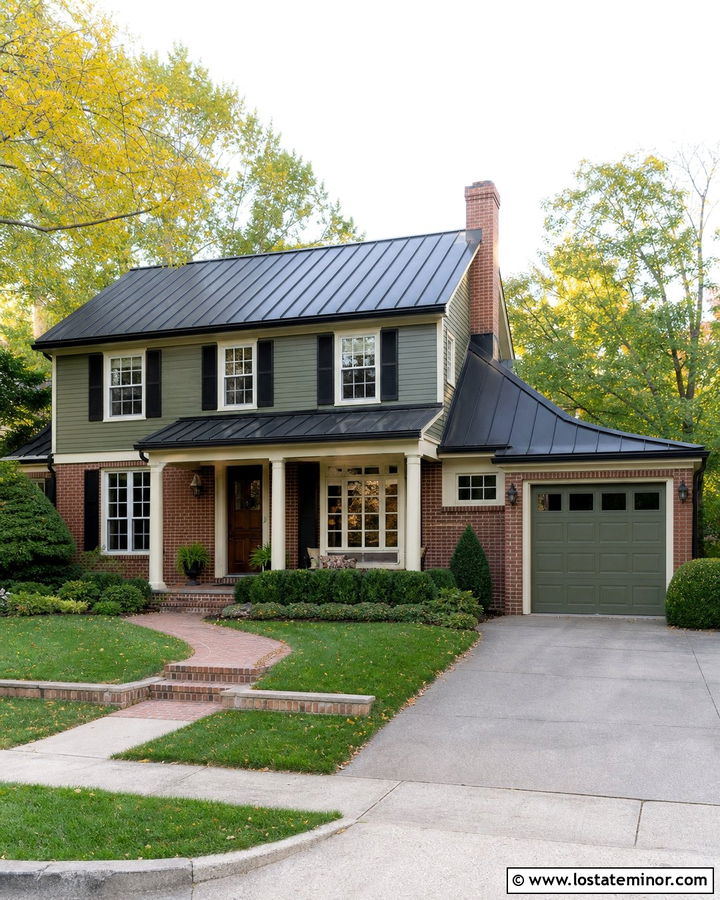
Dark roofing can modernize a moss green house with existing red or brown brick. Paint the siding moss green and leave attractive masonry unpainted, allowing its natural variation to become part of the palette. A black shingle or standing-seam roof creates a crisp upper edge, while creamy off-white trim prevents the full exterior from becoming too dark. Use black shutters only where they fit the window proportions. A wood front door with a medium walnut stain coordinates with the warm brick. If the garage faces the street, paint it moss green so it blends into the siding. Repeat the brick along a walkway border or porch step for continuity. Simple evergreen landscaping will complement the color without concealing the contrasting materials.
24. Moss Green House With Cedar Porch And Brown Roof
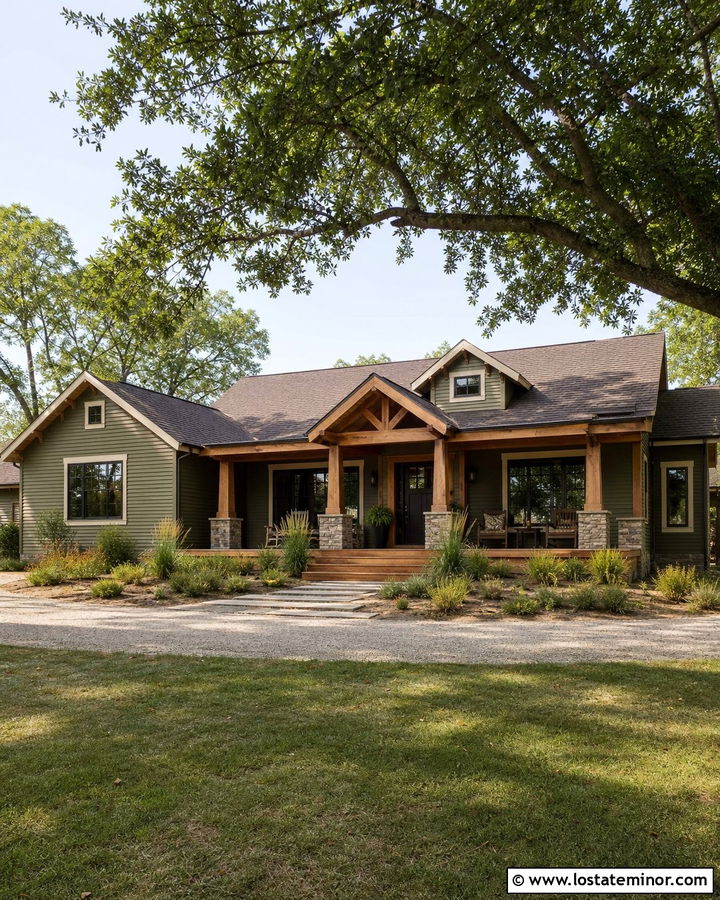
Imagine moss green siding behind a wide cedar porch warmed by afternoon light. A dimensional brown roof completes this inviting palette and makes the porch feel like an integrated part of the house. Use the combination on a ranch, cabin-inspired home, or relaxed modern farmhouse. Leave the cedar posts, beams, ceiling, and railings in a medium natural stain. Add warm cream trim around the windows and fascia for gentle separation. A dark brown door may blend into the porch, so consider a muted black door for stronger focus. Stone porch bases containing gray and tan tones can support the wood visually. Finish the yard with broad steps, native grasses, and an informal path that emphasizes the home’s comfortable, nature-connected personality.
25. Moss Green House With Covered Porch And Metal Roof
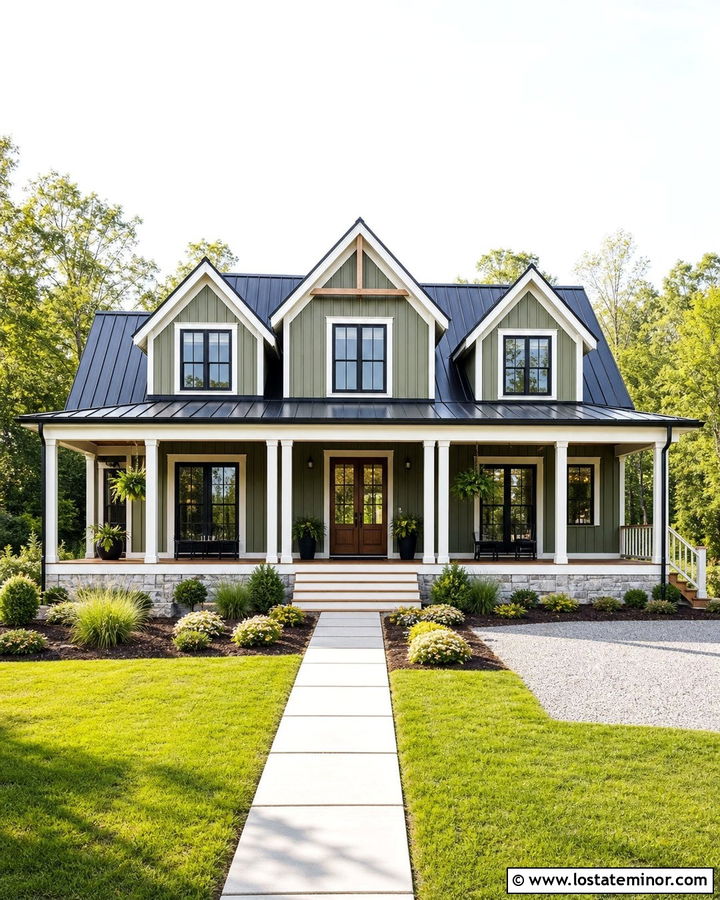
A covered porch becomes the defining feature of a moss green farmhouse when it shares the home’s dark metal roof. Use vertical board-and-batten siding, a black standing-seam roof, and creamy white trim to create a clean but welcoming structure. Wrap the porch across most of the facade so its posts and roofline balance the height of the house. Natural wood doors and rocking-chair-friendly decking add warmth beneath the overhang. Black-framed windows, gutters, and simple lights repeat the roofing finish. If additional texture is needed, use pale gray stone around the porch foundation. A straight walkway bordered by grasses and flowering shrubs reinforces the entrance. The porch should feel practical, spacious, and fully connected to the complete exterior design.
26. Moss Green House With Dormers And Slate Roof
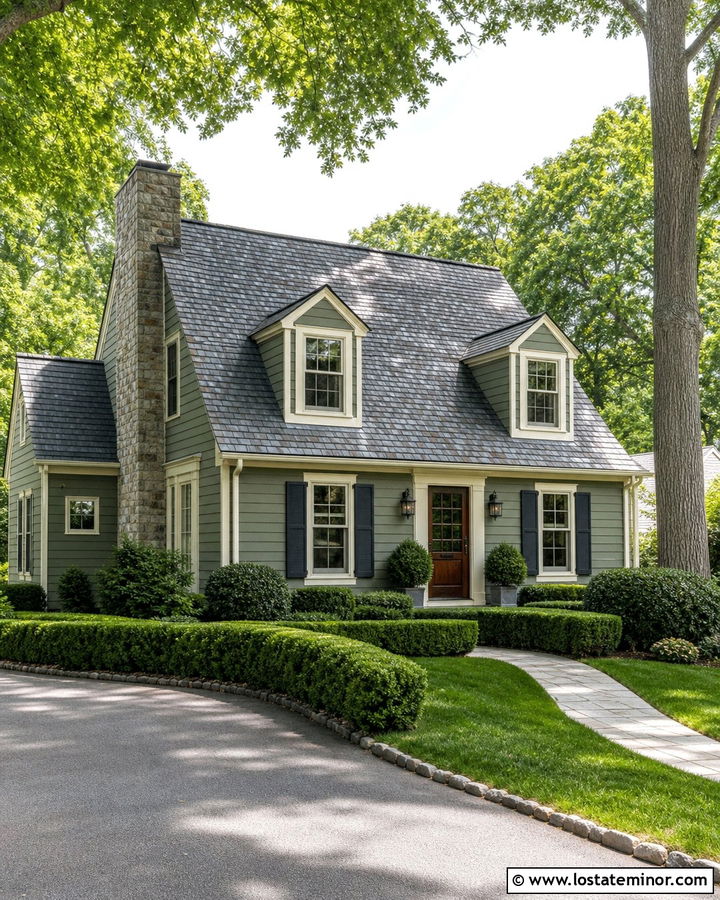
Dormers break up a large roof and give a moss green home a more traditional, detailed silhouette. A slate or slate-look roof in varied charcoal gray creates rich texture around those projections. Paint the dormer siding moss green to match the main walls, then outline the windows and roof edges with soft cream trim. Dark green or black shutters can add definition to the lower windows without overwhelming the dormers. Select a stained wood door with divided glass for a warm, classic entrance. A stone chimney or foundation in gray and tan will complement the slate. This combination suits Cape Cod, Colonial Revival, and country houses. Symmetrical hedges and a gently curved walkway keep the overall curb appeal polished but not overly formal.
27. Moss Green House With Roof Overhangs
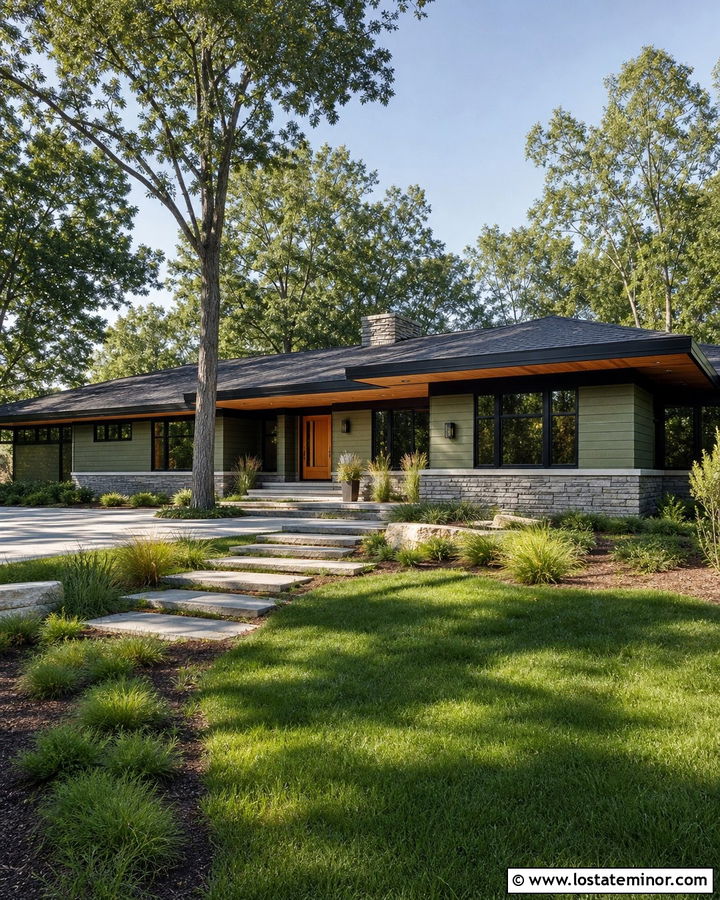
Deep roof overhangs cast noticeable shadows, so moss green siding beneath them needs lighter details to remain visible. Use a charcoal roof with warm wood soffits and cream fascia to define the layers clearly. This design works well on a Prairie-style or contemporary ranch house with wide horizontal lines. Repeat the soffit wood on the front door, porch ceiling, and selected wall panels. Black window frames add structure, while gray stone at the foundation grounds the facade. Avoid using very dark green in areas permanently shaded by the roof. A medium moss tone will hold its character more successfully throughout the day. Low ornamental grasses, broad stepping stones, and uncluttered planting beds reinforce the home’s horizontal, landscape-focused design.
28. Moss Green House With Mixed Roof Materials
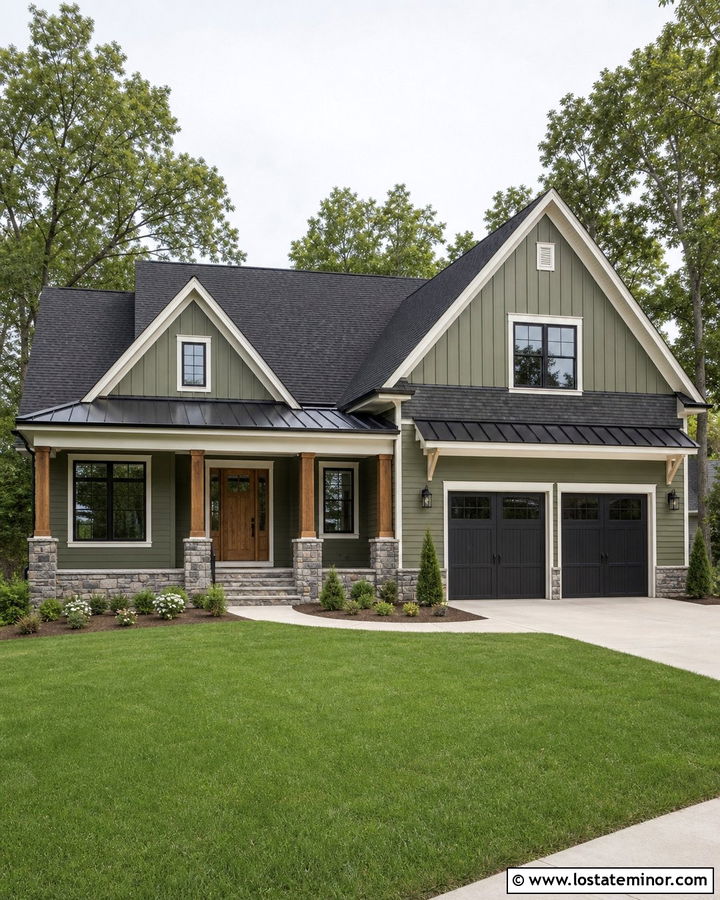
Combining roofing materials can highlight important sections of a moss green house when the colors remain coordinated. Use charcoal architectural shingles on the main roof and matte black standing-seam metal over the porch, bay window, or garage projection. The slight difference in texture adds depth without dividing the exterior into competing themes. Moss green horizontal siding can cover the main structure, while vertical siding distinguishes the smaller projection. Use warm white trim to connect the different forms and natural wood at the entrance for warmth. Gray stone around the porch base repeats the shingle tones. Keep gutters black so they relate to both roof materials. Restrained landscaping allows the roof transitions and green siding to remain the primary visual features.
29. Moss Green Split-Level House With Gray Roof
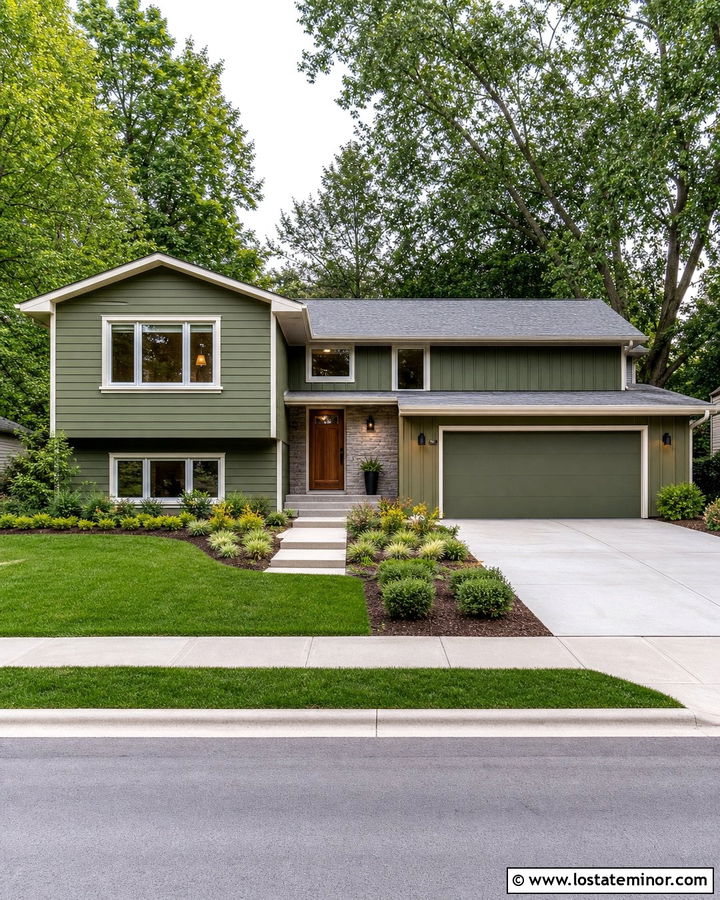
A split-level facade can look disconnected when every section has a different material or color. Moss green siding and a unified gray roof help pull the levels together. Apply the same green to both horizontal and vertical siding, using texture rather than color to distinguish the upper and lower portions. Paint the garage door moss green so it does not dominate the lower level. Warm white trim brightens the windows, while a walnut front door creates a clear entrance between the staggered volumes. Add gray stone around the foundation or entry wall to repeat the roof. Replace tall, overgrown shrubs with layered low plantings. A broad walkway and updated black lights will give the older architecture a cleaner, more intentional street presence.
30. Moss Green Modern House With Flat Roof
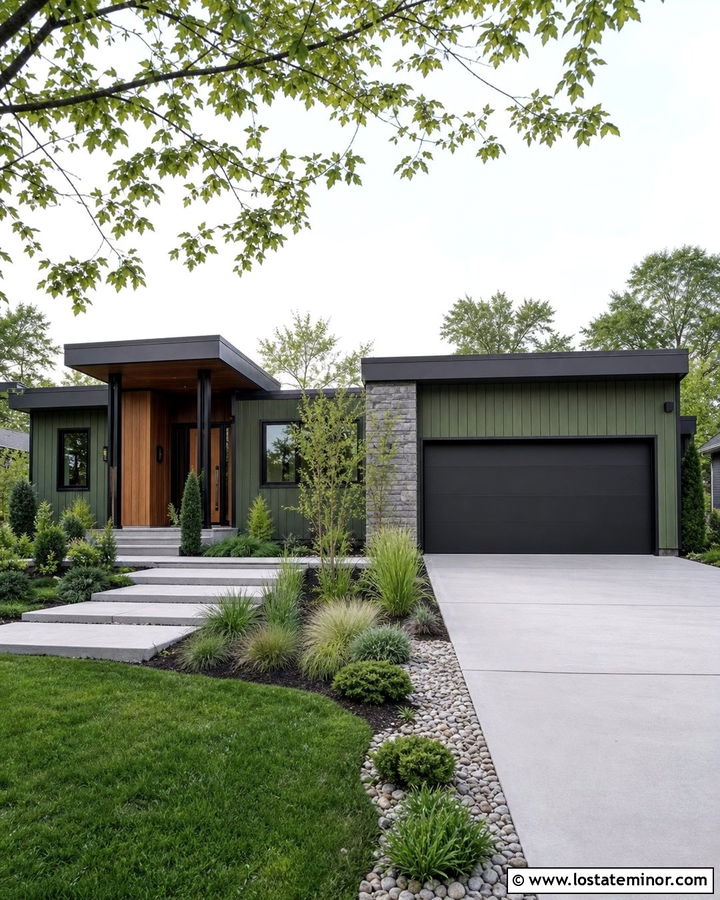
Moss green can soften the hard geometry of a modern house with a flat or nearly flat roof. Choose smooth or narrow vertical siding in a medium moss green, then frame the roofline with charcoal metal fascia. Black-framed windows and a charcoal garage door maintain the streamlined design. Warm cedar panels around the recessed entrance create an inviting contrast and prevent the facade from becoming too cool. Use pale concrete for the steps, walkway, and low retaining walls to brighten the composition. A small section of gray stone can add texture, but it should follow the building’s clean rectangular forms. Minimal grasses, sculptural shrubs, and a tidy lawn complete a modern exterior that feels distinctive, natural, and comfortable rather than stark.
Conclusion:
The strongest moss green exteriors treat the roof, siding, trim, entry, masonry, and landscape as one connected design. Gray and black roofs create crisp contrast, while brown, bronze, cedar, and copper add noticeable warmth. Cream trim produces a softer finish than bright white, and natural wood can make almost any moss green palette feel more welcoming. Before committing, compare large paint samples beside the permanent roof material in morning light, midday sun, and shade. Also consider how brick, stone, gutters, and neighboring homes affect the final result. These 30 Moss Green House Design With Roof Ideas offer flexible starting points for creating a balanced exterior with lasting curb appeal.

Related posts: