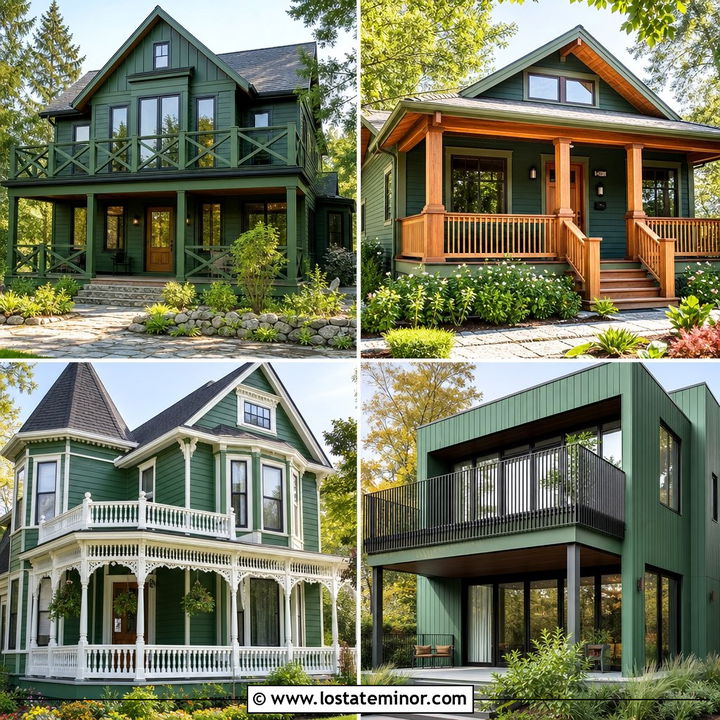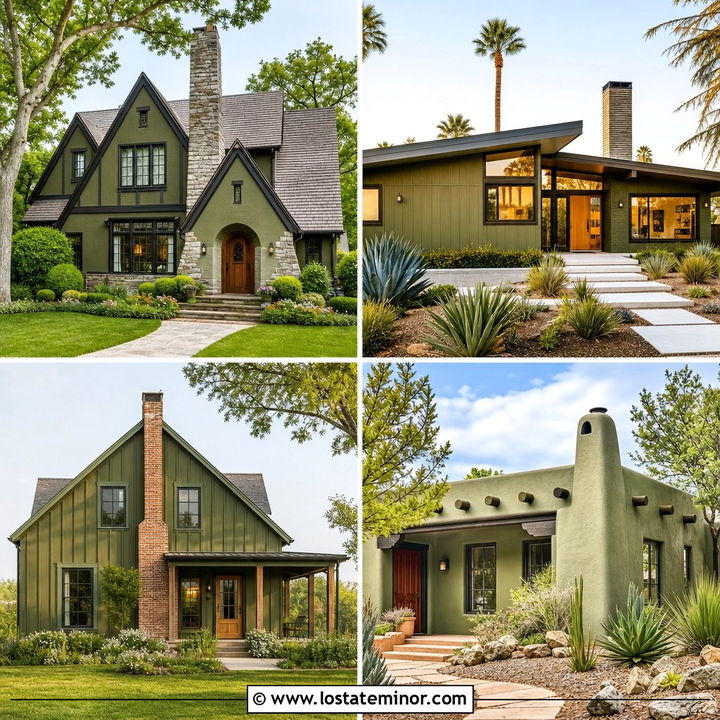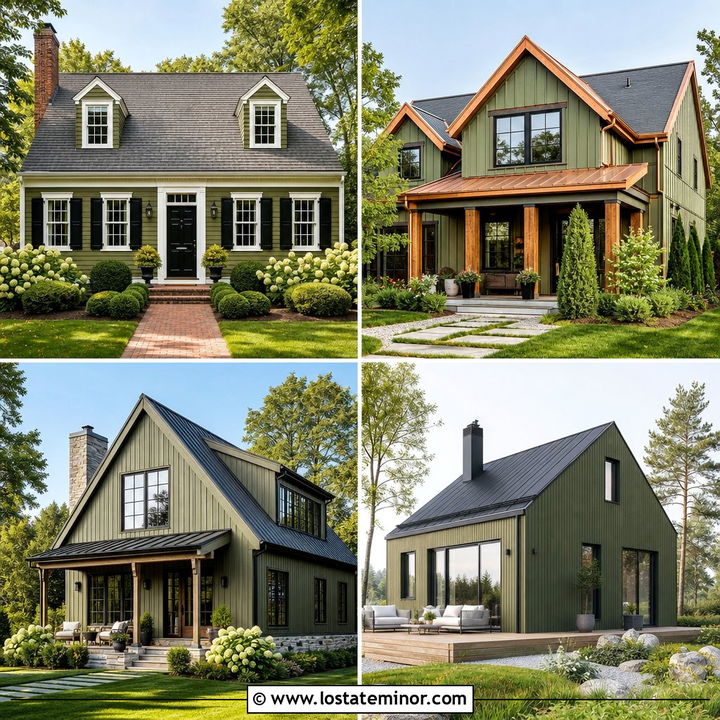
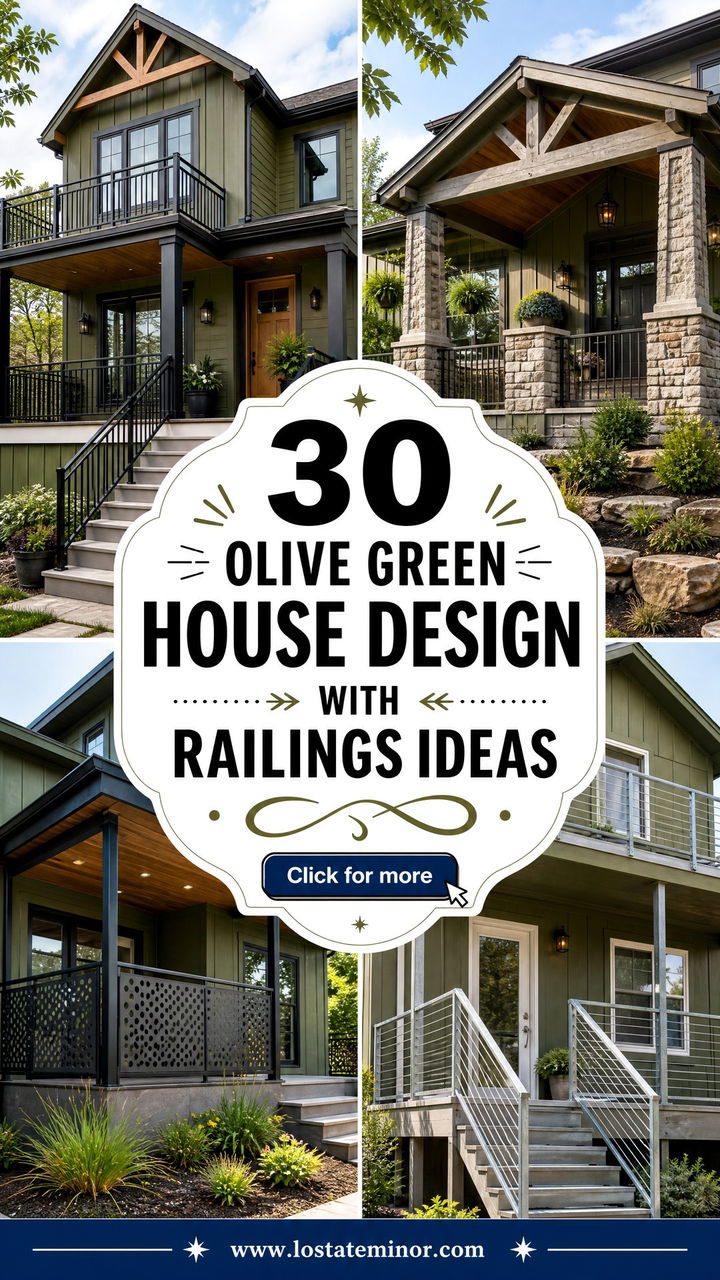
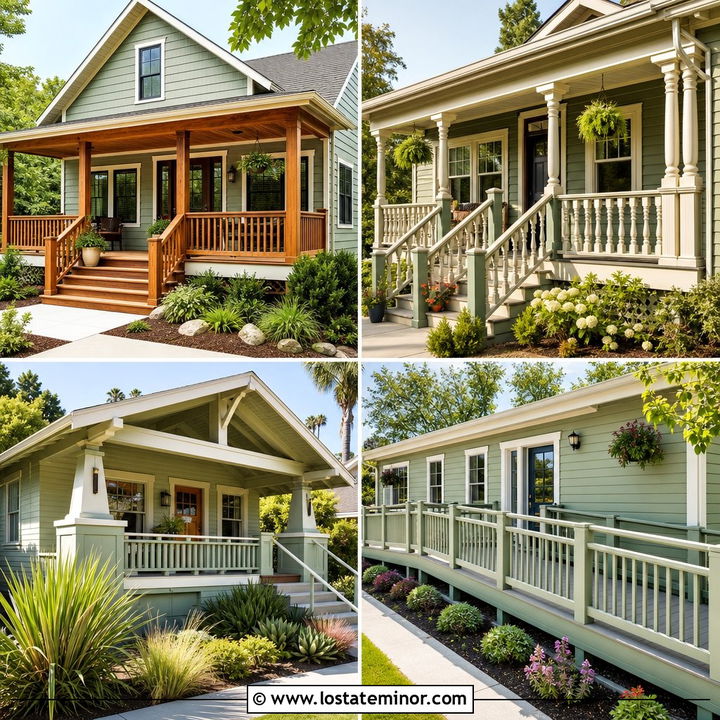
Olive green brings natural depth to a home while feeling softer than charcoal, navy, or black. The right railings can make this earthy exterior color look traditional, rustic, coastal, or distinctly modern. Crisp white balusters brighten olive siding, black metal creates definition, and stained wood introduces warmth. Stone, brick, roofing, trim, and landscaping should also support the palette so the facade feels complete. Paint manufacturers offer olive shades ranging from muted gray-green to dark, mossy tones, making careful outdoor sampling especially important before choosing a final color. () Each look below combines the siding, railings, trim, entry, materials, and architectural style into one coordinated exterior. Explore these 30 Olive Green House Design With Railings Ideas.
1. Olive Green House With Black Metal Railings
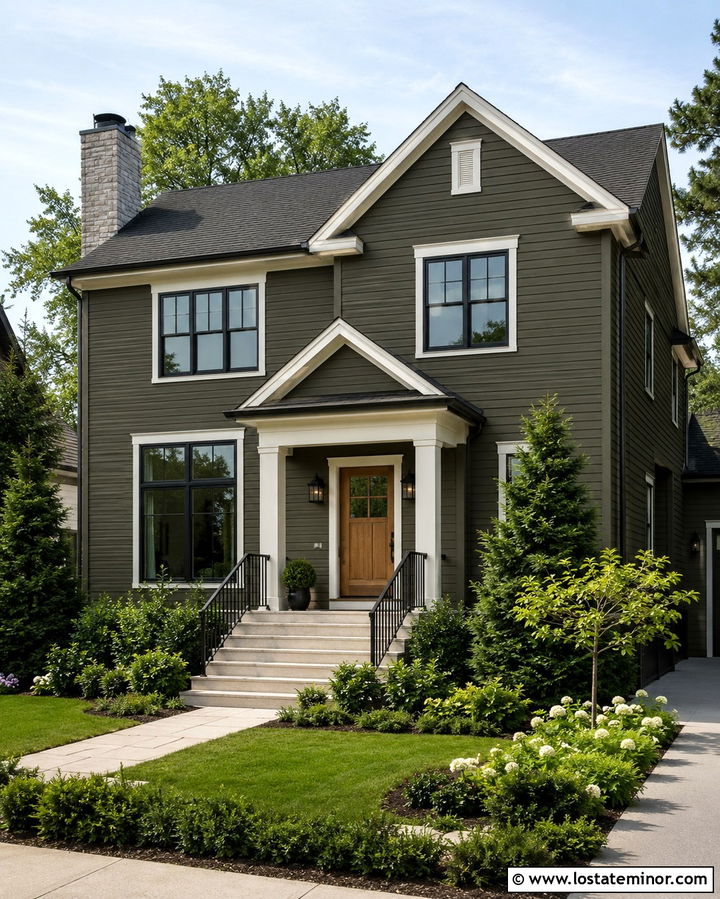
Black metal railings give an olive green exterior clean definition without taking attention away from the architecture. This pairing works especially well on a two-story transitional home with horizontal lap siding, white window trim, and a dark charcoal roof. Use slim square balusters to keep the porch open and make the front elevation feel less visually heavy. A medium-stained oak door adds warmth between the earthy siding and crisp black metal. Repeat black on the porch lights, gutters, and window frames for consistency. Pale limestone steps and layered evergreen landscaping keep the darker colors from overwhelming the facade. The finished house feels grounded and updated, yet it remains approachable enough for a traditional suburban neighborhood.
2. Olive Green House With White Porch Railings
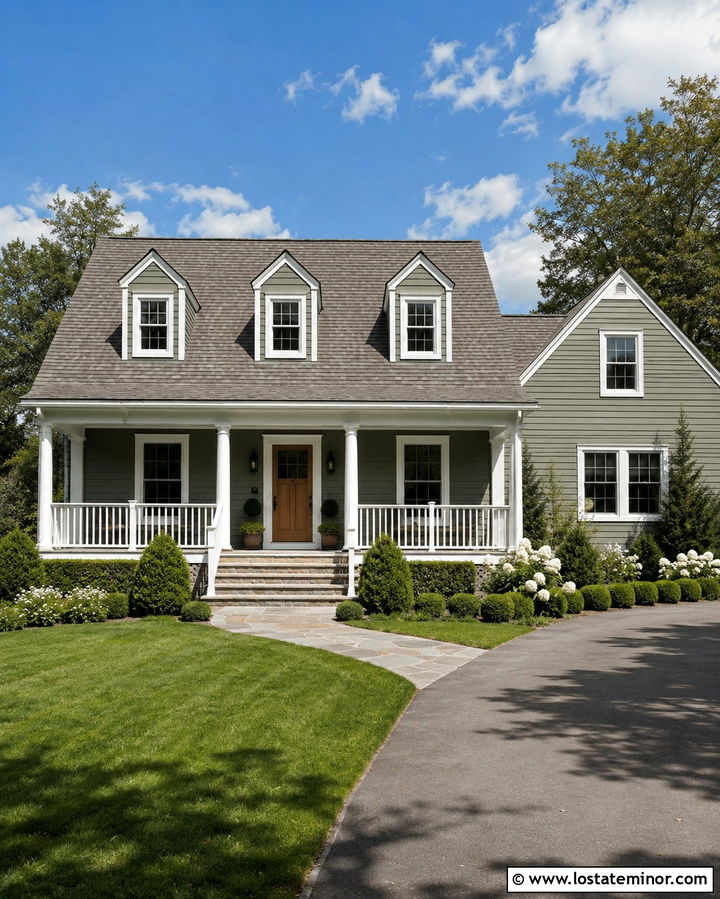
Imagine muted olive green siding framed by a wide porch filled with bright white railings. The contrast highlights the entry and gives a traditional farmhouse or Cape Cod house a lighter appearance. Carry the white onto the porch columns, fascia, window casing, and garage trim so the railing does not look isolated. A warm gray shingle roof softens the contrast, while a natural wood front door prevents the scheme from feeling too cool. Choose simple square balusters rather than decorative spindles for a cleaner update. Flagstone steps, clipped boxwoods, and white flowering plants can reinforce the fresh palette. This complete exterior works particularly well when the house sits among mature trees that naturally echo the olive green siding.
3. Olive Green Craftsman House With Cedar Railings
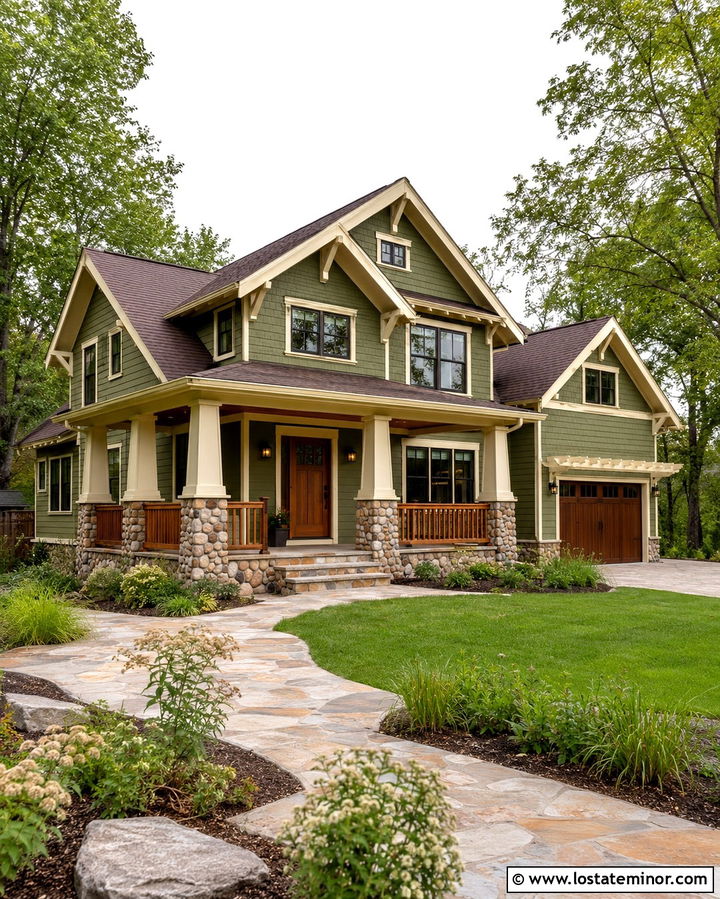
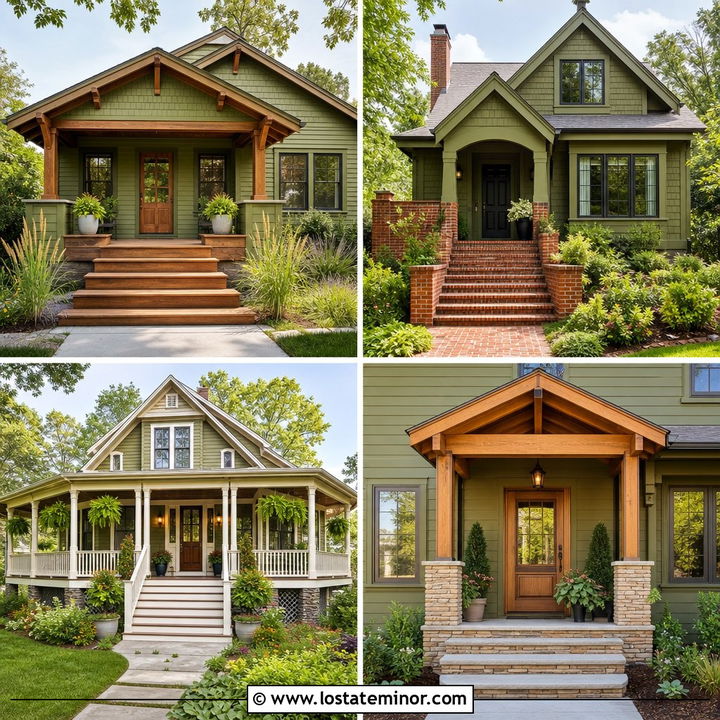
A Craftsman exterior gains instant warmth when olive green siding meets cedar porch railings. Select substantial cedar posts and square balusters that match the scale of tapered columns, deep eaves, and exposed roof brackets. A medium olive body color creates an earthy background, while creamy off-white trim defines the windows and roofline. Use the same cedar tone on the front door, porch ceiling, and small gable accents to distribute the wood evenly. A dark brown roof and river-rock foundation complete the natural palette. Keep the cedar protected with a transparent exterior finish that preserves its visible grain. Broad steps, ornamental grasses, and a curved stone walkway make the home feel welcoming without hiding the handsome railing details.
4. Dark Olive Green House With Cable Railings
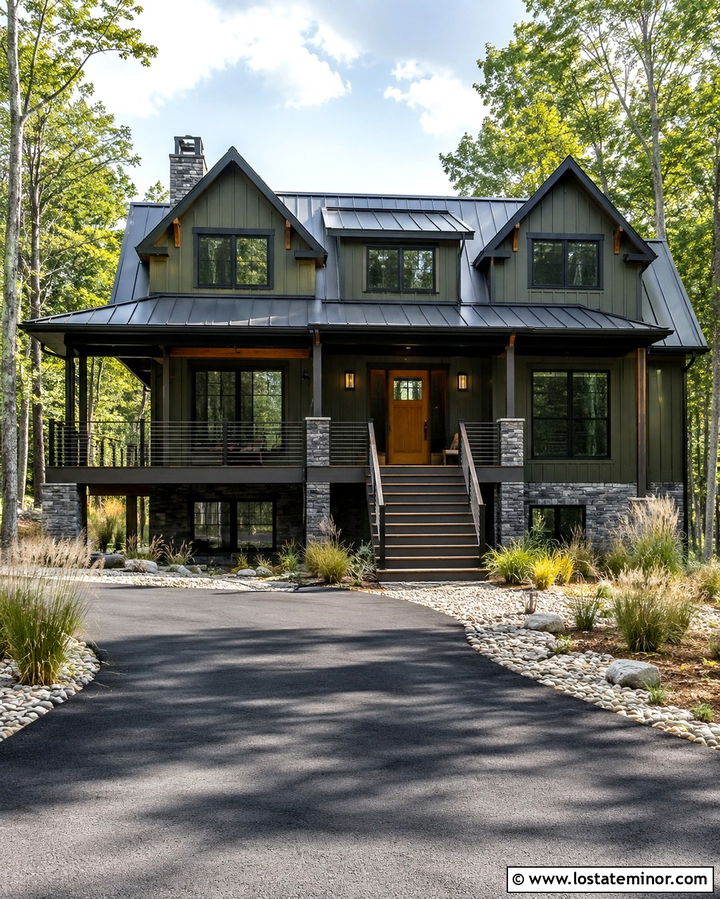
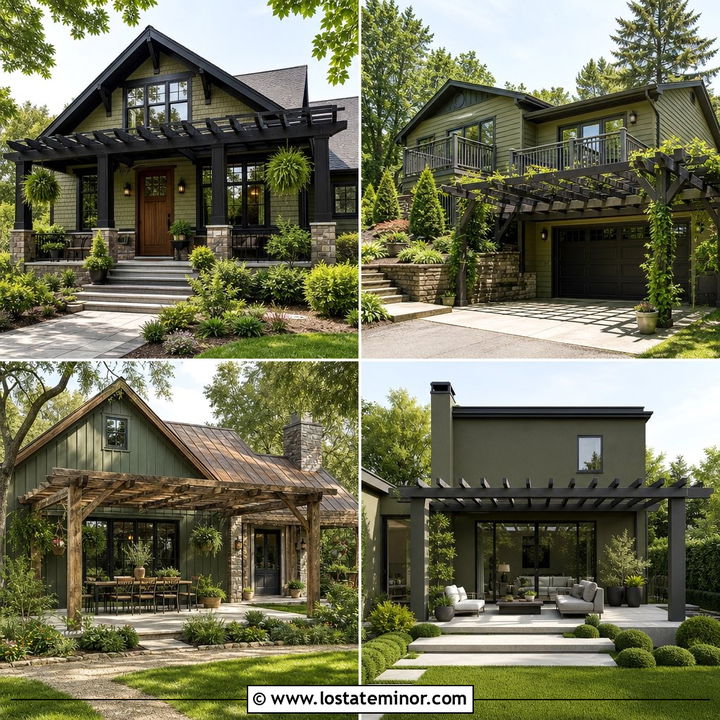
Does your home need a sharper, more contemporary edge? Dark olive green board-and-batten siding paired with horizontal cable railings creates a streamlined exterior that still feels connected to nature. This combination suits modern mountain homes, sloped lots, and updated split-level houses with elevated decks. Use black railing posts and stainless steel cables to define the deck without blocking views of the yard. Match the posts with black windows, gutters, and a standing-seam metal roof. A walnut front door and matching soffits bring warmth to the deep exterior palette. Light concrete steps and pale gravel landscaping provide necessary contrast. The result is modern and structured, but the olive body color keeps the house from appearing cold or overly industrial.
5. Olive Green Colonial House With White Railings
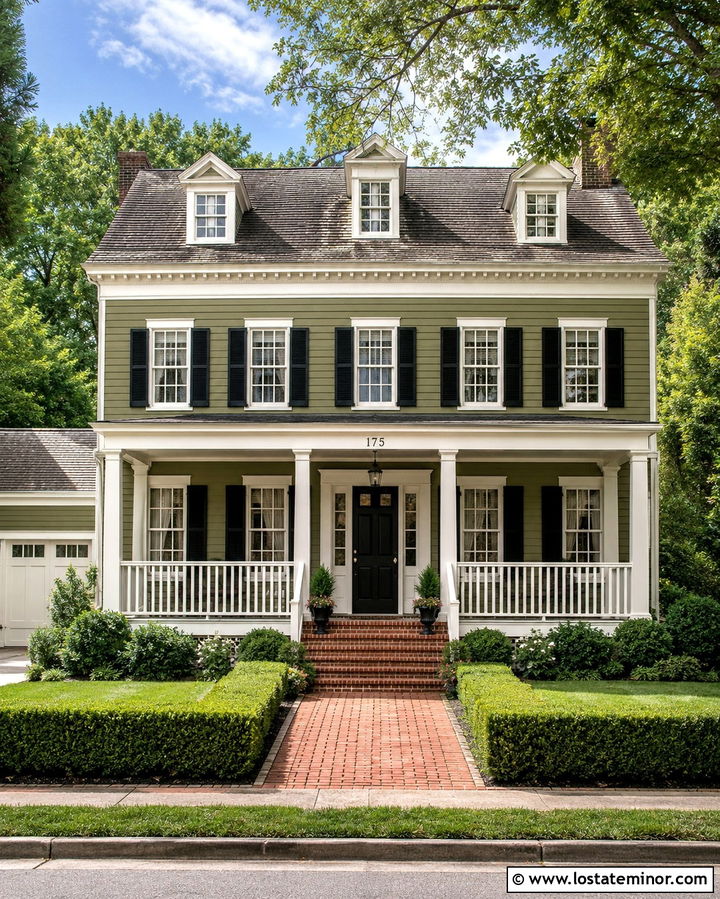
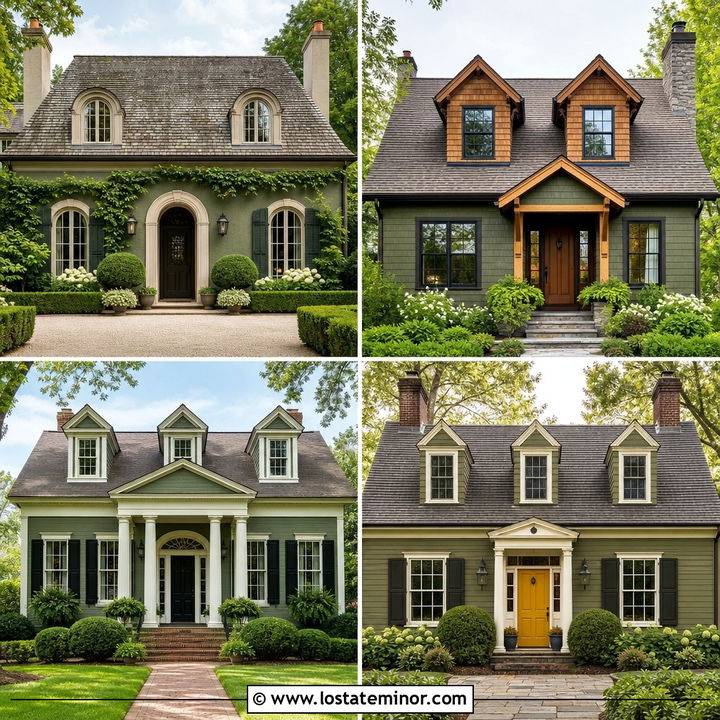
Symmetry makes an olive green Colonial especially attractive when the porch railings follow the same orderly lines. Paint the clapboard siding a classic mid-tone olive and use warm white on the railings, columns, cornices, and window trim. Traditional turned balusters can suit an older home, while simple square balusters offer a more restrained look. Add black shutters and a glossy black front door to create strong focal points across the balanced facade. A weathered gray roof prevents the black accents from becoming too dominant. Red brick steps introduce a subtle historic note and connect beautifully with olive’s warm undertones. Finish the curb appeal with paired planters, clipped hedges, and a straight brick walkway leading toward the centered entrance.
6. Olive Green Farmhouse With Black Porch Railings
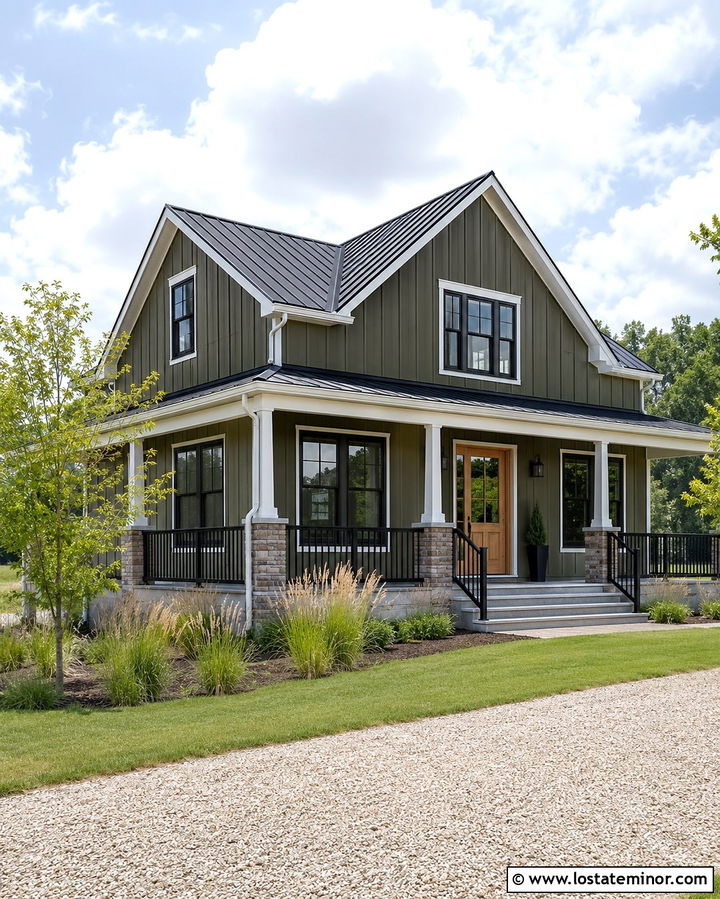
Soft olive green board-and-batten siding can make a modern farmhouse feel warmer and less predictable than a white exterior. Black porch railings establish a bold lower border and connect naturally with black-framed windows and a metal roof. Keep the railing design simple, using narrow vertical balusters between sturdy square posts. White trim around the roofline adds brightness without covering too much of the olive body color. For the entrance, choose a lightly stained double door or a single door with divided glass. Stone porch piers and wide concrete steps help ground the tall vertical siding. A gravel driveway, meadow-inspired planting, and young shade trees complete the relaxed setting while maintaining a clean, intentional full-house appearance.
7. Olive Green Bungalow With Wood Railings
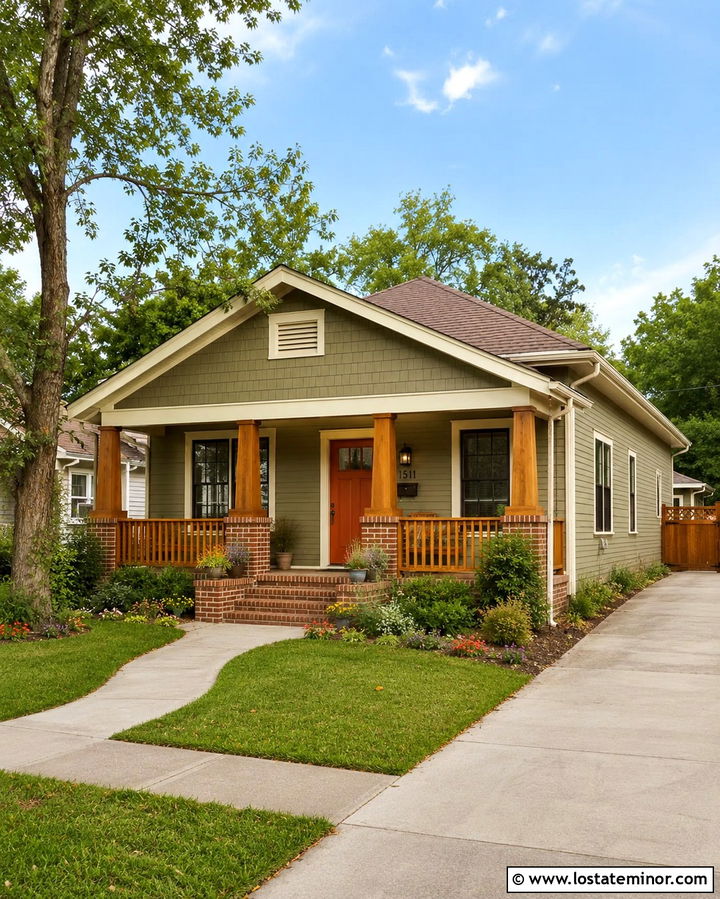
A low bungalow often looks most inviting when its porch feels warm, open, and closely connected to the yard. Pair olive green shake or lap siding with stained wood railings in a honey-brown finish. Cream trim around the windows, porch beams, and roof edges keeps the palette soft. Dark bronze gutters and a brown architectural-shingle roof blend quietly into the background. Use chunky square railing posts to complement the bungalow’s broad roof and visible structural details. A burnt orange or deep rust front door can introduce a small, controlled accent inspired by autumn foliage. Add brick porch steps, informal foundation plants, and a gently curved walkway. Together, these features create a comfortable exterior with character rather than unnecessary decoration.
8. Olive Green Ranch House With Horizontal Railings
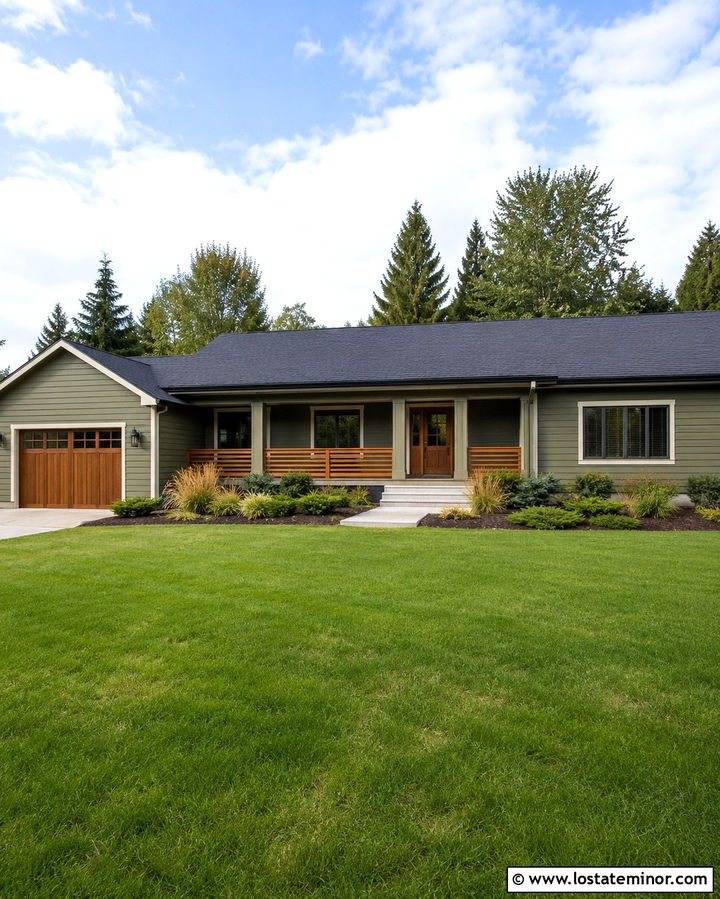
Horizontal railings can visually lengthen a ranch house and reinforce its low, linear shape. Use medium olive green lap siding as the main color, then add warm cedar rails across a shallow front porch or raised entry. Cream fascia and window trim provide a gentle outline, while charcoal roof shingles add enough contrast overhead. Repeat cedar on the garage door or front entry to make the railing material feel intentional. Wide concrete steps and simple rectangular porch columns support the uncomplicated architecture. Keep landscaping low with ornamental grasses, spreading junipers, and neat foundation beds so the railings remain visible. This design gives an ordinary ranch a more custom appearance while preserving the straightforward character that makes the style practical and appealing.
9. Olive Green House With Wrought Iron Railings
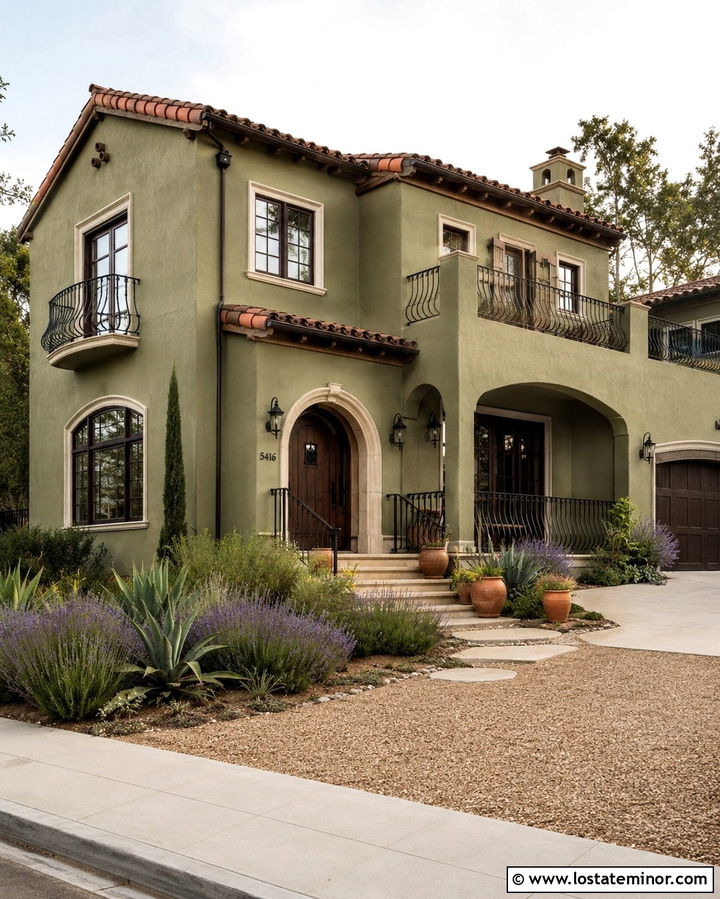
Curved wrought iron railings bring graceful detail to an olive green stucco or masonry exterior. This combination is particularly fitting for Mediterranean, Spanish Revival, and older traditional houses. Choose matte black iron with restrained scrollwork rather than an overly elaborate pattern. Warm olive stucco forms a rich backdrop, while creamy trim highlights arched windows and deep porch openings. A dark wood front door and terracotta roof tiles bring out the warmer notes in the green. Continue the ironwork on a small upper balcony if the architecture allows. Sand-colored steps, clay planters, lavender, and drought-tolerant shrubs complete the setting. The finished facade feels established and elegant, with the railing functioning as an architectural detail rather than an added accessory.
10. Olive Green House With Bronze Railings
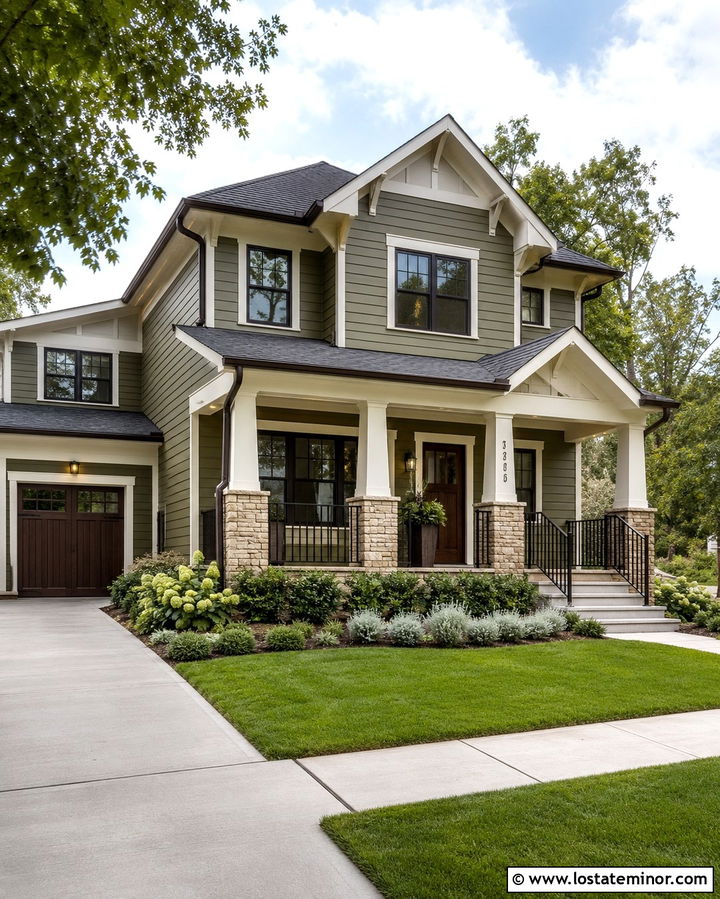
Bronze railings create a softer alternative to black and work beautifully with an olive green exterior’s brown undertones. Consider this combination for a transitional house with painted fiber-cement siding, warm stone accents, and a covered front entry. Dark bronze balusters and posts should coordinate with the window frames, gutters, porch lights, and door hardware. Use ivory trim around the roofline to prevent the palette from becoming too dark. A walnut-stained front door adds another warm layer, while taupe stone porch piers connect the green siding to the surrounding landscape. Finish the scheme with light concrete steps and restrained plantings in silvery green tones. The bronze railing will look refined but less severe than a high-contrast black version.
11. Olive Green House With Cream Railings
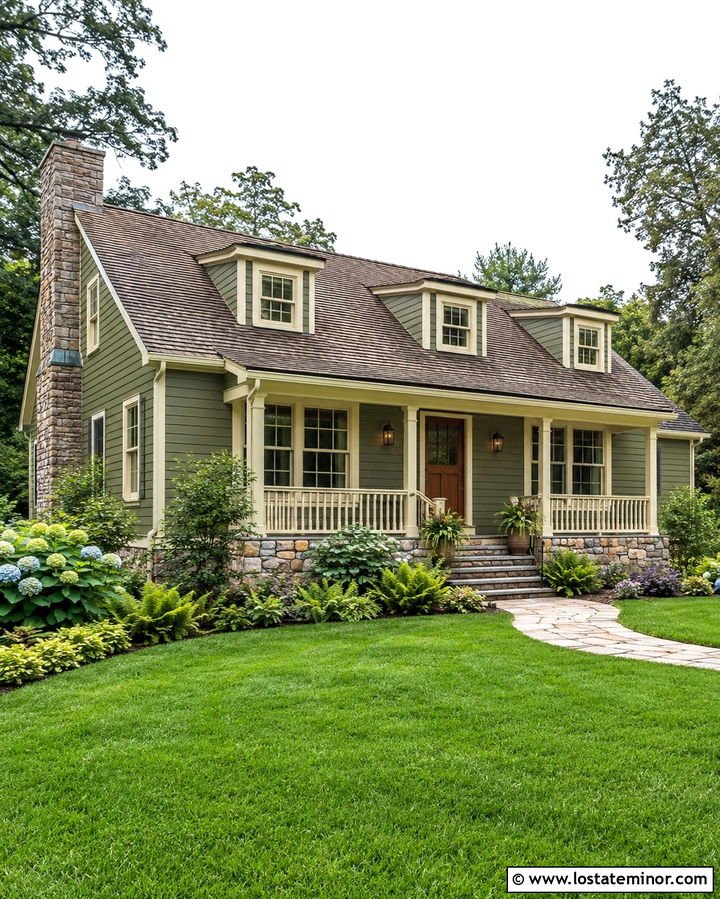
Cream railings can make an olive exterior feel warm, relaxed, and slightly vintage. This palette works well on cottages, traditional farmhouses, and homes with existing beige stone or warm roof shingles. Paint the siding a muted olive green, then use a rich ivory cream on the porch railings, columns, window casing, and fascia. Avoid a stark white garage door, which could compete with the softer trim. Instead, carry the same cream across all painted architectural details. A medium brown door and aged brass lighting enhance the warmth. Use natural fieldstone for the steps or foundation, then add hydrangeas, ferns, and layered shrubs. The entire exterior will feel gentle and cohesive, especially in wooded or established residential settings.
12. Olive Green House With Black Cable Deck Railings
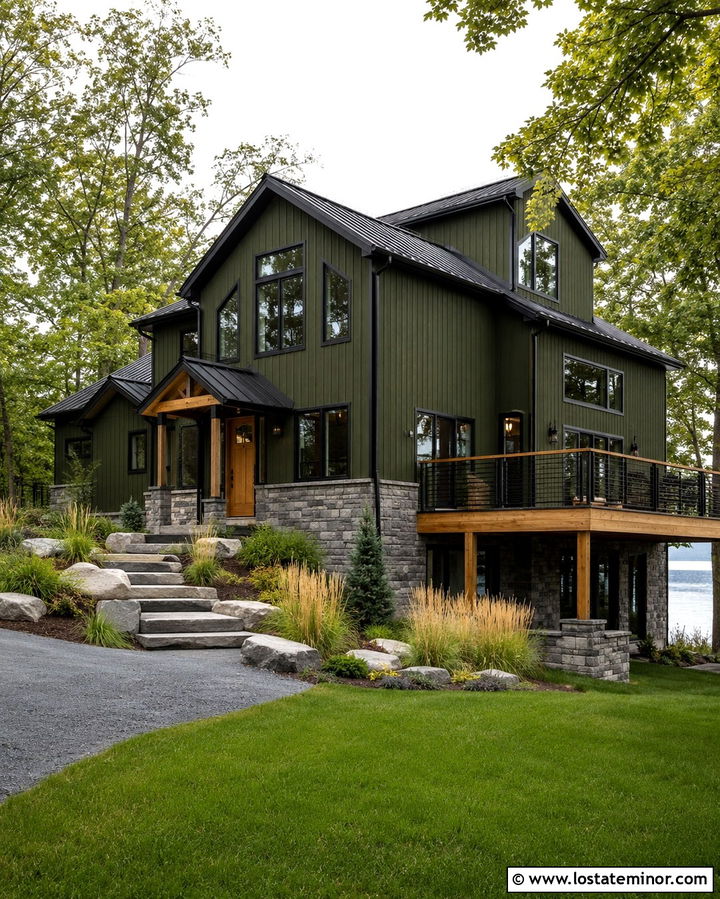
An elevated deck becomes part of the architecture when its color and railing system relate directly to the house. Paint a contemporary olive green home in a deep, muted shade and install black cable railings around the front or side deck. The narrow cables preserve views and reduce visual clutter. Black window frames, roof edges, and exterior lighting can repeat the railing color across the facade. Choose warm cedar decking and a matching front door to balance the cool metal. If the foundation is visible, cover portions with gray ledgestone for texture. Native grasses and broad stone steps help the deck settle naturally into the slope. This complete scheme feels especially appropriate for wooded, lakeside, or mountain-inspired properties.
13. Olive Green House With Stone Pier Railings
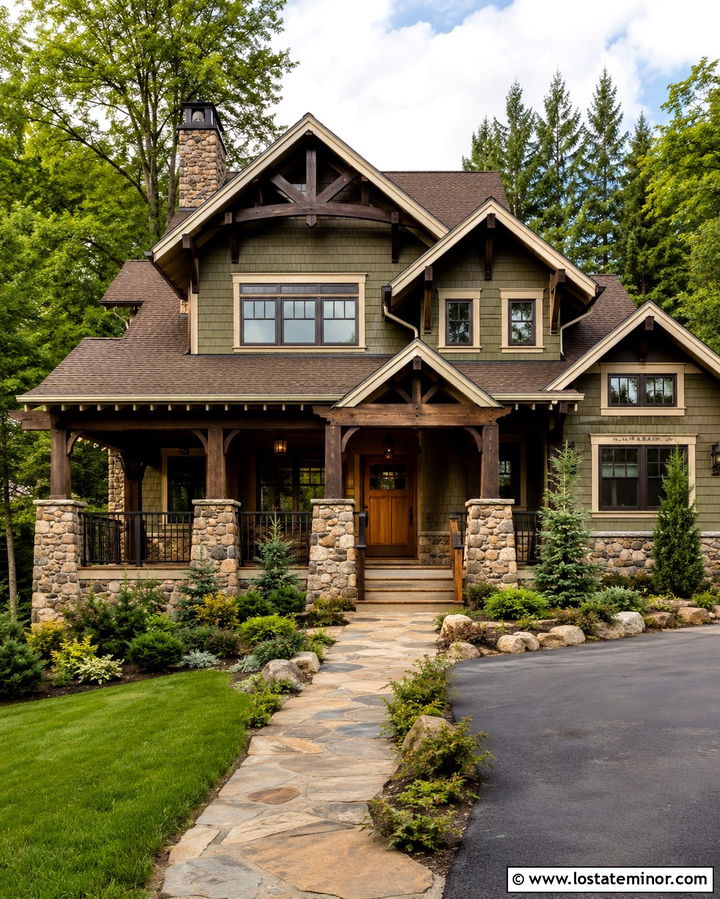
Stone piers give porch railings more weight and help a larger olive green house feel firmly anchored. Use square stone bases topped with stained wood posts and black metal balusters. The mixture of materials works particularly well on Craftsman and lodge-style exteriors. Choose a warm olive body color that relates to the beige, gray, and rust variations in the stone. Cream trim can define the windows and roof edges, while a dark brown roof maintains the earthy character. A solid wood door with simple black hardware should become the main entry focal point. Continue the same stone along the foundation and walkway borders. Balanced landscaping will soften the masonry while allowing the railing and porch structure to remain clearly visible.
14. Olive Green House With Brick Porch Railings
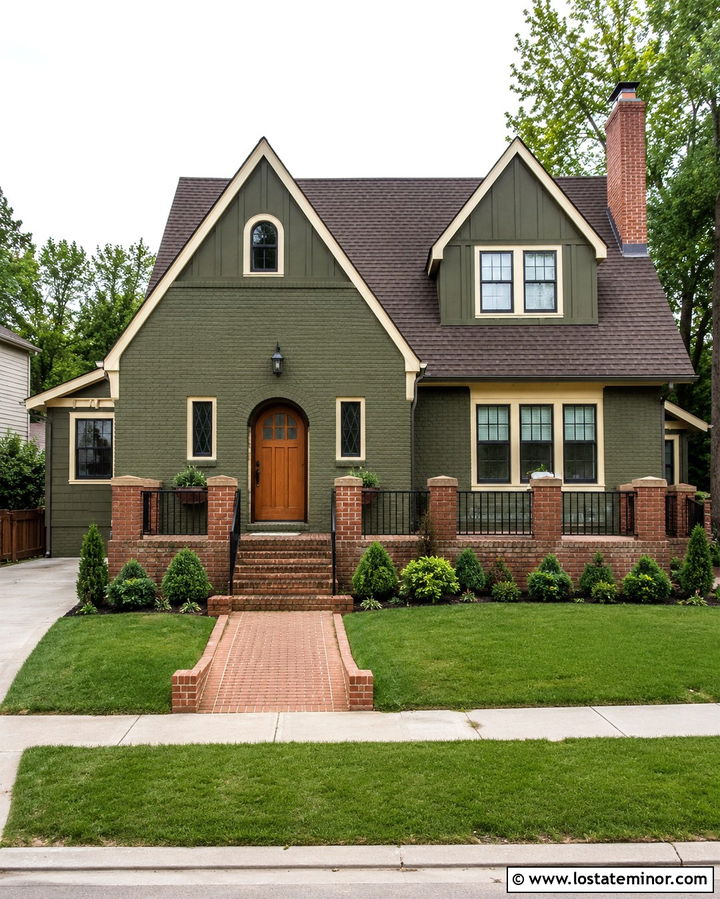
Brick porch walls and railing sections can bring traditional character to an olive green exterior. This look suits Tudor-inspired homes, older cottages, and remodeled suburban houses with existing red or brown brick. Paint the upper siding olive green and use warm cream around the windows and eaves. Build low brick porch walls, then place short black metal railings between capped brick piers for safety and openness. A stained oak front door ties the green siding to the brick’s warm tones. Choose a roof containing charcoal and brown rather than a flat jet-black color. Repeat the brick along the steps and walkway edging. Simple evergreen foundation shrubs keep the facade polished without competing with the rich combination of painted siding, masonry, and metal.
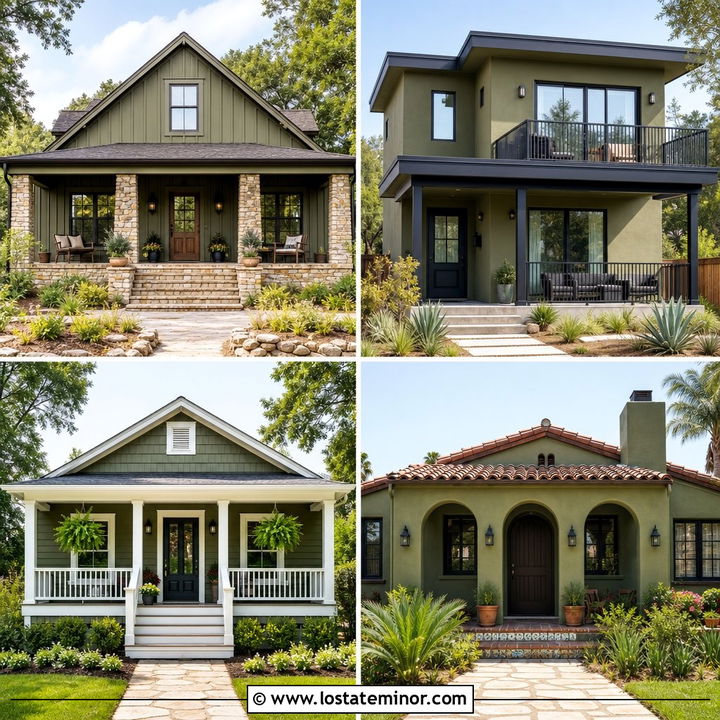
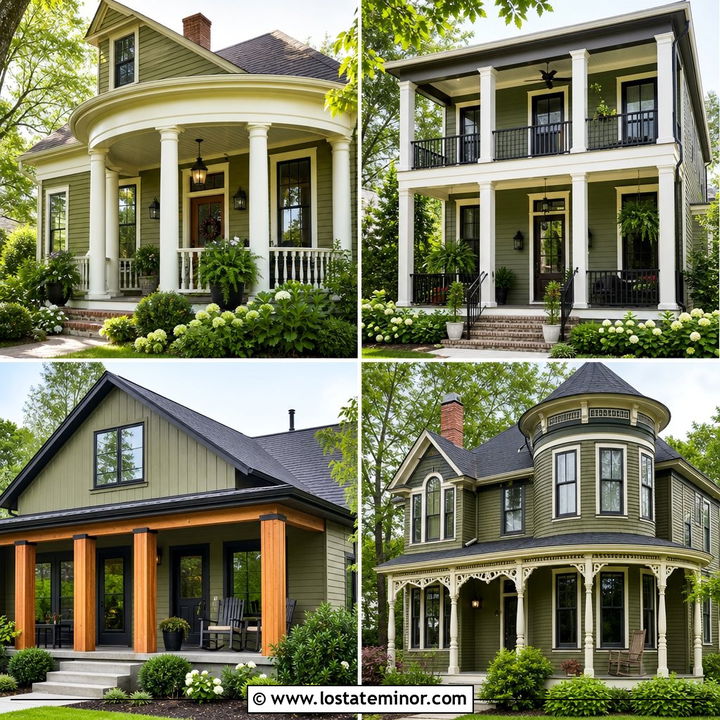
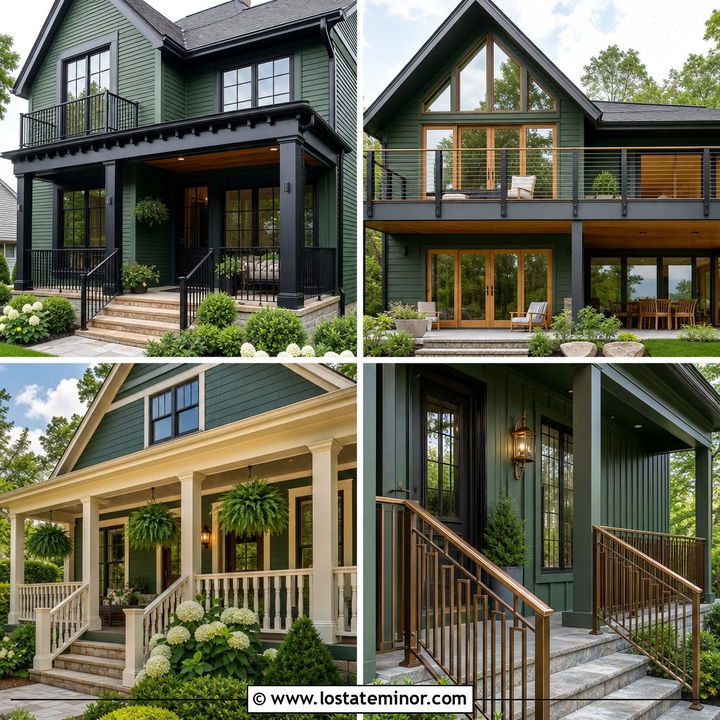
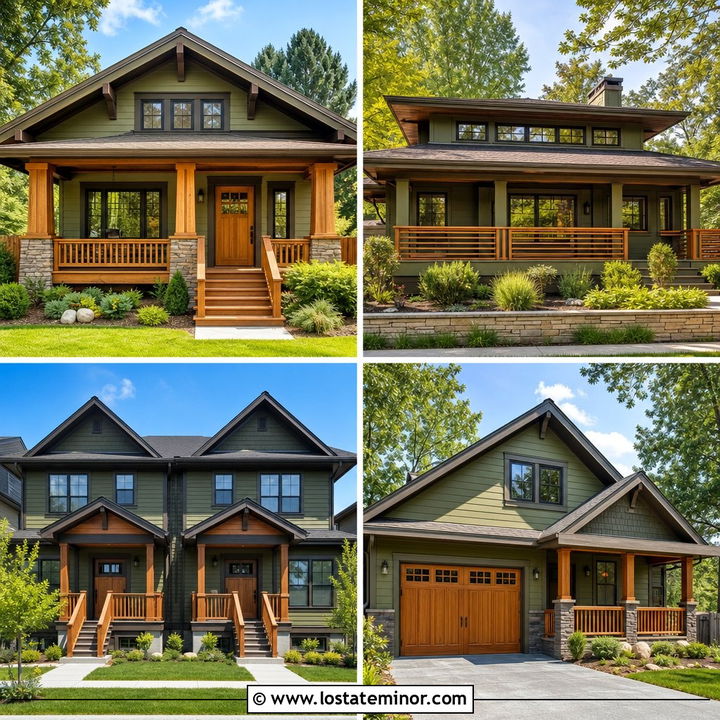
15. Olive Green House With Chippendale Railings
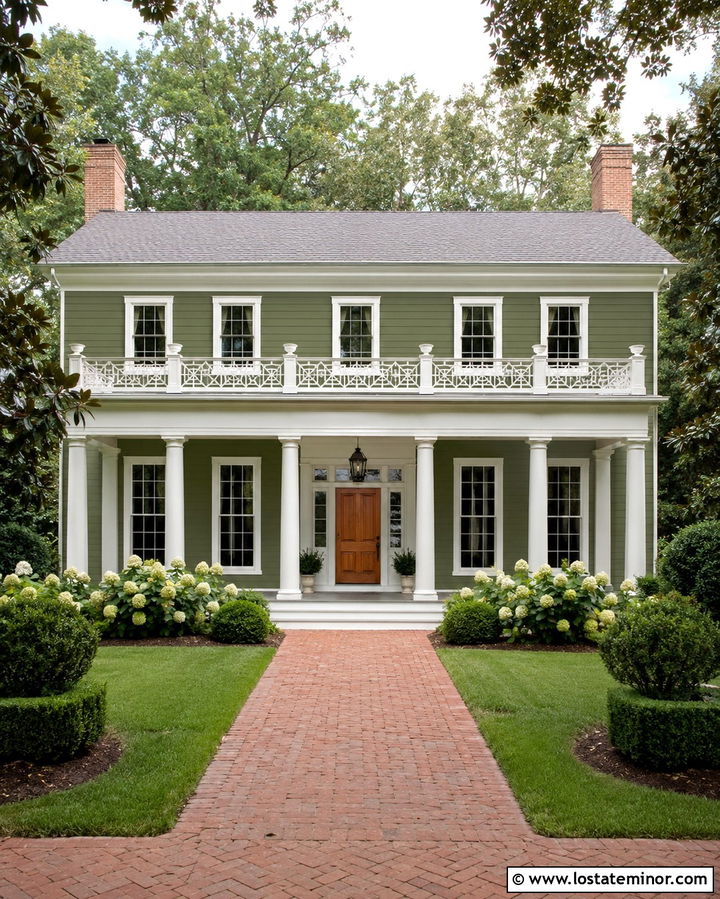
White Chippendale railings add a geometric pattern that can elevate a simple olive green porch. Their diagonal lines are especially attractive on Southern Colonials, coastal cottages, and traditional two-story homes. Keep the siding a subdued olive so the patterned railing remains crisp rather than busy. Repeat white on the porch columns, window trim, soffits, and upper balcony railings. A soft gray roof provides a neutral cap, while a medium blue or natural wood door creates a welcoming focal point. Allow generous spacing around the porch so furniture and plants do not obscure the railing pattern. Hydrangeas, magnolias, and a straight brick path support the gracious architecture. The completed look feels distinctive while staying rooted in familiar traditional design.
16. Olive Green Victorian House With White Railings
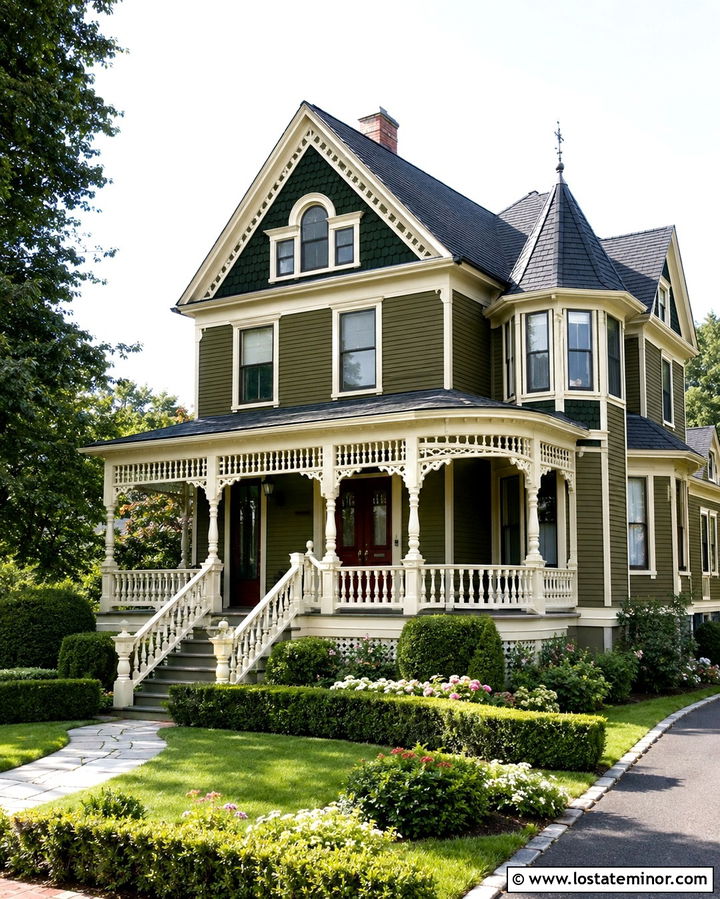
An olive green Victorian can support more decorative railing details than most other home styles. Use a medium-depth olive on the main clapboard siding, then paint turned porch balusters, brackets, columns, and window trim a warm white. Introduce a darker forest green on selected gable shingles or narrow accent bands to create dimension without adding unrelated colors. A burgundy front door can provide a historically inspired focal point in a controlled amount. Charcoal roof shingles keep the upper facade neutral. Because Victorian details can become visually crowded, maintain consistent railing spacing and limit ornate fretwork to important areas. A tidy path, clipped hedges, and flowering border plants complete the house while allowing its layered craftsmanship to take center stage.
17. Olive Green Cape Cod With White Porch Railings
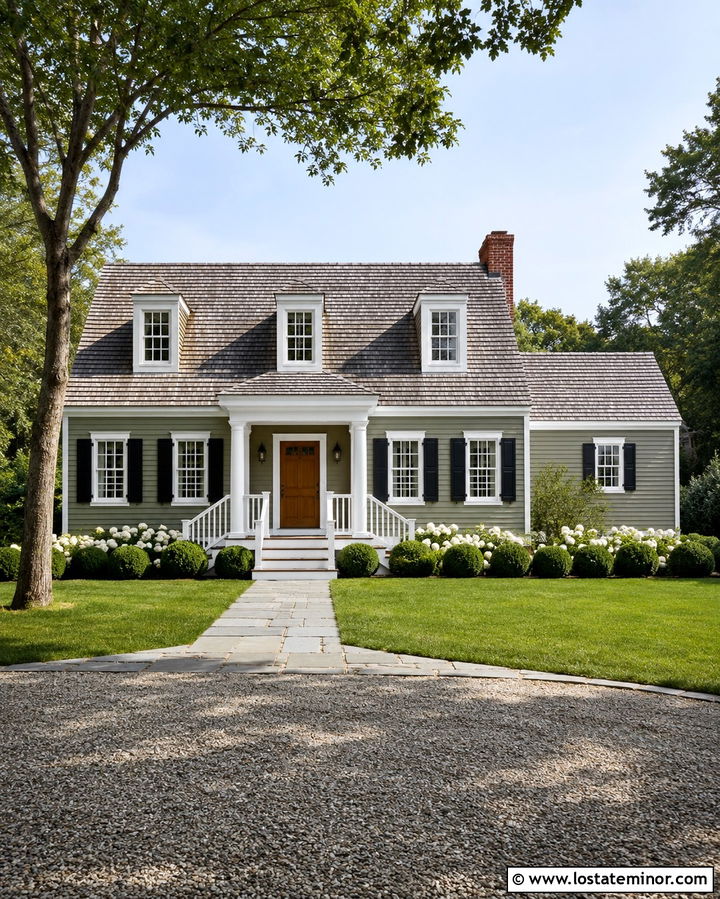
A Cape Cod home benefits from a simple exterior palette that respects its compact shape. Cover the clapboard or cedar-shingle siding in a soft olive green and use clean white railings around a small covered porch. White corner boards, dormer trim, and window casing keep the facade bright. Add black shutters and a black or natural wood front door for a well-defined center. Weathered gray roof shingles support the coastal influence without forcing the house into a blue-and-white scheme. Keep the railing posts modest in size so they do not overpower the porch. A pea-gravel drive, bluestone walkway, boxwoods, and white flowering plants create an easy landscape that complements the muted colors and traditional proportions of the home.
18. Olive Green Split-Level With Black Railings
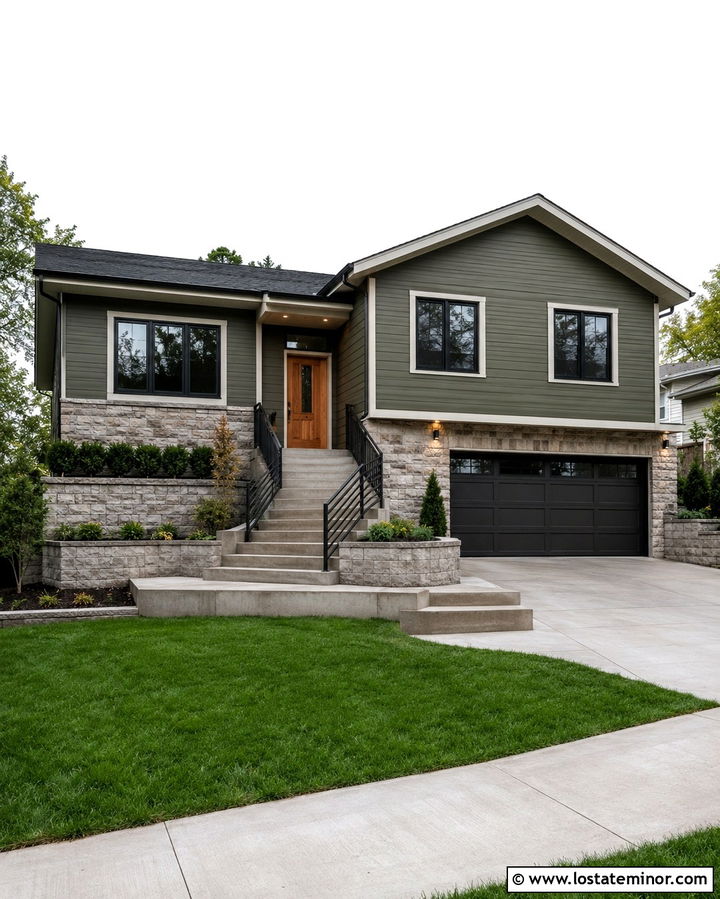
A split-level house can feel fragmented when its entrance, garage, and upper story use unrelated finishes. Olive green siding and continuous black railings help unify those sections. Apply a deep olive to the upper siding, then use warm gray stone or painted brick on the lower level. Black railings can follow the raised front steps and wrap the small landing, connecting visually with black windows and a charcoal garage door. Keep the trim narrow and creamy white to provide definition without adding another strong color. A wood front door introduces warmth at the center. Low retaining walls, broad concrete steps, and layered shrubs can manage the grade while framing the complete facade in a clean, organized way.
19. Olive Green Modern House With Glass Railings
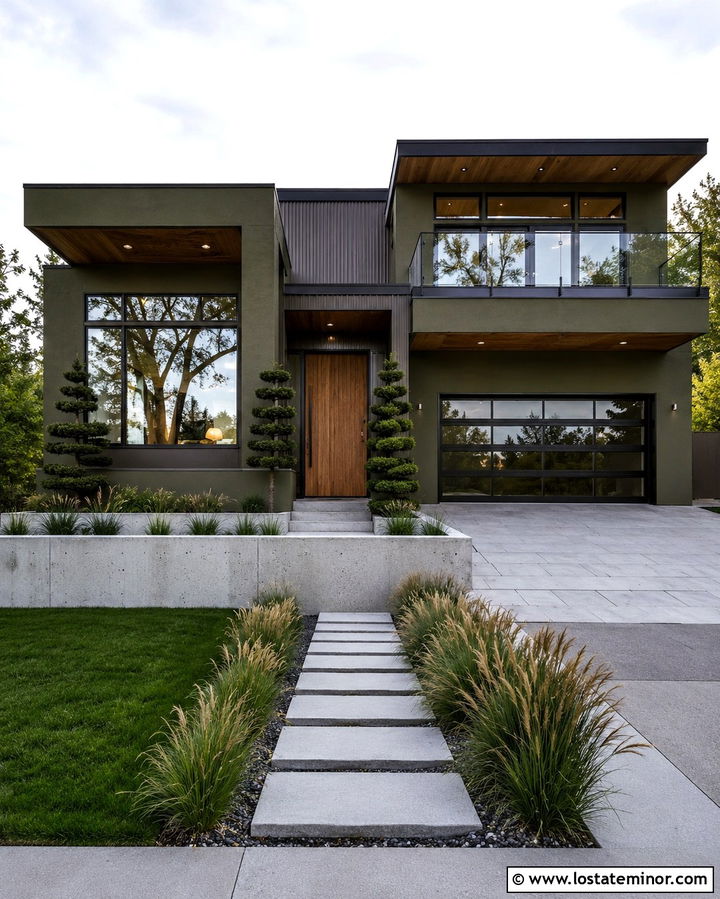
Glass railings allow an olive green modern exterior to remain visually open and uncluttered. Use them on a flat-roof house with an upper balcony, rooftop terrace, or raised front deck. Dark olive stucco or vertical siding provides a strong body color, while black railing frames outline the transparent panels. Repeat black around large windows, along roof edges, and on exterior lighting. Warm wood soffits and a pivot-style front door prevent the architecture from feeling stark. Light gray concrete walls, steps, and pavers create a quiet base beneath the deeper siding. Restrained landscaping with ornamental grasses and sculptural evergreens suits the simple geometry. The glass railing stays functional while allowing the olive facade and modern architectural lines to remain dominant.
20. Olive Green Cottage With Wood Cross Railings
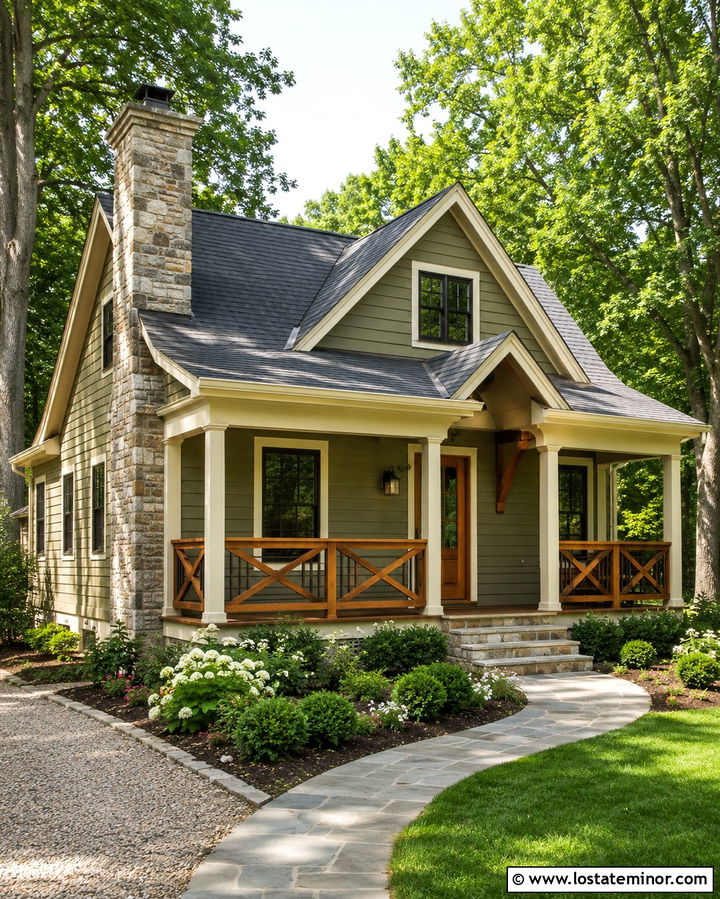
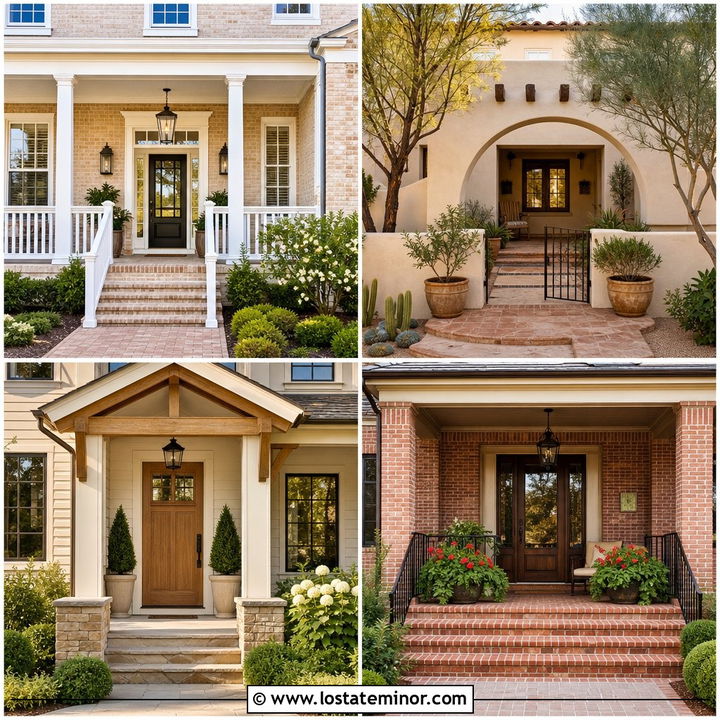
Wood cross railings give an olive green cottage a friendly, handcrafted appearance. The X-shaped design works best when used selectively around a short porch rather than across an oversized deck. Paint the cottage siding a soft gray-olive and stain the railings, posts, and front door a medium cedar brown. Cream window trim and fascia will soften the transition between the green siding and warm wood. Use a charcoal roof with simple lines to keep attention near the entry. A stone chimney or foundation adds enough texture without making the facade look busy. Complete the setting with a curving flagstone walkway, informal flowering plants, and low shrubs. The result feels charming, practical, and closely tied to the surrounding landscape.
21. Olive Green House With Gray Composite Railings
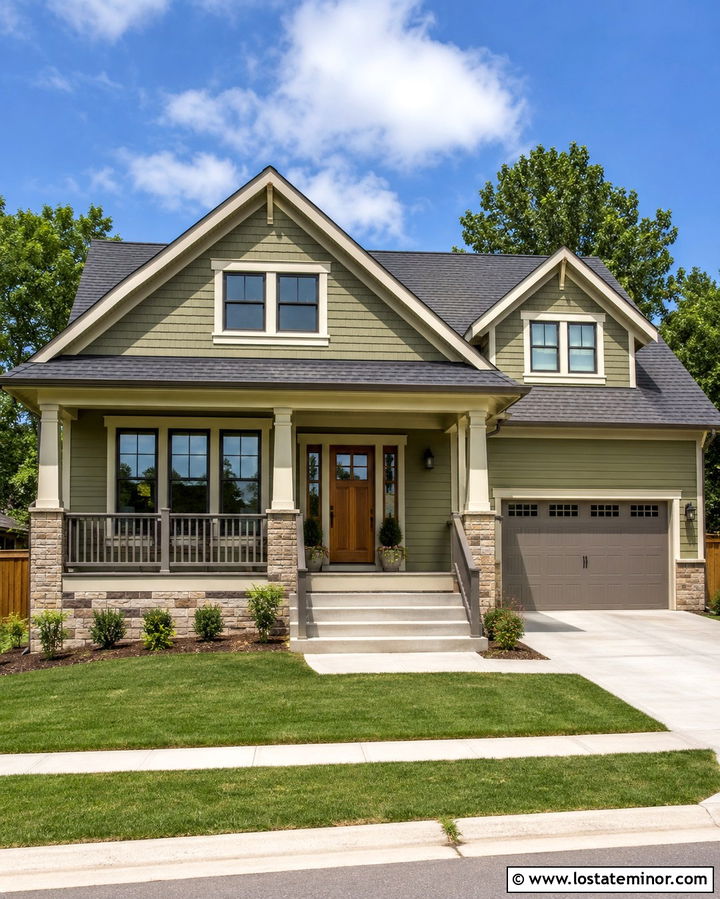
Gray composite railings create a low-key transition between olive green siding and a charcoal roof. This understated palette works on suburban homes where black would feel too sharp and white would require stronger contrast. Select a warm medium gray for the railing posts and balusters rather than a cool blue-gray. Use the same tone on the garage door or porch floor to connect the lower facade. Off-white window trim adds a small amount of brightness, while a warm wood front door becomes the welcoming accent. Beige-gray stone along the foundation can bridge all three main colors. Neatly edged lawn, broad steps, and simple shrub beds complete the practical design. The house feels coordinated without relying on dramatic color differences.
22. Olive Green House With Black Aluminum Railings
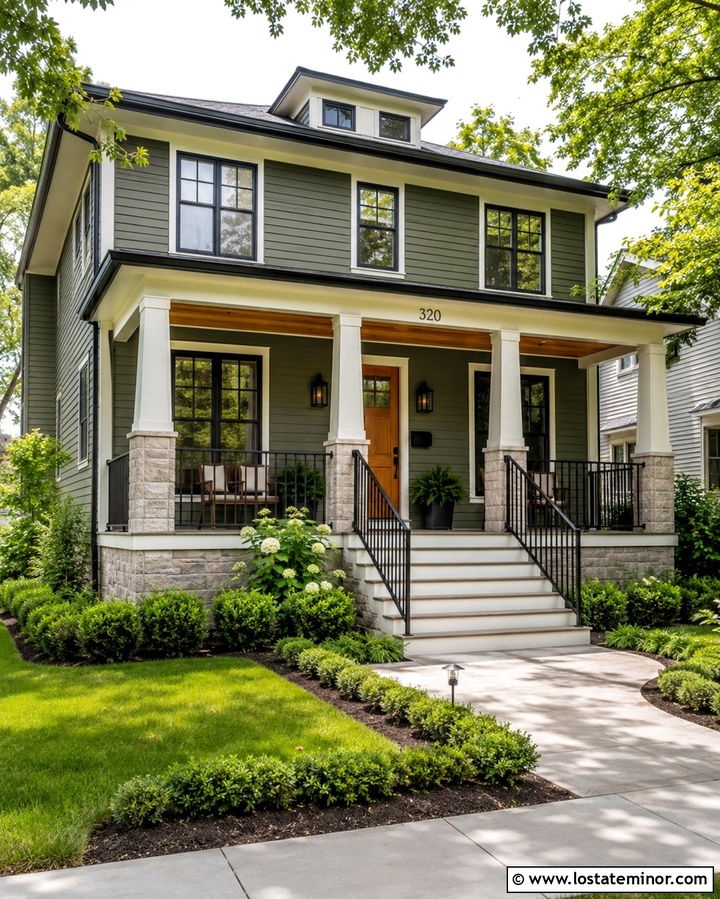
Black aluminum railings offer a crisp look for an olive green home with a raised porch or long front stairway. Their slender profiles suit updated traditional homes, townhouses, and contemporary suburban facades. Choose a powder-coated matte finish to coordinate with black windows, lights, and gutters. Medium olive lap siding provides enough contrast for the railing to stand out, while soft white trim keeps the roofline from feeling heavy. A cedar door and matching porch ceiling add warmth above and behind the black metal. Use pale stone on stair risers or porch columns to brighten the lower elevation. Structured foundation shrubs and an open walkway will keep the full railing system visible and make the entrance feel easy to approach.
23. Olive Green House With Natural Oak Railings
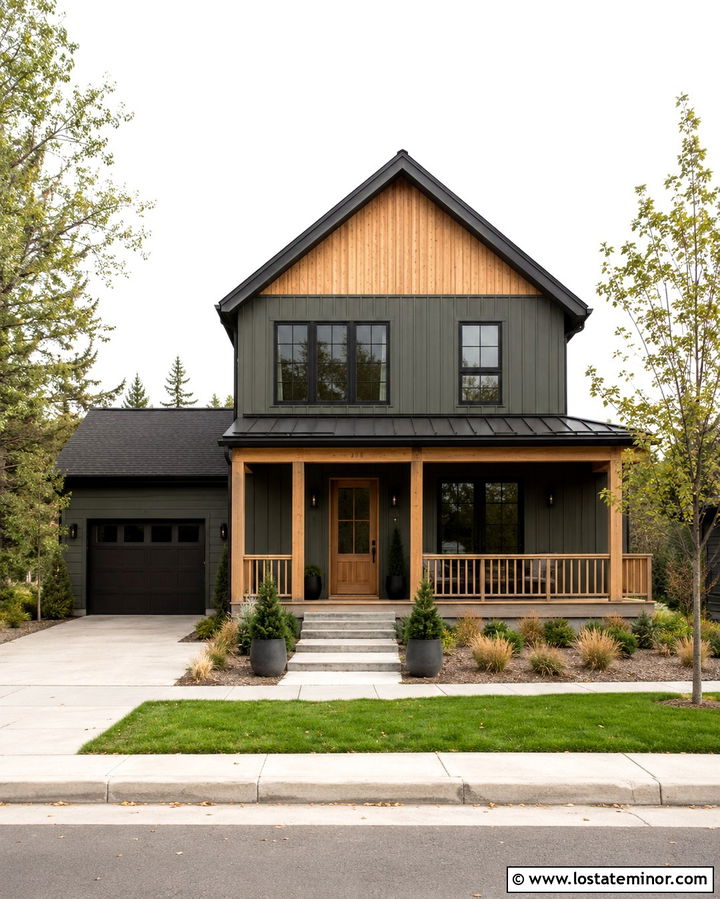
Natural oak railings can turn an olive green entrance into a warm focal point. This pairing is attractive on Scandinavian-inspired homes, simple gable-front houses, and restrained modern farmhouses. Use muted olive vertical siding with minimal off-white trim, then install oak rails and square posts around the front platform. Match the railing tone with the front door, porch ceiling, and selected gable cladding. Black-framed windows and a dark metal roof provide sharp outlines without covering the natural materials. Light concrete pavers and gravel planting beds keep the surroundings clean. Choose grasses, small evergreens, and multi-stem trees instead of formal hedges. Every element supports the earthy palette, allowing the wood grain and olive siding to feel connected rather than decorative.
24. Olive Green Tudor House With Iron Railings
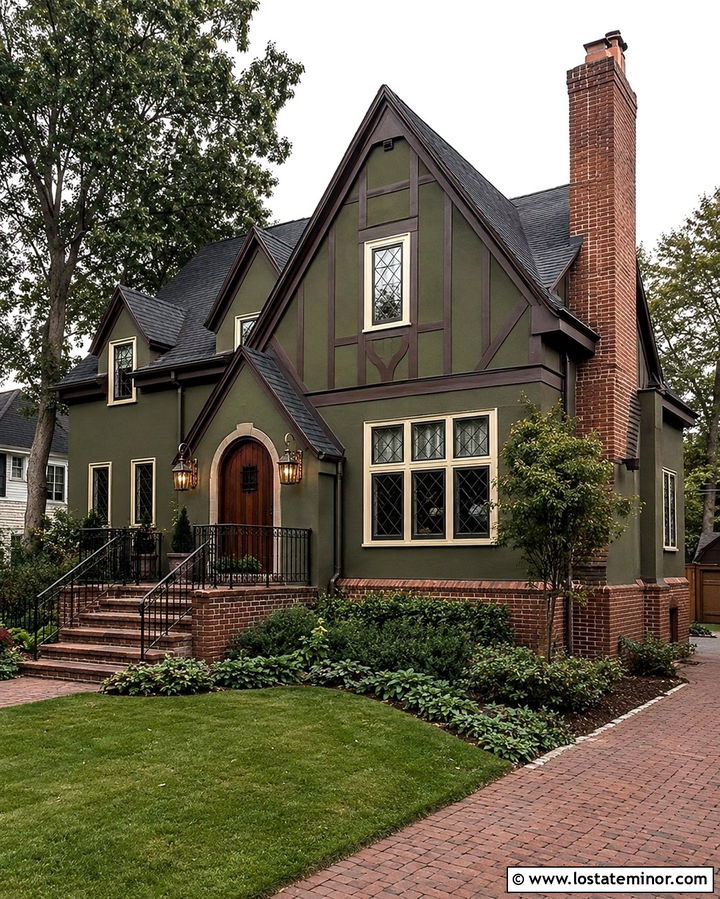
A Tudor-style house can carry deep olive green beautifully when the railings echo its dark structural details. Paint stucco or upper siding in a muted olive and retain dark brown half-timbering across the gables. Add simple black iron railings beside brick steps and around a compact entry terrace. Cream trim around leaded windows prevents the facade from becoming too shadowed. A heavy arched wood door should remain the central feature, supported by aged bronze lanterns and dark roof shingles. Red-brown brick along the chimney, foundation, and walkway supplies historic warmth. Keep the iron railing design straightforward so it does not compete with the timber patterns. Deep green shrubs and informal ground cover finish the established, storybook-like exterior.
25. Olive Green House With White And Black Railings
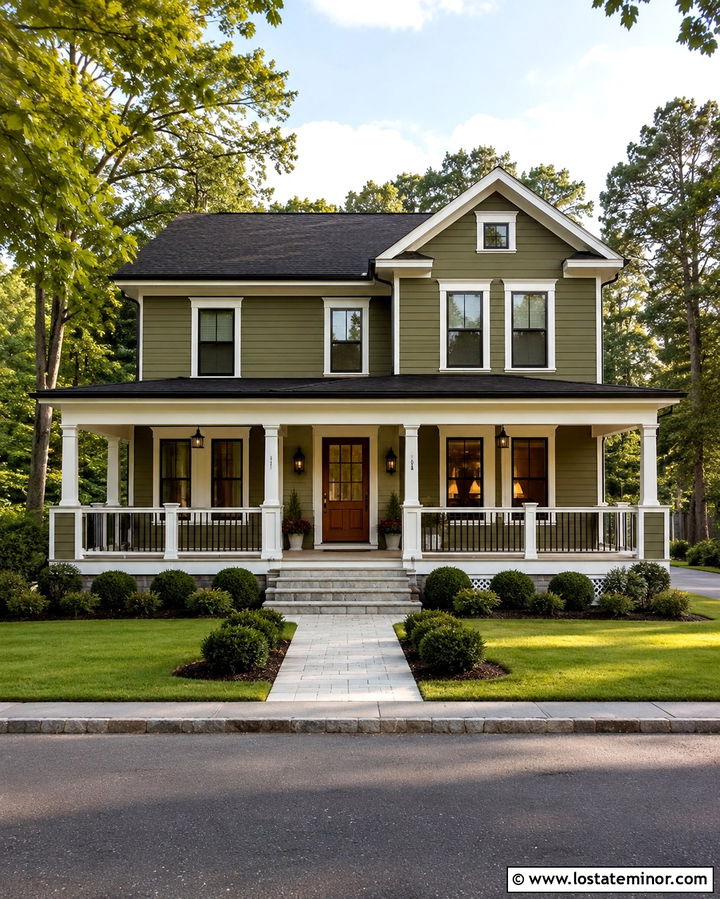
Two-tone railings can connect an olive green house to both light trim and dark accents. Use white square posts and top rails with narrow black balusters between them. This balanced treatment suits a transitional porch where fully white railings might look too traditional and all-black metal might feel too modern. Paint the siding a rich olive green, carry white onto the columns and window casing, and repeat black on the roof, lights, and front door hardware. A natural wood door prevents the high-contrast details from appearing rigid. Pale porch flooring and gray stone steps brighten the entrance. Add symmetrical shrubs and an open lawn so the mixed railing colors read clearly across the complete facade rather than appearing visually complicated.
26. Olive Green House With Perforated Metal Railings
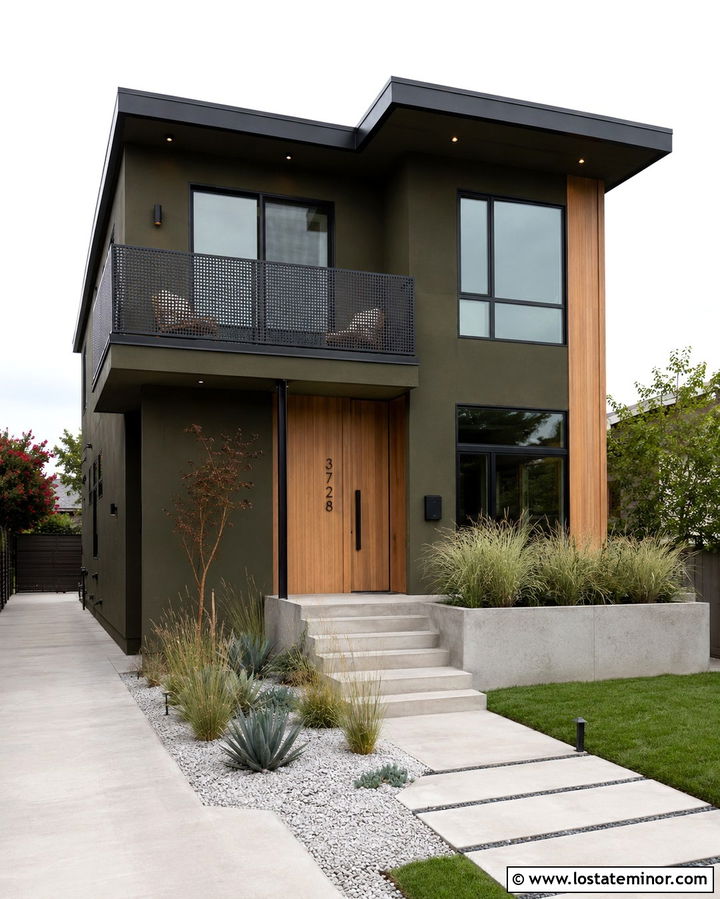
Perforated metal railings introduce texture while maintaining the strong lines of a modern olive green house. Use black or charcoal panels around an upper balcony, raised courtyard, or compact front terrace. Dark olive stucco gives the panels an earthy background, while light wood cladding around the entry introduces welcome warmth. Match the panel frames with black windows and flat metal roof edges. Because perforated railings carry more visual weight than cable systems, leave the surrounding facade relatively simple. Pale concrete steps, gravel beds, and architectural plants provide a clean foundation. The small openings create an interesting pattern from the curb without revealing every detail of the porch. This combination is particularly useful when style and partial privacy are equally important.
27. Olive Green House With Farmhouse Cross Railings
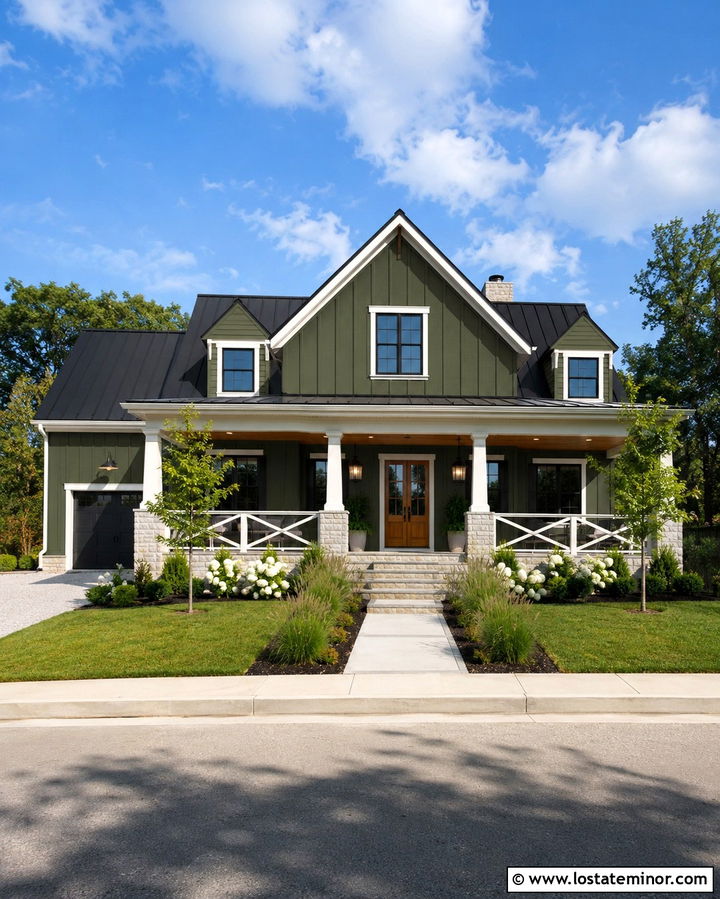
White farmhouse cross railings create a bold porch pattern against dark olive green board-and-batten siding. Use the X motif between substantial square posts, but keep other facade details straightforward to avoid a theme-heavy result. Bright white trim can outline the windows, roof, and porch beams, while a black metal roof adds a clean modern finish. Choose a natural wood front door and matching porch ceiling to soften the strong contrast. A light stone foundation or stone-clad porch piers will visually support the broad railing sections. Keep the landscape relaxed with hydrangeas, grasses, and a wide gravel or concrete walkway. The overall house feels recognizable as a farmhouse while the olive body color gives the familiar design a richer, more natural character.
28. Olive Green House With Craftsman Square Railings
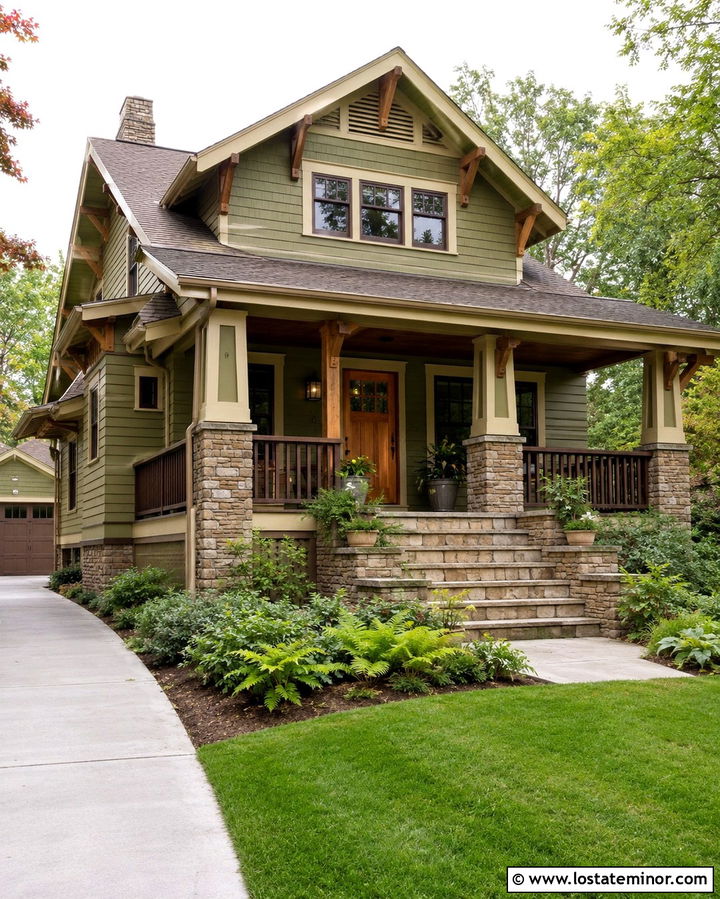
Square railings are a natural fit for an olive green Craftsman because they repeat the home’s sturdy posts, beams, and window divisions. Paint the siding a warm mid-tone olive, then use dark brown or black on the simple wood balusters. Set the railings between tapered columns with stone bases for a substantial porch composition. Cream trim highlights deep eaves and divided-light windows, while cedar brackets and a matching door introduce visible grain. A brown-gray roof connects the darker accents without looking severe. Broad stone steps should align with the entry and railing posts for a balanced approach. Ferns, low evergreens, and native shrubs reinforce the natural palette while preserving clear views of the porch’s carefully constructed details.
29. Olive Green House With Galvanized Steel Railings
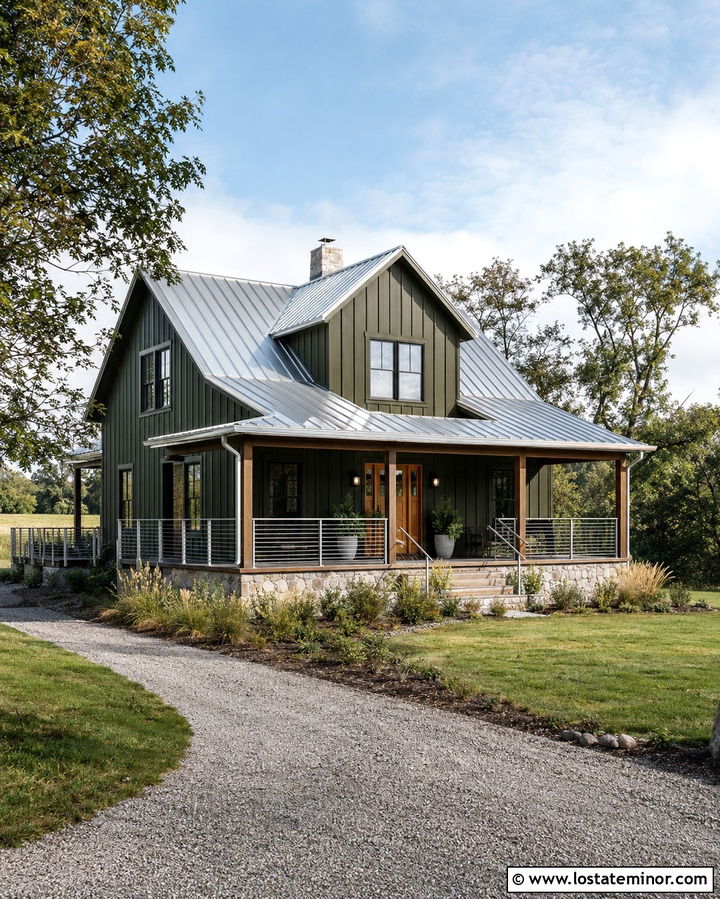
Galvanized steel railings bring a subtle industrial note to an olive green exterior without the bold contrast of black. Their silvery finish works on modern rural homes, renovated barns, and practical contemporary farmhouses. Choose dark olive vertical siding and use galvanized rails around a concrete porch or elevated side deck. Repeat the metal on the roof, gutters, and exterior utility details so it feels deliberately integrated. A warm timber door and cedar porch ceiling keep the scheme from looking overly utilitarian. Soft gray stone at the foundation links the silver metal to the landscape. Finish the yard with gravel paths, grasses, and restrained planting beds. The completed exterior feels durable, honest, and modern while retaining an approachable rural character.
30. Olive Green House With Matching Green Railings
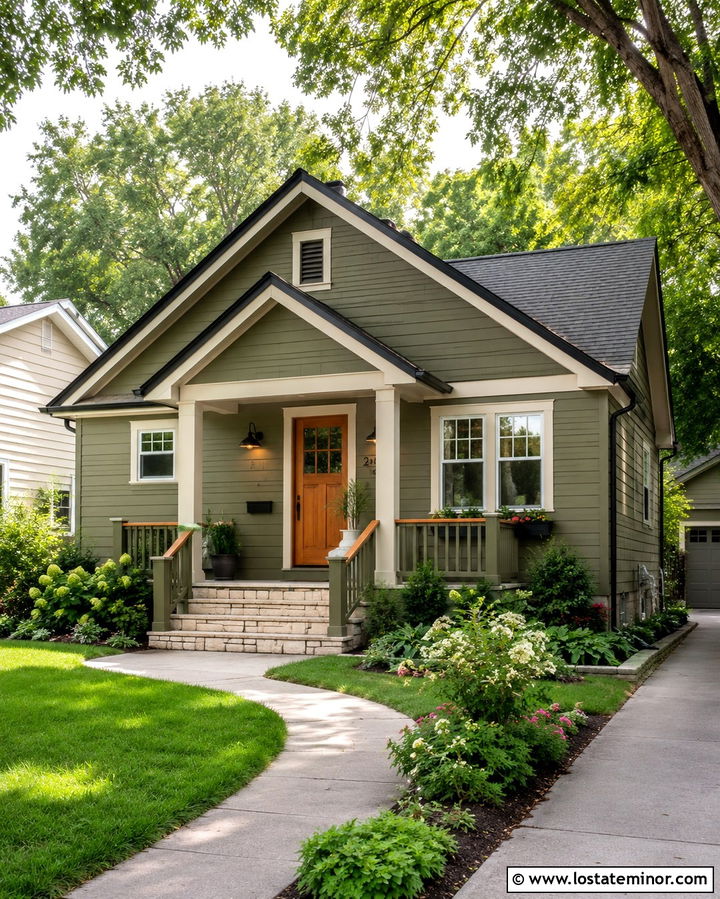
Painting the railings olive green can create a calm, seamless exterior when contrasting details would interrupt the architecture. This approach suits small cottages, monochromatic modern homes, and houses with shallow porches. Match the railing to the siding, then use cream trim on the windows, fascia, and columns to reveal the structure. A stained wood top rail can add subtle warmth and make the green-on-green treatment feel more intentional. Introduce black only in small amounts through porch lights, door hardware, and roof edges. Pale stone steps and a natural oak door provide brighter focal points near the entrance. Layered green landscaping will extend the tonal palette into the yard, while flowering plants supply enough seasonal color to keep the facade lively.
Conclusion:
The best olive green exterior feels coordinated from the roofline to the front walkway. Railings play an important role because they can sharpen, brighten, warm, or quietly blend into the facade. Black metal creates modern contrast, white wood supports traditional architecture, and stained lumber emphasizes olive green’s natural character. Stone piers, brick steps, matching trim, and thoughtful landscaping help every railing choice feel connected to the entire house. Before painting, compare samples beside the permanent roof, masonry, and railing materials in morning and afternoon light. Whether you prefer a classic porch or a modern balcony, these 30 Olive Green House Design With Railings Ideas offer practical inspiration for a complete curb-appeal update.

Related posts: