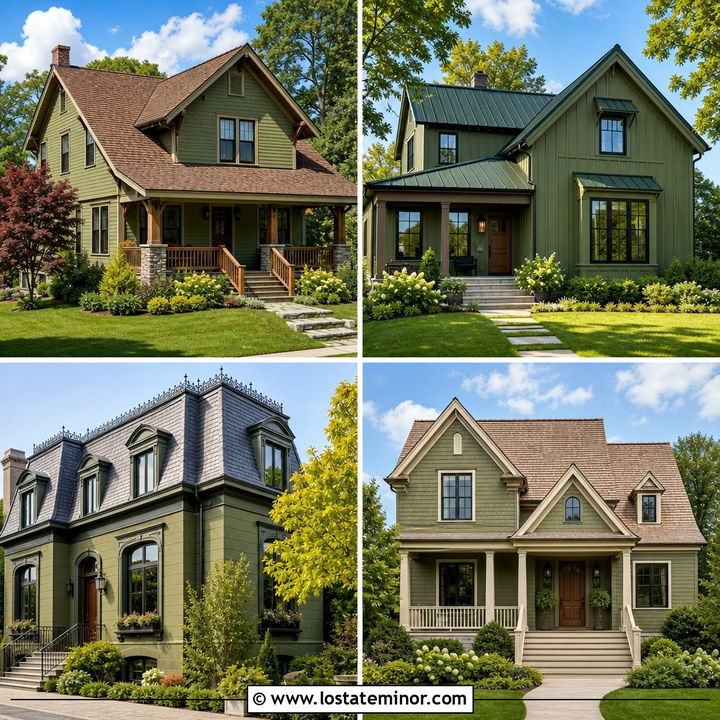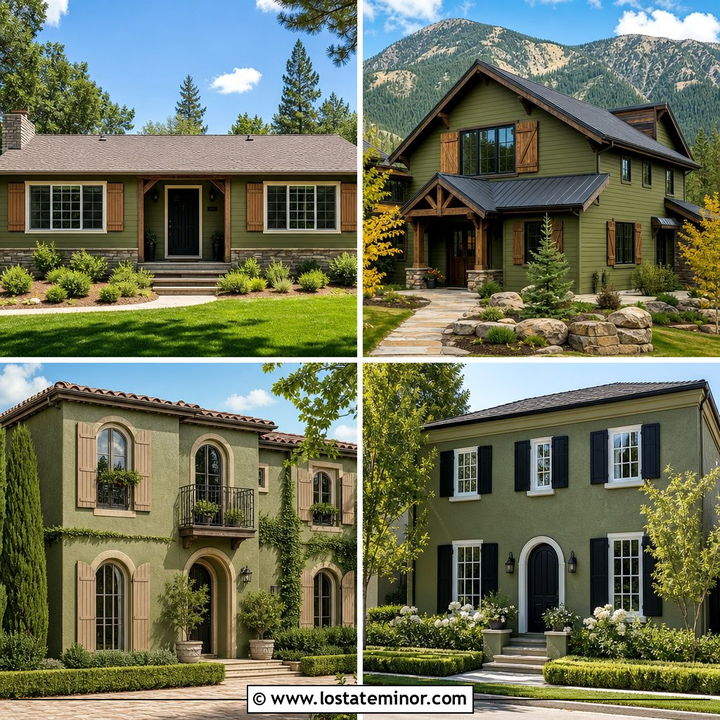
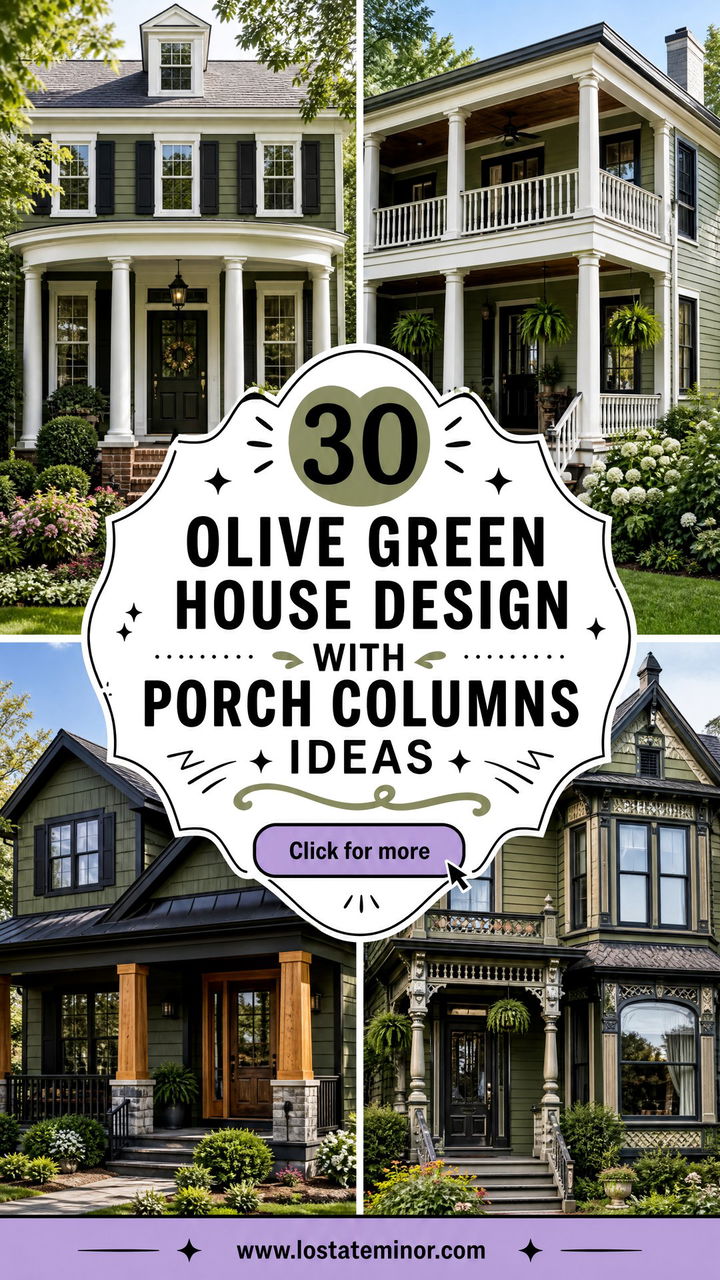
1. Olive Green House With White Porch Columns
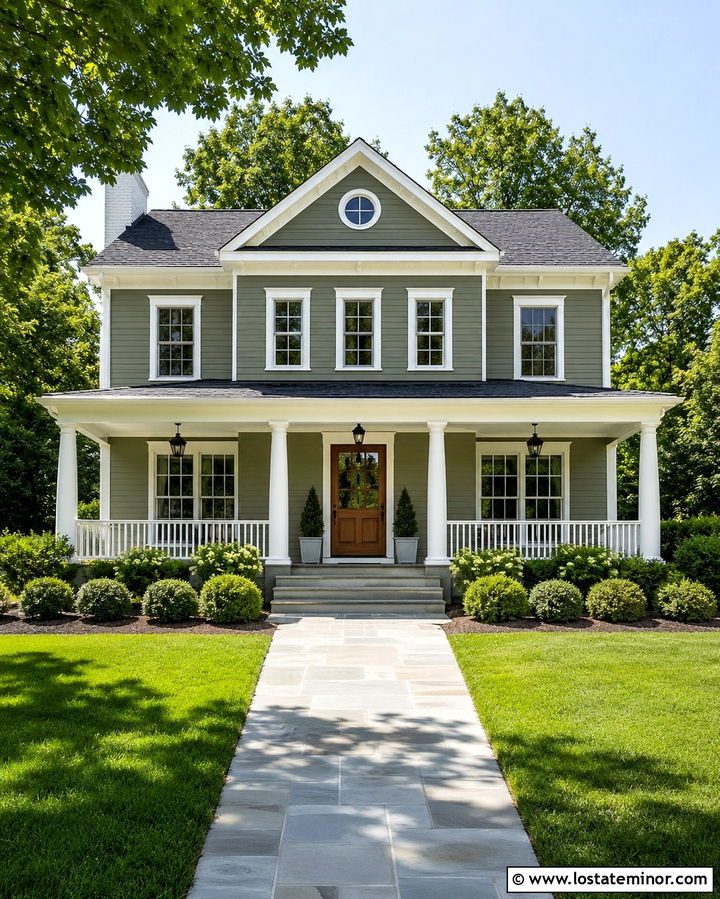
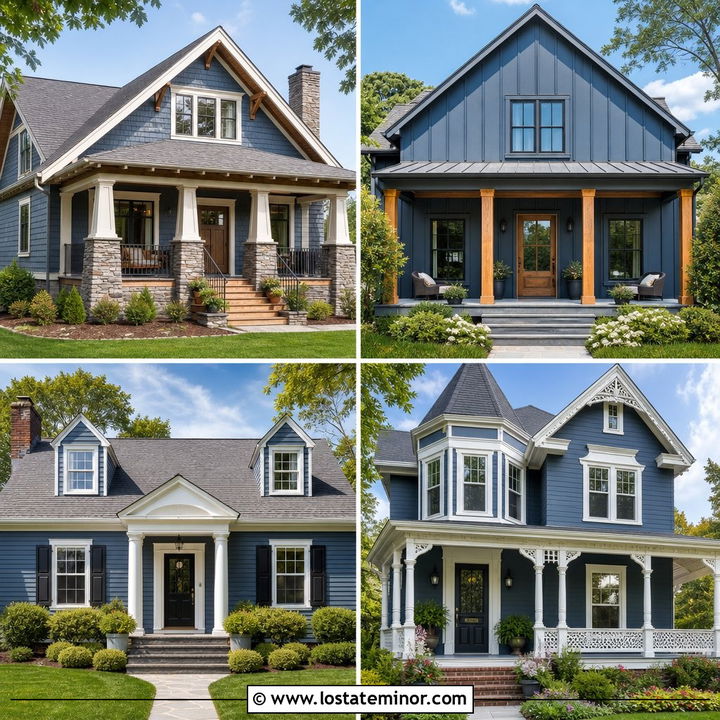
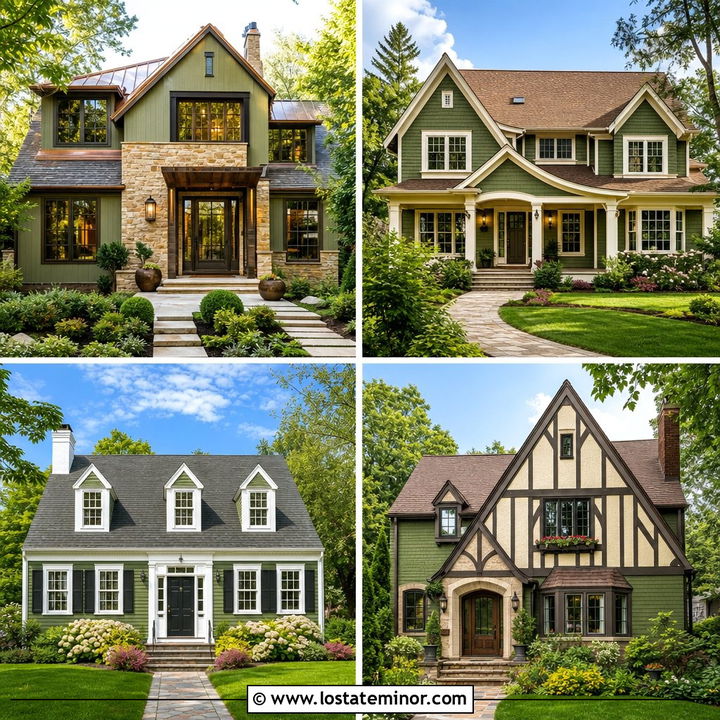
White porch columns provide clean contrast against olive green siding, making this combination a reliable choice for traditional homes. Use a muted, medium olive on clapboard siding and repeat the white on window trim, fascia, and porch railings. A dark charcoal roof keeps the palette grounded without competing with the green. For the entrance, a stained oak door adds natural warmth and prevents the exterior from looking too formal. Light gray porch flooring creates a practical transition between the bright columns and darker siding. Complete the facade with black lanterns, simple foundation shrubs, and a straight stone walkway. This whole-house palette suits Colonial, Cape Cod, and two-story suburban architecture particularly well.
2. Olive Green Farmhouse With Square Porch Columns
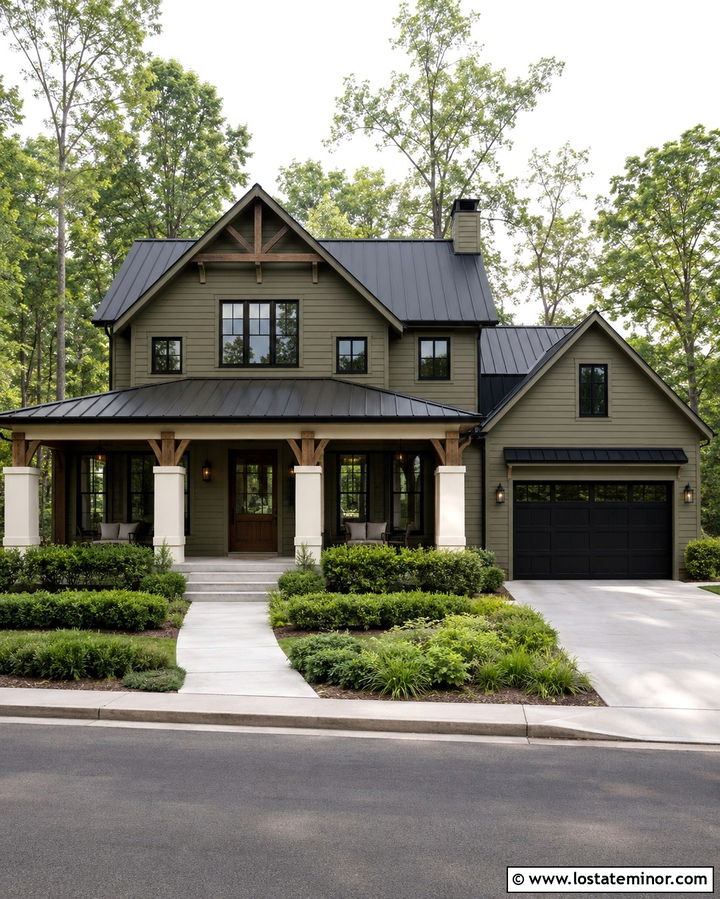
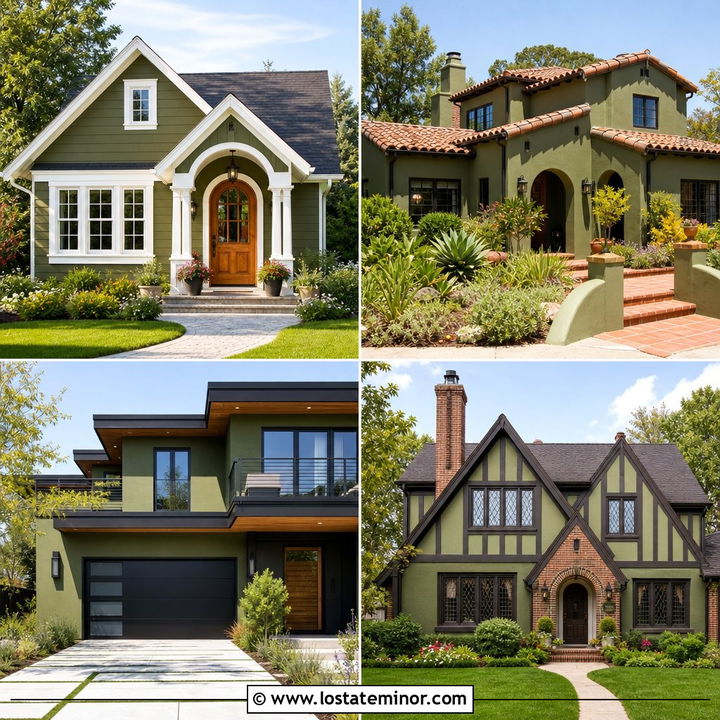
A modern farmhouse feels warmer and more connected to its surroundings when olive green replaces the usual white siding. Choose wide olive green lap siding, then frame the porch with substantial square columns painted soft cream. A black metal roof, black window frames, and matching barn-style garage doors introduce definition. Natural timber porch beams can be added above the columns to break up the painted surfaces. Keep the front door in medium walnut so it relates to the wood ceiling and nearby landscape. White oak rocking chairs and simple black planters support the relaxed farmhouse character. The result is a complete exterior that feels current without relying on stark contrasts or overly decorative architectural details.
3. Olive Green Craftsman With Stone Porch Columns
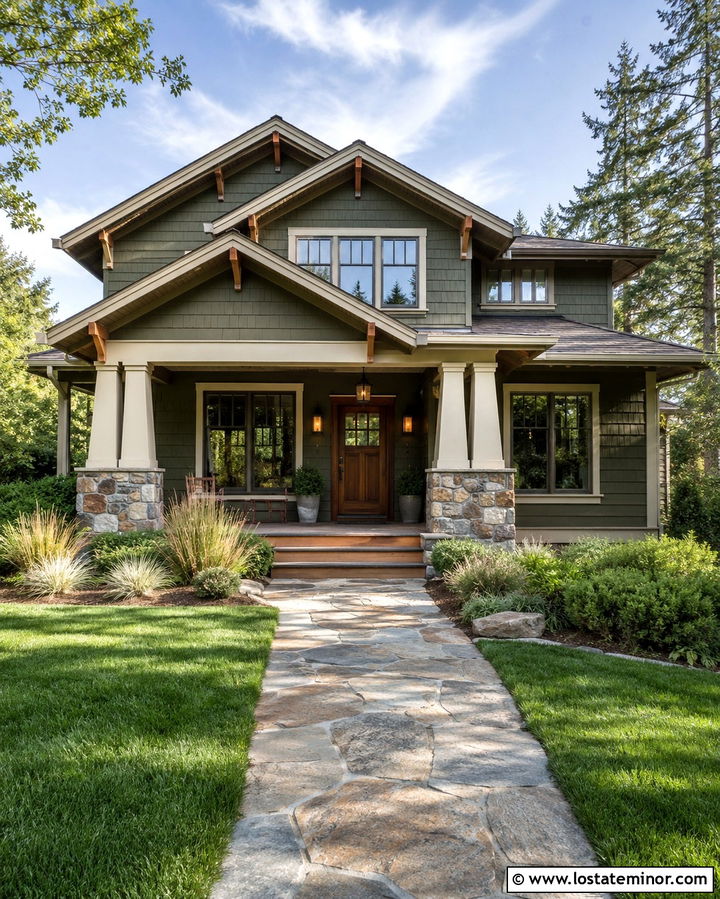
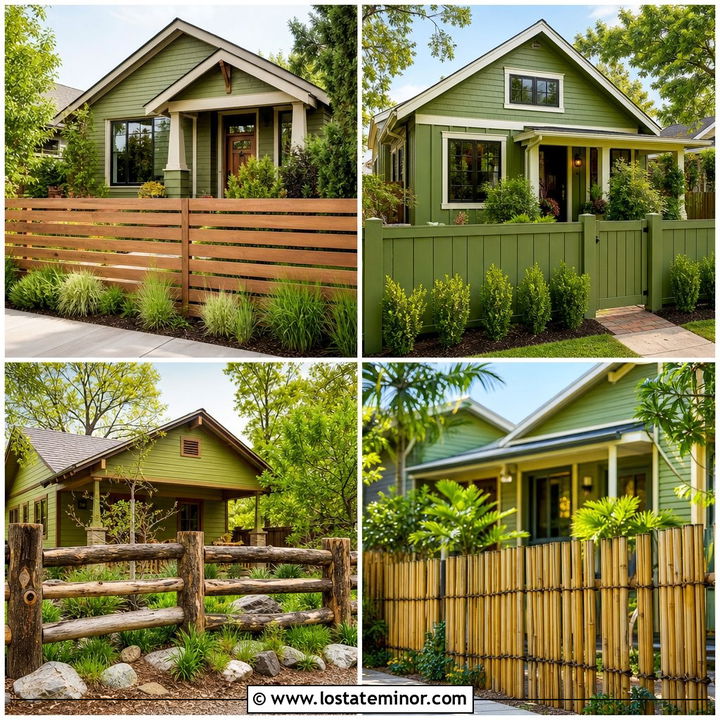
Craftsman architecture is a natural match for olive green because both work beautifully with stone and wood. Cover the main facade in deep olive green lap siding and use lighter olive shingles beneath the front gable. Build tapered porch columns over chunky fieldstone bases, allowing the varied brown and gray stones to add texture. Warm ivory trim is softer than brilliant white and complements the earthy siding. A mahogany front door, exposed cedar rafters, and bronze lighting strengthen the handcrafted character. Finish the porch with stained decking and low wood railings. Layered grasses, evergreen shrubs, and an irregular flagstone path help the home settle naturally into the yard while keeping the entry open and visible.
4. Olive Green Bungalow With Tapered Porch Columns
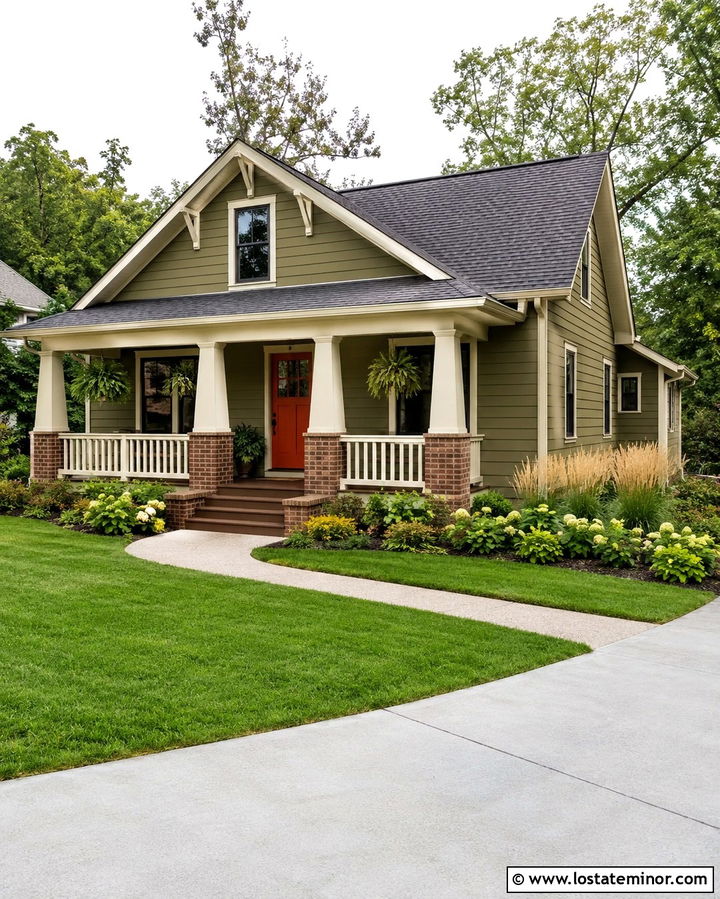
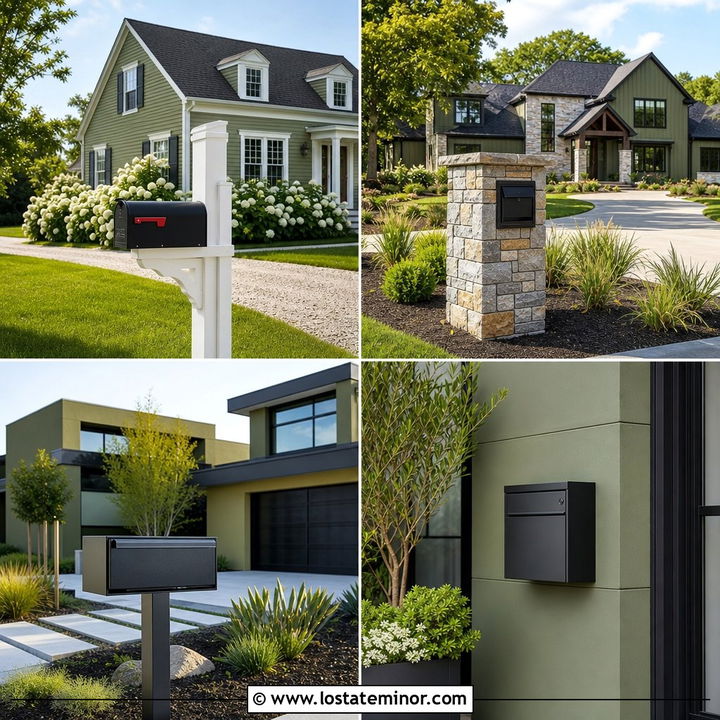
Can a small bungalow look substantial without feeling heavy? Tapered porch columns are an effective solution. Paint the bungalow’s horizontal siding a warm olive green and use chunky cream columns that narrow toward the porch roof. Brick bases in soft red and brown tones add visual weight at ground level. Repeat the cream on the gable trim and window surrounds, then introduce a muted rust front door for a welcoming accent. A weathered charcoal shingle roof balances the warm palette. Keep the porch floor medium brown and use simple Craftsman railings between the columns. Compact hydrangeas, ornamental grasses, and a curved walkway can make the modest facade feel layered, complete, and carefully planned.
5. Dark Olive Green House With Black Porch Columns
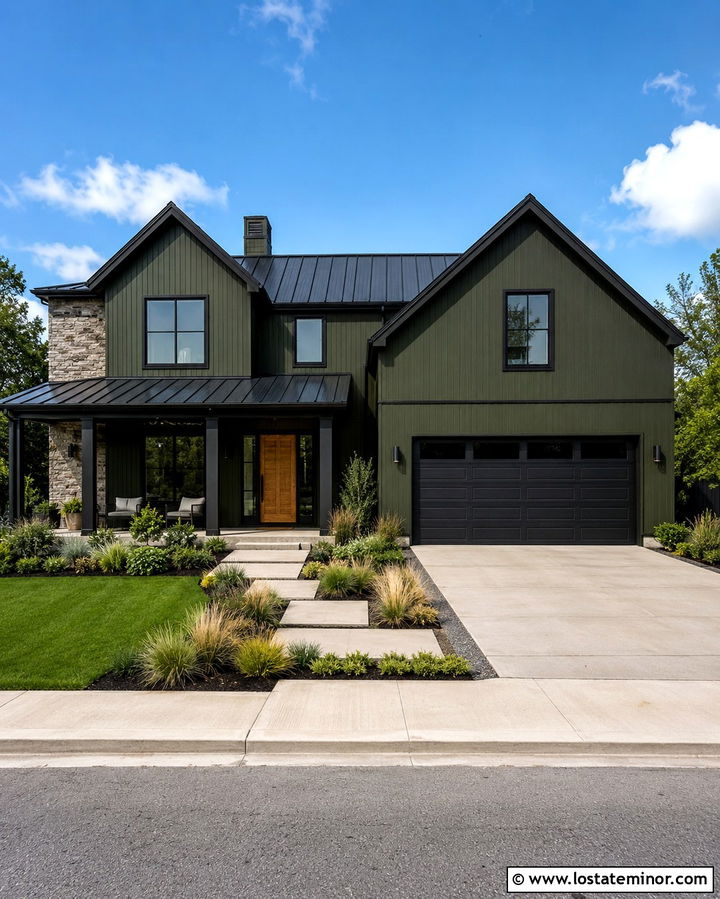
Dark olive siding paired with black porch columns creates a bold exterior that still feels rooted in nature. This scheme works especially well on a modern two-story home with simple rooflines and minimal ornament. Use black for the columns, window frames, gutters, and garage door so the dark accents connect across the entire facade. A warm cedar front door prevents the palette from becoming too severe. Natural stone cladding around the entry or chimney can introduce lighter gray and tan notes. Select a charcoal standing-seam roof to maintain the streamlined appearance. Sparse landscaping, architectural grasses, and large rectangular pavers support the modern character while allowing the deep olive green body color to remain the main feature.
6. Light Olive Green House With Cream Porch Columns
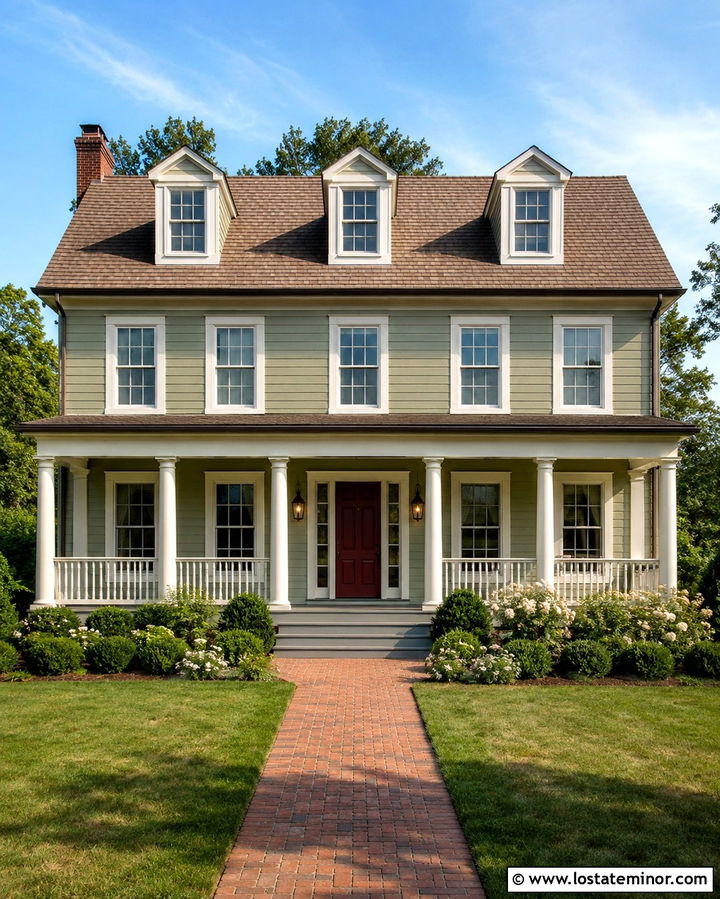
Light olive green creates a calm exterior when paired with creamy off-white rather than sharp white. Apply the green to traditional lap siding, then use cream on round porch columns, window casings, railings, and the wide cornice. A medium brown shingle roof reinforces the warm undertones in both colors. For a subtle focal point, paint the front door muted burgundy or deep reddish brown. This controlled accent gives the entrance definition without disrupting the gentle palette. Consider a warm gray porch floor and aged-brass lanterns for additional softness. Flowering shrubs, clipped boxwoods, and a brick walkway can complete this comfortable suburban look, which works particularly well on Colonial Revival and traditional cottage homes.
7. Olive Green Ranch House With Cedar Porch Posts
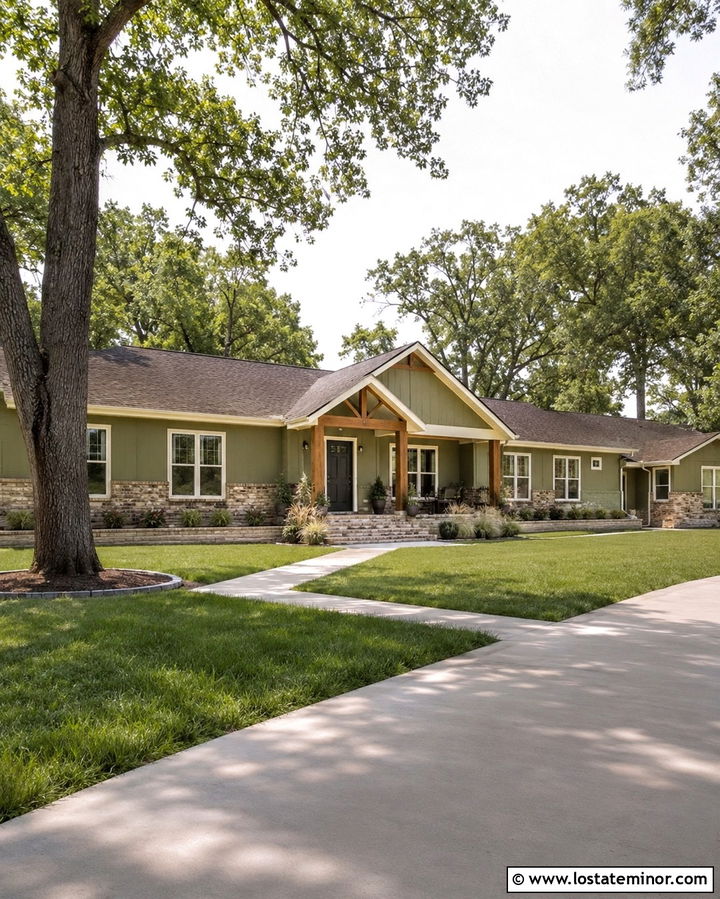
Long ranch facades benefit from the rhythm and warmth of natural cedar porch posts. Choose midtone olive green siding for the body and preserve the cedar with a clear or honey-toned stain. Warm white trim around the windows and roofline keeps the low structure from appearing too dark. A deep brown roof connects visually with the wood, while a charcoal front door provides a simple modern accent. If the home includes brick, look for muted brown, buff, or gray masonry rather than strongly orange brick. Extend the cedar to a narrow porch beam or decorative garage detail for consistency. Low grasses, wide foundation beds, and a broad concrete walkway complement the ranch home’s strong horizontal shape.
8. Olive Green Colonial With Round Porch Columns
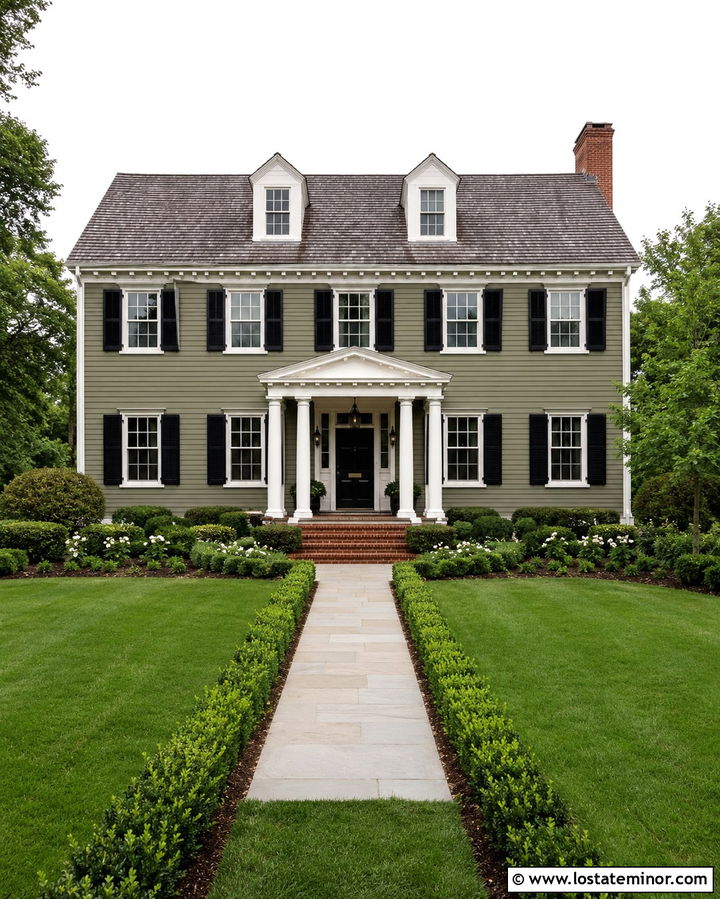
Round porch columns bring graceful symmetry to an olive green Colonial facade. Paint the siding a restrained olive with gray undertones, then use soft white on the columns, portico, window trim, and dentil molding. Black shutters and a glossy black front door add the formal contrast associated with Colonial architecture. Keep the roof charcoal or weathered gray so it does not introduce another warm color. Red brick steps can remain visible, provided their tone is repeated in the walkway or small landscape edging. Matching lanterns on either side of the entrance reinforce the centered composition. Neatly clipped hedges and balanced planting beds complete a polished exterior that feels established rather than overly trendy.
9. Olive Green Cottage With Wood Porch Columns
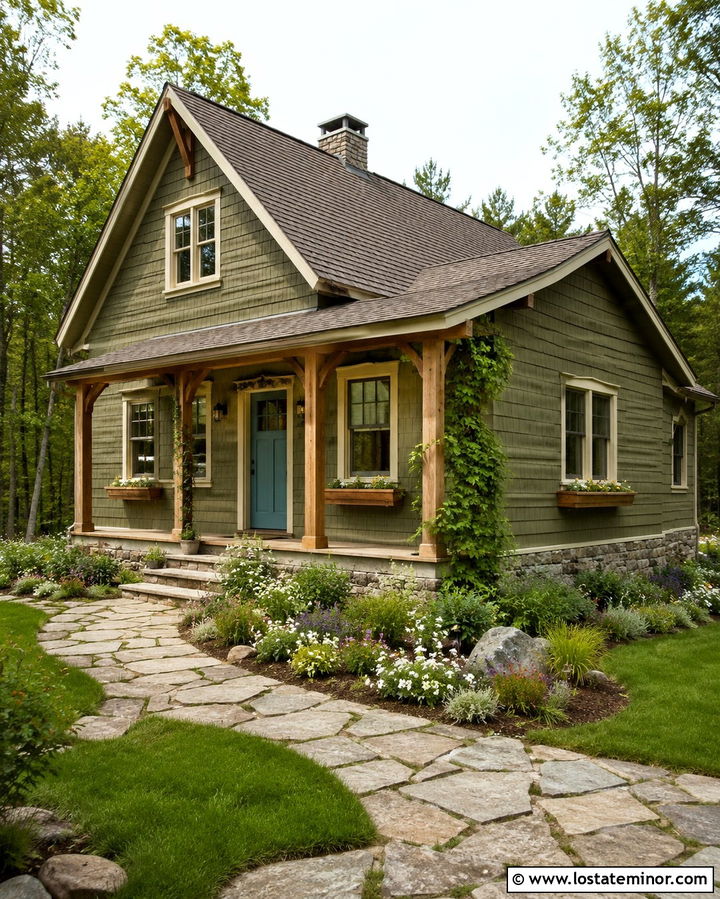
A cottage exterior should feel approachable, and olive green siding with natural wood columns achieves that mood easily. Use a softened olive on cedar shingles or narrow clapboards, then support a small gabled porch with simple stained fir posts. Cream window trim and fascia bring gentle contrast without making the home look sharply outlined. Consider a dusty blue front door for a quiet color accent inspired by the landscape. A brown-gray roof and irregular stone foundation help the scheme feel collected over time. Add window boxes, climbing greenery, and a curved flagstone path, but keep plants trimmed away from the siding. The full design feels charming and relaxed while maintaining enough structure for attractive year-round curb appeal.
10. Olive Green House With Brick Porch Columns
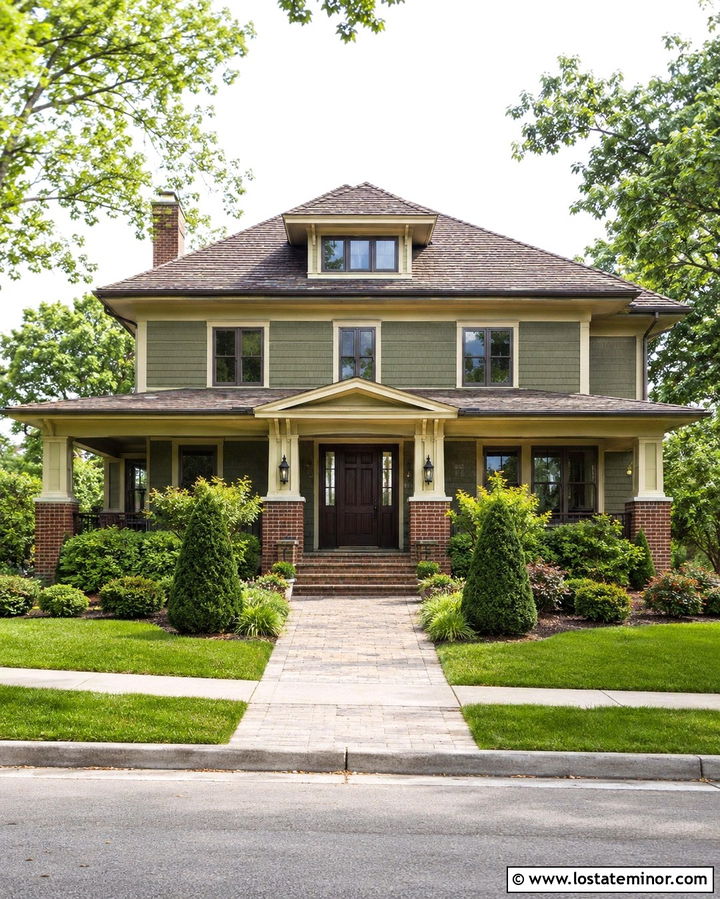
Brick porch columns can make an olive green exterior look warm, durable, and architecturally grounded. Select brick with blended red, brown, and charcoal tones rather than a bright uniform red. Use the olive green on lap siding and paint the trim a creamy white that relates to the brick mortar. Square brick columns can support painted wood beams or short white column tops for a balanced mixed-material appearance. A dark bronze front door and matching gutters create definition while remaining softer than solid black. Choose a weathered brown roof to connect the masonry and siding. Broad porch steps, traditional lanterns, and layered evergreen landscaping will make the combination feel intentional across the complete facade.
11. Olive Green House With Stone Base Porch Columns
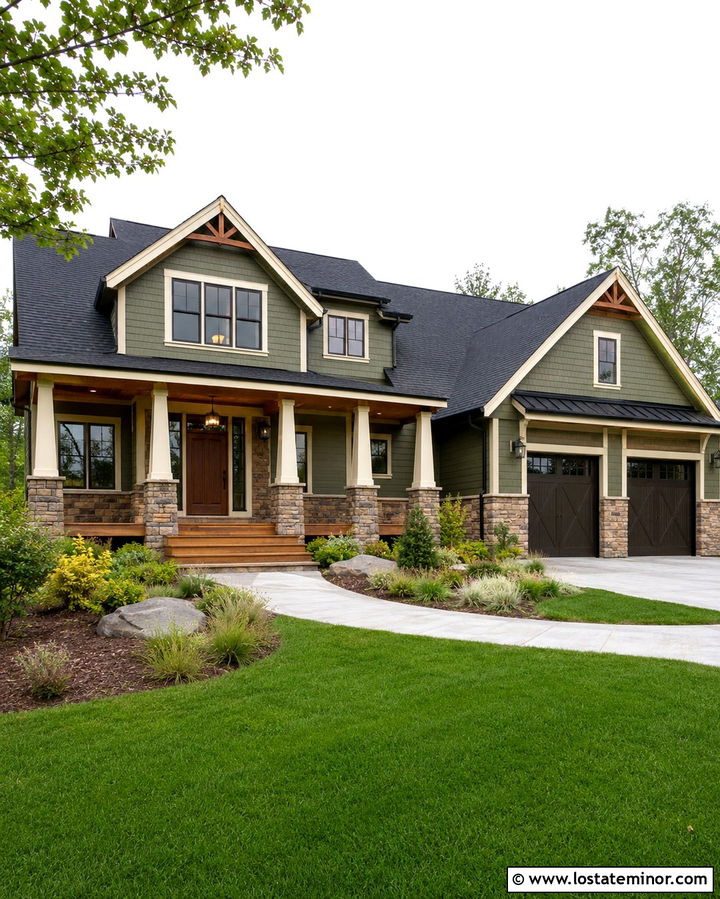
Stone bases help porch columns feel properly scaled, especially on a large olive green house. Cover the lower third of each tapered column with ledgestone that combines warm gray, tan, and subtle brown. Paint the upper column sections and trim an understated ivory. Medium-dark olive siding then becomes the visual bridge between the masonry and surrounding landscape. Repeat the stone along the foundation or garage wall, but avoid covering every surface. A stained wood door and matching porch ceiling bring additional warmth near the entrance. Dark bronze windows and a charcoal roof provide clean outlines. Wide steps and native plantings finish this substantial exterior without allowing the columns or stonework to overpower the architecture.
12. Olive Green House With Natural Wood Porch Columns
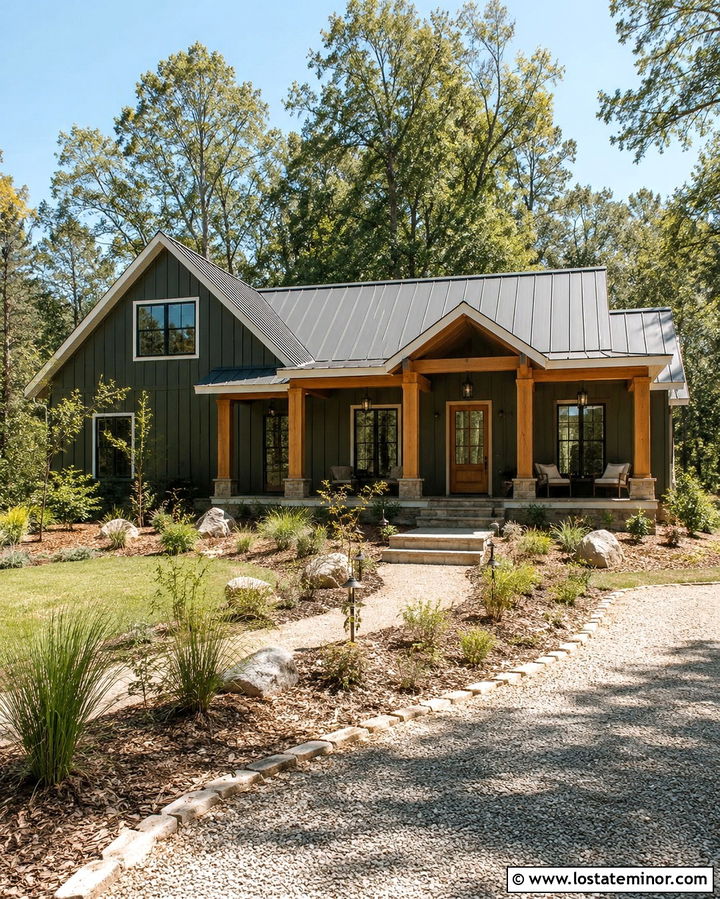
Natural wood columns can soften the appearance of a broad olive green facade while adding authentic texture. Use clear-coated Douglas fir or cedar posts with visible grain and repeat the same finish on the porch beam, front door, and small gable brackets. A deep but muted olive green works well on board-and-batten or horizontal siding. Keep the window trim warm white and choose dark bronze frames for a layered transition between light and dark elements. A gray metal roof adds contrast without clashing with the wood. Complete the porch with natural stone steps and restrained black lighting. The scheme is especially effective on mountain homes, rustic modern houses, and suburban properties surrounded by mature trees.
13. Olive Green House With Black Metal Porch Columns
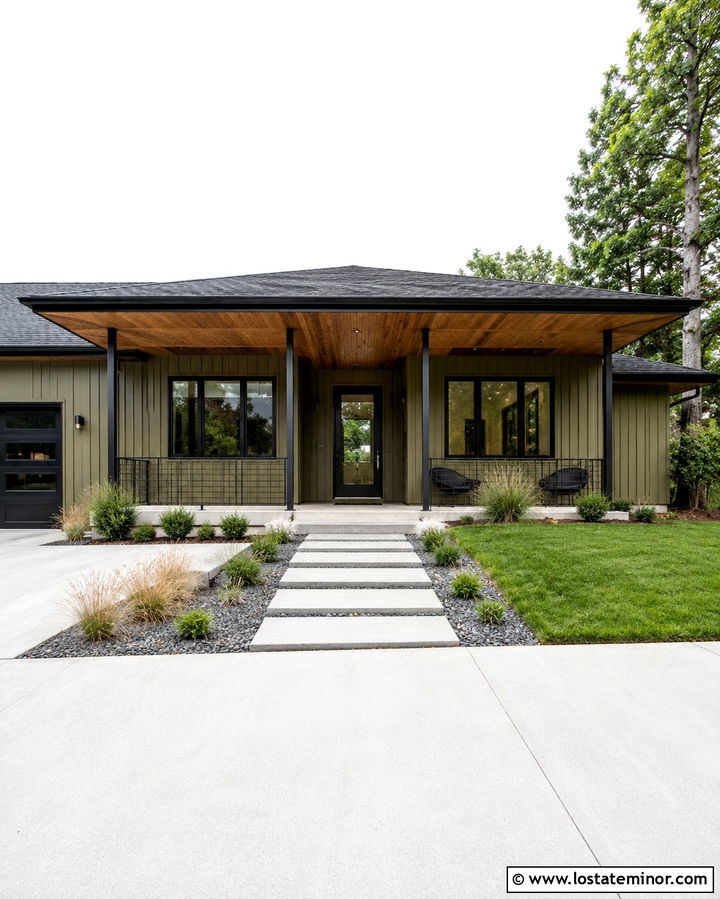
Slim black metal columns give an olive green exterior a lighter, more contemporary profile than bulky painted posts. They are best suited to a modern ranch or split-level home with broad roof overhangs. Cover the facade in muted olive vertical siding, then repeat black on the windows, roof edging, railing, and modern glass front door. Introduce warmth through cedar soffits and a wood porch ceiling. A light concrete porch and pale gravel walkway prevent the darker colors from feeling visually heavy. Keep landscaping architectural with low grasses, compact shrubs, and one or two sculptural trees. The complete palette feels clean and current while the olive green keeps the modern materials connected to the natural setting.
14. Olive Green House With Craftsman Porch Columns
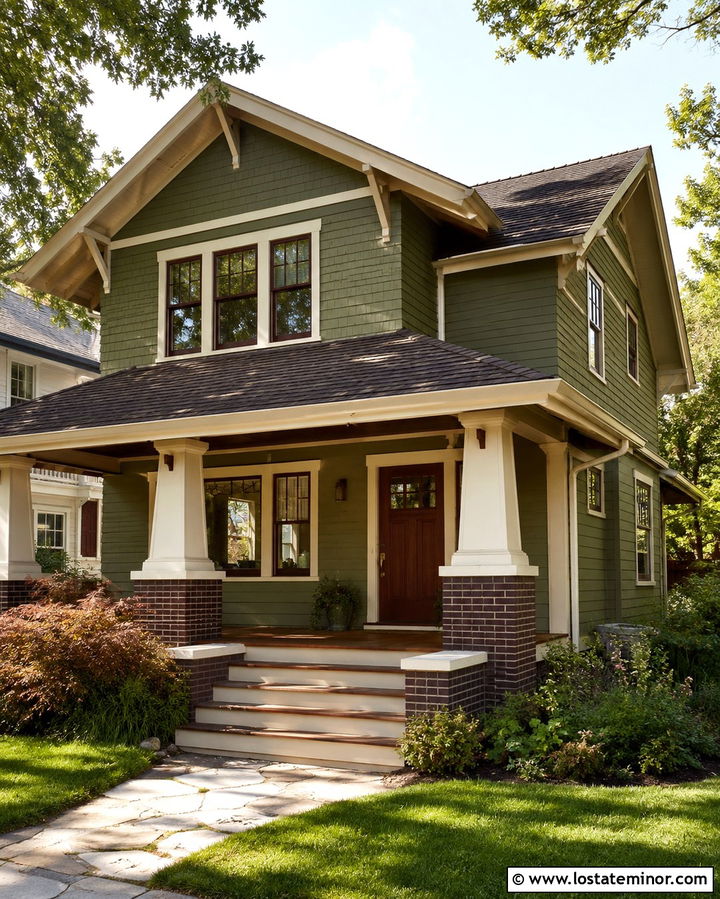
For a classic Craftsman look, combine olive green siding with thick square columns, broad trim, and exposed architectural details. Paint the upper parts of the columns warm cream and construct their bases from dark brown brick or rough-cut stone. Use medium olive clapboards below the gables and olive shingle siding above for subtle depth. A rich brown front door, bronze hardware, and amber-toned wood porch flooring strengthen the period character. The roof should be a deep brown or charcoal with generous overhangs. Decorative brackets can match the cream trim or remain stained wood. Finish the composition with broad front steps and informal foundation planting that frames, rather than hides, the prominent porch structure.
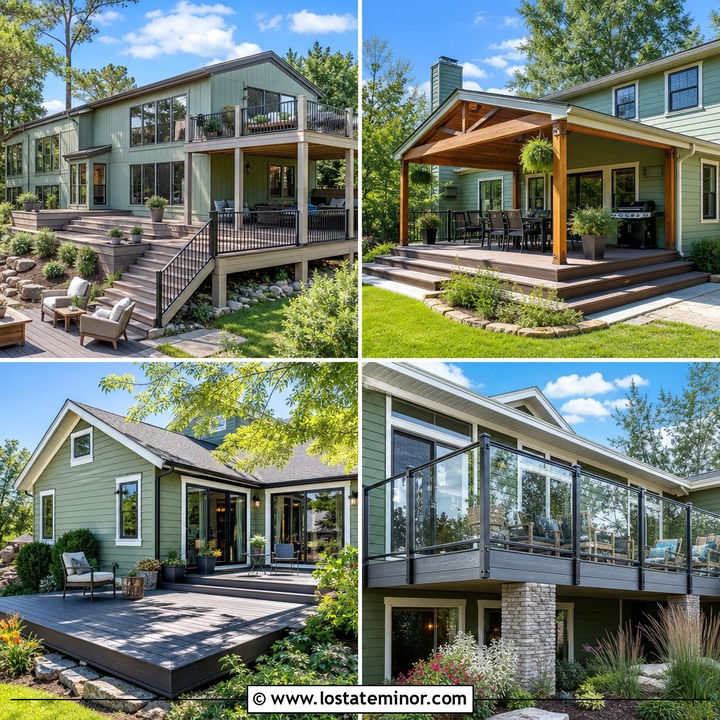
15. Olive Green House With Two-Story Porch Columns
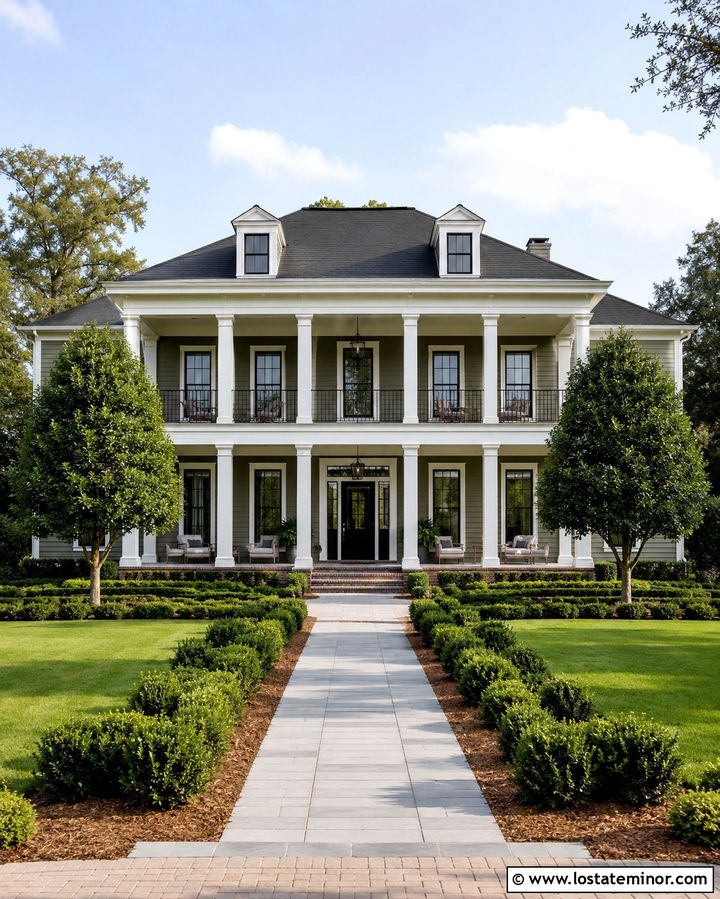
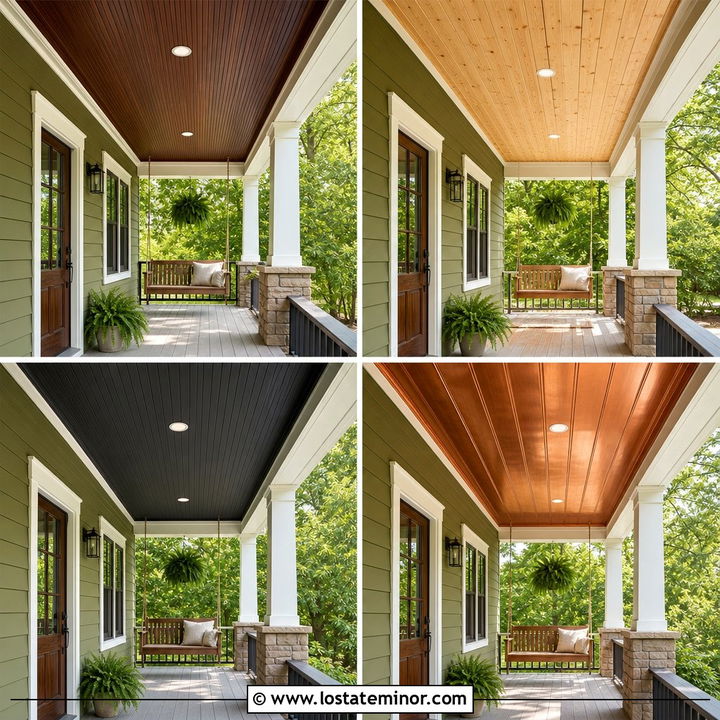
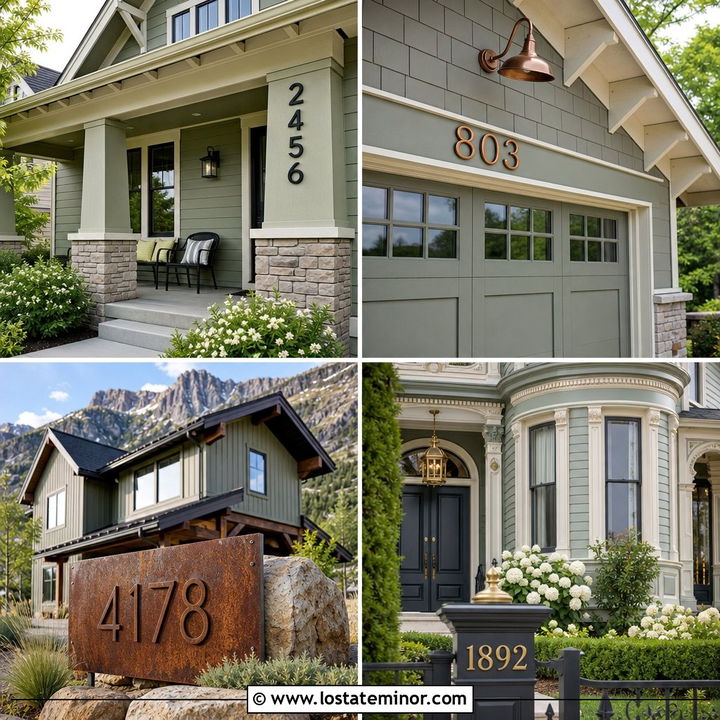
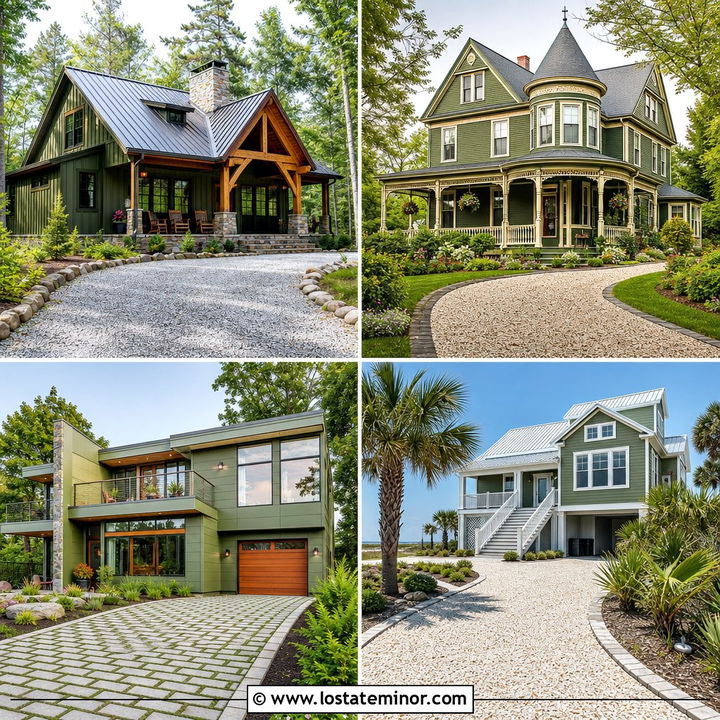
Two-story porch columns turn an olive green home into a strong architectural statement. Because the columns are tall, choose a slightly softened white rather than an intensely bright shade. Medium olive green siding gives the facade color while allowing the full-height columns and upper balcony to remain dominant. Use black window sashes, a black front door, and a dark charcoal roof to add controlled contrast. A pale gray porch floor and concrete steps keep the base visually quiet. If the house has shutters, match them to the olive siding or use black sparingly. Symmetrical trees, clipped hedges, and a centered walkway support the formal scale while ensuring the home still feels welcoming from the street.
16. Olive Green House With Rustic Timber Porch Columns
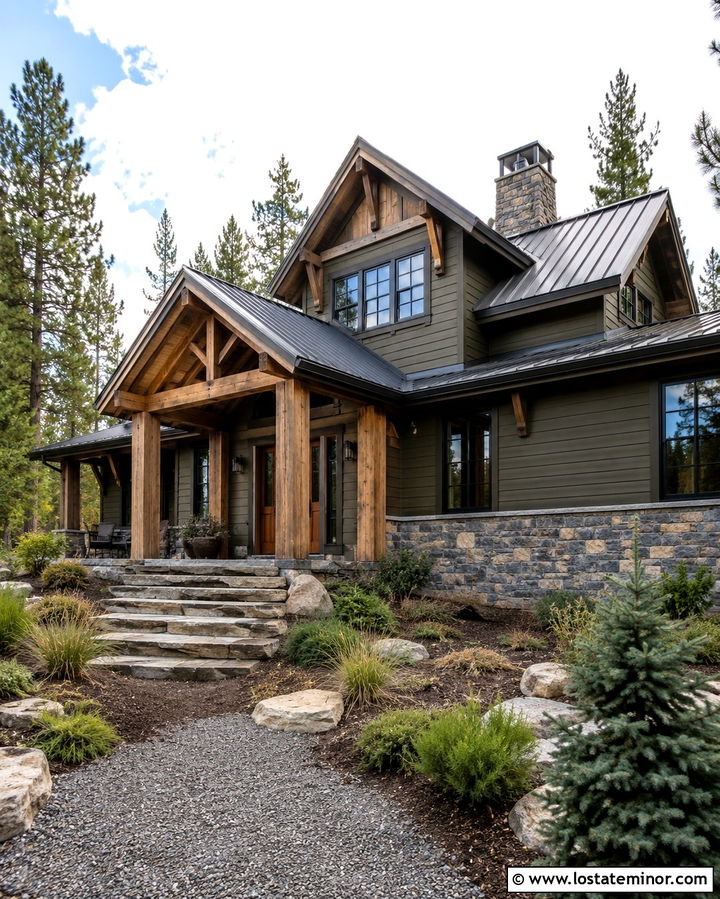
Heavy timber columns create a rugged framework for a dark olive green exterior. This combination works on cabins, mountain houses, and rustic suburban homes with steep rooflines. Apply deep olive lap siding or board-and-batten across the body, then use thick rough-sawn cedar columns beneath a matching timber beam. Add a stone foundation in charcoal, taupe, and warm brown to visually anchor the structure. Black window frames and a dark metal roof give the rustic materials a cleaner edge. A medium walnut front door can blend into the timber rather than compete with it. Complete the approach with broad stone steps, native grasses, evergreen trees, and a simple gravel or paver walkway.
17. Olive Green House With White Columns And Black Shutters
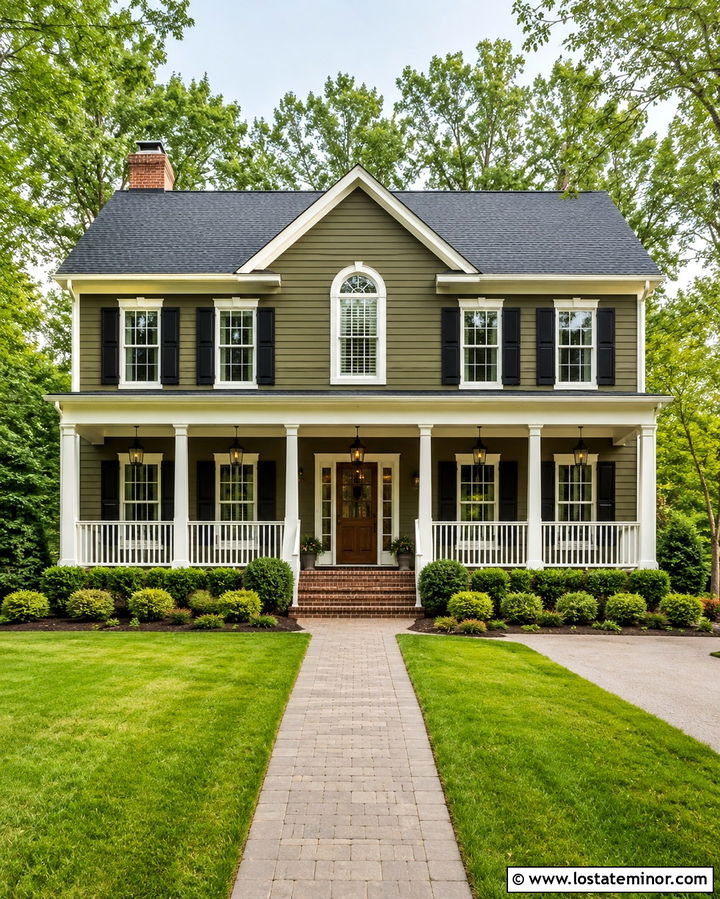
Olive green, white, and black form a balanced three-color exterior that works across many traditional house types. Use olive green siding as the dominant color, crisp white on the porch columns and architectural trim, and matte black on properly sized shutters. A black front door can reinforce the shutters, although a natural wood door offers a warmer alternative. Keep the roof a neutral charcoal so it supports the black accents without creating a solid dark cap. Paint porch railings white to connect them with the columns and make the entrance feel brighter. Brick steps, black lanterns, and symmetrical foundation shrubs complete the scheme. The contrast is noticeable, but the earthy siding keeps it from appearing overly stark.
18. Olive Green House With Cedar Columns And Black Trim
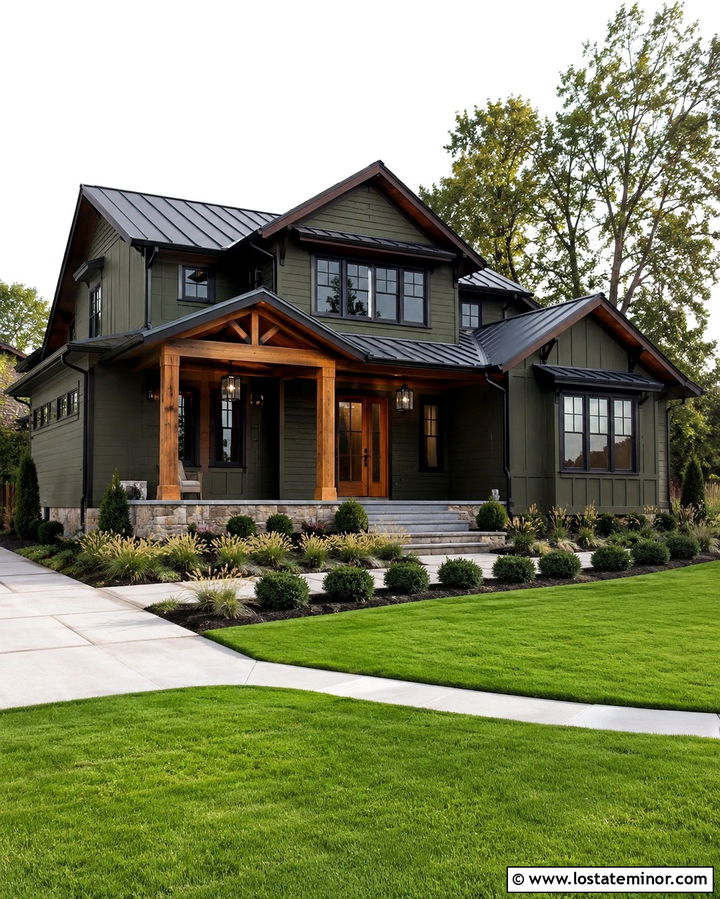
Cedar columns and black trim provide two distinct accents for an olive green house. Start with a smoky olive body color that is dark enough to hold its own beside black windows and fascia. Use clear-stained cedar for the porch columns, entry door, overhead beam, and selected soffits. Limiting wood to these focal areas prevents the facade from looking overly rustic. A charcoal metal roof ties into the black trim, while a light gray stone porch introduces necessary brightness near ground level. This combination works particularly well on a contemporary Craftsman or modern farmhouse. Structured shrubs, ornamental grasses, and generous lawn space keep the strong materials and colors feeling clean, open, and residential.
19. Olive Green House With Cream Columns And Brown Roof
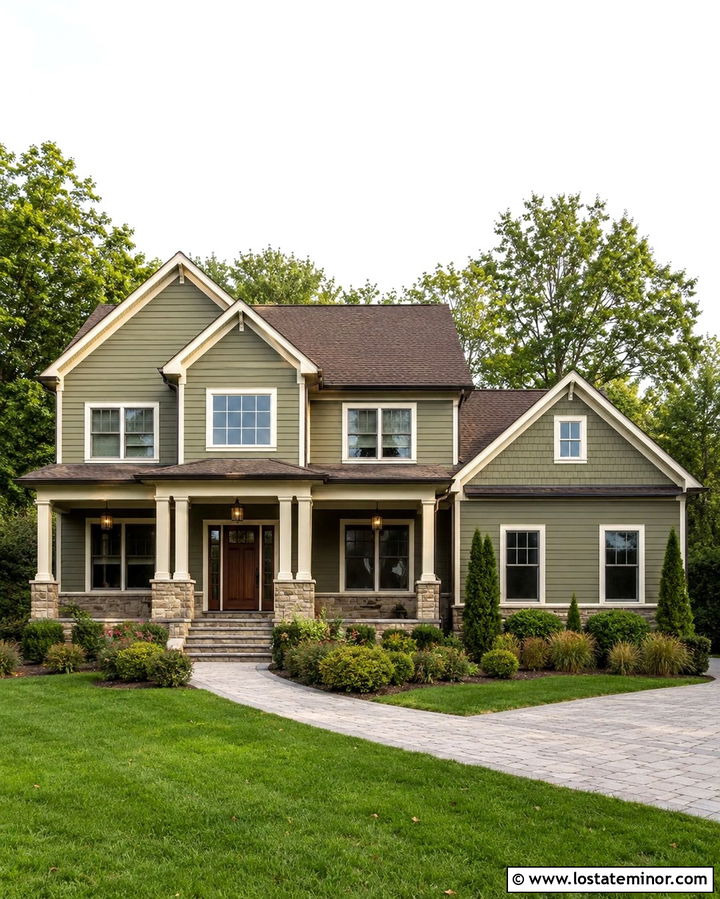
A brown roof often has warm or reddish undertones that can be difficult to coordinate with cool exterior colors. Olive green offers a practical solution because its earthy character works naturally beside brown shingles. Choose a medium olive siding color and pair it with creamy porch columns, window trim, and fascia. A stained chestnut front door can connect directly with the roof, while dark bronze lighting and gutters add quiet definition. Use tan stone or warm gray brick around the porch foundation to support the palette. Avoid brilliant white accents, which may make the cream and brown elements appear dingy. The finished scheme feels cohesive, traditional, and especially suitable for wooded or established suburban neighborhoods.
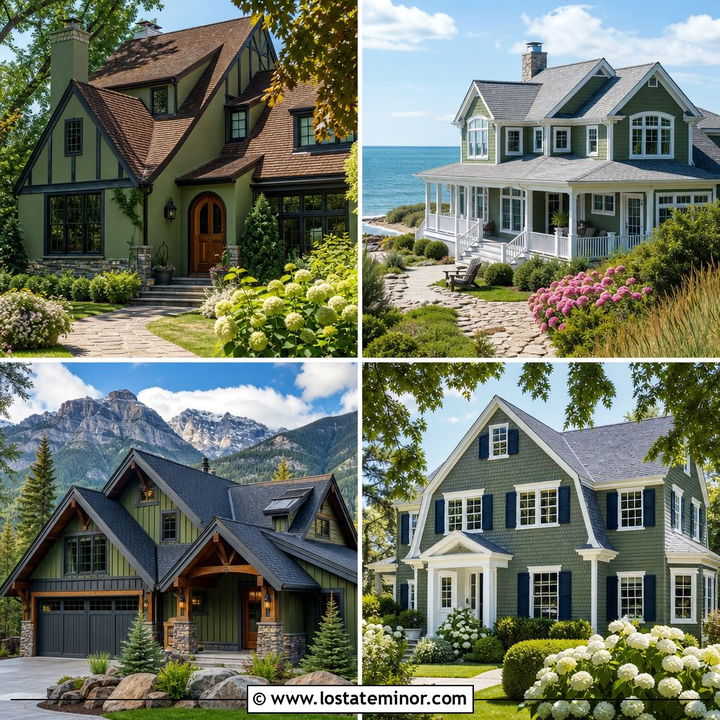
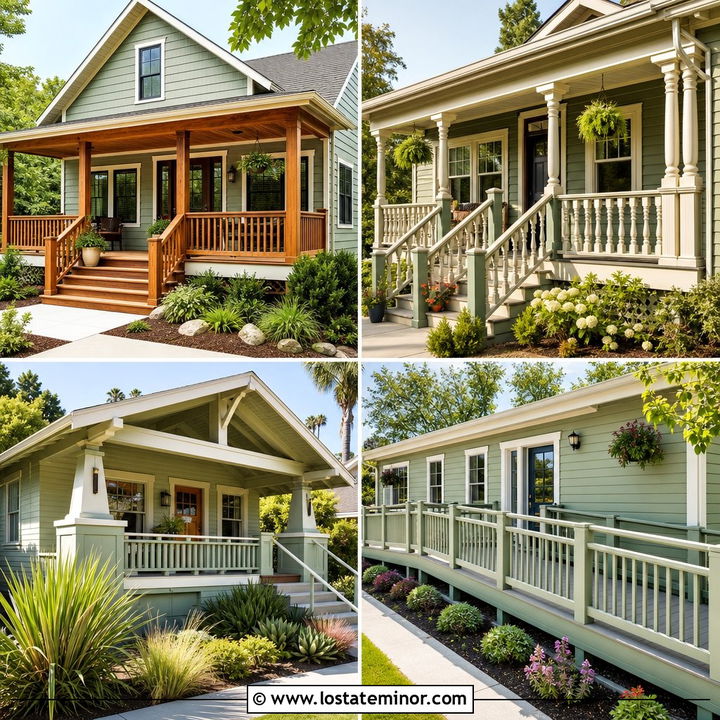
20. Olive Green House With Gray Porch Columns
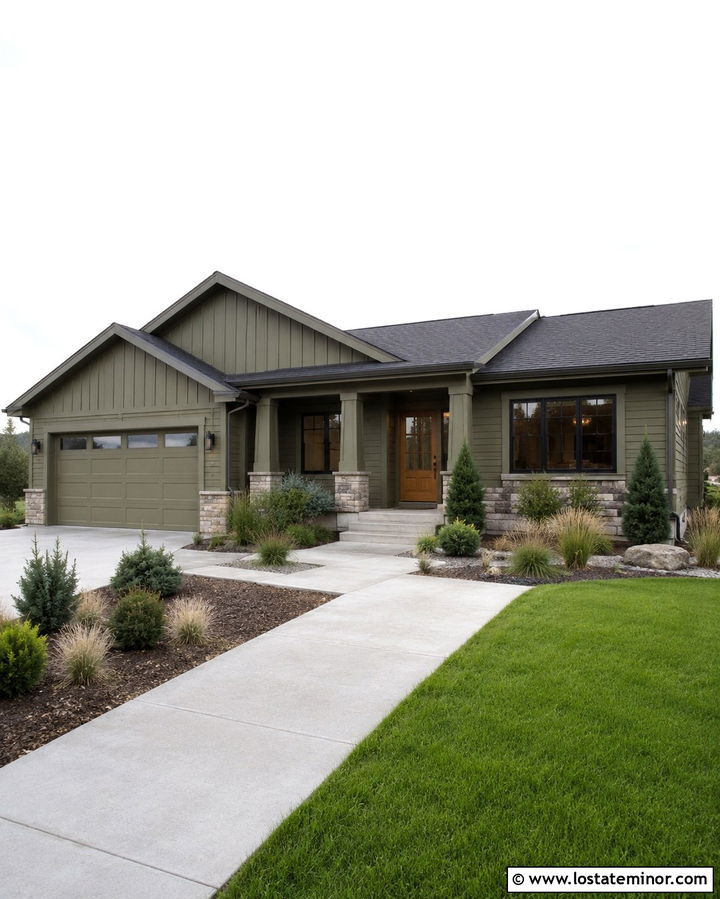
Gray porch columns create a subtle, low-contrast alternative to white. Paint the house a warm medium olive and choose a stone-inspired greige for the square columns, window trim, garage door, and porch railing. The gray should contain enough warmth to sit comfortably beside the green. Add a charcoal roof and black window frames for deeper structure. A natural oak front door introduces warmth at the center without demanding a bright accent color. Concrete steps and gray stone veneer can repeat the column color at ground level. This restrained combination suits ranch homes and transitional facades where clean lines matter. Soft grasses and evergreen landscaping continue the understated palette around the entire property.
21. Olive Green House With Olive Porch Columns
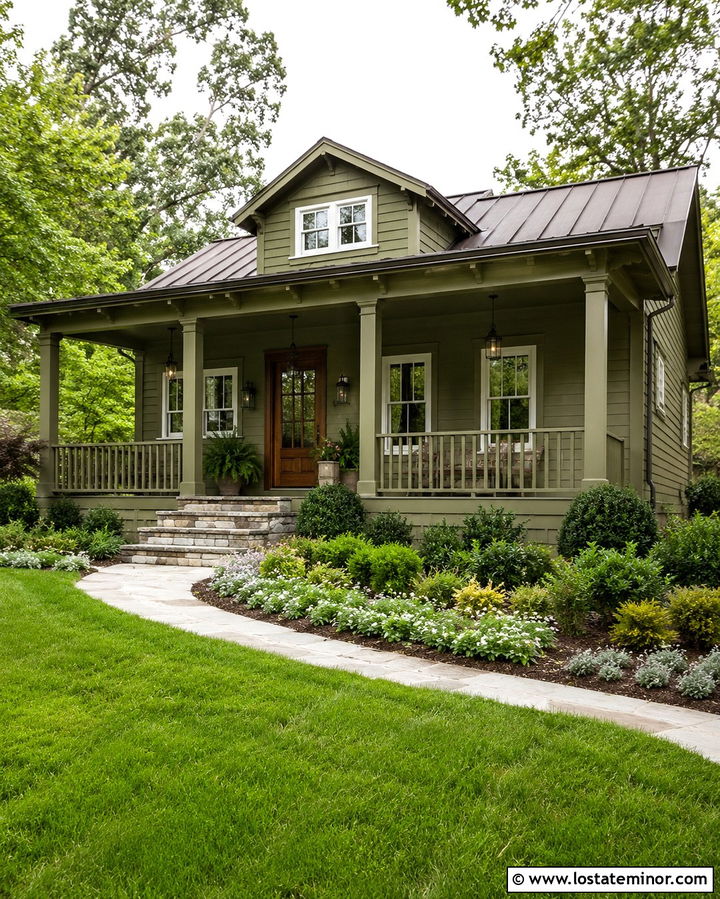
Color-drenching the siding and porch columns in one olive green shade can make a small house look wider and more unified. The technique works best when texture provides the contrast that an additional paint color normally would. Use olive green on the clapboards, square columns, porch beams, and railings. Reserve warm white for window sashes and a narrow line of fascia. A stained wood front door and natural stone steps add depth without interrupting the cohesive facade. Consider a dark bronze roof, gutters, and lanterns instead of black for a gentler finish. Layered greenery should include different leaf shapes and shades so the landscaping does not disappear against the house. The overall result feels calm and thoughtfully edited.
22. Olive Green Victorian With Decorative Porch Columns
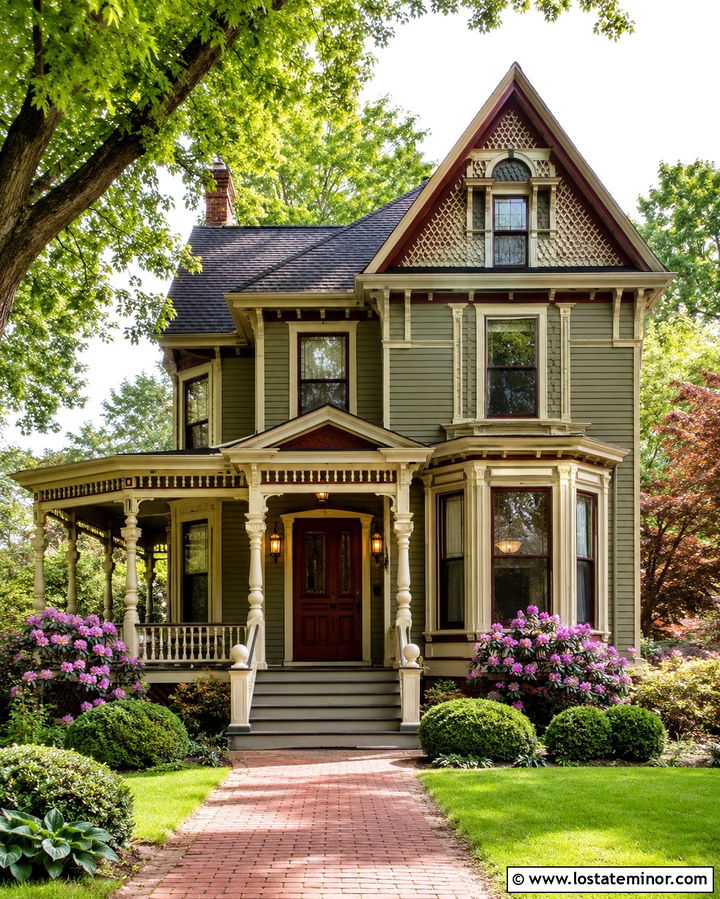
Victorian homes can handle more color and detail than simpler facades, but the palette still needs a clear hierarchy. Make olive green the main clapboard color, then use cream on turned porch columns, brackets, railings, and window trim. Add deep burgundy to the front door, narrow gable accents, and selected decorative panels. A charcoal roof keeps these historical colors from becoming too busy. If the porch has intricate spindles, paint most of them cream and reserve burgundy for small repeated details. Warm gray porch flooring provides a neutral base. Finish with a brick walkway, flowering shrubs, and traditional lanterns. This three-color scheme highlights the craftsmanship without hiding the home beneath too many competing shades.
23. Olive Green Cape Cod With Small Porch Columns
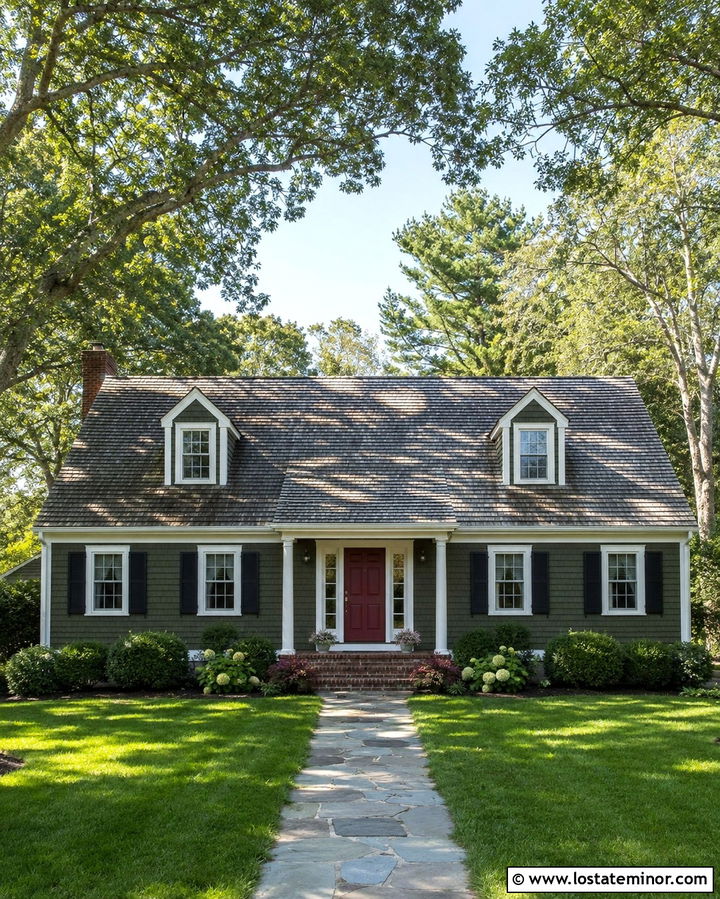
A Cape Cod home often needs only a modest covered entry, so keep its porch columns simple and appropriately scaled. Paint the cedar shingles or clapboard siding a weathered olive green and use warm white on the small square columns, window casing, and eaves. Dark charcoal shutters provide classic contrast, while a cranberry red door introduces a controlled New England-inspired accent. Choose weathered gray roof shingles to maintain the understated character. Brick porch steps and a short flagstone walkway bring texture to the compact facade. Keep shrubs low beneath the windows and use small flowering plants near the entry. The finished exterior preserves the Cape Cod home’s tidy proportions while making the porch feel distinct and welcoming.
24. Olive Green Split-Level With Modern Porch Columns
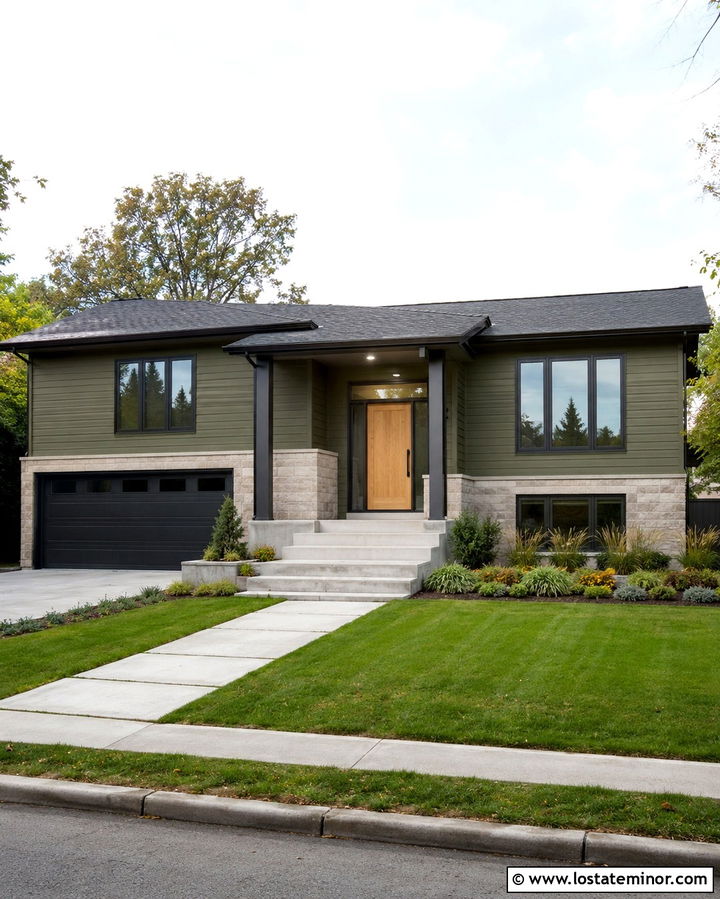
A split-level home can gain a clearer entrance through a narrow porch supported by modern square columns. Paint the upper siding a muted olive green and use warm gray stone or brick across the lower level. Slim charcoal columns connect the porch roof with the darker masonry, windows, and garage door. A light oak front door creates a warm focal point within the otherwise restrained palette. Extend olive green to the side facade so the body color feels intentional rather than applied only to the front. A low-slope charcoal roof and simple black lighting support the updated design. Use wide concrete steps, horizontal landscaping, and a direct walkway to strengthen the home’s clean geometric lines.
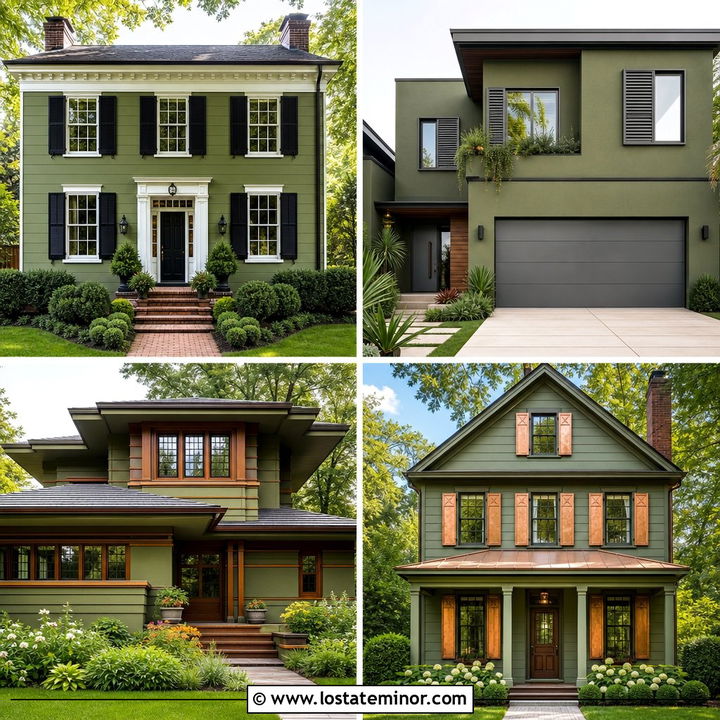
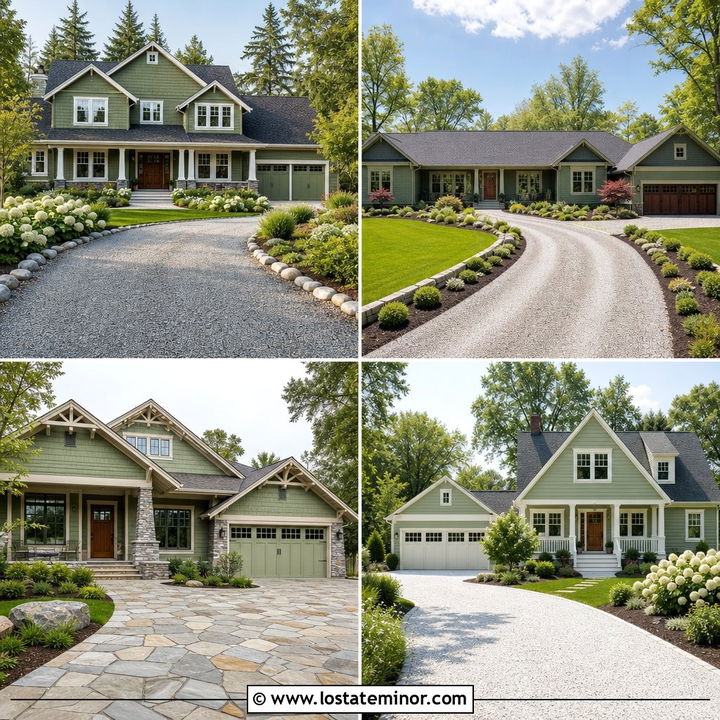
25. Olive Green House With Brick Bases And White Columns
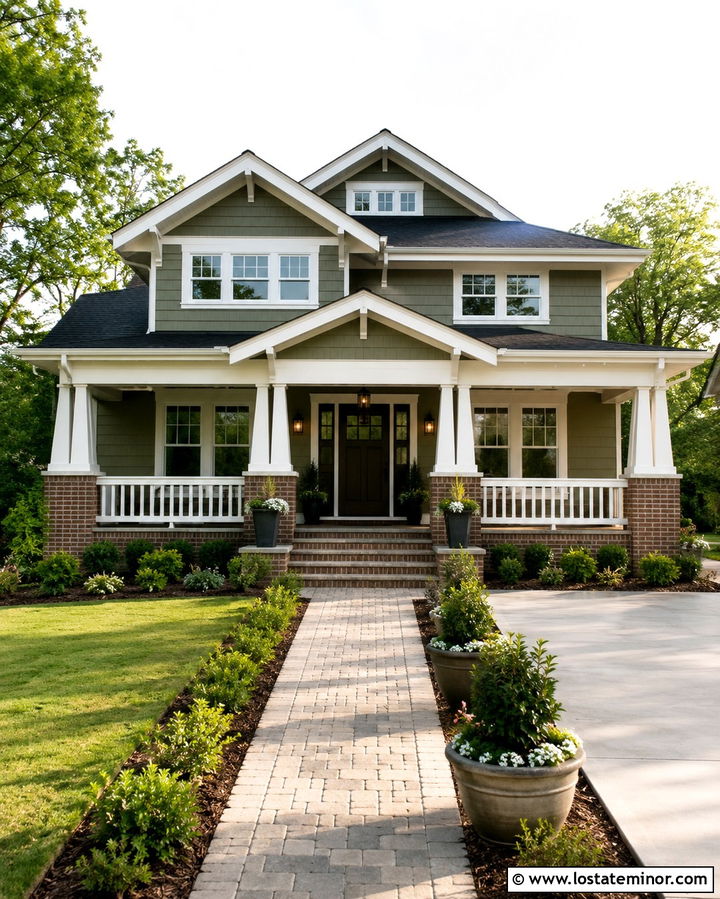
Combining brick bases with white upper columns creates a layered porch that feels both sturdy and bright. Choose medium olive green siding and brick containing subdued red, brown, and gray variation. Paint the square or tapered column tops warm white, then repeat that color on the trim, porch railing, and garage surround. A deep brown front door helps connect the siding to the brick. Charcoal roof shingles provide neutral coverage above the warmer facade. To keep the porch from looking fragmented, use the same brick on the steps or foundation skirt. Traditional lanterns, broad porch planters, and a straight paver walkway can complete this welcoming scheme for Craftsman, ranch, and suburban two-story homes.
26. Olive Green Modern Farmhouse With Wood Columns
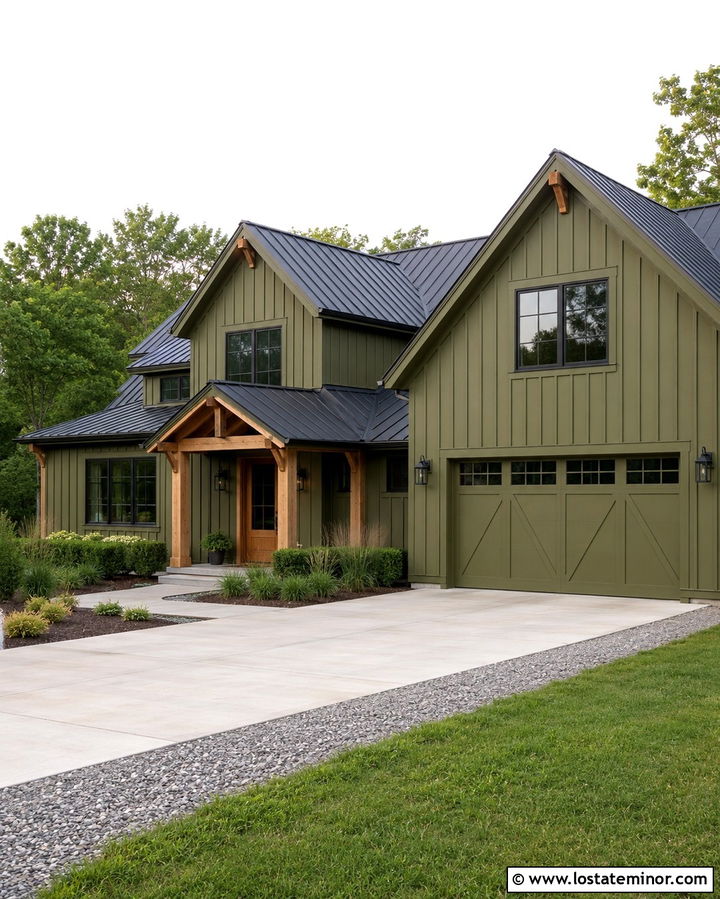
Olive green board-and-batten siding gives the modern farmhouse look a more natural direction. Pair it with straightforward cedar columns, exposed porch beams, and a matching wood front door. Use black-framed windows, a black metal roof, and dark gutters to outline the architecture. Warm white can remain on the soffits or a secondary siding area, but it should not overpower the olive body color. A smooth concrete porch offers a clean counterpoint to the textured wood and vertical siding. If the garage is visible, paint its doors olive green to reduce their prominence. Finish the yard with simple hedges, native grasses, and a broad gravel-edged walkway for relaxed but polished curb appeal.
27. Olive Green Southern House With Wide Porch Columns
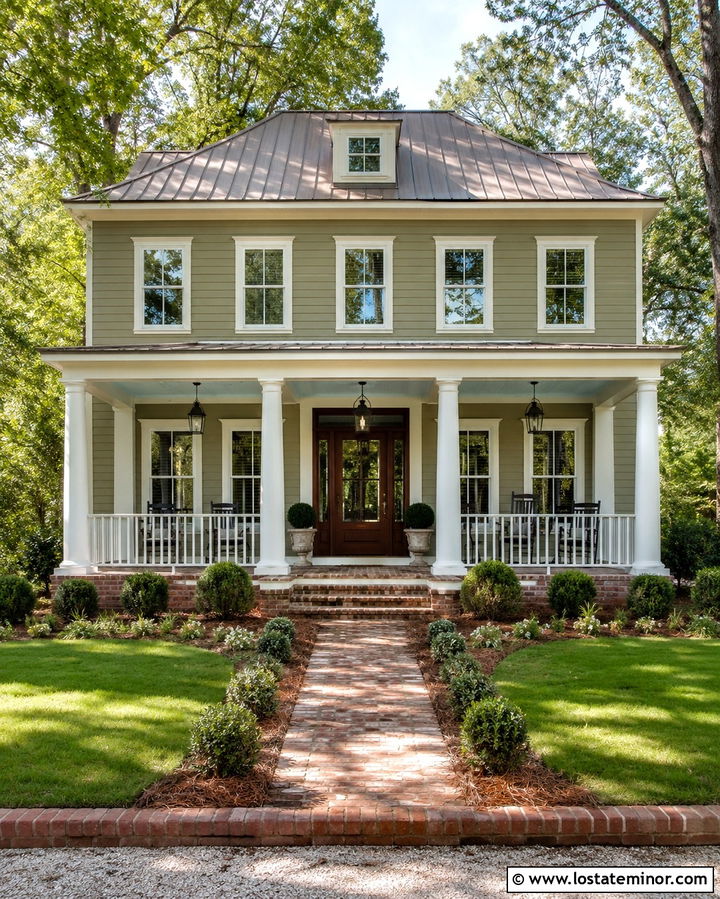
A Southern-style house with a deep front porch needs substantial columns that look proportional to the roof. Use a gentle olive green on the main siding and broad soft-white columns across the porch. Repeat the white on railings, window trim, and the porch ceiling border. A pale blue porch ceiling can add a traditional regional note without changing the primary facade palette. Choose a warm gray metal roof and a natural mahogany front door for contrast. Brick porch flooring in muted red-brown tones helps ground the tall columns. Ceiling fans, black lanterns, rocking chairs, and symmetrical planters complete the welcoming setting while preserving an open view of the doorway and windows.
28. Olive Green Midcentury House With Slim Porch Posts
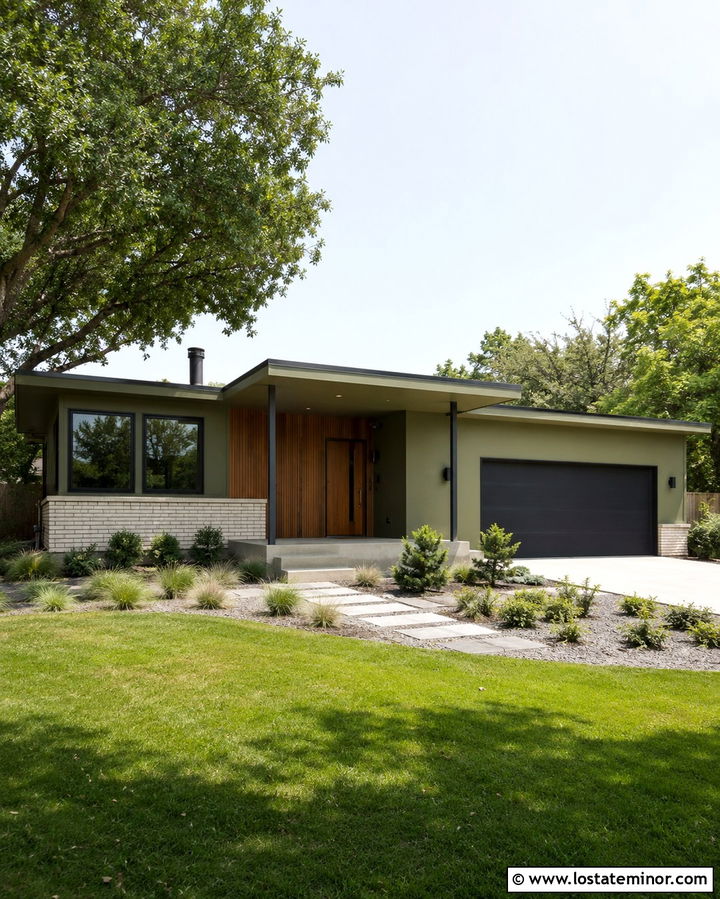
Slim porch posts complement the low roofline and horizontal emphasis of a midcentury house. Paint the siding a muted avocado-olive green, then use charcoal steel posts beneath a simple flat porch canopy. Warm cedar panels around the front door can serve as the main accent, while cream brick across the lower facade lightens the composition. Continue charcoal on window frames, fascia, and a flush garage door. A light concrete porch and broad rectangular stepping stones reinforce the home’s clean geometry. Keep the landscaping low and sculptural with ornamental grasses, compact evergreens, and drought-tolerant plants. The resulting facade respects midcentury proportions while giving the familiar green palette a sharper, updated appearance.
29. Olive Green Cottage With Arched Porch Columns
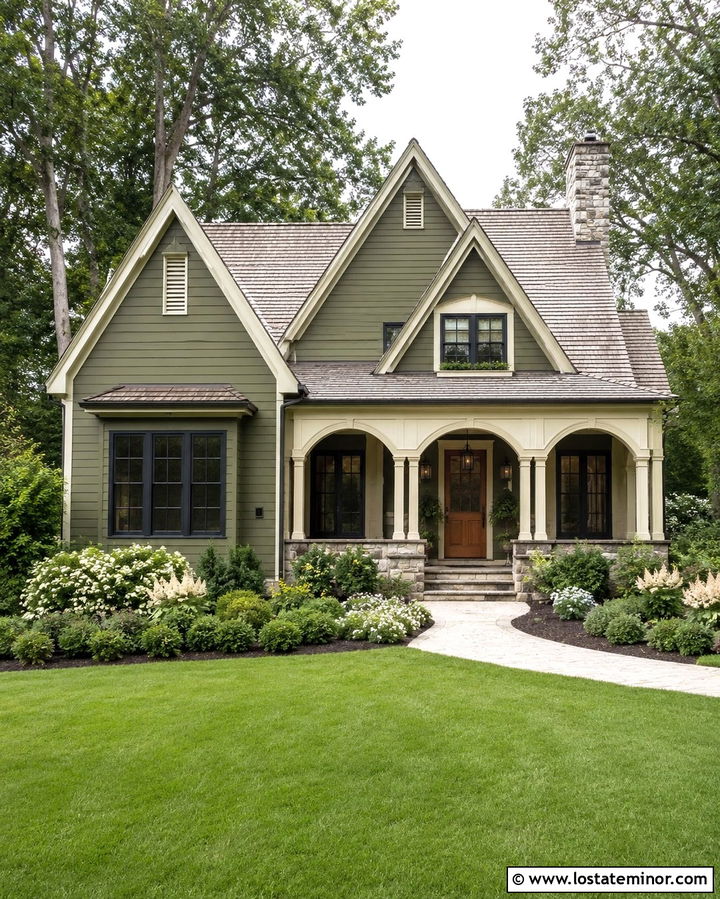
Arched openings between porch columns can give a cottage facade a softer, storybook shape. Cover the house in warm olive green stucco or narrow lap siding, then paint the columns and connecting arches a mellow cream. A cedar front door and brown-gray roof support the natural color story. Use charcoal window frames for definition, but avoid heavy black shutters that could crowd the smaller facade. Stone cladding at the porch base should contain warm gray and beige rather than strong orange. A gently curving walkway, clipped shrubs, and loose flowering borders strengthen the cottage character. Keeping the arch details broad and simple ensures the porch looks architectural rather than excessively decorative.
30. Olive Green House With Stone Columns And Metal Roof
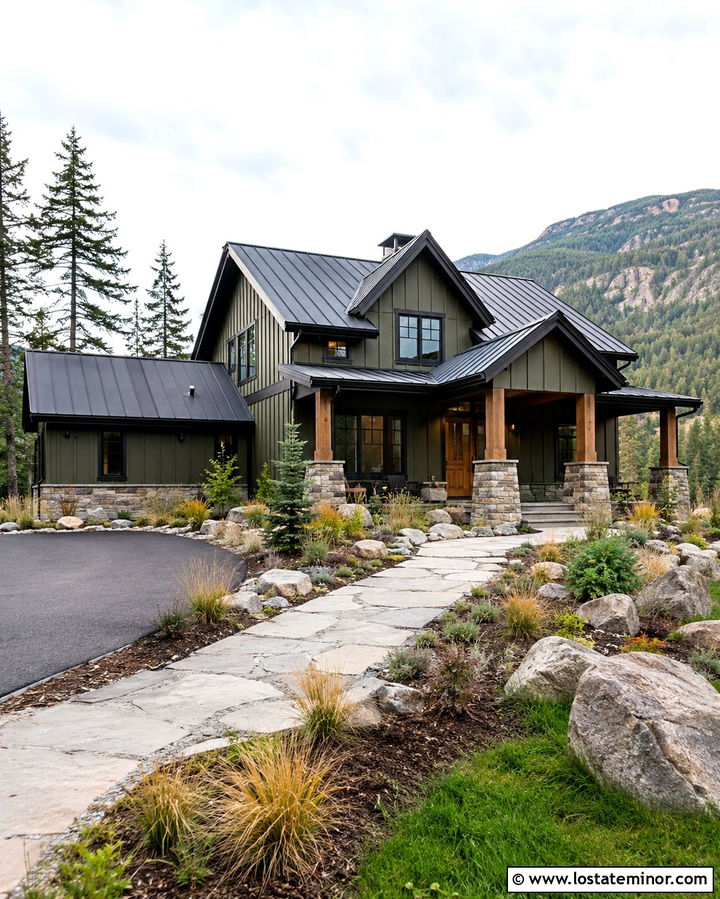
Stone porch columns and a metal roof can give an olive green house a durable, high-contrast finish. Use deep olive board-and-batten siding with a charcoal standing-seam roof. Construct broad column bases from ledgestone in gray, taupe, and brown, then top them with stained timber posts. A walnut front door repeats the wood tone, while black windows and gutters connect with the roof. Keep the porch floor and front steps light gray so the entry does not become too dark. This scheme fits a modern mountain home, lodge-inspired Craftsman, or rural farmhouse. Native grasses, evergreens, boulders, and a wide stone walkway can integrate the strong architecture with its surrounding landscape.
Conclusion:
The best 30 Olive Green House Design With Porch Columns Ideas treat the siding, columns, roof, trim, door, and landscaping as one connected composition. White columns create classic definition, cream softens the contrast, and natural wood brings warmth to olive siding. Stone or brick bases can make larger porches feel grounded, while slim black posts suit cleaner modern architecture. Before committing, sample the olive paint beside every permanent material, including roofing and masonry. Check it in morning sun, afternoon shade, and cloudy conditions because exterior light can shift its appearance. With balanced proportions and repeated accent colors, an olive green house can feel welcoming, distinctive, and naturally suited to its setting.

Related posts: