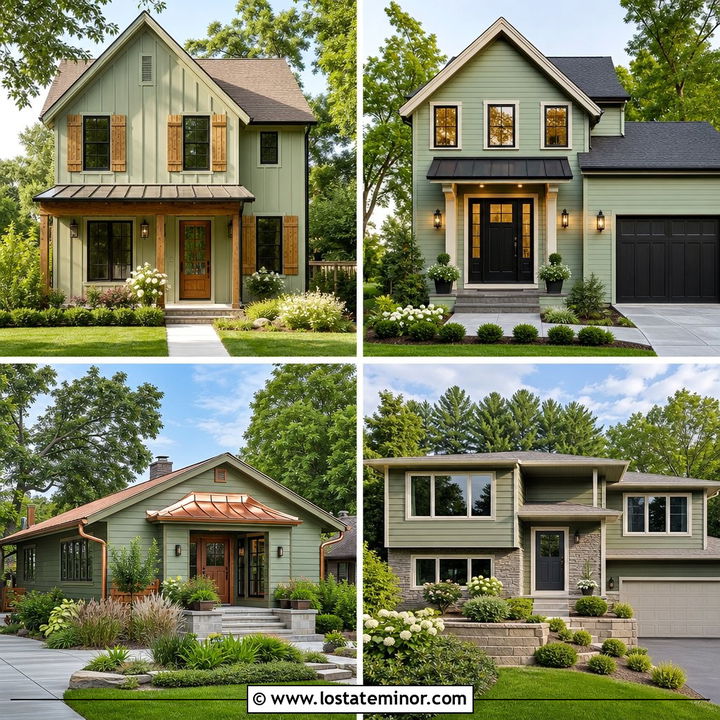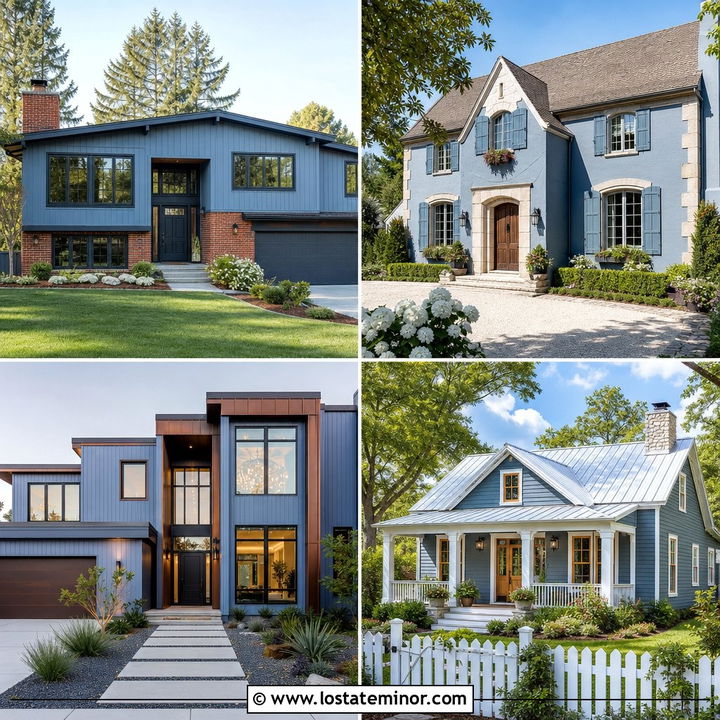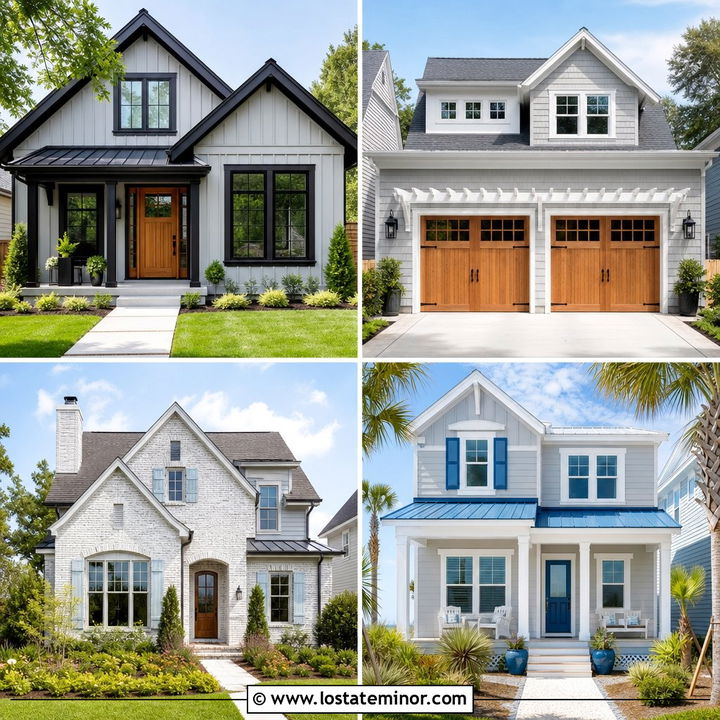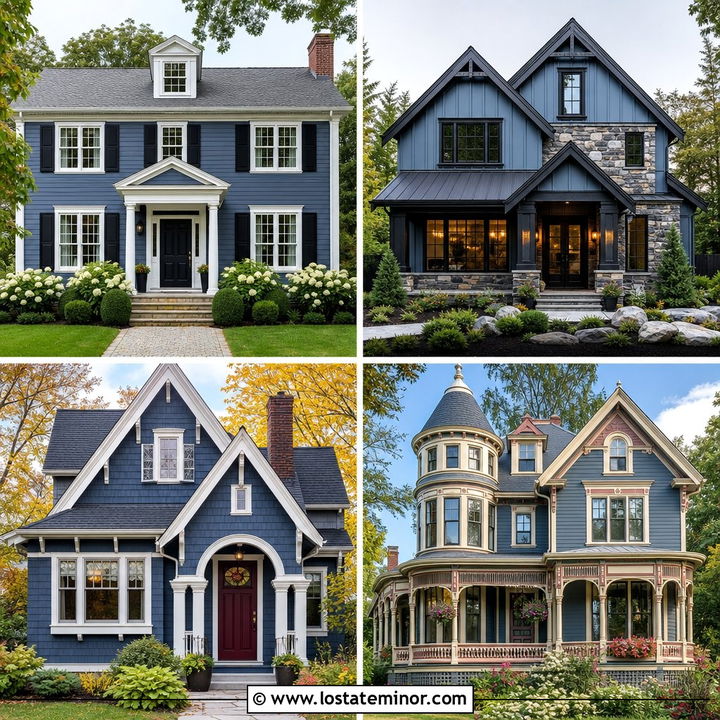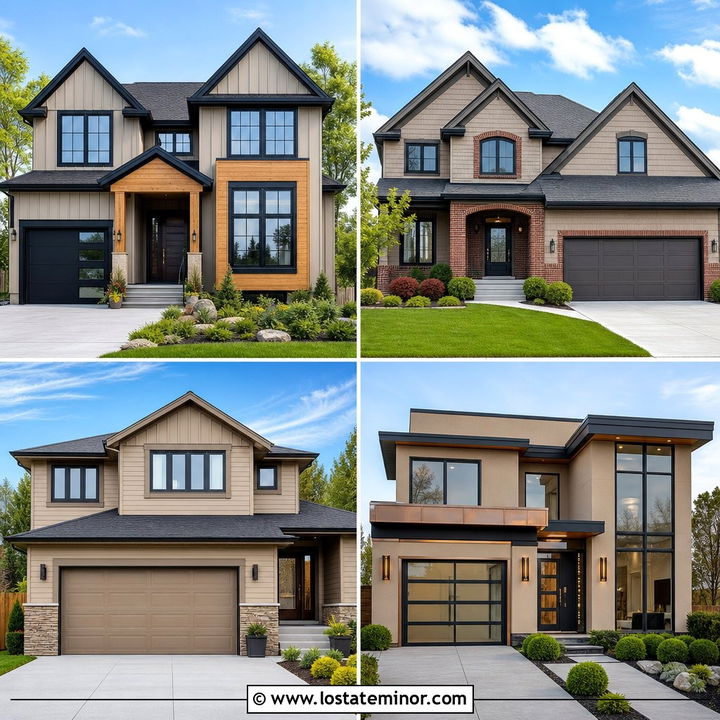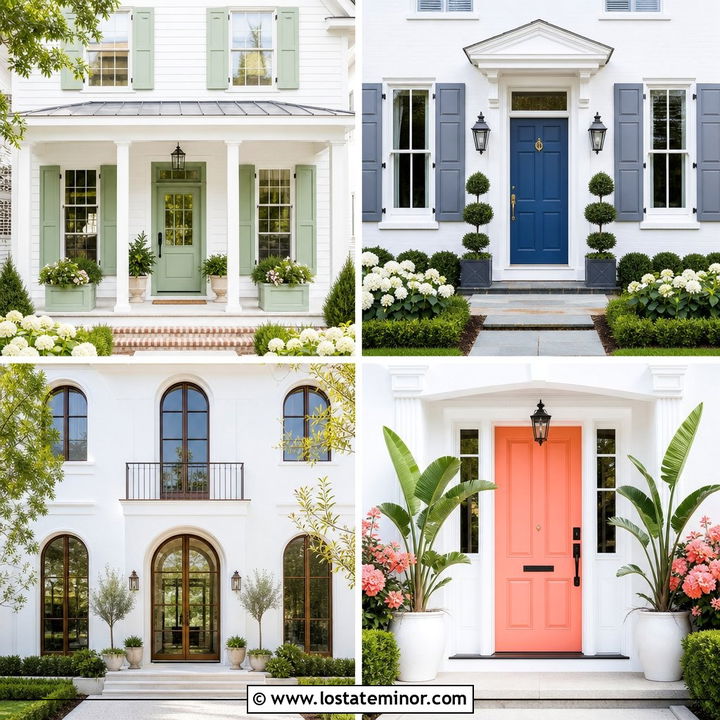
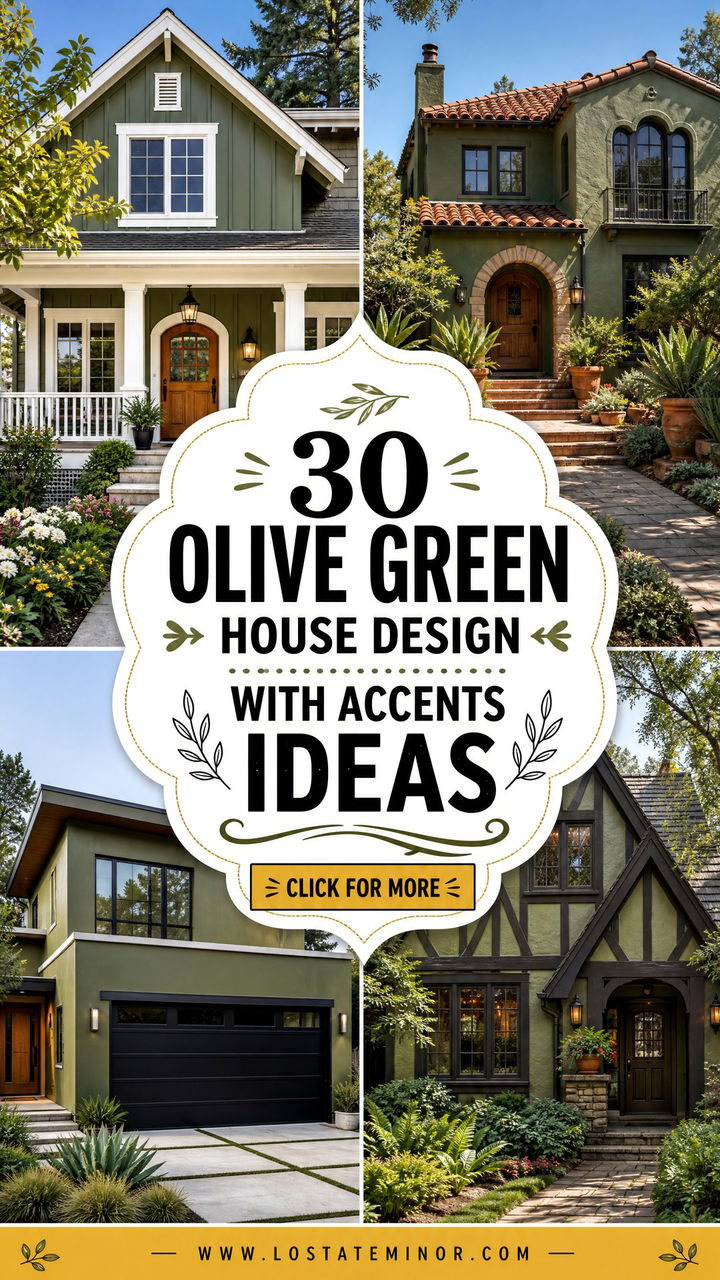
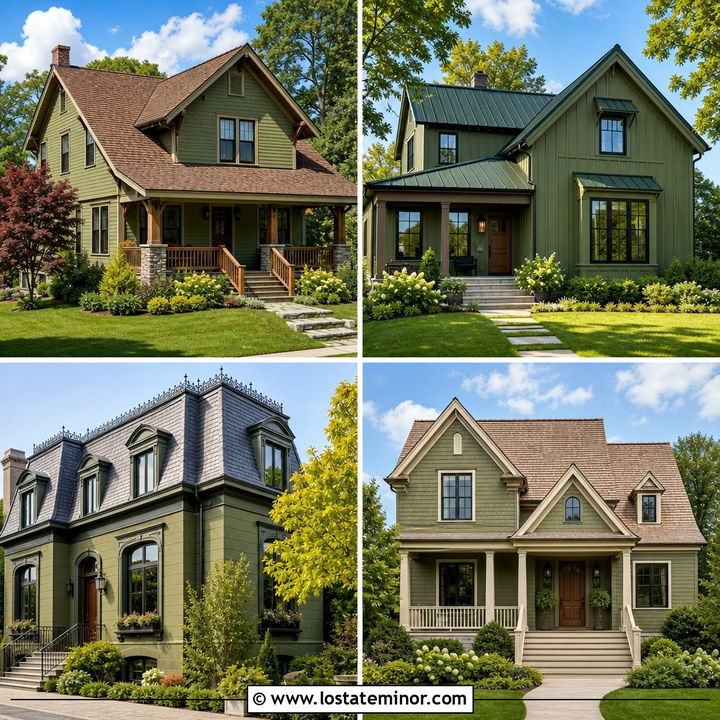
Olive green brings a grounded, natural character to almost any home exterior. It can feel traditional on a colonial, relaxed on a bungalow, or strikingly modern on a house with clean lines. The key is building a complete palette around it. Trim, roofing, masonry, woodwork, doors, and metal finishes should share compatible warm or cool undertones. Paint companies also recommend evaluating the body color together with trim and architectural accents rather than selecting each shade separately. () Test large samples beside permanent materials, then view them in morning light, afternoon sun, and shade. The following complete exterior schemes offer practical inspiration for **30 Olive Green House Design With Accents Ideas**.
1. Olive Green House With White Trim And Cedar Door
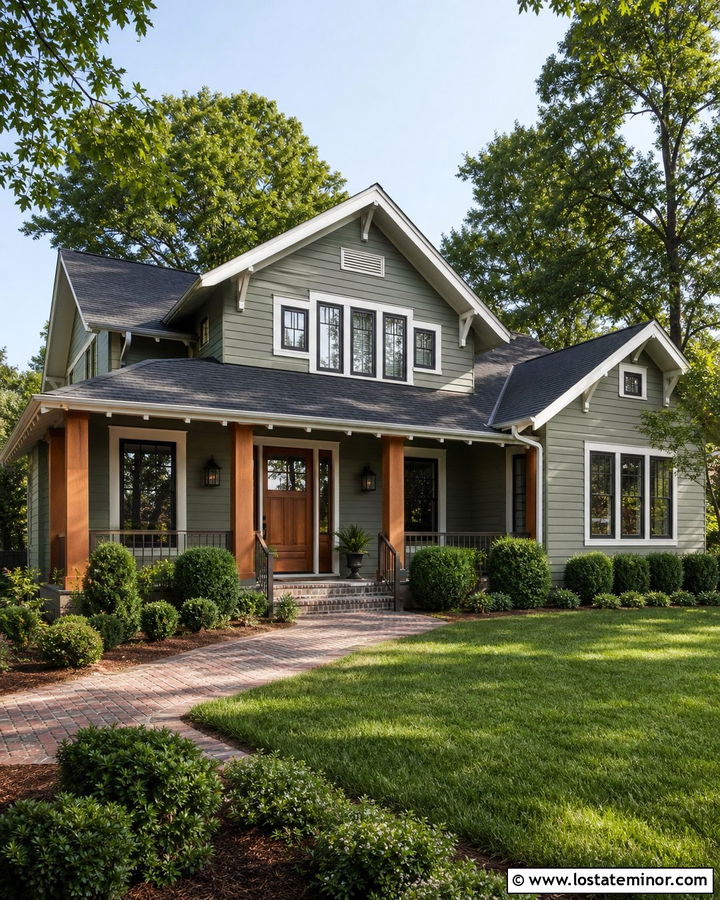
Olive green siding looks fresh and welcoming when framed with warm white trim and a natural cedar front door. Choose a medium olive with subtle gray undertones so the exterior remains calm rather than overly yellow. Use the white on window casings, porch columns, fascia, and railings to define the architecture. Cedar introduces warmth through the entry, porch ceiling, or simple brackets beneath the roofline. A charcoal asphalt roof grounds the lighter details and keeps the palette versatile. Complete the exterior with black lanterns, bronze house numbers, and low evergreen landscaping. This balanced scheme works especially well on craftsman homes because every material supports the earthy character of the olive green body.
2. Dark Olive Green House With Black Trim
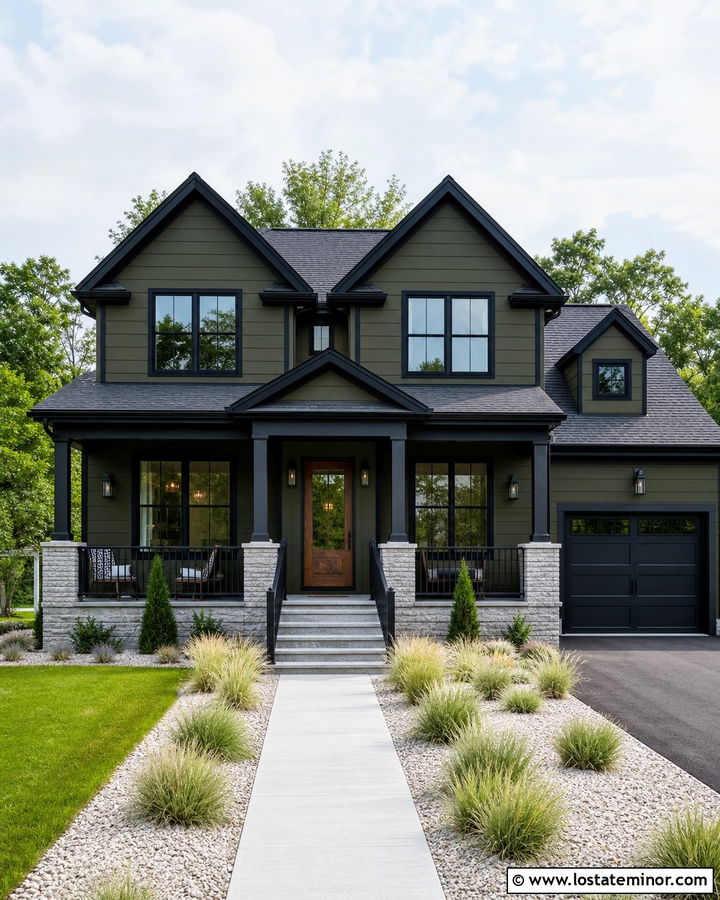
For a bold exterior that still feels connected to nature, pair dark olive green siding with crisp black trim. Black window frames, gutters, fascia, and porch railings sharpen the house without creating the stark contrast of bright white. A medium-gray roof keeps the upper portion from appearing too heavy. Add a walnut or teak front door to soften the dark palette and give the entrance a clear focal point. Light gray concrete steps and pale gravel beds can provide necessary brightness near ground level. This scheme suits modern and transitional homes with simple rooflines, large windows, and uncluttered landscaping. Keep outdoor fixtures streamlined so the olive and black combination remains clean, architectural, and intentional.
3. Olive Green House With Cream Trim And Red Brick
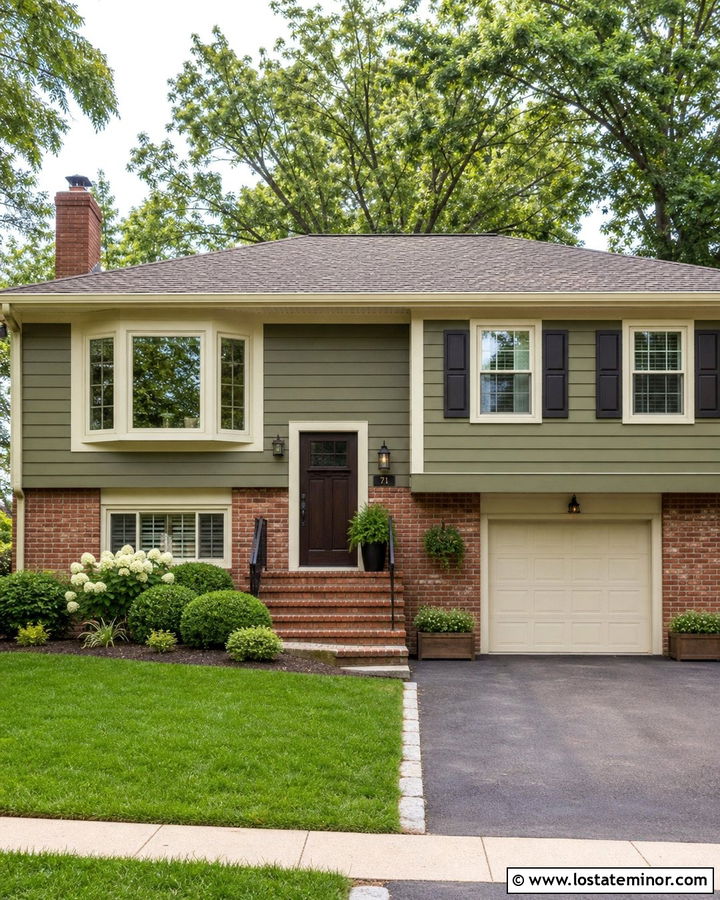
Existing red brick can look beautifully updated beside a muted olive green exterior. The green helps balance the brick’s orange and rust tones, while creamy trim creates a gentle transition between the two materials. Apply olive green to lap siding, upper gables, or painted stucco. Reserve cream for the soffits, window surrounds, columns, and garage door. A deep brown front door connects the siding with the darker colors found inside weathered brick. Choose an architectural-shingle roof in brown-gray rather than a strongly blue charcoal. Antique bronze lighting and simple wood planters reinforce the warm palette. This complete combination works particularly well for traditional ranch homes, split-level houses, and brick-front suburban properties needing a softer update.
4. Olive Green House With Natural Wood Accents
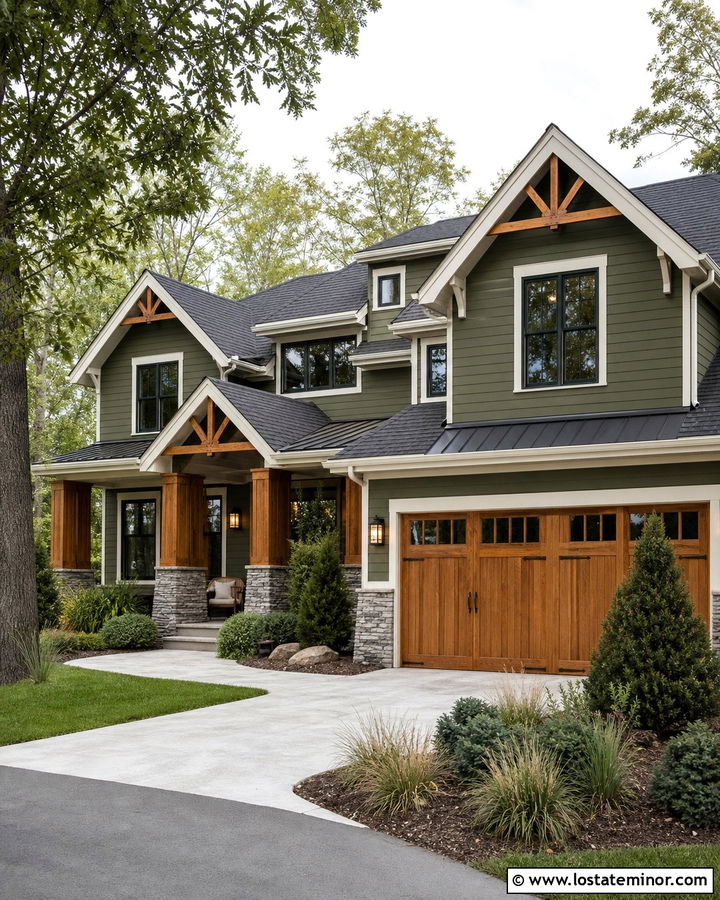
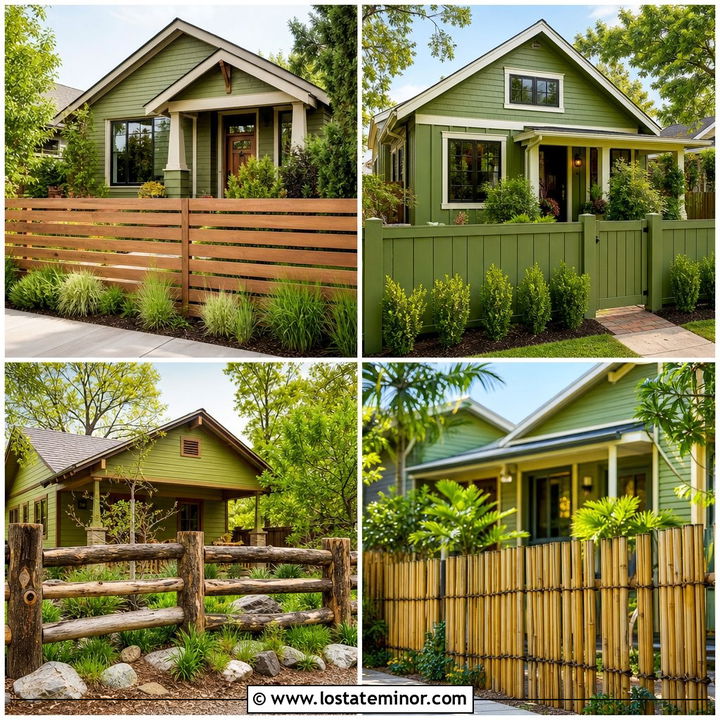
Natural wood makes olive green feel warmer, richer, and more dimensional. Cover the main facade in medium olive siding, then introduce cedar or white oak through porch columns, gable brackets, garage doors, and horizontal privacy screens. Instead of high-contrast trim, use a muted warm white that allows the wood grain to receive more attention. Dark bronze windows and a charcoal roof add definition without overpowering the organic palette. This combination is ideal for a contemporary craftsman or mountain-inspired suburban home. Repeat the wood color in porch furniture or raised garden beds for continuity. Because exterior wood changes over time, use a protective stain and select a tone that will remain attractive as it naturally weathers.
5. Olive Green House With Bronze Windows
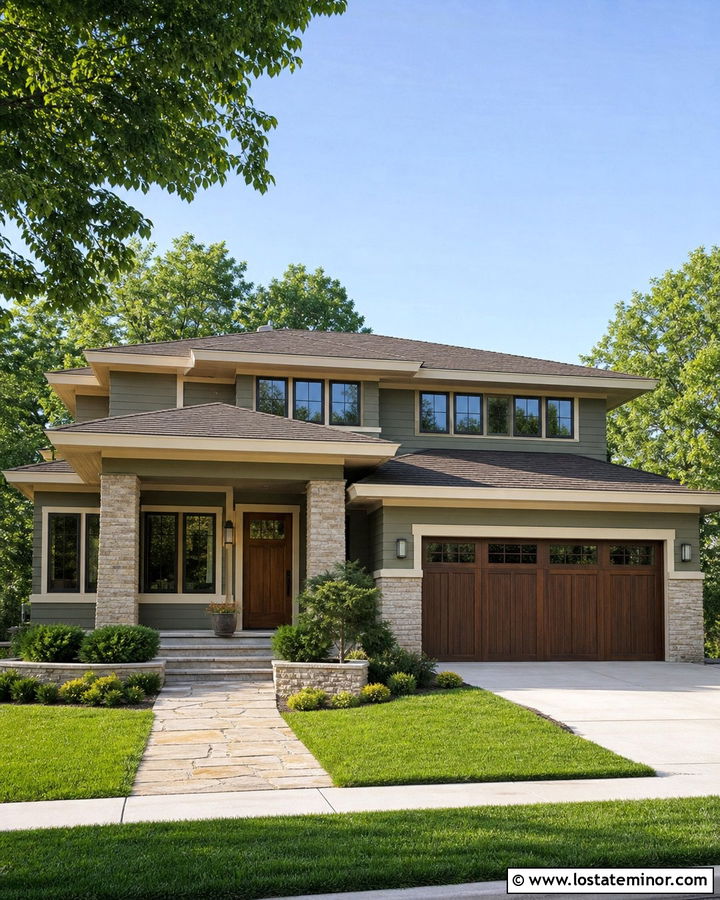
Bronze window frames provide a sophisticated alternative to standard white or black frames on an olive green house. Their brown undertones blend naturally with muted green siding, especially when the exterior includes tan stone or stained wood. Use a soft ivory on the fascia and soffits to prevent the palette from becoming too dark. A medium-brown front door and matching garage door can continue the warmth across the facade. Select a roof containing blended brown and charcoal granules so it connects with both the siding and metal finishes. This scheme looks polished on prairie, craftsman, and contemporary ranch homes. Add bronze sconces and restrained landscaping to create a cohesive exterior without making every decorative element compete for attention.
6. Olive Green House With Terracotta Roof
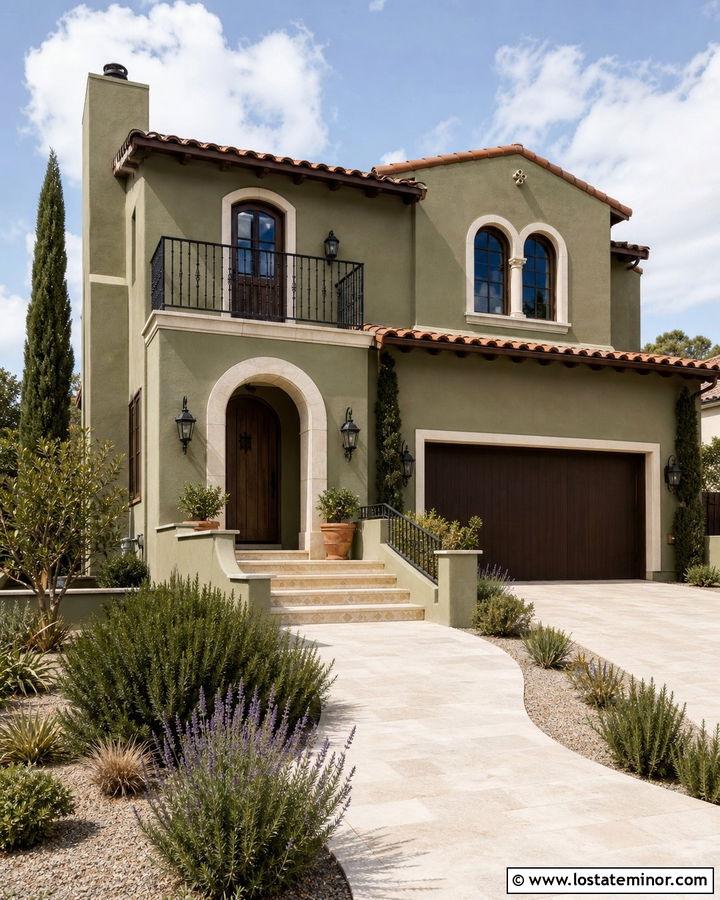
A terracotta roof gives olive green stucco a warm, sun-baked character that suits Mediterranean and Spanish-inspired architecture. Select a dusty olive with enough gray or brown to complement the orange-red roof tiles. Cream trim around arched windows, doors, and roof edges keeps the exterior light and relaxed. A dark walnut front door adds depth, while wrought-iron railings and lanterns provide traditional contrast. Use pale limestone or warm concrete for the walkway and porch so the surrounding hardscape does not introduce another strong color. Drought-tolerant grasses, rosemary, and rounded shrubs complete the scheme. The finished exterior feels colorful but controlled because the green walls, clay roofing, wood entry, and warm masonry share natural undertones.
7. Olive Green House With Charcoal Roof And Black Shutters
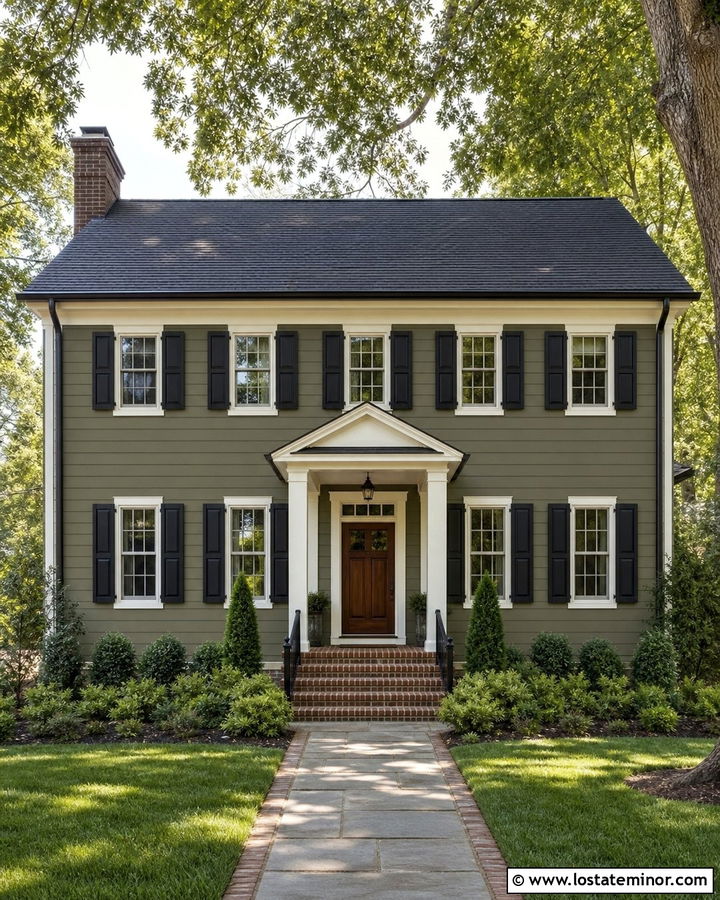
A charcoal roof and black shutters can give an olive green home a strong, classic outline. Choose a medium olive body color that remains noticeably lighter than both accents. Warm white trim around windows, eaves, and porch columns adds separation and prevents the darker features from blending together. Paint the front door a warm chestnut brown or keep it natural for an inviting contrast. On a traditional two-story house, use shutters only on windows that appear wide enough to accommodate them when closed. Black gutters can disappear neatly against the roof and fascia. Finish the look with brick steps, evergreen foundation plants, and symmetrical exterior lighting for a balanced facade that feels established rather than overly formal.
8. Olive Green House With Tan Stone Accents
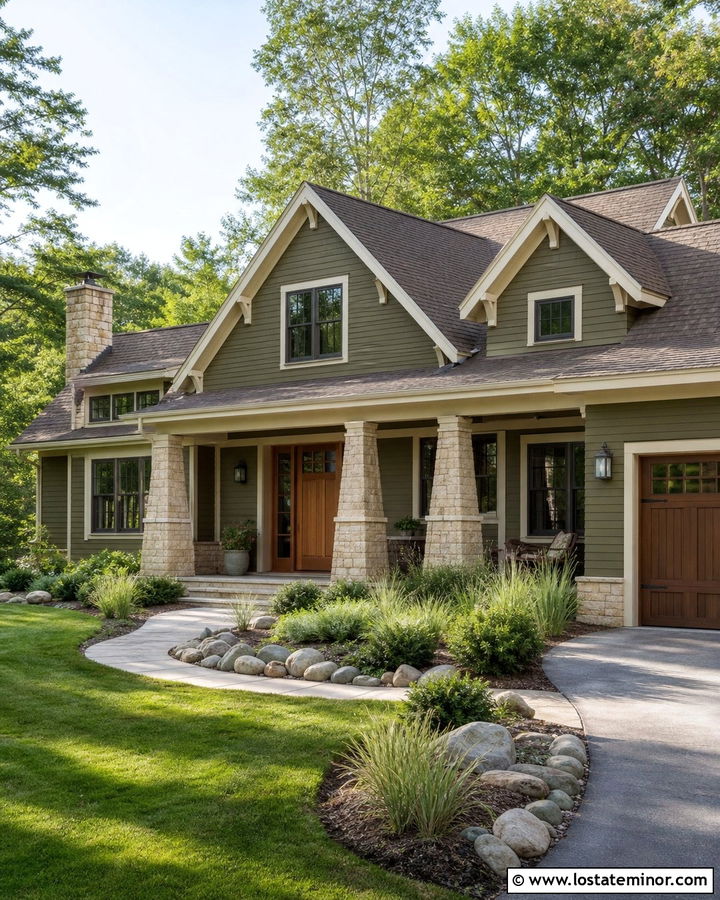
Tan stone can brighten olive green siding while preserving its earthy appearance. Look for stone with a mixture of beige, cream, muted brown, and small gray variations. Use it across the foundation, porch columns, chimney, or lower portion of the facade instead of covering every wall. A creamy off-white trim creates a soft bridge between the green body and pale masonry. Medium-brown shingles, bronze windows, and a stained oak entry door complete the warm palette. This combination fits craftsman, ranch, and lodge-influenced homes with broad rooflines. Keep mortar close to the lightest stone color for a cleaner result. Native grasses, river rock, and wood mulch can then extend the natural color story into the surrounding landscape.
9. Olive Green Siding With White Brick
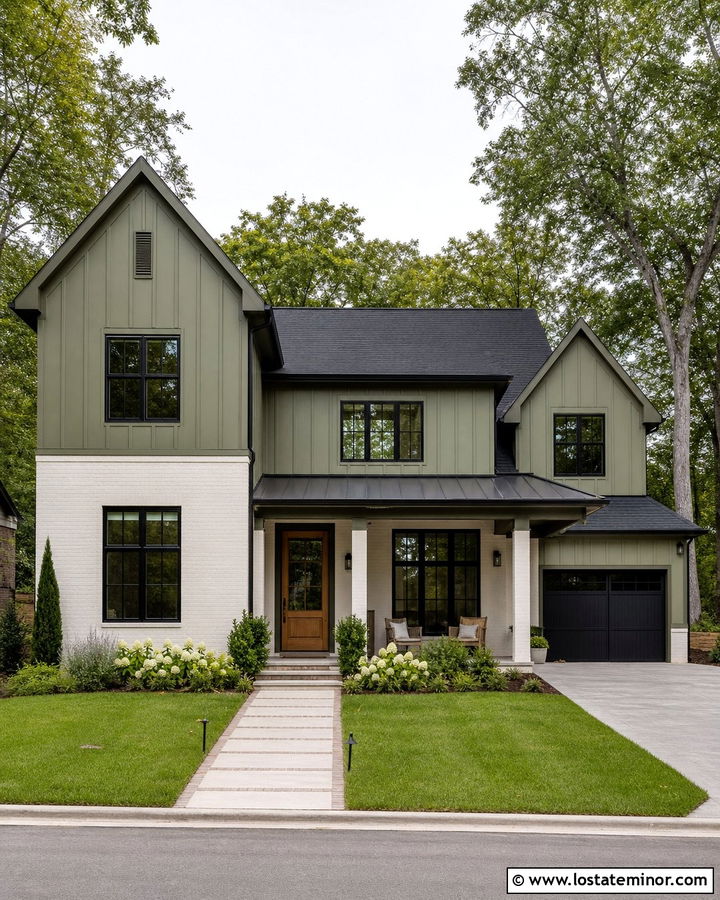
White brick and olive green siding create a crisp exterior without looking cold or overly monochromatic. Use the green on upper gables, dormers, or a board-and-batten section, allowing the masonry to remain the lighter foundation of the design. Choose a soft white brick finish rather than a brilliant blue-white. Match the window trim to the masonry for visual continuity. Black window frames and a black roof add a clear outline, while a warm wood front door keeps the entrance approachable. This scheme works well on modern farmhouse and transitional homes where multiple materials need to feel connected. Limit additional accent colors and repeat olive green on a side entry or detached garage to create a unified property.
10. Olive Green Stucco With Wood Garage Doors
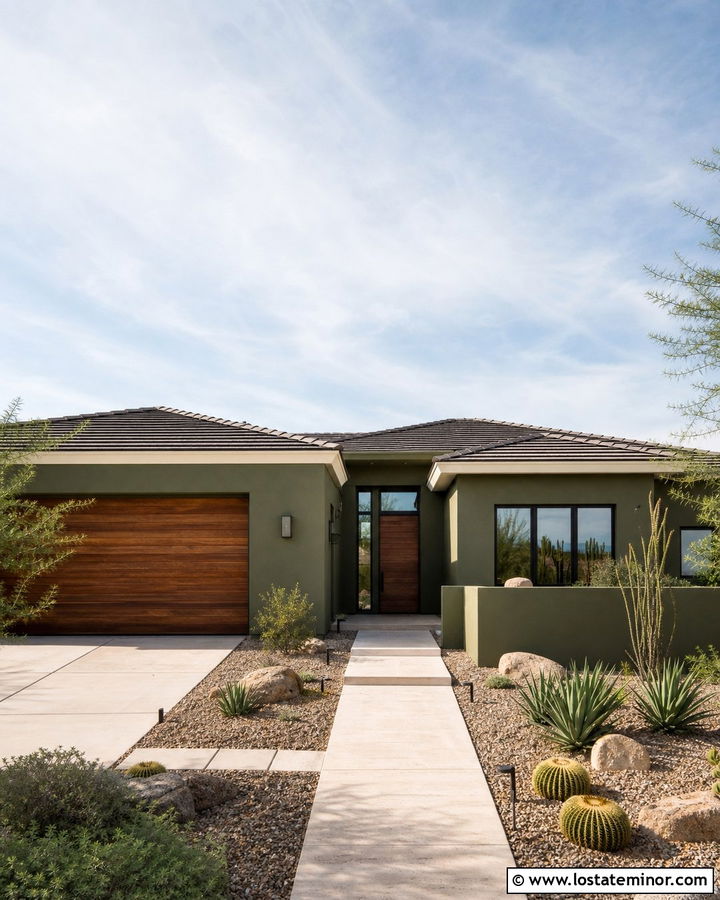
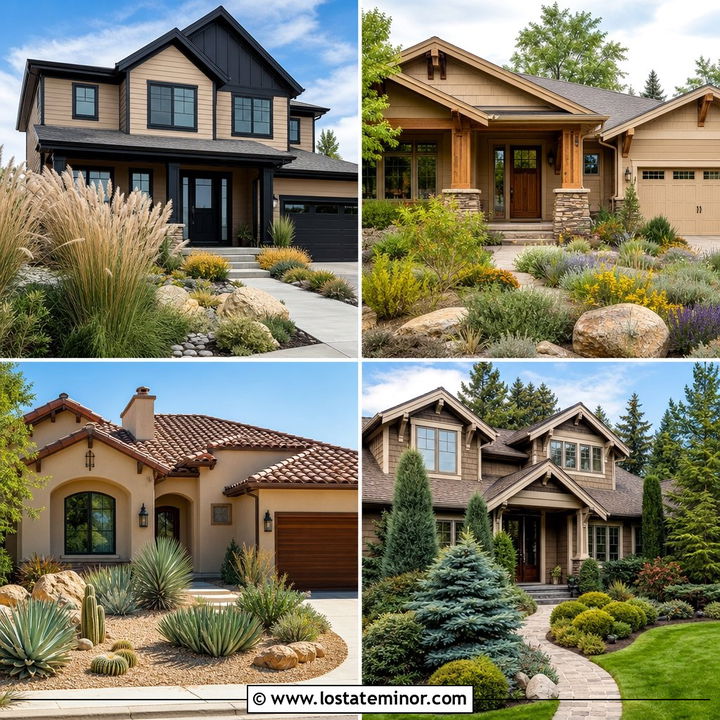
Olive green stucco becomes more inviting when paired with richly grained wood garage doors. A muted, medium-depth olive is especially effective on a Southwestern or contemporary home with broad walls and limited trim. Choose garage doors in cedar, walnut, or a durable wood-look finish that carries a warm brown tone. Paint the fascia and window trim a creamy beige instead of stark white. Dark bronze frames, gutters, and exterior fixtures provide quiet definition. A flat concrete-tile roof in charcoal brown can anchor the low profile of the house. Use gravel beds, sculptural plants, and a wide pale walkway to frame the facade. The wood doors should remain the main accent, supported by restrained materials elsewhere.
11. Olive Green Board And Batten With Cedar Porch
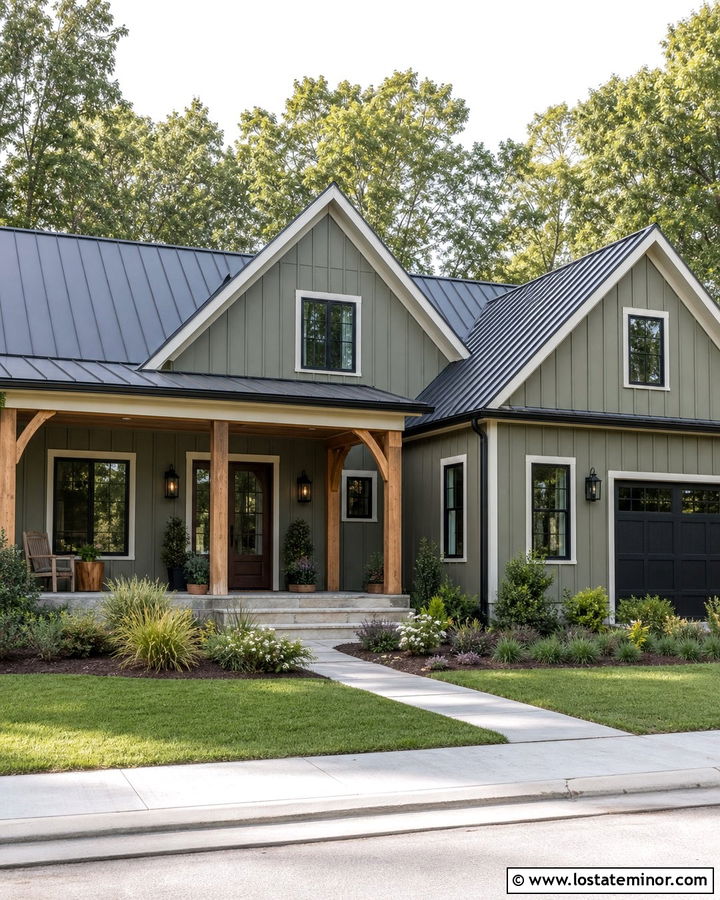
Vertical board-and-batten siding makes olive green feel tailored and architectural, especially when combined with a cedar porch. Apply the green across the full body of a modern farmhouse, then use natural cedar for porch posts, beams, brackets, and the front door. Soft white window trim provides enough contrast to keep the vertical siding pattern visible. A dark charcoal metal roof creates a clean cap and relates to black-framed windows. Keep the porch floor in medium-gray concrete or natural stone so it does not compete with the wood. Simple black lights and planters finish the entry. This exterior works best when cedar is repeated in several measured locations rather than added as one small, disconnected decorative feature.
12. Light Olive Green Ranch With Beige Stone
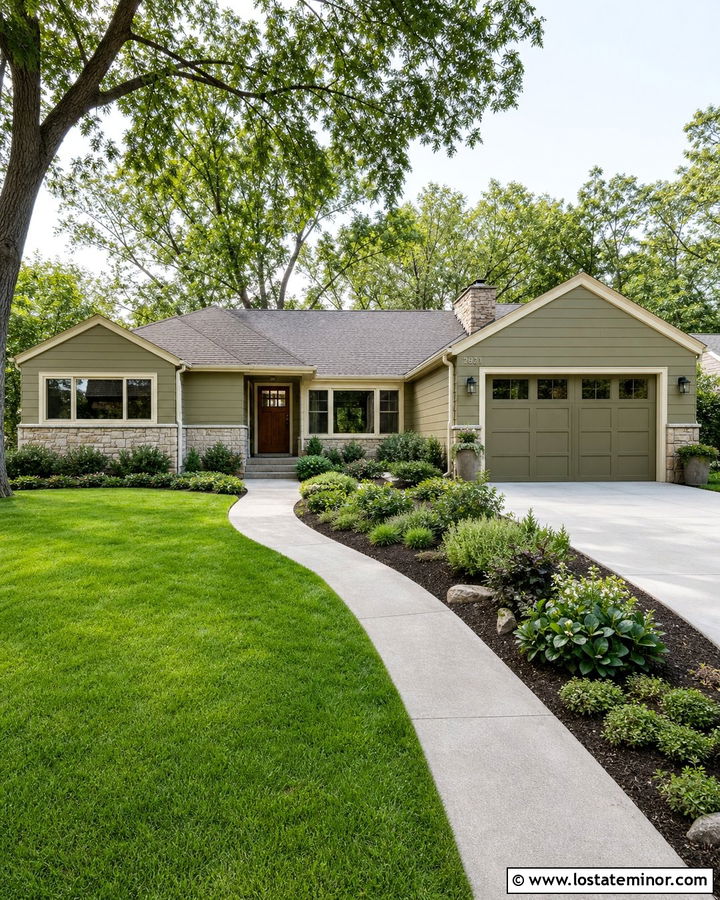
A light olive green palette can make a long ranch facade feel softer and more connected to its yard. Use the green on horizontal siding and add beige limestone around the garage, entry, or lower foundation. Warm ivory trim highlights the windows without breaking the house into too many contrasting sections. Paint the garage door the same olive as the body to reduce its visual size. A medium-stained front door can then serve as the main focal point. Choose a warm gray roof that relates to both the stone and siding. Broad planting beds, curved walkways, and layered shrubs help balance the horizontal architecture. This low-contrast combination is practical for homeowners who want color without creating a dramatic neighborhood statement.
13. Olive Green Colonial With White Trim And Black Door
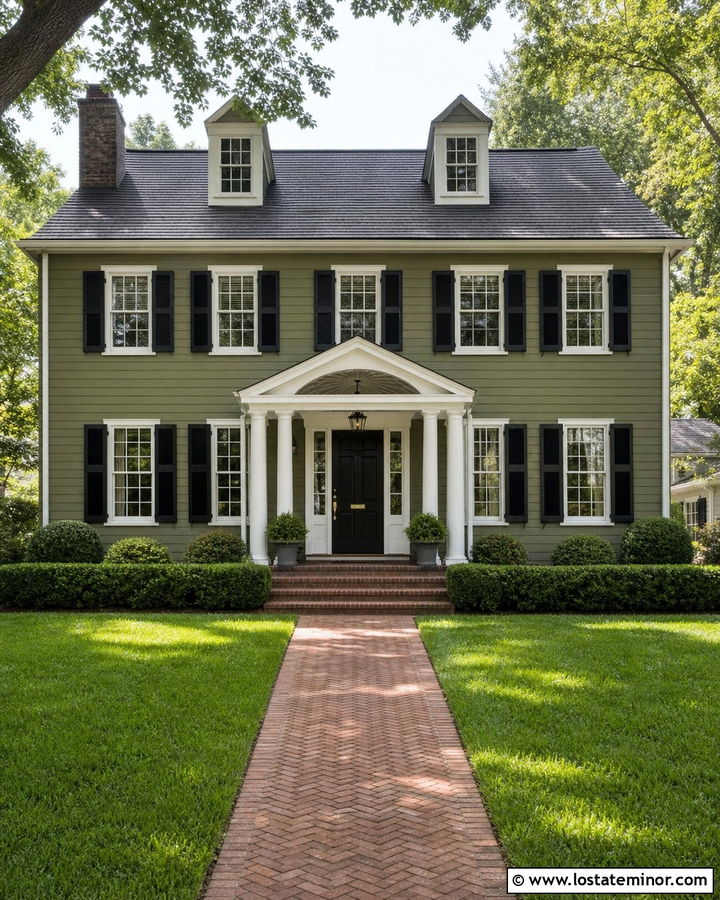
A colonial house gains depth and personality from olive green siding, white trim, and a glossy black front door. Apply the olive evenly across the main body while using a slightly warm white on corner boards, window casings, dentil molding, and porch columns. Black shutters and a black entry door create traditional symmetry, but they should not overpower the softer body color. A charcoal roof supports the dark details and gives the upper facade a tidy finish. Brass door hardware adds a small touch of warmth near the entrance. Keep the landscaping balanced on both sides of the walkway with clipped shrubs and seasonal greenery. The result is classic, recognizable, and colorful without losing the home’s formal proportions.
14. Olive Green Craftsman With Copper Accents
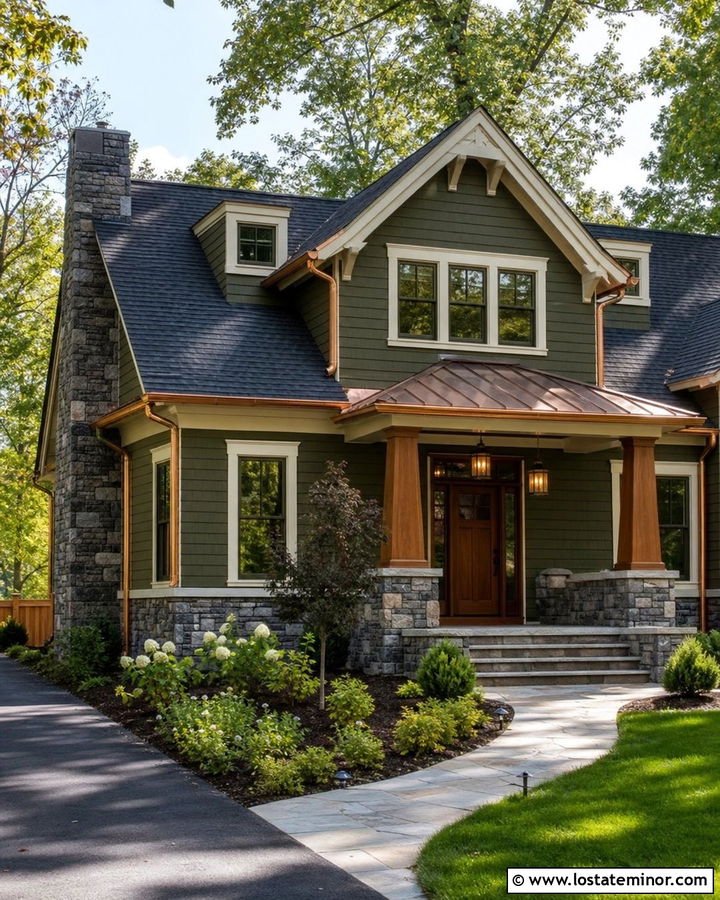
Copper accents bring a glowing warmth to an olive green craftsman exterior. Start with medium-dark olive lap siding and creamy trim, then add copper gutters, porch lanterns, flashing, or a small metal roof over the entry. New copper will appear bright at first and gradually develop a softer surface character. Cedar porch columns and a mahogany front door help connect the metal with the green siding. Use stone with warm gray and brown variation around the porch base. A dark charcoal roof keeps the overall palette grounded. Because copper is visually distinctive, use it selectively rather than across every surface. This complete scheme feels detailed and handcrafted while staying rooted in natural colors and durable exterior materials.
15. Olive Green Bungalow With Mustard Yellow Door
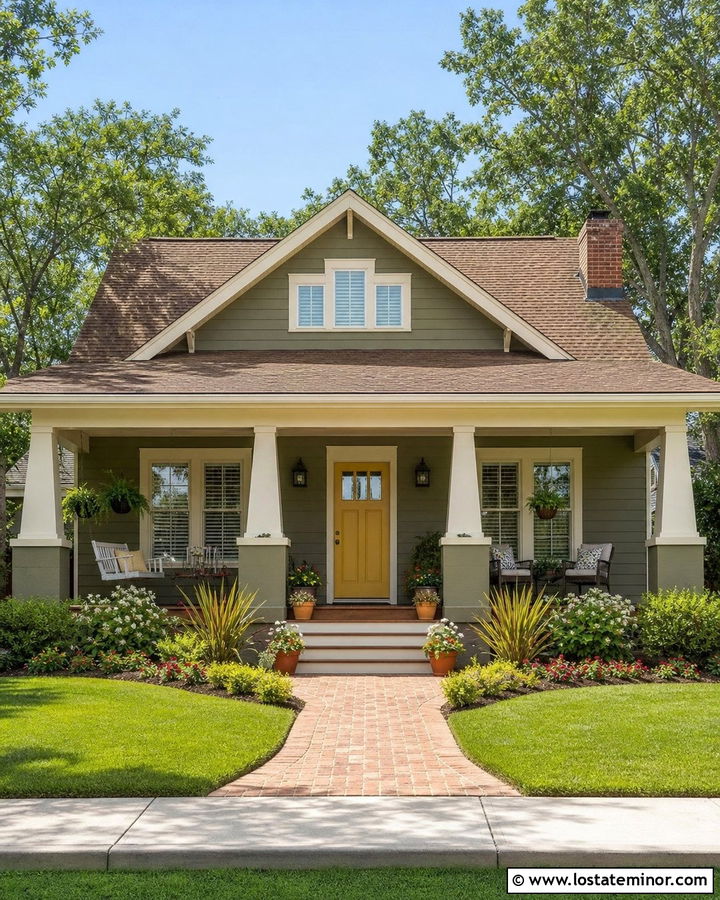
A mustard yellow front door gives an olive green bungalow a cheerful focal point without making the house feel overly bright. Choose a dusty yellow with brown undertones so it sits comfortably beside the earthy green siding. Cream trim around windows, eaves, and porch railings creates a soft background for both colors. Add stained wood porch flooring and a warm brown roof to reinforce the vintage character. Dark bronze lighting and house numbers provide subtle contrast. This combination is especially effective on a small facade where the door can be seen clearly from the street. Repeat the yellow sparingly through flowering plants or a single porch accessory, allowing olive green to remain the dominant exterior color.
16. Olive Green Modern House With Black Garage Door
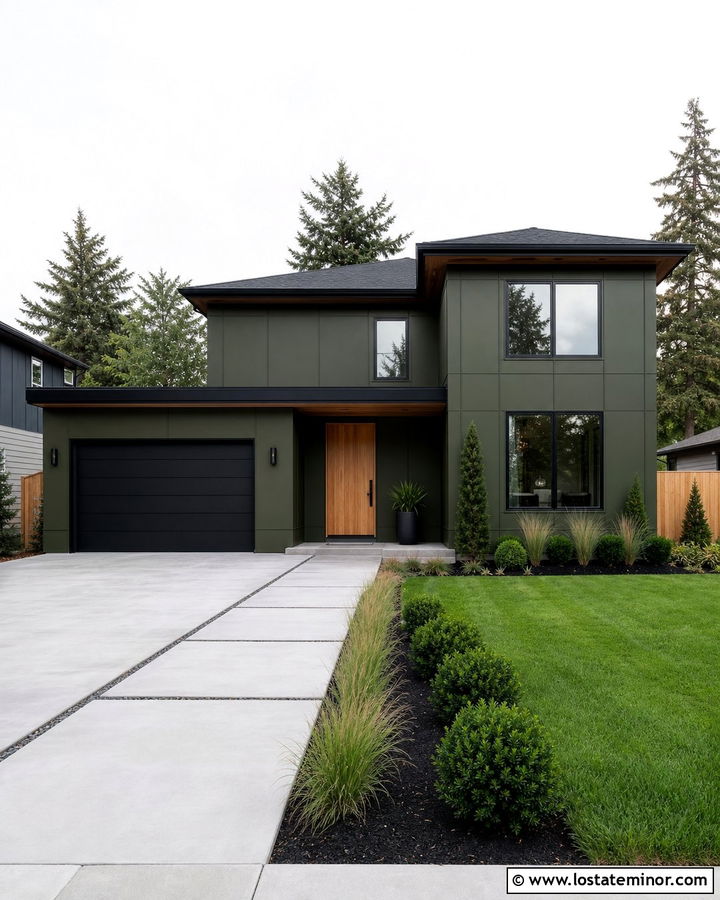
Clean lines allow a dark olive green modern exterior to appear bold without needing many decorative features. Use olive on smooth siding or broad vertical panels, then add a matte black garage door, black-framed windows, and narrow black fascia. A flat or low-slope charcoal roof will strengthen the contemporary silhouette. Introduce warmth with a natural oak front door and a small section of wood cladding around the entry. Pale concrete paving can lighten the ground plane and clearly define the walkway. Keep planting beds simple, using ornamental grasses and structured evergreen shrubs. The finished house should rely on strong blocks of color and material rather than extra trim. This keeps the olive-and-black palette streamlined, balanced, and distinctly modern.
17. Olive Green Cape Cod With Navy Blue Door
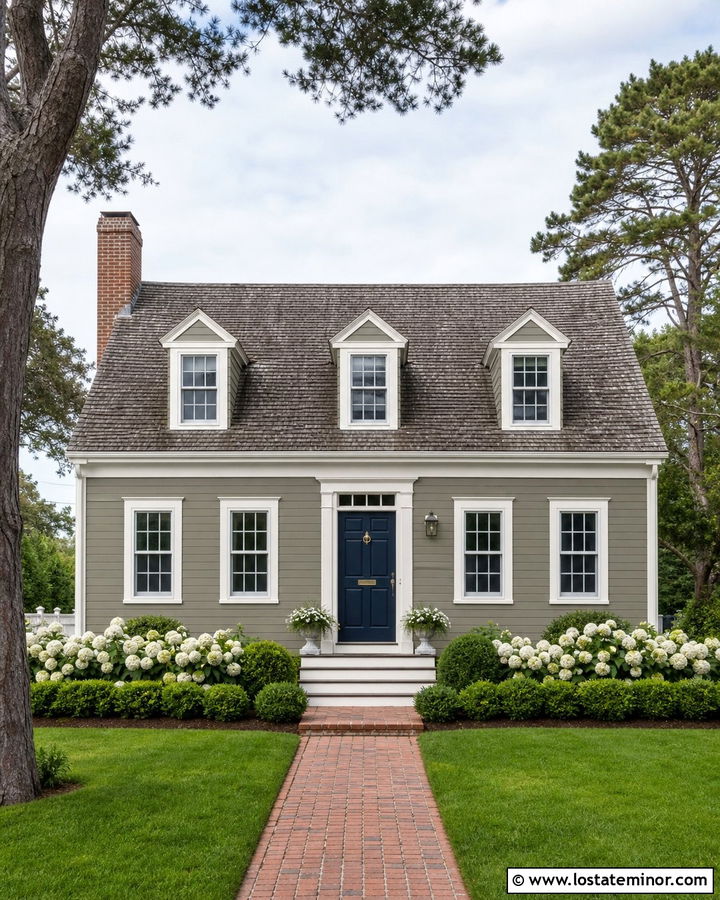
Olive green and navy blue can work together when both colors are slightly muted. Cover a Cape Cod exterior in a gentle gray-olive, then frame the windows, dormers, and roofline with warm white trim. A deep navy front door introduces cool contrast while maintaining the home’s traditional character. Keep the shutters olive or remove them if the facade already contains several small features. Weathered gray roof shingles help connect the green and blue without leaning too warm. Add nickel or aged brass door hardware for a refined finishing touch. White hydrangeas, low boxwoods, and a simple brick walkway support the classic exterior. The result feels colorful and coastal without relying on predictable pale blue siding.
18. Olive Green Split-Level With Greige Brick
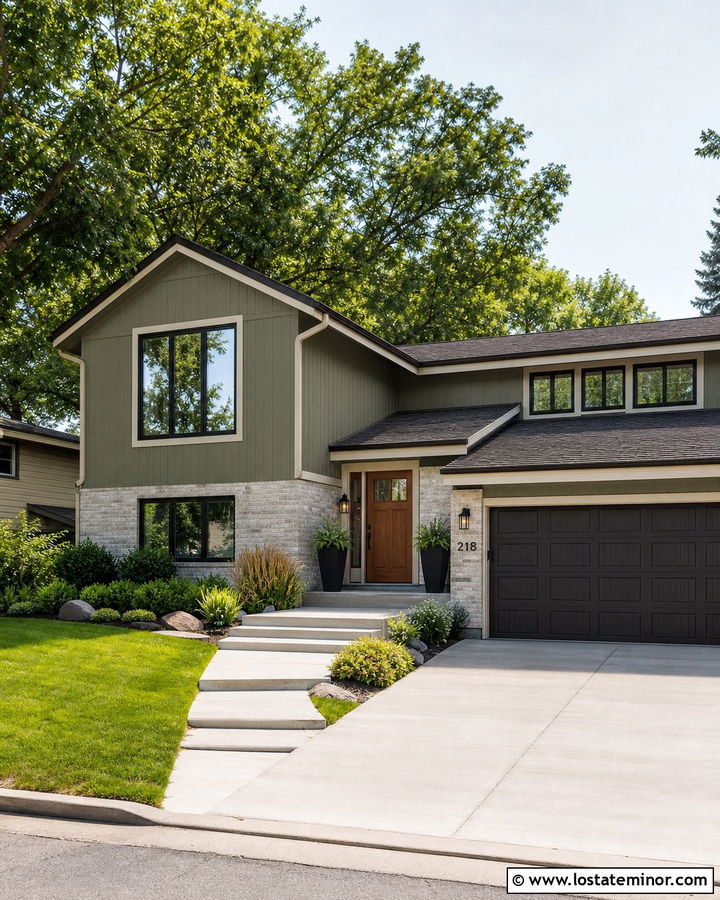
Greige brick provides a useful neutral partner for olive green on a split-level home. Paint the upper siding a medium olive with gray undertones, allowing the existing brick to anchor the lower floor. Use warm greige trim instead of white to reduce harsh horizontal lines between levels. A dark bronze garage door blends into the masonry, while a stained wood front door draws attention toward the entry. Choose a charcoal-brown roof that connects with both warm and cool elements in the facade. Large planters and layered foundation shrubs can soften the uneven massing typical of split-level architecture. This coordinated palette makes the exterior feel intentional while preserving permanent brickwork and limiting the amount of material that needs to be changed.
19. Olive Green Victorian With Burgundy Accents
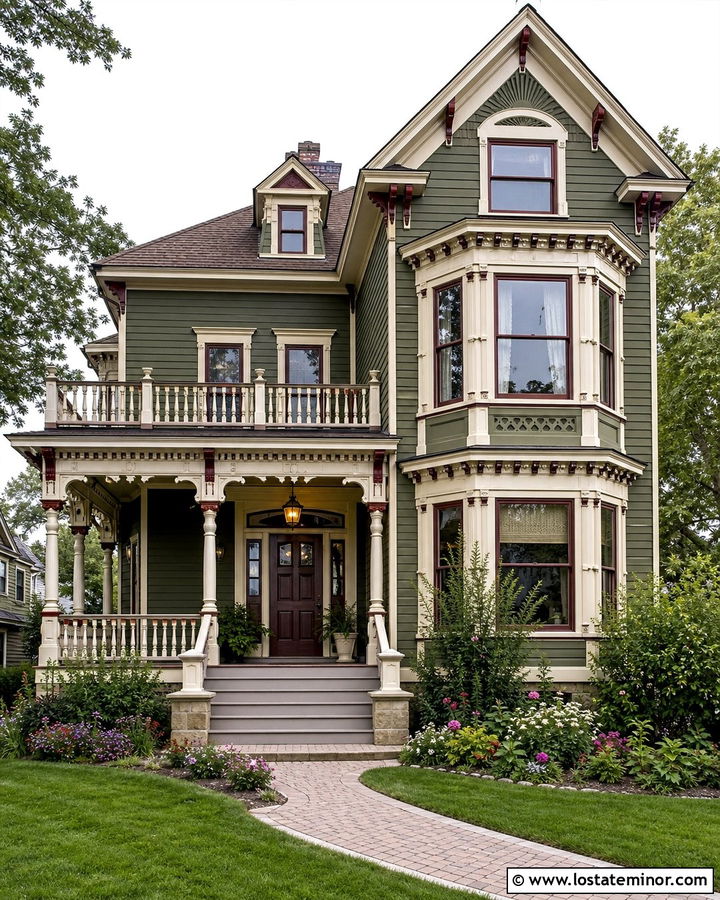
A Victorian exterior can support a richer palette than many simpler house styles. Use olive green as the main body color, creamy ivory on elaborate trim, and muted burgundy on selected brackets, window sashes, or porch details. The burgundy should be deep and earthy rather than bright red. A dark brown front door and brown-gray roof help ground the decorative combination. Apply the accent color consistently but sparingly so the facade remains readable from the street. Copper or antique brass lighting complements all three shades. This scheme celebrates ornamental architecture without turning every molding into a separate color. Olive remains the dominant feature, while cream and burgundy reveal the craftsmanship around windows, gables, railings, and the covered entry.
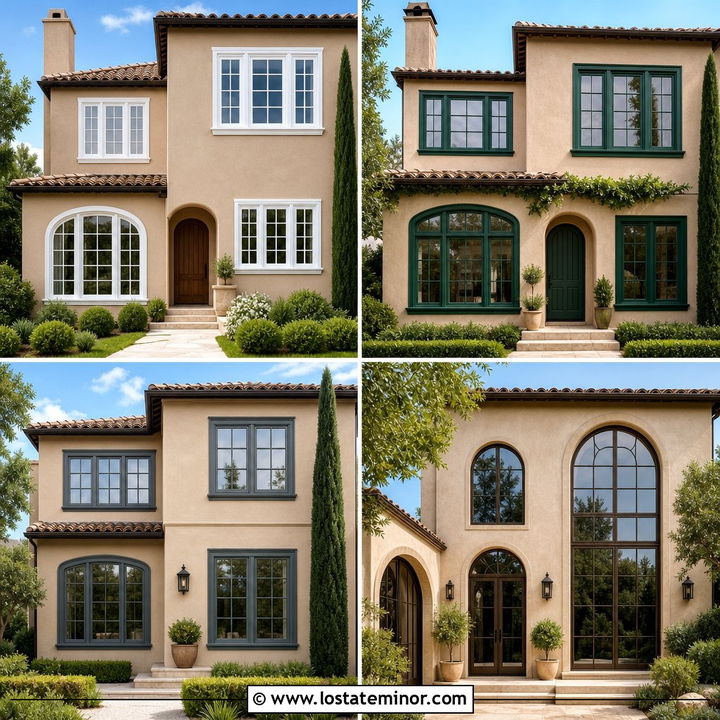
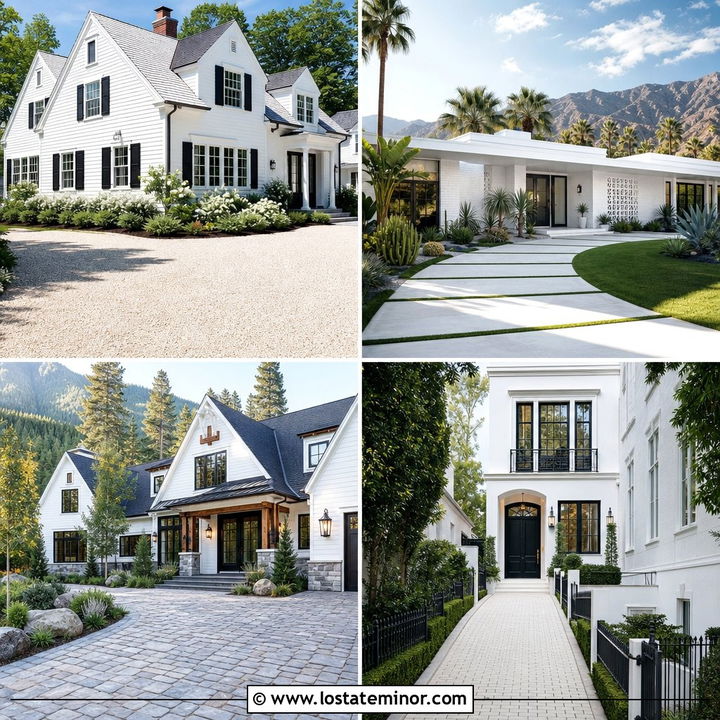
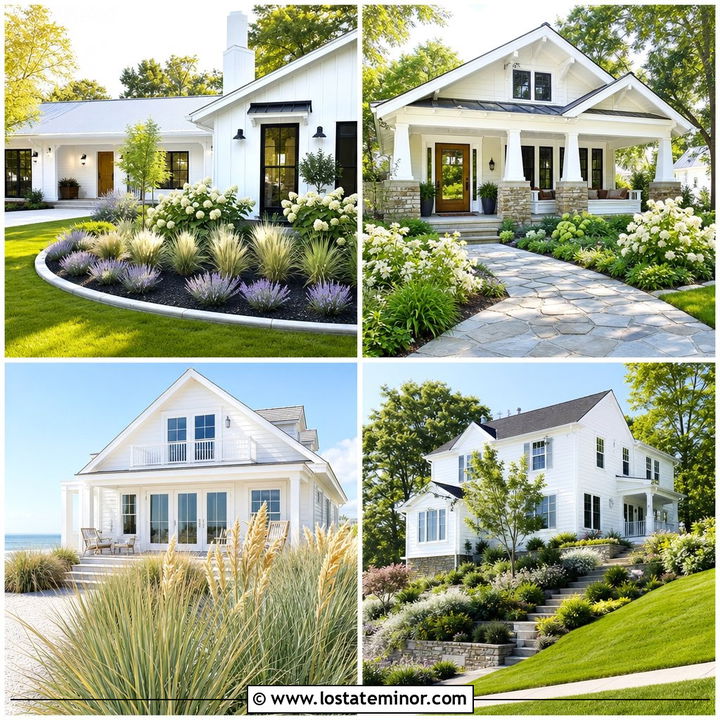
20. Olive Green Tudor With Dark Brown Beams
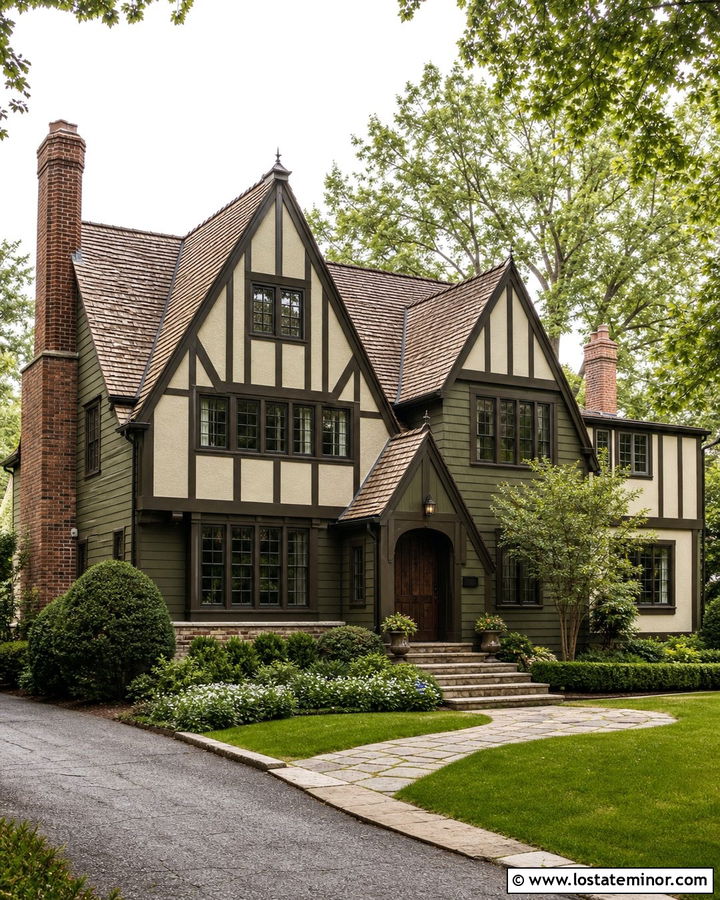
Olive green stucco or siding fits naturally between the dark timber details of a Tudor home. Choose a subdued olive with warm brown undertones, then paint half-timber beams, window frames, and the front door a deep espresso brown. Use a pale stone or muted cream on selected stucco panels to add dimension without creating sharp contrast. A weathered brown roof supports the historic appearance and blends with the heavy beams. Brick chimneys and stone steps can remain unpainted if their tones coordinate with the palette. Traditional bronze lanterns complete the entrance. This exterior feels strongest when the olive is treated as a grounded background color, allowing the steep rooflines, asymmetrical gables, masonry, and timberwork to remain clearly visible.
21. Olive Green Mediterranean House With Limestone
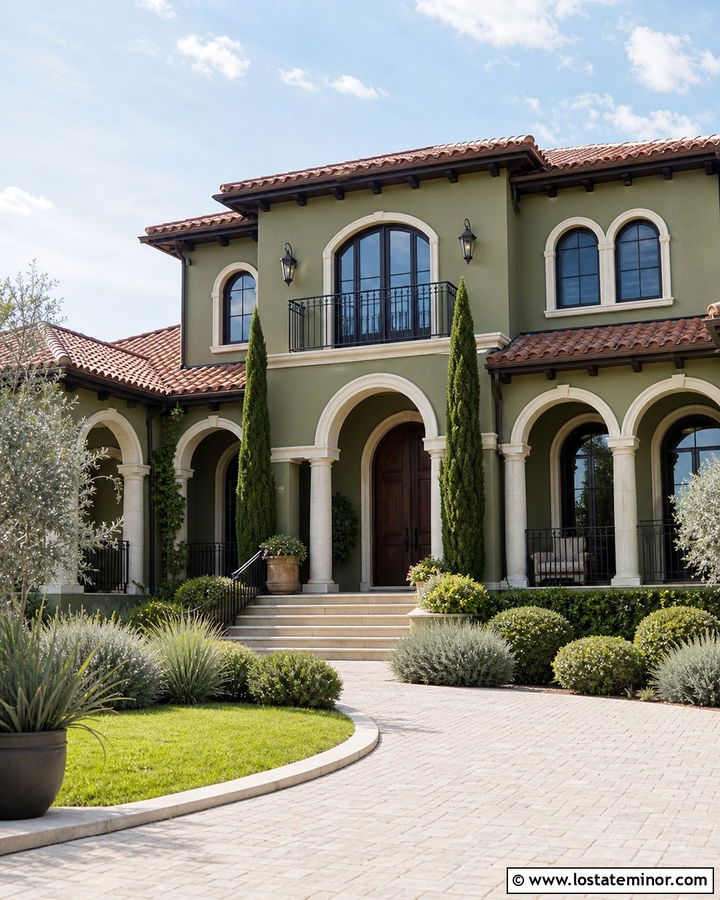
A Mediterranean house can carry olive green beautifully when pale limestone is used to keep the exterior bright. Apply a dusty olive finish to the stucco walls, then frame the entrance, columns, and lower facade with cream-colored limestone. A clay tile roof introduces warm red-orange variation, while dark bronze windows and railings provide definition. Choose a heavy walnut front door with simple iron hardware to complement the traditional architecture. The driveway and walkway should stay light, using sand-colored pavers or warm concrete. Rounded shrubs, silvery foliage, and drought-friendly plantings reinforce the regional character. This combination feels relaxed and established because the green, stone, clay, wood, and metal all share muted, nature-inspired coloring.
22. Olive Green Cottage With Dusty Rose Door
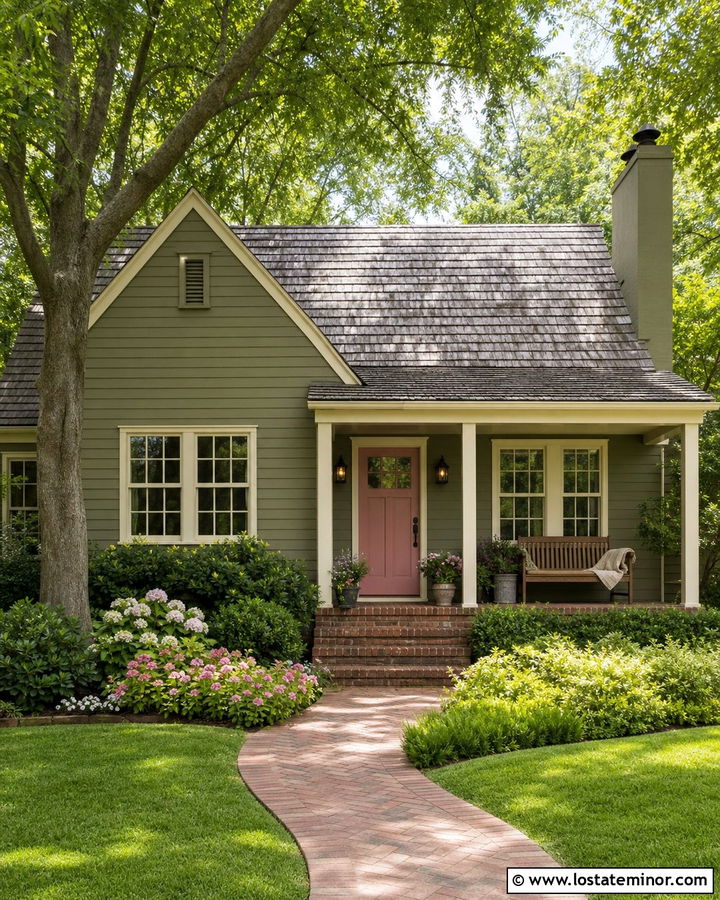
A dusty rose front door gives an olive green cottage a soft, unexpected accent. Select a muted rose containing brown or gray undertones rather than a sugary pink. Pair it with medium olive lap siding and creamy trim around small windows, eaves, and porch posts. A weathered gray roof keeps the palette from becoming too warm. Add natural brick steps, bronze lighting, and a simple wood bench to strengthen the cottage character. Flowering shrubs can repeat gentle pink tones, but the beds should also include plenty of green foliage. This look is particularly charming on compact homes with visible entries and modest porches. The rose door adds personality while the olive body keeps the complete exterior grounded and easy to live with.
23. Olive Green House With Blue Gray Trim
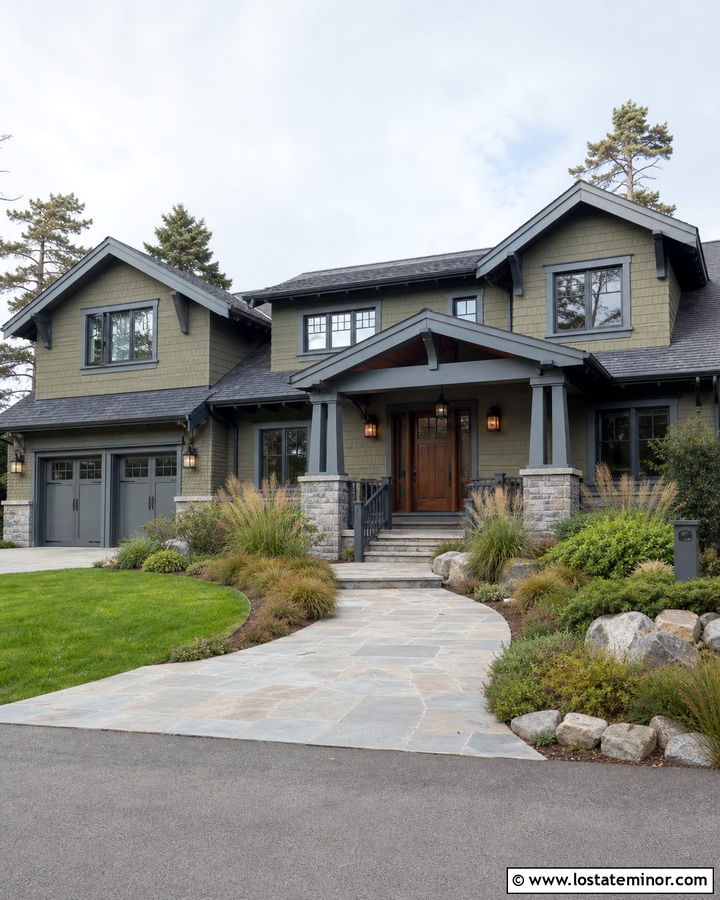
Blue-gray trim can cool an olive green exterior and create a subtle alternative to cream or white. Choose an olive that leans slightly gray, then use a medium-light blue-gray around windows, on fascia, and across porch railings. A slate-colored roof will connect naturally with the cooler trim. Keep the front door warm by selecting stained walnut or muted rust, which prevents the scheme from becoming flat. This palette works well on coastal craftsman homes, cottages, and houses surrounded by mature greenery. Test both colors together because natural daylight may strengthen their hidden undertones. Use pale gray stone near the foundation and simple black lighting to complete a layered exterior that feels calm, distinctive, and carefully coordinated.
24. Olive Green House With Brown Roof And Taupe Trim
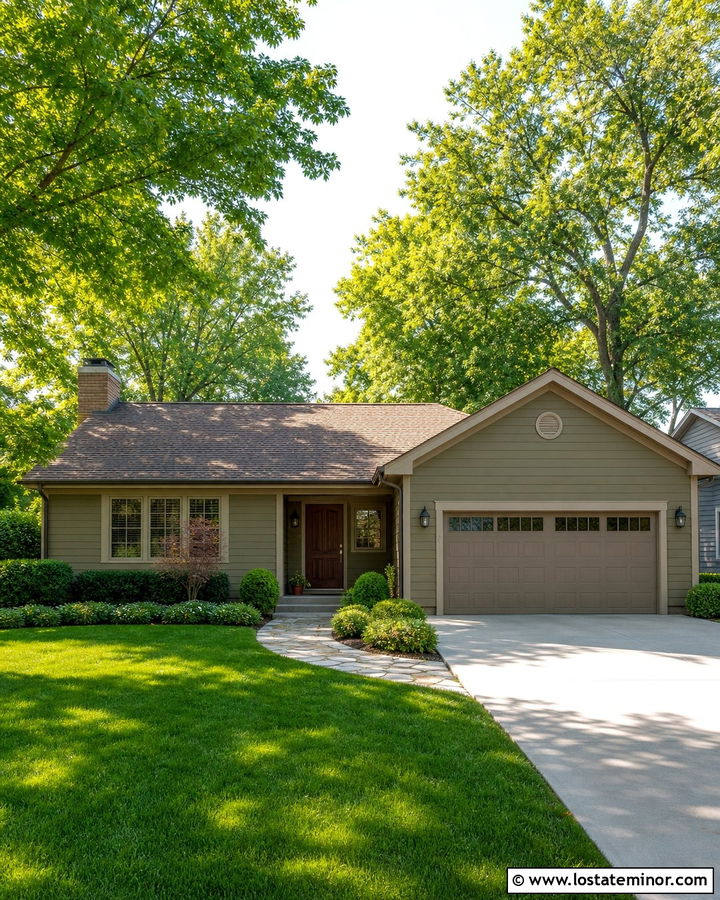
A brown roof can guide the entire palette of an olive green house. Select a medium olive siding color with noticeable brown undertones, then add taupe trim around windows, roof edges, and porch details. The taupe should be lighter than the siding but deeper than cream. Paint the garage door taupe to visually connect it with the trim, while using a stained chestnut front door as the warmer focal point. Bronze gutters and lights will blend easily with the roof. This low-contrast combination works especially well on ranch and traditional suburban homes with broad roof surfaces. Pale stone paths and dark green plantings can brighten the foreground without introducing colors that conflict with the existing brown roofing.
25. Olive Green Farmhouse With Metal Roof
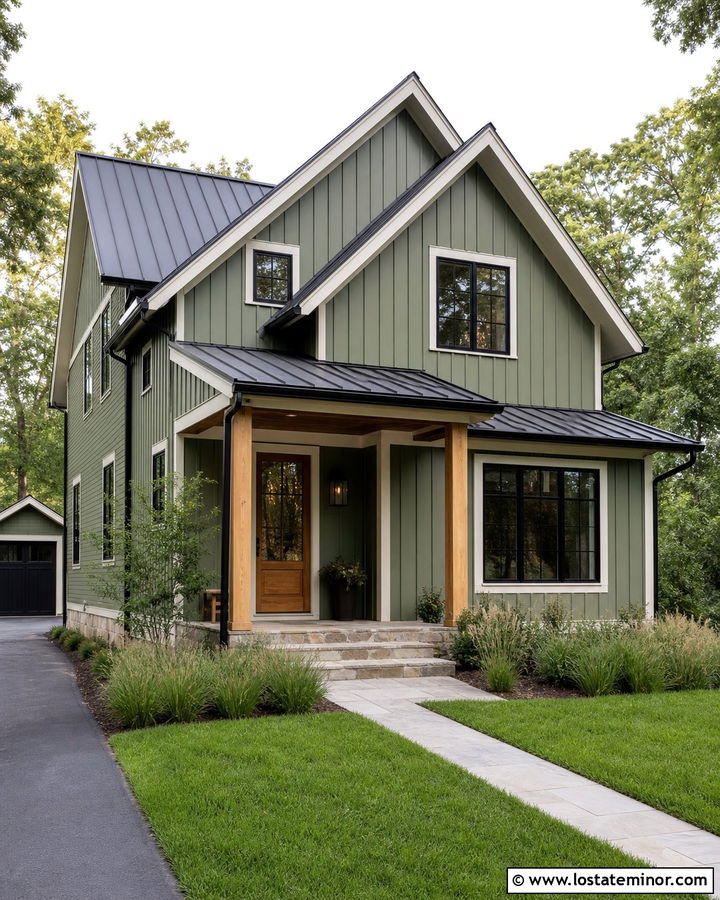
An olive green farmhouse looks crisp and updated beneath a charcoal standing-seam metal roof. Use vertical board-and-batten siding to emphasize the height of the facade, then apply warm white to the window trim, porch columns, and fascia. A natural wood front door and matching porch ceiling soften the contrast between green, white, and metal. Black-framed windows can tie directly into the roof and exterior lighting. Keep the garage door olive green or warm white, depending on whether it should blend in or stand out. Stone porch flooring and simple native landscaping prevent the house from feeling too polished. This full exterior palette combines recognizable farmhouse elements with a richer body color that feels grounded in the surrounding landscape.
26. Olive Green House With Red Front Door
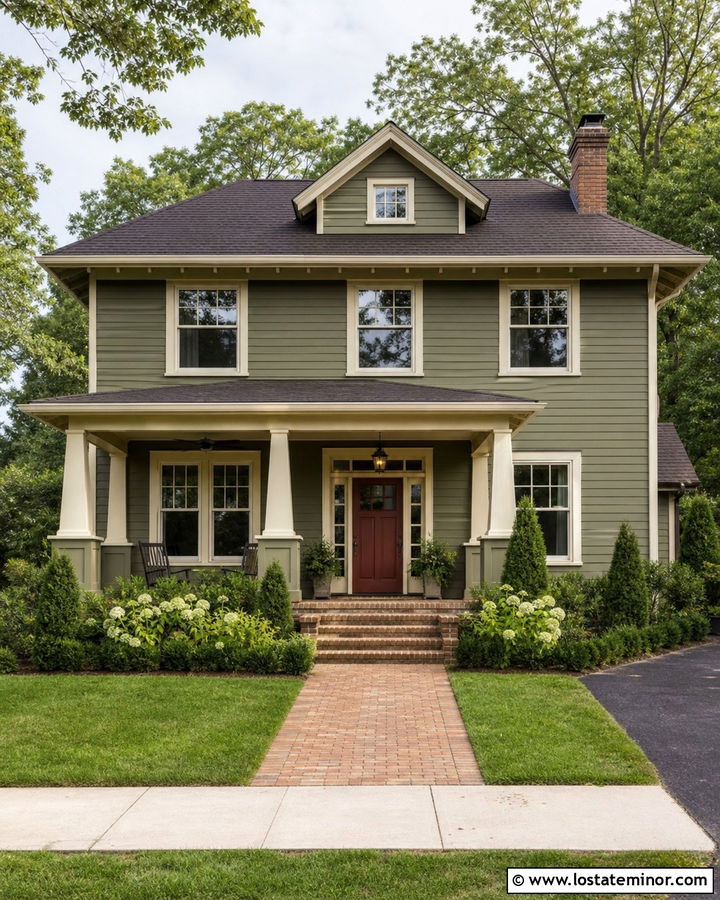
A brick-red front door can create a traditional focal point against olive green siding. Choose a dark, muted red with warm brown undertones rather than a vivid primary shade. Cream trim around windows, columns, and roof edges helps separate the two deeper colors. Add a charcoal-brown roof, bronze hardware, and brick porch steps to repeat the door’s warmth across the facade. This palette works well on colonial, craftsman, and cottage homes, particularly when existing masonry already contains rusty red tones. Keep shutters dark brown or omit them so the entry remains the only strong red feature. Evergreen shrubs and pale flowering plants will frame the house without competing with the door, producing a welcoming and comfortably traditional exterior.
27. Olive Green House With Wood Garage Doors
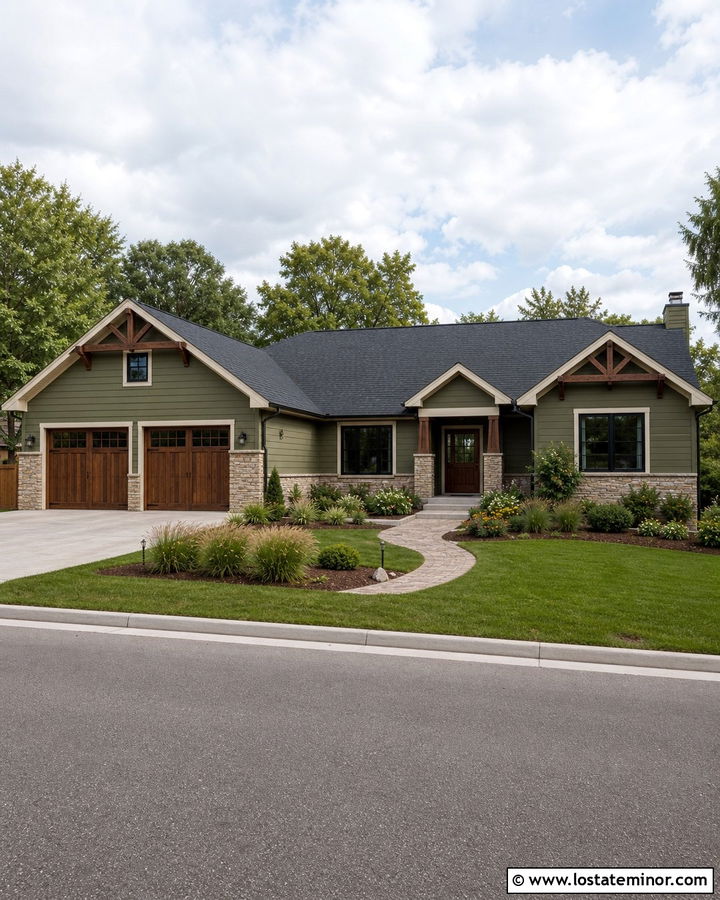
Wood garage doors can turn a practical feature into a major part of an olive green exterior scheme. Choose medium olive siding and doors in a warm cedar or walnut finish. Repeat that wood tone on the front door, porch columns, or small gable brackets so the garage does not appear disconnected. Soft cream trim keeps the facade bright, while black windows and a charcoal roof create a defined outline. On a home with multiple garage bays, use simple door designs with restrained paneling to avoid visual clutter. Add tan stone around the lower walls to bridge the green and brown materials. The completed palette feels substantial and cohesive, particularly on craftsman, transitional, and modern ranch houses with wide street-facing garages.
28. Olive Green House With Warm Beige Shutters
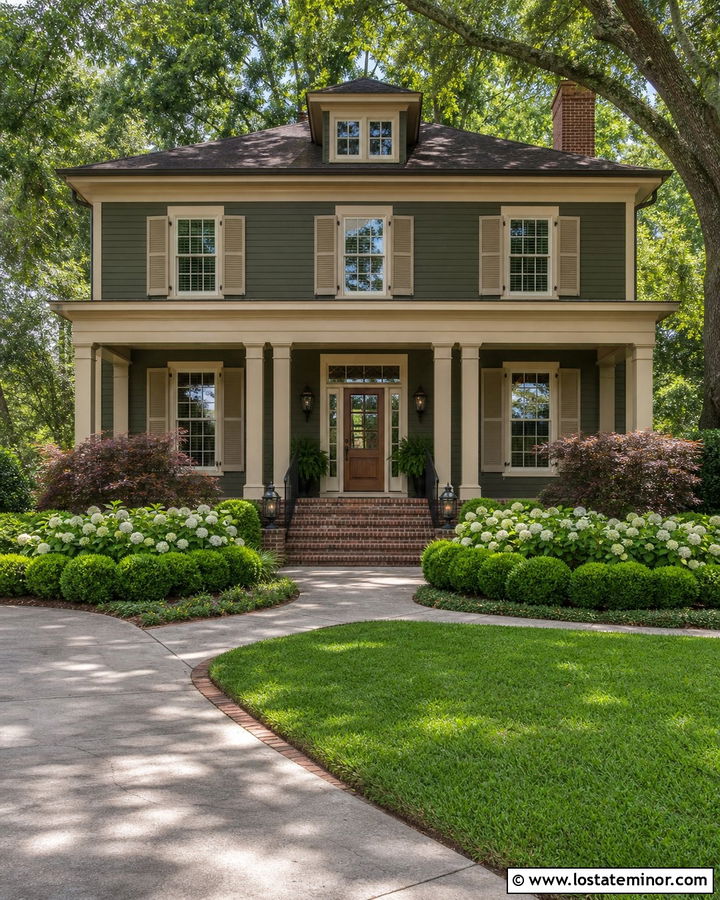
Warm beige shutters create gentle contrast on an olive green house and can feel softer than white or black. Use a deeper olive for the siding so the beige remains clearly visible from the street. Match the shutters with beige porch columns, garage doors, or selected trim, but use creamy white around windows for added definition. A dark brown roof and medium-stained entry door maintain the warm direction of the palette. This combination is well suited to Southern traditional homes, ranch houses, and cottages with symmetrical windows. Make sure the beige has enough depth to avoid looking washed out in direct sunlight. Complete the exterior with bronze fixtures, brick steps, and layered green landscaping for an understated, approachable curb-appeal update.
29. Monochromatic Olive Green House
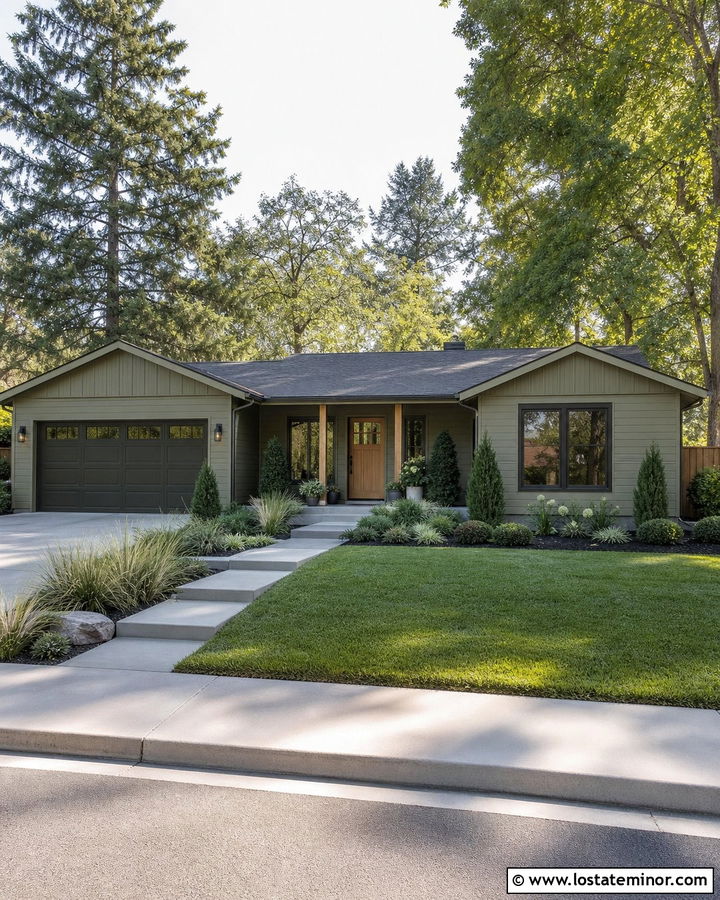
A monochromatic olive green exterior uses several depths of the same color family to create dimension without sharp contrast. Cover the main siding in medium olive, then use a darker olive on shutters, garage doors, or lower panels. Select a pale gray-green for window trim, porch railings, and soffits. A charcoal roof and bronze windows anchor the layered greens. Add a natural oak entry door to prevent the facade from feeling overly matched. This approach works especially well on contemporary ranch homes and simple cottages where architectural details can be defined through small color changes. Compare every shade outdoors before painting, since similar greens may merge in shade. The final palette should remain visibly layered from the curb while still feeling calm and unified.
30. Olive Green House With Muted Blue Door
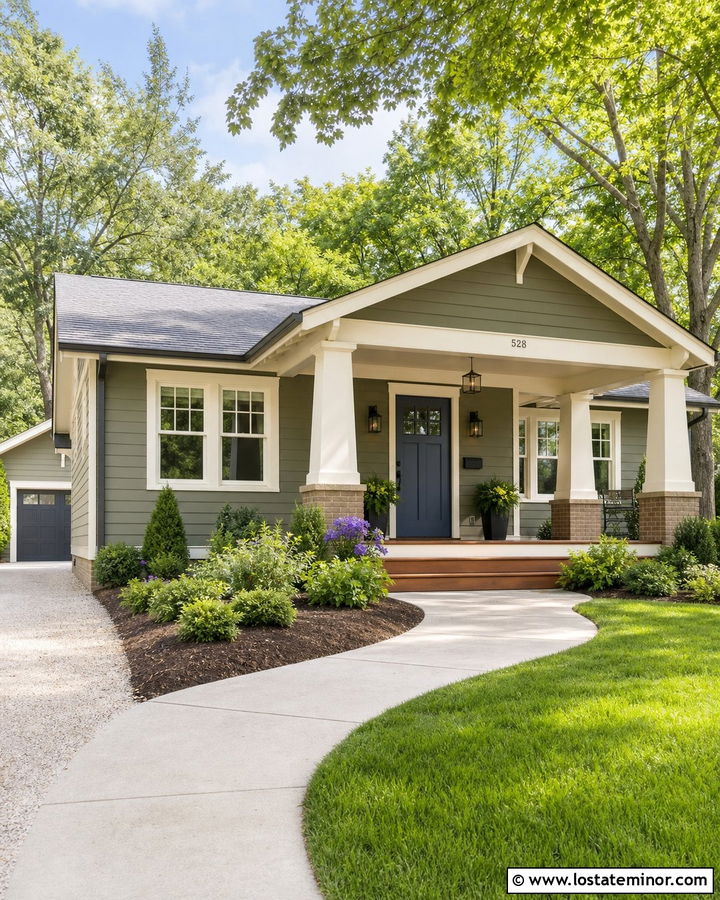
A muted blue front door creates an appealing cool accent against warm olive green siding. Look for a smoky denim, dusty teal-blue, or subdued slate blue rather than a bright coastal shade. Use soft ivory trim to outline the windows and porch, then add a medium-gray roof that supports the cooler door color. Natural cedar porch flooring and bronze fixtures bring warmth back into the design. This scheme works on bungalows, cottages, Cape Cod homes, and relaxed contemporary houses. Repeat the blue only once or twice, perhaps in a small planter or side door, so the main entry remains special. The complete exterior feels personal and colorful while retaining the calm, earthy quality that makes olive green so adaptable.
Conclusion:
The most successful olive green exterior is more than one appealing paint color. It is a complete arrangement of siding, trim, roofing, masonry, doors, windows, and landscaping. Warm accents such as cedar, brick, cream, copper, and brown roofing bring out olive’s earthy side. Black, charcoal, blue-gray, and metal details create a sharper contemporary effect. Before committing, compare large paint samples beside every permanent material and observe them under changing daylight. Keep one color dominant, one supportive, and one reserved for focal points. Whether your home is modern, traditional, rustic, or compact, these **30 Olive Green House Design With Accents Ideas** provide a practical starting point for coordinated curb appeal.

Related posts: