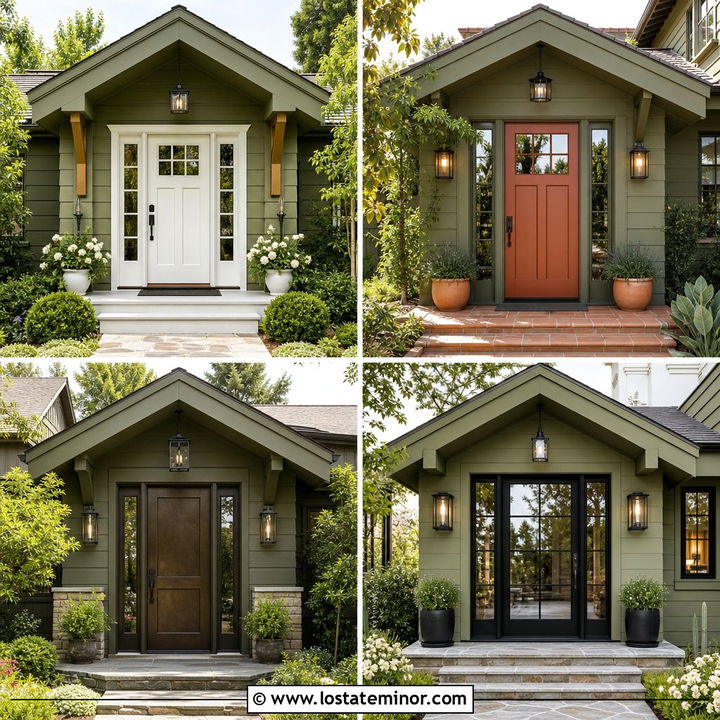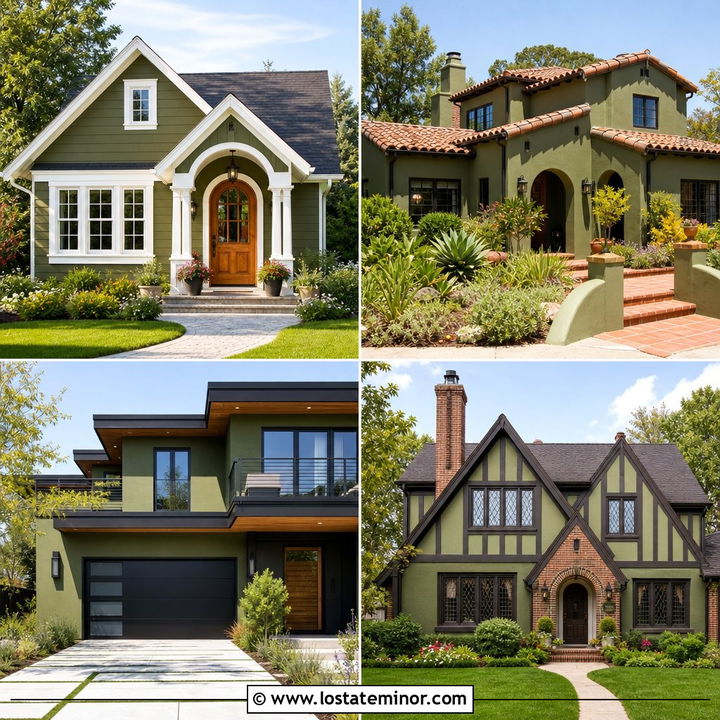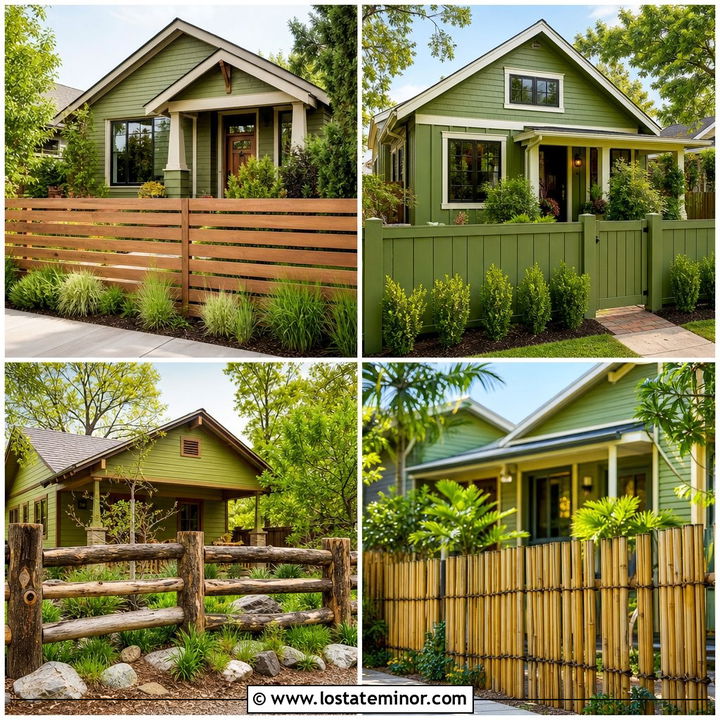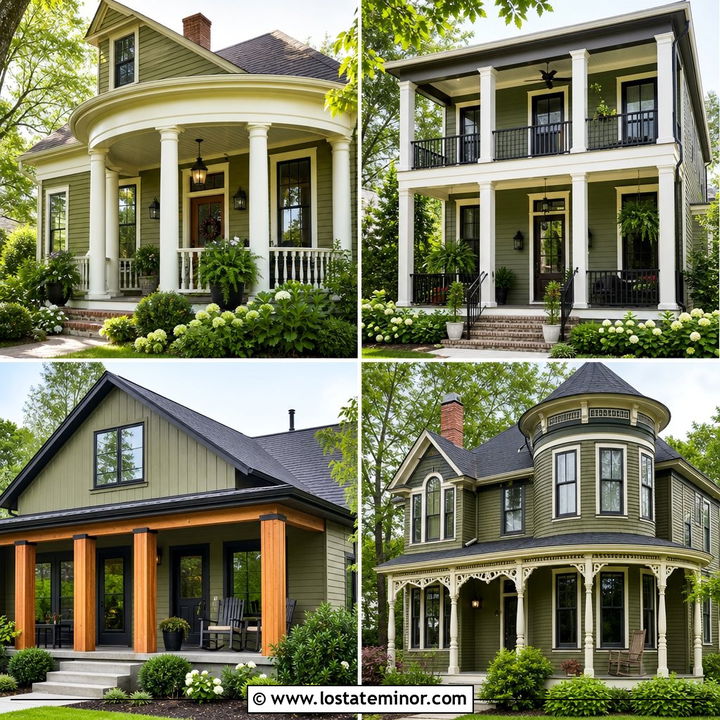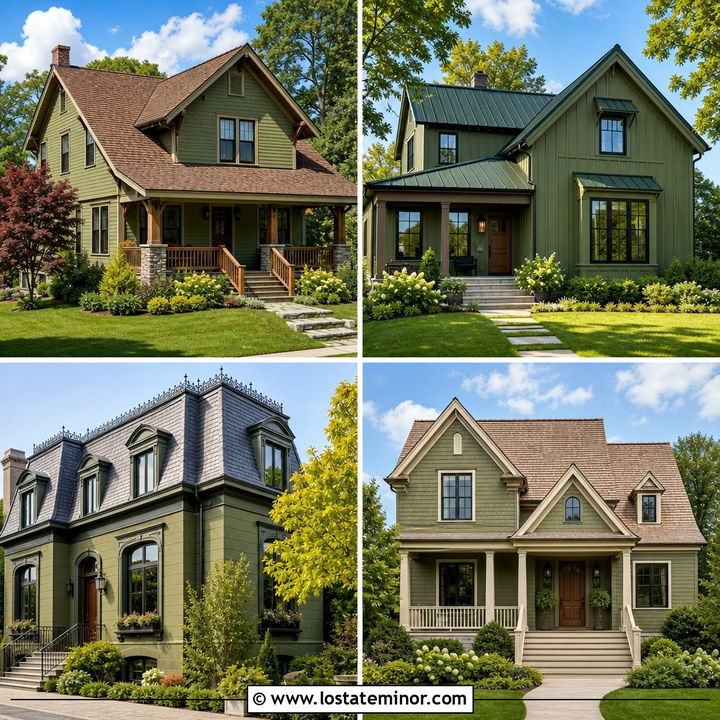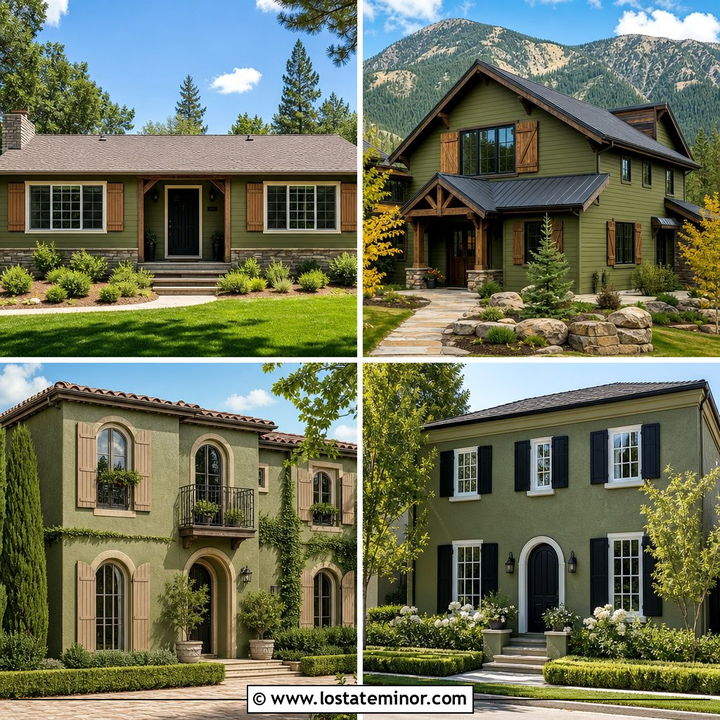
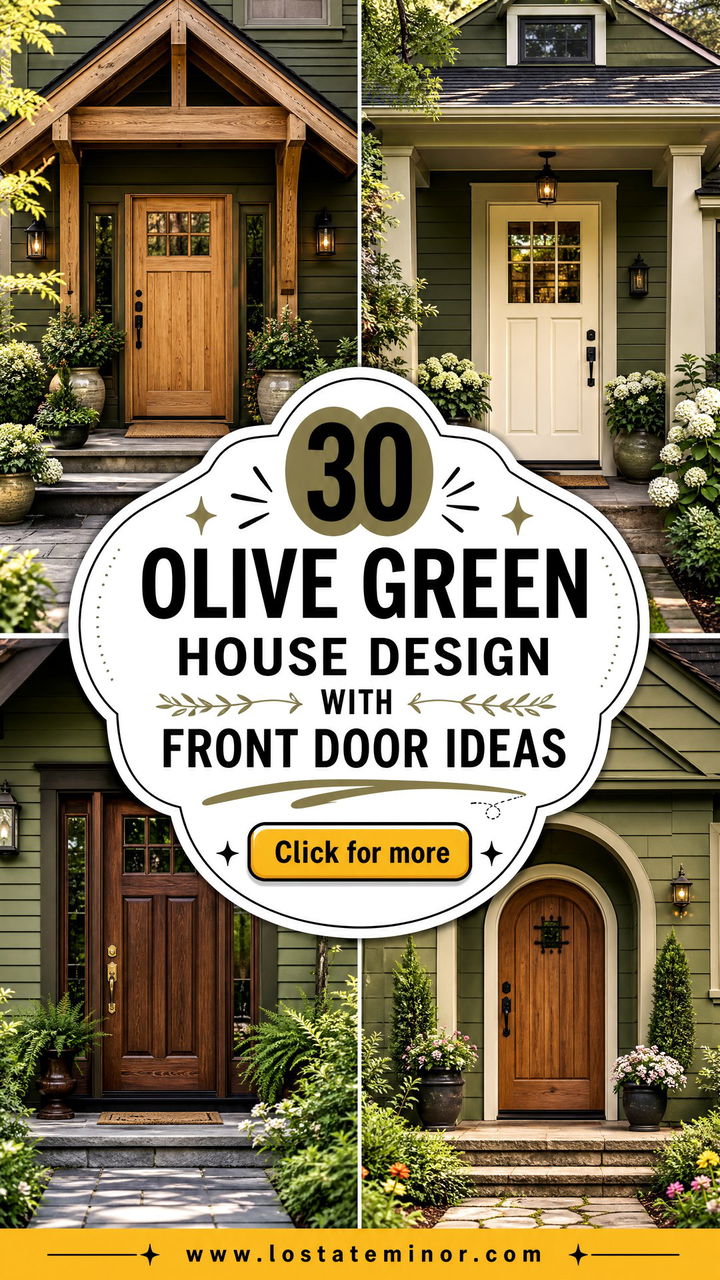
Olive green gives a home a grounded, natural look while offering more character than standard gray or beige. This collection of 30 Olive Green House Design With Front Door Ideas explores complete exterior palettes rather than isolated door colors. Each combination considers siding, trim, roofing, masonry, hardware, and landscaping so the entire facade feels connected. Warm wood and earthy red doors enhance olive’s golden undertones, while black, navy, and charcoal create sharper contrast. Cream and taupe offer a quieter finish for traditional architecture. Before choosing, test large paint samples beside permanent materials in morning and afternoon light. Use the following 30 Olive Green House Design With Front Door Ideas to find a balanced scheme for your home’s style and surroundings.
1. Olive Green House With Natural Wood Front Door
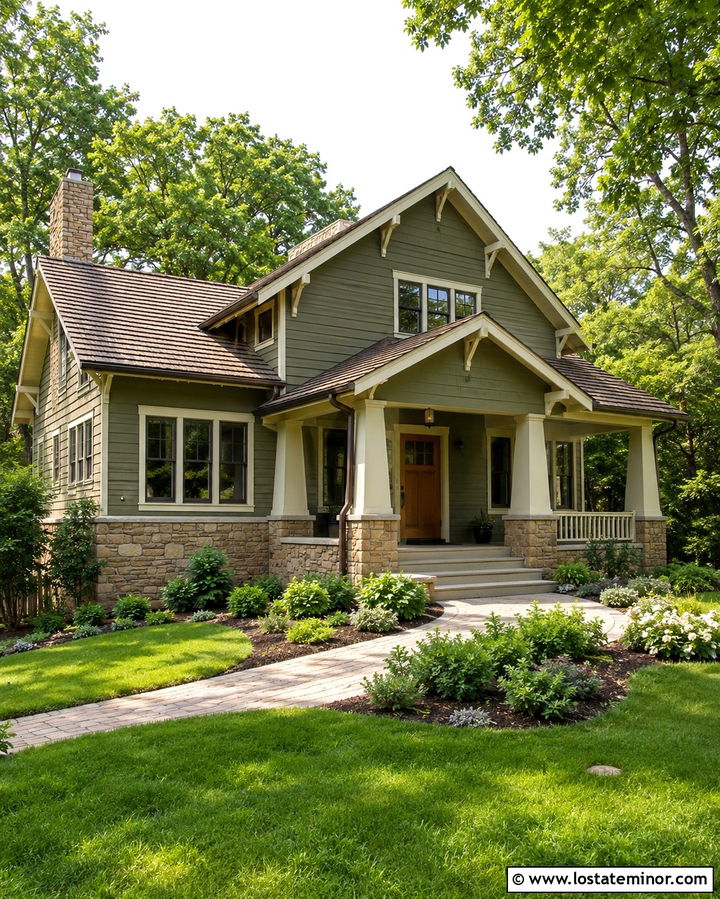
A natural wood front door brings out the warmth hidden within olive green siding. This combination works especially well on Craftsman homes, cabins, ranch houses, and modern farmhouses. Choose medium-toned cedar or oak when you want a relaxed look. Dark walnut creates a richer and more formal entrance. Cream trim keeps the exterior from feeling heavy, while bronze gutters and light fixtures connect the green siding to the wood grain. Complete the palette with a weathered brown roof and a stone foundation in tan, gray, and muted rust. A clear or lightly tinted exterior stain protects the door without covering its texture. Repeat the wood tone on porch posts, brackets, or garage doors for a coordinated facade.
2. Olive Green House With Black Front Door
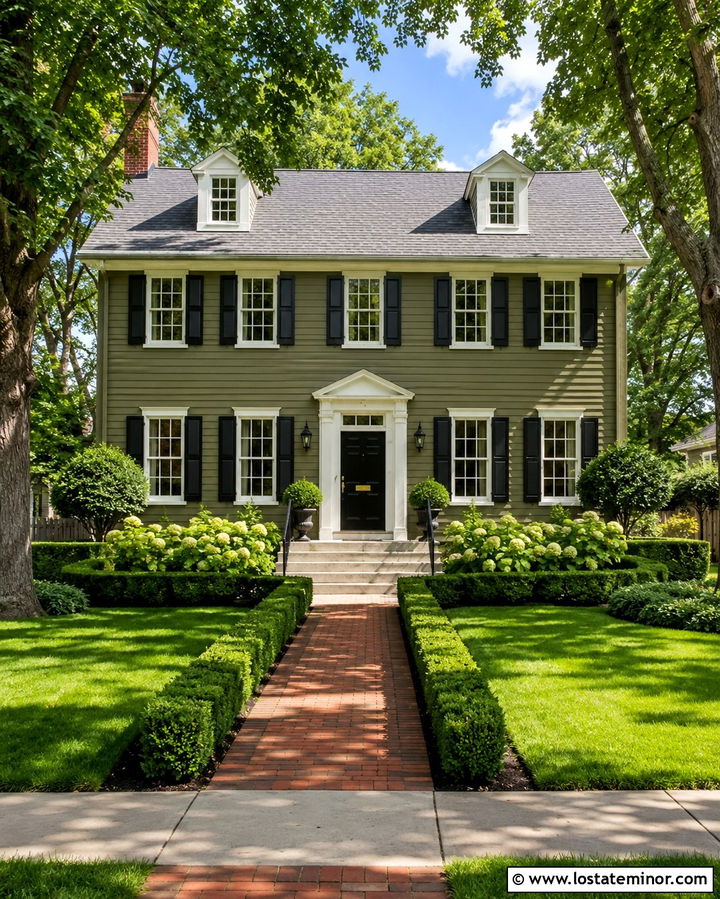
For crisp contrast, place a black front door against medium or light olive green siding. The dark entrance gives the facade a defined focal point without introducing another strong hue. This palette feels particularly polished on Colonial, Georgian, contemporary, and transitional homes. Use warm white trim to outline the roofline and windows. Black shutters, metal railings, and lanterns can repeat the door color, but keep these accents limited so the exterior does not become overly dark. A medium-gray roof and pale limestone foundation soften the transition between colors. Consider a satin finish for the door because it reflects enough light to reveal architectural details. Natural grasses and pale flowering shrubs will brighten the landscaping around this structured color scheme.
3. Olive Green House With Cream Front Door
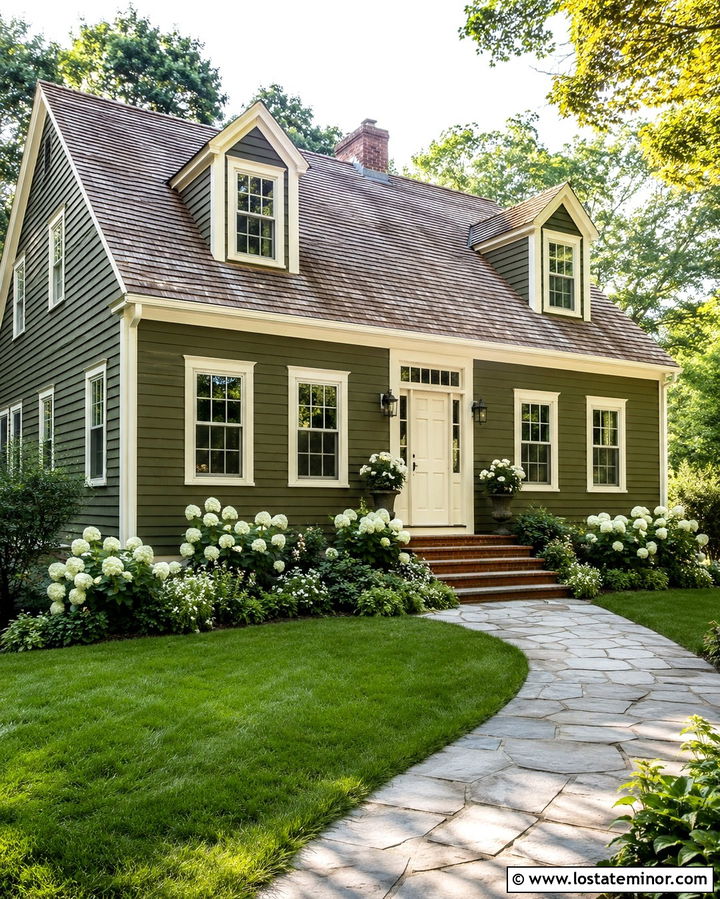
Cream creates a gentle front-door contrast that complements the yellow undertones found in many olive greens. It is softer than bright white, making it suitable for cottages, Cape Cod homes, bungalows, and traditional ranch houses. Paint the window trim, fascia, and porch columns in the same warm cream for a unified appearance. A tan shingle roof or weathered cedar roof enhances the comfortable, earthy mood. To prevent the scheme from looking too pale, introduce dark bronze hardware and deep brown porch furniture. Brick steps in muted red or brown can add another layer of warmth. This combination is especially useful for shaded homes because cream reflects light around the entry and makes the front door easier to see from the street.
4. Olive Green House With White Front Door
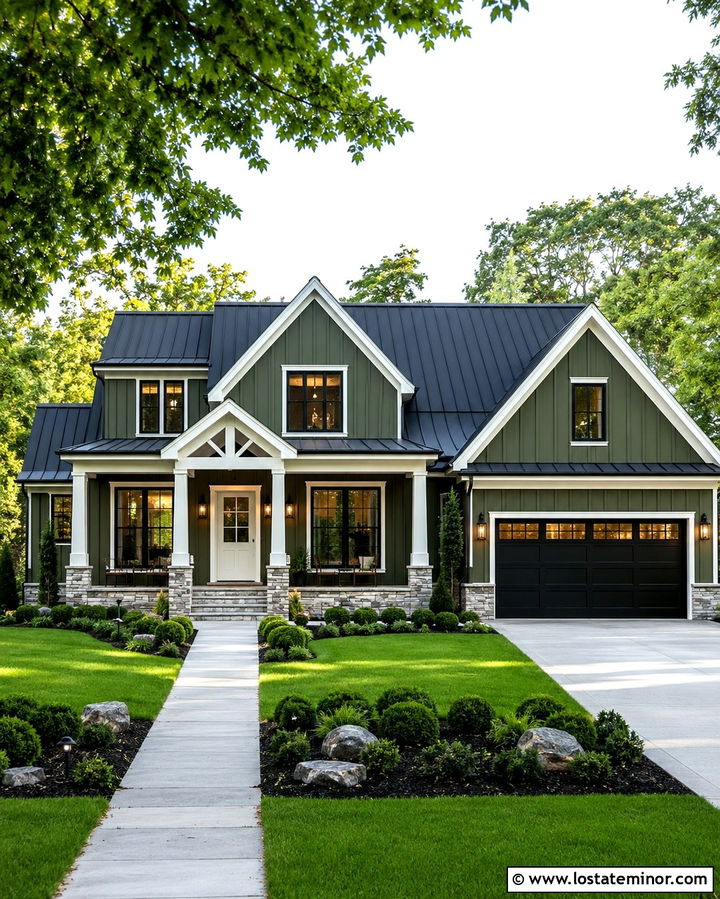
A white front door gives an olive green exterior a clean, familiar finish. This straightforward pairing suits nearly every house type, including farmhouses, split-level homes, Colonials, and suburban two-story designs. Select a warm or neutral white rather than a cool blue-white, which may look disconnected from earthy green siding. Carry the white onto window casings, corner boards, porch columns, and garage trim. A charcoal roof adds definition overhead, while black lighting and simple house numbers provide controlled contrast. If the facade has brick or stone, choose materials with cream, brown, or soft gray tones. The white door should remain the brightest element. Keep nearby planters and decor simple so the strong olive-and-white relationship stays visually clear.
5. Olive Green House With Terracotta Front Door
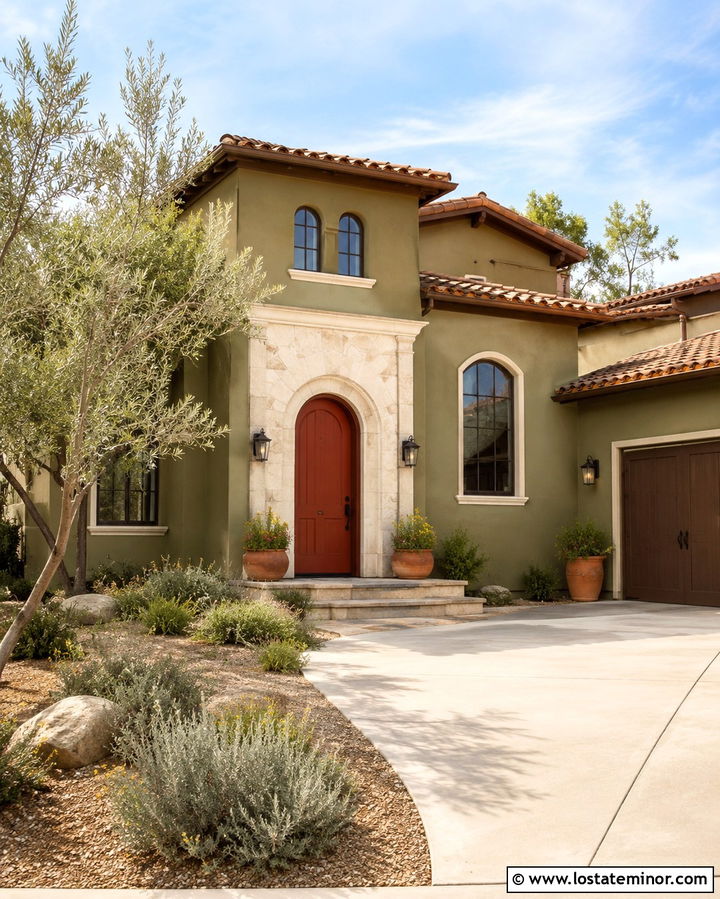
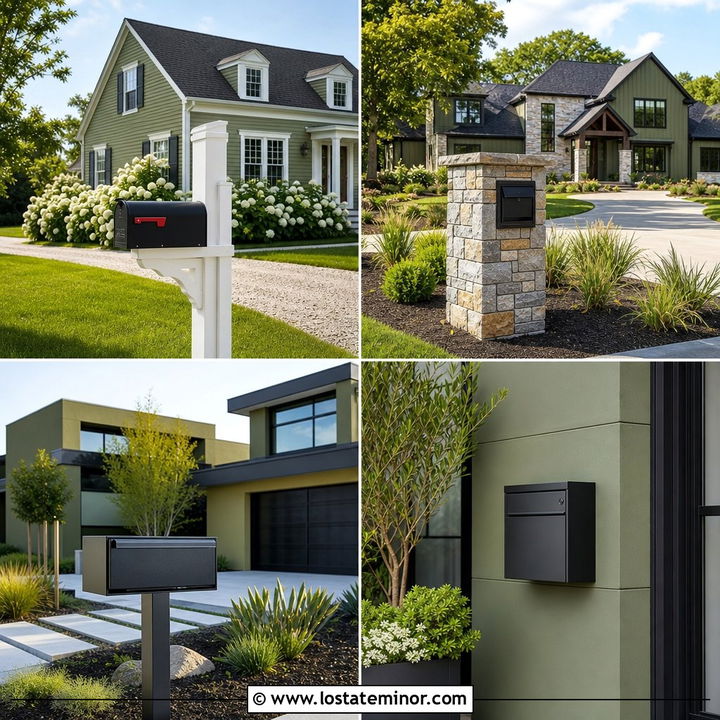
Terracotta and olive green form a warm exterior palette inspired by clay, leaves, and sunbaked stone. A muted terracotta front door looks beautiful on Mediterranean, Spanish Revival, adobe, and stucco homes. It can also energize a modest ranch exterior without appearing overly bright. Pair the olive body with creamy trim and a clay tile or warm brown roof. Aged bronze hardware, copper gutters, and amber-toned sconces support the door color. Use pale limestone or sandy stucco around the entry to create breathing room between the green and orange-red tones. Terracotta planters can repeat the door without making the scheme feel overly matched. Choose a dusty, browned-down shade rather than vivid orange for an exterior that remains sophisticated and easy to maintain.
6. Olive Green House With Burnt Orange Front Door
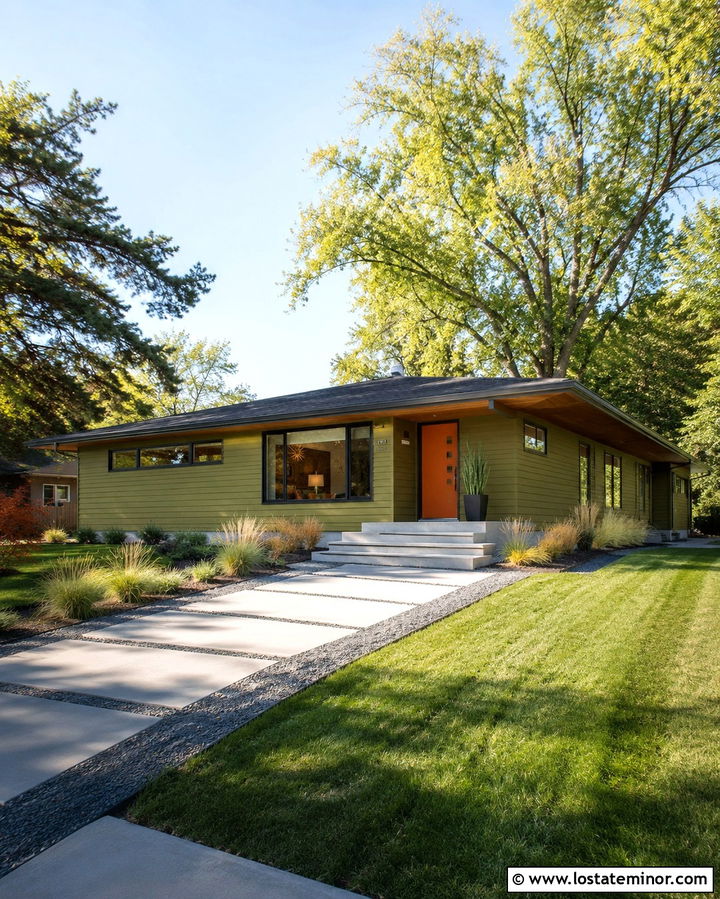
Burnt orange creates a stronger statement than terracotta while preserving an earthy relationship with olive green. This door color is effective on midcentury modern homes, contemporary ranches, and updated split-level houses. Use dark olive siding with simple cream or light taupe trim to let the entrance command attention. A low charcoal roof, walnut soffits, and black-framed windows will give the palette a clean architectural structure. The orange should feel smoky and subdued, not neon or overly saturated. Repeat it sparingly through a ceramic planter or small outdoor cushion. Wide concrete steps and ornamental grasses complement the modern character of the combination. Because both colors have visual weight, keep garage doors and large secondary surfaces quiet, using olive, taupe, or stained wood.
7. Olive Green House With Mustard Yellow Front Door
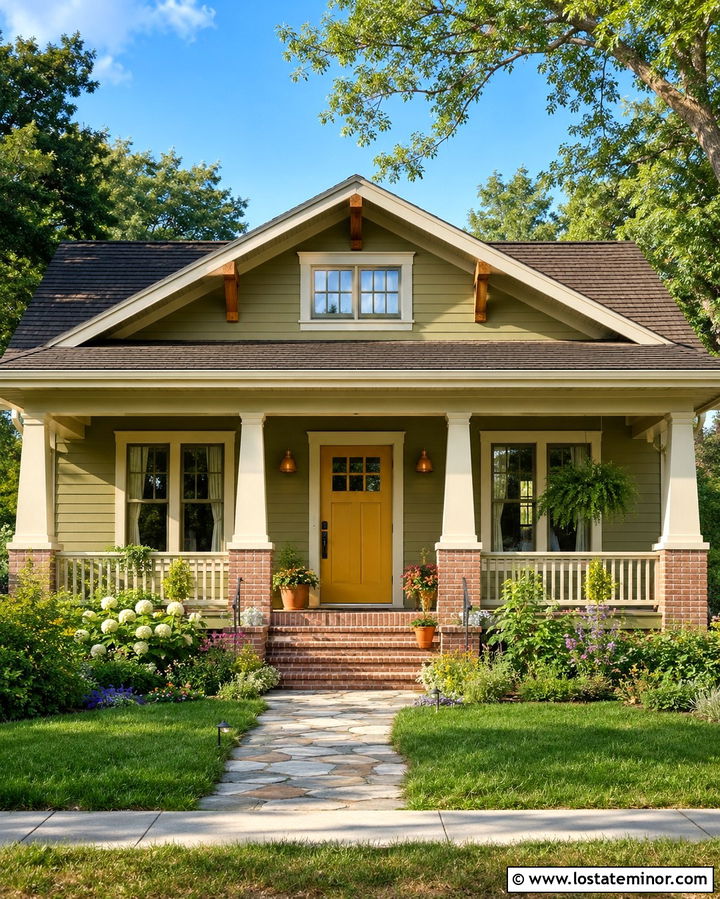
A mustard yellow front door adds cheerful warmth to an olive green house without producing the sharp contrast of a bright lemon yellow. The palette has a vintage quality that works well on Craftsman bungalows, folk Victorian homes, cottages, and small urban houses. Frame the door with ivory trim so the yellow remains distinct from the green siding. Dark brown roofing, copper lighting, and natural brick steps reinforce the warm color direction. If shutters are present, paint them deep olive or brown rather than introducing another accent color. Mustard is visually active, so use it only at the main entrance. Keep porch furniture neutral and bring in soft green landscaping. The finished exterior feels friendly, creative, and appropriate for a home with visible architectural personality.
8. Olive Green House With Burgundy Front Door
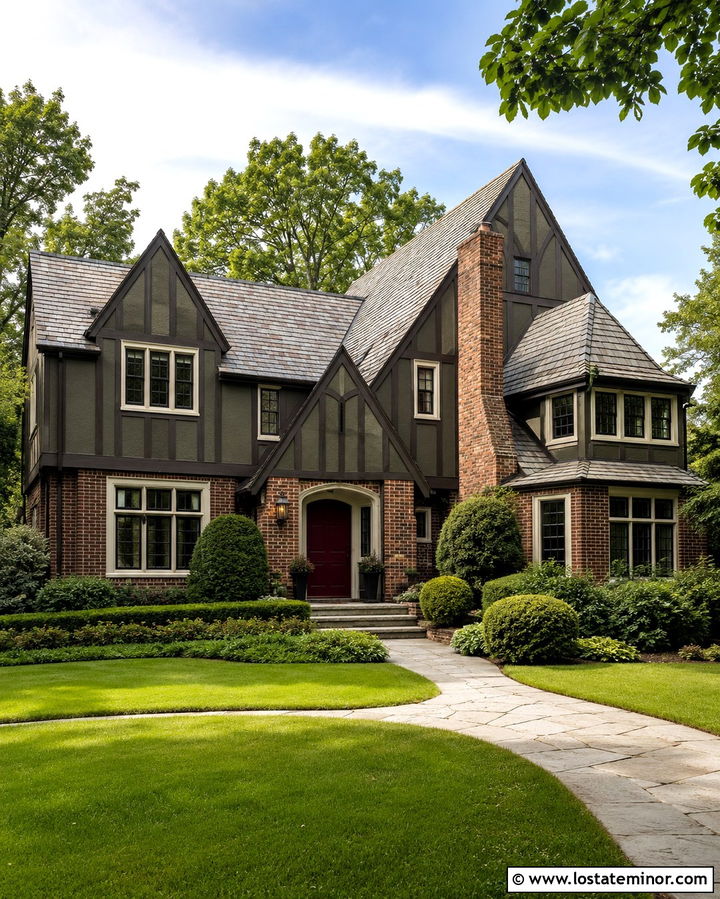
Burgundy provides a deep, traditional contrast that feels especially refined beside muted olive green. This pairing suits brick-accented Colonials, Tudor homes, historic farmhouses, and formal two-story houses. Use a warm ivory on the trim to separate the dark red door from the green body. A weathered gray or brown roof will keep the exterior grounded. Burgundy can also connect naturally with red-brown brick chimneys, steps, or foundation walls. Select blackened bronze hardware instead of shiny silver, which may look too cool for the palette. If the home has shutters, use dark brown or a deeper olive rather than matching them to the door. The result is colorful but restrained, giving the entrance presence while preserving the mature character of the architecture.
9. Olive Green House With Brick Red Front Door
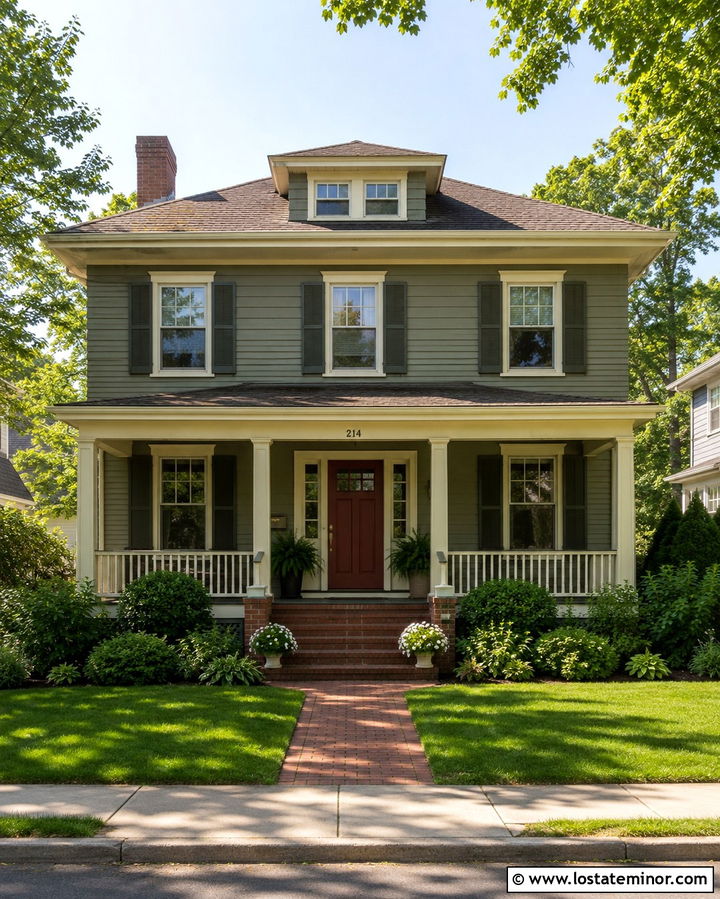
Brick red creates a classic entrance that works naturally with the brown and golden undertones of olive green. Unlike a clear fire-engine red, this muted version feels connected to masonry, wood, and traditional landscaping. It is a practical choice for Craftsman, farmhouse, Colonial, and American Foursquare exteriors. Surround the door with cream trim and use dark olive shutters for a subtle layered-green effect. Red brick steps or a brick walkway can repeat the door color and make the entrance feel intentional. Add a brown architectural-shingle roof and aged brass hardware to complete the warm palette. When selecting the red, compare it directly with existing brick. The door should relate to the masonry without matching it so closely that the entrance disappears.
10. Olive Green House With Deep Red Front Door
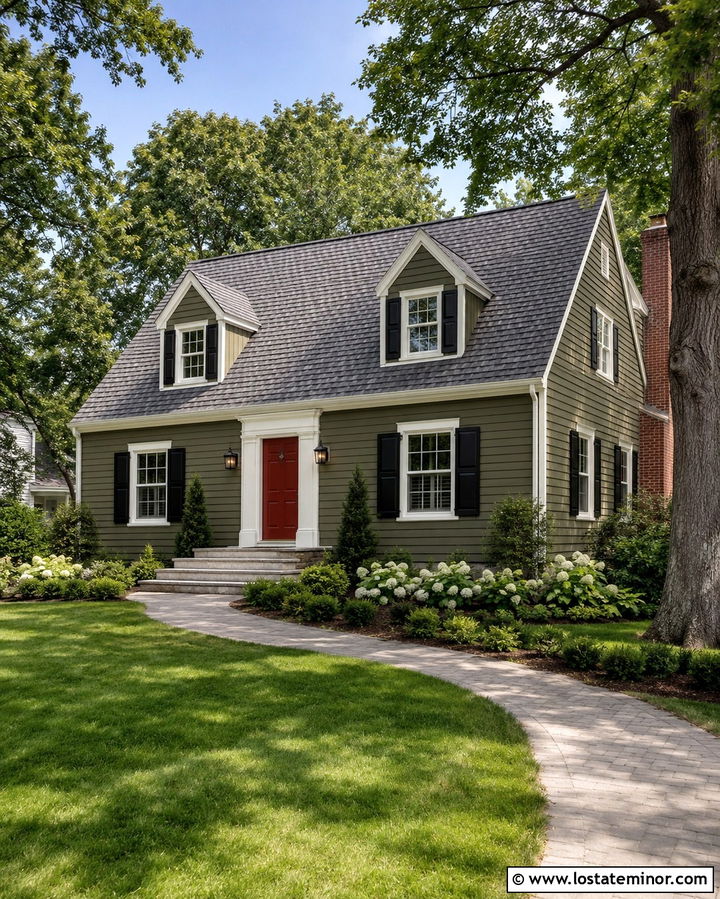
A deep red door gives an olive green exterior a bold focal point while remaining more traditional than orange or yellow. This palette is strongest when the green siding is medium in depth and slightly muted. Use soft white trim around the entry, windows, and roofline to prevent the two substantial colors from blending together. The combination works on cottages, classic ranch homes, Cape Cod houses, and symmetrical Colonials. Black shutters and lantern-style sconces add definition, while a gray roof keeps the upper portion neutral. Avoid repeating red across large surfaces. Instead, let the door act as the single colorful accent. Evergreen shrubs, white flowers, and a simple stone walkway will frame the entrance without competing with its confident, welcoming appearance.
11. Olive Green House With Navy Blue Front Door
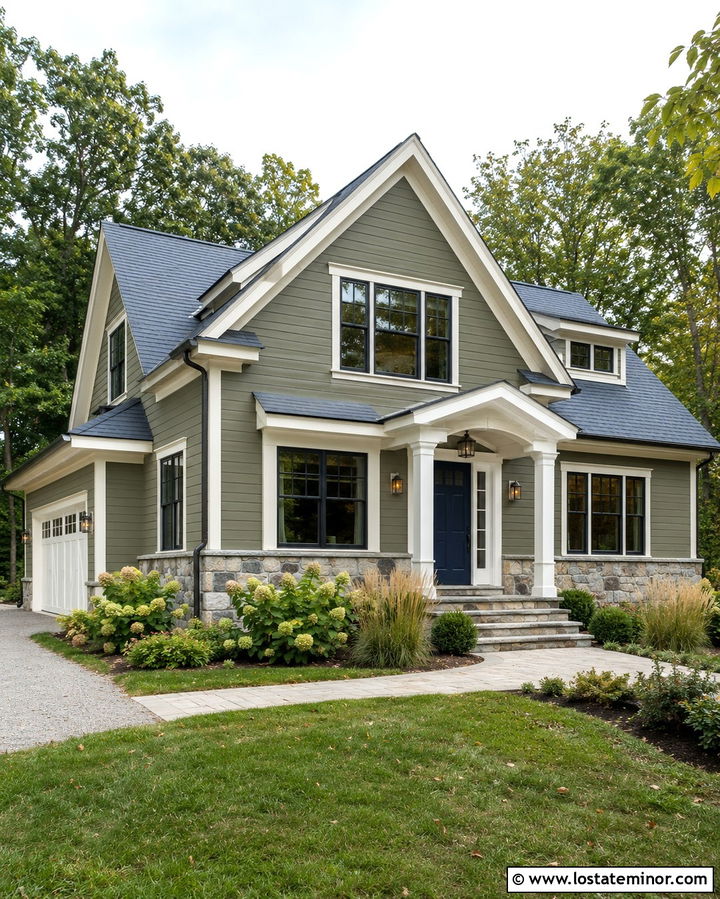
Navy blue introduces cool contrast to warm olive green, creating a distinctive exterior that still feels composed. It works best when one color is clearly darker than the other. For example, pair medium olive siding with a deep navy entrance and warm white trim. This combination complements transitional homes, coastal cottages, contemporary farmhouses, and updated Colonials. Use a charcoal or blue-gray roof to connect with the door, then add aged brass hardware for warmth. Natural stone containing both gray and tan can bridge the warm and cool parts of the palette. Keep shutters olive, white, or navy, depending on the amount of contrast desired. Test the colors together outdoors because shaded navy and olive can both appear darker than expected on north-facing facades.
12. Olive Green House With Teal Front Door
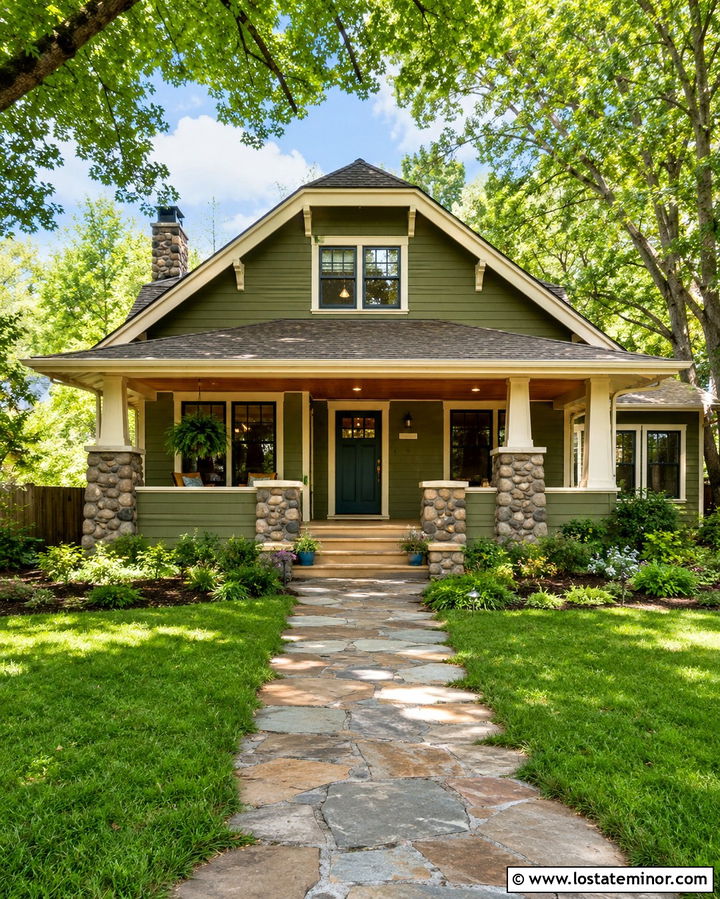
Teal adds personality to an olive green house by introducing a blue-green accent with noticeable depth. A dark, muted teal works better than a tropical turquoise because it shares the subdued quality of olive. Use this palette on eclectic cottages, Craftsman bungalows, coastal ranch homes, or small houses that need a stronger entrance. Cream trim helps separate the related green tones, while copper hardware adds warmth and subtle shine. Choose a gray-brown roof and include natural wood on porch ceilings, steps, or railings. If the home has stone, look for a blend containing mossy green, blue-gray, and tan. Limit teal to the front door and perhaps one small bench or planter. That restraint allows the entrance to feel original without making the exterior appear overly colorful.
13. Olive Green House With Charcoal Front Door
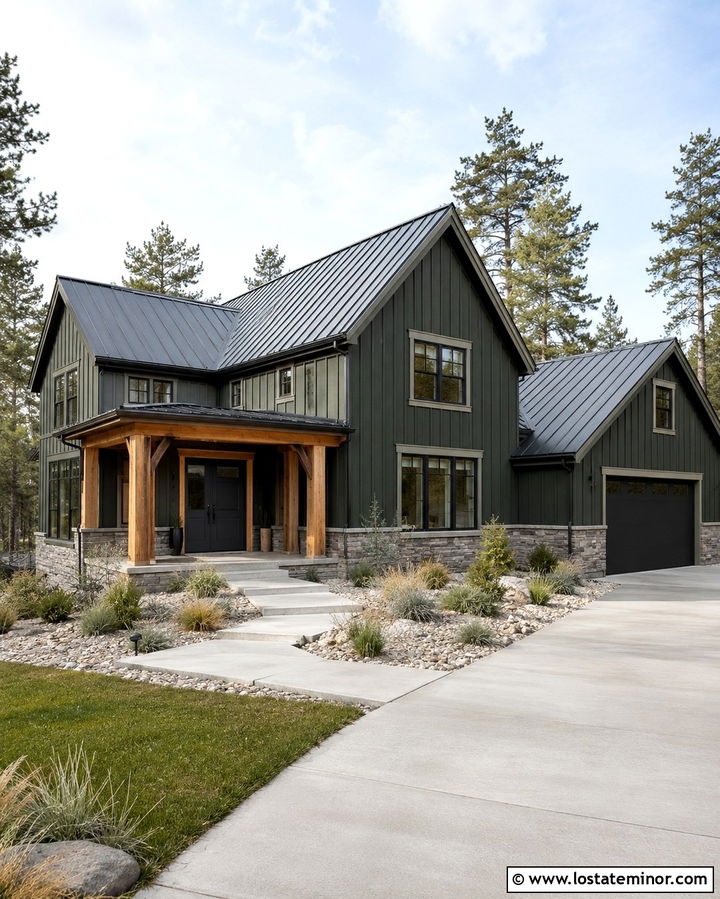
Charcoal offers a softer alternative to solid black and looks balanced beside dark or medium olive siding. Its gray undertone complements concrete, slate, metal roofing, and cool-toned stone. This makes the pairing useful for contemporary houses, mountain homes, modern ranches, and minimalist farmhouses. Use light greige or soft cream trim instead of brilliant white to maintain the muted appearance. A charcoal roof can repeat the door color, while natural wood porch posts prevent the overall exterior from feeling cold. Choose matte black hardware if you want a streamlined finish or brushed brass for a warmer accent. Layer the landscaping with silvery grasses, deep green shrubs, and pale gravel. The completed palette feels tailored and modern without relying on severe, high-contrast colors.
14. Olive Green House With Taupe Front Door
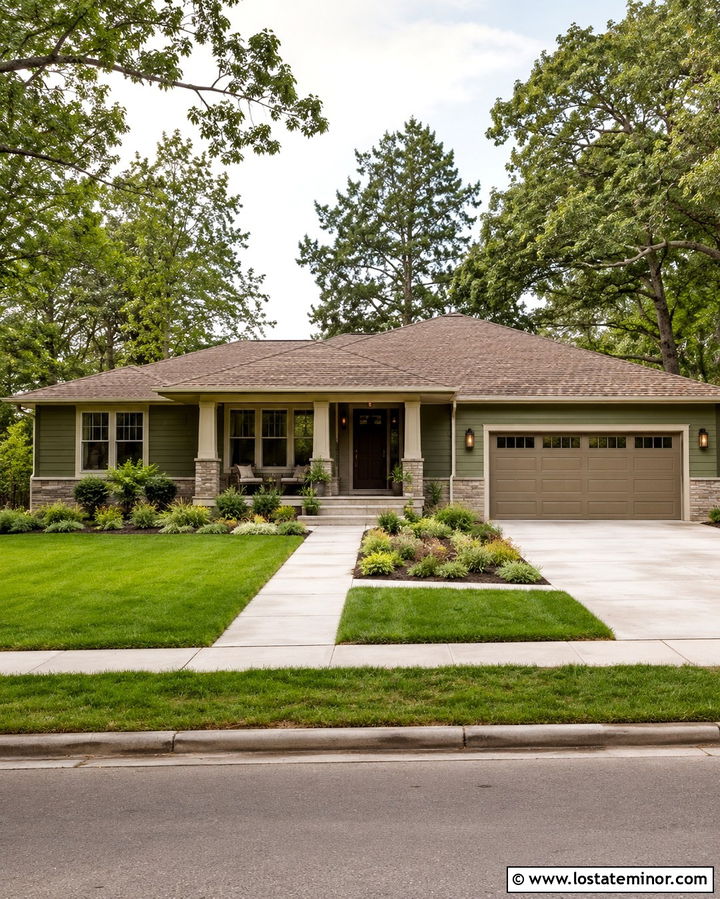
Taupe creates a quiet, low-contrast entrance that allows the olive green body color and architecture to take priority. The combination is attractive on ranch houses, Prairie-style homes, traditional cottages, and exteriors with extensive stonework. Select a taupe containing warm brown undertones so it connects with the olive rather than appearing flat and gray. Use creamy trim, bronze hardware, and a weathered brown roof to complete the scheme. If the house includes a garage, the garage doors can match the taupe front door to reduce their visual prominence. Add stone veneer containing beige, brown, and muted gray near the foundation or porch. This palette is ideal when the landscaping, roofline, or masonry already provides substantial detail and the front door does not need a highly contrasting color.
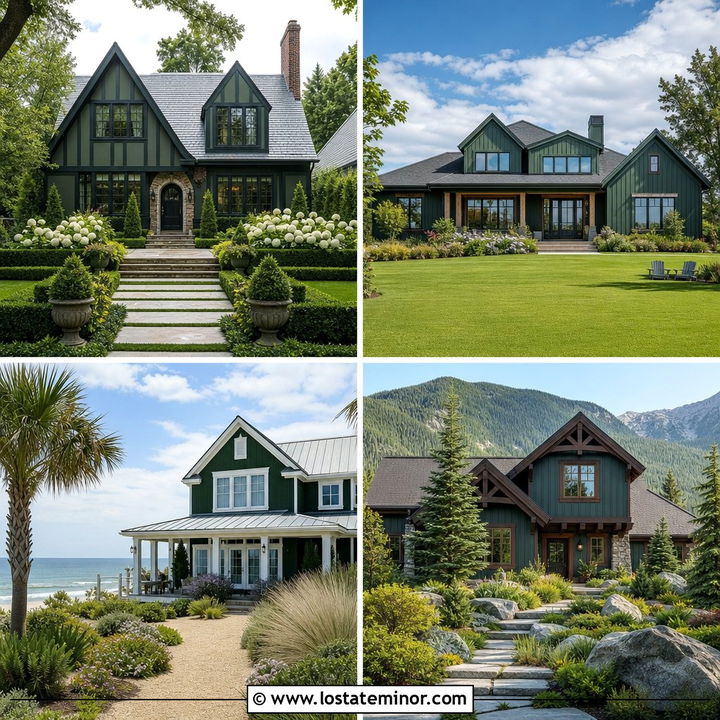
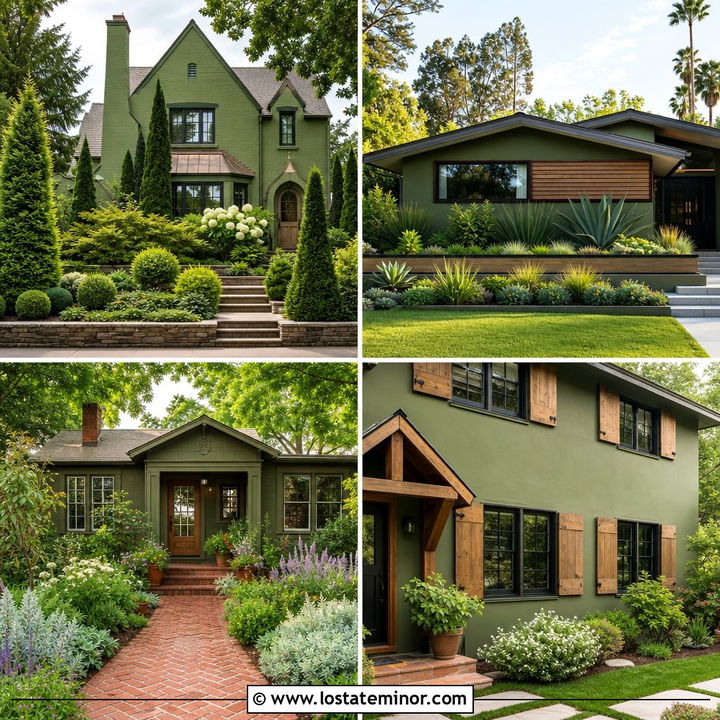
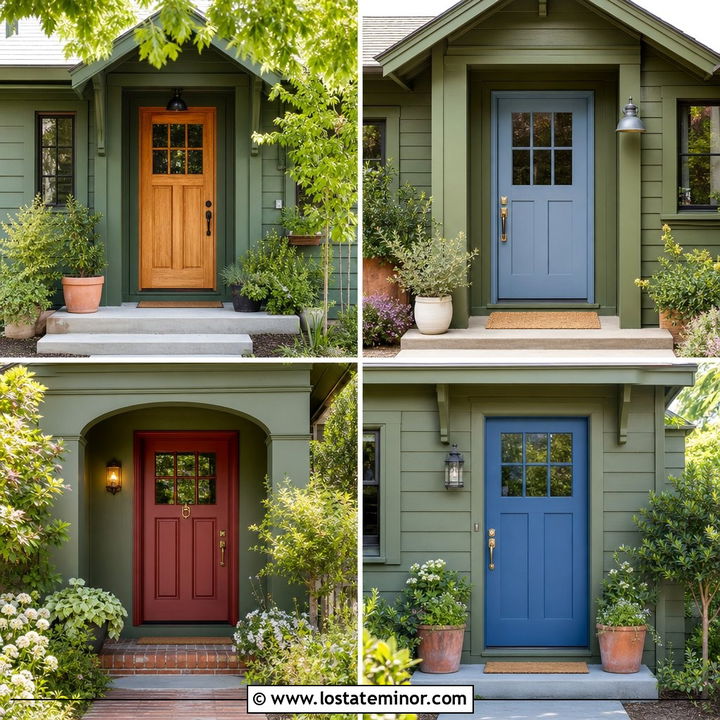
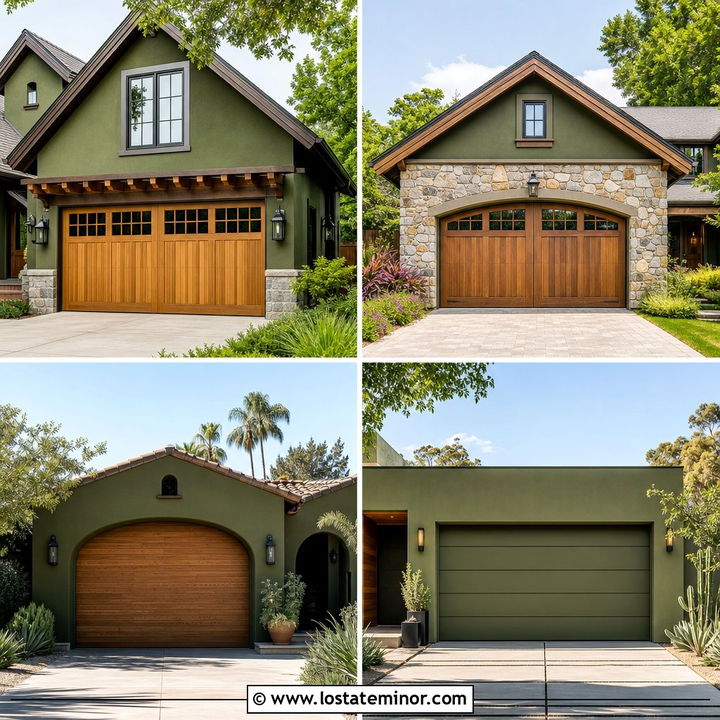
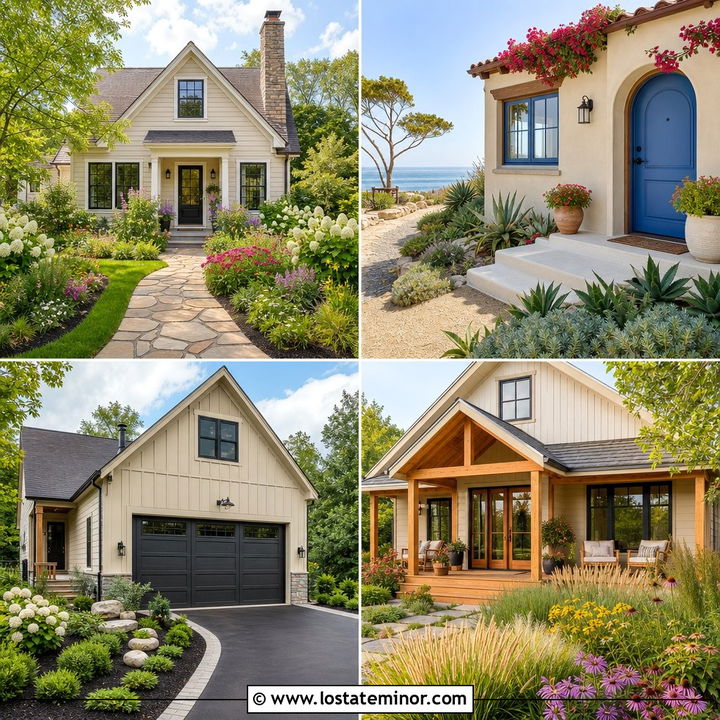
15. Olive Green House With Greige Front Door
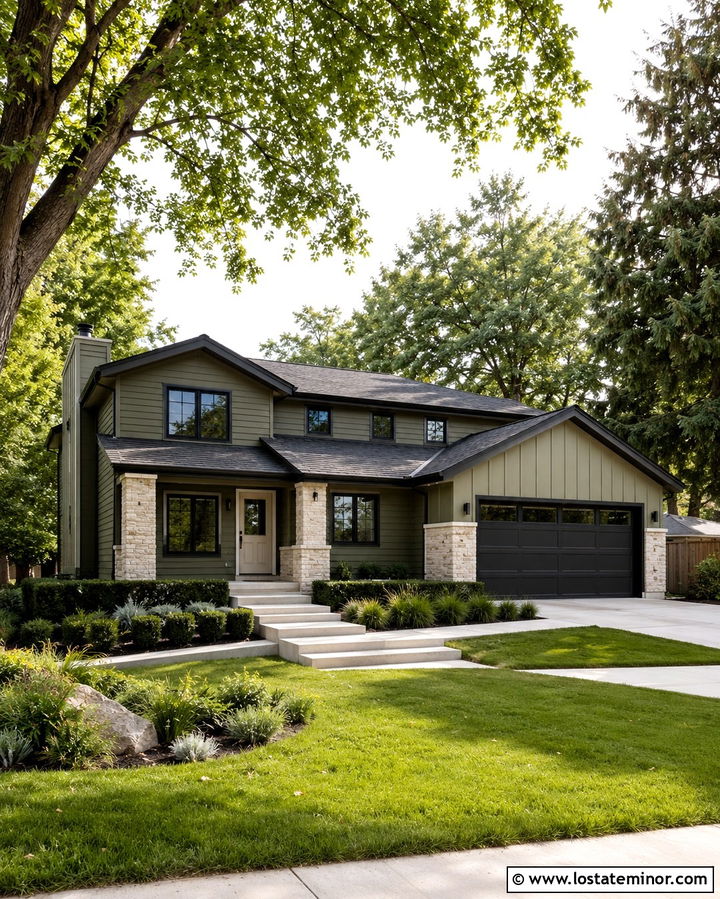
Greige brings a lighter, updated neutral to olive green siding. It combines gray’s calm appearance with enough beige warmth to complement the earthy body color. This exterior works well on suburban two-story homes, transitional farmhouses, townhouses, and renovated split-levels. Choose a medium olive for the siding, pale greige for the door and garage, and creamy white for the trim. A dark gray roof creates a defined top edge, while black window frames and lighting provide small graphic accents. Limestone porch columns or a light stone foundation can repeat the door’s neutral color. Since greige can shift noticeably under changing light, test it beside the olive and roof materials. The finished scheme should feel layered and welcoming rather than flat or overly cool.
16. Olive Green House With Chocolate Brown Front Door
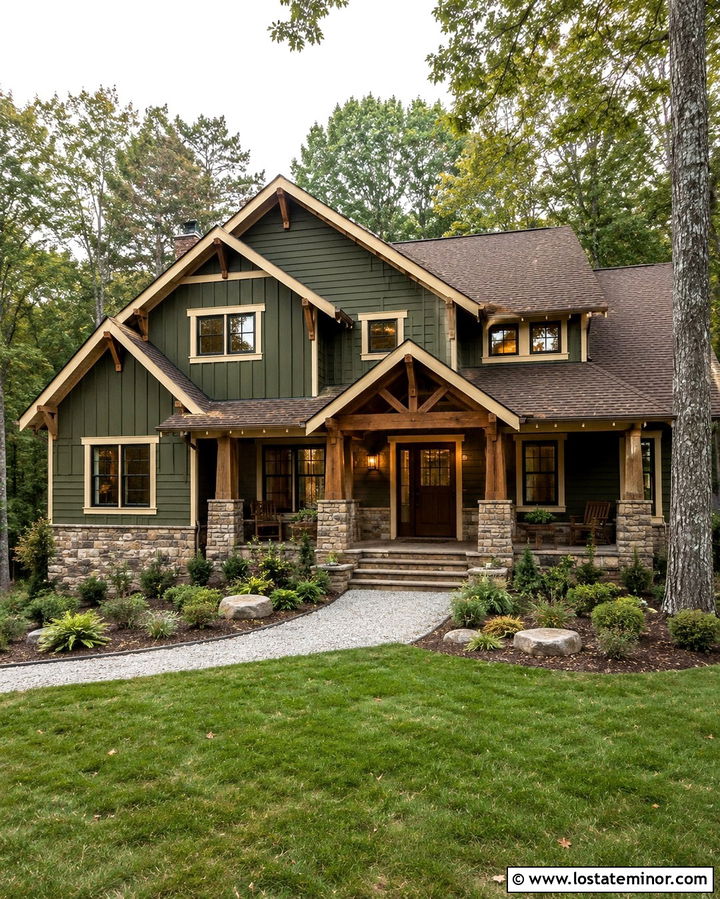
Chocolate brown emphasizes the woodland character of an olive green house. It creates less contrast than black but gives the entrance substantial visual weight. This pairing is well suited to cabins, Craftsman houses, rustic ranches, mountain homes, and wooded suburban properties. Use tan stone around the base and warm cream on window trim, porch ceilings, and fascia. A brown roof with mixed dark and medium shingles connects naturally to the door. Oil-rubbed bronze hardware will blend into the palette, allowing carved panels or glass inserts to provide interest. To avoid an exterior that feels too dark, include a light walkway, pale porch floor, and layered plantings with varied green tones. The final look should feel warm and grounded rather than shadowy or overly rustic.
17. Olive Green House With Copper Front Door
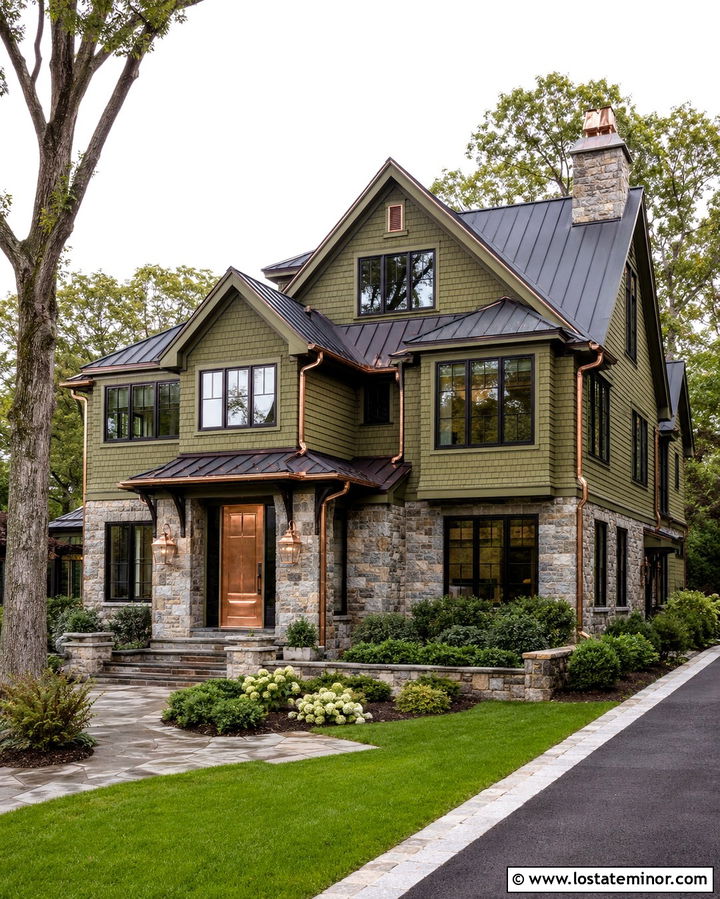
A copper-clad front door turns an olive green facade into a distinctive, material-focused exterior. New copper offers a warm reddish glow, while aged copper develops brown and blue-green variations that relate beautifully to olive siding. This choice suits modern homes, Arts and Crafts houses, upscale cabins, and contemporary additions. Keep the surrounding trim simple with warm cream, dark bronze, or matching olive. Use a charcoal metal roof or brown shingles to prevent other surfaces from competing with the door. Copper gutters, small roof details, or sconces can repeat the material in controlled amounts. Stone walls containing rust and gray tones will complete the palette. Because copper naturally changes over time, homeowners should appreciate patina and variation rather than expect a permanently uniform finish.
18. Olive Green House With Mahogany Front Door
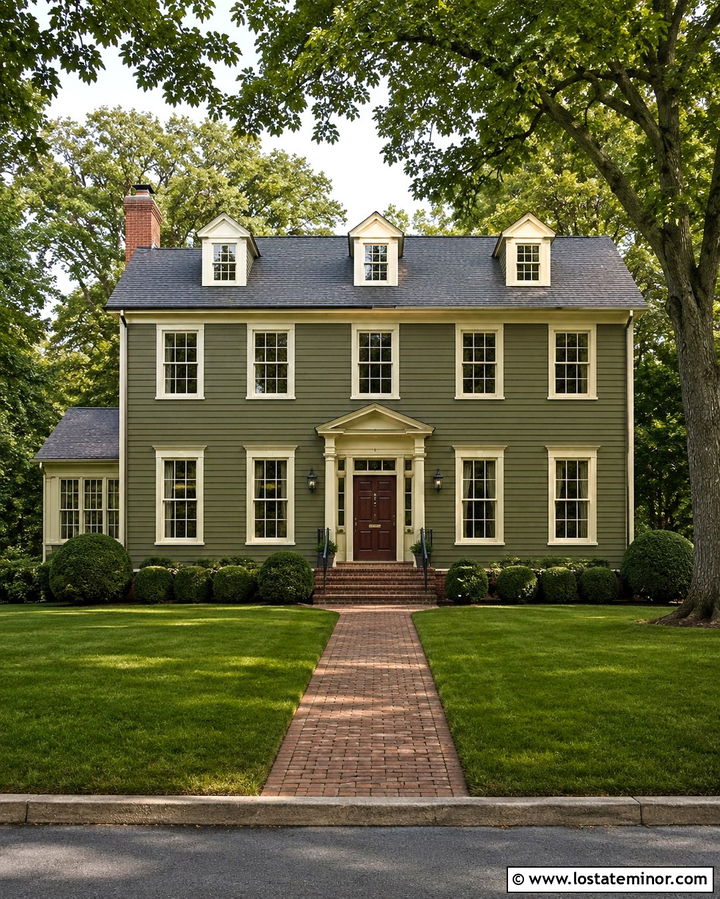
Mahogany gives an olive green home an elegant entrance with rich red-brown depth. It is particularly attractive on Tudor, Colonial, Craftsman, and formal traditional houses. A paneled mahogany door provides enough visual interest without needing a bright painted accent. Surround it with warm ivory trim and add dark bronze or antique brass hardware. A slate-gray roof keeps the composition dignified, while red-brown brick or fieldstone creates a natural link between the door and siding. Protect exterior mahogany with a finish designed for sunlight and moisture, and maintain it before the surface becomes weathered. Repeating the wood tone on porch brackets or a visible garage door can strengthen the design. Keep the remaining accents restrained so the door’s grain and craftsmanship remain clearly visible.
19. Olive Green House With Cedar Front Door
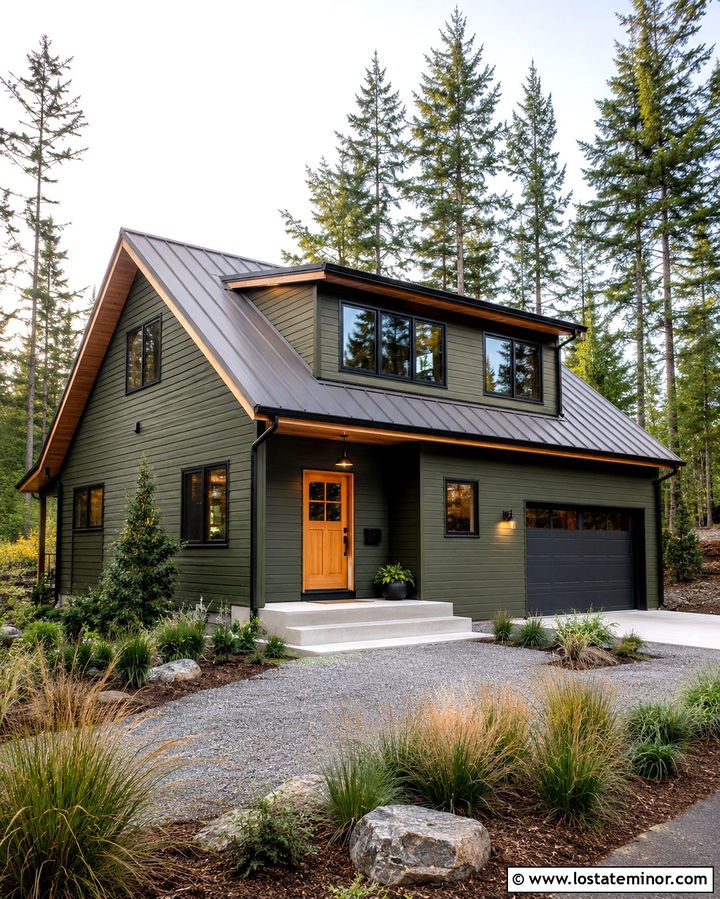
Fresh cedar adds a casual golden tone that brightens olive green siding. This pairing is ideal for lake houses, contemporary cabins, Pacific Northwest homes, modern ranches, and Craftsman bungalows. Cedar can appear orange when newly finished, so select a stain that softens its color and coordinates with the olive. Use black-framed windows and charcoal trim for a modern interpretation, or choose cream trim for a more traditional result. A gray metal roof gives the exterior clean definition. Repeat cedar on porch beams, soffits, or horizontal privacy screens, but avoid covering every accent in wood. Pale concrete steps and native grasses keep the design relaxed. Regular sealing will help the door retain its intended tone rather than fading to an uneven gray.
20. Olive Green House With Oak Front Door
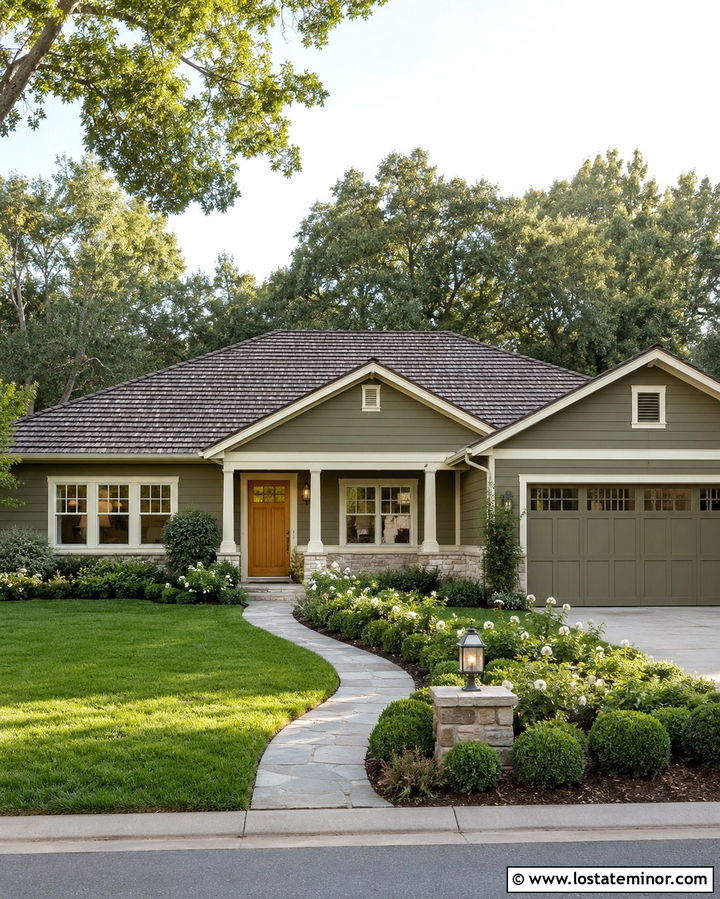
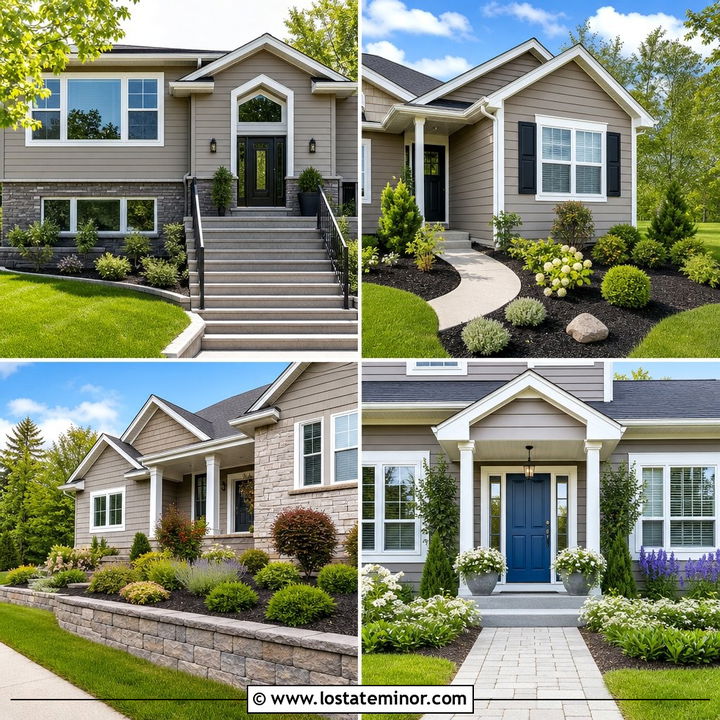
An oak front door introduces warm, familiar grain without the darkness of walnut or mahogany. It works with olive green cottages, traditional ranches, Cape Cod houses, and modest suburban homes. Choose a medium honey or natural oak stain and pair it with cream trim, beige stone, and a weathered brown roof. Black or dark bronze hardware creates enough contrast to define the door’s panels. If the oak is very light, repeat its color through porch furniture or exposed rafter tails so it does not look isolated. Keep shutters dark olive or warm brown. A curved stone walkway, clipped shrubs, and white flowers can make the entrance feel established. The resulting exterior is comfortable and approachable, with enough warmth to balance olive green’s subdued, slightly shadowed quality.
21. Olive Green House With Walnut Front Door
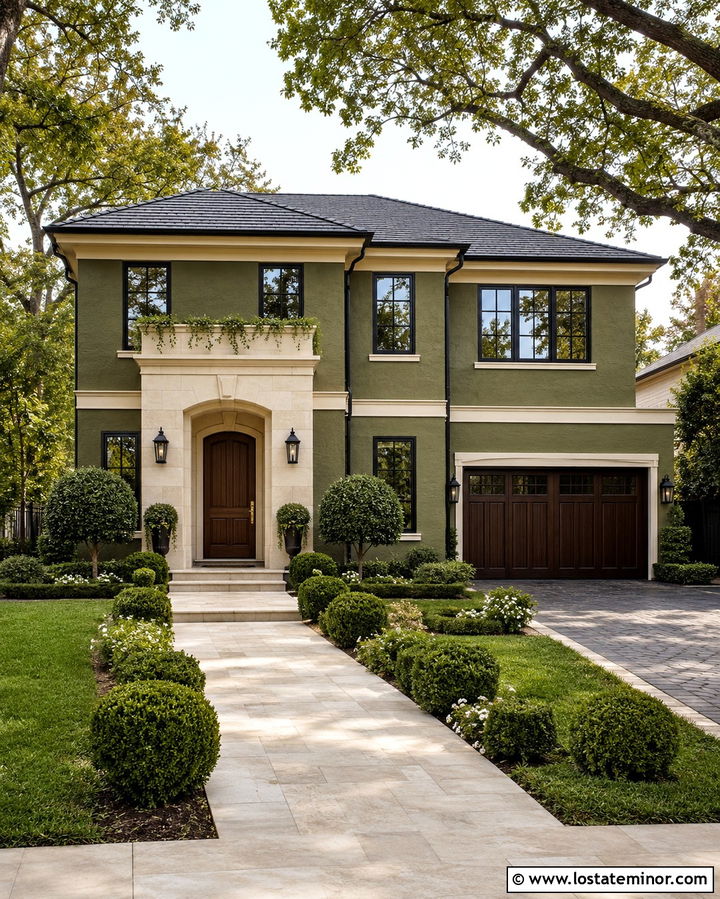
Dark walnut provides an upscale, understated focal point against a lighter olive green facade. Its deep brown color adds richness while preserving the natural character of the exterior. This combination suits contemporary Craftsman homes, transitional houses, modern villas, and larger ranch designs. Use creamy off-white trim to frame the door and windows, then repeat walnut on porch ceilings or garage-door panels. A charcoal roof and black-framed windows introduce modern structure. Light limestone or travertine around the entry prevents the facade from becoming too dark. Select simple brass, bronze, or matte black hardware based on the home’s architecture. Because walnut tones can vary from brown to reddish brown, compare stain samples with the olive siding. A balanced selection should feel warm without appearing orange.
22. Olive Green House With Glass Front Door
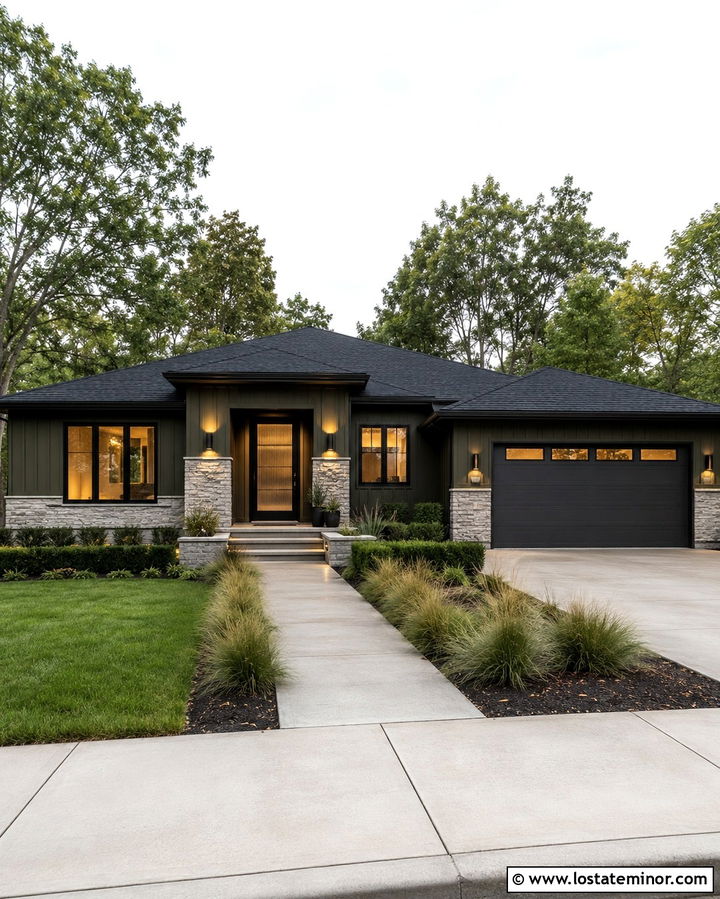
A glass front door lightens the appearance of a dark olive green exterior and allows natural light into the entry. For privacy, use reeded, frosted, or textured glass instead of completely clear panels. A black metal frame creates a modern finish, while a stained wood frame feels warmer and more traditional. This design works on contemporary houses, updated ranch homes, modern farmhouses, and narrow urban facades. Use soft white trim, a charcoal roof, and minimal black accents to frame the entrance. Stone porch walls in pale gray or beige can balance the dark siding. Ensure the door design matches the home’s window proportions so it looks architectural rather than decorative. Simple landscaping will keep attention on the combination of olive color, reflective glass, and clean entry details.
23. Olive Green House With Arched Wood Front Door
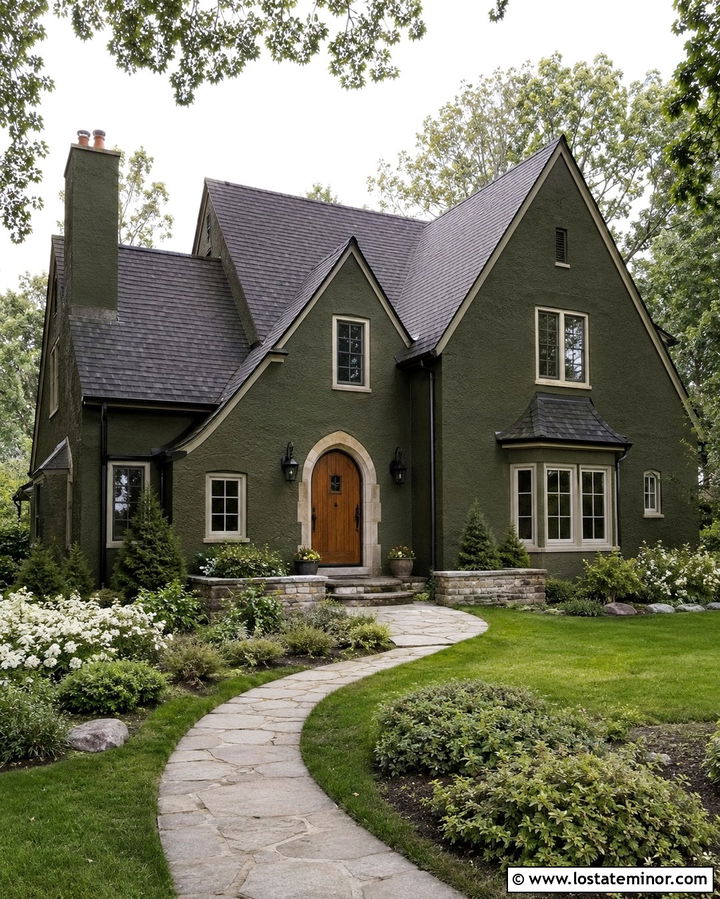
An arched wood door brings old-world character to an olive green exterior. It is especially effective on Tudor cottages, English-inspired homes, Mediterranean houses, and storybook bungalows. Choose a medium or dark wood stain that remains distinct from the green siding. Cream trim around the arch highlights its shape, while stone cladding creates a substantial entrance. Use a steep brown or charcoal roof and dark bronze lanterns to reinforce the traditional architecture. Keep nearby windows simple so the curved door remains the main focal point. A gently curved walkway and informal shrubs can echo the entrance without looking themed. This scheme succeeds when the materials feel authentic and restrained. Avoid excessive decorative hardware that could compete with the strong shape and visible wood grain.
24. Olive Green House With Dutch Front Door
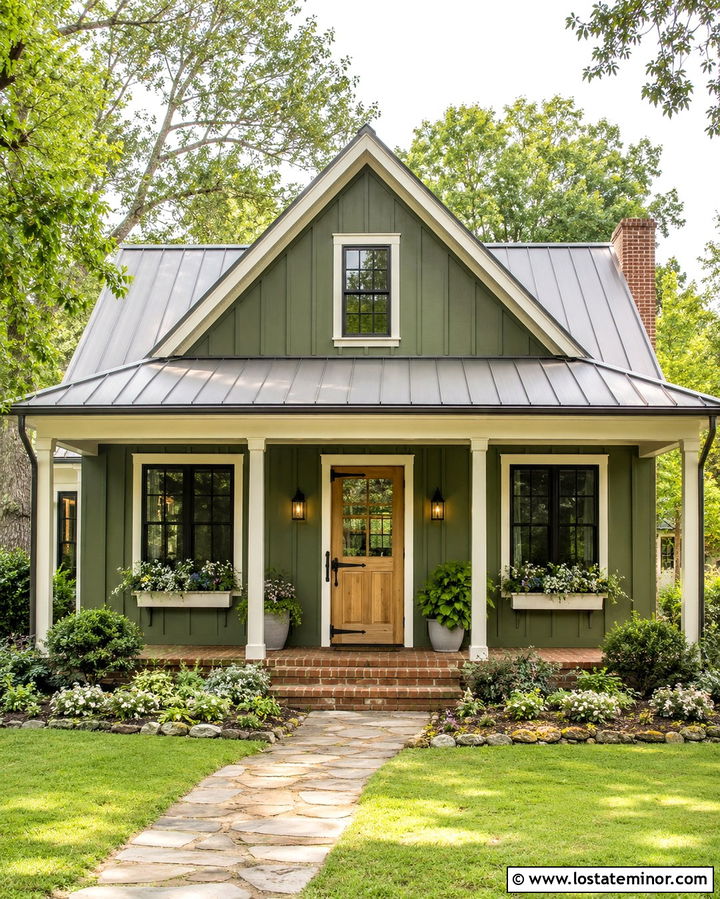
A Dutch front door gives an olive green cottage or farmhouse a practical, welcoming focal point. Paint it warm cream for gentle contrast, muted yellow for extra personality, or use clear-stained wood to emphasize natural texture. Board-and-batten olive siding strengthens the casual rural character, while white window trim and a gray metal roof keep the palette fresh. Add simple black hinges, a traditional latch, and one overhead light rather than overly ornate accessories. A brick or flagstone porch brings warmth to the base of the house. Window boxes and loose garden plantings complement the informal entrance, but they should not hide the divided door. Repeating the door color on a small garden gate or porch bench can connect the entry to the wider landscape.
25. Olive Green House With Double Wood Front Doors
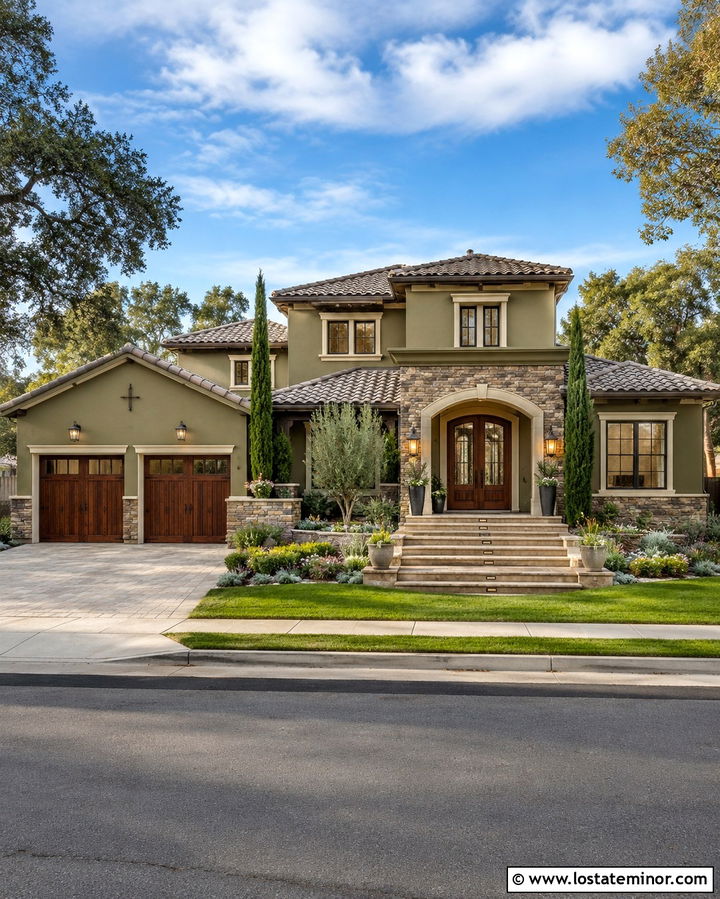
Double wood front doors give a broad olive green facade an appropriately substantial entrance. They work best on large ranch homes, modern farmhouses, Mediterranean houses, and transitional two-story designs with a wide porch. Use walnut, mahogany, or medium oak depending on the roof and masonry colors. Cream trim around the doorway creates separation, while matching wood garage doors can balance the facade from one side to the other. If the house includes stone, choose a blend of tan, charcoal, and muted brown. Large glass panels can prevent the double doors from looking too heavy. Keep hardware symmetrical and relatively simple. Wide steps, paired planters, and a straight walkway will reinforce the entrance while preserving an uncluttered, welcoming view from the street.
26. Olive Green House With Black Glass Front Door
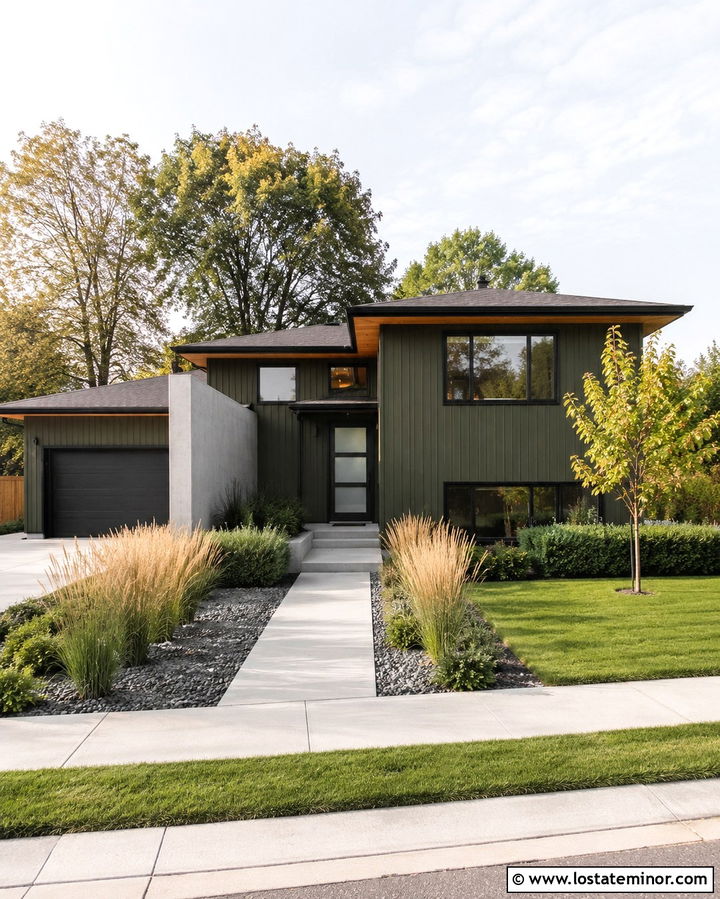
A black glass front door gives olive green siding a sleek, contemporary edge. The dark frame repeats black windows, roof details, and modern lighting, while the glass introduces reflection and visual lightness. This combination is particularly successful on modern homes, boxy split-level renovations, urban infill houses, and minimalist ranch exteriors. Use a deep olive body color with limited warm white or pale concrete accents. Vertical siding can enhance the tall, clean lines of the entrance. Add natural wood soffits or porch panels to soften the green-and-black palette. Frosted glass is useful when the door faces a busy sidewalk. Keep landscaping architectural with ornamental grasses, low hedges, and a broad concrete path. The result feels bold and streamlined without disconnecting from natural surroundings.
27. Olive Green House With Pale Blue Front Door
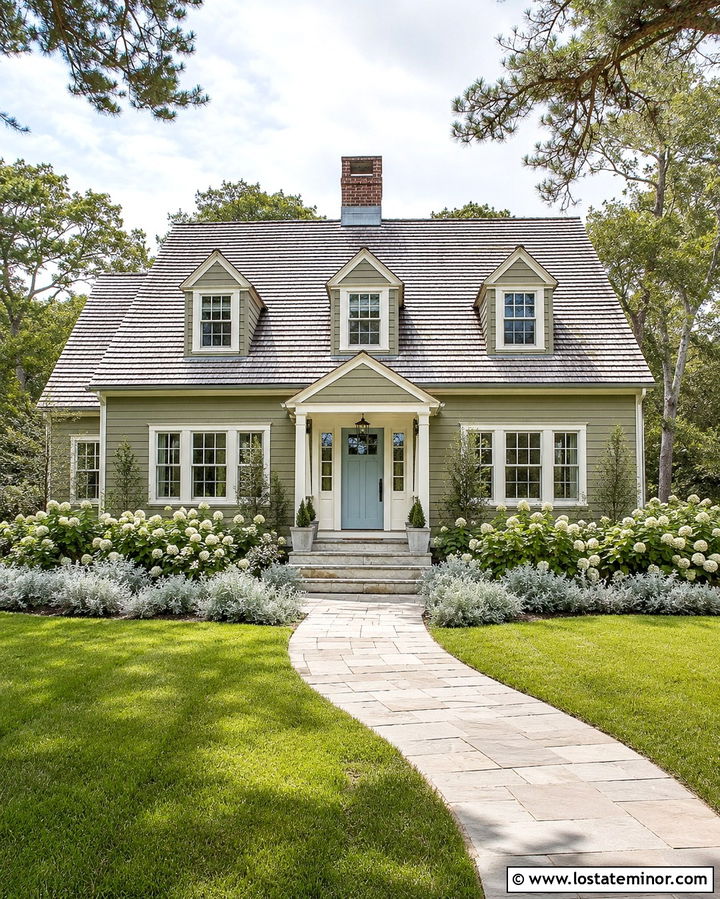
A pale blue front door creates an unexpected, airy contrast against olive green siding. The pairing works best when both colors are muted rather than bright. It can refresh cottage homes, coastal ranches, Cape Cod houses, and small bungalows with simple architecture. Use creamy white trim to create a clean boundary between the green and blue. A soft gray roof, pale stone steps, and brushed nickel or antique brass hardware support the lighter entrance. Avoid adding blue shutters, which could make the palette feel overly coordinated. Instead, keep shutters olive or cream. White flowering shrubs and silvery foliage will connect naturally with the door. Test the blue in shade because some pale blues can turn gray and lose their intended contrast beside a deep olive facade.
28. Olive Green House With Eggplant Front Door
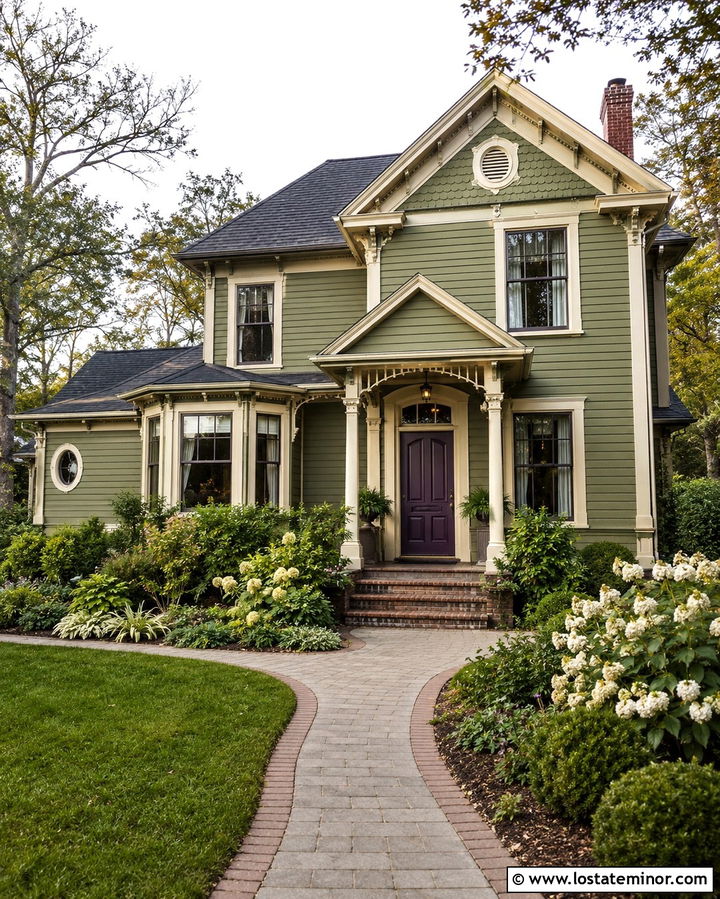
Eggplant offers a sophisticated alternative to red or burgundy on an olive green exterior. These colors sit across from yellow-green tones, creating contrast, yet their muted depth keeps the combination controlled. Use eggplant on the front door of a Victorian cottage, eclectic bungalow, historic row house, or traditional two-story home. Warm cream trim will prevent both colors from appearing too dark around the entry. Add aged brass hardware, a charcoal roof, and stone or brick containing soft brown undertones. Keep shutters dark olive or neutral rather than purple. The door may appear almost brown in shade and more visibly violet in direct sun, so outdoor sampling is essential. Finish the entrance with simple planters and pale flowers that brighten the deeper, garden-inspired palette.
29. Olive Green House With Olive Green Front Door
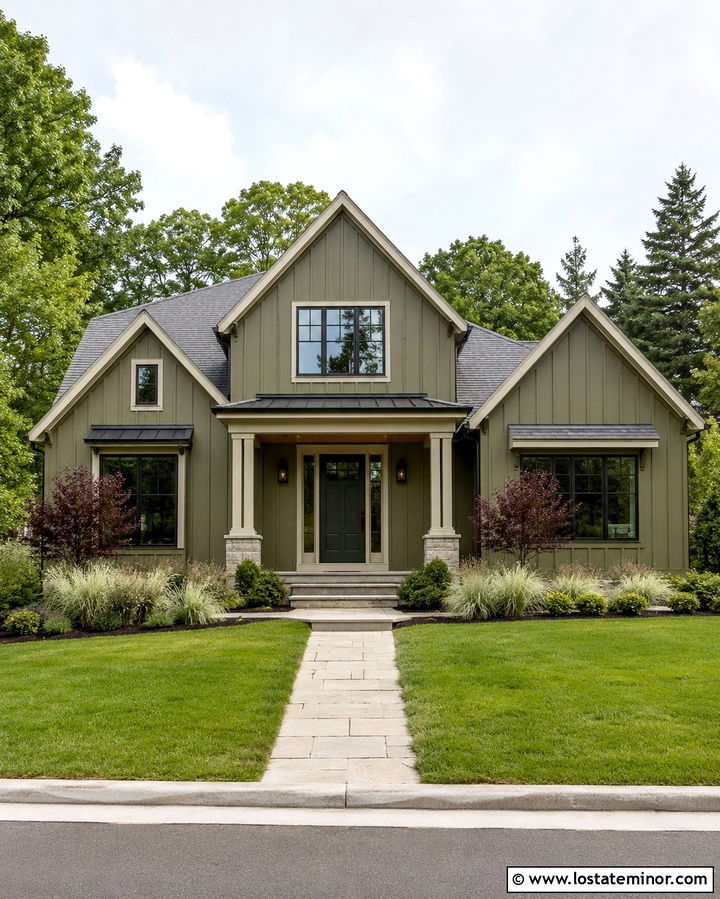
A matching olive green front door produces a calm, color-drenched exterior with minimal contrast. To keep the entrance visible, vary the depth or finish slightly. For example, combine matte medium-olive siding with a darker olive door in a satin finish. Cream trim around the frame can add definition, while black hardware and sconces sharpen the tonal palette. This treatment suits contemporary cottages, monochromatic farmhouses, modern ranches, and compact homes where too many colors could make the facade feel busy. Introduce natural wood on porch posts or the ceiling to add warmth. A gray roof and pale stone walkway will provide neutral balance. Layered landscaping in deep green, silver, and burgundy creates dimension without interrupting the cohesive olive-focused appearance.
30. Olive Green House With Two-Tone Front Door
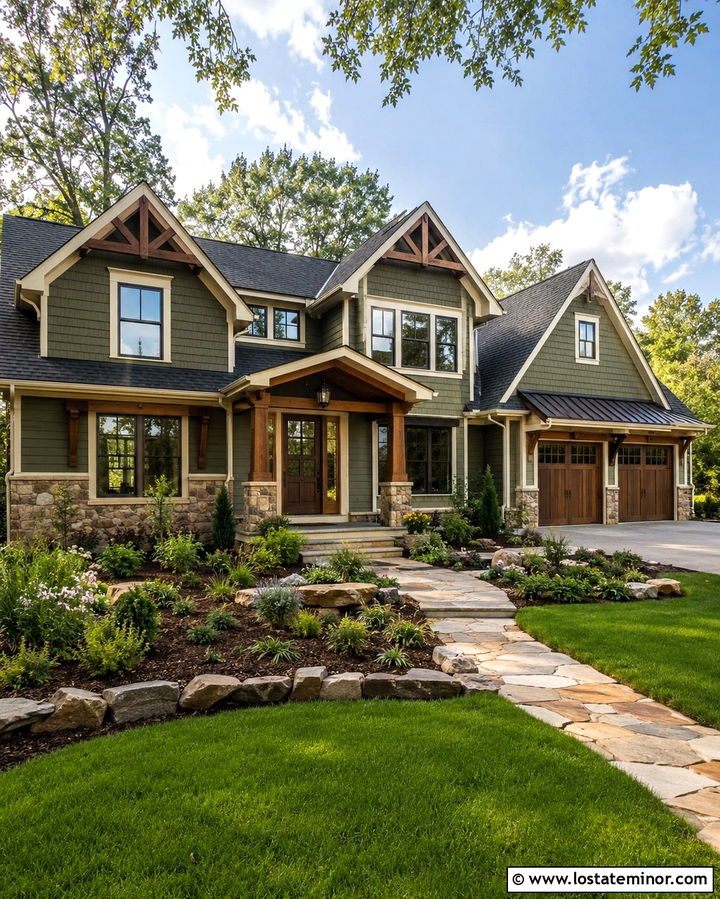
A two-tone front door offers a tailored way to connect several exterior colors. Pair an olive green door with a natural wood surround, or use a walnut door with olive-painted panels. Another option is a cream door framed by a deep olive casing. This treatment works well on Craftsman homes, transitional houses, modern cottages, and custom farmhouses with detailed entrances. Limit the design to two clear finishes so the door does not become visually complicated. Carry one door color onto porch beams or garage accents and use the other on trim. A charcoal roof, mixed stone foundation, and bronze hardware will ground the facade. Careful repetition makes the two-tone entrance feel integrated with the complete house rather than added as a separate decorative feature.
Conclusion:
The best olive green exterior feels balanced from the roofline to the walkway. Front-door color is important, but trim, stone, roofing, hardware, and landscaping determine whether the complete palette looks intentional. Warm wood, terracotta, burgundy, and brown emphasize olive’s earthy side. White and cream create clearer separation, while black, charcoal, navy, and glass introduce a more modern finish. Always compare exterior samples beside permanent materials and observe them at several times of day. These 30 Olive Green House Design With Front Door Ideas offer options for cottages, ranches, farmhouses, Colonials, and contemporary homes. Choose the combination that respects your architecture, complements the setting, and makes the entrance easy to recognize.

Related posts: