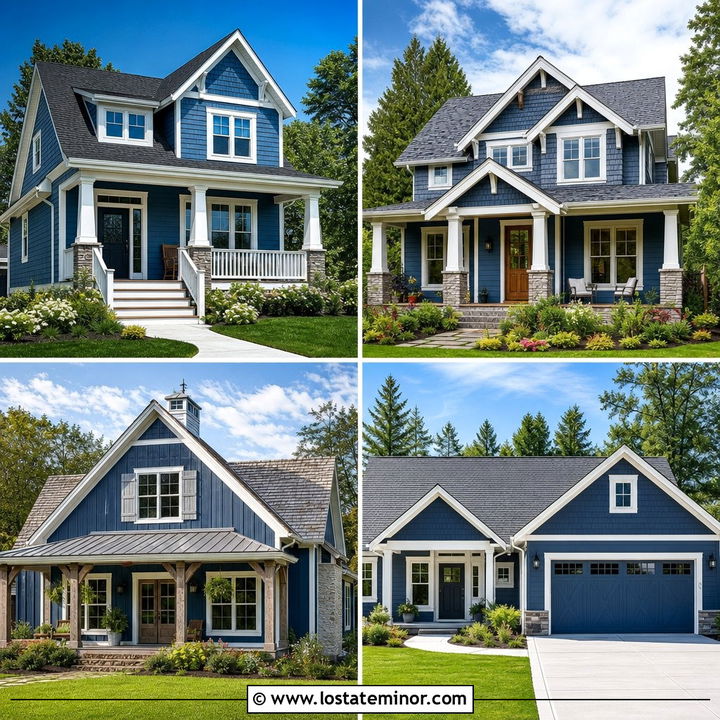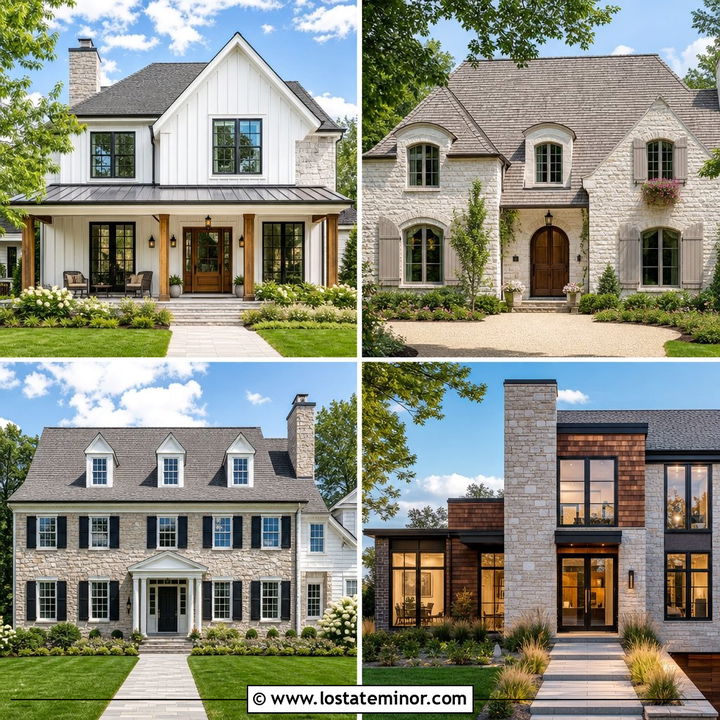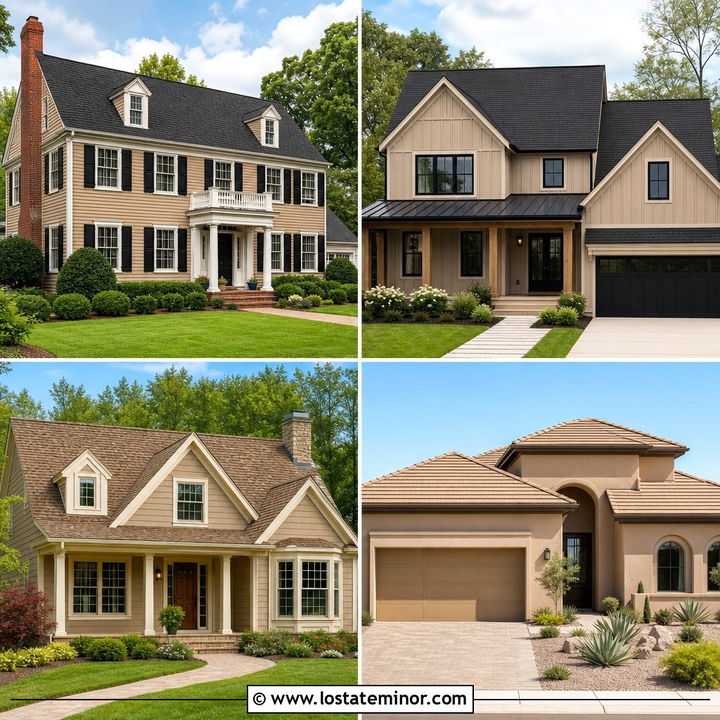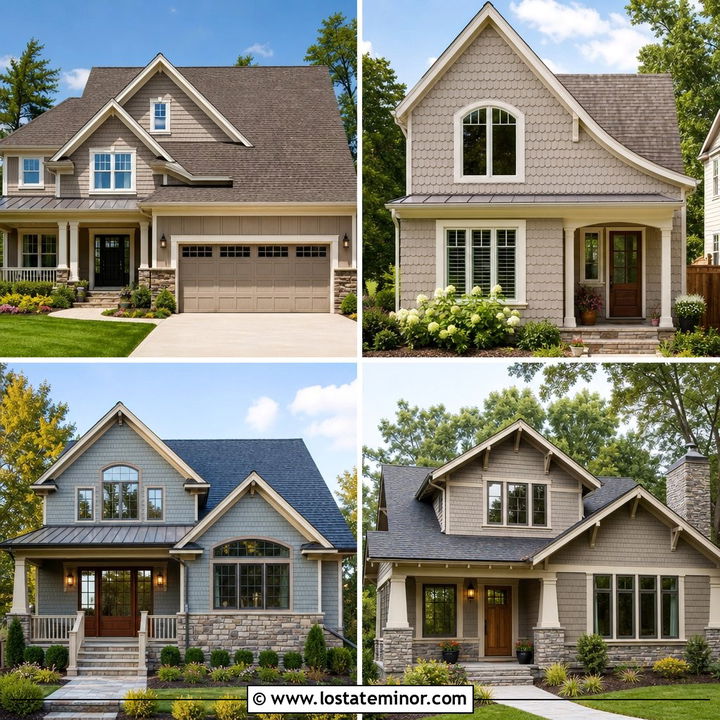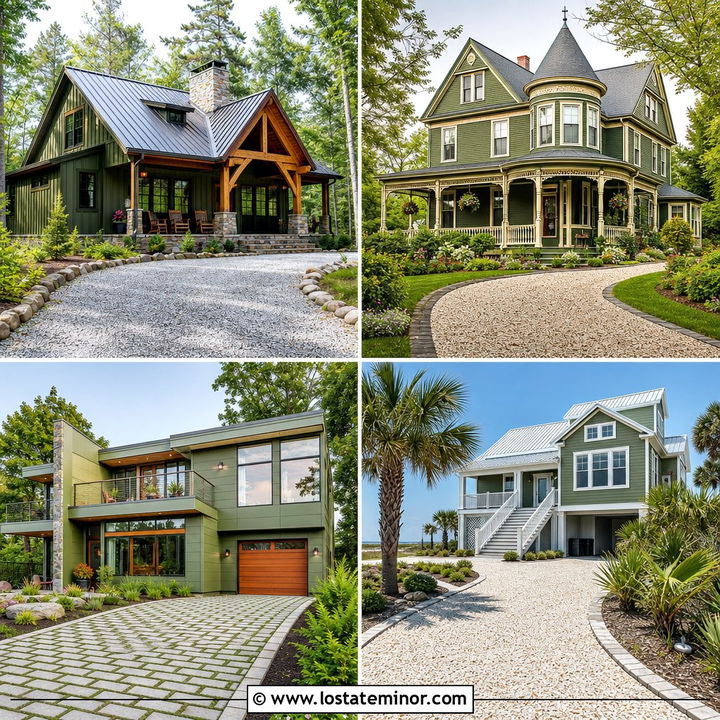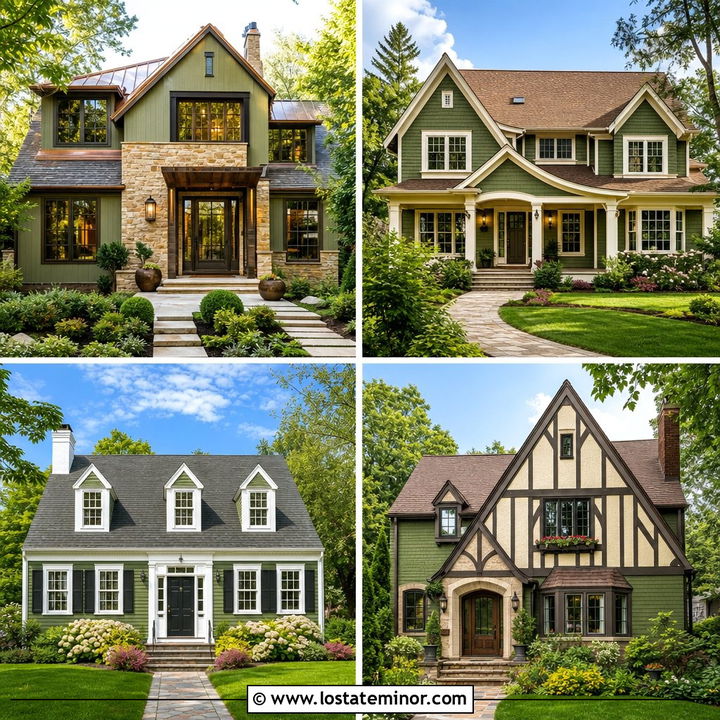
Moss green brings a grounded, natural character to shingle-covered homes. It feels rich without looking too dark and works beautifully with cedar, stone, brick, and painted wood. The right roof, trim, and front door can take this earthy color in many directions, from relaxed coastal to rustic mountain design. When planning the whole facade, consider how the shingles create texture and how sunlight changes the green throughout the day. Warm wood creates softness, while black accents give the exterior a sharper finish. Cream and white trim can make the same shade feel brighter. The complete looks below explore practical, distinctive ways to use **30 Moss Green House Design With Shingles Ideas** for welcoming curb appeal.
1. Moss Green Cedar Shingle Cottage
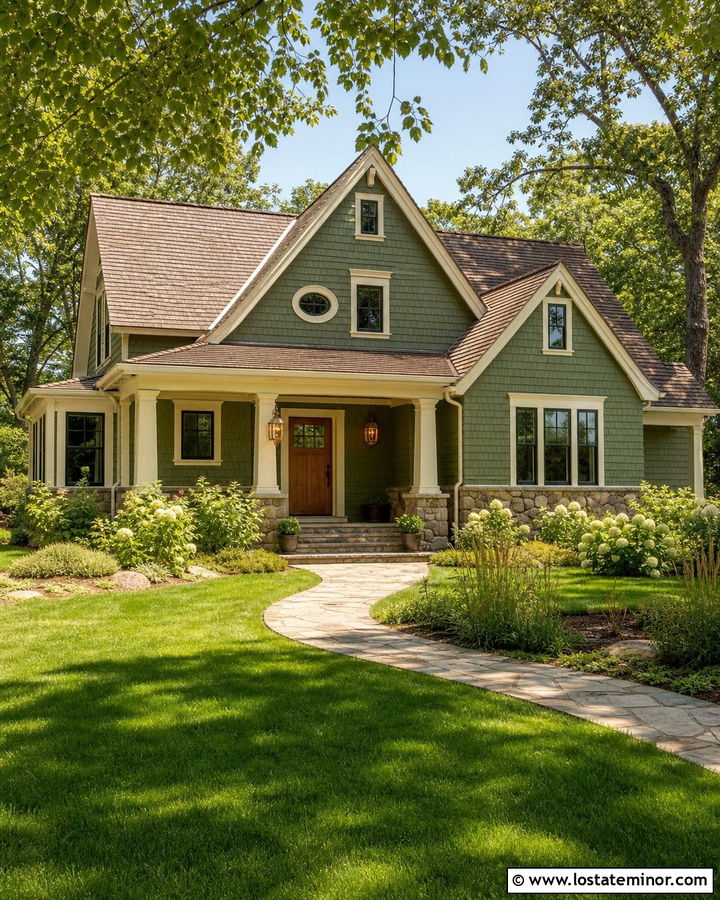
A small cottage feels especially inviting when moss green covers its cedar shingle siding. The overlapping texture creates gentle changes in color as sunlight moves across the facade. Use warm cream on the window trim, fascia, and porch columns to keep the green from appearing heavy. A medium brown architectural shingle roof supports the natural palette without competing with the siding. Complete the exterior with a stained oak front door and simple copper lighting. A fieldstone foundation can add another layer of organic texture. Keep the landscaping slightly informal with hydrangeas, ornamental grasses, and a curved stone walkway. This combination works well for woodland lots, older neighborhoods, and homeowners who prefer a softer alternative to bright white cottages.
2. Moss Green Craftsman With Gray Roof Shingles
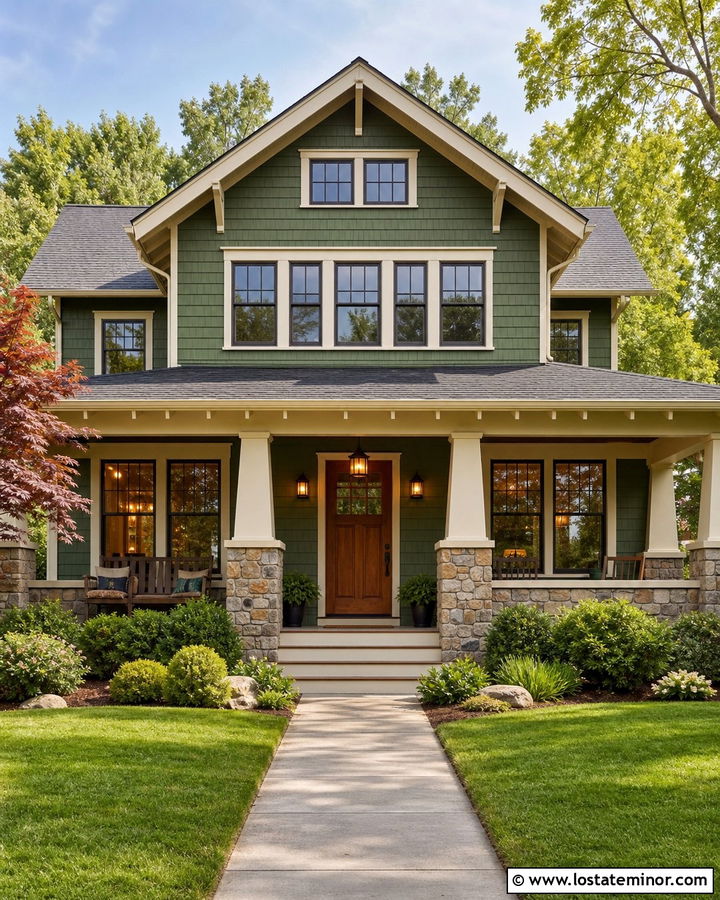
Broad porch columns and a low roofline make a Craftsman house a strong match for moss green siding. Choose medium charcoal-gray roof shingles to create definition while keeping the overall palette balanced. Cream trim can highlight the tapered columns, window casings, exposed rafters, and wide eaves. Natural stone porch piers add weight near the foundation and connect the green body color to the landscape. For a warm focal point, use a rich walnut stain on the front door and porch ceiling. Black lanterns and dark bronze hardware provide small, practical accents. A straight walkway bordered by low shrubs keeps the front yard orderly. The finished exterior feels established, comfortable, and detailed without relying on too many competing colors.
3. Moss Green Cape Cod With Weathered Shingles
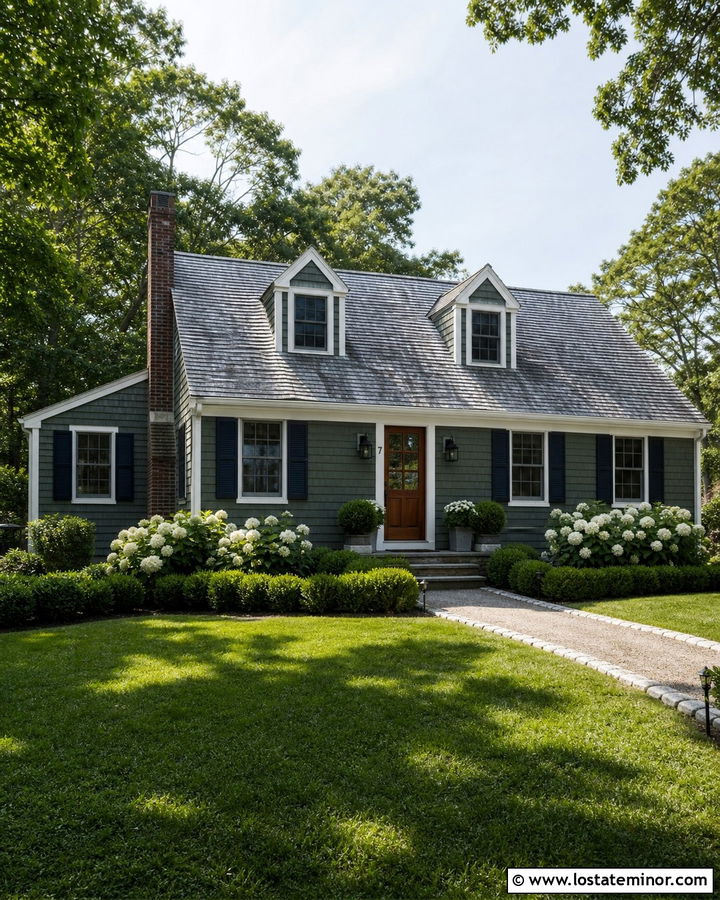
What if a traditional Cape Cod exterior felt more connected to its surroundings? Moss green shingle siding gives the compact facade a calm, updated appearance while preserving its familiar shape. Pair the body with soft white trim around the dormers, windows, corner boards, and roofline. Weathered gray roof shingles help create a coastal character without making the house look overly themed. Add muted navy shutters for controlled contrast and a natural mahogany front door for warmth. A brick chimney can remain unpainted, especially when it contains soft red and brown tones. White hydrangeas, clipped boxwoods, and a gravel-edged path complete the look. The scheme is simple, but every exterior element supports the architectural symmetry.
4. Moss Green Ranch With Black Roof Shingles
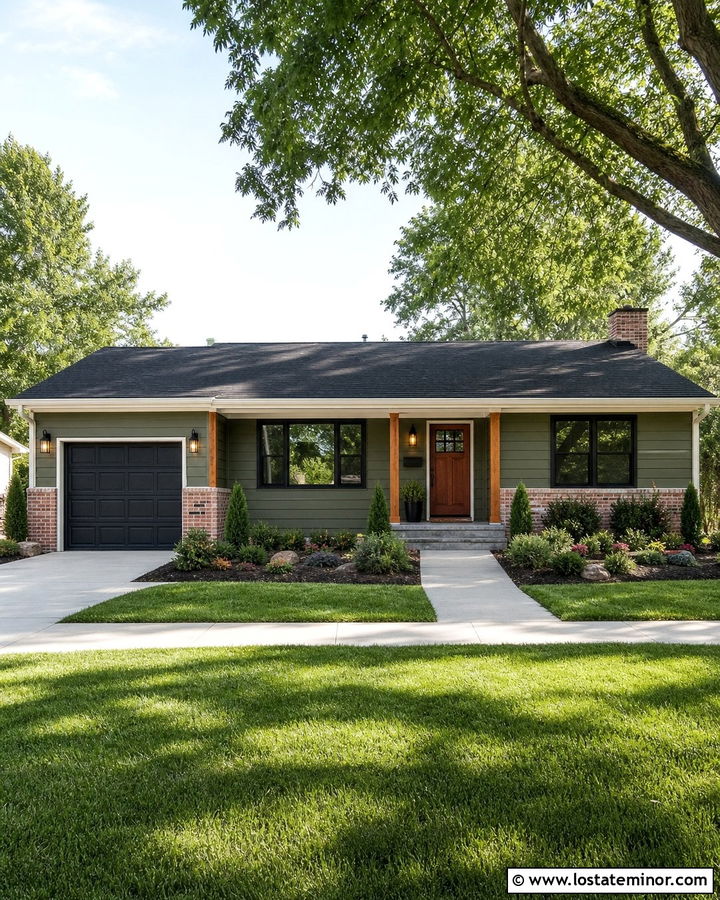
A long ranch facade benefits from strong color placement and clear visual anchors. Moss green lap siding creates an earthy background, while black architectural roof shingles sharpen the low horizontal roofline. Continue the black on the window frames and exterior lights, but use warm white for the fascia, soffits, and garage trim. This prevents the upper half of the house from looking too dark. A cedar front door and matching porch posts bring warmth to the center of the elevation. If the home has brick, leave it natural when its colors include brown, tan, or muted red. Wide planting beds with evergreen shrubs can soften the extended footprint. The final design feels clean and updated while respecting the ranch’s straightforward architecture.
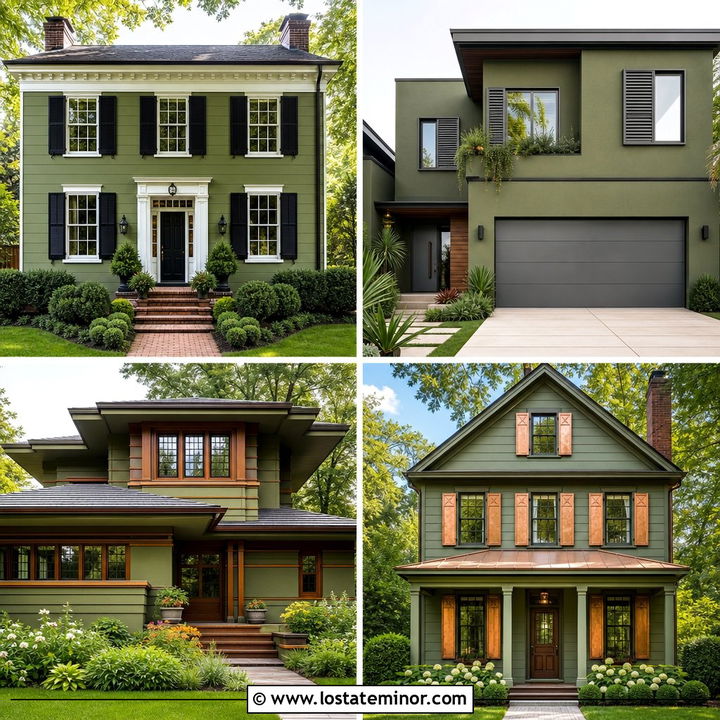
5. Moss Green Colonial With White Trim
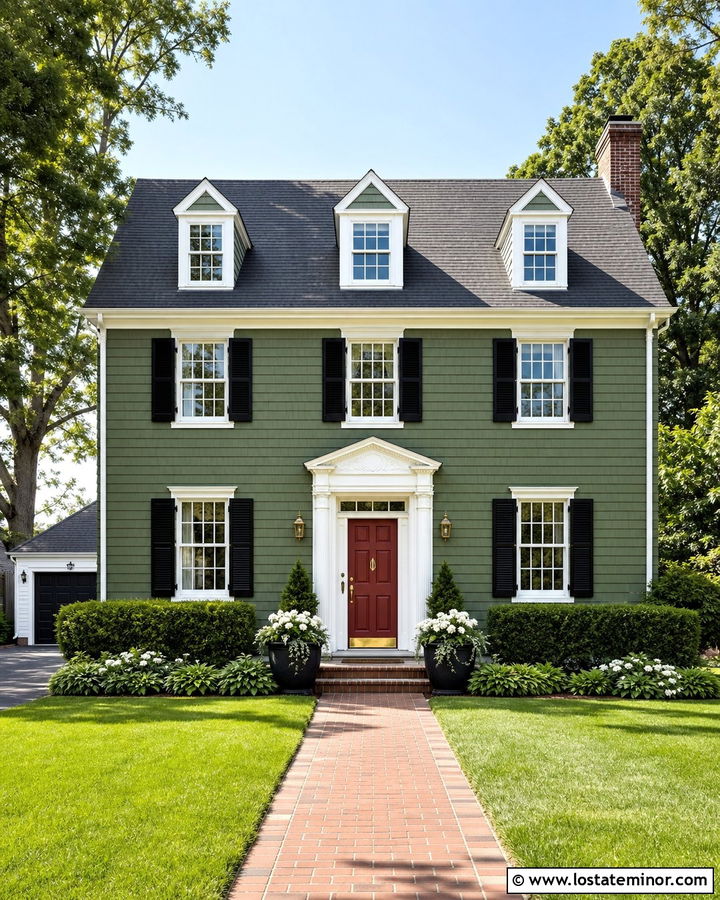
Symmetry makes every color decision more noticeable on a Colonial home. Moss green clapboard or shingle siding provides a distinguished body color that still feels approachable. Crisp white trim can outline the evenly spaced windows, entry surround, cornice, and corner boards. Select deep charcoal roof shingles rather than solid black to create a slightly softer transition above the green. Black shutters reinforce the formal arrangement and help the windows feel more substantial. For the entrance, consider a muted brick-red door with polished brass hardware. The warm red adds personality without disrupting the traditional palette. Straight hedges, paired planters, and a centered brick walkway emphasize the architecture. This complete scheme delivers classic curb appeal with richer color than a basic neutral exterior.
6. Moss Green Bungalow With Cedar Accents
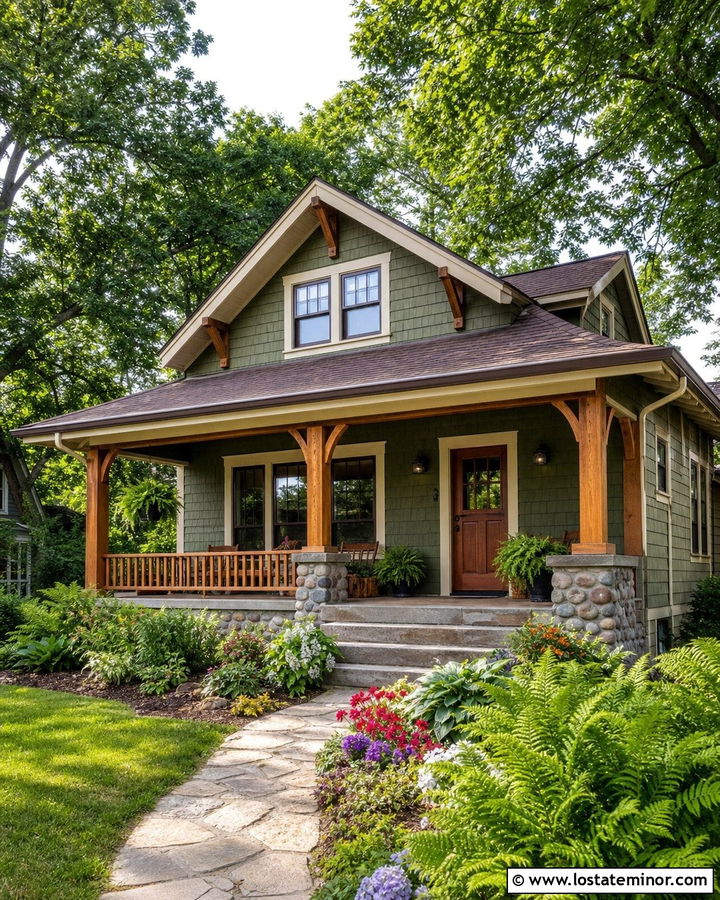
The deep porch of a bungalow offers plenty of room for natural materials. Cover the main house in moss green shingle siding, then use cedar on the porch posts, brackets, railing, and front door. A dark brown shingle roof will echo the wood accents and keep the exterior feeling cohesive. Choose muted cream instead of bright white for the window trim and fascia. The softer trim works more naturally with the earthy green and wood grain. River rock around the porch foundation can introduce subtle gray, rust, and tan tones. Finish the yard with layered ferns, hostas, and low flowering plants. This palette looks particularly comfortable beneath mature trees, where the shingle texture and wood details can become part of the surrounding landscape.
7. Moss Green Modern Farmhouse With Shingle Siding
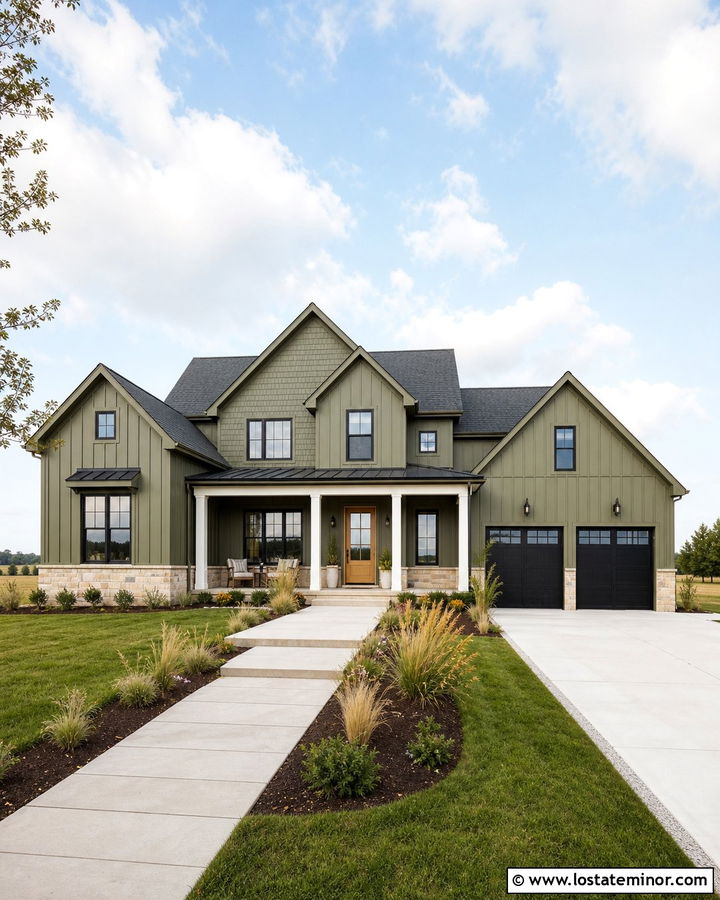
A modern farmhouse does not have to be white. Moss green board-and-batten siding paired with matching shingle-covered gables creates depth while maintaining a simple, unified facade. Use warm white on the porch columns, window trim, and fascia for a clean contrast. Charcoal roof shingles can visually ground the tall roofline and connect with black window frames. A light oak front door prevents the palette from becoming too cool or severe. Keep the porch floor a medium natural wood tone and use streamlined black lights beside the entrance. A pale stone skirt can soften the lower level. Simple foundation shrubs, native grasses, and a wide concrete walkway give this moss green exterior a polished farmhouse character without excessive rustic decoration.
8. Moss Green Tudor With Brown Shingles
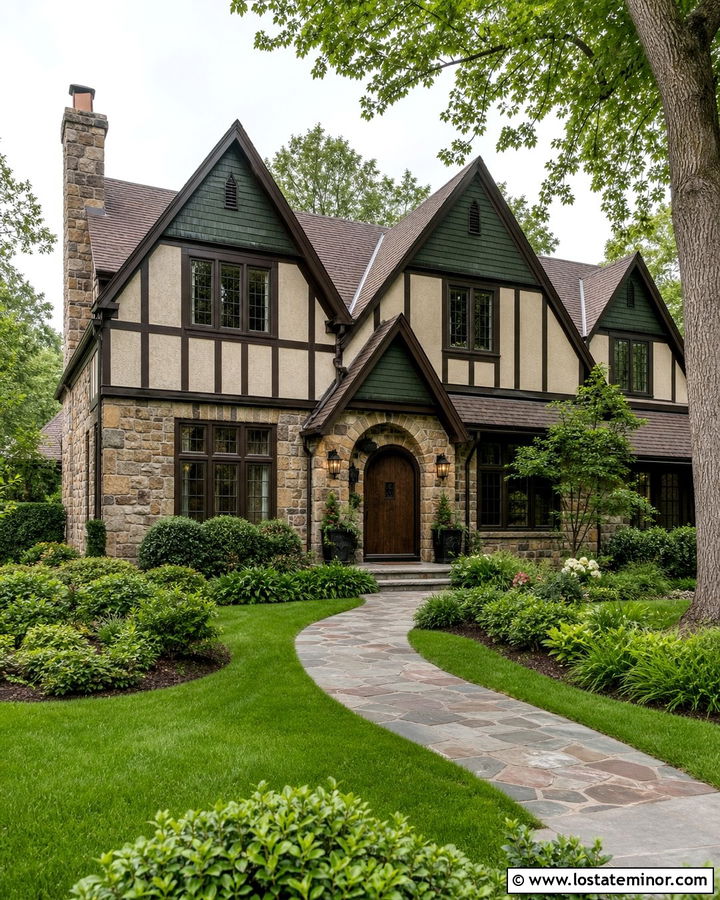
Dark timber details can make moss green feel especially rich on a Tudor-inspired house. Apply moss green to the shingle siding within the front-facing gables, then use warm cream stucco on the larger wall sections. Deep brown half-timbering will frame the green and emphasize the steep rooflines. Choose dimensional brown roof shingles with subtle charcoal variation so the roof does not appear flat. A rounded walnut front door fits naturally beneath an arched stone entry. Keep the window trim cream, allowing the dark mullions to provide definition. Irregular stone along the foundation can tie all the earth tones together. The completed scheme feels historic and substantial, yet the controlled use of moss green keeps the exterior from looking overly dark or dated.
9. Moss Green Split-Level With Stone Accents
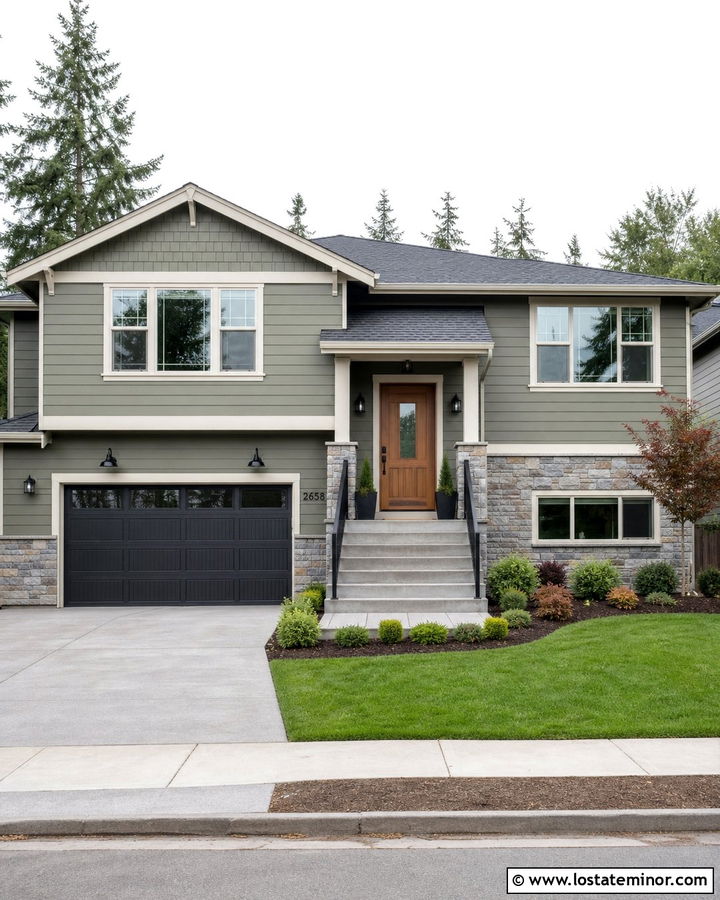
A split-level exterior often contains several competing planes, so a limited color scheme creates better balance. Use moss green lap siding across the main level and matching shingle siding on the upper section. Medium-gray roof shingles can connect those areas while complementing a gray and tan stone base. Paint the trim a soft ivory and use charcoal on the garage door for visual weight near the driveway. A cedar front door creates a warm focal point between the home’s offset levels. Horizontal house numbers and simple black lighting can add a modern touch. Repeat the stone beside the entry steps if possible. Structured landscaping with low shrubs and one ornamental tree helps organize the yard while leaving the varied architecture visible.
10. Moss Green Coastal House With Gray Shingles
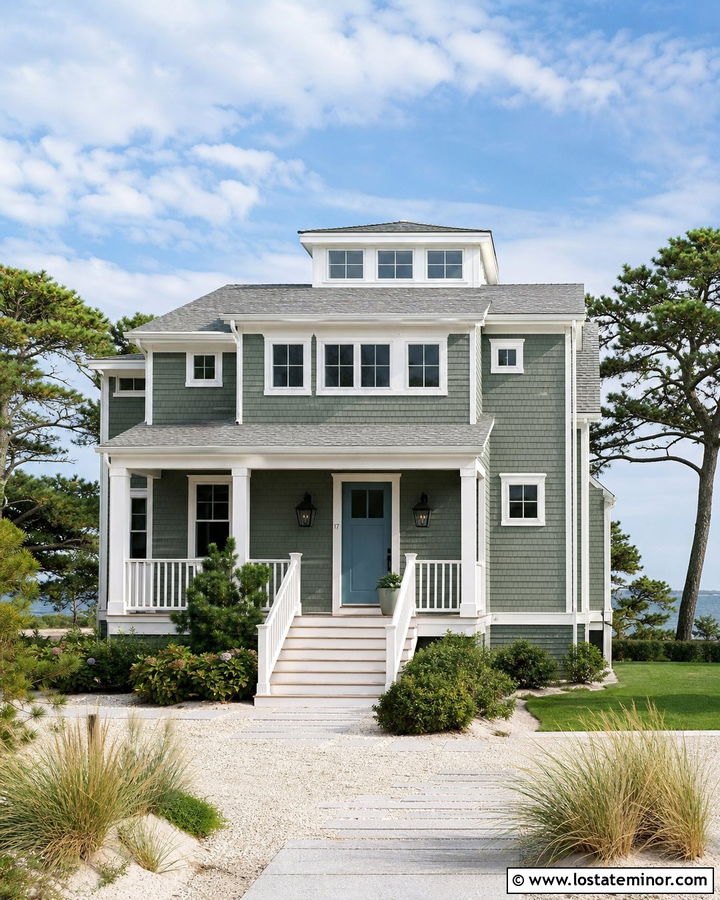
Moss green can feel surprisingly fresh in a coastal setting when paired with weathered finishes. Use the color on cedar shingle siding across a two-story beach house, then select pale gray roof shingles that resemble naturally aged wood. Soft white trim around the windows, balcony, and roofline keeps the facade bright. Instead of predictable navy, introduce a muted blue-gray front door for a quiet coastal accent. White porch railings and light natural decking help the lower level feel open. Keep exterior lights simple and resistant-looking in a matte black or aged zinc finish. Beach grasses, gravel paths, and low salt-tolerant shrubs complete the relaxed presentation. The green remains earthy, but the lighter supporting colors prevent the exterior from feeling forest-like.
11. Moss Green Cabin With Wood Shingles
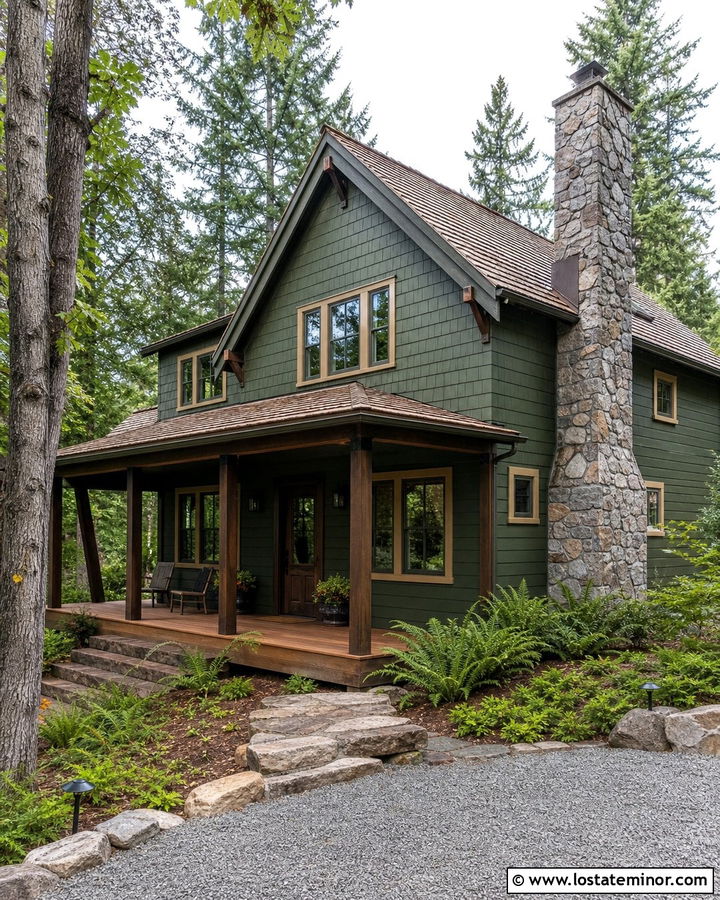
Surrounded by trees, a cabin can support a deeper and more textural version of moss green. Use painted moss green wood shingles on the gable ends and horizontal siding on the lower walls. A natural cedar shake roof introduces warm variation and reinforces the handcrafted appearance. Stain the porch posts, railing, and front door a dark walnut brown. Window trim in muted tan will define the openings without creating the sharp contrast of white. A rough stone chimney can become the main architectural accent, especially when its colors include gray and earthy brown. Complete the setting with a gravel drive, native ground cover, and irregular stone steps. This exterior feels integrated with a wooded site while remaining colorful enough to stand out among surrounding trees.
12. Moss Green Victorian With Scalloped Shingles
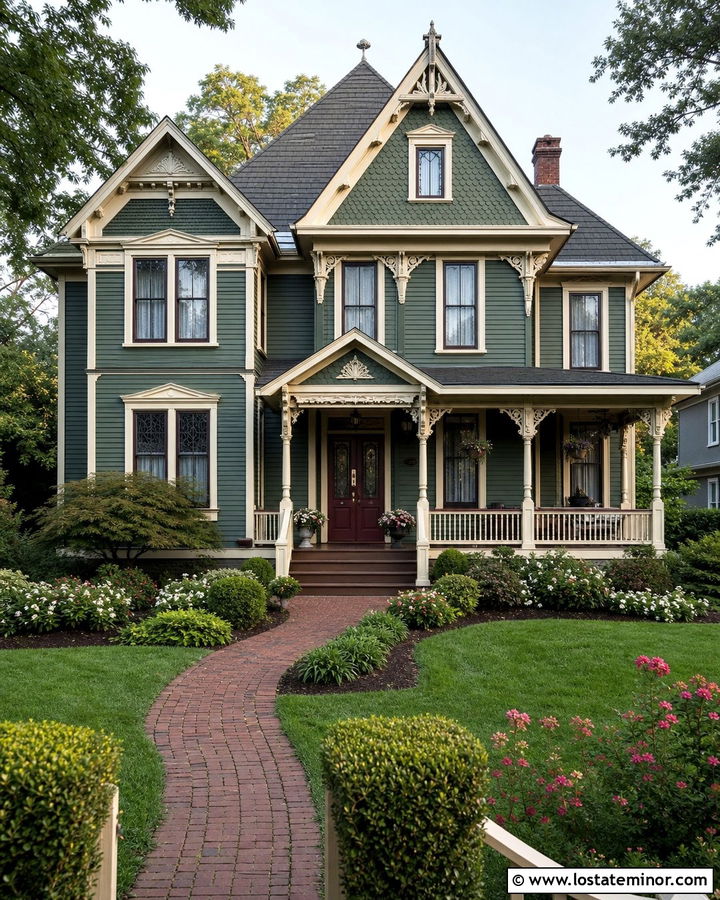
Decorative shingles offer a controlled way to give a Victorian house more detail. Use moss green on the primary clapboard siding and a slightly darker moss green on scalloped shingles within the gables. Cream trim can highlight the brackets, porch posts, window surrounds, and decorative fascia. Add muted burgundy to the front door and small architectural details for a historically inspired accent. A charcoal-gray shingle roof provides a neutral cap above the layered color scheme. Keep porch flooring medium brown to introduce warmth without adding another painted color. Carefully shaped shrubs and a curved brick path complement the decorative facade. The key is repetition: use each accent color in several small places so the finished exterior feels intentional rather than overly busy.
13. Moss Green Dutch Colonial With Gambrel Roof
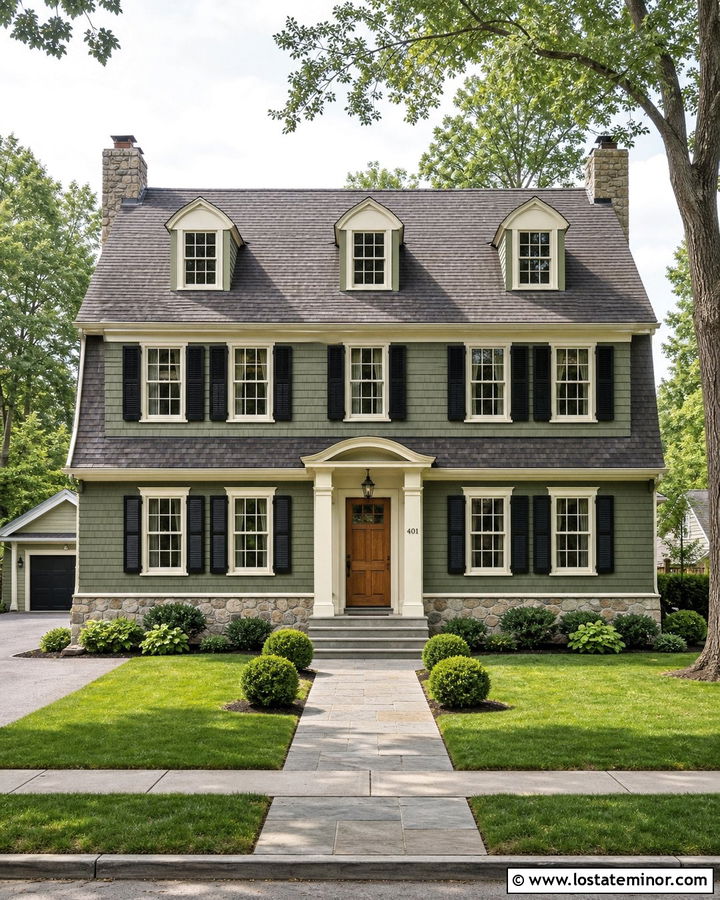
The sweeping gambrel roof of a Dutch Colonial naturally becomes the dominant exterior feature. Cover it with dark weathered-gray shingles, then use moss green shingle siding on the dormers and main facade. Cream trim around the roof edges, windows, and centered entrance helps define the home’s recognizable shape. Black shutters add structure without pulling attention away from the roofline. Consider a honey-toned wood door for the central entrance and repeat that warmth in porch benches or planters. If the foundation is visible, pale fieldstone can soften the transition to the yard. A straight walkway and symmetrical landscaping suit the architecture. The moss green body color gives this traditional house a natural presence while the restrained accents maintain its formal balance.
14. Moss Green Lake House With Cedar Shingles
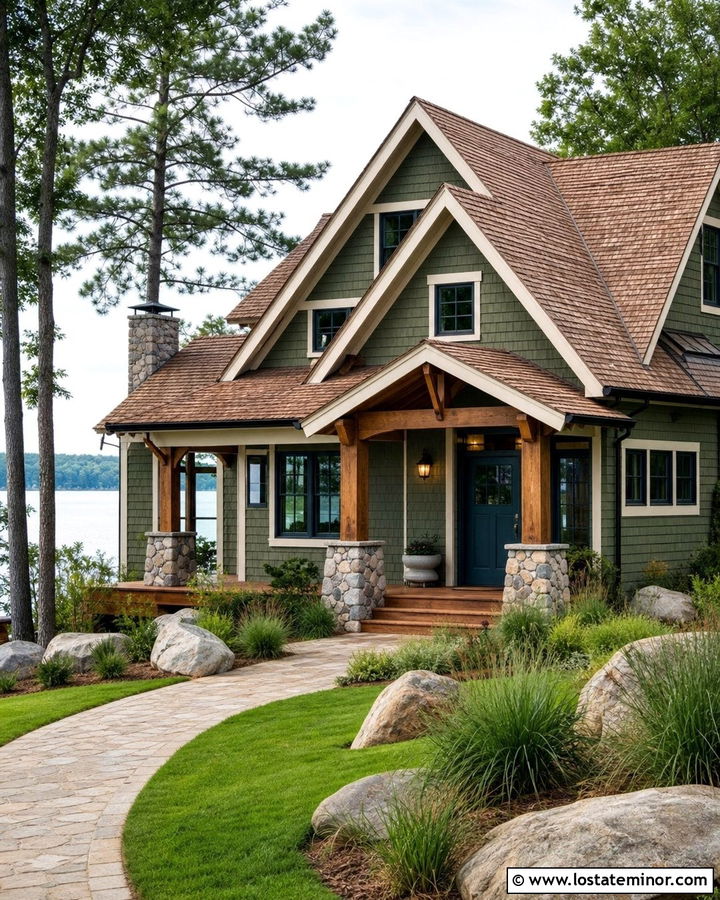
Reflections from water and open sky can make exterior colors appear lighter, so a medium moss green works well for a lake house. Apply it to broad shingle siding and pair it with warm cedar roof shingles for an inviting natural palette. Use off-white trim on the windows, porch railing, and fascia to add brightness. A deep blue-green front door can subtly reference the waterfront without appearing overly nautical. Stone porch columns provide visual weight and support a wide covered deck. Keep the decking natural or use a transparent brown stain that allows the grain to remain visible. Native grasses, boulders, and a gently curving walkway help the home settle into the shoreline setting. The overall exterior feels relaxed, durable, and thoughtfully connected to nature.
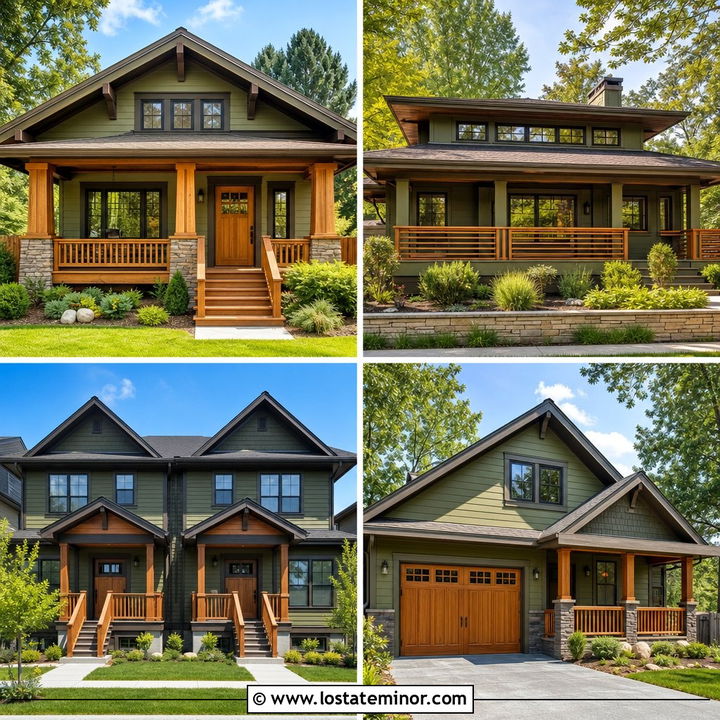
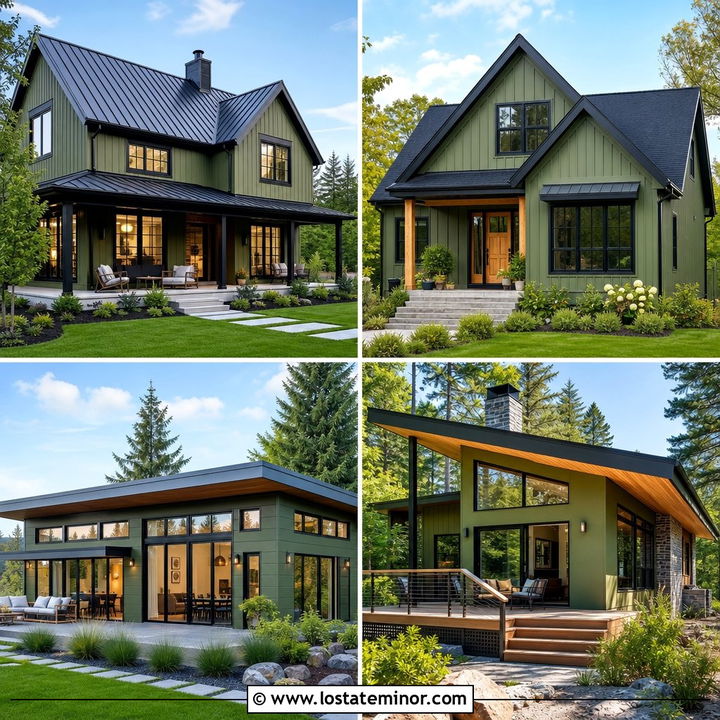
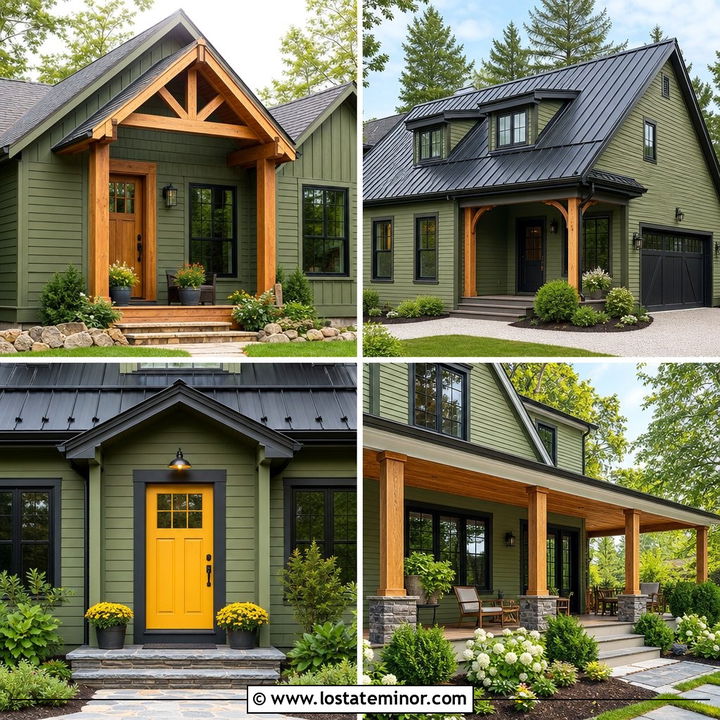
15. Moss Green Mountain House With Charcoal Shingles
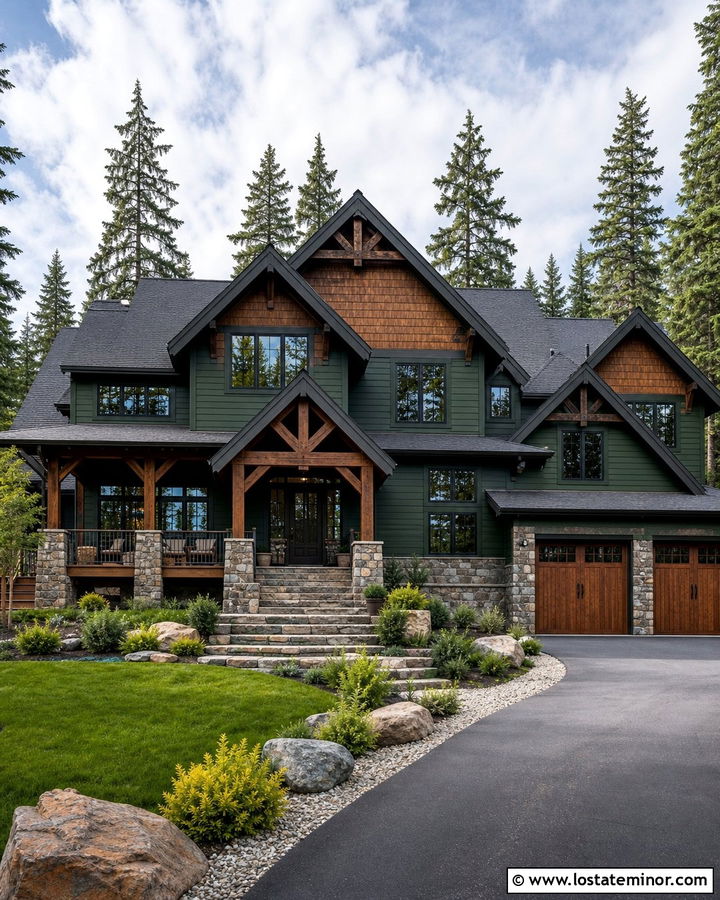
Strong rooflines and rugged materials call for a moss green shade with enough depth to hold its own. Use moss green fiber-cement siding on the main walls and cedar shingles in the tallest gables. Charcoal architectural shingles give the roof a substantial appearance and coordinate with dark window frames. Add natural timber beams beneath the gables and across the porch to warm the exterior. A mixed stone foundation containing gray, rust, and brown tones can connect the siding, roof, and wood. Keep the garage doors dark brown or clad them in stained wood. Broad steps and simple native landscaping preserve views of the architecture. This complete scheme has a sturdy mountain character without becoming too dark or visually heavy.
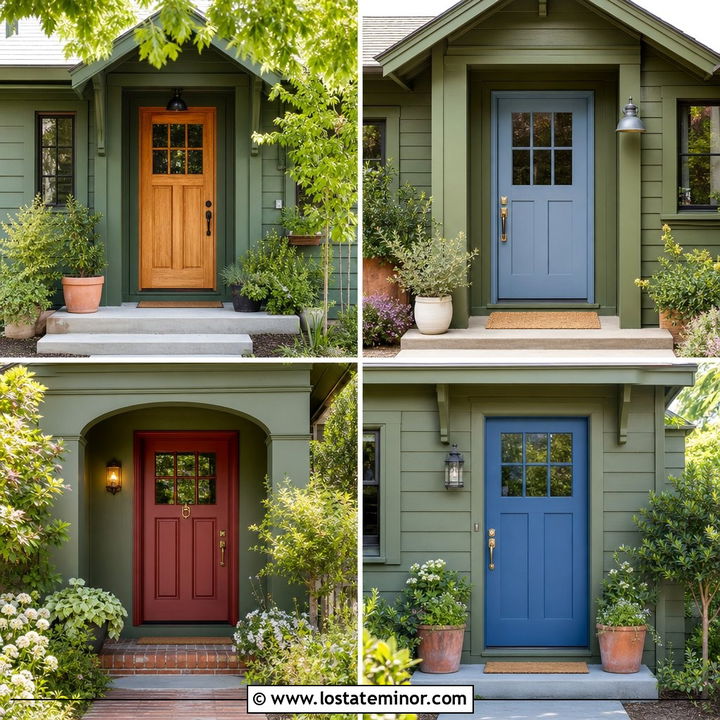
16. Moss Green Shingle House With Red Door
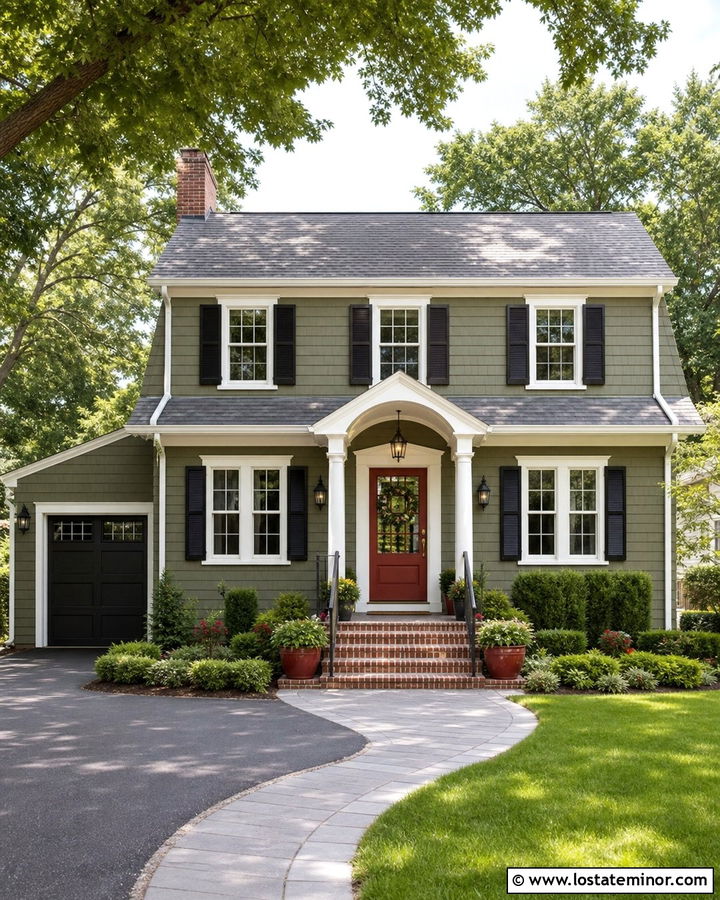
A red front door can give moss green siding a confident focal point when the shade is carefully chosen. Select a muted brick red rather than a bright primary red. The warmer, softened tone relates better to the earthy green. Cover the facade in moss green cedar shingles and use creamy white on the trim and porch columns. Medium-gray roof shingles keep the larger surfaces neutral and allow the entrance to stand out. Repeat the red only in small details, such as planters or seasonal flowers, to avoid overusing it. Natural brick steps can strengthen the connection between the door and the landscape. The final exterior feels friendly and traditional, with enough contrast to remain memorable from the street.
17. Moss Green Shingle House With Black Trim
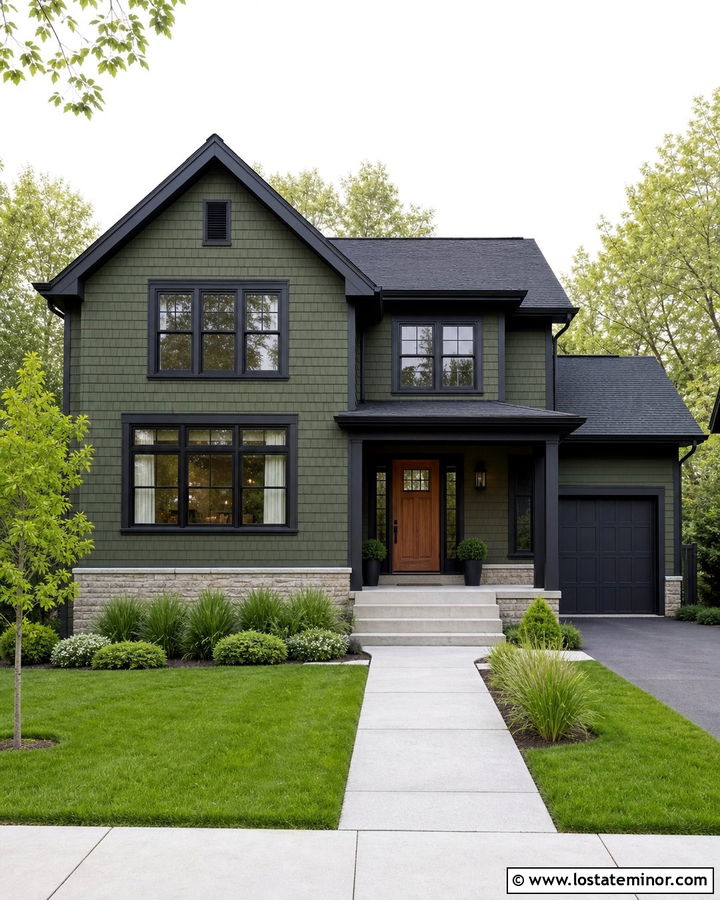
For a bolder exterior, surround moss green shingle siding with clean black trim. This combination works especially well on a contemporary two-story house with simple window shapes and limited ornamentation. Use black for the frames, fascia, gutters, and garage door to create a unified outline. A charcoal-black shingle roof should contain slight tonal variation so the roof retains visible texture. Warm the scheme with a medium cedar front door and matching porch ceiling. Light gray concrete steps or pale stone around the foundation can stop the lower facade from becoming too dark. Keep the landscaping minimal with ornamental grasses and compact evergreen shrubs. The resulting look is modern and graphic, but the moss green body keeps it connected to the natural surroundings.
18. Moss Green Shingle House With Cream Trim
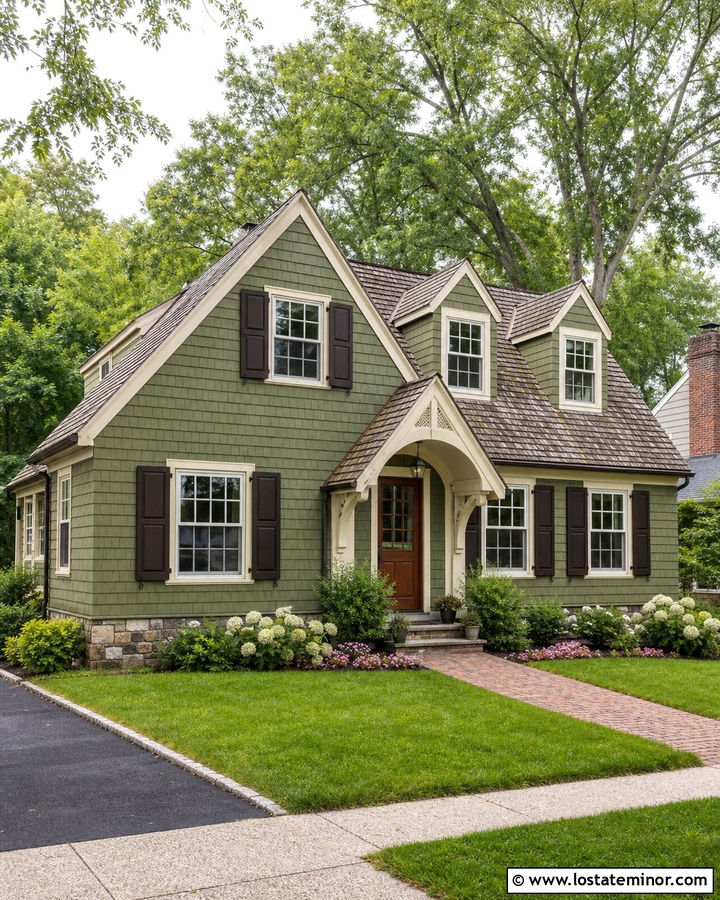
Cream trim brings out the warm undertones of moss green and creates a gentler contrast than pure white. Use this pairing on a traditional one-and-a-half-story home with painted shingle siding, divided-light windows, and a covered entry. A weathered brown roof with dimensional shingles reinforces the soft, earthy palette. Paint the shutters a deep olive-brown and choose a stained chestnut door for the entrance. Cream should appear consistently on the window casings, corner boards, porch columns, and fascia. Add warm gray stone around the foundation to provide a neutral transition to the ground. Layered flowering shrubs and a brick walkway can increase the cottage-like appeal. This combination feels comfortable, mature, and easy to integrate into established residential neighborhoods.
19. Moss Green Shingle House With White Porch
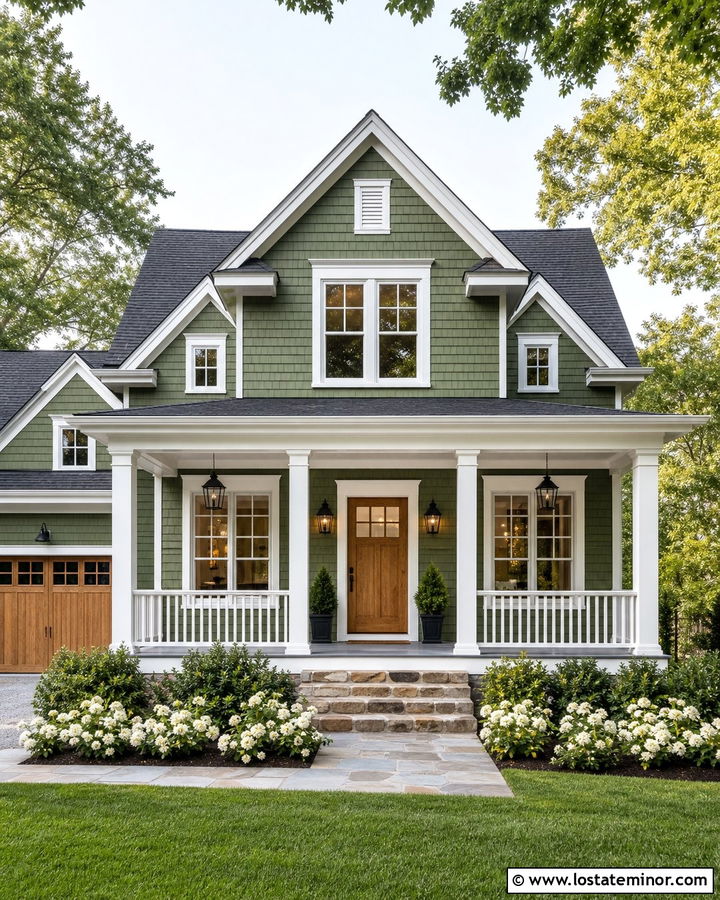
A bright white porch can lighten an expansive moss green facade and make the entrance easy to identify. Use moss green cedar-style shingles on the body, then paint the columns, railings, ceiling trim, and window casings a soft architectural white. Choose medium charcoal roof shingles to frame the house without overwhelming the porch. A natural oak door adds warmth at the center, while black lanterns provide crisp functional accents. Consider a gray porch floor or natural stone steps to create a durable-looking base. White flowering plants placed near the porch can repeat the trim color in the landscape. The overall effect is fresh and welcoming, with enough contrast to showcase the shingle texture and the home’s architectural details.
20. Moss Green Shingle House With Copper Accents
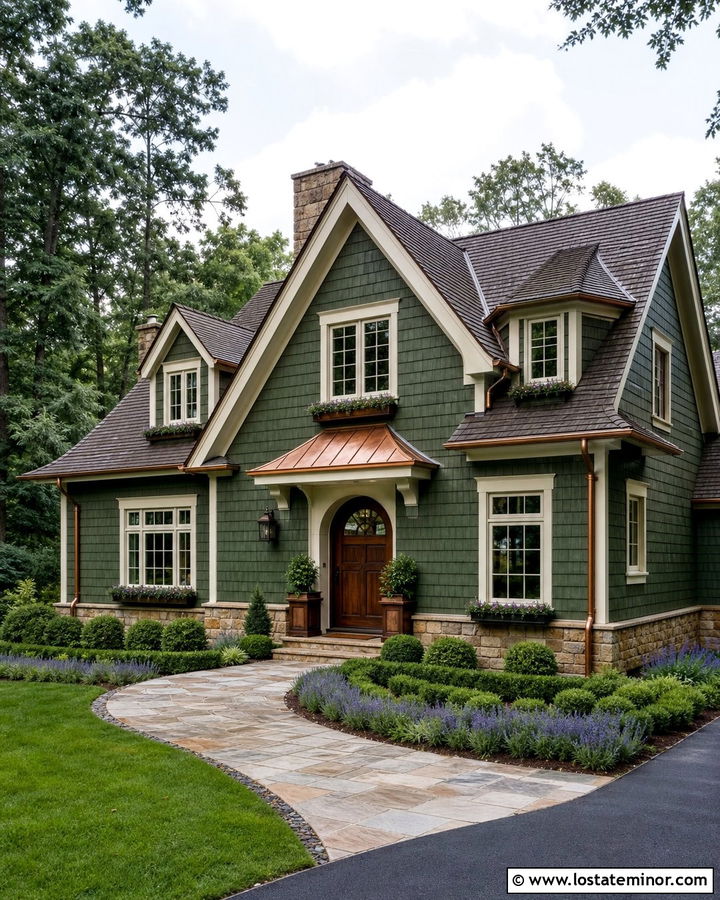
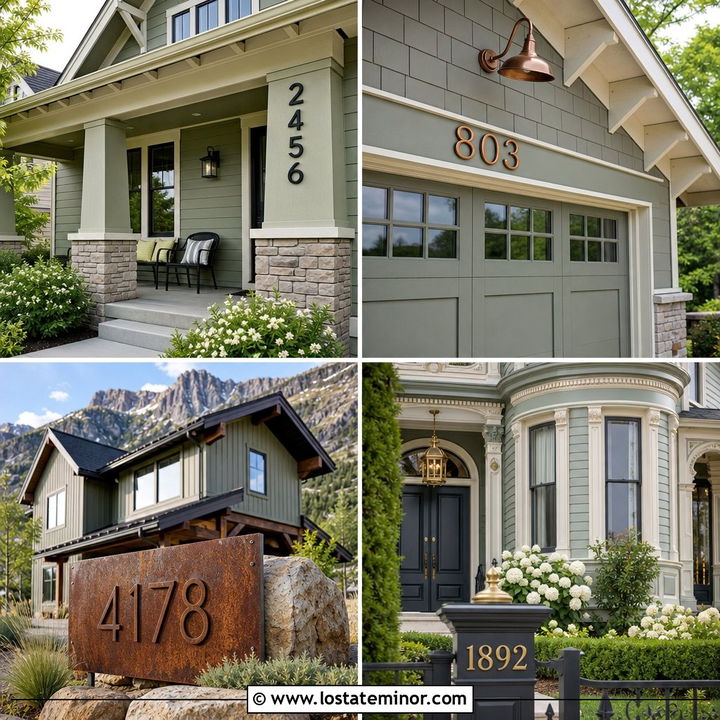
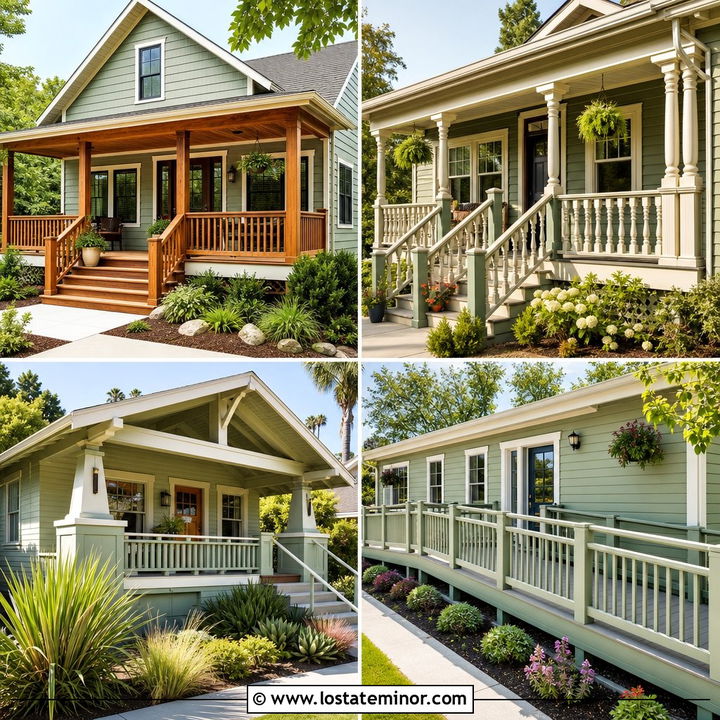
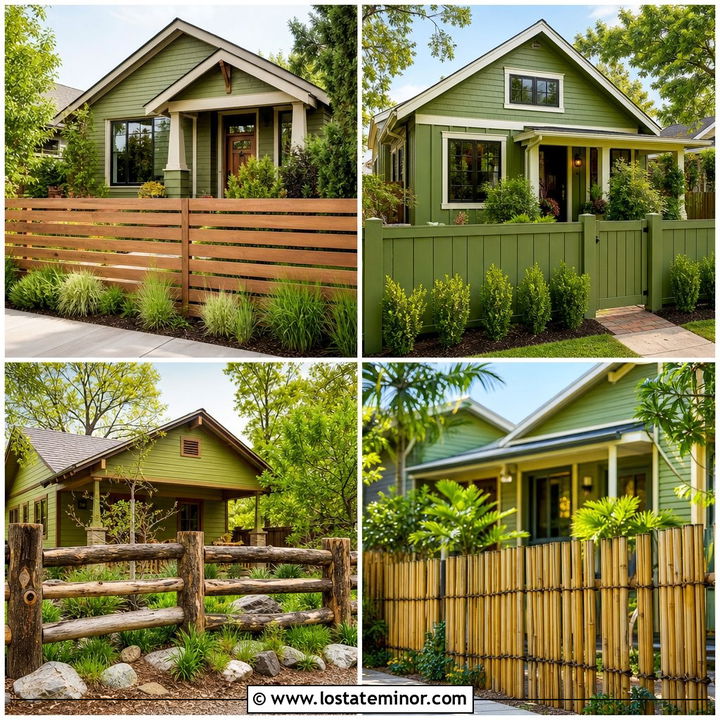
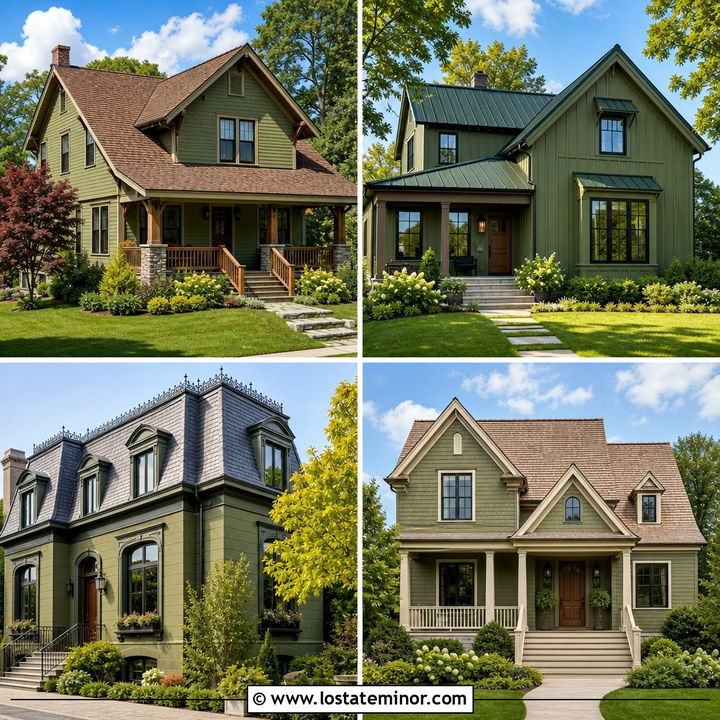
Copper offers a warm metallic accent that complements the yellow-brown undertones often found in moss green. Use moss green shingle siding across a cottage or English-inspired facade, then add copper gutters, downspouts, flashing, and a small roof over the entrance. A dark brown shingle roof allows these details to remain visible without creating excessive contrast. Choose cream trim and a deep walnut door to support the warm palette. Stone containing tan and muted gold can be used around the foundation or porch. Keep copper limited to practical architectural features so the exterior stays refined. Lavender, boxwoods, and loose flowering borders can soften the house further. As the metal develops character, it will continue to suit the organic color scheme.
21. Moss Green Shingle House With Brick Chimney
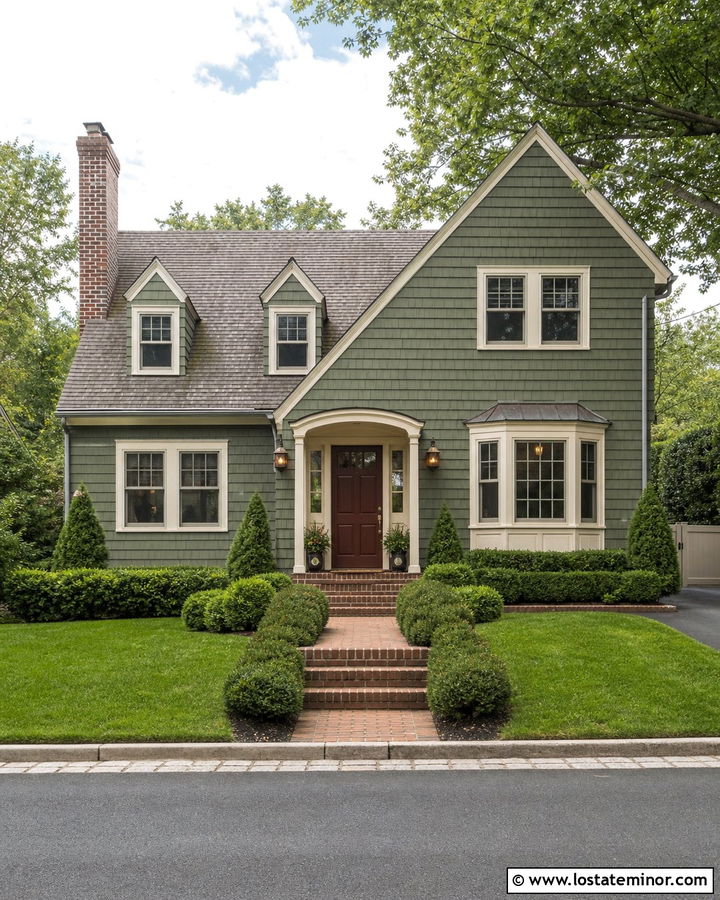
An existing brick chimney can guide the entire palette for a moss green exterior. Choose a balanced moss green for the shingle siding and preserve the natural brick when it includes subdued red, brown, and charcoal tones. Use warm ivory trim to bridge the cooler green and warmer masonry. A weathered charcoal roof will coordinate with darker marks in the brick and create a grounded roofline. Paint the front door a dark brown-red that echoes the chimney without matching it exactly. Black or bronze lights can provide small finishing accents. If brick appears at the steps, walkway edges, or porch floor, the material will feel even more intentional. Simple evergreen landscaping keeps the color relationship visible throughout the year.
22. Moss Green Shingle House With Stone Porch
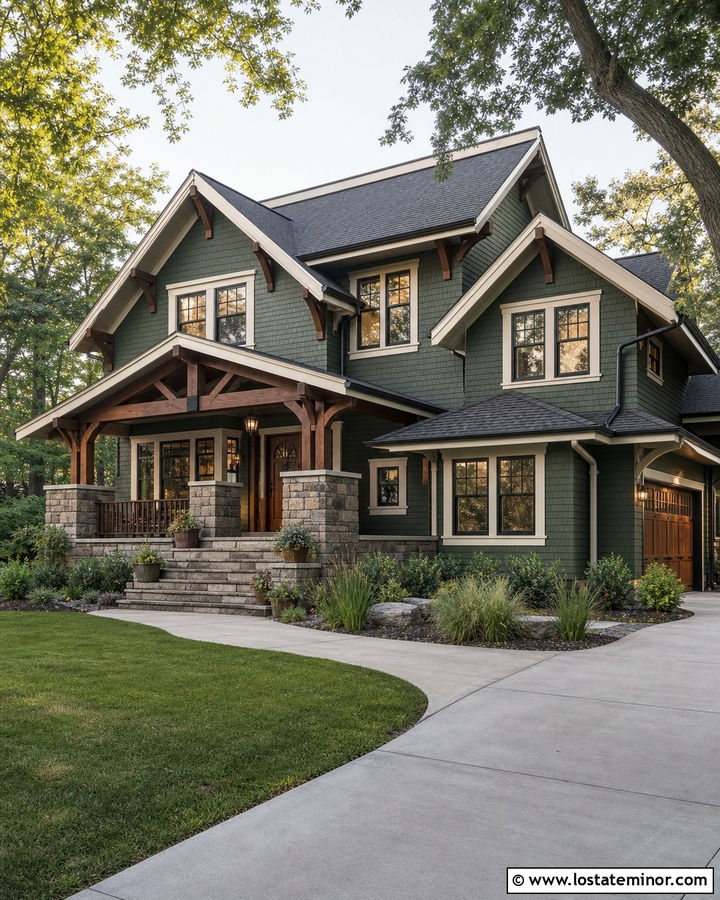
A substantial stone porch gives moss green shingle siding a strong and natural foundation. Select irregular gray-brown stone for the porch piers, steps, and lower facade. Then use medium moss green above it to create a clear but comfortable contrast. Warm white trim around the windows and roofline keeps the house from appearing too shadowed. A dark gray architectural shingle roof should relate to the coolest colors in the stone. Add a walnut door and stained timber porch beams to introduce warmth between the siding and masonry. Low plantings are best near detailed stonework, since tall shrubs may hide its texture. With every material visible, this exterior feels solid, welcoming, and well suited to Craftsman or rustic transitional architecture.
23. Moss Green Shingle House With Natural Wood Door
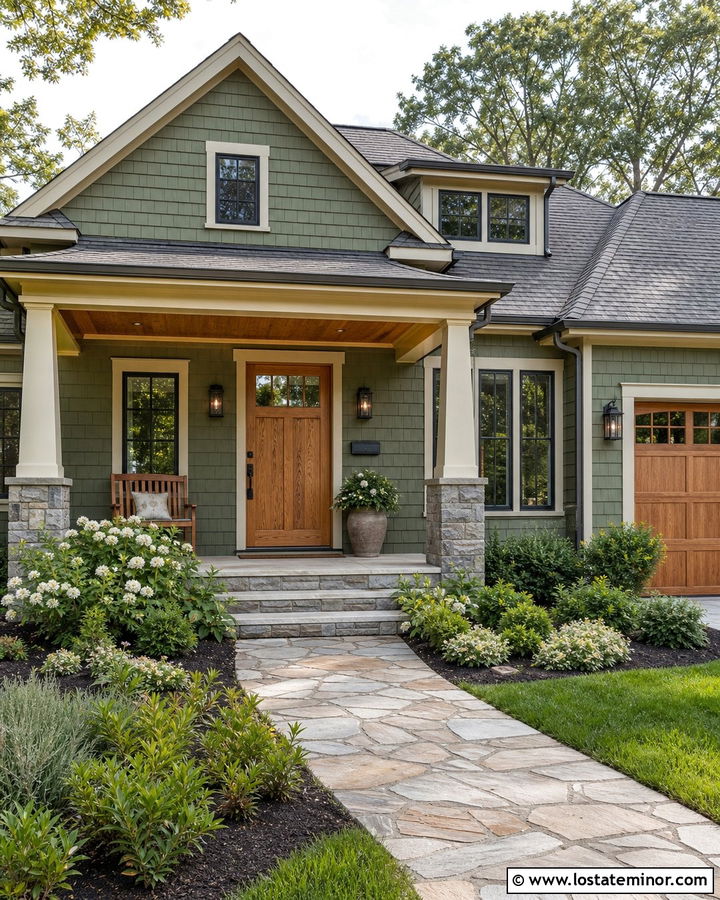
Sometimes one beautifully finished material is enough to complete an exterior. On a moss green shingle house, a natural wood front door creates warmth and a clear point of entry. Choose oak, fir, or mahogany with visible grain and a medium transparent stain. Pair the siding with light cream trim and medium-gray roof shingles for an adaptable background. Bronze door hardware and exterior lights support the warmth of the wood without looking overly decorative. If the house has a porch, repeat the door stain on the ceiling or support brackets rather than every wood surface. A stone walkway and neatly layered shrubs will frame the entrance. This restrained palette allows the textured green shingles and handcrafted door to share attention.
24. Moss Green Shingle House With Navy Shutters
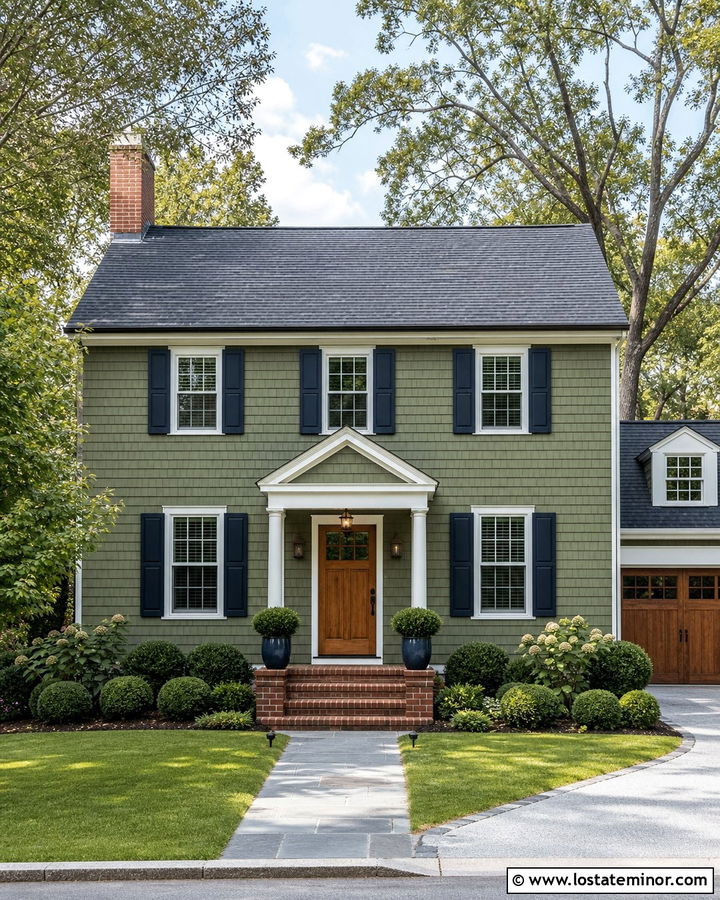
Navy shutters create cooler contrast against moss green without producing the stark effect of solid black. Use a deep, muted navy that contains gray undertones, particularly on a traditional cottage or Colonial-inspired facade. Moss green shingle siding can cover the entire body, while soft white trim separates the green and blue around each window. Choose dark gray roof shingles to keep the upper portion neutral. A honey-brown front door introduces needed warmth and prevents the exterior from becoming too cool. Repeat navy sparingly on porch furniture or small planters if desired. Brick steps and clipped foundation shrubs can reinforce the traditional character. The finished palette feels colorful and layered, yet each shade remains quiet enough for everyday curb appeal.
25. Moss Green Shingle House With Tan Roof
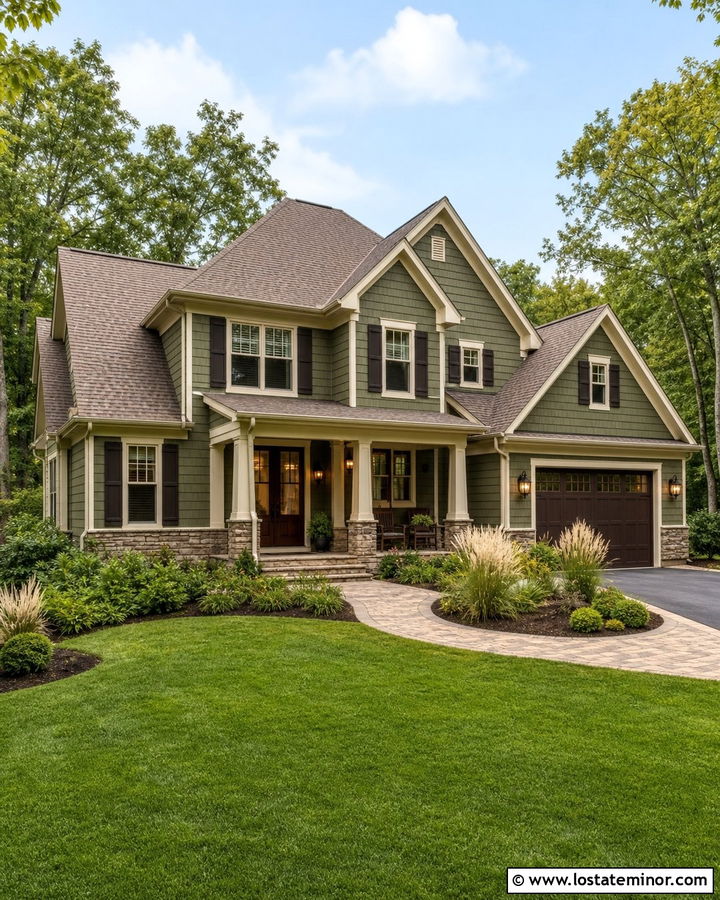
A tan shingle roof can brighten moss green siding and create a warmer alternative to charcoal. Look for roofing with blended beige, brown, and muted gray granules rather than a flat yellow-tan color. Use creamy off-white trim to connect the roof and siding. A dark chocolate front door and matching shutters add depth where the lighter roof might otherwise make the facade appear top-heavy. Natural stone with sandy undertones can repeat the roof color around the porch or foundation. Keep gutters close to the trim color so they blend into the architecture. Green shrubs, pale ornamental grasses, and a warm paver walkway will complete the coordinated setting. This scheme works especially well in sunny regions and open suburban landscapes.
26. Moss Green Shingle House With Brown Roof
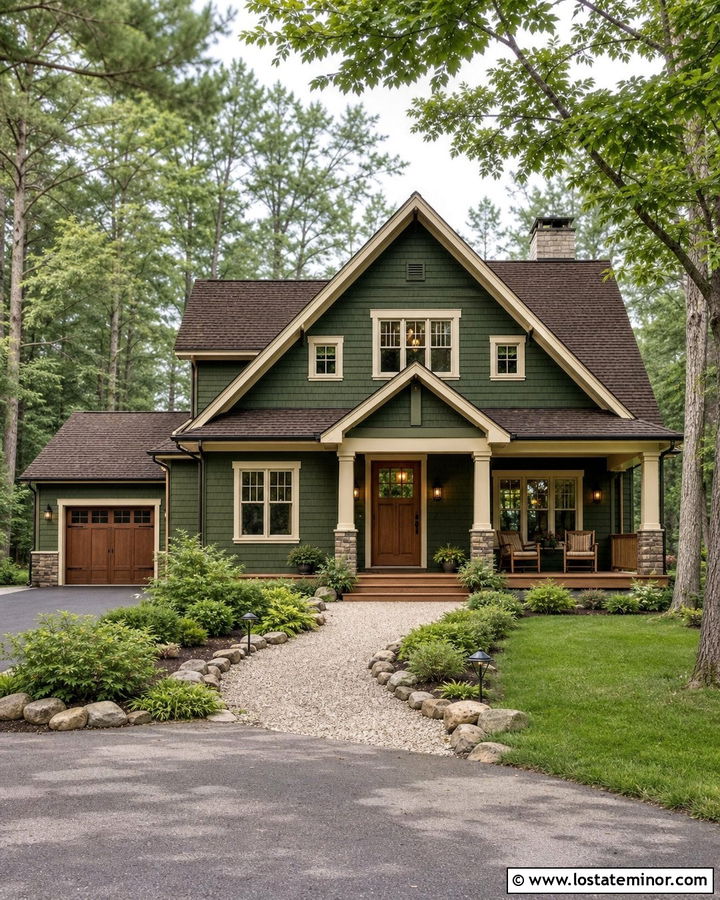
Brown roof shingles reinforce the earthy nature of moss green and make a house feel settled into its site. Select a roof blend that contains espresso, bark brown, and subtle charcoal rather than obvious orange tones. Use moss green shingle siding on the main facade and warm cream on the windows, fascia, and corner trim. A chestnut front door can bridge the siding and roof while providing natural variation. Add dark bronze lights and gutters for a quieter alternative to black. If the home includes a porch, stain the floor medium brown but keep the columns cream. Stone edging, mature trees, and layered evergreen beds support the organic palette. The complete look is cohesive, understated, and especially effective for wooded properties.
27. Moss Green Shingle House With Gray Garage
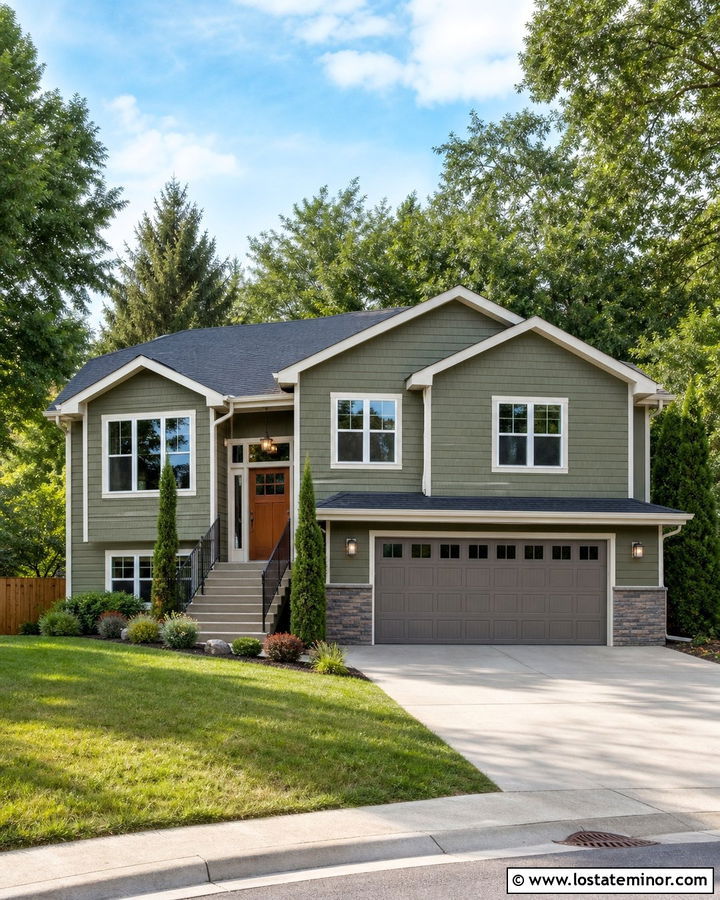
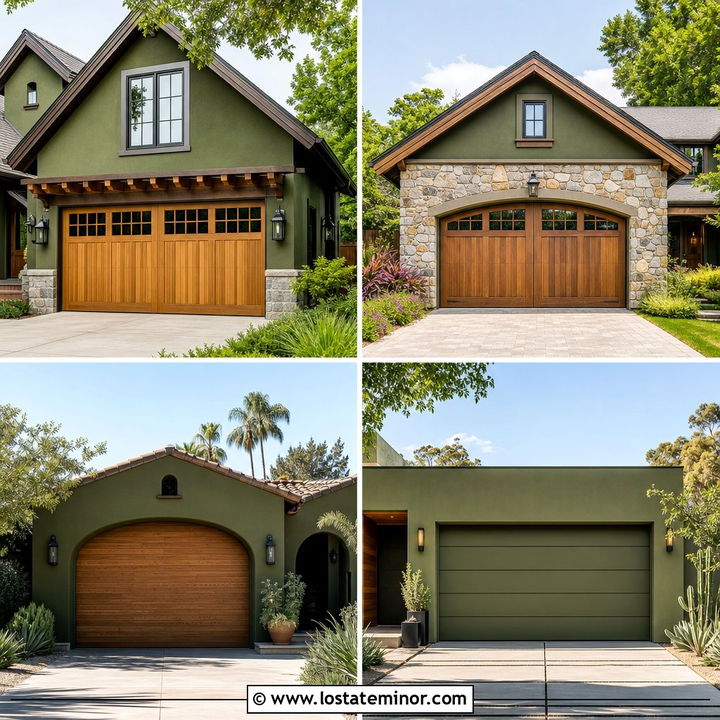
A large garage door can dominate the front elevation unless its color is carefully integrated. Pair moss green shingle siding with a medium warm-gray garage door that relates to the roof shingles and stonework. Use the same gray on smaller side doors or utility features, but keep the main front door natural wood to establish a stronger entrance. Soft white trim will clearly outline both the garage and living areas. A charcoal-gray shingle roof gives the palette a stable upper boundary. Stone around the garage base can help visually break up its width. Add narrow upright shrubs between garage bays and a clear walkway toward the porch. This approach balances practical architecture while keeping moss green as the primary exterior color.
28. Moss Green Shingle House With Cedar Garage Doors
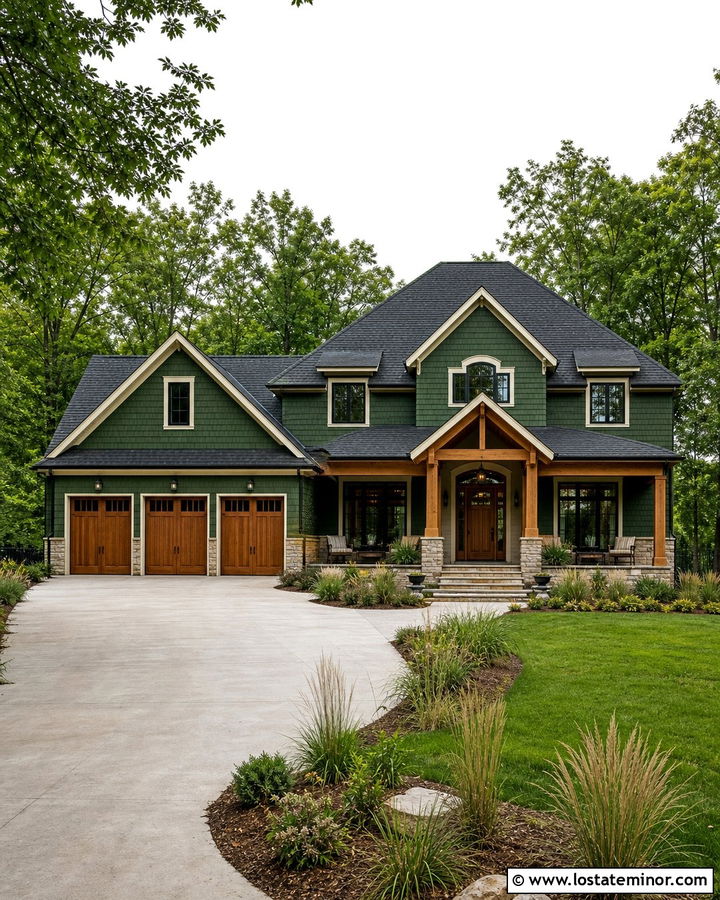
Cedar garage doors can turn a practical feature into a warm architectural accent. They look particularly attractive against moss green shingle siding because the natural orange-brown grain provides controlled complementary contrast. Use dark charcoal roof shingles and black window frames to give the scheme modern definition. Keep the fascia and porch trim a muted cream so the exterior does not become too dark. The front door can match the garage stain, creating a visual connection across a wide facade. Repeat cedar on one or two porch beams, but avoid covering every accent in wood. Pale stone along the foundation and simple native plantings will complete the exterior. The final design feels upscale, balanced, and connected to natural materials.
29. Moss Green Shingle House With Metal Porch Roof
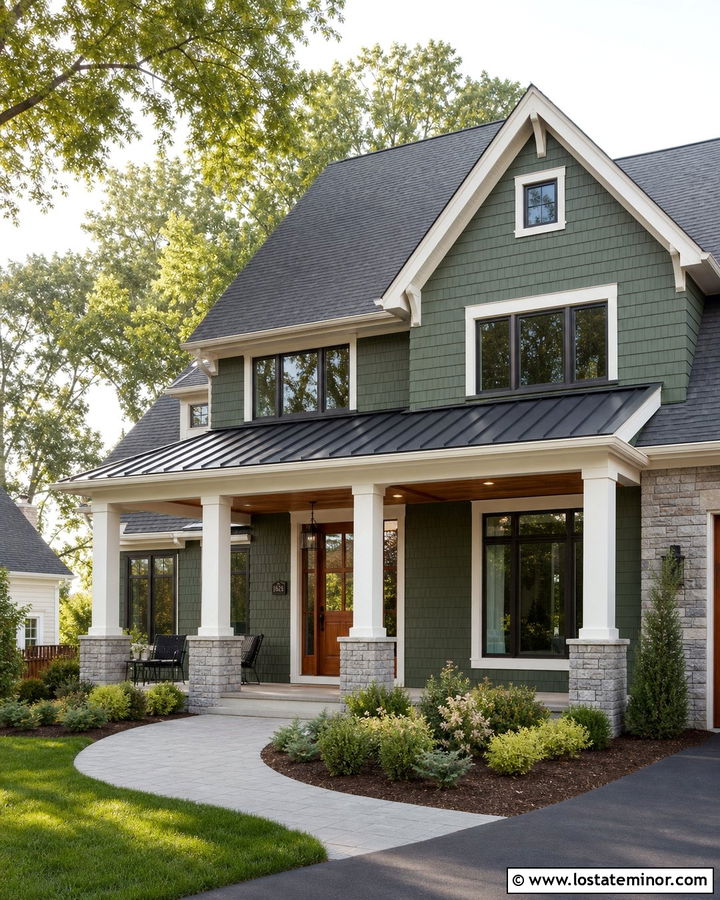
A small metal porch roof can add a crisp architectural layer to a traditional moss green house. Use charcoal standing-seam metal over the entrance while keeping dimensional gray shingles on the main roof. The slight material change draws attention to the front door without dividing the overall palette. Cover the facade in moss green shingles and use warm white trim on the windows, columns, and fascia. A cedar door and porch ceiling can soften the dark metal. If the house includes stone, choose a light gray blend that connects both roof materials. Keep the landscaping lower near the entrance so the porch roof remains visible. This exterior combines familiar residential materials with a subtle modern update that feels purposeful rather than trendy.
30. Moss Green Shingle House With Wraparound Porch
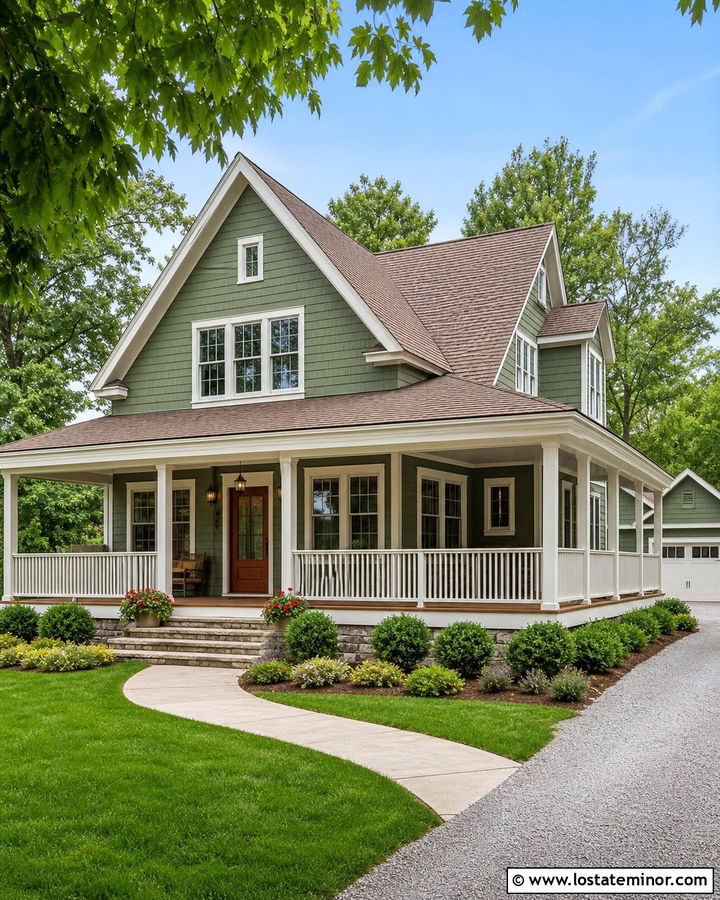
Few exterior features feel as welcoming as a wraparound porch. Moss green shingle siding provides a rich background, while cream columns and railings create a continuous light frame around the house. Choose medium-brown roof shingles to complement the green and make the broad roofline feel less severe. Natural wood porch flooring adds warmth and holds up visually against the large amount of painted trim. Use a muted rust-red front door as a centered accent, then repeat that shade only in small planters or flowers. Stone steps can provide a sturdy transition from porch to lawn. Finish with layered shrubs, shade trees, and a curved walkway. The complete design feels relaxed, spacious, and appropriate for farmhouse, cottage, or Southern-inspired architecture.
Conclusion:
These **30 Moss Green House Design With Shingles Ideas** show how one grounded exterior color can support many architectural directions. Moss green works with light trim, dark roofing, warm wood, natural masonry, and carefully selected accent colors. The best result comes from treating the facade as one connected palette rather than choosing each feature separately. Begin with permanent materials such as the roof, brick, and stone. Then select the green siding, trim, front door, and smaller details. Always test exterior colors on multiple areas of the house before making a final choice. With balanced contrast and visible texture, moss green shingles can create curb appeal that feels welcoming, distinctive, and naturally connected to the landscape.

Related posts: