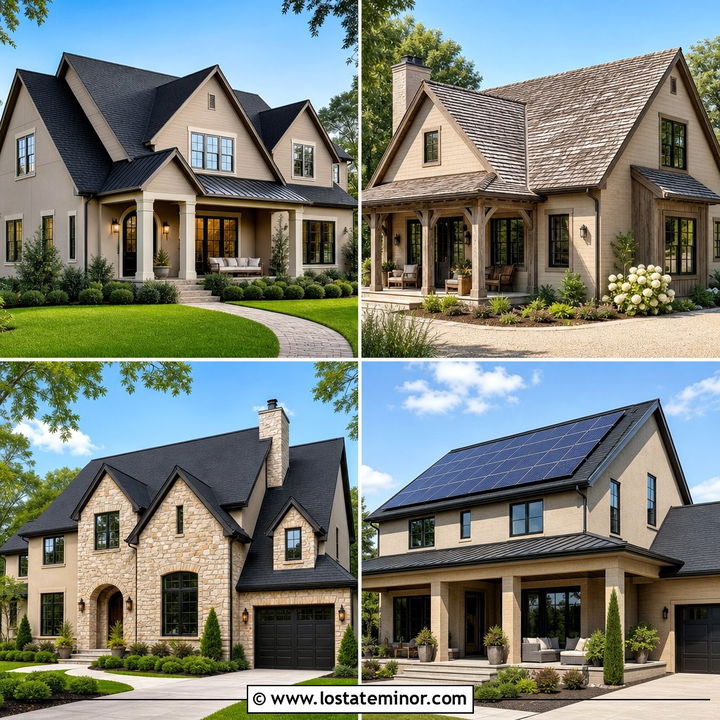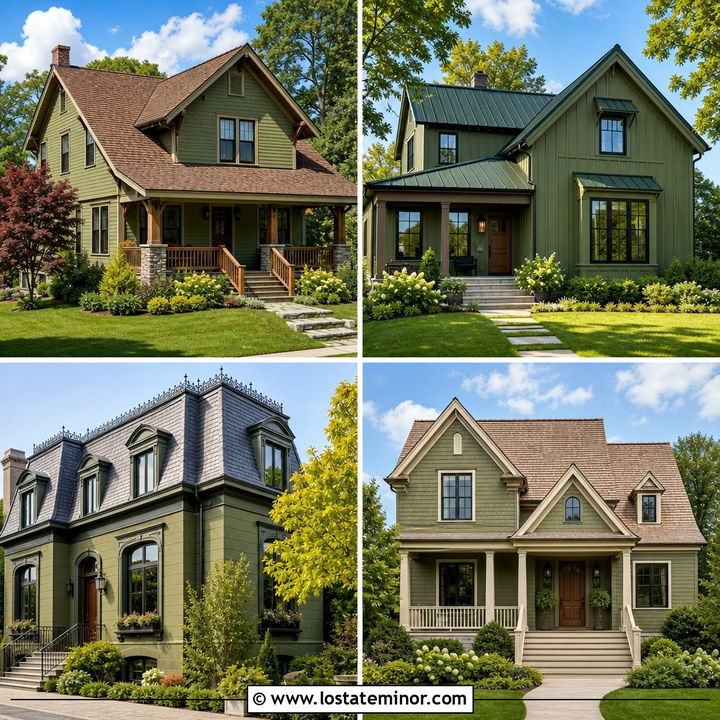
A white exterior offers a flexible backdrop for nearly every roof color, material, and architectural shape. The best combinations go beyond simple black-and-white contrast. They connect the roof with the trim, front door, windows, masonry, gutters, and landscaping. This guide to **30 White House Design With Roof Ideas** explores complete exterior looks for farmhouses, ranch homes, Colonials, bungalows, coastal cottages, and modern builds. You will find dark shingles, warm cedar, standing-seam metal, clay tile, slate, and energy-conscious light roofing. Each scheme also explains how to balance undertones and repeat roof colors across smaller details. Use these practical 30 White House Design With Roof Ideas to create a polished home with lasting curb appeal.

1. White House With Black Shingle Roof
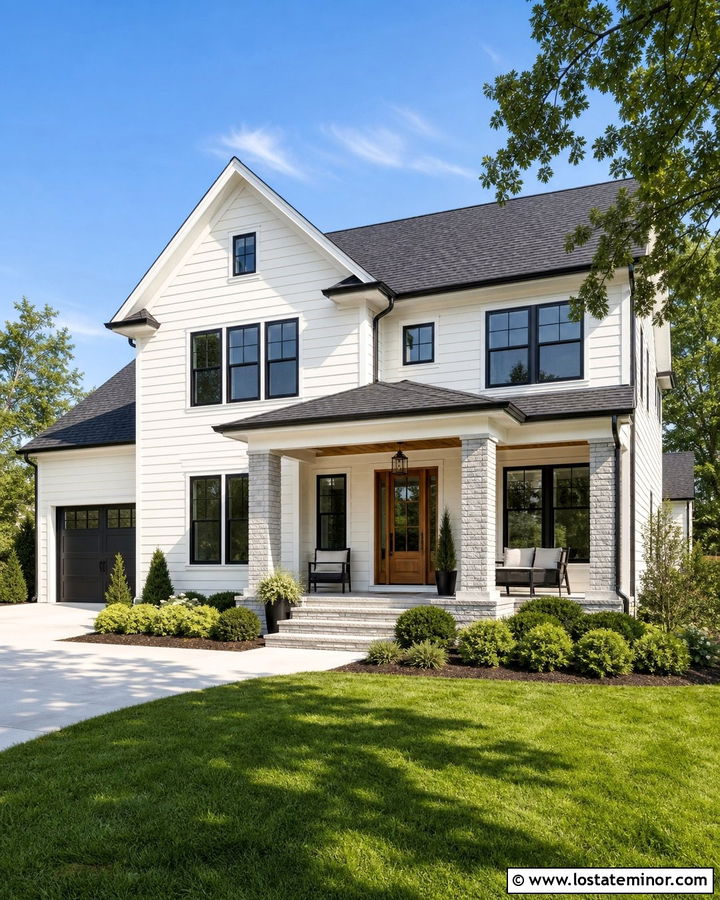
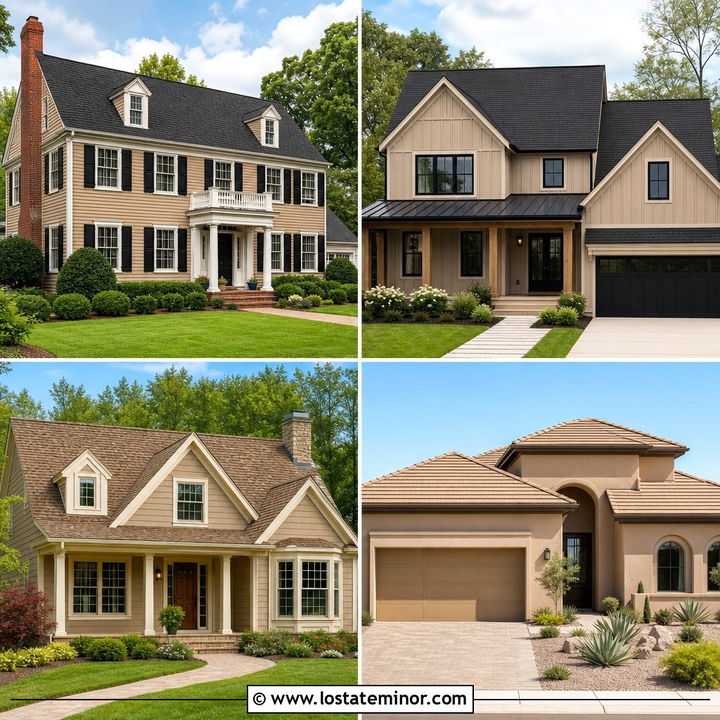
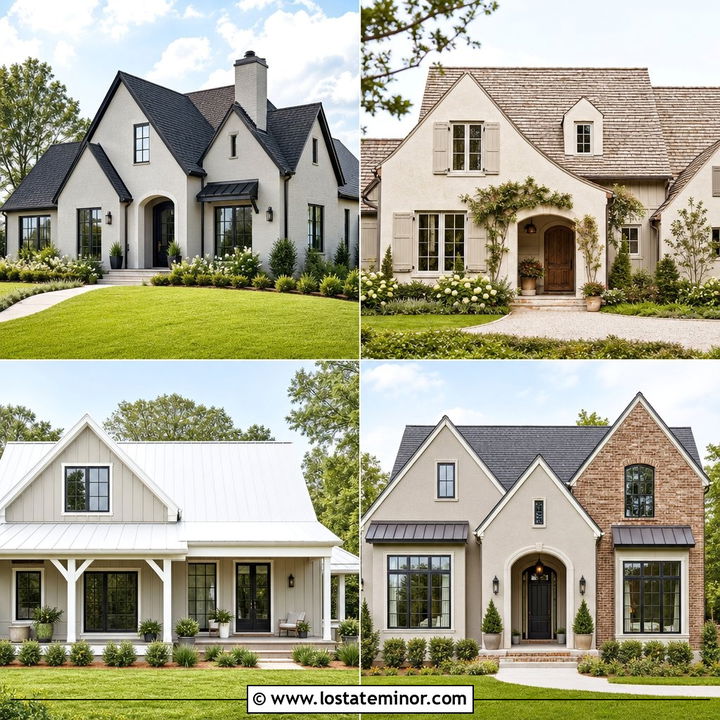
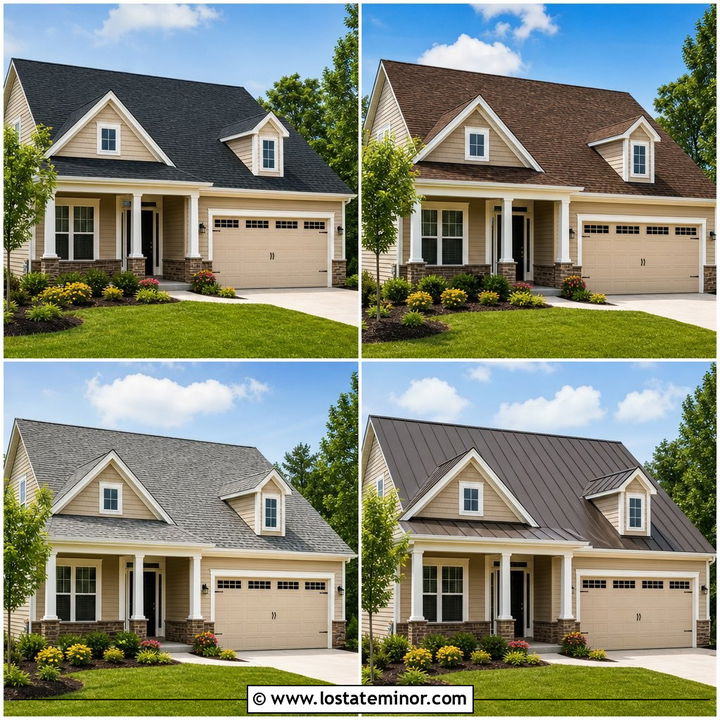
A black architectural shingle roof gives a white house clear definition without requiring complicated exterior details. Choose a warm white siding color to soften the strong contrast, then repeat black on the window frames, gutters, porch lights, and simple front railing. A medium-stained oak door keeps the combination from feeling overly stark. This scheme works especially well on two-story transitional homes with multiple gables because the dark shingles outline each roofline. Use pale gray stone around the foundation or porch columns to create a gradual transition between black and white. Keep garage doors close to the siding color so they blend into the facade rather than competing with the entrance. Fresh green landscaping completes the balanced, classic appearance.
2. White House With Charcoal Gray Roof
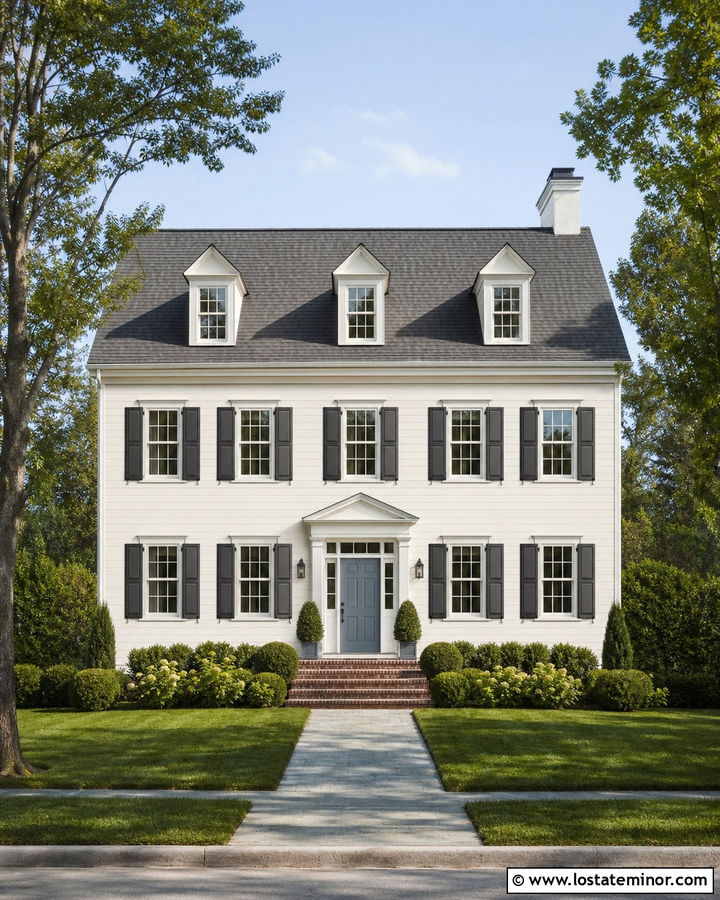
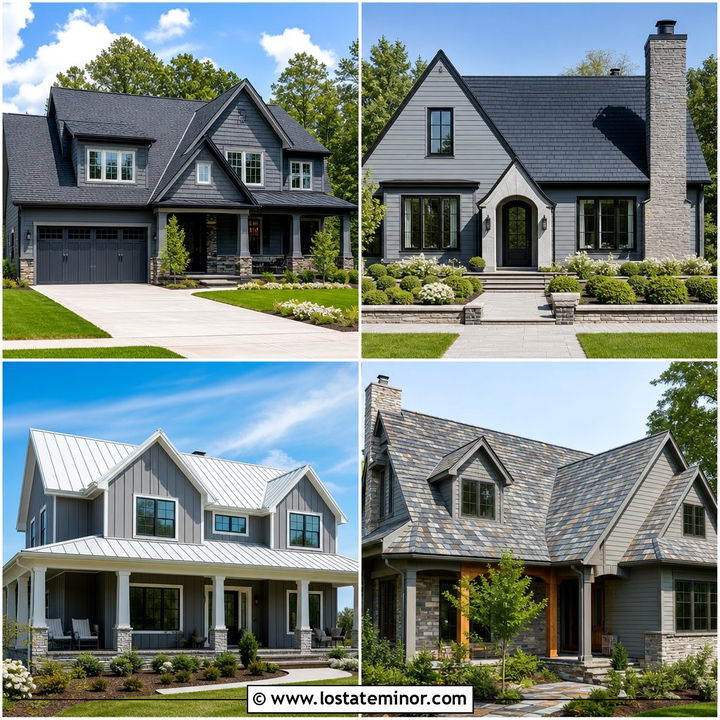
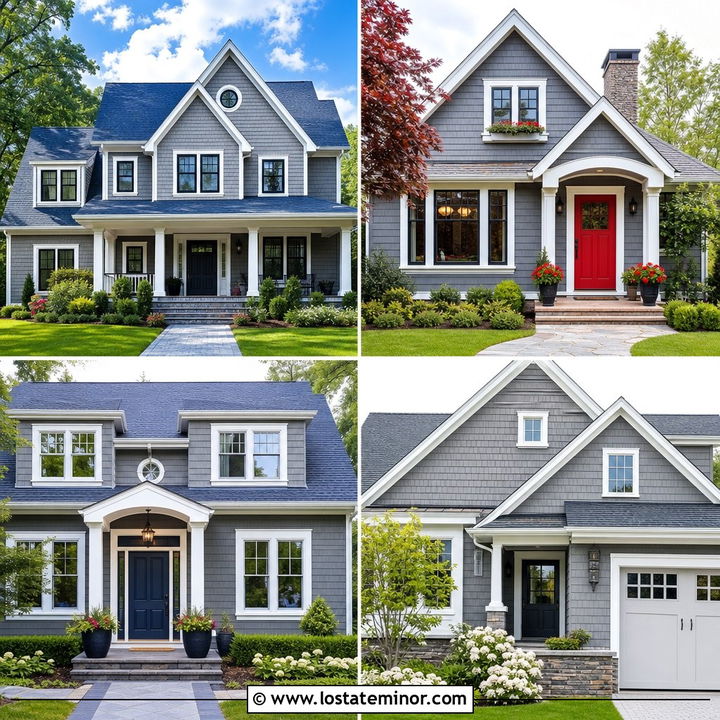
Charcoal roofing creates a gentler alternative to pure black while still grounding a bright white exterior. The subtle gray variation found in dimensional shingles can connect beautifully with gray stone, concrete steps, and pewter-colored metalwork. Try soft white lap siding with charcoal shutters and a muted blue-gray front door for understated color. On a Colonial home, symmetrical windows and neatly trimmed hedges reinforce the orderly palette. Paint the gutters and downspouts to match the white siding, allowing the roof to remain the main dark feature. If the house receives intense sunlight, a warm white body color helps prevent a cold or overly blue appearance. The finished scheme feels substantial, versatile, and welcoming throughout changing seasons.
3. White House With Light Gray Roof
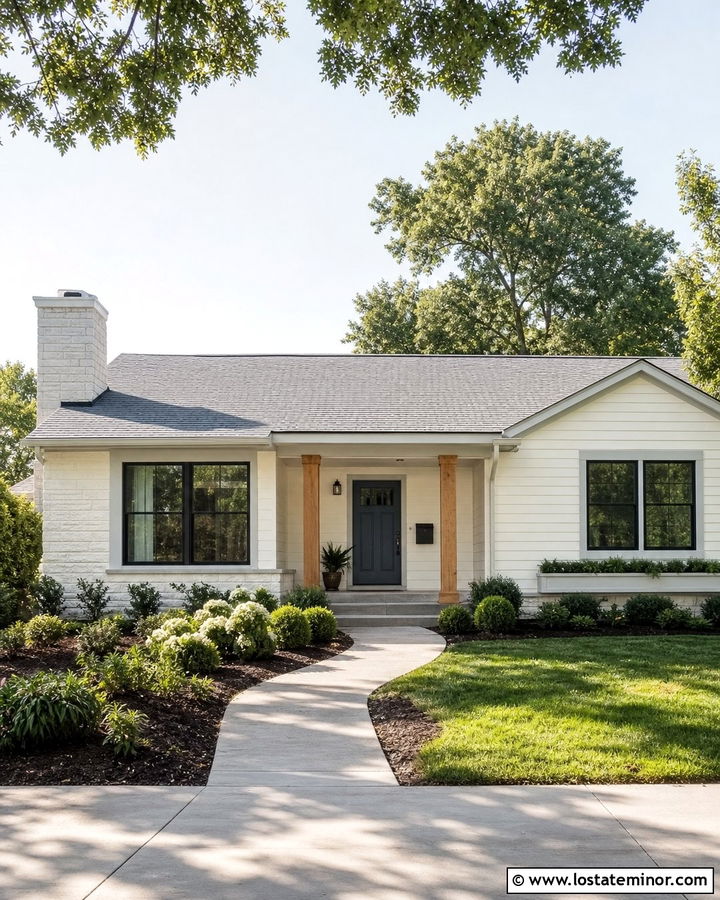
Could a pale roof make a white house look more spacious? Light gray shingles create a low-contrast effect that visually expands a small facade, especially on a one-story ranch or cottage. Use a creamy white exterior rather than a sharp white so the two light surfaces remain distinguishable. Medium gray window trim, a slate-blue door, and brushed nickel fixtures add enough definition without interrupting the airy appearance. Natural wood porch posts can provide warmth near the entrance. Because light roof colors draw less attention, architectural details such as wide eaves, horizontal siding, and decorative gable vents become more noticeable. Frame the house with deep green shrubs and dark mulch to give the pale exterior a grounded, finished edge.
4. White House With Brown Shingle Roof
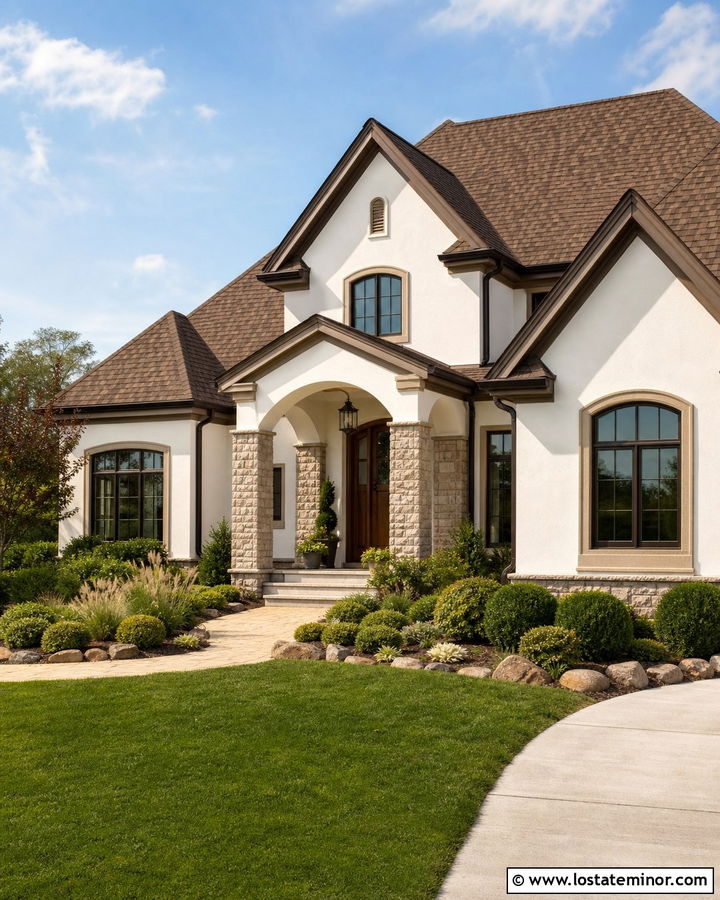
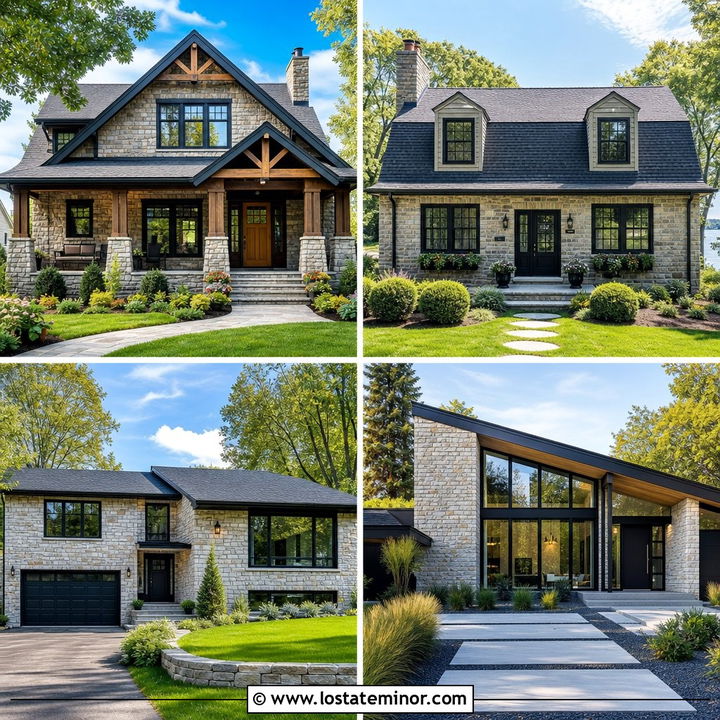
Brown roofing brings an earthy, approachable quality to a white exterior. It is especially effective when the property already includes tan stone, red-brown brick, mature trees, or stained wood. Pair creamy white siding with variegated chocolate and taupe shingles, then use bronze gutters and warm beige trim. A walnut-stained front door can repeat the deepest brown found overhead. On a traditional suburban home, stone porch columns help distribute the roof’s visual weight across the lower facade. Avoid icy white paint, which may clash with the warm roof undertones. Instead, choose a soft off-white that appears clean without looking blue. Layered landscaping with ornamental grasses, boxwoods, and warm stone edging completes this comfortable, nature-connected exterior scheme.
5. White House With Weathered Wood Roof
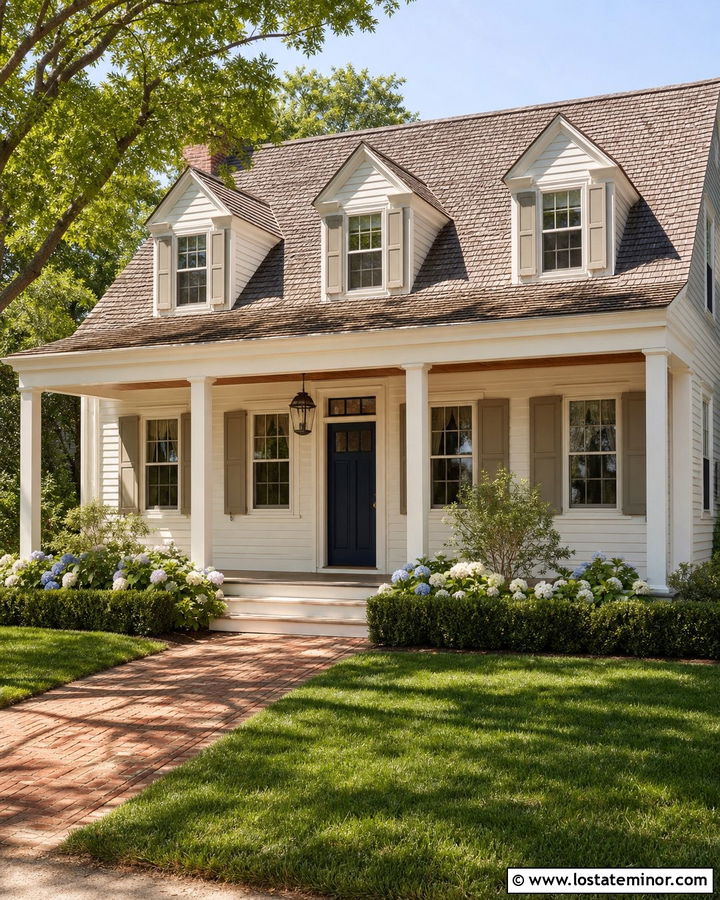
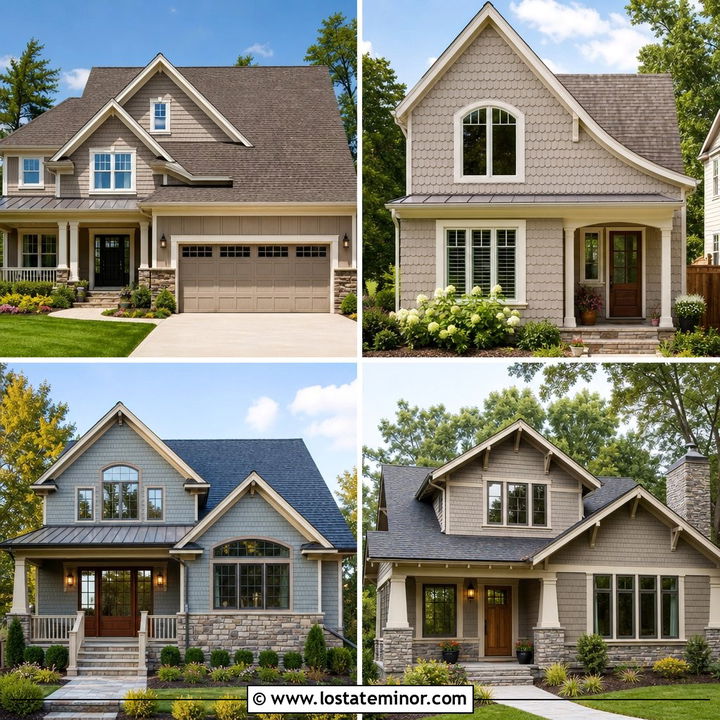
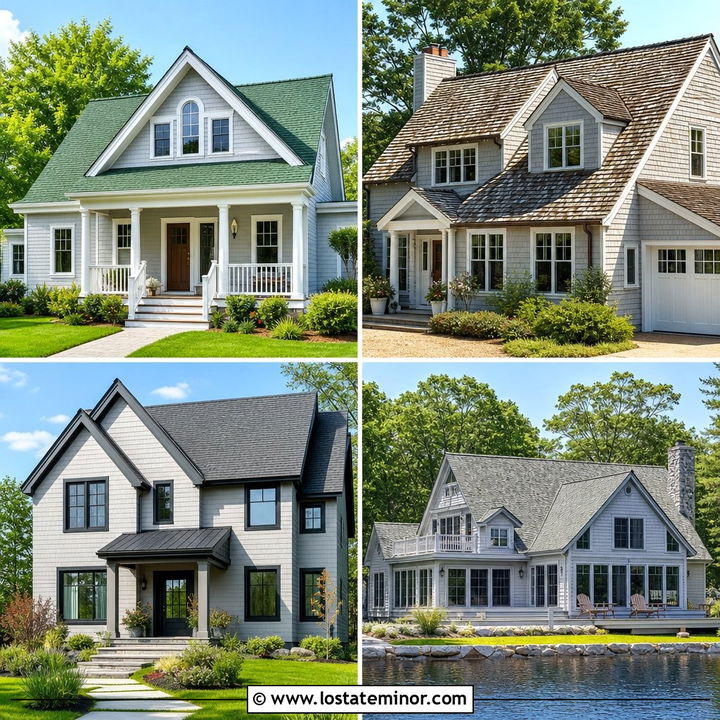
Weathered wood shingles contain a useful blend of gray, taupe, and muted brown, making them easy to coordinate with white siding. This roof works beautifully on a Cape Cod house where classic forms benefit from soft, timeworn color. Select a warm white for the clapboard siding, pale greige for the shutters, and a faded navy front door. White trim can remain slightly brighter than the body to define dormers and window casings. Add a natural cedar bench or porch ceiling to pick up the roof’s warmer tones. Since weathered roofing already has visible color movement, keep other materials quiet and consistent. Simple foundation plantings, a brick walkway, and antique brass lighting preserve the relaxed character without making the facade appear dated.
6. White House With Black Roof And Brick Chimney
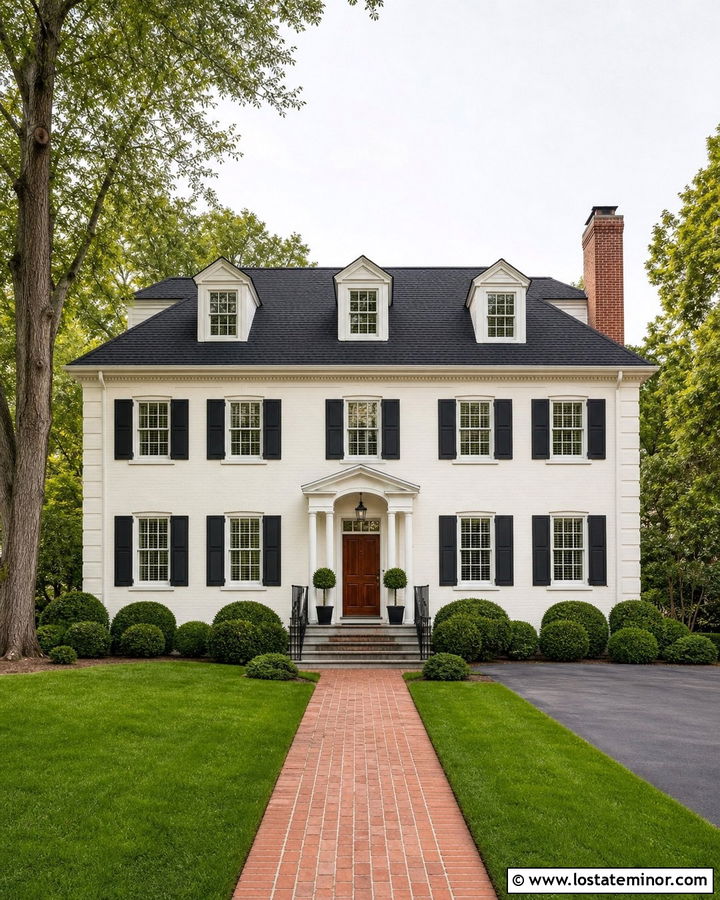
A red brick chimney becomes an attractive bridge between a white facade and black roof. Rather than painting the brick, let its natural color introduce warmth and historical character. Use soft white siding with crisp white trim, black shutters, and a deep red or stained mahogany front door. The roof should have a clean, dimensional texture that complements the rougher brick without competing with it. This combination suits Colonial, Georgian, and traditional two-story homes with strong symmetry. Carry small touches of brick into the walkway or porch steps so the chimney does not feel isolated. Black lanterns and simple iron railings can repeat the roof color at eye level. The overall exterior feels established, coordinated, and rich in authentic material contrast.
7. White House With Terracotta Tile Roof
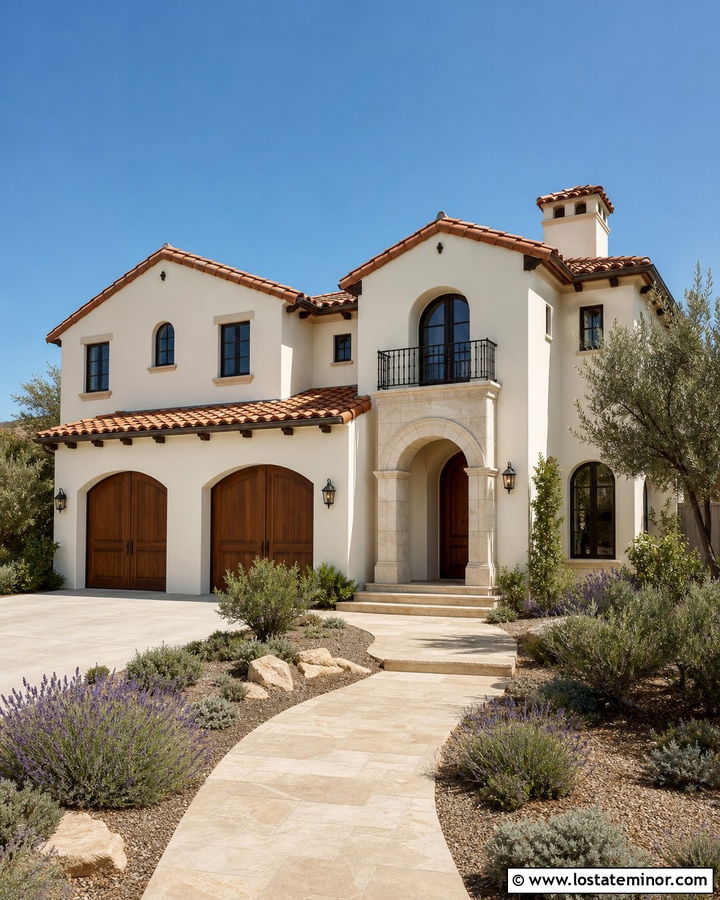
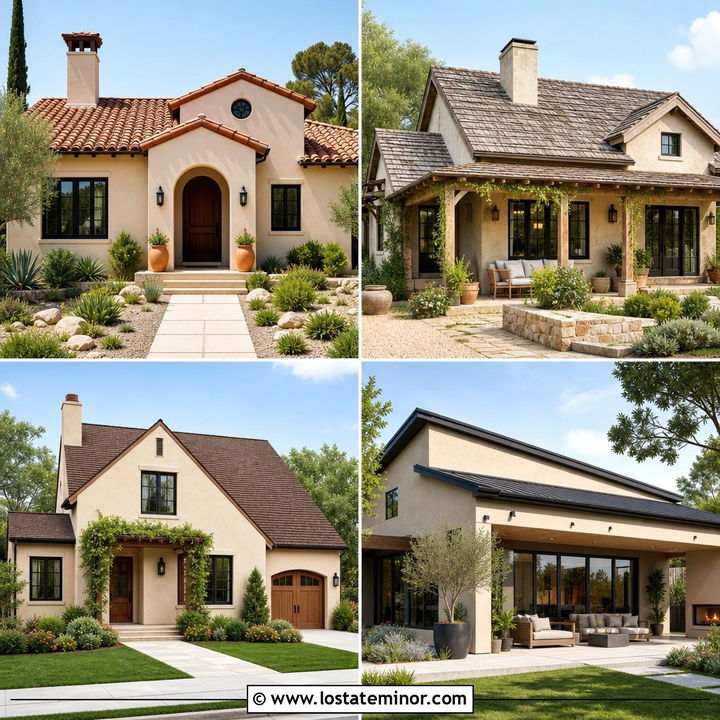
Sun-warmed terracotta tile gives a white house unmistakable Mediterranean character. Choose creamy white stucco with beige undertones, which will complement the orange-red roof instead of creating harsh contrast. Dark bronze window frames, wooden garage doors, and a substantial arched entry add depth across the facade. Natural limestone or warm fieldstone can cover the porch base and lower walls. Keep accent colors earthy, using olive green, muted teal, or dark brown rather than cool gray. Curved rooflines and exposed tile edges deserve room to remain visible, so avoid oversized decorative trim. Drought-tolerant landscaping, gravel paths, lavender, and sculptural evergreen plants reinforce the regional look. Together, these elements make the roof feel integral to the complete exterior design.
8. White House With Blue Gray Metal Roof
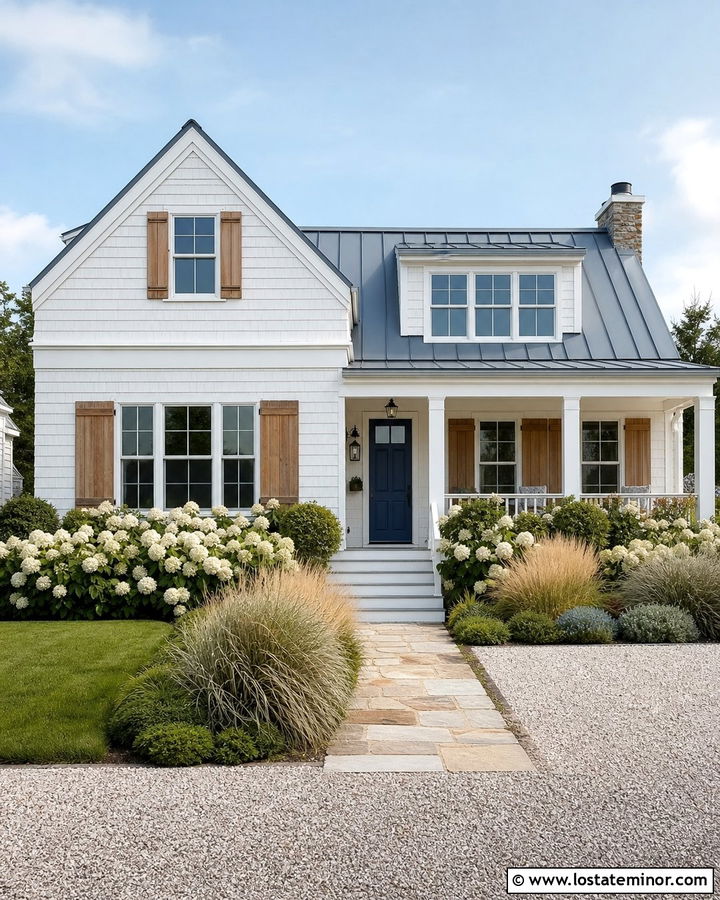
A blue-gray metal roof adds quiet color while maintaining the clean versatility of a neutral. On a coastal cottage, pair it with soft white shingles, white window trim, and a deeper blue front door. Silver-gray porch decking and galvanized metal lights can repeat the roof’s cool finish. Add natural cedar shutters or a light wood porch ceiling to keep the palette from feeling too cool. A standing-seam profile emphasizes neat rooflines and helps simple architecture look more distinctive. For the most cohesive result, select exterior white with a slight gray undertone instead of a yellow cream. Hydrangeas, ornamental grasses, and a pale stone walkway can extend the blue, white, and gray scheme into the landscape while preserving an easy coastal mood.
9. White House With Green Metal Roof
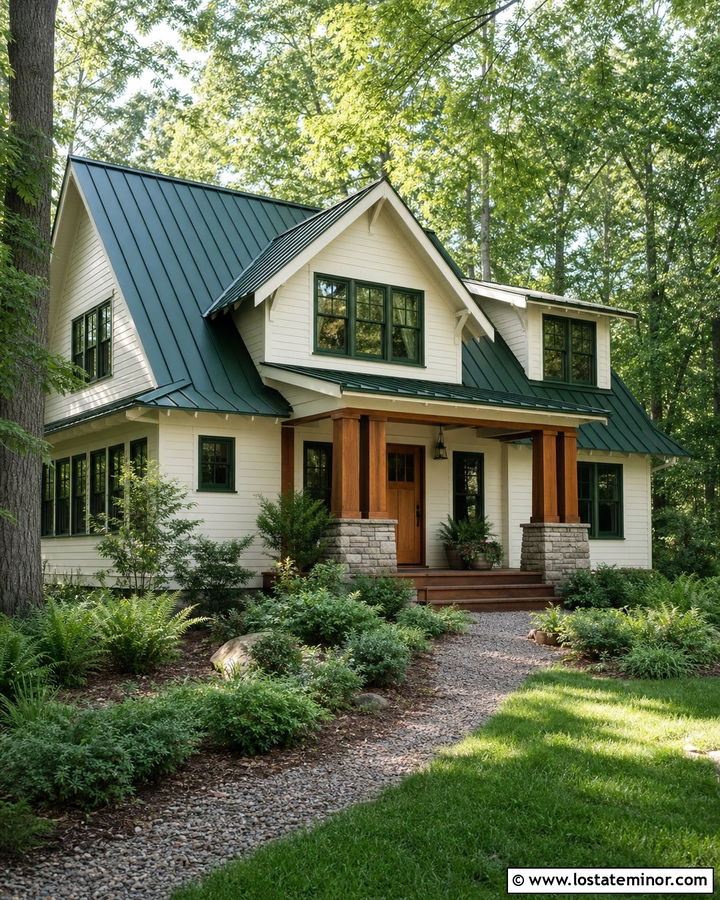
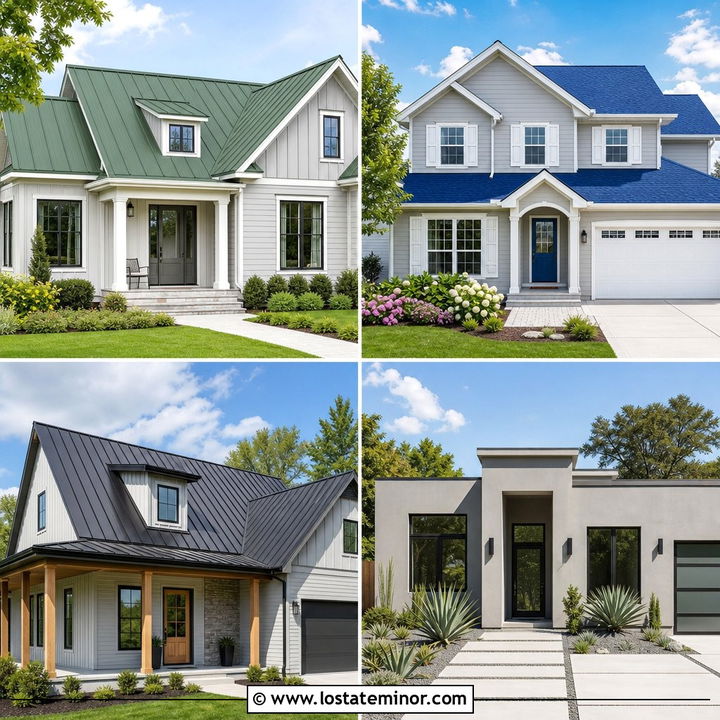
Deep green roofing allows a white home to blend naturally into a wooded or rural setting. The combination feels especially appropriate on a farmhouse, cabin-inspired home, or Craftsman surrounded by mature trees. Use a warm white body color with forest-green window accents and a medium cedar front door. Stone porch piers in mixed gray and brown tones will connect the roof with the ground. If the home has a large front porch, stained wood columns can add texture without introducing another painted color. Match gutters to the green roof when you want a defined roof edge, or paint them white for a quieter transition. Ferns, native shrubs, and informal planting beds help the finished exterior feel rooted in its landscape.
10. White House With Copper Roof
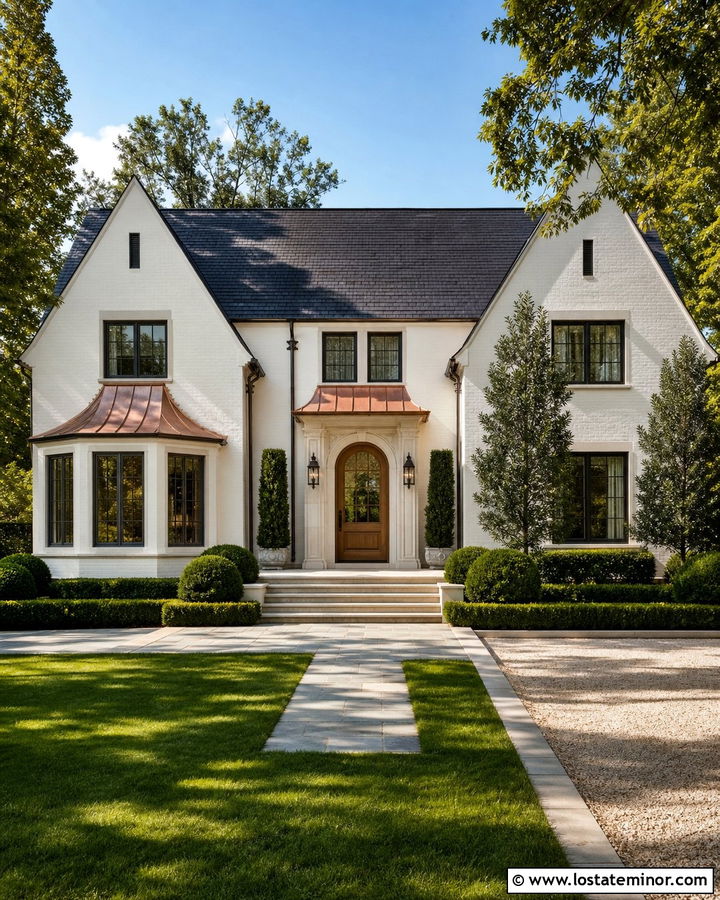
Copper roofing creates a refined focal point when it is used selectively over a porch, bay window, or entry portico. Pair the metal with warm white brick or smooth stucco so its changing color remains the decorative feature. Bronze window frames, natural oak doors, and limestone steps complement both new copper and the green patina it may develop over time. A dark charcoal main roof can provide a restrained background for smaller copper sections. This combination works well on French country, European-inspired, and upscale transitional homes. Avoid spreading bright metal accents across every surface. Instead, repeat the copper tone through a few carefully selected lanterns or gutter details. The result feels layered and distinctive rather than flashy or excessively ornate.
11. White House With White Metal Roof
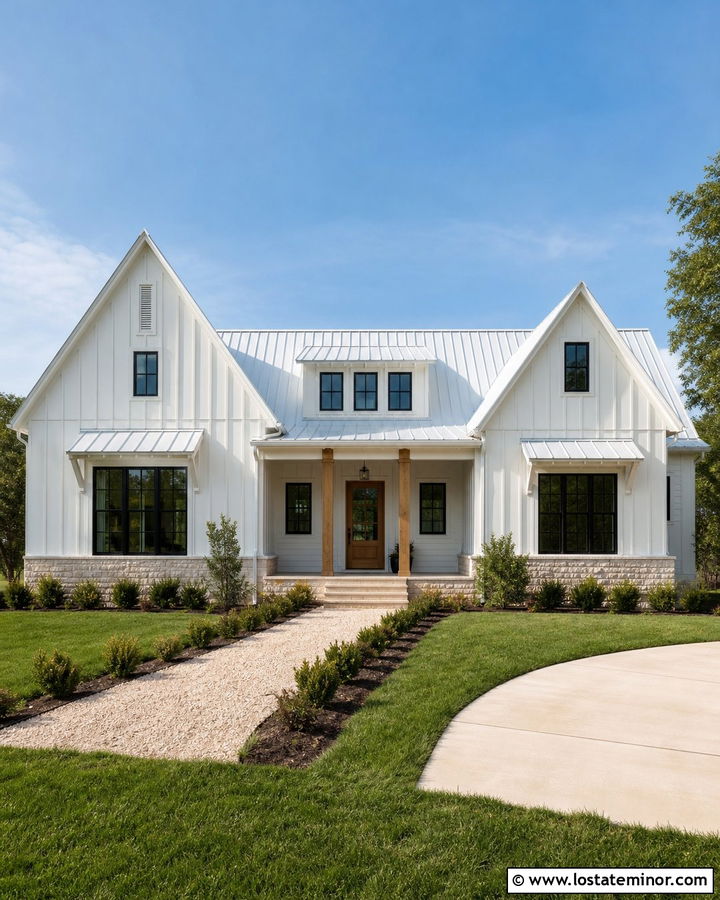
An all-white house and roof can feel fresh, modern, and surprisingly dimensional when the materials have enough texture. Use warm white board-and-batten siding below a white standing-seam metal roof, then introduce medium-toned wood on the front door, porch posts, and soffits. Black window frames provide necessary definition without dominating the exterior. This palette is well suited to a modern farmhouse in a hot, sunny setting where a bright roof looks visually appropriate. Select slightly different white values for the siding, trim, and roofing so the facade does not appear flat. Pale limestone around the foundation adds another subtle layer. Dark green landscaping and a defined gravel or concrete walkway give the light exterior a crisp frame from the curb.
12. White House With Silver Metal Roof
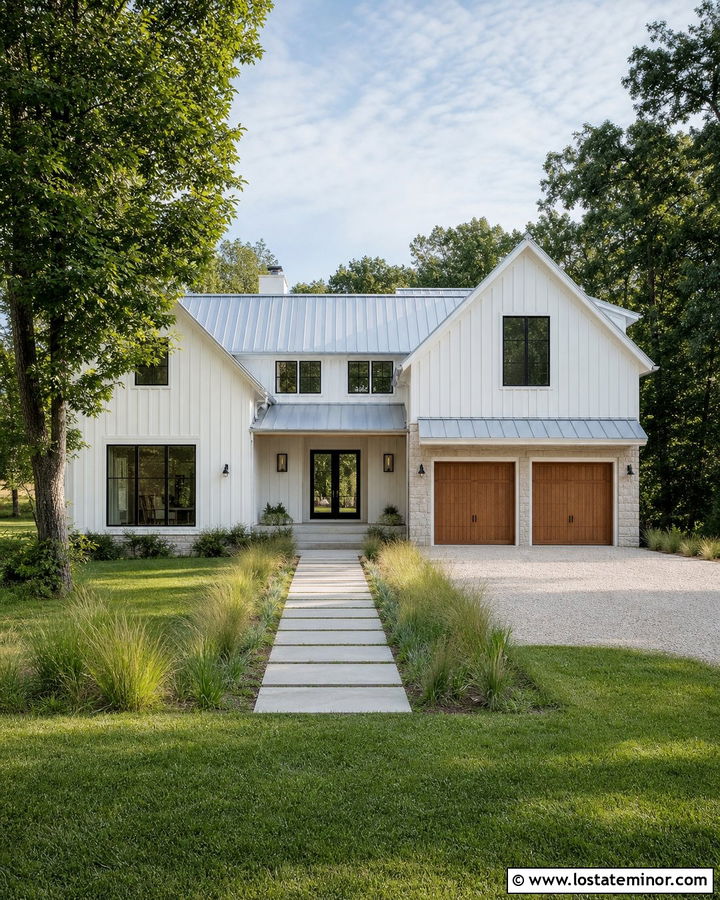
A silver metal roof gives a white exterior a practical agricultural character that can also look polished and contemporary. On a barn-inspired home, combine white vertical siding with galvanized roofing, black windows, and a rich cedar garage door. Use simple black lighting and streamlined porch railings to reinforce the clean architecture. Concrete steps and pale gray stone can connect the cool roof finish to the lower facade. Because reflective silver changes under different sky conditions, a neutral white exterior is safer than a heavily yellow or blue shade. Keep decorative details minimal and let the vertical seams and strong roof pitch provide interest. A broad lawn, native grasses, and a straight walkway complete the uncluttered rural-modern look while preserving inviting curb appeal.
13. White House With Black Standing Seam Roof
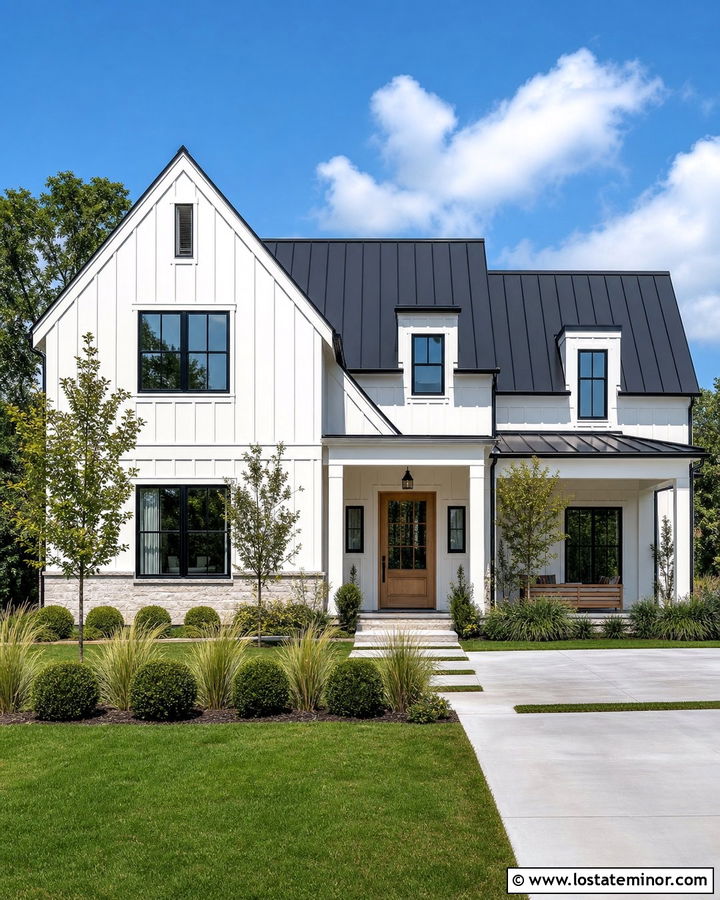
Sharp black metal seams make a white exterior look structured and architectural. This pairing works particularly well on a modern farmhouse with tall gables, vertical board-and-batten siding, and simple rectangular windows. Use a soft white body color, black window frames, and a natural white oak front door. A stone water table in light gray can soften the transition to the foundation. Black gutters should align neatly with the roof edges rather than becoming decorative lines across the siding. If the home includes a large garage, paint the doors white or use restrained natural wood so they do not overpower the entrance. Keep landscaping geometric but not severe, using clipped shrubs, ornamental grasses, and evenly spaced trees to complement the roof’s strong linear pattern.
14. White House With Charcoal Metal Roof
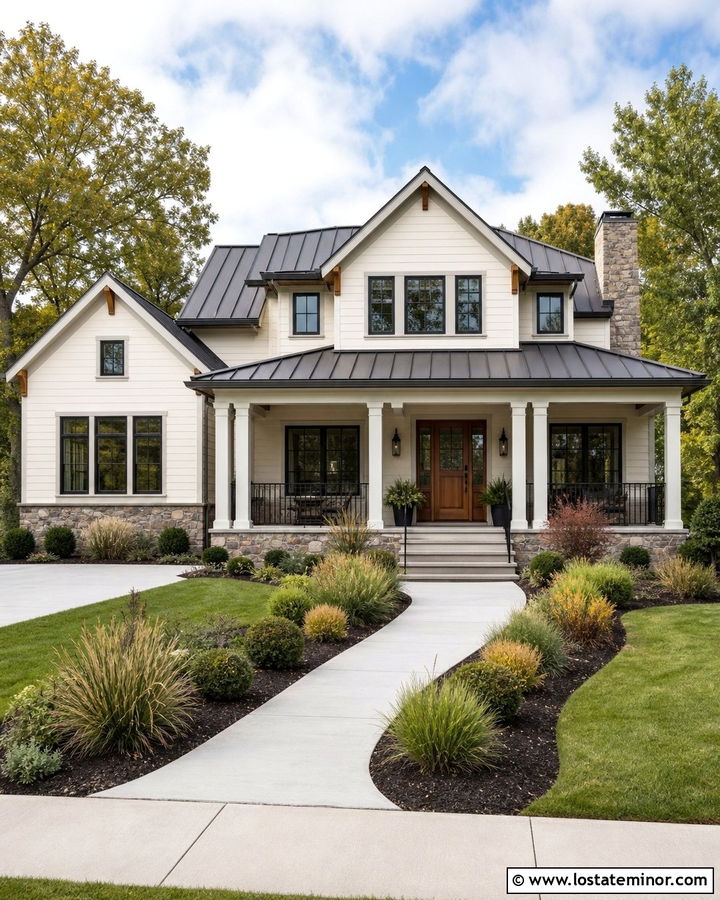
Charcoal standing-seam roofing delivers modern definition with less intensity than solid black. It suits a white Craftsman house where deep eaves and layered rooflines need visual weight. Pair warm white lap siding with charcoal fascia, muted taupe stone, and a stained fir front door. Keep porch columns white but use dark metal brackets or railings to repeat the roof color in smaller amounts. The charcoal finish can also connect naturally with concrete driveways and gray pavers. If the architecture includes several materials, limit the palette to white, charcoal, wood, and one stone blend. This controlled approach prevents a detailed facade from looking busy. Softly curved planting beds can then balance the straight seams and angular rooflines with a more relaxed foreground.
15. White House With Cedar Shake Roof
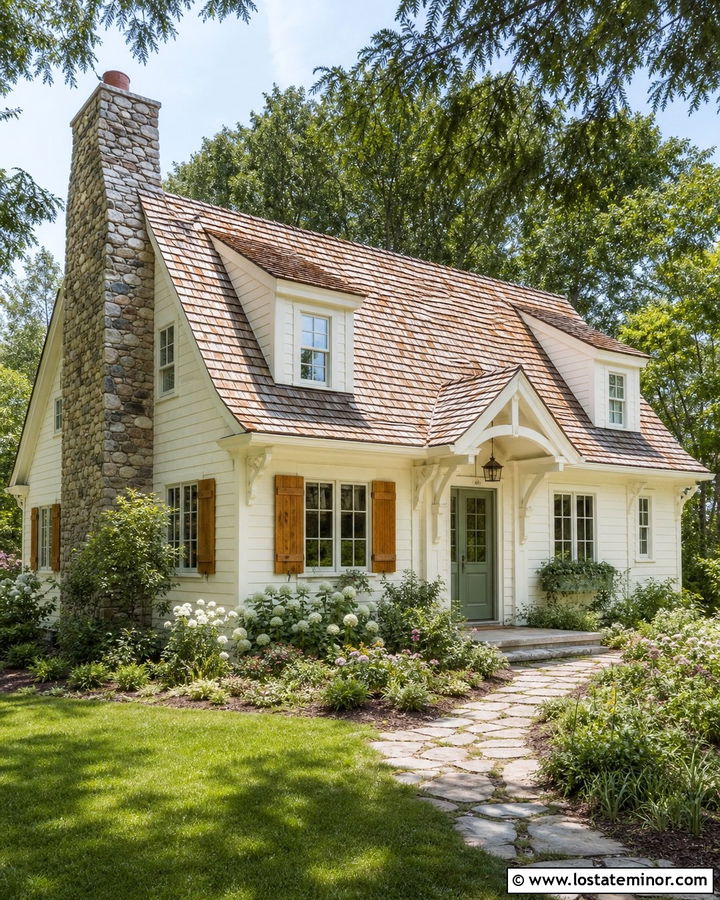
Few combinations feel as naturally inviting as a white cottage beneath a cedar shake roof. The warm wood starts with golden and reddish tones, then gradually becomes softer and grayer as it weathers. Pair it with creamy white shingles or clapboard siding, simple white trim, and a muted sage front door. Cedar window boxes, porch brackets, or shutters can repeat the roof material without covering too much of the facade. A fieldstone chimney makes the transition from roof to landscape feel even more organic. This complete exterior is ideal for coastal cottages, lake houses, and storybook-inspired homes. Use loose plantings, flowering shrubs, and an irregular stone path to complement the handcrafted roof texture and create relaxed, approachable curb appeal.
16. White House With Natural Slate Roof
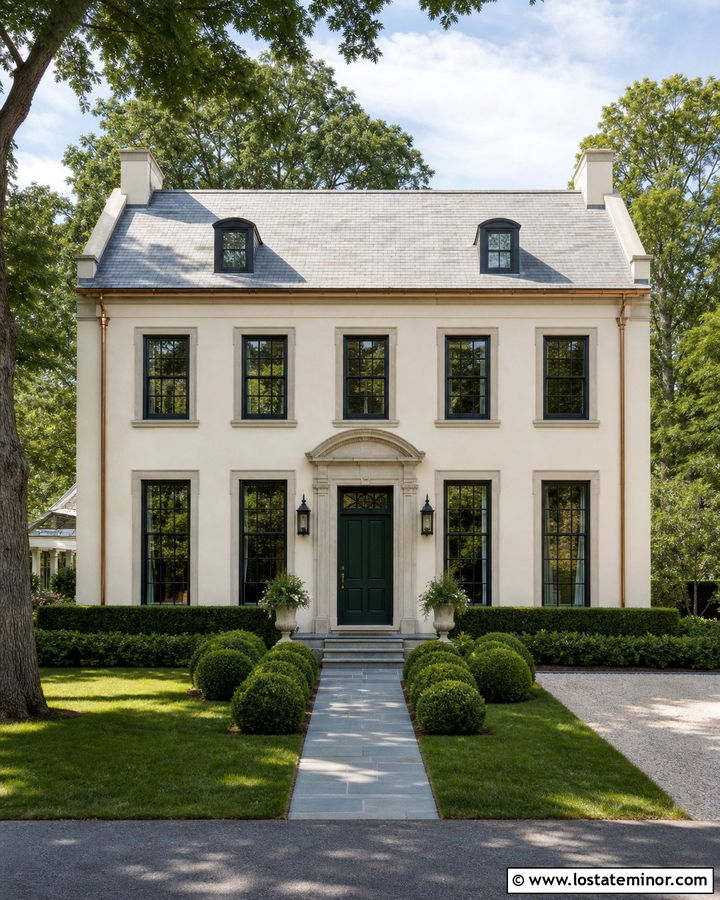
Natural slate gives a white home depth, permanence, and subtle color movement. Depending on the stone, the roof may contain charcoal, blue-gray, green, or muted purple tones. A stately Tudor or Georgian house can carry this visual richness particularly well. Pair soft white masonry with dark gray window trim, leaded-glass details, and a black or deep green front door. Limestone surrounds and copper gutters complement slate without imitating it. Since the roof already provides variation, keep the painted palette controlled and avoid overly colorful shutters. Formal hedges, mature shade trees, and a stone walkway support the traditional materials. The result is an elegant exterior where the white walls brighten the facade while the slate roof gives the architecture enduring visual weight.
17. White House With Flat Roof And Black Fascia
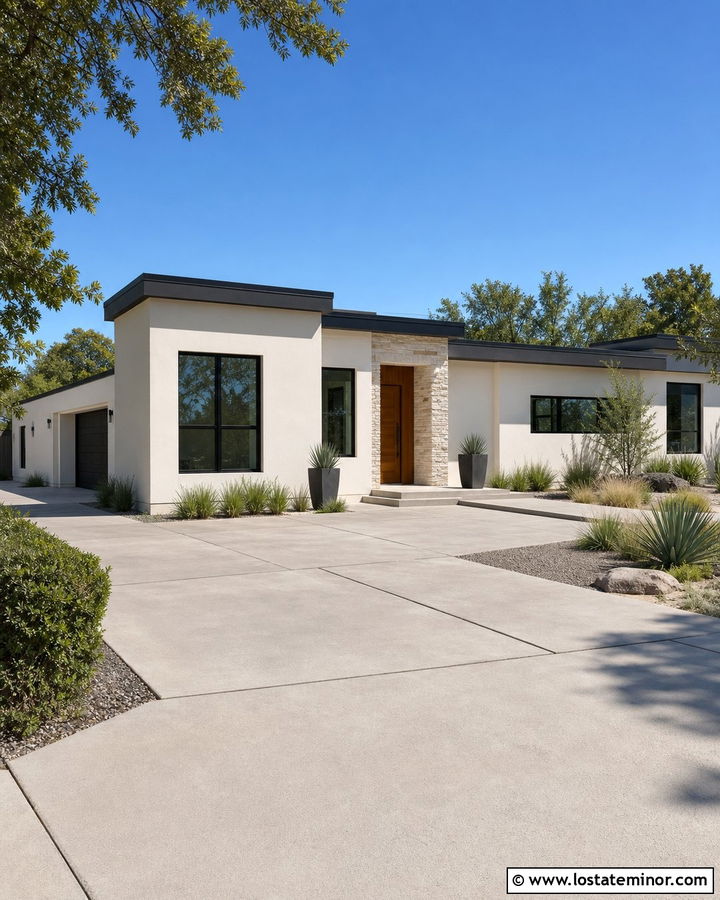
A flat roof can make a white house feel crisp and contemporary when its edges are clearly defined. Use smooth warm-white stucco with a narrow black fascia band, dark window frames, and a flush natural wood front door. The horizontal roofline should remain visually clean, so conceal or carefully integrate gutters and mechanical elements. Large windows can introduce reflection and depth across otherwise simple walls. Add light concrete pavers, charcoal planters, and restrained stone cladding near the entrance to connect the black roof edge with the ground. Low ornamental grasses and sculptural shrubs suit the geometry better than dense foundation planting. This balanced palette keeps the modern house bright and welcoming while allowing the flat roof to look intentional rather than unfinished.
18. White House With Low Slope White Roof
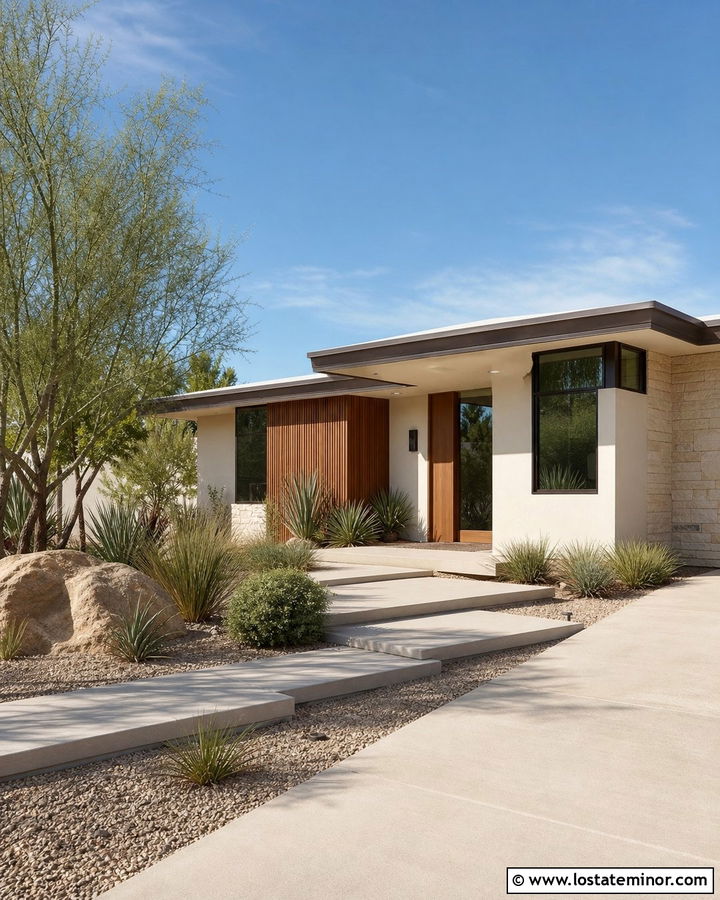
A low-slope white roof creates a streamlined silhouette for a modern desert or midcentury-inspired home. Continue the light appearance with warm white stucco, but add walnut-toned siding around the entrance for contrast. Bronze window frames and pale sand-colored stone can connect the building to a dry, sunny landscape. Wide overhangs cast natural shadows that keep the white surfaces from looking flat. Since much of the roof may be hidden from the street, use a defined fascia color to clarify the roofline. A soft greige or bronze edge will feel warmer than black. Complete the curb appeal with gravel beds, drought-tolerant plants, and broad concrete stepping pads. The overall exterior appears open, efficient, and comfortably connected to its climate.
19. White House With Black Gambrel Roof
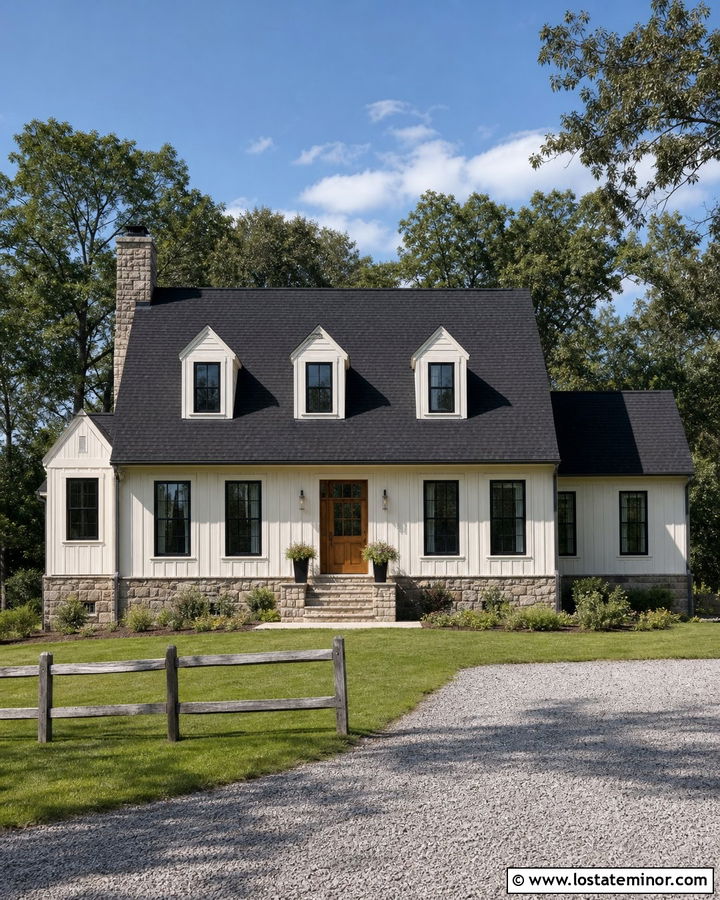
A black gambrel roof gives a white home the familiar shape of a barn while creating strong contrast above the facade. Use white board-and-batten siding, black-framed windows, and a medium-brown wood door to keep the palette warm. Small dormers can be painted white so they remain visible against the steep roof planes. Add a stone foundation in gray and taupe tones to ground the tall structure. If garage or barn doors occupy a large area, keep them white with simple black hardware rather than making them entirely dark. This combination works for converted barns, modern farmhouses, and Dutch Colonial homes. Informal landscaping, split-rail fencing, and a gravel driveway strengthen the rural influence without turning the exterior into a themed design.
20. White House With Dark Slate Mansard Roof
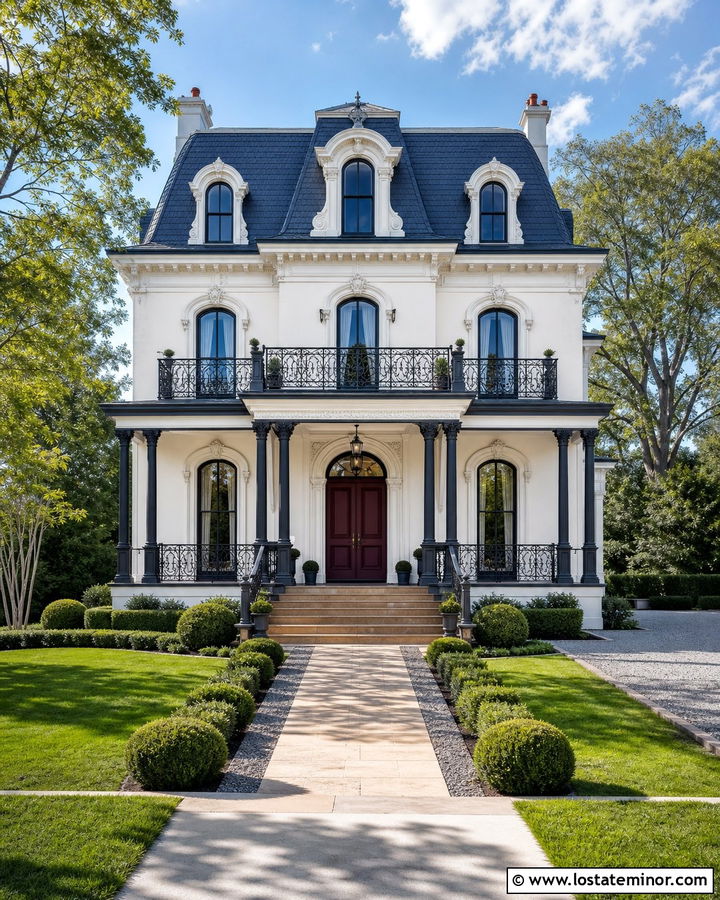
A mansard roof occupies a large portion of the visible facade, so its color and texture deserve careful attention. Dark slate or slate-look shingles create an elegant cap above white-painted brick or smooth masonry. Use charcoal dormer trim, black iron railings, and a rich burgundy or dark blue front door to support the traditional architecture. White window surrounds can brighten the steep roof face and keep the upper level from appearing heavy. Add warm stone steps and antique-inspired lanterns near the entrance. Formal but simple landscaping works best, particularly clipped hedges and a symmetrical walkway. This scheme honors the distinctive French-influenced roof shape while giving the house enough bright white surface to feel refreshed rather than imposing.
21. White Colonial House With Gray Hip Roof
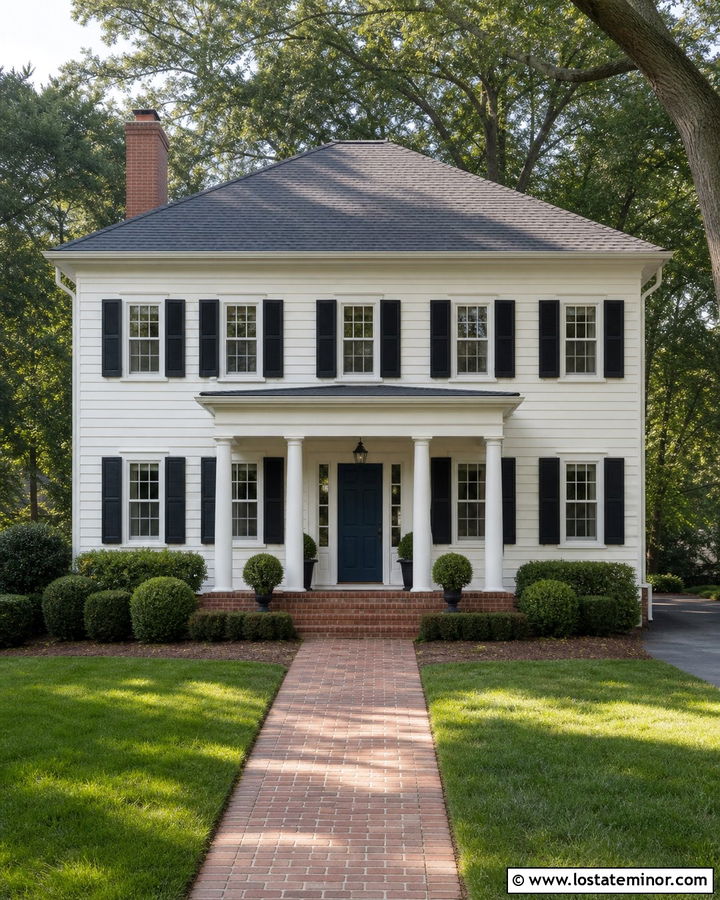
Symmetry makes a white Colonial house an ideal partner for a balanced gray hip roof. Choose medium-gray architectural shingles that provide definition without overpowering the evenly spaced windows. Warm white clapboard siding, black shutters, and a classic blue front door create a familiar but polished color scheme. Keep the trim slightly brighter than the siding to highlight the cornice, columns, and window casings. Brick steps or a brick walkway can introduce a traditional warm accent at ground level. Because a hip roof is visible on every side, match vents and flashing carefully to the roof color. Foundation shrubs should also remain symmetrical but softly layered. The finished house feels orderly and established, with enough color variation to avoid looking plain.
22. White Ranch House With Brown Roof
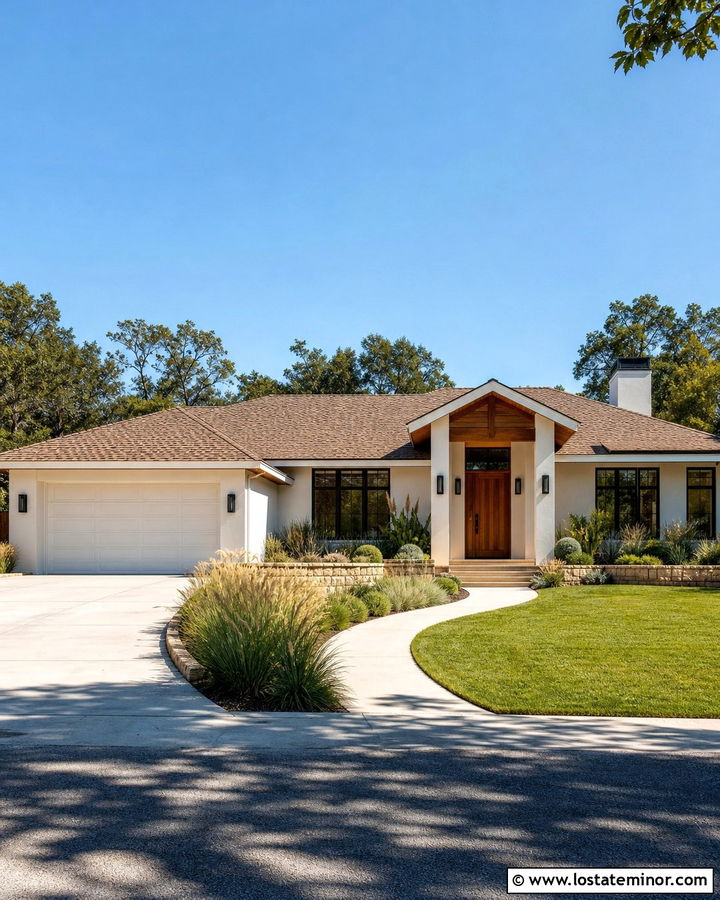
A long, low ranch house benefits from a warm brown roof that visually anchors its horizontal shape. Paint the brick or siding a creamy white, then use dark bronze window frames and a cedar front door. Variegated brown shingles can connect naturally with tan stone planters, wood beams, and an exposed porch ceiling. Keep the garage doors close to the white body color so the front elevation does not become garage-heavy. A wide charcoal or brown fascia can add definition beneath the low roofline. Layered beds with ornamental grasses and rounded shrubs help break up the length of the facade. The resulting exterior feels relaxed and updated while preserving the straightforward proportions that make ranch homes practical and approachable.
23. White Craftsman House With Dark Gray Roof
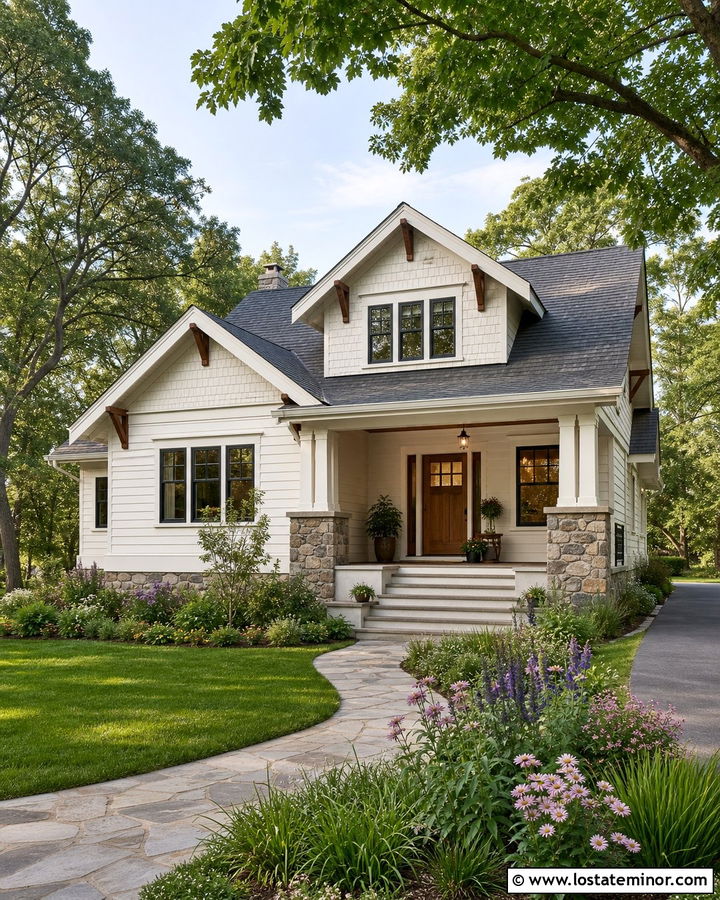
Deep rooflines and tapered columns give a Craftsman house plenty of natural character. A dark gray roof strengthens those features without creating the severity of pure black. Use warm white lap siding with white shingles in the gables, then add stained wood brackets and a substantial oak front door. Gray and brown fieldstone around the porch columns can connect the roof to the foundation. Paint the window trim a soft charcoal if the facade needs more definition, but keep larger trim boards white. This combination emphasizes handcrafted textures while maintaining a clean overall palette. Broad porch steps, native flowering plants, and a curved stone walkway make the home feel welcoming. The roof, masonry, and wood should share similarly warm or neutral undertones.
24. White Farmhouse With Mixed Metal And Shingle Roof
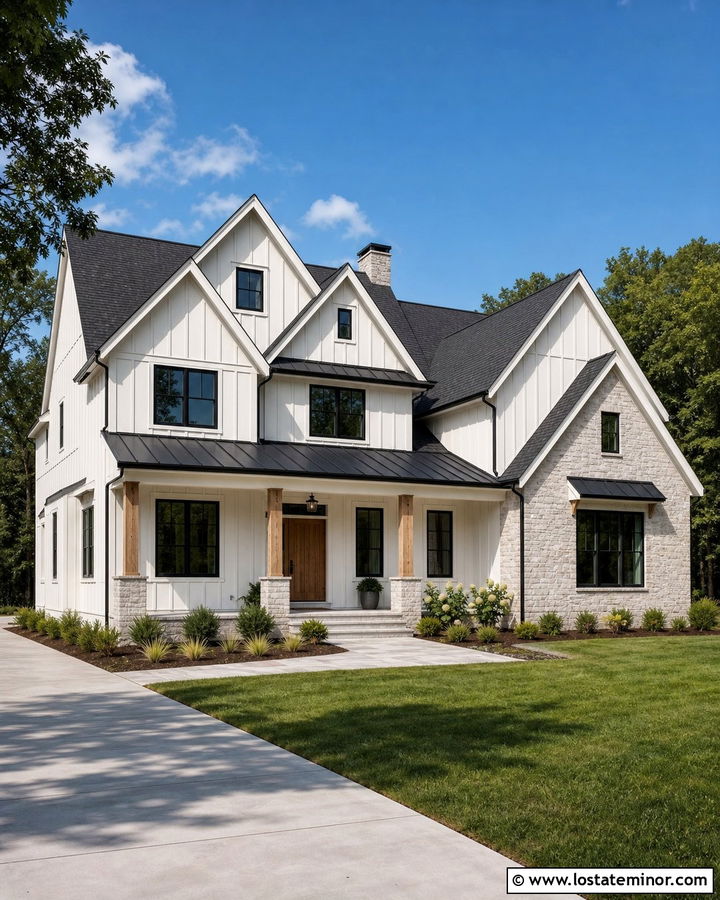
Mixed roofing can make a large white farmhouse feel layered when each material has a clear purpose. Use charcoal shingles on the main roof and black standing-seam metal over porches, dormers, or lower additions. Soft white board-and-batten siding unifies the different roof sections. Repeat black on window frames and porch railings, then introduce natural wood through the front door and exposed ceiling. Light gray stone around the foundation prevents the black-and-white palette from feeling too sharp. Match the gutters to the roof material directly above them for a carefully finished appearance. This scheme works best when metal is used as a deliberate accent rather than scattered randomly. Simple landscaping allows the varied roof shapes and materials to remain readable.
25. White Cape Cod House With Dormer Roof
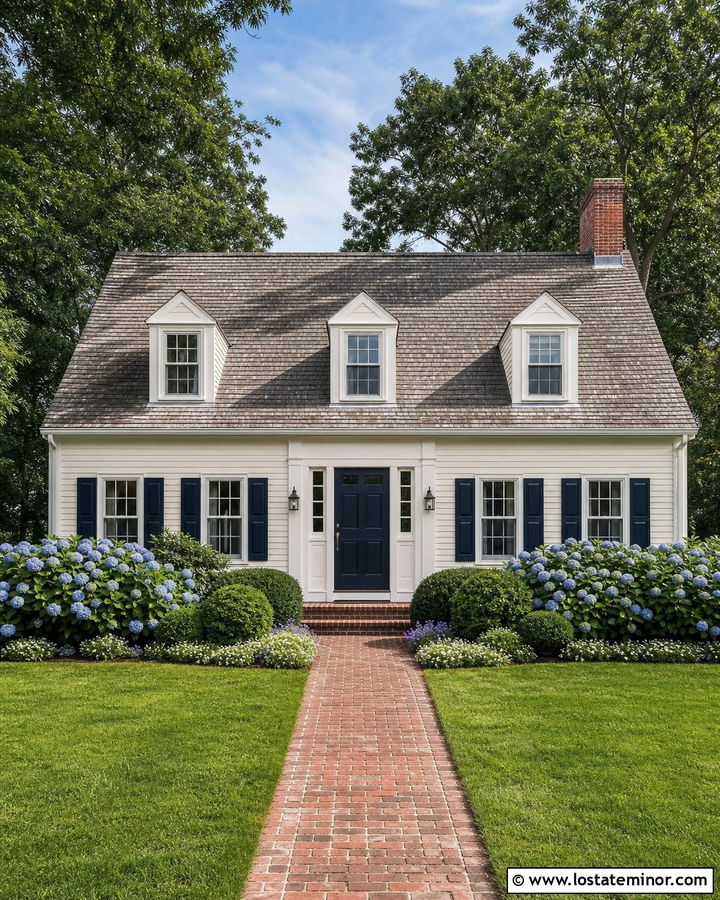
A Cape Cod home depends on its roof and dormers for much of its curb appeal. Cover the steep roof with weathered gray shingles, then paint the dormer faces and clapboard siding a warm, soft white. Deep navy shutters and a matching front door introduce classic coastal color without overwhelming the compact facade. White gutters and trim keep the roof edges neat, while a brick chimney adds warmth and vertical balance. If space allows, use a small bluestone landing or brick path at the entrance. Hydrangeas, boxwoods, and low flowering plants suit the home’s traditional scale. Keeping the palette limited helps the dormers, windows, and roof pitch remain the focus while giving the entire exterior an inviting, well-maintained appearance.
26. White Tudor House With Steep Black Roof
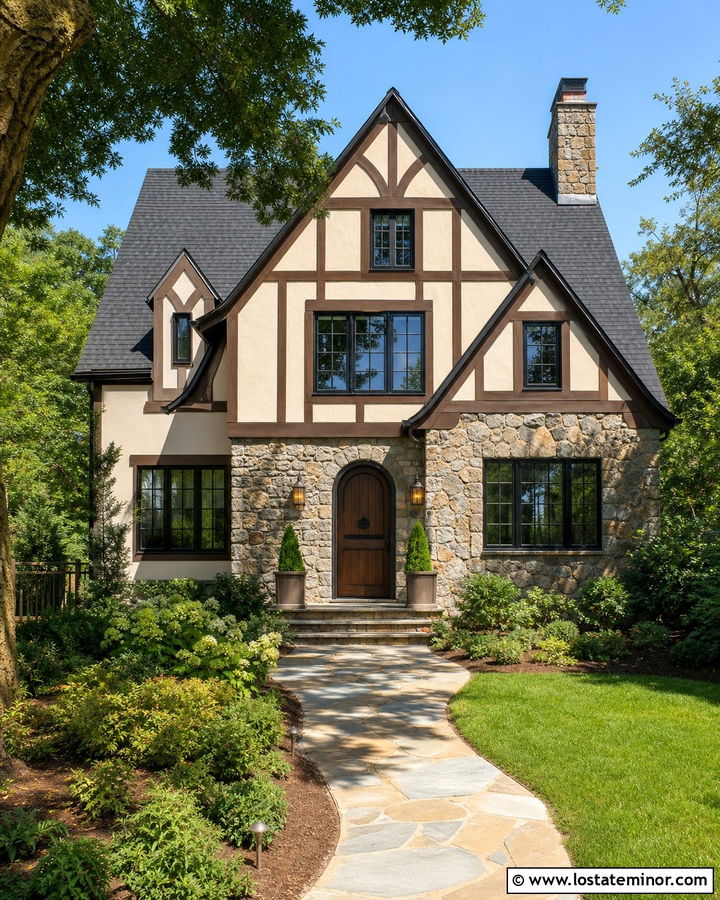
A steep black roof emphasizes the dramatic silhouette of a Tudor house. Soften that strength with creamy white stucco, warm brown half-timbering, and mixed stone around the foundation. Black-framed windows can connect directly with the roof, while a heavy arched wood door becomes the welcoming focal point. Avoid using bright white paint, which can feel disconnected from the earthy timber and masonry. A warmer exterior white produces a more natural transition between materials. Copper or dark bronze lanterns add restrained detail near the entrance. Curved planting beds and an irregular stone walkway can echo the old-world architecture without becoming overly formal. Together, the roof, timber, stucco, and stone create a high-contrast exterior that still feels warm and livable.
27. White Mediterranean House With Red Tile Roof
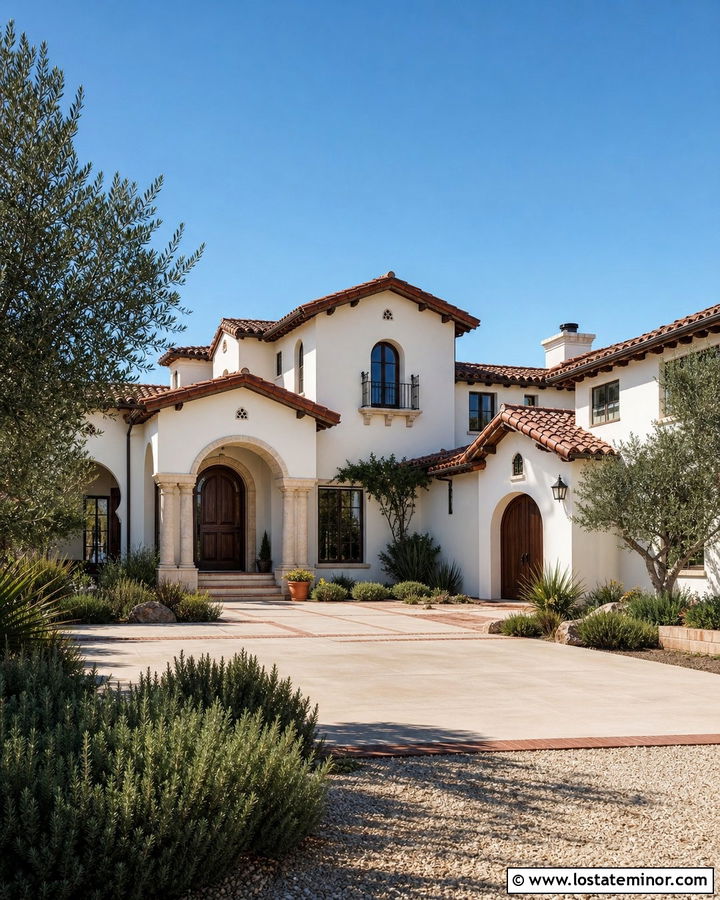
The glow of red clay tile immediately warms a white Mediterranean exterior. Use soft ivory stucco, dark bronze windows, and stained wood doors to build a cohesive sun-friendly palette. Arched openings, covered patios, and shallow roof pitches allow the tile to remain visible without dominating the house. Repeat terracotta in small areas such as porch flooring or walkway accents, but avoid matching every detail to the roof. Pale limestone can provide a calmer material around columns and entry steps. Olive trees, rosemary, ornamental grasses, and gravel beds complement the architecture while keeping maintenance manageable. This complete design works because the bright walls, earthy roof, dark metal, and natural wood create balanced layers rather than relying on white and red alone.
28. White Coastal House With Pale Blue Roof
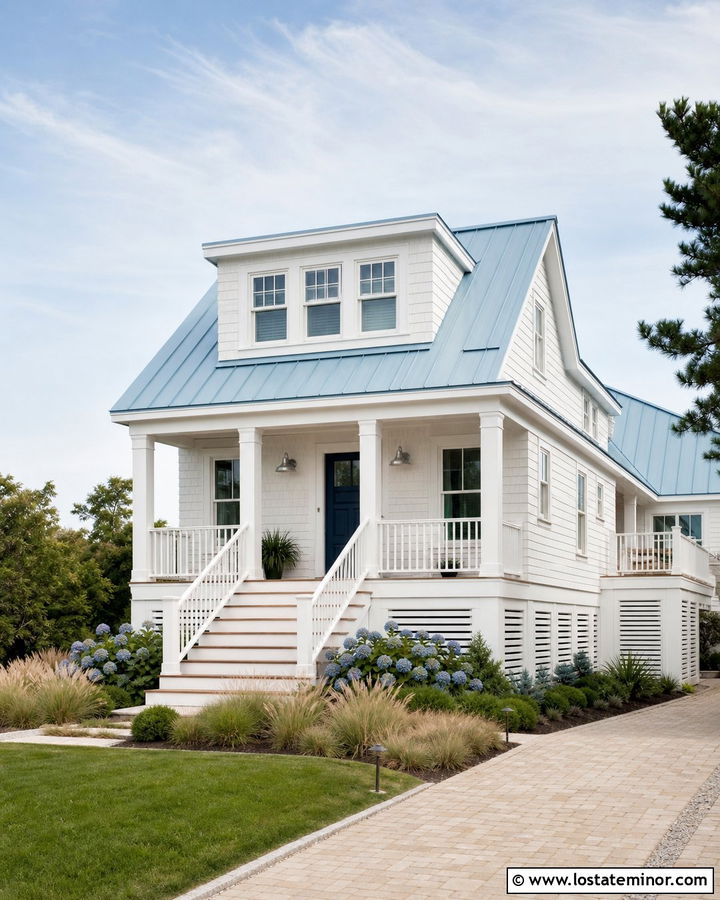
A pale blue metal roof gives a white coastal house a breezy, distinctive identity. Pair it with crisp but slightly warm white shingle siding, bright white trim, and a deeper navy or sea-glass front door. Natural cedar porch flooring adds warmth beneath the cooler colors. Keep railings white to preserve an open appearance, and select silver or brushed nickel lighting that relates to the metal roof. A raised cottage or coastal bungalow can carry this light palette especially well. Sand-colored pavers, ornamental grasses, hydrangeas, and low evergreen shrubs connect the home to its surroundings. The blue roof should remain muted rather than intensely saturated, allowing it to read as an architectural finish instead of a distracting decorative color.
29. White Mountain House With Dark Roof And Stone
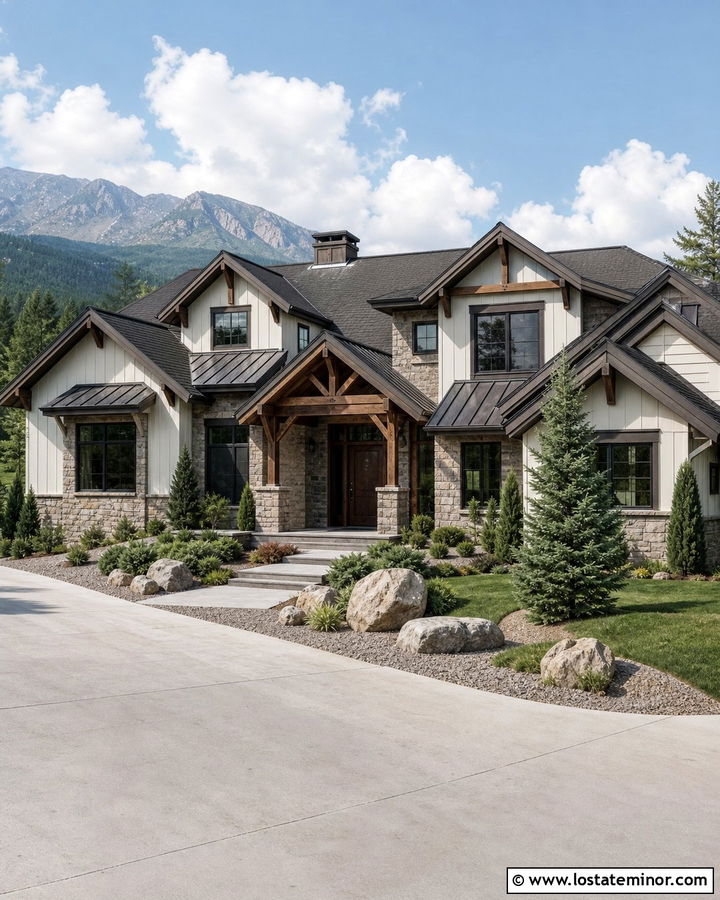
A white mountain house needs enough texture and weight to feel connected to a rugged landscape. Use warm white siding beneath a charcoal shingle or standing-seam metal roof, then add substantial gray-brown stone around the foundation and porch. Heavy timber beams, a medium-stained front door, and dark bronze windows create warmth between the white walls and dark roof. A broad gable with generous overhangs will show off the contrasting materials while providing a sheltered entrance. Keep garage doors white or wood-toned based on their size and visibility. Native evergreens, boulders, and natural gravel beds complete the setting. This palette feels brighter than a traditional dark cabin but still appears durable, grounded, and appropriate for a wooded or mountainous property.
30. White Modern House With Butterfly Roof
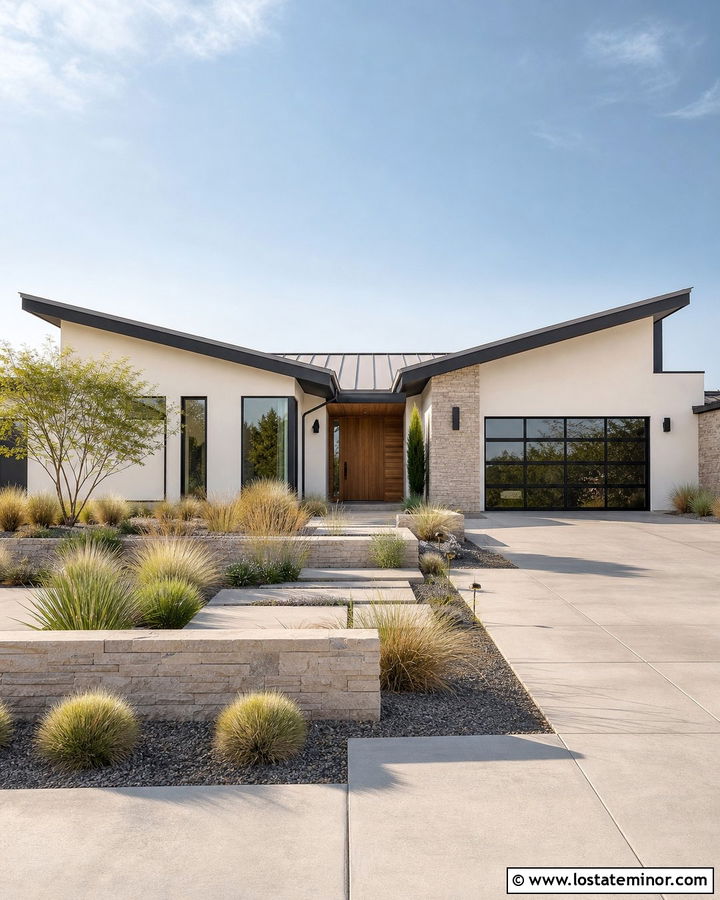
An inverted butterfly roof gives a white modern house a bold profile without requiring decorative trim. Use smooth neutral-white stucco with dark charcoal fascia and black-framed floor-to-ceiling windows. Warm wood cladding around the entrance can soften the angular architecture and guide attention toward the front door. If the roof surface is visible, choose light gray metal or a pale membrane that supports the clean palette. Low stone walls and oversized concrete pavers can repeat the strong horizontal and diagonal lines. Keep landscaping sculptural, using ornamental grasses, compact trees, and simple gravel beds. This complete scheme allows the unusual roof shape to become the defining feature while white walls, dark outlines, and natural wood maintain balance and welcoming curb appeal.
Conclusion:
Choosing the right roof for a white exterior involves more than selecting a color from a sample. The roof must work with the siding undertone, trim, windows, masonry, doors, and surrounding landscape. Dark shingles provide strong definition, while gray, brown, cedar, metal, slate, and clay create softer or more regional looks. Roof shape matters too. Gables, hips, gambrels, flat roofs, and modern profiles each change how much color and texture are visible from the street. Before making a final choice, compare full-size samples outdoors and view them in changing daylight. These **30 White House Design With Roof Ideas** offer practical starting points for building a cohesive, attractive, and architecture-appropriate exterior.

Related posts: