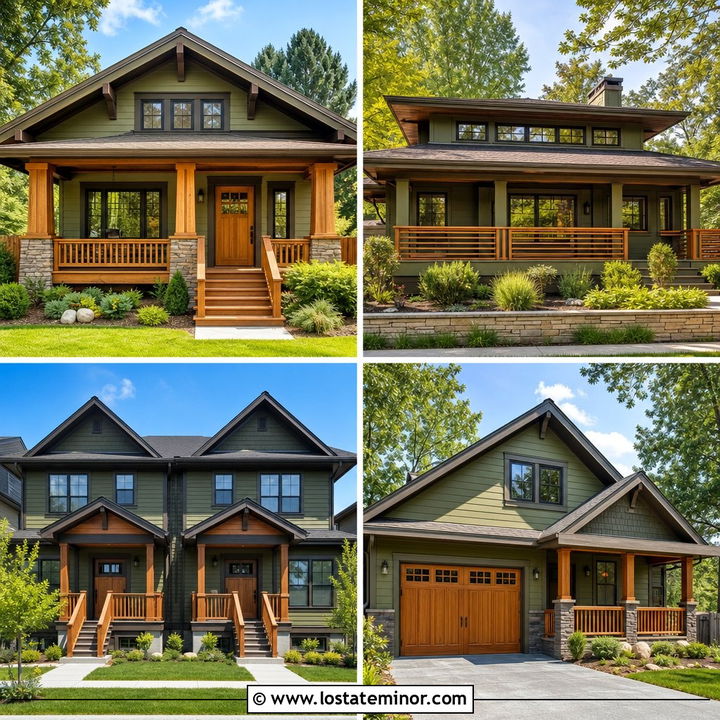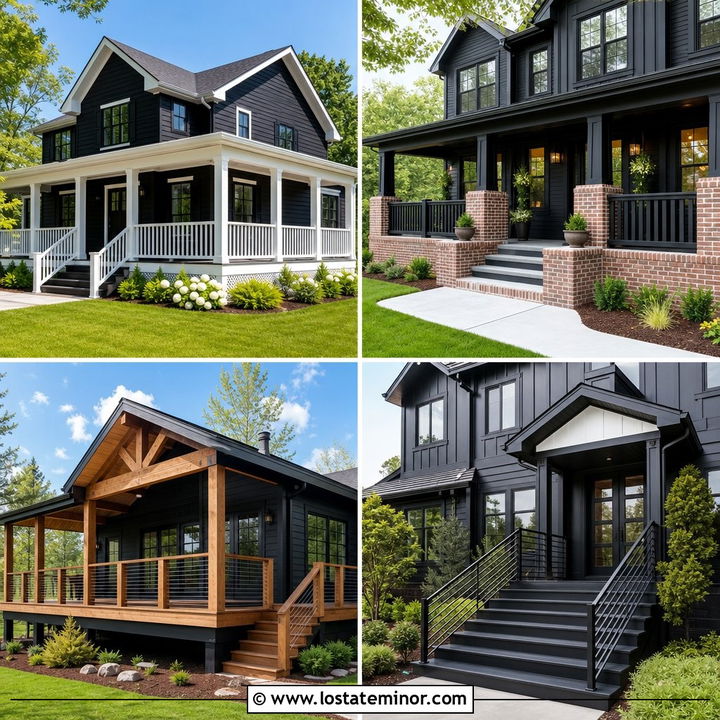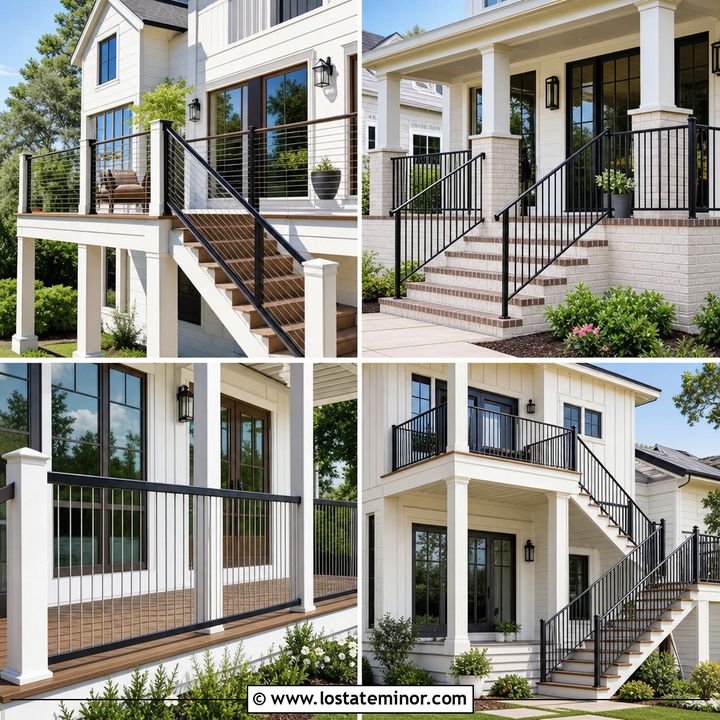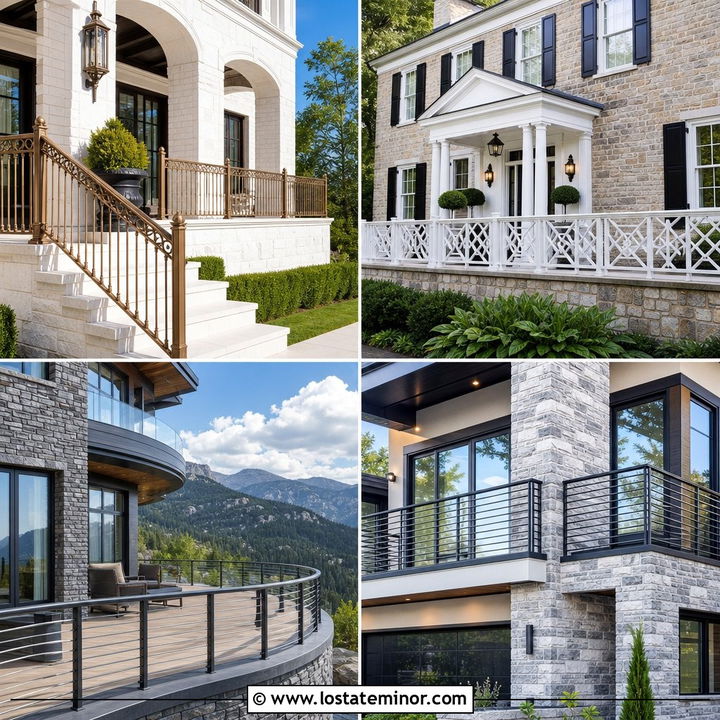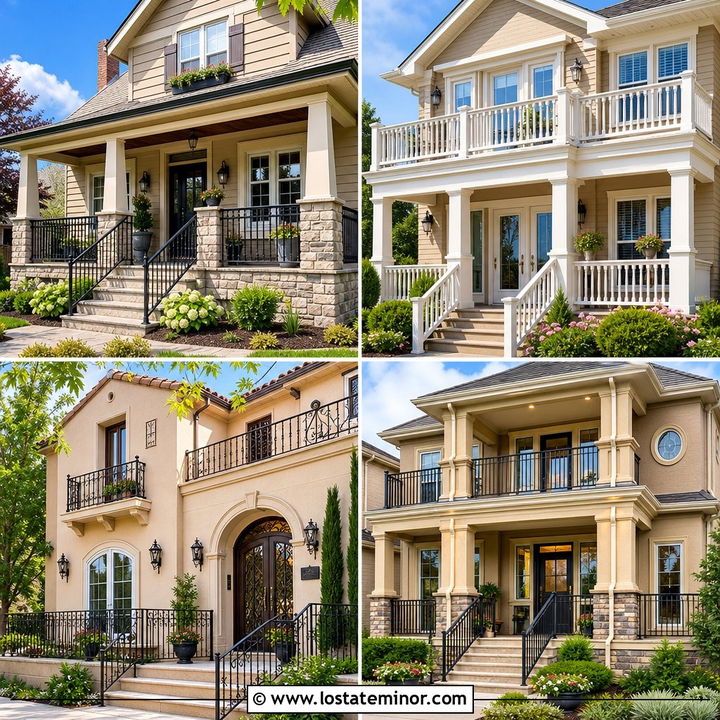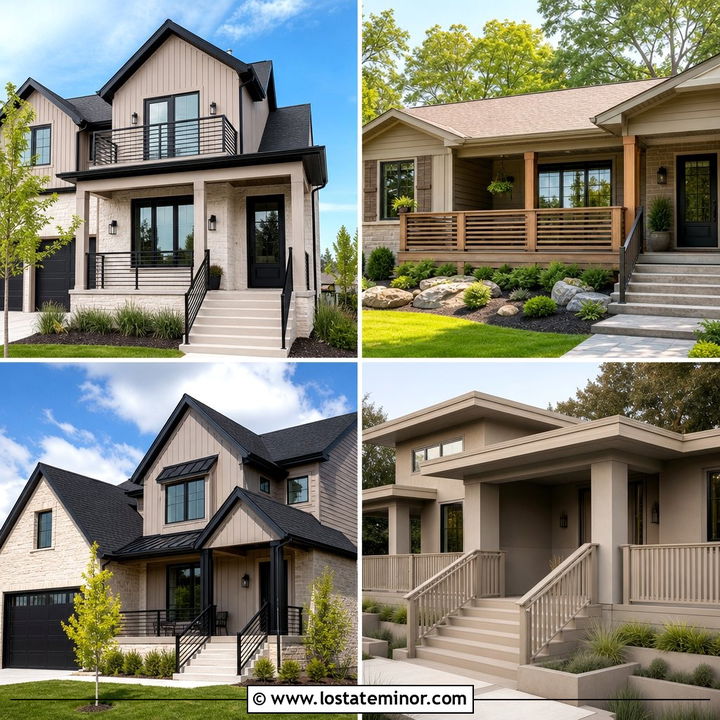
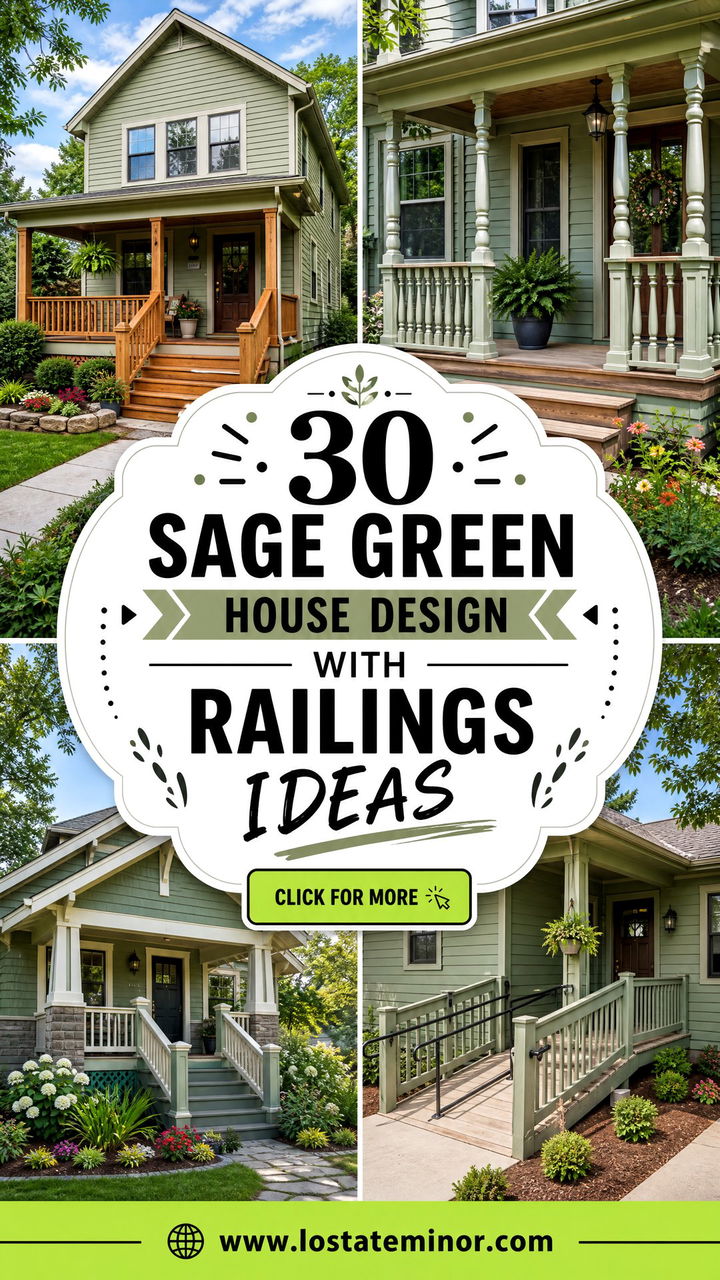
Sage green brings a calm, natural quality to a home while giving railings enough contrast to become an important part of the facade. These 30 Sage Green House Design With Railings Ideas explore complete exterior schemes rather than treating the railing as an isolated feature. Sage siding can feel crisp with white balusters, modern with black metal, or rustic with cedar and stone. It also complements architectural styles ranging from compact bungalows to Colonials, ranch homes, Craftsman houses, and modern farmhouses. The best results connect the railing finish with the roof, trim, front door, porch flooring, and landscaping. This creates an exterior that looks intentional from the curb. Use the following 30 Sage Green House Design With Railings Ideas to find a practical combination for your home.
1. Sage Green House With White Porch Railings
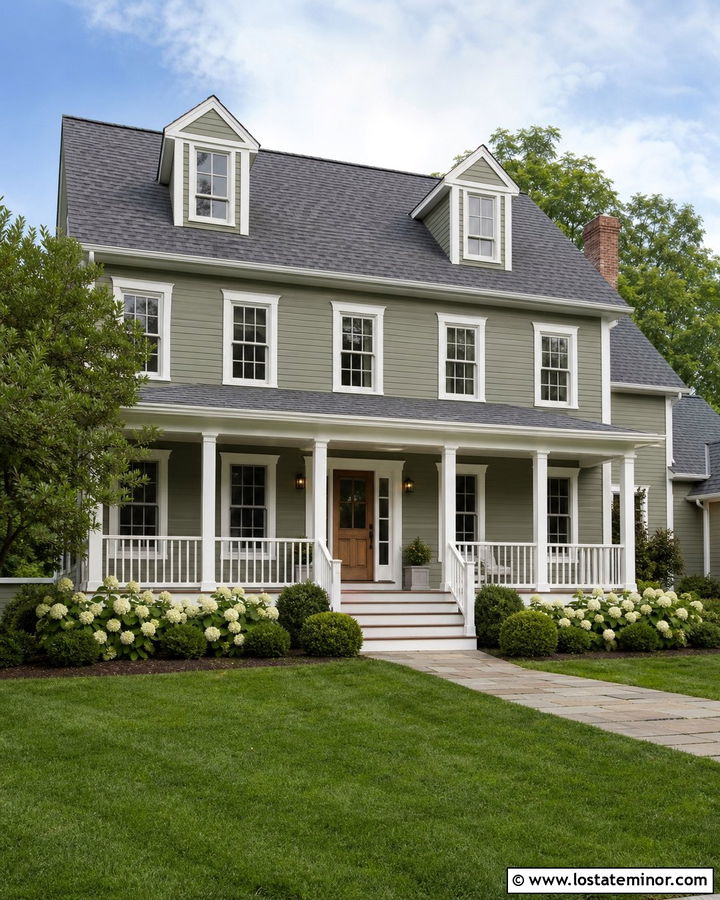
White porch railings give a sage green house a clean, traditional outline that feels bright without becoming stark. Use muted sage lap siding across the main facade, then repeat crisp white on the railing, porch columns, window trim, fascia, and garage door. A medium-gray shingle roof keeps the palette soft and balanced. For warmth, add a stained oak front door and matching porch furniture. This combination works especially well on Colonial, Cape Cod, and traditional farmhouse homes. Choose simple square balusters when you want an updated appearance rather than an ornate one. A light gray porch floor can hide everyday dirt while connecting the railing with the roof. Finish the look with hydrangeas, boxwoods, and a straight stone walkway.
2. Sage Green House With Black Metal Railings
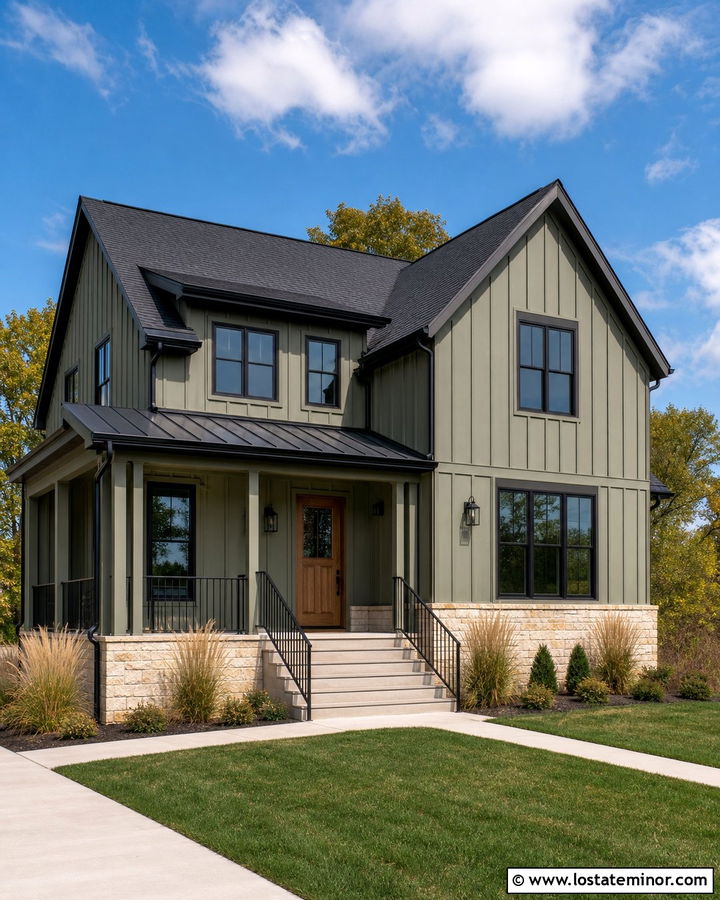
Imagine a soft sage green facade framed by thin black lines. Matte black metal railings create that effect while giving the exterior a sharper, more contemporary character. Carry black onto the window frames, gutters, porch lights, and front-door hardware so the railing does not look disconnected. A charcoal roof strengthens the contrast, while warm wood on the front door prevents the scheme from feeling cold. This complete look suits modern farmhouses, urban cottages, and simple two-story homes. Select vertical metal balusters with minimal ornamentation to maintain a streamlined appearance. Cream foundation stone can introduce a lighter transition between the house and landscaping. Ornamental grasses, clipped shrubs, and a wide concrete walkway complete this polished, low-clutter curb-appeal scheme.
3. Sage Green House With Cedar Porch Railings
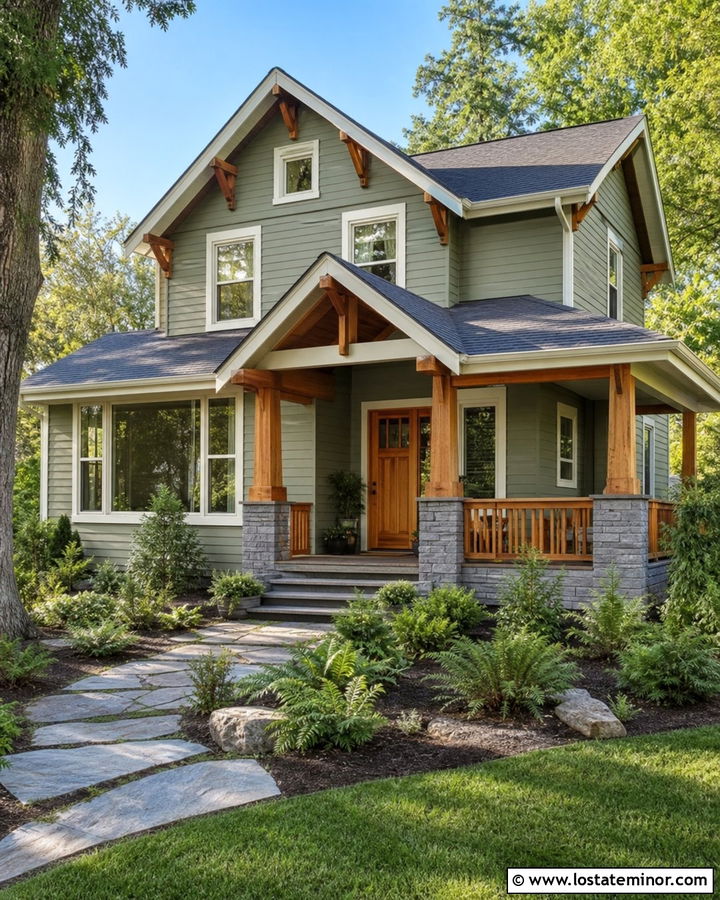
Natural cedar railings make sage green siding feel warmer and more connected to the landscape. The wood can be used on the top rail, balusters, porch posts, front door, and decorative gable brackets for a unified exterior. Keep the window trim soft white to provide definition without competing with the cedar. A weathered charcoal roof and gray stone porch foundation add quiet neutral layers. This pairing is particularly effective on Craftsman homes, woodland cottages, and rustic ranch houses. Protect the cedar with a clear or lightly tinted exterior stain that preserves its golden-brown character. Wide porch steps in matching wood make the entrance feel substantial. Native grasses, ferns, and irregular flagstone paths reinforce the relaxed, nature-inspired appearance of the complete house.
4. Sage Green House With Cable Deck Railings
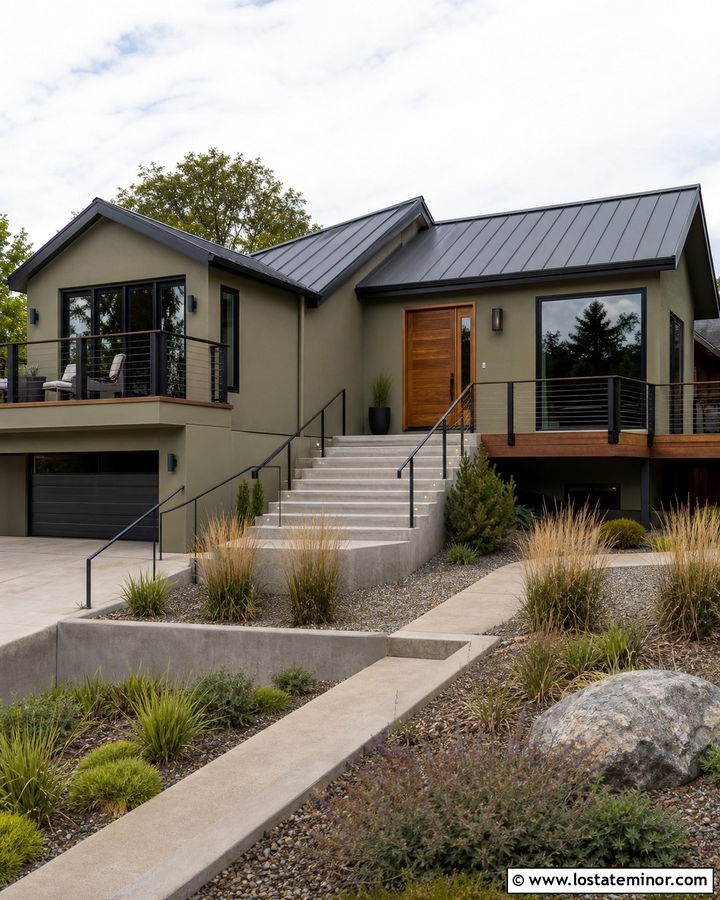
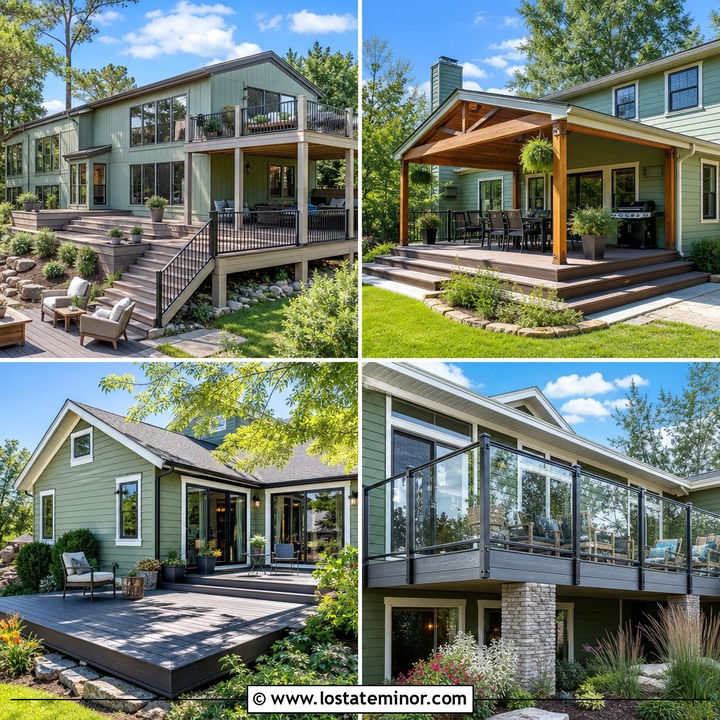
Cable railings can update a sage green house without overpowering its gentle color. Use black posts and stainless-steel horizontal cables around an elevated front deck, then repeat black on the windows and roof edging. Warm cedar deck boards and a natural wood front door soften the metal components. This treatment fits a contemporary split-level, hillside home, or modern cabin with broad windows. Keep the siding simple, using horizontal fiber cement or smooth vertical panels in muted sage green. A dark charcoal standing-seam roof adds structure from above. Because cable railings maintain open sightlines, the deck remains visually connected to the yard. Finish the setting with broad concrete steps, low evergreen shrubs, ornamental grasses, and an uncluttered gravel or paver walkway.
5. Sage Green House With Horizontal Wood Railings
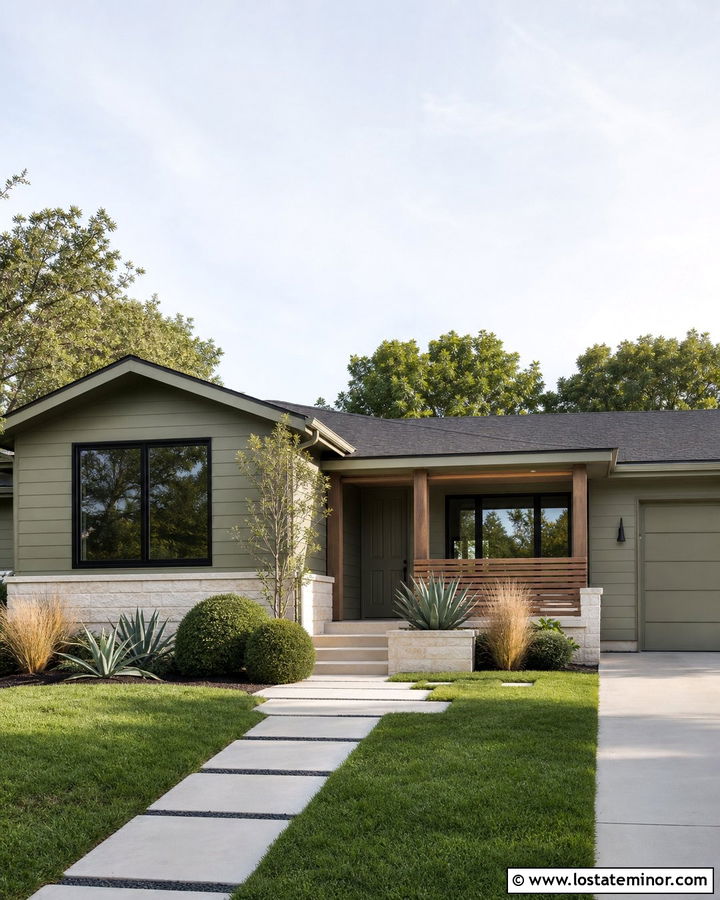
Horizontal wood railings bring strong modern lines to a sage green exterior. Choose medium-toned cedar boards and leave narrow, consistent gaps between each rail for a tidy appearance. Repeat the wood on porch columns, soffits, and the front door to make the design feel deliberate. Black window frames and a deep charcoal roof introduce contrast, while pale limestone around the foundation keeps the home from appearing too dark. This scheme works beautifully on a midcentury ranch or low-profile contemporary house. The horizontal railing also echoes long rooflines and wide siding courses. Use restrained landscaping with sculptural shrubs, grasses, and one ornamental tree. A broad concrete path and matching porch steps support the clean geometry while allowing the sage green body color to remain prominent.
6. Sage Green House With Chippendale Railings
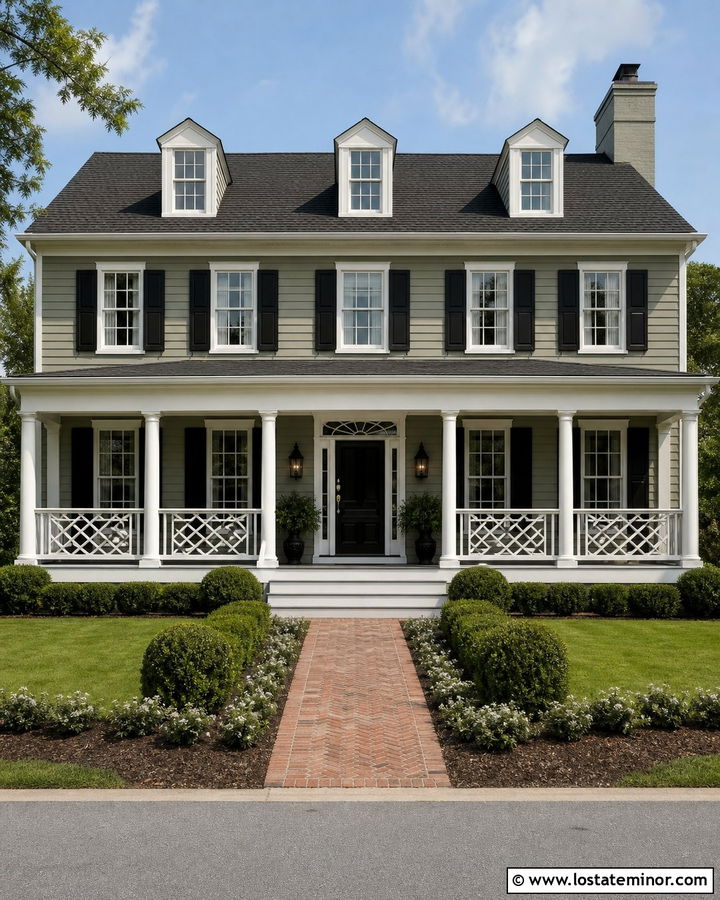
Decorative Chippendale railings add pattern and historic character to a sage green house. Paint the geometric railing crisp white, then use the same white on columns, window casings, corner boards, and roof trim. The repeated color keeps the detailed balusters from looking overly busy. Soft sage clapboard siding, a black front door, and a charcoal shingle roof create a classic three-color palette. This combination is especially suitable for Southern Colonials, Georgian-inspired homes, and traditional two-story houses with wide porches. Keep porch flooring subdued with a medium gray or natural wood finish. Symmetrical lanterns and neatly clipped foundation shrubs reinforce the formal architecture. The result feels detailed and distinctive while remaining approachable, balanced, and easy to appreciate from the street.
7. Sage Green House With Turned Porch Balusters
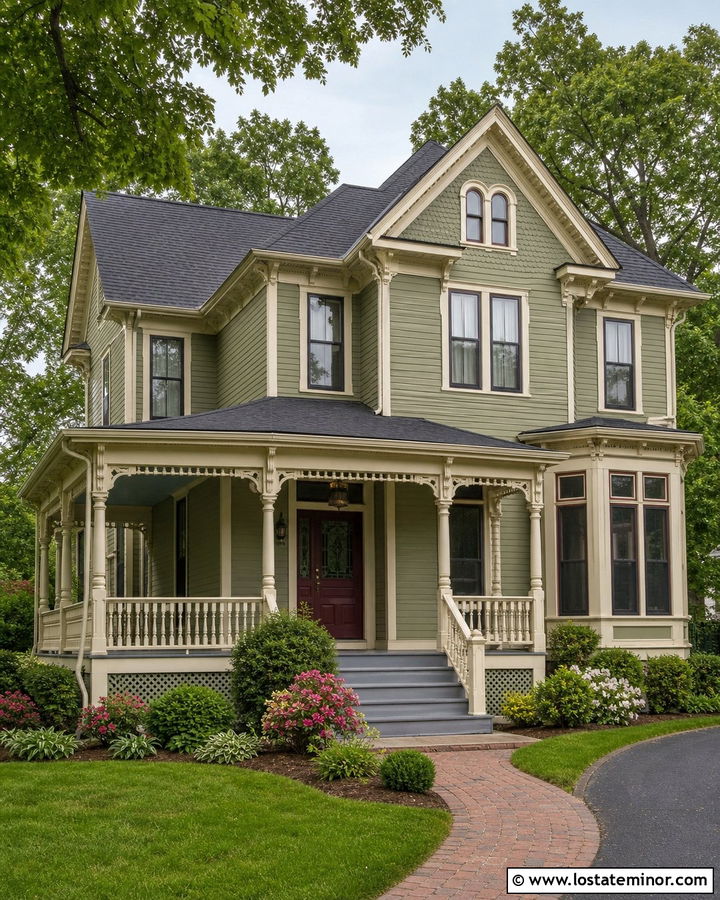
A Victorian or folk-style home can carry more railing detail than a simpler modern facade. Pair sage green clapboard siding with cream turned balusters, decorative porch brackets, and substantial columns. Cream feels softer than pure white and gives older architectural details a warm, established appearance. Add a muted burgundy front door for controlled contrast, then use charcoal shingles to ground the decorative color scheme. The railing should repeat the rhythm of the narrow windows and vertical corner trim. Avoid introducing too many additional accent colors, since the woodwork already supplies visual interest. A painted gray porch floor creates a practical neutral base. Curved garden beds, flowering shrubs, and a brick walkway complete a welcoming historic look without allowing the landscaping to hide the intricate railing.
8. Sage Green Craftsman House With Wood Railings
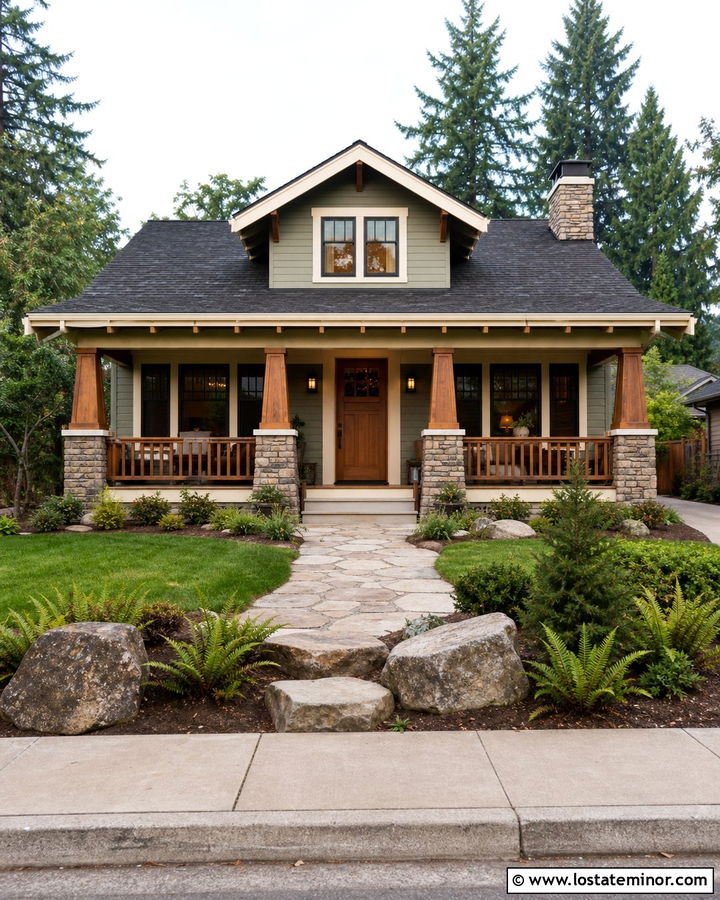
Craftsman architecture looks especially grounded when sage green siding meets substantial stained-wood railings. Use square oak or cedar balusters between tapered porch columns resting on stone piers. Repeat the wood stain on the front door, exposed rafters, and gable brackets. Warm white trim can outline the windows without distracting from these handcrafted materials. Select a brown-black roof that relates to both the stone and the deeper markings in the wood. This exterior works best when every feature appears sturdy and appropriately scaled. The railing should have a broad top rail and strong newel posts rather than thin decorative spindles. Layer the foundation with low shrubs, ferns, and natural boulders. A flagstone walkway will further connect the sage green Craftsman house with its earthy surroundings.
9. Sage Green House With Stone Porch Piers
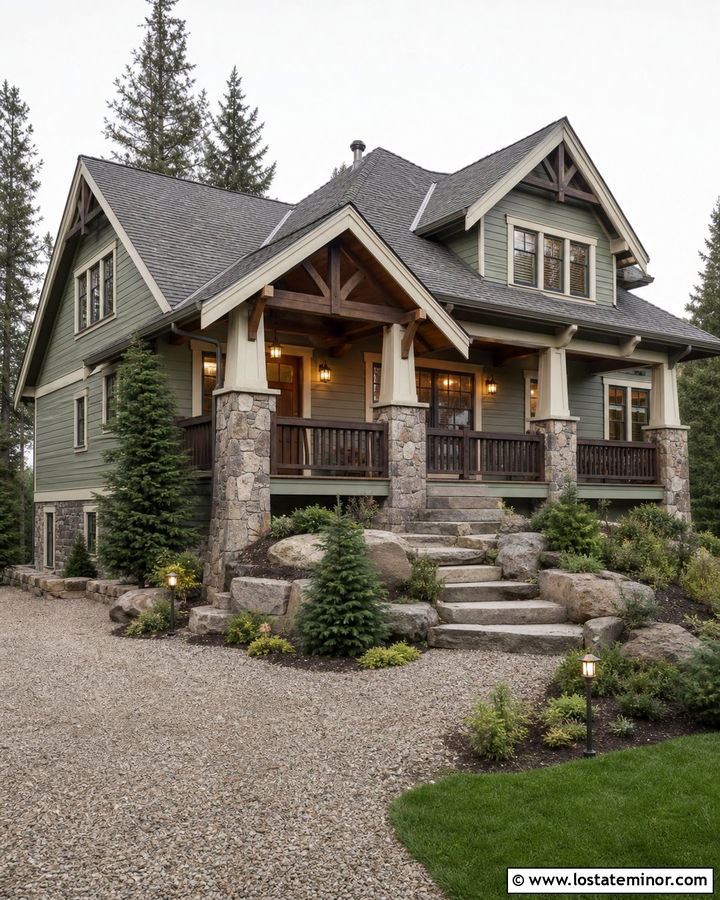
Stone porch piers provide a strong base for railings on a sage green house. Build short piers from mixed gray and tan stone, then install dark-stained wood rails and square balusters between them. The combination introduces several natural textures while keeping the facade visually balanced. Use warm sage horizontal siding, creamy window trim, and a medium-brown front door. A weathered charcoal roof will connect with the darker pieces in the masonry. This complete look suits Craftsman bungalows, mountain homes, and suburban cottages with deep front porches. Keep the railing height proportional so the stone does not block windows or make the entry feel enclosed. Wide steps, layered evergreen planting, and low pathway lighting can highlight the solid porch foundation while maintaining an inviting entrance.
10. Sage Green House With Bronze Railings
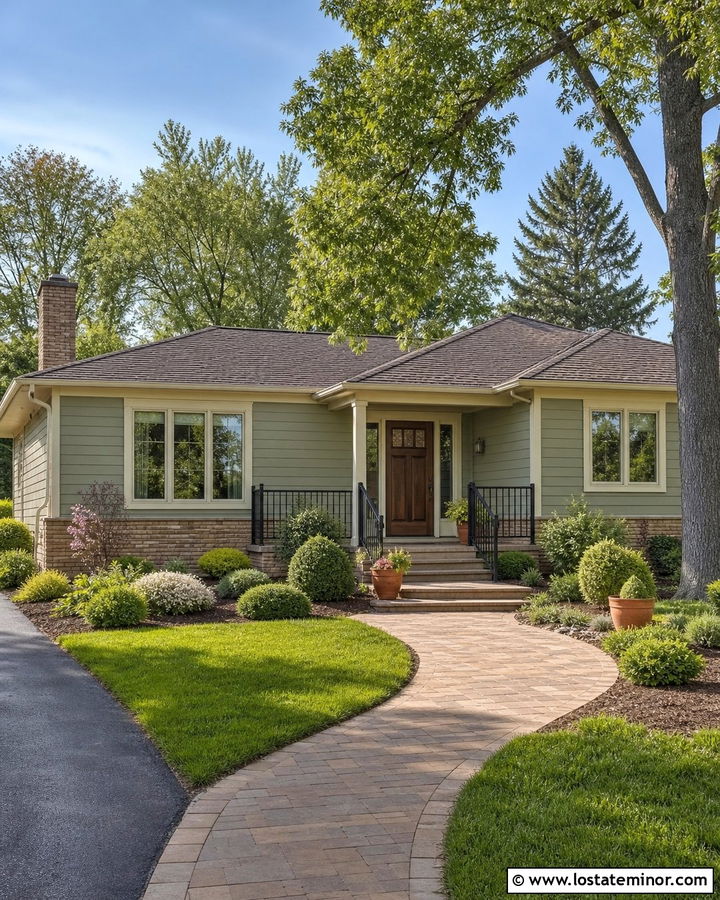
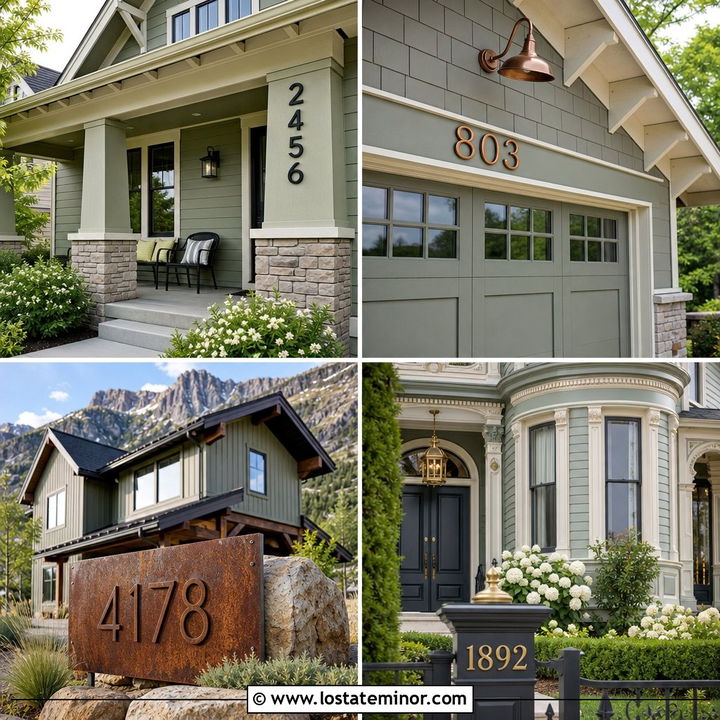
Dark bronze railings offer a softer alternative to bold black metal. Their warm undertone complements muted sage green siding, especially when the house also includes tan brick, brown shingles, or stained wood. Use slender bronze balusters around a raised porch and repeat the finish on lanterns, door hardware, gutters, and address numbers. Cream trim around the windows keeps the facade light, while a walnut-colored front door adds another warm note. This combination is a natural fit for Mediterranean-influenced houses, traditional ranch homes, and transitional suburban exteriors. Choose a low-sheen railing finish to avoid distracting reflections. Rounded shrubs, terra-cotta planters, and a warm paver walkway can complete the palette. The overall result feels refined but less graphic than a sage-and-black exterior.
11. Sage Green House With Dark Green Railings
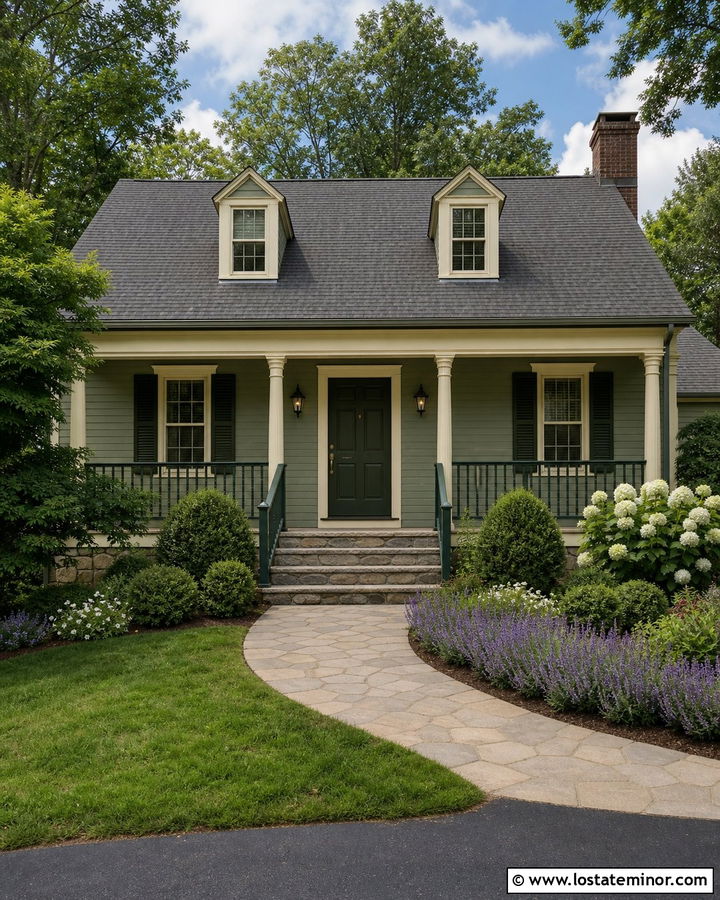
Would you prefer a railing that blends with the house instead of sharply contrasting it? Deep forest green railings create a layered monochromatic palette against lighter sage siding. Use the dark green on the porch balusters, window shutters, front door, and selected trim details. Cream window casings and porch columns can separate the two greens and prevent the scheme from looking flat. A medium-gray roof offers a neutral finishing layer. This combination works well on cottages, traditional ranches, and homes surrounded by mature trees. Choose simple railing profiles because the color variation already provides interest. Natural stone steps and aged brass lighting introduce warmth. Add flowering plants with white or pale lavender blooms so the landscape remains visible without competing with the closely related green exterior colors.
12. Sage Green House With Cream Porch Railings
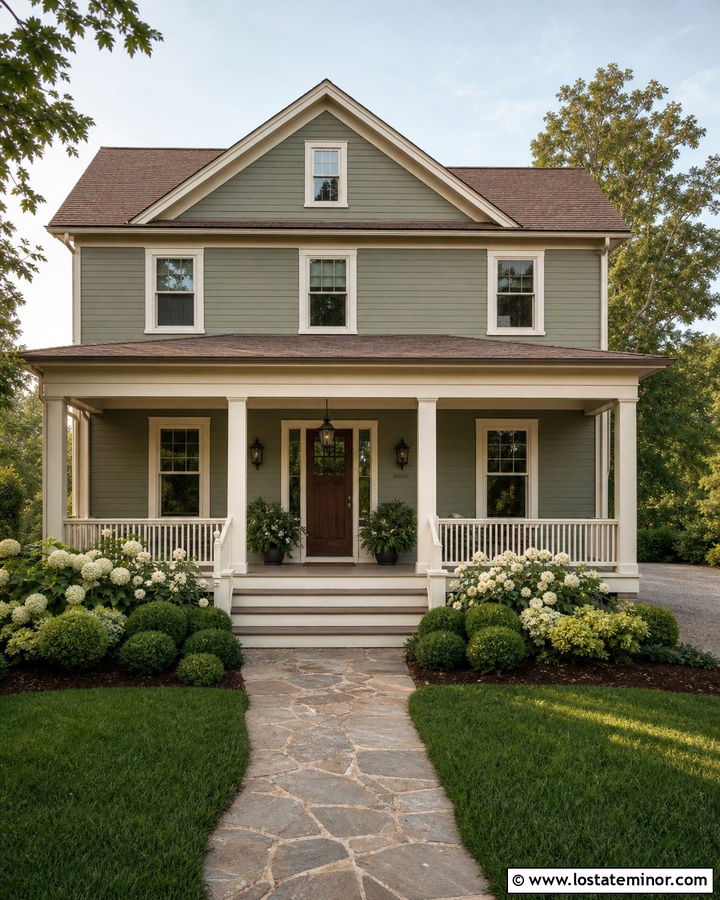
Cream railings soften a sage green facade and work well when bright white would look too sharp. Continue the warm cream across the porch columns, window trim, soffits, and garage door. A walnut front door and medium-brown roof can reinforce the inviting undertones. This palette is especially flattering on cottages, traditional farmhouses, and older homes with brick chimneys or weathered masonry. Use square balusters for a simple result, or gently turned balusters when the architecture includes decorative details. A muted taupe porch floor will bridge the cream woodwork and earthy sage siding. Plant ivory roses, pale hydrangeas, and rounded evergreen shrubs along the porch. The completed exterior feels calm and established, with enough contrast to show every railing section clearly from the street.
13. Sage Green House With Hog Wire Railings
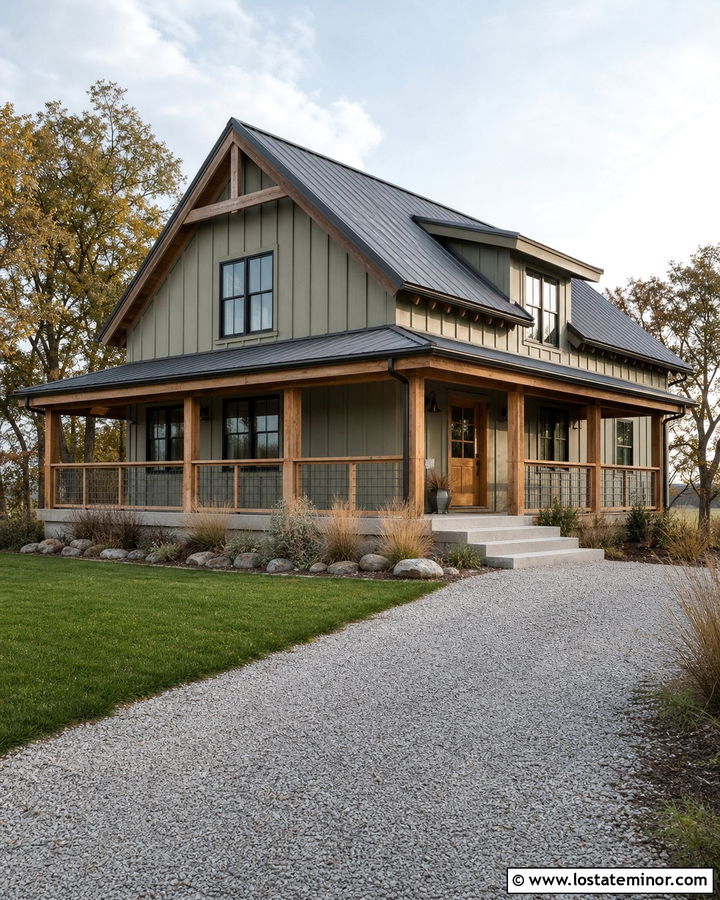
Hog wire panels can give a sage green house an informal modern-rustic edge. Frame galvanized wire grids with stained cedar posts and top rails, then repeat the cedar on porch beams and the front door. The open grid keeps the porch connected to the yard while introducing practical structure. Use medium sage board-and-batten siding, black window frames, and a charcoal metal roof for a balanced mix of rural and contemporary elements. This look fits modern cabins, small farmhouses, and country ranch homes. Keep the wire openings and framing consistent across the full porch to avoid a makeshift appearance. Gravel paths, native grasses, and simple concrete steps complement the utilitarian material. Black lanterns can connect the roofing and windows without adding another color to the restrained exterior scheme.
14. Sage Green House With Glass Panel Railings
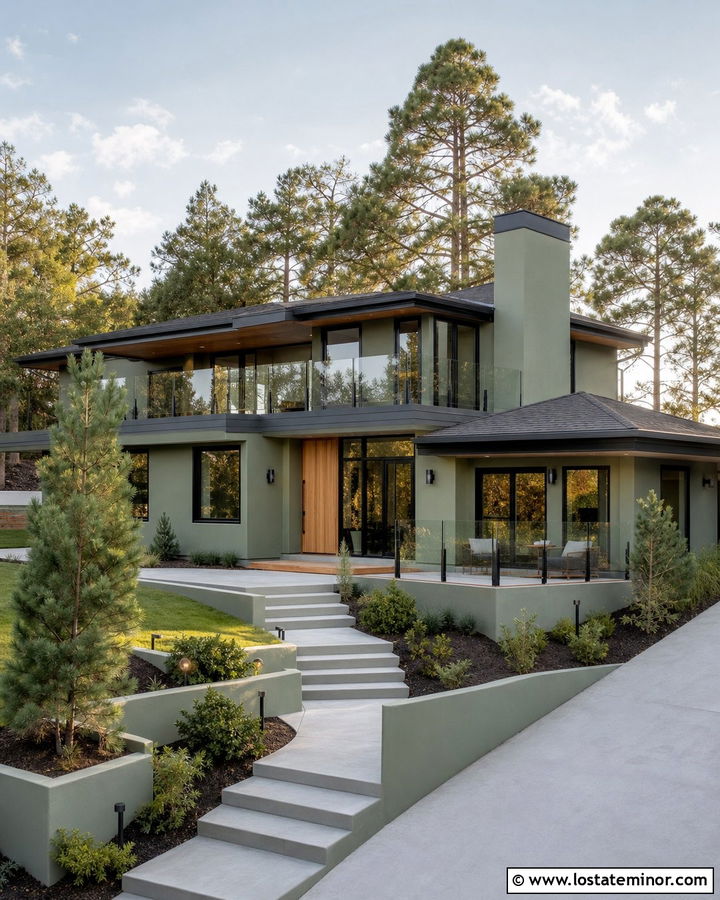
Glass panel railings make an elevated sage green home feel open and contemporary. Use clear panels held by slim black posts around a front balcony or raised deck. The dark supports should connect visually with black-framed windows, exterior lights, and a charcoal roof. Smooth sage green siding creates a calm backdrop, while natural cedar deck boards and a matching pivot door introduce warmth. This combination is particularly successful on modern hillside houses or homes with attractive front views. Keep the glass panels divided into evenly spaced sections so they align with major windows and architectural lines. Pale concrete steps, simple retaining walls, and sculptural evergreen planting maintain the clean appearance. The transparent railing lets the complete facade remain visible while still defining the outdoor living area.
15. Sage Green House With Iron Balcony Railings
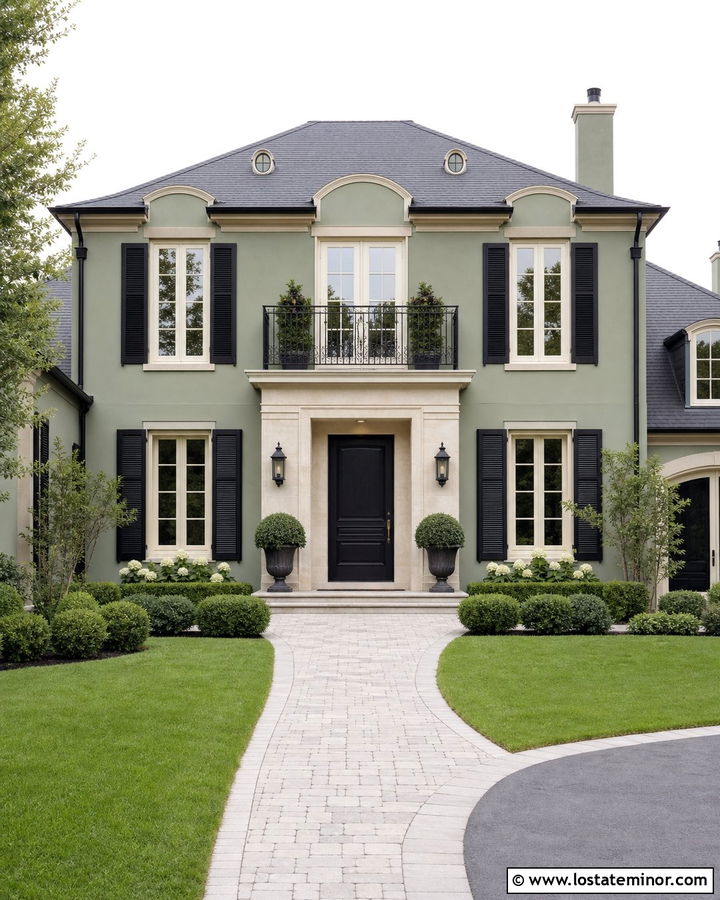
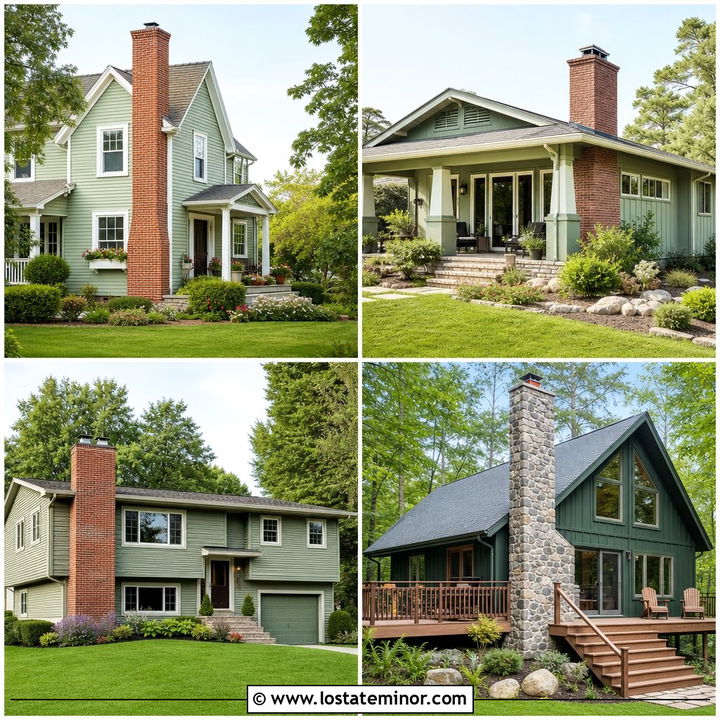
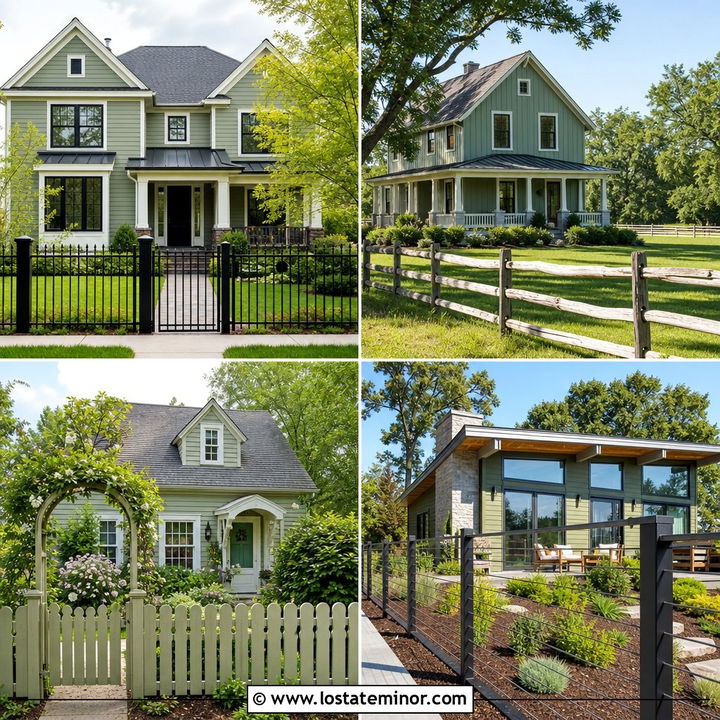
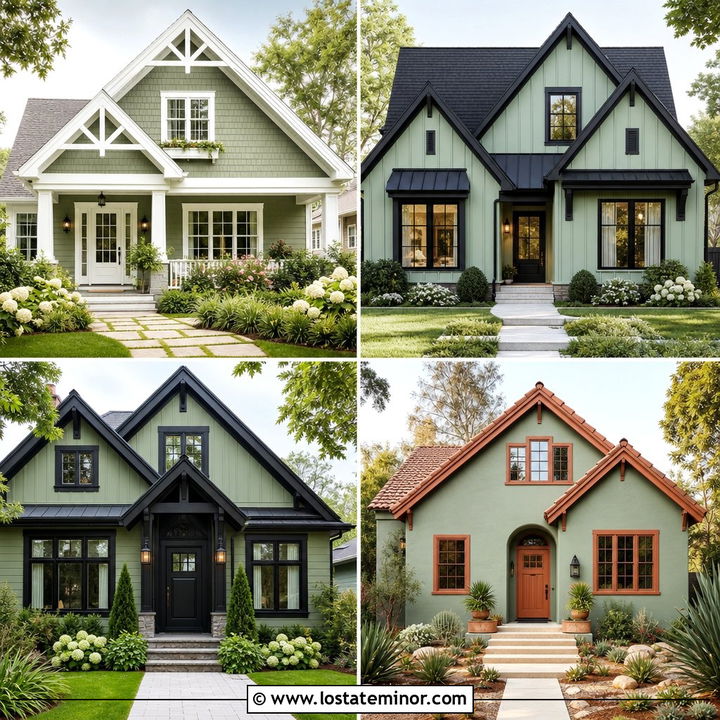
A second-story iron balcony can become the defining feature of a sage green house. Choose slim black railings with restrained curves or simple vertical pickets, depending on the home’s architecture. Repeat black on the shutters, front door, roof, and lanterns to integrate the balcony with the lower facade. Cream trim around the windows adds necessary brightness. This complete scheme works on French-inspired homes, compact townhouses, and symmetrical traditional houses. Position the balcony over the main entrance so it forms a clear focal point rather than appearing randomly attached. Light stone around the doorway can give the balcony a visually supportive base. Formal shrubs, a straight paver walk, and matching planters reinforce the symmetry. The soft green body color prevents the dark iron features from feeling overly heavy.
16. Sage Green Farmhouse With Crossbuck Railings
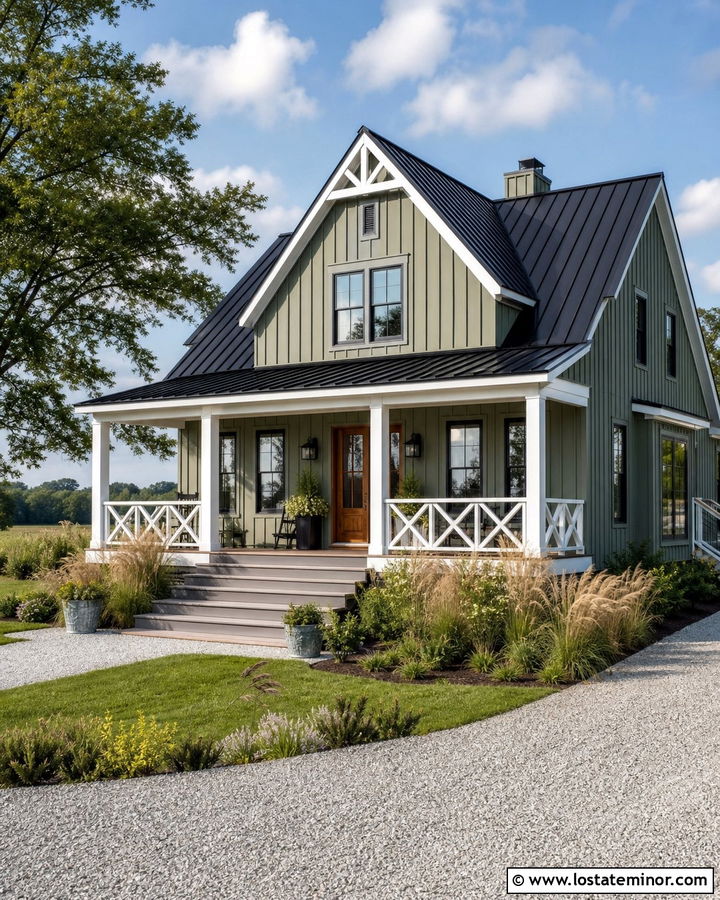
Crossbuck railings bring familiar farmhouse character to a sage green exterior. Paint the X-pattern railing warm white to match the porch posts, window trim, and gable fascia. Use sage green board-and-batten siding as the main body finish, then add a black metal roof and matching exterior lights for contrast. A medium-toned cedar door keeps the popular palette from feeling too stark. Crossbuck sections are visually stronger than plain balusters, so use them where the porch is broad enough to support the larger pattern. This design works especially well on one-and-a-half-story farmhouses with centered gables and deep porches. Simple rocking chairs, galvanized planters, and ornamental grasses can reinforce the setting. Keep the driveway and landscaping clean so the railing remains a clear architectural feature.
17. Sage Green Cape Cod With White Deck Railings
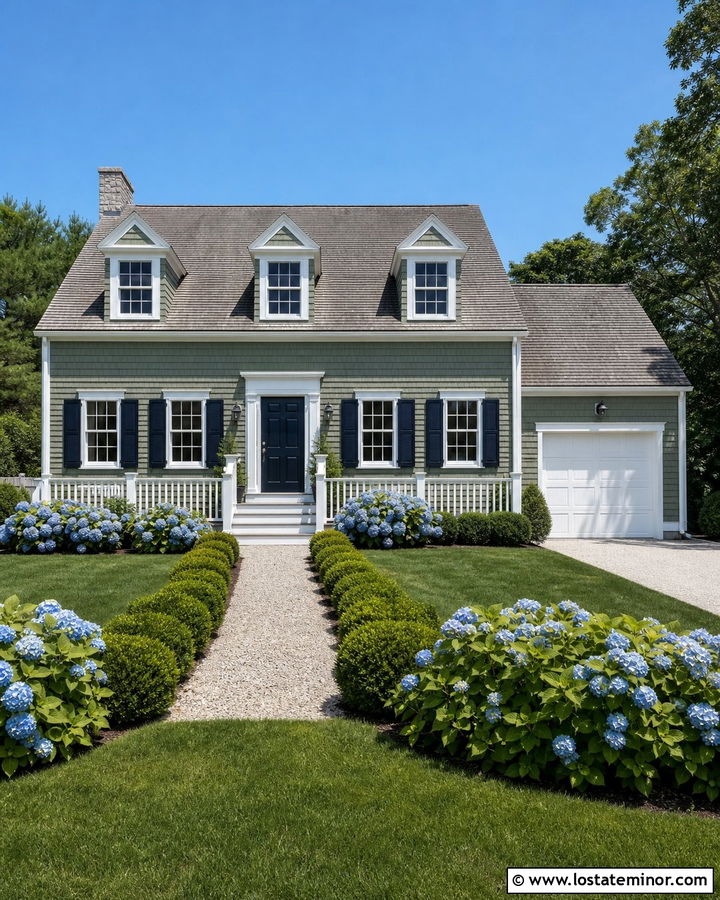
A compact Cape Cod benefits from railings that look light and neatly proportioned. Pair muted sage shingles or narrow clapboard siding with simple white deck railings and square balusters. Carry white onto the dormers, window trim, corner boards, and garage door for a cohesive frame. Dark navy shutters and a matching front door bring depth without using harsh black. Finish the house with a weathered-gray roof that suits the coastal character. The railing can border a small front deck or raised entry without overwhelming the symmetrical facade. Use narrow pickets and modest newel posts that match the scale of the home. Blue hydrangeas, low boxwoods, crushed-stone paths, and a simple lawn complete a fresh exterior that feels relaxed, traditional, and carefully coordinated.
18. Sage Green Ranch With Charcoal Railings
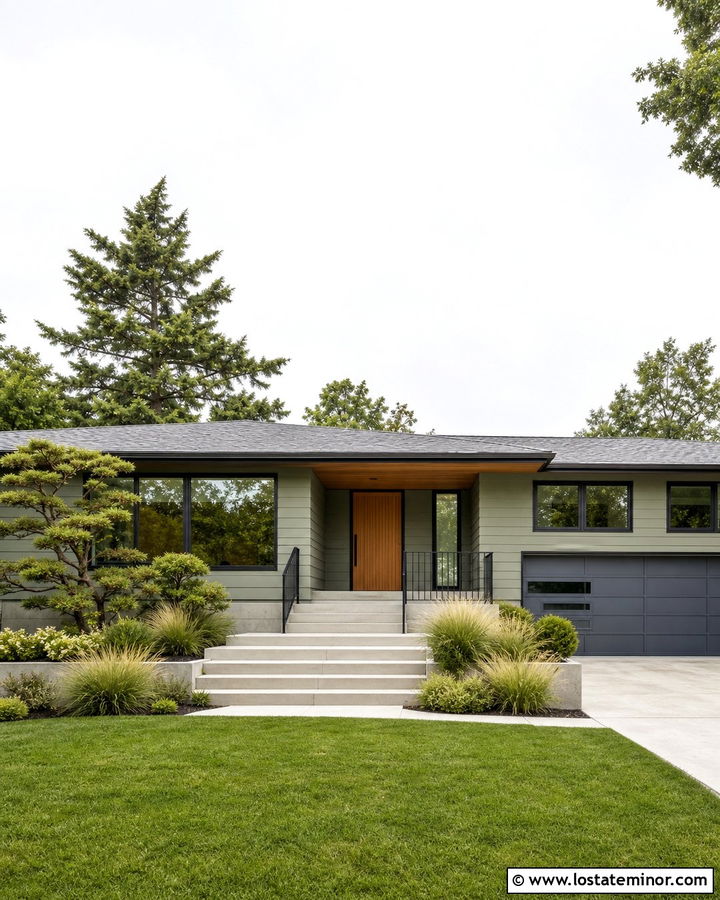
A long, low ranch house gains definition from charcoal railings across a raised front porch. Select square metal balusters and a simple horizontal top rail to echo the home’s clean roofline. Use gray-toned sage lap siding for the main body, charcoal window frames, and a matching garage door. Warm wood on the front door and porch ceiling breaks up the cooler colors. A medium-gray shingle roof keeps the scheme connected without making the upper portion too dark. Extend the railing only where needed so the porch remains visually open. Broad concrete steps and horizontal landscaping beds will reinforce the ranch proportions. Add ornamental grasses, compact evergreens, and a single sculptural tree. This complete treatment refreshes the exterior while respecting the home’s uncomplicated midcentury form.
19. Sage Green Colonial With Black Railings
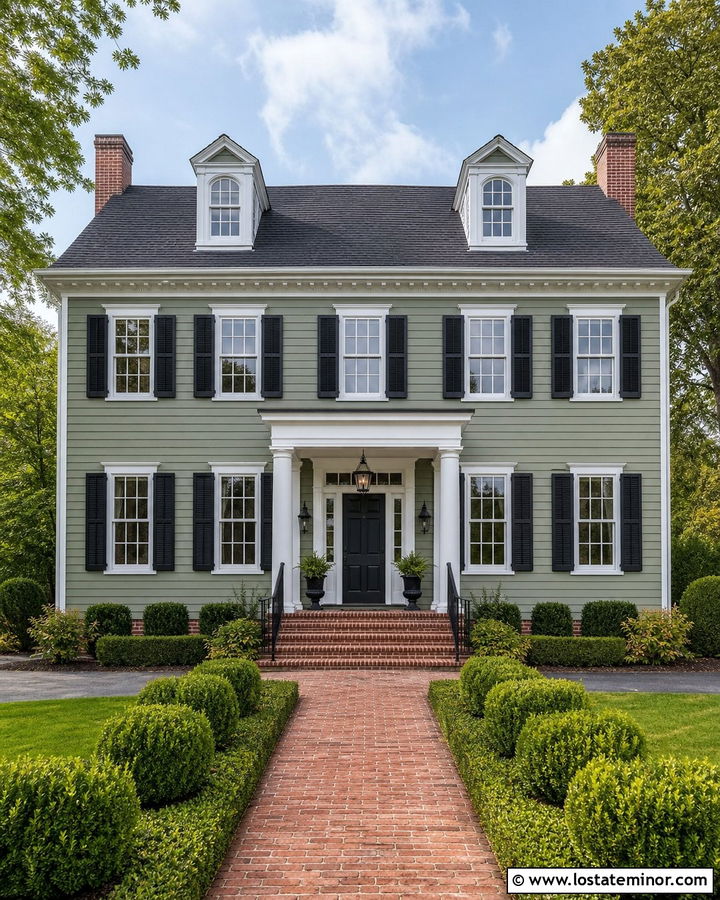
Black railings add crisp structure to a symmetrical sage green Colonial. Use traditional vertical metal balusters along the centered porch, then repeat black on shutters, the front door, lanterns, and roof. Bright white should remain on the columns, window casings, cornice, and entry surround to preserve the architecture’s formal contrast. Sage green clapboard siding softens the otherwise graphic black-and-white palette. Choose railings with straight lines and evenly spaced pickets rather than elaborate scrollwork. Red brick steps can provide a classic base and introduce welcome warmth. Frame the entrance with matching planters, clipped boxwoods, and a straight brick walkway. When every feature follows the symmetry of the facade, the dark railing looks intentional and helps draw attention toward the front door rather than dominating the house.
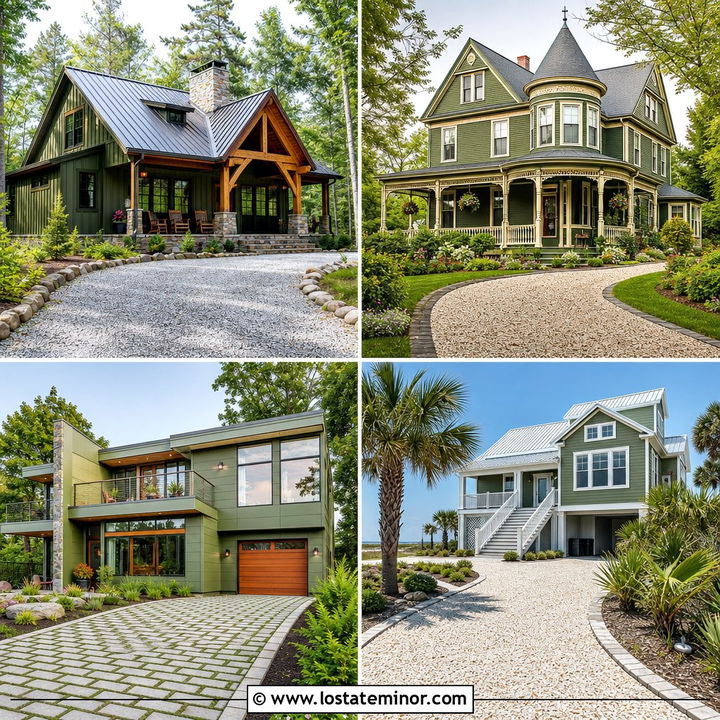
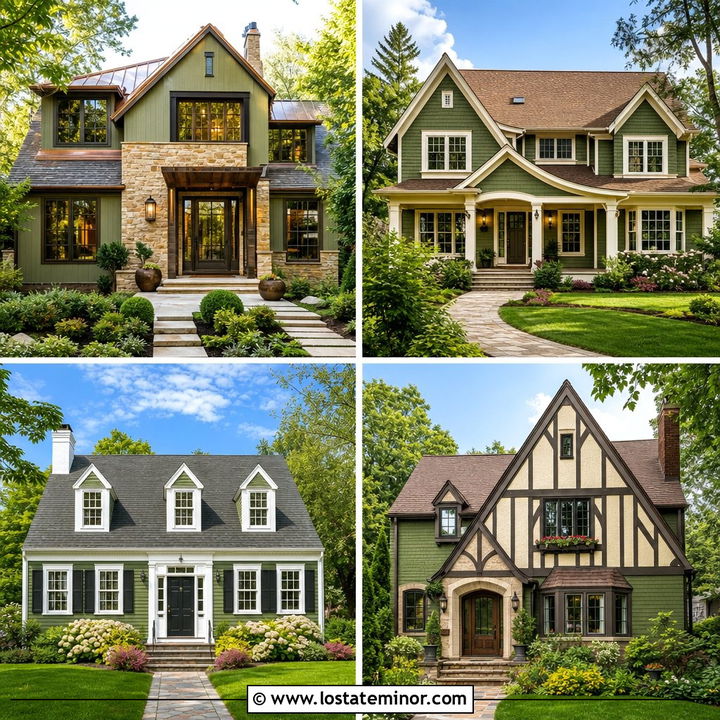
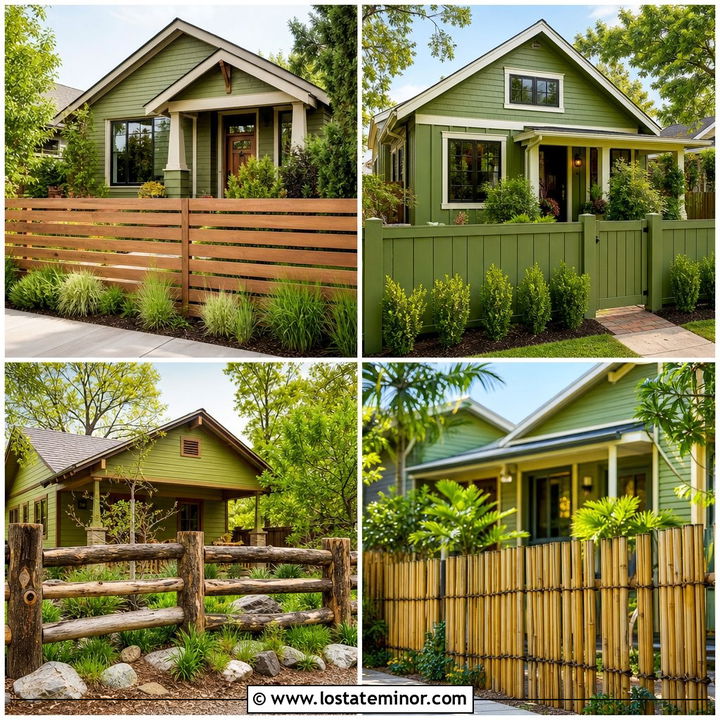
20. Sage Green Bungalow With Tapered Railings
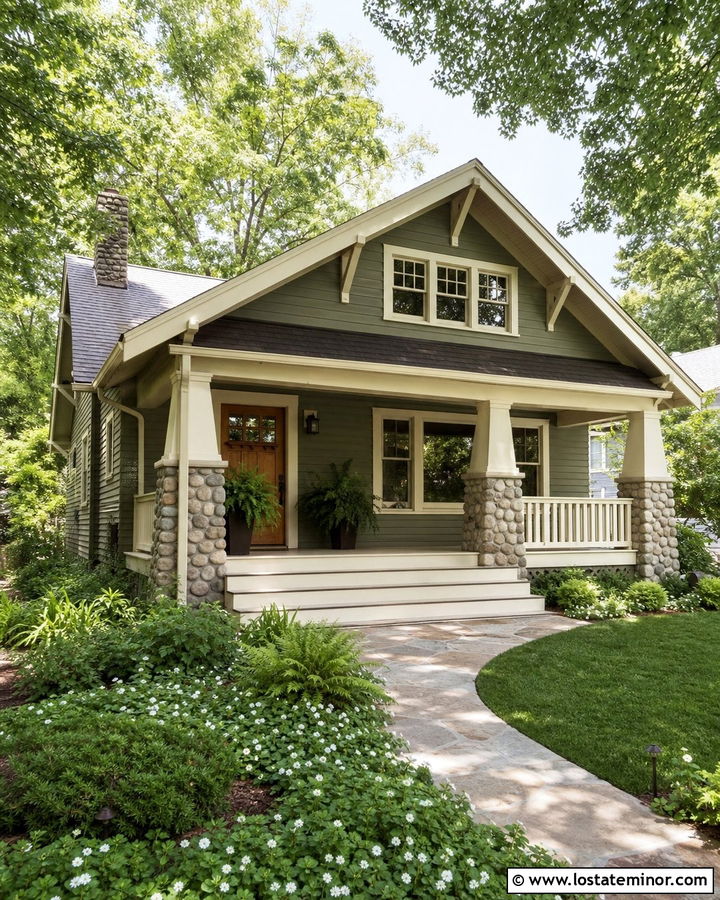
A low bungalow looks welcoming when its railing feels sturdy but not oversized. Pair medium sage green siding with tapered wood balusters, broad top rails, and substantial newel posts painted warm cream. Carry cream onto the window trim, eaves, and porch columns. Use natural river stone around the column bases and front steps for additional texture. A craftsman-style oak door and brown-gray roof complete the earthy palette. The tapered railing profile should relate to the porch supports, creating a sense that every element belongs to the original structure. Low ferns, flowering ground cover, and a curved flagstone path complement the relaxed architecture. This complete exterior scheme adds visual weight near the foundation while keeping the sage green bungalow open, approachable, and comfortably connected to its garden.
21. Sage Green Split-Level With Entry Railings
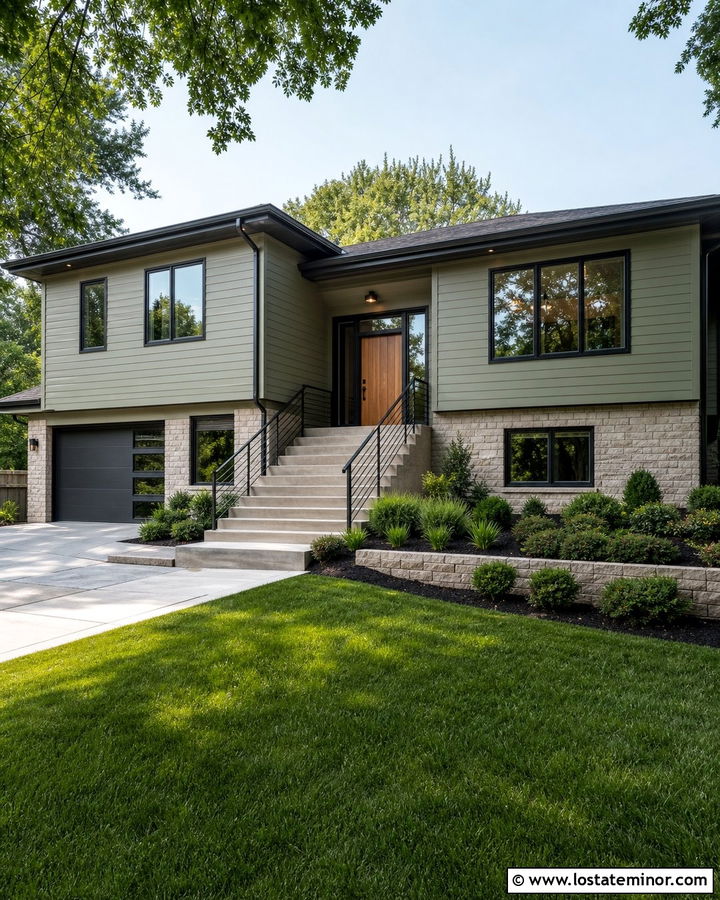
Split-level homes often have prominent stairs that make the railing especially noticeable. Turn that necessity into a design feature with slim matte black railings on both sides of the entry steps. Use gray sage siding across the upper level, light stone on the lower facade, and black-framed windows throughout. A natural wood front door introduces warmth at the center of the composition. Extend black to the garage door hardware, lights, and gutters so the stair railing feels connected to the entire house. Choose straightforward vertical pickets that suit the practical architecture. Wide concrete steps and low retaining walls can make the entrance feel more generous. Finish with layered shrubs that stay below the railing height, allowing the complete facade and clear pathway to remain visible from the curb.
22. Sage Green House With Accessible Ramp Railings
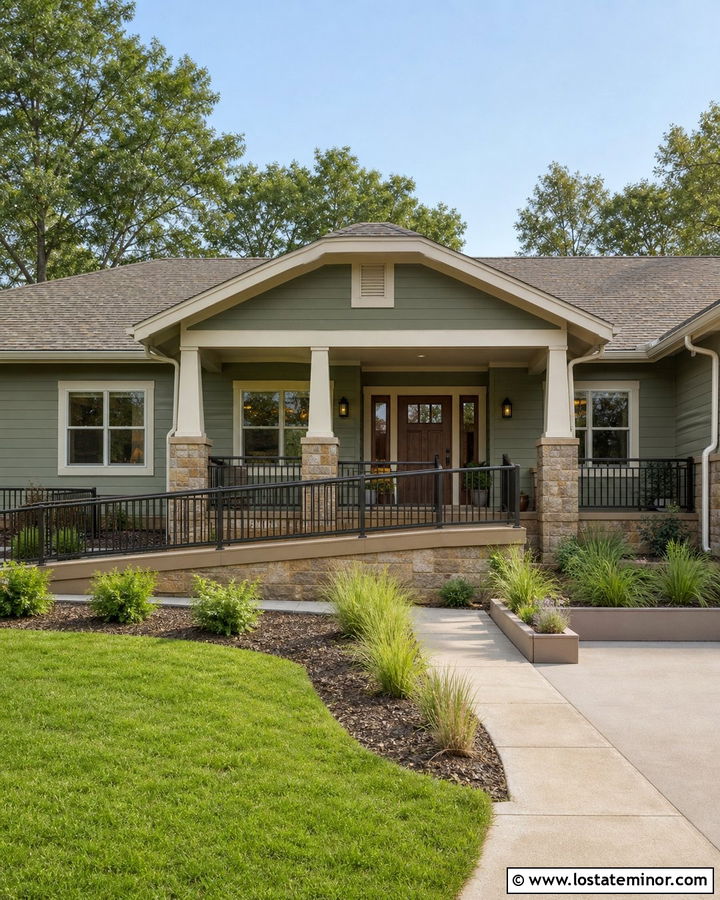
An accessible entrance can look integrated rather than added as an afterthought. Cover the house in soft sage green lap siding, then use dark bronze metal railings along a gently sloped front ramp and adjoining porch. Warm cream trim, a walnut front door, and tan stone foundation accents create a welcoming, low-contrast palette. Match the railing finish to the lights, door hardware, and mailbox for consistency. Use simple vertical balusters and substantial posts that align with porch columns. Landscaping can soften the ramp without narrowing it, using low grasses, compact shrubs, and raised planting beds beside the route. A broad landing near the door provides visual and practical breathing room. The completed scheme combines safe circulation with attractive materials and a balanced, thoughtfully planned curb-appeal design.
23. Sage Green House With Wraparound Porch Railings
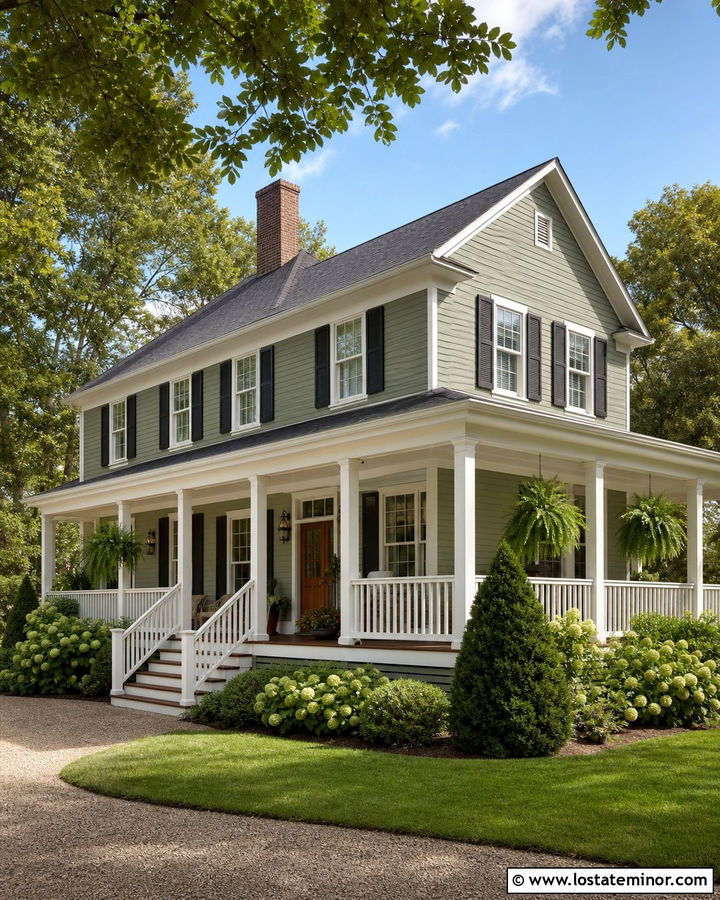
Few exterior features feel more inviting than a wraparound porch outlined by bright railings. Use sage green clapboard siding with warm white square balusters, columns, window casings, and roof trim. A black shingle roof and matching shutters add enough contrast to define the upper facade. Stain the porch floor and front door a medium honey brown for warmth. This complete design suits farmhouse, Victorian, and Southern cottage architecture. Keep railing sections evenly spaced between columns so the long porch maintains an orderly rhythm. Wide front steps can interrupt the railing at the main entrance and establish a clear focal point. Layer ferns, hydrangeas, and low evergreen shrubs around the porch foundation. The surrounding greenery will deepen the natural character of the sage siding without hiding the attractive railing.
24. Sage Green House With Screened Porch Railings
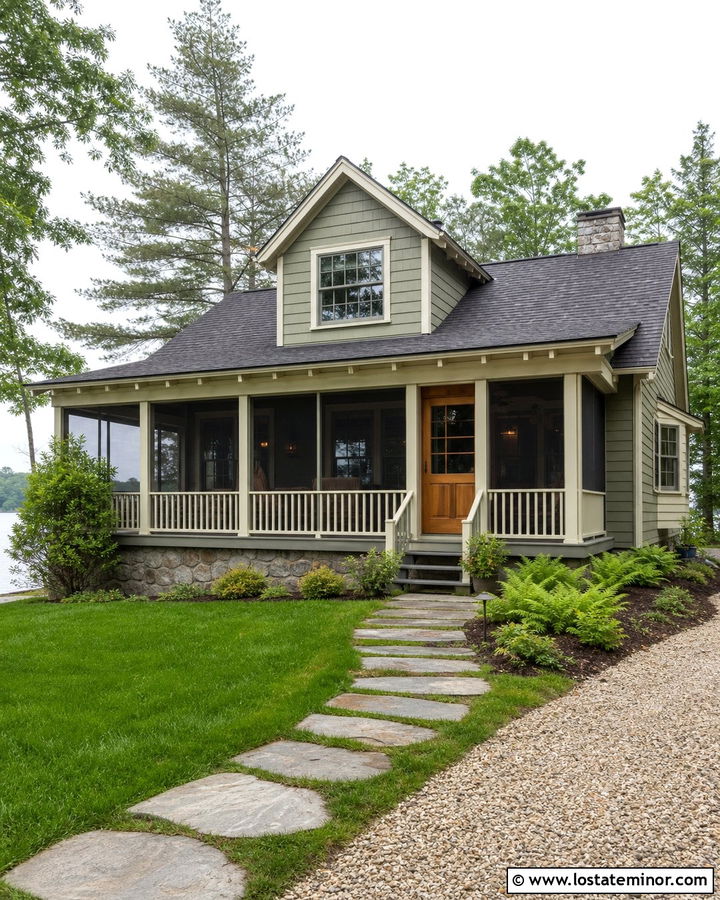
A screened porch needs railing details that remain visible without making the enclosure feel crowded. Use sage green horizontal siding on the house, then frame the porch with cream posts, matching lower railings, and dark bronze screens. The cream railing connects with the window trim, while the darker mesh relates to the brown-black roof and exterior hardware. Choose simple square balusters below the screen line to keep the facade orderly. A warm wood door and beadboard porch ceiling can add texture inside the enclosure. This look works well on lake cottages, ranch homes, and traditional suburban houses. Ground the porch with gray stone or painted lattice panels. Naturalistic shrubs, ferns, and a stepping-stone walkway complete an exterior that feels comfortable, practical, and visually connected to the yard.
25. Sage Green House With Sage Railings
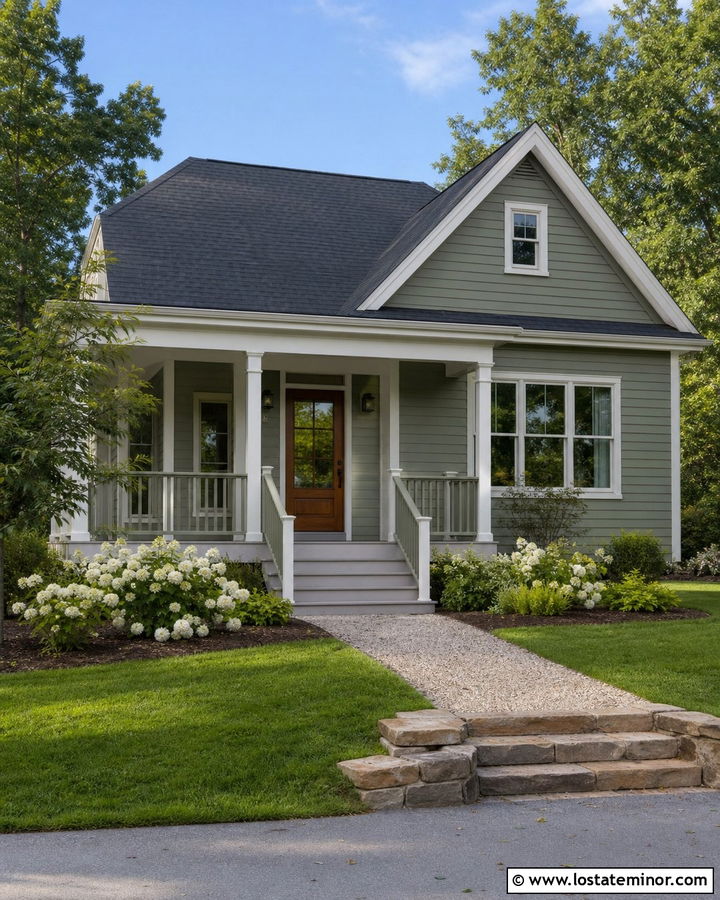
Painting railings the same sage green as the siding can create a quiet, unified exterior. This approach works best when warm white appears on the porch posts, railing caps, window trim, and fascia to outline the green surfaces. Use a stained wood front door and charcoal roof for contrast. The matching railings are particularly useful on small cottages where too many color changes could make the facade feel fragmented. Select straightforward square balusters so subtle shadows provide definition during the day. A light gray porch floor separates the railing from the deck and prevents the lower exterior from becoming one solid green area. White flowering plants, pale gravel paths, and natural stone steps will brighten the landscaping. The finished house looks calm and cohesive rather than plain or unfinished.
26. Sage Green House With Two-Tone Railings
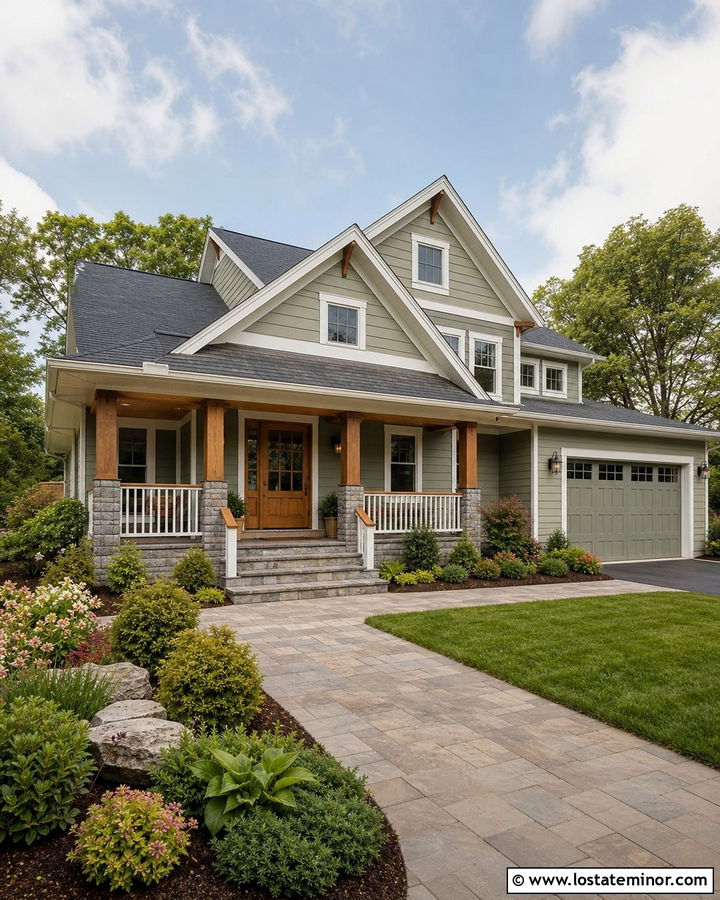
Two-tone railings offer a practical way to connect several exterior colors. Use warm white posts and balusters with a stained cedar top rail against muted sage green siding. The white sections relate to the window trim and fascia, while the wood cap connects with the front door, porch ceiling, and decorative beams. A dark charcoal roof provides a strong finishing layer. This combination works well on transitional homes, new suburban builds, and updated Craftsman houses. Keep the wood stain consistent across every visible feature; mismatched orange and brown tones can make the design feel less organized. Gray stone porch bases provide another neutral bridge between the materials. Neatly edged garden beds, low shrubs, and a broad paver walkway complete the layered but controlled exterior color scheme.
27. Sage Green House With Red Brick Porch And Black Railings
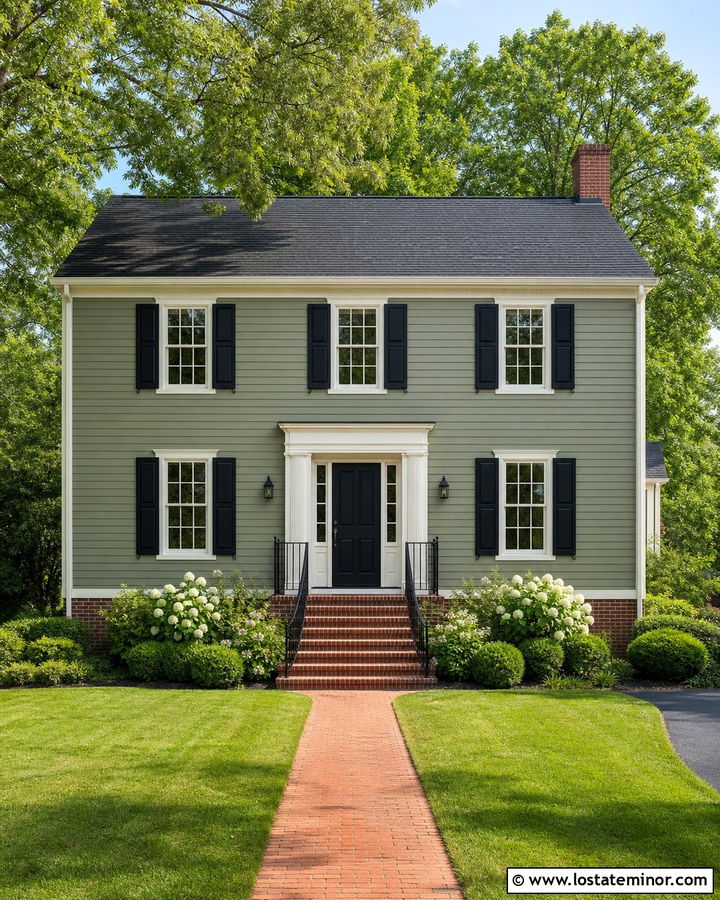
Existing red brick can look fresh beside sage green siding when black railings provide a strong transition. Use gray-toned sage on the house body, creamy white on the trim, and matte black on metal porch railings, shutters, and the front door. The dark accents help balance the visual weight of the brick steps and foundation. A charcoal roof ties everything together without introducing another warm color. This palette fits Colonial, Tudor-inspired, and traditional suburban homes. Clean the brick rather than painting it when its natural color remains attractive, then select landscaping that does not add excessive red or orange. Deep green shrubs, white flowers, and a straight concrete or brick walkway work well. The completed scheme respects the masonry while giving the facade a clearer, more current structure.
28. Sage Green House With Limestone Porch And Cream Railings
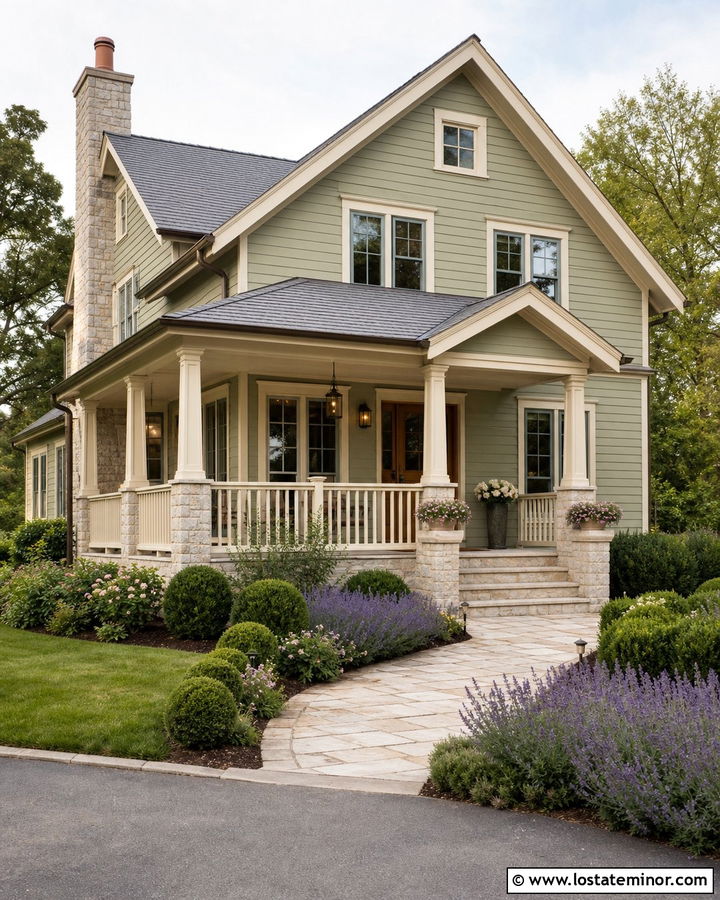
Pale limestone and cream railings create a soft, elegant foundation for sage green siding. Use the stone on porch piers, steps, and selected lower-wall sections, then paint square wood railings and columns a warm ivory. Repeat that ivory around the windows and along the roofline. A medium oak door adds subtle contrast, while a soft gray roof maintains the gentle palette. This complete combination is ideal for European-inspired cottages, transitional houses, and refined ranch homes. Avoid bright white, which may appear too cool beside the limestone. Choose a sage with warm gray undertones to keep every material compatible. Layer lavender, pale roses, and rounded boxwoods along the walkway. The result feels light and composed, with enough texture to remain interesting even though the color transitions are deliberately understated.
29. Sage Green Cabin With Log Railings
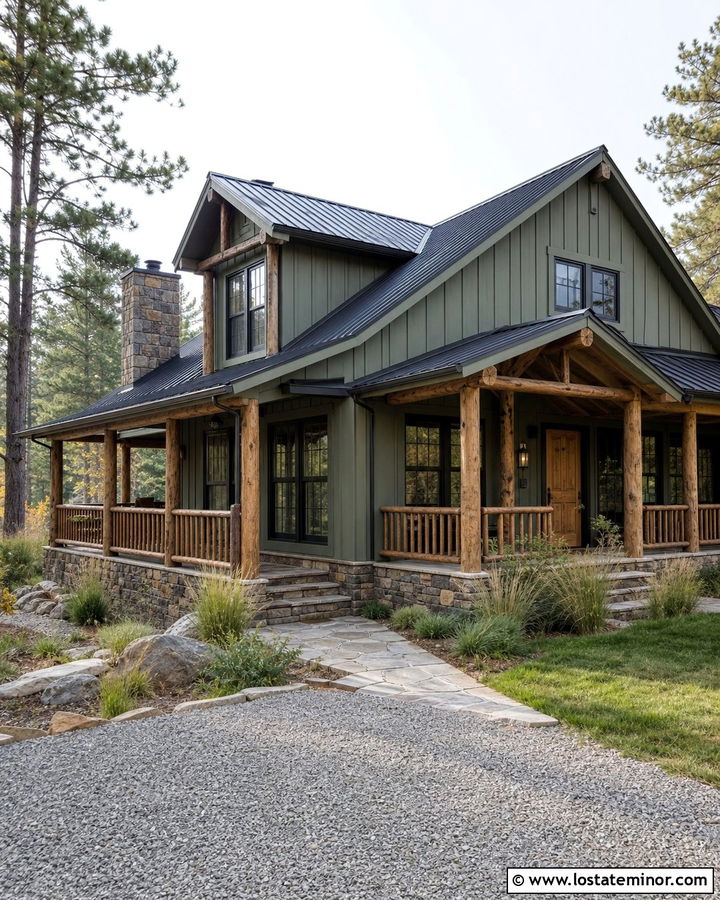
Rustic log railings give a sage green cabin a strong handcrafted presence. Use peeled cedar or pine logs around the porch and repeat the same wood on columns, beams, and stair handrails. Muted sage board siding keeps the large wood elements from making the exterior appear too brown. Deep charcoal window frames and a dark metal roof add clean contrast, while a natural plank door strengthens the cabin character. Stone around the foundation and chimney helps visually anchor the structure. Keep the log railing pattern simple, with evenly spaced vertical branches or straight rails rather than excessive decorative shapes. A gravel drive, flagstone path, native grasses, and mature evergreens will frame the house naturally. The finished exterior feels rugged and comfortable while maintaining a coordinated curb-appeal palette.
30. Sage Green Modern House With Aluminum Railings
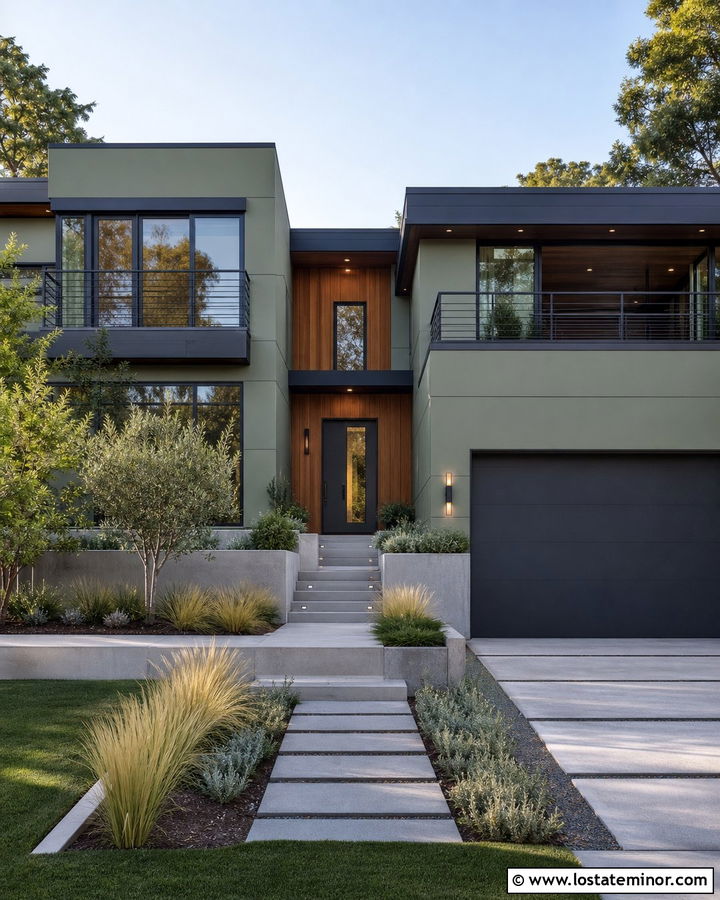
A modern sage green house looks crisp with slim charcoal aluminum railings. Use the railings around a flat-roofed porch, upper balcony, or elevated front terrace, then repeat charcoal on the windows, garage door, fascia, and lighting. Smooth sage fiber-cement panels provide a softer alternative to the white, gray, and black finishes commonly used on contemporary exteriors. Add vertical cedar siding around the entrance to introduce warmth and mark the front door. Pale concrete steps and retaining walls maintain the clean geometry. Select railing sections with narrow vertical pickets or minimal horizontal lines, depending on the architecture. Sparse ornamental grasses, sculptural shrubs, and a broad concrete walkway complete the scene. The finished design feels current and structured without losing the welcoming quality of sage green.
Conclusion:
The most successful 30 Sage Green House Design With Railings Ideas treat the railing as part of a complete exterior palette. White and cream create a bright traditional finish, while black, charcoal, bronze, and aluminum give sage siding stronger definition. Natural cedar, stone, brick, and stained wood introduce warmth and texture. Before selecting a railing, consider the house style, porch size, roof color, existing masonry, and level of maintenance you prefer. Repeat the railing color on at least one additional feature, such as the windows, front door, trim, or lighting. This simple connection helps the entire facade feel coordinated. With thoughtful proportions and complementary materials, sage green can support everything from rustic to highly modern curb appeal.

Related posts: