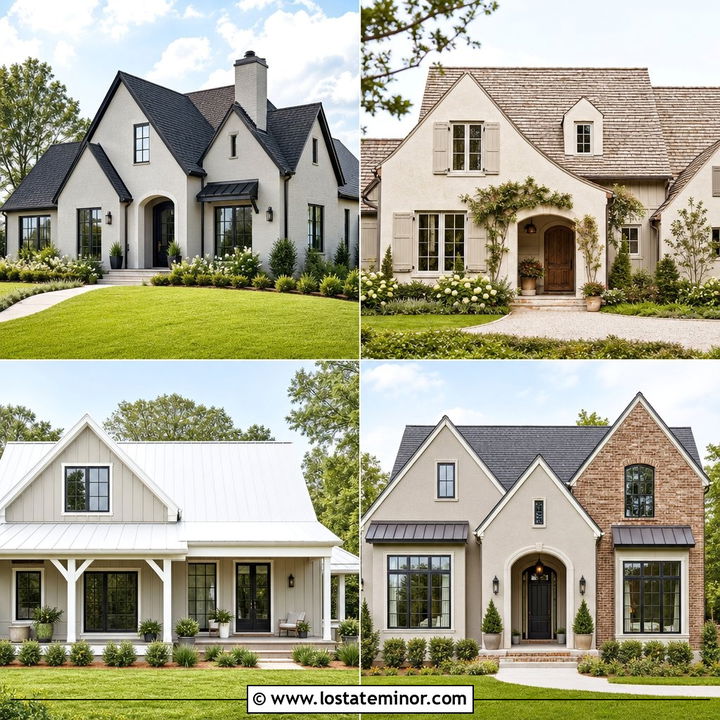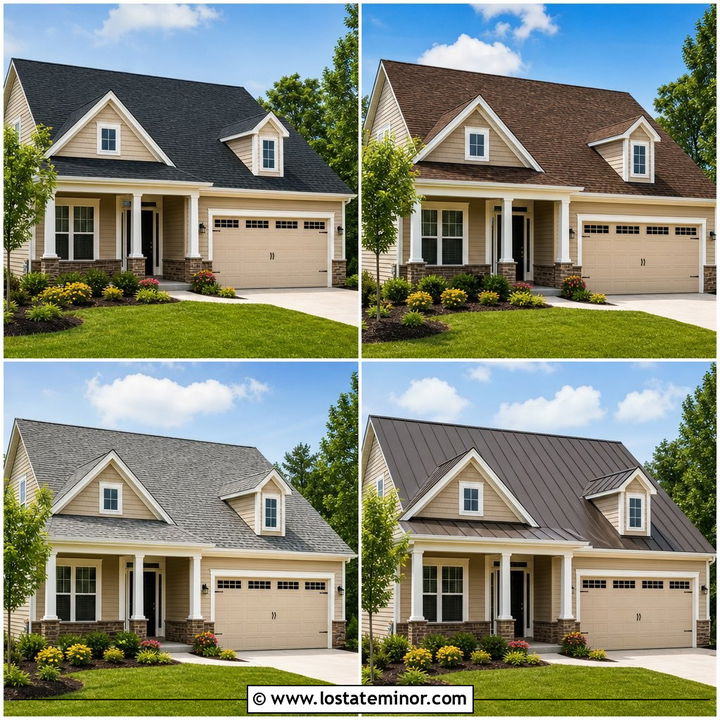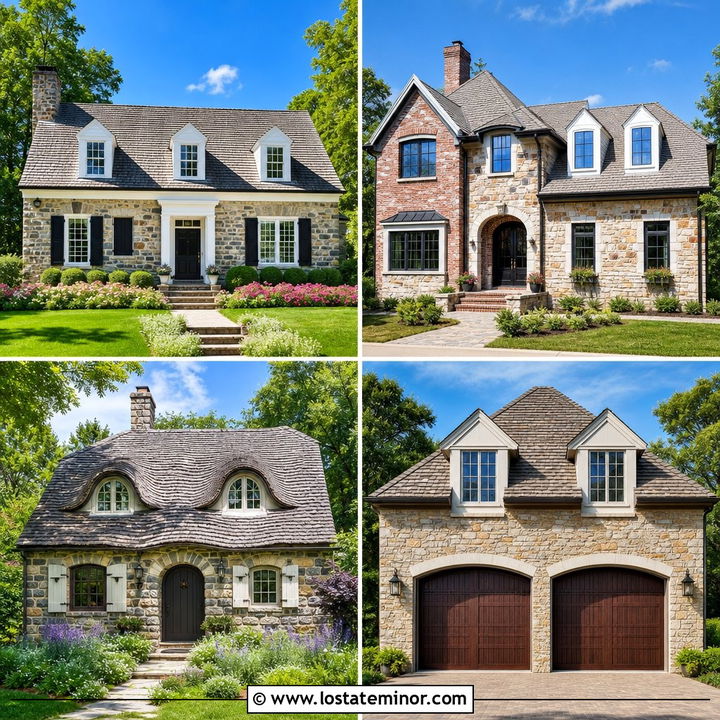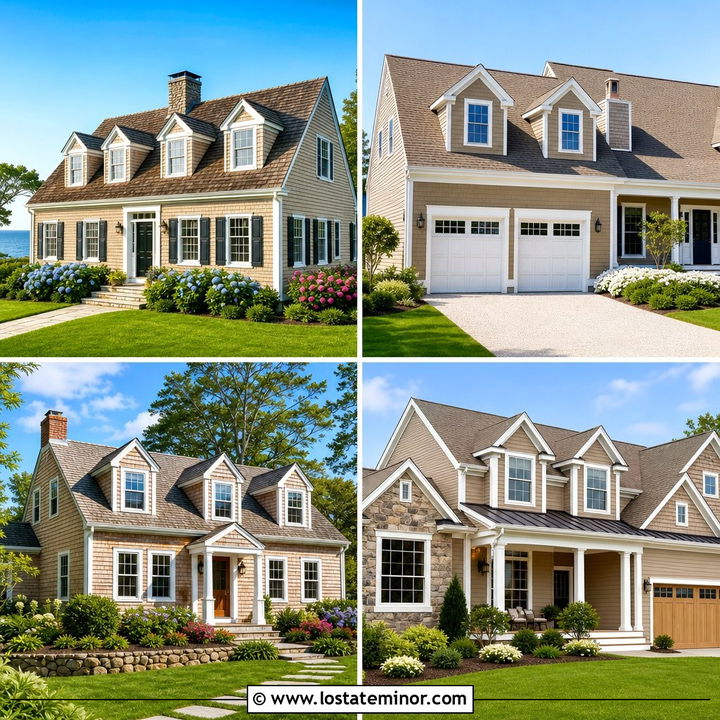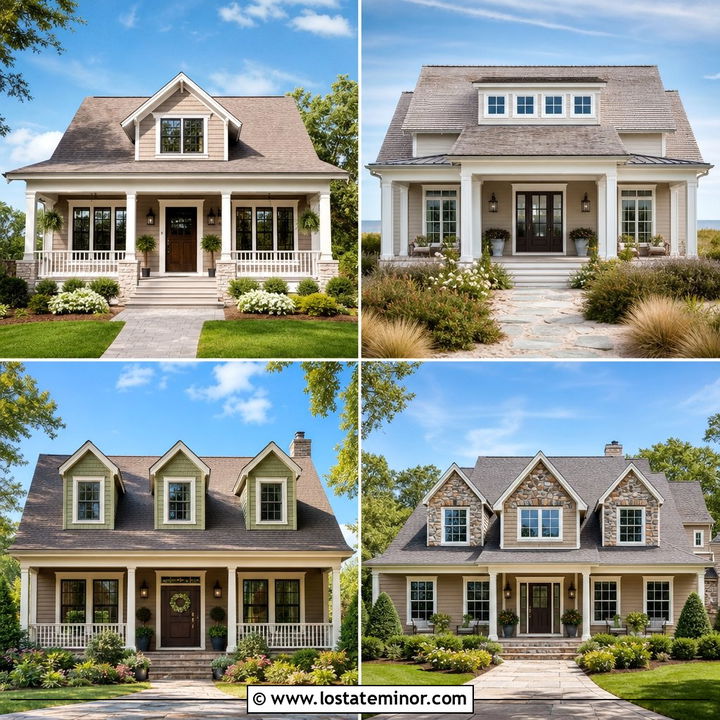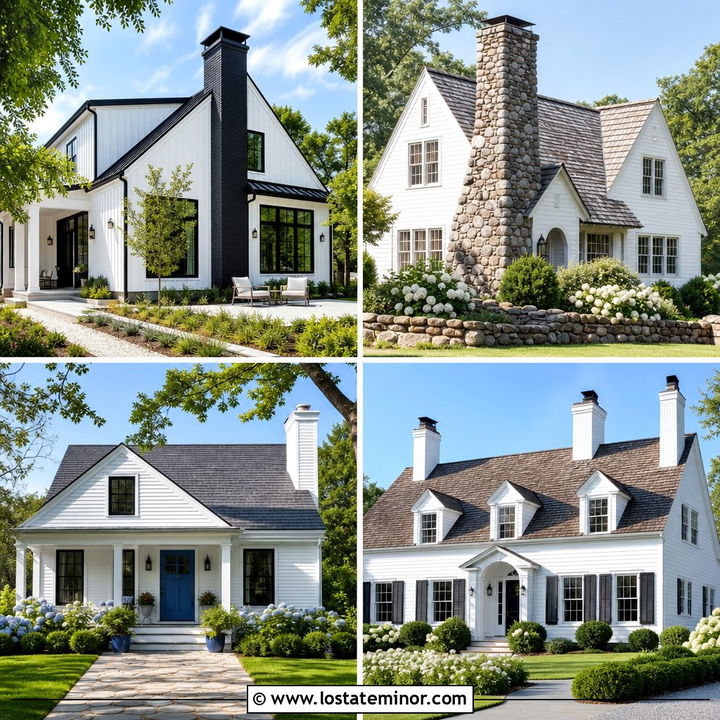
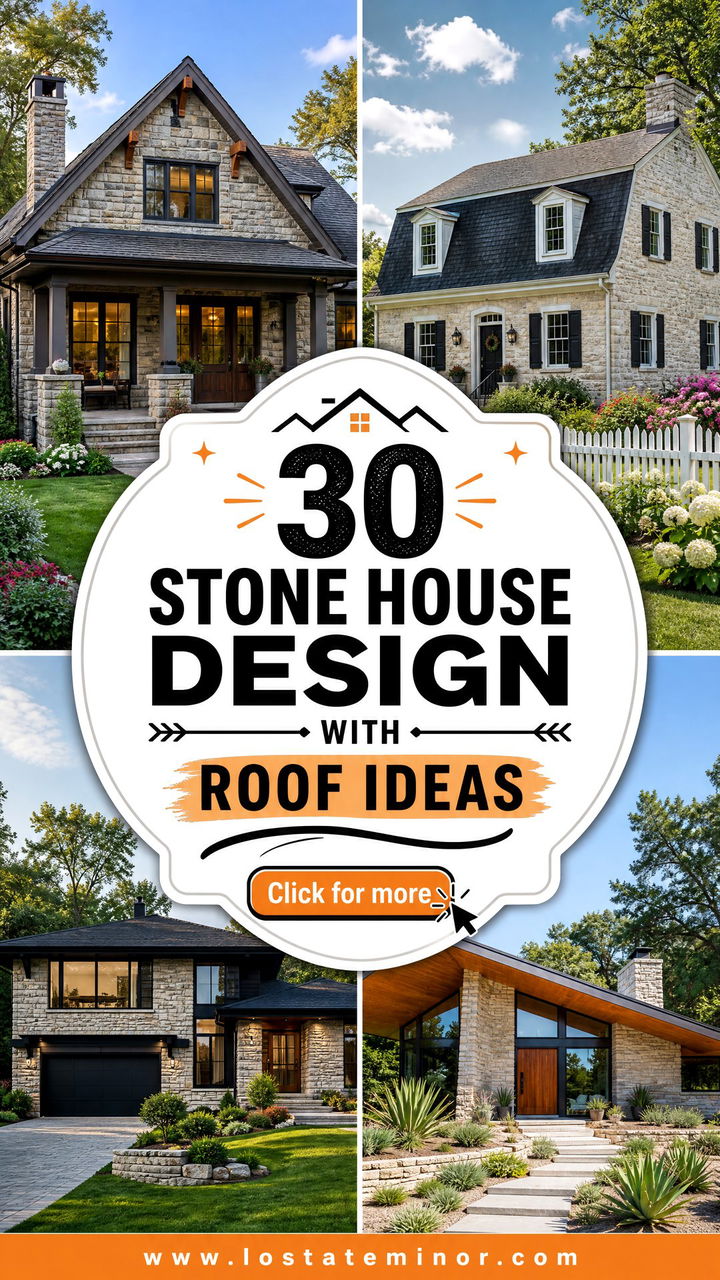
Stone brings natural texture, lasting character, and strong curb appeal to almost any exterior. The roof above it determines whether the finished home feels rustic, traditional, modern, or relaxed. These 30 Stone House Design With Roof Ideas explore complete exterior combinations rather than treating stone and roofing as separate choices. You will find limestone paired with dark shingles, fieldstone under standing-seam metal, and pale stacked stone beneath warm clay tile. Each look also considers siding, trim, windows, doors, and landscaping, helping you create a balanced facade from top to bottom. Whether you are building, remodeling, or simply gathering inspiration, use these 30 Stone House Design With Roof Ideas to discover a roof and stone pairing that suits your architecture, climate, and preferred level of contrast.
1. Limestone House With Black Shingle Roof
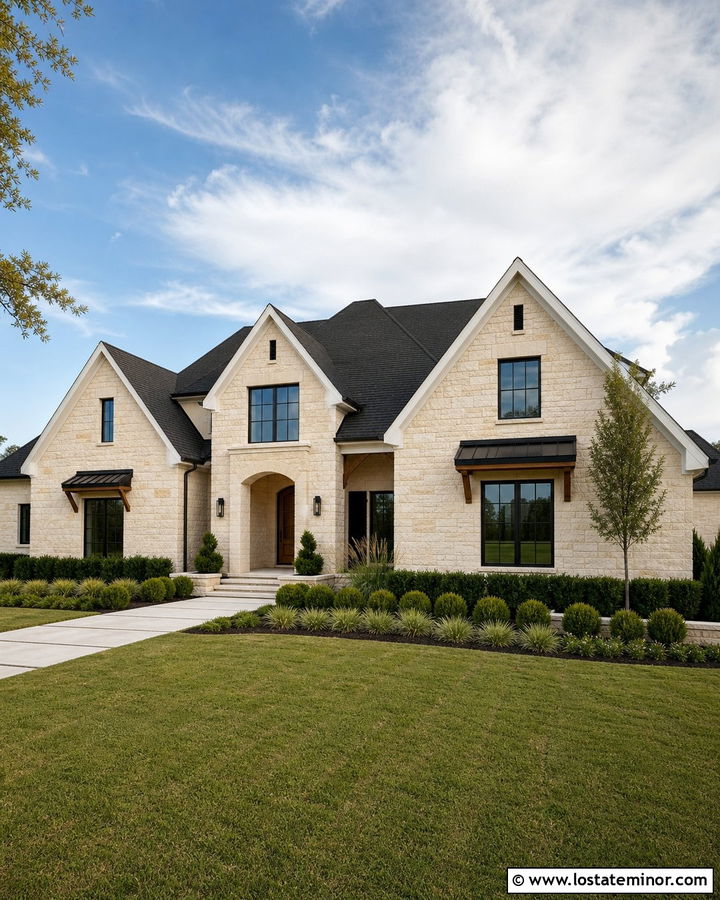
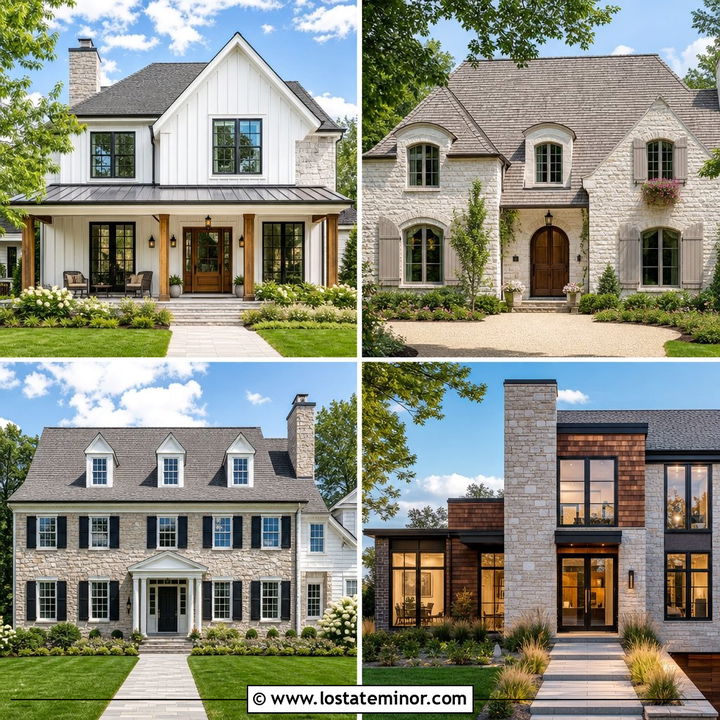
Creamy limestone and a black architectural shingle roof create a clean, upscale exterior without making the house feel overly formal. This combination works especially well on transitional homes with several front-facing gables. Keep the mortar close to the limestone color so the facade reads as one calm surface. Black window frames and gutters can visually connect the roof to the lower elevation. For warmth, add a medium-stained oak front door and matching porch ceiling. Simple white trim around the roofline prevents the dark shingles from looking too heavy. Low boxwood hedges, ornamental grasses, and a pale concrete walkway complete the restrained palette. The finished house feels substantial, balanced, and current while preserving the timeless appeal of natural stone.
2. Fieldstone House With Weathered Gray Roof
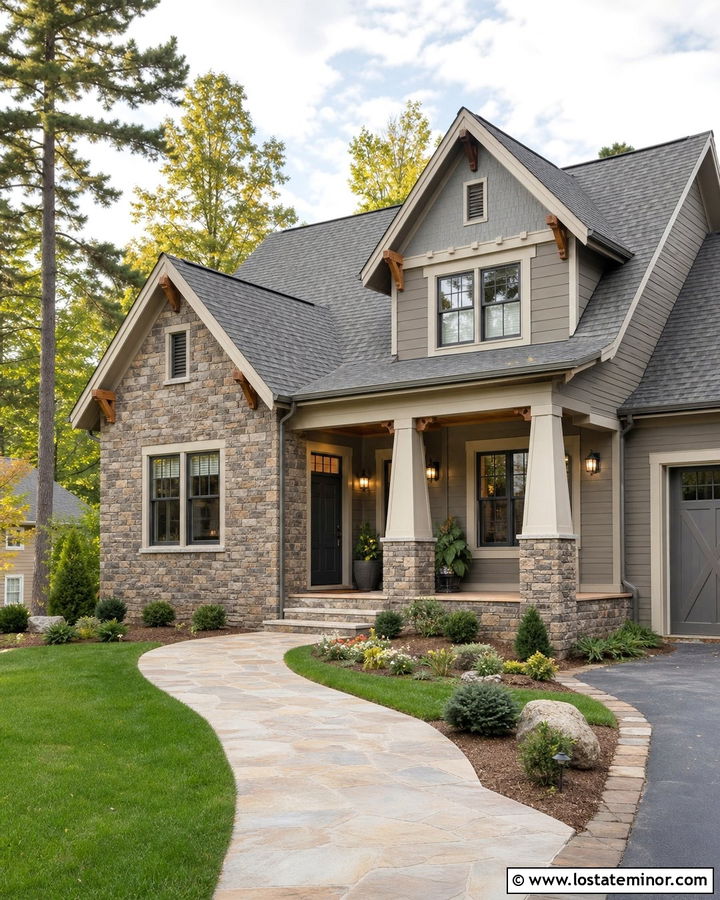
A weathered gray roof naturally complements fieldstone containing brown, charcoal, cream, and muted blue undertones. Because both materials have visible color variation, the remaining exterior details should stay simple. Choose warm gray lap siding for upper gables and soft cream for the fascia, soffits, and window trim. A deep charcoal front door adds definition without introducing another competing color. This scheme looks particularly comfortable on a broad craftsman home with low rooflines and tapered porch columns. Use stained timber brackets to repeat the earthy warmth found within the stone. A curved flagstone path and layered evergreen landscaping help the building settle into its surroundings. The overall look is relaxed and organic, making it suitable for suburban, wooded, and mountain settings.
3. White Stone House With Charcoal Metal Roof
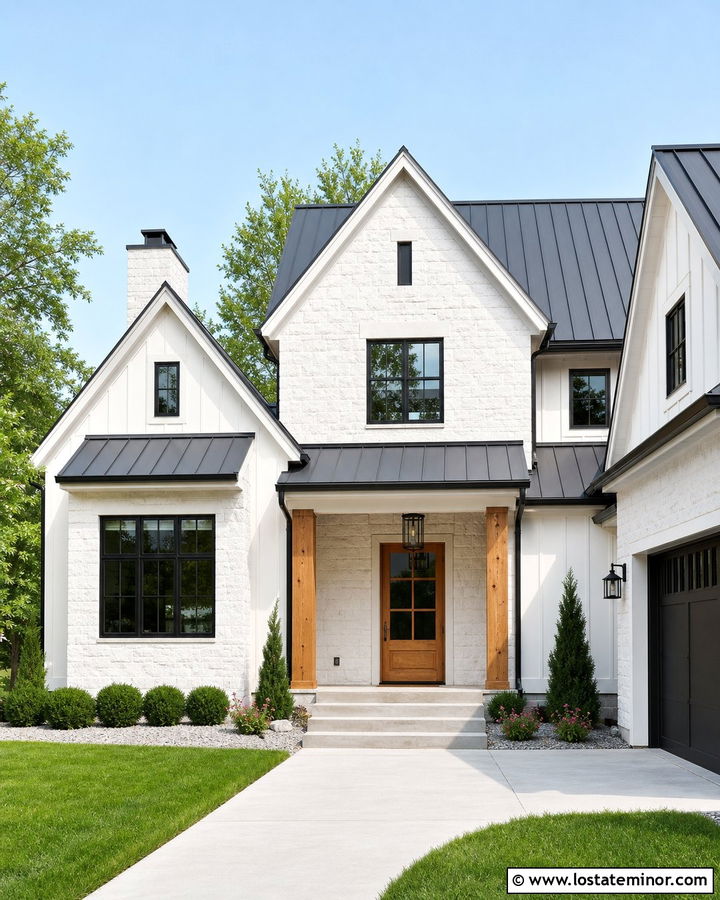
White stone paired with a charcoal standing-seam metal roof gives a classic material a sharper modern edge. The strong roof lines are especially attractive on a modern farmhouse with steep gables and a simple rectangular footprint. Select white limestone or lightly limewashed stone with limited yellow undertones. Charcoal windows, gutters, and exterior lights will reinforce the roof color throughout the facade. A natural cedar door and exposed porch beams keep the black-and-white palette from feeling cold. Use vertical white board-and-batten siding above the stone to create subtle variation without disrupting the monochromatic look. Wide concrete steps, clipped shrubs, and dark gravel borders finish the property. This complete scheme feels fresh and architectural while remaining welcoming enough for a family home.
4. Rustic Stone House With Green Metal Roof
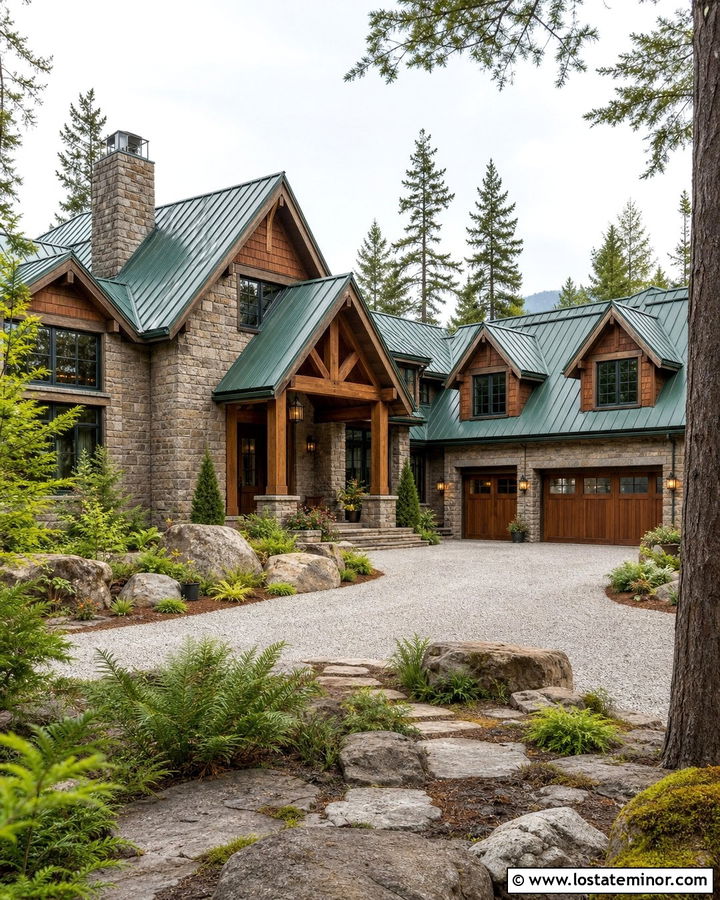
A forest green metal roof can make a rustic stone house feel closely connected to a wooded landscape. Choose irregular fieldstone with warm gray, moss, taupe, and soft brown coloring. The green roofing should be deep and muted rather than bright, allowing it to blend with mature trees. Dark bronze windows, gutters, and downspouts provide a gentle transition between the roof and masonry. Cedar siding in the gables adds warmth and breaks up large areas of stone. Continue that wood tone on the garage doors and front entry. A covered porch with heavy timber posts strengthens the lodge-inspired character. Native grasses, ferns, boulders, and an informal stone walkway create a natural foreground that supports the earthy materials without hiding the facade.
5. Gray Stone House With Black Metal Roof
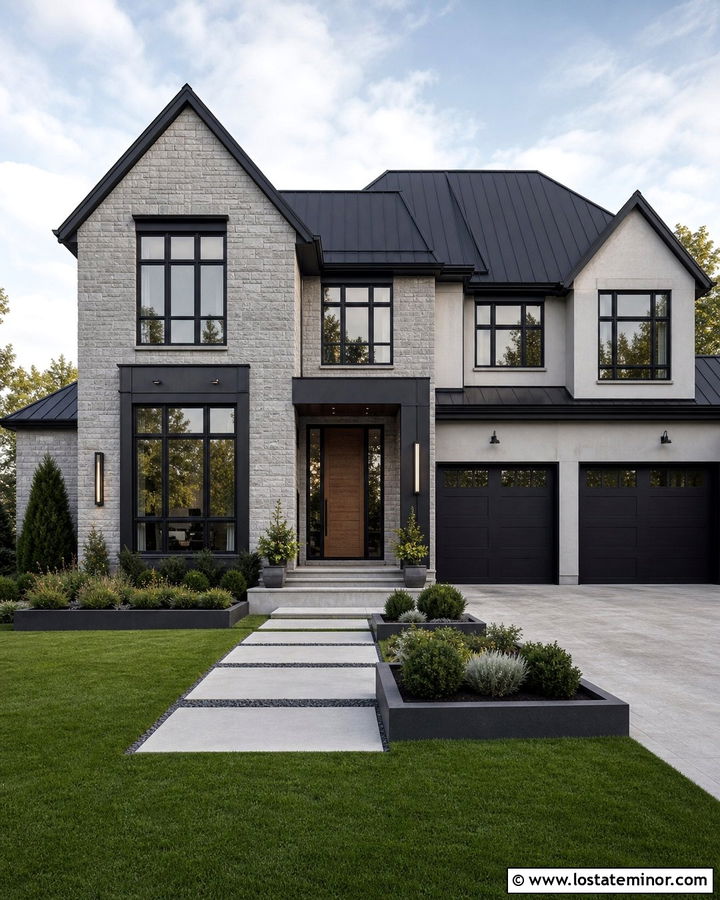
Cool gray stacked stone looks polished beneath a crisp black standing-seam roof. This high-contrast pairing suits a contemporary home with asymmetrical gables, large windows, and uncluttered architectural lines. Choose stone with a consistent gray base and only limited brown variation. Black-framed windows, slim gutters, and dark garage doors will make the roof color feel intentionally repeated. Balance these deep accents with pale gray stucco or horizontal siding on secondary elevations. A walnut front door introduces a warm focal point at the entrance. Keep the landscaping structured with rectangular planting beds, compact shrubs, and straight concrete pavers. The result is a sophisticated stone house design in which every element feels connected, from the sharp roof silhouette to the textured masonry at ground level.
6. Tan Stone House With Brown Shingle Roof
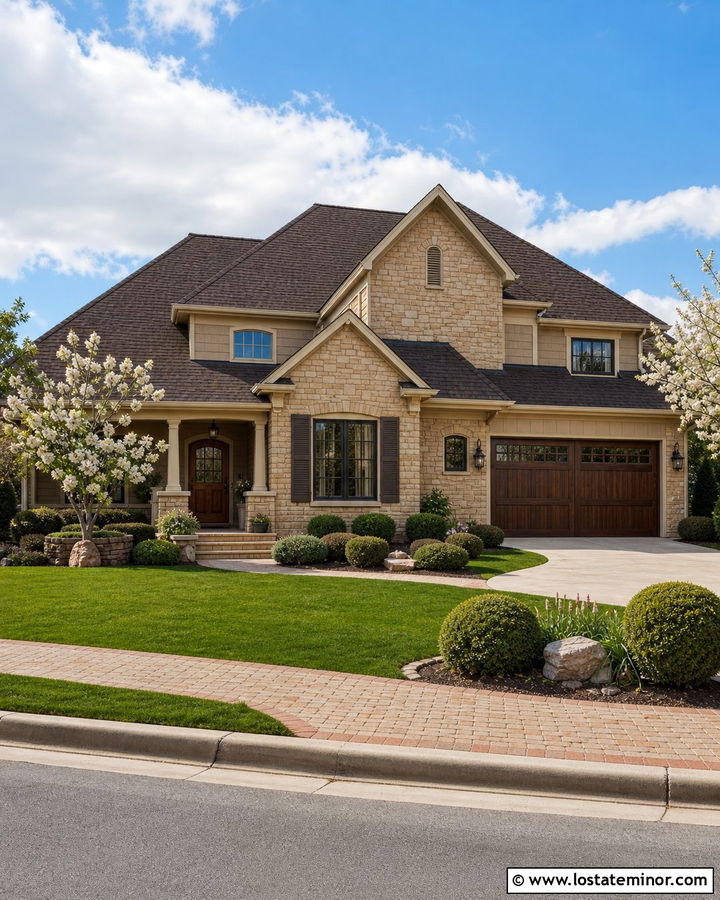
Tan stone and a dimensional brown shingle roof create a warm exterior that feels established and easy to live with. The best shingles for this scheme combine espresso, taupe, and muted gray instead of using a flat orange-brown color. Those blended tones connect naturally with beige limestone or sandstone. Paint the siding a soft mushroom shade and use creamy off-white trim to keep the facade light. Dark bronze windows and outdoor lanterns provide quiet definition. A chestnut-stained wood door can become the centerpiece without clashing with the roof. This palette works well on traditional suburban homes with hip-and-gable roof combinations. Add a brick-edged walkway, rounded shrubs, and small flowering trees to create a complete, welcoming landscape around the warm masonry.
7. Stone Cottage With Slate Roof
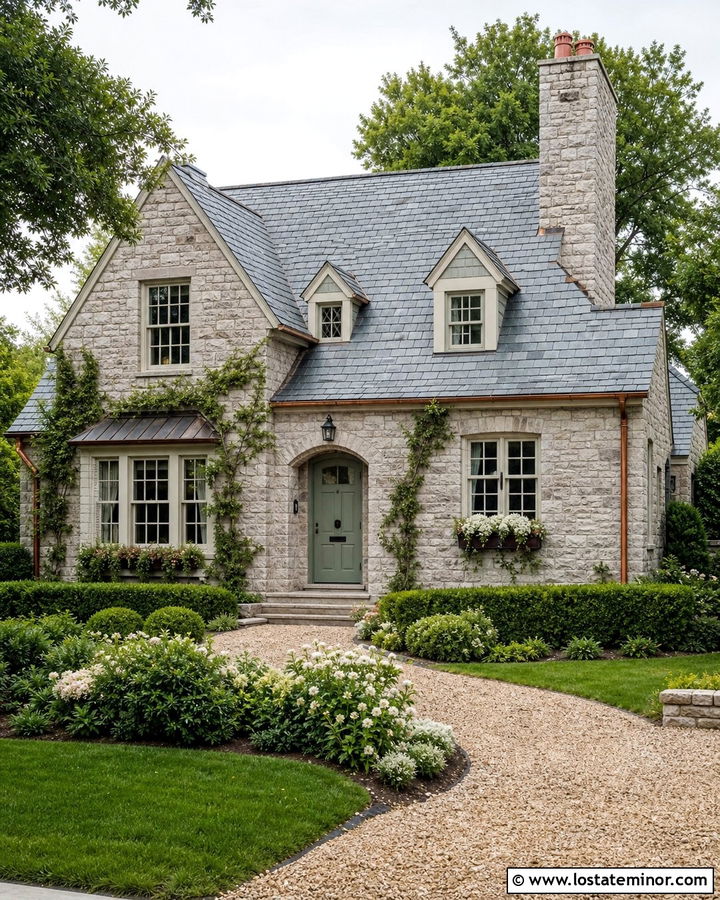
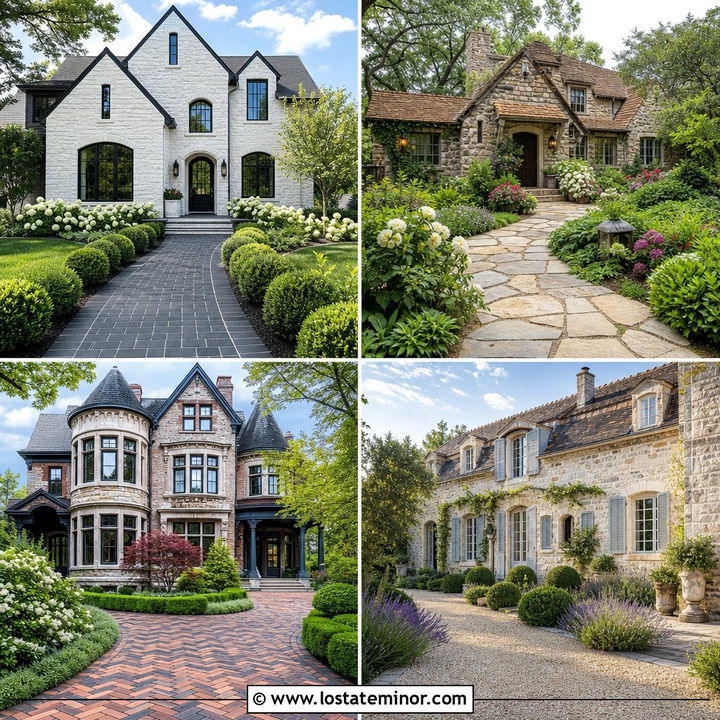
Few combinations feel as naturally timeless as a stone cottage beneath a slate roof. Use softly weathered gray limestone with visible cream and blue undertones, then select slate tiles with similar muted variation. Steep gables, small dormers, and a substantial stone chimney strengthen the cottage character. Paint windows and trim a warm ivory rather than brilliant white, which can look too stark beside aged materials. A muted sage front door adds gentle color while remaining connected to the landscape. Copper gutters may develop a soft patina that complements both stone and slate. Complete the setting with a curved gravel path, clipped hedges, climbing greenery, and informal flower beds. The house should feel collected and comfortable rather than overly polished or newly constructed.
8. Stone Ranch House With Hip Roof
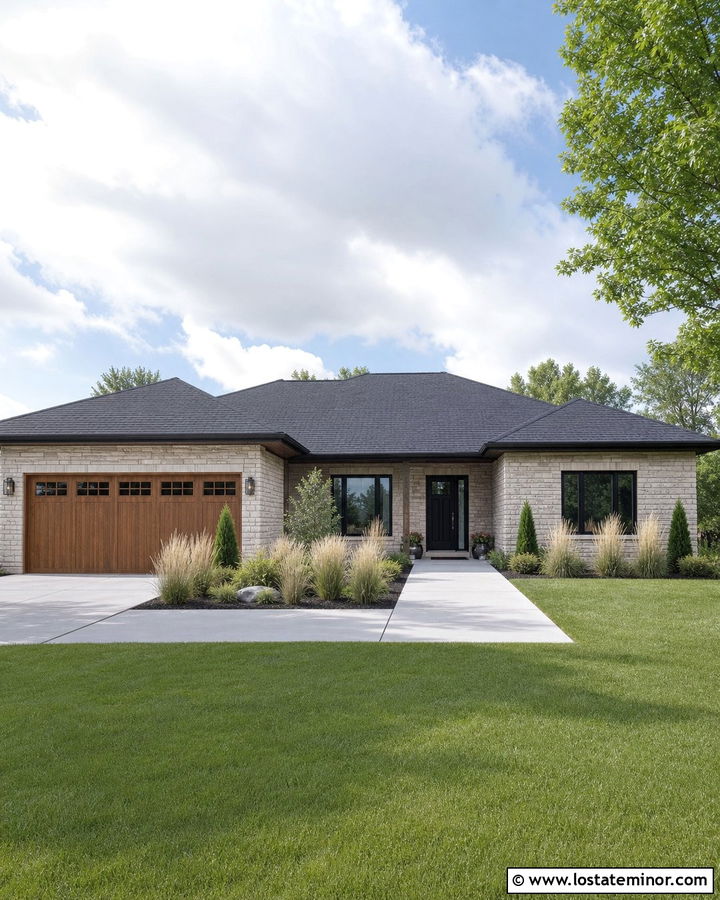
A low hip roof can give a stone ranch house a broad, grounded appearance. To keep the elevation from feeling heavy, use light taupe ledgestone across the lower facade and warm greige siding on the remaining walls. A medium charcoal shingle roof adds definition while preserving the ranch home’s horizontal character. Paint the fascia and soffits a slightly lighter greige for a smooth transition. Dark-framed windows and a simple black front door introduce contrast in small, controlled amounts. Consider a cedar garage door to create warmth across the wide front elevation. Long planting beds filled with ornamental grasses and compact evergreens echo the home’s horizontal lines. A widened concrete walkway and updated porch lighting can make the entrance easier to notice from the street.
9. Stone Craftsman House With Gable Roof
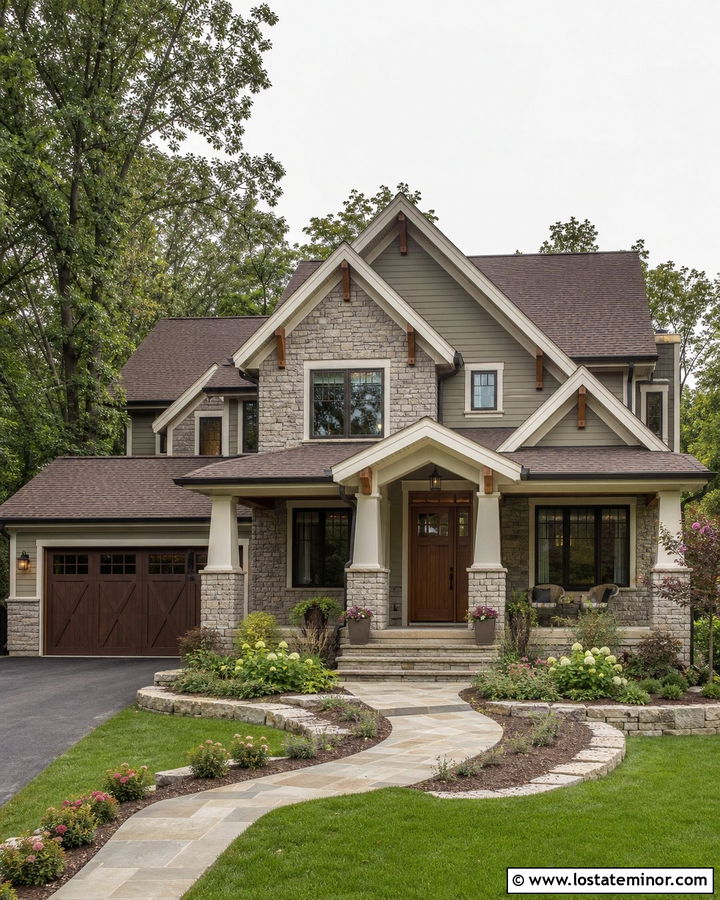
A craftsman exterior gains extra depth when natural stone is paired with a prominent gable roof. Cover the porch columns and foundation in warm gray fieldstone, then use muted olive siding across the main walls. Dark brown architectural shingles connect with the deeper tones in the masonry and emphasize the roof’s layered shape. Cream trim around windows and gables keeps the color palette from becoming too dark. Add stained cedar brackets, beams, and a craftsman-style front door to repeat the stone’s warm undertones. The garage door should match either the siding or wood accents instead of introducing another color. Broad porch steps, stone-edged garden beds, and a gently curving walkway complete this friendly, detailed exterior without making the facade feel visually crowded.
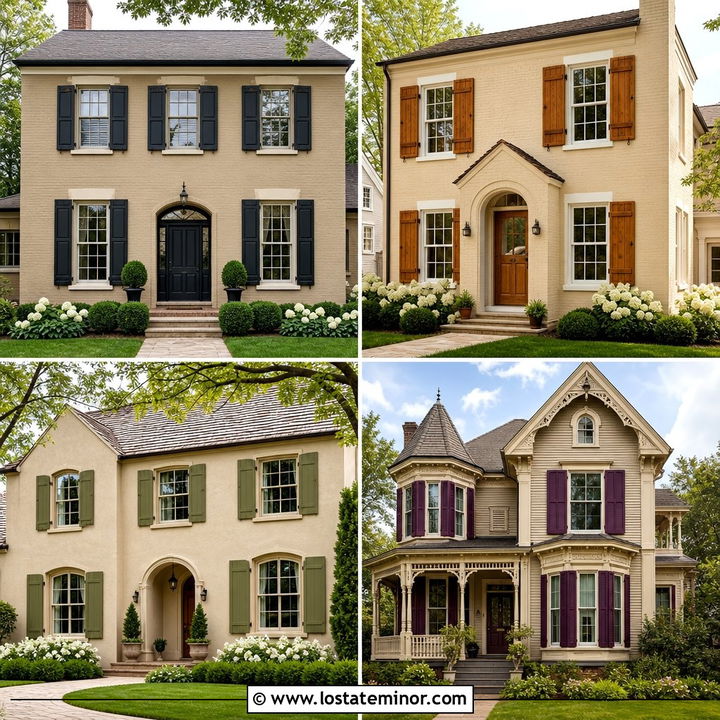
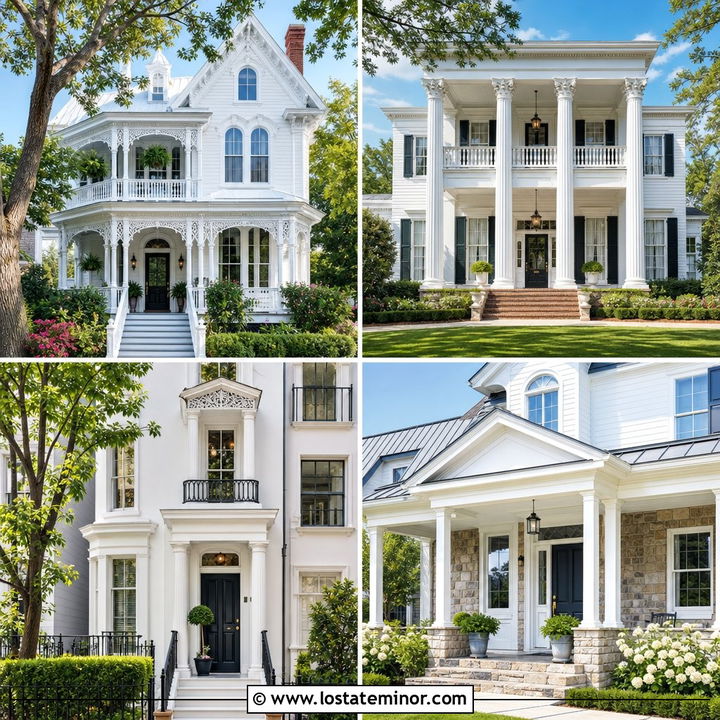
10. Stone Farmhouse With Galvanized Metal Roof
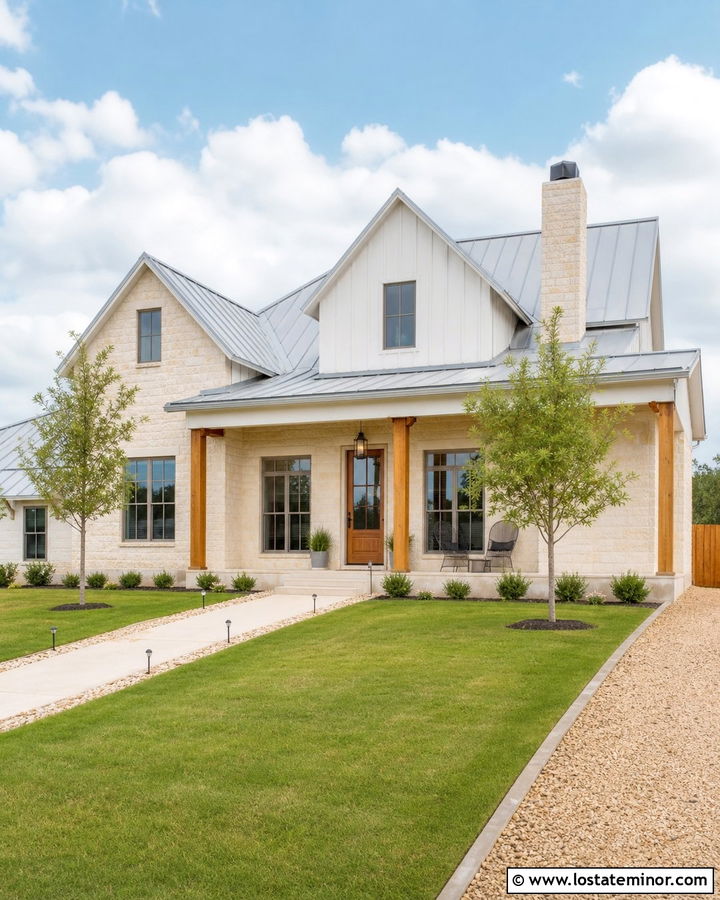
Galvanized metal roofing brings a relaxed agricultural character to a stone farmhouse while reflecting more light than black roofing. Pair it with warm cream limestone around the foundation, chimney, and front porch. Use soft white board-and-batten siding on the main elevation so the stone remains a clear textural feature. Light gray window frames and gutters create an easy connection to the silver roof. A honey-toned wood front door and matching porch posts add necessary warmth. Keep the roof shape simple, using tall gables and a modest shed roof above the porch. Gravel borders, young shade trees, and a straight walkway support the farmhouse setting. This exterior feels bright and practical, with enough contrast to define every material without losing its comfortable rural influence.
11. Stone Colonial House With Dark Gray Roof
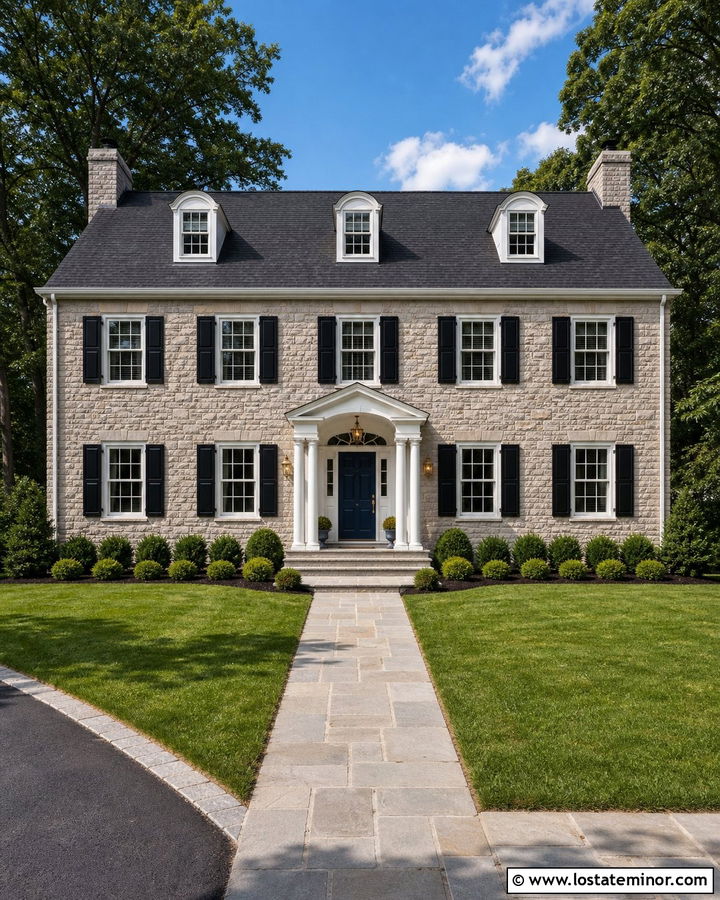
A symmetrical stone Colonial looks refined beneath a dark gray shingle roof. Choose rectangular-cut limestone in soft beige and gray tones to support the home’s orderly architecture. White trim around the windows, cornice, and central entry creates crisp definition against the masonry. Deep black shutters can connect visually with the roof, but they should be properly sized to match the windows. Introduce character with a navy blue front door, brass hardware, and traditional lanterns. A centered walkway and balanced foundation plantings reinforce the formal arrangement. To prevent the facade from feeling flat, select shingles with subtle tonal movement rather than a perfectly uniform surface. The result is a stately but approachable exterior that respects Colonial proportions while using updated colors and durable-looking materials.
12. Stone Tudor House With Brown Slate Roof
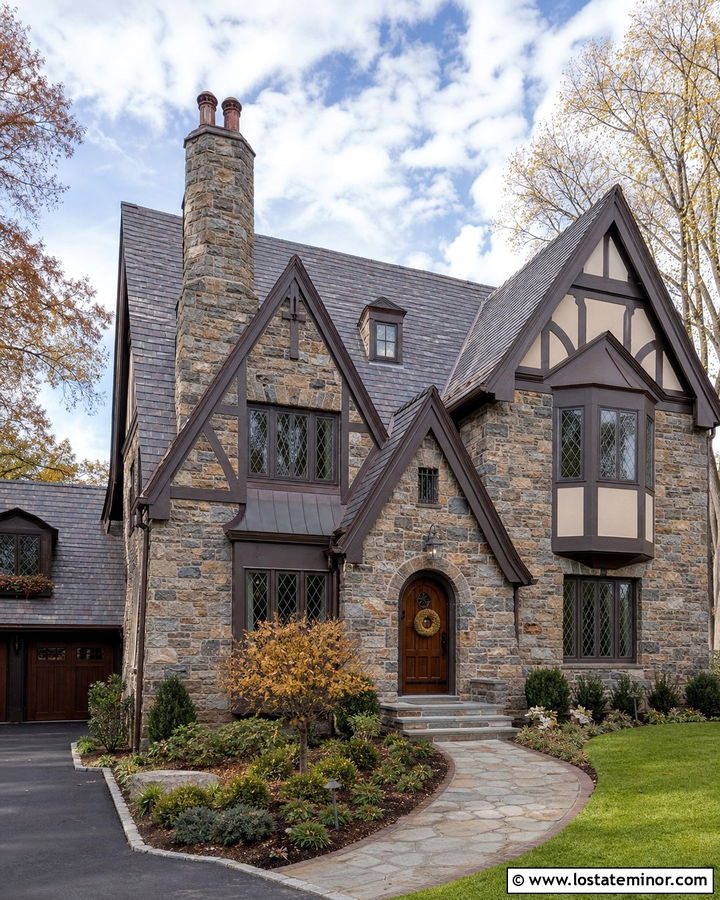
Tudor architecture benefits from a richly layered palette, making warm fieldstone and brown slate a natural match. Use stone with charcoal, rust, taupe, and cream variation across the first floor and chimney. Dark timber detailing on the upper gables can frame light beige stucco panels and connect with the roof. Select slate or slate-look roofing that combines deep brown and smoky gray tones, avoiding overly red tiles. Leaded-style windows, dark bronze gutters, and a heavy arched wood door reinforce the architecture without requiring excessive ornament. Keep the landscaping soft with curved beds, evergreen shrubs, and a winding stone path. This whole-house scheme emphasizes texture and craftsmanship, allowing the steep roof, masonry, timber accents, and entrance to work as one coordinated composition.
13. Modern Stone House With Flat Roof
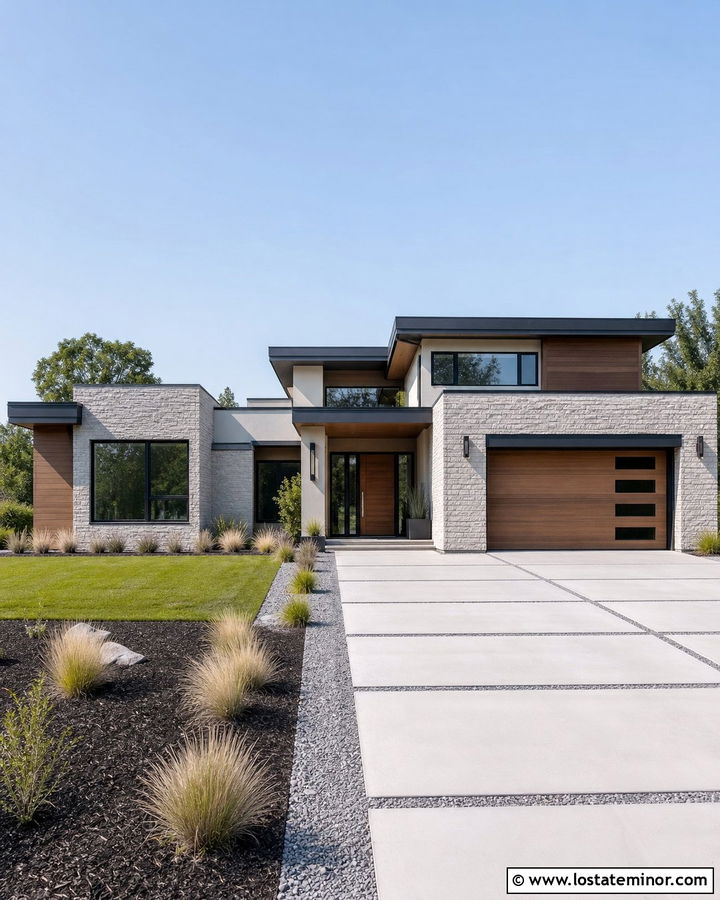
A flat-roof stone house feels most successful when the materials remain simple and precisely arranged. Use pale gray stacked stone on one major facade volume, then balance it with smooth warm white stucco and narrow cedar cladding. A charcoal membrane or metal-edged flat roof creates a slim, clean outline. Black window frames should be large and minimally divided, helping the exterior feel open rather than fortress-like. Repeat the cedar tone on the front door and soffit to soften the stone. Rectangular concrete pavers, gravel beds, and sculptural grasses support the architecture without adding visual clutter. Subtle roof overhangs can create depth and shade around the glazing. The completed exterior feels crisp and contemporary, yet natural textures keep it from becoming stark or impersonal.
14. Stone Bungalow With Red Metal Roof
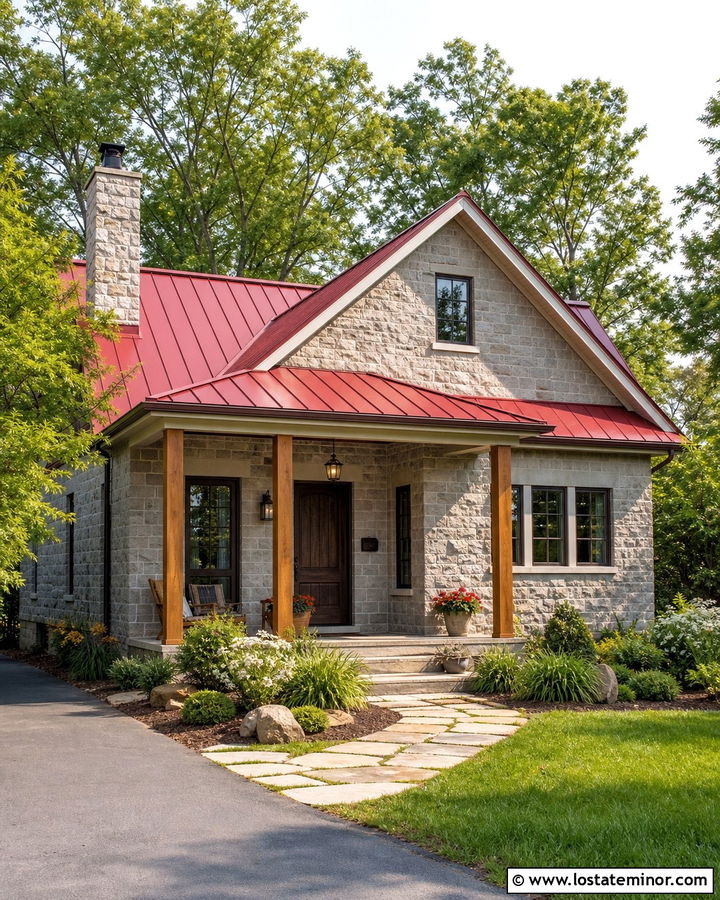
A muted red metal roof gives a stone bungalow distinctive curb appeal without overpowering its smaller scale. Choose a deep barn red or weathered oxide finish rather than a bright primary red. Warm gray fieldstone around the porch, chimney, and foundation provides a sturdy visual base. Paint the siding a soft cream and use dark bronze windows to connect the masonry with the roof. Cedar porch columns and a medium-brown front door add another natural layer. Keep the roofline modest, with one dominant front gable and a simple porch canopy. Informal native plantings, a narrow stone walkway, and low shrubs preserve an open view of the house. This combination feels cheerful, handcrafted, and especially fitting for a bungalow in a leafy neighborhood.
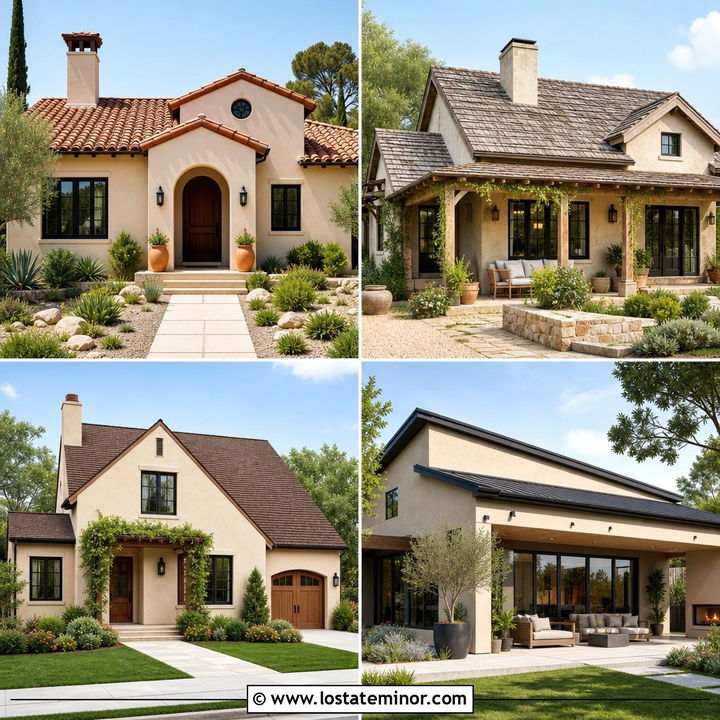
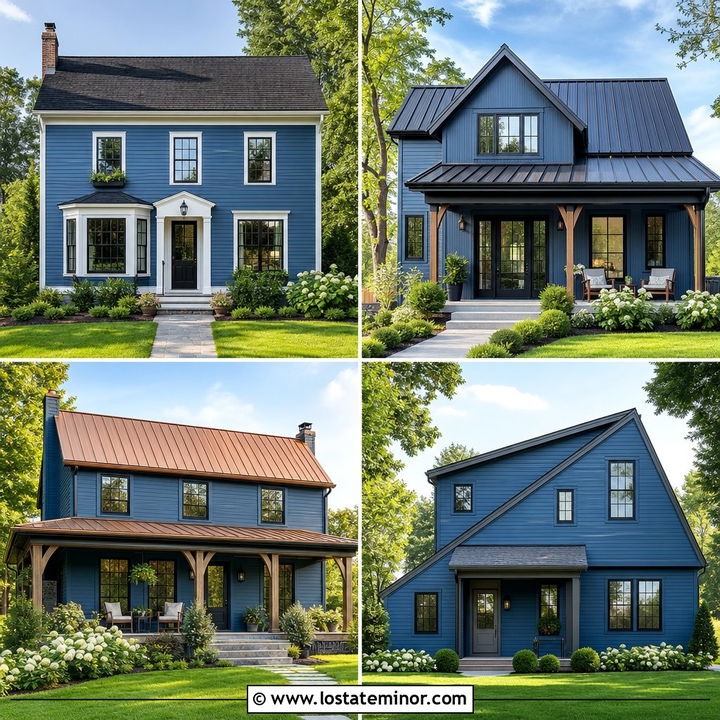
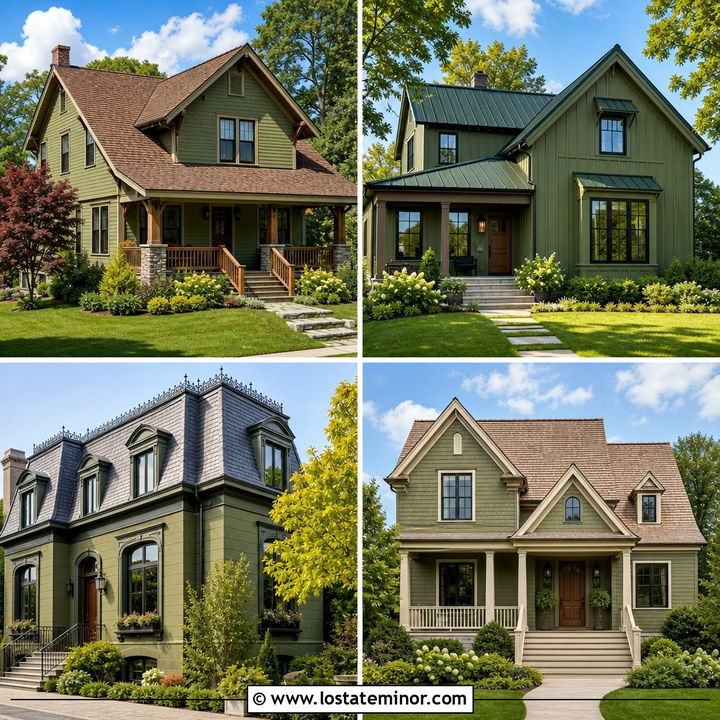
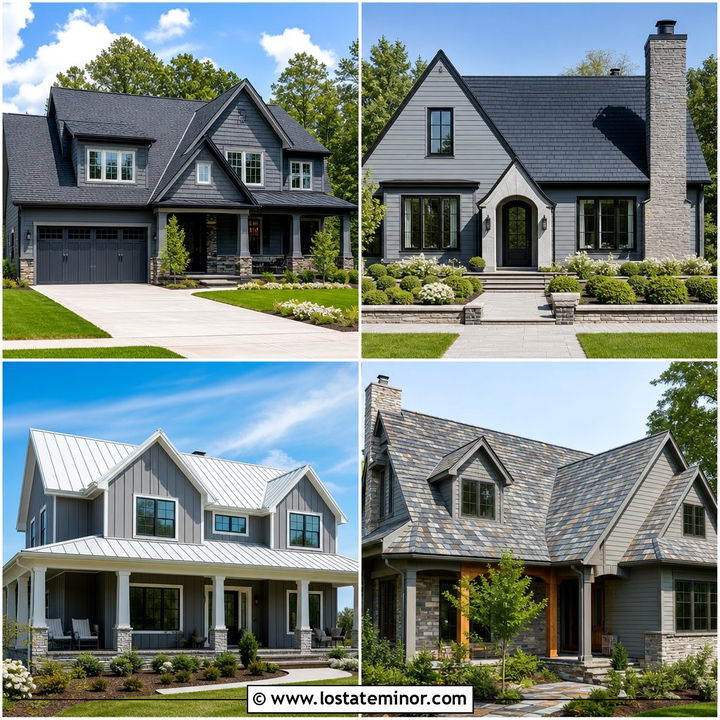
15. Stone Cape Cod House With Gambrel Roof
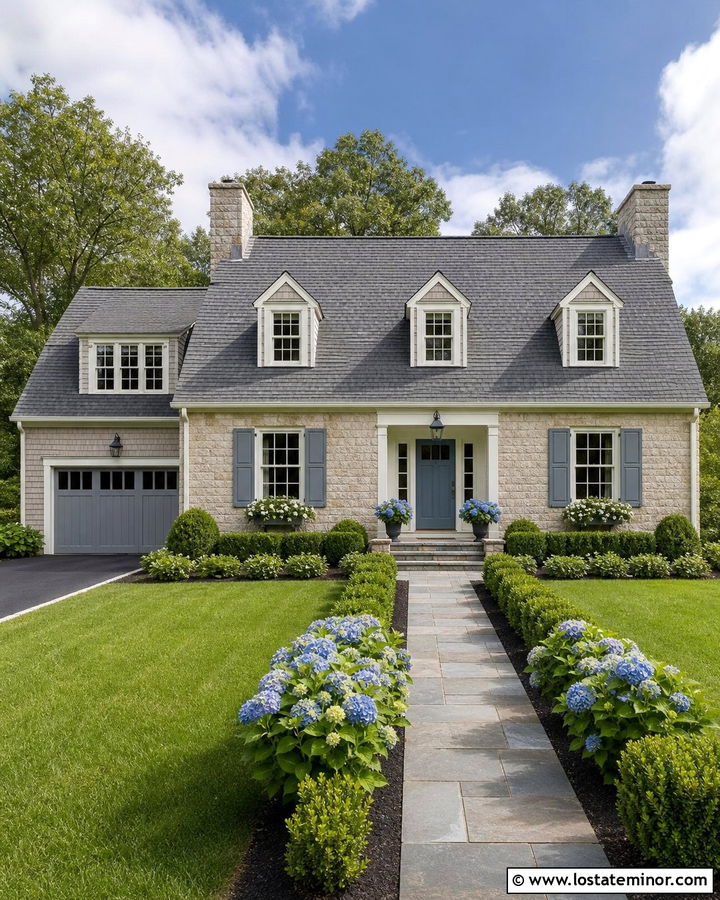
A gambrel roof brings extra charm to a stone Cape Cod home, particularly when the exterior palette remains restrained. Use pale beige limestone on the first floor and soft gray cedar shingles within the upper roof level. A charcoal asphalt or composite roof provides clear definition around the distinctive gambrel shape. White trim, small dormers, and divided-light windows support the classic proportions. Add a dusty blue front door and matching shutters for quiet coastal color. If the garage is visible, paint it the same soft gray as the upper siding to reduce its visual weight. Hydrangeas, boxwoods, and a brick or bluestone walkway complete the welcoming facade. The stone foundation gives the home permanence, while the roof and shingled details keep it light and approachable.
16. Stone French Country House With Clipped Gable Roof
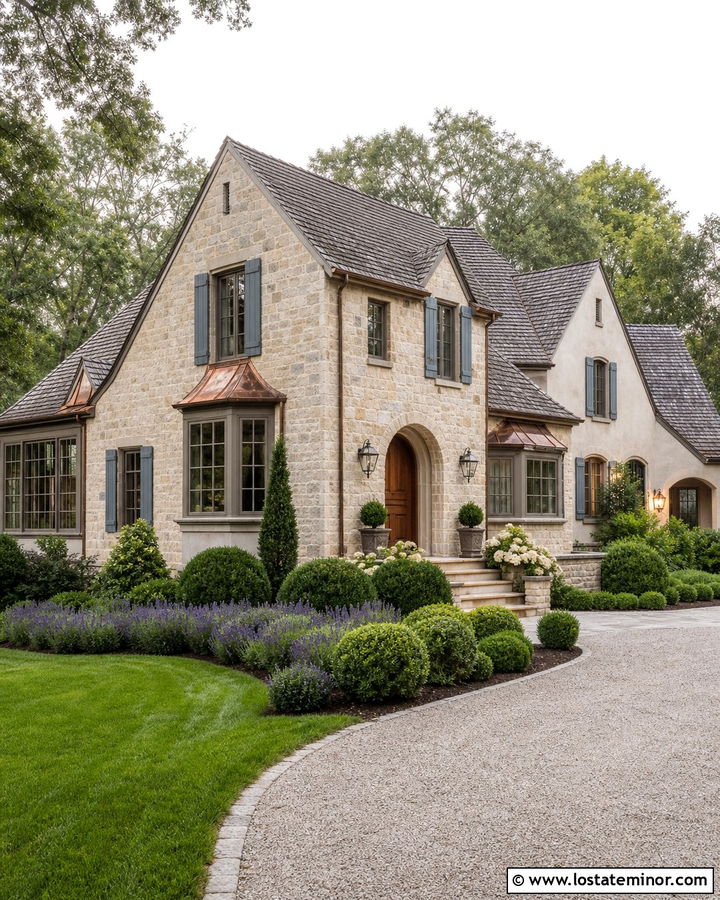
A clipped gable roof gives a stone French country house an elegant silhouette that feels less rigid than a standard gable. Choose creamy limestone with varied block sizes and warm mortar joints. Top the home with weathered gray shingles that include soft brown undertones. Pale taupe stucco on secondary walls can make the masonry stand out without creating sharp contrast. Use muted blue-gray shutters, dark bronze windows, and a softly stained arched door to build a layered European-inspired palette. Small copper roof accents above bays or entries add warmth in controlled amounts. Shape the landscape with lavender-like plantings, rounded shrubs, and a gently curved gravel drive. The complete exterior should appear graceful and textured, with the roofline and stonework sharing equal visual importance.
17. Stone Mediterranean House With Clay Tile Roof
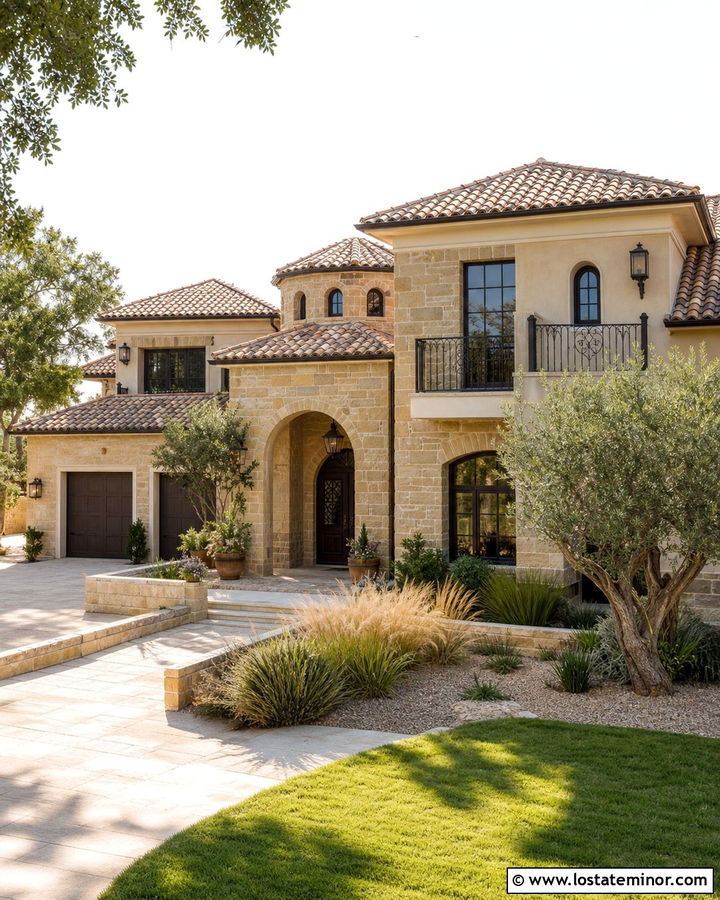
Warm stone and terracotta roof tile create a natural Mediterranean exterior suited to sunny landscapes. Use golden beige limestone or lightly textured sandstone across the lower walls and entry tower. The roof tiles should feature muted red, brown, and clay variation instead of a uniform orange finish. Cream stucco on secondary elevations keeps the palette bright and allows the stone to become the main texture. Dark bronze windows, iron railings, and an espresso front door add contrast. Arched openings and shallow roof pitches reinforce the architecture without needing excessive decoration. Finish the setting with drought-tolerant grasses, olive-like trees, gravel beds, and a pale stone walkway. Every color should feel sun-warmed and connected, creating a rich exterior that remains balanced from the roof to the landscape.
18. Stone Mountain House With Mixed Roof
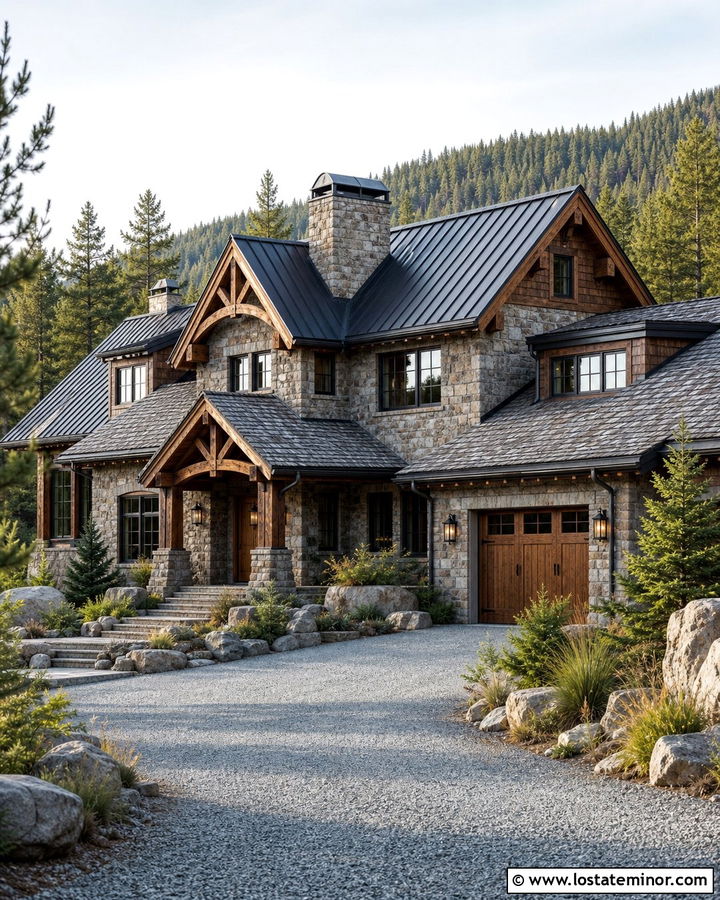
A mixed roof can add practical and visual depth to a mountain stone house. Use charcoal standing-seam metal on steep upper sections and weathered gray shingles on lower porch roofs. The shared cool undertones keep the two materials coordinated. Cover the foundation, chimney, and entry walls in rugged gray-brown fieldstone, then add cedar siding across upper gables. Dark bronze window frames and gutters blend smoothly with the roof. Heavy timber trusses and a warm wood garage door strengthen the lodge character. Avoid adding too many small roof sections, since the stone and timber already provide plenty of texture. Native evergreens, boulders, and a broad gravel drive help the house settle into a sloped site while maintaining a clear, welcoming view of the entrance.
19. Stone Lake House With Blue Gray Roof
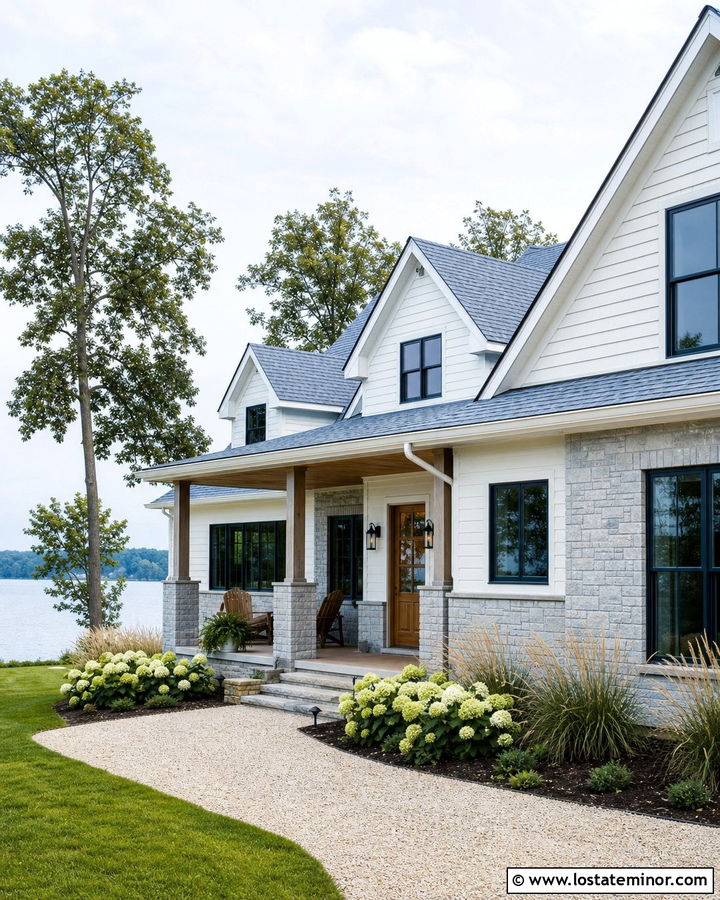
A blue-gray roof gives a stone lake house a calm color connection to water and open sky. Select pale gray limestone with slight blue and beige variation, then pair it with architectural shingles in a muted slate-blue blend. Soft white siding keeps the facade bright, while navy window frames and shutters deepen the coastal influence. Introduce warmth through a natural cedar front door, porch ceiling, and small decorative brackets. A wide covered porch can visually lower the roof and create a comfortable transition between the house and yard. Keep the landscaping relaxed with ornamental grasses, hydrangeas, and a light gravel walkway. This scheme feels breezy without depending on obvious nautical decorations. The stone and roofing carry the color story through durable architectural materials instead.
20. Stone Split Level House With Black Roof
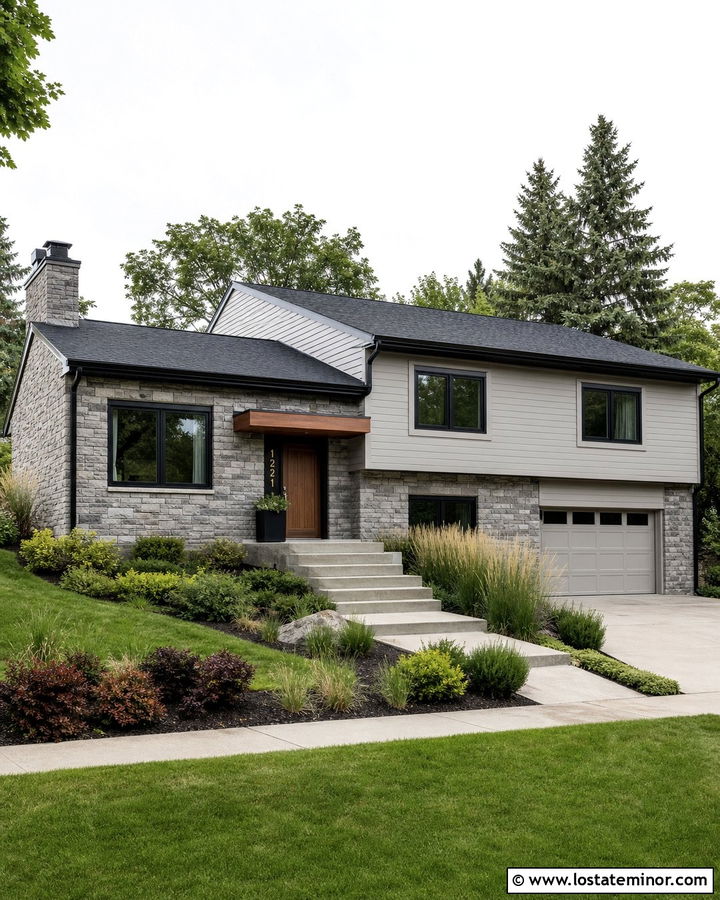
A black roof can help unify the uneven lines of a stone split-level home. Use medium gray ledgestone across the lower story and garage wall, then paint the upper siding a warm white or very pale greige. Black shingles, windows, gutters, and simple porch railings create a repeated outline that makes the elevation feel more intentional. A walnut-toned front door adds warmth and makes the entrance easier to identify. If the garage dominates the facade, choose a door matching the siding rather than black. A slim cedar canopy above the entry can provide architectural focus without requiring a major addition. Layered shrubs, upright grasses, and broad concrete steps help manage changes in grade while giving this familiar home type a more current, coordinated appearance.
21. Stone Prairie House With Low Pitch Roof
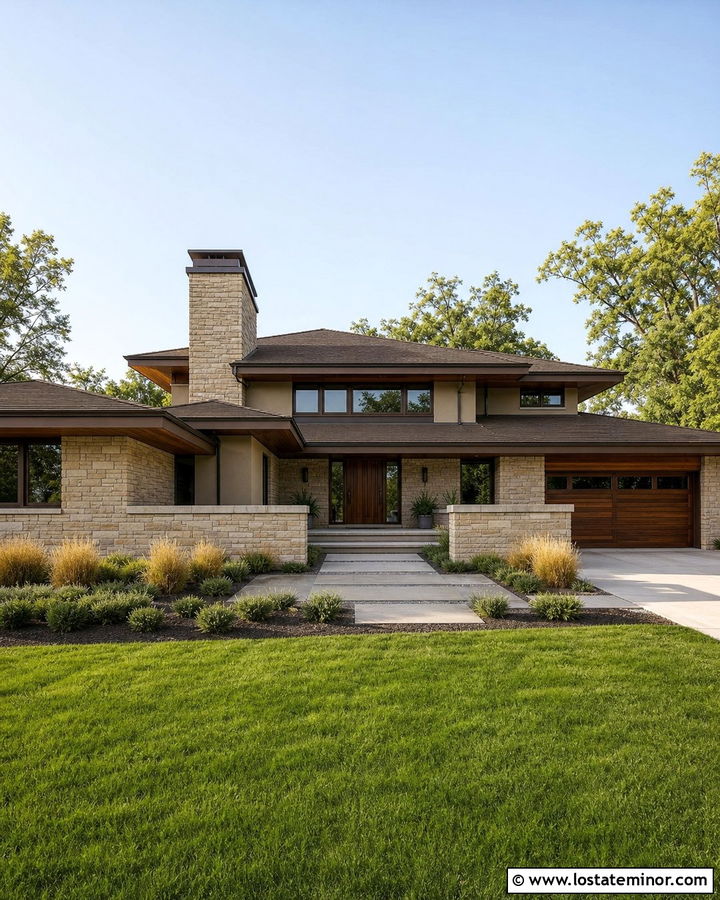
The strong horizontal lines of a Prairie house pair beautifully with long bands of natural stone. Use warm taupe ledgestone across the foundation and central chimney, accompanied by muted beige stucco or siding. A low-pitch hip roof in deep brown or charcoal emphasizes the wide proportions. Extend the eaves generously and finish the soffits in stained wood to introduce warmth beneath the darker roofing. Bronze-framed windows arranged in horizontal groups reinforce the architectural rhythm. Keep the front door simple, choosing a rich walnut finish with minimal glass. Structured planting beds, low ornamental grasses, and wide rectangular pavers should follow the same horizontal direction. This complete design feels grounded and deliberate, with every roof, window, stone, and landscape line contributing to one unified composition.
22. Stone Victorian House With Steep Slate Roof
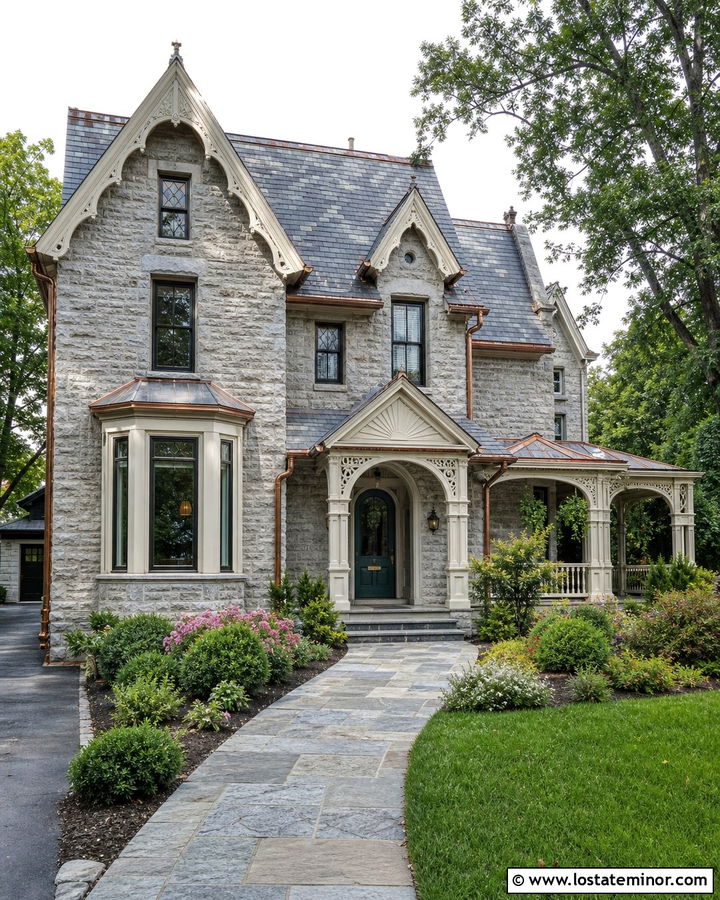
A steep slate roof adds rich color and dimension to a stone Victorian without relying on an overly complicated paint scheme. Choose light gray cut stone for the main walls and natural slate containing charcoal, blue, and muted green tones. Use soft cream trim around ornate gables, bay windows, and the front porch to define details clearly. A deep green front door and matching window accents can draw out the subtle color in the roofing. Limit decorative paint to two or three coordinated shades so the masonry remains visually dominant. Copper gutters and small roof finials provide restrained historical character. Complete the property with a patterned stone walkway, layered flowering shrubs, and an open lawn. The exterior feels detailed and graceful while still maintaining a controlled material palette.
23. Stone Cabin With Green Shingle Roof
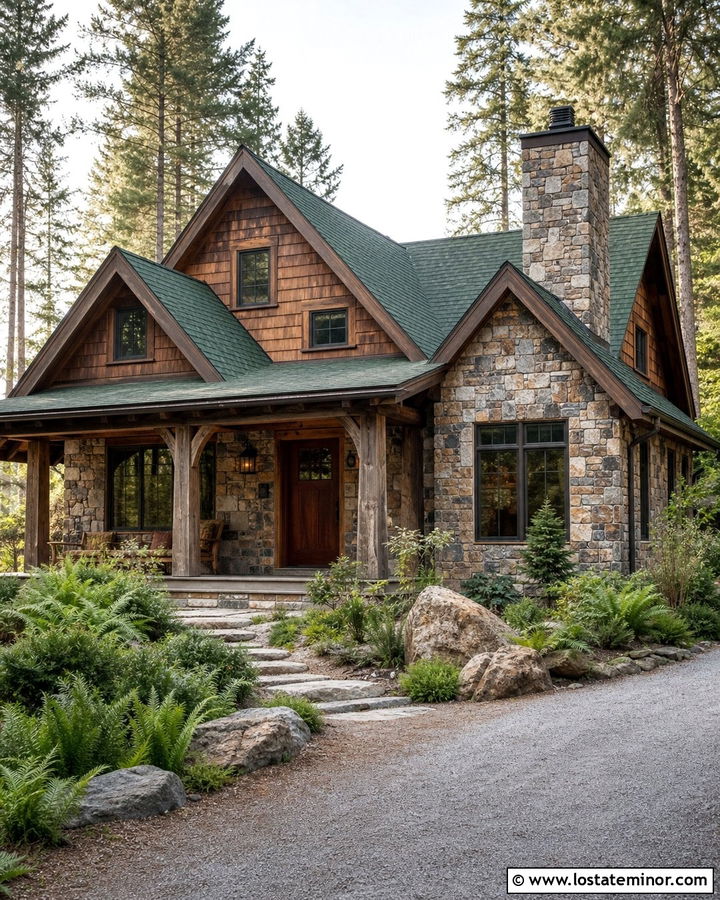
A muted green shingle roof can help a stone cabin blend naturally into a forested or rural site. Use rugged brown-gray fieldstone on the chimney, porch foundation, and lower walls. Cedar logs or horizontal wood siding add warmth across the remaining facade. Select shingles in a deep moss or forest green with subtle tonal movement, keeping the color earthy rather than vivid. Dark bronze windows and gutters create quiet outlines, while a red-brown wood door adds a welcoming focal point. A covered porch with stone piers and sturdy timber posts strengthens the cabin’s grounded appearance. Surround the house with ferns, native grasses, evergreen trees, and an informal gravel path. This coordinated design looks comfortable and connected to its setting instead of themed or overly rustic.
24. Stone Coastal House With Light Gray Roof
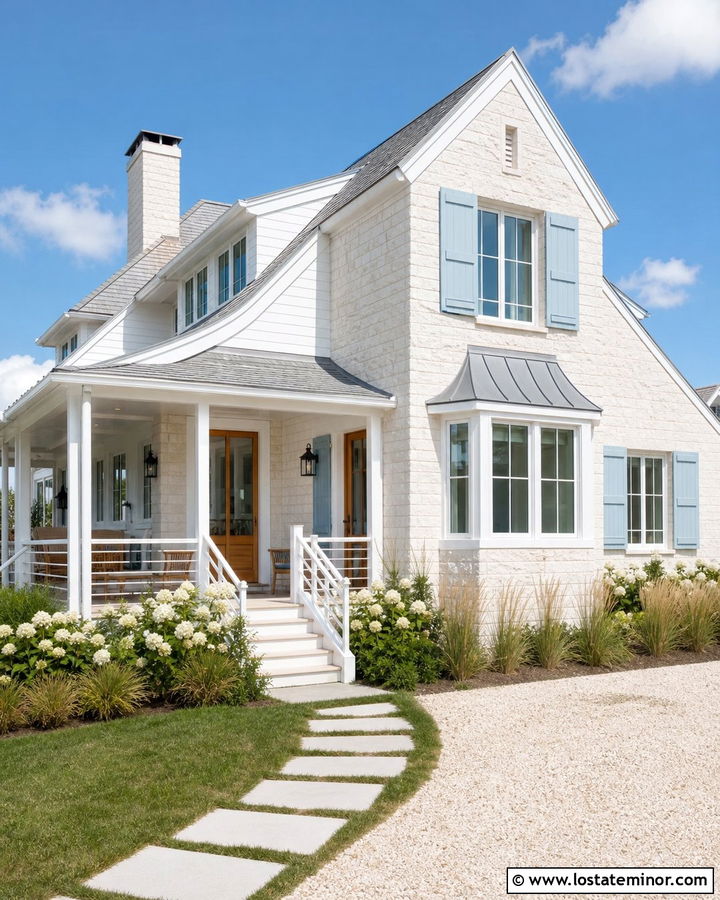
A light gray roof keeps a coastal stone house bright while reducing the harsh contrast created by very dark shingles. Pair it with whitewashed limestone or pale shell-colored stone around the foundation and entry. Use crisp white lap siding and slightly warmer white trim to create gentle separation between surfaces. Soft blue shutters and a natural teak-colored door bring relaxed color to the facade. Silver-gray metal accents over small bays can repeat the main roof tone while adding subtle shine. Keep porch railings simple and open so the architecture does not feel heavy. Beach grasses, hydrangeas, light gravel, and a broad stepping-stone walkway finish the scheme. The house feels airy and polished, with stone adding enough texture to balance the pale roof and siding.
25. Stone Contemporary House With Butterfly Roof
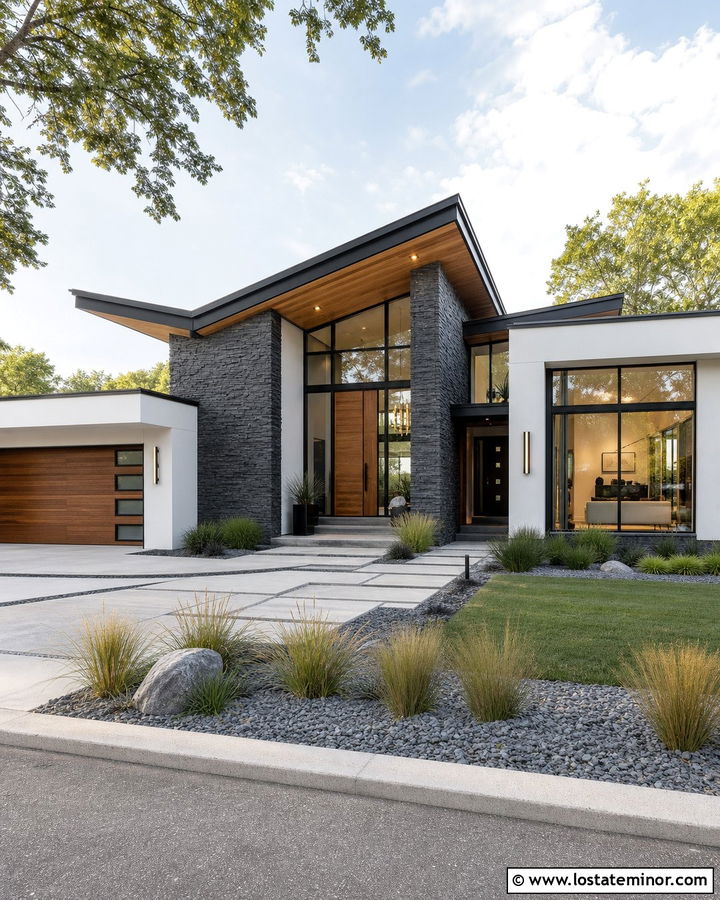
A butterfly roof creates a bold profile, so the stone palette beneath it should be clean and controlled. Cover one central exterior volume in charcoal stacked stone and use warm white stucco on the projecting wings. Black metal roofing emphasizes the inward-sloping shape and connects with black-framed windows. Introduce cedar cladding beneath the overhangs and around the entry to soften the angular geometry. Large glass panels can keep the dark masonry from making the facade feel closed. Choose a simple pivot door in medium walnut and repeat that tone on the garage. Linear concrete pavers, gravel beds, and sculptural grasses complement the architecture. This stone house design feels distinctive but cohesive because the roof, cladding, glazing, and landscaping follow the same strong geometric language.
26. Stone Southern House With Hipped Metal Roof
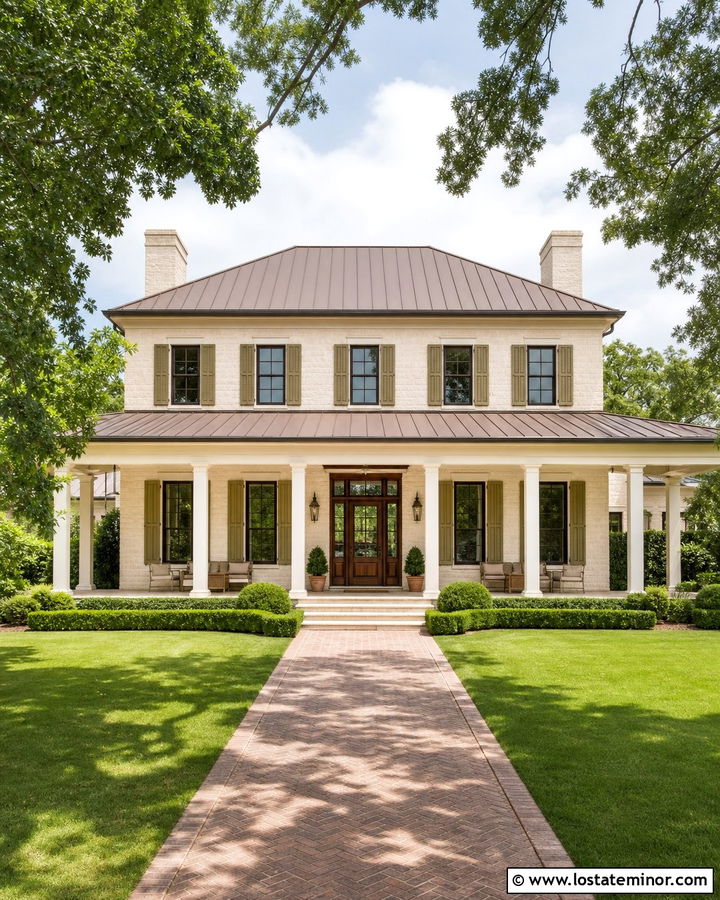
A hipped metal roof gives a stone Southern house a broad, elegant crown while handling a large footprint gracefully. Use soft cream limestone across the first floor and warm white painted brick or siding above it. A medium bronze metal roof creates a softer effect than black and coordinates naturally with beige masonry. Repeat the bronze on gutters, lanterns, and window frames. Tall white columns can define the front porch, while a stained mahogany door adds richness at the center. Keep shutters limited to windows where they suit the proportions, choosing a subdued olive or charcoal finish. Mature shade trees, clipped hedges, and a wide brick walkway complete the welcoming setting. The finished exterior feels refined, comfortable, and well balanced despite its substantial scale.
27. Stone Adobe House With Flat Tile Roof
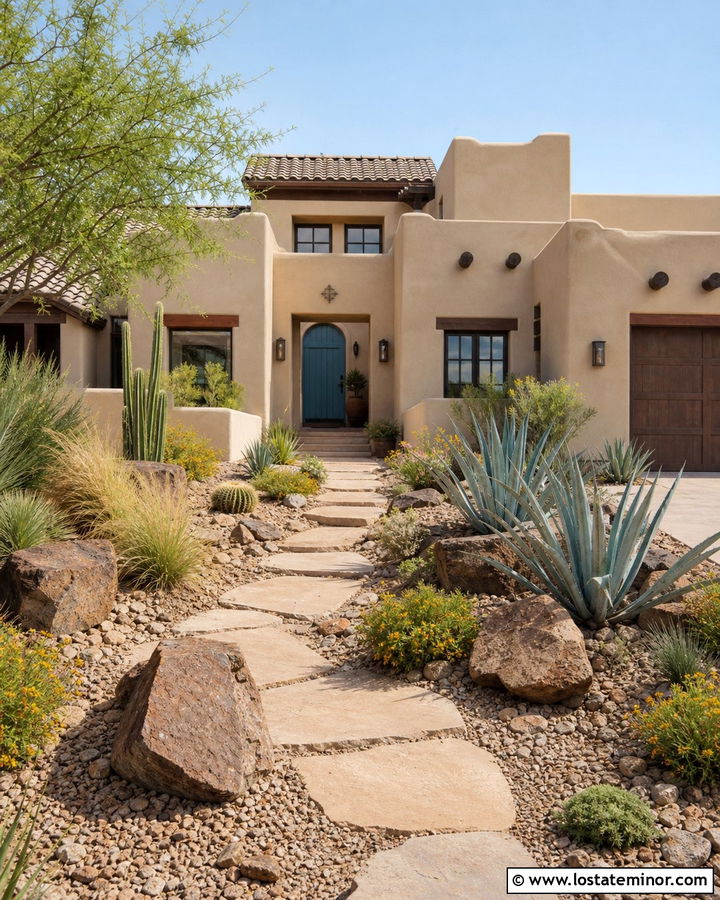
A low-profile tile roof complements the thick, grounded forms of a stone-and-adobe exterior. Use warm sand-colored stucco for the main walls and irregular desert stone around the entry, foundation, and courtyard. Select flat concrete or clay tiles in a weathered brown-gray blend rather than bright terracotta. Deep chocolate window frames and wood beams create contrast, while a turquoise-gray front door can introduce a small amount of regional color. Keep the parapets and roof edges simple to avoid competing with the textured masonry. Gravel, native grasses, agave-like plants, and large stepping stones reinforce the dry-climate setting. The completed home feels earthy and modern, with the roof and stone appearing as natural extensions of the surrounding landscape rather than separate decorative features.
28. Stone English Cottage With Cedar Shake Roof
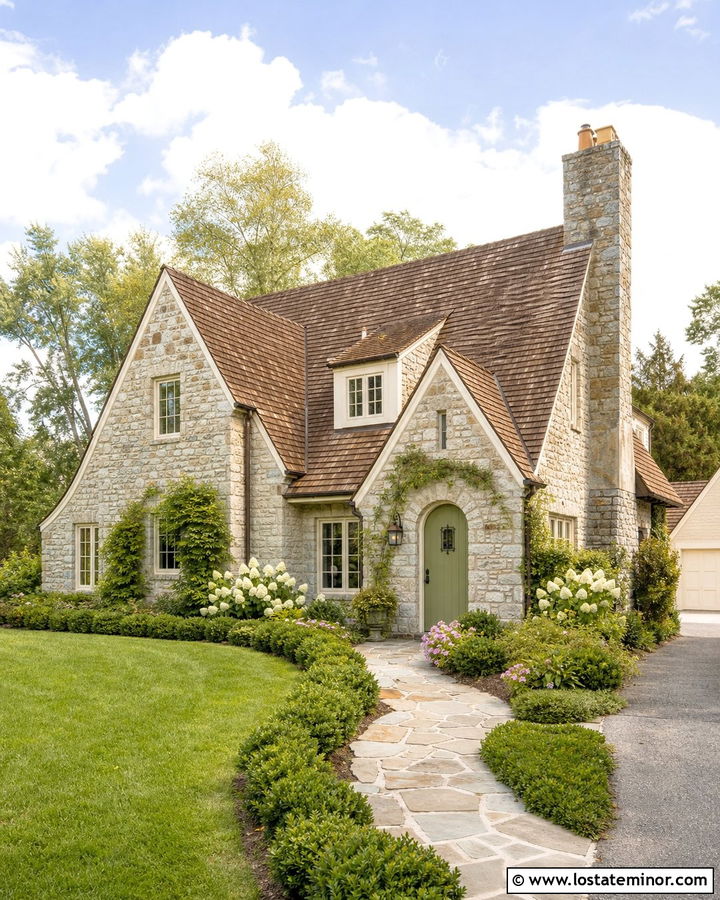
A cedar shake roof brings warmth and storybook character to an English cottage exterior. Pair newly installed shakes in a medium cedar brown with softly irregular cream and gray fieldstone. As the roof weathers, its cooler tones will continue to coordinate with the masonry. Use warm ivory trim, small divided-light windows, and a sage green arched door to maintain a gentle palette. A prominent stone chimney and steep cross gables reinforce the cottage proportions. Limit exposed timber details so the facade does not become too busy. A curved flagstone path, flowering borders, clipped hedges, and climbing vines can soften the edges of the building. This complete look feels handcrafted and inviting, allowing natural materials and modest architectural details to create the visual interest.
29. Stone Midcentury House With Shed Roof
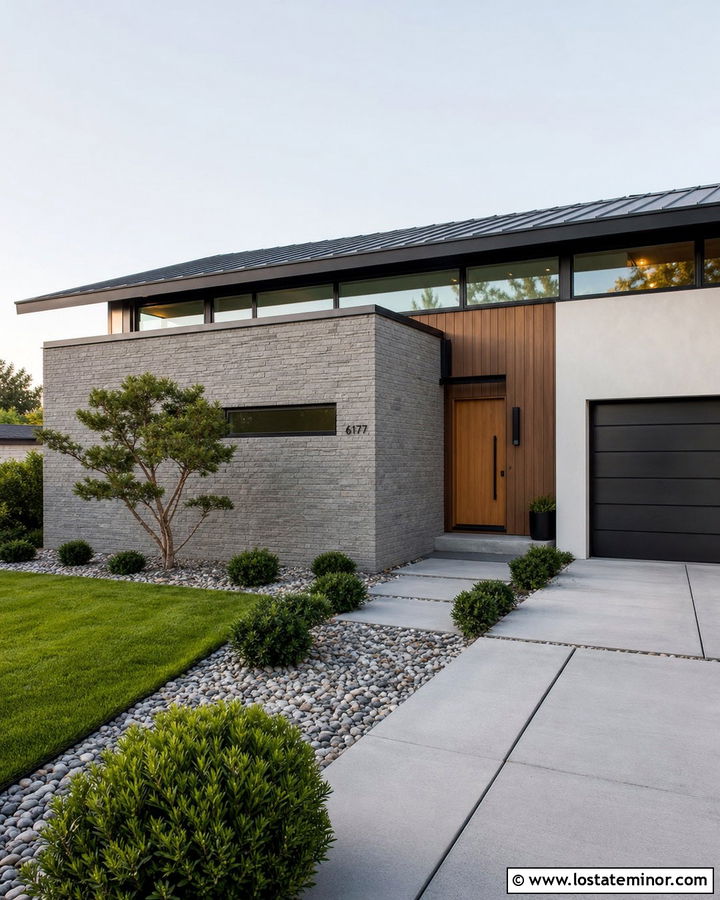
A shed roof can modernize a stone midcentury home while preserving its low, open character. Use linear gray stacked stone on the chimney and one long facade wall. Warm off-white stucco or vertical wood siding can cover the remaining surfaces. Finish the sloping roof in charcoal standing-seam metal, then repeat that color on narrow window frames and fascia. Cedar soffits, a flush wood front door, and horizontal garage panels introduce warmth. Clerestory windows beneath the raised roof edge bring lightness to the stone-heavy elevation. Keep landscaping simple with broad concrete slabs, river rock, compact shrubs, and one sculptural tree. The finished house feels distinctly midcentury without appearing dated, thanks to the restrained palette and clear relationship between the roofline and masonry.
30. Stone European House With Copper Roof Accents
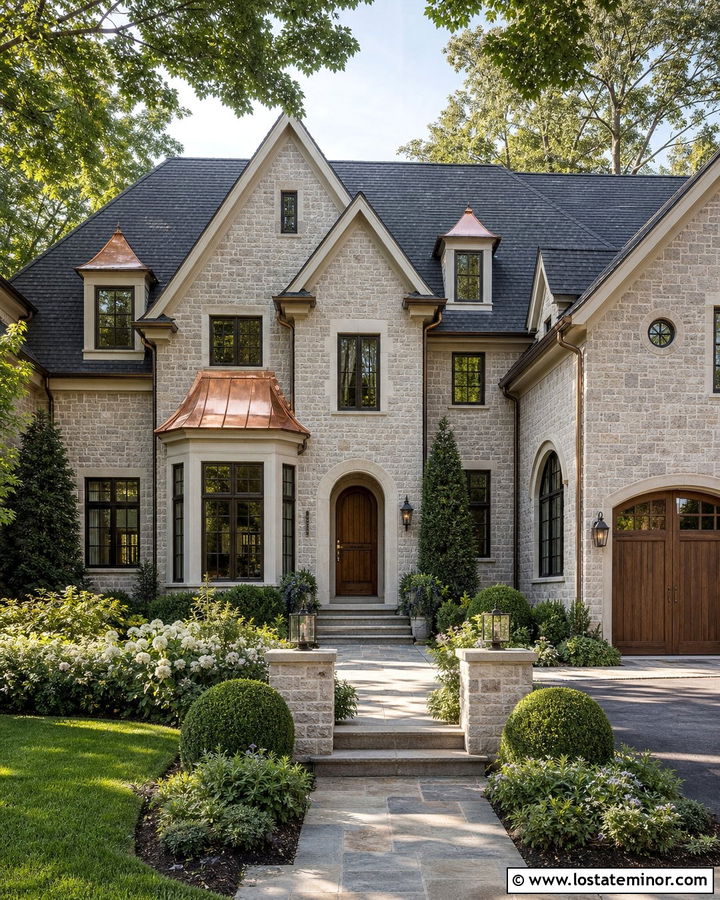
Copper roof accents can enrich a European-inspired stone house when used selectively. Begin with warm gray limestone across the main facade and choose a charcoal shingle roof for the larger roof planes. Add copper above a bay window, entry canopy, or small turret rather than covering the entire home. This approach makes the metal a focal point while controlling cost and visual intensity. Bronze windows, soft cream trim, and a medium walnut door coordinate with both fresh copper and its eventual patina. Use arched openings sparingly and keep the masonry pattern relatively consistent. A formal stone walkway, rounded evergreens, and layered foundation shrubs complete the exterior. The finished design feels elegant and substantial, with copper supplying warmth and memorable detail without overwhelming the stonework.
Conclusion:
The strongest stone exteriors treat the roof as part of one complete color and material plan. Stone undertones should guide the roofing, siding, trim, door, and metal finishes rather than being considered after those selections are made. Dark roofs create definition, lighter roofs soften large elevations, and metal or tile can reinforce a specific architectural direction. Before committing, compare physical samples beside the actual stone in sun, shade, and changing weather. Also consider roof size, pitch, and neighborhood context. These 30 Stone House Design With Roof Ideas offer options for traditional cottages, modern homes, ranches, farmhouses, and many other settings. With a coordinated palette, stone and roofing can create lasting curb appeal from every angle.

Related posts: