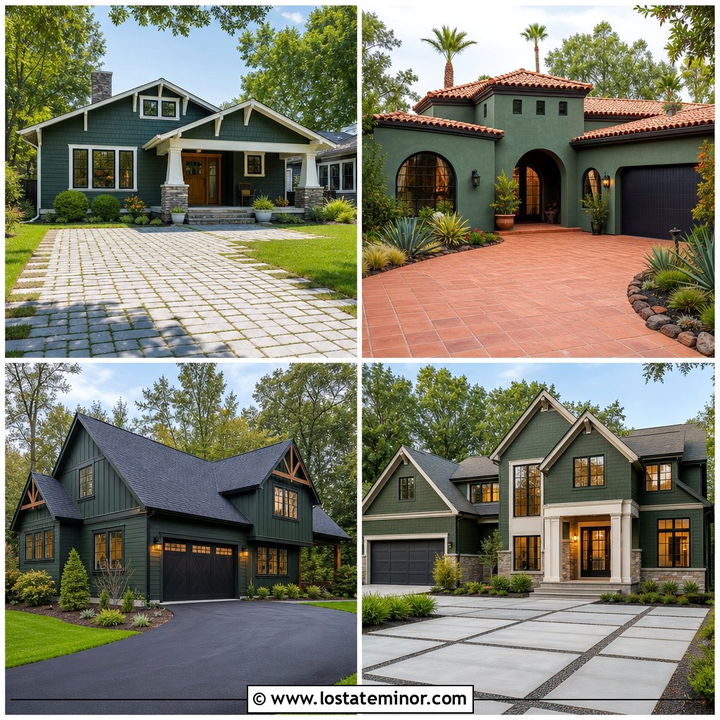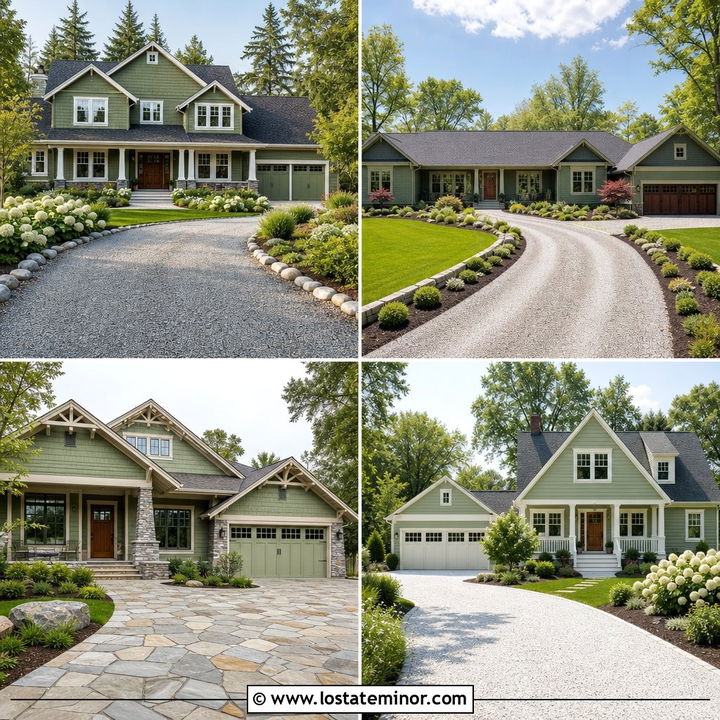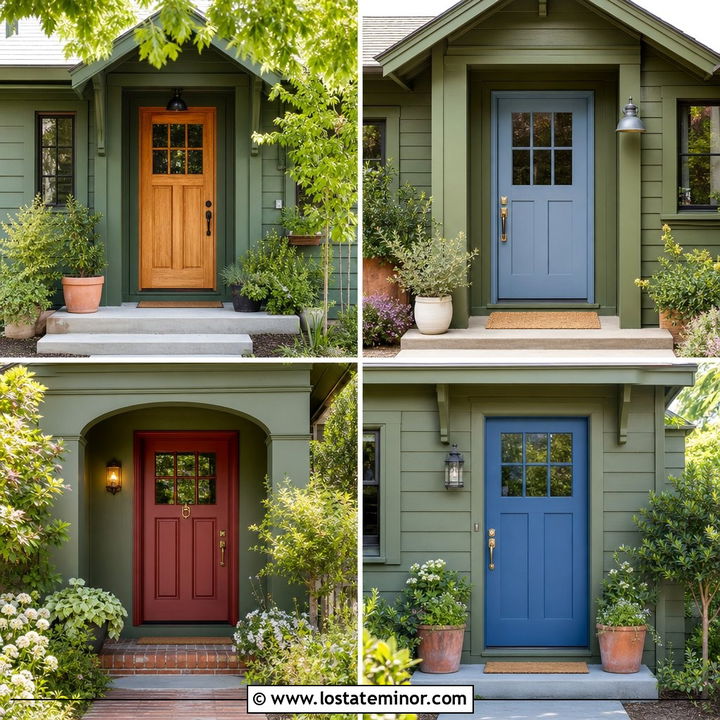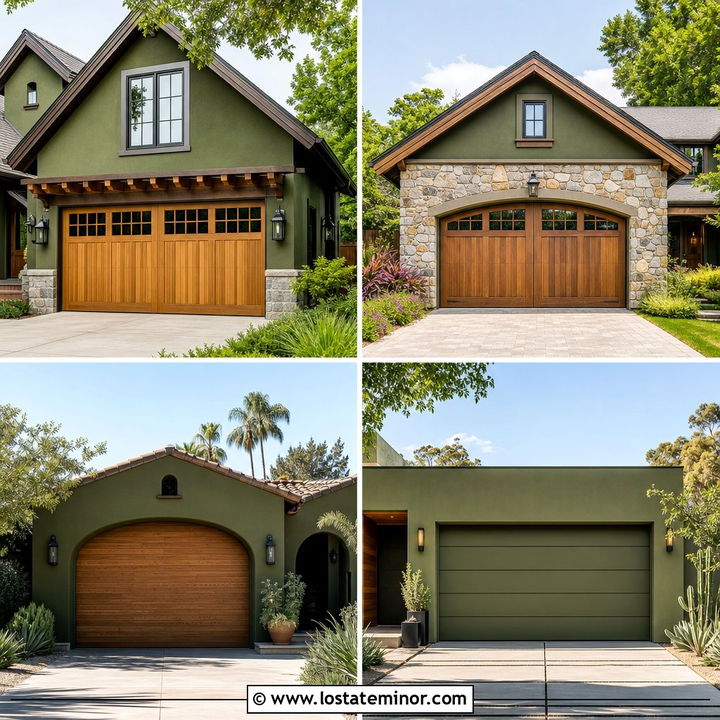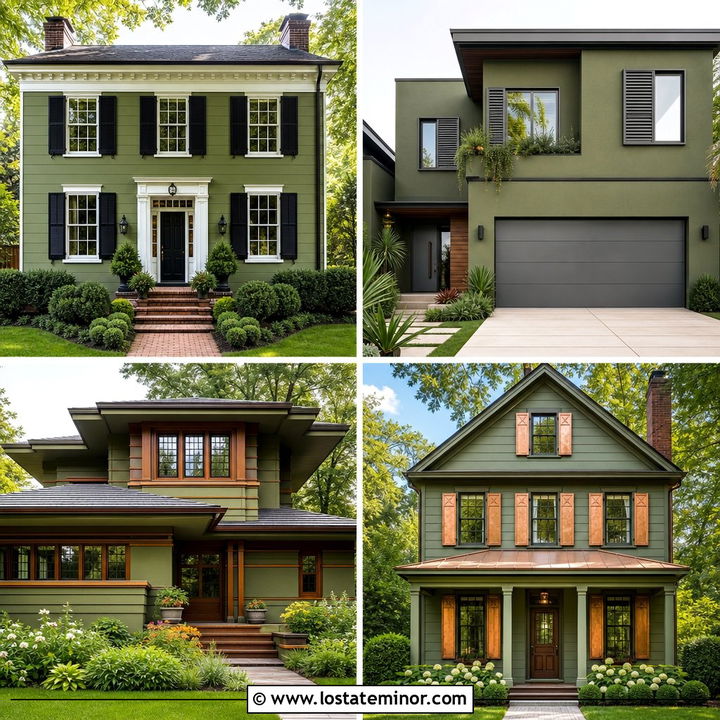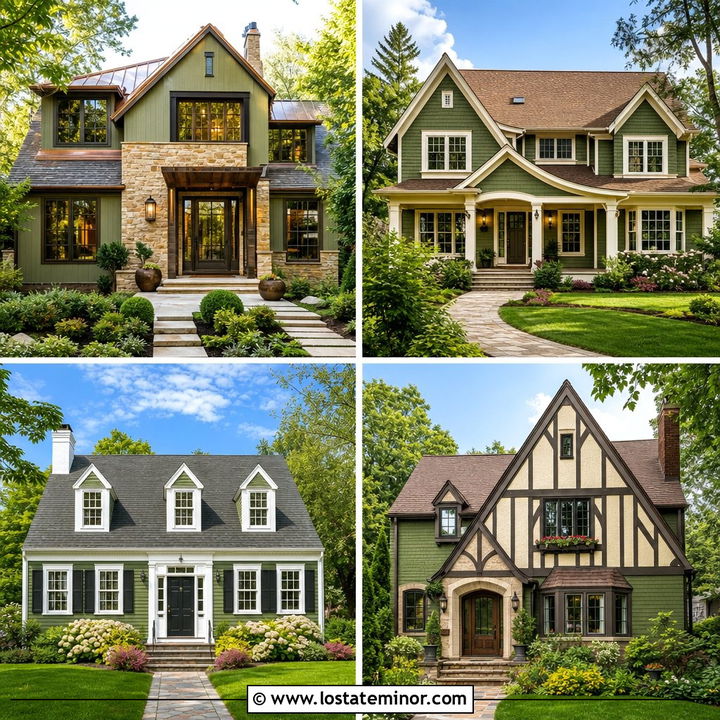
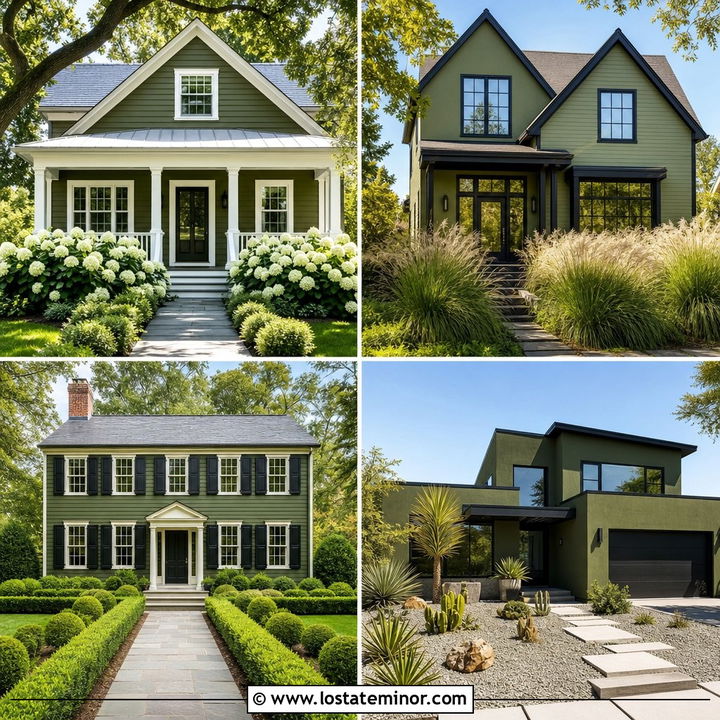
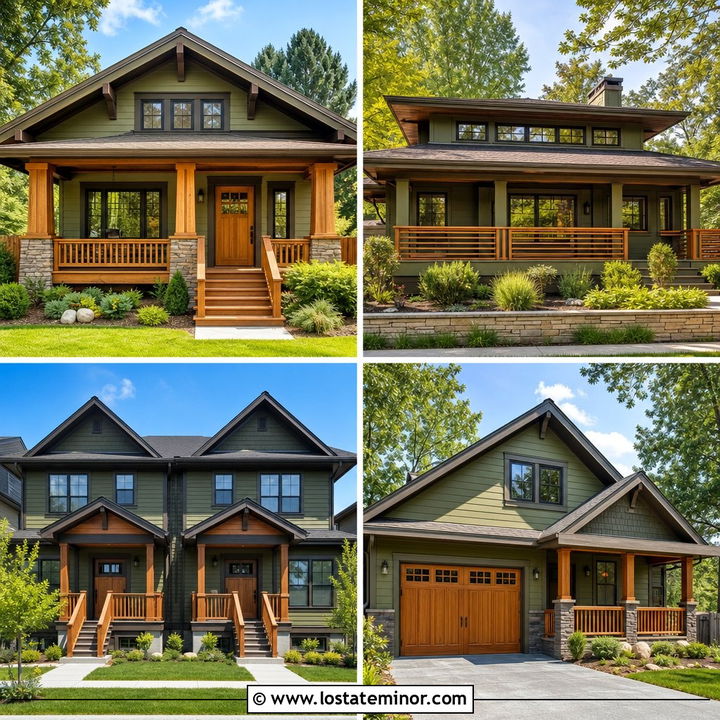
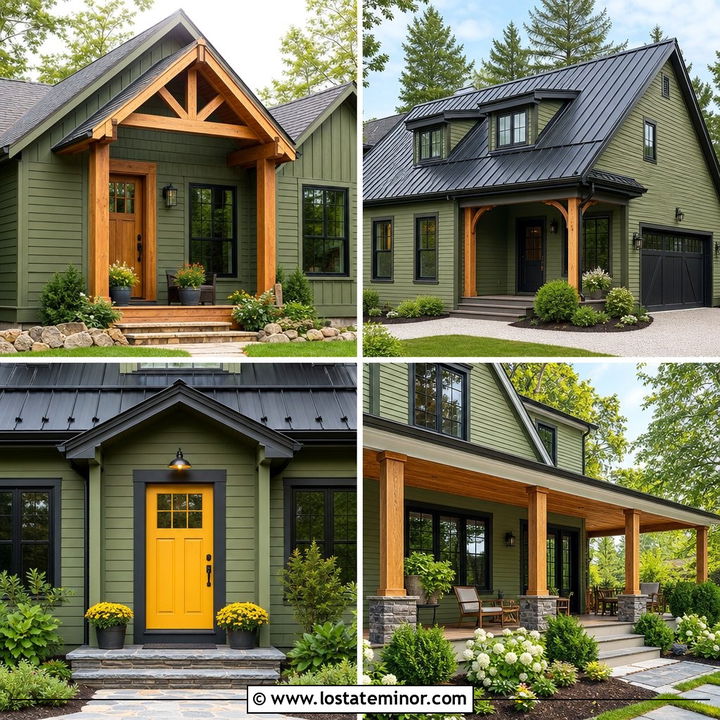
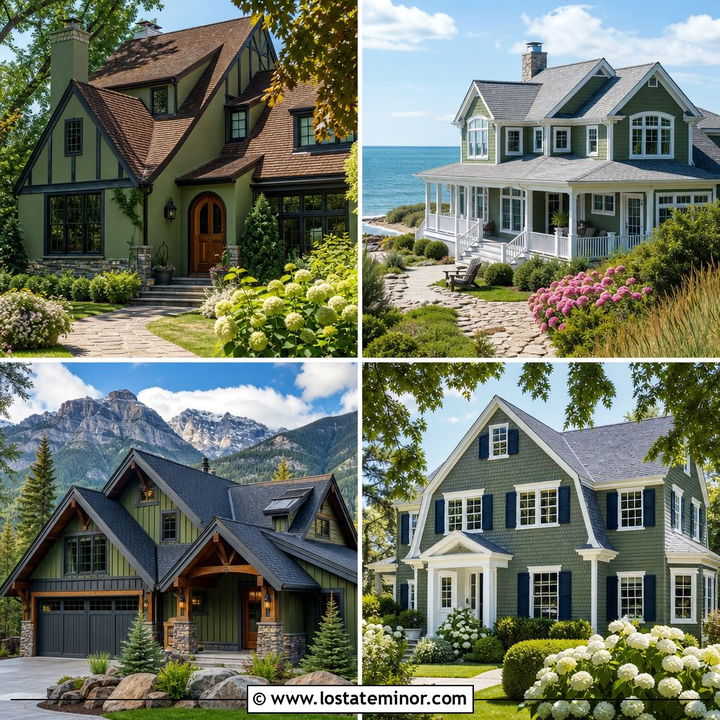
Moss green brings a calm, grounded character to a home while giving the driveway and landscaping room to shape the overall curb appeal. These 30 Moss Green House Design With Driveway Ideas explore complete exterior combinations rather than treating paint, paving, and architectural details separately. You will find moss green siding paired with warm white trim, dark roofing, natural wood, brick, stone, and several practical driveway materials. The collection also covers many American home types, from compact bungalows and ranch houses to Colonials, cabins, and contemporary builds. Each look explains how to connect the driveway to the facade through color, texture, edging, and planting. Use these 30 Moss Green House Design With Driveway Ideas to create an entrance that feels intentional from the street.
1. Moss Green Craftsman With Gravel Driveway
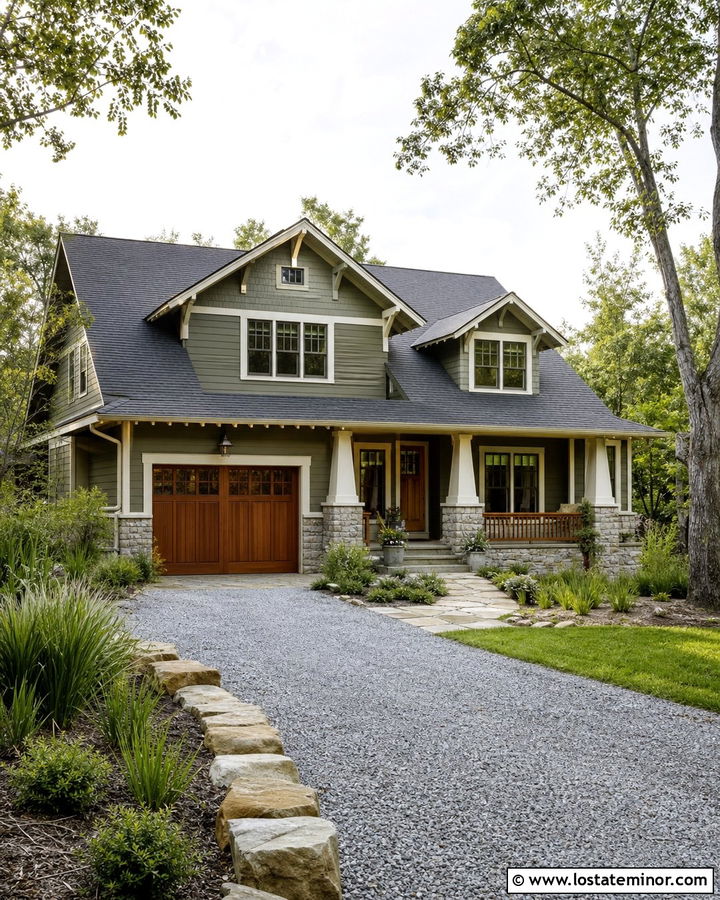
A moss green Craftsman feels especially inviting when its sturdy architectural details are paired with a relaxed gravel driveway. Use warm white on the tapered porch columns, window trim, and roof fascia to brighten the earthy siding. A medium-gray roof keeps the palette grounded without making the facade look heavy. Natural cedar on the front door, porch ceiling, and garage door adds warmth and highlights the home’s handcrafted character. Choose compacted gray gravel with a subtle brown undertone so it connects visually with both the roof and wood accents. Stone edging will hold the gravel neatly in place. Finish the entrance with ornamental grasses, low evergreens, and a flagstone walkway branching toward the covered porch.
2. Moss Green Colonial With Brick Driveway
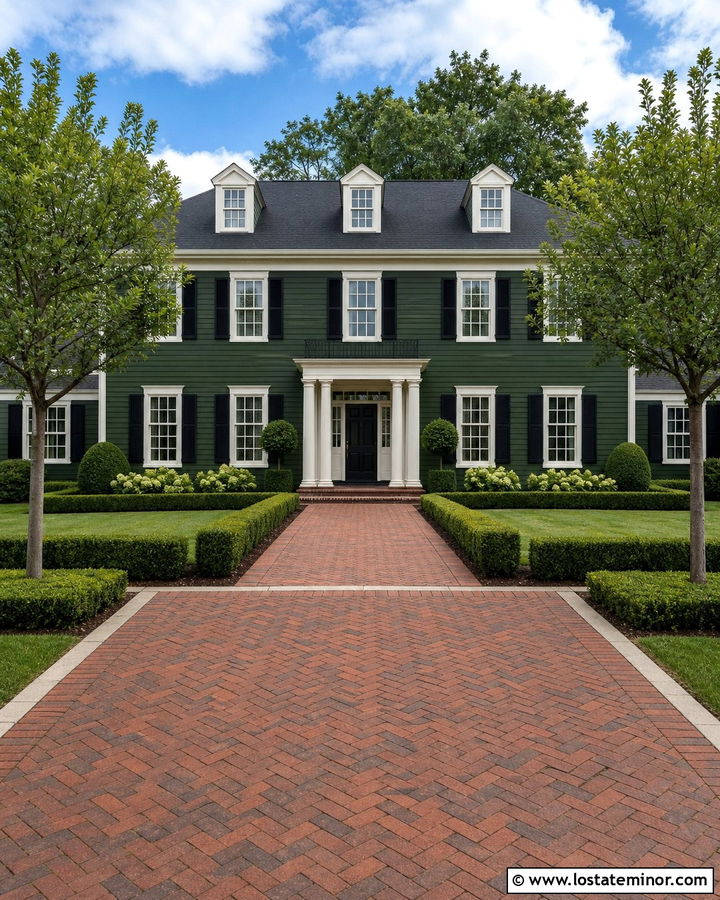
For a traditional exterior with richer color, pair a symmetrical moss green Colonial with a red and brown brick driveway. The warmth of the brick balances the cool depth of the green siding, making the house look established rather than overly formal. Paint the window trim, cornice, and classical columns a soft creamy white. Black shutters, lanterns, and a glossy black front door provide crisp definition across the balanced facade. A dark charcoal roof completes the restrained palette. Lay the driveway brick in a herringbone pattern and frame it with a straight soldier-course border. Clipped boxwood, matching trees, and a centered brick walkway reinforce the Colonial symmetry while connecting the driveway to the main entrance.
3. Moss Green Ranch With Concrete Driveway
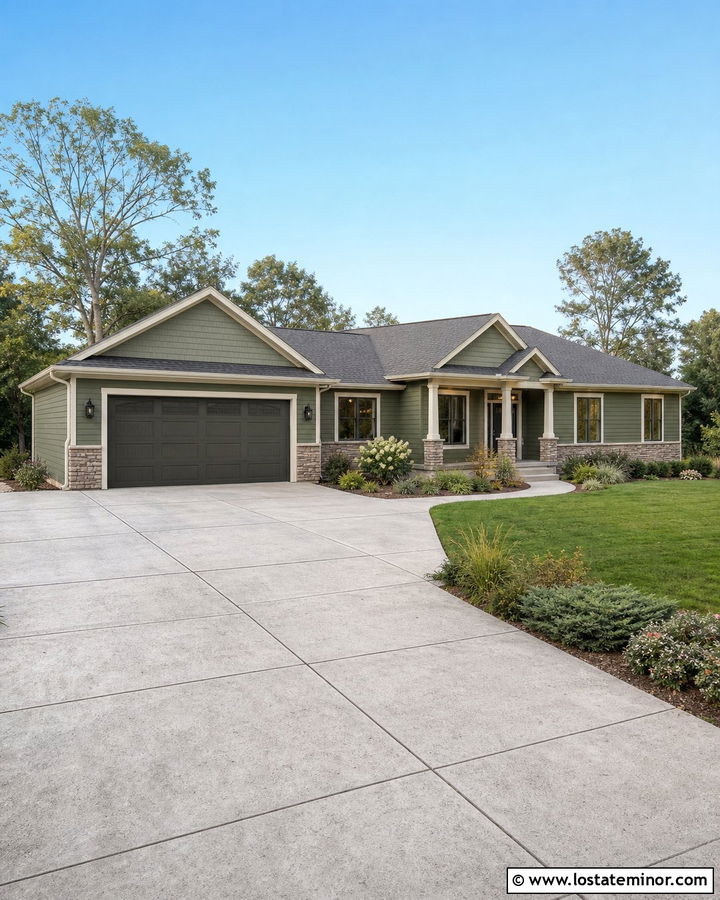
Long, low ranch houses benefit from a clean color plan that emphasizes their horizontal lines. Cover the siding in moss green, then use warm ivory trim around the windows, eaves, and garage door. A charcoal front door gives the shallow entry more presence, while natural stone across the foundation adds texture near ground level. Keep the driveway simple with smooth light-gray concrete divided into wide rectangular sections. Narrow joints create visual rhythm without competing with the architecture. A gently curved walkway can soften the straight driveway and direct attention toward the front door. Add low junipers, spreading grasses, and small flowering shrubs rather than tall plants. This keeps the facade visible and makes the broad ranch exterior feel open, balanced, and well maintained.
4. Moss Green Farmhouse With Black Asphalt Driveway
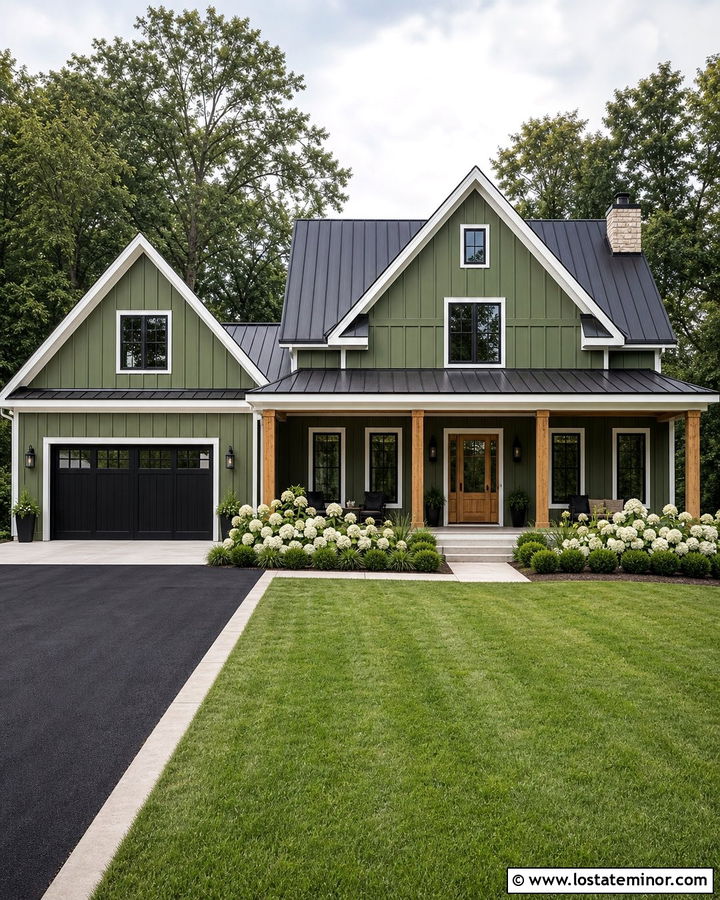
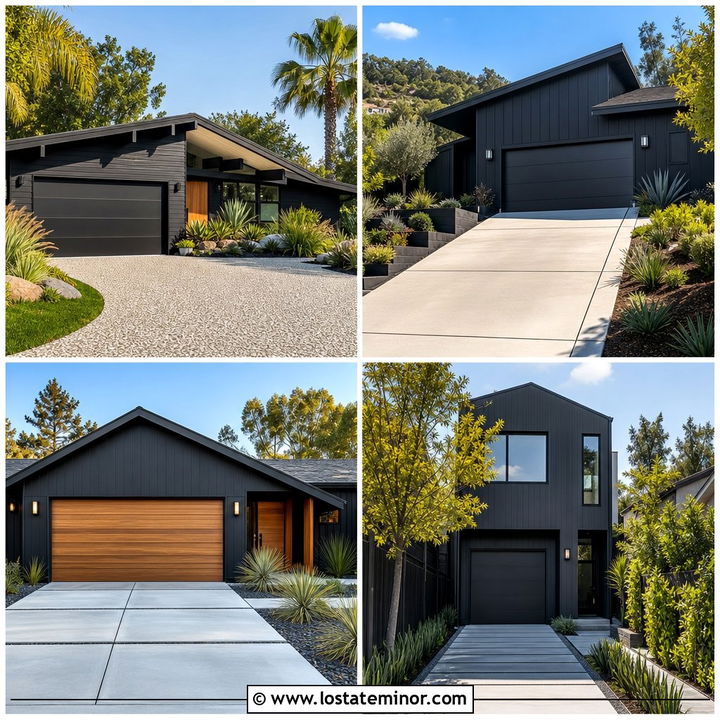
An updated farmhouse can carry moss green beautifully when the remaining colors stay simple and high contrast. Choose vertical board-and-batten siding in moss green, bright white window trim, and a matte black metal roof. A natural oak front door and matching porch posts prevent the black-and-green combination from feeling too severe. The dark asphalt driveway echoes the roof and black window frames, helping the entire property look cohesive. Add a pale concrete apron near the garage if you want a cleaner transition between the house and driveway. White hydrangeas, clipped shrubs, and soft grasses can line the parking area without blocking its edges. A straight gravel or stone walkway leading to the full-width porch completes this practical modern farmhouse exterior.
5. Moss Green Cottage With Cobblestone Driveway
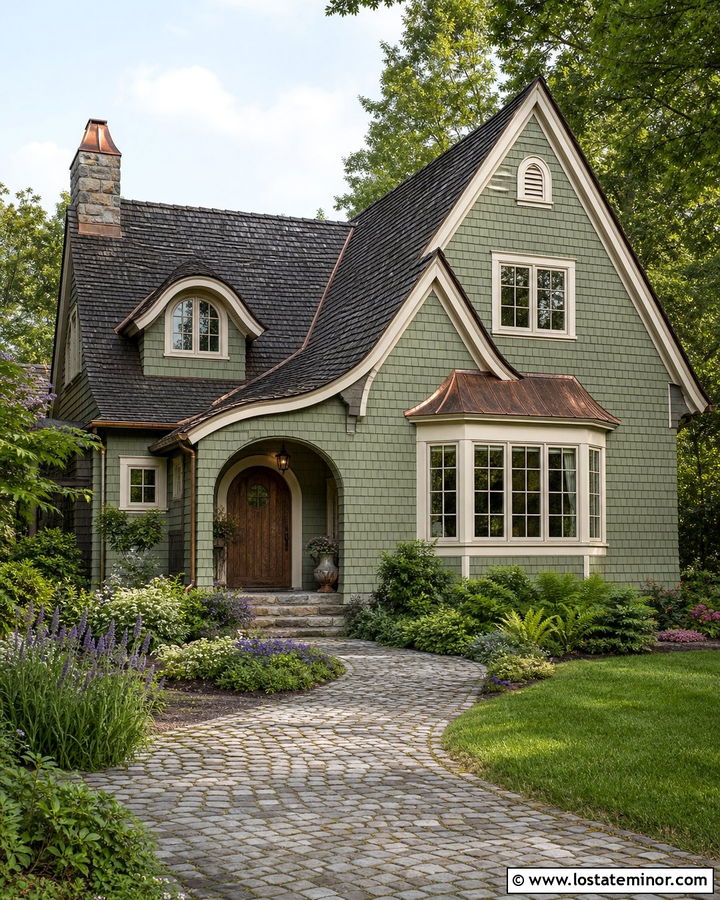
Curving cobblestones make a moss green cottage feel connected to its garden from the moment it comes into view. Select soft moss green shingles or lap siding, creamy white trim, and a weathered cedar front door. A steep charcoal roof and small copper details can give the compact facade additional depth. Use mixed gray and brown cobblestones for the driveway, avoiding a single flat color that might look too formal beside the cottage architecture. A gently winding layout works well when space allows and can create pockets for layered planting. Fill those areas with ferns, flowering shrubs, lavender, and low ground cover. A matching cobblestone path leading to an arched porch helps the driveway and entrance read as one charming exterior composition.
6. Moss Green Bungalow With Paver Driveway
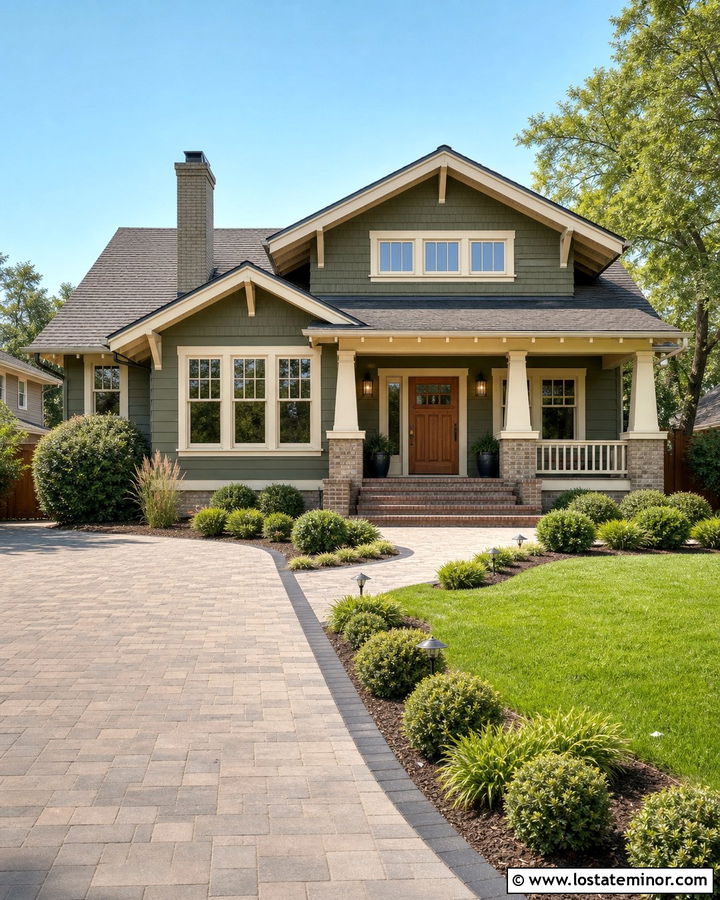
A moss green bungalow looks polished with a driveway made from warm gray concrete pavers. The small scale of the pavers complements the detailed porch without visually overwhelming the front yard. Use moss green on the horizontal siding and deeper olive green on the porch base or gable shingles. Cream trim around the windows and rafters keeps the exterior bright. A medium-stained wood door works naturally with brick porch steps and Craftsman-style columns. Install the pavers in a running bond or simple basket-weave layout, then add a darker border that leads the eye toward the garage. Broad planting beds filled with rounded shrubs and ornamental grasses can soften the paving. Low path lights add definition while keeping the bungalow’s welcoming character intact.
7. Moss Green Cape Cod With Shell Driveway
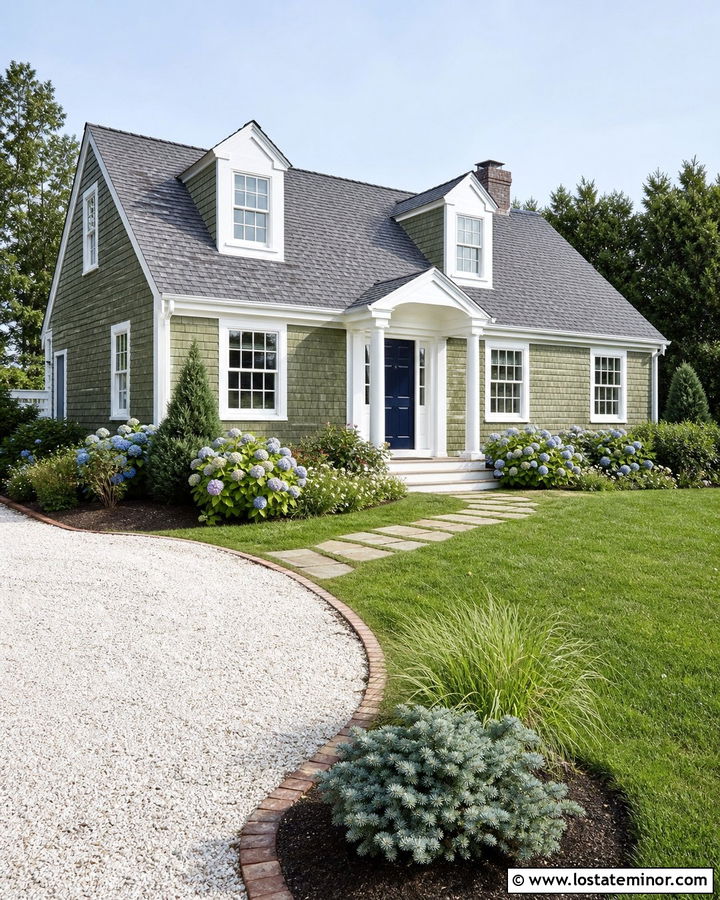
A crushed shell driveway gives a moss green Cape Cod a light, coastal appearance without requiring a blue-and-white color scheme. Paint the shingle siding a softened moss green and use crisp white for the dormers, corner boards, windows, and compact entry porch. A weathered gray roof connects naturally with the textured siding. Keep the front door understated in deep navy, charcoal, or natural wood. Pale crushed shells brighten the foreground and provide attractive contrast against the green facade. A defined stone or brick edge will make the loose material look tidy. Add salt-tolerant grasses, low hydrangeas, and rounded evergreen shrubs around the driveway. The finished exterior feels fresh and regional while remaining warm enough for neighborhoods beyond the coast.
8. Moss Green Split-Level With Modern Concrete Driveway
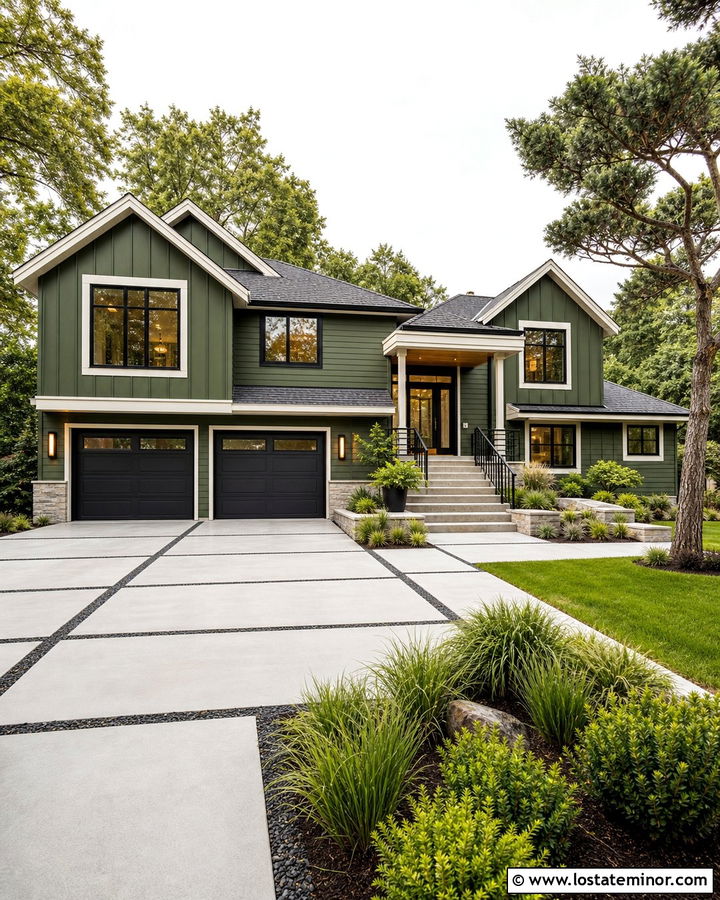
A split-level exterior can look more unified when the driveway design repeats the clean lines of the architecture. Paint both levels moss green, using subtle changes in siding direction to distinguish the sections. Warm white trim around the windows softens the facade, while charcoal garage doors and black railings add contemporary contrast. Create the driveway with large concrete slabs separated by narrow gravel or dark stone joints. The broad grid gives the parking area a deliberate appearance and breaks up a large expanse of concrete. A straight walkway with wide steps can connect the lower driveway to the raised entrance. Finish with structured grasses, low shrubs, and one sculptural tree. These elements guide attention across the layered house instead of emphasizing the uneven floor levels.
9. Moss Green Tudor With Herringbone Brick Driveway
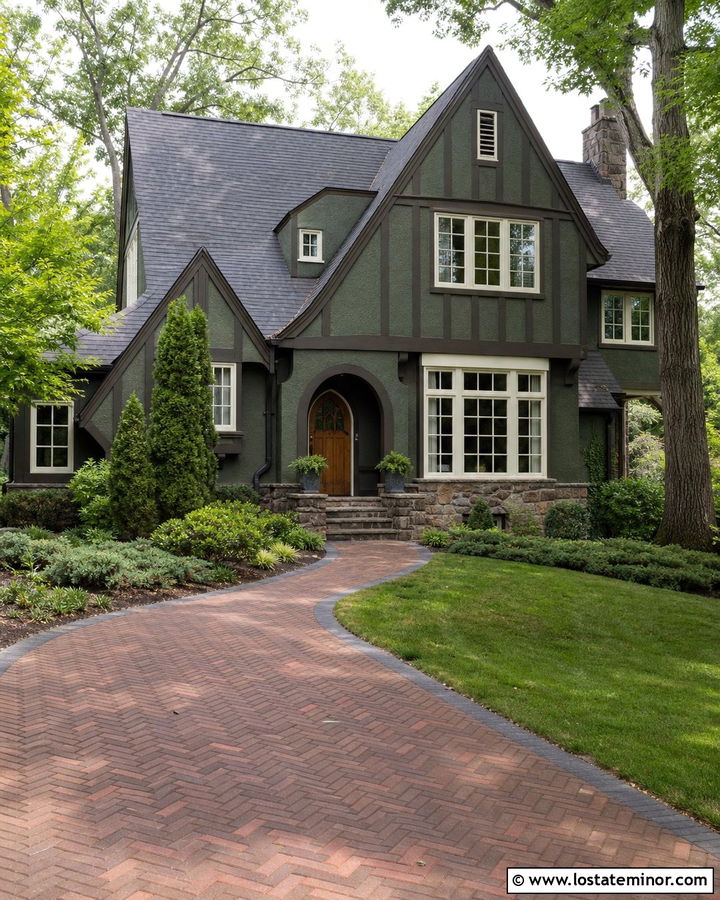
Deep moss green stucco or siding can give a Tudor home a distinctive woodland character. Balance the green walls with dark brown half-timbering, cream window trim, and a steep charcoal roof. A rounded wood front door fits naturally beneath an arched entry and introduces a warmer focal point. Choose brown, charcoal, and muted red bricks for the driveway, arranging them in a herringbone pattern that reflects the home’s traditional detailing. Dark brick edging creates a finished outline and helps separate the drive from planted areas. Use spreading evergreens, upright shrubs, and small shade trees around the facade. A brick walkway with a gentle curve can link the driveway to the entry arch, making the entire approach feel historic, substantial, and carefully composed.
10. Moss Green Cabin With Crushed Stone Driveway
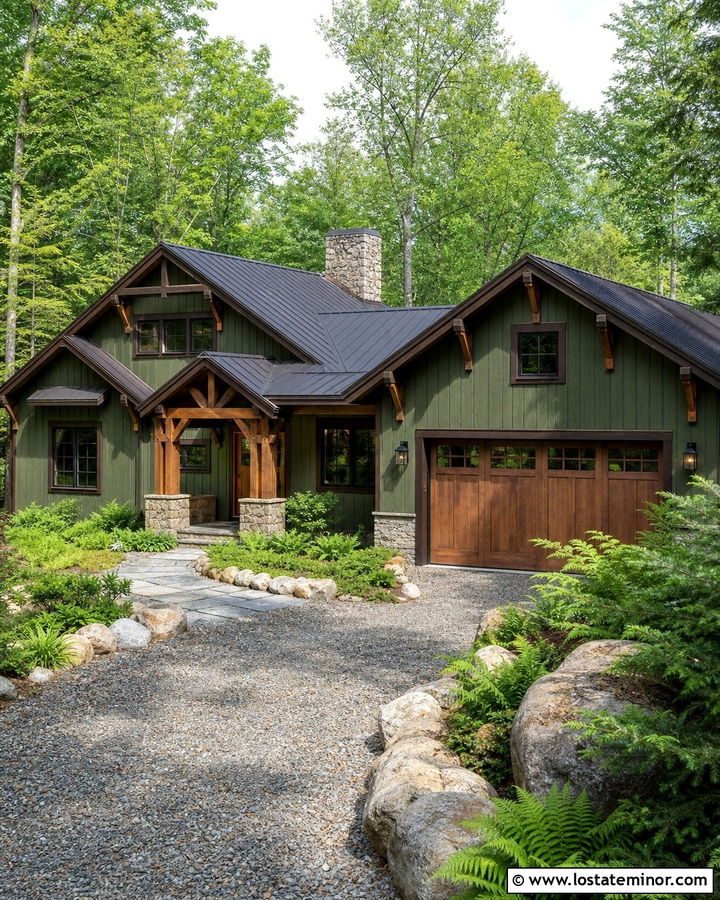
Surrounded by trees, a moss green cabin can almost blend into its setting while still showing strong architectural definition. Use moss green on rough-sawn wood siding, dark brown on the trim, and black or charcoal on the metal roof. Natural log posts, a timber porch, and a medium-stained garage door add authentic warmth. A crushed stone driveway in mixed gray and tan tones suits the informal setting better than a highly polished surface. Define the edges with local boulders, timber curbing, or dense native planting. The driveway can curve slightly through the landscape before reaching the cabin, creating a gradual reveal from the road. Ferns, evergreen shrubs, and shade-friendly ground cover will reinforce the natural palette without making the entrance appear overgrown.
11. Moss Green Victorian With Curved Gravel Driveway
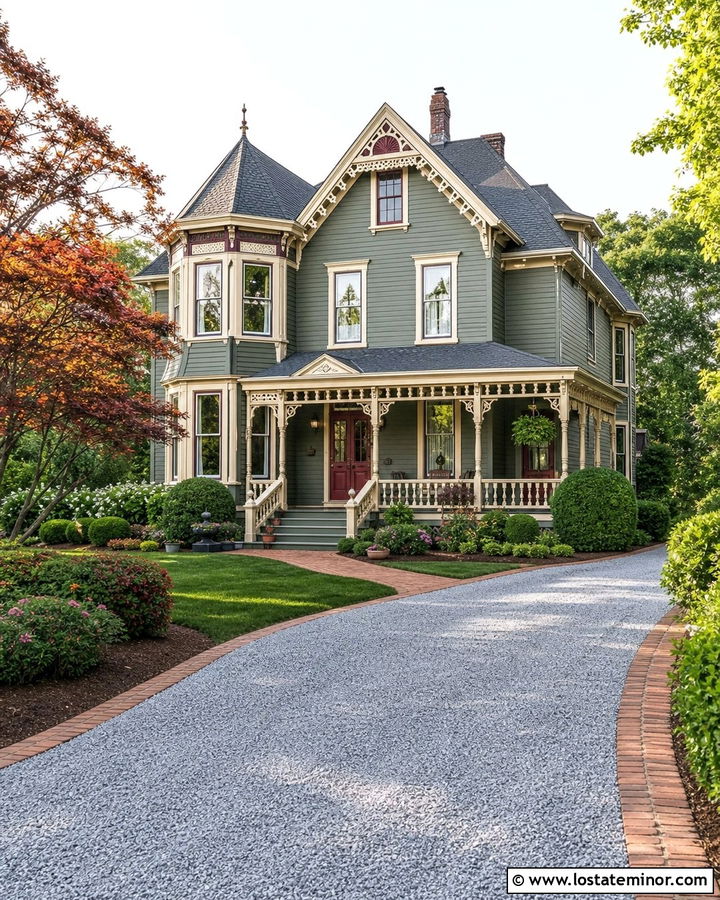
Could moss green make a detailed Victorian feel calmer and more cohesive? Use the color across the main siding, then highlight decorative trim with warm ivory and muted olive. A burgundy or deep plum front door adds a traditional accent without distracting from the green body color. Keep the roof charcoal so patterned shingles, brackets, and porch spindles remain the main architectural features. A curved gravel driveway is less rigid than concrete and works well with the elaborate facade. Choose fine gray gravel with brick or stone edging for a finished appearance. Flowering shrubs, clipped hedges, and a small ornamental tree can frame the curve. Continue the gravel into a narrow parking court, then connect it to the porch with a decorative brick walkway.
12. Moss Green Midcentury Modern With Ribbon Driveway
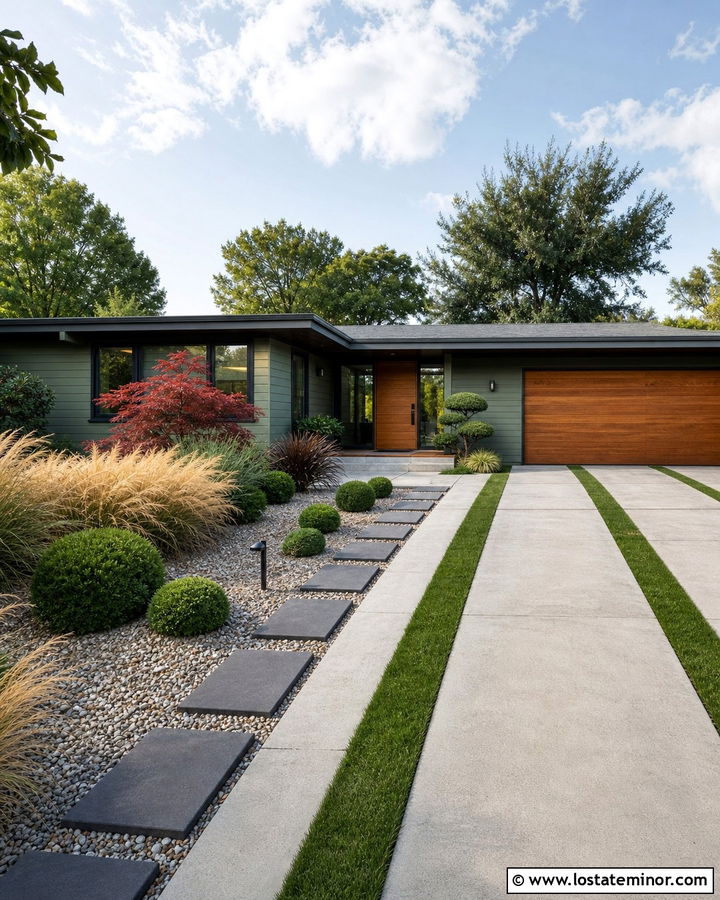
Clean lines and restrained materials give moss green a surprisingly modern appearance on a midcentury house. Apply the color to flat-panel siding or wide horizontal boards, then use charcoal around the windows and roofline. Warm cedar at the recessed entry, soffits, and garage door creates the necessary contrast. A concrete ribbon driveway keeps more green space visible by using two paved tire tracks with grass or low ground cover between them. Align the strips with the garage and repeat their geometry in the walkway. Pea gravel around rectangular stepping stones can connect the drive to the front door. Complete the exterior with ornamental grasses, sculptural shrubs, and a small Japanese maple. The result feels period appropriate, uncluttered, and connected to the surrounding landscape.
13. Moss Green Contemporary With Permeable Paver Driveway
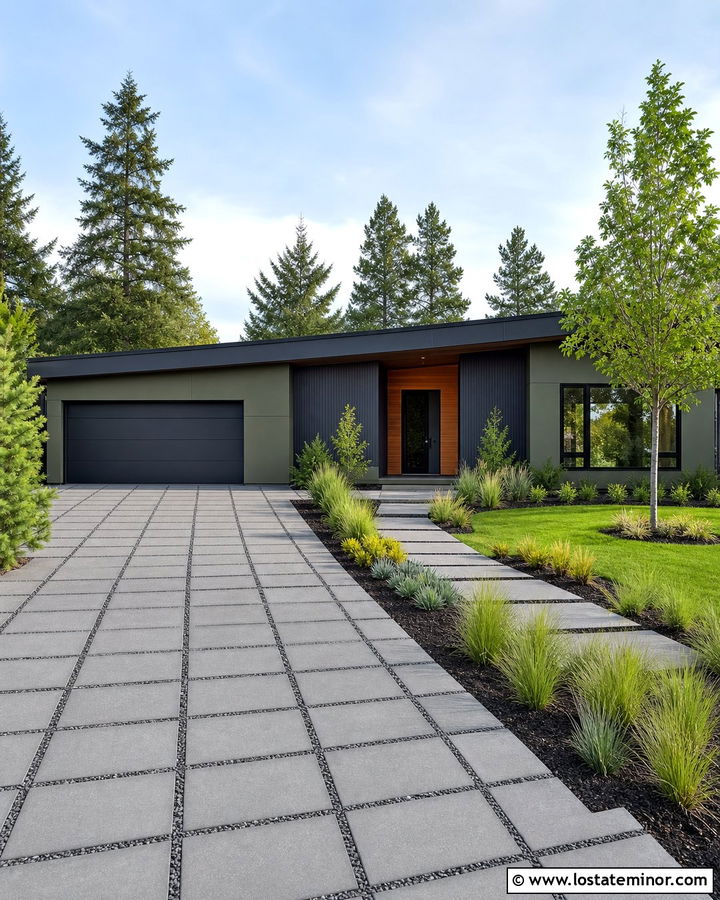
A contemporary moss green house works best when every exterior line looks purposeful. Combine smooth moss green panels with charcoal vertical siding, black window frames, and warm wood around the entrance. A low-slope roof and simple garage door will reinforce the modern geometry. For the driveway, select permeable pavers in medium gray and arrange them in a clean linear pattern. Dark gravel or low-growing greenery between the joints can soften the surface while visually connecting it to the house color. Continue the same pavers into the front walkway for a seamless arrival sequence. Limit the landscaping to defined groups of grasses, evergreen shrubs, and one architectural tree. This controlled palette allows the green facade, driveway pattern, and natural wood to share attention without creating visual clutter.
14. Moss Green Saltbox With Pea Gravel Driveway
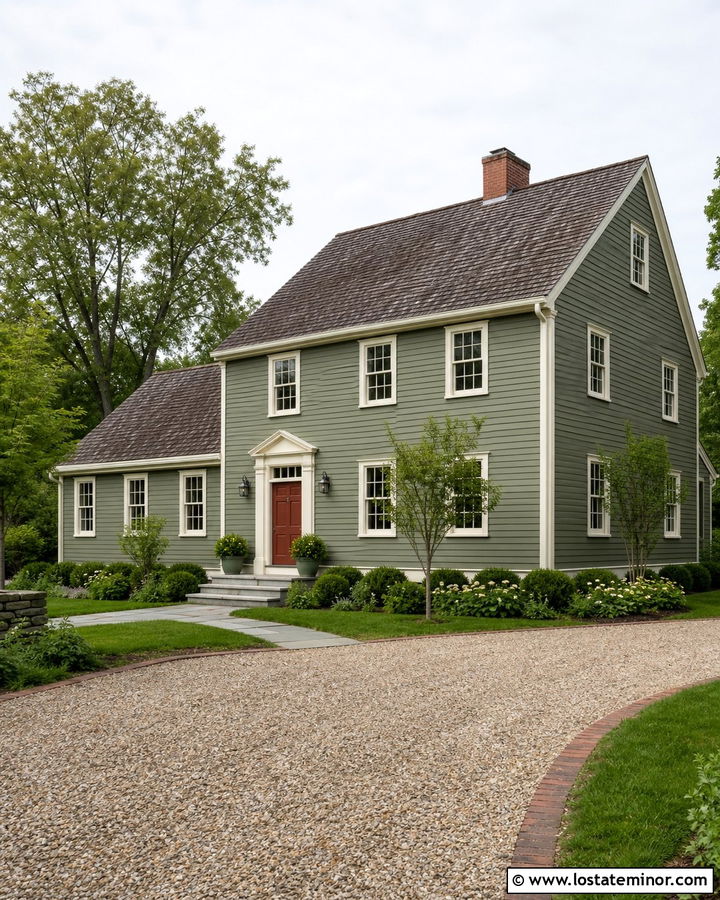
The simple shape of a Saltbox house allows a textured driveway to add personality without overwhelming the architecture. Coat the clapboard siding in moss green and use creamy white on the windows, corner boards, and modest entry surround. A dark weathered roof emphasizes the signature sloping rear roofline. Consider a muted brick-red front door for a historically inspired accent. Pea gravel in warm gray and tan shades creates a relaxed driveway that works with the understated facade. Install sturdy steel, stone, or brick edging to preserve its shape. A rectangular turnaround can sit beside the house without dominating the front elevation. Add a stone walkway, traditional foundation shrubs, and a pair of small trees to make the entire exterior feel settled into the landscape.
15. Moss Green Prairie House With Concrete Grid Driveway
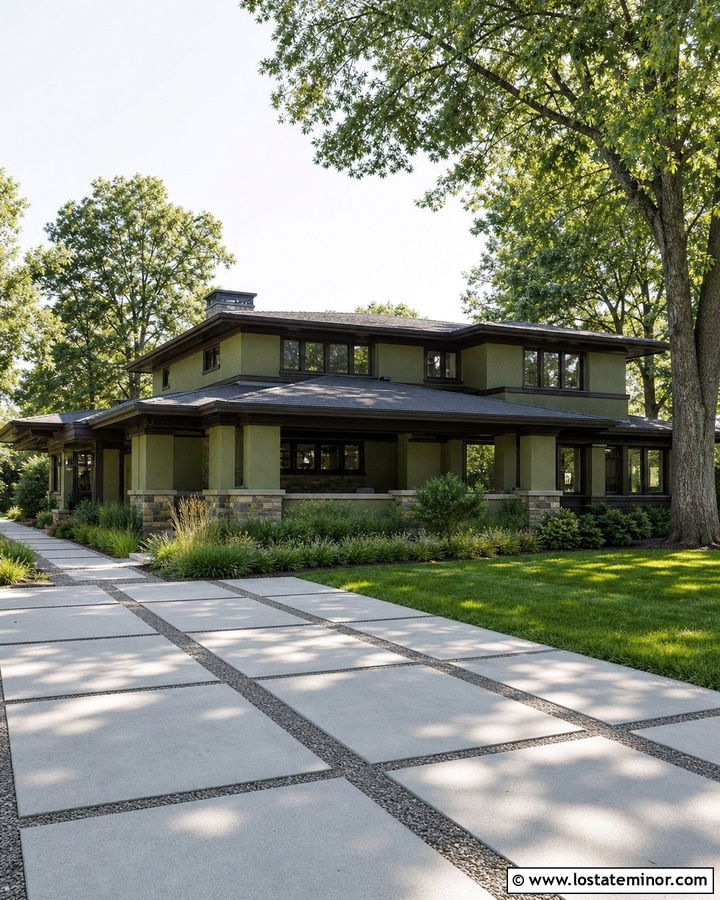
Strong horizontal lines define a Prairie-style home, so the driveway should support that visual direction. Use earthy moss green stucco or siding beneath broad roof overhangs, with dark bronze window frames and a low charcoal roof. Warm natural stone across the porch base can strengthen the connection to the ground. Design the driveway with wide rectangular concrete sections arranged in a horizontal grid. Slim bands of gravel or grass between the sections make the surface appear lighter and more detailed. A matching concrete walkway should approach the entrance from the side rather than interrupting the facade’s long lines. Layer low ornamental grasses, broad evergreen shrubs, and ground cover along the drive. The completed scheme feels spacious, orderly, and closely tied to the surrounding site.
16. Moss Green Mediterranean House With Travertine Driveway
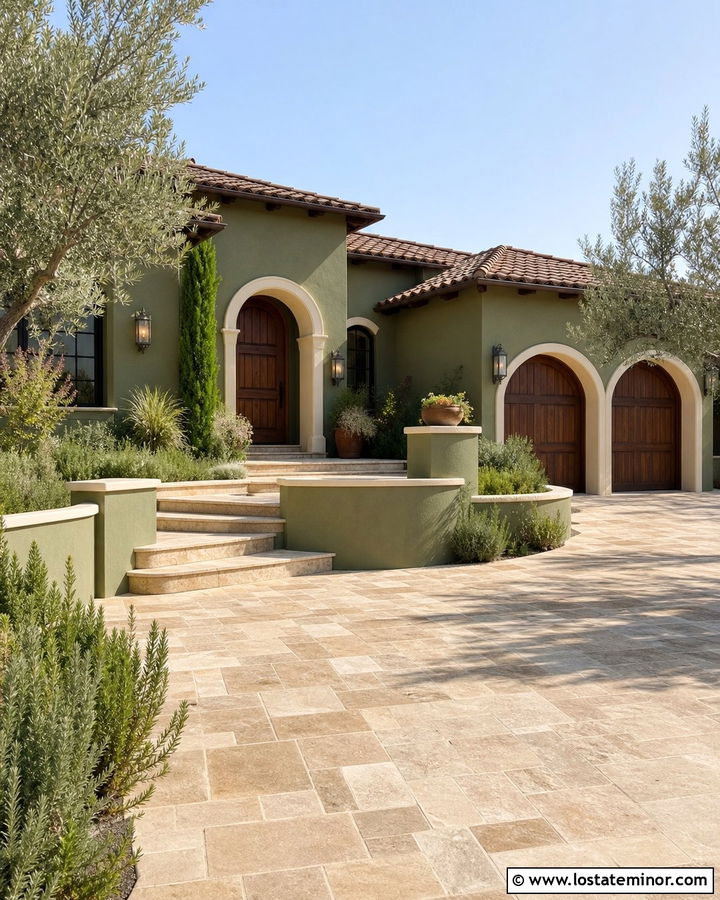
Moss green stucco offers an earthy alternative to the usual cream Mediterranean exterior. Pair it with warm ivory trim, dark bronze windows, and a clay tile roof in blended brown and terracotta tones. Heavy natural wood garage doors and an arched front door bring warmth to the muted green walls. Use tumbled travertine or travertine-look pavers across the driveway, choosing beige and soft taupe pieces rather than bright yellow stone. A subtle fan or random rectangular pattern will complement the arches without appearing too decorative. Frame the drive with low walls, rosemary, olive trees, and drought-conscious grasses. Repeating the driveway stone on the front steps and porch floor helps the entrance look complete. The combination feels sun-washed, substantial, and naturally welcoming.
17. Moss Green Mountain House With Boulder-Edged Driveway
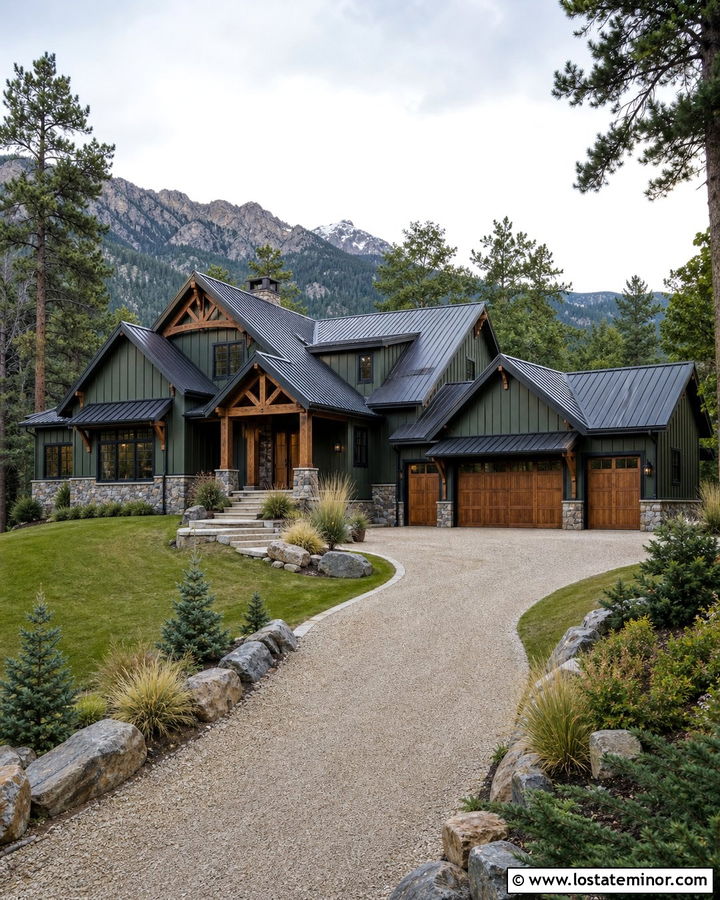
A mountain house needs materials that appear strong enough for its dramatic surroundings. Moss green board-and-batten siding creates a natural base, while black trim, a charcoal metal roof, and heavy timber beams provide bold structure. Add rough gray stone around the foundation and chimney to connect the building to the rocky landscape. A wide crushed-gravel driveway can curve toward the garage, with large boulders controlling and defining its outer edges. Blend gray, brown, and rust tones in the gravel so the surface relates to both the stonework and wood accents. Native grasses, low evergreens, and hardy shrubs should fill the spaces between boulders. Keep the planting informal but intentional, allowing the driveway to feel like part of the terrain rather than a separate paved feature.
18. Moss Green Lake House With Gray Paver Driveway
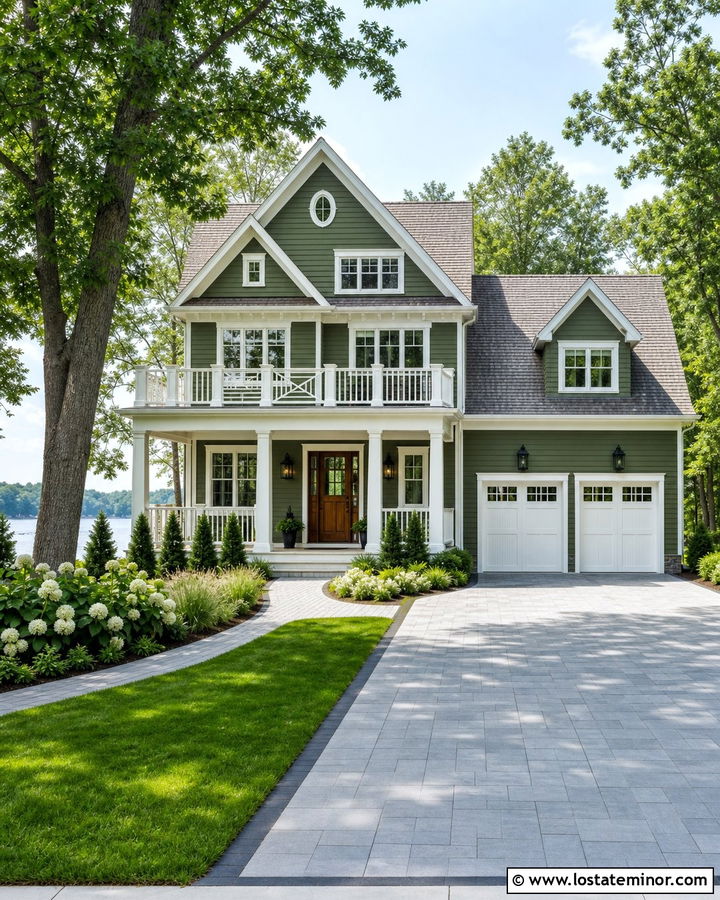
Soft gray pavers can give a moss green lake house a crisp but relaxed entrance. Cover the main facade in moss green lap siding and use bright white on the trim, balcony railings, and porch posts. A weathered gray roof keeps the color scheme light, while a natural cedar door introduces warmth. Select large-format pavers with subtle color variation for the driveway and arrange them in a simple offset pattern. A charcoal border can outline the parking area and connect with dark exterior lights. Carry the same pavers into the walkway and front steps to unify the approach. Hydrangeas, ornamental grasses, and low evergreen shrubs will soften the hardscape. The result feels fresh and easygoing, with enough structure to suit a full-time residence as well as a seasonal retreat.
19. Moss Green Coastal House With Oyster Shell Driveway
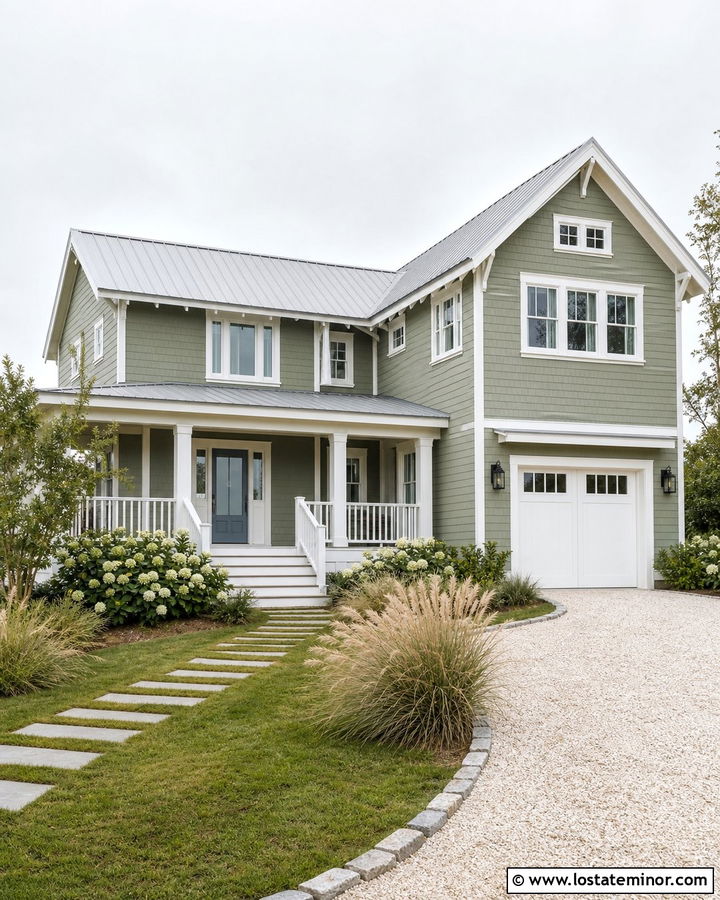
Moss green siding takes on a lighter personality when it is surrounded by pale coastal materials. Use a softened moss green on shake siding, clean white on the trim, and light gray on the roof. A muted blue-gray front door can add gentle contrast while keeping the palette connected to the landscape. Cover the driveway with crushed oyster shell or a pale shell-and-gravel blend, then frame it with low stone edging. The bright surface will make the green house stand out clearly from the street. Plant dune grasses, compact hydrangeas, wax myrtle, and other breezy foliage along the edges. A raised wood walkway or broad stepping-stone path can link the driveway to the porch. Keep the garage door white or light gray so it blends quietly into the complete facade.
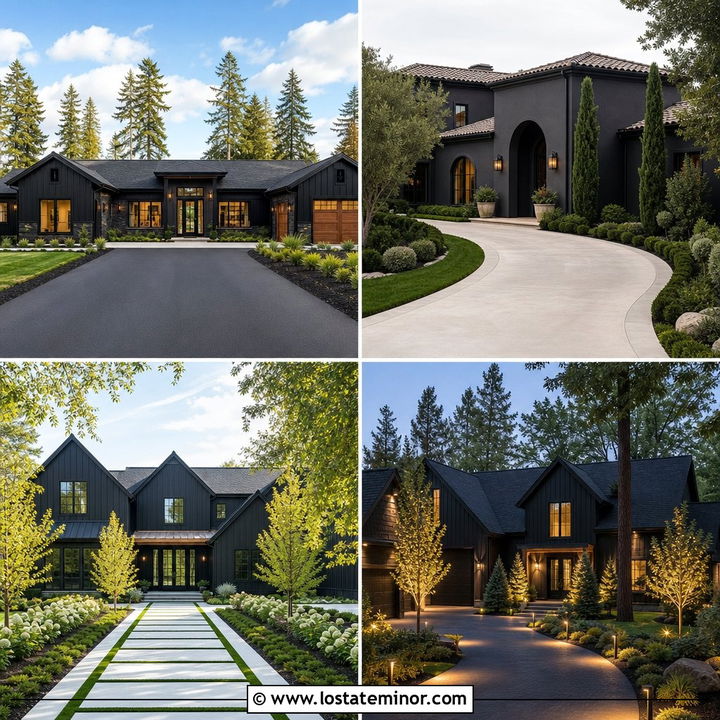
20. Moss Green Duplex With Shared Driveway
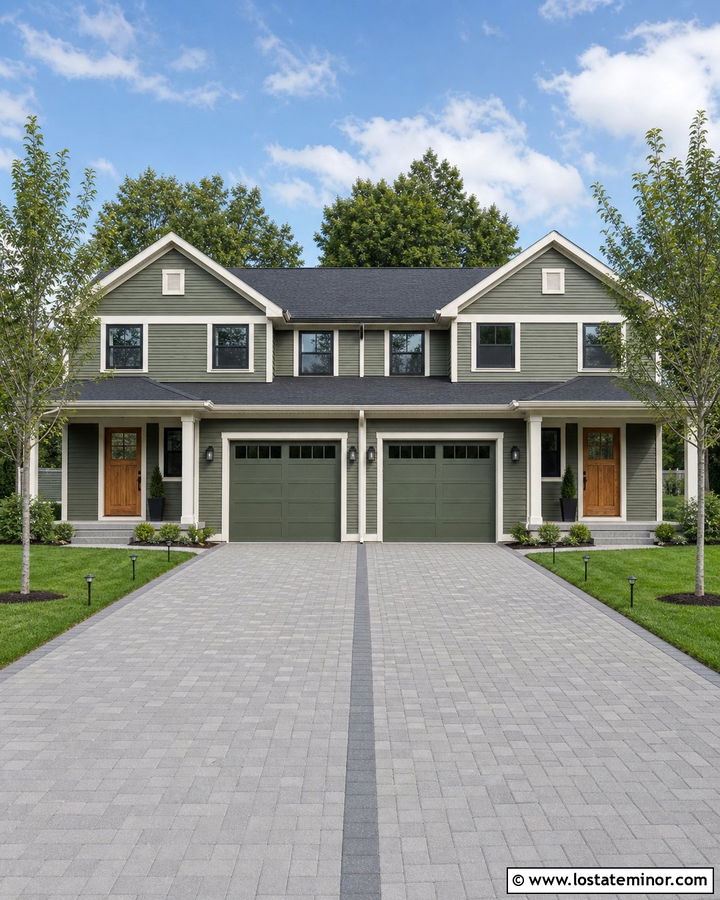
A shared driveway can make a duplex exterior feel crowded unless the architecture and paving are carefully organized. Use one consistent moss green body color across both residences, then differentiate the entrances with natural wood doors or slightly different porch details. Warm white trim and charcoal roofing will unite the building. Choose medium-gray concrete or pavers for the shared driveway, with a darker center band that subtly marks the division between parking areas. Matching planters or narrow landscaped strips can guide visitors toward each front door. Keep both garage doors in moss green or charcoal so they do not dominate the facade. Repeated shrubs, pathway lights, and simple address markers create visual order. The finished property looks coordinated while giving each household a clear and welcoming entrance.
21. Moss Green Townhouse With Narrow Driveway
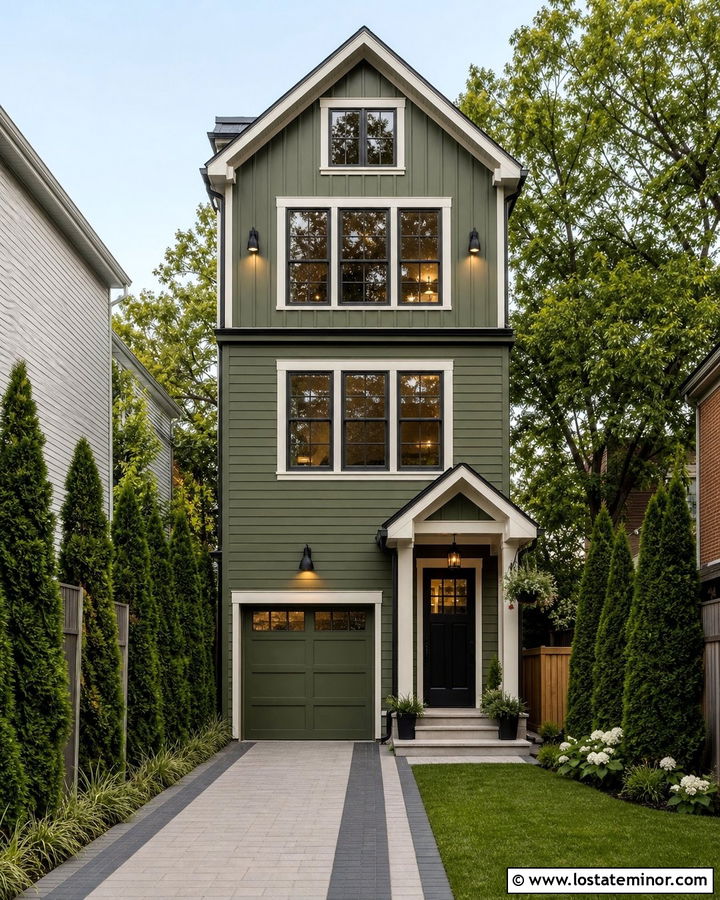
When frontage is limited, every line in the exterior design matters. Paint a traditional or contemporary townhouse moss green, then use warm white trim to define its tall windows and narrow proportions. A black front door and matching exterior lights provide crisp contrast. For the driveway, use long rectangular pavers laid in the direction of travel. This arrangement can make the narrow space feel longer and more intentional. Add a slim charcoal border along both sides to create a neat frame. Keep planting compact with upright evergreens, low grasses, and wall-mounted planters near the entrance. If the garage faces the street, paint its door moss green to reduce its visual weight. A separate walkway stripe in lighter pavers can safely guide guests from the sidewalk to the front steps.
22. Moss Green Two-Story House With Circular Driveway
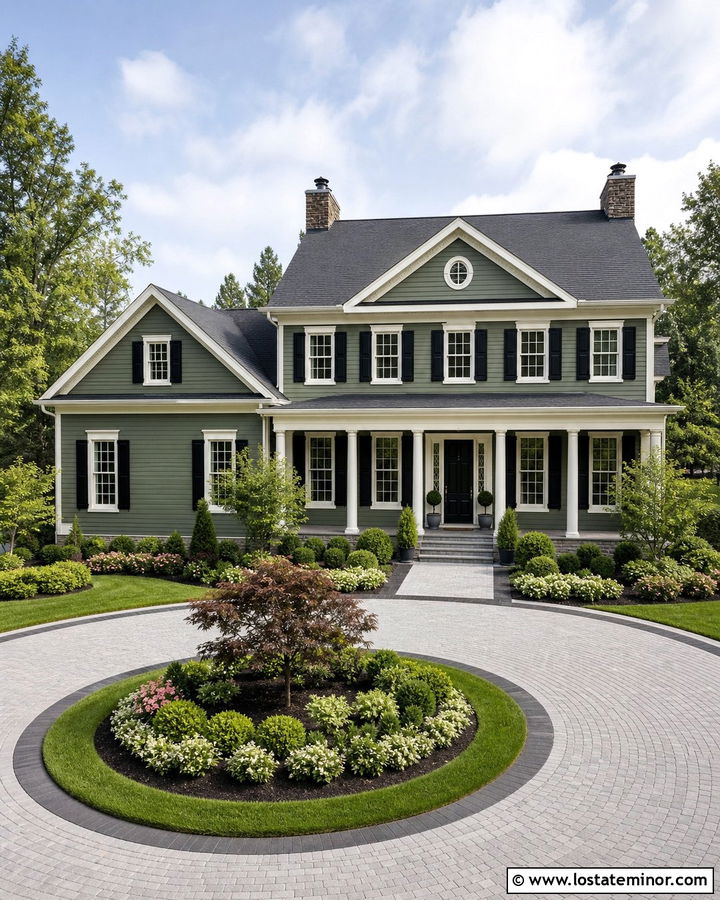
A circular driveway gives a two-story moss green home a graceful sense of arrival. Apply moss green siding across the main facade and use creamy white trim to emphasize tall windows, porch columns, and roof details. Black shutters and a dark front door add traditional structure, while a charcoal roof anchors the height of the house. Build the circular driveway from light-gray pavers, compacted gravel, or smooth concrete with a contrasting border. The central island should be large enough to feel purposeful rather than leftover. Fill it with one small tree, layered shrubs, and low seasonal planting. Repeat those plants near the foundation for continuity. A direct walkway from the inner curve to the porch ensures that the driveway looks elegant while remaining easy for guests to navigate.
23. Moss Green One-Story House With Side-Entry Driveway
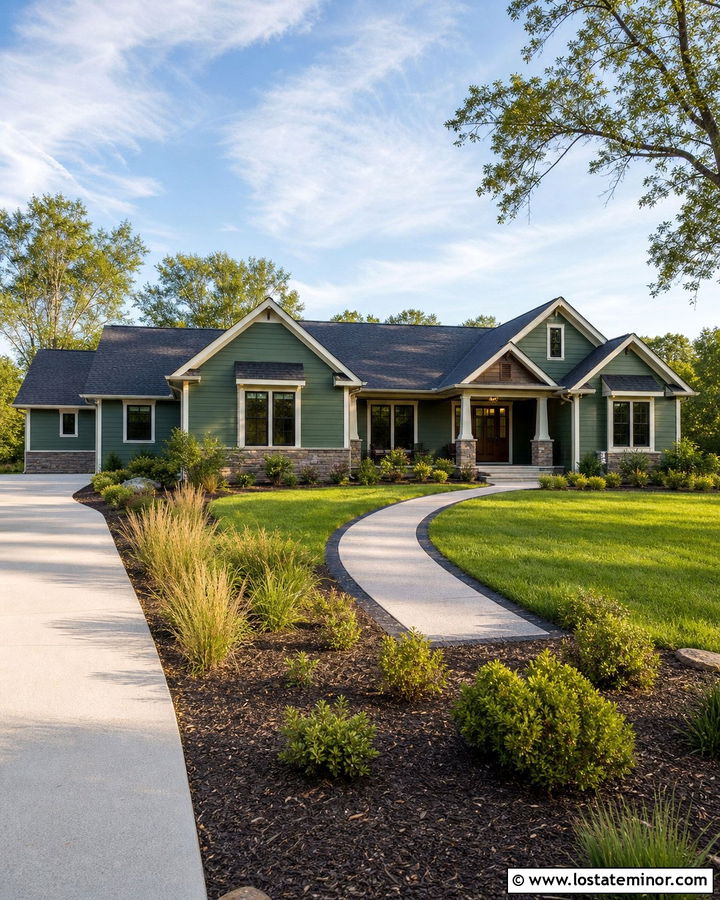
A side-entry driveway keeps garage doors away from the main facade, allowing the moss green exterior to take center stage. Use moss green horizontal siding with creamy trim, a dark charcoal roof, and a rich wood front door. Stone around the porch base adds texture and helps balance the long one-story elevation. The driveway can begin as a straight concrete or paver lane, then widen into a side parking court near the garage. Add a darker paver border that continues into the front walkway. This detail visually connects the hidden garage area with the entrance. Keep the front lawn open and use curved planting beds to soften the edge of the drive. Low shrubs near the turn will preserve visibility while giving the side parking area a finished appearance.
24. Moss Green House With Detached Garage Driveway
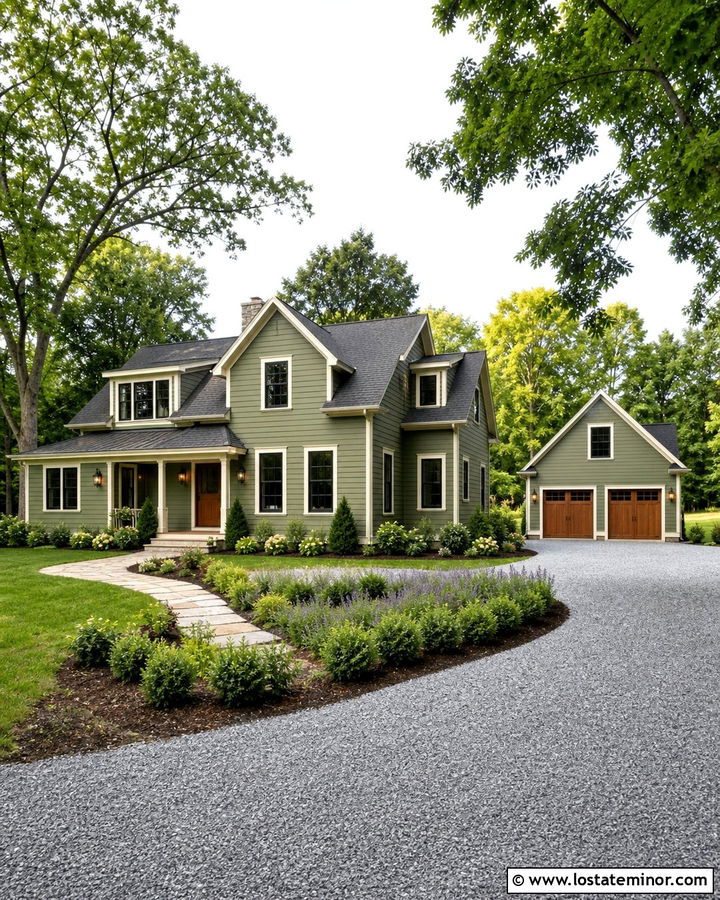
A detached garage should look related to the moss green house without appearing like a miniature copy. Repeat the same moss green siding, trim color, roof material, and garage-door finish on both buildings. For warmth, use natural wood doors or cedar accents near each entrance. A gravel or paver driveway can lead past the house before widening into a parking pad beside the garage. Curve the drive gently if the lot has enough room, creating space for a garden bed between the two structures. A stone or brick walkway should branch toward the front porch before the driveway continues. Use matching exterior lights and repeated foundation plants to strengthen the connection. The resulting property feels planned as one complete composition rather than assembled from separate buildings.
25. Moss Green House With Carport Driveway
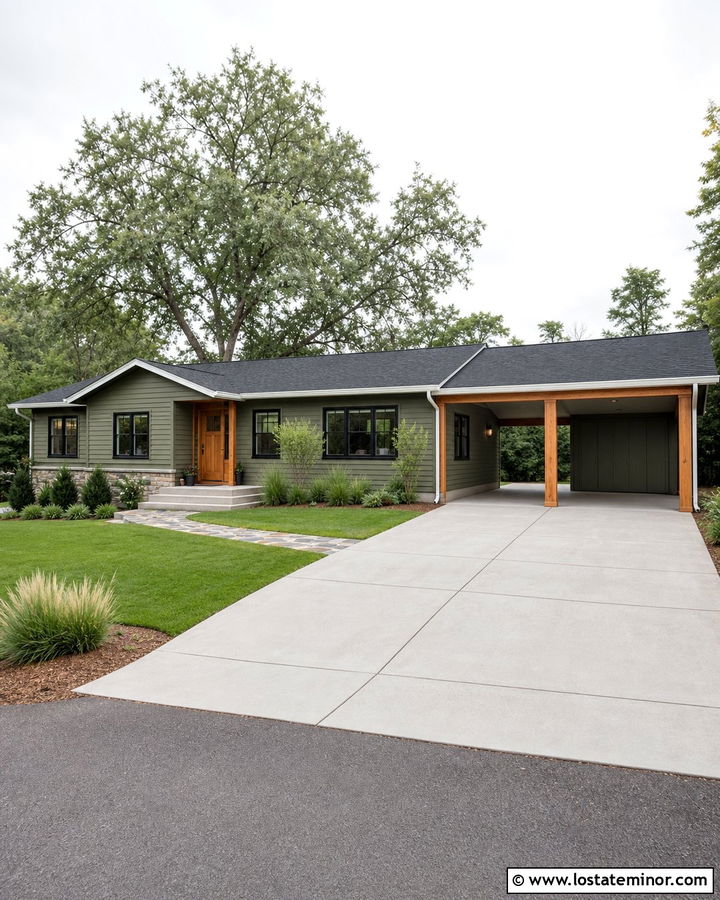
An attached carport can complement a moss green house when its posts, ceiling, and paving are treated as part of the facade. Paint the main siding moss green and use warm white or natural wood on the carport supports. A charcoal roof and black window frames create a clean outline. Continue a smooth light-gray concrete driveway beneath the covered parking area, using control joints that align with the posts. Add a narrow paver or stone strip where the driveway meets the front walkway. This transition helps visitors identify the main entrance instead of following the parking lane. Keep storage concealed and choose one simple exterior light style for both spaces. Structured shrubs and grasses can screen the carport’s side while maintaining an open, comfortable approach to the house.
26. Moss Green House With Sloped Driveway
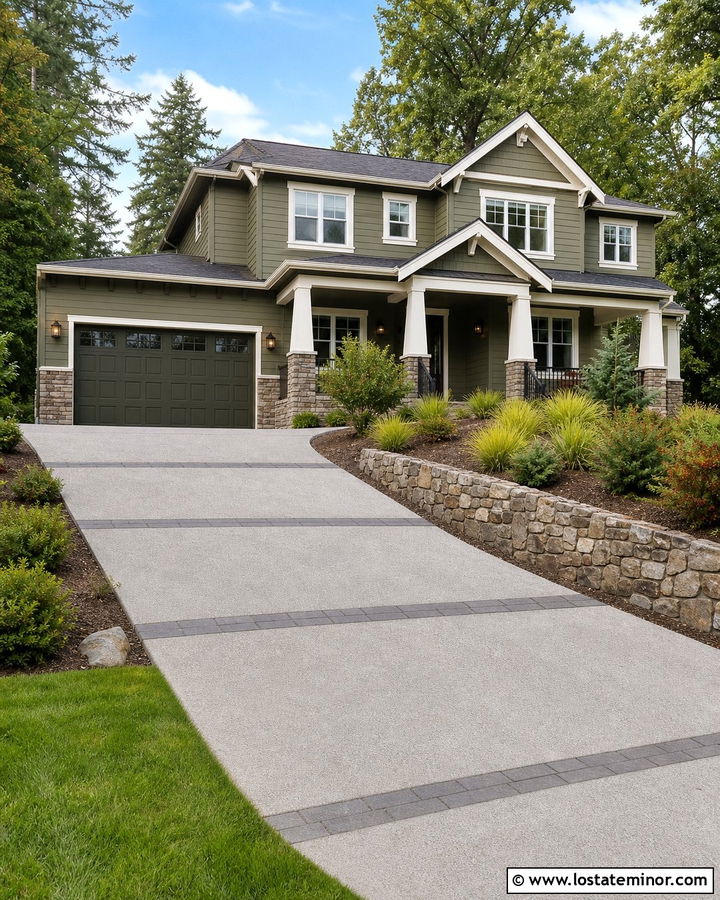
A sloped driveway calls for a strong visual connection between the street, garage, and main entrance. Use moss green siding to soften the elevation, then add warm white trim and a charcoal roof for clear contrast. Paint the garage doors a deeper moss green or dark brown so they settle into the lower facade. Textured concrete, brick, or interlocking pavers can give the incline a more finished appearance than one uninterrupted surface. Add contrasting bands across the driveway to break up its length and echo the home’s horizontal details. Low retaining walls faced with natural stone can manage the edges while tying into porch columns or foundation accents. Plant spreading shrubs and grasses above the walls, keeping taller growth away from driveway sightlines and turning areas.
27. Moss Green House With Driveway Garden Border
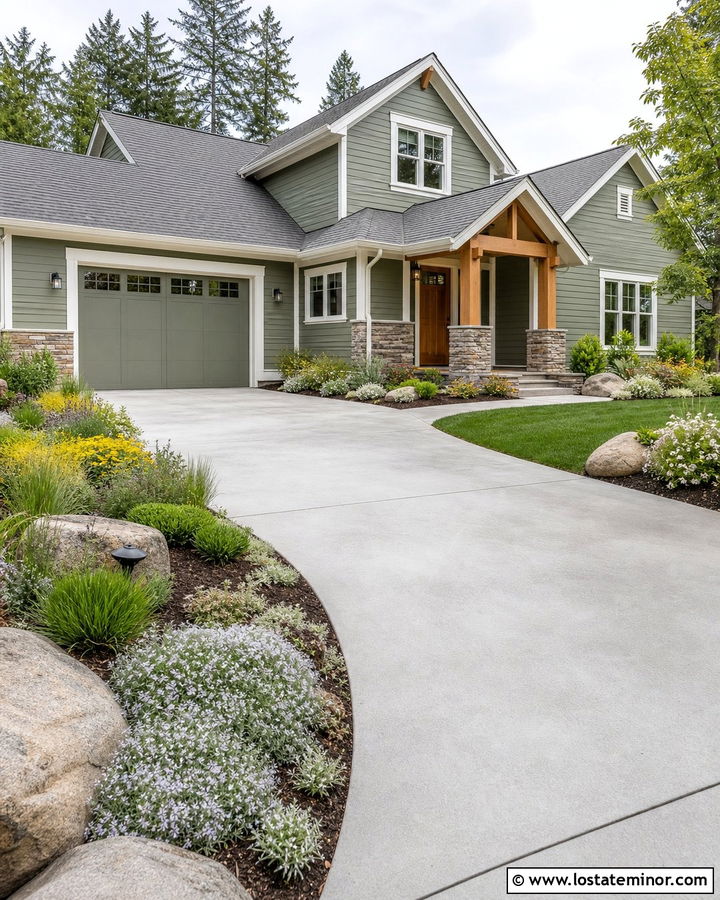
A layered garden border can transform a basic driveway into an attractive foreground for a moss green house. Choose warm white trim, a medium-gray roof, and a natural wood door to complete the soft exterior palette. The driveway itself can be simple concrete, asphalt, or gravel, but its edge should be clearly defined with brick, steel, or stone. Plant low ground cover nearest the paving, followed by rounded shrubs, grasses, and a few taller flowering plants farther back. This arrangement preserves visibility and prevents the garden from spilling into parking space. Repeat selected plants near the front steps so the driveway and entrance feel connected. A few boulders or vertical evergreens can add structure, but leave open areas to keep the overall facade bright and approachable.
28. Moss Green House With Driveway Gate
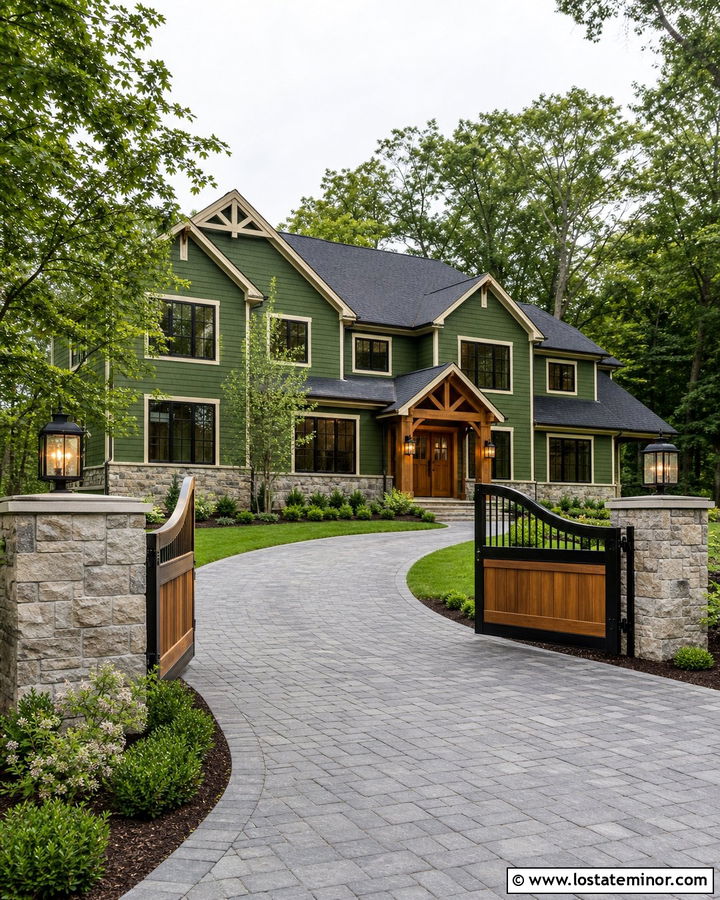
A driveway gate creates a strong first impression, so its materials should echo the moss green house beyond it. Pair the green facade with cream trim, dark bronze windows, and a natural wood front door. Use a wood-and-black-metal gate between stone or brick pillars, repeating those materials on the porch and foundation. A gravel, brick, or paver driveway can begin at the gate and curve gently toward the house. Keep the pillars proportional to the property instead of making them unnecessarily tall. Plant low shrubs around the entrance so they soften the masonry without hiding it. Matching lanterns can visually link the gate to the front porch. The complete scheme feels secure and welcoming because every element shares the same earthy green, wood, metal, and stone palette.
29. Moss Green House With Grass Paver Driveway
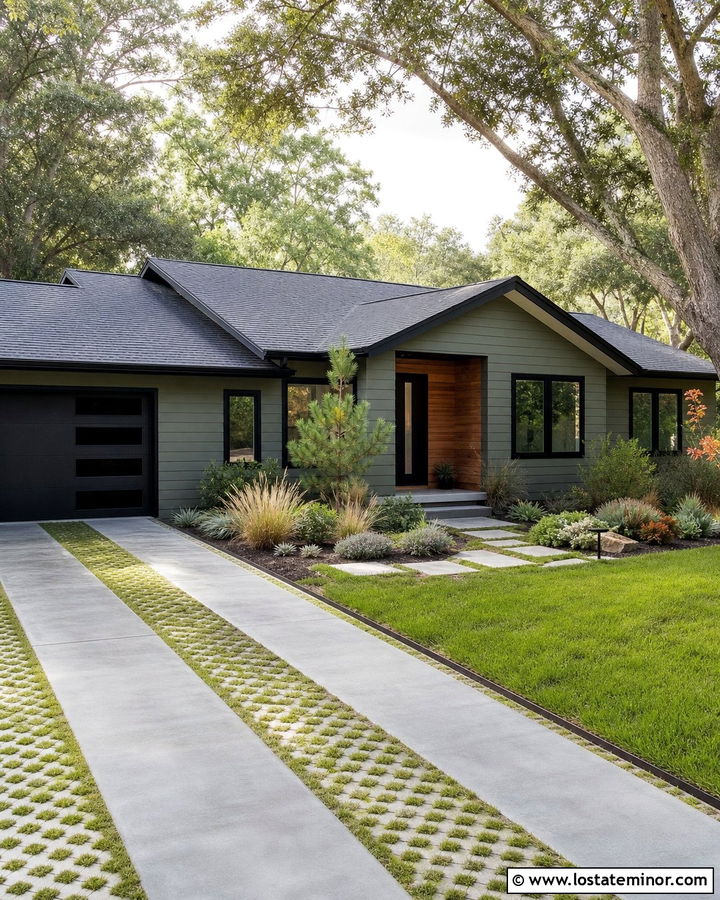
Grass pavers give a moss green house an especially landscape-focused entrance. They work beautifully with a contemporary ranch, cottage, or modern woodland home where the goal is to reduce the visual dominance of hard paving. Paint the siding moss green, use charcoal trim and roofing, and warm the entry with cedar or oak. The driveway grid can be filled with healthy grass or low ground cover, while solid paver strips near the garage simplify parking and turning. Define the edges with steel or stone so the green surface keeps a crisp shape. A conventional stepping-stone walkway should lead guests to the front door. Surround the drive with ornamental grasses, evergreen shrubs, and drought-conscious planting to create a layered transition between the street, lawn, and house.
30. Moss Green House With Mixed-Material Driveway
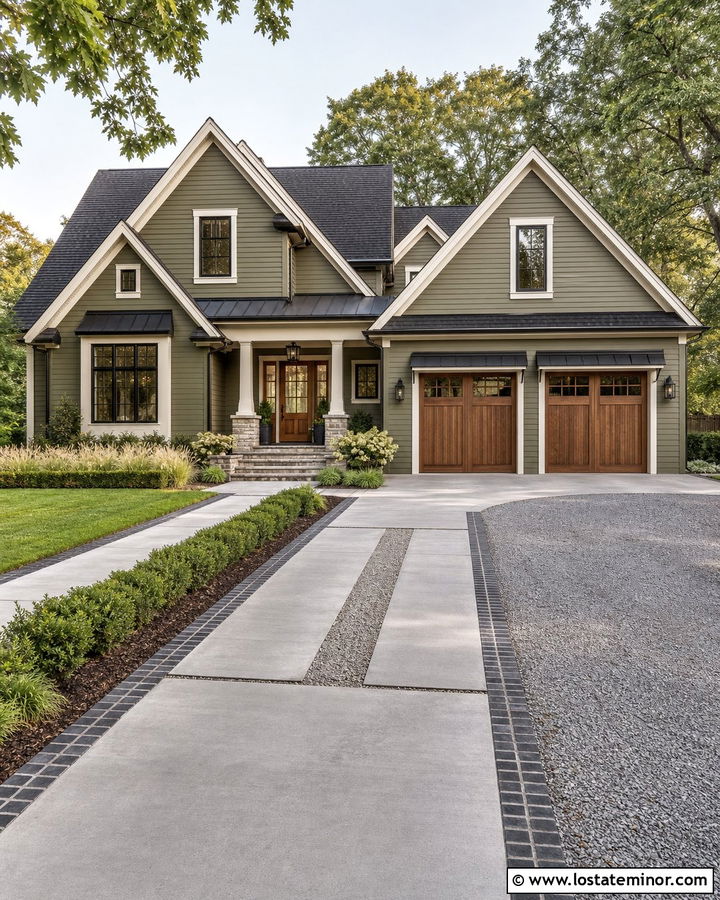
Mixing driveway materials can make a broad parking area feel more detailed and better connected to a moss green facade. Start with moss green siding, warm white trim, a charcoal roof, and natural wood on the front door or garage. Use durable concrete for the main tire paths, then introduce brick or dark pavers as borders and turning-zone accents. Gravel can fill a secondary parking bay or the space between the driveway and walkway. Limit the combination to two or three materials so the design stays organized. Repeat one of those materials on the porch steps, foundation, or front path. Low hedges and ornamental grasses can separate each zone. This complete approach gives the exterior depth while keeping the driveway practical, readable, and visually balanced.
Conclusion:
These 30 Moss Green House Design With Driveway Ideas show how exterior color and hardscaping can support each other as one curb-appeal plan. Moss green works with traditional brick, relaxed gravel, streamlined concrete, textured pavers, and landscape-friendly grass grids. The strongest combination will reflect your home’s architecture, lot shape, climate, maintenance needs, and existing roof or masonry. Before choosing materials, view exterior samples beside the driveway in bright daylight and shade. Pay close attention to undertones, drainage, safe turning space, and the path guests will take to the door. With coordinated trim, accents, planting, and paving, a moss green house can feel grounded, distinctive, and welcoming from every street-facing angle.

Related posts: