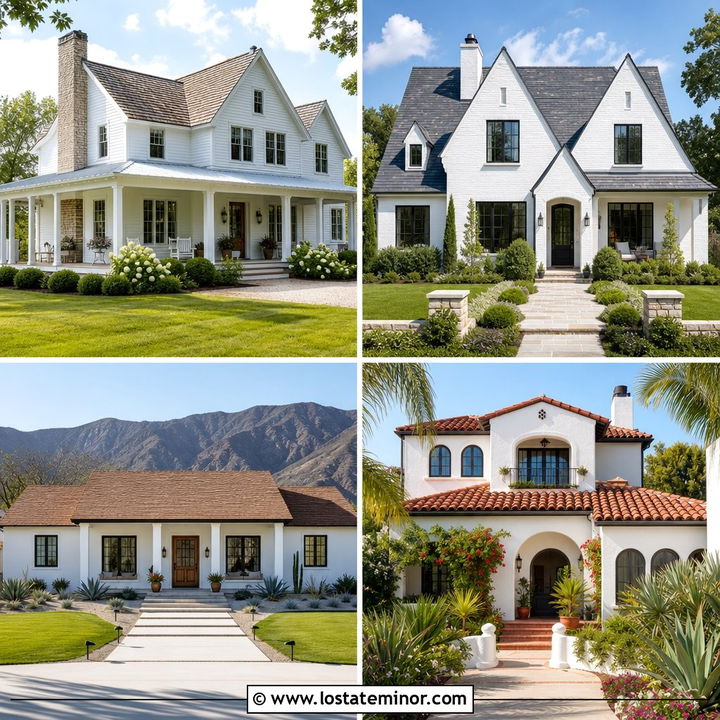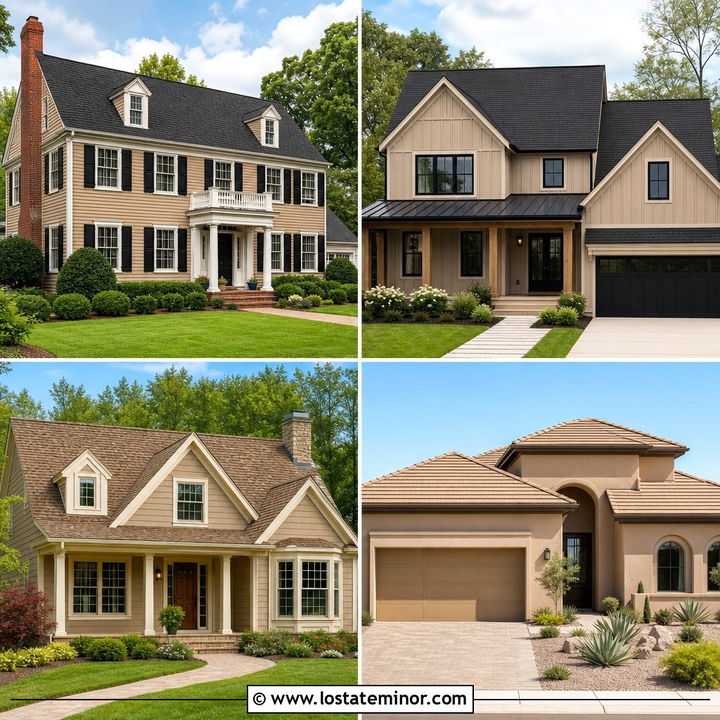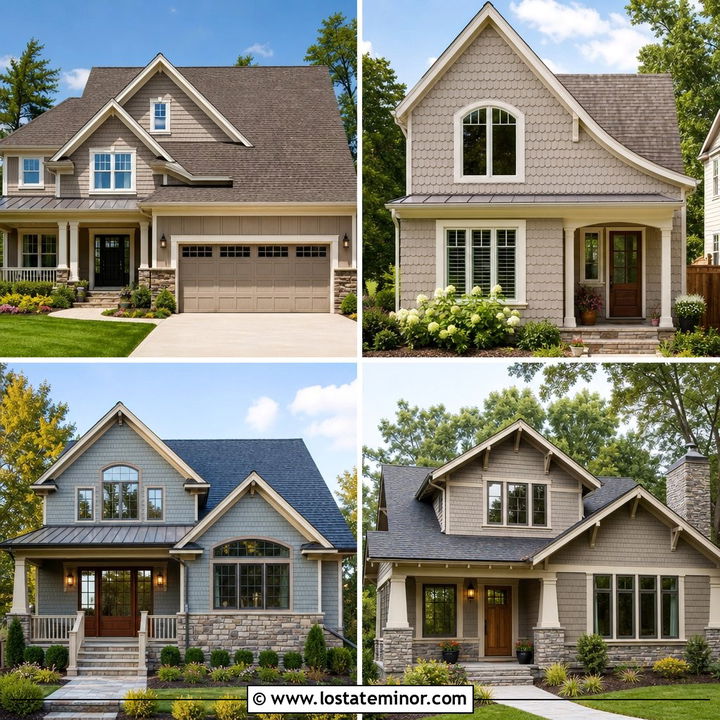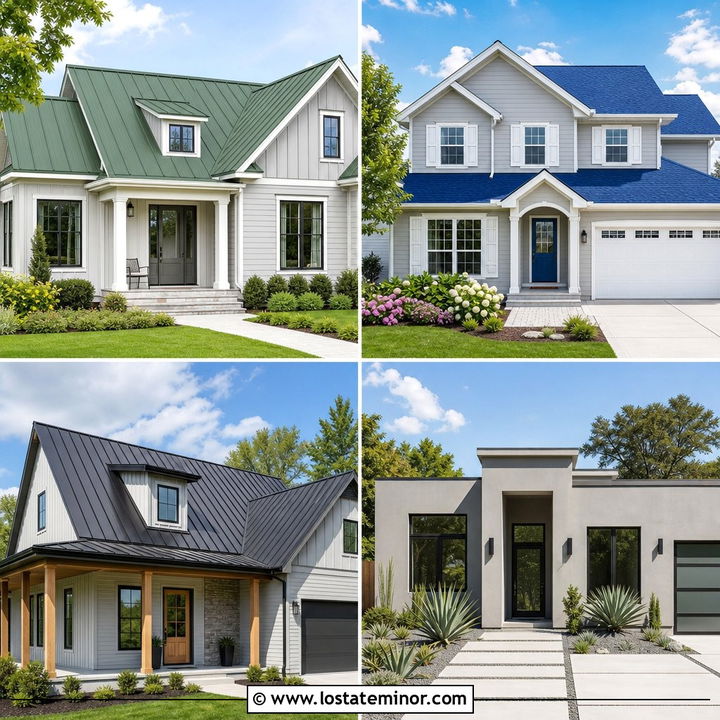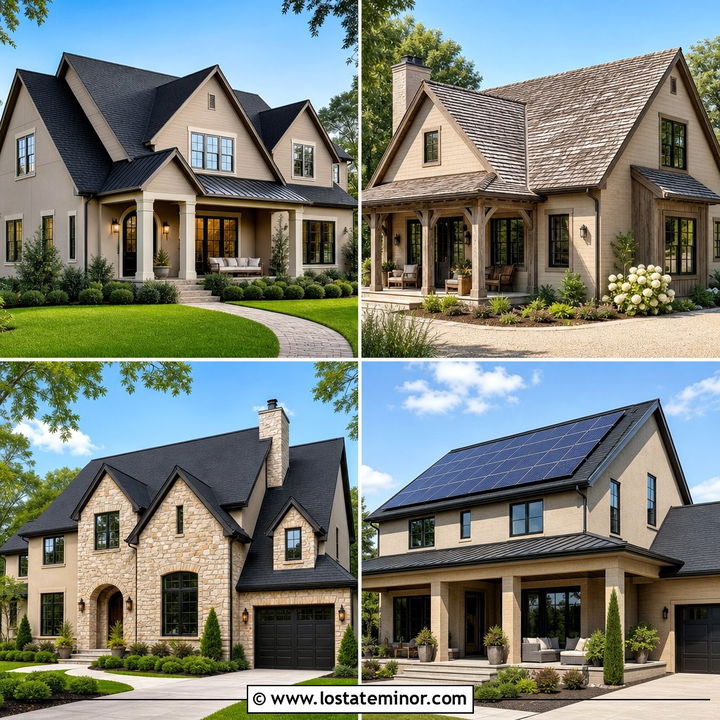
1. Beige House With Black Roof
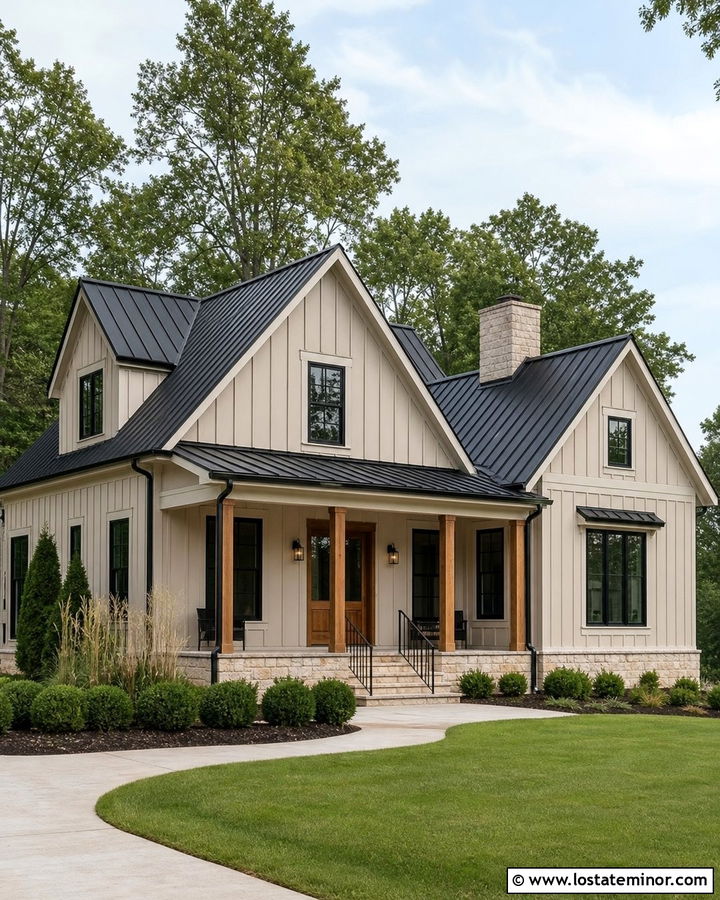
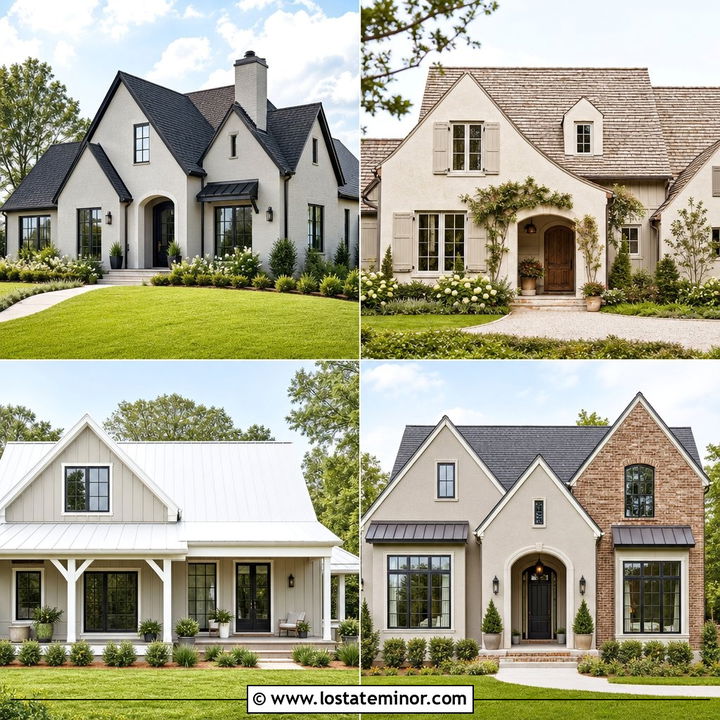
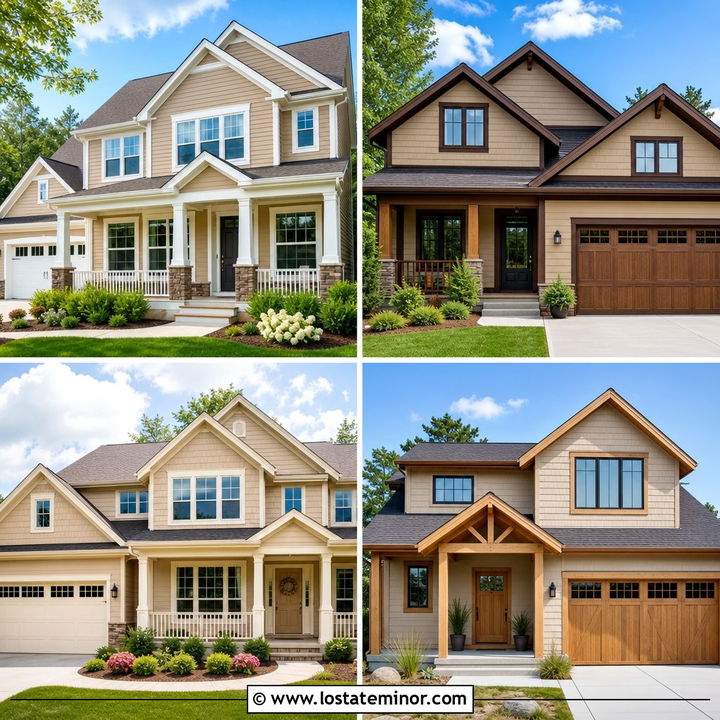
A black roof gives a beige house clean definition and a more modern personality. Try warm beige board-and-batten siding with a matte black standing-seam roof on a modern farmhouse. Crisp white trim keeps the windows and porch columns from looking too heavy. Repeat black on the gutters, lanterns, and simple garage hardware for consistency. A natural oak front door adds warmth between the light walls and dark roof. Use pale limestone around the porch foundation to introduce subtle texture without competing with the strong contrast. A straight concrete walkway, low boxwoods, and ornamental grasses complete the restrained design. This combination works especially well when the roof is steep and visible because the beige body softens its dramatic visual weight.
2. Beige House With Charcoal Roof
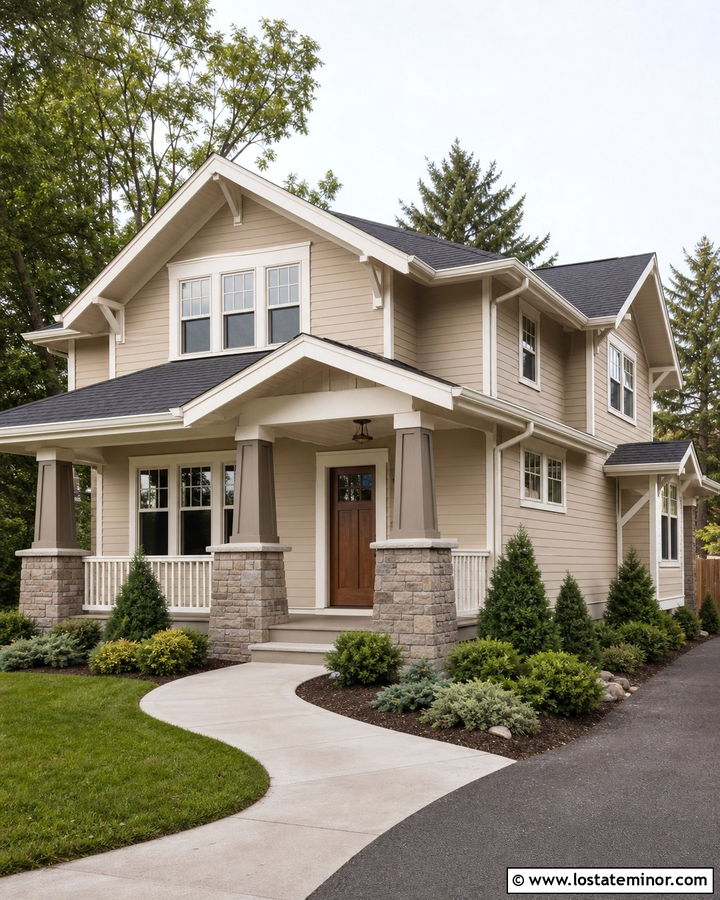
Charcoal roofing creates softer contrast than solid black while still giving beige siding a defined edge. On a Craftsman house, pair medium warm beige lap siding with charcoal architectural shingles and creamy white trim. Deep taupe porch columns can connect the siding to the roof without making the facade feel overly matched. Add a stained walnut front door and stone porch piers containing gray, tan, and brown tones. These materials create a smooth transition between warm and cool colors. Charcoal window screens, gutters, and porch lights provide small repeating accents. Finish the yard with a curved walkway, evergreen shrubs, and layered planting beds. The result feels grounded, welcoming, and flexible enough for both established neighborhoods and newer suburban developments.
3. Beige House With Weathered Gray Roof
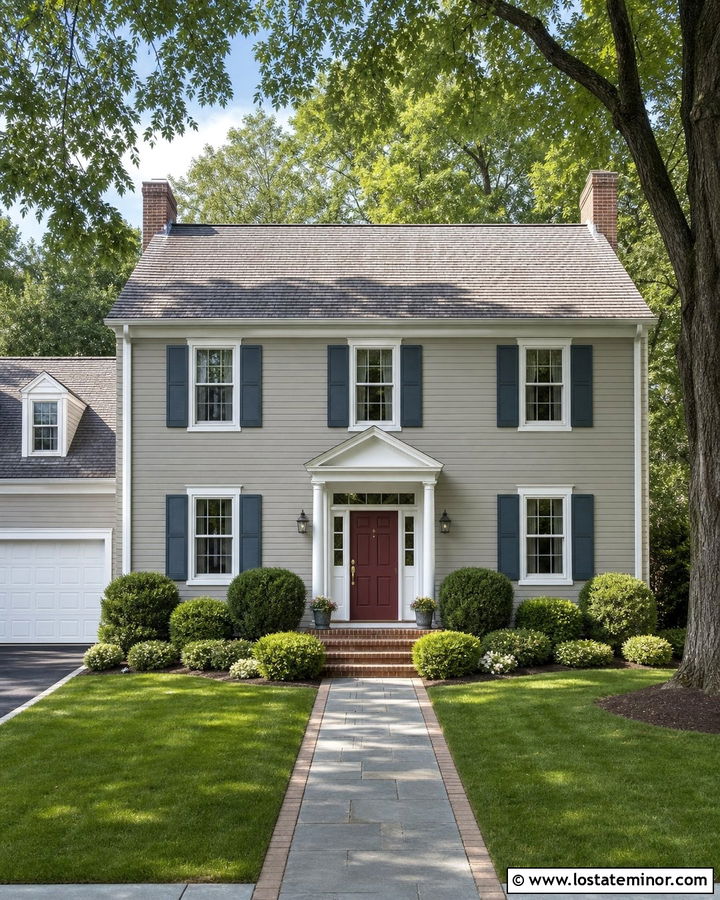
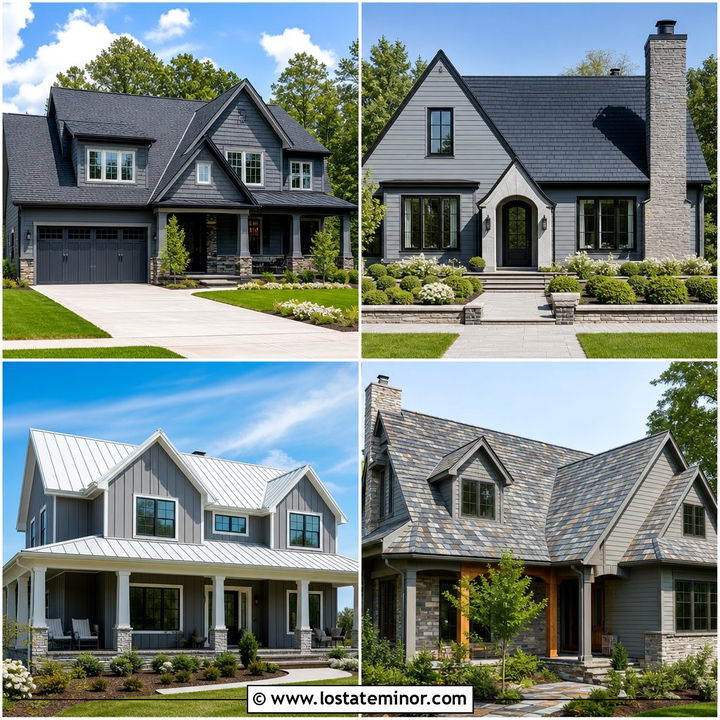
Could a gray roof work with a warm neutral exterior? It can when the beige has a slightly muted or greige undertone. A two-story Colonial with light beige clapboard siding, a weathered gray shingle roof, and bright white trim feels crisp without becoming stark. Paint the shutters a deep slate blue to echo the coolest tones in the shingles. A muted burgundy front door can add traditional color while preserving the dignified palette. Use red brick steps with gray mortar to connect the warm siding and cool roof visually. Symmetrical shrubs, a centered walkway, and polished metal lanterns reinforce the formal architecture. Keep gutters close to the trim color so they disappear rather than creating unnecessary lines across the balanced facade.
4. Beige House With Brown Roof
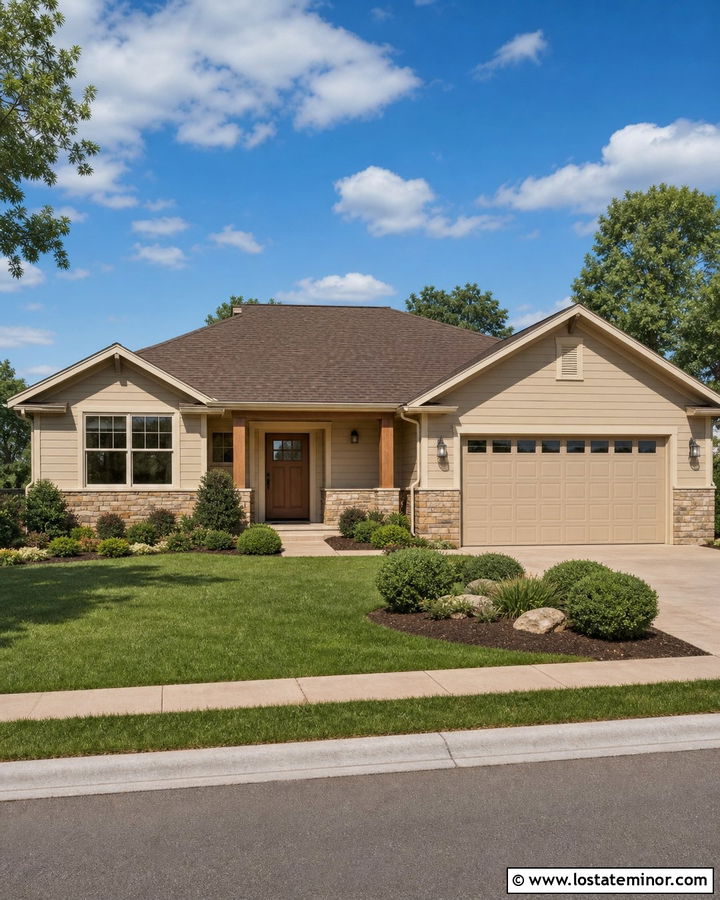
Warm brown roofing is one of the easiest partners for beige because both colors share an earthy foundation. On a low ranch house, use sandy beige horizontal siding with a chocolate-brown architectural shingle roof. Cream trim adds gentle separation around the windows, fascia, and garage without producing harsh contrast. Introduce a medium-stained wood front door and matching porch posts to strengthen the natural look. A fieldstone wainscot containing tan, rust, and brown can make the long facade feel more substantial. Paint the garage door the body color so it blends into the house. Broad planting beds, rounded shrubs, and a warm concrete walkway soften the horizontal architecture. This complete scheme feels relaxed and cohesive, especially in wooded or traditional suburban settings.
5. Beige House With Espresso Roof
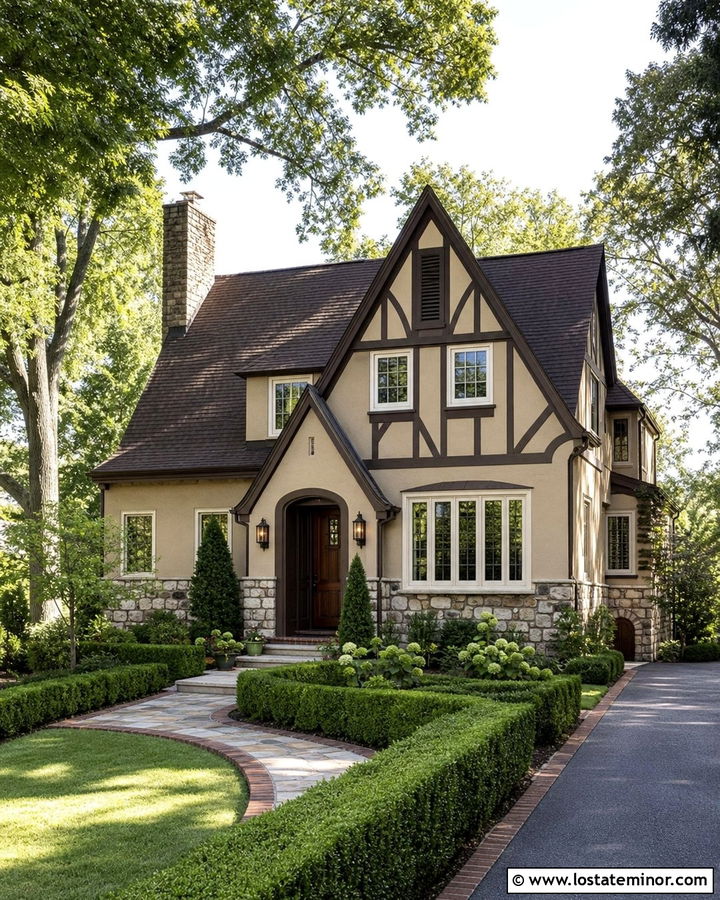
An espresso roof brings rich depth to a beige exterior while feeling slightly softer than black. This pairing suits a Tudor-inspired house with steep front gables, warm beige stucco, and dark brown half-timber details. Use creamy trim on the windows, but repeat espresso on the fascia, gutters, and garage doors to establish a deliberate framework. A dark mahogany front door adds another polished wood tone. Include irregular stone around the foundation and entry, choosing a blend with cream, taupe, and charcoal pieces. Copper-finished lanterns contribute warmth without appearing overly decorative. Deep green shrubs and a brick-edged walkway create an established appearance. The dark roof emphasizes the dramatic roofline, while the beige walls prevent the detailed exterior from feeling gloomy or visually crowded.
6. Beige House With Terracotta Tile Roof
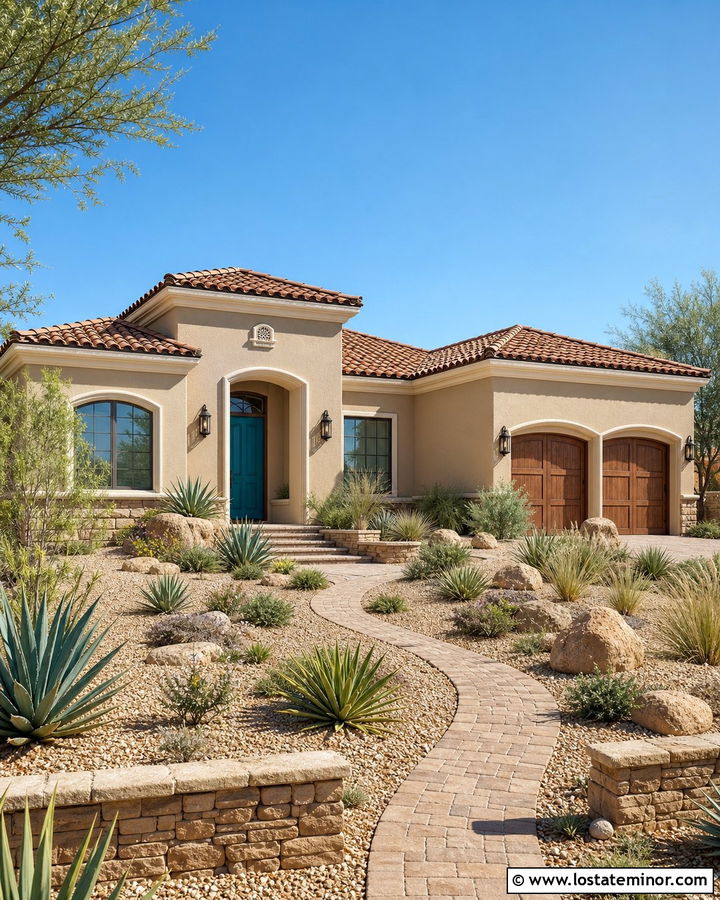
Sun-warmed terracotta tile gives beige stucco an inviting Southwestern character. Choose a creamy sand-beige exterior that contains enough warmth to relate to the orange and brown variation in the tile. Soft ivory trim around arched windows provides definition while maintaining the low-contrast palette. A turquoise, muted teal, or deep olive front door creates a controlled focal point at the recessed entry. Use natural wood garage doors and dark bronze lighting to support the earthy materials. A low stone wall can incorporate desert tan and warm gray tones. Complete the yard with gravel beds, agave, yucca, ornamental grasses, and drought-tolerant shrubs. The layered colors feel natural in bright sunlight, while the textured roof gives the simple stucco walls architectural depth.
7. Beige House With Red Clay Roof
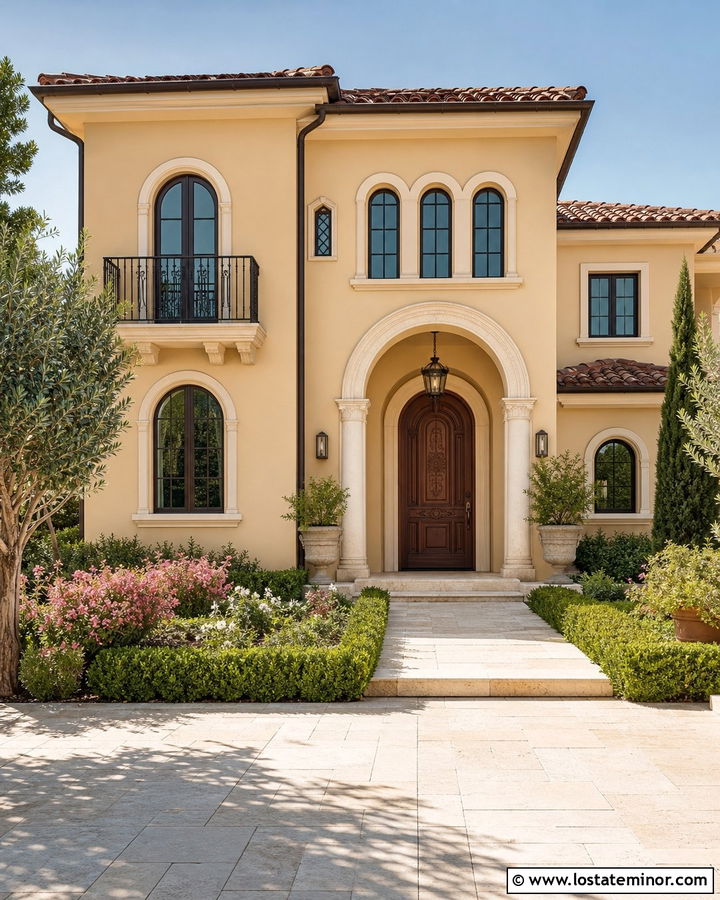
A red clay roof can become the signature feature of a beige Mediterranean house. Select pale golden beige stucco rather than a pink beige, allowing the roof to remain warm and distinct. Cream trim works well on arched windows, molded details, and broad eaves. Use dark bronze for the gutters, balcony rails, and exterior lights to add contrast without introducing solid black. A carved medium-brown wood front door gives the entry appropriate visual weight. Limestone porch flooring and pale stone accents keep the lower facade bright. For landscaping, frame the house with clipped hedges, flowering shrubs, and slender ornamental trees. Repeating a small amount of clay red in planters or walkway edging helps the prominent roof feel intentionally connected to the complete exterior.
8. Beige House With White Metal Roof
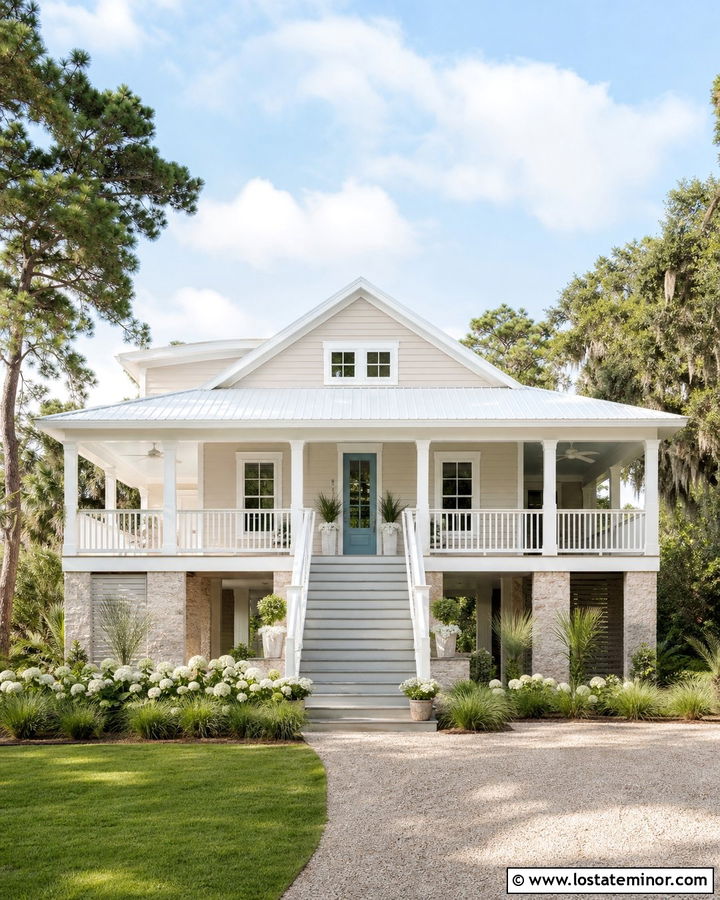
A white metal roof can make a beige house feel bright, breezy, and well suited to a coastal setting. Try a soft oatmeal-beige exterior on a raised cottage with wide porches and clean horizontal siding. Use pure white on the railings, window trim, columns, and exposed rafter tails so the reflective roof belongs within the palette. A sea-glass blue front door brings in gentle color without overwhelming the neutral body. Pale gray porch decking and galvanized metal fixtures support the relaxed coastal character. Keep the foundation in light natural stone or painted masonry. Hydrangeas, ornamental grasses, and a crushed-shell-style walkway complete the airy curb appeal. The white roof reduces visual heaviness, while beige gives the architecture more warmth than an all-white exterior.
9. Beige House With Black Metal Roof
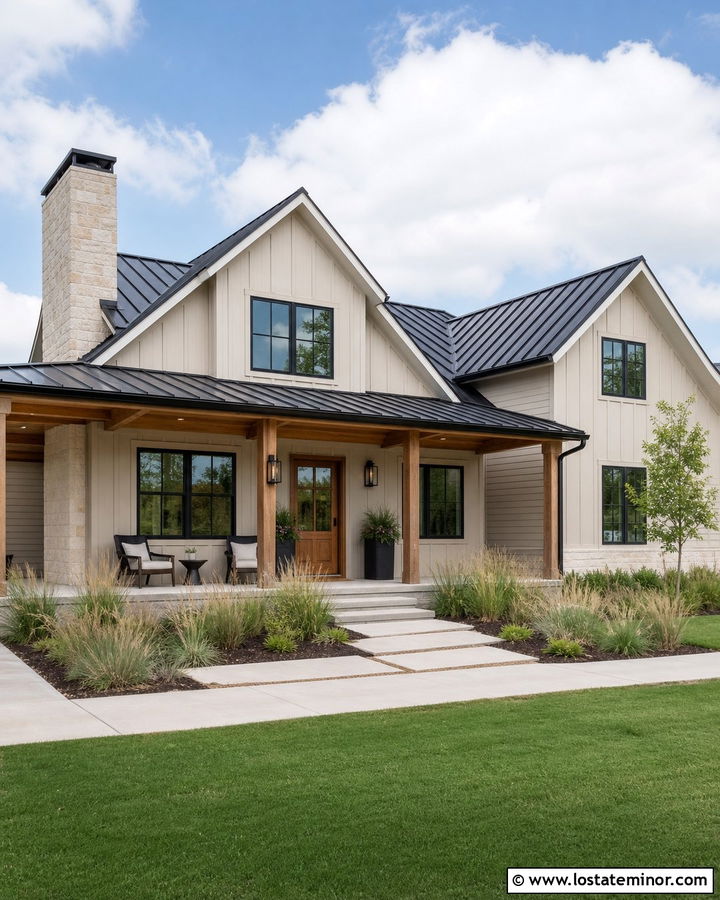
Strong rooflines deserve a clear, confident color combination. On a contemporary farmhouse, pair light greige-beige siding with a black standing-seam metal roof. Use vertical board-and-batten on the main gables and horizontal lap siding on lower sections to create texture within the limited palette. Warm white trim keeps the exterior softer than a pure black-and-white scheme. Add a cedar front door, cedar porch ceiling, and matching support beams for natural contrast. Black-framed windows, gutters, and modern sconces tie directly to the roof. A simple limestone chimney can break up a large elevation. Finish with a wide concrete path and structured grasses. This balanced combination feels current, yet the natural wood and beige body prevent it from appearing cold or overly graphic.
10. Beige House With Bronze Metal Roof
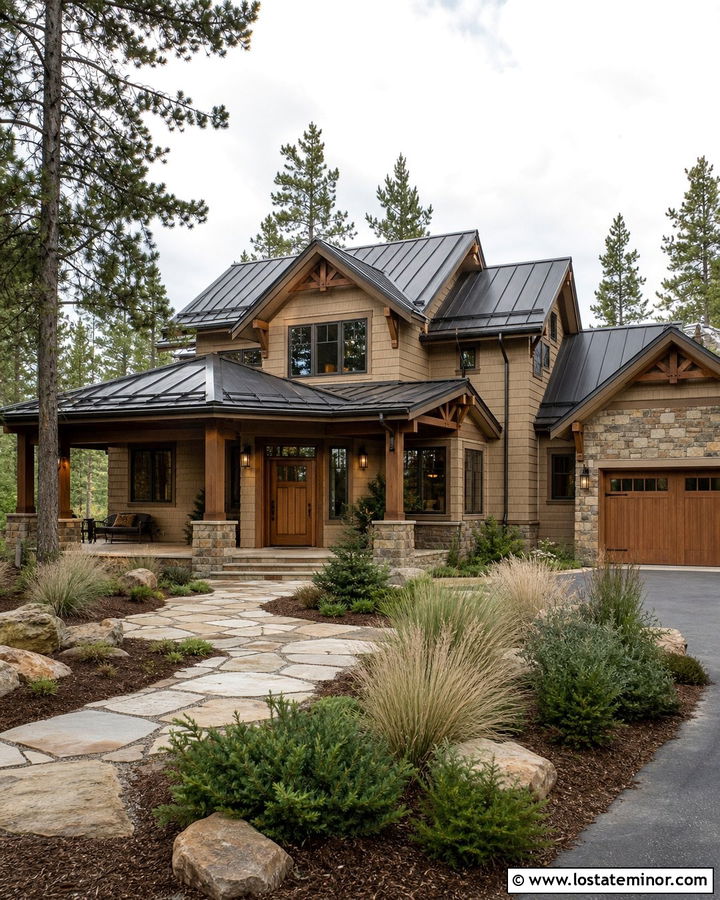
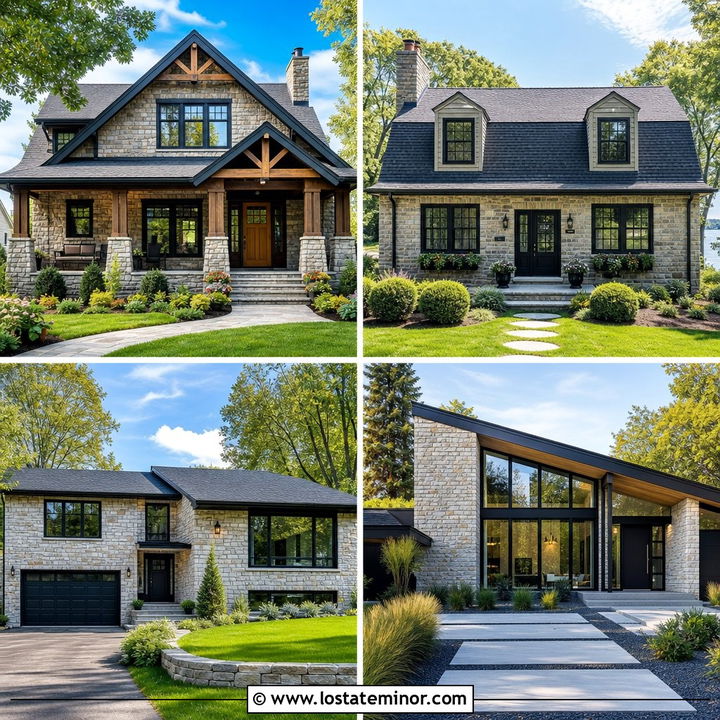
Bronze roofing gives a beige exterior quiet richness and changes subtly as the sunlight moves across it. A rustic Craftsman or lodge-style home can use medium beige shingle siding with a dark bronze metal roof over the main structure and porch. Choose deep cream trim rather than bright white to preserve the earthy mood. Stained cedar beams, brackets, and a plank front door strengthen the handcrafted appearance. Use ledgestone with brown, gray, and muted gold variation around the porch bases and chimney. Bronze gutters and lighting allow the metal finishes to blend with the roof. Native grasses, evergreen shrubs, and a flagstone walkway fit the natural palette. The finished house feels substantial and sophisticated without relying on sharp, high-contrast colors.
11. Beige House With Green Metal Roof
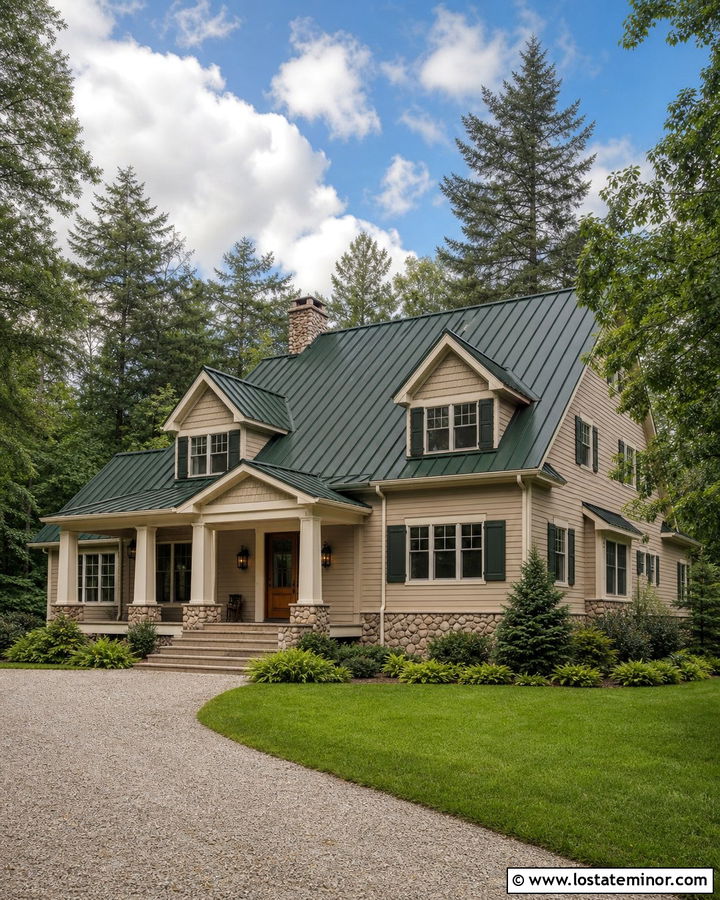
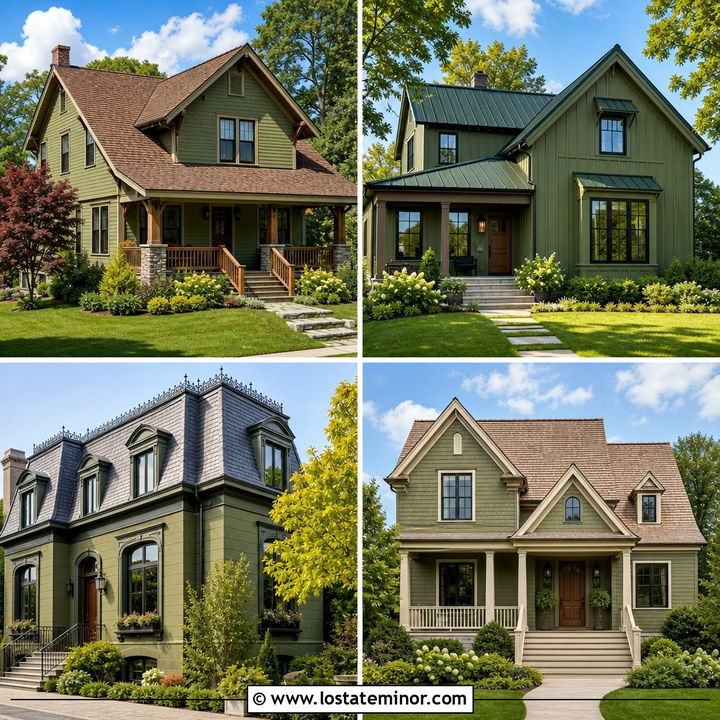
A green metal roof offers an appealing connection to mature trees and natural surroundings. For a country house or cabin-inspired home, combine warm khaki-beige siding with a deep forest-green standing-seam roof. Cream window trim provides a light outline, while green shutters repeat the roof color at eye level. A honey-toned wood front door keeps the entry friendly and prevents the green accents from becoming too dominant. Add river rock or fieldstone around the foundation, using pieces with beige and mossy gray variation. Dark bronze porch lights complement both green and brown elements. A gravel driveway, broad lawn, ferns, and layered evergreens finish the setting. This scheme feels especially cohesive on properties where the landscape is a major part of the curb appeal.
12. Beige House With Blue Gray Roof
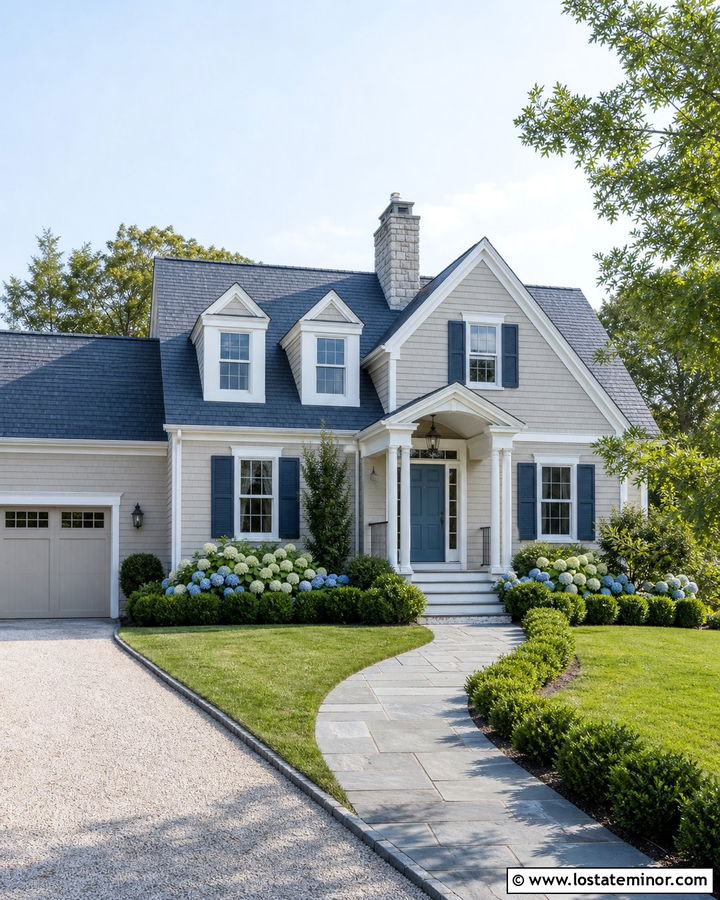
Blue-gray roofing can refresh beige siding and create a composed coastal or transitional exterior. On a Cape Cod house, select a pale neutral beige with minimal yellow undertones. Pair it with blue-gray architectural shingles, white window trim, and dusty navy shutters. A medium blue front door can reinforce the cool roof color without making the facade look overly themed. Use light gray stone at the chimney or porch foundation to bridge the roof and siding. Silver-toned fixtures and gray decking support the cooler accents. Keep the garage door beige so the main color remains continuous across the front. Hydrangeas, neat hedges, and a curved stone walkway add softness. The roof supplies subtle color, while beige keeps the home warm and approachable in changing daylight.
13. Beige House With Slate Roof
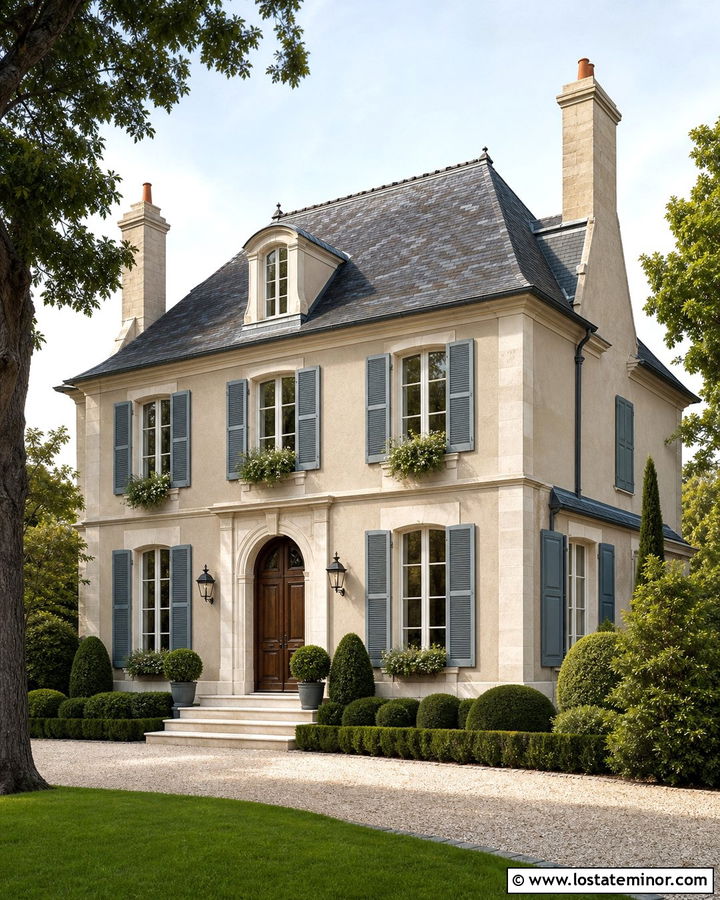
Natural slate adds depth, movement, and lasting character to a beige French country exterior. Use a soft limestone beige on stucco or smooth masonry, then surround tall windows with warm white trim. The roof can contain charcoal, muted blue, and earthy gray pieces, giving the facade more visual variation than a uniform shingle. Paint the shutters a faded blue-gray or deep taupe to pull one of those roof tones downward. A stained arched wood door provides warmth at the central entrance. Add pale limestone around the entry and chimney rather than introducing a competing stone color. Formal shrubs, gravel paths, and simple window boxes complete the European-influenced design. Beige allows the varied slate roof to remain the most detailed and visually important exterior material.
14. Beige House With Variegated Slate Roof
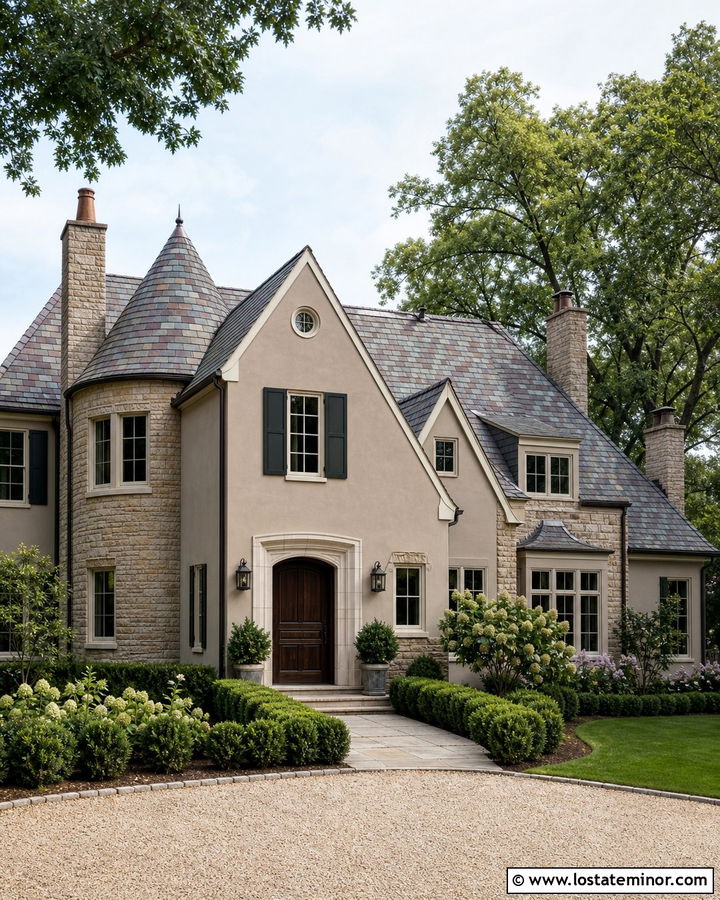
Variegated slate is ideal when a larger beige house needs more color and dimension at the roofline. A stone manor can combine muted beige stucco with slate tiles containing charcoal, green-gray, rusty brown, and soft purple variation. Keep the trim warm ivory so it relates to both the walls and masonry. Choose shutters in a dark charcoal-green pulled directly from the roof. A walnut front door and bronze fixtures reinforce the historic character. Use rough-cut beige stone on towers, chimneys, or the lower story, but avoid too many competing patterns. Structured hedges and mature deciduous trees give the architecture an established setting. Because the roof already contains several colors, the remaining exterior finishes should stay controlled, repeated, and relatively quiet.
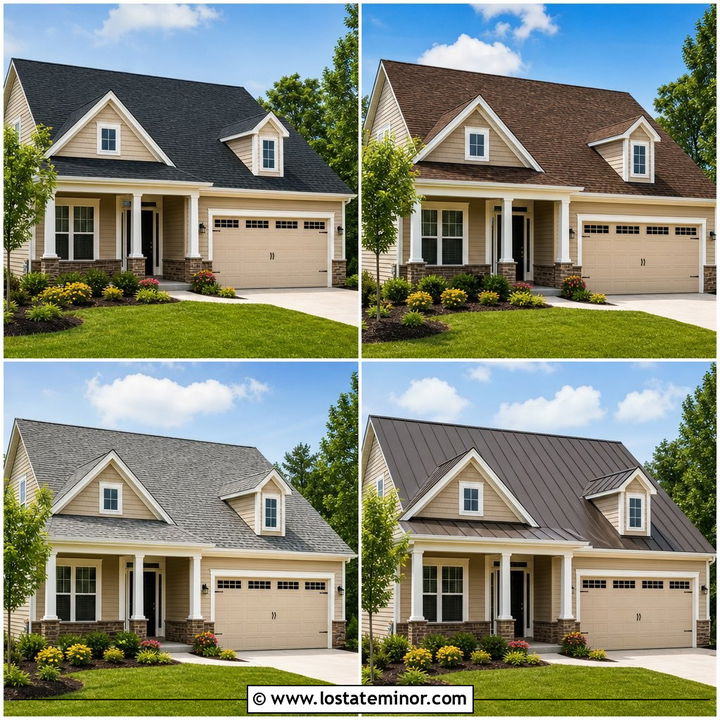
15. Beige House With Cedar Shake Roof
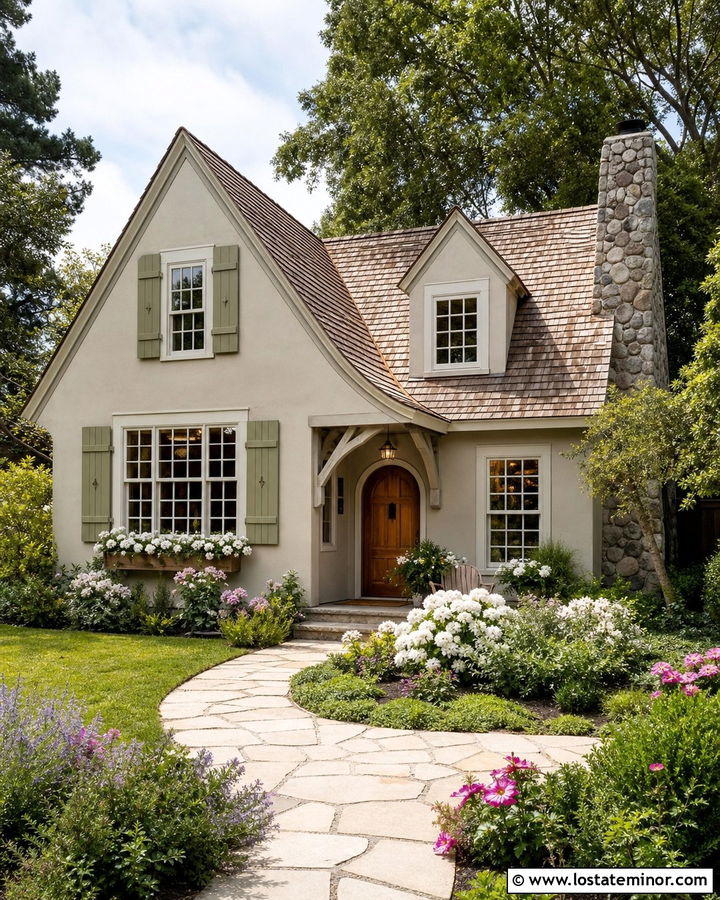
Few combinations feel as naturally relaxed as beige siding beneath a cedar shake roof. On a cottage, choose a light mushroom-beige body that complements both new honey-colored cedar and the silvery tones it may develop over time. Cream trim around divided-light windows keeps the palette gentle. Sage-green shutters add muted color, while a stained oak front door relates directly to the roof material. Use rounded fieldstone on the chimney and porch supports for extra texture. A small covered entry with simple wood brackets can make the facade feel more welcoming. Surround the house with flowering shrubs, informal garden beds, and a curved flagstone path. The varied roof texture becomes the focal point, while the quiet beige siding prevents the cottage from looking visually busy.
16. Beige House With Weathered Wood Roof
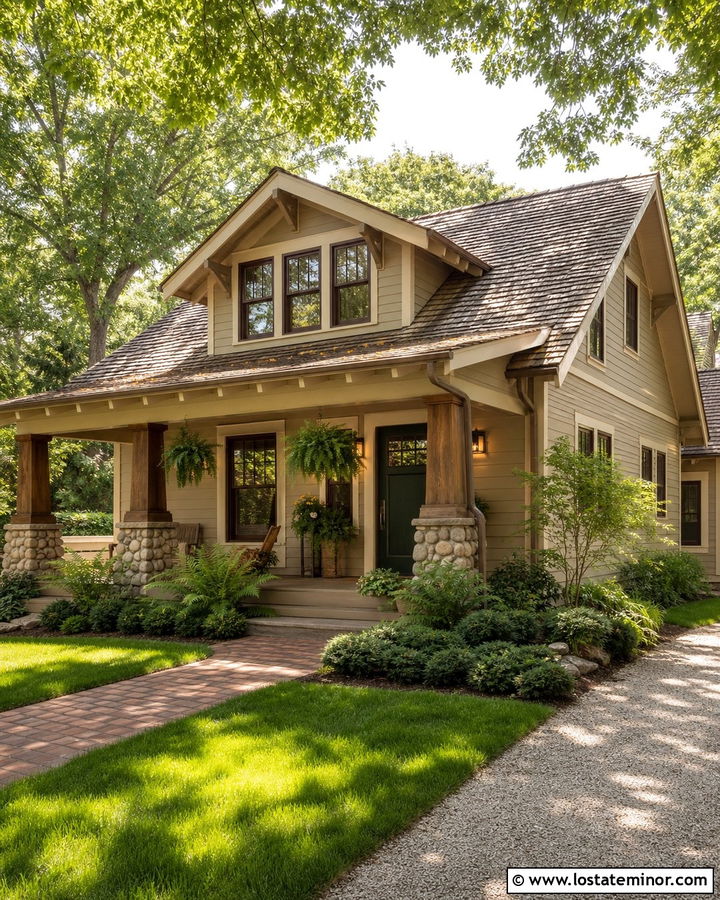
A weathered wood shingle roof gives beige siding a soft, familiar appearance that suits a classic bungalow. Choose medium tan-beige clapboards with creamy trim and muted brown window frames. Because weathered shingles often mix gray, brown, and taupe, repeat those shades in a natural stone porch base. A deep olive front door introduces an earthy focal point that does not compete with the roof. Stained porch columns and exposed rafters can reinforce the bungalow’s handcrafted details. Keep gutters brown or taupe so they merge into the edge of the roof. Ferns, low evergreens, and a brick walkway create a welcoming front garden. This scheme is low in contrast but rich in texture, giving the compact house depth without making it feel smaller.
17. Beige House With Taupe Roof
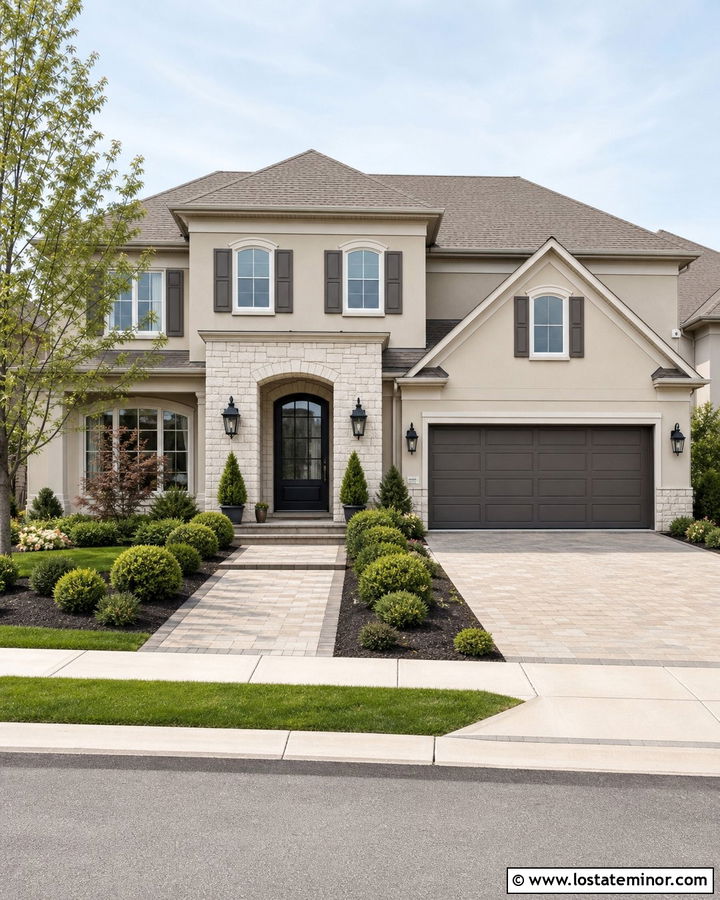
A taupe roof creates a smooth, tonal look that can make a transitional house feel calm and polished. Use light beige fiber-cement siding with a medium taupe shingle roof, then add soft white trim for just enough separation. A darker taupe can appear on the shutters, garage door, or porch floor to create depth without leaving the neutral family. Choose a black front door and restrained black lights for small, crisp accents. Pale stone containing cream and gray can cover the entry wall or foundation. Keep downspouts close to the siding color so they blend into the facade. Rounded shrubs, a clean paver walkway, and a neatly edged lawn suit the controlled palette. The finished exterior feels layered rather than monochromatic because each neutral has a clearly different value.
18. Beige House With Greige Roof
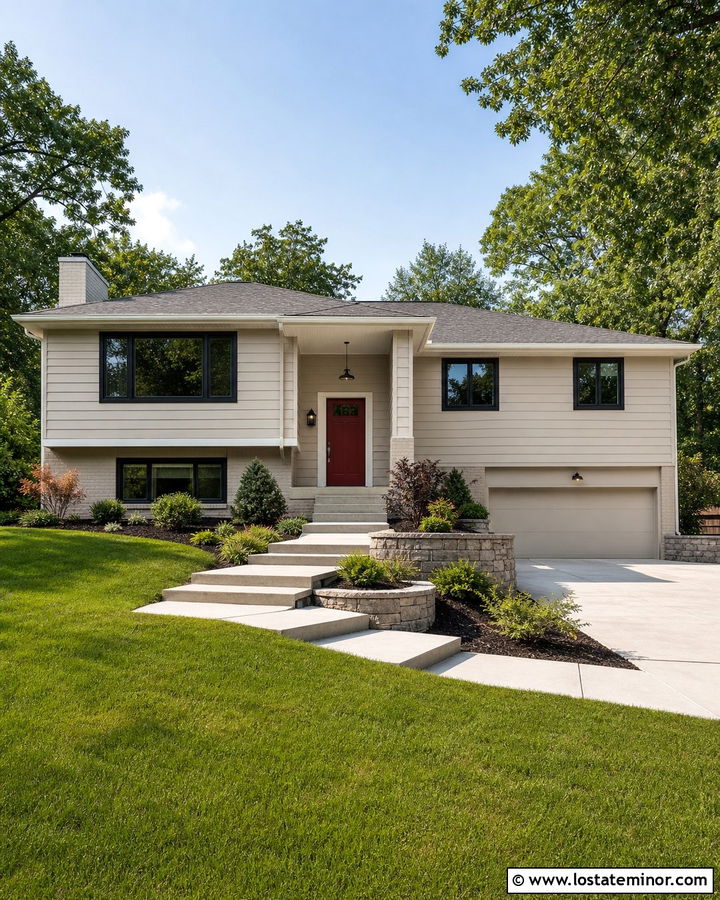
Greige roofing can update an older beige split-level while respecting existing warm materials. Begin with a balanced beige exterior that sits between tan and gray. Add greige architectural shingles, warm white trim, and charcoal window accents. Paint the garage door the same beige as the siding to reduce its prominence on the lower level. A muted brick-red front door can bring life to the entry, especially when the house already has red or brown brick. Use gray-tan stone on retaining walls or foundation sections to connect the roof with the ground. Modern black lighting and simple house numbers provide a clean finishing touch. Layered shrubs and a broad walkway help organize the asymmetrical facade. The coordinated neutrals make the split-level architecture look more intentional and visually unified.
19. Beige House With Sand Roof
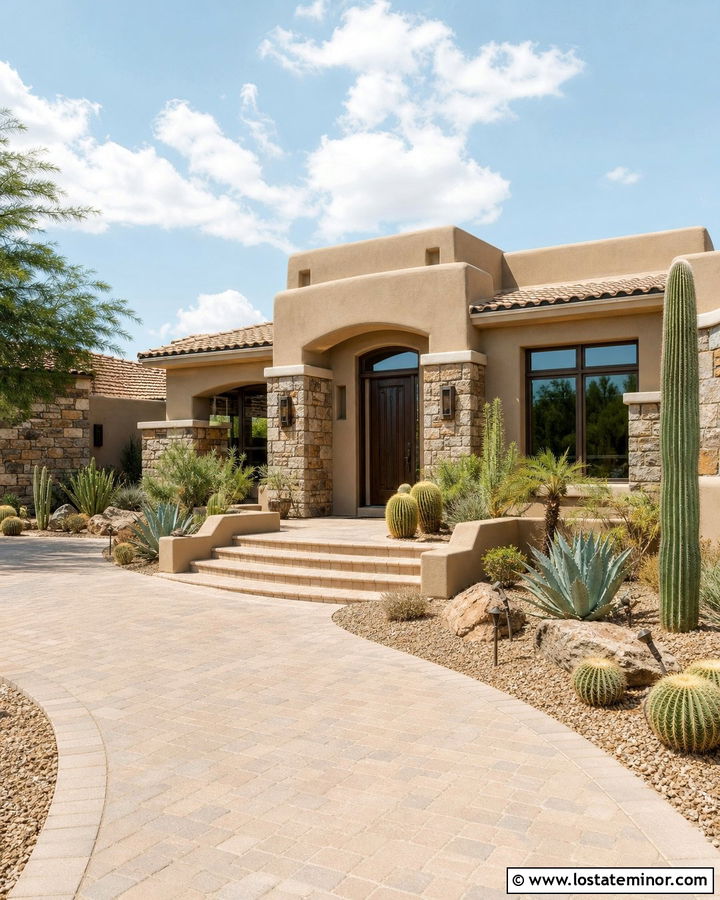
In a desert setting, a sand-colored roof allows a beige house to blend naturally with the surrounding landscape. Choose a deeper adobe beige for the stucco walls and a lighter sandy tile roof to keep the upper portion from feeling heavy. Use creamy off-white on parapet details, entry columns, and window surrounds. A dark mesquite-brown front door adds a strong focal point within the low-contrast scheme. Bronze window frames and exterior fixtures support the warm palette. Introduce stacked stone containing tan, rust, and dusty gray near the entry or garage. Gravel beds, cacti, agave, and sculptural desert plants create texture around the simple architecture. The restrained colors reflect the environment, while changes in material keep the finished Southwest exterior from appearing flat or unfinished.

20. Beige House With Copper Roof Accents
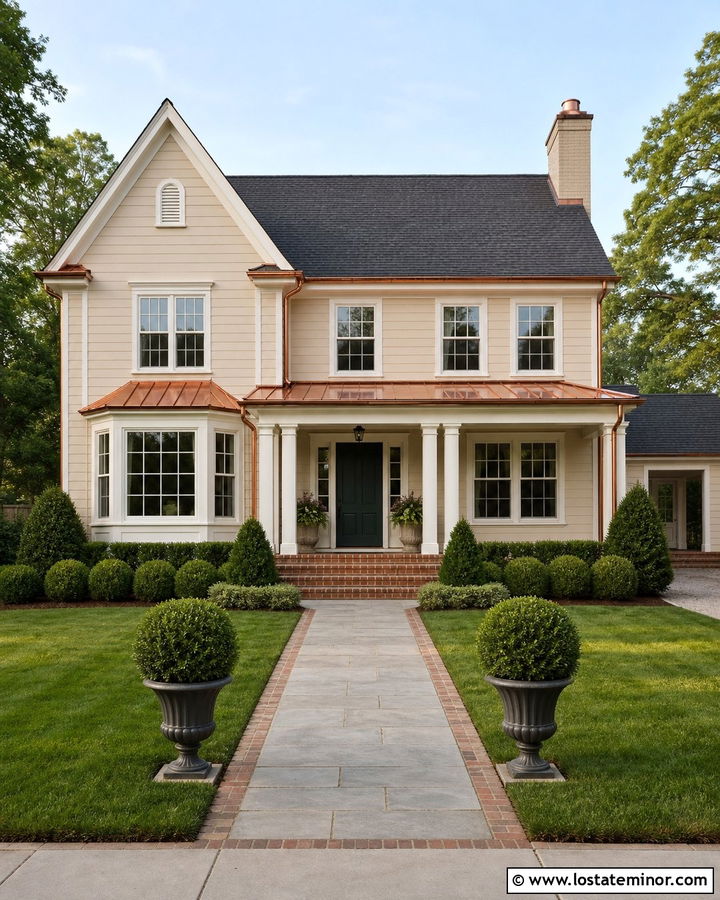
Copper does not have to cover the entire roof to make a memorable impact. On a traditional beige house, use charcoal shingles across the main roof and copper over a bay window, porch, or small entry canopy. Light beige siding and creamy white trim create a refined background for the warm metal. A dark green front door complements both new copper and its future patina. Repeat copper sparingly in gutters, flashing, or lantern details rather than placing it everywhere. Red-brown brick steps can provide another warm element at ground level. Formal hedges, a straight walkway, and symmetrical planters complete the exterior. The combination feels custom because the copper highlights important architectural features while the neutral house and darker main roof maintain balance.
21. Beige House With Mixed Black And Gray Roof
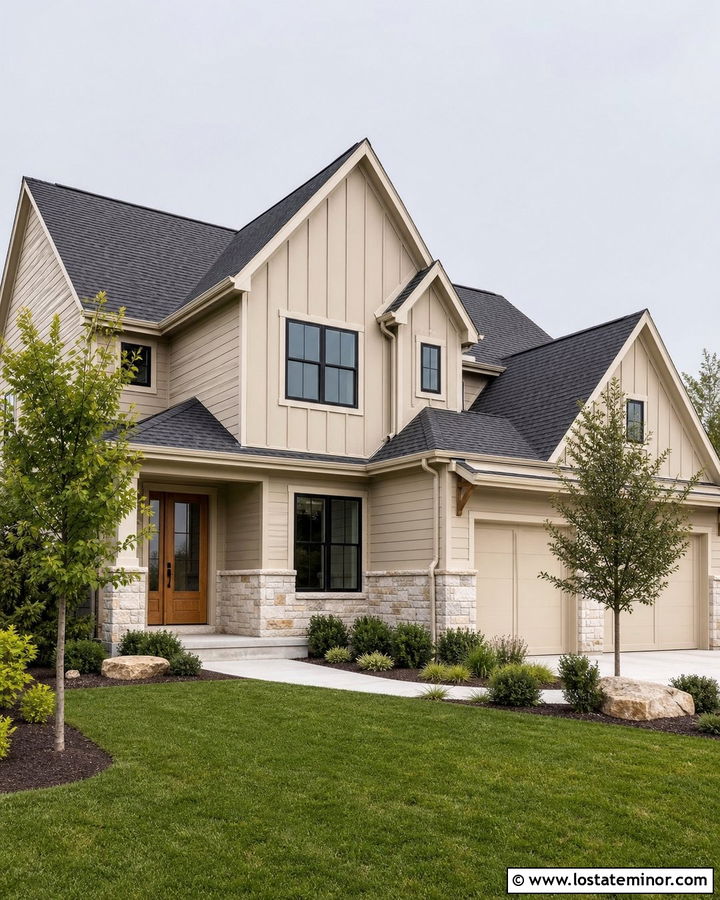
A mixed black-and-gray roof provides more forgiving contrast than a single flat roof color. It works especially well on a contemporary suburban house with multiple gables and a combination of beige lap siding and board-and-batten. Use warm white trim to outline the roofline, then repeat black on window frames and porch lights. A medium walnut front door adds warmth at the center of the neutral facade. Choose gray limestone with occasional beige pieces for the garage surround or lower walls. Paint the garage doors beige to prevent the broad paved area from becoming the focus. Clean foundation plantings, small ornamental trees, and a large-format concrete walkway suit the updated architecture. The varied shingles connect cool black accents with the warmer walls more naturally than pure black roofing.
22. Beige House With Brown Tile Roof
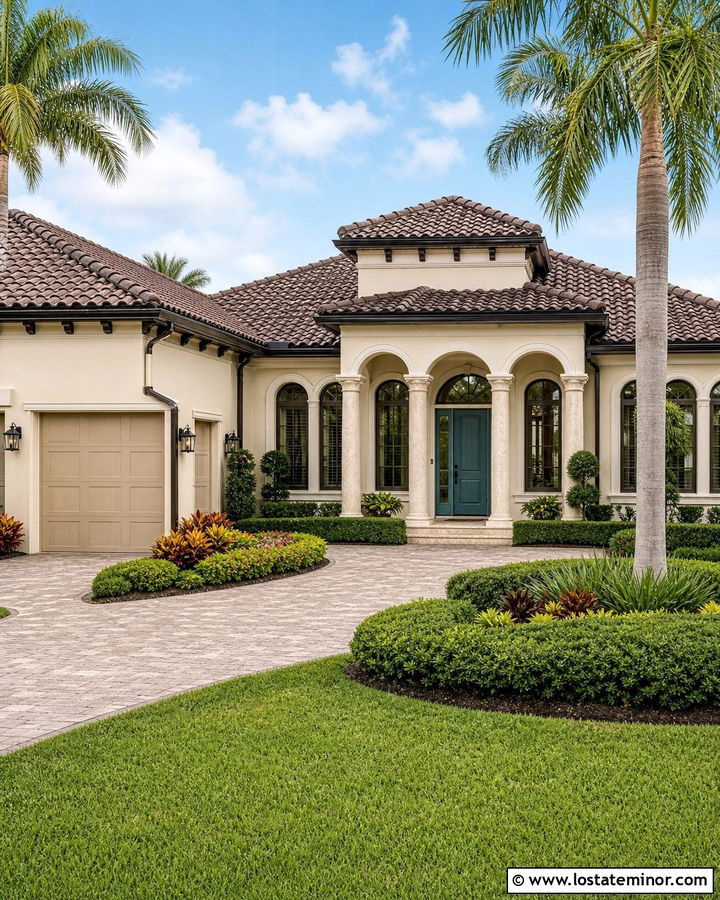
Brown tile roofing brings depth and texture to a Florida or Sunbelt home with a broad hipped roof. Pair the tile with peach-free warm beige stucco and ivory trim around the windows, arches, and soffits. Dark bronze window frames and gutters create practical contrast while blending with the roof. A muted blue-green front door provides a cool focal point and balances the warm palette. Use pale travertine or limestone on the porch columns and entry floor. Keep the garage doors close to the beige wall color so the large surfaces recede. Palm trees, clipped shrubs, colorful foliage, and a curved paver driveway reinforce the regional character. The roof remains prominent, but the coordinated trim, masonry, and landscaping keep it from overpowering the low-profile facade.
23. Beige House With Cream Roof
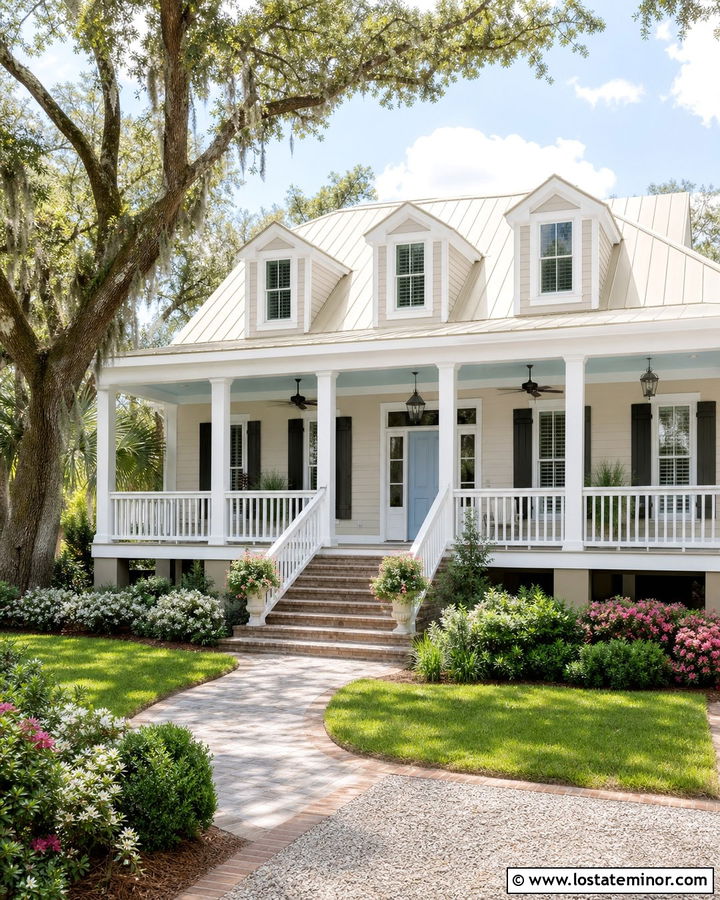
A cream roof produces a light, low-contrast exterior that feels appropriate for a breezy Lowcountry house. Select a slightly deeper beige for the siding so the roof remains visible against the body. Use clean white on porch railings, window trim, columns, and latticework to sharpen the architecture. A soft blue front door and matching porch ceiling add a traditional regional accent. Pale gray decking grounds the broad porch without introducing a dark band. Natural brick or oyster-toned stone can appear on the steps and foundation piers. Frame the home with live oaks, flowering shrubs, and a generous lawn. This palette relies on subtle shifts between beige, cream, and white, so texture from clapboard siding, metal roofing, railings, and landscaping is essential for visual depth.
24. Beige House With Cool Gray Flat Roof
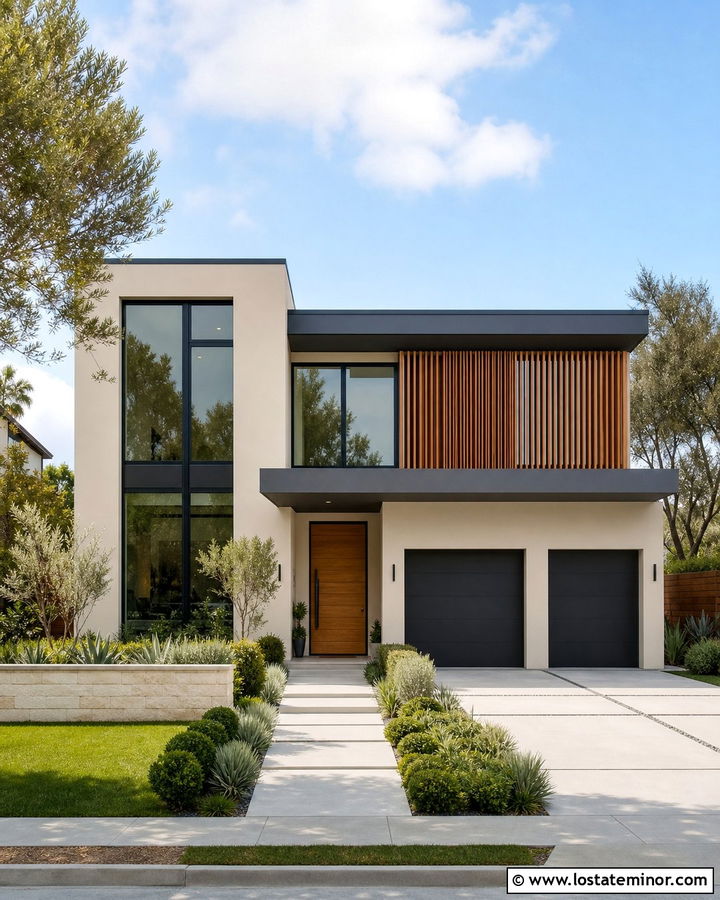
A cool gray flat roof can make beige stucco look cleaner and more contemporary. Use a pale stone beige on a modern two-story home with rectangular forms, deep overhangs, and large black-framed windows. Finish the flat roof edge, fascia, and metal coping in medium cool gray. A natural wood front door and slatted wood screen bring warmth to the streamlined exterior. Add charcoal-gray garage doors to visually anchor the lower level. Smooth concrete, light limestone, and limited dark metal accents support the modern material palette. Keep landscaping architectural with ornamental grasses, sculpted shrubs, and a straight concrete path. The beige prevents the house from looking stark, while the gray roof edge and black windows give the simple geometric facade necessary definition and structure.
25. Beige House With Dark Gray Gambrel Roof
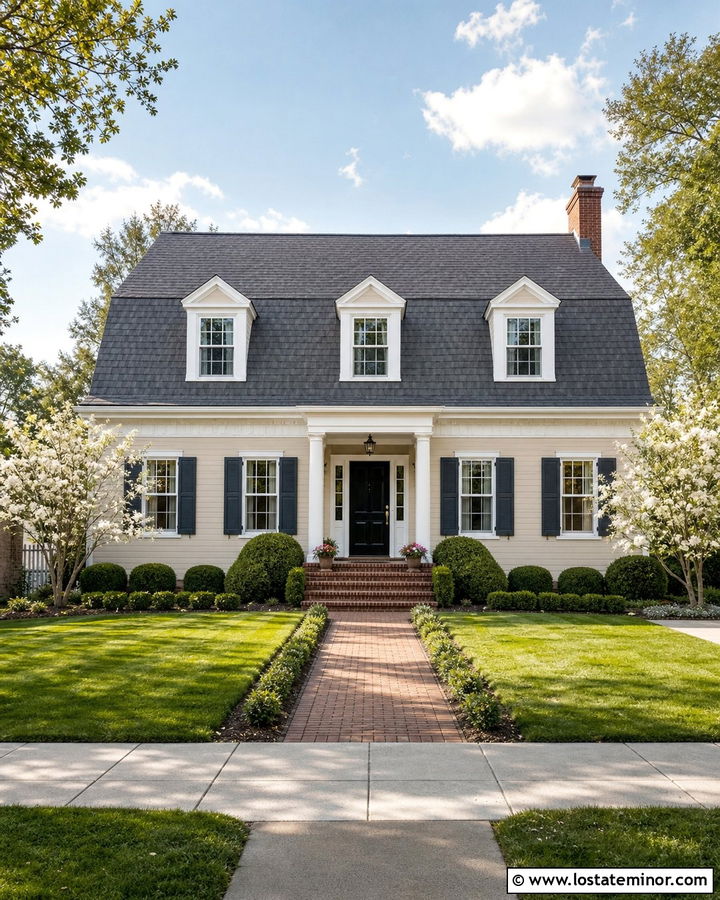
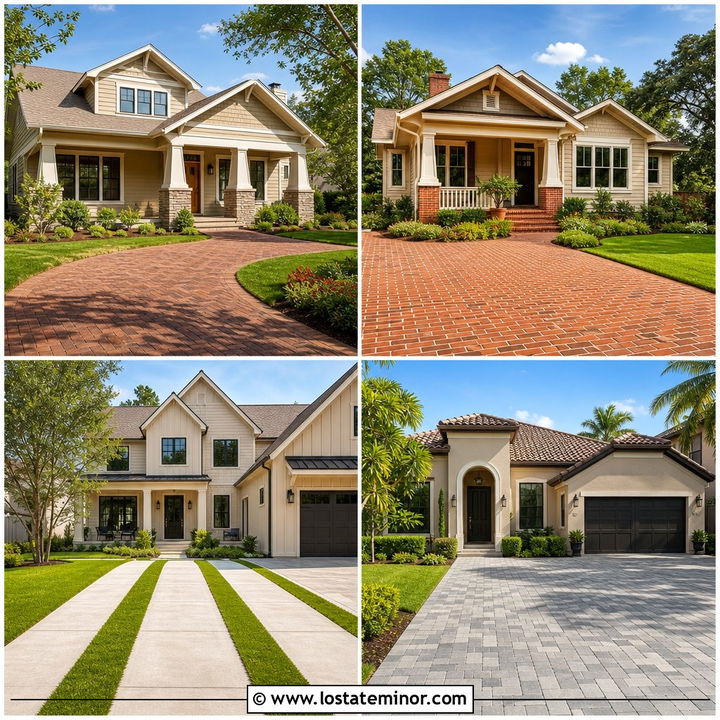
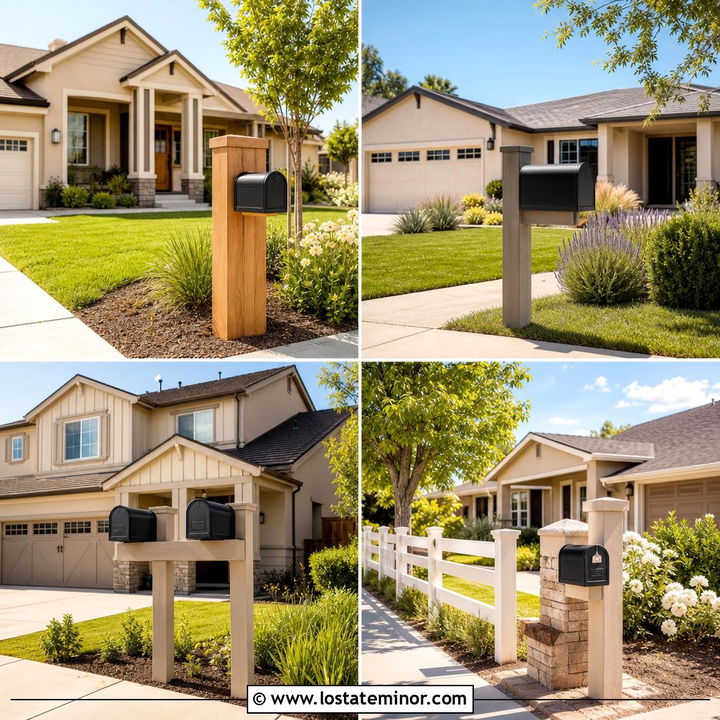
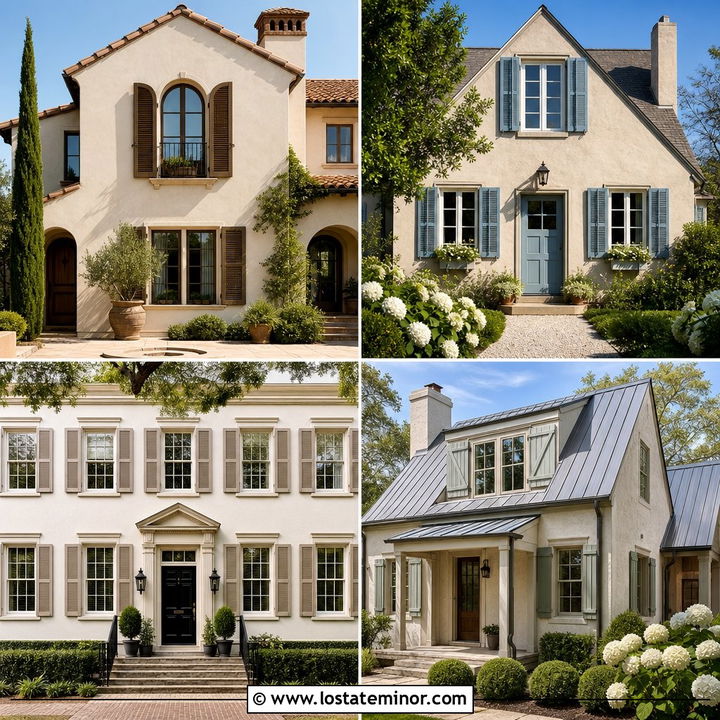
A gambrel roof naturally commands attention, and dark gray shingles give it a strong but classic outline. On a Dutch Colonial, combine light beige clapboard siding with bright white trim around dormers, windows, cornices, and porch columns. Paint the shutters a deep blue-gray to connect the walls with the roof. A glossy black or rich red front door can create a clear focal point beneath the expansive roofline. Use red brick on the chimney, front steps, and walkway edging for traditional warmth. White gutters should blend into the cornice rather than interrupting the architecture. Symmetrical foundation shrubs and small flowering trees complete the formal facade. The light siding balances the large dark roof, helping the house feel substantial without appearing top-heavy.
26. Beige House With Black Hipped Roof
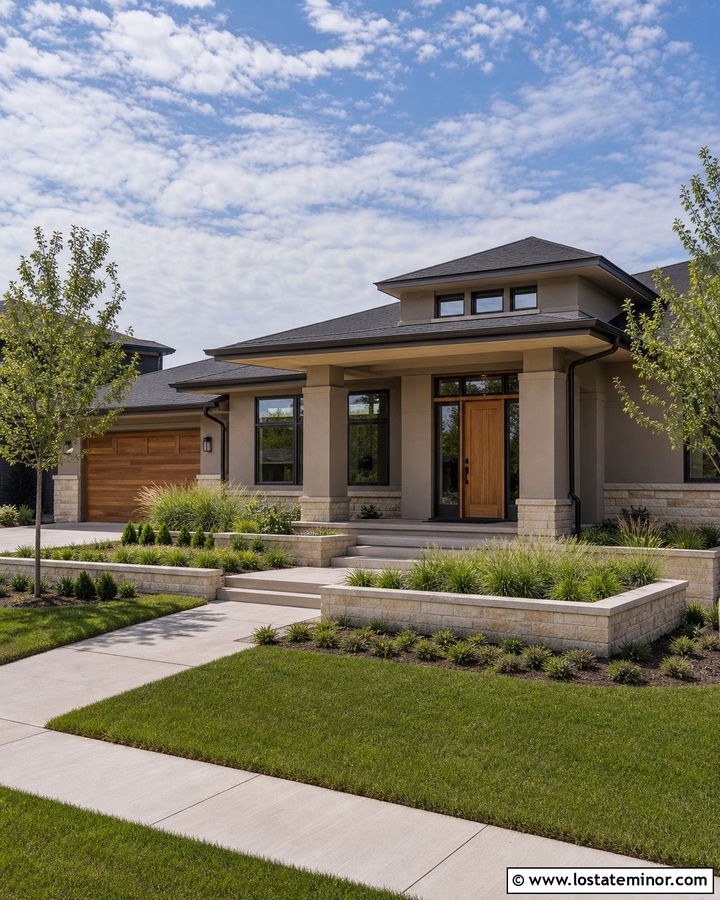
A black hipped roof creates a crisp cap for a Prairie-inspired beige house with broad horizontal lines. Choose a medium greige-beige stucco or lap siding that can stand up to the roof’s visual strength. Use dark bronze or black on window frames, gutters, and slender porch supports. Cream trim should be limited to the soffits and a few architectural bands, preserving the home’s streamlined character. Add a warm wood front door and matching garage accents to soften the dark details. Long limestone planters or a low stone foundation emphasize the horizontal profile. A wide walkway, geometric planting beds, and low ornamental grasses suit the architecture. The complete scheme feels grounded and orderly, with the dark roof balancing the broad footprint rather than dominating it.
27. Beige House With Brown Gable Roof
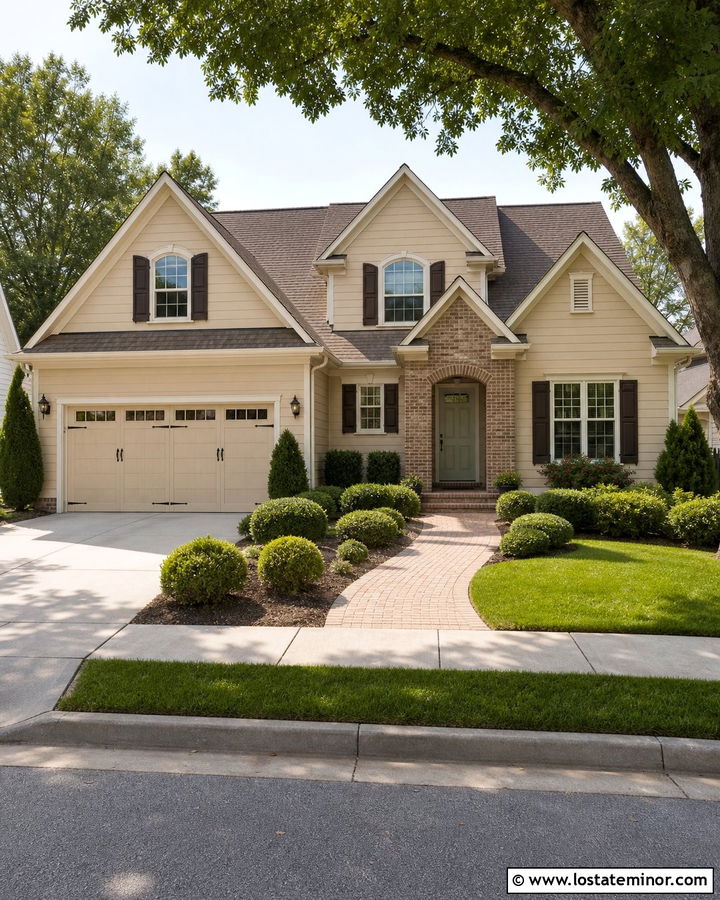
Brown roofing highlights the familiar shape of a gabled beige house and creates an easy foundation for brick accents. Use a warm biscuit-beige body with a medium brown shingle roof and creamy trim. Add red-brown brick around the entry, chimney, or lower facade, selecting brick that contains a few tan pieces to connect with the siding. Dark brown shutters repeat the roof color at window level. A muted sage front door offers subtle contrast while remaining earthy. Paint the garage door beige, then add simple brown hardware for definition. A brick-and-concrete walkway, rounded foundation shrubs, and a shade tree establish a welcoming suburban setting. Repeating each major color in at least two places helps the brick, roof, siding, and accents read as one planned exterior.
28. Beige House With Charcoal Shed Roof
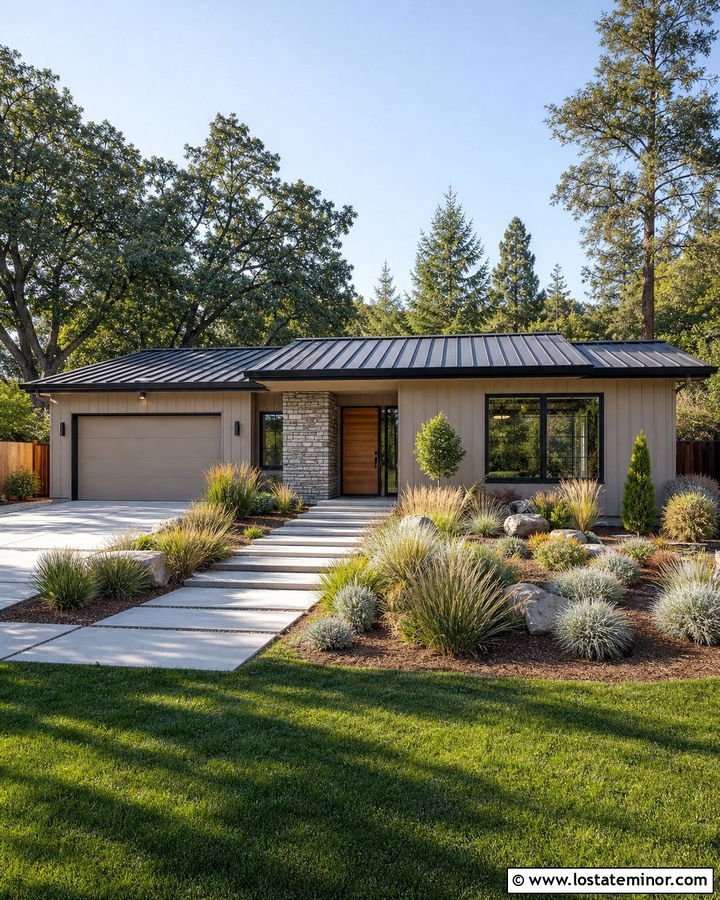
A charcoal shed roof gives a beige midcentury home a sharp architectural profile. Choose a muted mushroom beige for vertical wood siding or smooth stucco, then use charcoal metal roofing on the low, asymmetrical roofline. Black-framed windows and a black fascia reinforce the shape without adding decorative clutter. Introduce a warm teak or walnut front door as the central accent. A section of stacked gray stone can define the entry and connect the roof to the foundation. Keep the garage door flush and painted beige so it disappears into the wall. Drought-tolerant grasses, broad concrete stepping pads, and simple evergreen forms match the streamlined house. Beige softens the angular design, while the roof and dark window frames preserve its clean midcentury character.
29. Beige House With Light Gray Roof
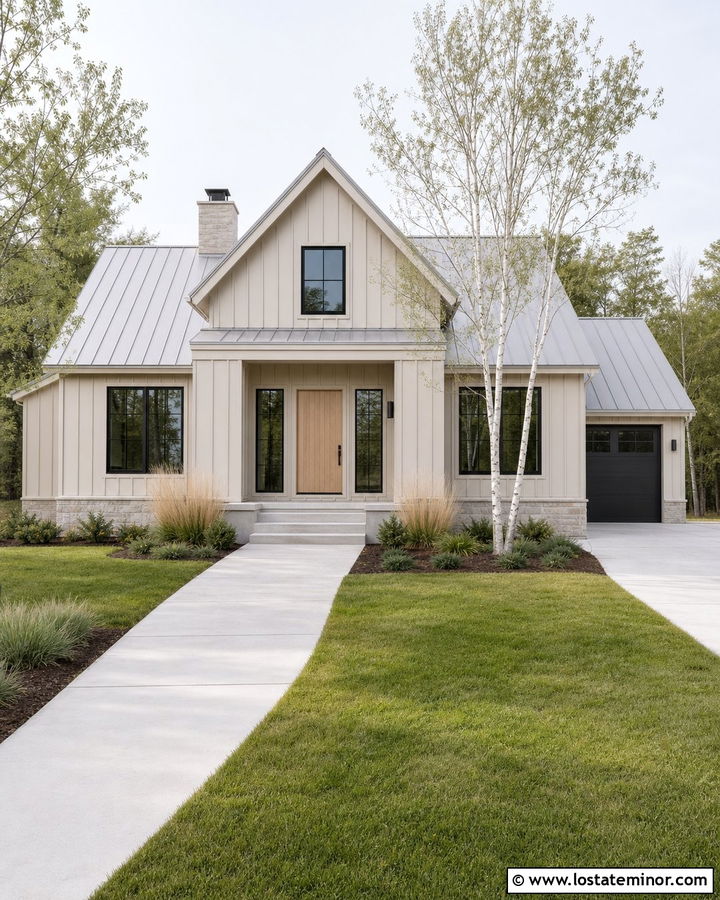
Light gray roofing can make a compact beige house feel open, bright, and quietly modern. On a Scandinavian-influenced home, use pale flax-beige vertical siding with a light gray standing-seam metal roof. Keep the window trim and fascia in a soft warm white to maintain the airy palette. Black-framed windows provide narrow lines of contrast, while a natural ash or oak front door adds warmth. Use light gray concrete for the steps and walkway, then introduce small areas of pale stone at the foundation. Simple grasses, birch trees, and low evergreen shrubs complement the clean facade. Because both the siding and roof are light, texture and black details are important. They prevent the design from washing out while preserving its calm, uncluttered appearance.
30. Beige House With Red Brown Roof
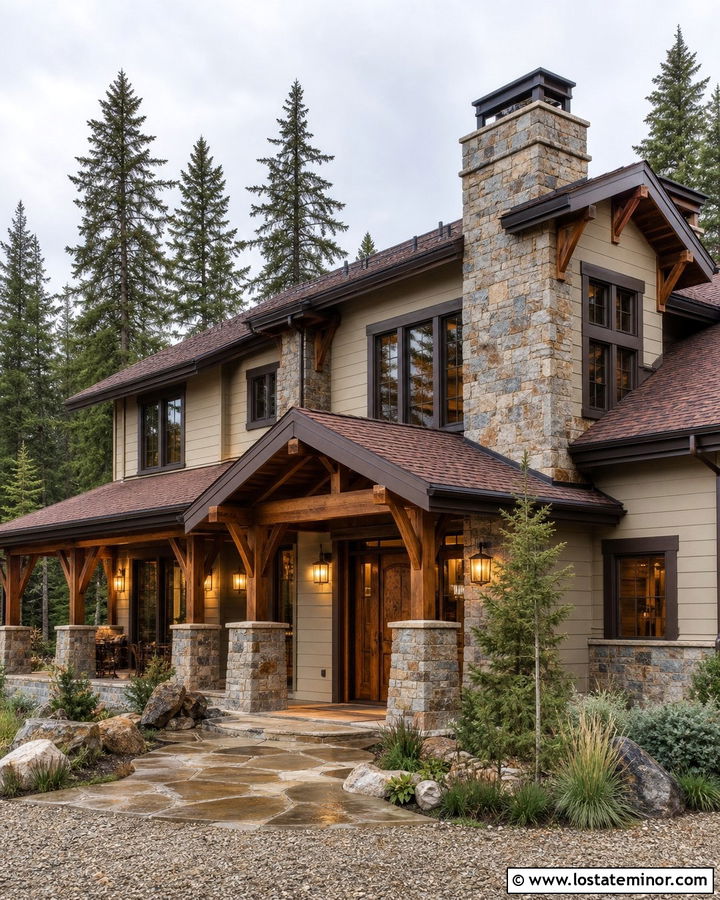
A red-brown roof gives a beige mountain home warmth without the brightness of traditional red tile. Choose a substantial lodge exterior with medium beige siding, deep eaves, and red-brown architectural shingles. Use dark chocolate trim on the fascia and window frames to strengthen the roofline. Cedar beams, brackets, and a large wood front door provide rich natural texture. Add rugged stone around the chimney, porch columns, and foundation, selecting a mix of gray, rust, and tan. Bronze lights and gutters blend quietly into the palette. Evergreen trees, native grasses, and a broad flagstone path complete the wooded setting. The beige walls lighten the heavy materials, while the roof, wood, and stone give the full house an appropriately grounded mountain character.
Conclusion:
These 30 Beige House Design With Roof Ideas show how dramatically roofing can shape the personality of a neutral exterior. Black and charcoal create definition, while brown, bronze, cedar, and clay produce warmer results. White, gray, blue-gray, and cream roofing can make beige feel lighter and more contemporary. Before finalizing a palette, compare large samples beside the actual roof, stone, brick, and wood in morning and afternoon light. Coordinate the trim, door, garage, gutters, and landscaping rather than choosing each feature separately. Most importantly, match the contrast level to the house’s architecture. A complete, repeated color scheme will make even a simple beige facade feel intentional, balanced, and inviting.

Related posts: