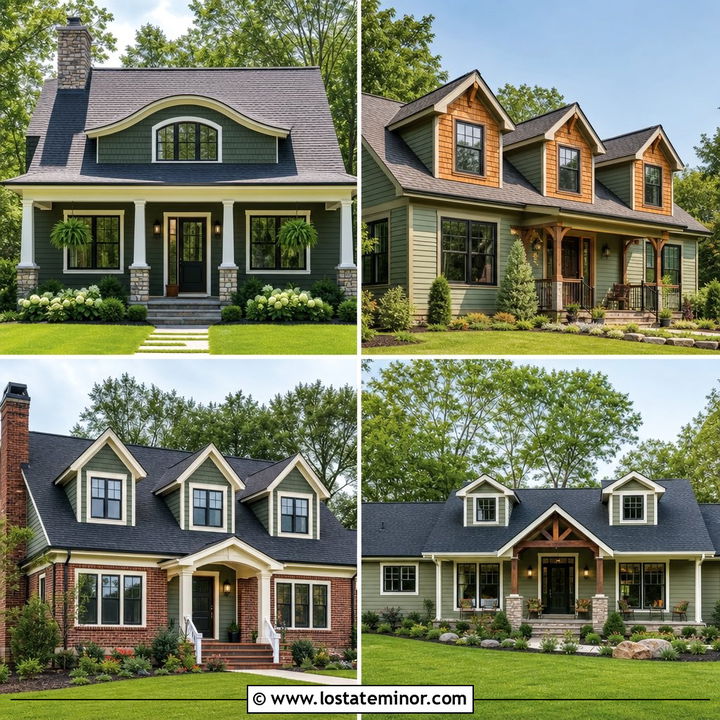
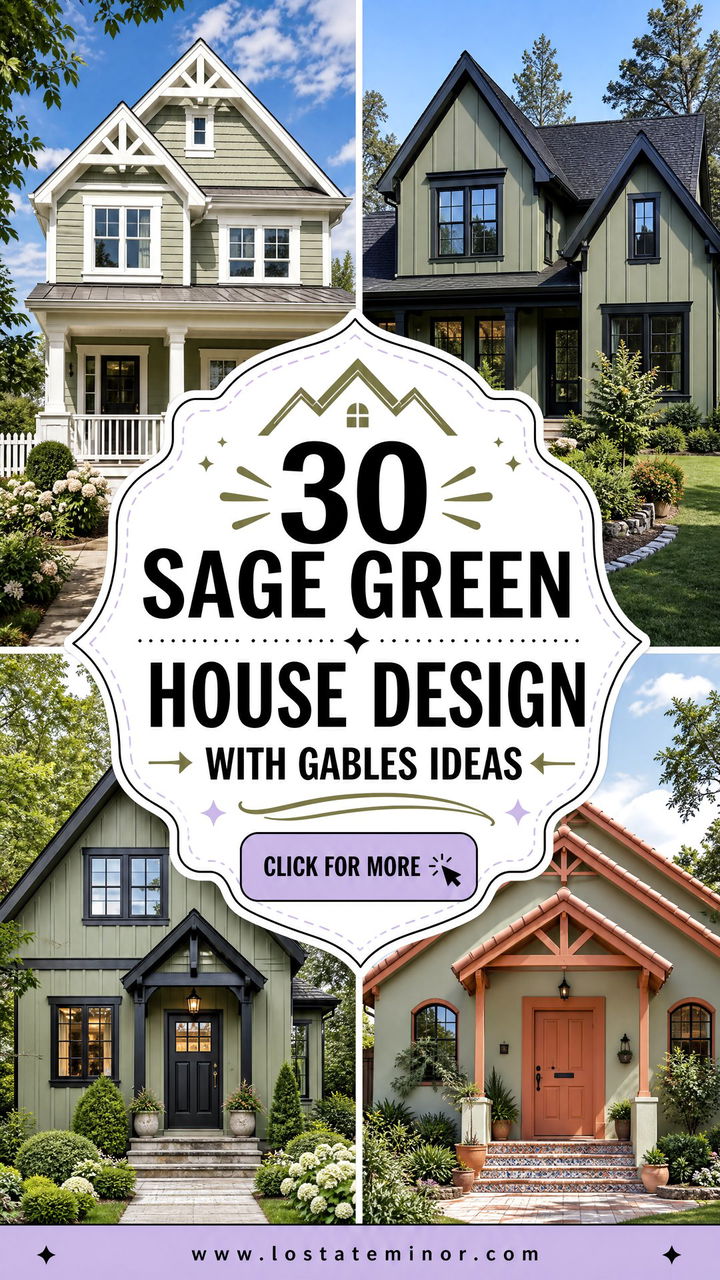
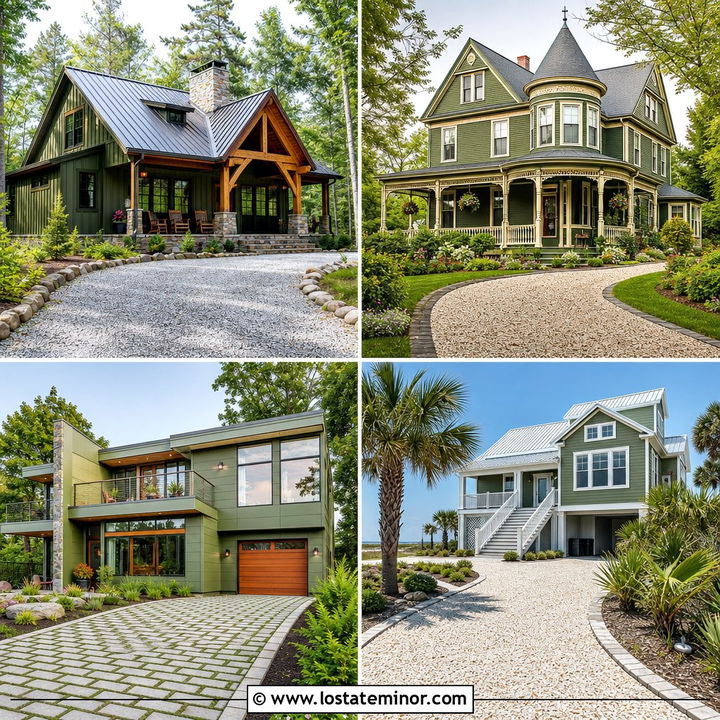
Sage green gives gabled homes a natural, welcoming character while making rooflines and architectural details easier to appreciate. The color can feel classic, rustic, coastal, or modern depending on the siding, trim, masonry, roofing, and woodwork around it. Nature-inspired exterior palettes and softer trim contrasts are also gaining attention, giving sage green even more flexibility beyond the usual bright-white pairing. () The most successful schemes treat every gable as part of the full facade rather than an isolated decorative feature. Materials should repeat across the porch, entry, garage, and foundation for a balanced result. The complete looks below explore practical color pairings and architectural combinations for anyone searching for **30 Sage Green House Design With Gables Ideas**.
1. Sage Green House With White Gables
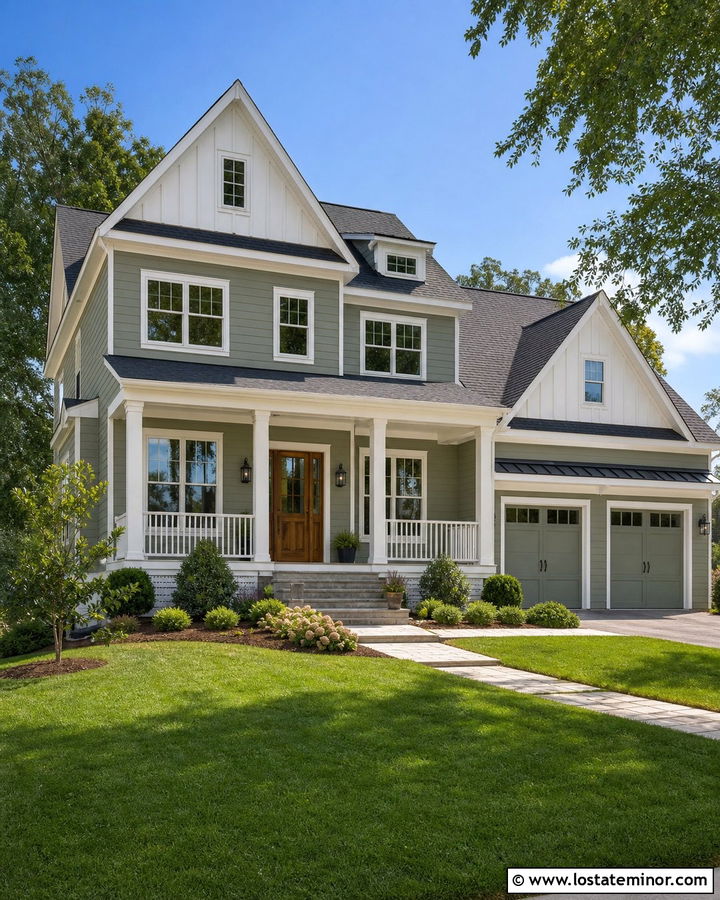
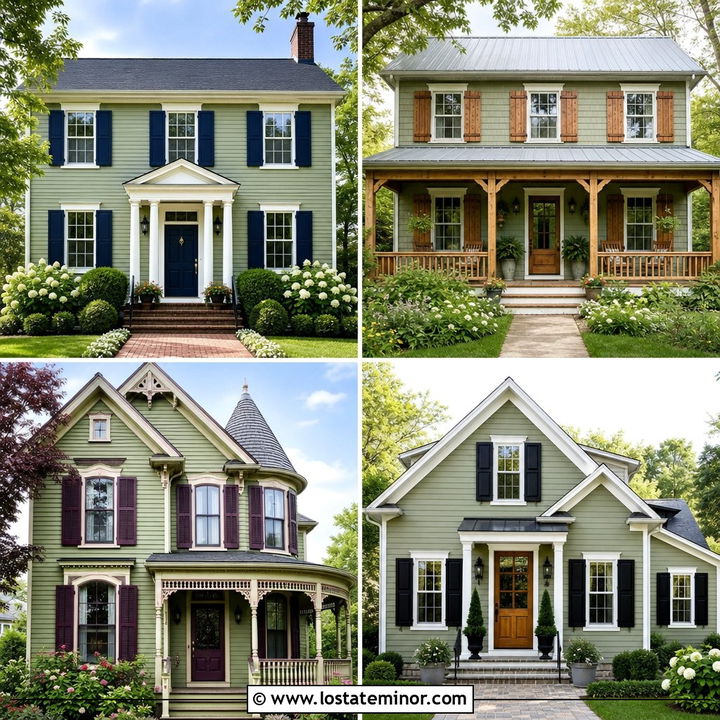
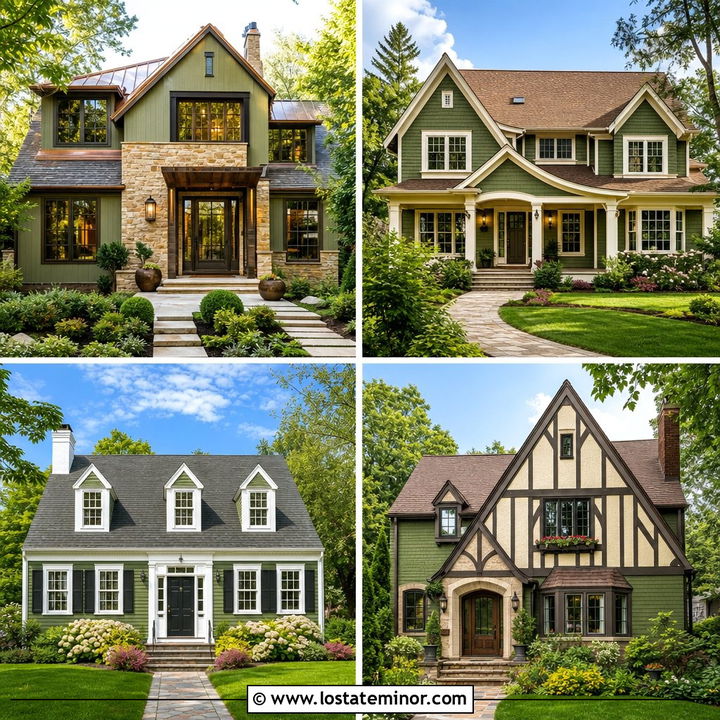
Crisp white gables create clear definition against muted sage green siding. This timeless combination works especially well on a traditional two-story home with symmetrical front-facing gables. Carry the white onto the fascia, window casings, porch columns, and railings so the contrast feels intentional. A charcoal architectural-shingle roof grounds the lighter palette, while a medium-stained oak door adds warmth near the center of the facade. Keep the garage doors sage green instead of white if they occupy a large portion of the front elevation. That prevents them from becoming the main focal point. Simple black lanterns, dark gutters, and a straight stone walkway complete a polished exterior that feels bright without looking overly sharp or busy.
2. Sage Green House With Cream Gables
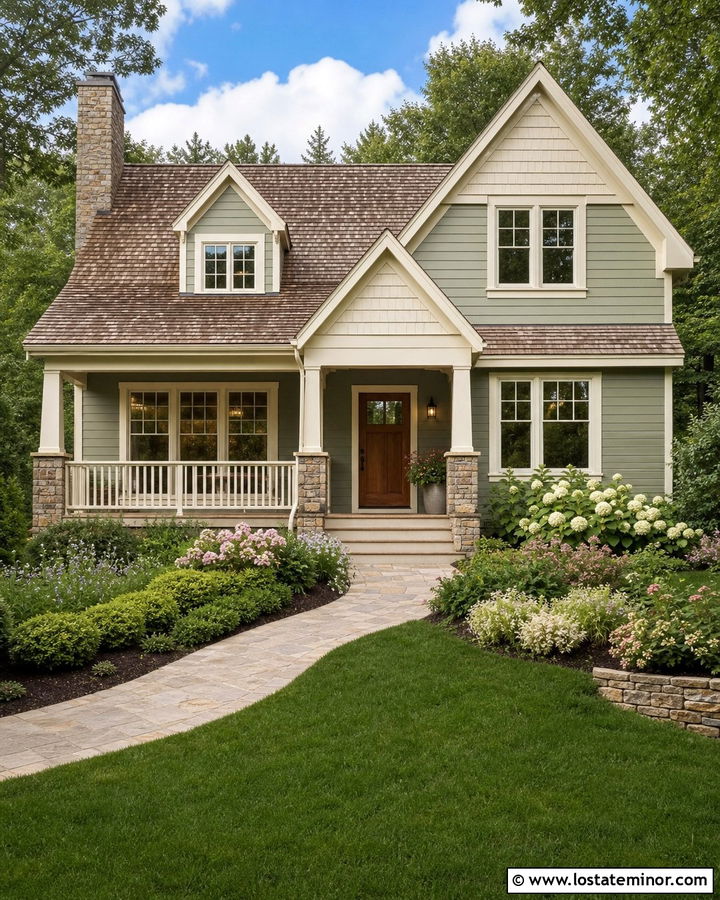
Cream-colored gables produce a softer transition than pure white, making this palette ideal for cottages and older traditional homes. Choose warm sage green lap siding for the main exterior, then apply creamy off-white to the gable shingles, trim, soffits, and porch railing. A weathered brown roof supports the warmer undertones and helps the house settle naturally into its surroundings. For the entrance, consider a stained walnut door with antique-brass hardware. Fieldstone around the foundation can introduce gray, tan, and soft brown without competing with the siding. Rounded shrubs and a curved walkway reinforce the relaxed appearance. This complete color scheme is especially useful when bright white looks too stark beside existing stone, aged brick, or mature landscaping.
3. Sage Green House With Black Gable Trim
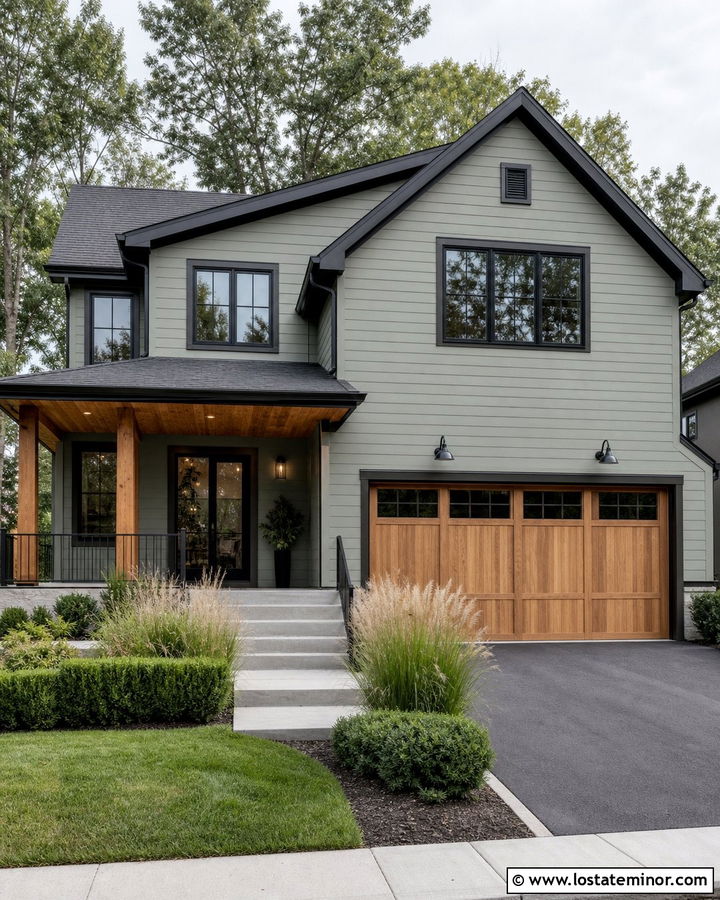
Black trim can give sage green gables a strong, contemporary outline. Use the dark color selectively around windows, gable fascia, porch railings, and the front door rather than covering every architectural detail. Vertical sage green board-and-batten siding emphasizes the height of steep gables, while black-framed windows repeat the roof color and create a clean visual rhythm. Add natural cedar beneath the porch ceiling or on a small garage section to keep the scheme from feeling cold. Light gray concrete steps and restrained landscaping suit the crisp palette. Because black creates noticeable contrast, keep decorative gable elements simple. One timber truss or a streamlined vent is usually enough to establish a focal point without overcrowding the roofline.
4. Sage Green House With Cedar Shake Gables
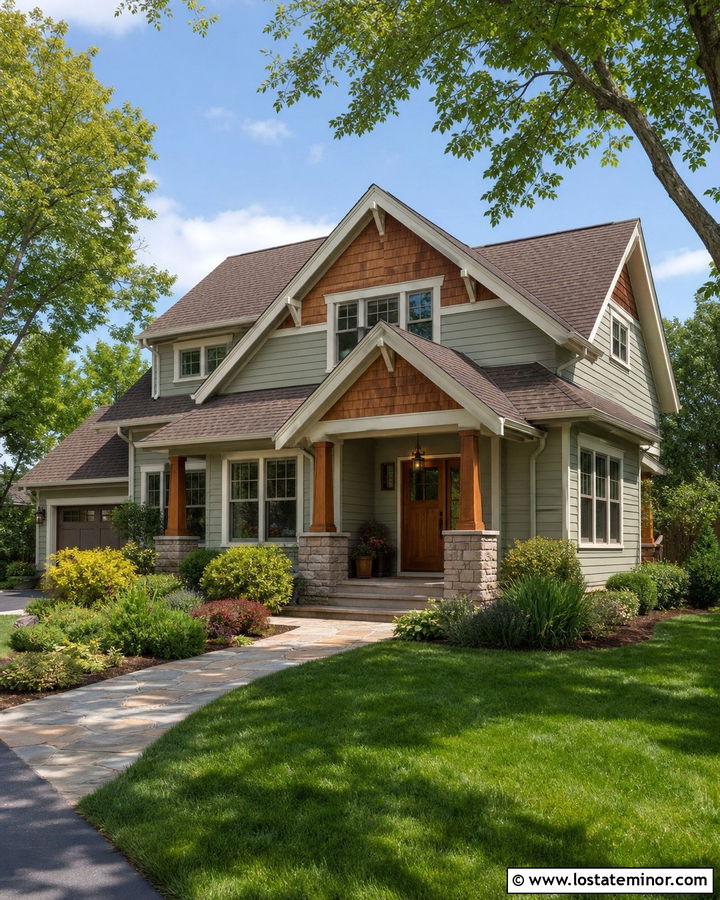
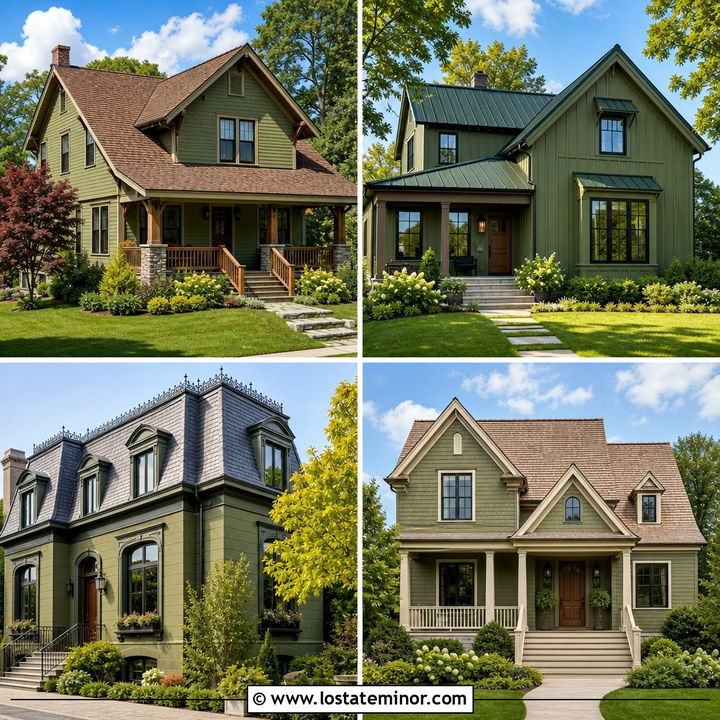
Natural cedar shakes bring texture and warmth to a sage green house without requiring another painted color. Place the shakes inside the upper gables, then use sage green horizontal siding across the main walls. Repeating the cedar on the front door, porch posts, or garage door helps the gables connect to the lower facade. Soft ivory trim can outline the windows without distracting from the wood grain. A deep brown roof works particularly well because it echoes the darker tones that appear as cedar ages. Choose stone porch piers with warm gray and beige variation to support the organic palette. This combination suits Craftsman, cottage, and mountain-inspired homes where visible materials should feel substantial, layered, and connected to the surrounding landscape.
5. Sage Green Gabled House With Stone
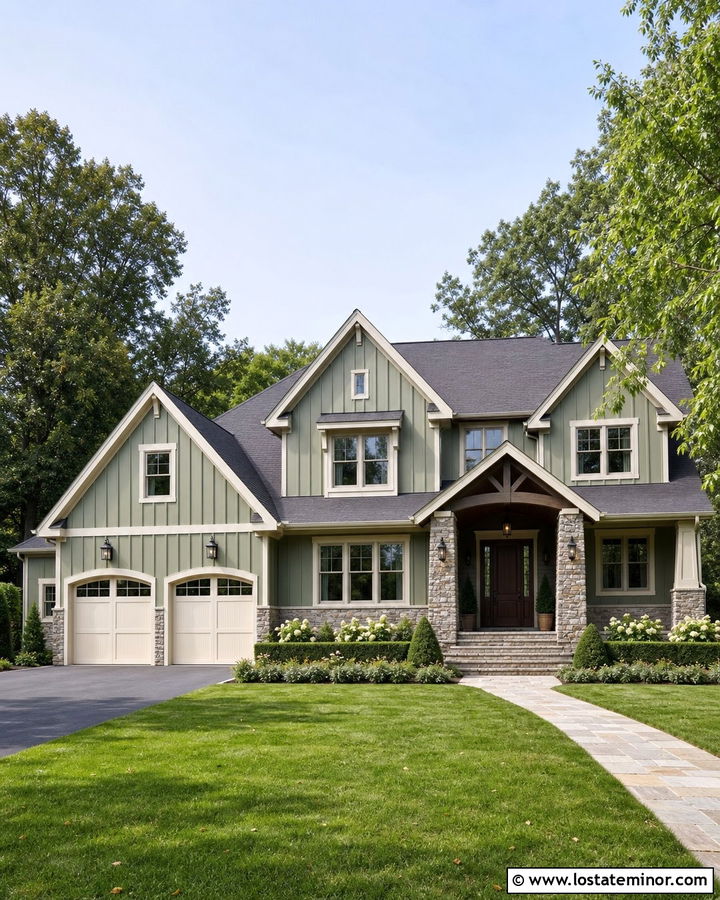
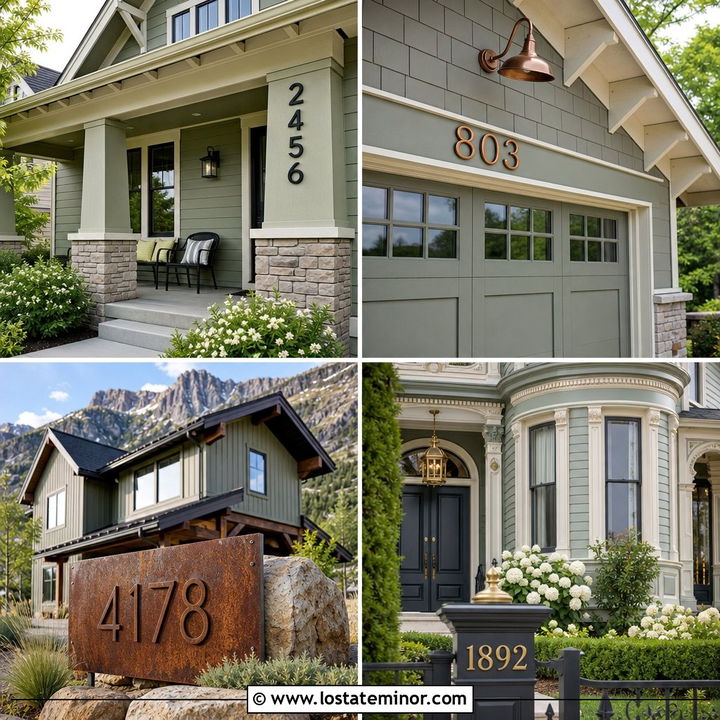
Stone can visually anchor a tall sage green facade with several prominent gables. Apply it around the foundation, porch columns, and lower garage walls rather than scattering small stone patches across unrelated areas. Sage green lap siding keeps the main body calm, while matching board-and-batten inside the gables introduces subtle texture. Select stone containing gray, taupe, and muted brown so it relates naturally to the green. Cream trim brightens the windows, and a charcoal roof provides a strong finishing line. Complete the look with a dark-stained wood door and simple bronze lighting. The stone should wrap visible corners whenever possible. This makes it look structurally integrated and gives the entire house a more convincing, finished appearance from different curbside angles.
6. Sage Green House With Brick Gables
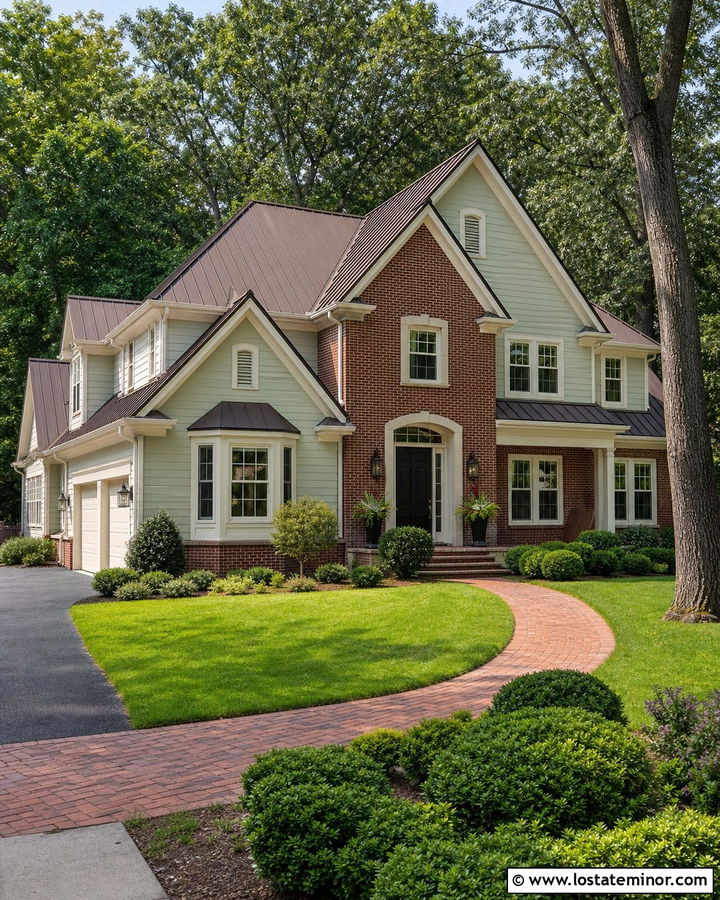
Existing brick can become an attractive feature when it is balanced with the right sage green. A muted, gray-based sage works well beside traditional red brick because it softens the masonry’s warmth without creating a harsh clash. Keep brick on the lower story, chimney, or central gable, then use green siding across the remaining walls. Warm white trim provides a clean separator between the two materials. A dark bronze or weathered brown roof complements both colors, while a black front door adds definition. Avoid introducing several additional accent shades. The brick already supplies plenty of color and texture. Repeating a brick tone in the walkway or porch steps helps unite the facade and makes the material combination appear original to the architecture.
7. Sage Green Board And Batten Gables
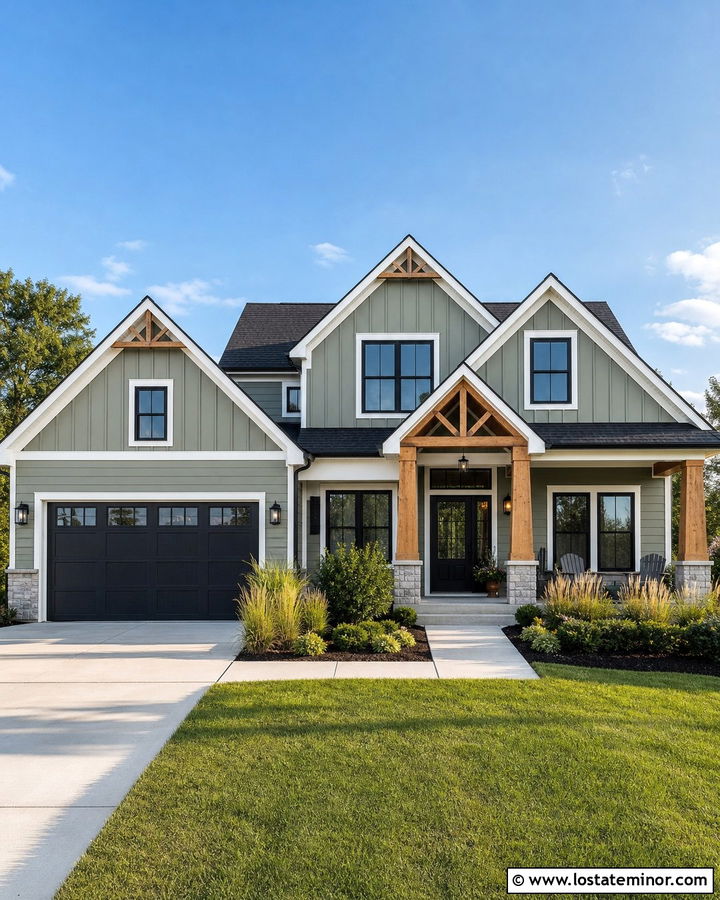
Board-and-batten siding naturally draws attention upward, making it a smart material for front-facing gables. Cover the main walls in sage green lap siding and use matching vertical panels inside each gable. The consistent color keeps the house cohesive, while the change in siding direction creates enough contrast to define the roofline. White or soft cream trim can outline the gables, windows, and covered entry. A black roof, black gutters, and narrow black window frames add modern structure. Warm wood porch columns soften those darker accents and make the entrance more inviting. This treatment is effective on new suburban homes because it adds dimension without relying on several paint colors. It also keeps complicated multi-gable facades looking organized rather than visually fragmented.
8. Sage Green House With Shingle Gables
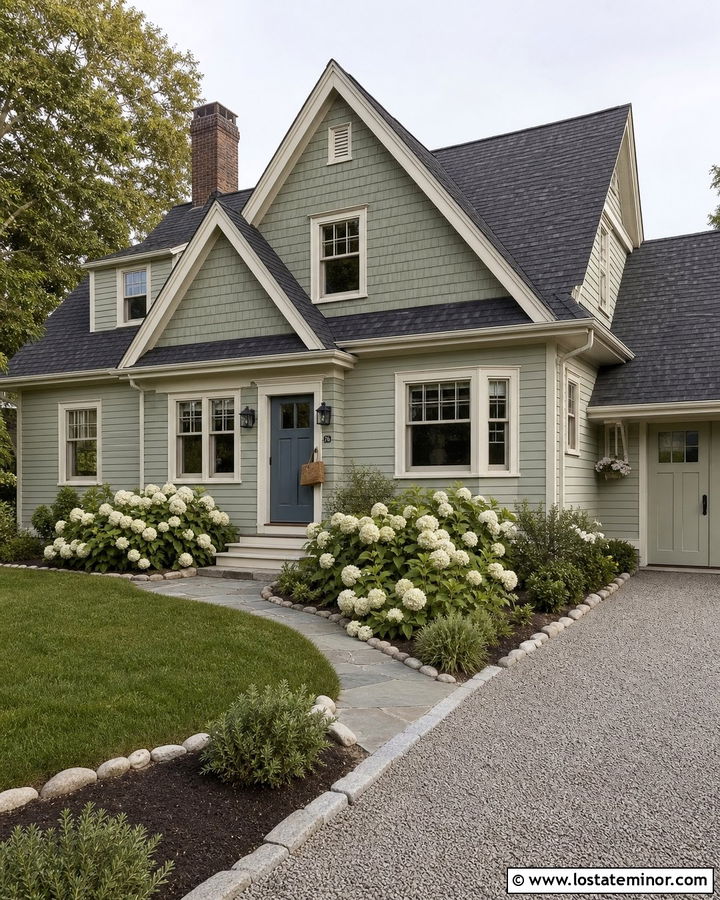
Painted shingle siding gives sage green gables a handcrafted appearance that suits Cape Cod, cottage, and Craftsman architecture. Use medium sage green shingles in the upper gables and a slightly lighter sage lap siding below. The low-contrast difference should remain visible in daylight without dividing the house into unrelated color blocks. Cream window trim and fascia add softness, while a muted blue-gray front door introduces a gentle accent. Choose a charcoal roof to keep the palette grounded and versatile. White hydrangeas, ornamental grasses, and a natural flagstone path can reinforce the relaxed curb appeal. Painted shingles also offer a practical way to emphasize gables when natural cedar would conflict with existing roofing, masonry, or maintenance preferences.
9. Sage Green House With Dark Green Gables
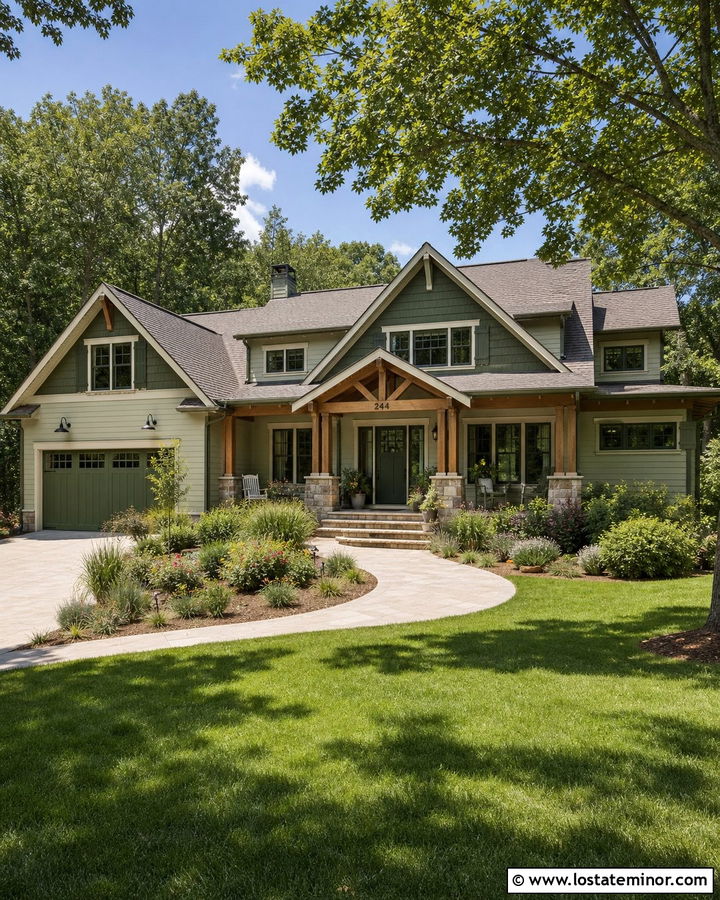
A two-tone green palette adds depth while preserving the calm quality of sage. Paint the main siding a medium muted sage, then use deep olive green inside the gables, on the shutters, and around the front door. Cream trim creates a narrow visual break so the two greens remain distinct. A weathered gray roof supports the earthy scheme without introducing another strong color. This approach looks especially effective on a wide Craftsman or traditional suburban home where several gables need a clearer hierarchy. Reserve the darkest green for the largest or most central gable if the facade already has many roof peaks. Natural stone steps and stained wood porch beams can finish the scheme with enough texture to prevent the layered greens from appearing flat.
10. Monochromatic Sage Green Gabled House
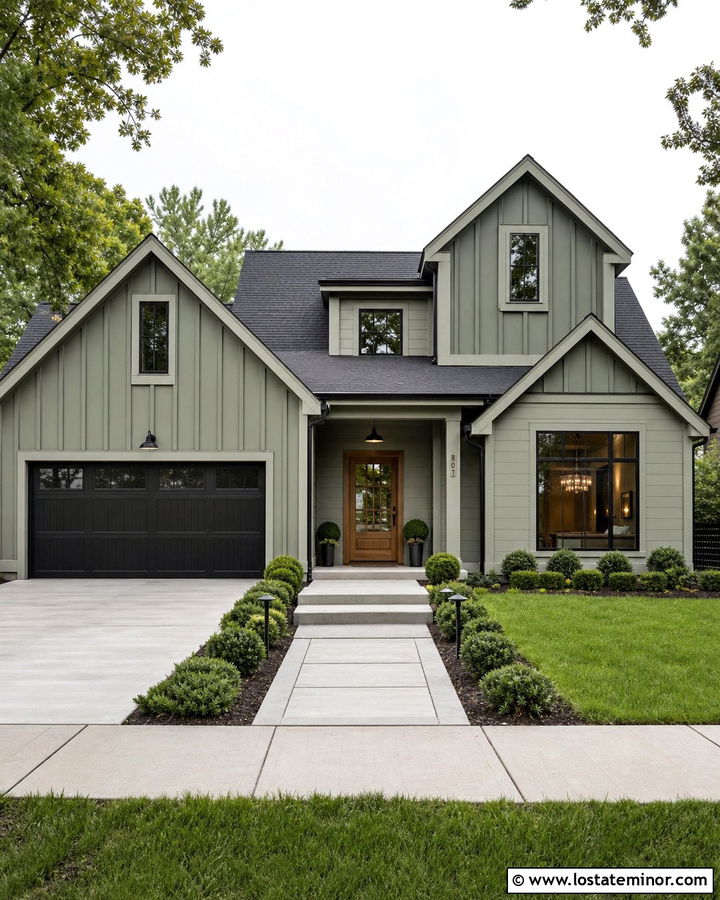
Using closely related sage tones can create a sophisticated exterior without dramatic trim contrast. Choose a medium sage green for the lap siding, a slightly deeper sage for the board-and-batten gables, and a pale gray-green for window casings and fascia. The subtle variations highlight the architecture while allowing the house to blend naturally with trees and planted beds. A charcoal roof and black lighting provide just enough definition. For warmth, add a honey-toned wood door or cedar porch ceiling. This monochromatic approach is particularly useful on homes with numerous gables because bright contrasting outlines can make a complex roofline look restless. Keep the landscaping structured and repeat the deepest green on planters or a garden gate for a coordinated finish.
11. Sage Green Gabled House With Black Roof
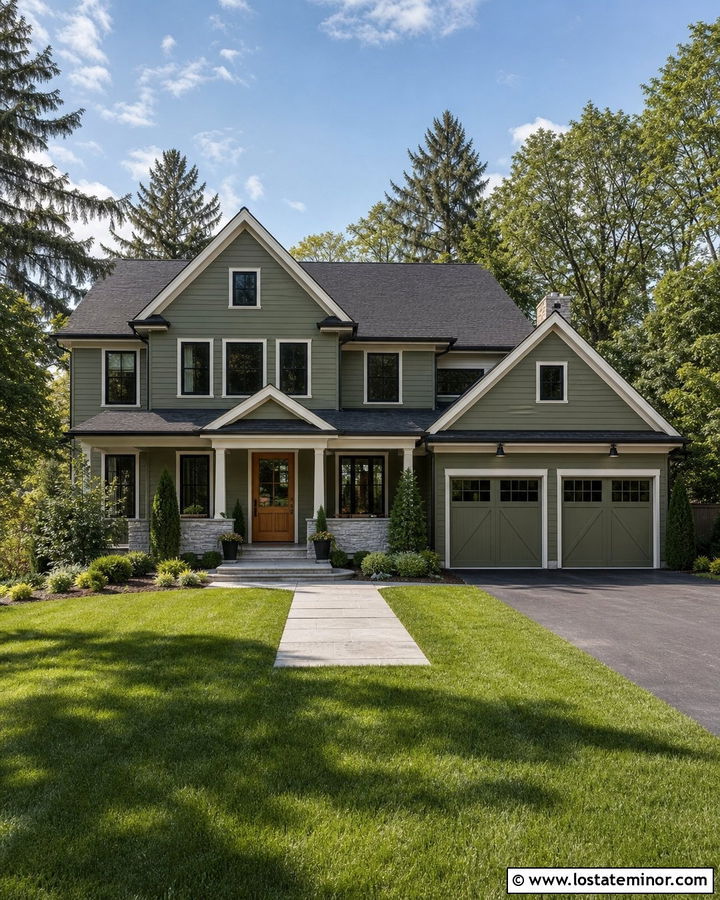
A black roof gives a sage green exterior a crisp upper boundary and works well with both traditional and modern architecture. Pair the roof with medium sage board-and-batten siding, black gutters, and slim black window frames. Use warm white on the gable fascia and porch columns to prevent the upper facade from feeling too heavy. A natural oak entry door brings needed warmth near eye level. If the home has an attached garage, paint the doors sage green and add small black windows or hardware. This keeps the garage integrated into the wider elevation. Pale stone around the porch base can lighten the lower facade. The finished palette feels structured, balanced, and suitable for a highly visible suburban lot.
12. Sage Green Gabled House With Metal Roof
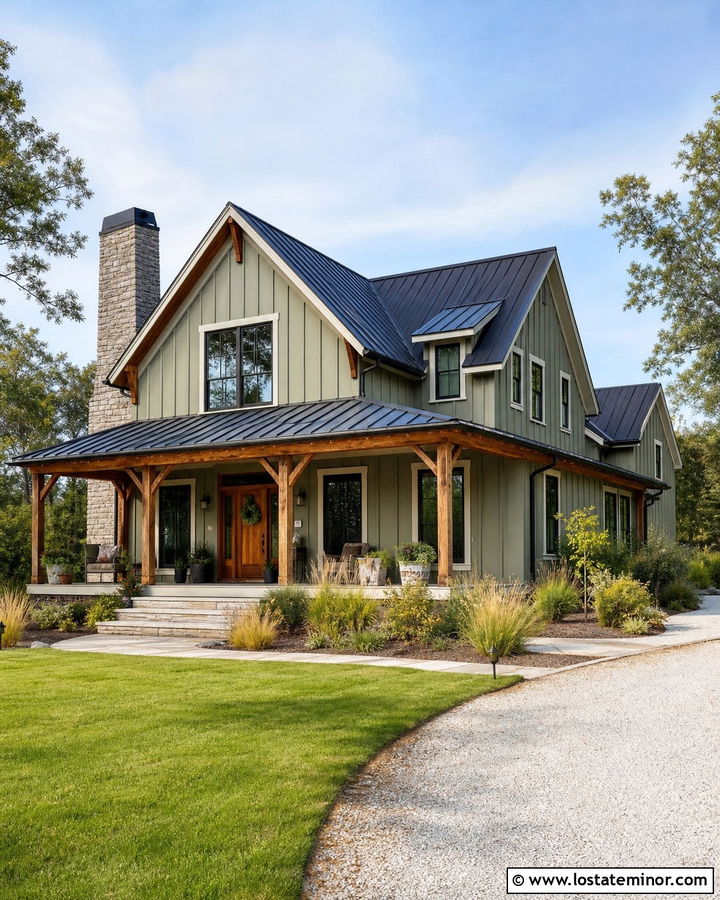
A standing-seam metal roof brings clean lines and subtle reflectivity to a sage green gabled house. Choose charcoal or matte black metal rather than a highly reflective silver finish. The darker roof defines the gables and contrasts beautifully with soft sage green vertical siding. Warm cedar beams beneath the peaks can highlight the architecture while connecting to a matching front door. Keep the trim cream or light greige to soften the transition between the roof and siding. A stone chimney or foundation in mixed gray tones adds natural texture. This scheme works well on modern farmhouses, cabins, and rural homes. Deep roof overhangs and a broad porch will also provide attractive shadows without making the sage green exterior appear darker than intended.
13. Sage Green Gabled House With Brown Roof
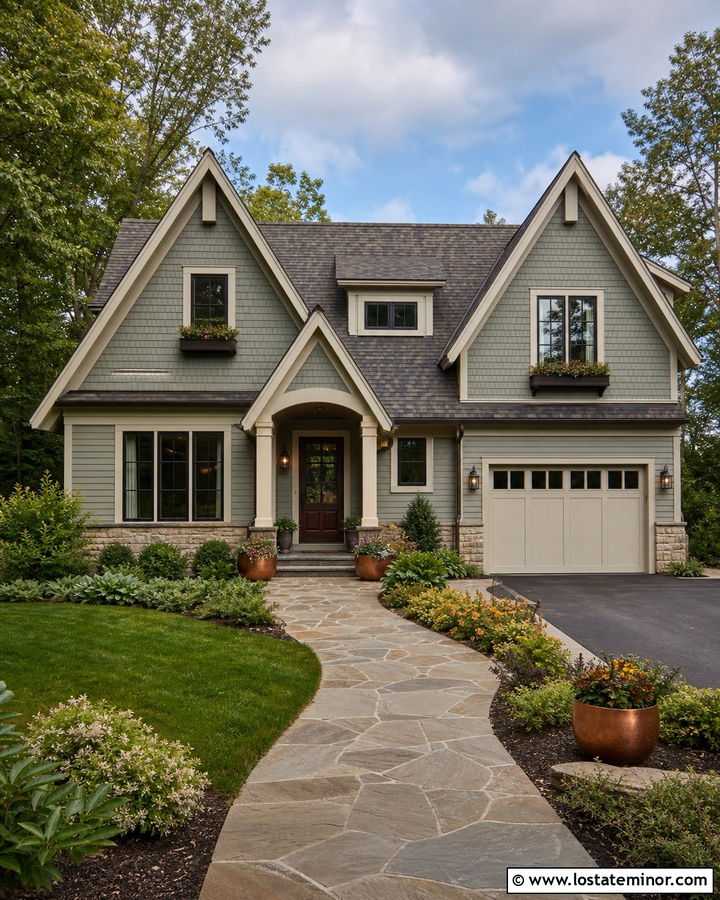
A brown roof creates a warm, grounded partner for sage green siding. Look for architectural shingles containing blended brown, charcoal, and weathered gray rather than a flat orange-brown. These varied tones connect more easily with stone foundations and natural wood details. Use creamy trim around the gables and windows, then repeat the roof’s warmth with a walnut front door and dark bronze fixtures. Sage green lap siding can cover the main walls, while matching shakes add texture inside the gables. This combination feels especially appropriate for cottages, Craftsman homes, and wooded suburban properties. Avoid cool blue-gray accents, which may feel disconnected from the roof. Instead, complete the palette with beige stone, copper-toned planters, and softly layered foundation plantings.
14. Sage Green House With Timber Gable Trusses
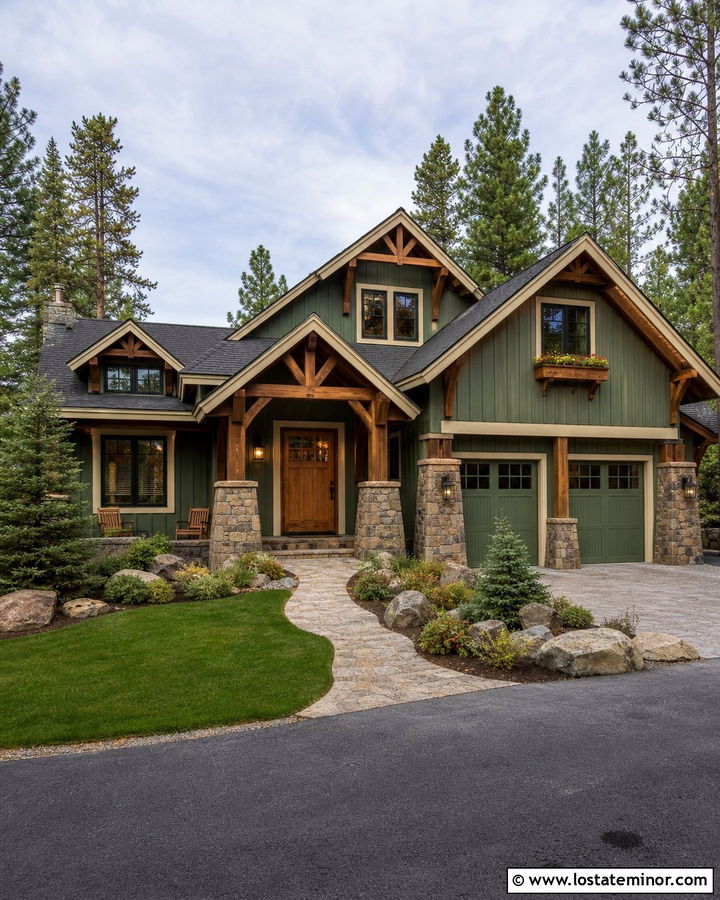
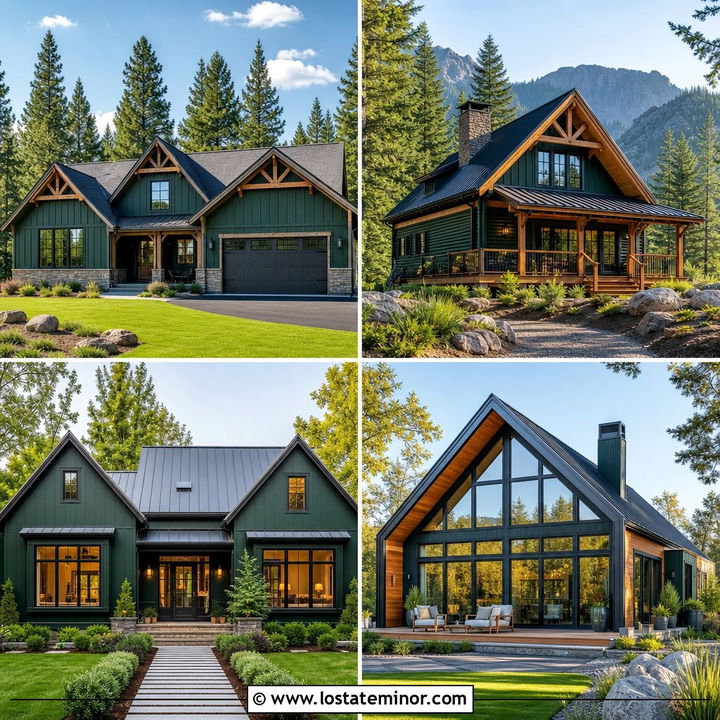
Exposed timber trusses make gables feel deeper and more architectural. Against sage green siding, medium-toned cedar or Douglas fir creates an attractive natural focal point. Repeat the timber on porch posts, brackets, and the front door so the truss does not appear isolated near the roof. Warm cream trim works better than bright white for this earthy combination. A charcoal roof and dark bronze windows add enough contrast while letting the wood remain the star. Use rugged gray-brown stone around the porch columns or foundation to visually support the heavier beams. This complete exterior suits Craftsman, mountain, and modern rustic homes. Keep the gable siding simple, preferably vertical board-and-batten, so decorative framing stays clear and readable from the street.
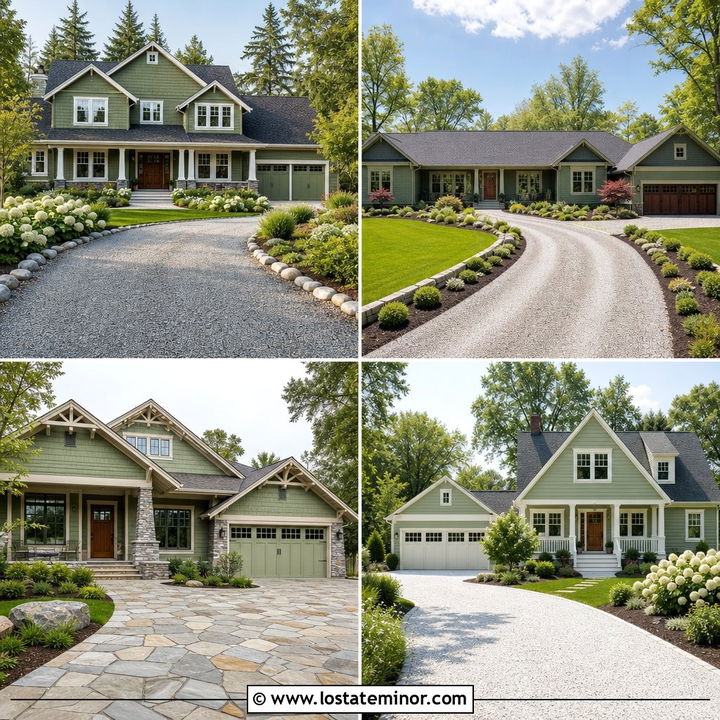
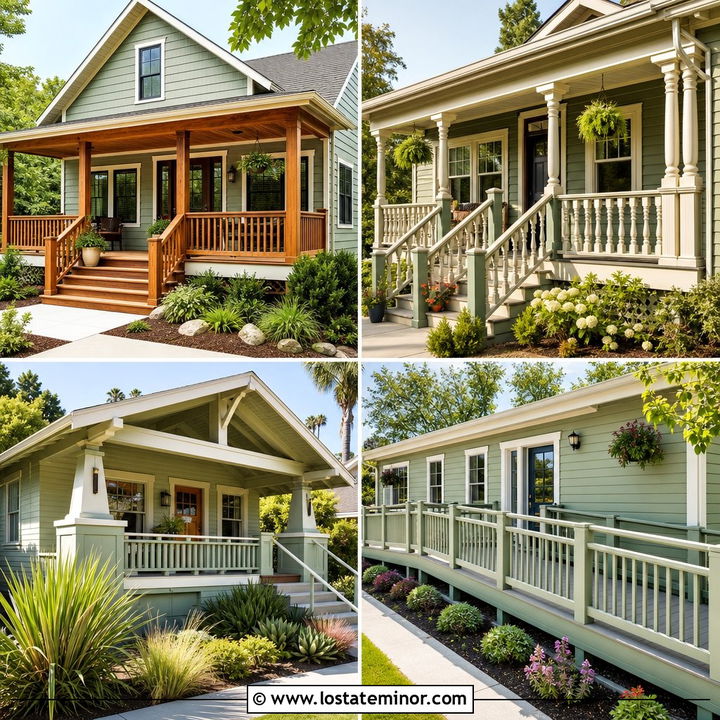
15. Sage Green House With Decorative Gable Vents
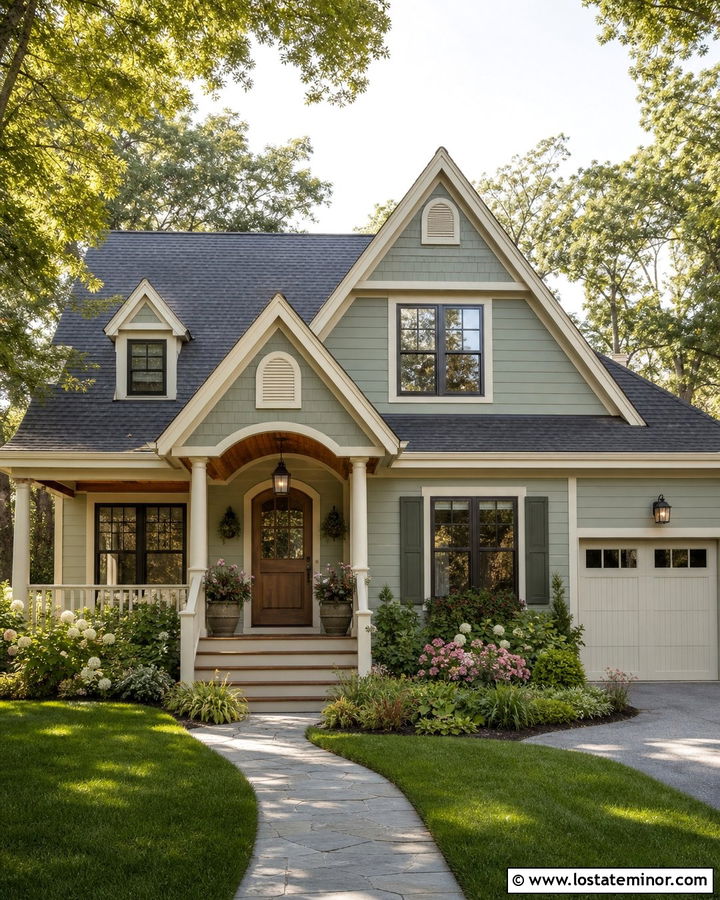
Decorative vents offer an affordable way to add character to simple sage green gables. A round, arched, or rectangular louver can be painted cream to match the trim, black to coordinate with the windows, or stained to repeat a wood door. Choose one vent shape that suits the home and use it consistently across the facade. Sage green lap siding with matching gable shingles creates a textured but controlled background. Pair the scheme with a charcoal roof, cream fascia, and a warm wood porch. On a small cottage, an arched vent can soften sharp roof peaks. On a farmhouse, a simple square louver feels more appropriate. Keep shutters and other ornaments restrained so the vents remain a purposeful architectural detail.
16. Sage Green House With Wood Front Door And Gables
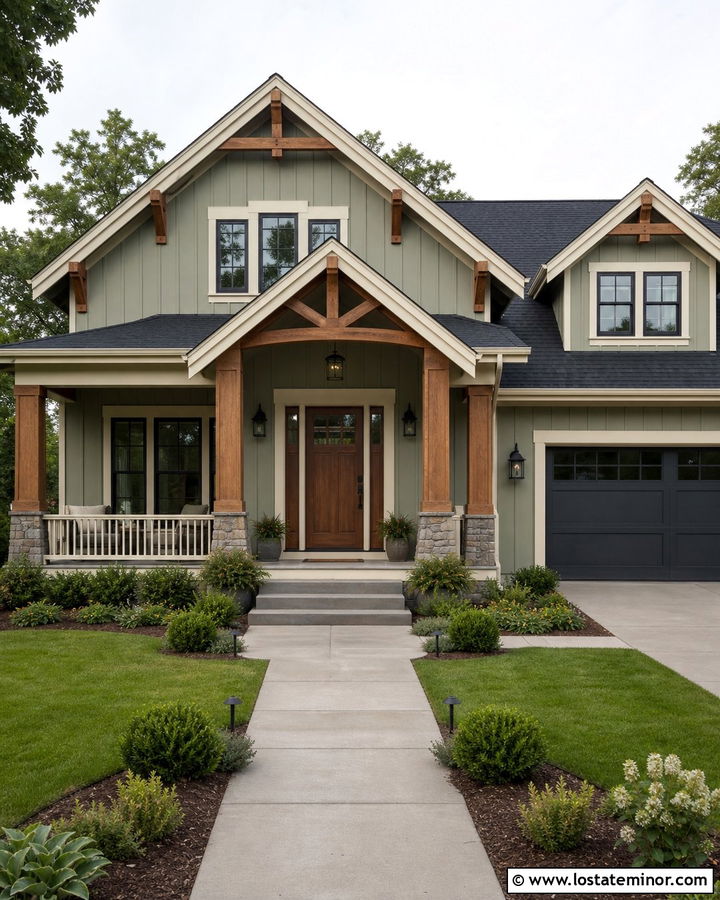
A richly stained front door can balance the visual weight of multiple sage green gables. Choose a warm oak, cedar, or walnut finish and repeat that wood tone in gable brackets, porch columns, or a small section of accent siding. The repetition guides the eye from the roof peaks down to the entrance. Cream trim and a dark charcoal roof create a flexible background, while sage green board-and-batten siding adds vertical emphasis. Use black hardware and lanterns sparingly for contrast. Stone porch steps in warm gray complete the natural palette. This combination works on many house types, but it is especially effective on Craftsman and modern farmhouse facades where structural wood details already feel appropriate and visually connected to the architecture.
17. Sage Green House With Black Door And Gables
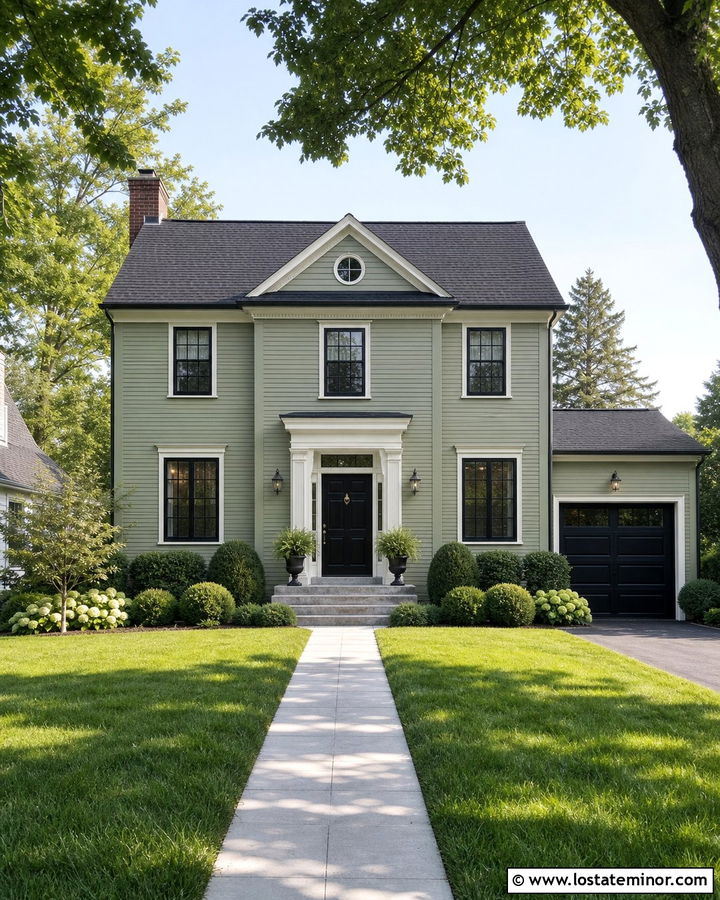
A black front door gives a sage green gabled exterior a clear focal point without introducing an unrelated color. Coordinate it with black window frames, roof shingles, gutters, and simple porch lights. Keep the gable fascia warm white so the dark elements do not overpower the upper facade. Sage green can cover both the lap siding and gable panels, allowing texture rather than color to create variation. If the home includes stone, choose a pale gray blend with minimal brown. This maintains the crisp character of the palette. A straight concrete walkway and structured evergreen plantings reinforce the clean appearance. The result feels current yet practical, particularly for Colonial Revival, modern farmhouse, and streamlined suburban homes with balanced front elevations.
18. Sage Green House With Navy Door And Gables
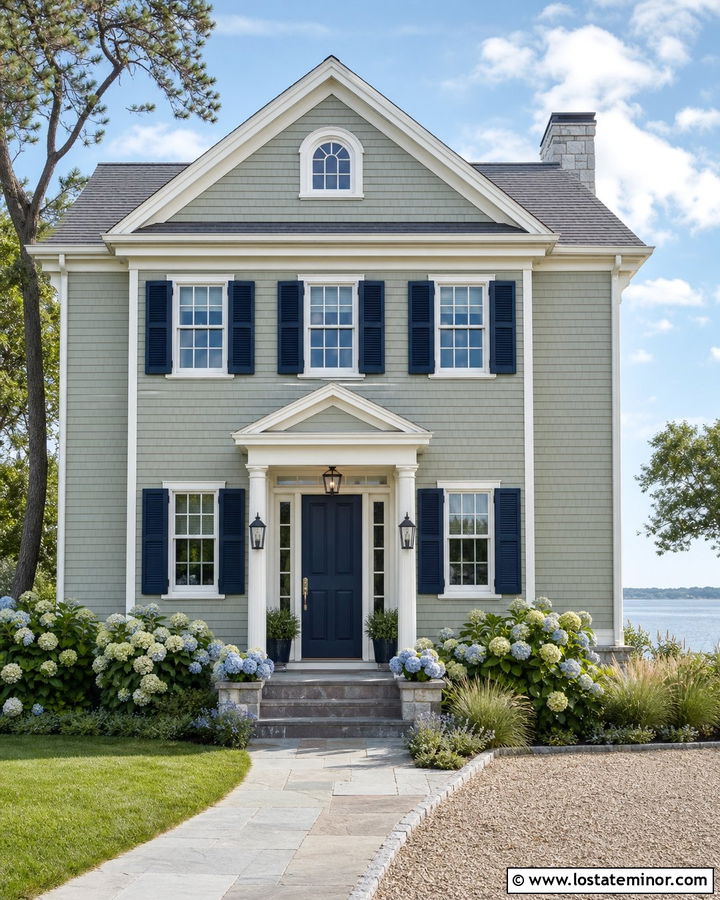
Navy blue adds restrained color to sage green without breaking the exterior’s calm mood. Use navy on the front door and selected shutters, then keep the gables sage green with ivory trim. A medium gray roof connects the cool undertones of both colors. For texture, add pale limestone or light gray stone around the entry and lower foundation. Brushed nickel or aged brass door hardware can provide a small polished detail. This scheme is particularly suitable for coastal cottages and traditional homes where black may look too severe. The navy should be deep and slightly muted rather than bright blue. Repeat it only a few times across the facade, allowing the sage siding and architectural gables to remain the dominant features.
19. Sage Green House With Terracotta Door And Gables
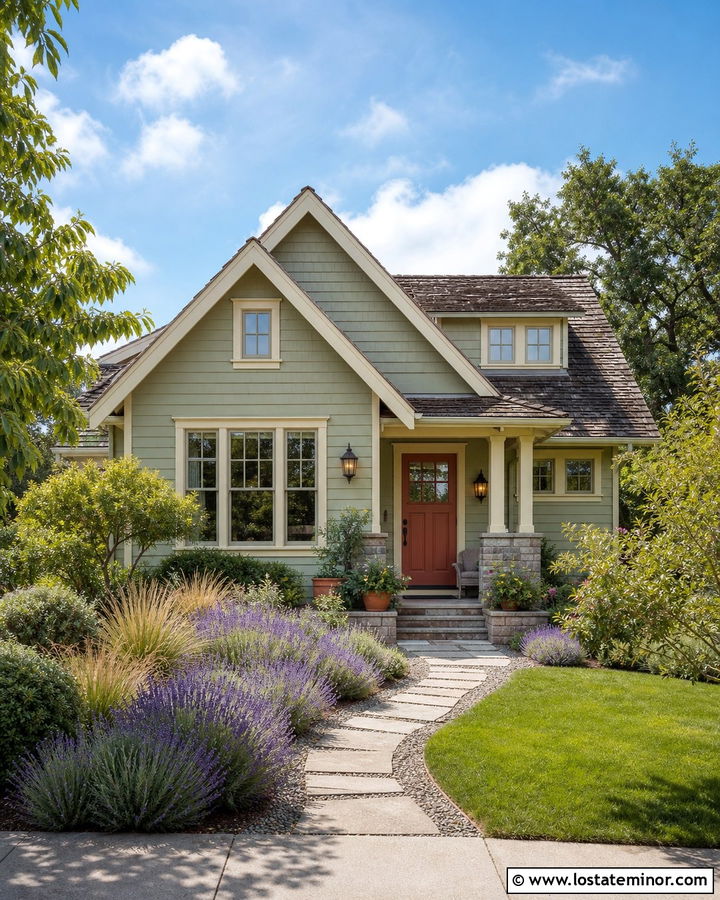
A muted terracotta front door can add welcoming warmth to a sage green house with simple gables. The red-orange accent works best when it is earthy rather than bright. Pair it with cream trim, a weathered brown roof, and warm gray stone around the porch. Sage green siding should remain the dominant color across the facade and gable ends. Small copper planters or bronze light fixtures can repeat the door’s warmth without creating obvious matching accents. This palette suits cottages, bungalows, and Southwestern-influenced suburban homes. Keep shutters neutral or omit them entirely so the door stays visually important. Drought-tolerant grasses, lavender, and natural gravel can complete an informal landscape that complements the warm, garden-inspired exterior colors.
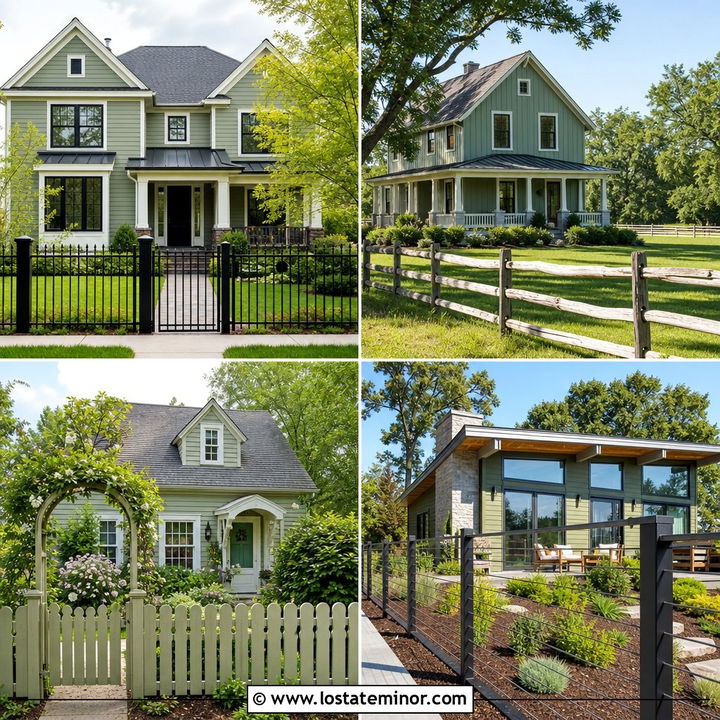
20. Sage Green House With Wood Shutters And Gables
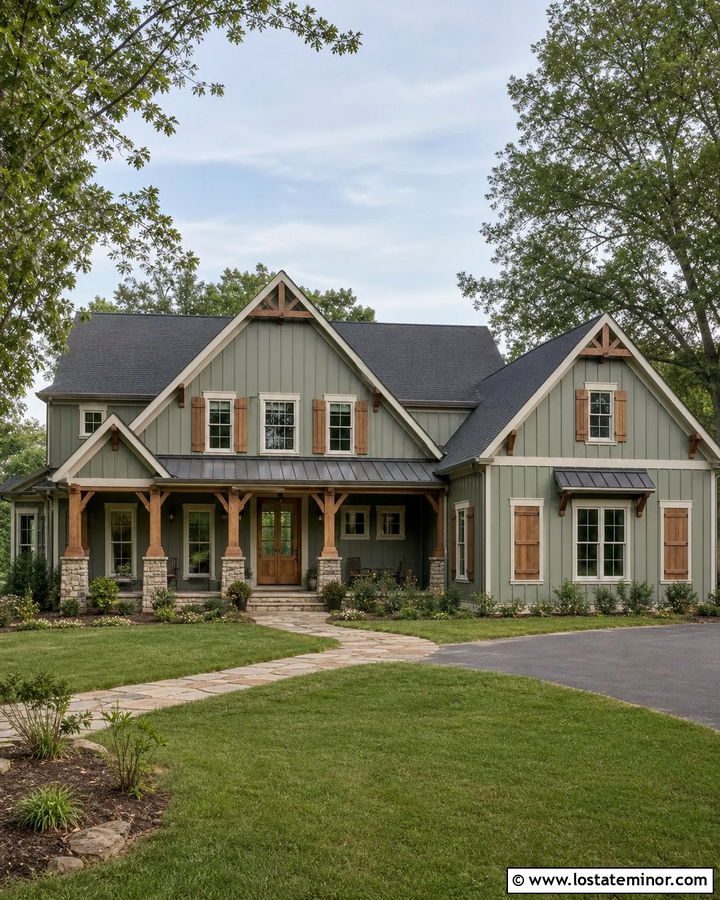
Natural wood shutters add depth to sage green siding while reinforcing the warmth of exposed gable details. Choose simple board-and-batten shutters in a medium cedar stain, then repeat that finish on porch posts, gable brackets, and the front door. Cream window trim creates separation between the wood and green, helping each material remain visible. A dark brown or charcoal roof provides a stable backdrop. This scheme is especially convincing on Craftsman, farmhouse, and rustic cottage architecture. Make sure the shutters appear properly sized for the windows, even if they are decorative. Undersized pieces can make an otherwise thoughtful facade look unfinished. Stone porch piers and a curved flagstone path will strengthen the natural, layered curb appeal.
21. Sage Green Craftsman House With Gables
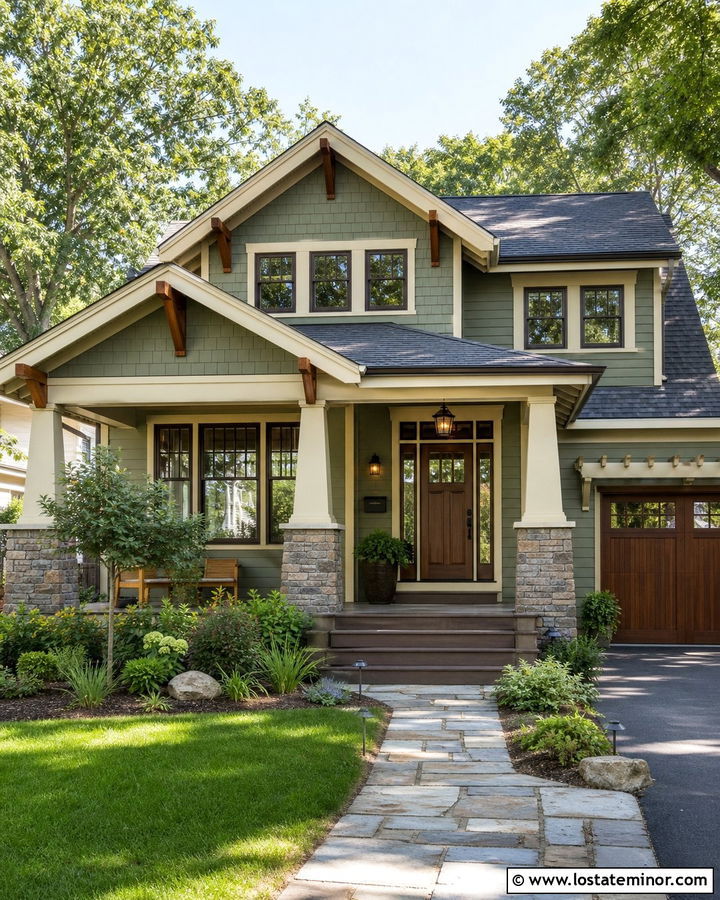
A Craftsman house offers several natural places to use sage green, including wide gables, shingle panels, porch walls, and tapered columns. Cover the main facade in muted sage lap siding and use matching shakes beneath the largest gable. Cream trim can outline deep eaves and divided-light windows, while stained timber brackets highlight the roof structure. Ground the porch with chunky stone piers in gray and brown tones. A dark charcoal roof and walnut entry door complete the palette. Craftsman exteriors already contain numerous materials, so avoid adding unnecessary accent colors. Repeating sage, cream, wood, and stone across the entire elevation creates enough variety. Low shrubs and layered native plantings will complement the home’s broad, grounded proportions.
22. Sage Green Modern Farmhouse With Gables
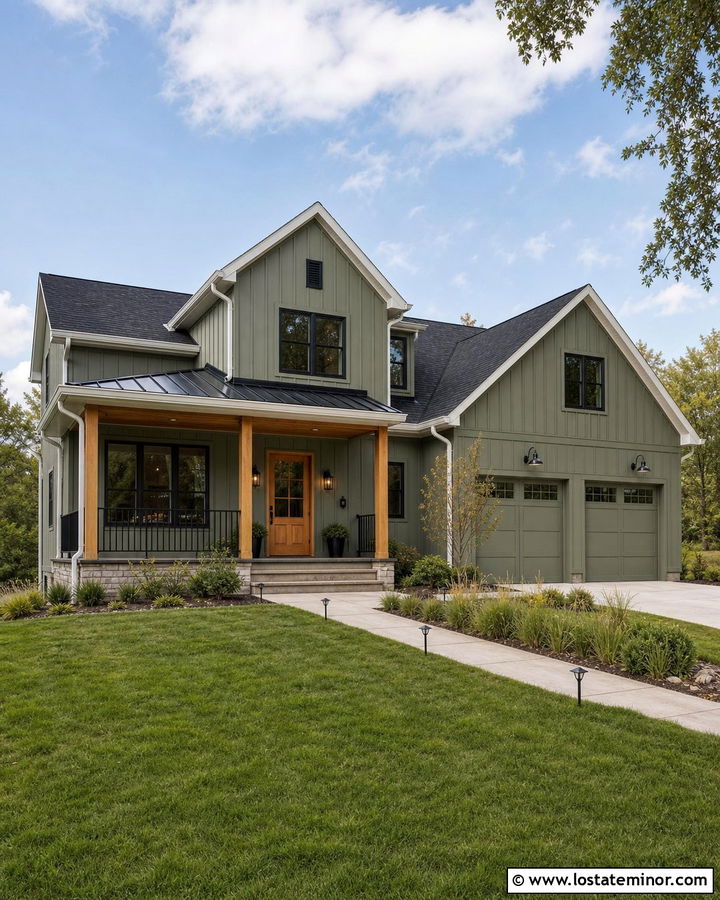
Sage green offers a softer alternative to the all-white modern farmhouse while preserving its clean shape. Use vertical board-and-batten siding across the body and front gables, then outline the roofline with warm white fascia. Black-framed windows, gutters, and porch railings provide crisp contrast. A natural wood front door and cedar porch ceiling keep the palette from feeling overly graphic. Choose a matte black metal roof for the porch and dark architectural shingles for the main roof to control costs while maintaining a coordinated look. Paint the garage doors sage green so they blend into the facade. Simple concrete steps, clipped grasses, and a wide lawn complete an uncluttered exterior that feels updated without relying on short-lived decorative details.
23. Sage Green Cottage House With Gables
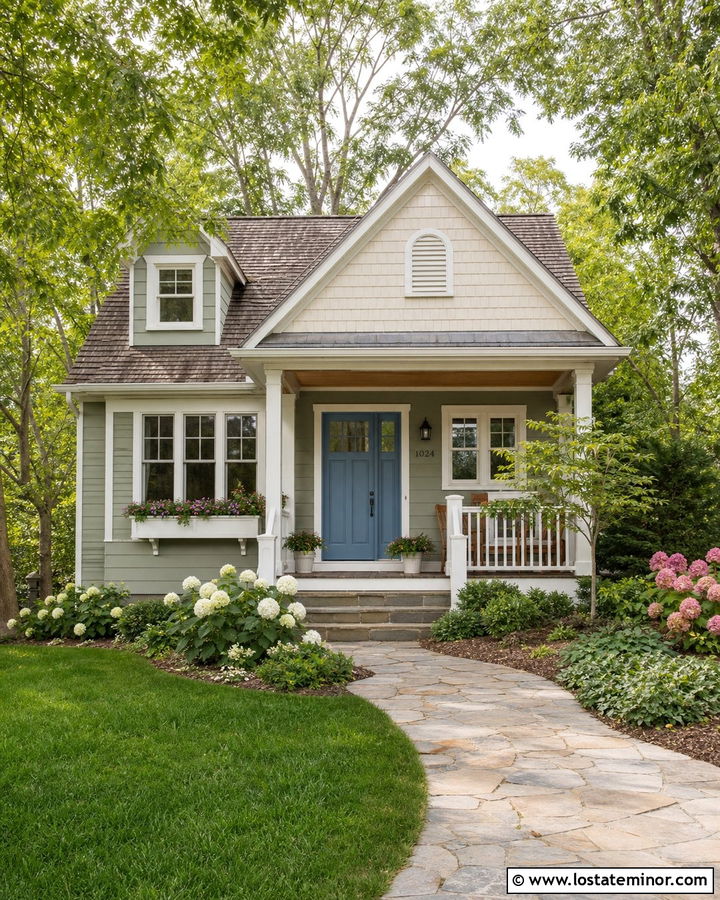
A small cottage can use sage green to highlight charming gables without making the facade feel crowded. Select a light, warm sage for the lap siding and use cream-painted shingles inside the main front gable. A dusty blue door adds a quiet accent, while white window boxes bring seasonal color without changing the permanent palette. Choose a weathered gray roof and simple copper or bronze lights. If there is a porch, keep the railing cream and introduce natural wood through the ceiling or steps. An arched gable vent can provide one decorative focal point. Curved garden beds, flowering shrubs, and an irregular stone walkway soften the house further, creating a welcoming exterior with a comfortable, lived-in character.
24. Sage Green Colonial House With Gables
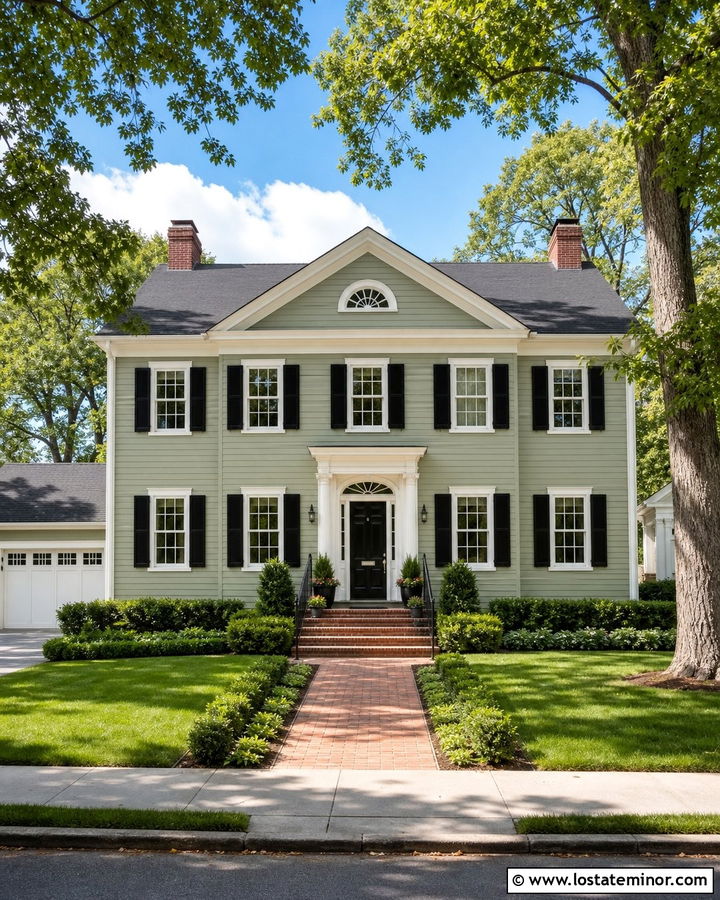
Colonial architecture benefits from a controlled sage green palette that respects its symmetry. Use medium sage lap siding across the entire facade, including any side or front gables. Crisp off-white trim should define the cornice, window casings, corner boards, and classical entry surround. Add black shutters and a glossy black door for traditional contrast. A dark gray roof and red brick chimney introduce familiar materials without overwhelming the green. If the home includes a centered pediment or small entrance gable, keep it off-white to emphasize the doorway. Balanced foundation plantings and a straight brick walkway reinforce the orderly composition. This combination updates a formal house with color while retaining the clear proportions that give Colonial exteriors their recognizable appeal.
25. Sage Green Tudor House With Gables
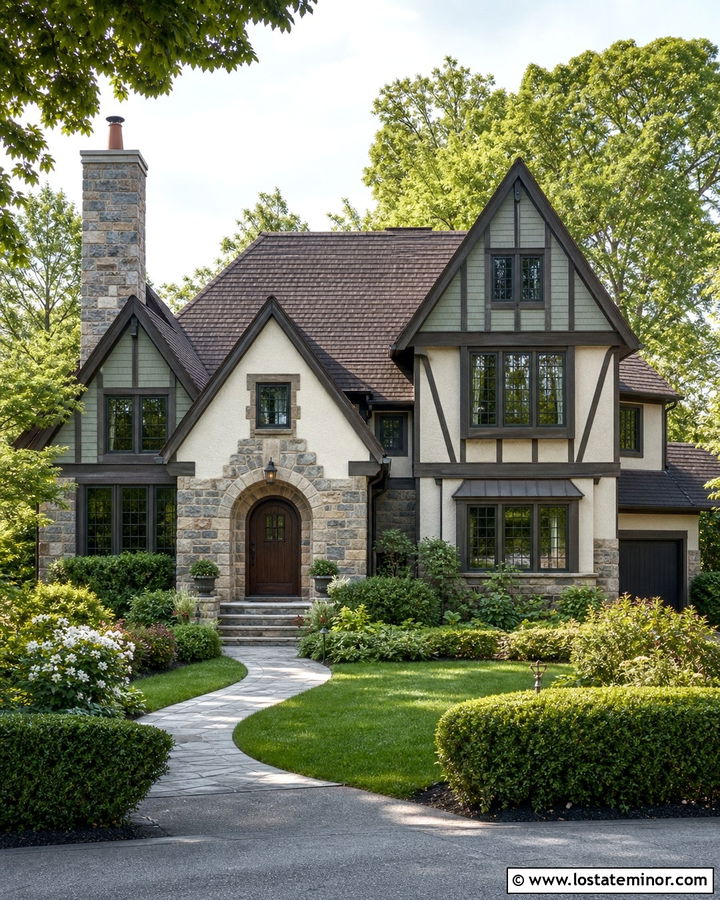
Steep Tudor gables become more approachable when sage green replaces the usual heavy brown infill. Use a gray-toned sage between dark timber details, then carry the color onto side siding or secondary walls. Warm cream stucco can cover larger masonry areas, while deep bronze windows and gutters connect to the exposed beams. A brown-black roof maintains the historic weight of the architecture. For the entrance, choose an arched walnut door with simple iron hardware. Stone around the base should include muted gray, beige, and brown tones that relate to every part of the palette. Keep landscaping slightly informal with layered hedges and a curved path. The completed scheme feels traditional but noticeably lighter and more welcoming from the street.
26. Sage Green Ranch House With Cross Gables
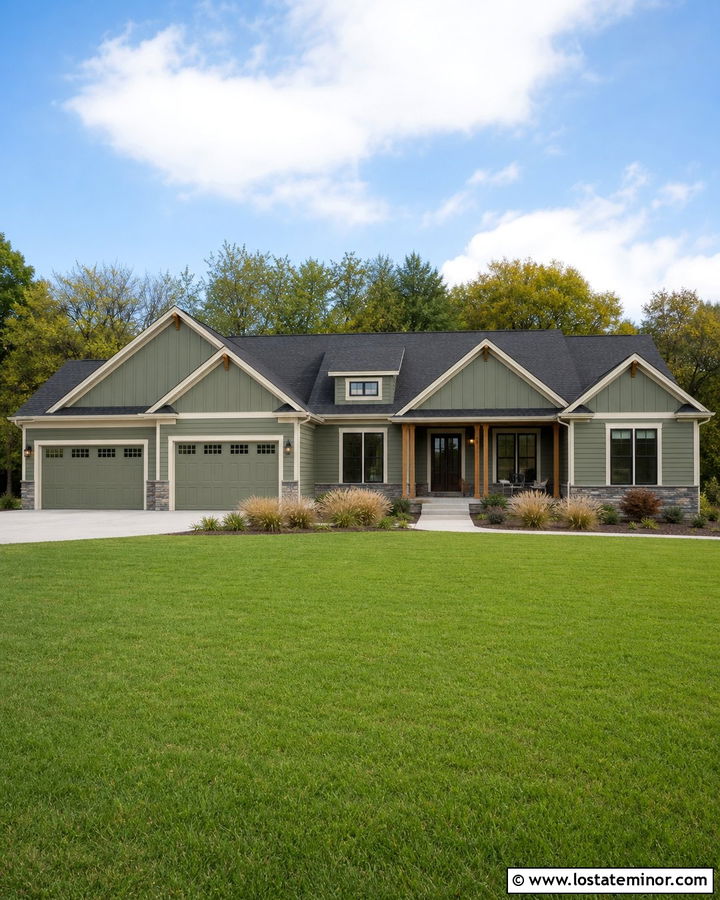
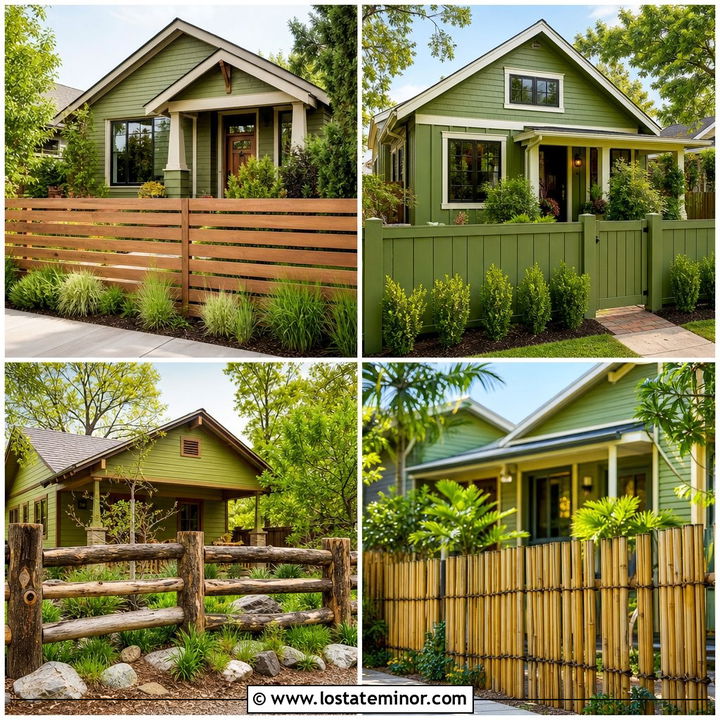
Cross gables can give a ranch house more dimension while preserving its practical single-story layout. Paint the long horizontal walls sage green, then use matching vertical siding inside the gables to draw attention upward. Cream trim brightens the low roofline, while a charcoal roof provides definition across the wide facade. Add wood around the front door, porch posts, or garage windows to warm the composition. A low stone base can further break up the siding without making the house look shorter. Keep garage doors sage green and repeat the trim color only around their windows. Broad foundation beds, ornamental grasses, and a clean concrete walkway support the horizontal architecture while allowing the gabled entry to become the main curb-appeal feature.
27. Sage Green Split-Level House With Gables
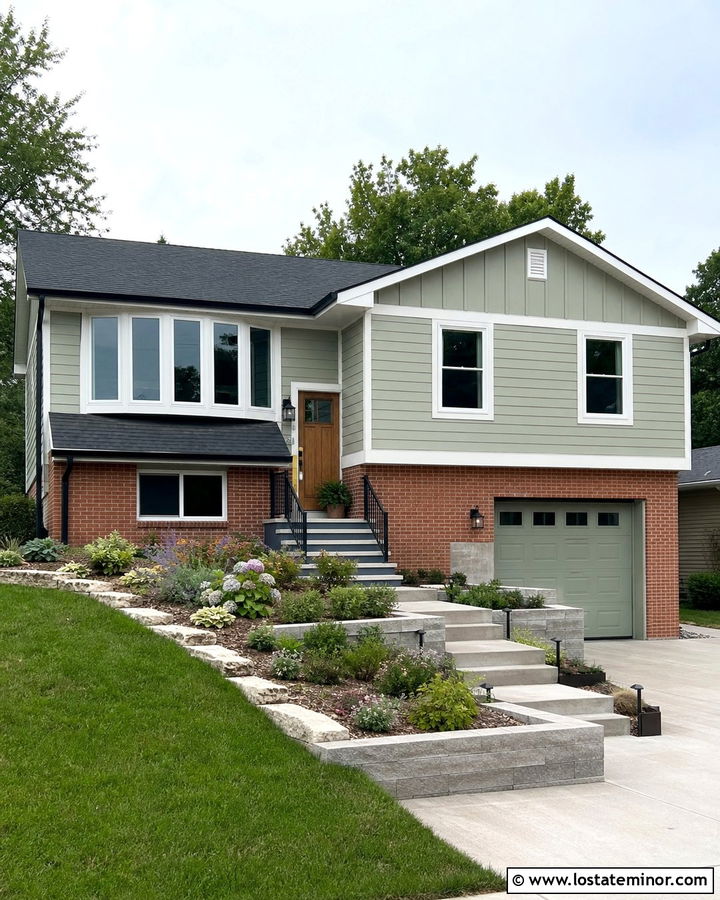
Sage green can visually unify the offset floors and mixed materials commonly found on split-level homes. Use the color across upper siding and newly added gable panels, then retain existing brick or stone on the lower level. Warm white trim connects the windows between stories, while a charcoal roof and black gutters create a consistent upper edge. Paint the garage door sage green so the lower facade does not become a separate color block. A natural wood entry door can mark the recessed entrance and make it easier to find from the street. Update the landscaping with broad steps, tiered planting beds, and a clearly defined walkway. These changes help the entire exterior feel balanced rather than divided into unrelated levels.
28. Sage Green Mountain House With Gables
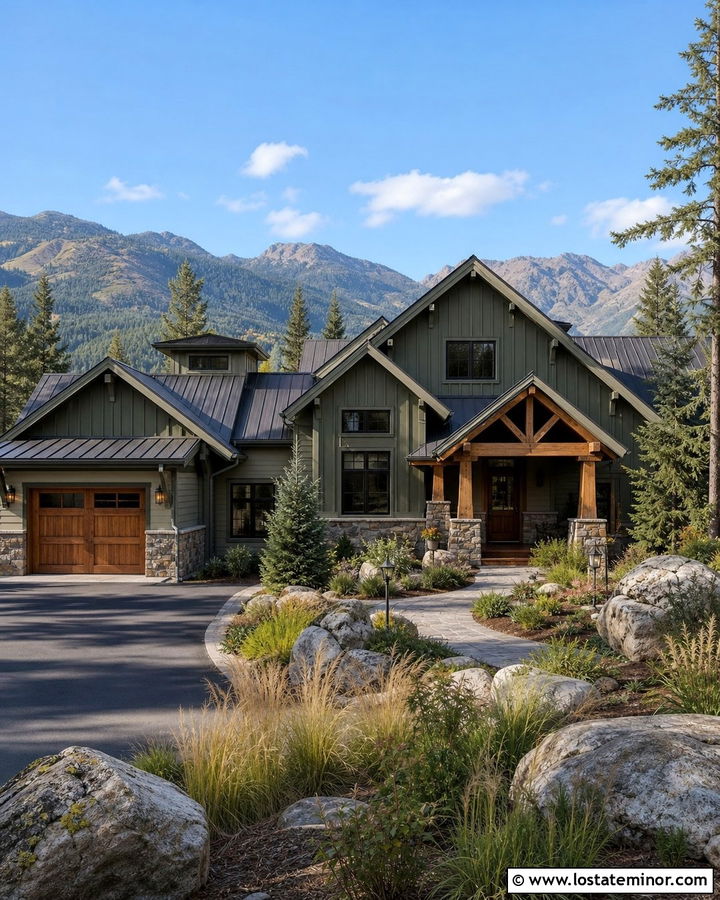
Layered gables, natural materials, and a deep sage green exterior suit a mountain setting beautifully. Use darker sage board-and-batten siding beneath the roof peaks and a slightly lighter sage lap siding on lower walls. Large timber trusses, cedar porch posts, and a stained garage door add warmth against the green. Ground the house with rugged stone that combines charcoal, taupe, and rusty brown. A dark metal roof provides durability and a strong silhouette while supporting the rustic palette. Black-framed windows can modernize the facade without competing with the woodwork. Native grasses, boulders, and evergreen trees should frame the view rather than hide it. The finished exterior feels substantial, natural, and appropriately connected to its landscape.
29. Sage Green Coastal House With Gables
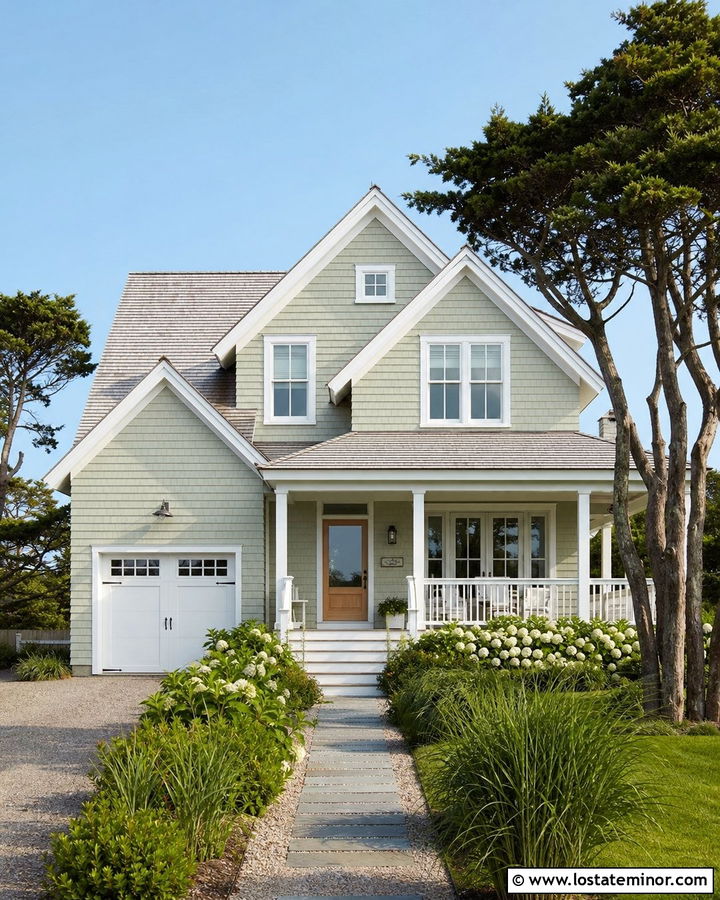
A light sage green exterior can make a coastal home feel fresh without relying on predictable blue siding. Pair airy sage shingles with bright white gable trim, porch railings, and window casings. Use a soft gray roof that resembles weathered cedar, then introduce pale natural wood through the front door or porch ceiling. A muted navy door can work as an alternative when the architecture needs a stronger focal point. Keep stone to a minimum and favor painted wood, fiber-cement shingles, and simple metal details. Hydrangeas, beach grasses, and a gravel-edged walkway reinforce the relaxed setting. Broad porches and upper gables should remain clearly visible, giving the entire facade a light, breezy, and carefully coordinated appearance.
30. Sage Green Modern House With Asymmetrical Gables
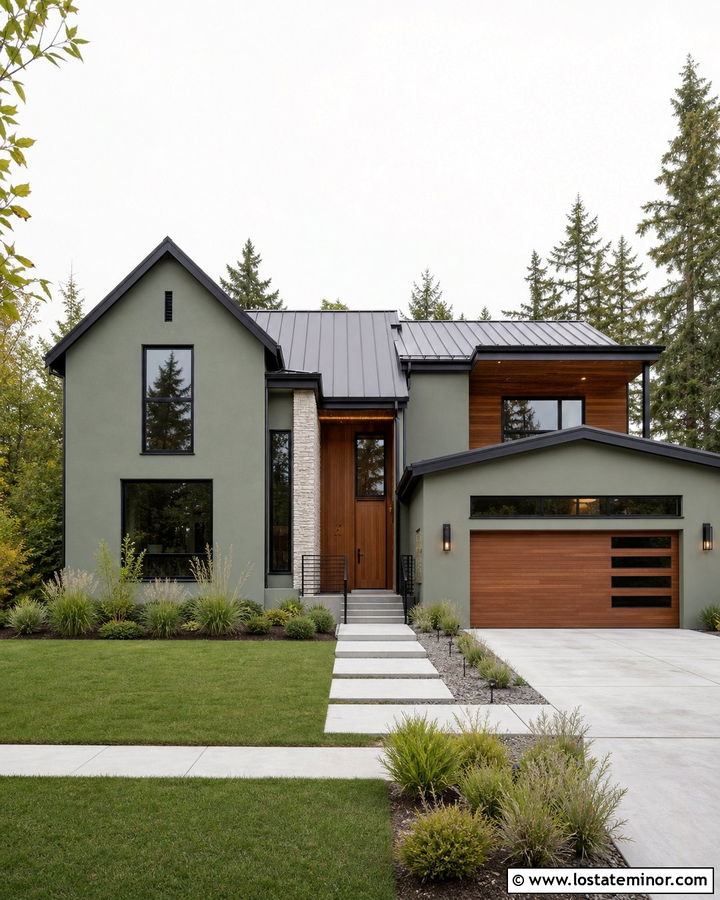
Asymmetrical gables give a modern sage green house a bold silhouette without requiring a loud exterior color. Cover the largest volume in muted sage vertical siding and use a deeper green on a smaller projecting gable. Black window frames, fascia, and a standing-seam roof sharpen the geometry. Add warm cedar around the recessed entrance and garage to balance the cool green tones. Smooth gray concrete, narrow stone panels, and simple metal railings support the contemporary character. Keep the front yard open with structured grasses, low shrubs, and a wide rectangular walkway. Because the roofline is already dramatic, avoid decorative vents, shutters, and complex trim. The complete scheme should emphasize clean proportions, material changes, and carefully placed contrast.
Conclusion:
The best sage green gabled exterior brings the roofline, siding, trim, entry, roofing, and permanent materials into one coordinated design. White and cream create classic contrast, while black adds modern definition. Wood, brick, and stone can introduce warmth and texture when repeated intentionally across the facade. Before choosing a final shade, compare large samples beside the roof and masonry in morning and afternoon light. Also consider how trees may affect the color throughout the year. Whether the house is a cottage, ranch, Craftsman, farmhouse, or modern build, these **30 Sage Green House Design With Gables Ideas** offer practical ways to create balanced and memorable curb appeal.

Related posts: