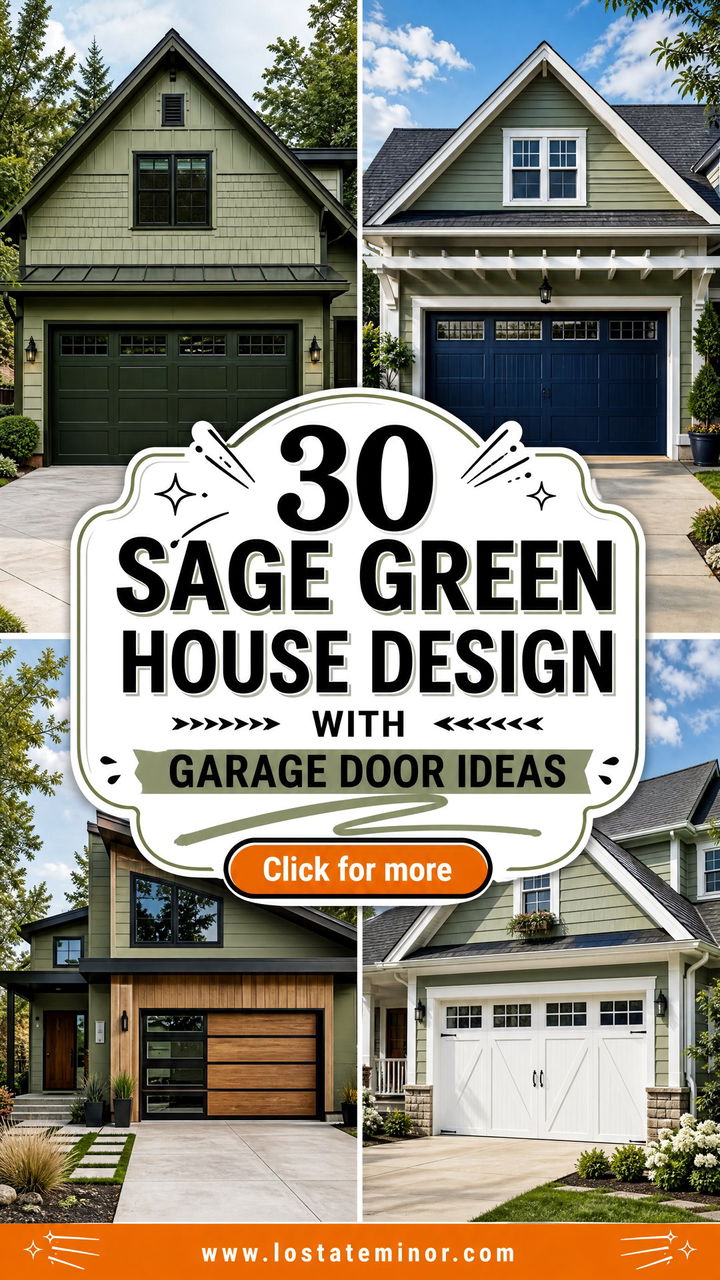
1. Sage Green House With White Carriage Garage Door
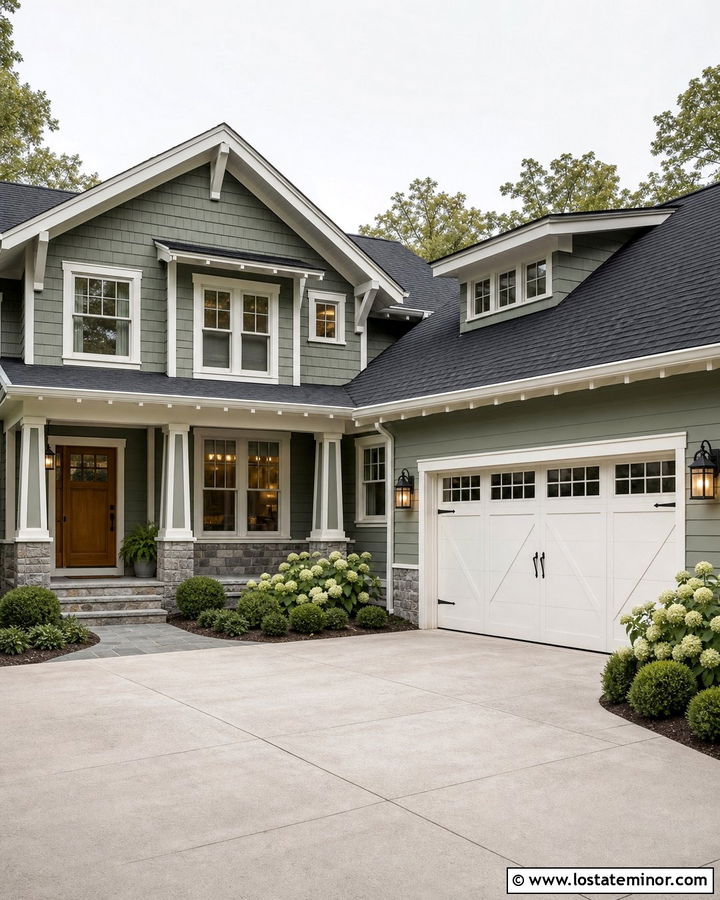
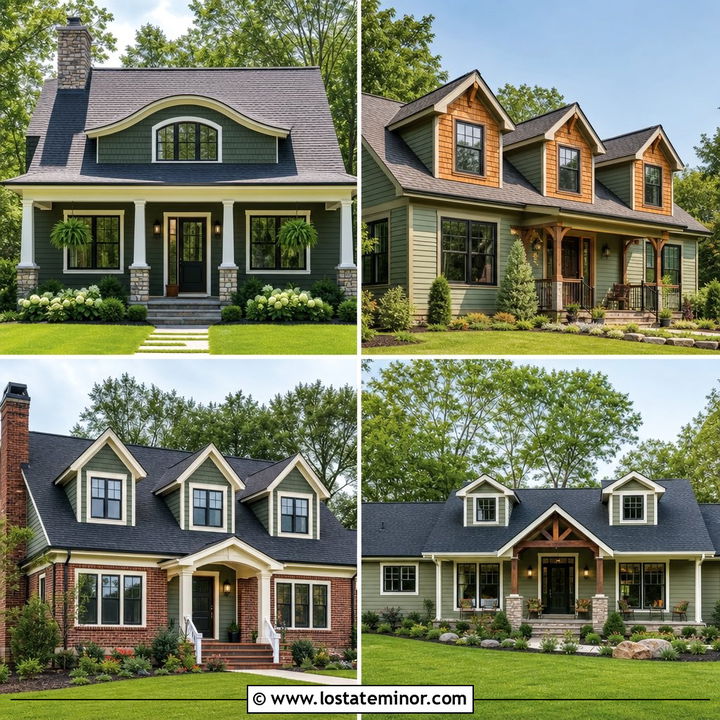
A white carriage-style garage door gives a sage green house a clean, traditional appearance without making the exterior feel overly formal. Choose a warm white rather than a sharp blue-white so it works with the earthy undertones in the siding. Repeat that white around the windows, roofline, and porch columns to connect the garage with the rest of the facade. Black decorative hinges and handles can define the door panels, while a black or charcoal roof grounds the lighter palette. A natural wood front door prevents the scheme from feeling too predictable. This complete look works especially well on Craftsman, Cape Cod, and traditional suburban homes. Add low shrubs, hydrangeas, and a simple stone walkway for soft, balanced curb appeal.
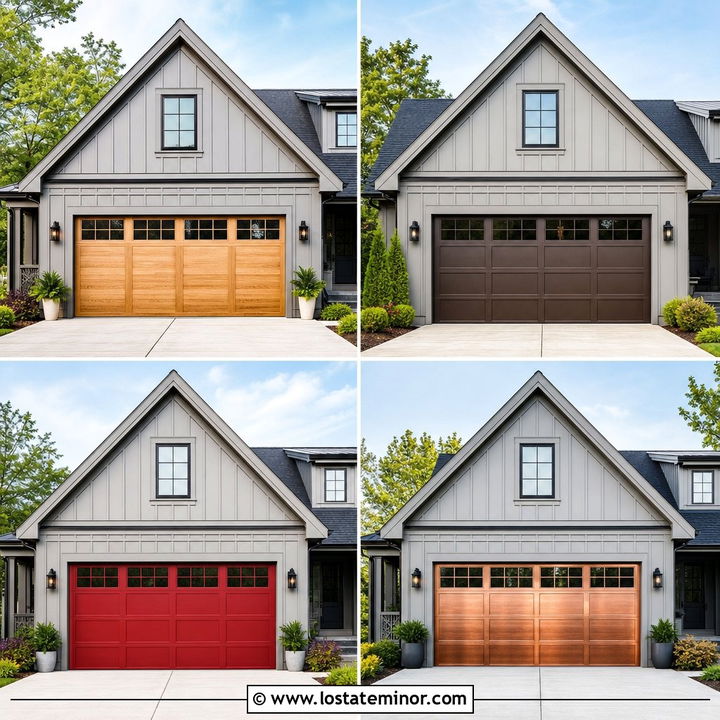
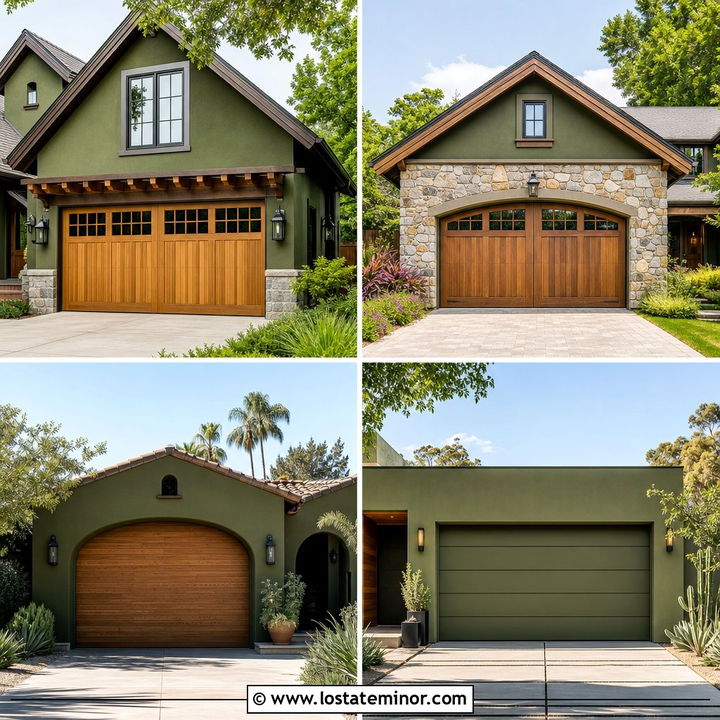
2. Sage Green House With Natural Cedar Garage Door
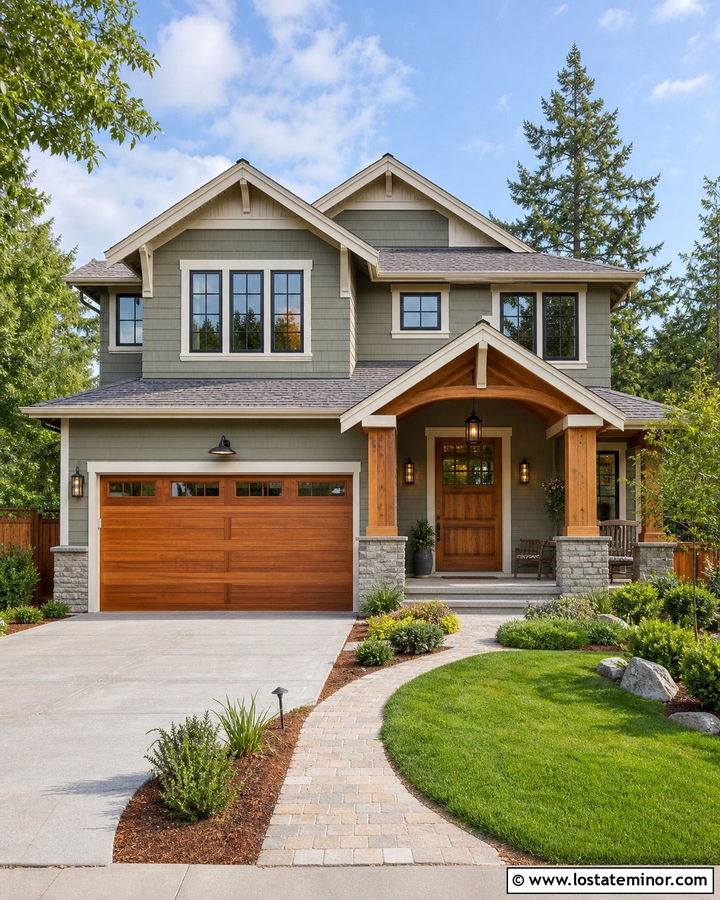
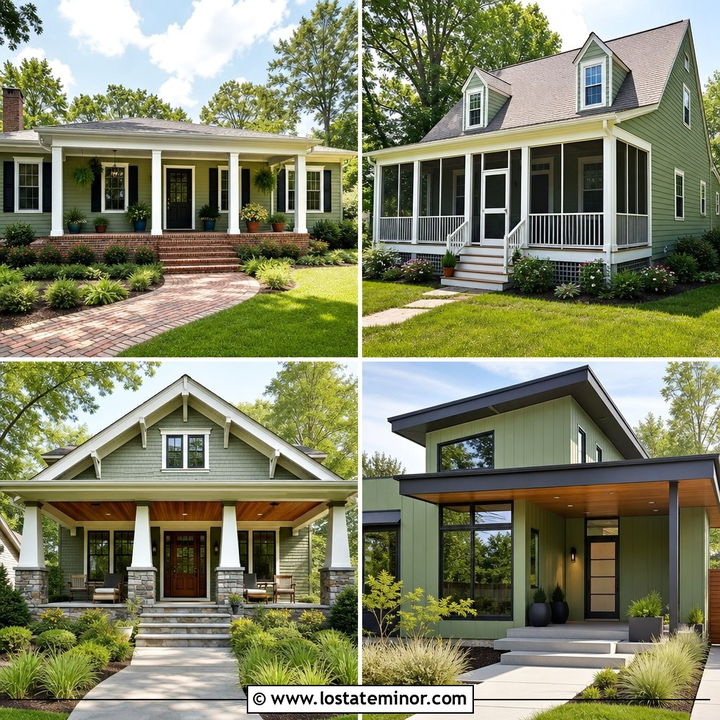
Warm cedar brings an inviting organic contrast to cool, muted sage green siding. The garage door becomes a beautiful architectural feature, especially when its horizontal grain or handcrafted panels remain visible. Carry the same wood tone onto the front door, porch ceiling, brackets, or planter boxes so the garage does not look like an isolated upgrade. Cream trim creates a softer transition than bright white, while dark bronze lighting and hardware complement the golden-brown wood. This scheme feels particularly natural on a Craftsman house with lap siding, tapered columns, and a stone foundation. Protect real cedar with an exterior-grade clear or lightly tinted finish. For easier maintenance, a realistic wood-look steel garage door can create a similar appearance without regular refinishing.
3. Sage Green House With Black Garage Door
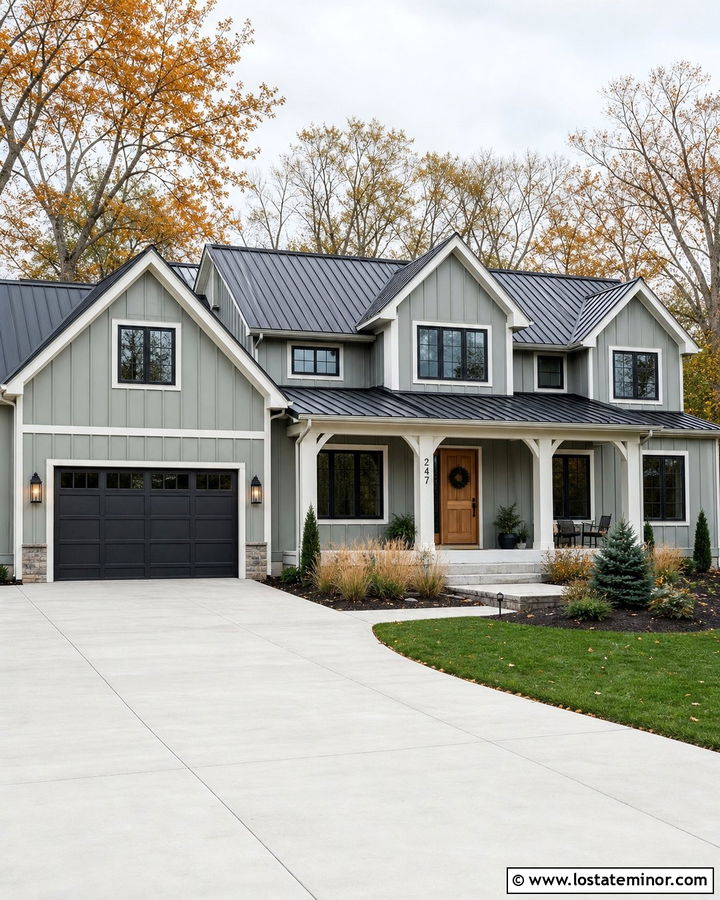
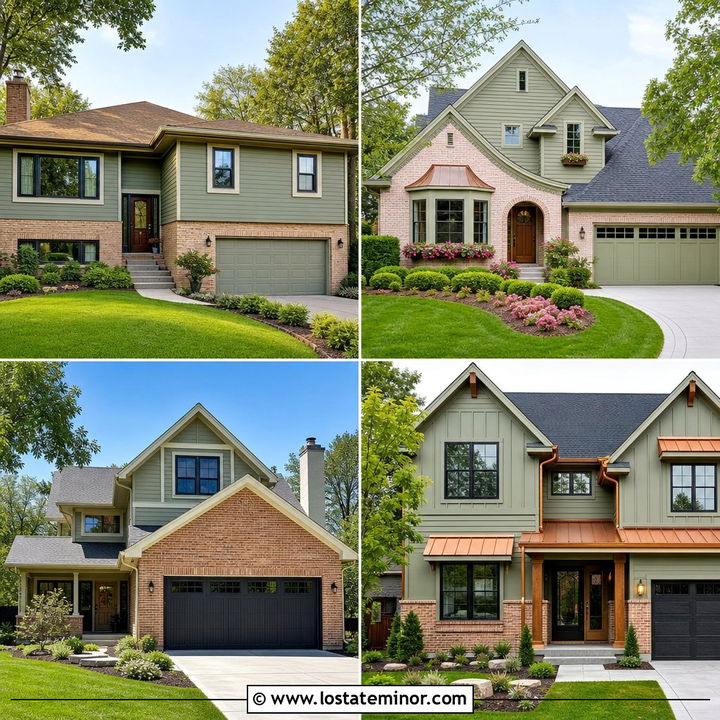
A black garage door introduces crisp contrast and gives a sage green exterior a more contemporary edge. It works best when black already appears on the windows, roof, gutters, porch railings, or exterior lights. Repeating the color keeps the garage connected to the overall design rather than allowing it to look unexpectedly heavy. Use a softer sage with clear gray undertones to balance the depth of the black. Warm white trim can outline the house without breaking the sophisticated palette. On a modern farmhouse, combine black steel garage doors with vertical sage board-and-batten siding and a natural oak front door. Keep the surrounding landscaping simple and structured. Ornamental grasses, clipped evergreens, and a straight concrete walkway reinforce the clean exterior lines.
4. Sage Green House With Matching Sage Garage Door
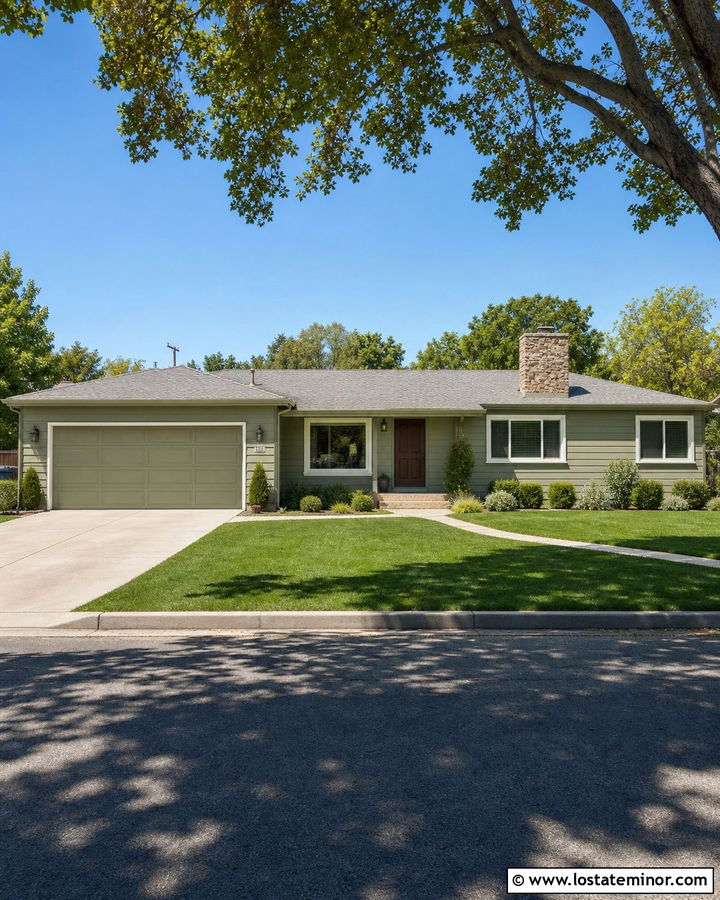
Painting the garage door the same sage green as the siding helps a prominent garage visually recede. This is a smart choice for front-facing garages that occupy a large percentage of the facade. For a seamless effect, paint the door frame and surrounding trim sage as well, then use cream or white only on windows, eaves, and the main entry. Subtle garage door panels can still add dimension through changing daylight and shadow. A stained wood front door becomes the clear focal point, guiding attention away from the driveway. This coordinated palette suits ranch houses, split-level homes, and compact suburban properties. Use dark bronze or black hardware sparingly. A medium gray roof and warm stone foundation will add enough variation without disturbing the calm, unified appearance.
5. Sage Green House With Cream Garage Door
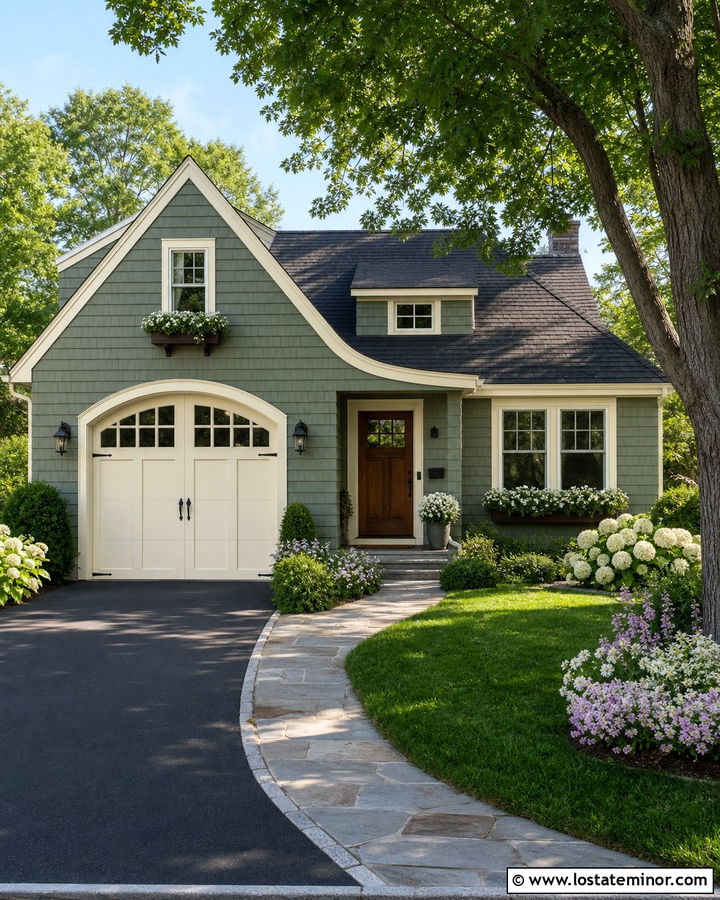
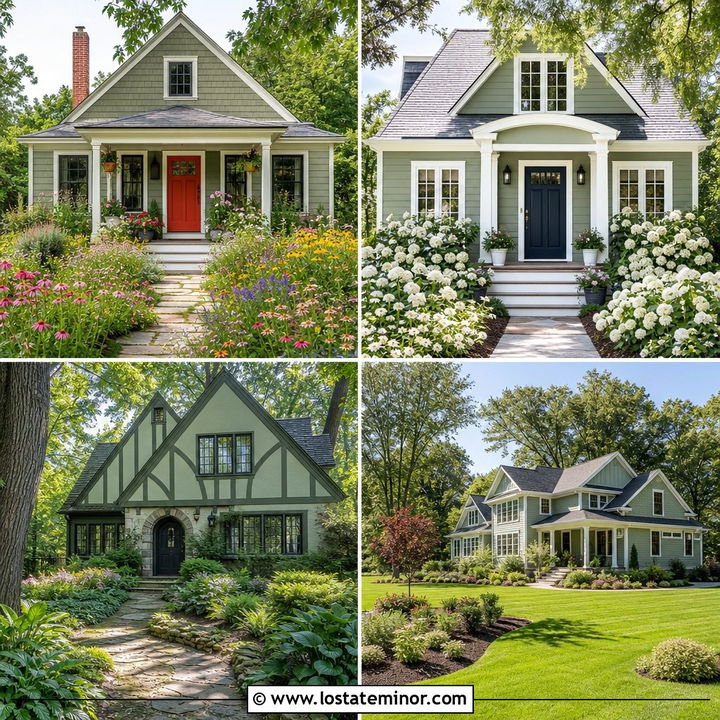
Cream is gentler than bright white and naturally complements the warm, dusty character of sage green. A cream garage door is especially successful when the house includes beige stone, ivory window frames, or a brown roof. Repeat the cream on fascia boards, porch columns, and window trim for a connected three-color palette. The front door can be walnut, deep olive, or muted brick red depending on how much contrast you want. On a cottage-style exterior, consider an arched cream garage door with divided windows and traditional paneling. Sage shingles or horizontal siding will soften the architecture further. Complete the welcoming look with curved planting beds, pale gravel, flowering shrubs, and warm metal lanterns. Avoid adding stark white details that could make the cream finish appear yellow.
6. Sage Green House With Charcoal Gray Garage Door
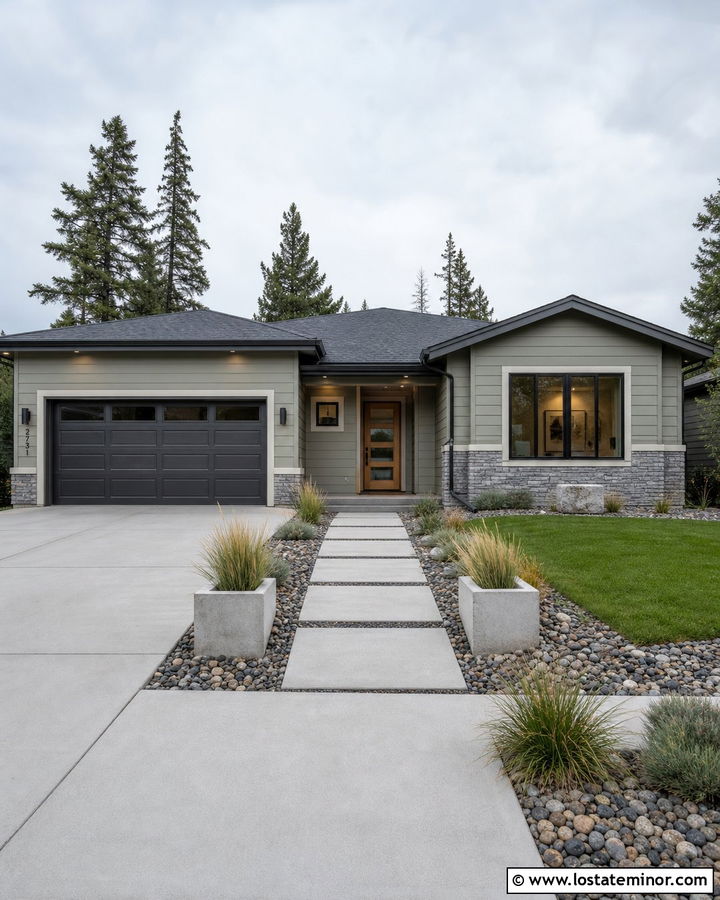
Charcoal gray creates strong definition while feeling softer and more adaptable than solid black. It is a useful garage door color for a sage green house with a dark asphalt roof or gray stone accents. Match the garage door to the roof as closely as possible, then use light greige or off-white trim to separate both darker features from the sage siding. A charcoal front door can continue the color rhythm, although a medium wood door will provide greater warmth. This complete scheme is ideal for a contemporary ranch with wide roof overhangs and simple horizontal siding. Select a flat or low-sheen garage finish to avoid excessive glare. Concrete planters, river rock, evergreen shrubs, and a broad driveway give the restrained palette a polished, modern suburban setting.
7. Sage Green House With Walnut Garage Door
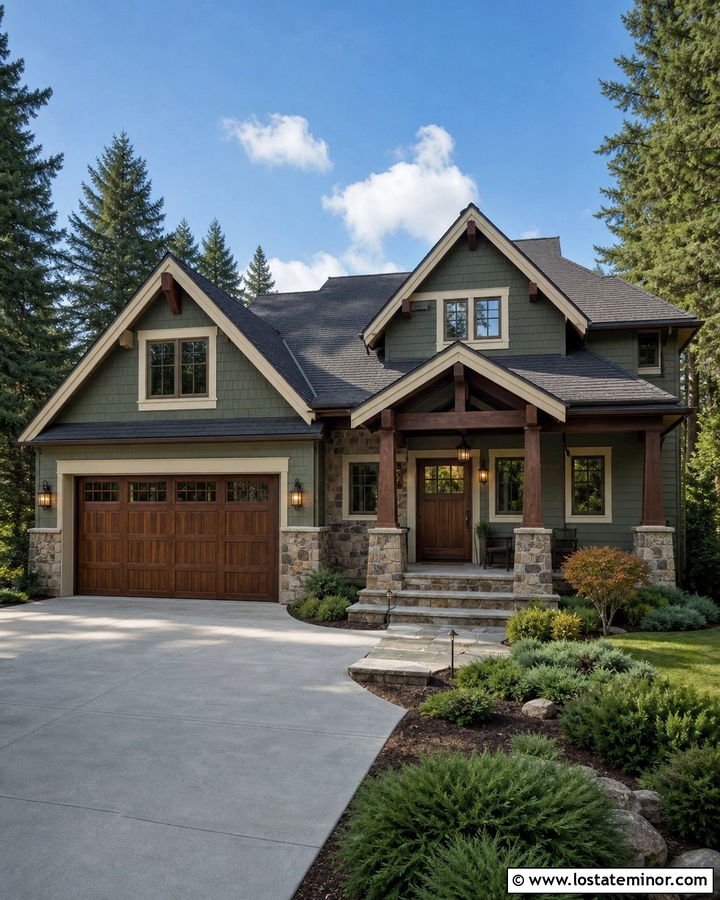
Rich walnut tones make a sage green exterior feel substantial, warm, and carefully designed. The darker wood is especially attractive beside midtone sage siding because it provides contrast without the sharpness of black. Use walnut on a paneled garage door and repeat it on the front entry, exposed beams, or porch posts. Soft ivory trim will brighten the facade, while bronze gutters and lighting blend naturally with the wood. A mixed tan-and-gray stone base can bridge the green siding and brown garage door. This combination suits a large Craftsman, mountain-inspired home, or updated suburban house with prominent gables. Keep wood finishes within one tonal family. Too many unrelated brown stains can make the exterior look pieced together rather than intentionally coordinated.
8. Sage Green House With Light Greige Garage Door
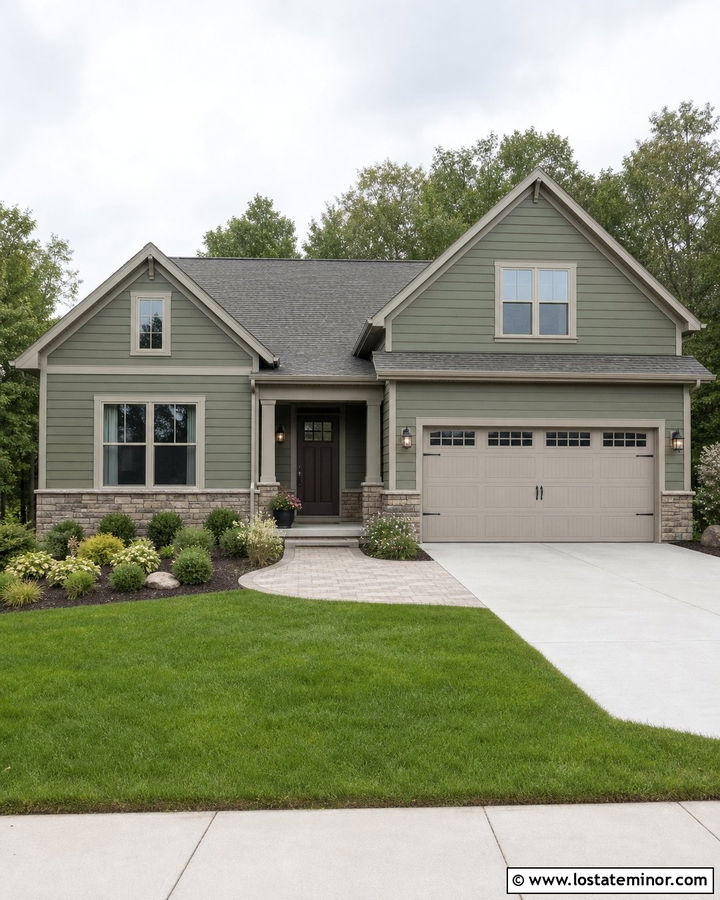
A light greige garage door is understated enough to support sage green siding without disappearing completely. Its combination of gray and beige works particularly well when the property includes warm concrete, taupe stone, or weathered roof shingles. Choose a greige with green or neutral undertones rather than one that leans pink. Carry the garage color onto the window trim, fascia, and porch railing for a relaxed, low-contrast palette. A dark brown front door and bronze fixtures will add necessary depth. This exterior scheme flatters transitional homes that combine traditional rooflines with simplified details. It also works well in sunny locations where dark garage doors may absorb more visual attention. Use layered foundation planting and a textured paver walkway to give the subtle colors additional definition.
9. Sage Green House With Bronze Garage Door
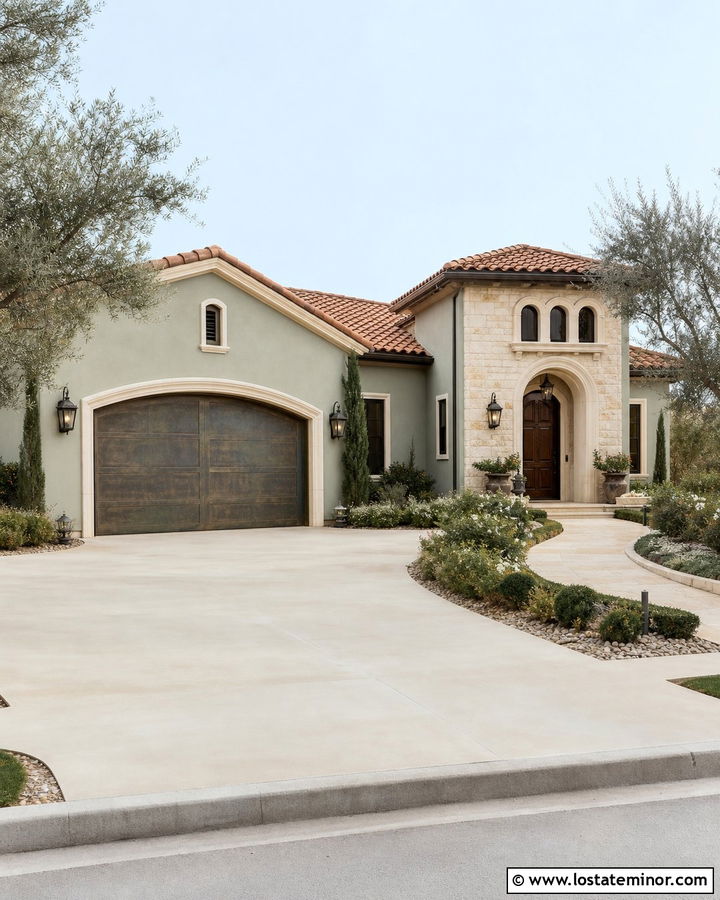
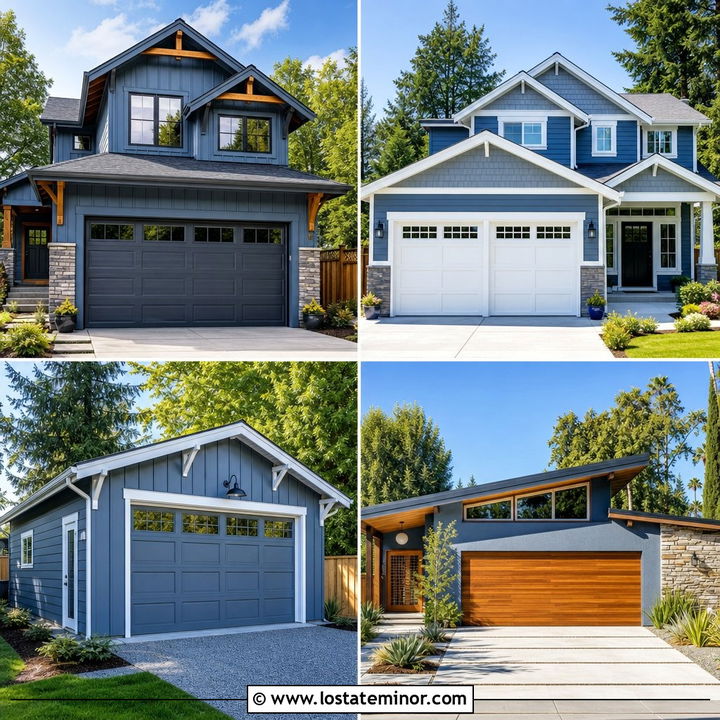
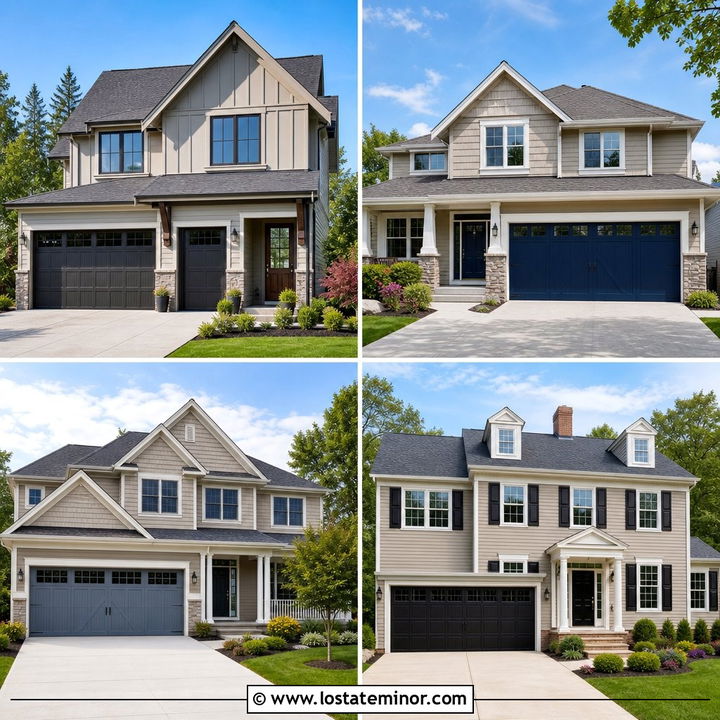
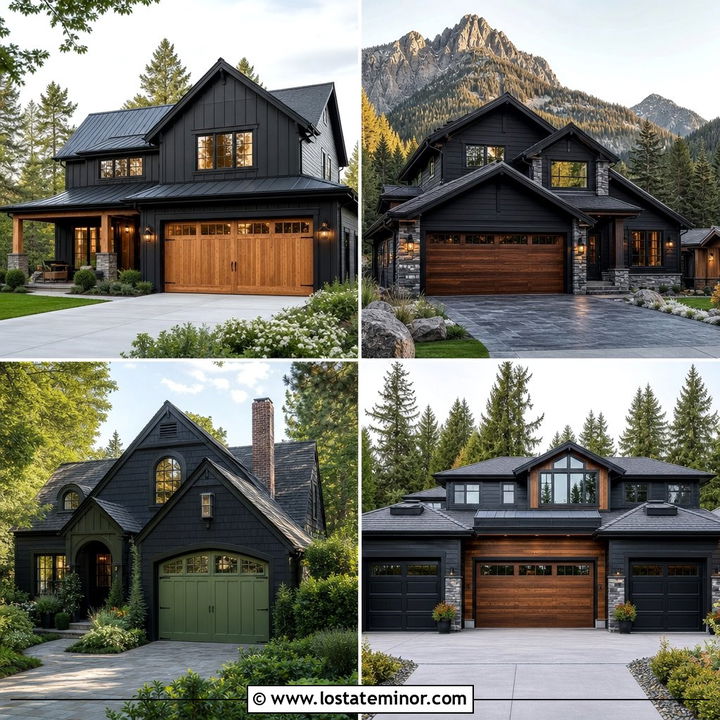
A bronze garage door offers a sophisticated alternative to standard black or brown. The muted metallic finish can connect sage green siding with bronze windows, gutters, lanterns, and roof flashing. Choose dark oil-rubbed bronze for stronger contrast or a medium weathered bronze for a softer appearance. Warm stone around the garage opening will make the transition feel natural. On a Mediterranean-influenced house, combine sage stucco with a bronze arched garage door, cream trim, and a terracotta tile roof. A dark wood front door adds another grounded element without competing with the garage. Keep metallic finishes consistent across the facade. Olive trees, clipped shrubs, gravel borders, and a gently curved driveway support the earthy palette while preserving a refined and uncluttered curb view.
10. Sage Green House With Glass Garage Door
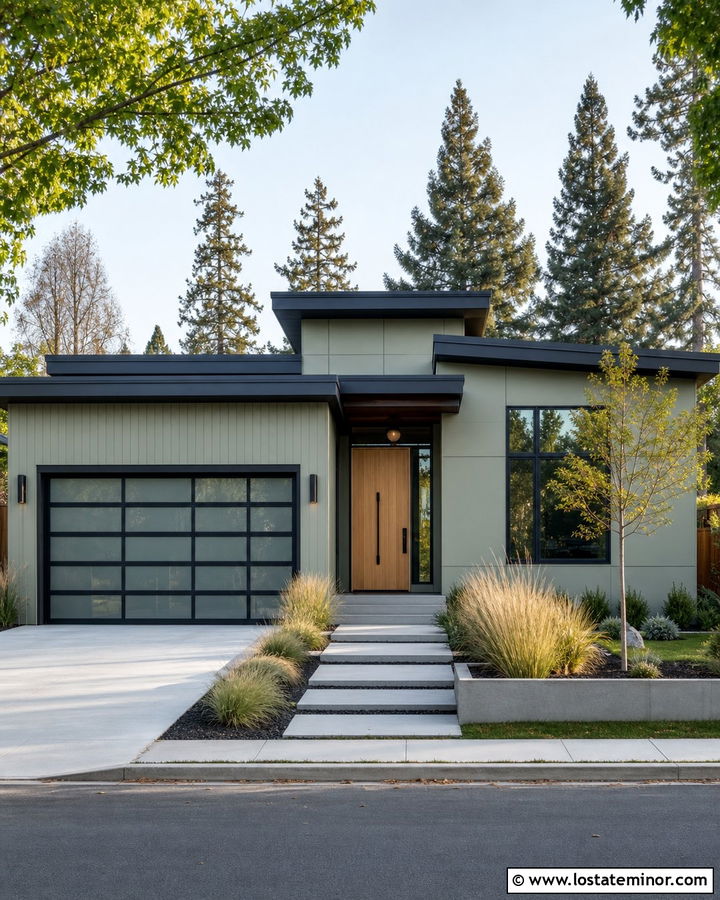
A black-framed glass garage door can give a sage green house a striking modern identity. Frosted or tinted glass provides privacy while allowing the door to feel lighter than a solid black surface. Pair it with muted sage stucco or smooth fiber-cement panels, black window frames, and a low-slope charcoal roof. A flush wood front door introduces warmth and prevents the exterior from looking too industrial. This garage treatment works best when the home already has contemporary geometry and large windows. Repeat the garage’s horizontal lines through siding, fencing, or concrete joints. Keep the landscaping architectural with ornamental grasses, compact trees, and rectangular planters. Because glass reflects its surroundings, evaluate samples outdoors and choose a finish that does not introduce an unwanted blue or green cast.
11. Sage Green House With Taupe Garage Door
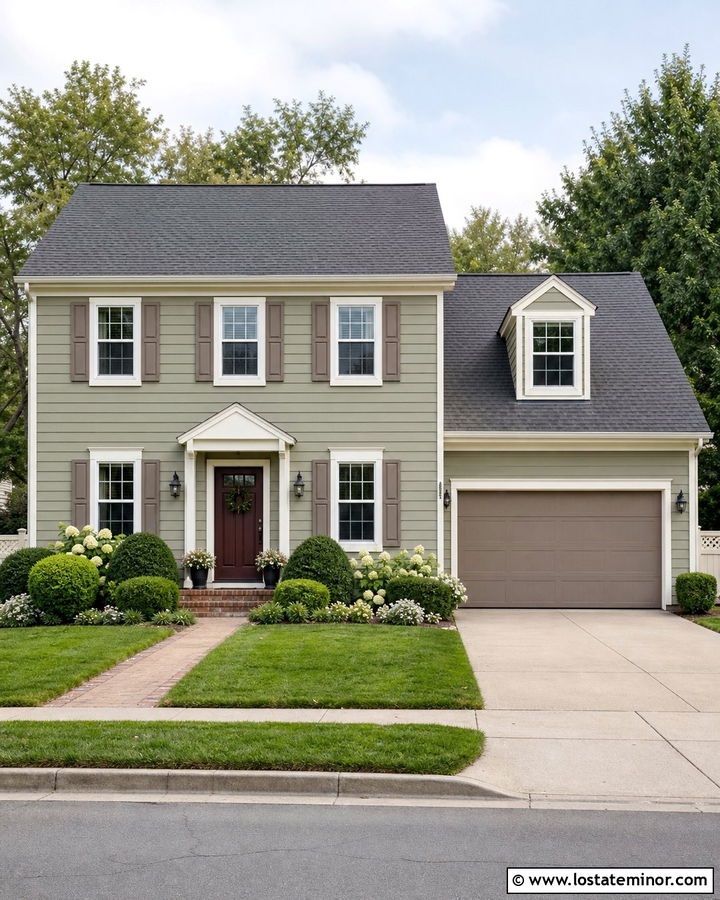
Taupe adds comfortable warmth to sage green while remaining quiet enough for a large garage surface. It is an effective choice when the roof, brick, or stone contains brown-gray undertones. Use a medium taupe garage door with darker taupe shutters and creamy trim to establish a layered neutral scheme. A muted burgundy or natural mahogany front door can provide a restrained focal point. This combination looks at home on a traditional two-story property with horizontal siding, symmetrical windows, and a front-facing garage wing. Select one taupe family and repeat it rather than mixing several similar neutrals. Green shrubs and pale flowering plants will echo the siding without overwhelming it. The finished exterior feels grounded and approachable, with enough tonal contrast to keep every architectural feature visible.
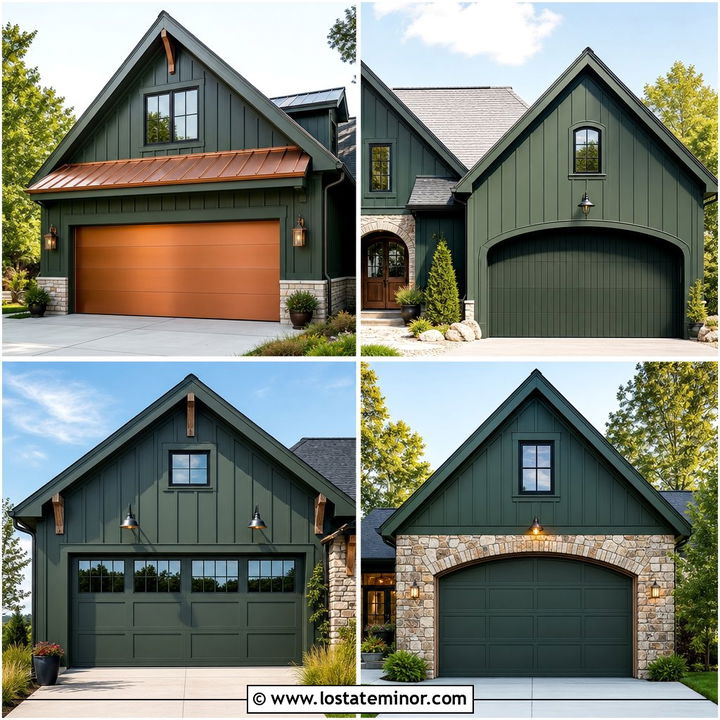
12. Sage Green House With Dark Green Garage Door
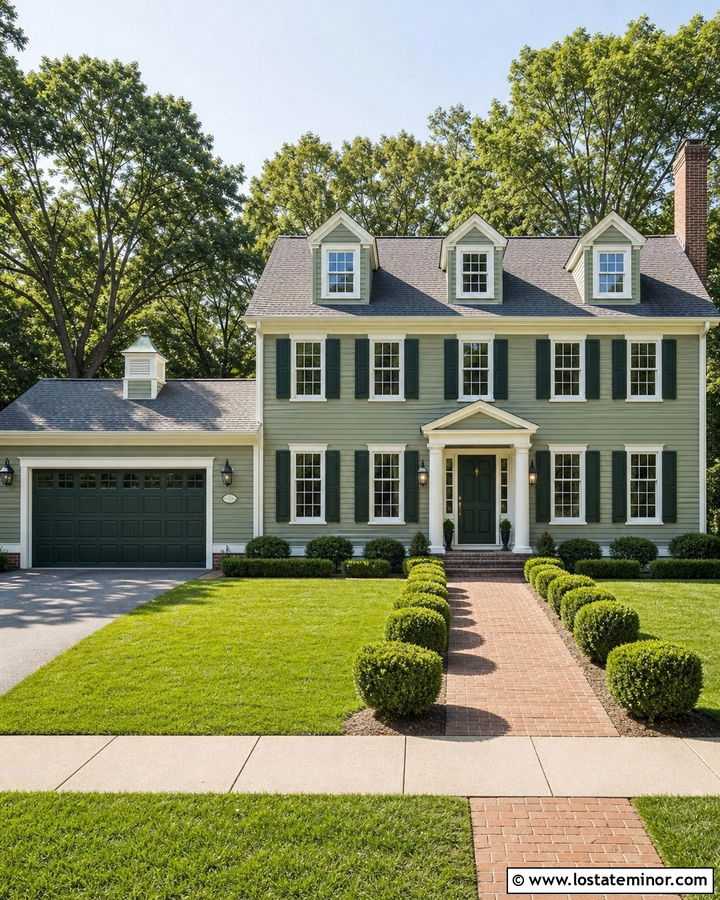
A dark green garage door creates a tonal exterior that feels rich without moving away from the natural sage palette. Choose a forest, pine, or deep olive green that is several shades darker than the siding. Repeat it on shutters or the front door, but keep the trim warm white so the house retains clear architectural definition. A gray roof and stone foundation can add neutral balance. This scheme works beautifully on a Colonial house because the dark garage door supports the structure’s traditional symmetry. It can also suit a wooded property where green tones connect the building with mature trees. Test both colors together in full daylight. Sage and dark green should share similar undertones so the combination appears layered and deliberate rather than slightly mismatched.
13. Sage Green House With Pale Oak Garage Door
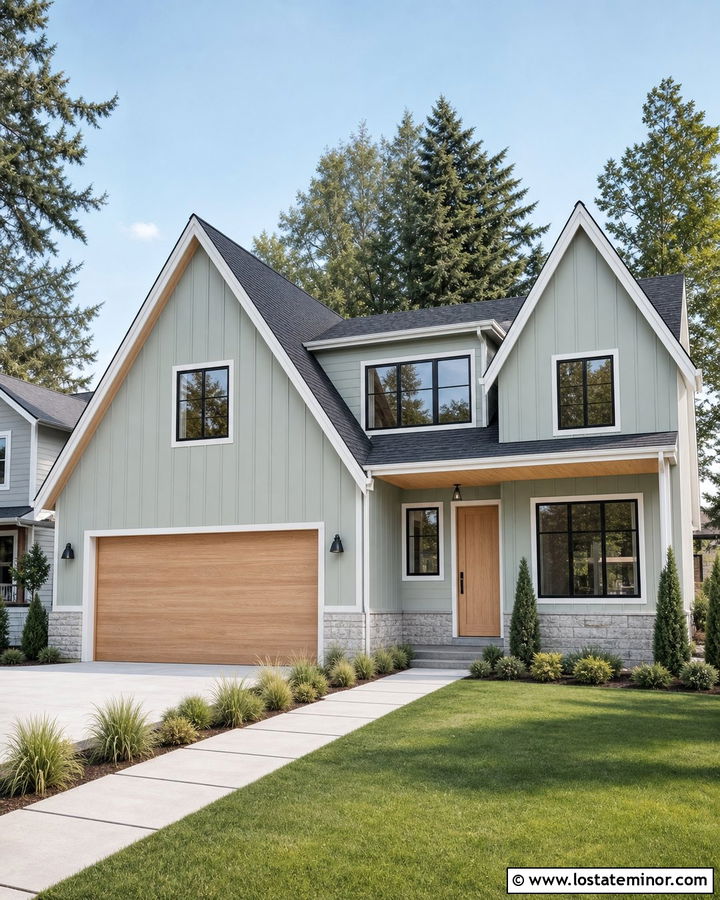
Pale oak gives sage green siding an airy, modern warmth that feels lighter than cedar or walnut. A garage door with a natural blond wood appearance is ideal for Scandinavian-influenced homes, modern bungalows, and simple gabled houses. Pair the combination with soft white trim, black-framed windows, and a medium charcoal roof. Use the same pale oak on the front door, porch soffit, or vertical privacy screen for continuity. Light gray stone can anchor the base without making the facade look heavy. This palette benefits from clean detailing and minimal ornament. A narrow concrete walkway, low grasses, and a few sculptural evergreens will frame the home effectively. Choose a low-orange wood stain so the pale garage door remains compatible with sage’s cool gray-green undertones.
14. Sage Green House With Navy Garage Door
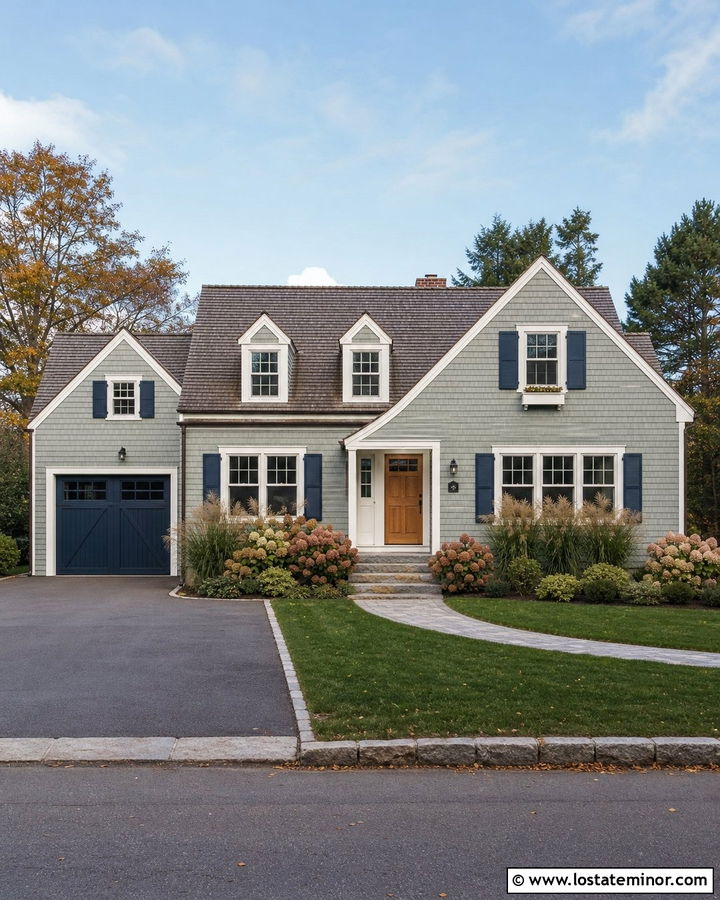
Navy and sage create an unexpected but balanced color pairing when both shades are muted. A deep blue garage door can add distinction to a sage green house without appearing as severe as black. Repeat navy on the shutters or front door, then use warm white trim to separate the two colors. The roof should remain neutral, preferably charcoal or weathered gray. This scheme is especially attractive on a Cape Cod exterior with dormers, shingle siding, and coastal-inspired landscaping. Natural stone steps and brushed nickel or black fixtures can complete the palette. Avoid bright royal blue, which may look disconnected from earthy sage. A navy with gray undertones will feel more established and coordinate better with common driveway, roof, and masonry colors.
15. Sage Green House With Brick Red Garage Door
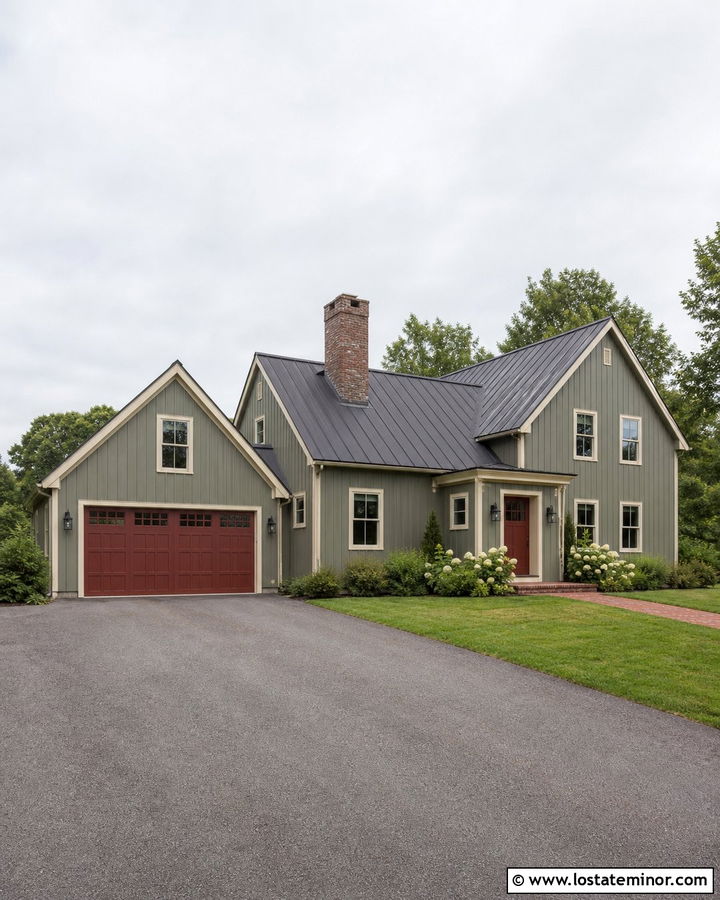
Muted brick red can make a sage green house feel distinctive, historic, and warm. Because red and green naturally create strong contrast, select a dusty red with brown undertones rather than a bright primary shade. Use it on a paneled garage door and repeat it sparingly on the front door or small decorative details. Cream trim will soften the contrast, while an aged brick chimney or foundation can make the garage color feel connected to the building. This palette is particularly appropriate for a farmhouse, historic cottage, or traditional home surrounded by mature landscaping. A dark gray roof keeps the look grounded. Limit additional accent colors so the red garage remains intentional. Warm pathway brick and simple green plantings will complete the cohesive exterior arrangement.
16. Sage Green House With Terracotta Garage Door
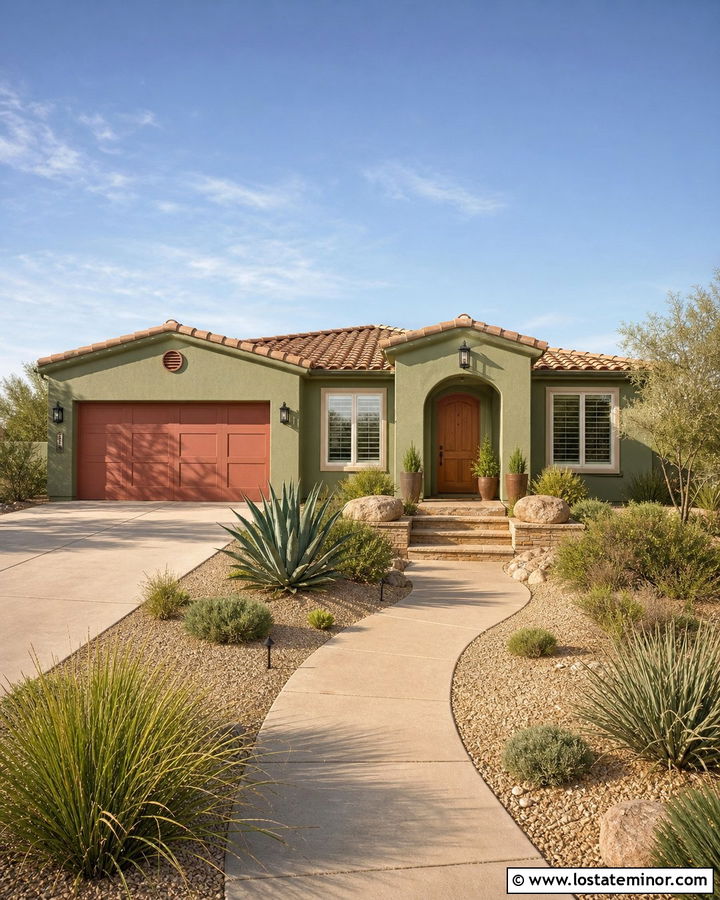
Terracotta introduces sunbaked warmth to sage green and can highlight the earthy side of the color. A clay-toned garage door works best when terracotta is already present in the roof tiles, walkway, pots, or nearby masonry. Pair sage stucco with cream window trim and a warm wood front door to keep the palette relaxed. Black accents should be limited to slim window frames or small lanterns. This combination suits a Southwest, Spanish Revival, or California ranch home with low rooflines and textured exterior walls. Select a muted terracotta rather than a vivid orange. The subdued shade will look more natural beside sage and require less visual adjustment. Desert grasses, agave, pale gravel, and drought-tolerant shrubs provide an appropriate landscape frame for the complete exterior.
17. Sage Green House With Dark Brown Garage Door
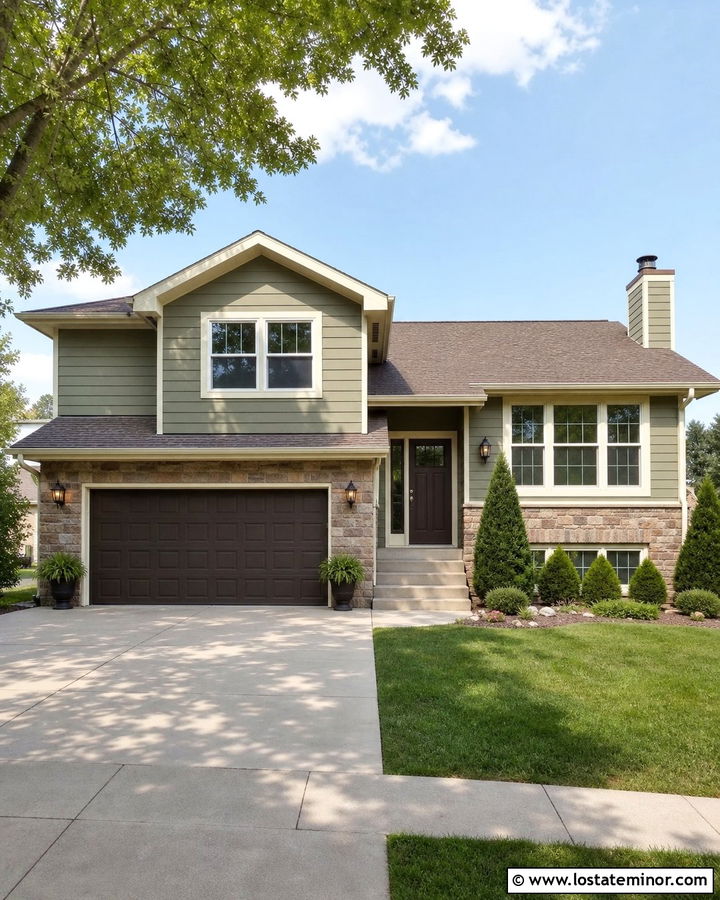
Dark brown is a practical choice when a sage green house has a brown shingle roof, rustic stone, or deep wood accents. The garage door can echo those fixed materials and make the lower portion of the facade feel grounded. Choose espresso brown for stronger contrast or a softer chocolate brown for a traditional finish. Cream trim and a matching brown front door will keep the scheme simple. On a split-level house, painting the garage door dark brown can visually separate it from the upper sage siding while connecting it to a brick or stone lower level. Add warm bronze lights and house numbers for consistency. Avoid brown shades with strong red undertones unless the existing masonry contains similar colors. Coordinated undertones are essential in this earthy palette.
18. Sage Green House With White Flush Garage Door
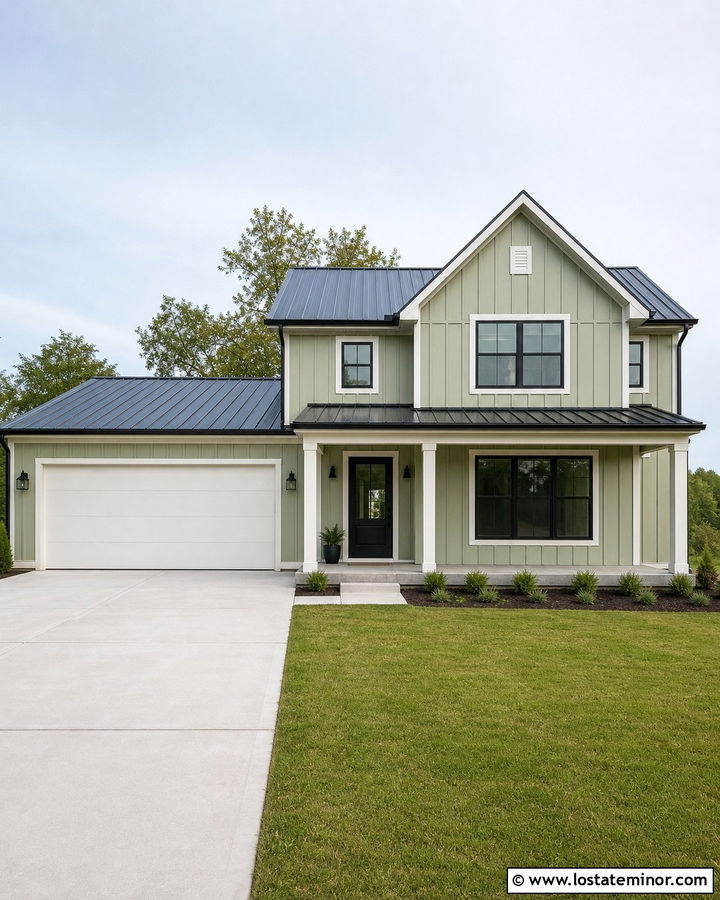
A flush white garage door creates a cleaner and more contemporary effect than a paneled carriage door. It works well with sage green board-and-batten or narrow horizontal siding because the smooth surface provides visual rest. Use a warm white on the garage, trim, gutters, and porch ceiling for a consistent framework. Black windows, exterior lights, and a simple front door can add sharp definition. This scheme is a good fit for a modern farmhouse with symmetrical gables and a minimal front porch. Keep decorative hardware off the garage door so its streamlined appearance remains intact. A concrete driveway, rectangular planting beds, and evenly spaced shrubs will reinforce the orderly design. The white garage brightens the facade while allowing the sage siding to remain the primary color.
19. Sage Green House With Wood-Look Steel Garage Door
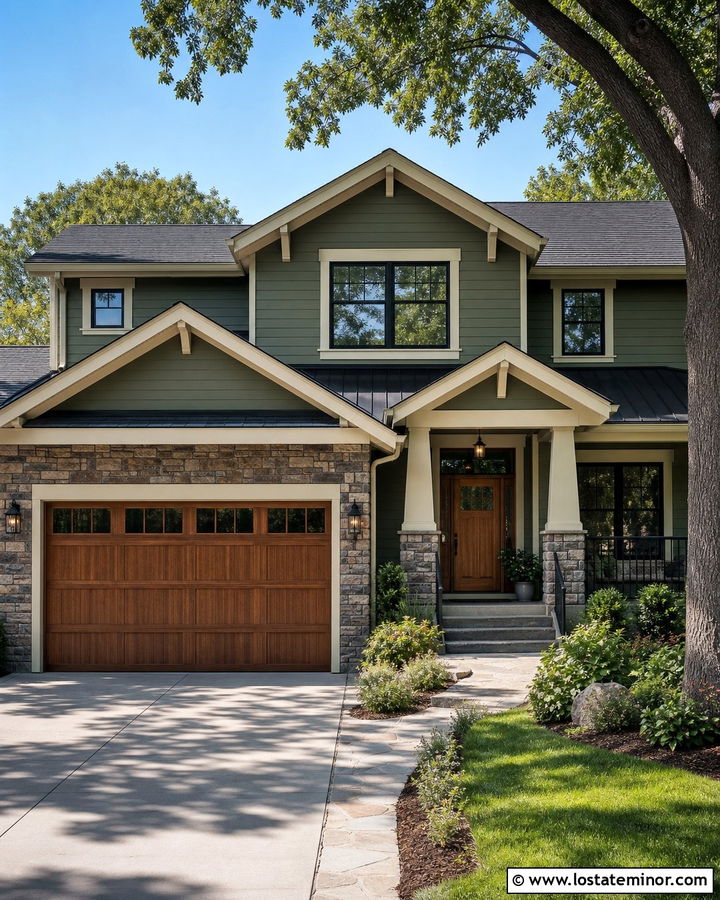
Wood-look steel offers the warmth of timber with a more uniform surface and reduced refinishing needs. Choose a medium cedar or oak finish that complements the undertones of the sage green siding. A carriage-style door supports a traditional house, while horizontal planks suit a more contemporary facade. Repeat the wood appearance on the front door or porch posts, but use real wood samples beside the garage finish before mixing materials. Cream trim and charcoal roof shingles create a flexible supporting palette. This option works especially well for a busy family home where the garage faces the street. Stone around the garage opening can provide extra texture. Keep the masonry restrained so it supports the wood grain instead of competing with it.
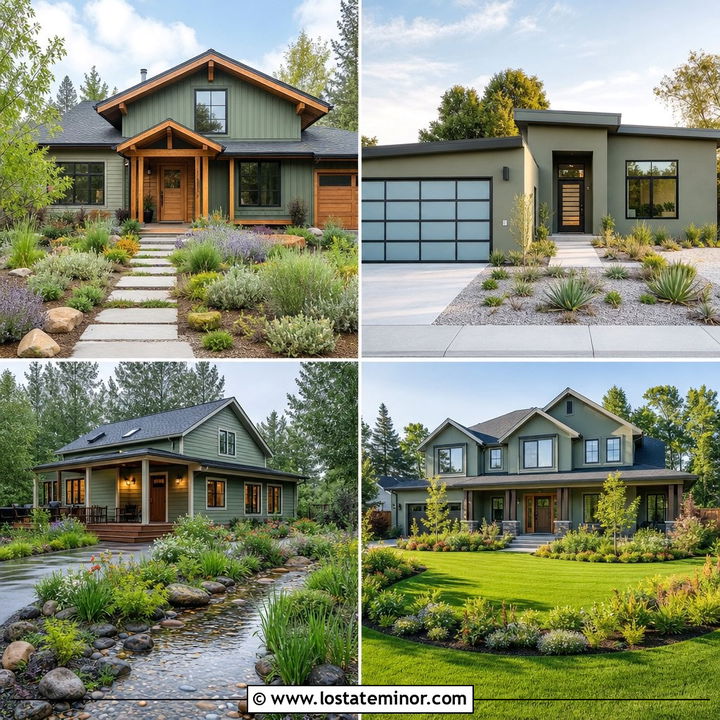
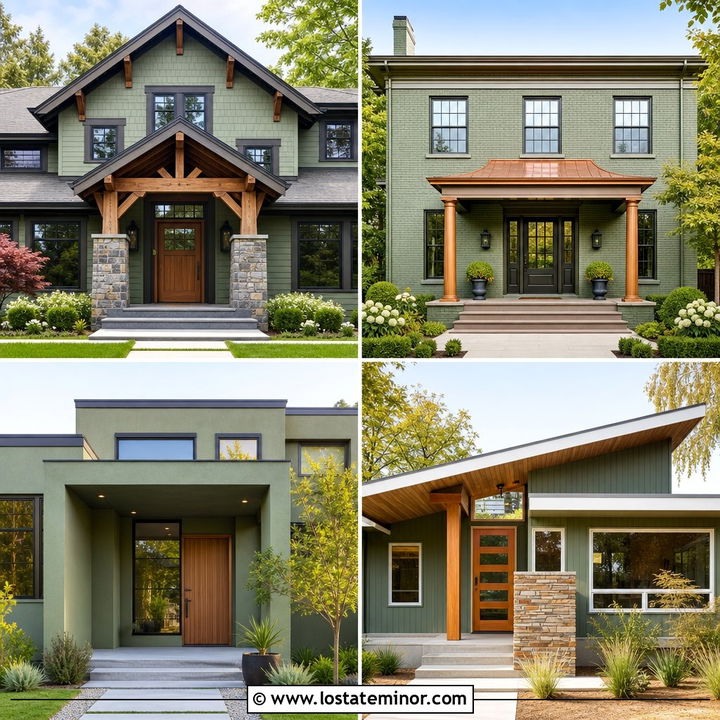
20. Sage Green House With Sandstone Garage Door
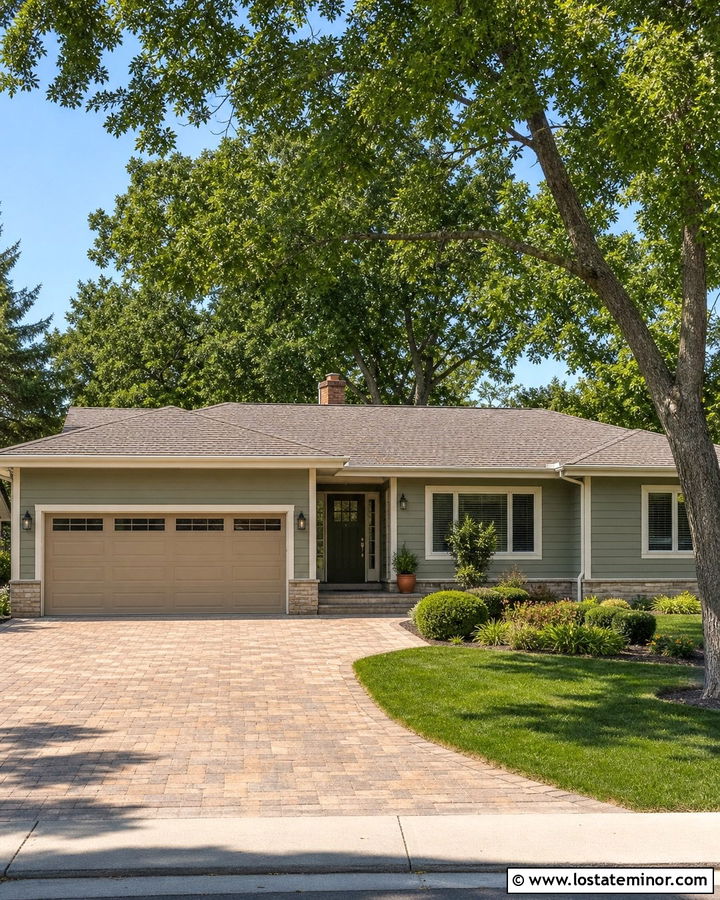
A sandstone-colored garage door brings soft warmth to sage siding and connects easily with beige stone, tan brick, and light brown roofing. This low-contrast combination is particularly useful when you want the garage to blend into a wide facade. Repeat sandstone on the trim surrounding the garage, then use a lighter cream around the windows and porch. A dark olive front door will provide a clear focal point without introducing an unrelated color. The palette is well suited to a one-story ranch with broad eaves, mixed siding, and a masonry foundation. Warm driveway pavers can reinforce the garage finish. Add rounded shrubs and a shade tree to soften the horizontal architecture. The result feels natural and settled rather than sharply divided into separate blocks of color.
21. Sage Green House With Slate Blue Garage Door
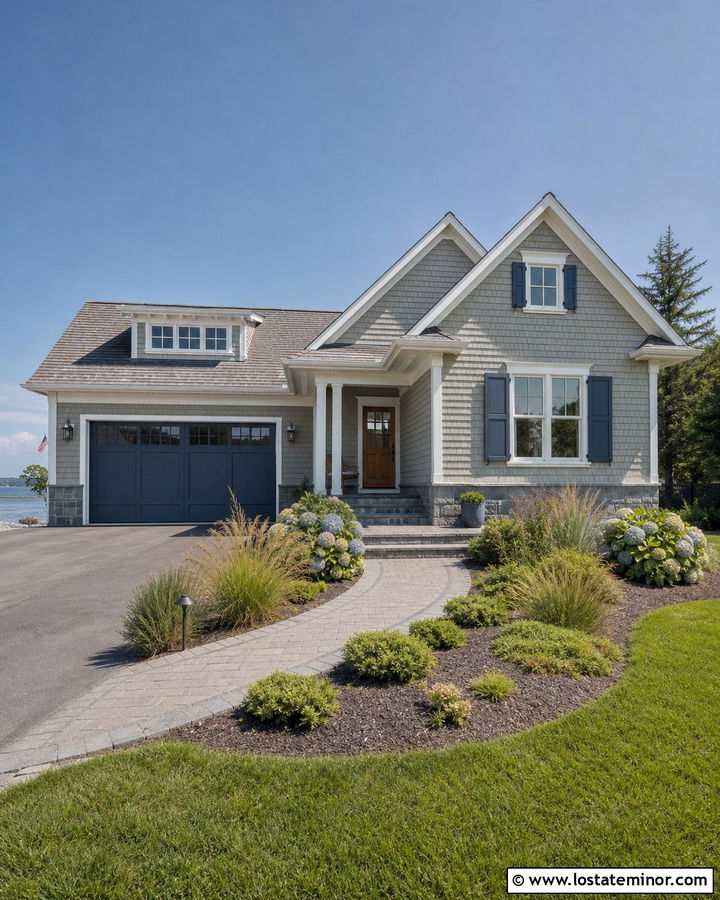
Slate blue adds a cool, calm accent that can work beautifully with gray-toned sage green siding. The two colors should have similar levels of softness, allowing them to sit together without either becoming overly dominant. Paint the garage door slate blue and repeat the color on shutters or a small side door. Use creamy white trim for definition and a weathered gray roof to complete the restrained palette. A natural oak front door can add warmth. This exterior combination suits a coastal cottage, shingle-style home, or casual bungalow. Blue-gray stone along the foundation will further connect the colors. Keep the garden informal with hydrangeas, ornamental grasses, and curved planting beds. In bright daylight, the blue garage offers contrast while preserving the house’s relaxed character.
22. Sage Green House With Soft Gray Garage Door
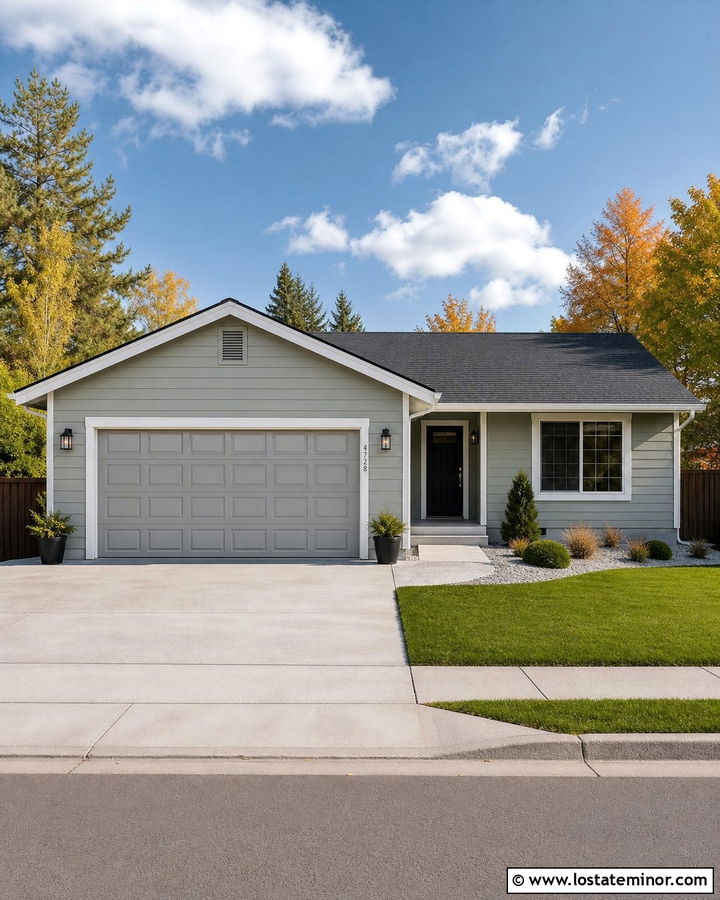
Soft gray is a dependable garage door color for sage green homes with cool roof shingles, concrete driveways, or gray masonry. Select a warm or neutral gray rather than an icy blue-gray, which can make sage siding look unexpectedly yellow. Carry the gray onto the porch floor, foundation, or metal roofing accents to create continuity. White trim will brighten the palette, while a black front door can establish one confident focal point. This arrangement is especially useful on a renovated ranch where the architecture benefits from simple, low-contrast color placement. A garage door with subtle rectangular panels will add dimension without becoming ornate. Finish the exterior with structured evergreen planting, pale gravel, and a wide concrete path. The overall effect is calm, practical, and easy to maintain visually.
23. Sage Green House With Sage Garage Door And Wood Trim
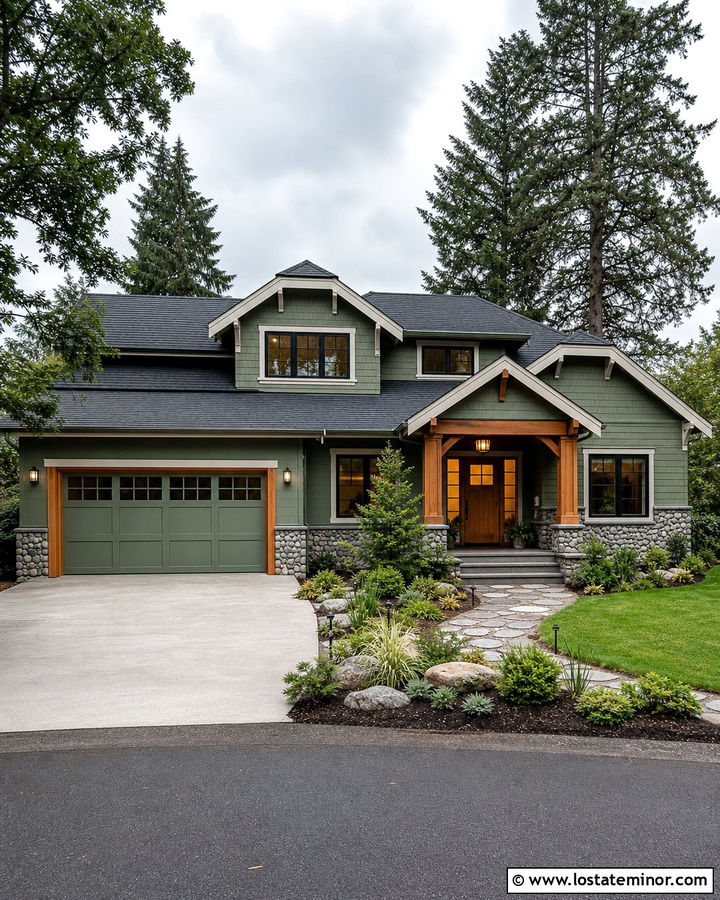
Combining a matching sage garage door with wood trim creates unity without allowing the exterior to become flat. Paint both the siding and garage door the same soft green, then frame the garage opening with natural cedar or stained fir. Repeat the wood on porch posts, window headers, and the front door. Warm white eaves will keep the roofline light, while charcoal shingles add a necessary darker layer. This approach is particularly attractive on a Pacific Northwest Craftsman or contemporary cabin-inspired suburban house. The garage blends with the body color, but its wood surround gives it architectural presence. Use gray fieldstone at the base and landscape with ferns, grasses, and evergreen shrubs. The complete design feels connected to nature while remaining polished enough for a residential neighborhood.
24. Sage Green House With Black Carriage Garage Door
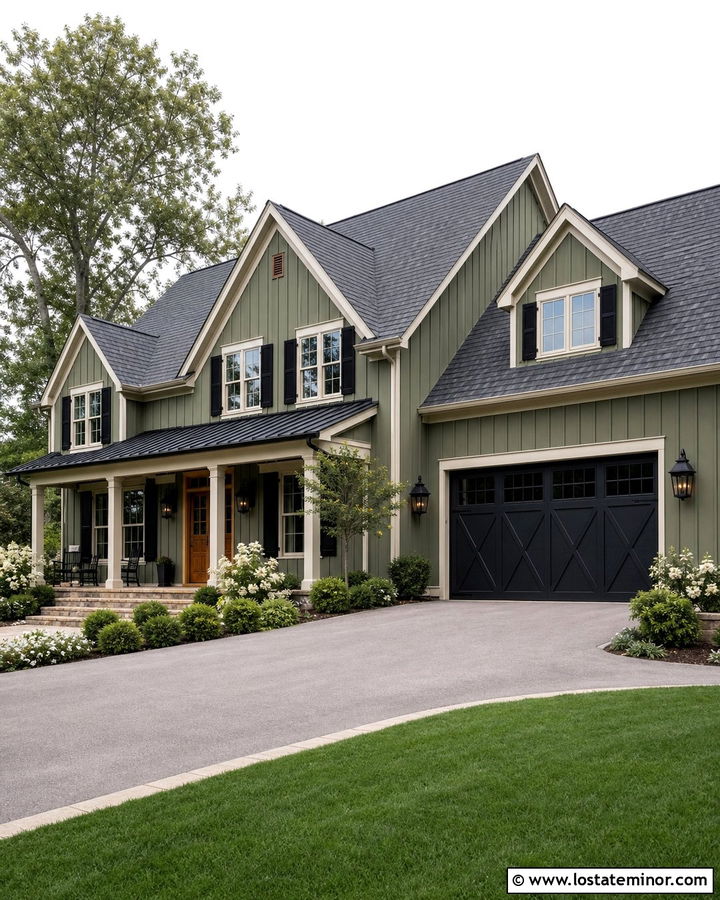
A black carriage garage door gives a sage green exterior traditional detail and strong visual structure. Decorative crossbucks, divided windows, and restrained black hardware can make the garage feel intentionally designed rather than purely functional. Repeat black on shutters, porch railings, and exterior lanterns. Cream trim will soften the transition between the dark door and muted green siding. For warmth, use a medium oak front door and tan stone porch steps. This scheme works well on a large farmhouse, country home, or traditional suburban exterior with steep gables. Because a black garage door has considerable visual weight, keep the surrounding siding and masonry relatively simple. Broad lawn areas, white flowers, and tidy foundation shrubs will balance the dark feature and maintain inviting curb appeal.
25. Sage Green House With Cream Barn Garage Door
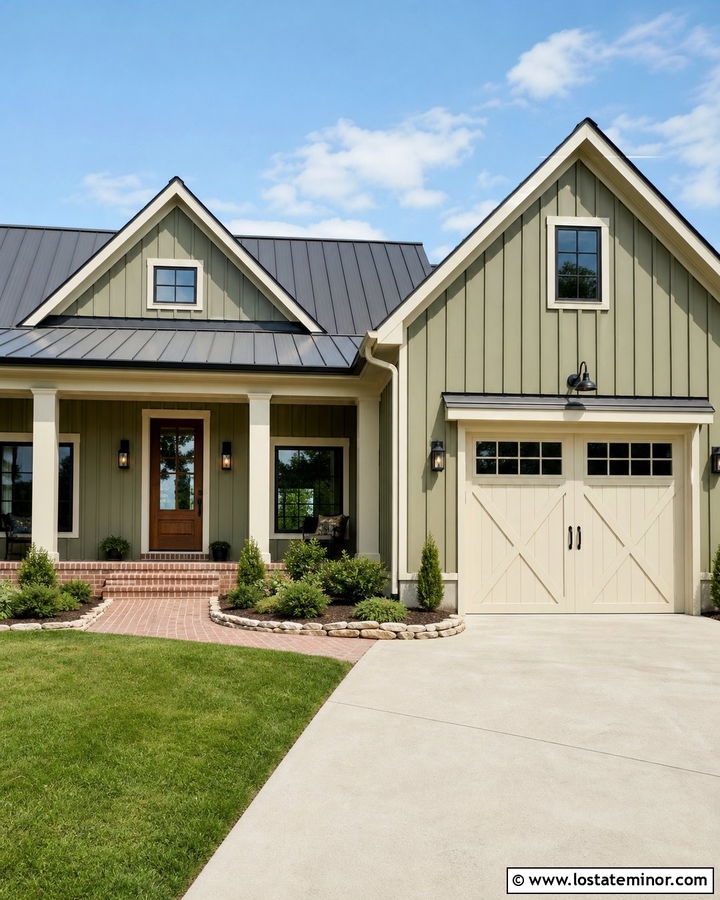
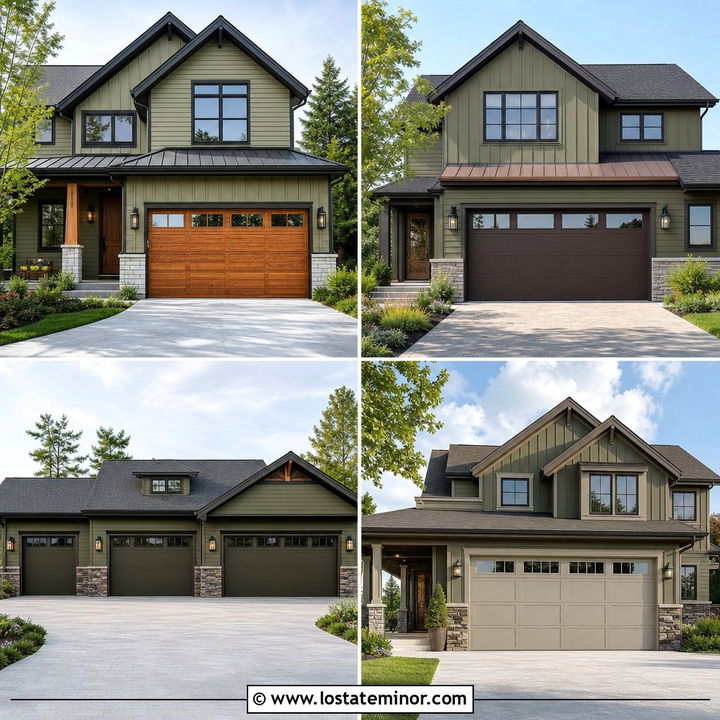
A barn-style cream garage door adds relaxed farmhouse character to a sage green house. Crossbuck panels and small upper windows create visual interest, while the warm cream color keeps the door from overpowering the facade. Use the same cream on window trim, fascia, and porch columns. A stained wood front door and black gooseneck lights can provide rustic contrast without adding too many colors. Vertical sage board-and-batten siding strengthens the farmhouse connection, especially when paired with a dark metal roof. A brick or natural stone walkway will introduce texture at ground level. Keep decorative features well proportioned and avoid adding unnecessary barn motifs elsewhere. The goal is a comfortable residential interpretation that feels classic, useful, and appropriate for the house’s actual architecture.
26. Sage Green House With Wood And Black Garage Door
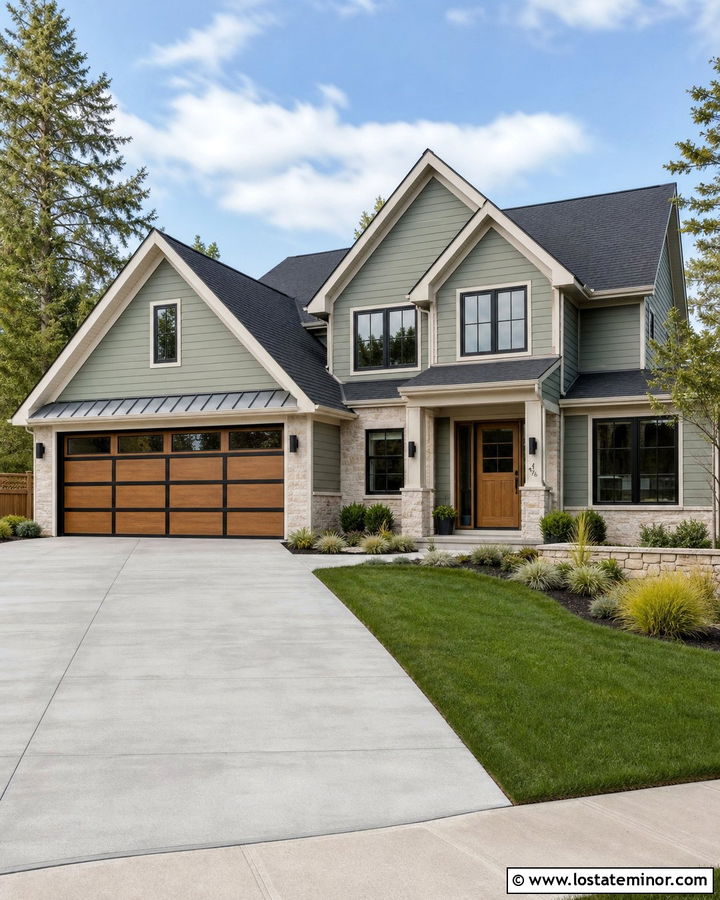
A two-tone garage door combining natural wood and black framing can become a striking feature on a sage green exterior. Look for a design with warm wood panels surrounded by slim black rails, or use black hardware and window frames to define a wood-look door. Connect those colors to black house windows and a matching wood front entry. Soft white trim will prevent the complete palette from becoming too dark. This treatment works especially well on a transitional home that combines a traditional gabled roof with contemporary materials. Use sage lap siding above a neutral stone base for additional depth. Simple landscaping will let the material contrast stand out. The finished facade feels modern and detailed without losing the warmth associated with sage and natural wood.
27. Sage Green House With Green-Gray Garage Door
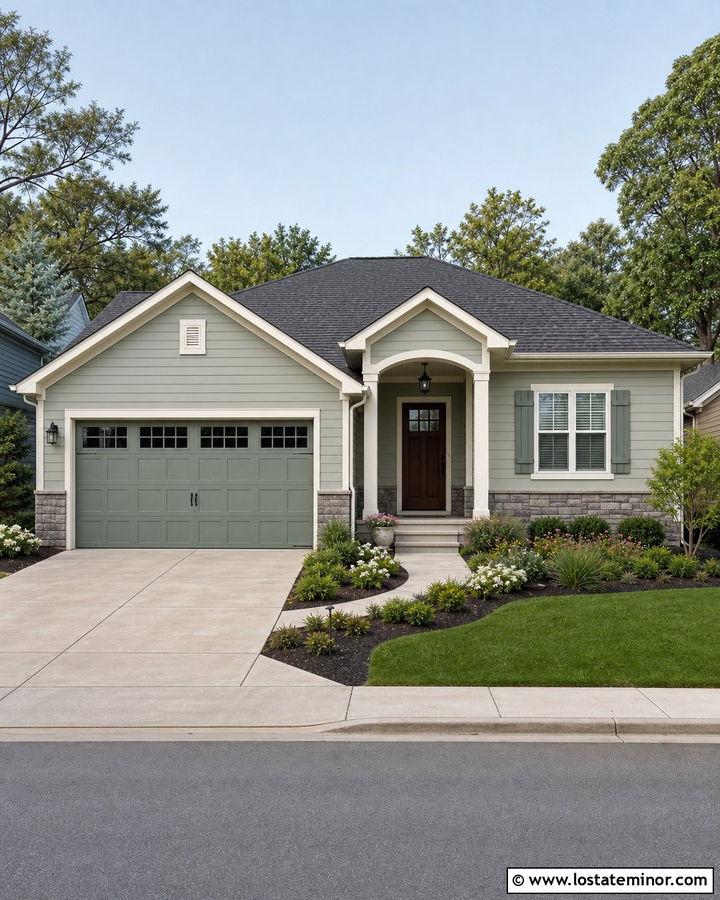
A green-gray garage door creates gentle tonal variation while still blending with sage green siding. Choose a shade that is slightly darker and grayer than the house body so the door is visible without becoming the dominant feature. Repeat the green-gray on the shutters, fascia, or side entry. Warm ivory window trim and a medium walnut front door will keep the facade from appearing too cool. This subtle palette is suitable for a traditional bungalow, compact ranch, or home with a narrow lot where an oversized garage could otherwise feel intrusive. A mixed gray stone foundation can tie the two greens together. Use layered plants with different leaf shapes instead of relying on colorful flowers. Texture will give the quiet exterior scheme enough curb appeal and visual movement.
28. Sage Green House With Copper-Tone Garage Door
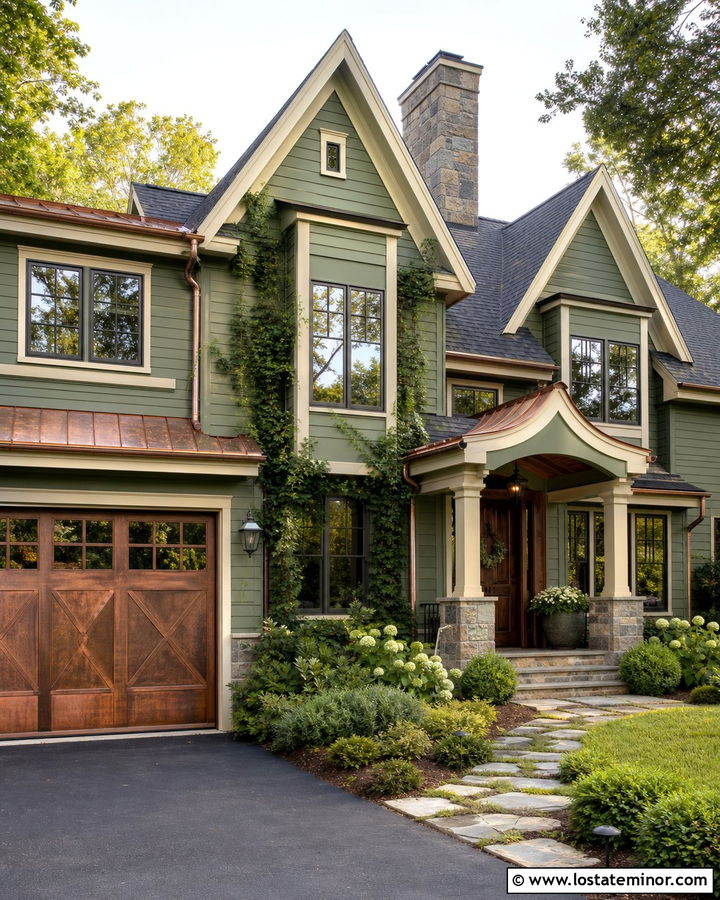
A copper-tone garage door introduces a rich metallic warmth that can make sage green siding look deeper and more refined. Choose an aged or weathered copper finish rather than a bright orange metallic surface. Echo the tone through copper gutters, porch roofing, lanterns, or understated house numbers. Cream trim and dark bronze windows will support the palette, while a stone base containing rust and gray tones can connect every color. This complete look works well on an English cottage, Tudor-influenced house, or high-end Craftsman exterior. A steep charcoal roof provides a strong backdrop. Keep the front door dark wood so it complements the garage without competing. Mature shrubs, climbing vines, and an irregular stone walkway enhance the established, handcrafted character of the design.
29. Sage Green House With White Garage Door Windows
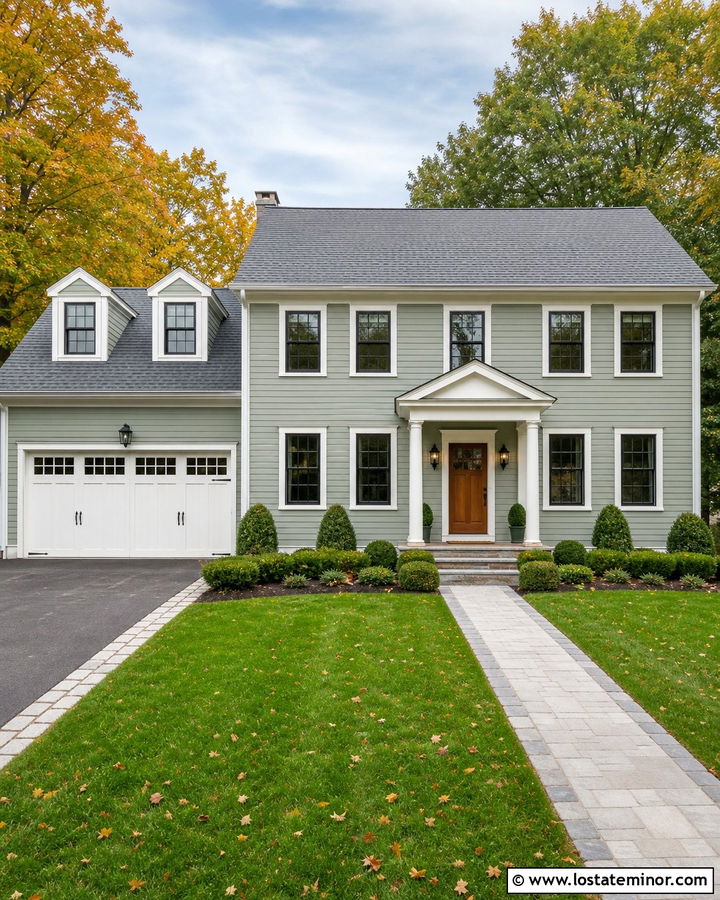
Upper garage door windows can make a white door feel lighter and more connected to the house’s architecture. Choose window divisions that match the proportions of the main windows instead of adding an unrelated decorative pattern. Warm white garage panels, trim, porch posts, and fascia will create a consistent frame around sage green siding. Black window muntins and lanterns provide contrast, while a natural wood front door adds warmth at the entry. This scheme suits a classic two-story suburban house, Colonial revival, or updated cottage. Frosted garage glass can offer privacy while maintaining the bright appearance. Add symmetrical shrubs, a clean paver driveway border, and a straight walkway. The final exterior looks coordinated because the garage windows repeat details already present across the complete facade.
30. Sage Green House With Coordinated Detached Garage
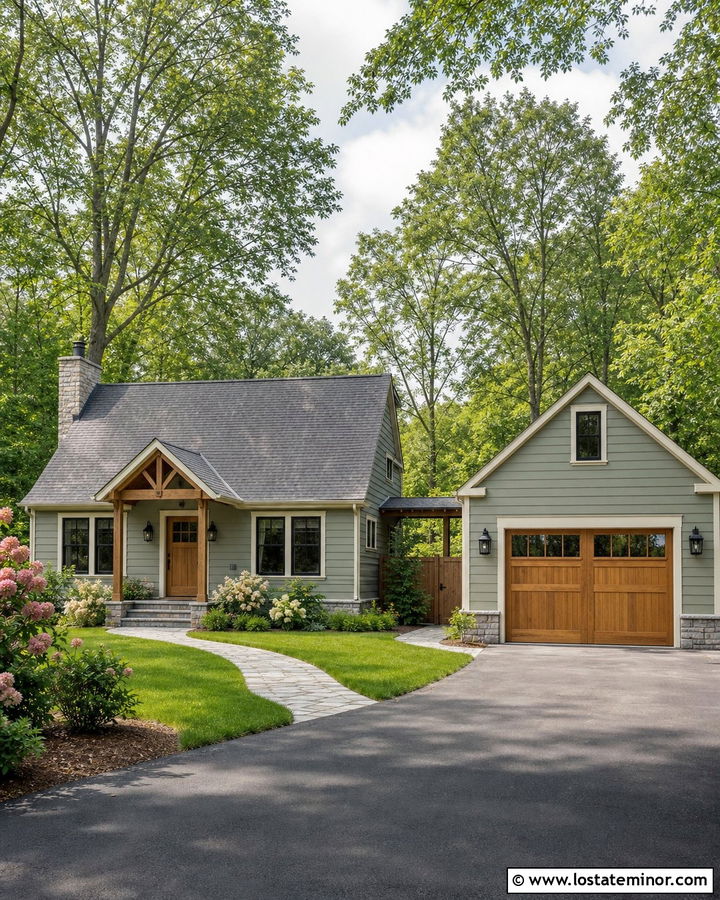
A detached garage should relate to the sage green house without looking like a separate design project. Use the same sage siding, roof material, and primary trim color on both structures. The garage door can match the house’s natural wood front door, creating a clear visual connection across the property. If the main house has stone accents, repeat a smaller amount around the garage foundation or entry. This approach works particularly well for a cottage, farmhouse, bungalow, or carriage-house property. A landscaped path between the buildings will make the arrangement feel intentional. Keep the detached garage slightly simpler than the main facade so the house remains the focus. Matching exterior lights, gutters, and window proportions will complete a unified and thoughtfully planned curb-appeal composition.
Conclusion:
The best garage door should complement a sage exterior while supporting the home’s roof, masonry, trim, and architectural character. White and cream create brightness, while charcoal, black, and dark green offer stronger contrast. Natural wood and wood-look finishes introduce warmth, and muted colors such as taupe, slate blue, or sandstone produce a softer transition. Always compare large exterior samples beside permanent materials before making a final choice. View them at different times of day because natural light can shift both green and neutral undertones. Whether the goal is traditional, rustic, modern, or understated curb appeal, these 30 Sage Green House Design With Garage Door Ideas provide complete palettes that can be adapted to many American homes.

Related posts: