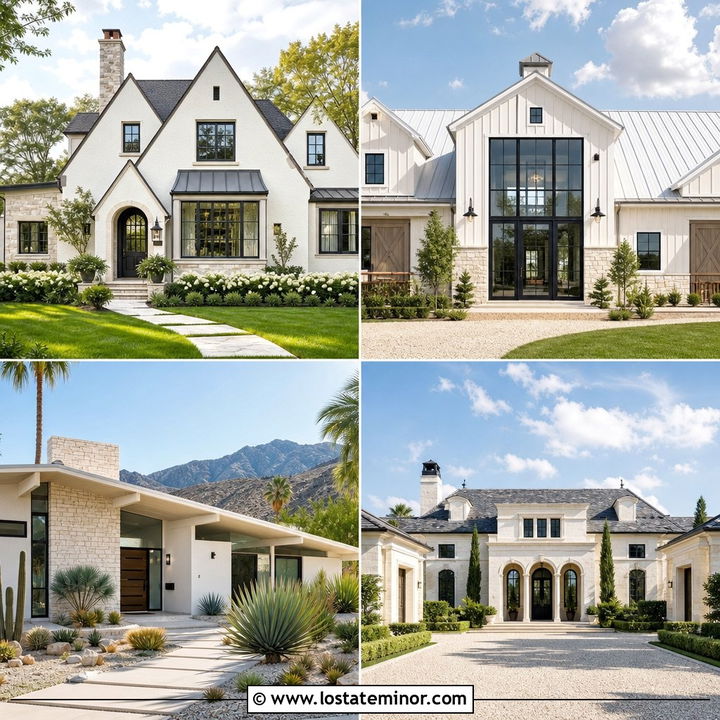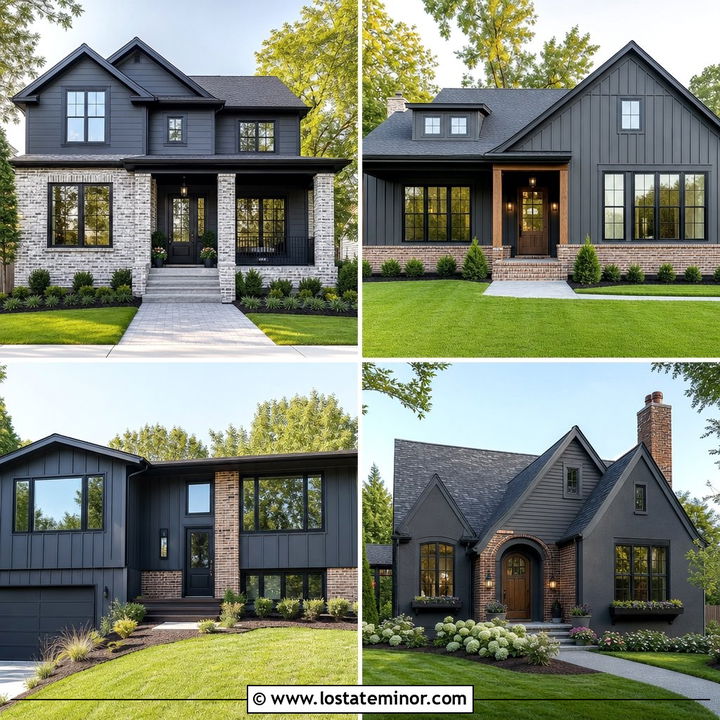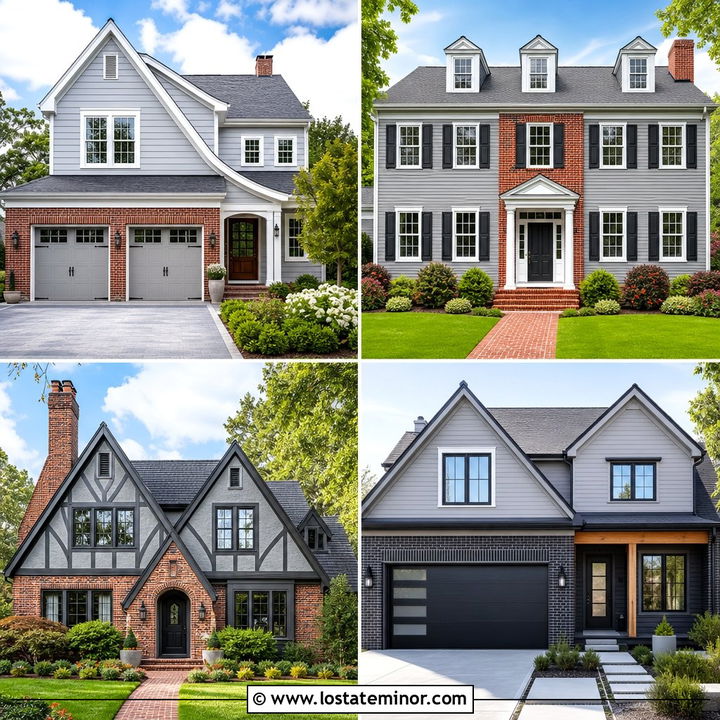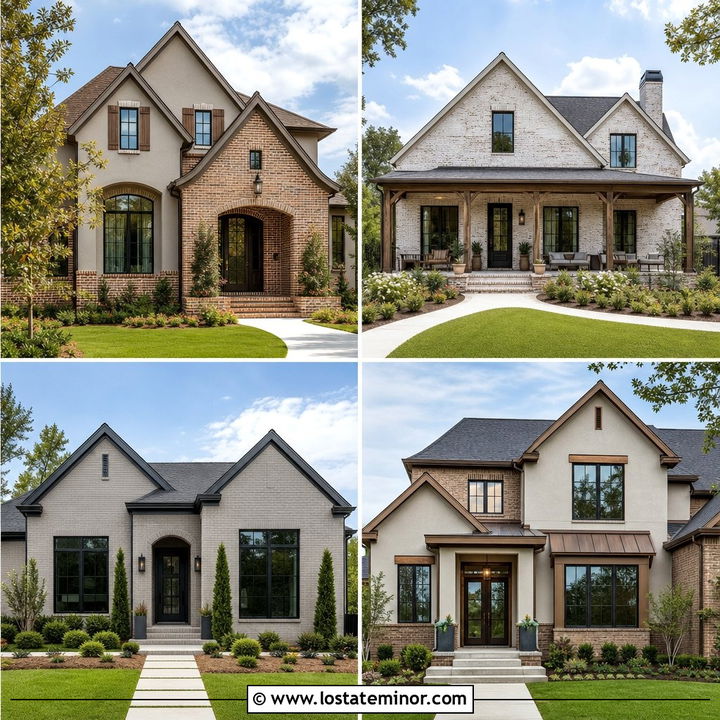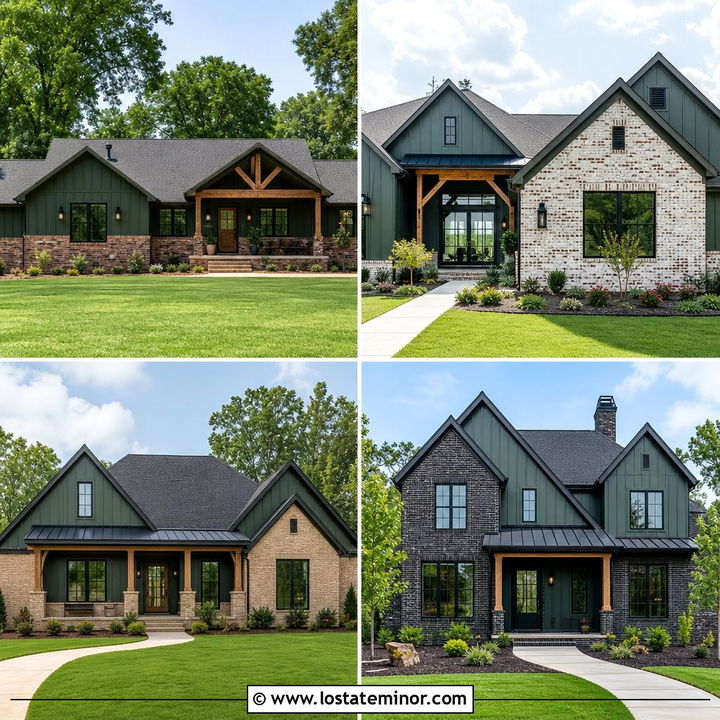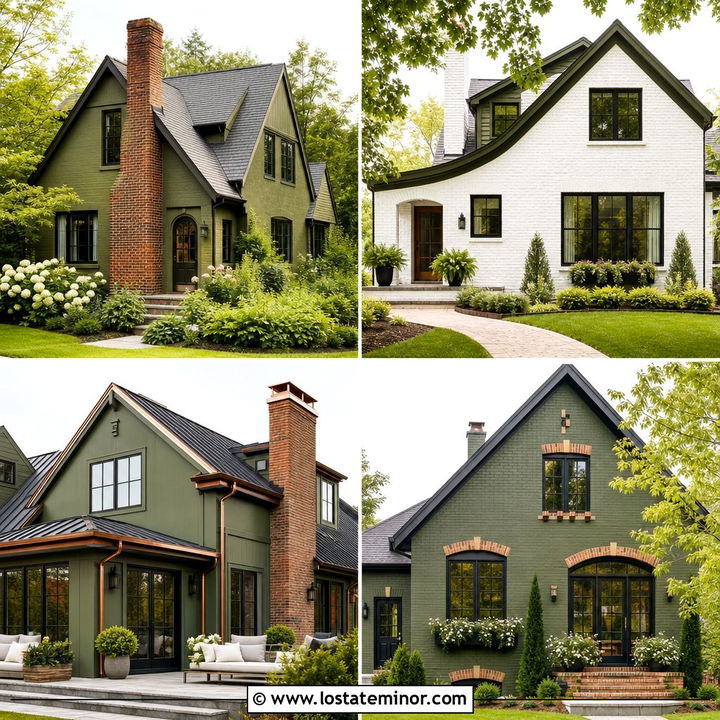

1. Warm White Farmhouse With Red Brick Skirt
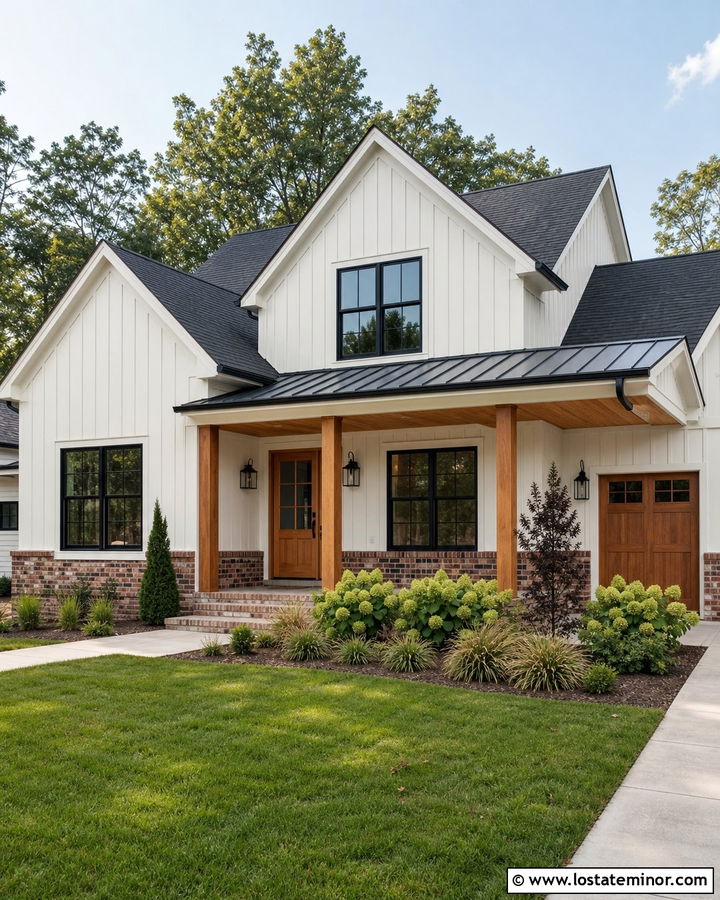
A red brick skirt gives a warm white farmhouse a strong visual foundation without overpowering its clean facade. Use a creamy white on the board-and-batten siding, then repeat that color on the porch columns and window trim. Choose variegated red brick containing rust, brown, and muted charcoal tones rather than bright orange brick. Black-framed windows and a black metal porch roof add crisp definition. A medium-stained oak front door introduces another natural layer and keeps the entrance welcoming. Match the garage doors to the warm white siding so the largest surfaces remain quiet. Simple foundation shrubs, ornamental grasses, and a straight concrete walkway complete this balanced exterior. The result feels modern and fresh, but the brick keeps the farmhouse connected to traditional materials.
2. Warm White Ranch With Tan Brick Base
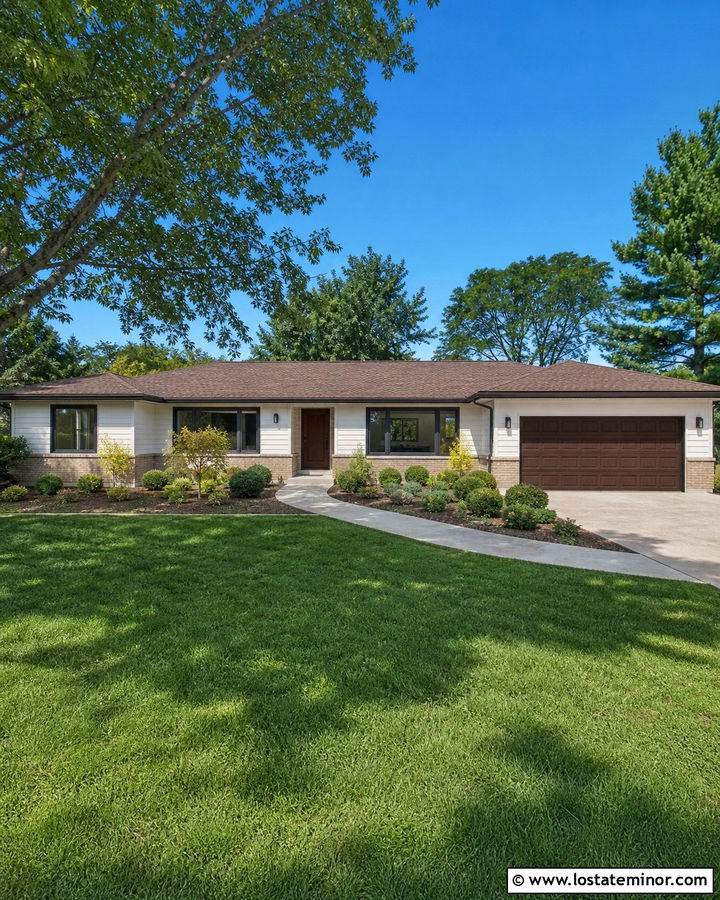
Does your one-story ranch need more depth without a complicated renovation? Paint the horizontal siding a gentle warm white and preserve a low tan brick base across the front elevation. Brick with sand, caramel, and light brown variation creates a smooth transition between the pale siding and surrounding landscape. Use soft bronze window frames or deep brown trim instead of sharp black. A walnut-colored front door can become the natural focal point, while a medium brown shingle roof holds the palette together. Keep the garage door warm white to reduce its visual weight. Broad planting beds with rounded shrubs soften the long roofline. This scheme respects the ranch’s horizontal proportions while making an older facade feel brighter, more intentional, and considerably more inviting.
3. Warm White Colonial With Red Brick Chimneys
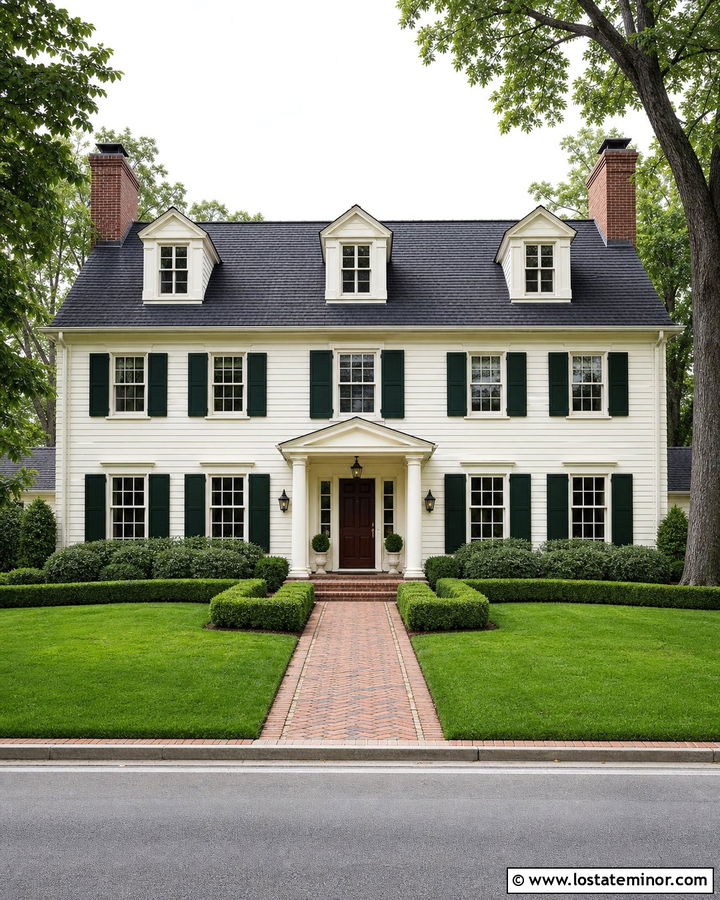
Tall red brick chimneys can provide beautiful symmetry on a warm white colonial house. Cover the siding with a creamy off-white, and use a slightly cleaner white on the window trim, cornice, and classical entry surround. Traditional red brick chimneys should remain unpainted so they stand out against the quiet facade. Deep green shutters offer a softer historic contrast than solid black, especially when the brick contains brown undertones. Repeat the green on the front door or select a stained mahogany door for added warmth. A dark charcoal shingle roof grounds the pale upper walls. Formal boxwood hedges, brick walkway edging, and matching lanterns reinforce the orderly architecture. Every element supports the home’s symmetry without making the color scheme feel stiff or overly formal.
4. Warm White Craftsman With Brick Porch Columns
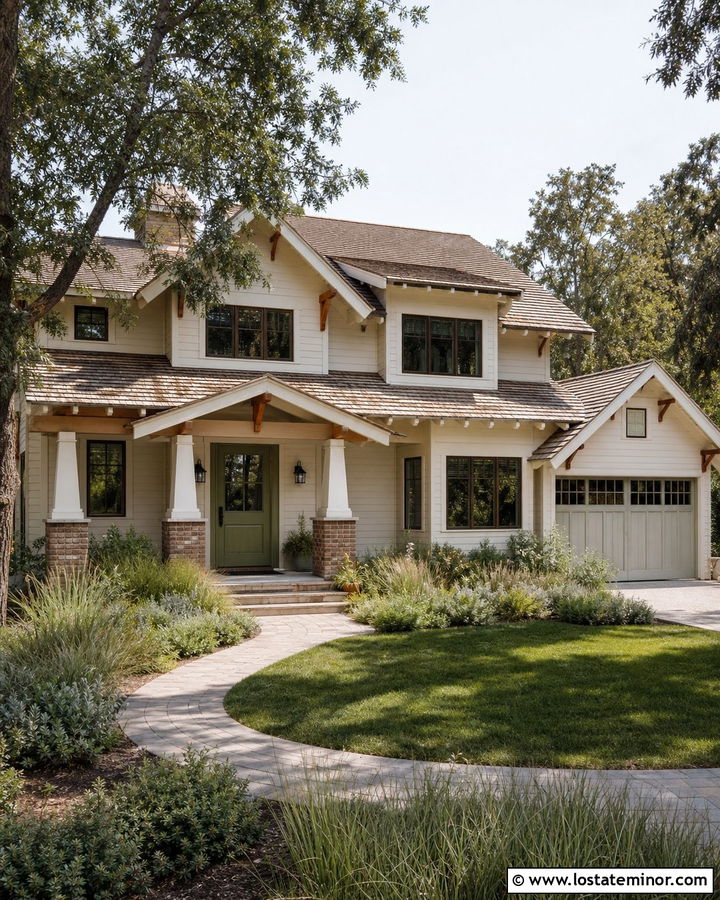
Brick porch columns bring weight and character to a warm white craftsman exterior. Choose warm white lap siding for the main walls, then add matching board-and-batten panels beneath the front gable. Build the tapered porch supports over red-brown brick piers that coordinate with the front steps. A muted olive green door works beautifully beside earthy masonry and exposed cedar brackets. Use dark bronze windows, gutters, and light fixtures to define the structure without creating overly harsh contrast. The roof can be weathered brown or charcoal, depending on the darker flecks within the brick. Finish the porch with natural wood ceiling boards and simple square railings. Layered shrubs, native grasses, and a curved paver walkway give the complete exterior a relaxed, handcrafted appearance.
5. Warm White Cottage With Limewashed Brick
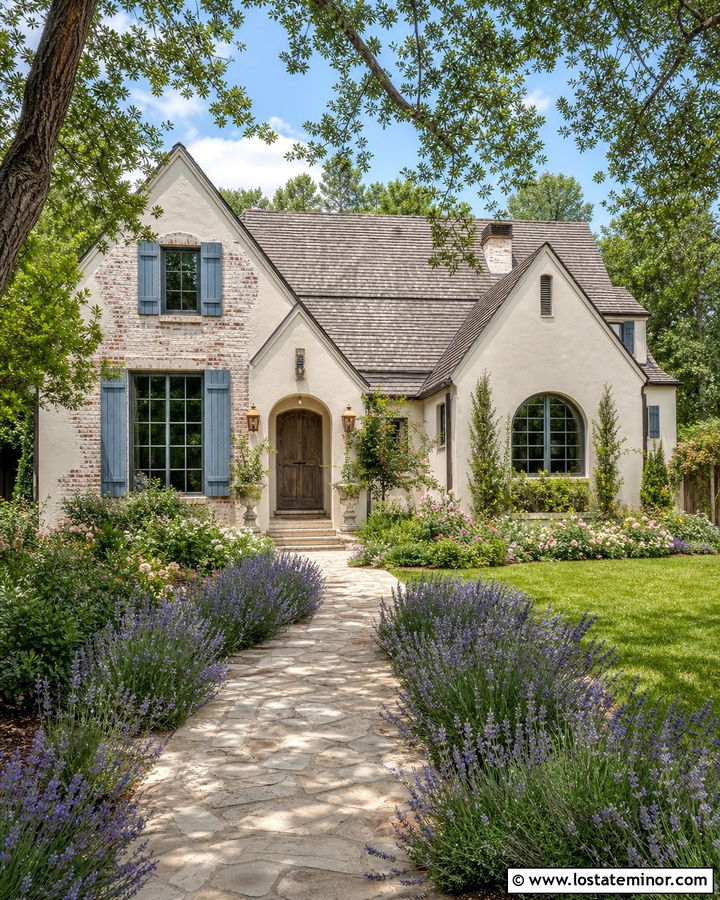
Soft, irregular texture makes limewashed brick a natural partner for a warm white cottage. Apply a translucent warm white limewash to existing red brick so portions of the original color remain visible beneath the finish. Pair it with creamy stucco or painted siding rather than a bright white surface. Dusty blue shutters introduce gentle contrast, while a weathered oak door strengthens the cottage character. Choose a warm gray roof with subtle brown variation to bridge the cool blue accents and earthy brick. Curved window heads, a small arched porch, and copper lanterns can make the facade feel collected rather than newly assembled. Surround the house with flowering shrubs, lavender, and an informal stone path. The result is light and romantic while retaining the brick’s age and dimensional texture.
6. Warm White Modern Farmhouse With Brick Garage
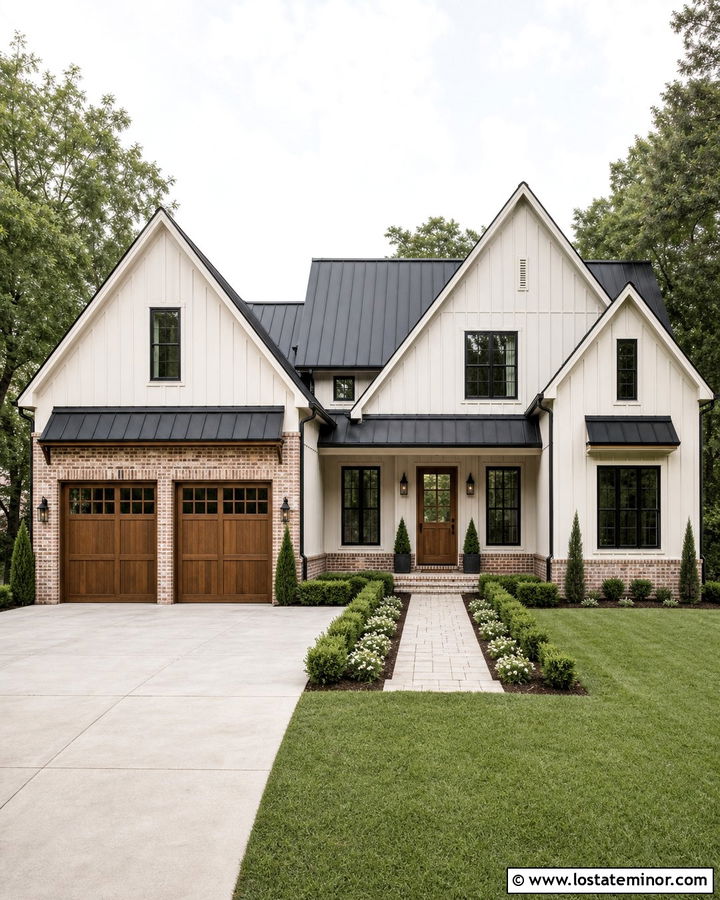
A brick-framed garage can keep a large modern farmhouse from looking flat or overly white. Use a warm white such as a soft ivory on the primary board-and-batten walls. Surround the garage bays with distressed red brick that also appears on the foundation and front steps. Warm wood garage doors become a major design feature, so select a stain that relates to the brown and rust tones in the brick. Black-framed windows, slim gutters, and a standing-seam metal roof provide modern definition. At the entrance, repeat the garage wood tone on a simple glass-paneled front door. Generous landscaping should balance the width of the driveway with low hedges and upright trees. This full-house scheme combines farmhouse simplicity with enough brick and wood to feel substantial.
7. Warm White Bungalow With Blush Brick Accents
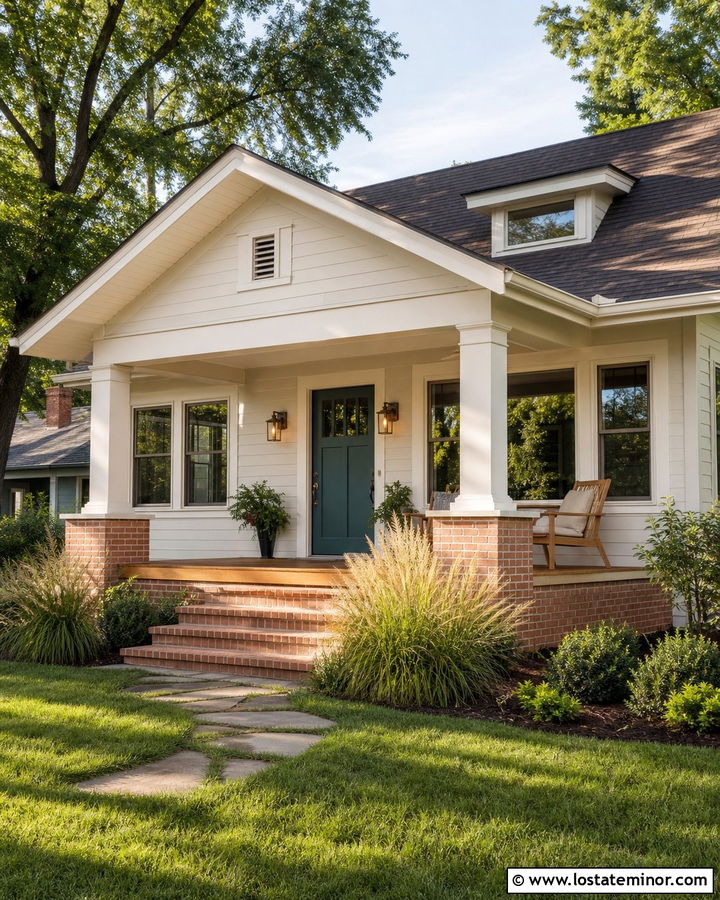
Blush brick can make a warm white bungalow feel distinctive without introducing a loud color. Select masonry containing pale terracotta, salmon, cream, and weathered beige tones for the porch foundation and front steps. Cover the siding with a creamy white that has a gentle beige undertone. A muted teal front door provides a controlled contrast and gives the small facade a clear focal point. Keep the trim close to the siding color, allowing decorative rafters and window casings to appear through shadow rather than strong color changes. A medium brown roof and bronze lighting enhance the brick’s warmth. Add a wide porch with natural oak decking, low ornamental grasses, and a narrow flagstone path. The coordinated palette feels cheerful, approachable, and appropriate for the bungalow’s compact proportions.
8. Warm White Tudor With Dark Brick Accents
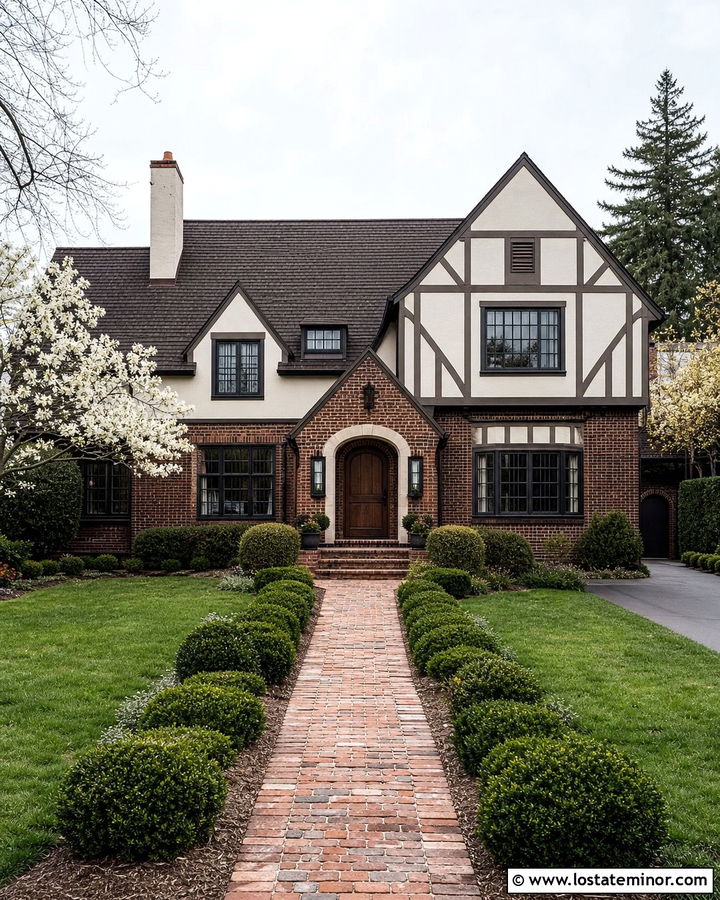
How can a Tudor exterior feel lighter without losing its traditional character? Use warm white stucco between the gables, then reserve deep brown brick for the lower walls, chimney, and arched entrance. Dark timber details should echo the brick’s deepest tones rather than looking completely black. A rich walnut front door fits naturally beneath the brick arch and can include small divided-light windows. Choose warm cream for window trim so the openings remain visible against the masonry. A brown-black roof with varied shingles complements the steep rooflines and creates a grounded silhouette. Limit landscaping to clipped evergreens, small flowering trees, and an aged brick walkway. This palette brightens the house while retaining the contrast, texture, and strong roof forms that make Tudor architecture recognizable.
9. Warm White Cape Cod With Brick Foundation
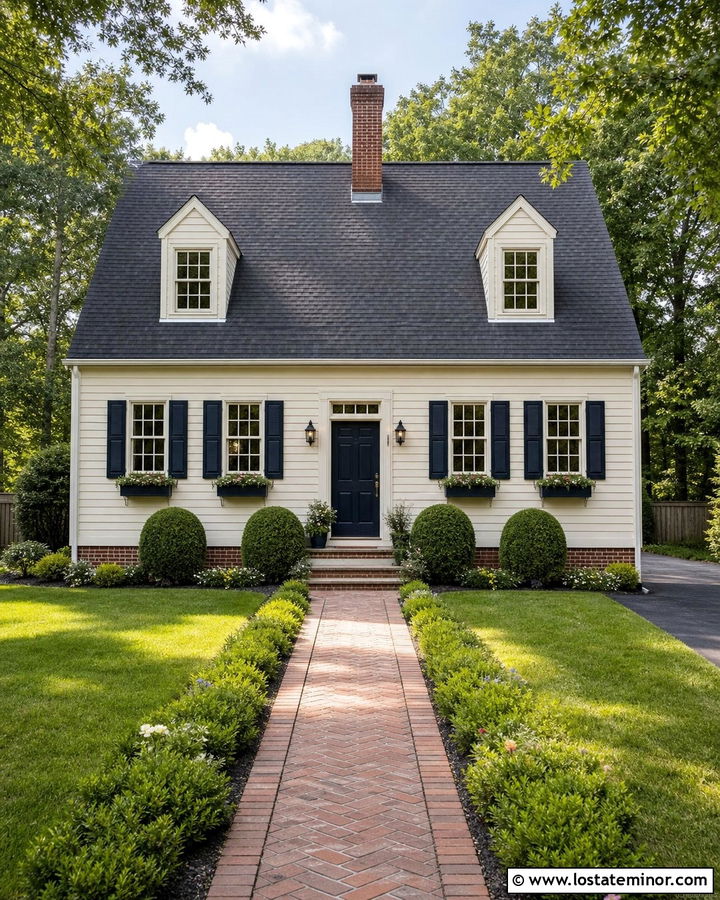
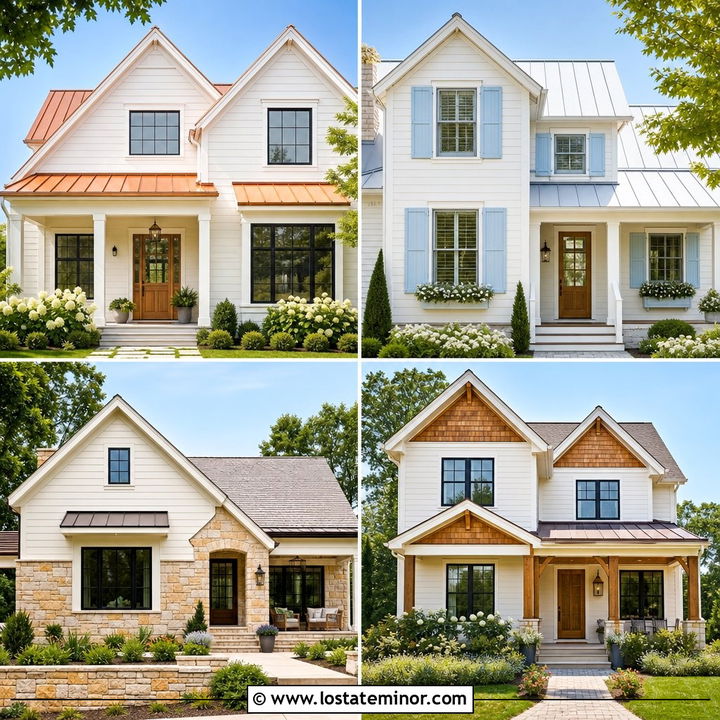
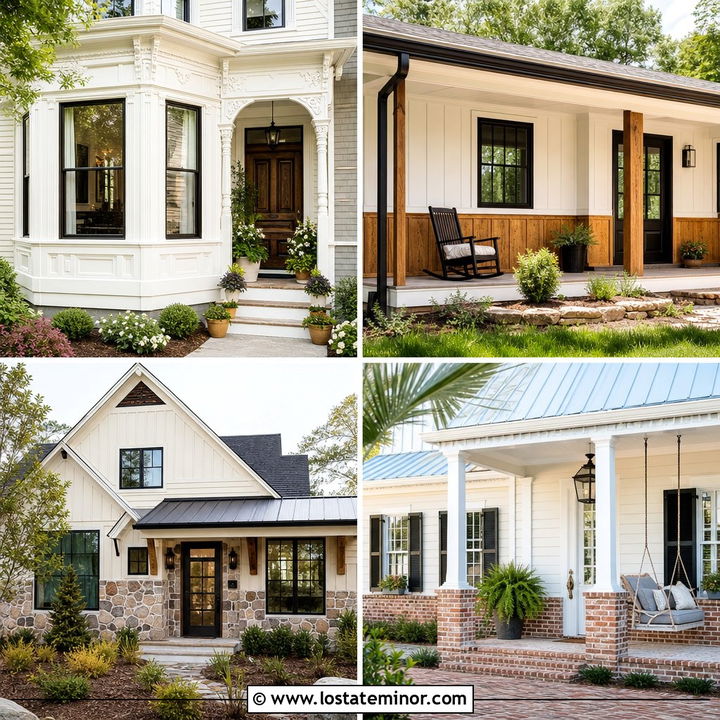
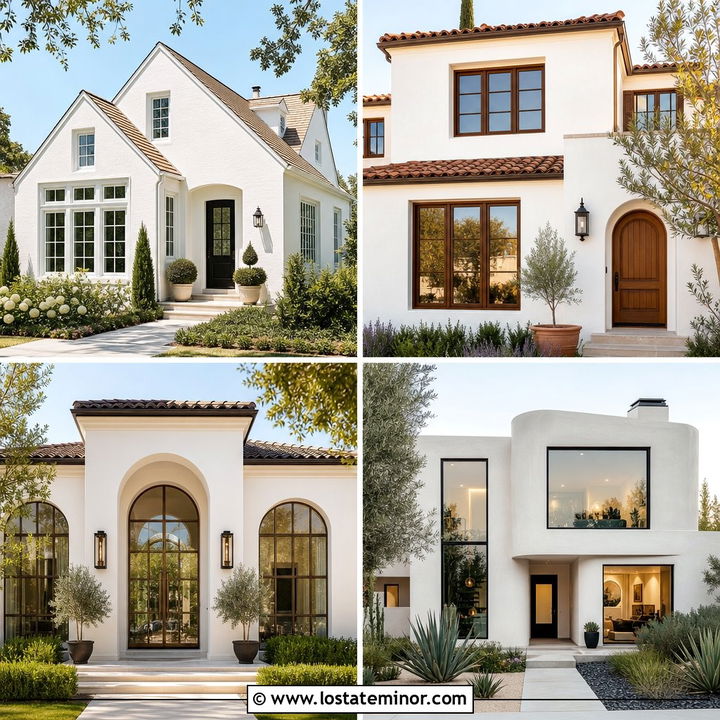
A visible brick foundation can add needed color and texture to a simple warm white Cape Cod. Paint the shingles or clapboard siding a soft ivory, then use a lightly weathered red brick around the foundation, front steps, and central chimney. Navy shutters introduce classic coastal contrast while remaining softer than black. Repeat the navy on the front door, or use a natural wood door if the entrance needs more warmth. Keep the roof medium charcoal and the trim a restrained creamy white. Window boxes and symmetrical shrubs can emphasize the Cape Cod’s balanced shape without hiding its brickwork. A brick-edged path connects the foundation material to the yard. This complete arrangement feels traditional, bright, and welcoming while giving the modest facade enough visual detail to stand out.
10. Warm White Contemporary House With Charcoal Brick
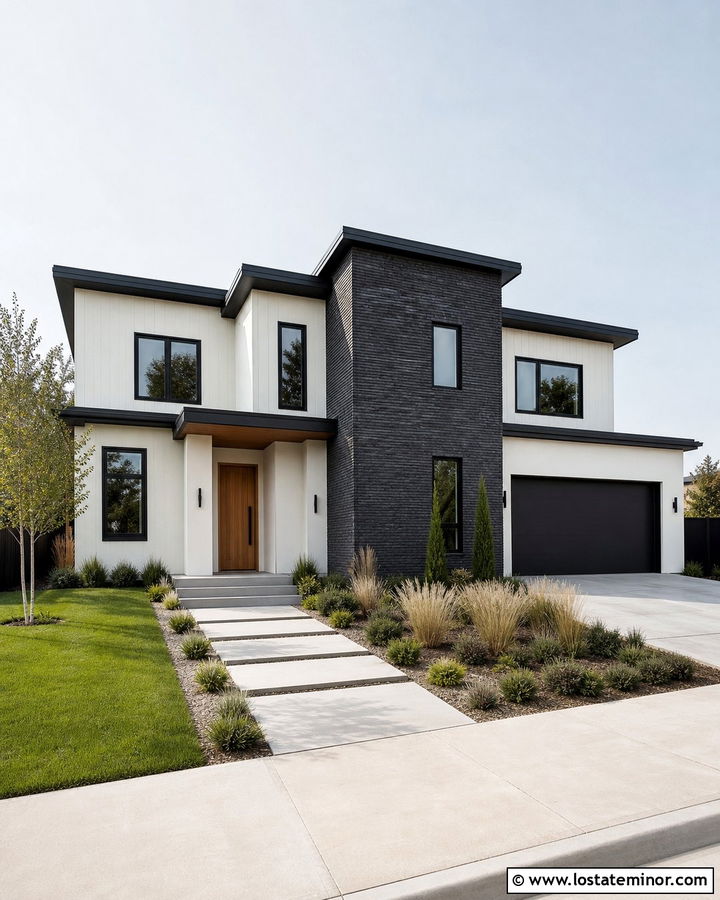
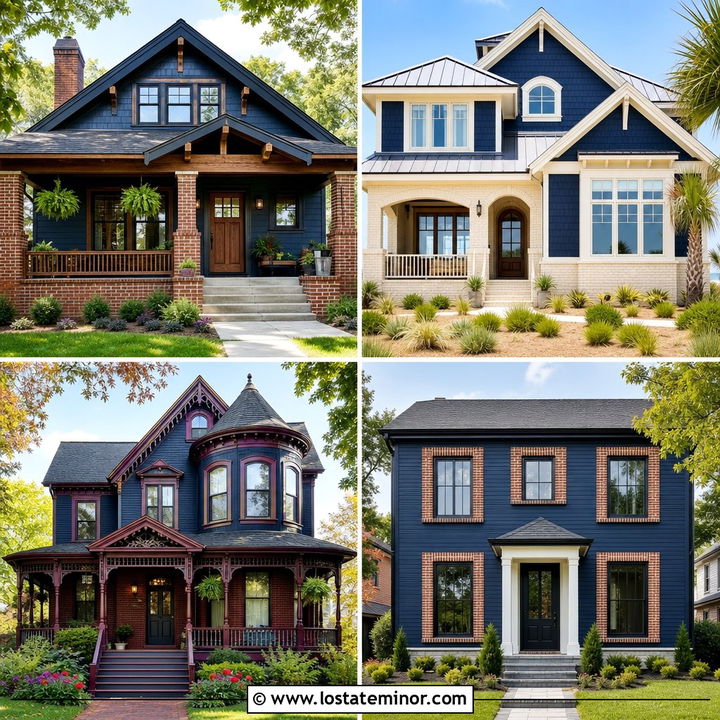
Charcoal brick gives a warm white contemporary house a dramatic base without requiring a fully black exterior. Place the dark masonry on one projecting volume, around the garage, or along the lower level. Cover the remaining stucco or vertical siding with a soft warm white to create a clean but comfortable contrast. Black window frames can connect visually with the charcoal brick, while a medium-toned cedar door prevents the entrance from disappearing into the dark section. Use a low-slope charcoal roof and streamlined bronze or black lighting. Large concrete pavers, architectural grasses, and compact evergreen plantings complement the geometric facade. Because the palette is limited to warm white, charcoal, and wood, the changes in material become the main decoration. The finished house appears bold, balanced, and uncluttered.
11. Warm White Southern House With Brick Porch Floor
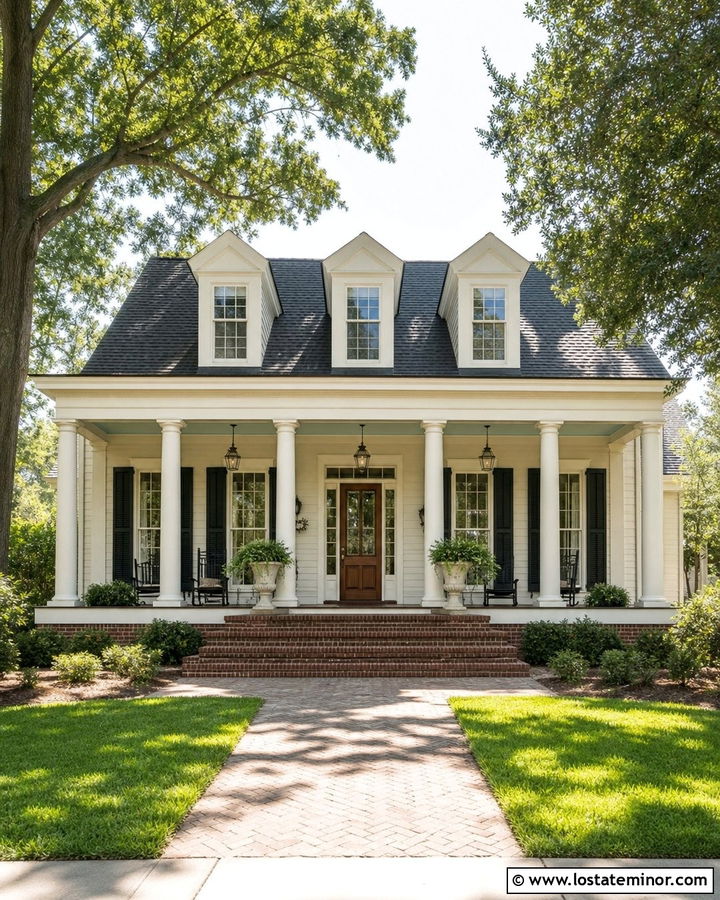
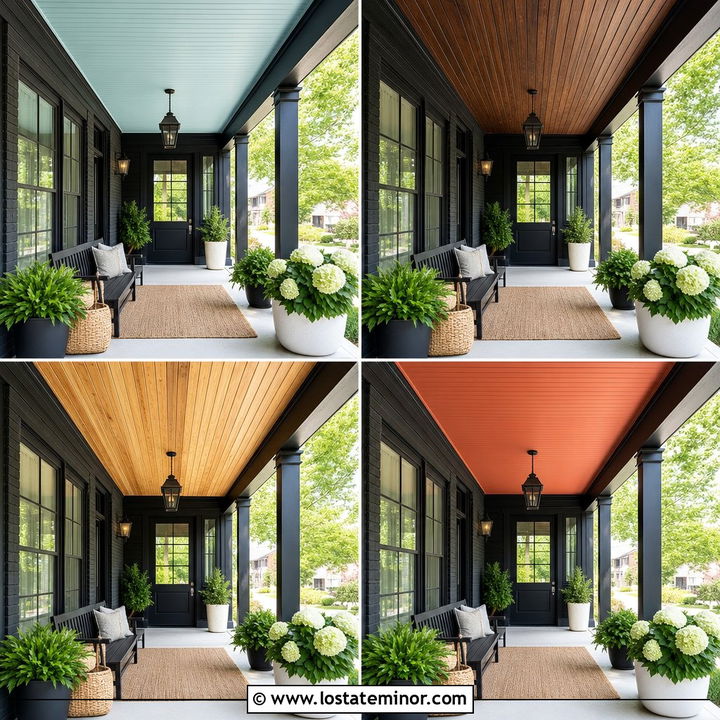
A deep porch becomes even more welcoming when warm white walls meet a traditional brick floor. Paint the siding and columns a creamy white that stays soft in strong sunlight. Lay red-brown brick in a herringbone or running-bond pattern across the porch and continue it down the front steps. A pale blue-green porch ceiling adds subtle regional character without distracting from the warm facade. Use dark green shutters and a stained wood front door to echo the surrounding landscape. Copper or aged brass lanterns bring another warm finish into the scheme. A medium charcoal roof offers contrast above the white upper story. Broad steps, symmetrical planters, and mature shade trees complete the setting. The brick flooring grounds the tall columns and keeps the expansive porch from feeling visually empty.
12. Warm White Split-Level With Mixed Brick
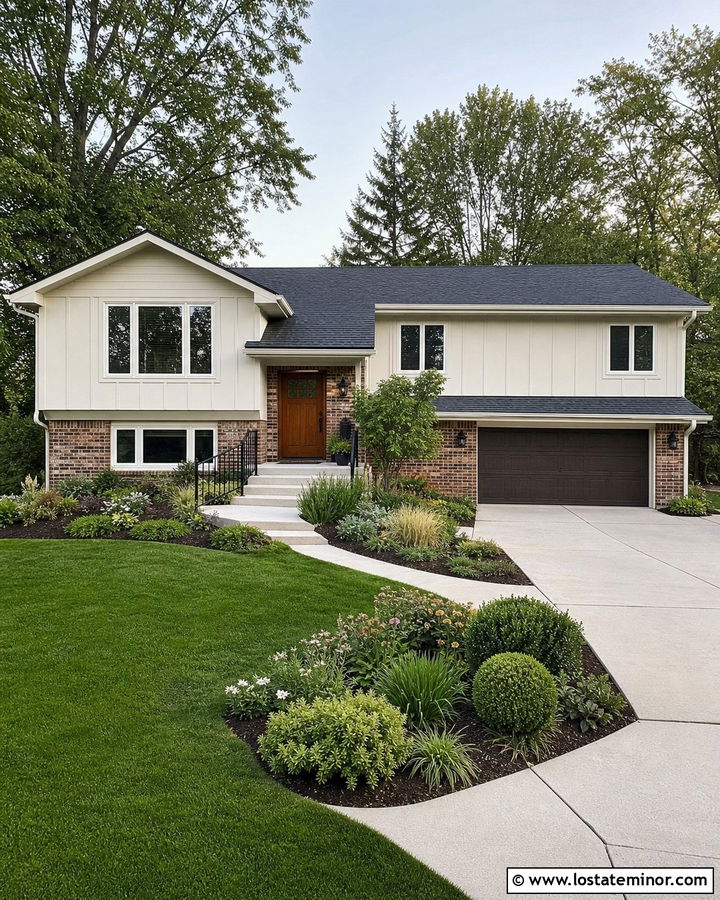
Mixed red and brown brick can help unify the different elevations of a split-level home. Keep the masonry on the lower floor, then paint the upper siding a warm white with understated greige undertones. Pull the trim color from the lightest mortar shade so the brick and siding feel intentionally connected. A dark bronze garage door works well when the lower level contains a large amount of masonry. At the raised entrance, install a medium wood door and simple black railing. Charcoal shingles provide a neutral roof that does not compete with the brick’s variation. Replace undersized shrubs with broad planting beds that follow the stepped architecture. A generous walkway and updated lighting can further clarify the entrance. This scheme modernizes the house while preserving the durable brick that defines its original design.
13. Warm White French Country House With Brick Gables
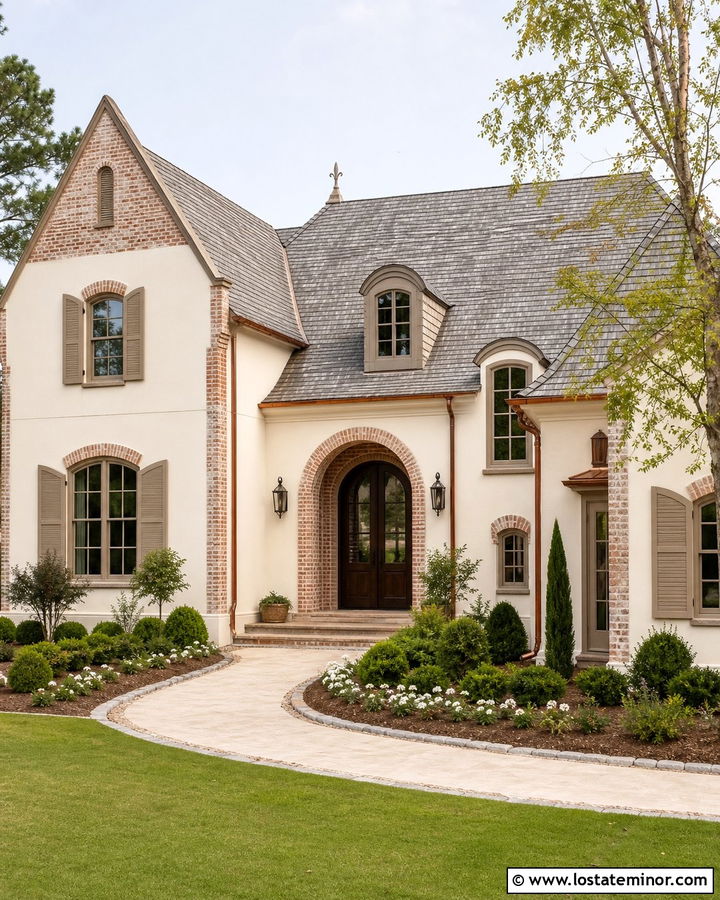
Warm white stucco and softly aged brick can give a French country exterior a refined yet relaxed appearance. Use muted tan-red brick inside selected gables, around arched windows, and along the lower facade. The brick should have irregular color and light mortar so it feels integrated with the warm white walls. Choose taupe-painted shutters and a dark stained double door instead of high-contrast black accents. A steep weathered gray roof balances the pale facade and supports the home’s traditional silhouette. Add copper gutters or lanterns for a finish that will develop more character over time. Curved planting beds, clipped shrubs, and a gravel-edged walkway soften the architecture. By repeating the same masonry in several controlled locations, the expansive facade feels connected rather than divided into unrelated sections.
14. Warm White Mediterranean House With Terracotta Brick
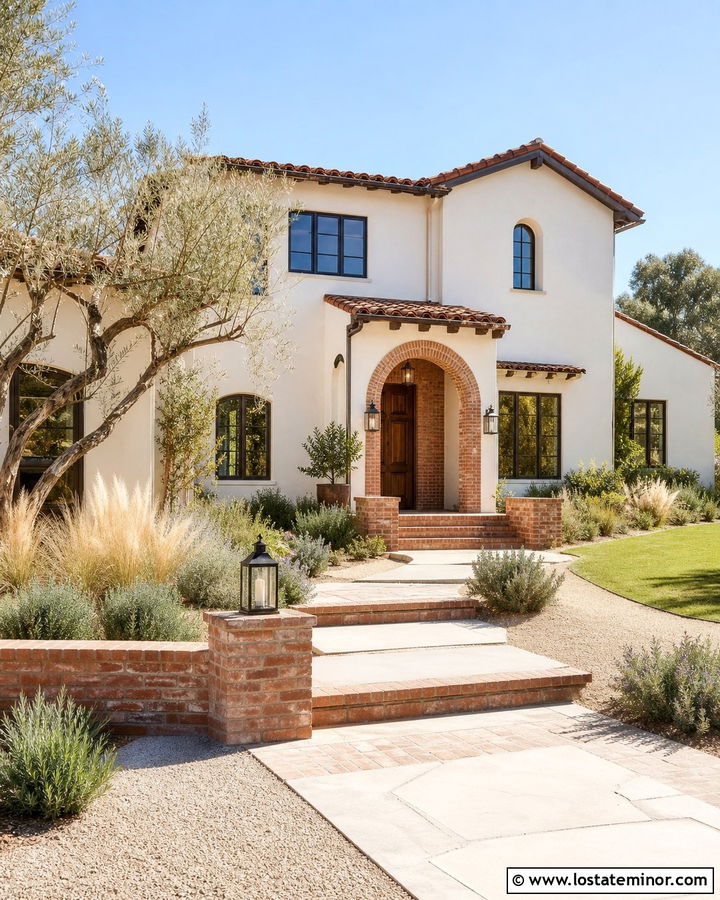
Sun-washed colors suit a warm white Mediterranean house with terracotta brick details. Cover the stucco with a creamy white carrying subtle yellow or beige warmth. Use terracotta-colored brick around the arched entrance, courtyard wall, steps, and selected window surrounds. A clay tile roof naturally strengthens this palette and gives the pale walls a richer outline. Choose dark bronze windows and a substantial wood door with simple iron hardware. Avoid bright white trim, which could look disconnected from the roof and brick. Instead, keep the window surrounds close to the body color. Olive trees, rosemary, ornamental grasses, and pale gravel create a landscape that supports the earthy materials. The finished exterior feels bright and relaxed, with terracotta brick supplying color, craftsmanship, and visual rhythm across the complete facade.
15. Warm White Ranch With Painted Brick And Wood
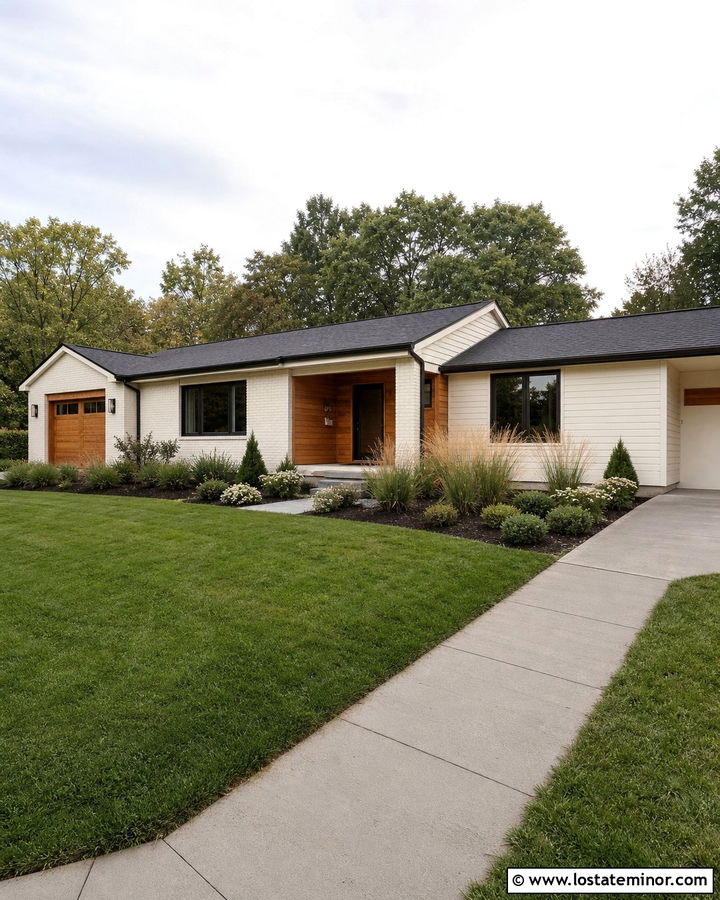
Painting dated brick warm white can create a unified ranch exterior, especially when the facade contains several mismatched materials. Use the same creamy white on the brick and horizontal siding, but allow their different textures to remain visible. Add natural cedar at the recessed entry, porch ceiling, or garage door to break up the pale surface. Dark bronze window frames offer definition without the severity of pure black. A charcoal roof keeps the long, low house grounded. Consider a medium gray concrete walkway and simple black lighting for a clean transition between traditional brick and newer details. Wide planting beds with grasses and compact shrubs reinforce the horizontal architecture. This restrained treatment makes the ranch feel larger and calmer while preserving the texture that painted masonry contributes to the facade.
16. Warm White Colonial With Brick Entry Arch
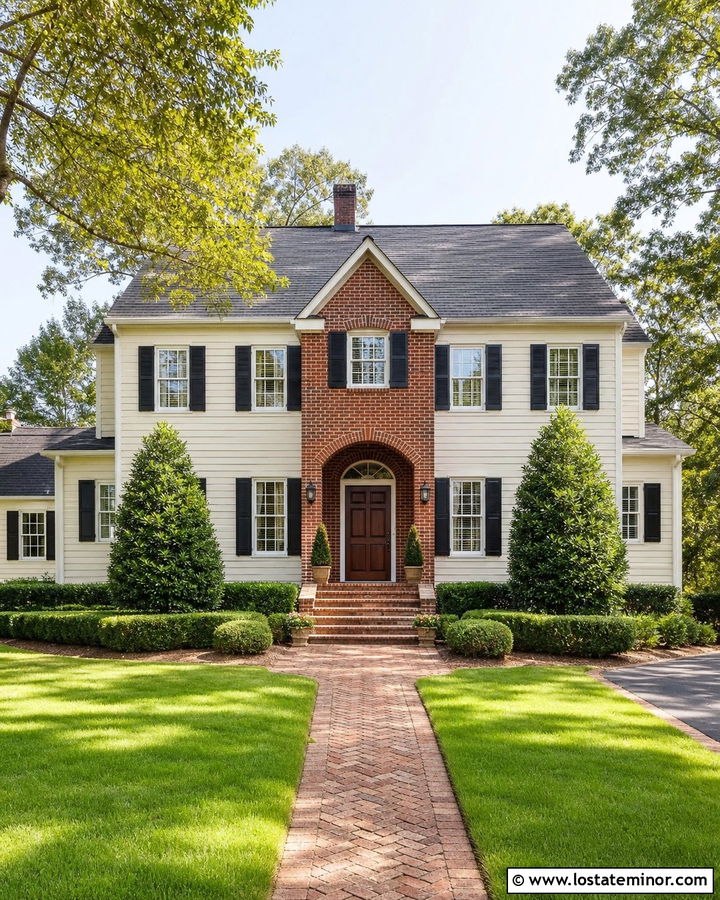
A brick entry arch can turn a straightforward warm white colonial into a more memorable home. Keep the primary clapboard siding soft and creamy, then frame the front door with red-brown brick extending from the steps to the arched opening. Use the same brick along the foundation or walkway borders so the entrance does not appear isolated. Black shutters provide traditional structure, but a medium mahogany door keeps the central feature warm and inviting. Select cream trim for the windows, cornice, and porch details. A dark gray roof creates a clear cap without introducing another competing color. Symmetrical evergreens and neat brick paths reinforce the architecture’s formality. This focused use of masonry adds depth and craftsmanship while allowing the warm white facade to remain the dominant visual element.
17. Warm White Mid-Century House With Brick Wall
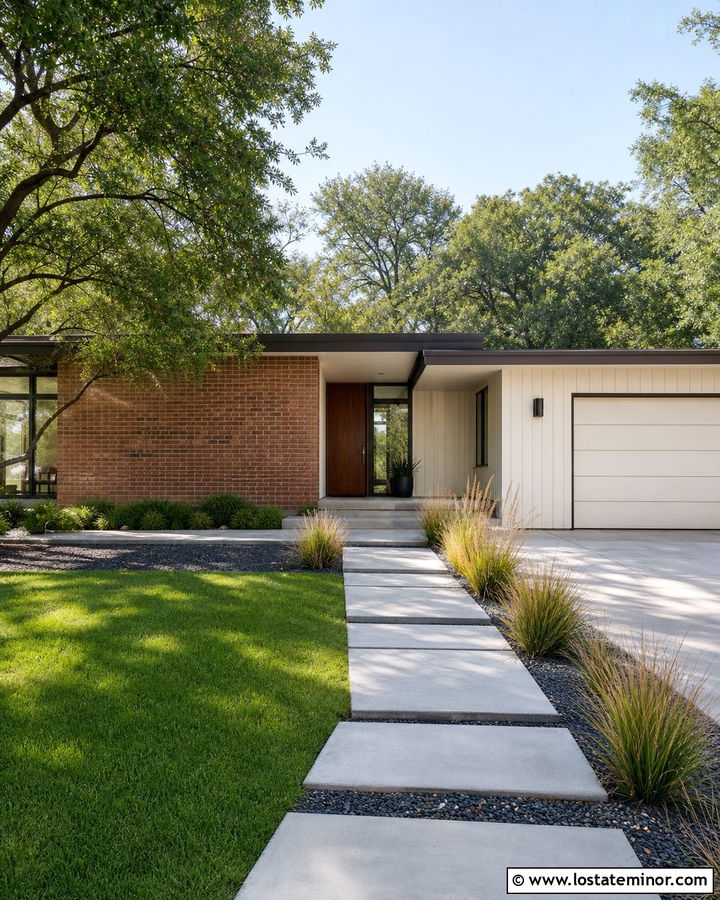
A long brick feature wall can bring authentic texture to a warm white mid-century exterior. Paint the surrounding stucco or vertical siding a subdued warm white, then preserve a low red-brown or tan brick wall near the entrance. Install a flat-panel walnut door to echo the house’s original material palette. Dark bronze window frames and fascia create narrow outlines that suit the horizontal roofline. Instead of contrasting every edge, keep the garage door close to the warm white body color. A charcoal gravel bed, oversized concrete pavers, and sculptural grasses complement the clean architecture. The brick should function as one broad, uninterrupted plane rather than several decorative patches. This simple arrangement updates the exterior while respecting the low profile, natural materials, and asymmetrical composition associated with mid-century homes.
18. Warm White Craftsman With Brown Brick
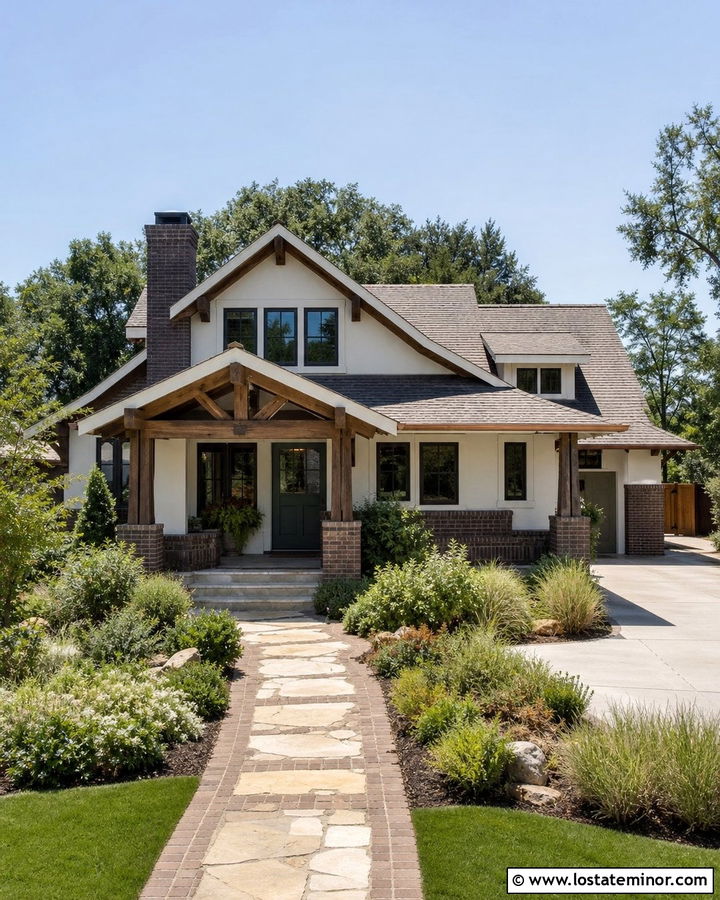
Brown brick creates an especially cozy foundation for a warm white craftsman house. Look for masonry with chocolate, taupe, cinnamon, and charcoal variation, then use it on the porch piers, chimney, and lower wall. A creamy white body color keeps the upper siding bright without clashing with the brick’s earthy undertones. Choose olive or deep sage for the front door and small gable details. Exposed beams and porch ceilings can remain natural cedar for another layer of warmth. Dark bronze windows, gutters, and fixtures are more harmonious here than sharp black. Finish the house with a weathered brown roof and a stone-and-brick walkway. Dense green shrubs and native grasses frame the facade. Together, these colors create a craftsman exterior that feels established, balanced, and rich in natural texture.
19. Warm White Farmhouse With Whitewashed Brick
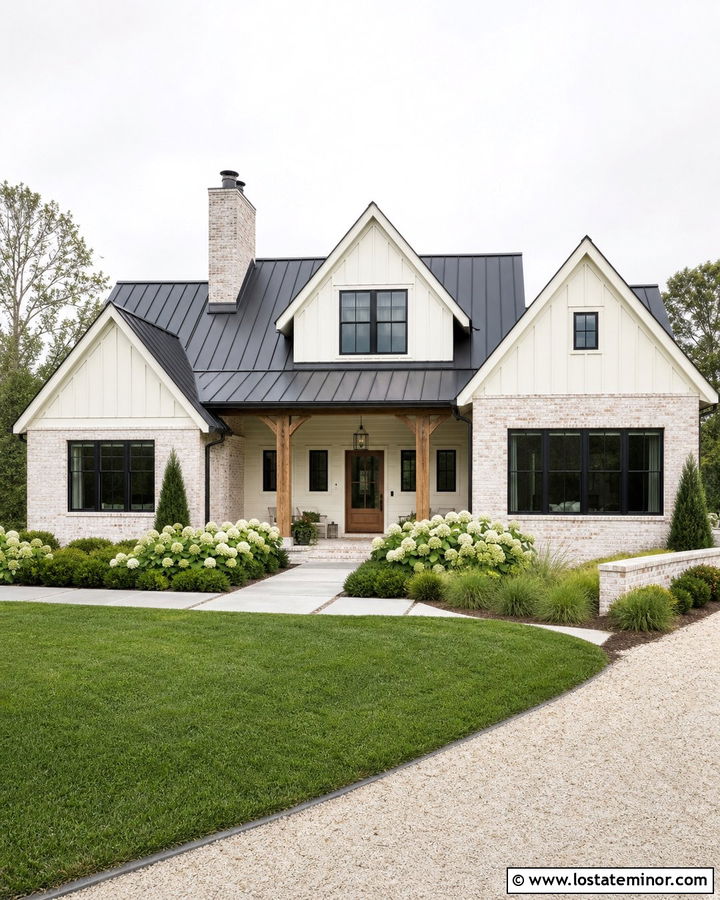
Whitewashed brick creates a softer farmhouse exterior than fully opaque painted masonry. Apply the finish to the lower walls, chimney, and porch foundation, allowing muted red and brown areas to show through. Use a coordinating warm white on the board-and-batten gables, window trim, and garage doors. Black-framed windows and a black metal roof deliver definition, while cedar porch posts prevent the monochromatic surfaces from feeling cold. A medium wood front door can repeat the cedar tone at the center of the facade. Keep the landscaping simple with hydrangeas, boxwood, grasses, and a pale gravel border. Because the brick retains natural variation, the house gains depth even within a mostly white palette. The completed scheme feels airy and current while remaining comfortable, textured, and connected to traditional farmhouse construction.
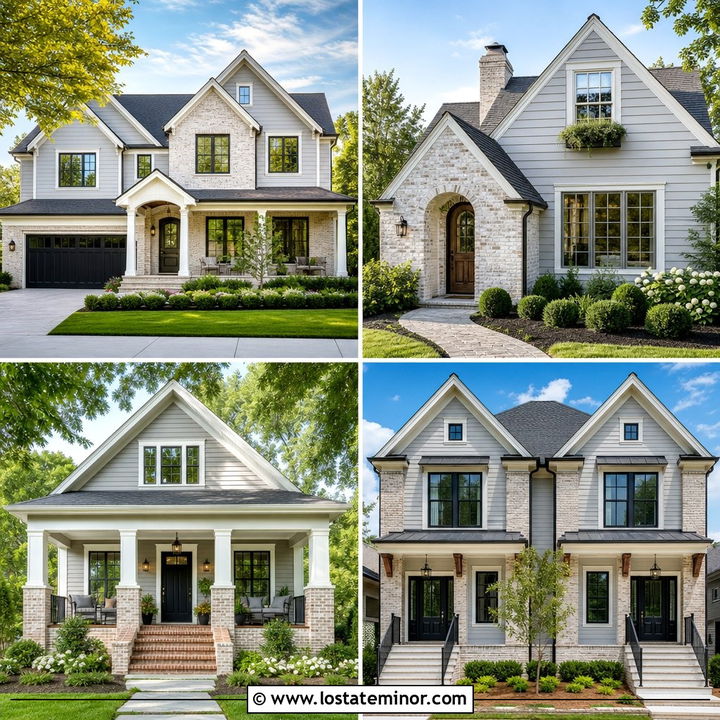
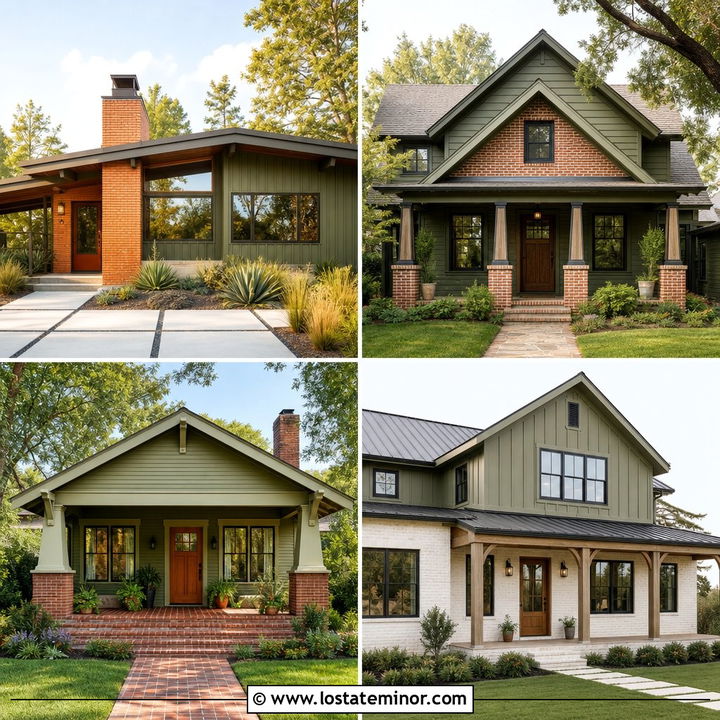
20. Warm White House With Brick And Sage Shutters
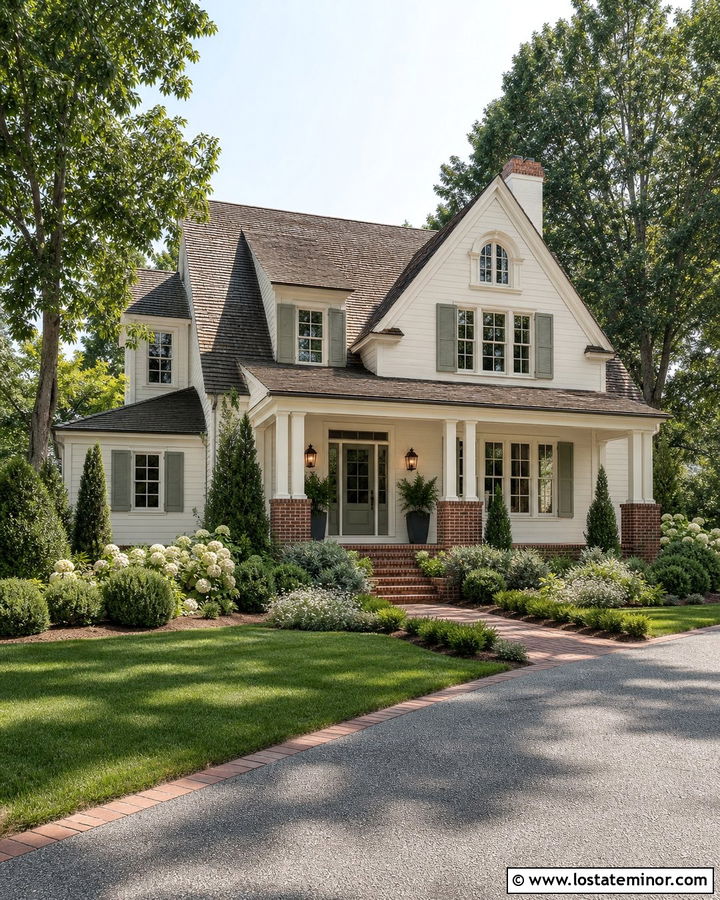
Sage shutters can create a gentle transition between warm white siding and red brick accents. Choose a muted green with gray or olive undertones rather than a bright botanical shade. Use the brick on the lower facade, front steps, chimney, and porch columns. A warm white body color softens the red masonry, while cream trim keeps the windows clearly outlined. Repeat the sage on the front door for a calm, unified appearance, or select a stained oak door for stronger contrast. A weathered brown roof works particularly well with this earthy palette. Simple brass or bronze lights can add warmth without becoming dominant. Surround the house with layered evergreens and pale flowering plants. The complete scheme feels natural and relaxed, making it suitable for traditional, cottage, and craftsman architecture.
21. Warm White House With Brick And Black Windows
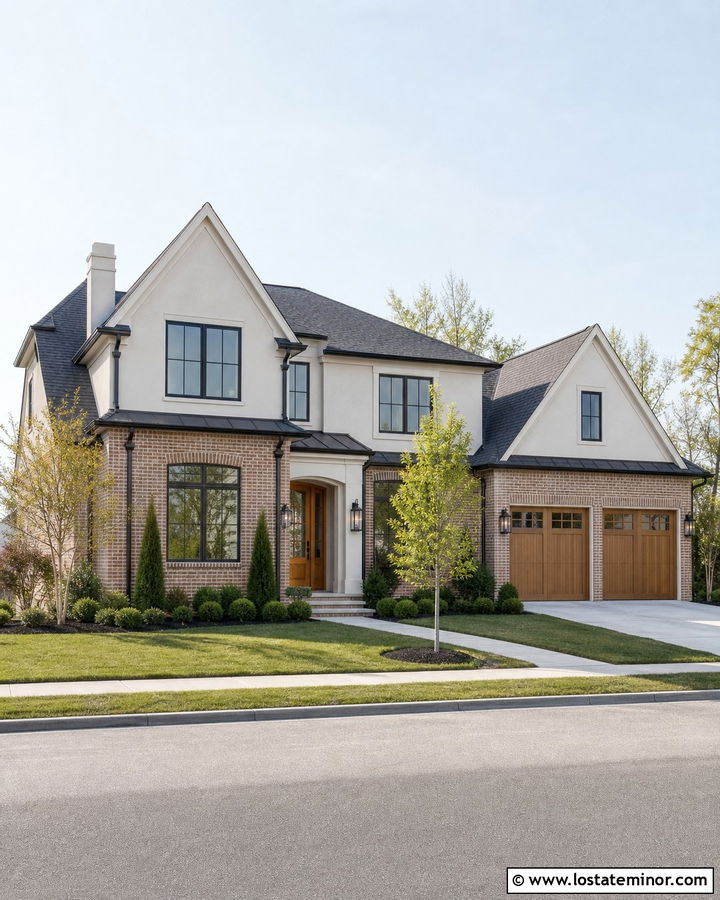
Black windows can sharpen a warm white and brick exterior when they are distributed carefully across the facade. Use a creamy white on the main siding or stucco, and choose textured red or brown brick for the lower level and selected architectural projections. The dark window frames should act as repeated lines rather than large black blocks. Keep the trim warm white so the openings do not become visually heavy. A natural oak front door and matching garage door can soften the contrast. Carry black into smaller details, including gutters, sconces, and porch railings, for continuity. A charcoal roof completes the upper portion of the palette. Neatly shaped shrubs and a wide light-colored walkway prevent the exterior from feeling severe. The final design is crisp, warm, and visually balanced from the curb.
22. Warm White House With Brick And Navy Door
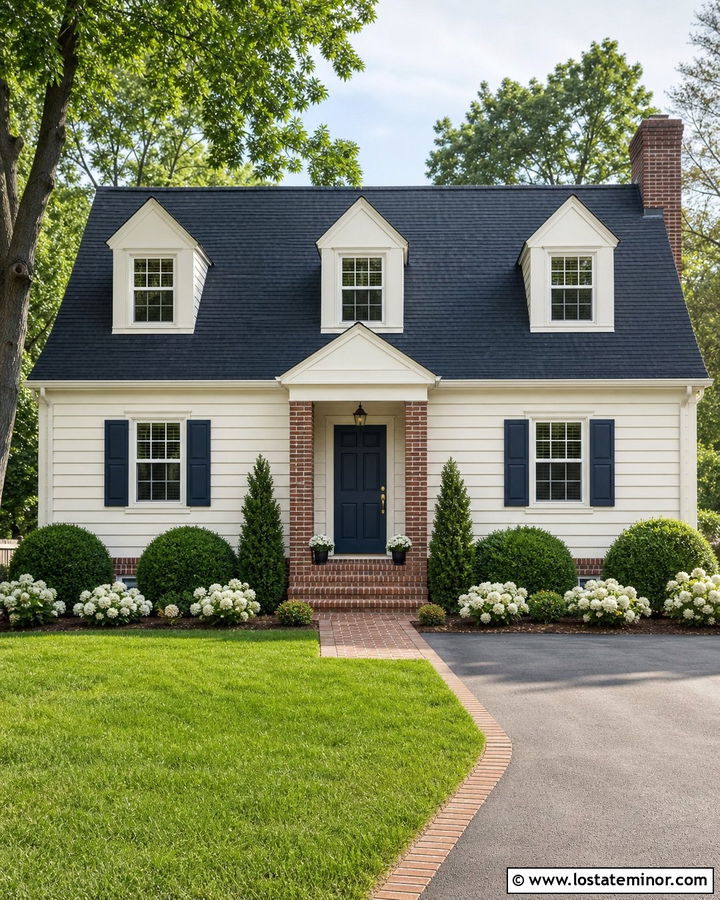
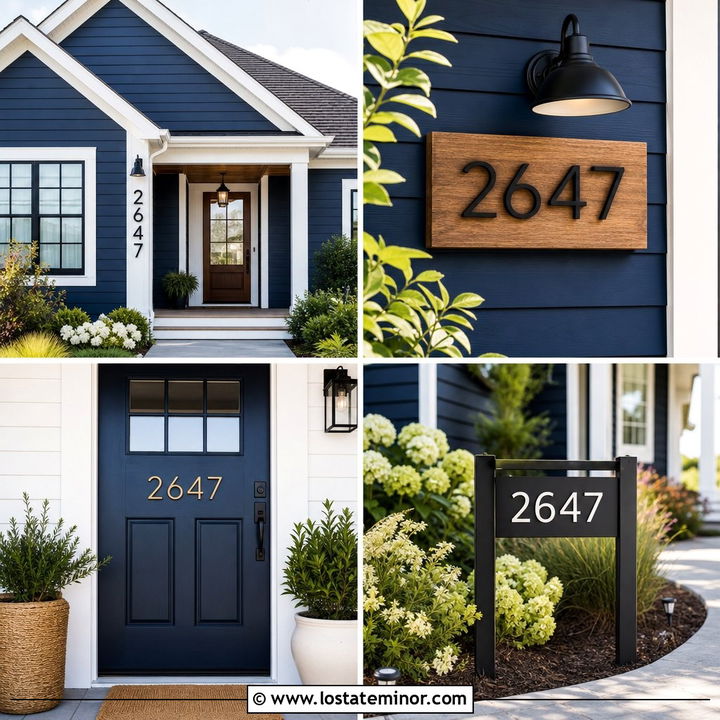
A navy front door can introduce classic color to a warm white house without competing with the brick. Start with soft ivory siding and red-brown brick around the foundation, steps, and entry columns. Select a deep, slightly muted navy rather than a bright blue, then repeat it sparingly on shutters or a small porch ceiling detail. Cream trim will relate more naturally to the masonry than a stark white. Use antique brass hardware and warm bronze lanterns around the doorway to make the navy feel richer. A dark gray roof supports the door color while remaining neutral. Complete the exterior with brick walkway edging, low evergreen shrubs, and white flowering plants. This scheme works particularly well on Cape Cod, colonial, and traditional homes because it feels familiar, orderly, and welcoming.
23. Warm White House With Brick And Copper Accents
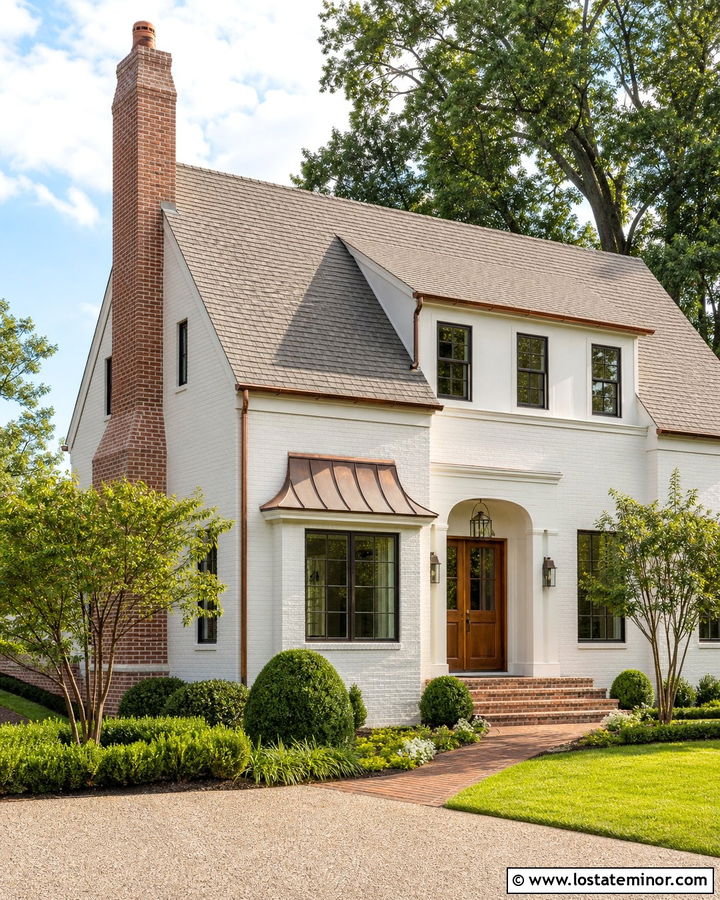
Copper accents bring warmth and subtle shine to a warm white exterior with brick. Use a creamy off-white on the siding or stucco, then add weathered red brick around the chimney, porch foundation, and entrance. Copper gutters, downspouts, awnings, or lanterns can connect visually with the brick’s orange and brown undertones. Keep these metal details selective so they enhance the facade rather than overwhelm it. A rich wood front door provides a natural central feature, while dark bronze windows create depth. Choose a warm gray roof that allows the copper to stand apart. Over time, changing copper tones can make the palette feel even more layered. Boxwoods, ornamental trees, and a clean brick walkway create a polished setting for this refined mixture of masonry, metal, wood, and warm white paint.
24. Warm White House With Brick Garage Surround
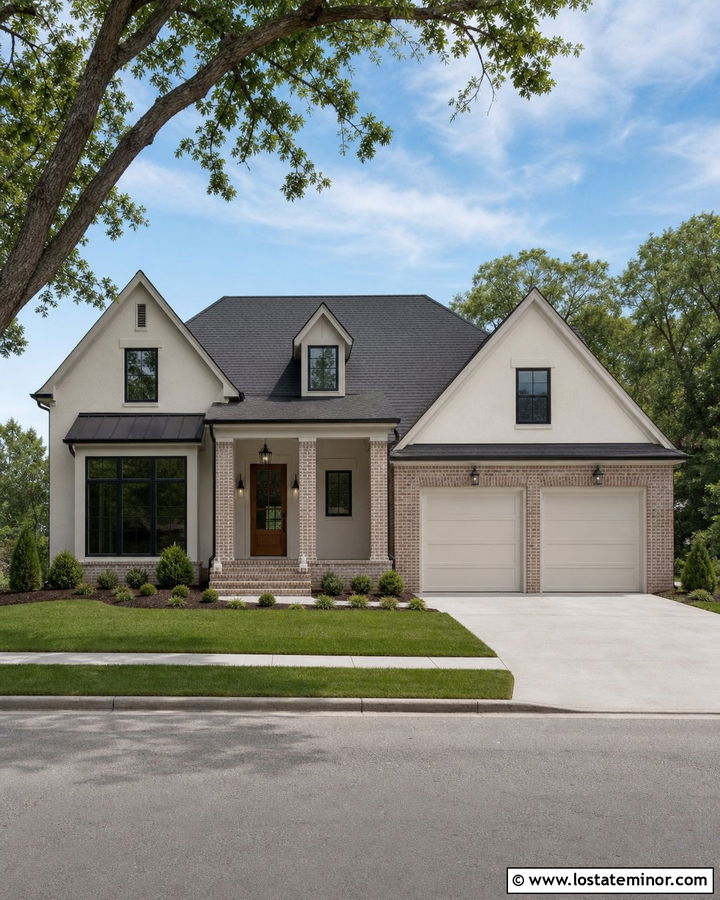
Framing the garage with brick can make it feel like an intentional part of the architecture. Paint the remaining facade warm white, including the primary siding, trim, and garage door panels. Use red-brown or tan brick around the garage opening and repeat it on the entry steps or lower porch columns. This repetition prevents the garage masonry from looking disconnected. A wood-look garage door is another option when the facade needs more warmth, particularly when paired with a matching front door. Choose black or bronze exterior lights in a scale that suits the wide opening. A charcoal roof and dark window frames provide clean boundaries around the pale walls. Use low landscaping beside the driveway so the brick remains visible. The completed scheme adds texture while keeping the garage visually balanced.
25. Warm White Cottage With Brick Chimney And Steps
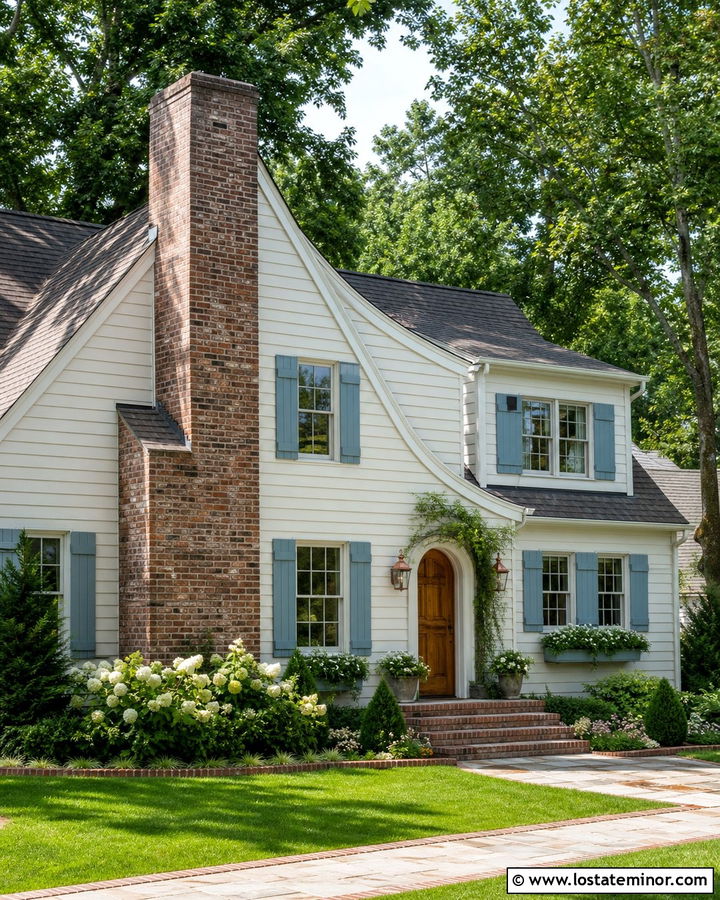
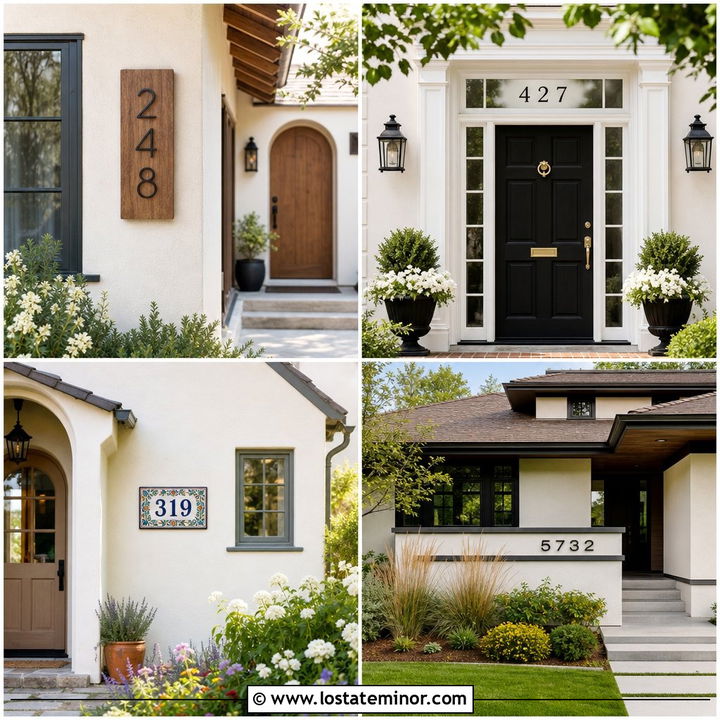
A substantial brick chimney can become the anchor of a small warm white cottage. Leave the red or brown masonry unpainted, then repeat it on the front steps and walkway border. Cover the siding with a gentle creamy white that complements the brick mortar. Dusty blue shutters provide quiet contrast, while an oak door introduces a warmer focal point beneath the porch. Select a textured gray-brown roof that feels proportionate to the chimney’s strong presence. Window boxes, climbing greenery, and soft flowering shrubs can make the house feel established, but avoid covering too much of the masonry. Copper lanterns and simple cream trim finish the exterior. This whole-house palette highlights the cottage’s charming proportions and makes the brick look like a deliberate architectural feature rather than an isolated remnant.
26. Warm White Georgian House With Brick Corners
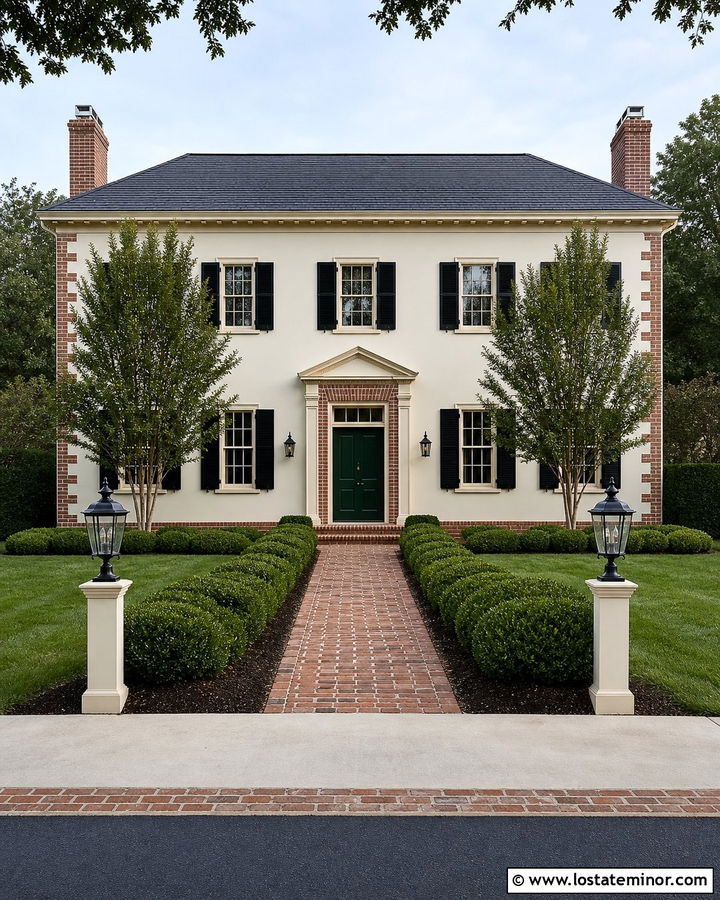
Brick corner details can give a warm white Georgian-inspired home greater depth and formality. Use red-brown brick quoins at the corners, around the central entrance, and along the foundation. Paint the main stucco or siding a soft ivory that allows the masonry pattern to remain clear. Cream trim, black shutters, and a glossy deep green front door create a traditional layered palette. Keep the roof dark charcoal and use black or aged bronze lanterns on both sides of the entry. A straight brick walkway, clipped hedges, and symmetrical trees reinforce the home’s balanced facade. Because brick quoins are visually strong, avoid introducing unrelated stone or additional siding colors. Repeating a limited collection of materials creates an exterior that feels substantial, ordered, and appropriate for the house’s classical proportions.
27. Warm White Hillside House With Brick Retaining Walls
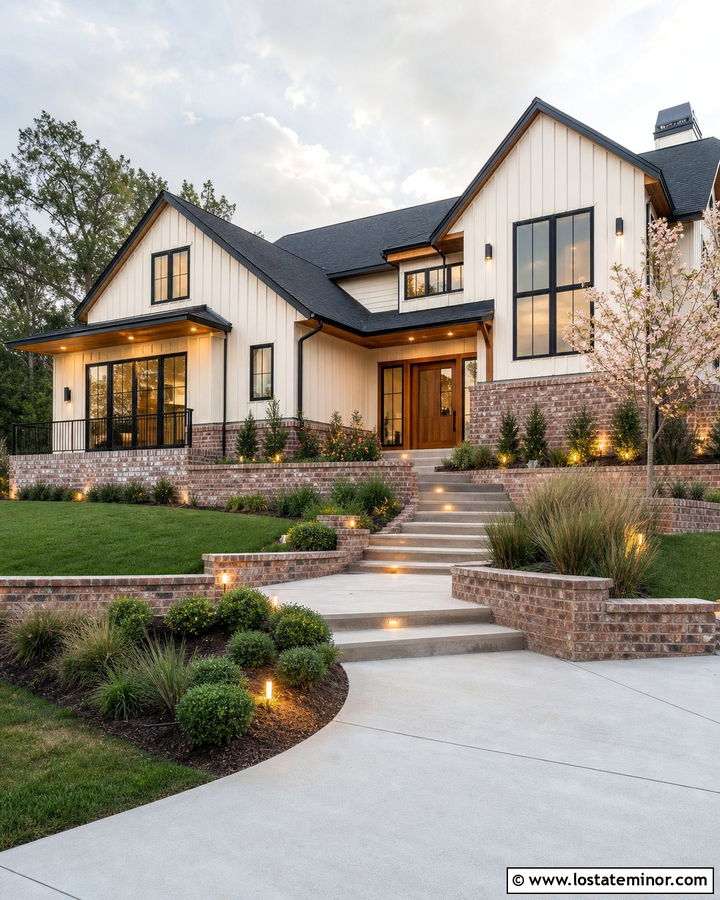
Brick retaining walls can connect a warm white hillside house to its sloping yard. Use a creamy white on the stucco or vertical siding, then select brown-red brick for the lower facade, garden walls, and broad entry steps. A charcoal roof and black-framed windows provide modern structure above the earthy masonry. Add a natural cedar front door and matching soffits to keep the scheme from becoming too stark. The landscaping should follow the terraces with ornamental grasses, compact shrubs, and small flowering trees. Integrate low path lighting into the brick walls rather than filling the facade with decorative fixtures. By repeating the same masonry from the house into the landscape, the property appears cohesive from the street. The design feels grounded, contemporary, and well adapted to its uneven site.
28. Warm White Ranch With Brick Breezeway
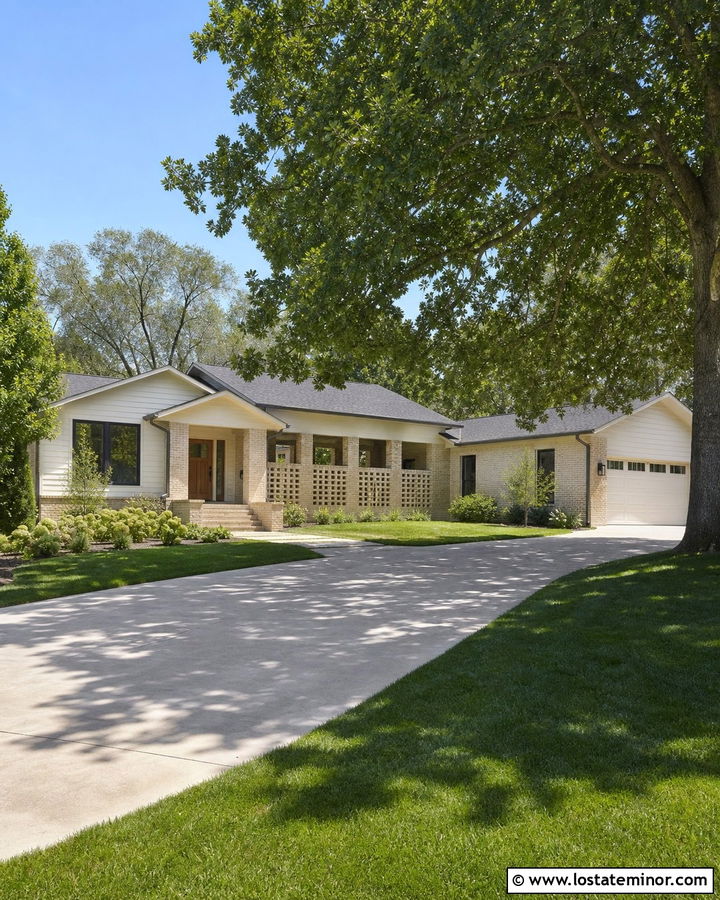
A brick breezeway can give a warm white ranch house a distinctive transition between the home and garage. Use soft warm white lap siding on both structures so they read as one composition. Cover the breezeway wall and connecting columns with tan or muted red brick, then repeat that masonry at the front steps. A medium-stained wood door draws attention to the sheltered entrance. Keep the garage door warm white to avoid creating another competing focal point. Dark bronze windows and a low charcoal roof suit the ranch’s horizontal profile. Add large concrete pavers and broad planting beds that visually guide visitors toward the breezeway. This arrangement celebrates the connecting structure instead of hiding it. The brick also provides a durable, textured center between two long expanses of pale siding.
29. Warm White Storybook Cottage With Brick Details
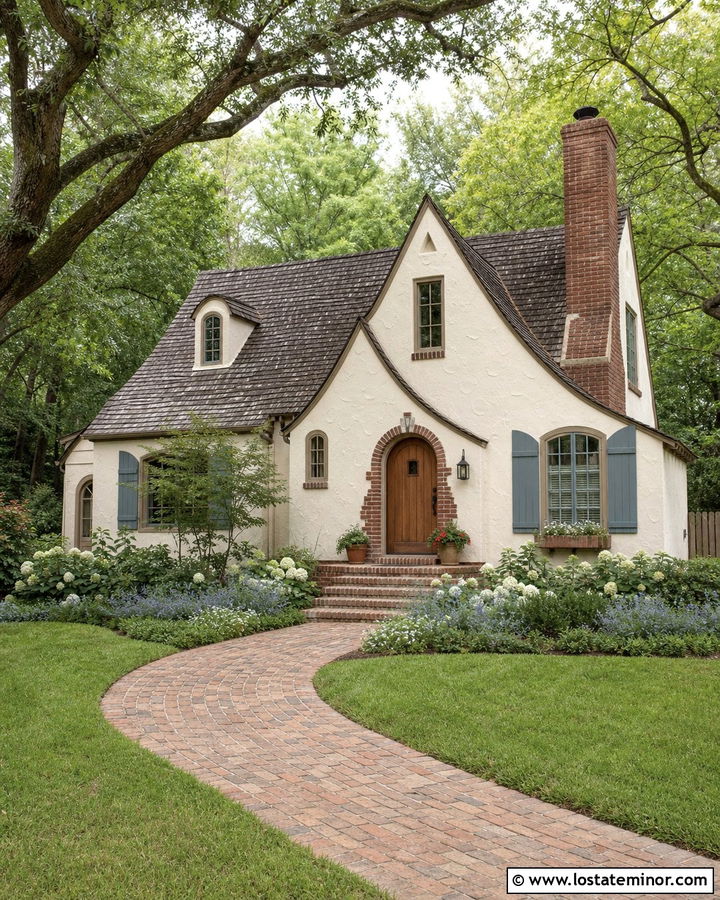
Irregular brick details make a warm white storybook cottage feel charming without relying on excessive decoration. Use softly tumbled red-brown brick around an arched doorway, chimney, curved steps, and selected window bases. Finish the main stucco in a warm cream that relates closely to the light mortar. Muted blue-gray shutters and a rounded oak front door add understated color and craftsmanship. Choose a steep gray-brown shingle roof with small dormers to strengthen the cottage silhouette. A curved brick path, low flowering shrubs, and informal ground cover should frame the house naturally. Avoid harsh black trim or perfectly uniform masonry, which can work against the relaxed character. The completed exterior looks cohesive because every brick detail follows the architecture while the warm white walls keep the overall facade bright.
30. Warm White Transitional House With Brick Accents
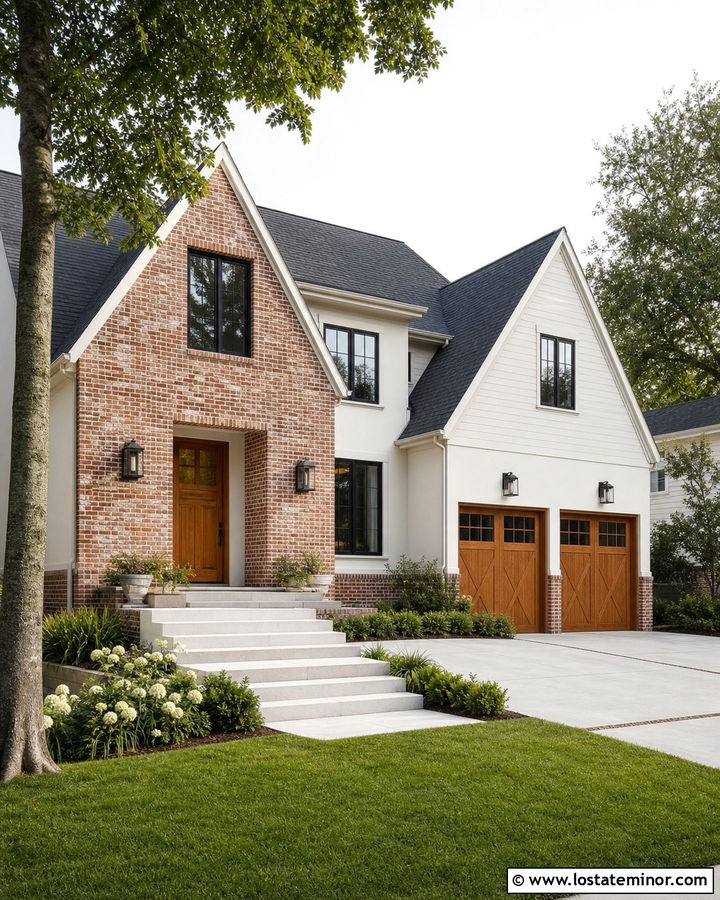
A transitional house can combine traditional brick with simplified modern detailing. Paint the broad siding and stucco surfaces a clean warm white, then use lightly distressed red-brown brick on the entrance volume, foundation, and one prominent gable. Select black-framed windows with minimal trim to give the facade a current edge. A medium oak door and coordinating garage doors introduce natural warmth between the pale walls and dark frames. Keep the roof charcoal and use restrained black lighting, gutters, and railings. Wide concrete steps and structured planting beds support the clean architectural lines. Brick should appear in several balanced locations instead of one isolated patch. This complete exterior feels updated without becoming trend-dependent, making it a flexible choice for homeowners who appreciate both classic materials and uncluttered contemporary design.
Conclusion:
The most successful warm white and brick exteriors treat every visible material as part of one coordinated palette. Begin with the brick undertones, then choose a warm white that feels creamy, softly beige, or gently greige beside them. Roofs, doors, windows, trim, and landscaping should reinforce that relationship rather than introduce unnecessary colors. Red brick offers classic contrast, while tan, brown, charcoal, limewashed, and blush masonry can create quieter results. Always test exterior paint beside the actual brick in direct sun and shade before committing. Whether you prefer a traditional colonial, relaxed ranch, detailed craftsman, or streamlined contemporary home, these complete schemes provide practical direction through 30 Warm White House Design With Brick Accents Ideas.

Related posts: