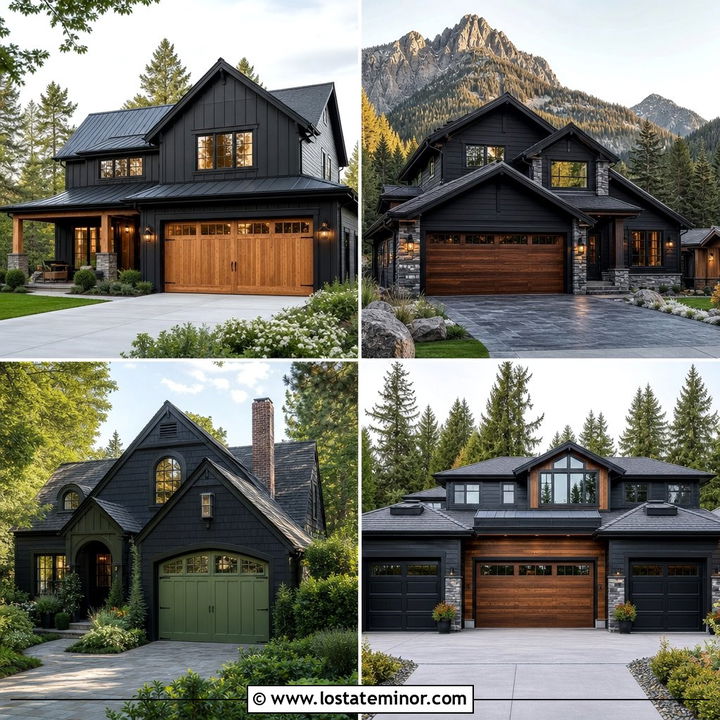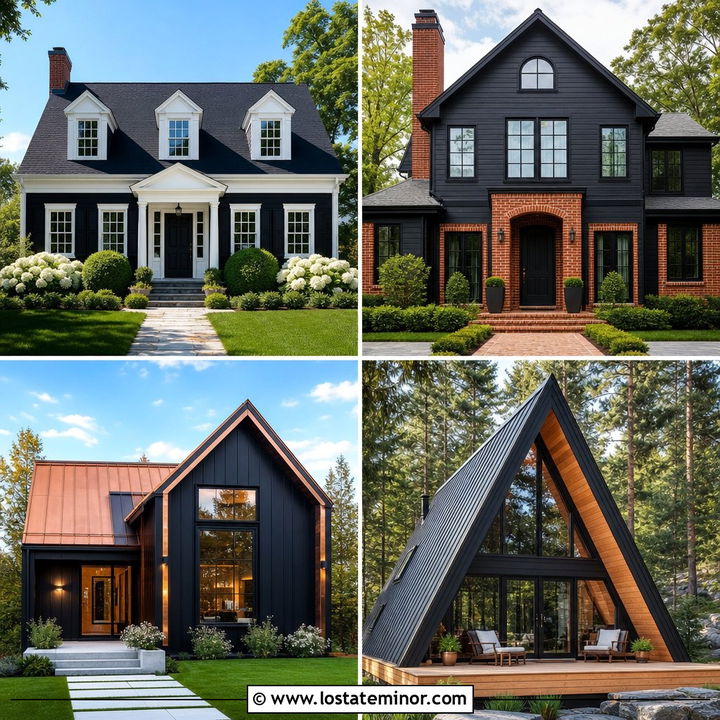
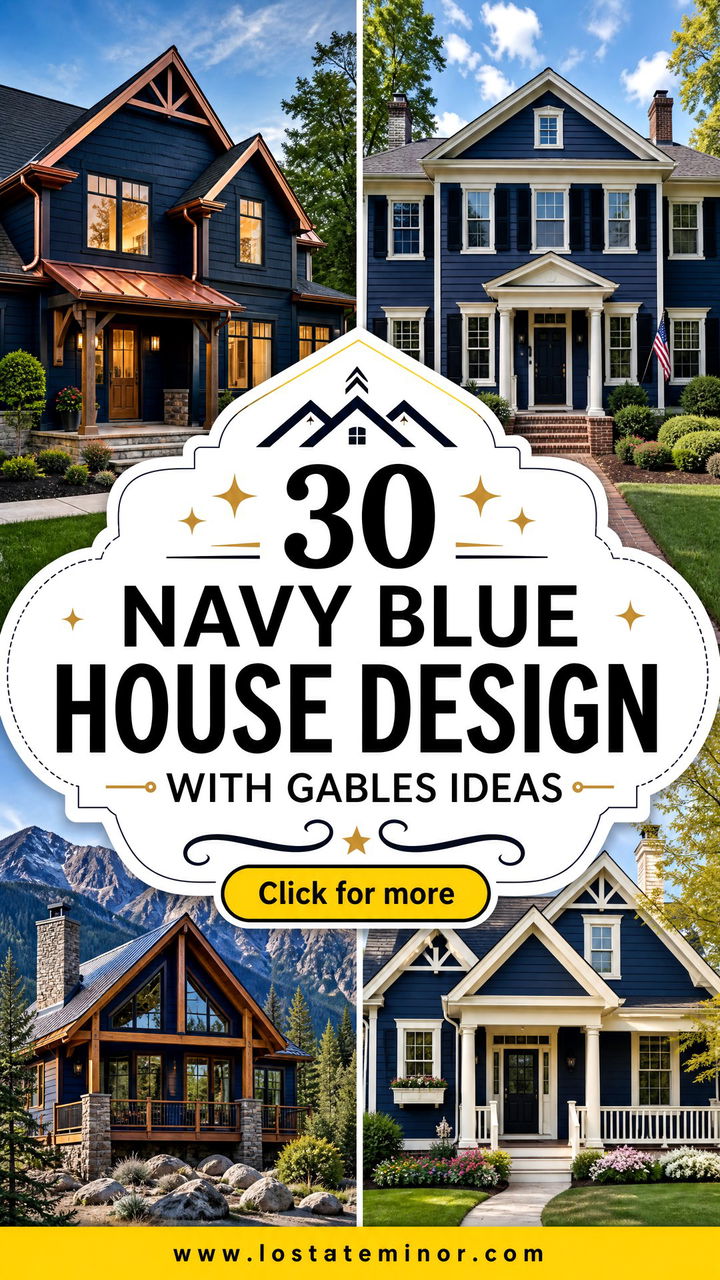
Navy siding and peaked rooflines create a striking exterior that can feel classic, coastal, rustic, or modern. The key is treating every gable as part of a complete color scheme rather than as a separate decoration. In this guide to 30 Navy Blue House Design With Gables Ideas, you will find practical combinations for siding, trim, roofing, masonry, doors, porches, and landscaping. Crisp white can sharpen the architecture, while cream, stone, brick, copper, and natural wood bring warmth to the deep blue facade. Different siding textures can also help define complicated rooflines without making the house look busy. Use these complete exterior looks to explore 30 Navy Blue House Design With Gables Ideas.
1. Navy Blue Gable House With White Trim
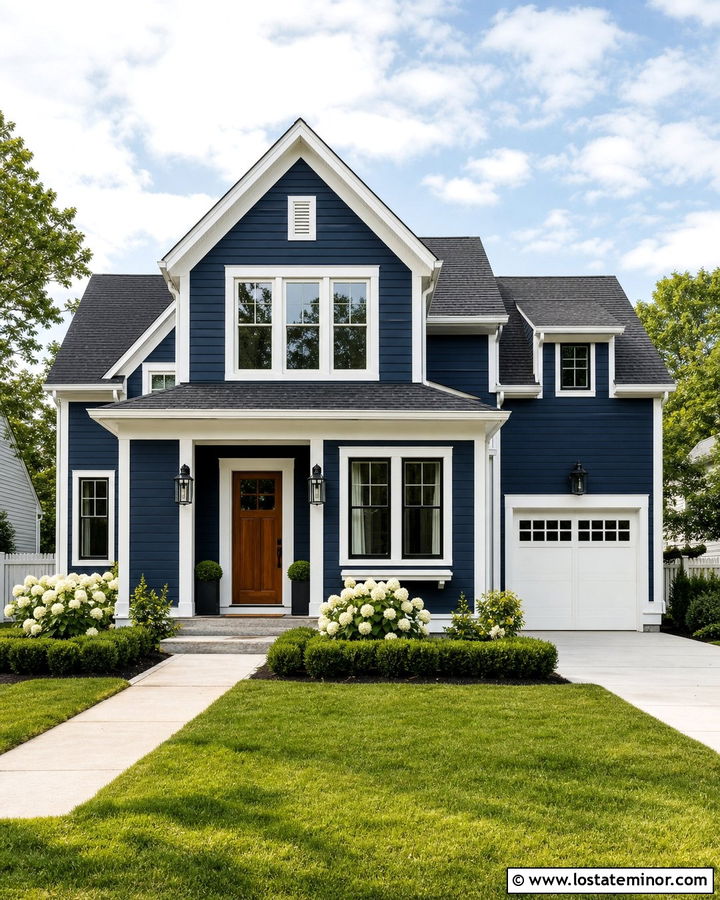
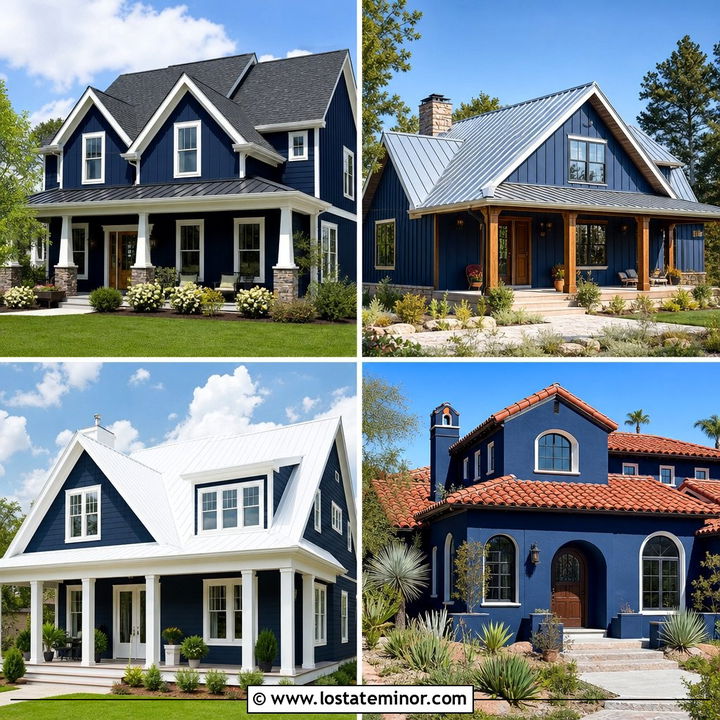
Crisp white trim gives a navy blue gable house a clean outline that can be appreciated from the street. Use navy horizontal lap siding across the main facade and continue it into the gable ends for a unified appearance. Bright white fascia, soffits, window casings, and corner boards will emphasize the roof peaks without introducing another dominant color. A medium-gray architectural shingle roof keeps the contrast comfortable rather than severe. Complete the scheme with a stained cedar front door, black lanterns, and simple concrete steps. Low boxwoods and white flowering shrubs repeat the restrained palette. This combination is especially effective on traditional homes where symmetry and clearly defined architectural lines are central to the exterior.
2. Navy Blue Gable House With Black Trim
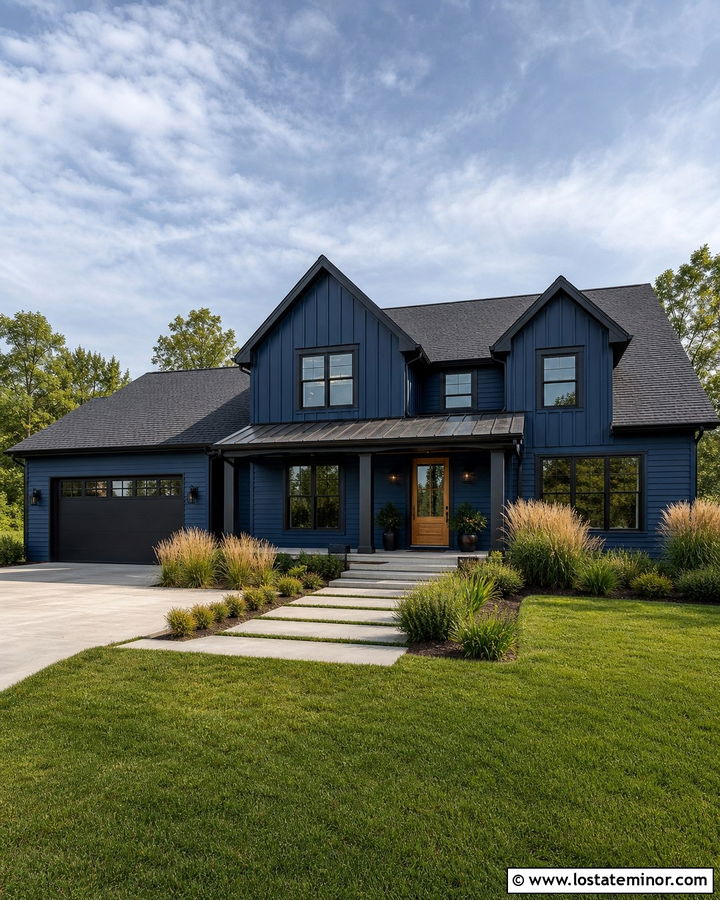
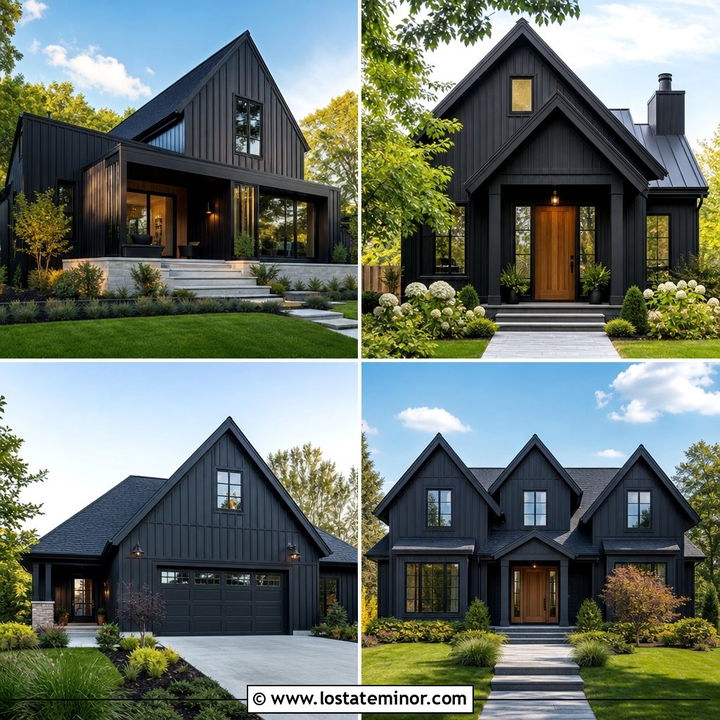
For a stronger contemporary look, surround navy siding with black windows, gutters, and roof edging. The two dark colors create a layered exterior while allowing the triangular gables to remain the main architectural feature. Choose vertical navy board-and-batten siding inside the gables and horizontal siding below to make the roofline easier to read. A light natural wood front door prevents the facade from becoming too dark. It can be repeated on porch ceilings, garage doors, or decorative gable brackets. Pale concrete pavers and ornamental grasses add brightness around the foundation. This full scheme works particularly well on modern farmhouse and transitional homes with broad windows, uncomplicated landscaping, and two or three prominent front-facing gables.
3. Navy Blue Gable House With Gray Stone
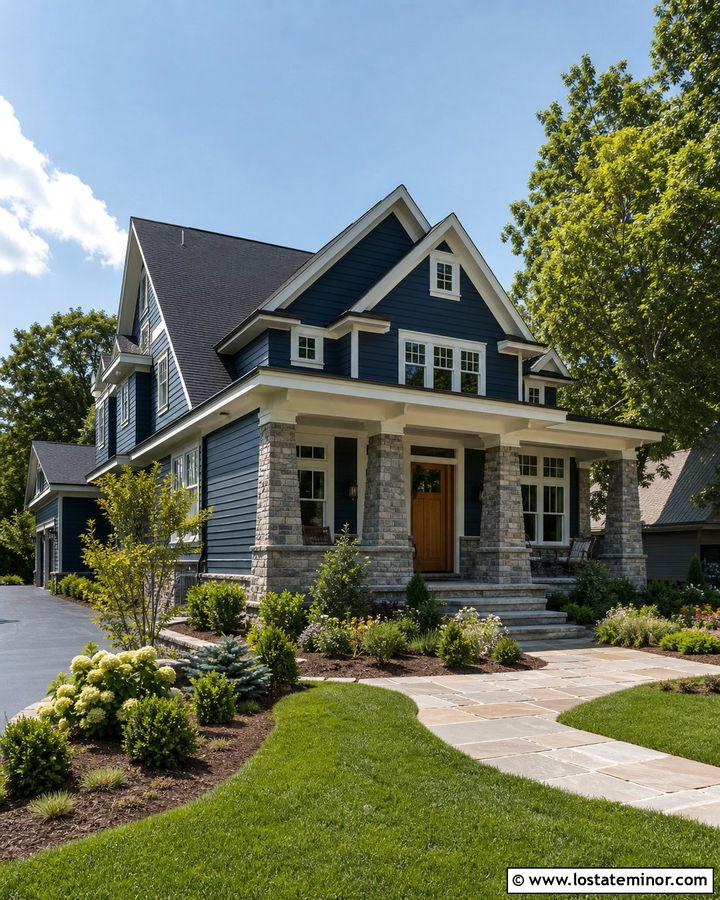
Cool gray stone can visually anchor a tall navy blue house with multiple gables. Place the stone across the foundation, porch columns, and lower section of the garage rather than scattering small patches around the facade. Navy lap siding above the masonry will then appear balanced and intentional. Soft white trim outlines the windows and roof peaks, while charcoal shingles connect the blue siding to the gray stone. Add a medium-stained oak door to introduce warmth near the entrance. Select stone containing both blue-gray and warmer taupe tones so it coordinates with the entire palette. Curved planting beds, evergreen shrubs, and a wide flagstone path can soften the strong geometry of the gables and masonry.
4. Navy Blue Gable House With Red Brick
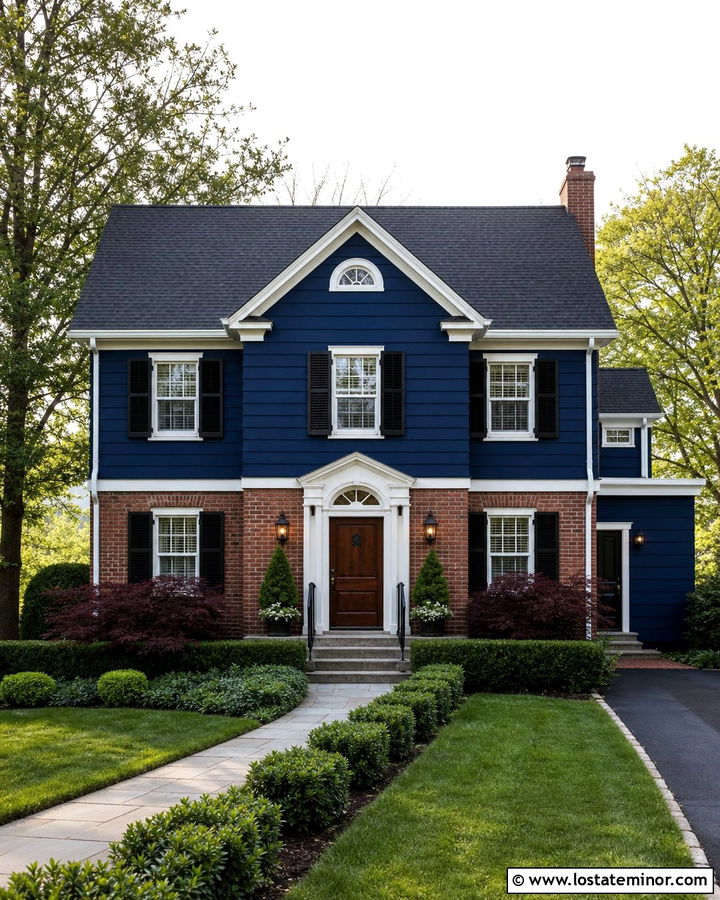
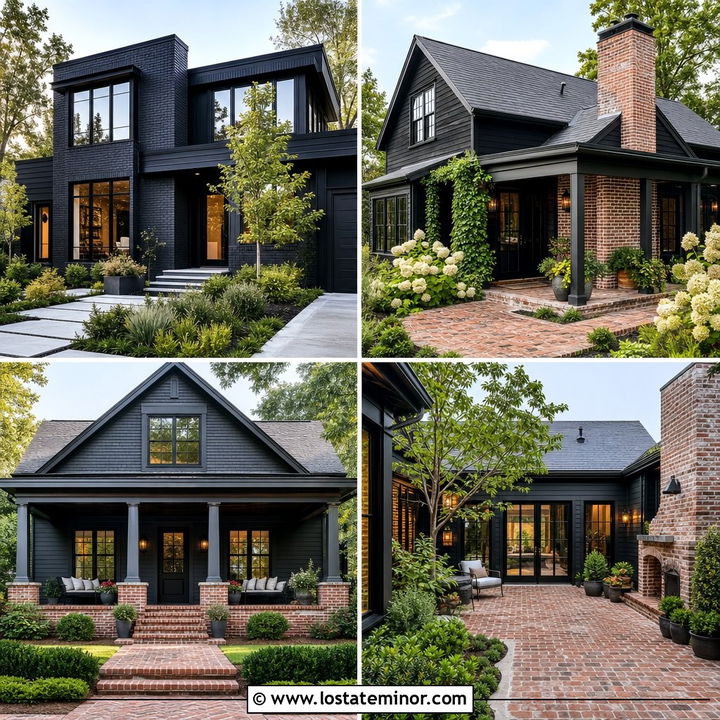
Does your home already have traditional red brick that you would rather not paint? Navy blue siding can update the upper floor and gables while preserving the warmth and character of the masonry. Keep the brick across the lower story, chimney, or porch base, then use deep navy siding above it. Warm white trim will connect the two materials more gently than a brilliant blue-white. A black roof, black shutters, and aged-brass lighting complete the classic palette. Consider a dark walnut front door that relates to the deeper brown notes within the brick. Landscaping with green hedges and burgundy foliage creates a polished transition between the richly colored exterior and the surrounding yard.
5. Navy Blue House With Cedar Shake Gables
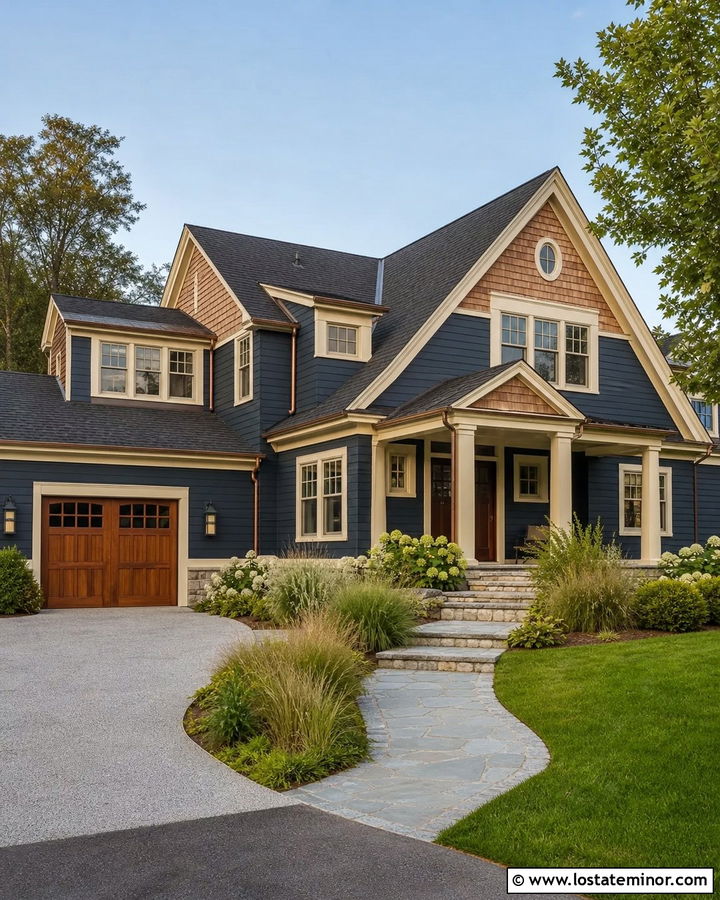
Cedar shake siding gives navy blue gables visible texture without requiring another bold color. Cover the main walls in navy horizontal siding and use natural cedar shingles inside one or two front-facing gables. The wood will immediately warm the deep blue and draw attention upward. Repeat the cedar on the garage door, porch posts, or front door so the gable treatment does not look isolated. Cream trim produces a softer transition between blue siding and golden wood. A weathered charcoal roof and dark bronze gutters complete the combination. Because cedar naturally changes in appearance, choose sealed shingles for consistent coloring or allow them to weather when a relaxed coastal or rustic finish is preferred.
6. Navy Blue Board And Batten Gable House
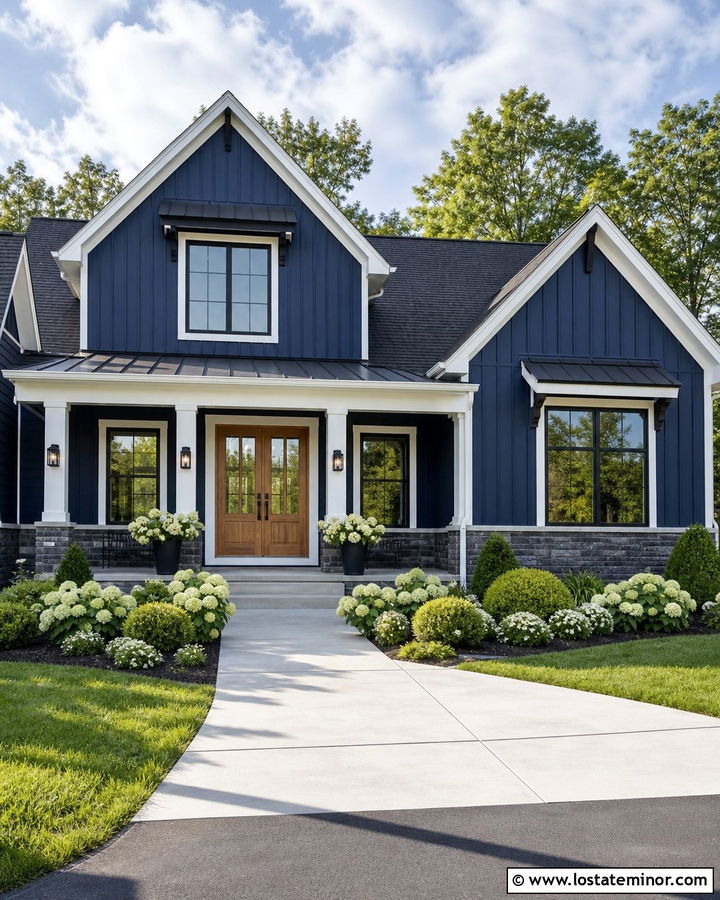
Vertical board-and-batten siding naturally complements the height and shape of a gabled roof. Apply deep navy board and batten across the entire facade for a modern farmhouse look, or reserve it for the gables above navy lap siding. Wide white trim around windows, roof edges, and porch openings will keep the dark exterior crisp. Ground the house with a charcoal stone foundation and a black architectural shingle roof. A double front door finished in medium oak creates a welcoming focal point below the tallest gable. Keep the landscaping structured but simple, using clipped shrubs, hydrangeas, and a straight concrete walkway. This allows the siding pattern and roof peaks to remain visually prominent from the curb.
7. Navy Blue House With Shingle Gables
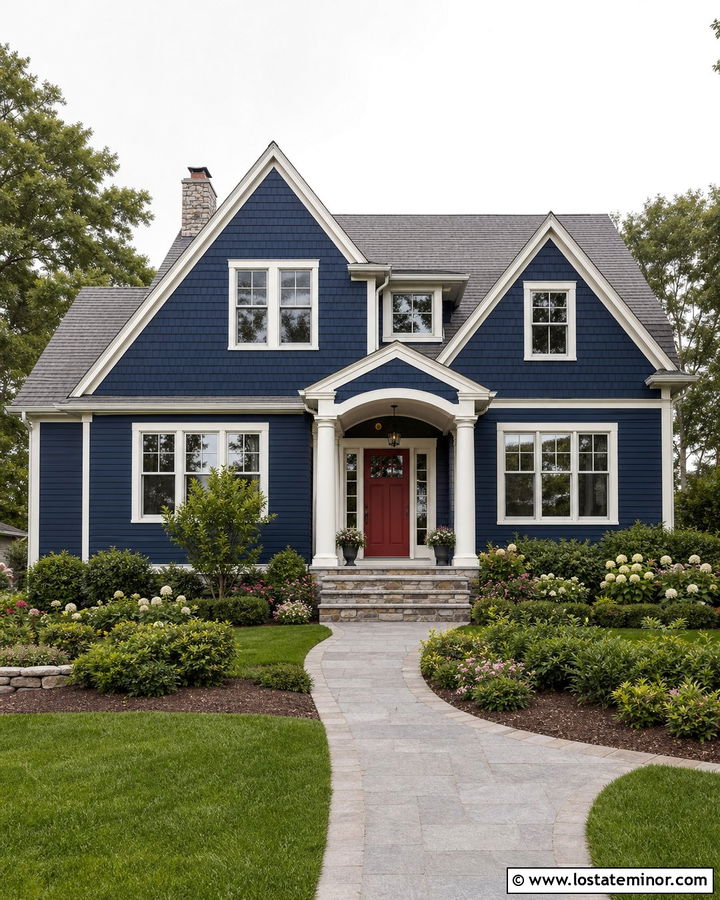
A subtle change in siding pattern can create depth without interrupting a monochromatic navy exterior. Use traditional lap siding on the lower walls and navy-painted shingle siding within the gables. Because both materials share the same color, the facade remains cohesive while light and shadow reveal the texture. Creamy white trim can frame the shingled areas and highlight decorative vents or small attic windows. Add a warm gray roof, natural stone steps, and a muted red front door for controlled contrast. This approach suits Cape Cod, cottage, and Shingle-style architecture particularly well. Keep shutters limited or omit them entirely if the siding texture and multiple gables already provide sufficient detail.
8. Navy Blue Gable House With Copper Accents
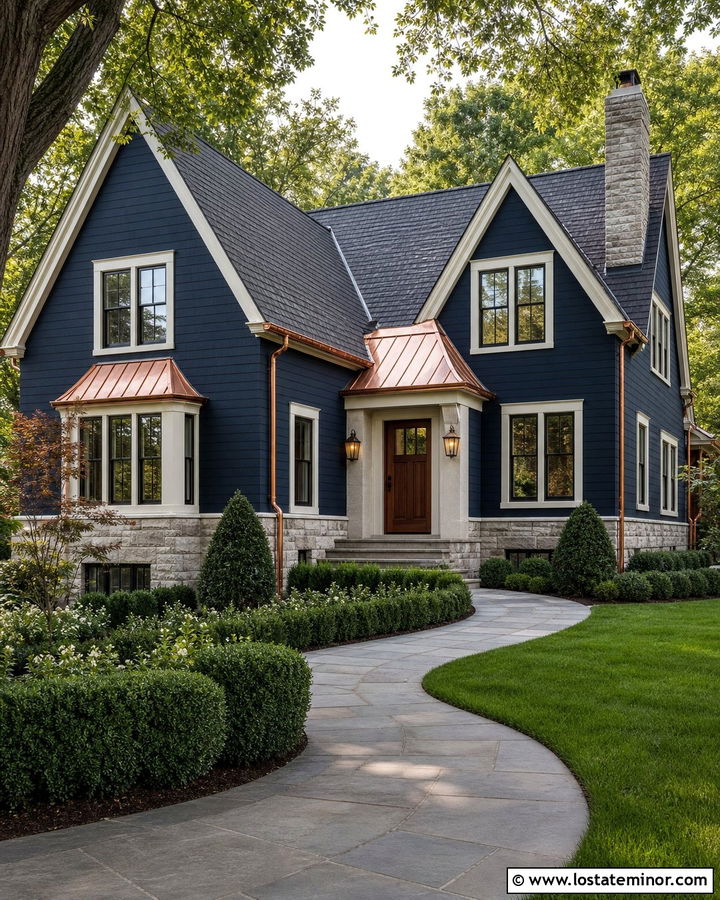
Fresh copper introduces a luminous finish that stands out beautifully against saturated navy blue siding. Use copper on small gable roofs, entry awnings, gutters, or a bay-window cap instead of covering the entire roof. These focused accents will gradually develop character while emphasizing important architectural sections. Pair the navy facade with warm off-white trim and a dark charcoal roof. Natural stone containing subtle rust, gray, and beige variations can connect the copper to the foundation. Complete the entrance with a stained mahogany door and dark bronze lighting. The resulting exterior feels refined but not overly formal. It works especially well on substantial Craftsman, Tudor-inspired, and traditional homes with layered rooflines and deep front gables.
9. Navy Blue House With Metal Gable Roof
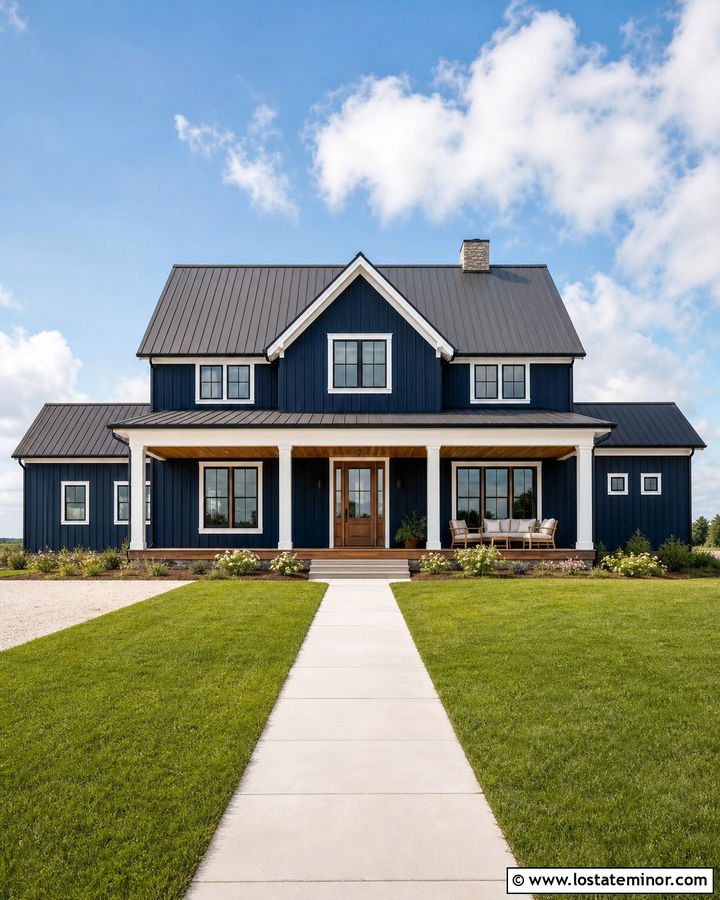
A standing-seam metal roof can give a navy blue gable house a crisp farmhouse or coastal appearance. For a balanced exterior, select a medium charcoal metal roof rather than a blue roof that nearly matches the siding. The slight difference will define each roof plane and prevent the facade from appearing flat. Use bright white trim on the fascia, windows, and porch columns. A cedar front door and matching porch ceiling add natural warmth beneath the cool roof and siding. If the house has several gables, simplify the remaining details by avoiding unnecessary shutters or decorative trim. Broad lawn areas, symmetrical foundation plants, and a pale gravel or concrete driveway will keep the entire curb view open and bright.
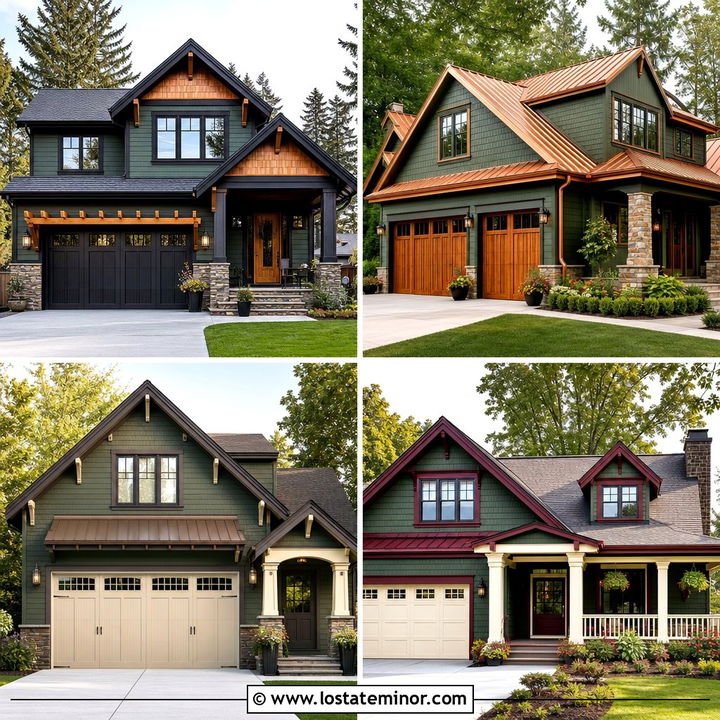
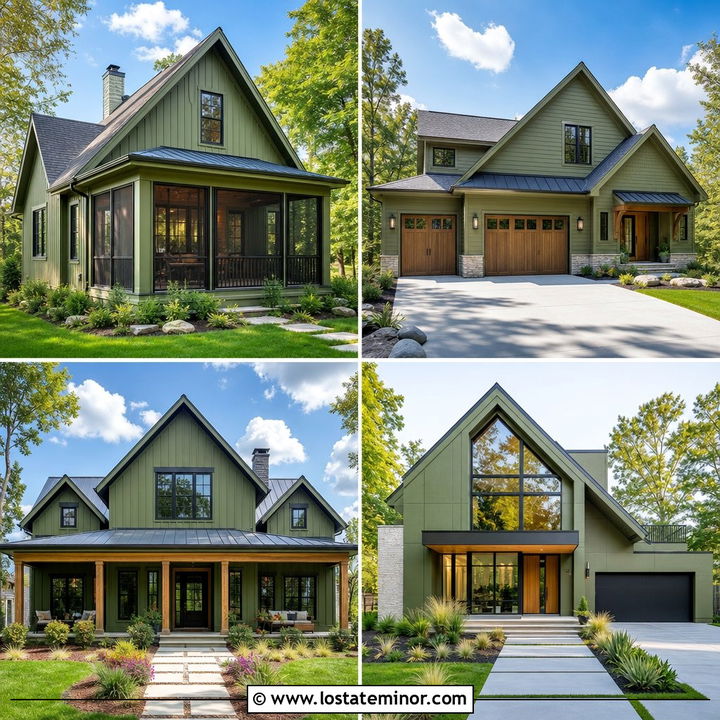
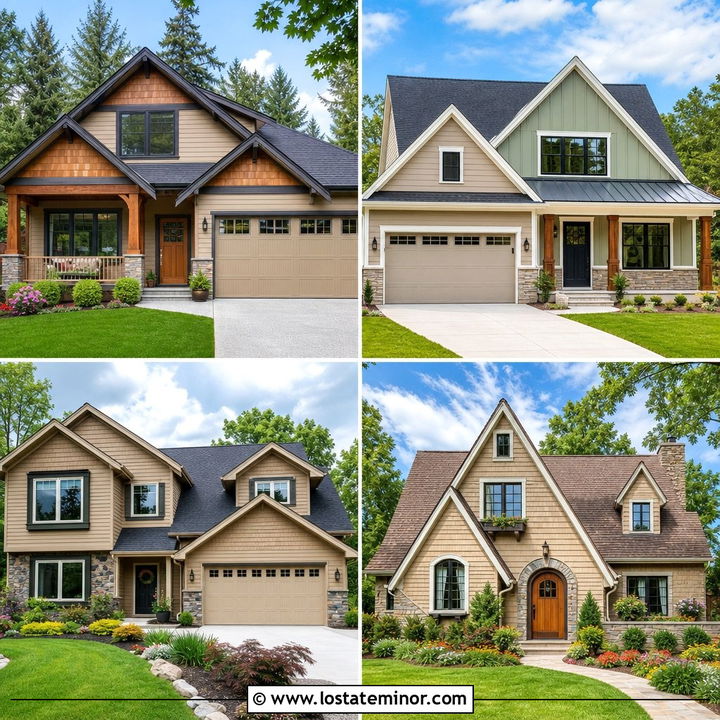
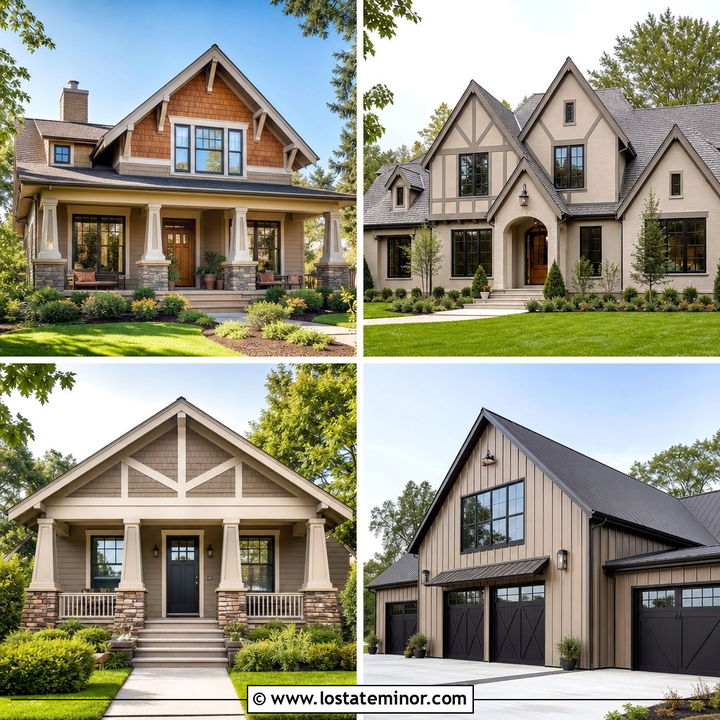
10. Navy Blue House With Charcoal Gables
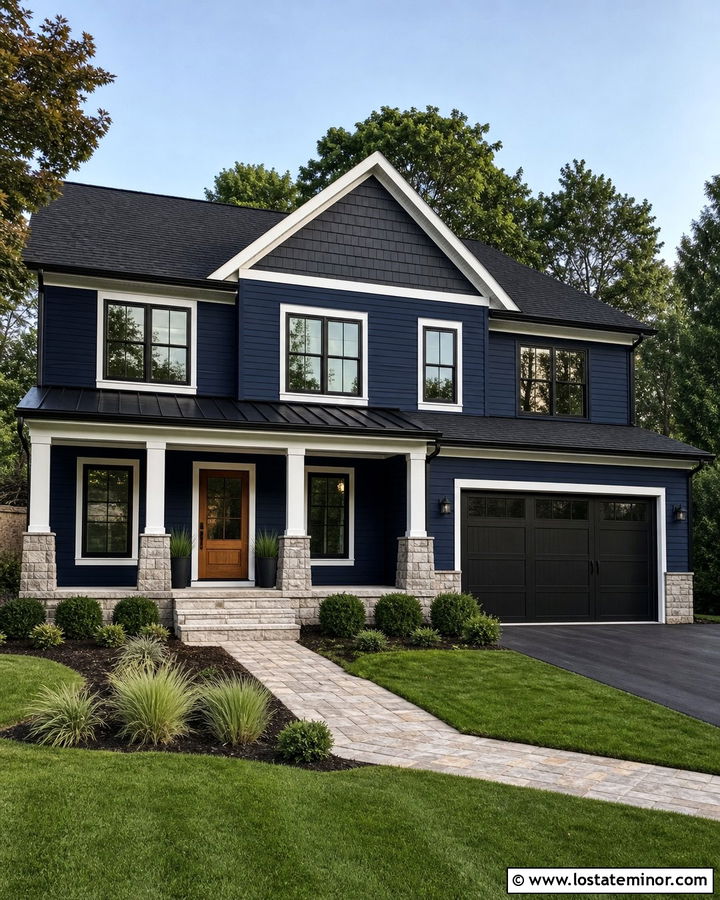
Charcoal accents can make a navy exterior feel more dimensional while staying within a restrained palette. Keep navy siding on the main walls, then use charcoal shake siding in one dominant entry gable. The accent should be limited to a clear architectural area rather than repeated randomly. Black window frames and a dark gray roof will connect the charcoal gable to the rest of the exterior. Use soft white fascia and soffits to separate the dark surfaces and preserve the shape of each peak. A honey-toned wood door provides a warm destination at ground level. Add pale stone around the porch and foundation to prevent the overall design from feeling heavy, especially on a shaded lot.
11. Navy Blue Gable House With Wraparound Porch
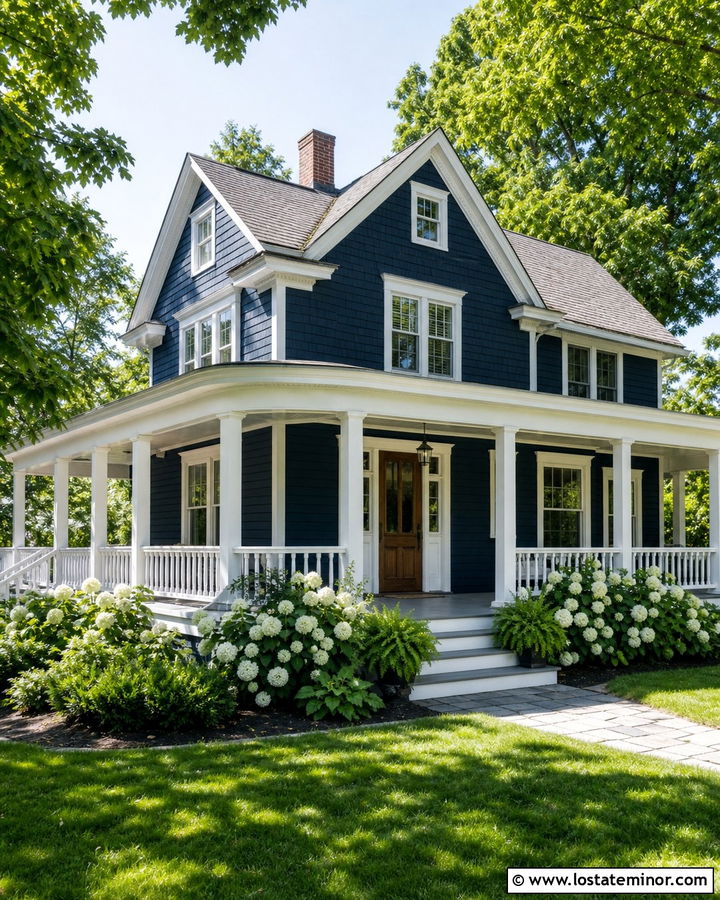
Imagine deep navy siding rising above a broad white wraparound porch. The porch creates a bright horizontal line that balances steep gables and a tall roof. Use substantial square columns, simple white railings, and a light gray porch floor to maintain a fresh, welcoming appearance. Navy lap siding can cover both stories, while shingle siding inside the gables adds gentle texture. A stained wood front door and matching porch furniture introduce warmth without changing the main color story. Choose a weathered-gray roof for a relaxed traditional finish. Layer hydrangeas, ferns, and low evergreen shrubs along the porch foundation, leaving the front steps visible so the entrance remains easy to identify from the curb.
12. Navy Blue House With Gabled Entry Porch
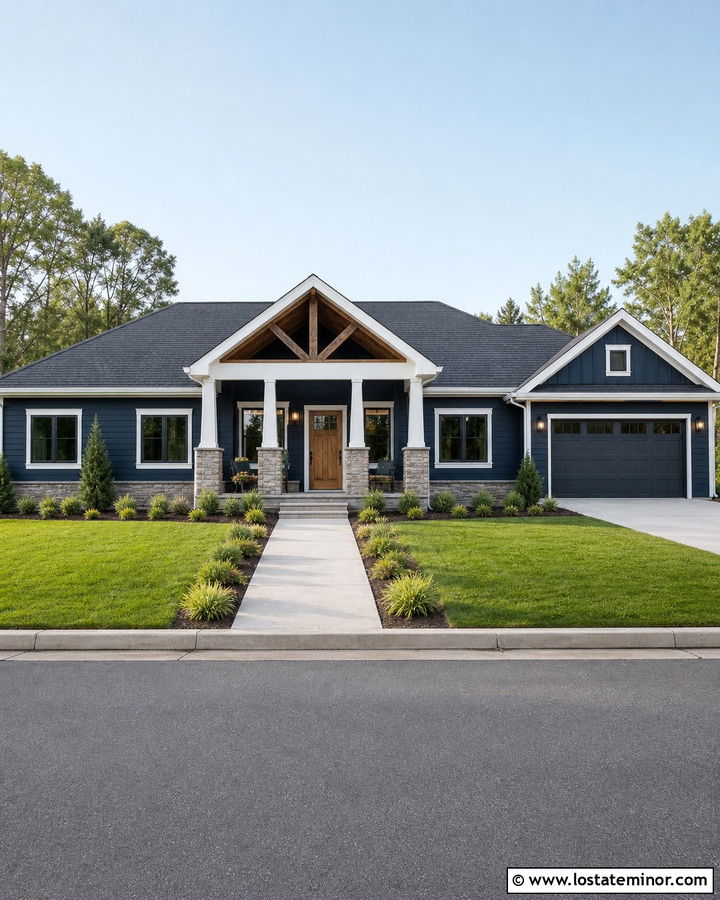
A compact gabled porch can transform a plain navy facade by placing clear emphasis on the entrance. Align the porch peak with the front door and repeat the pitch of the larger roof above it. Deep navy siding across the house creates continuity, while white porch columns, fascia, and ceiling boards frame the entry. Add a natural stone porch base for weight and a warm oak door for contrast. A small decorative timber truss inside the porch gable can connect the door to the stone and surrounding landscape. Choose simple black lighting and a charcoal roof to finish the scheme. This exterior solution works especially well on ranch homes, cottages, and straightforward two-story houses needing greater architectural definition.
13. Navy Blue Double Gable Farmhouse
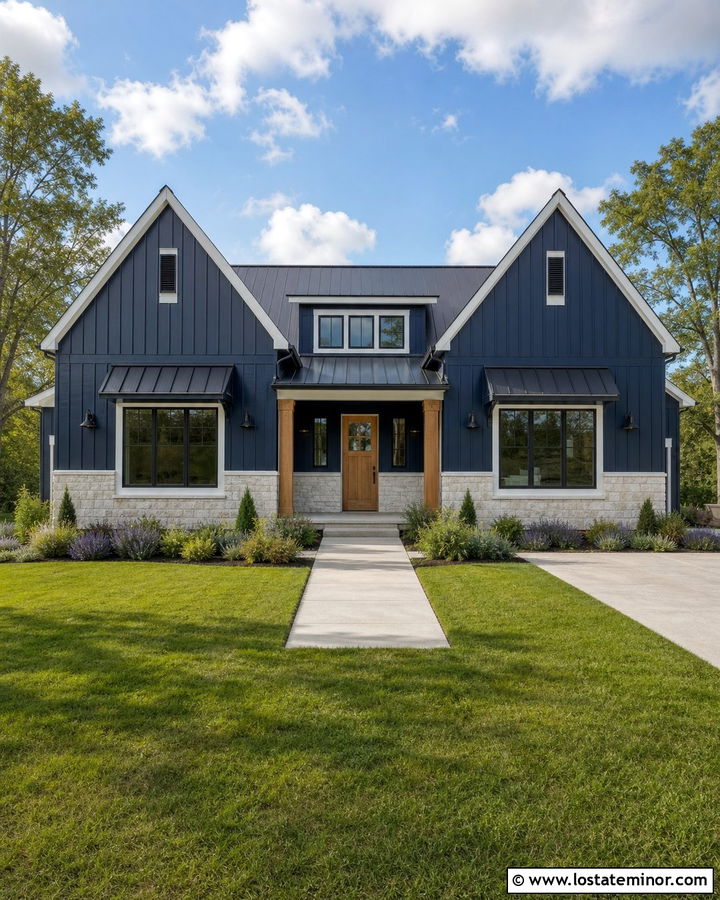
Two matching front gables give a navy blue farmhouse a strong, orderly presence. Cover both peaks in navy board-and-batten siding and continue horizontal navy siding across the lower facade. White trim should outline the roof edges, windows, porch, and corners, helping the dark walls remain clearly defined. Place a centered oak front door beneath a smaller porch gable to establish an obvious entrance. A charcoal metal roof adds modern contrast, while a pale limestone foundation keeps the base from looking too dark. Avoid excessive decorative brackets when the roofline already has several peaks. Simple black sconces, a concrete walkway, and loose foundation plantings will complete the updated farmhouse exterior without distracting from its balanced gable arrangement.
14. Navy Blue Craftsman House With Timber Gables
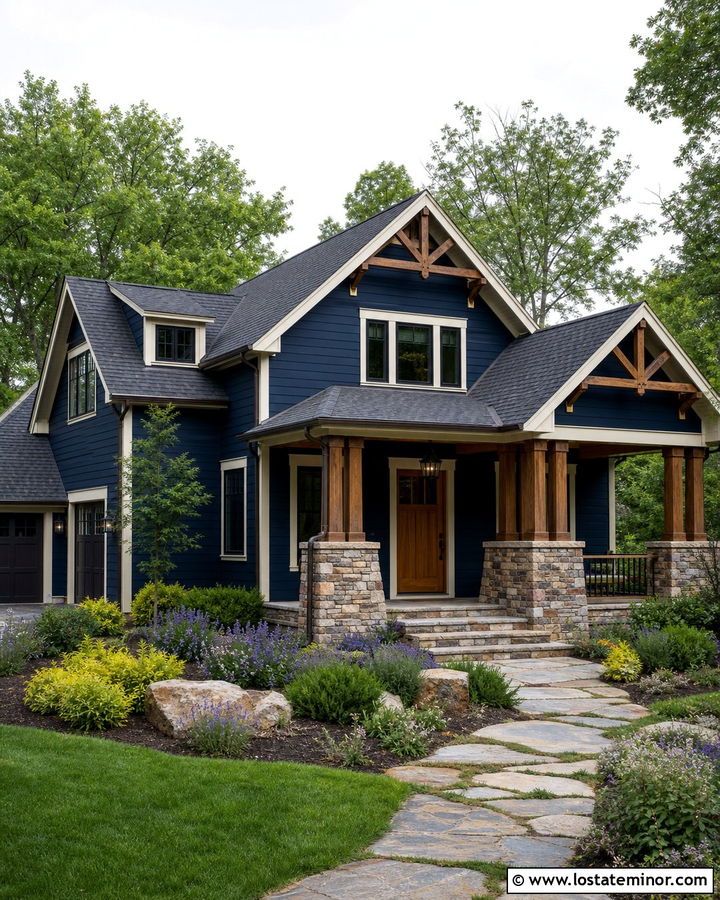
Exposed timber details can bring warmth and visual strength to a navy blue Craftsman home. Install stained wood trusses or brackets inside the main gables, then repeat that finish on porch columns and the front door. Deep navy lap siding forms a dramatic background for the wood, while creamy trim softens transitions around windows and eaves. Use tapered stone column bases and continue the same masonry along the foundation. A roof in weathered charcoal or deep brown will coordinate with both the siding and timber. Craftsman homes benefit from layered textures, but each material should have a defined location. This approach keeps the gables, porch, stone, and siding connected rather than making the exterior look overly complicated.
15. Navy Blue Coastal House With Gables
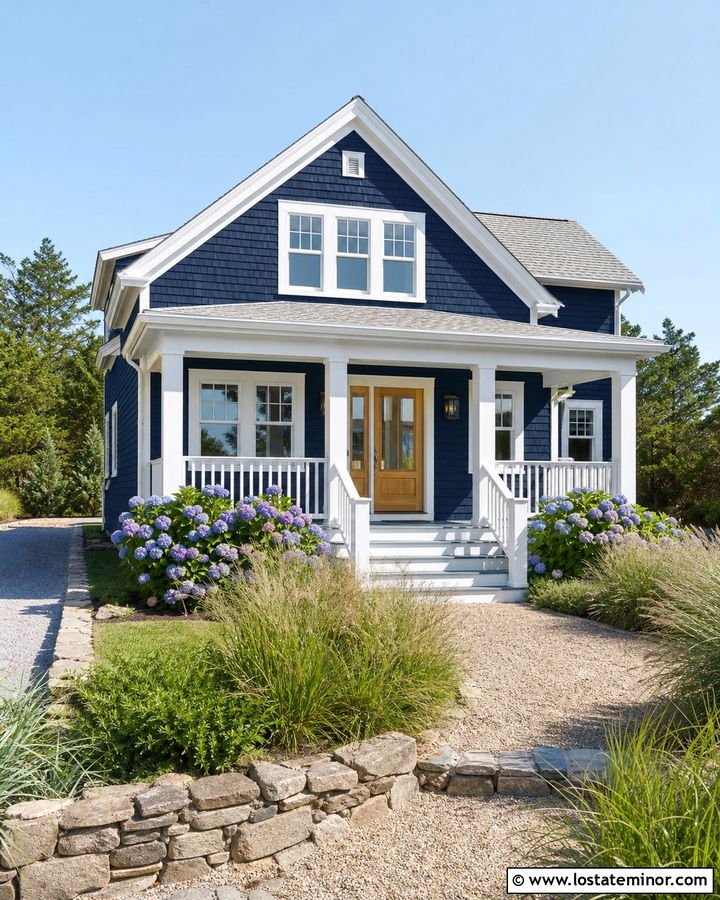
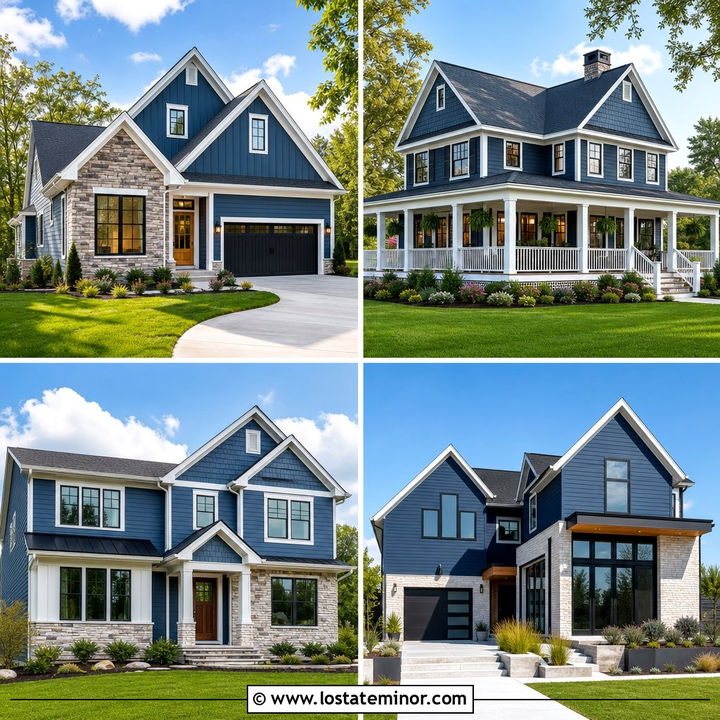
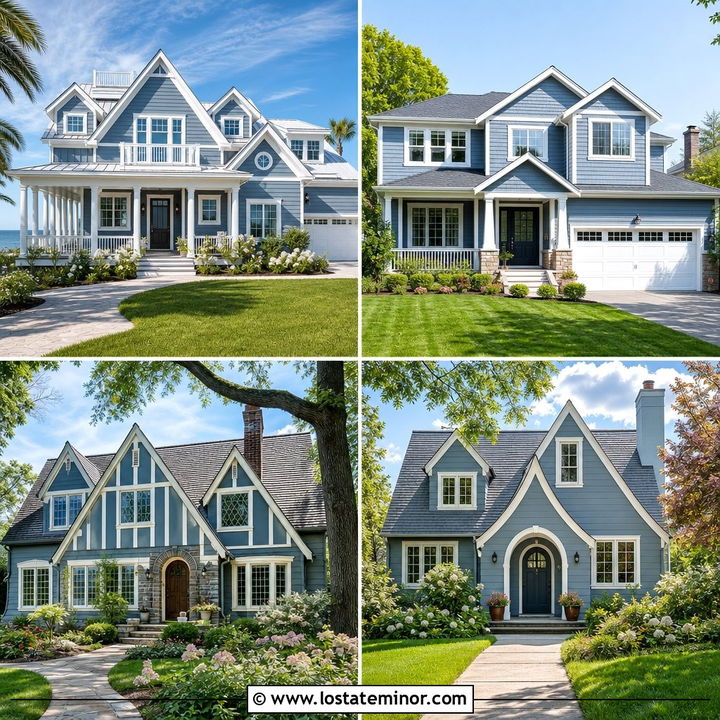
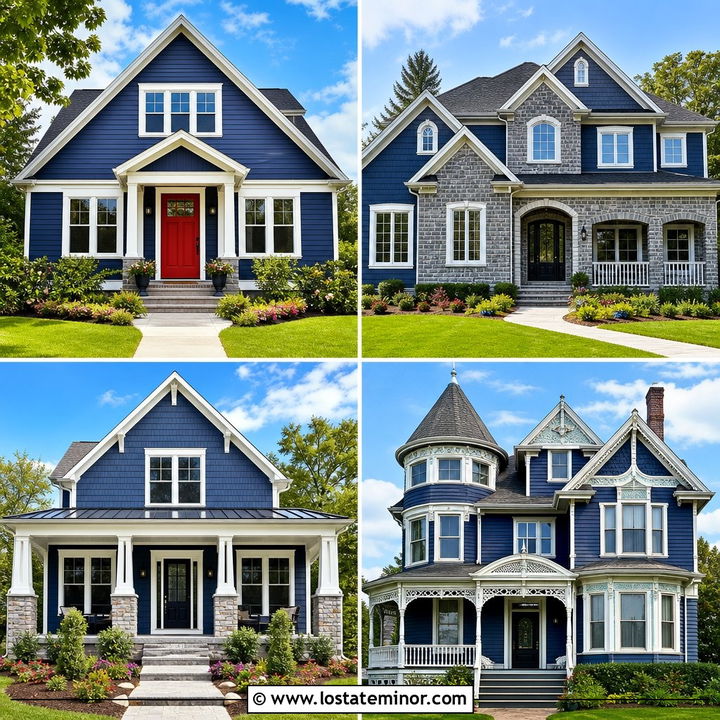
Bright daylight brings out the blue character of navy siding, making it an appealing choice for a coastal gable house. Pair navy shingle siding with clean white trim, white porch railings, and a pale gray roof for a fresh waterfront-inspired palette. Use simple gable vents and wide window casings instead of heavy decorative brackets. A light natural wood door adds warmth, while muted blue-gray porch flooring provides a gentle transition into the entrance. If shutters are included, keep them white or match them to the navy body. Beach grasses, hydrangeas, gravel paths, and weathered stone can frame the exterior naturally. The finished house should feel relaxed and tailored rather than overly themed or decorated.
16. Navy Blue Colonial House With Front Gable
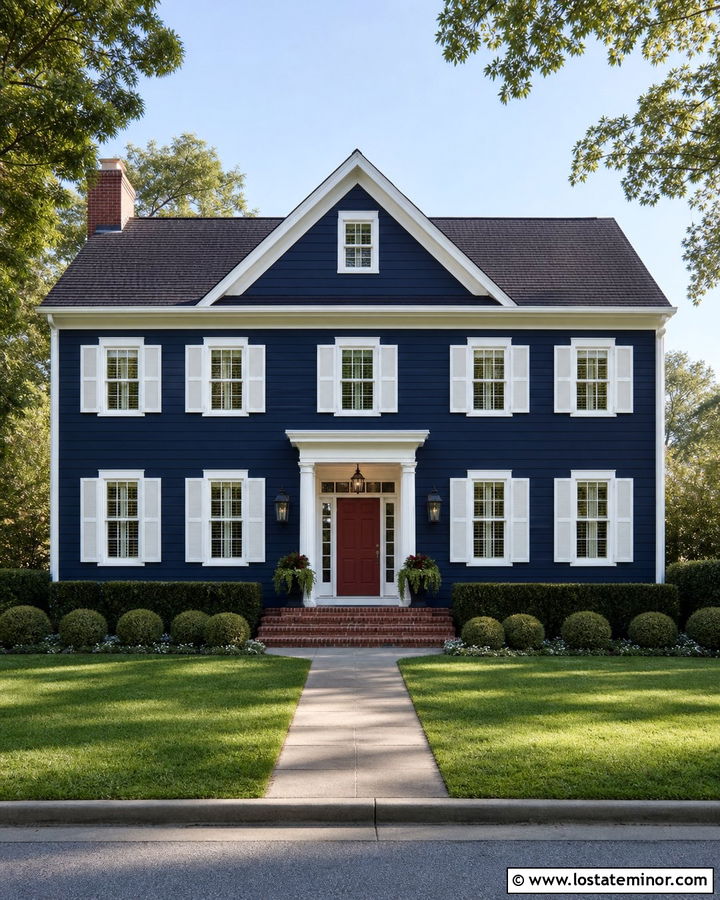
Traditional symmetry makes a navy blue Colonial exterior feel composed and substantial. Use evenly spaced white windows and shutters across the facade, then place a centered front gable above the entrance. Navy clapboard siding keeps the body color rich, while bright white trim emphasizes the cornices, gable edges, and classical door surround. A black or deep burgundy front door introduces formal contrast. Select dark gray roof shingles and simple black lanterns to support the historic character. If the home includes brick steps, retain their natural red-brown coloring for warmth. Straight hedges, rounded boxwoods, and a centered walkway reinforce the architecture’s order, creating a complete exterior that looks polished without relying on unnecessary ornament.
17. Navy Blue Victorian House With Cross Gables
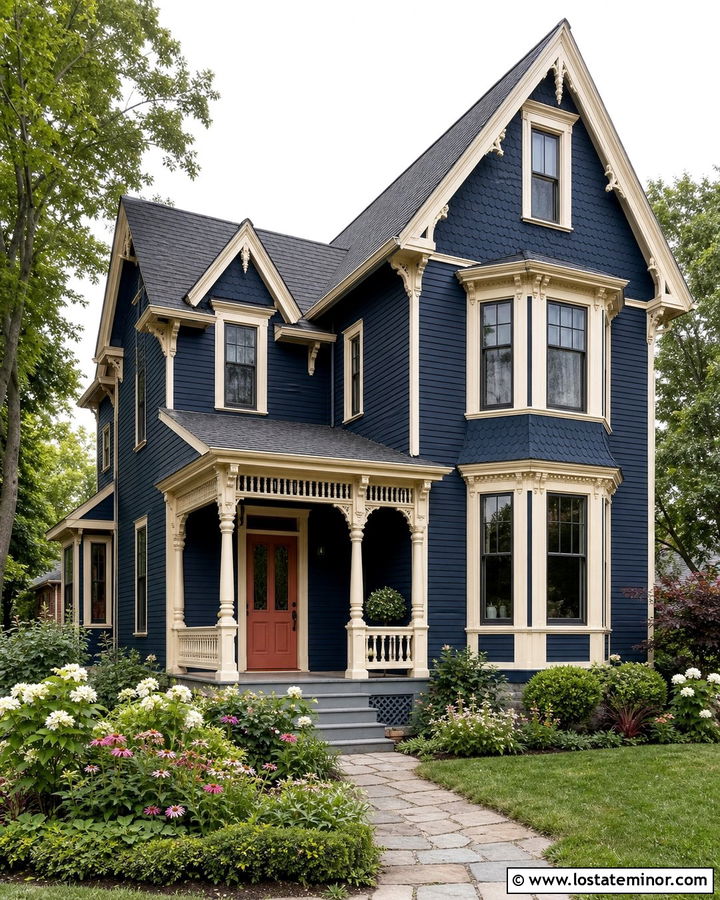
Victorian cross gables provide an opportunity to layer navy tones, decorative shingles, and contrasting trim. Keep the main clapboard siding deep navy, then use the same navy on patterned shingles inside the upper gables. Soft cream trim is often more comfortable than stark white on an ornate facade. It can highlight brackets, window casings, porch posts, and decorative bargeboards without overwhelming the architecture. Introduce a muted coral or brick-red front door for a period-inspired accent. A dark gray roof, stone walkway, and traditional garden complete the composition. Because Victorian homes already contain many details, limit the palette to three primary colors. Repeating navy throughout the siding will help the elaborate roofline feel unified.
18. Navy Blue Tudor House With Steep Gables
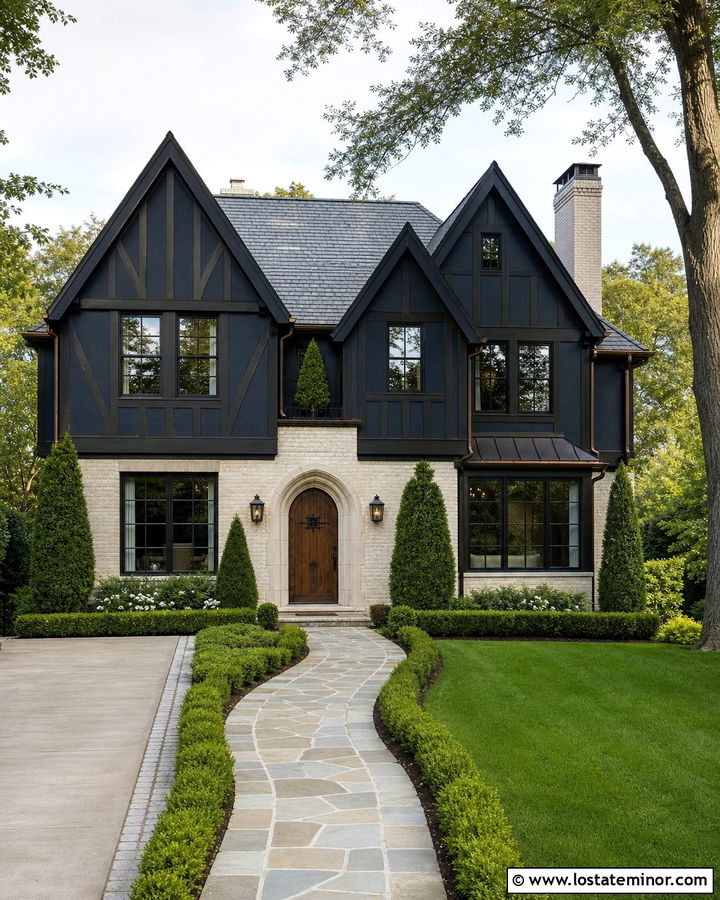
A Tudor-inspired exterior becomes distinctive when deep navy replaces the expected brown or beige facade. Use navy stucco or smooth siding inside the steep front gables and add dark charcoal half-timbering for contrast. Warm cream brick or stone across the lower story keeps the house approachable and connects it to the landscape. Choose an arched walnut front door with black iron hardware to reinforce the architectural character. Slate-gray roofing and dark bronze gutters will complement both the blue and masonry. Keep window trim cream to prevent the upper facade from becoming too shadowed. Formal evergreens, a gently curved walkway, and understated lighting can complete this dramatic exterior without competing with the steep roof peaks.
19. Navy Blue Ranch House With Front Gable
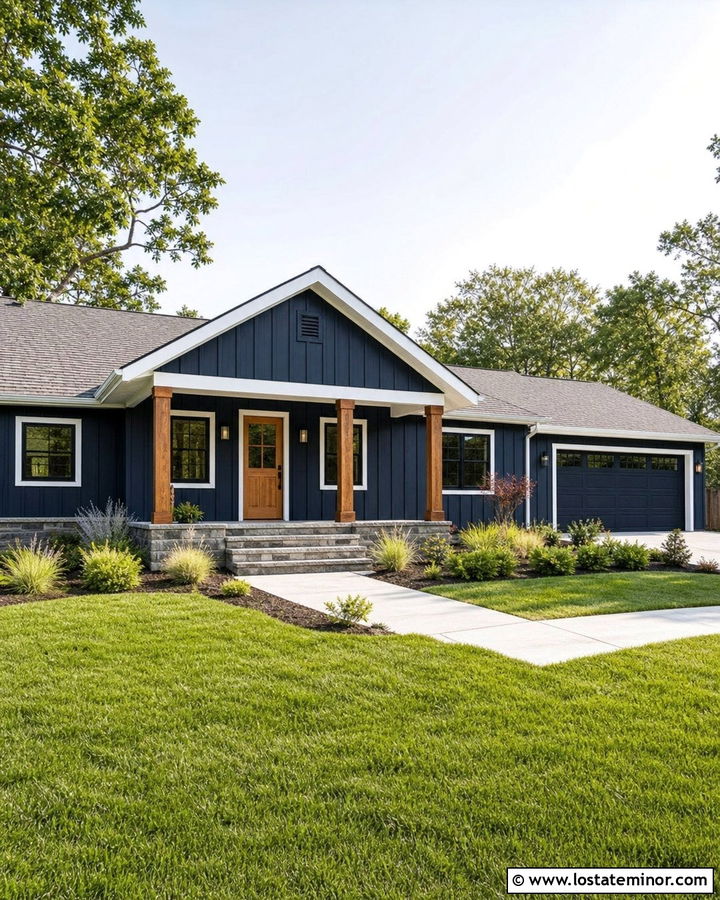
A new front gable can add height and curb appeal to a long, low ranch house. Center it over the entry or place it above a projected living-room section to break up the horizontal facade. Cover the house in deep navy lap siding and use navy board and batten inside the new gable. Wide white fascia will make the addition look intentional and connect it with the windows and garage trim. A medium-gray roof keeps the low roofline from becoming visually heavy. Finish the entrance with cedar posts, a natural wood door, and a small stone landing. Low ornamental grasses and spreading shrubs will complement the ranch proportions while keeping the new gable visible from the street.
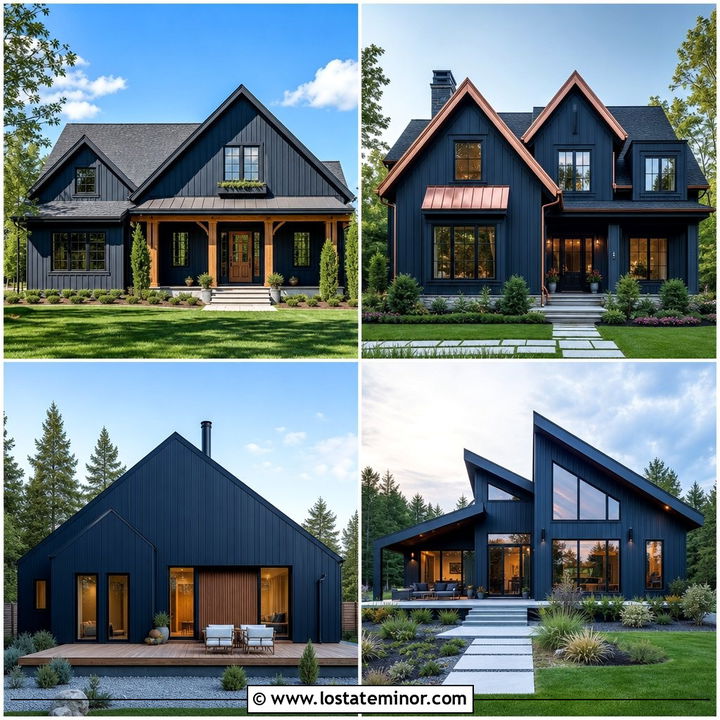
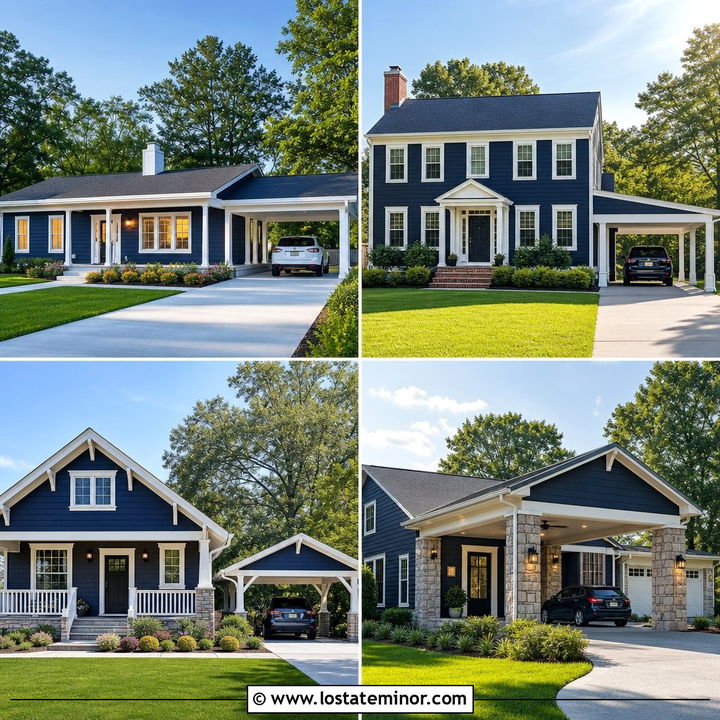
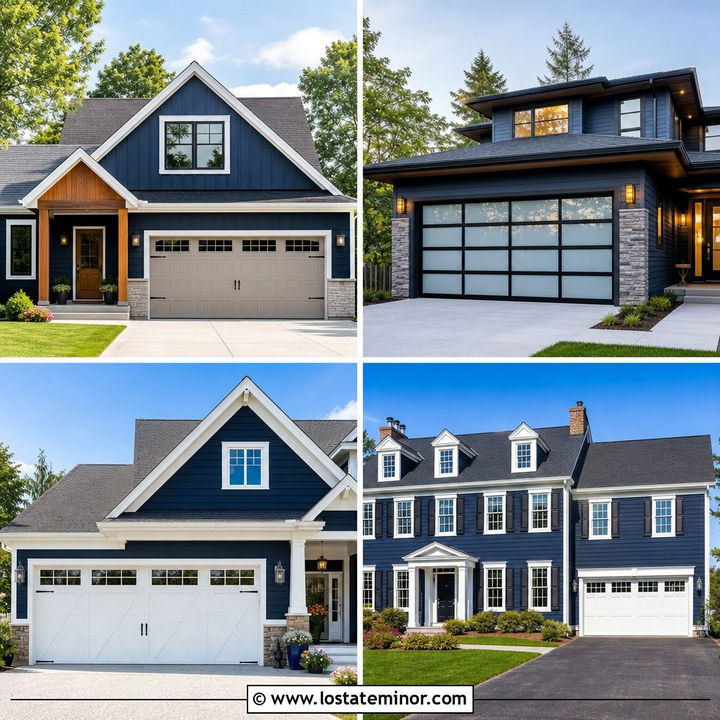
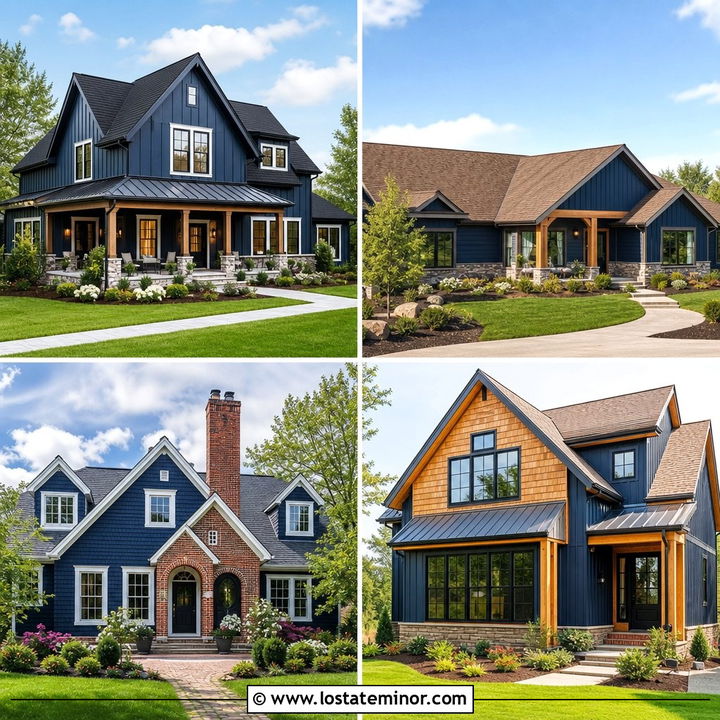
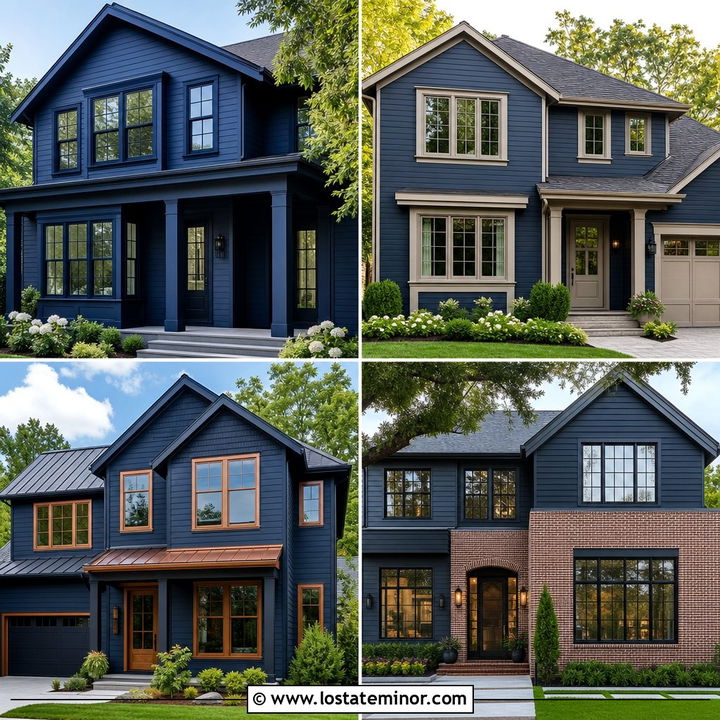
20. Navy Blue Split Level With Gables
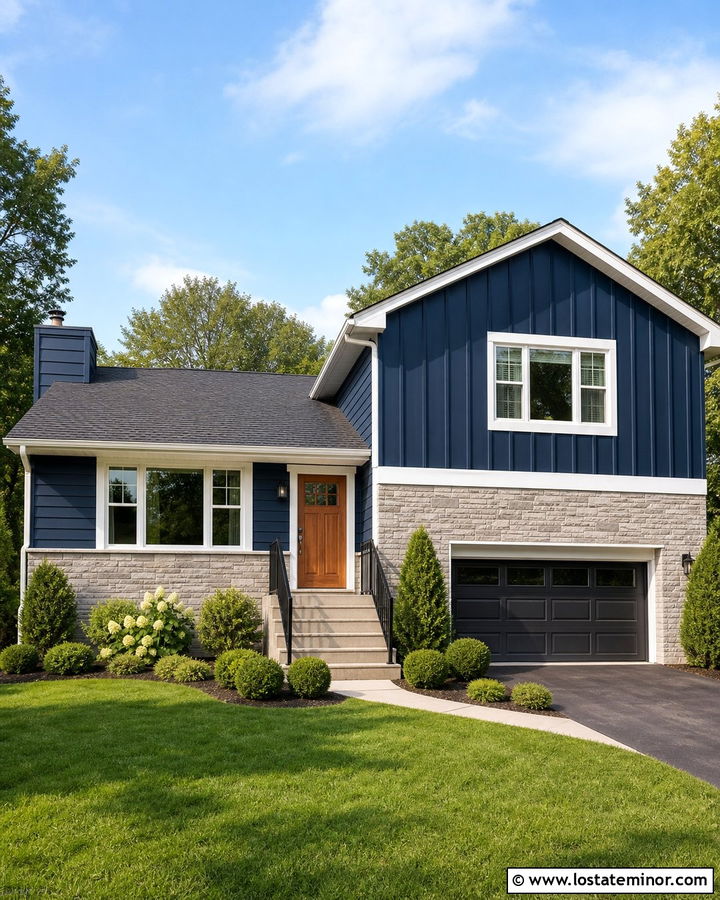
Split-level homes often contain disconnected rooflines, so a consistent navy palette can bring the exterior together. Cover both levels in the same deep navy siding, then use vertical panels within the highest gable to clarify its shape. Soft white trim around windows, roof edges, and garage doors creates continuity between the different elevations. Add light gray stone to the lower level, where it can visually support the upper floor without making the facade feel top-heavy. A warm wood entry door should be easy to see from the driveway and front path. Black railings and lighting provide a clean finishing layer. Structured shrubs can conceal foundation changes while leaving windows and architectural transitions unobstructed.
21. Navy Blue Bungalow With Wide Gable
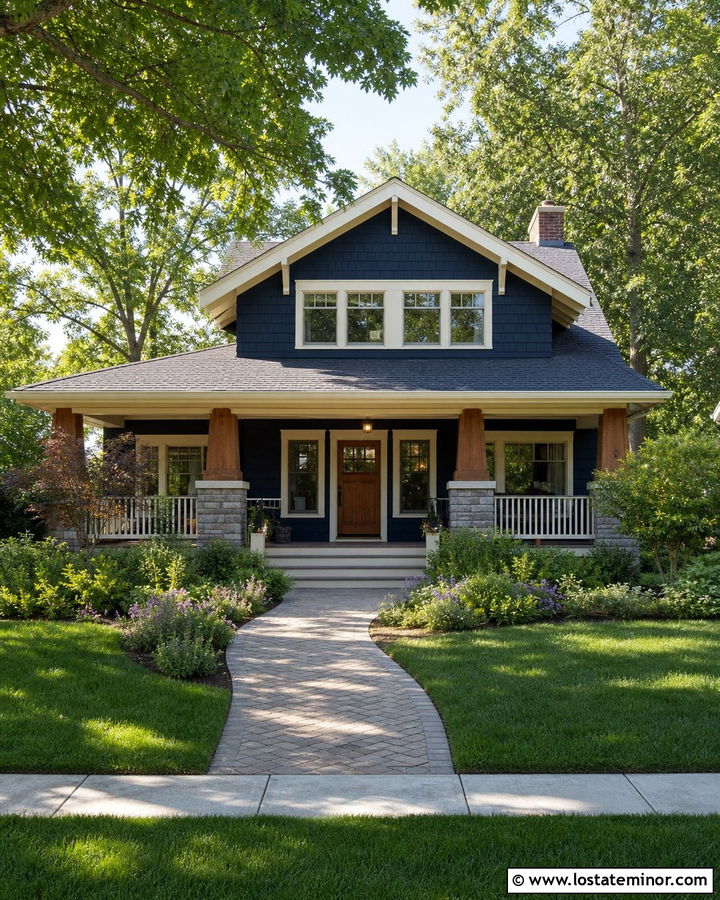
The broad front gable of a bungalow makes navy siding feel intimate rather than imposing. Use deep navy clapboard across the walls and navy shingles inside the gable for understated texture. Cream trim around the windows and roof edge will soften the contrast, while tapered wood columns add warmth to the porch. Ground those columns with gray fieldstone bases that extend along the foundation. A stained Craftsman door with divided glass can become the central focal point beneath the gable. Choose a charcoal shingle roof and bronze porch lights for a cohesive finish. Native shrubs, flowering perennials, and a gently curved walkway support the bungalow’s relaxed character while keeping the porch welcoming and clearly visible.
22. Navy Blue Mountain House With Timber Gables
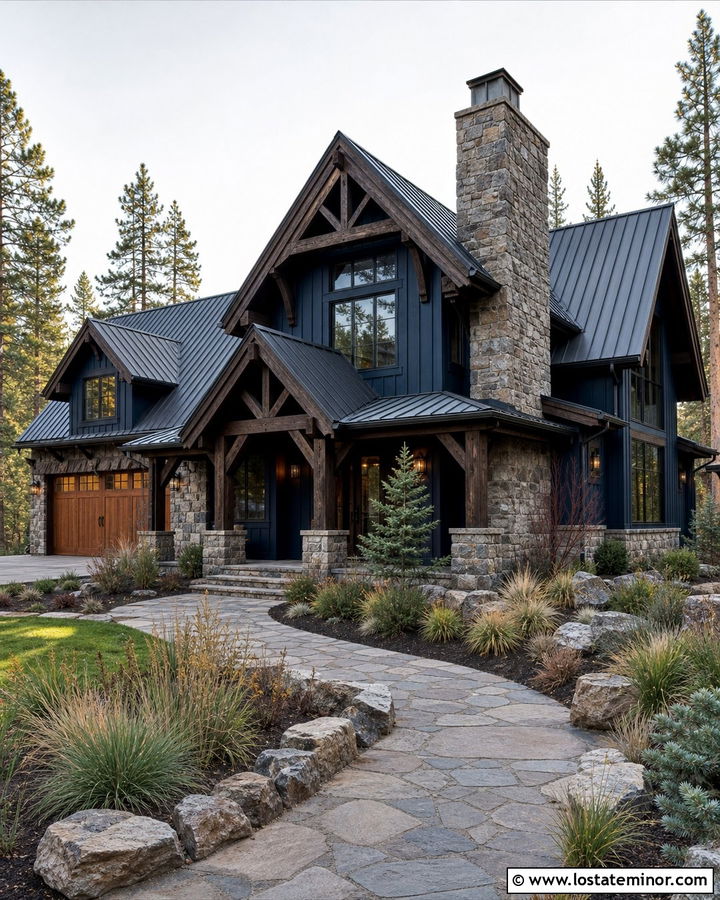
Against a wooded setting, navy siding can appear grounded and sophisticated when paired with substantial natural materials. Use deep navy board-and-batten siding across a mountain house with tall front gables. Add dark-stained timber trusses within each peak and repeat the wood on porch beams, balcony rails, and the garage doors. Rugged gray-brown stone should cover the foundation, chimney, and lower porch columns. A charcoal standing-seam roof will strengthen the silhouette without introducing another competing color. Large black-framed windows create a modern edge and reflect the landscape. Finish the approach with a broad stone path, evergreen plantings, and native grasses. The complete scheme balances dramatic architecture with colors and textures drawn from the surroundings.
23. Navy Blue Lake House With Multiple Gables
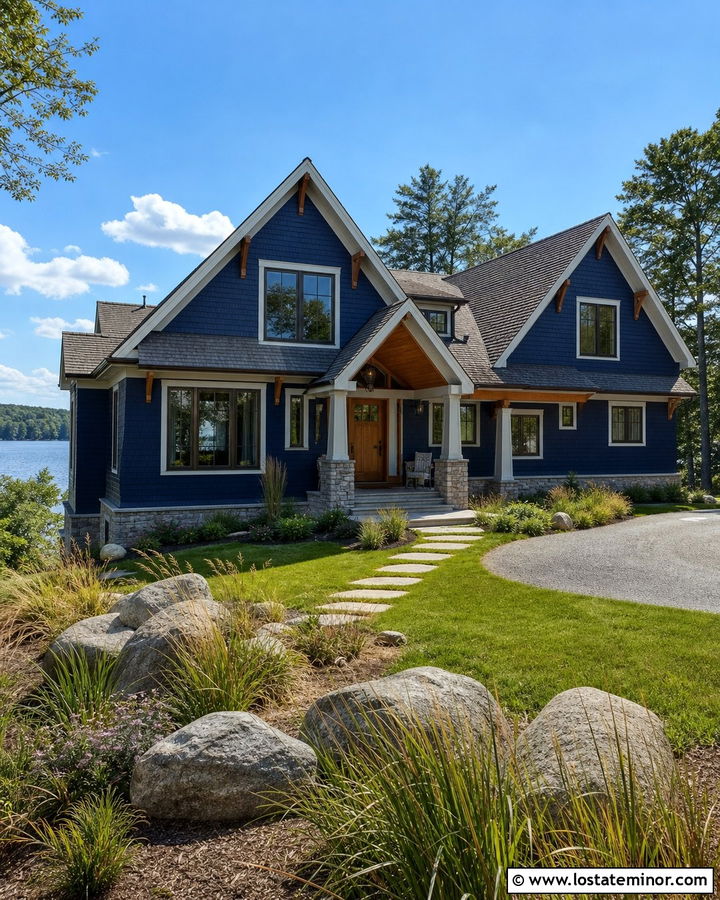
Multiple gables can give a lake house a picturesque silhouette, but the exterior palette should remain calm. Cover the entire facade in medium-deep navy shingle siding and use white trim to define each roof peak. A weathered-gray roof will maintain the relaxed waterfront character, while cedar brackets under selected gables add warmth. Repeat cedar on the front door, porch ceiling, and deck railing for a coordinated look. If stone is needed, choose a light gray variety and limit it to the foundation and chimney. Large windows can have dark bronze frames for subtle contrast. Natural grasses, smooth boulders, and an informal path will frame the house without obscuring its layered roofline.
24. Navy Blue Narrow House With Tall Gables
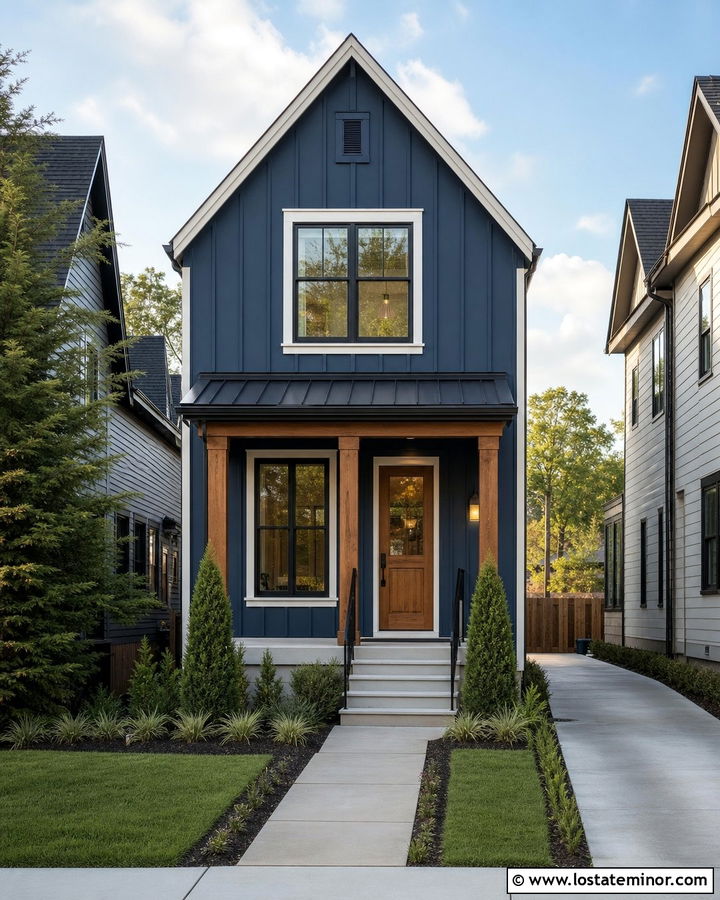
A narrow house can use tall gables to create presence without appearing excessively wide or bulky. Paint the full exterior deep navy and emphasize the vertical form with board-and-batten siding in the upper gables. Use slim white trim around windows and roof edges so the facade remains sharp but not visually divided into too many sections. A black metal roof reinforces the height, while a warm cedar door draws attention back to the ground floor. Place a compact covered porch beneath the dominant gable and support it with simple wood posts. Upright evergreens and narrow planting beds complement the lot dimensions. A straight walkway helps the entrance feel accessible despite the home’s tall, compact proportions.
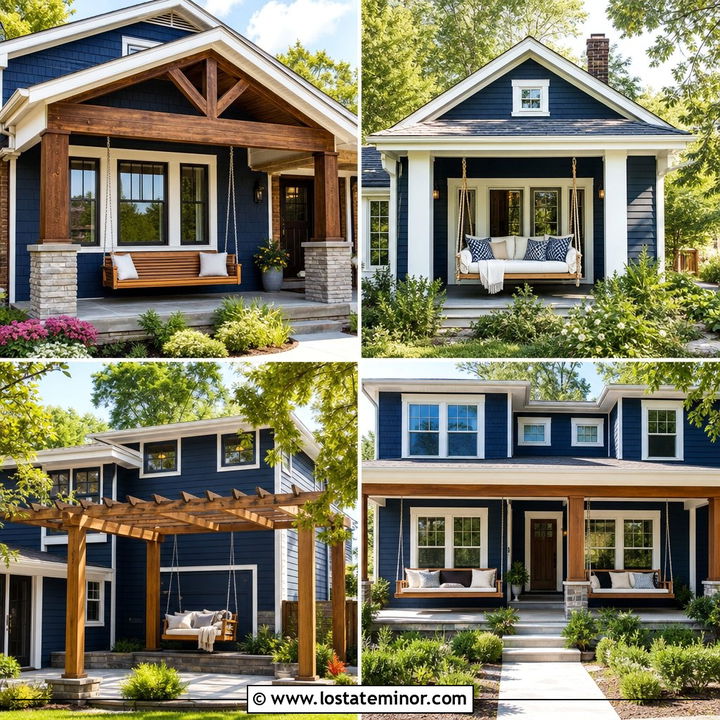
25. Navy Blue House With Garage Gables
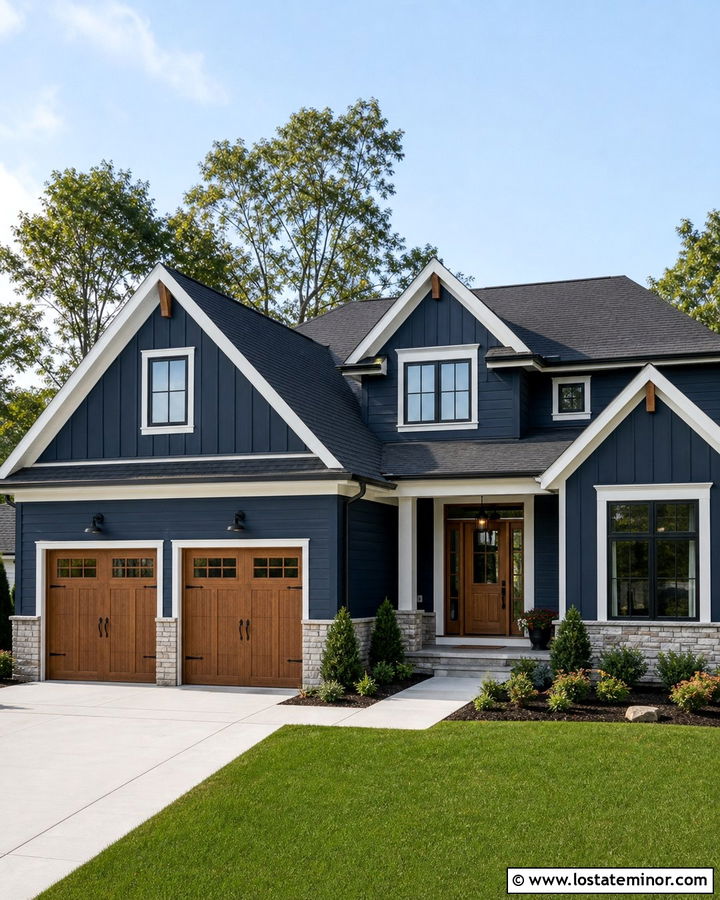
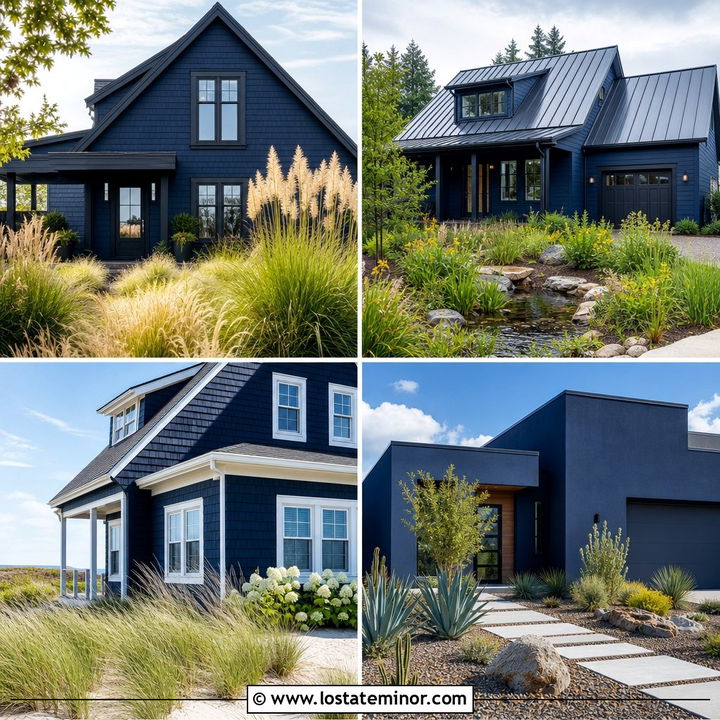
Large garage doors can dominate a gabled facade unless their color and materials are carefully coordinated. Use navy siding throughout the house and upper garage gables, then select warm wood-look garage doors that relate to the front door. White trim can outline the gable peaks and windows, while black hardware adds definition to the wood surfaces. If natural wood doors exceed the budget, choose an insulated steel design with a convincing medium-oak finish. Add light gray stone around the garage base and entry steps to balance the dark siding. A charcoal roof completes the palette. Keep driveway borders clean and plant low shrubs near the garage so they do not obstruct the doors or decorative gable details.
26. Navy Blue Modern House With Asymmetrical Gables
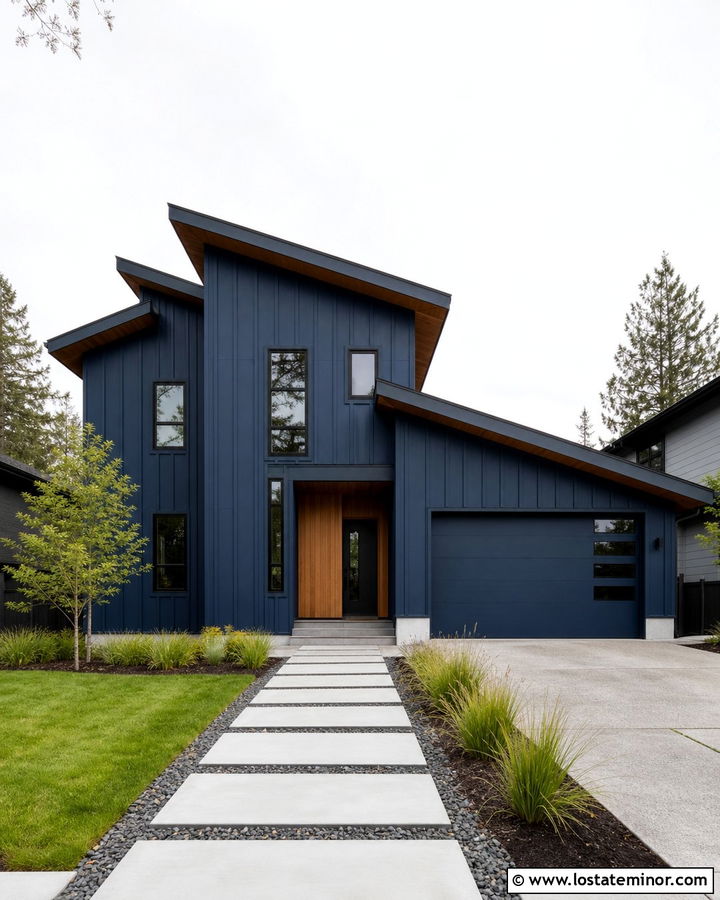
Sharp asymmetrical gables create an energetic modern profile that looks especially dramatic in navy blue. Cover the exterior in deep navy vertical siding to reinforce the angles and height of the roof. Use narrow black window frames and charcoal fascia for a streamlined, low-contrast finish. Introduce warmth through a recessed cedar entry, wood soffits, and a matching garage door. A pale concrete foundation and large-format walkway will keep the dark facade from feeling visually heavy. Choose minimal landscaping with ornamental grasses, small trees, and structured beds. The design should avoid decorative shutters, complex railings, or traditional brackets. Instead, let the contrasting siding direction, strong gable geometry, and carefully placed wood accents create the complete composition.
27. Navy Blue Gable House With Cream Trim
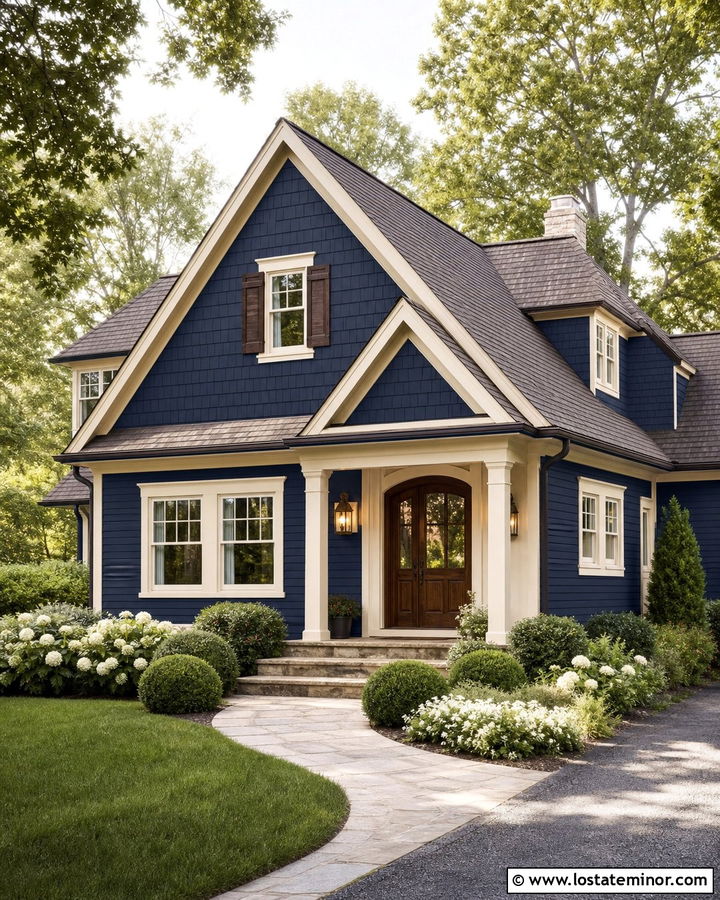
Cream trim offers a warmer alternative to bright white, especially when a navy house includes brick, beige stone, or a brown roof. Apply deep navy lap siding to the main facade and navy shingles inside the gables. Use warm cream on fascia, soffits, corner boards, windows, and porch columns. The softer contrast will still define the architecture without making the exterior appear stark. Add a dark walnut door and aged-brass lighting to continue the warm undertones. A weathered-brown roof can work well when it contains charcoal variation rather than strong orange tones. Complete the curb appeal with limestone steps, rounded green shrubs, and white flowers. This balanced palette suits traditional, cottage, and Craftsman homes.
28. Navy Blue Gable House With Light Gray Trim
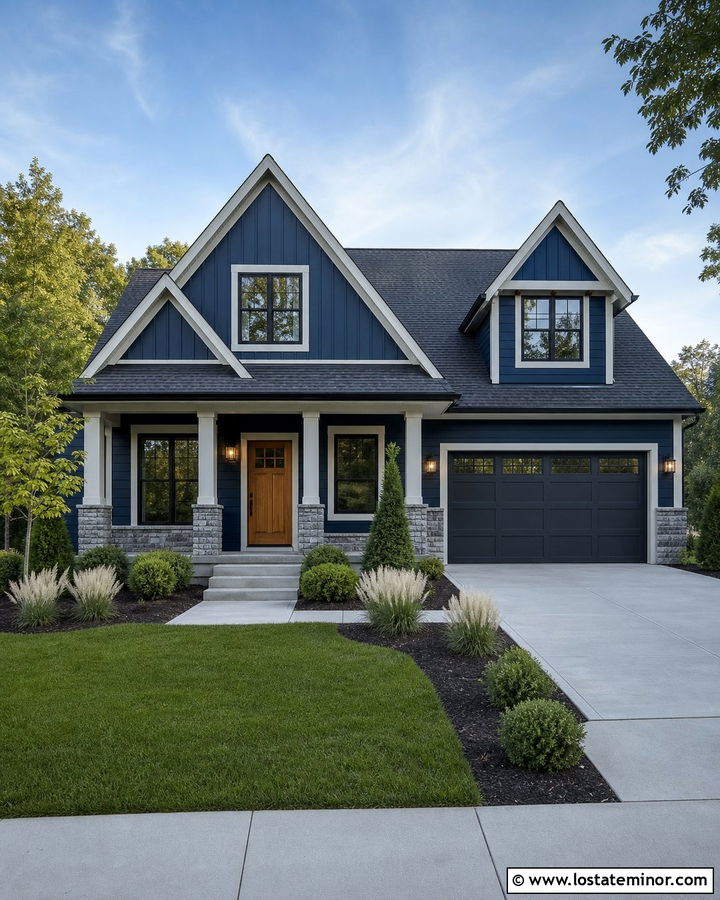
Light gray trim creates a subtle, tailored outline around a navy blue facade. It is a useful option when white feels too bright or the house already has cool gray stone and roofing. Choose a pale neutral gray for the window frames, fascia, gable vents, and porch columns. Keep the siding consistently navy, using board and batten in the gables and lap siding below for textural contrast. A charcoal roof and black gutters will provide depth at the upper edge. Add a natural oak front door to prevent the cool palette from feeling impersonal. Blue-green evergreens, white ornamental grasses, and a light concrete walkway can complete the exterior while reinforcing its calm, cool coloring.
29. Navy Blue Gable House With Yellow Door
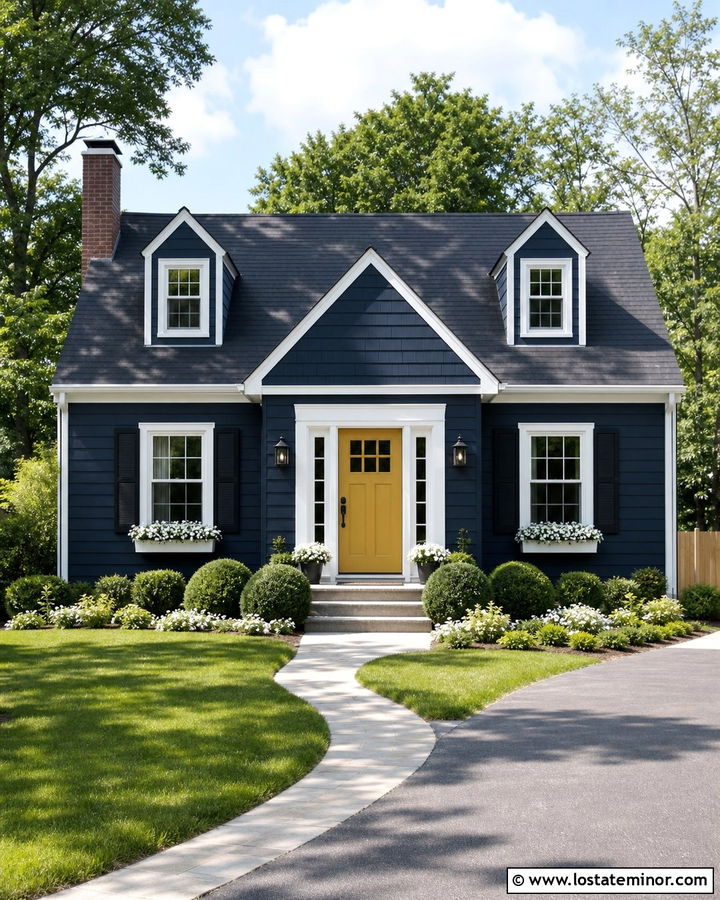
A muted yellow front door can give a navy blue house a cheerful focal point without making the full exterior feel playful. Choose an ochre, mustard, or golden yellow rather than a bright primary shade. Surround it with white trim so the entrance remains crisp and connected to the windows and gable edges. Use navy horizontal siding across the walls and matching navy shingles in the front gable. A charcoal roof, black lanterns, and simple concrete steps keep the stronger colors grounded. Repeat yellow sparingly through seasonal flowers rather than permanent architectural features. This scheme is particularly effective on compact cottages, Cape Cod homes, and bungalows where the front door is clearly visible within the complete curb view.
30. Navy Blue Gable House With Natural Wood Accents
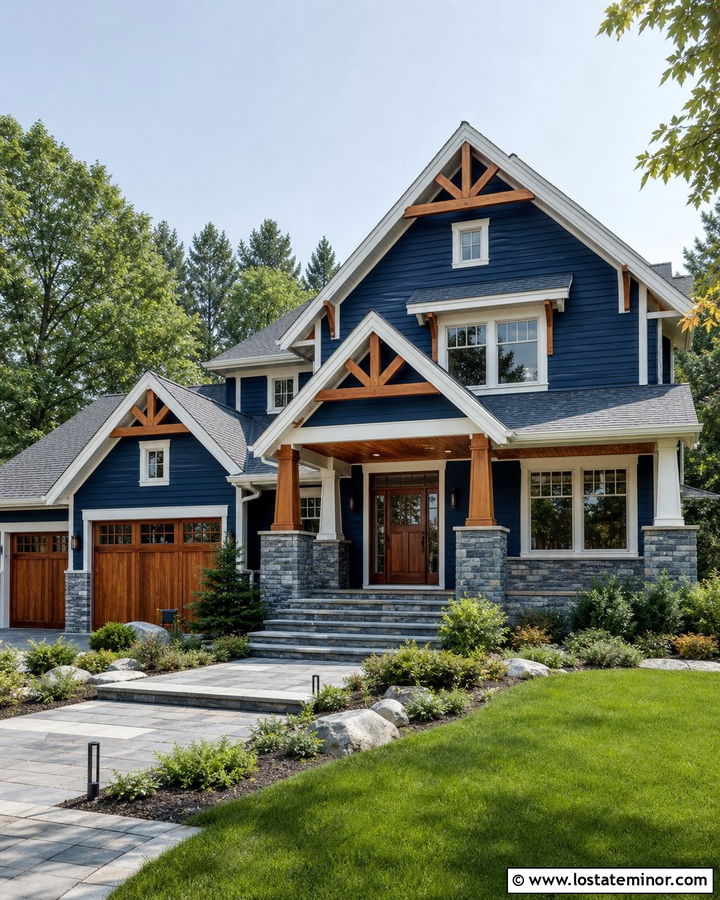
Natural wood can soften a large navy blue facade while emphasizing its most attractive architectural features. Use deep navy siding across the house, then add medium-toned cedar to the front door, porch ceiling, gable trusses, and selected garage panels. Keep the wood finish consistent so the accents feel connected. Soft white trim around windows and roof edges will separate the cedar from the dark siding. A charcoal roof and blue-gray stone foundation provide neutral support. Avoid placing wood on every surface, since a few repeated accents will have greater impact. Complete the exterior with broad stone steps, layered green plantings, and a well-defined walkway. The finished home will feel warm, balanced, and intentionally detailed.
Conclusion:
The strongest navy exterior schemes consider the roofline, siding texture, trim, masonry, doors, and landscape as one connected design. White and cream trim produce clear definition, while gray stone, red brick, copper, and natural wood can warm the deep siding color. Gables may be emphasized with shingles, board and batten, timber trusses, or carefully placed metal roofing. However, repeating too many treatments can make a complex facade feel busy. Choose one dominant gable detail and carry its material or color into another part of the house. These 30 Navy Blue House Design With Gables Ideas provide adaptable starting points for traditional homes, modern builds, coastal cottages, ranches, and rustic retreats.

Related posts: