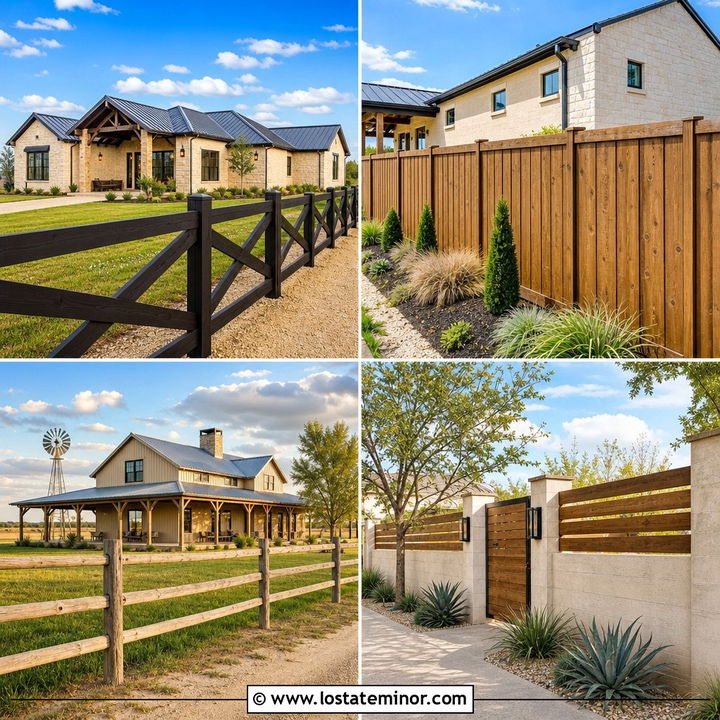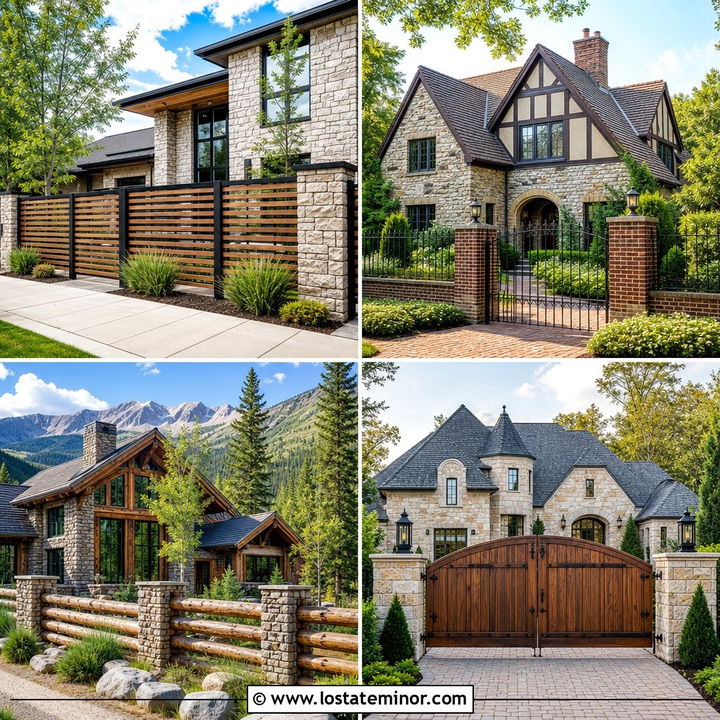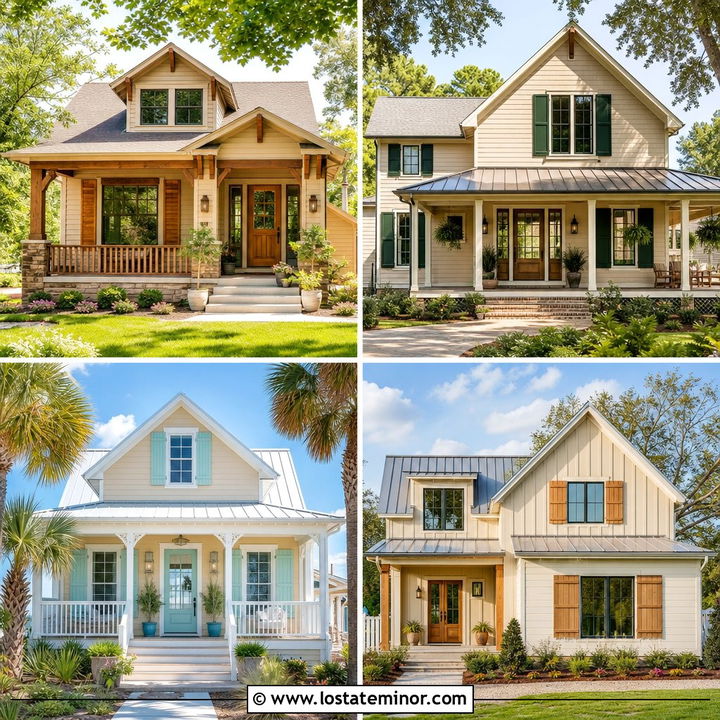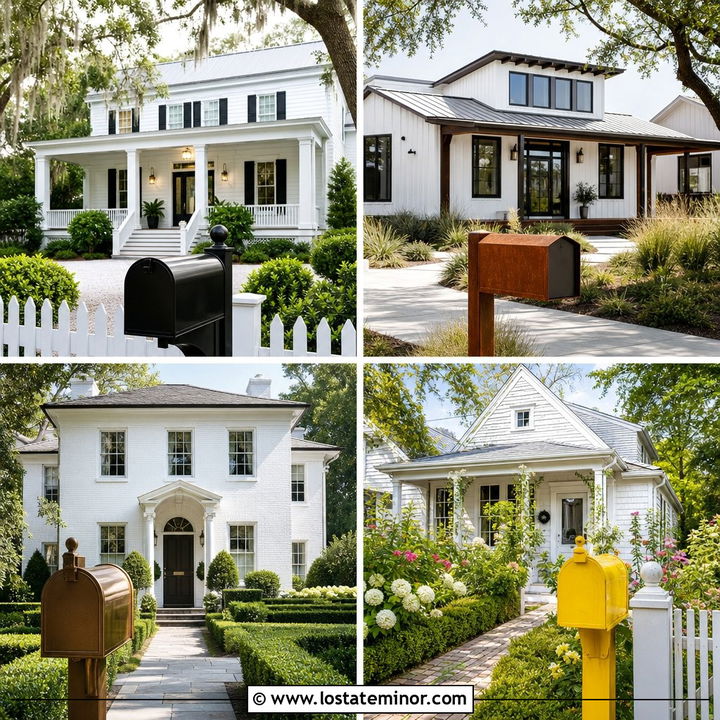
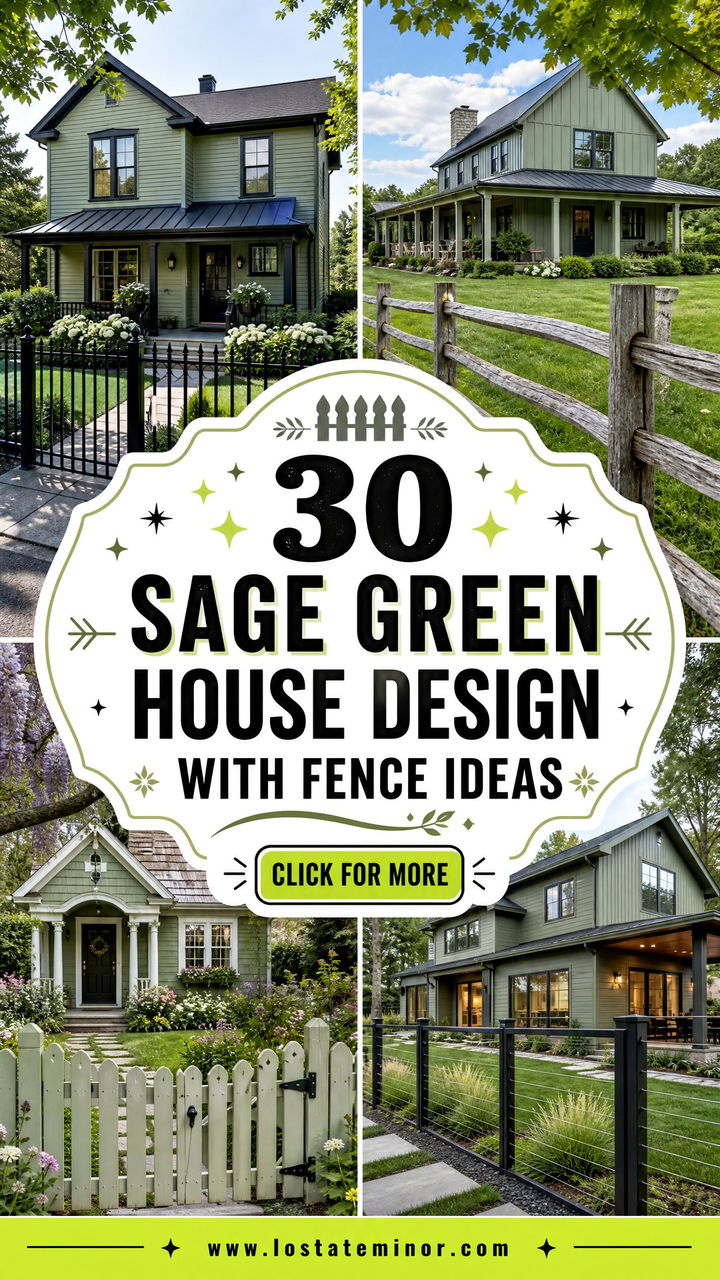
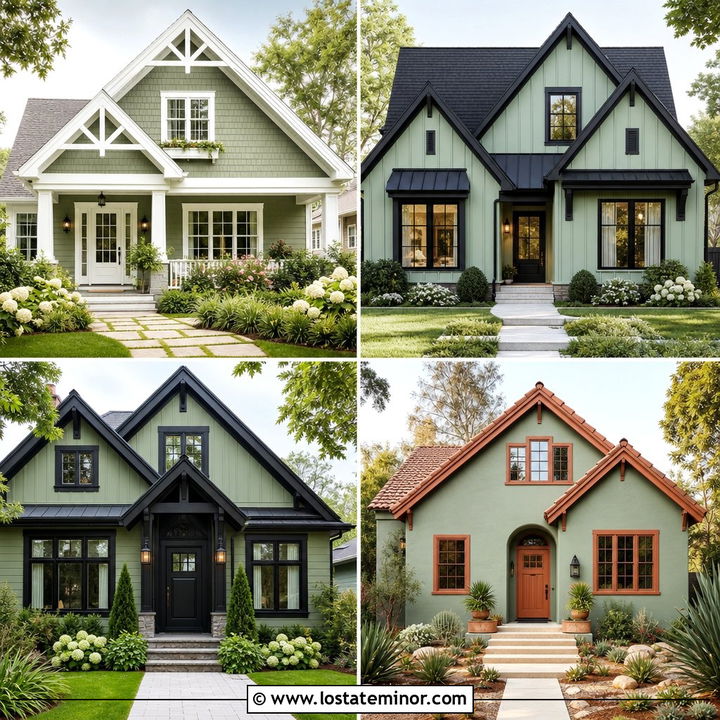
A sage green exterior already feels calm, grounded, and connected to the landscape. Adding the right fence turns that appealing paint color into a complete curb-appeal plan. Current exterior inspiration commonly pairs sage siding with white pickets, black metal fencing, natural wood, stone, and warm neutral trim because these materials give the muted green greater definition and character. () The best combination depends on the home’s architecture, roof color, privacy needs, and surrounding landscape. A cottage may suit a low picket fence, while a modern house can carry streamlined horizontal boards. Farmhouses, ranch homes, bungalows, and Colonials offer even more possibilities. Use these complete 30 Sage Green House Design With Fence Ideas to coordinate siding, fencing, trim, doors, masonry, and landscaping.
1. Sage Green House With White Picket Fence
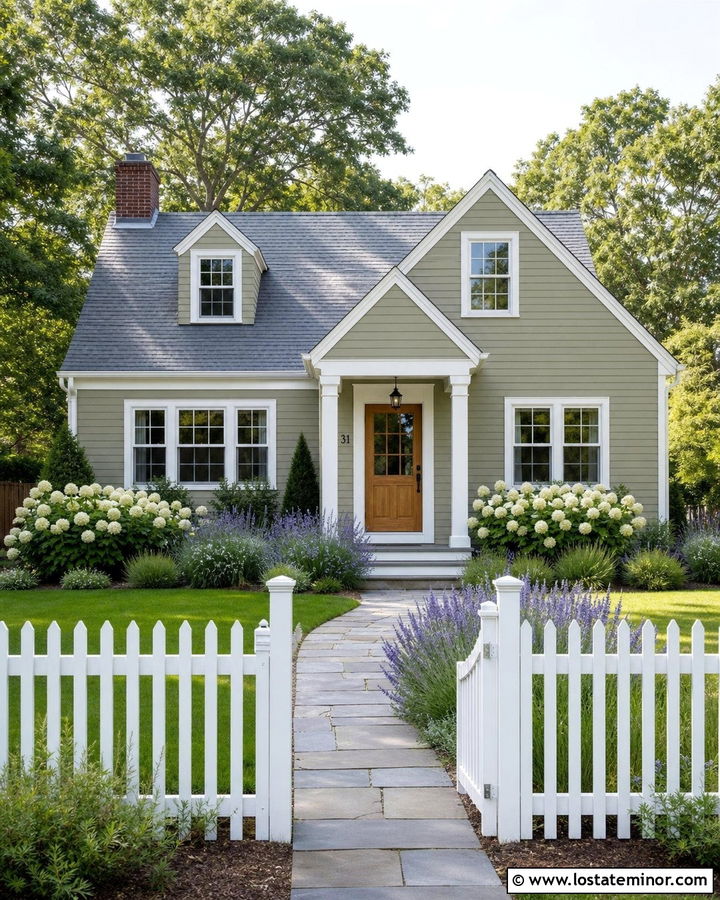
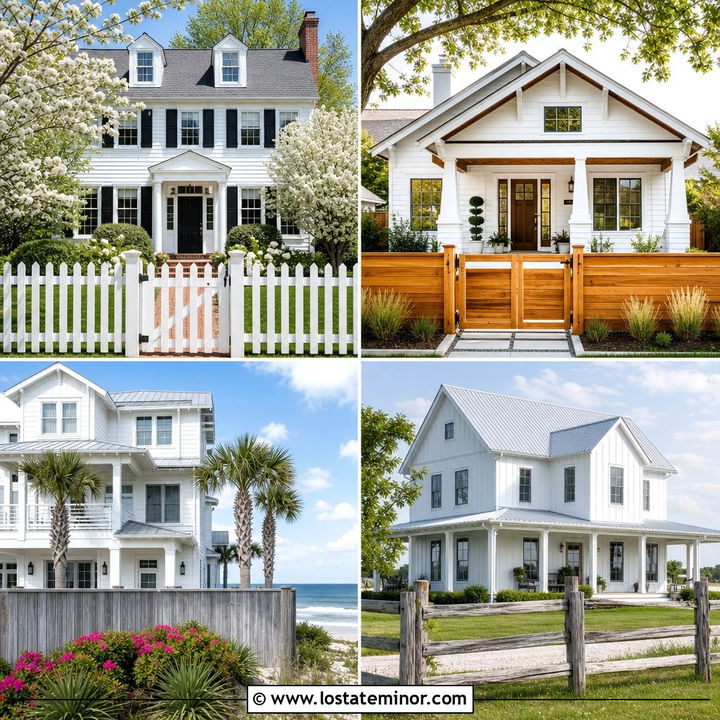
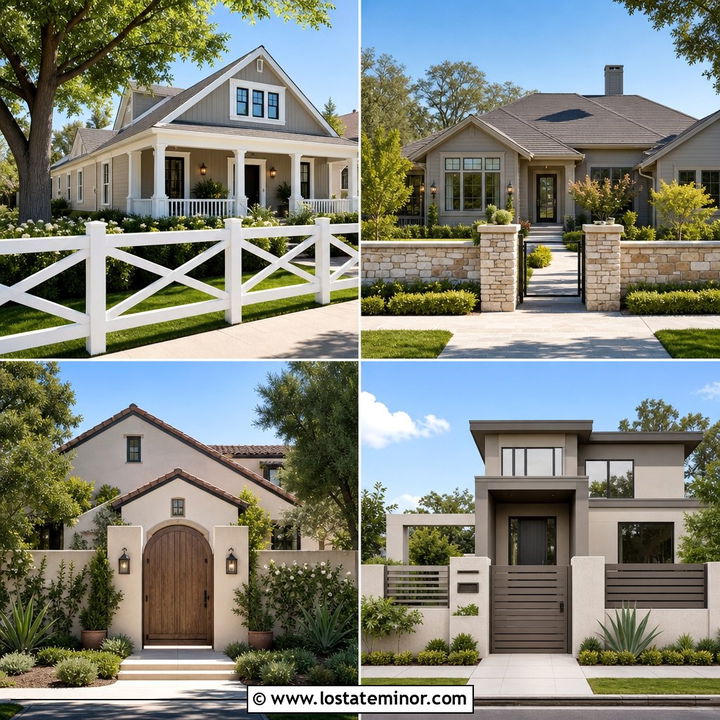
A white picket fence brings familiar cottage charm to a soft sage green house. Use warm sage lap siding with crisp white window trim, porch columns, and fascia to create a clean connection between the home and fence. A natural oak front door keeps the scheme from feeling too sweet, while a medium-gray shingle roof adds quiet contrast. Keep the pickets fairly low so the house remains visible from the street. A curved flagstone walkway and loose flower beds can soften the straight fence line. White hydrangeas, lavender, and clipped evergreen shrubs work especially well with this palette. Carry the white onto the gate hardware surround or mailbox post for a more deliberate, unified exterior rather than treating the fence as a separate feature.
2. Sage Green House With Natural Cedar Fence
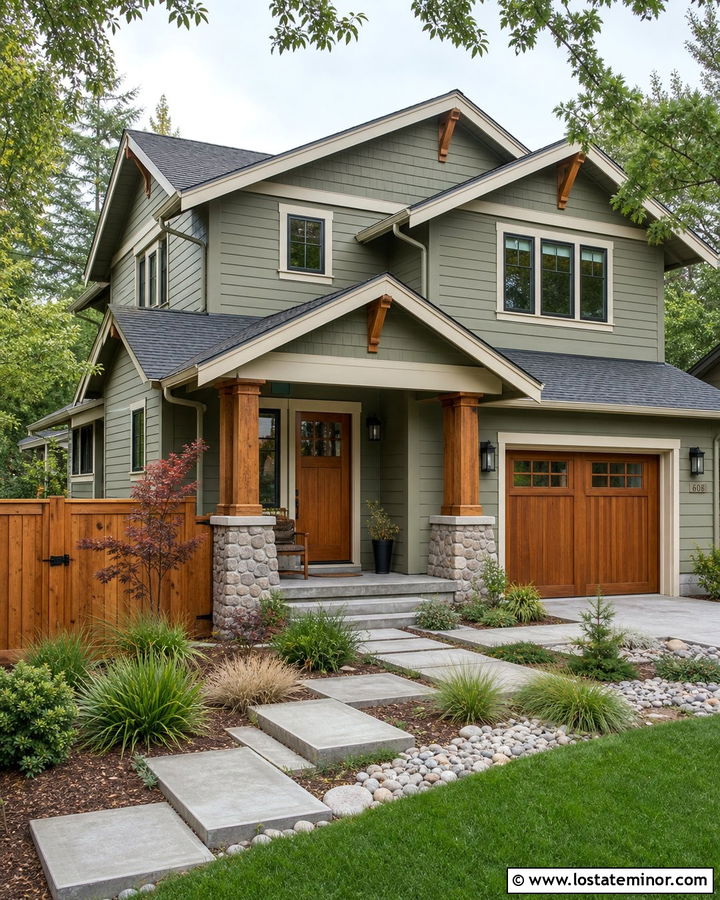
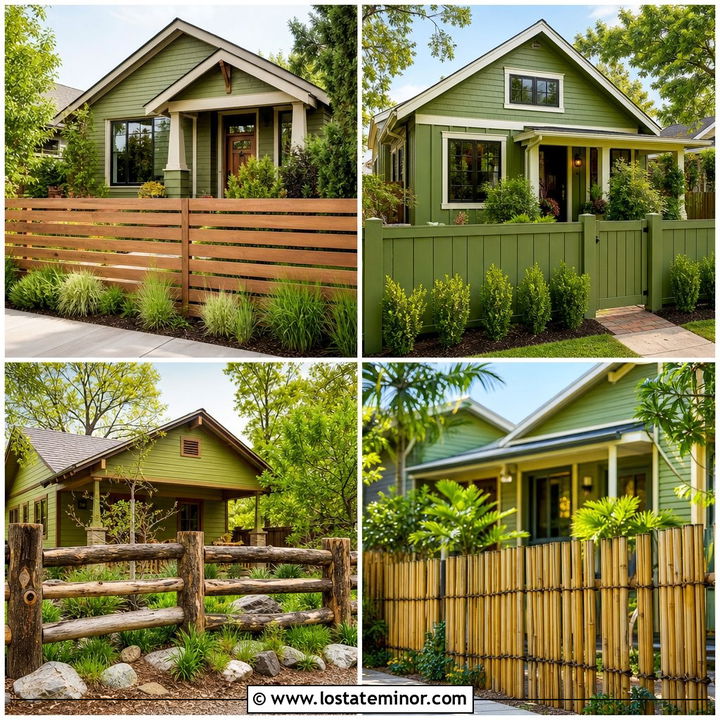
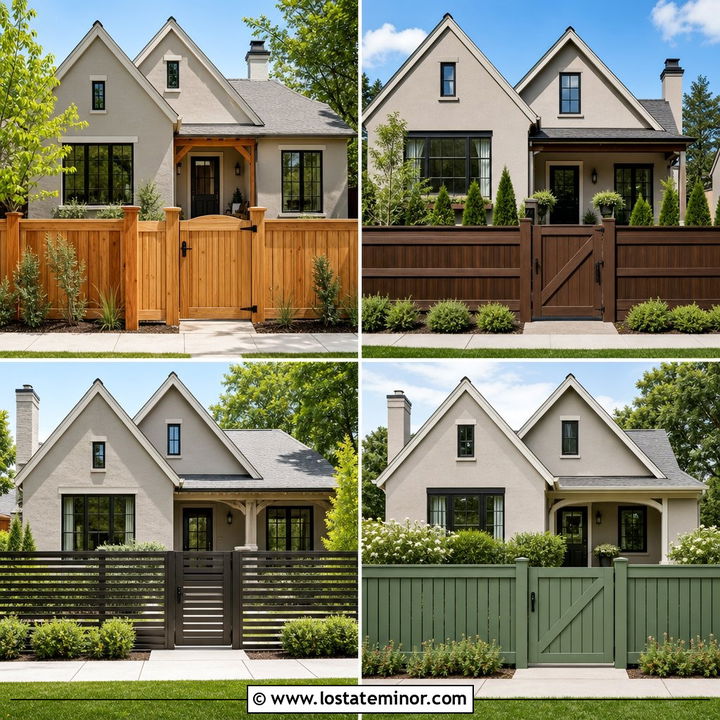
Warm cedar introduces an organic counterpoint to muted sage green siding. This combination feels especially appropriate on a Craftsman house with deep eaves, tapered porch columns, and visible wood details. Repeat the cedar fence stain on the front door, porch beams, and garage door to distribute the warm color across the facade. Cream trim provides a softer transition than bright white, while a charcoal roof grounds the overall palette. A semi-private fence with narrow gaps lets light pass through and prevents the front yard from feeling enclosed. Add river-rock borders, native grasses, and broad concrete stepping stones for relaxed curb appeal. Because cedar changes as it weathers, choose whether you want to preserve its honey tone or allow a naturally silvered finish before finalizing the trim colors.
3. Sage Green House With Black Metal Fence
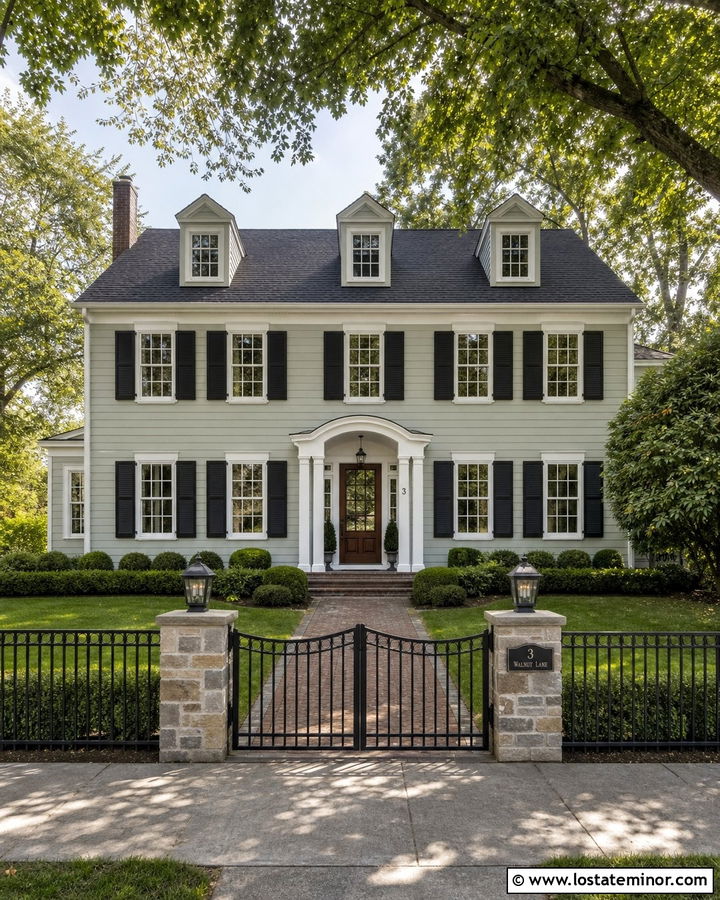
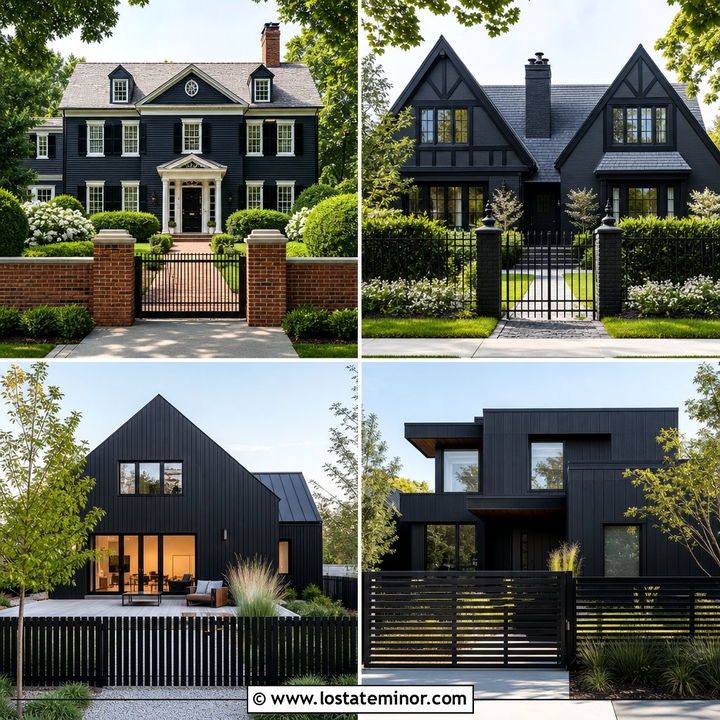
A slim black metal fence gives a sage green exterior sharper architectural definition without hiding the house. This pairing suits a brick-accented Colonial, transitional home, or updated traditional facade. Frame the sage siding with soft white trim, then repeat matte black on the shutters, lanterns, window frames, and fence gate. A dark charcoal front door can provide another visual anchor, although stained mahogany offers a warmer alternative. Use stone or brick pillars at the gate if the front elevation needs more weight. Structured boxwoods and upright ornamental grasses reinforce the fence’s clean rhythm. Keep the railing open and relatively low around a front yard. The result feels secure and polished while allowing the green exterior, balanced windows, and carefully planned entrance to remain the main curb-appeal features.
4. Sage Green House With Horizontal Wood Fence
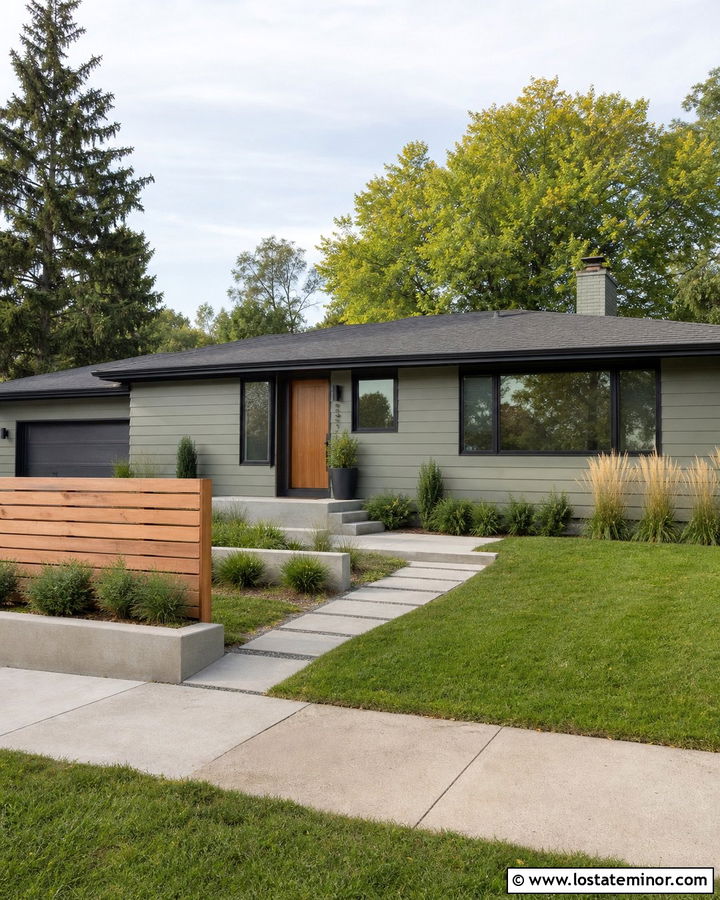
Horizontal fencing makes sage green siding look more modern, particularly on a low-profile ranch or split-level home. Choose smooth cedar boards in a medium natural stain and leave narrow, consistent gaps between them. The strong horizontal lines will echo the home’s long roofline and visually widen the property. Pair the sage body color with charcoal trim, black window frames, and a warm wood front door that matches the fence. A simple concrete walkway and rectangular planting beds support the streamlined appearance. Keep landscaping restrained with ornamental grasses, low junipers, and one sculptural tree near the entrance. If greater privacy is required, use taller fencing along the side yard while stepping it down toward the street. This maintains an open, neighbor-friendly front elevation without sacrificing practical backyard screening.
5. Sage Green House With Cream Vinyl Fence
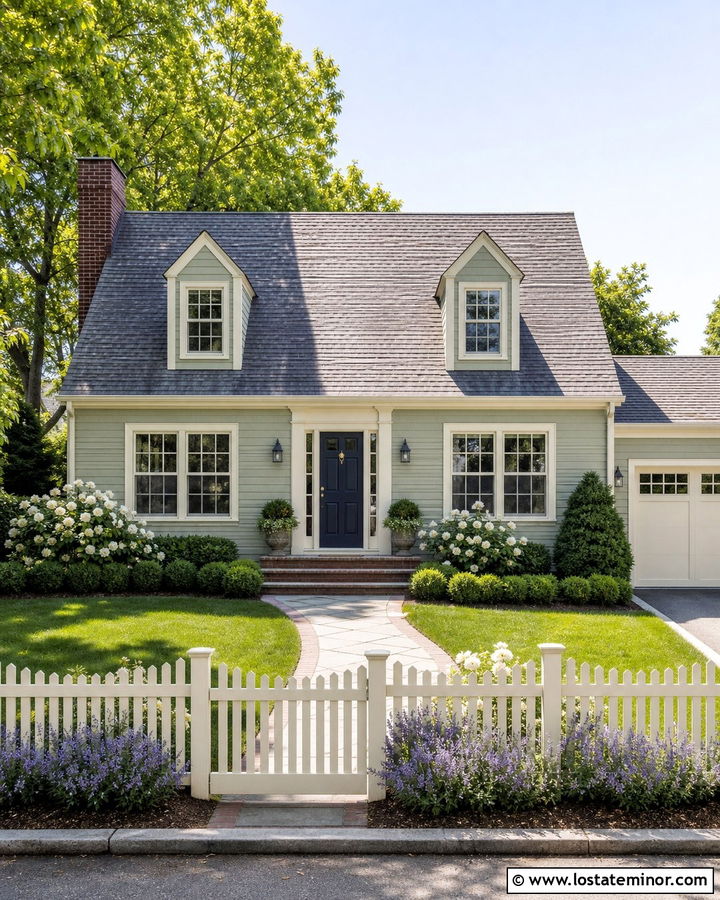
A cream vinyl fence offers a warmer alternative to pure white and requires less color variation than naturally aging wood. It works beautifully with a sage green Cape Cod house featuring cream trim, divided-light windows, and a welcoming central entrance. Select a fence with simple square pickets or narrow vertical panels rather than ornate decorative details. Paint the front door muted navy or deep forest green to create a clear focal point. Weathered-gray roof shingles will keep the palette classic and understated. Along the fence, plant white roses, catmint, and rounded evergreen shrubs to blend the structure into the yard. Matching the fence color closely to the exterior trim is important. Slightly different creams can look accidental, so compare physical samples outdoors before committing to the final finish.
6. Sage Green House With Stone Pillars And Iron Fence
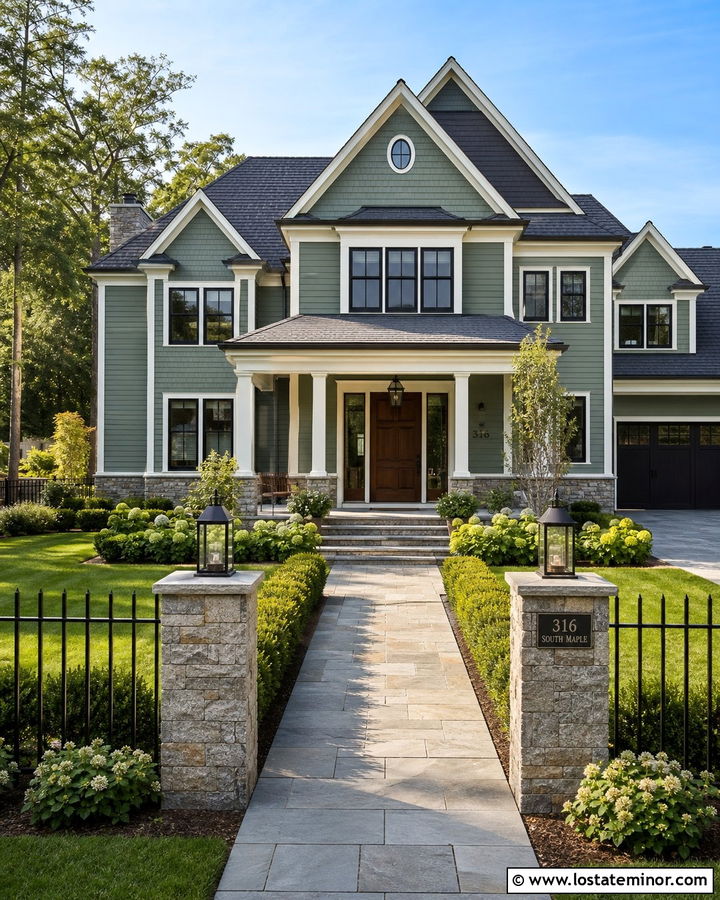
Stone pillars can give an open iron fence enough presence for a substantial two-story home. Cover the house in medium sage green siding, use warm white trim, and choose charcoal window frames for crisp contrast. Build the fence pillars from a mixed gray and beige stone that relates to the porch foundation or chimney. Black iron sections between the pillars keep views open and repeat the color of the roof, gutters, and exterior lights. A stained walnut door adds warmth at the center of the composition. Wide masonry steps and a straight walkway support the more formal layout. Keep shrubs below the iron rails so the landscaping does not compete with the fence. Repeating the same stone in several locations makes this combination feel designed as one complete exterior rather than assembled from unrelated materials.
7. Sage Green Farmhouse With Split Rail Fence
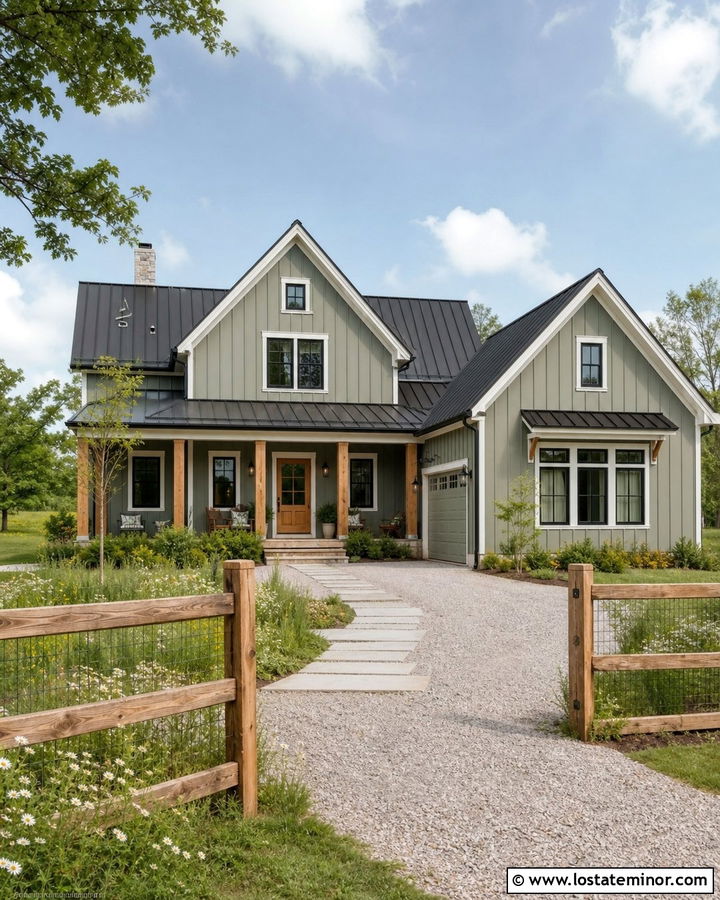
A split rail fence gives a sage green farmhouse a relaxed rural character without creating a heavy property boundary. Choose dusty sage board-and-batten siding, creamy white trim, and a black standing-seam metal roof. Natural cedar porch posts and a matching front door can connect the rustic fence to the house. If pets need containment, discreet black wire mesh may be installed behind the rails while preserving the open appearance. Surround the entrance with meadow-inspired grasses, daisies, and low evergreen plants rather than formal hedges. A gravel driveway and broad stone path complete the casual setting. Keep the fence stain natural or lightly weathered so it does not compete with the architecture. This scheme also suits suburban homes that need farmhouse warmth but have limited front-yard space.
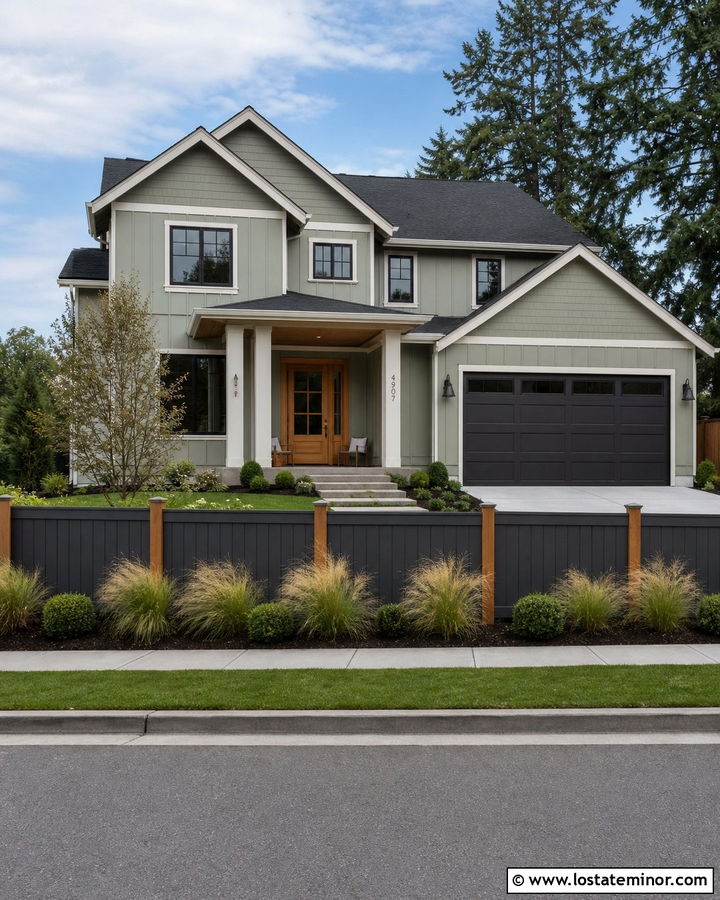
8. Sage Green House With Dark Walnut Privacy Fence
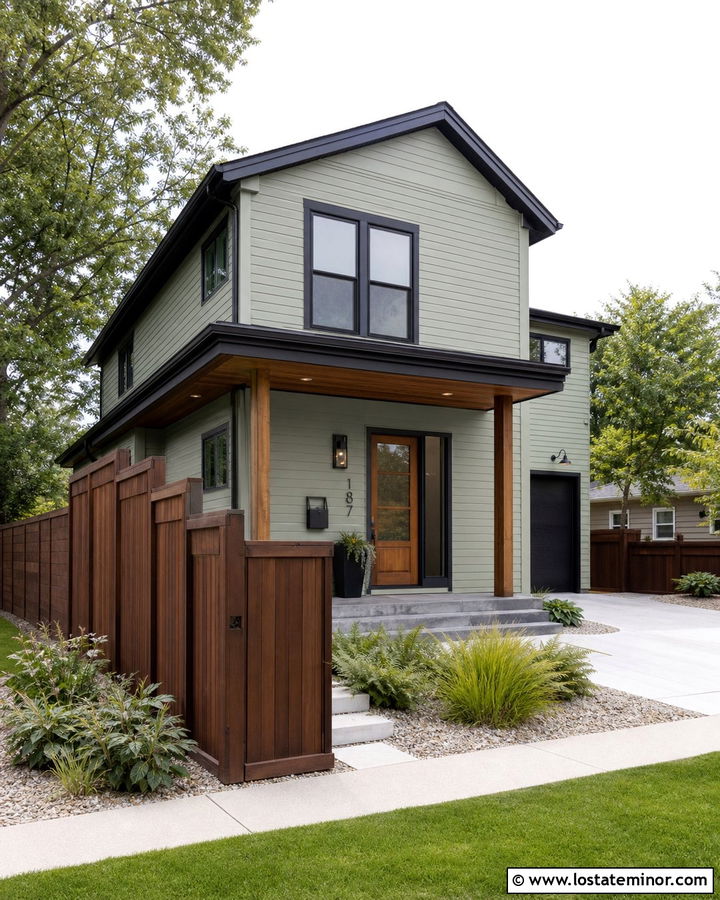
A tall walnut-stained fence creates privacy while giving pale sage green siding a rich, sophisticated frame. This contrast works well on a contemporary two-story house with simple rooflines and large black-framed windows. Repeat the deep brown finish on the front door, porch ceiling, or vertical garage detail so the fence feels connected to the facade. Use charcoal fascia and gutters, but keep other trim close to the sage body color for a streamlined effect. Position the tallest fence sections along the side and backyard rather than directly across the front elevation. Near the entrance, transition to a lower matching gate or open slatted panel. Layer ferns, hostas, ornamental grasses, and light gravel against the dark wood. These softer textures prevent the substantial privacy fence from making the property feel severe.
9. Sage Green House With Weathered Gray Fence
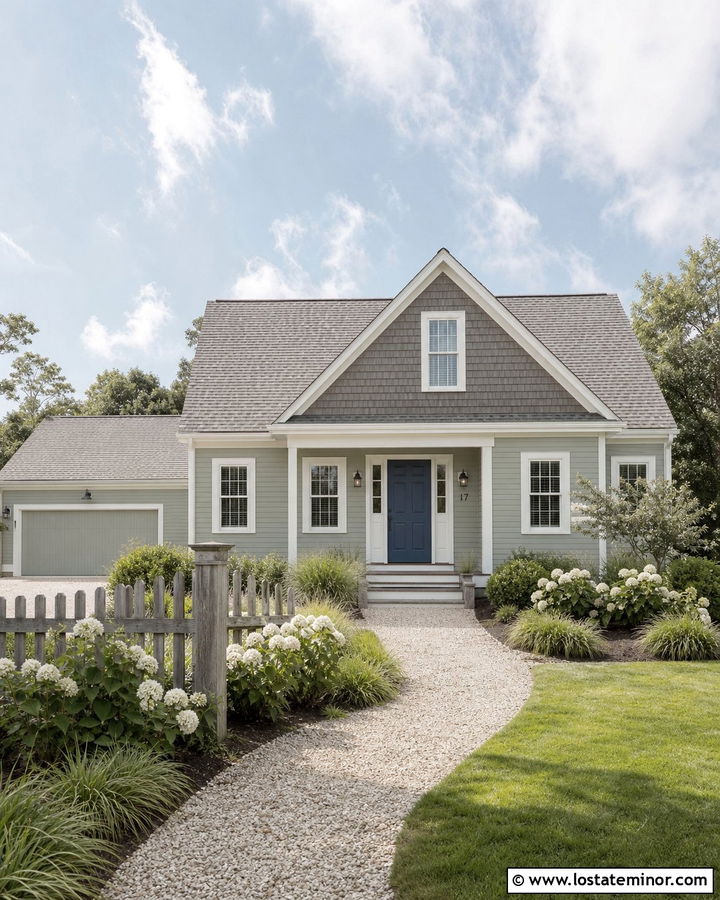
Weathered gray fencing creates a quiet, coastal-looking partner for light sage green siding. Use this combination on a shingle-style cottage, Cape Cod, or modest beach-inspired bungalow. Soft white trim around the windows keeps the facade fresh, while gray cedar shingles in the gables connect the fence with the architecture. A muted blue-gray front door can reinforce the cool palette without pulling attention away from the green exterior. Choose simple vertical fence boards with a naturally aged finish rather than an artificial-looking solid gray stain. Beach grasses, white flowering shrubs, and pale gravel fit the relaxed color story. Galvanized hardware is generally more harmonious here than glossy black metal. The completed exterior should feel lightly weathered and welcoming, with the fence appearing like a natural extension of the house and landscape.
10. Sage Green House With Matching Green Fence
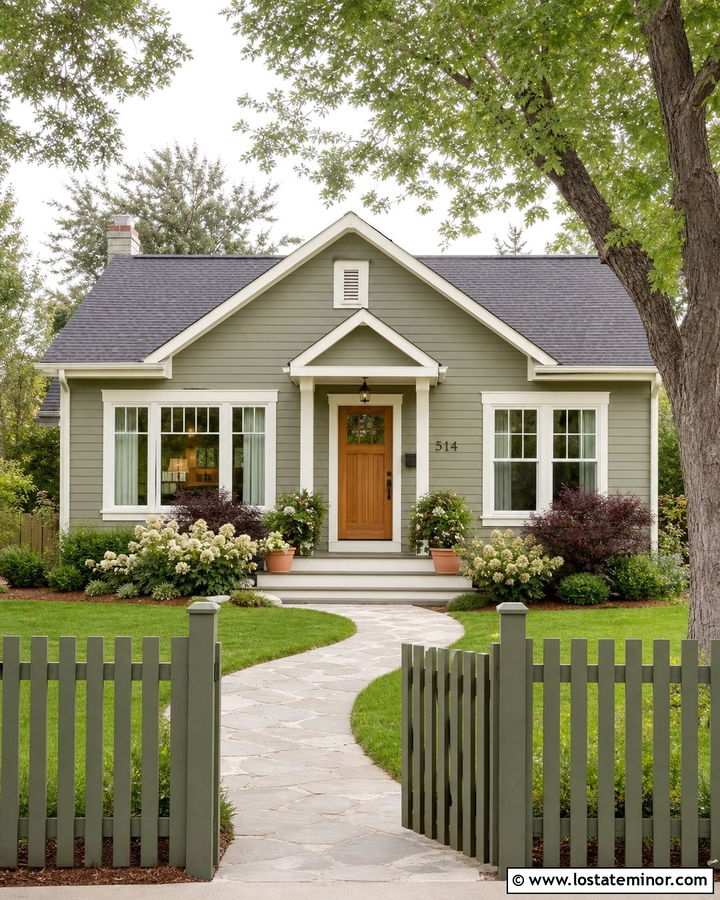
Painting the fence in a related sage tone can make a small property appear more spacious and cohesive. Avoid using exactly the same depth everywhere, however. Pair medium sage siding with a fence painted one or two shades darker to create gentle separation. Warm white trim, a natural wood door, and a dark gray roof will keep the monochromatic palette balanced. This approach works especially well on a compact bungalow where too many contrasting colors could make the facade feel busy. Use a simple square picket or narrow slatted fence so shadows provide texture. Add cream flowers, burgundy foliage, and terracotta planters for controlled color variation. Before painting, view large exterior samples in sun and shade because surrounding greenery may make the fence and house look more similar than expected.
11. Sage Green House With Brick And Iron Fence
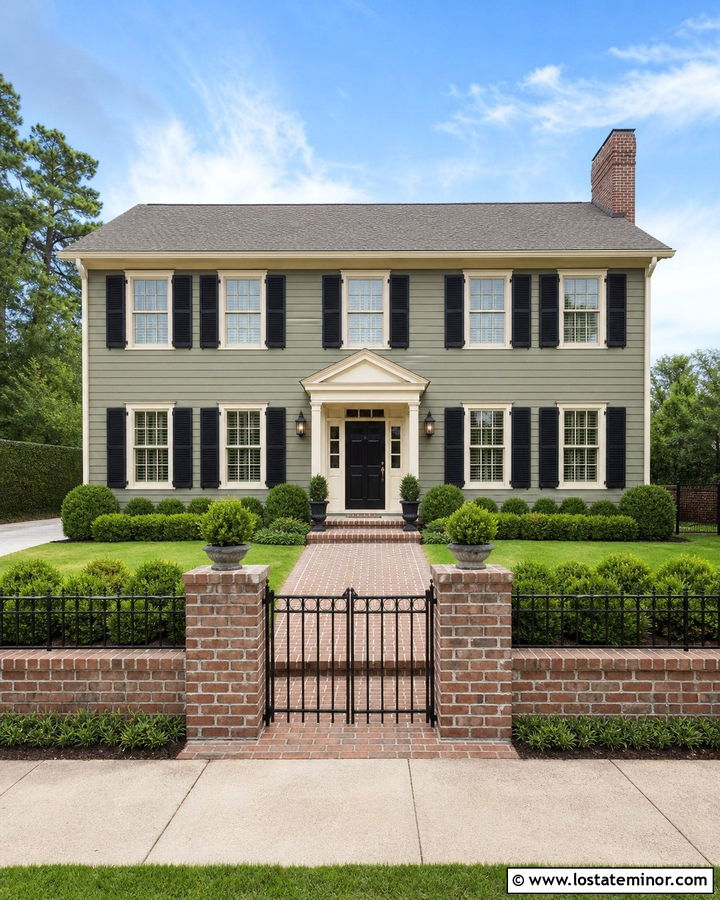
Red-brown brick and black iron can make sage green siding feel established and traditional. This complete palette suits a Georgian, Colonial, or Tudor-influenced home with a symmetrical front elevation. Use muted sage on the main siding, creamy ivory on the trim, and deep black on the shutters and front door. Build low brick walls or pillars that repeat existing chimney or foundation brick, then install open iron panels between them. Matching masonry is essential because a noticeably different brick blend can weaken the overall design. Add a straight brick walkway and formal evergreen plantings to reinforce the architecture. If the facade already contains considerable brick, keep the fence low and visually light. The sage body color will soften the strong red undertones while the black accents bring the roof, windows, gate, and entry together.
12. Sage Green House With Black Horizontal Fence
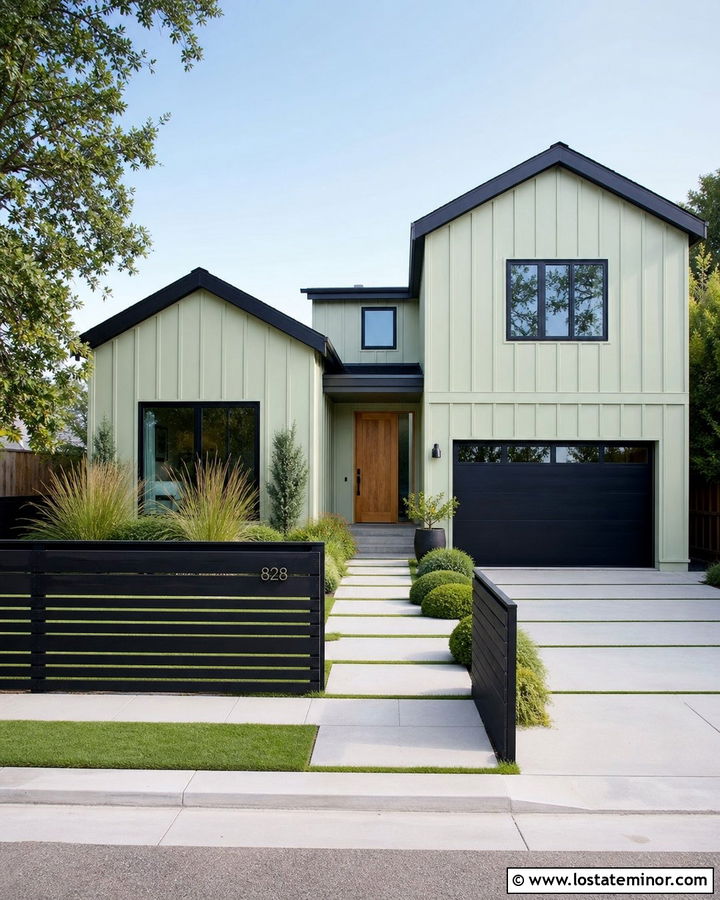
Black horizontal boards create a bold frame around a pale sage modern exterior. The pairing is most successful when the fence has clean proportions and the house repeats black in several carefully chosen places. Use matte black on the window frames, roof edge, garage door, and minimal porch railing. Keep the front door in natural oak to add warmth and prevent the palette from becoming overly cool. Smooth sage stucco or vertical siding gives the house a calm background, while the dark fence adds depth closer to the street. Break up long fence runs with a recessed gate, masonry column, or landscaped opening. Pale concrete pavers, structural grasses, and rounded shrubs can soften the graphic lines. This high-contrast scheme offers privacy and modern curb appeal without relying on bright accent colors.
13. Sage Green Cottage With Scalloped Picket Fence
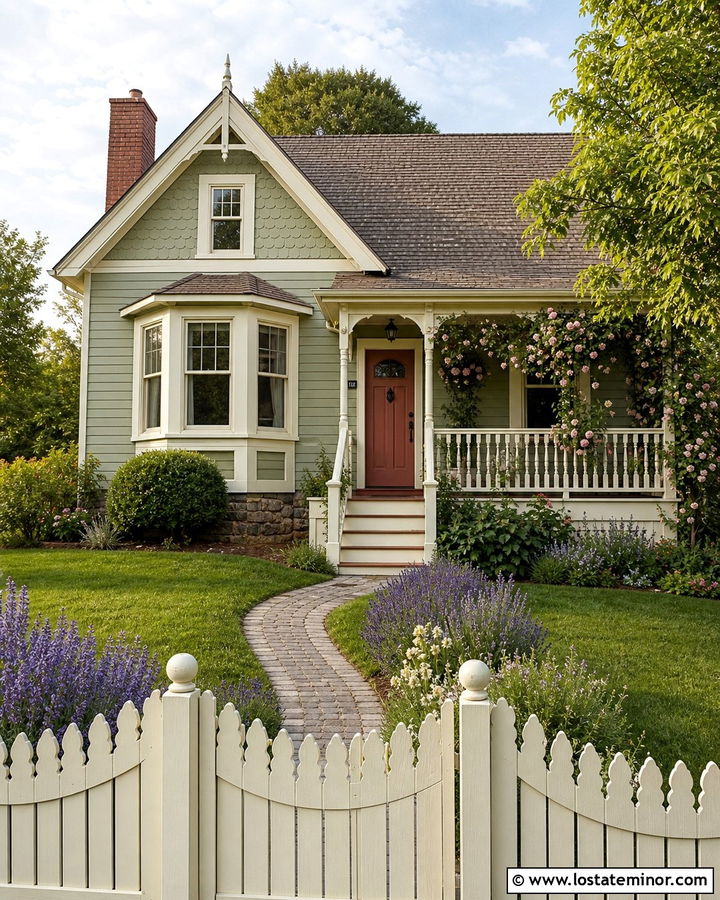
A scalloped picket fence adds gentle character to a sage green cottage with a steep roof and compact front porch. Keep the curves subtle so the fence feels charming rather than overly decorative. Paint it creamy white to match the window trim, porch railing, and eaves. Warm sage clapboard siding provides the main color, while a muted terracotta front door introduces a cheerful earth tone. A brown-gray roof and small stone foundation help ground the softer palette. Allow roses, lavender, and airy perennials to spill slightly around the fence line, leaving the gate and walkway easy to navigate. Arched porch details or rounded window tops can repeat the fence shape. With these coordinated features, the exterior gains personality while remaining balanced, approachable, and appropriate for a small-scale home.
14. Sage Green House With Hog Wire Fence
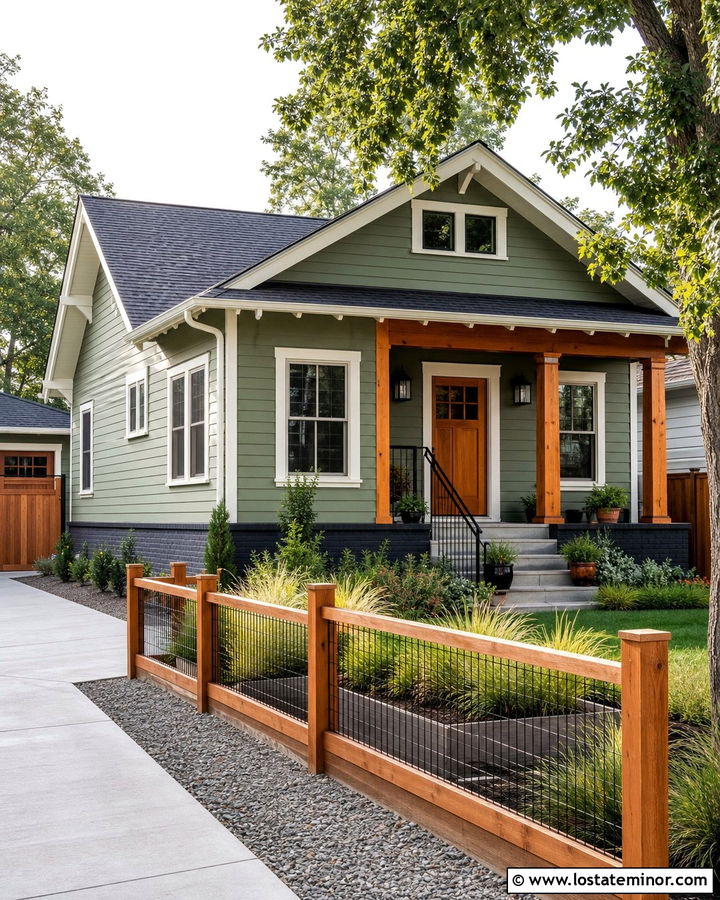
A wood-framed hog wire fence blends rustic materials with an open, practical design. It pairs naturally with a sage green modern farmhouse, Craftsman bungalow, or updated ranch. Use medium sage siding, warm white trim, and cedar framing around black wire panels. Repeat the cedar on porch columns, the front door, and small gable accents to build a consistent exterior palette. The open wire keeps the yard visible and provides support for restrained climbing plants. Avoid covering every panel with vines, which can hide the fence structure and make maintenance harder. A charcoal roof and black exterior lights relate to the wire mesh. Complete the setting with native grasses, simple raised beds, and a gravel-edged walkway. The finished house feels casual and functional while still presenting a thoughtfully coordinated street view.
15. Sage Green House With White Privacy Fence
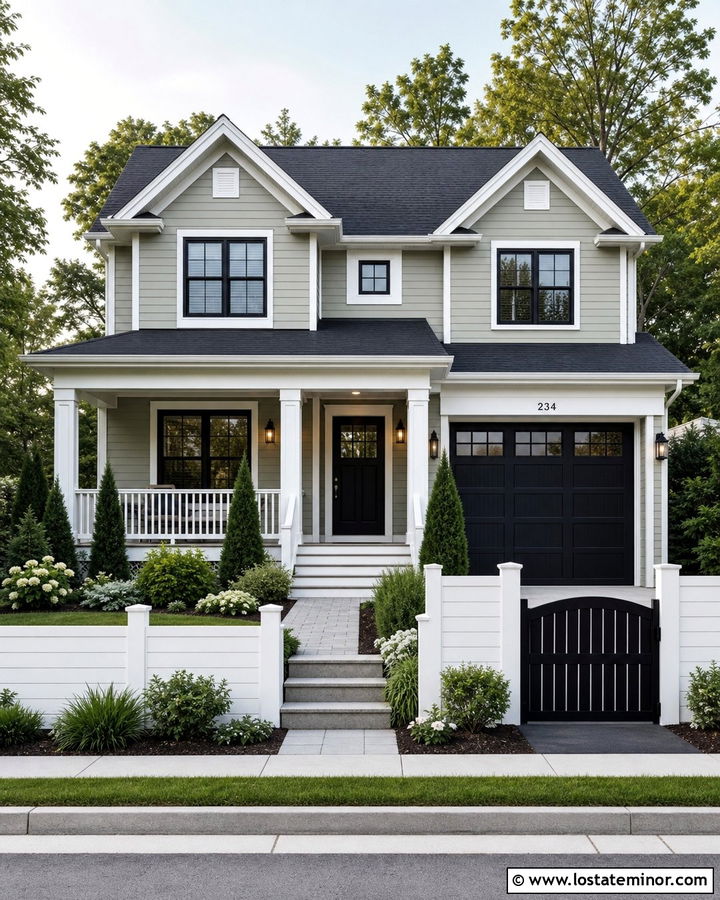
A white privacy fence can look bright and substantial beside sage green siding, so thoughtful placement is important. Use full-height panels around the backyard and reduce the fence height near the front gate. A transitional house with muted sage lap siding, white trim, black windows, and a charcoal roof can carry this crisp contrast well. Choose flat-top vertical boards or simple tongue-and-groove panels instead of elaborate latticework. Repeat white on the garage surround and porch columns to connect the fence with the house. A black or stained-wood gate adds definition at the entrance. Plant layered evergreen shrubs in front of long solid sections to reduce their visual mass. Consistent spacing, clean caps, and concealed hardware will help the fence appear like a polished architectural feature rather than a purely functional enclosure.
16. Sage Green House With Cedar Lattice Fence
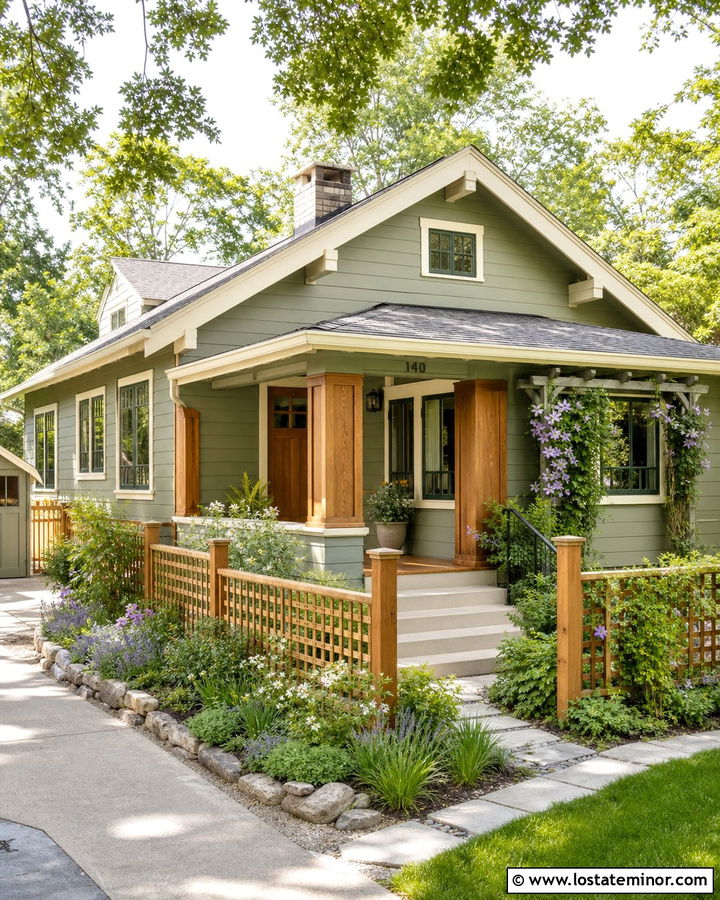
Cedar lattice provides partial screening while allowing sunlight and climbing plants to animate the fence line. Pair it with a sage green bungalow featuring cream trim, exposed rafters, and a welcoming covered porch. Use square-grid lattice inside simple cedar frames for a cleaner appearance than thin diagonal panels. A matching cedar front door and porch posts will carry the warm material onto the house. Deep olive accents on the window sashes can add dimension without introducing harsh contrast. Plant jasmine, clematis, or regionally suitable vines selectively, leaving some lattice visible. Stone edging and informal perennial beds support the handcrafted character. Keep the lattice fence lower in the front yard and taller beside outdoor seating areas. The resulting scheme feels private, airy, and connected to the garden rather than closed off.
17. Sage Green Ranch With Low Stone Fence
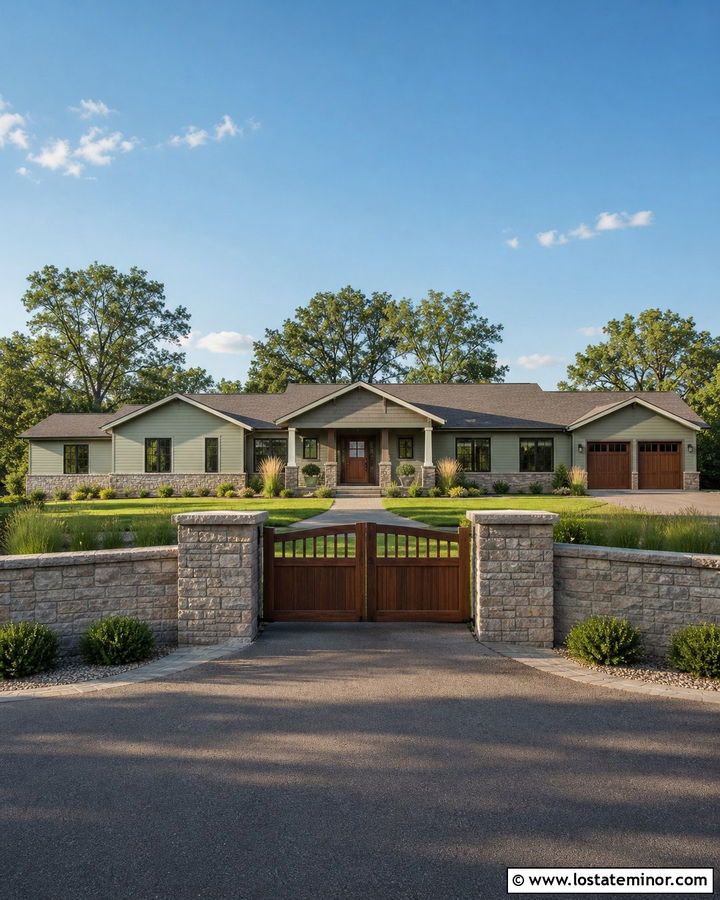
A low stone fence emphasizes the long, grounded proportions of a sage green ranch house. Select stone containing gray, taupe, and muted brown tones that complement the siding without matching it too closely. Use warm sage on the horizontal lap siding, ivory on the fascia, and dark bronze around the windows. A walnut front door and matching garage details can supply necessary warmth. Keep the wall between knee and waist height so it defines the yard without blocking the home’s broad facade. Integrate wider stone pillars at the driveway and walkway entrances for visual rhythm. Low ornamental grasses, spreading junipers, and drought-tolerant perennials will soften the masonry. Repeating the stone on the chimney, porch base, or planter walls creates a complete exterior in which the fence appears original to the architecture.
18. Sage Green House With White Rail Fence
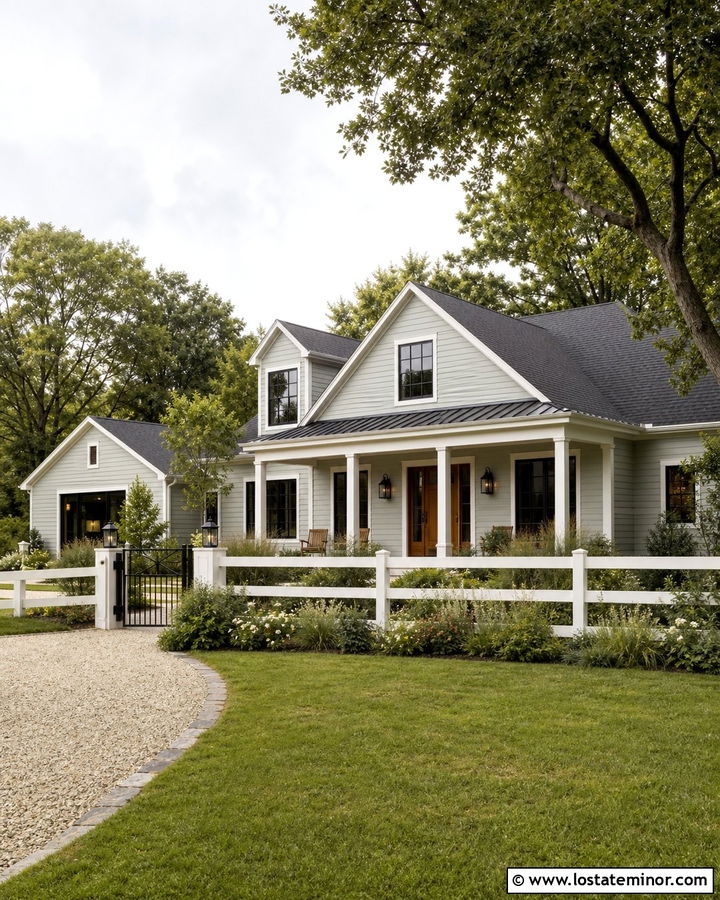
A white rail fence gives a sage green house an open country appearance while maintaining clear property boundaries. This combination works on a farmhouse, equestrian-inspired home, or suburban house with a generous front lawn. Choose dusty sage siding, warm white trim, and a dark charcoal roof. Repeat white on the porch railing and columns so the fence does not appear isolated in the landscape. A medium-stained wood door introduces a welcoming natural accent. Use two or three horizontal rails, depending on the scale of the yard, and keep the gate design equally simple. Clusters of native grasses and flowering shrubs can soften corners without concealing the fence. Black hinges and latches provide small points of contrast that connect with roof vents, lanterns, and other dark exterior details.
19. Sage Green House With Charcoal Wood Fence
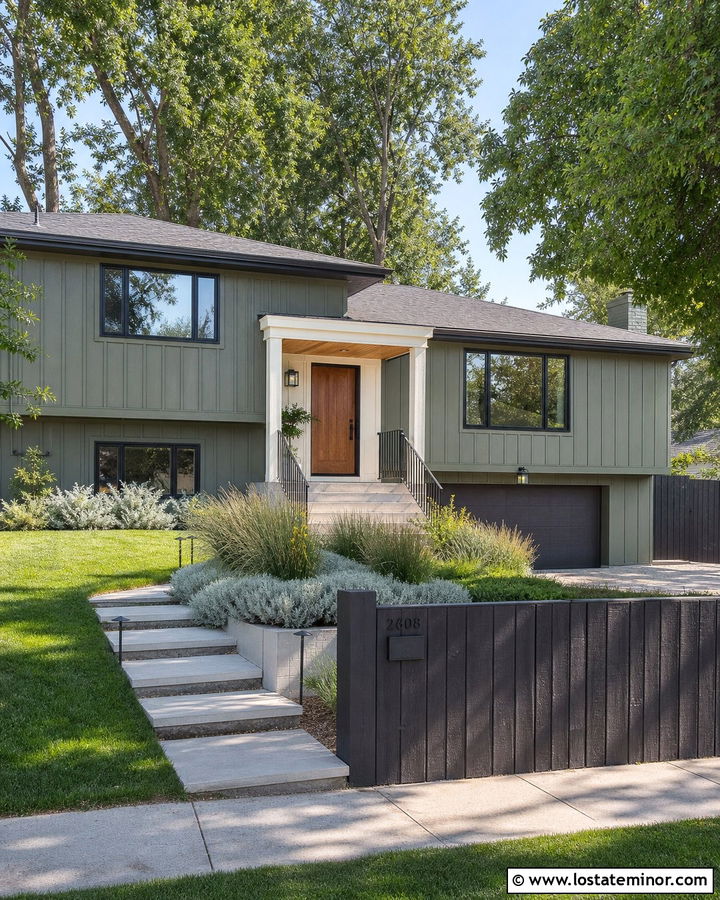
Charcoal-painted wood fencing creates strong contrast without appearing as stark as pure black. It complements a medium sage green split-level or contemporary Craftsman with charcoal roof shingles and dark window frames. Use creamy off-white trim sparingly around the entry and major windows to keep the facade readable. A cedar front door and matching porch ceiling bring warmth between the cool green and gray surfaces. Vertical fence boards can make a low property boundary feel taller, while narrow spacing provides privacy without creating a solid visual block. Add pale stone pavers and silvery foliage along the fence to bridge the cool palette. Carry charcoal onto the garage door or foundation band for better balance. The final exterior feels tailored and modern but still comfortable enough for an established suburban neighborhood.
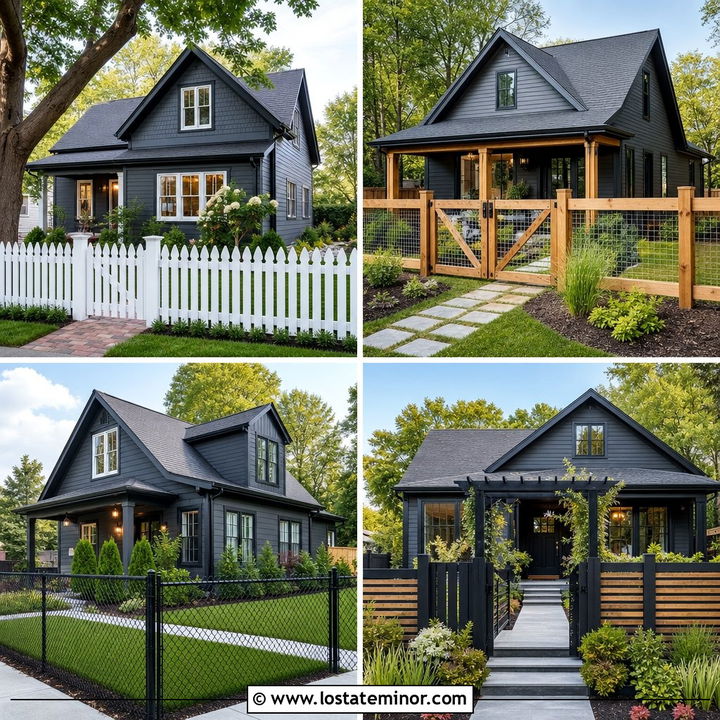
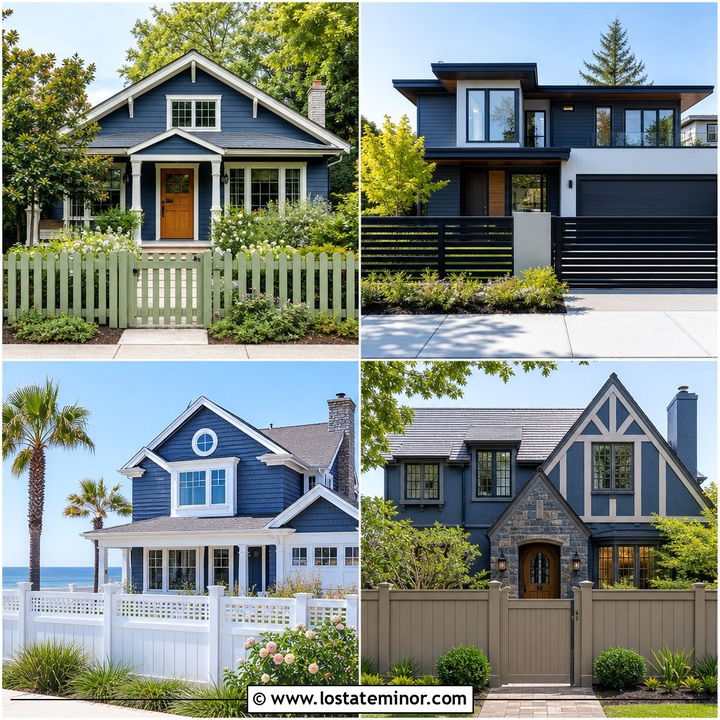
20. Sage Green House With Natural Bamboo Fence
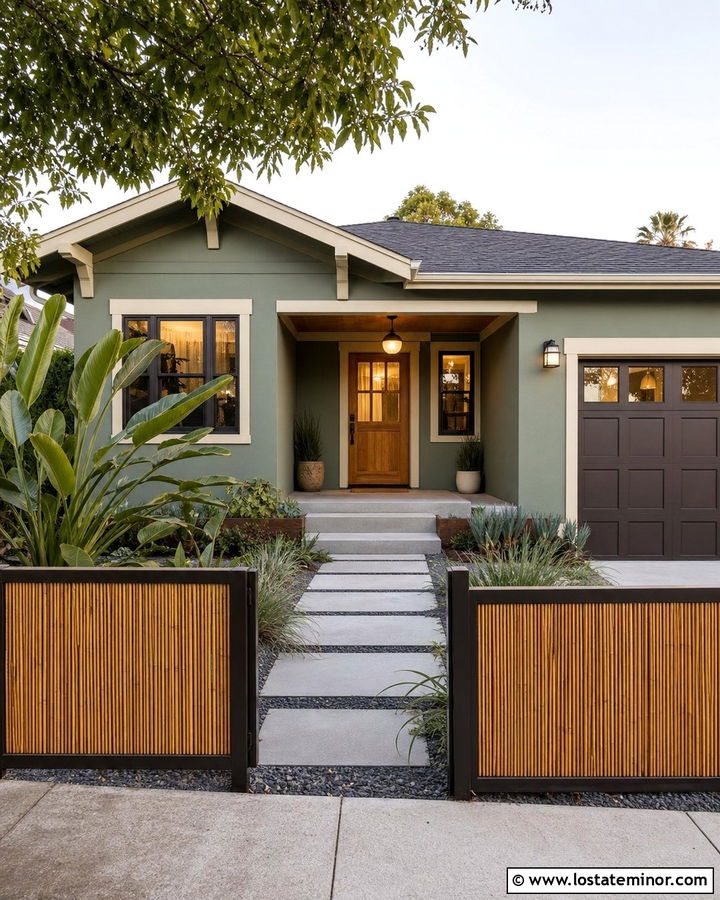
A natural bamboo fence can complement a sage green house when used in a restrained, architectural way. It works best with a modern courtyard home, California bungalow, or simple stucco exterior surrounded by lush planting. Choose gray-green sage stucco, warm cream trim, and medium bronze window frames. Install straight, evenly sized bamboo canes inside durable wood or metal frames rather than relying on loosely rolled screening. Repeat the fence’s honey color on the front door or porch soffit. Large-leaf plants, ornamental grasses, gravel, and broad stepping stones support the organic design. Protect the bamboo with a suitable exterior finish and keep it raised above wet soil. The complete scheme should feel natural and structured, with the muted green house providing a calm background for the fence’s distinctive texture.
21. Sage Green Colonial With Black Picket Fence
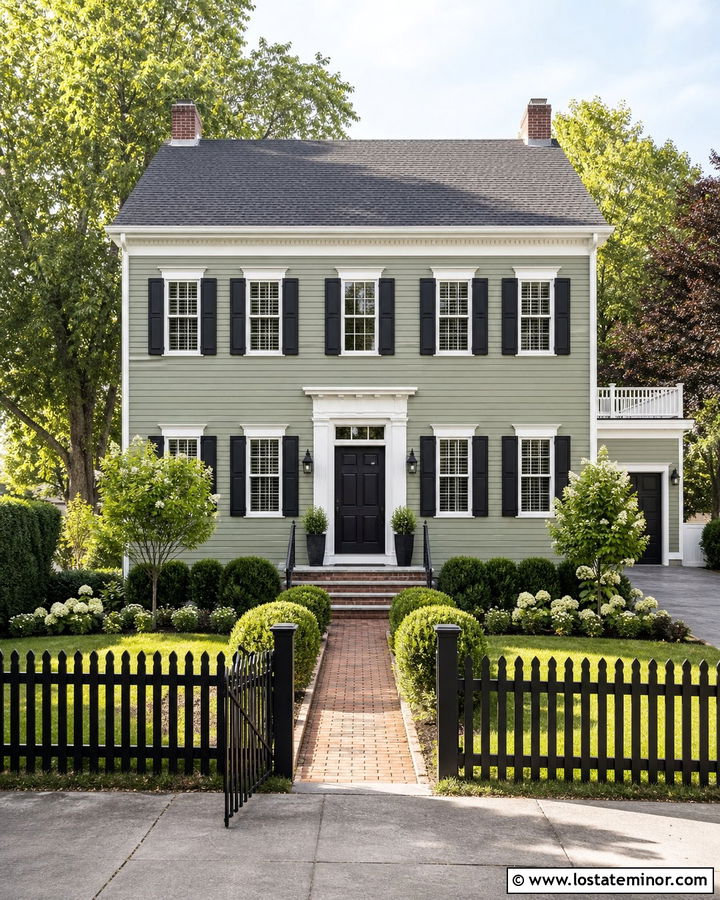
A black picket fence gives a sage green Colonial sharper definition than a traditional white version. Use evenly spaced narrow pickets with squared tops to preserve the home’s formal, symmetrical character. Medium sage clapboard siding, crisp white trim, black shutters, and a glossy black central door create a balanced three-color palette. Repeat the fence finish on lanterns, downspouts, and simple gate hardware. A brick walkway leading directly to the entrance reinforces the strong central axis. Keep foundation shrubs clipped but not overly rigid, and add white flowering plants for seasonal contrast. The fence should remain low enough to reveal the first-floor windows and front steps. This scheme respects traditional architecture while giving it a slightly more graphic appearance that feels polished, current, and easy to coordinate.
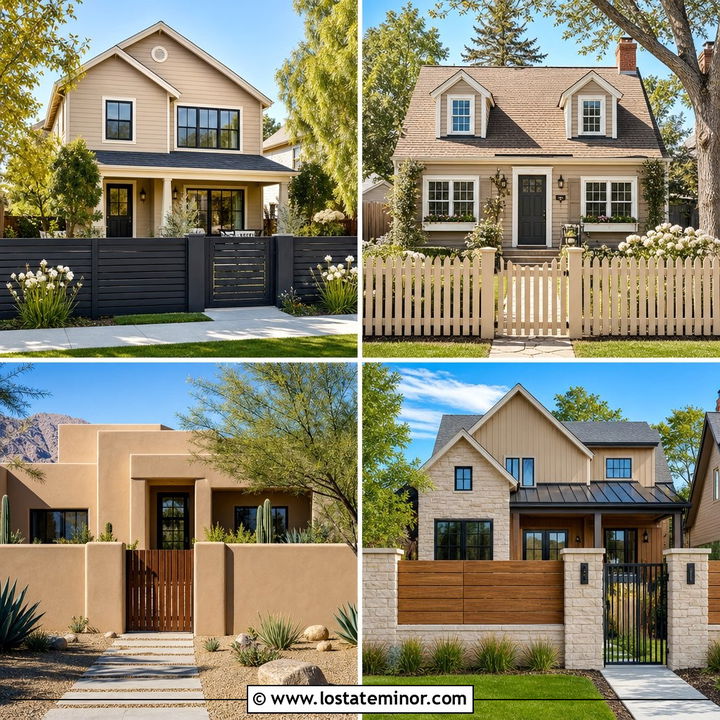
22. Sage Green House With Two-Tone Wood Fence
A two-tone fence can connect several exterior materials when one finish alone feels incomplete. Combine natural cedar posts and rails with charcoal-stained vertical boards beside a sage green transitional home. The cedar should repeat on the front door and porch ceiling, while charcoal appears on the roof, window frames, and garage door. Keep the siding a medium muted sage with simple off-white trim. This arrangement distributes warm and cool colors evenly across the property. Use the darker boards where privacy is required and transition to open cedar rails near the street. Repeating post dimensions at the porch and gate adds another subtle connection. Finish the design with concrete pavers, clipped shrubs, and airy grasses. The result feels layered and custom without introducing colors that compete with the green exterior.
23. Sage Green House With Stone And Wood Fence
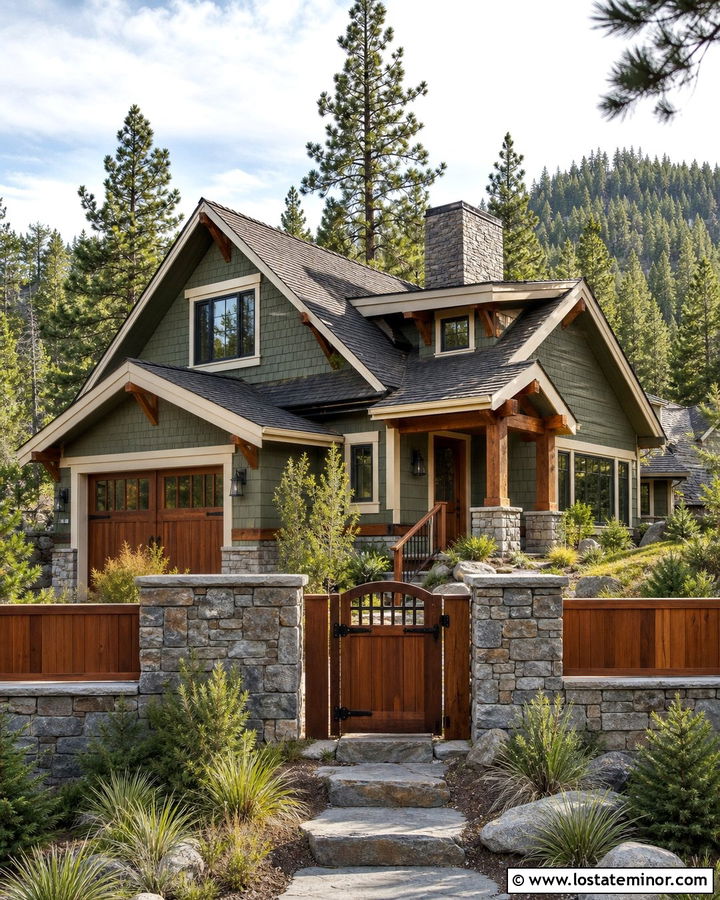
Combining stone bases with wood fence panels gives a sage green exterior both texture and warmth. This substantial design suits a mountain Craftsman, lodge-inspired house, or large suburban home with deep roof overhangs. Use darker sage siding, cream trim, and rich cedar on the garage door, porch beams, and fence panels. Build the fence base and pillars from rugged gray-brown stone that also appears around the foundation or chimney. Black metal caps and gate hardware provide clean finishing details. Keep the wood panels moderately open near the front and more solid along private side yards. Evergreen shrubs, boulders, and native grasses will settle the fence into the landscape. Repeating every major material on both the house and boundary creates a cohesive design with strong, welcoming curb presence.
24. Sage Green House With Gray Vinyl Fence
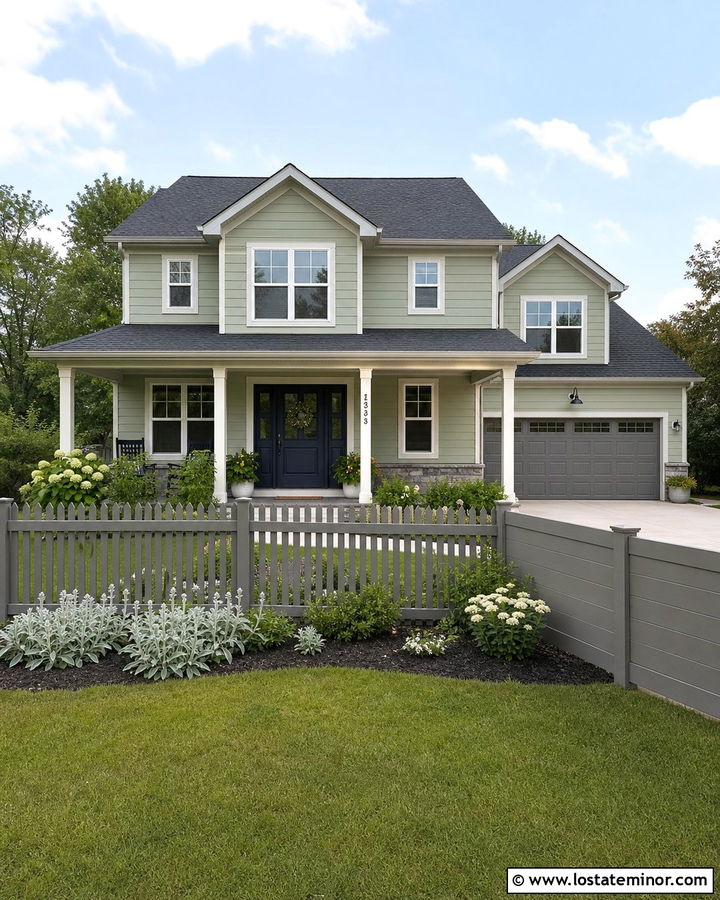
Gray vinyl fencing offers an understated boundary for homeowners who want a low-maintenance material without bright white contrast. Choose a light warm gray that works with the undertones of the sage siding and roof. A suburban two-story house can combine pale sage lap siding, soft white trim, a slate-gray roof, and a muted navy front door. Use a simple gray picket fence in the front yard, transitioning to matching privacy panels farther back. Avoid blue-gray fencing if the exterior sage leans warm or yellow, since the two surfaces may appear disconnected. Silver-green plants, white flowers, and dark mulch can bridge the color difference. Repeat gray on the porch floor or garage door. This creates a gentle, practical palette that allows the architecture and landscaping to remain visually dominant.
25. Sage Green House With Rustic Log Fence
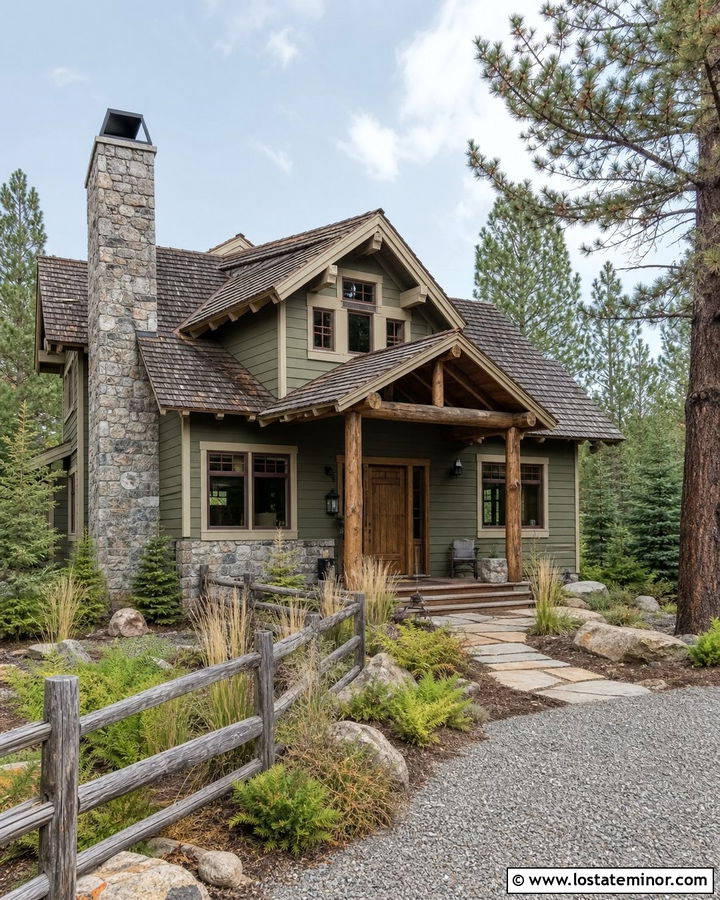
A rustic log fence brings strong woodland character to a sage green cabin-style or mountain home. Use deep sage horizontal siding, warm beige trim, and a weathered brown roof to keep the exterior rooted in natural colors. Rough cedar or pine rails can form an open fence that follows the property’s contours instead of creating a rigid straight boundary. Repeat the same wood on porch posts, brackets, and the front door. A stone chimney or foundation will add weight and connect the house with its setting. Keep formal landscaping to a minimum. Native grasses, ferns, conifers, and irregular stone paths suit the rugged material palette. The fence should look sturdy but not oversized. Balanced proportions allow it to support the architecture without making the front yard resemble a heavily enclosed compound.
26. Sage Green House With Modern Cable Fence
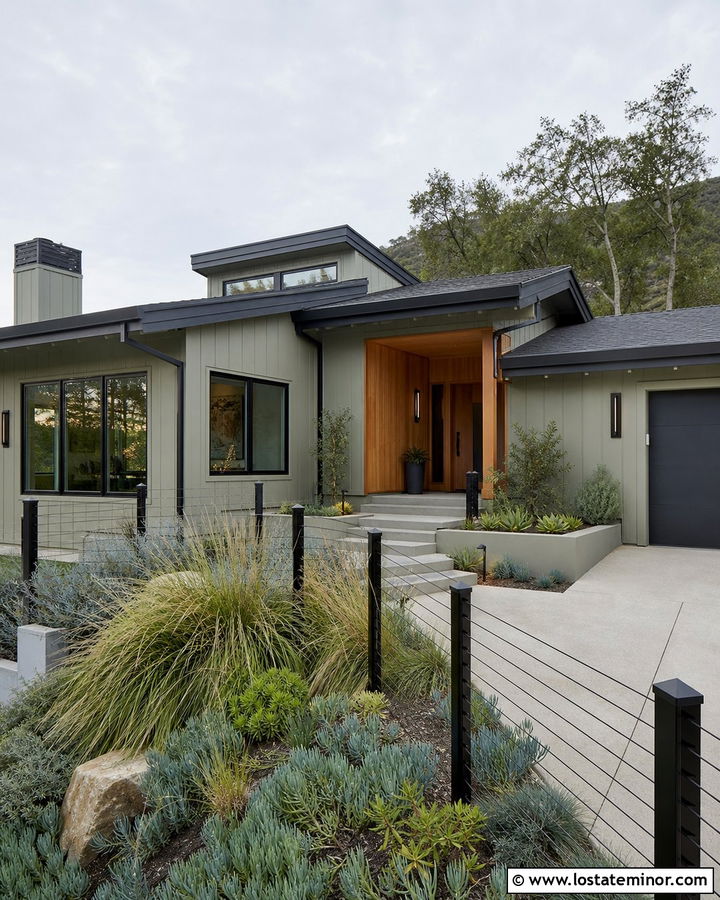
A cable fence offers almost transparent boundaries around a sage green contemporary home. Use matte black or dark bronze posts with thin horizontal stainless-steel cables for a streamlined effect. The house can feature pale sage vertical siding, black window frames, a flat or low-slope charcoal roof, and warm cedar at the entrance. Repeat the fence posts’ dark finish on exterior lighting and roof edges. This design is especially useful where the property overlooks a garden, slope, or scenic landscape that should remain visible. Keep plantings low near the cables and use structured grasses, ground covers, and concrete pavers. Ensure spacing and installation meet applicable local safety requirements. Visually, the fence adds rhythm without blocking the architecture, allowing the sage facade and wood entry to remain the strongest features.
27. Sage Green House With Arched Wood Gate
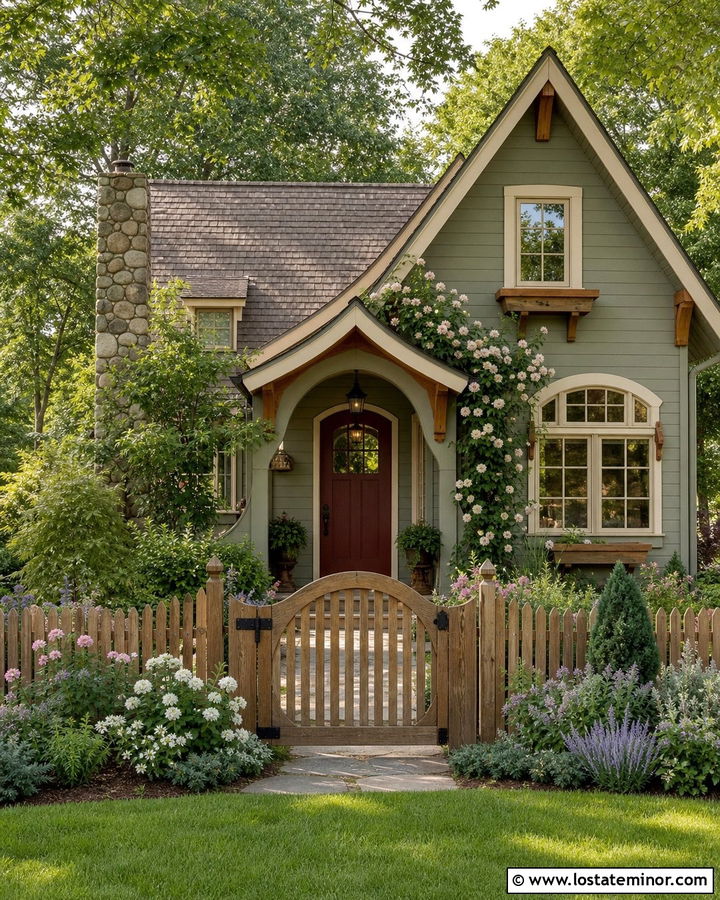
An arched wood gate creates a welcoming focal point within a simple fence surrounding a sage green cottage. Choose a medium cedar stain that complements warm sage siding, cream trim, and a brown-gray shingle roof. Repeat the gate’s curved top in a porch opening, dormer window, or rounded garden path for a coordinated composition. The adjoining fence can use straight cedar pickets so the gate remains special without becoming overly ornate. A deep burgundy or muted terracotta front door adds another warm accent beyond the entrance. Train light flowering vines around the gate frame while keeping hinges and latches accessible. Layer cottage perennials along the fence, but preserve a clear view toward the porch. This arrangement turns the garden entrance into part of the complete exterior story.
28. Sage Green House With Corrugated Metal Fence
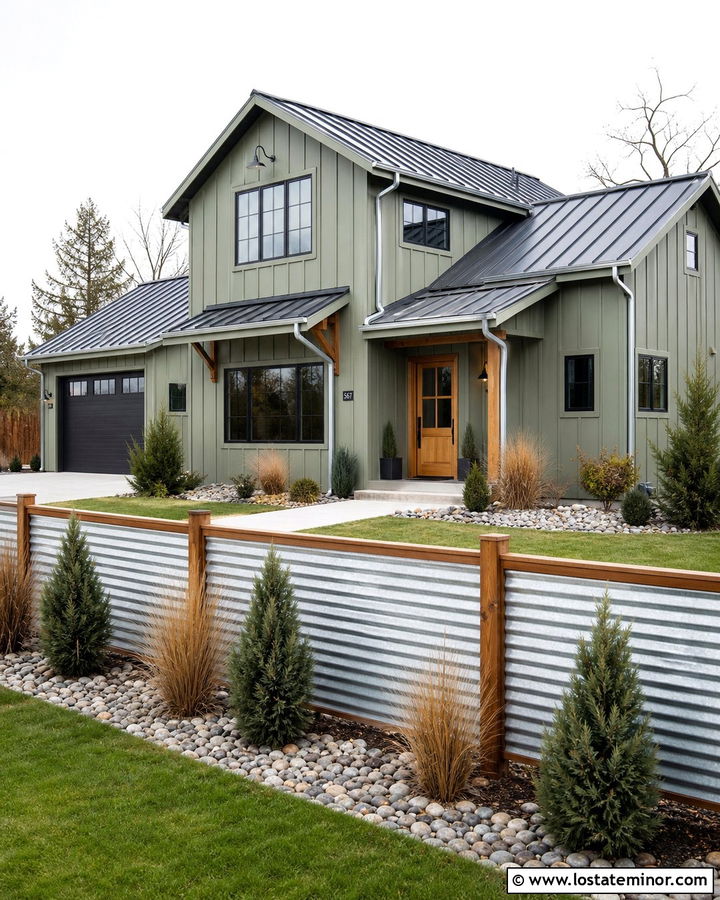
Corrugated metal fencing can look refined beside sage green siding when balanced with warm wood framing. Use galvanized gray panels between cedar posts around a modern farmhouse, industrial-inspired ranch, or compact contemporary home. Paint the house muted sage green and add black window frames, a charcoal metal roof, and a cedar front door. The silvery fence panels will relate to galvanized gutters or metal porch details, while the wood prevents the scheme from feeling cold. Position solid panels mainly along side yards and use a lower, more open gate near the street. Soften the metal with ornamental grasses, evergreen shrubs, and gravel beds. Neat panel alignment and finished top edges are essential. The completed design feels practical, textural, and intentionally connected to the home’s mixed exterior materials.
29. Sage Green House With Dark Green Iron Fence
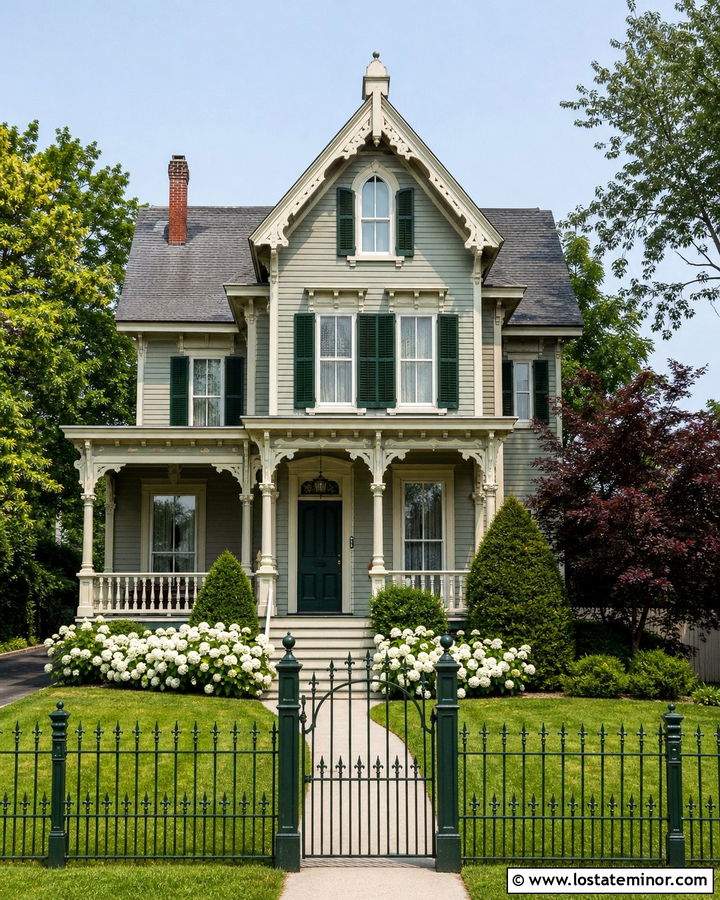
Dark green iron fencing creates a subtle, layered exterior rather than a high-contrast boundary. Choose a deep forest green for the fence, shutters, and front door while keeping the siding a lighter gray-toned sage. Cream trim and a weathered charcoal roof can separate the two greens and maintain clear architectural definition. This palette suits a Victorian, traditional cottage, or historic-inspired home with detailed windows and a covered porch. Use narrow iron pickets with simple finials, avoiding excessive ornament if the facade already has decorative trim. Burgundy foliage, white flowers, and clipped evergreens will add controlled variation around the fence line. In bright daylight, the dark green metal reads softer than black. It also connects naturally with surrounding plants while giving the property a formal, finished edge.
30. Sage Green House With White Fence And Arbor
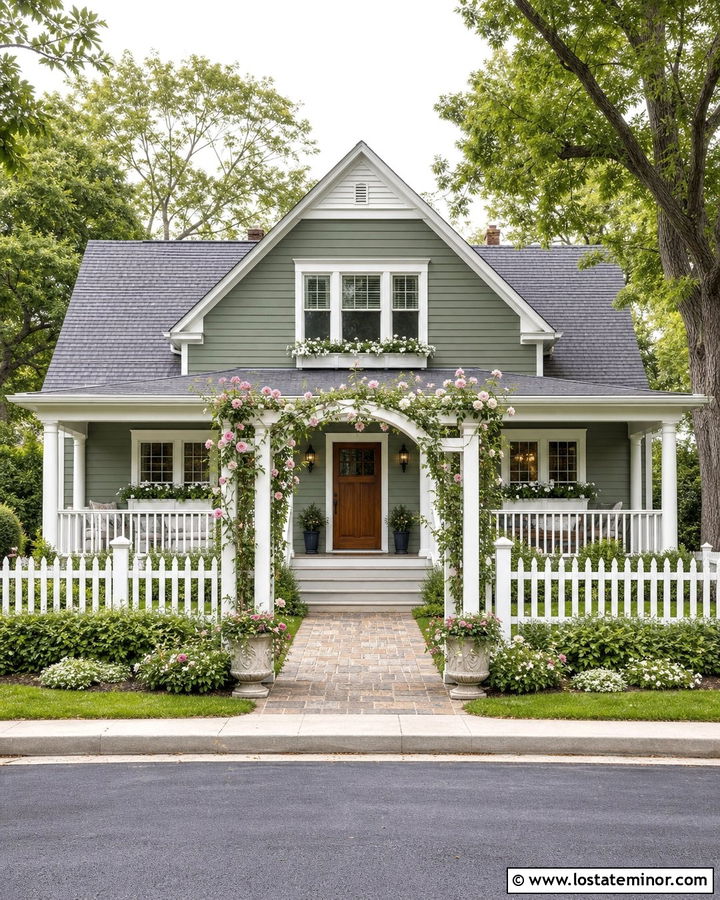
A white fence with an integrated arbor gives a sage green home a clear and memorable garden entrance. This complete look works well on a cottage farmhouse, Cape Cod, or welcoming suburban bungalow. Use warm sage siding with white trim, porch railings, and window boxes so the arbor belongs to the architecture. A stained oak front door provides contrast at the end of the walkway, while a medium-gray roof keeps the palette balanced. Choose a simple square or gently arched arbor that matches the fence proportions. Add restrained climbing roses or clematis without covering the structure completely. A stone path, symmetrical planters, and layered flowering beds can guide attention toward the porch. Repeating white throughout the facade makes the fence and arbor feel like planned architectural extensions of the house.
Conclusion:
The most successful fence should strengthen the architecture, color palette, and character of a sage green home rather than simply mark the property line. White pickets create classic charm, natural wood adds warmth, and dark metal introduces clean contrast. Stone, brick, cable, vinyl, and mixed-material fencing offer options for different budgets and privacy needs. Before choosing, compare material and paint samples beside the siding in direct sun, shade, and cloudy light. Repeat at least one fence color or material on the door, porch, roof, trim, or garage for a connected appearance. These 30 Sage Green House Design With Fence Ideas provide adaptable starting points for building a balanced, attractive, and functional exterior.

Related posts: