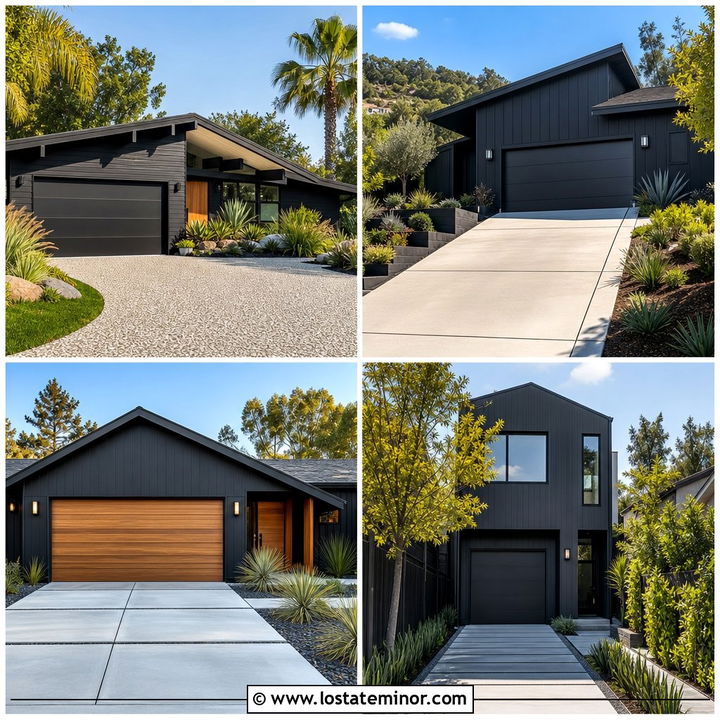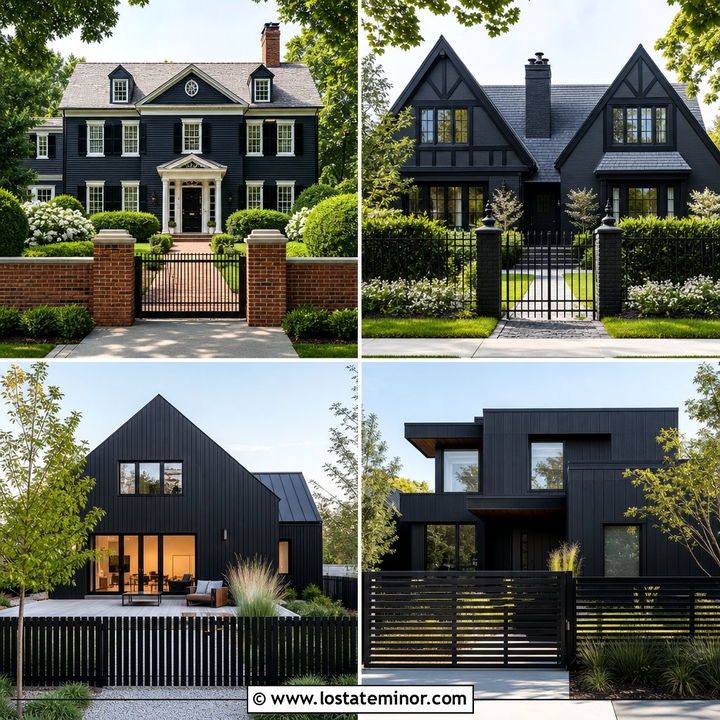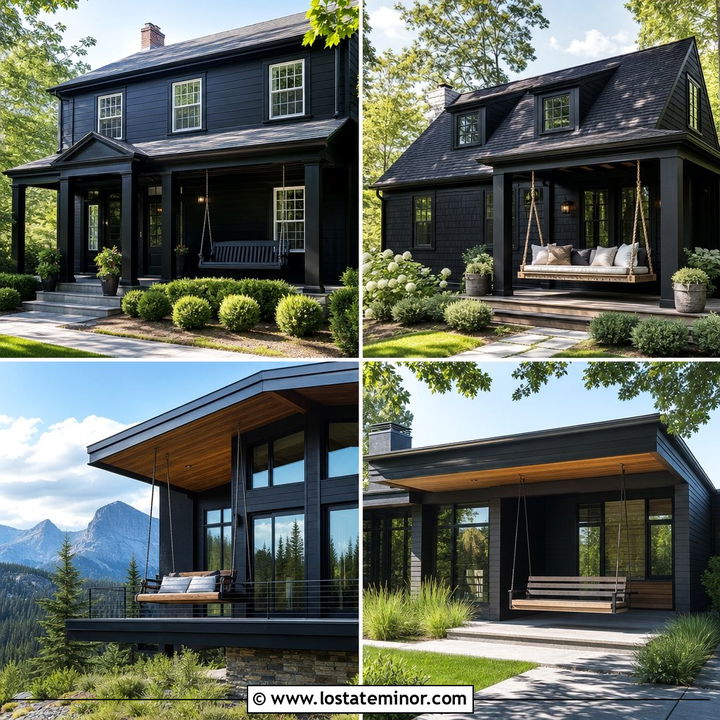
Soft black exteriors bring definition, depth, and a modern edge to traditional gabled architecture. Unlike a harsh true black, a softened black carries gray, brown, green, or charcoal undertones that respond more naturally to daylight and surrounding materials. The gables keep the dark facade from appearing flat by creating peaks, shadows, and strong architectural rhythm. Wood doors, pale stone, warm brick, metal roofing, and restrained trim can then make the complete exterior feel balanced rather than heavy. This versatile combination works on farmhouses, cottages, ranch homes, cabins, and contemporary builds. If you are planning a renovation or gathering inspiration for a new home, these **30 Soft Black House Design With Gables Ideas** explore complete exterior schemes that coordinate siding, roofing, windows, entrances, porches, and landscaping.
1. Soft Black Gabled House With Cedar Trim
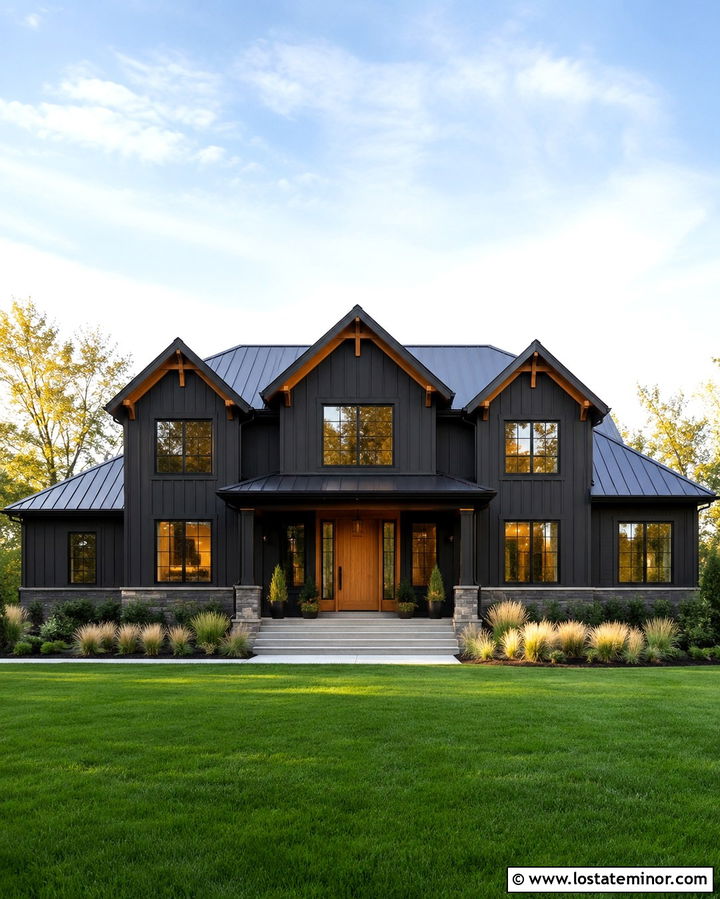
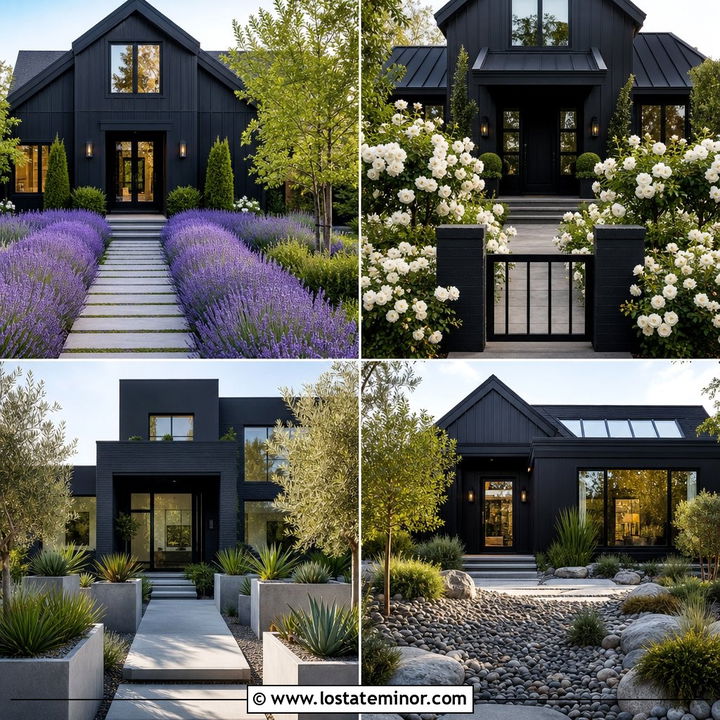
Warm cedar is one of the easiest ways to make a soft black exterior feel inviting. Use soft black board-and-batten siding across the main facade, then introduce cedar beneath the gable peaks, around the recessed entrance, and on the porch ceiling. A medium-tone cedar front door can become the visual center without competing with the roofline. Keep the window frames black for continuity, and choose a charcoal standing-seam roof that quietly follows the gables. Pale concrete steps and simple black railings complete the entrance. This combination works especially well on a modern farmhouse because the vertical siding emphasizes its height. Natural grasses, clipped shrubs, and a clean gravel border provide softness while preserving the home’s crisp architectural character.
2. Soft Black Gabled House With White Trim
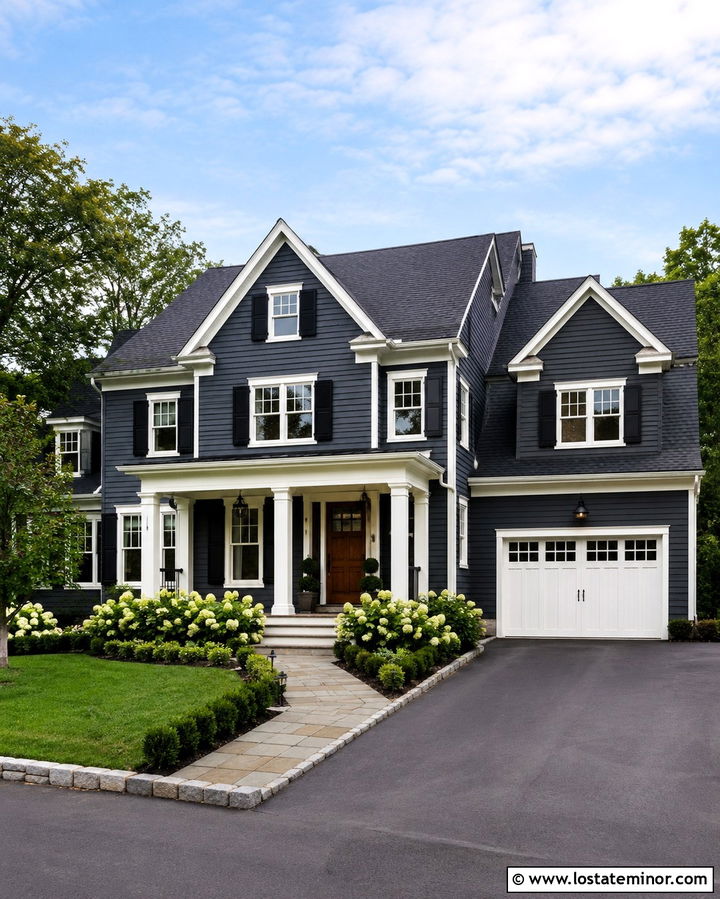
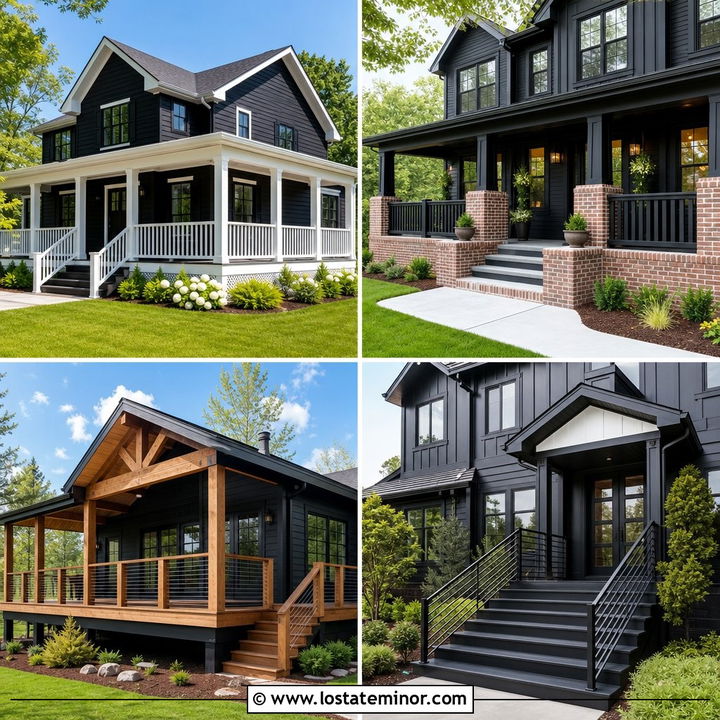
Crisp white trim can outline gables beautifully, but the contrast should be used with restraint. Paint the siding a softened charcoal black and reserve warm white for the fascia, window casings, porch columns, and garage surround. A stained oak door prevents the palette from looking overly graphic. For the roof, choose dark architectural shingles that blend into the body color instead of adding another sharp boundary. This scheme fits a traditional suburban home with several front-facing gables because the pale trim makes every roof peak easier to see. Add white flowering shrubs, a curved stone walkway, and dark bronze lighting. Repeating the soft black on shutters and gutters ties everything together while allowing the home’s detailed gable structure to remain the primary feature.
3. Soft Black Gabled House With Stone Accents
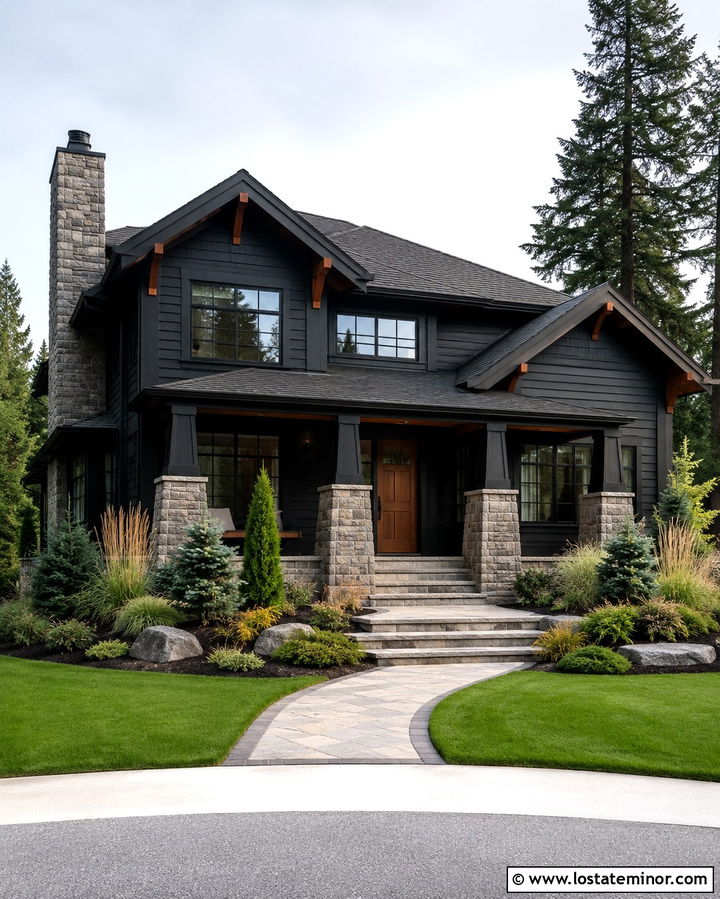
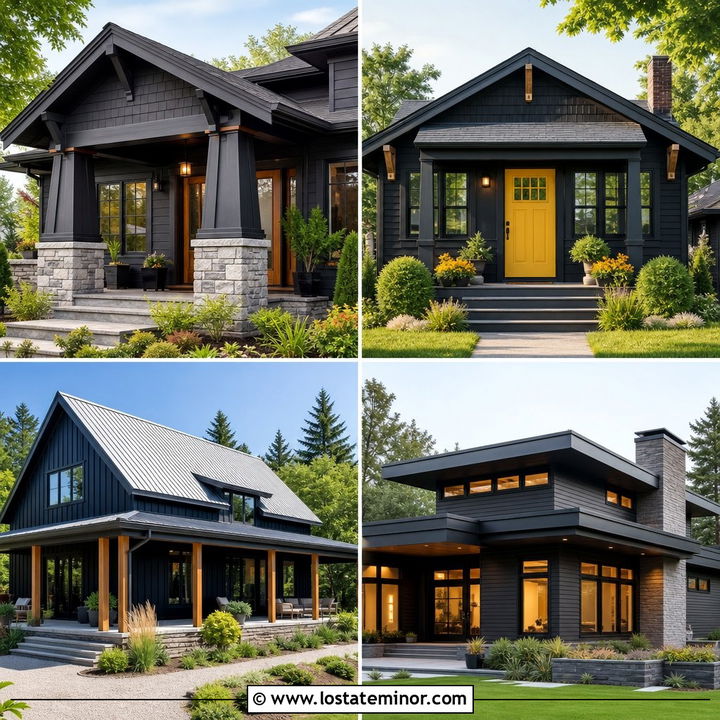
Rough natural stone gives a dark gabled house a grounded, permanent appearance. Wrap the lower foundation, porch piers, and chimney in a mix of warm gray and sandy beige stone. Above it, use soft black horizontal siding with matching trim to create a calm backdrop. The stone should appear in a few connected places rather than as scattered decorative patches. A walnut front door and timber gable brackets can bridge the warm masonry and dark siding. Choose a charcoal shingle roof with slightly lighter variation for added texture. This complete palette is particularly effective on a Craftsman home with deep eaves and multiple gables. Layered evergreens, native grasses, and broad stone steps help the exterior settle naturally into a wooded or mountainous landscape.
4. Soft Black Gabled House With A Metal Roof
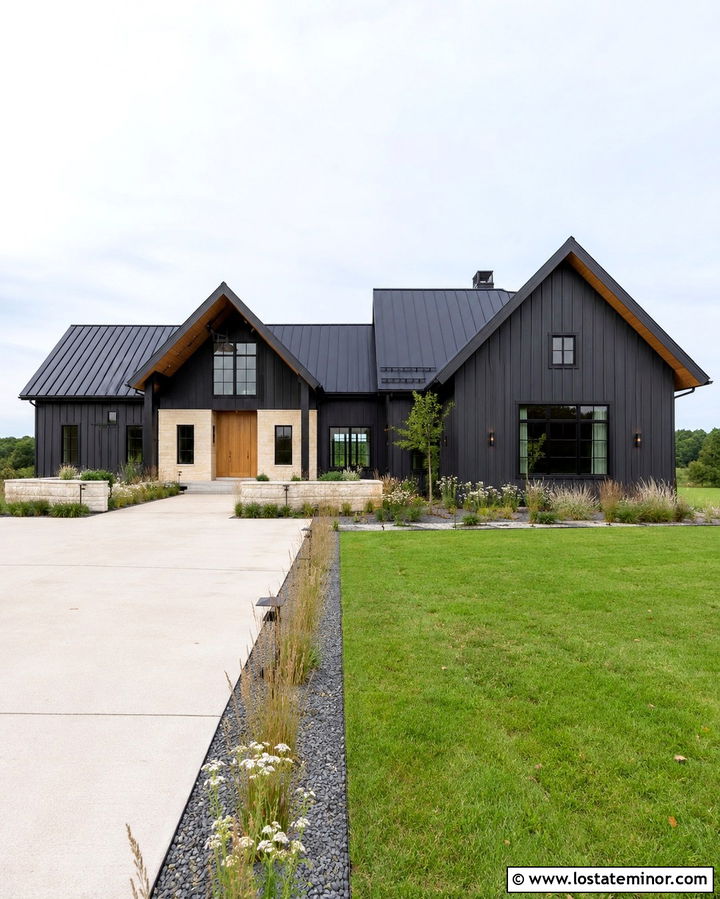
A black metal roof can make gables appear taller, cleaner, and more architectural. To keep the scheme from becoming a single dark mass, pair the roof with soft black siding that has a slightly warmer or lighter undertone. Vertical board-and-batten panels reinforce the direction of the roof peaks. Natural oak soffits, a matching front door, and pale limestone around the entrance introduce welcome contrast. Black window frames maintain the contemporary look, while oversized glass panels bring brightness to the facade. This treatment suits a modern barn house with simple connected gables. Use a light concrete driveway, low meadow planting, and a gravel walkway to frame the building. The limited color palette allows roof shape, siding texture, and warm wood details to create interest.
5. Soft Black Gabled House With A Gray Roof
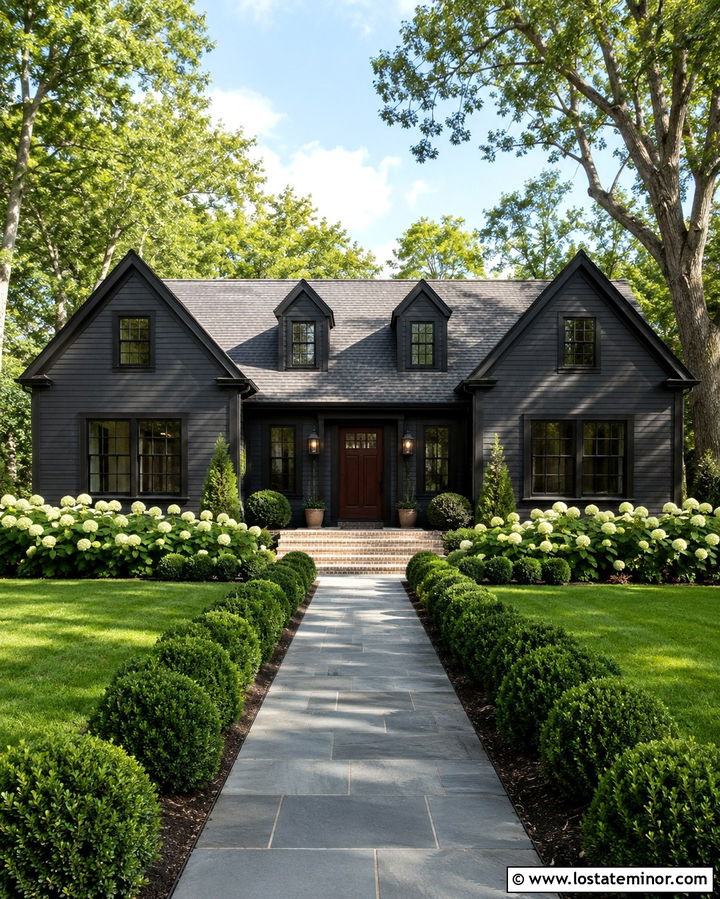
Not every black home needs a matching black roof. A medium charcoal-gray shingle roof provides enough separation to reveal the shape of each gable while maintaining a quiet monochromatic palette. Choose soft black lap siding for the walls, dark bronze windows, and warm gray trim around the fascia and garage. A natural mahogany door introduces one concentrated area of warmth. On a Cape Cod-inspired home, symmetrical gables and small dormers prevent the dark color from feeling too contemporary. Pale brick steps and traditional lanterns support the classic architecture. Keep the landscaping fresh and uncomplicated with hydrangeas, boxwood, and a straight bluestone path. The resulting exterior feels familiar and refined, with subtle contrast that remains appealing through changing light and seasons.
6. Soft Black Gabled House With A Wood Porch
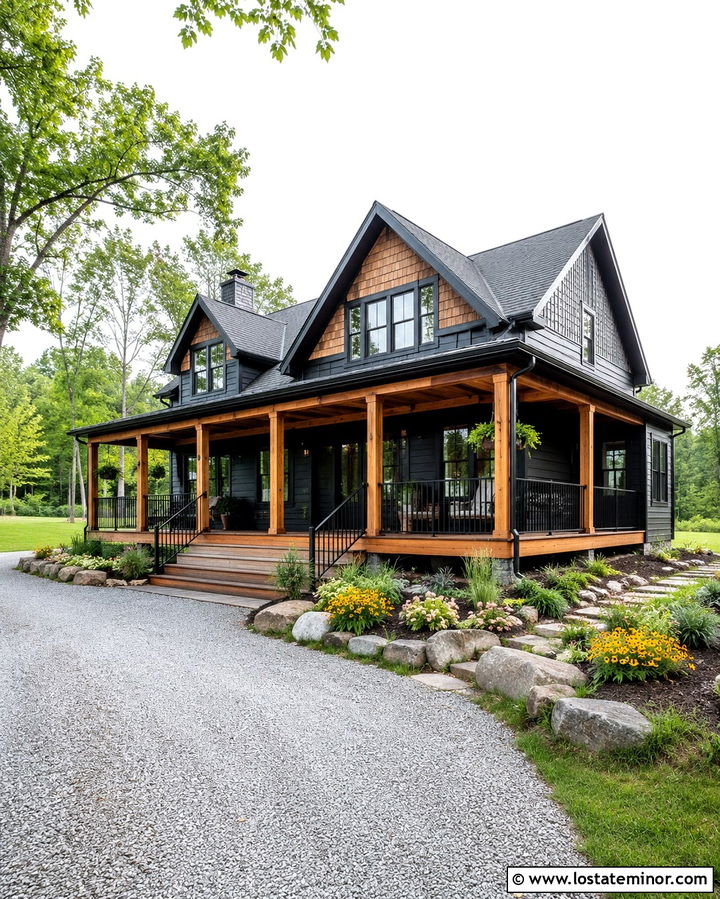
Imagine approaching a dark home through a broad porch framed in warm timber. Soft black siding gives the facade a strong outline, while stained wood columns, beams, decking, and a tongue-and-groove ceiling soften the entrance. Carry the timber into the front gable as a small decorative accent so the porch feels connected to the roofline. A dark gray metal roof and black-framed windows preserve the streamlined palette. This scheme works well on a rural farmhouse with one dominant front gable and smaller side peaks. Choose simple cable or black metal railings to avoid blocking the woodwork. A wide gravel drive, stone-edged planting beds, and casual native flowers create a relaxed setting that complements the home without making the entrance appear overly decorated.
7. Soft Black Gabled House With A Red Brick Base
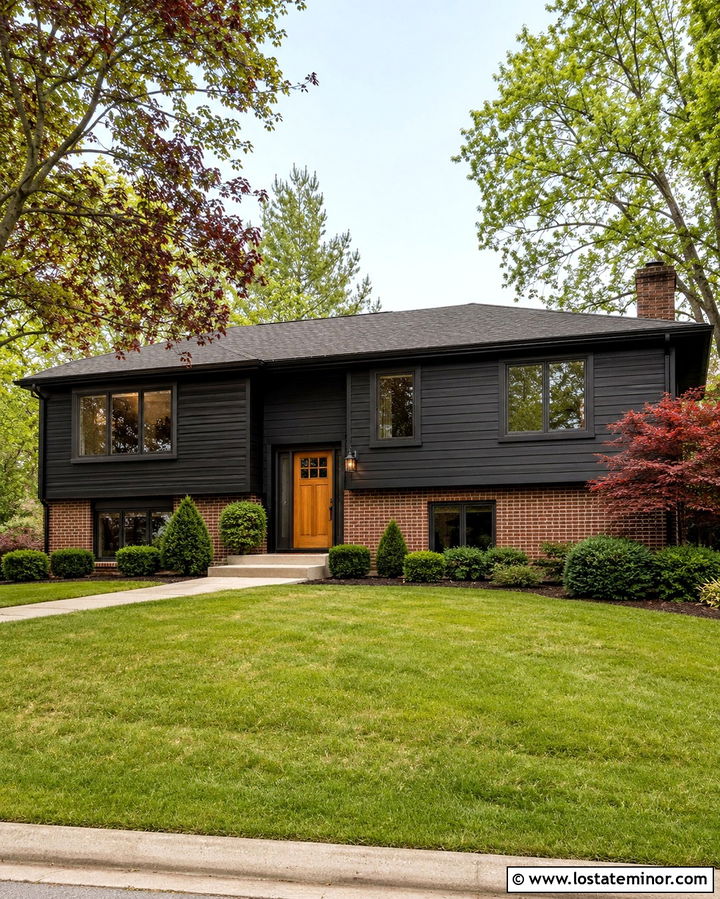
Existing red brick can look surprisingly sophisticated beside a soft black exterior. Instead of covering the masonry, use it as a warm foundation beneath black-painted siding and prominent gables. Select a black with subtle brown undertones so it relates naturally to the brick’s red, rust, and clay colors. Deep bronze windows, a medium oak door, and aged brass lights continue the warm theme. Dark charcoal shingles keep attention on the contrast between siding and masonry. This strategy can transform a split-level or older suburban house without removing its original materials. Repeat the brick around porch steps or a low garden wall for visual balance. Green shrubs, ornamental trees, and a light concrete walkway prevent the darker exterior from overwhelming the front yard.
8. Soft Black Gabled House With Limewashed Brick
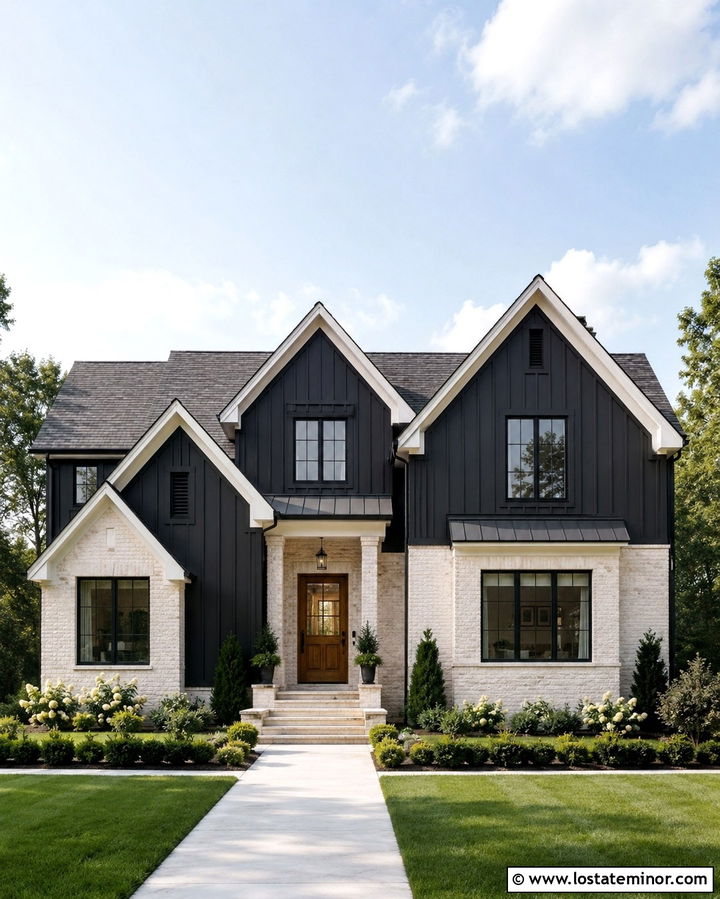
Limewashed brick brings soft texture and gentle variation to a black gabled exterior. Cover the lower story or central chimney in an uneven warm white limewash, allowing hints of the original masonry to remain visible. Use soft black board-and-batten siding in the upper gables and on the surrounding wings. Warm white fascia connects the brick to the roofline, while black windows keep the overall design sharp. A medium-brown wood door creates a natural focal point at the entry. This combination is ideal for a transitional home that blends traditional massing with simpler contemporary details. A weathered gray roof, limestone steps, and restrained foundation planting complete the scheme. The mottled brick keeps the black facade from looking flat while adding character that feels established rather than manufactured.
9. Soft Black Gabled House With Large Windows
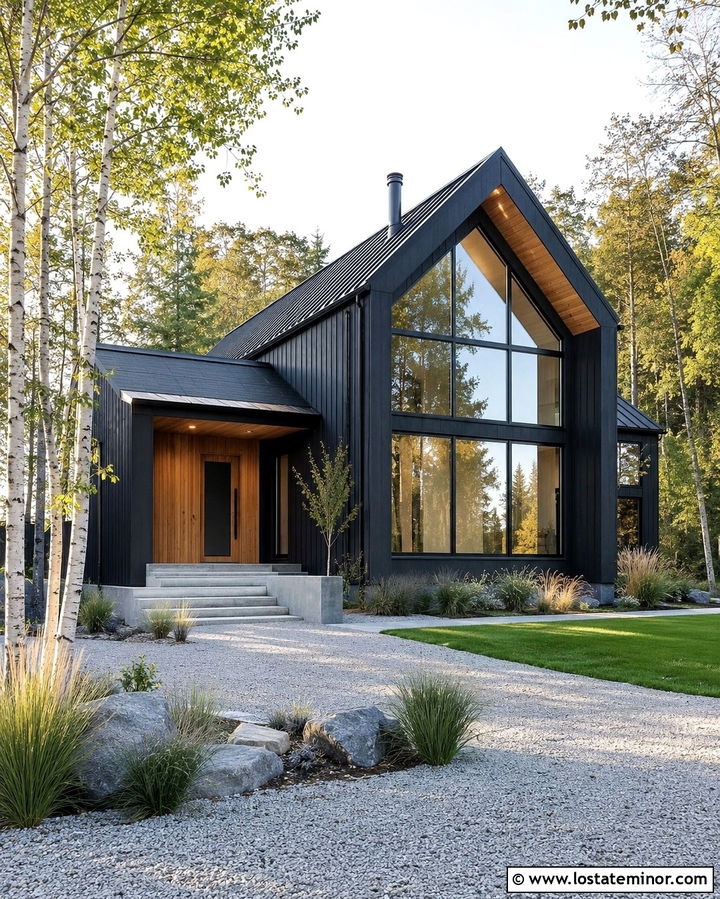
Large windows can lighten the visual weight of a dark exterior while highlighting the geometry of the gables. Place tall black-framed windows beneath the main peaks, allowing the glass to follow or echo the triangular roof shape. Surround them with soft black vertical siding and narrow matching trim for a seamless appearance. Warm wood soffits and a recessed cedar entrance provide contrast without interrupting the dramatic glazing. A black standing-seam roof continues the clean silhouette. This approach is especially effective on a Scandinavian-inspired home with simple forms and minimal ornament. Pale gravel, slender birch trees, and low green planting create an airy foreground. During the day, the reflective glass adds changing color and movement, helping the complete black exterior feel connected to its surroundings.
10. Soft Black Gabled House With A Glass Front Door
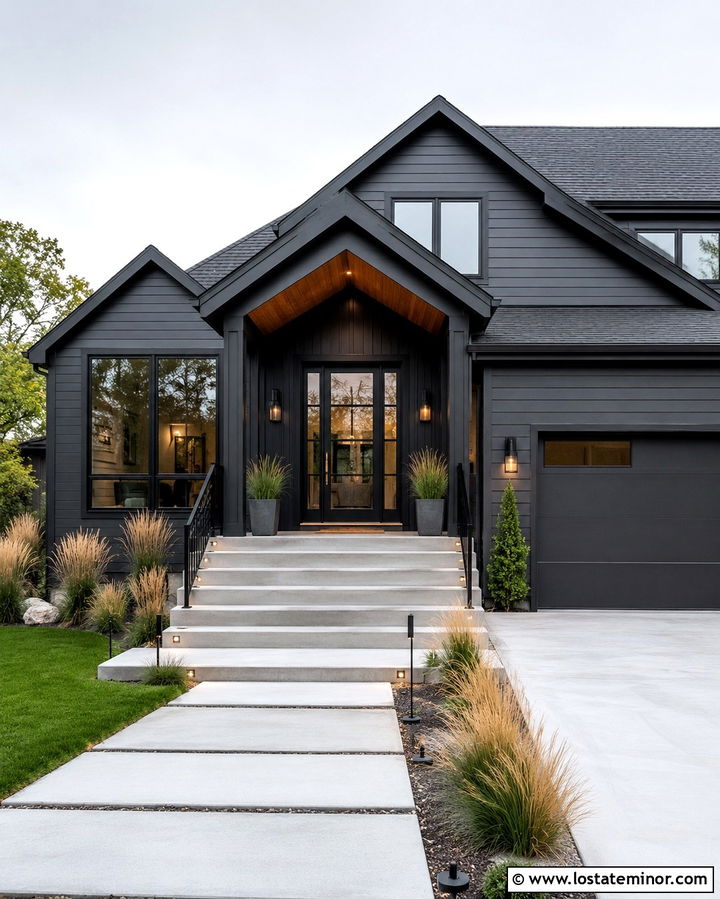
A glass front door adds openness to a soft black facade without requiring a bright accent color. Choose a black-framed door with several large panes and place it beneath a sheltered gabled portico. Soft black lap siding can cover the main walls, while vertical siding inside the entrance recess creates quiet texture. Add warm cedar to the porch ceiling and a narrow bench to prevent the entry from appearing cold. Matching black windows, gutters, and railings keep the palette consistent. A charcoal roof with clean edges completes this modern suburban exterior. For privacy, use reeded, frosted, or lightly textured glass rather than replacing the glass with a solid panel. Broad concrete steps, ornamental grasses, and low path lighting reinforce the entrance as the facade’s welcoming focal point.
11. Soft Black Gabled House With Board And Batten Siding
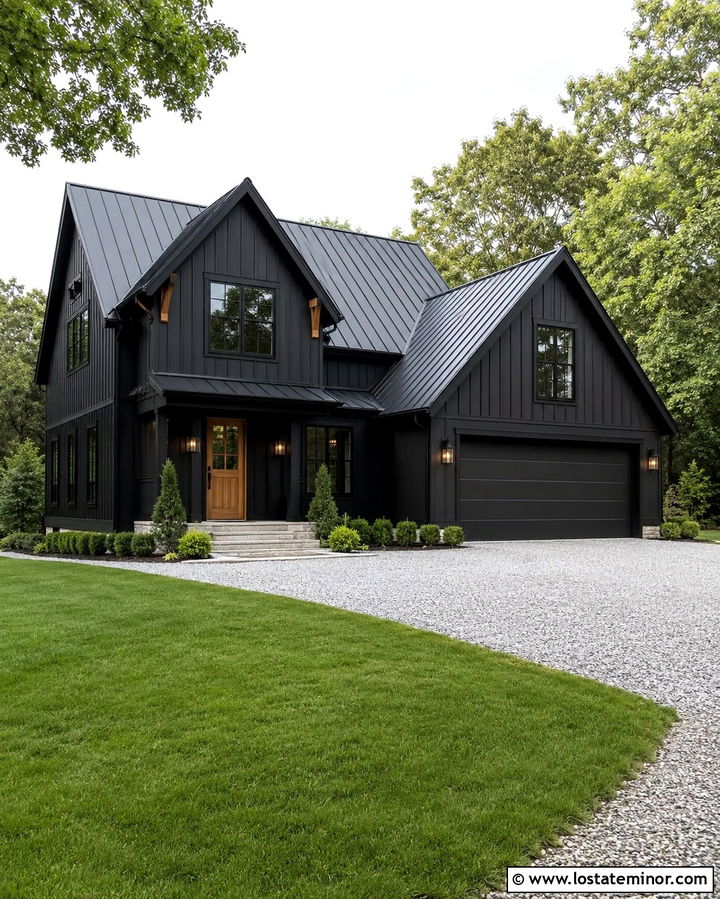
Vertical board-and-batten siding naturally draws attention toward the peaks of a gabled roof. Cover the complete facade in soft black panels, using slightly wider boards on larger walls so the pattern does not look busy. Matching trim produces a unified appearance, while a charcoal metal roof strengthens the tall, simple lines. Warm cedar brackets in the gables and a natural wood front door add enough contrast to keep the design approachable. This treatment suits a modern farmhouse, barn home, or compact country house. If the facade includes a garage, use a flush soft black door so it recedes into the siding. Pale stone steps, a gravel apron, and loosely planted greenery introduce lighter textures around the base without distracting from the strong roof geometry.
12. Soft Black Gabled House With Horizontal Siding
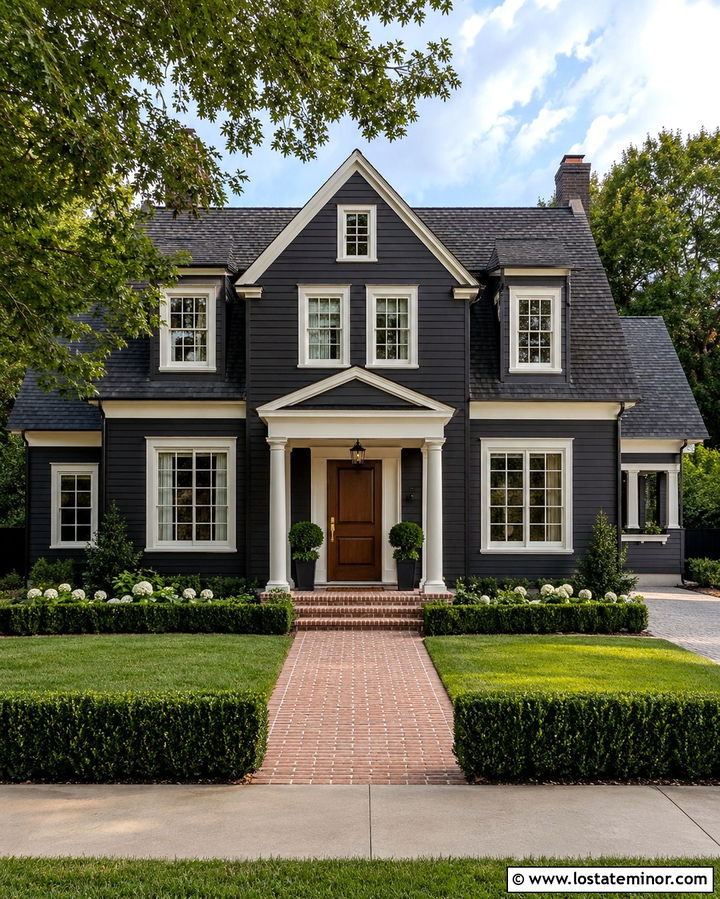
Horizontal lap siding gives a soft black house a familiar residential character. It can make bold color feel more comfortable on a traditional home, especially when paired with clean gable trim and a textured shingle roof. Select siding with a low-sheen finish so sunlight reveals each course without producing excessive glare. Use warm white around the windows, but keep the gutters and downspouts close to the black body color. A stained walnut door and muted brass hardware bring warmth to the entrance. This complete scheme works well on a two-story colonial revival with balanced cross gables. Add brick porch flooring, clipped hedges, and a symmetrical walkway. The traditional materials and orderly landscaping help the dark palette feel established, polished, and appropriate for the architecture.
13. Soft Black Gabled House With Mixed Siding
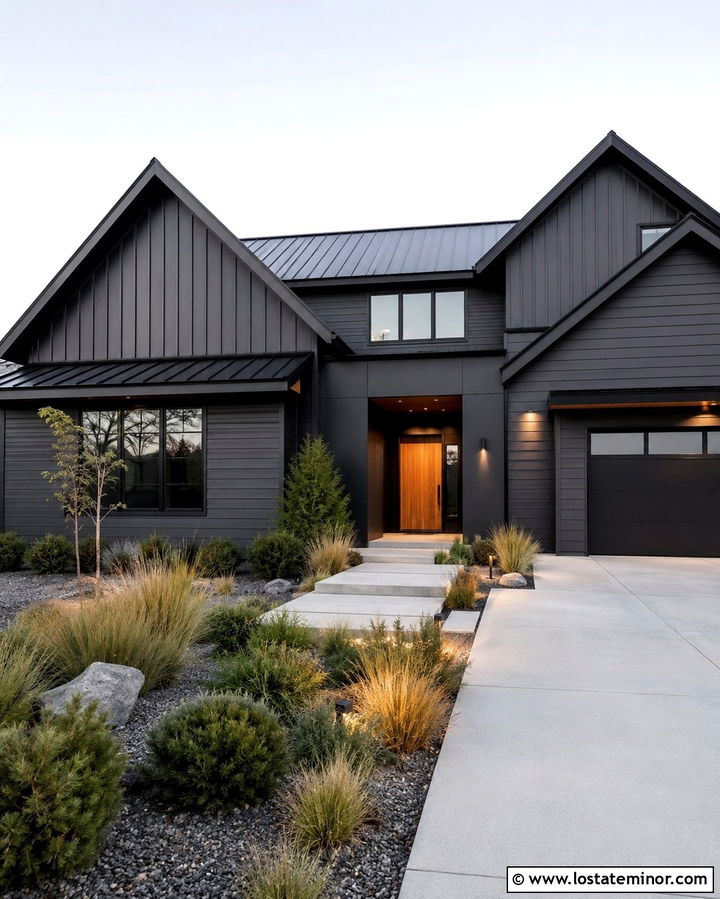
Mixing siding can create dimension without introducing multiple exterior colors. Use soft black board-and-batten beneath the gable peaks and matching horizontal lap siding across the lower walls. Because both materials share the same color, the change remains subtle and architectural. Add smooth black panels around a recessed entrance for a third texture that feels modern rather than decorative. Cedar soffits and a warm oak door can soften the transitions. A charcoal metal roof and dark windows maintain continuity across the facade. This solution is useful for an asymmetrical contemporary house with overlapping gables. Keep stone limited to the foundation or a single chimney. Clean concrete paving, layered grasses, and a few sculptural shrubs support the varied siding without making the overall exterior appear complicated.
14. Soft Black House With Steep Front Gables
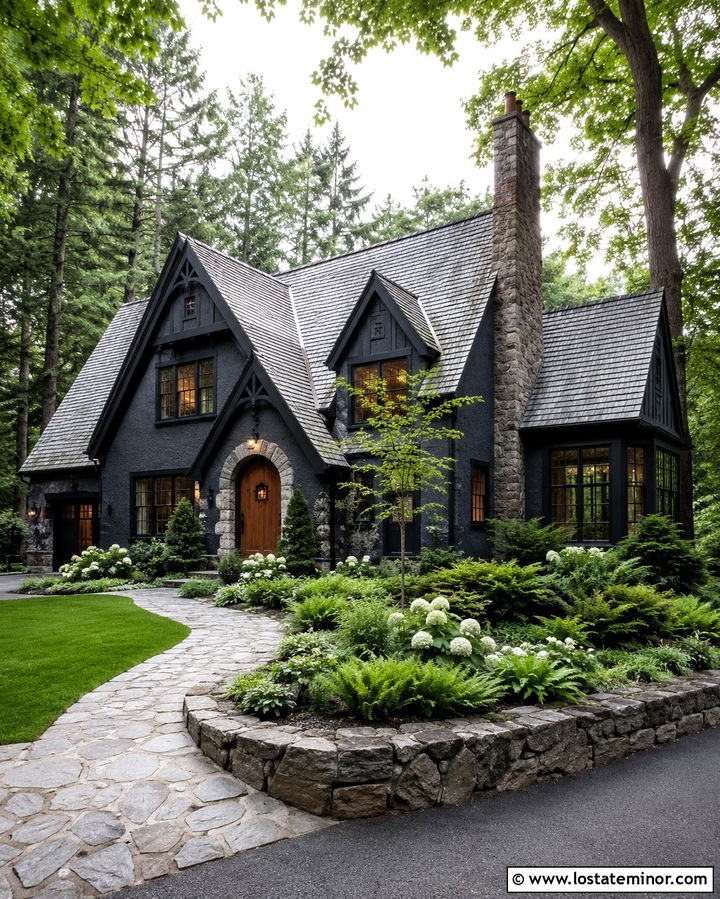
Steep gables give a soft black house a dramatic silhouette inspired by European cottages and storybook homes. Use deep charcoal-black siding across the tall walls and match the trim closely so the roof peaks remain clean. A weathered slate-gray roof provides gentle tonal variation, while a substantial stone chimney balances the vertical gables. An arched oak front door introduces softness at eye level. Consider small divided-light windows in the upper peaks and larger windows on the ground floor to create visual hierarchy. The surrounding landscape should feel relaxed rather than formal. Curved stone paths, ferns, evergreen shrubs, and loosely planted white flowers complement the cottage structure. The dark palette makes the steep roofline memorable, while the warm natural materials prevent it from feeling severe.
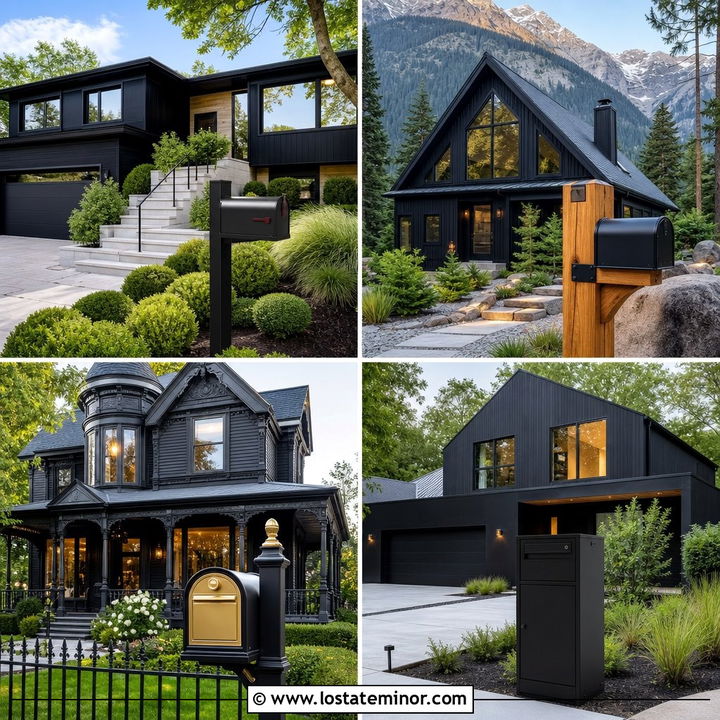
15. Soft Black House With Twin Front Gables
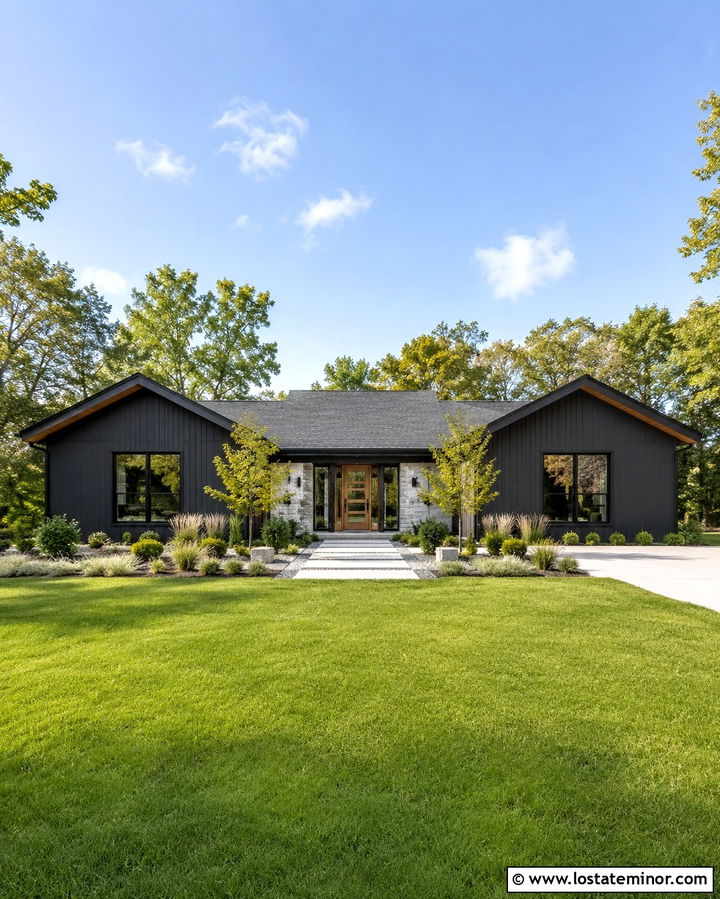
Twin gables can frame an entrance and give a wide home a balanced, welcoming shape. Paint both gabled wings soft black, then recess the front door between them beneath a lower timber canopy. Matching black window frames keep the two sides connected, while warm cedar beneath the gable eaves adds a repeated accent. A dark gray shingle roof allows the peaks to remain visible without creating harsh contrast. This layout works particularly well for a single-story contemporary ranch because it adds height and definition to a long facade. Use light stone around the entry floor and low walls to anchor the composition. A broad lawn, symmetrical ornamental trees, and a straight walkway reinforce the balance while ensuring the dark home remains open and approachable from the street.
16. Soft Black House With Asymmetrical Gables
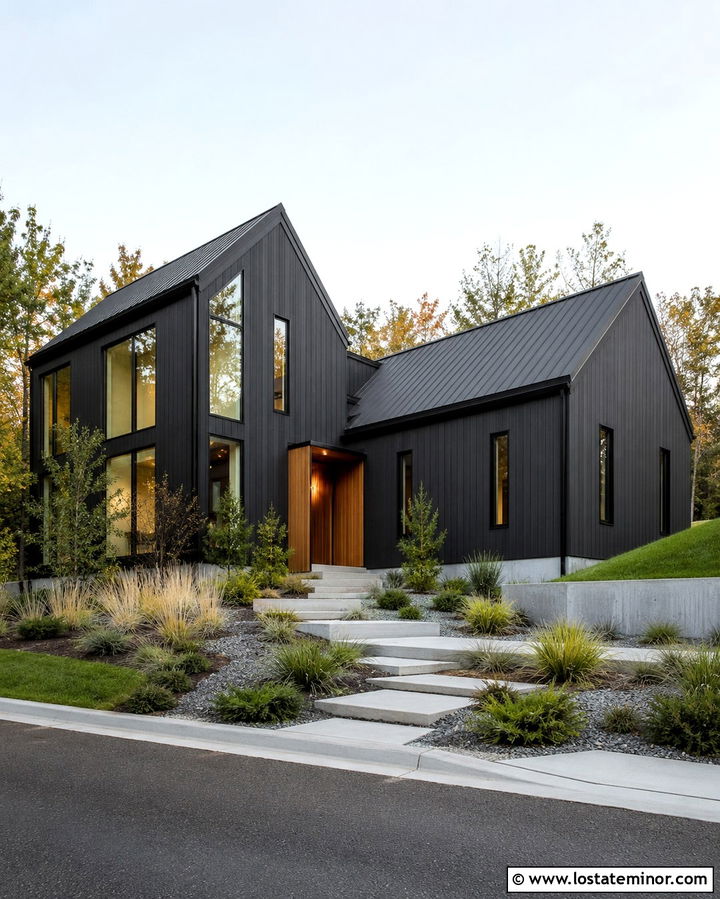
Asymmetrical gables bring movement to a modern exterior, especially when they overlap at different depths. Use one tall soft black gable for the main living area and a lower offset gable for the garage or bedroom wing. Keep the siding, trim, and roof dark so the architecture reads as one composition. A cedar-lined entry inserted between the volumes provides a clear point of arrival. Large windows can be concentrated in the taller gable, while narrower openings maintain privacy on the secondary wing. This scheme suits a contemporary home on an irregular or sloping lot. Native grasses, concrete stepping pads, and a restrained gravel garden echo the asymmetry. The resulting curb appeal comes from shape, proportion, and texture rather than an excessive number of colors or decorative features.
17. Soft Black Cross-Gabled Craftsman House
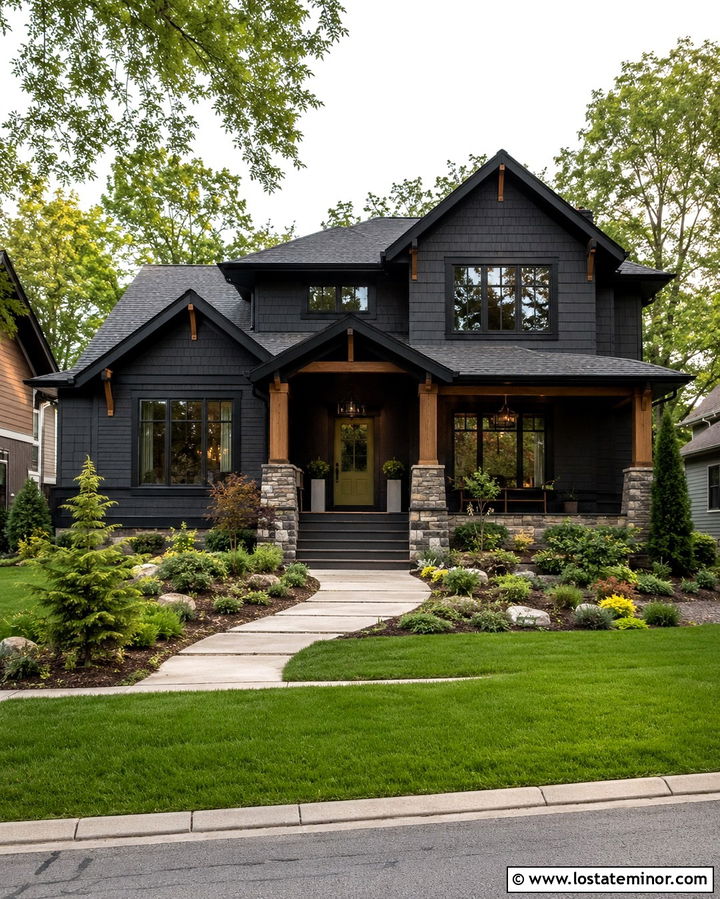
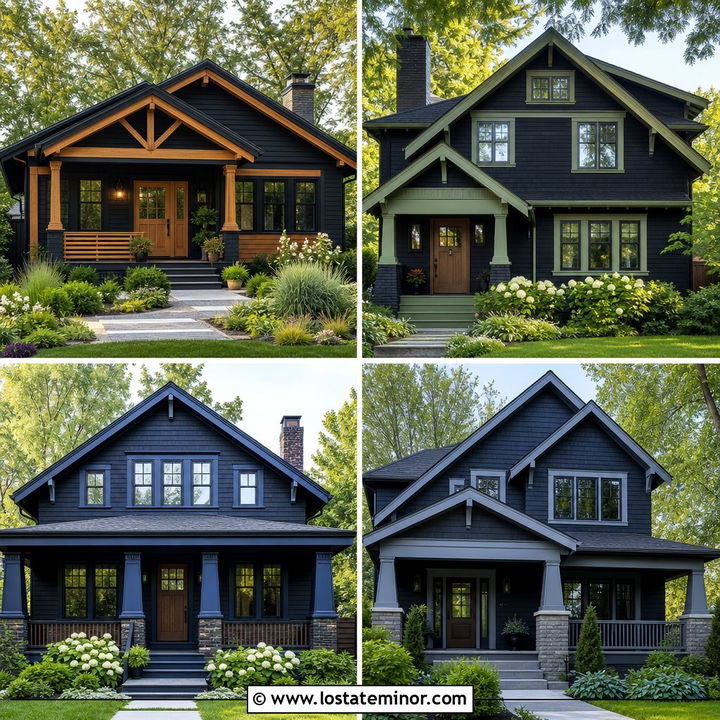
A cross-gabled Craftsman gains depth when its detailed architecture is unified with a soft black palette. Paint the lap siding and upper shingle sections the same charcoal-black, allowing texture rather than color to distinguish them. Keep the roof brackets, porch posts, and exposed beams in a medium cedar stain. A tapered stone porch base adds weight and reflects the home’s handcrafted character. Choose dark bronze window frames and a deep gray architectural roof to avoid sharp black-and-white contrast. An olive or walnut front door can supply a subtle earthy accent. Layered shrubs, broad porch steps, and a gently curved path make the entrance feel welcoming. The design remains rich in detail, but the controlled color scheme prevents the multiple gables and materials from looking visually crowded.
18. Soft Black Ranch House With Gabled Entry
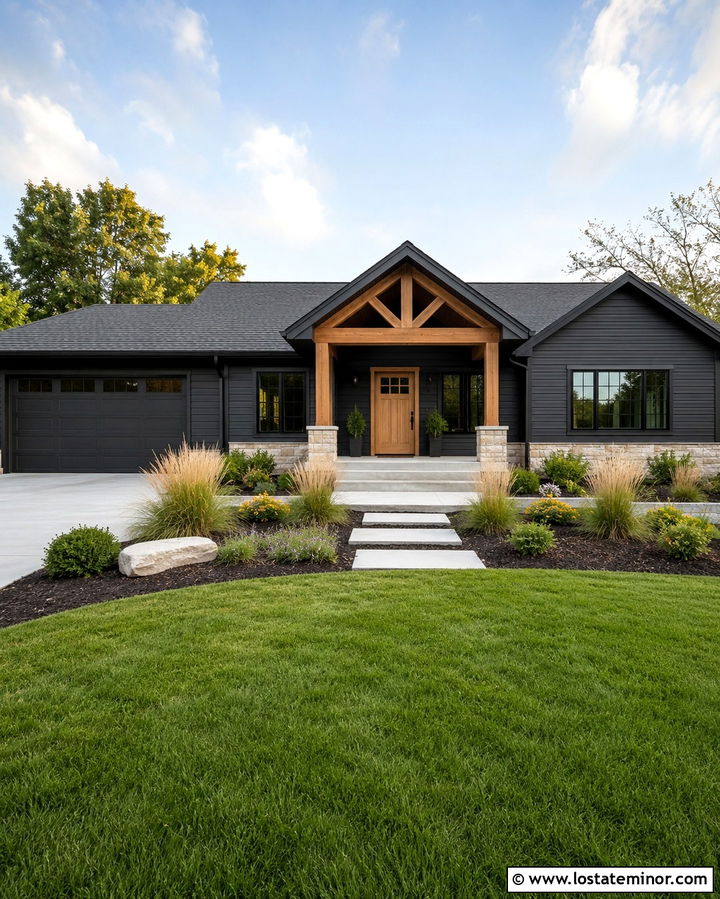
A simple ranch can gain stronger curb appeal from one well-proportioned entrance gable. Paint the long horizontal body soft black, then build or emphasize a centered gabled porch with warm wood beams. The peak creates a focal point and breaks up the low roofline without changing the entire structure. Choose charcoal shingles, black window frames, and a matching garage door so the exterior feels continuous. Pale stone around the porch base adds brightness near the ground, while a natural oak door draws attention to the entry. Keep the landscaping low enough to preserve the ranch home’s horizontal lines. Wide planting beds, ornamental grasses, and a stepping-stone walkway provide texture. This is a practical approach for updating a straightforward facade while keeping its original architectural identity recognizable.
19. Soft Black Cottage With Clipped Gables
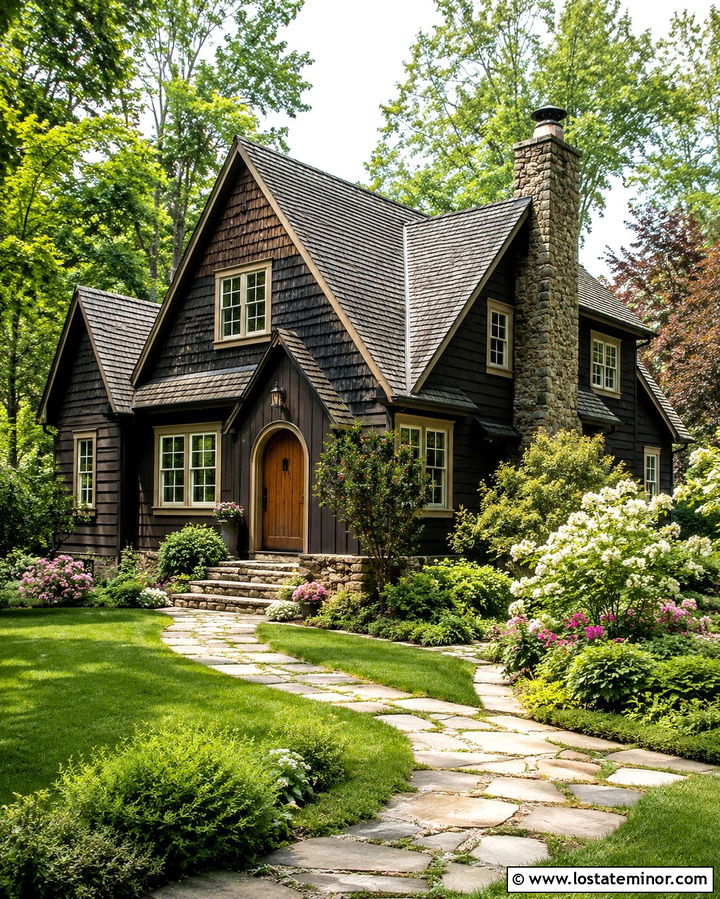
Clipped gables offer cottage charm with a slightly broader, less pointed roof shape. A muted soft black exterior makes this distinctive architecture feel current while preserving its traditional personality. Use narrow horizontal siding on the main walls and cedar shingles inside the clipped gable ends, stained in a smoky brown-black tone. Warm cream trim around divided-light windows gives the facade a softer outline than bright white. Finish the roof in weathered charcoal shingles and add a rounded oak door beneath a compact porch. A stone chimney can provide an anchoring vertical feature. Curved garden beds, flowering shrubs, and an informal flagstone path complement the architecture. The result feels cozy and detailed, proving that a black exterior does not need to look stark, industrial, or exclusively modern.
20. Soft Black Scandinavian Gabled House
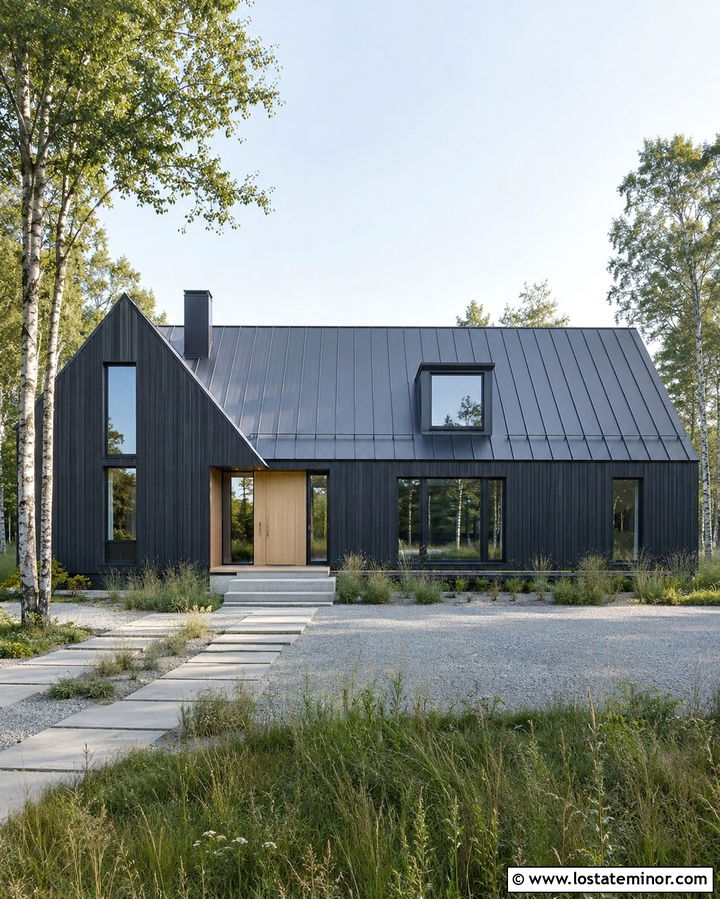
Clean forms and limited materials make soft black an excellent choice for a Scandinavian-inspired home. Wrap the simple gabled structure in narrow vertical wood cladding finished in a matte charcoal-black stain. Use a matching standing-seam roof to create an uninterrupted silhouette from wall to peak. Large windows with slim black frames bring transparency to the facade, while pale oak around the recessed door adds a gentle source of warmth. Avoid decorative trim, shutters, and heavy porch railings. Instead, allow precise proportions and natural textures to define the house. A gravel walkway, meadow grasses, birch trees, and simple concrete steps complete the restrained landscape. This scheme feels modern yet comfortable because the soft black finish works like a neutral background against wood, greenery, sky, and seasonal changes.
21. Soft Black Mountain House With Gables
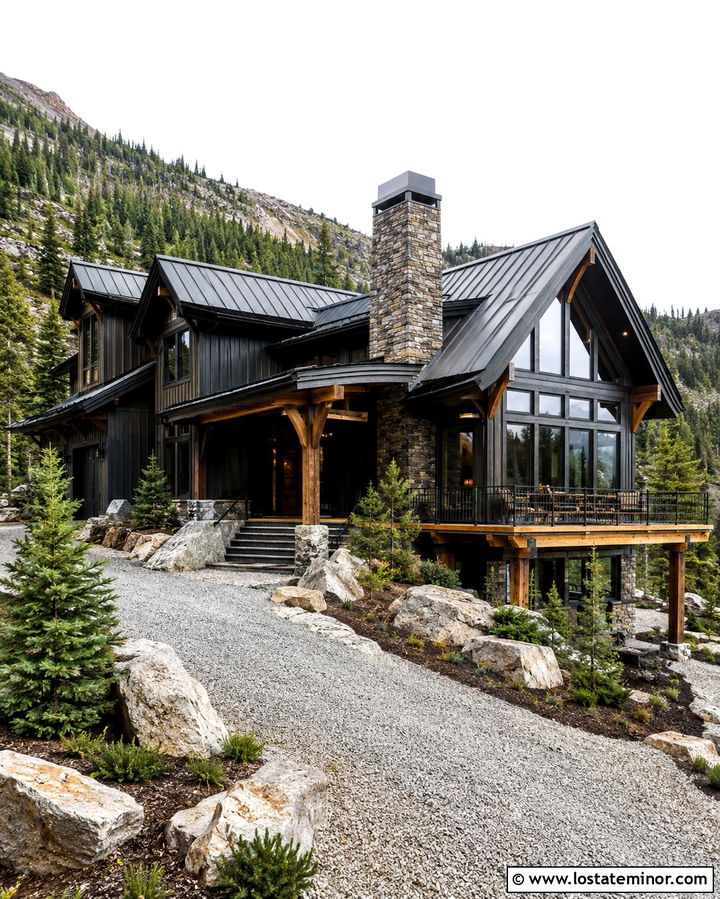
A mountain setting can support a darker, more substantial gabled exterior. Choose soft black stained wood siding, a rugged charcoal metal roof, and a broad stone chimney built from locally inspired gray and brown tones. Deep roof overhangs protect the facade while creating strong shadows that add dimension. Exposed fir rafters and a large timber entrance canopy bring needed warmth. In the main gable, use expansive windows to open the house toward the view and reflect the surrounding trees. A raised wood deck can extend the living space without competing with the roofline. Complete the setting with boulders, native evergreens, and a gravel drive. The black exterior visually settles into the landscape, while natural stone and timber connect the architecture to its rugged environment.
22. Soft Black Coastal House With Gables
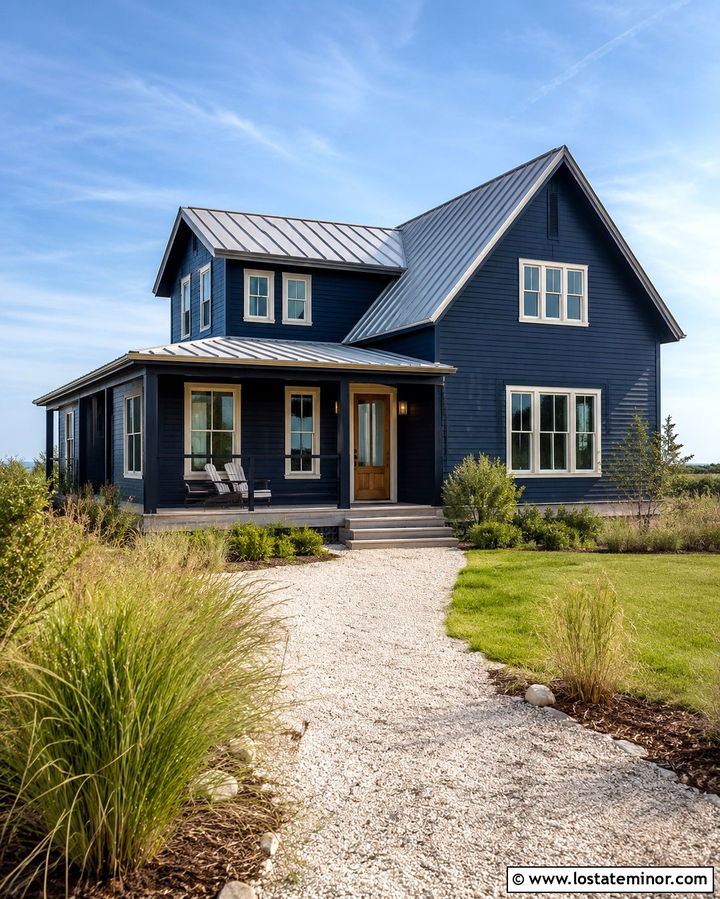
Can a black home still feel light near the coast? The answer lies in a softer color, simple massing, and pale surrounding materials. Use a smoky blue-black exterior on a compact gabled beach house, paired with a light gray metal roof that reflects more daylight than a fully black roof. Warm white window trim can outline the facade, while a natural weathered-wood door and porch decking introduce a relaxed coastal texture. Keep railings slim and dark to avoid creating too many contrasting lines. Dune grasses, sandy gravel, and a shell-colored walkway brighten the landscape around the building. The gabled form references familiar seaside cottages, but the restrained charcoal palette gives it a cleaner contemporary identity that feels equally appropriate in sun, fog, or overcast weather.
23. Soft Black Suburban House With Multiple Gables
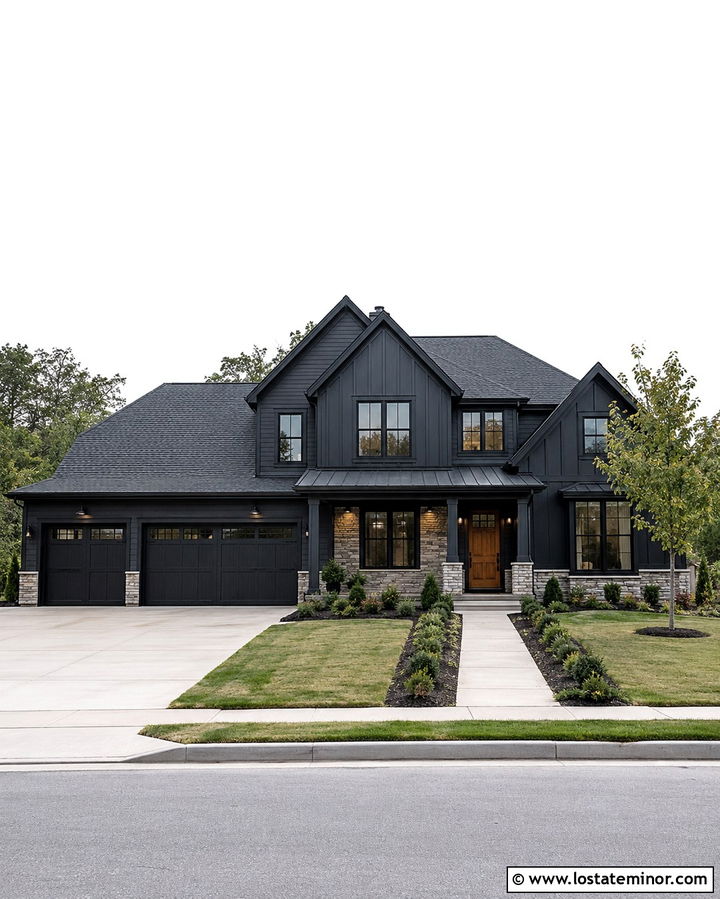
Multiple gables can make a suburban home feel busy when every peak receives a different material or accent color. A unified soft black scheme offers a cleaner solution. Paint the main siding, gable panels, garage door, and most trim in closely related charcoal-black tones. Use warm stone only around the porch base and a single bay to establish a clear hierarchy. A medium wood front door should remain the strongest accent. Dark gray roof shingles add subtle texture while allowing each roofline to remain visible. This approach works especially well on larger two-story homes with several projecting sections. Simplify the landscaping with repeated shrubs, one ornamental tree, and a broad light-colored driveway. The limited palette transforms complicated architecture into a more cohesive and deliberate composition.
24. Soft Black Bungalow With A Front Gable
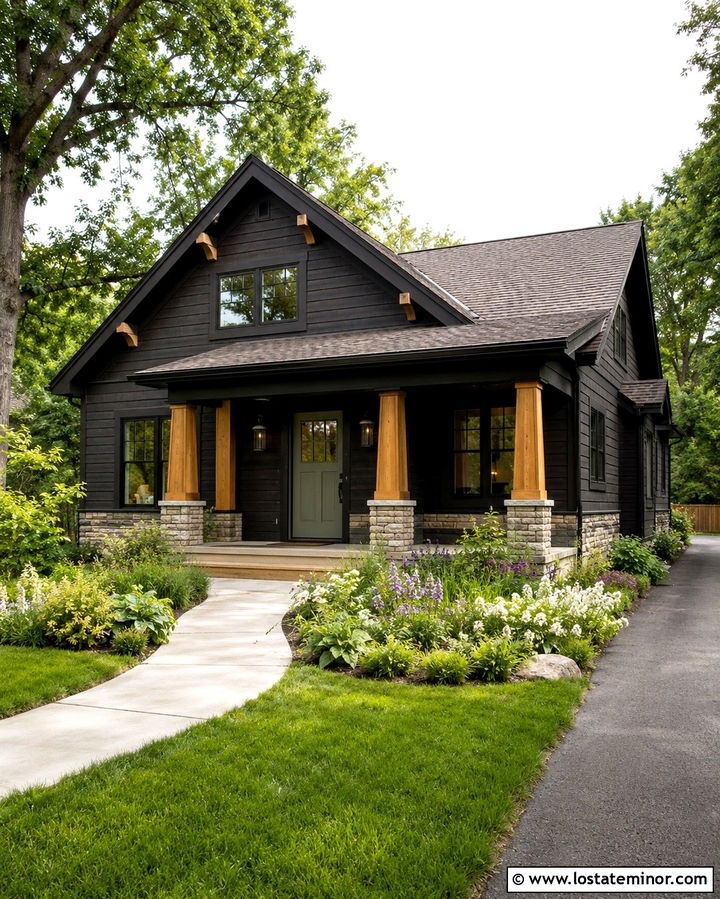
A front-gabled bungalow can carry soft black beautifully because its porch and exposed structure naturally introduce depth. Apply matte charcoal-black siding across the facade, including the gable peak, and use dark trim for a wrapped appearance. Keep the porch columns and decorative rafters in honey-toned wood to highlight the home’s craftsmanship. A low stone foundation provides visual stability, while a muted green front door adds a quiet color note inspired by the landscape. Choose dark brown or charcoal shingles rather than a shiny roof. Wide porch steps, handcrafted lights, and comfortable planters strengthen the welcoming character. A narrow lawn with flowering perennials and a curved walkway completes the scene. The combination feels distinctive yet practical for a smaller home on a typical neighborhood lot.
25. Soft Black Colonial House With Gables
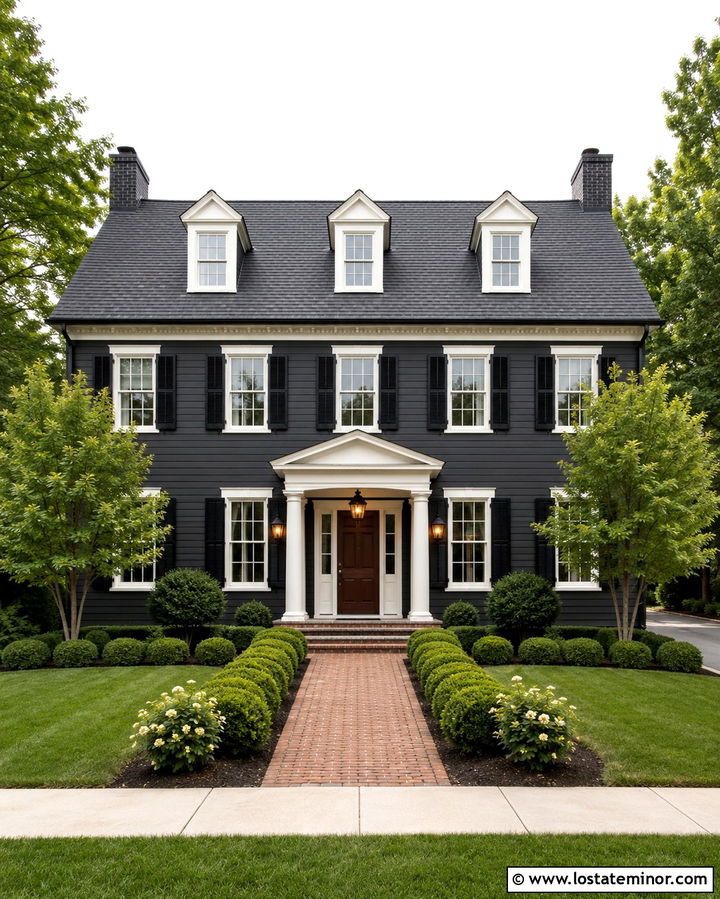
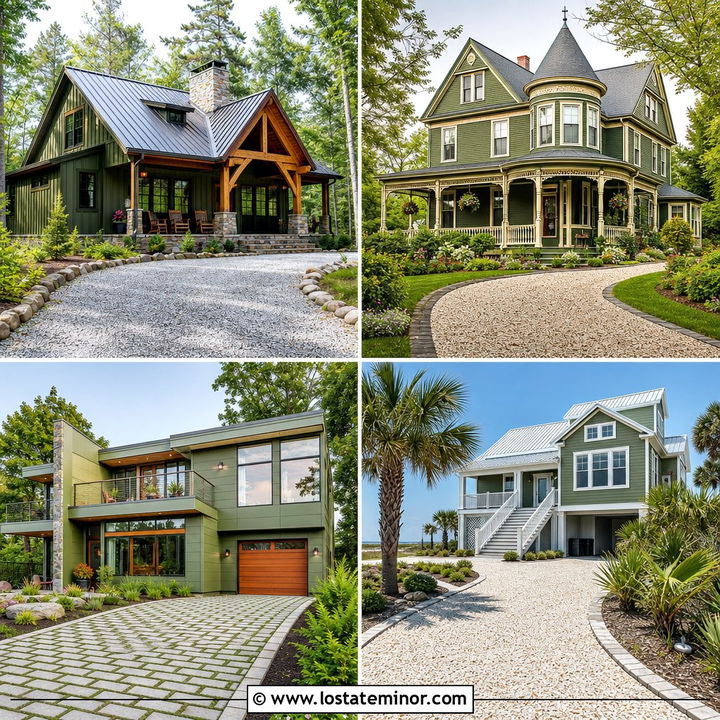
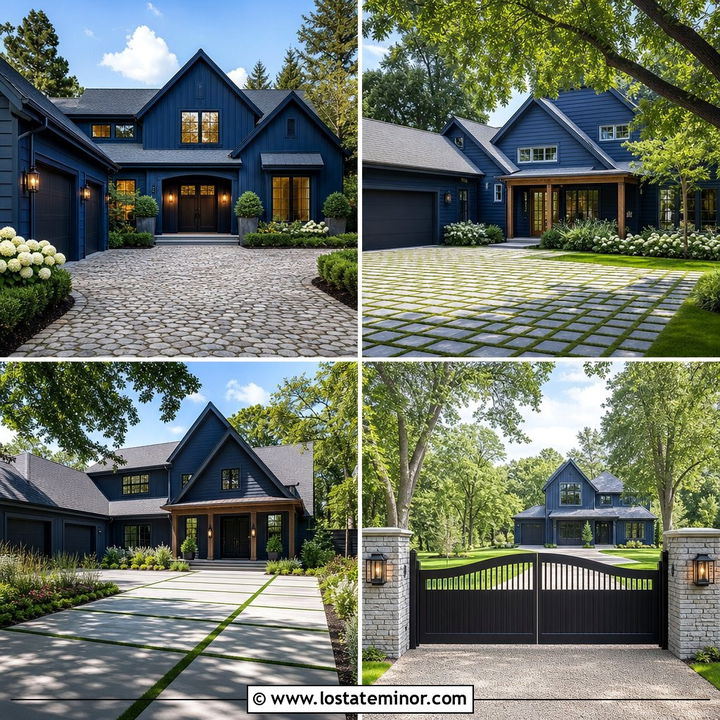
Soft black can modernize a Colonial-inspired exterior without removing its symmetry. Use charcoal-black clapboard siding across the main body and matching paint on the front-facing gables. Warm white window trim, cornices, and classical porch columns preserve the home’s traditional structure. A deep red-brown or natural mahogany front door creates a historically compatible focal point. Select dark slate-colored shingles and copper-toned lanterns for additional warmth. If shutters are used, keep them black so they blend into the body rather than producing another contrasting outline. Symmetrical boxwood, a straight brick walkway, and matching trees reinforce the formal facade. The finished house feels updated but recognizable, with the gables, centered entry, and balanced windows still expressing the orderly character associated with Colonial architecture.
26. Soft Black Split-Level House With Gables
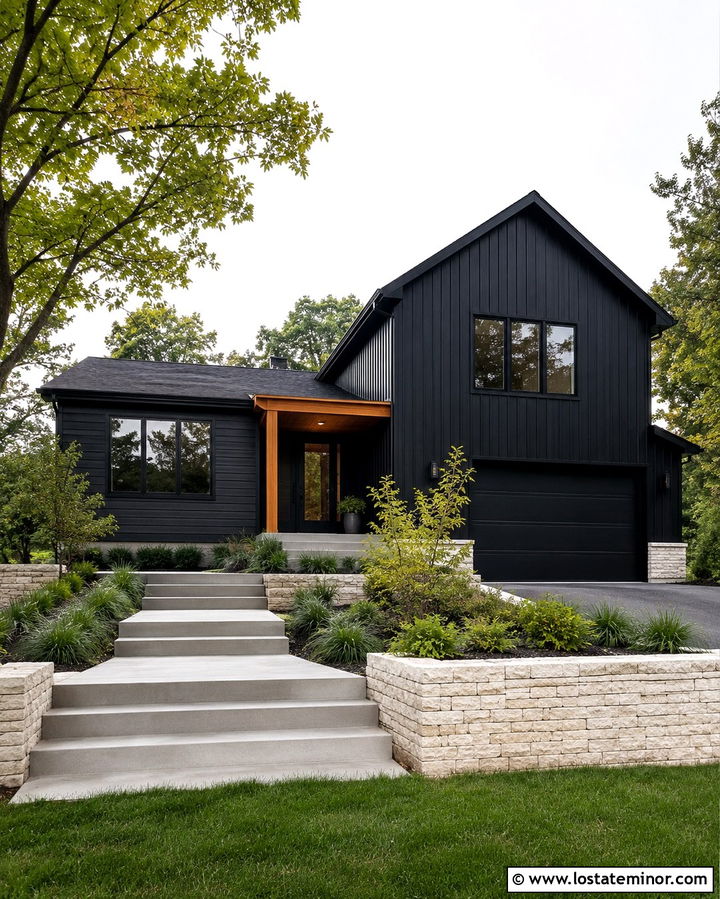
Dark color can help organize the disconnected volumes of a split-level home. Cover both levels in soft black siding, using vertical boards on the taller gabled section and horizontal siding on the lower wing. The shared color connects the forms, while the material change clarifies their proportions. A wood canopy over the entrance creates an obvious transition between levels. Keep the garage door black so it recedes, and use a charcoal roof that follows the stepped roofline. Pale stone retaining walls and broad concrete steps can manage the grade while brightening the base. Plant low grasses and spreading shrubs rather than tall foundation plants that hide the architecture. This thoughtful combination gives an older split-level a stronger identity without requiring major structural changes to its recognizable shape.
27. Soft Black Gabled House With A Three-Car Garage
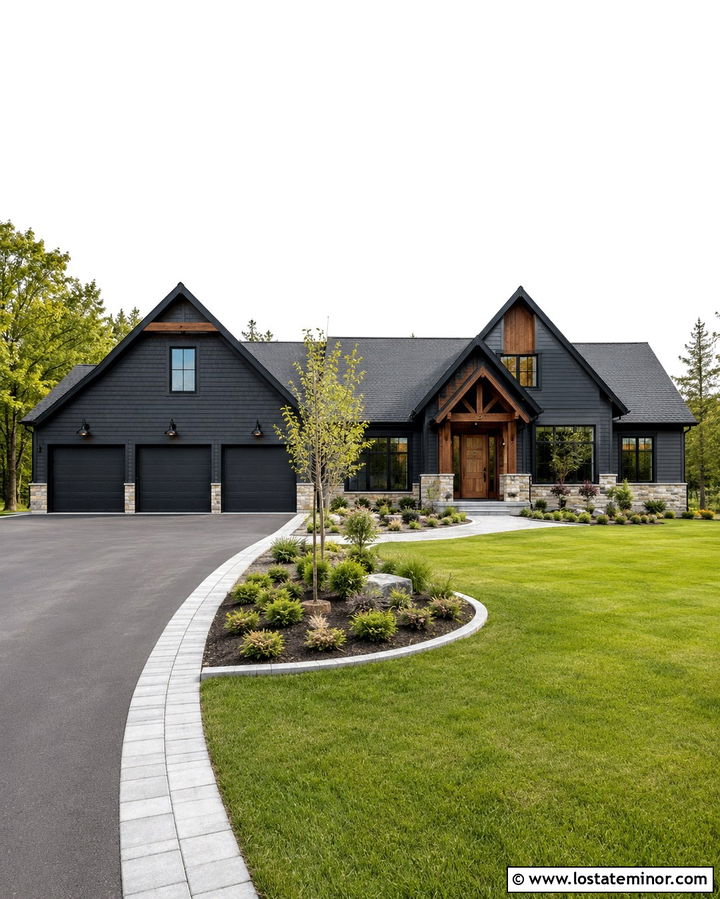
A large garage should support the exterior design rather than dominate it. Paint all three garage doors the same soft black as the surrounding siding, preferably using flush or lightly paneled designs. Position a secondary gable above the garage to connect it visually with the main house, but keep the entrance gable taller and more detailed. Cedar around the front door and beneath the primary peak establishes a clear focal point away from the driveway. Use a charcoal metal or shingle roof and repeat pale stone along the foundation. A divided driveway edge, planting island, and small ornamental tree can soften the broad paved area. The dark doors visually recede, allowing the layered gables, warm entry, and landscaping to define the home’s overall curb appeal.
28. Soft Black Gabled House With A Wraparound Porch
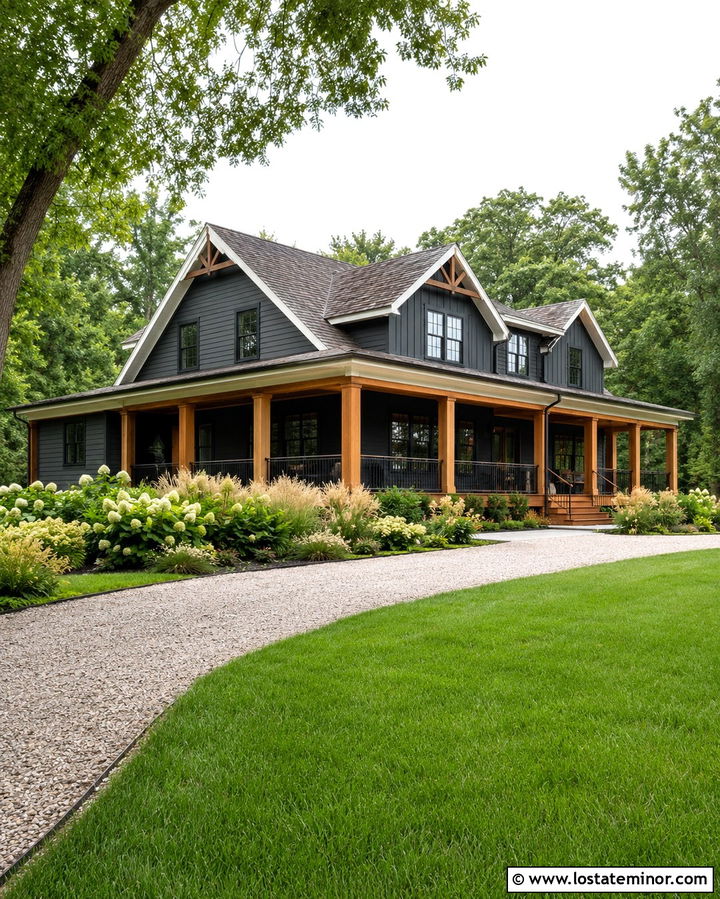
A wraparound porch can make a dark gabled house feel open, relaxed, and connected to the yard. Use soft black lap siding behind warm wood porch posts and beams. Paint the railings black so they recede, but finish the decking and ceiling in a natural cedar or oak tone. Warm white fascia beneath the gables can add definition without outlining every edge. A weathered charcoal roof and dark-framed windows maintain the grounded palette. This scheme works particularly well on a country farmhouse with a central front gable and broad side wings. Surround the porch with hydrangeas, native grasses, and a generous lawn. The long band of warm wood breaks up the dark walls at eye level and turns the porch into the house’s most welcoming feature.
29. Soft Black Gabled House With A Courtyard Entry
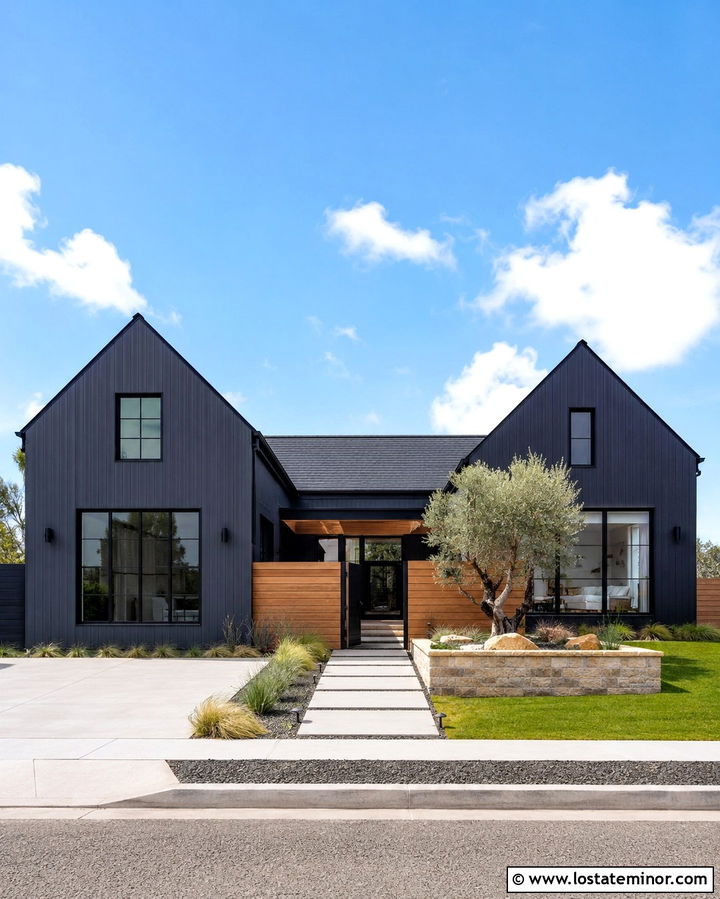
A courtyard creates a sheltered transition between the street and a soft black home. Arrange two gabled wings around a recessed entry, then use consistent charcoal-black siding and roofing to unify the structure. Warm cedar can line the courtyard walls, front door, and overhead canopy, producing a glowing focal point within the darker exterior. Large windows facing the courtyard increase natural light while maintaining privacy from the street. Pale concrete paving and a low stone planter brighten the enclosed space. This arrangement suits a modern home on a wide suburban or semi-rural lot. Keep the front landscaping simple, using one sculptural tree, clipped grasses, and a straight path. The paired gables frame the entrance naturally, making the courtyard feel intentional rather than hidden behind the main facade.
30. Soft Black Gabled House On A Wooded Lot
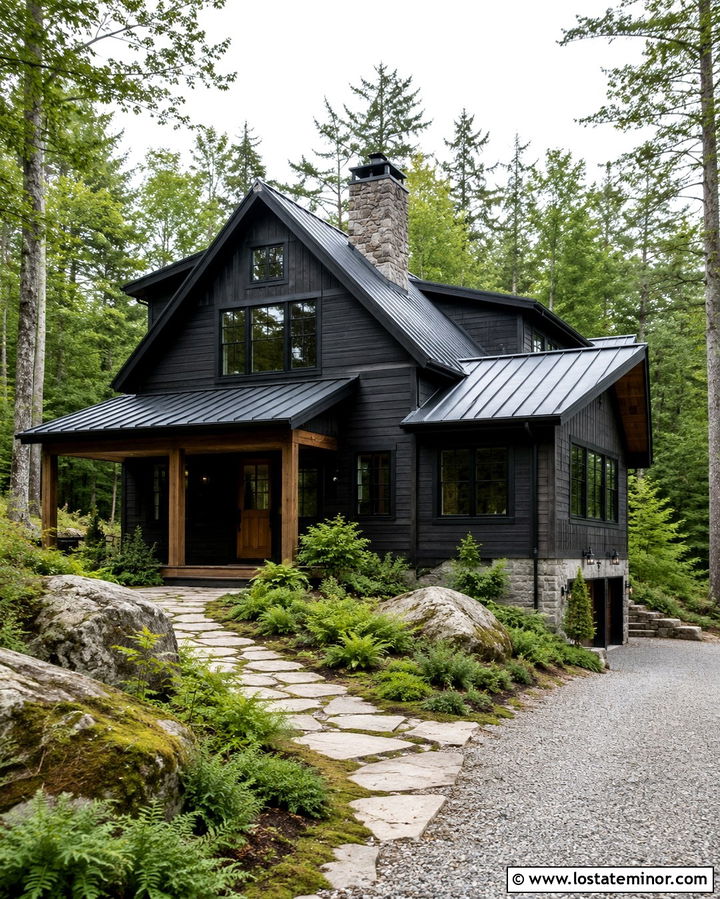
Surrounded by tall trees, a soft black house can feel calm and integrated rather than overly bold. Choose a matte charcoal-black stain that allows some wood grain to remain visible. Pair it with a dark metal roof, black-framed windows, and warm cedar soffits beneath each gable. A rough stone chimney and low foundation connect the home to the forest floor. Use a natural wood door and a small covered porch to give the entrance warmth without adding bright color. A gravel drive, irregular stone walkway, ferns, and shade-tolerant shrubs maintain the woodland character. Large windows placed beneath the primary gable reflect the trees and sky. This complete scheme allows architecture and landscape to work together, creating understated curb appeal that changes naturally with the seasons.
Conclusion:
The most successful **30 Soft Black House Design With Gables Ideas** balance strong color with inviting materials, clear roof geometry, and thoughtful landscaping. Soft black can unify complicated facades, emphasize simple peaks, or give traditional architecture a more current appearance. The key is choosing accents that keep the exterior from feeling flat. Warm cedar, weathered stone, natural brick, pale concrete, and carefully placed white trim all provide effective contrast. Before committing, test the siding color on several elevations and observe it during different parts of the day. Also compare it directly with permanent features such as roofing and masonry. With those details coordinated, a soft black gabled house can feel dramatic, comfortable, and enduring.

Related posts: