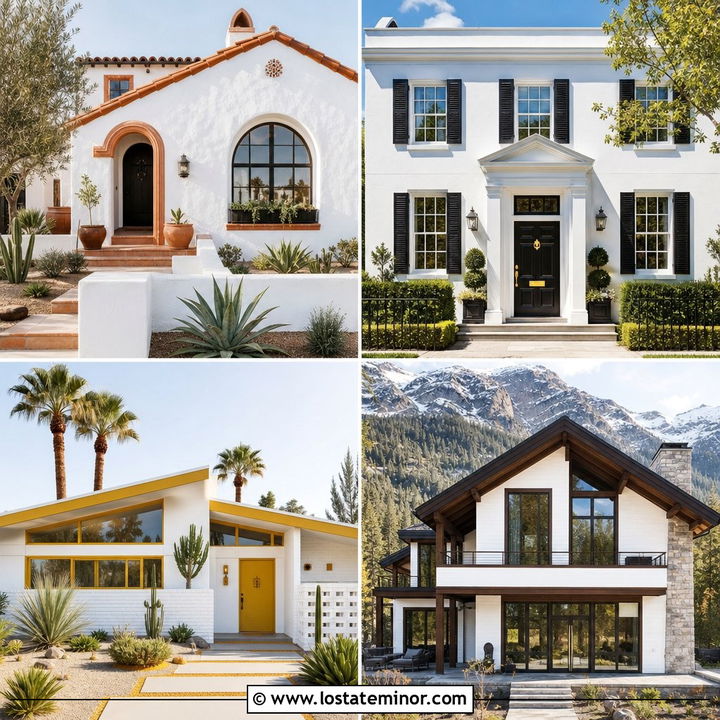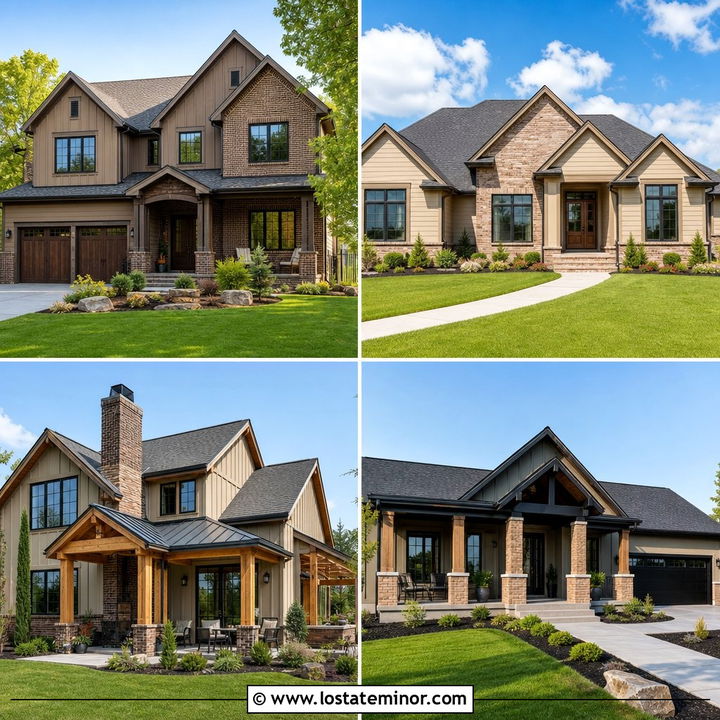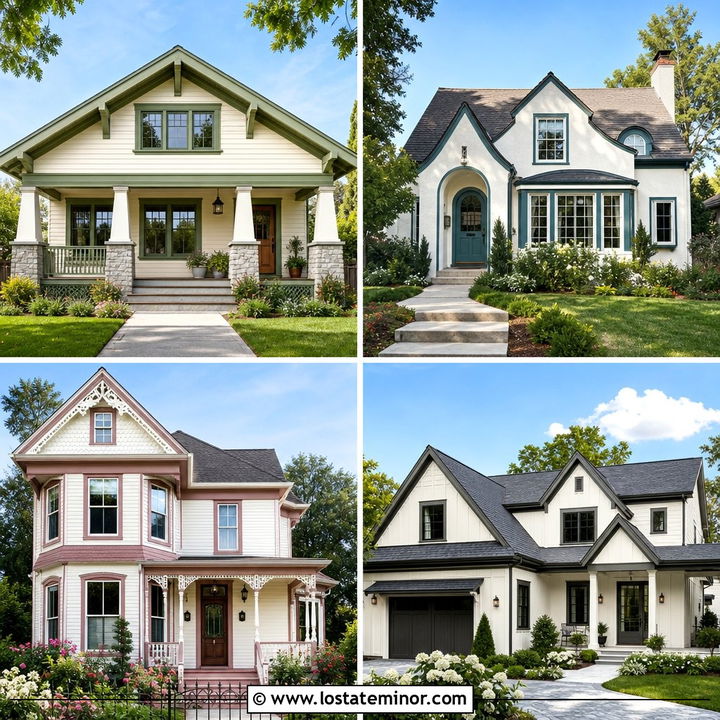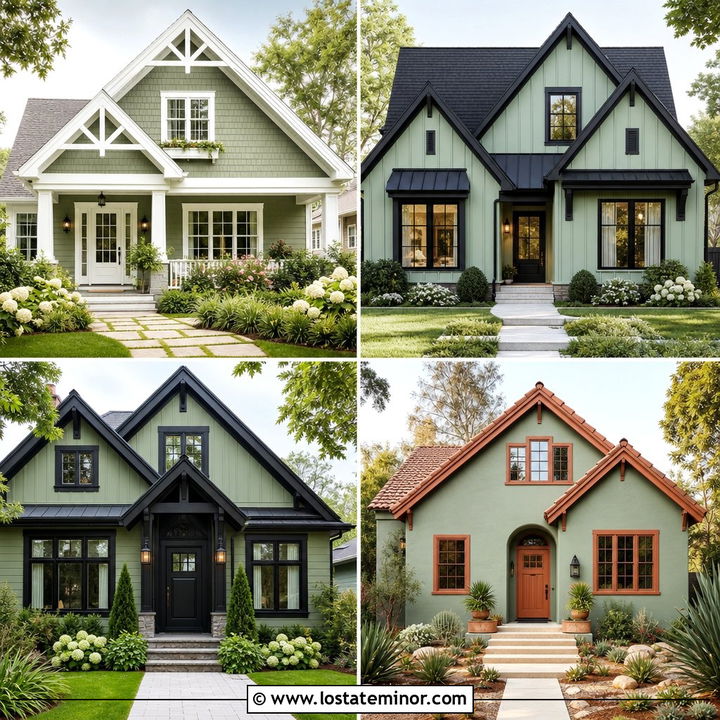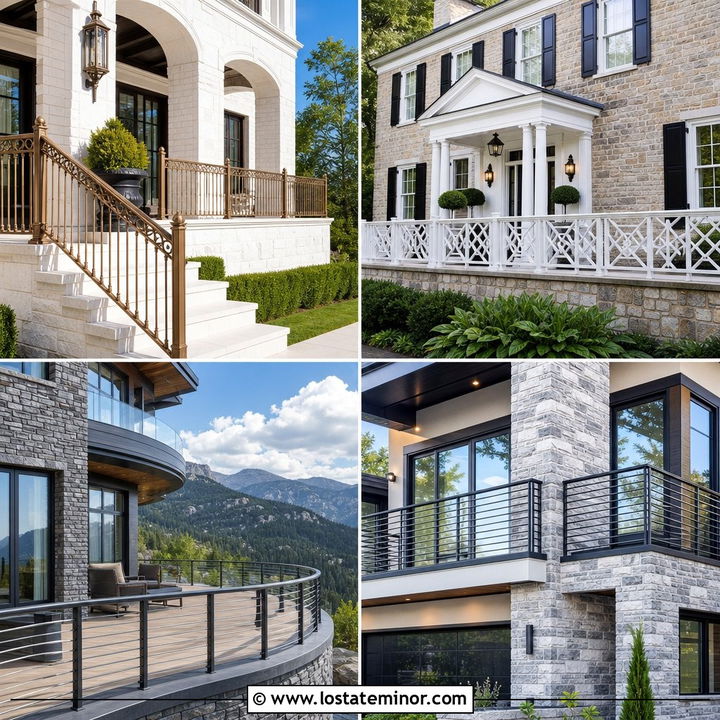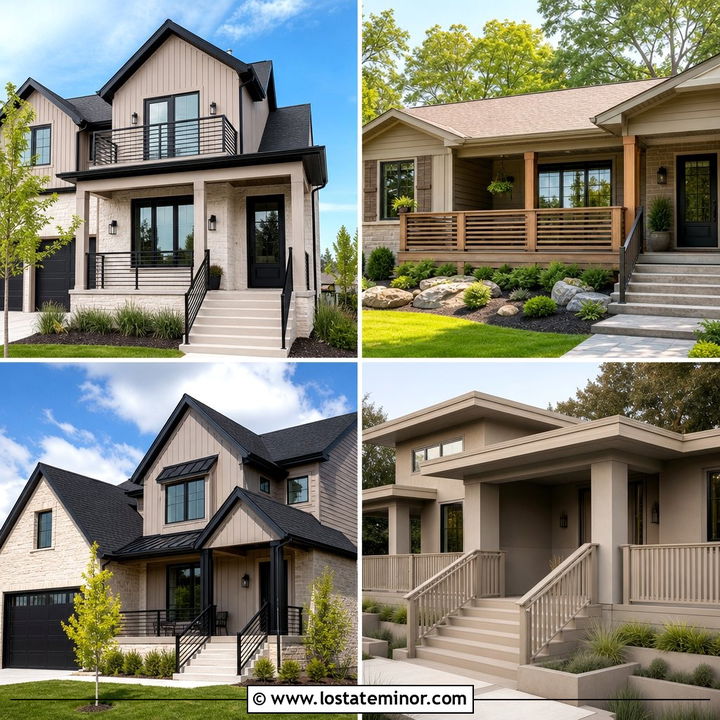
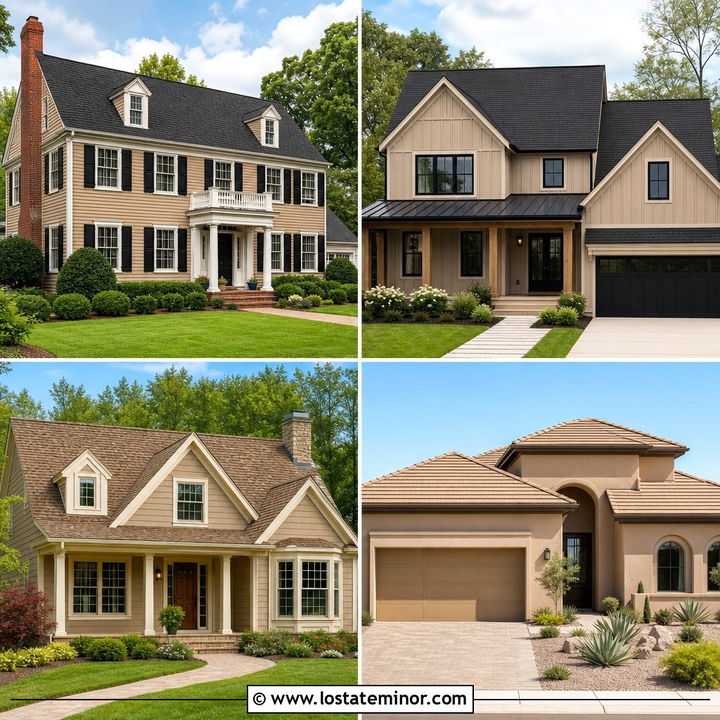
A tan exterior gives you a warm, flexible base that can suit nearly any American home, from a low ranch to a detailed Colonial. These **30 Tan House Design With Trim Ideas** explore complete color schemes rather than treating trim as an afterthought. You will find classic white, cream, brown, and black pairings alongside softer greens, blues, taupes, and earthy accent colors. Each look also considers the roof, front door, shutters, masonry, and natural wood details. That whole-house approach helps the exterior feel balanced instead of pieced together. Before painting, compare large samples beside permanent materials and view them in changing daylight. Use the following complete exterior looks to find the right direction for your home with these **30 Tan House Design With Trim Ideas**. ()
1. Tan House With Crisp White Trim
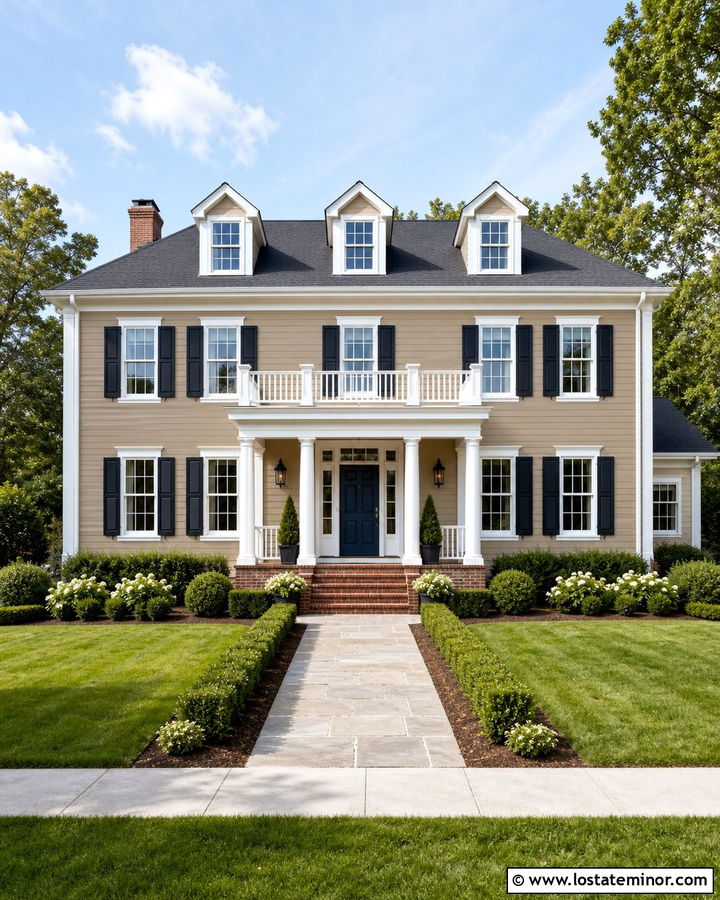
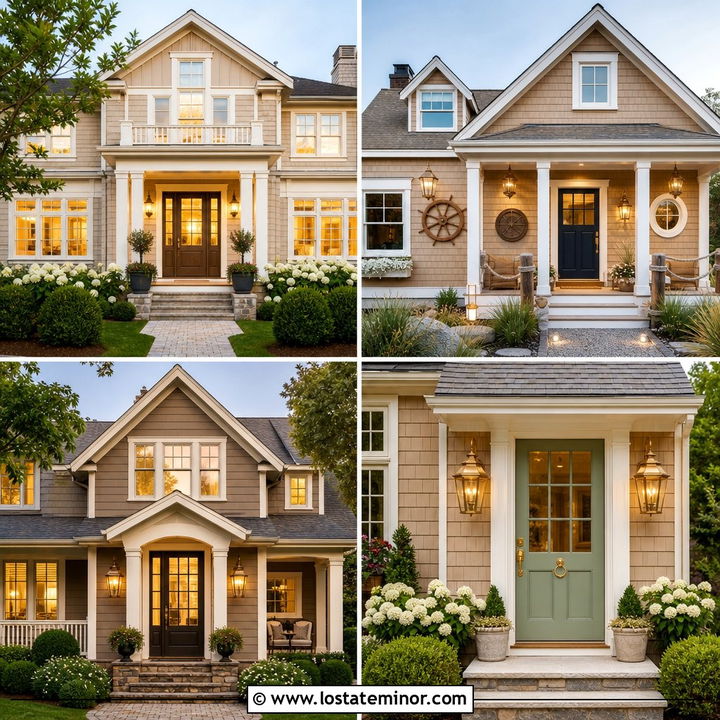
Warm tan siding and crisp white trim create a clean exterior that works especially well on Colonial and traditional homes. Choose a tan with golden or beige undertones, then carry white across the fascia, window casings, columns, and porch railings. This bright framework keeps a large tan facade from appearing flat. A navy front door adds measured color, while black shutters and a charcoal shingle roof provide structure. Complete the exterior with brushed brass lighting, red brick steps, and clipped evergreen landscaping. If the house receives strong afternoon sun, test several whites before deciding. An extremely bright white can look harsh beside a muted tan, while a slightly softened white usually creates a more comfortable transition. ()
2. Light Tan House With Black Trim
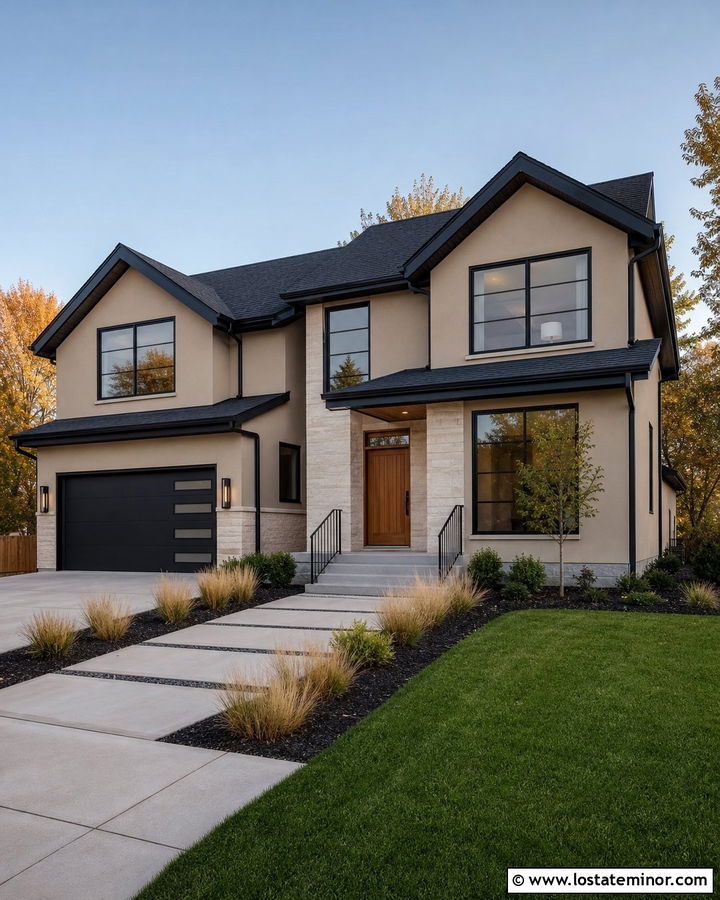
A light tan house with black trim delivers strong contrast without making the entire exterior feel dark. This pairing is particularly effective on contemporary homes with simple rooflines and large windows. Use the black selectively on window frames, fascia, gutters, railings, and the garage door. Keeping the main siding light allows those sharp outlines to become architectural features. A natural cedar front door warms the scheme and prevents it from looking overly industrial. Add pale limestone around the entry and choose a medium charcoal roof that relates to the trim. Simple ornamental grasses, square concrete pavers, and restrained foundation plants reinforce the modern appearance. For balance, repeat black in several locations instead of concentrating it around only one window or doorway.
3. Tan House With Cream Trim
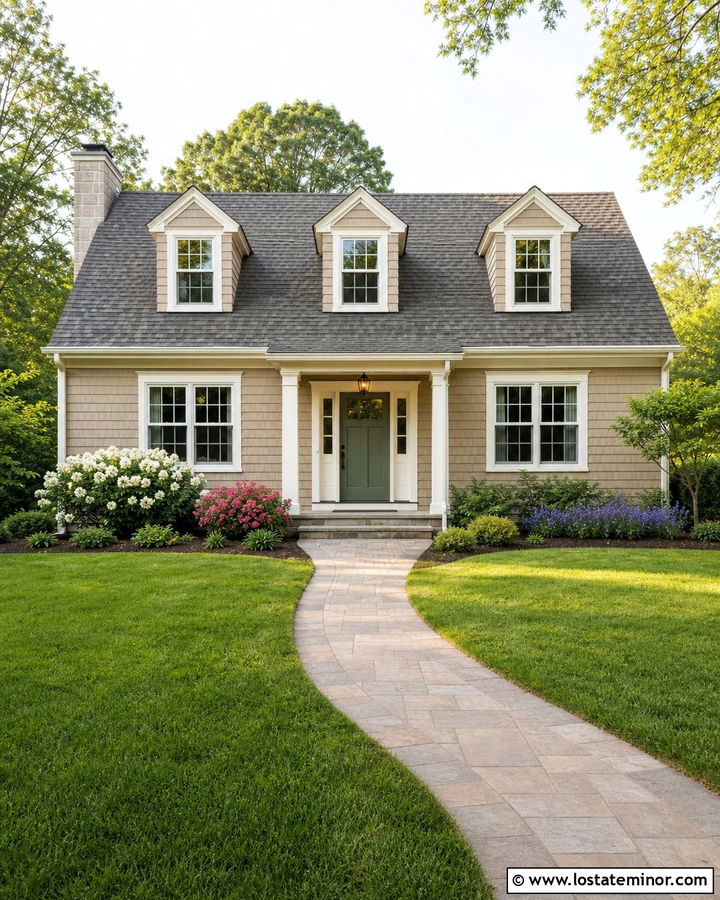
Cream trim gives a tan house a softer, lower-contrast appearance than pure white. It is a comfortable choice for a Cape Cod, cottage, or traditional suburban home with many decorative details. Start with medium tan siding and use warm cream on window casings, corner boards, eaves, porch posts, and railings. A muted sage front door introduces natural color, while weathered gray shingles keep the roof from adding more warmth. Stone with beige, ivory, and soft gray variation can anchor the foundation. Avoid cream shades that are too yellow, since they may make tan siding appear muddy. Instead, choose a balanced off-white that is clearly lighter than the body color. Layered shrubs and flowering borders complete this relaxed, welcoming exterior.
4. Tan House With Dark Brown Trim
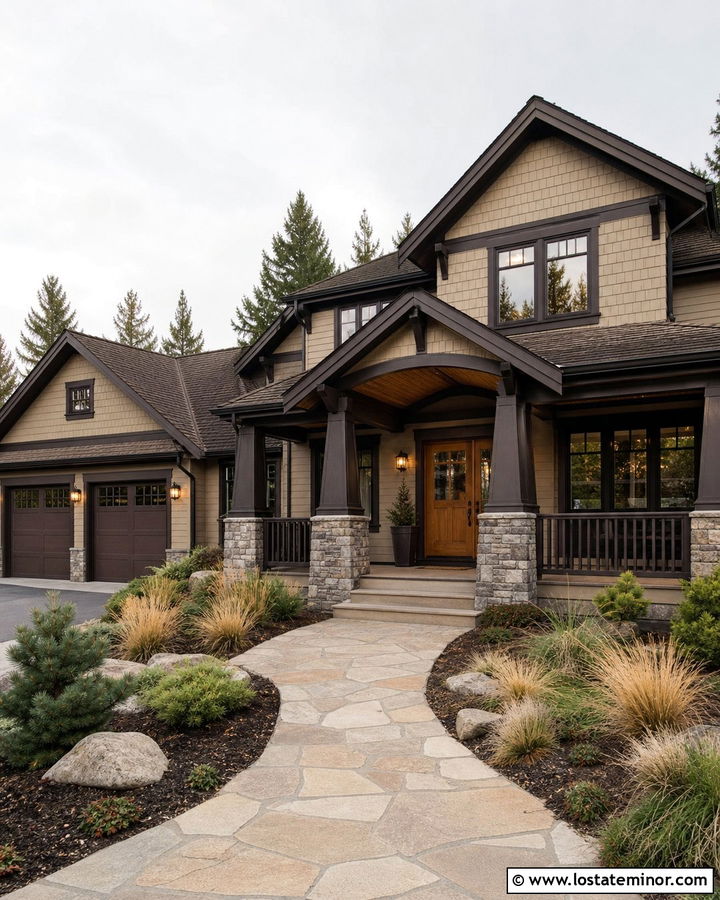
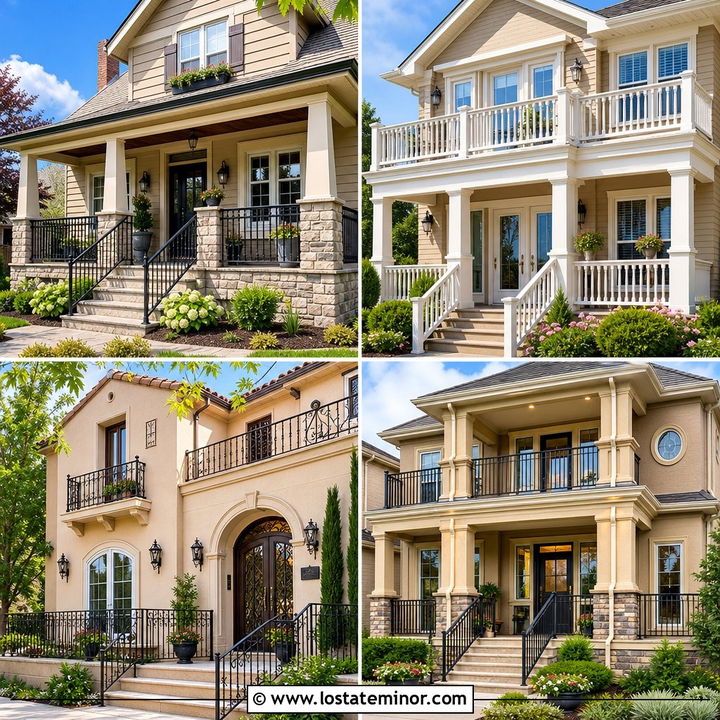
Dark brown trim brings depth to tan siding while preserving an earthy, coordinated palette. It fits Craftsman homes particularly well because the combination complements exposed beams, tapered columns, and substantial porch details. Apply espresso brown to the fascia, window trim, porch railings, and garage door. Use a medium warm tan on horizontal siding and a slightly lighter tan on shake-covered gables. A stained oak door and fieldstone porch columns strengthen the natural character. Choose roofing in deep brown or weathered charcoal rather than a vivid reddish tone. The trim should be noticeably darker than the siding so the architecture remains defined. Finish the yard with a curved stone walkway, native grasses, and evergreen shrubs for an exterior that feels grounded and cohesive. ()
5. Tan House With Charcoal Trim
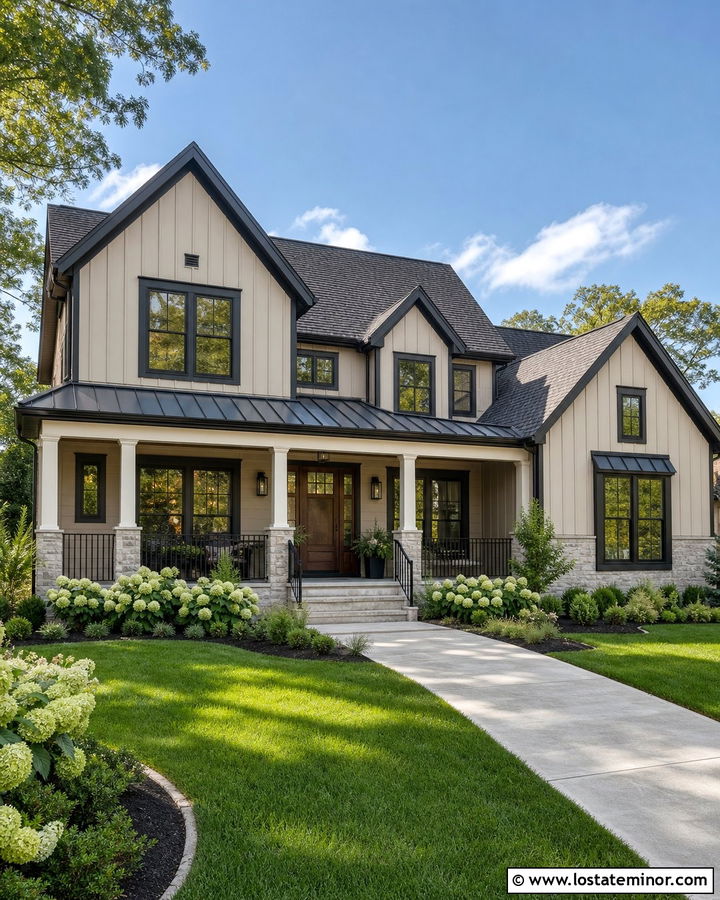
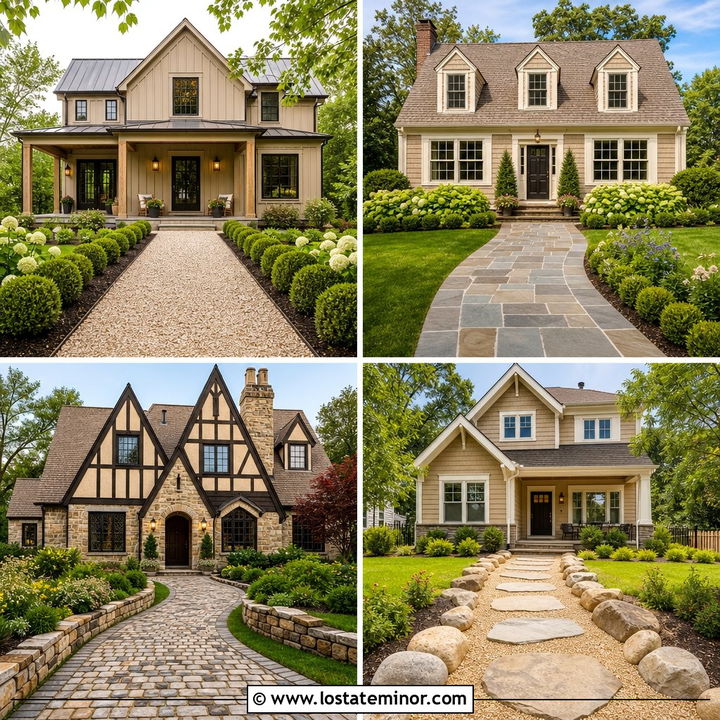
Charcoal trim offers a softer alternative to solid black while still giving a tan house modern definition. On a modern farmhouse, use a muted tan body color with charcoal window frames, fascia, gutters, and porch railings. Paint the front door charcoal as well, or introduce stained wood if the entry needs warmth. Creamy white porch columns can separate the dark trim from the tan siding and create a balanced three-color palette. A charcoal standing-seam porch roof ties the accents together without overwhelming the facade. Keep masonry simple, such as pale gray ledgestone with a few warm beige pieces. Because charcoal can carry blue, green, or brown undertones, compare it directly with the tan before painting the entire house. ()
6. Tan House With Sage Green Trim
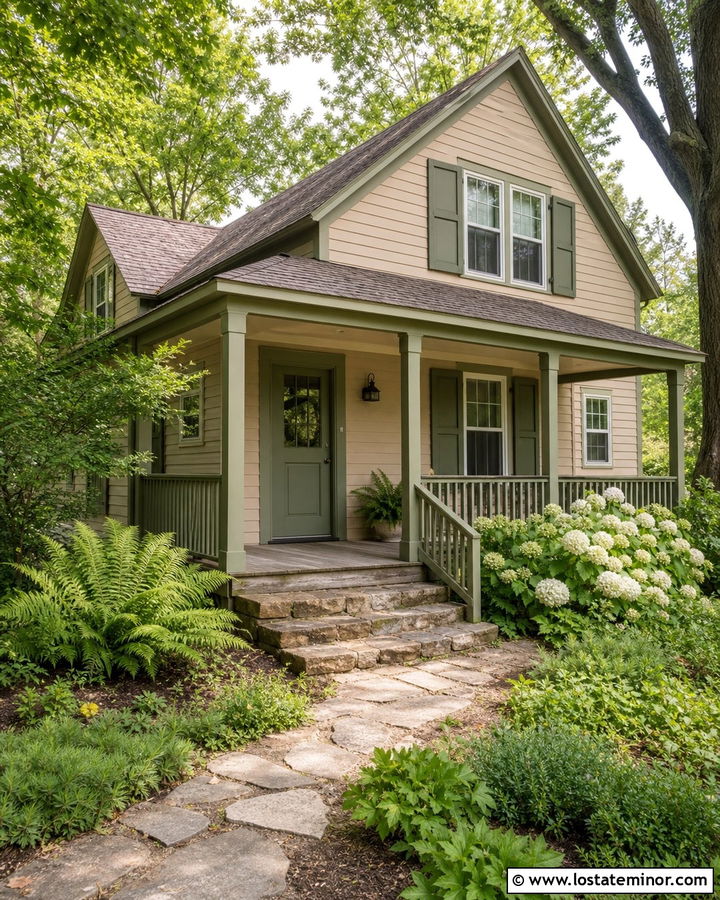
A tan house with sage green trim feels calm, natural, and well connected to its landscaping. This combination is ideal for a cottage or casual farmhouse surrounded by mature trees. Use soft tan clapboard siding, then place sage on the window trim, shutters, front door, and porch railing. Warm white fascia keeps the roofline clear and stops the green from becoming too dominant. Add a weathered wood porch floor and irregular stone steps for texture. Roofing in medium brown-gray will support the earthy colors better than a strongly blue shingle. Sage varies greatly between warm and cool versions, so select one with gray or olive undertones that harmonize with the siding. Ferns, hydrangeas, and loose garden borders can make the finished exterior feel established. ()
7. Tan House With Navy Blue Trim
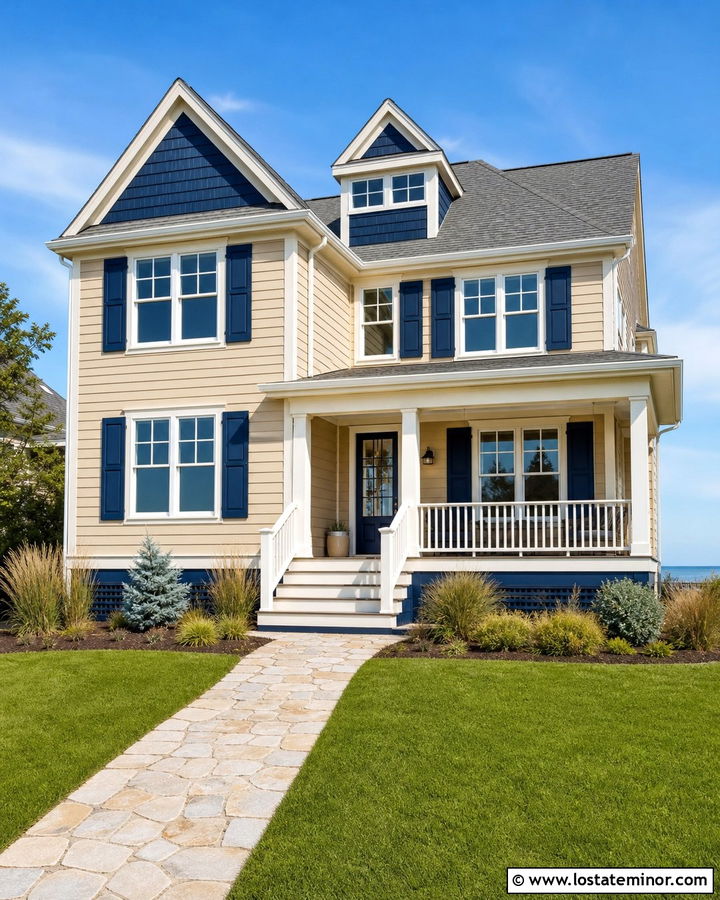
Navy blue trim gives tan siding a confident color contrast while retaining a classic character. On a coastal-inspired two-story house, apply navy to the shutters, front door, dormer trim, and lower porch skirting. Keep the main window casings warm white so the facade does not become visually heavy. Sandy tan shingles or lap siding will echo natural shoreline colors, while the navy provides a strong focal point. A medium gray roof and pale stone walkway help cool the overall palette. Repeat navy on planters or porch furniture in small amounts, but avoid covering every decorative surface. The most successful arrangement lets tan remain dominant, white clarify the architecture, and navy punctuate the design. Natural grasses and blue-green shrubs complete the fresh exterior.
8. Tan House With Blue Gray Trim
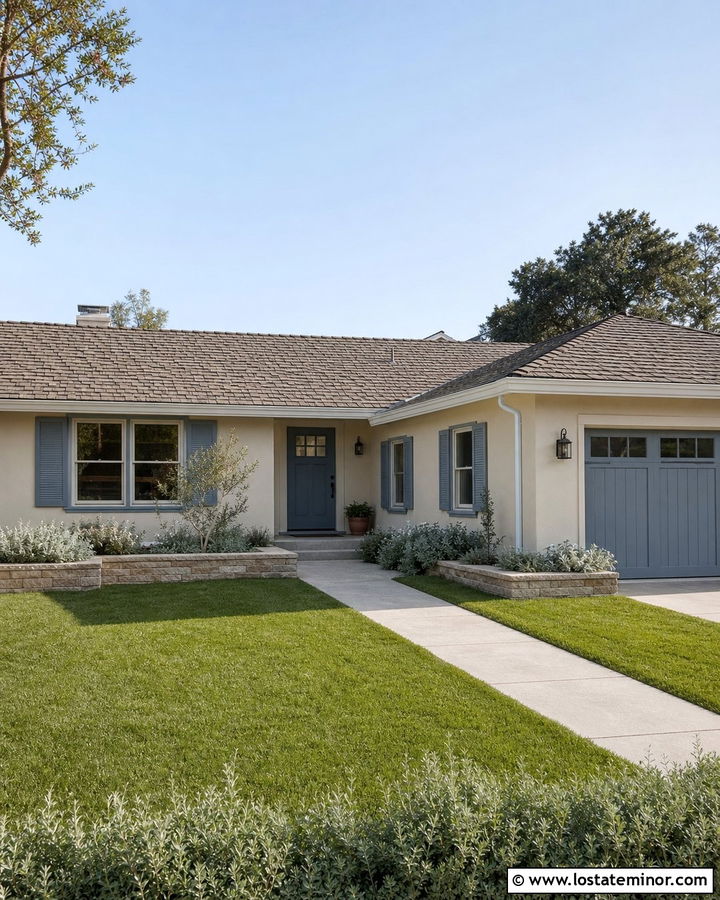
Soft blue-gray trim can refresh a tan house without creating dramatic contrast. This understated pairing suits a ranch home, where long horizontal lines benefit from gentle color variation. Use a light sandy tan on the siding and blue-gray on shutters, window casings, and the garage door. Paint the front door a deeper slate blue to establish a clear entry point. Warm white fascia can bridge the cool accents and warm body color. Choose a roof that contains both gray and brown granules so it relates to the full palette. Limestone planters, a light concrete walkway, and silvery foliage will reinforce the cooler notes. Check the blue-gray on every side of the house because shaded areas can make a subtle trim color appear noticeably bluer. ()
9. Tan House With Taupe Trim
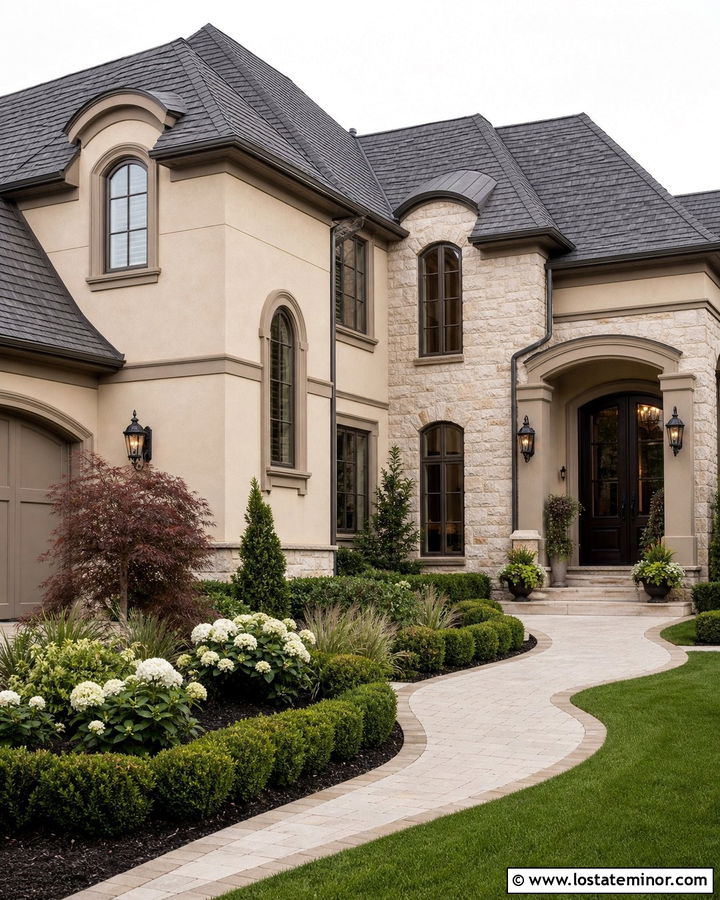
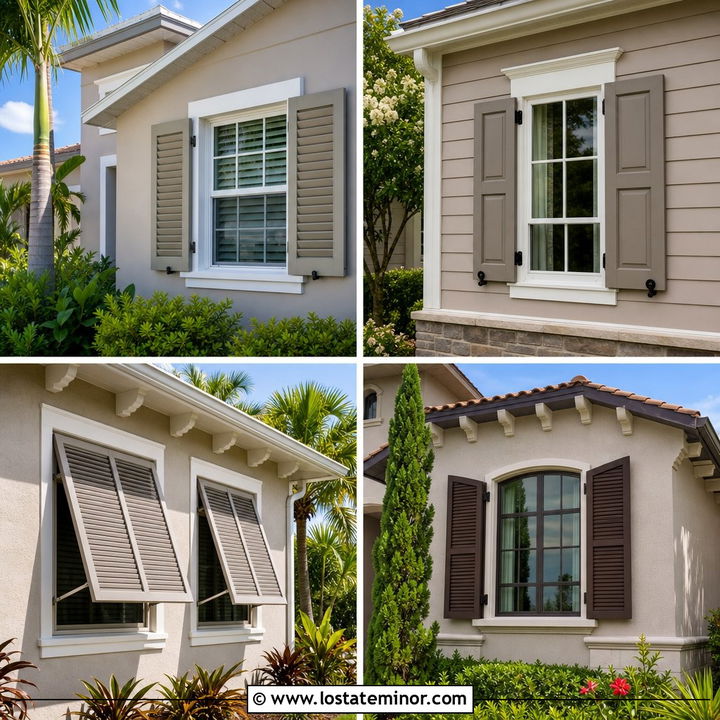
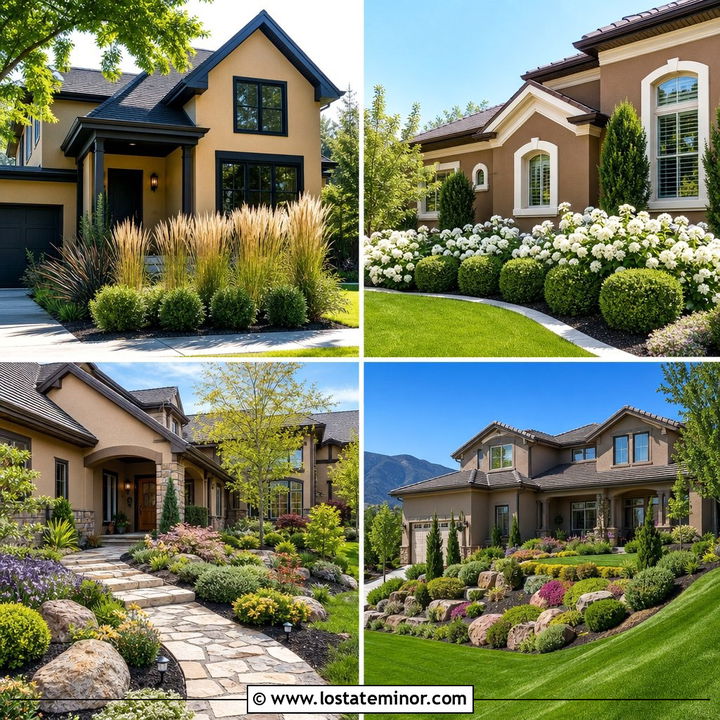
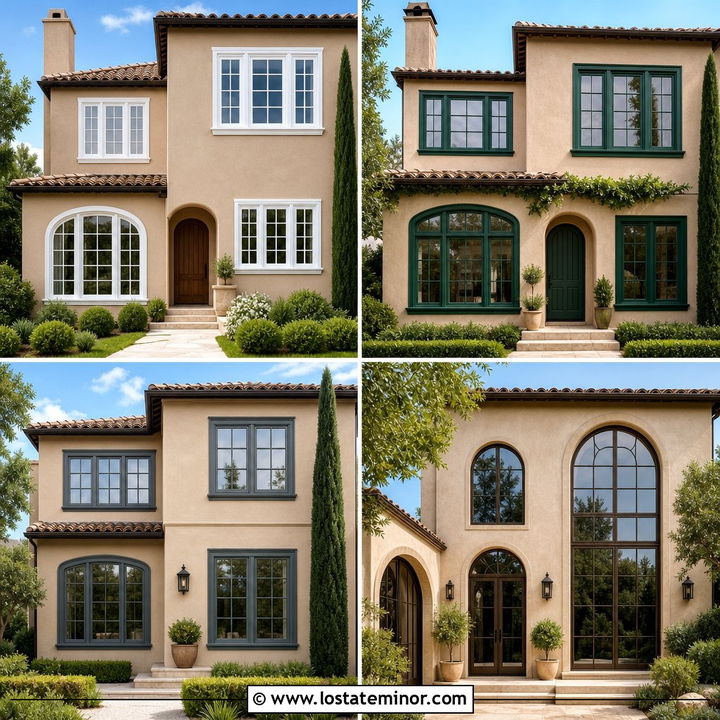
Taupe trim creates a layered neutral exterior with more dimension than a single tan color. This scheme works beautifully on European-inspired homes with stone, arched windows, or multiple roof sections. Choose a light warm tan for the stucco and a medium taupe for window surrounds, fascia, garage doors, and decorative bands. An espresso front door gives the entry sufficient depth, while antique bronze lighting complements the warm undertones. Incorporate stone that mixes beige, gray, and muted brown to connect the body and trim colors naturally. A weathered charcoal roof keeps the finished home from leaning too yellow. Since tan and taupe can appear similar at a distance, select shades with enough value difference to make the architectural details visible from the street. ()
10. Tan House With Greige Trim
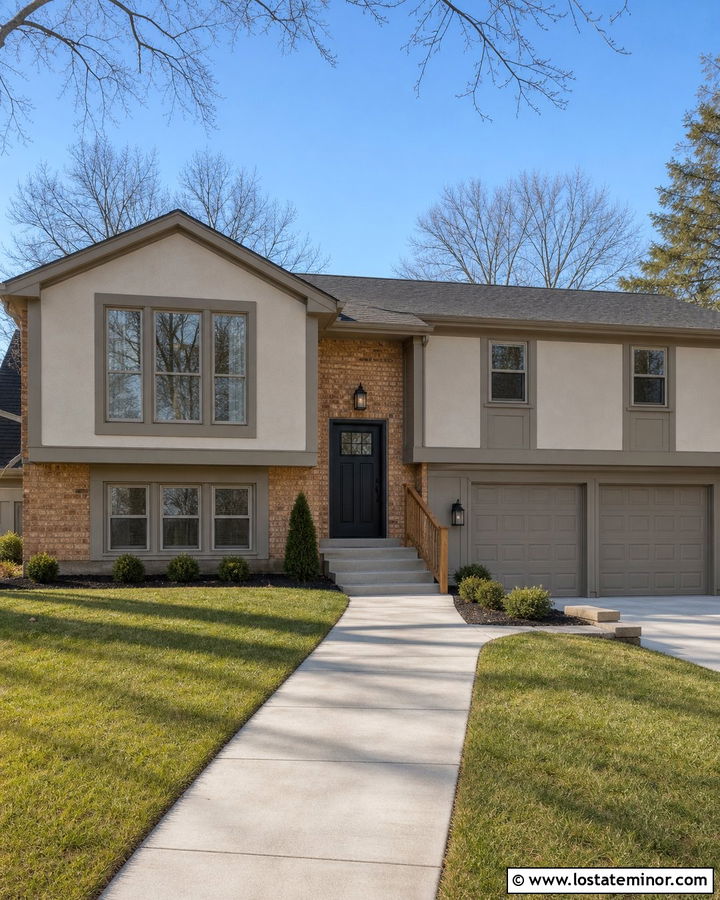
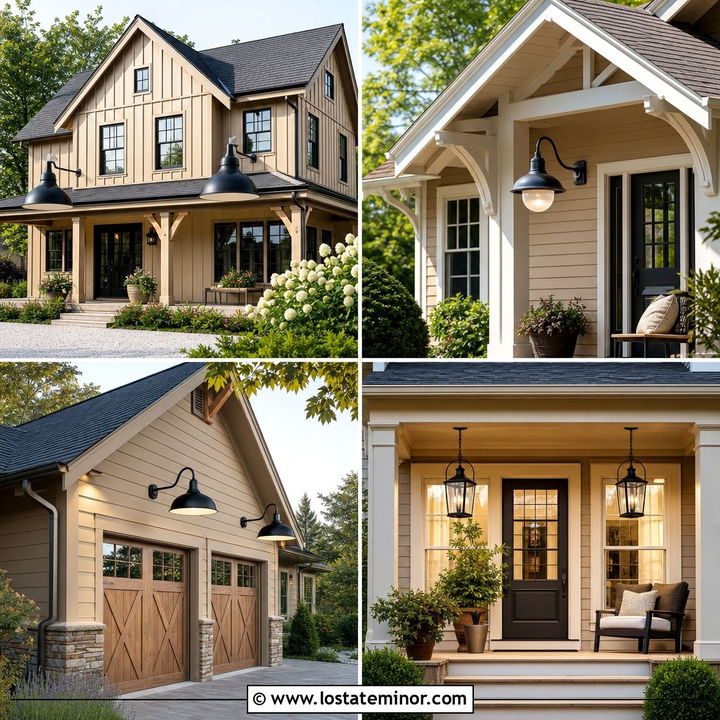
Greige trim can update a tan house while maintaining a quiet, neutral palette. It is especially useful for split-level homes that combine siding, brick, and large garage doors. Paint the upper siding a balanced tan, then use medium greige on the garage, fascia, window surrounds, and lower-level panels. A black front door and matching lighting add crisp definition in small doses. If the home includes brick, choose a greige that connects with the mortar rather than fighting its undertones. A charcoal roof and natural wood handrail can complete the scheme. Keep the landscaping streamlined with low shrubs and a broad walkway. The finished exterior should show a clear progression from warm tan to cooler greige, with dark accents providing a controlled visual anchor.
11. Tan House With Olive Green Trim
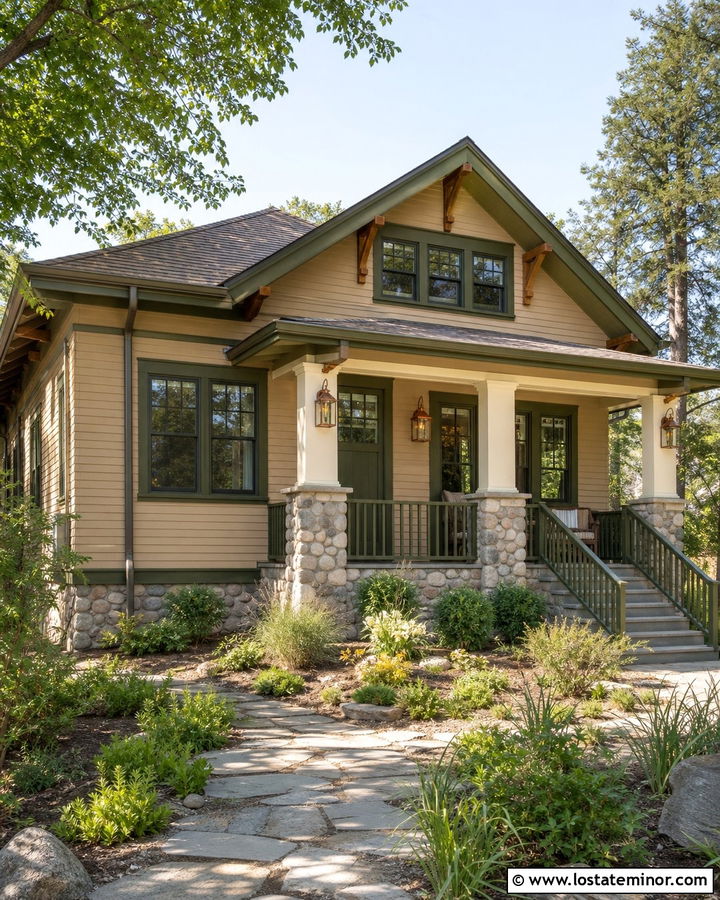
Olive green trim gives tan siding a richer and more grounded look than pale sage. This pairing complements a bungalow with deep eaves, wood brackets, and a broad front porch. Use medium tan on the clapboard siding and olive on the window trim, fascia, porch railing, and front door. Cream accents around the porch ceiling and columns will keep the darker green from closing in the facade. Add warm river rock to the foundation and select a brown-gray roof with subtle green undertones. Copper porch lights can develop a natural patina that suits the palette. Because olive can shift toward yellow, compare samples beside the tan siding and surrounding plants. The ideal shade should look earthy and muted rather than bright or military green.
12. Tan House With Forest Green Trim
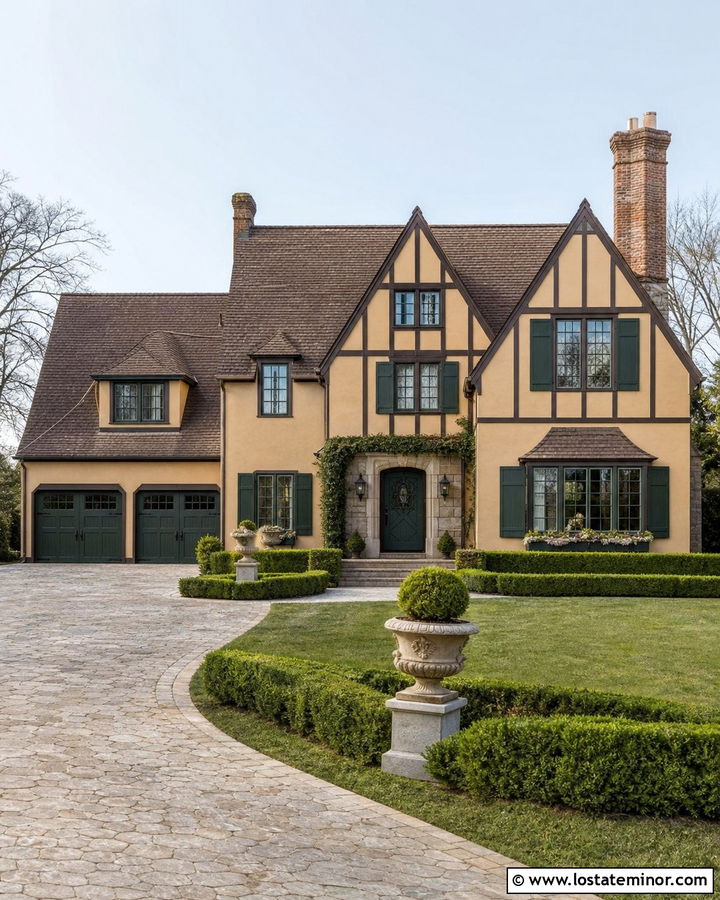
Deep forest green trim creates traditional contrast on a substantial tan home. It works particularly well on Tudor, Colonial Revival, and country properties with prominent rooflines. Paint the stucco or siding a light tan, then use forest green on shutters, window frames, the front door, and garage doors. Cream trim around the eaves and entry prevents the green accents from feeling too heavy. Dark brown roof shingles, aged brick chimneys, and bronze hardware support the historic character. If the home has many shutters, limit green elsewhere so the facade remains balanced. Formal hedges and symmetrical planters can reinforce the orderly architecture. This palette looks strongest when the green is deep and slightly muted, allowing it to frame the warm tan instead of competing with it.
13. Tan House With Burgundy Trim
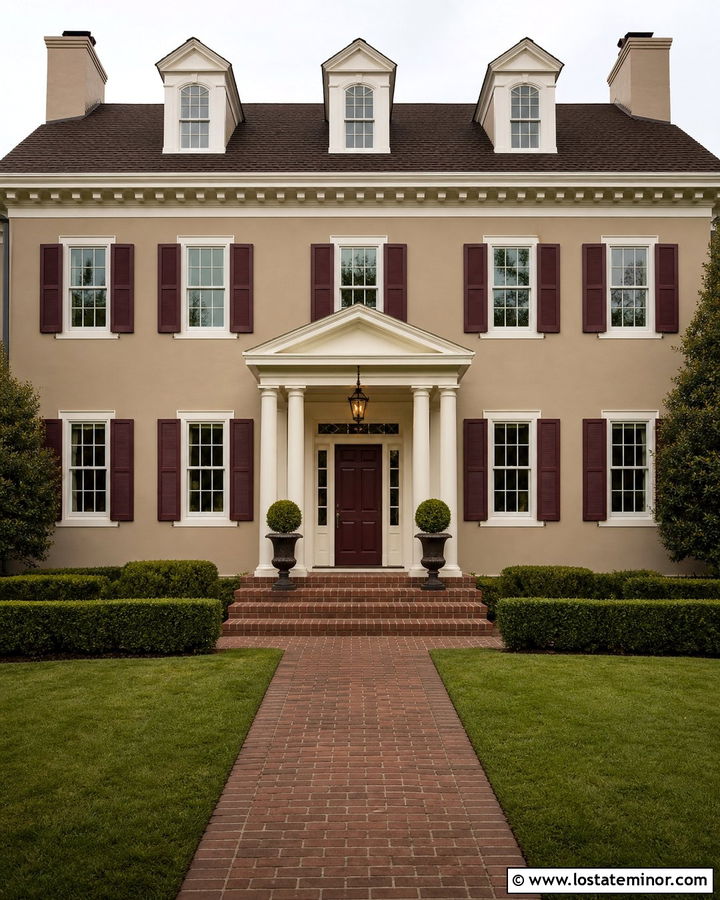
Burgundy trim can give a tan exterior a warm, traditional personality when it is used with restraint. Consider this combination for a Georgian or brick-accented Colonial home. Apply muted tan to the siding and warm cream to the main window casings, columns, and cornice. Reserve burgundy for shutters, the front door, and one or two smaller architectural accents. This placement introduces color without outlining the entire house in red. A dark brown roof, antique brass hardware, and red-brown brick steps will connect the palette. Choose a burgundy with brown undertones rather than a vivid purple cast. Deep green hedges and simple foundation beds provide a calm backdrop. The result should feel established, balanced, and welcoming rather than overly formal or dated.
14. Tan House With Terracotta Trim
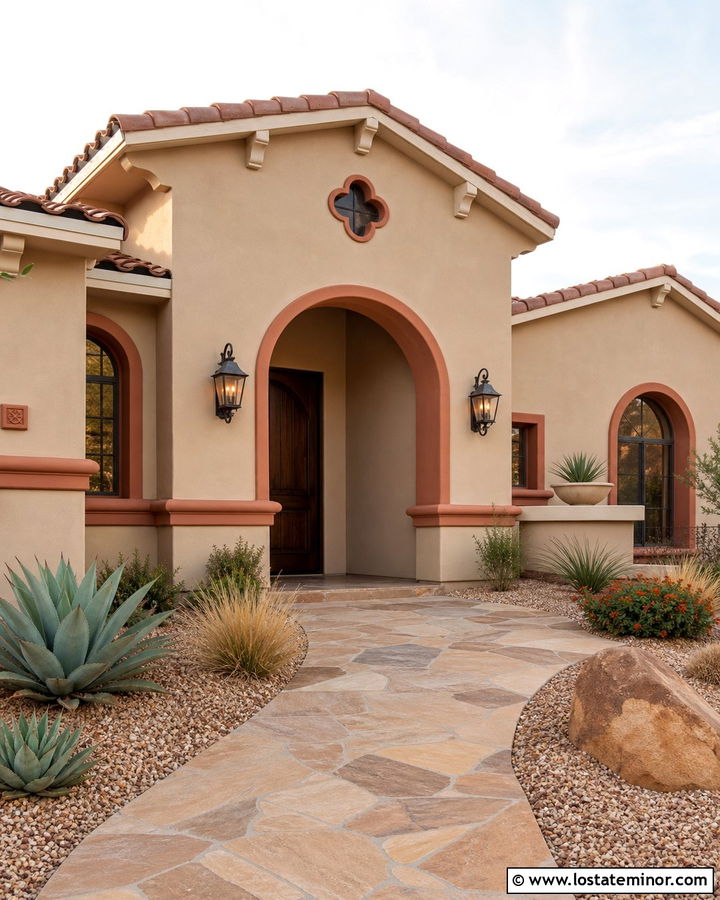
Terracotta trim brings sun-warmed color to a tan stucco exterior, making it a natural fit for Southwestern and Spanish-inspired architecture. Use a sandy tan across the main walls and a muted clay color on window surrounds, entry arches, and selected decorative bands. Cream trim beneath the eaves can add brightness. Complete the look with a dark wood front door, black iron lighting, and a red clay tile roof. Gravel beds, agave, ornamental grasses, and a wide stone walkway reinforce the regional character without overcrowding the facade. Keep the terracotta earthy and subdued so it relates to the roof rather than matching it exactly. Slight color variation between the trim and tile creates depth and makes the complete exterior look more natural.
15. Tan House With Bronze Trim
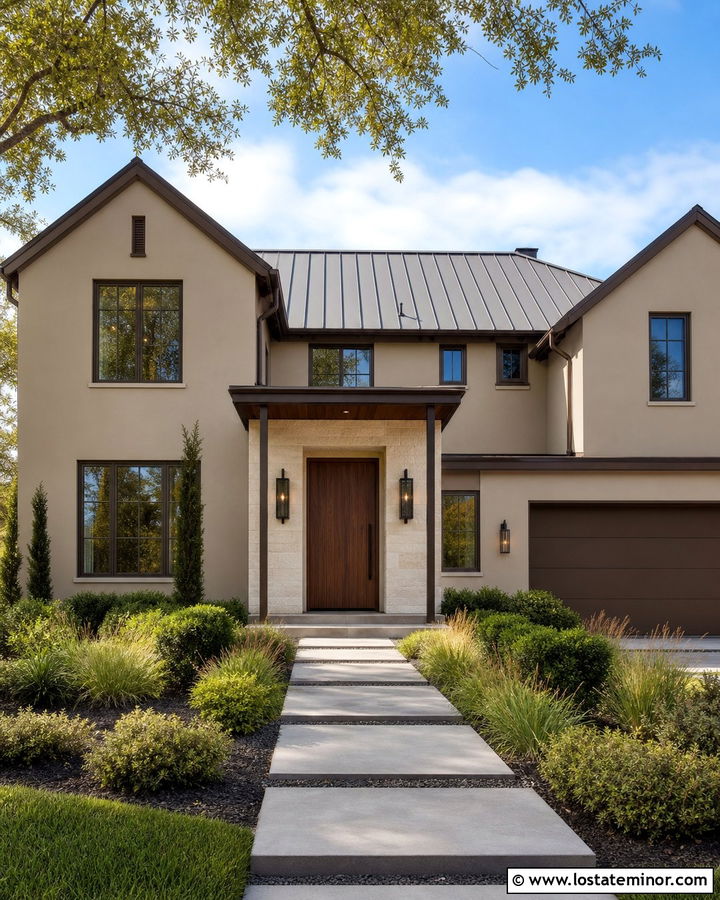
Bronze trim offers a refined option for a tan house with contemporary architecture. Instead of using bronze as a bright metallic finish, choose a deep brown-bronze paint for window frames, fascia, gutters, and slim porch supports. A light mushroom tan on smooth stucco creates a warm background for these darker lines. Add a walnut front door, bronze exterior lighting, and a low standing-seam roof in a similar dark finish. Pale limestone at the entry introduces texture without disrupting the restrained palette. This design works best when the house has clean shapes and limited decorative molding. Use repeated bronze details to create rhythm across the facade. Structured grasses, low hedges, and large concrete pavers can finish the polished but approachable curb-appeal look.
16. Tan House With Copper Accents
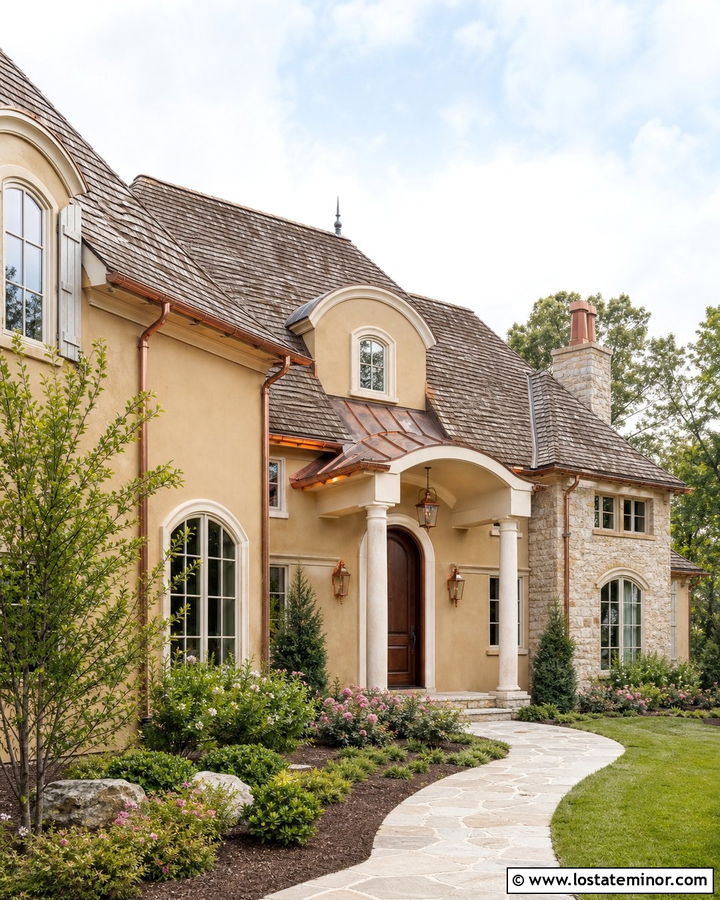
Copper accents can animate a tan exterior through color, texture, and gradual natural weathering. On a French country home, use warm tan stucco with creamy trim around arched windows and substantial entry columns. Introduce copper through porch roofing, gutters, downspouts, lanterns, and a small bay-window roof. A medium walnut front door and mixed beige-gray stone will keep the palette grounded. The copper should function as a supporting material rather than covering too much of the facade. Choose roof shingles in weathered brown to coordinate with both new copper and its eventual patina. Soft landscaping, curved paths, and layered flowering shrubs suit the architecture. This complete scheme feels detailed and distinctive while allowing tan to remain the dominant exterior color.
17. Tan House With Natural Wood Trim
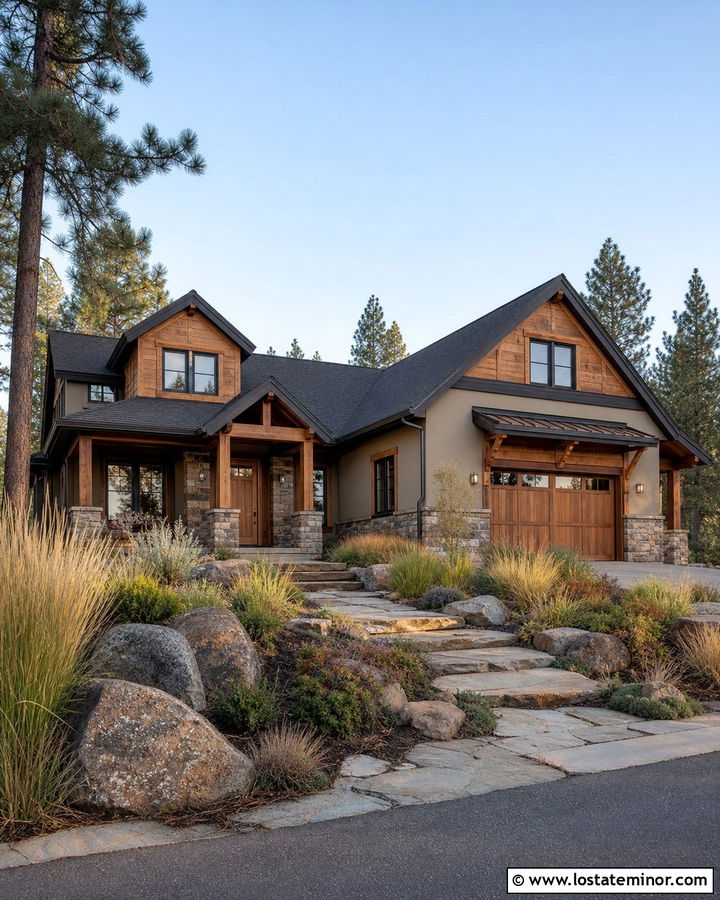
Natural wood trim makes a tan house feel warm, relaxed, and closely connected to its setting. This approach works on a rustic contemporary home with broad windows and a covered entry. Use light khaki-tan siding, then add cedar around the windows, beneath the gables, across porch beams, and on the garage door. Charcoal fascia and window frames can provide needed structure around the similar warm tones. Continue the cedar on the front door and porch ceiling for a unified appearance. A stone foundation with gray, brown, and cream variation helps transition between the siding and wood. Protect exterior timber with a suitable transparent or semi-transparent finish. Native grasses, boulders, and an informal walkway complete the comfortable, nature-focused design. ()
18. Tan House With Stone Gray Trim
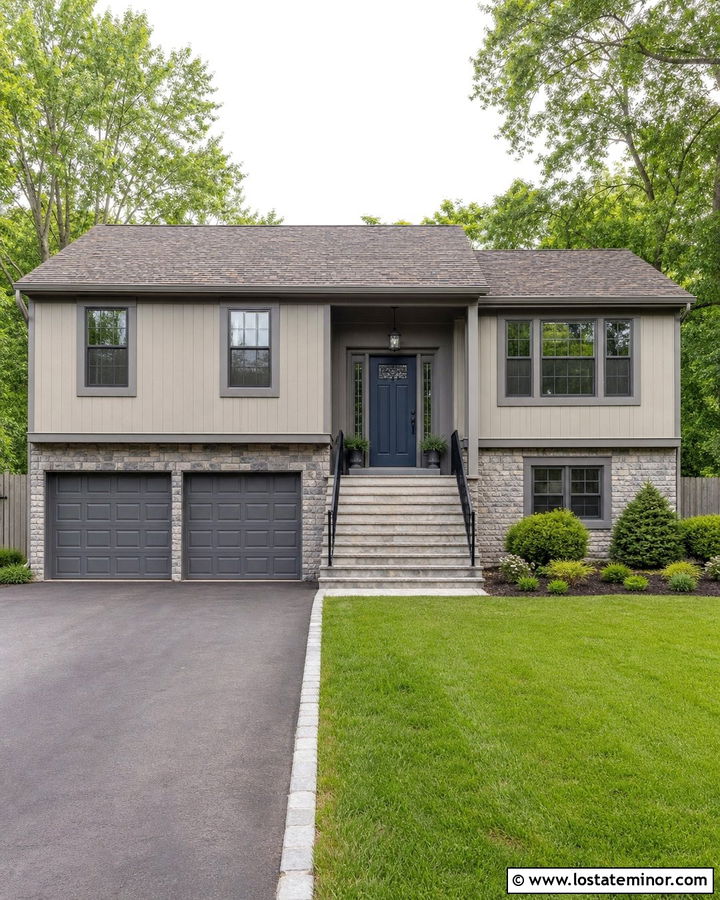
Stone gray trim provides cool balance for a warm tan exterior and helps coordinate a house with gray masonry. On a raised ranch, use medium tan horizontal siding above a stone-clad lower level. Paint the window casings, fascia, gutters, and garage doors a solid stone gray. A dark blue-gray front door can add subtle color while remaining connected to the trim. Choose a roof containing both warm and cool granules to bridge the siding and masonry. White accents are optional, but a small amount around the entry may prevent the exterior from appearing too muted. Keep the landscape open with broad steps, low evergreen shrubs, and a clean driveway edge. This palette gives an older ranch a current appearance without ignoring its existing stonework.
19. Tan House With Slate Blue Trim
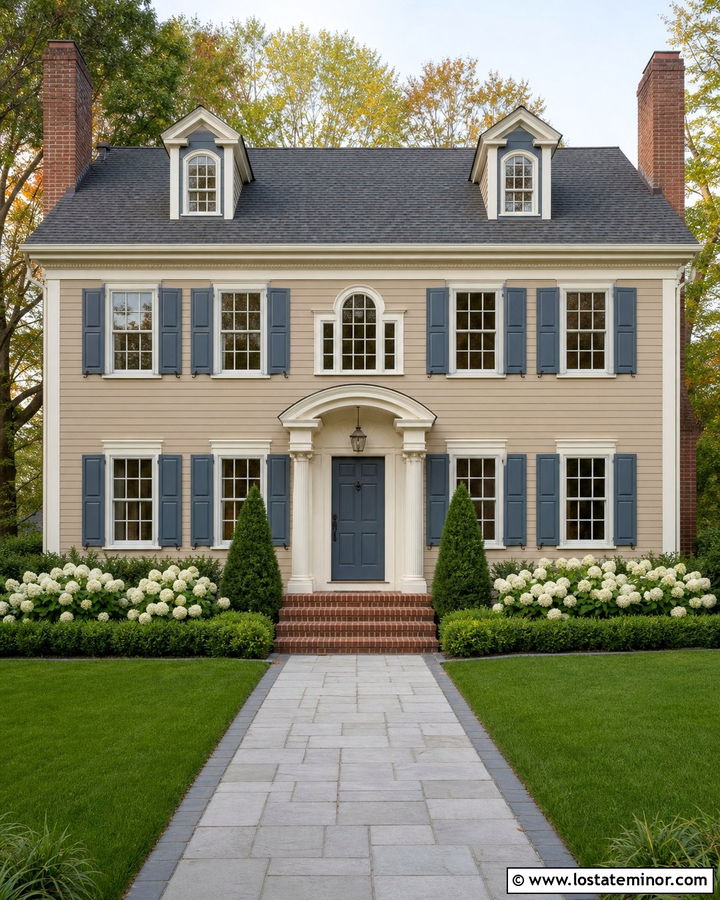
Slate blue trim adds color to tan siding while remaining muted enough for a traditional neighborhood. It is a strong choice for a Dutch Colonial with gambrel roofing and balanced window placement. Use soft tan clapboard siding, warm white corner boards, and slate blue shutters, doors, and dormer accents. A dark charcoal roof will define the distinctive roofline, while red-brown brick steps bring a little warmth to the entrance. Select a blue with noticeable gray undertones so it looks sophisticated in full daylight. Repeat it on a detached garage or small garden gate to connect the property. White hydrangeas, evergreen shrubs, and a straight walkway can support the classic symmetry. The finished scheme feels colorful but never loud or overly themed.
20. Tan House With Teal Trim
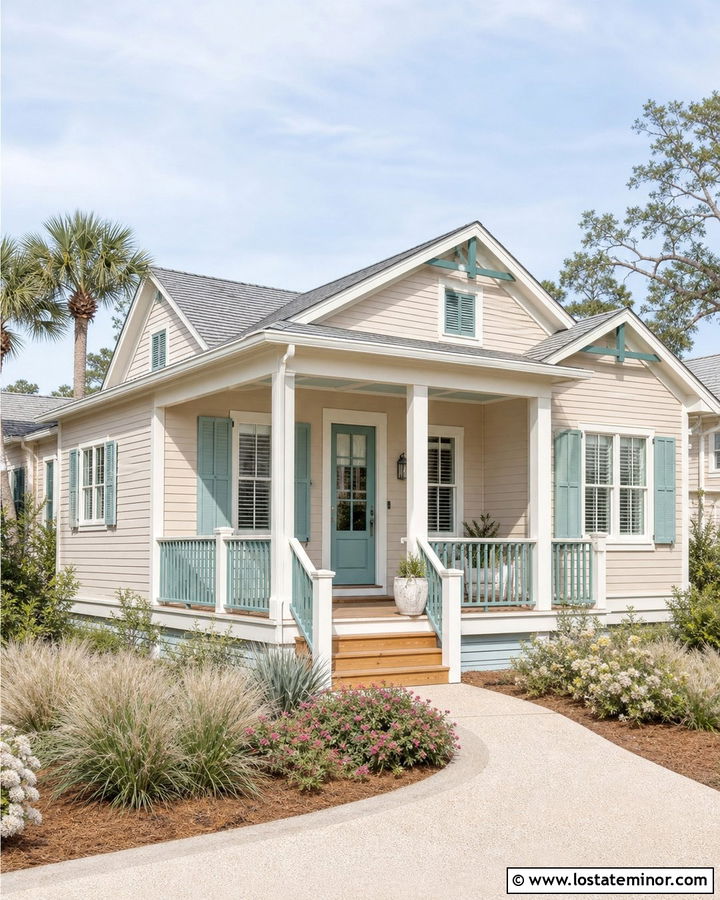
Teal trim gives a tan exterior a cheerful focal color that works well on a small cottage or coastal bungalow. Keep the house body a pale sandy tan and use warm white on the fascia, porch posts, and window casings. Apply muted teal to the front door, shutters, porch railing, and selected gable details. This controlled placement allows the color to stand out without taking over the whole facade. A light gray roof and natural wood porch floor keep the scheme casual. Choose teal with gray or green undertones instead of a highly saturated tropical shade. Finish the exterior with ornamental grasses, flowering shrubs, and a curved shell-colored walkway. The result feels fresh, welcoming, and distinctive while remaining suitable for an everyday residential setting.
21. Tan House With Dusty Blue Trim
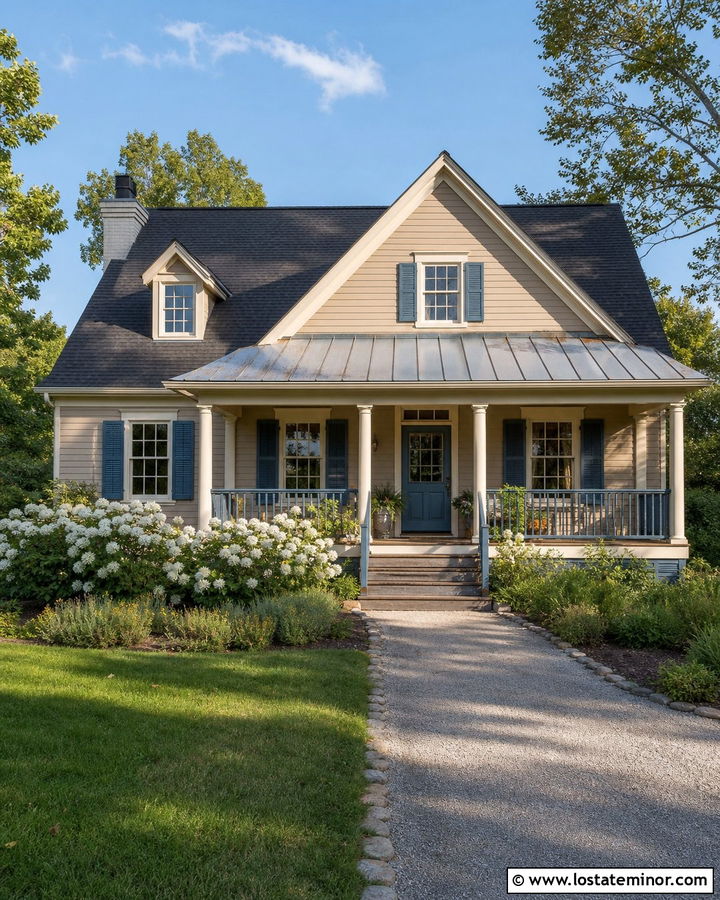
Dusty blue trim creates a gentle, lived-in appearance on a warm tan exterior. This pairing suits an American farmhouse with lap siding, a wide porch, and simple double-hung windows. Use a medium beige-tan body color and dusty blue on the shutters, porch railing, and front door. Soft cream around the windows, roofline, and columns keeps the scheme light. Add a galvanized metal porch roof and weathered wood steps for subtle material variation. A charcoal main roof anchors the pale colors without looking severe. Dusty blue should contain enough gray to remain calm beside tan. Loose perennial beds, white flowering shrubs, and a gravel-edged walkway complete the rural character. This palette offers personality while preserving the farmhouse’s comfortable, practical curb appeal.
22. Tan House With Muted Yellow Trim
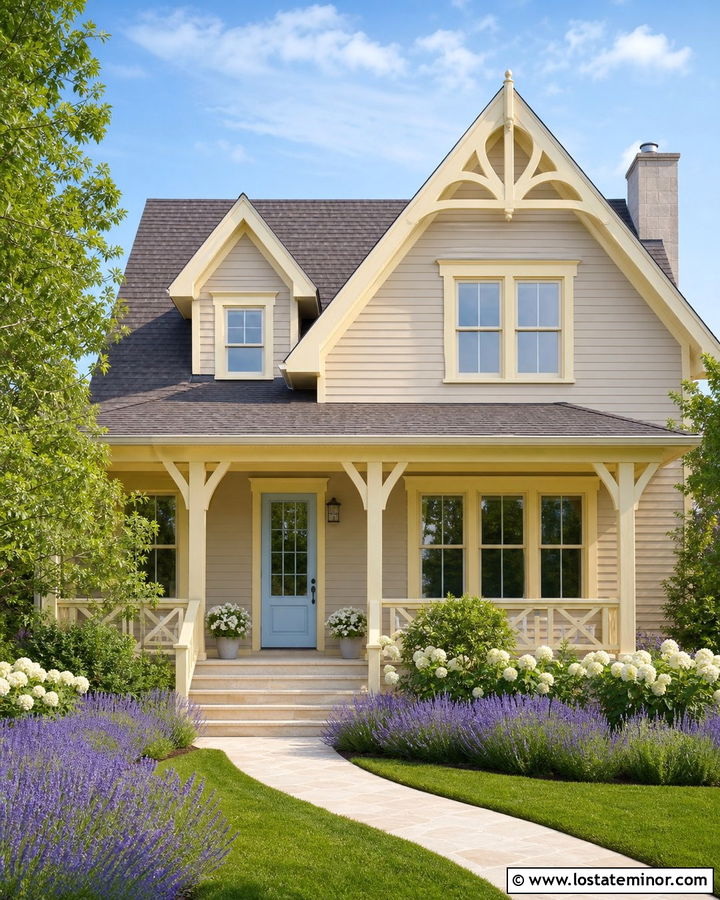
Muted yellow trim can brighten a tan house when both colors are clearly separated in value. On a cheerful cottage, use a medium neutral tan for the siding and a pale buttery yellow for the window casings, porch posts, and decorative gable trim. Warm white fascia creates an additional boundary so the palette does not become overly golden. A soft blue front door introduces a cooler counterpoint, while gray-brown shingles ground the roof. Keep masonry light, such as cream limestone or pale brick steps. The yellow should look softened and slightly creamy rather than vivid. Surround the house with lavender, white flowers, and fresh green shrubs. This complete exterior feels sunny and welcoming without turning the tan body color orange or overly warm.
23. Tan House With Iron Ore Trim
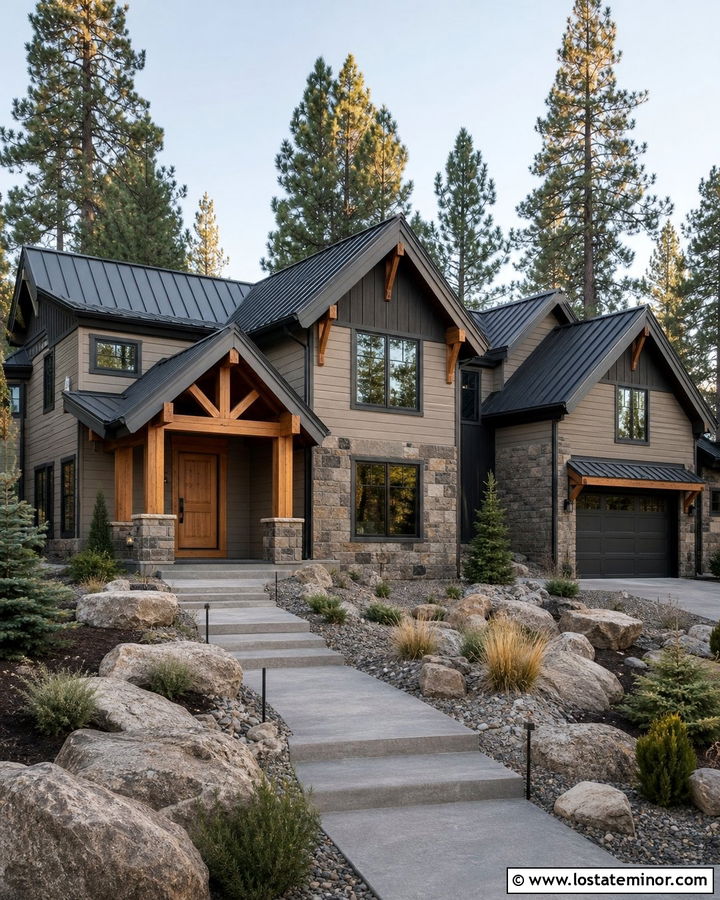
Iron Ore-style trim gives a tan exterior the depth of black with a slightly softer charcoal character. It is an effective combination for a mountain modern home with mixed siding and stone. Use a balanced greige-tan on horizontal siding and deep charcoal on window frames, fascia, gable siding, and the garage door. Cedar beams and a natural wood front door prevent the scheme from feeling cold. Add rugged stone containing charcoal, taupe, and beige to connect every major color. A dark standing-seam roof will reinforce the strong roofline. Keep the landscaping natural with boulders, grasses, and evergreen trees. The dark trim should highlight intentional forms, so avoid placing it on too many small decorative pieces that could make the facade appear busy. ()
24. Tan House With Monochromatic Trim
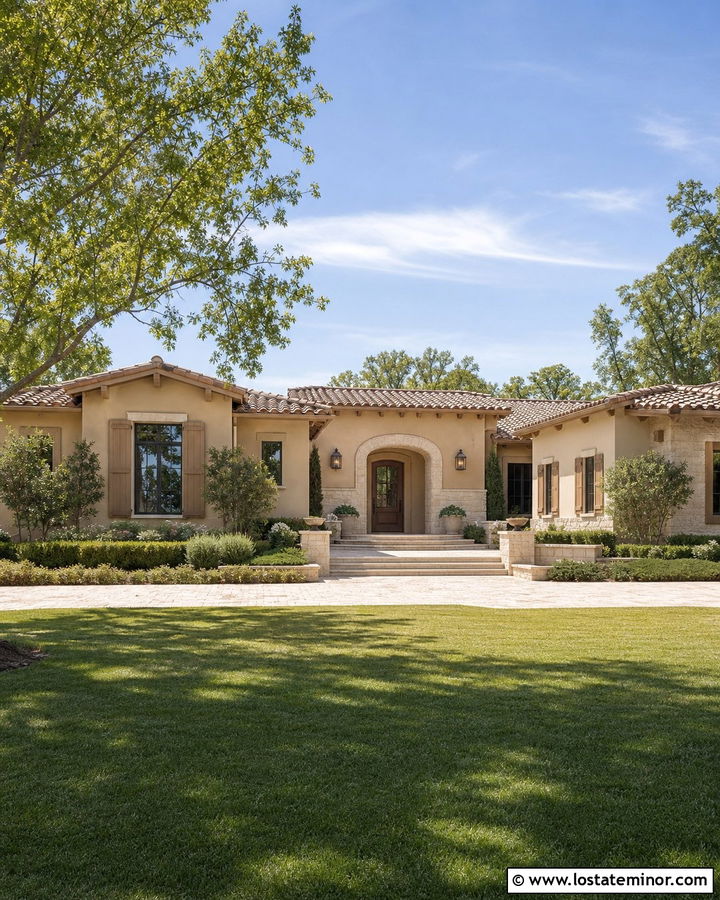
A monochromatic tan exterior can look sophisticated when the body and trim have enough contrast. Choose a medium tan for the main siding, a pale beige-tan for window casings and fascia, and a deep camel tone for shutters and the front door. This three-level approach works well on a Mediterranean ranch or understated traditional home. Cream limestone, a brown tile roof, and bronze lighting add texture without introducing unrelated colors. The light trim should clarify the architecture, while the deeper tan accents establish focal points. Compare all three shades together because similar colors may blend into one flat surface from the street. Use dark green landscaping and a pale walkway to frame the warm facade. The finished house feels calm, coordinated, and intentionally layered.
25. Tan House With White Trim And Black Shutters
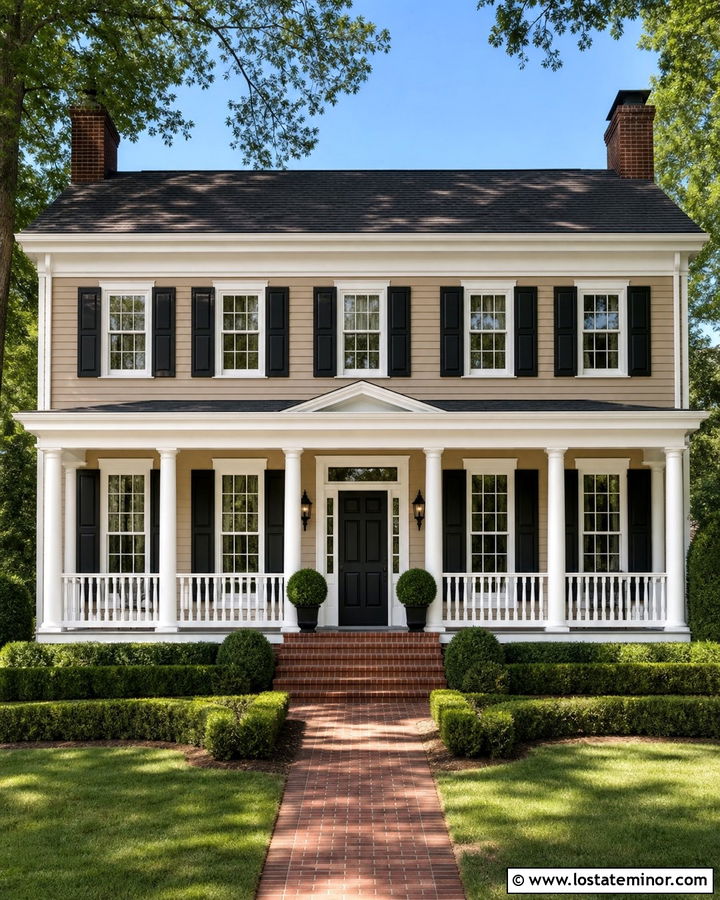
White trim and black shutters create one of the most recognizable complete schemes for a tan house. On a symmetrical Colonial, use a medium golden tan across the clapboard siding and crisp but slightly warm white around the windows, cornice, columns, and porch railing. Add matte black shutters, a black front door, and simple black lanterns for clear contrast. A charcoal roof connects the dark accents across the upper facade. Red brick steps and a straight brick walkway add traditional warmth. Keep the shutter size proportionate to the windows so the dark shapes support rather than overwhelm the architecture. Formal hedges and balanced planters strengthen the orderly design. This palette is simple, but careful placement makes it look finished and intentional.
26. Tan House With Brown Trim And Cream Accents
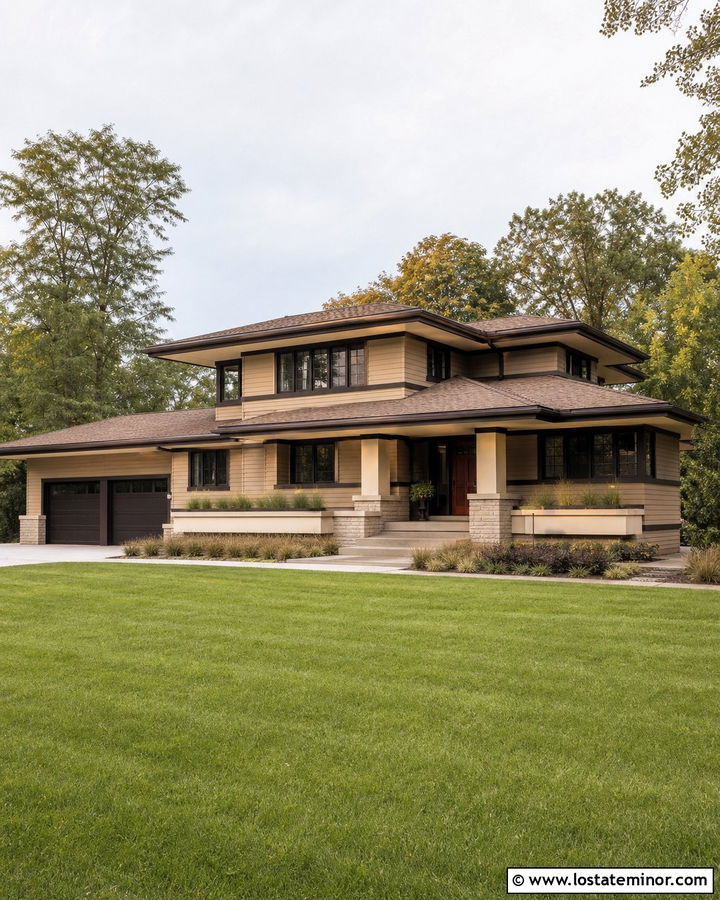
Combining brown trim with cream accents gives a tan house depth without relying on black. This layered palette is especially effective on a Prairie-style home with strong horizontal lines. Apply warm tan stucco to the main walls, dark chocolate brown to fascia, window frames, and garage doors, and cream to porch columns and soffits. A stained mahogany front door can act as the warm centerpiece. Use flat, earthy stone along the foundation to reinforce the low profile. Brown architectural shingles should coordinate with the trim while still showing some variation. Broad planting beds, horizontal planters, and low ornamental grasses can echo the architecture. The cream accents prevent the tan and brown combination from feeling heavy, producing a balanced and welcoming exterior.
27. Tan House With Green Trim And Cream Porch
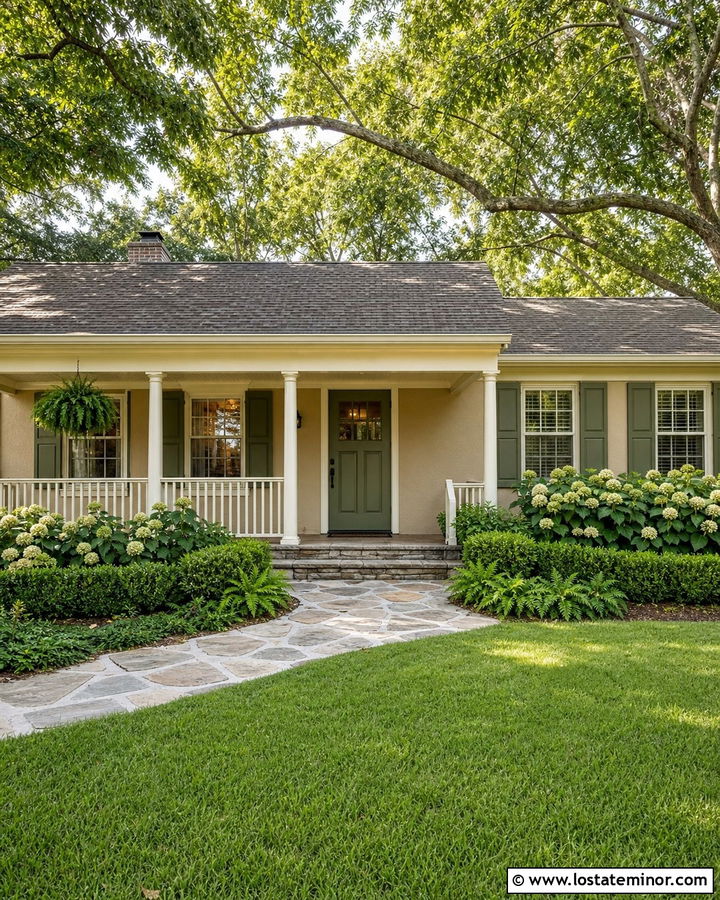
Green trim and a cream porch can turn a simple tan home into a layered, garden-friendly exterior. On a one-story cottage ranch, paint the siding a soft wheat tan and use muted moss green on shutters, window casings, and the front door. Cover the porch columns, ceiling, railing, and fascia in warm cream for a bright entry area. Add brown-gray roof shingles and a natural flagstone walkway to support the earthy palette. The green should be dark enough to separate from surrounding foliage but muted enough to complement the tan. Repeat it on window boxes or a garden gate rather than every available surface. Hydrangeas, ferns, and low hedges help the complete scheme feel connected to the landscape and comfortably established.
28. Tan House With Navy Trim And White Columns
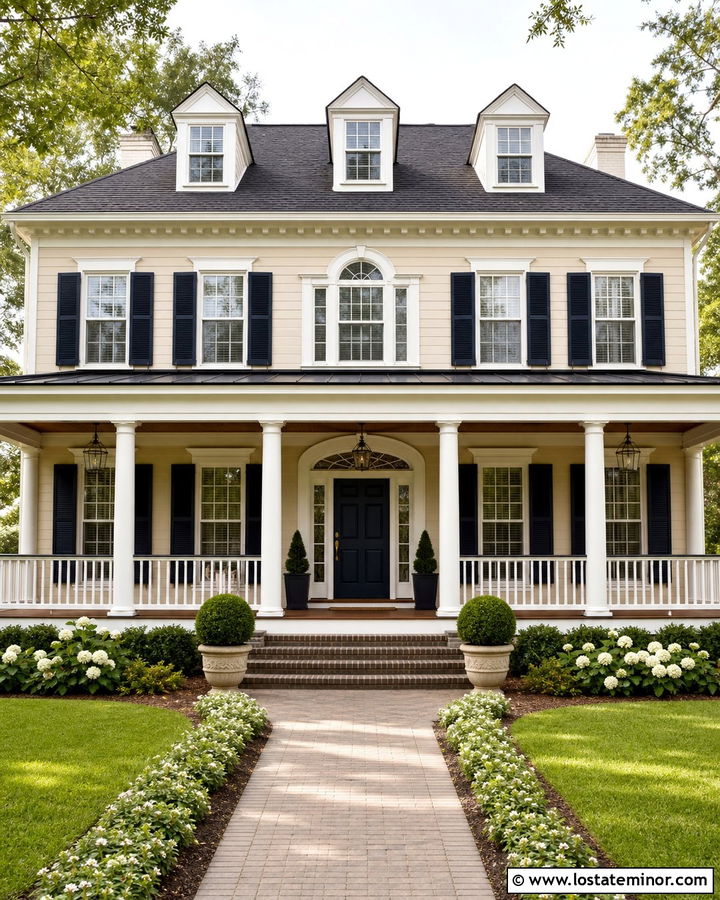
Navy trim and white columns provide a polished update for a tan house with a prominent porch. This combination works well on a Southern traditional home with balanced windows and a broad front elevation. Use light biscuit tan siding, deep navy shutters and doors, and warm white columns, railings, fascia, and window casings. A dark gray roof keeps the upper portion neutral, while a stained wood porch floor introduces natural warmth. Add brick steps that contain tan and charcoal tones to connect the facade. Restrict navy to strong focal features so it does not compete with the porch architecture. Symmetrical planters, flowering shrubs, and a straight walkway complete the formal curb appeal. The house remains warm, but the navy supplies a confident finishing contrast.
29. Tan House With Black Trim And Cedar Accents
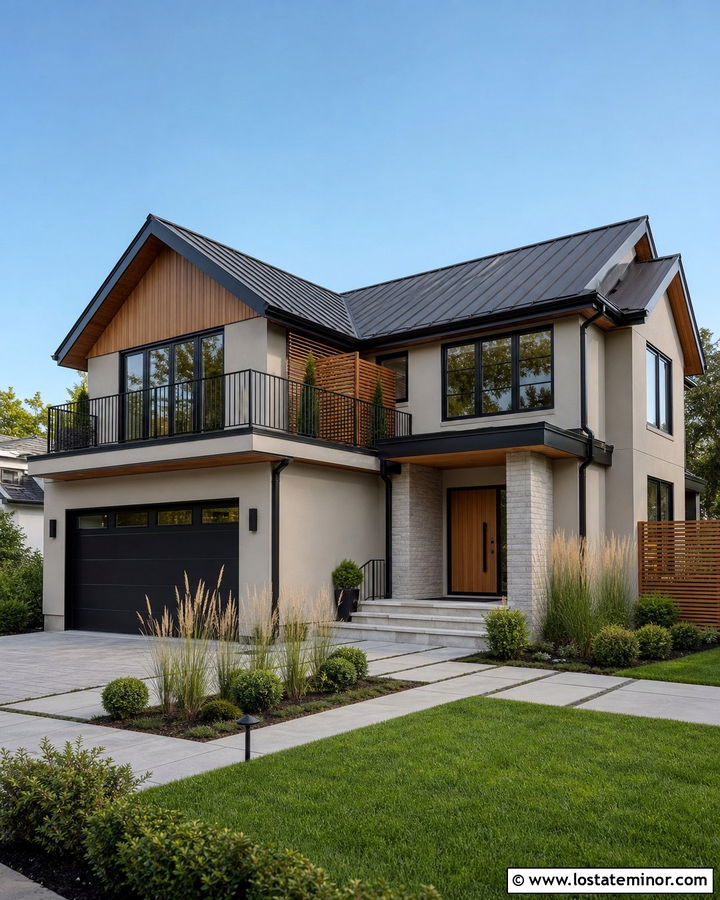
Black trim and cedar accents can give a tan house a clean, contemporary character without removing its warmth. Use soft greige-tan board-and-batten siding on a modern two-story home. Apply black to window frames, fascia, gutters, balcony railing, and the garage door. Place natural cedar on the front door, porch ceiling, gable panel, and selected vertical screens. This warm material creates a visual bridge between the pale body and dark framework. A charcoal standing-seam roof and light gray stone entry wall strengthen the modern palette. Keep the front landscaping architectural with upright grasses, sculpted shrubs, and large rectangular pavers. The design succeeds when cedar is repeated in a few deliberate locations instead of being scattered across every part of the facade.
30. Tan House With Terracotta Trim And Cream Details
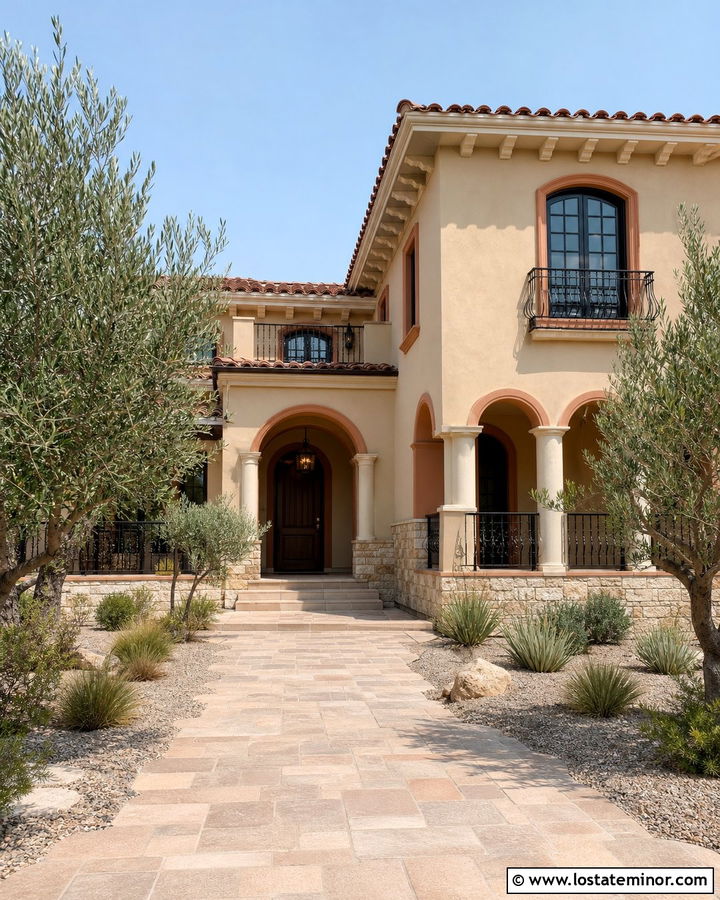
Terracotta trim and cream details create a warm final scheme for a tan house inspired by desert and Mediterranean architecture. Use pale desert tan stucco on the main walls, muted terracotta around recessed windows and entry arches, and creamy ivory beneath the eaves and on courtyard columns. A dark walnut door provides a rich focal point. Complete the facade with clay roof tiles, black iron railings, and light sandstone along the foundation. Drought-tolerant grasses, olive trees, gravel beds, and a broad paver walkway will frame the house naturally. Avoid using the same terracotta shade on every surface. Small differences between painted trim, roof tile, and paving create authentic depth. Bright daylight will reveal the full range of warm, earthy colors.
Conclusion:
The best trim color does more than outline windows. It connects the tan siding with the roof, doors, garage, porch, masonry, and surrounding landscape. These **30 Tan House Design With Trim Ideas** demonstrate how one versatile body color can support classic, modern, rustic, coastal, and regional looks. Begin with permanent materials such as roofing, brick, and stone, then compare trim samples against them. View each sample in sun and shade before making a final choice. Crisp white and black produce stronger contrast, while cream, taupe, brown, green, and blue create softer transitions. Whichever palette you prefer, repeat each accent deliberately so the complete exterior looks balanced, coordinated, and inviting from the curb.

Related posts: