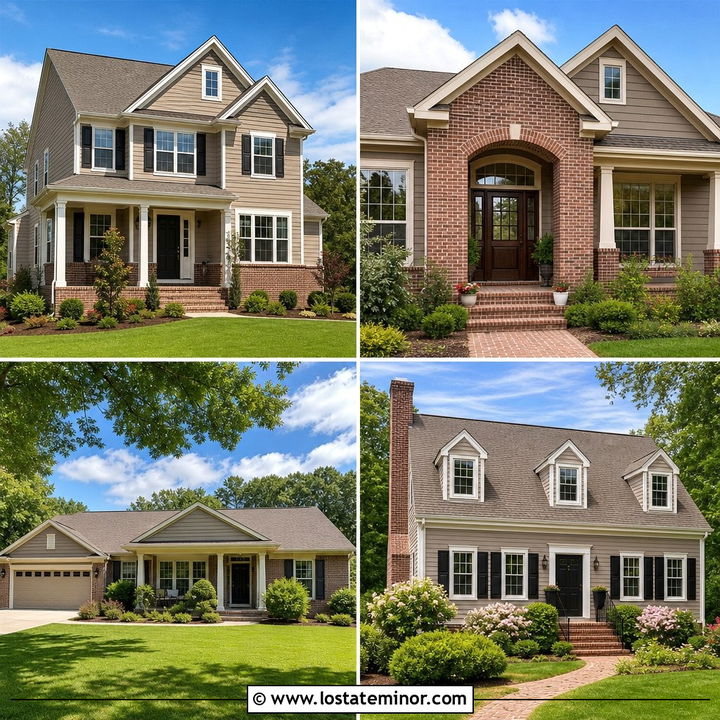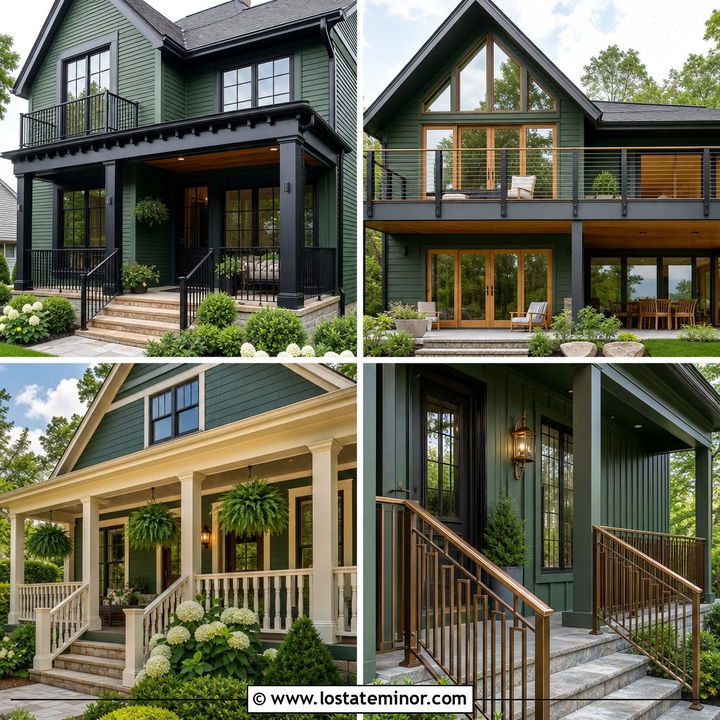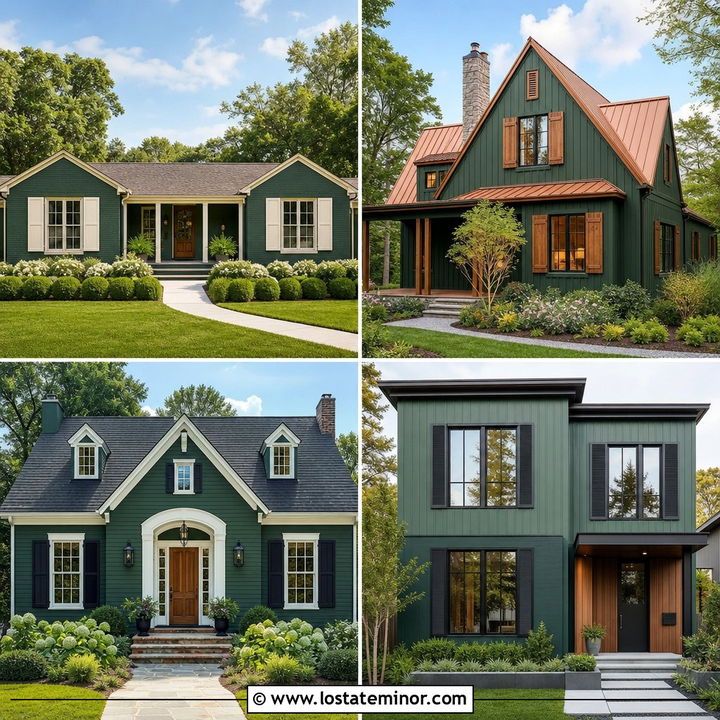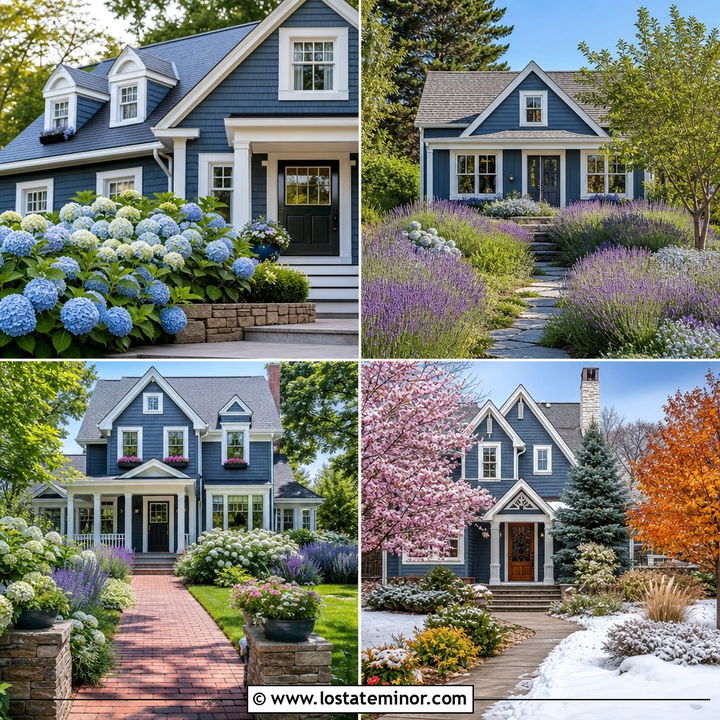
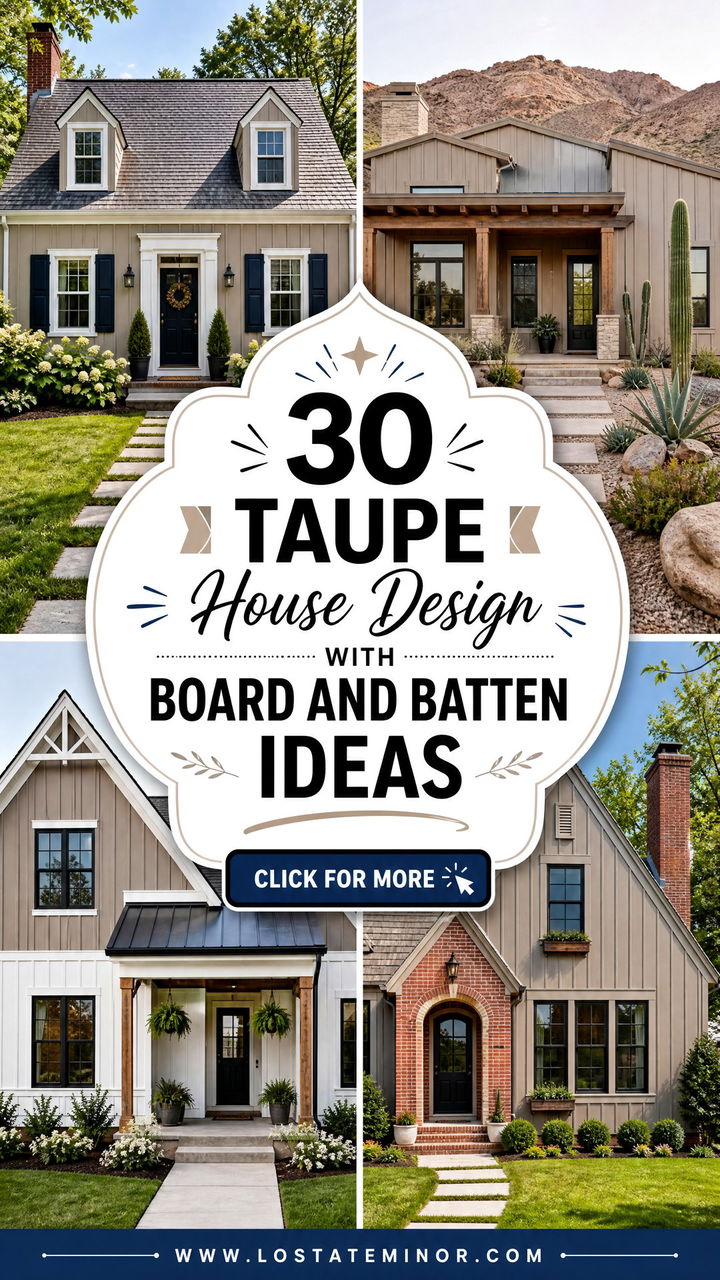
Taupe brings warmth, depth, and flexibility to a board-and-batten exterior without making the facade feel heavy. This collection of **30 Taupe House Design With Board and Batten Ideas** explores complete color schemes for farmhouses, ranch homes, cottages, Craftsman houses, and modern builds. Each look coordinates the taupe siding with intentional trim, roofing, masonry, doors, windows, and outdoor features. You will find pale greige-taupes that feel airy, deeper brown-taupes that create drama, and balanced mid-tone shades that work with many materials. Use these combinations to compare contrast levels and decide where vertical siding will add the most architectural interest. The following **30 Taupe House Design With Board and Batten Ideas** offer practical inspiration for creating a polished, welcoming exterior.
1. Light Taupe Board and Batten Farmhouse
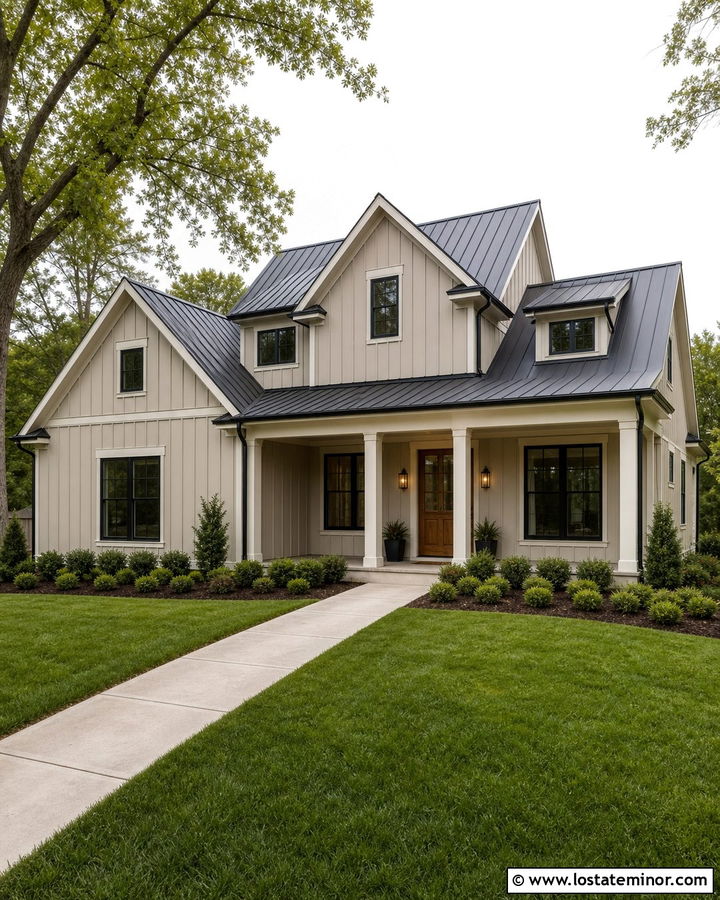
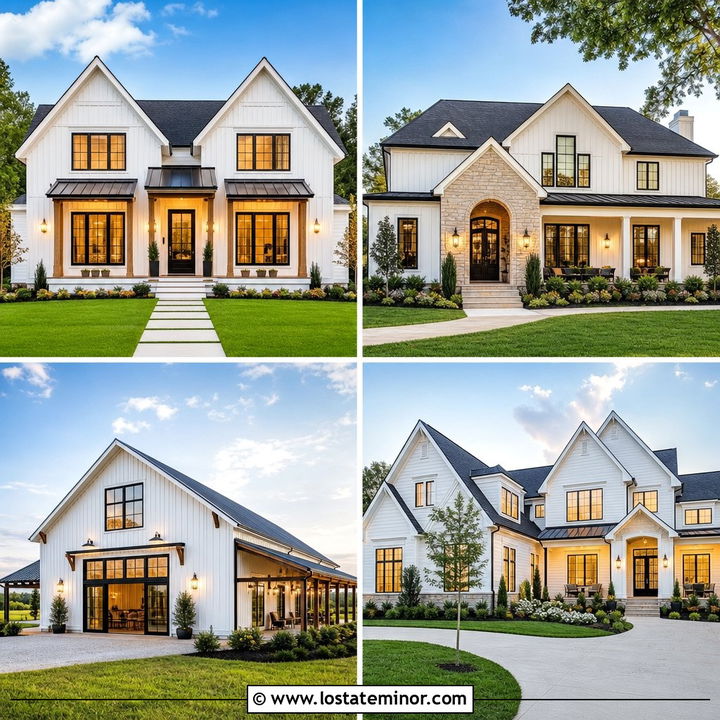
A light taupe exterior gives the familiar modern farmhouse look a softer, more inviting direction than bright white. Cover the main facade and front-facing gables with pale taupe board-and-batten siding. Then add warm white trim around the windows, roofline, and porch columns. A matte black metal roof provides crisp definition without overpowering the neutral siding. Bring warmth to the entrance with a medium-stained oak door and matching porch ceiling. Black lanterns, simple gutters, and divided-light windows reinforce the clean farmhouse character. Complete the scheme with a light gray concrete walkway, clipped shrubs, and ornamental grasses. This palette feels fresh and current while remaining easy to coordinate with future landscaping or seasonal decorations.
2. Warm Taupe Board and Batten Craftsman
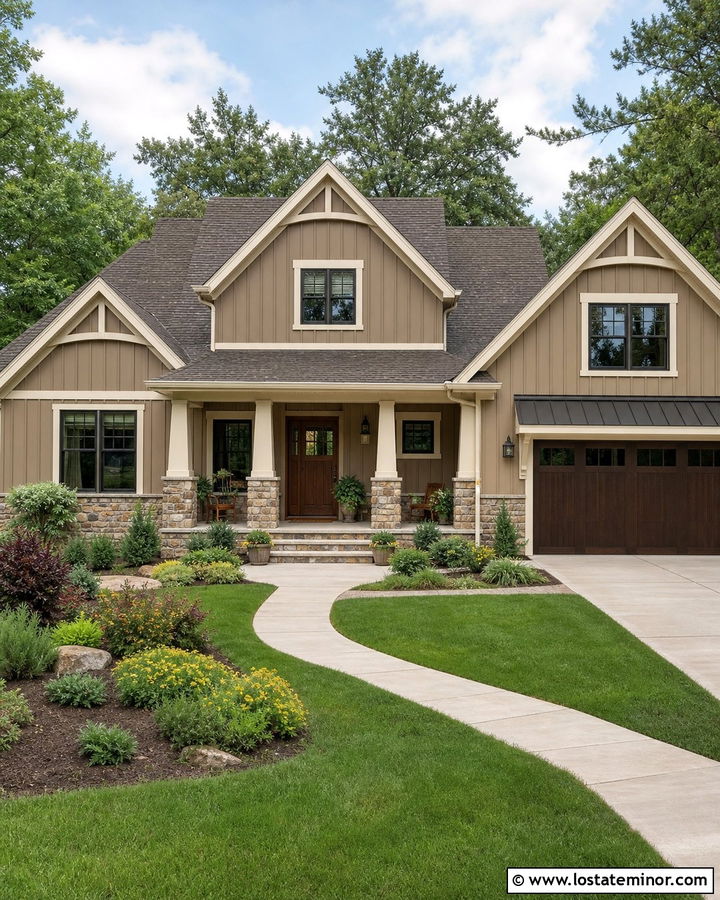
Warm taupe board-and-batten siding works naturally with the handcrafted materials found on a Craftsman home. Use the vertical siding across the upper gables and porch walls, then introduce stacked fieldstone around the column bases and foundation. Creamy off-white trim softens the roofline, while dark bronze windows and gutters add definition. A rich walnut front door can become the visual center of the facade without introducing an unrelated color. Choose an architectural shingle roof that mixes charcoal and brown tones to connect the siding and stone. Wide porch steps, tapered columns, and exposed brackets add the finishing details. The completed exterior feels grounded, comfortable, and thoughtfully layered rather than overly rustic or busy.
3. Greige Taupe Board and Batten Ranch House
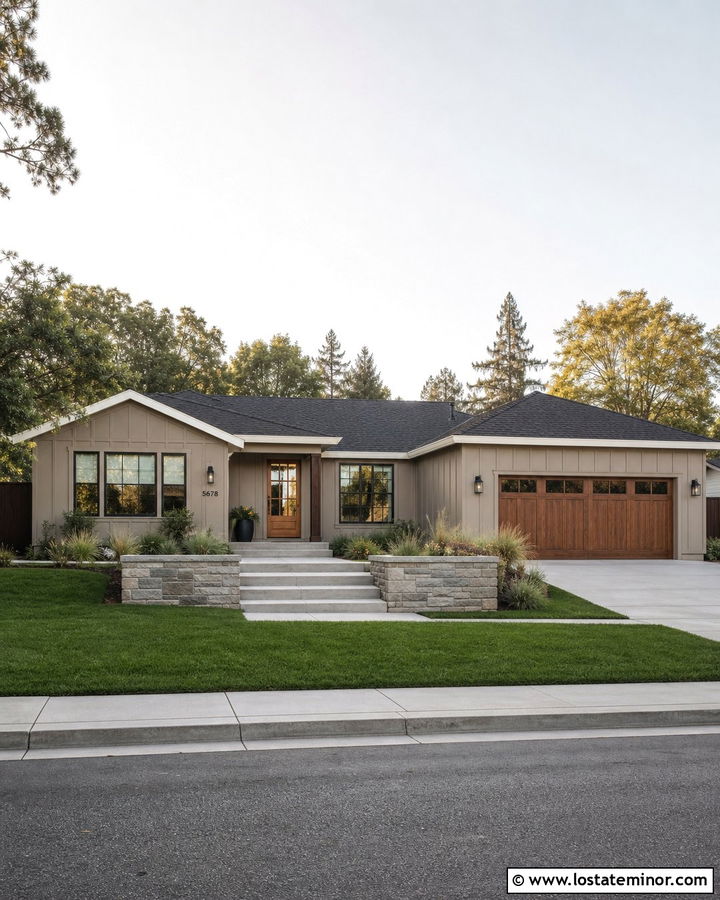
Does your ranch exterior need more height and definition? A greige-taupe board-and-batten treatment can visually lift its long, low facade. Use the vertical siding across the entire house or reserve it for the entry and garage projections. Crisp black window frames create contrast, while warm white fascia keeps the roofline from appearing too dark. Install cedar garage doors and repeat that wood tone on the front door or porch posts. A charcoal roof balances the earthy siding and prevents the scheme from leaning too brown. Low stone planters, broad concrete steps, and layered foundation shrubs suit the horizontal architecture. This combination updates a simple ranch while respecting its uncomplicated shape and relaxed suburban character.
4. Dark Taupe Board and Batten Modern House
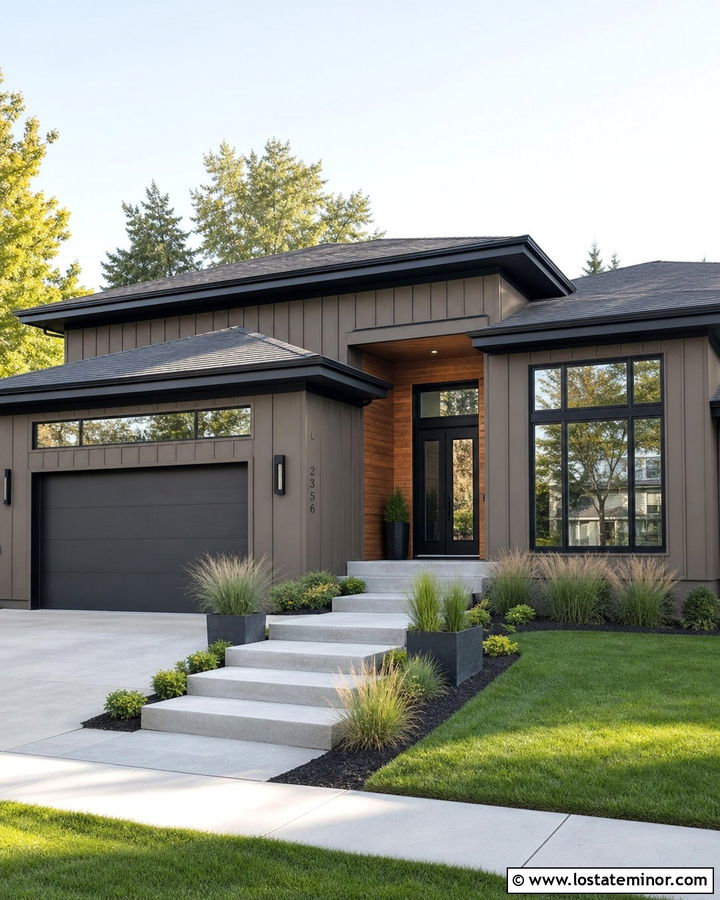
Deep taupe board-and-batten siding creates a dramatic modern exterior without the starkness of solid black. Keep the facade streamlined with narrow battens, large black-framed windows, and minimal trim. A low-slope charcoal roof or dark standing-seam metal roof strengthens the contemporary outline. Use natural cedar around the recessed entrance to brighten the dark taupe and create an obvious focal point. Smooth concrete steps, a flush garage door, and simple rectangular planters continue the clean geometry. Avoid adding several competing accent colors. Instead, repeat black, cedar, and concrete throughout the property. The result is a sophisticated full-house scheme that feels bold in sunlight yet maintains the welcoming warmth associated with a well-chosen taupe exterior.
5. Monterey Taupe Board and Batten Traditional House
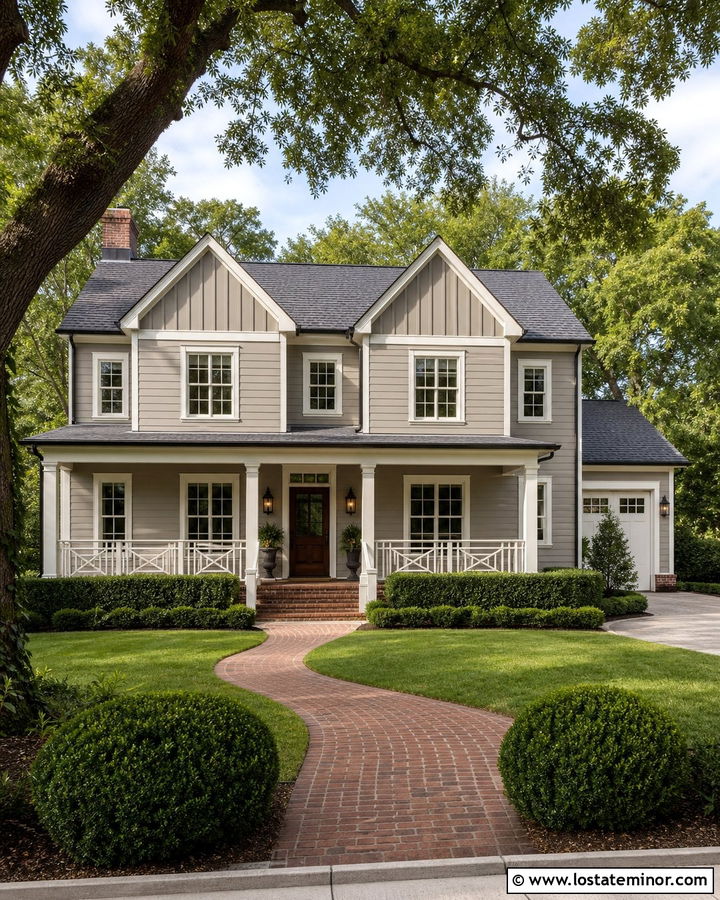
Monterey Taupe delivers a balanced gray-brown backdrop that complements traditional architecture and established neighborhoods. Use it on board-and-batten gables, with coordinating taupe lap siding across the lower level for subtle texture changes. Arctic white trim highlights the windows, cornices, and porch columns. Red-brown brick along the foundation introduces familiar warmth and connects the house to classic landscaping. A dark charcoal shingle roof keeps the overall palette composed. Finish the entrance with a stained mahogany door, polished black hardware, and traditional lantern sconces. Symmetrical boxwoods and a curved brick walkway reinforce the orderly design. This exterior feels updated, but its restrained colors and recognizable materials prevent it from looking disconnected from its surroundings.
6. Taupe Board and Batten Colonial With Green Shutters
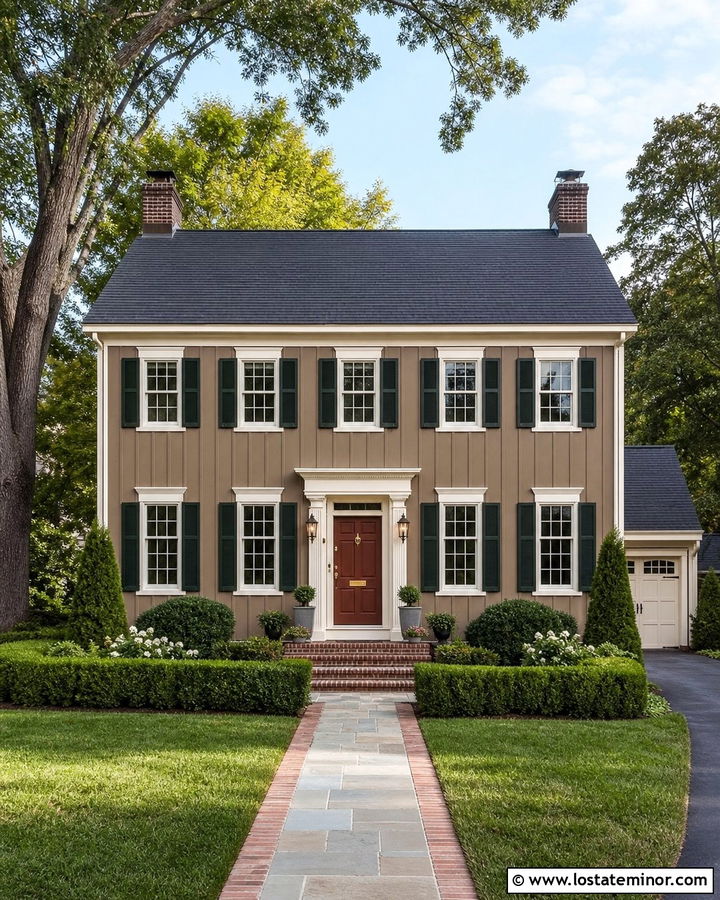
A symmetrical Colonial facade becomes more distinctive when taupe board-and-batten siding is paired with deep green shutters. Choose a medium taupe for the body and warm ivory for the corner boards, window trim, and classical entry surround. Forest green shutters add historic character while complementing mature trees and traditional landscaping. A reddish-brown front door supplies another layer of warmth without competing with the shutters. Keep the roof dark charcoal and select copper or bronze lighting for a gently aged finish. Because Colonial homes rely on balance, repeat each color evenly across the facade. Brick steps, clipped hedges, and a straight walkway complete this formal yet approachable exterior scheme with strong curb appeal.
7. Soft Taupe Board and Batten Cottage
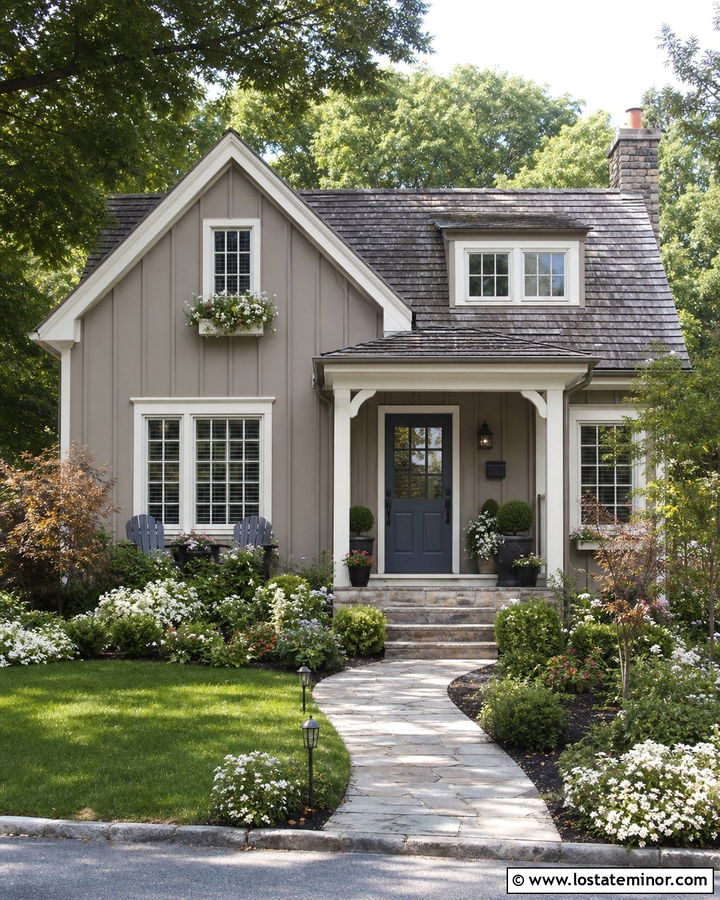
Picture a compact cottage surrounded by flowering shrubs and a simple garden path. Soft taupe board-and-batten siding creates a calm foundation that lets those charming details stand out. Pair it with creamy white trim, small divided-light windows, and a muted slate-blue front door. A weathered gray roof enhances the gentle palette and prevents the house from feeling overly polished. Add natural stone around the porch steps or chimney for subtle texture. Small copper lights, window boxes, and a painted porch railing can provide character without crowding the facade. This complete scheme is especially effective for cottages with steep gables or dormers because the vertical battens emphasize their height while the restrained colors keep the small exterior visually organized.
8. Taupe Board and Batten Bungalow With Cedar Accents
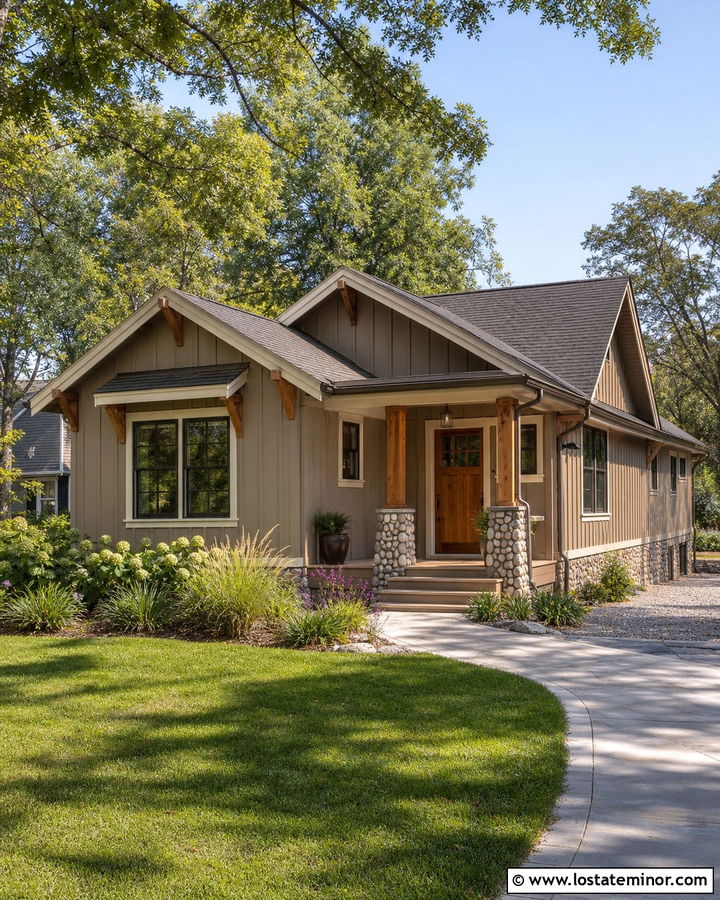
Cedar details can bring a sun-warmed glow to a taupe board-and-batten bungalow. Apply medium taupe siding across the facade, including the front gable, and use a soft cream on the window trim and porch railing. Natural cedar works well for chunky porch posts, the front door, and decorative brackets under the roof. Select a dimensional roof containing brown, gray, and charcoal granules so every major material feels connected. River rock around the foundation adds casual texture that suits the bungalow’s low profile. Keep the landscaping informal with native grasses, hydrangeas, and a gently curved walkway. The finished look feels substantial and welcoming, with enough contrast to reveal every architectural detail without relying on trendy high-contrast black trim.
9. Taupe Board and Batten Cape Cod With Navy Shutters
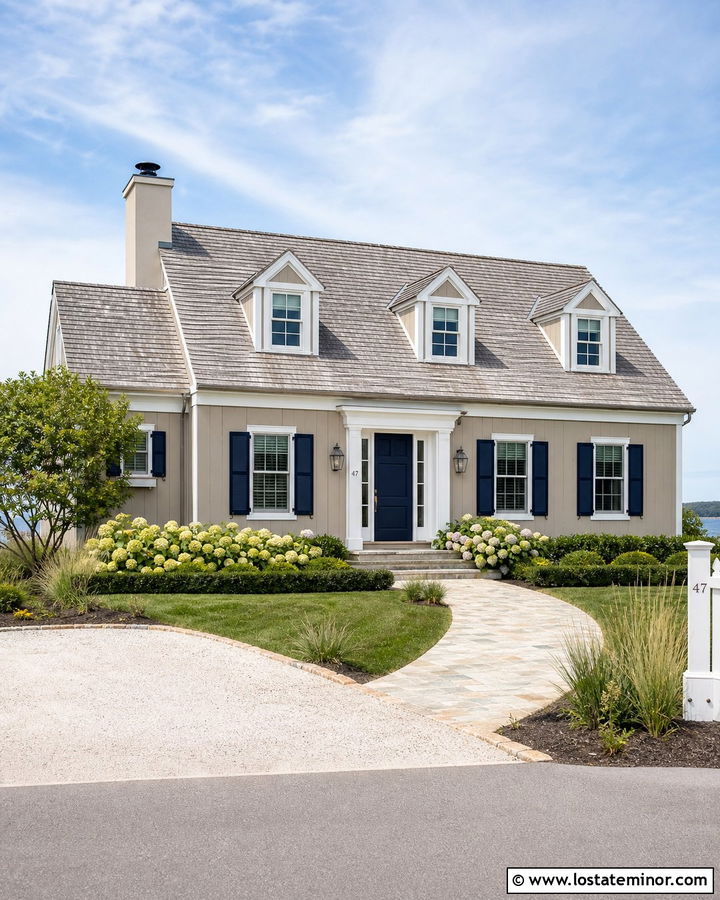
A Cape Cod home can wear taupe board-and-batten siding while keeping its recognizable coastal character. Choose a pale sandy taupe for the exterior and clean white for the trim, dormers, corner boards, and porch railing. Navy shutters create a classic contrast that looks polished beside both gray and weathered cedar roofing. Carry the navy to a simple front door, or choose natural wood if you prefer a warmer entrance. Use board and batten on the main facade while keeping the dormers visually light with matching taupe shingles or lap siding. Hydrangeas, low hedges, and a shell-toned walkway complete the setting. This scheme feels breezy and bright without requiring an all-white house that may show dirt more quickly.
10. Taupe Board and Batten Split-Level House
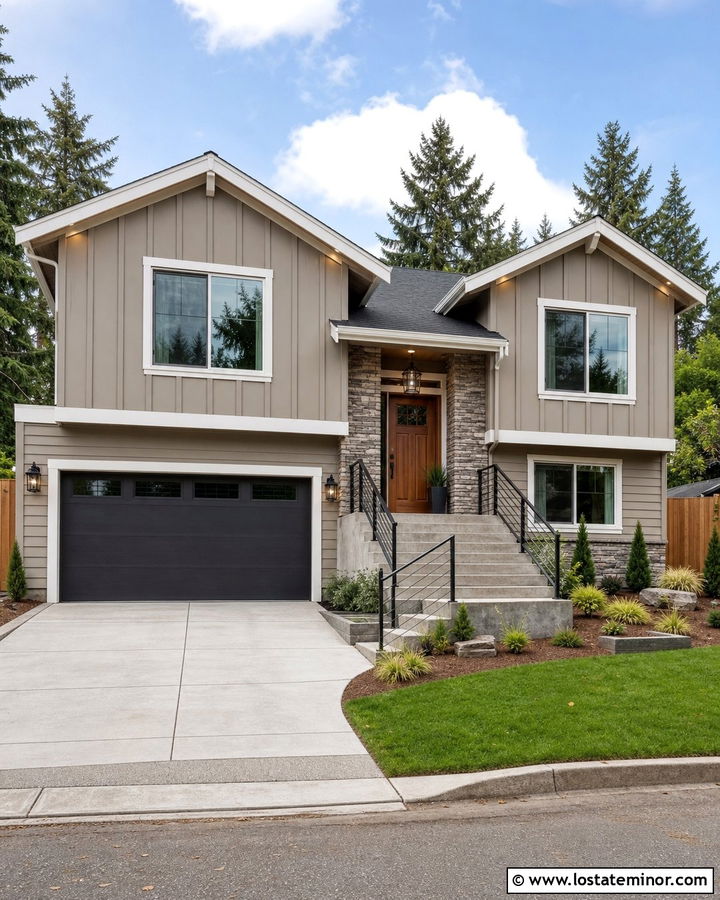
Split-level homes often have several competing wall planes, making a controlled material plan especially useful. Cover the upper story with taupe board-and-batten siding and use coordinating horizontal siding on the lower level. A charcoal garage door can anchor the bottom half and connect with a dark shingle roof. Add ledgestone around the recessed entry or garage foundation to bridge the two siding directions. Warm white trim keeps the windows visible without creating harsh outlines. A stained wood front door adds a welcoming note near the center of the facade. Use broad steps, modern railings, and layered evergreen landscaping to unify the levels. The resulting exterior looks intentional, balanced, and far more current than a single flat siding treatment.
11. Taupe Board and Batten French Country House
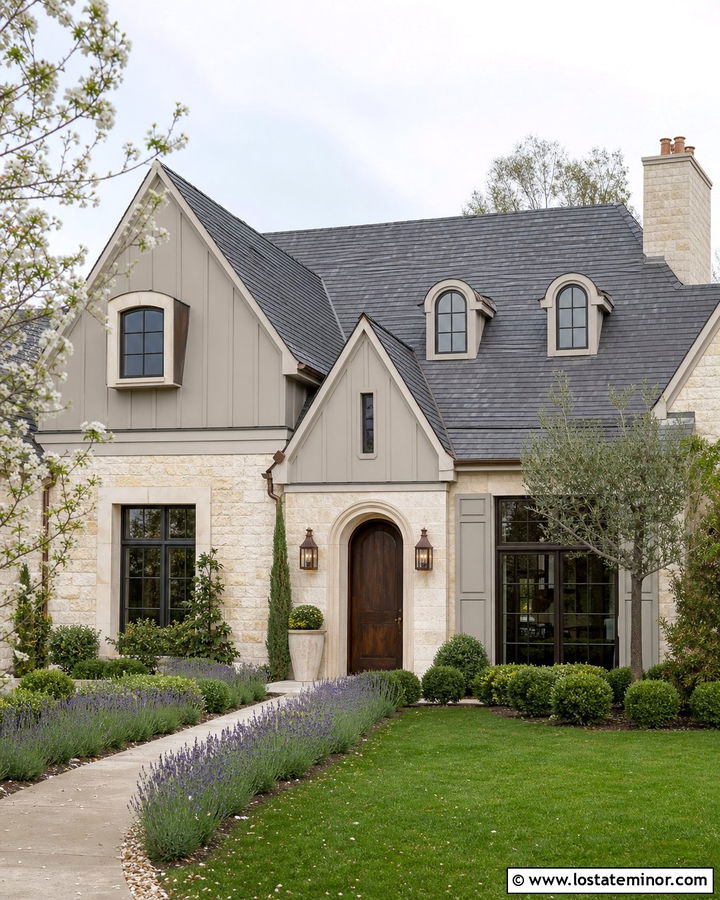
Taupe is an ideal bridge between painted siding and pale masonry on a French country exterior. Apply warm taupe board-and-batten siding to the gables and secondary wings, then use creamy limestone around the entrance and lower walls. Soft ivory trim blends gently with the stone, while bronze windows provide restrained contrast. Choose a steep charcoal roof with subtle brown undertones to complement the warmth below. An arched oak door, copper lanterns, and curved dormers reinforce the European influence. Keep the landscaping graceful rather than rigid, using lavender, boxwood, and small flowering trees along a gravel-edged walkway. Every element should share a muted, natural undertone so the finished house appears collected and elegant rather than decorated with unrelated accents.
12. Taupe Board and Batten Tudor Exterior
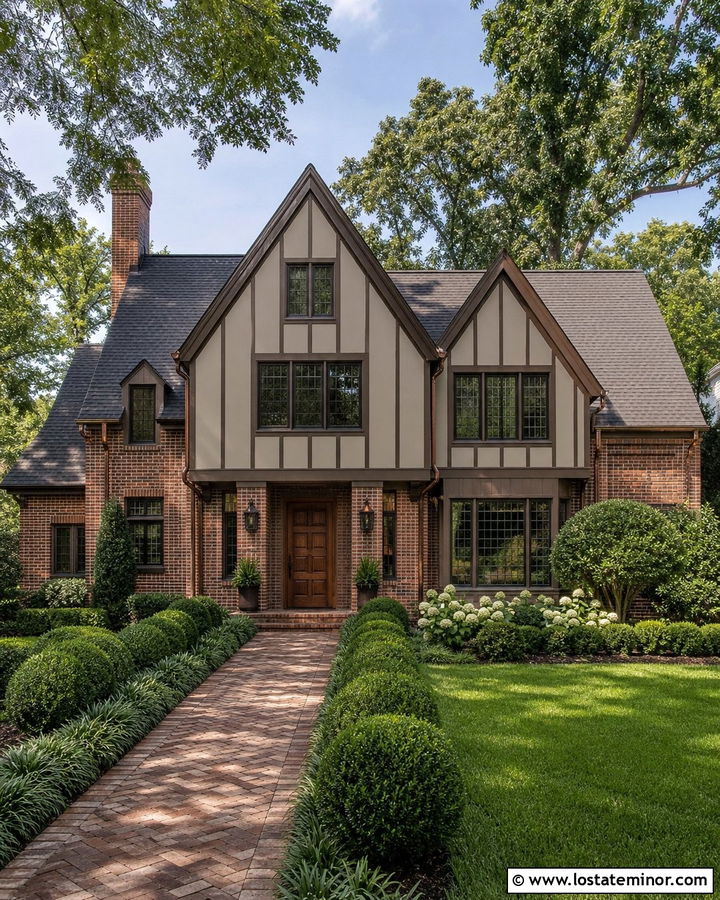
A Tudor-inspired house gains a lighter, more approachable personality when taupe board-and-batten siding replaces severe dark infill. Use a medium mushroom taupe between dark bronze or espresso trim boards. Continue the taupe across secondary gables to create a consistent body color. Brown-red brick around the lower facade and chimney adds traditional texture, while a dark roof emphasizes the steep rooflines. Select a substantial wood front door with black iron hardware for an entrance that matches the architecture. Leaded-style windows, bronze gutters, and restrained foundation planting complete the look. The taupe siding softens the contrast between brick and trim, helping an older Tudor feel refreshed while preserving the depth, craftsmanship, and strong geometry that define the house.
13. Taupe Board and Batten Prairie House
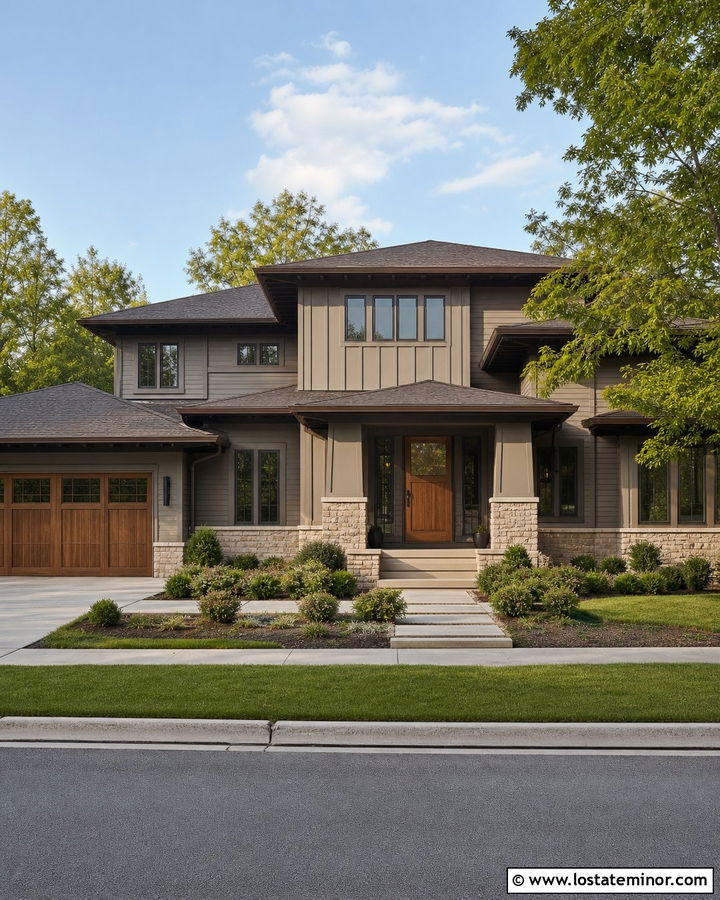
Long rooflines and broad eaves make a Prairie-style home a good candidate for strategically placed vertical siding. Use taupe board and batten on taller entry volumes, then pair it with matching horizontal lap siding on the extended wings. Dark bronze fascia and window frames trace the architecture without introducing the sharpness of pure black. Add warm buff stone along the foundation and chimney to reinforce the home’s connection to the landscape. A flat-panel walnut door and matching garage doors bring natural warmth to the facade. Choose a low-pitched brown-charcoal roof and simple linear plantings. This combination balances vertical and horizontal movement, giving the exterior texture while preserving the grounded proportions that make Prairie homes feel calm and expansive.
14. Taupe Board and Batten Lake House
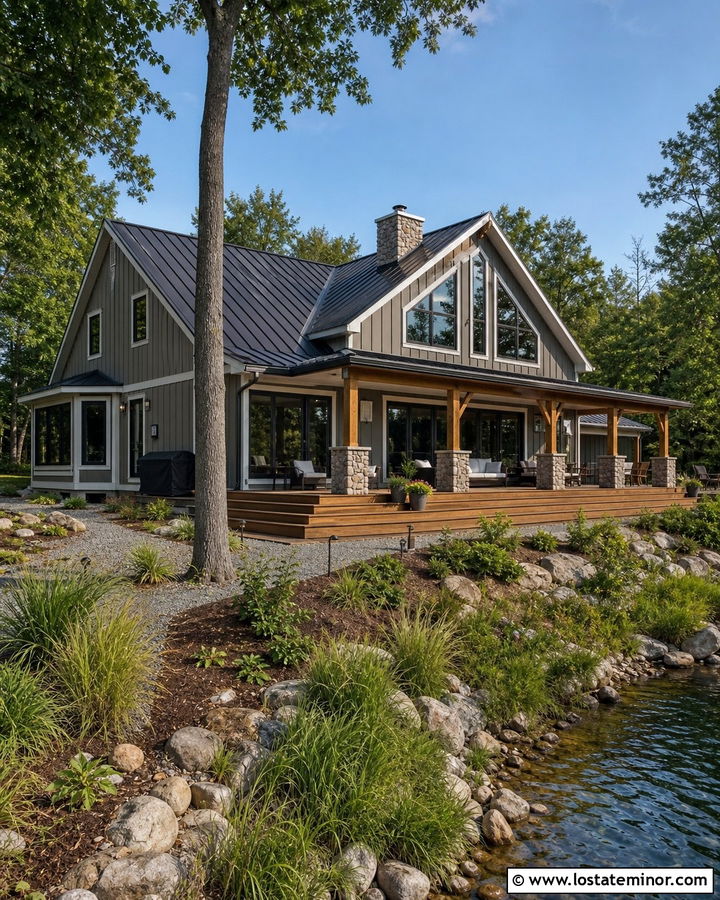
On a lakeside home, taupe board-and-batten siding can echo the surrounding shoreline, tree bark, and weathered wood. Choose a mid-tone gray taupe for the main body and use off-white trim to brighten windows beneath deep roof overhangs. A large cedar deck, exposed timber posts, and a natural wood front door bring warmth to the neutral facade. Select a charcoal metal roof for durability and a clean outline against the sky. Stone piers can visually support the deck and connect the house with rocky terrain. Large windows should remain a major feature, so keep decorative accents minimal. Native grasses, gravel paths, and informal planting complete a relaxed exterior that looks polished from the road and equally attractive from the water.
15. Taupe Board and Batten Mountain House
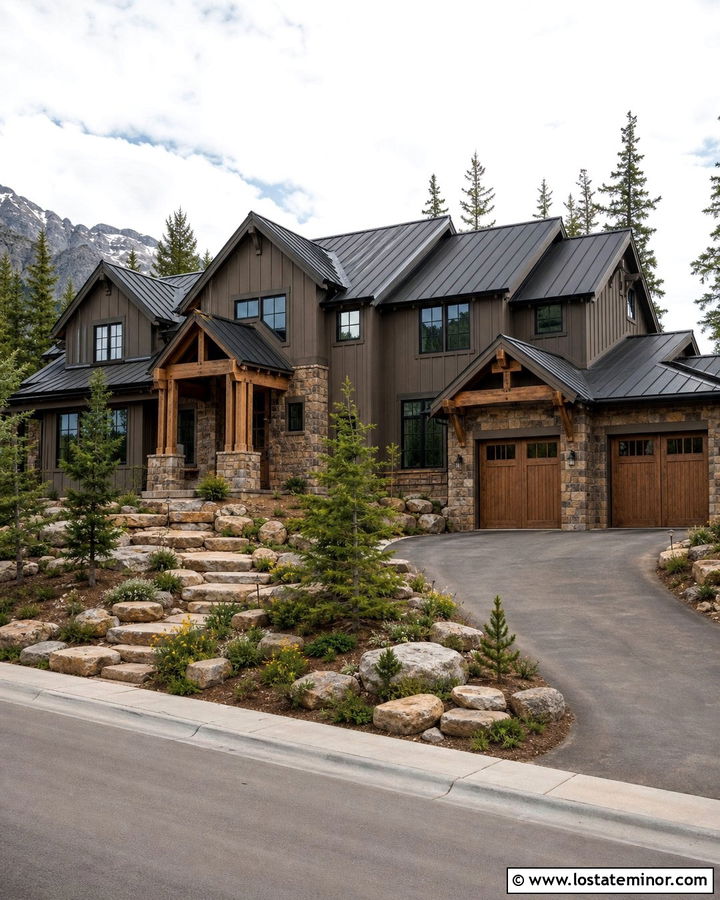
A mountain house needs enough depth to feel connected to a rugged setting. Dark warm taupe board-and-batten siding offers that substance while remaining softer than charcoal. Combine it with large areas of irregular gray-brown stone around the foundation, chimney, and porch columns. Black window frames and a black standing-seam roof create crisp edges, while heavy cedar beams prevent the scheme from becoming too cool. Repeat cedar on the garage doors and entry ceiling for visual consistency. Wide roof overhangs, oversized windows, and a covered porch strengthen the lodge-inspired architecture. Finish the curb view with boulders, evergreens, and native ground cover. The complete palette feels durable, earthy, and appropriately scaled for a wooded or mountainous landscape.
16. Taupe Board and Batten Coastal House
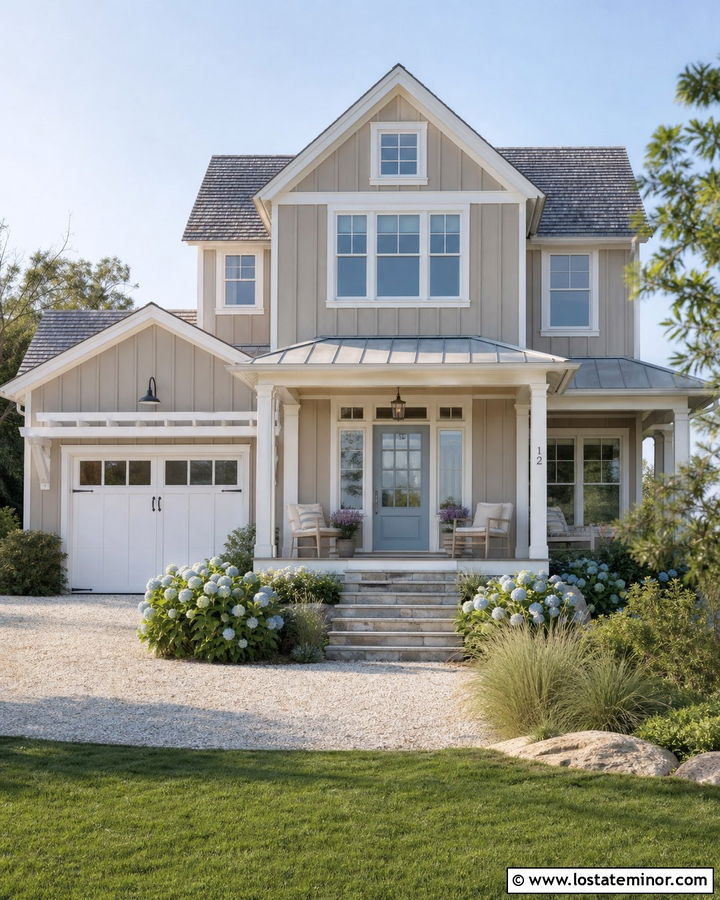
A coastal taupe exterior should feel sunlit and relaxed rather than dark or muddy. Select a pale driftwood taupe for the board-and-batten siding, then frame it with bright white trim, porch columns, and railings. A soft blue front door introduces a subtle ocean-inspired accent without turning the entire house blue. Use a weathered gray roof and light natural stone around the steps. Bahama shutters or simple white window trim can provide additional coastal character, depending on the region. Keep metal finishes matte black or brushed nickel for a clean appearance. Sea grasses, hydrangeas, and a pale gravel walkway complete the full exterior. The result is breezy and approachable, with taupe adding more warmth than a conventional gray coastal palette.
17. Taupe Board and Batten Desert House
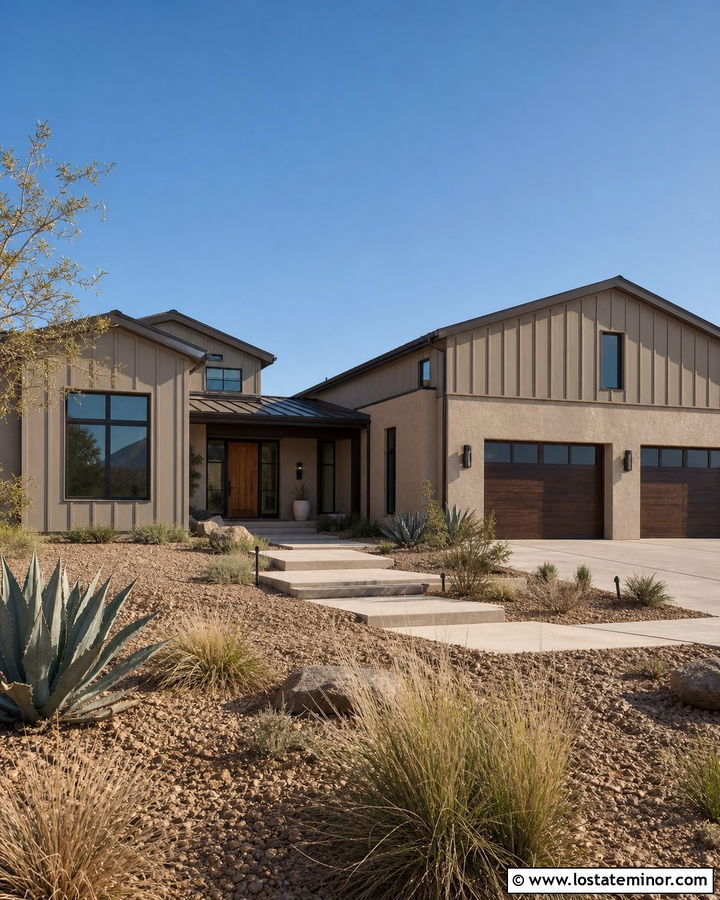
Under strong desert sunlight, taupe can appear lighter and warmer, so a medium earthy shade is usually more effective than a very pale one. Use taupe board-and-batten siding on the main rectangular volumes and pair it with sand-colored stucco on lower sections. Dark bronze windows, fascia, and garage doors provide definition. A natural mesquite or walnut front door adds richness without looking overly rustic. Choose a low-profile metal roof in bronze or charcoal to suit the streamlined architecture. Gravel beds, sculptural plants, and large concrete pavers should frame the home without hiding the siding. This complete exterior combines the texture of vertical battens with regionally appropriate colors, producing a contemporary desert look that feels warm, practical, and connected to the surrounding terrain.
18. Taupe Board and Batten Barndominium
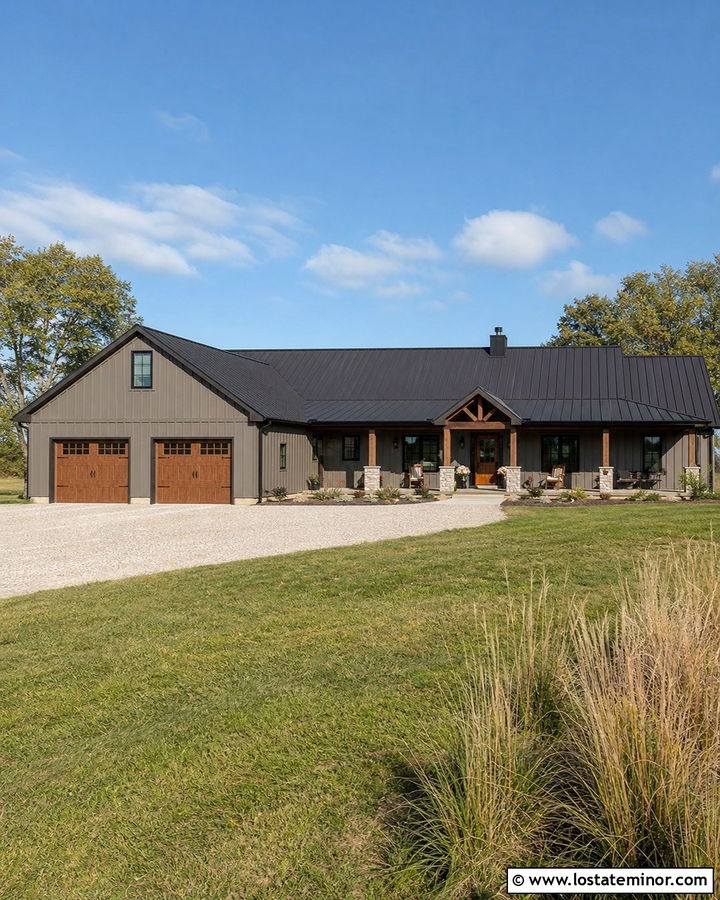
A taupe barndominium offers farmhouse character without relying on the common white-and-black combination. Wrap the long facade in medium taupe board-and-batten siding and use matte black for the metal roof, gutters, windows, and exterior lights. Natural cedar garage doors and a matching front entry add warmth across the broad elevation. If the building includes a covered porch, support it with simple wood posts on low stone bases. Keep the trim narrow so the architecture remains clean and agricultural rather than ornate. A gravel driveway, open lawn, and groups of native grasses suit the large scale of the structure. The finished scheme feels modern and functional, yet the warm taupe and wood prevent the dark metal elements from looking industrial.
19. Taupe Board and Batten House With Brick Skirt
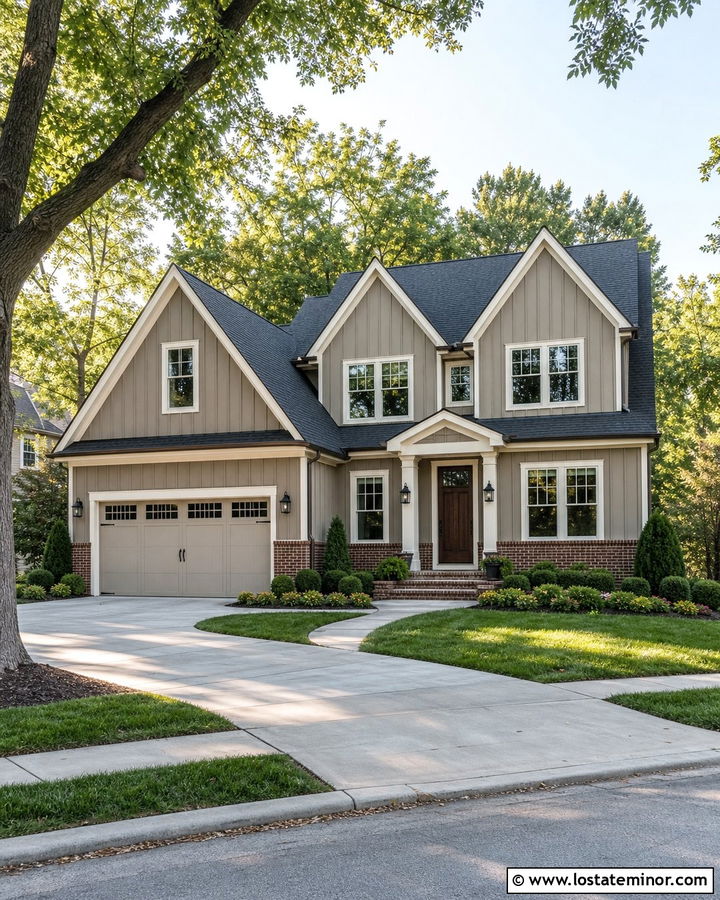
A brick skirt gives taupe board-and-batten siding a strong visual foundation. Choose a brick blend containing muted red, brown, cream, and charcoal rather than one dominant bright color. A medium neutral taupe above it will connect naturally with those varied tones. Use warm white trim around the windows and roofline, then add a dark charcoal roof for balance. The front door can be stained walnut to echo the brown notes in the masonry. Keep the garage door close to the siding color so it does not become the largest focal point. Black lanterns and simple gutters add definition. This layered scheme works especially well on suburban homes with multiple gables because the brick grounds the busy roofline and the vertical siding creates order.
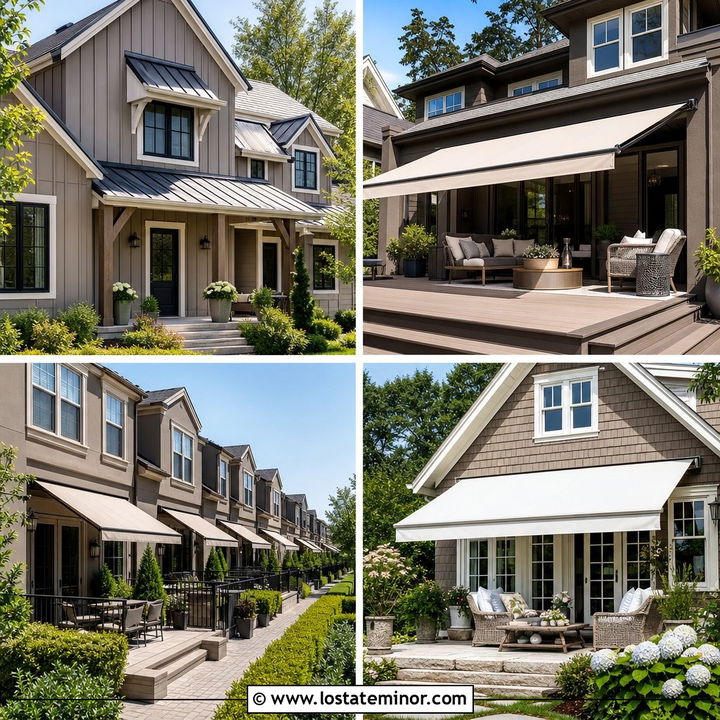
20. Two-Tone Taupe Board and Batten House
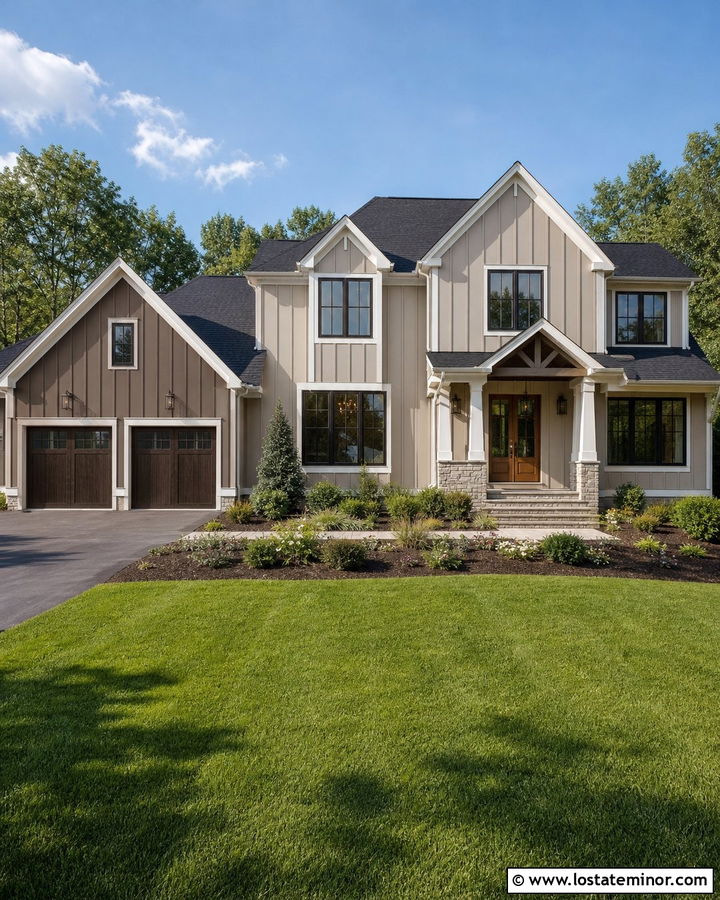
Using two taupe shades adds depth without breaking the exterior into unrelated color blocks. Paint the main board-and-batten body a light warm taupe, then use a deeper taupe on the garage wing or recessed entry. Keep the window trim creamy white to separate the two neutrals and maintain a bright facade. A charcoal roof and dark bronze windows create consistent outlines across both sections. Introduce white oak on the front door and porch ceiling to soften the contrast. The darker taupe should emphasize a clear architectural volume rather than appear randomly placed. Repeat it on a small rear-facing gable or chimney enclosure for balance. With careful placement, this tonal scheme feels sophisticated, cohesive, and more dimensional than a single-color exterior.
21. Taupe Board and Batten Gables With Lap Siding
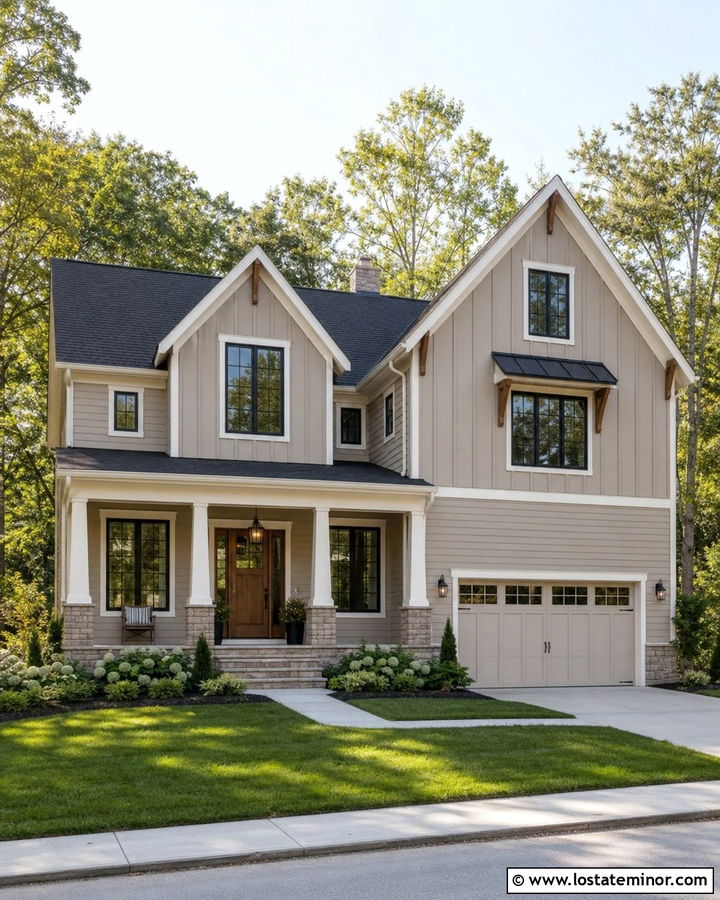
Not every wall needs vertical siding to achieve a board-and-batten look. Apply taupe board and batten to the front-facing gables, porch projection, and upper-story accents. Cover the remaining facade with horizontal lap siding in the same taupe color. The matching hue keeps the house unified while changing shadows and texture across the surface. Use warm white trim to clearly outline each siding transition. A dark roof, black windows, and a stained oak door add contrast and warmth in measured amounts. Stone around the porch base can provide one final material layer. This approach works well for homeowners who want visible board-and-batten character without making every elevation feel tall, repetitive, or more expensive than necessary.
22. Full Taupe Board and Batten Exterior
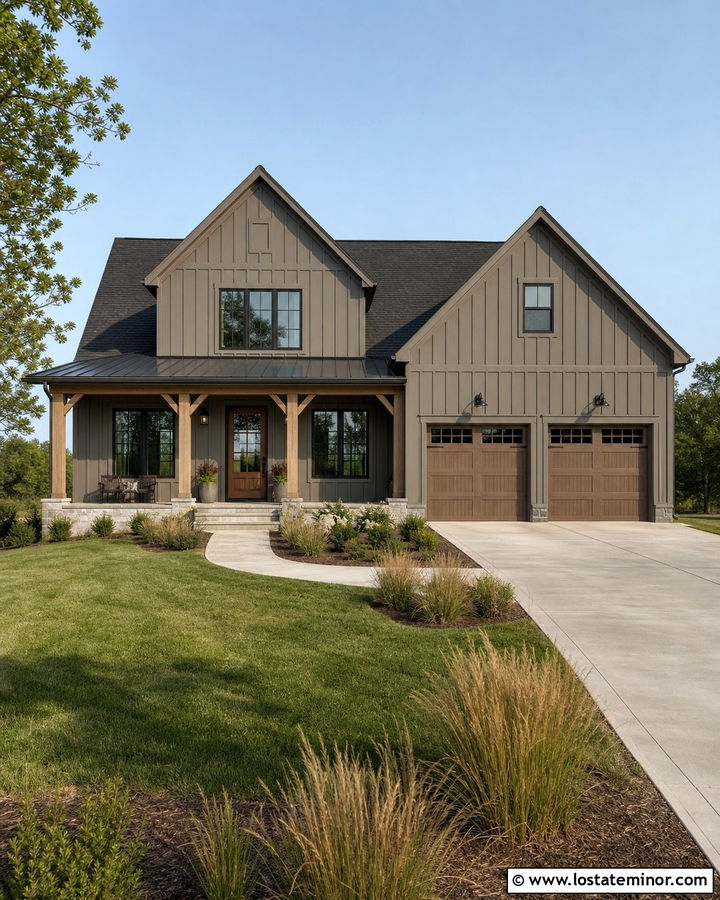
Covering the entire house in taupe board-and-batten siding creates a strong, tailored appearance. The key is choosing a batten spacing that suits the scale of the facade. Wider spacing feels relaxed on a farmhouse or ranch, while narrower battens complement contemporary architecture. Use trim only slightly lighter than the siding for a calm, tonal effect. Then define the windows, roof, and lighting with dark bronze rather than high-contrast black. A natural wood entrance and matching garage doors add enough warmth to keep the exterior from looking flat. Limit additional materials to a simple stone foundation or concrete porch. With fewer colors and carefully repeated finishes, the vertical texture becomes the main feature while the overall house remains balanced and easy to read.
23. Taupe Board and Batten With Black Shutters
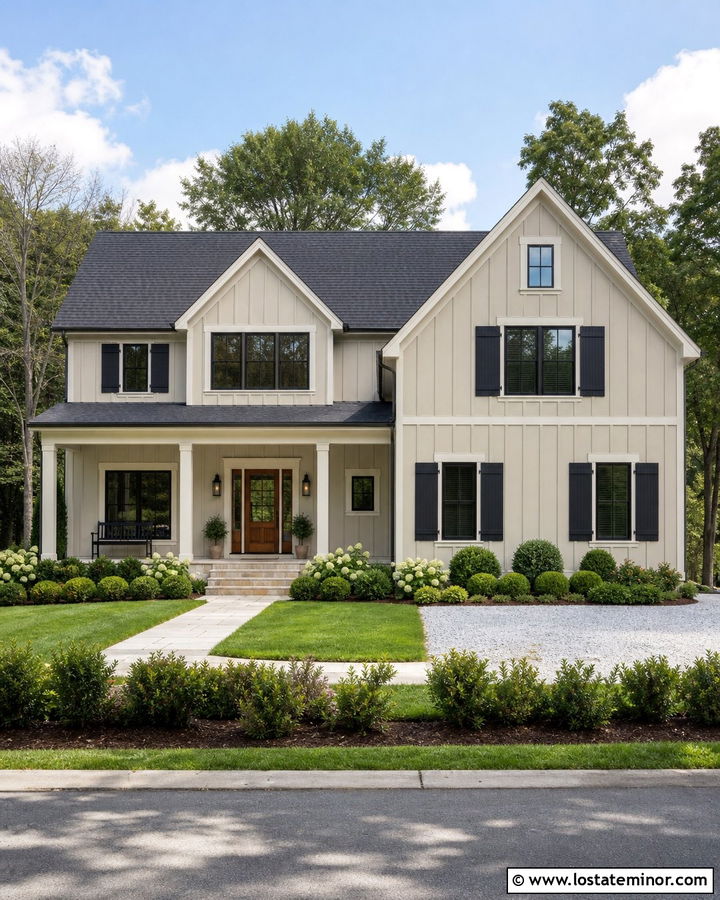
Black shutters create strong contrast on taupe siding, but their size and placement should look connected to the windows. Pair a warm mid-tone taupe board-and-batten body with properly scaled matte black shutters and matching window frames. Use soft white trim around the roofline and porch to prevent the facade from becoming too dark. A medium-stained wood door introduces a natural focal point between the black accents. Carry the black finish to the lanterns, gutters, and roof for a consistent scheme. Pale stone steps and foundation accents can brighten the lower level. This combination suits traditional farmhouses and updated suburban homes because it blends recognizable details with cleaner colors. The finished exterior feels crisp, organized, and welcoming from the street.
24. Taupe Board and Batten With Green Front Door
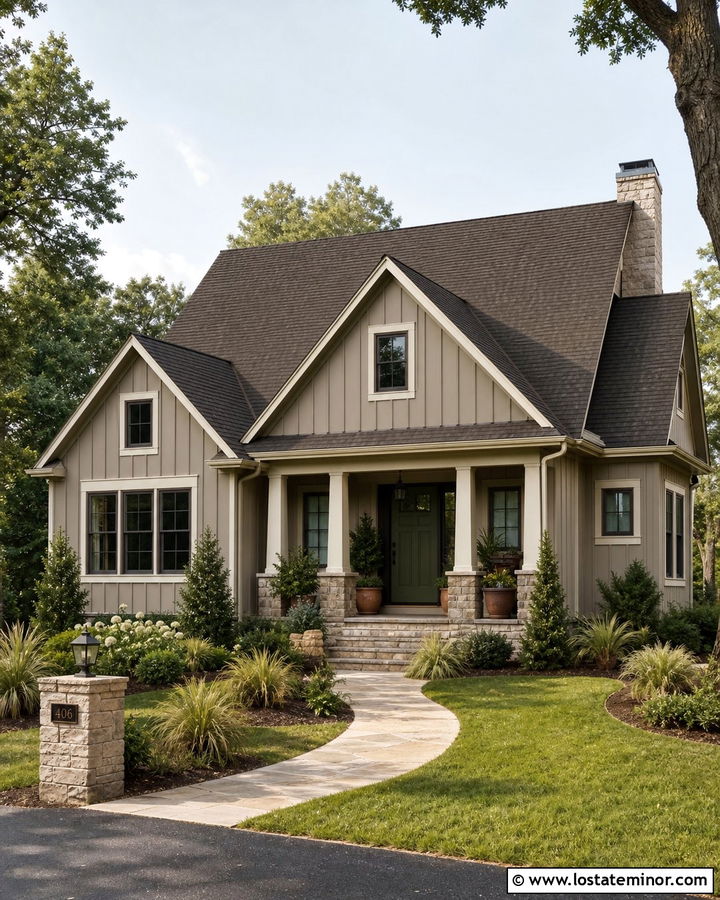
A muted green door can add personality to a taupe board-and-batten house while preserving its earthy character. Choose an olive, moss, or deep sage green rather than a highly saturated emerald. Use medium taupe siding, creamy white trim, and bronze window frames to support the natural palette. A brown-charcoal roof will connect with both the warm body color and the darker hardware. Repeat the green sparingly in planters or porch furniture instead of painting several unrelated features. Natural stone around the entry makes the transition between taupe and green feel even more intentional. Layer the landscaping with evergreen shrubs and soft grasses. The complete scheme remains neutral enough for broad appeal, yet the distinctive door gives visitors a clear and memorable focal point.
25. Taupe Board and Batten With Red Brick
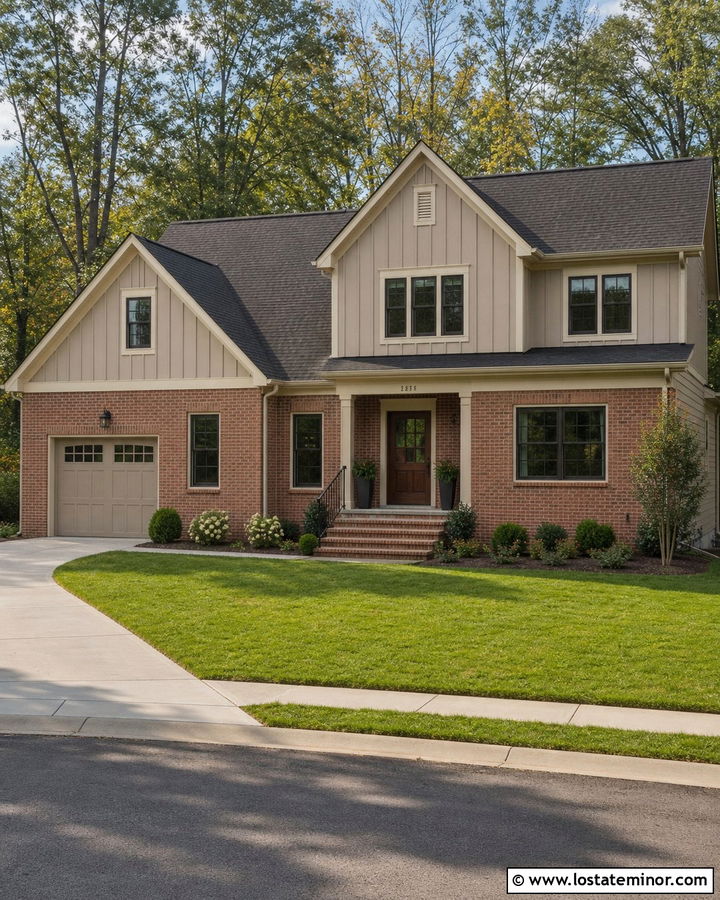
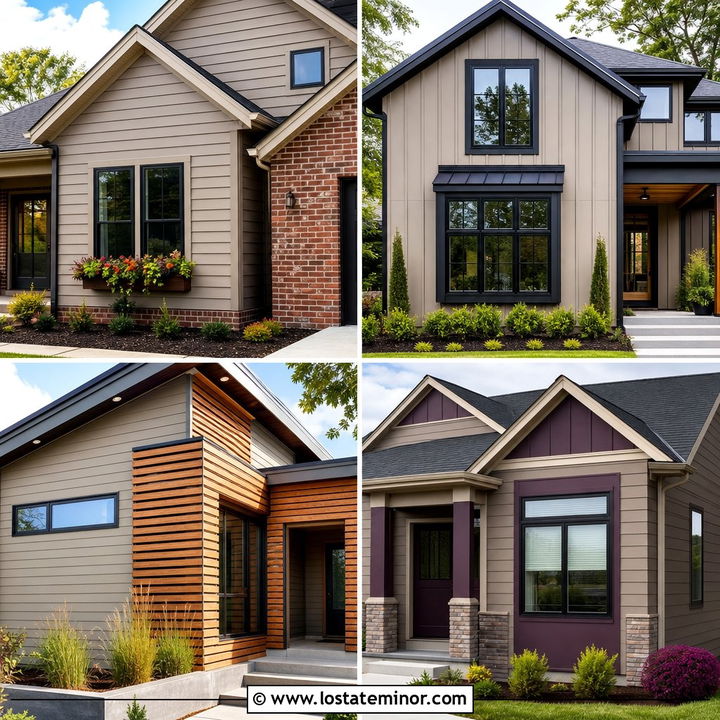
Existing red brick becomes easier to coordinate when the siding carries warm gray and brown undertones. Select a taupe board-and-batten color that relates to the mortar and the quieter brown notes in the brick. Use it on upper gables, additions, or the entire second story. Cream trim creates a softer transition than stark white, while dark bronze windows keep the facade grounded. A black or brown-black roof can tie together the deepest brick colors. Choose a wood front door with a medium walnut stain and simple black hardware. Avoid adding another bright accent color, since the masonry already provides variation. This restrained approach allows traditional brick and newer vertical siding to look like parts of one carefully planned exterior rather than separate renovation phases.
26. Taupe Board and Batten With Limestone
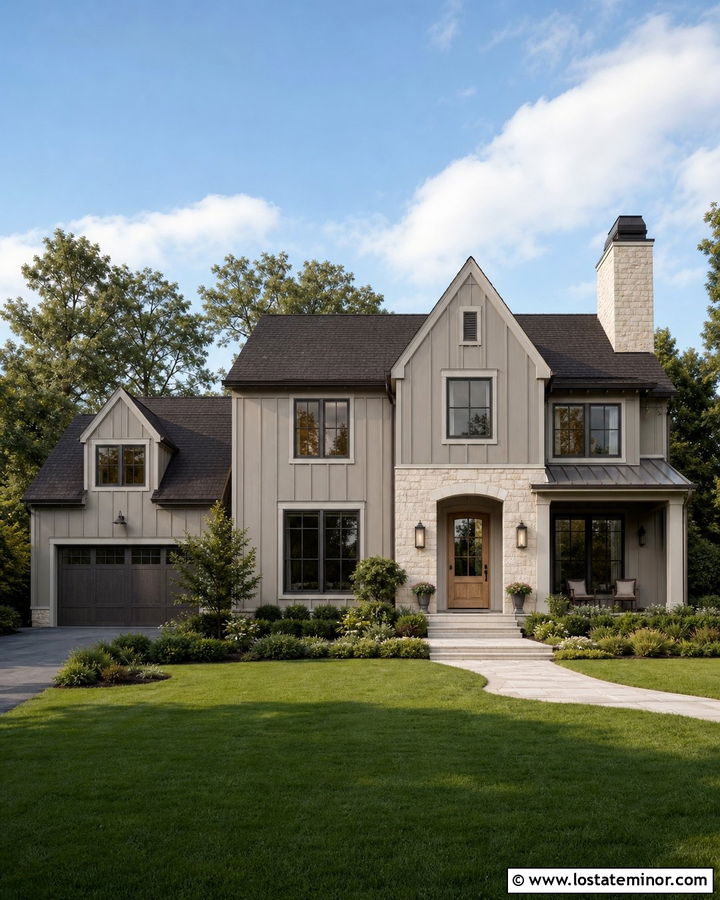
Pale limestone and taupe board-and-batten siding form an elegant, low-contrast partnership. Use warm gray-taupe siding across the upper walls and gables, then place creamy limestone around the entrance, chimney, or lower facade. Paint the trim a soft off-white that sits between the two main materials. Bronze windows and a charcoal-brown roof provide enough definition to keep the house from appearing washed out. A natural white oak front door reinforces the quiet warmth of the stone. Large rectangular porch pavers, understated sconces, and layered green landscaping complete the refined scheme. This pairing suits transitional and French-influenced homes especially well. It feels substantial and polished, but the gentle color transitions maintain an approachable, residential quality.
27. Taupe Board and Batten With Wood Garage Doors
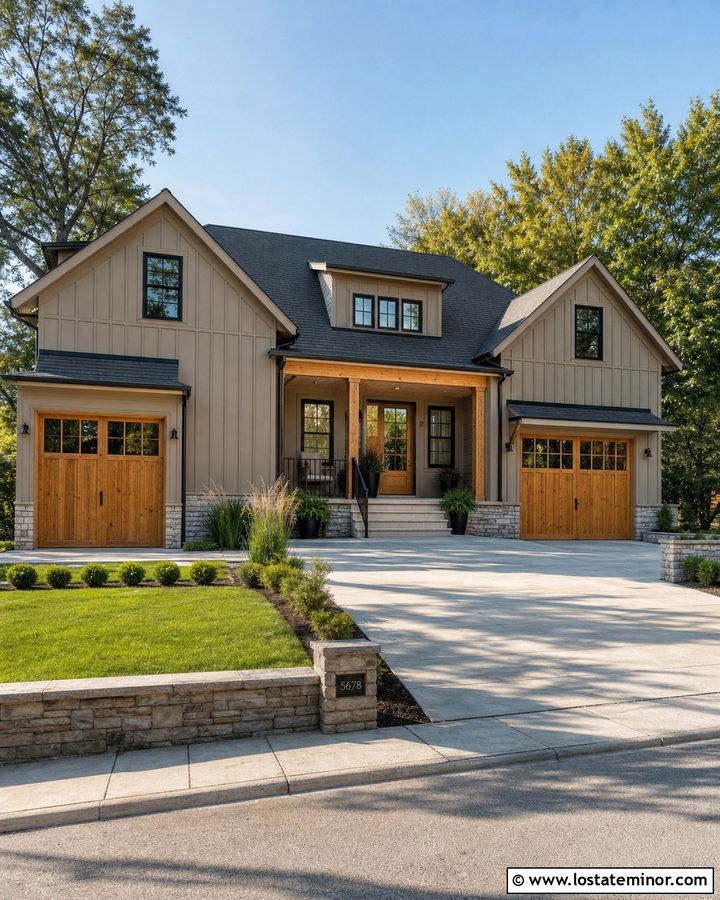
Garage doors occupy a large portion of many front-facing exteriors, so treating them as part of the color scheme is essential. Pair medium taupe board-and-batten siding with white oak or cedar garage doors in a natural matte finish. Repeat the same wood tone on the front door, porch beams, or a small section of soffit. Use black-framed windows and a charcoal roof to give the warm materials a clean outline. Keep the garage trim close to the taupe siding color so the wood remains the feature. Low stone walls and a wide concrete driveway can ground the composition. The completed exterior feels warm and upscale, with the taupe acting as a quiet bridge between organic wood and modern dark accents.
28. Taupe Board and Batten With Wraparound Porch
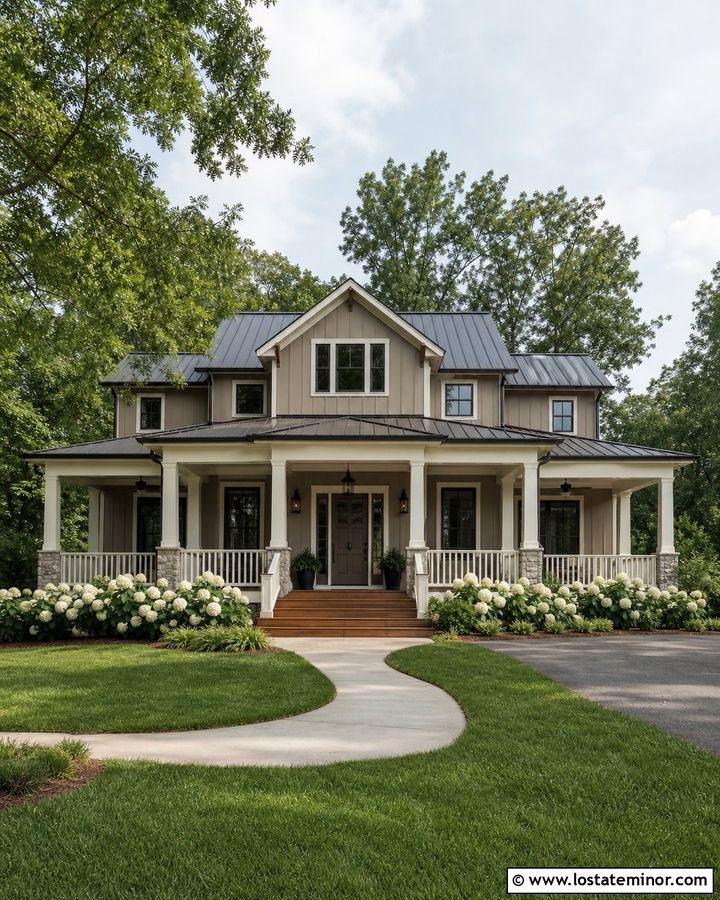
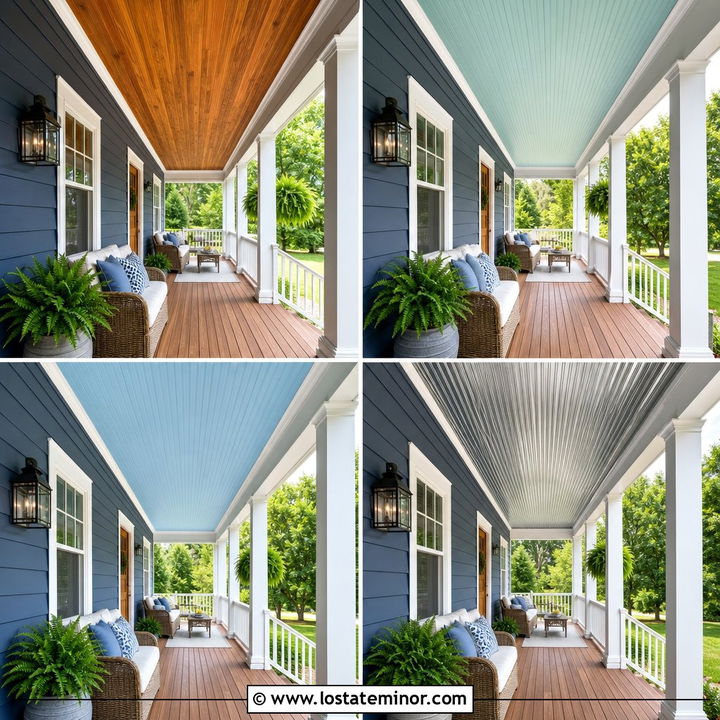
A wraparound porch gives a taupe board-and-batten exterior room for layered color and texture. Paint the main siding a warm light taupe and use creamy white on the porch columns, railing, fascia, and window trim. A stained wood porch floor and matching front door add richness beneath the pale structure. Choose a dark gray metal roof to define the long porch line and provide contrast from a distance. Stone bases under the columns can make the porch feel grounded rather than delicate. Add black lanterns and simple ceiling fans for practical detail. Broad steps, rocking chairs, hydrangeas, and a curved walkway complete the inviting setting. The result feels traditional and comfortable without depending on a plain white farmhouse palette.
29. Taupe Board and Batten Small House
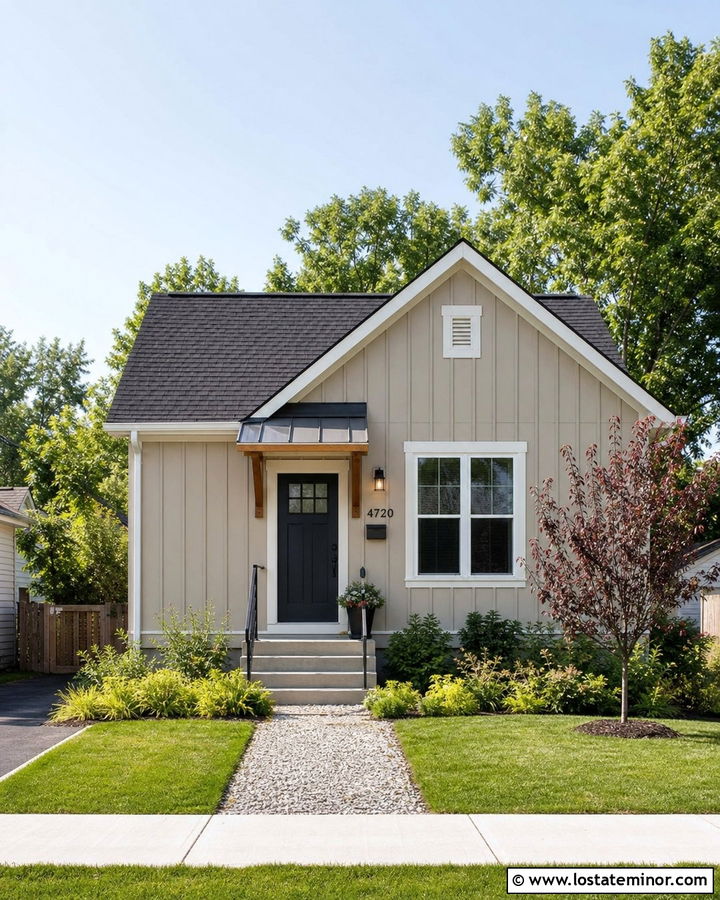
On a small home, a simple taupe palette can make architectural details feel intentional without creating visual clutter. Cover the entire facade with light taupe board-and-batten siding and keep the battens moderately narrow. Use warm white trim around the windows, door, and roofline to maintain a bright appearance. A charcoal door and matching roof create two clear anchors, while a small cedar awning adds warmth over the entrance. Avoid dividing the facade with too many siding materials or accent colors. Instead, introduce texture through concrete steps, a compact gravel path, and layered foundation plants. This straightforward scheme makes a modest cottage, starter home, or accessory dwelling feel finished, distinctive, and carefully proportioned from every curbside angle.
30. Taupe Board and Batten Luxury House
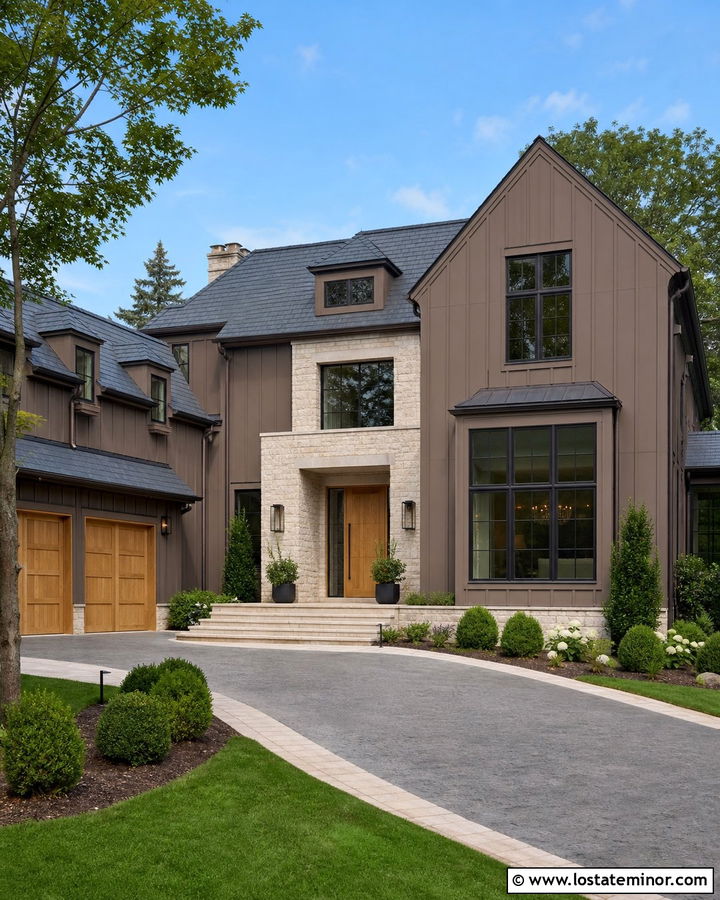
A large luxury home benefits from a taupe palette that connects its many wings, gables, and materials. Use a rich mid-tone taupe on the board-and-batten walls, then introduce pale limestone around the main entrance and lower-level projections. Dark bronze windows, gutters, and roof edges define the structure without creating severe black outlines. Natural white oak garage doors and a matching pivot-style front door warm the expansive facade. Keep trim close to the body color so the home looks refined rather than overly outlined. A charcoal slate roof, broad stone steps, and restrained landscape lighting complete the composition. Repeated materials and consistent undertones help this substantial exterior feel cohesive, balanced, and elegant instead of crowded by too many independent features.
Conclusion:
The best taupe board-and-batten exterior is built around more than one attractive siding color. Roofing, trim, windows, masonry, doors, and landscaping should all support the same warm or cool undertone. Pale taupes create a bright cottage or coastal appearance, while deeper shades bring modern definition to mountain homes, barndominiums, and contemporary builds. Natural wood adds warmth, stone creates texture, and black or bronze accents provide structure. Before committing, test large color samples beside permanent materials in morning and afternoon daylight. These **30 Taupe House Design With Board and Batten Ideas** show how thoughtful pairings can turn this versatile neutral siding into a complete, distinctive curb-appeal scheme.

Related posts: