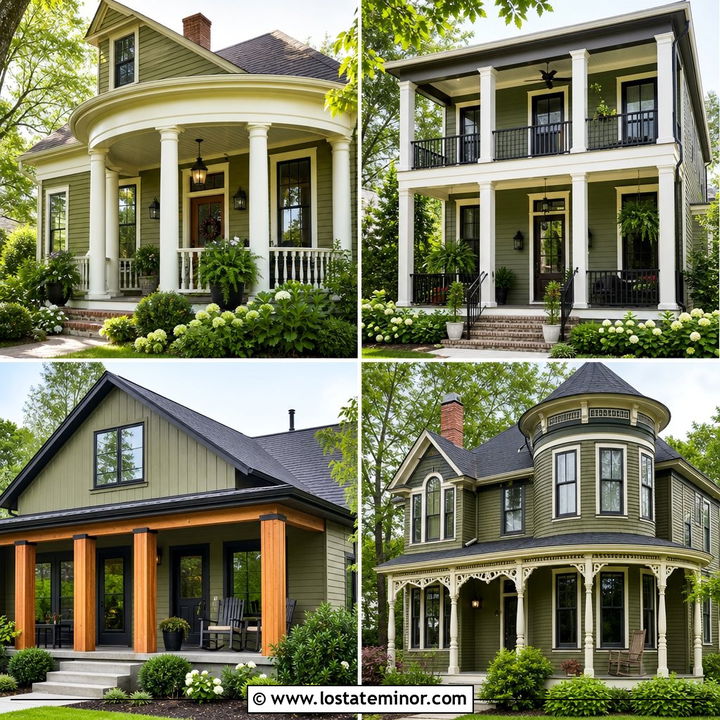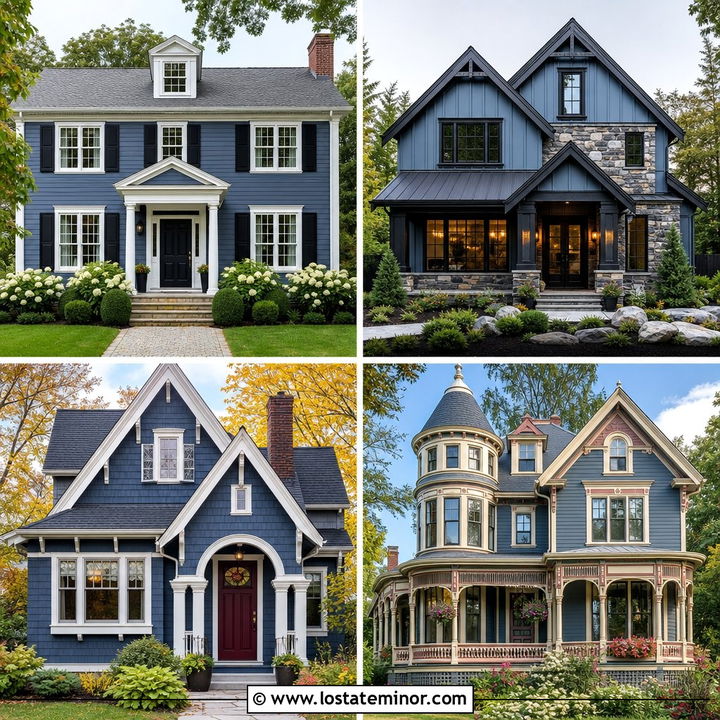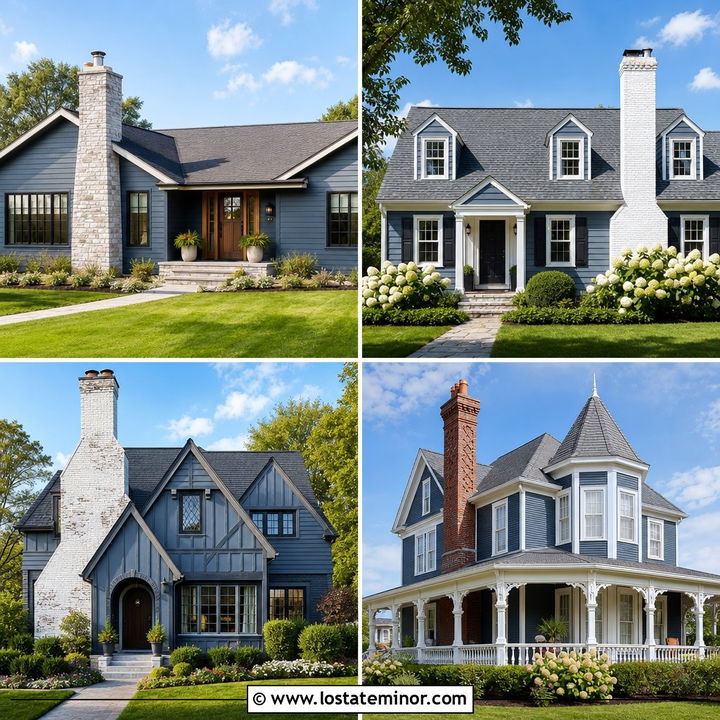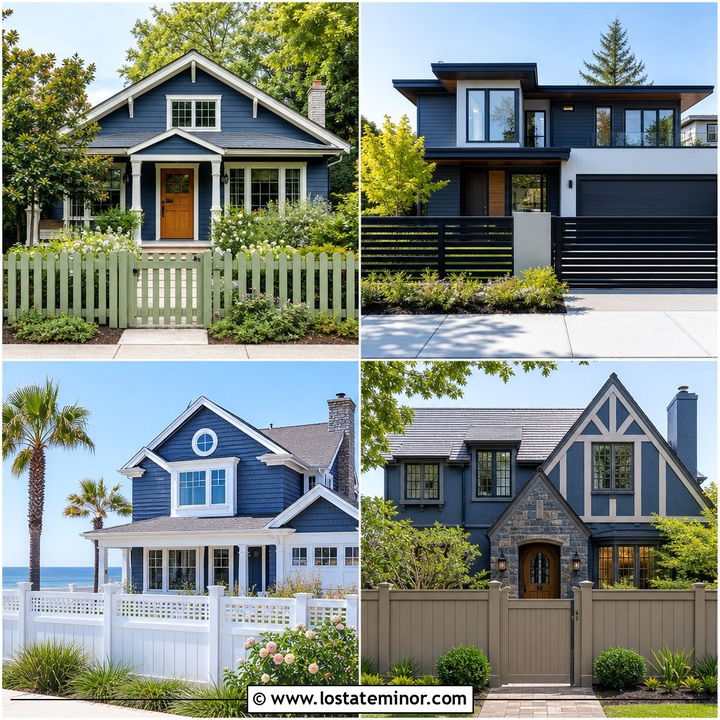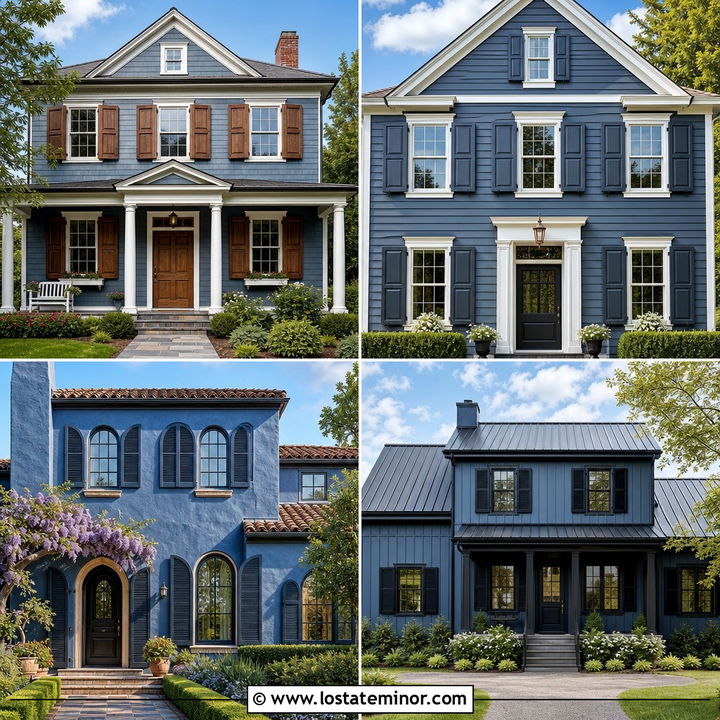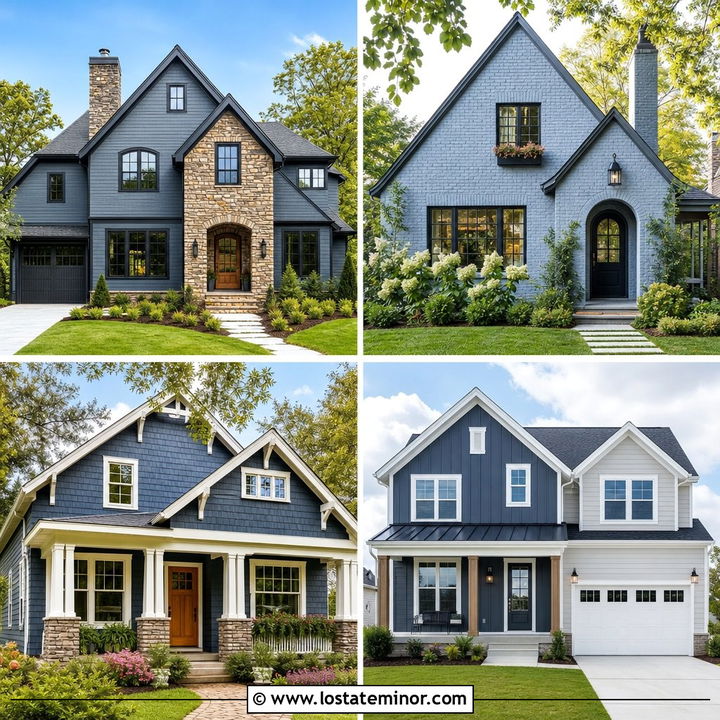
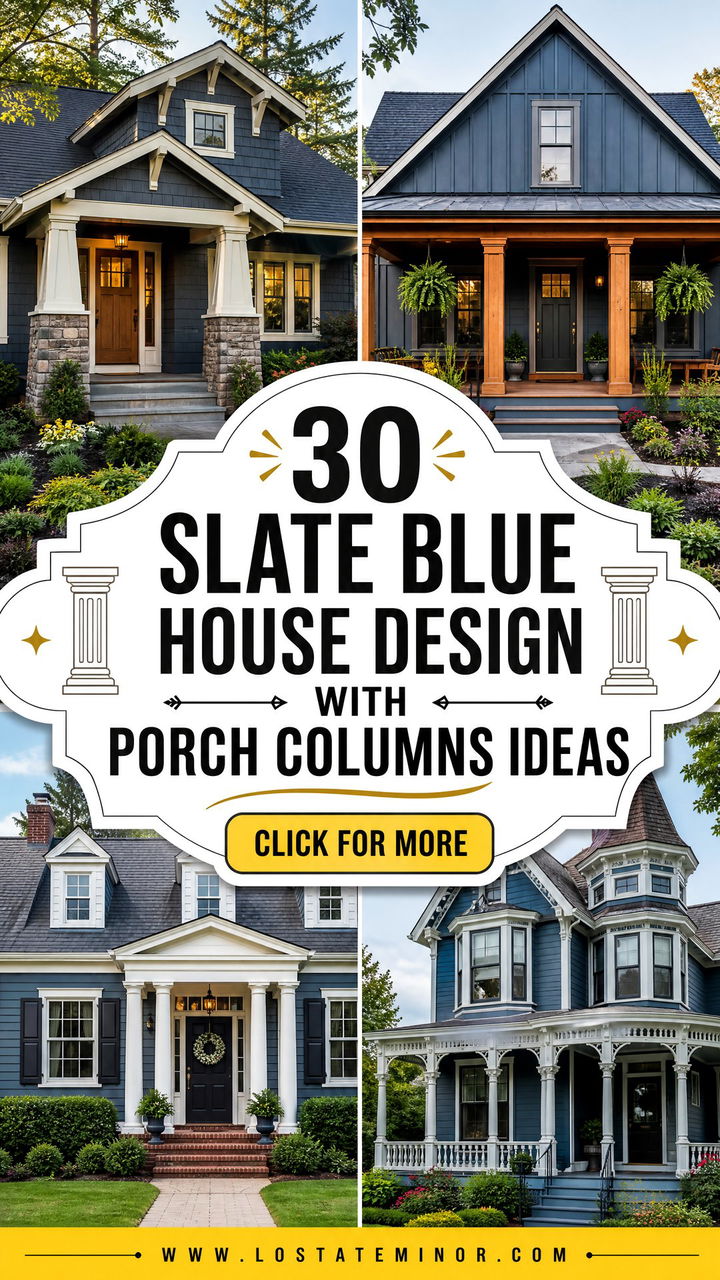
Slate blue brings a calm, grounded character to an exterior while offering more depth than a typical light blue or cool gray. The right porch columns can make this versatile color feel traditional, coastal, rustic, or distinctly modern. Successful 30 Slate Blue House Design With Porch Columns Ideas coordinate the siding with the column shape, porch materials, roof, trim, front door, and landscaping. Crisp white creates definition, natural wood adds warmth, and stone or brick gives the facade visual weight. It is also important to consider the home’s proportions so the columns look supportive rather than decorative or undersized. The complete exterior combinations below explore practical ways to create balanced curb appeal with 30 Slate Blue House Design With Porch Columns Ideas.
1. Slate Blue Craftsman With White Square Columns
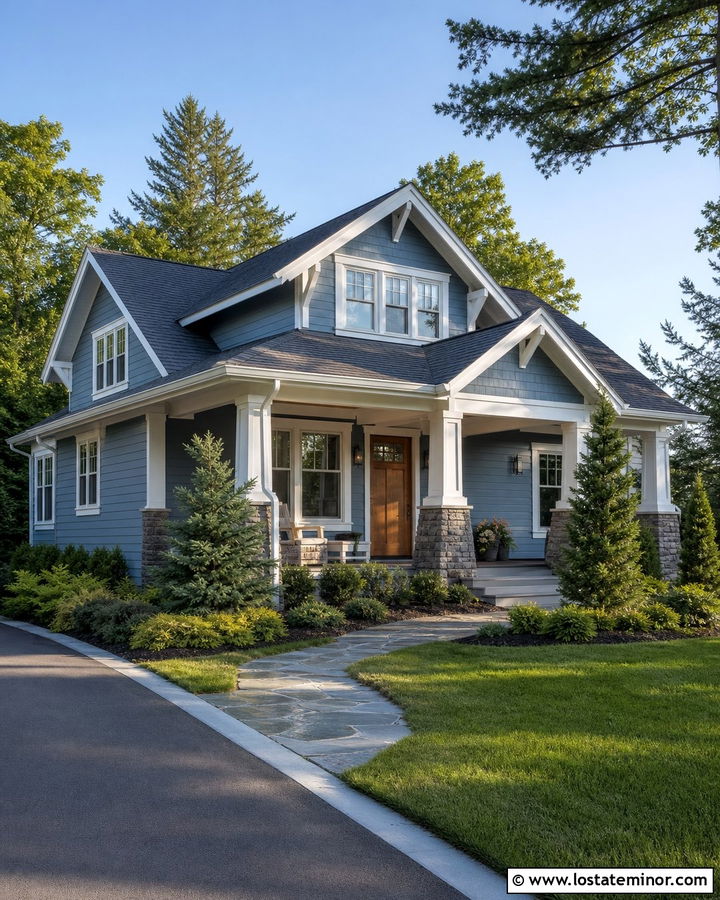
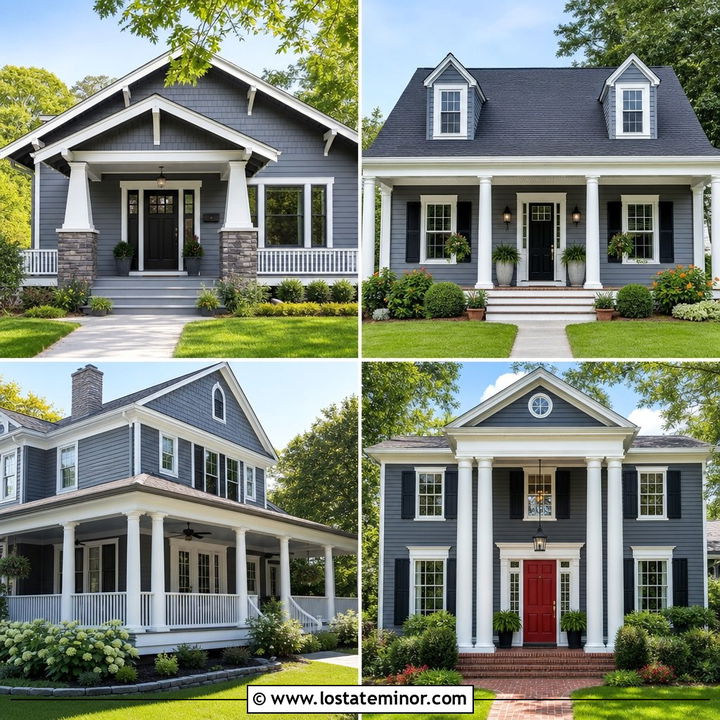
A Craftsman exterior feels especially balanced when muted slate blue lap siding is framed by substantial white square columns. Place the columns on wide stone or painted masonry bases to give the porch a grounded appearance. Crisp white window trim, fascia, railings, and exposed rafter details will make the blue-gray siding look clean without becoming overly formal. Add a medium-stained oak front door to introduce warmth near the center of the facade. A charcoal architectural shingle roof provides enough contrast while staying softer than solid black. For the porch floor, consider warm gray composite decking or natural stone. Low evergreen shrubs, ornamental grasses, and a straight flagstone walkway complete this practical, welcoming exterior scheme.
2. Slate Blue Craftsman With Tapered Stone Columns
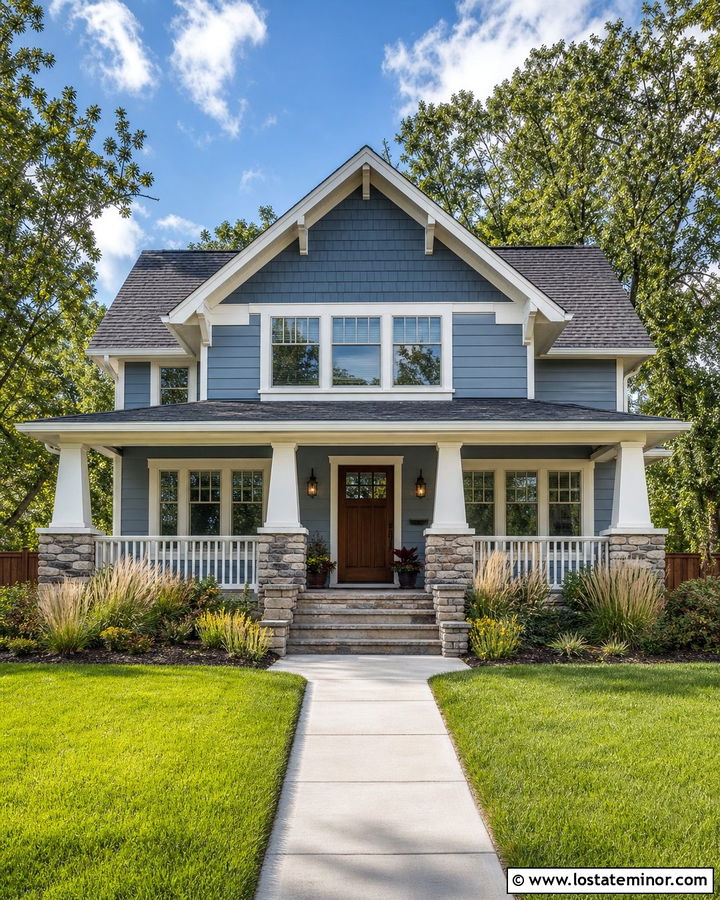
Can a slate blue house feel both polished and rustic? Tapered porch columns placed on stacked-stone bases create that appealing middle ground. Use muted slate blue horizontal siding across the main facade, then bring a slightly darker blue into the shingled gables for subtle depth. The upper column sections can be painted warm white, allowing the natural gray, tan, and brown tones in the stone bases to stand out. A walnut-stained front door and matching porch ceiling add another warm layer. Finish the exterior with cream window trim and a weathered charcoal roof. This combination works best when the column bases align with the width of the porch steps, creating a strong and visually organized entrance.
3. Slate Blue House With Natural Cedar Columns
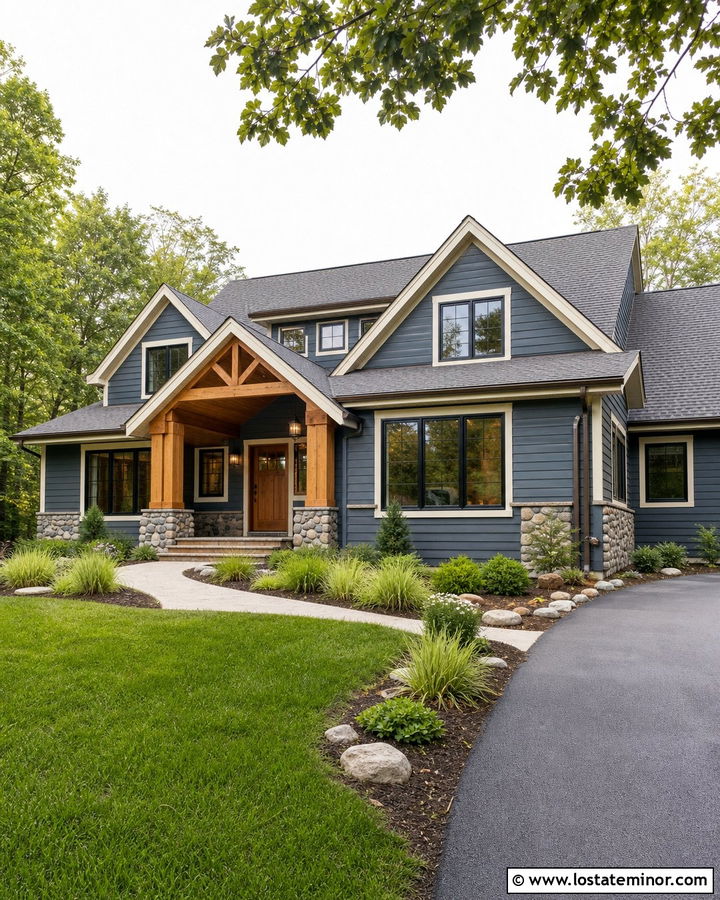
Natural cedar columns bring immediate warmth to a cool slate blue exterior. This pairing suits a modern Craftsman, rustic ranch, or woodland cottage where organic materials already belong in the setting. Keep the columns simple and square so the grain and honey-brown stain remain the main attraction. Repeat the cedar on the front door, porch ceiling, and small gable brackets to make the material feel intentional. Soft ivory trim gives the siding a gentle outline, while bronze gutters and dark window frames create definition. A warm gray roof connects the blue siding with the wood accents. Around the porch, use river rock, native grasses, and layered green shrubs to support the relaxed, nature-inspired palette without hiding the columns.
4. Slate Blue Modern Farmhouse With Black Columns
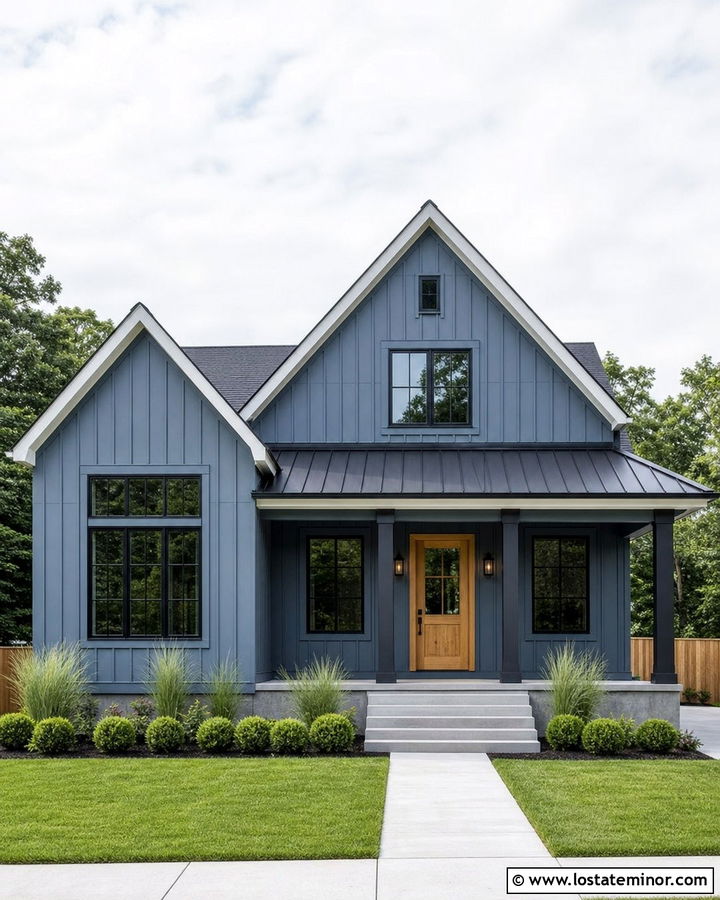
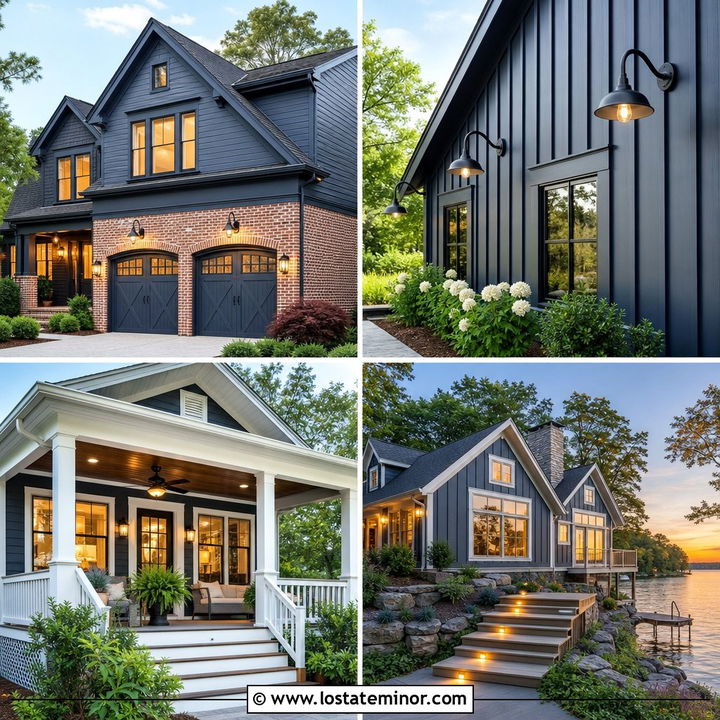
For a sharper farmhouse exterior, combine slate blue board-and-batten siding with clean black porch columns. The dark supports create a strong vertical rhythm and connect naturally with black-framed windows, lanterns, and a standing-seam porch roof. Use warm white on the fascia and main roof trim so the overall facade does not become too dark. A natural oak front door softens the contrast and gives the entrance an inviting focal point. Light gray concrete porch flooring and wide steps keep the materials streamlined. This scheme is particularly effective on a simple gabled home with an extended porch. Limit extra decorations and use structured landscaping, such as boxwoods and upright grasses, to complement the modern lines of the columns.
5. Slate Blue Colonial With Round White Columns
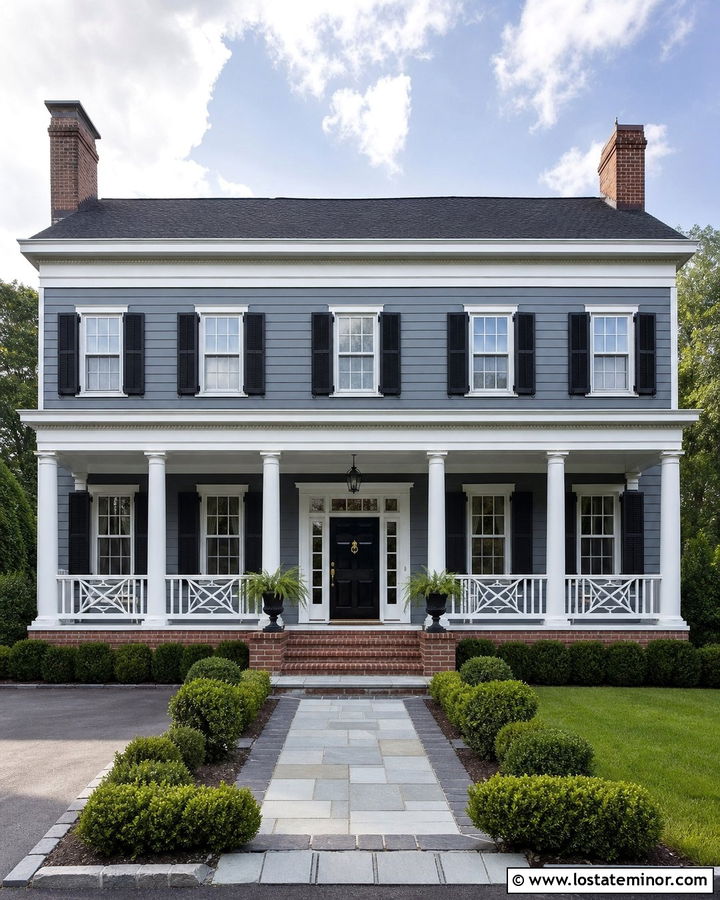
Traditional round columns give a symmetrical slate blue Colonial a stately but approachable appearance. Use evenly spaced white Tuscan columns across the porch, keeping their smooth profiles simple rather than overly ornate. The same bright white can frame the windows, cornice, railings, and centered entry. Black shutters and a glossy black front door add classic contrast, while polished brass hardware introduces a small amount of warmth. A medium charcoal roof will balance the dark shutters without competing with the slate blue siding. Brick porch steps are an excellent finishing material because their earthy red-brown color keeps the scheme from feeling too cool. Symmetrical foundation shrubs and matching planters reinforce the orderly architecture and create composed curb appeal.
6. Slate Blue Ranch With Brick Porch Columns
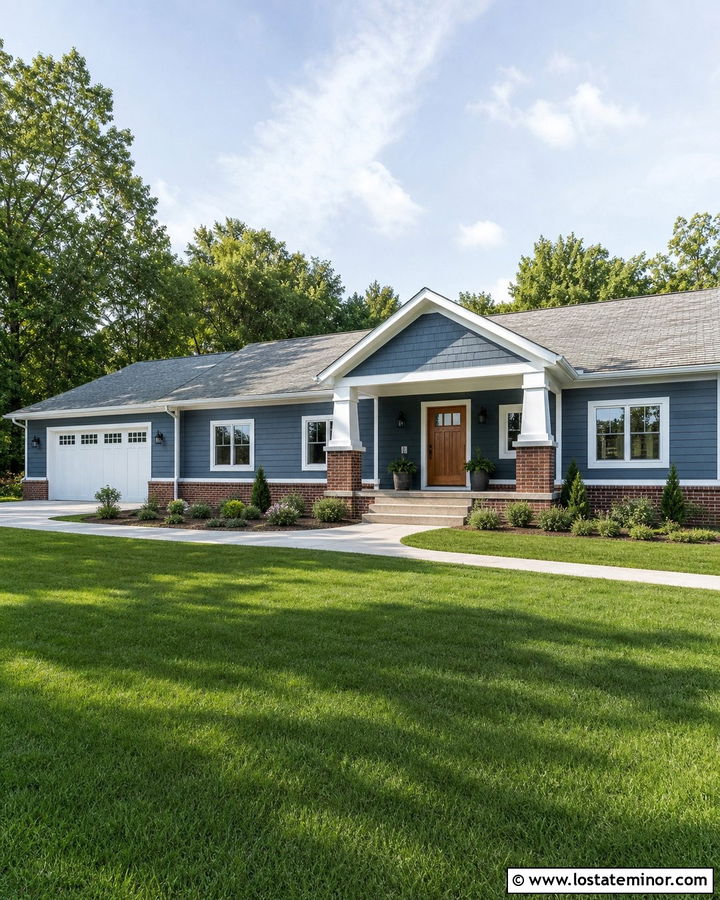
A long ranch house benefits from brick porch columns because they break up the horizontal facade and add useful visual weight. Choose slate blue lap siding with creamy white trim, then wrap simple square columns in softly weathered red or brown brick. Repeat the same brick along the foundation or on a low planter wall so the columns do not appear isolated. A warm wood front door works well between the blue siding and masonry. Consider a medium brown or weathered gray roof rather than a stark black one. Wide porch steps, dark bronze lighting, and a natural concrete walkway complete the grounded palette. Keep the landscaping low to preserve the ranch’s broad lines and ensure the brick columns remain visible.
7. Slate Blue House With Fieldstone Column Bases
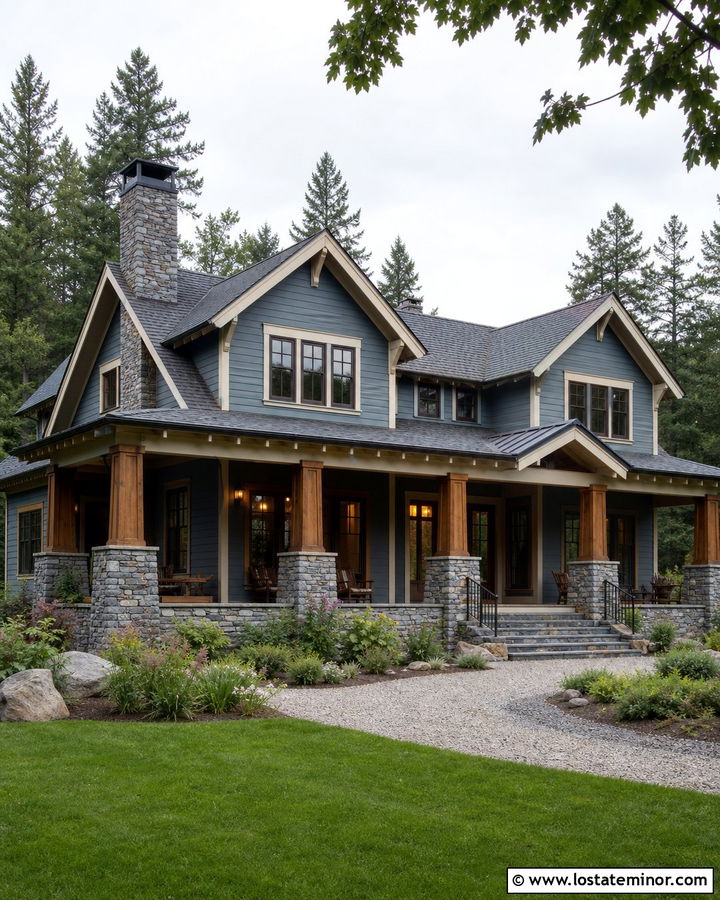
Fieldstone column bases can make a slate blue exterior look settled into its landscape. This treatment works beautifully on a mountain cottage, lakeside home, or rustic Craftsman with a deep covered porch. Select stone containing blue-gray, warm taupe, and muted brown so it connects naturally with the siding. The upper columns can be stained cedar or painted soft cream, depending on how much warmth you want. Carry the fieldstone across the porch foundation and around the lower chimney for a cohesive design. A dark gray roof and bronze window frames strengthen the earthy character. Complete the setting with broad stone steps, informal native plants, and a curved gravel walkway that complements the natural texture of the masonry.
8. Slate Blue Traditional House With Fluted Columns
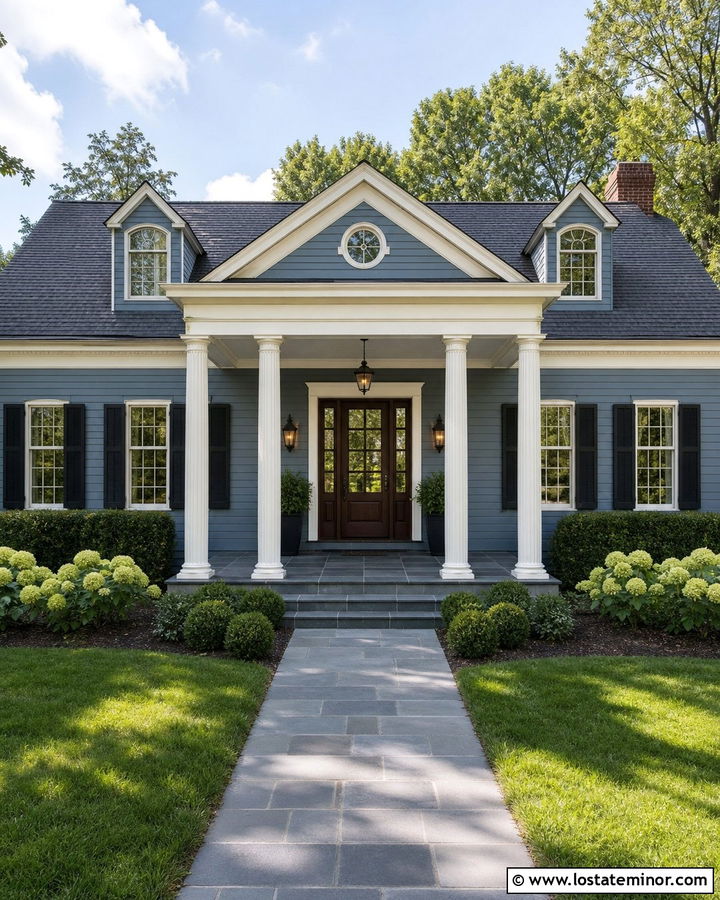
Fluted columns introduce elegant texture without requiring a complicated color palette. Against slate blue clapboard siding, creamy white fluting appears crisp and architectural. Use these columns on a centered porch or classical portico where their vertical detailing can frame the front door. A deep mahogany door with divided glass adds warmth and formality, while off-white window trim keeps the transitions soft. Consider gray slate porch flooring and steps to repeat the cool undertones of the exterior color. Black shutters, iron lanterns, and a charcoal roof provide controlled contrast. Since fluted columns already have visual detail, keep the railings and porch furniture simple. Neatly clipped hedges and balanced planters will support the traditional, orderly appearance.
9. Slate Blue Modern House With Metal Porch Columns
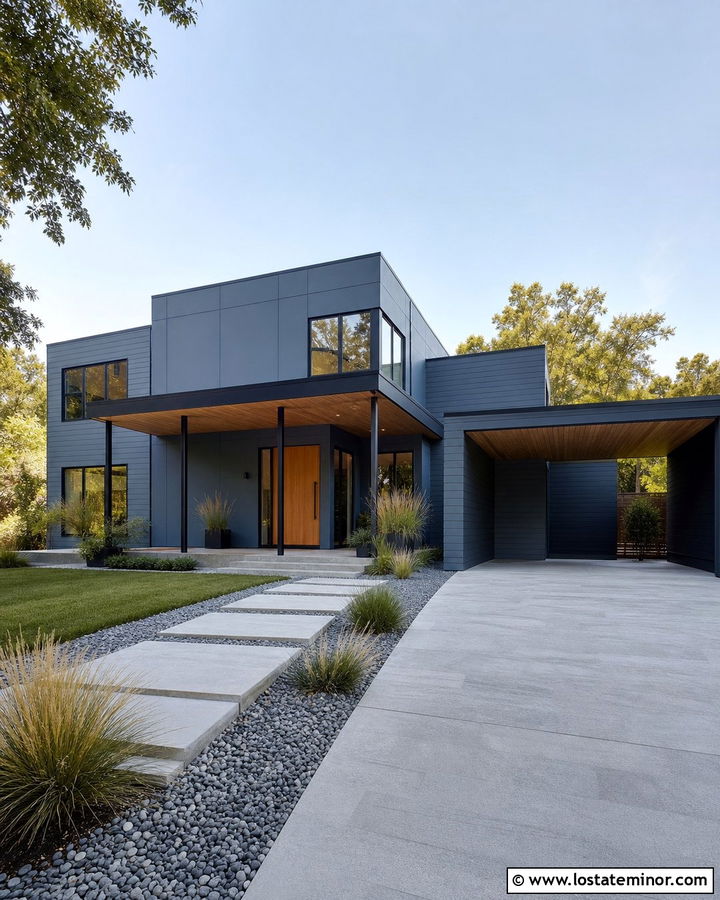
Slim metal porch columns give slate blue siding a lighter, more contemporary profile. Choose powder-coated black steel supports for a strong contrast that echoes black window frames and minimalist wall lights. Horizontal slate blue siding can cover the main volume, while smooth fiber cement panels define the recessed entrance. A flat or low-slope porch canopy keeps the front elevation streamlined. Add a warm cedar pivot door and matching soffit to prevent the cool exterior from feeling industrial. Large concrete pavers, gravel planting beds, and sculptural grasses fit the clean architecture. Because metal columns are visually narrow, position them carefully under the porch beam and avoid excessive spacing. The result should look structured, open, and intentionally uncluttered.
10. Slate Blue Southern House With Double Columns
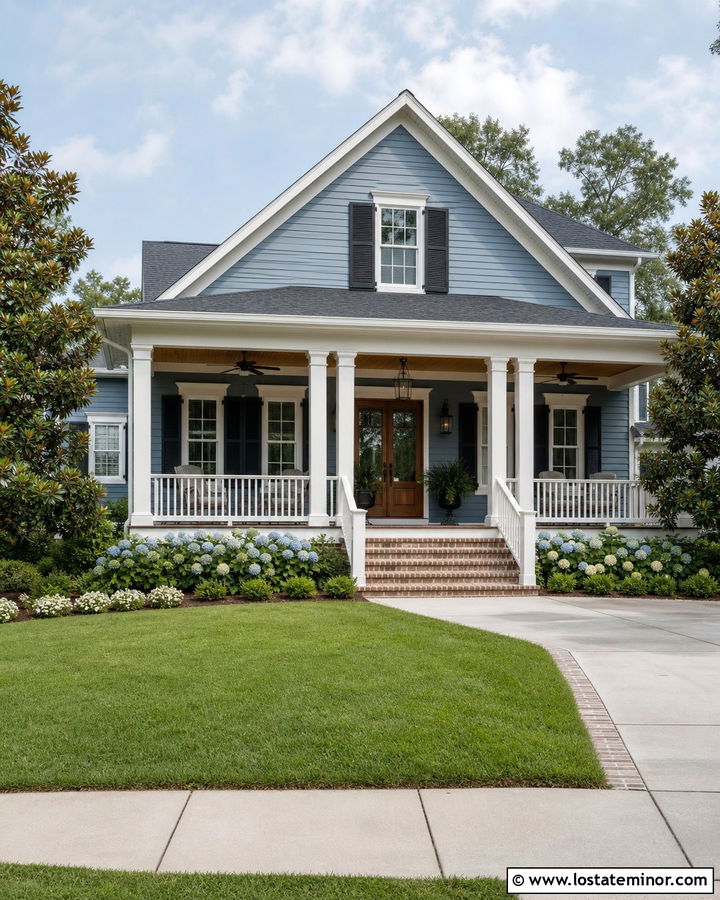
Paired porch columns create the generous scale associated with Southern-inspired homes. Paint the siding a soft slate blue, then use double white square columns at the steps and porch corners. The repeated supports make a wide porch feel substantial while preserving an open view of the facade. White railings, fascia, and window trim will connect the column groups across the elevation. Introduce warmth through a stained tongue-and-groove porch ceiling, a medium brown front door, and traditional brick flooring. A pale blue porch ceiling can also work when a cooler, more coastal finish is preferred. Add black shutters and lantern-style lighting for definition. Hydrangeas, magnolias, and broad porch steps complete the gracious, welcoming exterior.
11. Slate Blue House With Arched Front Portico Columns
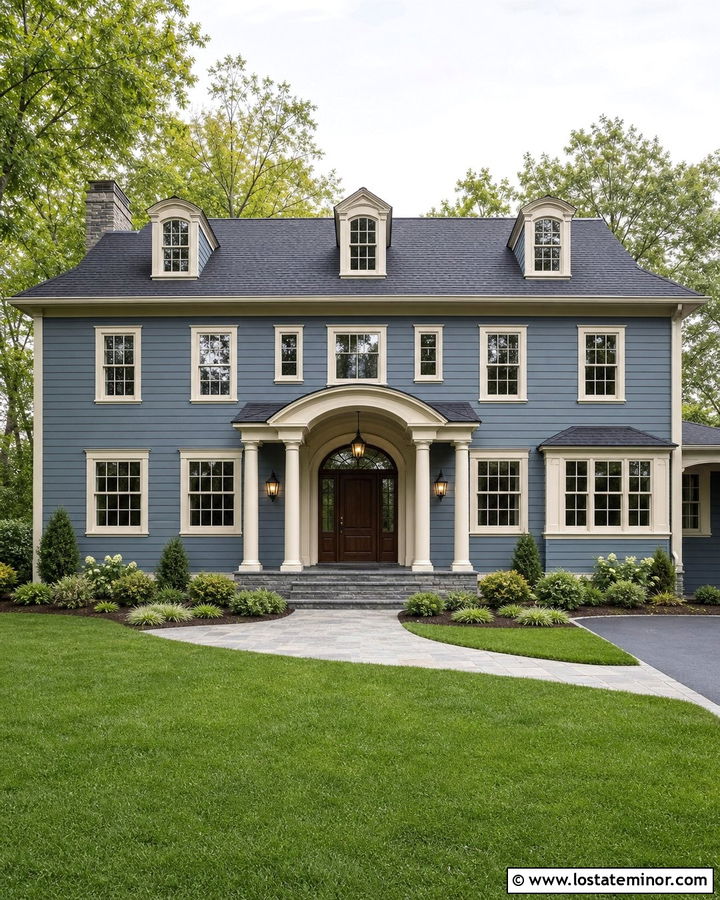
An arched portico gives a slate blue house a clear focal point without requiring a full-width porch. Support the arch with two substantial square or round columns painted warm white. The arch should relate to another shape on the facade, such as a rounded transom, curved walkway, or arched upper window. Keep the slate blue body color consistent so the entry architecture receives the attention. A stained walnut door, antique brass hardware, and gray stone porch floor add richness without introducing too many colors. Use cream window trim and a dark charcoal roof for a timeless finish. Low shrubs around the portico will soften its base, but leave enough open space to show the complete column proportions.
12. Slate Blue House With Wraparound Porch Columns
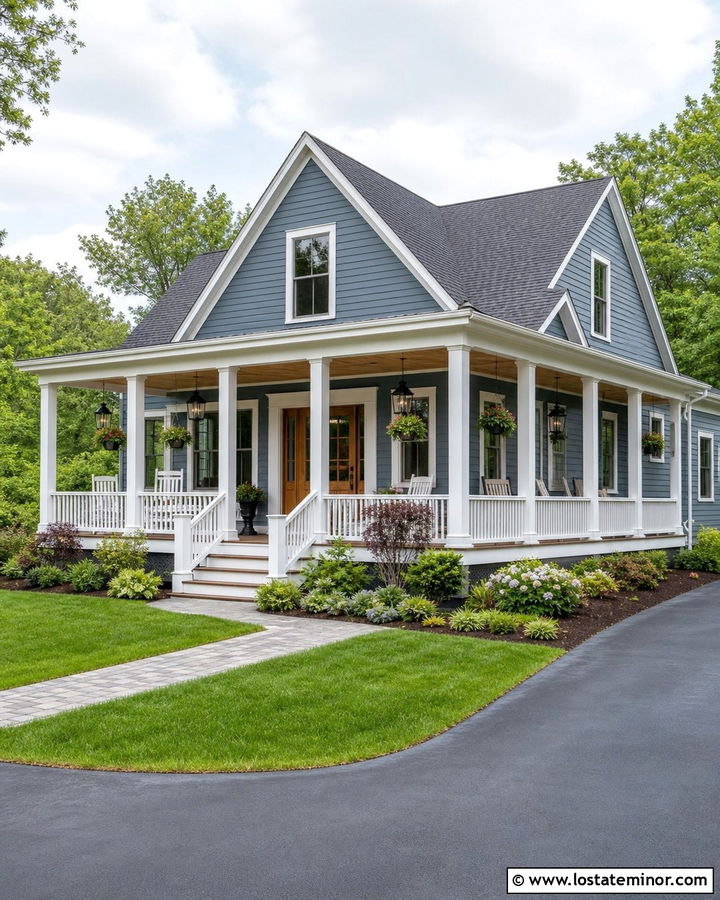
A wraparound porch turns slate blue siding into the calm backdrop for a repeating line of columns. Use simple white square supports that follow the porch around the front and side elevations. Consistent spacing is important because uneven columns can make a long porch look disorganized. Paint the railings, fascia, and window casings the same white for a continuous frame. Warm the scheme with a stained wood porch floor, natural front door, and matching ceiling. A medium gray roof keeps the exterior relaxed, while black lanterns provide small points of contrast. Rocking chairs, hanging baskets, and layered foundation plantings can add character, but leave some open areas so the architecture and slate blue color remain easy to appreciate.
13. Slate Blue Bungalow With Cream Porch Columns
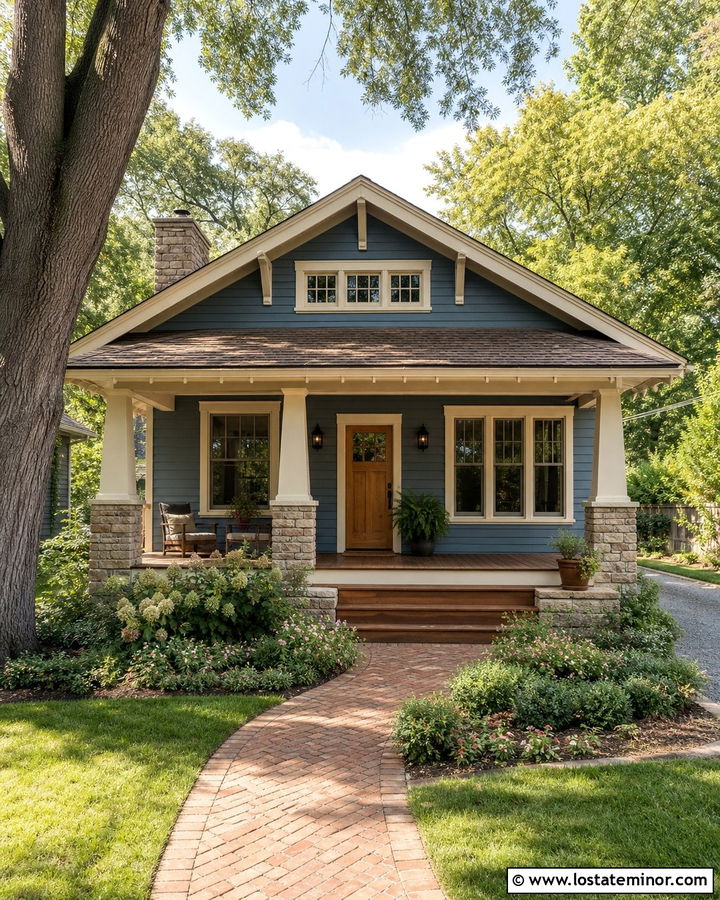
Warm cream columns can soften slate blue siding and give a compact bungalow an inviting vintage character. Choose gently tapered square columns on low painted or stone bases, keeping their size proportional to the small facade. Repeat the cream on the window trim, gable fascia, railings, and porch beam. A muted mustard or natural wood front door introduces a cheerful accent without overpowering the blue-gray body. Dark bronze lighting and a weathered brown roof support the warmer direction of the palette. Consider a medium-toned wood porch floor and simple Craftsman railings. Cottage plantings, curved garden borders, and a short brick walkway create a layered entrance while allowing the porch columns to remain the strongest architectural feature.
14. Slate Blue Coastal House With White Porch Columns
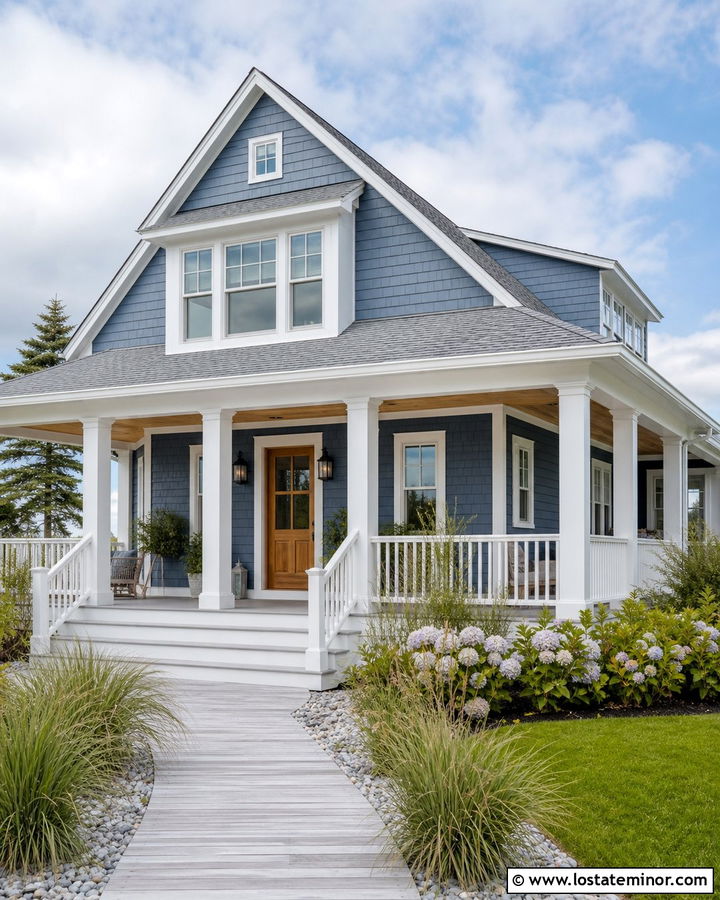
Bright white columns make slate blue siding feel fresh and coastal, especially when paired with shingle textures and an airy covered porch. Use square or round supports with simple capitals rather than elaborate decorative details. White window trim, railings, and fascia will create a crisp outline around the blue-gray facade. A natural teak door and light wood porch ceiling bring warmth to the breezy palette. Choose a light-to-medium gray roof so the exterior remains bright in strong sunlight. A pale gray porch floor, cable railings, and understated nickel or black lighting can modernize the coastal appearance. Finish the yard with beach grasses, hydrangeas, light gravel, and a clean boardwalk-style path leading toward the entrance.
15. Slate Blue House With Dark Navy Columns
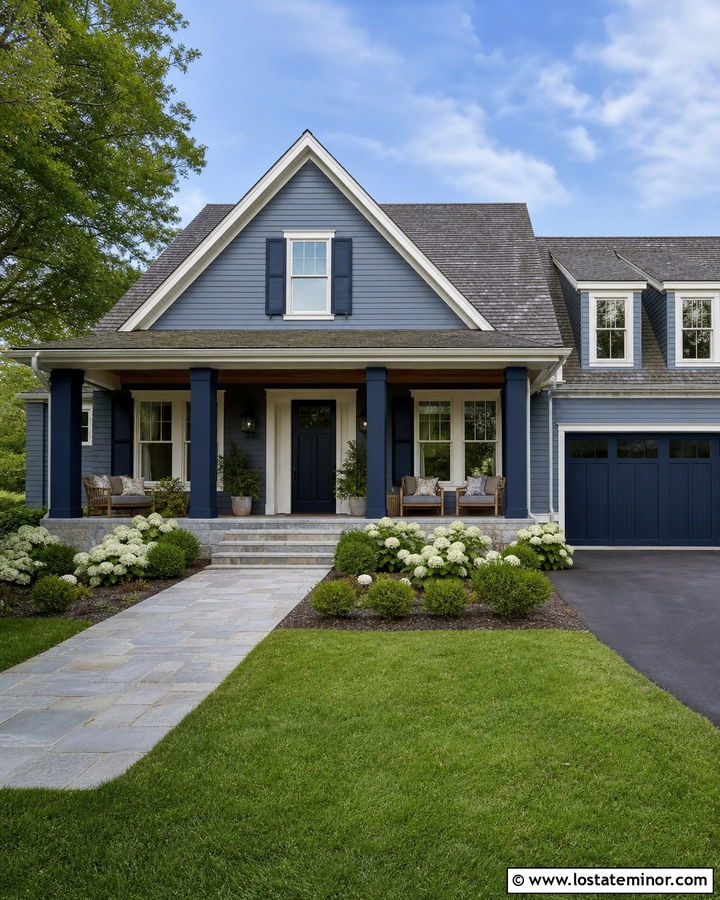
Dark navy columns create a sophisticated tonal scheme when placed against lighter slate blue siding. This approach works on traditional and transitional homes that need more definition but do not suit stark black accents. Use navy on the square porch columns, front door, shutters, and porch beam. Keep the window trim and fascia a restrained soft white to separate the two blue tones. A weathered gray roof and light stone porch floor prevent the exterior from looking too heavy. Consider natural wood furniture or a cedar ceiling to add warmth beneath the porch. The navy should be noticeably deeper than the body color, especially in shade. Test both colors together outdoors to confirm that the columns remain distinct throughout the day.
16. Slate Blue House With Light Gray Columns
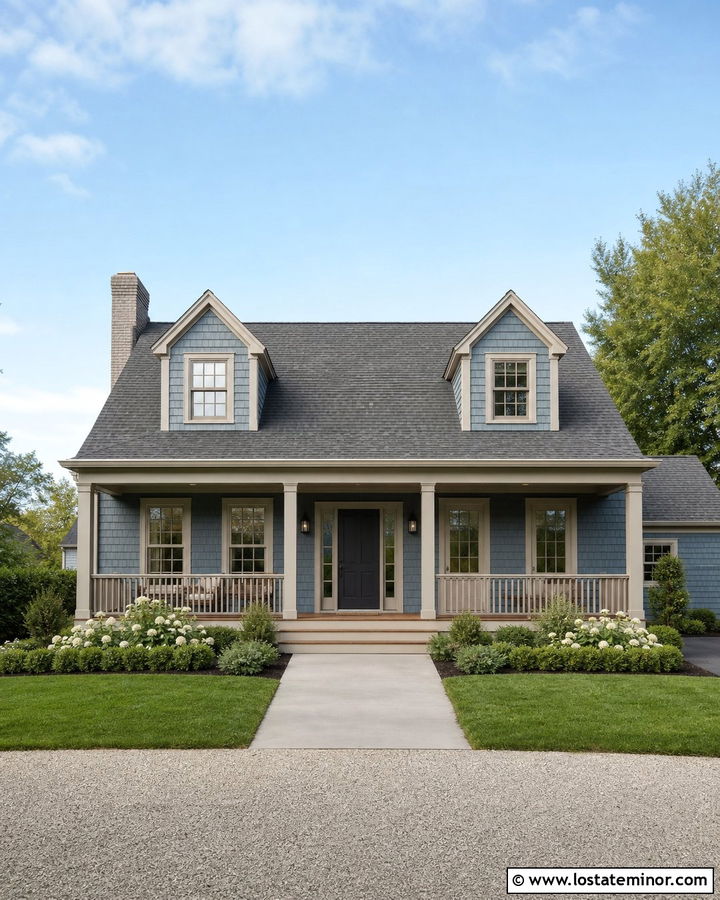
Light gray porch columns create a quiet, low-contrast alternative to traditional white. Choose a pale warm gray that is clearly lighter than the slate blue siding but still relates to its muted undertones. Use the same gray on window trim, porch railings, and fascia for a consistent frame. A charcoal front door and roof add depth, while brushed nickel or black lights keep the scheme clean. Warm wood decking is useful in this palette because it prevents the blues and grays from feeling flat. This understated combination suits a ranch, Cape Cod, or simple suburban home. Add green foundation shrubs, white flowering plants, and a straight concrete walkway to provide natural contrast without disrupting the calm exterior color arrangement.
17. Slate Blue Board-And-Batten House With Wood Columns
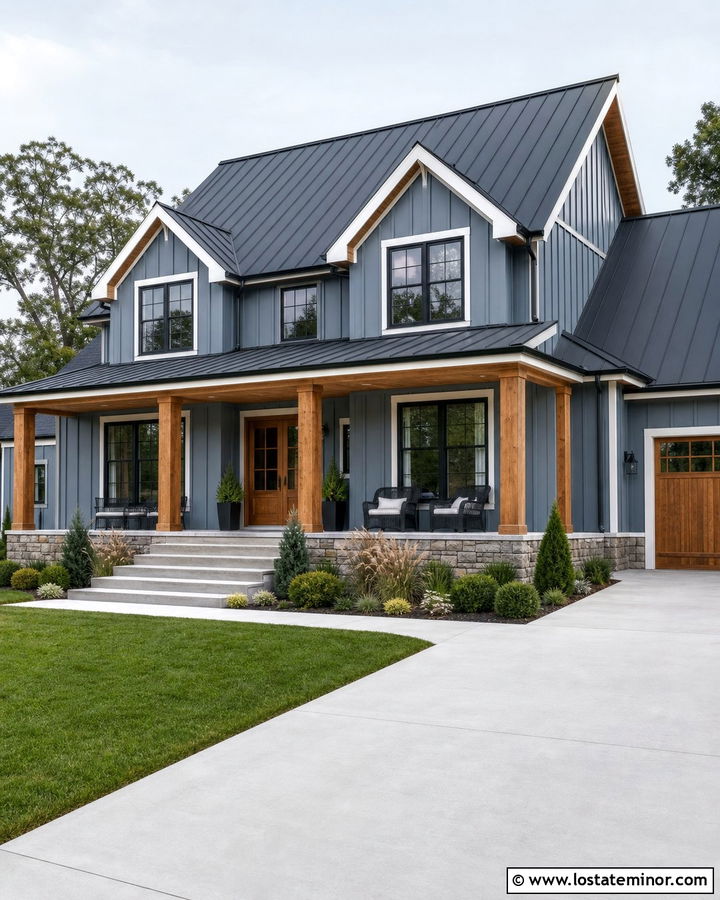
Vertical board-and-batten siding gives slate blue a strong modern farmhouse presence. Pair it with substantial stained wood columns that visually support a simple gabled porch roof. Medium cedar or oak tones work especially well because they contrast with the cool blue while remaining natural. Repeat the stain on the front door and porch ceiling, but avoid covering every accent in wood. Warm white window trim and a charcoal metal roof will keep the exterior crisp. Use stone around the porch foundation to anchor the columns and add another texture. Black-framed windows, downlights, and gutters provide slim lines of contrast. Finish with broad concrete steps and structured landscaping to emphasize the facade’s clean vertical proportions.
18. Slate Blue Shingle House With White Columns
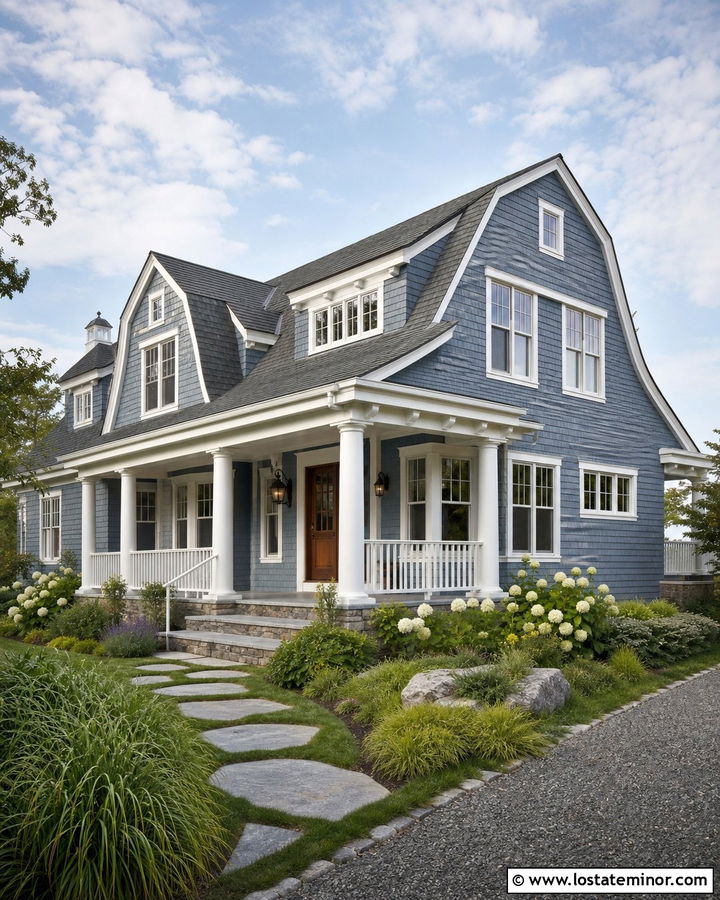
Slate blue shingle siding creates rich texture that feels appropriate on a coastal cottage or traditional Shingle-style home. Smooth white porch columns provide a clean contrast to the layered siding without competing with it. Use wide square columns or simple round supports, depending on the home’s architecture. Continue white across the window trim, railings, and roof edges. A medium-stained front door and gray stone porch floor add warmth and durability to the entrance. Choose a deep gray roof that is darker than the siding but not completely black. Copper or dark bronze lights can supply a subtle metallic accent. Hydrangeas, ornamental grasses, and an informal stone path reinforce the relaxed texture of this complete exterior look.
19. Slate Blue House With Brick Porch And Columns
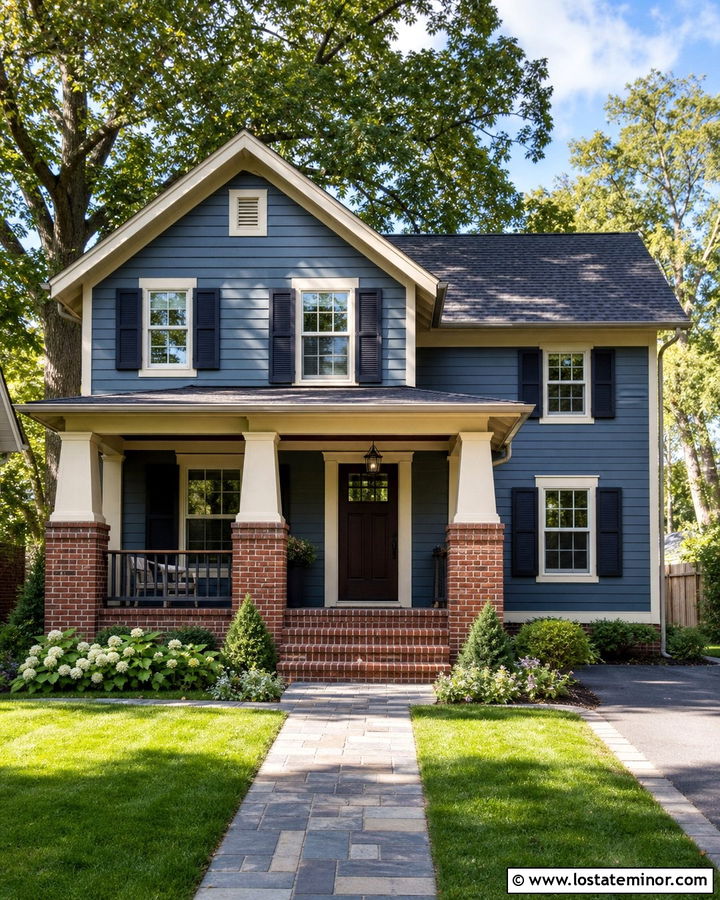
Combining slate blue siding with a brick porch creates a warm, familiar exterior that fits many established neighborhoods. Wrap the porch columns in red-brown brick, or use brick bases below painted cream supports. Continue the masonry across the porch floor, steps, and a portion of the foundation to unify the materials. Cream trim will bridge the warm brick and cool blue siding more naturally than a brilliant white. Add a deep brown front door, black shutters, and a weathered charcoal roof for balanced contrast. Select brick with varied gray or blue undertones to strengthen the connection to the siding. Simple shrubs and a paved walkway should frame the porch without covering the masonry or making the entrance feel crowded.
20. Slate Blue House With Limestone Porch Columns
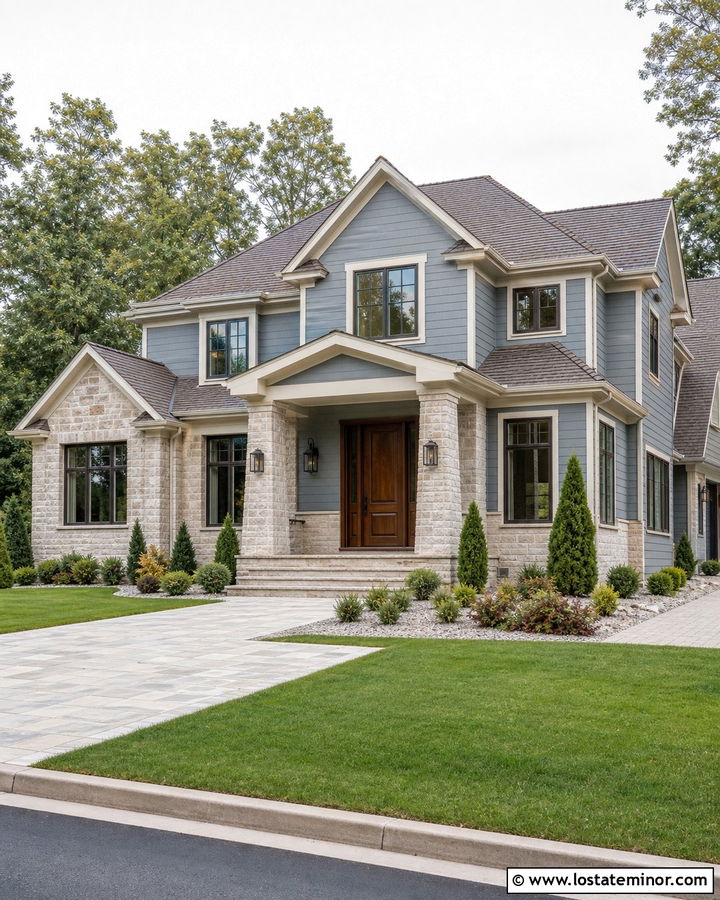
Pale limestone columns give a slate blue facade an elegant, substantial appearance. Their creamy beige coloring warms the cool siding while maintaining a restrained and upscale palette. Use full masonry columns on a Mediterranean-inspired or transitional house, or apply limestone veneer to square structural supports. Repeat the stone around the porch base, front steps, or lower section of the facade. Warm white trim, bronze window frames, and a walnut front door will connect the colors naturally. A brown-gray roof works better than a blue-toned roof because it picks up the warmer variations in the limestone. Finish the setting with clipped evergreens, light gravel beds, and a wide paved walkway that matches the formality of the entrance.
21. Slate Blue House With Black Roof And White Columns
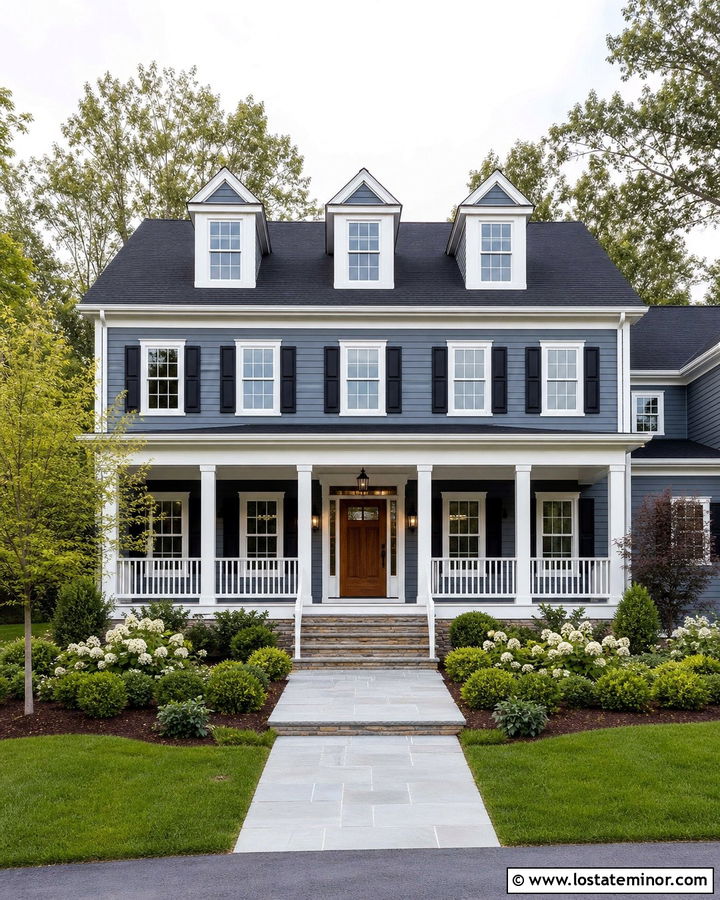
A black roof can give slate blue siding a crisp upper boundary, especially when bright white columns balance the darker color. Use the black again in small amounts on shutters, gutters, lanterns, and window sashes. Avoid repeating it across large porch surfaces, which could make the entrance feel heavy. White square columns, railings, fascia, and window trim create a bright framework between the roof and siding. A medium wood front door supplies necessary warmth. Choose a light gray porch floor or natural stone steps to keep the lower facade open and welcoming. This high-contrast scheme suits a Colonial, farmhouse, or updated suburban home. Green landscaping will soften the graphic palette and help the slate blue look more natural.
22. Slate Blue House With Metal Porch Roof Columns
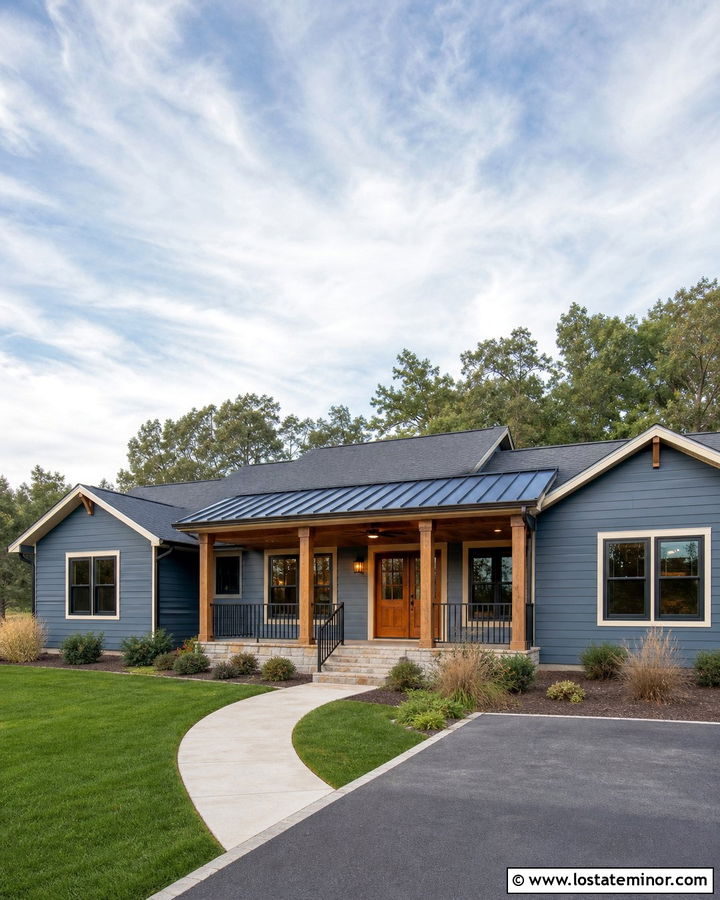
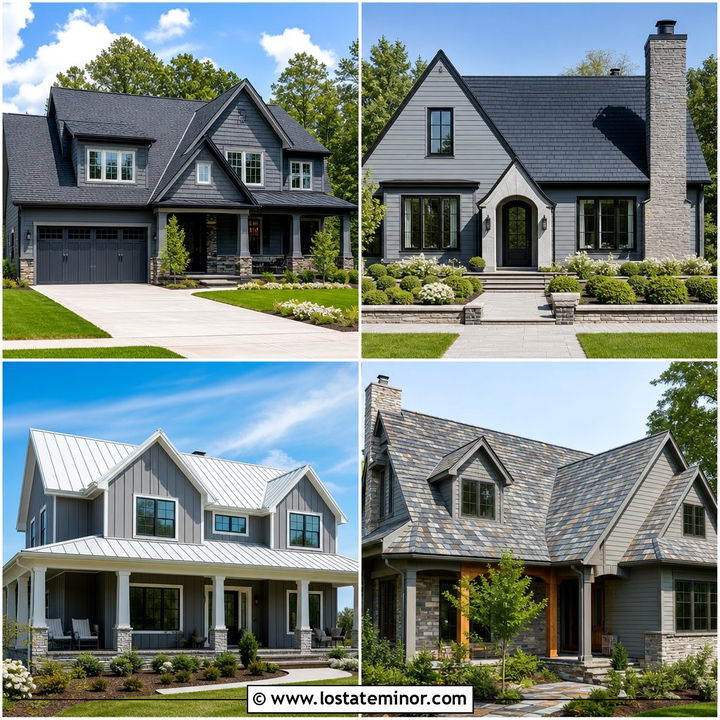
A standing-seam metal porch roof adds a crisp architectural layer to slate blue siding. Support it with square white columns for a traditional look or stained wood columns for a more rustic finish. Charcoal metal is particularly versatile because it connects easily with dark window frames, gutters, and the main shingle roof. Keep the porch roof shallow enough that it does not hide important windows or overwhelm the entrance. A wood front door and matching porch ceiling can soften the metal surface. Light stone steps and simple railings complete the balanced mixture of materials. This design works well on ranch, farmhouse, and Craftsman homes that need stronger entry definition without building an oversized or elaborate covered porch.
23. Slate Blue House With Wood Door And White Columns
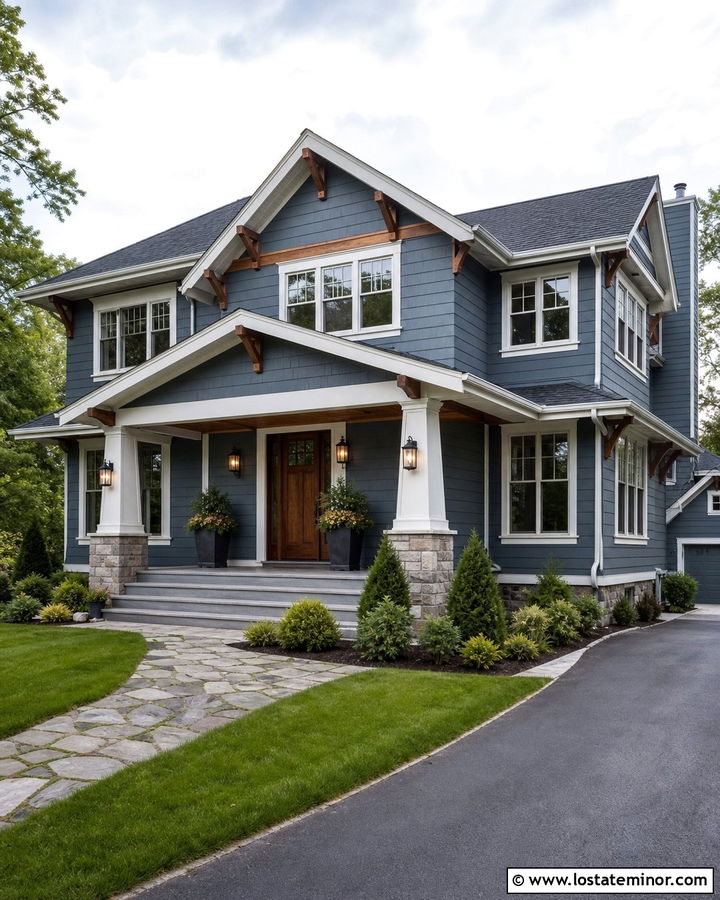
A rich wood front door becomes a natural centerpiece when surrounded by slate blue siding and white porch columns. Choose a medium walnut, oak, or mahogany stain that provides visible warmth but does not turn orange in direct sunlight. Repeat the wood selectively on the porch ceiling, seating, or small gable brackets. White columns and trim will keep the facade bright and separate the door from the blue body color. Add charcoal roof shingles, dark bronze lighting, and a medium gray porch floor for a grounded finish. This versatile scheme works on cottages, Craftsman homes, and traditional suburban exteriors. Position matching planters near the doorway while leaving the column bases clear and visually balanced.
24. Slate Blue House With Red Door And White Columns
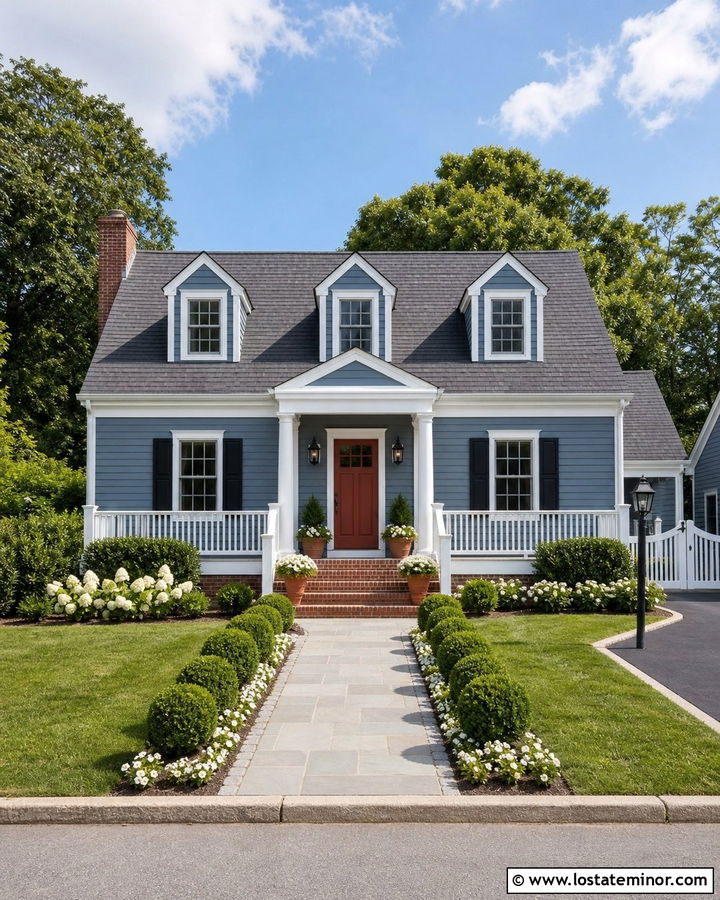
A muted brick-red front door gives a slate blue house an energetic focal point without disrupting its calm character. Surround the entry with simple white columns, railings, and trim so the accent remains easy to read from the street. Choose a red with earthy brown undertones rather than a bright primary shade. A charcoal roof and black shutters provide a strong neutral framework for the two colors. Brick porch steps can repeat the door’s warmth and connect the accent to the landscape. This palette is particularly attractive on a Colonial, Cape Cod, or traditional cottage. Keep porch furniture neutral and use green shrubs, white flowers, and terracotta planters to support the colorful but controlled exterior scheme.
25. Slate Blue House With Sage Door And Cream Columns
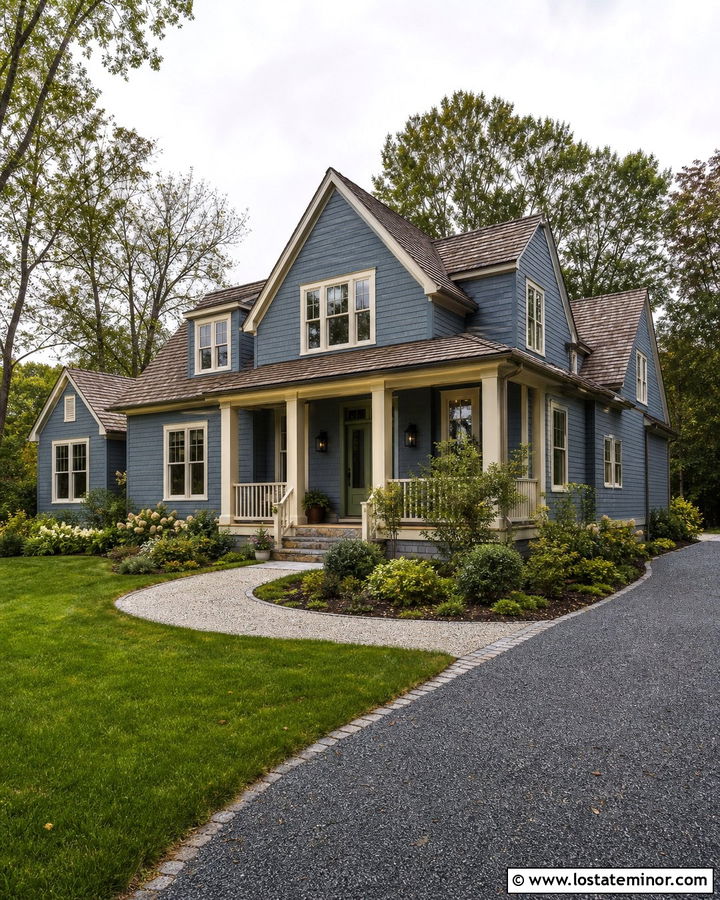
Slate blue and muted sage create a soft, nature-inspired pairing when warm cream columns separate the colors. Use sage green on the front door and perhaps a small set of shutters, keeping the main facade consistently blue-gray. Cream window trim, railings, and fascia will prevent the two subdued colors from blending together. A weathered brown roof and natural stone porch floor reinforce the earthy direction. Dark bronze lighting and hardware add definition without introducing harsh black lines. This exterior works well for cottages, bungalows, and homes surrounded by mature trees. Select landscaping with varied green foliage, but include light flowers or pale gravel near the foundation so the house does not disappear into the yard.
26. Slate Blue House With Garage And Porch Columns
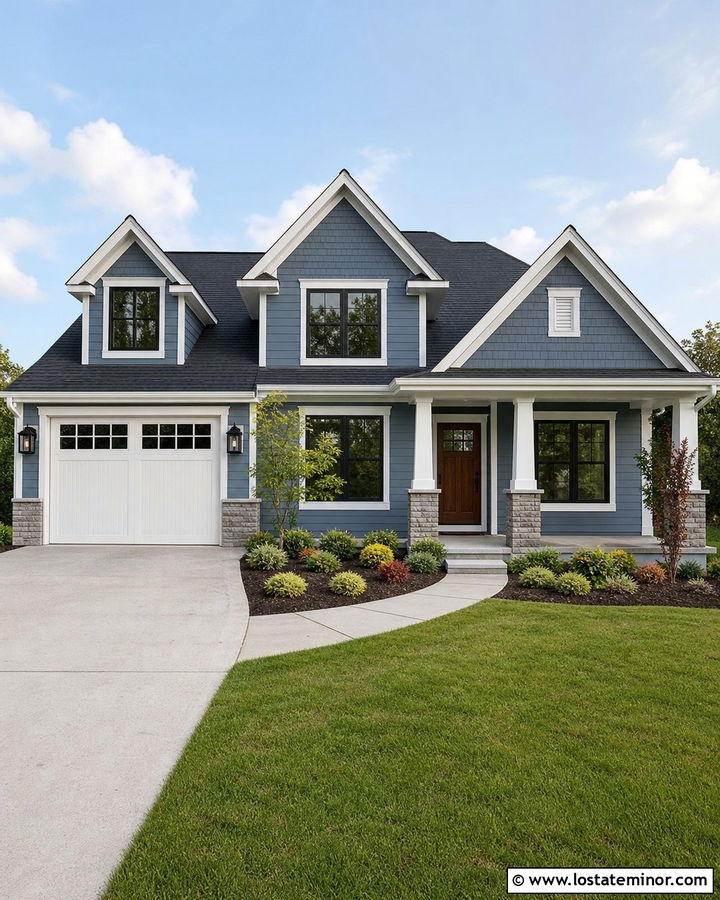
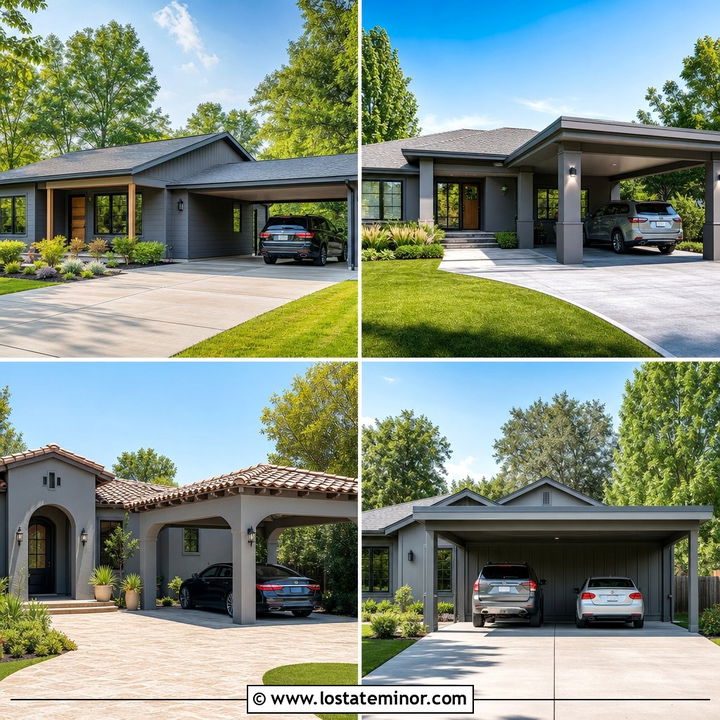
When a garage occupies much of the front elevation, porch columns can help redirect attention toward the entrance. Paint the house slate blue and keep the garage door a soft white or light warm gray that matches the trim. Use substantial white square columns around the porch to create a clear architectural frame. A stained wood front door gives the entry a stronger focal point, while black lights and window frames add definition. Consider adding stone to the column bases and lower garage corners to connect both sides of the facade. A charcoal roof, curved walkway, and layered shrubs will further balance the composition. Avoid painting the garage door a highly contrasting color that competes with the welcoming porch.
27. Slate Blue Split-Level With Porch Columns
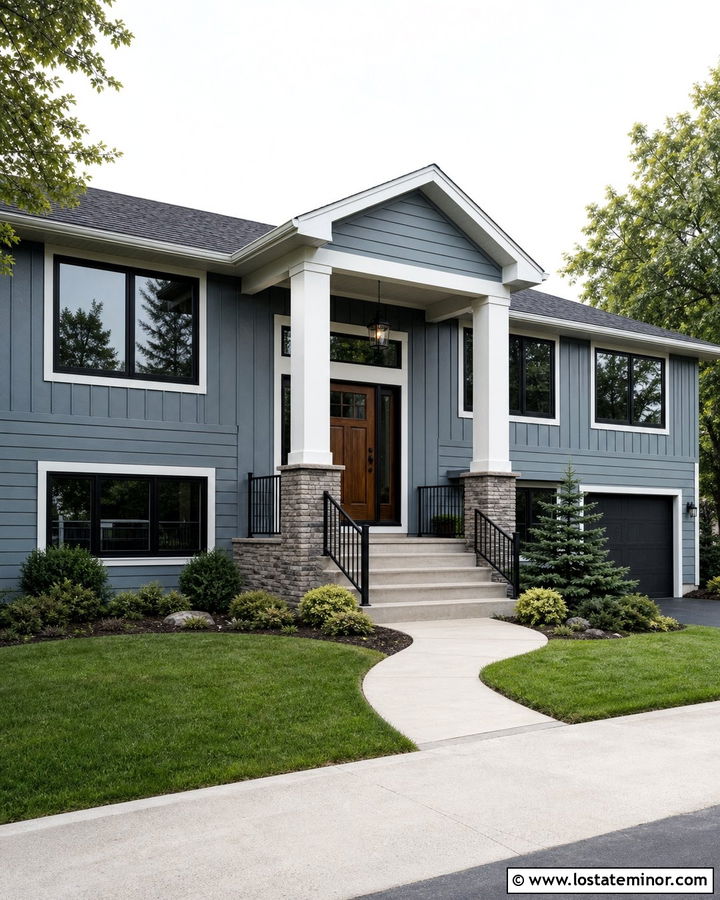
A split-level house can gain better balance from a compact porch with properly scaled columns. Use slate blue siding across both levels, then place two substantial square columns around the recessed or raised entrance. White trim and columns will brighten the often-shadowed doorway, while a wood front door creates warmth. Add gray stacked-stone bases that continue along the lower level or foundation. This material transition helps visually connect the porch to the taller facade. A charcoal roof and black-framed windows give the exterior definition without making it overly busy. Broad steps, a simple metal railing, and a gently curved walkway make the entrance easier to notice. Low landscaping preserves sightlines across the multi-level architecture.
28. Slate Blue Cape Cod With Portico Columns
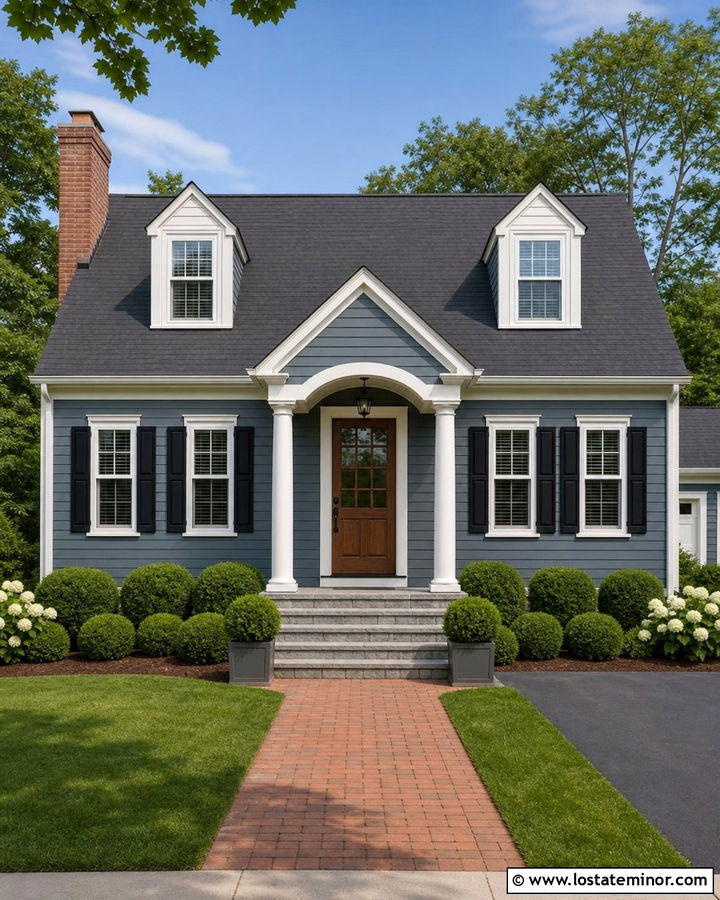
A small columned portico gives a slate blue Cape Cod a more visible and welcoming entrance. Use two simple white square or round columns beneath a steep gabled roof that reflects the pitch of the main house. White trim around the windows, dormers, and roof edges reinforces the classic architecture. Add black shutters and a medium-stained wood door for contrast and warmth. Gray stone steps and a brick walkway can connect the cool siding to the surrounding landscape. Keep the portico modest so it does not overpower the compact, symmetrical facade. Traditional lanterns, clipped boxwoods, and matching planters complete the look. The finished exterior should feel orderly, comfortable, and appropriately scaled to the house.
29. Slate Blue Victorian With Decorative Porch Columns
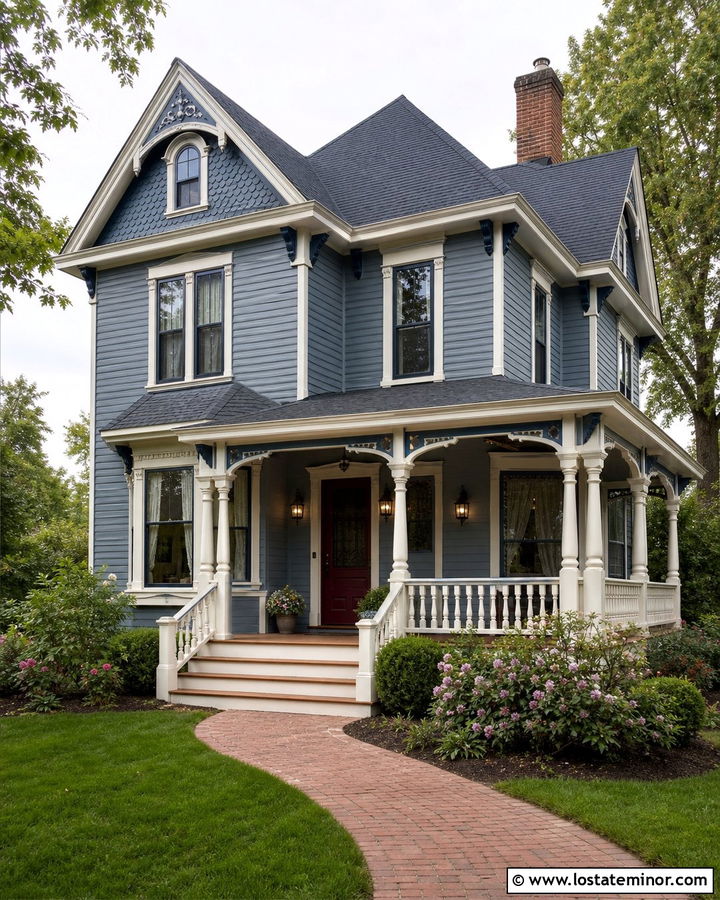
A Victorian exterior can carry more decorative detail than most house styles, but the palette still needs discipline. Use slate blue siding as the main color, creamy white on turned porch columns and railings, and a deeper navy on brackets or patterned gable shingles. A muted burgundy front door provides a historically inspired accent without becoming too bright. Keep the roof charcoal and repeat only a few trim colors across the facade. Decorative column brackets should be visible but not overloaded with contrasting paint. A natural wood porch floor adds warmth beneath the detailed millwork. Complete the exterior with a curved brick path, layered flowering shrubs, and period-appropriate lanterns that support the architecture without making it feel theatrical.
30. Slate Blue Two-Story House With Tall Columns
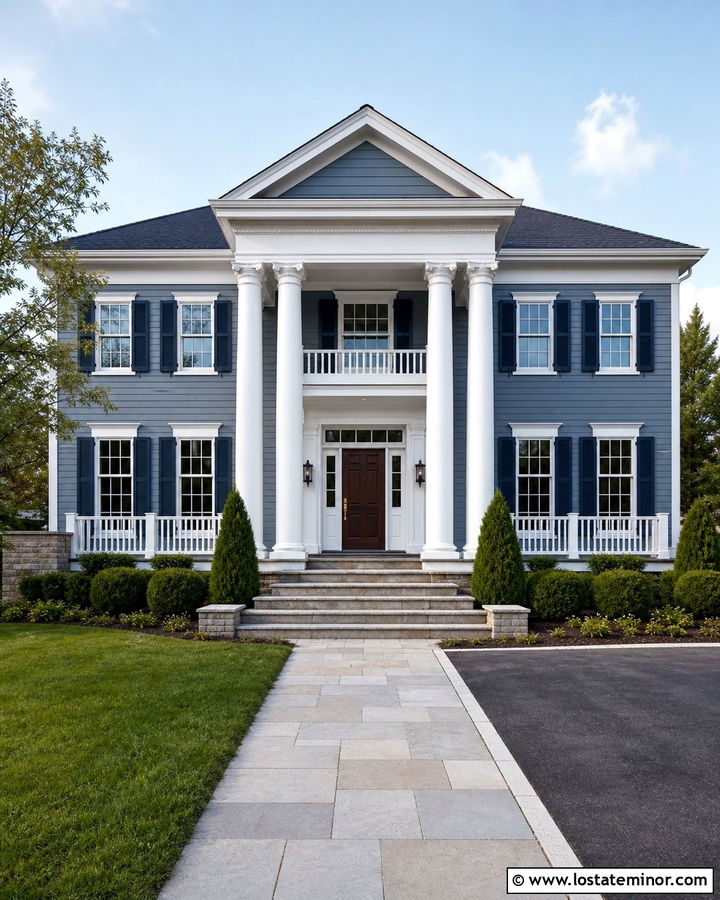
Tall two-story columns create a powerful focal point, so their scale and color must work with the entire facade. Against slate blue siding, smooth white columns provide the clearest and most balanced contrast. Use them to frame a centered entrance and upper window or balcony, maintaining symmetrical spacing. Keep shutters, railings, fascia, and window trim white or deep navy rather than introducing several unrelated colors. A dark walnut front door gives the lower level warmth, while a charcoal roof anchors the height of the house. Wide stone steps and restrained landscaping help the entrance feel substantial. Because the columns are already dramatic, simple capitals, clean railings, and limited porch decoration will create a more polished final result.
Conclusion:
The strongest 30 Slate Blue House Design With Porch Columns Ideas treat the facade as one coordinated composition. Column shape, scale, color, and material should relate to the siding, roofline, porch, and architectural style. White columns create crisp contrast, while cream, gray, brick, stone, black metal, and natural wood offer distinctive alternatives. Warm doors and porch ceilings can also keep the cool slate blue body color from feeling flat. Before committing, test exterior colors beside permanent materials in morning, midday, and shaded light. Measure the porch carefully so each support looks properly proportioned. With thoughtful repetition and balanced contrast, slate blue siding and well-designed columns can create inviting, lasting curb appeal.

Related posts: