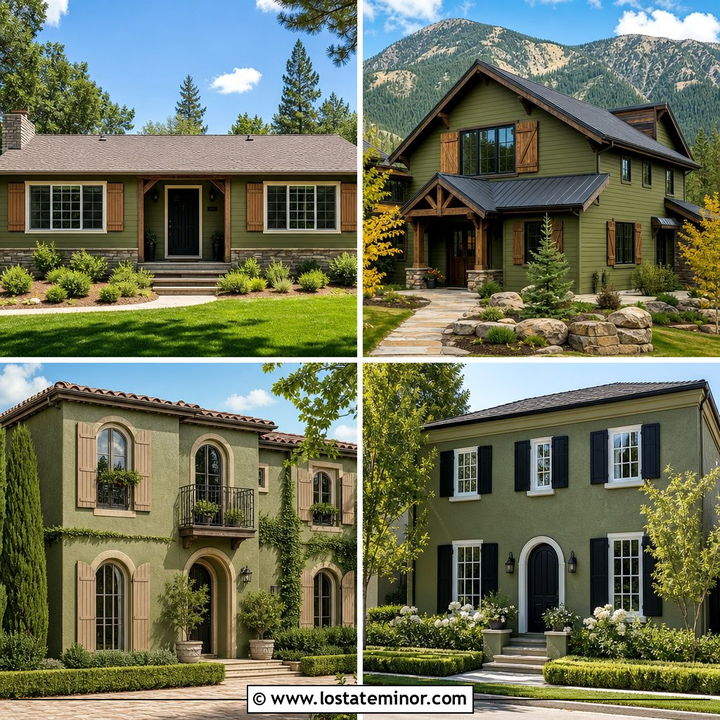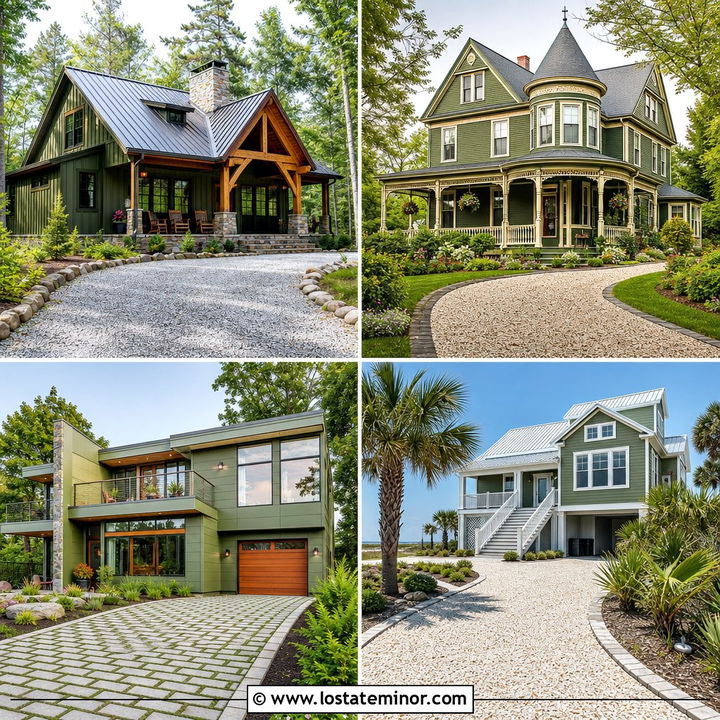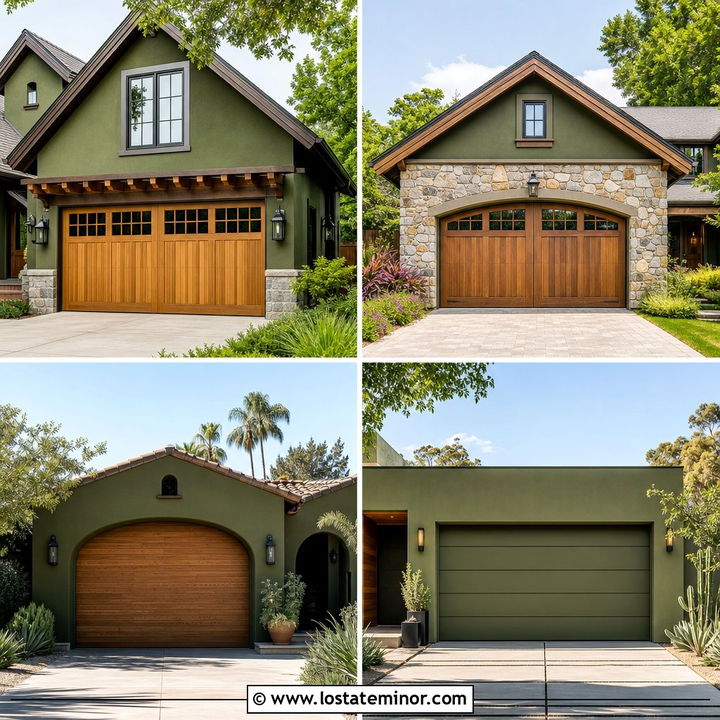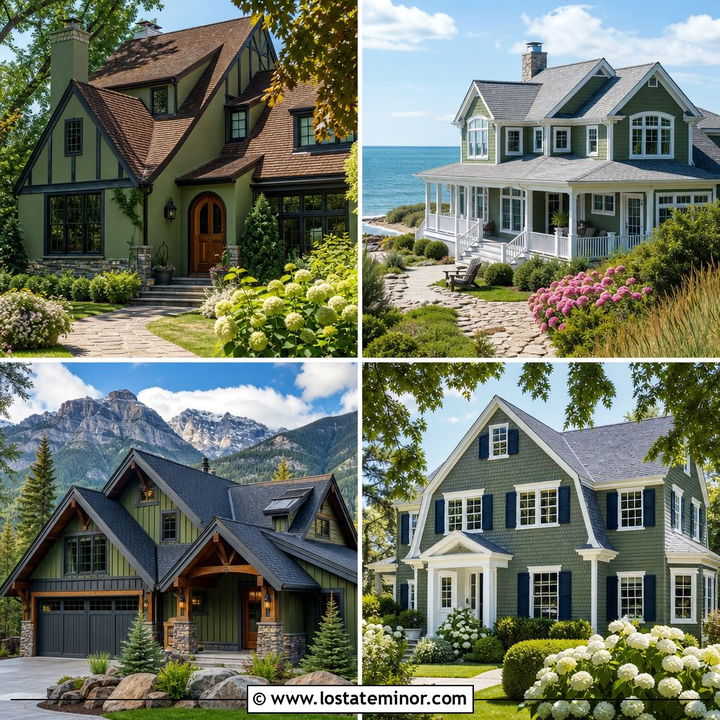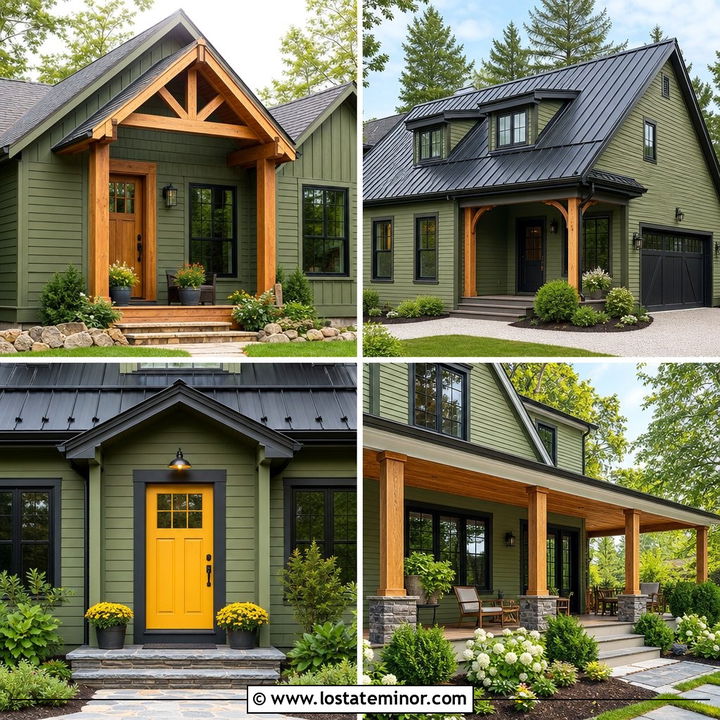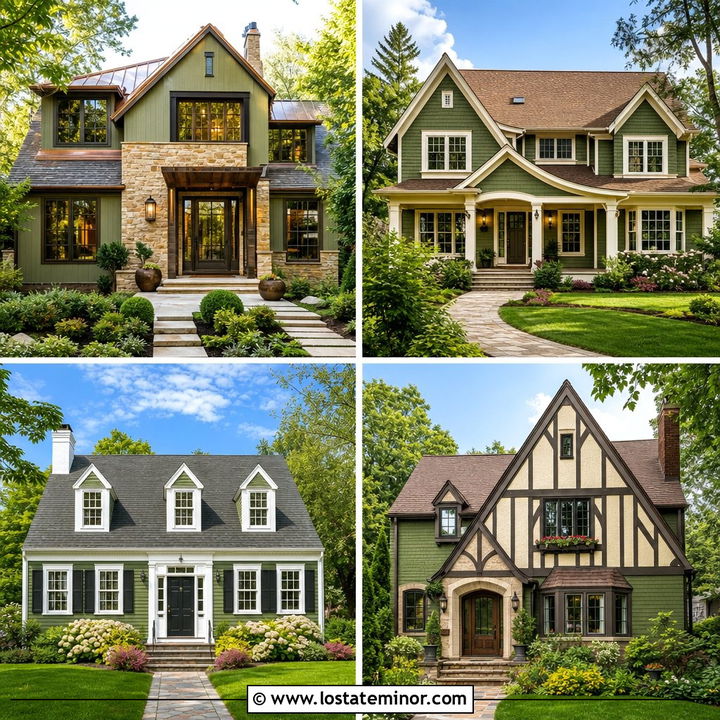
Moss green brings a grounded, nature-inspired character to almost any home exterior. Its earthy undertones feel softer than forest green yet richer than pale sage, creating a welcoming backdrop for shutters, trim, masonry, roofing, and natural wood. These 30 Moss Green House Design With Shutters Ideas explore complete exterior palettes rather than isolated paint choices. You will find combinations for Colonials, ranch homes, Craftsman houses, cottages, farmhouses, and contemporary properties. Each look considers shutter color and construction, along with front doors, roof tones, trim, landscaping, and architectural details. Since sunlight can change how green paint appears, sample your selected colors beside permanent materials before committing. Use the following complete schemes to discover practical, attractive 30 Moss Green House Design With Shutters Ideas.
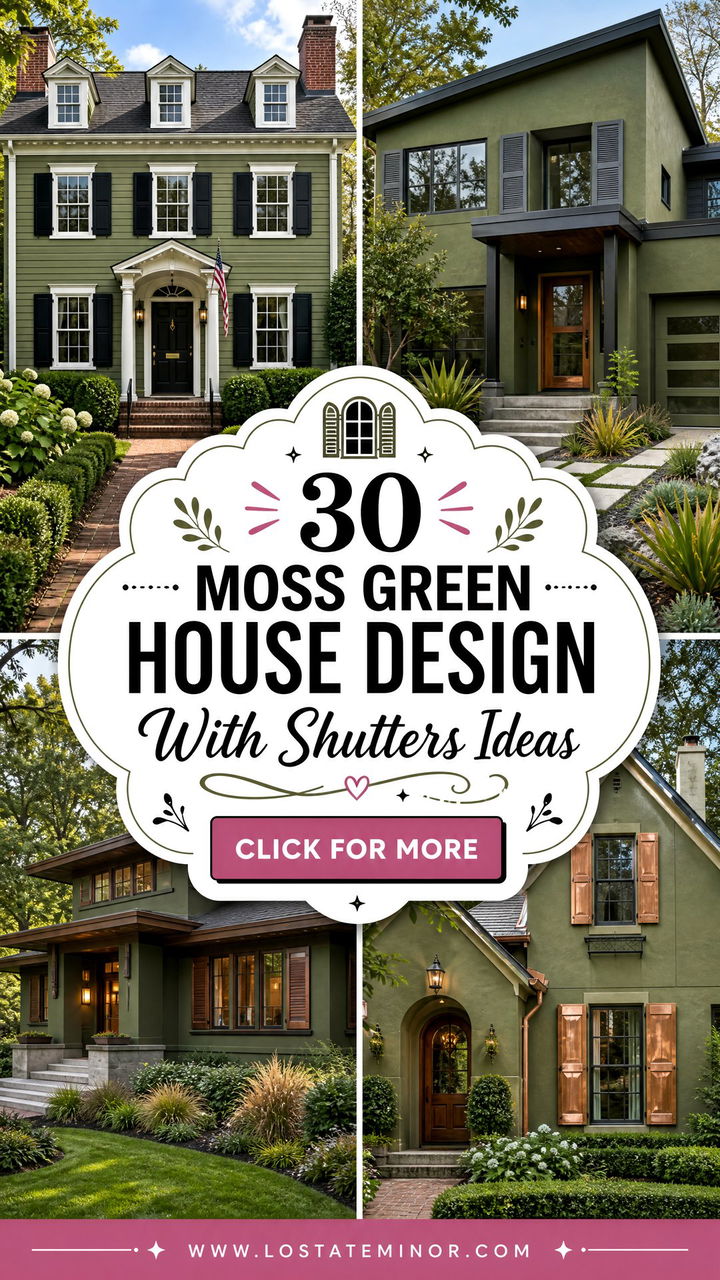
1. Moss Green Colonial House With Black Shutters
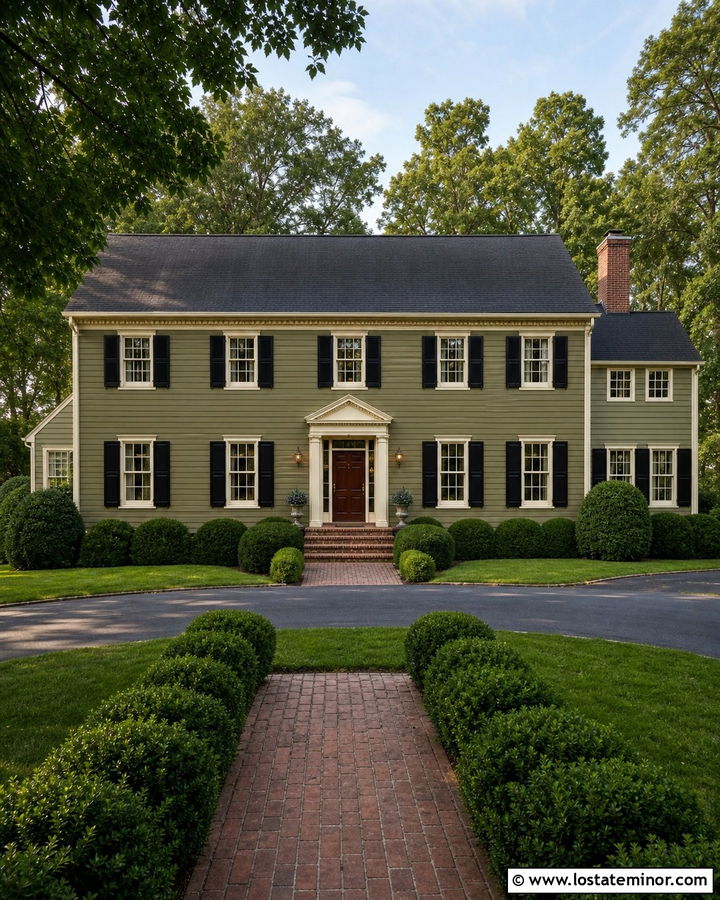
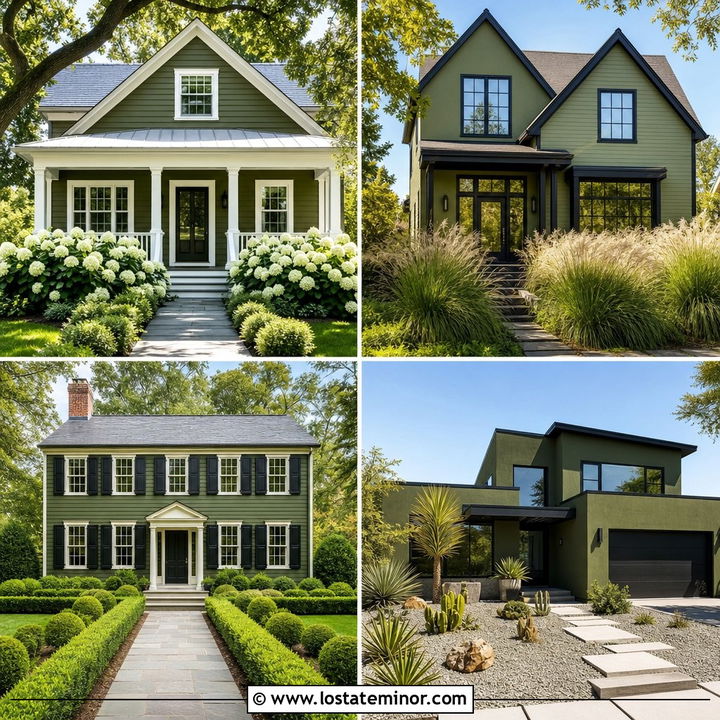
A symmetrical Colonial facade looks especially polished when moss green siding meets crisp black shutters. Choose traditional raised-panel shutters sized to appear capable of covering each window. This gives the exterior an authentic, balanced appearance. Warm white trim around the windows, cornice, and entry prevents the dark accents from overpowering the house. Repeat black on the front door for a formal result, or introduce a stained mahogany door for extra warmth. A medium charcoal roof connects smoothly with the shutters without creating a harsh transition. Finish the setting with clipped boxwoods, brick steps, and simple brass hardware. The entire combination feels established and traditional while the moss green body makes it more distinctive than a standard neutral Colonial.
2. Moss Green Farmhouse With White Shutters
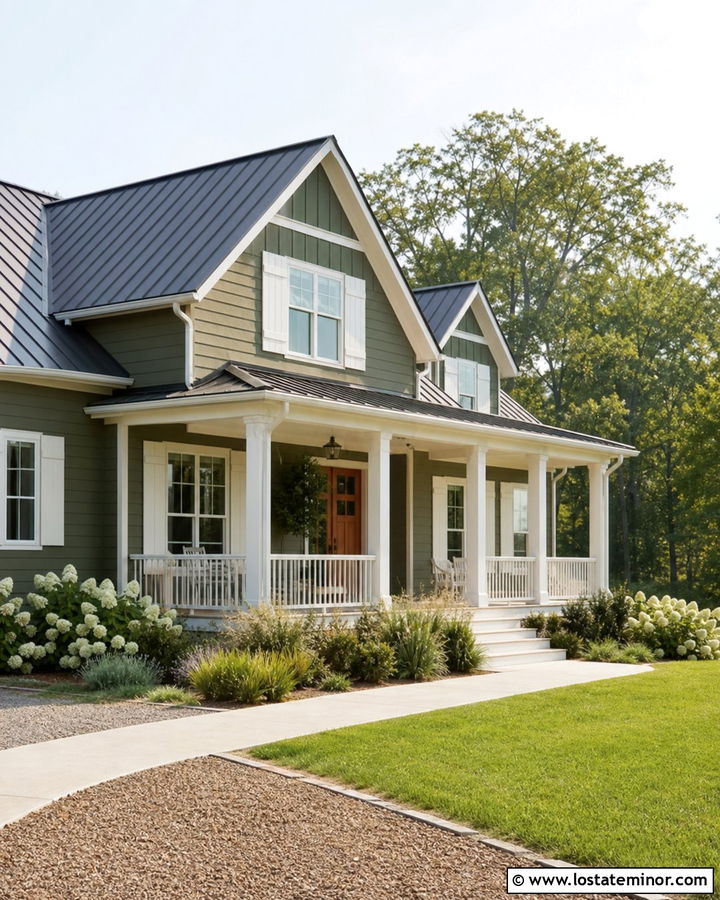
Picture an inviting farmhouse where moss green lap siding is framed by wide white shutters and a long covered porch. The white accents create fresh contrast while emphasizing the windows, porch posts, and simple roofline. Board-and-batten shutters work better than narrow louvered versions because their rustic construction complements farmhouse architecture. Use the same soft white on the trim, fascia, and porch railing to keep the exterior unified. A natural oak front door and matching porch ceiling add warmth without competing with the green. Galvanized metal lights and a dark gray standing-seam roof provide clean finishing touches. Hydrangeas, ornamental grasses, and a gravel-edged walkway soften the facade, producing a bright farmhouse exterior that still feels connected to the landscape.
3. Moss Green Craftsman House With Cedar Shutters
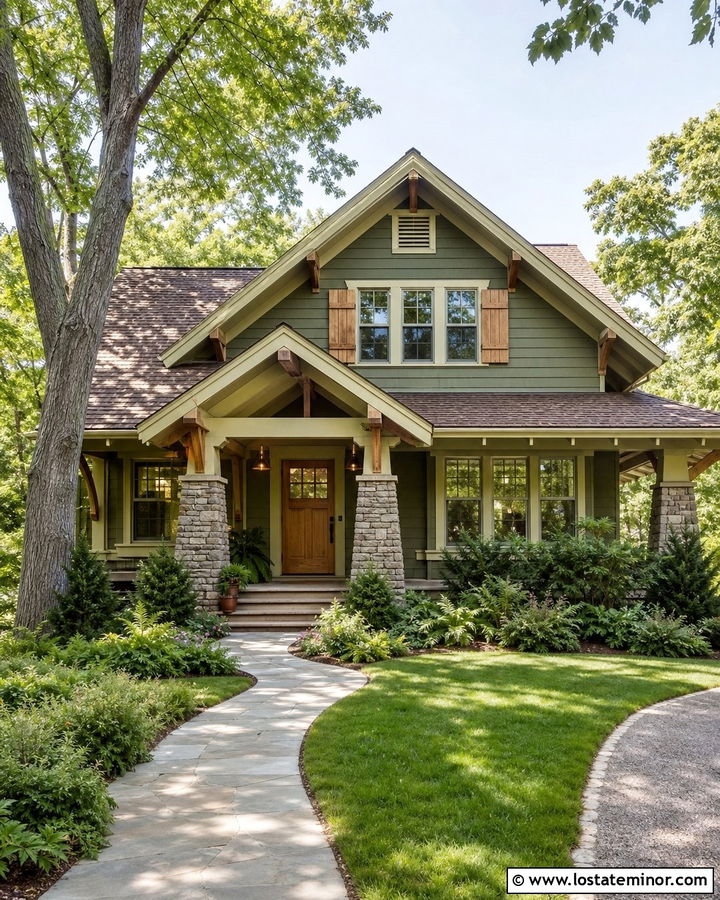
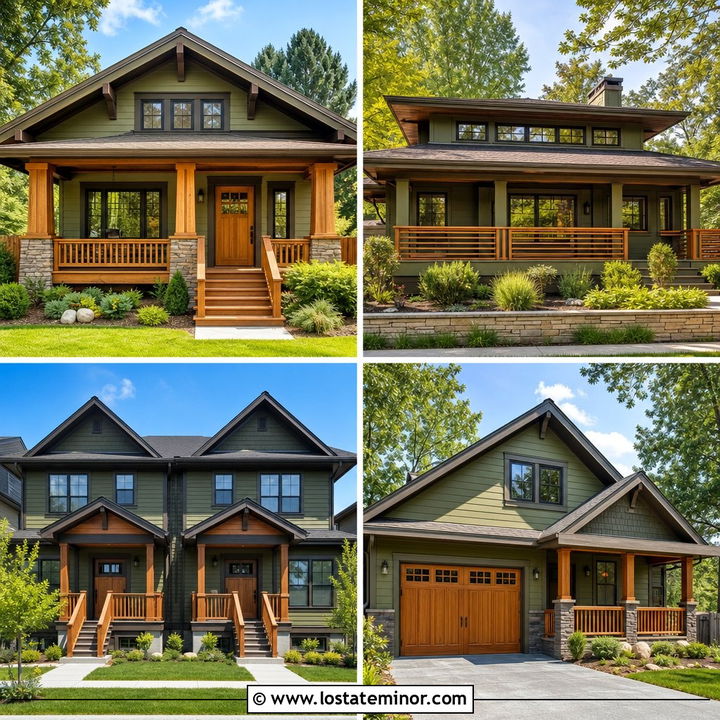
Natural cedar shutters bring out the warm undertones in moss green and highlight the handcrafted character of a Craftsman home. Select thick board-and-batten shutters with visible grain rather than smooth decorative panels. Carry the cedar finish onto the front door, porch brackets, and beam details so every wood accent feels intentional. Cream trim provides a gentler contrast than brilliant white, particularly beside warm stone columns or a brown architectural-shingle roof. If the house has tapered porch supports, wrap their bases in irregular gray and tan stone. Copper lighting can develop an attractive patina over time and reinforce the earthy palette. Layered foundation plantings, broad steps, and a curved walkway complete this welcoming exterior without hiding its strongest architectural features.
4. Moss Green Ranch House With Charcoal Shutters
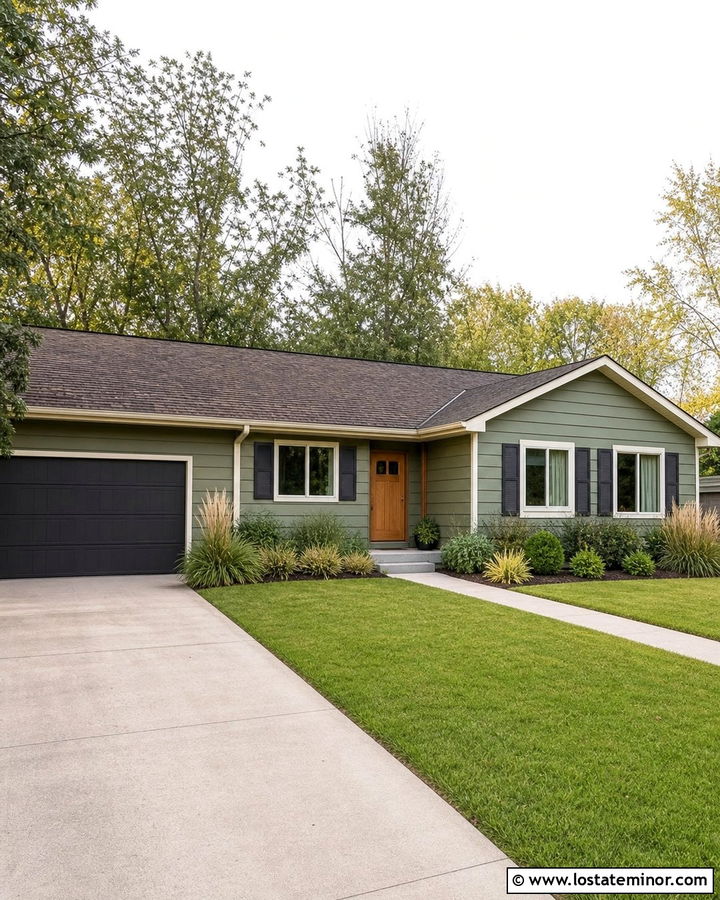
A long ranch facade gains definition when charcoal shutters break up the horizontal stretch of moss green siding. Choose simple panel shutters with clean edges, especially if the home has large picture windows and minimal ornament. Charcoal also works well on the garage door, gutters, and porch lights, helping separate those practical features from the green body. Use an off-white shade around the windows and along the fascia to maintain enough contrast. A warm wood front door keeps the scheme from appearing overly cool. Consider a charcoal roof with slight brown variation so it connects with both the shutters and the surrounding landscape. Low ornamental grasses, spreading shrubs, and a straight concrete walkway preserve the ranch home’s uncluttered, horizontal character.
5. Moss Green Cottage With Cream Shutters
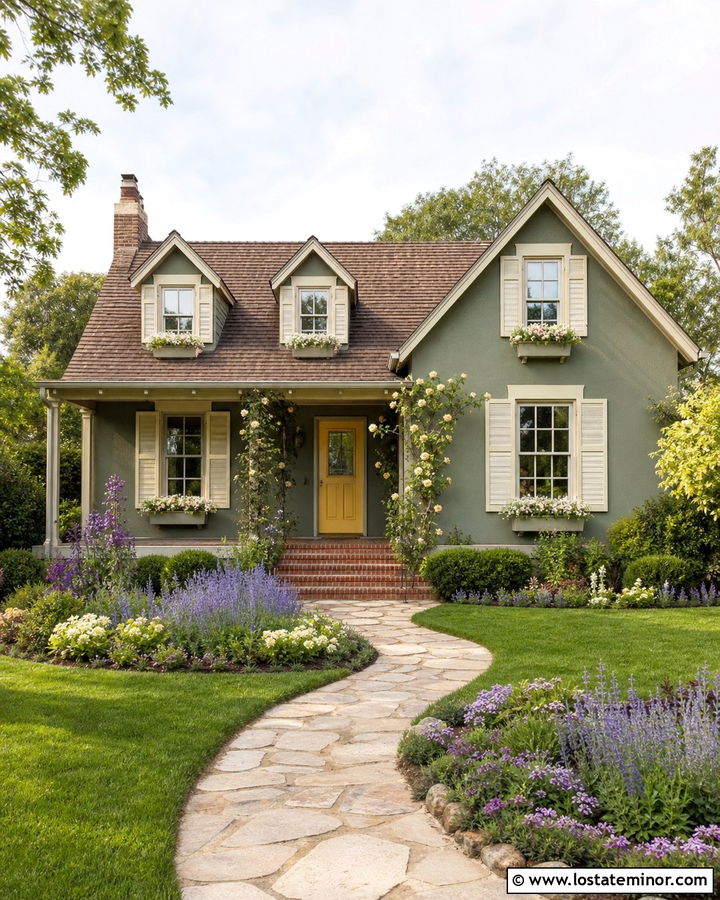
Cream shutters give a moss green cottage a soft, storybook appearance without creating stark contrast. Louvered shutters are a natural fit for smaller windows, dormers, and steep rooflines. Extend the cream shade to the trim, window boxes, porch posts, and decorative gable details. A muted golden-yellow front door introduces a cheerful focal point while still working with the green’s earthy warmth. Weathered brick steps and a medium-brown roof make the exterior feel comfortably aged rather than newly coordinated. Cottage landscaping should appear full but controlled, with lavender, salvia, climbing roses, and curved garden borders framing the facade. Keep taller plants away from the shutters so their shape remains visible. The finished home feels colorful, approachable, and closely connected to its garden.
6. Moss Green Cape Cod With Navy Shutters
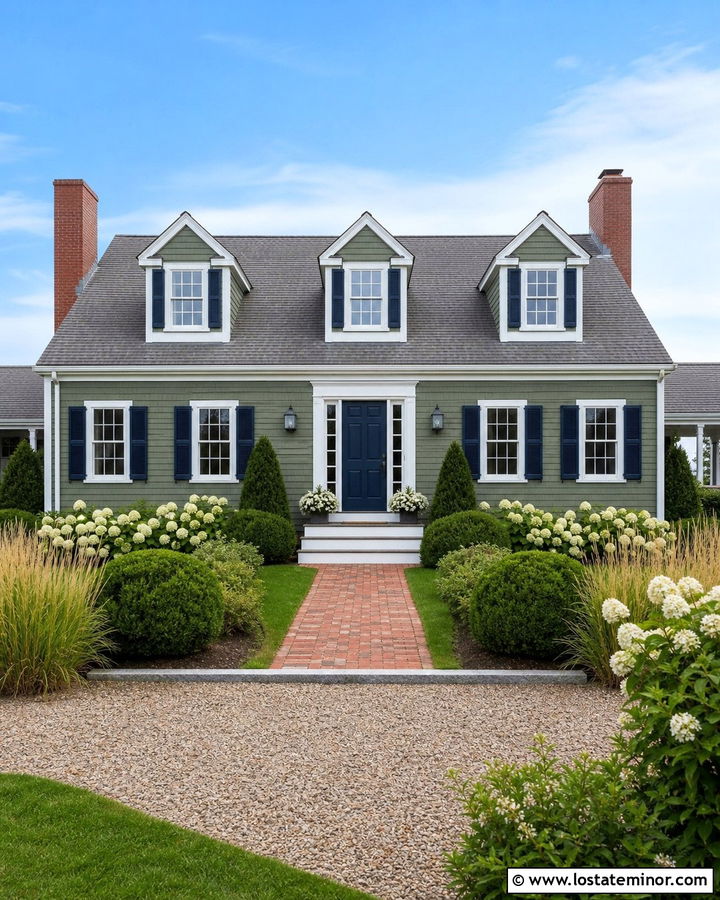
Moss green and deep navy create a sophisticated coastal palette for a Cape Cod home. Navy shutters frame white-trimmed windows without looking as severe as pure black. Select functional-looking louvered shutters and repeat navy on the front door to establish a clear visual rhythm across the compact facade. Bright white trim suits the clean roofline, dormers, corner boards, and entry surround associated with Cape architecture. Weathered gray shingles on the roof add a relaxed coastal note while allowing the green siding to remain prominent. A small brick or bluestone path can bring warmer texture into the scheme. Complete the curb appeal with clipped evergreens, white hydrangeas, and beach grasses. The result feels crisp and coastal without relying on predictable blue siding.
7. Moss Green Bungalow With Dark Brown Shutters
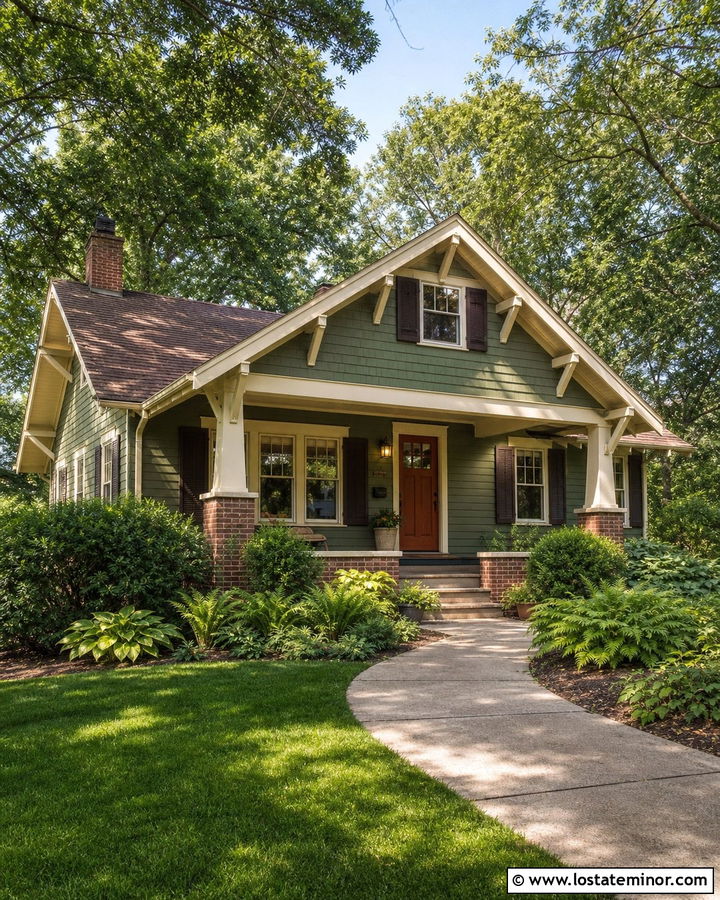
Dark brown shutters give a moss green bungalow a warm, grounded appearance that complements its low roof and deep porch. Wide Craftsman-style shutters with horizontal battens suit the home better than narrow decorative louvers. Repeat the brown on the window sashes, porch steps, and exposed rafter tails to strengthen the architectural lines. Cream trim can highlight the roof edge and porch columns without competing with the darker details. Consider a rust-colored front door to add controlled contrast and echo brown, red, or tan tones found in brick and stone. A weathered brown roof keeps the color story cohesive. Ferns, hostas, and layered woodland plantings work beautifully around the porch, especially when the property receives filtered shade from mature trees.
8. Moss Green Victorian House With Burgundy Shutters
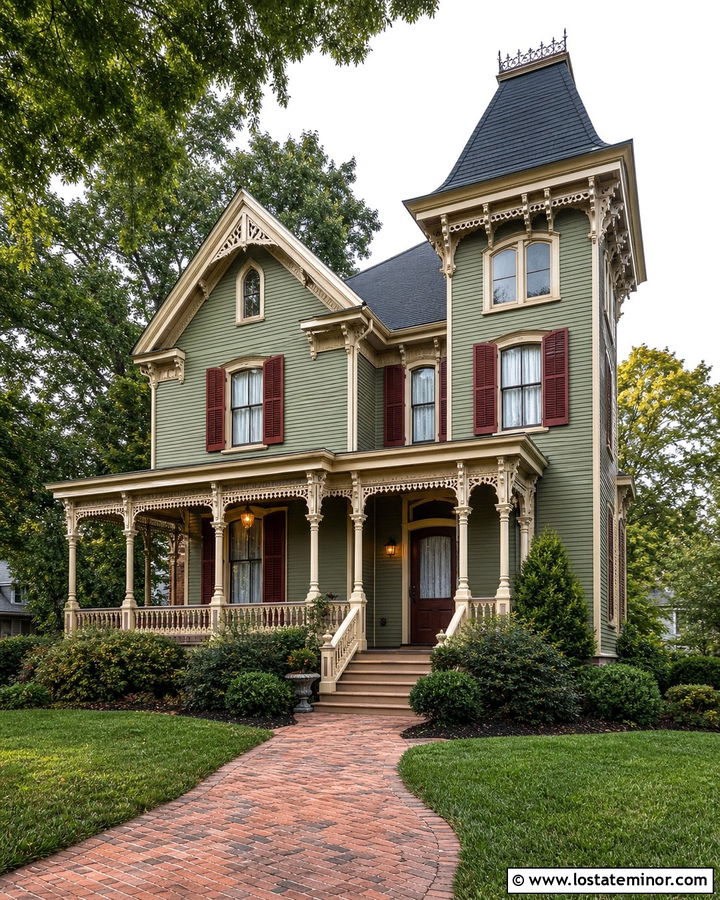
For a Victorian exterior, burgundy shutters create historical richness against moss green siding. The combination is colorful, but both shades are muted enough to remain elegant. Use burgundy on tall louvered shutters and selected window sashes, then balance it with warm ivory trim across brackets, porch spindles, and decorative moldings. Avoid covering every detail with a different color. A controlled three- or four-color palette lets the architecture remain readable. A stained walnut door and aged brass hardware bring warmth to the entrance. Dark gray roofing keeps the upper portion visually calm. Add brick paving, traditional lanterns, and layered shrubs around the foundation. This complete look celebrates Victorian detail while avoiding the overly bright palette sometimes associated with ornate historic homes.
9. Moss Green Tudor House With Wood Shutters
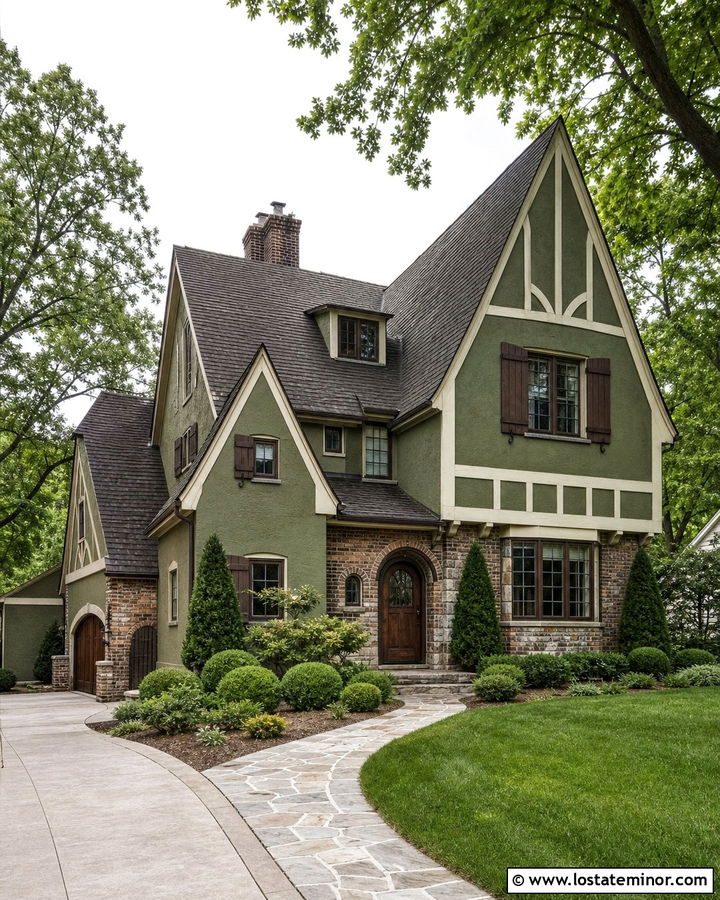
A moss green Tudor exterior feels especially natural when paired with stained wood shutters and creamy stucco. Apply moss green to the siding or stucco sections, then use dark walnut on substantial plank shutters, the front door, and visible timber details. Soft beige trim creates a smooth connection between green walls and brown accents. If the home includes brick or stone, select paint and stain colors from the masonry’s existing undertones rather than introducing unrelated shades. A steep brown-black roof will reinforce the classic silhouette. Decorative iron shutter hardware adds convincing depth, even when the shutters remain fixed. Keep landscaping structured near the entry with rounded shrubs, then loosen the planting farther from the house. The finished Tudor looks established, layered, and comfortably integrated with its setting.
10. Moss Green Split-Level House With Black Shutters
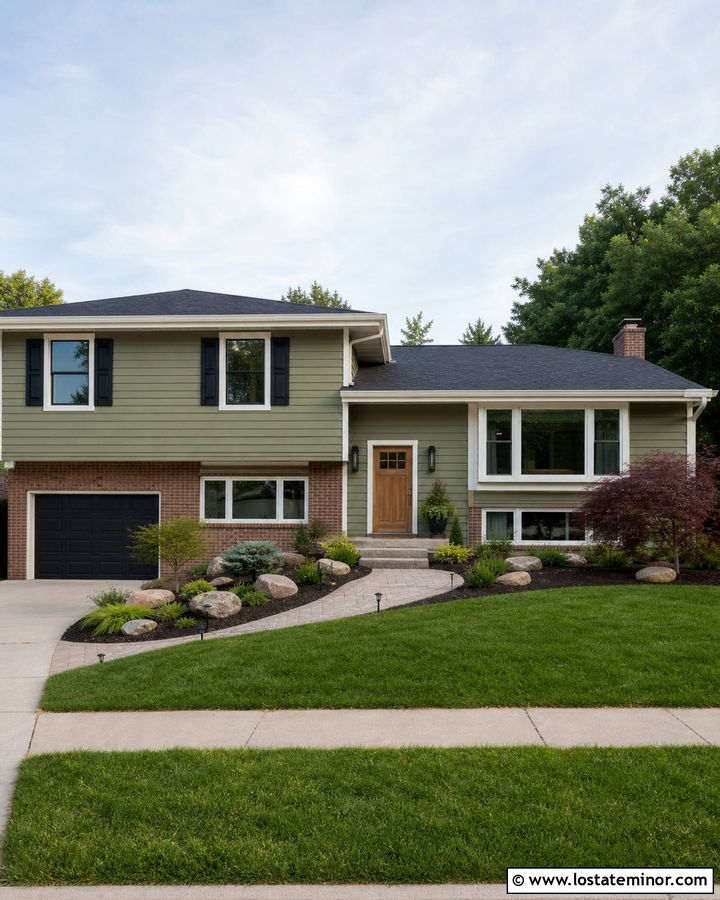
A split-level home benefits from strong accents that visually connect its different sections. Black shutters can create that connection when repeated beside the primary windows and on the garage hardware. Use moss green siding across both levels, then introduce warm white trim to outline the roof, windows, and entry. A natural wood door provides a welcoming focal point at the often-recessed entrance. If the lower level includes brick, preserve its warm red-brown character or apply a light limewash rather than hiding all its texture. A charcoal roof and simple black lighting complete the palette. Use broad planting beds and a gently rising walkway to make the entrance easier to find. The overall design feels orderly, updated, and appropriately scaled to the home.
11. Moss Green Brick House With Beige Shutters
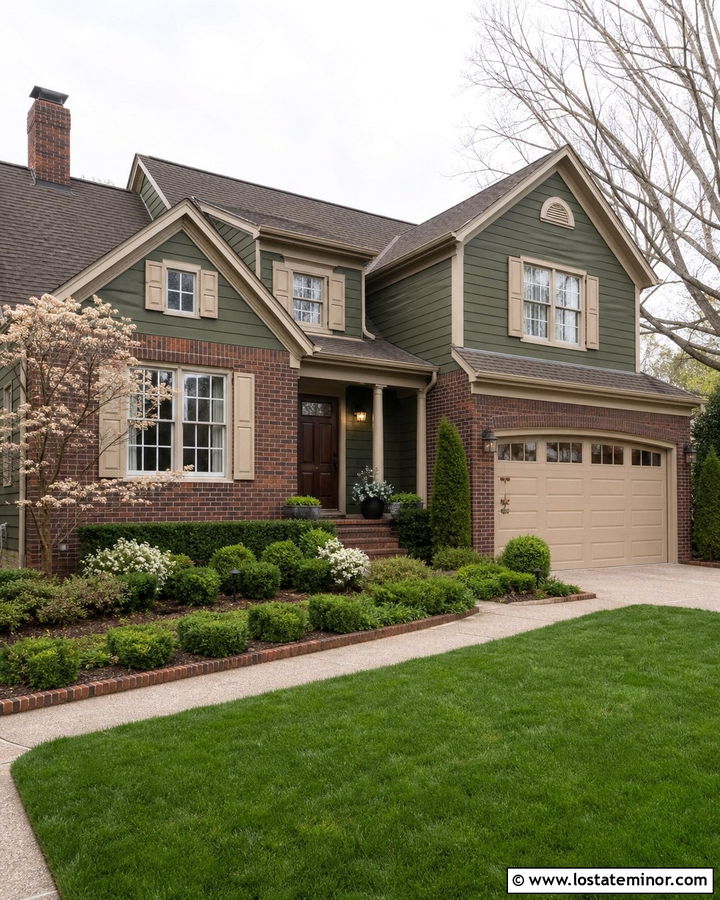
When brick dominates part of the facade, beige shutters can form a quiet bridge between moss green siding and warm masonry. Choose a beige with subtle tan undertones instead of a cool gray-beige. Use it on raised-panel shutters, window trim, and the garage door for a coordinated result. Moss green can cover upper siding, gables, or previously painted wall sections. A deep brown front door adds definition without competing with the brick. Match the roof to the darkest neutral visible in the masonry, which is often charcoal brown or weathered gray. This keeps the exterior materials connected. Restrained landscaping with evergreen shrubs, small flowering trees, and a brick-edged path creates an established setting. The final palette updates the house while respecting its original brickwork.
12. Moss Green Stone House With Bronze Shutters
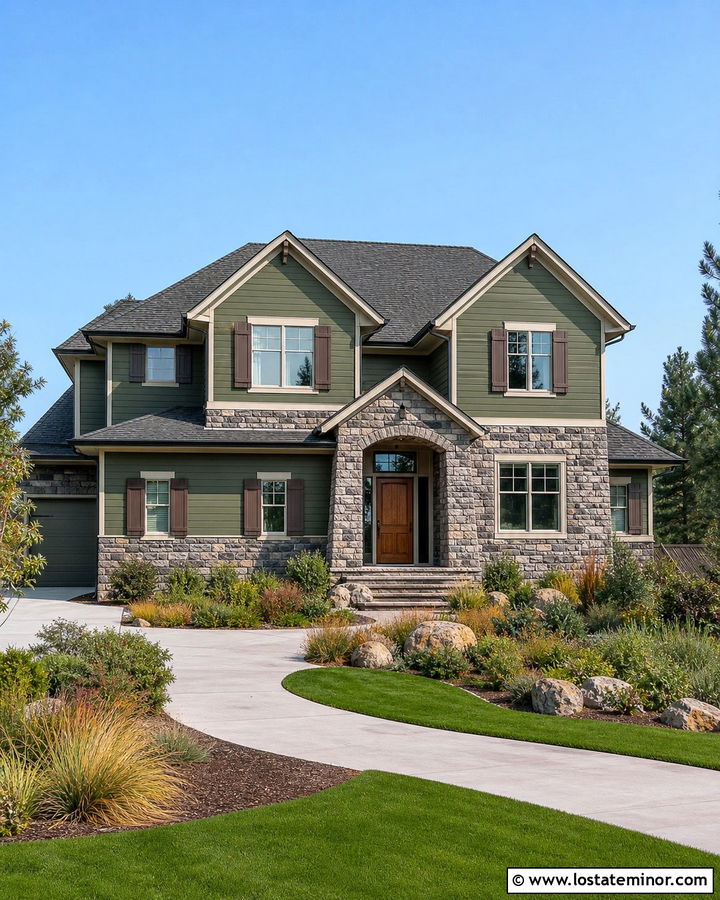
Bronze-colored shutters enhance a moss green and stone exterior without introducing excessive contrast. This deep brown metallic shade works particularly well with ledgestone containing gray, taupe, and rust tones. Choose solid panel shutters with understated black hardware, then repeat bronze on the garage door or window frames. Cream trim can lighten the roofline and prevent the combination from becoming too dark. A medium-tone oak entrance door complements both the moss green walls and natural stone. For the roof, consider textured charcoal shingles with warm flecks rather than a flat black surface. Native grasses, boulders, and drought-tolerant shrubs will extend the natural palette into the yard. The complete house feels substantial and refined while remaining warm, organic, and suited to its surroundings.
13. Moss Green Modern Farmhouse With Black Shutters
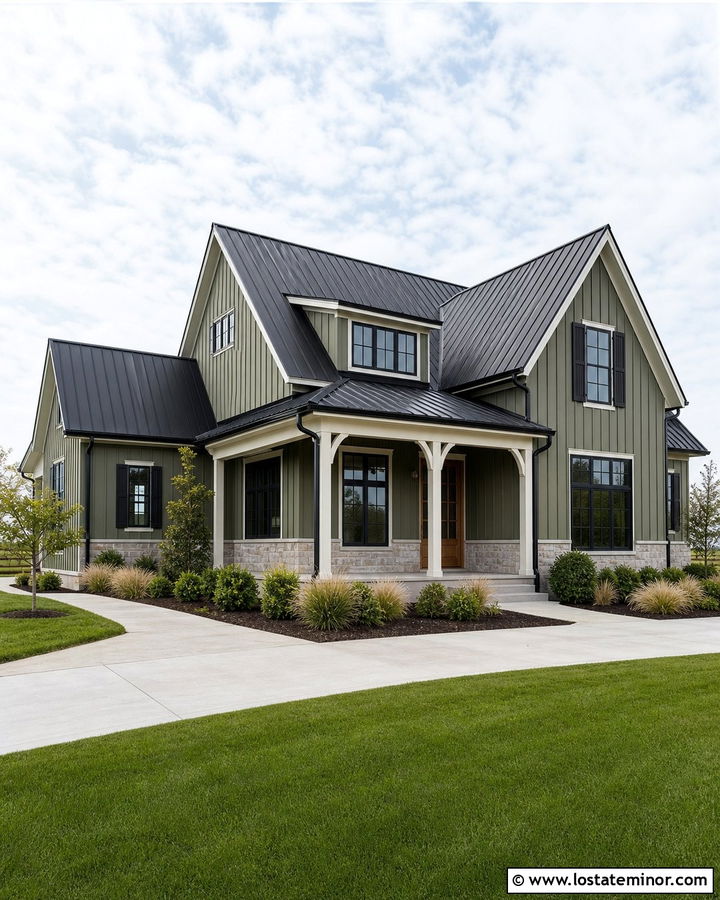
A modern farmhouse can wear moss green beautifully when the remaining palette stays simple. Cover the facade in vertical board-and-batten siding, then frame selected windows with streamlined black shutters. Use black on the roof, gutters, porch lights, and window sashes to create consistent contrast. Warm white trim around the corners and entry keeps the green exterior from feeling heavy. Instead of a black front door, consider natural white oak to soften the graphic palette and add visible texture. A small stone foundation in muted gray and tan tones grounds the tall siding. Keep the landscaping clean with evenly spaced shrubs, ornamental grasses, and a wide concrete or paver walkway. The result feels current and tailored without losing the welcoming character expected from farmhouse architecture.
14. Moss Green Southern House With White Shutters
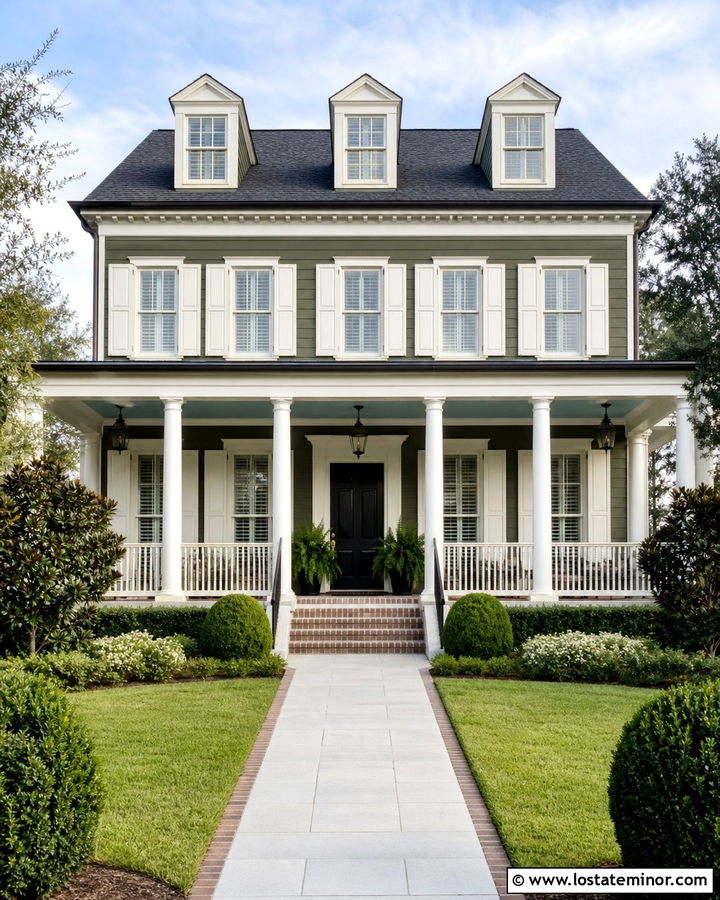
Broad porches and tall windows make a Southern-style home an ideal canvas for moss green siding and white shutters. Select operable-looking louvered shutters that are properly proportioned to the windows. Paint the trim, porch columns, railing, and shutters in the same warm white for a graceful, connected appearance. A glossy black front door can provide a formal focal point, while a pale blue porch ceiling introduces a subtle regional touch. Choose dark charcoal roofing to anchor the expansive facade. Brick porch flooring adds warmth and holds up well visually beside the earthy green walls. Frame the house with magnolias, boxwoods, ferns, and flowering shrubs, but preserve open views toward the entry. This balanced palette feels stately, welcoming, and pleasantly shaded.
15. Moss Green Rustic House With Log Shutters
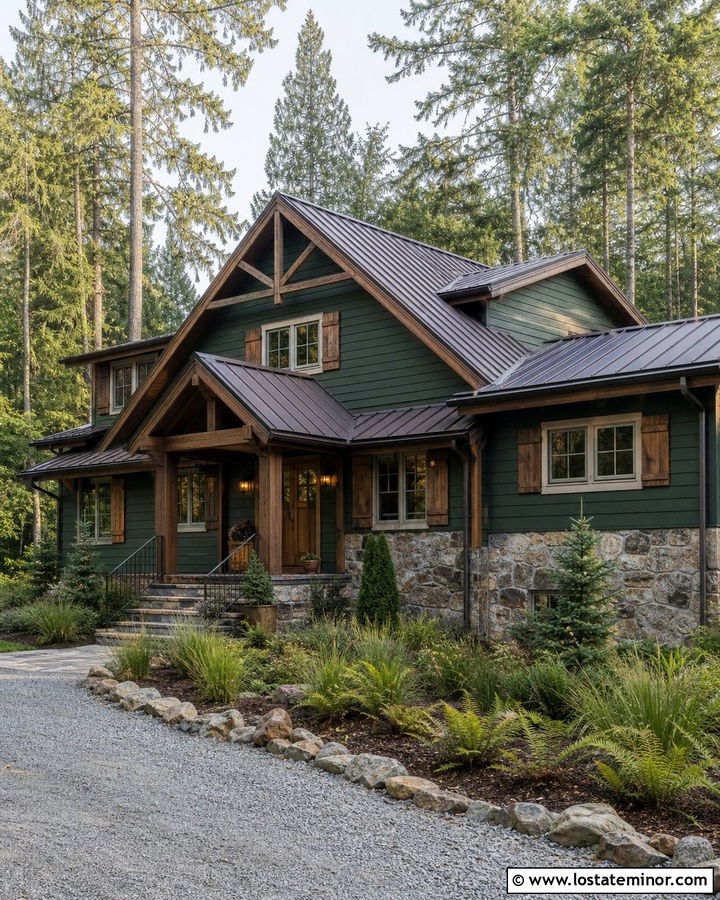
Rustic architecture allows shutters to become a strong material feature rather than a flat decorative accent. Against moss green siding, rough-sawn log or timber shutters create depth, texture, and woodland warmth. Repeat the same medium-brown stain on porch posts, beams, railings, and the front door. Use muted tan trim sparingly so the home retains its rugged character. A foundation of fieldstone can connect the green walls with the surrounding earth, while a dark brown metal roof offers durability and clear definition. Choose shutter hardware with a matte black finish to complement rustic lanterns and door fittings. Naturalistic landscaping should include native grasses, ferns, conifers, and stone-edged paths. The completed exterior feels handcrafted and appropriate for a wooded or mountain setting.
16. Moss Green Contemporary House With Gray Shutters
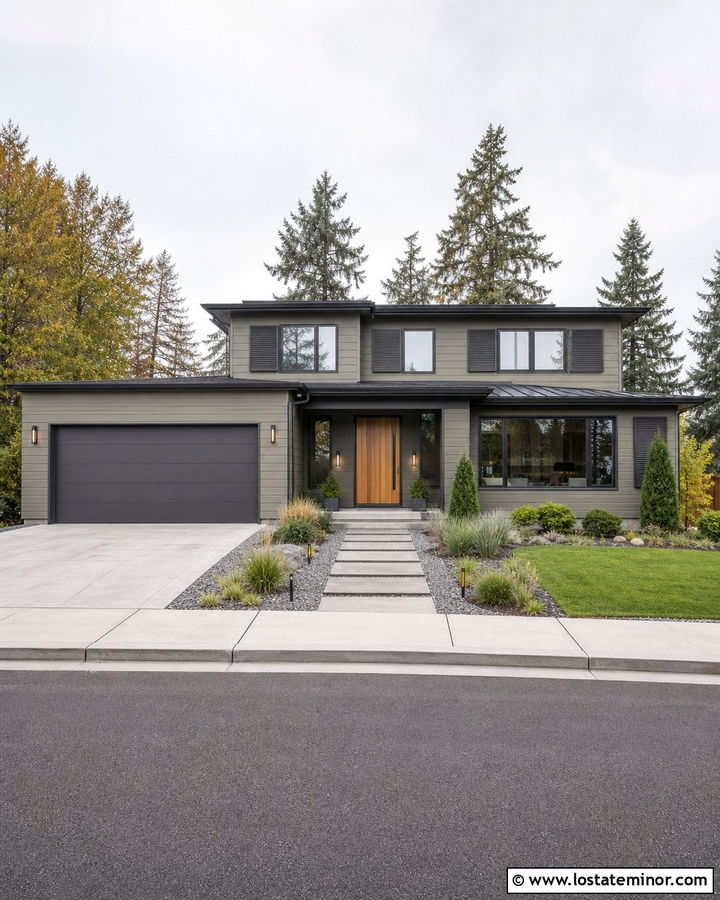
Can shutters work on contemporary architecture? They can when their shape, finish, and placement remain simple. Pair moss green horizontal siding with broad flat-panel shutters in medium charcoal gray. Avoid decorative cutouts and ornate hardware. Repeat the gray on the garage door, fascia, and selected architectural panels so the shutters become part of the larger composition. Black-framed windows offer additional definition, while a warm cedar front door prevents the streamlined palette from feeling cold. A low-slope charcoal roof suits the modern silhouette. Use large concrete pavers, gravel beds, sculptural grasses, and compact evergreen shrubs in the landscape. The complete scheme balances natural color with crisp geometry, giving the home modern curb appeal without turning the exterior into an overly dark gray-and-black composition.
17. Moss Green Prairie House With Walnut Shutters
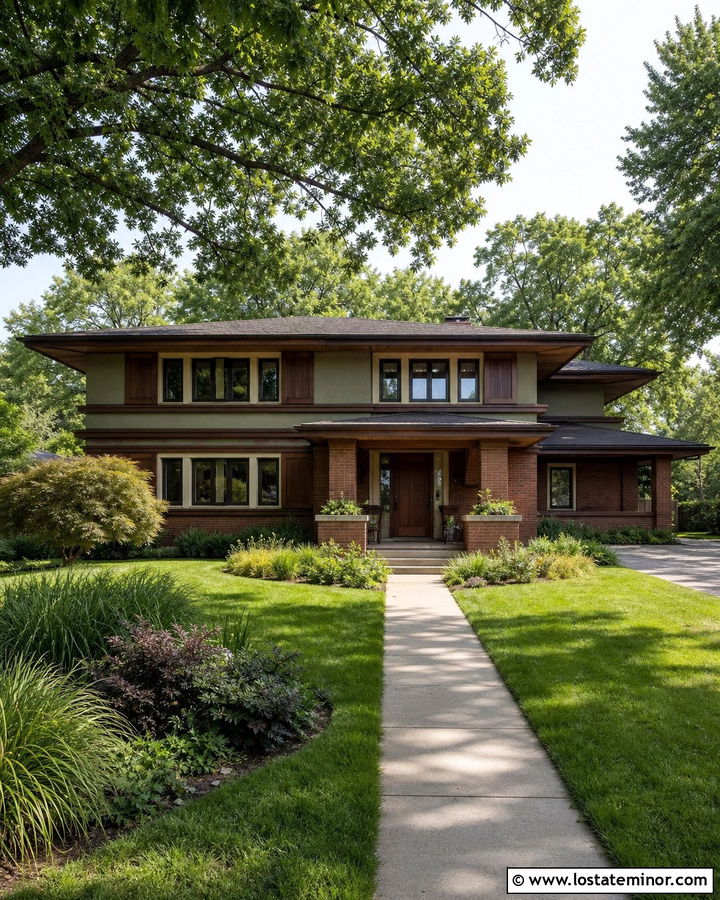
The strong horizontal lines of a Prairie-style house pair naturally with moss green siding and low-contrast walnut shutters. Choose wide flat or divided-panel shutters that echo the home’s substantial windows and geometric details. Carry the walnut stain onto the front door, soffits, and horizontal trim bands. Instead of bright white, use a muted cream for window surrounds and selected masonry joints. A low-pitched roof in dark brown or weathered charcoal will emphasize the broad silhouette. If the facade includes brick, allow its reddish or golden undertones to add warmth. Prairie-inspired landscaping should remain layered and horizontal, with ornamental grasses, low shrubs, and broad planting beds. Together, these elements produce a grounded exterior that feels integrated with the land rather than placed on top of it.
18. Moss Green Dutch Colonial With Cream Shutters
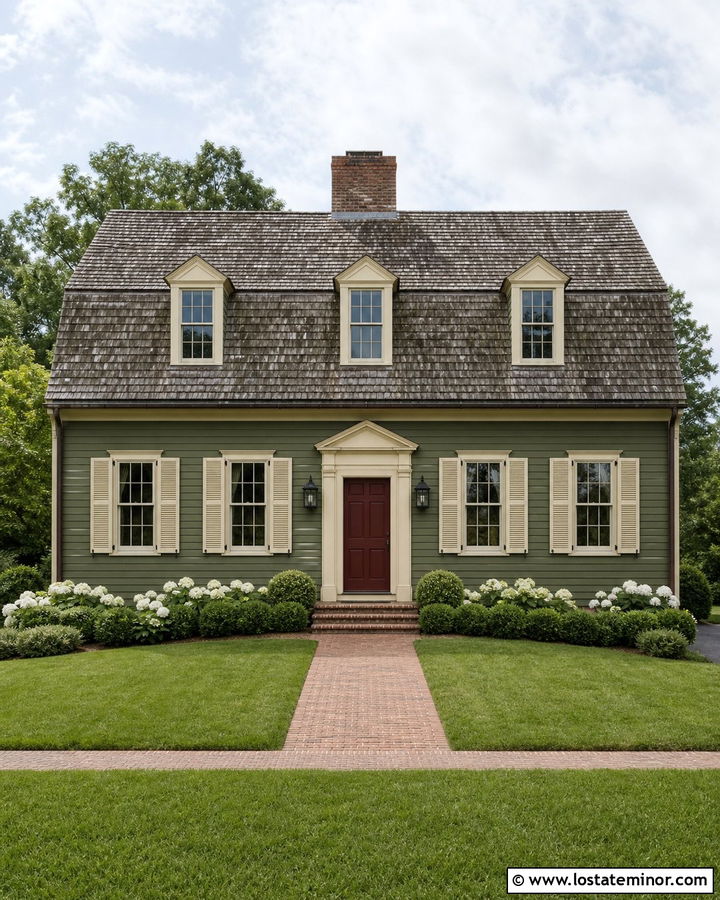
A gambrel roof gives a Dutch Colonial plenty of personality, so the color palette should support rather than compete with its shape. Moss green siding creates a rich body color, while cream louvered shutters brighten the windows and dormers. Continue cream across the entry surround, corner boards, and roof trim for a cohesive outline. A brick-red front door offers classic contrast and can connect with a brick chimney or walkway. Choose weathered gray roof shingles to soften the transition between the large roof and green walls. Black lanterns provide crisp finishing details without becoming another dominant color. Foundation shrubs, white hydrangeas, and a straight brick path preserve the home’s orderly appearance. The finished exterior feels traditional, comfortable, and more distinctive than a plain white Dutch Colonial.
19. Moss Green Georgian House With Dark Green Shutters
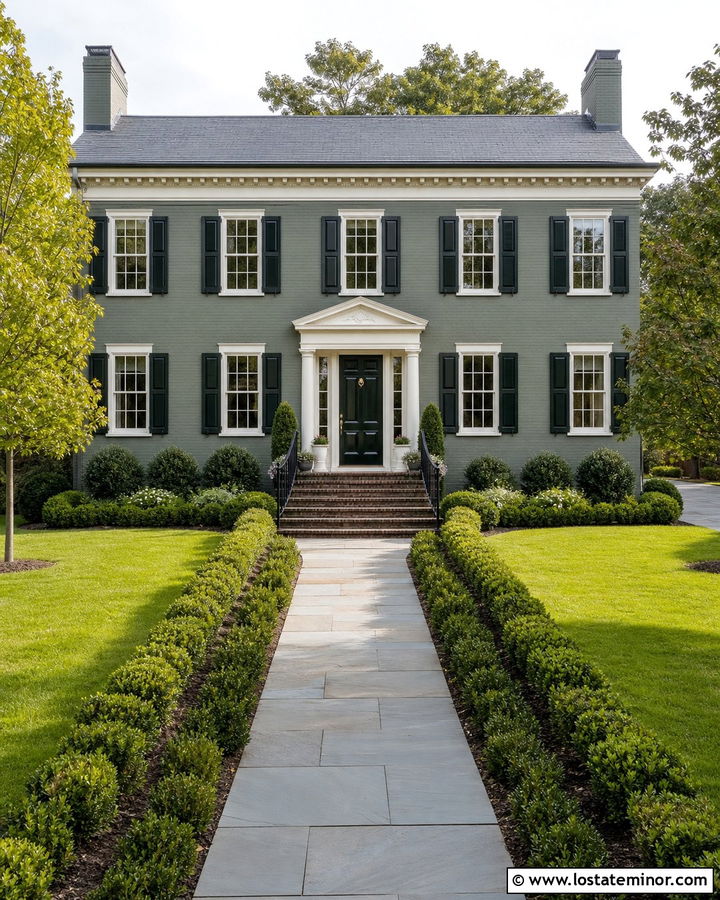
A tonal green palette can give Georgian architecture subtle depth while preserving its formal character. Use earthy moss green on the siding and a noticeably darker forest green on raised-panel shutters. The difference should remain visible from the street, so test both colors in direct sun and shade. Warm white trim around the windows, cornice, and central doorway supplies necessary contrast. A glossy dark green front door can match the shutters, while polished brass hardware adds a traditional highlight. Select a charcoal slate or slate-look roof to support the symmetrical design. Formal boxwood borders, a straight stone path, and evenly spaced trees reinforce the architecture. This monochromatic approach feels sophisticated and settled, especially on properties surrounded by mature greenery and traditional landscaping.
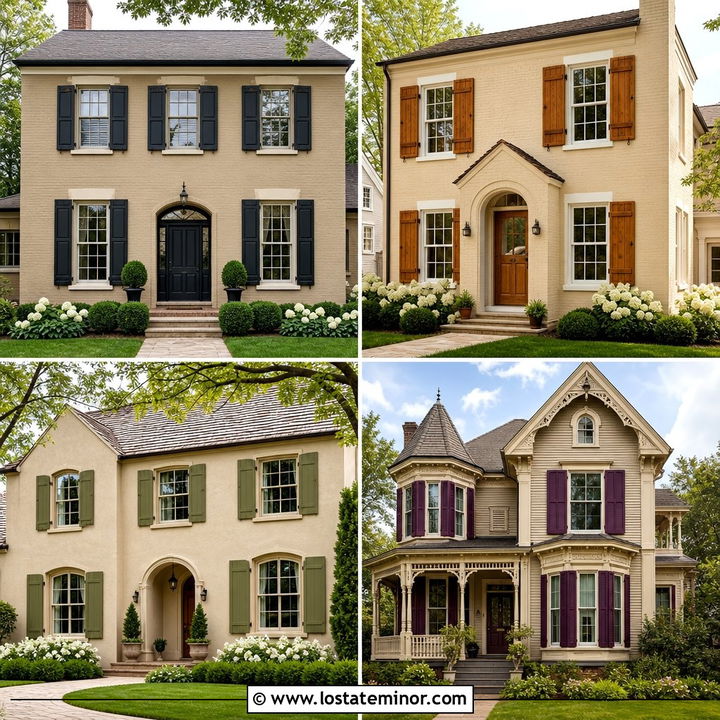
20. Moss Green A-Frame House With Cedar Shutters
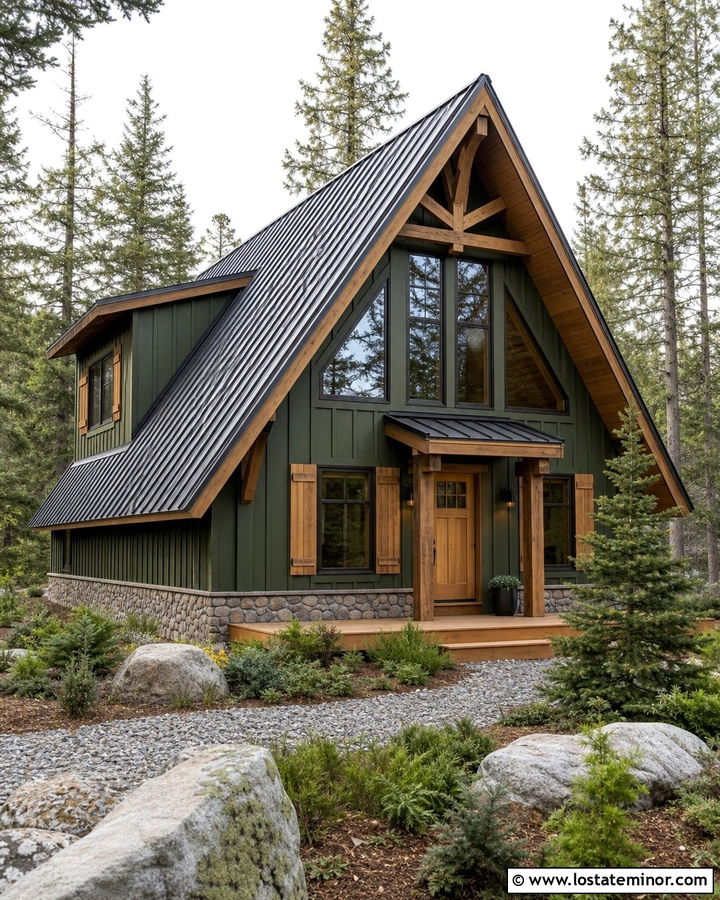
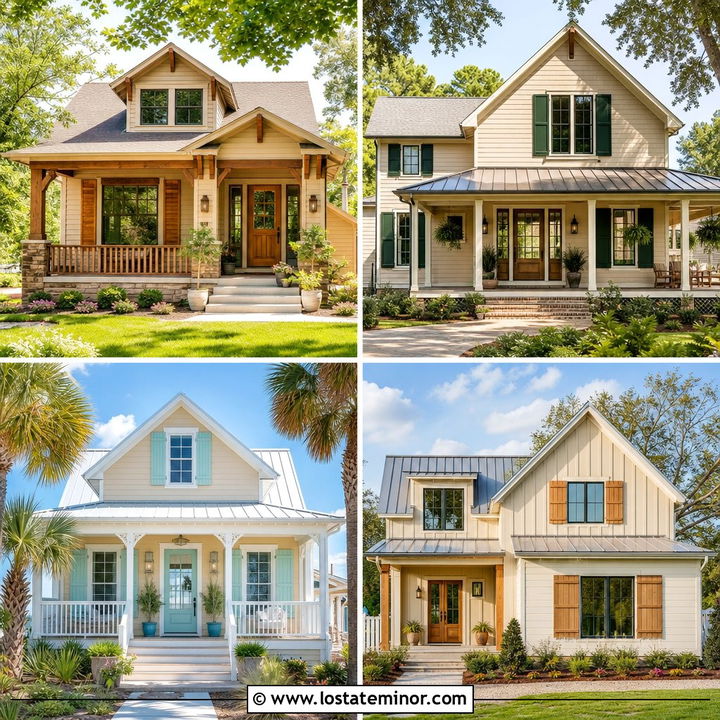
The tall triangular facade of an A-frame house becomes warmer and more inviting with moss green siding and cedar shutters. Use the green across the main exterior planes, then place simple cedar board-and-batten shutters beside lower-level windows. Match the shutters with a cedar deck, front door, and selected structural beams. Dark bronze window frames and roofing provide enough definition without interrupting the natural palette. If the house includes stone, choose rugged gray-brown material that looks locally sourced. Keep the trim minimal and use a muted tan rather than bright white. Surround the property with native ground covers, conifers, boulders, and a gravel walkway. This complete exterior works particularly well in wooded settings because its colors echo bark, leaves, stone, and forest shadows.
21. Moss Green Coastal House With Blue Shutters
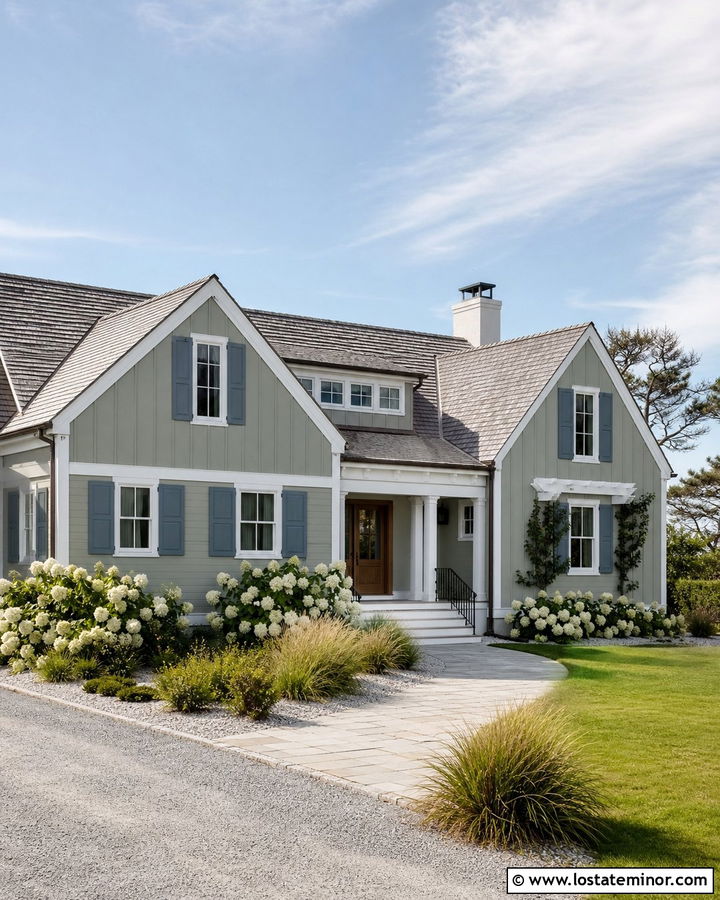
Dusty blue shutters introduce a relaxed coastal note to moss green siding without making the exterior overly colorful. Choose a muted slate blue that shares the green body color’s soft gray undertone. White trim around the windows, porch posts, and roofline keeps the combination bright and clearly defined. A natural wood front door and woven-look porch furnishings can warm the cool palette. Use weathered gray roof shingles and simple silver or black lighting for an unfussy finish. Board-and-batten shutters work well on casual coastal cottages, while louvers suit more traditional homes. Beach grasses, white hydrangeas, shells in the gravel beds, and a pale stone walkway reinforce the setting. The completed look feels breezy and natural rather than themed or overly nautical.
22. Moss Green Mountain House With Black Shutters
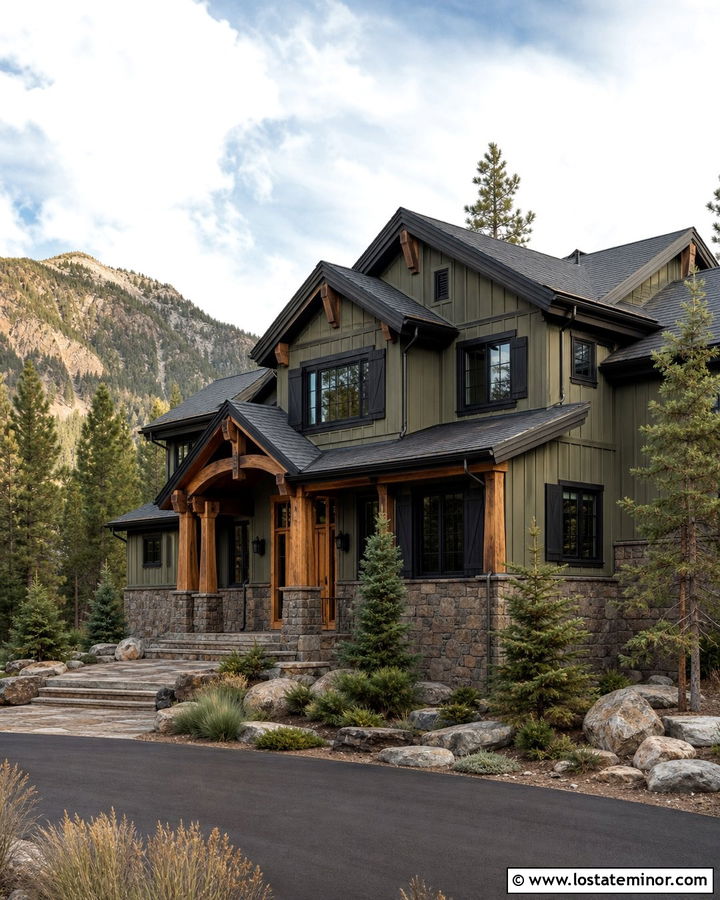
Moss green helps a mountain home settle naturally into a dramatic landscape, while black shutters add crisp definition from a distance. Choose substantial plank shutters with matte black hardware, particularly when the facade includes large windows, stone walls, or exposed timber. Repeat black on the window frames, roof, and exterior lights. Warm cedar beams and a matching front door prevent the dark accents from dominating. Use cream trim only where architectural separation is needed. A stone foundation containing charcoal, brown, and warm gray tones can unite every color in the scheme. Complete the approach with broad stone steps, native evergreens, ornamental grasses, and boulder-lined beds. The result feels rugged and upscale, with enough contrast to remain visible against trees, hills, and changing seasonal scenery.
23. Moss Green Lake House With Taupe Shutters
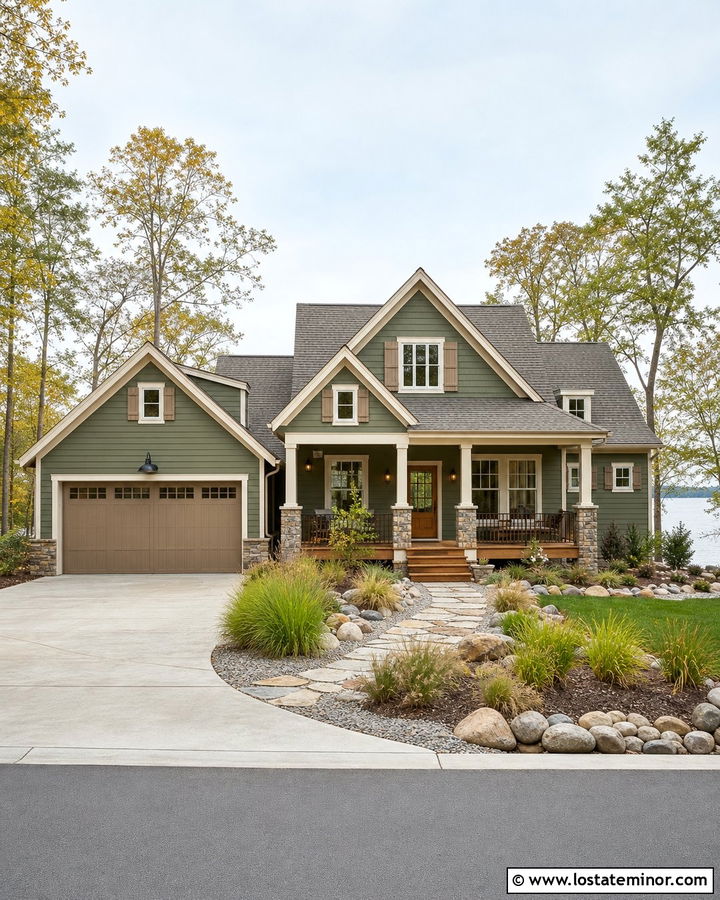
Taupe shutters offer quiet contrast on a moss green lake house, creating a soothing palette that reflects natural shore colors. Look for a warm taupe with brown undertones rather than a cool, purple-leaning shade. Use it on simple louvered shutters, porch railings, and the garage door. Soft ivory trim will brighten the windows and eaves without appearing stark in strong lakeside sunlight. A medium-brown wood door and matching deck strengthen the relaxed connection to nature. Weathered gray roofing fits the waterside setting and allows the green siding to remain the main feature. Frame the home with native grasses, smooth stones, and informal shrubs. Keep views toward the house open so the shutters, entry, and horizontal roofline remain clear from the road or water.
24. Moss Green Cottage With Yellow Shutters
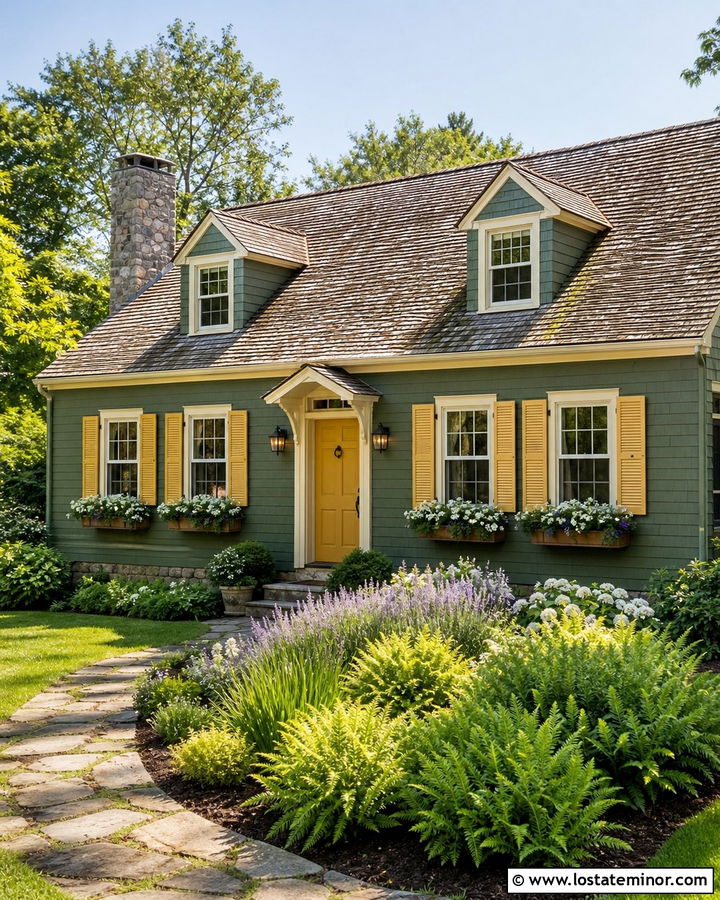
Soft yellow shutters can give a moss green cottage cheerful personality when both colors remain muted. Choose a warm ochre or buttery yellow rather than a bright lemon tone. Use it on modest louvered shutters and repeat it on the front door for a deliberately coordinated focal point. Cream trim creates a gentle transition between the yellow accents and green siding. A brown roof, brick chimney, and weathered stone foundation add enough neutral texture to balance the colorful palette. This combination looks especially charming on small homes with dormers, window boxes, and curved entry paths. Surround the facade with white flowers, lavender, ferns, and compact shrubs. The final look feels welcoming and garden-friendly, but it remains sophisticated because the exterior colors share earthy undertones.
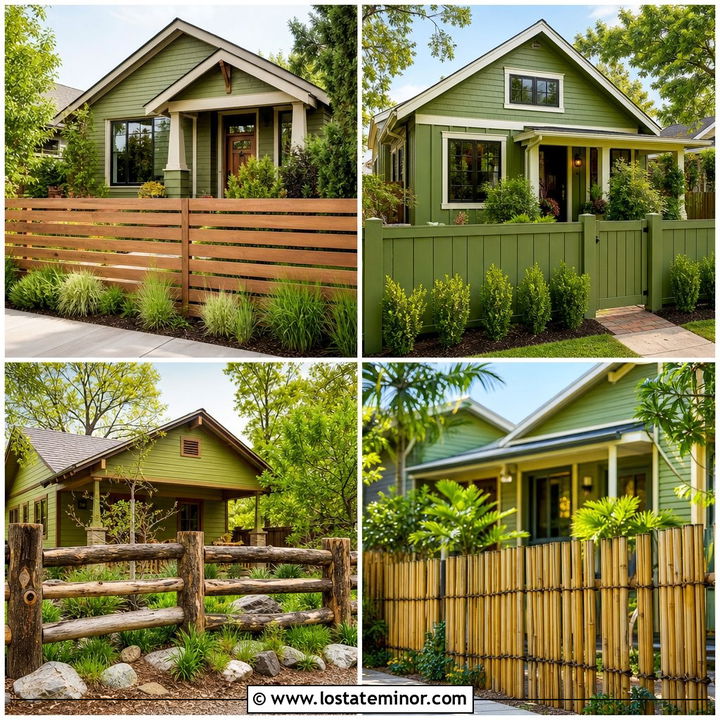
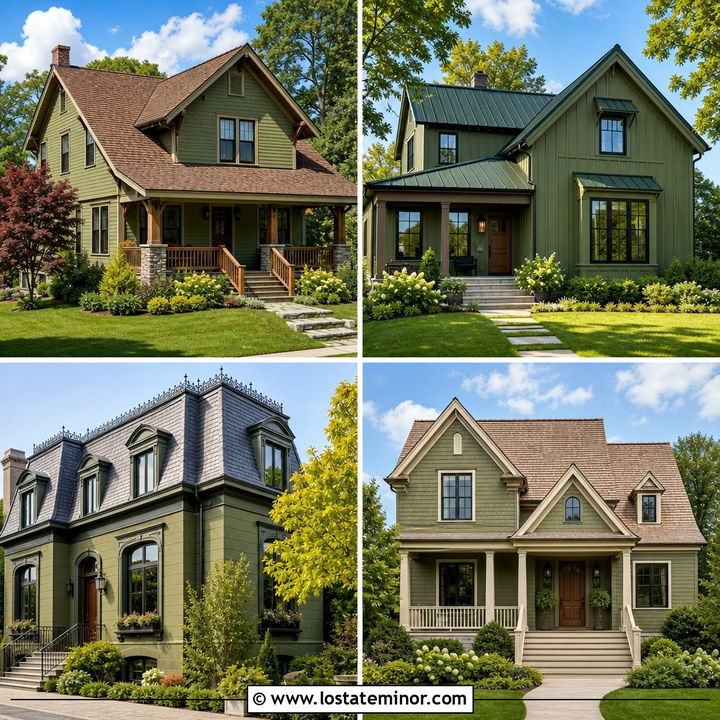
25. Moss Green Cabin With Red Shutters
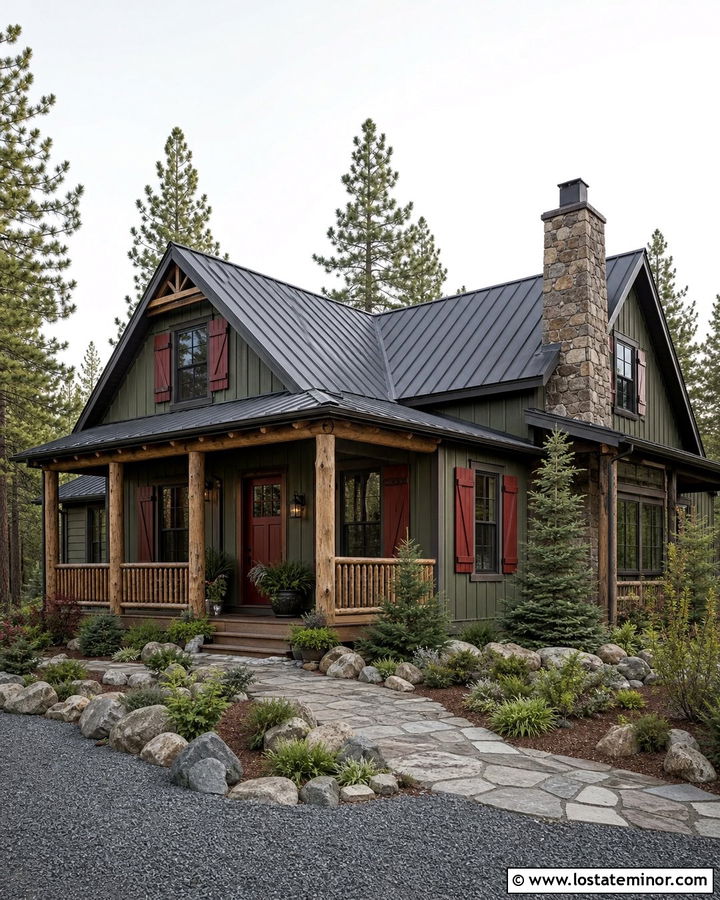
Muted barn-red shutters create striking warmth against a moss green cabin exterior. The key is selecting a deep, earthy red rather than a clear primary shade. Choose sturdy plank shutters with black strap hinges, then repeat the red sparingly on the front door or a small gable accent. Dark brown trim, a charcoal metal roof, and a stone chimney will ground the complementary colors. Natural wood porch posts and railings add another warm material without making the facade look busy. Use native evergreens, ferns, gravel, and rough stone paths around the property. This bold combination suits cabins because it feels rustic and recognizable from a distance. Careful repetition keeps the red shutters connected to the entire house rather than looking like unrelated decorations.
26. Moss Green Ranch House With White Board And Batten Shutters
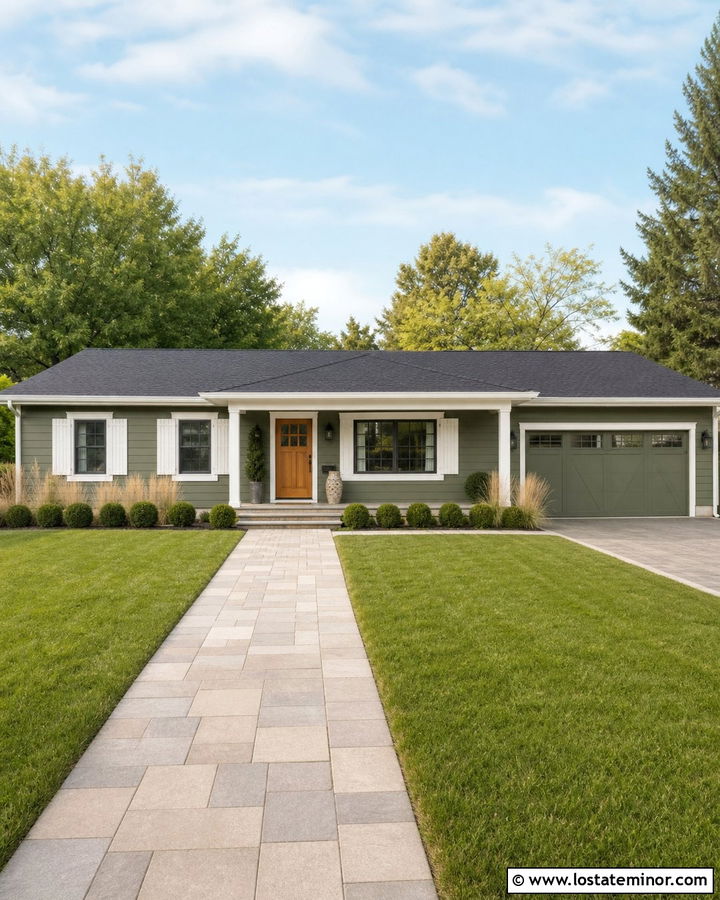
White board-and-batten shutters add vertical structure to a low, wide ranch house. Their simple construction creates a casual farmhouse influence without requiring a complete architectural renovation. Paint the siding moss green and use the same soft white on the shutters, fascia, window trim, and porch columns. A stained cedar front door adds warmth at the center of the facade. If the garage occupies a large portion of the front elevation, paint it moss green so it recedes rather than becoming the brightest feature. Choose a medium charcoal roof for balanced contrast. Low boxwoods, ornamental grasses, and a broad paver path can strengthen the horizontal landscape. This approachable update gives a basic ranch more dimension while maintaining its clean, practical lines.
27. Moss Green Craftsman With Mission Shutters
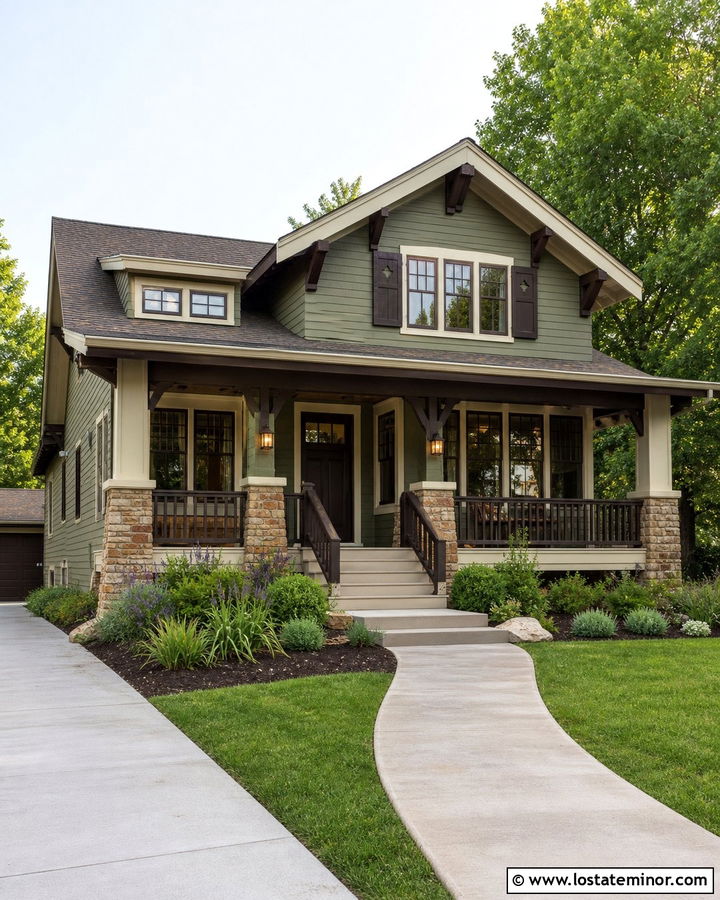
Mission shutters have simple geometric cutouts or framed panels that complement the honest construction of Craftsman architecture. Against moss green siding, use these shutters in deep espresso brown to emphasize window groupings and exposed wood details. Repeat espresso on the front door, porch railing, and selected beam ends. Cream trim should outline the roof and windows without covering every architectural feature. Stone porch columns containing tan, rust, and gray tones will connect naturally with the green and brown palette. A dark brown shingle roof completes the upper facade. Choose warm metal lighting, wide porch steps, and layered native planting for the approach. The resulting home looks thoughtfully detailed, handcrafted, and grounded without relying on excessive decorative features or high-contrast colors.
28. Moss Green French Country House With Gray Shutters
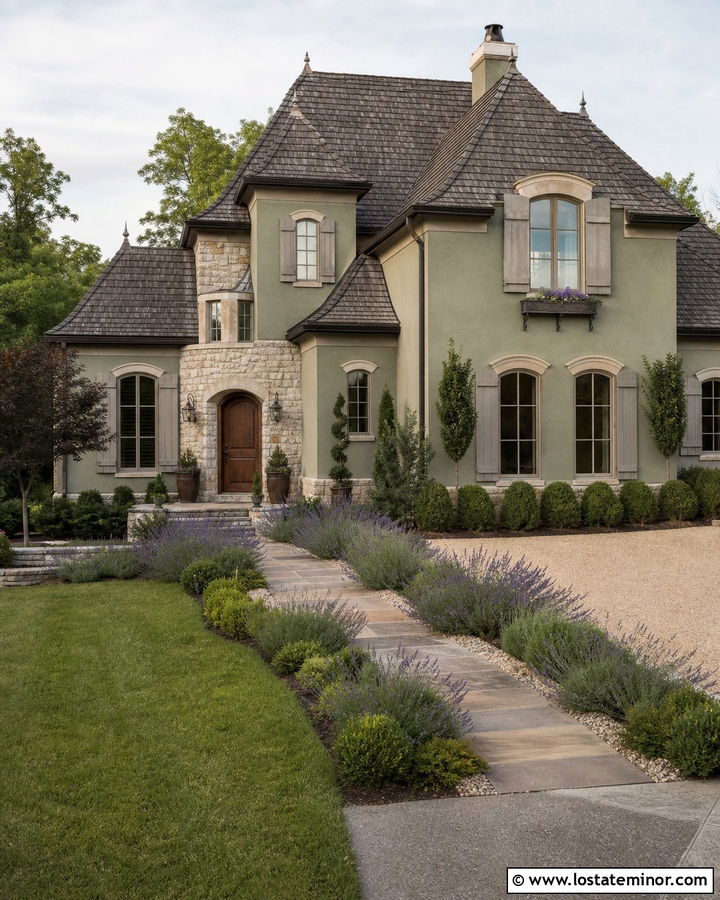
Weathered gray shutters bring understated European character to a moss green French Country exterior. Select a medium gray with warm undertones so it complements stone, stucco, and earthy green paint. Tall plank shutters with visible hinges suit arched windows and an irregular facade. Use creamy limestone or light beige trim around the entry and roof edges. A stained walnut door adds depth, while a charcoal-brown roof supports the home’s steep rooflines. If the exterior combines stucco and siding, apply moss green consistently to the primary wall surfaces and let stone remain natural. Lavender, clipped shrubs, small ornamental trees, and a gravel-edged path complete the landscape. This restrained scheme feels aged and graceful without becoming overly rustic or formally symmetrical.
29. Moss Green Midcentury House With Walnut Shutters
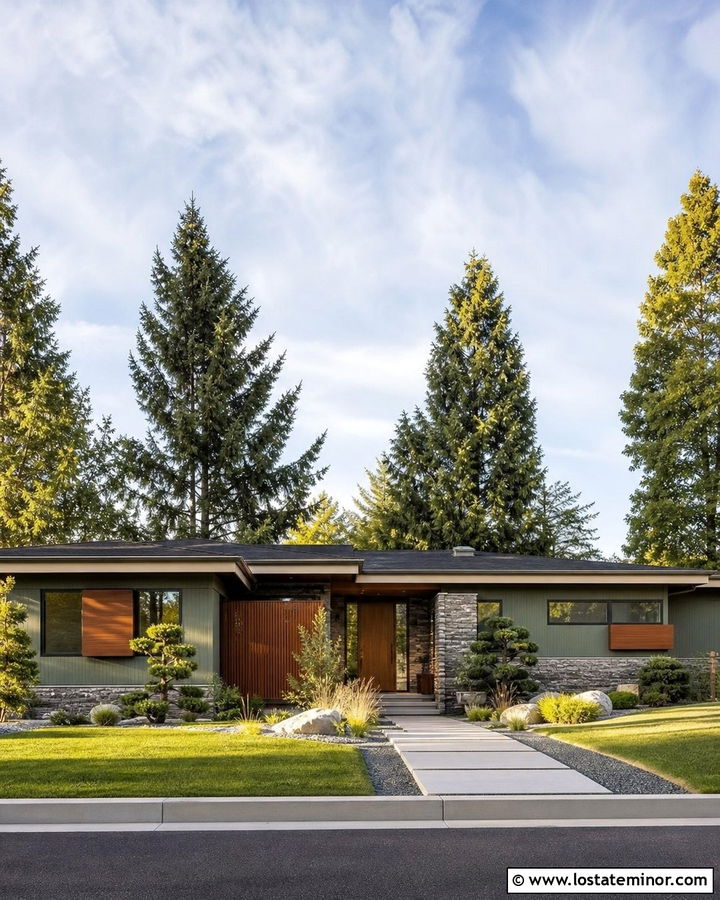
A midcentury home can accommodate shutters when they are broad, minimal, and integrated with its geometry. Use moss green on horizontal siding, then add flat walnut shutters to a limited number of smaller windows. Match their stain with the front door, soffits, and privacy screen near the entry. Black window frames and a charcoal roof create crisp lines, while warm gray stone connects the house to its site. Avoid bright white trim because it may interrupt the home’s low, continuous profile. Choose a muted taupe for any necessary fascia or foundation paint. Complete the curb appeal with large concrete pavers, gravel, sculptural evergreens, and ornamental grasses. The overall scheme feels period-sensitive, warm, and uncluttered rather than traditionally decorated.
30. Moss Green Traditional House With Copper Shutters
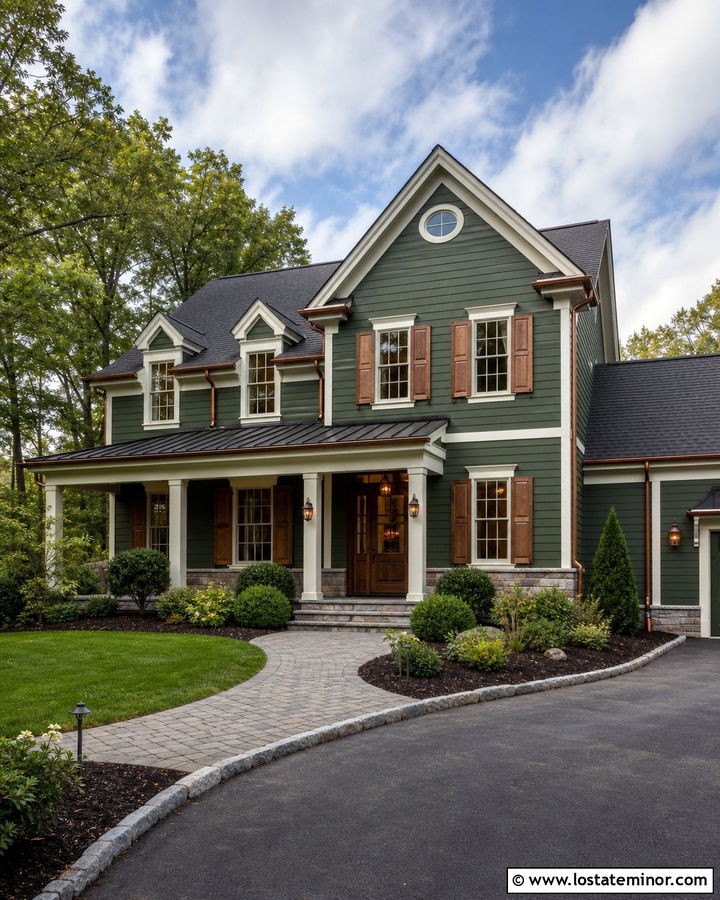
Copper shutters create a memorable focal point on a traditional moss green house, especially as the material develops a natural brown or green patina. Use real copper or a convincing copper-toned finish on raised-panel shutters, then repeat the metal on gutters, porch roofing, or exterior lanterns. Keep the trim warm white to frame the rich green walls and metallic accents. A walnut front door supports the copper’s warmth without competing for attention. Choose a charcoal roof with subtle variation and use natural stone around the porch or foundation. Structured shrubs and a curved paver walkway can soften the formal facade. This complete exterior feels distinctive and upscale, yet the natural materials keep the scheme grounded rather than flashy or overly ornamental.
Conclusion:
The strongest 30 Moss Green House Design With Shutters Ideas combine color with architecture, permanent materials, and the surrounding landscape. Black, cream, cedar, charcoal, navy, and warm brown shutters are dependable choices, while burgundy, ochre, copper, and dusty blue create more personality. Whatever combination you prefer, make the shutters wide enough to suit the windows and repeat their color elsewhere on the exterior. Coordinated doors, roofing, masonry, and trim will make the entire scheme appear intentional. Always compare paint samples outdoors during different times of day, since moss green may appear warmer in direct sun and grayer in shade. With thoughtful testing and balanced accents, this earthy color can create welcoming curb appeal across traditional and modern homes.

Related posts: