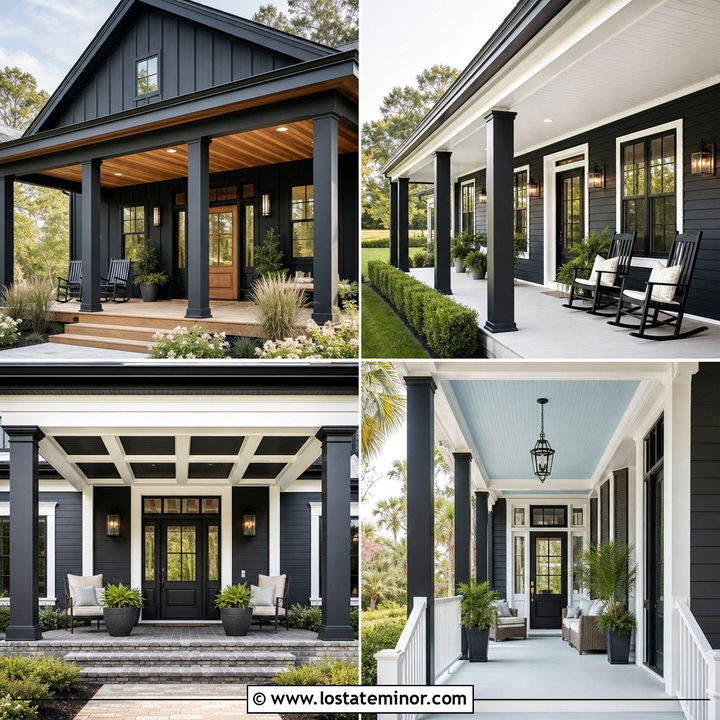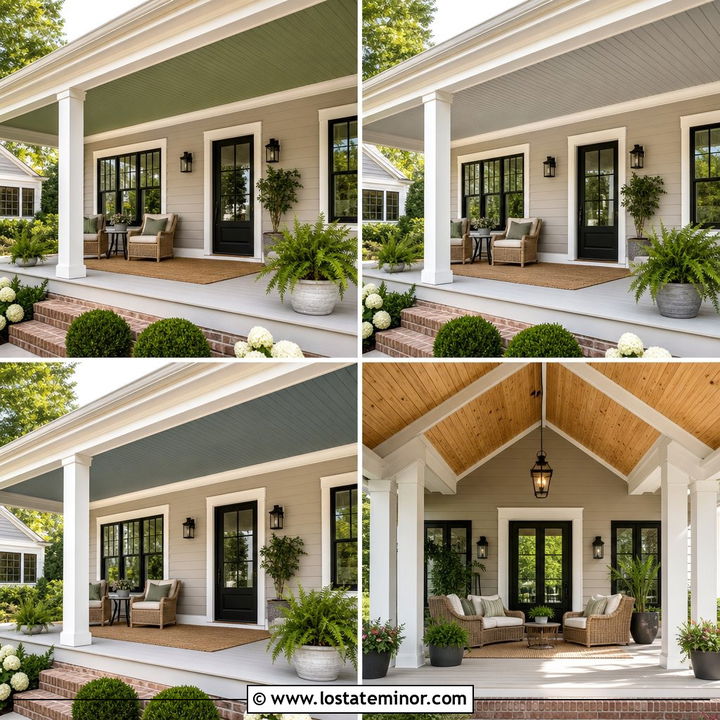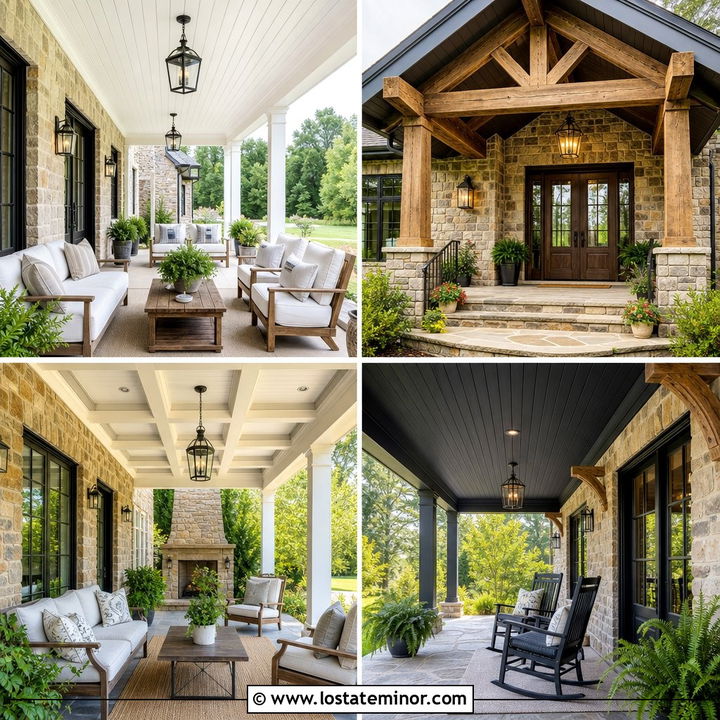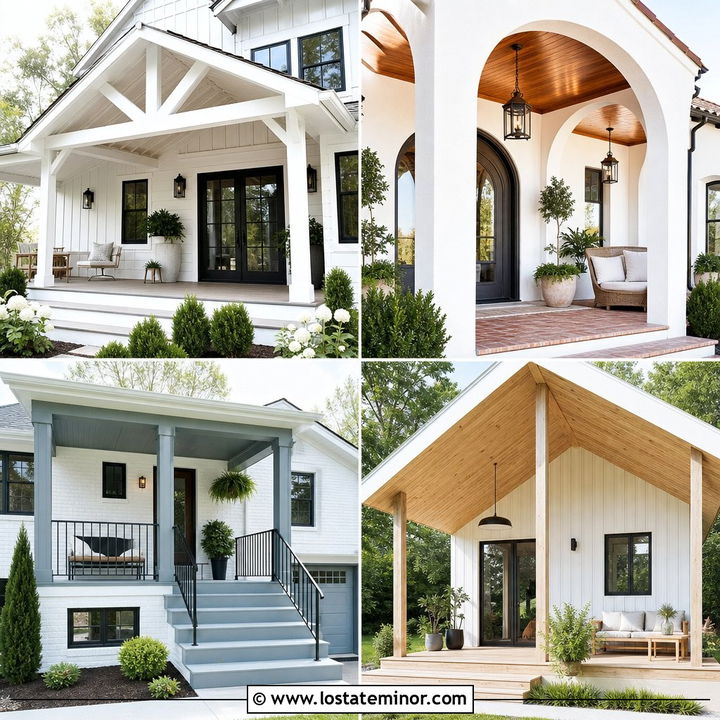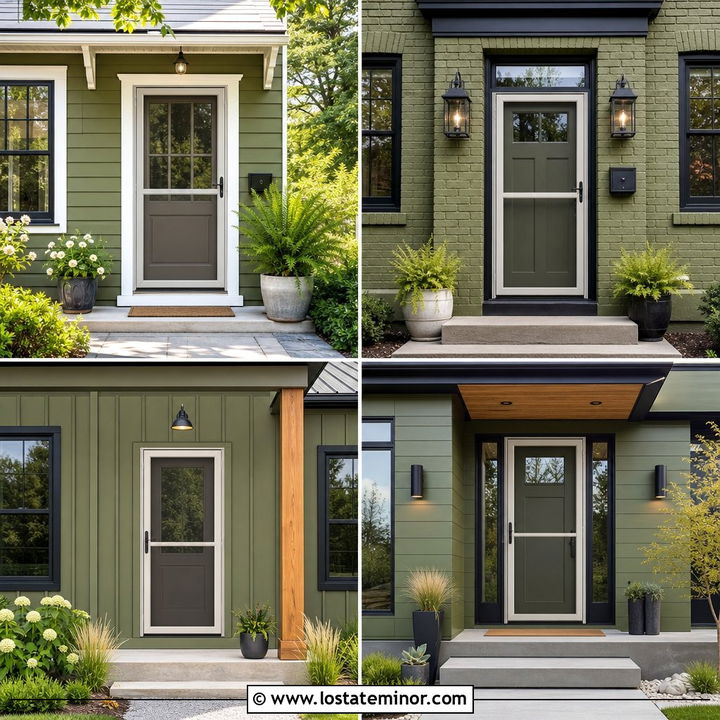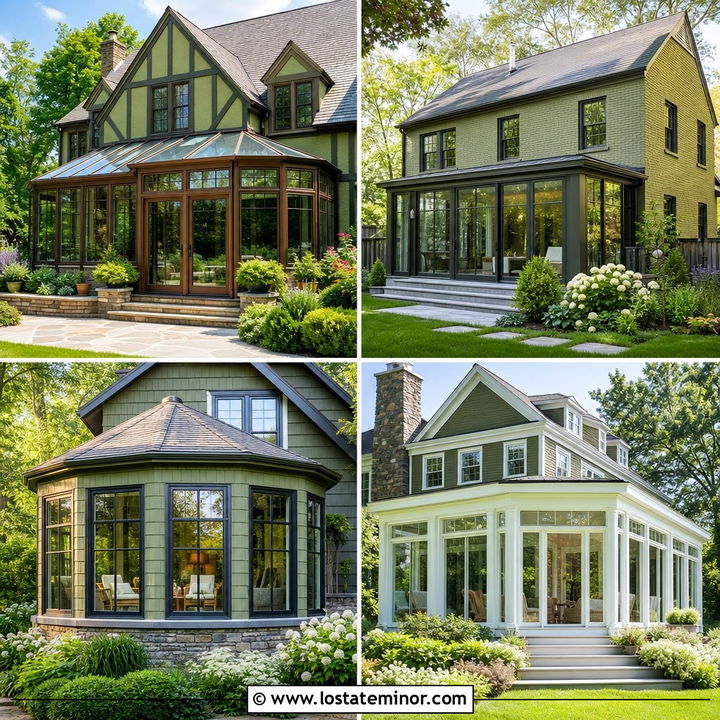
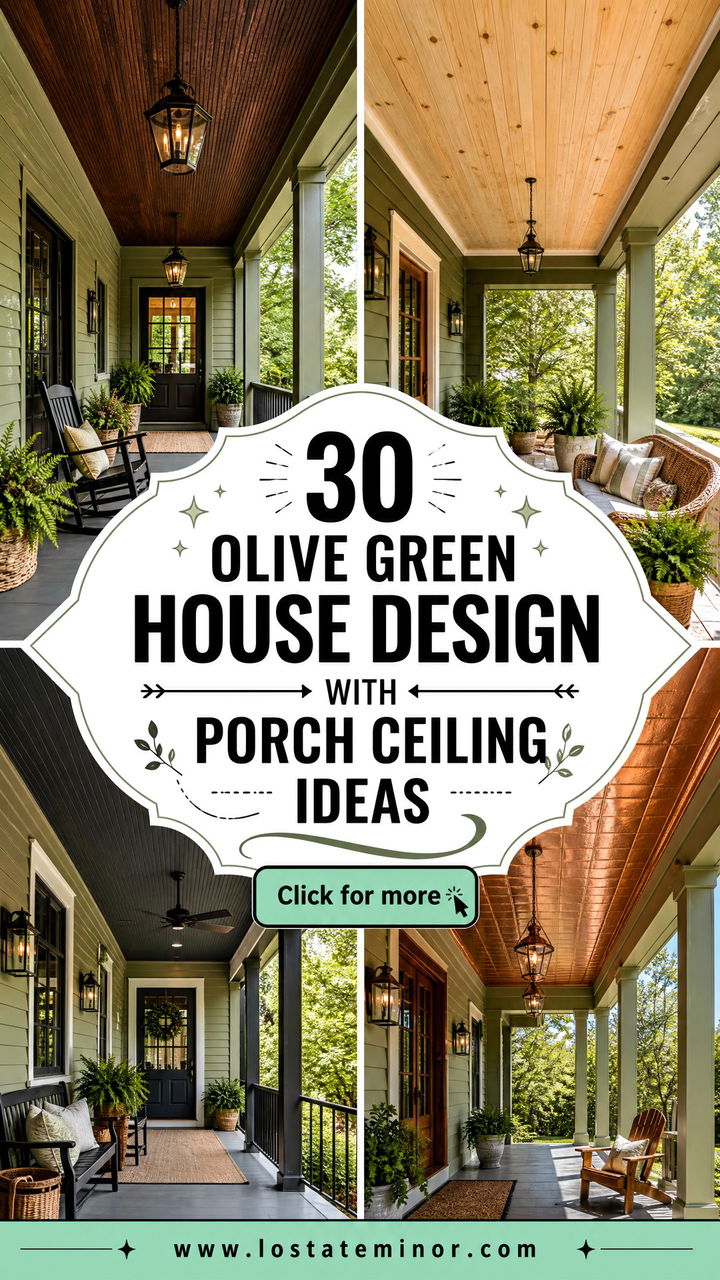
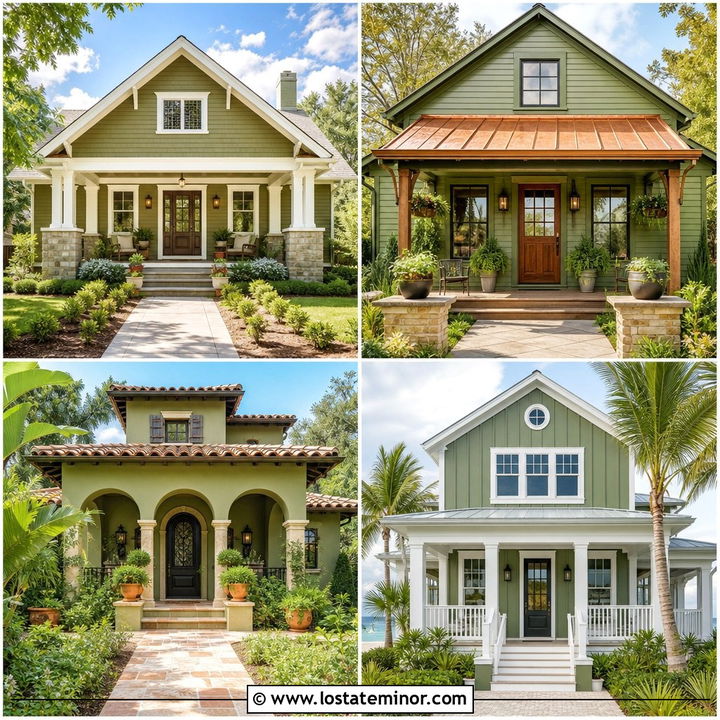
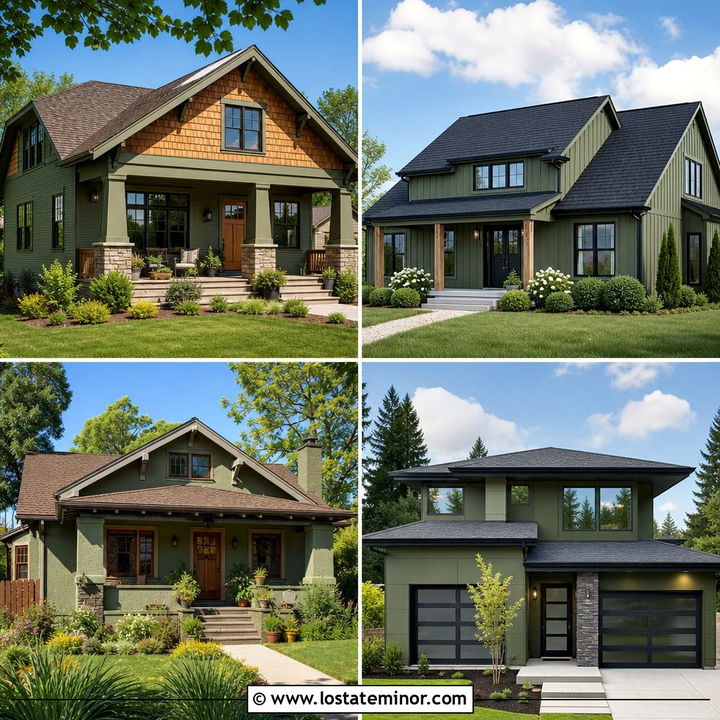
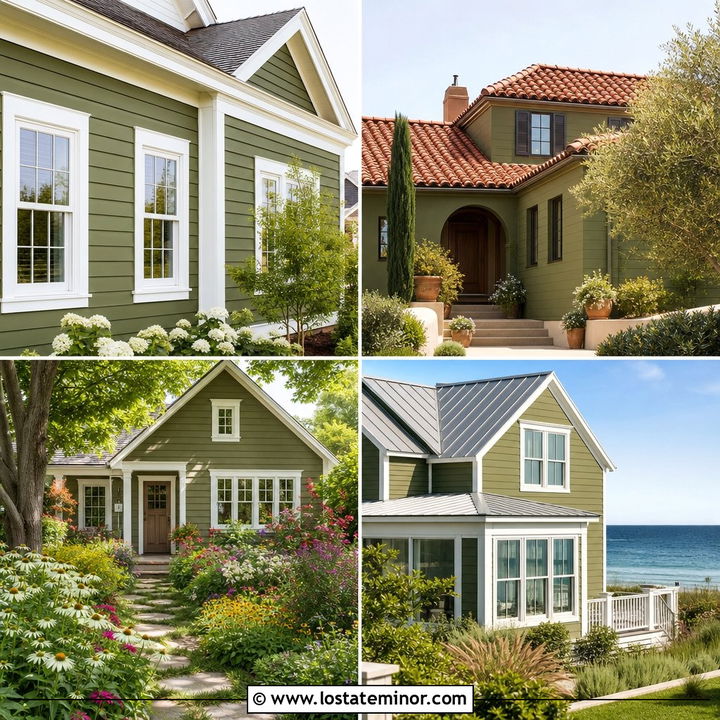
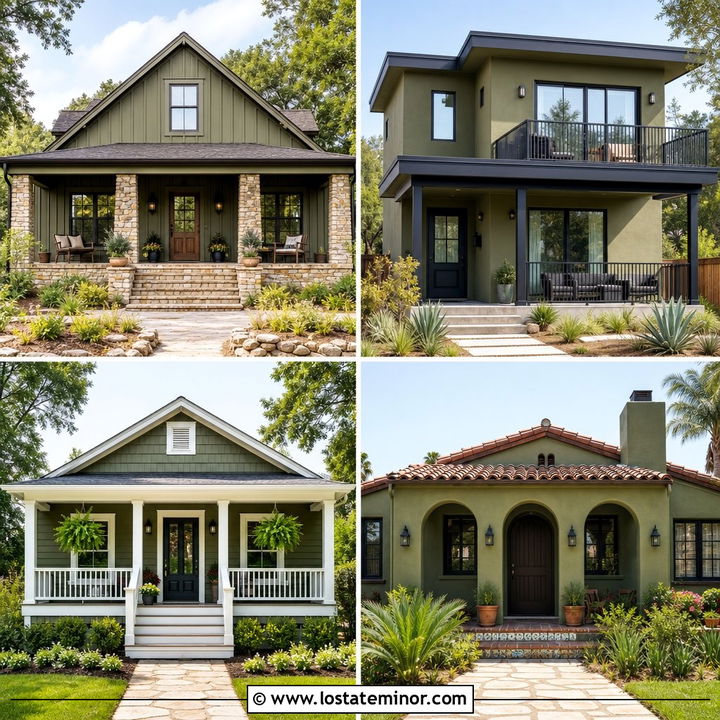
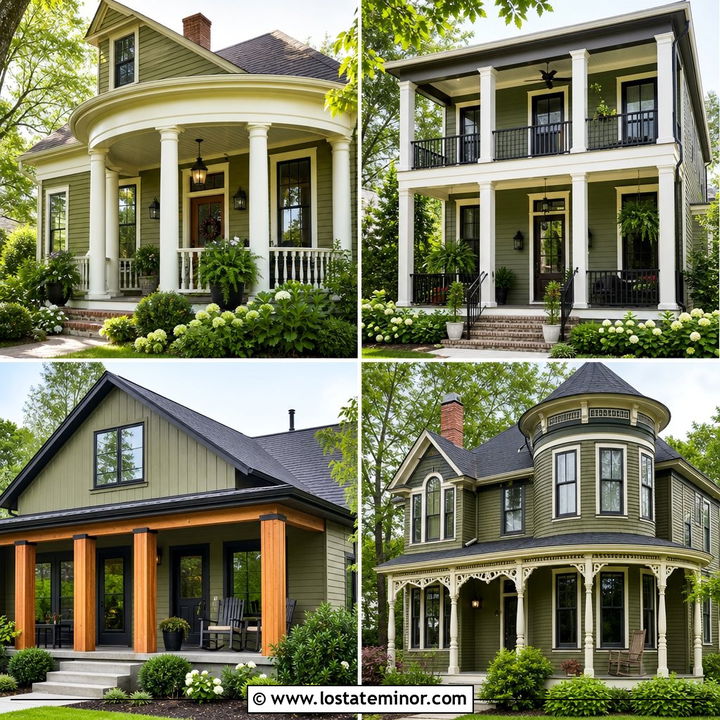
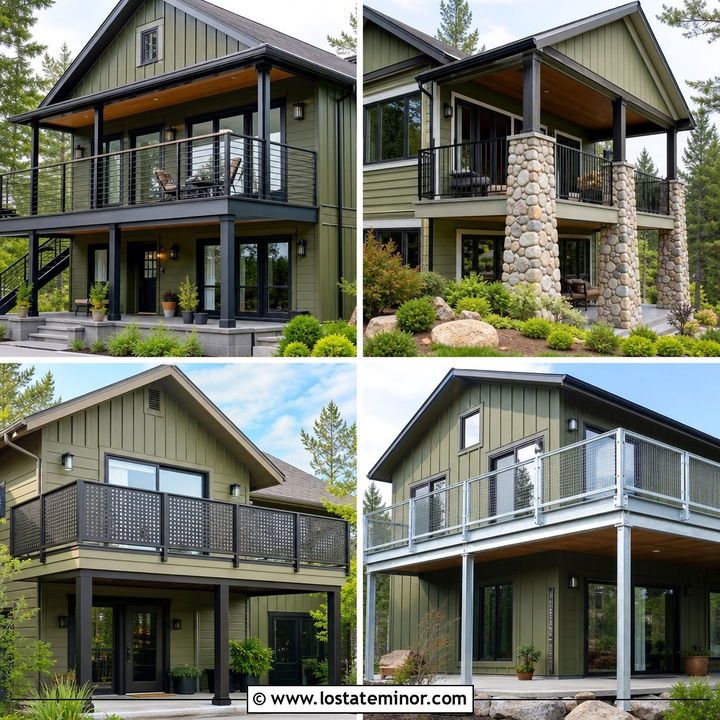
Olive green brings natural depth to a home exterior while feeling warmer and more grounded than many cool greens. The right porch ceiling can make this earthy siding color look brighter, richer, or more modern. Current exterior palettes often combine dark olive with cream, white, greige, black, wood, and stone, while light blue remains a popular porch ceiling choice. () Before choosing your combination, compare samples beside the roof, masonry, trim, and porch flooring. Check them in morning sun, afternoon shade, and cloudy light. These complete exterior schemes cover traditional, modern, rustic, coastal, and budget-friendly homes. Use them to shape your own 30 Olive Green House Design With Porch Ceiling Ideas.
1. Olive Green House With Haint Blue Porch Ceiling
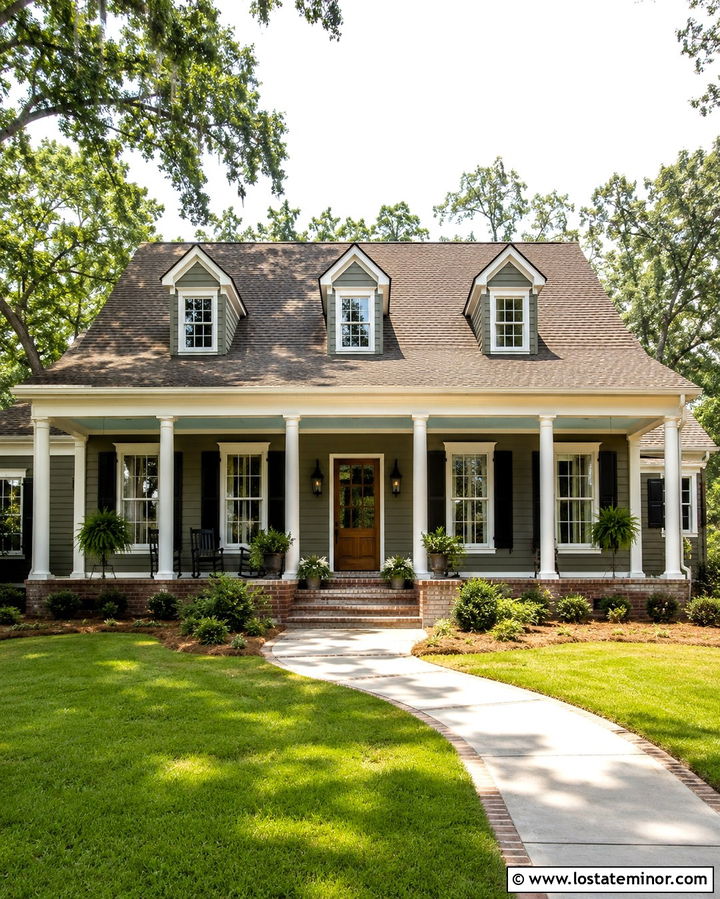
A pale haint blue ceiling gives an olive green house a soft Southern character without competing with the earthy siding. Use creamy white on the porch columns, window trim, fascia, and railings to connect the two colors. A medium-stained oak front door adds warmth, while aged brick steps keep the palette relaxed and established. This combination works especially well on a Southern farmhouse or traditional cottage with a deep front porch. Choose a weathered brown roof rather than a blue-gray shingle, which could make the ceiling feel disconnected. Black lanterns provide a small amount of contrast. Haint blue has a long association with Southern porch ceilings, making this pairing especially appropriate for historic-inspired homes. ()
2. Olive Green House With White Porch Ceiling
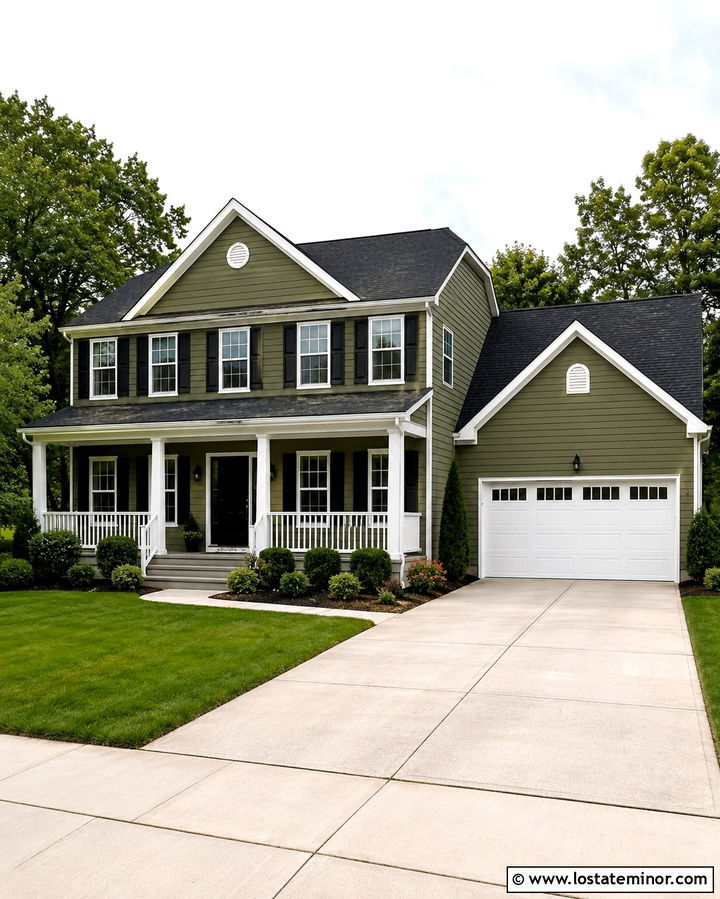
A clean white porch ceiling can make a shaded entry feel lighter and more spacious. Pair medium olive green siding with soft white trim rather than a sharp blue-white. The slightly warmer trim will complement the yellow undertones often found in olive paint. Continue the white across square porch columns, railings, window casings, and garage trim for a connected exterior. A black front door and charcoal roof add structure without overpowering the green. On the porch floor, choose warm gray concrete or muted brown decking to bridge the cool and warm finishes. This straightforward scheme suits ranch houses, colonials, and suburban two-story homes. It is also practical when you want the porch ceiling to visually disappear instead of becoming a separate decorative feature.
3. Olive Green House With Cedar Porch Ceiling
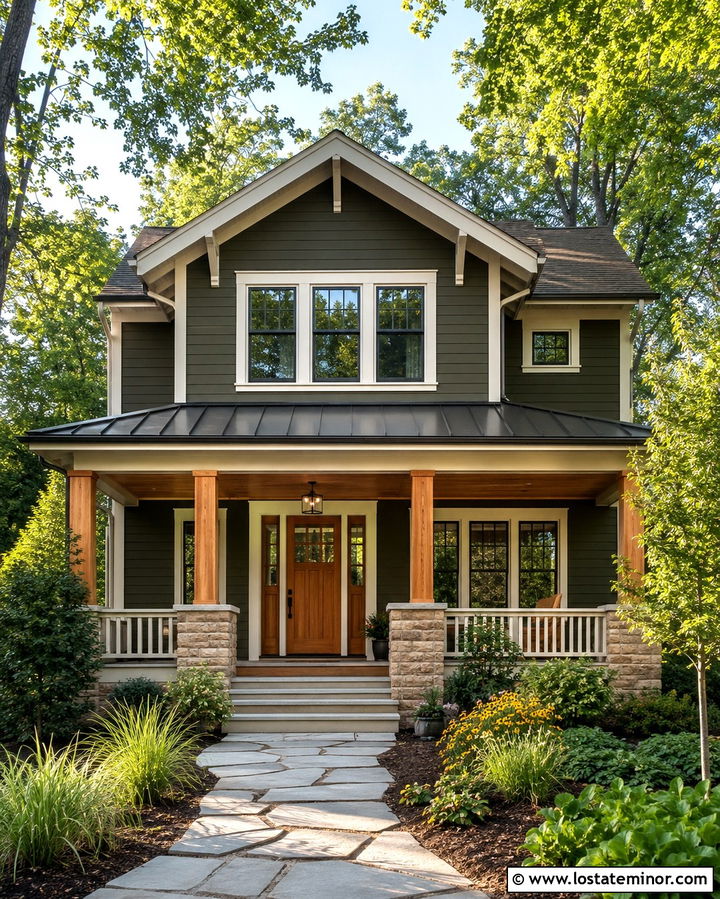
Natural cedar creates a warm focal point above an olive green porch. The wood’s orange and golden tones contrast gently with the green siding, producing a rich woodland palette. Keep the trim warm white and repeat cedar on the front door, porch posts, or decorative gable brackets. Repetition makes the ceiling look intentional rather than like an unrelated material upgrade. A dark bronze metal roof over the porch can reinforce the rustic color story, while weathered brown shingles work well across the main roof. Use a stone foundation with tan, gray, and rust variation to anchor the house. This complete look is ideal for Craftsman homes, mountain houses, and modern cabins surrounded by mature trees, ornamental grasses, or natural rock landscaping.
4. Olive Green House With Stained Beadboard Porch Ceiling
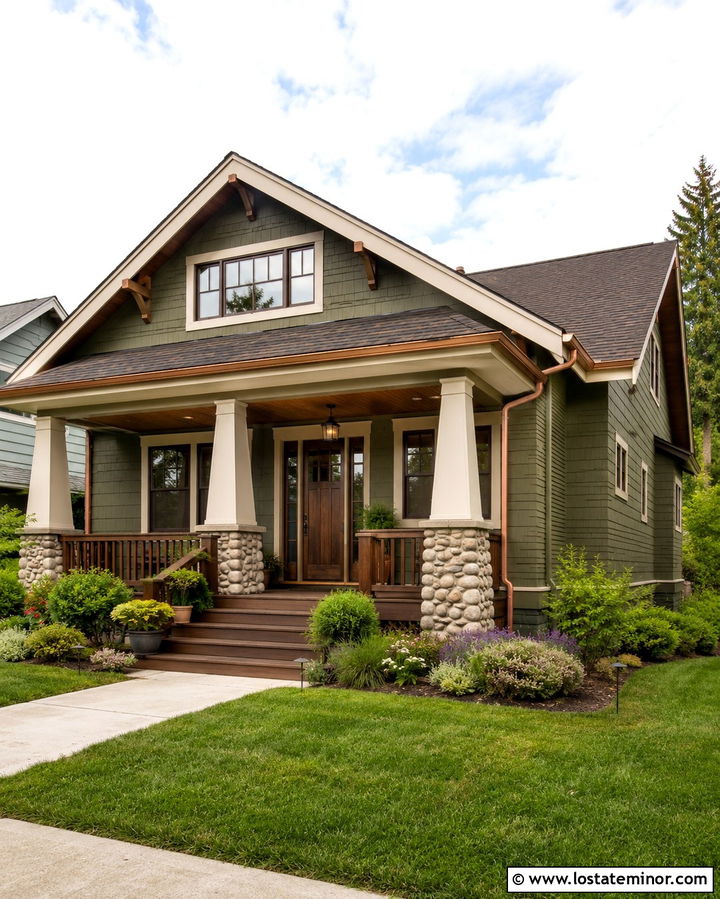
A stained beadboard ceiling adds fine texture and traditional craftsmanship to an olive green exterior. Select a medium walnut stain that is dark enough to show the board pattern but light enough to prevent the porch from feeling heavy. Cream trim around the windows and columns will soften the contrast. Carry the same stain onto the front door and porch swing for a balanced finish. Copper lanterns and gutters can introduce another warm material that develops character over time. Complete the house with a warm charcoal roof, brown porch floor, and low stone foundation. This combination is especially attractive on a Craftsman bungalow with tapered columns and wide eaves. The beadboard detail gives visitors something interesting to notice as they approach the entry.
5. Olive Green House With Black Porch Ceiling
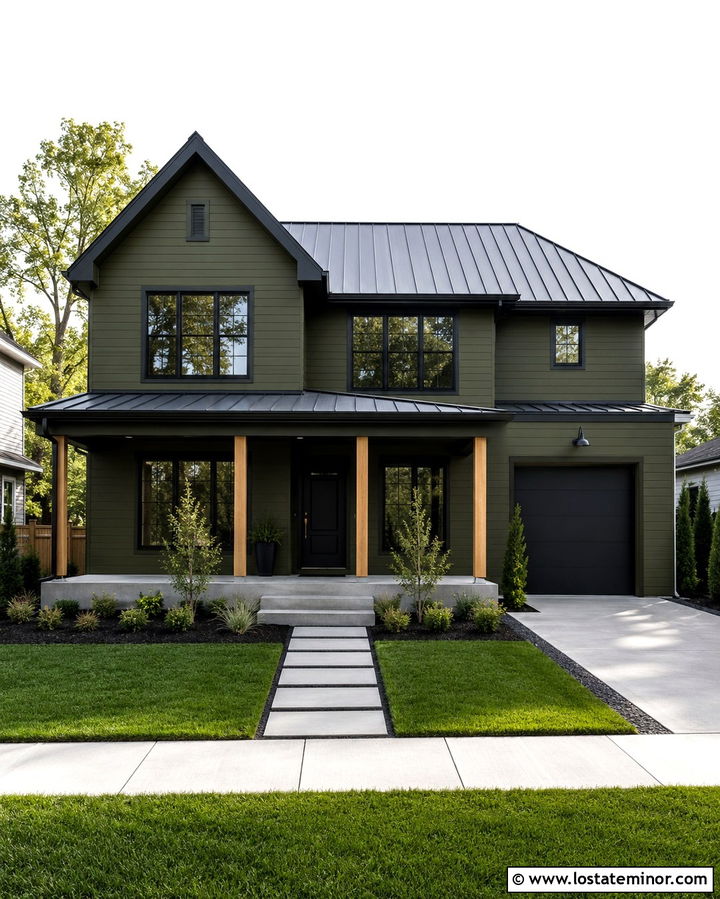
Could a black ceiling work with olive green siding? It can, especially on a modern home with a tall, open porch and plenty of natural light. Choose a deep olive body color and repeat matte black on the window frames, front door, gutters, and modern railings. A light concrete porch floor will keep the entrance from becoming too dark. Natural wood on the porch columns or garage door adds necessary warmth between the black and green. Use a black standing-seam roof or dark charcoal shingles to complete the streamlined palette. This strong combination looks best when the ceiling has recessed lighting and uncluttered lines. Avoid using black across every surface; warm wood, pale masonry, and fresh landscaping should provide breathing room around the darker finishes.
6. Olive Green House With Cream Porch Ceiling
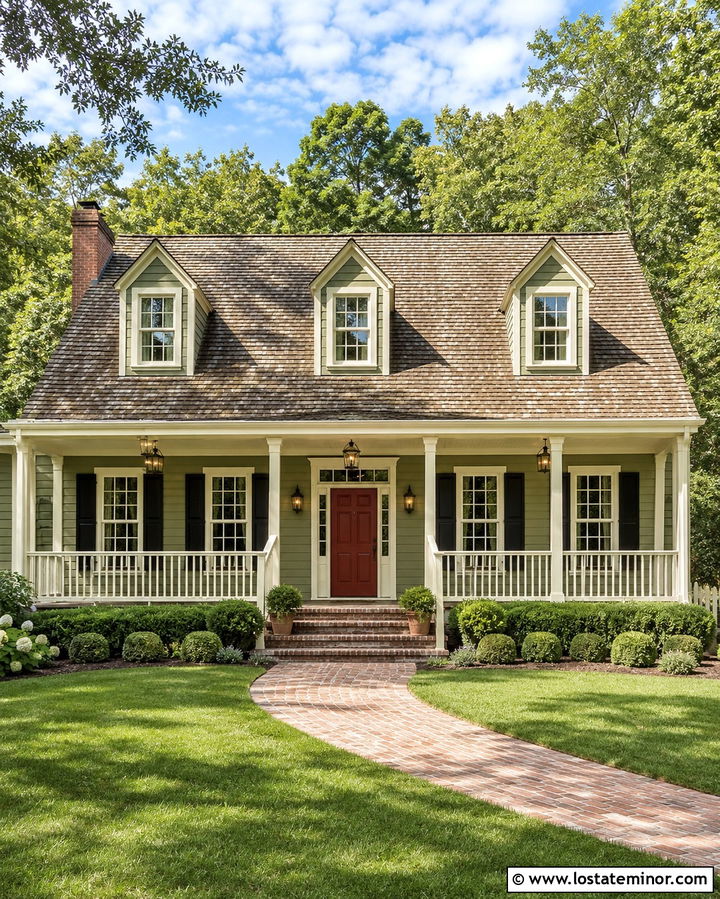
Cream is a natural partner for olive because both colors have warm undertones. Paint the porch ceiling, columns, fascia, and window trim the same soft cream for a calm, coordinated appearance. A muted red front door can add traditional contrast without looking too bright. Finish the porch with brick flooring or reddish-brown steps that repeat the door’s warmth. Weathered wood shingles, bronze gutters, and antique brass lighting will support the classic palette. This look works beautifully on a Cape Cod, cottage, or older colonial where crisp white might feel too stark. If the olive siding is dark, choose a slightly stronger cream so the trim remains visible. The resulting exterior feels welcoming, established, and easy to blend with mature foundation plantings.
7. Olive Green House With Natural Pine Porch Ceiling
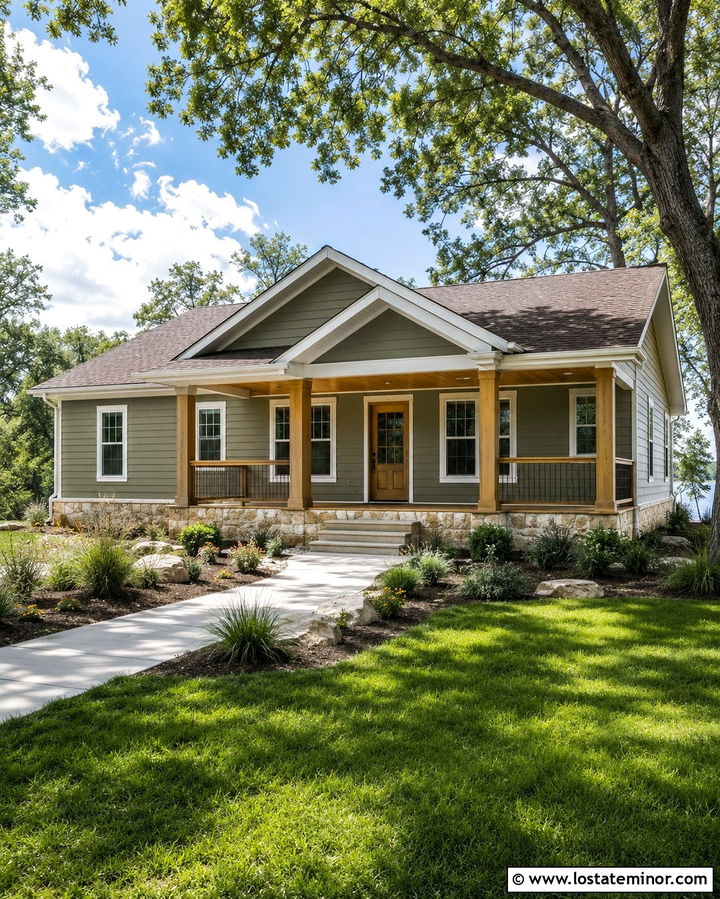
Light pine can brighten a covered porch while giving an olive green home a casual, approachable finish. Use clear-sealed tongue-and-groove boards overhead, allowing the pale grain to remain visible. Pair them with warm white trim, simple wood columns, and a matching pine front door. Medium olive lap siding will provide enough contrast to keep the wood from looking washed out. A gray-brown roof, tan stone skirt, and natural concrete walkway complete the earthy combination. This design is a good fit for a small bungalow, lake house, or budget-conscious exterior renovation. Because pine can change color as it ages, test the selected sealer before covering the entire ceiling. Repeating the pale wood in planters or porch furniture will make the finish feel purposeful.
8. Olive Green House With Sky Blue Porch Ceiling
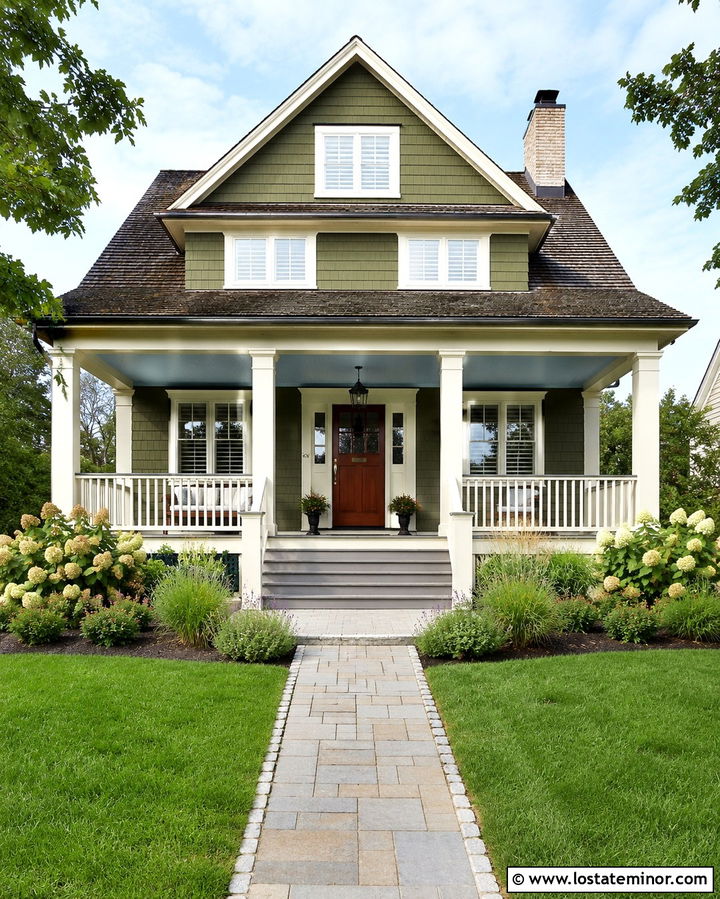
Sky blue creates a cheerful overhead accent that can visually lift a low porch. Select a muted blue with a slight green or gray cast so it relates comfortably to olive siding. Crisp cream trim around the porch opening will separate the two main colors and keep the facade readable from the street. Add a natural mahogany door, white railings, and a medium-gray porch floor. A weathered brown roof will prevent the overall scheme from becoming too cool. This pairing suits a coastal cottage, Southern bungalow, or relaxed farmhouse with wide windows and a welcoming front porch. Keep the landscaping natural, using white flowers, blue-green shrubs, and soft grasses. These quieter plant colors support the ceiling without turning the exterior into an overly colorful composition.
9. Olive Green House With Matching Olive Porch Ceiling
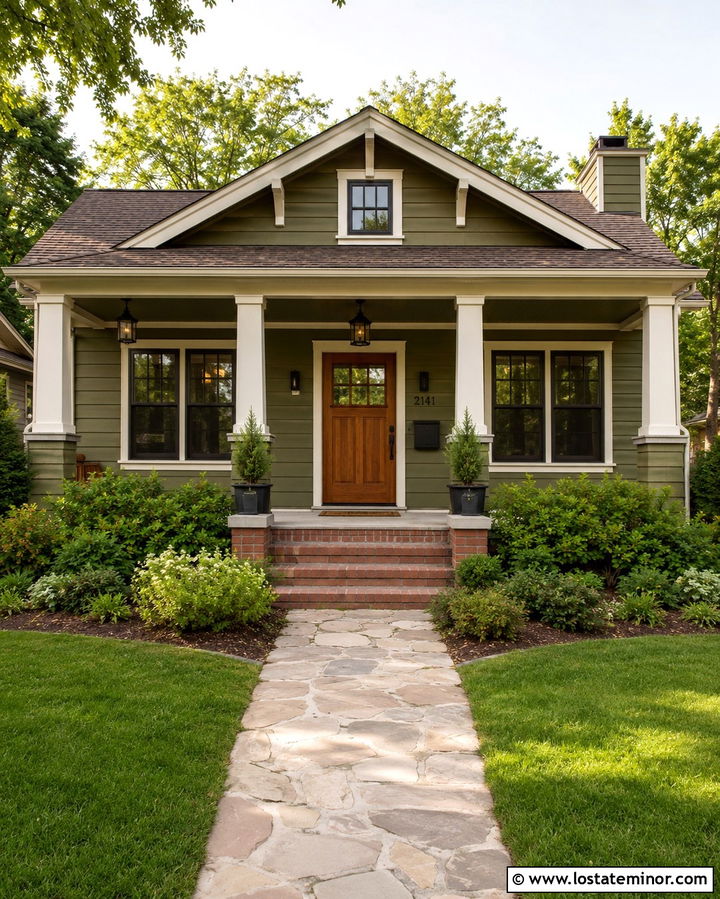
Painting the porch ceiling and siding the same olive green creates a wrapped, color-drenched effect. This approach is especially useful when you want a compact bungalow to appear more unified. Use a lighter cream on the trim, columns, and railings to outline the architecture. A medium wood door and warm brick steps will break up the green while preserving the natural palette. Choose a porch ceiling finish with slightly more sheen than the siding so reflected light keeps the covered area from looking flat. A brown-black roof, bronze fixtures, and dark gutters will add quiet definition. Matching colors work best when the porch has a simple shape and good daylight. Limit extra accent colors so the continuous olive treatment remains the dominant feature.
10. Olive Green House With Pale Gray Porch Ceiling
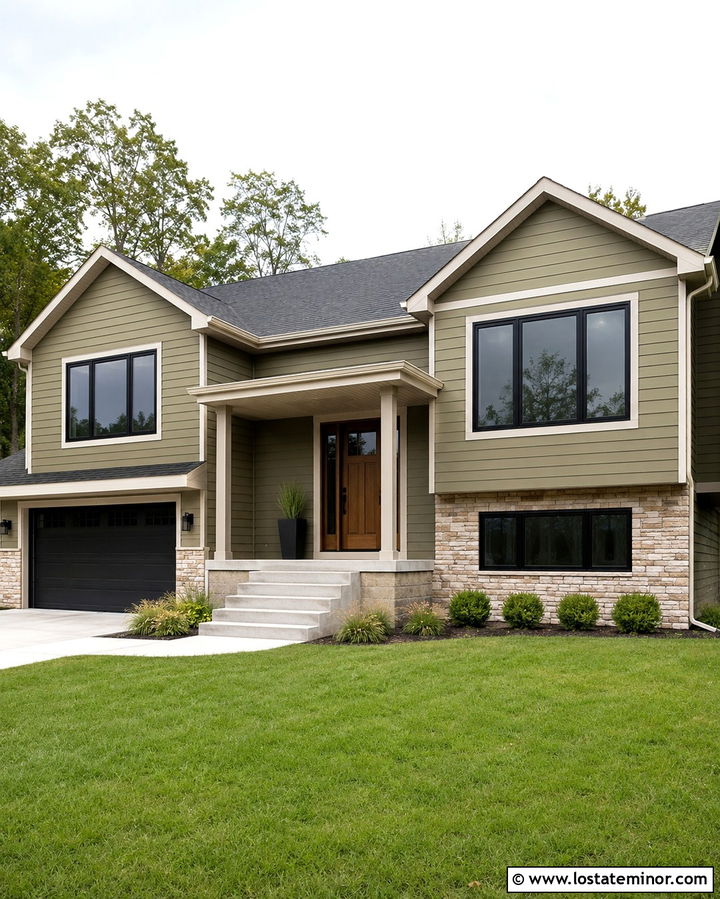
Pale gray offers a restrained porch ceiling option for homeowners who prefer a quiet, neutral exterior. Choose a warm gray rather than an icy silver tone, then combine it with muted olive siding and creamy gray trim. Black window frames, a stained wood front door, and charcoal roof shingles give the facade a tailored finish. On a split-level or contemporary ranch, continue the ceiling color onto the porch soffits for a more consistent line. Light gray concrete steps and a darker gray walkway will connect the ceiling to the ground plane. Add tan stone around the foundation to keep the scheme from feeling overly cool. This balanced combination feels current but not trendy, making it suitable for a simple renovation with long-term curb appeal.
11. Olive Green House With Dark Wood Porch Ceiling
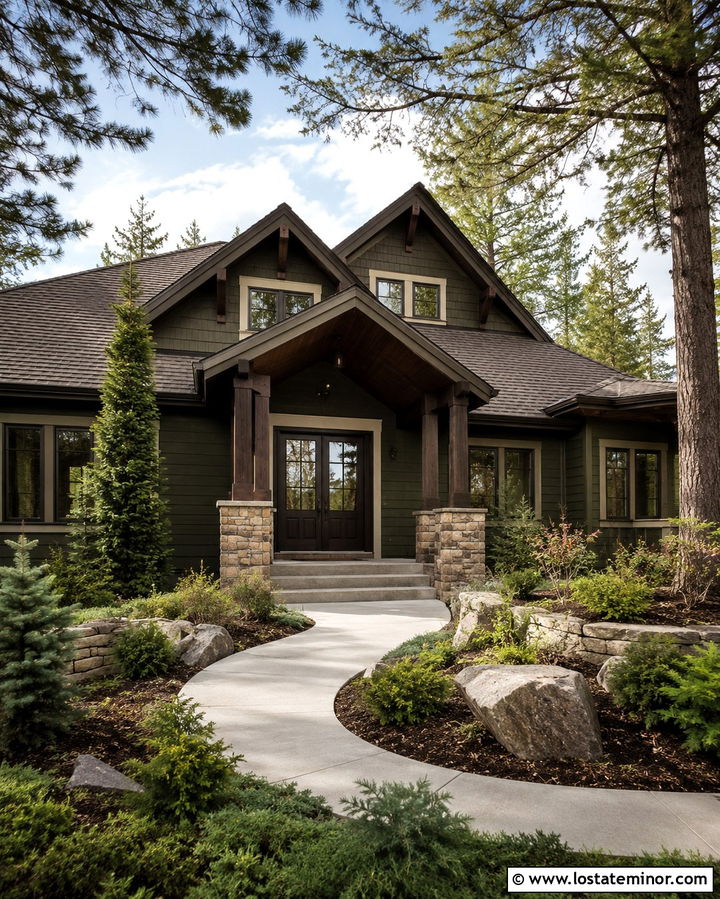
A dark wood ceiling gives a large olive green house extra depth and architectural presence. Use espresso-stained planks beneath a wide porch, then repeat the stain on double front doors or substantial porch beams. Warm greige trim will create a gentler transition than bright white. Add dark bronze windows, textured stone columns, and a charcoal-brown roof to complete the layered exterior. Because deep wood can reduce reflected light, reserve it for a tall porch with generous openings. Large glass doors and pale stone flooring can further brighten the entrance. This complete scheme is particularly effective on a lodge-style house, mountain Craftsman, or large suburban home with rustic details. Evergreen shrubs and natural boulders will reinforce the established, landscape-connected appearance of the olive and wood palette.
12. Olive Green House With Soft Sage Porch Ceiling
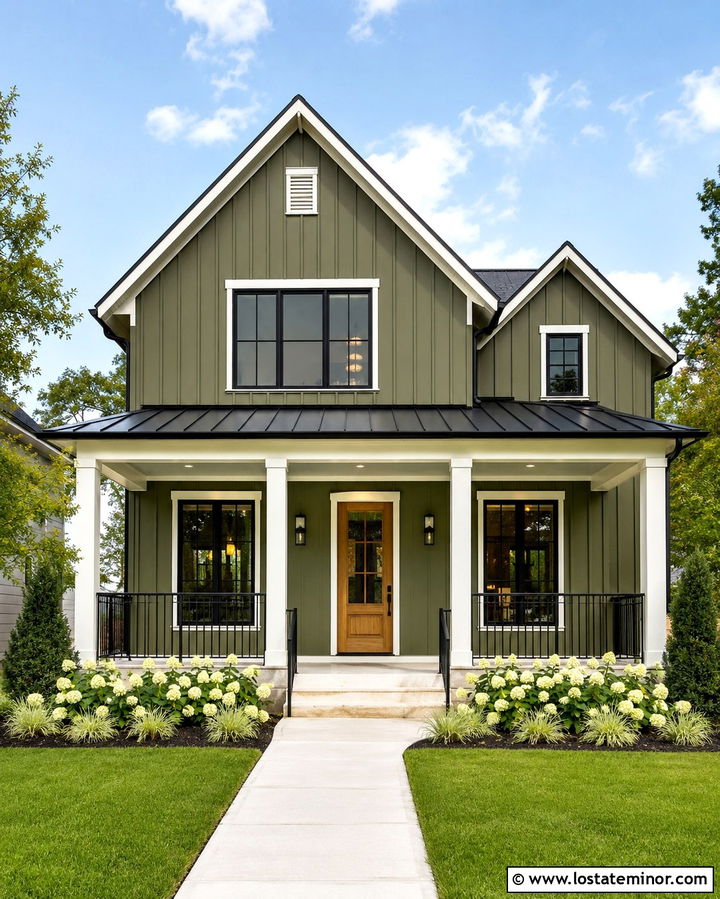
A soft sage ceiling introduces subtle tonal variation while preserving the calm green character of the exterior. Pair dark olive board-and-batten siding with a lighter gray-green ceiling that is easy to distinguish in shaded conditions. Use warm white for the columns, trim, and garage doors. A medium oak front door, black roof, and pale limestone porch floor will provide clear contrast between the major surfaces. This palette is ideal for a modern farmhouse because it softens the usual black-and-white formula without losing its clean structure. Keep shutters simple or leave them off entirely. Repeating sage in small planters or garden foliage can connect the ceiling to the yard. The layered greens will look intentional when their undertones remain warm and slightly muted.
13. Olive Green House With Warm Greige Porch Ceiling
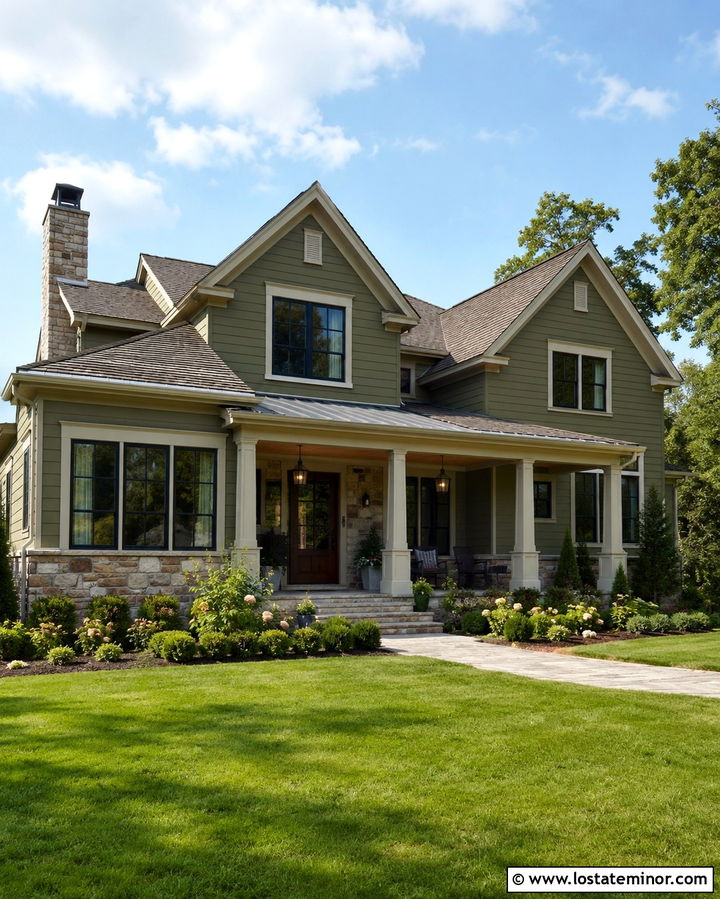
Warm greige is an understated choice that connects olive siding with stone, concrete, and weathered wood. Paint the porch ceiling a light mushroom greige, then use a paler version of the same color on window trim and columns. A dark walnut door gives the entrance definition, while bronze lighting supports the warm undertones. Select a roof with mixed brown and gray granules rather than a solid cool gray. For the porch floor, use tumbled limestone or taupe porcelain tile. This complete scheme works well on a transitional home where traditional materials meet cleaner architectural lines. Greige also helps soften a large olive facade by creating a neutral resting place beneath the porch. Use black only in small amounts, such as window sashes or door hardware.
14. Olive Green House With Dusty Blue Porch Ceiling
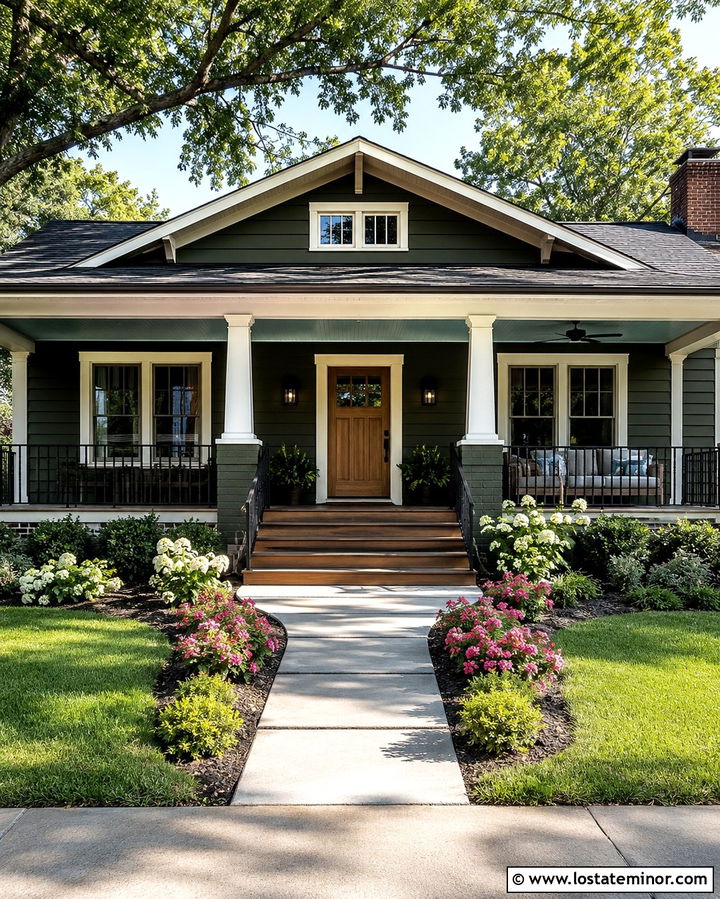
Dusty blue adds color to an olive green house without creating a sharp or playful contrast. Its gray undertone keeps the pairing mature and versatile. Use deep olive horizontal siding with creamy white trim, then paint the porch ceiling a muted blue similar to faded denim. A warm cedar door and brown porch decking will balance the cooler ceiling. Finish the house with a dark gray roof, black lanterns, and simple cream railings. This color combination looks at home on a traditional bungalow or renovated cottage. It can also help connect an olive exterior to existing blue-gray masonry. Avoid bright royal blue accents elsewhere. Let the ceiling carry the blue while wood, stone, and restrained landscaping maintain the earthy appearance of the complete house.
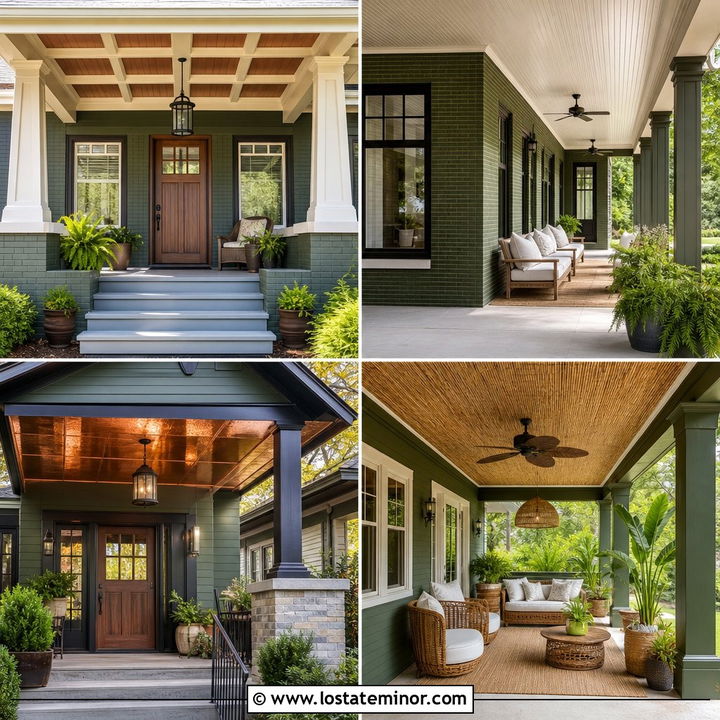
15. Olive Green House With Light Wood Slat Porch Ceiling
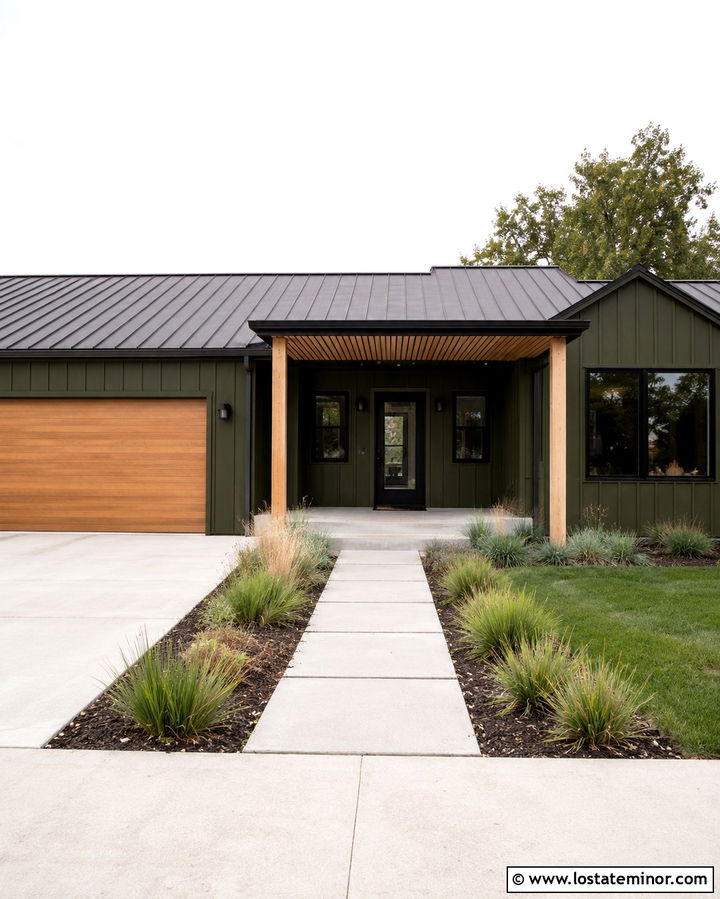
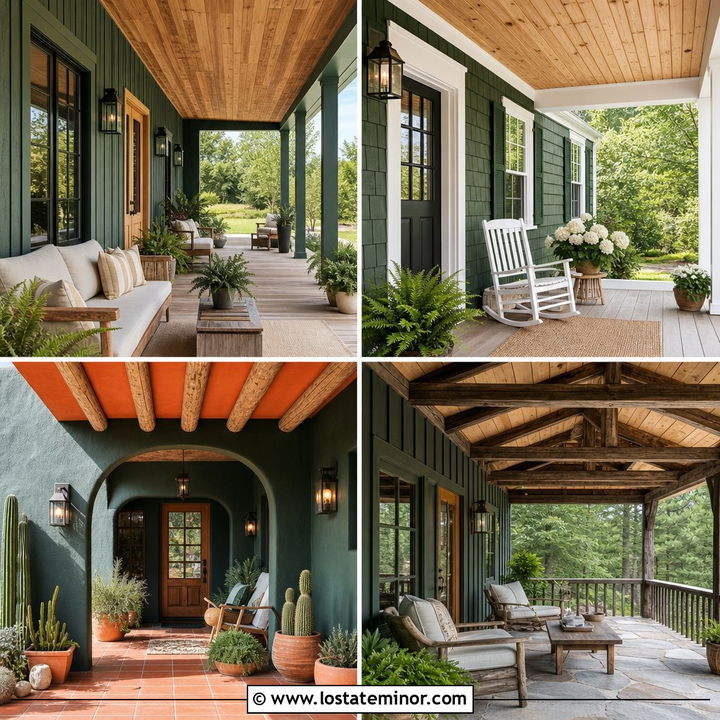
A light wood slat ceiling can give olive green siding a clean, contemporary edge. Install narrow oak or cedar slats in a simple linear pattern, allowing small shadow gaps to emphasize the porch’s depth. Pair the ceiling with smooth olive fiber-cement panels, black-framed windows, and a black pivot-style front door. Pale concrete, warm wood garage doors, and charcoal metal roofing will complete the modern exterior. The wood should also appear on one vertical feature, such as a privacy screen or recessed entry wall, so the ceiling is visually connected to the facade. This look suits a modern ranch or low-profile contemporary house. Use restrained landscaping with ornamental grasses, clipped shrubs, and a straight concrete walkway to reinforce the strong architectural lines.
16. Olive Green House With Terracotta Porch Ceiling
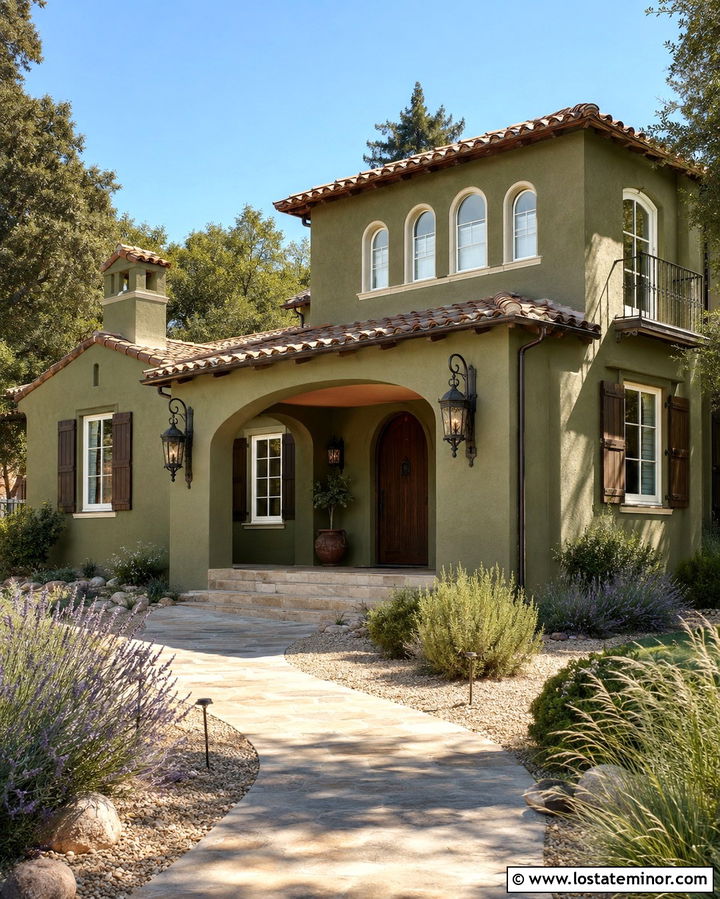
A muted terracotta ceiling creates a warm Mediterranean contrast against olive green stucco. Keep the terracotta soft and earthy rather than bright orange. Cream window trim, dark wood shutters, and an arched walnut front door can complete the old-world palette. Use a red-brown clay tile roof and natural stone around the porch base to repeat the ceiling’s warmth throughout the exterior. Wrought-iron lighting adds definition without introducing another strong color. This pairing works best on Spanish Revival, Mediterranean, or Southwestern homes with deep porches and textured walls. Add gravel beds, rosemary, lavender, and drought-tolerant shrubs around a curved walkway. The green and clay tones should feel sun-washed and connected, creating a complete exterior that fits naturally into a warm, dry landscape.
17. Olive Green House With Charcoal Porch Ceiling
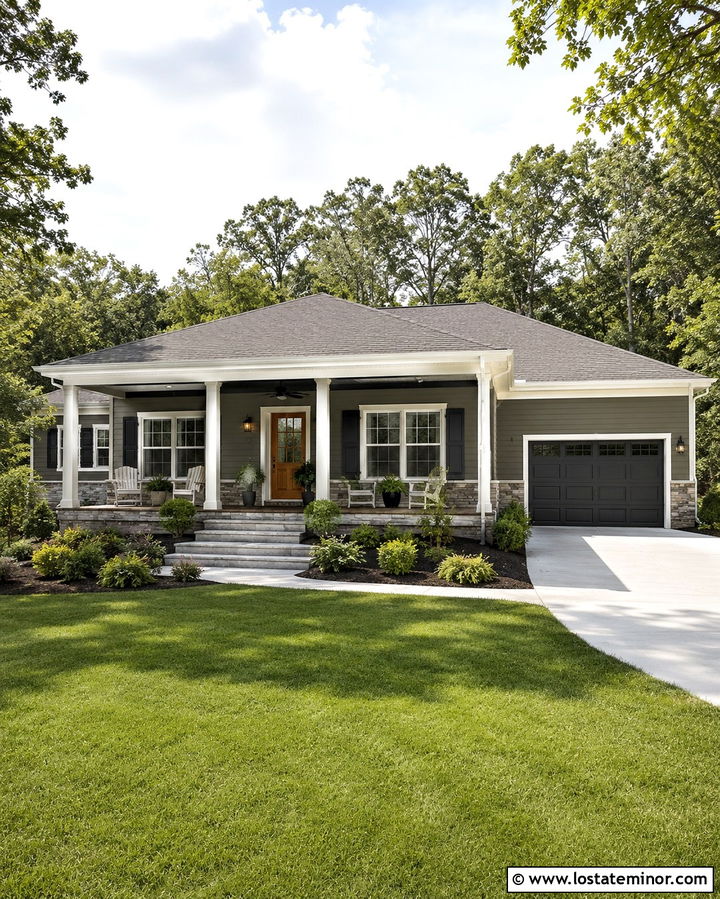
A charcoal ceiling provides depth while feeling slightly softer than pure black. Use it on an olive green ranch with broad rooflines and a covered entry. Repeat charcoal on the roof, shutters, and garage door to distribute the dark accent across the facade. Warm white trim will keep the windows and porch posts visible, while a honey-toned wood door prevents the palette from looking cold. Choose a medium-gray porch floor with a subtle brown undertone. A low stone wall or foundation in mixed gray and tan can connect all four colors. This scheme works particularly well when the home has large windows and receives strong daylight. Keep the porch furniture and lighting simple so the ceiling remains an architectural feature rather than part of an overly busy collection of dark details.
18. Olive Green House With Pale Yellow Porch Ceiling
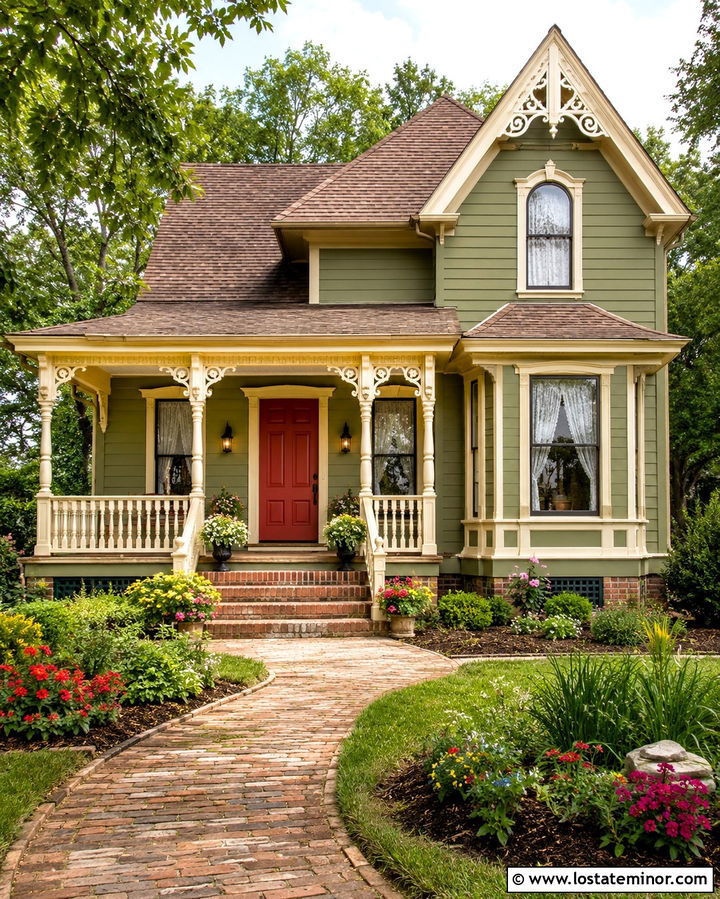
Pale yellow brings a gentle glow to the porch of an olive green cottage. Choose a soft buttery shade with plenty of cream, avoiding bright lemon tones. Use matching cream on the window trim, railings, and decorative brackets to connect the ceiling to the facade. A brick-red front door offers traditional contrast, while weathered brown shingles and aged brick steps keep the colors grounded. This look is especially charming on a cottage or Folk Victorian home with detailed porch millwork. Add simple bronze lanterns and warm wood flooring beneath the ceiling. White, yellow, and burgundy flowers can echo the palette in small amounts. The yellow should read as a warm reflection when viewed from the street rather than as a separate, dominant exterior color.
19. Olive Green House With Cypress Porch Ceiling
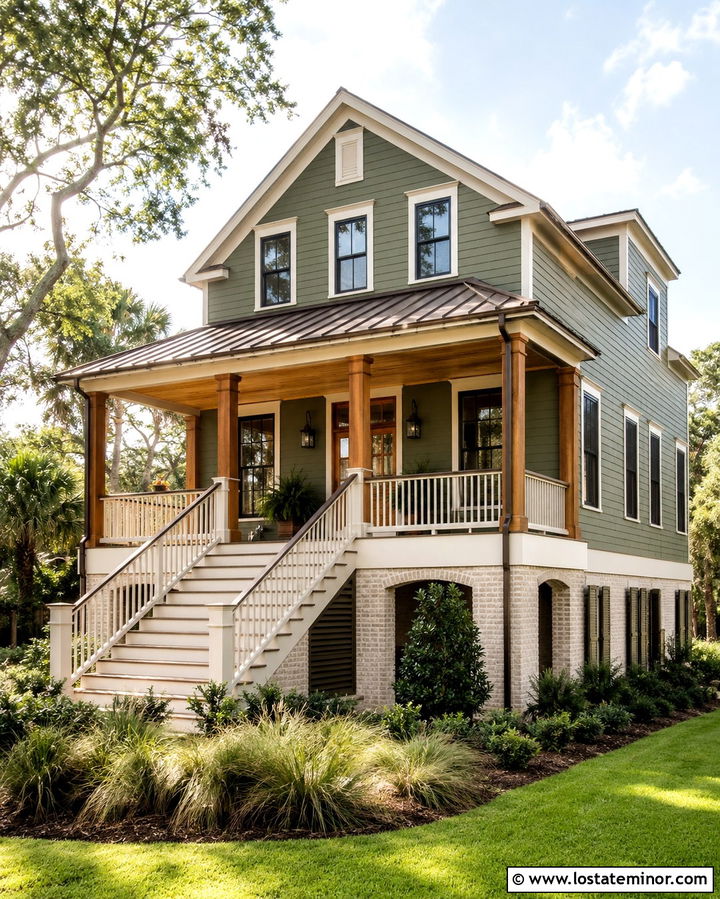
Natural cypress is a fitting ceiling material for an olive green home in a humid or coastal setting. Its honey-brown color and visible grain bring warmth to a deep covered porch. Pair olive lap siding with soft ivory trim, square cypress columns, and a matching wood front door. A standing-seam bronze porch roof can add durability and repeat the warm color family. Use pale brick or tabby-style masonry around the foundation to brighten the lower facade. This combination works well on Lowcountry houses, raised cottages, and Southern coastal homes. Complete the setting with a wide staircase, simple railings, native grasses, and shade-tolerant shrubs. The ceiling and siding should feel naturally connected through their earthy colors, even though one is painted and the other remains visibly wooden.
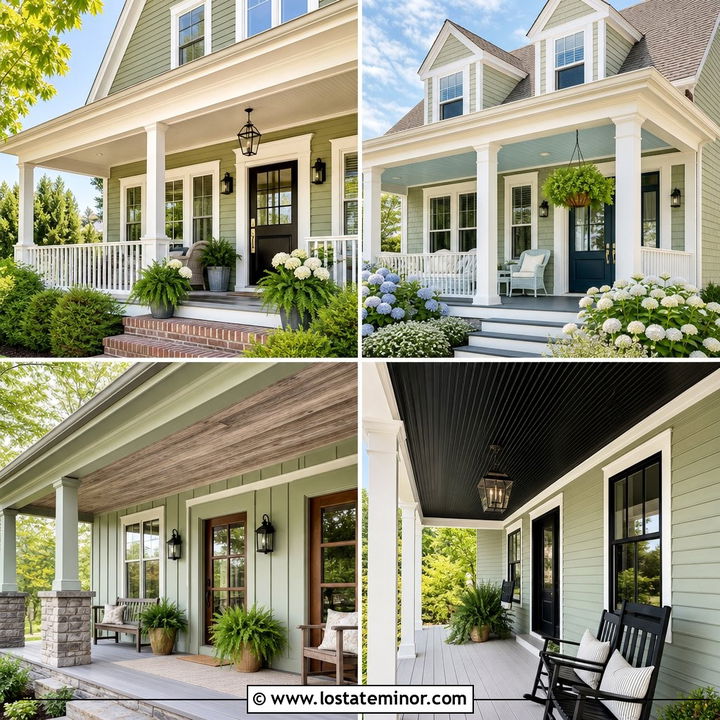
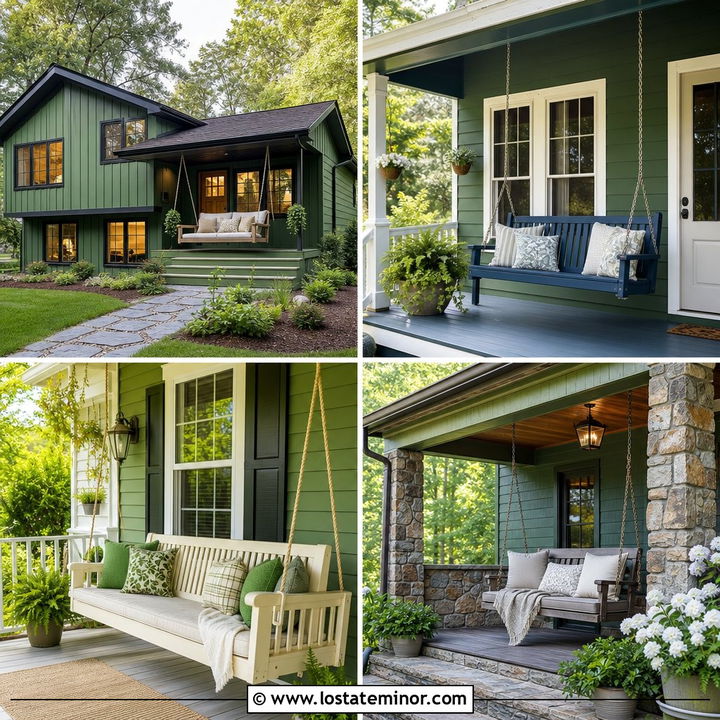
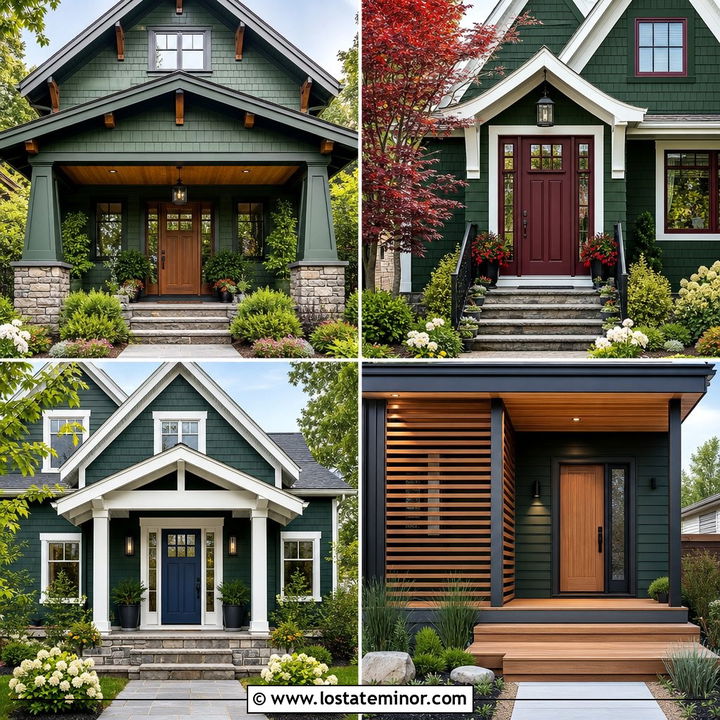
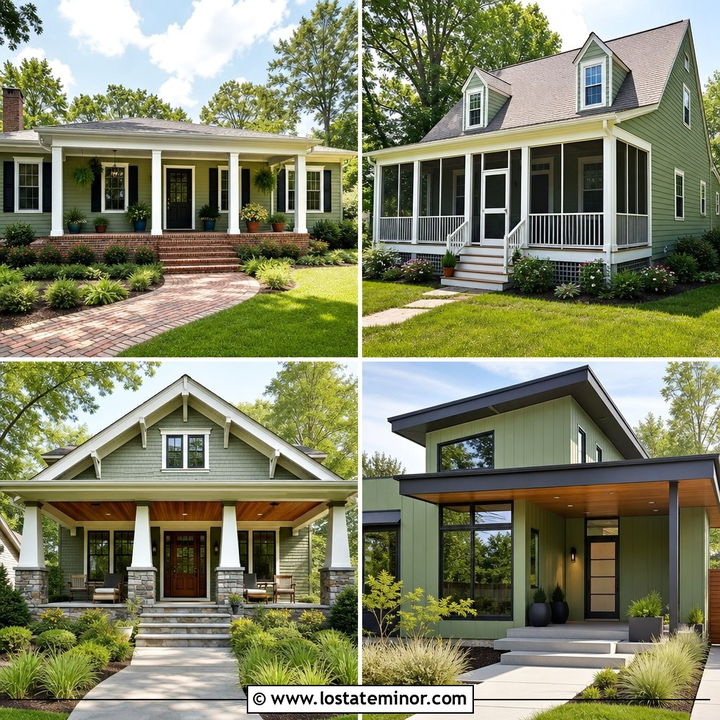
20. Olive Green House With Blue-Green Porch Ceiling
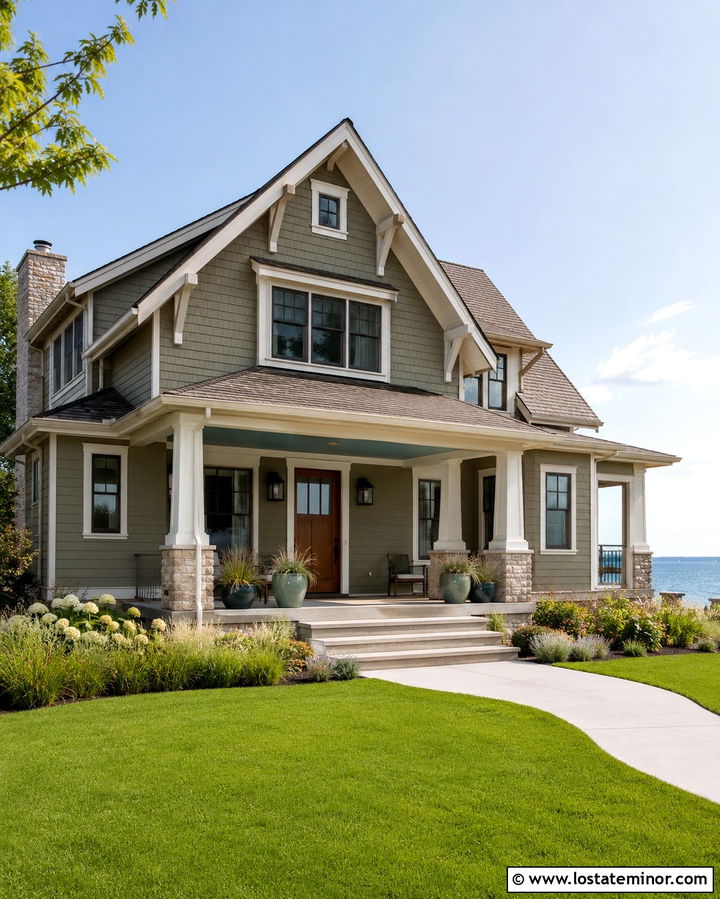
A muted blue-green ceiling creates a smooth transition between classic porch blue and earthy olive siding. Select a light aqua with plenty of gray so it stays calm in bright sunlight. Pair it with medium olive clapboard siding, warm white trim, and a natural teak front door. A gray-brown roof and pale stone porch floor will keep the scheme balanced. This complete look suits a coastal Craftsman or cottage that needs color without a strong nautical theme. Repeat the blue-green only in small glazed planters or subtle house numbers. Black lanterns and hardware can sharpen the softer palette. Because the siding and ceiling share green undertones, they feel related, while the blue component gives the covered porch a brighter and more open appearance.
21. Olive Green House With Walnut Porch Ceiling
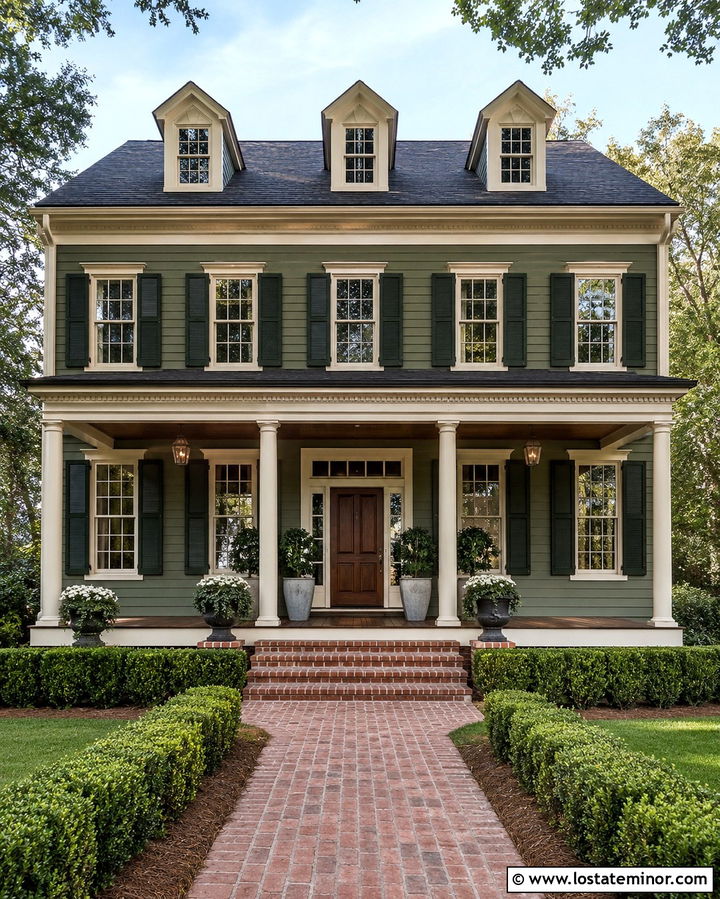
Walnut-toned beadboard can make an olive green colonial feel more polished and substantial. Use a medium-dark walnut stain on the ceiling and repeat it on the front door. Cream trim, traditional white columns, and dark green shutters will preserve the home’s classic symmetry. Add a charcoal roof, aged brass lanterns, and red-brown brick steps to build a complete period-inspired palette. The ceiling provides warmth but remains partially hidden, allowing the balanced facade to stay dominant. This treatment also works well when the house already has dark wood floors inside the entry. Keep the porch railing simple and paint it cream to avoid too much wood. Boxwood hedges, a straight brick walkway, and matching planters will reinforce the orderly colonial appearance.
22. Olive Green House With Taupe Porch Ceiling
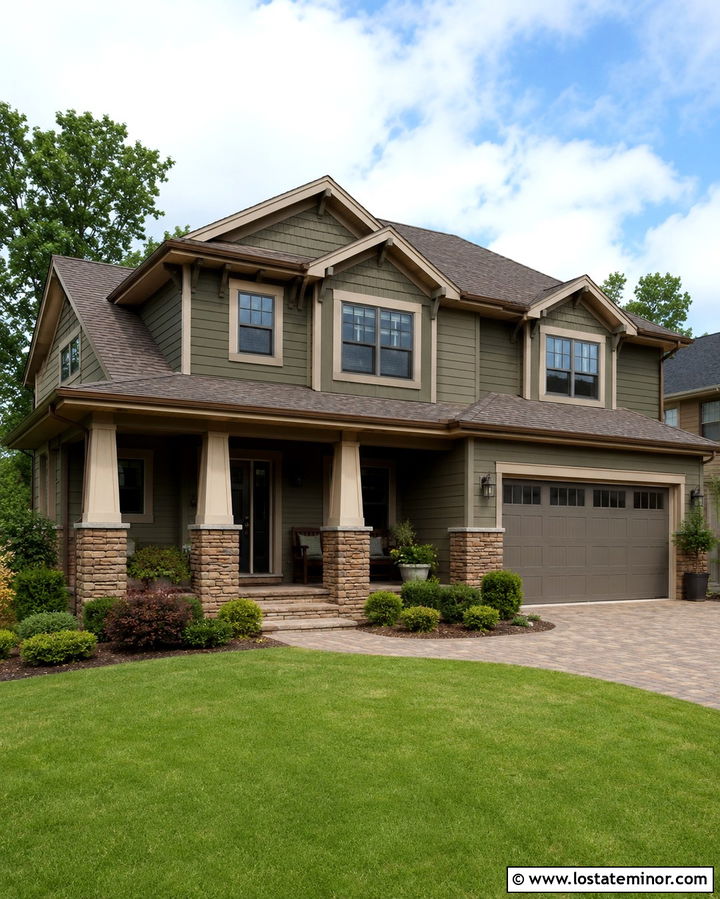
Taupe can connect an olive exterior to beige stone, brown roofing, and neutral hardscaping. Choose a medium-light taupe for the porch ceiling and a softer cream-taupe for the trim. Deep olive siding will supply the main color, while a black-brown door adds weight at the entry. Use tan stacked stone around the columns and foundation, then select a roof with warm gray and brown variation. This complete palette is practical for a suburban house with existing masonry that cannot be changed. The taupe ceiling will appear warmer in direct sun and slightly grayer in shade, helping it bridge several permanent finishes. Add bronze gutters and muted green landscaping. Avoid cool white accents, which may look disconnected beside the layered earth tones.
23. Olive Green House With Copper Porch Ceiling
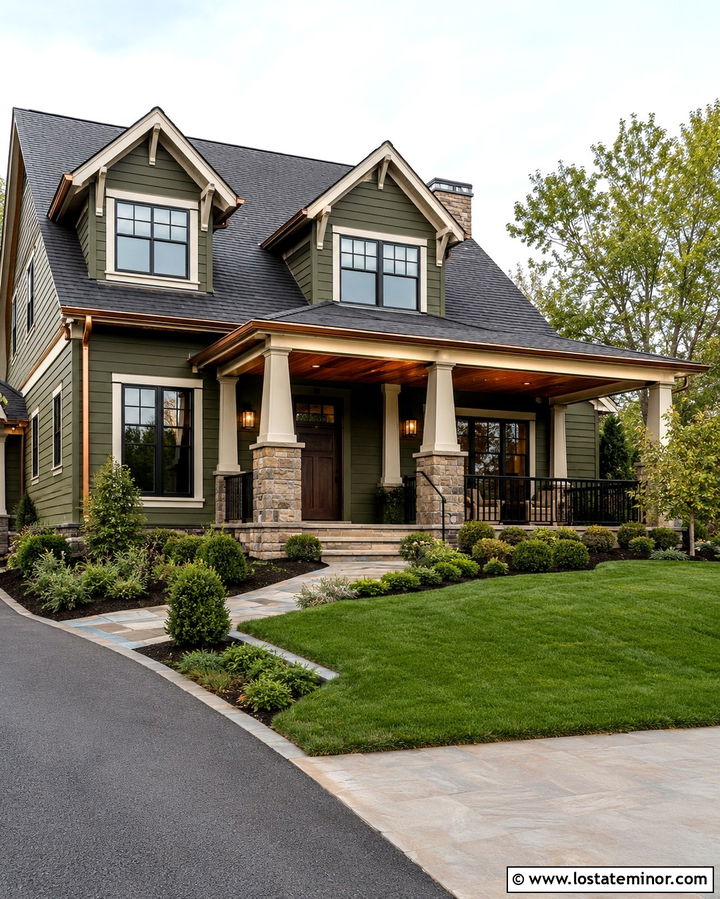
A copper-paneled porch ceiling gives olive green siding an upscale and distinctive companion. New copper introduces warm orange color, while aged copper can develop green and brown variation that connects naturally to the house. Keep the surrounding trim creamy white so the metal remains visible beneath the porch. A dark stained door, tan stone columns, and charcoal roof will create a refined Craftsman exterior. Repeat copper sparingly through gutters, downspouts, or small roof sections. Too much metal could distract from the siding. This treatment works best on a generous porch with a high ceiling and carefully placed lighting. Use a simple stone walkway and structured landscaping to support the formal material palette. The finished house should feel detailed and cohesive rather than flashy.
24. Olive Green House With Painted Wood Plank Porch Ceiling
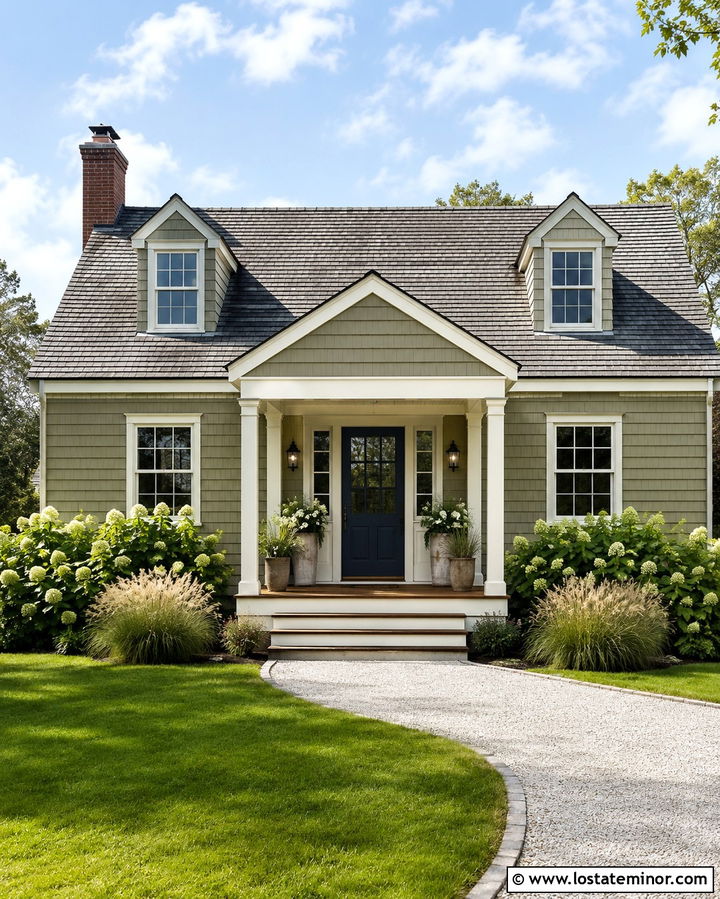
Painted wood planks give a porch more character than a smooth ceiling while allowing precise color control. Choose a warm off-white paint for the planks and keep the narrow grooves visible. Pair the ceiling with dark olive shingle siding, matching off-white trim, and a muted navy front door. A weathered gray roof and natural cedar porch floor will balance the cooler door color. This complete look is ideal for a Cape Cod or coastal cottage that needs an earthy alternative to the usual blue exterior. Continue the ceiling color onto the porch beams, but use olive on the upper gable to maintain a strong body color. Hydrangeas, ornamental grasses, and a curved gravel path will soften the structured siding and painted wood details.
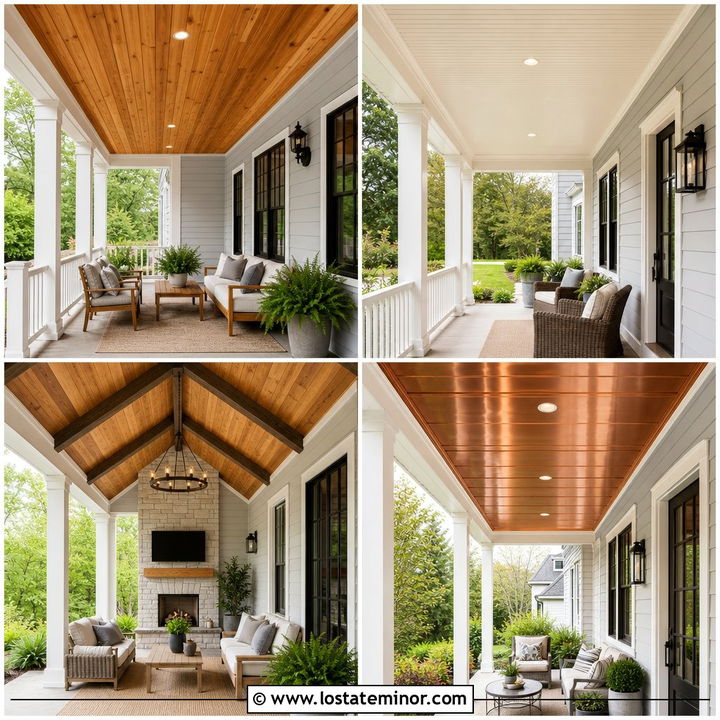
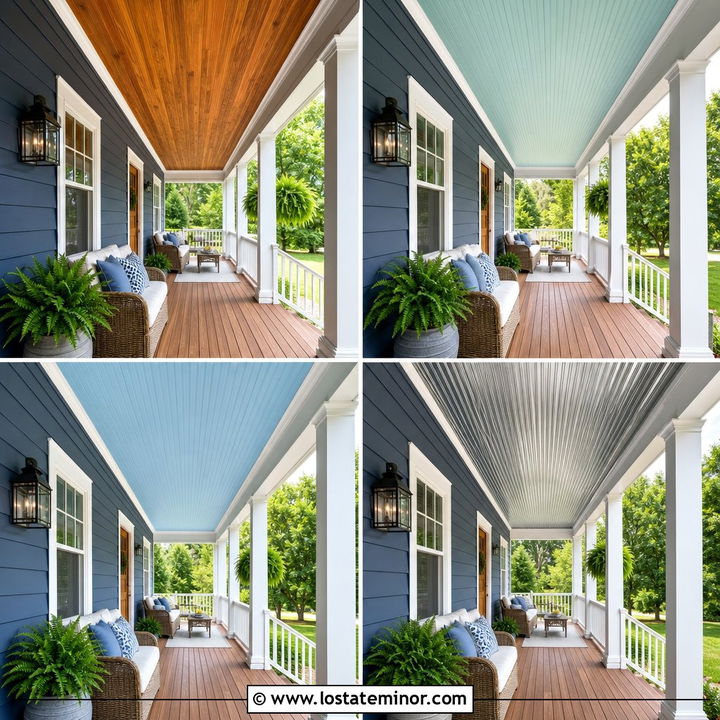
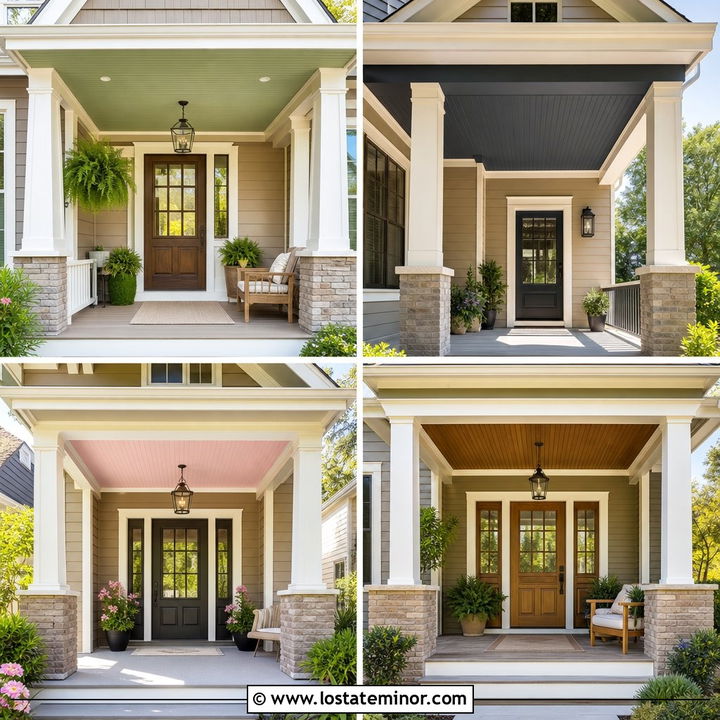
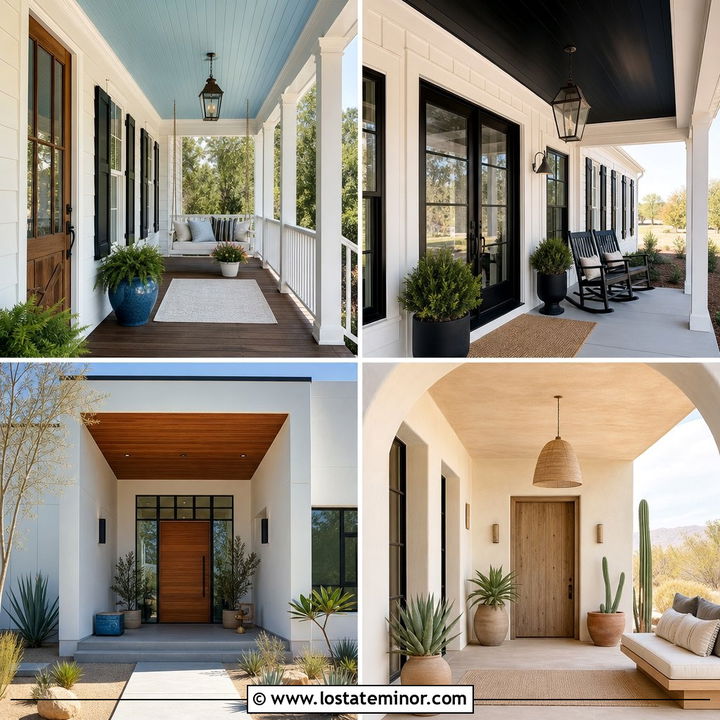
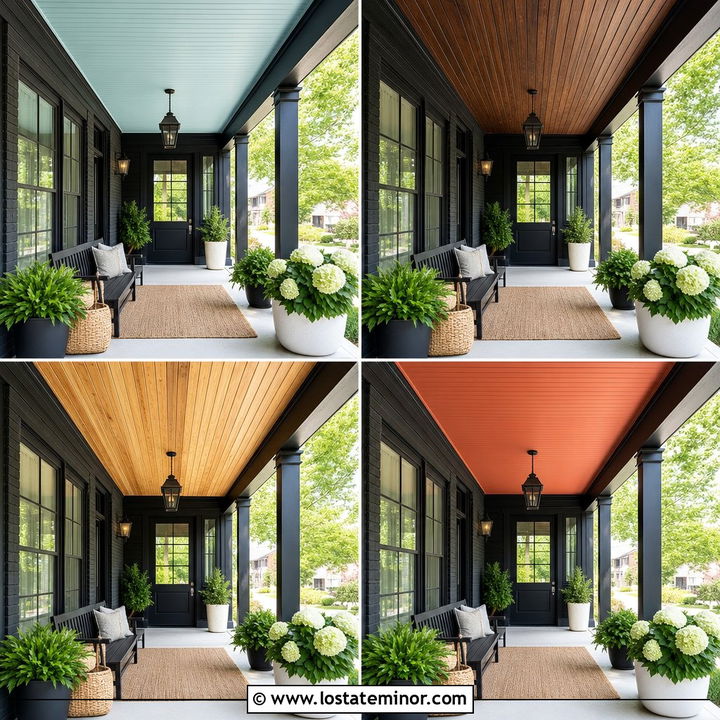
25. Olive Green House With Light Blue Beadboard Porch Ceiling
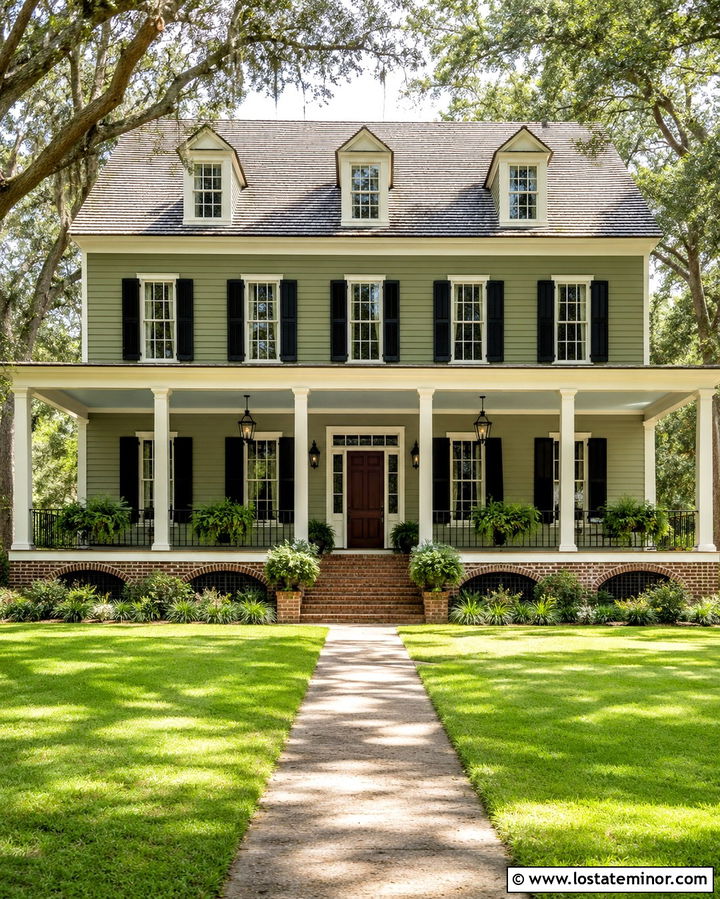
Light blue beadboard combines a familiar porch color with a traditional textured surface. Paint the narrow boards a pale blue-gray and use soft ivory on the supporting beams and columns. Medium olive siding, black shutters, and a chestnut front door create a balanced facade with clear contrast. Complete the porch with brick flooring and classic black lanterns. A brown-gray architectural shingle roof will relate to both the olive siding and the red tones in the brick. This arrangement works especially well on a traditional farmhouse or Southern colonial with a full-width porch. The beadboard lines can visually lengthen the ceiling when they run parallel to the front wall. Keep the blue understated so it brightens the entry without pulling attention away from the complete house.
26. Olive Green House With Cedar Beam Porch Ceiling
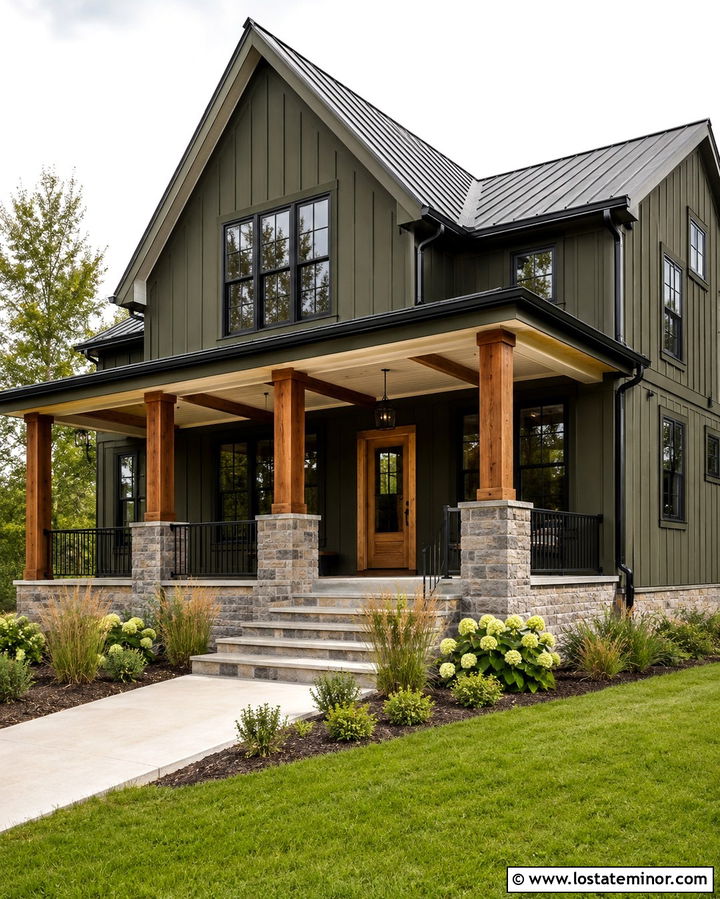
Exposed cedar beams can turn a simple porch ceiling into an important part of the whole exterior. Place natural cedar beams over a warm cream ceiling, then repeat the wood on the front door and gable brackets. Use deep olive board-and-batten siding for bold vertical texture. Black windows, a charcoal metal roof, and gray stone porch piers will create a grounded modern farmhouse palette. The cream background prevents the cedar structure from disappearing in shadow. This look is especially effective on a tall gabled porch where the beams are visible from the curb. Keep the railings minimal or use black metal to preserve the open view. Native grasses, hydrangeas, and a broad concrete path can finish the exterior without competing with the detailed roof structure.
27. Olive Green House With Ivory Porch Ceiling
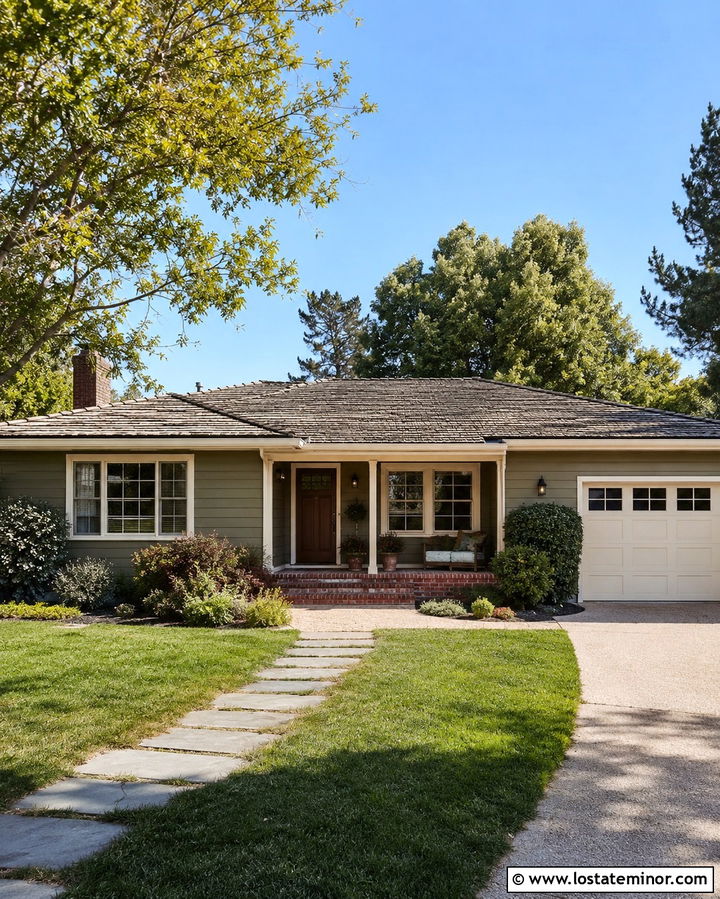
Ivory creates a gentler contrast than bright white and looks especially comfortable beside yellow-based olive paint. Carry the ivory from the porch ceiling onto the trim, fascia, railings, and garage door. Choose a rich brown front door, dark bronze fixtures, and a weathered wood roof to complete the warm palette. Red and tan brick around the porch floor can add quiet pattern without introducing an unrelated material. This combination suits a traditional ranch, cottage, or modest two-story home that needs an affordable color update. The lighter ceiling will reflect daylight into the porch, while the ivory trim clearly outlines the facade. Add layered shrubs and a simple paver walkway. The finished house feels welcoming because every finish shares a warm, natural undertone.
28. Olive Green House With Gray-Green Porch Ceiling
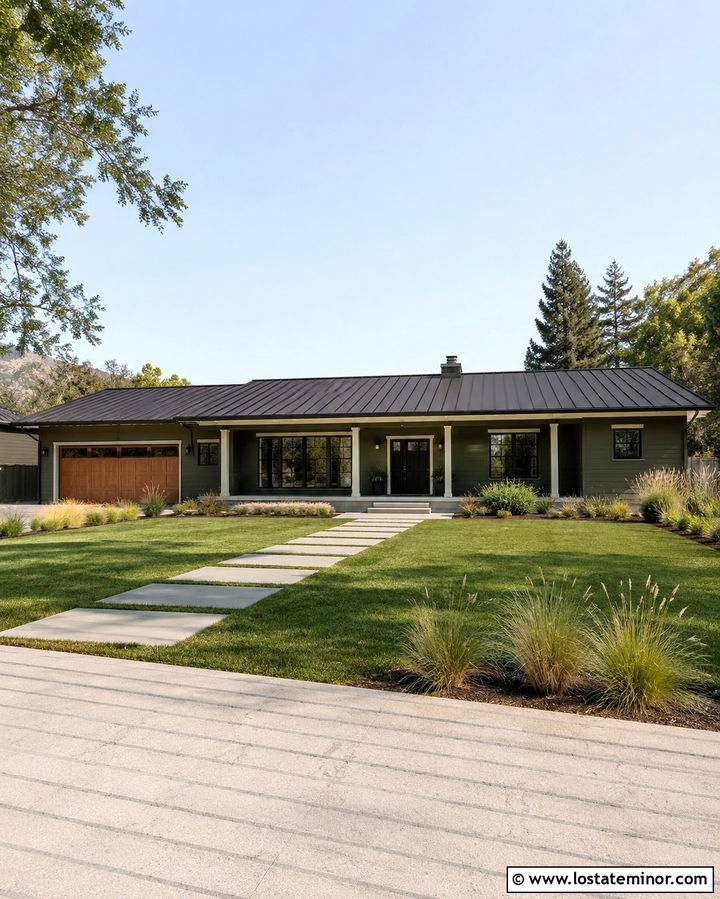
A gray-green ceiling creates a subtle tonal scheme that is more layered than using one matching olive everywhere. Paint the siding a warm medium olive and select a lighter eucalyptus gray-green for the ceiling. Use creamy greige on the trim and columns, then introduce black through the front door, windows, and porch lights. A dark bronze roof and pale concrete porch will balance the facade. This understated palette is well suited to a midcentury ranch or contemporary split-level with simple horizontal lines. Consider using natural wood on the garage door to prevent the green and gray surfaces from feeling flat. Low landscaping, broad steps, and a linear walkway will complement the architecture. The close color relationship gives the exterior a unified but detailed appearance.
29. Olive Green House With White Ceiling And Wood Beams
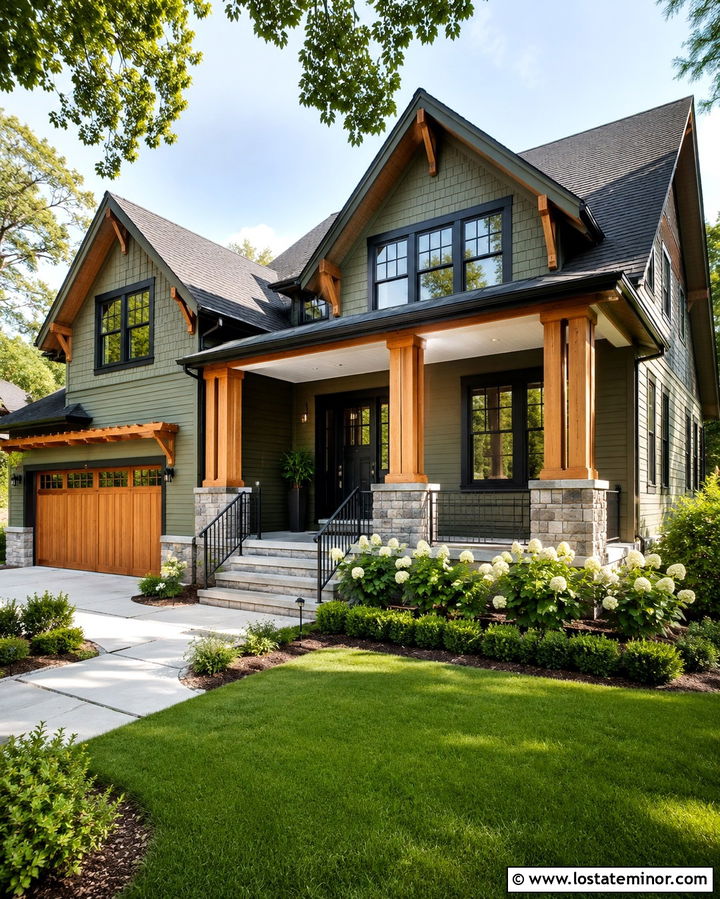
A white porch ceiling with natural wood beams offers the brightness of paint and the warmth of exposed timber. Use soft white between the beams, not a cool blue-white. Pair this ceiling with rich olive siding, matching soft white trim, and cedar porch columns. A black front door, black windows, and a charcoal roof will add modern definition. Repeat the wood on the garage door or small gable accents so the beams belong to the complete facade. This combination works on modern Craftsman homes, updated ranches, and contemporary farmhouses. Light stone around the porch foundation can keep the lower elevation fresh. The ceiling remains airy, while the beams create rhythm and direct attention toward the front entry without making the entire porch look dark.
30. Olive Green House With Natural Oak Porch Ceiling
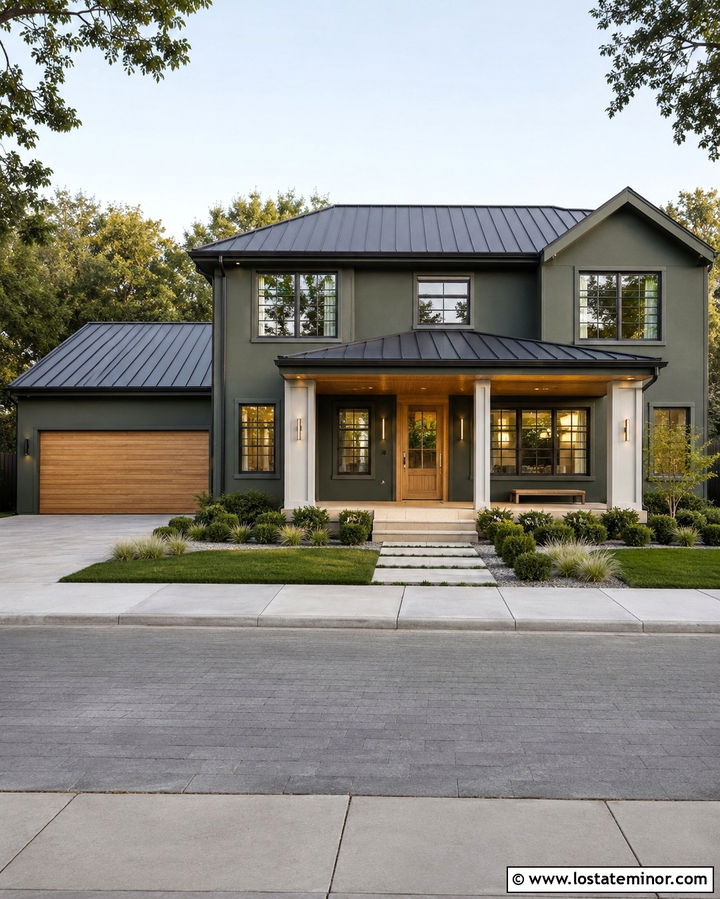
Natural oak brings a clean, refined warmth to an olive green exterior. Use clear-finished oak planks overhead and repeat their light golden tone on the front door and horizontal garage door. Pair the wood with smooth dark olive siding, warm white trim, and bronze-framed windows. A dark gray standing-seam roof and pale limestone porch will give the house a contemporary but welcoming finish. This complete scheme is especially effective on a modern two-story home with a recessed porch. Add slim black lighting and simple metal railings for contrast. Keep the yard orderly with structured shrubs, ornamental grasses, and large rectangular pavers. Oak’s lighter appearance allows the ceiling detail to remain visible while preventing the sheltered entrance from feeling too enclosed or heavy.
Conclusion:
The most successful olive green exterior treats the porch ceiling as part of one coordinated color and material plan. Pale blue and white can brighten a shaded entrance, while cedar, oak, cypress, and stained beadboard bring natural warmth. Charcoal and black create sharper modern contrast. Cream, taupe, and greige offer quieter transitions between siding, roofing, and masonry. Always sample your olive body color beside the ceiling, trim, roof, front door, and porch floor before making a final choice. Permanent materials should guide the palette rather than become an afterthought. With thoughtful repetition and balanced contrast, these 30 Olive Green House Design With Porch Ceiling Ideas can create welcoming, distinctive curb appeal.

Related posts: