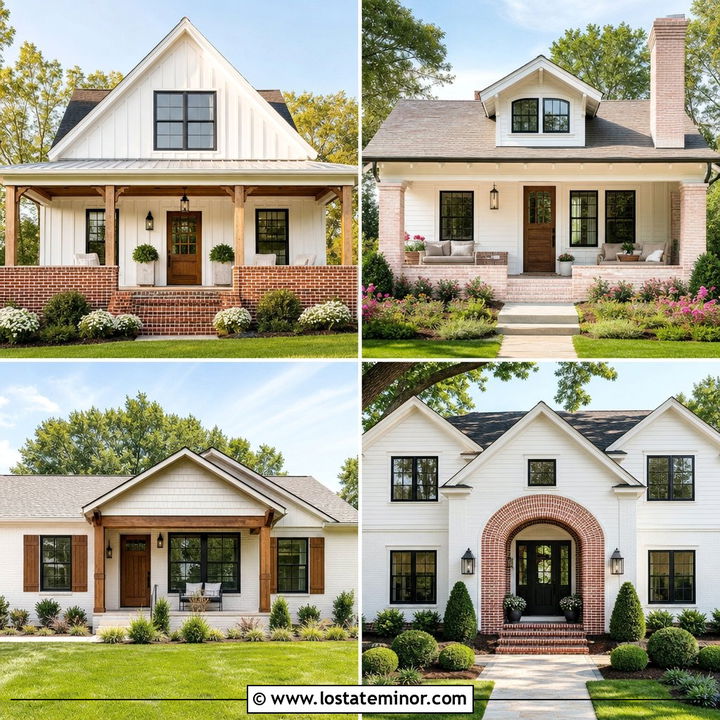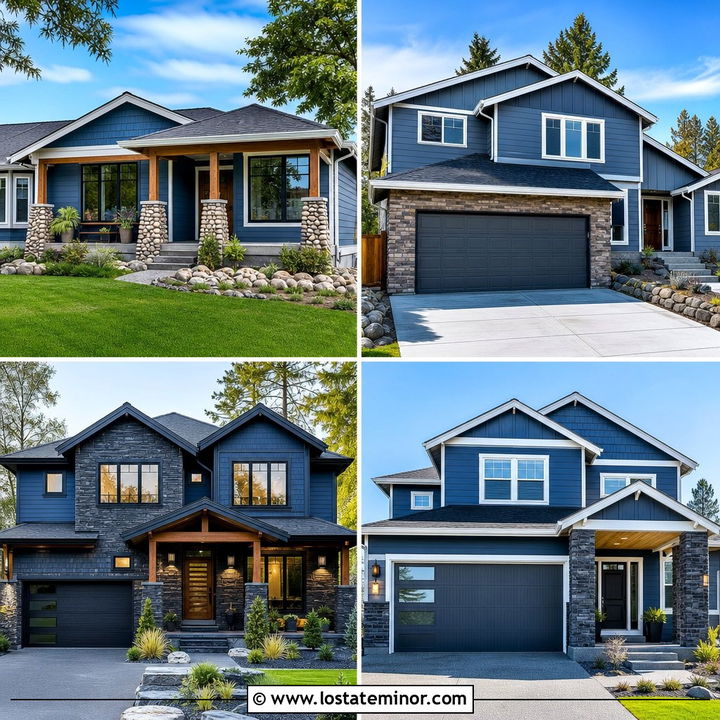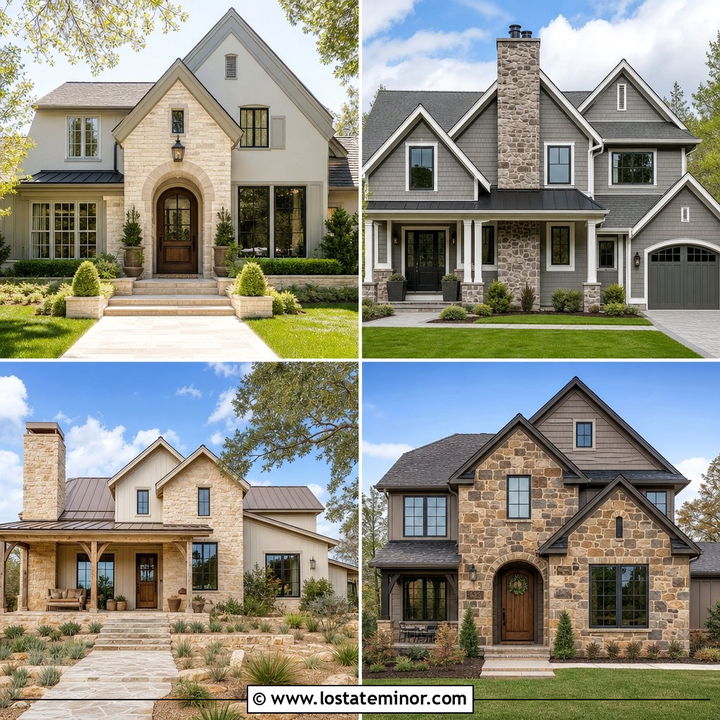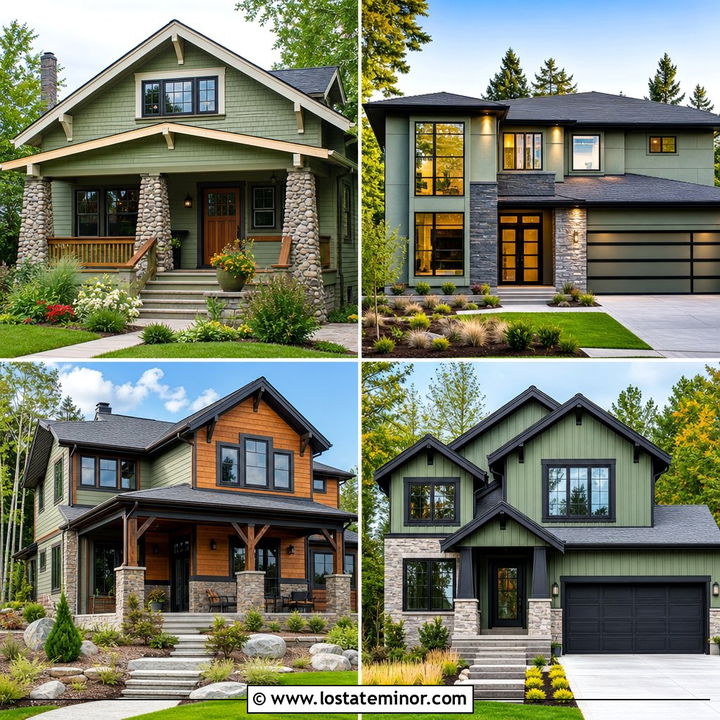
A warm white exterior feels softer and more welcoming than a sharp, bright white facade. Add natural stone, and the house gains texture, depth, and a stronger connection to the landscape. These 30 Warm White House Design With Stone Accents Ideas explore complete exterior schemes rather than isolated materials. You will find warm white siding and stucco paired with limestone, fieldstone, sandstone, river rock, and practical stone veneer. Each look also coordinates the roof, trim, windows, front door, garage, porch, and landscaping. The collection covers modern farmhouses, ranch homes, cottages, colonials, mountain houses, and many other architectural types. Use these complete combinations to shape your own 30 Warm White House Design With Stone Accents Ideas.

1. Warm White Modern Farmhouse With Limestone
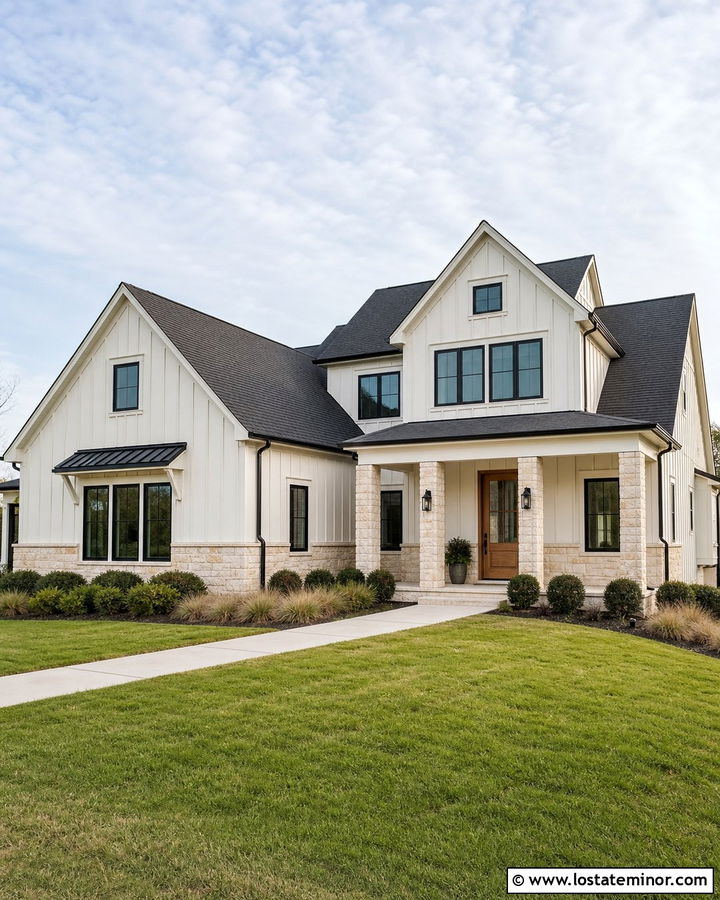
Warm white board-and-batten siding gives a modern farmhouse a clean appearance without making it feel cold. Choose creamy Alabaster for the main body and slightly brighter white for the window trim. Pale limestone across the foundation and porch columns introduces quiet variation through its beige and light gray markings. A medium-stained oak front door and matching porch ceiling reinforce the stone’s warm undertones. Black-framed windows, lanterns, and simple gutters provide controlled contrast. Finish the exterior with an aged charcoal shingle roof rather than solid black roofing. Wide concrete steps, clipped shrubs, ornamental grasses, and a straight walkway keep the overall design fresh. Repeating limestone beside the garage helps the facade look balanced instead of overly focused on the entrance.
2. Warm White Craftsman With Fieldstone Porch
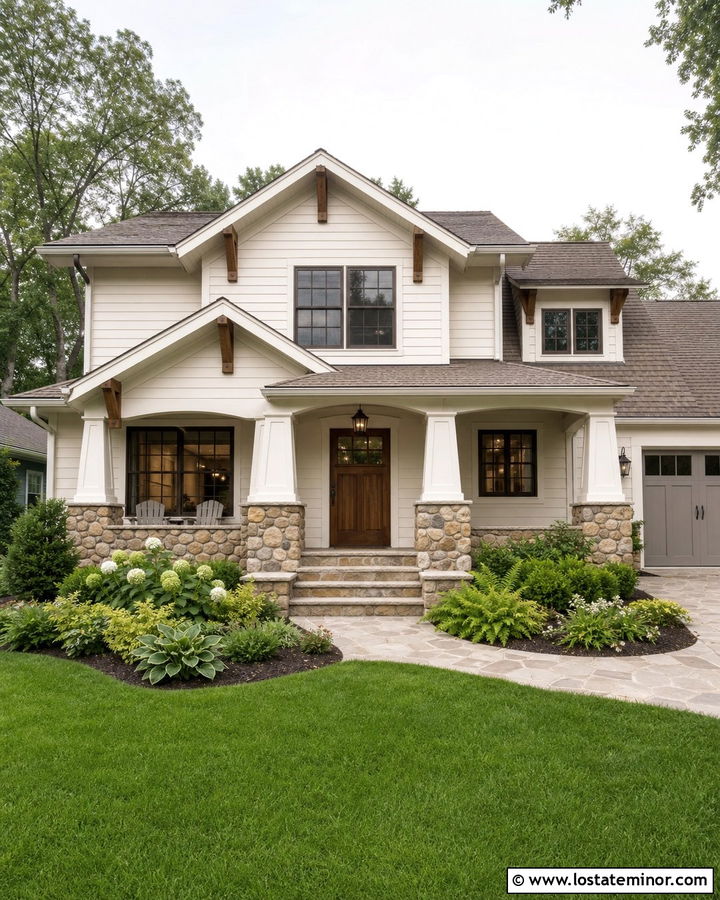
Picture a welcoming Craftsman house with broad roof eaves, tapered columns, and a deep covered porch. Soft Greek Villa siding provides the warm white background, while mixed fieldstone wraps the column bases and lower facade. Select stone containing cream, taupe, muted brown, and restrained charcoal so it connects naturally with the paint. A walnut-stained front door and exposed wood brackets give the home another layer of warmth. Use bronze window frames and porch lights for softer contrast than pure black. Architectural shingles in weathered brown complete the earthy palette. Low stone steps can extend the porch material into the landscape. Curved planting beds filled with hydrangeas, ferns, and evergreen shrubs make this substantial exterior feel friendly, established, and comfortably connected to its site.
3. Warm White Ranch House With Ledgestone
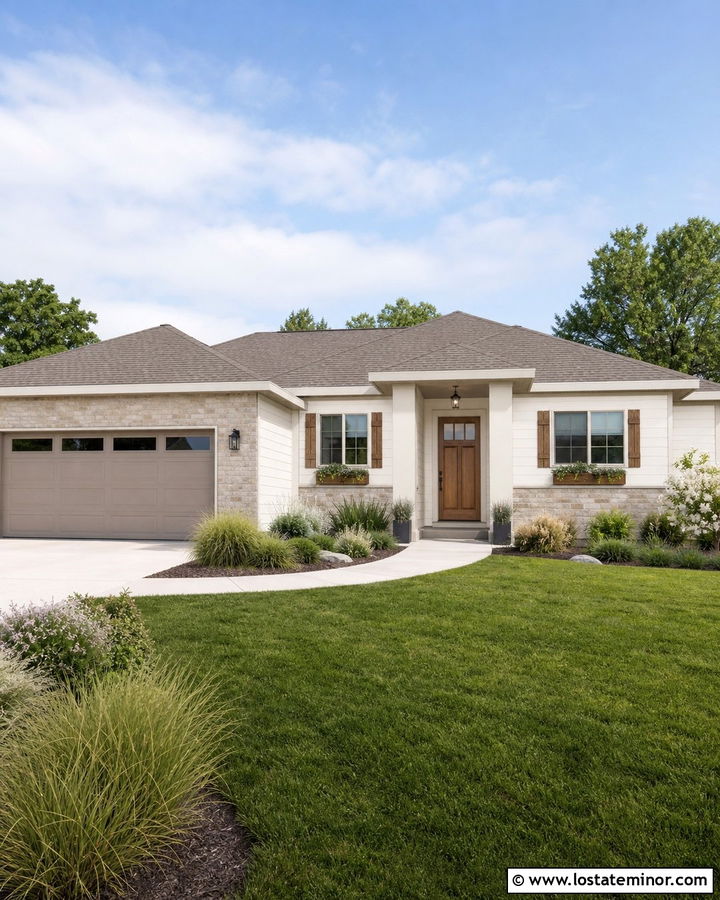
A long ranch facade benefits from materials that break up its horizontal shape. Paint the lap siding a warm White Duck shade, then run light greige ledgestone along the lower third of the house. Carry that stone around the garage and beneath the front windows for a continuous, grounded appearance. A cedar front door creates a clear focal point without adding a loud accent color. Use warm white trim, bronze gutters, and taupe garage doors to maintain a gentle tonal scheme. A medium-gray hip roof adds definition while remaining compatible with the stone. Deep window boxes and simple wooden shutters can create useful vertical accents. Complete the curb appeal with a broad lawn, staggered ornamental grasses, and a curved walkway that softens the home’s straight roofline.
4. Warm White Colonial With Stone Entry
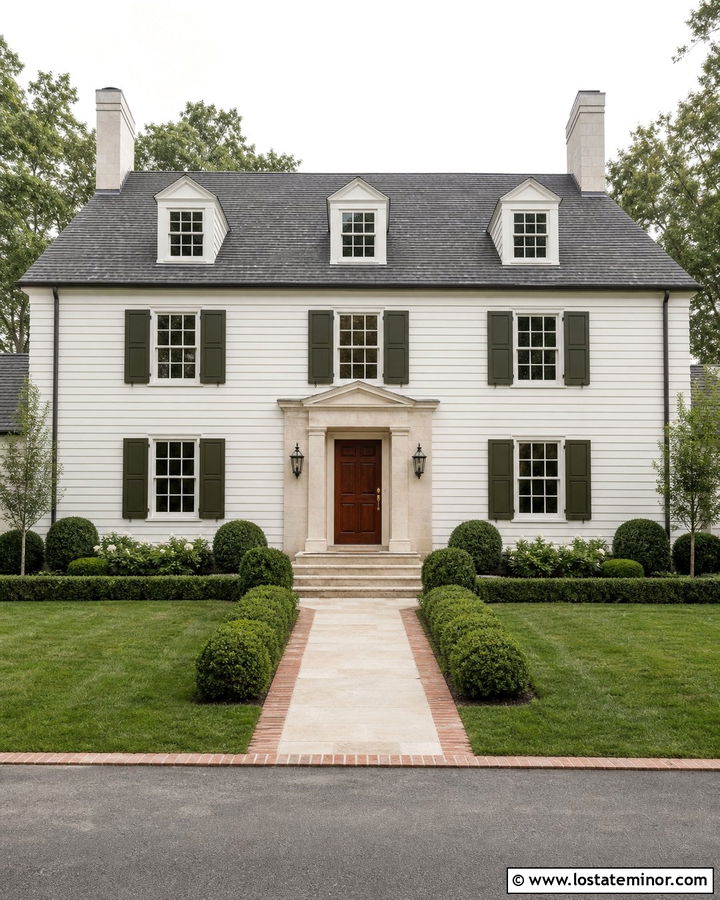
Could a traditional Colonial use stone without losing its formal character? The answer lies in keeping the placement symmetrical and restrained. Cover the clapboard facade in White Dove, then frame the centered entrance with smooth-cut limestone. Matching limestone steps make the doorway feel permanent and architecturally intentional. Paint the shutters a deep olive green and select a rich mahogany front door for traditional color. Warm white window trim keeps the facade bright, while aged brass hardware adds a quiet period detail. Use a weathered charcoal roof rather than a stark black one. Two clipped boxwoods, balanced lanterns, and a straight brick-edged walkway reinforce the home’s symmetry. Limiting stone to the entry and foundation corners prevents it from competing with the Colonial windows and classical proportions.
5. Warm White French Country House With Limestone
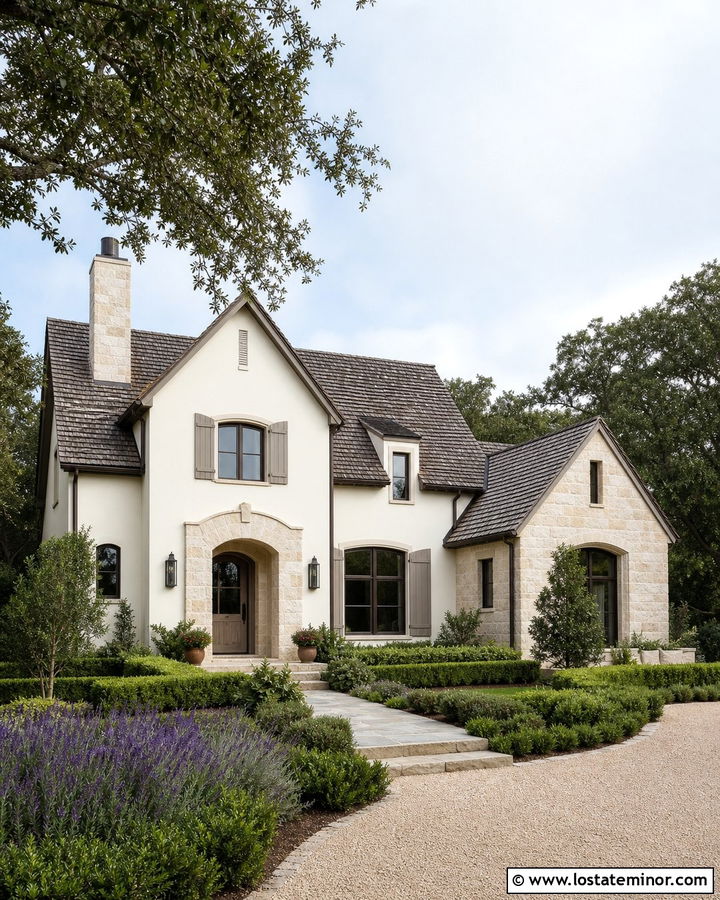
French country architecture looks especially graceful when warm white stucco meets pale, softly textured limestone. Use creamy Swiss Coffee across the main walls and apply limestone to the arched entry, chimney, and projecting front wing. Choose stone with sandy beige and light putty tones rather than blue-gray coloring. A weathered wood front door, copper lanterns, and muted bronze window frames add an aged European quality. Soft taupe shutters can create definition without producing harsh contrast. Complete the roof with weathered gray shingles or muted brown-gray tiles, depending on the home’s region. Informal lavender borders, clipped hedges, and a gravel-edged walkway complement the refined materials. The stone should appear in a few substantial areas, helping the asymmetrical facade feel connected rather than decorated with scattered patches.
6. Warm White Mediterranean House With Travertine
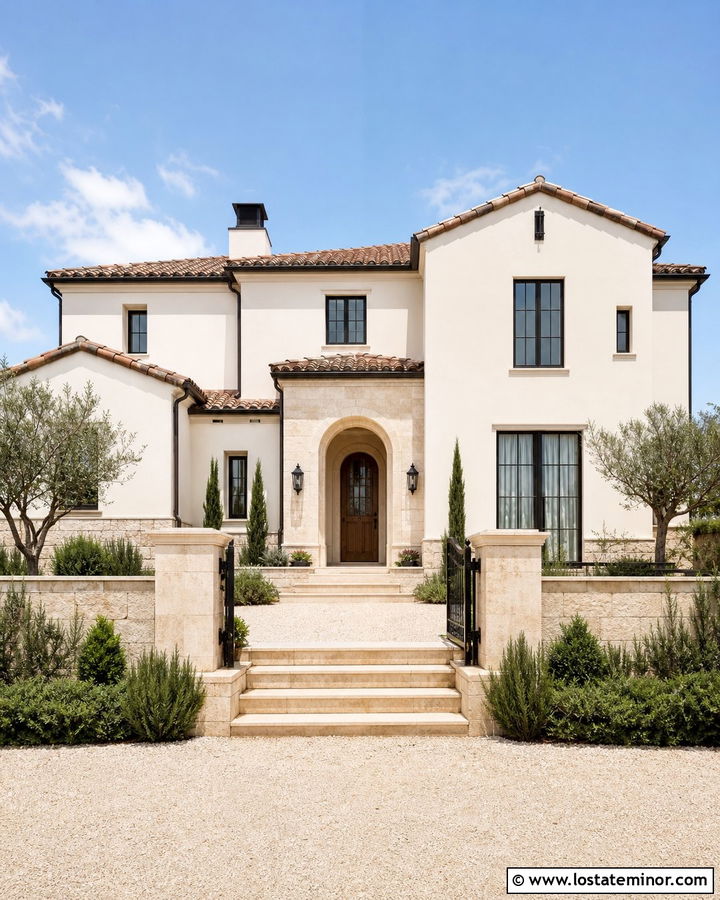
Sunlight brings out the creamy depth of a warm white Mediterranean exterior. Paint the stucco a soft Creamy shade and use honed travertine around the arched doorway, lower walls, and courtyard entrance. The stone’s sand and biscuit coloring works naturally with a muted terracotta tile roof. Dark bronze windows offer strong definition while feeling warmer than black frames. Choose an arched oak door with minimal iron detailing to make the entrance the visual center. Travertine steps and a matching low garden wall can carry the exterior palette through the property. Olive trees, rosemary, pale gravel, and sculpted evergreen shrubs reinforce the dry, layered landscape. Keep the trim close to the body color so the facade remains calm. Here, texture and architectural shadows create interest more effectively than multiple paint colors.
7. Warm White Cottage With River Rock
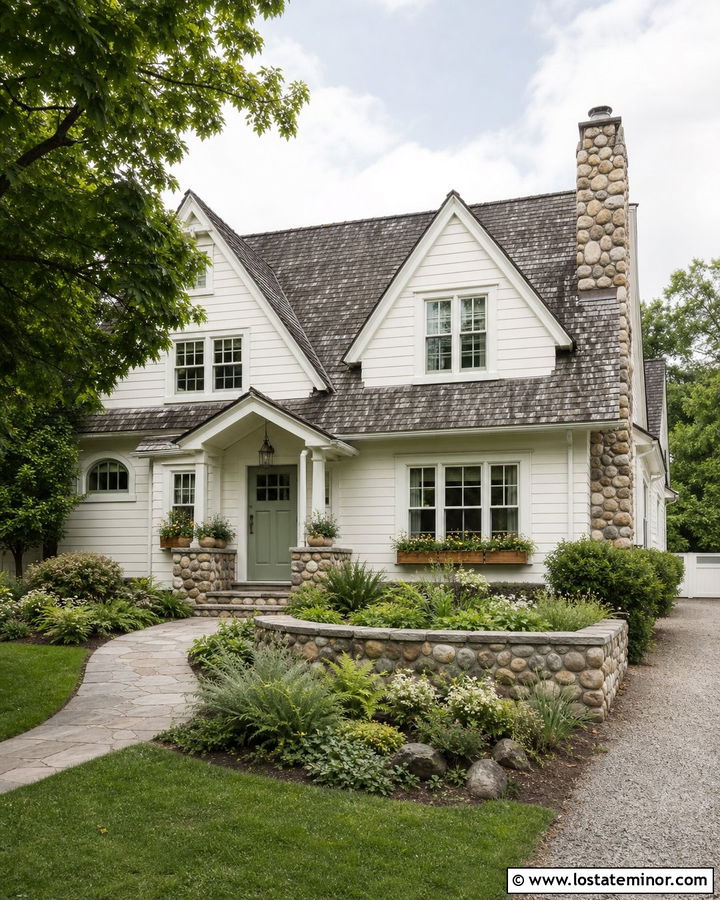
Rounded river rock gives a warm white cottage a handcrafted, storybook character. Use Cloud White clapboard siding with soft white trim, then wrap the chimney, porch foundation, and short garden wall in mixed river stone. Look for rounded pieces containing cream, warm gray, taupe, and faded brown. A muted sage front door adds color while remaining connected to the surrounding garden. Cedar window boxes, copper-toned lights, and a weathered gray roof deepen the natural palette. Avoid using river rock in many small sections, which can make the facade look busy. Instead, create two or three strong features that feel structurally important. A curved flagstone path, flowering shrubs, ferns, and informal ground cover complete the cottage setting while allowing the bright, warm white walls to remain clearly visible.
8. Warm White Modern House With Dry-Stack Stone
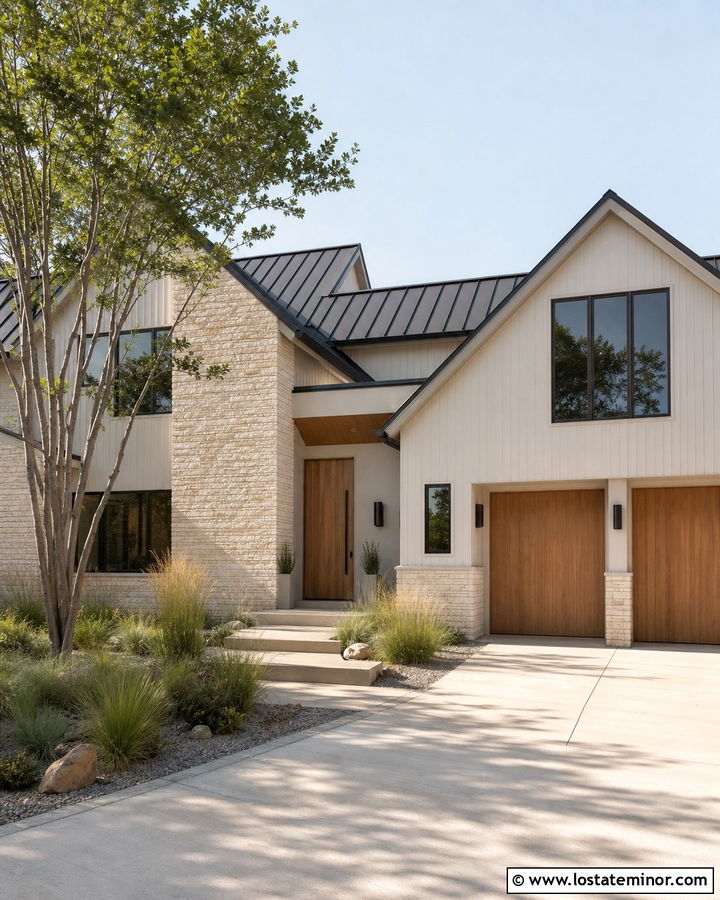
Clean geometry becomes more inviting when a modern warm white house includes rough natural texture. Cover the stucco and vertical siding in Shoji White, then use dry-stack limestone on a tall entry wall and low foundation volumes. The irregular stone provides contrast against smooth walls without introducing a competing color. Add a wide white oak pivot door and matching garage door panels to strengthen the organic palette. Dark bronze window frames and a charcoal standing-seam roof create crisp outlines. Keep the fascia warm white so the roof does not visually overpower the facade. Large concrete pavers, gravel beds, sculptural grasses, and a few multi-stem trees suit the architecture. Extending the stone wall beyond the entrance can integrate the house with the landscape and make the entry sequence feel more substantial.
9. Warm White Cape Cod With Gray Stone
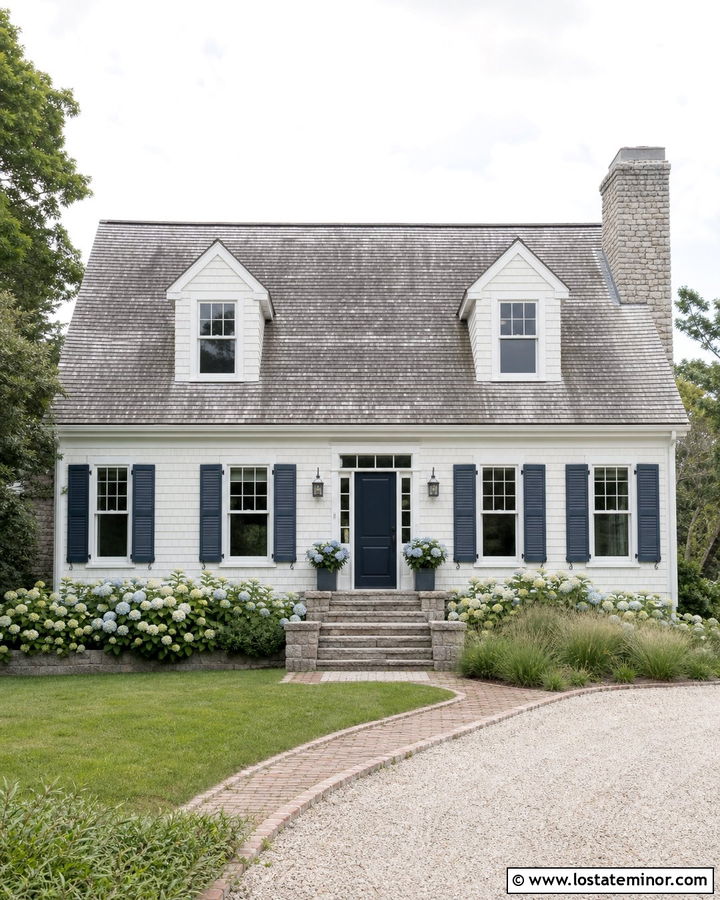
A Cape Cod exterior can include stone while preserving its simple coastal charm. Paint the shingle siding Pearly White and use light warm-gray stone across the chimney, front steps, and foundation. Select stone with gentle beige veining so it does not look cold beside the creamy paint. Soft blue-gray shutters and a navy front door introduce familiar coastal color. Keep the window casings and corner boards a slightly cleaner white for subtle definition. Weathered gray roof shingles support the relaxed palette better than a dramatic black roof. A shell or pale gravel driveway, brick-edged path, and masses of hydrangeas frame the home naturally. Because Cape Cod facades are often compact, limited stone placement is best. One substantial chimney and coordinated steps provide enough texture without crowding the windows and dormers.
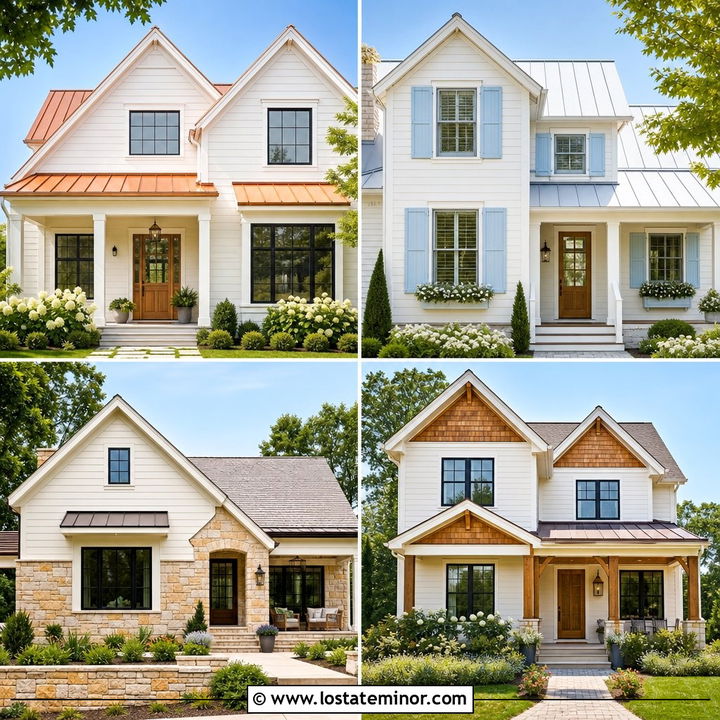
10. Warm White Bungalow With Stone Columns
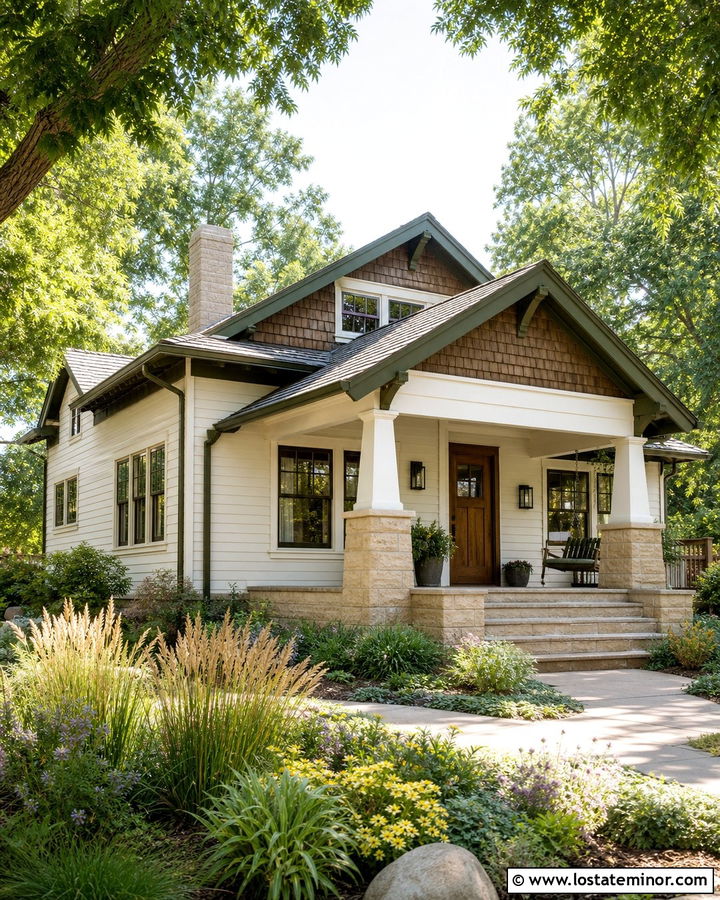
The front porch is the natural focal point of a classic bungalow. Paint the horizontal siding Natural Choice, then anchor the porch with tapered columns resting on sturdy sandstone bases. Choose warm buff stone containing soft tan and muted rust details. Dark olive trim beneath the roofline highlights the bungalow’s layered construction, while warm white window casings prevent the facade from becoming heavy. A quarter-sawn oak front door and porch swing complement the sandstone beautifully. Use weathered brown roof shingles and bronze lighting for a cohesive finish. Continue the same stone into the front steps or a low retaining wall. Deep planting beds with native grasses and flowering perennials soften the broad porch. This complete scheme celebrates the bungalow’s craftsmanship while keeping its curb appeal bright, comfortable, and approachable.
11. Warm White Tudor House With Cream Stone
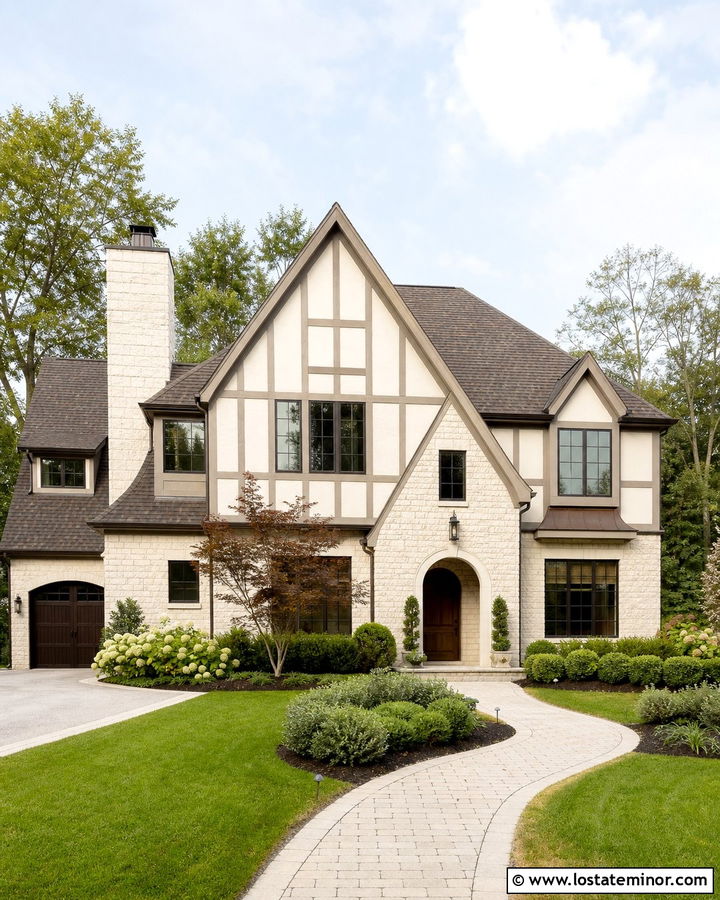
Tudor architecture does not have to rely on dark brown and stark white contrast. A warmer interpretation uses Ballet White stucco between muted taupe timber details. Cream limestone can cover the lower story, prominent chimney, and arched entrance surround. Select uneven stone shapes and lightly recessed mortar for an established appearance. A dark oak front door with a rounded top supports the home’s traditional character. Bronze casement windows and lanterns add definition without looking overly modern. Choose roof shingles in a blended brown-charcoal color that relates to both the timbers and stone. Keep the garage doors warm white or light taupe so they recede. Layered shrubs, a curved paver walk, and a small ornamental tree complete the facade while emphasizing its picturesque rooflines and asymmetrical composition.
12. Warm White Split-Level With Stone Garage
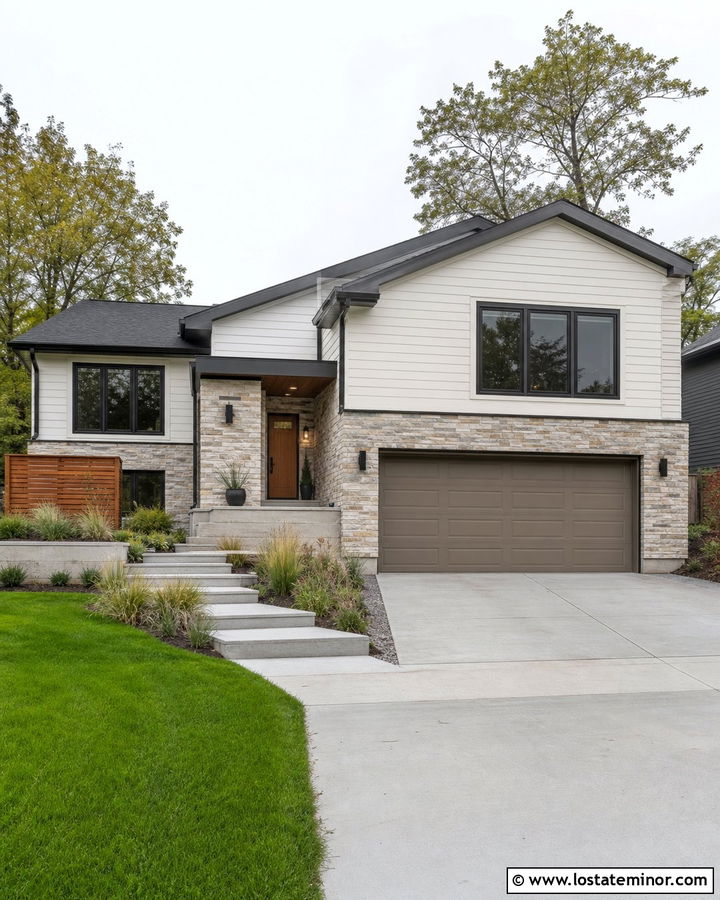
A split-level house often needs a clear visual connection between its offset sections. Cover the upper siding in Oyster White and use light stacked stone across the lower garage level. Extending the stone around the recessed entrance helps unite both sides of the facade. Choose a blend of warm gray, beige, and cream rather than highly contrasting multicolored stone. Paint the garage door a warm taupe pulled from the masonry. A medium-stained wood front door and vertical cedar screen add height near the entry. Dark bronze windows, simple gutters, and a charcoal-gray roof provide clean outlines. Wide concrete steps and tiered planting beds can make the grade changes look intentional. Keep the landscaping low near the stone so its horizontal texture remains visible from the street.
13. Warm White Mountain House With Rugged Stone
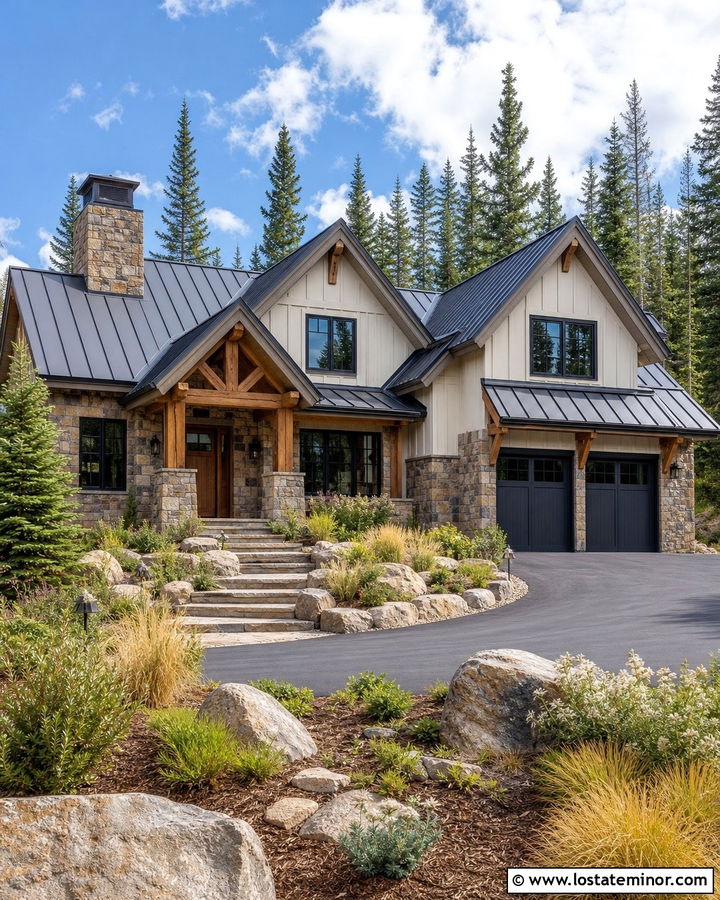
Against a wooded or mountainous setting, warm white siding creates brightness while rugged stone provides visual weight. Use Seapearl on a combination of lap siding and board-and-batten gables. Wrap the lower story, chimney, and porch columns in irregular mountain stone containing taupe, charcoal, brown, and cream. Heavy cedar beams and a natural timber front door connect the light facade with the surrounding trees. Black windows can work here because the substantial stone and wood prevent the contrast from feeling thin or graphic. Choose a deep charcoal metal roof suited to the strong rooflines. Broad stone steps, native grasses, evergreen shrubs, and boulder-edged beds integrate the house into the terrain. Allow the masonry to occupy larger areas than it would on a suburban cottage so the exterior feels appropriately grounded.
14. Warm White Coastal House With Shell Limestone
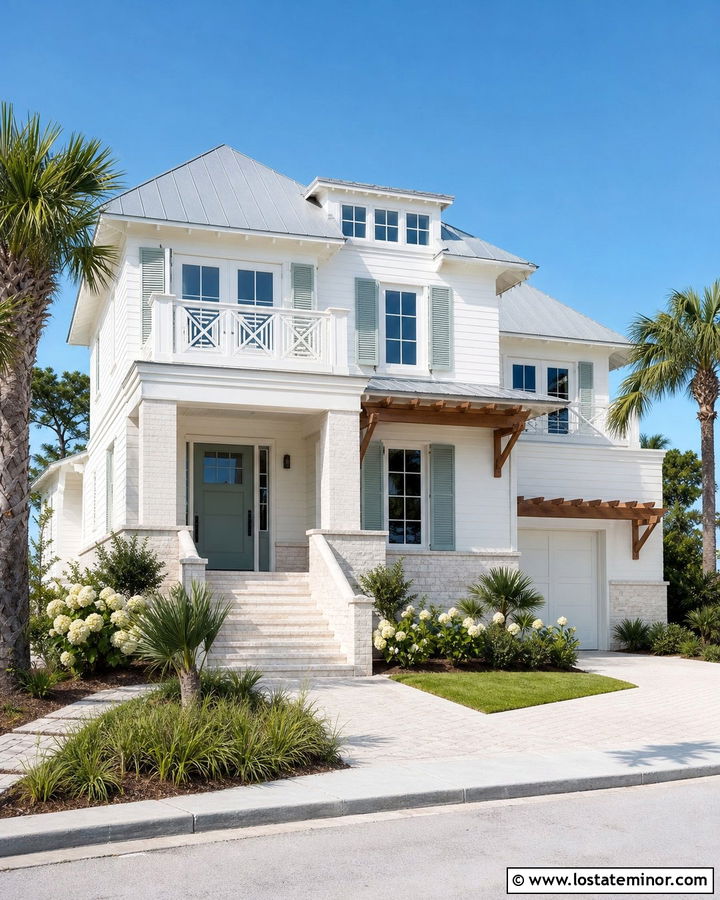
A coastal home can feel light and refined without depending on bright blue accents. Cover the siding in Simply White with a warm undertone, then add pale shell limestone to the foundation, entrance columns, and outdoor stair wall. Its creamy surface and subtle fossil-like texture support the breezy architecture. Paint shutters and the front door a muted sea-glass green for gentle color. White-framed windows, a light gray metal roof, and natural teak porch details maintain the sun-washed palette. Use the limestone in broad, simple sections rather than narrow decorative strips. Sandy pavers, salt-tolerant grasses, hydrangeas, and low palms can frame the facade where the climate allows. The completed house should feel bright and coastal, while the warm stone keeps the white exterior from appearing flat or overly crisp.
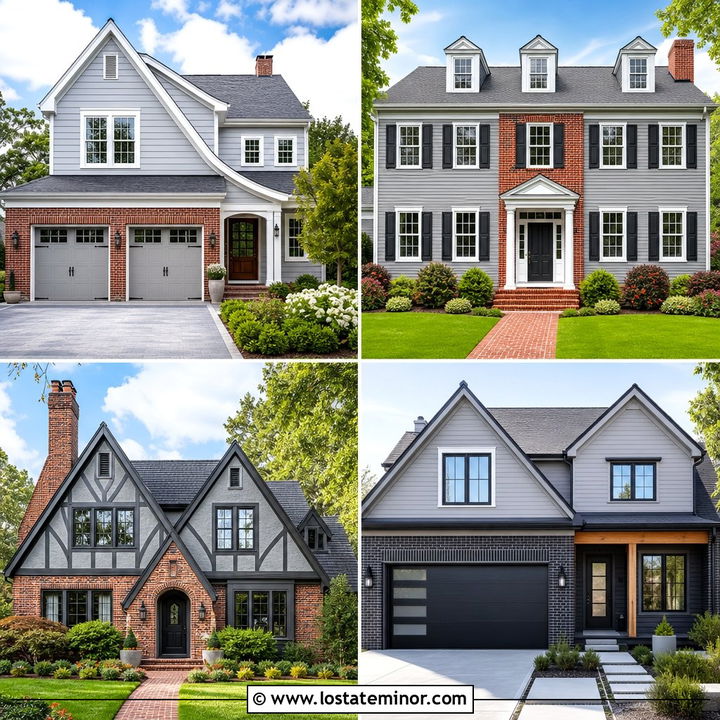
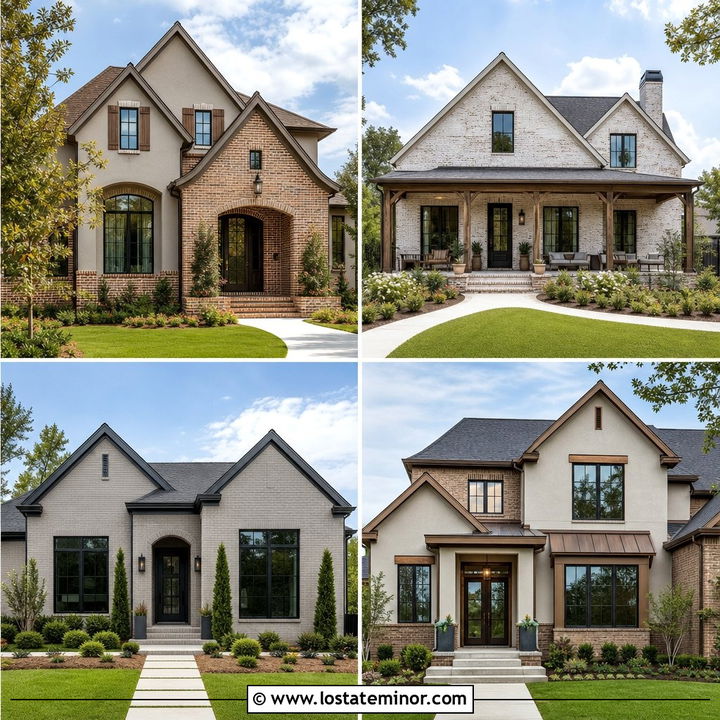
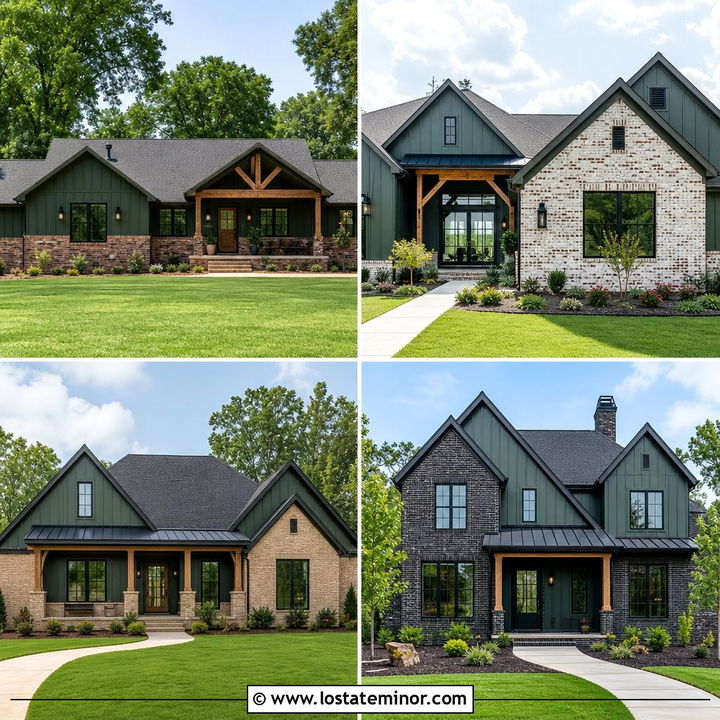
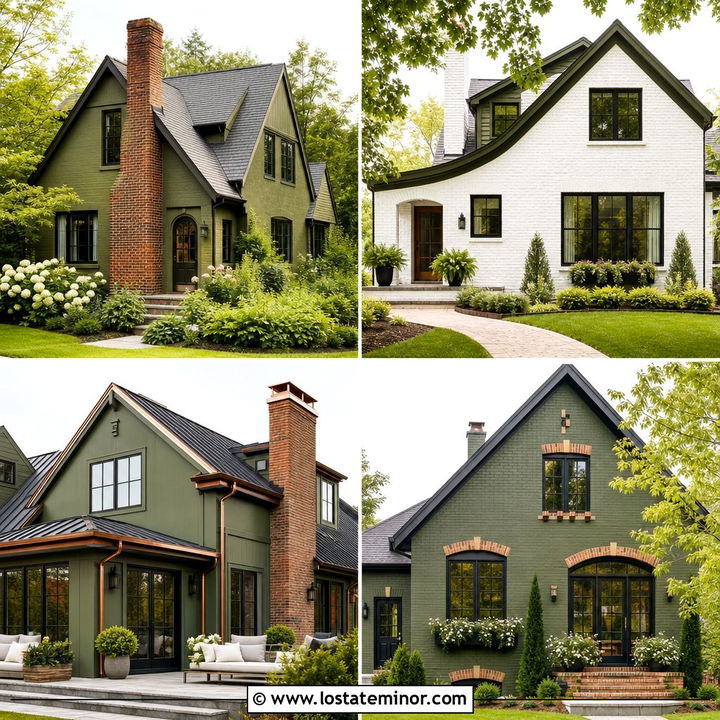
15. Warm White Prairie House With Horizontal Stone
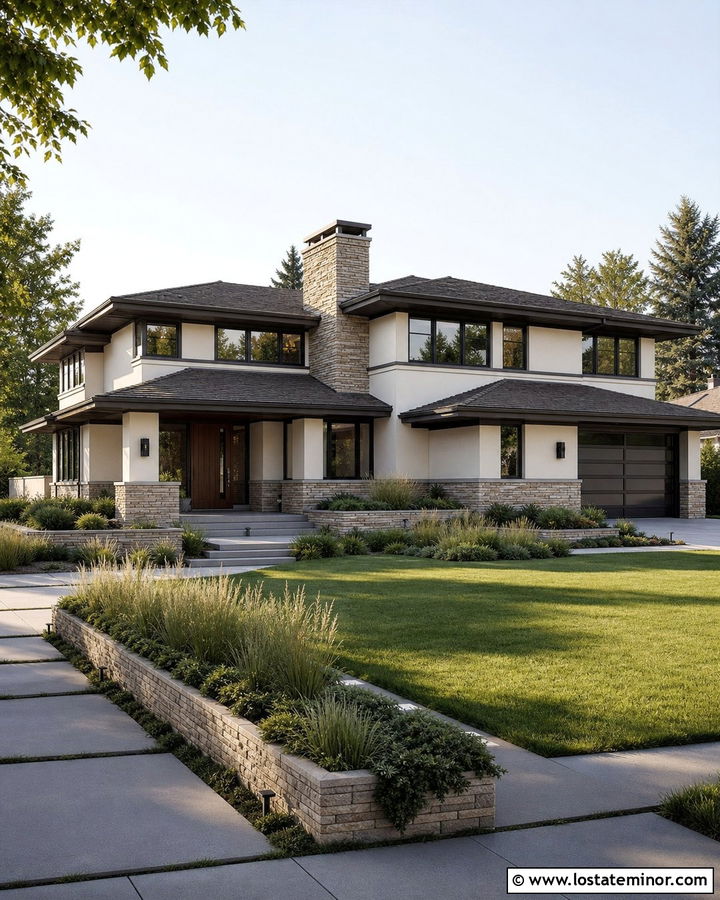
Strong horizontal lines define Prairie architecture, making long bands of stone a natural addition. Paint the stucco and lap siding Aesthetic White, then install linear ledgestone across the foundation, central chimney, and planter walls. Choose warm gray stone with tan and cream variation to support the paint’s subdued warmth. Deep bronze windows and broad roof overhangs emphasize the architecture without creating a severe black-and-white scheme. A flat-panel walnut door adds a rich focal point at the recessed entrance. Use low-pitched shingles in a weathered charcoal-brown blend. Long concrete pavers, horizontal ornamental grasses, and low spreading shrubs echo the home’s proportions. Keep vertical trim minimal and close to the body color. The resulting scheme feels orderly, grounded, and naturally suited to a wide lot with open landscaping.
16. Warm White Transitional House With Mixed Stone
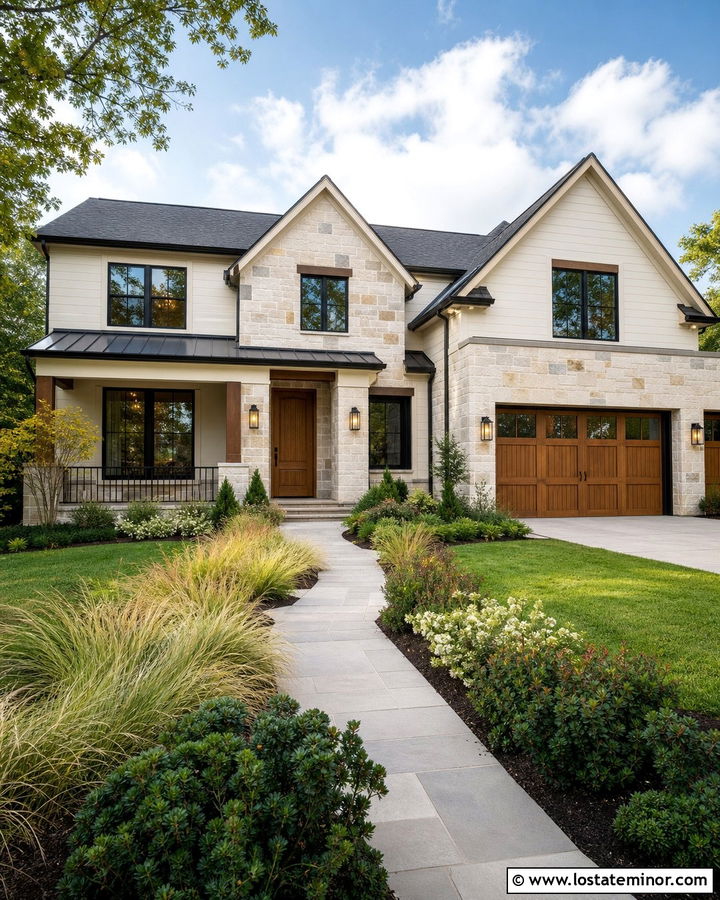
Transitional homes often combine traditional rooflines with simpler contemporary details. Use Alabaster siding as the unifying body color and apply mixed limestone to the entry projection, porch bases, and garage wing. The stone can include cream, mushroom, and light gray, but avoid strong orange or blue pieces. Paint the trim the same warm white for a clean, expansive surface. Add dark bronze windows, a medium oak front door, and matching wood garage doors for balanced contrast. A charcoal shingle roof gives the varied rooflines a consistent cap. Repeat the stone near each side of the house rather than concentrating it in one corner. Structured shrubs, layered grasses, and a wide paver path keep the landscaping polished. This approach connects different architectural elements through a limited, coordinated material palette.
17. Warm White Barndominium With Stone Base
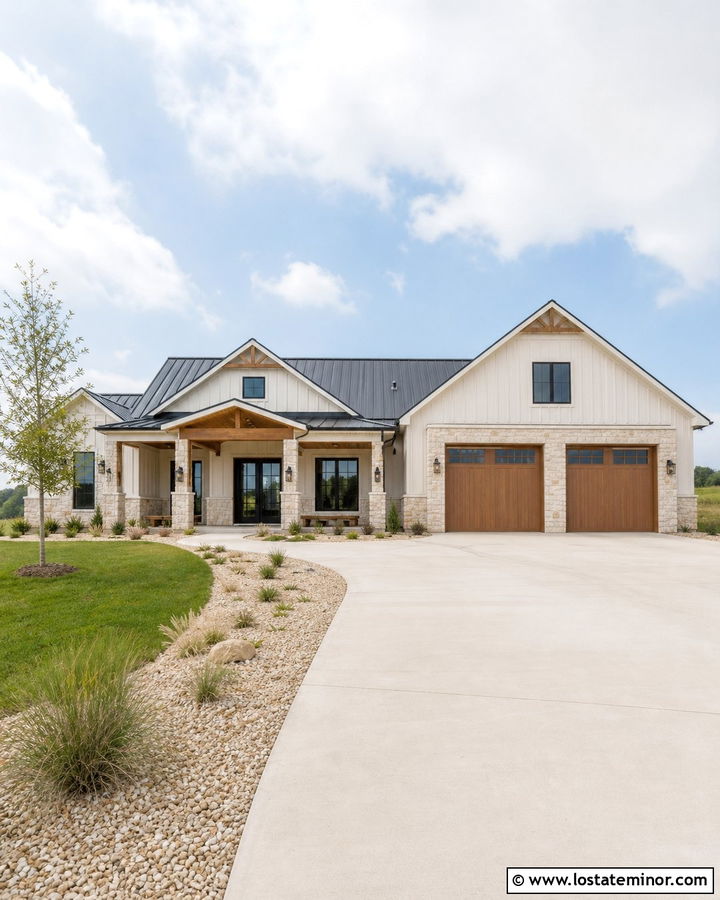
A barndominium gains residential warmth when its simple metal form includes natural-looking materials. Choose White Dove vertical siding and wrap the lower facade in rough-cut limestone veneer. Carry the stone around the porch posts and garage corners to prevent the long structure from looking unfinished. A warm cedar porch ceiling, oversized timber posts, and wood-look garage doors bring depth to the pale exterior. Use a matte charcoal metal roof and dark bronze windows for crisp definition. Keep the main trim warm white instead of outlining every edge in black. A broad concrete driveway, gravel borders, native grasses, and young shade trees suit the open setting. Stone veneer offers a practical way to create the visual weight of masonry without covering the entire building, making this look adaptable to controlled budgets.
18. Warm White Southern House With Stone Piers
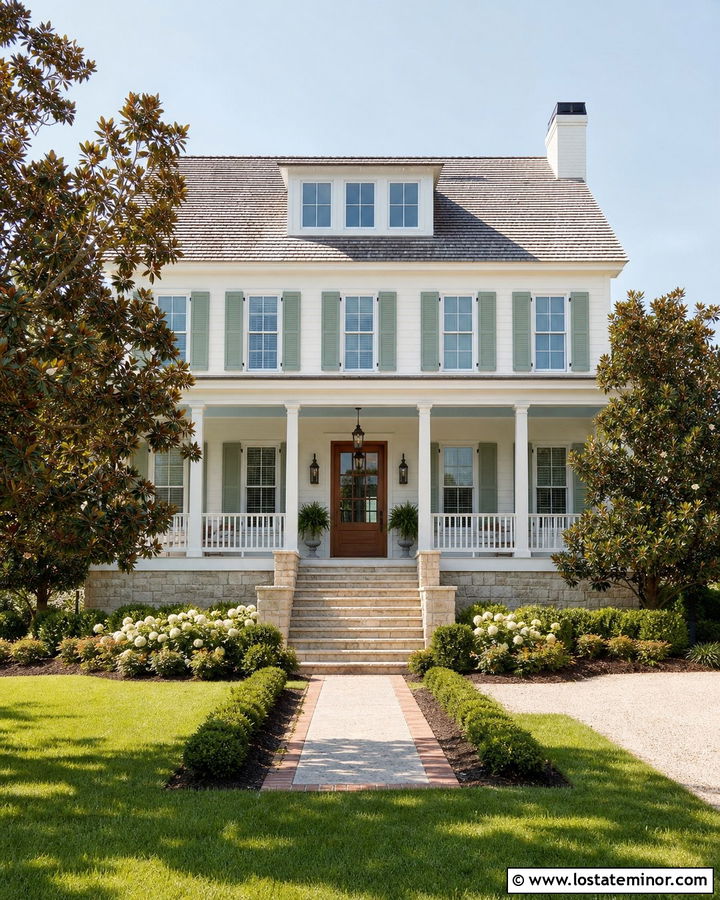
A generous front porch calls for support details that look substantial and proportional. Paint a Southern-style house in Greek Villa and place square white columns on pale fieldstone piers. Use the same stone for the front steps and foundation skirt to establish a continuous base. Soft green shutters and a medium-stained wood door provide familiar, welcoming color. A light blue porch ceiling can add a quiet traditional touch without affecting the main warm palette. Choose weathered gray roof shingles and antique bronze lanterns for gentle contrast. Keep porch railings and window trim warm white for an open appearance. Symmetrical magnolias, boxwoods, flowering shrubs, and a wide brick-edged walkway reinforce the gracious facade. The stone piers should feel structural, giving the long porch stability while adding texture near eye level.
19. Warm White Scandinavian House With Light Stone
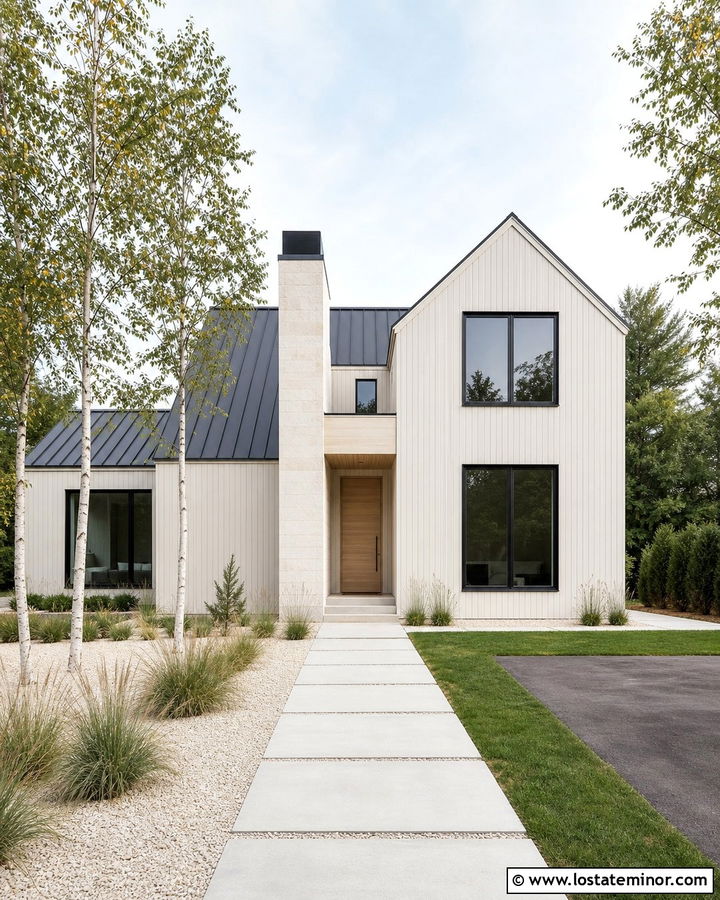
Simple materials and crisp shapes suit a Scandinavian-inspired exterior, but the palette can still feel warm. Cover the vertical siding in School House White, a muted warm off-white, and place light limestone around the recessed entrance and chimney. Choose smooth or lightly split stone with minimal color variation. Pale oak cladding beneath the porch roof adds another natural texture while preserving the understated appearance. Use charcoal window frames and a matching standing-seam roof to define the clean geometry. A flush oak front door should blend with the wood accent rather than compete with it. Large rectangular pavers, gravel, low grasses, and slender birch trees create restrained landscaping. Leaving generous areas of uninterrupted warm white siding allows the stone and wood to read as carefully placed architectural features.
20. Warm White Desert House With Sandstone
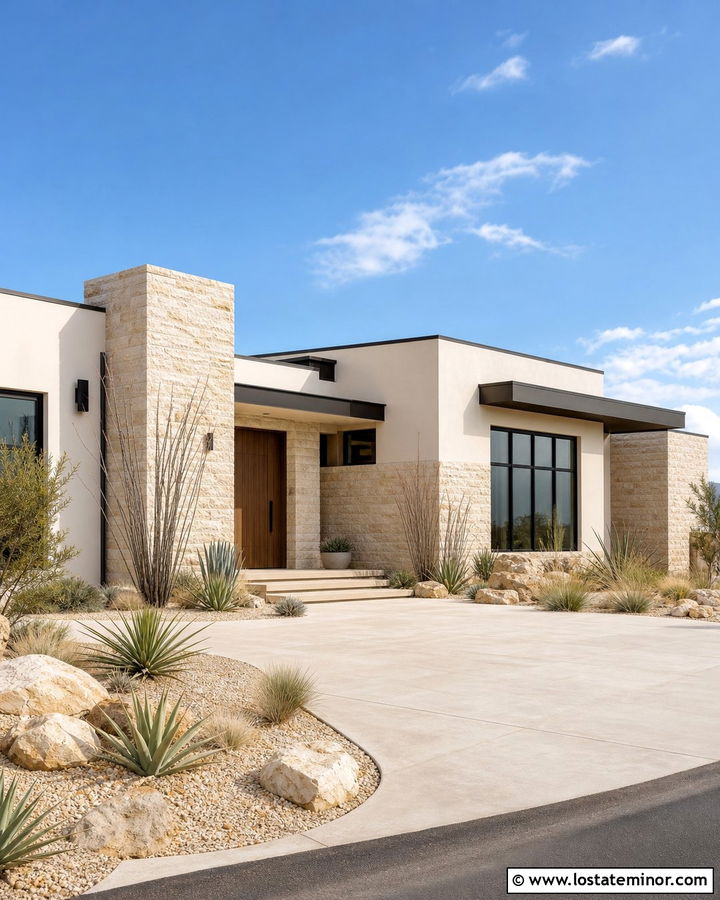
In an arid landscape, warm white stucco reflects a bright, airy character while sandstone connects the building to the ground. Use Swiss Coffee on the main walls and wrap selected courtyard volumes, entry walls, and chimney masses in pale buff sandstone. A flat or low-slope roof with bronze fascia preserves the streamlined silhouette. Choose dark bronze windows and a warm mesquite-toned front door for depth. Sand-colored concrete pavers and a matching stucco boundary wall help the property feel cohesive. Limit black accents, which can look unusually sharp in intense sun. Agave, yucca, native grasses, gravel, and a few sculptural boulders complete the drought-conscious setting. The sandstone should share the paint’s creamy undertone so the transition between stucco and masonry looks soft rather than divided.
21. Warm White Lake House With Stone Chimney
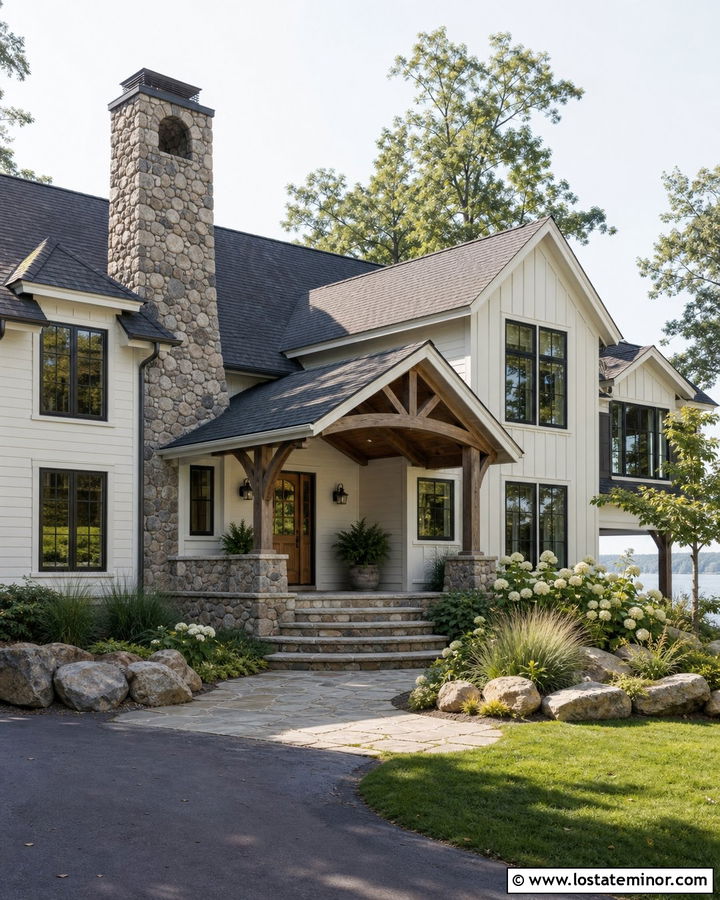
A tall stone chimney can organize the entire facade of a warm white lake house. Paint the lap siding and board-and-batten gables in Shoji White, then build the chimney from weathered gray-brown fieldstone. Repeat the stone at the porch base and outdoor steps so the chimney does not appear isolated. Cedar trusses, a natural wood front door, and a stained porch ceiling create a relaxed connection to the waterfront setting. Dark bronze windows offer enough contrast without turning the exterior into a sharp black-and-white composition. Use a charcoal-gray roof that picks up the stone’s deeper tones. Informal grasses, hydrangeas, boulders, and a wide flagstone path support the natural palette. Keep upper gables mostly white so the home remains bright and visible among surrounding trees.
22. Warm White Two-Story House With Stone Gables
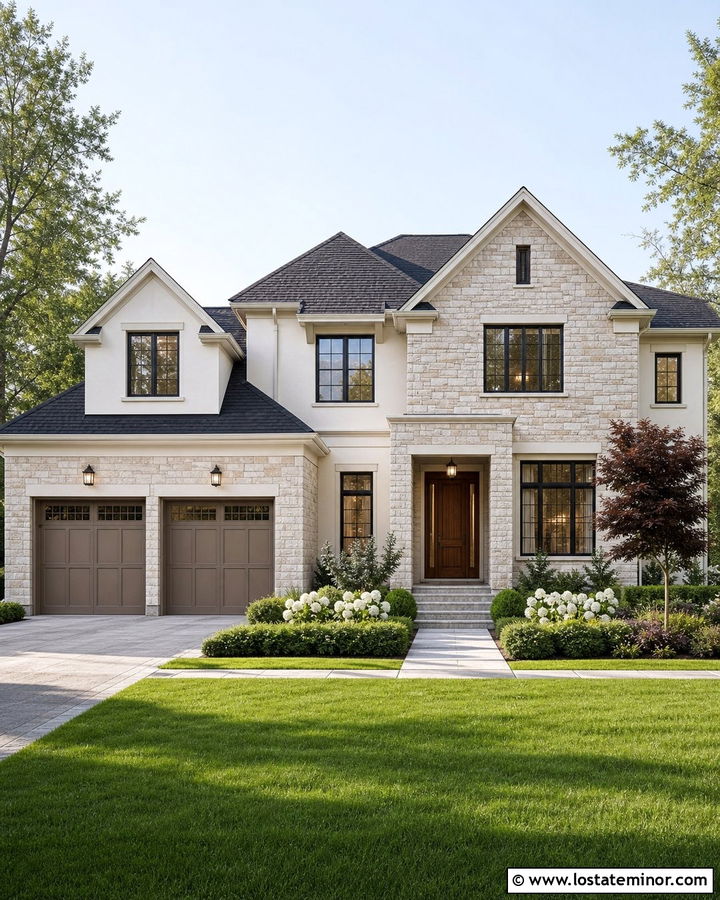
A large two-story suburban home can appear fragmented when stone is scattered across many small areas. Create stronger structure by using warm Natural Choice siding and concentrating greige limestone on one prominent front gable, the entry columns, and the lower garage wall. These areas should visually connect across the facade. Paint the trim a slightly lighter warm white and select taupe garage doors that blend with the masonry. A stained oak front door adds warmth beneath the covered entrance. Use charcoal shingles, bronze windows, and restrained dark metal lighting for contrast. Layered foundation shrubs and two ornamental trees can balance the home’s height. Repeating the stone’s beige tones in the walkway pavers makes the entire property feel planned, not simply upgraded with a decorative veneer.
23. Warm White Midcentury House With Stone Wall
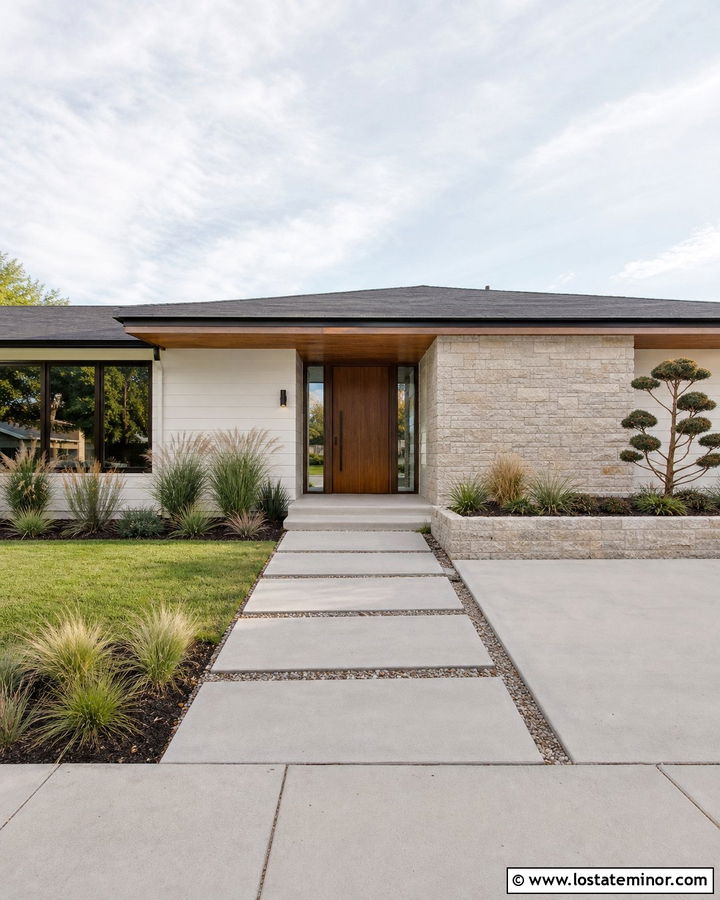
Midcentury architecture is ideal for one bold masonry feature. Coat the stucco and horizontal siding in Pearly White, then use warm gray limestone on a broad wall beside the front entrance. Extend that stone wall slightly past the roofline or into a low planter to emphasize the home’s horizontal geometry. A flat-panel walnut door and matching soffit provide rich warmth against the light facade. Choose bronze-framed windows and dark brown fascia rather than pure black. A low charcoal roof preserves the understated silhouette. Large concrete squares, gravel seams, sculptural grasses, and a carefully pruned small tree complete the period-inspired landscape. Avoid adding stone to every column and corner. The single uninterrupted feature wall should remain the focal point, giving the compact house architectural depth and a clear sense of direction.
24. Warm White Rustic Modern House With Cedar And Stone
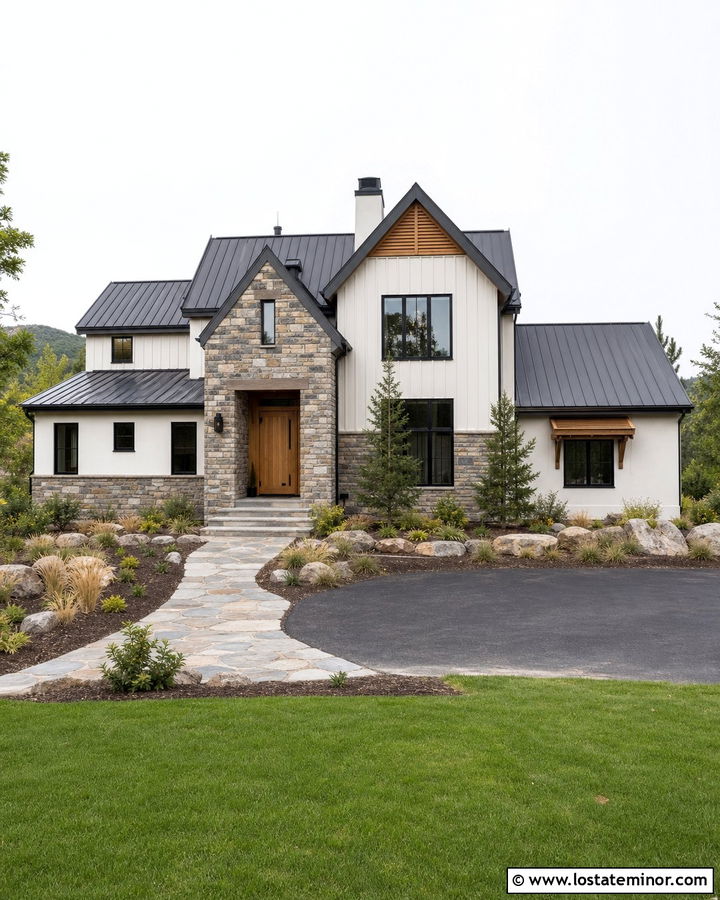
Rough stone, smooth warm white siding, and cedar can create a rustic modern exterior that feels balanced rather than themed. Use White Duck on broad stucco planes and vertical siding. Cover the entry volume and lower walls with dry-stack stone in taupe, cream, and charcoal. Cedar slats beneath the gables and around the garage bring warmth to the upper facade. A matching cedar door helps guide attention toward the entrance. Black windows and a charcoal metal roof provide firm lines, but warm white fascia prevents the dark details from becoming dominant. Stone pavers, native grasses, evergreen shrubs, and boulder-edged beds continue the material palette into the yard. Keep the forms simple and avoid decorative shutters so the natural textures remain the main source of visual interest.
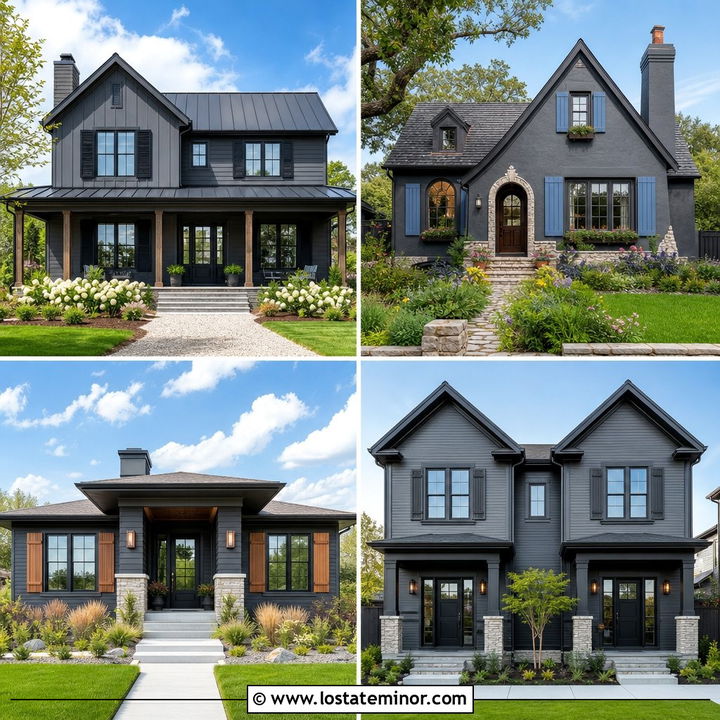
25. Warm White English Cottage With Stone Facade
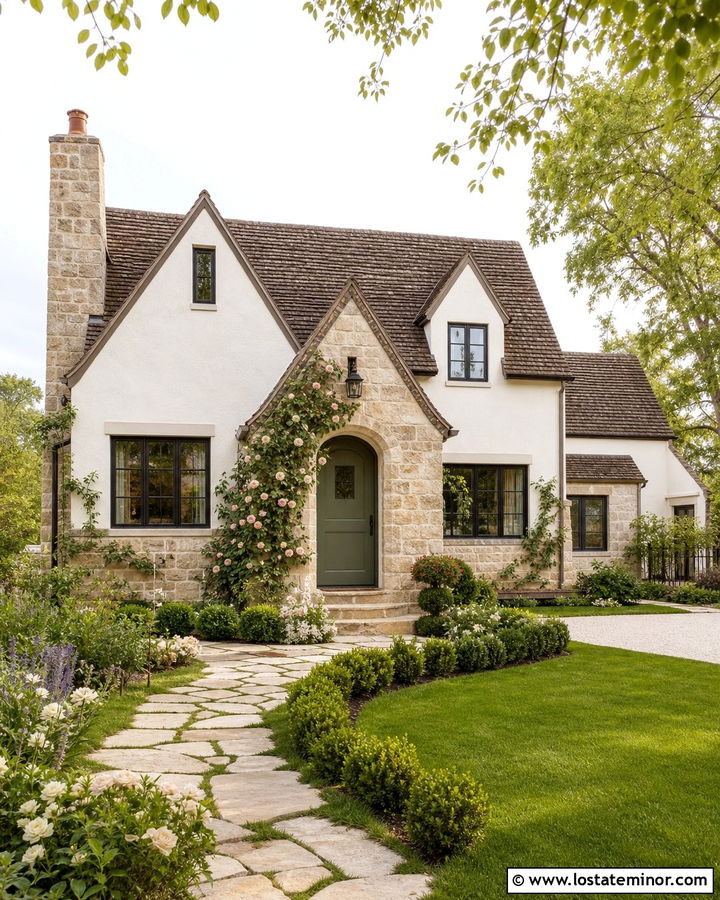
An English cottage becomes especially charming when warm white stucco appears above a substantial stone lower facade. Choose Pointing, a soft warm white, and pair it with irregular limestone in cream, biscuit, and weathered beige. Wrap the chimney and arched porch in the same stone for visual continuity. Use a muted moss-green front door and bronze casement windows to create gentle contrast. A steep weathered-brown roof, small dormers, and warm white bargeboards complete the picturesque silhouette. Let the masonry edges appear slightly irregular rather than perfectly straight. A winding flagstone path, climbing roses, clipped shrubs, and layered cottage flowers soften the structure. Since the garden contains many colors and textures, keep the painted exterior simple so the warm white walls and aged-looking stone remain easy to appreciate.
26. Warm White Modern Colonial With Stone Foundation
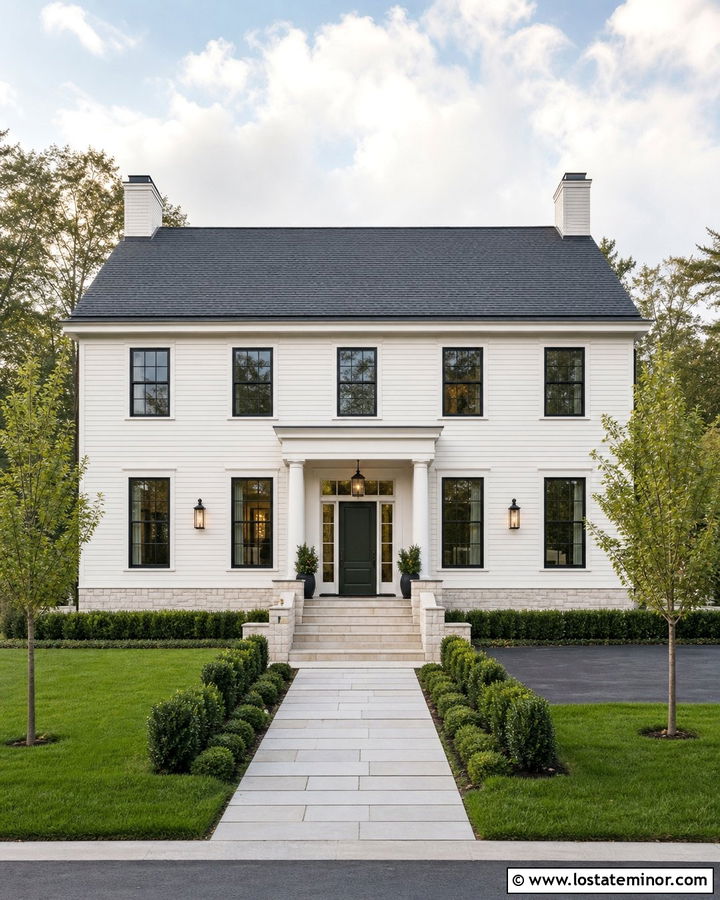
Modern Colonial design preserves symmetry while simplifying the traditional details. Paint the clapboard siding Seapearl and run light limestone across the full foundation for a quiet, continuous base. Use the same stone on the centered entrance steps and short side walls. Black shutters can be omitted in favor of dark bronze windows, allowing the facade to look cleaner. Choose a deep muted green front door for one controlled color accent. Warm white trim, simple square columns, and a charcoal roof support the updated interpretation. Matching bronze lanterns maintain balance around the entrance. Straight hedges, evenly spaced trees, and a rectangular paver walkway reinforce the orderly composition. Because the stone remains low and continuous, it adds texture without disturbing the strong window alignment that defines the Colonial facade.
27. Warm White Courtyard House With Stone Arch
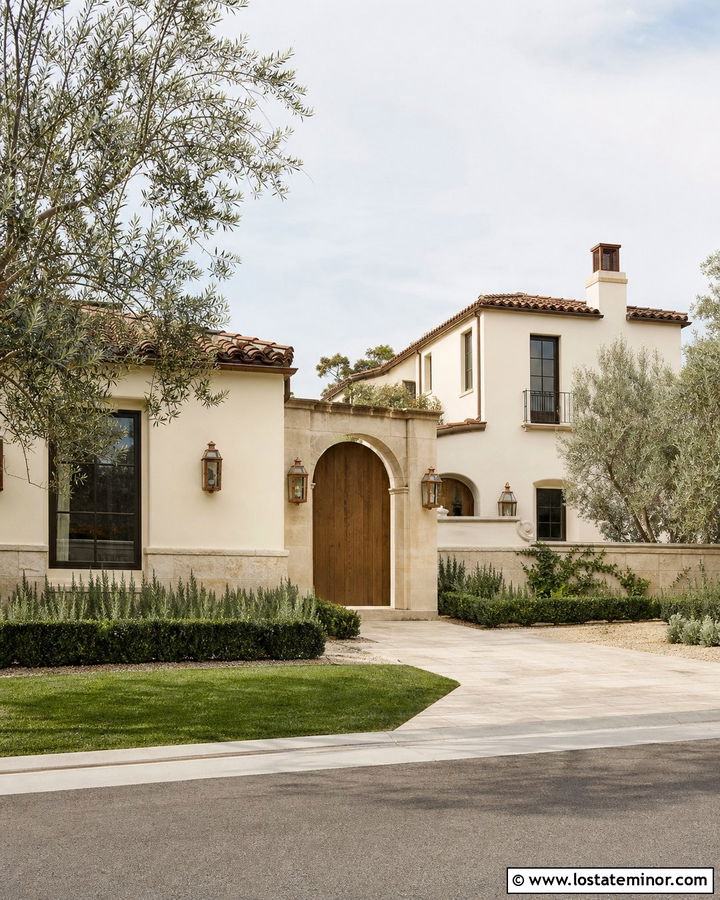
A courtyard entrance creates an opportunity to make stone feel like part of the architecture. Cover the stucco exterior in Ballet White and construct the entrance arch, courtyard wall bases, and selected columns from creamy limestone. Keep the mortar close to the stone color for a unified surface. A tall oak gate or arched front door introduces natural warmth beneath the masonry opening. Use bronze windows, clay-brown roof tiles, and understated copper-toned lighting. Inside the visible courtyard, repeat limestone in the paving or fountain surround to establish continuity. Olive trees, structured hedges, rosemary, and pale gravel support the warm neutral palette. Limiting the exterior to warm white, stone, wood, and bronze gives the house a peaceful character while allowing the entry arch to remain the unmistakable focal point.
28. Warm White Lowcountry House With Stone Stairs
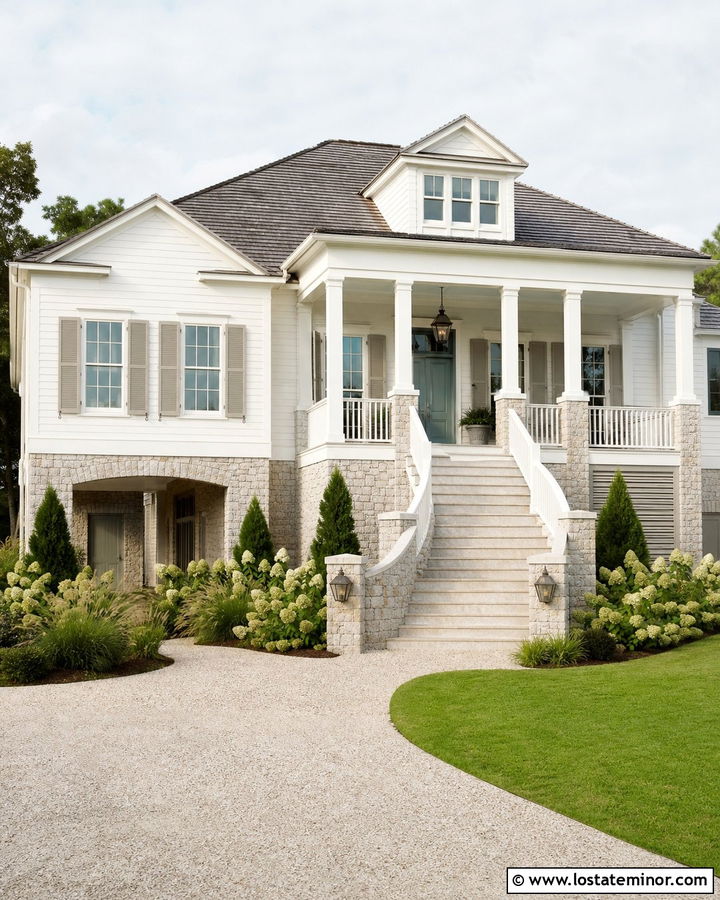
An elevated Lowcountry house can use stone at ground level to make its tall foundation appear intentional. Paint the lap siding Cloud White and clad the stair walls, foundation piers, and lower entry in pale gray-beige stone. Wide warm white porch columns and railings keep the upper level open and bright. Choose a muted blue-green front door and light bronze lanterns for relaxed coastal color. Weathered gray roof shingles and natural wood porch furniture complement the soft palette. The stone should resist looking too rugged; select pieces with moderate texture and fairly consistent coloring. Broad steps, a shell-finished walkway, hydrangeas, ornamental grasses, and native evergreen shrubs complete the setting. Repeating stone beside the driveway can connect the elevated house visually with the surrounding yard and hardscape.
29. Warm White Estate House With Limestone Wings
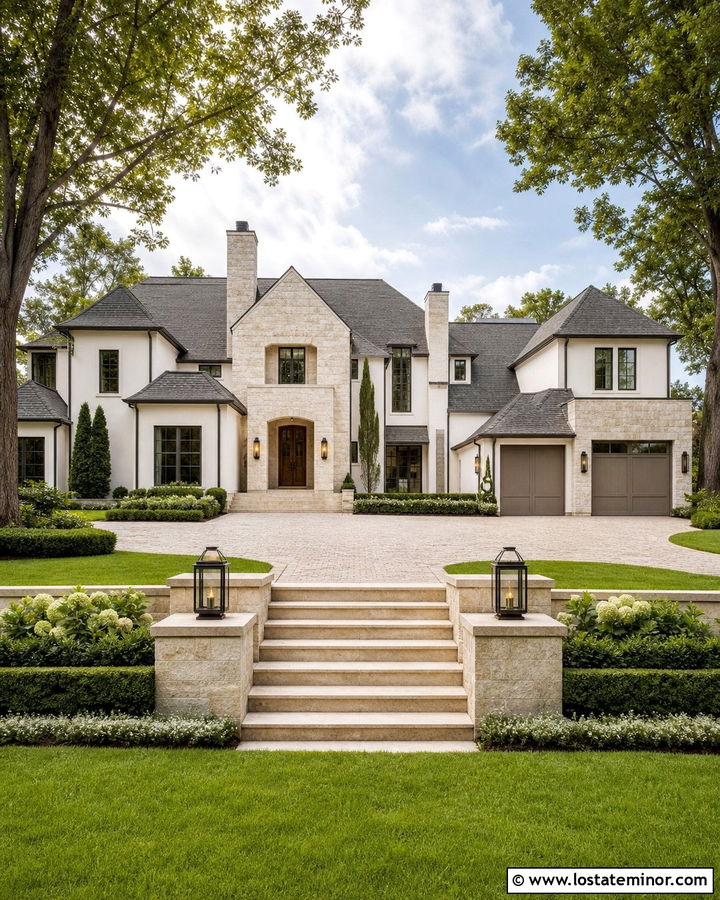
A large estate facade needs materials that organize its scale. Use Alabaster stucco across the central and side wings, then apply pale limestone to the entrance projection, chimneys, and selected lower walls. Repeating the same stone at measured intervals helps the wide house feel connected. Choose warm bronze windows, oak doors, and muted taupe garage doors to avoid a severe high-contrast appearance. A weathered charcoal roof gives definition to complex rooflines. Keep trim close to the warm white body color so the architecture does not become overly outlined. Broad limestone steps, formal hedges, layered trees, and a generous paver driveway support the home’s proportions. The stone placement should correspond to meaningful structures, such as chimneys and projecting wings, rather than appearing as thin decorative panels.
30. Warm White House With Affordable Stone Veneer
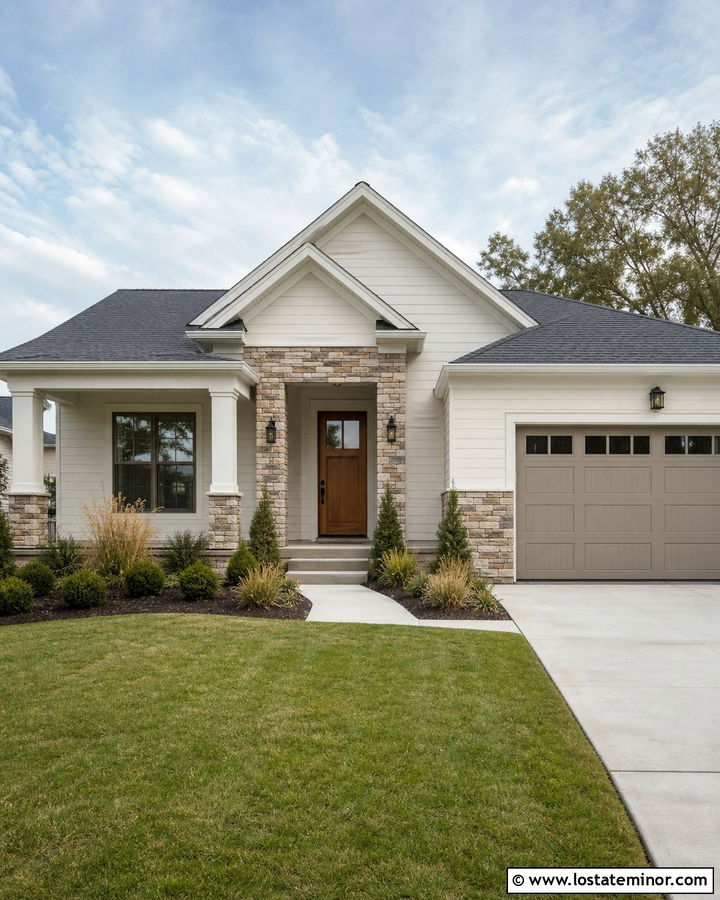
An effective warm white and stone scheme does not require covering half the house in masonry. Paint the main siding Swiss Coffee, then use a realistic cream-and-taupe stone veneer on the porch bases, entry surround, and a short section beside the garage. Concentrating the material in visible areas creates impact while controlling the project scope. Choose a medium oak front door and paint the garage door a warm greige drawn from the stone. Bronze lights and weathered charcoal shingles complete the coordinated palette. Keep existing trim warm white where possible instead of adding another color. A new concrete walkway, dark mulch, evergreen shrubs, and ornamental grasses can strengthen the transformation. Careful material repetition makes limited stone look purposeful, creating a complete exterior rather than an unfinished partial update.
Conclusion:
The best warm white and stone exteriors coordinate every visible surface, from the roof and siding to the door, windows, hardscape, and landscaping. Before choosing paint, study the stone’s lightest cream, beige, taupe, or warm gray tones. A related warm white will usually create a smoother transition than a stark white. Then decide whether the masonry should anchor the foundation, frame the entrance, highlight a chimney, or connect several architectural sections. Use wood, bronze, olive, charcoal, or muted coastal colors for controlled contrast. These 30 Warm White House Design With Stone Accents Ideas offer flexible starting points for different homes, settings, and budgets while keeping the finished curb appeal cohesive and welcoming.

Related posts: