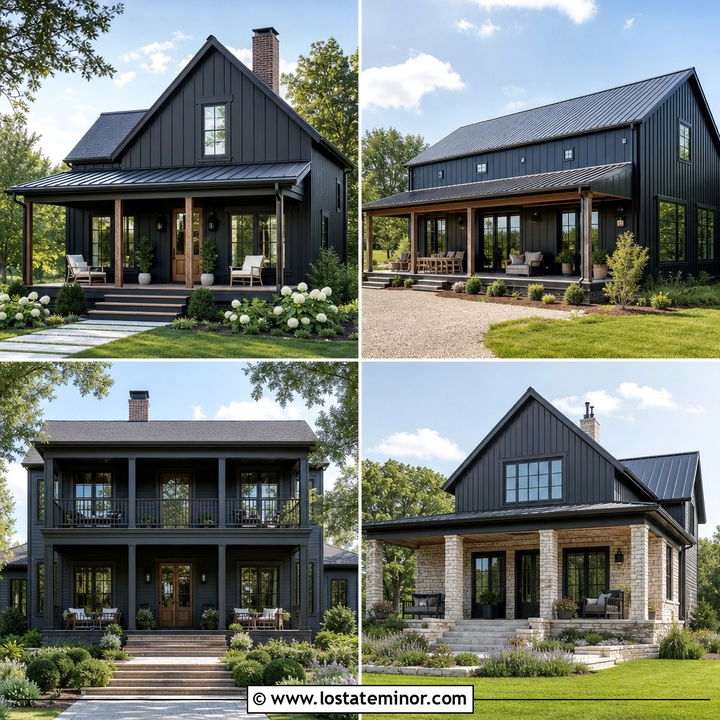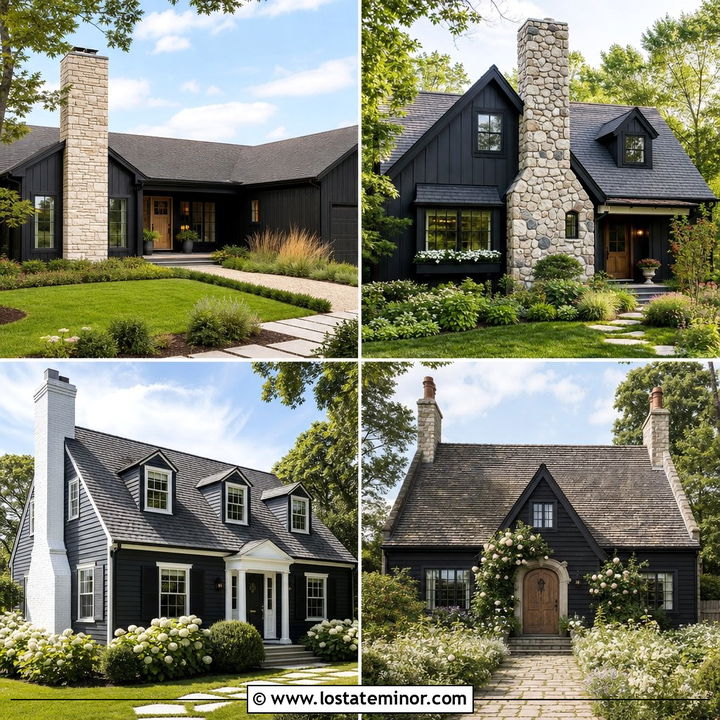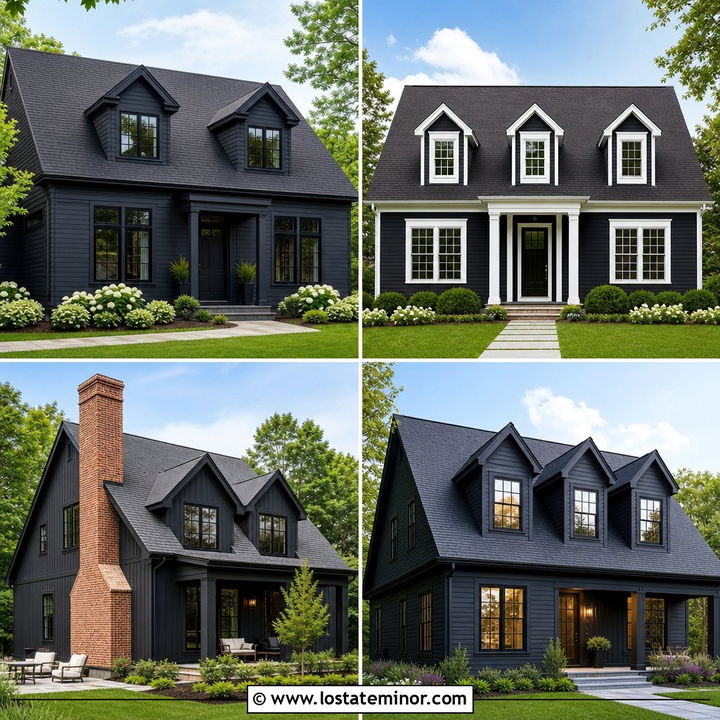
A soft black exterior gives a home depth and character without the severe look of a pure jet-black finish. The right porch ceiling makes that dark facade feel more inviting, whether you choose warm cedar, traditional haint blue, creamy white, or a coordinating charcoal tone. Each combination also depends on the trim, roofing, masonry, front door, and porch flooring around it. These details can soften the contrast, highlight the architecture, and prevent the exterior from looking flat. Before selecting paint, view large samples in direct sun and deep porch shade because black colors often reveal green, blue, or brown undertones outdoors. Explore these complete 30 Soft Black House Design With Porch Ceiling Ideas to find a balanced scheme for your home.

1. Soft Black House With Natural Cedar Porch Ceiling
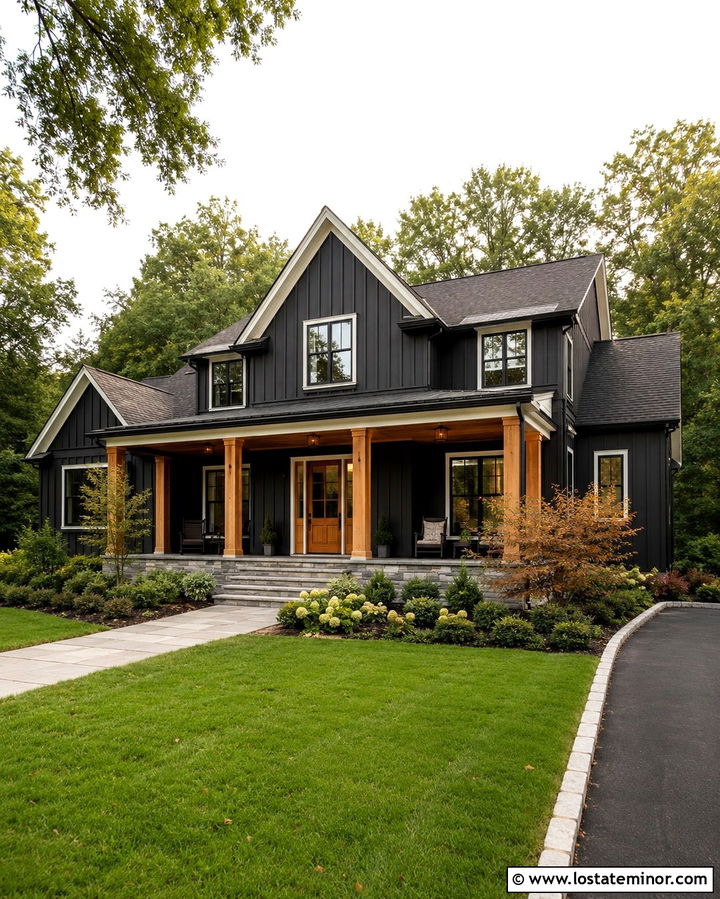
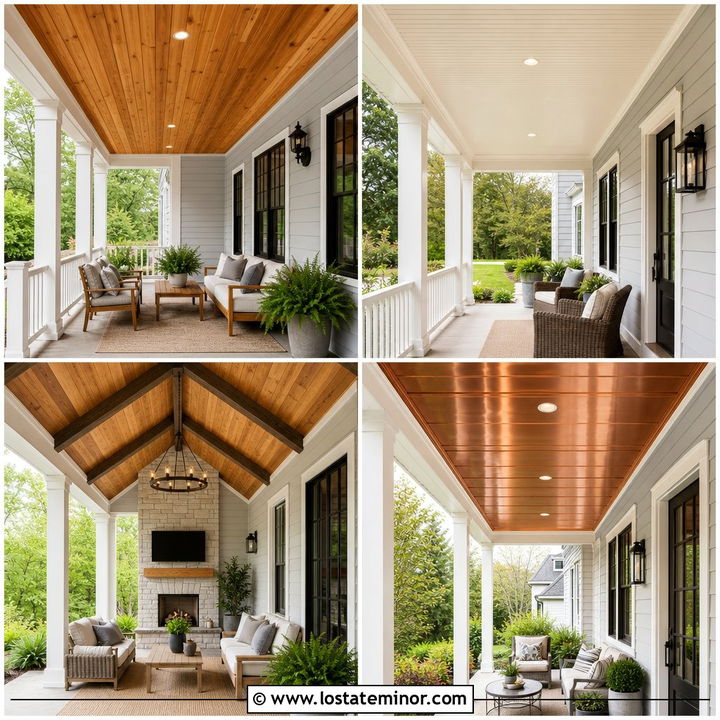
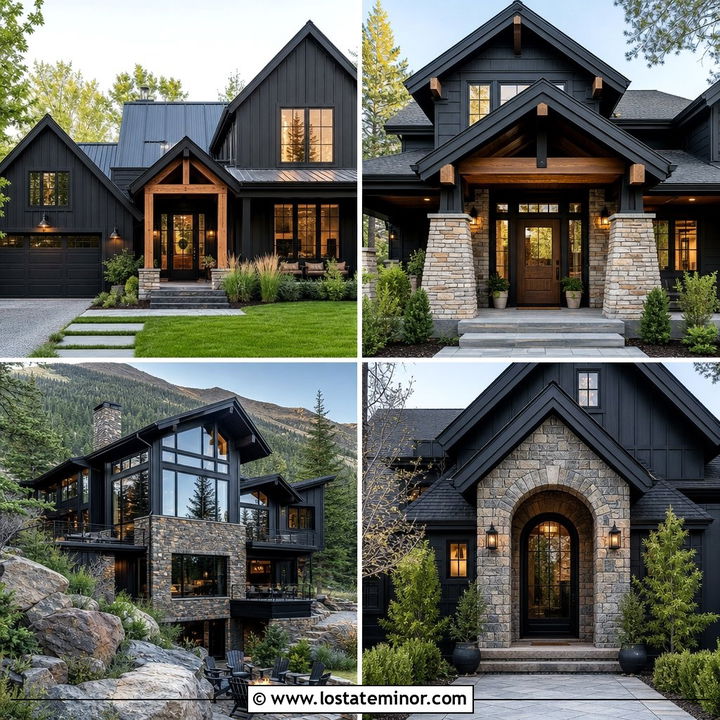
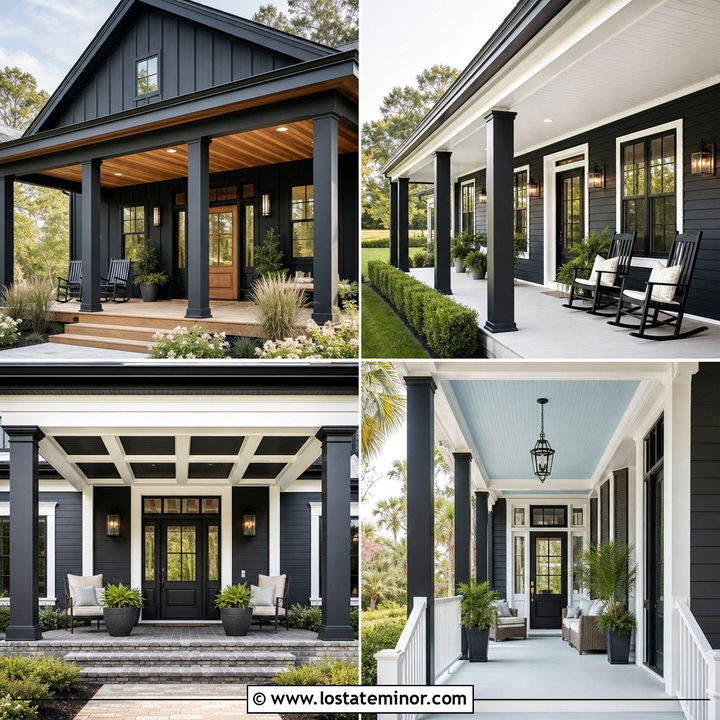
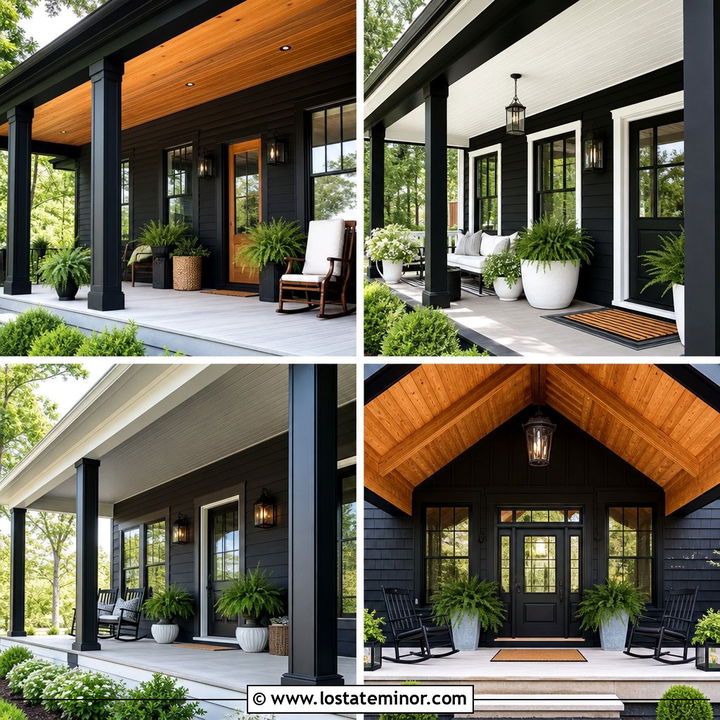
Natural cedar brings immediate warmth to a soft black house and keeps the dark siding from feeling too formal. Use vertical board-and-batten siding to emphasize height, then carry cedar across a tongue-and-groove porch ceiling. A medium clear stain preserves the grain without turning the wood overly orange. Repeat that finish on the front door, porch posts, or simple gable brackets so the ceiling feels connected to the whole facade. Warm white window trim can add definition, while charcoal roofing maintains the dark foundation of the palette. For the porch floor, choose gray stone or lightly weathered concrete. The final scheme feels rustic yet polished, making it especially effective on modern farmhouse, mountain, and contemporary craftsman homes.
2. Soft Black House With Haint Blue Porch Ceiling
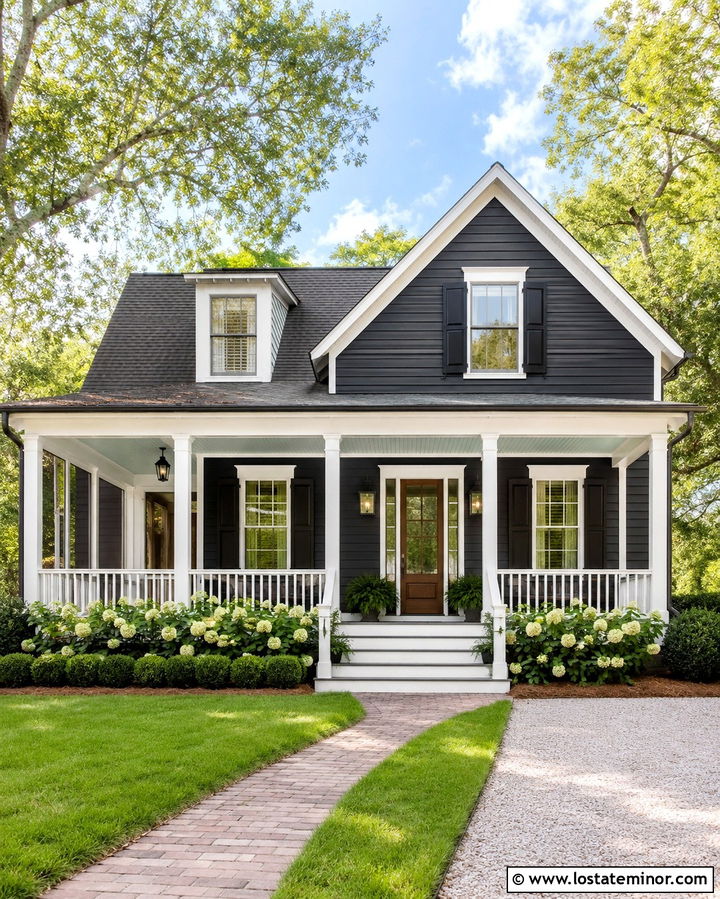
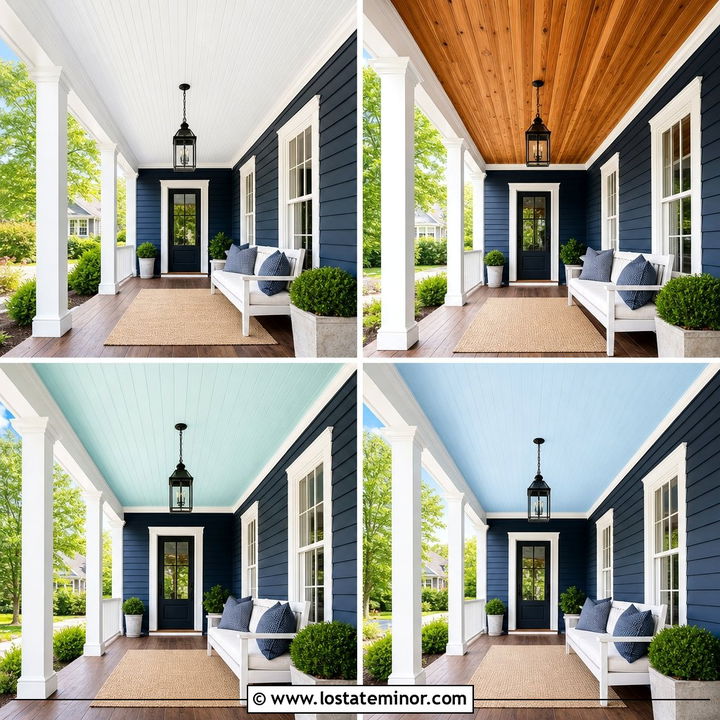
A pale blue porch ceiling creates a refreshing break beneath a deep exterior. Choose a muted haint blue with soft green-gray undertones rather than a bright baby blue. The restrained color will look calm against soft black lap siding while making the covered entrance feel lighter. Crisp white columns and window trim provide a clean transition between the dark walls and airy ceiling. Complete the exterior with a stained oak front door, black lanterns, and a medium-gray porch floor. This scheme works particularly well on Southern cottages and traditional farmhouses with deep porches. Use the blue sparingly, keeping it overhead rather than repeating it across shutters and doors. That approach preserves the sophisticated black facade while giving the porch a memorable identity.
3. Soft Black House With Warm White Porch Ceiling
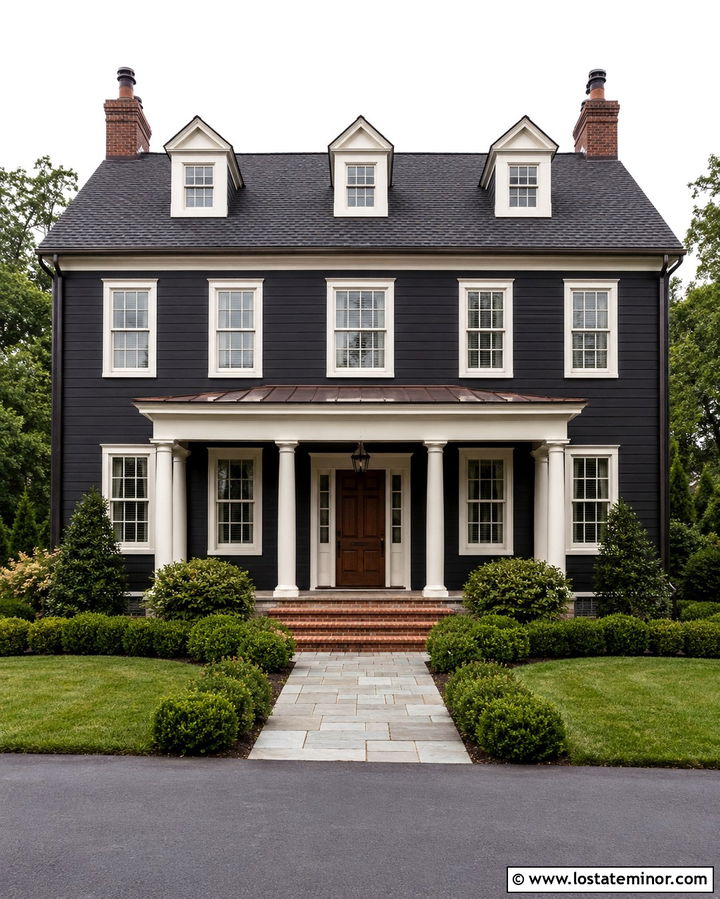
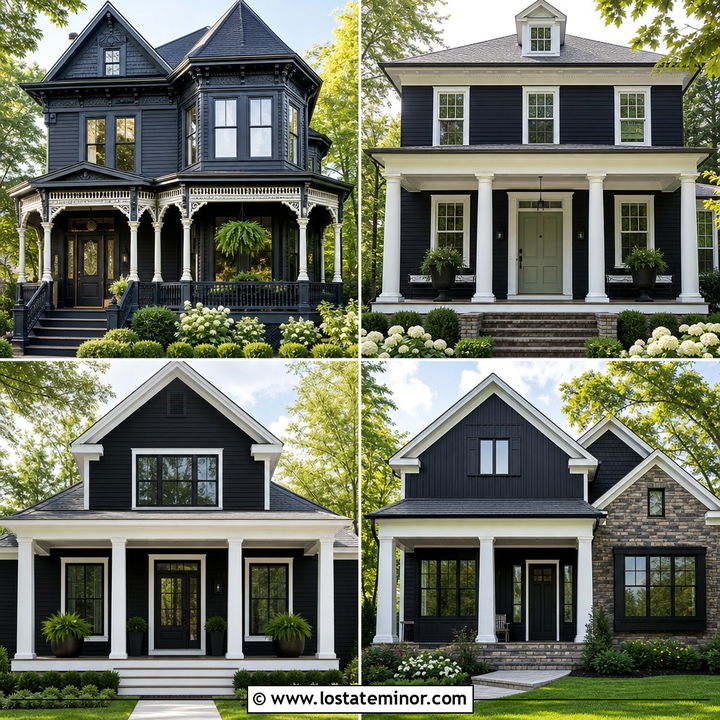
Could your dark porch use more reflected daylight? A warm white ceiling can brighten the entry while avoiding the sharp contrast of a cold, blue-based white. Pair a soft black exterior with creamy white porch boards, fascia, window trim, and square columns. This repeated color creates a clear architectural outline and helps the ceiling look intentional. Add a medium walnut door and antique bronze hardware to introduce warmth between the two painted finishes. Red-brown brick steps or tumbled limestone can further soften the palette. This complete exterior combination suits Colonials, Cape Cod homes, and updated traditional houses. Select a ceiling paint designed for exterior exposure, and sample the white beside the black siding to ensure its undertone does not look unexpectedly yellow.
4. Soft Black House With Black Porch Ceiling
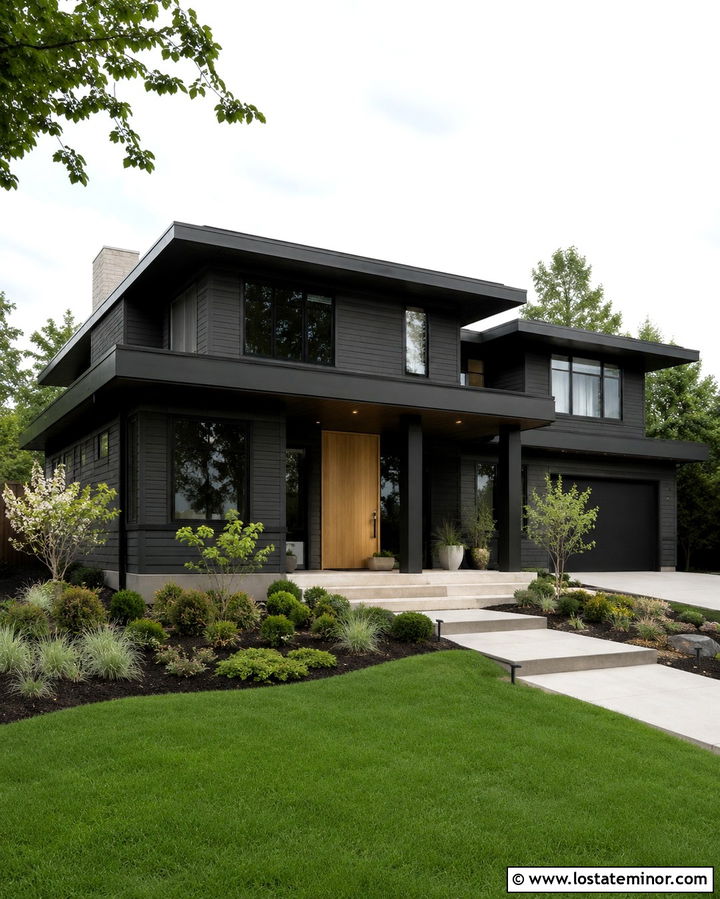
A black porch ceiling can look surprisingly cohesive when the finish has enough dimension. Use the same soft black on the siding and ceiling, but introduce different materials to prevent a flat result. Horizontal lap siding, narrow ceiling planks, and substantial porch posts will create subtle shadow lines across the monochromatic surface. A natural white oak door becomes the warm focal point, while limestone porch flooring adds a lighter base. Consider dark bronze windows instead of high-contrast white frames for a seamless contemporary appearance. Recessed ceiling lights should be evenly spaced to keep the porch usable without visually cluttering it. This immersive palette works best on modern homes with large windows, simple rooflines, and open landscaping that balances the dark architecture.
5. Soft Black House With Sage Green Porch Ceiling
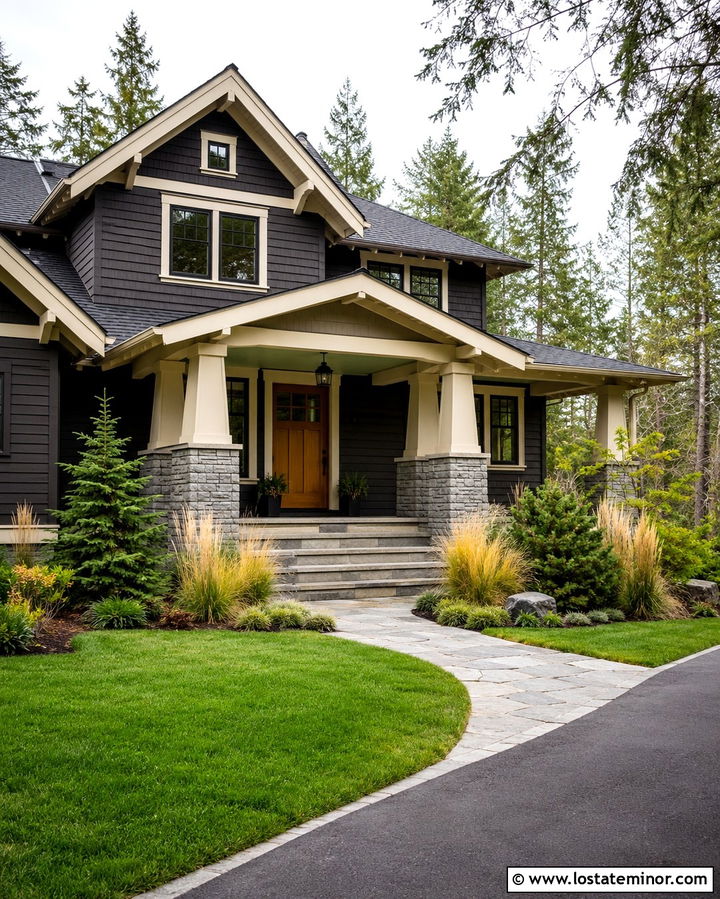
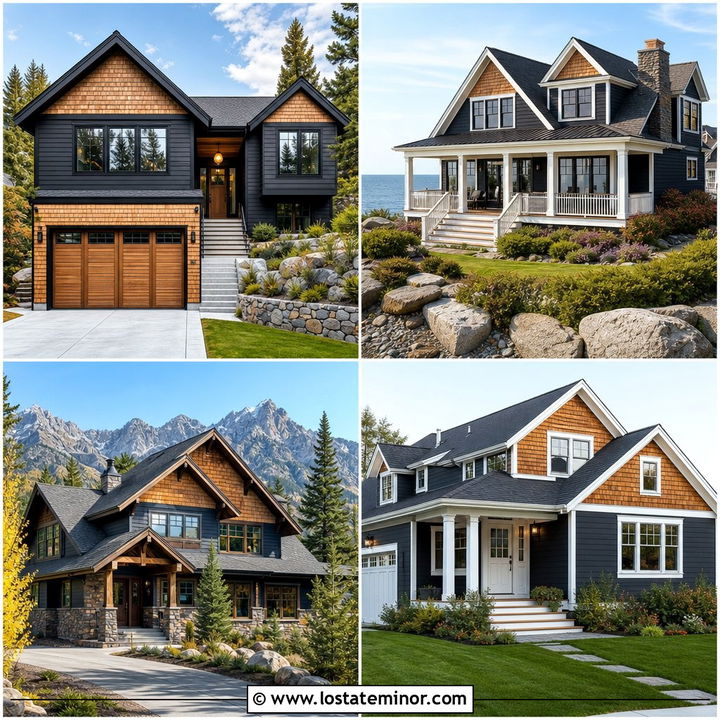
Soft sage green introduces an earthy note that feels natural beside black siding. Look for a subdued shade with gray undertones so the ceiling complements the house rather than competing with it. On a craftsman exterior, combine soft black shingles or lap siding with sage ceiling boards, tapered stone columns, and warm ivory trim. A stained fir front door can connect the green overhead to the landscaping below. Keep porch furniture and railings neutral, using black, tan, and natural wood finishes. Low ornamental grasses, evergreen shrubs, and broad stepping stones reinforce the organic palette. This combination is especially attractive in wooded or mountain settings, where the gentle green ceiling reflects the surrounding foliage and visually lifts the covered porch without becoming overly colorful.
6. Soft Black House With White Beadboard Porch Ceiling
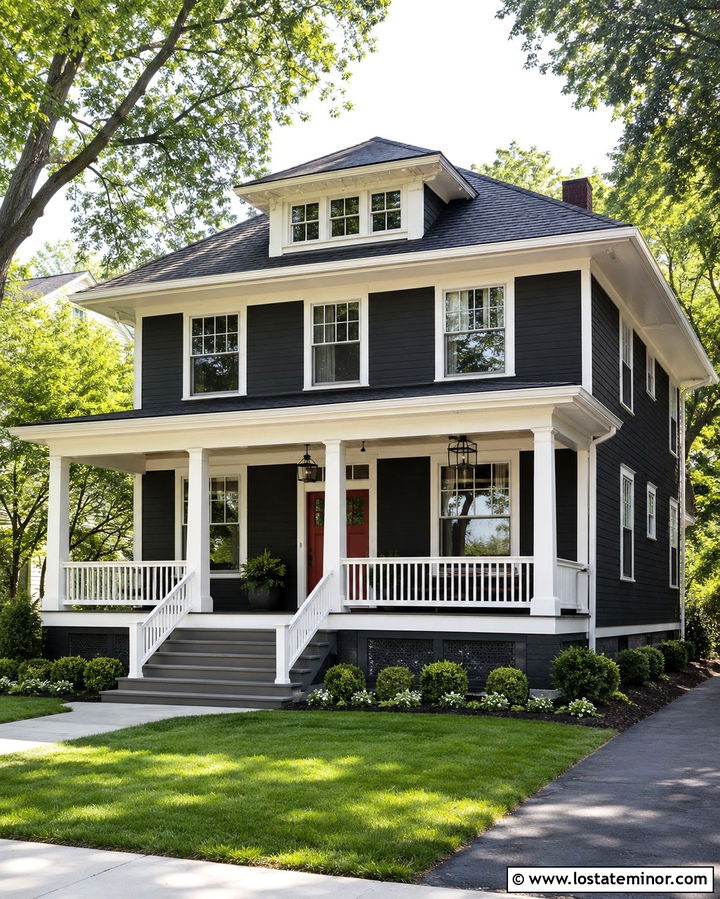
White beadboard gives a soft black house crisp detail and traditional charm. The narrow grooves catch light, making the ceiling more noticeable without requiring a bold accent color. Use bright but slightly softened white on the beadboard, porch columns, railings, and window casings. Keep the body in a brown-based soft black to make the overall contrast feel comfortable rather than stark. A muted red front door can provide a classic focal point, while warm gray floorboards keep the porch practical. This exterior works beautifully on a bungalow or restored American foursquare with a broad covered entry. Add simple black lanterns and understated foundation plants. The finished house feels established and welcoming, with enough light trim to reveal its architecture from the street.
7. Soft Black House With Walnut Porch Ceiling
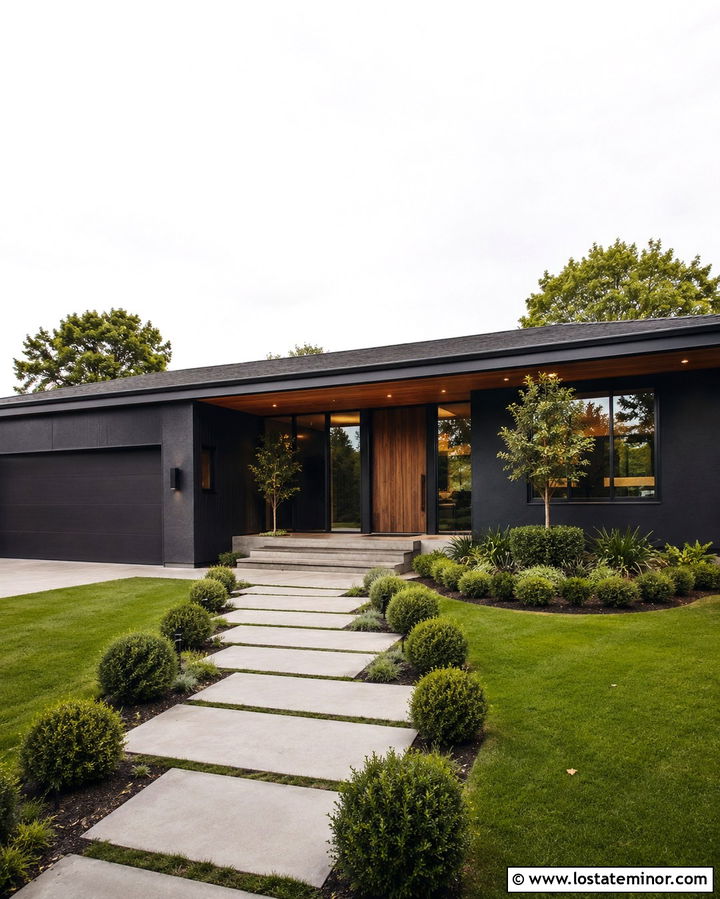
Rich walnut tones create an elegant transition between a black facade and a sheltered porch. Install wide tongue-and-groove boards overhead and finish them with an exterior-rated medium-dark stain that reveals the wood grain. Pair the ceiling with soft black stucco or smooth siding, dark window frames, and a walnut pivot door. Large-format limestone pavers can lighten the porch floor while keeping the material palette refined. If the home has garage doors, use black doors with slim wood accents rather than matching them entirely to the walnut. This full exterior scheme suits contemporary houses with low rooflines and generous overhangs. Minimal landscaping, sculptural shrubs, and a straight concrete walkway will support the architecture without distracting from the warm wood ceiling.
8. Soft Black House With Light Gray Porch Ceiling
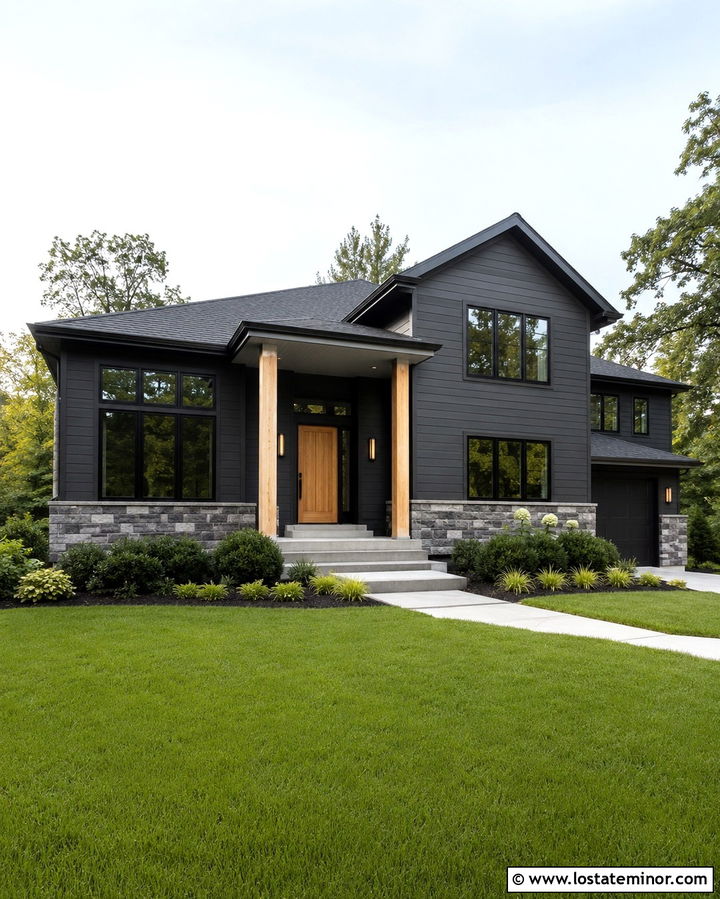
Light gray is a practical choice when white feels too sharp and wood feels too rustic. Against a soft black exterior, a misty gray porch ceiling provides gentle contrast while maintaining a neutral color story. Repeat the gray on the porch floor or stone foundation, but vary the value enough to keep each surface distinct. White oak columns and a matching front door can add warmth to the cool palette. On a split-level home, use horizontal soft black siding to unify the facade and light gray soffits to visually lift the roof. Black window frames and streamlined sconces complete the updated look. This combination is understated and flexible, allowing colorful landscaping or seasonal planters to stand out without making the architecture appear busy.
9. Soft Black House With Honey Oak Porch Ceiling
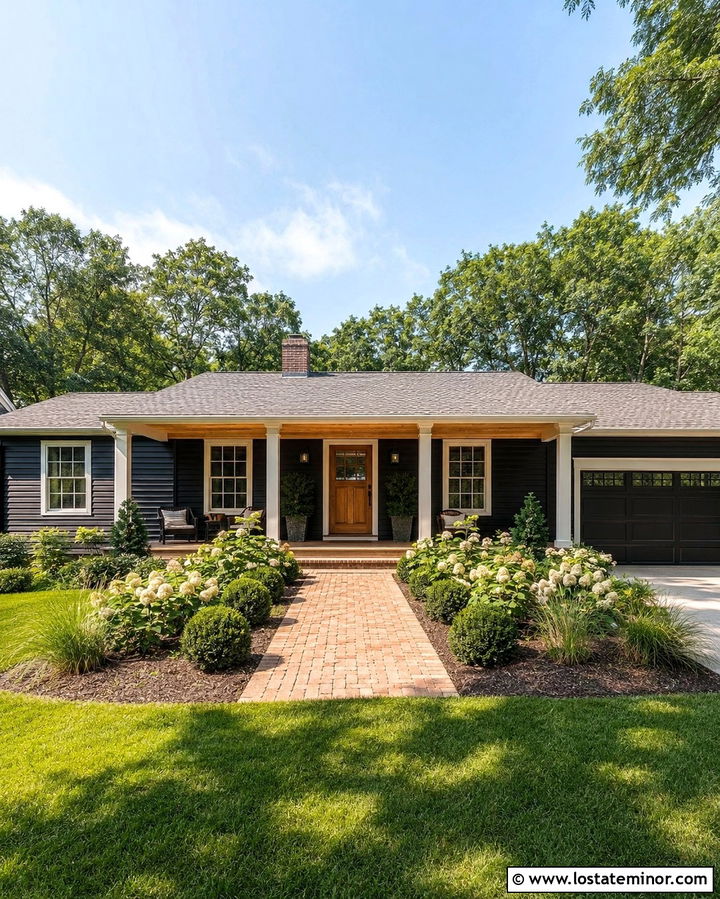
Sunlit honey oak can make a soft black exterior feel friendly and approachable. The golden wood works especially well on a ranch house with a long, low porch because it draws attention across the full roofline. Use soft black horizontal siding, creamy off-white window trim, and honey-toned ceiling planks with visible natural grain. Echo the wood on a pair of simple porch columns or the front door, but avoid covering every accent in the same finish. A buff-colored brick walkway and warm gray roof help bridge the light and dark elements. Keep the planting beds relaxed with hydrangeas, boxwoods, and ornamental grasses. Together, these details create a comfortable exterior that feels modernized without losing the ranch home’s casual character.
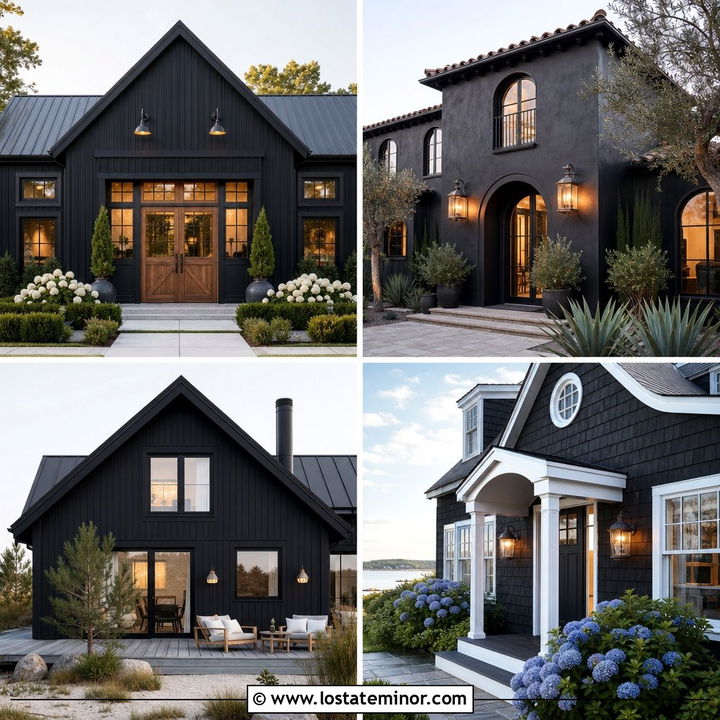
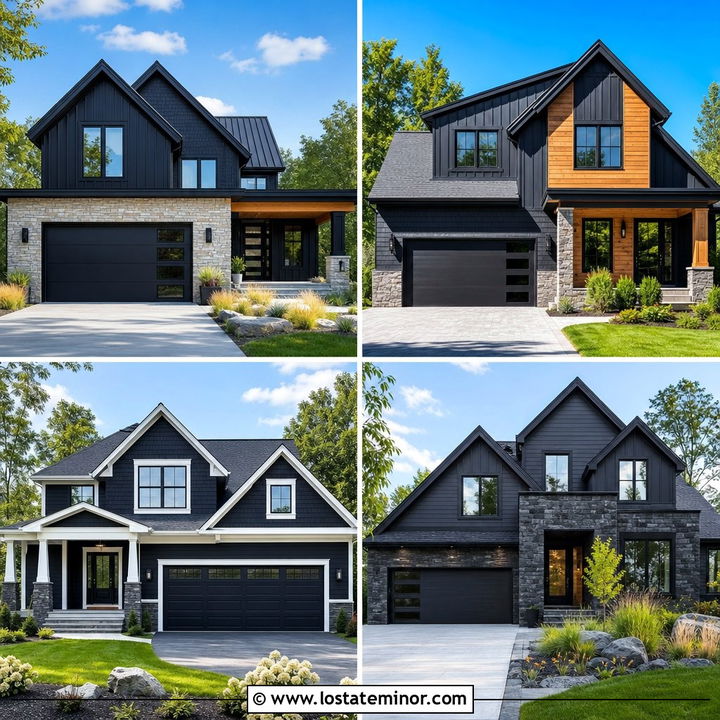
10. Soft Black House With Charcoal Porch Ceiling
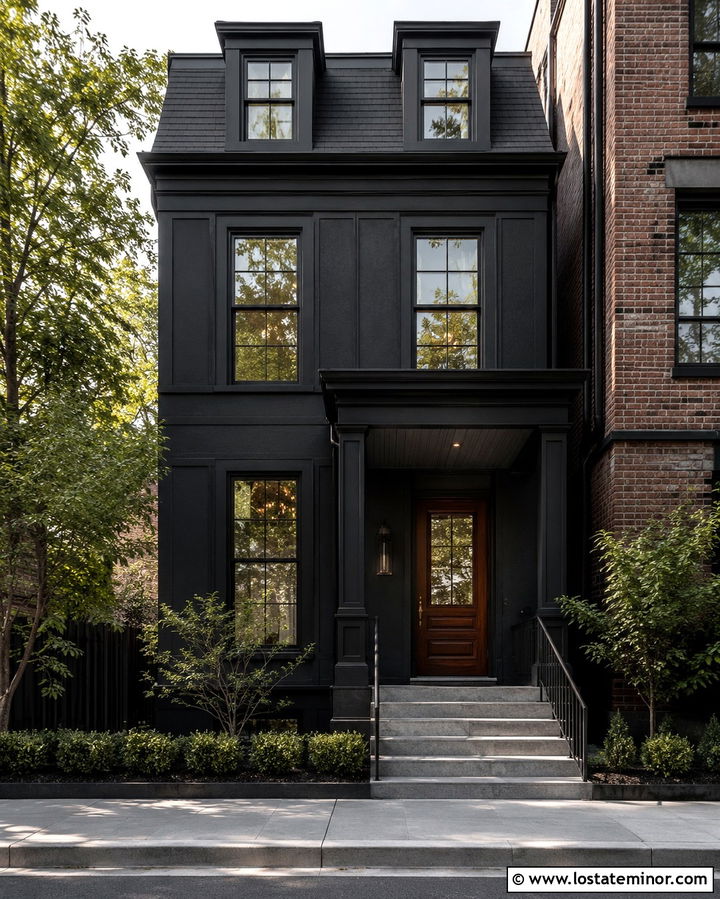
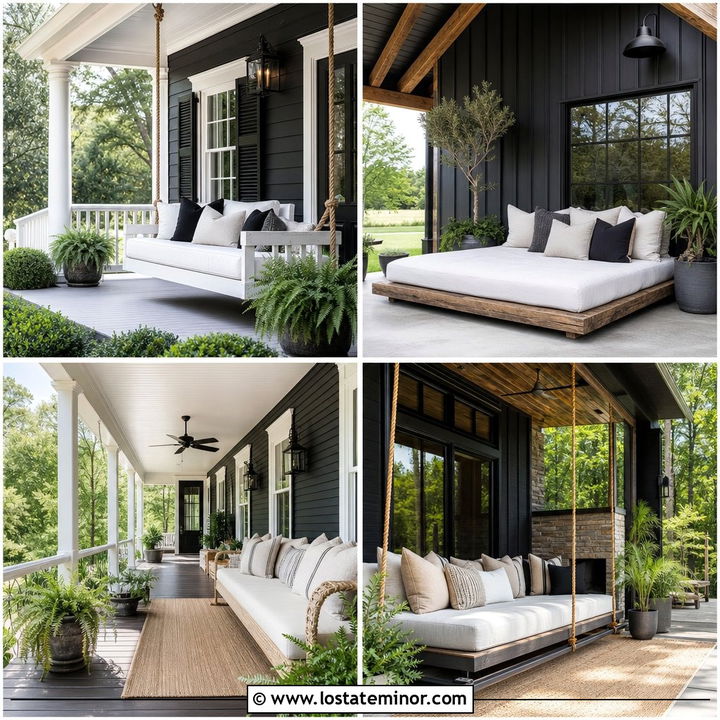
Layering charcoal beneath a soft black facade produces depth without creating a dramatic color break. Select a charcoal ceiling that is two or three steps lighter than the siding and carries a similar undertone. The small shift will become visible in daylight while preserving a tailored monochromatic effect. On an urban townhouse, pair smooth soft black siding with charcoal beadboard, black steel railings, and pale gray stone steps. A medium-stained mahogany door introduces enough warmth to make the entrance welcoming. Keep the trim narrow and dark so the building’s vertical proportions remain strong. Matte finishes generally help these close colors look rich rather than glossy. The resulting exterior is sophisticated, compact, and well suited to streamlined architecture with limited decorative trim.
11. Soft Black House With Cream Porch Ceiling
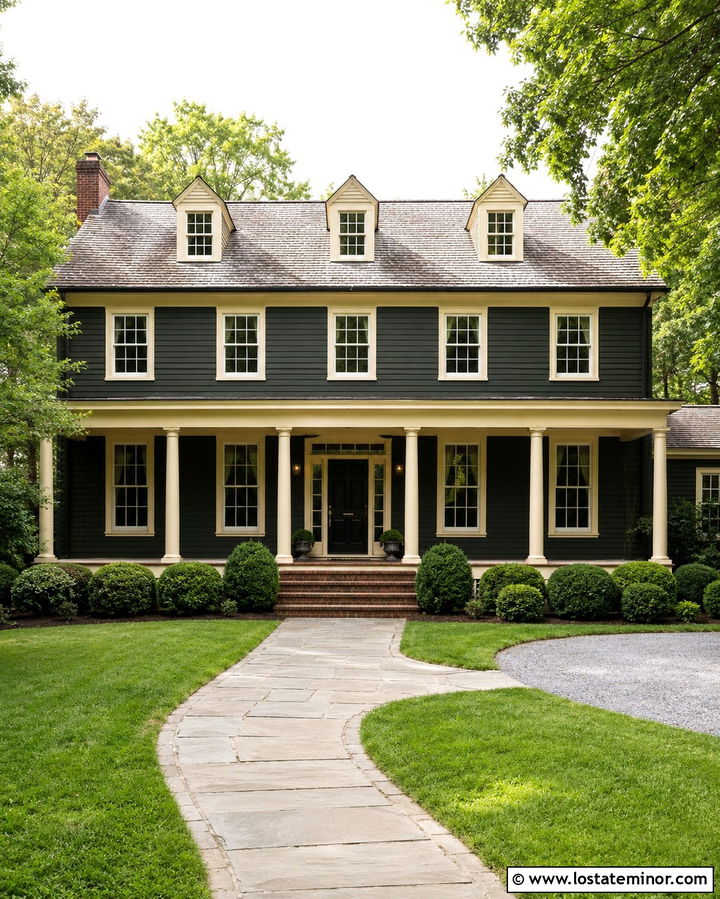
Cream creates a softer transition than pure white and pairs beautifully with black paint that has brown or olive undertones. Use a warm cream across the porch ceiling, window casings, and classical columns to give a soft black Colonial exterior clear structure. A glossy black front door can reinforce the body color, while aged brass hardware adds warmth and refinement. Consider reddish brick steps and a weathered gray roof to keep the home connected to traditional materials. The porch floor can be painted a medium taupe that hides dirt better than cream but still feels coordinated. Symmetrical planters and clipped shrubs will suit the balanced facade. This palette preserves historic character while giving the house a richer, more updated appearance than a standard black-and-white combination.
12. Soft Black House With Douglas Fir Porch Ceiling
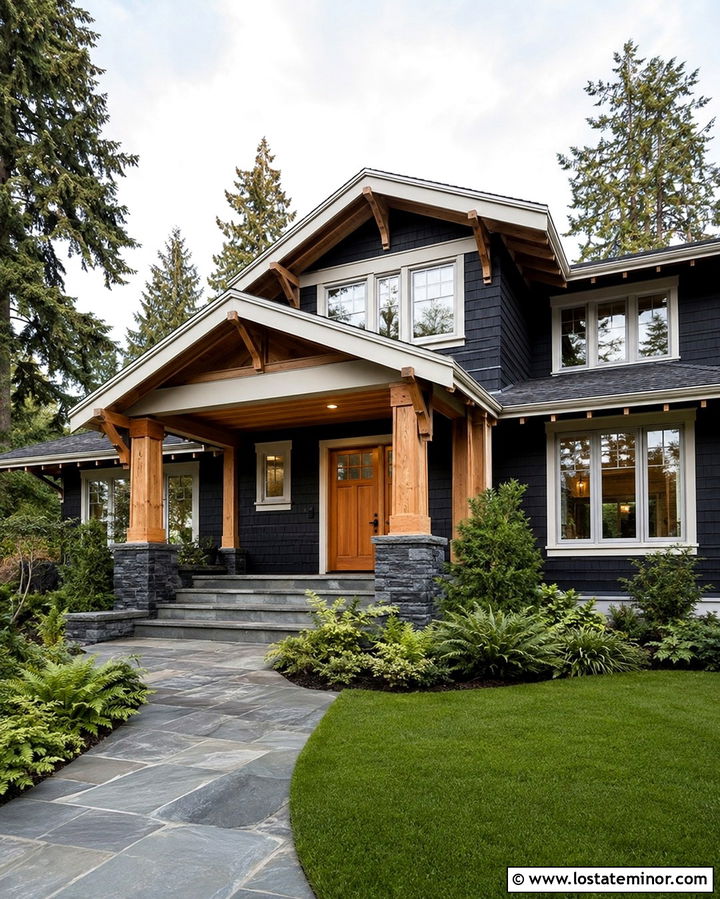
Douglas fir offers warm reddish-gold coloring that stands out clearly against a soft black exterior. It is especially effective on a Pacific Northwest craftsman surrounded by deep green landscaping. Use black shingle siding or lap boards, then install clear-finished fir across the porch ceiling and exposed rafters. Repeat the wood on substantial porch posts and a craftsman front door with divided glass. Dark gray stone piers can anchor the supports and connect the house to a slate walkway. Keep window trim in a muted warm white to maintain definition without overpowering the timber. Wide roof overhangs and black metal gutters complete the sheltered look. The combination feels handcrafted, sturdy, and closely connected to a wooded setting without becoming visually heavy.
13. Soft Black House With Pale Aqua Porch Ceiling
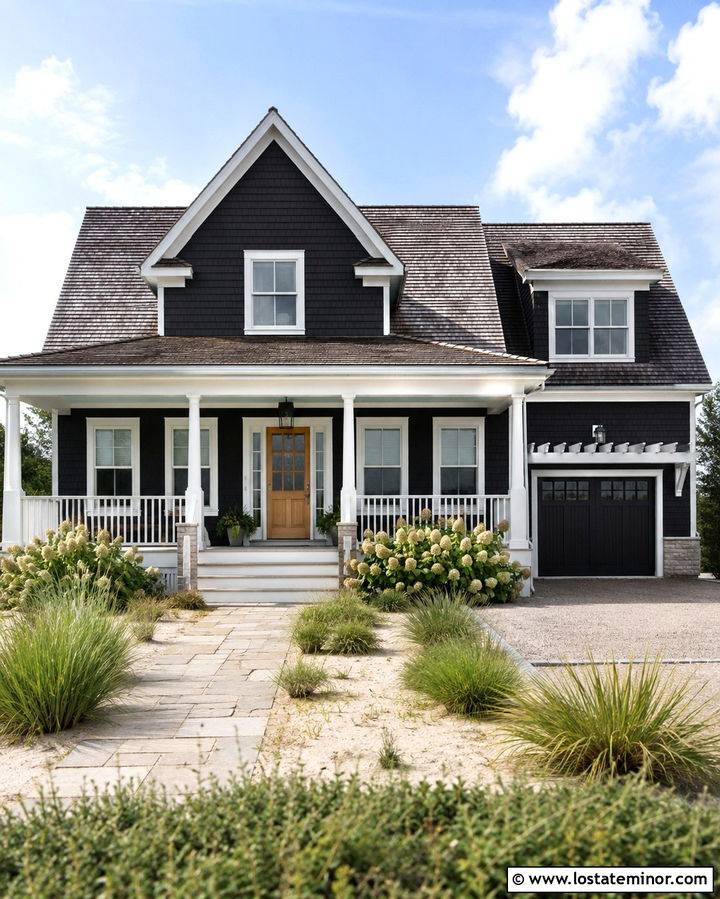
Pale aqua gives a beach house a breezy accent while allowing the soft black siding to remain the dominant color. Choose a gray-green aqua that looks washed and subtle in bright sunlight. Apply it to a beadboard porch ceiling above black cedar shingles, white railings, and simple square columns. A light natural wood front door can add warmth, while a weathered gray shingle roof reinforces the coastal setting. Use pale stone pavers, dune grasses, and hydrangeas to frame the facade. Avoid introducing additional bright colors, since the aqua ceiling already provides a distinctive note. This full-house palette offers a fresh alternative to common white coastal exteriors and gives a traditional cottage enough contrast to feel updated, polished, and memorable.
14. Soft Black House With Plywood Panel Porch Ceiling
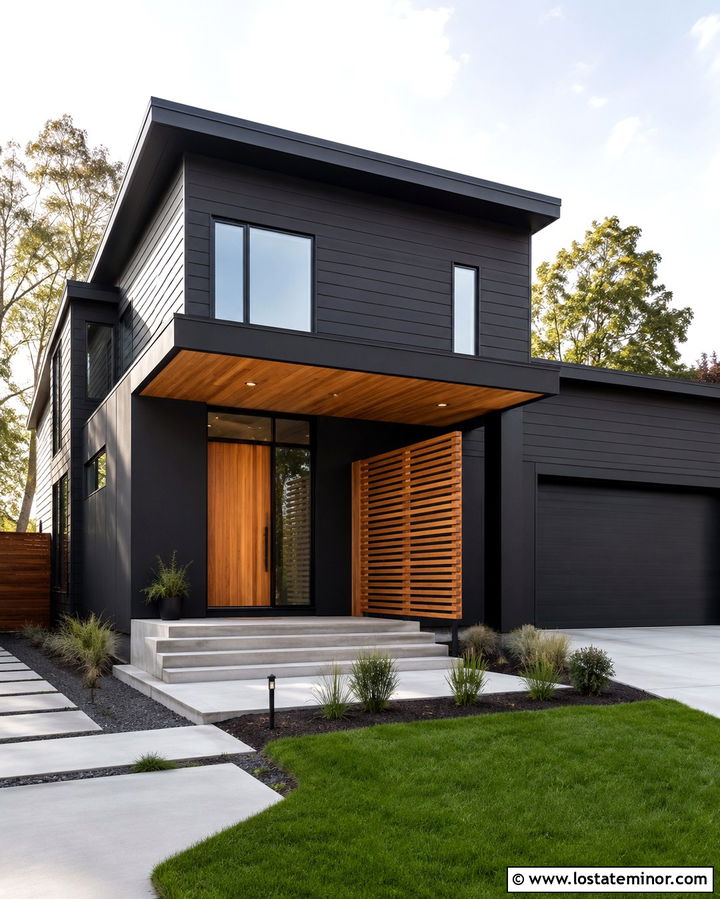
Large wood panels can give a soft black house a clean, modern porch without the visual lines of narrow planks. Use exterior-grade plywood panels with neatly aligned seams and a warm clear finish. Pair them with soft black fiber-cement siding, flat black windows, and a simple cedar front door. A cantilevered porch roof or boxy entry canopy will emphasize the contemporary design. Continue the warm wood on one garage section or a small privacy screen to integrate the ceiling into the wider facade. Smooth concrete steps and restrained grasses complete the composition. Because panel ceilings have fewer decorative details, careful installation is important. Consistent gaps, concealed fasteners, and balanced lighting will help the ceiling look architectural rather than unfinished.
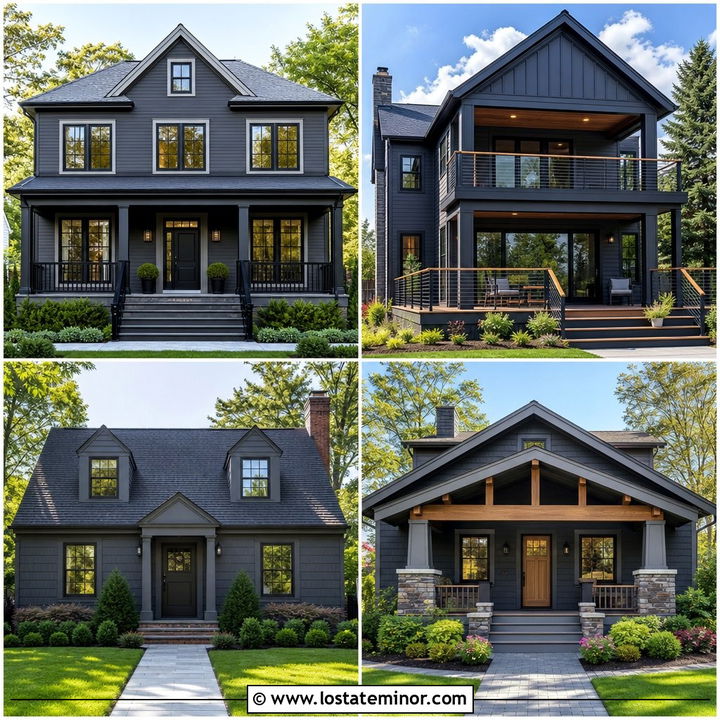
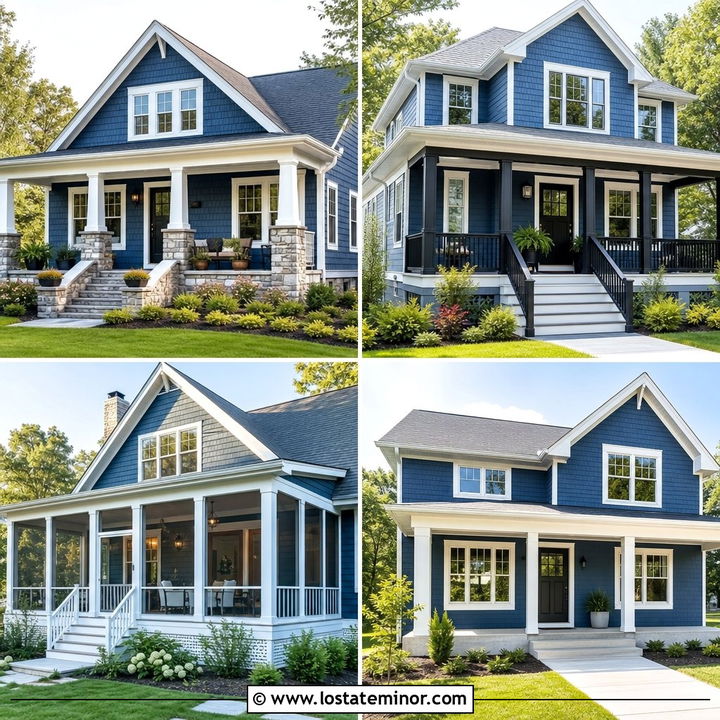
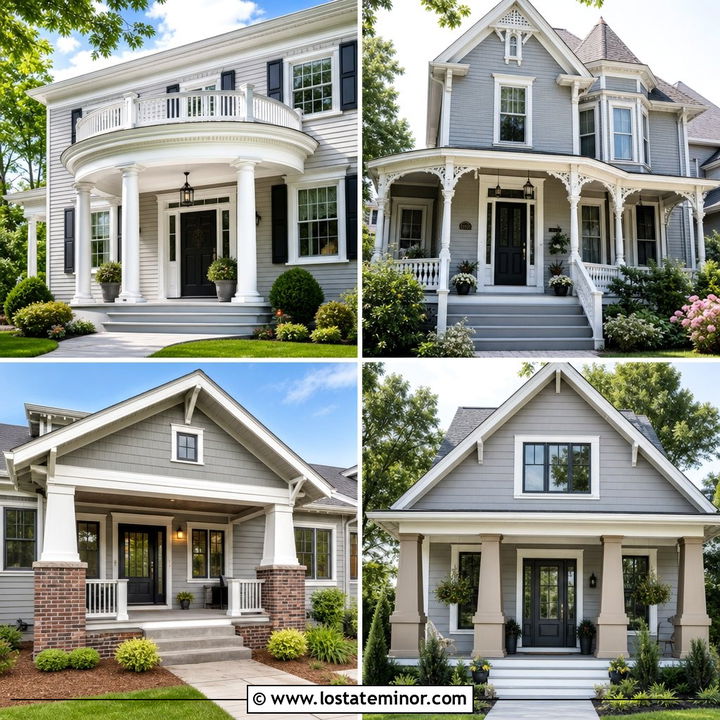
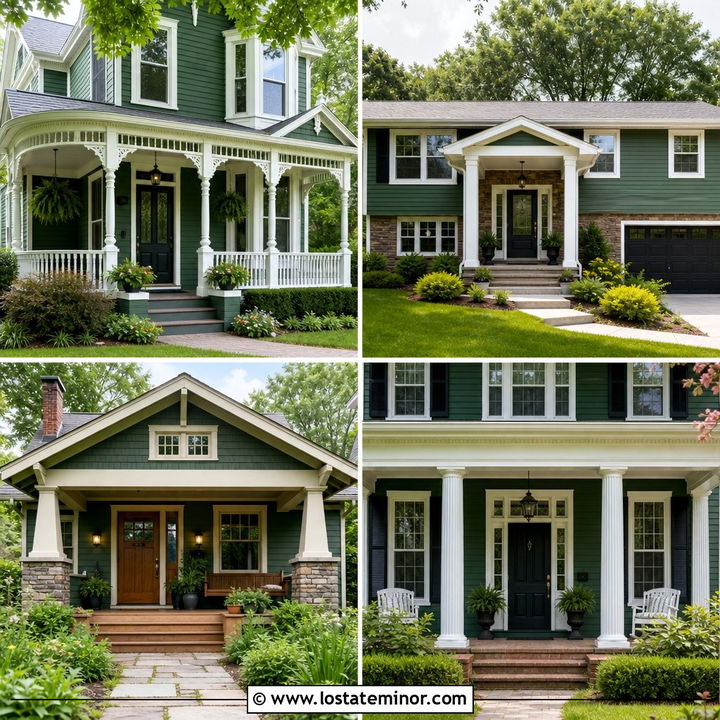
15. Soft Black House With Pale Blue Porch Ceiling
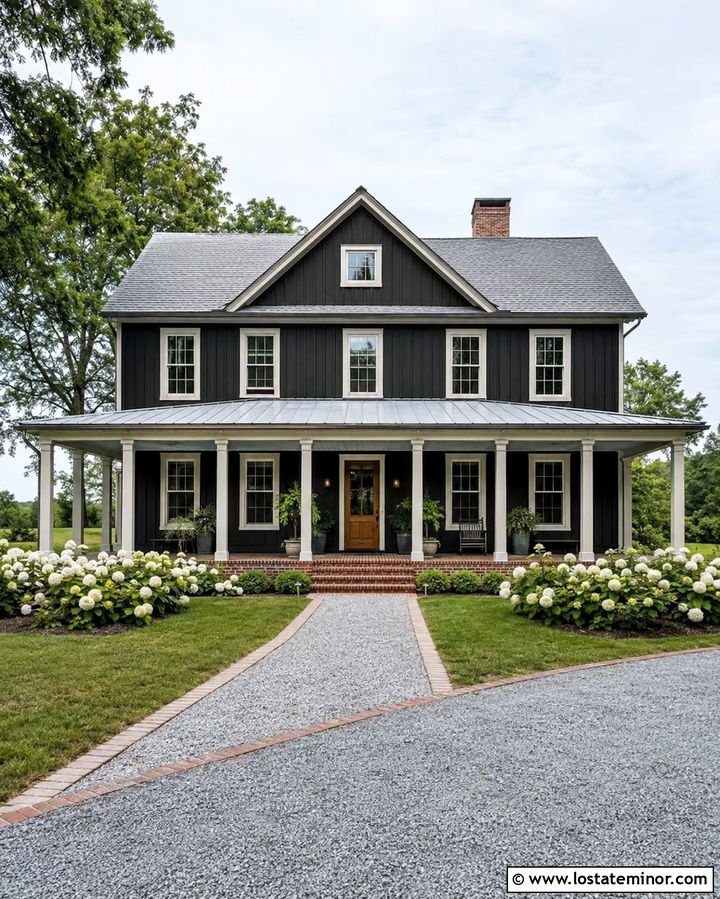
A pale sky-blue ceiling can soften the commanding appearance of a two-story black farmhouse. Keep the blue light and slightly gray so it behaves almost like a neutral from the curb. Use soft black board-and-batten siding with off-white porch columns and window trim. Under the porch, pale blue beadboard will reflect daylight around a natural oak front door. Add a galvanized metal porch roof or weathered gray shingles to support the relaxed palette. Brick porch flooring provides warmth and a subtle traditional texture. This scheme is especially successful on homes with wide wraparound porches because the quiet ceiling color prevents the dark siding from closing in the sitting area. Black rocking chairs and neutral planters can finish the exterior without adding unnecessary color.
16. Soft Black House With Cypress Porch Ceiling
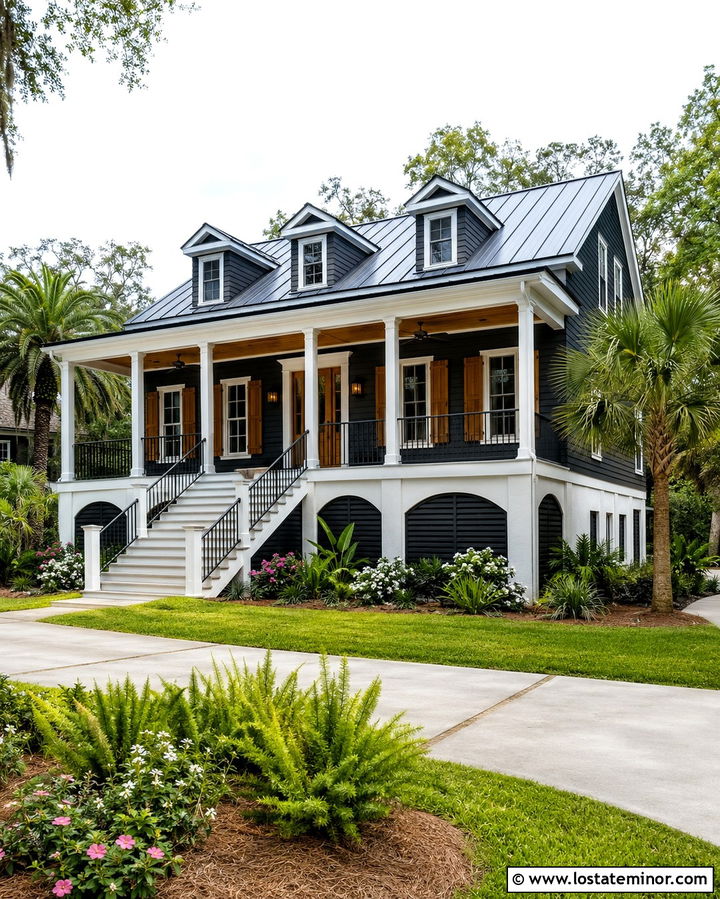
Cypress has a light golden appearance that can warm a soft black house without creating heavy contrast. On a low-country home, use soft black lap siding, white raised foundations, and broad porches with clear-finished cypress ceilings. Repeat the cypress on the front door and simple porch shutters for a connected regional look. White columns keep the facade crisp, while pale gray decking reflects light into the covered area. Choose a dark metal roof to reinforce the black exterior and manage the home’s tall proportions. Lush ferns, palms, and flowering shrubs will complement the natural wood. The final design feels airy despite the dark siding because the light ceiling, open railings, and elevated porch introduce generous areas of visual relief.
17. Soft Black House With Greige Porch Ceiling
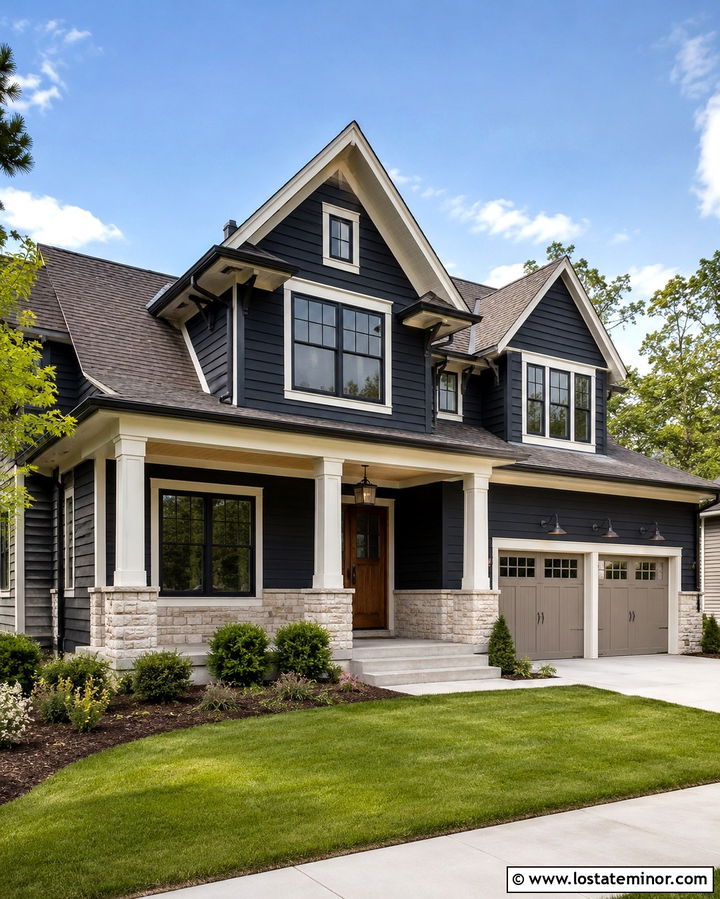
Greige offers a balanced ceiling color for homeowners who want something warmer than gray but quieter than cream. Pair a taupe-based greige ceiling with soft black siding that has similarly warm undertones. On a transitional home, repeat the greige through limestone accents, concrete porch flooring, and subtle garage door panels. Use warm white trim only around key architectural features so the palette remains calm. A stained medium-brown front door can provide a welcoming center without creating a sharp color shift. This scheme works particularly well when the roof has mixed gray and brown shingles. Sample the greige in the porch shade before committing, since a balanced color outdoors may look cooler under a deep overhang. The completed exterior feels layered, neutral, and easy to landscape.
18. Soft Black House With Mahogany Porch Ceiling
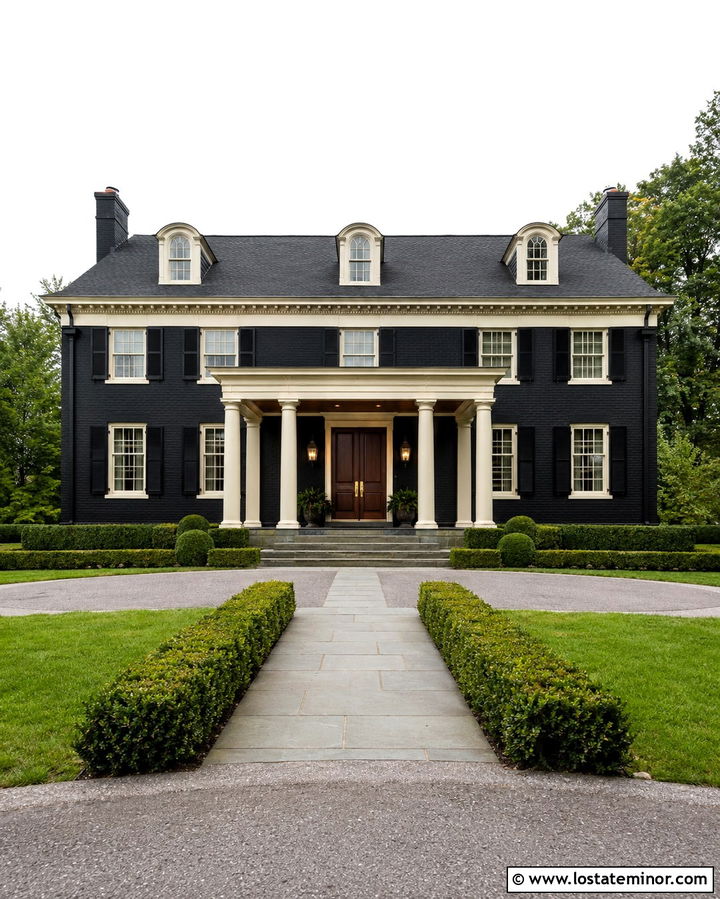
Deep mahogany creates a luxurious porch that complements the richness of soft black paint. Use polished tongue-and-groove boards overhead, but select a stain that shows reddish-brown grain instead of becoming nearly black. On a stately Georgian home, combine soft black brick, ivory window trim, and symmetrical mahogany entry doors. Carry a smaller amount of mahogany onto porch benches or handrails to connect the ceiling to eye level. Bluestone steps and a charcoal roof keep the remaining materials cool and restrained. Traditional brass lanterns can bring out the warmer tones in the wood. Because both the siding and ceiling are visually deep, generous ivory columns and a light porch floor are important. They prevent the covered entrance from appearing closed or overly shadowed.
19. Soft Black House With Soft Pink Porch Ceiling
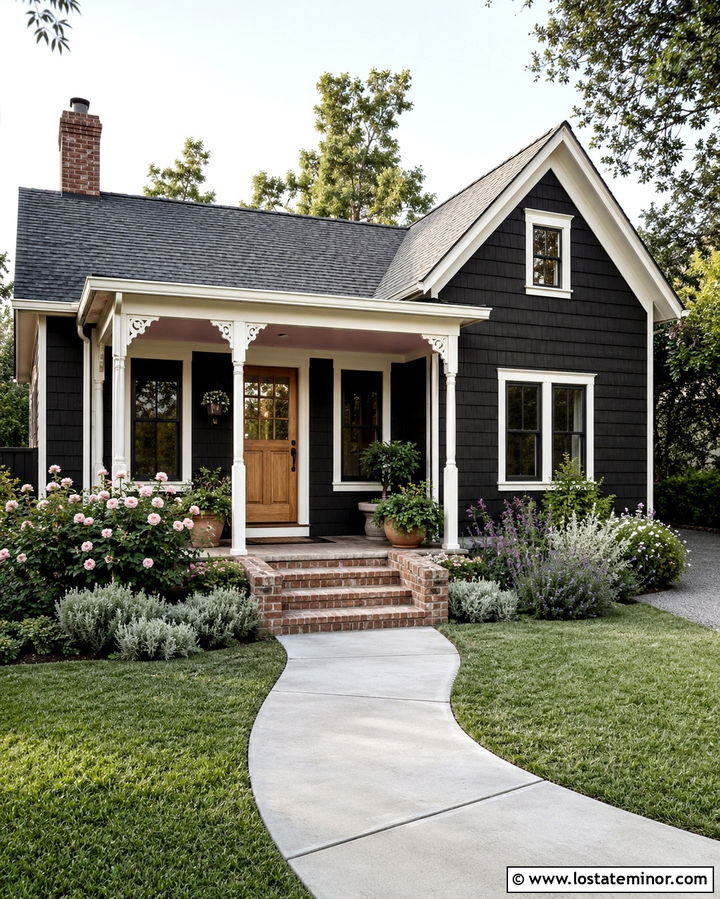
Soft pink may sound unexpected, but a dusty blush ceiling can lend personality to a black cottage without overwhelming it. Select a desaturated pink with beige or gray undertones rather than a sugary pastel. Pair it with soft black shingle siding, warm white trim, and a natural oak front door. A small porch with decorative brackets offers enough ceiling area for the blush color to register subtly. Add aged brick steps and relaxed cottage landscaping with roses, lavender, and silvery foliage. Keep the roof, shutters, and lighting dark to ground the playful accent. The result feels charming rather than themed because the pink remains sheltered beneath the porch. It is a thoughtful way to personalize a compact home while preserving an elegant street-facing exterior.
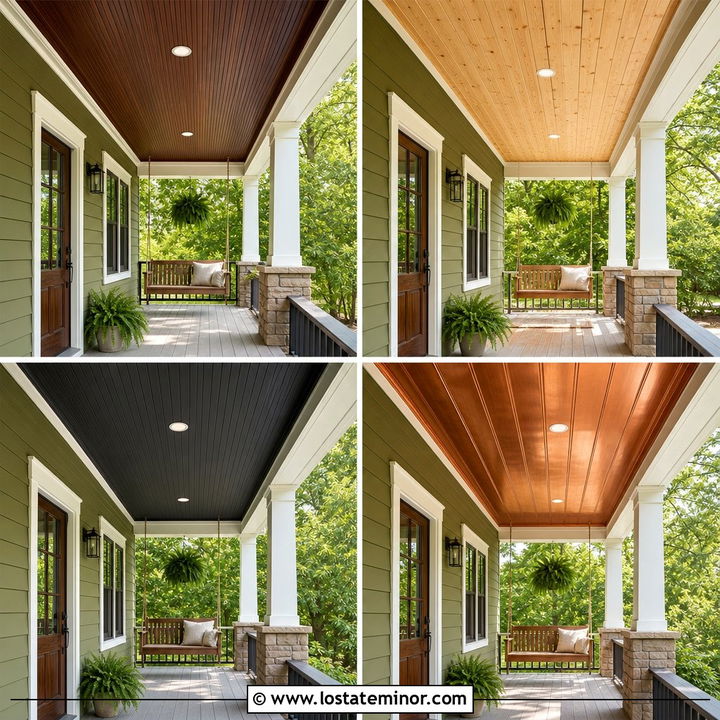
20. Soft Black House With Olive Green Porch Ceiling
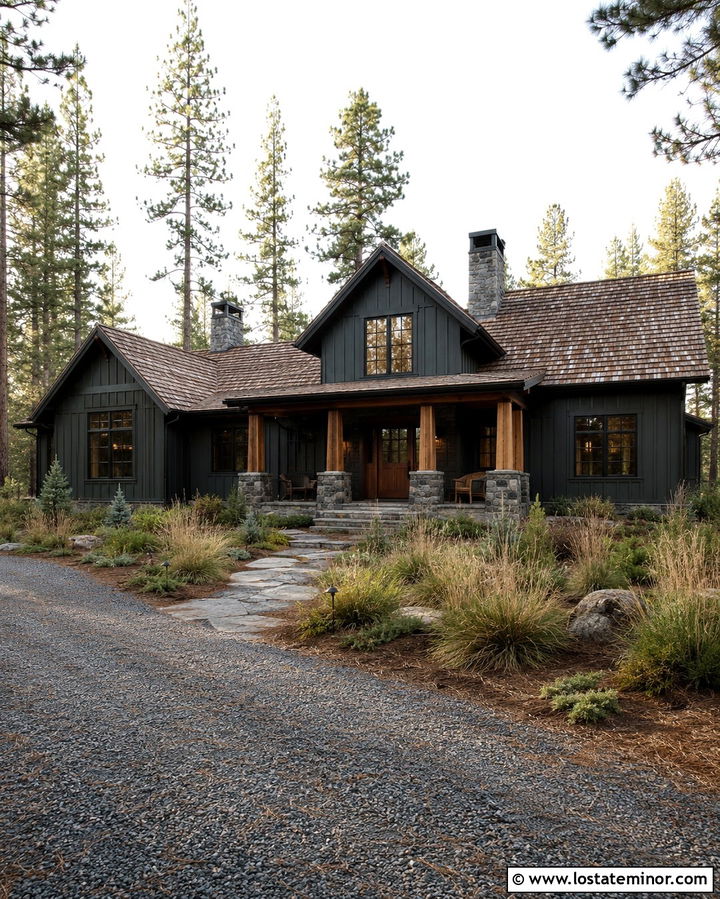
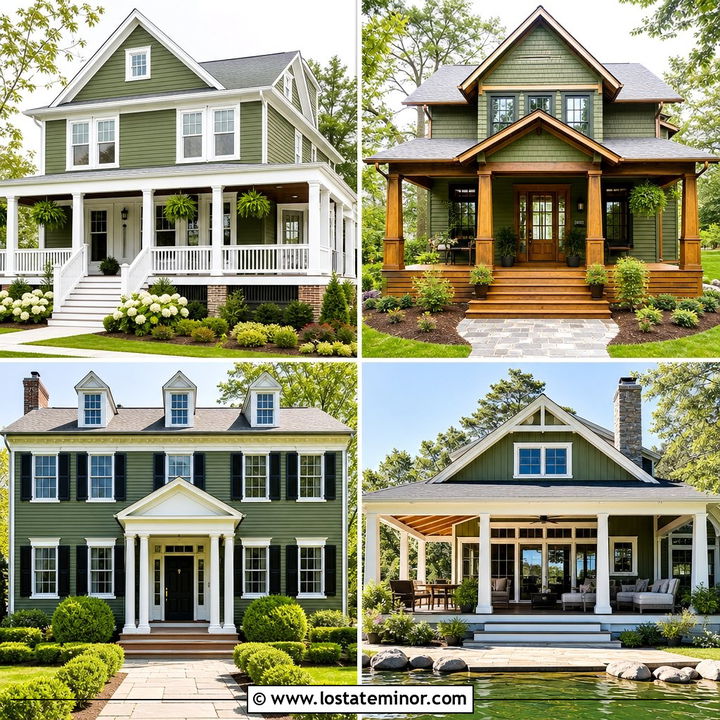
Imagine a dark cabin surrounded by mature trees and muted green foliage. An olive porch ceiling can strengthen that connection to the landscape while warming the soft black facade. Choose a gray-based olive and use it on simple plank boards under the porch roof. Combine the color with black vertical siding, fieldstone porch piers, and rough-sawn cedar columns. A dark walnut front door and bronze windows will deepen the organic palette. For the roof, weathered brown or charcoal shingles can work better than a reflective metal finish. Gravel paths, native grasses, and evergreen plantings reinforce the woodland character. Since olive absorbs more light than pale ceiling colors, use it on an open porch with generous daylight and a light stone or concrete floor.
21. Soft Black House With White Oak Slat Porch Ceiling
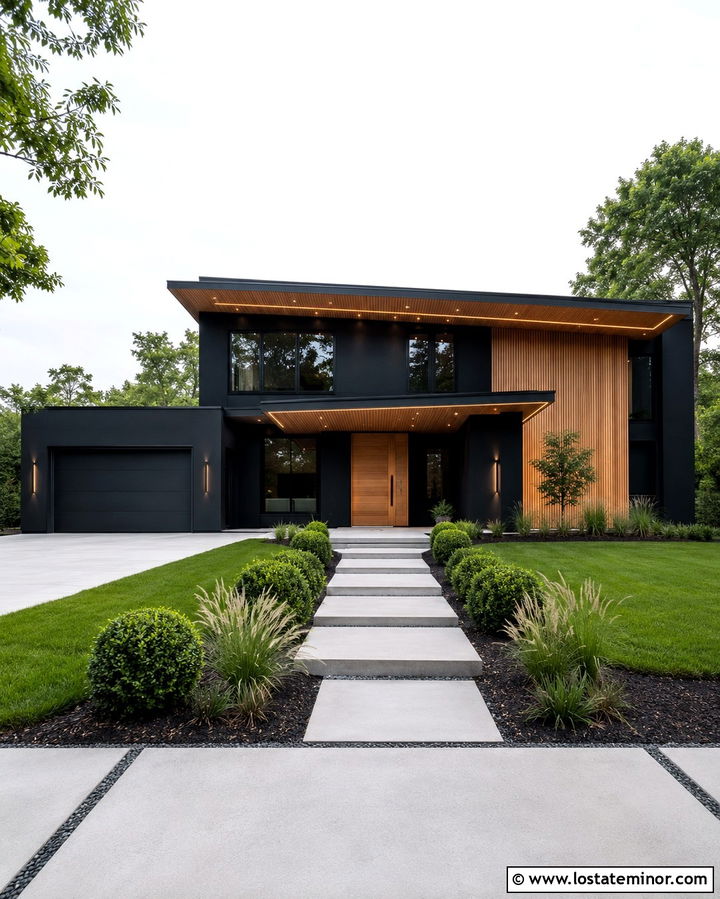
A slatted white oak ceiling adds movement and texture to a streamlined black exterior. The narrow boards create warm linear detail that can guide the eye toward the entrance. Use the treatment on a modern home with soft black stucco, black-framed windows, and a flat or gently sloped porch canopy. Repeat white oak on the front door and one vertical wall panel to make the ceiling part of a complete material composition. Pale concrete steps and large rectangular pavers will keep the entry bright. Integrated linear lighting can sit neatly between selected slats without interrupting the clean design. Finish the exterior with sculptural shrubs and ornamental grasses. This combination balances the strong black mass with natural texture, giving the minimalist facade a more comfortable and residential character.
22. Soft Black House With Warm Gray Beadboard Porch Ceiling
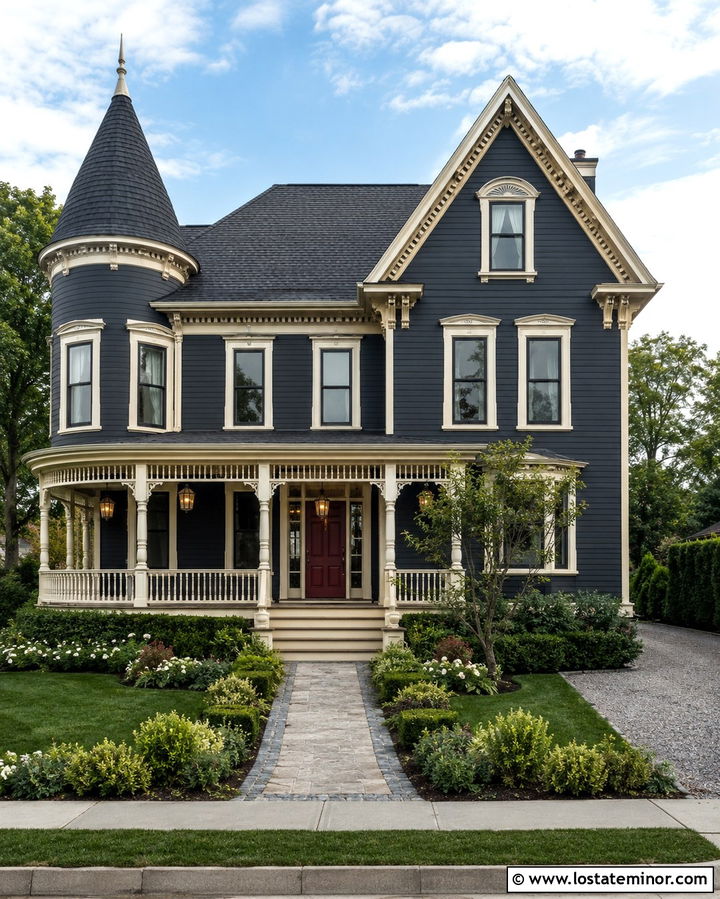
Warm gray beadboard provides subtle contrast while retaining the traditional texture expected on an older porch. This combination suits a Victorian home where ornate trim needs careful color control. Paint the main siding soft black, then use warm gray on the porch ceiling and floor. Highlight brackets, window casings, turned columns, and railings in a gentle ivory. A deep burgundy front door can add historic richness without competing with the decorative woodwork. Keep roof shingles charcoal and choose aged brass or black lanterns. The restrained three-color palette allows intricate architectural details to remain visible while preventing the facade from becoming overly busy. Warm gray also hides minor porch dust better than white, making it a practical choice for a detailed, frequently used covered entry.
23. Soft Black House With Terracotta Porch Ceiling
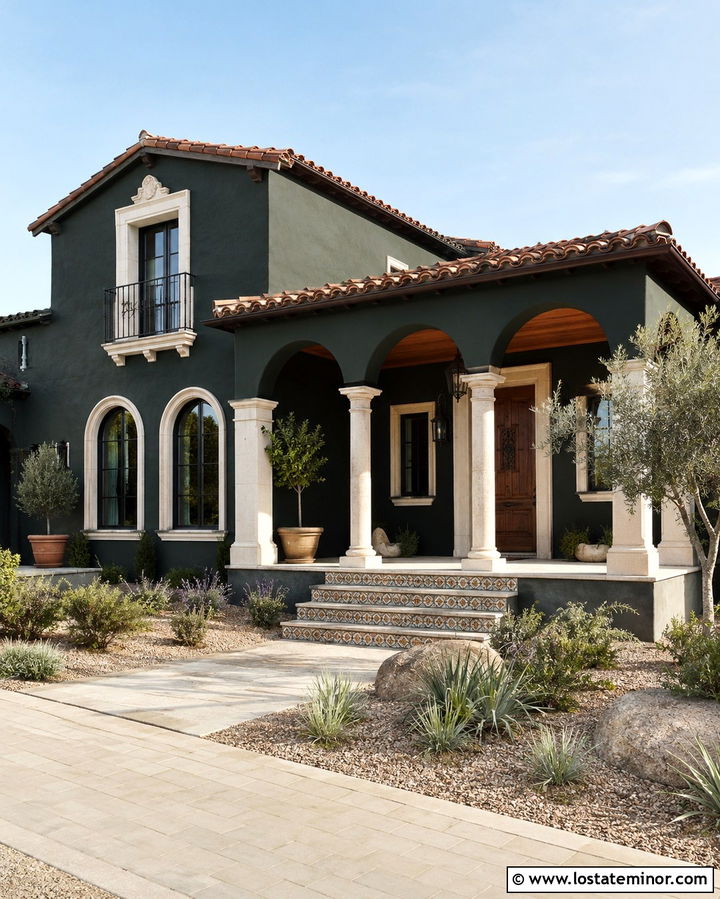
A muted terracotta porch ceiling can give a black stucco house warmth inspired by sunbaked clay. Use an earthy, softened orange-brown rather than a bright red-orange shade. Pair it with soft black walls, dark bronze windows, and creamy limestone trim on a Spanish revival exterior. Clay barrel roof tiles naturally repeat the ceiling color, helping the accent feel connected to the entire facade. A heavy stained wood door and patterned tile risers can add depth around the entrance. Keep the porch floor in pale stone so the overhead color remains balanced. Drought-tolerant landscaping, olive trees, and gravel beds will support the warm regional palette. The resulting house feels dramatic but grounded, with terracotta preventing the black stucco from appearing too cool or contemporary.
24. Soft Black House With Navy Porch Ceiling
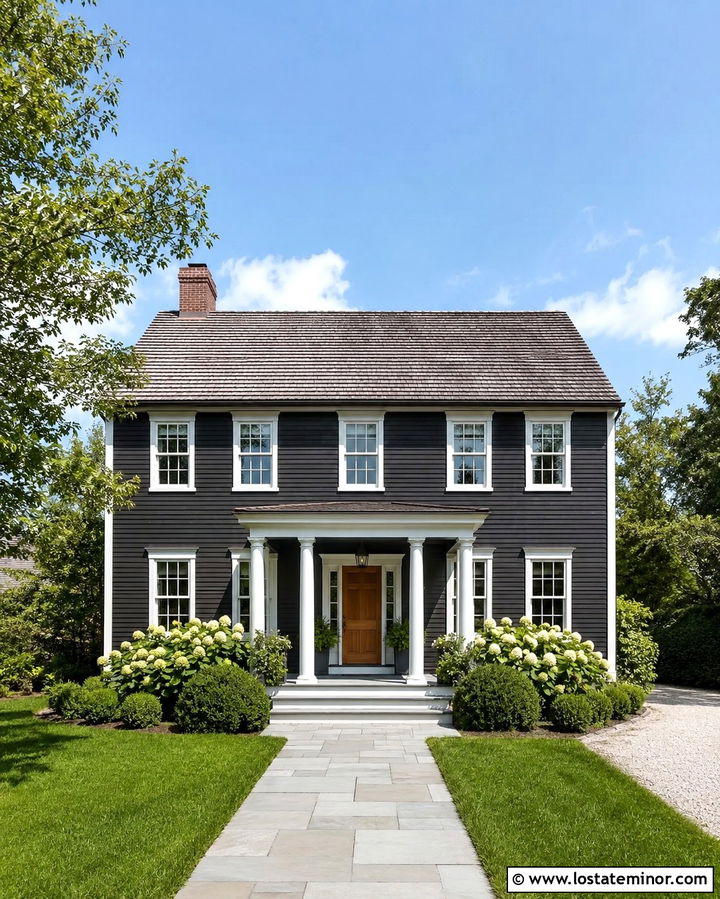
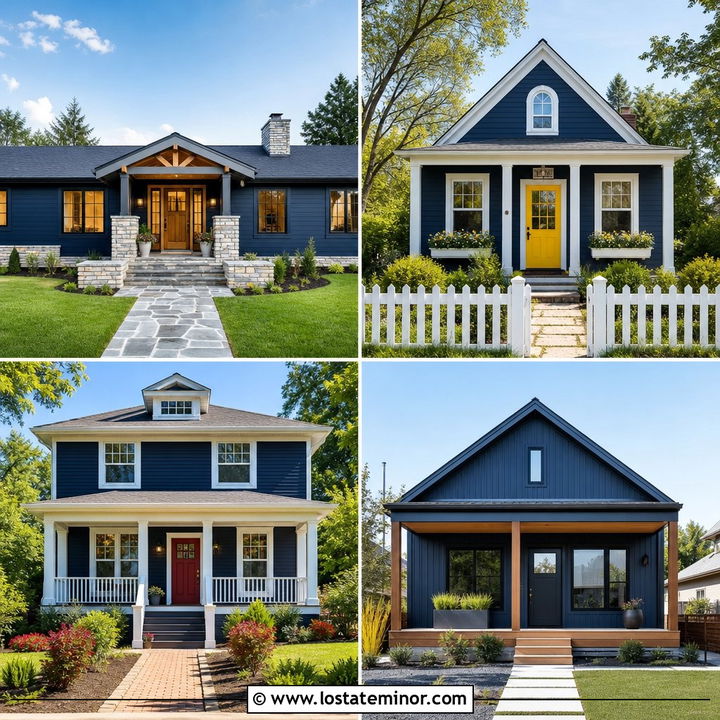
Navy blue offers a restrained color accent that reads more clearly as visitors approach the porch. Choose a softened navy rather than an inky blue-black, ensuring there is enough difference from the exterior siding. On a coastal Colonial, combine soft black clapboard siding with white columns, white window trim, and a navy beadboard ceiling. A warm yellow front door can add a cheerful focal point, although a natural teak door creates a quieter result. Use gray porch boards and weathered roof shingles to bridge the contrasting colors. Hydrangeas and clipped evergreen shrubs complete the classic setting. Because navy is relatively dark, this ceiling works best on a shallow or open-sided porch where bright natural light can reveal its blue character throughout the day.
25. Soft Black House With Limewashed Wood Porch Ceiling
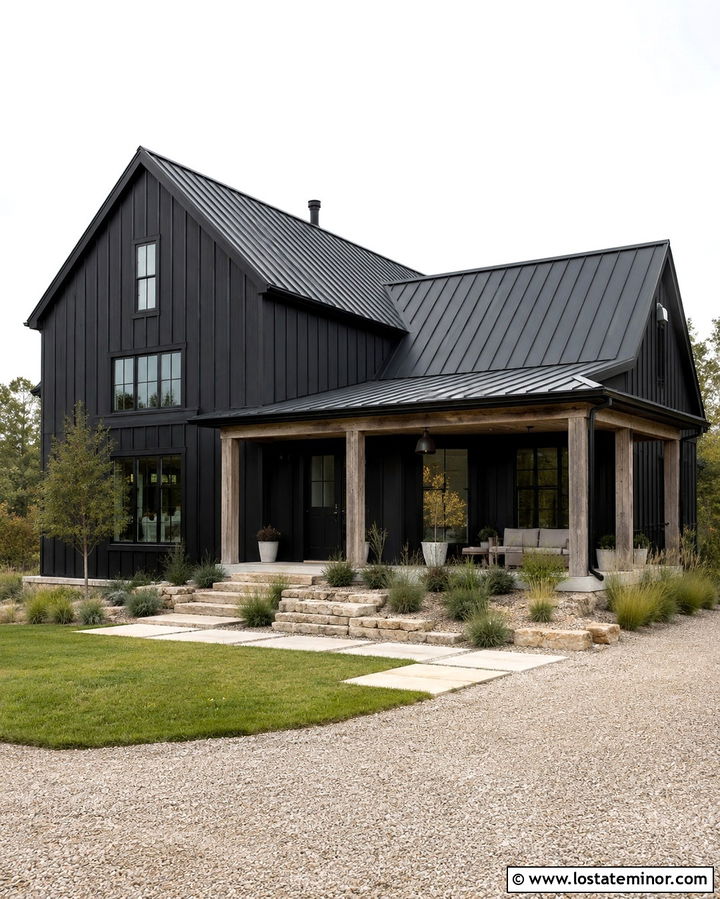
Limewashed wood introduces a pale, weathered texture that can relax a bold soft black exterior. Apply a translucent white or light gray finish that allows knots and grain to remain visible. On a rustic modern barn house, use soft black board-and-batten siding, a charcoal metal roof, and limewashed planks beneath the porch. Chunky natural timber posts can frame the entrance, while a simple black door keeps the focal area uncluttered. Add rough limestone steps and gravel planting beds for a low-maintenance material mix. The faded ceiling provides more character than solid white paint and more brightness than raw dark timber. It also helps the porch feel established, making it suitable for new construction intended to blend into a rural or semi-rural landscape.
26. Soft Black House With Mint Green Porch Ceiling
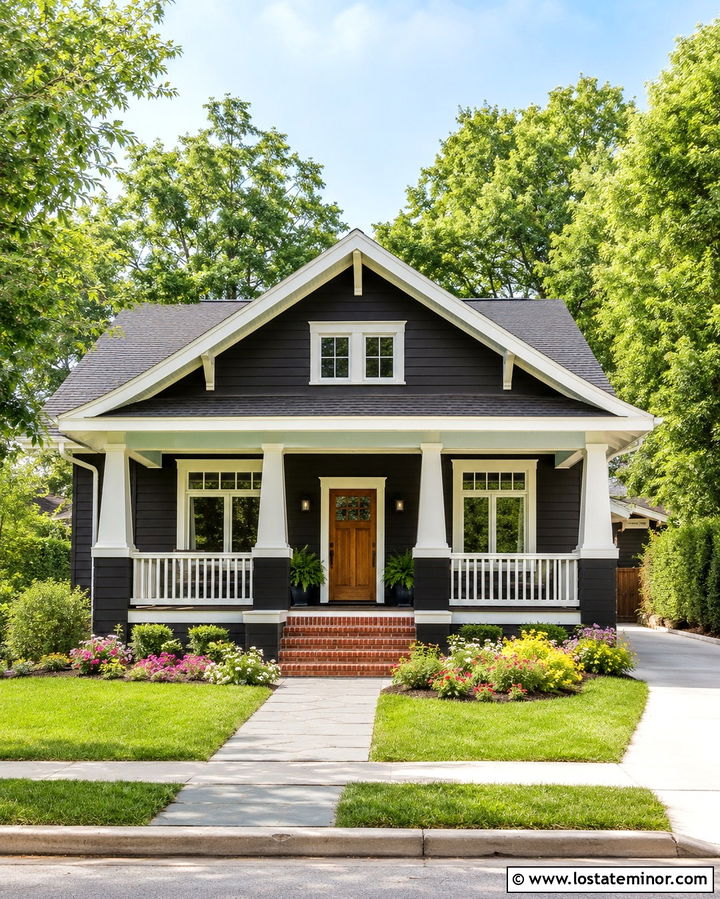
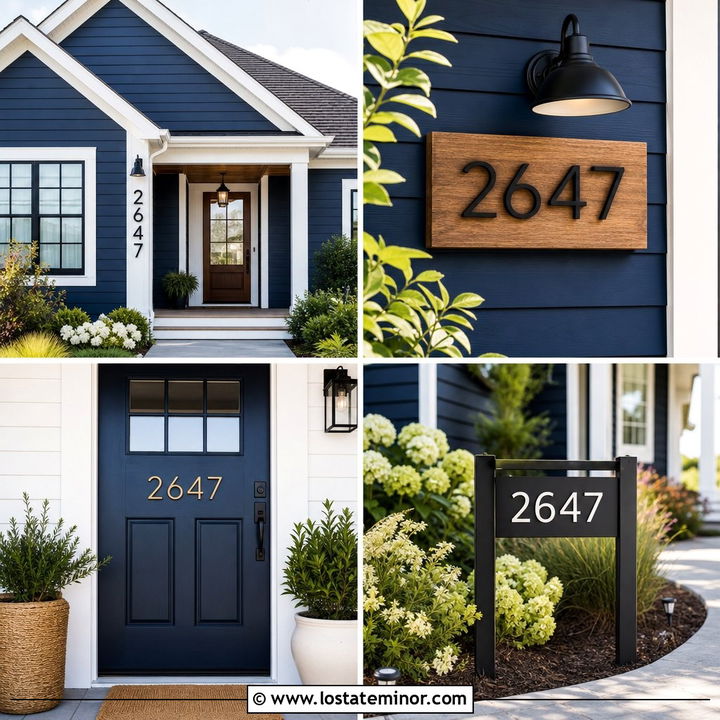
For a lighthearted bungalow exterior, consider a muted mint ceiling with clear gray undertones. The fresh color can brighten a compact covered porch while soft black siding gives the small home visual substance. Use creamy white trim on the tapered columns, window casings, and railing to separate the two colors. A medium-tone wood door and red-brown brick steps keep the palette warm. Repeat mint only in small planters or house numbers if desired; too much will weaken its special overhead effect. A dark gray shingle roof and simple black lighting will ground the composition. This complete look suits neighborhoods with colorful early twentieth-century homes, offering a cheerful detail that feels respectful of traditional bungalow architecture rather than overly trendy or decorative.
27. Soft Black House With Bronze Porch Ceiling
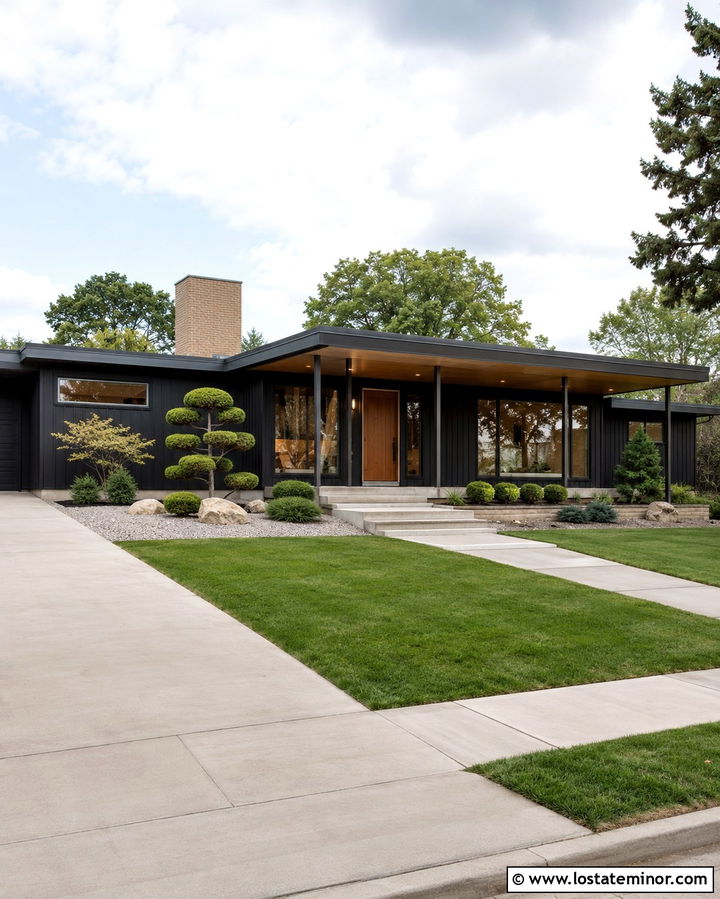
A bronze-painted porch ceiling can bring subtle metallic warmth to a dark contemporary exterior. Instead of using a highly reflective finish, select a satin architectural bronze with brown undertones. Pair it with soft black vertical siding, bronze window frames, and a warm walnut front door. The related finishes create a layered tonal palette that becomes more noticeable in direct daylight. On a midcentury modern home, extend the ceiling beneath a broad low-slope roof and use slim black support posts to preserve open sightlines. Buff brick walls or a stone chimney can introduce a lighter historic material. Finish the property with broad concrete steps, gravel beds, and sculptural evergreens. The overall scheme feels distinctive and sophisticated without relying on bright contrasting paint.
28. Soft Black House With Light Taupe Porch Ceiling
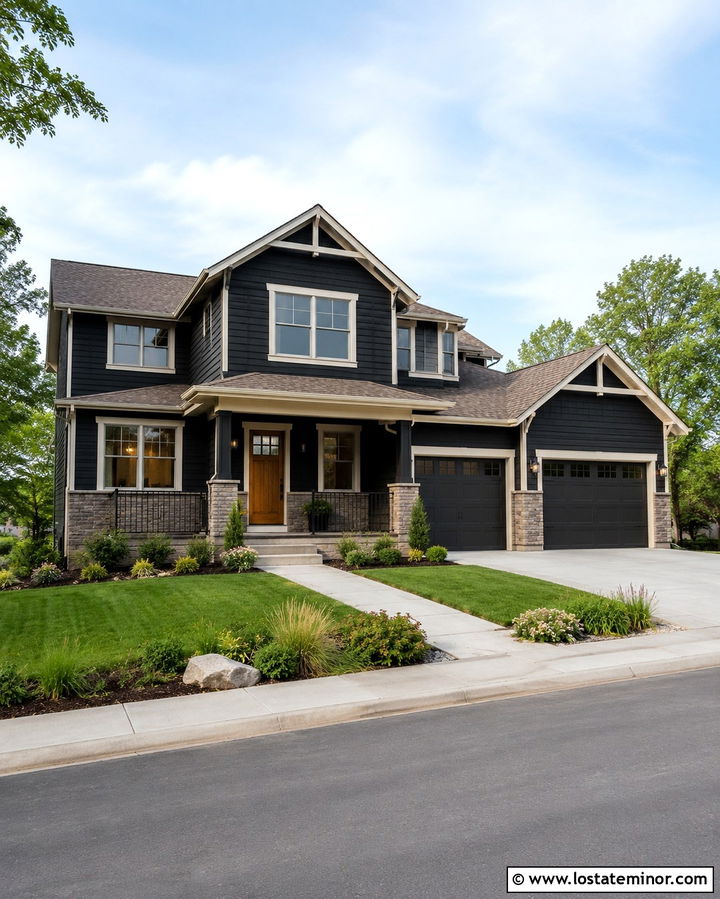
Light taupe can soften a black exterior while connecting naturally to stone, brick, and weathered wood. Choose a pale taupe with balanced gray and brown notes, then use it across the ceiling, porch floor, and selected trim. On a suburban two-story home, pair soft black lap siding with taupe stone veneer at the foundation and garage. Warm white window casings will keep the upper facade defined, while a medium oak door draws attention to the entrance. A variegated brown-gray shingle roof can unify all three neutral colors. Keep porch railings black for continuity with the body. This layered palette feels less graphic than black and white, making it a comfortable option for established neighborhoods where understated, enduring curb appeal is the main goal.
29. Soft Black House With Eucalyptus Porch Ceiling
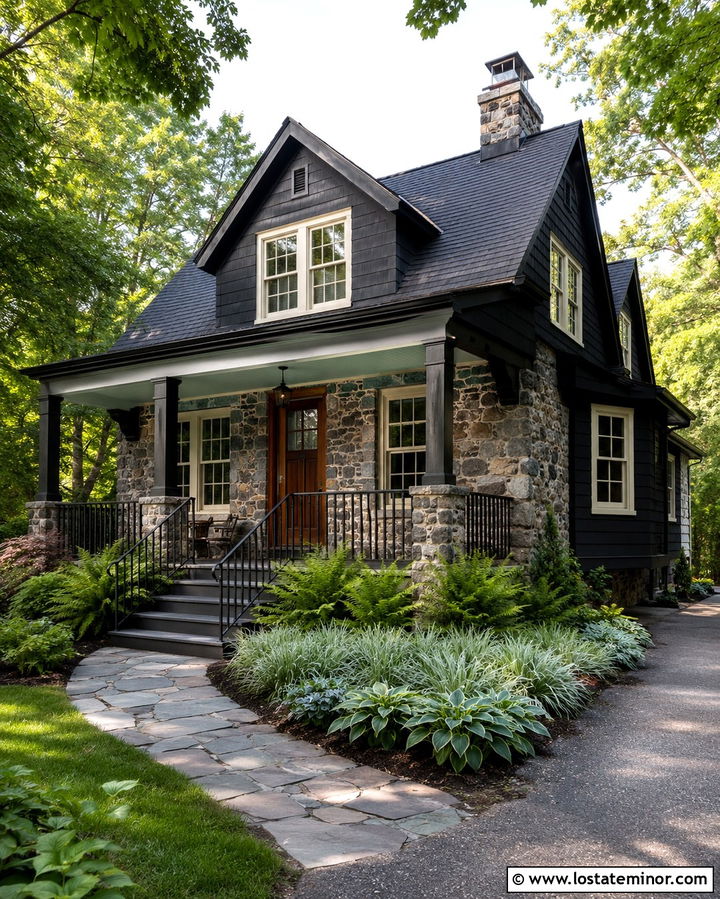
A dusty eucalyptus green ceiling creates quiet contrast against soft black and looks especially appealing beside natural masonry. Use a medium-light green with blue-gray undertones on beadboard or narrow tongue-and-groove planks. For a stone-front cottage, combine black-painted siding with irregular gray stone, eucalyptus overhead, and creamy trim around the windows. A natural chestnut door will add warmth at the center of the composition. Continue soft black on the porch railings and roof to keep the accent controlled. Ferns, hostas, and silvery grasses can echo the ceiling without matching it exactly. This scheme feels calm and garden-focused, making it well suited to homes with shaded yards. The green ceiling also adds identity without requiring a brightly colored front door.
30. Soft Black House With Two-Tone Porch Ceiling
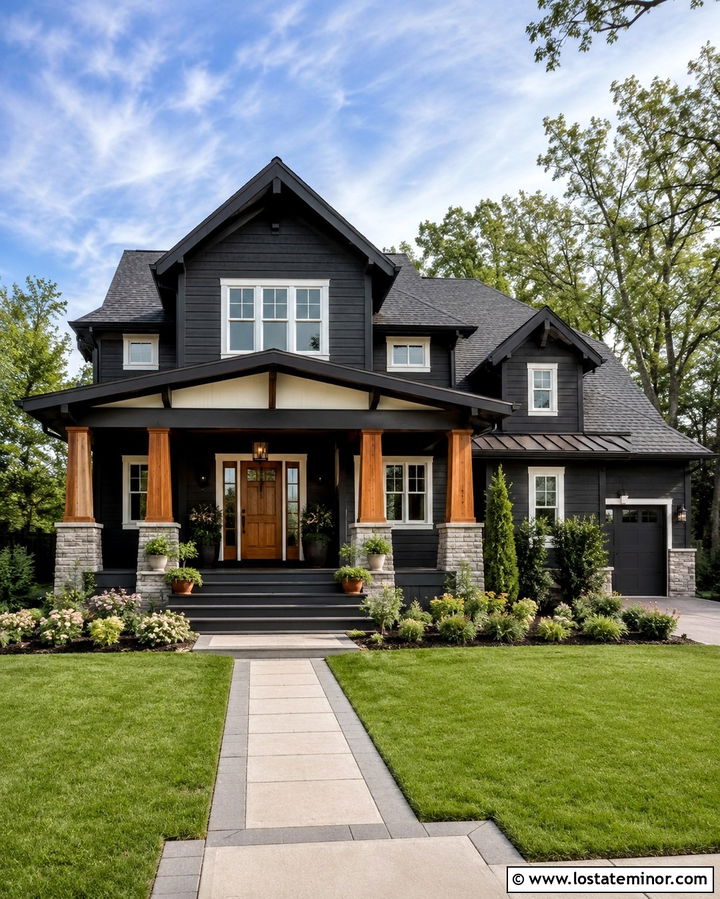
A two-tone porch ceiling can emphasize architecture that would disappear under one continuous color. Paint the main beadboard or plank surface warm white, then finish exposed beams in the same soft black used on the exterior. This combination creates rhythm overhead while connecting the porch directly to the facade. On a modern craftsman, pair the ceiling with black lap siding, white window trim, cedar columns, and a matching cedar front door. Gray stone bases and a charcoal roof can anchor the lighter porch details. Keep beam spacing regular and avoid adding too many decorative fixtures. The resulting exterior feels layered but organized. This option is particularly useful for deep porches because the white field reflects daylight while the black beams preserve definition and architectural strength.
Conclusion:
Successful 30 Soft Black House Design With Porch Ceiling Ideas depend on more than choosing two attractive colors. The ceiling, siding, trim, roof, door, flooring, and landscape should support one coordinated exterior story. Natural woods create warmth, pale blues introduce an airy traditional note, and whites or light neutrals brighten deep covered spaces. Dark charcoal, navy, and olive ceilings offer a more immersive effect for open porches with ample daylight. Always test exterior colors on large movable boards and view them at different times of day. Confirm that the chosen paint or finish is appropriate for outdoor moisture and temperature changes. With careful material repetition and balanced contrast, soft black can feel welcoming, dimensional, and enduring.

Related posts: