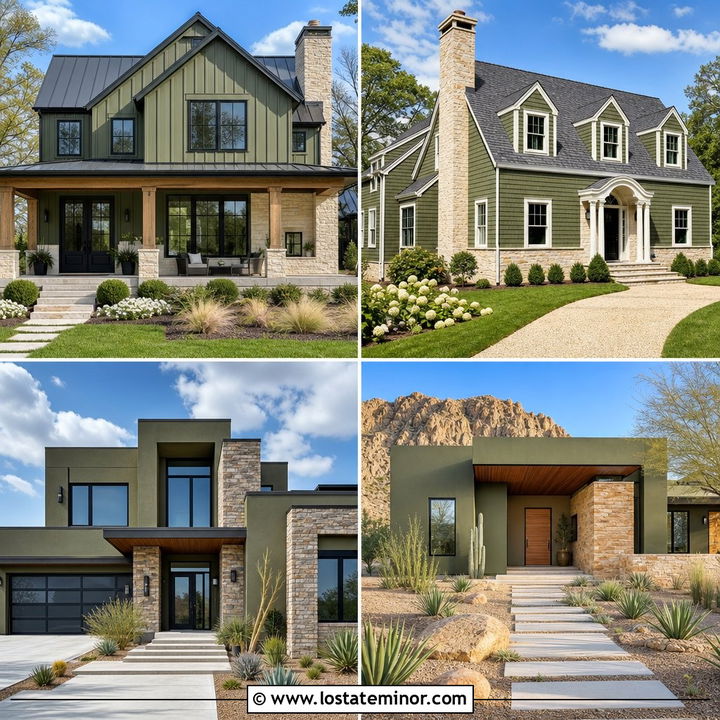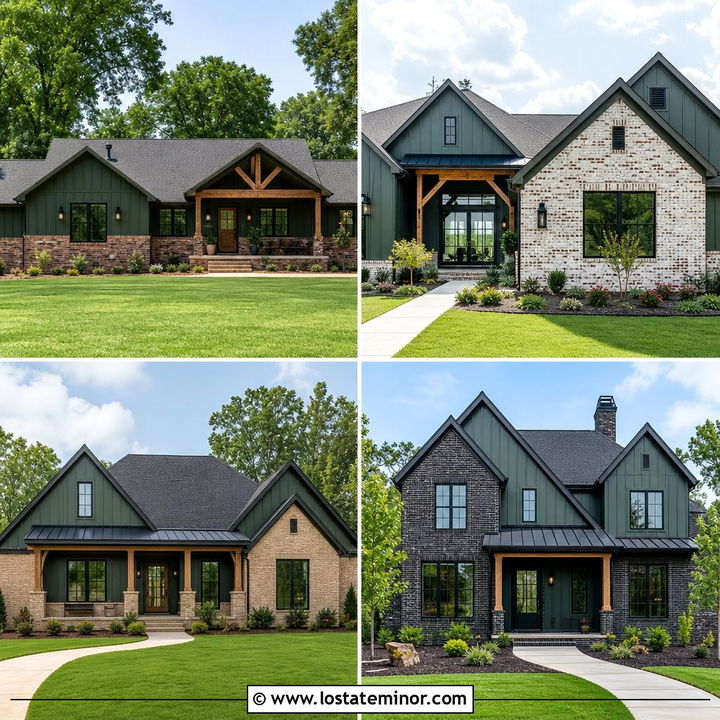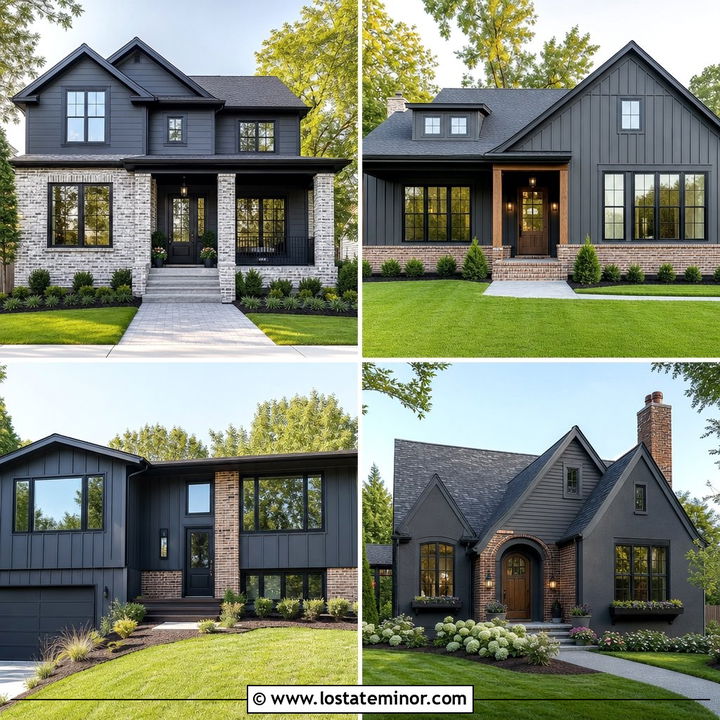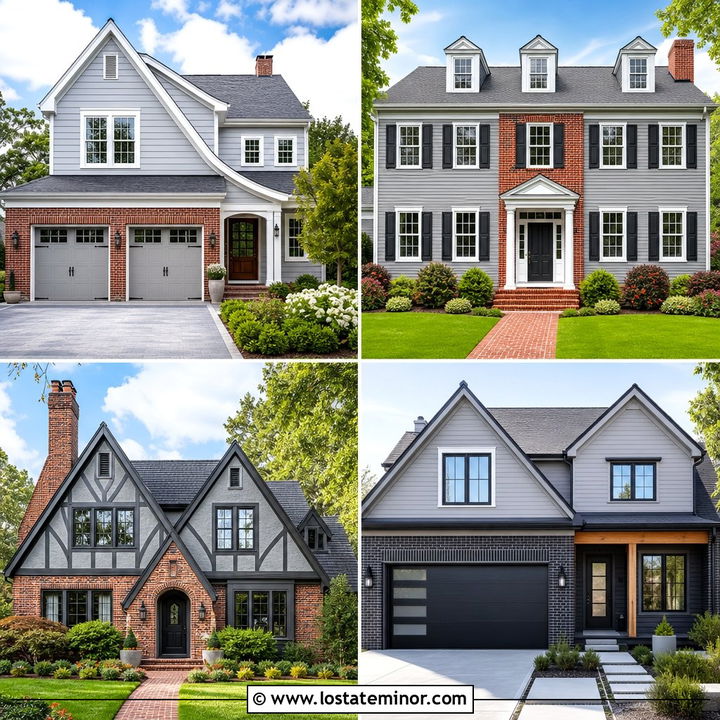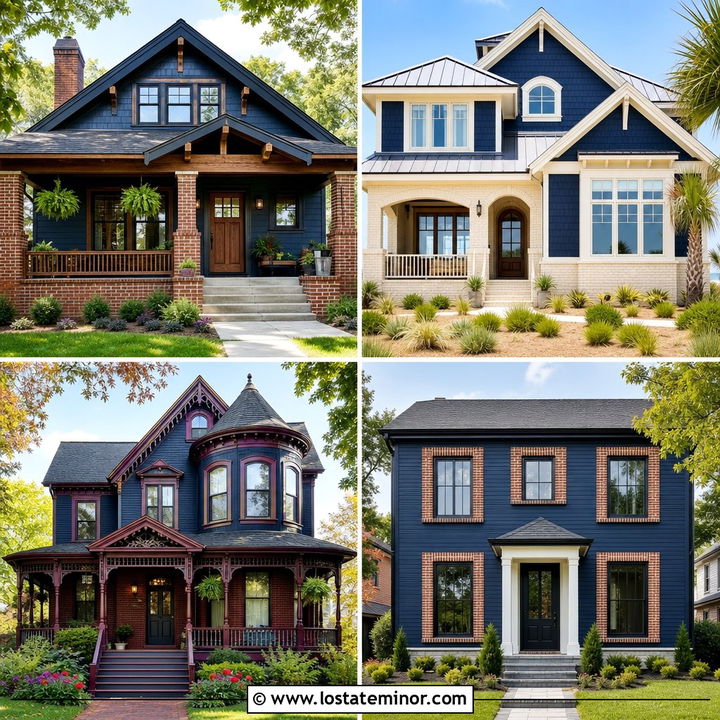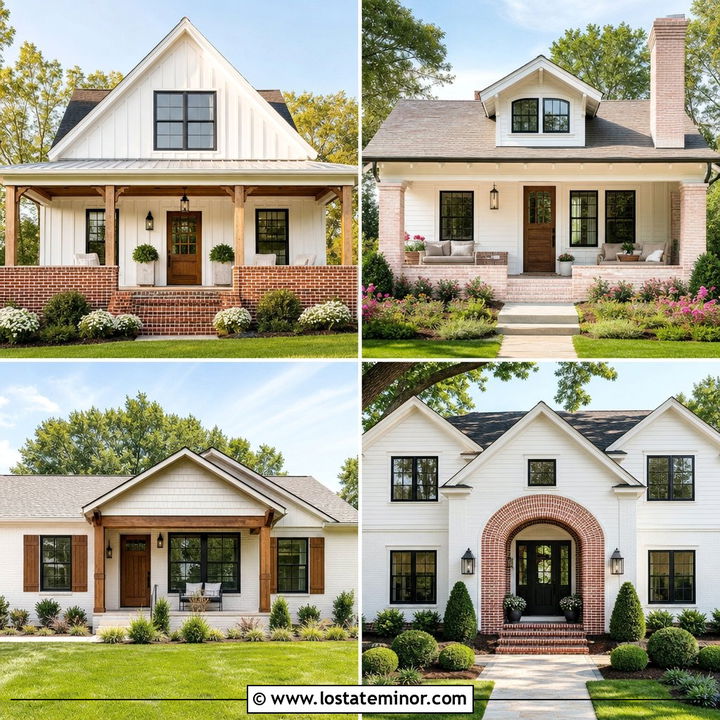
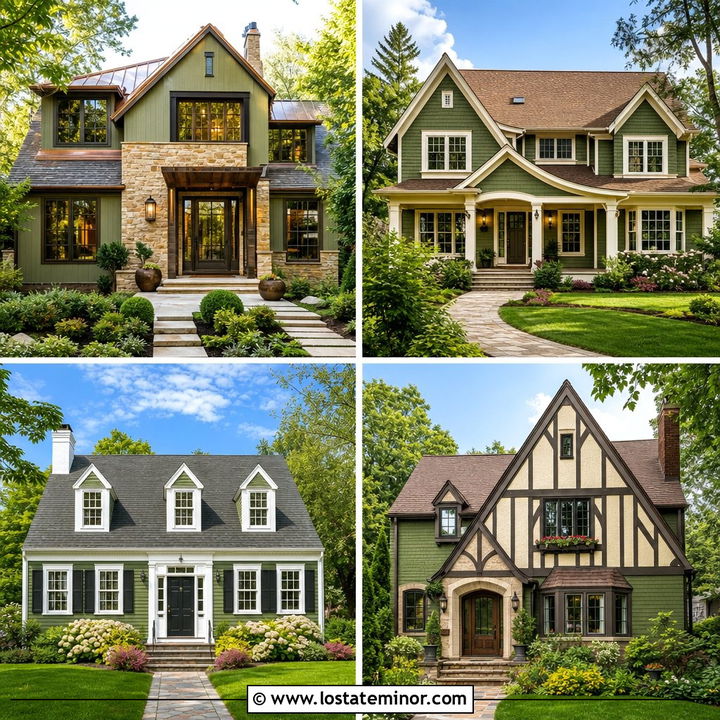
Moss green siding and brick accents create an exterior that feels grounded, welcoming, and closely connected to the landscape. The key is designing a complete palette instead of choosing each finish separately. Brick undertones, mortar color, roof material, trim, doors, and wood features all influence how moss green appears in natural light. These 30 Moss Green House Design With Brick Accents Ideas cover traditional and modern homes, including ranch houses, Craftsman cottages, Colonials, farmhouses, and contemporary builds. You will find combinations for red, brown, cream, whitewashed, charcoal, and reclaimed brick. Each look also includes practical ways to coordinate trim and architectural details. Explore the following 30 Moss Green House Design With Brick Accents Ideas to find a balanced scheme for your home.
1. Moss Green House With Red Brick Foundation
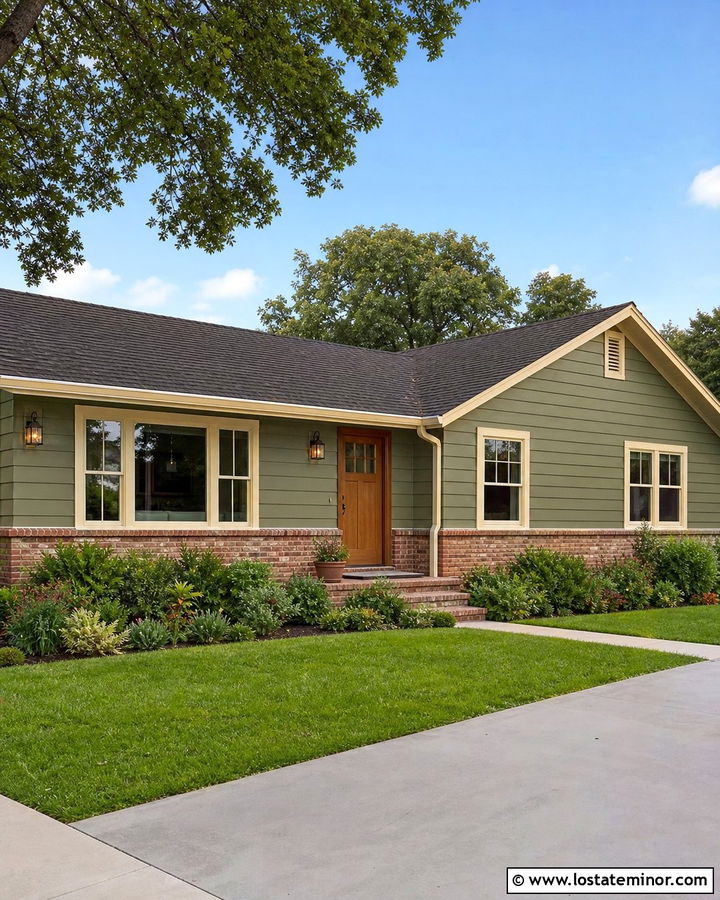
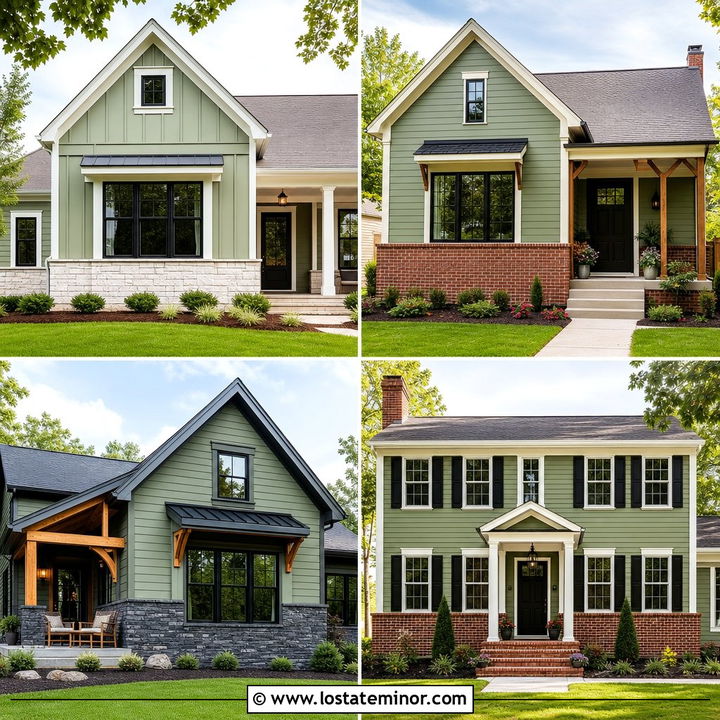
A red brick foundation gives moss green siding a warm, established appearance. This pairing works especially well on a ranch, Cape Cod, or traditional two-story home. Choose moss green with gray undertones if the brick is bright orange-red. A slightly warmer green can complement deeper burgundy brick. Soft cream trim usually creates a smoother transition than stark white, while a stained oak door repeats the brick’s natural warmth. Keep the roof charcoal or weathered brown so it supports both main materials. Black lanterns and simple gutters add definition without making the facade feel busy. Extend the brick around the front steps or porch columns to make the foundation look intentional rather than like a leftover construction detail.
2. Moss Green House With Brick Porch Columns
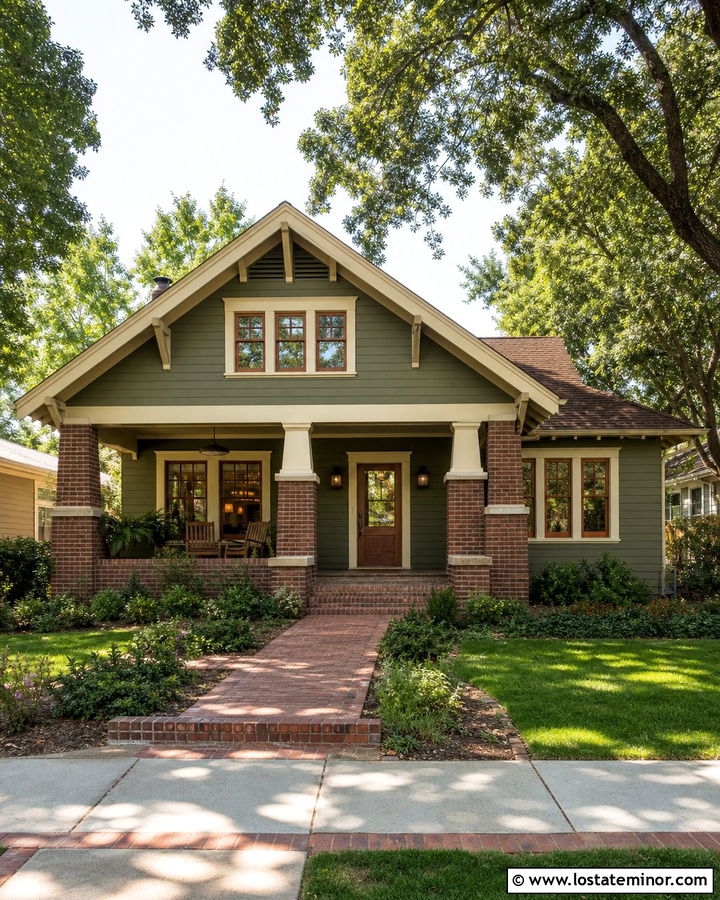
Brick porch columns can anchor a moss green exterior and make the entrance feel more substantial. On a Craftsman or bungalow, use broad tapered columns with brick bases and painted moss green upper sections. Select brick containing brown, rust, and muted red rather than one strong orange tone. Warm ivory trim will highlight the porch roof, window frames, and exposed rafters without creating excessive contrast. A medium-stained wood door adds another earthy layer. Consider repeating the brick in a walkway border or low garden wall for better visual balance. Dark bronze lighting, railings, and house numbers finish the scheme. The result feels detailed and welcoming, yet the materials remain simple enough for a compact home or a modest renovation budget.
3. Moss Green House With Whitewashed Brick
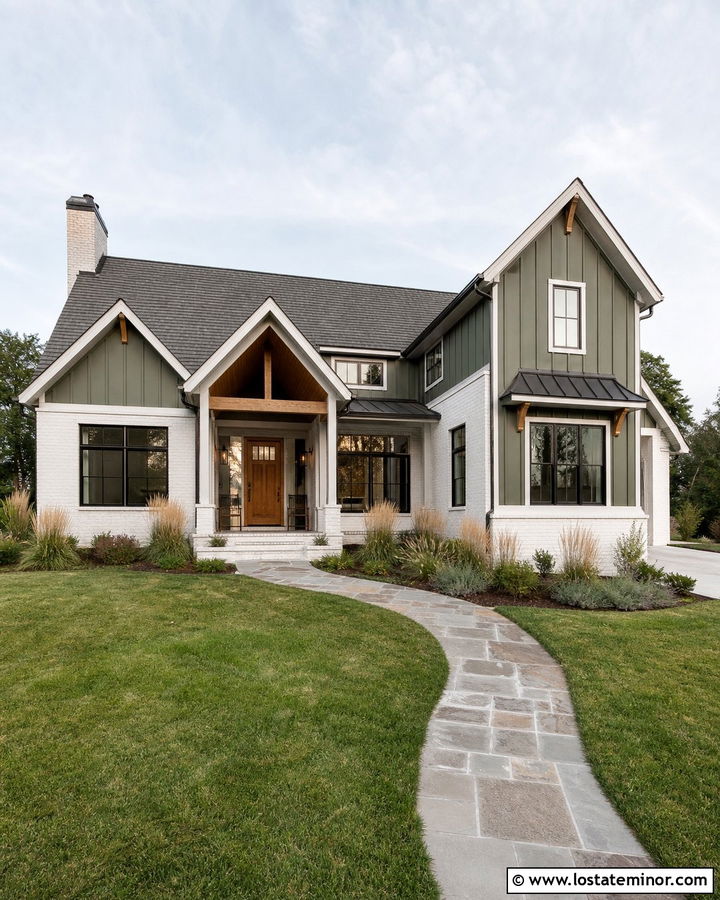
Whitewashed brick gives moss green siding a lighter and more relaxed character. This combination is useful when existing brick feels too red, orange, or visually heavy. Allow some original brick color to show through the wash so the facade retains depth and texture. Warm white trim can connect the brick to the windows and roofline, while moss green board-and-batten siding provides strong vertical definition. A natural cedar door or porch ceiling prevents the pale masonry from looking flat. Choose a medium-gray roof rather than solid black for a softer transition. This complete palette suits modern farmhouses, cottages, and renovated split-level homes. Use restrained landscaping with ornamental grasses, clipped shrubs, and a simple stone path to support the clean exterior.
4. Moss Green House With Dark Brown Brick
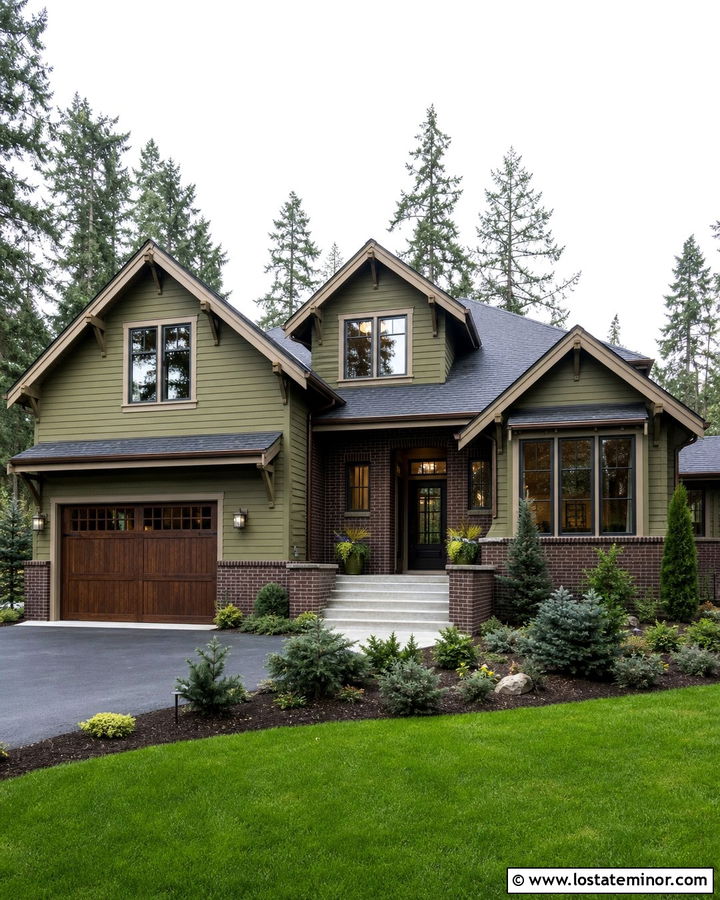
Dark brown brick creates a rich, low-contrast foundation for moss green siding. Because both materials have earthy undertones, the exterior can feel cohesive without appearing overly matched. Use a medium moss green that is noticeably lighter than the brick. Cream or light greige trim will separate the two surfaces and keep windows from disappearing into the facade. A walnut-stained garage door works well when the brick includes chocolate and umber tones. For a more streamlined look, select dark bronze gutters, downspouts, and porch lights. This palette looks particularly attractive on a wooded ranch or contemporary Craftsman. Add light concrete steps and fresh green planting beds to prevent the overall composition from becoming too dark near the ground.
5. Moss Green House With Cream Brick Accents
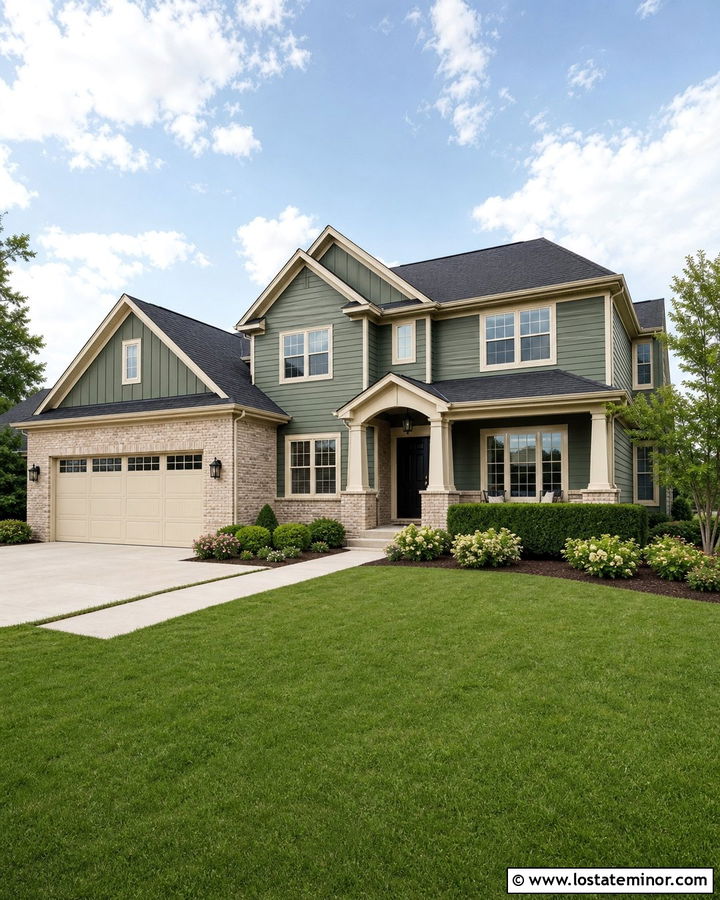
Cream brick brings brightness to a moss green house while maintaining a warm, natural palette. Use it around the entry, chimney, foundation, or garage instead of covering every wall. The pale masonry creates contrast, but it feels gentler than bright white painted brick. Match the trim to one of the brick’s lighter tones, such as soft ivory or warm putty. A dark espresso front door can provide a strong focal point, especially when paired with bronze hardware. This scheme is well suited to suburban homes with large rooflines because the cream brick breaks up broad sections of green siding. A charcoal roof, clean concrete driveway, and layered evergreen landscaping complete the exterior without introducing another competing color.
6. Moss Green House With Brick Arch Entry
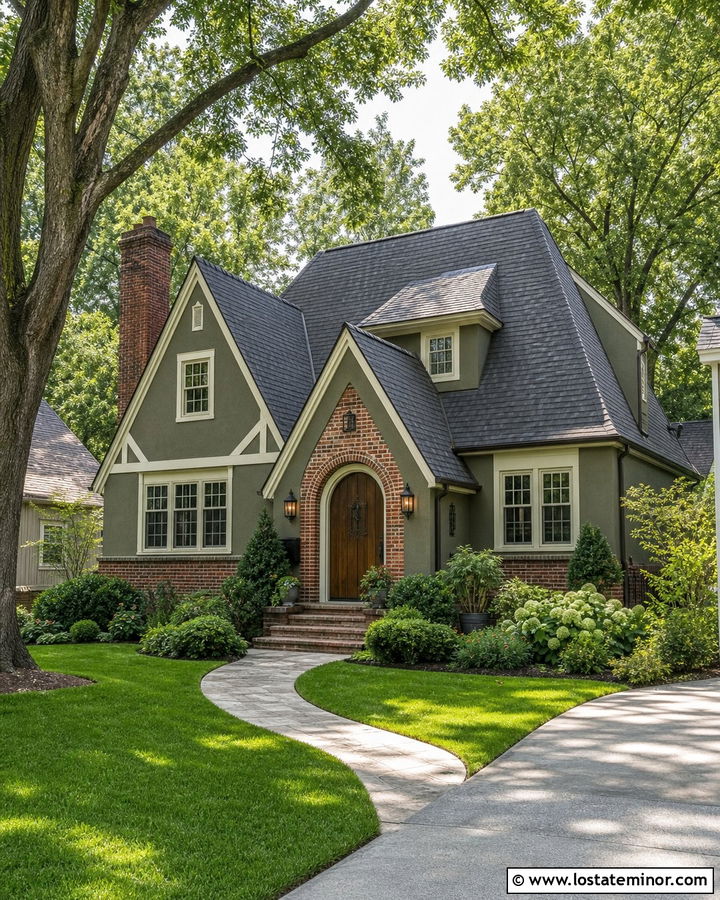
A brick arch gives a moss green exterior an architectural focal point that feels permanent and inviting. Frame the front door with weathered red or brown brick, then continue the masonry along the lower portion of the facade. Keep the remaining siding moss green so the entrance has clear visual importance. Warm white trim around the windows can brighten the composition, while a wood door with an arched glass panel reinforces the traditional shape. This treatment works beautifully on Tudor-inspired homes, cottages, and updated suburban houses. Choose simple black or aged-bronze sconces that follow the curve without crowding it. Low shrubs and a gently curved walkway will guide attention toward the entry and make the brick feature feel connected to the yard.
7. Moss Green House With Brick Chimney
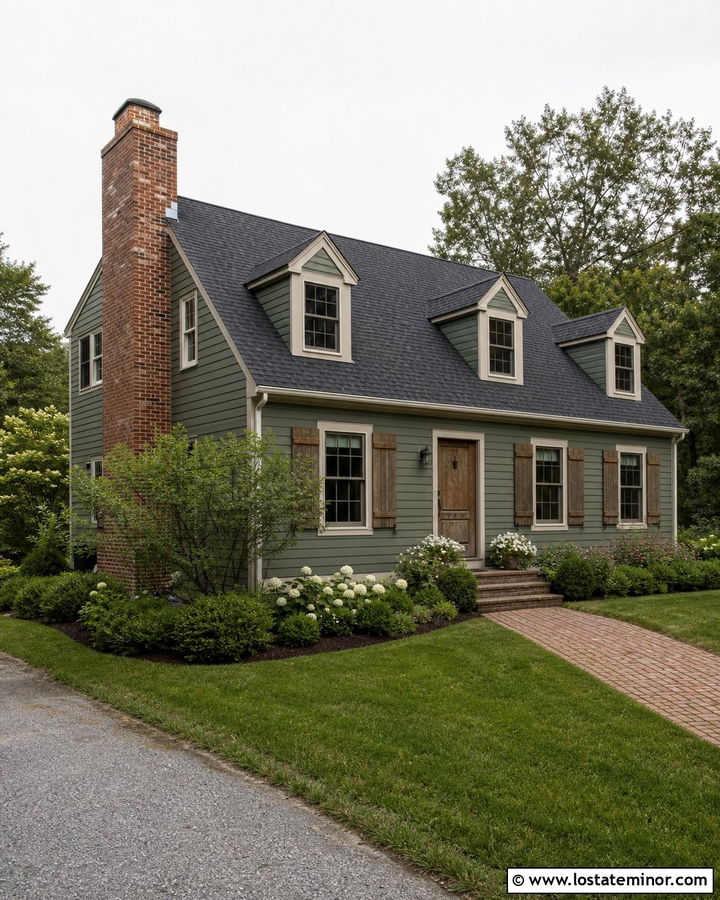
A prominent brick chimney can become the centerpiece of a moss green house rather than an awkward interruption. Let the brick remain natural when it contains warm red, brown, or charcoal variation. Moss green lap siding will soften those colors and help the chimney relate to surrounding trees. Use light beige or creamy white trim to define windows and eaves. A weathered wood door and matching shutters can repeat the rustic quality of the masonry. If the chimney sits off-center, balance it with a brick porch base, planter, or walkway on the opposite side. A dark gray roof works with both green siding and aged brick. This complete look is especially appropriate for Cape Cod homes, cabins, and traditional cottages.
8. Moss Green House With Black Trim And Brick
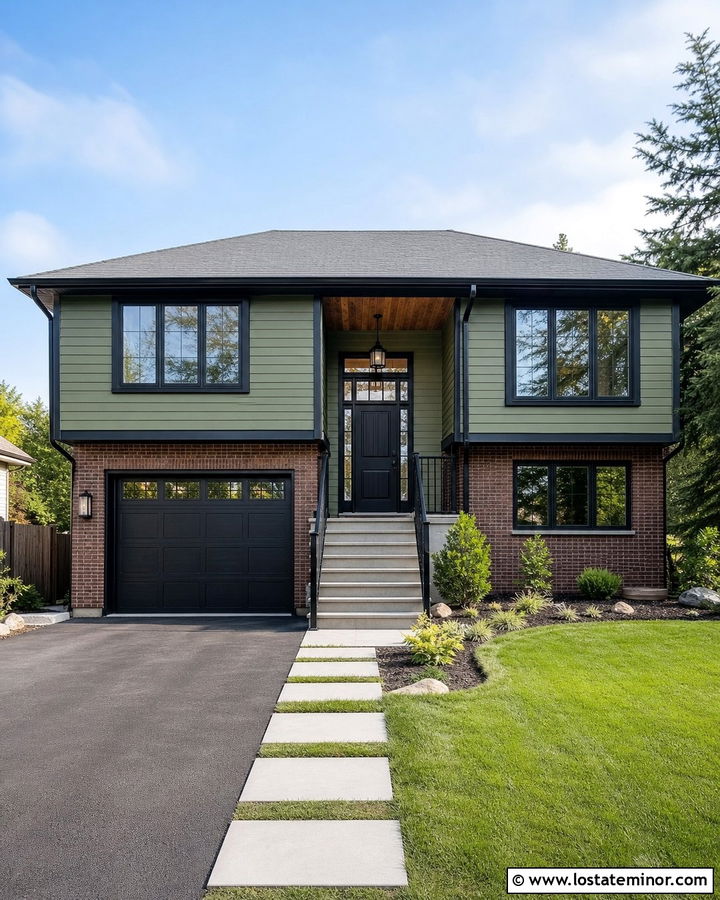
Black trim gives moss green siding and traditional brick a sharper, more modern edge. Use it selectively around windows, gutters, porch railings, and the front door rather than outlining every small detail. The brick should remain the warmer material in the palette, preferably with red-brown or deep burgundy tones. Moss green siding acts as the bridge between the brick and black accents. A natural wood porch ceiling or garage door can keep the facade from feeling severe. This scheme is ideal for a renovated split-level, modern ranch, or contemporary Craftsman. Choose a charcoal roof that blends with the trim. Clean foundation planting, rectangular concrete pavers, and minimal exterior decor reinforce the structured look while allowing the brick texture to remain visible.
9. Moss Green House With Cream Trim And Brick
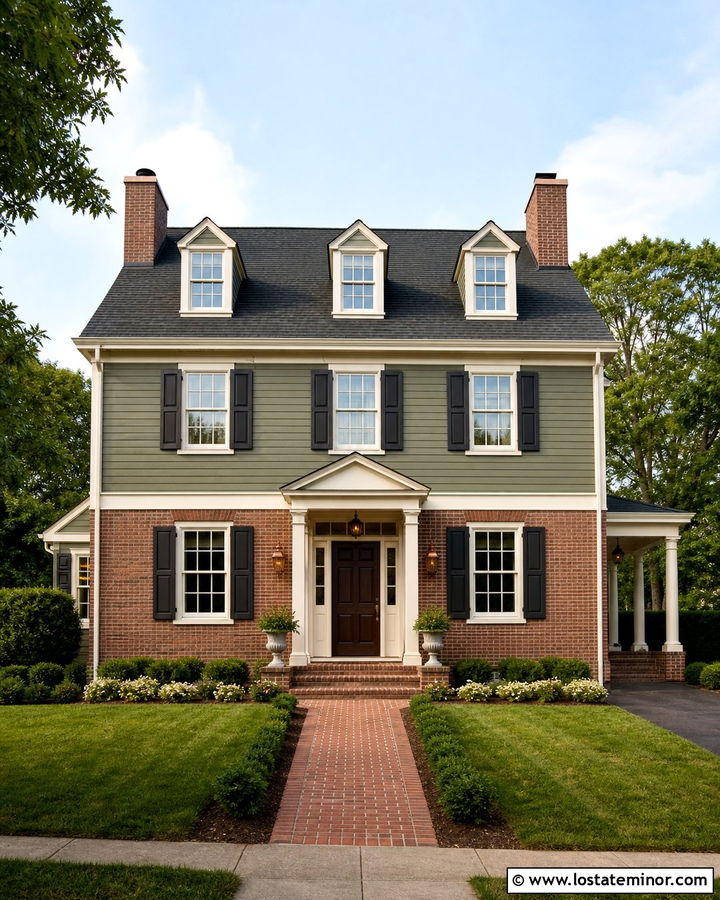
Cream trim is an easy way to unite moss green siding with warm brick. Unlike crisp white, cream repeats the beige, tan, or buff undertones often found in mortar. Use it across the fascia, window frames, porch columns, and garage trim for a consistent outline. Traditional red brick can cover the lower facade or frame the entry, while moss green remains the dominant body color. Add a deep brown front door to ground the central opening. Copper-toned lighting or aged-brass hardware can bring out warmer flecks in the masonry. This balanced exterior works on Colonial, Georgian, and traditional suburban houses. Keep the roof dark gray or brown, then use neat hedges and symmetrical planters to complement the home’s orderly architecture.
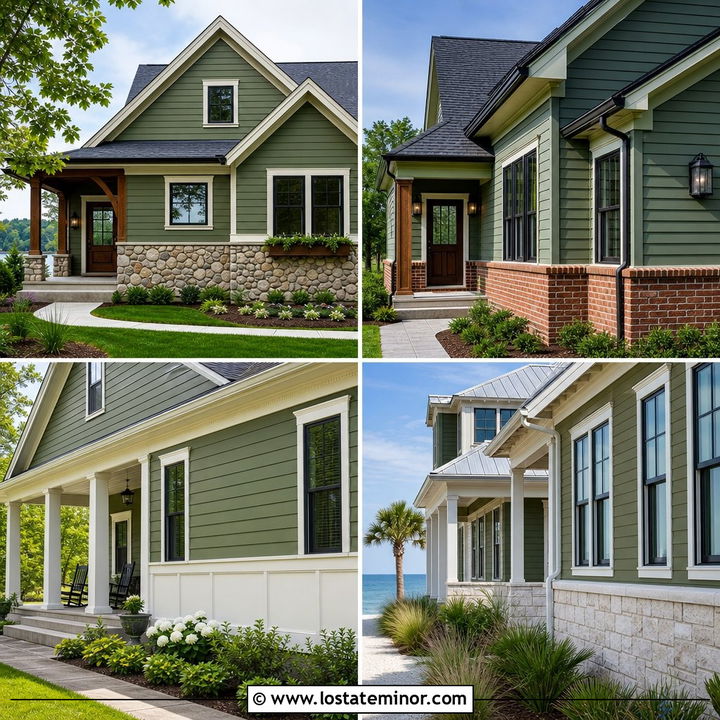
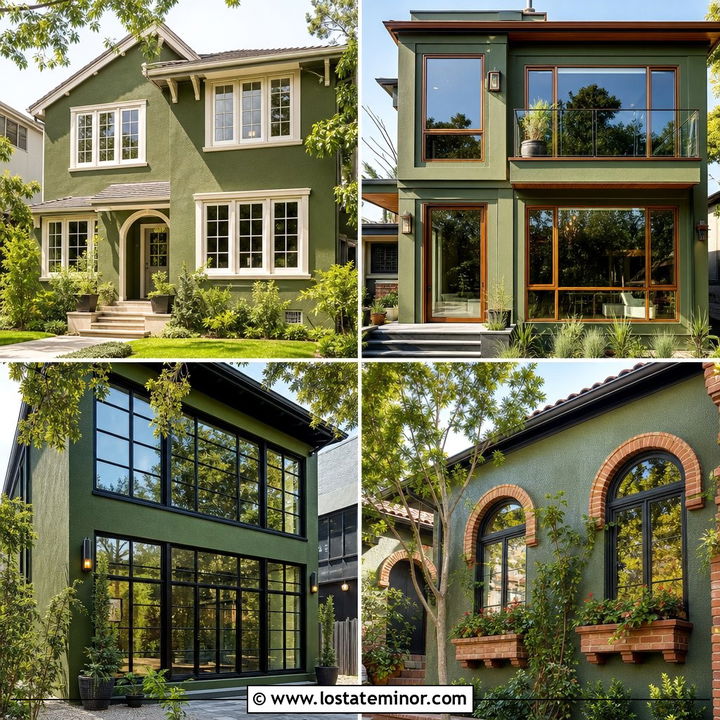
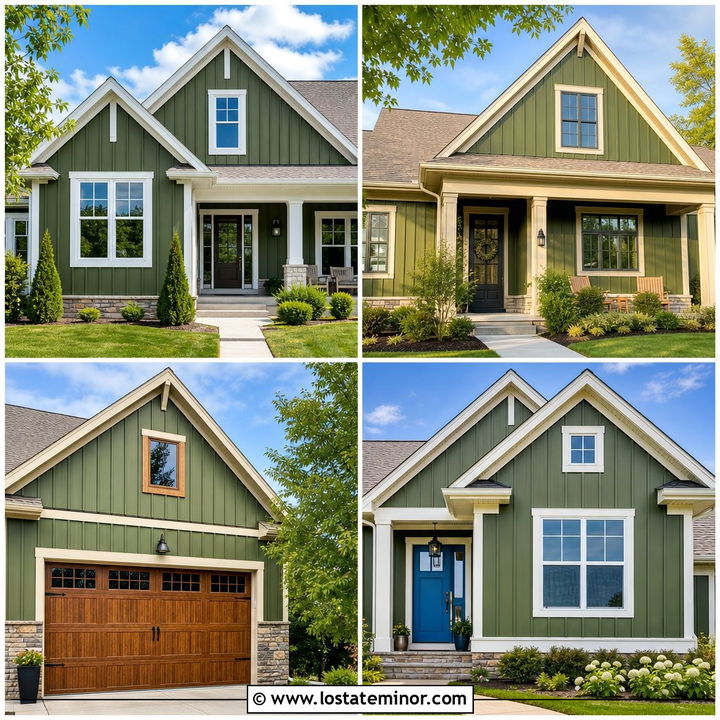
10. Moss Green House With Reclaimed Brick Accents
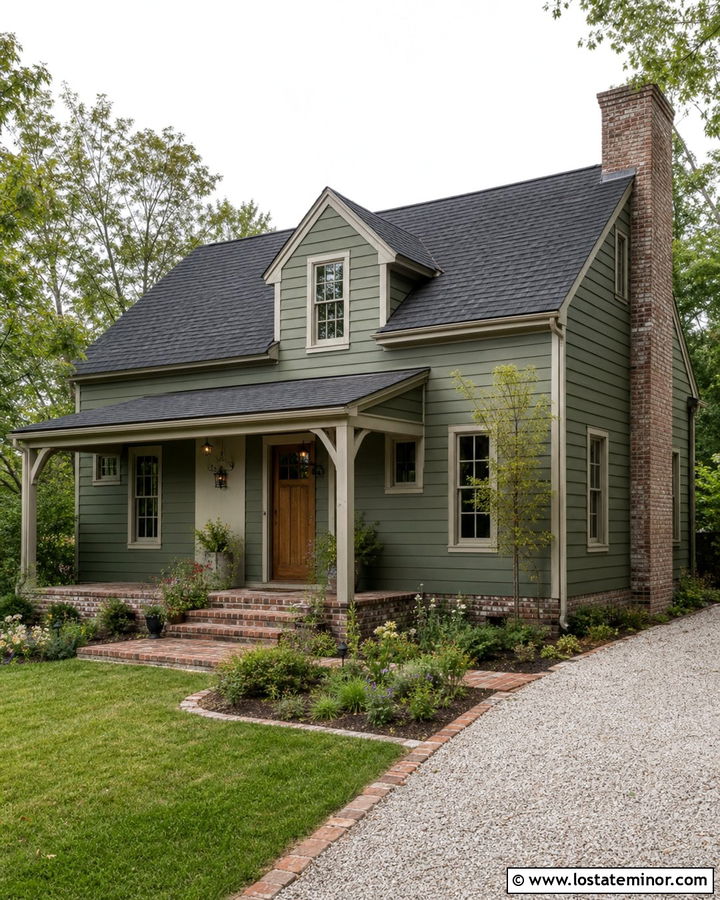
Reclaimed brick introduces natural variation that makes a moss green exterior feel collected rather than newly coordinated. Its mix of faded red, brown, peach, and charcoal works best as a foundation, chimney, porch floor, or entry surround. Choose a muted moss green siding color that will not compete with the changing brick tones. Soft greige trim can connect pale mortar with the main facade, while a rough-sawn cedar door adds warmth. Avoid overly polished fixtures; matte black or aged bronze will suit the brick’s worn character better. This combination complements farmhouse, cottage, and renovated bungalow architecture. Repeat reclaimed brick in the walkway edging or garden steps, but leave enough green siding visible to keep the house from looking visually crowded.
11. Moss Green Ranch House With Brick Wainscoting
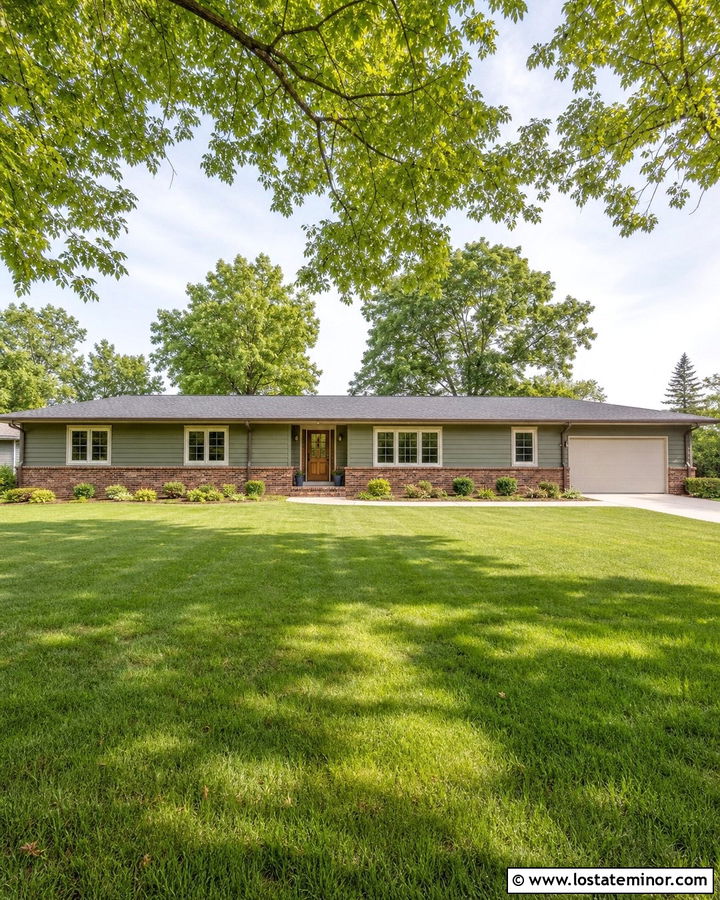
Brick wainscoting can give a long ranch house more depth and better proportions. Run the brick across the lower third of the facade, then use moss green horizontal siding above it. The continuous masonry line visually anchors the home, while the green siding helps the low roofline blend with the landscape. Choose cream window trim and a matching garage door to break up the wide elevation. A natural wood front door adds warmth without competing with red-brown brick. If the ranch has small windows, skip undersized decorative shutters and emphasize clean trim instead. Dark bronze lighting and gutters create subtle definition. Wide planting beds with layered shrubs can soften the straight foundation line and complete the relaxed, grounded curb appeal.
12. Moss Green Craftsman House With Brick Piers
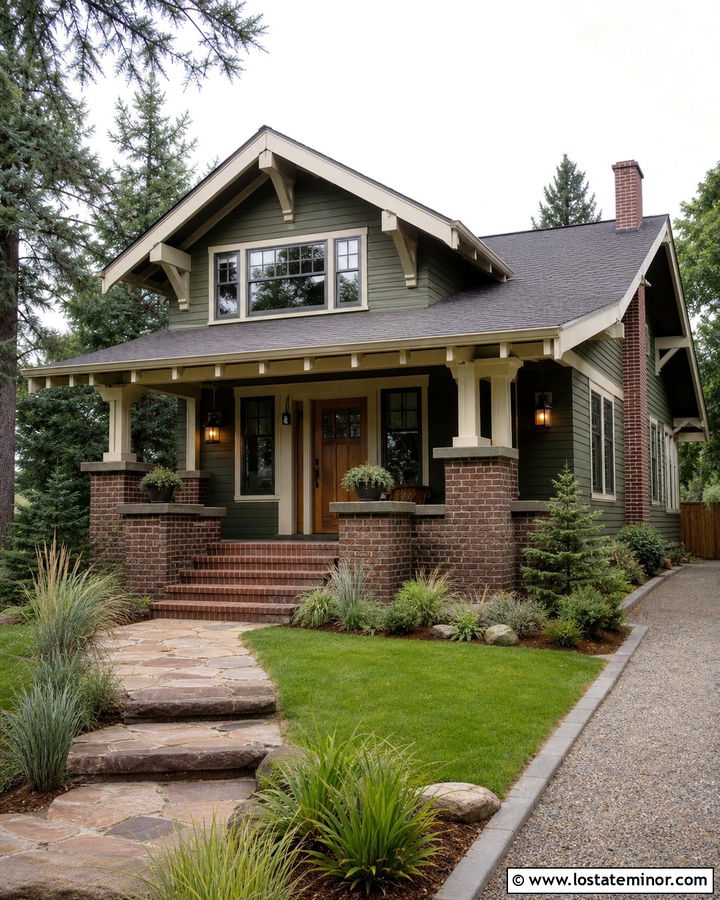
On a Craftsman house, brick piers naturally complement moss green siding and exposed wood details. Use textured red-brown brick at the base of substantial porch posts. Paint the upper columns and main siding moss green, then introduce warm cream on the beams, window trim, and fascia. A quarter-sawn oak or cedar door supports the handcrafted character of the architecture. The roof can be charcoal gray, weathered brown, or a dimensional blend containing both colors. Repeat the brick in broad porch steps to make the entrance feel sturdy and connected. Mission-style lighting in dark bronze is a fitting finishing detail. Native grasses, low evergreens, and an informal stone walkway will reinforce the natural palette without hiding the porch craftsmanship.
13. Moss Green Colonial House With Brick Entry
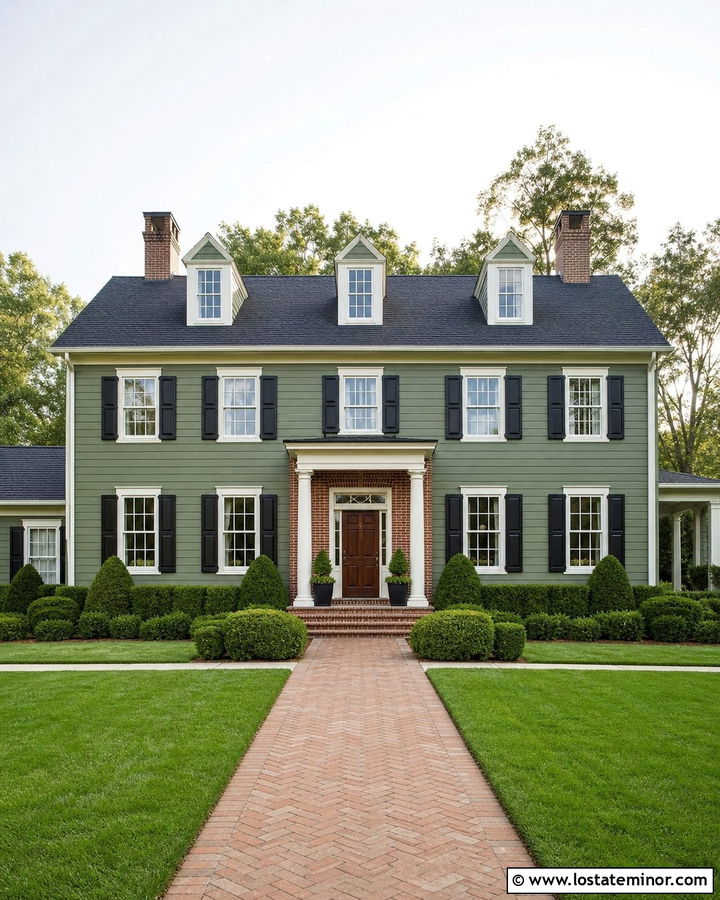
A symmetrical Colonial exterior can handle moss green beautifully when brick is used to emphasize the center entrance. Surround a paneled front door with red brick, or build a shallow brick portico with simple white columns. The moss green siding should cover the main facade evenly, allowing the balanced windows to remain the dominant feature. Use warm white trim for a classic outline and deep black shutters for controlled contrast. A glossy black door can create a formal look, while stained mahogany offers a warmer alternative. Match the roof to the shutters with charcoal architectural shingles. Straight brick walkways, paired planters, and clipped foundation shrubs complement the symmetry. The completed scheme feels traditional, polished, and more distinctive than a standard neutral Colonial.
14. Moss Green Farmhouse With Brick Skirting
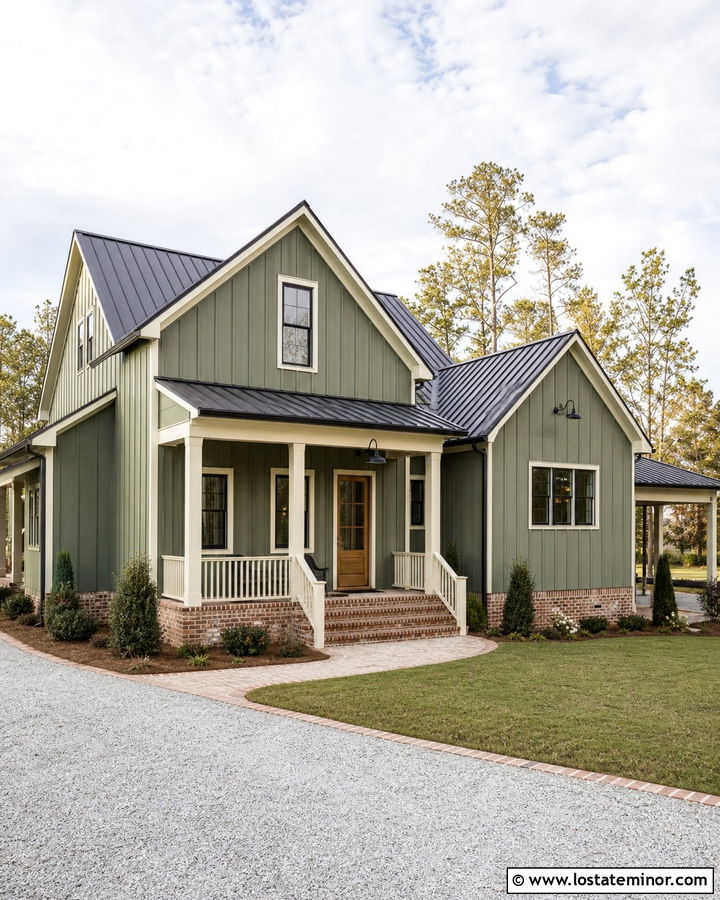
Brick skirting adds age and texture to a moss green farmhouse without overwhelming its simple form. Use a softly weathered brick along the foundation and porch steps, keeping the masonry low enough for the green siding to remain dominant. Vertical board-and-batten siding can make the exterior feel taller and more current. Choose creamy white trim for the roofline, windows, and porch posts. A medium-tone oak door introduces warmth, while a charcoal metal roof gives the house a crisp upper edge. Black gooseneck lights and uncomplicated railings fit the practical farmhouse character. A gravel drive, brick-edged walkway, and informal planting beds complete the setting. Avoid excessive decorative signs so the color, siding pattern, and authentic materials lead the design.
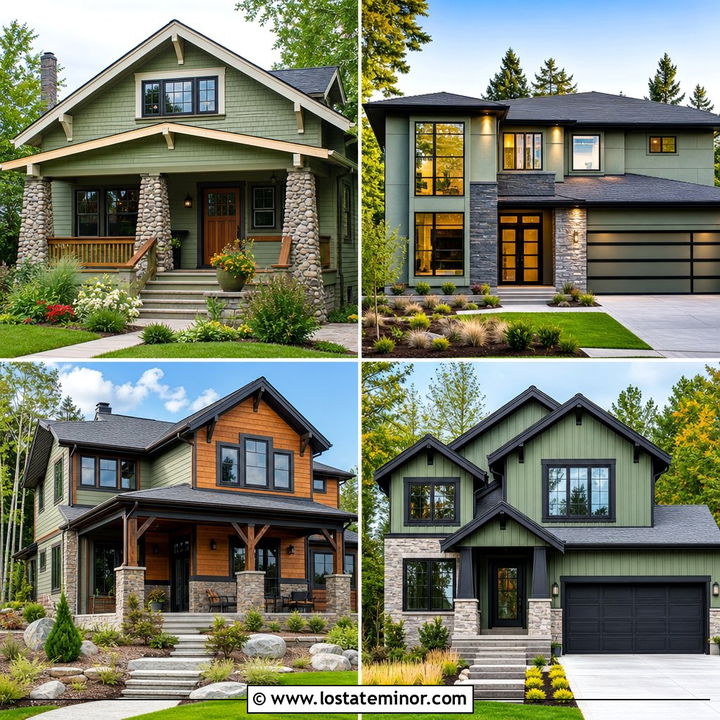
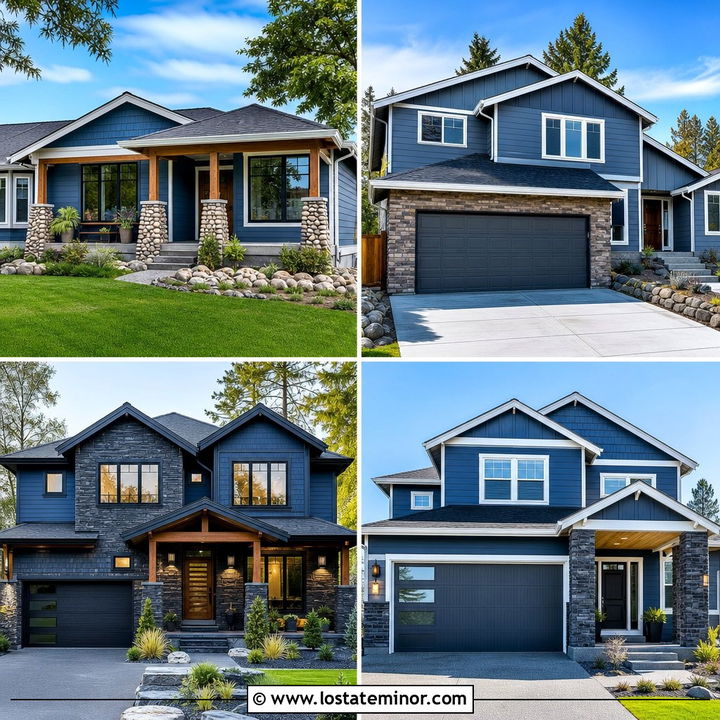
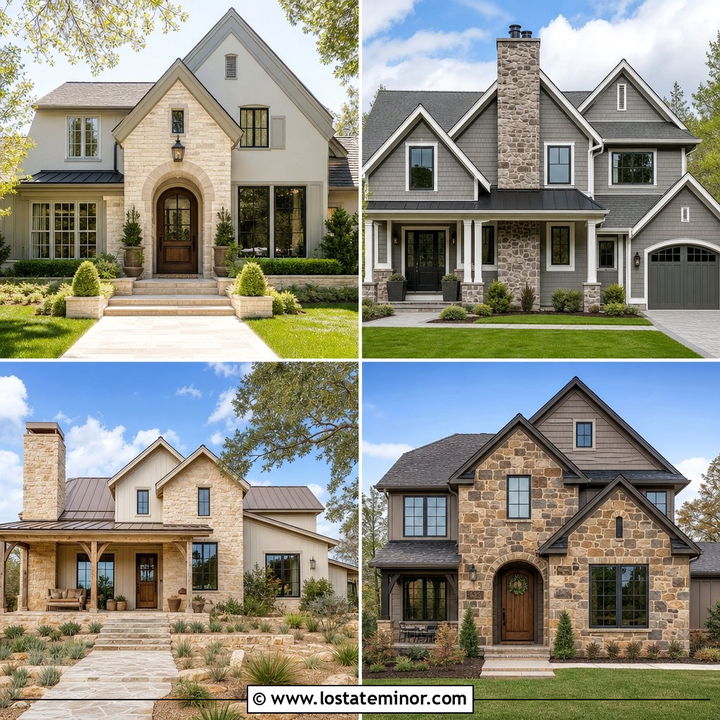
15. Moss Green Bungalow With Red Brick Steps
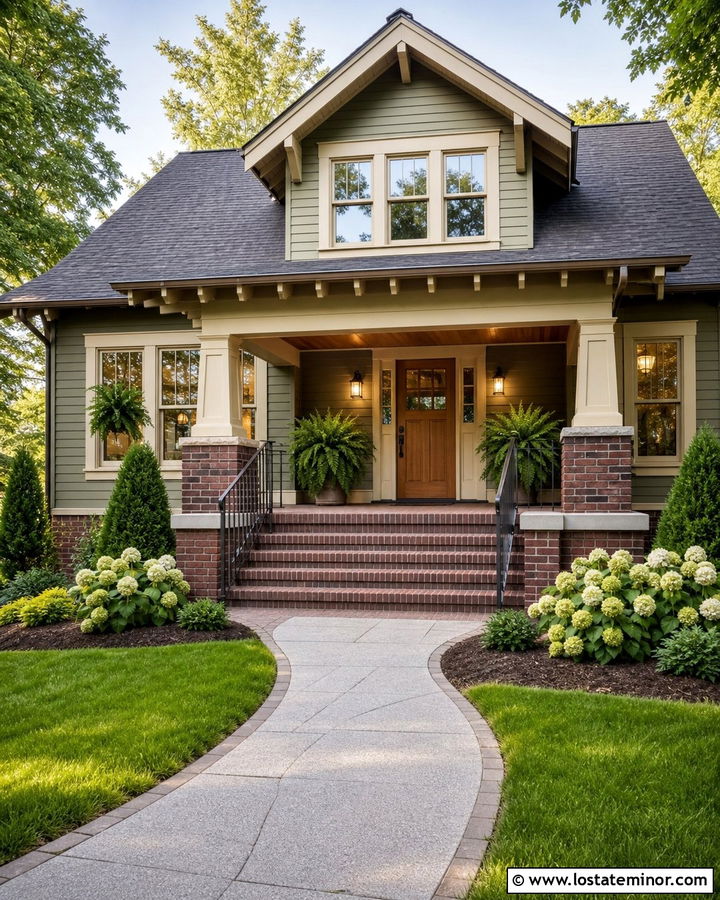
Red brick steps can turn the entrance of a moss green bungalow into a welcoming focal point. Use broad, low steps that suit the home’s horizontal proportions, then repeat the brick in porch column bases or a walkway border. Moss green clapboard siding will calm the brick’s warm color, especially when paired with creamy beige trim. A honey-toned wood front door and matching porch ceiling add brightness beneath a deep roof overhang. Dark bronze railings feel softer than black and work well with aged red masonry. Keep the roof medium charcoal to balance the rich foundation materials. Ferns, hydrangeas, and low evergreen shrubs can frame the steps without covering them. The finished house feels cozy, established, and thoughtfully connected to its garden.
16. Moss Green Cape Cod With Brick Chimney
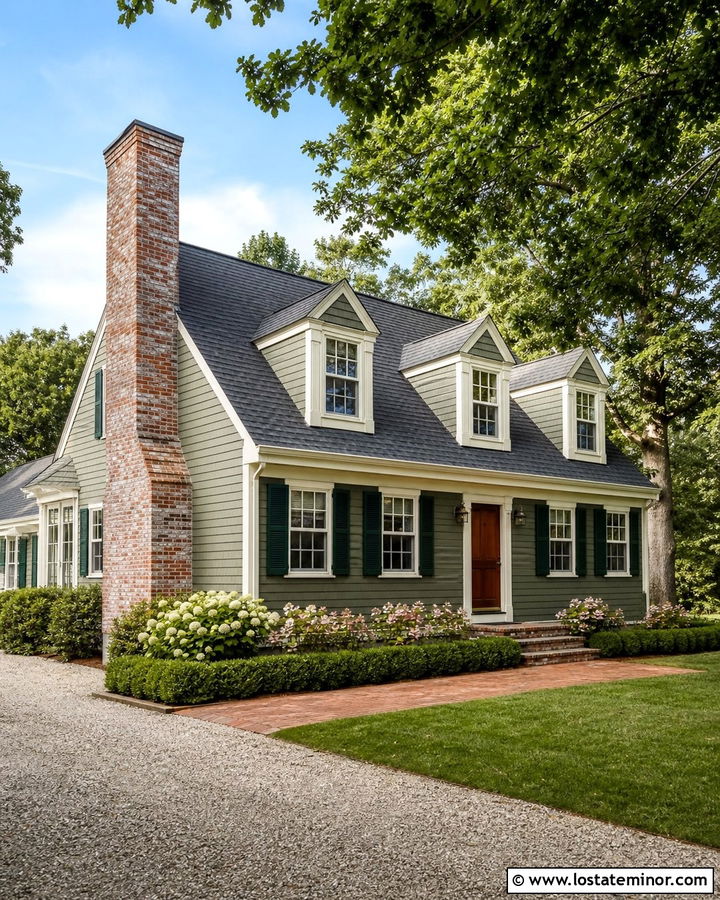
A moss green Cape Cod gains classic character from an oversized brick chimney and simple cream detailing. Select a slightly gray moss green for the clapboard or shingle siding so it complements weathered red brick without becoming too colorful. Use warm white trim around the dormers, windows, and roofline to preserve the home’s crisp geometry. Deep green or black shutters can add definition, although they should be properly sized to match the windows. A natural mahogany door offers a warmer focal point near the brick. Choose charcoal shingles with subtle tonal variation rather than a heavily patterned roof. A brick path, low boxwood hedge, and compact flowering shrubs will complete the traditional setting while keeping the small facade open and easy to appreciate.
17. Moss Green Tudor House With Dark Brick
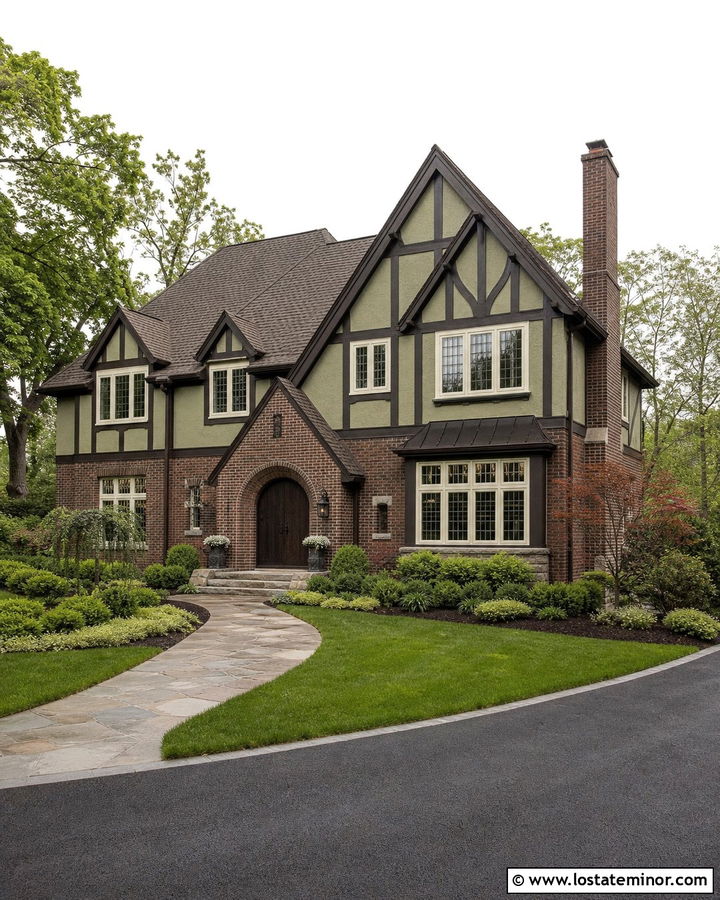
Dark brick and moss green stucco or siding create a sophisticated update for Tudor architecture. Keep the brick concentrated around the lower walls, chimney, and arched doorway. Use moss green between dark brown half-timber details to create a low-contrast, nature-inspired facade. Cream trim around leaded or divided-light windows adds just enough brightness. A heavy stained wood door with black iron hardware strengthens the historic character. The roof should remain deep charcoal or brown to suit the steep gables. If the existing brick appears nearly black, choose a somewhat lighter moss green so the architectural pattern stays visible. Curved paths, layered shrubs, and small ornamental trees help settle the strong roofline into the landscape and support the storybook proportions.
18. Moss Green Split-Level With Brick Lower Level
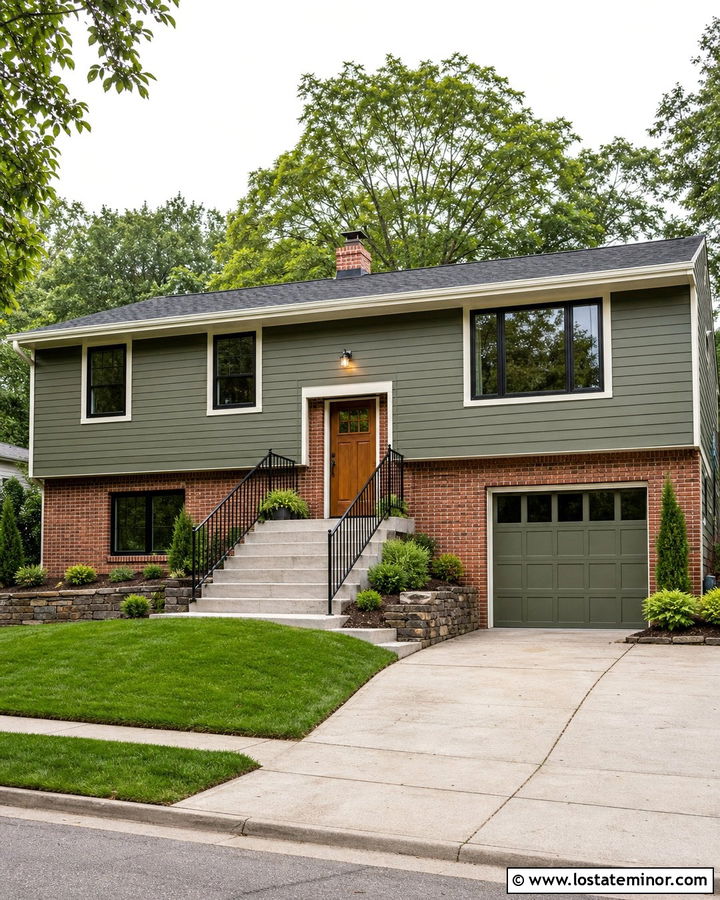
Moss green can modernize a split-level house while preserving the brick lower story. Paint the upper siding a muted, medium-depth moss green that relates to the masonry rather than fighting it. If the brick contains orange tones, use cream trim and a warm wood door to create a deliberate bridge between materials. Black window frames, railings, and lighting can sharpen the uneven levels and give the facade a cleaner outline. Paint the garage door moss green or a slightly lighter coordinating shade so it does not dominate the lower elevation. A charcoal roof ties everything together. Add broad concrete steps, simple metal railings, and layered landscaping around the foundation. These changes help the separate building levels read as one cohesive exterior composition.
19. Moss Green Modern House With Charcoal Brick
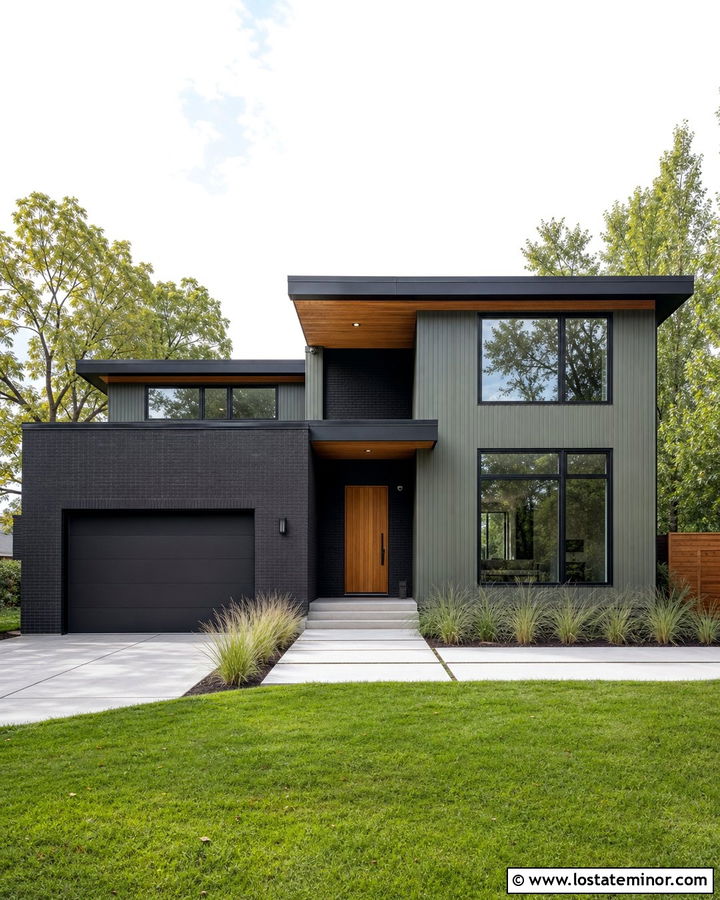
Charcoal brick gives a moss green modern house strong contrast without relying on bright white details. Use the dark brick on one primary volume, such as the garage, entry wall, or lower story. Apply moss green vertical siding to the adjoining sections so the color creates warmth against the cool masonry. Keep window frames and fascia matte black for a clean, continuous outline. A natural cedar front door or soffit prevents the palette from looking cold. Flat or low-slope rooflines work especially well with this material arrangement. Choose large concrete pavers, linear planting beds, and restrained ornamental grasses for the landscape. The completed exterior feels modern and structured, but the earthy green and wood accents make it approachable rather than stark or industrial.
20. Moss Green House With Painted White Brick
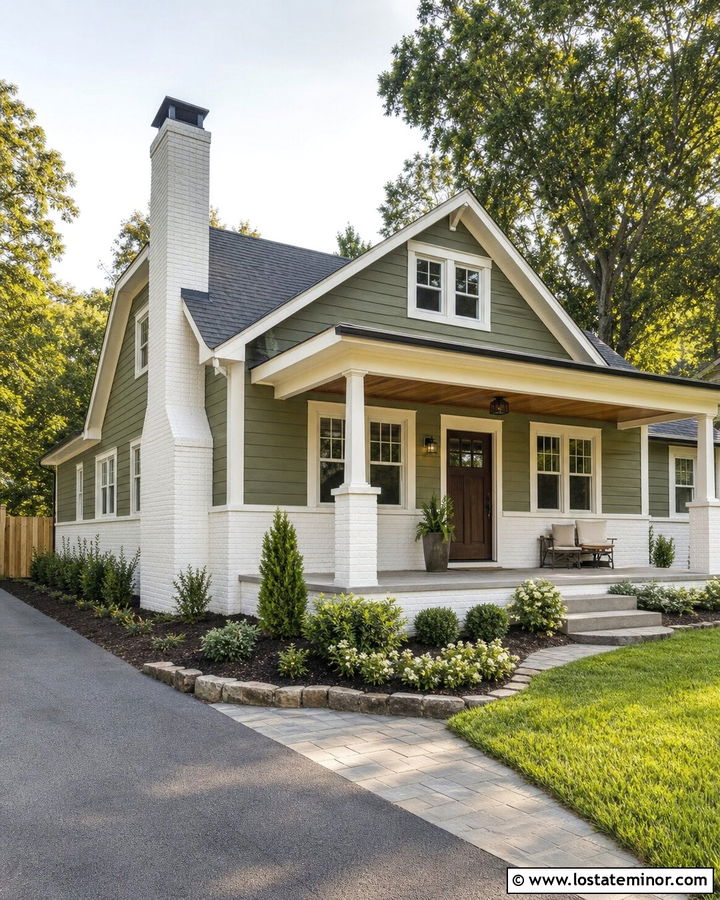
Painted white brick creates bold contrast with moss green siding and can brighten a home with limited natural light. Use a warm white rather than a cool blue-white, particularly when the roof or existing mortar has beige undertones. The white brick can cover the lower story, chimney, or central entry volume, while moss green siding fills the larger wall areas. Repeat the white on window trim for a connected palette. A deep brown or black front door adds definition, and a cedar porch ceiling brings back needed warmth. This combination fits cottages, modern farmhouses, and remodeled ranch homes. Keep landscaping green and simple, using dark mulch or natural stone edging to ground the pale masonry and prevent the lower facade from appearing washed out.
21. Moss Green House With German Smear Brick
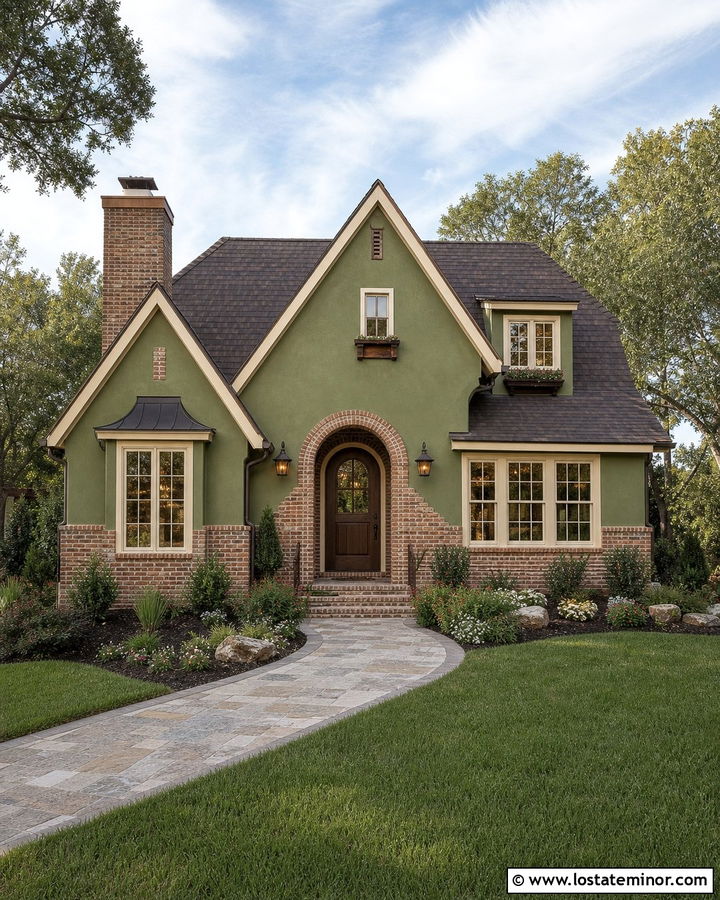
German smear brick gives a moss green exterior soft texture and an aged European character. The creamy mortar treatment reduces the intensity of red brick while allowing irregular color to remain visible. Pair it with muted moss green siding and warm ivory trim for a layered palette that still feels calm. This approach works well around an arched entry, chimney, foundation, or garage wing. Choose a walnut or medium-oak front door to echo the brick peeking through the mortar. Dark bronze gutters, sconces, and railings add definition without looking overly modern. A brown-charcoal roof will support the warm exterior materials. Curved walkways and loose cottage landscaping can enhance the timeworn effect, while clean window trim keeps the finished house from feeling overly rustic.
22. Moss Green House With Brick And Cedar Accents
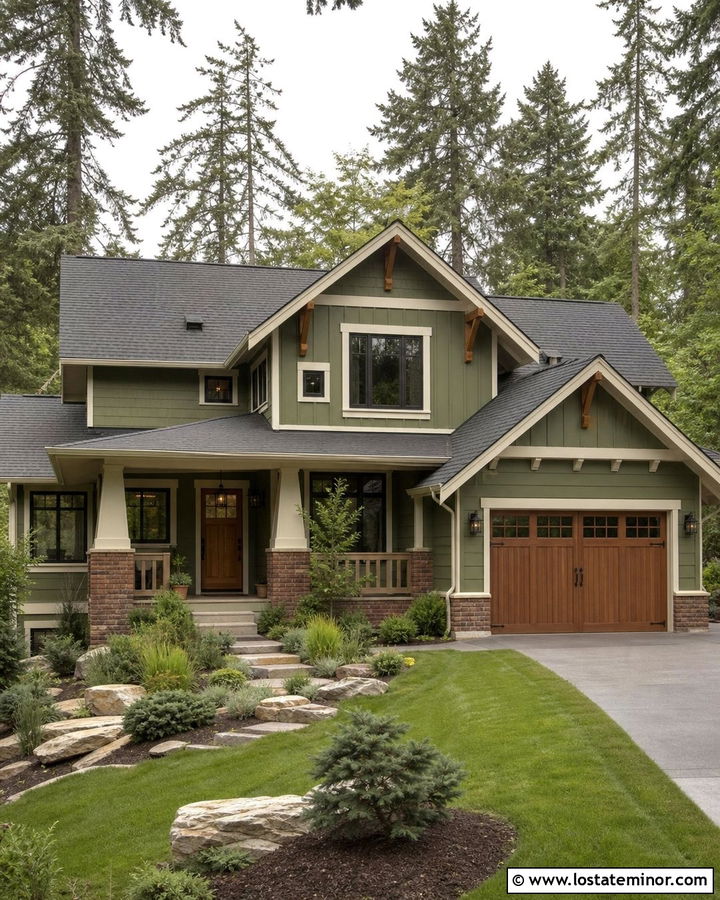
Brick and cedar introduce enough warmth and texture to make moss green siding feel rich and dimensional. Keep the brick on the foundation or porch bases, then use cedar for the front door, brackets, gable details, or garage door. Moss green should remain the unifying background color across the main siding. Cream trim can separate these three earthy materials and keep the facade from becoming too dark. Look for brick with brown or muted red variation rather than strong orange tones. A charcoal roof provides a stable neutral cap. This scheme works particularly well on Craftsman, mountain-modern, and transitional homes. Repeat the cedar tone in a mailbox or planter, but avoid adding another wood stain that could make the exterior palette feel disconnected.
23. Moss Green House With Brick And Copper Details
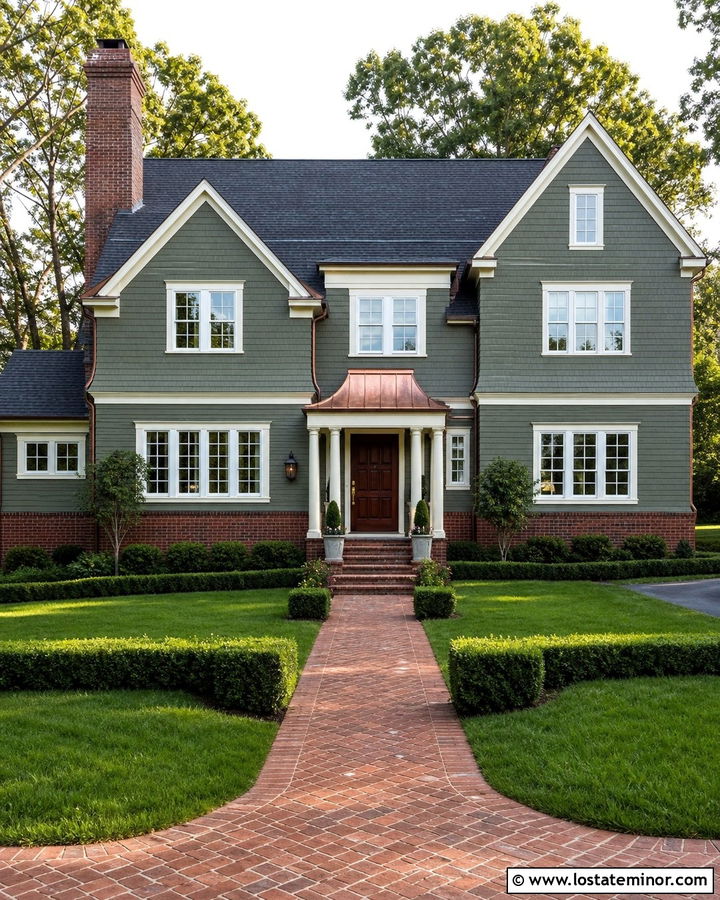
Copper details bring subtle brightness to moss green siding and warm brick. Use copper on porch roofs, gutters, downspouts, lanterns, or a small entry canopy rather than across every surface. New copper will appear brighter at first, while an aged finish creates a quieter brown or green patina. Red-brown brick at the base of the house supports the metal’s warm tone. Cream trim around the windows keeps the overall palette open and traditional. A stained mahogany door can connect the brick and copper visually. This complete look is especially effective on Tudor, Colonial, and upscale Craftsman homes. Keep the main roof charcoal so the copper feature remains noticeable. Structured landscaping and a simple brick path will complement the refined material combination.
24. Moss Green House With Brick Garage
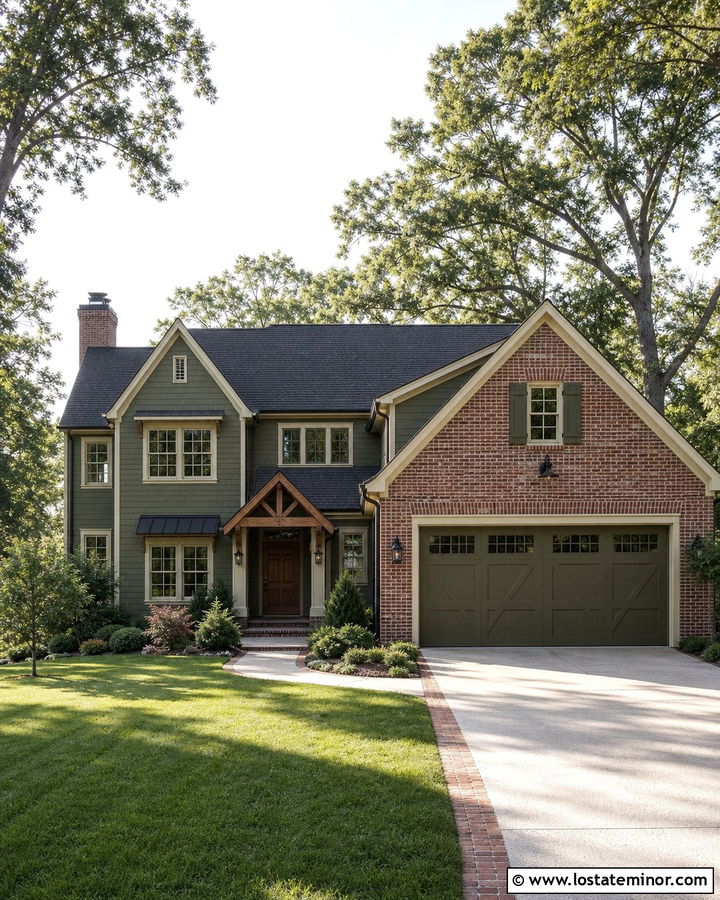
A brick garage can look fully integrated with a moss green home when colors are repeated across both sections. Keep the garage masonry natural, then paint the doors moss green or a warm greige that matches the siding trim. If the brick has strong red undertones, add a cedar door or small wood awning near the entrance to connect it with the warmer facade. Moss green siding on the main house should remain visible around the garage wing so the structure does not feel divided into unrelated halves. Use matching charcoal roofing and dark bronze fixtures throughout. A brick-edged driveway or walkway can extend the masonry into the landscape. Foundation shrubs placed between garage doors will soften the broad brick surface without concealing its texture.
25. Moss Green House With Brick Courtyard
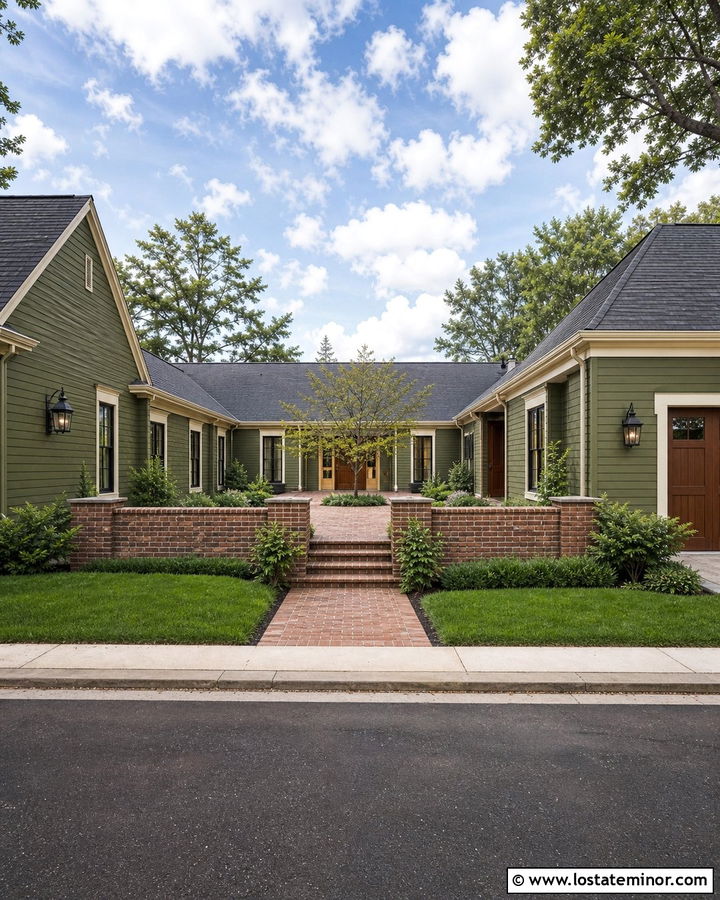
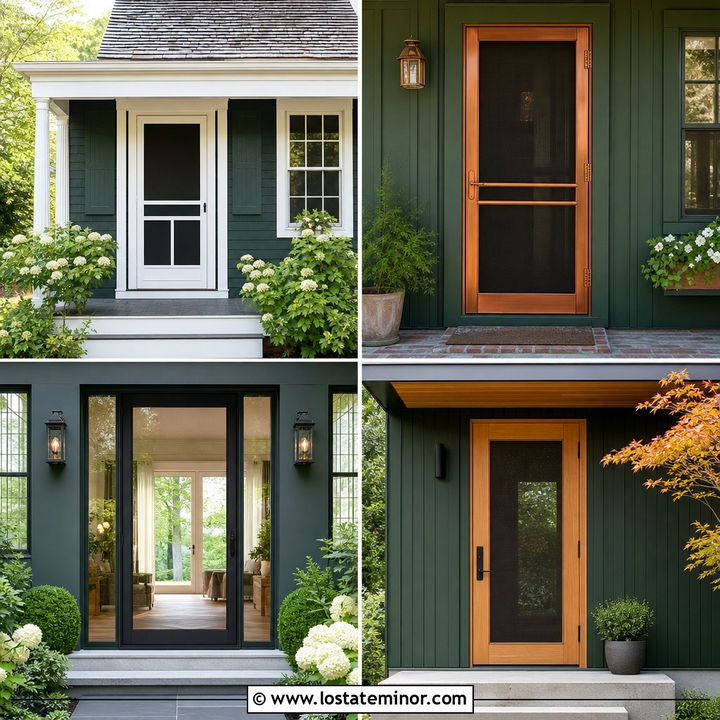
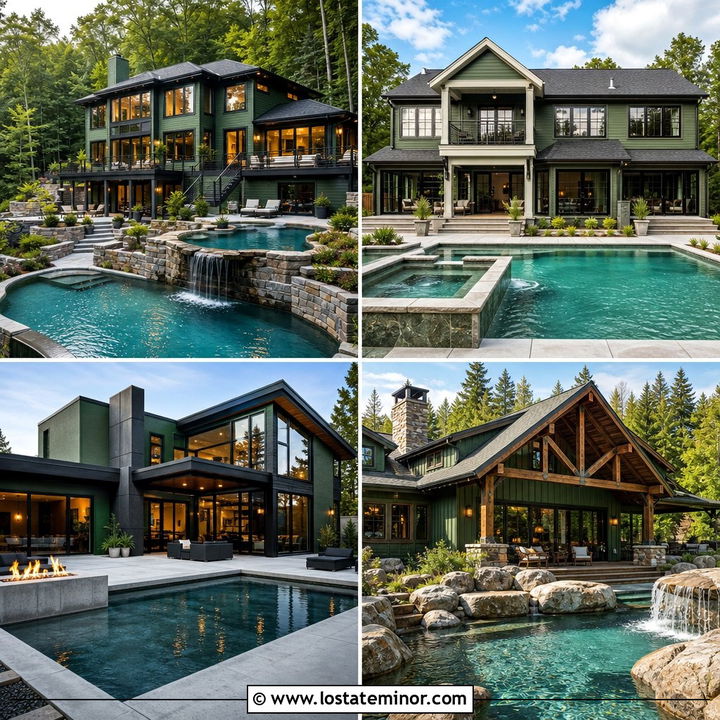
A brick courtyard can extend a moss green exterior into the outdoor living area and make the architecture feel more connected. Use the same brick found on the foundation or entry walls for the courtyard paving, low walls, and steps. Moss green siding creates a calm background for outdoor furniture and planting. Cream trim, cedar doors, and dark bronze lighting will maintain a warm, cohesive palette. This arrangement works well with U-shaped ranch houses, Spanish-influenced homes, and modern cottages. Keep the brick layout simple, using running bond or herringbone in one clearly defined area. Evergreen shrubs, small trees, and climbing plants can soften the masonry. From the street, a low brick wall should frame the full facade rather than hide the house.
26. Moss Green House With Brick Front Walkway
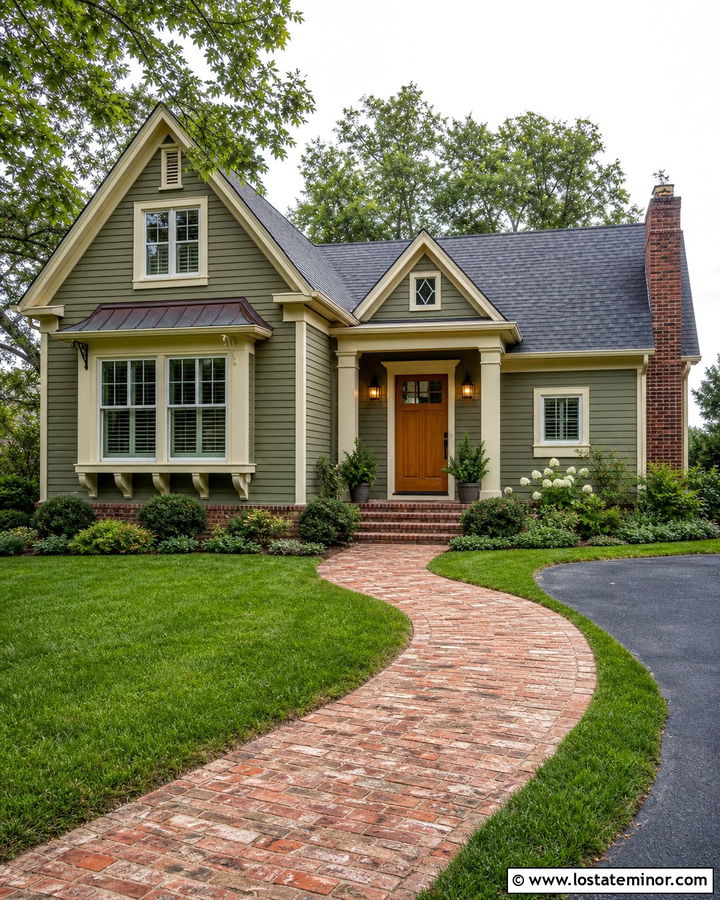
A brick front walkway offers a manageable way to introduce masonry when the house has mostly moss green siding. Select a brick that relates to the roof, door, or nearby hardscaping. Weathered red brick pairs well with cream trim and a natural oak door, while brown brick looks polished with bronze accents. The walkway can run straight toward a Colonial entrance or curve gently toward a cottage porch. Repeat a small amount of brick on the steps, foundation, or column bases so the path does not feel isolated. Keep joints and edging neat for a finished appearance. Layer low ground covers and evergreen shrubs along the route. This creates a welcoming transition from the curb to the complete moss green exterior without requiring major structural changes.
27. Moss Green House With Brick Window Accents
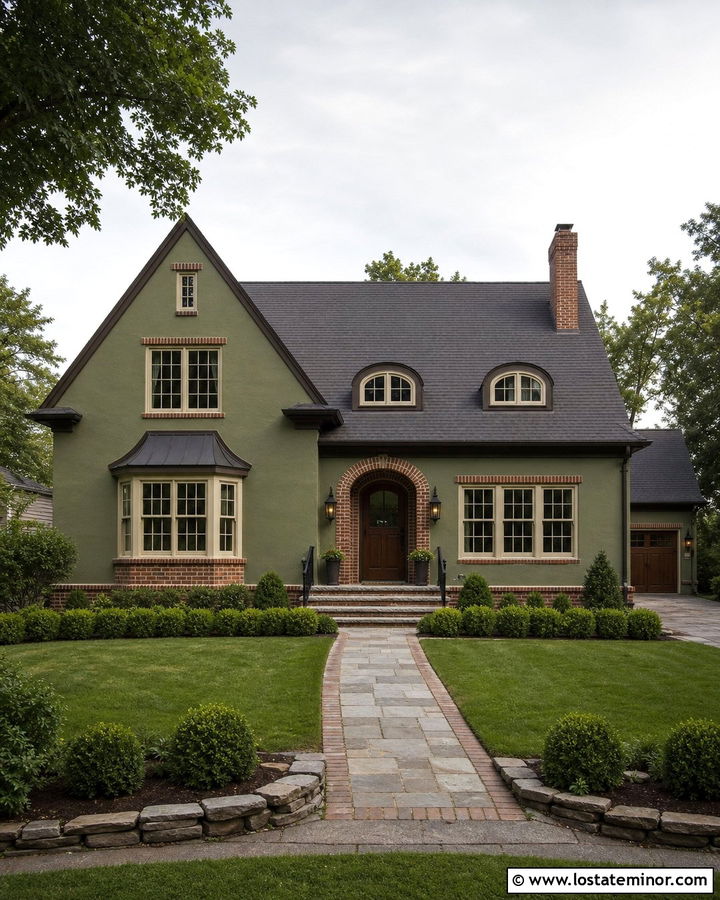
Brick window surrounds add depth and craftsmanship to a moss green facade, especially when the walls would otherwise appear flat. Use brick arches, headers, or narrow side borders around selected windows rather than every opening. A red-brown blend works with warm moss green, while charcoal brick suits a cooler, gray-based green. Keep the window frames cream, bronze, or black so they remain visible against the masonry. Repeat the brick around the front door or along the foundation to create continuity. This treatment is particularly appropriate for Tudor, traditional, and European-inspired homes. Choose simple exterior lighting that does not compete with the detailed brickwork. Neatly trimmed shrubs beneath the windows can frame the accents while leaving the masonry fully visible from the street.
28. Moss Green House With Brick Gable Accents
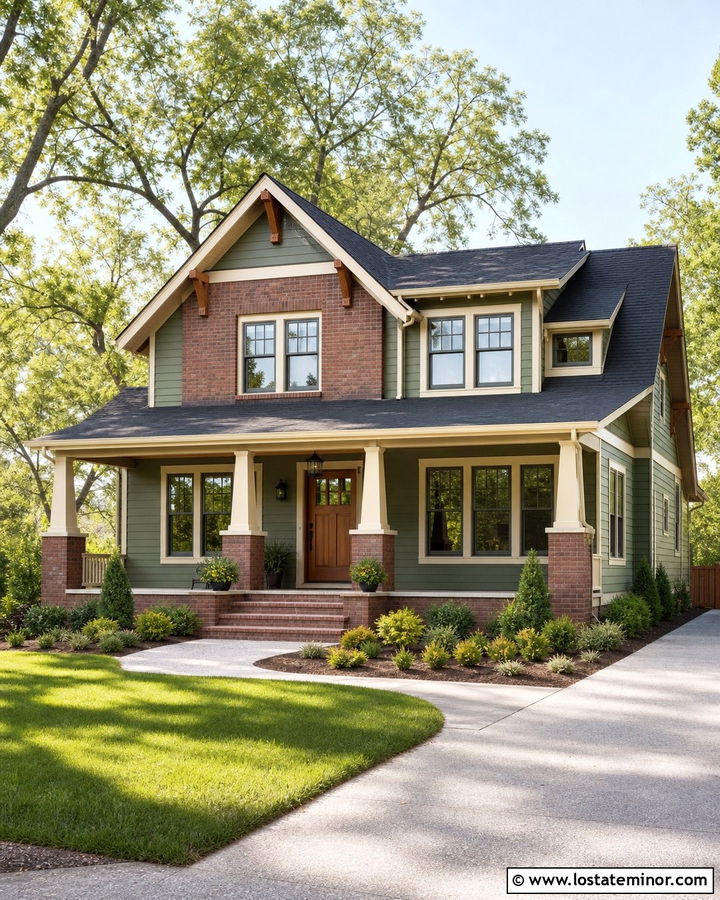
Brick gable accents can add weight to a tall facade while moss green siding softens the remaining walls. Use brick within one front-facing gable, around a central window, or below a projecting roof section. Because masonry is visually heavy, balance it with lighter cream trim and uncomplicated moss green siding elsewhere. A cedar front door and matching brackets can connect the upper brick feature to the lower entrance. This approach works on Craftsman, transitional, and French country homes with varied rooflines. Use a charcoal roof that relates to darker tones within the brick. Avoid mixing too many siding patterns around the gable. Clean material boundaries, well-proportioned windows, and restrained landscaping will allow the brick feature to add depth without making the facade look crowded.
29. Moss Green House With Brick And Stone Accents
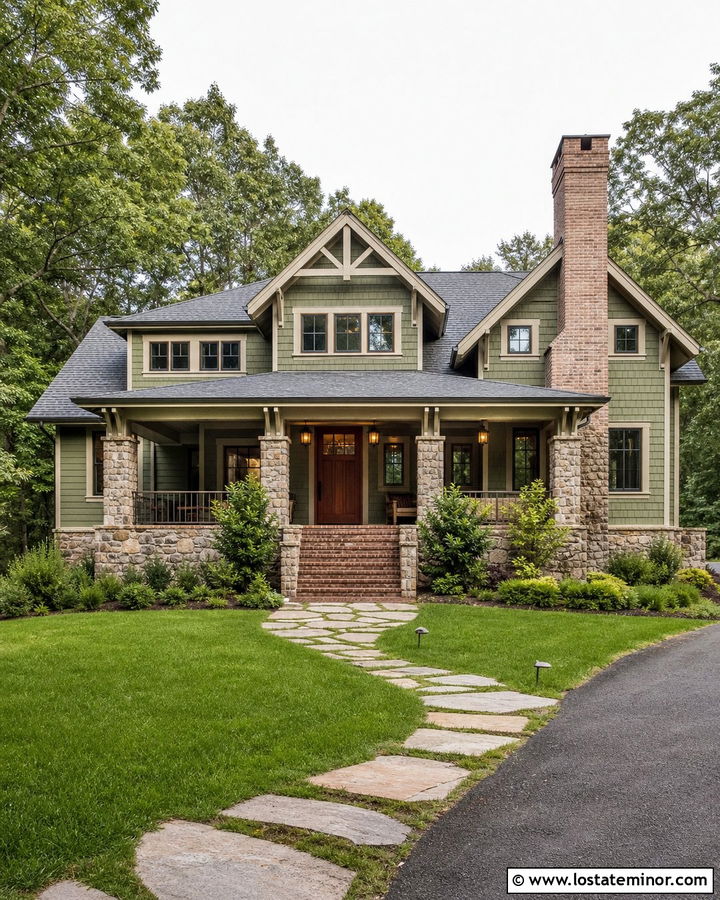
Combining brick and stone requires a controlled palette, especially beside moss green siding. Choose materials that share at least one undertone. For example, weathered red-brown brick can work with warm gray fieldstone containing rust or tan variation. Use brick on the porch steps or chimney and stone along the foundation or columns. Moss green siding then becomes the unifying color between the different textures. Keep trim creamy white or soft greige and limit metal accents to dark bronze. A stained wood front door provides one smooth, warm surface among the masonry. This layered scheme suits lodge-inspired, Craftsman, and large suburban homes. Repeat only one masonry material in the landscaping so the yard supports the house without introducing additional visual competition.
30. Moss Green House With Brick Porch And Black Roof
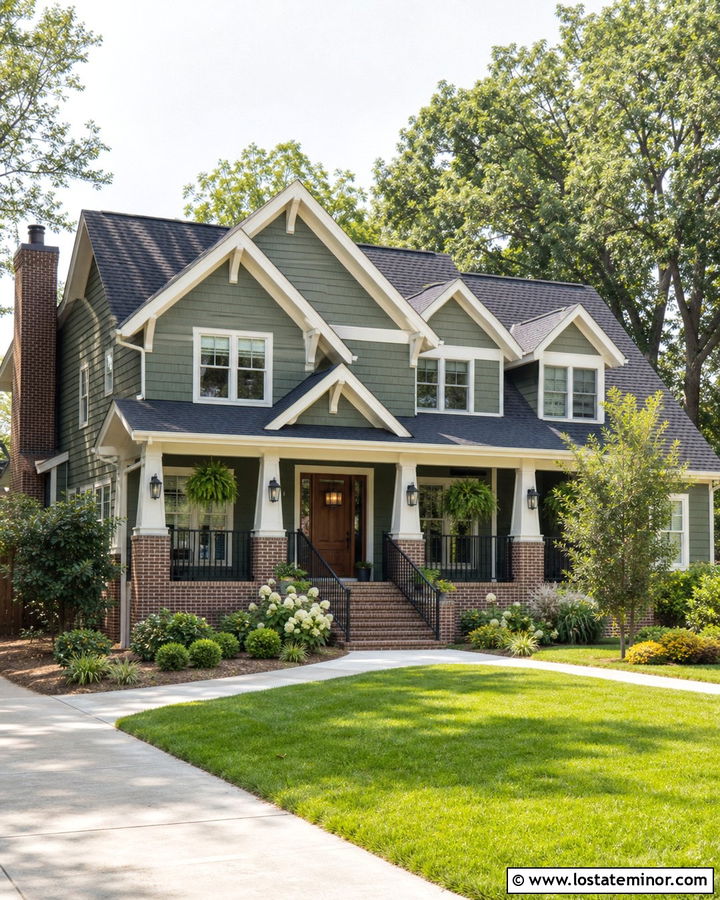
A black roof can give moss green siding and a full brick porch a strong, finished outline. Choose a softened black or deep charcoal shingle so the roof does not overpower the green body color. Warm red-brown brick across the porch floor, steps, and column bases will balance the cooler roof. Use cream trim around windows and beneath the eaves to separate the dark upper section from the moss green walls. A medium-stained wood front door creates a welcoming center, while black railings and lanterns repeat the roof color at ground level. This combination suits farmhouse, Craftsman, and traditional suburban architecture. Bright landscaping, a clean lawn, and pale concrete edging will keep the complete exterior balanced and clearly visible from the curb.
Conclusion:
The most successful moss green and brick exterior starts with the brick’s undertones. Red and orange masonry usually benefits from gray-based moss green, cream trim, and warm wood. Brown or charcoal brick can support black accents and more contemporary details. Whatever combination you choose, repeat important colors across the roof, door, porch, garage, and landscaping so every surface feels connected. Test exterior paint beside the brick during morning, afternoon, and shaded conditions before making a final decision. These 30 Moss Green House Design With Brick Accents Ideas show how one grounded green can suit many architectural types. With a thoughtful material balance, moss green and brick can create comfortable, distinctive, and lasting curb appeal.

Related posts: