1. Charcoal Gray Farmhouse With White Square Porch Columns
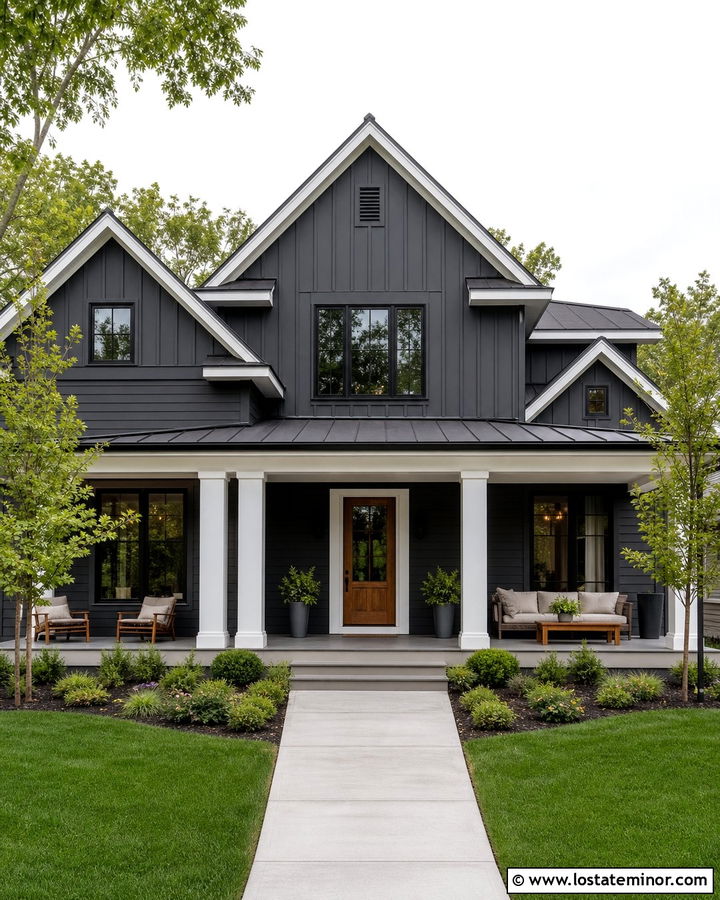
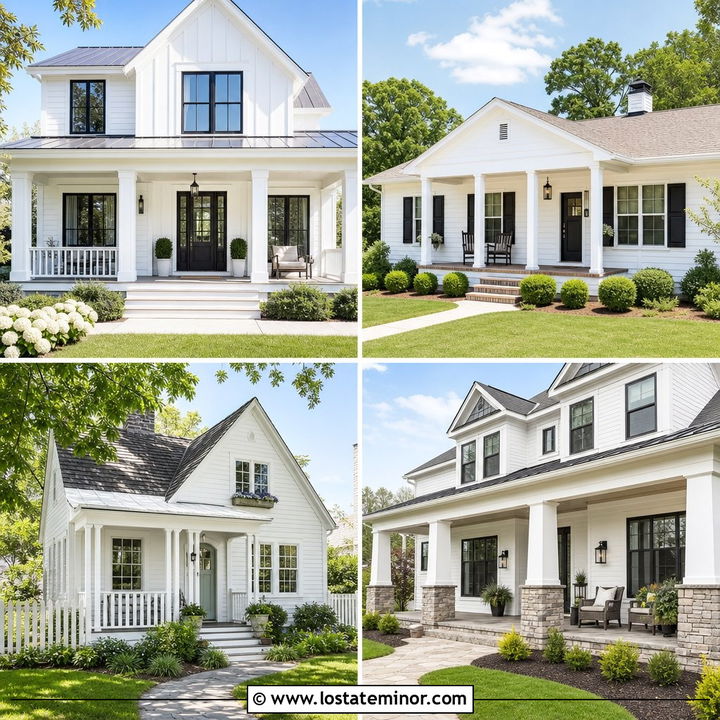
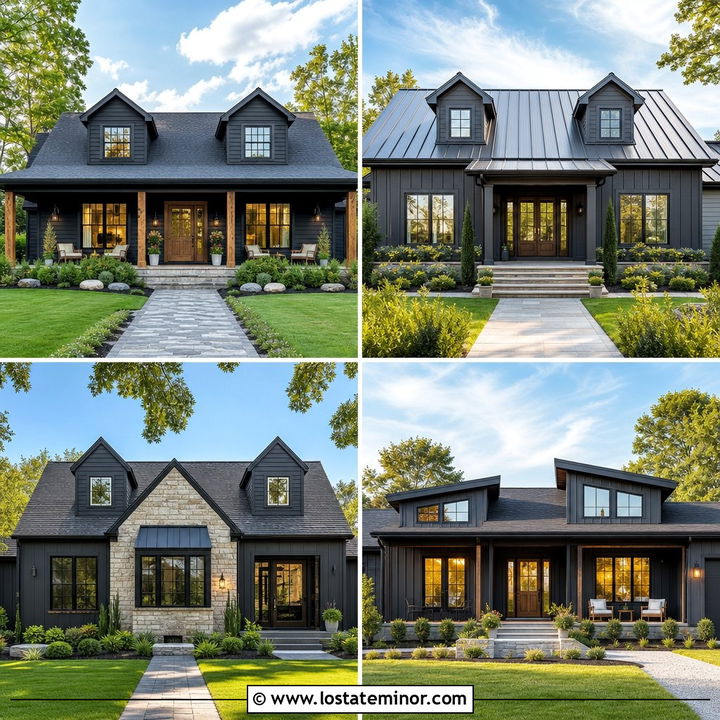
Crisp white square columns give a charcoal gray farmhouse the clean contrast that makes this classic pairing so effective. Use charcoal horizontal siding across the main facade, then add board-and-batten siding in the front gables for subtle texture. Wide white columns should connect visually with the window trim, fascia, porch beams, and garage surround. A medium-tone stained wood front door keeps the exterior from feeling cold, while black window frames and a black metal porch roof add definition. Choose a warm gray porch floor rather than stark white flooring, which can show dirt quickly. Simple foundation shrubs, ornamental grasses, and a straight concrete walkway complete the polished look. The result feels modern and welcoming without losing familiar farmhouse character.
2. Charcoal Gray Craftsman With Tapered Stone Porch Columns
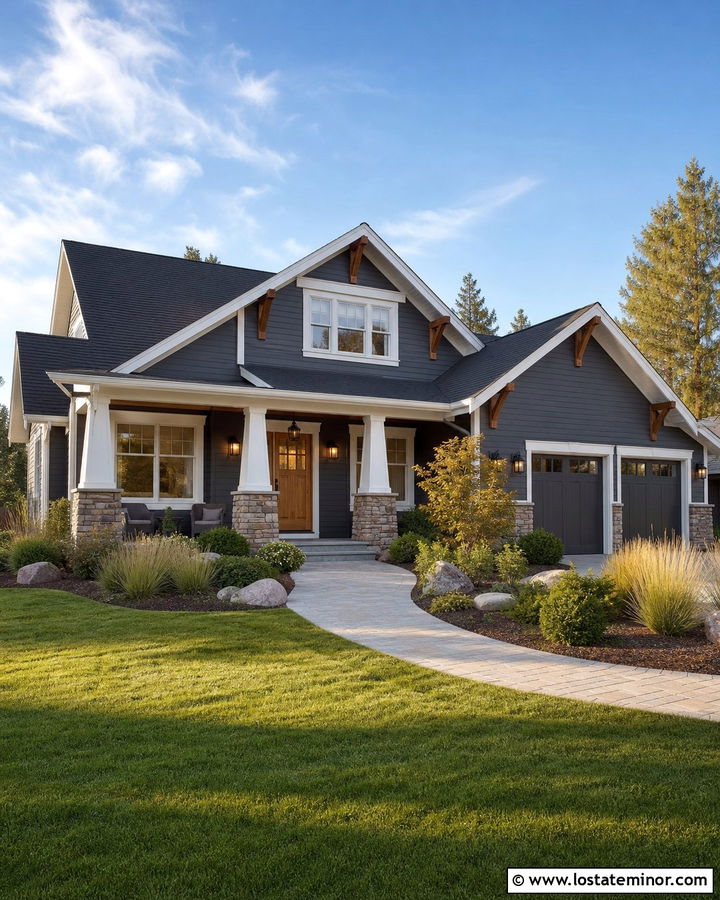
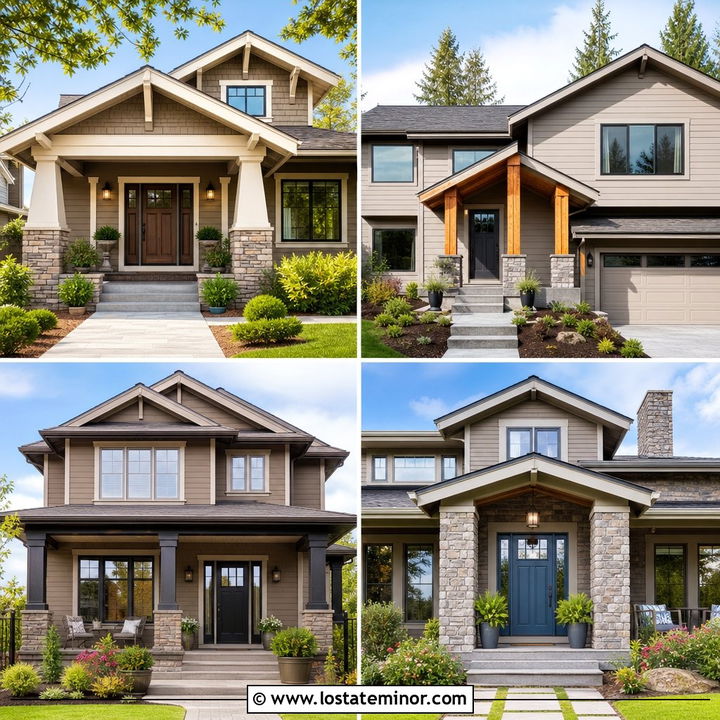
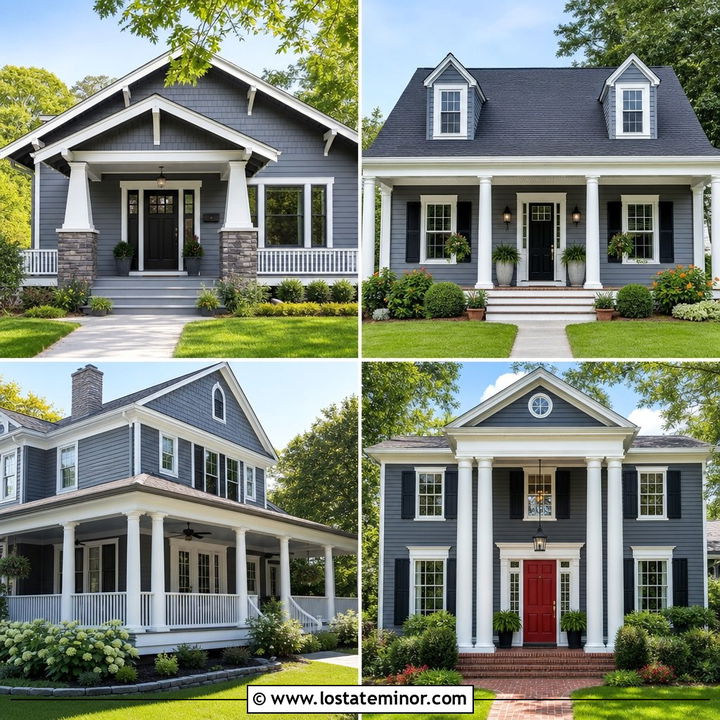
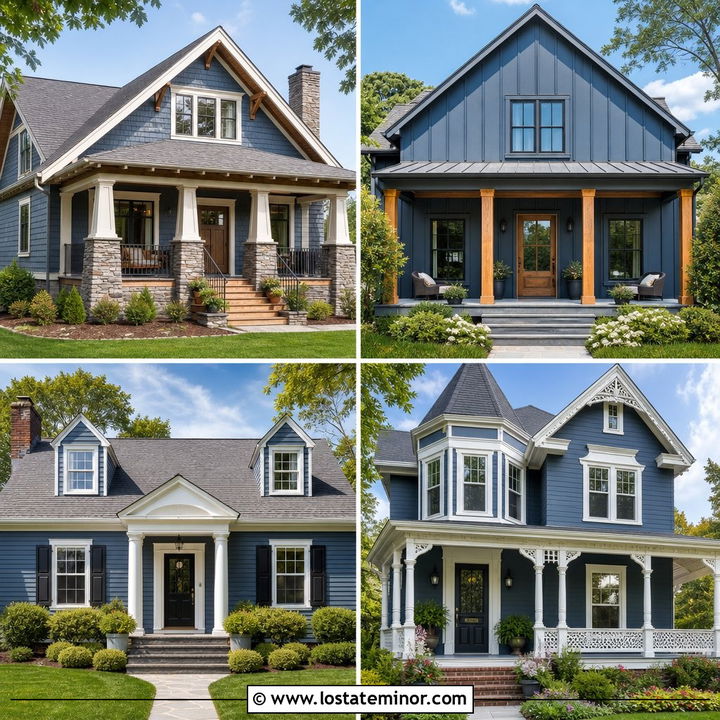
A Craftsman home needs columns that look substantial enough to support its broad roofline. Pair charcoal gray lap siding with tapered white column wraps resting on rugged gray-and-tan stone piers. Repeating the same stone along the foundation creates continuity and gives the dark siding a grounded appearance. A stained oak front door, exposed wood brackets, and a cedar porch ceiling introduce warmth near the entrance. Keep the window trim creamy white so it relates to the upper portions of the columns without creating an overly sharp contrast. Deep bronze lighting and gutters blend naturally with the wood and stone. Low evergreen shrubs, native grasses, and a gently curved paver walkway soften the strong architecture while maintaining the Craftsman home’s balanced, handcrafted character.
3. Charcoal Gray Ranch With Cedar Porch Columns
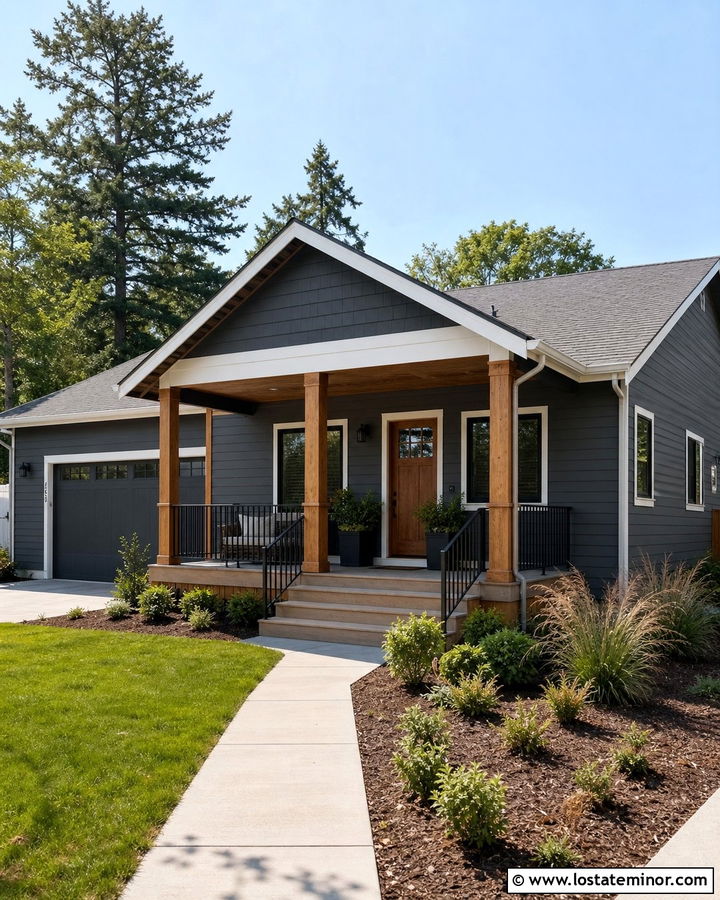
Warm cedar columns can bring depth and character to a straightforward charcoal gray ranch exterior. Their vertical grain breaks up the home’s long horizontal shape, especially when the siding and roofline run in the same direction. Wrap simple structural posts in clear-sealed cedar and repeat that wood tone on the front door, porch ceiling, and address plaque. Use soft white window trim to lighten the facade, then select a medium-gray shingle roof that provides separation from the siding. Black porch lights and slim black railings add structure without taking attention away from the wood. A wide walkway, layered grasses, and low shrubs help stretch the landscaping across the facade. This complete scheme makes a modest ranch feel warmer, wider, and more intentionally designed.
4. Charcoal Gray Colonial With Round White Porch Columns
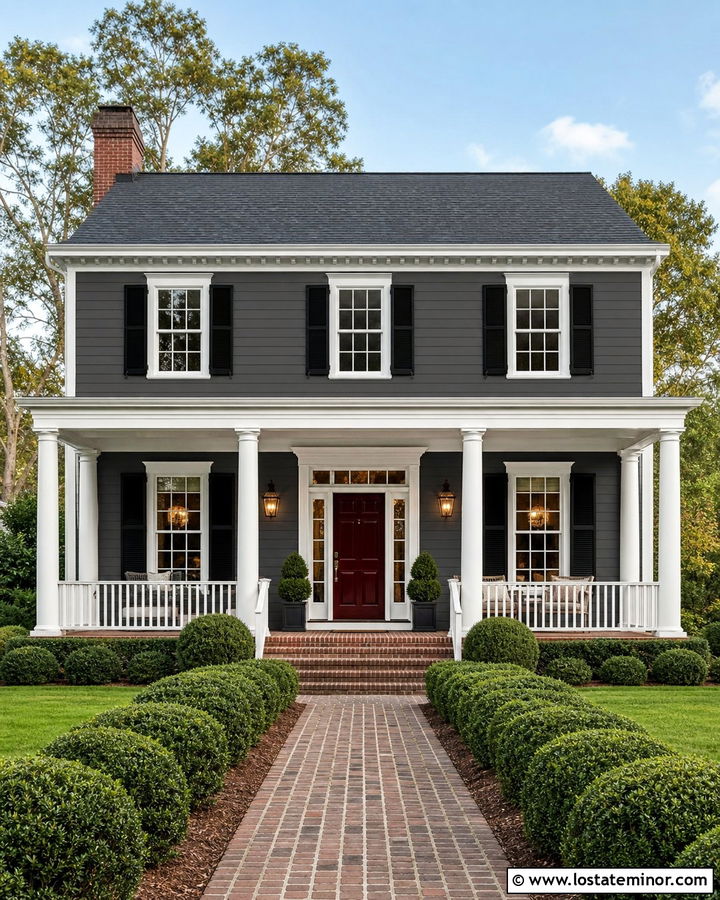
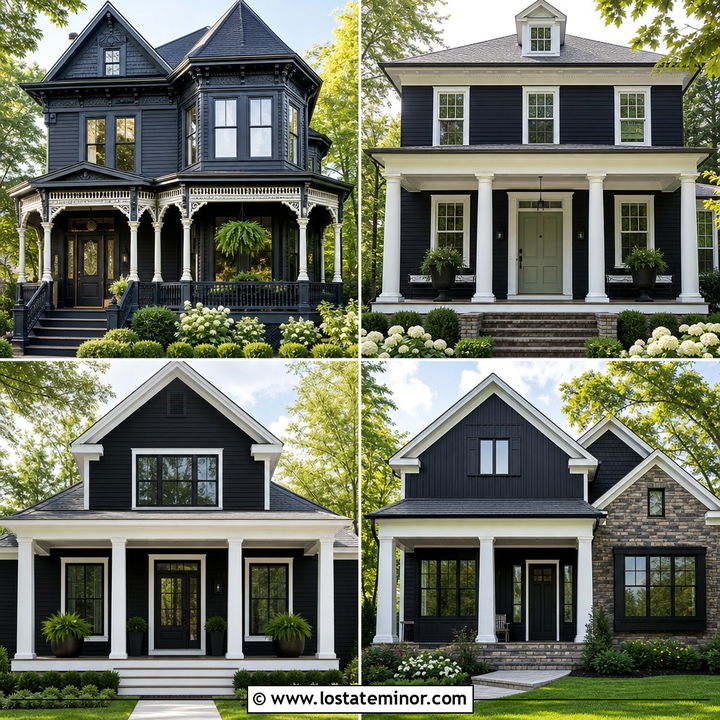
Traditional round columns bring symmetry and elegance to a charcoal gray Colonial home. Paint the siding a deep charcoal with balanced undertones, then use bright white on the columns, window trim, cornice, porch railing, and decorative entry surround. Black shutters can frame the windows, but they should be properly sized to look functional rather than decorative strips. A glossy deep red or muted burgundy front door introduces a restrained heritage accent. Complete the exterior with a dark architectural-shingle roof, brass or aged-bronze lanterns, and a red-brick porch floor. Boxwood hedges and a straight brick walkway reinforce the formal layout. Because charcoal is visually heavy, the white column spacing and generous trim help the entrance remain open, readable, and welcoming from the street.
5. Charcoal Gray Modern House With Black Steel Porch Columns
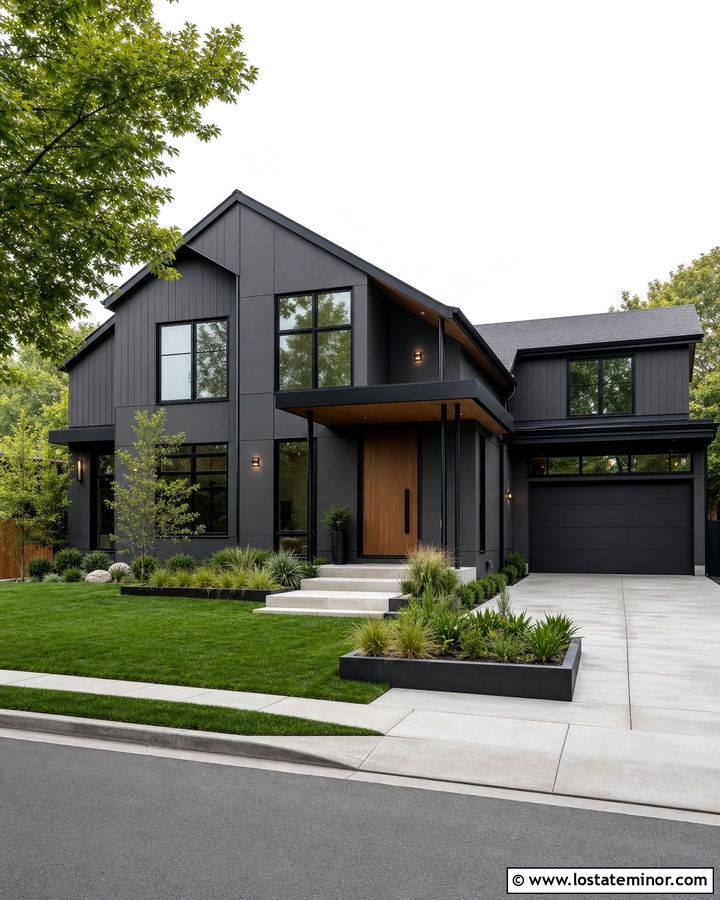
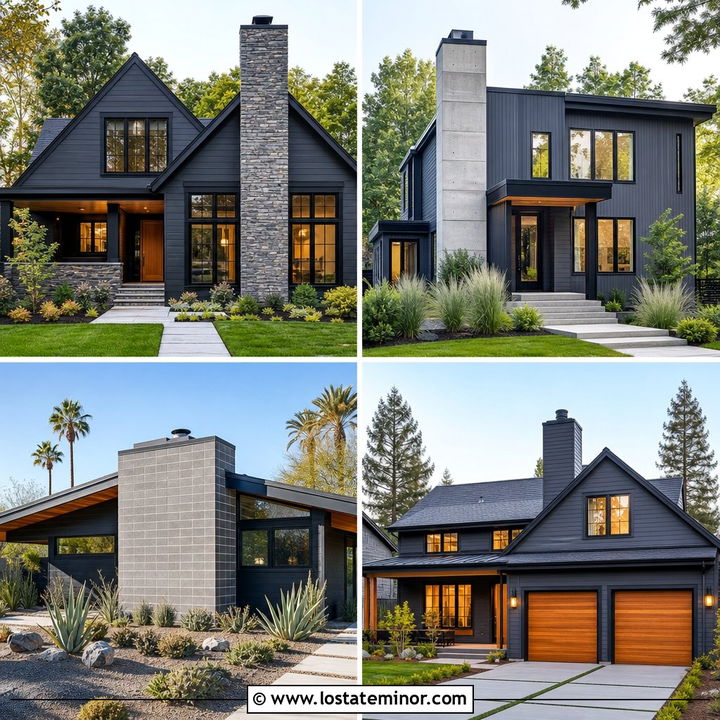
Slim black steel columns suit a modern charcoal gray exterior because they support the porch without adding visual bulk. Cover the facade in smooth charcoal fiber-cement panels, vertical siding, or a controlled mix of both. Matte black columns can align with narrow black window frames, metal fascia, and a flat or low-slope porch roof. Warm the scheme with a natural walnut pivot door and a cedar soffit extending across the entry. Pale concrete steps and a light-gray porch slab prevent the dark colors from overwhelming the approach. Keep landscaping architectural with clipped grasses, compact evergreens, and rectangular planting beds. This look works best when joints, gutters, lights, and house numbers are carefully aligned. The limited palette produces a sharp exterior that still feels approachable.
6. Charcoal Gray Bungalow With Brick Porch Columns
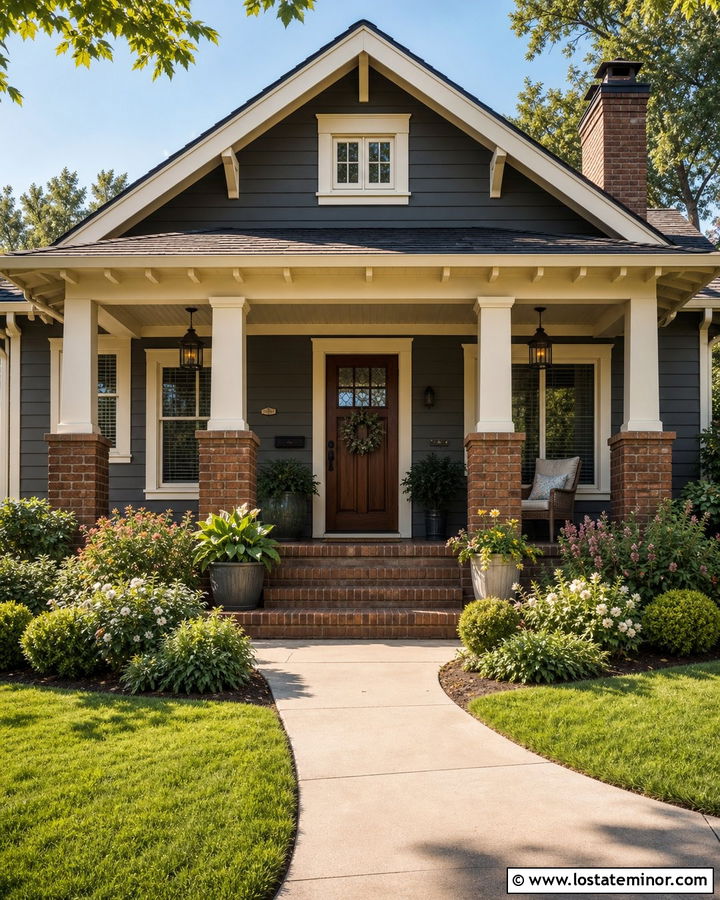
Weathered red brick gives a charcoal gray bungalow an established, inviting character. Build substantial brick piers at the porch corners and finish them with simple square charcoal or cream column tops. The brick should also appear on the porch steps or foundation so the columns do not feel disconnected. Pair charcoal lap siding with warm white window trim and a stained mahogany front door. A brown-black roof ties together the siding and masonry more gently than a solid black roof. Add traditional bronze lanterns, a beadboard porch ceiling, and wood-framed porch furniture in natural tones. Cottage shrubs and flowering perennials soften the brick edges. Together, the dark siding, earthy masonry, and welcoming porch details create a bungalow exterior with depth, warmth, and visible craftsmanship.
7. Charcoal Gray Cape Cod With White Porch Columns
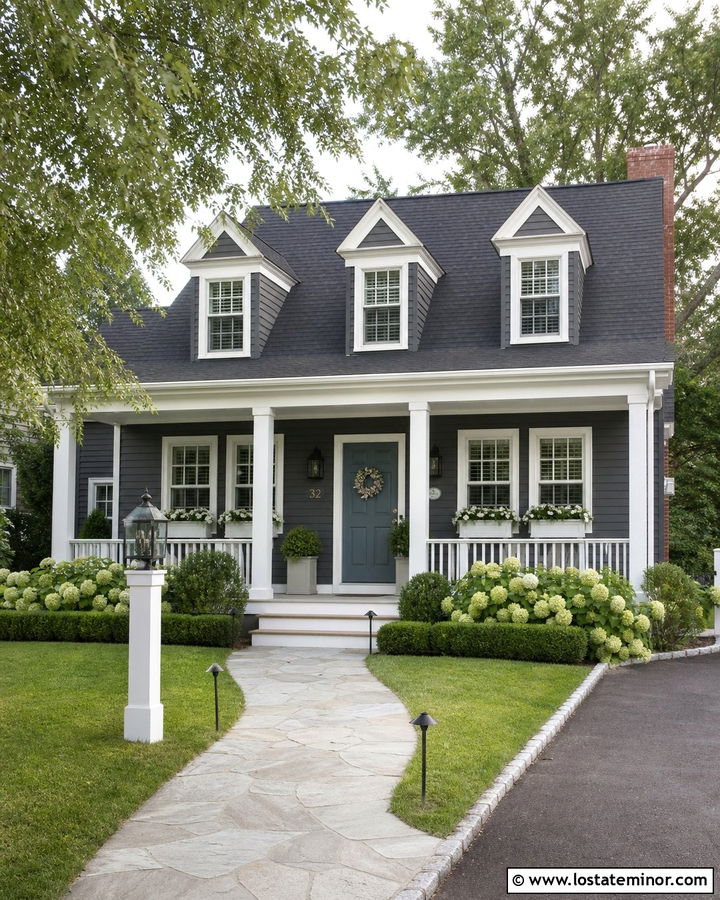
A charcoal gray Cape Cod benefits from simple white columns that preserve its compact, balanced shape. Use narrow charcoal clapboard siding, bright white trim, and a steep dark-gray roof with two or three evenly spaced dormers. The porch can span only the central entry or extend across most of the facade, depending on the home’s proportions. Choose square columns with understated caps rather than oversized decorative details. A muted blue front door adds coastal color while staying calm against the dark siding. White porch railings, window boxes, and fascia keep the upper and lower portions visually connected. Complete the setting with hydrangeas, clipped hedges, and a pale stone walkway. The combination feels crisp and traditional while giving the familiar Cape Cod silhouette greater street presence.
8. Charcoal Gray Cottage With Natural Wood Porch Columns
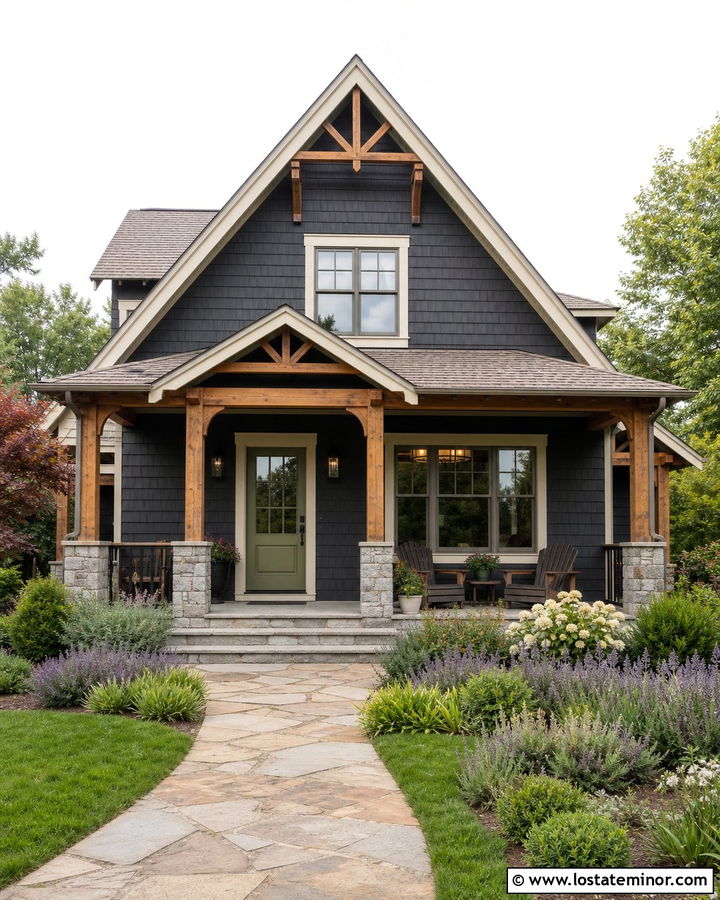
Could a dark cottage still feel cheerful and welcoming? Charcoal gray siding paired with natural wood columns proves that it can. Use narrow lap siding or cedar shingles in a rich charcoal finish, then add lightly stained Douglas fir columns and matching porch brackets. Soft ivory trim is less severe than pure white and works beautifully with warm wood grain. A sage green front door brings a garden-inspired accent to the entry, while a weathered gray roof keeps the upper facade quiet. Add a natural stone porch base and irregular flagstone path for a collected look. Flowering shrubs, lavender, and small ornamental trees should frame rather than hide the architecture. This layered scheme makes a cottage feel cozy, detailed, and closely connected to its landscape.
9. Charcoal Gray Split-Level With Double Porch Columns
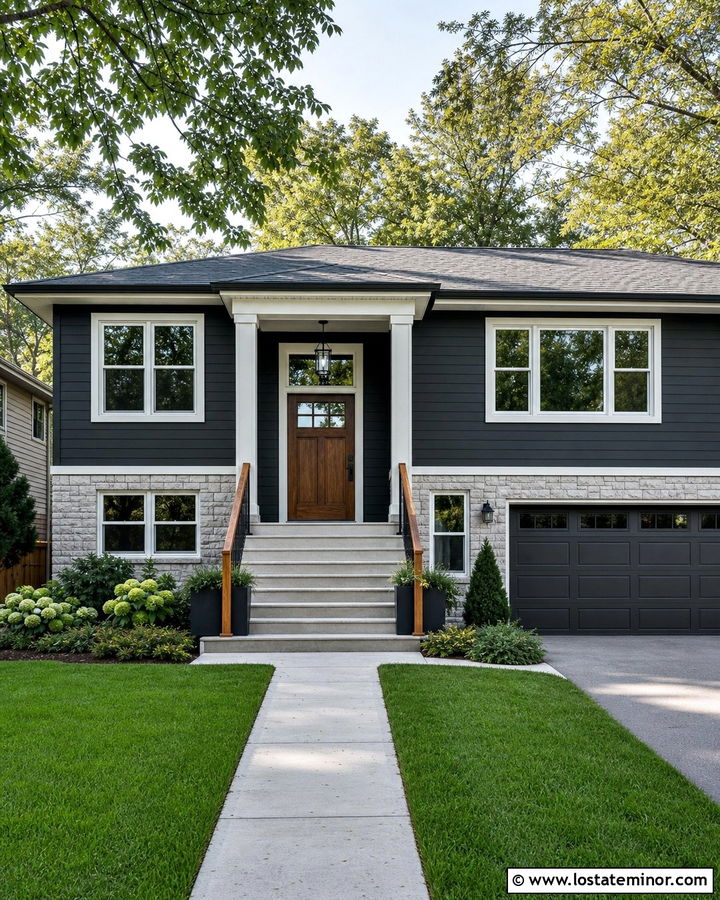
Double porch columns can give a split-level home a stronger and more intentional entrance. Paint the upper siding charcoal gray and use slightly lighter charcoal brick or cool gray stone across the lower level. At the porch, install paired square columns in warm white to create a clear focal point around the front door. Repeat that white on the window trim and garage frame, but consider a charcoal garage door to reduce its visual size. A medium-stained wood door and matching handrail introduce warmth between the gray surfaces. Use broad concrete steps and a walkway that aligns directly with the column grouping. Layered shrubs can help visually balance different floor heights. The updated entrance unifies the offset architecture without trying to conceal the home’s characteristic shape.
10. Charcoal Gray House With Stone Porch Columns
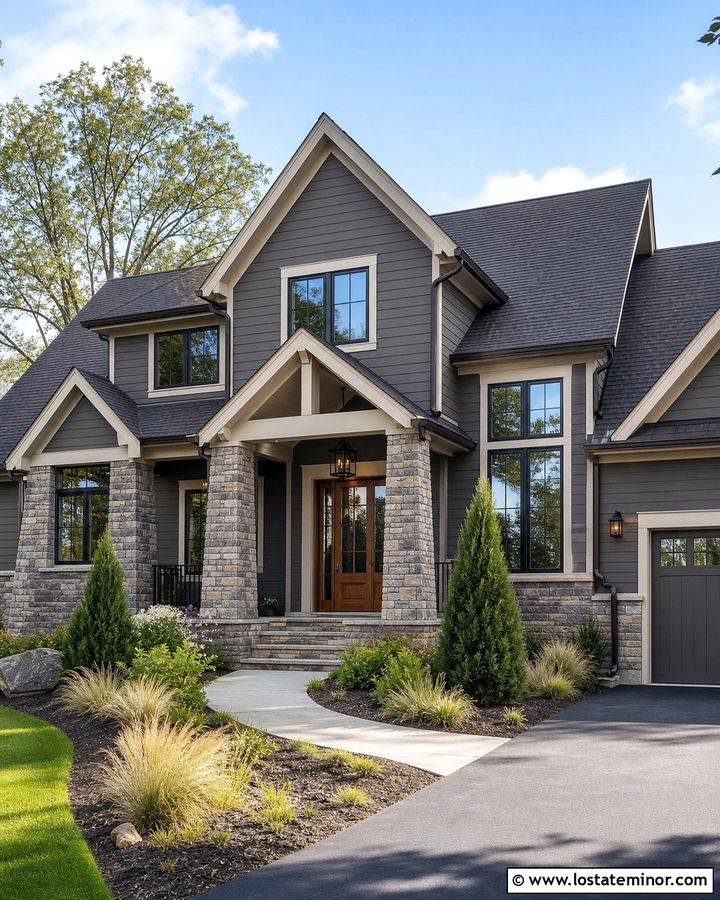
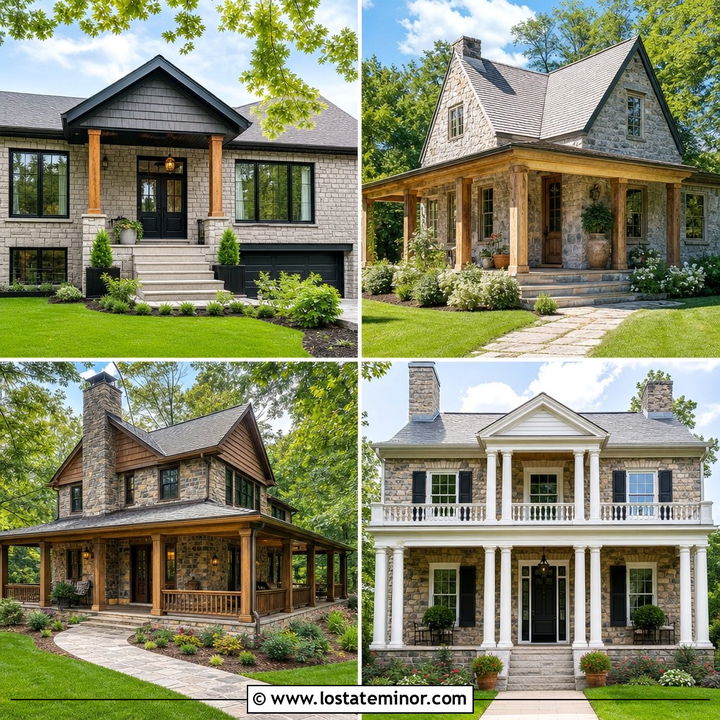
Full-height stone columns make a dramatic statement against charcoal gray siding, especially on a house with a high or deeply pitched porch roof. Choose ledgestone containing gray, taupe, and soft brown so the masonry relates to both the siding and warmer accents. Repeat the stone around the porch base, chimney, or lower facade, but avoid covering every surface. Charcoal siding should remain the dominant material. Use creamy white trim to outline windows and roof edges, then add a stained wood front door with simple glass panels. Bronze gutters and lanterns complement the stone better than shiny finishes. A gently curved walkway and layered evergreen landscaping soften the heavy columns. This exterior feels permanent and upscale while maintaining a balanced mix of color, texture, and architectural weight.
11. Charcoal Gray House With Black Porch Columns
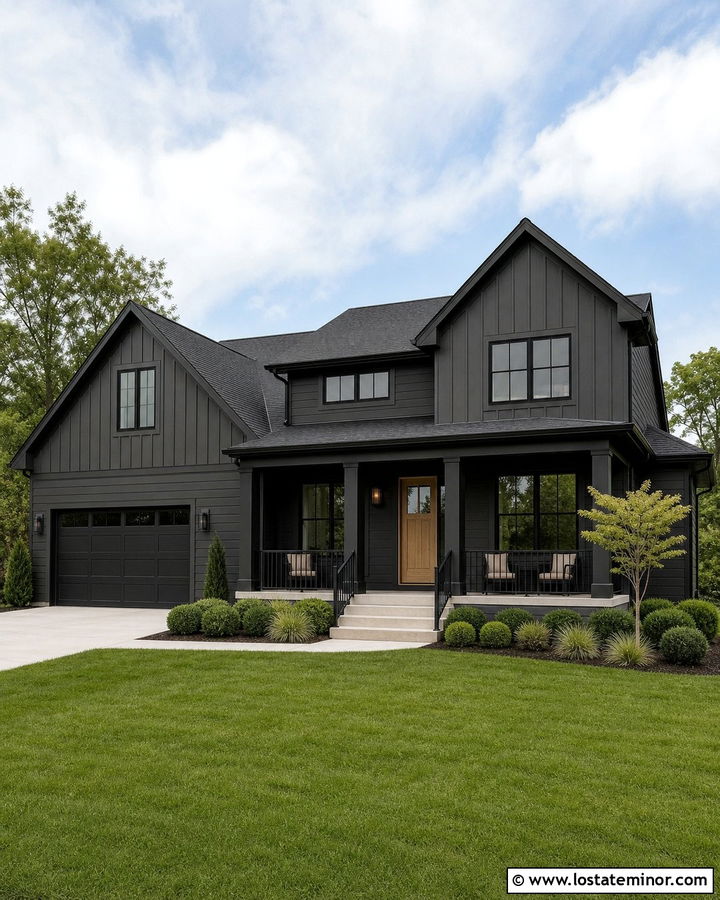
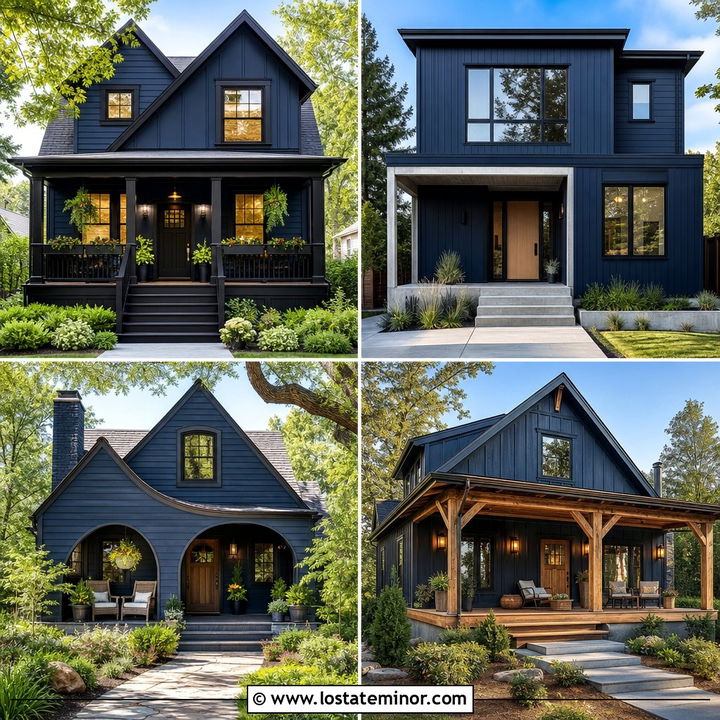
Black columns create a sleek, tone-on-tone porch when paired with charcoal gray siding. To keep the facade from becoming flat, vary the siding profiles and surface finishes. Charcoal lap siding can cover the main walls, while charcoal board-and-batten defines a front gable. Use matte black on square columns, window frames, railings, gutters, and porch lights. A pale oak front door provides the essential warm focal point, while a light concrete porch and steps brighten the lower elevation. Consider a medium charcoal roof rather than pure black so the roofline remains visible. Sparse landscaping with green grasses, rounded shrubs, and one small tree adds softness. The finished house feels bold and modern, yet the wood, concrete, and greenery prevent it from looking severe.
12. Charcoal Gray House With Cream Porch Columns
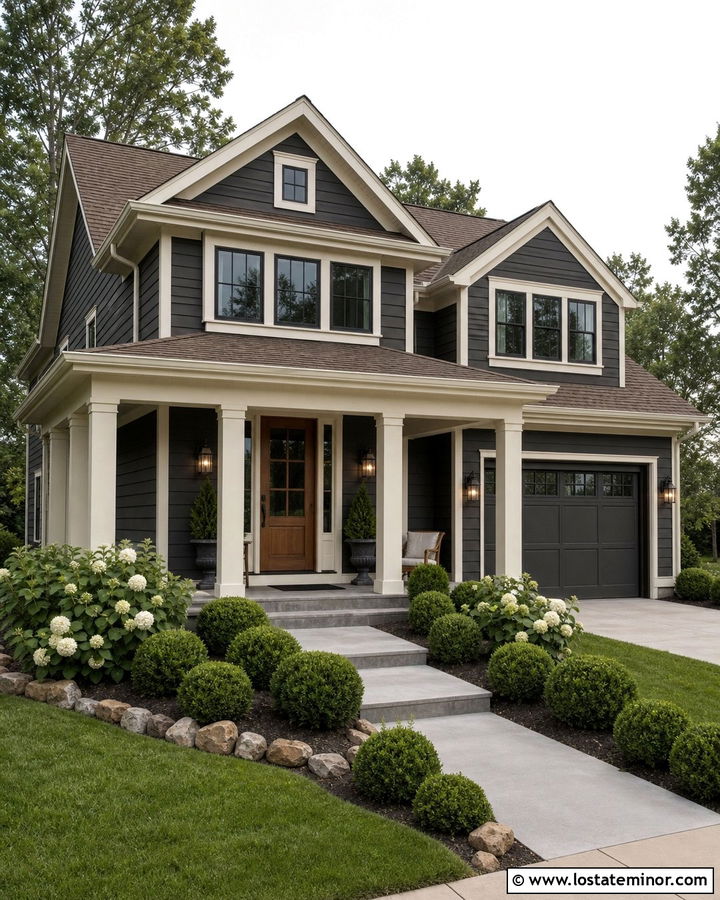
Cream porch columns offer a softer alternative to bright white on a charcoal gray house. This pairing is especially useful when the property includes warm brick, beige stone, or a brown roof. Carry the cream color onto the window trim, porch beam, fascia, and garage trim to create a consistent frame around the dark siding. A walnut-stained front door and antique-brass porch lights strengthen the warm direction. For the porch floor, choose muted taupe tile, warm gray concrete, or weathered wood. The columns can be square and substantial, with simple base and cap molding that suits a transitional home. Finish the yard with boxwoods, white flowering shrubs, and natural stone edging. The complete palette feels comfortable and refined rather than stark or overly contemporary.
13. Charcoal Gray House With Cedar And Stone Porch Columns
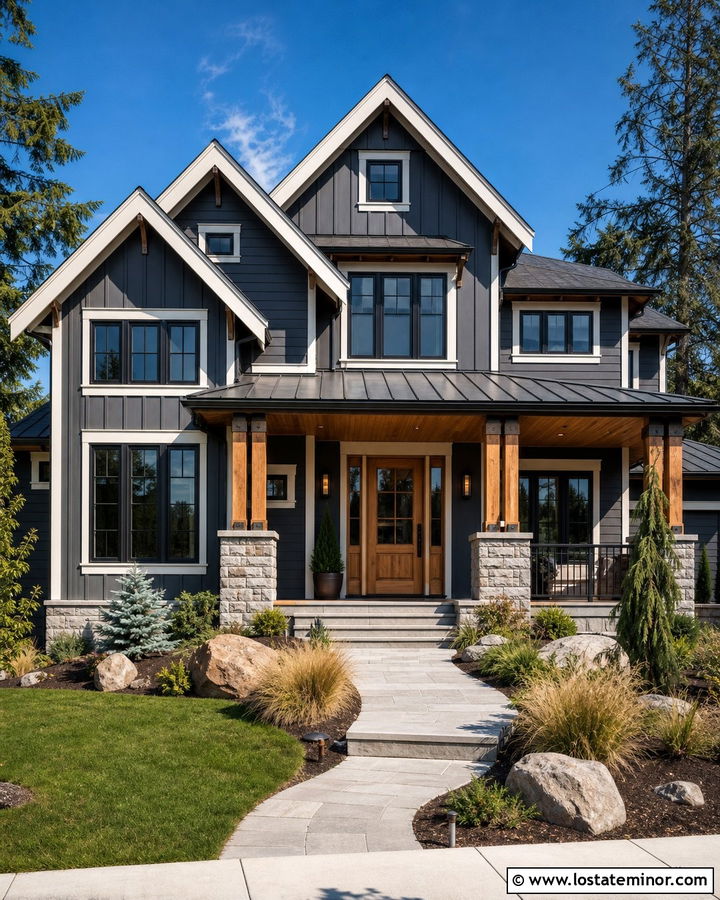
Combining cedar and stone allows porch columns to connect multiple exterior materials in one cohesive feature. Start with broad stone piers in a cool gray blend, then place square cedar posts above them to support the porch beam. Charcoal gray siding provides a calm backdrop that highlights both textures. Repeat cedar on the front door, gable brackets, or porch ceiling, and carry the stone along part of the foundation. Use warm white trim and black-framed windows for a balanced mix of light and dark. The roof can be charcoal with a small bronze metal accent over the porch. Native grasses, boulders, and evergreen plantings support the natural palette. This combination works particularly well on Craftsman, mountain, and contemporary rustic homes with prominent covered entries.
14. Charcoal Gray House With Brick And White Porch Columns
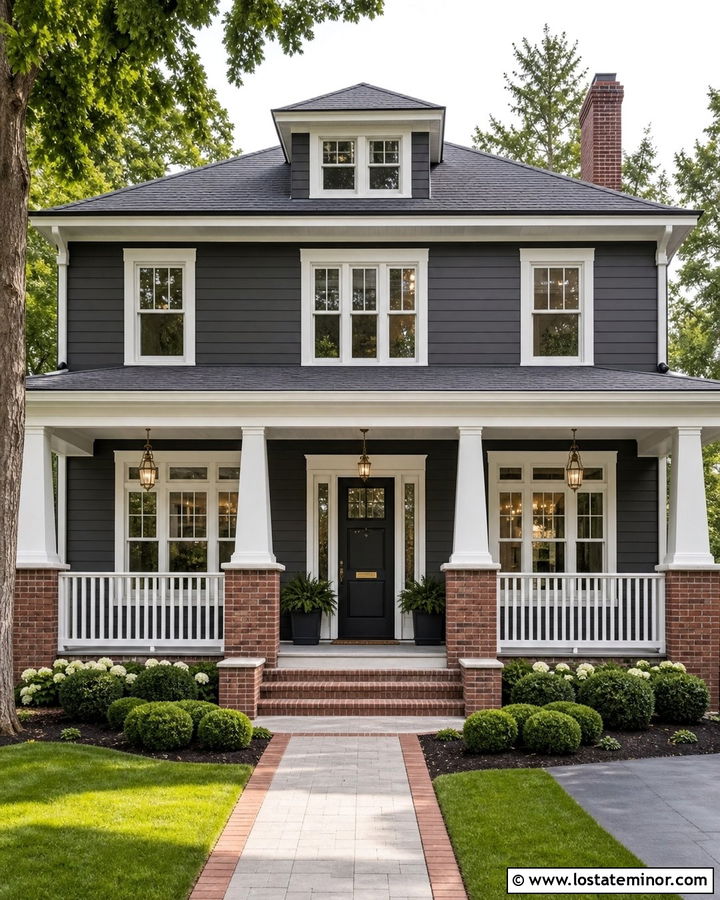
Brick bases topped with white columns create a classic porch that stands out clearly against charcoal gray siding. Select red-brown brick with charcoal variations so it feels connected to the body color instead of looking like a separate addition. Use the same brick for the front steps, walkway border, or foundation skirt. Wide white square columns should match the porch beam, fascia, window trim, and railings. A black front door creates a formal focal point, while aged-brass lanterns add warmth and traditional detail. Keep the roof dark gray rather than brown if the brick already brings enough warmth. Neatly clipped shrubs and a straight walkway reinforce the orderly appearance. This full exterior scheme is versatile enough for Colonial, traditional, and updated suburban homes.
15. Charcoal Gray Modern Farmhouse With Wood Porch Columns
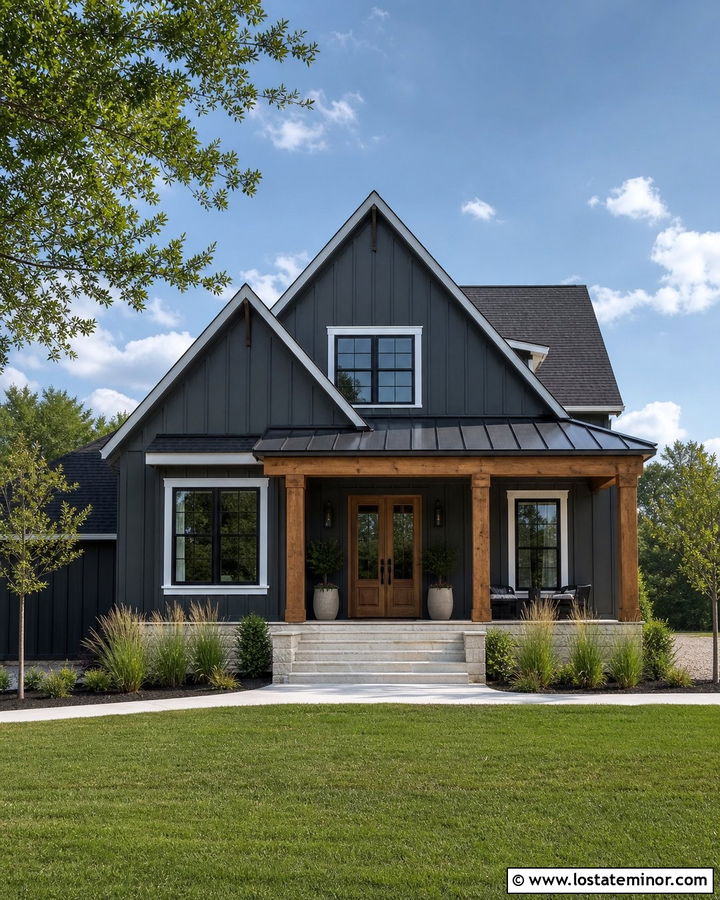
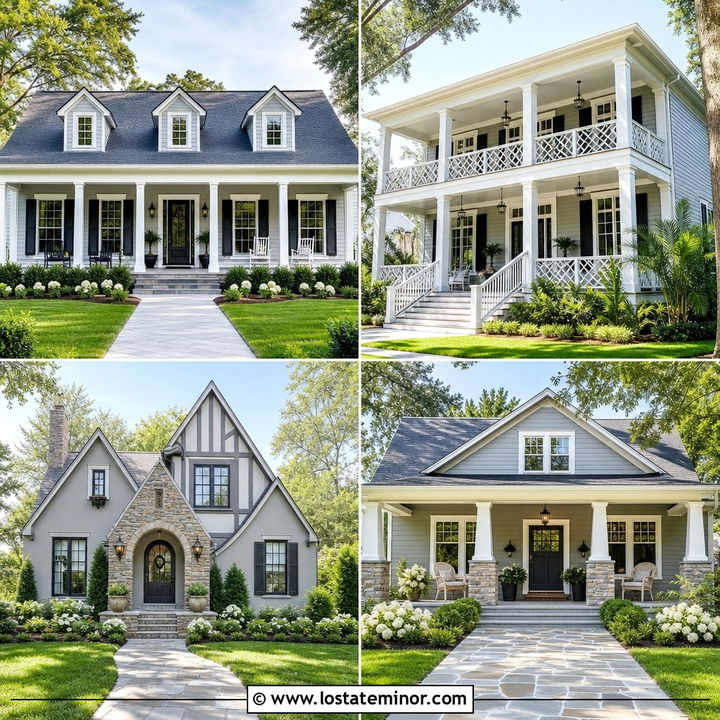
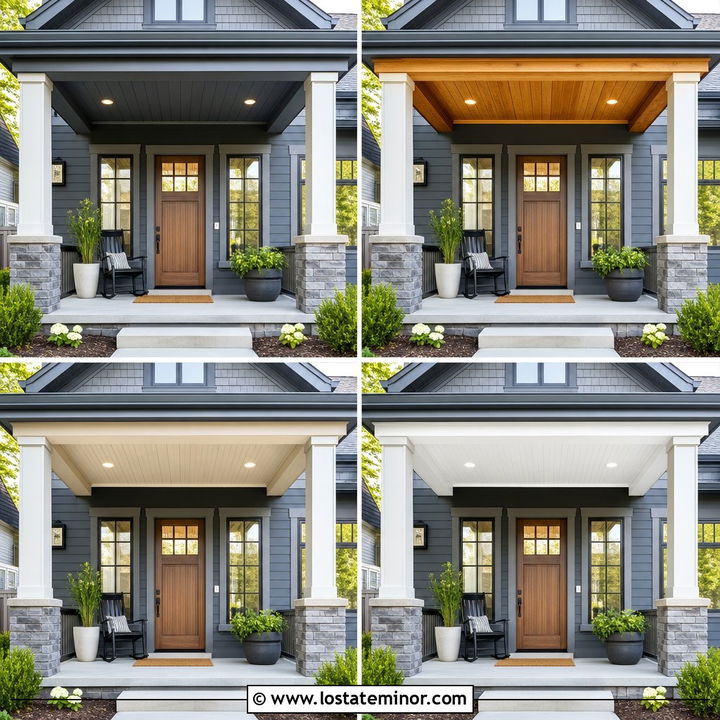
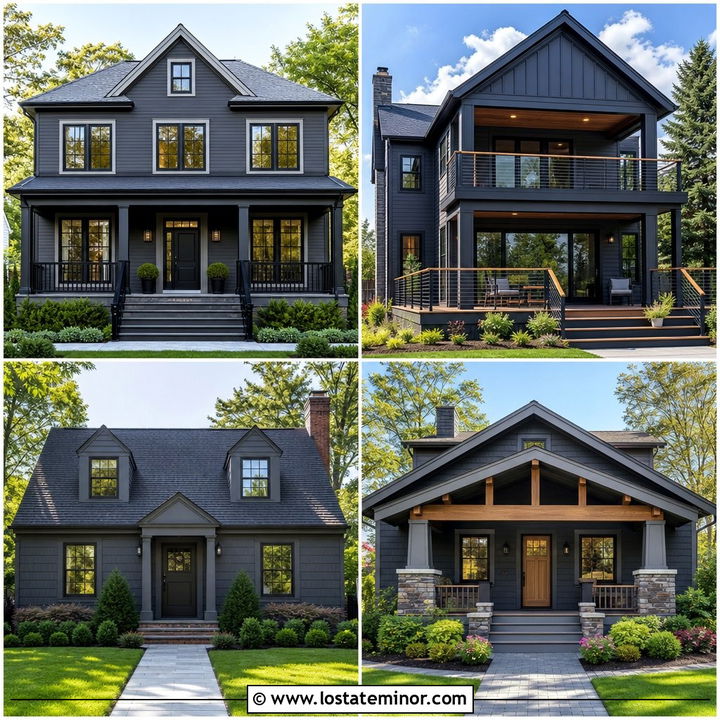
A modern farmhouse can handle a darker exterior when natural wood columns and clean white trim are used strategically. Cover the house in charcoal gray board-and-batten siding, then frame the porch with substantial cedar posts and a matching timber beam. Use white around the windows and roof edges, but choose black window sashes for extra definition. A natural wood double door can echo the columns without matching them perfectly. Add a black standing-seam porch roof and charcoal architectural shingles over the main structure. Pale stone steps and a warm gray porch floor keep the entry bright. Simple grasses, young trees, and symmetrical planters provide a polished finish. The combination balances farmhouse familiarity with a richer, more contemporary color palette.
16. Charcoal Gray Foursquare With Craftsman Porch Columns
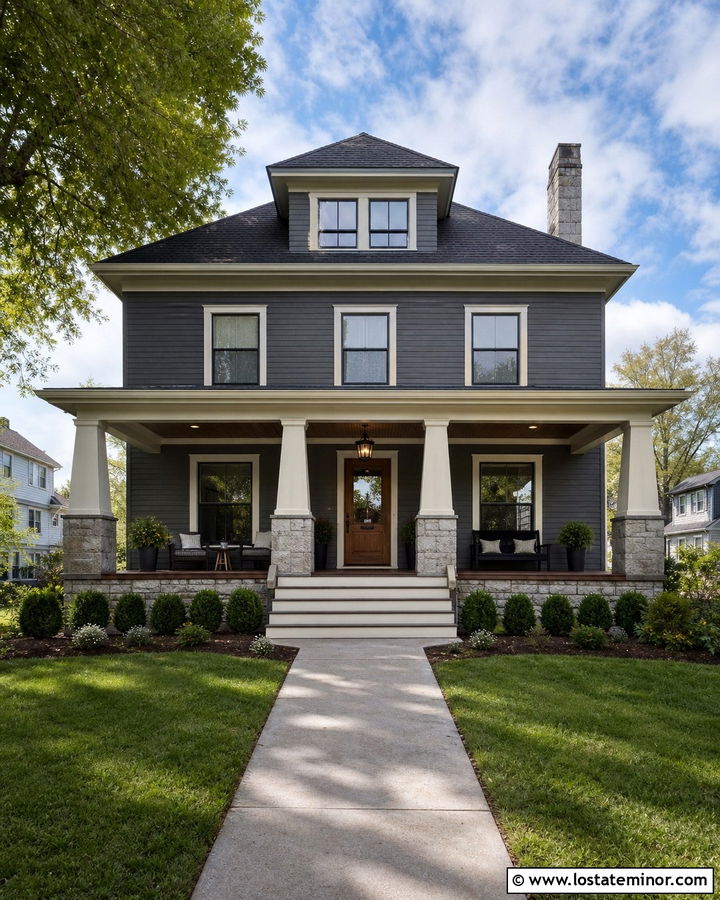
The broad front porch of an American Foursquare is an ideal place for sturdy Craftsman columns. Paint the upper stories charcoal gray and use tapered columns with warm white tops and stone bases across the porch. Repeating the stone on the foundation visually anchors the tall, boxy structure. A stained oak door, beadboard porch ceiling, and medium-brown porch floor add warmth at eye level. Choose off-white window trim and dark bronze gutters to soften the contrast between siding and architectural details. The hipped roof can remain deep gray with a small metal accent above the entry. Broad steps, symmetrical shrubs, and a central walkway emphasize the home’s balanced facade. This scheme respects the Foursquare’s original proportions while making the charcoal exterior feel fresh and carefully maintained.
17. Charcoal Gray Victorian With Decorative Porch Columns
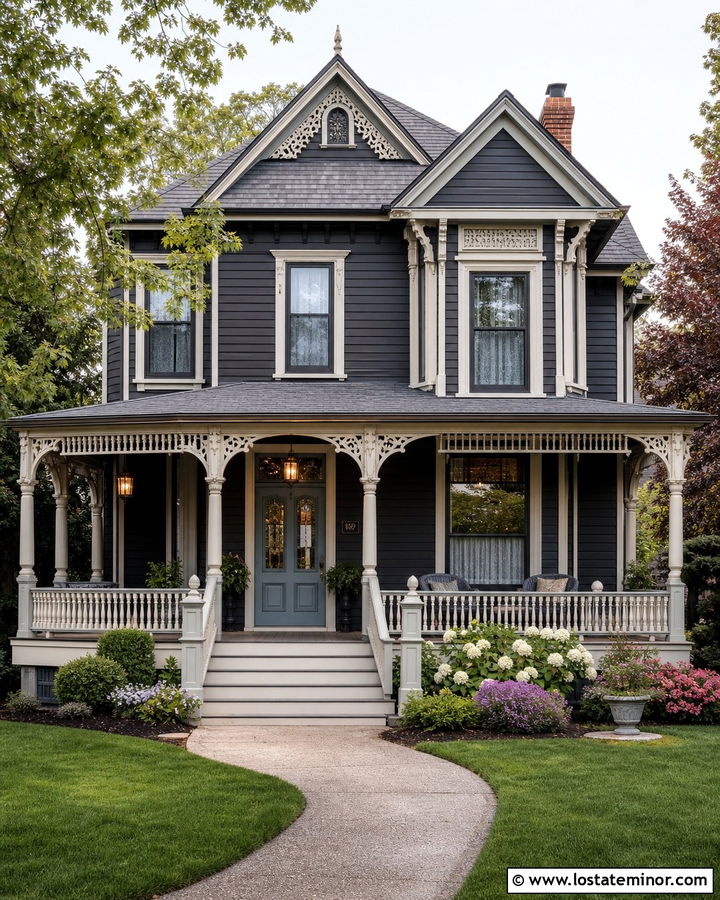
Detailed Victorian columns can remain visible against charcoal gray siding without relying on too many competing colors. Use warm white on turned columns, carved brackets, porch spindles, window trim, and decorative gable elements. Add a muted dusty blue or soft sage as a restrained third color on small accents such as the front door, window sashes, or bracket details. A medium-gray roof keeps attention on the craftsmanship below. Paint the porch floor a practical warm gray or subdued blue-gray that complements the accent color. Traditional lanterns and a natural wood porch ceiling can add warmth without crowding the palette. Frame the facade with flowering shrubs and a curved walkway. The dark body color unifies elaborate architecture, while lighter columns preserve its depth and delicacy.
18. Charcoal Gray Coastal House With White Porch Columns
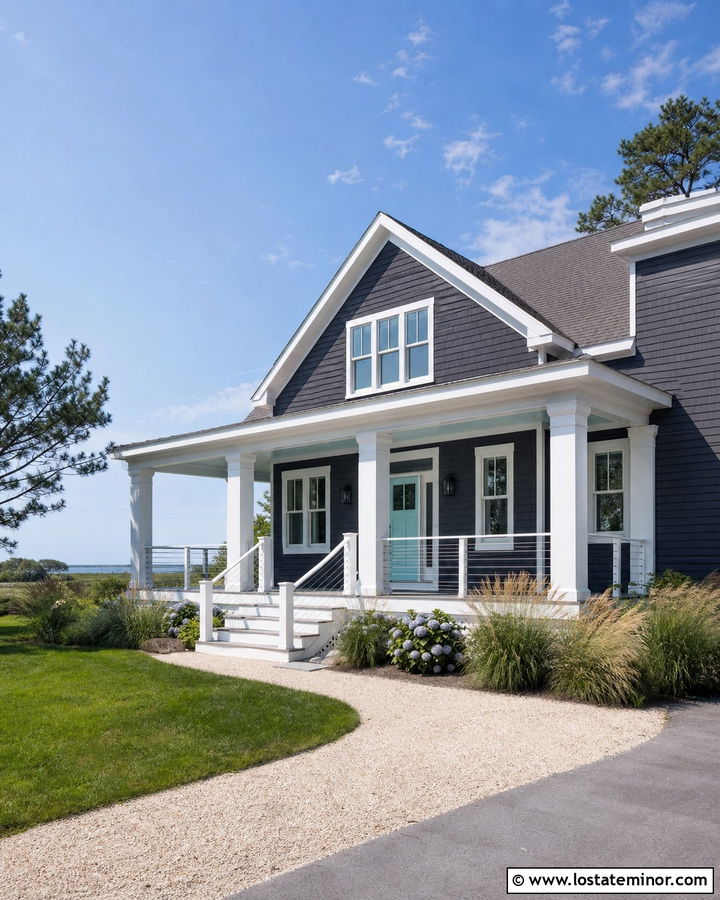
Charcoal gray can work in a coastal palette when it is balanced with abundant white and weathered natural textures. Choose charcoal cedar-shingle siding, then add broad white columns, white railings, white window trim, and a pale porch ceiling. A soft aqua front door introduces a fresh seaside accent without dominating the facade. Use a medium-gray roof and light stone porch floor to keep the overall exterior bright. Cable railing can replace traditional balusters if the house has cleaner contemporary lines. Pale wood furniture and woven textures add warmth beneath the covered porch. Finish the yard with dune grasses, hydrangeas, and a shell-toned gravel path. The result feels breezy and relaxed even though the main siding color is deep, dramatic, and highly defined.
19. Charcoal Gray Rustic House With Timber Porch Columns
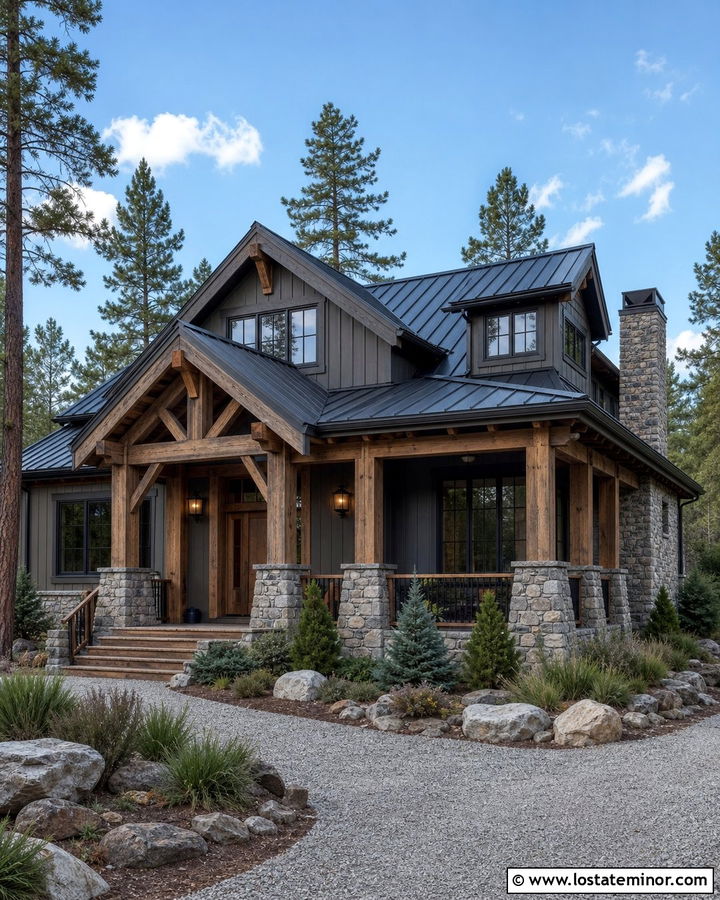
Large timber columns give a charcoal gray rustic home the visual strength needed to support deep roof overhangs. Choose rough-sawn cedar or Douglas fir posts with visible grain, then repeat the wood on roof brackets, porch beams, and the front door. Charcoal lap siding or vertical panel siding keeps the facade streamlined around these bold structural elements. Add gray fieldstone at the foundation and column bases to connect the house to the surrounding land. Black-framed windows and a dark metal roof suit the rugged palette, while a warm wood porch floor prevents the entrance from feeling too dark. Use native grasses, evergreen shrubs, and natural boulders instead of formal hedges. This complete look feels grounded, durable, and appropriate for wooded or mountain settings.

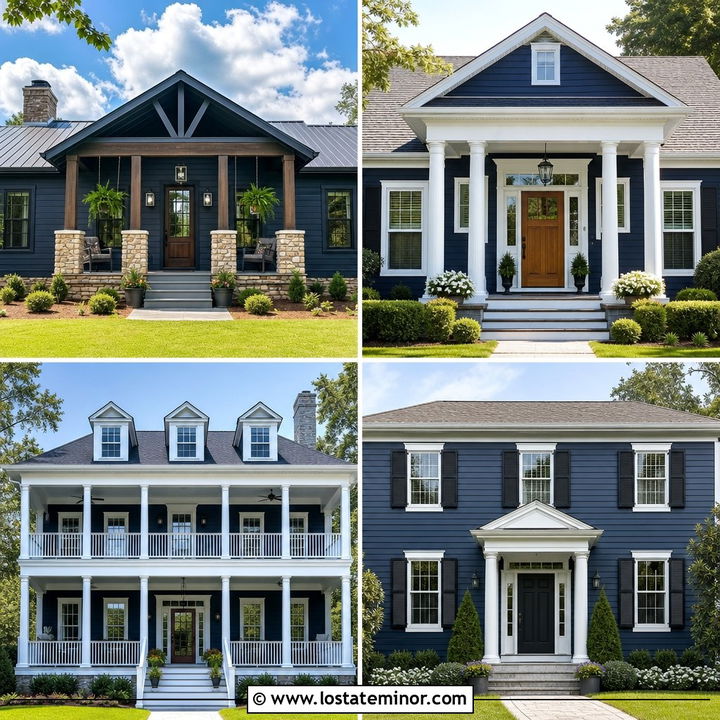
20. Charcoal Gray Tudor With Brick Porch Columns
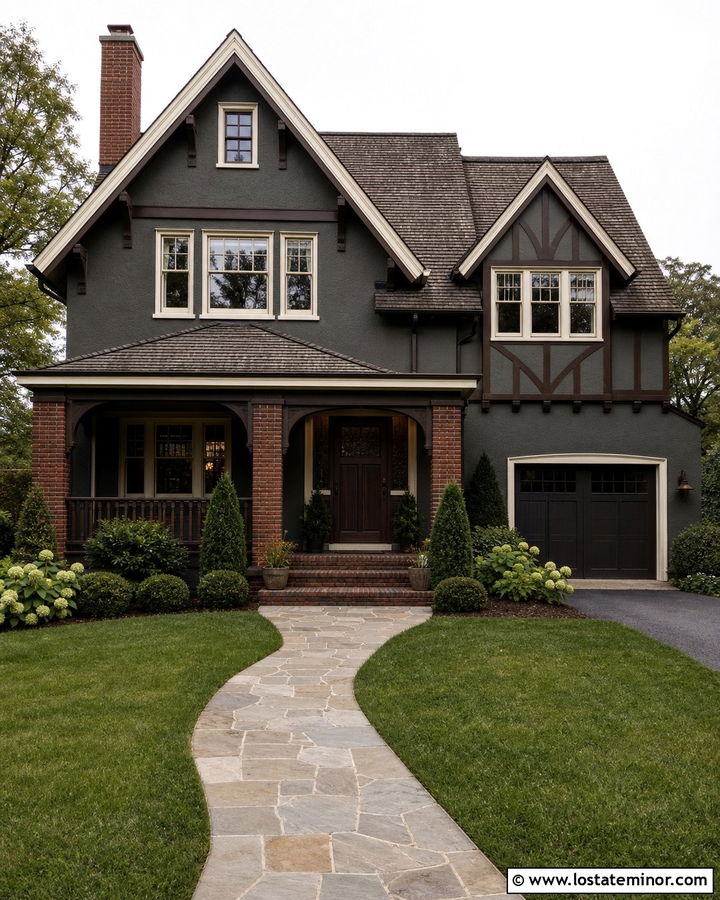
Brick porch columns can complement a Tudor home when their shape and color relate to the existing masonry. Use charcoal gray stucco or siding in secondary areas, then retain deep red-brown brick around the lower facade, chimney, and porch supports. The columns should be square or subtly tapered rather than classical and round. Cream trim highlights the steep gables and leaded windows, while dark brown framing reinforces the traditional structure. Choose a heavy stained-wood front door with black iron hardware as the central feature. A dark weathered roof and warm brick porch floor complete the historic palette. Curved planting beds, clipped evergreen shrubs, and an irregular stone path soften the formal materials. The charcoal sections modernize the house without erasing its recognizable Tudor character.
21. Charcoal Gray Prairie House With Stone Porch Columns
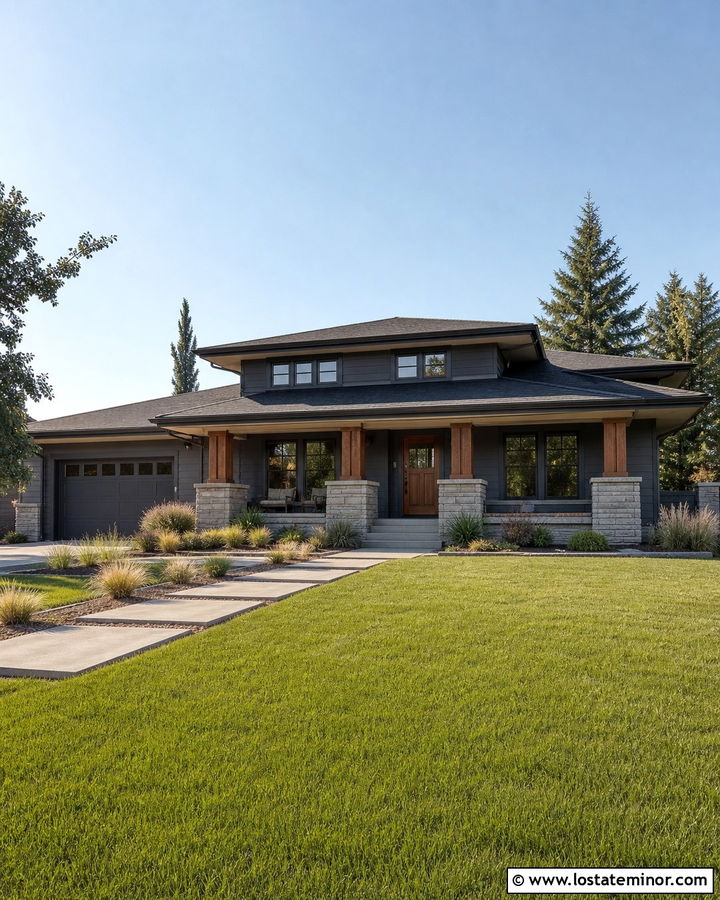
Horizontal lines define a Prairie-style home, so its porch columns should feel broad, low, and integrated into the architecture. Pair charcoal gray horizontal siding with wide stone piers and short square wood columns beneath an extended porch roof. Choose low-profile ledgestone containing cool gray and muted brown tones. Repeat these colors through a medium-stained front door, bronze window frames, and a dark gray roof with generous overhangs. Cream soffits can brighten the sheltered areas without outlining every surface in white. Keep porch railings minimal or omit them where codes and porch height allow. Long bands of ornamental grasses, low shrubs, and flat concrete pavers reinforce the home’s horizontal emphasis. The finished exterior looks composed and grounded, with columns that belong naturally to the structure.
22. Charcoal Gray Greek Revival With Tall White Porch Columns
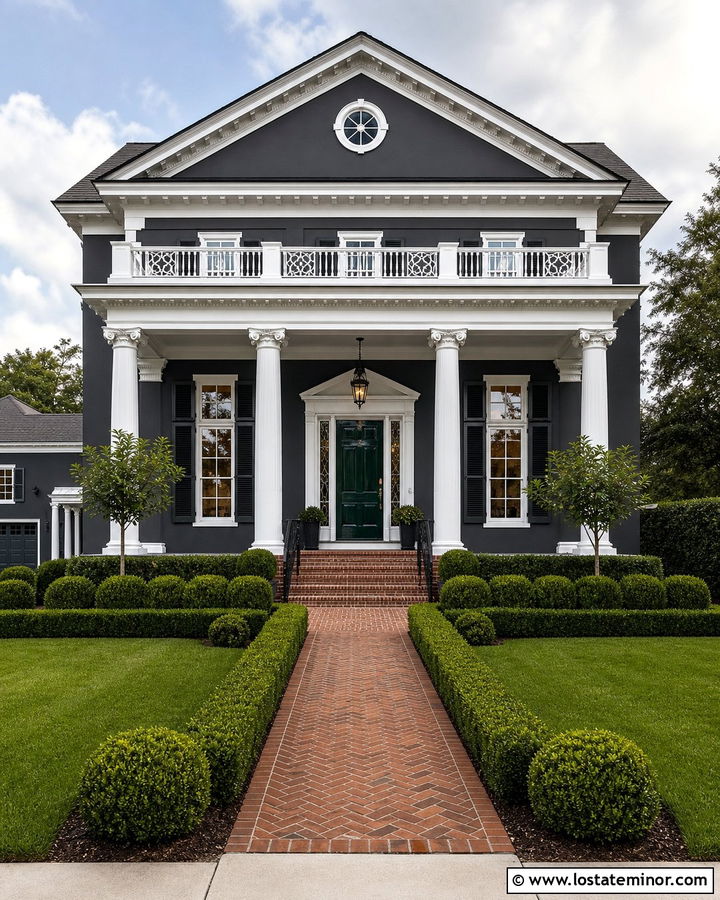
Tall white columns create the most dramatic possible contrast on a charcoal gray Greek Revival exterior. Keep the facade symmetrical and allow the full-height columns to remain the primary feature. Paint siding a deep, neutral charcoal, then use crisp white on the columns, entablature, cornice, window trim, and balcony railing. A glossy black or deep green front door adds a formal focal point beneath the porch. Choose a dark gray roof that visually recedes behind the strong front elevation. Brick steps and a brick walkway can introduce warmth while respecting the traditional architecture. Symmetrical boxwoods, small trees, and simple foundation beds maintain an orderly setting. Avoid excessive accent colors because the relationship between charcoal siding and the commanding white columns already provides enough visual impact.
23. Charcoal Gray Southern House With Double White Columns
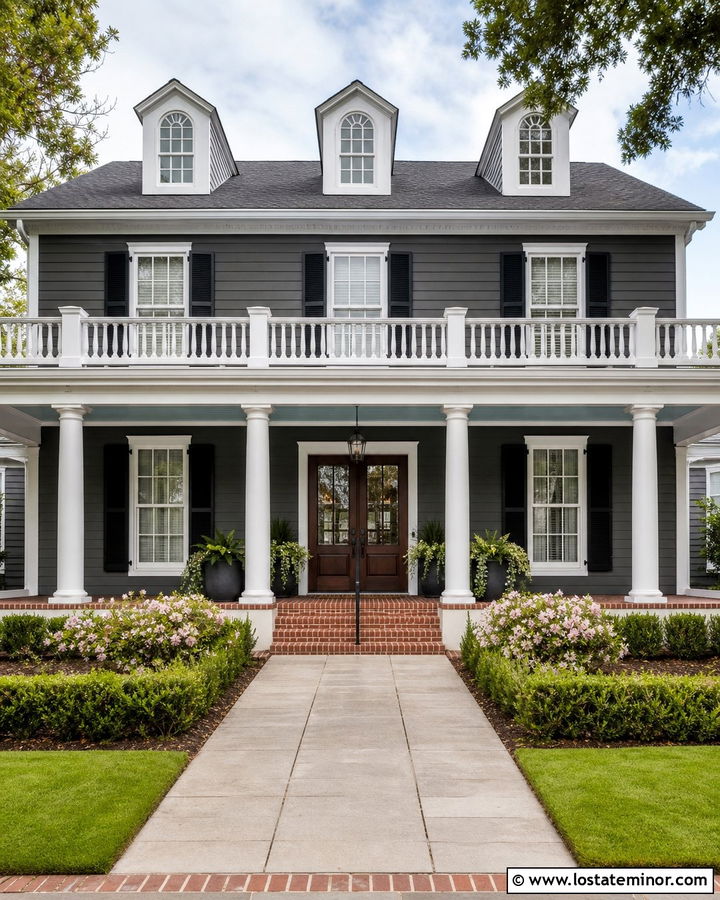
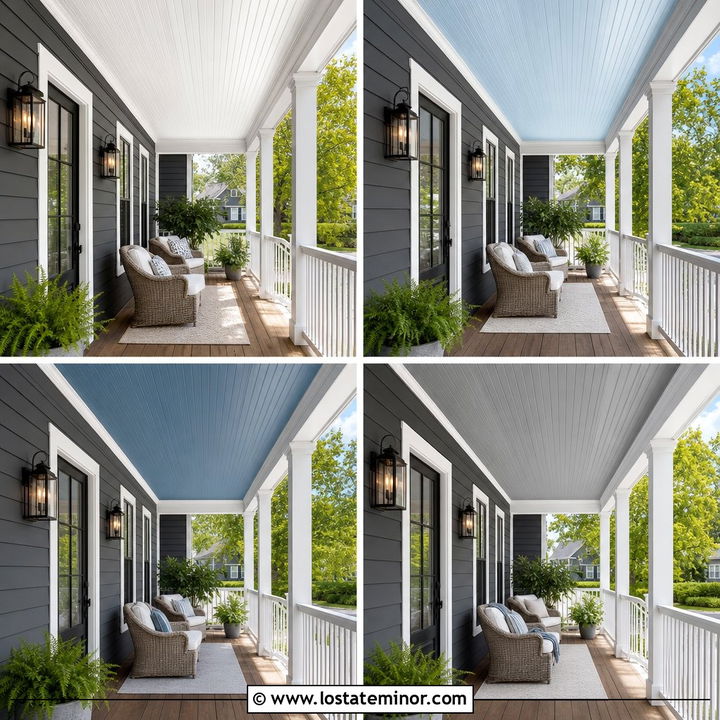
A wide Southern porch becomes even more inviting when double white columns divide the facade into balanced sections. Use charcoal gray lap siding as a rich backdrop and repeat bright white on porch railings, window trim, fascia, and ceiling beams. Black shutters add structure around tall windows, while a stained mahogany double door warms the center of the composition. Paint the porch ceiling a subtle pale blue for a gentle traditional accent that remains visible from the walkway. Red-brick steps or a brick porch floor add another warm material beneath the cool siding. Large planters, clipped hedges, and flowering shrubs can define the entrance without blocking the columns. This complete exterior feels gracious and established, with enough contrast to keep the deep charcoal body color from appearing heavy.
24. Charcoal Gray House With Fluted Porch Columns
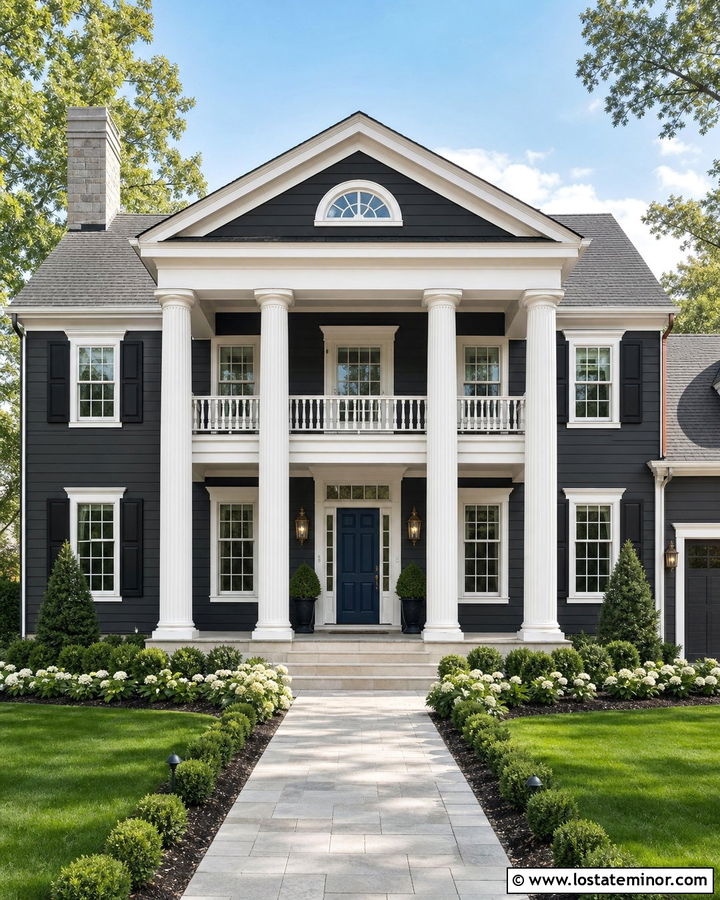
Fluted columns add texture and formality to a charcoal gray house without requiring extra accent colors. They work best on traditional, neoclassical, and refined transitional facades with balanced window placement. Paint the columns and porch surround a soft white, then repeat that shade on window trim, fascia, and railings. Charcoal lap siding creates a strong background that makes the vertical grooves visible from the curb. A deep blue front door offers subtle color, while polished nickel or aged-brass lanterns add a tailored detail. Use a dark gray roof and pale limestone porch floor to maintain the cool, elegant palette. Symmetrical evergreen plantings and a straight walkway reinforce the formal entrance. Keep the column bases clear of oversized planters so their shape remains fully visible.
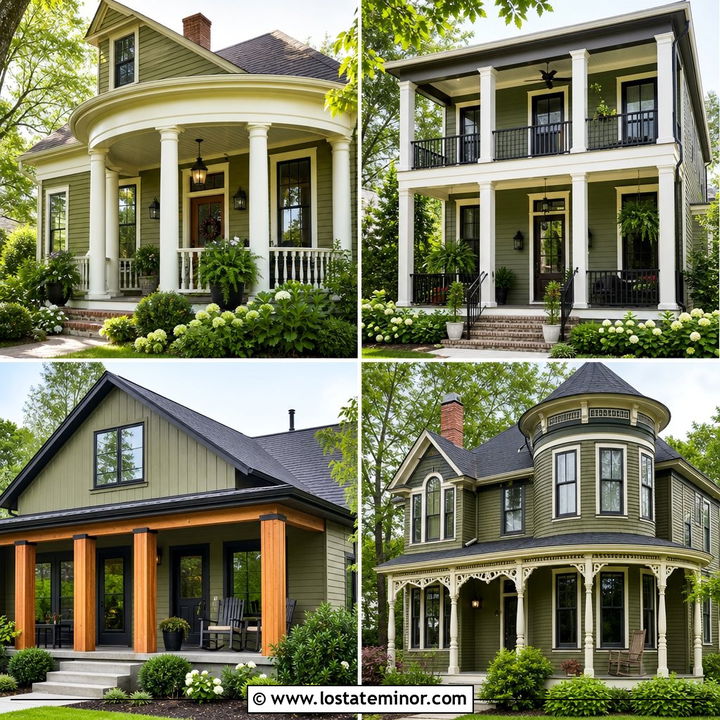
25. Charcoal Gray House With Craftsman Brick Column Bases
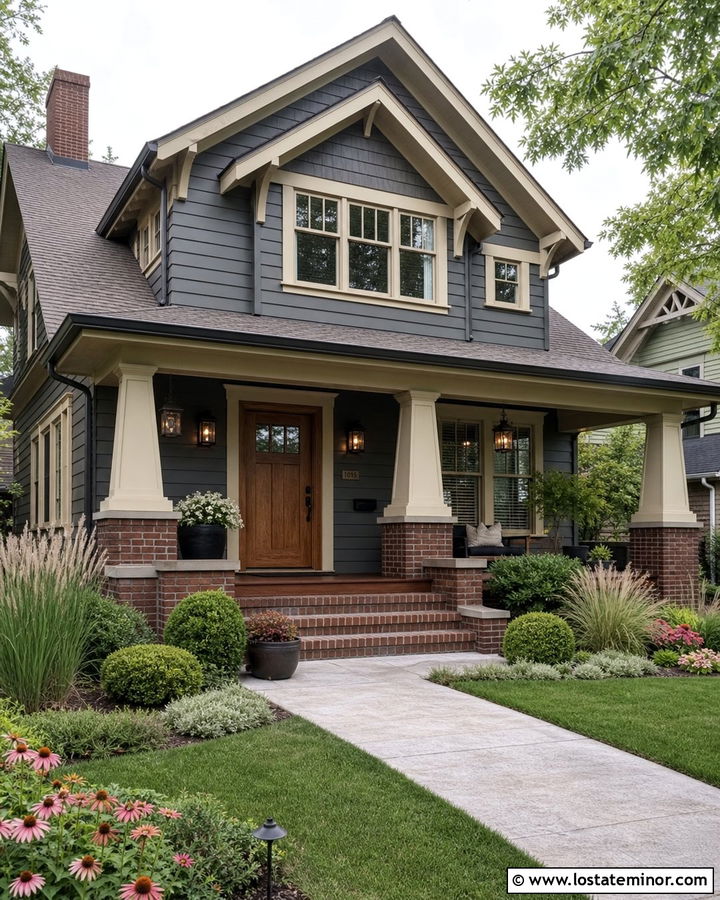
Short brick bases can give Craftsman porch columns a warmer, more approachable appearance. Pair charcoal gray siding with red-brown brick piers and tapered cream column wraps. The cream should also appear on the porch beam, window trim, roof fascia, and optional railing. Choose a Craftsman front door in medium-stained oak with small upper glass panes. Dark bronze hardware, gutters, and lanterns naturally bridge the warm brick and cool charcoal siding. Repeat the brick along the steps or lower foundation, but keep the main facade predominantly charcoal. A gray-brown shingle roof and stained porch floor finish the material palette. Plant rounded shrubs, ornamental grasses, and seasonal flowers around a broad walkway. The layered entry feels handcrafted while remaining practical for an established suburban home.
26. Charcoal Gray House With Stone Veneer Column Wraps
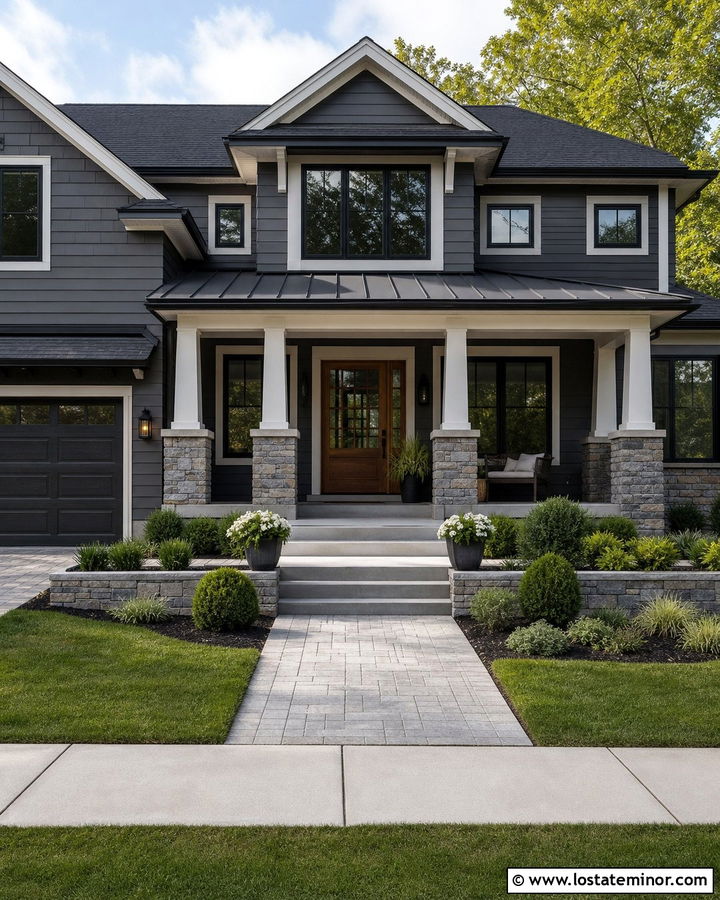
Stone veneer column wraps offer the appearance of substantial masonry without covering each support from top to bottom. Wrap the lower two-thirds of square porch columns in cool gray ledgestone, then finish the upper sections in warm white. Pair them with charcoal gray horizontal siding, white window trim, and black frames for a clean transitional exterior. A medium-walnut front door brings warmth to the center, while a charcoal metal porch roof visually connects with the body color. Repeat the stone at the garage corners or foundation to make the column treatment feel intentional. Use light concrete steps and a wide paver path to brighten the approach. Evergreen shrubs and soft grasses complete a durable, low-maintenance look with convincing depth and texture.
27. Charcoal Gray House With Midcentury Wood Porch Columns
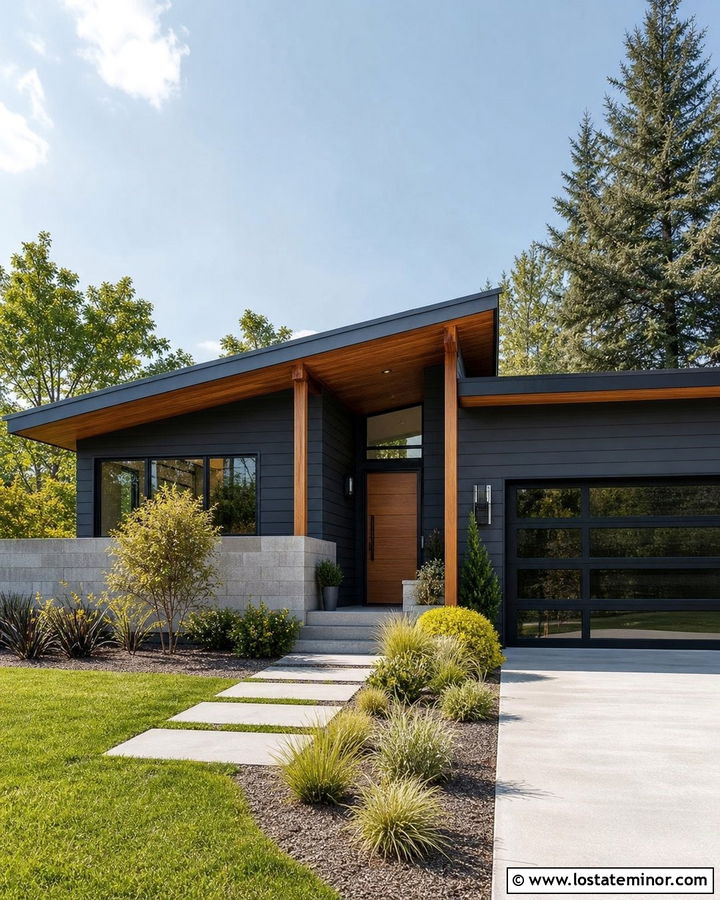
Midcentury architecture calls for porch columns that feel light, direct, and connected to natural materials. Paint the main exterior charcoal gray, then use slender stained-wood posts beneath a low, asymmetrical porch roof. Repeat the wood on a flat-panel front door, horizontal privacy screen, and soffit. Black window frames maintain the clean geometry, while light-gray concrete block or pale stone adds contrast near the entry. Consider a mustard, teal, or burnt-orange door only if wood is not used as the primary focal point. A low charcoal roof should extend clearly beyond the facade to emphasize horizontal lines. Finish the yard with ornamental grasses, sculptural shrubs, and large rectangular pavers. The scheme feels period-aware but fresh enough for a contemporary neighborhood.
28. Charcoal Gray House With Arched Porch Columns
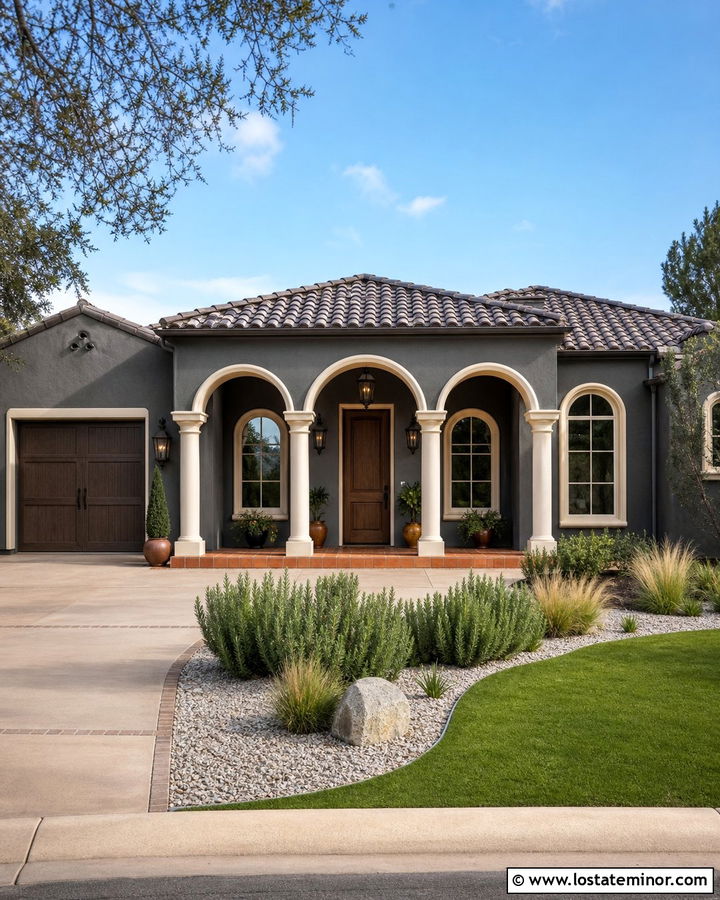
Arches between porch columns soften a charcoal gray exterior and bring attention to the front entrance. Use this treatment on Mediterranean, Spanish-influenced, or traditional homes with compatible rooflines and window shapes. Paint the body charcoal gray and finish the columns and arches in warm cream for clear but gentle contrast. Terracotta porch tile, a rich walnut door, and dark bronze lanterns add warmth beneath the shaded roof. A brown-charcoal roof can tie together the cool siding and earthy flooring. Keep window trim cream, but avoid adding bright white elsewhere because it may conflict with the warmer architectural palette. Curved planting beds, rosemary, ornamental grasses, and pale gravel reinforce the relaxed character. The arches create depth while preventing the dark facade from looking overly rigid.
29. Charcoal Gray House With Wide Shiplap Porch Columns
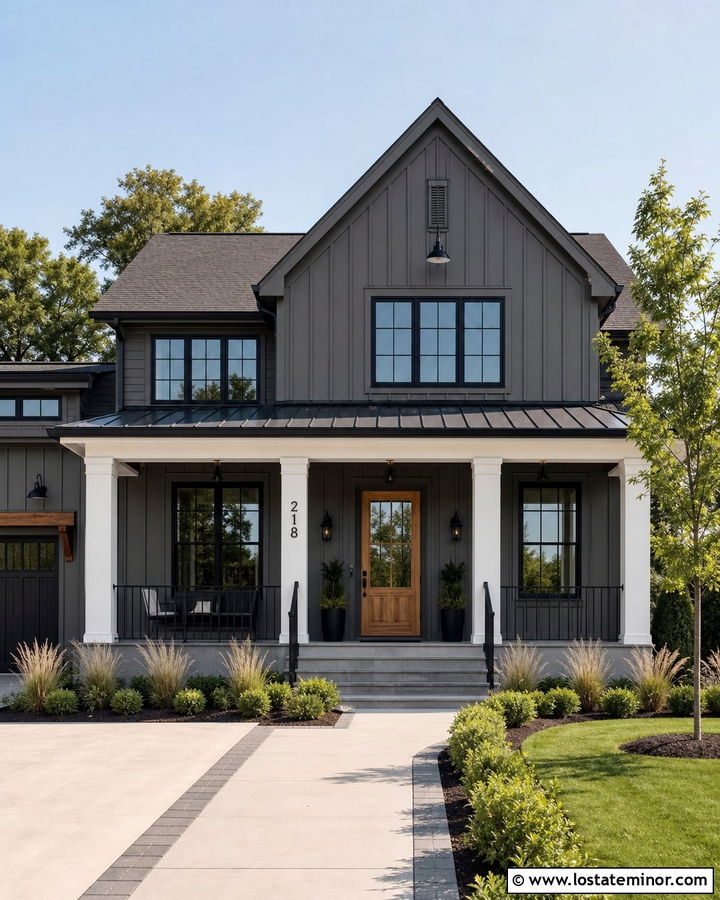
Wide shiplap-wrapped columns add subtle texture to a charcoal gray exterior while keeping the porch clean and approachable. Paint the column wraps warm white and align their horizontal joints carefully with nearby trim details. Charcoal gray board-and-batten siding creates an appealing contrast between vertical and horizontal patterns. Add a natural oak front door, black-framed windows, and a black standing-seam porch roof for a modern farmhouse direction. A light gray porch floor and simple black railing keep the lower facade crisp. If the porch is large, repeat white shiplap on the ceiling or entry wall, but avoid using it on every surface. Neatly spaced shrubs, ornamental grasses, and a broad walkway complete the facade. The finished look feels detailed without relying on decorative ornament.
30. Charcoal Gray House With Matching Charcoal Porch Columns
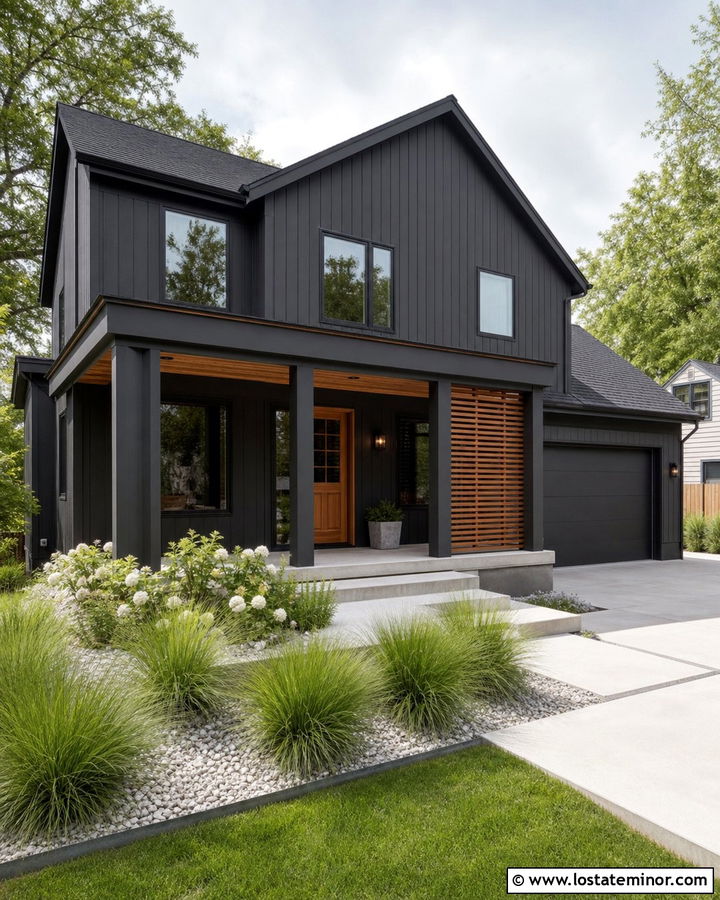
Matching the porch columns to the charcoal gray siding creates a seamless, enveloping exterior. This approach works especially well on contemporary homes where the porch is meant to read as part of one sculptural form. Use Benjamin Moore Kendall Charcoal or a similar deep charcoal gray on vertical siding, square columns, porch beams, and selected trim. Introduce contrast through black windows, a warm cedar front door, and a pale concrete porch rather than another painted column color. A cedar soffit or slatted screen can repeat the door’s warmth across the entry. Keep the roof slightly darker than the siding so its edge remains defined. Bright landscaping with green grasses, white flowers, and light gravel prevents the monochromatic facade from disappearing into one dark mass.
Conclusion:
The strongest charcoal exterior treats every porch column as part of a coordinated architectural scheme. White columns provide crisp definition, wood adds warmth, and stone or brick brings texture and visual weight. Black or matching charcoal supports a more modern, seamless effect. Regardless of the material, column size should fit the roof, porch depth, and overall house style. Connect the columns to at least one other feature, such as the trim, foundation, door, soffit, or walkway. Test charcoal samples beside permanent roof and masonry colors before painting the entire facade. These 30 Charcoal Grey House Design With Porch Columns Ideas offer flexible combinations for making a dark home feel balanced, distinctive, and welcoming from the curb.

Related posts: