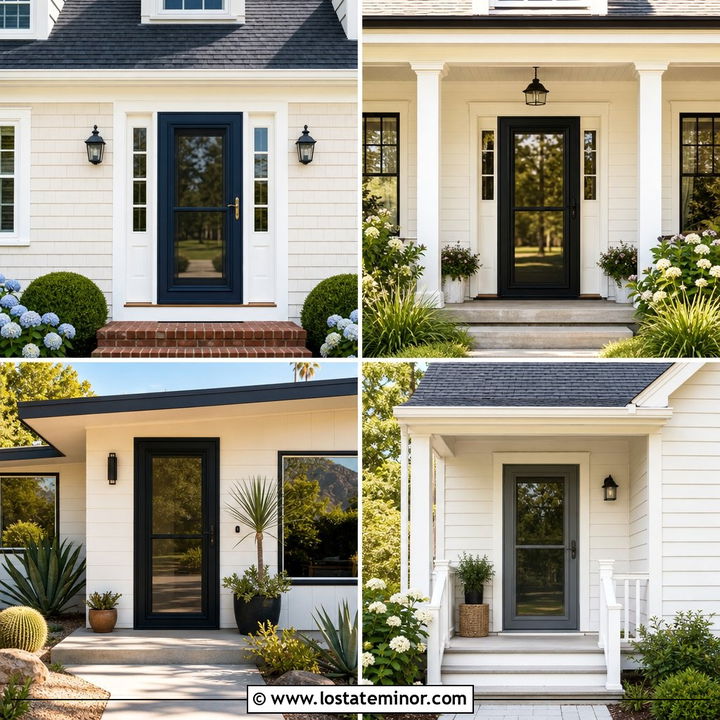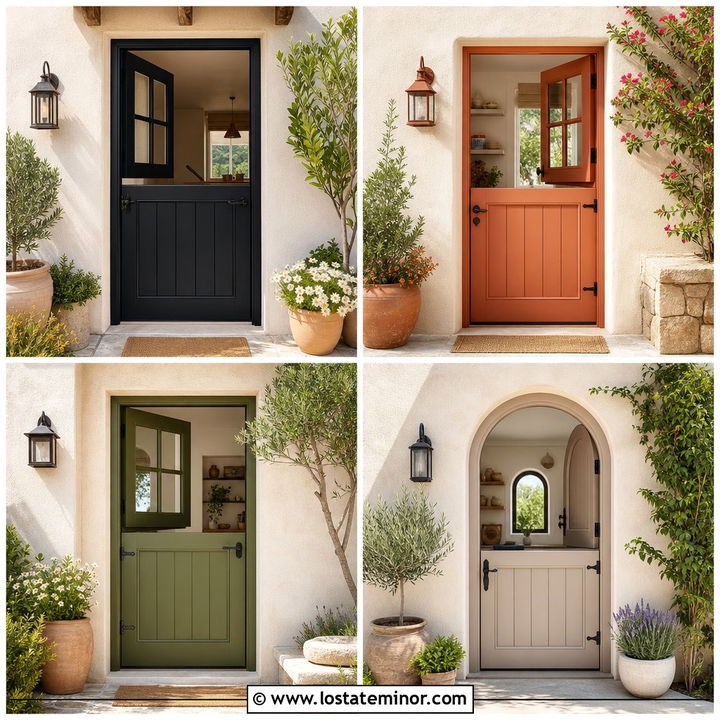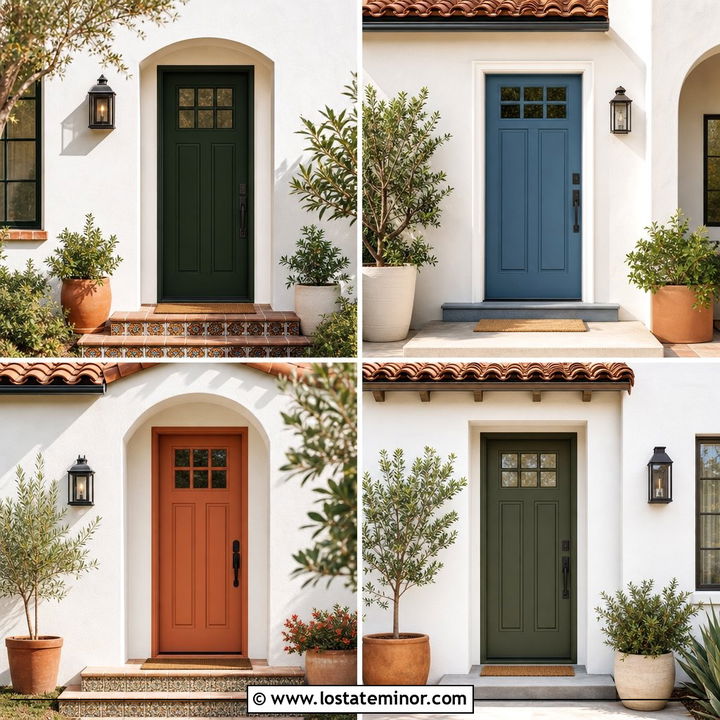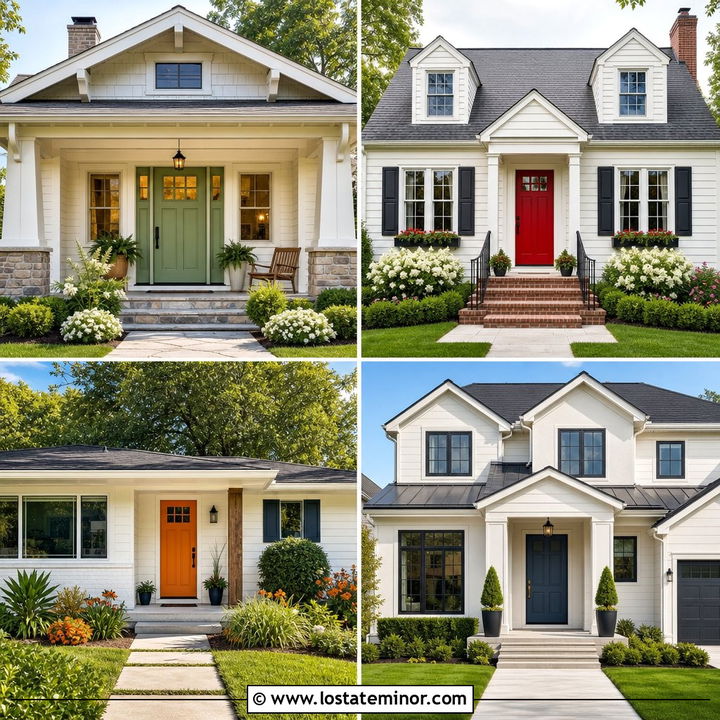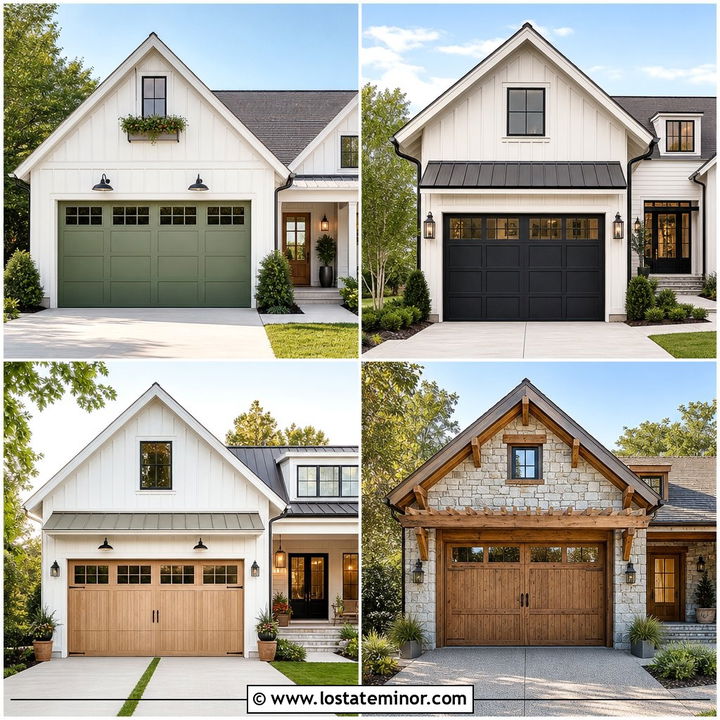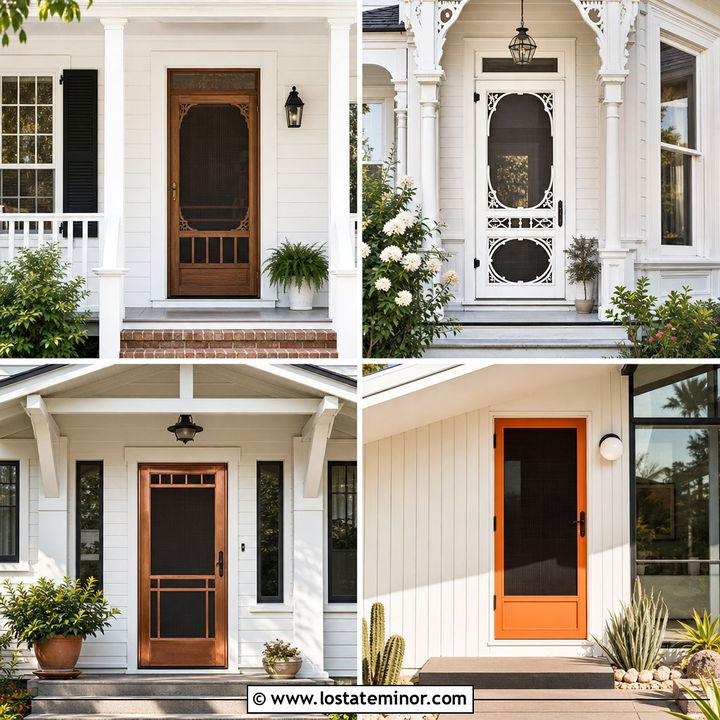
A warm white exterior creates a welcoming backdrop that feels softer than bright white while still looking fresh and clean. Adding a storm door brings another layer of color, contrast, and practical protection to the entry. The best combinations treat every feature as part of one complete facade. Siding, trim, roofing, masonry, porch materials, hardware, and landscaping should all support the doorway rather than compete with it. Warm white also adapts beautifully to farmhouse, colonial, ranch, cottage, craftsman, and contemporary architecture. Whether you prefer a nearly invisible glass door or a dark frame that outlines the entrance, these complete exterior schemes make planning easier. Explore these **30 Warm White House Design With Storm Door Ideas** for balanced, approachable curb appeal.
1. Warm White Farmhouse With Black Storm Door
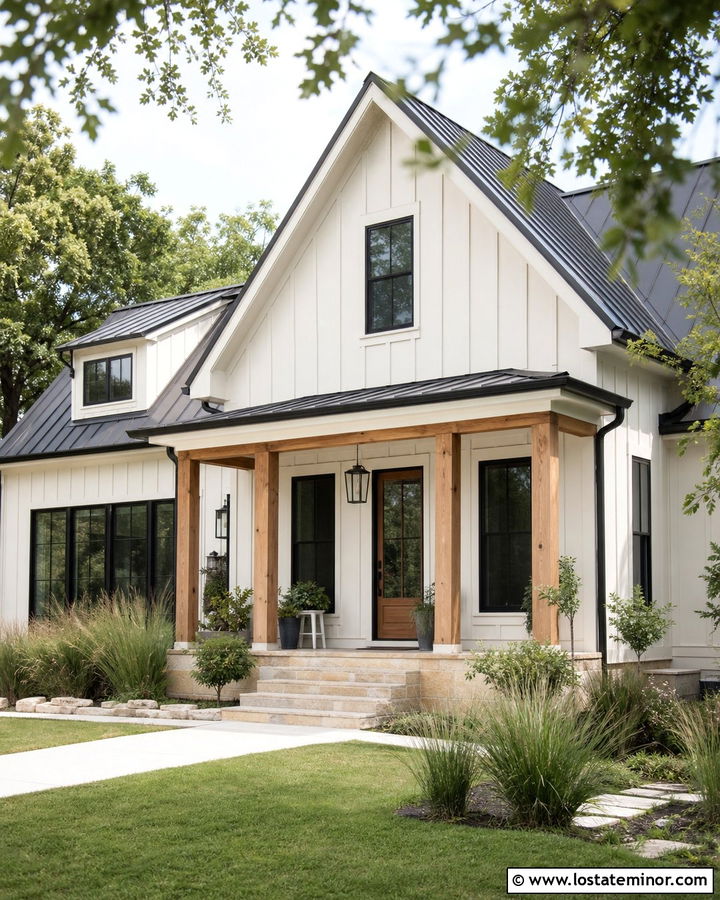
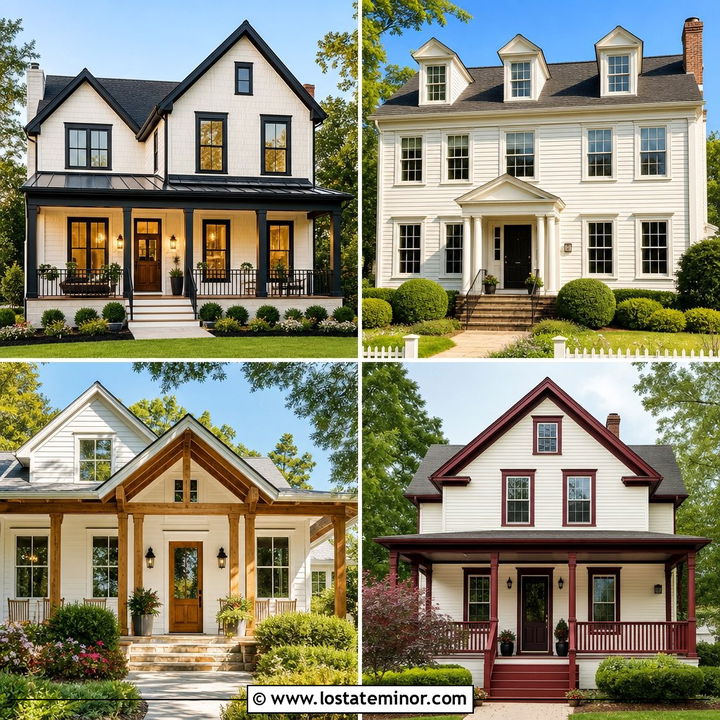
A black storm door gives a warm white farmhouse the crisp definition that its simple architecture needs. Choose creamy board-and-batten siding with slightly brighter trim around the windows, eaves, and porch columns. A full-view black storm door lets the natural wood entry door remain visible while tying into black window frames and barn-style exterior lights. Add a charcoal standing-seam roof to repeat the dark color overhead. Natural cedar porch posts and a matching ceiling keep the combination from feeling too stark. For the finishing layer, use pale limestone steps, matte black planters, and loose ornamental grasses. This complete scheme balances modern contrast with comfortable farmhouse character, making the entry noticeable without overwhelming the clean facade.
2. Warm White Colonial With White Storm Door
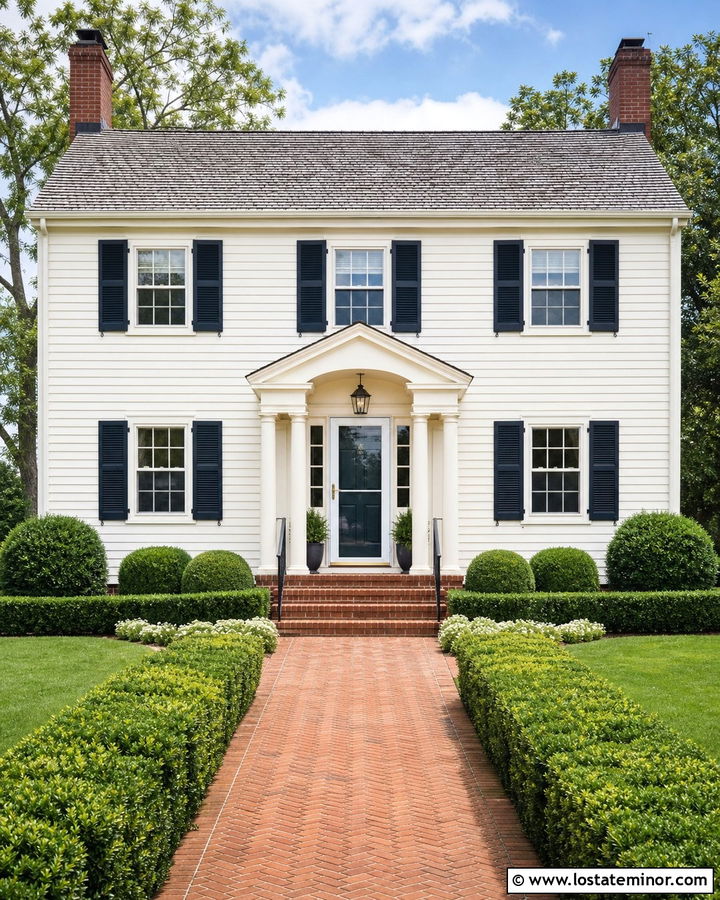
For a traditional Colonial, a white storm door can blend neatly into the symmetrical facade instead of becoming a separate focal point. Paint the clapboard siding a warm ivory and use a cleaner soft white on the trim, cornice, columns, and window surrounds. A full-glass white storm door keeps the entrance light while allowing a dark navy front door to show through. Repeat the navy on properly scaled shutters for a balanced appearance. A medium-gray architectural shingle roof grounds the pale palette without introducing harsh contrast. Brick steps, polished brass hardware, clipped boxwoods, and an orderly walkway complete the classic composition. The result feels established and gracious, with the storm door supporting the architecture rather than visually narrowing the entrance.
3. Warm White Craftsman With Bronze Storm Door
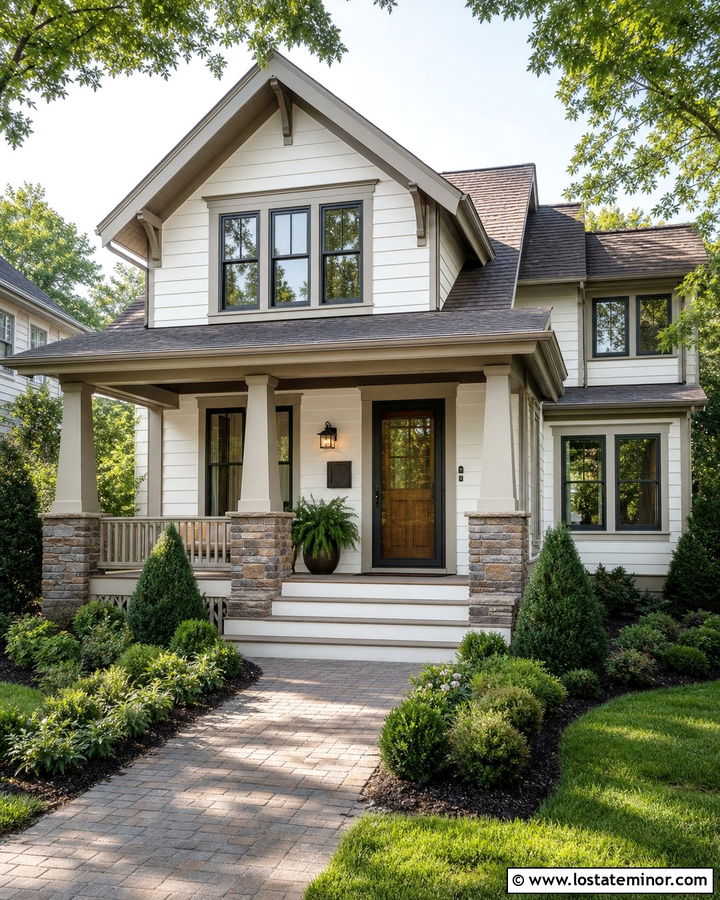
Bronze is an attractive storm door finish when a warm white craftsman already features wood, stone, and other natural materials. Use creamy horizontal siding with matching shingles in the front gable, then frame the facade with soft taupe trim. A dark bronze storm door works beautifully over a stained oak entry door and coordinates with bronze porch lights, gutters, and window frames. Anchor the porch with tapered columns on rugged fieldstone bases. A weathered brown roof continues the earthy color story across the entire house. Wide steps, warm concrete pavers, and layered evergreen landscaping make the entrance feel substantial. Because bronze offers gentler contrast than black, the storm door adds definition while preserving the craftsman home’s relaxed, handcrafted appearance.
4. Warm White Ranch With Sage Green Storm Door
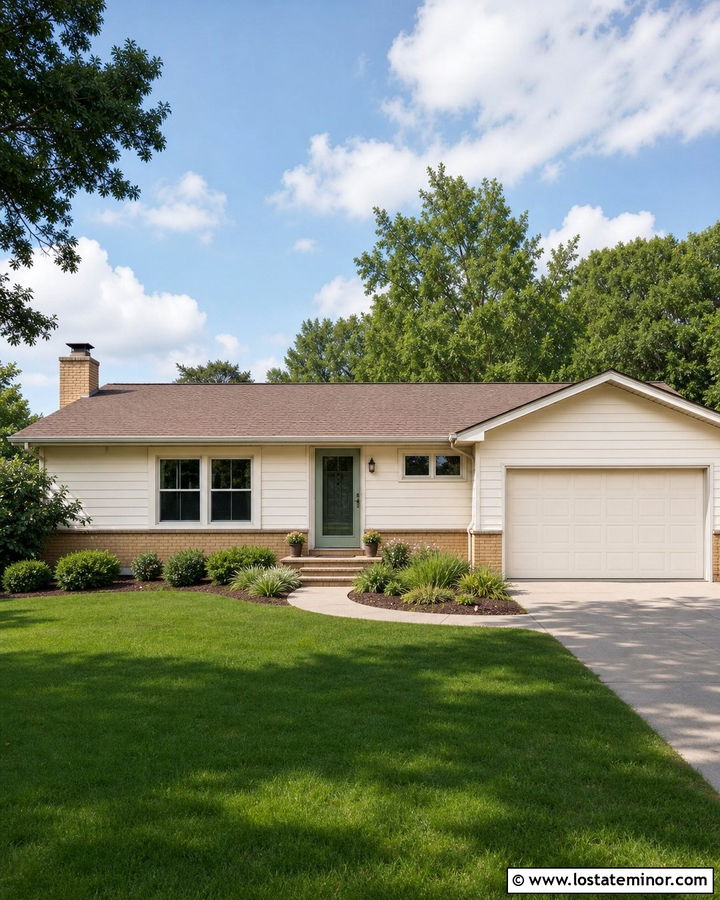
A sage green storm door brings quiet color to a warm white ranch without making its long, low facade feel busy. Cover the house in soft cream horizontal siding and keep the fascia, soffits, and window trim in a closely related warm white. Use sage on a full-view storm door placed over a slightly deeper green entry door for a layered, coordinated effect. Natural brick along the foundation adds warmth, while a medium-brown shingle roof connects the green and cream tones. Paint the garage door to match the siding so it recedes visually. A curved walkway, broad planting beds, and low ornamental grasses soften the horizontal architecture. This practical palette feels calm, natural, and especially suitable for a mature suburban landscape.
5. Warm White Cottage With Blue Storm Door
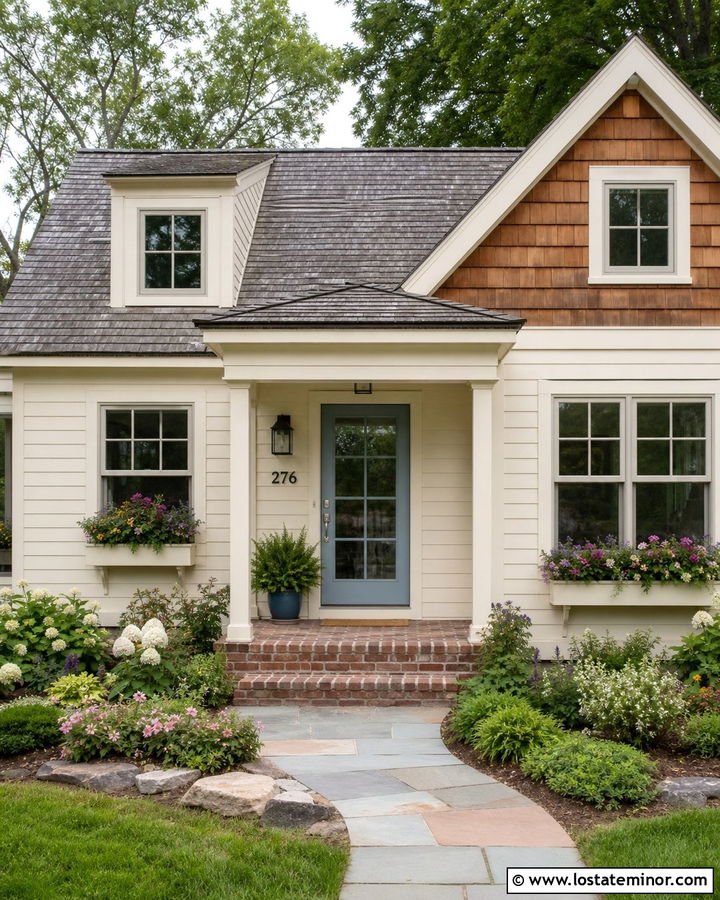
Could a small cottage handle a colorful storm door? A muted blue frame creates a cheerful entrance while still respecting the home’s cozy scale. Select warm white lap siding with creamy window trim, then place a dusty blue full-glass storm door over a matching blue wood entry door. This same-color treatment keeps the doorway from appearing cluttered. Add cedar shingles to a front-facing gable and use a weathered gray roof for a casual, collected look. A small brick porch, curved flagstone path, window boxes, and soft flowering plants reinforce the cottage character. Brushed nickel hardware provides a clean finish without looking flashy. Against the gentle white facade, the blue doorway becomes an inviting focal point that feels colorful but not overly bright.
6. Warm White Cape Cod With Navy Storm Door
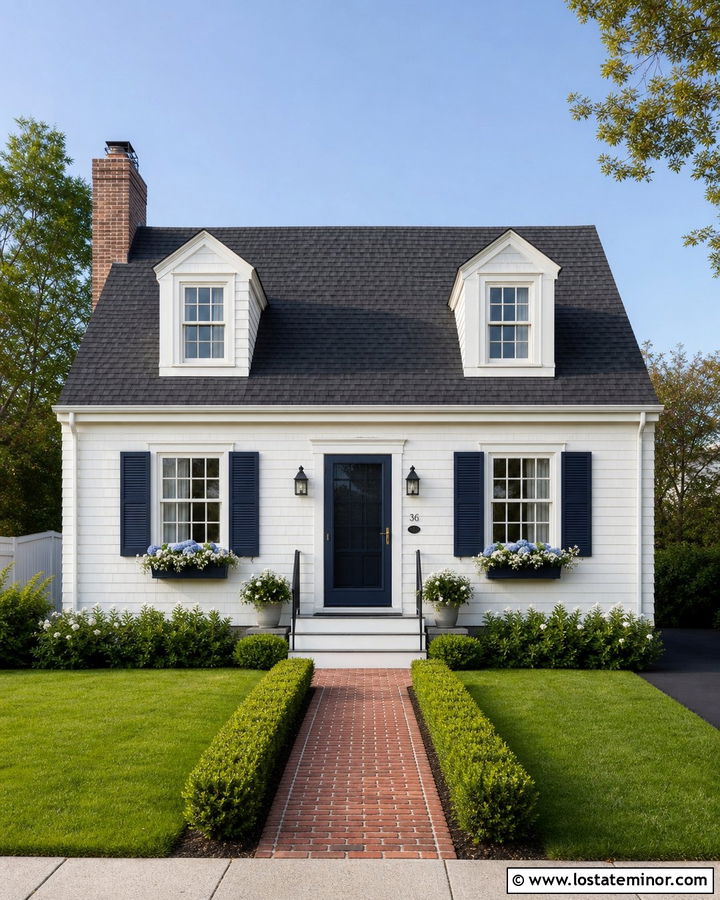
A navy storm door creates a tailored accent on a warm white Cape Cod home. Use creamy shingle siding across the facade, with soft white trim defining the dormers, windows, and simple corner boards. Place the navy full-view storm door over a navy entry door so the two layers read as one strong feature. Matching navy shutters establish repetition and help the darker entrance feel intentional. A charcoal-gray roof provides classic contrast, while an aged brick chimney adds natural warmth. Keep the remaining details restrained with brushed brass hardware, white porch railings, and neatly clipped foundation shrubs. A straight brick walkway strengthens the home’s symmetry. This scheme feels traditional and coastal without depending on nautical decorations or overly cool shades of white.
7. Warm White Bungalow With Wood-Look Storm Door
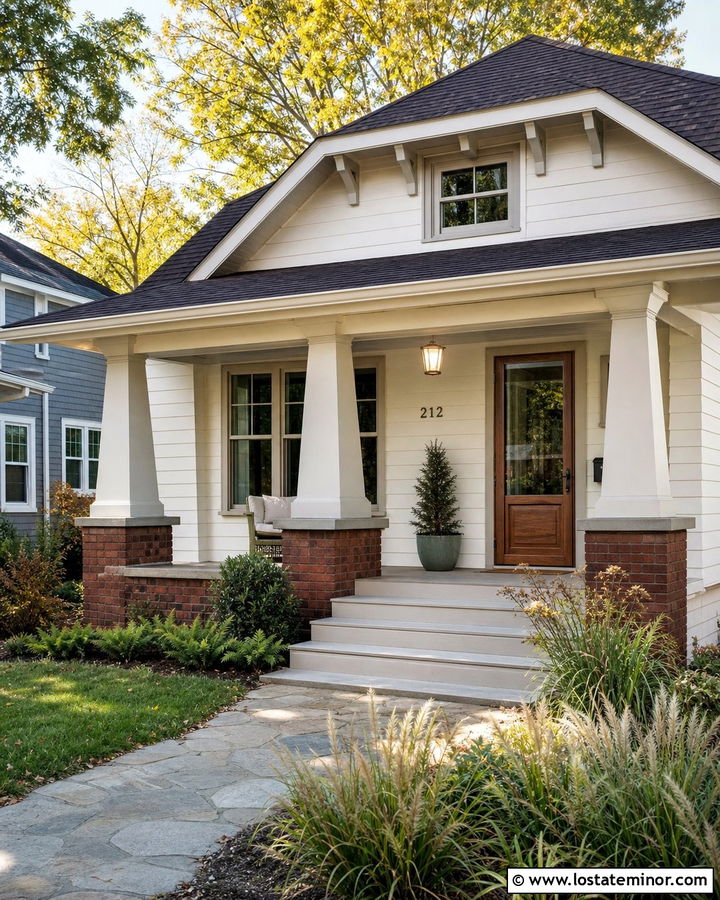
A wood-look storm door can add warmth and texture to a compact bungalow while preserving the usefulness of glass and screening. Paint the horizontal siding a creamy warm white and use muted beige on the trim, exposed rafter tails, and tapered porch columns. Choose a storm door with a realistic medium-oak finish, positioned over a matching stained entry door for a cohesive appearance. Repeating the wood tone on porch rail caps and ceiling boards makes the entrance feel integrated. Use rustic red brick for the porch base and a deep brown roof to complete the earthy palette. Ferns, native grasses, and a casual stone walkway soften the front yard. The finished exterior looks approachable, handcrafted, and visually richer than an all-white treatment.
8. Warm White Brick House With Black Storm Door
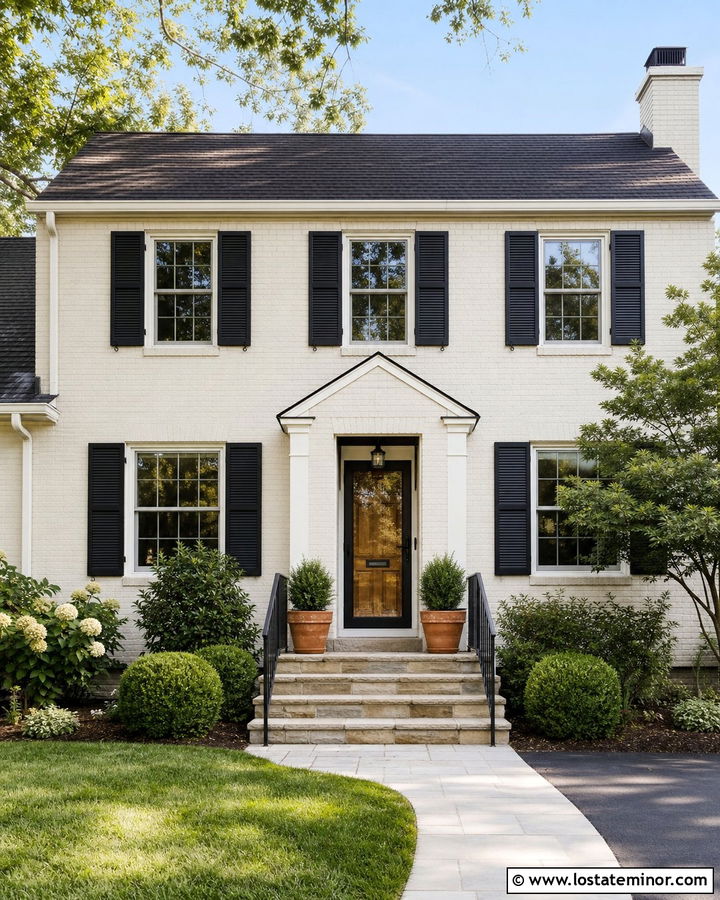
Warm white painted brick gains depth when paired with a slim black storm door and matching architectural accents. Keep the brick texture visible beneath the creamy finish, then use a slightly lighter white on the window frames, fascia, and front porch ceiling. A black full-view storm door allows a medium-stained wood entry door to remain the warmer focal point. Repeat black on the shutters, lanterns, and metal porch railings, but avoid adding it to every surface. A brown-black shingle roof bridges the wood and metal finishes. Limestone steps and large terracotta planters introduce softer natural tones near the doorway. The combination feels polished and dimensional because the black outlines key features while the brick, wood, and landscaping prevent the exterior from appearing overly graphic.
9. Warm White Tudor With Dark Brown Storm Door
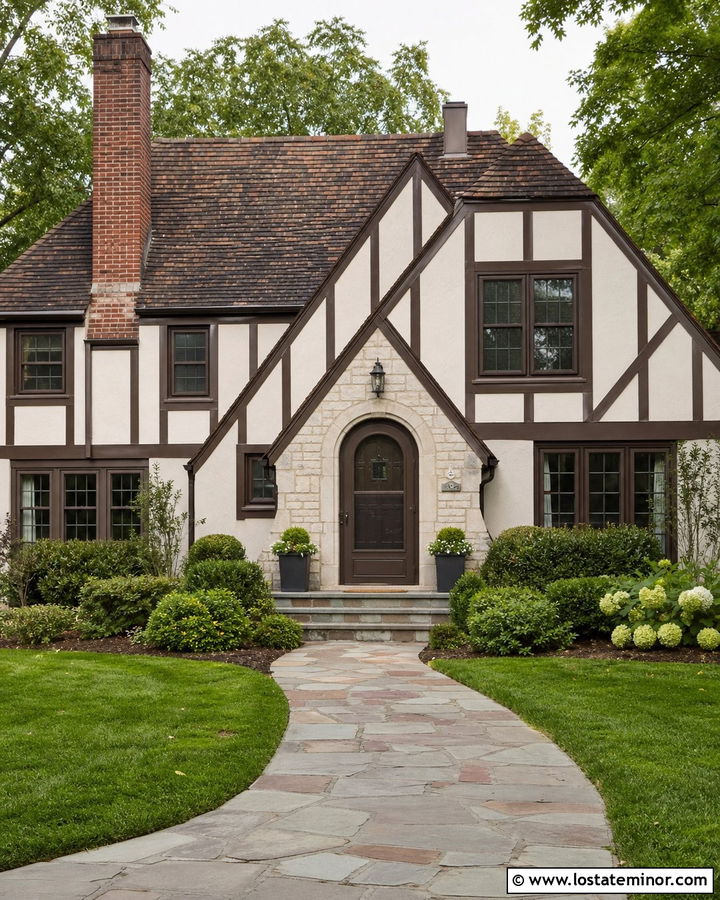
On a Tudor-inspired house, a dark brown storm door feels more connected to the architecture than a sharply contrasting white frame. Use warm white stucco between deep brown half-timber details, then carry that same brown onto the full-view storm door and recessed front door. A rounded or arched entry surround can remain warm limestone to create a gentle transition between the wall and doorway. Choose a dimensional roof with mixed brown and charcoal tones, and add copper gutters or lanterns for subtle variation. A brick chimney, divided-light windows, and a curved flagstone walkway reinforce the traditional exterior. The storm door becomes part of the timber color pattern, allowing it to look intentional rather than added later. Deep green shrubs provide a clean natural backdrop.
10. Warm White Split-Level With Charcoal Storm Door
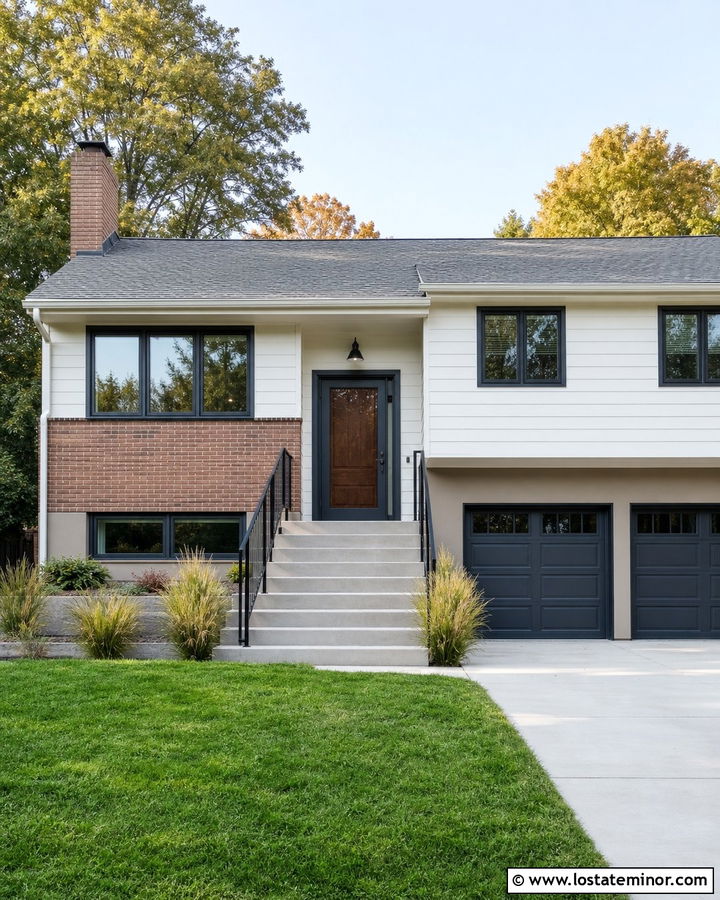
A charcoal storm door helps modernize a warm white split-level while connecting its mixed materials. Paint the upper siding a soft creamy white and use a slightly deeper greige on the lower-level foundation. Add narrow charcoal trim around the windows and select a full-glass storm door in the same dark gray. Behind it, a warm walnut entry door introduces a welcoming organic note. Charcoal garage doors and a medium-gray roof balance the entrance across the wide facade. If the house includes original brick, keep its muted red and brown variation rather than painting every surface. Broad concrete steps, black handrails, and structured grasses sharpen the curb appeal. This combination respects the home’s horizontal shape while giving the entrance clearer visual importance.
11. Warm White Modern House With Black Glass Storm Door
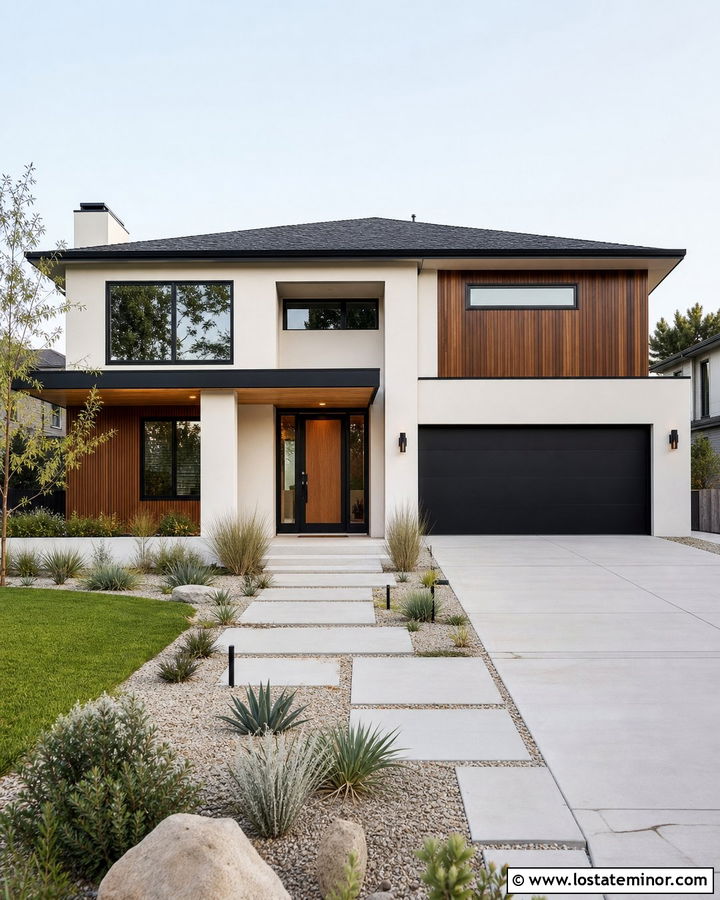
Clean lines become more expressive when a modern warm white house includes a black glass storm door. Use smooth stucco in a creamy off-white, paired with thin black window frames and minimal trim. A nearly full-glass black storm door should sit over a flush walnut front door, allowing the wood grain to remain visible. Carry walnut onto one vertical siding panel or a sheltered porch ceiling to balance the entrance. A low charcoal roof, black garage door, and streamlined wall lights strengthen the contemporary composition. Large concrete pavers, pale gravel, and architectural grasses keep the landscaping equally simple. The black storm door works especially well here because its narrow frame echoes the windows. It adds useful contrast without interrupting the uncluttered facade or hiding the entry door.
12. Warm White Victorian With Deep Green Storm Door
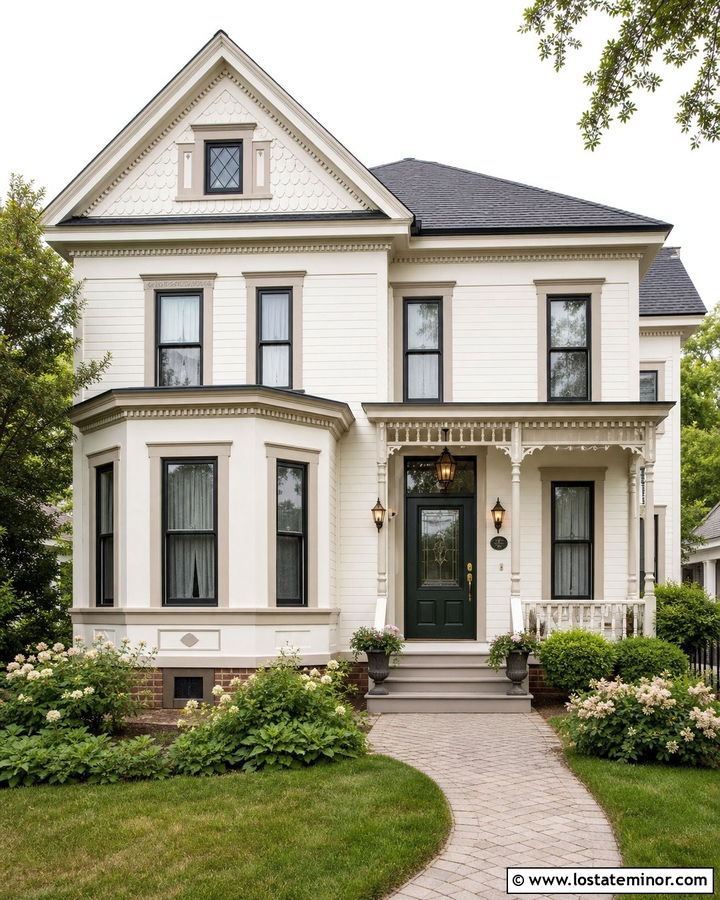
A deep green storm door gives a warm white Victorian a historically inspired accent without introducing too many competing colors. Paint the main clapboard siding a soft ivory, then use cream and muted taupe to define brackets, window trim, porch spindles, and decorative shingles. Match the storm door to a forest green entry door so the layered doorway reads clearly from the street. Repeat green sparingly on small gable details or window sashes. A dark gray roof and natural brick foundation provide a steady base for the lighter ornamentation. Antique brass hardware, traditional lanterns, and a painted wood porch complete the look. By limiting the palette, the home retains its decorative personality while still feeling coordinated, fresh, and easy to understand visually.
13. Warm White Coastal House With Light Blue Storm Door
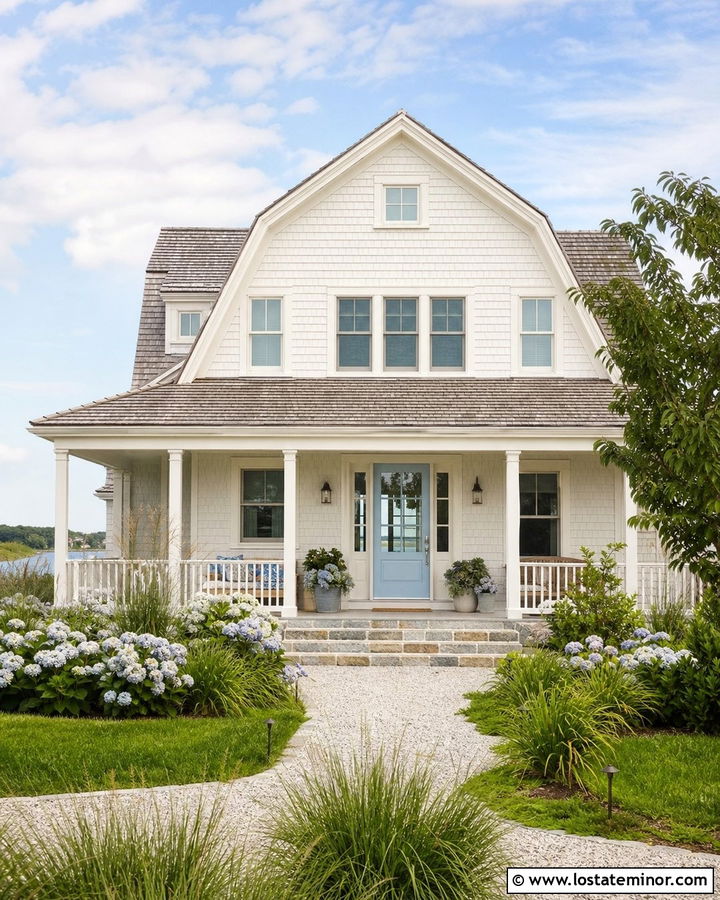
Fresh ocean-inspired color can work beautifully without turning a house into a themed display. Cover a coastal facade in warm white cedar shingles or fiber-cement shake siding, then add a pale blue storm door over a matching blue entry door. Soft white trim around wide windows keeps the architecture light, while a weathered gray roof introduces a natural seaside tone. Use simple white porch railings, brushed nickel hardware, and pale stone steps to continue the airy palette. A small amount of natural wood on the porch ceiling adds needed warmth beneath the overhang. Frame the house with beach grasses, hydrangeas, and a shell-toned gravel path. The blue doorway feels bright and welcoming, while the warm siding prevents the entire exterior from appearing cold or washed out.
14. Warm White Mediterranean House With Bronze Storm Door
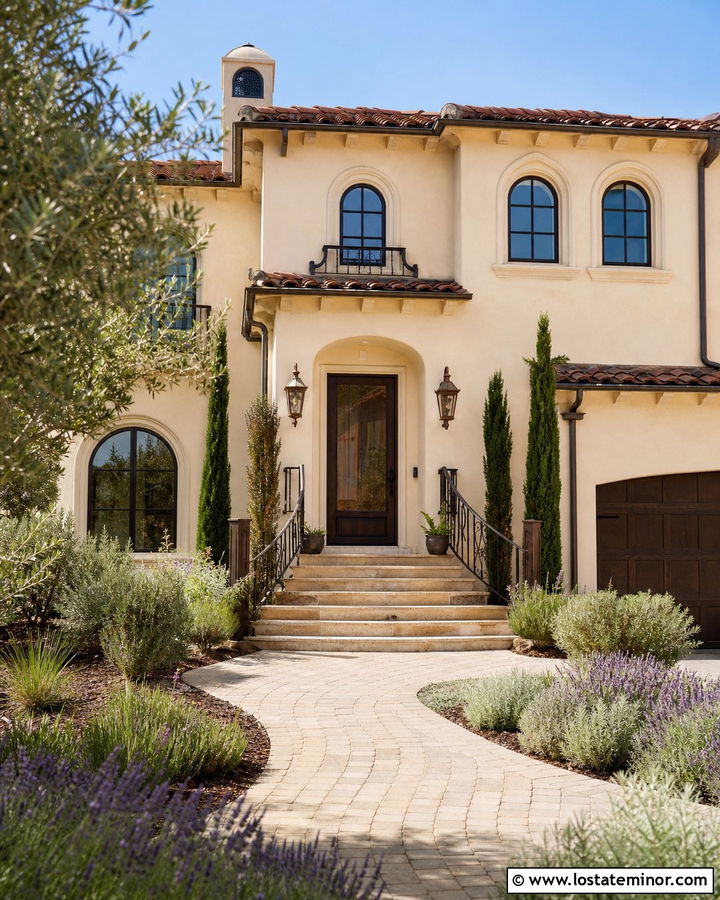
Bronze provides an elegant bridge between warm white stucco and the earthy roof colors of a Mediterranean house. Choose a creamy off-white exterior with minimal trim, allowing arches, recessed windows, and textured walls to provide dimension. Install a bronze storm door with a large clear-glass panel over a richly stained wood entry door. The metal frame should coordinate with bronze lanterns, balcony rails, and window details. Terracotta roof tiles bring stronger warmth to the upper facade, while limestone steps soften the transition at ground level. A curved paver walkway, olive-toned shrubs, lavender, and sculptural evergreens complete the setting. This layered scheme feels sun-washed and refined. The storm door remains functional but visually connected to the house’s metalwork and natural material palette.
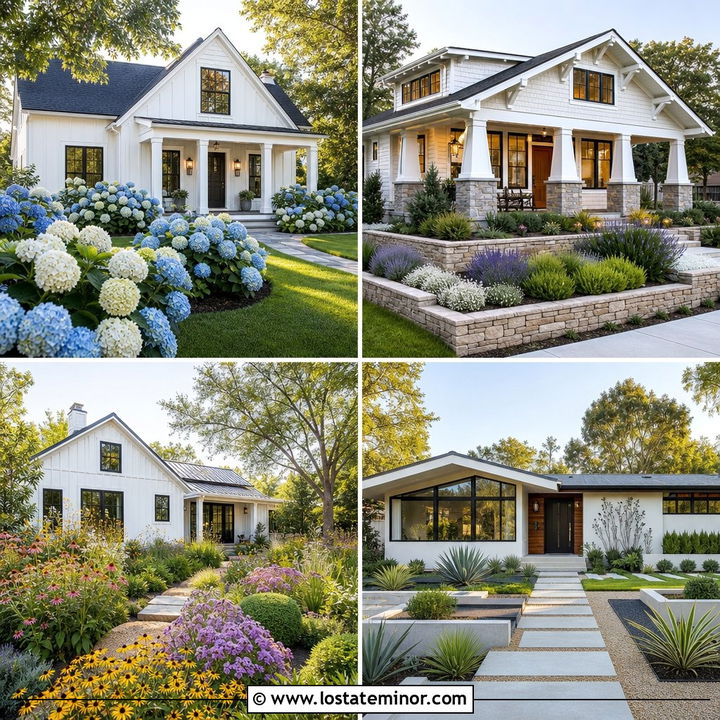
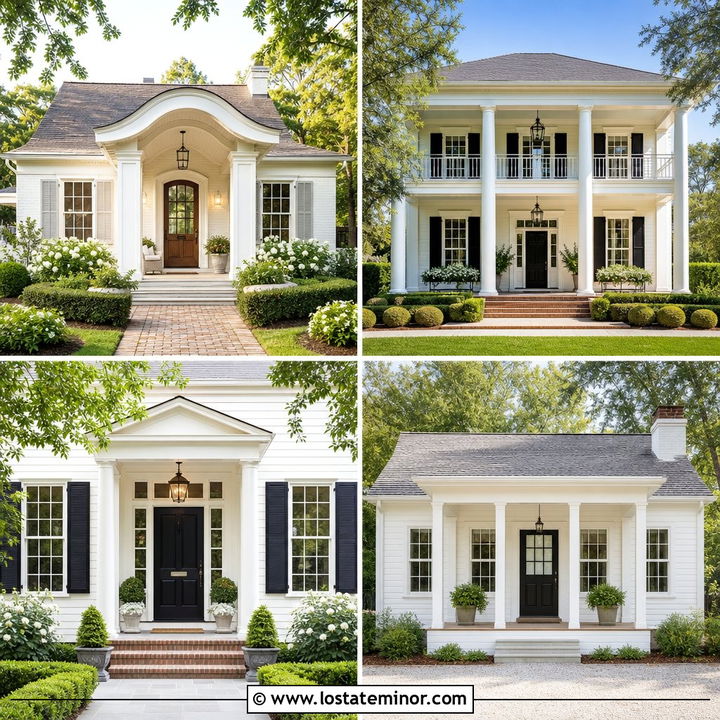
15. Warm White Prairie House With Brown Storm Door
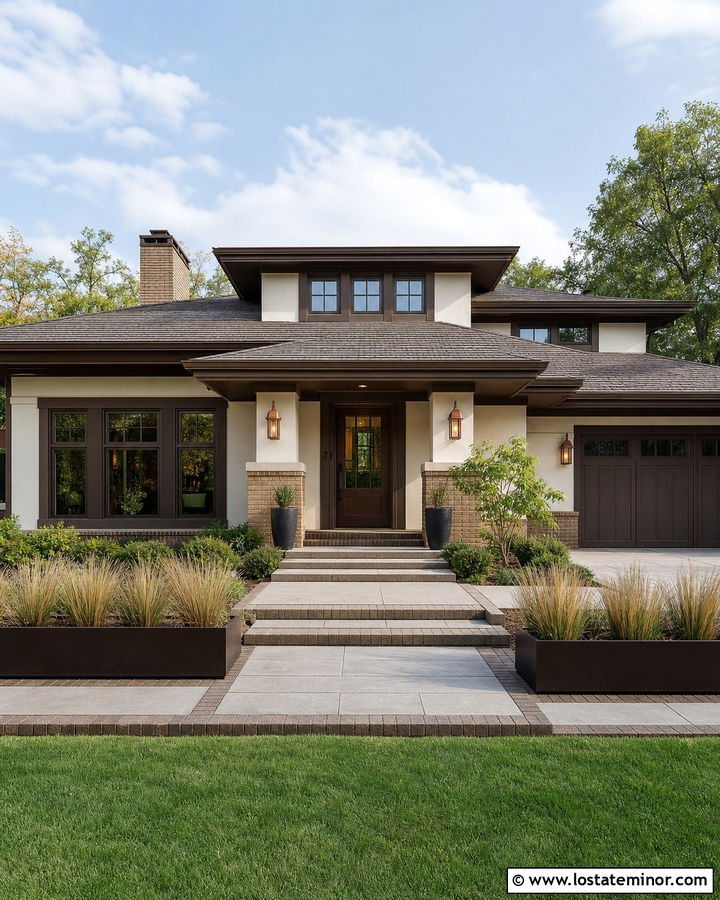
Horizontal lines define a Prairie house, so its storm door should support that structure rather than create an unrelated vertical stripe. Use a warm linen-white exterior with medium-brown trim outlining broad eaves, grouped windows, and low porch walls. Select a rich brown storm door with clean horizontal rails and place it over a matching stained or painted entry door. Earth-toned brick around the foundation can repeat the brown while adding texture. Finish the roof in deep weathered brown and use copper-toned lights near the entrance. Long rectangular planters, ornamental grasses, and a straight paver walk reinforce the architecture’s geometry. The complete design feels grounded and cohesive, with the brown storm door acting as one element within a larger pattern of warm horizontal accents.
16. Warm White Traditional House With Red Storm Door
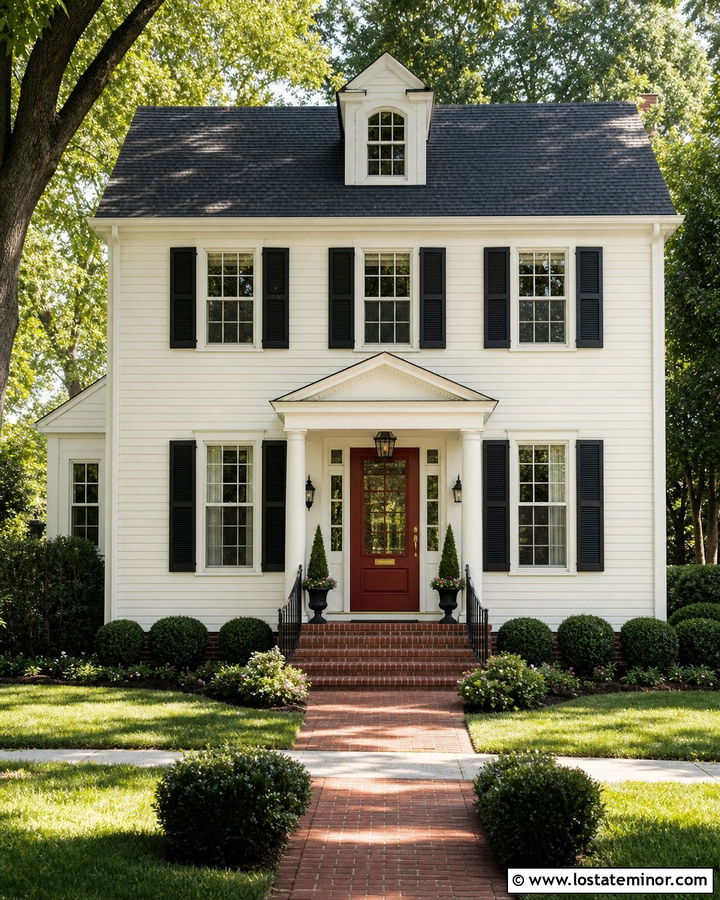
A red storm door can energize a warm white traditional house when the shade is deep and carefully repeated. Paint the siding a creamy white with soft ivory trim, then use a muted brick red on both the storm door frame and main entry door. Matching the two doors produces a stronger, cleaner focal point than combining unrelated colors. Include red brick steps or a brick walkway so the entrance color has a natural partner elsewhere on the property. Black shutters, a charcoal roof, and dark iron lanterns keep the palette grounded. White porch columns and railings preserve the home’s light, familiar character. The result is welcoming and noticeable from the curb, but the earthy red remains sophisticated instead of becoming overly bright or disconnected.
17. Warm White Stone House With Almond Storm Door
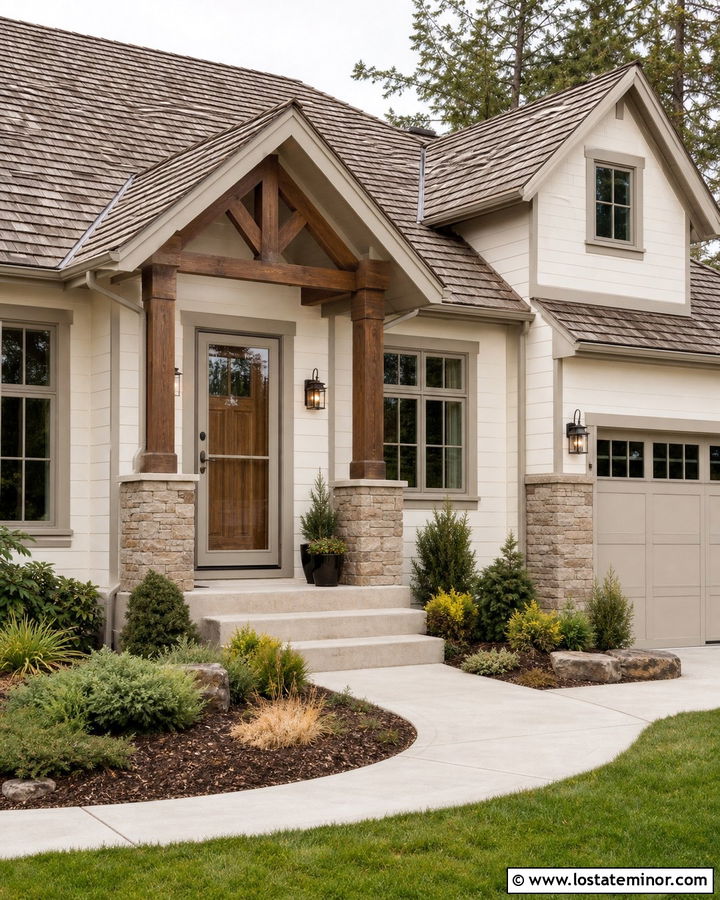
An almond storm door creates a subtle, low-contrast entrance on a house that combines warm white siding with natural stone. Use creamy lap siding across the upper walls and select a light greige trim that reflects colors found in the stone veneer. The almond door frame can blend with this trim, while a medium-brown wood entry door remains visible through the full glass. Choose stone with beige, taupe, and soft gray variation around the porch and foundation. A weathered brown-gray roof will connect these neutral materials without appearing overly dark. Bronze lights, simple wood columns, and warm concrete steps complete the transition. This understated treatment is useful when the masonry already provides plenty of visual movement and the storm door should remain quiet.
18. Warm White Southern House With Black Storm Door
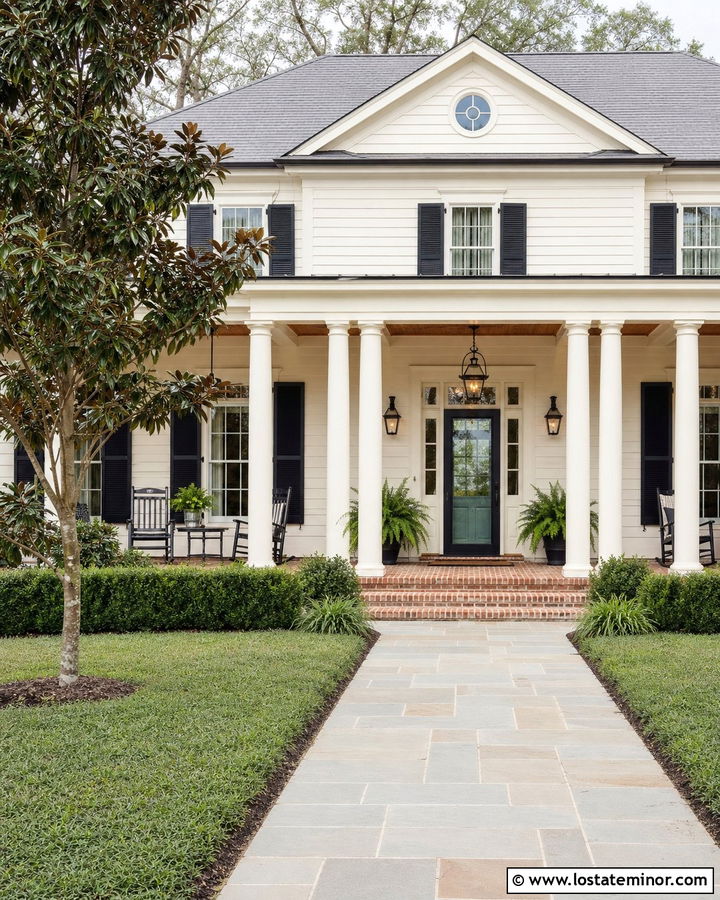
A broad Southern porch gives a black storm door enough architectural space to feel balanced rather than heavy. Cover the home in warm white clapboard siding and use a slightly brighter cream on tall porch columns, railings, and window surrounds. Install a narrow-framed black storm door over a soft blue-green entry door, allowing the glass to reveal the color behind it. Repeat black on traditional lanterns, rocking-chair frames, and small window shutters. A medium-gray roof keeps the upper facade calm. Natural brick porch flooring and stained wood ceiling boards add warmth under the wide overhang. Finish with magnolia trees, ferns, and a straight stone walk. The completed scheme feels gracious, shaded, and comfortably layered without losing the home’s clean white presence.
19. Warm White Midcentury House With Bronze Storm Door
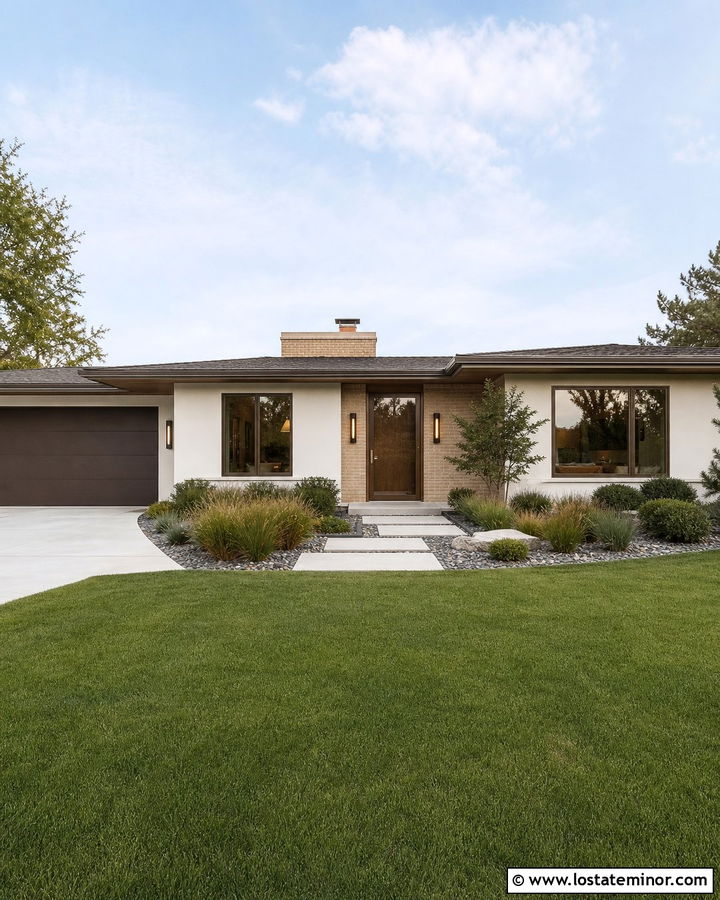
Midcentury architecture benefits from warm, earthy contrast, making bronze a smart storm door finish. Use smooth warm white stucco or narrow horizontal siding as the primary surface. Add a bronze full-view storm door over a flat-panel walnut entry door and repeat the metal color on window frames and streamlined sconces. A section of ocher or tan brick can anchor the entry and preserve the period character. Keep the roof low and charcoal brown, with wide fascia boards painted a soft taupe. Concrete stepping pads, river rock, sculptural shrubs, and ornamental grasses complement the simple geometry. Rather than disguising the storm door, this plan treats its thin bronze frame as part of the home’s original-looking lines, materials, and restrained earth-tone palette.
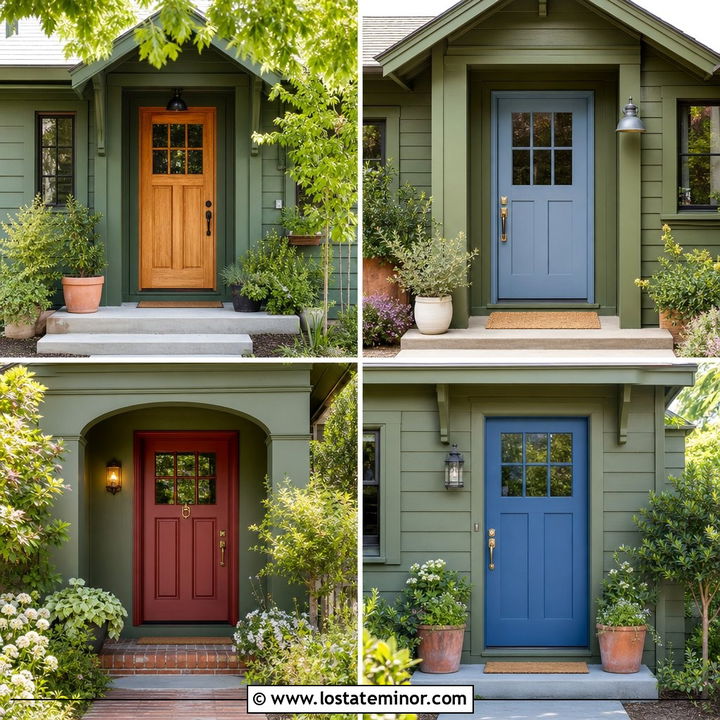
20. Warm White Duplex With Matching Storm Doors
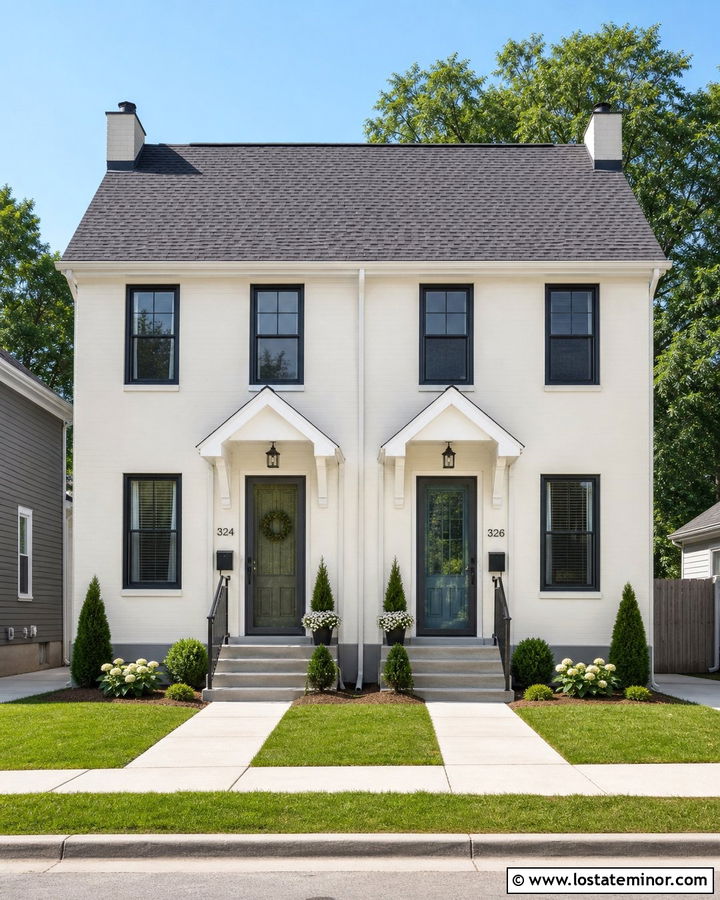
Two visible entries require careful coordination so a warm white duplex does not look fragmented. Paint the entire facade a creamy off-white and use consistent soft white trim around both doorways and all windows. Choose matching dark gray storm doors with wide glass panels, then introduce personality through different but related entry door colors. One could be muted sage, while the other is dusty blue. Keep exterior lights, house numbers, door hardware, and planters identical to preserve visual order. A charcoal roof and matching gray foundation provide shared grounding elements. Divide the front walk neatly, and use repeated shrubs on each side of the property. This approach makes both homes feel individual yet connected, with the storm doors acting as a unifying architectural feature.
21. Warm White Craftsman With Copper Storm Door
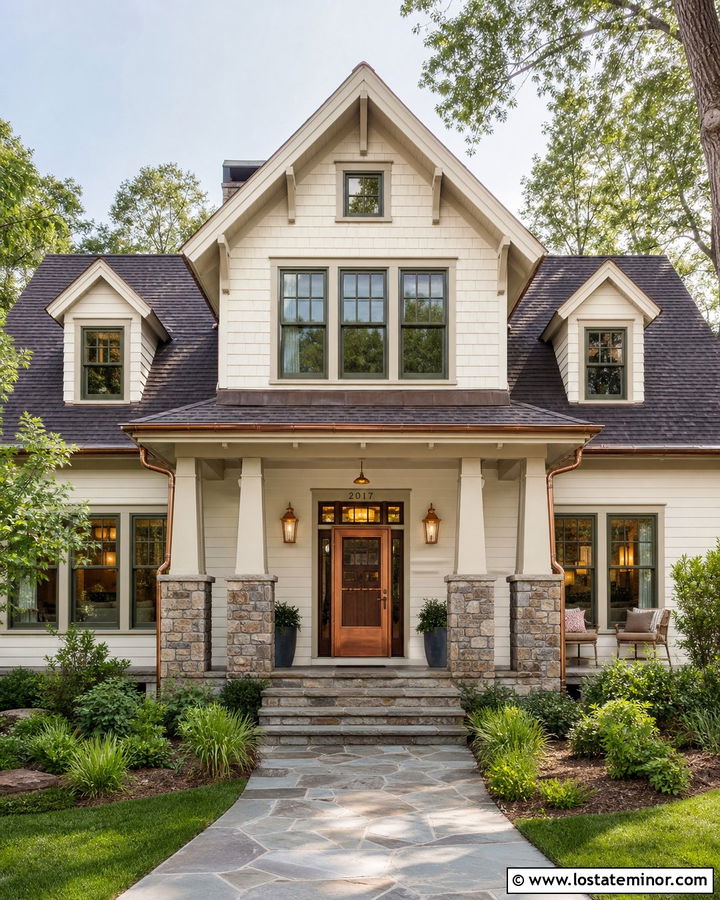
Copper-colored metal brings rich warmth to a craftsman exterior without looking as heavy as dark brown or black. Select soft ivory siding with light beige trim, then use natural stone on the porch piers and lower foundation. A copper-finish storm door should sit over a medium-stained mahogany entry door, where both materials can create a layered amber-brown focal point. Repeat copper tones in the porch lights, gutters, and small roof details. Deep olive window sashes add quiet color while working naturally with stone and wood. Finish the main roof in a dark brown-gray blend. A flagstone walkway, broad steps, and native greenery make the home feel settled into its site. The complete palette is warm, handcrafted, and visually substantial.
22. Warm White Farmhouse With White Storm Door
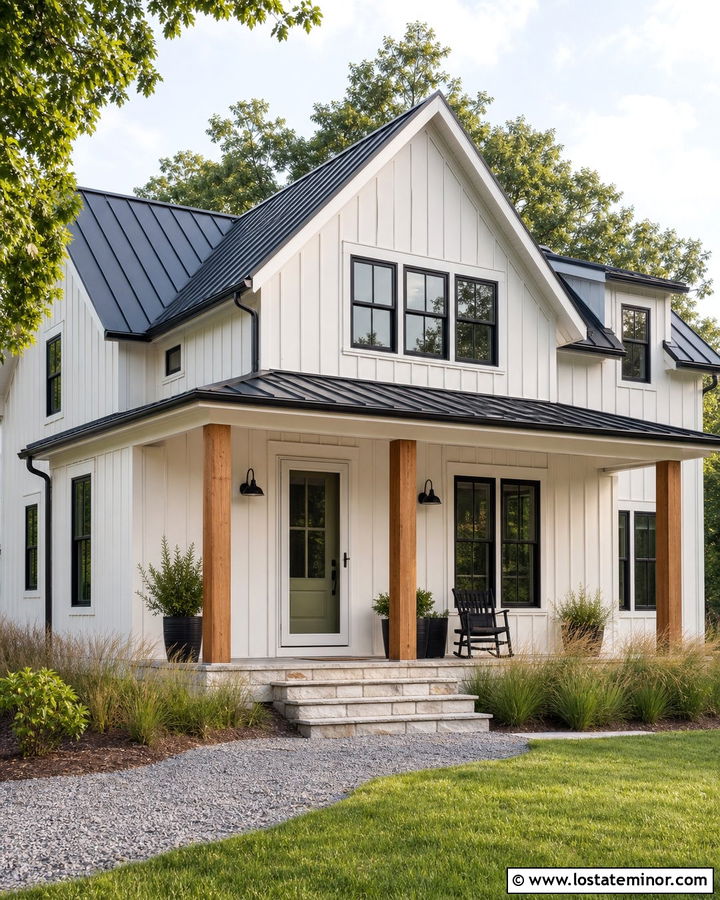
When a farmhouse already has dark windows and a bold front door, a white storm door can provide useful visual breathing room. Choose warm white board-and-batten siding and match the storm door frame closely to the surrounding entry trim. Behind the glass, paint the main door a muted olive green for color that remains visible without competing with the frame. Black windows, a charcoal metal roof, and simple black sconces add contrast across the facade. Use natural wood for the porch posts and double doors on an attached garage or barn-inspired wing. Light stone steps and an open gravel walkway maintain the relaxed setting. This combination feels bright and practical, while the white storm door blends into the facade instead of creating another dark outline.
23. Warm White Ranch With Bronze Storm Door
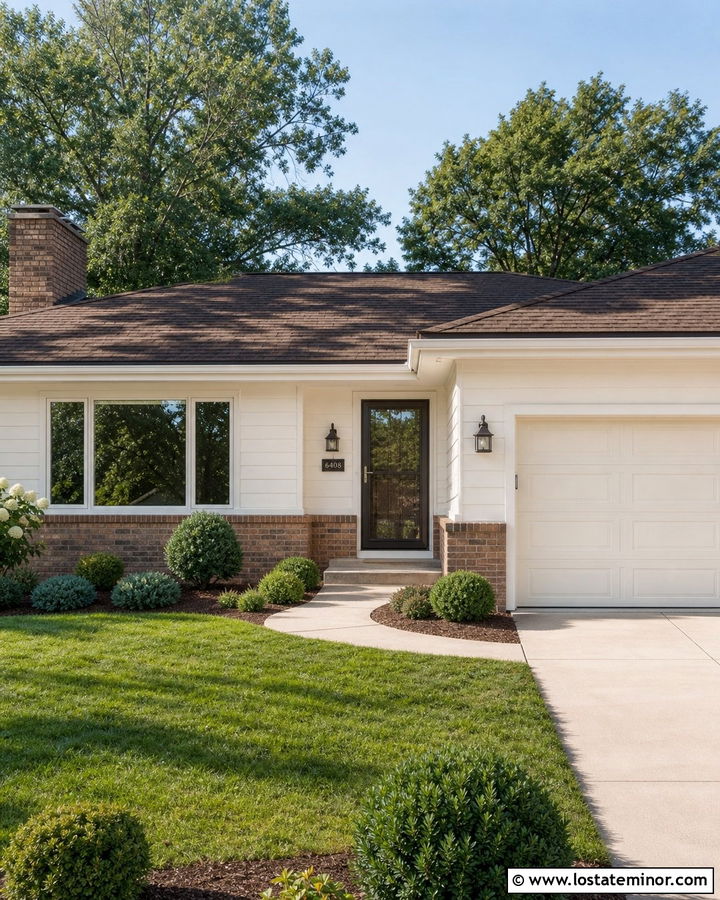
A bronze storm door can update a modest ranch while coordinating naturally with its brick and roof. Paint the horizontal siding a creamy warm white and keep the trim only slightly lighter to avoid chopping up the low facade. Place a dark bronze full-glass storm door over a walnut-brown entry door, then repeat bronze on the porch light and house numbers. Preserve original tan or brown brick around the foundation and chimney for added texture. A deep brown architectural shingle roof completes the warm neutral palette. Paint the garage door to match the siding so attention stays near the entrance. Broad foundation beds, low evergreens, and a gently curved concrete walk soften the straight roofline and give the simple house a more polished appearance.
24. Warm White Cottage With Green Storm Door
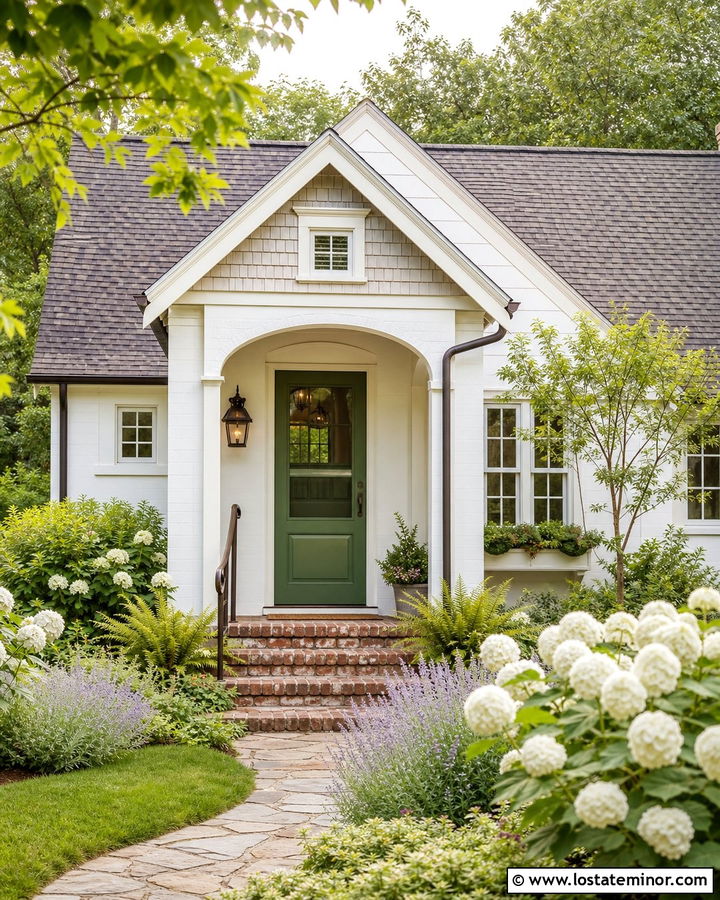
A leafy green storm door can make a warm white cottage feel closely connected to its garden. Use soft cream clapboard siding with matching trim, allowing the architecture to remain simple and light. Paint both the full-view storm door frame and entry door a medium moss green for a clear, coordinated feature. Add a small cedar-shingle awning or gable above the entrance to introduce texture and shelter. A brown-gray roof, weathered brick steps, and antique bronze hardware reinforce the natural palette. Surround the walkway with hydrangeas, ferns, lavender, and loosely shaped shrubs rather than rigid foundation planting. The green door looks intentional because it repeats tones already present in the yard, while the warm white exterior keeps the cottage bright through every season.
25. Warm White Colonial With Brass Storm Door
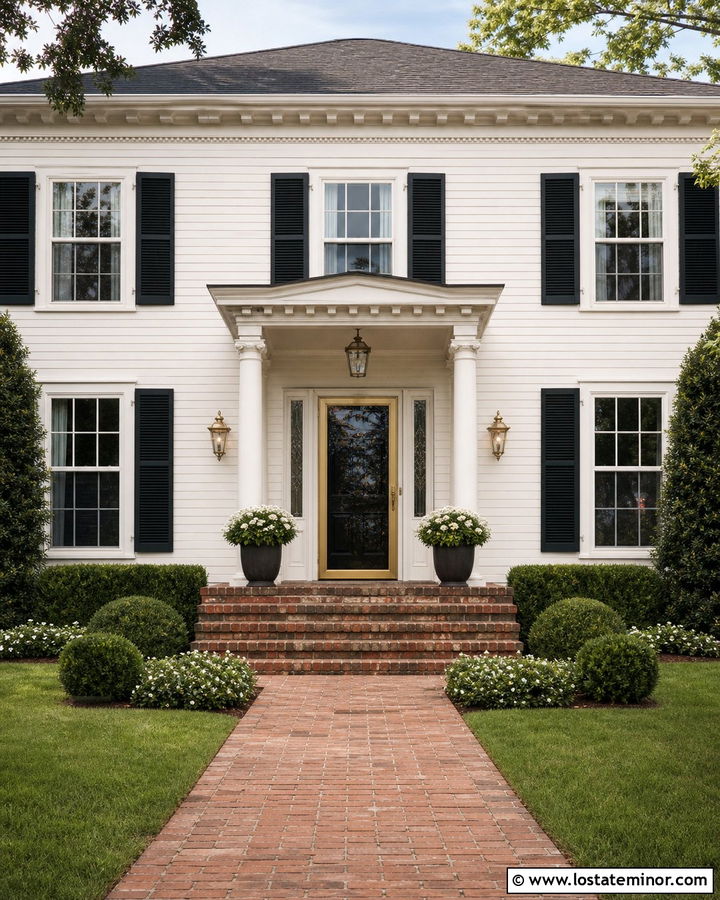
A brass-toned storm door creates an elegant entrance on a formal warm white Colonial, especially when used with restraint. Paint the symmetrical clapboard facade a creamy ivory and define the windows, dentil molding, and columns with a soft white trim. Choose a slim champagne-brass storm door over a glossy black entry door. Repeat the metal finish on the handle, knocker, and traditional lanterns, but keep shutters black to strengthen the classic framework. A dark charcoal roof and aged red brick steps ground the pale exterior. Balanced boxwood beds, matching planters, and a straight brick path support the home’s order. The metallic storm door adds warmth and distinction while its narrow glass-heavy design prevents the entrance from looking ornate or visually crowded.
26. Warm White Contemporary House With Gray Storm Door
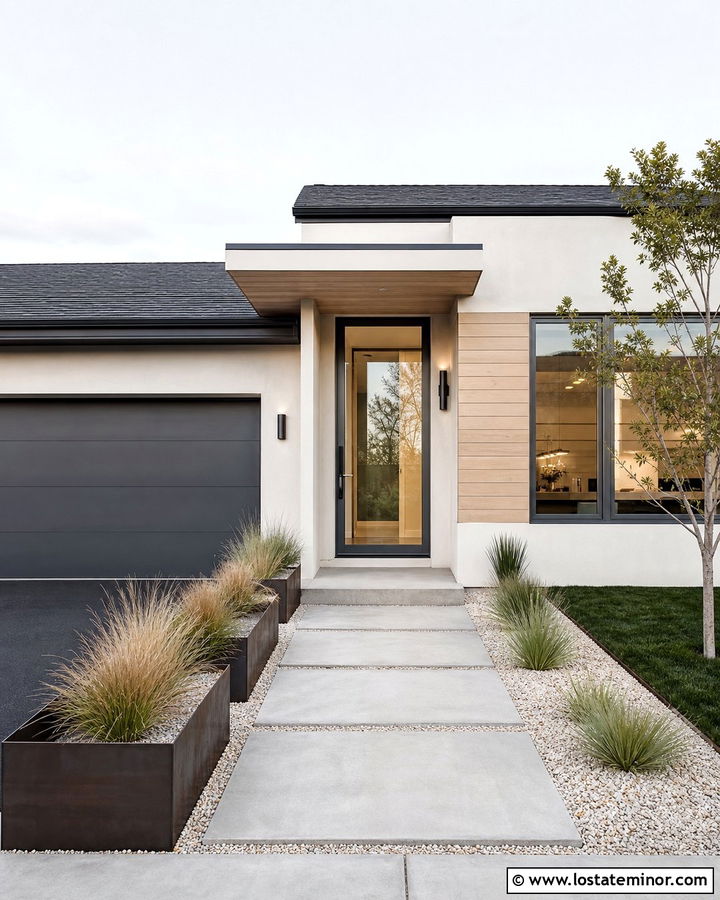
Soft gray offers a quieter alternative to black on a contemporary warm white exterior. Use smooth warm white stucco paired with pale oak siding around the recessed entrance. Install a graphite-gray storm door with uninterrupted glass over a light oak entry door, repeating the gray on the garage door and narrow window frames. A flat or low-pitched charcoal roof gives the facade a clean upper boundary. Large-format concrete paving, simple metal planters, and clipped grasses keep the grounds modern but welcoming. Avoid bright white trim; a closely related warm white will maintain the exterior’s calm appearance. This complete design balances cool gray metal with warm wood and creamy walls, creating a modern entry that feels refined without becoming cold, severe, or overly high contrast.
27. Warm White Lake House With Wood Storm Door
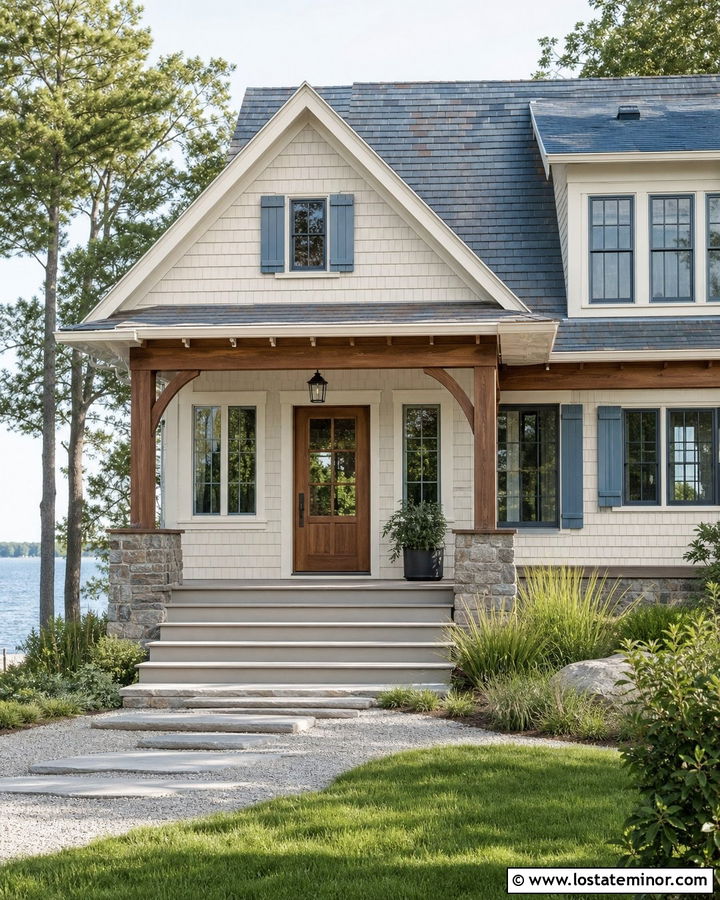
A lake house feels more relaxed when warm white siding is paired with natural wood and soft outdoor colors. Use creamy shake siding across the facade with simple off-white trim around large windows and porch openings. Choose a cedar-framed storm door with clear glass, positioned over a matching cedar entry door. Repeat the wood on porch beams, rail caps, and the ceiling to make the doorway part of a larger material story. A weathered blue-gray roof and muted blue shutters introduce subtle waterside color. Stone porch piers, wide steps, and an informal gravel path help the house settle into the landscape. Add native grasses and loosely planted shrubs. The wood storm door provides useful warmth while preserving views into the bright, welcoming entry.
28. Warm White Rustic House With Dark Green Storm Door
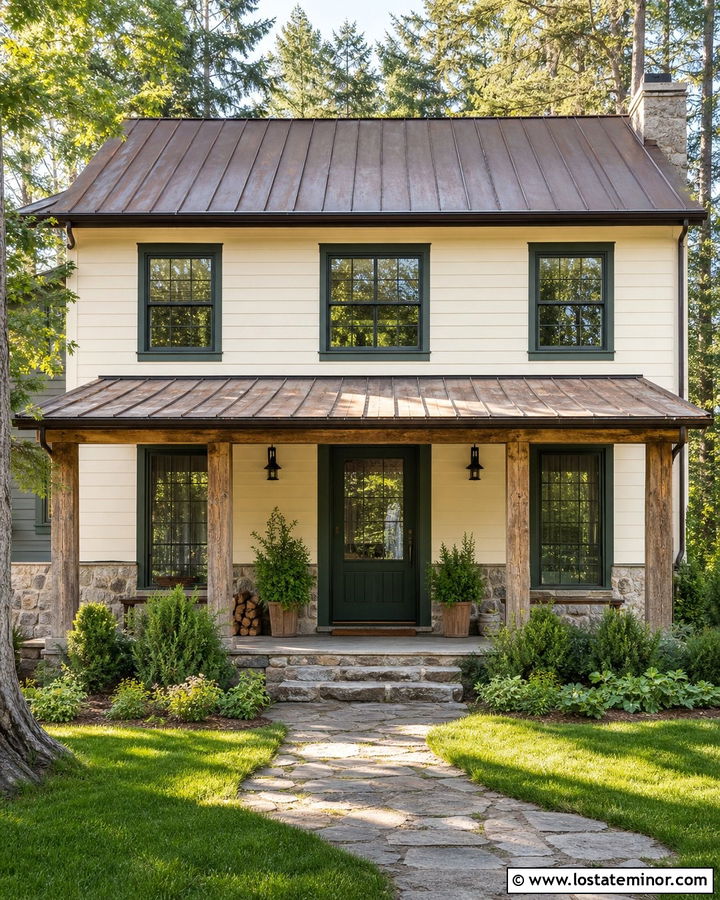
Deep green looks especially natural on a rustic warm white house surrounded by mature trees. Paint the siding a soft ivory that reflects daylight without appearing bright against the wooded setting. Use dark forest green on the storm door, entry door, window sashes, and selected trim details for a connected scheme. Rough-cut timber porch posts and warm gray fieldstone across the foundation add texture and weight. Choose a weathered brown metal roof that complements the wood without blending completely into it. Black iron lights and simple hardware can provide small, practical accents. A stone walkway, evergreen shrubs, and native woodland plants complete the exterior. The green storm door feels grounded in the landscape, while the warm white walls prevent the home from disappearing into its surroundings.
29. Warm White Suburban House With Navy Storm Door
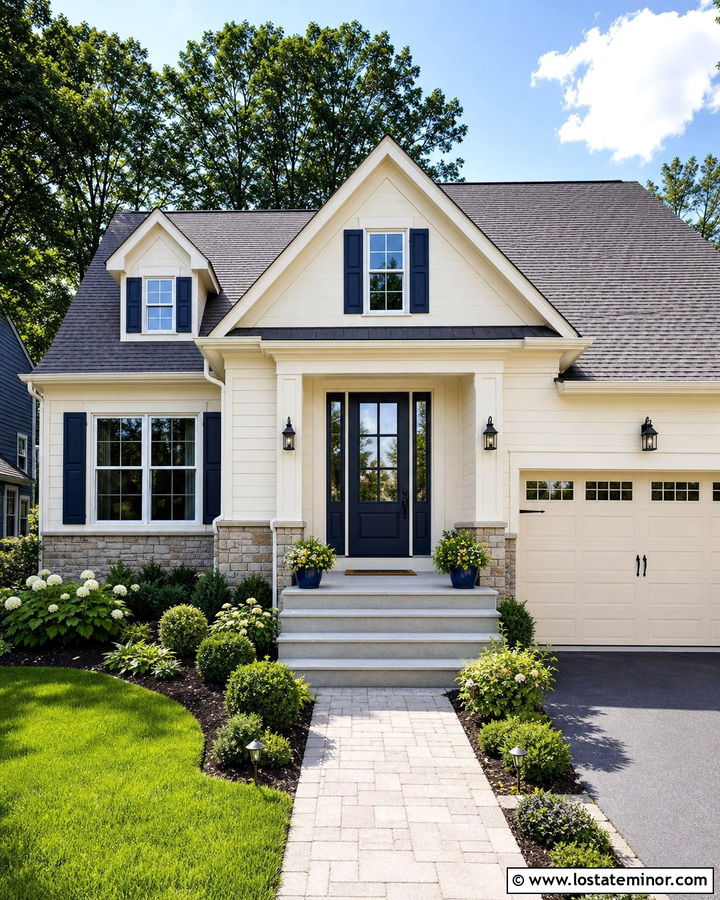
A navy storm door can bring personality to a standard suburban facade without requiring a major remodel. Paint the siding warm white and use soft cream on the trim to keep the house welcoming. Match the full-view storm door to a navy entry door, then repeat navy on small shutters or a porch bench. Keep the garage door warm white so it does not compete with the entrance. A medium-gray shingle roof, light stone veneer, and black exterior lights create a balanced mix of neutral materials. Update the approach with broad concrete steps, a straight paver path, and layered shrubs that frame rather than hide the doorway. This straightforward scheme gives an ordinary house stronger focus, cleaner contrast, and an entry that is easy to recognize from the street.
30. Warm White Porch House With Screen Storm Door
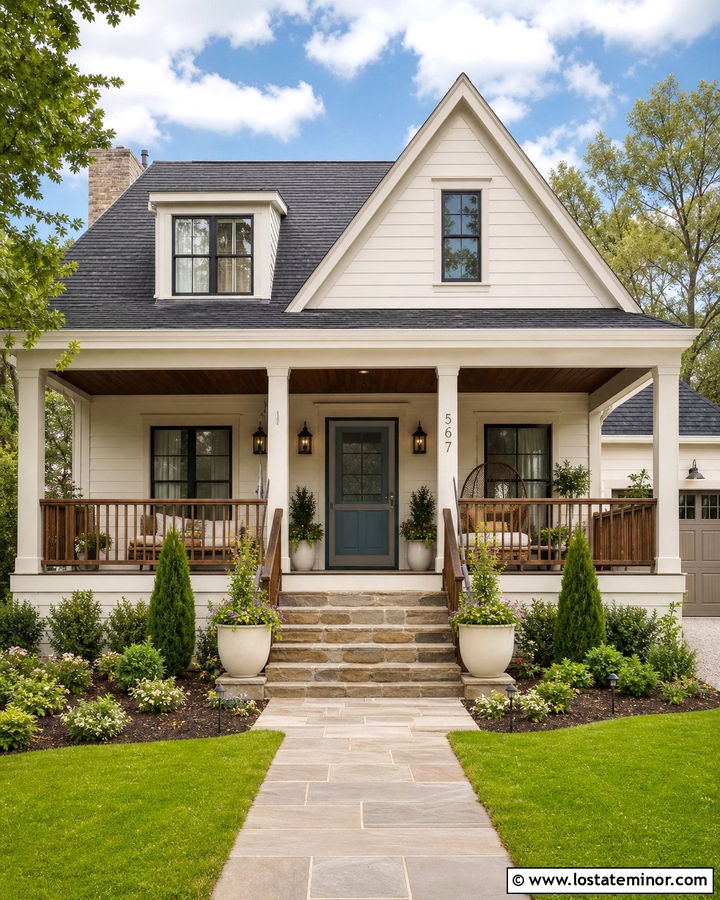
A retractable-screen storm door is ideal for a porch-focused house where fresh air and an open appearance matter. Use warm white lap siding with cream trim, then install a full-view storm door in a soft taupe finish over a rich teal entry door. The neutral frame lets the teal remain visible while coordinating with a taupe-gray porch floor. Add stained wood to the ceiling and handrails, along with warm stone around the porch steps. A charcoal roof and bronze lights provide darker accents without overpowering the welcoming entrance. Comfortable seating, large planters, and layered greenery should frame the doorway but leave it clearly visible. The result is a complete, livable exterior where the storm door contributes comfort, ventilation, and polished curb appeal.
Conclusion:
The most successful storm door is never chosen in isolation. Its frame should relate to the front door, trim, windows, roof, masonry, hardware, or another visible part of the facade. Warm white siding makes this process easier because it can support subtle almond and white finishes as well as stronger black, navy, green, bronze, and red accents. Consider how much contrast suits the house style, and remember that full-view glass helps the main entry door remain visible. Coordinated landscaping and repeated materials will make the final combination feel intentional. Use these **30 Warm White House Design With Storm Door Ideas** to build a complete exterior that looks welcoming, balanced, and thoughtfully finished from the curb.

Related posts: