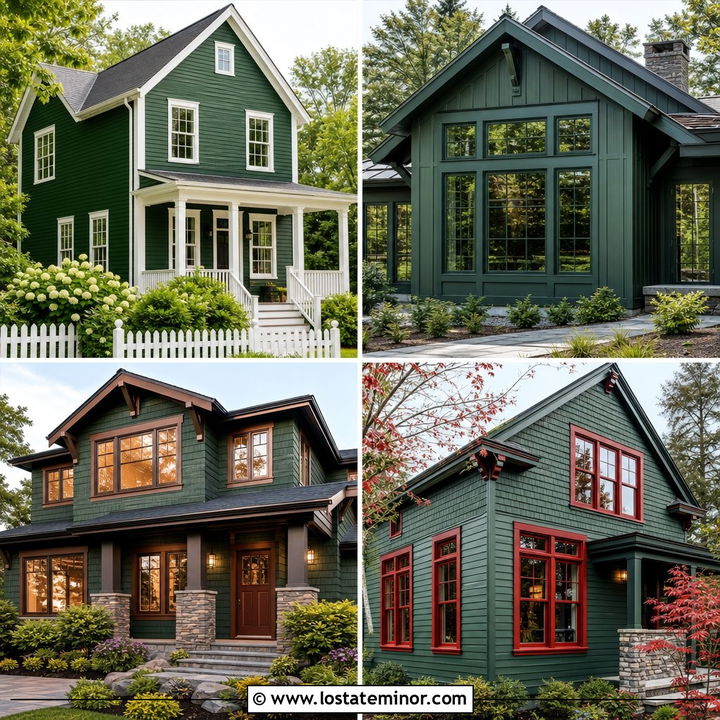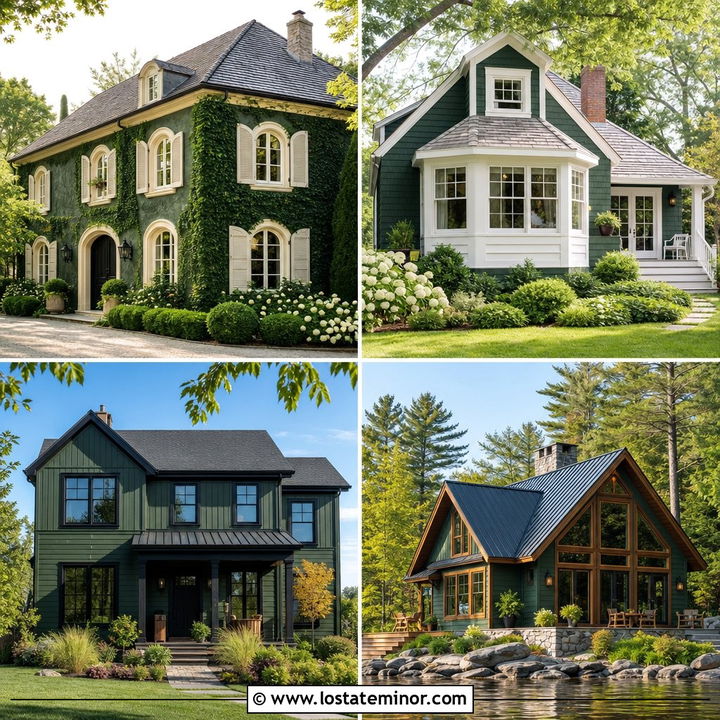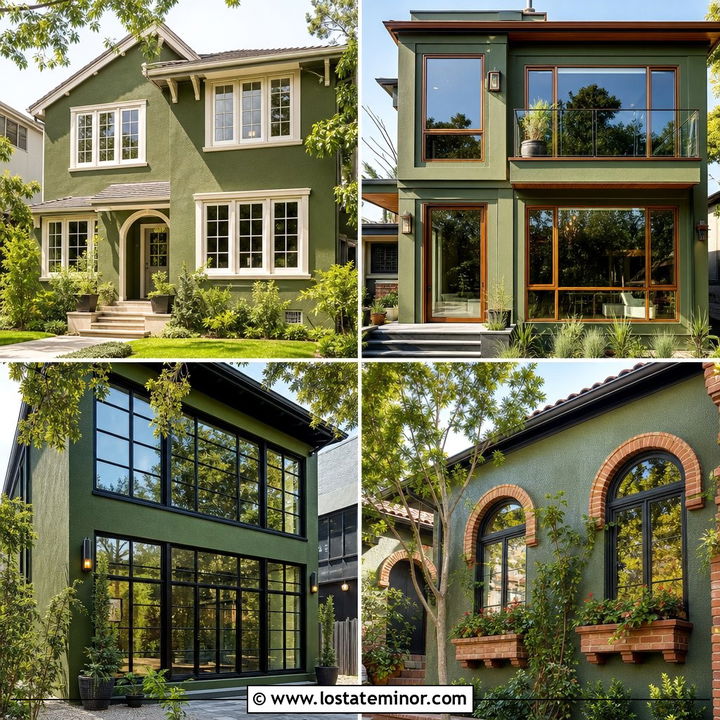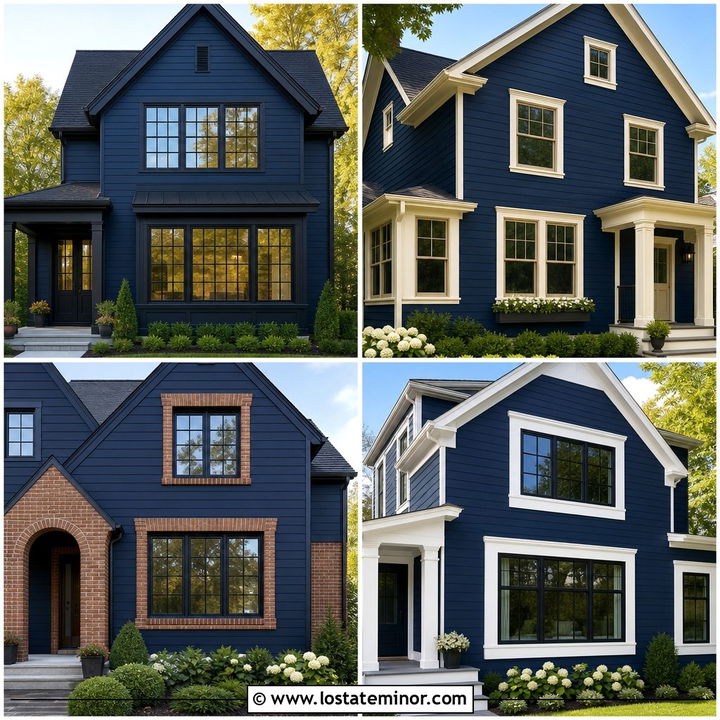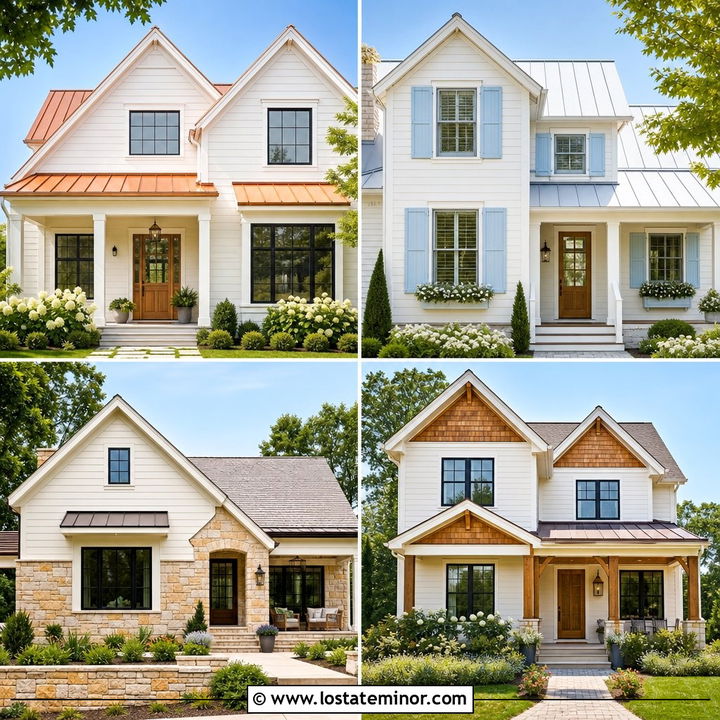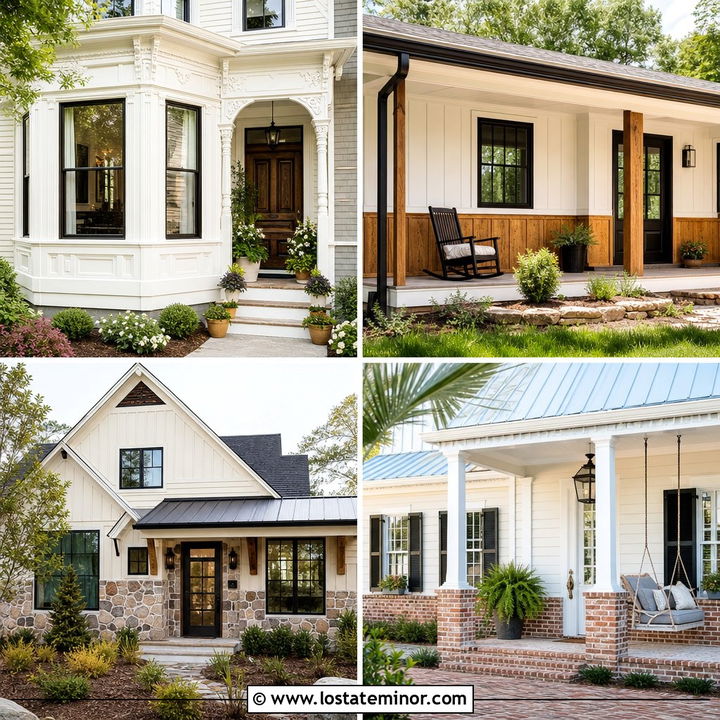
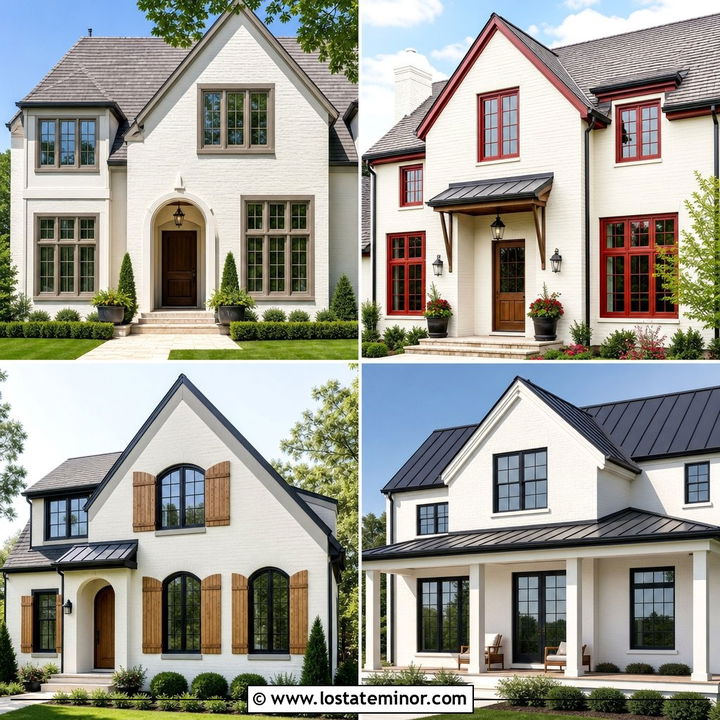
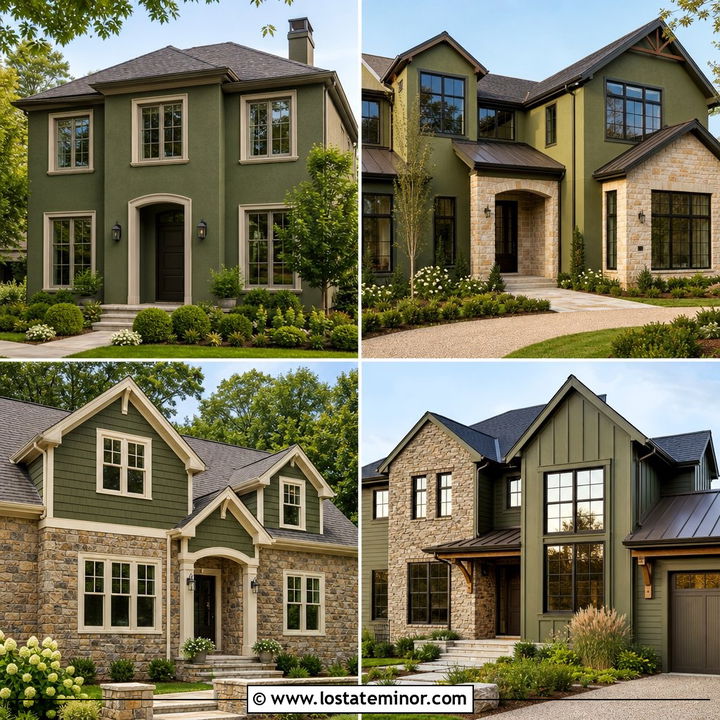
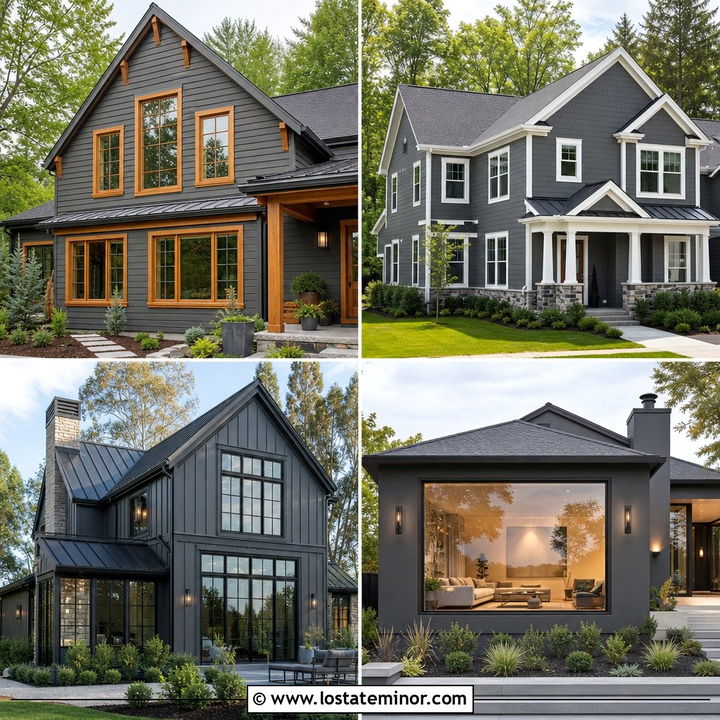
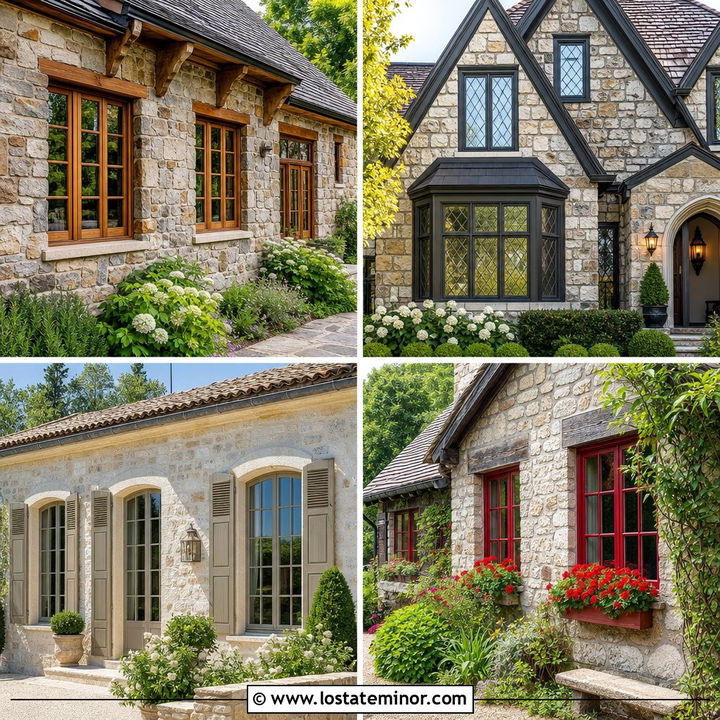
A warm white exterior offers a softer alternative to stark white while keeping the facade fresh, bright, and versatile. The best 30 Warm White House Design With Window Frames Ideas coordinate the windows with siding, trim, roofing, doors, masonry, and landscaping instead of treating each feature separately. Black frames create sharp definition, while bronze, taupe, green, and wood-toned frames produce gentler contrast. White frames can also look intentional when supported by traditional trim and divided-light grids. Window proportions and grille patterns should suit the home’s architecture, whether it is a farmhouse, ranch, Colonial, or contemporary build. () Each complete scheme below shows how to balance color, texture, and architectural details through 30 Warm White House Design With Window Frames Ideas.

1. Warm White House With Black Window Frames
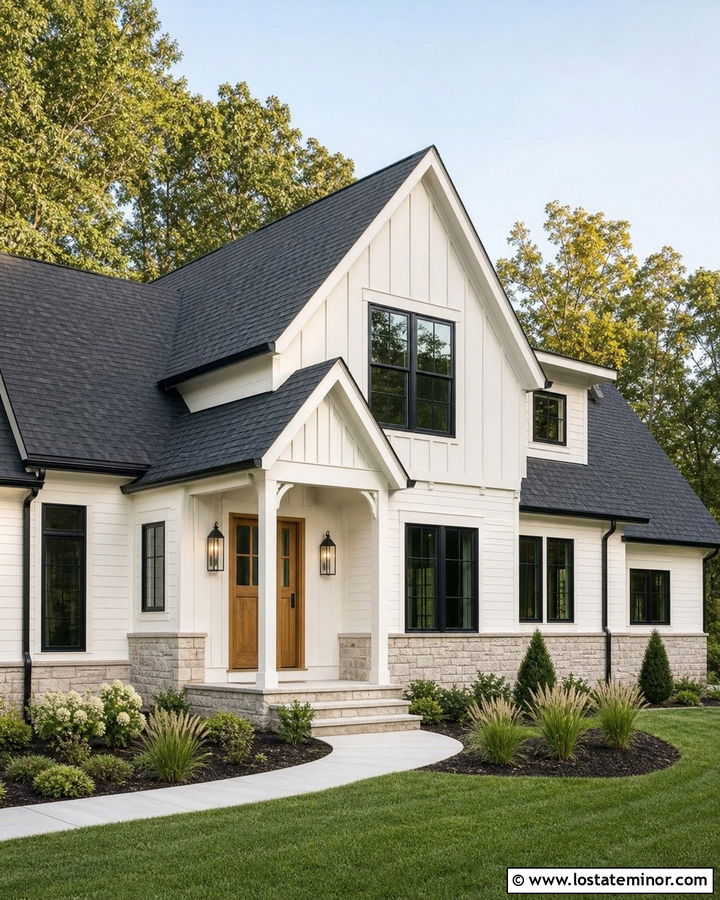
Crisp black window frames give a warm white house a clear architectural outline without making the siding appear cold. Use a creamy exterior such as Sherwin-Williams Alabaster, then repeat black on the roof, porch lights, gutters, and simple metal railings. A medium-stained oak front door prevents the high-contrast palette from feeling too sharp. This combination works especially well on a modern farmhouse with board-and-batten gables and horizontal lap siding below. Keep the exterior trim warm white rather than black so the windows remain defined without visually dividing the entire facade. A stone foundation in beige, gray, and muted brown adds another grounding layer. Finish with curved planting beds, ornamental grasses, and a straight concrete walkway for clean but welcoming curb appeal.
2. Warm White House With Dark Bronze Window Frames
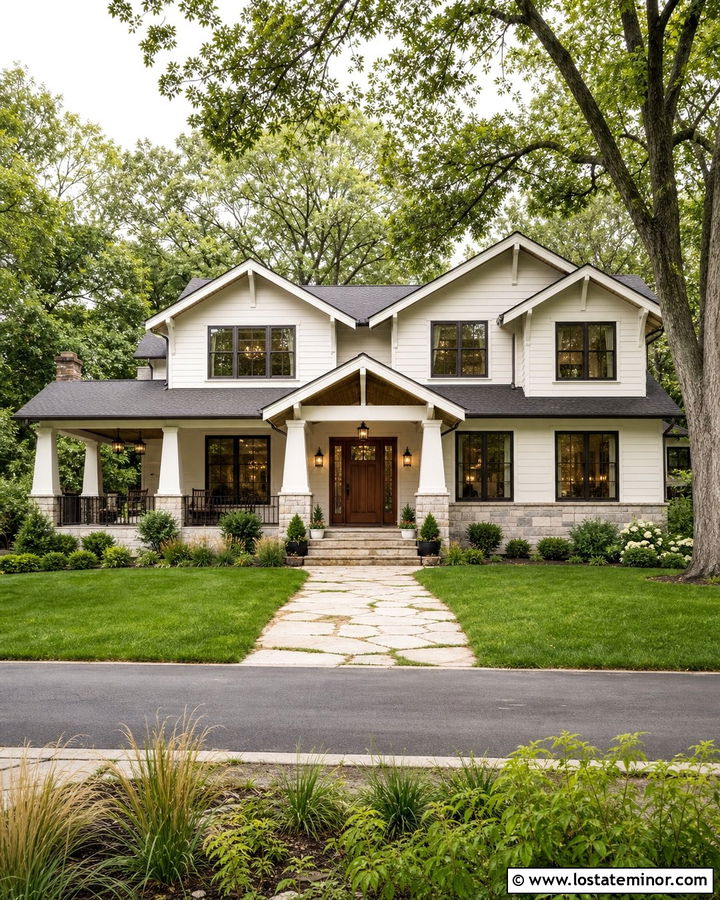
Dark bronze window frames provide depth with less severity than solid black. Pair Benjamin Moore White Dove siding with bronze frames, a walnut-stained front door, and weathered limestone around the porch foundation. This complete palette feels especially natural on a Craftsman house with broad eaves, tapered columns, and upper window grilles. Choose a dimensional roof containing brown, charcoal, and soft gray rather than a pure black roof. Bronze lanterns and matching house numbers can quietly repeat the window finish. Avoid adding cool silver hardware because it may interrupt the earthy color story. Deep green shrubs, native grasses, and a flagstone walkway will reinforce the organic mood. The finished exterior feels polished, warm, and substantial without depending on extreme contrast.
3. Warm White House With White Window Frames
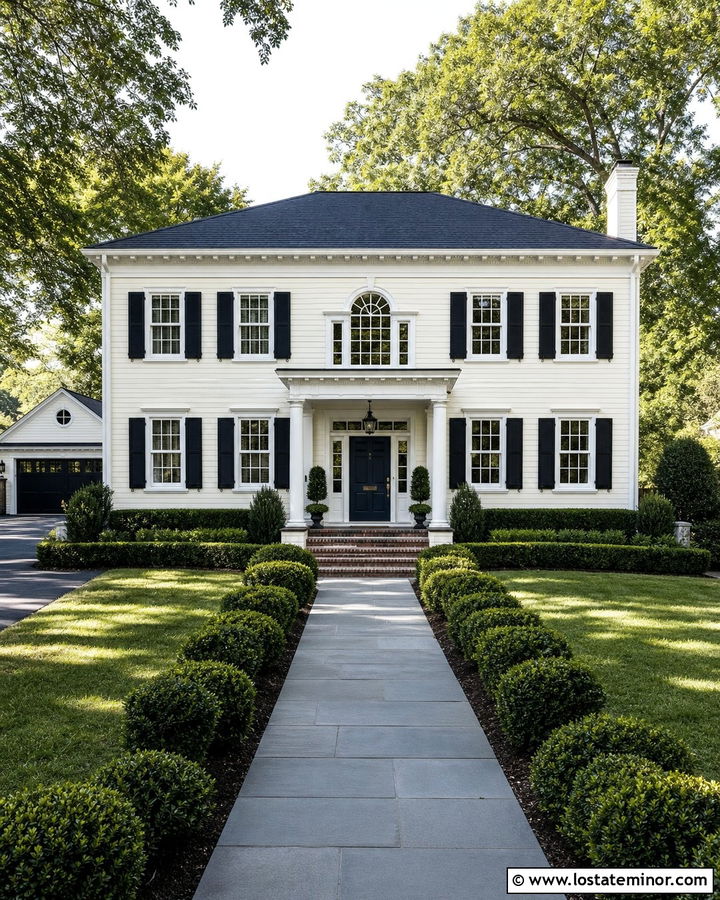
White frames can create a beautifully unified exterior when their undertone relates to the siding. Paint a Colonial home in Benjamin Moore Swiss Coffee and select window frames in a slightly cleaner creamy white. Surround them with substantial matching casings so the windows look intentional rather than unfinished. Black shutters, a deep navy front door, and a charcoal roof introduce enough contrast to keep the facade from appearing flat. Traditional divided-light windows are particularly effective because their grids add detail within the quiet color palette. Repeat the warm white on porch columns, cornices, and railings for continuity. Symmetrical boxwoods, brick steps, and a centered walkway support the Colonial architecture. This restrained scheme feels classic, bright, and easy to maintain visually.
4. Warm White House With Wood Window Frames
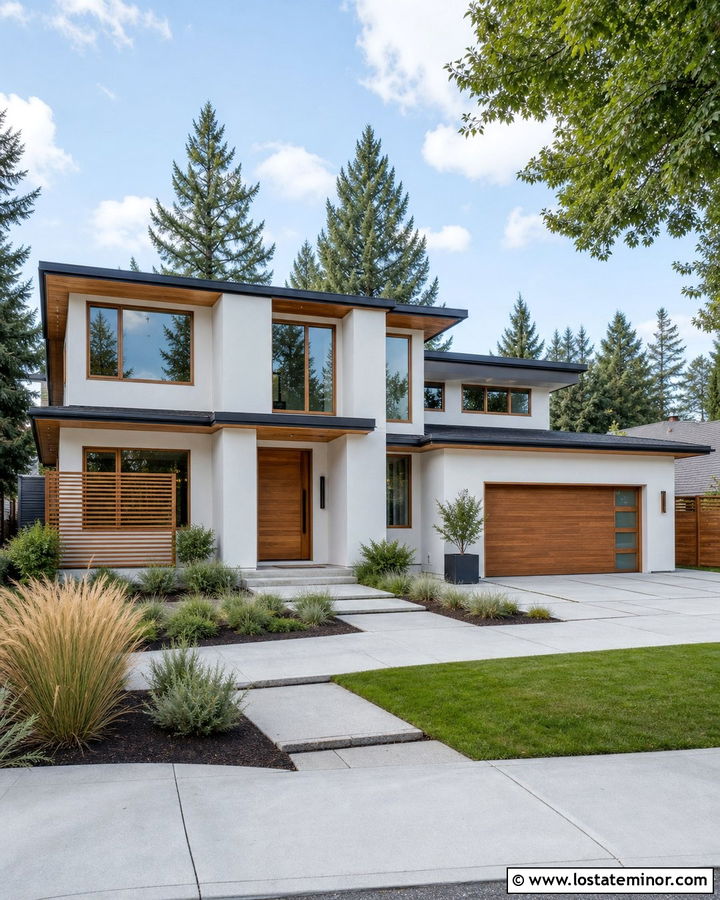
Natural wood window frames bring immediate warmth and texture to a pale exterior. Use Sherwin-Williams Greek Villa on smooth stucco, then install cedar or Douglas fir frames protected with a medium honey-brown finish. Carry the same wood tone onto the pivot front door, porch ceiling, and horizontal privacy screen. A low-slope charcoal metal roof adds definition without competing with the grain. This palette suits a contemporary home with broad glass openings, deep roof overhangs, and simple geometric forms. Keep exterior trim minimal so the transition between stucco and wood remains clean. Large concrete pavers, sculptural grasses, and a few evergreen trees complement the modern architecture. The wood frames make the warm white facade feel connected to its surroundings rather than stark or overly minimalist.
5. Warm White House With Charcoal Window Frames
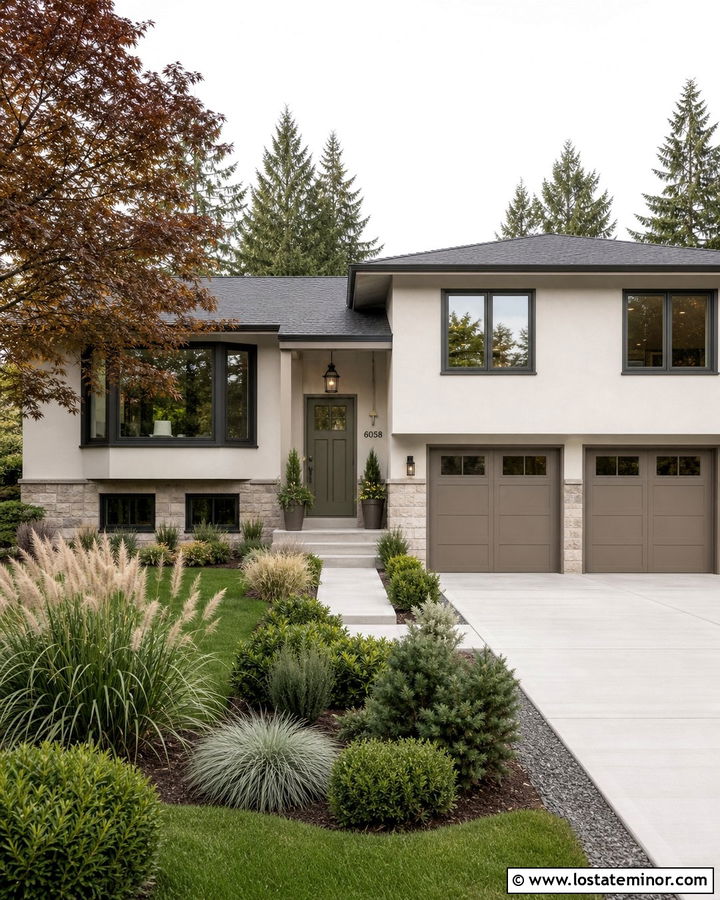
Soft charcoal window frames create noticeable structure while maintaining a calmer appearance than jet black. Try Sherwin-Williams Shoji White on a split-level exterior, with charcoal frames, a medium-gray roof, and warm taupe garage doors. Incorporate pale ledgestone around the lower story to connect the light walls with the darker windows. A muted olive front door adds gentle color while remaining compatible with the neutral scheme. On a wide split-level facade, repeat charcoal through narrow fascia boards and contemporary wall lights instead of painting every trim surface dark. This keeps the house open and balanced. Layer low evergreen shrubs with feathery grasses along the foundation to soften the horizontal architecture. The finished look modernizes an ordinary suburban home without erasing its familiar character.
6. Warm White House With Sage Green Window Frames
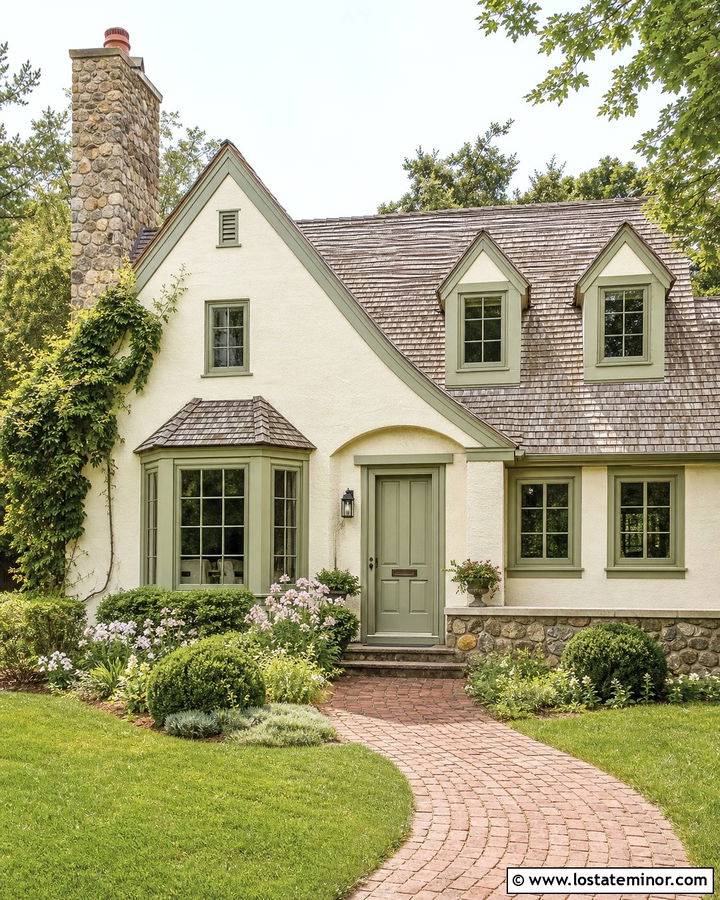
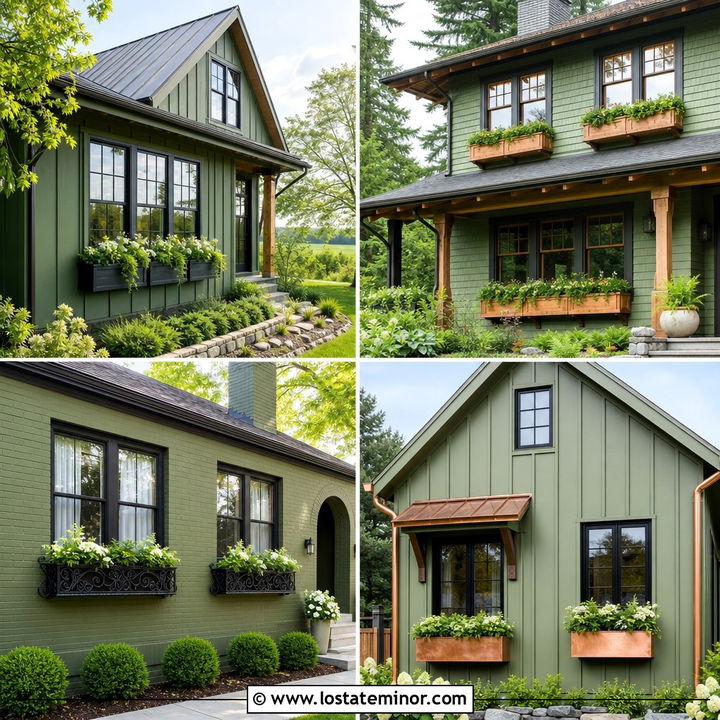
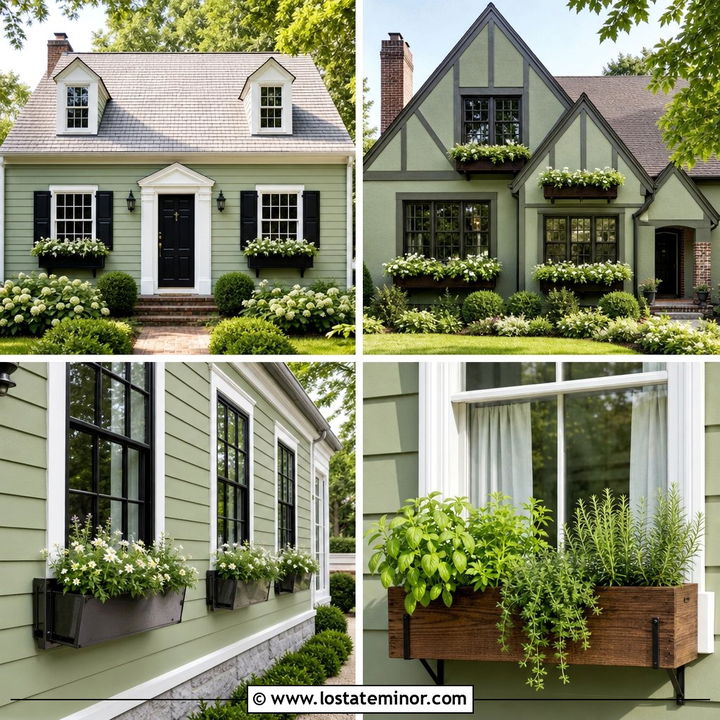
Muted sage green frames can give warm white siding a subtle connection to surrounding trees and gardens. Paint a cottage exterior Benjamin Moore Soft Chamois, then use dusty sage on the frames, window casings, front door, and narrow fascia details. A weathered cedar-shingle roof or brown architectural shingles will enhance the gentle, nature-inspired palette. Add irregular fieldstone around the chimney and porch base for depth. Small divided-light windows, arched porch openings, and climbing greenery make the combination particularly fitting for an English cottage. Keep the main siding quiet so the green details remain noticeable but not busy. A curved brick path, layered flowering plants, and loosely clipped shrubs complete the welcoming setting. The result feels colorful, established, and restful rather than strongly contrasting.
7. Warm White House With Greige Window Frames
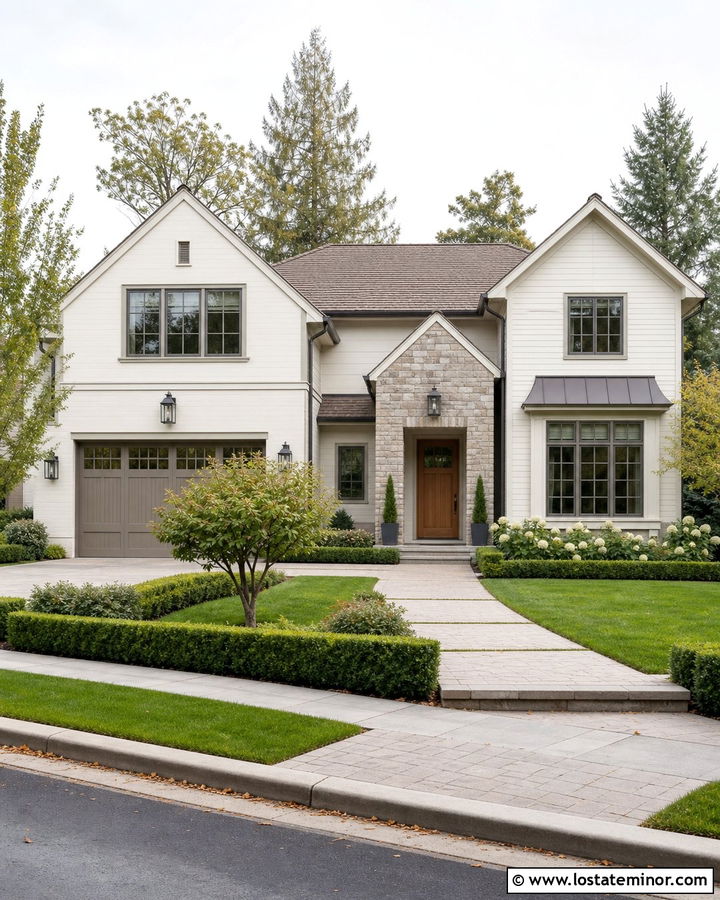
Greige frames offer understated definition for homeowners who find black too bold and white too plain. Pair Sherwin-Williams Natural Choice siding with medium greige window frames, matching trim, and a taupe garage door. Use warm gray stone across the entry wall and foundation to create a smooth transition between the pale body color and deeper framing. This works well on a transitional two-story house with balanced windows, simple gables, and restrained detailing. Select a brown-gray shingle roof instead of cool blue-gray roofing. A natural oak door provides one richer focal point without disturbing the subtle scheme. Structured hedges and ornamental trees can give the facade a tailored appearance. Because the contrast is low, vary the siding and masonry textures to keep the complete exterior visually layered.
8. Warm White House With Brown Window Frames
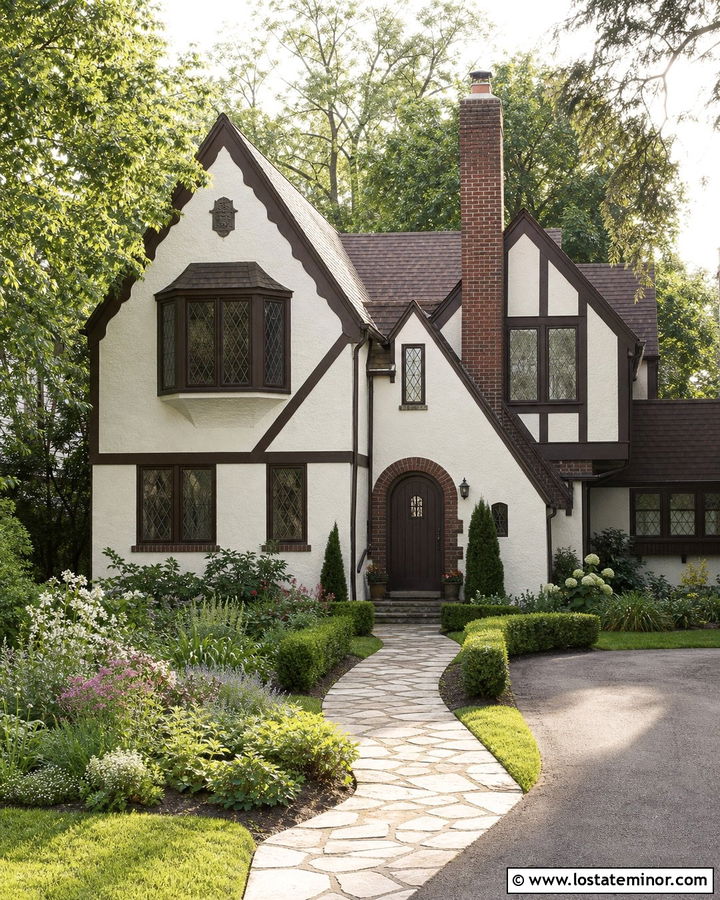
Chocolate-brown window frames can make a warm white exterior feel grounded and traditional. Use Benjamin Moore Ballet White on a Tudor house, then repeat dark brown across the frames, half-timbering, front door, and decorative gable brackets. Creamy stucco between the timber details keeps the facade bright, while reddish-brown brick around the chimney and steps adds historic character. Select a roof with deep brown shingles and subtle tonal variation. Diamond-pane windows are a natural choice because they reinforce the architecture and make each opening more distinctive. Avoid introducing black accents, which may feel disconnected from the brown framework. An informal garden with flowering perennials, clipped hedges, and a winding stone path will soften the strong rooflines. This cohesive palette feels rich without making the house look overly dark.
9. Warm White House With Taupe Window Frames
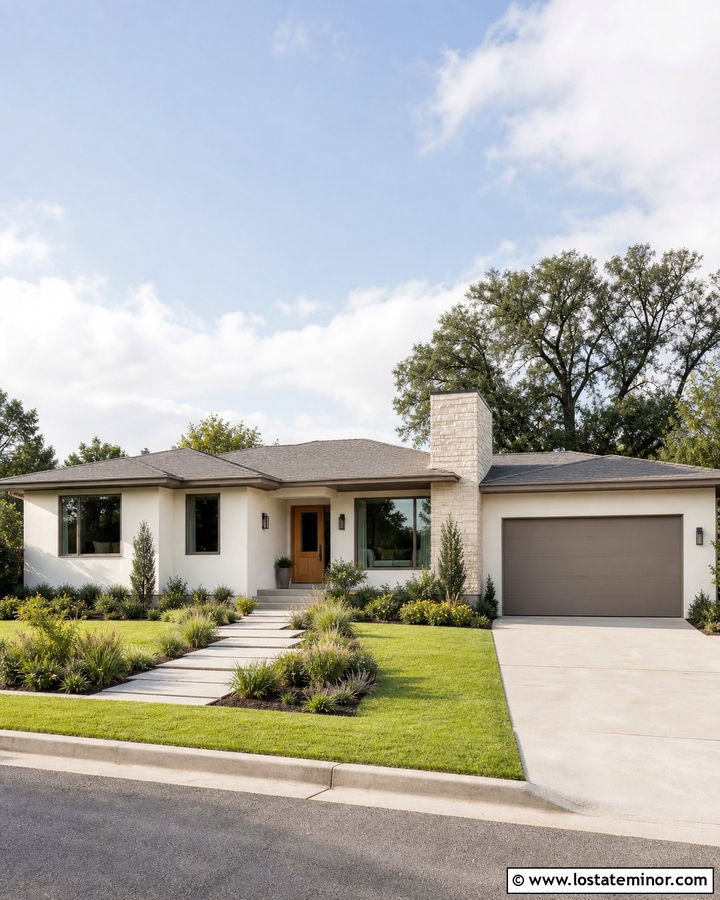
Taupe window frames are ideal for a quiet, low-contrast exterior with plenty of natural texture. Cover a modern ranch in Sherwin-Williams Oyster White, then use warm taupe on the frames, broad fascia, and flush garage door. Add buff limestone around the chimney and entry wall to reinforce the earthy undertones. A warm gray roof and pale oak front door keep the long facade balanced. Choose large, grid-free windows to make the ranch appear cleaner and more current. A darker bronze finish on lighting and house numbers can add small points of definition. Keep the landscaping horizontal with low grasses, spreading shrubs, and a broad walkway. The complete scheme gives a familiar single-story home a refined update while preserving its relaxed and approachable suburban character.
10. Warm White House With Navy Window Frames
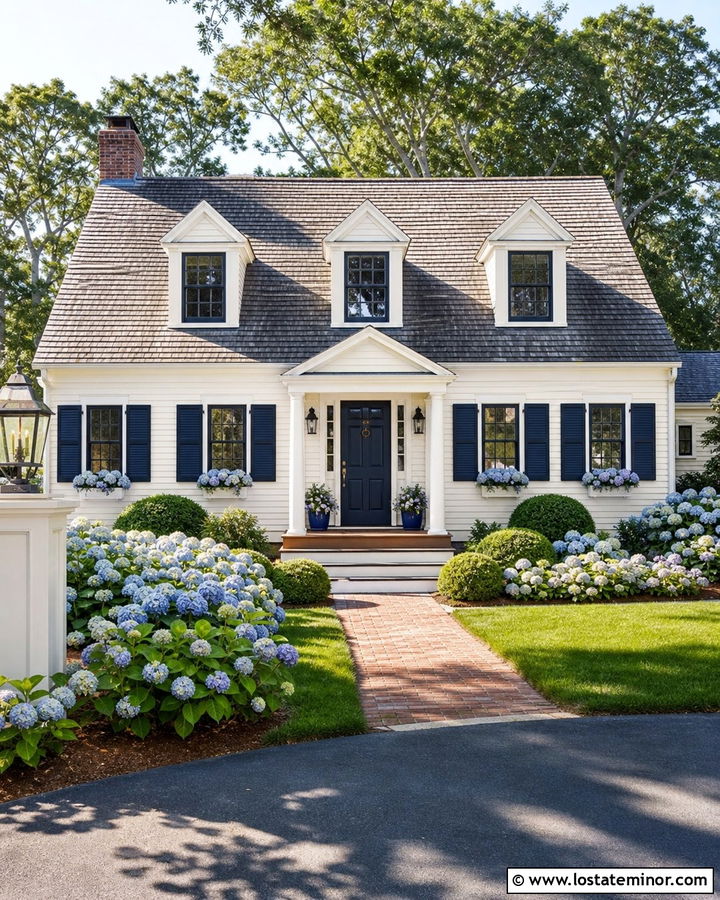
Navy window frames add recognizable color while remaining more restrained than brighter blues. Paint a Cape Cod exterior Sherwin-Williams Creamy and use deep navy on the window frames, shutters, front door, and small dormer accents. A weathered gray shingle roof supports the coastal influence without making the house feel themed. White window casings can separate the navy frames from the warm siding and highlight the traditional proportions. Add a natural cedar porch floor or simple wood bench to bring warmth near the entrance. Divided-light double-hung windows are especially suitable for this compact, symmetrical architecture. Hydrangeas, clipped foundation shrubs, and a brick walkway create a classic setting. By repeating navy selectively, the entire house looks coordinated while the creamy body color remains the dominant feature.
11. Warm White House With Olive Window Frames
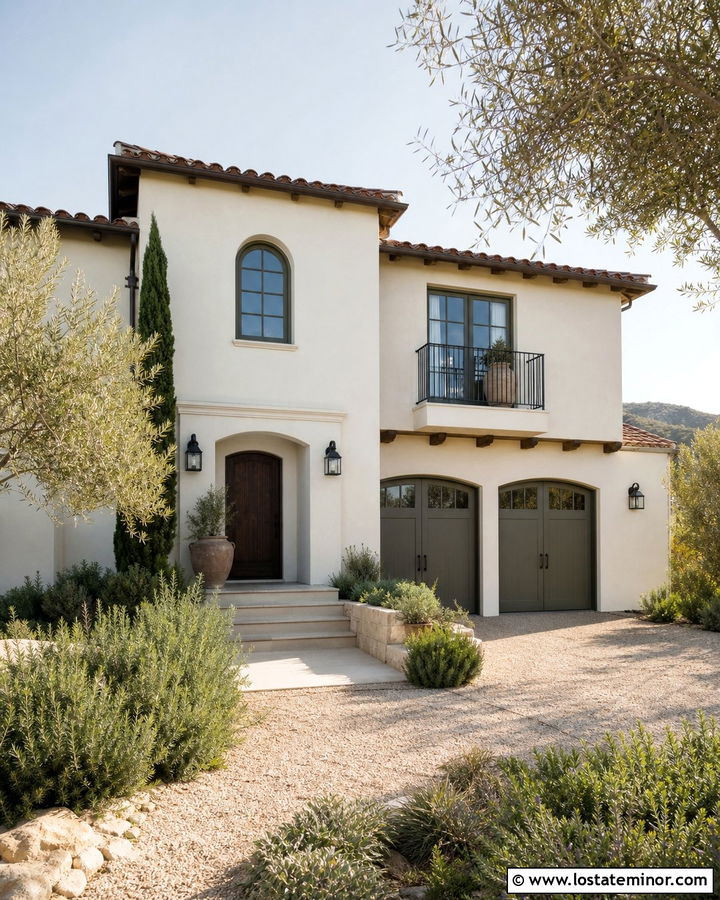
Olive green window frames produce an earthy exterior that complements stone, wood, and mature landscaping. Use Benjamin Moore Seapearl on a Mediterranean-inspired house with smooth stucco walls, then apply muted olive to the frames, entry gate, and garage doors. A terracotta tile roof introduces warmth above the pale facade, while sandy limestone around the arched entry provides texture below. Choose simple window divisions so the frame color does not compete with the curves and roof tiles. A dark-stained wood door can serve as the central focal point. Gravel paths, rosemary, ornamental grasses, and drought-tolerant shrubs will extend the natural palette into the yard. The combination feels sun-washed and relaxed, yet the olive frames give every opening enough definition to remain visible from the curb.
12. Warm White House With Sand Window Frames
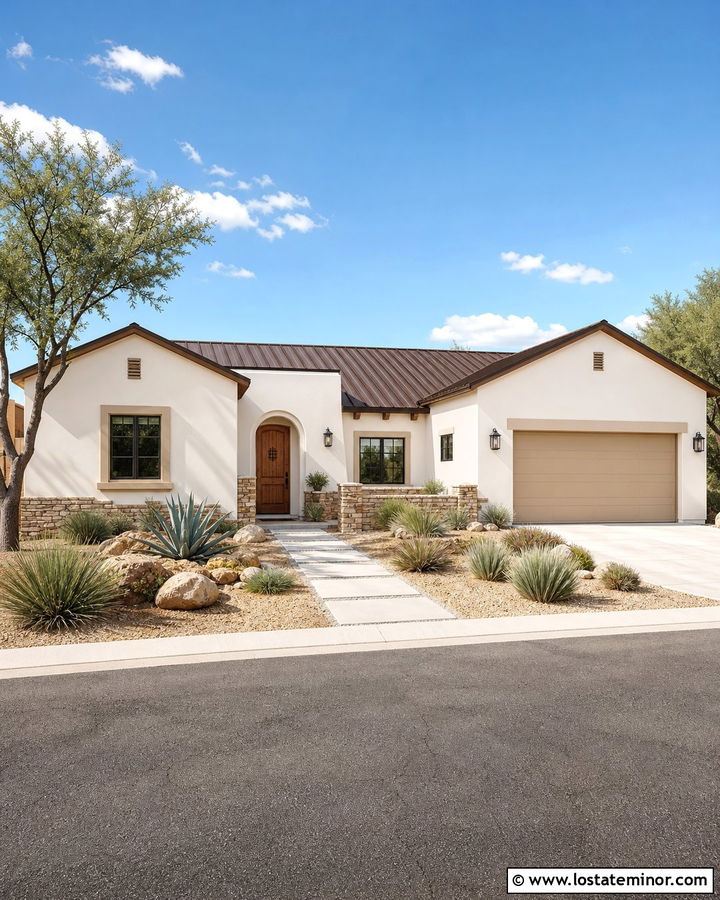
Sand-colored frames can blend almost seamlessly into a warm white exterior while still revealing the window shapes. Pair Sherwin-Williams White Duck siding with soft sand frames, cream trim, and a light tan garage door on a Southwestern ranch. Use smooth stucco for the main walls and introduce pale stacked stone around the entry and chimney. A medium-brown metal roof or low-profile tile roof will give the subtle facade a stronger top edge. Choose a stained mesquite-style front door for a concentrated touch of natural color. Wide windows without ornate grids suit the home’s simple horizontal lines. Desert grasses, gravel beds, agave, and a broad concrete walkway complete the regionally appropriate setting. This tonal scheme feels bright and calm, especially under strong sunlight where harsh white could look glaring.
13. Warm White House With Copper Window Frames
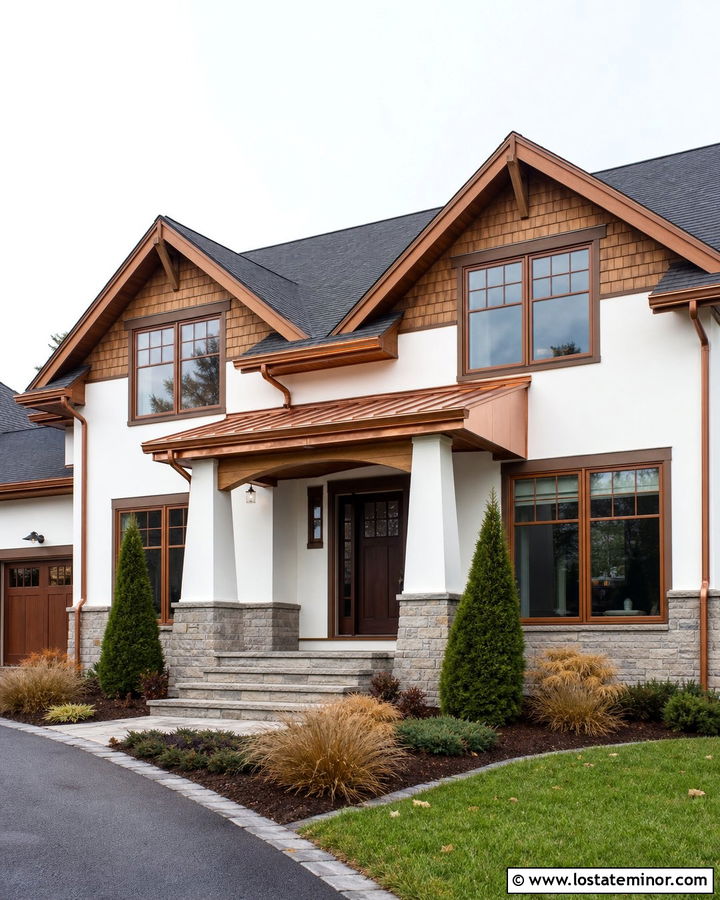
Copper-toned window frames give a pale exterior a distinctive metallic warmth. Paint a contemporary craftsman in Benjamin Moore Simply White, then choose copper-clad frames or a durable copper-colored factory finish. Repeat the tone through porch lights, gutters, and a small metal canopy above the entry. Natural cedar siding within one gable helps connect the metal windows to the warm white body. Use charcoal roofing and gray-beige stone at the foundation for balance. Simple upper-pane grids can reference Craftsman architecture without making the facade crowded. Because copper is visually rich, keep the front door deep brown and the exterior trim close to the siding color. Layer evergreen shrubs, golden grasses, and stone steps around the porch to create a complete look that feels handcrafted and refined.
14. Warm White House With Iron Gray Window Frames
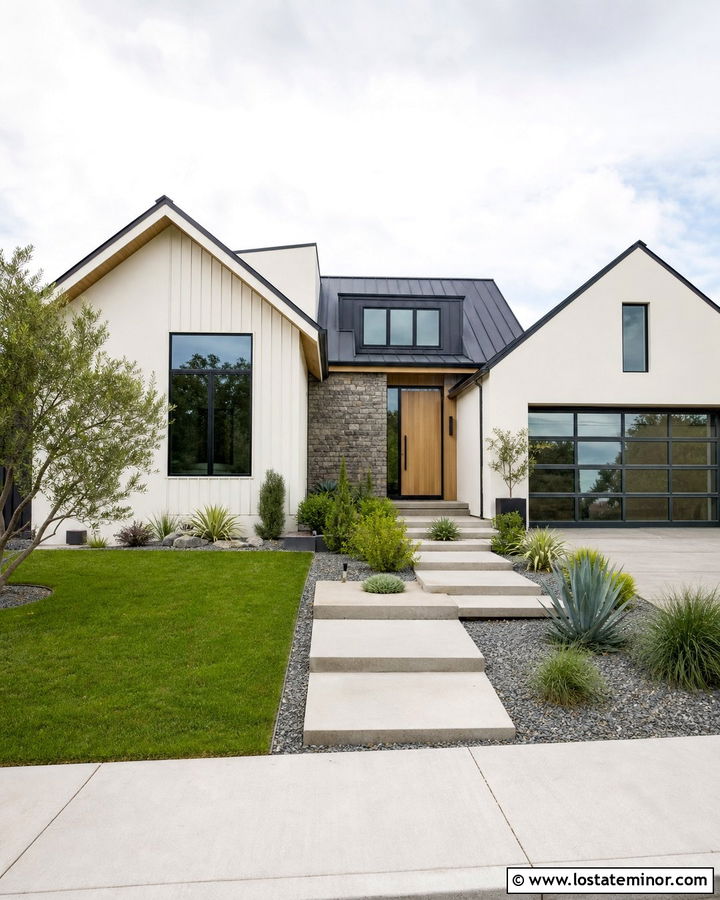
Iron gray frames provide a softer industrial edge for a warm white modern exterior. Apply Sherwin-Williams Alabaster to vertical siding and smooth stucco, then use iron gray on expansive window frames, slim fascia, and the glass-paneled garage door. A charcoal standing-seam roof can repeat the frame color across the upper portion of the house. Add a white oak front door and matching soffits to keep the scheme welcoming. This palette is effective on an asymmetrical contemporary home with mixed rooflines and windows of different sizes. Limit stone to one warm gray entry wall so the architecture remains clean. Broad concrete steps, gravel beds, and sculptural shrubs will emphasize the crisp geometry. The gray frames create definition without producing the harder outline associated with pure black.
15. Warm White House With Red Window Frames
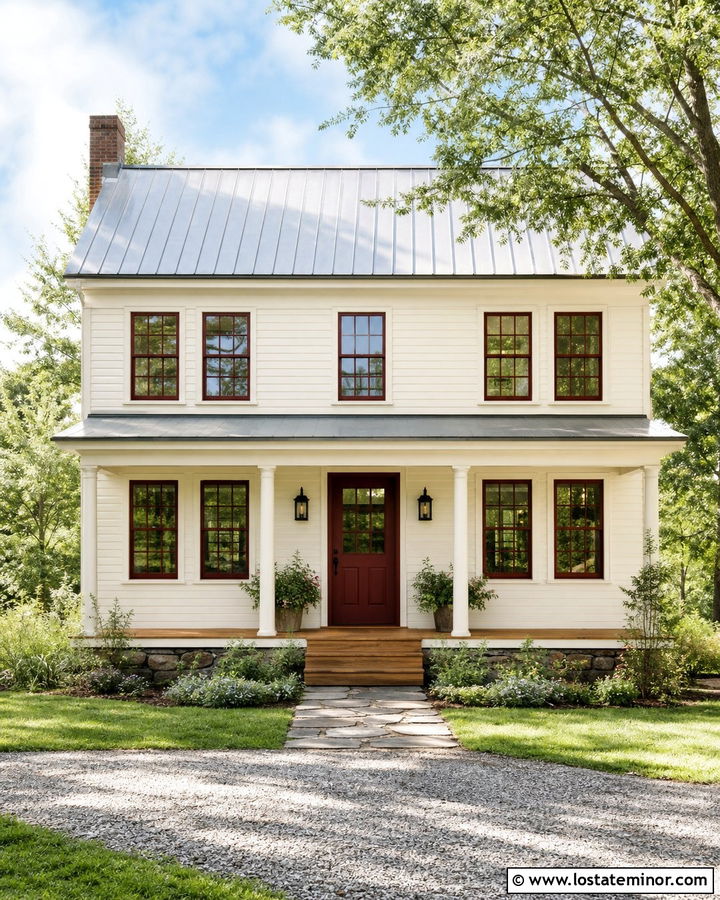
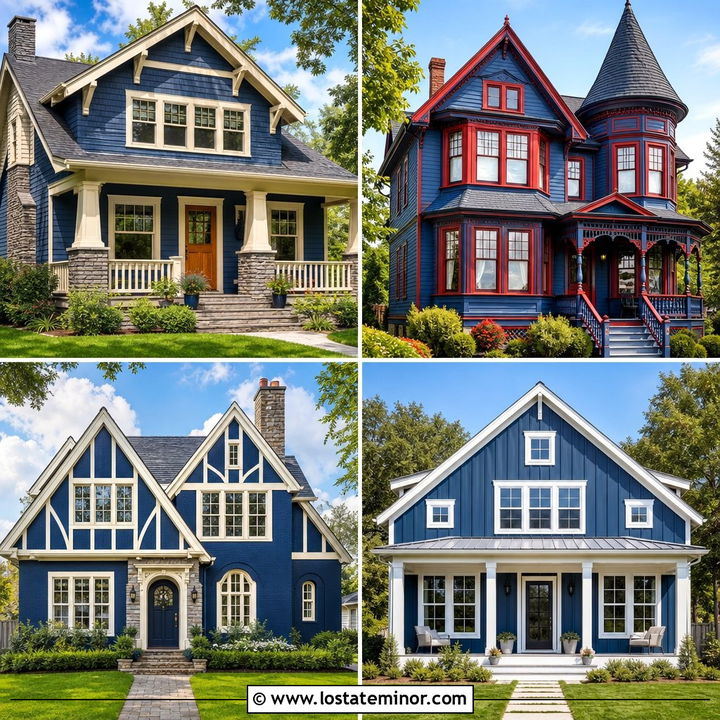
Muted red window frames can bring historical character to a warm white farmhouse when the red is deep and earthy rather than bright. Use Benjamin Moore Swiss Coffee on clapboard siding, then apply an oxblood or barn-red finish to the frames, front door, and small porch details. Keep the window casings and columns warm white to prevent the accent color from overwhelming the facade. A weathered galvanized metal roof and fieldstone foundation strengthen the rural influence. Traditional six-over-six window grids will make the colored frames feel appropriate to the architecture. Add a medium-toned wood porch floor and simple black lanterns for contrast. Informal foundation plantings, shade trees, and a gravel drive complete the setting. The resulting house feels distinctive, friendly, and rooted in traditional American farm architecture.
16. Warm White House With Blue Gray Window Frames
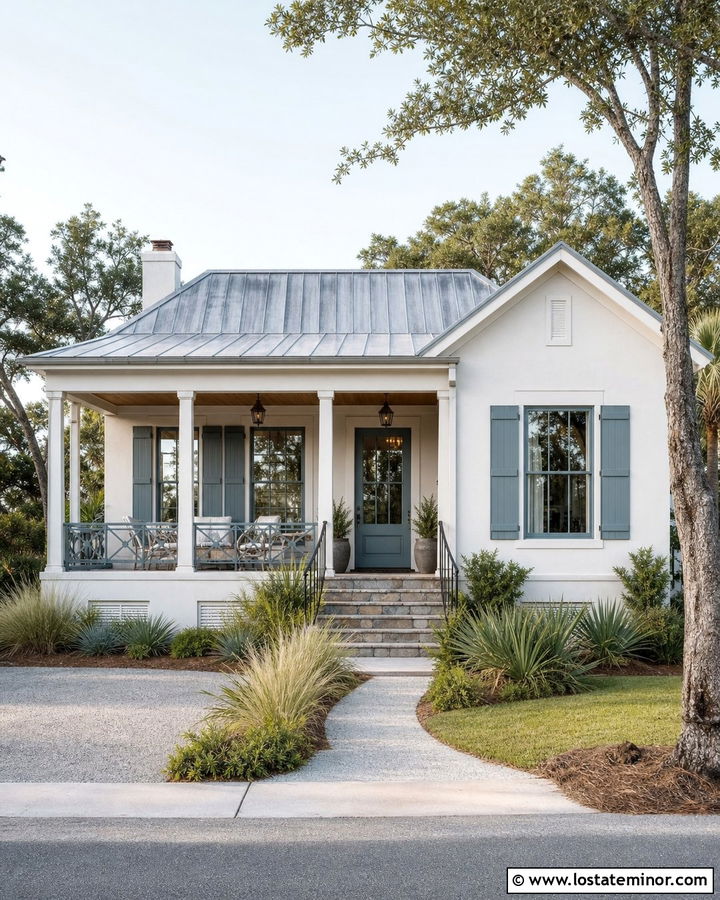
Blue-gray frames create cool definition that can still work with warm white when supported by balanced materials. Paint a coastal bungalow in Sherwin-Williams Greek Villa and use a muted slate blue-gray on the frames, shutters, and front door. Warm white casings will provide a clean buffer between the siding and colored frames. Choose weathered gray roofing with subtle brown undertones, then add a honey-toned wood porch ceiling and decking. Upper window grids bring traditional detail while leaving the lower panes open. Use natural stone on the porch steps rather than cool concrete alone. Wispy grasses, blue-green shrubs, and a gently curved walkway will reinforce the relaxed palette. The wood elements are essential because they prevent the blue-gray accents from making the creamy exterior feel mismatched or unexpectedly cold.
17. Warm White House With Espresso Window Frames
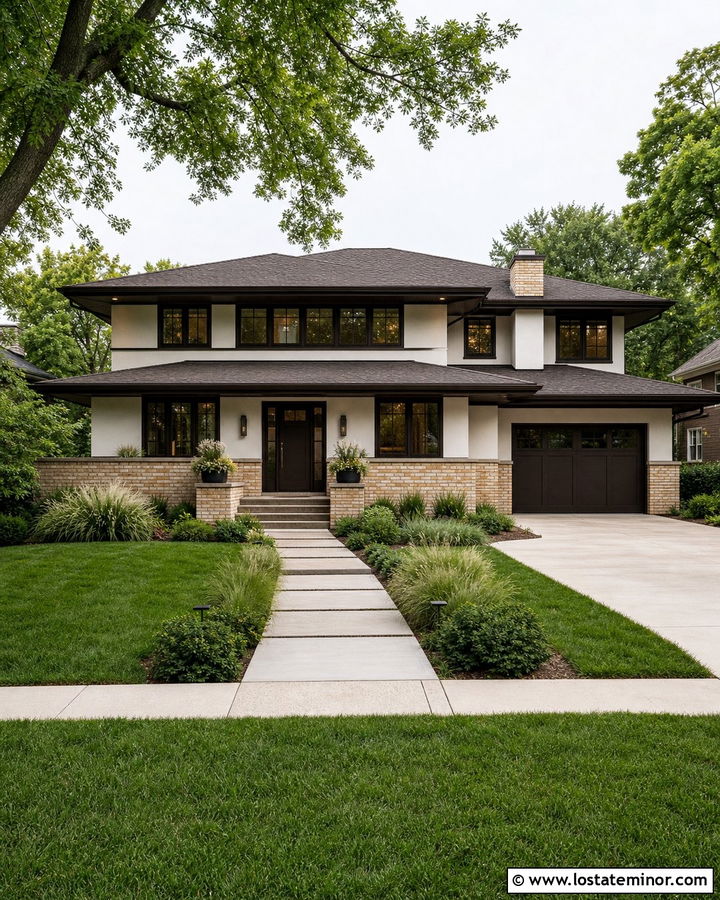
Espresso window frames deliver deep contrast while preserving a rich brown undertone. Use Benjamin Moore White Dove on a Prairie-style house with low rooflines, broad eaves, and horizontal stucco surfaces. Repeat espresso on the window frames, fascia, garage door, and solid wood entry door. Buff brick around the lower facade will connect the dark details to the warm white walls. Choose wide windows with simple horizontal grille patterns that echo the architecture. A brown-charcoal roof should remain visually close to the frame color without matching it exactly. Keep the landscaping broad and layered with low shrubs, prairie grasses, and a straight stone path. This complete exterior feels grounded and balanced because every dark detail follows the house’s strong horizontal lines rather than appearing as an unrelated decorative accent.
18. Warm White House With Pewter Window Frames
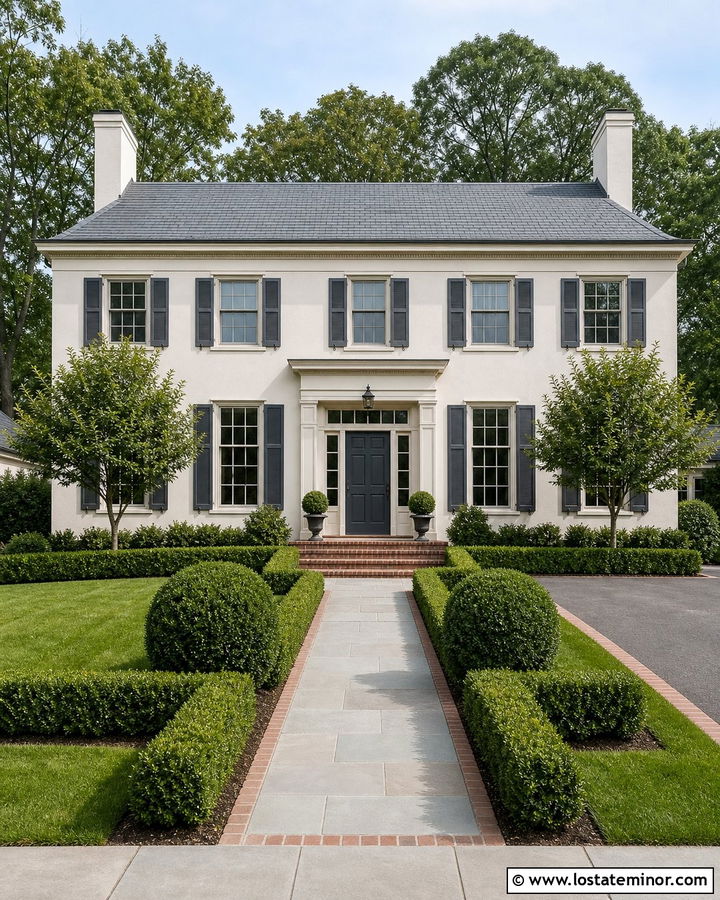
Pewter frames bring medium contrast and a subtle metallic quality to a warm white facade. Paint a Georgian-inspired house in Sherwin-Williams Natural Choice, then use warm pewter on symmetrical window frames, shutters, and the centered front door. Cream trim around the windows and roofline can preserve the architecture’s layered appearance. A slate-look roof containing gray, brown, and muted green tones will tie the neutral colors together. Red-brown brick steps offer a traditional touch without dominating the scheme. Select evenly divided window grids and repeat their proportions across every opening. Formal hedges, matching trees, and a straight walkway will emphasize symmetry. The pewter details keep this stately exterior from feeling predictable, while the warmer white body prevents the gray accents from turning the overall palette too cool.
19. Warm White House With Beige Window Frames
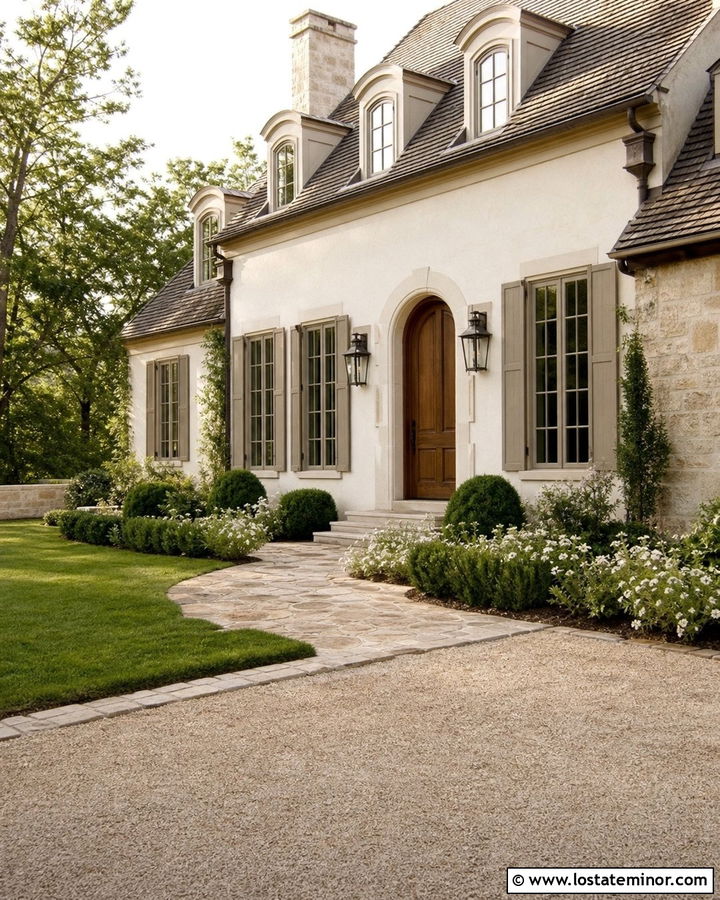
Beige window frames produce a soft, nearly monochromatic facade that relies on texture and shadow for interest. Use Benjamin Moore Soft Chamois on a French country house and select deeper beige frames with matching shutters. Pair the siding with warm limestone, an arched walnut door, and a roof containing soft brown and gray tones. Window casings should be slightly lighter than the frames so the openings maintain clear edges. Curved dormers and tall divided-light windows will add architectural detail to the quiet palette. Repeat dark bronze only in small features such as lanterns and door hardware. Lavender-like plantings, clipped shrubs, and an irregular stone walkway can soften the formal massing. The complete design feels gentle and cohesive rather than washed out because every material contributes a different warm neutral tone.
20. Warm White House With Forest Green Window Frames
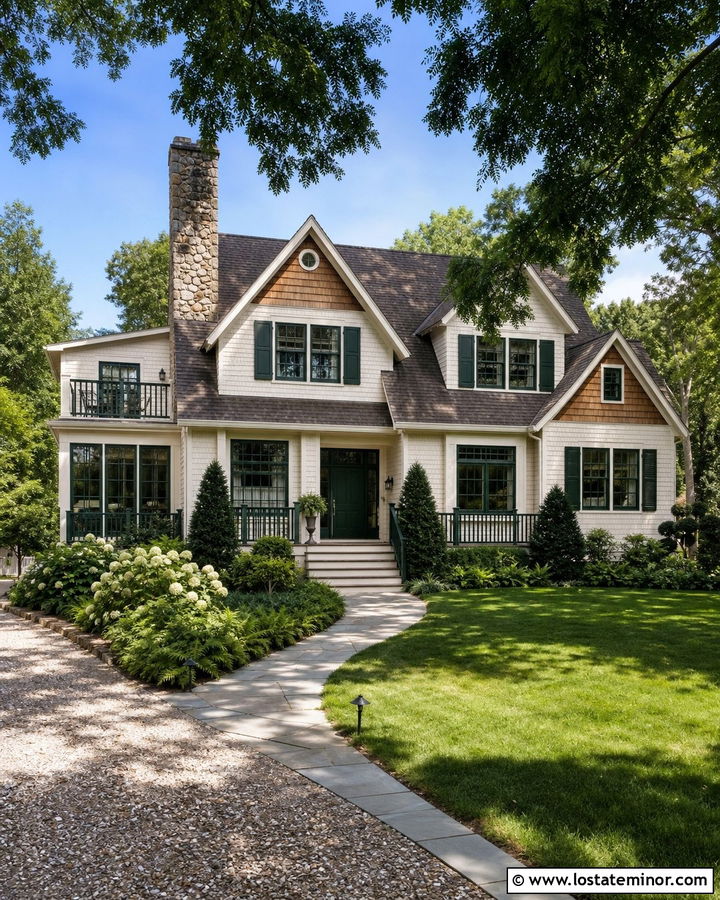
Forest green frames create a strong traditional contrast that looks especially comfortable in a wooded setting. Paint a shingle-style house Sherwin-Williams White Duck, then use deep forest green on the windows, shutters, front door, and selected porch railings. Leave the corner boards, columns, and cornice warm white to keep the facade light. Weathered cedar shingles in the upper gables introduce texture, while a charcoal-brown roof anchors the irregular roofline. Multi-pane windows suit the layered architecture and make the green finish more visible. A natural stone chimney can link the dark frames with the surrounding landscape. Ferns, hydrangeas, evergreen shrubs, and mature shade trees complete the setting. The green accents feel substantial but less severe than black, giving the warm white house a classic, established appearance.
21. Warm White House With Clay Window Frames
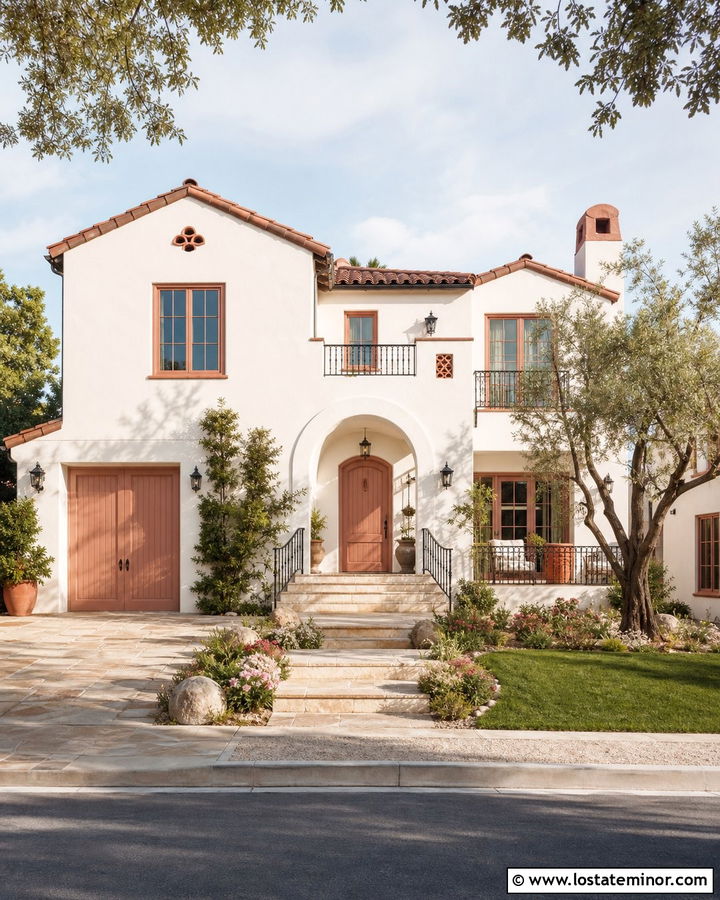
Clay-colored window frames add warmth without repeating common black or brown finishes. Coat a Spanish Revival exterior in Benjamin Moore Ballet White, then use muted terracotta clay on the frames, entry door, and decorative vents. Keep the window surrounds warm white so the clay color appears as a refined inner outline. Traditional red clay roof tiles will naturally repeat the accent, while pale sandstone around the arched entry adds variation. Wrought-iron railings and lanterns can provide a small amount of dark contrast. Choose tall windows with simple divisions and gently arched tops where the architecture allows. Olive trees, gravel, flowering shrubs, and warm stone paving support the sun-baked palette. The overall exterior feels cohesive because the windows connect the light stucco walls to the richer roof color.
22. Warm White House With Black Bronze Window Frames
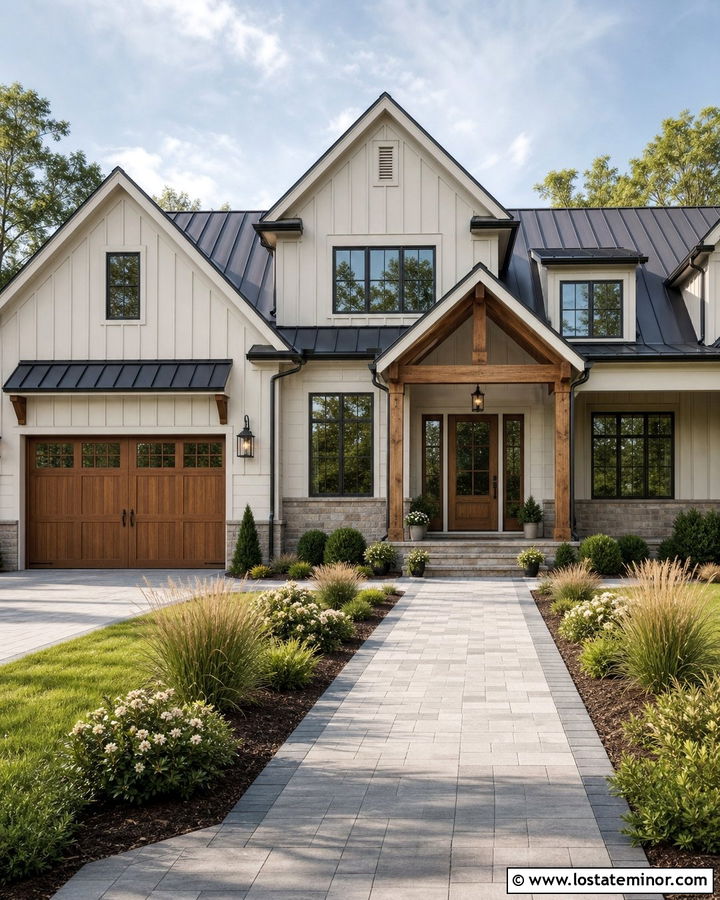
Black bronze frames combine the definition of black with a warmer brown cast that works beautifully beside creamy siding. Paint a modern farmhouse Sherwin-Williams Shoji White, then repeat black bronze on the windows, metal roof, gutters, lanterns, and porch railing. Add cedar garage doors, wrapped porch columns, and a matching front door to soften the darker metalwork. Use board-and-batten siding on the gables and horizontal lap siding across the main level for visible texture. A low stone skirt in mixed taupe and gray can ground the tall facade. Keep the exterior casings warm white rather than dark. This allows each bronze frame to read clearly without creating oversized blocks around the windows. Simple grasses, foundation shrubs, and a wide paver walkway complete the balanced farmhouse scheme.
23. Warm White House With Cream Window Frames
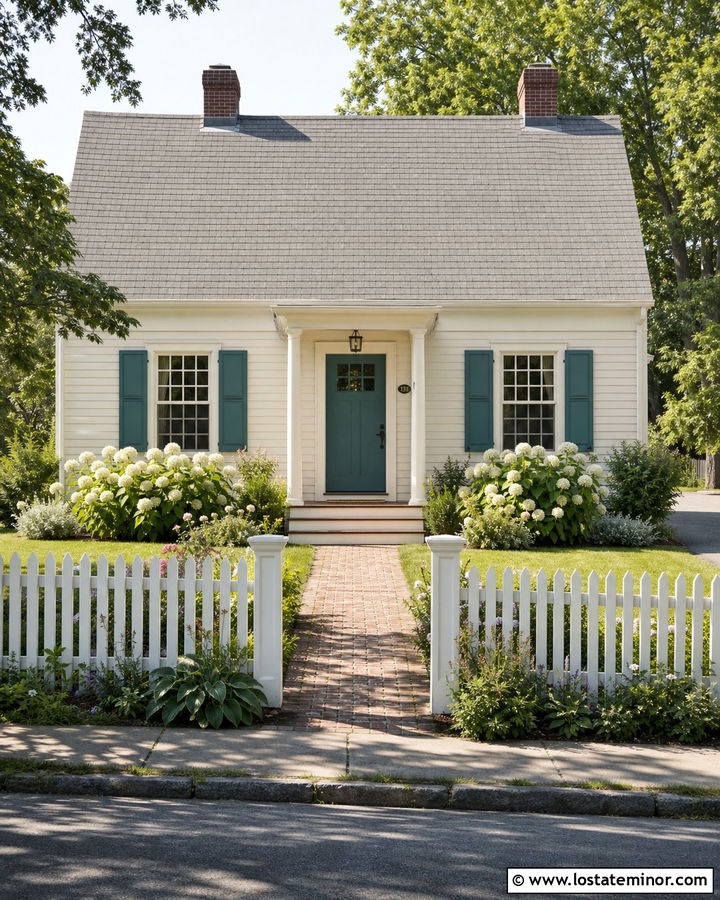
Cream window frames can make a small warm white exterior feel open and continuous. Apply Benjamin Moore Seapearl to a Cape cottage, then use a slightly richer cream on the frames, casings, porch railings, and front door surround. Introduce color through muted teal shutters and a coordinating teal front door. A soft gray roof and natural cedar porch floor will balance the delicate paint colors. Traditional divided-light windows prevent the low-contrast frames from disappearing into the facade. Keep gutters close to the body color so they do not interrupt the compact roofline. A picket fence, brick walkway, hydrangeas, and neatly layered foundation plants add definition around the house. The palette feels bright and cheerful, while the cream windows maintain a gentler appearance than standard brilliant white vinyl frames.
24. Warm White House With Bronze Grid Windows
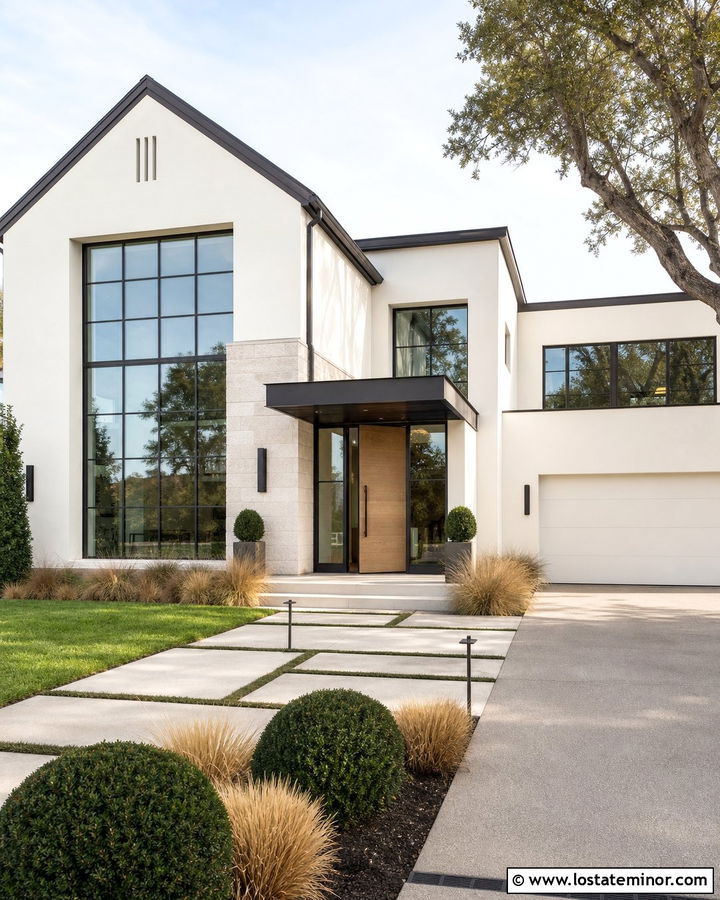
Large bronze grid windows can become the defining feature of a warm white contemporary home. Use Benjamin Moore Simply White on smooth stucco walls and select dark bronze frames with thin, evenly spaced grids. Repeat bronze on a flat entry canopy, minimalist lights, and narrow roof edging. A broad white oak pivot door introduces natural warmth at the center of the composition. Incorporate sandy limestone on one garage or courtyard wall to keep the facade from appearing too plain. Grid patterns should remain consistent across the large openings, even when window sizes differ. A flat or low-slope roof will support the clean geometry. Use concrete pavers, ornamental grasses, clipped evergreens, and one sculptural tree to frame the architecture without obscuring the windows from the street.
25. Warm White House With Black Grid-Free Windows
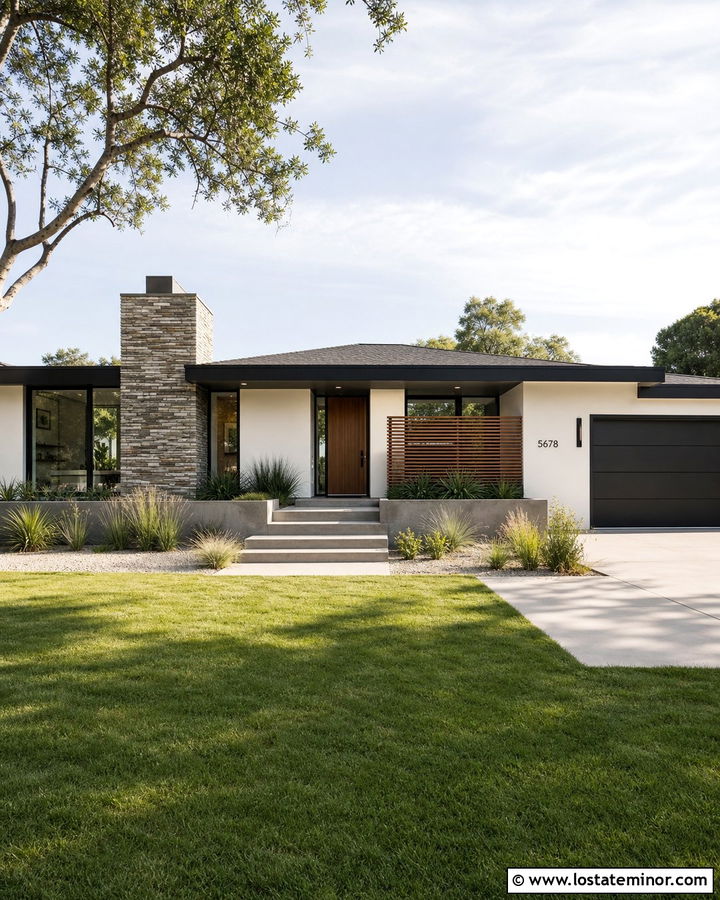
Grid-free black windows create a streamlined exterior with broad, uninterrupted panes of glass. Cover a midcentury modern house in Sherwin-Williams Oyster White, then pair it with slim black frames, a low charcoal roof, and a walnut front door. Use warm gray stacked stone around the chimney and lower wall to ground the glass-heavy facade. Keep the eaves and fascia dark so they visually connect with the windows. Avoid shutters, decorative casings, and traditional grilles because they would compete with the house’s clean horizontal form. A wood slat screen near the entry can provide privacy and repeat the door tone. Complete the curb appeal with broad concrete steps, native grasses, gravel beds, and low shrubs. The contrast feels intentional, graphic, and faithful to midcentury architecture.
26. Warm White House With Green Divided-Light Windows
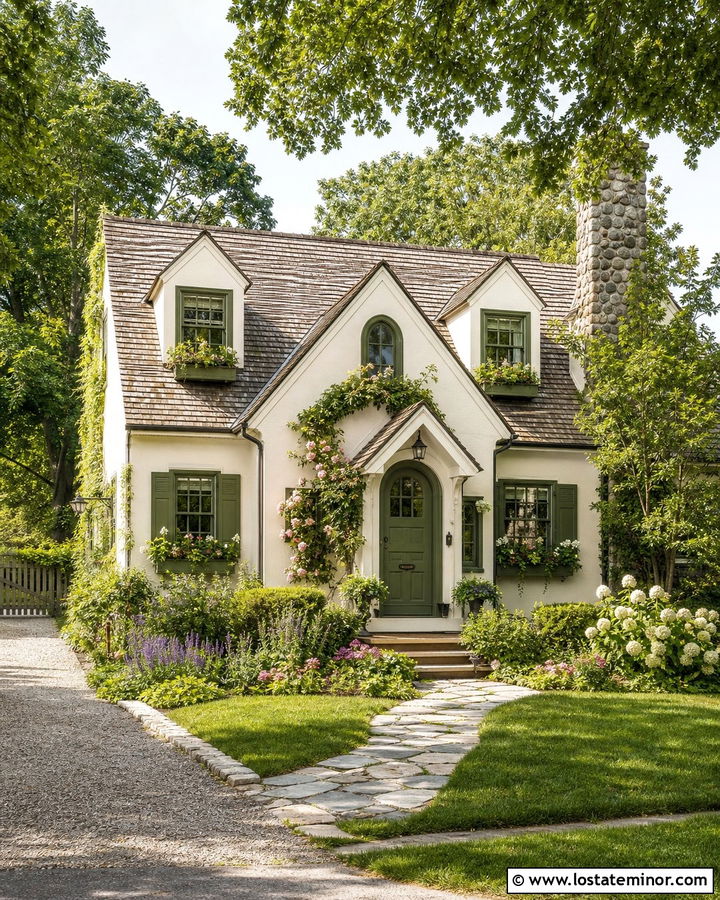
Green divided-light windows can turn a simple warm white cottage into a richly detailed exterior. Paint the siding Sherwin-Williams Creamy and choose a soft moss-green finish for the frames, muntins, shutters, and front door. Surround the windows with broad warm white casings so the smaller panes remain clearly outlined. Add a cedar-shingle roof, fieldstone chimney, and natural wood porch floor for an organic mix of textures. Window boxes painted green can repeat the frame color without introducing another strong accent. Keep porch columns and railings creamy white for balance. A flagstone walkway, flowering perennials, climbing vines, and layered shrubs will support the informal cottage character. The complete palette feels charming and colorful, but the subdued green prevents the facade from looking overly decorative or busy.
27. Warm White House With Black Arched Windows
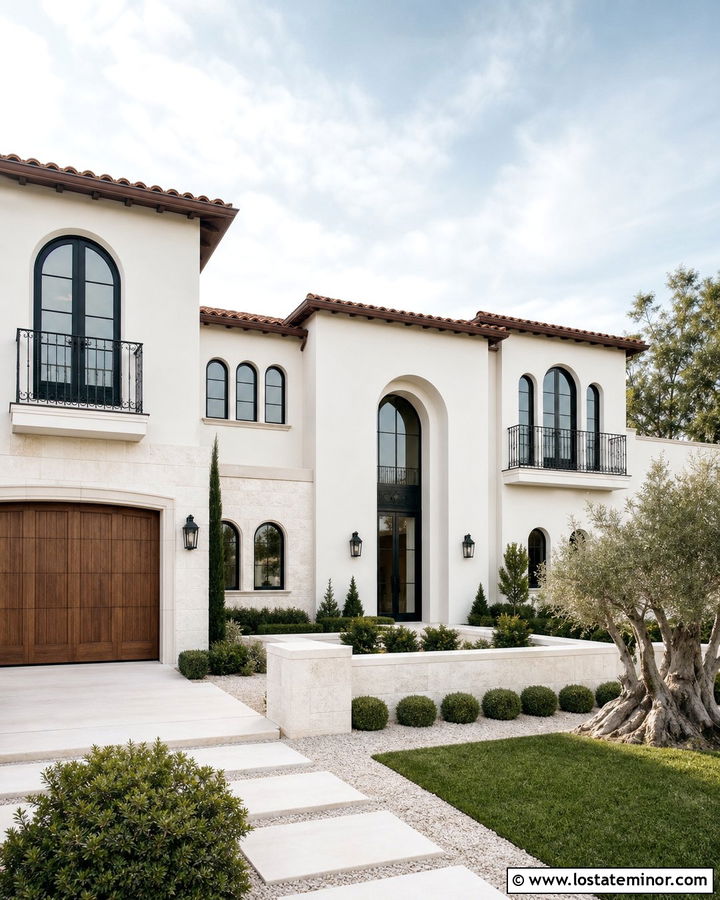
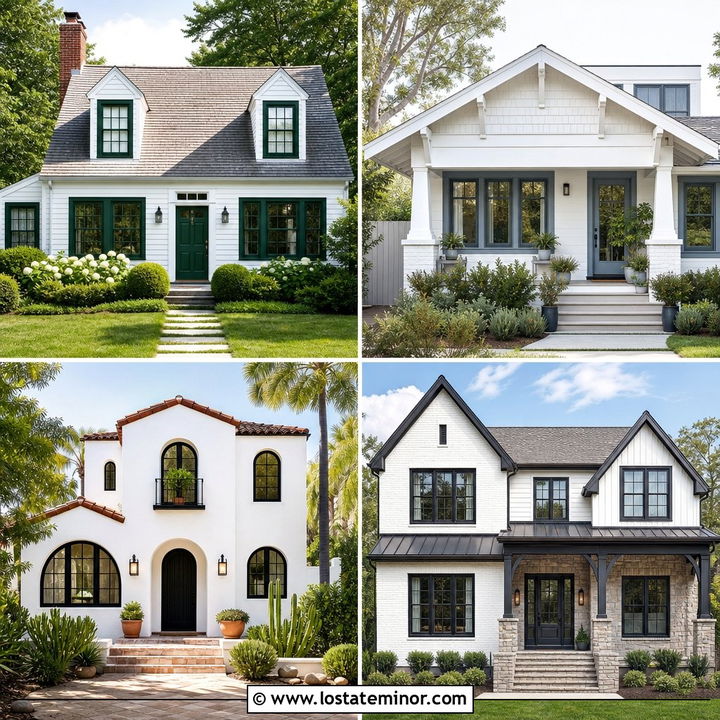
Tall black arched windows add drama to a warm white Mediterranean exterior while preserving a simple two-color foundation. Use Sherwin-Williams Alabaster on smooth stucco and repeat soft black across the window frames, iron balcony rails, lanterns, and narrow steel entry doors. A warm terracotta roof prevents the contrast from feeling cold. Introduce pale limestone around the lower walls and entrance to add depth without distracting from the curves. Keep the windows grid-free or use only a few vertical divisions so the arched shapes remain prominent. A wood garage door can soften the larger street-facing elevation. Structured olive trees, low hedges, gravel, and warm stone pavers complete the setting. The whole house feels refined because each black feature reinforces the architecture rather than functioning as isolated decoration.
28. Warm White House With Natural Oak Windows
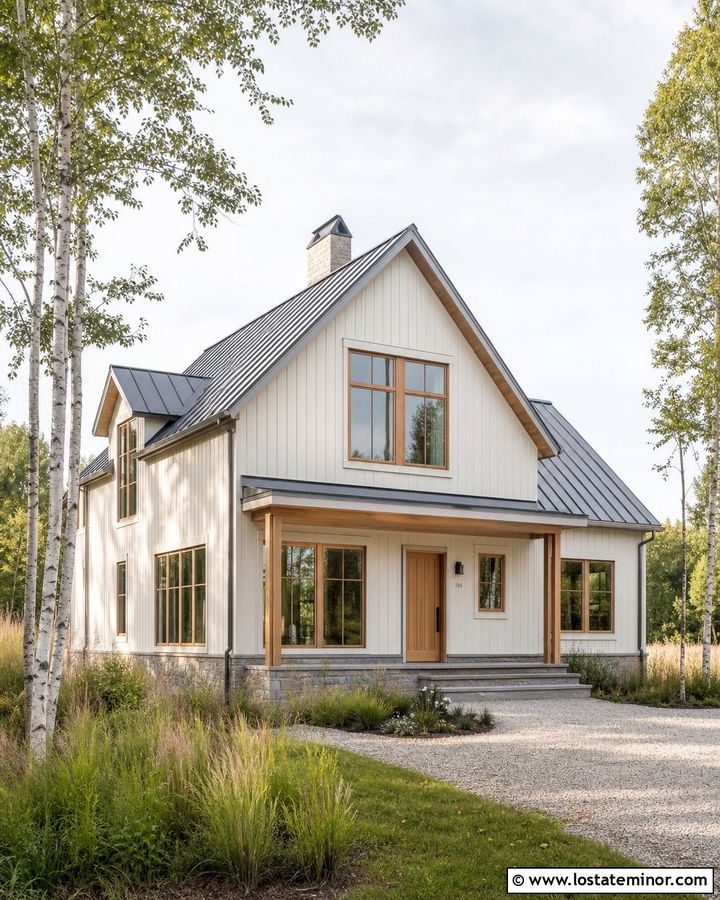
Natural oak windows create a calm, handcrafted appearance on a warm white Scandinavian-inspired home. Paint vertical wood siding Benjamin Moore White Dove and use pale oak frames, an oak front door, and matching soffits. Protect the exterior wood with a finish that preserves its light golden character rather than turning it orange. A matte charcoal metal roof gives the simple gabled form a strong outline. Add a low foundation of warm gray stone to connect the pale facade to the ground. Large windows with minimal grids will keep the overall look clean. Use understated black only for lights, house numbers, and door hardware. Meadow grasses, small birch trees, gravel paths, and a simple lawn create a relaxed landscape that complements the natural wood and quiet architecture.
29. Warm White House With Two-Tone Window Frames
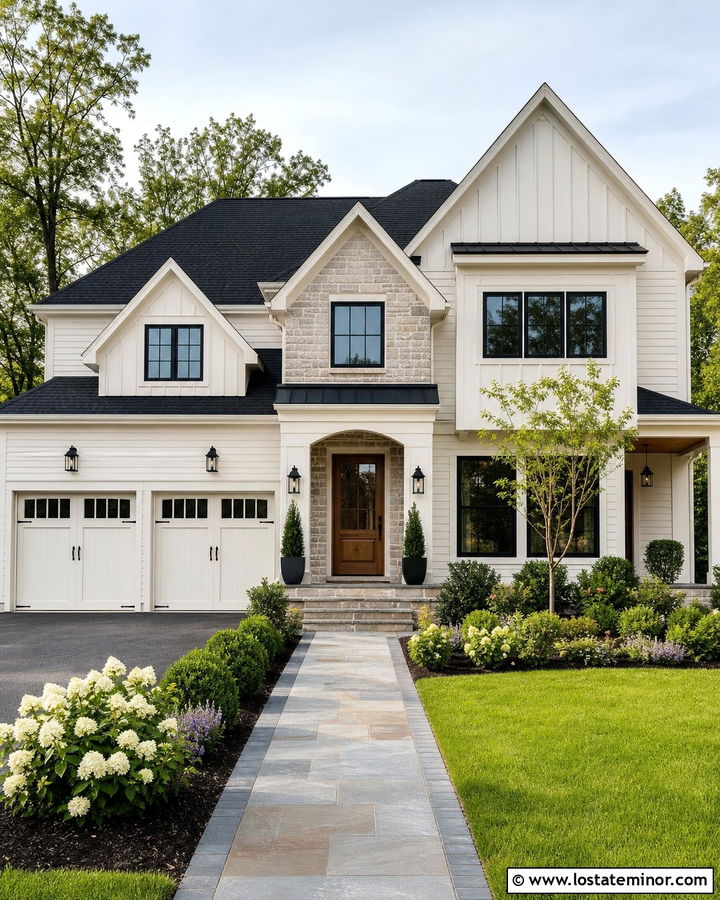
Two-tone frames can solve the challenge of coordinating traditional architecture with a more contemporary color palette. Paint a transitional home Sherwin-Williams White Duck, then use black window sashes inside broad warm white exterior casings. The black center provides definition, while the pale surround keeps each opening proportional to the facade. Repeat black on the roof, lanterns, and narrow metal railing. Add a medium oak front door and beige-gray stone around the entry to soften the contrast. This approach works well with mixed siding, including lap boards below and board-and-batten in selected gables. Keep the garage doors warm white with small black windows rather than painting the entire doors dark. Layered shrubs, ornamental trees, and a broad stone walkway complete the polished but approachable suburban exterior.
30. Warm White House With Mixed Bronze And Wood Windows
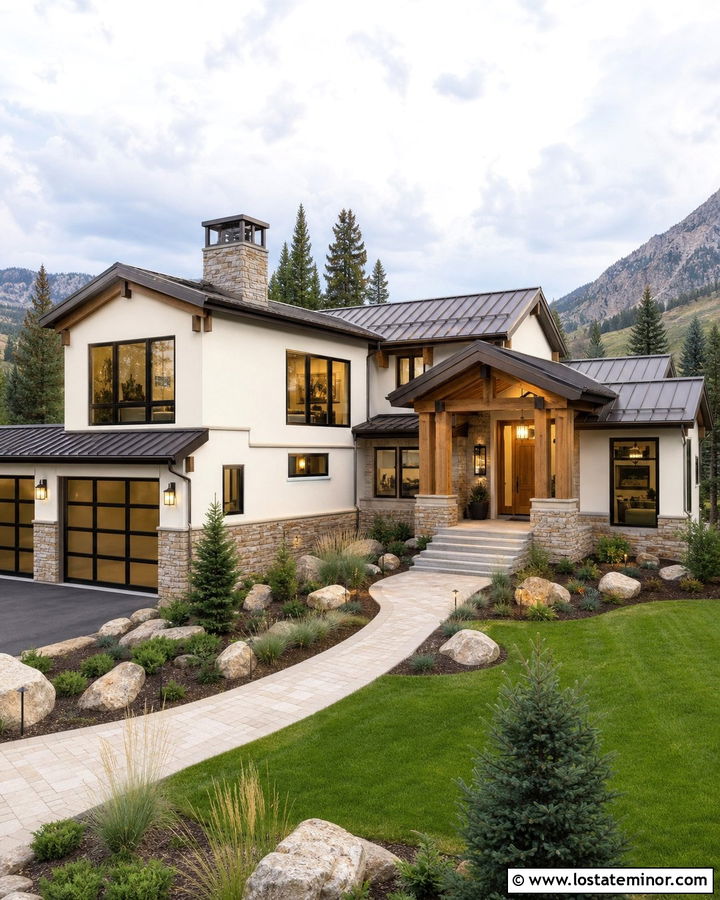
Mixing bronze and wood window finishes can highlight separate volumes on a large warm white house. Use Benjamin Moore Swiss Coffee across a contemporary mountain exterior, then install dark bronze frames on the main glass walls and wood-framed windows near the porch or private bedroom wing. Repeat both finishes through bronze roofing, cedar soffits, timber columns, and a substantial wood front door. Warm ledgestone around the foundation and chimney connects the two window materials. Keep grille patterns minimal so the mixed finishes do not make the facade appear crowded. The variation should follow the architecture rather than change randomly between openings. Native grasses, boulders, evergreens, and a gently sloped walkway help the complete house settle naturally into its setting while preserving a bright, sophisticated exterior.
Conclusion:
The strongest 30 Warm White House Design With Window Frames Ideas treat the siding and windows as parts of one complete curb-appeal plan. Black and charcoal frames offer clean definition, while bronze, brown, green, taupe, and natural wood create softer transitions. White or cream frames can also work beautifully when shaped by substantial casings, traditional grids, and darker supporting accents. Before committing, compare samples beside the existing roof, masonry, doors, and window materials in morning and afternoon light. Consider the architectural style as well. Modern homes usually benefit from simple panes, while Colonials, cottages, and Craftsman houses often suit divided lights. A coordinated palette will make warm white feel intentional, layered, and welcoming.

Related posts: