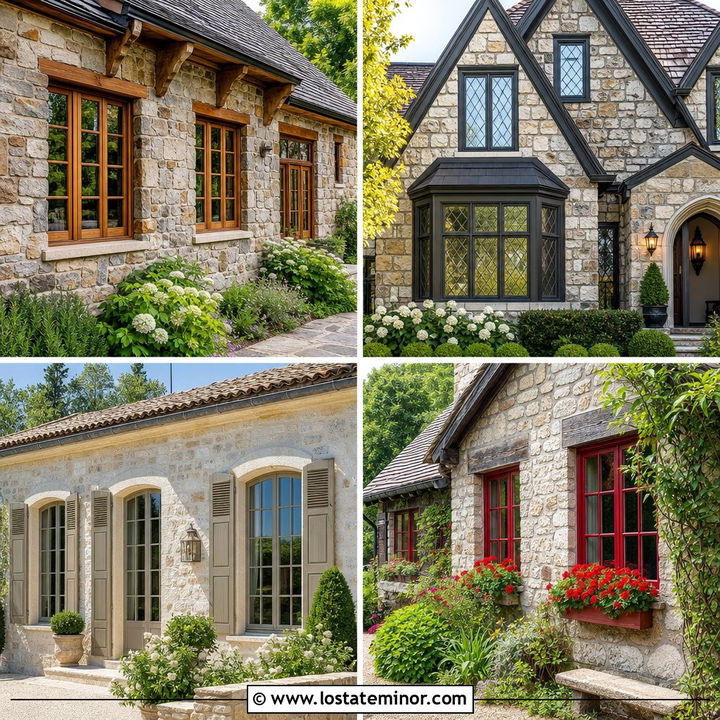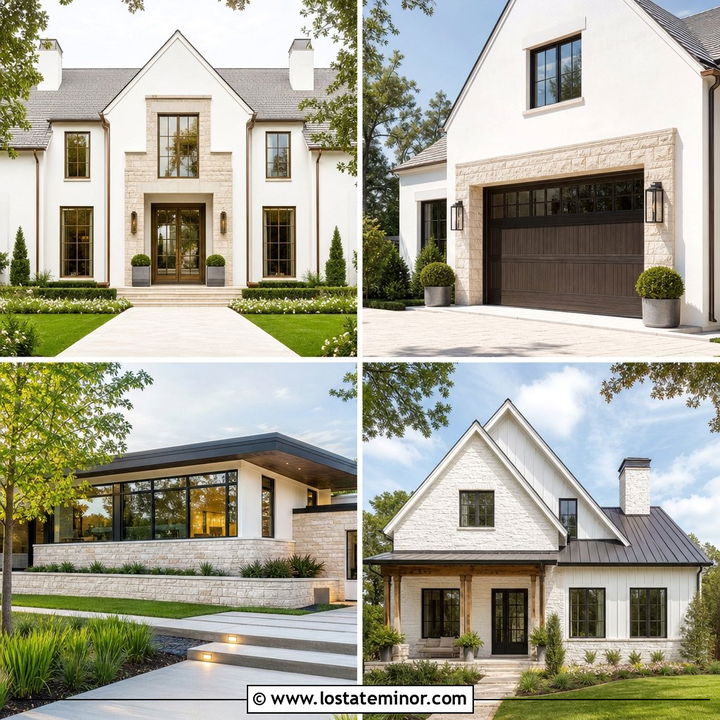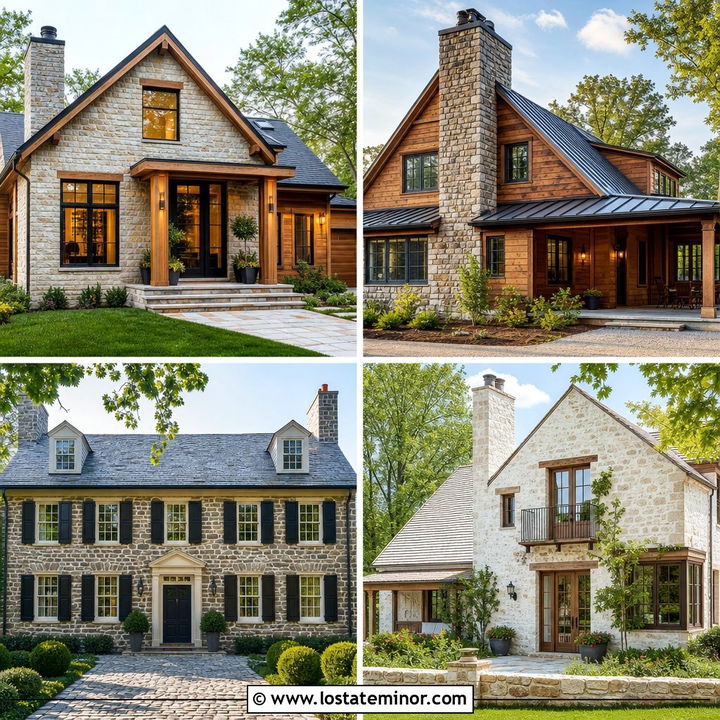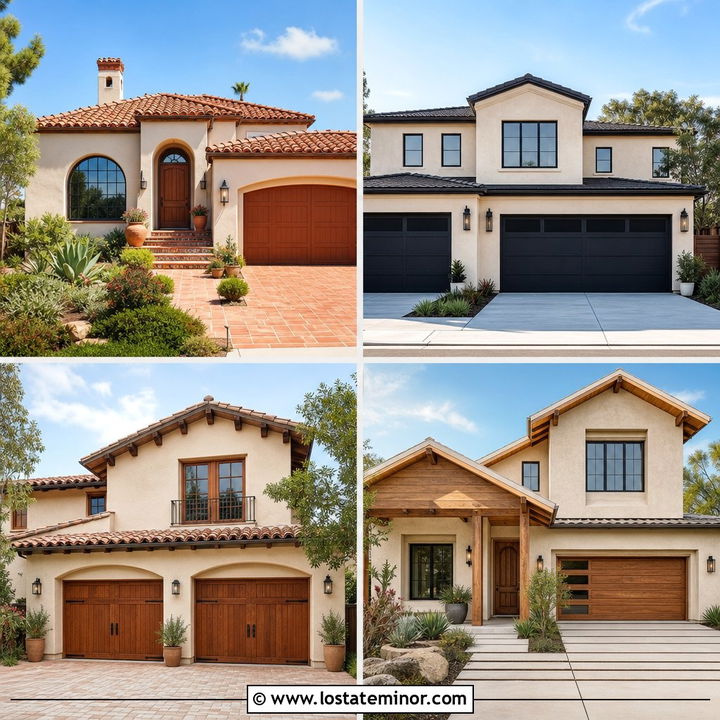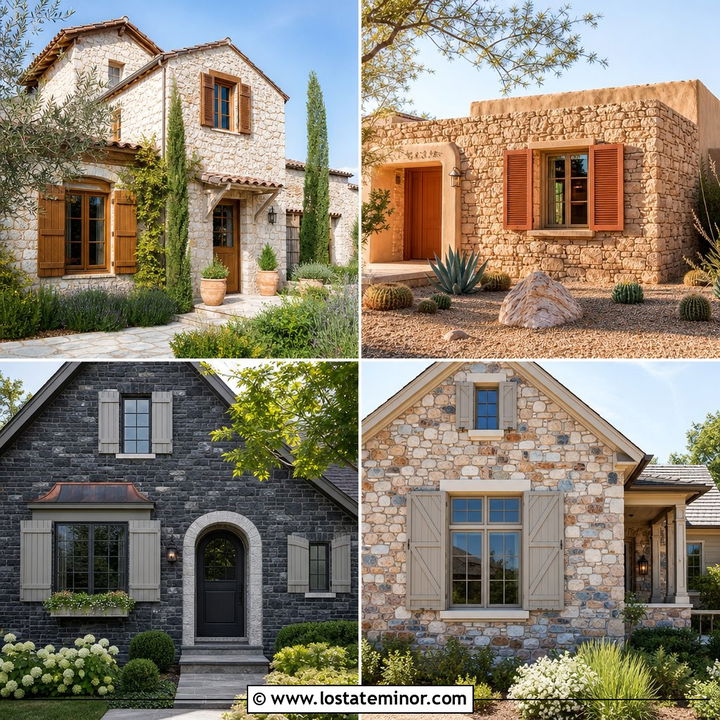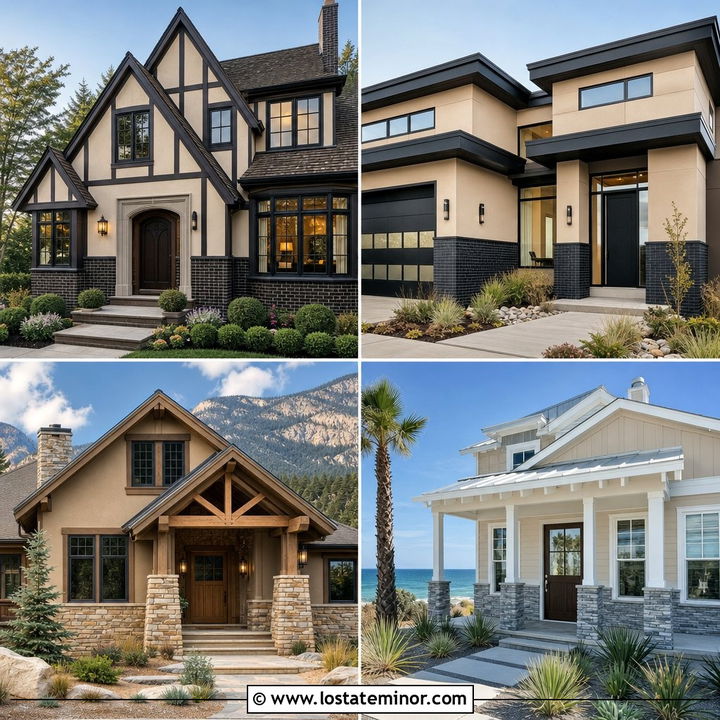
Stone brings natural texture, visual weight, and lasting character to almost any home exterior. The best 30 Stone House Design With Stone Accents Ideas go beyond adding random veneer to an empty wall. They connect the stone with the siding, trim, roof, windows, entry, and landscaping for a balanced curb-appeal look. Whether you prefer a modern farmhouse, traditional ranch, mountain retreat, or contemporary home, stone can highlight important architectural features without overwhelming the facade. Warm limestone creates a softer effect, while charcoal ledgestone adds sharper contrast. Placement matters just as much as color and texture. Use the following complete exterior schemes to explore 30 Stone House Design With Stone Accents Ideas for different home styles, settings, and budgets.
1. White Farmhouse With Stone Porch Columns
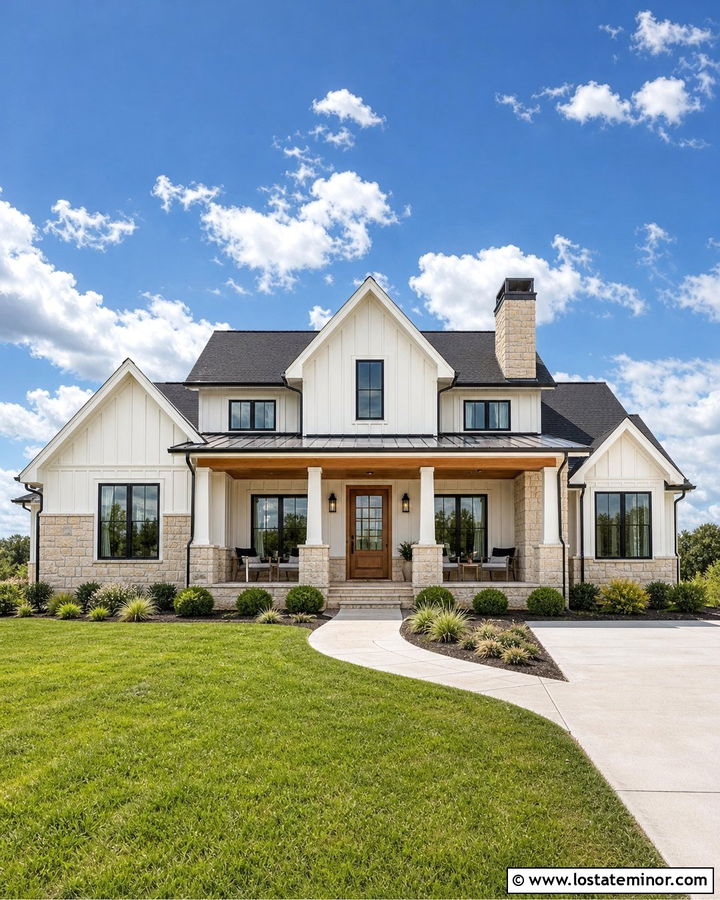
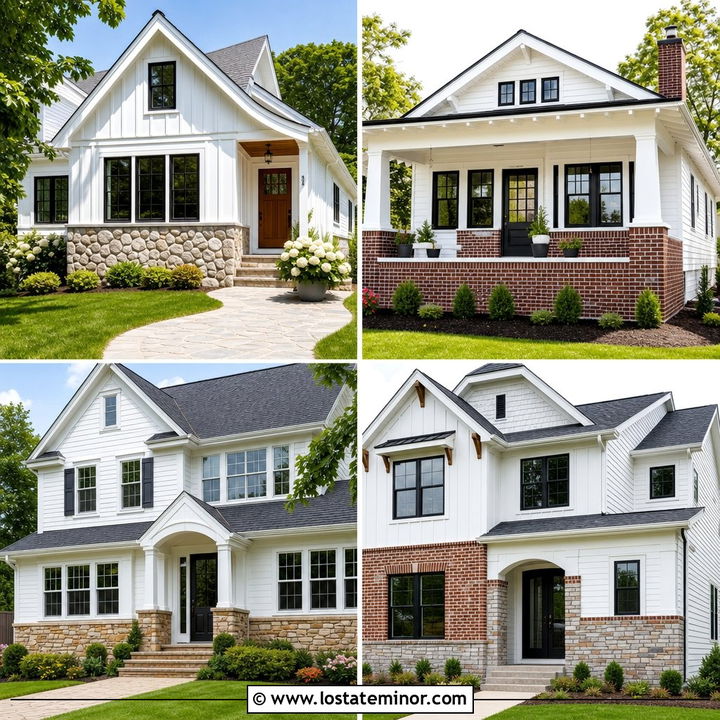
A white modern farmhouse feels warmer and more grounded when stone surrounds the porch columns and lower facade. Choose creamy white board-and-batten siding rather than a harsh, blue-toned white. Pair it with buff limestone containing soft beige, taupe, and pale gray variations. The stone can wrap each porch column and continue beneath the front windows to create a connected design. Add a medium-stained oak door, black window frames, and simple black lighting. A charcoal architectural-shingle roof provides contrast without making the exterior feel too dark. Finish the porch with natural wood ceiling boards and wide concrete steps. Low ornamental grasses, boxwoods, and a curved walkway soften the straight farmhouse lines while keeping the stone visible from the street.
2. Gray Ranch House With Stone Skirting
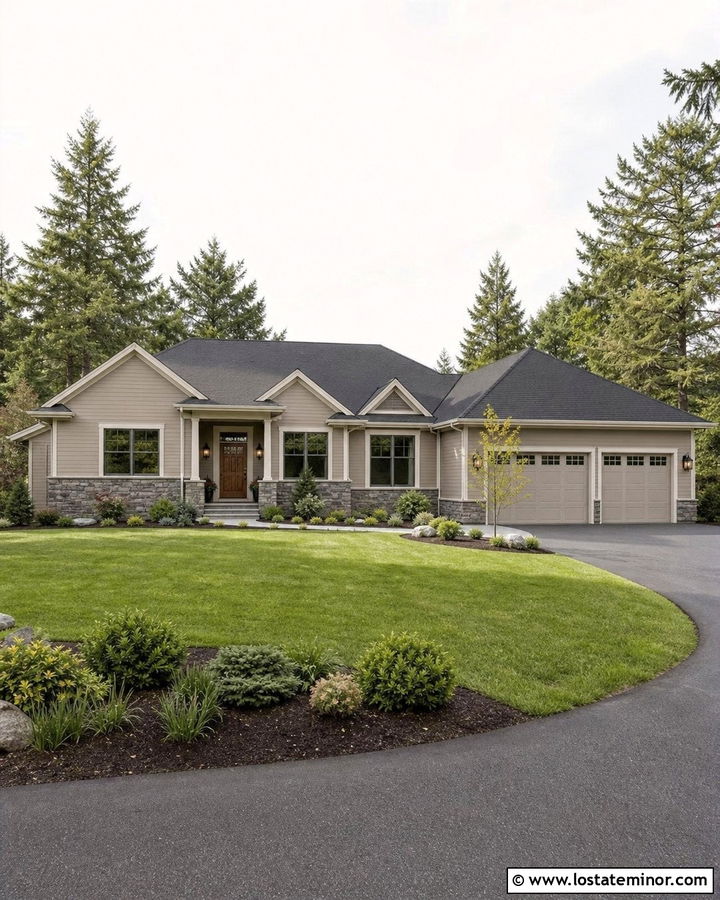
Could a simple ranch house look more substantial without changing its roofline? Stone skirting offers an effective way to introduce depth across a long, single-story facade. Use medium greige lap siding with cream trim and a warm gray fieldstone along the lower third of the exterior. Bring the stone around the porch base and garage corner so it does not look like a disconnected front panel. A walnut front door adds warmth, while bronze fixtures relate naturally to the brown undertones in the masonry. Keep the roof a slightly darker charcoal gray. Wide foundation beds filled with layered evergreen shrubs help blend the stone into the yard. This horizontal arrangement suits the low profile of a ranch and creates a calm, balanced exterior.
3. Craftsman House With Stone Entry Columns
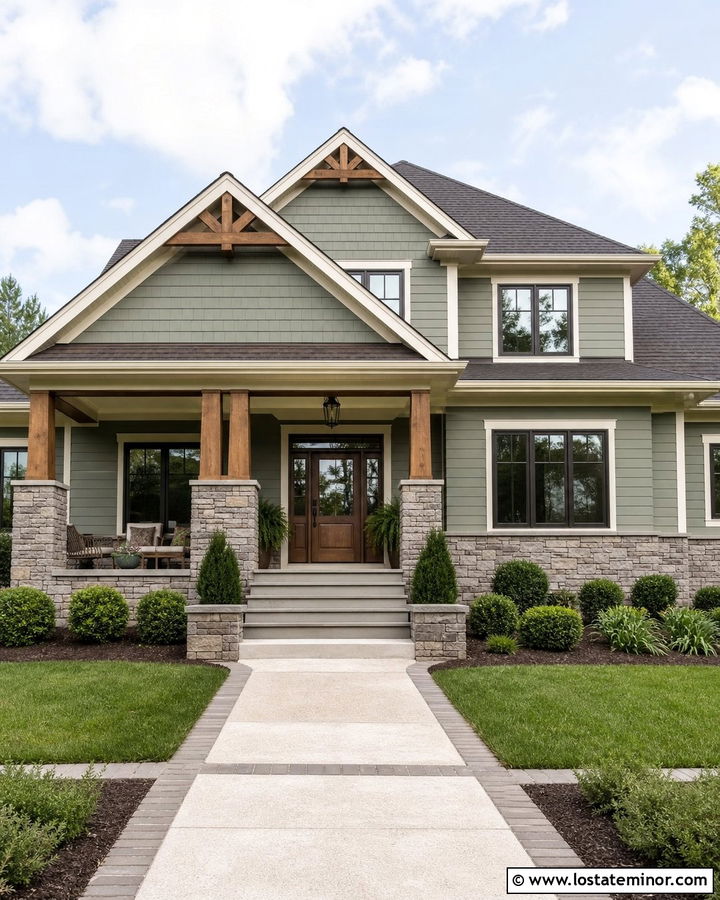
Thick porch columns are natural focal points on a craftsman exterior, making them an ideal place for stone accents. Start with muted sage green lap siding and creamy ivory trim. Cover the tapered column bases in a rugged ledgestone blend with gray, tan, and brown tones. Exposed cedar beams, a stained wood front door, and matching porch railings bring out the warmer pieces in the stone. Use dark bronze windows and a deep brown shingle roof to complete the earthy palette. The stone should also appear along the porch foundation, visually connecting the separate columns. Broad steps and symmetrical plantings make the entrance feel welcoming. This full-house scheme highlights traditional craftsman details while allowing every material to share a consistent, nature-inspired color story.
4. Modern House With Charcoal Stone Accent Wall
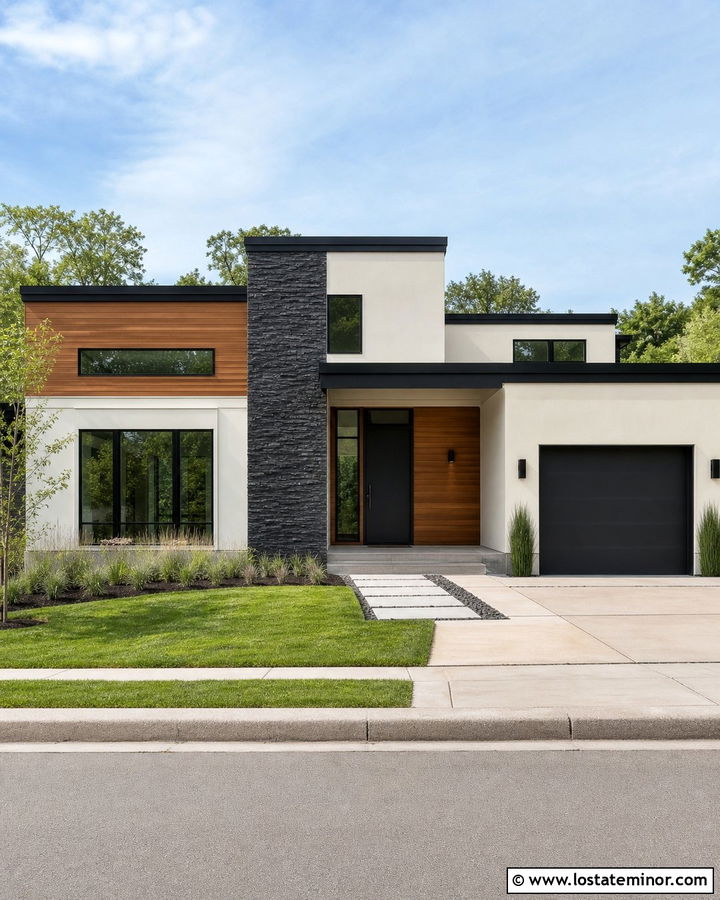
Strong geometry calls for a stone treatment with equally clean lines. On a modern exterior, install charcoal linear stone across the tall entry wall or a projecting front section. Surround it with warm white stucco and medium brown horizontal wood siding. Black window frames, a flat black front door, and narrow metal roof edges sharpen the overall composition. The stone should run from the foundation to the roofline so it feels intentional rather than decorative. Repeat its charcoal color in the concrete pavers or garage door for continuity. Simple rectangular planting beds, sculptural grasses, and a straight walkway reinforce the architecture. This scheme uses stone as a bold vertical anchor while the lighter stucco keeps the complete facade bright and approachable.
5. Beige House With Cream Limestone Accents
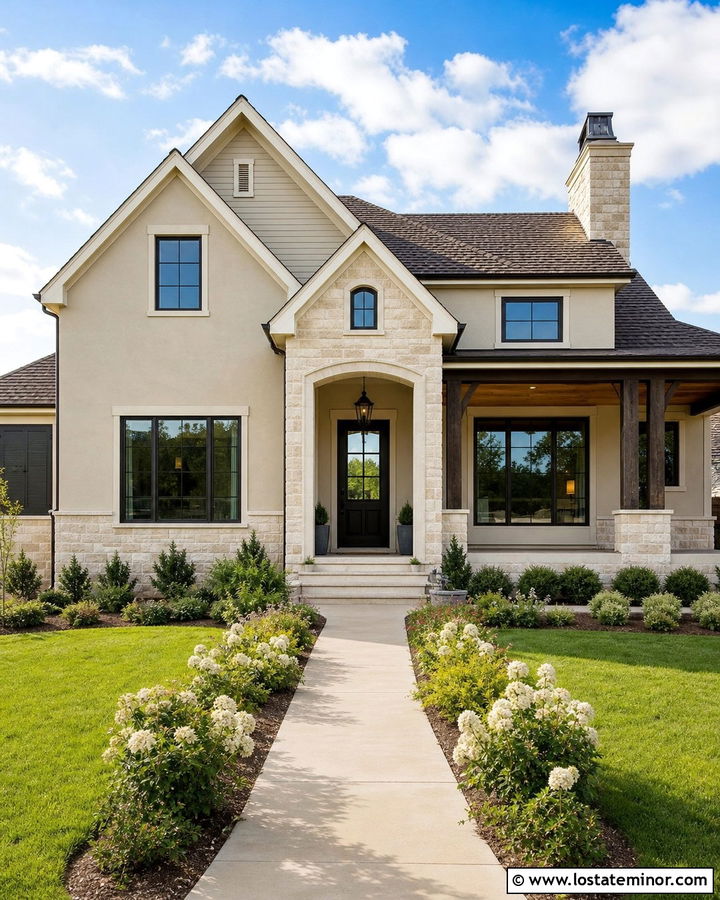
Soft neutral colors can create a layered exterior when their undertones are carefully coordinated. Cover the main house in warm beige stucco or fiber-cement siding, then use cream limestone around the entrance, chimney, and lower walls. Look for stone with subtle sand, oatmeal, and pale taupe movement. Off-white trim keeps the palette light, while an espresso front door and dark bronze windows introduce definition. A weathered brown roof works better than a cold black roof for this gentle scheme. Add warm concrete paving and natural cedar under the porch ceiling. Green shrubs and pale flowering plants provide contrast without competing with the facade. The result is a stone house design that feels relaxed, cohesive, and suitable for both traditional and transitional architecture.
6. Navy Blue House With Light Stone Accents
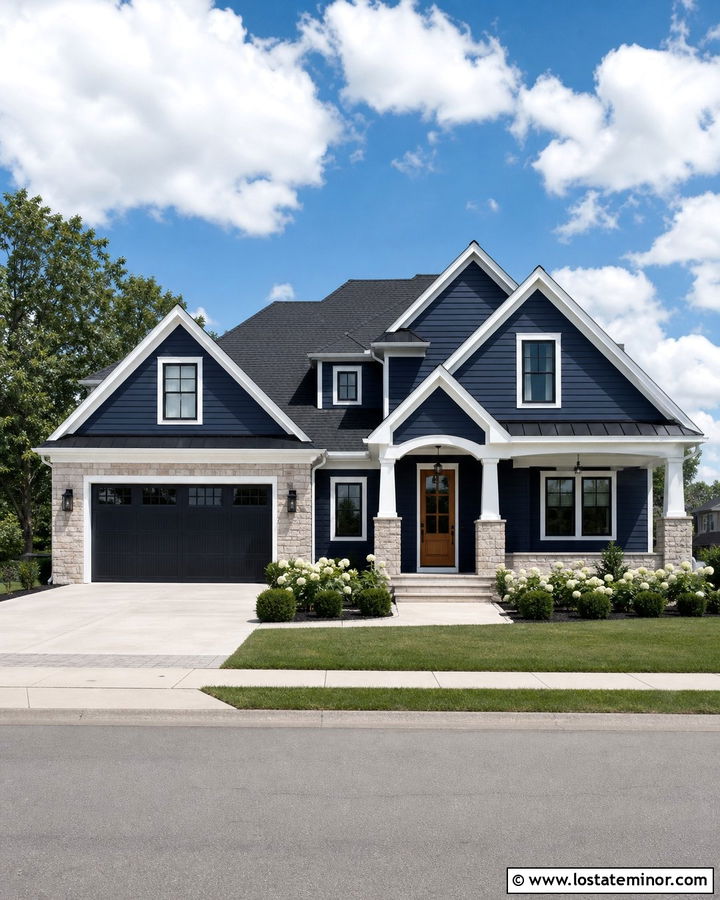
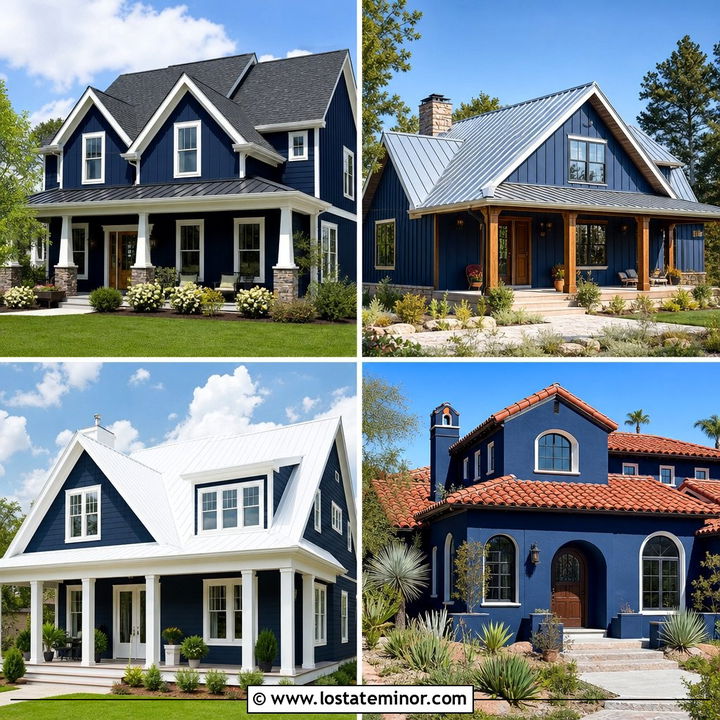
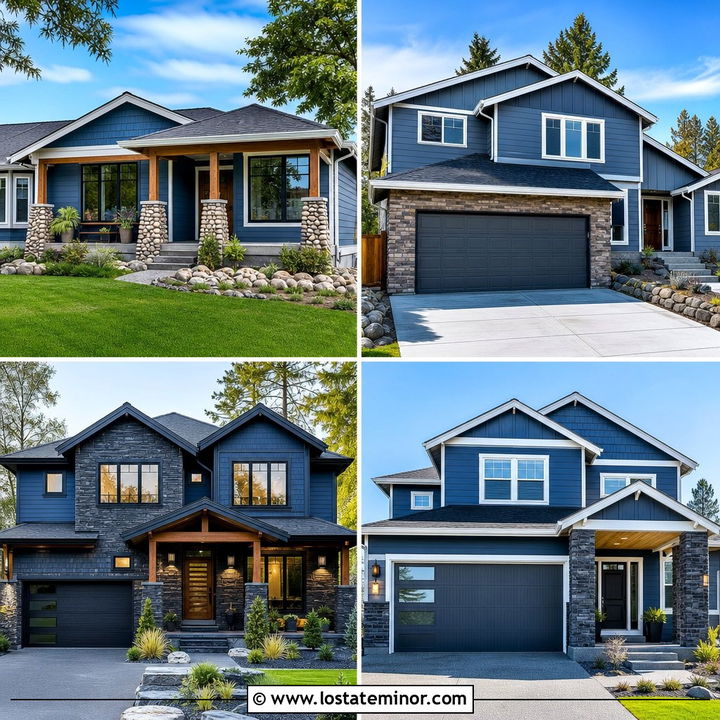
Navy blue siding gains dimension when it is balanced with pale, textured masonry. Use deep navy lap siding across the main facade and install light gray-beige stone around the garage, front steps, and porch columns. Crisp white trim outlines the roofline and windows, preventing the dark body color from feeling heavy. A natural cedar door creates a warm focal point, while black fixtures connect with a charcoal roof. Choose stone with limited color variation so the exterior remains clean rather than overly busy. Extending the masonry around visible corners gives it a convincing architectural presence. White hydrangeas, clipped shrubs, and a light concrete walkway brighten the yard. Together, the blue siding and stone produce a polished coastal or suburban exterior.
7. Tudor House With Stone And Stucco
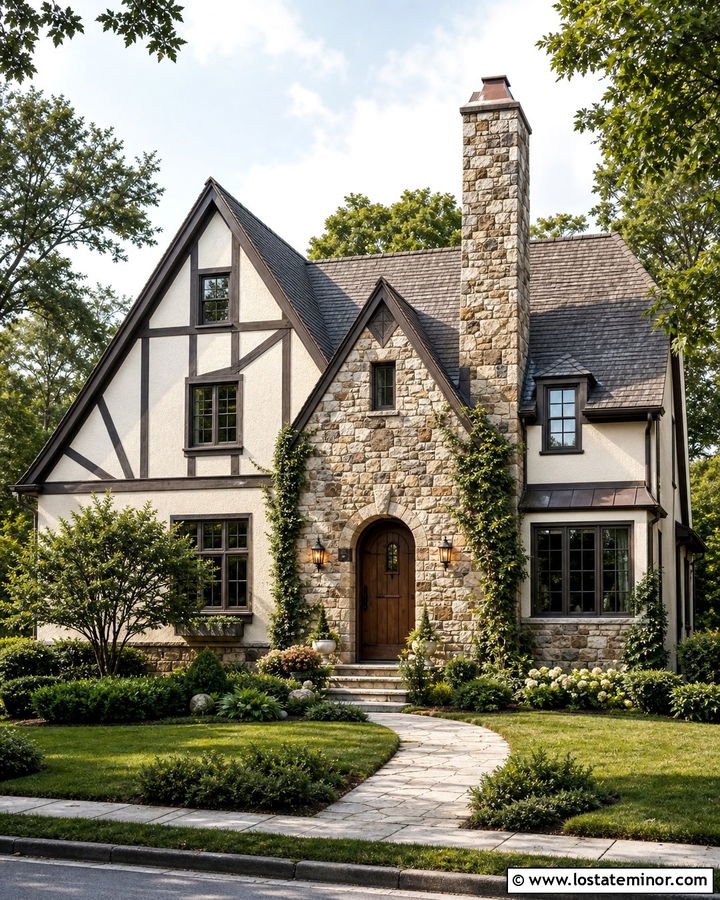
A Tudor-inspired exterior becomes especially inviting when irregular stone is combined with warm stucco and dark timber details. Use light cream stucco on the upper walls, then cover the entry tower, chimney, and lower facade in a tan-gray fieldstone blend. Deep brown half-timber accents can frame the gables and relate to an arched walnut front door. Select bronze windows rather than bright white ones to preserve the softer, historic character. A weathered charcoal roof adds depth while remaining quieter than solid black. The stonework should feature visible mortar joints and varied shapes for a handcrafted appearance. Curved planting beds, climbing greenery, and a gently winding walkway complete the storybook composition without hiding the important stone details.
8. Black House With Warm Stone Entry
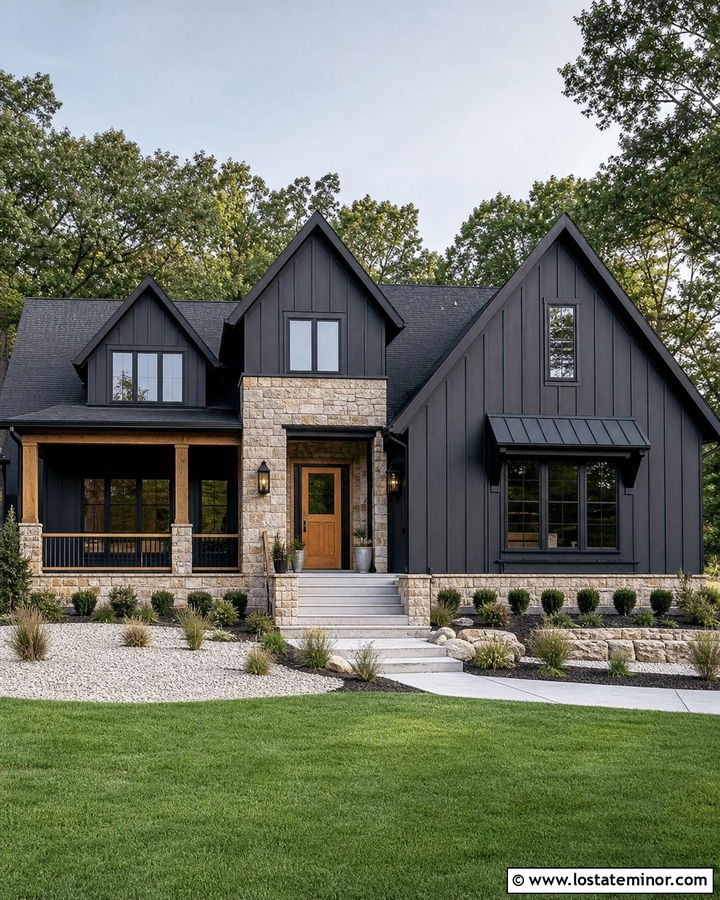
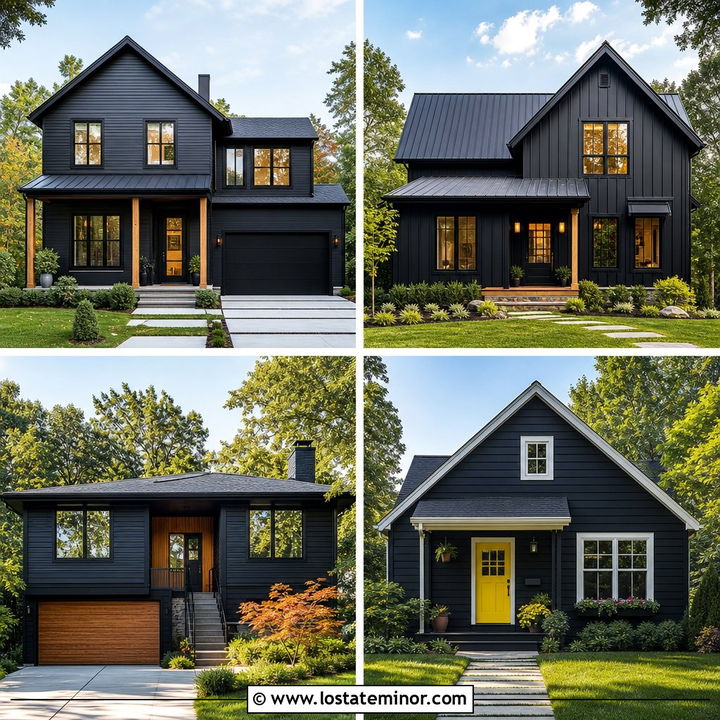
A nearly black exterior can feel dramatic without appearing stark when warm stone is concentrated around the entrance. Choose soft black board-and-batten siding with matching trim for a smooth, unified backdrop. Use golden-tan ledgestone on the entry projection, porch foundation, and short retaining walls. A honey-toned wood door and cedar soffits pull the warmth of the stone across the facade. Black windows and a charcoal roof maintain the modern monochromatic structure. Keep the stone pattern fairly linear to suit the clean exterior. Pale concrete steps, light gravel, and feathery green grasses add brightness near ground level. This complete scheme works especially well on modern cabins, contemporary farmhouses, and homes surrounded by mature trees.
9. Red Brick House With Gray Stone Accents
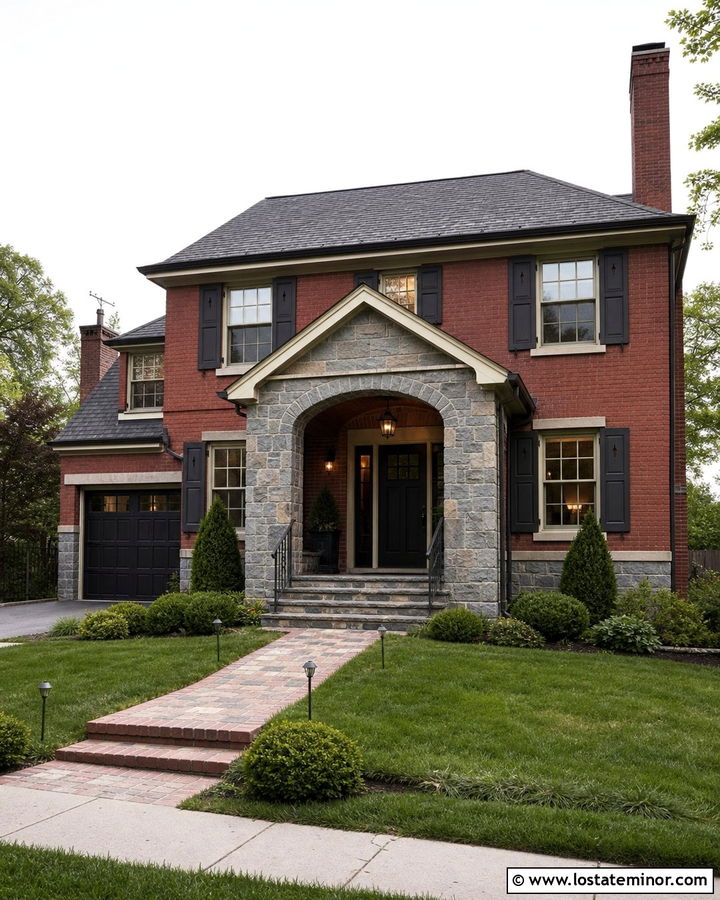
Combining brick and stone requires a shared undertone so the facade does not feel divided. With traditional red brick, choose medium gray stone containing a few warm brown or rust-colored pieces. Place it around the covered entry, porch columns, and garage foundation instead of scattering small sections across unrelated walls. Paint the trim a warm cream and select a muted black front door for contrast. Dark bronze gutters and a weathered charcoal roof help bridge the brick and stone colors. If shutters are appropriate for the architecture, use a deep charcoal rather than bright black. Layered evergreen landscaping can calm the visual movement of two masonry materials. The finished house feels established, substantial, and thoughtfully coordinated from roof to foundation.
10. Sage Green House With Natural Fieldstone
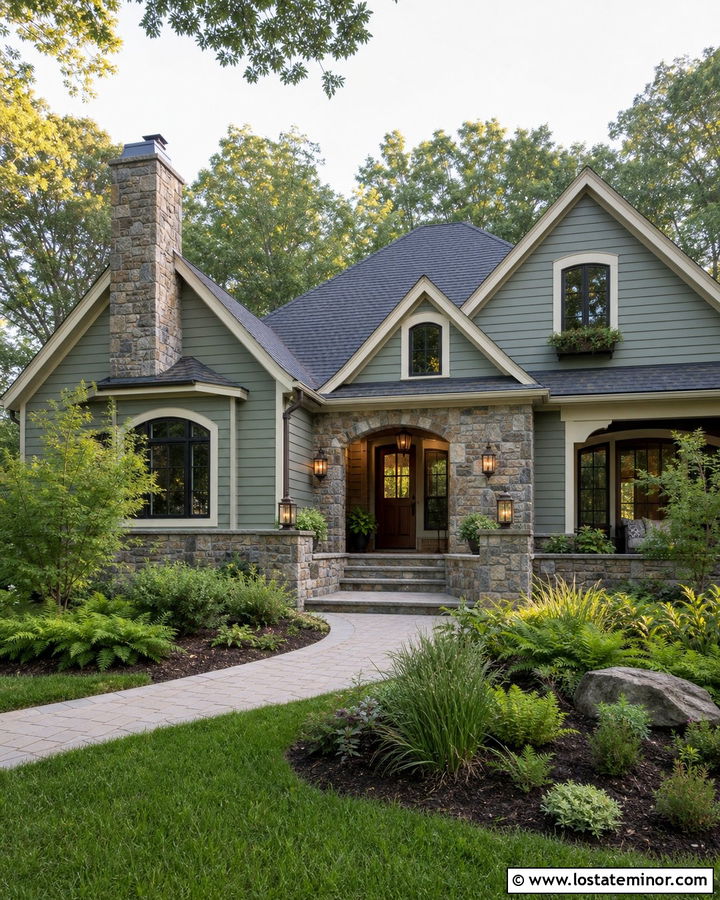
Imagine muted green siding surrounded by mature trees and softly colored stone. This palette works beautifully on cottages, ranch homes, and traditional two-story exteriors. Use dusty sage lap siding with warm ivory trim and a natural fieldstone blend across the chimney, lower facade, and front porch. Select stones containing mossy gray, taupe, tan, and restrained brown tones. A medium walnut door and stained porch posts complement the organic palette without making it too rustic. Choose a weathered charcoal roof that echoes the deepest stone shades. Copper-toned lights add a subtle warm accent. Native grasses, ferns, and informal shrubs strengthen the connection between the house and its setting while leaving enough open space for the masonry to remain visible.
11. Mountain House With Full Stone Base
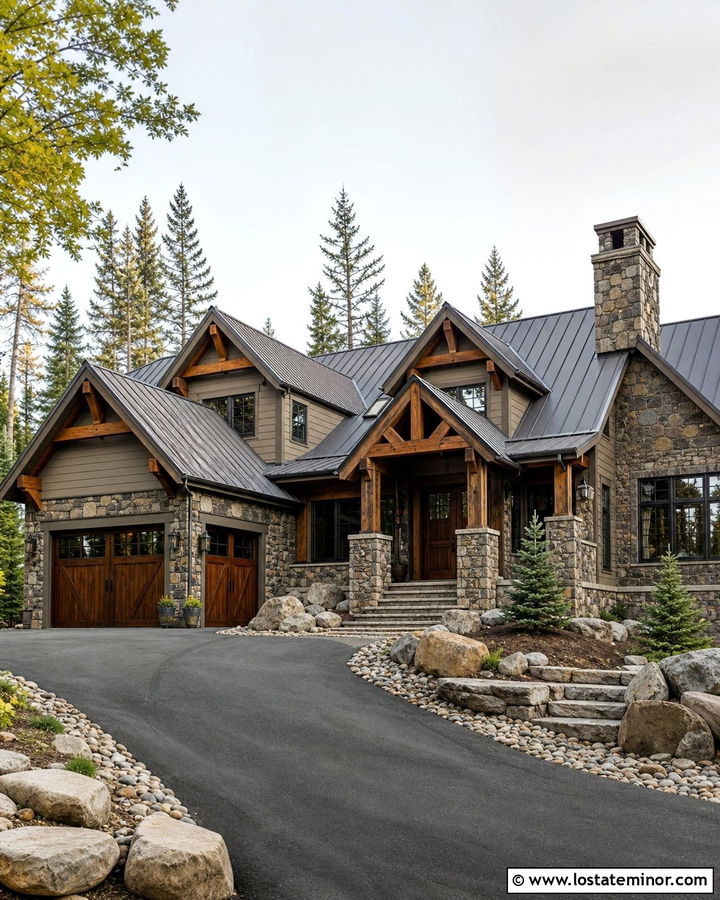
A mountain home benefits from materials that visually connect it to the rugged landscape. Wrap the entire lower story in dark gray-brown fieldstone, then use warm taupe siding on the upper level. Large cedar beams, a stained double front door, and wood garage doors create contrast against the heavier masonry. Extend the stone across porch columns and the chimney so the base does not appear isolated. Black-framed windows and a charcoal metal roof give the exterior a crisp outline. The upper siding should remain simple, allowing the stone texture to lead the design. Wide steps, boulder landscaping, evergreen trees, and a gravel-edged driveway reinforce the natural setting. This combination feels substantial while still offering a warm, welcoming entrance.
12. Cape Cod House With Stone Chimney
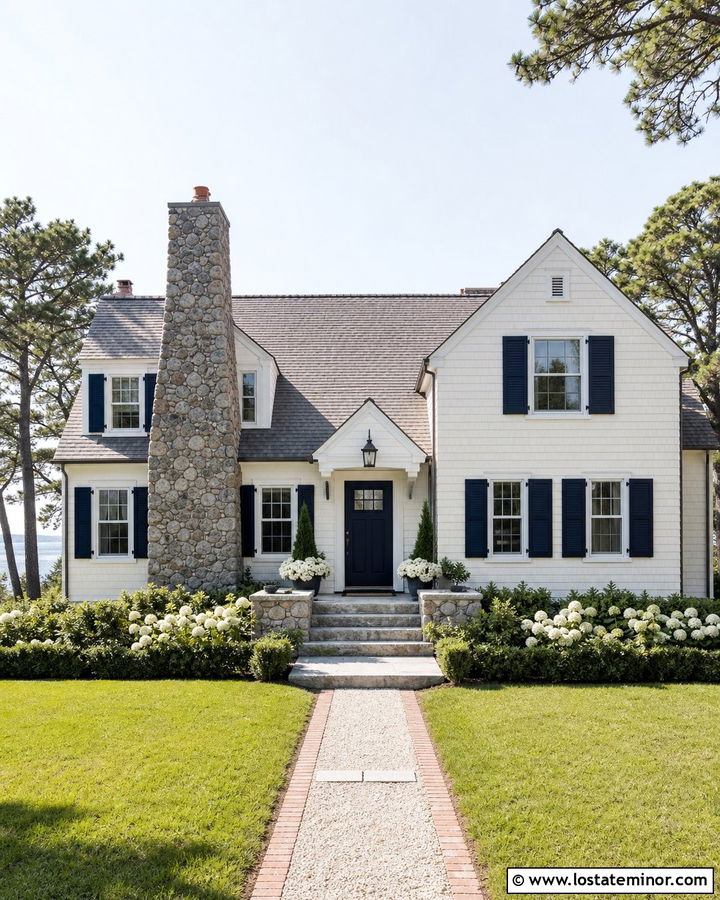
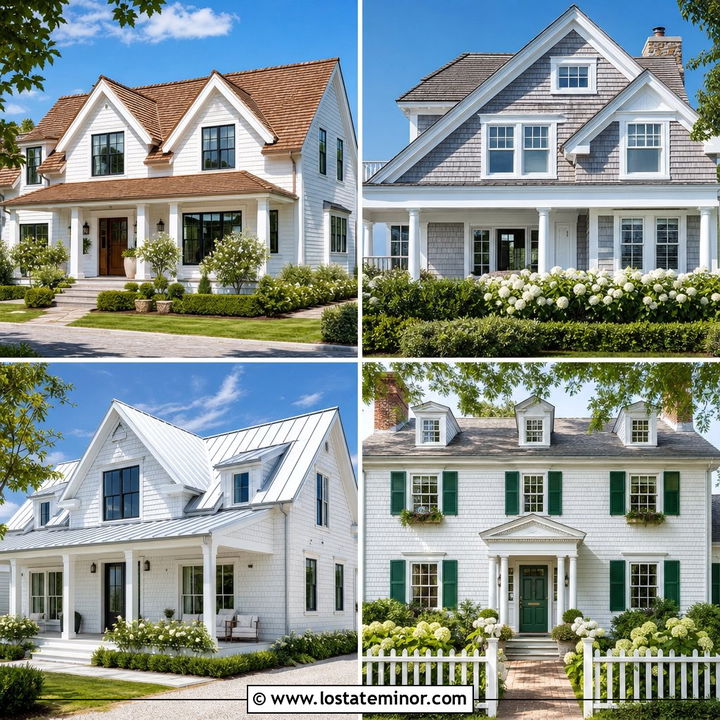
On a Cape Cod exterior, a stone chimney can become a strong architectural feature without competing with the home’s compact shape. Use soft white shingle siding, warm white trim, and a large weathered fieldstone chimney running from the foundation above the roofline. Repeat the same masonry on the front steps or a low porch wall to connect it with the facade. Deep blue shutters and a matching front door add classic color. A medium gray shingle roof keeps the palette gentle and coastal. Avoid introducing too many other materials, since the stone and textured shingles already provide interest. Hydrangeas, low hedges, and a brick-edged walkway complete the curb appeal while preserving the house’s simple, balanced character.
13. Split-Level House With Stone Garage Wall
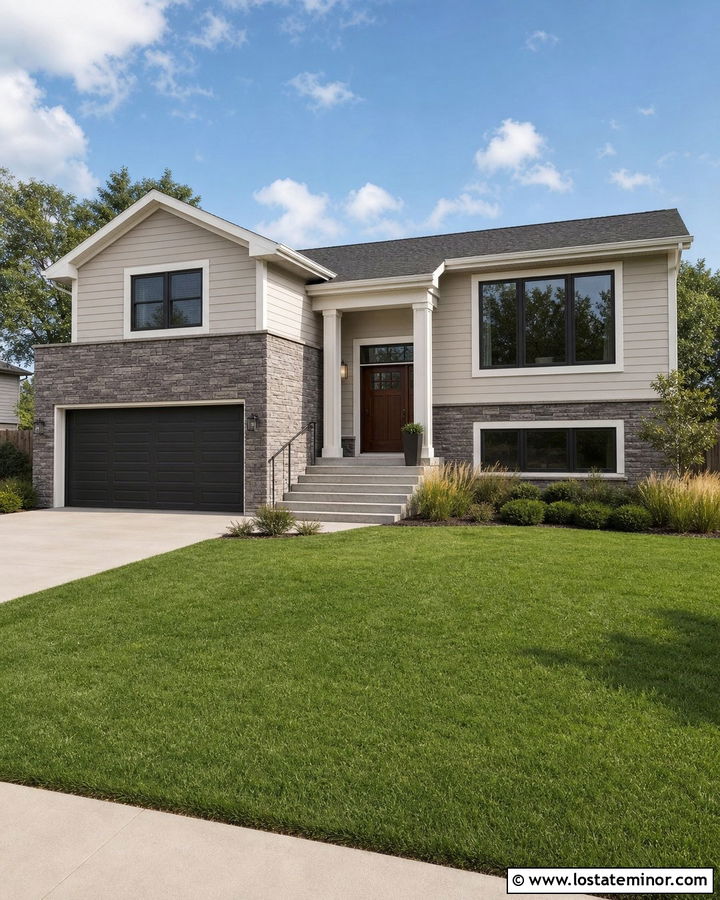
Stone can help organize the uneven sections of a split-level home. Cover the recessed garage wall and adjacent lower level with medium gray ledgestone. Use pale greige horizontal siding on the upper story to visually lighten the structure. White trim, charcoal windows, and a stained mahogany front door create a clear, updated palette. Carry a narrow band of the stone beneath the upper windows so the garage treatment relates to the rest of the facade. A charcoal roof and matching garage door keep the lower section from looking fragmented. Replace an overly curving walkway with broad, clean steps leading directly to the entry. Layered shrubs and ornamental grasses can soften the level changes while leaving the stone wall as the main grounding element.
14. White House With Black Stone Accents
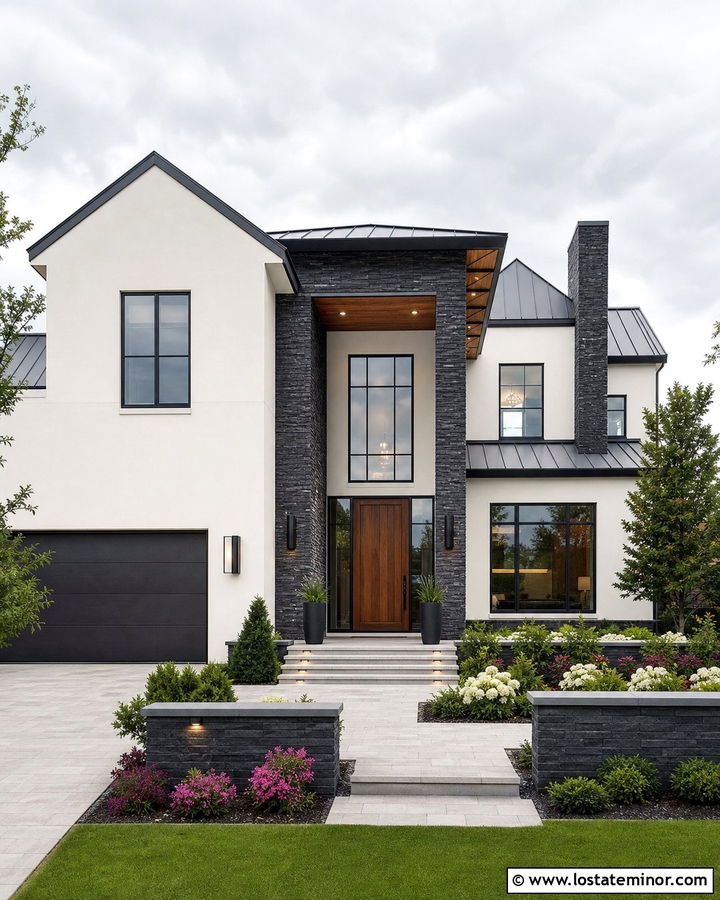
High contrast looks most intentional when each dark feature has a clear purpose. Begin with warm white stucco or vertical siding, then use black and charcoal stacked stone on the entry tower, chimney, and low foundation walls. Black-framed windows, gutters, and a dark garage door repeat the stone’s deepest tones. Introduce a medium oak front door and wood porch ceiling to prevent the scheme from feeling cold. A charcoal metal roof suits the graphic palette, although a textured shingle roof offers a softer alternative. Use the same dark stone on nearby mailbox columns or short landscape walls for continuity. Pale paving, clipped greenery, and simple flowering plants keep the complete exterior bright while emphasizing its modern architectural lines.
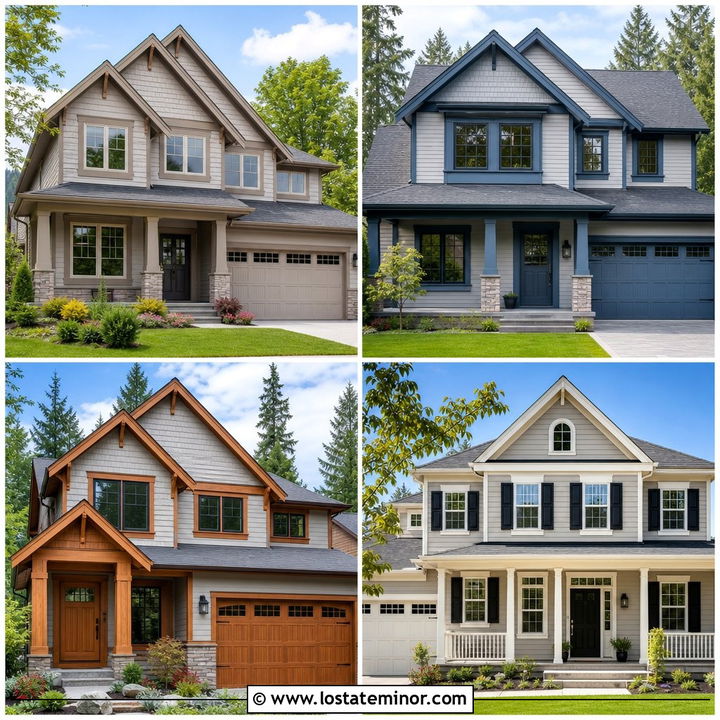
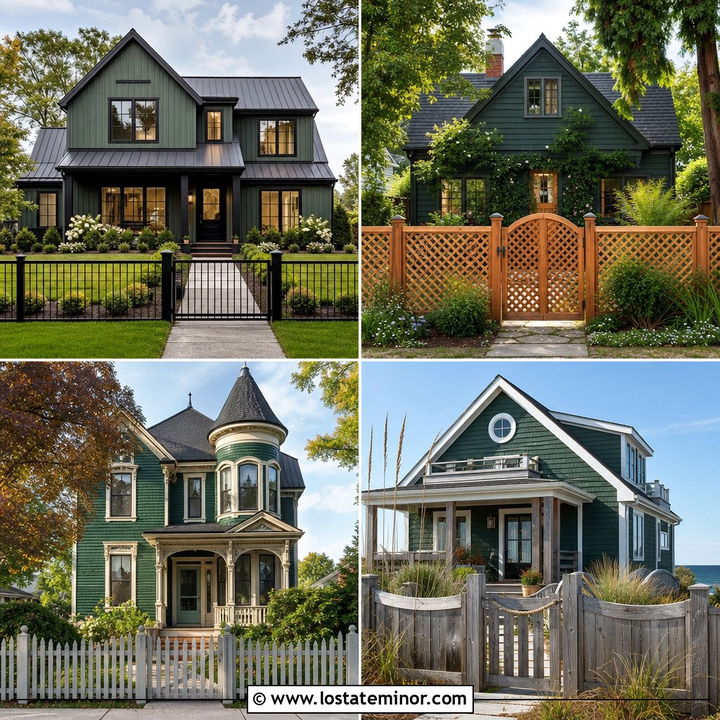
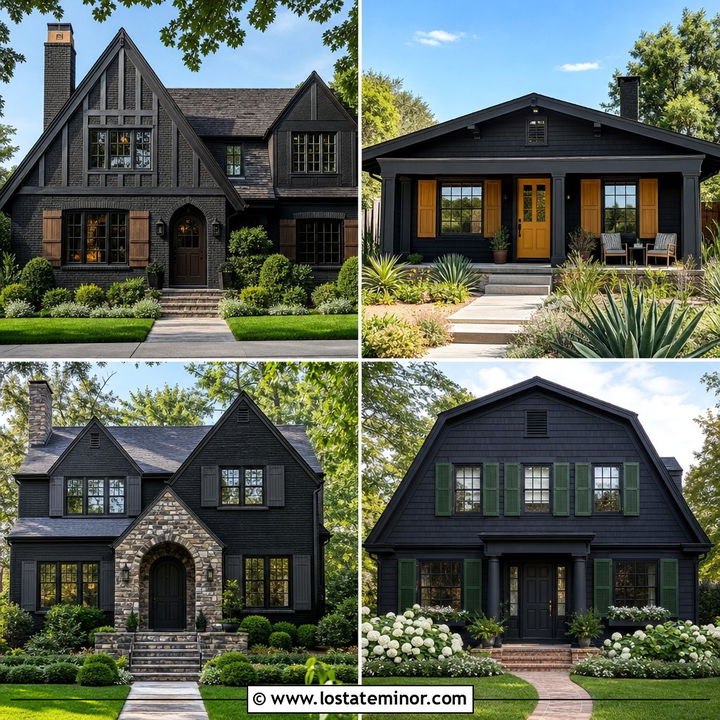
15. Brown House With Tan Ledgestone
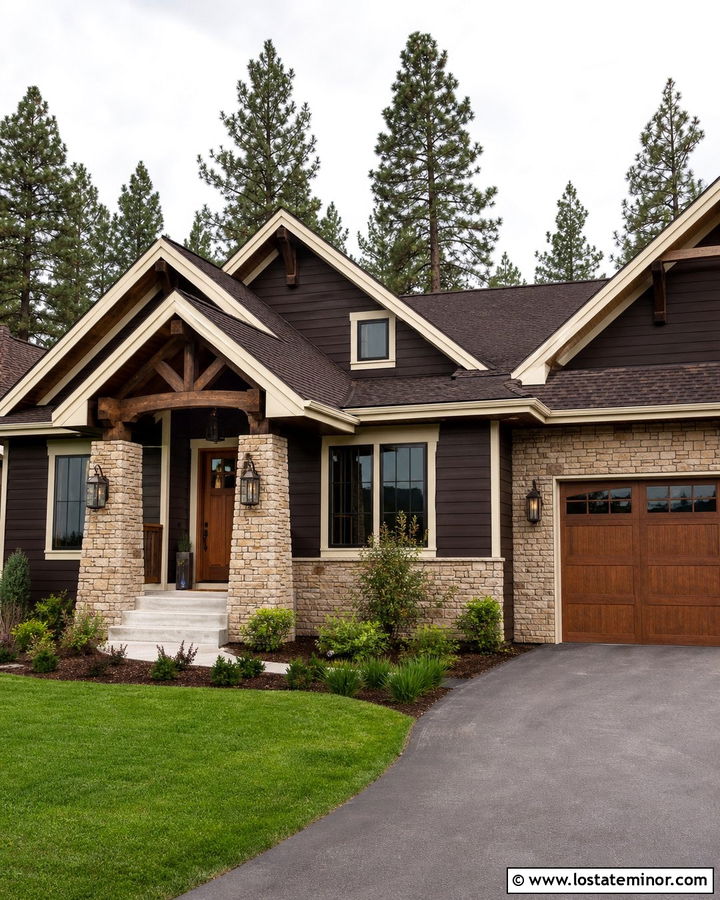
Rich brown siding can be surprisingly refined when paired with a lighter, more varied stone. Choose chocolate-brown lap siding for the main walls and use tan ledgestone across porch bases, columns, and the front-facing garage section. The stone should contain beige, caramel, and soft gray pieces that brighten the dark body color. Cream trim adds separation around windows and roof edges. A medium cedar door, bronze lighting, and wood-toned garage door complete the warm palette. Select a deep brown or weathered charcoal roof rather than solid black. This combination works well for craftsman, lodge, and wooded suburban homes. Add light concrete steps and fresh green landscaping so the exterior remains welcoming instead of blending completely into its surroundings.
16. Contemporary House With Large Format Stone
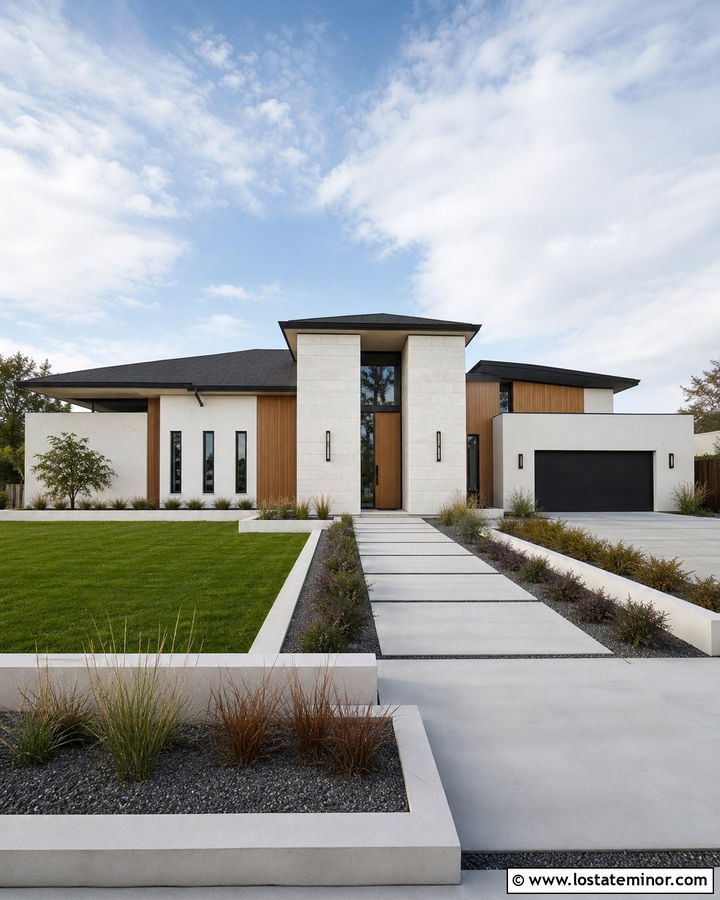
Large-format stone creates a calmer appearance than small, highly varied pieces, making it well suited to contemporary architecture. Use broad pale limestone panels on a central entry volume and combine them with soft greige stucco. Add vertical cedar siding to a smaller projecting section for warmth. Thin black window frames, a flush wood front door, and a dark gray flat or low-slope roof reinforce the clean geometry. Keep mortar lines narrow and align major stone joints with window or door edges when possible. Large concrete pavers and restrained planting beds should continue the orderly look into the landscape. The complete exterior feels textured but not busy because each material covers a defined architectural plane rather than appearing in scattered decorative patches.
17. Cottage House With Rustic Stone Facade
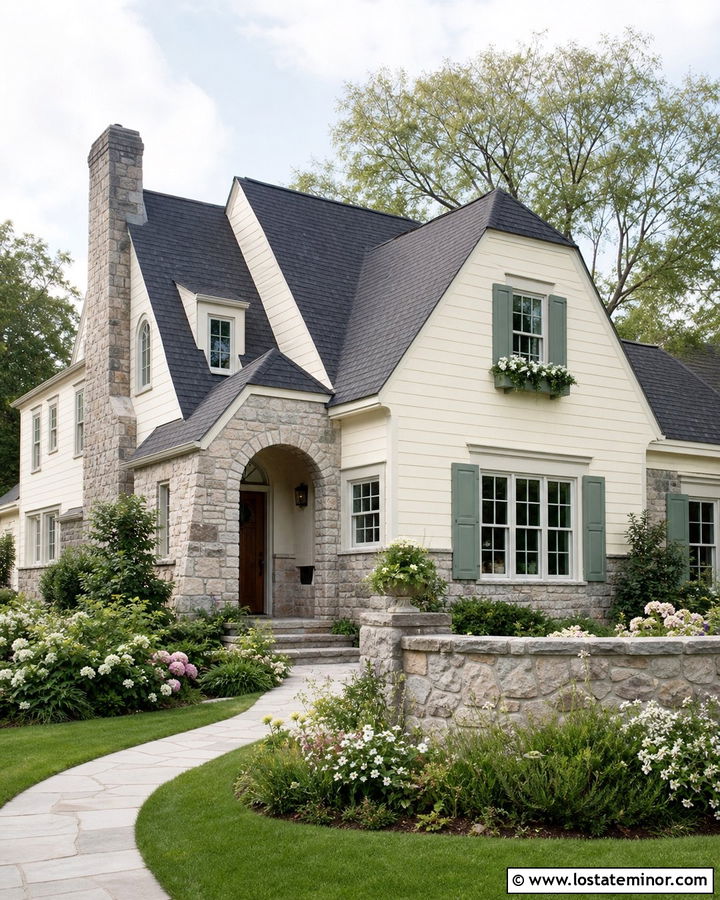
A small cottage can carry generous stonework when the colors remain soft and welcoming. Cover the lower facade and arched entrance in irregular warm-gray stone, then use creamy clapboard siding beneath the gables. Add muted green shutters, ivory trim, and a stained oak front door with divided glass. A steep charcoal shingle roof gives the house a cozy profile without overwhelming the pale materials. Repeat the stone on a compact chimney and low garden wall to make it feel connected to the property. Curved paths, flowering shrubs, and loosely arranged perennials support the relaxed cottage character. Keep the porch railings simple, since the textured masonry already supplies plenty of detail. This exterior looks charming from the street without becoming overly decorative.
18. Colonial House With Symmetrical Stone Accents
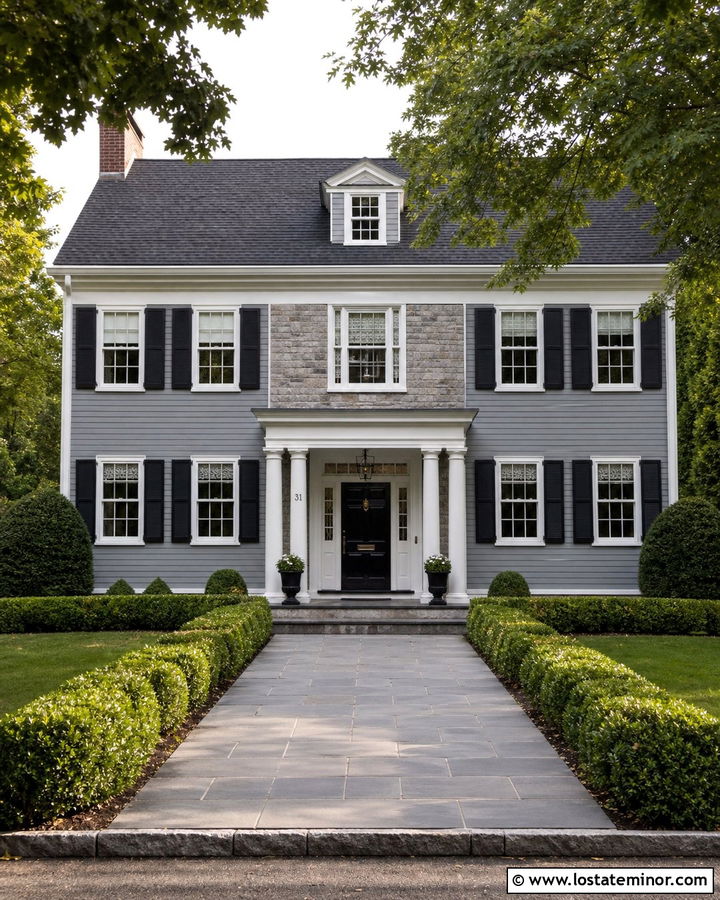
Symmetry is central to a Colonial facade, so stone should strengthen that order rather than interrupt it. Use soft gray clapboard siding with crisp white trim and install matching stone on both sides of the centered entrance. The masonry can wrap paired porch columns and continue along the foundation at an even height. Choose a gray-taupe stone blend with restrained variation. A glossy black front door, black shutters, and a charcoal roof introduce classic contrast. Keep the windows, lighting, and landscaping carefully balanced on each side. Straight brick or bluestone paving reinforces the formal approach. By limiting the stone to symmetrical architectural zones, the exterior gains texture and visual weight while preserving the clear proportions that make a Colonial home feel polished and timeless.
19. Midcentury Modern House With Stone Wall
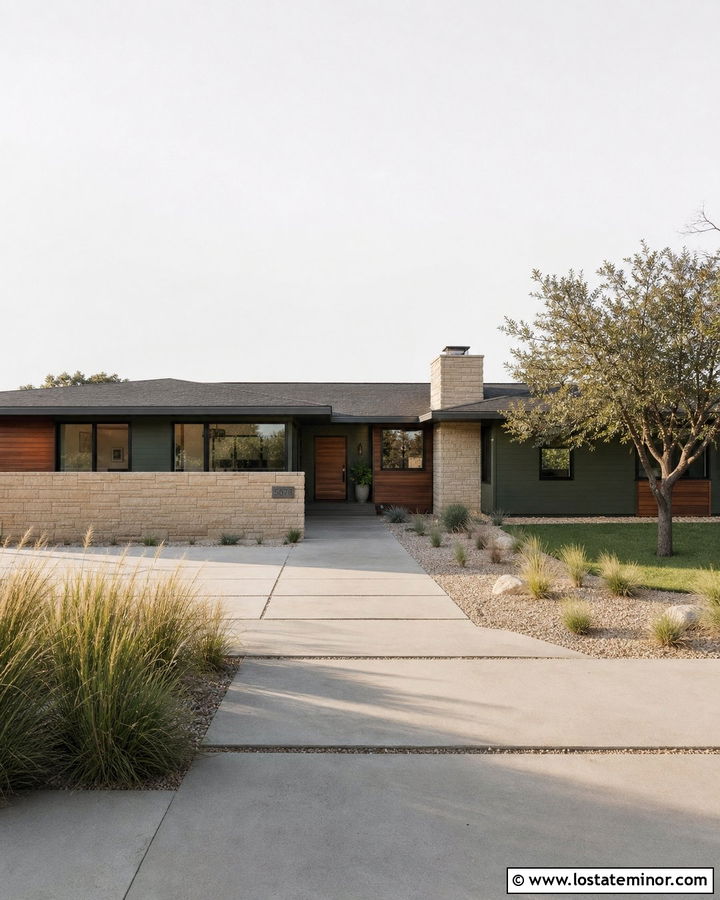
A long stone wall can enhance the low, horizontal shape of a midcentury modern home. Select warm beige or pale gray rectangular stone and run it across the entry wall, chimney, and one side of the carport. Pair it with deep olive siding and medium walnut panels. Black window frames and a low charcoal roof create crisp boundaries around the earthy materials. Choose a flat-panel wood door that blends with the adjacent siding rather than becoming a separate decorative feature. The stone pattern should emphasize horizontal lines with minimal color variation. Broad concrete slabs, gravel beds, ornamental grasses, and one sculptural tree complete the setting. This scheme feels connected to nature while preserving the simple forms associated with midcentury architecture.
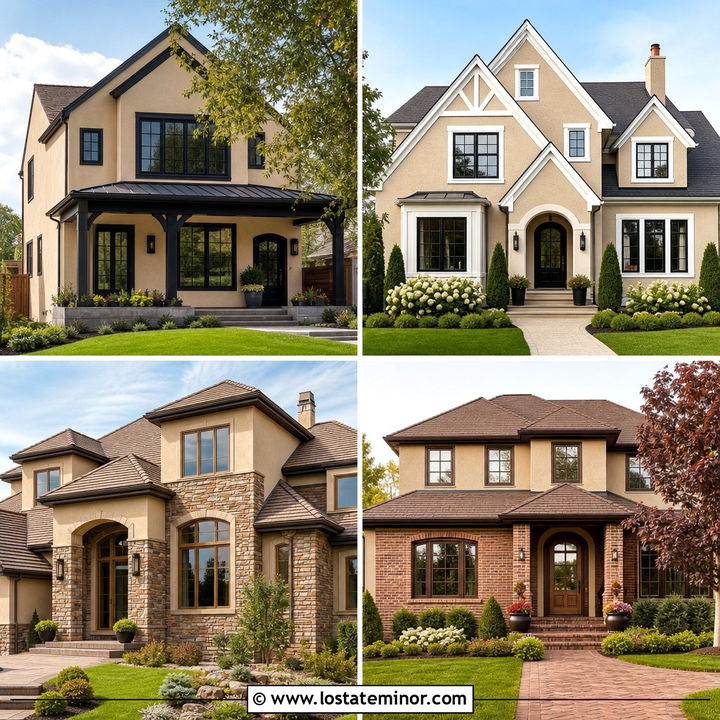
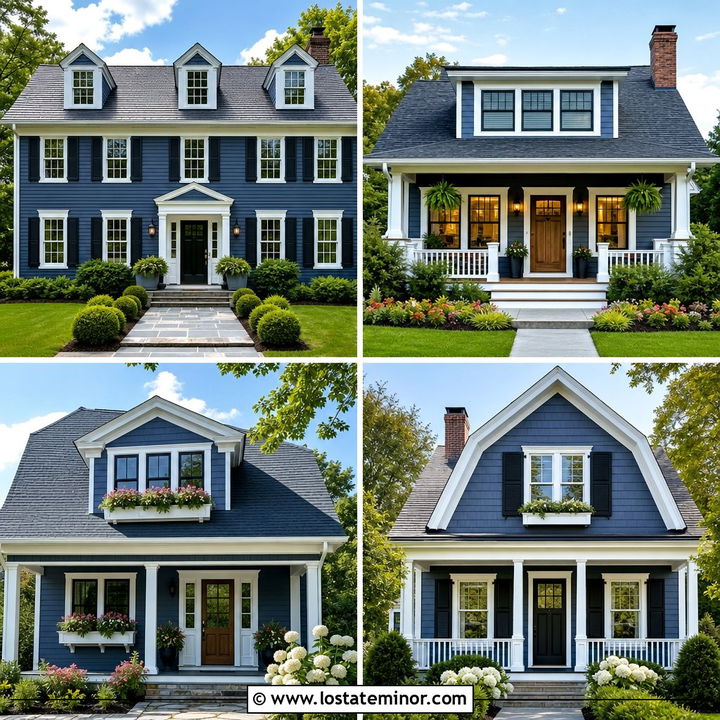
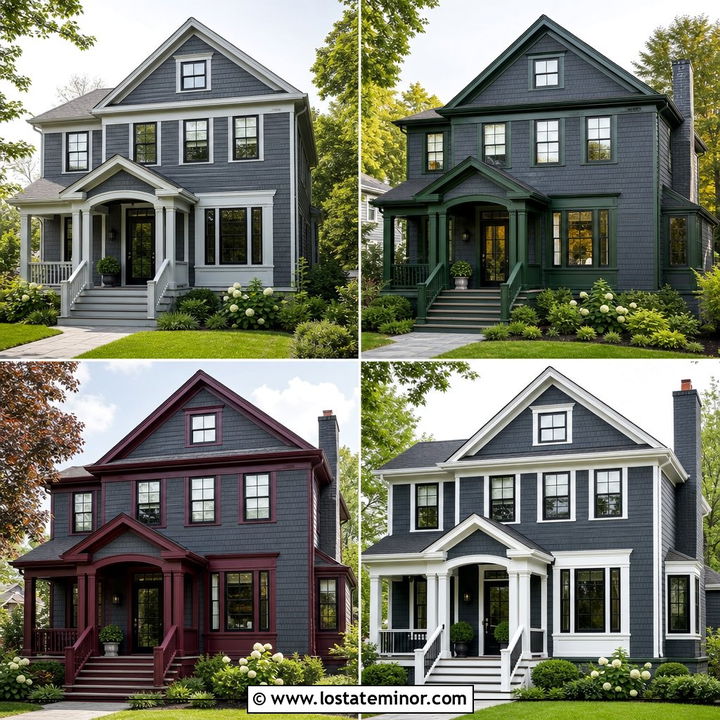
20. Blue Gray House With Stone Porch
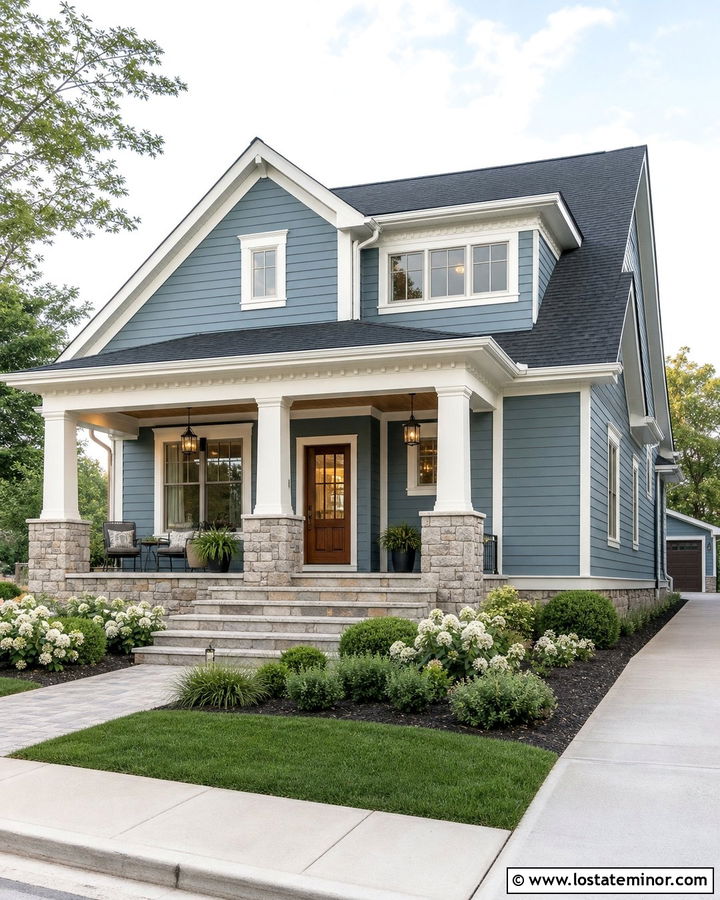
Blue-gray siding creates a quiet backdrop for stone containing cool and warm neutral shades. Use a softened slate-blue body color with creamy white trim. Cover the porch foundation, wide steps, and square column bases in gray-beige fieldstone. A medium wood front door brings warmth near the center of the facade, while dark bronze lighting connects with a charcoal roof. The stone should extend around the porch corners and return along the side walls, making it look structural rather than applied. This combination suits transitional, craftsman, and coastal suburban homes. Add white flowering shrubs, evergreen mounds, and a light concrete walkway. The finished exterior feels fresh and relaxed, with enough contrast to define each feature without creating a patchwork appearance.
21. Cream House With Dark Stone Base
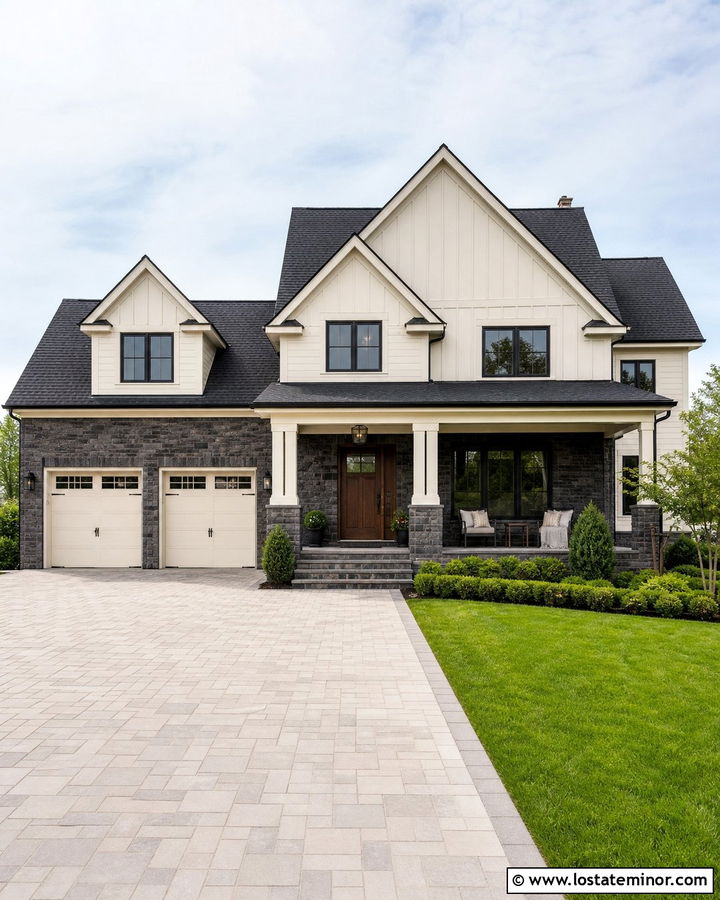
A dark stone base can give a tall cream-colored house stronger visual balance. Use warm cream siding across both stories and wrap the lower walls in deep charcoal-gray stone. Continue the masonry around the garage, porch columns, and entry steps to form a continuous foundation. Dark bronze windows and gutters relate to the stone, while a stained walnut front door adds a warmer focal point. Choose a charcoal roof with subtle tonal variation. Cream garage doors can blend into the siding and prevent the lower level from becoming too dark. Use pale paving and bright green plantings along the foundation. This approach is especially useful on narrow two-story homes because it grounds the height while allowing the upper walls to remain light and open.
22. Rustic Cabin With Stone Chimney And Wood Siding
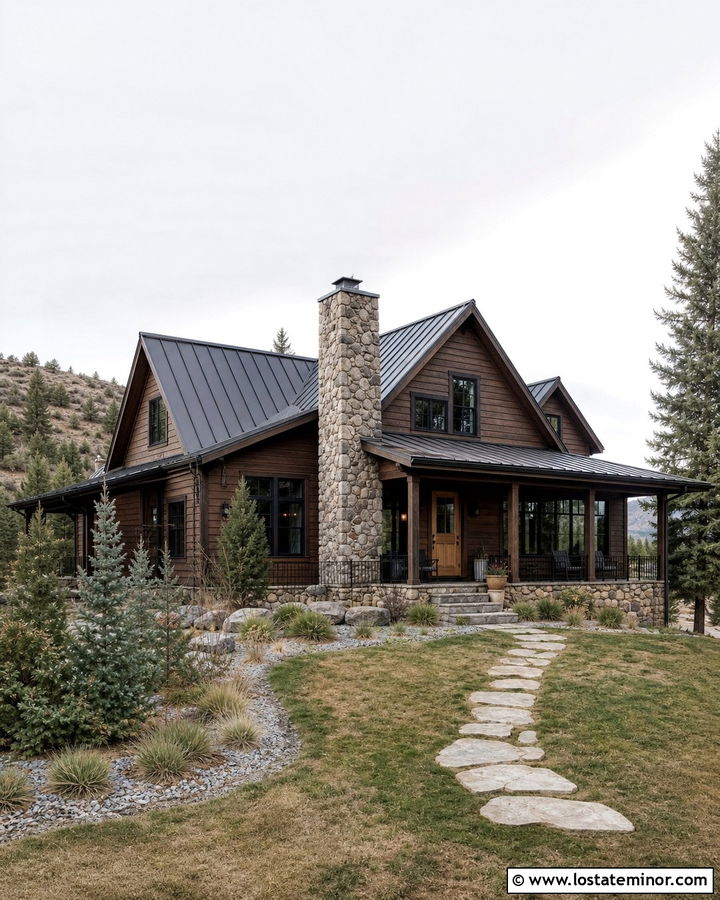
The soundest cabin schemes allow stone and wood to share the spotlight. Use deep cedar-brown siding across the facade and build a substantial gray-brown stone chimney that rises past the steep roofline. Repeat the masonry on the porch foundation and entry steps to connect the tall chimney with the ground. Black windows, a charcoal metal roof, and dark iron lighting add a clean outline. Choose a front door in a slightly lighter wood stain so it remains visible beneath the covered porch. The stone should feature rugged shapes and natural color movement, but its grout should stay close to the overall stone tone. Evergreen landscaping, native grasses, and broad gravel edges complete a rustic exterior that still feels orderly and carefully planned.
23. Modern Farmhouse With Stone Garage Accent
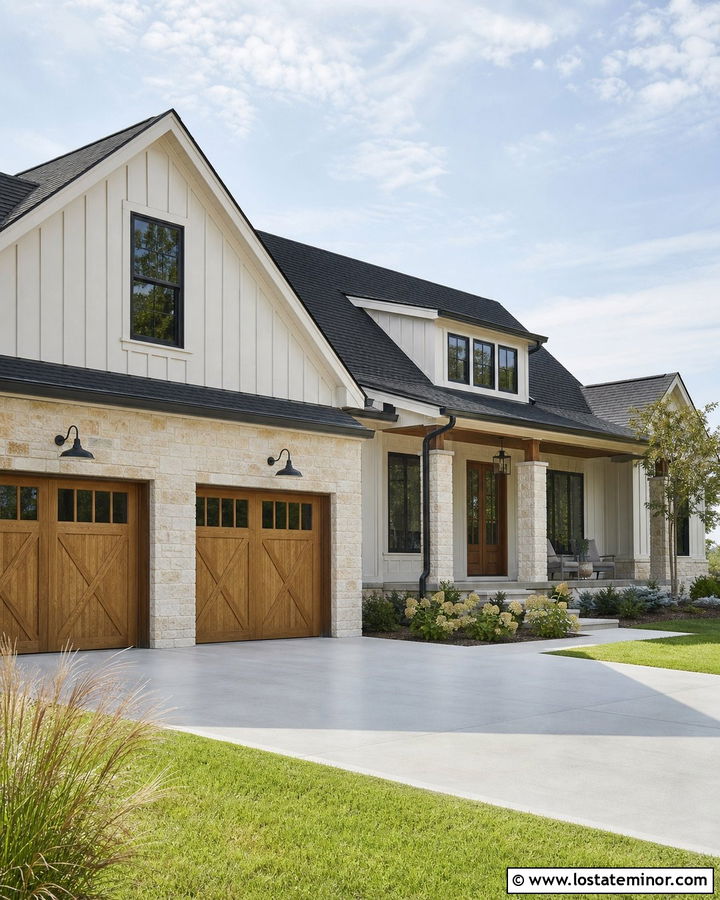
A garage occupies a large portion of many modern farmhouse facades, so treating it as part of the design can dramatically improve the full exterior. Use warm white board-and-batten siding and cover the wall surrounding the garage doors in soft gray-beige limestone. Natural wood garage doors introduce warmth and relate to a matching front door and porch ceiling. Black windows, lights, and gutters supply familiar farmhouse contrast. Add the same stone to the entry columns or porch base so the garage does not look separate from the house. A charcoal roof completes the palette. Keep landscaping simple with clipped shrubs, grasses, and a broad concrete driveway. The result feels coordinated, practical, and more dimensional than a plain white farmhouse facade.
24. Desert House With Sandstone Accents
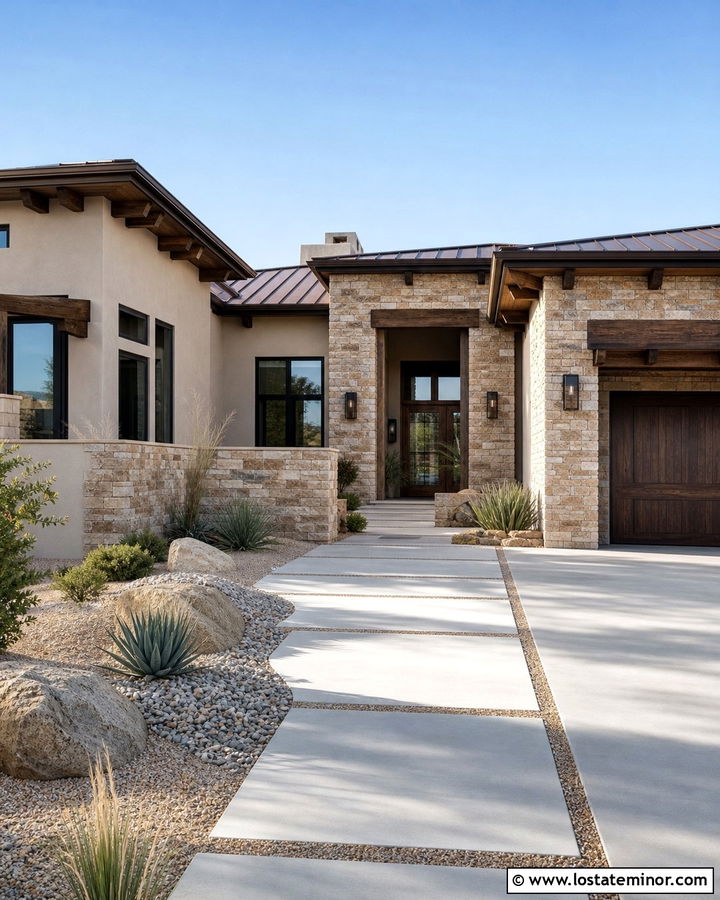
In a dry, sunlit setting, sandstone colors can help the home blend naturally with the surrounding landscape. Choose muted clay-beige stucco for the main walls and install sandy ledgestone around the entry, courtyard walls, and projecting garage section. The stone can include cream, tan, rust, and pale gray pieces, but avoid an overly colorful blend. Deep bronze windows, a dark wood front door, and a brown metal roof add definition. Exposed wood beams provide another warm architectural layer. Use gravel beds, large rocks, agave, ornamental grasses, and drought-tolerant shrubs around a wide concrete walkway. The complete house remains earthy and textural while its strong rooflines and carefully defined stone sections preserve a clean, contemporary appearance.
25. French Country House With Limestone Exterior
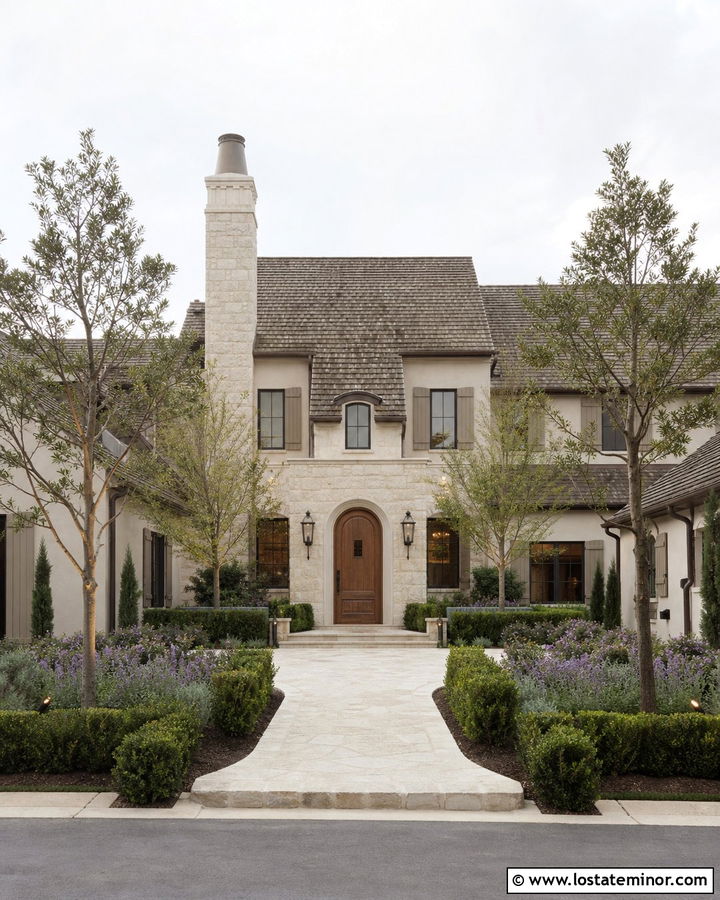
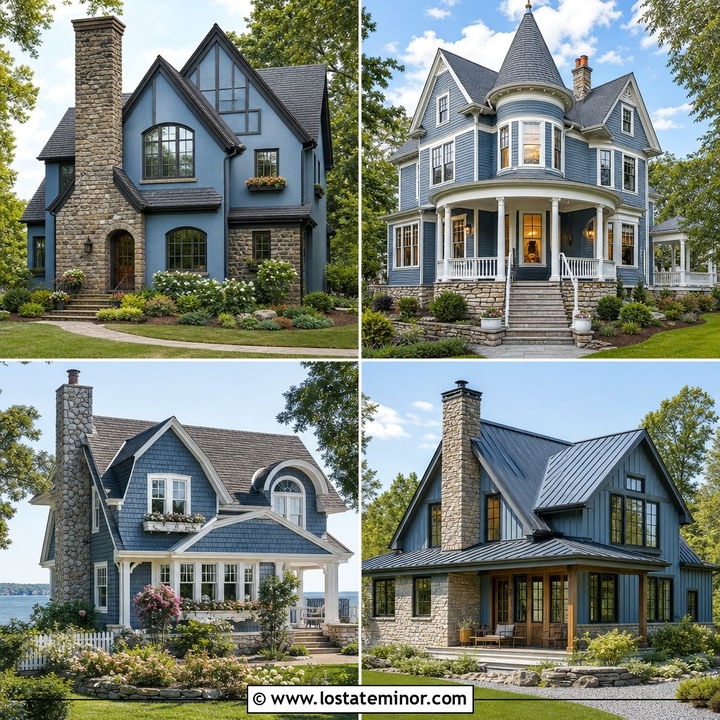
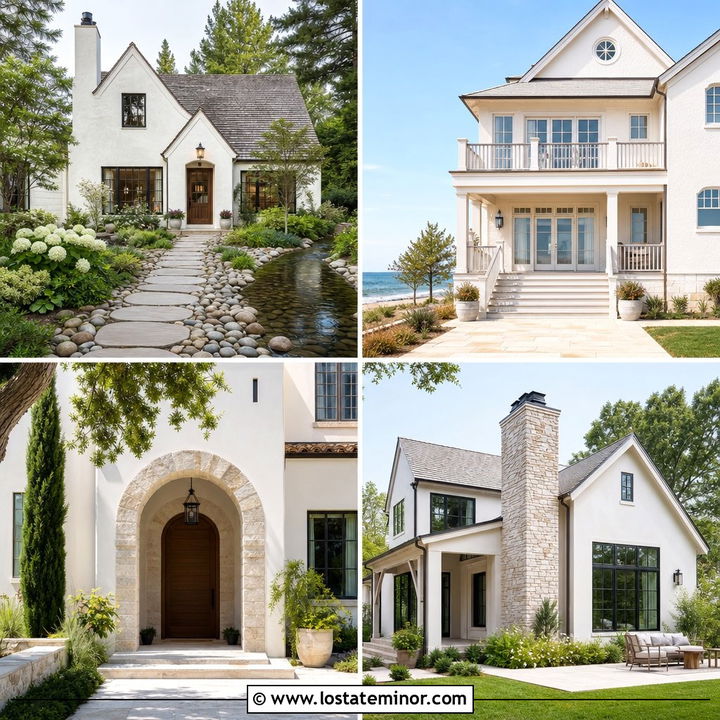
Pale limestone gives a French country exterior a graceful sense of age and permanence. Cover the main front-facing section in creamy limestone and use warm greige stucco on secondary walls. Add muted taupe shutters, dark bronze windows, and a gently arched medium-oak front door. A weathered gray-brown roof works well with the quiet stone palette. Use masonry around the entrance, chimney, and lower wings so the material feels integral to the architecture. Copper-toned lighting and simple iron details offer restrained contrast. Keep the landscaping soft but structured with trimmed hedges, small trees, lavender-colored blooms, and a curved pale-stone walkway. The full facade should feel layered and welcoming rather than ornate, allowing the natural texture of the limestone to provide most of the visual interest.
26. Bungalow With River Rock Porch
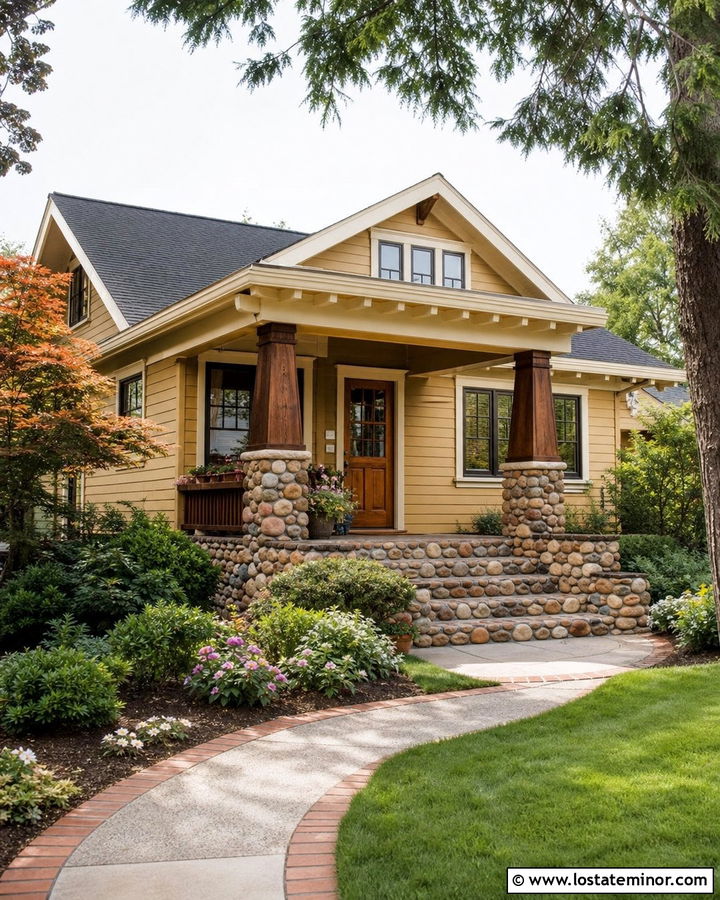
Rounded river rock brings movement and informal charm to a bungalow exterior. Use warm ochre or muted tan clapboard siding with creamy trim. Cover the porch column bases, foundation, and broad front steps in a mix of smooth gray, brown, and rust-colored stones. Stained wood posts and a craftsman-style oak front door complement the warmer rock tones. Choose dark bronze windows and a medium charcoal roof to give the compact facade a clear outline. Keep the river rock placement low so it supports the house instead of making it feel top-heavy. A brick-edged walkway, layered shrubs, and colorful cottage plantings frame the porch. This combination creates a relaxed, handcrafted look that is especially suited to older neighborhoods and tree-lined streets.
27. Scandinavian House With Light Gray Stone
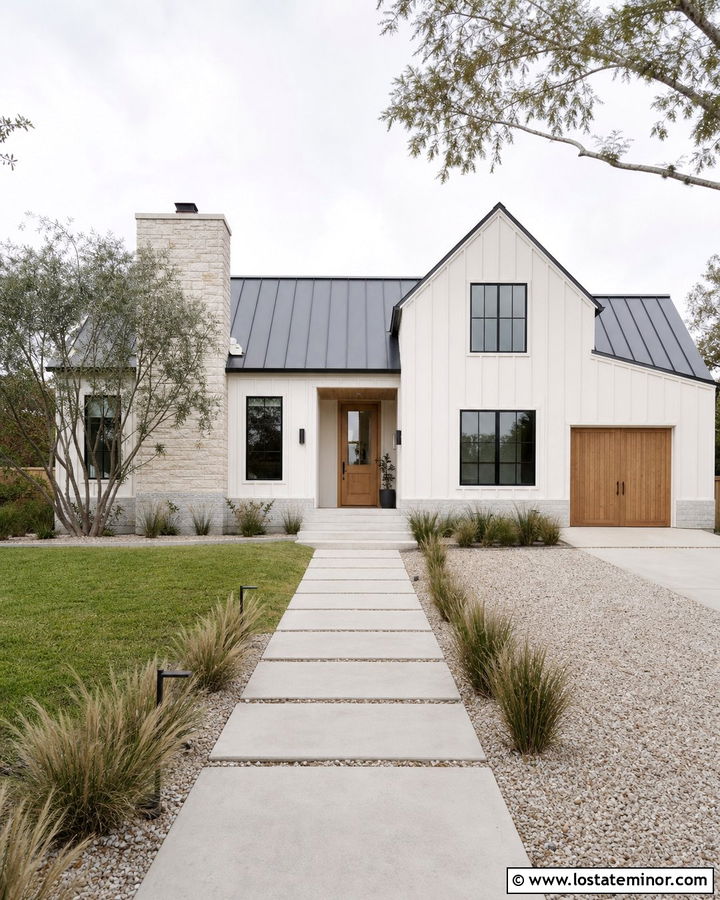
A Scandinavian-inspired exterior relies on simplicity, natural materials, and a restrained palette. Use soft white vertical siding across the main facade and install pale gray linear stone on the chimney, recessed entrance, and lower wall. Light oak accents can appear on the front door, soffits, and one narrow siding section. Black-framed windows and a slim charcoal metal roof provide precise contrast. Choose stone with minimal color variation and clean rectangular shapes to maintain the quiet composition. The masonry should cover complete architectural planes instead of forming short decorative strips. A gravel path, large concrete pavers, native grasses, and a few airy trees create an uncluttered setting. The finished house feels bright and modern while the stone introduces enough texture to keep the white exterior from appearing flat.
28. Transitional House With Mixed Stone Siding
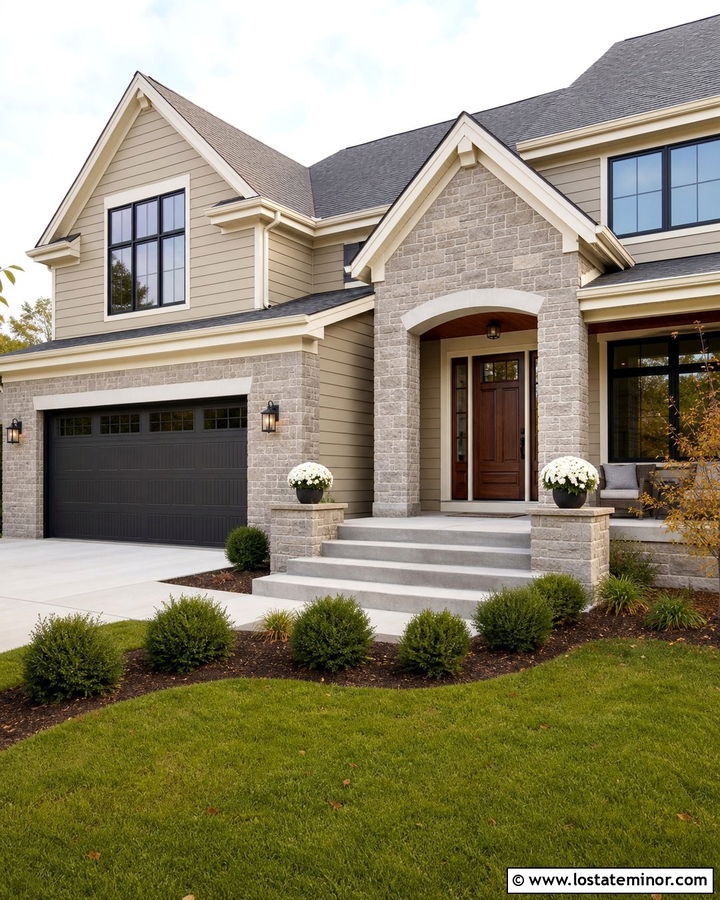
A transitional exterior can combine traditional proportions with cleaner material placement. Start with light taupe lap siding and use a soft gray-tan stone blend across the entry projection, lower garage wall, and porch columns. Cream trim keeps the color transitions gentle, while black windows and a dark gray roof add modern definition. Choose a medium walnut front door and repeat the wood tone on the porch ceiling. The stone should include enough variation to feel natural but not so much that it competes with the siding. Wide concrete steps and neat foundation plantings create a polished approach. This balanced scheme works especially well for newer suburban homes because it adds texture and character without pushing the architecture fully rustic, modern, or traditional.
29. Coastal House With White Stone Accents
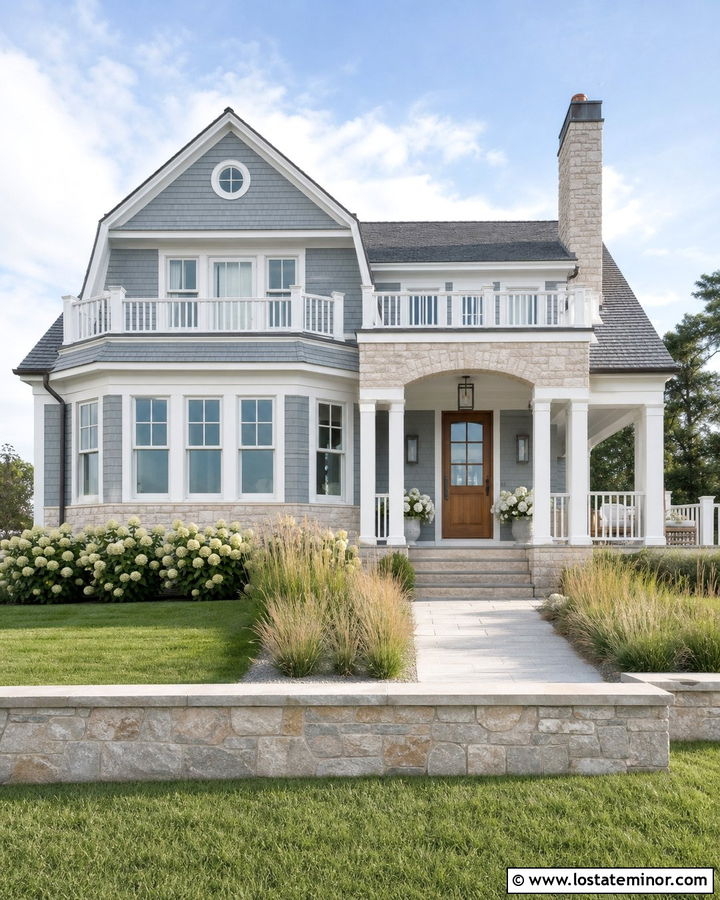
Stone can work on a coastal exterior when it has a light color and relaxed texture. Use misty blue shingle siding with bright white trim and pale cream-white stone around the porch, chimney, and lower foundation. A natural teak-toned front door introduces warmth, while medium gray roof shingles keep the palette soft. Select a limestone or lightly textured ledgestone without strong brown or orange coloring. White porch railings and simple square columns maintain an airy appearance. Continue the stone onto a low landscape wall to tie the house into the yard. Beach grasses, hydrangeas, gravel edges, and a light paved walkway complete the curb appeal. The finished design feels breezy and bright while the masonry adds substance to the delicate blue-and-white palette.
30. Dark Green House With Gray Stone Accents
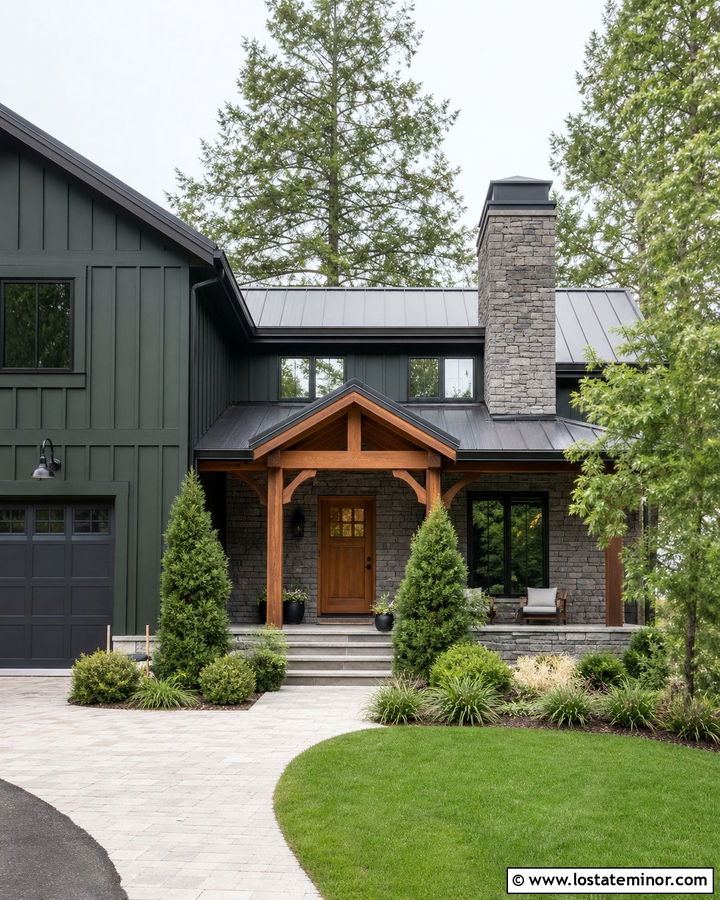
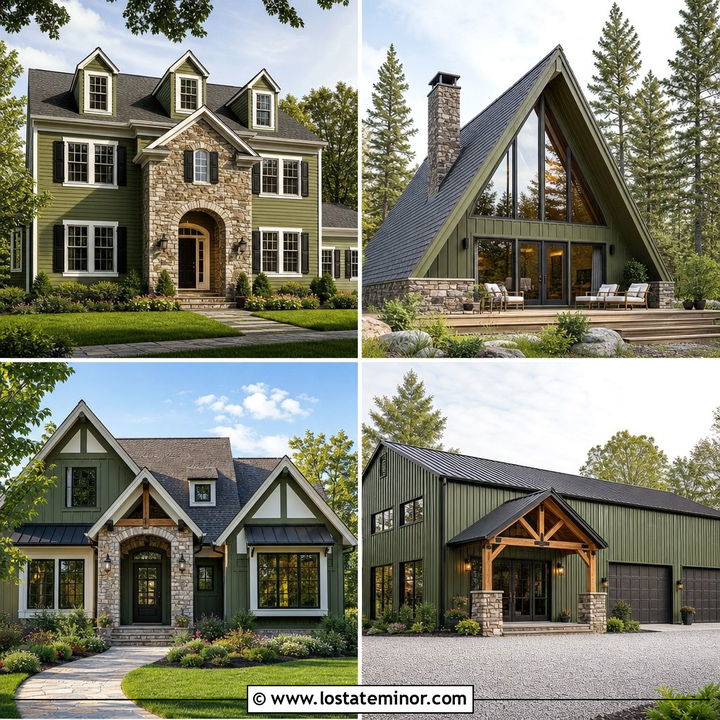
Deep green siding creates a rich, nature-connected exterior, especially when paired with balanced gray stone. Use dark forest green board-and-batten siding and cover the entry wall, chimney, and porch base in medium gray ledgestone. Choose masonry with a few muted taupe pieces to connect with a warm wood front door. Black windows, gutters, and a charcoal metal roof sharpen the complete scheme. Cedar porch beams or garage details can repeat the door color and prevent the facade from becoming too cool. Keep trim close to the green body color for a contemporary effect, or use warm cream for a more traditional look. Evergreen shrubs, pale grasses, and a light stone walkway brighten the foreground while allowing the dark house to remain the main attraction.
Conclusion:
The most successful 30 Stone House Design With Stone Accents Ideas treat stone as part of the architecture, not an unrelated decoration. Start by identifying the facade areas that need visual weight, such as the foundation, entrance, chimney, garage, or porch columns. Then select siding, trim, roofing, wood, and metal finishes that repeat the stone’s undertones. Light masonry can soften a dark house, while charcoal stone gives pale siding stronger contrast. Consistent corner returns and repeated materials help every design feel complete. Whether your home is modern, rustic, coastal, or traditional, a coordinated stone scheme can create a more textured, welcoming, and memorable exterior without covering every wall in masonry.

Related posts: