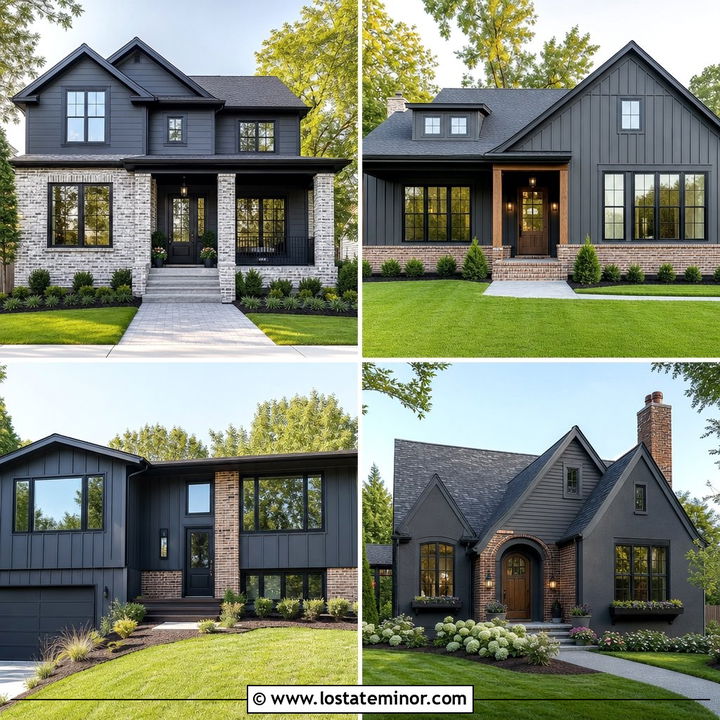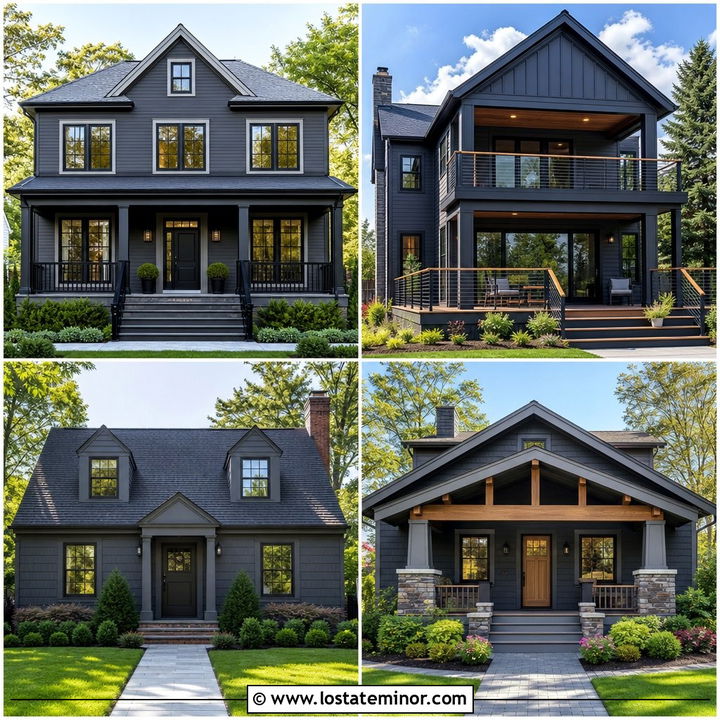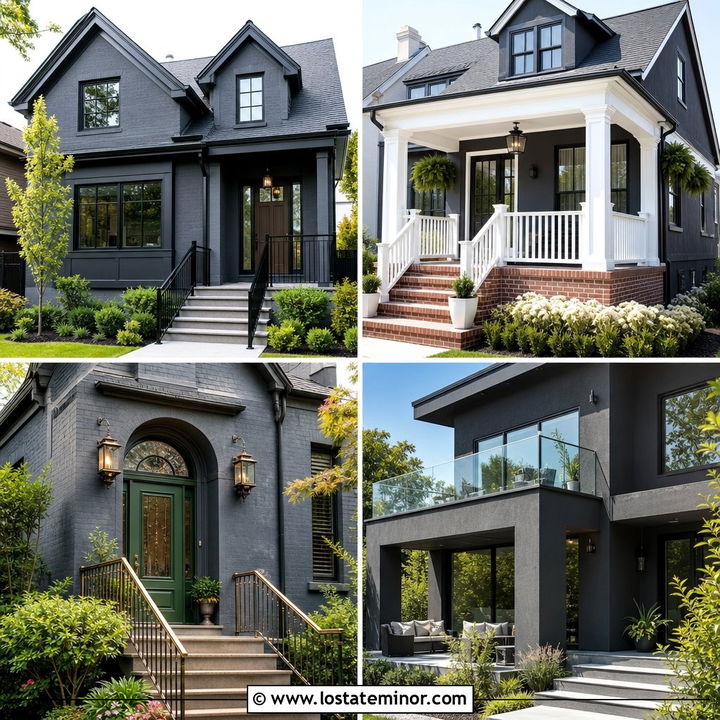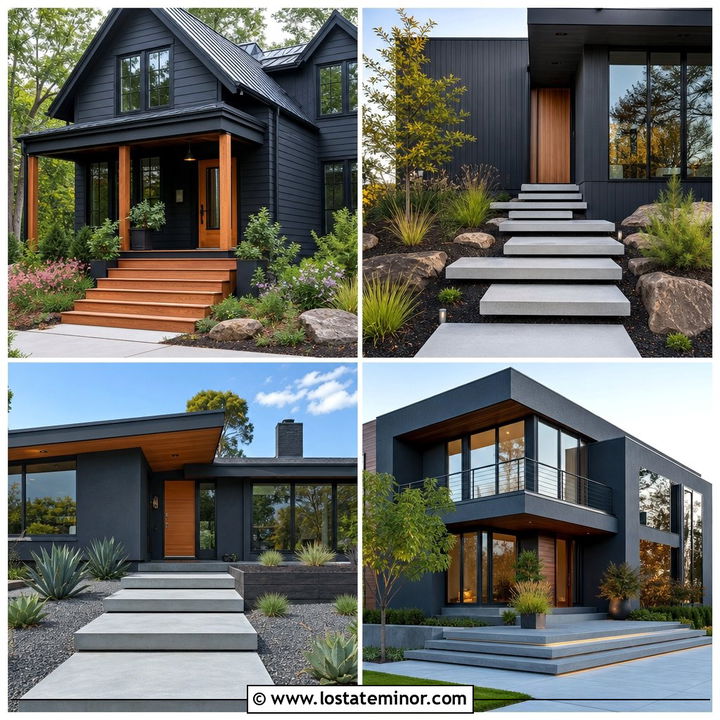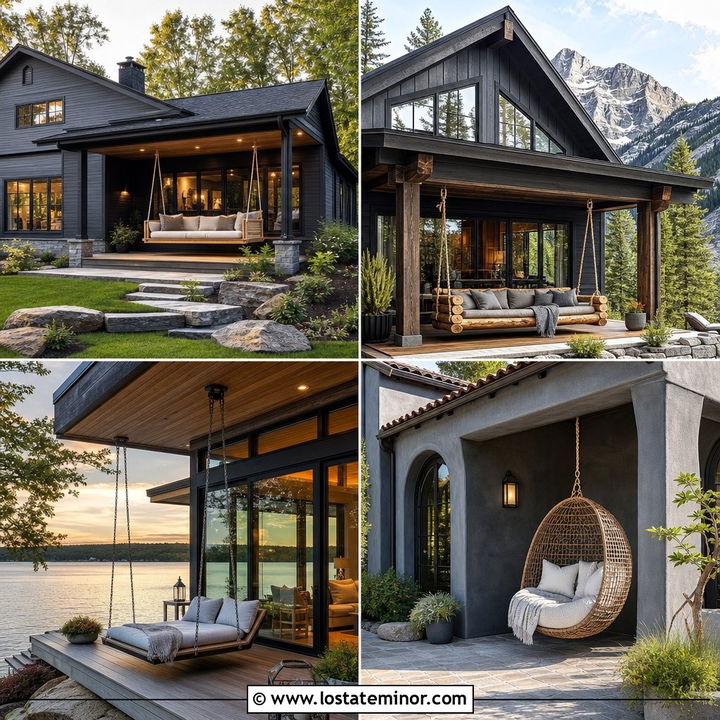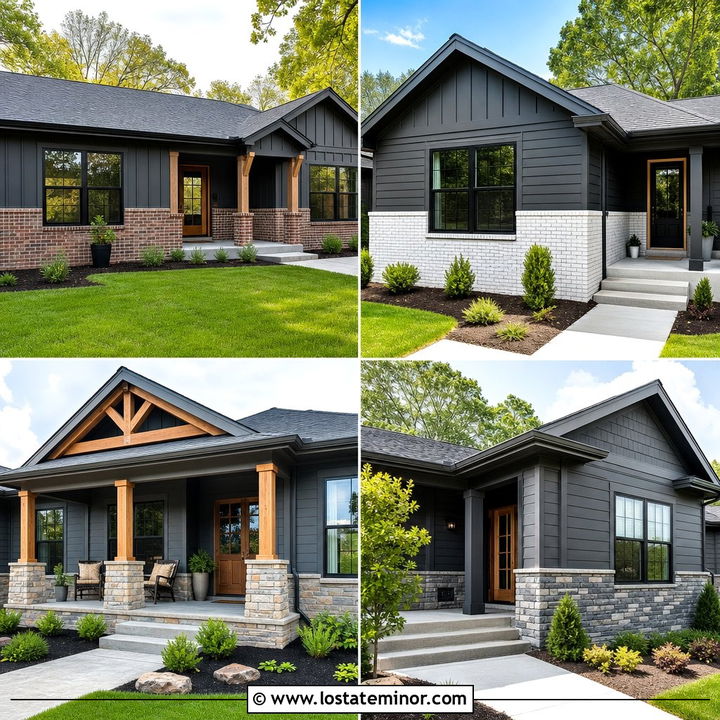
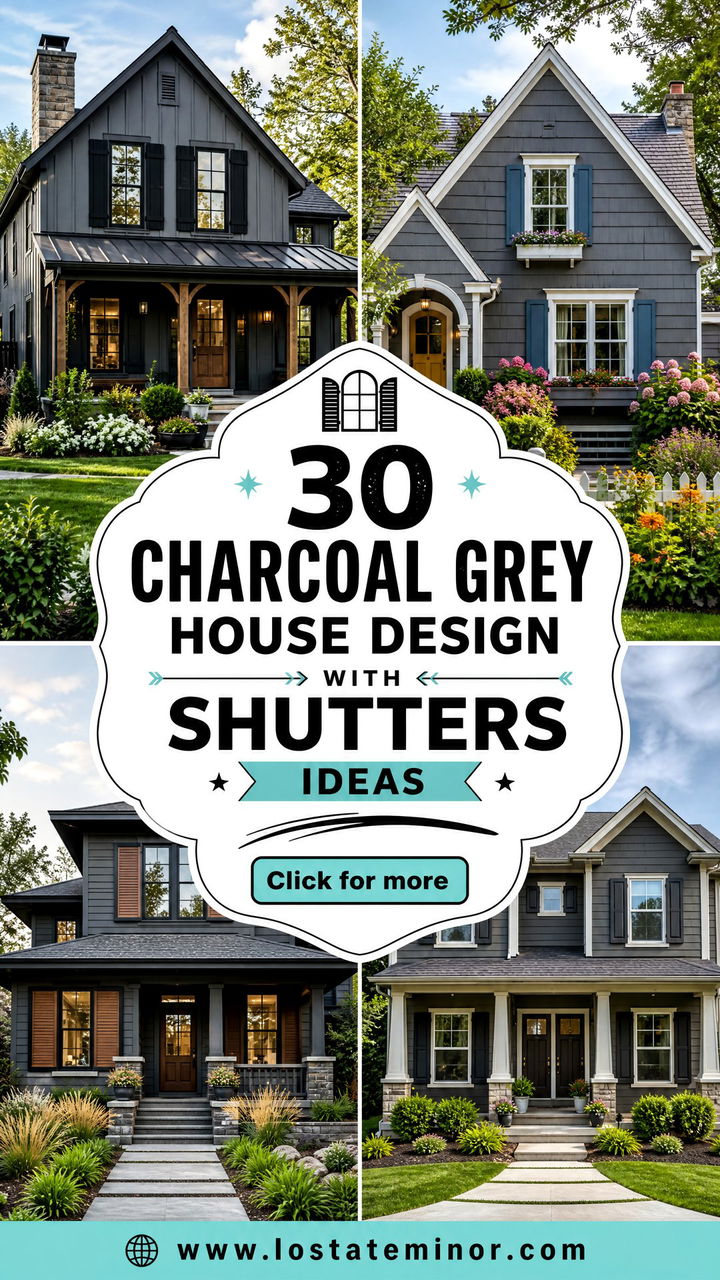
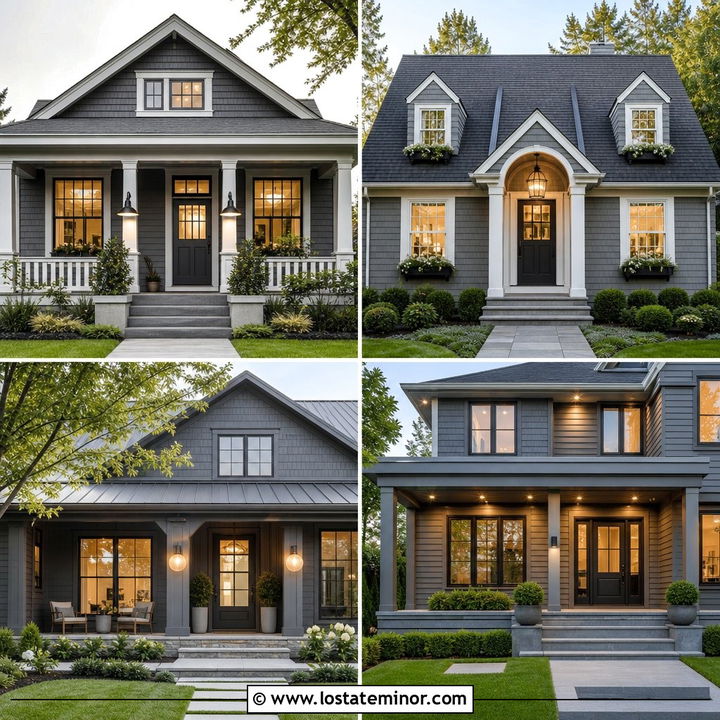
A charcoal exterior can make almost any home feel more polished, grounded, and distinctive. The key is building a balanced palette around it. **30 Charcoal Grey House Design With Shutters Ideas** explores complete exterior combinations rather than treating shutters as an isolated detail. Crisp white creates classic contrast, while wood, stone, brick, bronze, and muted colors can soften the darker siding. Current exterior inspiration frequently combines charcoal siding with light trim, natural materials, and coordinated doors or garage finishes for a cohesive facade. () Shutter proportions also matter. They should visually relate to the windows instead of appearing too narrow or randomly placed. Whether your home is colonial, ranch, craftsman, or contemporary, the following **30 Charcoal Grey House Design With Shutters Ideas** offer practical inspiration for creating complete curb-appeal schemes.
1. Charcoal Grey Colonial With White Shutters
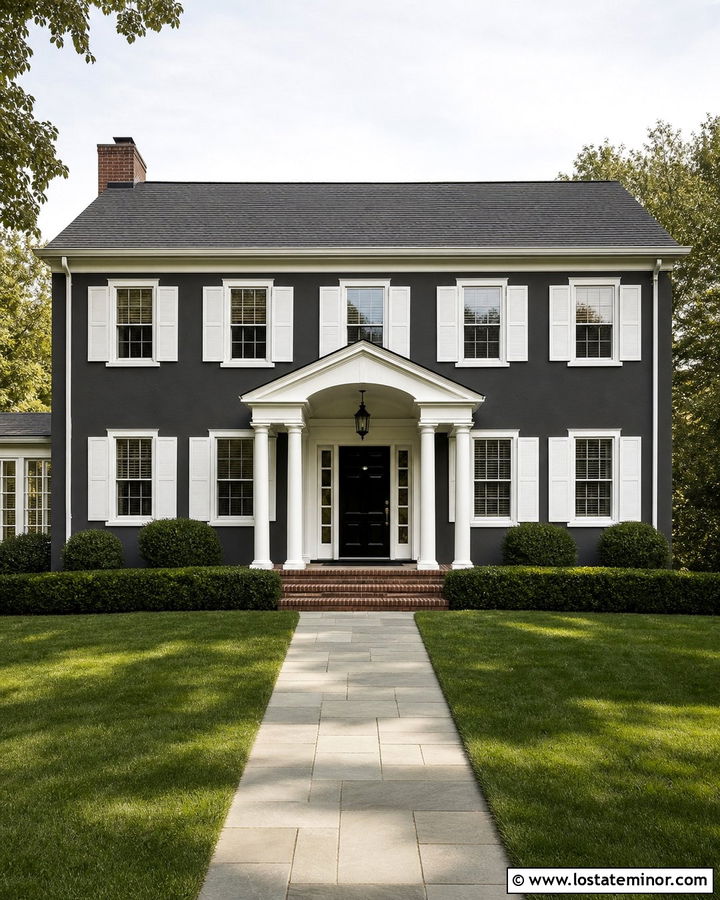
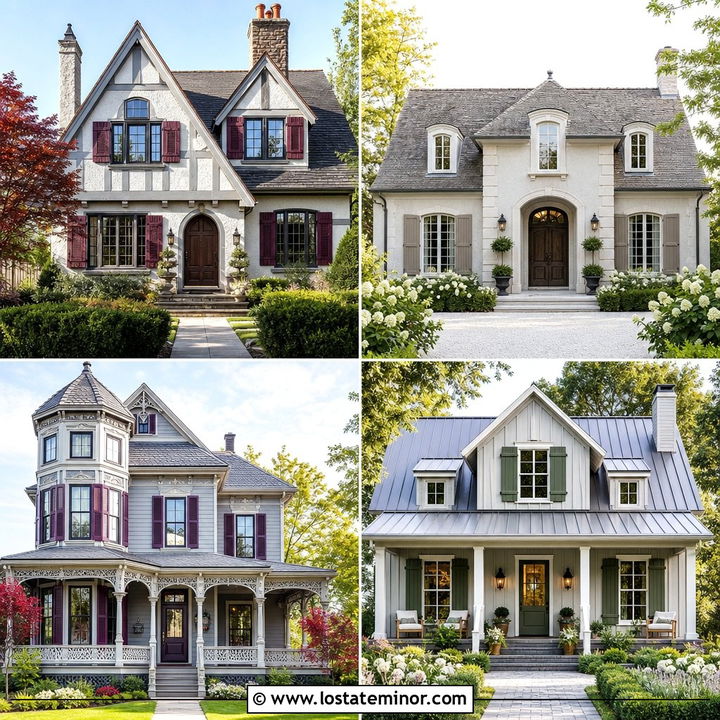
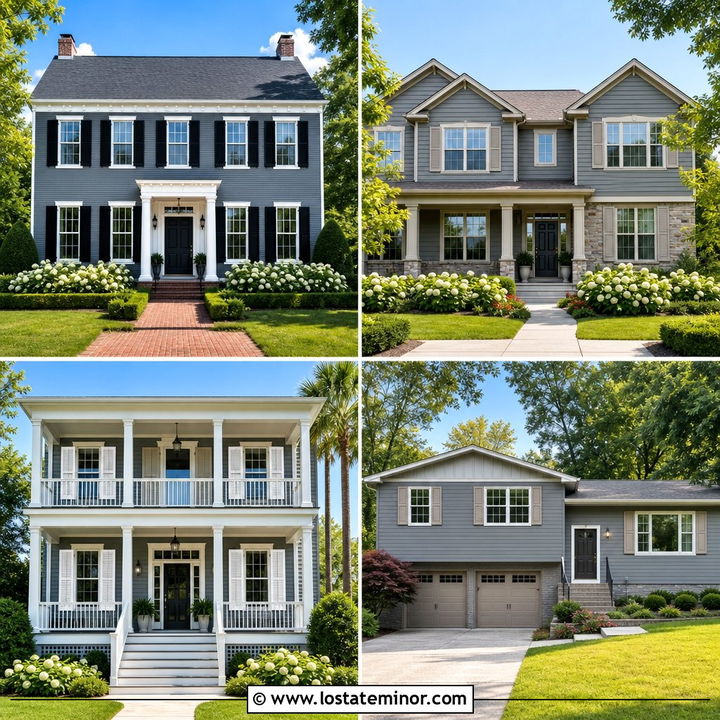
A symmetrical colonial facade looks crisp and established when charcoal grey siding is paired with bright white shutters. Carry the white onto the window trim, corner boards, porch columns, and roofline to create a connected frame around the darker body color. A glossy black front door adds definition without introducing another competing hue. Traditional red brick steps can remain unpainted, bringing warmth and history to the scheme. Choose shutters that are correctly sized for each window and use simple louvered panels to respect the architecture. Black lanterns, a charcoal roof, and clipped evergreen shrubs complete this balanced exterior. The result feels formal but not severe, making it suitable for both older colonials and newer suburban homes.
2. Charcoal Grey Farmhouse With Black Shutters
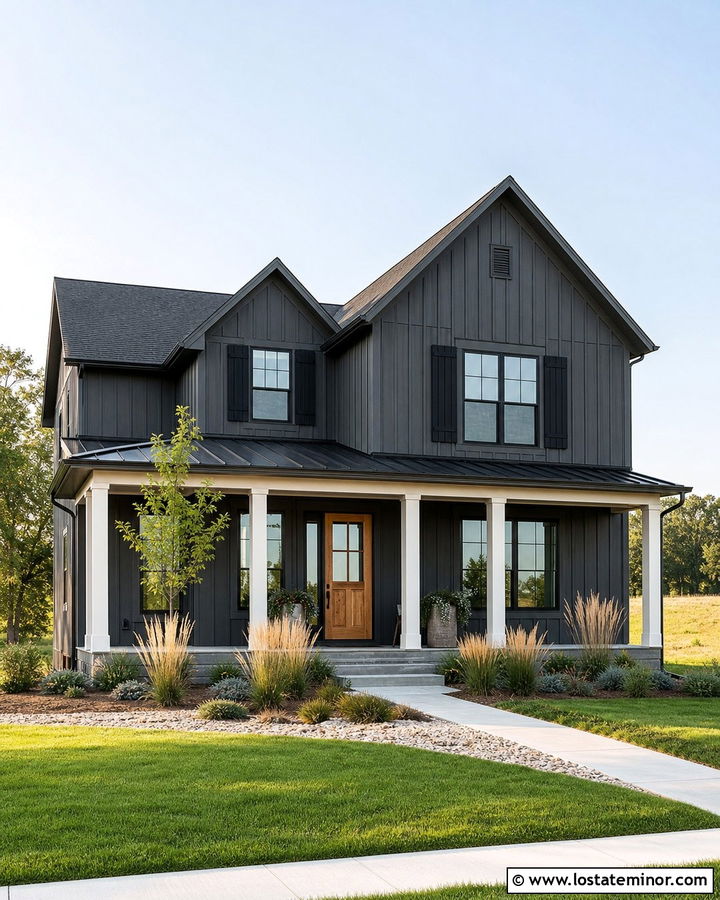
For a stronger modern farmhouse look, combine charcoal grey board-and-batten siding with matte black shutters. Black window frames, metal porch lights, and a standing-seam porch roof reinforce the clean contrast. Warm white should be used sparingly on the soffits, fascia, and porch columns so the exterior does not become visually heavy. A natural oak front door introduces warmth at the center of the facade. Continue that wood tone through porch furniture or exposed ceiling beams for better balance. A pale gravel walkway, simple foundation grasses, and a concrete driveway keep the setting relaxed. This complete scheme works especially well on a farmhouse with tall windows, prominent gables, and a deep covered porch.
3. Charcoal Grey Ranch With Cedar Shutters
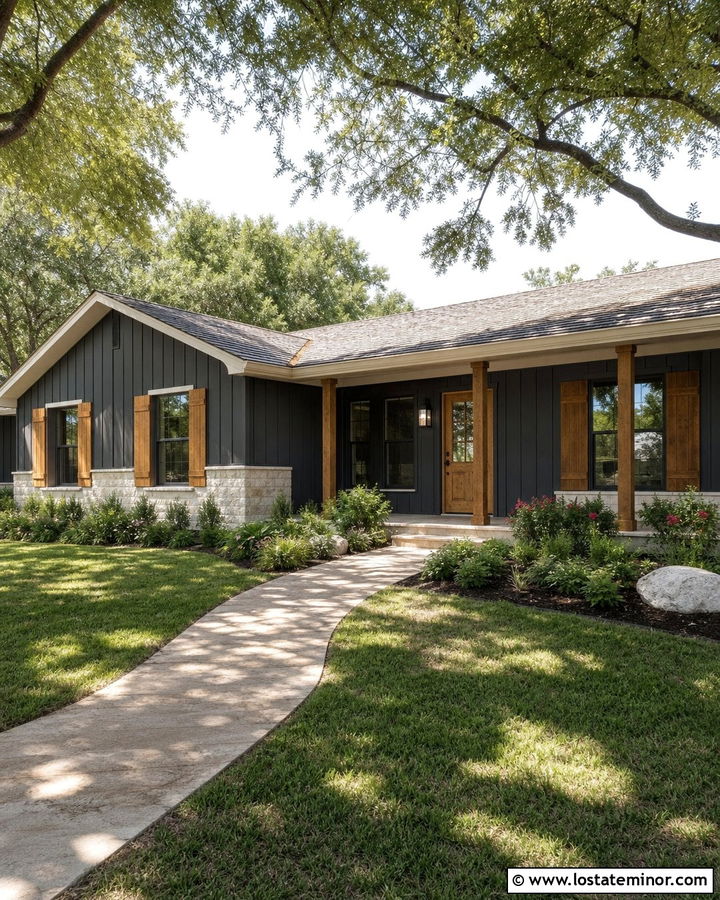
Natural cedar shutters can immediately warm up a low, horizontal charcoal grey ranch house. Select wide board-and-batten shutters with visible wood grain so they stand out clearly against the dark siding. Repeat the cedar on the front door, porch posts, or garage trim to make the material feel intentional. Soft cream window trim is often more flattering than stark white when the house includes warm wood. A medium brown or weathered grey roof will maintain the relaxed palette. Consider adding light limestone around the foundation or entry for another layer of texture. Broad planting beds, ornamental grasses, and a curved walkway soften the ranch’s straight lines, creating a welcoming exterior with modern rustic character.
4. Charcoal Grey Craftsman With Navy Shutters
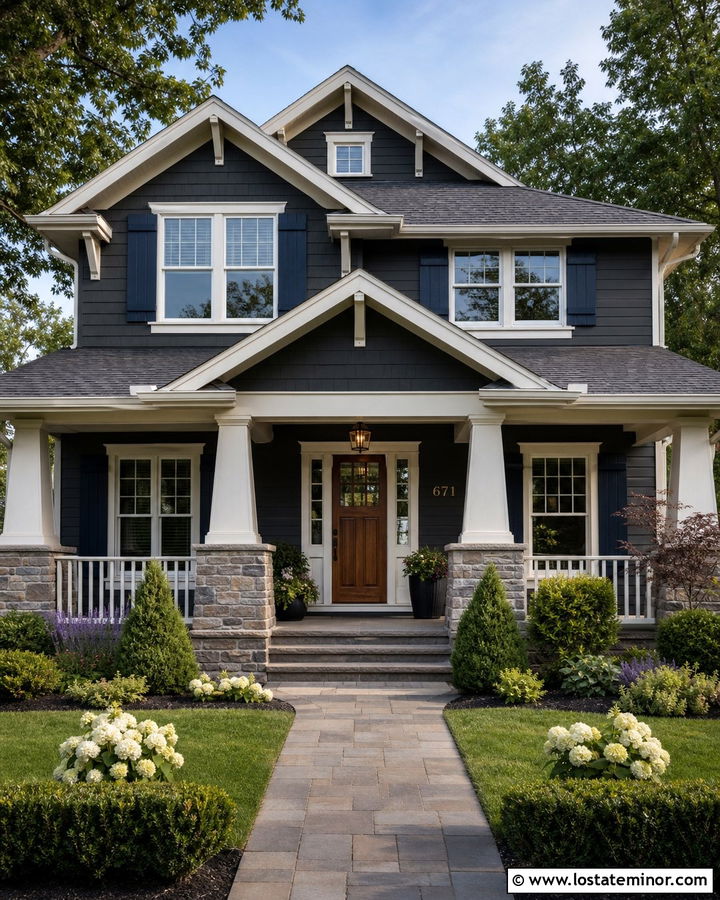
Can two dark colors work together successfully? A charcoal grey craftsman with deep navy shutters proves they can when enough lighter contrast is included. Use warm white around the windows, fascia, tapered columns, and porch railings to separate the charcoal body from the navy accents. A medium-stained wood door complements both colors while preserving the handcrafted craftsman mood. Stone column bases in grey, taupe, and muted brown help connect the facade to the landscape. Keep the roof dark grey rather than pure black to prevent the upper half from looking too heavy. Brass house numbers and warm metal lanterns add subtle highlights. The finished exterior feels layered, refined, and more distinctive than a standard grey-and-white combination.
5. Charcoal Grey Cape Cod With Red Shutters
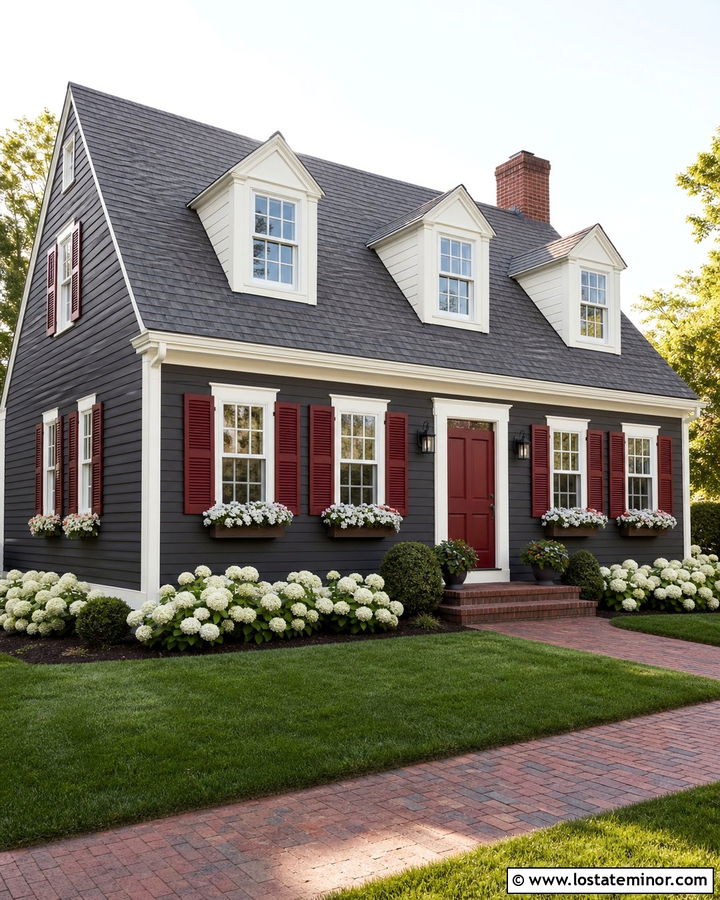
A Cape Cod home can support a confident accent color without losing its traditional charm. Charcoal grey shingle siding creates a deep neutral background for muted barn-red shutters. Choose a red with brown undertones instead of a bright primary shade. This keeps the palette sophisticated and works naturally with weathered wood, brick, and coastal landscaping. Paint the front door the same red for a clear focal point, then use creamy white on the trim, dormers, eaves, and window boxes. A medium grey roof provides gentle separation from the siding. White hydrangeas, low hedges, and a brick walkway bring softness to the darker exterior. The complete look feels classic, cheerful, and comfortably rooted in New England design.
6. Charcoal Grey Bungalow With Olive Green Shutters
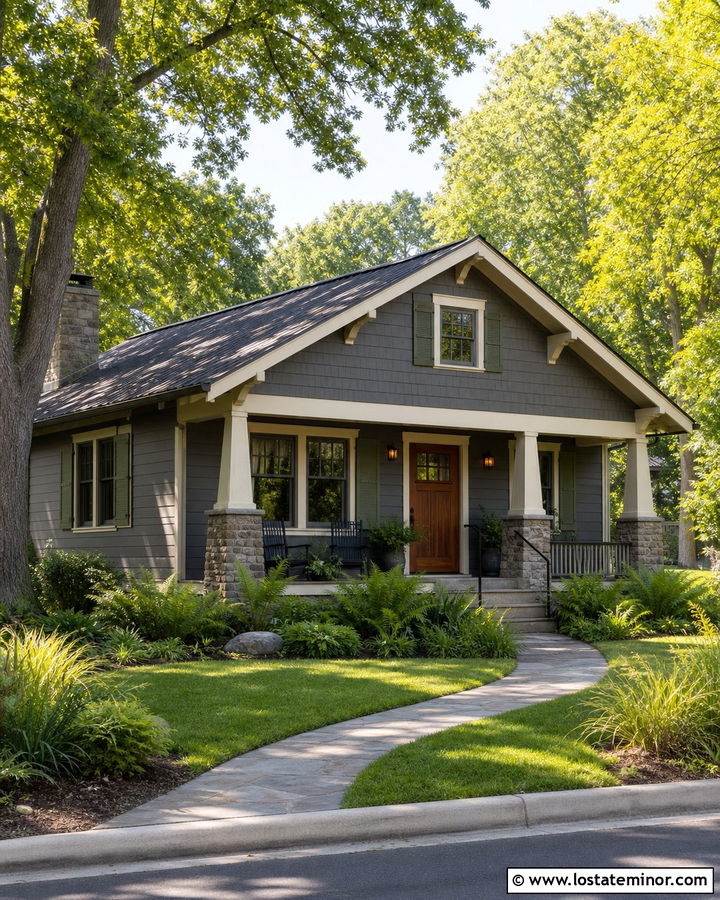
Earthy olive green shutters bring a quieter contrast to a charcoal grey bungalow. This combination works best when the green has muted grey undertones, allowing it to complement rather than compete with the siding. Use warm ivory trim around the windows and porch to brighten the facade. A stained fir front door, exposed rafter tails, and natural stone porch piers support the bungalow’s handcrafted details. Consider a weathered bronze roof or dark architectural shingles instead of sharp black. Layer the landscaping with ferns, boxwood, ornamental grasses, and other deep green plants. The olive shutters will appear connected to the garden, while the charcoal exterior provides a strong background. Together, the materials create an inviting and organic curb-appeal scheme.
7. Charcoal Grey Brick House With White Shutters
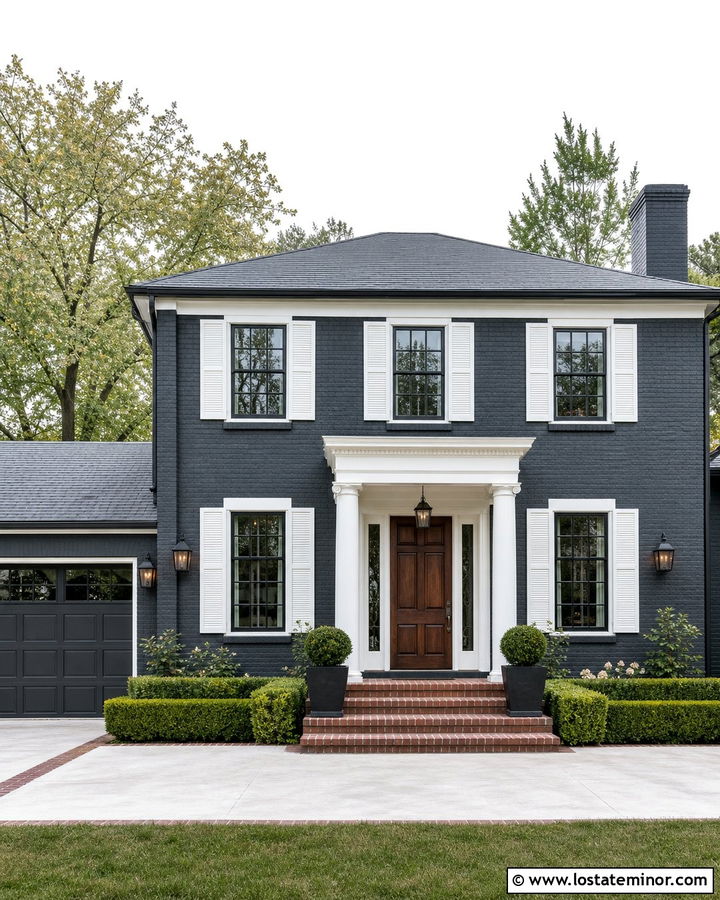
Painting an outdated brick exterior charcoal grey can unify uneven tones while preserving the masonry texture. Bright white shutters provide sharp relief and make traditional windows easier to notice from the street. Continue the white across the cornice, window trim, columns, and porch railing for an orderly appearance. A rich walnut front door keeps the scheme from becoming too cool. If the house has a prominent garage, paint the garage door charcoal to help it blend into the brick rather than dominate the facade. Black lighting and hardware add small, controlled accents. Finish the setting with light concrete steps, structured hedges, and symmetrical planters. This combination gives a traditional brick house a cleaner update without removing its familiar architectural character.
8. Charcoal Grey House With Light Grey Shutters
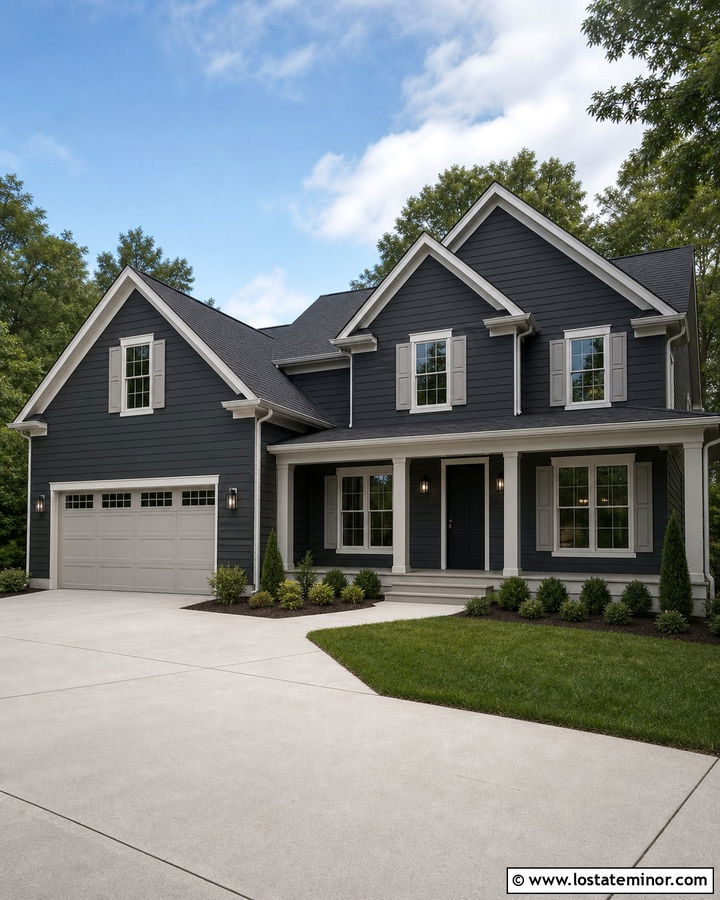
Low contrast can be just as effective as a bold black-and-white palette. Light grey shutters create a soft transition against charcoal grey siding, making the exterior feel calm and coordinated. Choose a pale grey with the same warm or cool undertone as the body color. Use that lighter shade on the garage door or porch floor to repeat it across the facade. Off-white trim will outline the windows without creating a harsh border. A black front door and dark roof provide necessary depth, while brushed nickel hardware introduces a restrained modern accent. This tonal scheme suits transitional homes with simple rooflines and limited ornamentation. It delivers visual interest through layering rather than bright color, producing an elegant exterior that feels easy to maintain.
9. Charcoal Grey Tudor With Black Shutters
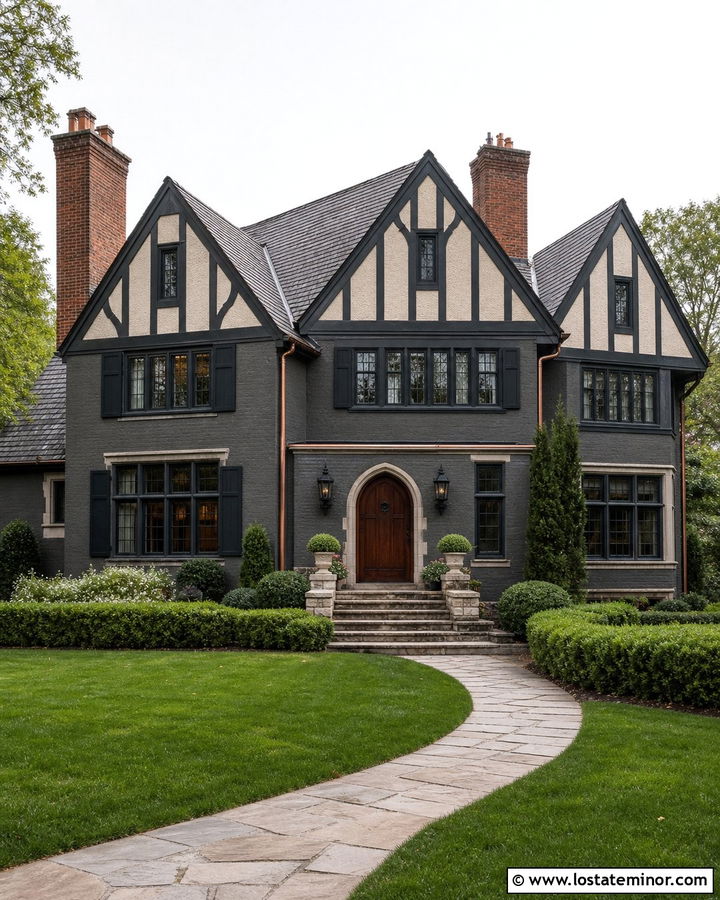
A Tudor home already has strong lines, so its exterior palette should organize rather than overwhelm the architecture. Charcoal grey stucco or painted brick offers a dramatic foundation, while black shutters connect with dark decorative timbers and leaded window frames. Use soft cream within the gables and around the entry to keep the facade readable. A heavy arched wood door in a medium walnut stain makes a natural focal point. Brick chimneys, stone steps, and copper gutters can remain visible as warm textural accents. Keep shutter shapes simple and place them only where they suit the window proportions. Deep green hedges and a curved stone path reinforce the established character. The final exterior feels historic, tailored, and quietly dramatic.
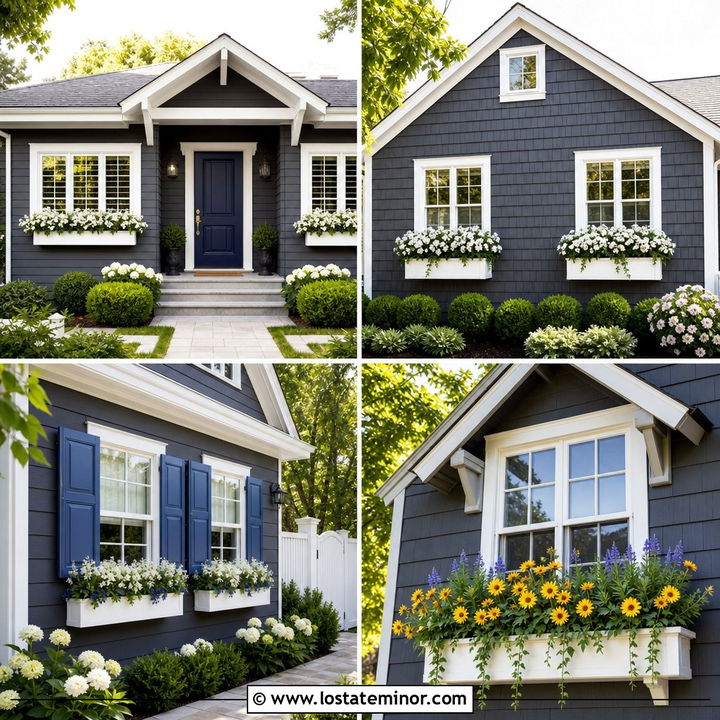
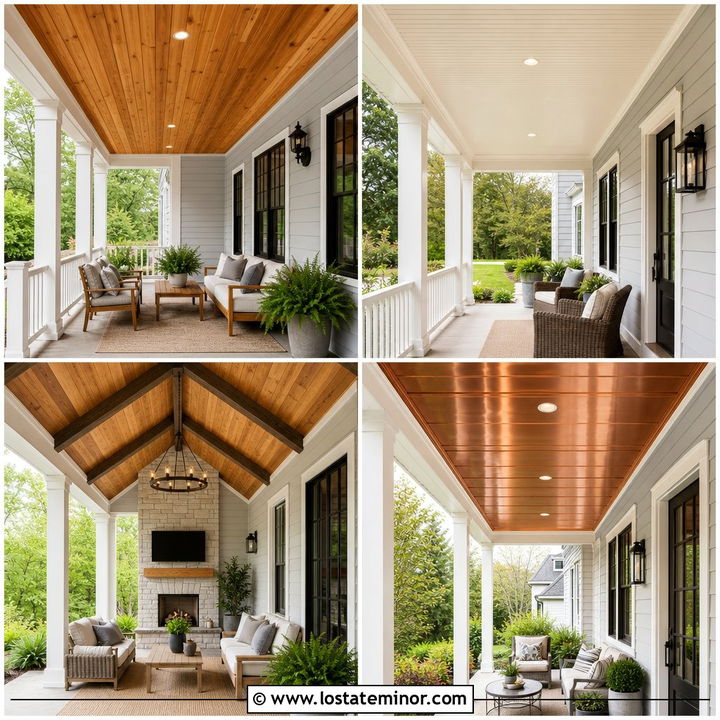
10. Charcoal Grey Split-Level With Wood Shutters
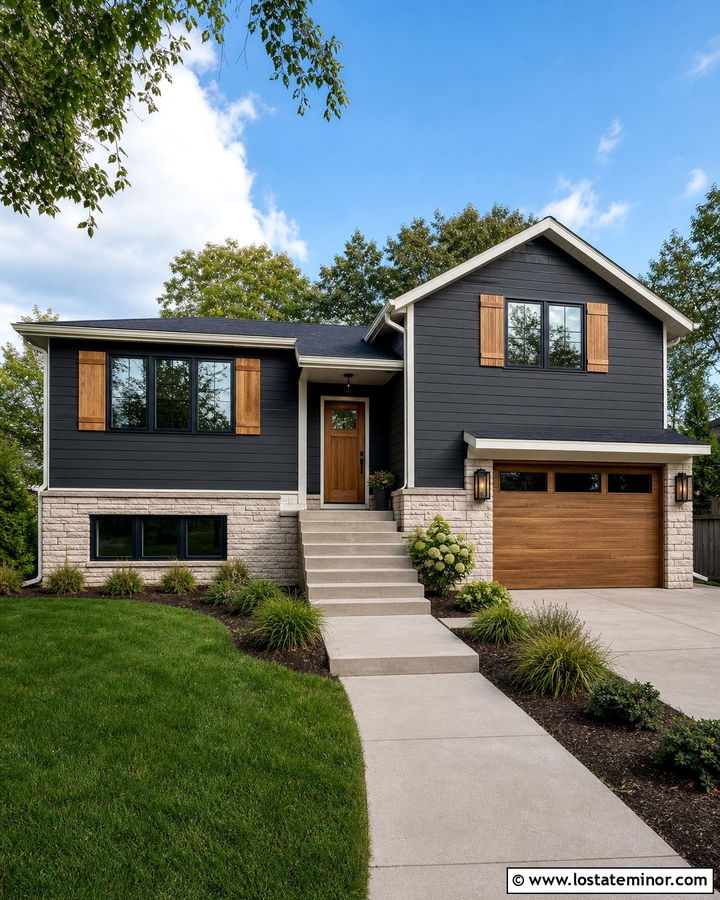
A split-level house often needs stronger visual connections between its upper and lower sections. Charcoal grey siding can unify the main facade, while medium-toned wood shutters bring warmth to the window groupings. Repeat the wood on the garage door or front entry canopy so the shutters do not appear isolated. Paint the foundation a slightly lighter grey, or cover part of it with pale stacked stone. Warm white fascia and window trim provide clean separation around the roofline. A black front door can add depth, but a wood door will create a softer effect. Wide concrete steps, horizontal planting beds, and a defined walkway improve the overall composition. This coordinated scheme helps a practical split-level look more intentional and contemporary.
11. Charcoal Grey Cottage With Blue Shutters
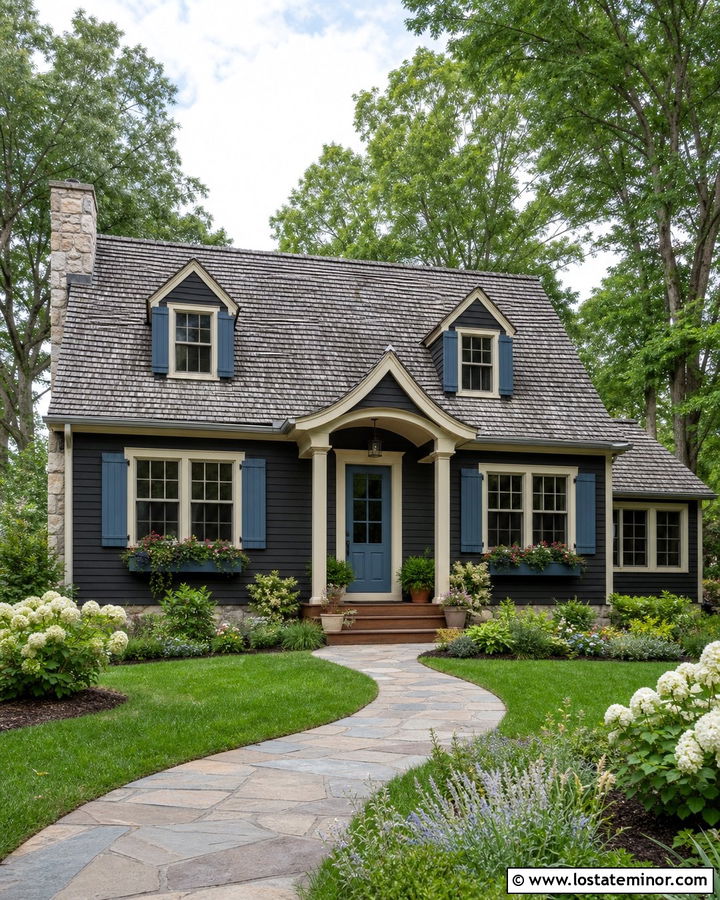
Dusty blue shutters introduce gentle color to a charcoal grey cottage without overpowering its compact facade. Look for a medium blue with substantial grey undertones, such as slate blue or muted denim. Cream trim around the windows and eaves will soften both darker colors. Paint the front door blue to match the shutters, or choose natural wood if you prefer a warmer entrance. A light stone chimney, cedar porch floor, and weathered grey roof add cottage texture. Window boxes filled with white and pale blue flowers can reinforce the color scheme during warmer months. Keep the landscaping informal with curved beds and layered greenery. The combination feels friendly and personal while maintaining the grounded appearance that makes charcoal grey so appealing.
12. Charcoal Grey Georgian With Green Shutters
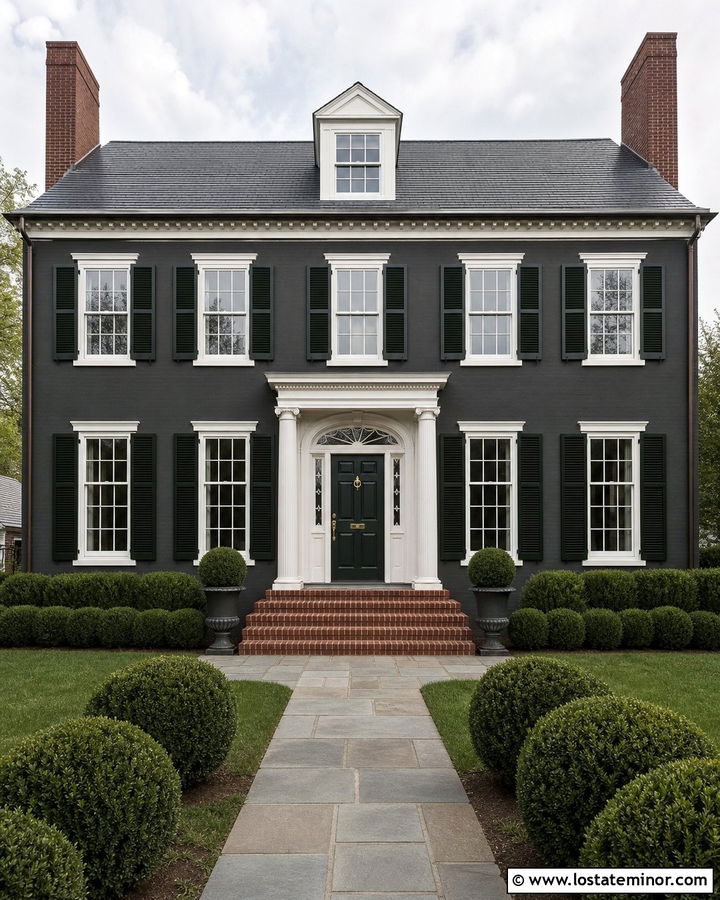
Dark green shutters provide a stately alternative to black on a charcoal grey Georgian home. Choose a nearly black forest green that reveals its color clearly in direct daylight. Use creamy white on the classical trim, cornice, columns, and window surrounds to maintain the home’s formal symmetry. A black or dark green front door with polished brass hardware strengthens the traditional character. Red brick steps and chimneys introduce warmth and keep the exterior from looking monochromatic. The roof should remain neutral, ideally in dark grey slate or architectural shingles. Symmetrical boxwood plantings, matching urns, and a straight stone walkway emphasize the balanced facade. This complete palette feels established and sophisticated without relying on a predictable black shutter treatment.
13. Charcoal Grey House With Cream Shutters
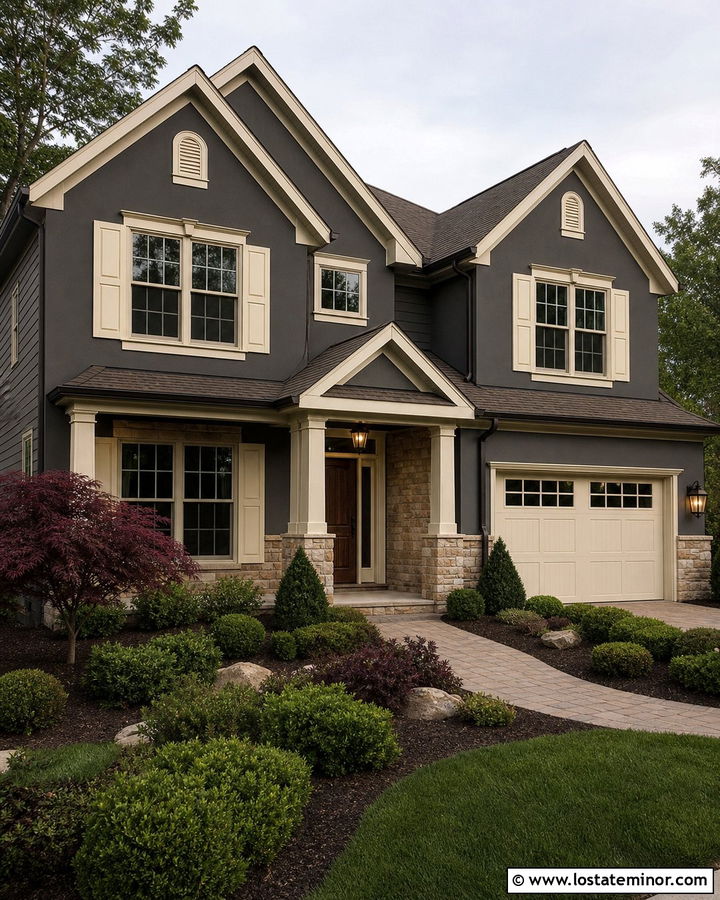
Cream shutters create a softer, warmer contrast than pure white, especially on a charcoal grey exterior with brown or taupe undertones. Repeat the cream on the fascia, window trim, porch columns, and garage door to create consistency. A dark stained front door will anchor the entrance and complement the warmth of the lighter accents. This scheme looks particularly attractive with tan stone veneer, aged brick, or a brown-grey roof. Use oil-rubbed bronze fixtures instead of cool silver metals to preserve the warm direction. Landscaping with burgundy foliage, soft grasses, and evergreen shrubs adds natural color without distracting from the house. The finished exterior remains high contrast and clearly defined, yet it feels less formal than charcoal paired with brilliant white.
14. Charcoal Grey Victorian With Burgundy Shutters
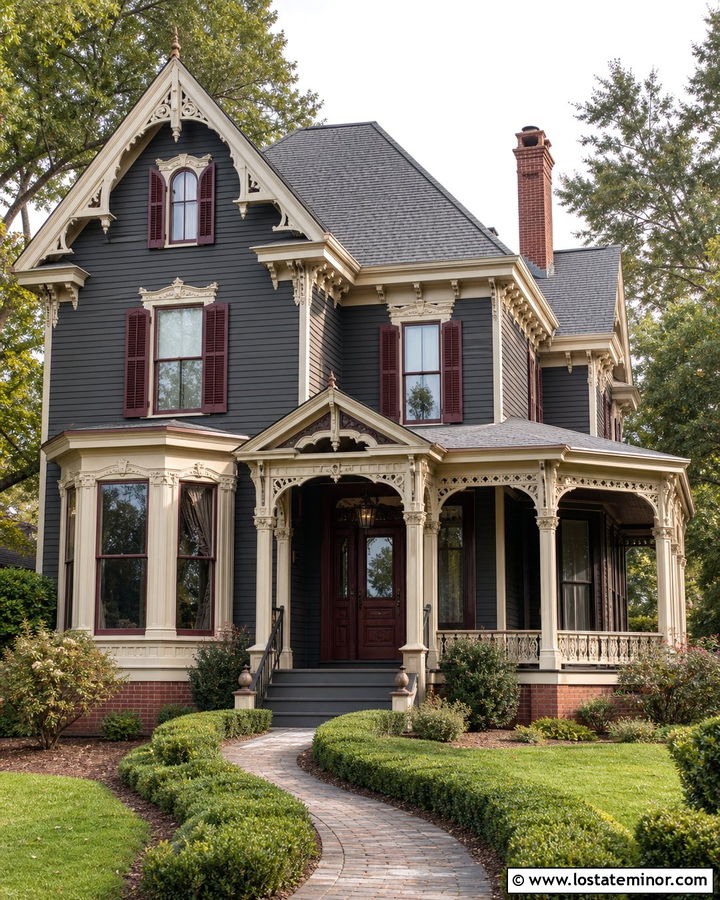
Decorative Victorian architecture can handle a richer palette than many simpler house styles. Charcoal grey siding creates a consistent background, while deep burgundy shutters add color around tall windows. Use warm cream on the ornate trim, brackets, porch spindles, and gable details so the craftsmanship remains visible. A burgundy front door can coordinate with the shutters, although a stained mahogany door offers greater material contrast. Consider a medium grey roof with subtle variation instead of solid black. Natural brick on the foundation or chimney will echo the red undertones in the burgundy accents. Keep the landscaping structured near the porch and looser toward the yard. This approach highlights the Victorian details without covering the facade in too many unrelated colors.
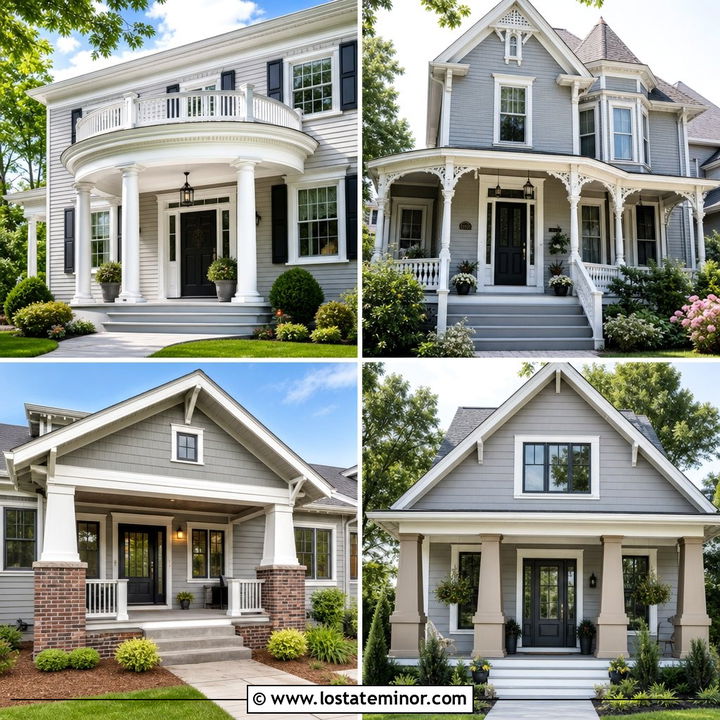
15. Charcoal Grey Modern House With Panel Shutters
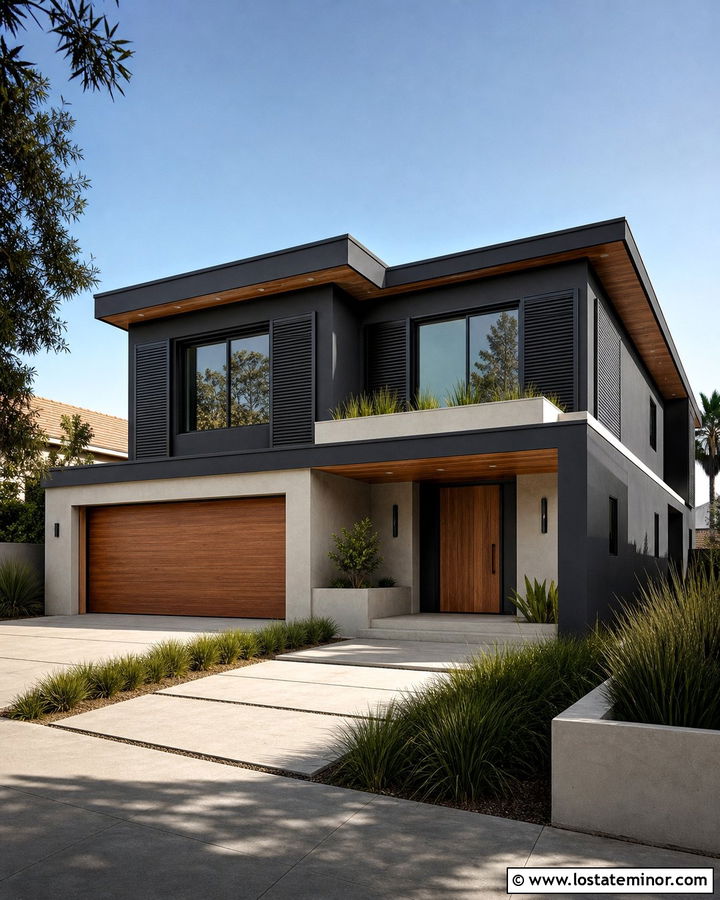
Modern homes need shutters that look purposeful rather than traditionally decorative. Wide flat-panel shutters in matte black or dark bronze can frame selected windows on a charcoal grey facade. Match their clean shape to the home’s horizontal siding, large glass openings, and simple roofline. Warm wood at the front door, soffits, or recessed entry prevents the dark palette from feeling cold. Use minimal off-white trim, allowing windows and wall planes to remain visually clean. Pale concrete, large-format pavers, and linear planting beds strengthen the contemporary setting. If the house includes a garage, choose a flush wood-look door that repeats the entrance material. The complete exterior feels architectural and streamlined, with shutters functioning as bold graphic elements within the larger composition.
16. Charcoal Grey Saltbox With Black Shutters
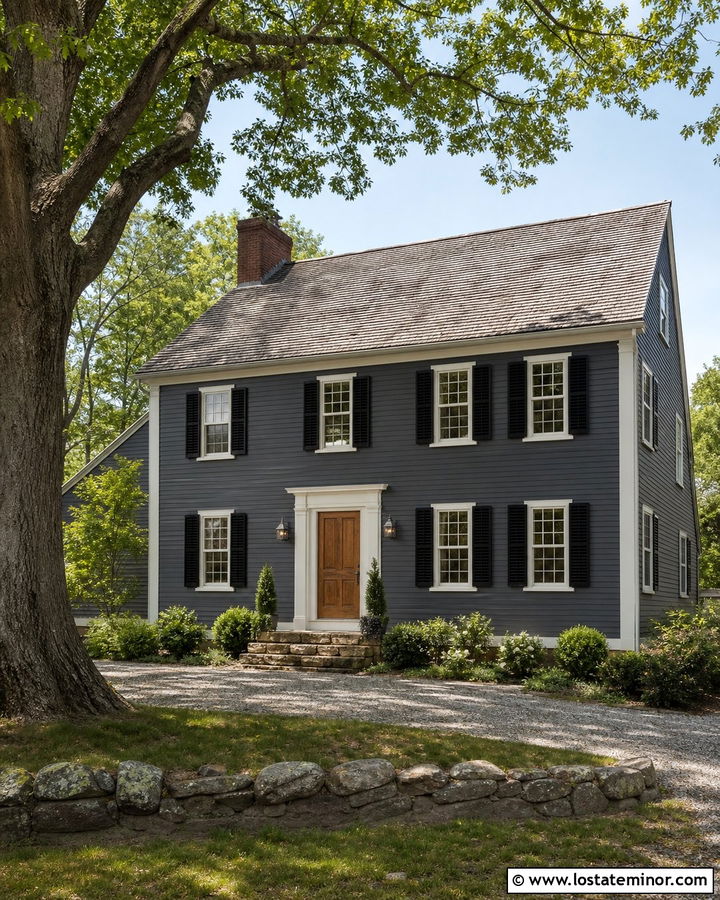
The steep, asymmetrical roof of a saltbox house already creates a memorable outline. Charcoal grey clapboard siding emphasizes that historic silhouette, while narrow black louvered shutters provide traditional window definition. Use antique white on the corner boards, eaves, and window surrounds for a slightly aged appearance. A red, black, or natural wood front door can serve as the main accent, depending on how much color you want. Stone steps and a gravel walkway suit the understated architecture better than highly polished materials. Keep the roof in a weathered charcoal tone that remains distinct from the siding. Simple foundation shrubs and a mature shade tree complete the setting. This restrained palette respects the saltbox form while giving it a fresh, cared-for finish.
17. Charcoal Grey House With Copper Shutters
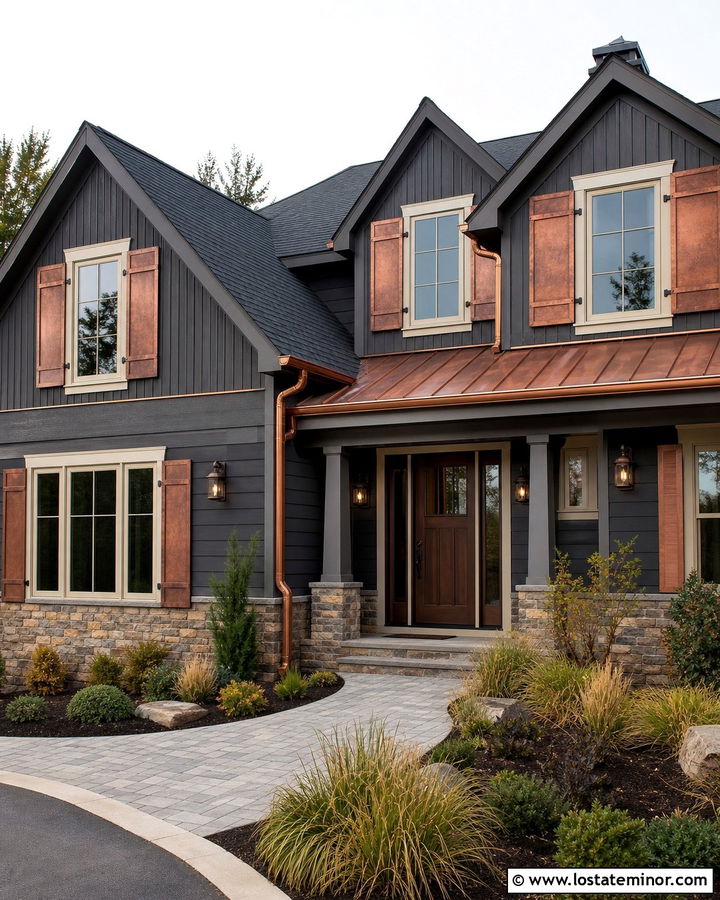
Copper-toned shutters can create a warm focal point against dark charcoal grey siding. Rather than using shiny orange metal across the entire facade, select aged copper shutters or wood shutters painted in a muted copper-brown finish. Repeat the tone through gutters, porch lights, and a small entry awning. Cream trim provides a comfortable bridge between the charcoal and copper colors. A dark walnut front door strengthens the warmth, while a black roof keeps the upper facade grounded. This scheme suits craftsman, rustic contemporary, and mountain-inspired homes with stone foundations or timber details. Use tan gravel, grey pavers, and drought-tolerant planting around the house. The result is distinctive and textural without depending on an overly bright accent color.
18. Charcoal Grey Foursquare With White Shutters
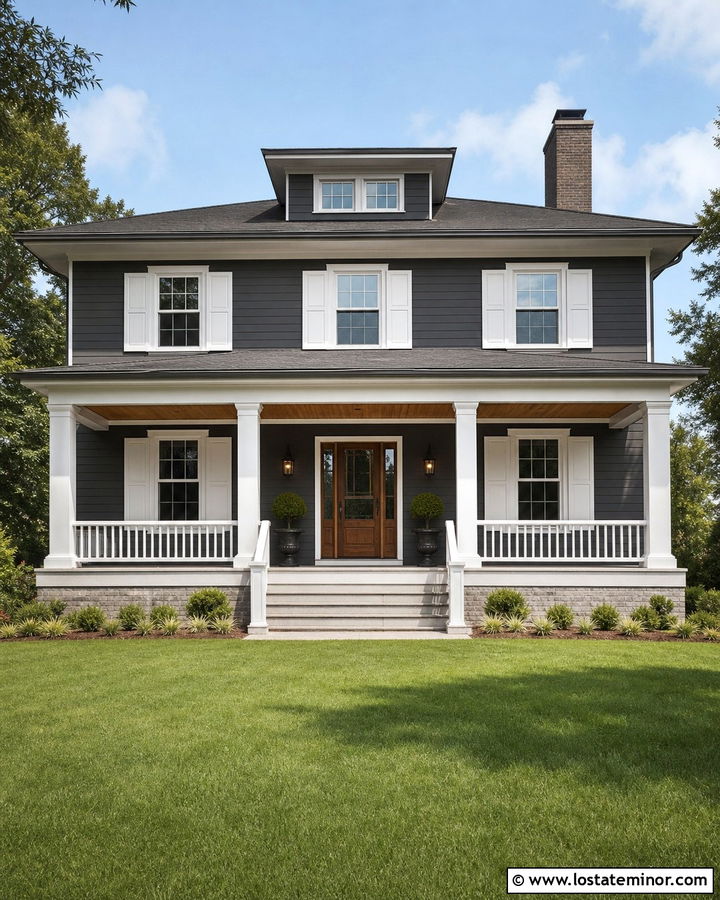
An American Foursquare benefits from a simple palette that supports its strong, boxy shape. Charcoal grey horizontal siding gives the large facade depth, while white shutters and window trim create an orderly rhythm across both floors. Carry the white onto the broad porch columns, railing, fascia, and stair risers. A warm wood front door and matching porch ceiling provide relief from the cool neutrals. If the foundation is brick, leave it natural or use a thin limewash that allows some color variation to remain visible. A dark grey roof, black lanterns, and symmetrical planters complete the exterior. The combination makes the home feel substantial and welcoming, with enough contrast to highlight its windows and generous full-width porch.
19. Charcoal Grey Mediterranean House With Wood Shutters
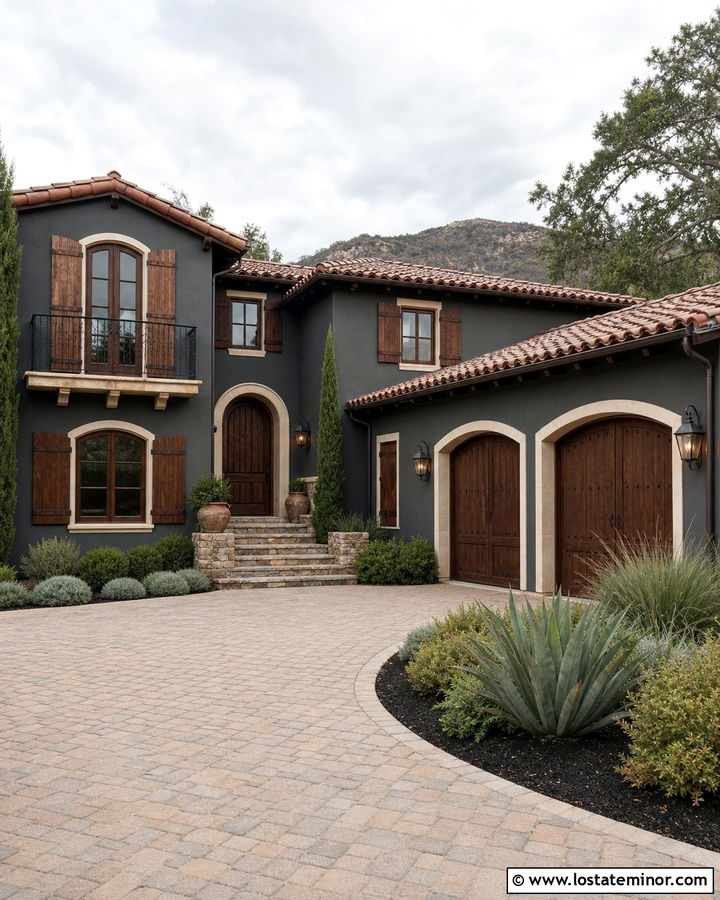
A Mediterranean home takes on a sophisticated appearance when smooth charcoal grey stucco is paired with rustic wood shutters. Choose shutters with visible planks, iron strap hinges, and a medium walnut stain. Repeat the wood at the arched front door and garage doors to distribute warmth across the facade. Cream trim around selected arches can add definition, but keep it limited so the stucco remains dominant. A terracotta tile roof creates a rich contrast and prevents the palette from becoming overly dark. Natural stone steps, clay planters, and drought-tolerant landscaping support the regional character. Under bright sun, the charcoal stucco looks strong and dimensional, while the wood and roof tones create a welcoming, grounded balance.
20. Charcoal Grey Prairie House With Brown Shutters
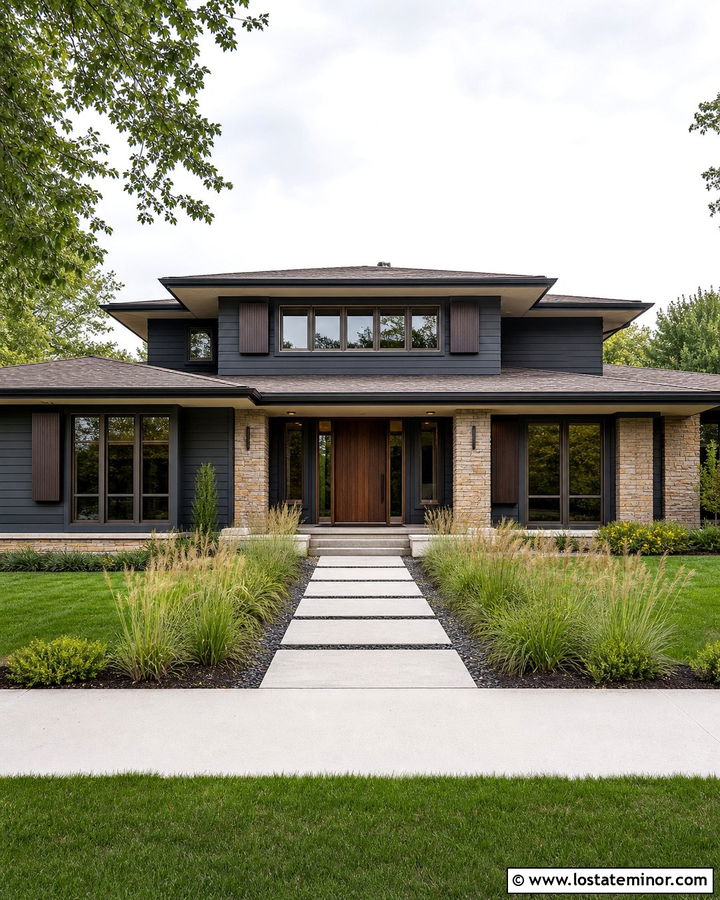
Long rooflines and horizontal windows make a Prairie-style home a natural match for a layered, earthy exterior. Use charcoal grey stucco or horizontal siding as the primary color, then add dark brown flat-panel shutters around appropriately sized windows. A broad wood front door, deep bronze window frames, and warm stone piers continue the organic palette. Choose a low-profile roof in a brown-grey blend to maintain the horizontal emphasis. Soft beige soffits can brighten deep overhangs without introducing stark white. Extend the architecture into the landscape with wide concrete pavers, low ornamental grasses, and spreading shrubs. This complete design feels connected to the ground, with the brown shutters adding warmth while allowing the charcoal exterior to remain the main visual feature.
21. Charcoal Grey A-Frame With Cedar Shutters
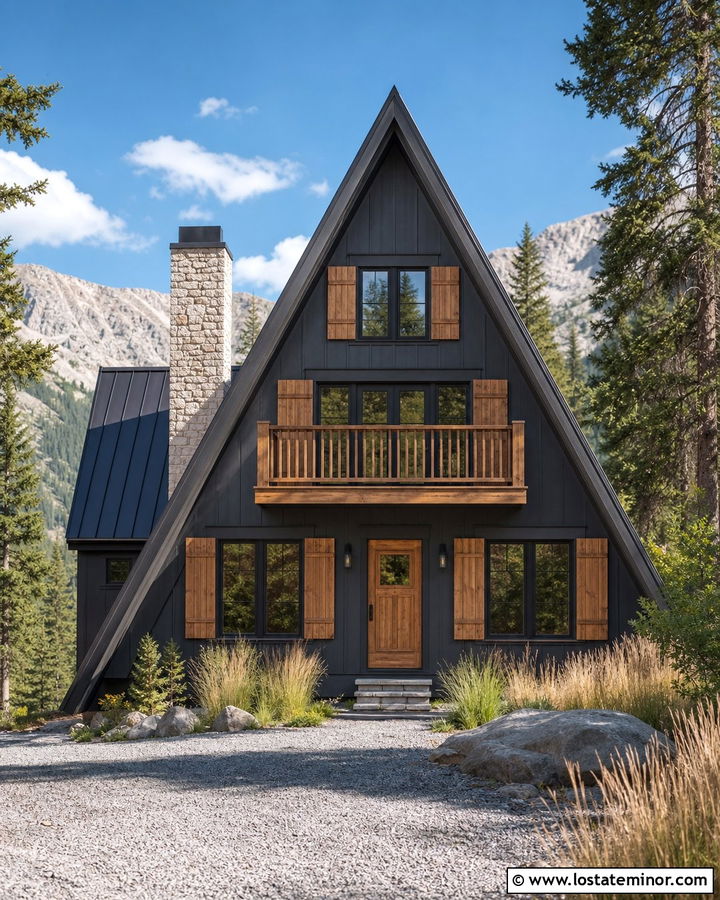
Tall cedar shutters can highlight the vertical shape of a charcoal grey A-frame house. Use board-and-batten panels beside the lower windows and repeat the wood on the front door, balcony railing, and exposed beams. Black window frames create a clean connection between the dark siding and large glass sections. A charcoal metal roof will preserve the dramatic triangular silhouette, while a light stone chimney adds contrast and texture. Avoid excessive white trim, which can interrupt the architecture’s strong lines. Instead, use warm grey around necessary edges and openings. A gravel driveway, natural boulders, evergreen trees, and native grasses create a relaxed setting. The finished house feels contemporary yet rustic, with cedar warming the deep charcoal facade.
22. Charcoal Grey Coastal House With Pale Blue Shutters
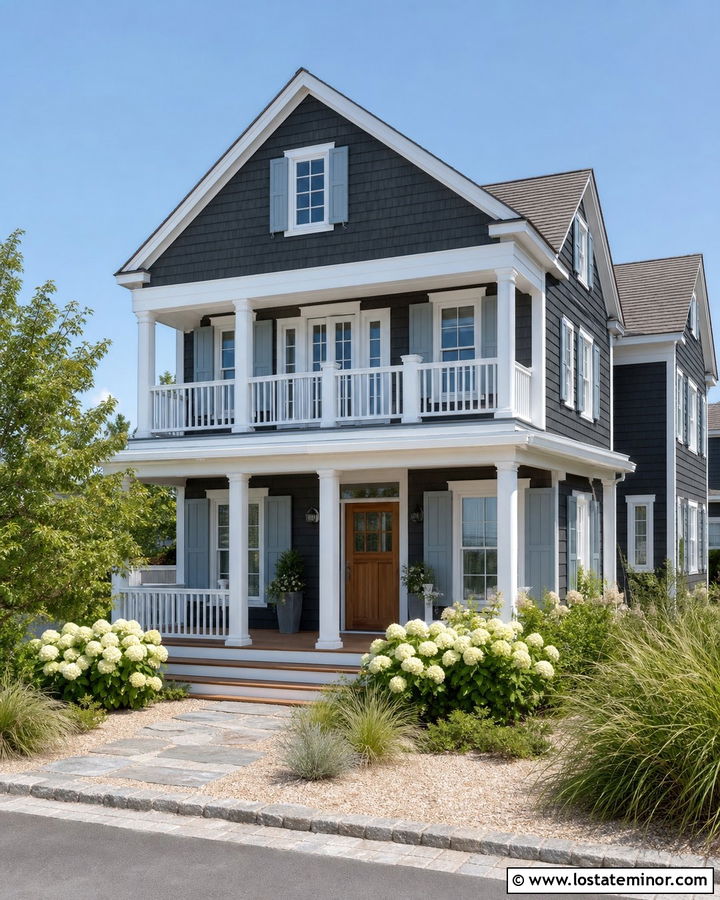
Pale blue shutters bring an airy quality to a charcoal grey coastal home. Select a subdued blue-grey that remains visible against the siding without looking overly bright. Use crisp white on the trim, porch railings, columns, and upper balcony to give the facade a clean coastal outline. A natural teak or light oak front door adds warmth and can coordinate with a wood porch floor. Choose a medium grey roof that will not compete with the shutter color. Light stone paths, clipped grasses, hydrangeas, and sandy-toned gravel complete the setting. This palette works especially well on homes with shake siding, dormers, and generous porches. Charcoal provides depth, while the blue and white accents keep the complete exterior relaxed and approachable.
23. Charcoal Grey House With Yellow Shutters
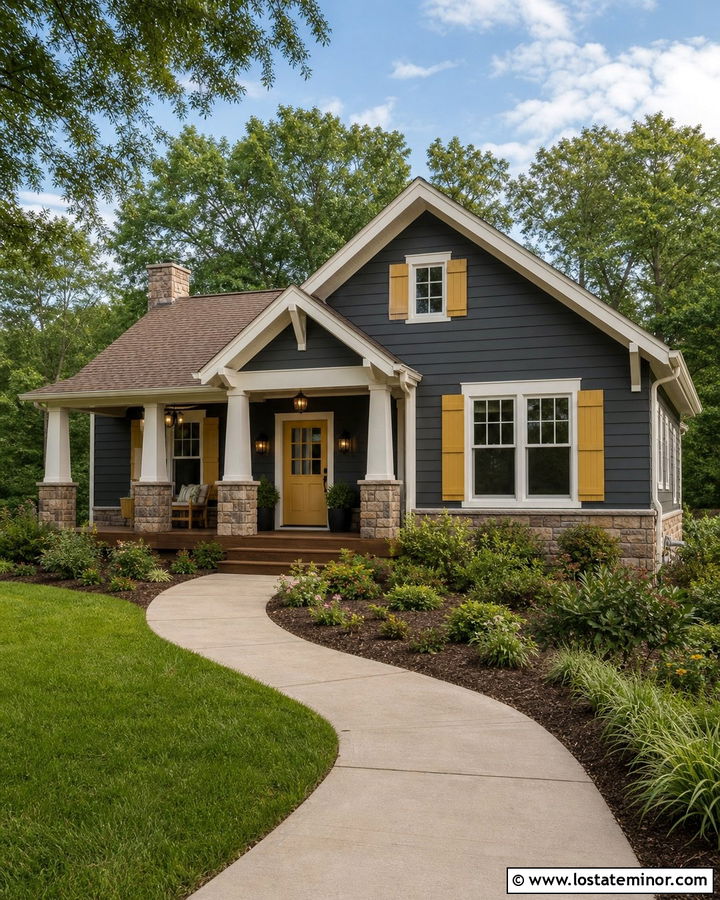
Muted yellow shutters can energize a charcoal grey house when the rest of the exterior remains restrained. Choose ochre, mustard, or golden yellow rather than a bright lemon tone. Repeat the shutter color on the front door, but limit it elsewhere so it retains its impact. Warm white trim will frame the windows and soften the transition between charcoal and yellow. A natural stone foundation, medium brown roof, and wood porch floor support the warm accent. Black lighting and hardware provide small grounding details. This combination works especially well on cottages, bungalows, and simple ranch homes with uncomplicated window arrangements. The completed scheme feels cheerful and memorable, yet the deep grey body color prevents it from becoming overly playful.
24. Charcoal Grey Duplex With Matching Shutters
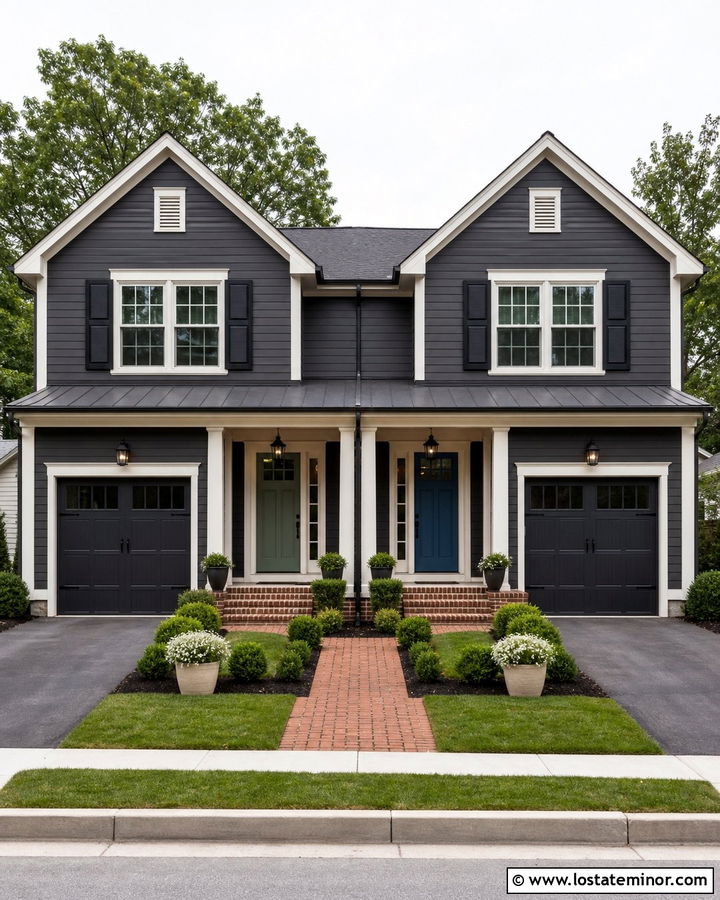
A charcoal grey duplex can look unified without hiding the individual entrances. Use matching black shutters on both sides to create consistent window rhythm, then distinguish each front door with related accent colors such as deep blue and muted green. Keep the trim, porch columns, and shared roofline warm white across the complete building. Matching lanterns, house numbers, and planters will prevent the facade from feeling divided into unrelated sections. If there are separate garages, paint both doors charcoal so they recede into the exterior. A shared brick walkway and symmetrical foundation plantings reinforce balance. This approach creates a polished streetside appearance while allowing each household a small amount of personality through controlled entry details.
25. Charcoal Grey House With Greige Shutters
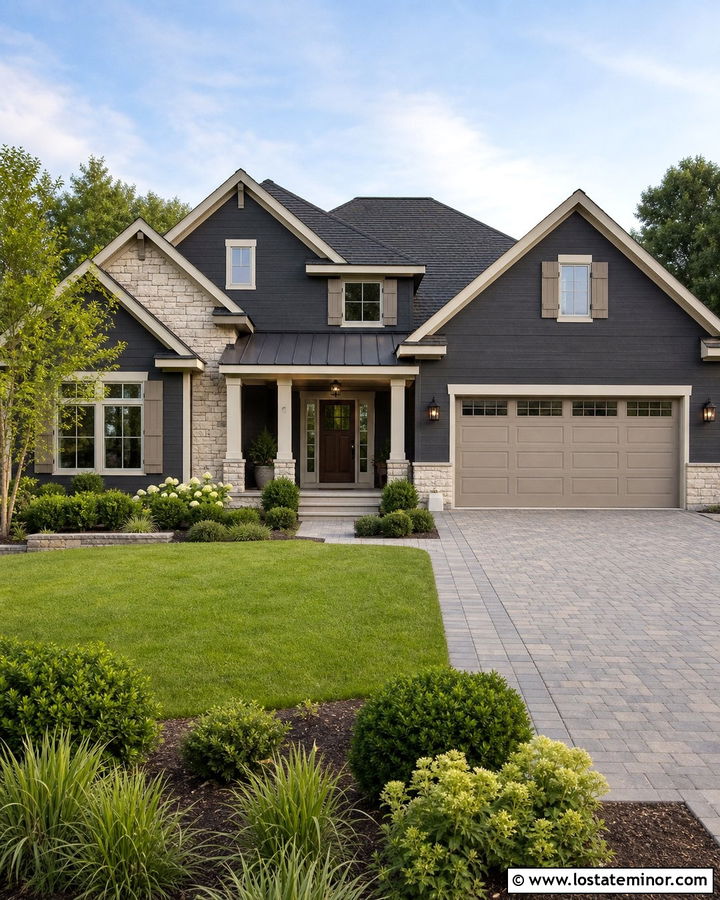
Greige shutters offer subtle warmth without creating a high-contrast exterior. Select a medium greige with taupe undertones so it remains visible against the charcoal grey siding. Repeat this color on the garage door, porch floor, or stone-inspired foundation to spread it naturally across the facade. Soft ivory window trim keeps the combination light and approachable. A dark wood front door introduces a deeper warm note, while bronze lighting complements the taupe direction. This palette is especially useful on transitional homes that combine traditional windows with cleaner modern lines. Use pale limestone, grey concrete pavers, and layered green landscaping to complete the scheme. The result is calm, coordinated, and less severe than an exterior built around black or bright white shutters.
26. Charcoal Grey Shingle House With Black Shutters
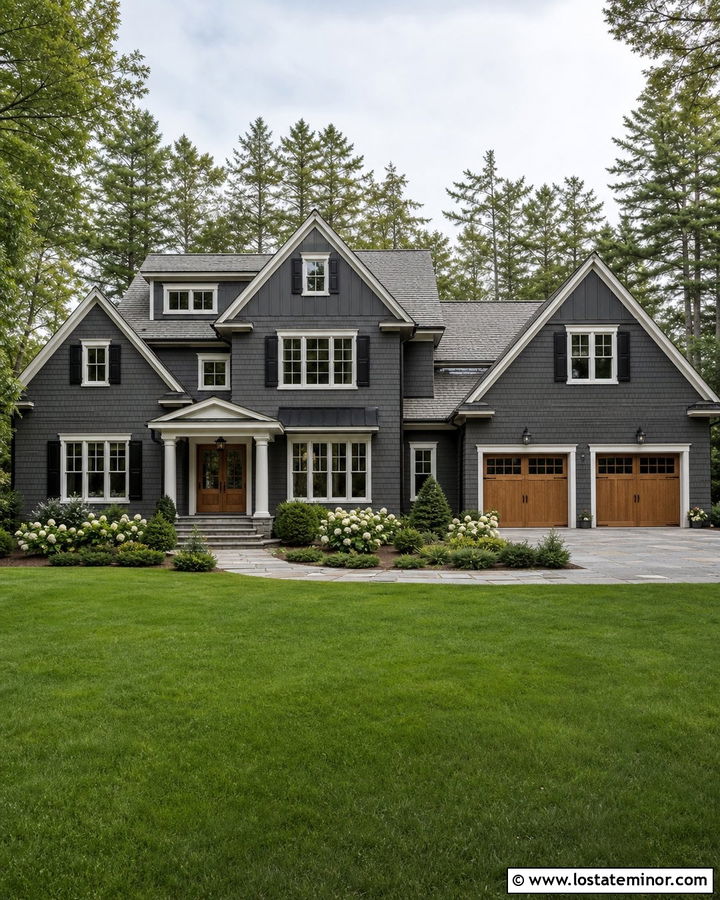
Charcoal grey shingle siding creates natural shadow and texture, even when the exterior uses a limited color palette. Add matte black louvered shutters for clean window definition, then brighten the edges with soft white trim. A medium oak front door and matching garage doors will bring warmth to the darker materials. If the home has multiple gables, use charcoal board-and-batten siding inside one or two peaks for subtle variation without changing color. A grey roof, black gutters, and simple lanterns maintain the restrained look. Finish the property with a bluestone walkway, broad lawn, white flowering shrubs, and evergreen foundation plants. This complete exterior feels substantial and refined, with texture preventing the charcoal-and-black combination from appearing flat.
27. Charcoal Grey House With Terracotta Shutters
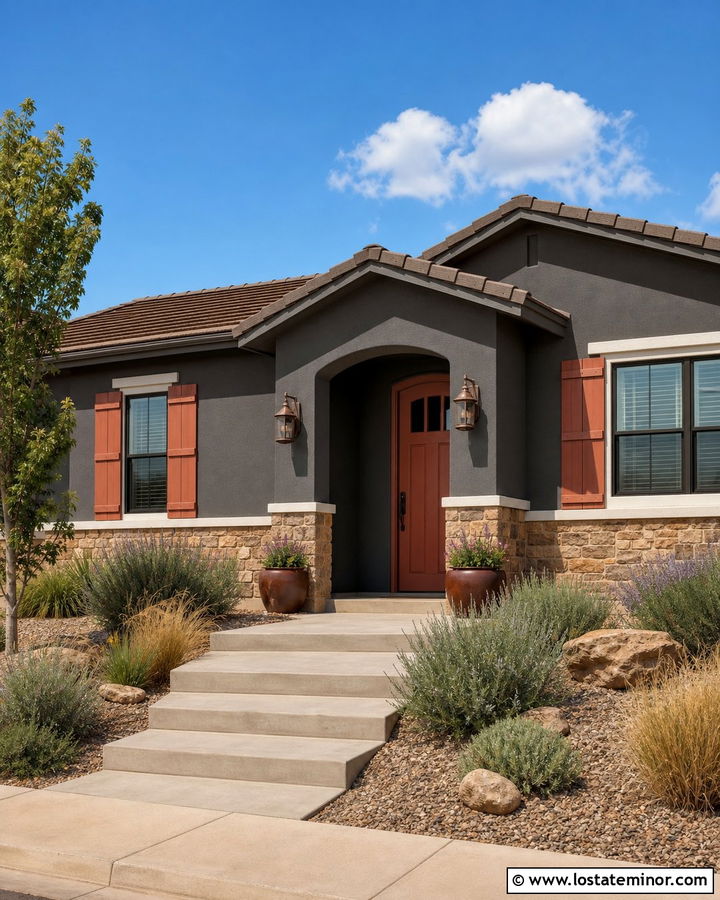
Terracotta shutters introduce an earthy red-orange accent that works beautifully with warm charcoal grey. Choose a subdued clay color with brown undertones rather than a saturated orange. Carry the terracotta onto the front door or ceramic planters, but keep the trim creamy white for clarity. A tan stone foundation and medium brown roof help bridge the warm accent and dark siding. Bronze lights, gutters, and door hardware fit the scheme better than cool chrome finishes. This palette suits Southwestern ranch homes, Spanish-influenced cottages, and rustic contemporary houses. Surround the facade with gravel, ornamental grasses, sage plants, and broad concrete stepping stones. The overall design feels sun-warmed and grounded while retaining the modern strength of a charcoal exterior.
28. Charcoal Grey Cottage With Pink Shutters
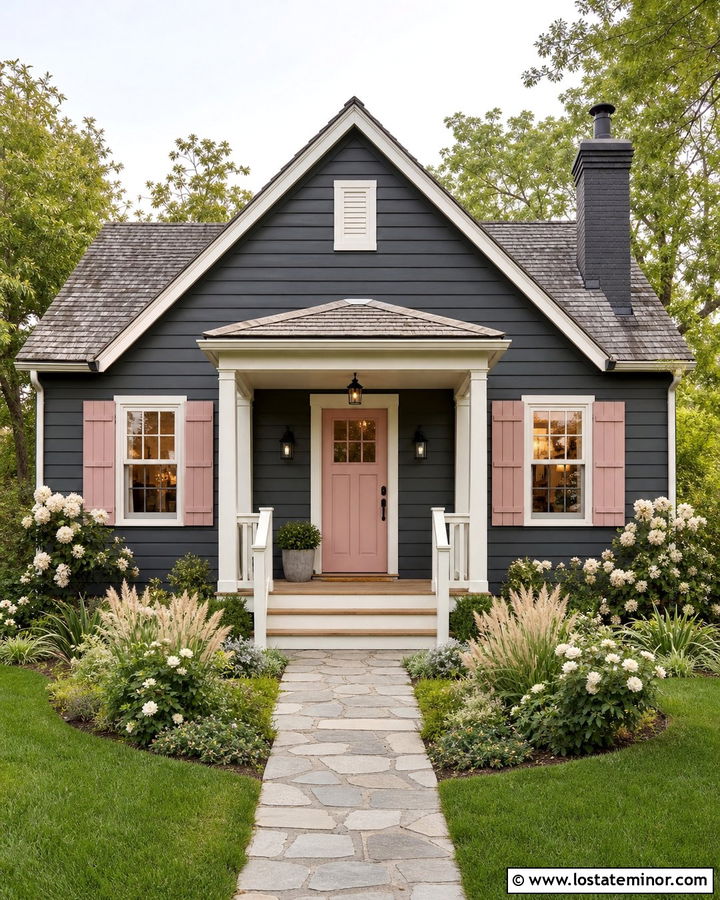
Soft dusty pink shutters can give a charcoal grey cottage an unexpected but tasteful personality. Select a muted blush with grey or brown undertones so it feels integrated with the exterior. Paint the front door in the same shade for a clearly connected design. Warm white trim around the windows, eaves, and porch keeps the facade bright, while a natural wood porch floor introduces another gentle color. A weathered grey roof and black lighting provide practical neutral anchors. Surround the house with white roses, soft grasses, lavender-toned flowers, and curved garden beds. Used in this controlled way, pink does not make the exterior feel overly sweet. Instead, it creates a charming focal point against the strong charcoal background.
29. Charcoal Grey House With Bronze Shutters
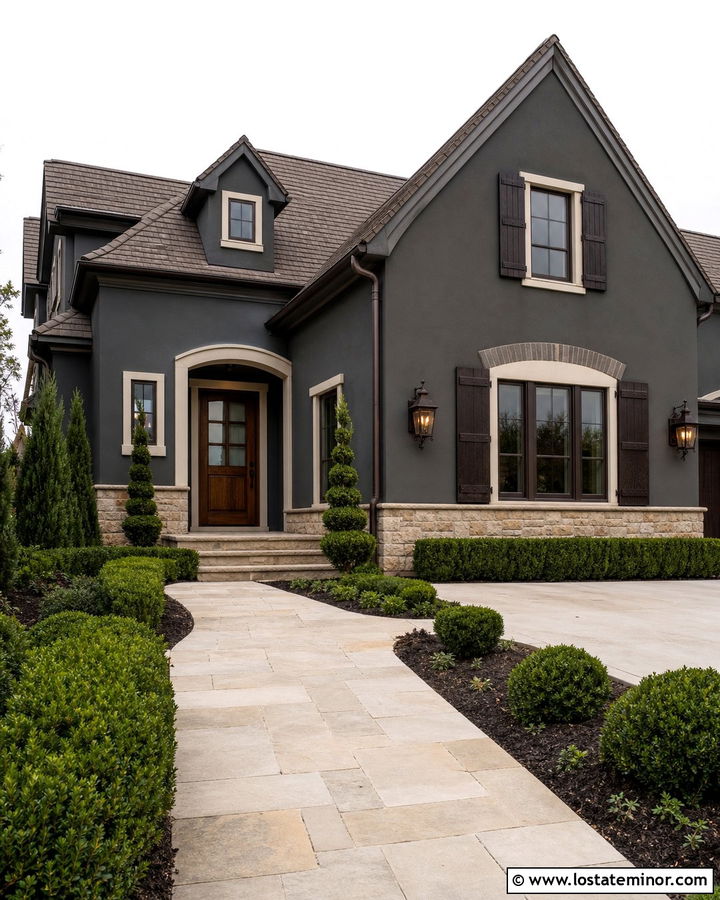
Dark bronze shutters create subtle definition on a charcoal grey exterior, especially when black feels too sharp. The brown undertone becomes more noticeable in direct sunlight and coordinates naturally with wood, brick, and warm stone. Use a bronze front door or stained walnut entry, then repeat the metal finish on gutters, lanterns, railings, and house numbers. Cream or light greige trim provides enough separation around the windows without producing a stark outline. A brown-grey roof and tan stone base complete the warm neutral palette. This combination works well on upscale ranch, transitional, and European-inspired homes. Structured shrubs and pale stone paths keep the landscaping polished while allowing the understated shutter color to reward a closer look.
30. Charcoal Grey House With Two-Tone Shutters
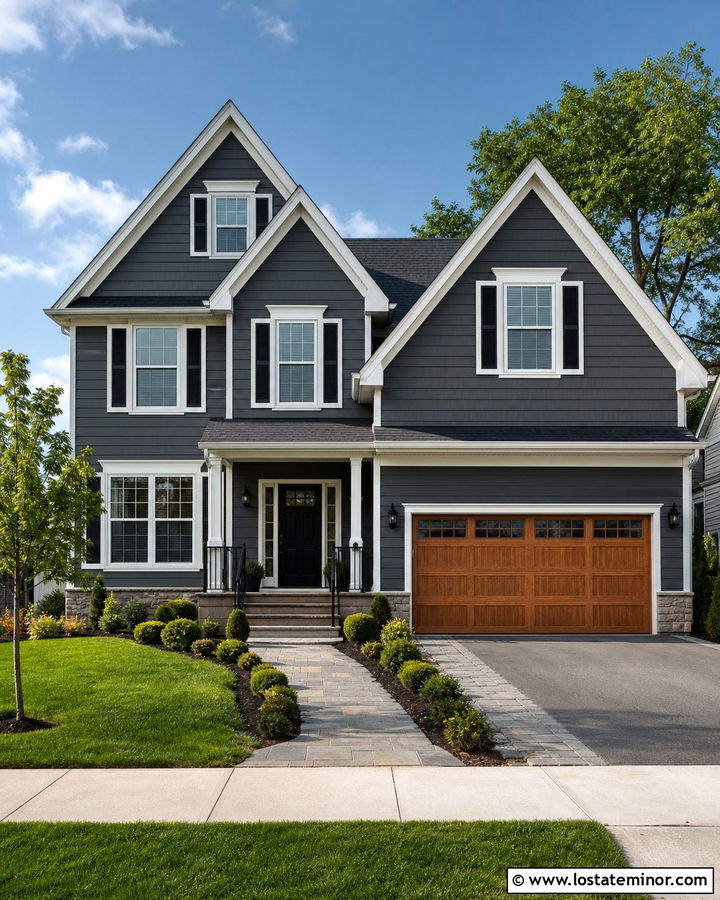
Two-tone shutters can add dimension when their colors remain closely related to the complete exterior palette. Use warm white shutter frames with black inset panels against charcoal grey siding, or reverse the combination for a stronger border. Repeat both colors on the window trim, front door, porch railings, and lighting so the shutters do not feel overly decorative. A natural wood garage door or entry canopy can soften the graphic contrast. Keep the roof dark grey and choose simple landscaping that will not compete with the detailed windows. This treatment works best on traditional or transitional homes with large, evenly spaced openings. Carefully controlled two-tone shutters provide a customized appearance while keeping the charcoal exterior cohesive and easy to understand.
Conclusion:
These **30 Charcoal Grey House Design With Shutters Ideas** show how versatile a dark grey exterior can be. White and black shutters create familiar contrast, while cedar, navy, green, bronze, burgundy, and muted accent colors add personality. The strongest schemes repeat each shutter color somewhere else, such as the front door, garage, trim, roof, or porch. Materials also matter. Wood, brick, stone, metal, and textured siding prevent charcoal from looking flat or overly heavy. Before choosing a final combination, view large color samples outside in different daylight conditions. Consider the roof, permanent masonry, landscaping, and neighboring homes. Most importantly, select properly proportioned shutters that complement the windows and support the architecture of the entire house.

Related posts: