1. Warm Greige House With Red Brick Accents
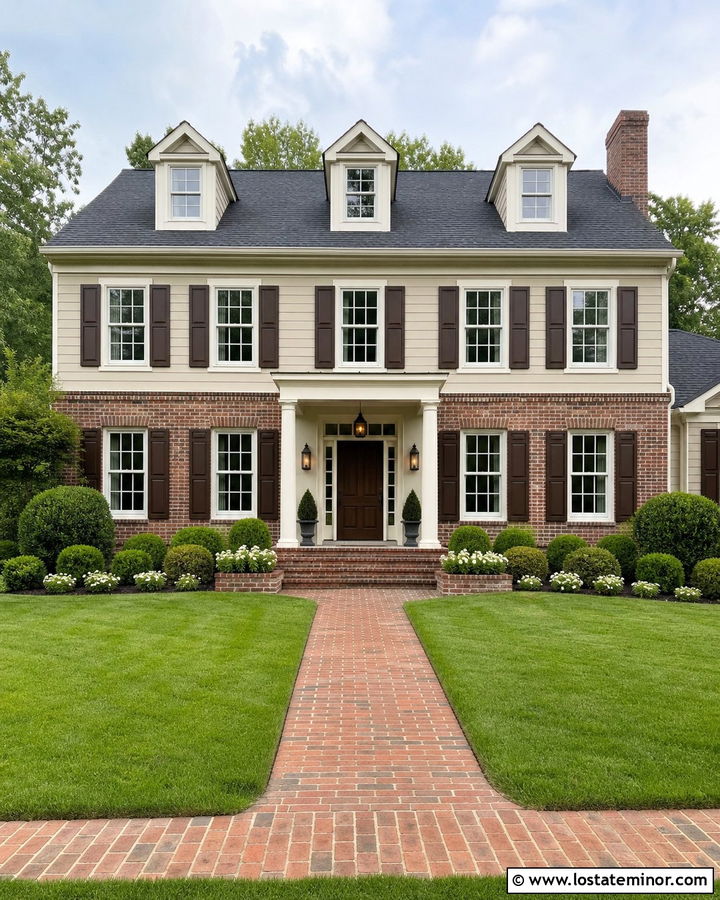
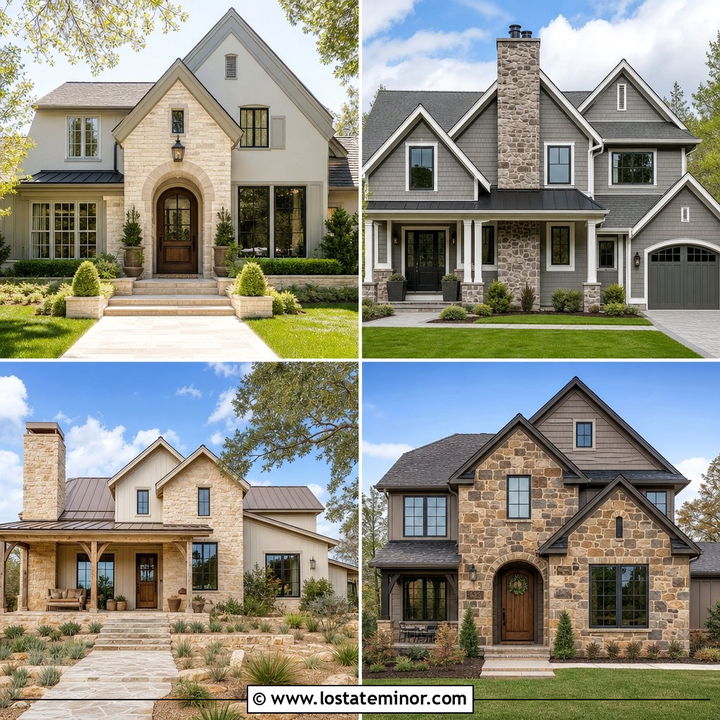
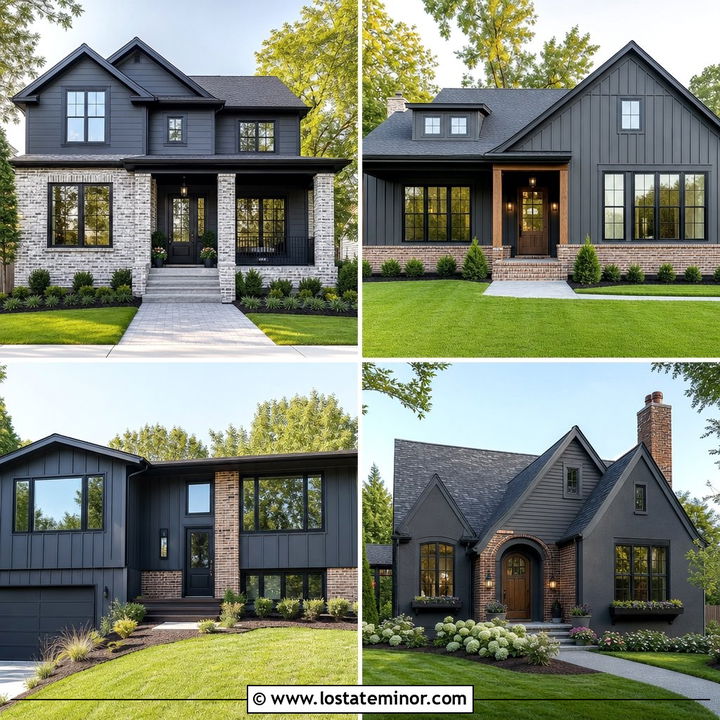
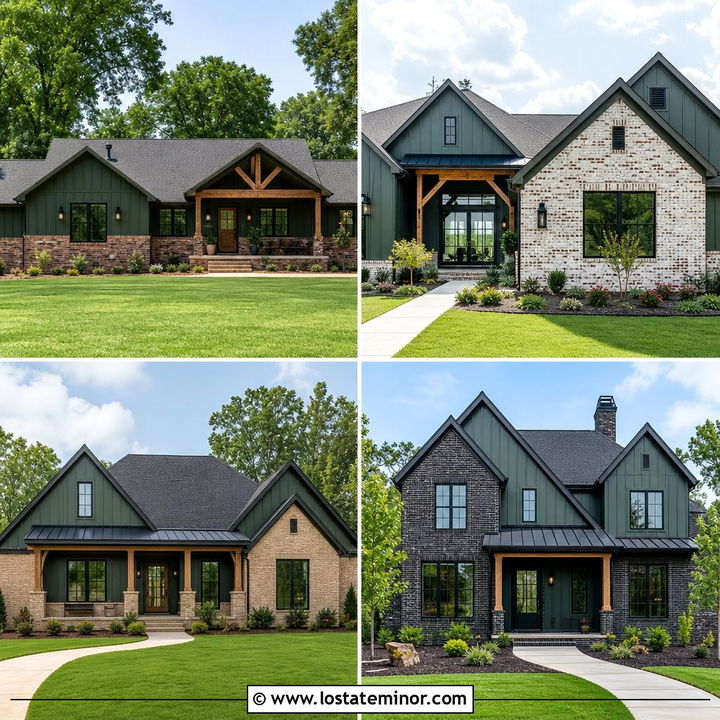
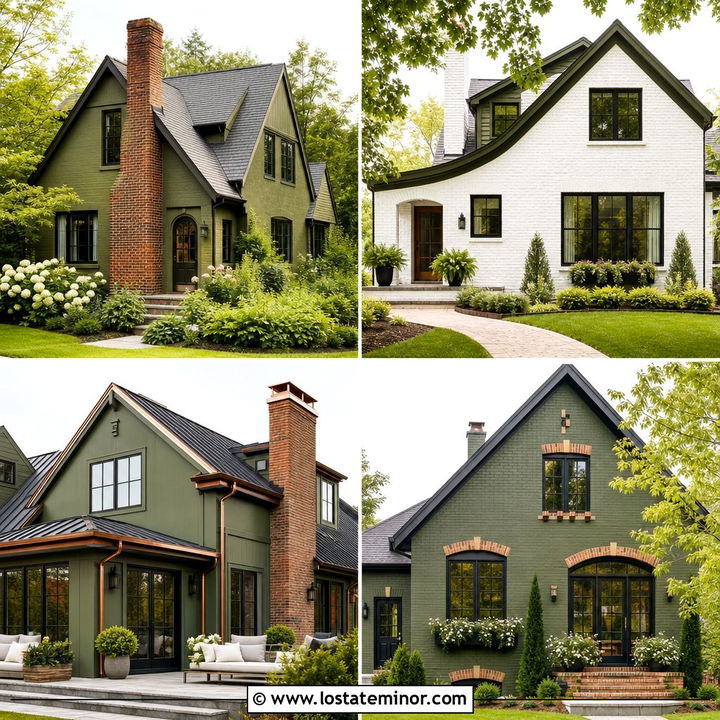
Warm greige siding can soften the strong orange and burgundy tones found in traditional red brick. Use the brick across the lower facade, porch foundation, or chimney so it anchors the lighter body color. Creamy white trim creates a smoother transition than brilliant white, especially when the mortar has beige undertones. A walnut-stained front door adds another warm layer without competing with the masonry. Finish the scheme with a medium charcoal roof and aged bronze lighting. This combination is particularly attractive on a two-story colonial because the brick gives the symmetrical facade visual weight. Keep shutters dark brown or deep bronze rather than pure black for a welcoming, lower-contrast exterior.
2. Light Greige House With Whitewashed Brick
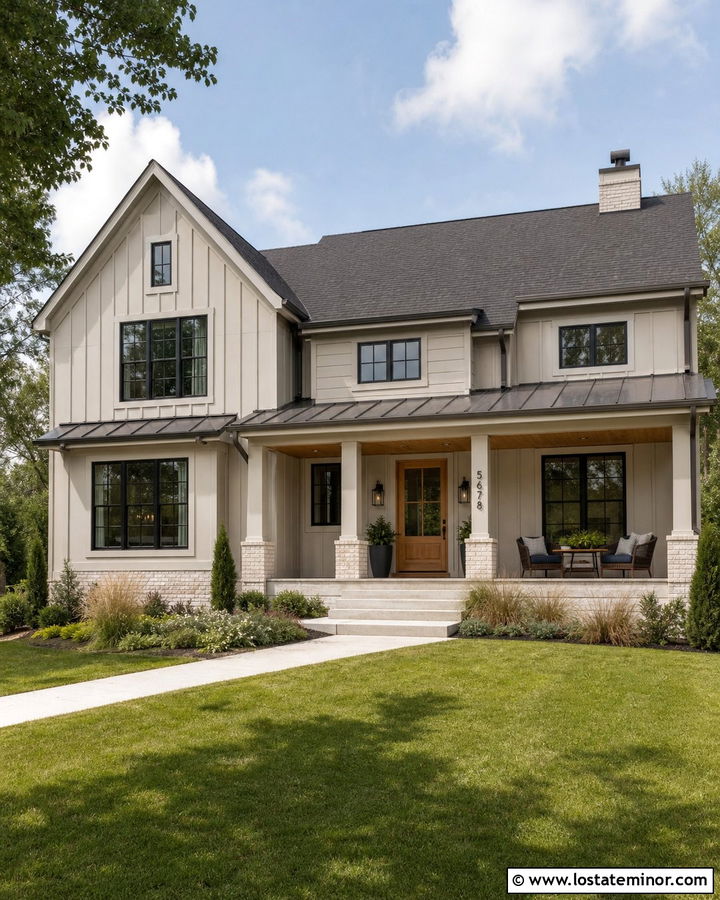
A light greige exterior and whitewashed brick create an airy house without making the facade look flat or overly bright. Apply the whitewashed finish to a chimney, entry wall, or lower brick skirt while allowing some original brick variation to remain visible. Soft white trim can outline the windows and roofline without creating a sharp break. Add a natural oak front door, pale cedar porch ceiling, and muted bronze fixtures for warmth. This complete palette works well on modern farmhouses with vertical board-and-batten siding. A charcoal roof grounds the pale materials. Layered shrubs, ornamental grasses, and a simple concrete walkway reinforce the clean look while preserving the brick’s character.
3. Medium Greige House With Dark Brown Brick
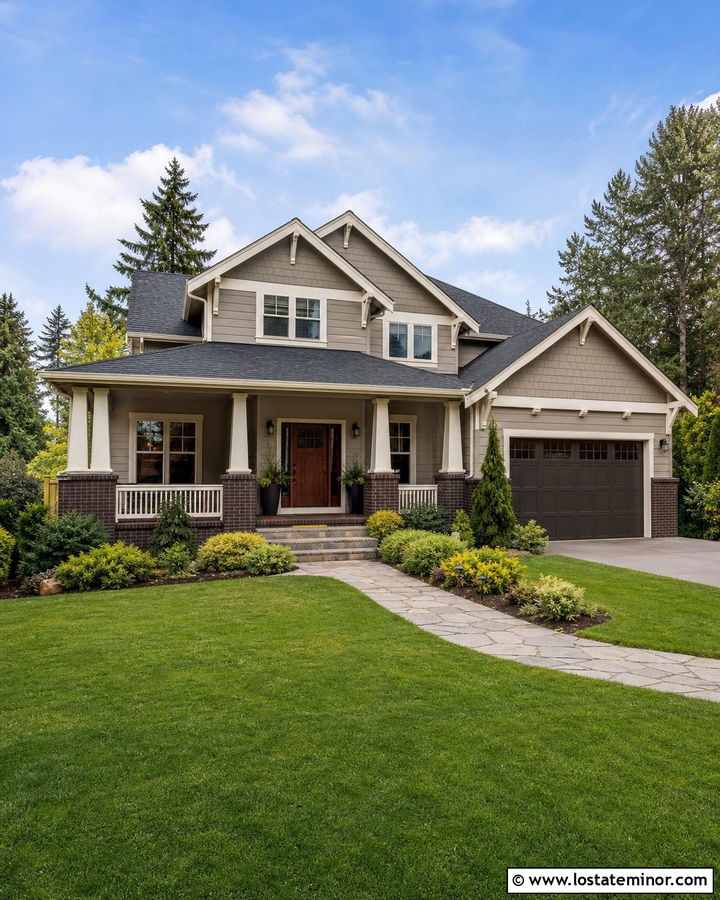
Dark brown brick gives medium greige siding a strong, grounded appearance that feels polished rather than heavy. Look for a greige with brown undertones so the body color connects naturally with chocolate, espresso, and charcoal tones in the brick. Use warm off-white around the windows, eaves, and porch columns to add enough contrast. A dark bronze garage door can blend quietly into the scheme, while a stained mahogany front door creates a warmer focal point. This palette suits a craftsman house with broad rooflines and tapered porch columns. Repeat the brick on column bases and front steps to make the masonry feel intentional across the entire facade.
4. Pale Greige Ranch With Antique Red Brick
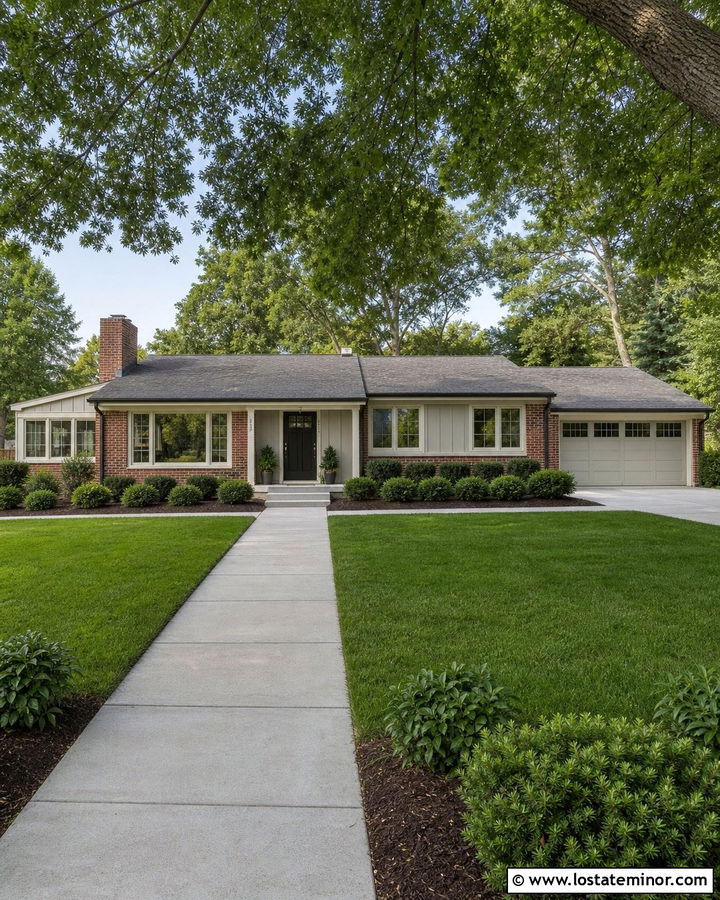
An older brick ranch can feel refreshed without covering all of its original masonry. Paint the siding or previously painted sections pale greige, then preserve antique red brick around the lower walls and chimney. The soft neutral reduces the visual intensity of orange-red brick while respecting the home’s midcentury character. Choose muted ivory trim instead of crisp white, and consider deep olive for the front door. A weathered charcoal roof and dark bronze gutters complete the earthy palette. Remove unnecessary shutters if they do not fit the windows. Broad foundation beds, low evergreen shrubs, and a wider walkway can then emphasize the ranch’s long horizontal shape and balanced greige-and-brick facade.
5. Greige Farmhouse With German Schmear Brick
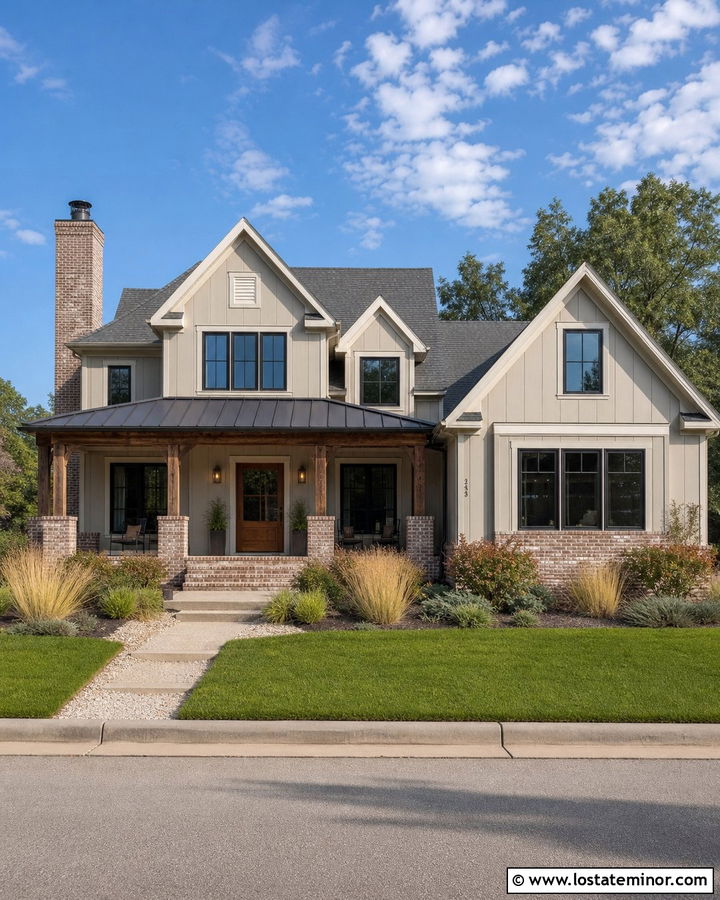
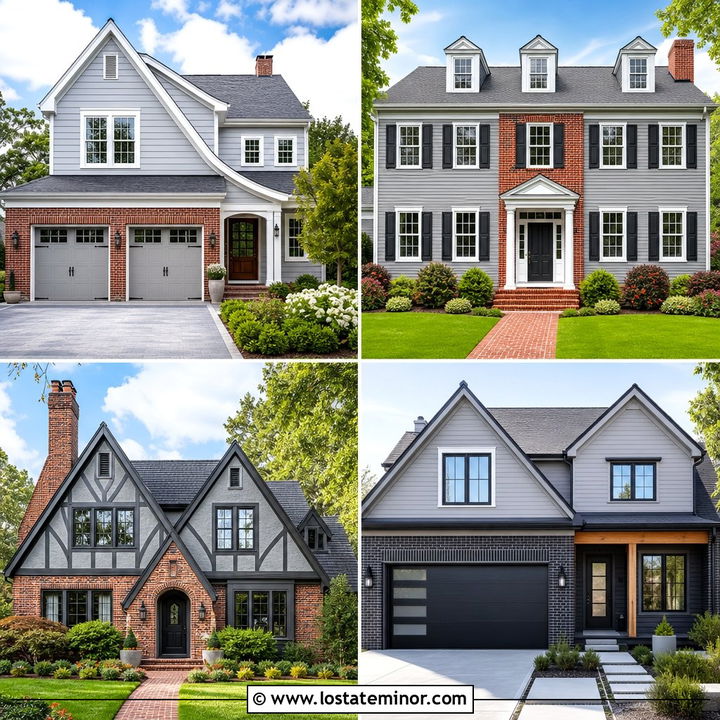
German schmear brick can bring texture and an aged finish to a greige farmhouse exterior. The creamy mortar coating should leave portions of the red and brown brick visible, creating a varied surface that complements warm greige board-and-batten siding. Use the treated brick around the foundation, chimney, and porch columns rather than across every wall. Cream trim will keep the transition subtle, while black window frames provide clean definition. A medium-stained wood door and matching porch beams prevent the neutral scheme from feeling cold. Complete the exterior with a dark gray metal porch roof, simple lanterns, and relaxed landscaping. The result feels collected and comfortable rather than overly rustic.
6. Cool Greige Modern House With Charcoal Brick
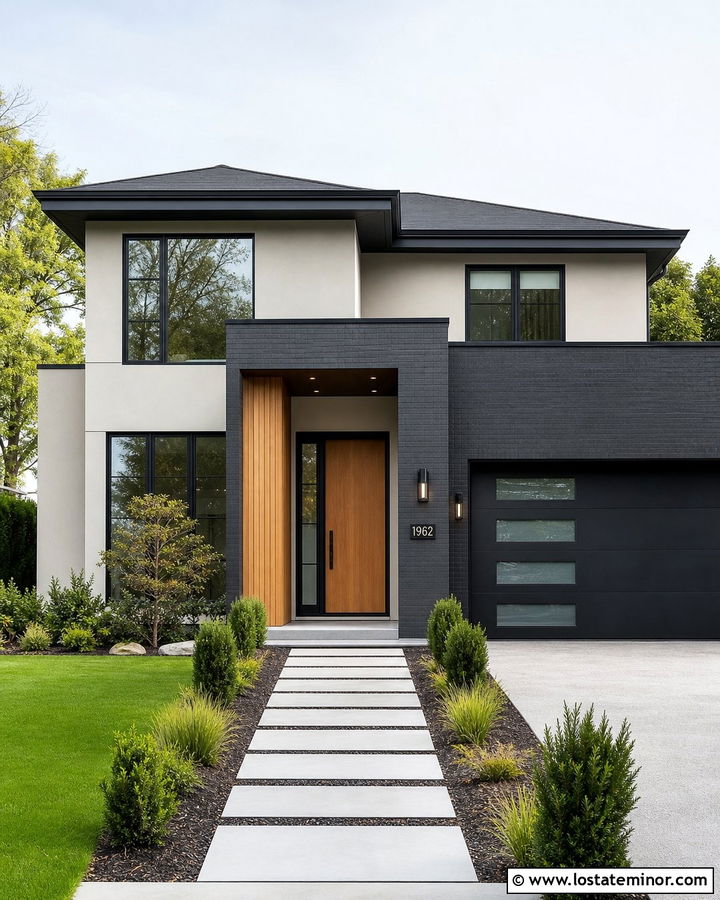
Cool greige stucco or horizontal siding pairs naturally with charcoal brick on a streamlined modern house. Concentrate the dark brick around the entry, garage wing, or projecting architectural volume to create controlled contrast. Black-framed windows, a black fascia, and a graphite roof can strengthen the clean geometry. To keep the palette inviting, introduce a honey-toned wood front door or vertical cedar panel beside the entrance. Limit trim so the greige walls and dark masonry remain the main features. A wide concrete path, rectangular planting beds, and sculptural evergreens suit the architecture. This scheme works best when the charcoal brick contains subtle gray variation rather than reading as one solid black surface.
7. Mushroom Greige Bungalow With Tan Brick
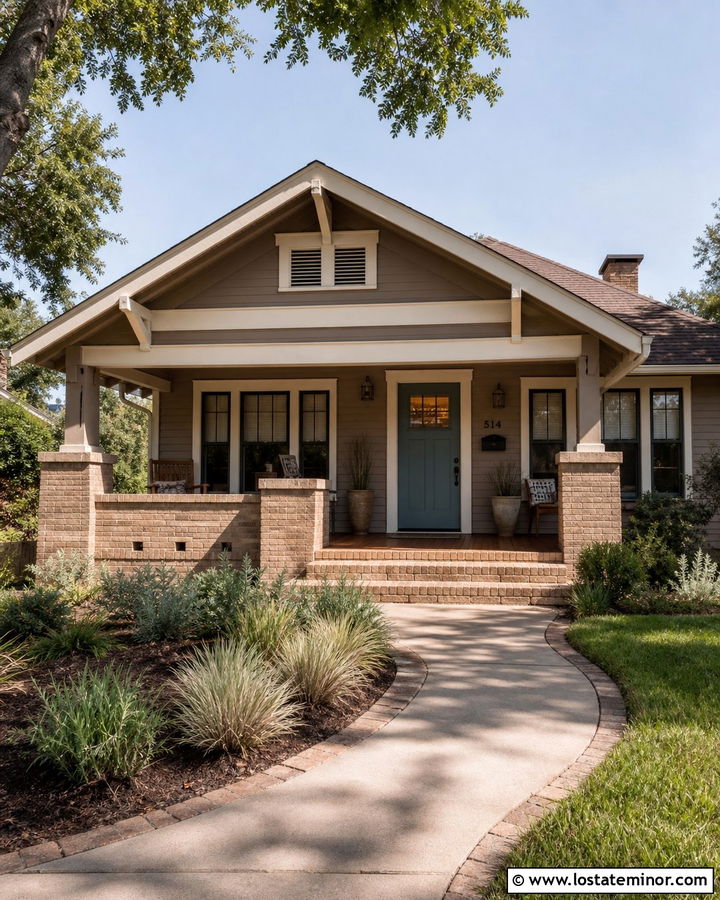
Mushroom greige has a soft brown cast that blends easily with tan, buff, and sand-colored brick. On a bungalow, use the brick for the porch piers, foundation, and front steps so the house feels firmly connected to the landscape. Paint the lap siding mushroom greige and select a slightly lighter cream for the trim and window casing. A dusty blue-green door adds quiet color while remaining compatible with the earthy materials. Medium bronze hardware, warm wood porch flooring, and a weathered brown roof support the relaxed palette. Curved garden beds and a brick-edged walkway can repeat the masonry color, giving the smaller facade a cohesive and carefully layered appearance.
8. Dark Greige Tudor With Red Brick
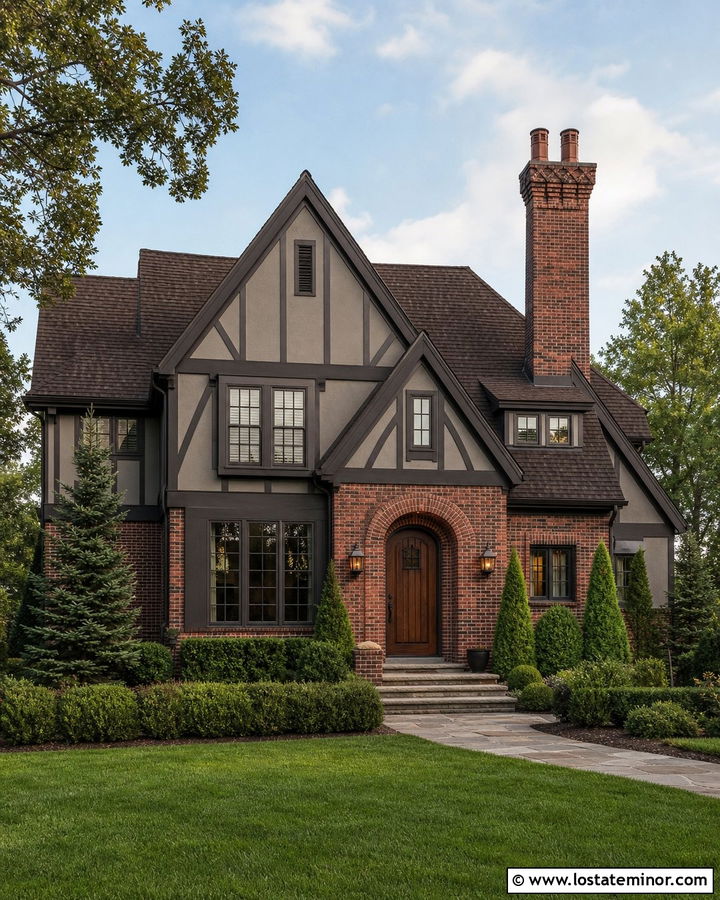
A Tudor exterior can handle dark greige because its steep rooflines and detailed facade naturally support deeper colors. Use rich red brick across the first floor, chimney, and entry arch, then paint the upper stucco or siding a smoky dark greige. Warm black or deep brown trim can outline the gables without overpowering the brick. Replace bright white elements with soft putty tones if additional contrast is needed. A heavy stained-wood door, copper lanterns, and a dark brown roof reinforce the traditional character. Keep the landscaping structured with clipped hedges and layered evergreens. This scheme updates the house while preserving the visual depth that makes Tudor architecture distinctive.
9. Soft Greige Cape Cod With Cream Brick
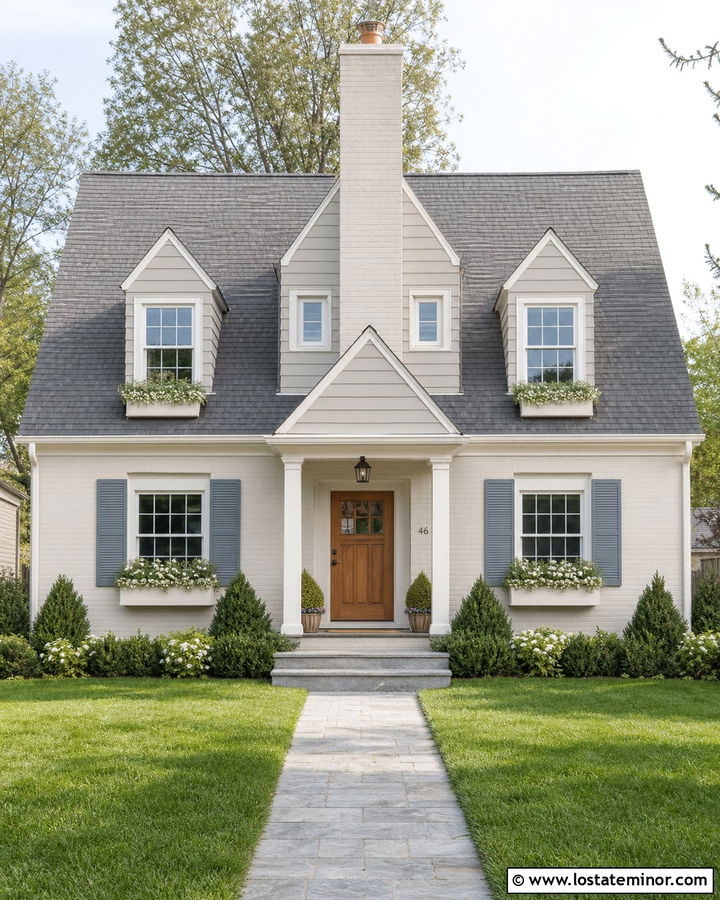
Cream brick and soft greige siding create a gentle, low-contrast palette for a Cape Cod house. Use the brick around the central chimney and lower facade, allowing its subtle beige and gray markings to guide the siding color. Paint the trim a warm white that remains distinguishable from the greige without appearing stark. Muted blue-gray shutters can add coastal character, while a stained oak door keeps the entrance warm. A medium gray shingle roof balances the pale exterior. Symmetrical foundation plantings, a straight stone walkway, and neatly framed window boxes reinforce the classic architecture. The finished house feels bright and traditional while maintaining enough tonal variation to highlight every exterior material.
10. Balanced Greige Split-Level With Mixed Brick
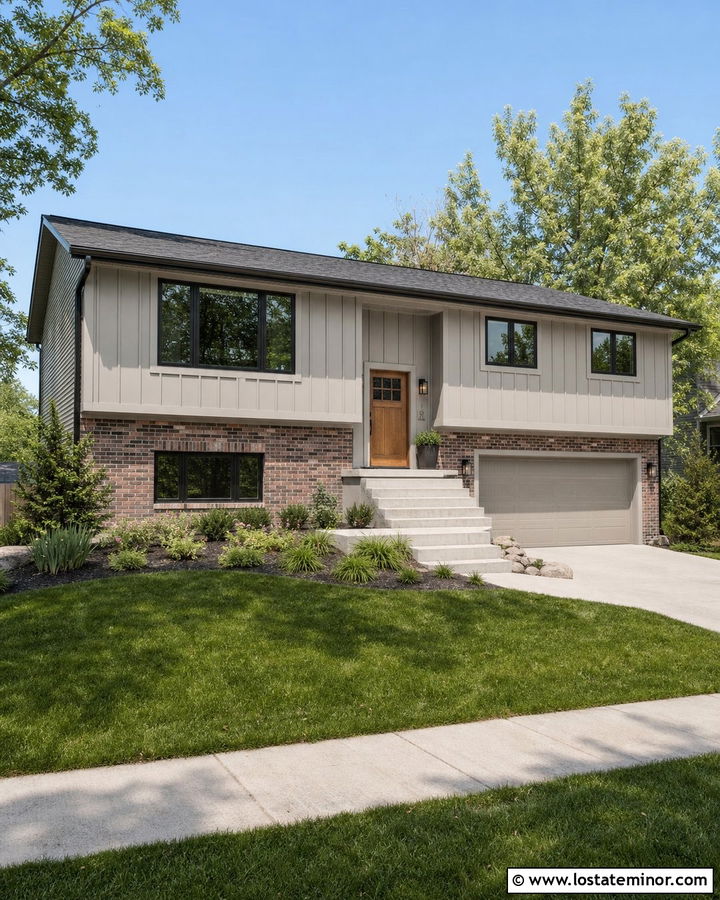
Mixed brick containing red, taupe, brown, and charcoal tones offers a useful foundation for updating a split-level exterior. Choose a balanced greige from the mortar or one of the quieter brick colors, then apply it to the siding on the upper story. Dark bronze window frames and gutters create definition without introducing another unrelated hue. Paint the garage door the same greige as the siding so the large surface recedes. A natural wood front door can become the main focal point. Repeat the brick near the entrance if possible to connect both levels. Clean landscaping and broad concrete steps will help the varied facade look organized rather than visually fragmented.
11. Greige Colonial With Brick Skirting
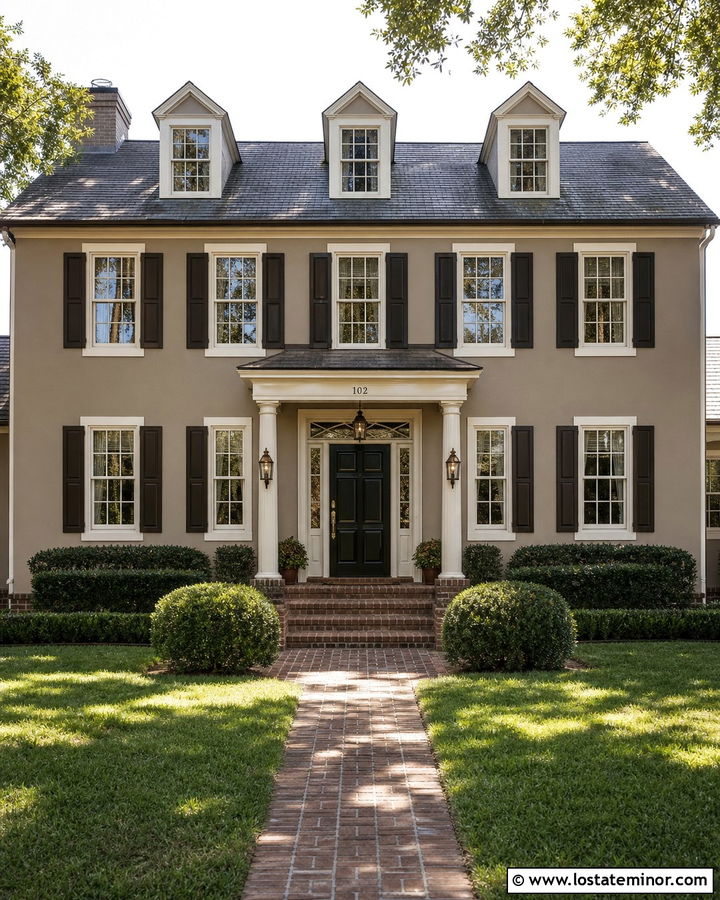
Brick skirting can make a greige colonial look more substantial while preserving the clean order of its symmetrical facade. Run warm red-brown brick along the lower portion of the house and repeat it on the front steps. Above it, use medium-light greige lap siding with creamy white corner boards, window trim, and classical porch columns. Deep brown shutters will relate more naturally to the brick than harsh black ones. A glossy black-green front door can add a restrained traditional accent. Finish the palette with a weathered charcoal roof and antique brass lighting. Keep the brick height consistent across the facade so it reads as an architectural foundation rather than a decorative patch.
12. Greige House With Brick Chimney
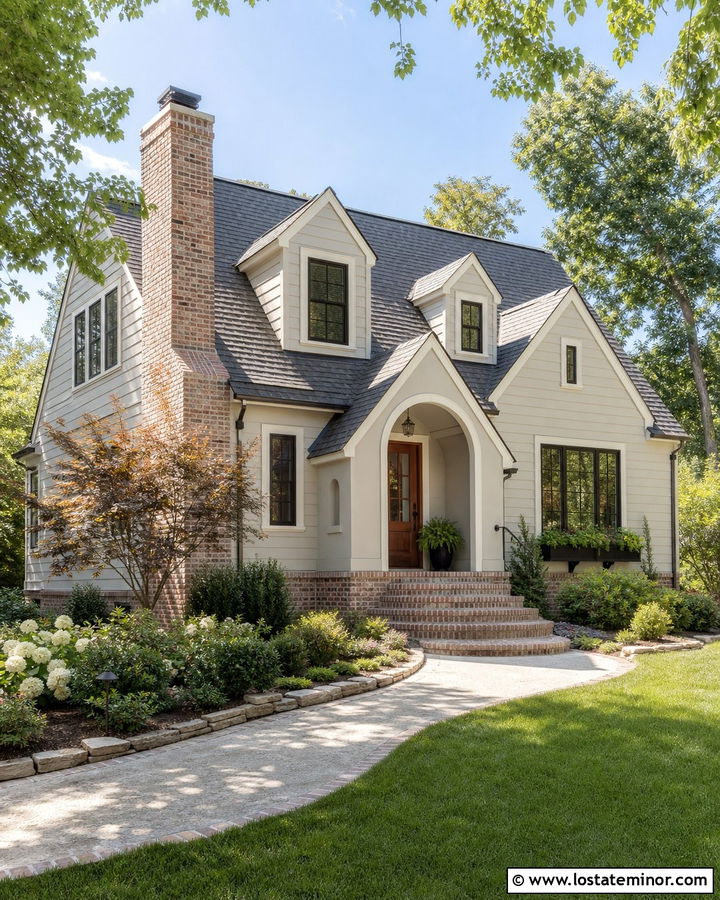
A prominent brick chimney can become the element that organizes an entire greige exterior palette. Select a warm greige siding color that echoes the chimney mortar or the brick’s lightest taupe variation. This approach allows the chimney to stand out without looking disconnected from the house. Use soft cream trim, dark bronze windows, and a cedar front door for a balanced range of light, medium, and dark tones. If the chimney contains strong red brick, repeat that material in the walkway edging or porch steps. A medium charcoal roof will bridge the masonry and siding. This complete scheme works especially well on cottage and transitional homes with visible front-facing chimneys.
13. Greige Board And Batten With Brick Porch
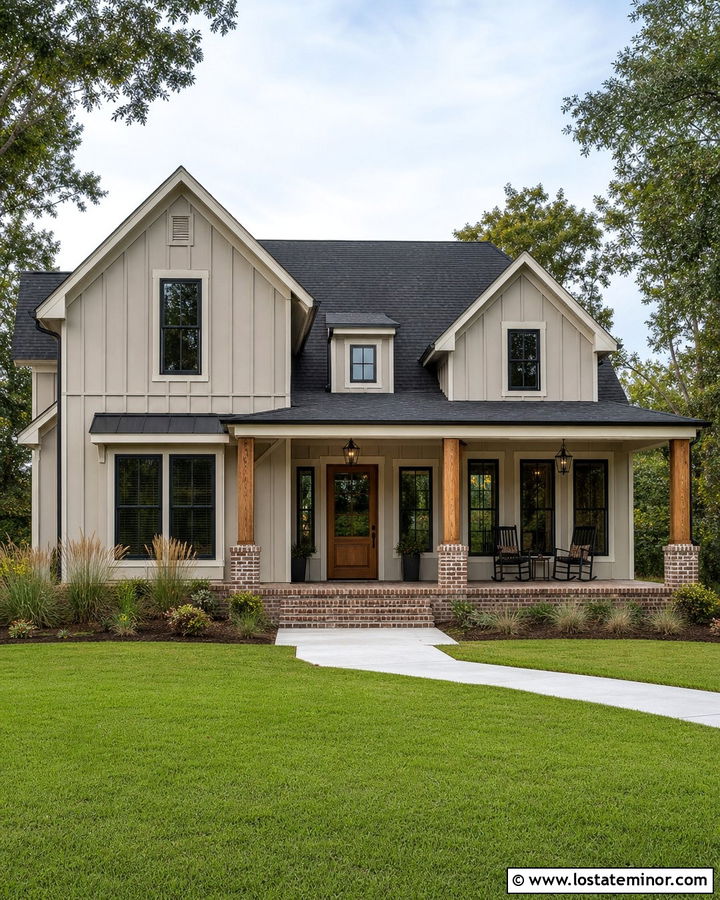
Vertical greige board-and-batten siding gains warmth and visual weight from a brick porch. Use weathered red or brown brick for the porch floor, steps, and column bases, then add substantial wood posts above the masonry. Warm white trim can define the vertical siding, while black window frames and lanterns bring a modern edge. A natural chestnut front door connects the posts to the entry. Choose a charcoal architectural-shingle roof or use dark metal roofing over the porch for added texture. This combination suits a modern farmhouse because the brick prevents the clean vertical siding from appearing too new or plain. Simple native planting beds complete the relaxed, durable exterior.
14. Greige Stucco House With Brick Arches
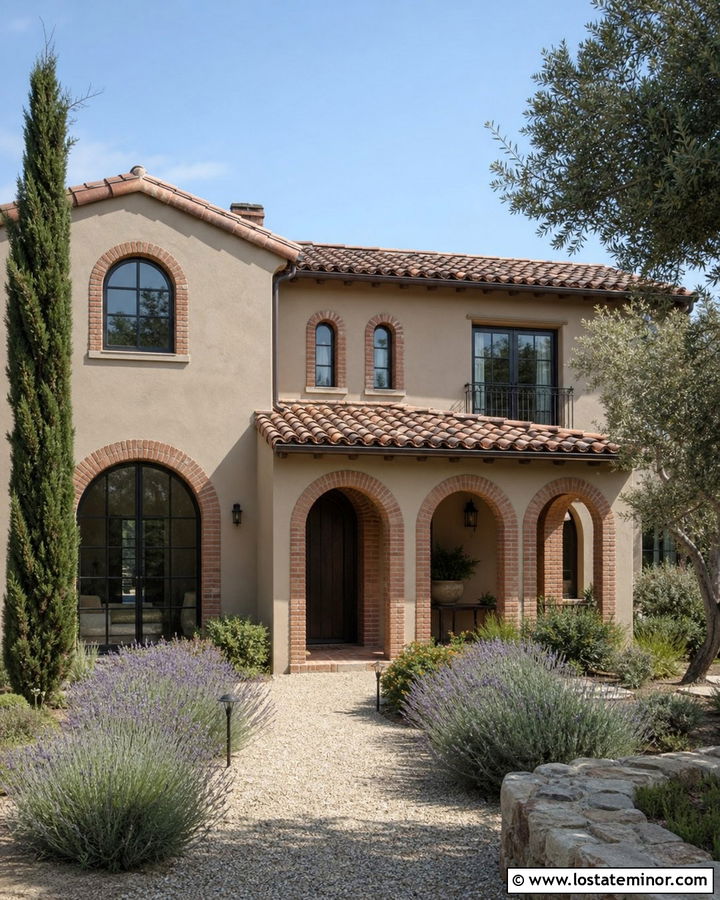
Brick arches can add depth and craftsmanship to a greige stucco exterior, especially on Mediterranean or Spanish-influenced architecture. Choose a sandy greige with enough warmth to complement soft red, terracotta, or tumbled brown brick. Use the brick around arched windows, the front entry, and selected porch openings rather than outlining every feature. Cream trim should remain minimal so the masonry and curved openings stay prominent. A dark wood door, bronze-framed windows, and a clay-toned or brown tile roof complete the palette. Add gravel paths, olive-like trees, lavender, and low evergreen plants. The resulting facade feels warm and regional without relying on heavy yellow or orange stucco.
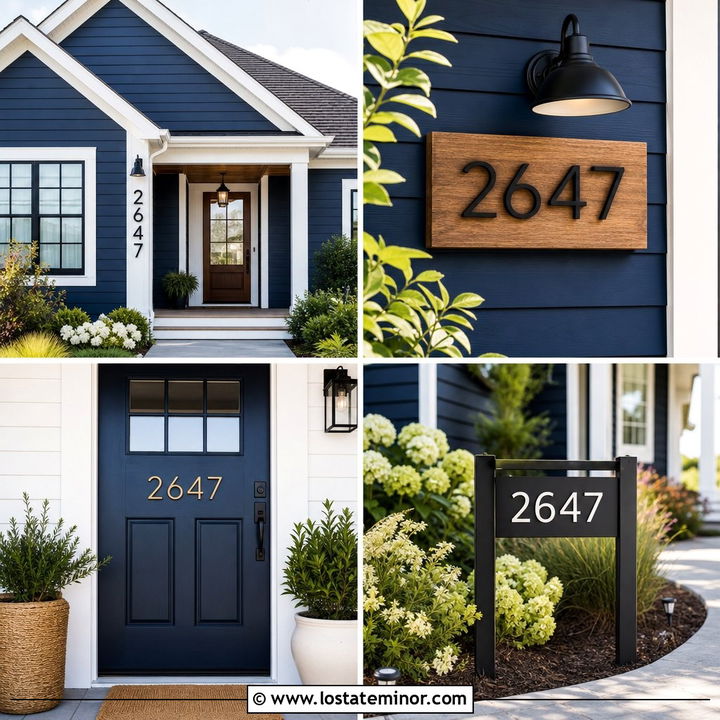
15. Greige Craftsman With Brick Columns
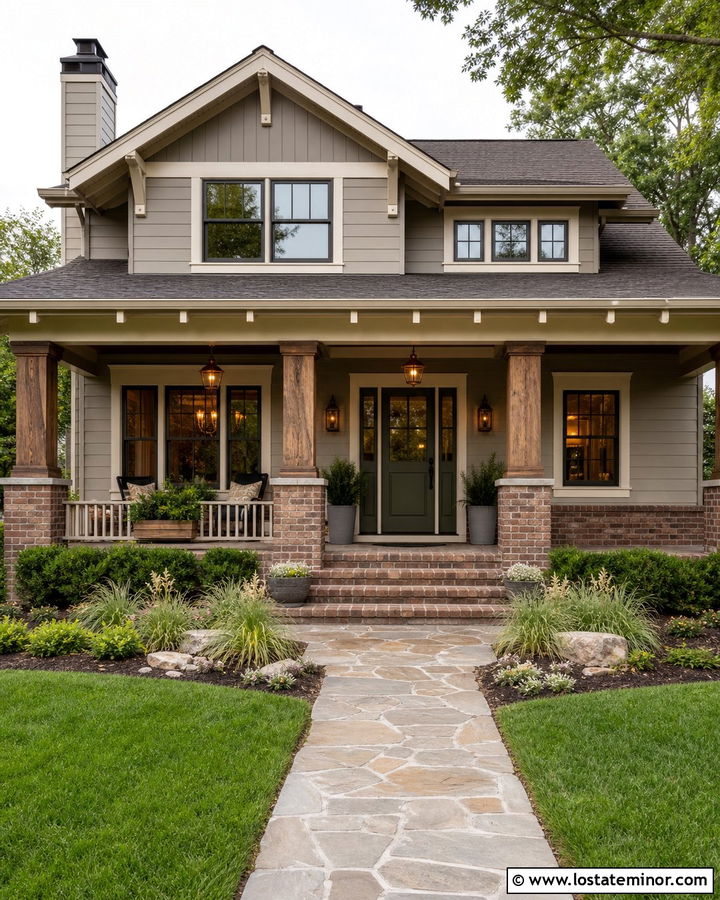
Brick column bases are a natural fit for a greige craftsman house because they emphasize the wide, grounded porch. Choose variegated brown-red brick with taupe mortar, then select a warm medium greige for the lap or shingle siding. Cream trim can highlight the rafters, window grids, and substantial porch beams. Use dark olive or deep brown on the front door for a traditional accent that does not overpower the masonry. Stained timber columns should visually connect the brick bases to the roofline. A dark gray-brown roof and copper-toned fixtures complete the scheme. Layer ornamental grasses and compact shrubs around the porch while keeping the brickwork clearly visible from the street.
16. Greige Shingle House With Brick Foundation
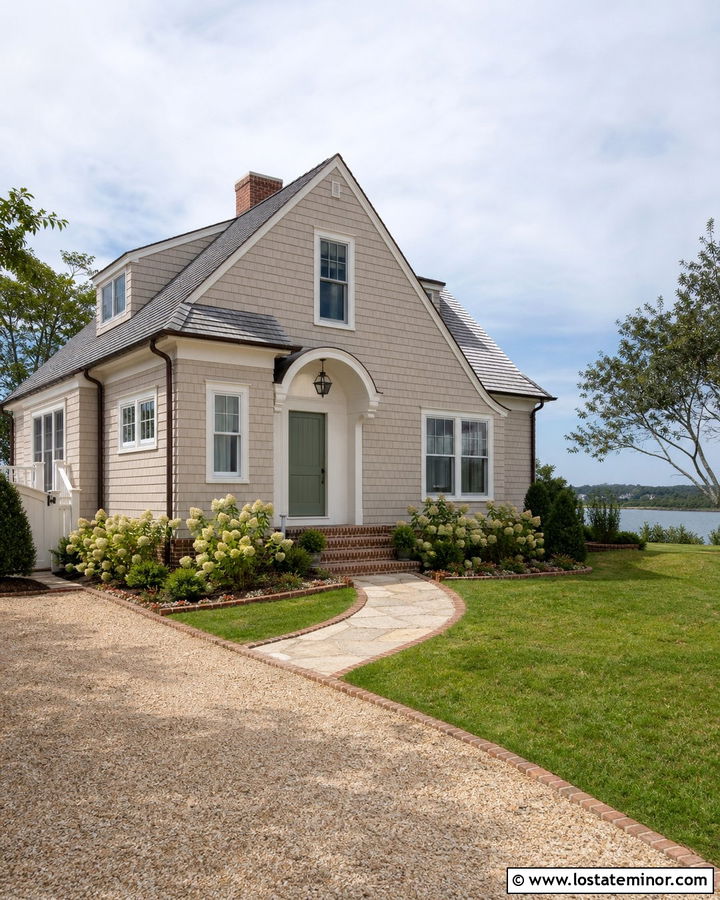
Greige shingle siding gives a house subtle texture, while a brick foundation provides a durable-looking visual base. Select a weathered greige with both gray and beige notes to complement reclaimed red-brown brick. Keep the trim creamy white around windows and roof edges, but use dark bronze for gutters and exterior lighting. A muted green front door can introduce color inspired by surrounding landscaping. This palette works beautifully on coastal cottages, storybook homes, and craftsman-influenced houses. Repeat the brick in the front steps or garden border to connect it with the wider yard. A gray cedar-look roof completes the softly aged appearance without making the full exterior feel overly rustic.
17. Monochromatic Greige House With Painted Brick
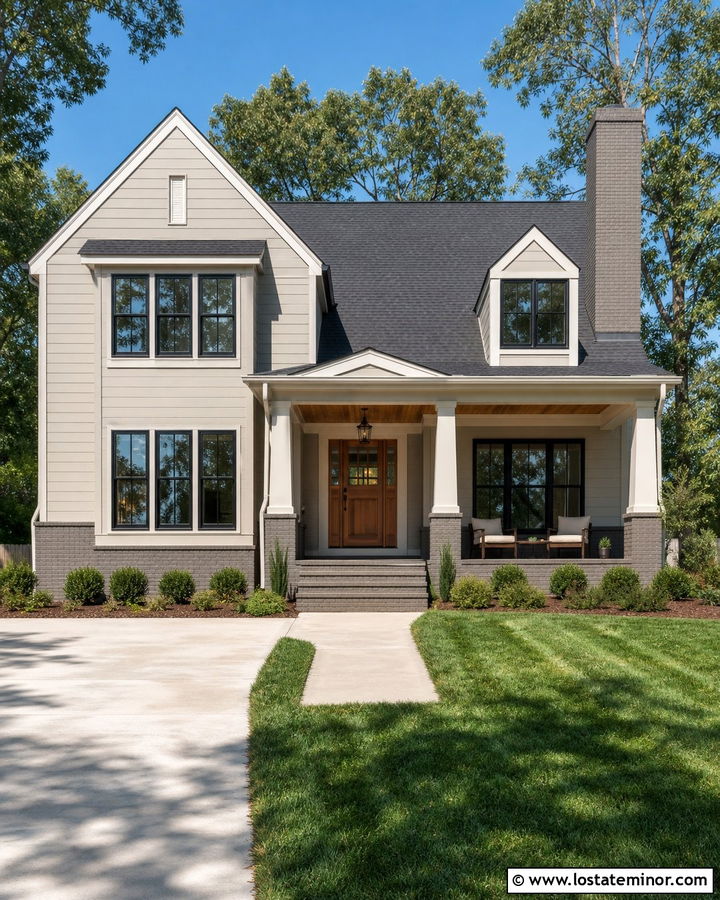
For a quiet, unified exterior, paint selected brick accents in a deeper greige than the main siding. A light greige body paired with medium greige brick creates texture without introducing strong color contrast. Use the painted masonry on the lower facade, porch wall, or chimney so its pattern remains visible. Warm white trim can outline the architecture, while black windows and lighting add small, precise accents. Bring natural warmth through a cedar door and matching porch ceiling. This tonal approach works well when existing brick colors clash with updated roofing or siding. Before painting masonry, evaluate its condition and choose a suitable exterior coating system designed for the specific brick surface.
18. Greige House With Black Trim And Red Brick
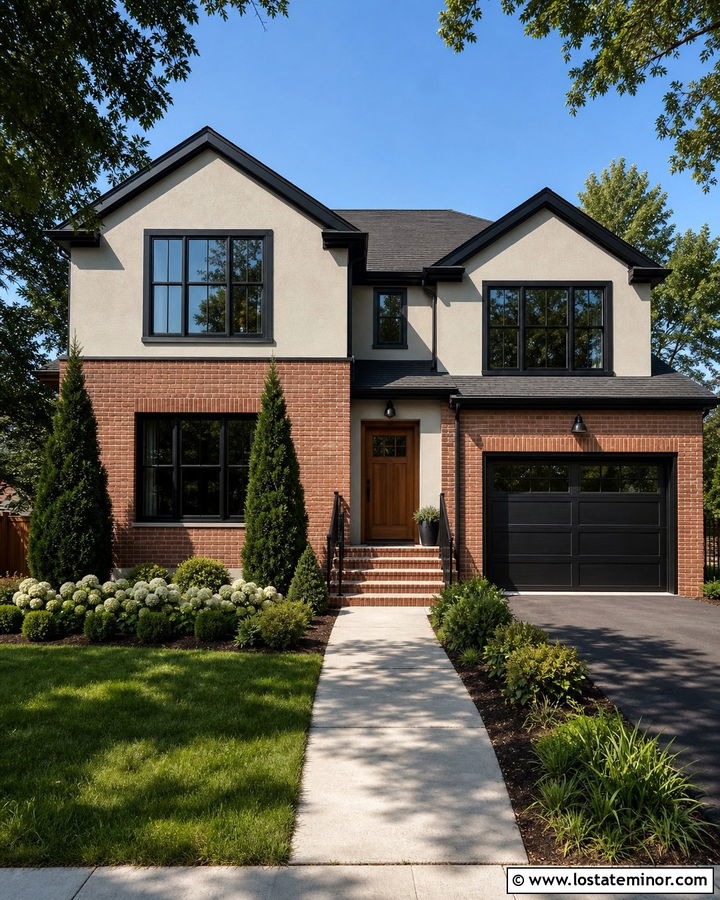
Black trim gives a greige-and-red-brick exterior a sharper, more contemporary outline. Start with warm greige siding that reduces the contrast between the black details and the red masonry. Use black on the windows, fascia, gutters, porch railing, and possibly the garage door. Keep the front door natural wood to soften the scheme and create a welcoming center. Red brick can cover the lower story, entry wall, or chimney, but it should remain visually balanced across the facade. A charcoal roof will connect naturally with the trim. This palette works on transitional homes where traditional brick needs to coordinate with cleaner windows, simplified landscaping, and more modern exterior fixtures.
19. Greige House With Bronze Trim And Brown Brick
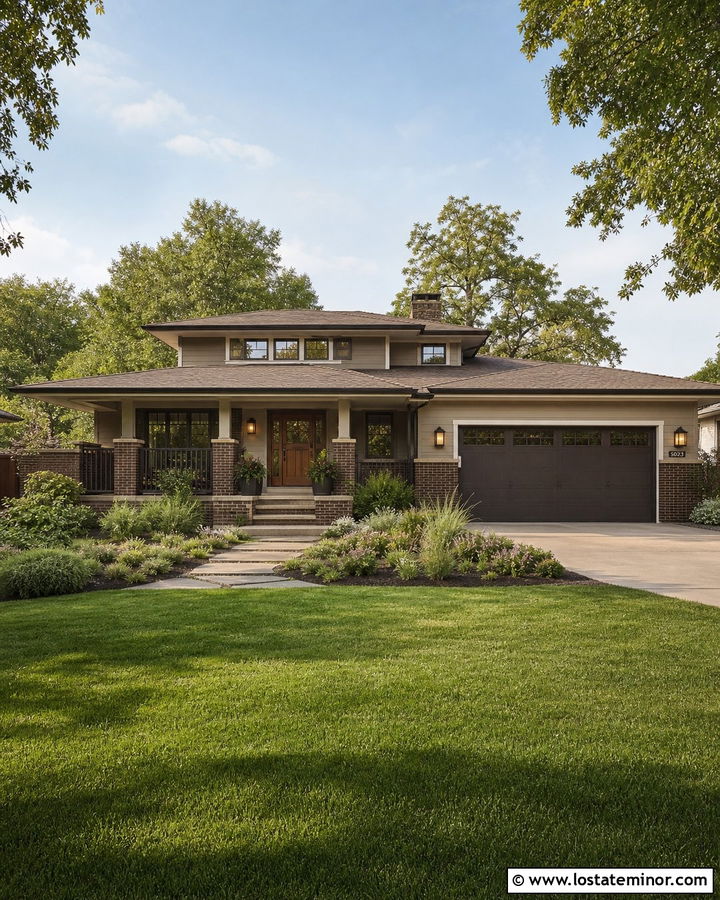
Dark bronze trim offers a softer alternative to black when the brick contains chocolate, tan, or earthy brown variation. Paint the main siding a warm taupe-leaning greige, then use bronze on the windows, gutters, railings, and garage hardware. Creamy trim can remain around larger architectural features if the facade needs additional brightness. A medium walnut door will bridge the greige siding and brown brick beautifully. Use the masonry across a lower wall or broad porch foundation to establish a strong base. This low-key scheme works well on prairie, ranch, and craftsman houses. Finish it with a brown-gray roof, natural stone walkway, and layered plantings in muted green tones.
20. Light Greige House With White Trim And Orange Brick
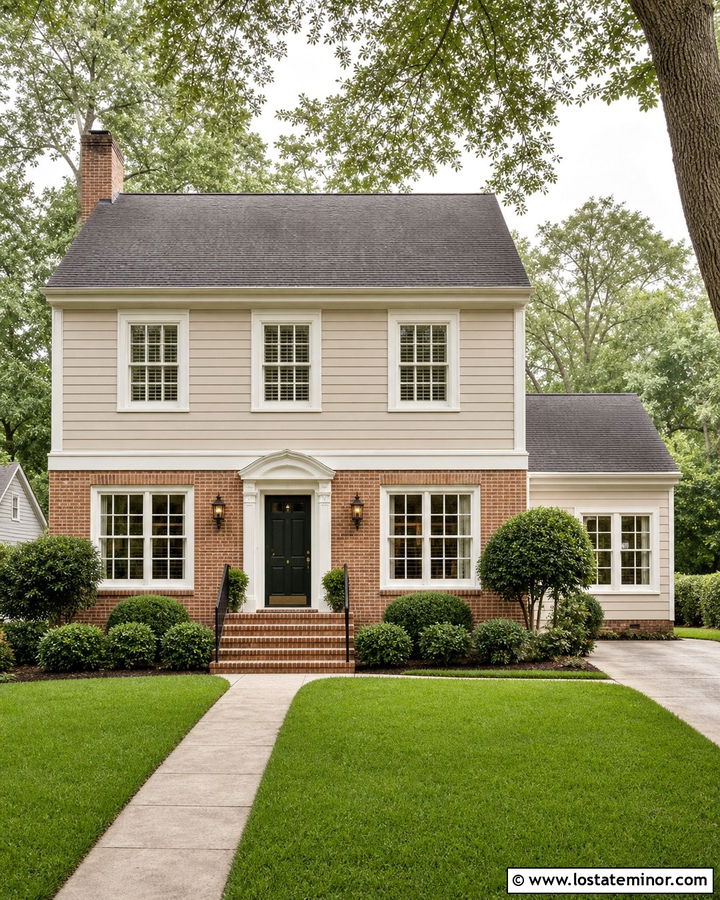
Orange-toned brick can look more refined when surrounded by light greige instead of yellow beige or brilliant white. Choose a greige with a noticeable warm undertone, then use soft white trim to define the windows, porch, and roofline. The softer body color reduces the visual gap between the pale trim and saturated masonry. Add a deep blue-gray or black-green front door for controlled contrast. A weathered charcoal roof helps settle the palette. This scheme suits traditional suburban homes with brick on the first floor and siding above. Keep other materials simple, and avoid adding unrelated stone colors. Repeating the brick in the steps can make the entire facade appear more intentional.
21. Greige House With Navy Door And Red Brick
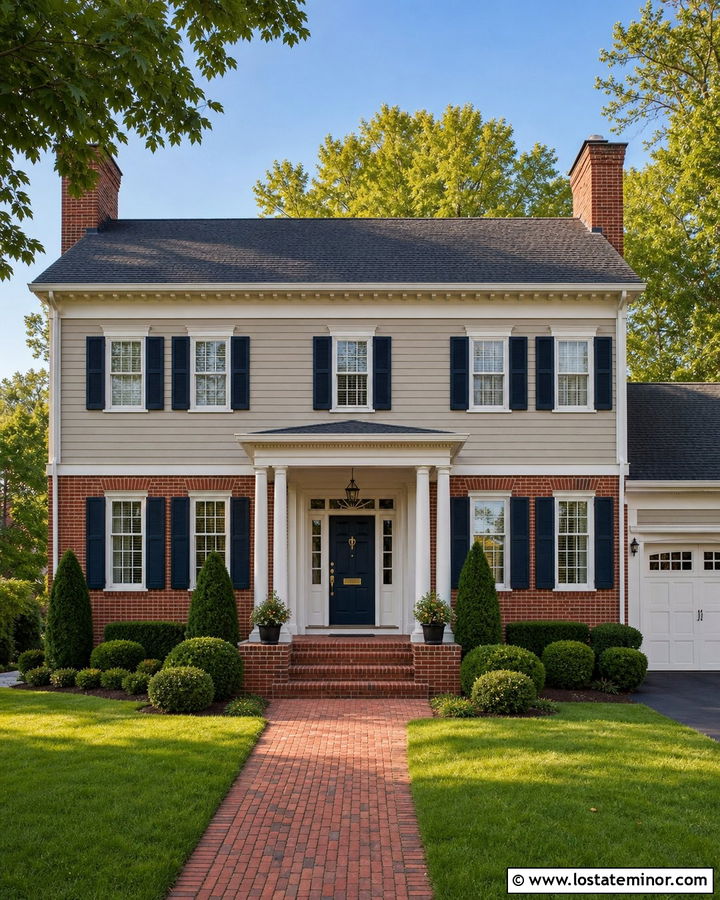
A navy front door brings classic color to a greige house with traditional red brick. Select a warm, balanced greige for the siding so it supports both the cool blue door and the warmer masonry. Use cream trim around windows and porch columns, then repeat navy on carefully sized shutters if the architecture calls for them. The brick should remain the grounding material across the lower facade, chimney, or entry steps. A charcoal roof and antique brass door hardware complete the composed palette. This combination is especially effective on colonial and Cape Cod homes. Add symmetrical evergreen plantings and a clean brick walkway to reinforce the orderly, timeless appearance of the exterior.
22. Greige House With Green Door And Tan Brick
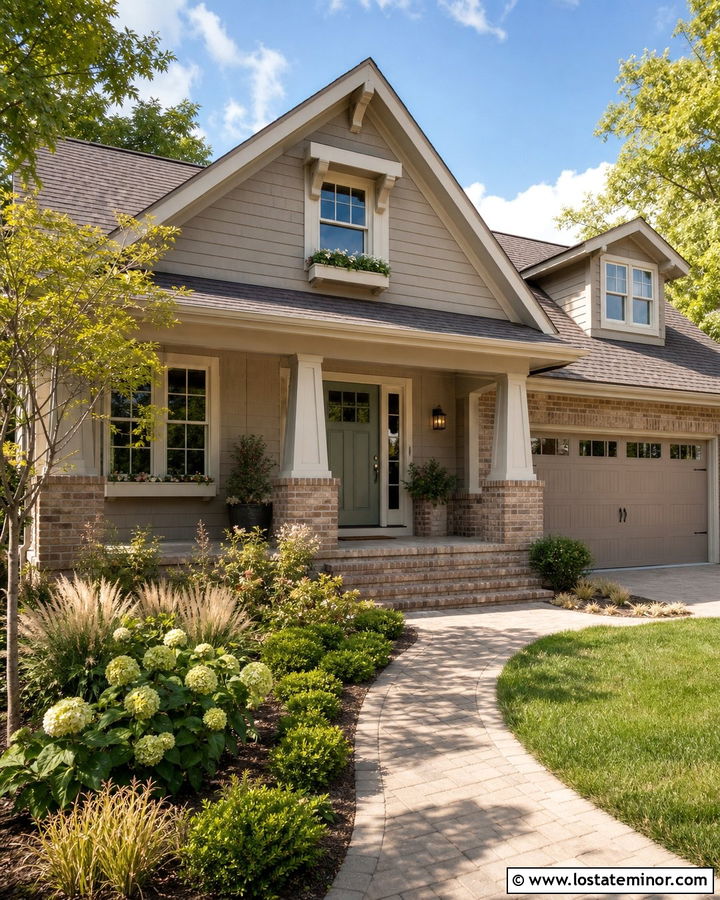
A muted green door gives a greige house with tan brick a natural, garden-inspired focal point. Choose sage, moss, or olive rather than a bright green so the color remains compatible with the quiet exterior materials. Paint the siding a mushroom greige that relates to the tan and buff tones in the brick. Cream trim can brighten the eaves and window frames, while dark bronze lighting adds depth. Use brick around the porch foundation, steps, or garage wing. A brown-gray roof will keep the upper portion of the house connected to the warm palette. Finish with layered shrubs, ornamental grasses, and a curved walkway for relaxed, approachable curb appeal.
23. Greige House With Wood Door And Red Brown Brick
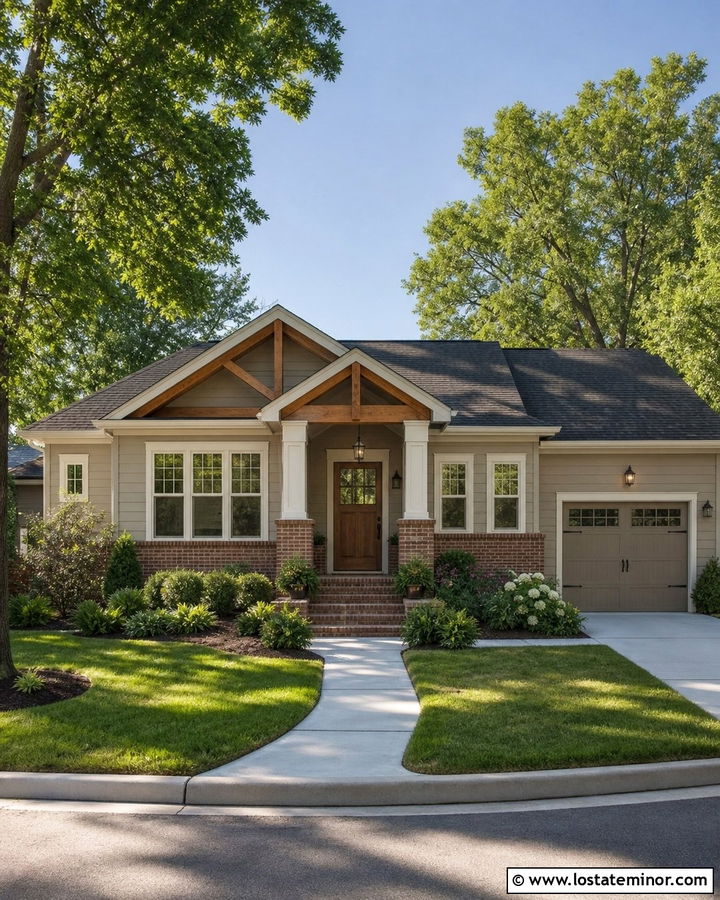
A natural wood front door can become the warm center of a greige and brick exterior. Choose a stain that relates to the brick without matching it exactly, such as walnut, chestnut, or medium oak. Use light-to-medium greige on the siding and creamy white around the windows. Red-brown brick can anchor the lower walls, porch piers, and steps. Deep bronze hardware and lighting provide enough contrast without pulling attention away from the wood grain. This combination works across craftsman, ranch, and transitional architecture. Repeat the door stain on porch beams or a small gable accent, but avoid covering too much of the facade with wood. Balanced repetition keeps the design cohesive.
24. Greige House With Brick Garage Accents
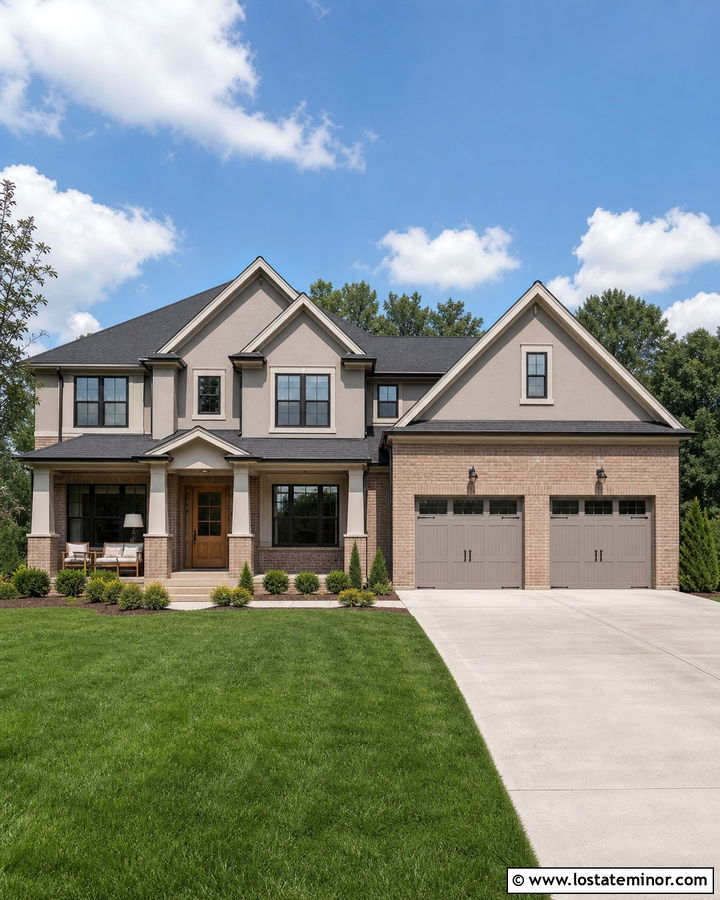
Brick around a garage can make a large practical feature feel integrated into the house. Use the masonry on the garage wing, between the doors, or as a consistent lower skirt. Paint the upper walls and main facade a balanced greige that connects with the mortar. A garage door painted in the same greige will recede, while dark bronze windows and hardware add understated detail. Bring attention back to the entrance with a natural wood door and a covered porch. Cream trim will keep the scheme bright without overpowering the brick. This arrangement is useful on wide suburban houses where the garage occupies a major portion of the street-facing elevation.
25. Greige House With Cedar And Brick Accents
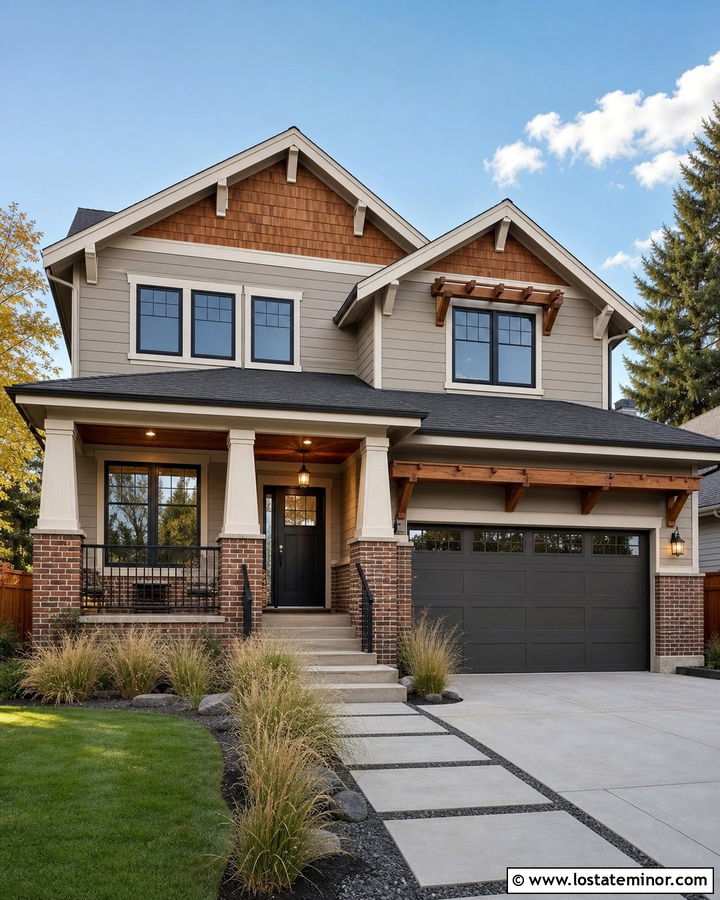
Cedar and brick can add warmth to greige siding when each material has a clear role. Use red-brown or taupe brick along the foundation and porch columns, then introduce stained cedar on the entry ceiling, gable, or garage canopy. Paint the main body a soft midtone greige to bridge the two natural materials. Black or dark bronze windows create crisp definition, while warm white trim keeps the roofline from feeling too heavy. A charcoal roof completes the neutral structure. This combination suits modern craftsman and mountain-inspired suburban homes. Keep the cedar stain medium rather than orange so it complements the brick and allows the greige exterior to remain visually dominant.
26. Greige House With Limestone Colored Brick
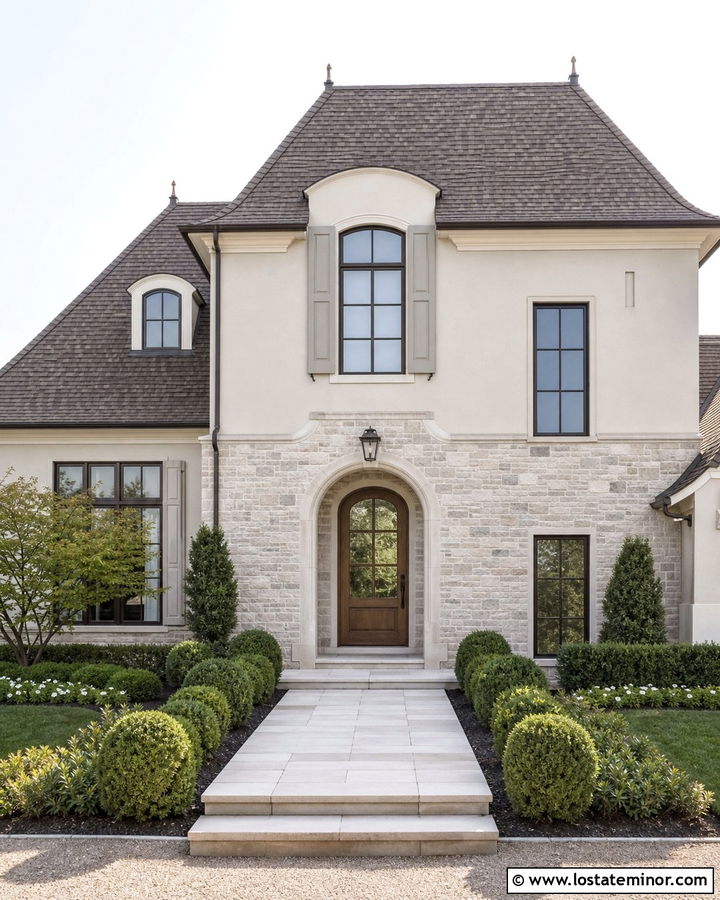
Limestone-colored brick creates a soft, elegant partner for pale greige siding. Look for brick with cream, putty, light taupe, and gentle gray variation. Then select a greige body color that is slightly darker than the masonry so both surfaces remain visible. Warm white trim can frame the windows, while bronze or charcoal accents add needed depth. A medium oak front door prevents the pale exterior from appearing washed out. Use the brick across the lower story, entry surround, or broad chimney for a substantial effect. This palette is well suited to French country and transitional homes. Structured shrubs and a pale stone walkway reinforce the refined, low-contrast curb appeal.
27. Greige Cottage With Reclaimed Brick
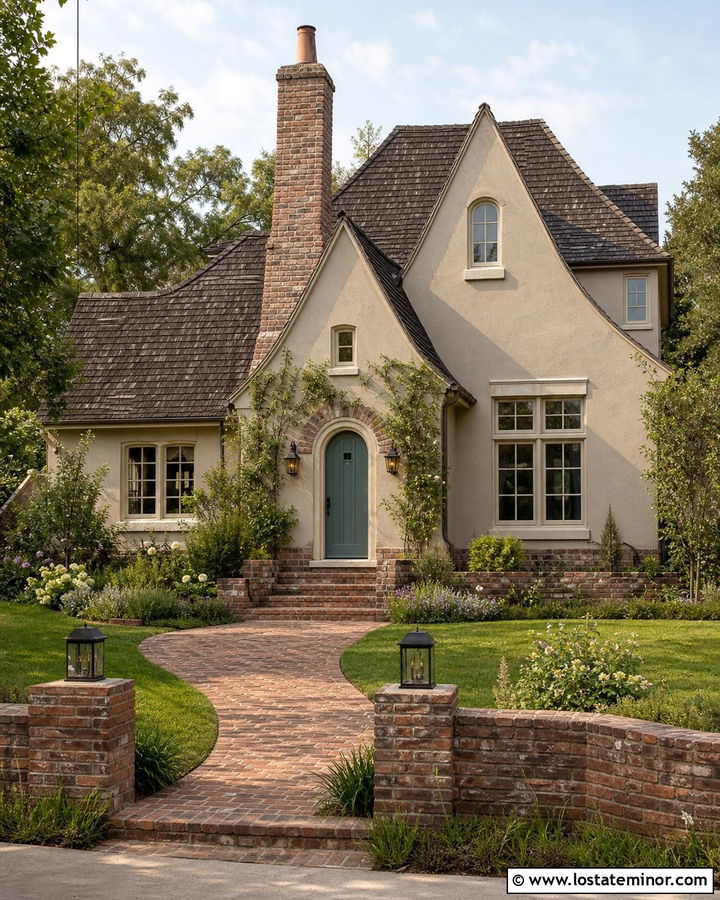
Reclaimed brick brings irregular color, worn edges, and a sense of age to a greige cottage exterior. Use it around a front chimney, garden wall, steps, or small porch foundation where its variation can be appreciated. Choose a soft, earthy greige for the siding rather than a cool gray that may conflict with the aged red and brown masonry. Cream window trim, a muted blue-green door, and antique bronze lanterns support the relaxed palette. A weathered charcoal roof will keep the cottage grounded. Informal planting beds, climbing greenery, and a gently curved walkway can enhance the collected character while leaving enough open space to show the full exterior design clearly.
28. Dark Greige House With Clinker Brick
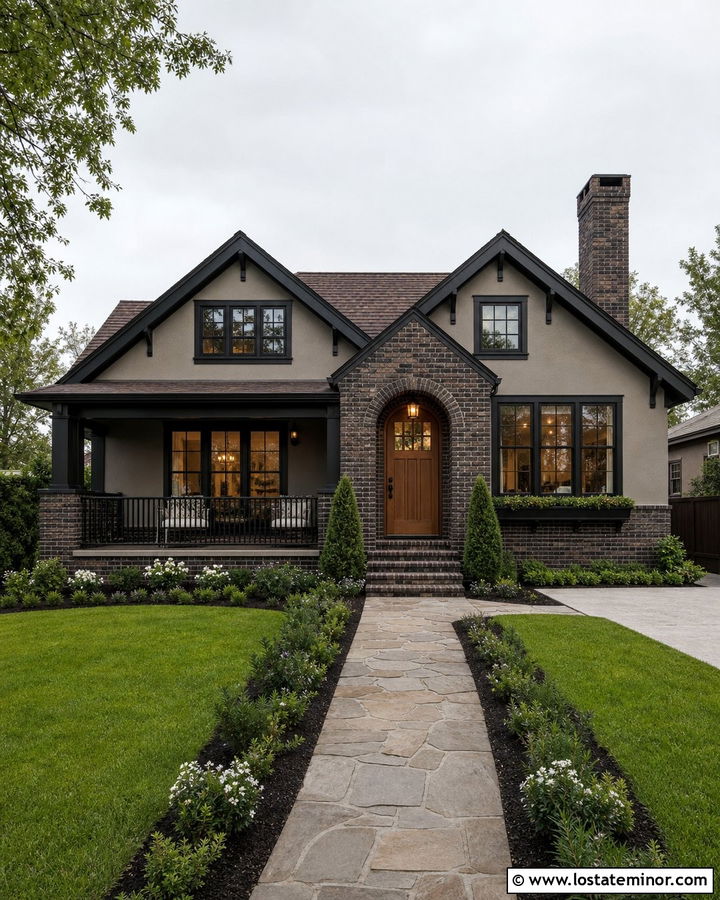
Clinker brick has dark, irregular, and sometimes glossy surfaces that pair well with a deeper greige exterior. Use the brick selectively on a chimney, entry projection, or foundation so its strong texture does not overwhelm the facade. Paint the siding dark mushroom greige, then use warm black trim around windows and roof edges. A medium oak or cedar door will brighten the entrance and prevent the scheme from becoming too somber. This combination works particularly well on Tudor cottages, arts-and-crafts homes, and dramatic bungalows. A dark brown roof and restrained landscaping complete the look. Position exterior lighting to reveal the brick texture without turning it into an isolated decorative feature.
29. Low Contrast Greige House With Taupe Brick
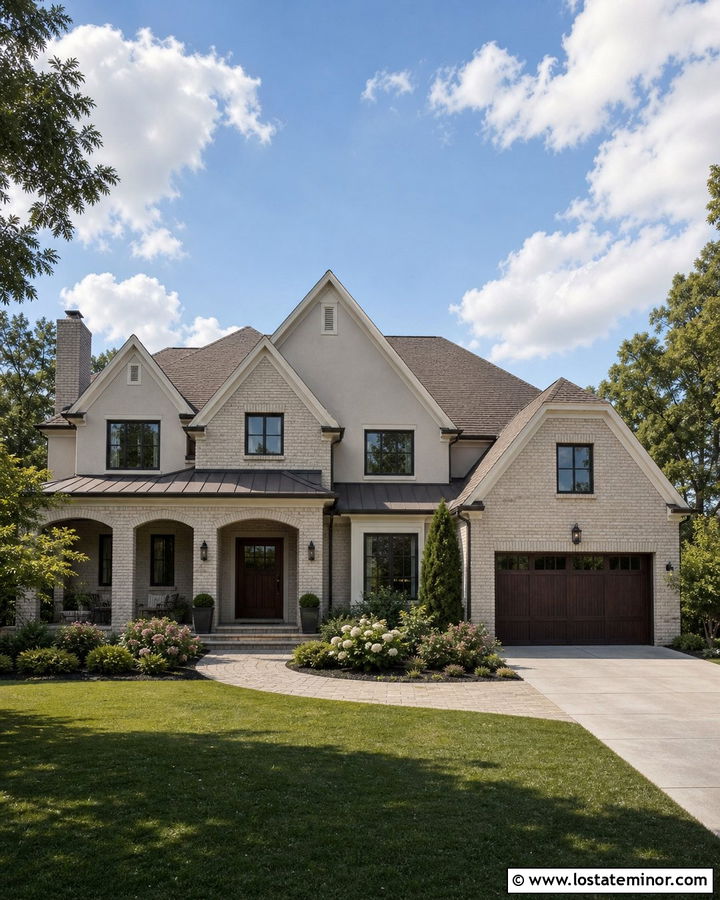
A low-contrast palette can make a complex exterior look calmer and more spacious. Pair light taupe brick with a greige siding color only one or two shades lighter. The close relationship allows changes in material and texture to define the architecture instead of strong color breaks. Use warm ivory trim sparingly, then add dark bronze windows, gutters, and lighting for definition. A stained wood door can provide the warmest point in the scheme. This approach works especially well on houses with multiple gables, siding directions, or uneven additions. Continue the taupe tones into the walkway and planting beds so the facade feels connected to its surroundings rather than divided into separate sections.
30. High Contrast Greige Modern House With Brick
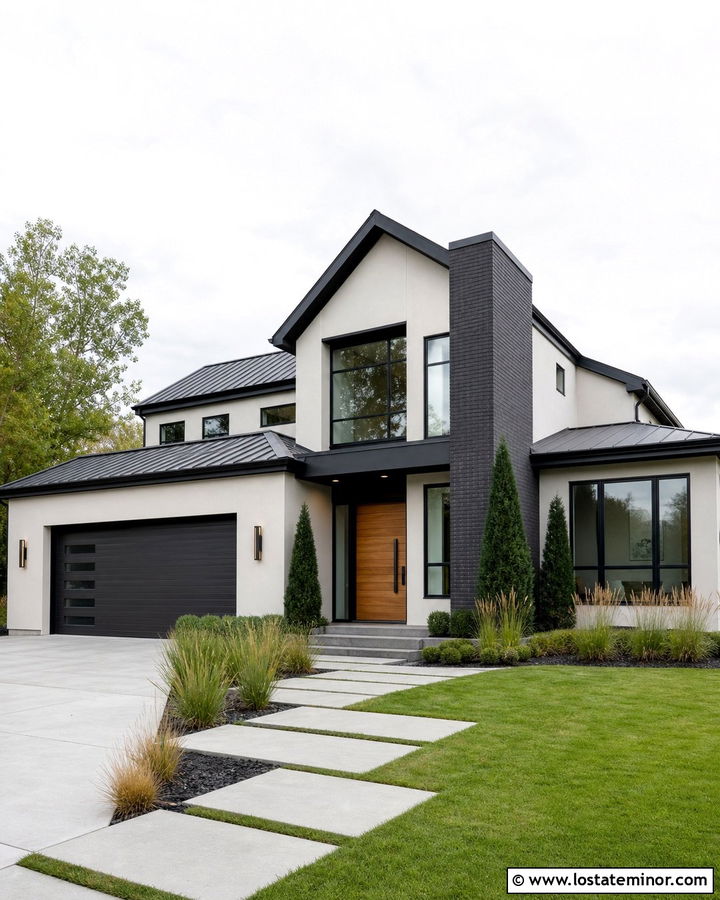
A high-contrast scheme can give greige and brick a bold modern direction. Paint the main stucco or siding a pale greige, then use nearly black brick on a tall entry wall, garage volume, or chimney. Black window frames and fascia will connect to the dark masonry, while a warm cedar door adds relief at the entrance. Keep decorative trim minimal and allow the strong material blocks to define the house. A charcoal standing-seam roof works well with the graphic palette. Use broad concrete pavers, structured grasses, and simple evergreen forms in the yard. The finished exterior feels crisp and architectural while greige prevents the black brick from appearing excessively harsh.
Conclusion:
These 30 Greige House Design With Brick Accents Ideas demonstrate how one adaptable neutral can work with many brick colors, architectural periods, and exterior materials. Begin by studying the permanent features, including the brick, mortar, roof, windows, and surrounding hardscape. Then select a greige that shares their warm, cool, or balanced undertones. Cream trim creates a soft transition, while black or bronze provides stronger definition. Wood doors and cedar details can introduce natural warmth. Most importantly, treat the brick as part of the whole facade rather than an isolated decoration. Test exterior colors beside the actual masonry in changing daylight before finalizing a complete, coordinated curb-appeal palette.

Related posts: