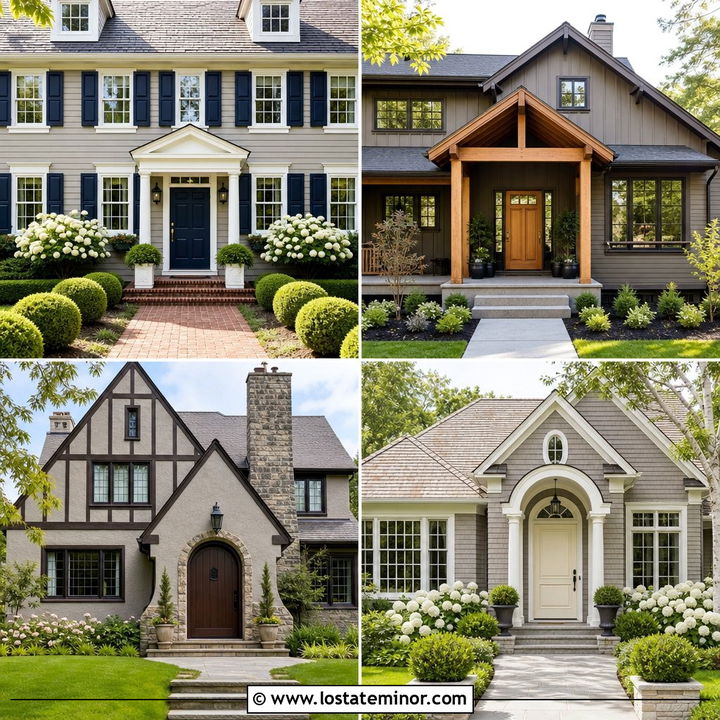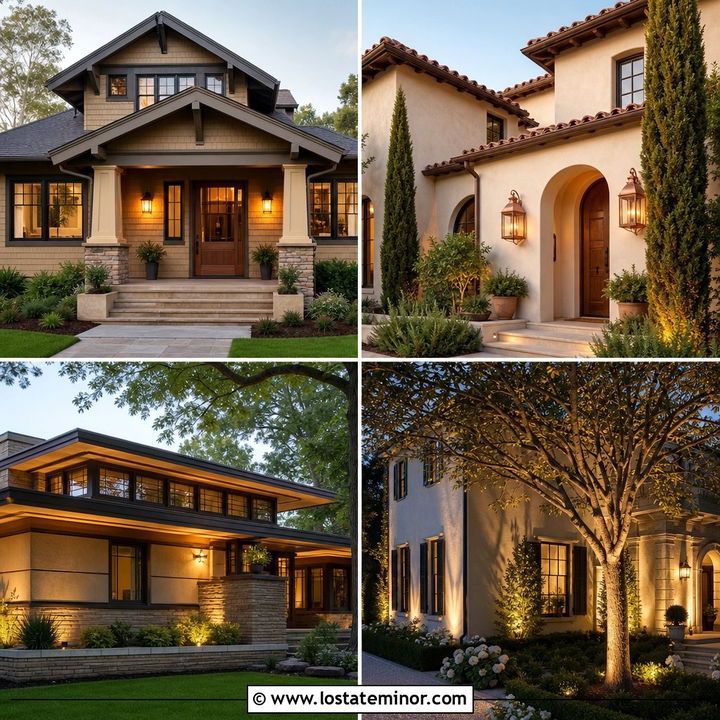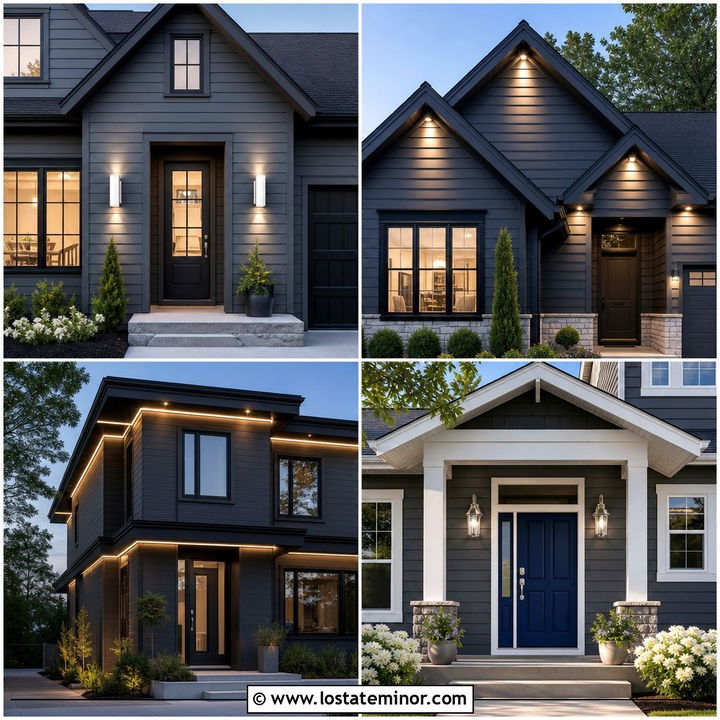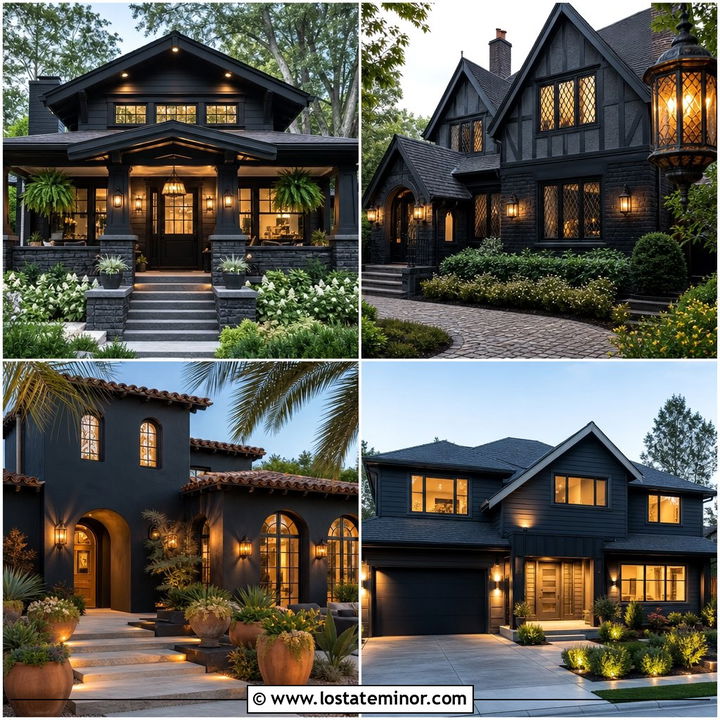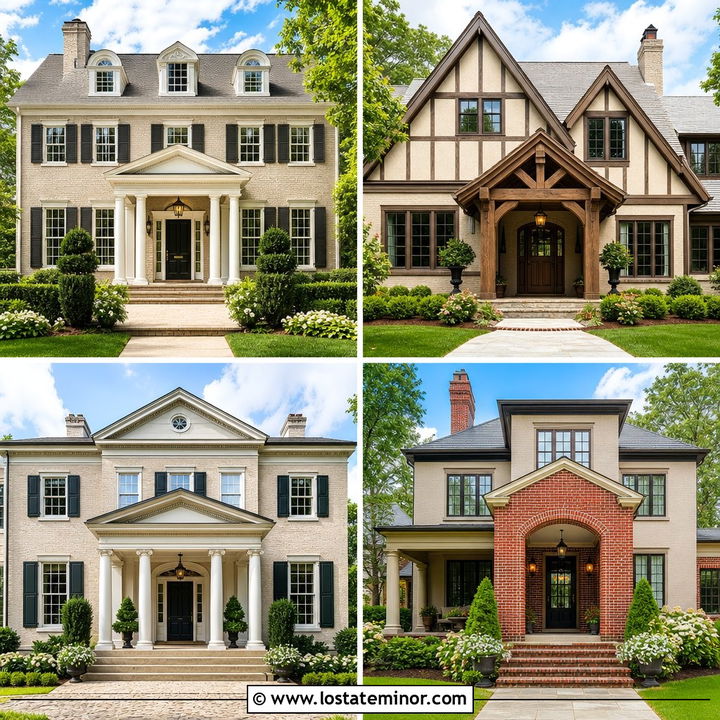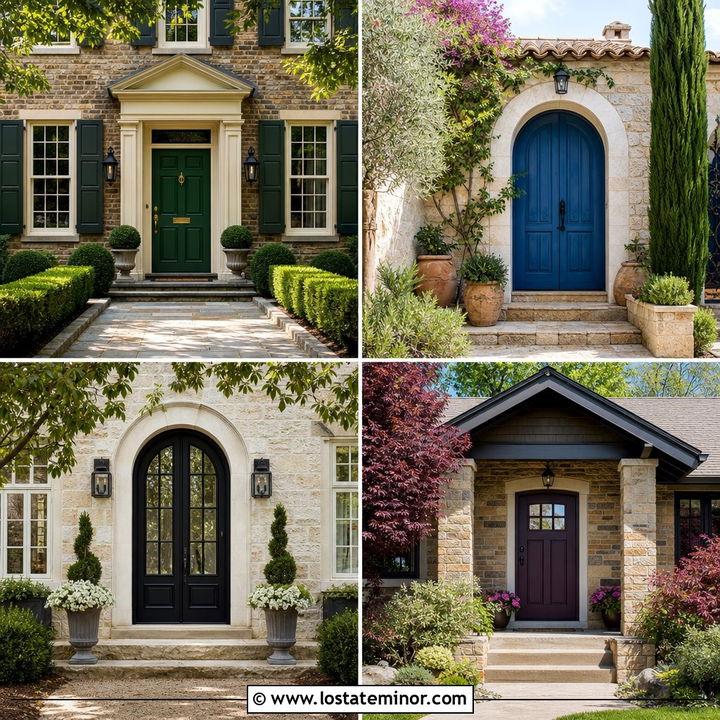
Greige creates a warm, flexible backdrop that can make exterior lighting feel more intentional and welcoming. The best **30 Greige House Design With Lighting Ideas** combine the siding, trim, roof, front door, masonry, and fixtures into one balanced curb-appeal plan. A light greige can soften black lanterns, while a deeper mushroom tone looks polished with aged brass, copper, or bronze. Lighting scale matters too. Small sconces can disappear beside a wide garage or tall entry, while oversized fixtures bring structure to a simple facade. Layer wall lights with pendants, path lights, and subtle landscape illumination for a complete exterior. The following full-house schemes offer practical inspiration across architectural types, materials, and budgets. Use them to explore **30 Greige House Design With Lighting Ideas**.
1. Greige Farmhouse With Black Lantern Lighting
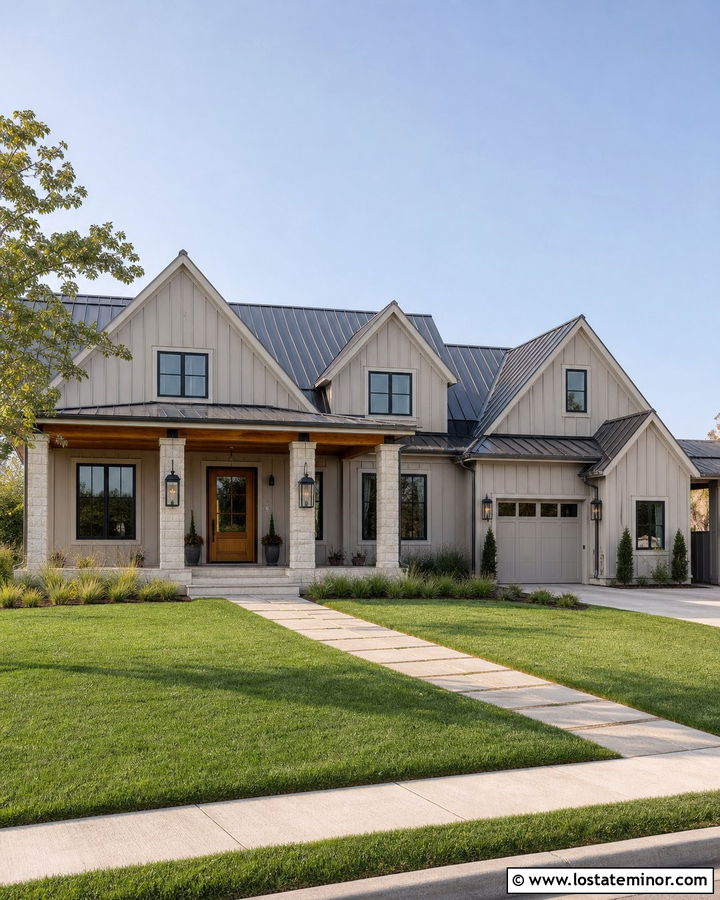
A warm greige modern farmhouse looks crisp without feeling as stark as a pure white exterior. Cover the main facade in light greige board-and-batten siding, then use soft white on the fascia, porch columns, and window trim. Matte black lanterns can frame the front door and repeat beside the garage. Choose generously sized fixtures so they remain visible against tall walls and broad rooflines. A medium-stained oak door, matching porch ceiling, and charcoal metal roof introduce natural warmth and definition. Keep the foundation stone in a mixed beige-gray palette that connects with the siding. Black-framed windows and simple landscaping complete the scheme, while low path lights extend the coordinated appearance from the sidewalk to the porch.
2. Greige Craftsman With Bronze Sconce Lighting
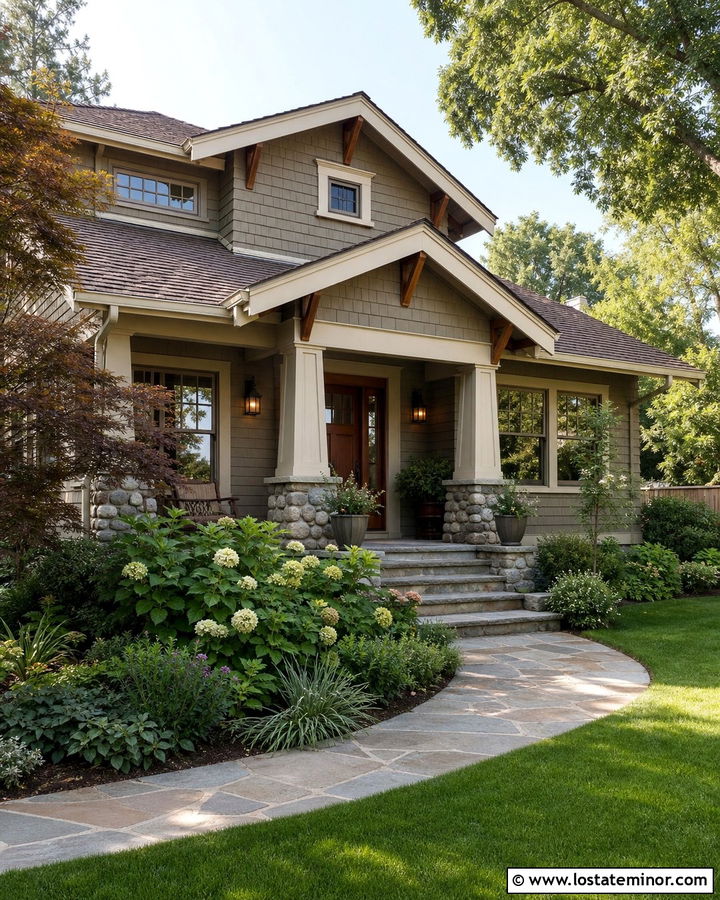
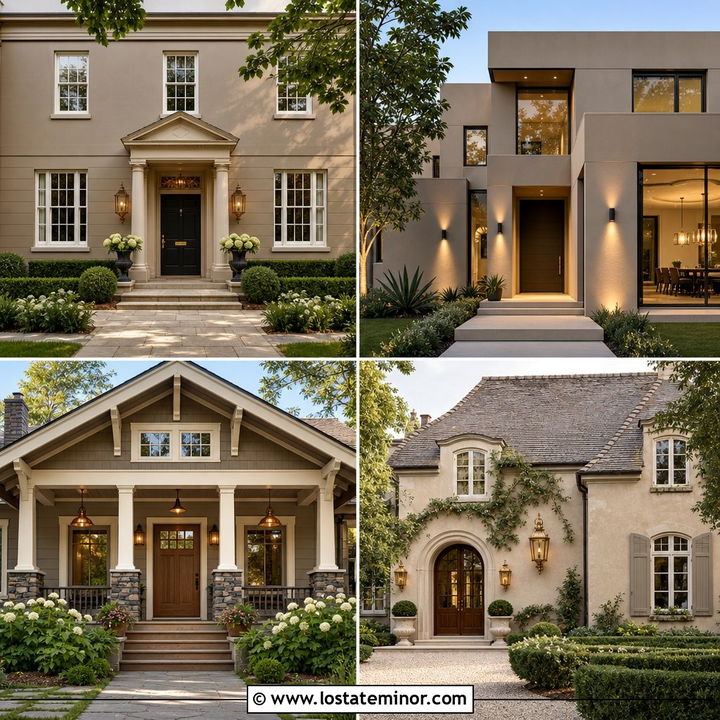
Can a neutral Craftsman exterior still show plenty of character? Start with medium greige lap siding and creamy off-white trim around the tapered columns, exposed rafters, and divided-light windows. Oil-rubbed bronze sconces fit naturally beside a stained wood front door because their warm finish complements the home’s handcrafted details. Repeat the bronze on the house numbers, door hardware, and porch railing for continuity. A river-rock foundation in tan, gray, and brown gives the greige siding more depth. Add a dark brown architectural shingle roof and cedar porch beams to reinforce the earthy palette. Place low-voltage lights near the porch steps and specimen shrubs, keeping the fixtures simple enough that the Craftsman woodwork remains the main attraction.
3. Greige Colonial With Brass Lantern Lighting
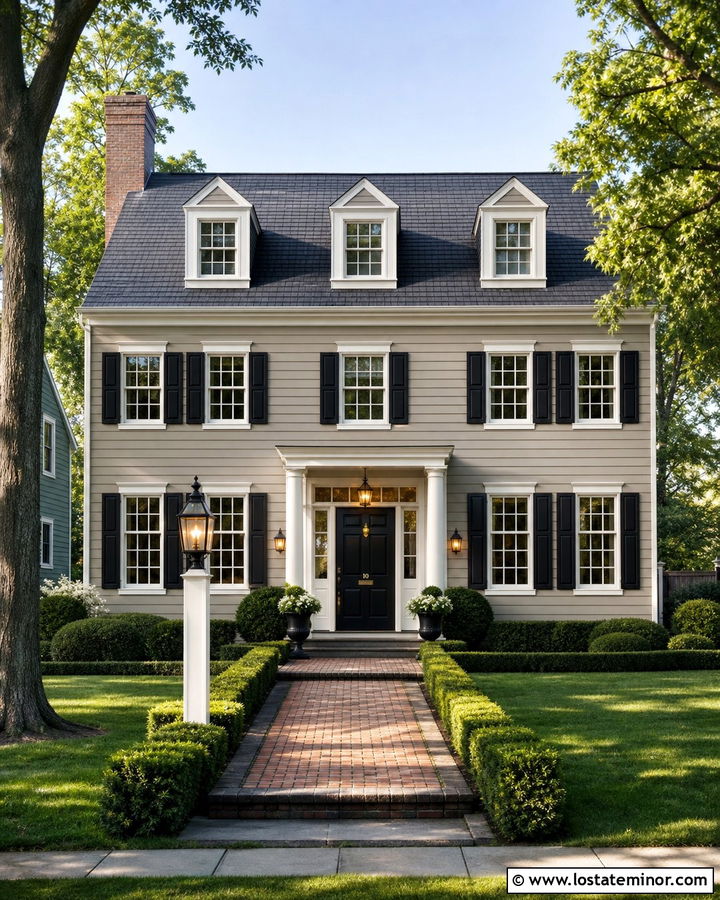
Symmetry makes a greige Colonial exterior feel especially polished. Use a balanced gray-beige paint on the clapboard siding, with warm white trim defining the shutters, cornice, columns, and evenly spaced windows. A glossy black front door creates a clear central focal point. Install two traditional aged brass lanterns on either side, choosing a size that fills the space between the door surround and adjacent windows. Brass offers a softer contrast than solid black and develops a lived-in appearance that suits classic architecture. Dark charcoal shutters and a slate-look roof anchor the light facade. A matching post lantern near the walkway can carry the lighting theme into the front yard. Formal hedges and a straight brick path preserve the home’s orderly, traditional curb appeal.
4. Greige Ranch With Modern Cylinder Lighting
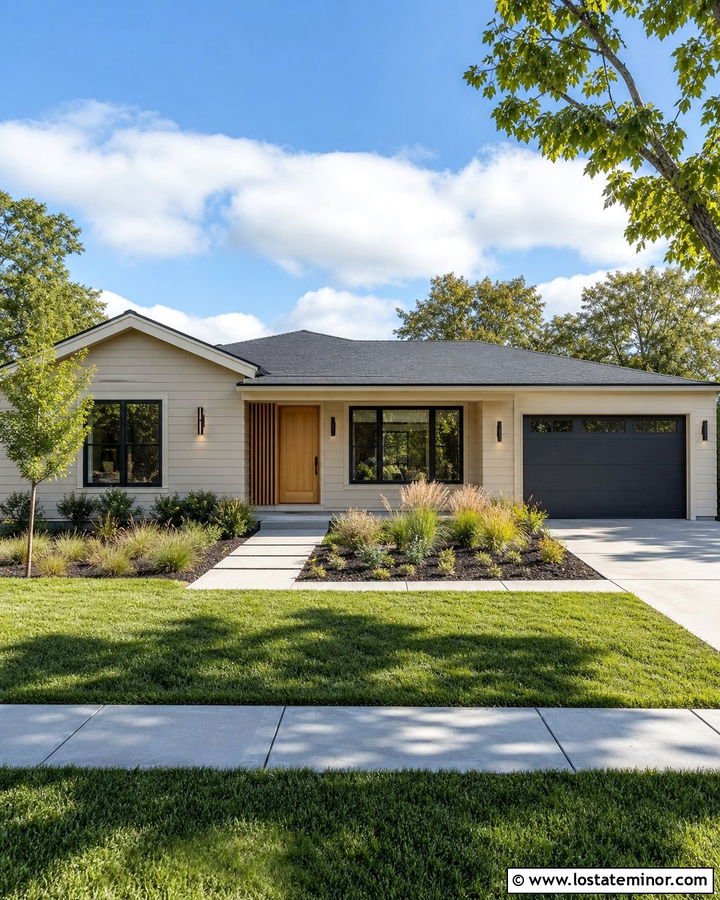
A long ranch facade benefits from lighting that creates a clean visual rhythm. Paint the horizontal siding a soft putty greige and use warm white around the windows, eaves, and garage. Slim black cylinder sconces can be placed beside the front door and between wide garage bays, adding vertical lines that balance the home’s low profile. Introduce cedar at the entry through a slatted screen, modern door, or shallow porch ceiling. A charcoal roof and black-framed windows provide contrast without overwhelming the single-story structure. Consider discreet downlights under the eaves to wash the greige siding evenly. Broad planting beds, ornamental grasses, and a straight concrete walkway support the updated look while keeping the entire design simple, practical, and appropriate for a suburban ranch.
5. Greige Bungalow With Seeded Glass Lighting
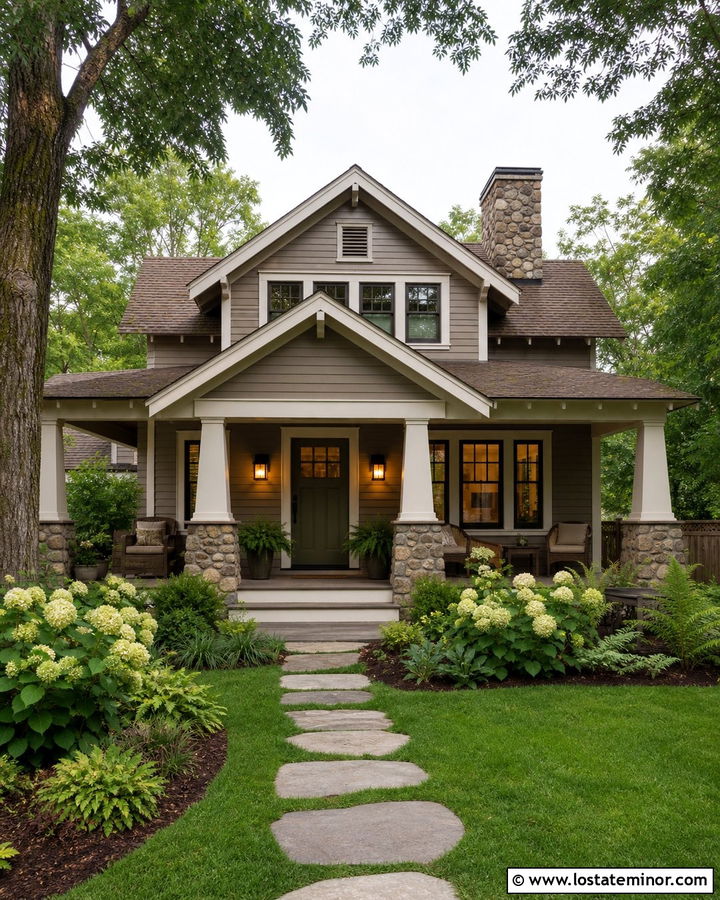
The textured glow of seeded glass works beautifully with the cozy proportions of a greige bungalow. Choose mushroom greige lap siding, creamy trim, and deep olive accents on the window sashes or front door. Blackened bronze lanterns with seeded glass can hang beside the entry and beneath the porch roof. Their traditional shape respects the home’s age, while the dark finish gives the neutral facade greater definition. Add tapered columns on stone piers, exposed wood brackets, and a weathered brown roof for an inviting Craftsman-influenced finish. The porch steps can include small recessed lights for safer movement without adding visual clutter. Layered ferns, hydrangeas, and low shrubs soften the front walk and help the muted greige, green, stone, and bronze palette settle naturally into the landscape.
6. Greige Cape Cod With Copper Lantern Lighting
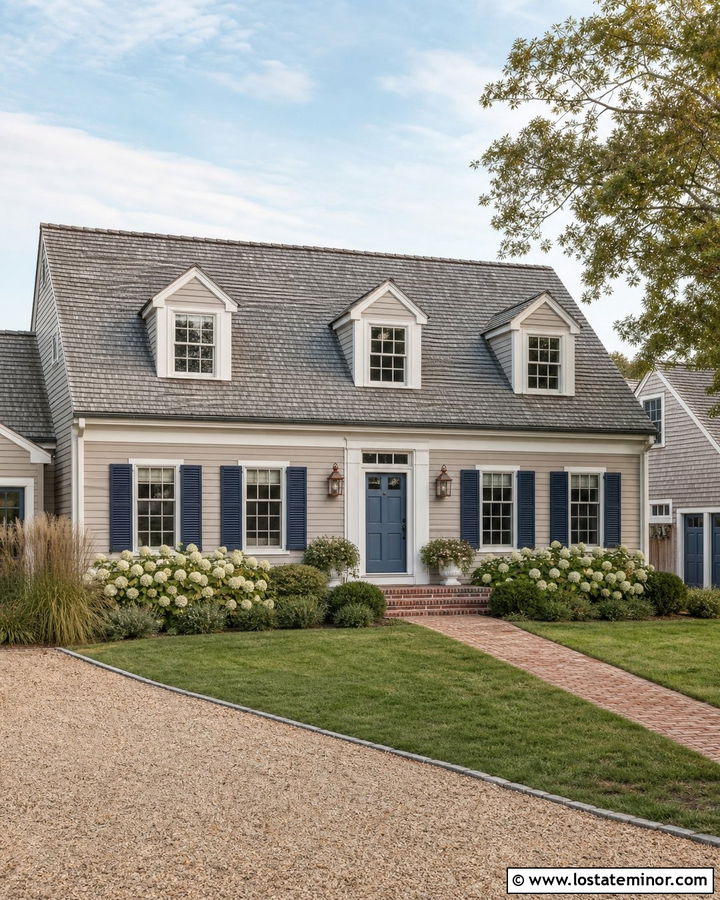
Weathered copper brings warmth and coastal character to a compact Cape Cod exterior. Paint the shingles or clapboards a pale sandy greige, then outline the dormers, windows, and corner boards in soft white. Copper lanterns beside a blue-gray front door create a refined accent that will become more muted as the metal ages. A cedar shake roof or warm gray architectural shingles can connect the copper with the home’s natural textures. Keep shutters in a dusty navy or charcoal blue to add contrast without turning the scheme overly nautical. A small copper pendant beneath the entry overhang completes the lighting plan. Finish with a brick walkway, white hydrangeas, beach grasses, and clipped foundation shrubs for a bright, approachable facade with understated coastal influence.
7. Greige Tudor With Leaded Glass Lighting
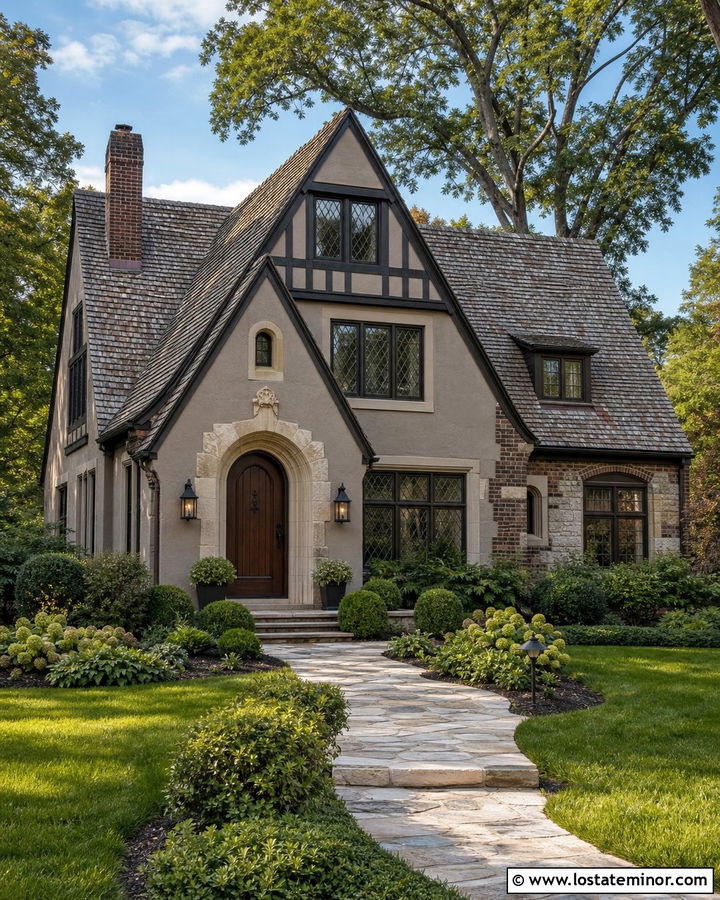
A Tudor home needs lighting with enough visual weight to complement its steep roof and decorative masonry. Use deep taupe greige on the stucco sections, creamy beige trim, and espresso brown on the half-timber details. Lantern-style sconces with dark bronze frames and leaded glass can flank an arched wood door, reinforcing the home’s historic character. Choose fixtures with simple geometric panes rather than overly ornate decoration. Warm red-brown brick, limestone accents, and a dark weathered roof give the greige walls a substantial base. Small shielded lights can highlight the stone entry and mature trees without flooding the facade. Curved planting beds, boxwood, and a natural stone walkway continue the traditional mood while helping every exterior material appear related rather than visually competitive.
8. Greige Split-Level With Linear LED Lighting
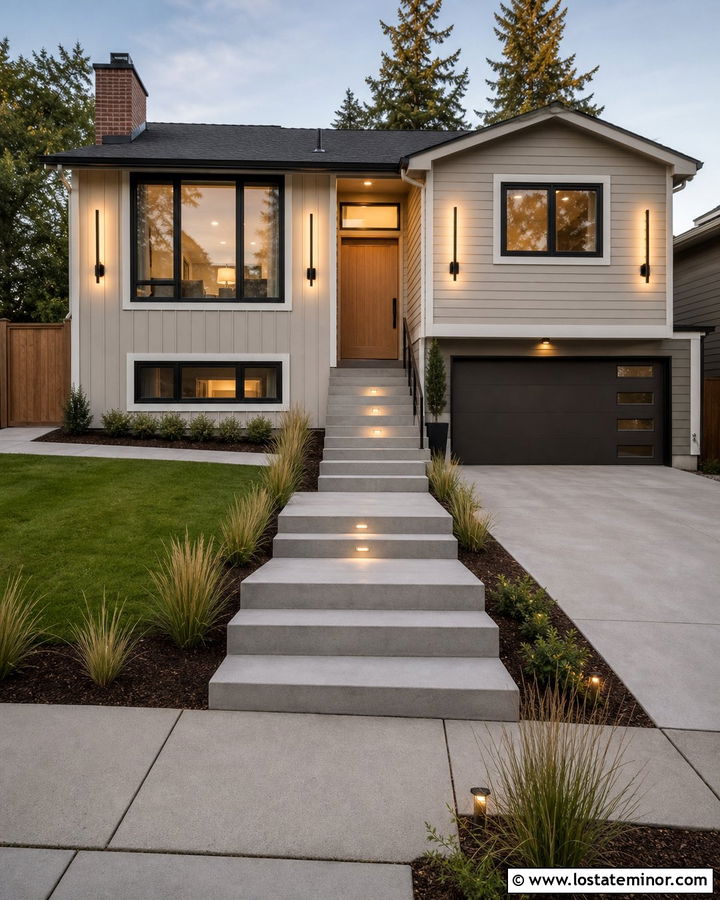
Clean linear fixtures can transform a dated split-level into a more deliberate contemporary home. Apply medium greige to the upper lap siding and use a slightly deeper coordinating greige on the lower level or garage. Warm white trim keeps the palette light, while black-framed windows sharpen the updated architecture. Install narrow black LED sconces vertically beside the entry and garage, repeating their shape in a modern railing or address plaque. A natural oak front door adds warmth between the gray-beige surfaces. If the lower facade includes brick, limewash or repaint it in a compatible warm stone color rather than introducing another strong hue. Finish the design with broad concrete steps, integrated step lights, ornamental grasses, and a simple walkway that guides attention toward the relocated or redesigned entrance.
9. Greige Cottage With Gooseneck Lighting
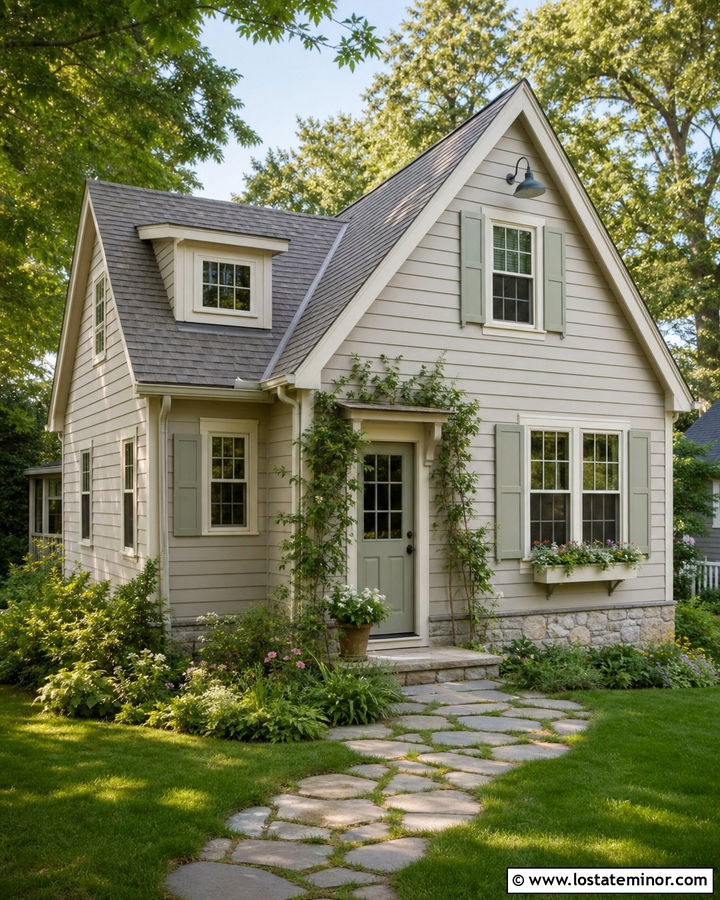
A greige cottage can feel cheerful and relaxed when the fixtures are practical rather than formal. Select a light oatmeal greige for the siding, creamy white for the trim, and muted sage green for the door and shutters. Compact gooseneck lights in aged zinc or soft black can sit above the entry, side gate, and small garage. Their downward-facing shades illuminate useful areas while supporting the cottage’s unfussy character. Add a weathered wood porch, pale fieldstone foundation, and medium gray roof to keep the materials soft and natural. Window boxes and climbing greenery provide color without competing with the lighting. A few low path lights along an irregular flagstone walk can complete the layered plan, making the small home feel cared for from the curb to the front step.
10. Greige Contemporary House With Up And Down Lighting
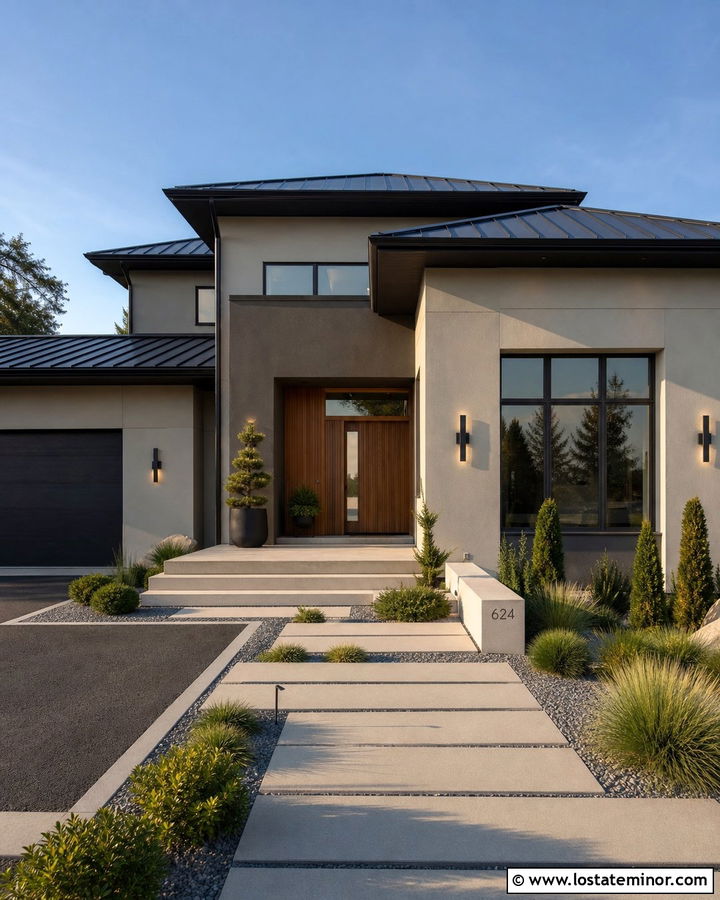
Sharp architectural lines become more inviting when paired with a warm greige exterior. Use smooth greige stucco across the primary walls and a darker taupe greige on one projecting volume. Black up-and-down sconces can emphasize the height of the entrance, garage, or second-story section through controlled vertical beams. During the day, their simple rectangular shapes echo modern window frames and metal railings. Introduce thermally treated wood around the recessed front door to keep the gray-beige palette from appearing flat. A charcoal standing-seam roof and dark bronze windows add definition. Linear concrete pavers, gravel beds, sculptural evergreens, and low retaining walls should follow the same clean geometry. Concealed step lights can illuminate grade changes while preserving the home’s uncluttered contemporary appearance.
11. Greige Brick House With Traditional Coach Lighting
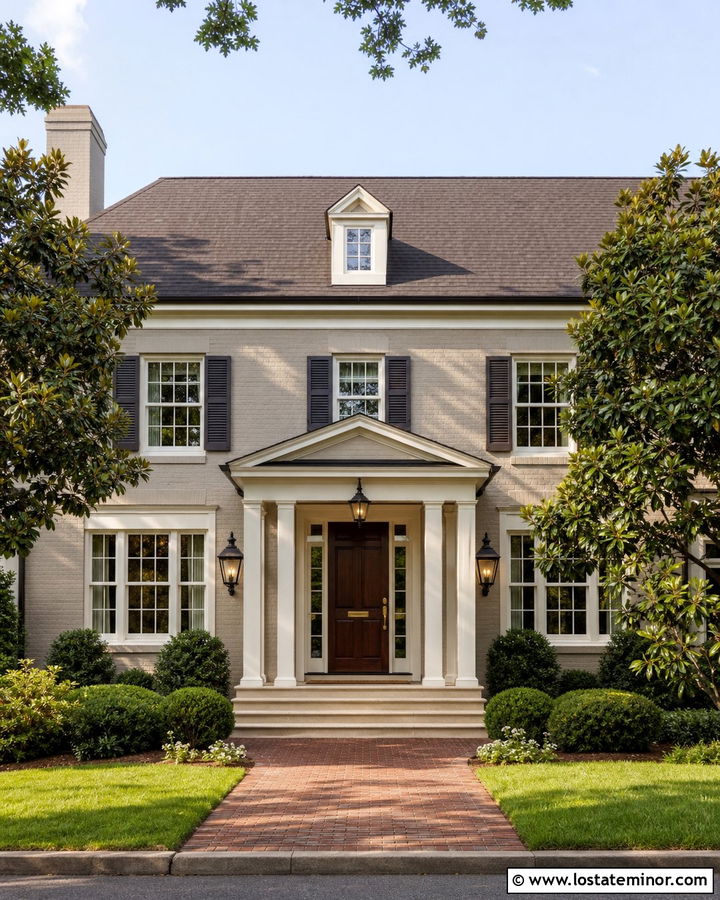
Painted brick gives greige more texture than smooth siding, making it ideal for a traditional home that needs a gentle refresh. Choose a warm light greige that allows the brick pattern to remain visible, and use creamy white on the cornice, columns, and window trim. Large black coach lanterns can frame a stained mahogany front door and repeat beside the garage. Their classic silhouette works especially well with arched openings and divided-light windows. Keep the roof charcoal brown rather than blue-gray so it relates to the warm undertones in the paint. Antique brass door hardware can soften the black accents. Add compact landscape lights beneath magnolia trees and along a brick walkway, creating several layers of illumination instead of relying on one overly bright porch fixture.
12. Greige Stone House With Dark Bronze Lighting
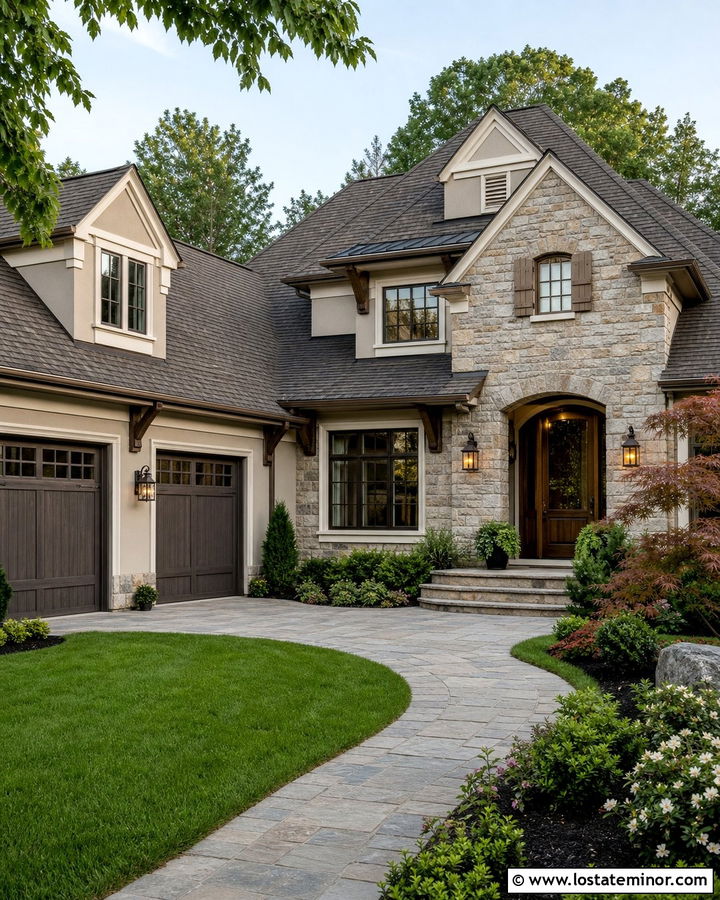
When a facade already contains stone, the greige paint should connect with its quiet background tones. Select a medium stone greige for the siding or stucco, then use warm ivory trim to define the roofline and windows. Dark bronze lantern sconces offer enough contrast to remain visible while feeling softer than pure black. Place them beside a walnut front door and on the stone garage columns for a consistent lighting pattern. A brown-gray shingle roof, bronze gutters, and stained timber brackets pull the entire palette together. Use warm landscape lighting sparingly around the stone base, walkway, and mature shrubs. Matching the light direction and fixture finish across the facade prevents the mixed materials from looking busy and gives the house a grounded, upscale presence.
13. Greige Stucco House With Minimalist Sconce Lighting
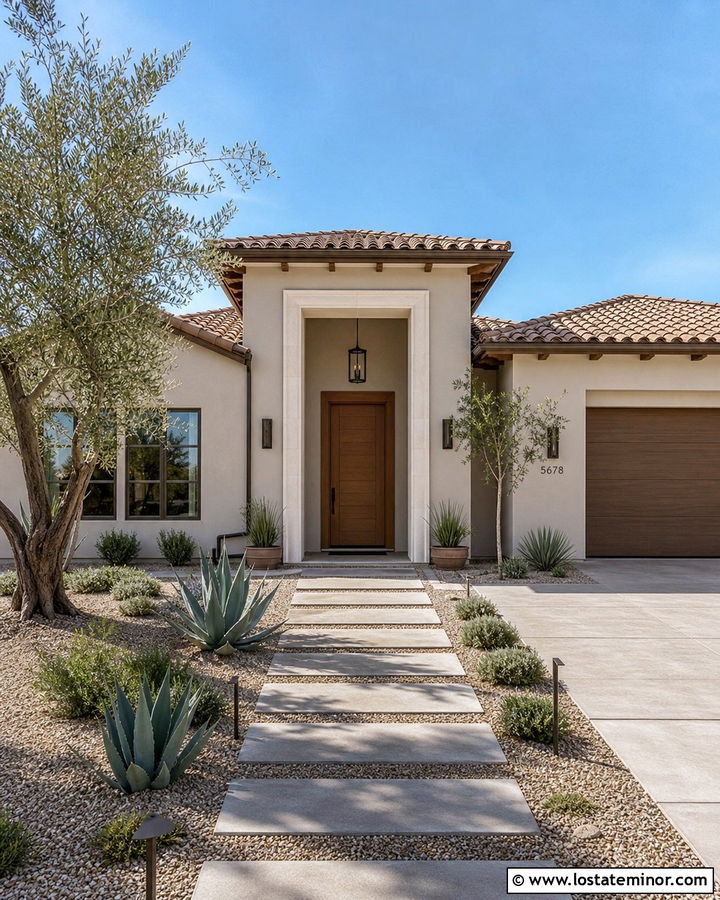
Smooth stucco creates a clean surface where even simple lighting fixtures become noticeable. Cover the house in a sun-washed pale greige and pair it with warm white fascia, bronze window frames, and a natural teak front door. Minimalist bronze sconces with softly rounded or rectangular forms can flank the entry and garage. Avoid fixtures with too many decorative details because the appeal of this scheme comes from controlled shapes and limited colors. A clay-taupe tile roof works well in warm climates, while pale limestone around the entrance adds subtle texture. Use recessed lights in the porch ceiling and low fixtures beside drought-tolerant planting beds. Gravel, agave, olive trees, and broad concrete pavers reinforce the restrained design without making the neutral exterior feel empty.
14. Greige Mediterranean House With Iron Lantern Lighting
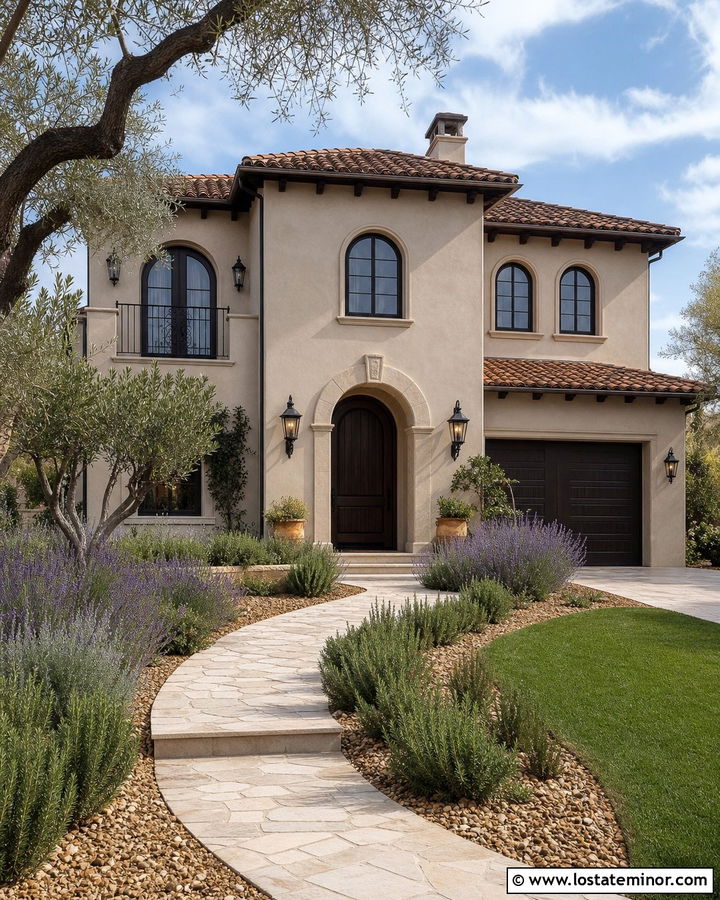
Warm greige can modernize a Mediterranean exterior while preserving its established character. Apply a creamy taupe greige to the stucco and use dark espresso on the arched doors, window frames, and decorative beams. Wrought-iron lanterns with amber-clear glass should sit beside the main entry, under the covered porch, and near the garage. Their curved brackets can echo the arches without becoming excessively ornate. A terracotta roof introduces natural color, while limestone steps and a medium-stained wood door maintain the earthy direction. Add subtle uplights near olive trees and column bases to support the architecture. Lavender, rosemary, low hedges, and gravel borders create a suitable landscape frame. The finished scheme feels warmer and more regionally appropriate than a high-contrast gray, white, and black combination.
15. Greige Prairie House With Horizontal Lighting
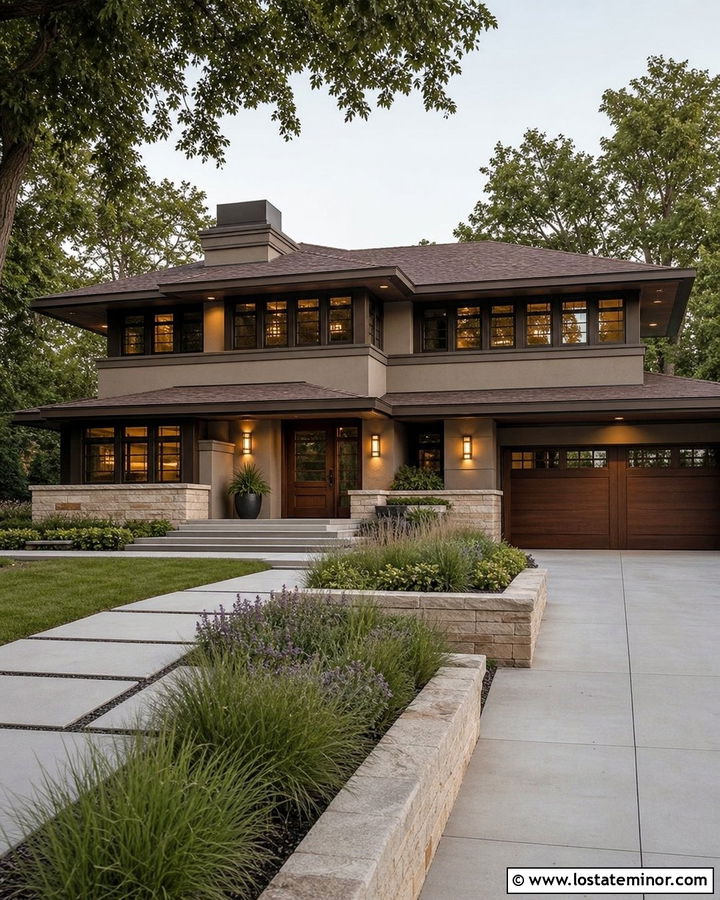
The strong horizontal lines of a Prairie-style home call for wide, low-profile lighting. Paint the stucco and siding a midtone clay greige, then use dark bronze on the deep fascia, window frames, gutters, and railings. Rectangular sconces that cast light downward can be positioned along the entry wall and beside the garage. Their flat shapes should echo the roofline rather than interrupt it. Add buff limestone around the foundation and chimney, plus a medium walnut door beneath the broad porch. A low-pitched brown roof keeps the exterior grounded. Continue the horizontal theme through long concrete pavers, layered grasses, and wide planting beds. Small lights tucked beneath steps or seat walls provide practical illumination while allowing the architecture’s extended lines to remain clear.
16. Greige Midcentury House With Globe Lighting
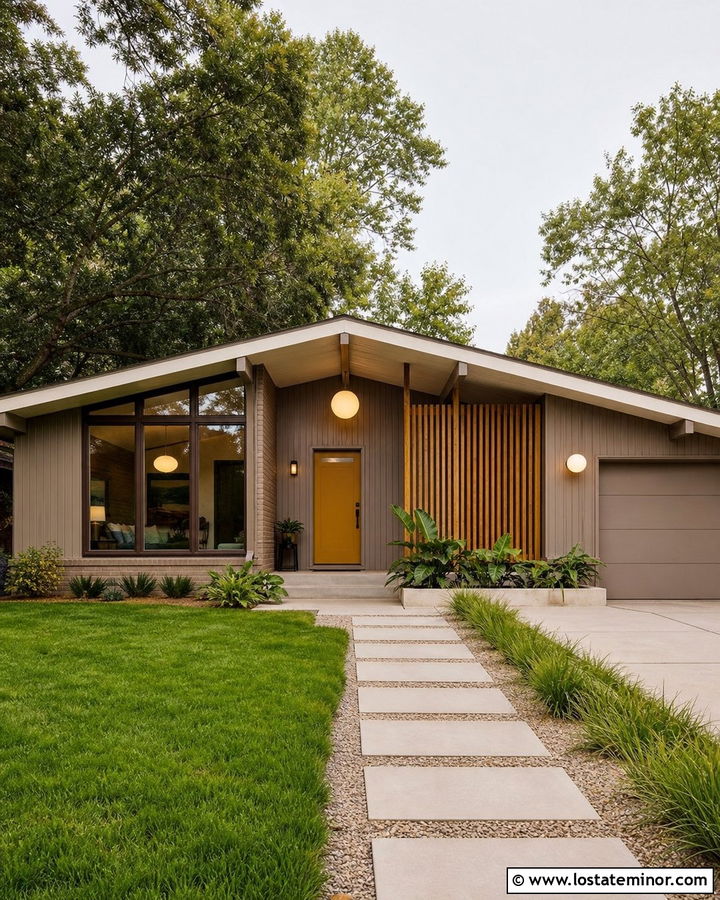
A globe fixture introduces a soft shape that contrasts nicely with a midcentury home’s angular roofline. Use a warm mushroom greige on the vertical siding, brightened with off-white soffits and dark brown window frames. Hang a single opal glass globe pendant beneath the entry canopy, then add simple globe sconces near the carport or garage. A mustard, muted orange, or olive front door can provide a period-appropriate focal point without overpowering the neutral exterior. Natural wood slats and tan brick add texture around the entrance. Keep the landscaping architectural, using low grasses, broad-leaf plants, gravel, and rectangular stepping stones. The combination of greige, wood, colored glass, and rounded lighting feels authentic to the house while still appearing fresh and livable.
17. Greige Scandinavian House With White Globe Lighting
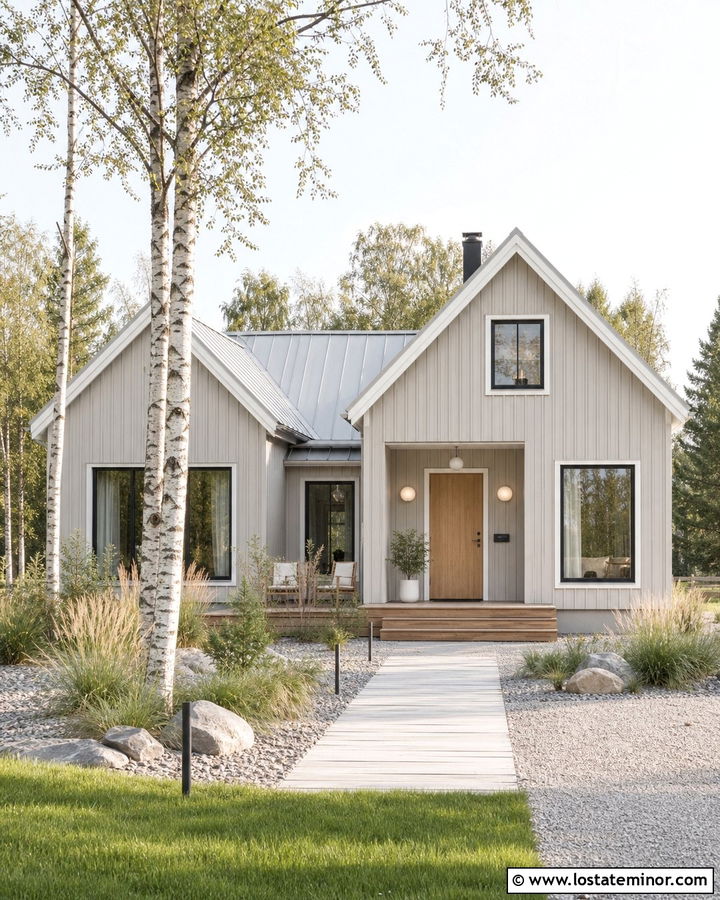
Soft colors and uncomplicated fixtures give a Scandinavian-inspired exterior its relaxed personality. Cover the vertical siding in a pale dove greige and use clean white on the trim, fascia, and narrow window surrounds. Frosted white globe lights can hang beneath the porch and appear as matching wall fixtures beside a blond wood door. Their simple form adds interest without creating harsh contrast. A light gray metal roof, natural wood decking, and minimal black accents keep the facade balanced. Avoid using black on every edge, since a gentler palette better supports this design direction. Grasses, birch trees, gravel, and a straight boardwalk-style path can frame the home. Add small recessed deck lights for a layered plan that remains quiet, functional, and visually connected.
18. Greige Victorian House With Antique Brass Lighting
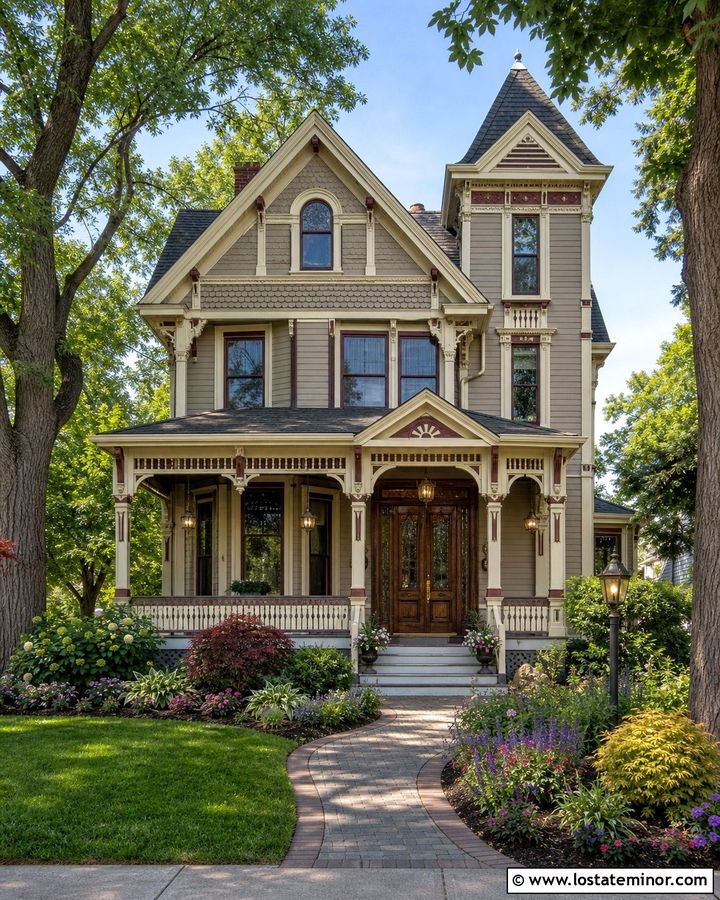
Detailed Victorian trim becomes easier to appreciate when the body color remains calm. Choose medium warm greige for the siding, creamy white for the brackets and window trim, and muted plum or forest green for selected accents. Antique brass lanterns can frame the front door and hang beneath the porch, adding warmth without competing with decorative millwork. A stained wood door and bronze hardware further soften the palette. Keep the roof deep charcoal, and repeat the accent color on small gables or shutters rather than every surface. Low garden lights should disappear among layered shrubs and flowering borders. This controlled approach lets the house retain its historical richness while preventing the combination of ornate architecture, multiple paint colors, and decorative lighting from becoming visually overwhelming.
19. Greige Coastal House With Nautical Lighting
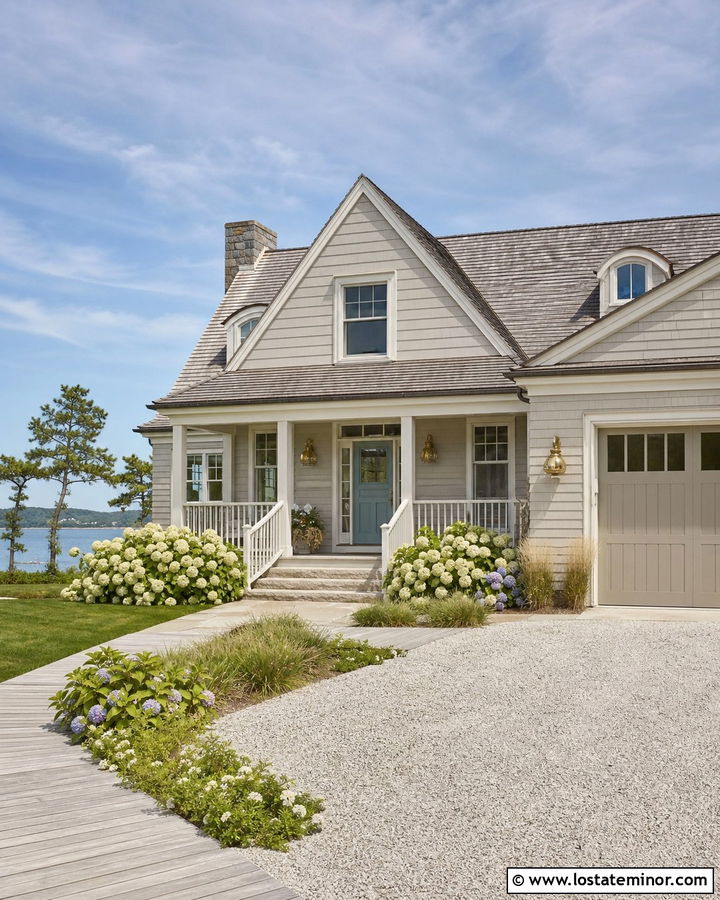
Salt-air character does not require a predictable blue-and-white exterior. Paint the siding a pale driftwood greige and use soft white on the trim, porch railings, and window surrounds. Weather-resistant nautical sconces in aged brass or dark bronze can frame a sea-glass blue front door. Choose enclosed fixtures with clear or ribbed glass and straightforward shapes. A weathered gray roof, light stone steps, and natural cedar details strengthen the relaxed coastal palette. Small shielded lights along the boardwalk-style path provide guidance without drawing attention away from the facade. Complete the setting with dune grasses, hydrangeas, gravel, and wind-shaped shrubs. The warm greige keeps the exterior grounded, while the blue door and metal lighting add restrained references to the home’s coastal setting.
20. Greige Mountain House With Rustic Lighting
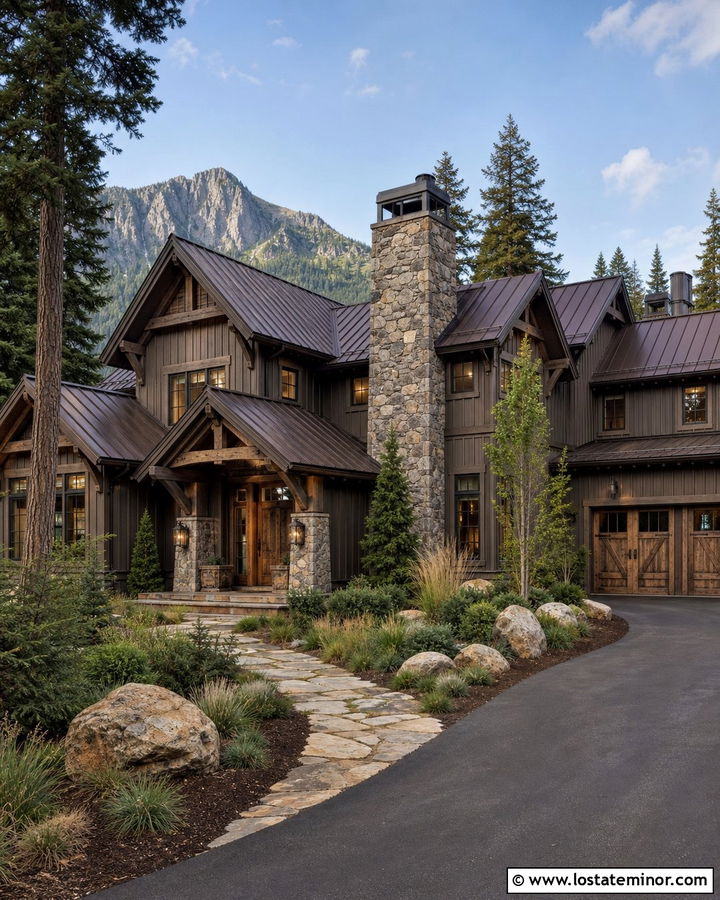
Against a wooded landscape, deeper greige can help a large house feel connected to its surroundings. Use an earthy charcoal greige on the lap siding, warm taupe trim, and natural stone across the foundation and chimney. Oversized rustic lanterns in weathered iron can flank a heavy timber door and hang beneath the covered porch. Their substantial scale suits broad gables, thick columns, and exposed beams. A dark brown metal roof and cedar garage doors add warmth to the gray-beige body color. Include low step lighting in the stone stairs and restrained uplighting near selected trees. Native grasses, evergreen shrubs, boulders, and a winding drive complete the setting. Keeping the fixtures downward-directed helps the architecture remain welcoming without making the wooded property appear excessively bright.
21. Greige Desert House With Warm Wall Lighting
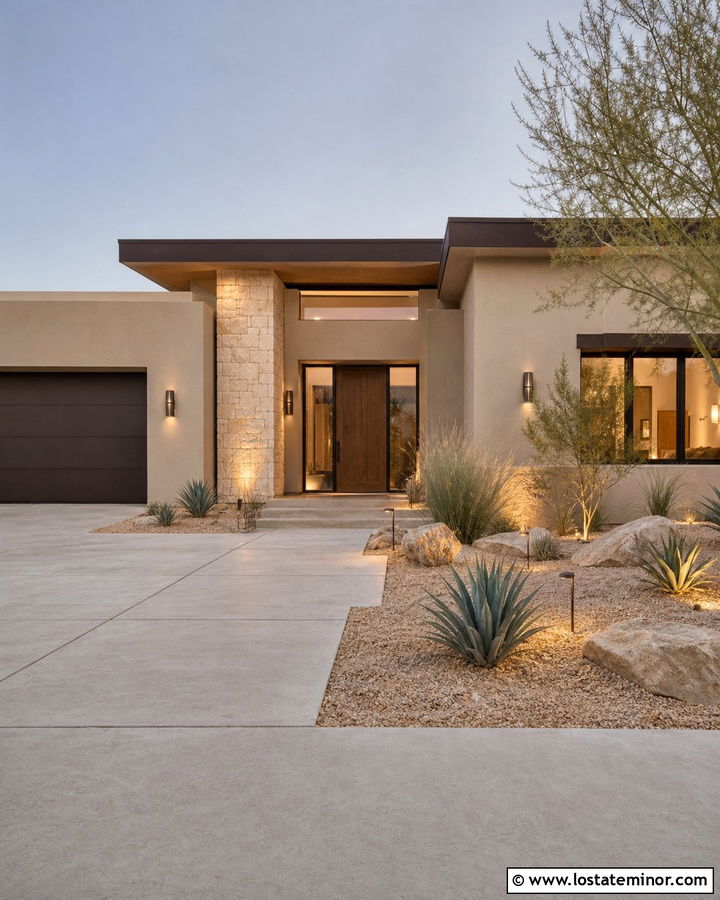
Bright desert sun can make cool gray paint appear severe, so use a sandy greige with clear beige warmth. Apply it to smooth stucco walls, then add deep bronze windows, a mesquite-toned front door, and pale limestone accents. Compact wall sconces with warm bronze finishes can cast controlled light across the entry and garage. Select closed or shielded designs that suit the home’s simple geometry and exposed setting. A flat roof with dark fascia creates a clean cap above the light walls. Arrange low path lights among gravel, agave, yucca, and sculptural boulders rather than lining the walkway like a runway. Broad concrete pads and a recessed courtyard entrance add depth. The complete palette feels modern but remains compatible with the surrounding arid landscape.
22. Greige Lake House With Wood Pendant Lighting
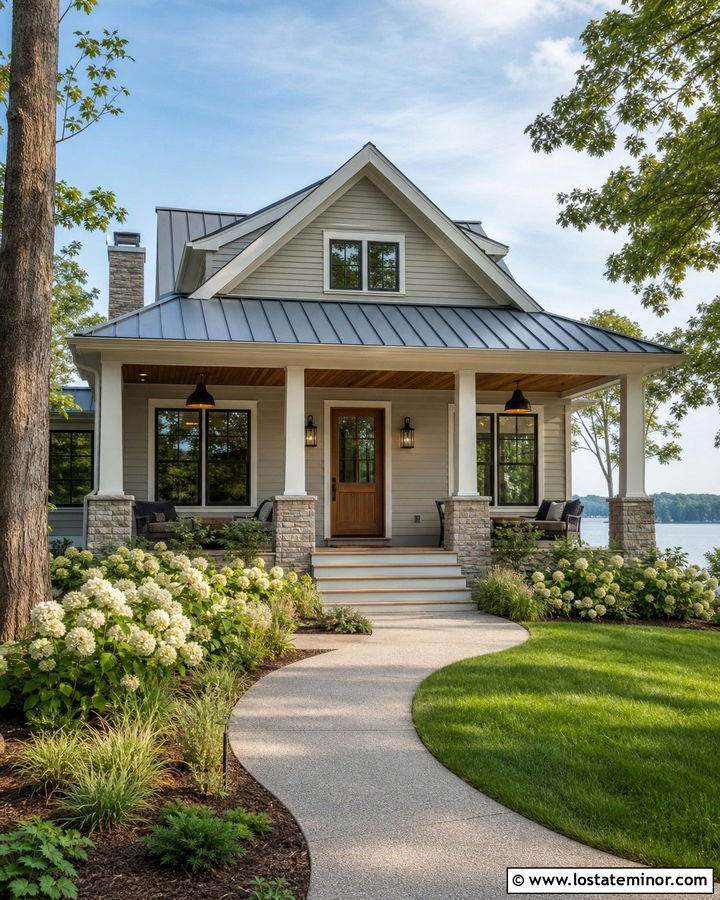
A lake house should feel relaxed from the driveway, and a light greige exterior supports that easy atmosphere. Use misty greige lap siding, soft white trim, and natural cedar on the porch ceiling, front door, and deck railings. Hang a wood-and-black-metal pendant beneath the covered entrance, then install matching black sconces beside the door and garage. A muted blue-gray metal roof can reflect the waterside setting without making the palette feel themed. Stone columns in beige and gray provide a sturdy base. Add discreet stair lights to the porch and deck for practical visibility. Native grasses, hydrangeas, broad steps, and a gently curved walkway soften the facade and connect the complete house to its open, natural surroundings.
23. Greige Shingle House With Copper Sconce Lighting
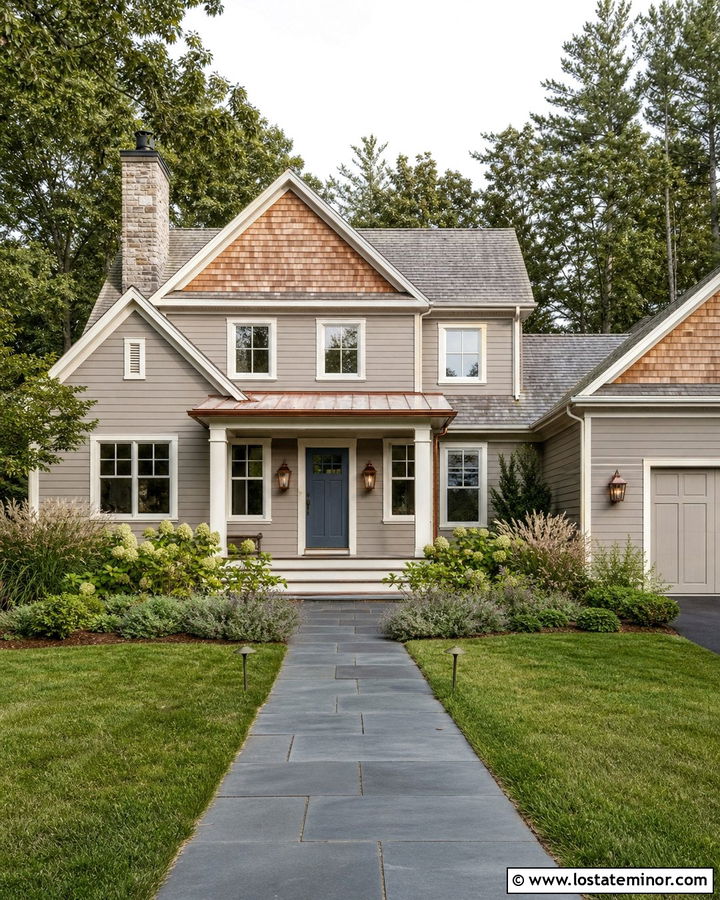
Natural shingles and greige paint can create a layered exterior with subtle variation. Cover the main clapboard sections in a light taupe greige, reserve weathered cedar shingles for the upper gables, and use warm white trim throughout. Copper sconces beside the front door and garage repeat the reddish warmth found in the cedar. A medium blue-gray door adds a calm accent, while a weathered gray roof keeps the upper portion cohesive. Choose fixtures with clean lines so the combination does not become overly rustic. Low lights along a brick or bluestone walkway can guide visitors through relaxed foundation planting. As the cedar and copper age, their finishes will become more muted, supporting the understated character of the complete gray-beige exterior.
24. Greige Modern Farmhouse With Gooseneck Garage Lighting
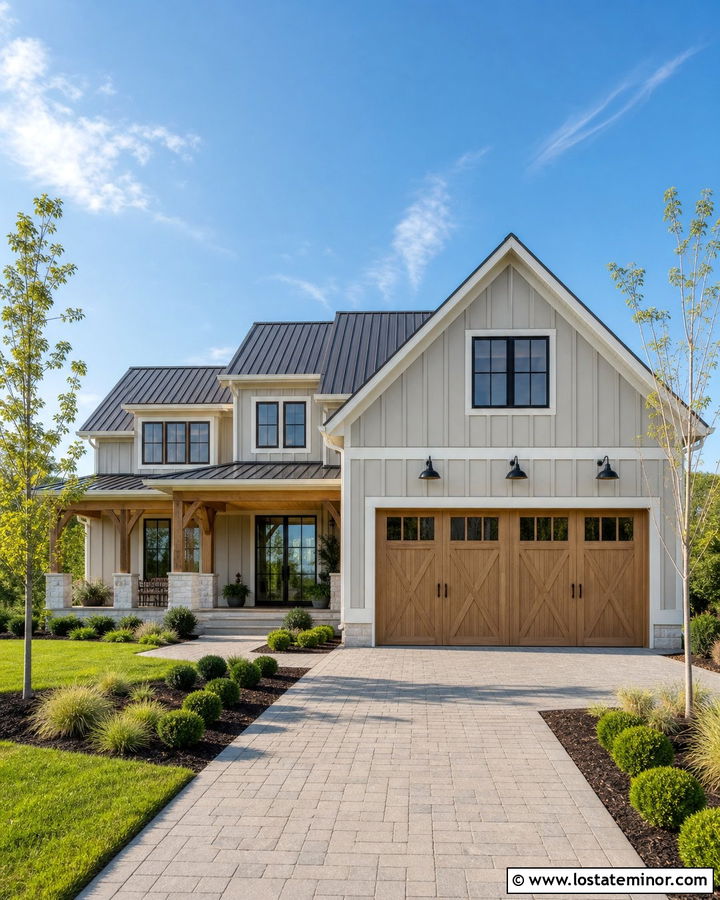
Garage doors occupy a large part of many modern farmhouse facades, making their lighting especially important. Use soft greige board-and-batten siding with warm white trim and matte black windows. Place broad black gooseneck lights above each natural wood garage bay, centering every fixture so the elevation feels orderly. Matching lanterns beside a black or stained oak front door can connect the garage to the entrance. Add a charcoal metal roof, limestone porch base, and cedar ceiling for a balanced mix of modern and rustic materials. Avoid undersized fixtures, which can look lost above wide doors. A straight paver driveway, clipped shrubs, and ornamental grasses maintain the clean curb appeal while allowing the greige, wood, stone, and black lighting to carry the design.
25. Dark Greige House With Brass Lighting
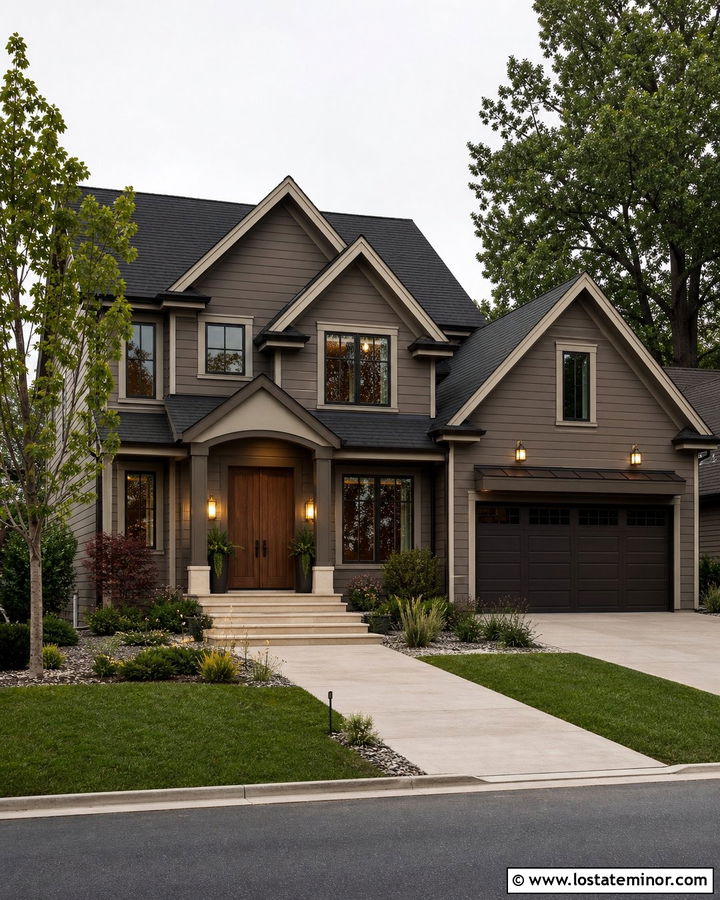
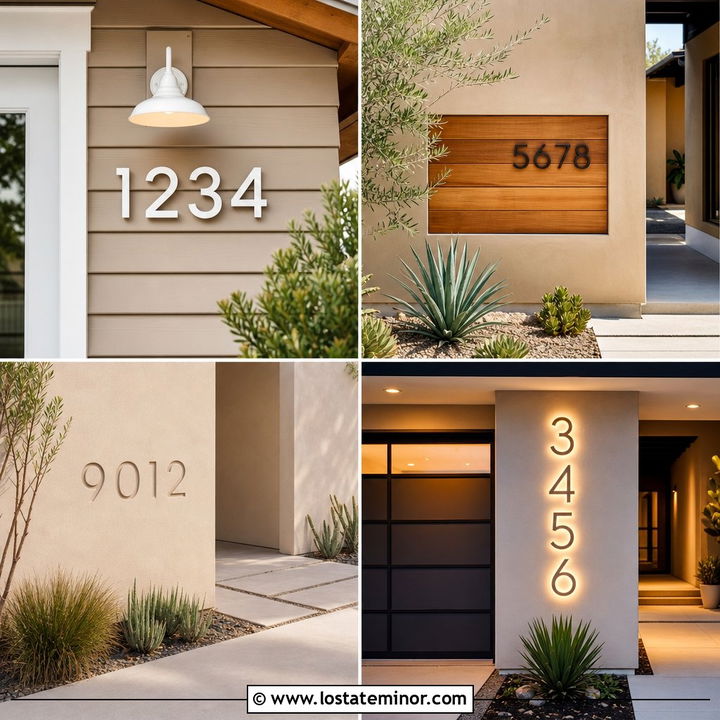
Dark greige gives a house dramatic depth without the hardness of solid charcoal. Apply a rich brown-gray greige to horizontal siding or smooth stucco, then use muted cream on limited trim areas. A warm walnut front door and aged brass sconces can brighten the entrance while keeping the overall palette sophisticated. Brass also creates a more noticeable focal point than black fixtures would against the dark walls. Add bronze windows, a near-black roof, and pale limestone steps to distribute light and dark tones across the facade. Use soft landscape lighting beneath small trees and along the walkway instead of flooding the entire wall. The result is moody in color but still approachable, with warm metal and masonry preventing the deep greige exterior from appearing heavy.
26. Light Greige House With Black Cage Lighting
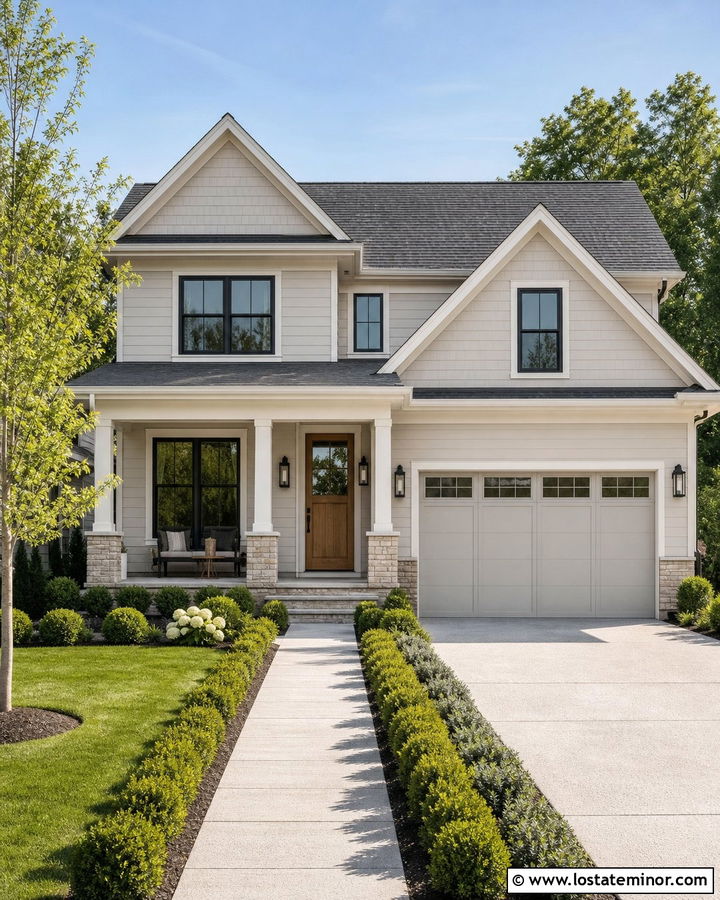
Black cage lights provide a graphic accent against pale greige siding. Choose a clean, light gray-beige for the main body and a creamy white for the corner boards, soffits, and porch posts. Place rectangular cage sconces beside a natural oak door and above the garage, using matching clear glass across every fixture. A medium charcoal roof and slim black windows repeat the dark finish without covering too much of the facade. Add light beige stone around the porch base to strengthen the warm undertones. Recessed porch lights can supply general illumination, allowing the cage fixtures to remain decorative focal points. Finish the complete look with a concrete walkway, structured foundation shrubs, and small ornamental trees that frame rather than hide the lighting.
27. Two-Tone Greige House With Integrated Lighting
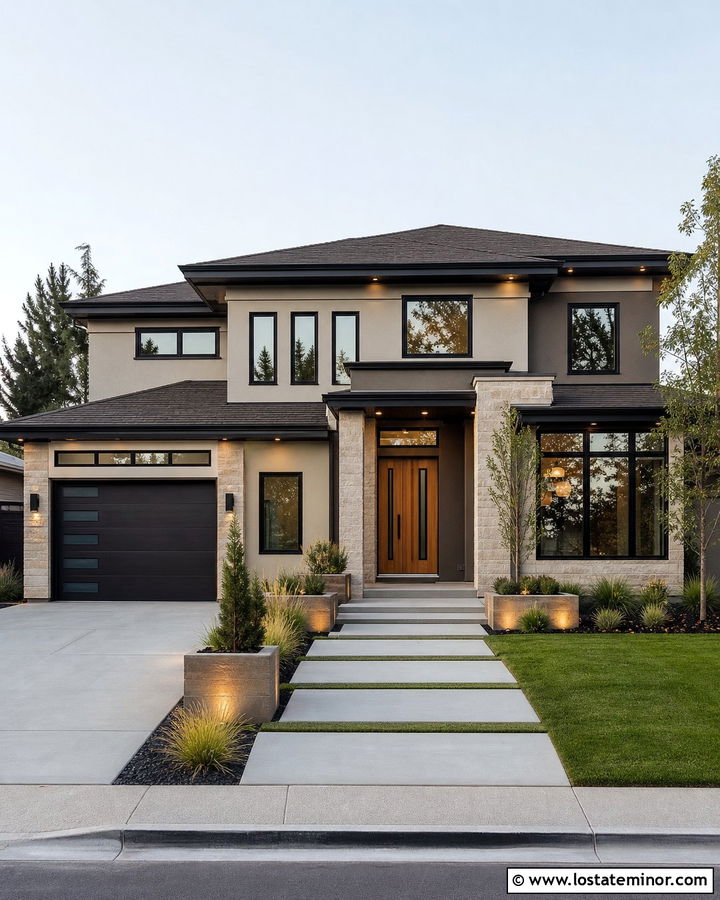
A two-tone palette can make a simple house look more architectural without introducing an unrelated color. Use pale greige on the main siding and deep mushroom greige on a projecting garage, upper gable, or recessed entry. Warm white trim connects both shades, while black windows and a natural wood door create clear focal points. Integrate narrow sconces into the darker walls and discreet recessed lights beneath the lighter porch ceiling. The fixture housings should match the window frames so the exterior remains organized. Beige-gray stone can bridge the two greige tones at the foundation. Keep the roof charcoal brown and the landscaping restrained. Layered grasses, rectangular planters, and broad pavers support the modern composition while letting the color blocking and lighting define the facade.
28. Greige House With Sage Door And Bronze Lighting
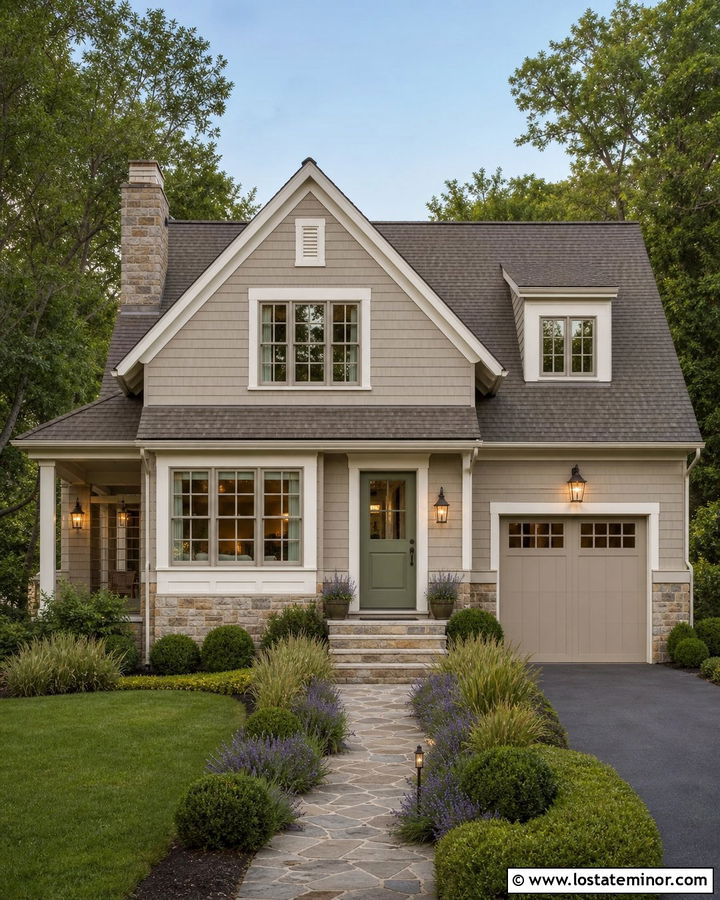
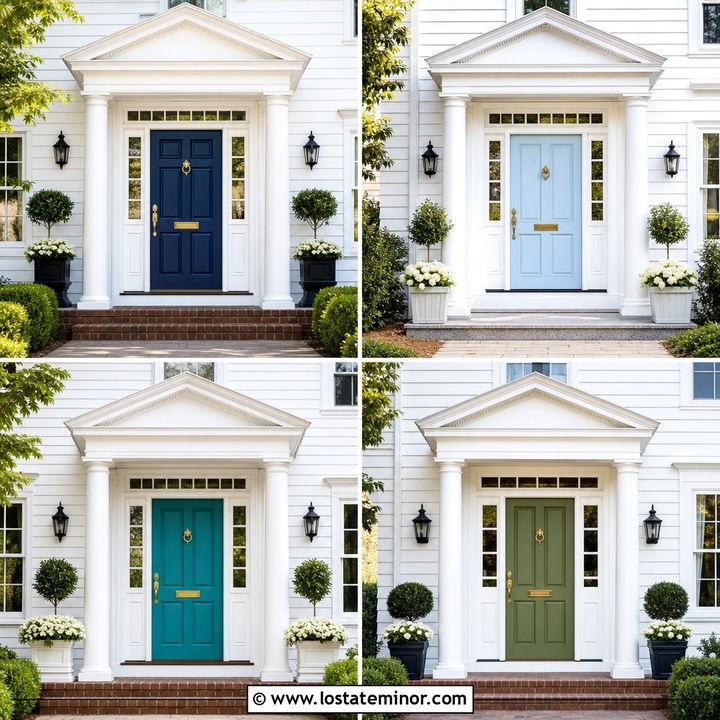
A muted sage front door can add personality to greige without disrupting its calm character. Select a balanced warm greige for the lap siding and ivory for the trim, columns, and garage door. Use dark bronze lanterns beside the sage entry, repeating the metal on the railing, mailbox, and door hardware. The green-gray door should be noticeably deeper than the siding so it reads as an intentional focal point. A brown-gray roof and mixed fieldstone foundation keep the palette earthy. Add small bronze path lights among boxwood, lavender, and ornamental grasses for continuity between the house and yard. This combination works particularly well on transitional, cottage, and Craftsman facades because every color shares a softened, nature-inspired quality.
29. Greige House With Wood Door And Pendant Lighting
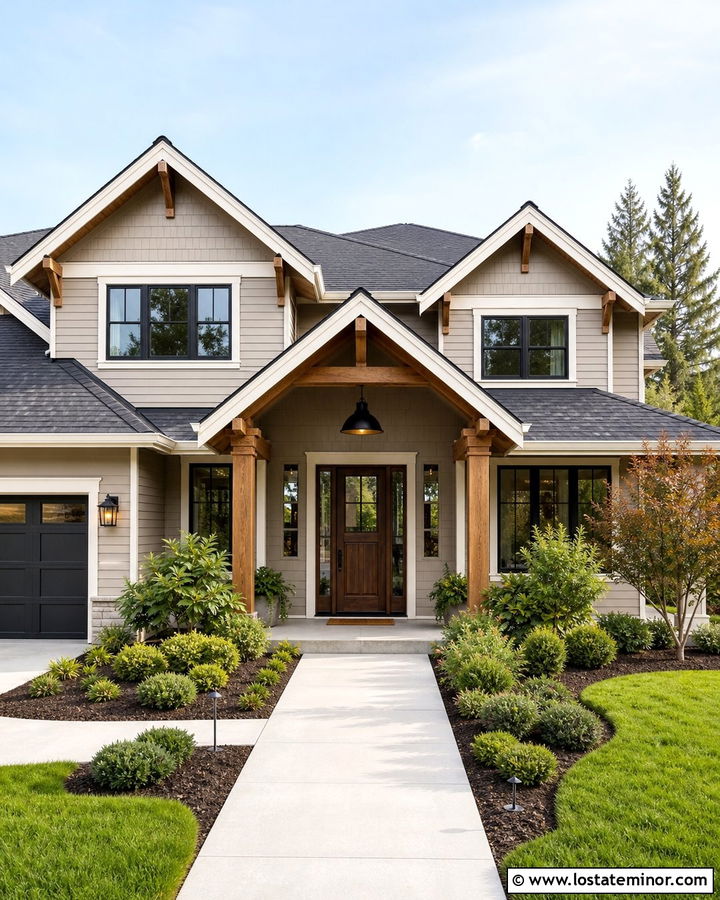
The warmth of a real or convincing wood-tone door can keep a greige exterior from feeling overly neutral. Paint the main facade a soft mineral greige and use creamy white on the trim and porch columns. Center an oversized black-and-brass pendant above the wood entry door, then add coordinated sconces beside the garage. The pendant should relate to the height and width of the porch rather than hang too close to the ceiling. Black-framed windows and a charcoal roof provide crisp structure, while cedar porch beams repeat the door’s color. Include subtle lights in the front steps and planting beds. A wide walkway, layered shrubs, and a pair of small trees can frame the entry, ensuring the door and pendant remain the strongest focal point.
30. Greige House With Layered Landscape Lighting
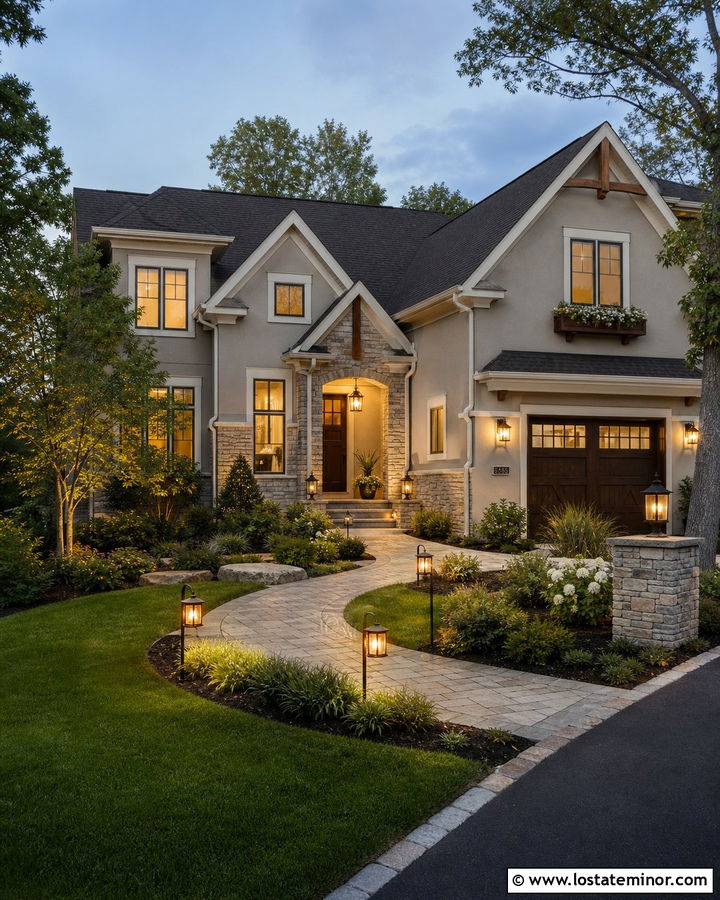
Exterior lighting feels most complete when the house and surrounding yard are planned together. Begin with warm stone greige siding, soft white trim, a dark bronze front door, and a charcoal-brown roof. Install medium-scale bronze sconces at the entry and garage, then add a pendant beneath the porch. Continue the plan with shielded path lights, recessed step lights, and carefully positioned uplights near one or two architectural trees. Avoid illuminating every plant or surface equally. Instead, create a clear route from the sidewalk to the door while allowing darker spaces between focal points. Beige stone, natural wood, and bronze hardware support the greige body color. The layered result gives the entire property a coordinated identity rather than making the fixtures look like separate additions.
Conclusion:
These **30 Greige House Design With Lighting Ideas** show how one flexible exterior color can support many architectural directions. Greige works with black, bronze, brass, copper, wood, stone, and numerous roof colors, but the most successful scheme considers the complete facade. Choose a greige that relates to permanent materials first. Then coordinate the trim, front door, windows, garage, and lighting finish. Fixture scale is just as important as appearance, especially around tall entries and wide garage doors. Finish with path, porch, or landscape lighting where it improves visibility and curb appeal. By repeating a limited group of colors and materials, you can create a warm, polished exterior that looks cohesive in bright daylight and after sunset.

Related posts: