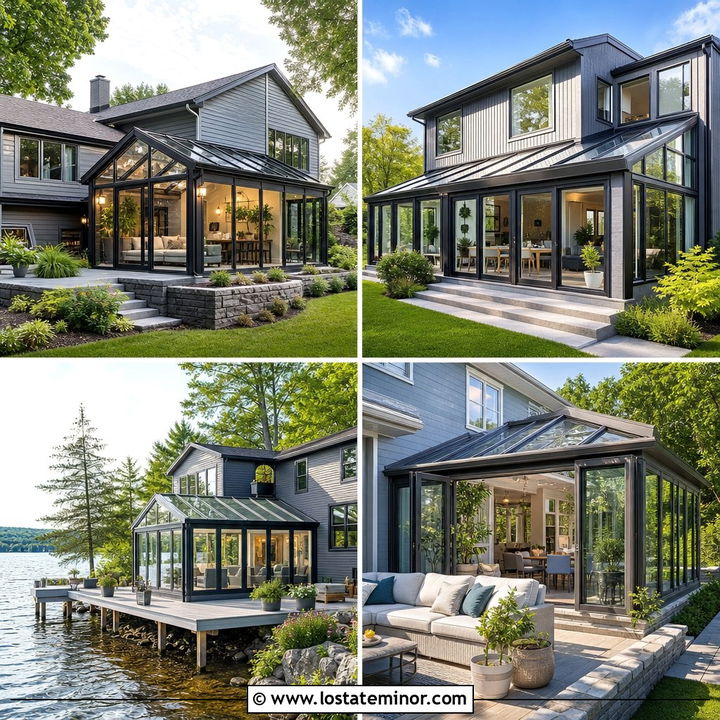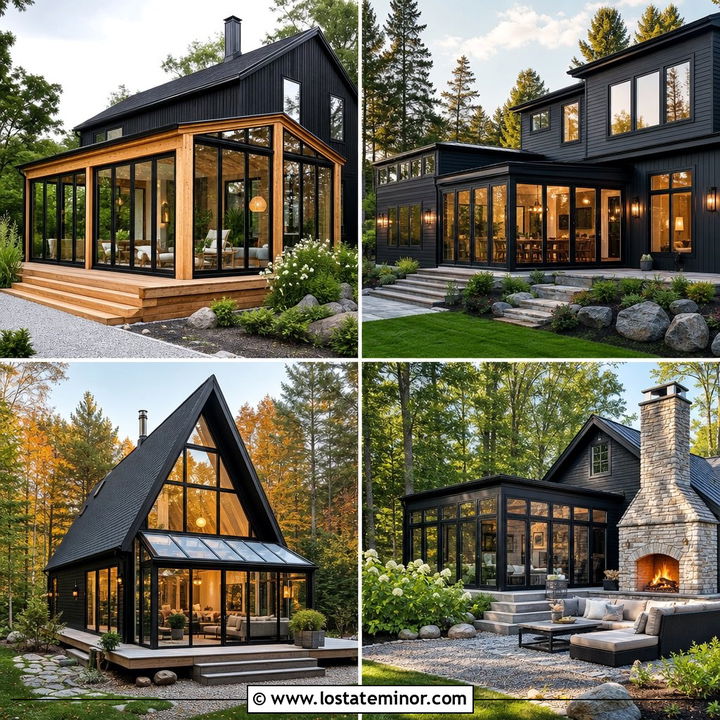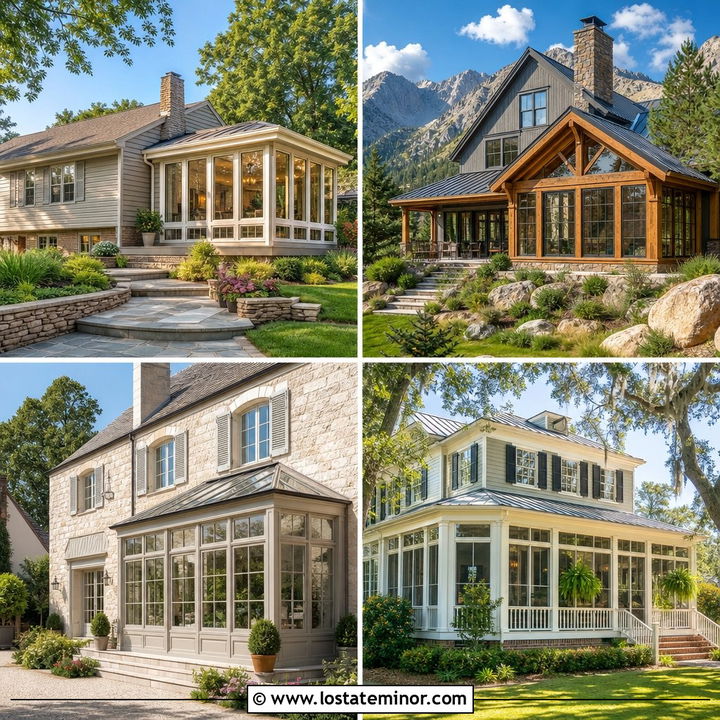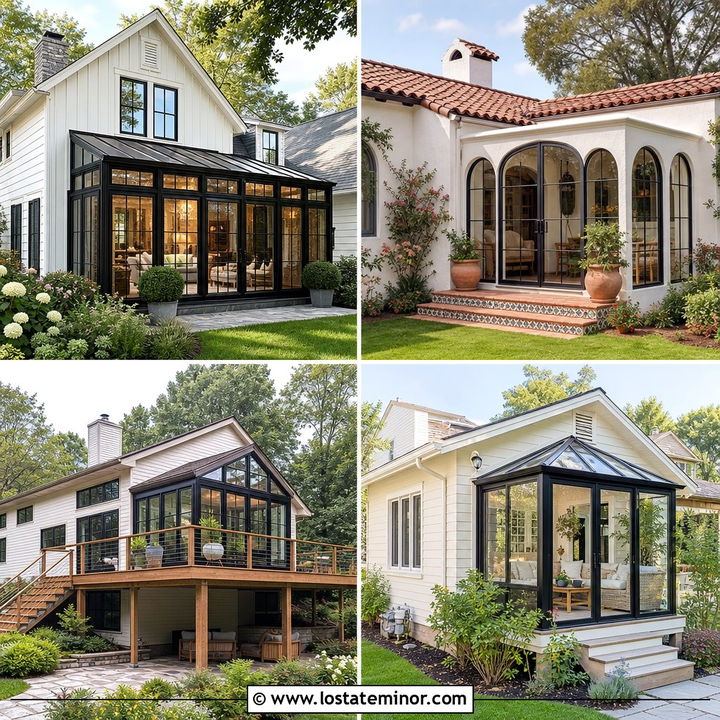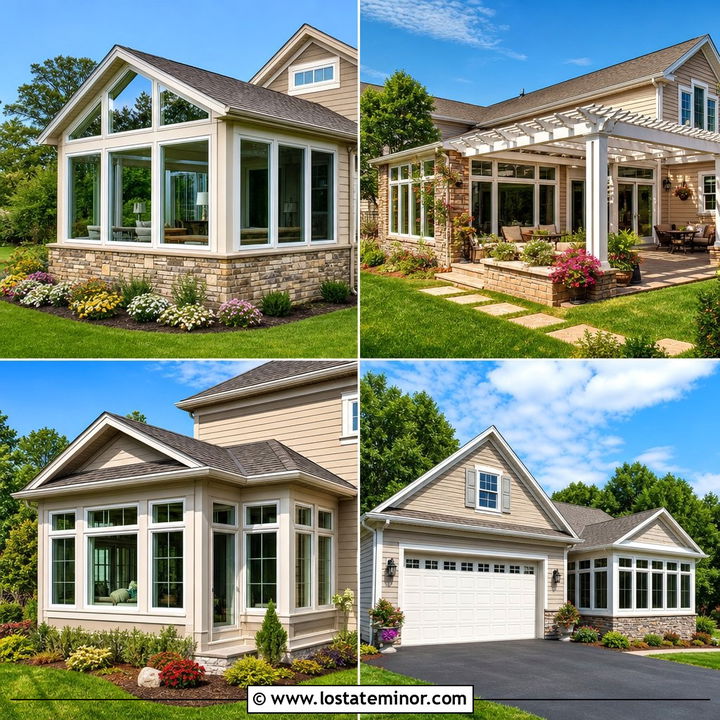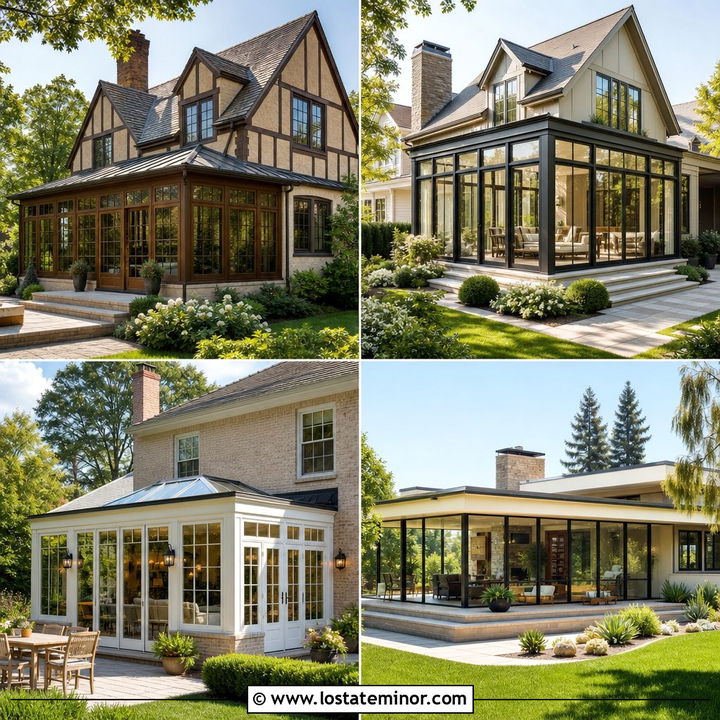
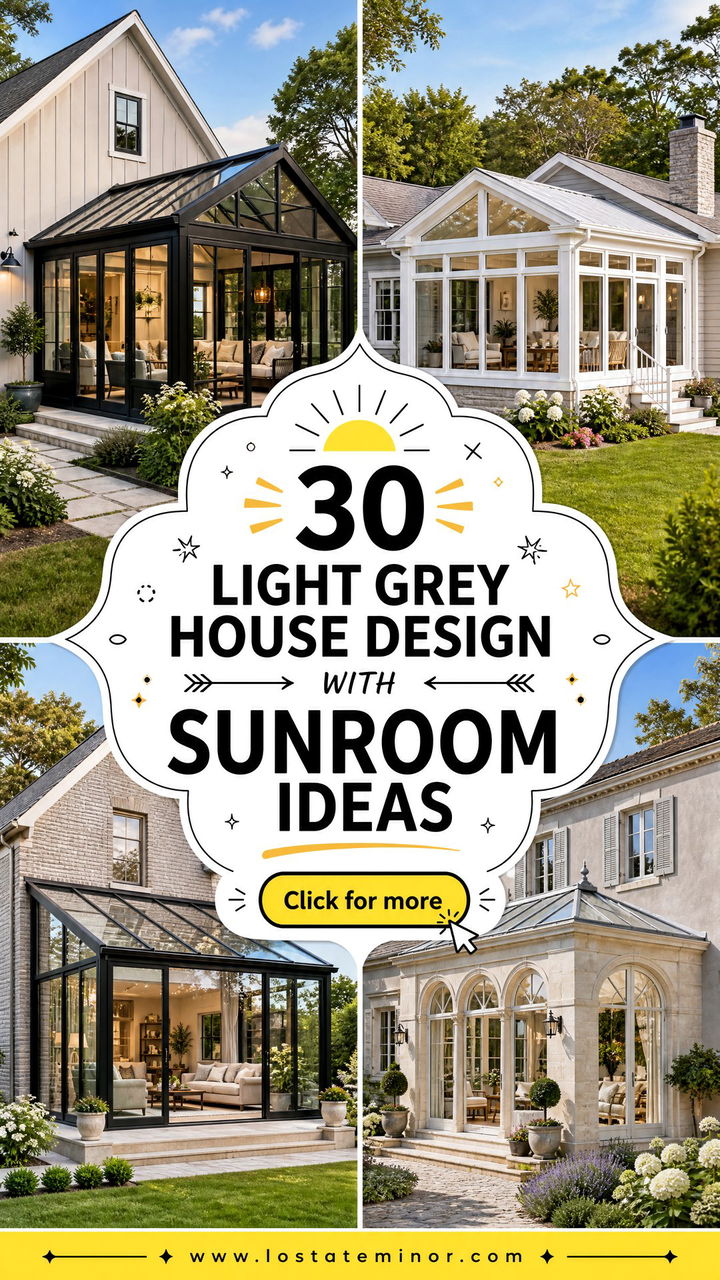
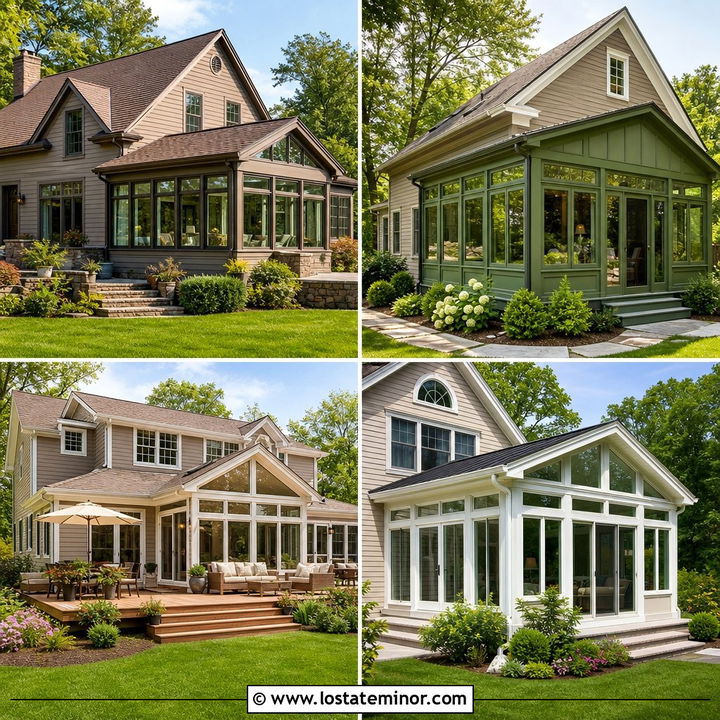
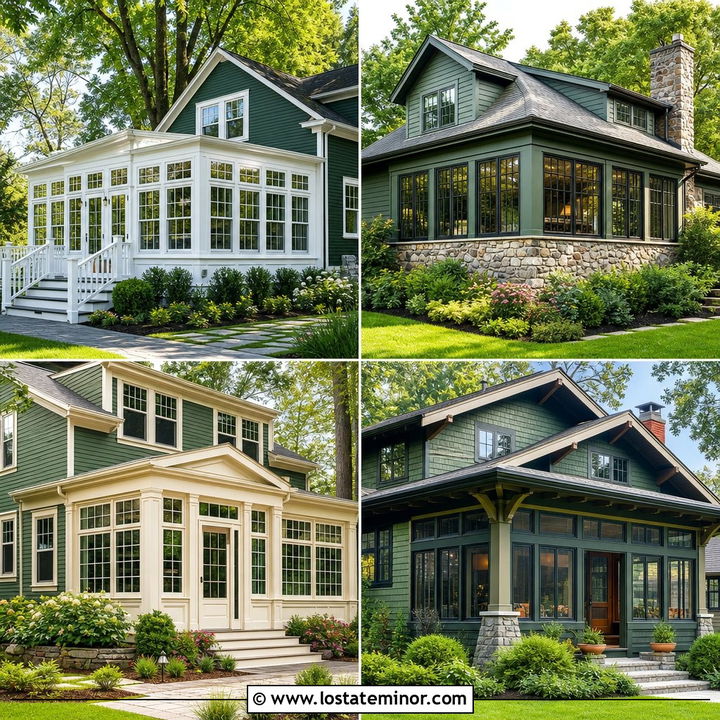
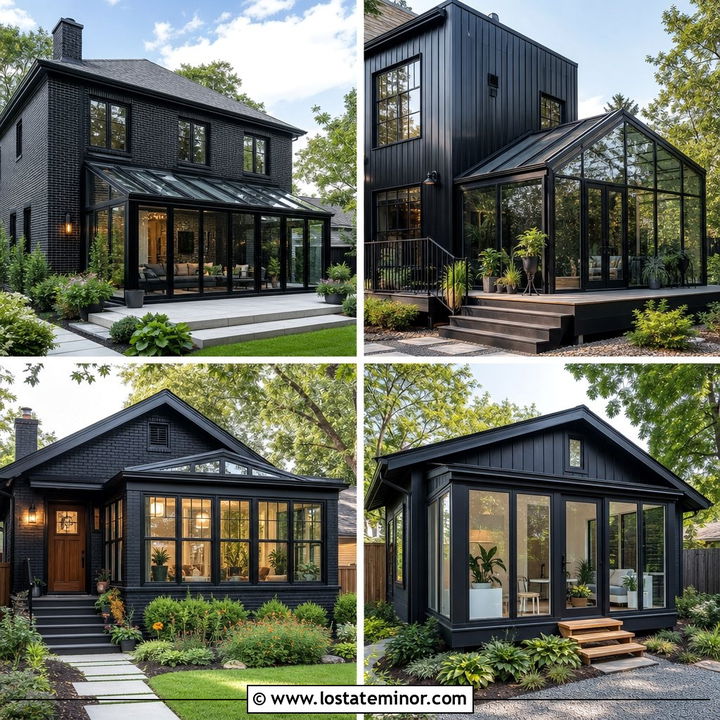
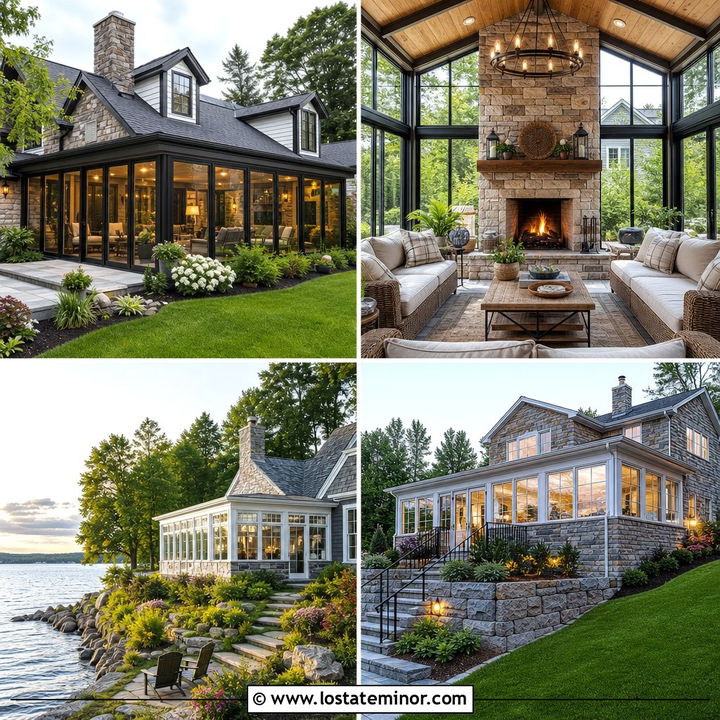
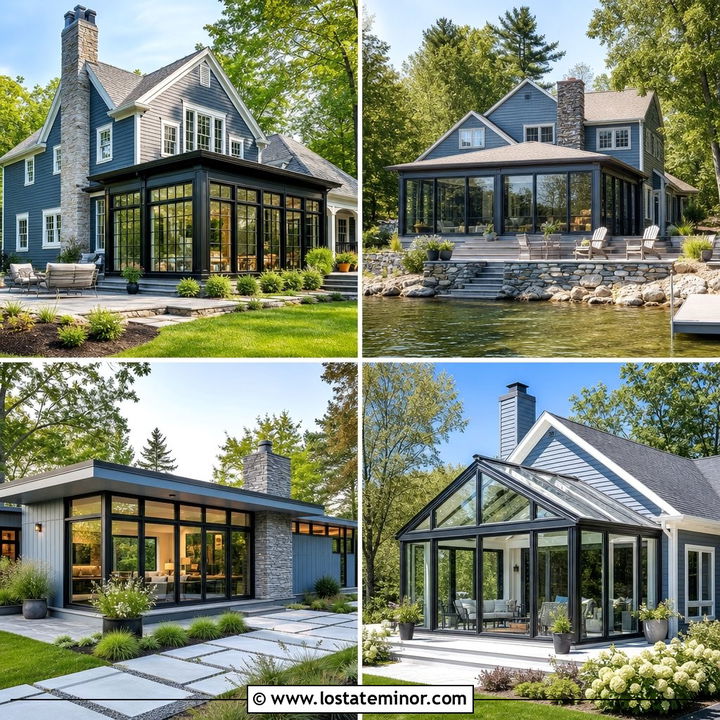
A thoughtful light grey exterior can make a sunroom feel like an original part of the home rather than a later addition. The neutral siding reflects daylight, highlights glass, and pairs easily with white trim, dark windows, natural wood, brick, or stone. Current design galleries show grey sunrooms across traditional, farmhouse, modern, coastal, and mid-century homes, including layouts with skylights, fireplaces, and vaulted ceilings. () The key is creating continuity between the main facade and the sunroom through matching materials, rooflines, window grids, and accent colors. This collection explores practical full-house schemes for different architectural settings, lot sizes, and budgets. Use these 30 Light Grey House Design With Sunroom Ideas to plan a bright, cohesive exterior with lasting curb appeal.
1. Light Grey Modern Farmhouse With Black Sunroom
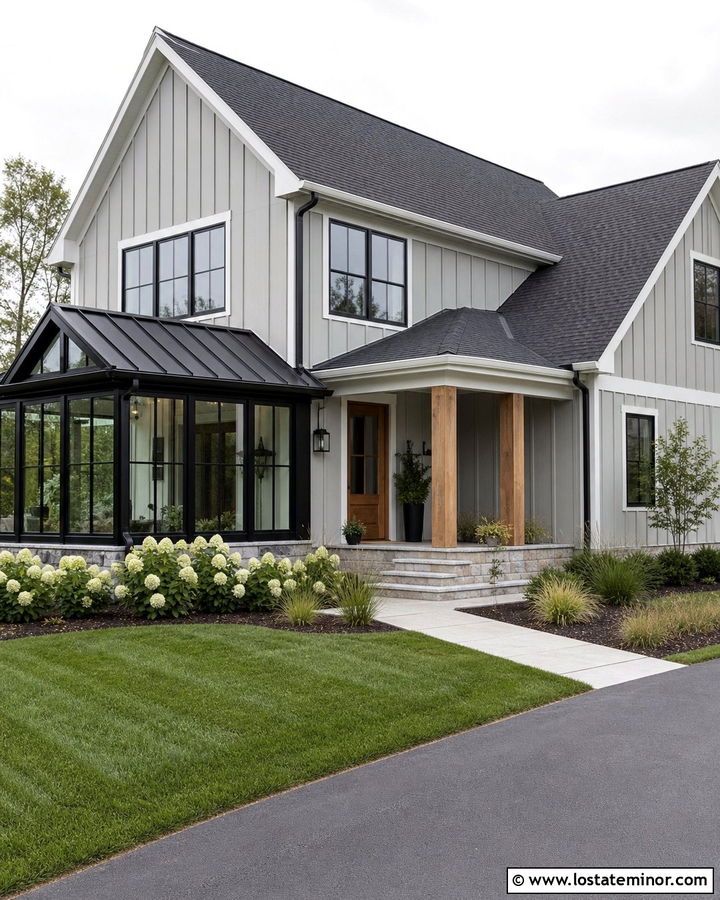
Light grey board-and-batten siding gives a modern farmhouse a softer appearance than bright white while preserving its clean character. Add a black-framed sunroom along one side or across the rear corner, using tall windows with simple grids. A matching black metal roof helps the glass addition connect visually with the main gables. Keep the fascia and window trim crisp white so the grey siding remains light and fresh. Natural cedar porch posts, a stained wood front door, and matching sunroom ceiling beams introduce warmth. Finish the scheme with a charcoal shingle roof, black lanterns, and low ornamental grasses. The complete exterior feels modern but not harsh, and the darker sunroom frame creates a clear architectural focal point.
2. Light Grey Ranch House With White Sunroom
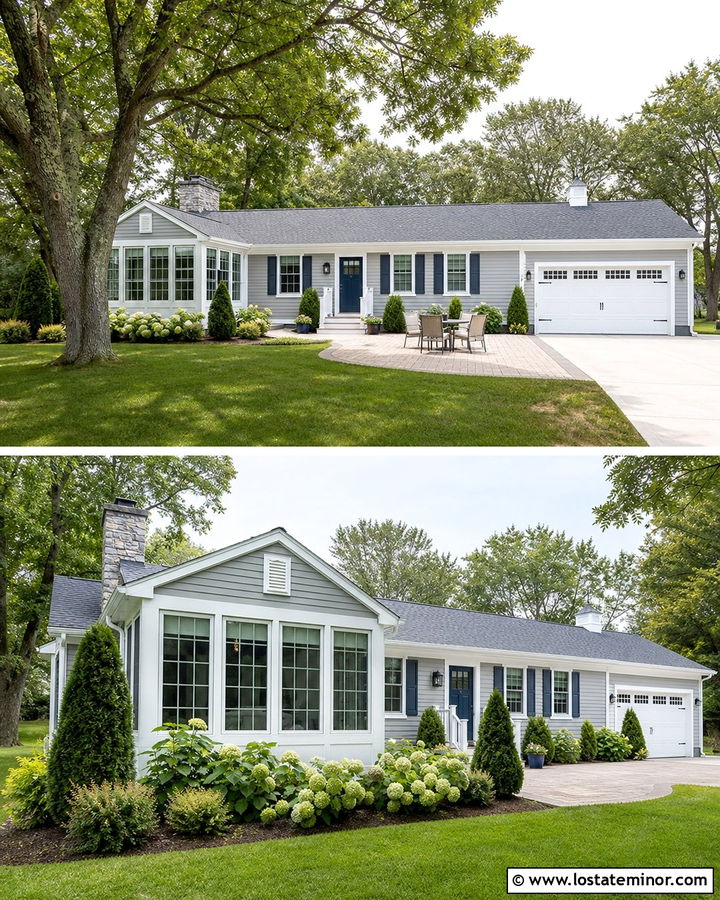
A single-story ranch offers an ideal foundation for a wide sunroom because its low roofline can be extended without overpowering the original facade. Choose soft light grey horizontal siding with bright white trim around the house and sunroom windows. A shallow gabled sunroom placed at one end creates visual interest while maintaining the home’s practical proportions. Use a medium-grey shingle roof across both structures for continuity. A navy front door, white garage door, and simple black lighting add controlled contrast. Connect the sunroom to a small paver patio surrounded by hydrangeas and evergreen shrubs. This balanced palette makes an older ranch look brighter, broader, and more intentional without relying on complicated exterior details.
3. Light Grey Colonial House With Side Sunroom
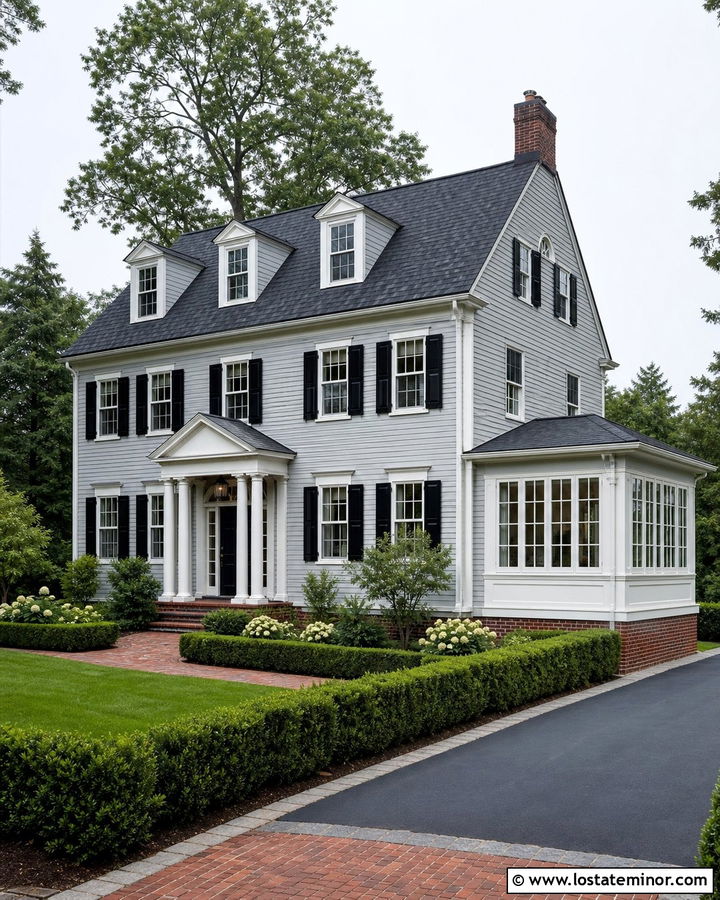
Does your symmetrical Colonial need more living space without losing its formal appearance? A side sunroom can preserve the balanced front elevation while creating a graceful transition to the yard. Paint the main clapboard siding a classic light grey and use creamy white for the columns, cornices, shutters, and window trim. The sunroom should repeat the home’s divided-light windows and feature a modest hipped or gabled roof. Black shutters, a glossy black front door, and a dark charcoal roof provide traditional contrast. Add a brick foundation and matching brick walkway to warm the cooler palette. When the sunroom’s window proportions align with the existing house, the addition appears established, refined, and architecturally connected.
4. Light Grey Craftsman House With Stone Sunroom
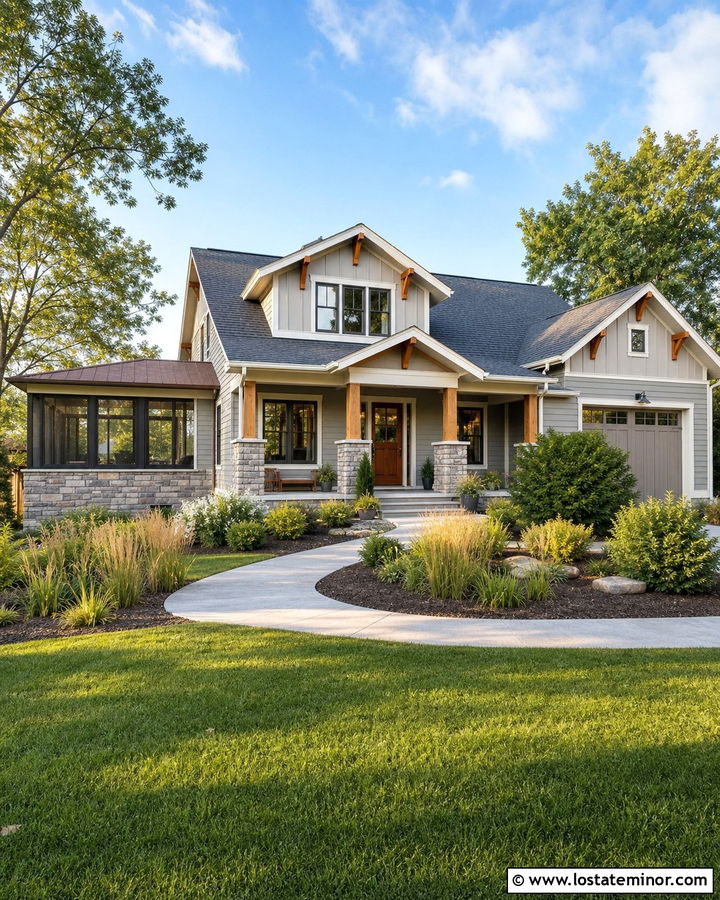
Warm stone can keep a light grey Craftsman exterior from feeling too cool or flat. Use grey lap siding on the main walls and wider board-and-batten panels in the upper gables. Wrap the sunroom base and porch columns in beige-grey fieldstone, then install dark bronze window frames above it. Cream trim works especially well here because it complements both the siding and natural masonry. A stained oak front door, exposed rafters, and cedar brackets reinforce the Craftsman character. Carry the same stone along the front steps or chimney for a unified composition. The sunroom can have a low-pitched roof with broad eaves, allowing it to look substantial while remaining visually tied to the home’s handcrafted architectural details.
5. Light Grey Cape Cod House With Gabled Sunroom
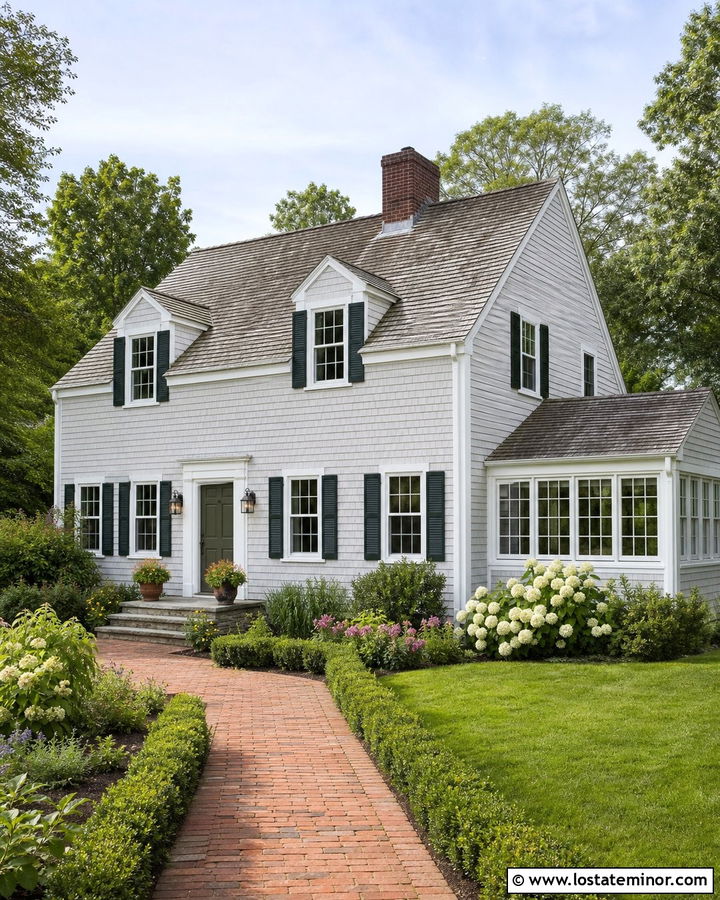
A compact Cape Cod gains character from a glass-filled sunroom with a steep gable that echoes the main roof. Cover the house in pale light grey shingles or clapboard siding, accented by white corner boards and window trim. Place the sunroom on the side so the classic centered front door remains prominent. White window frames and divided panes create a traditional greenhouse effect without making the addition appear overly ornate. Choose a weathered-grey roof, dark green shutters, and a muted green front door for gentle color. A brick walkway, clipped boxwoods, and flowering borders complete the cottage setting. Repeating the roof pitch and siding color makes the new sunroom feel naturally connected to the Cape Cod structure.
6. Light Grey Split-Level House With Walkout Sunroom
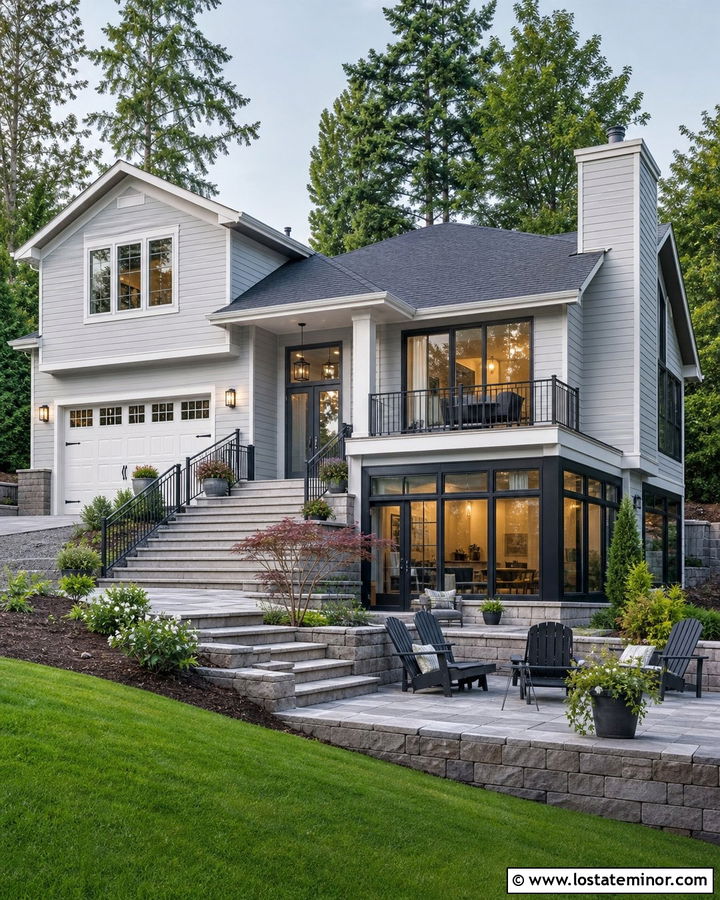
A split-level exterior can look disconnected when its different floors and rooflines compete for attention. Light grey siding creates a consistent background, while a walkout sunroom helps organize the lower portion of the house. Position the addition beside the raised living level and use broad black-framed windows to give it a modern presence. Paint the trim and garage door soft white, then repeat charcoal accents on the roof, railings, and exterior lights. A low stone retaining wall can visually anchor the sunroom and manage a sloped yard. Add wide steps leading to a concrete or paver patio. This approach turns an awkward grade change into a useful architectural feature and gives the full facade a cleaner, more balanced appearance.
7. Light Grey Contemporary House With Flat-Roof Sunroom
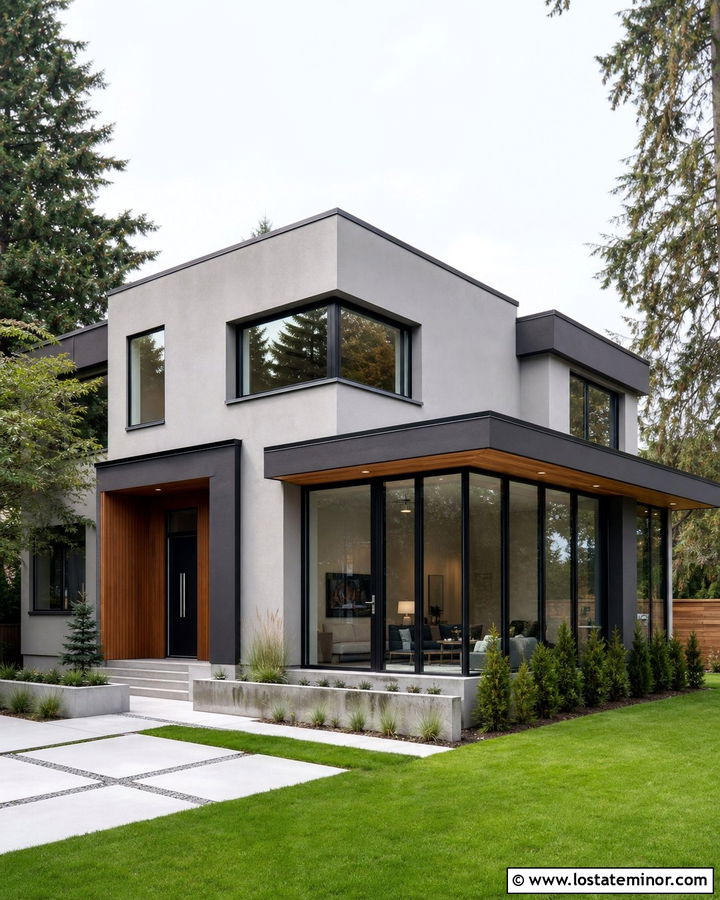
Clean geometry makes a flat-roof sunroom a natural match for a contemporary light grey house. Use smooth light grey stucco or wide horizontal siding on the main exterior, then frame the sunroom in matte black metal. Floor-to-ceiling glass can face the backyard while narrower side windows protect privacy. A dark charcoal fascia creates a crisp horizontal line that links the addition to the home’s modern roof forms. Introduce warmth through vertical cedar panels around the entrance and beneath the sunroom overhang. Large concrete pavers, structured grasses, and simple evergreen plantings reinforce the streamlined design. Keeping the material palette limited allows the glass addition to stand out without making the exterior feel busy, cold, or visually fragmented.
8. Light Grey Cottage House With Cedar Sunroom
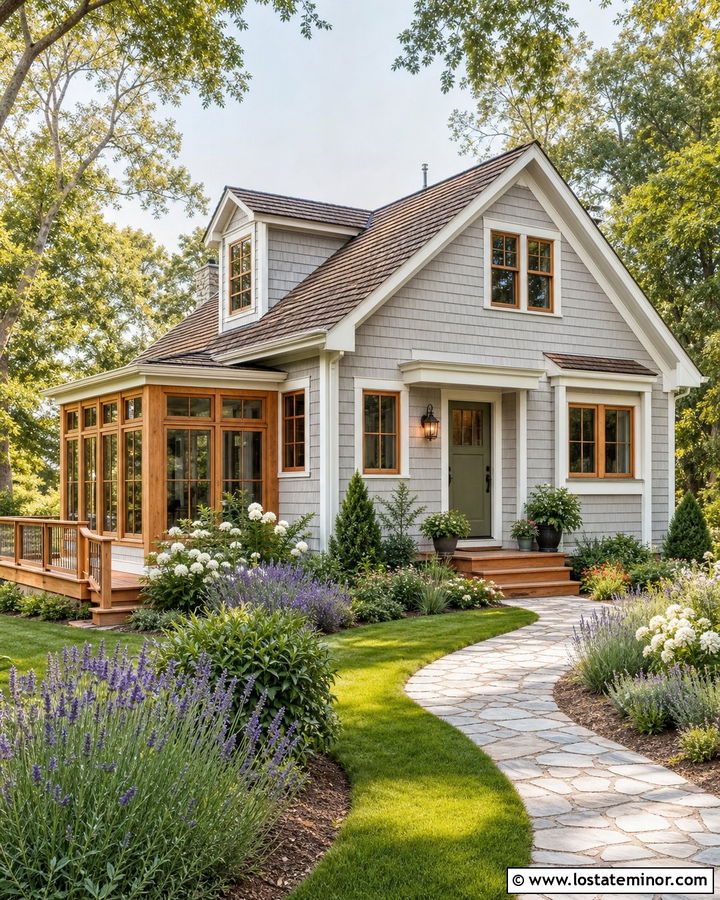
Imagine a light grey cottage surrounded by soft greenery, with a cedar-trimmed sunroom opening toward the garden. Warm grey shingle siding provides subtle texture across the main house, while natural cedar frames the sunroom windows, entry, and small adjoining deck. Use creamy white trim around the original windows to keep the cottage bright. A cedar shake or medium-brown architectural roof strengthens the connection between the wood details and surrounding landscape. Complete the entrance with a sage green door and aged bronze lighting. Curved stone paths, lavender, hydrangeas, and informal shrubs soften the building edges. This combination creates an inviting exterior where the sunroom feels relaxed and handcrafted rather than overly formal or added as an afterthought.
9. Light Grey Brick House With Glass Sunroom
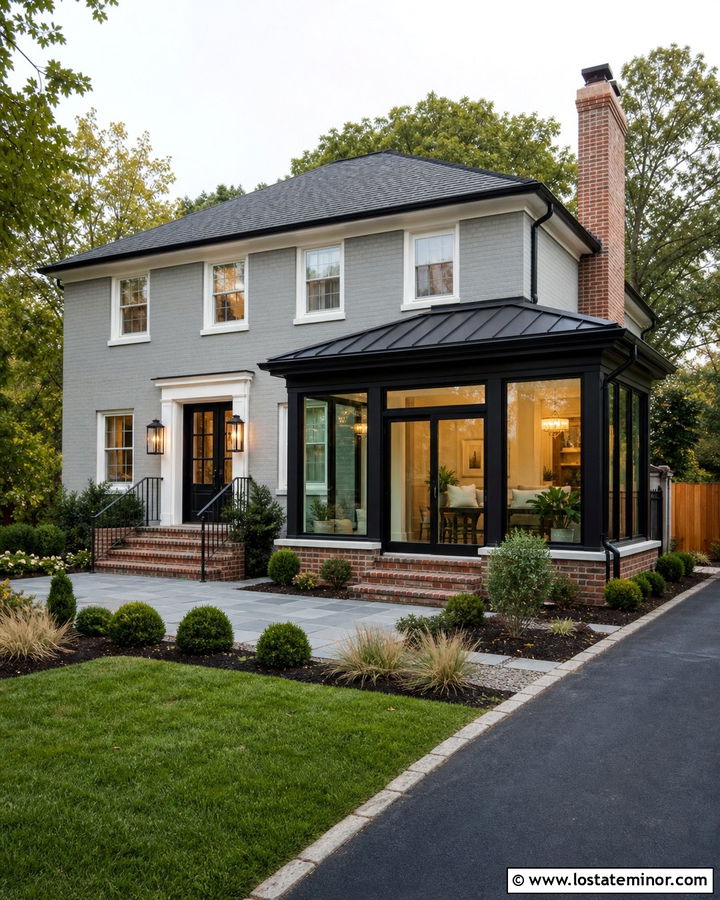
Painting older brick light grey can unify inconsistent masonry and provide a clean backdrop for a modern glass sunroom. Leave selected brick areas unpainted around the foundation, chimney, or entry to retain warmth and texture. Frame the sunroom in dark bronze or black, using large panes that contrast with the solid brick walls. A low charcoal metal roof gives the addition a defined shape without distracting from the home. Repeat the dark finish on the front door, gutters, and exterior lighting. White window trim can brighten the remaining facade and prevent the scheme from becoming too heavy. A simple bluestone terrace and structured foundation plants help the painted brick, original masonry, and new sunroom read as one coordinated exterior.
10. Light Grey Coastal House With Blue Sunroom Door
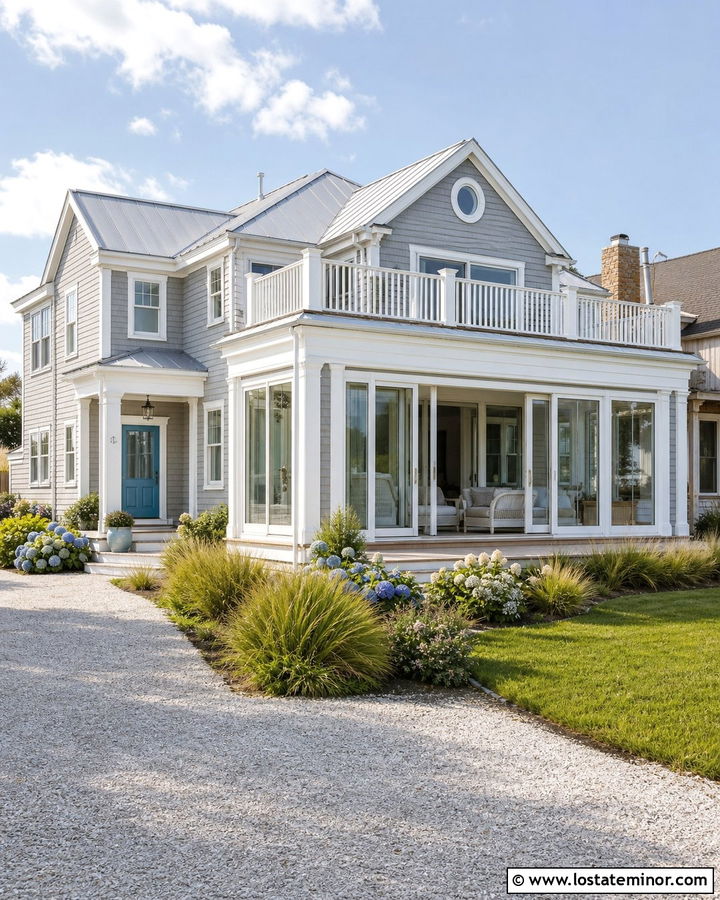
Light grey siding fits naturally into a coastal palette because it reflects bright daylight without producing the glare of a completely white exterior. Pair it with white trim, white sunroom window frames, and a fresh blue door that becomes the home’s central accent. Use a standing-seam light grey metal roof or weathered architectural shingles to complete the breezy scheme. The sunroom can feature wide sliding glass doors opening onto a pale wood deck with white railings. Add simple square columns and minimal window grids for an uncluttered look. Beach grasses, hydrangeas, crushed-shell paths, and low-maintenance shrubs reinforce the setting. The result feels light and relaxed while still offering enough color and contrast to define every architectural feature.
11. Light Grey Tudor House With Dark-Framed Sunroom
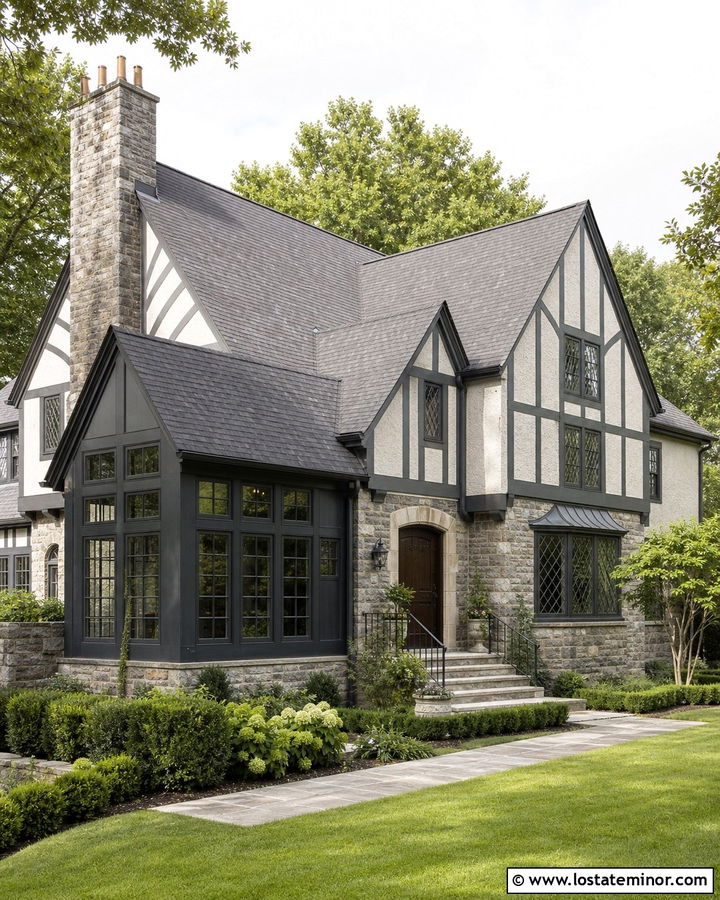
A Tudor exterior does not have to rely on dark brown walls and heavy cream stucco. Light grey stucco can freshen the facade while preserving its steep gables, masonry, and decorative half-timbering. Paint the timber details deep charcoal, then repeat that color on the sunroom’s narrow metal frames. Use a pitched sunroom roof that follows the angle of the main house instead of installing a flat or unrelated form. A dark wood front door and mixed grey stone base restore warmth and traditional depth. Leaded or divided-light windows can help the glass addition complement the existing architecture. Keep landscaping structured with clipped hedges and a stone path, allowing the distinctive rooflines and coordinated grey palette to remain the main attraction.
12. Light Grey Prairie House With Low-Roof Sunroom
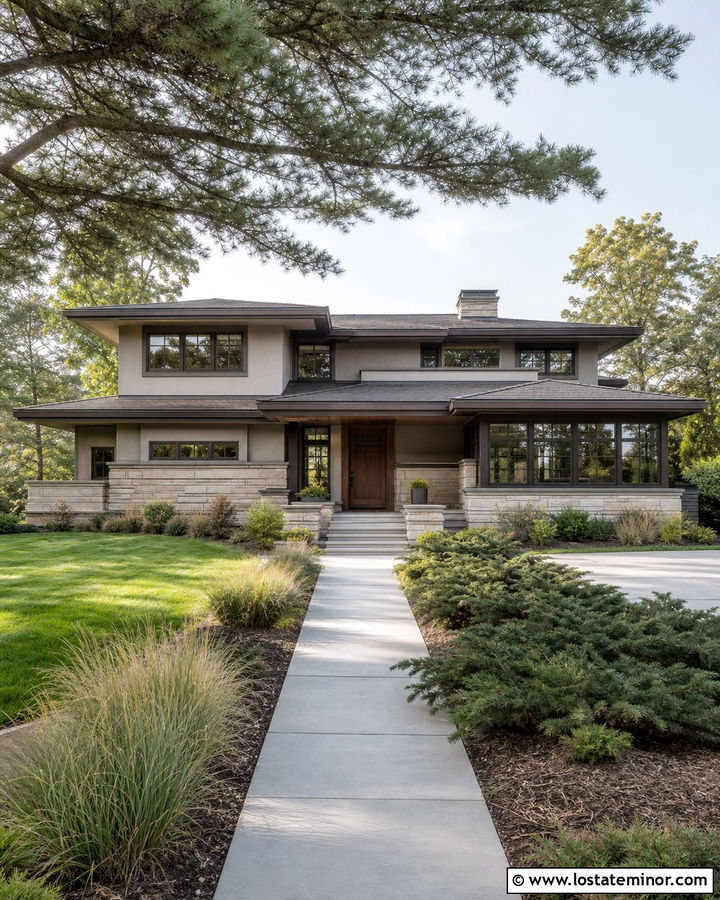
Long horizontal lines define a Prairie-style home, so the sunroom should extend that low, grounded profile. Select warm light grey stucco or horizontal siding and pair it with deep bronze fascia, window frames, and broad roof edges. A low-pitched sunroom roof with generous overhangs will appear integrated rather than attached. Use a stone base in layered beige and grey tones to visually connect the house to the landscape. The front door can be stained walnut, matching small wood details around the sunroom or porch. Plant low ornamental grasses, spreading evergreens, and compact shrubs instead of tall foundation plants. The full design emphasizes width, strong horizontal movement, and natural materials while giving the sunroom plenty of glass and comfortable visual weight.
13. Light Grey Bungalow With Screened Sunroom
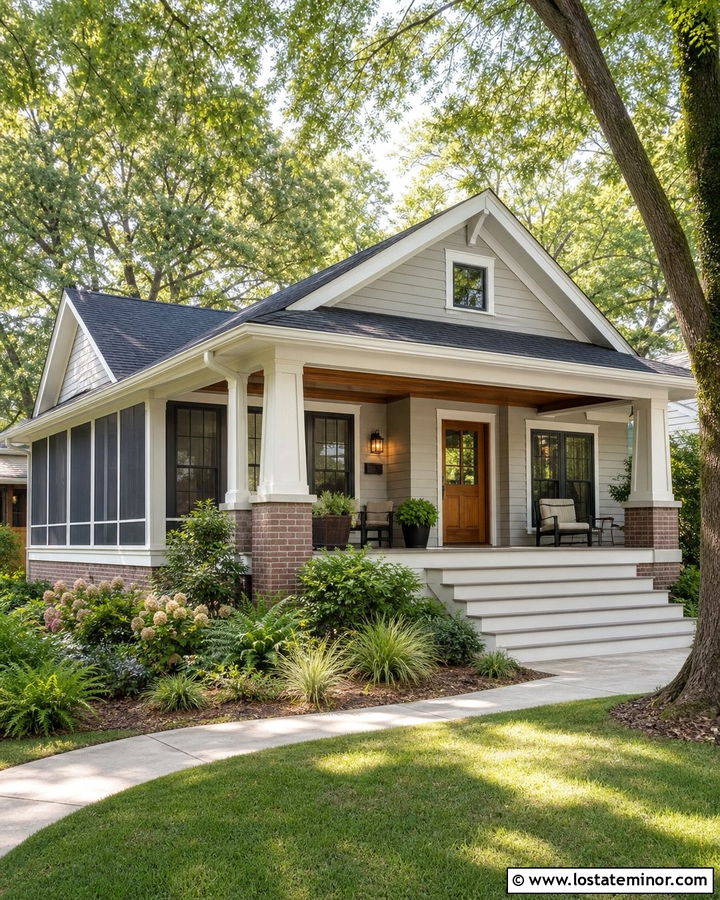
On a modest bungalow, a screened sunroom can function as both an outdoor retreat and a major curb-appeal feature. Paint the house a warm light grey and use creamy white on the porch columns, fascia, and window trim. Place the sunroom at one side beneath a simple shed or low gabled roof. Dark bronze screens provide definition while remaining softer than solid black. Repeat natural wood on the front door, porch ceiling, and sunroom steps to establish continuity. A charcoal roof and brick foundation add deeper grounding colors. Wide planting beds filled with ferns, flowering shrubs, and native grasses create a welcoming transition to the yard. The overall exterior feels comfortable, practical, and appropriate for the bungalow’s compact scale.
14. Light Grey French Country House With Limestone Sunroom
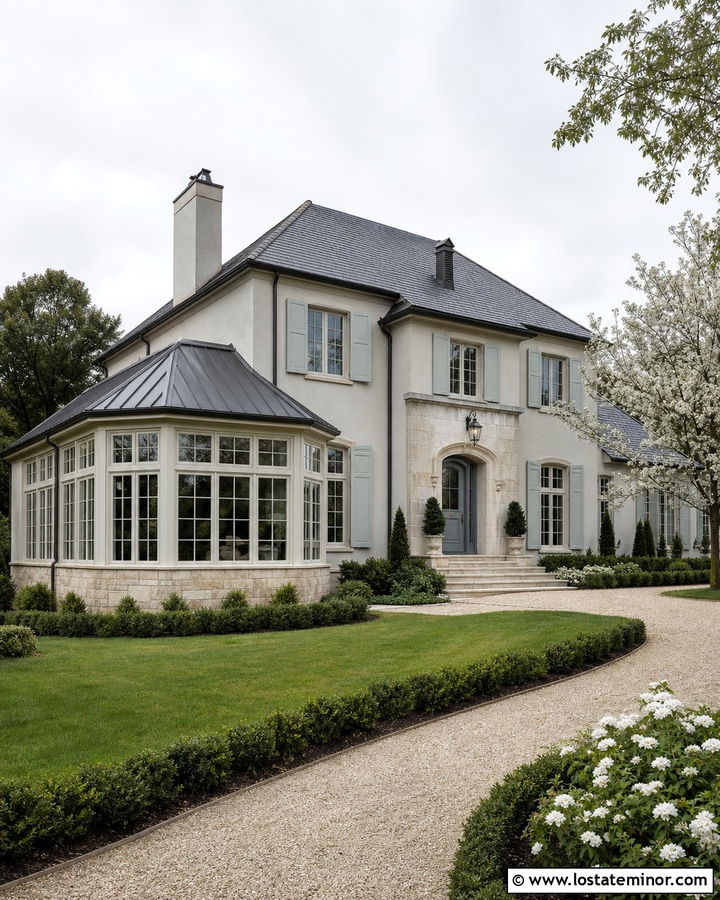
Soft grey stucco and pale limestone create an elegant base for a French country home with a sunroom. Use the stone around the entry, lower walls, and sunroom foundation so the addition shares materials with the main structure. Creamy white window frames complement the light grey walls, while a muted blue-grey front door adds understated color. Give the sunroom a hipped roof with dark grey shingles or standing-seam metal. Tall divided-light windows and subtle arched details can reflect the refined character of the house without becoming overly decorative. Frame the exterior with gravel paths, clipped shrubs, and small flowering trees. This layered scheme feels collected and established, with enough texture to keep the quiet neutral colors visually interesting.
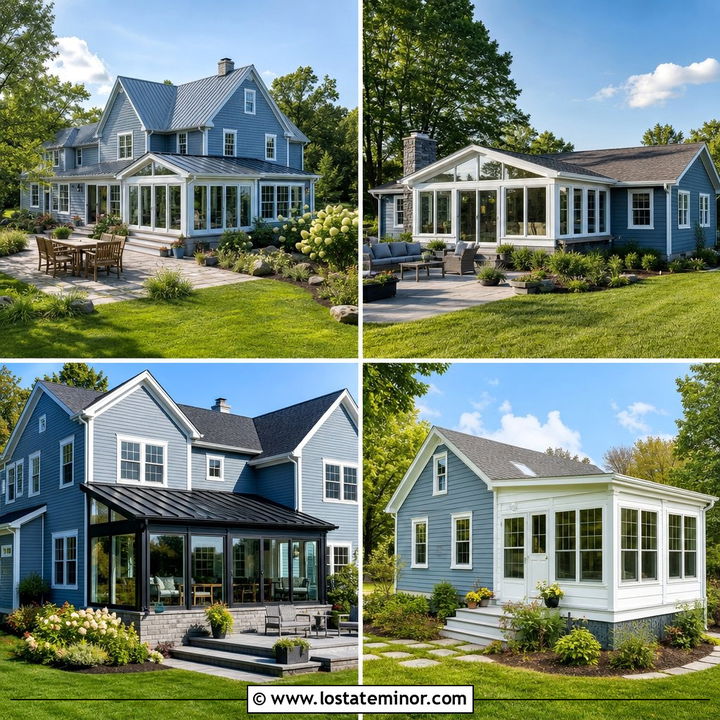
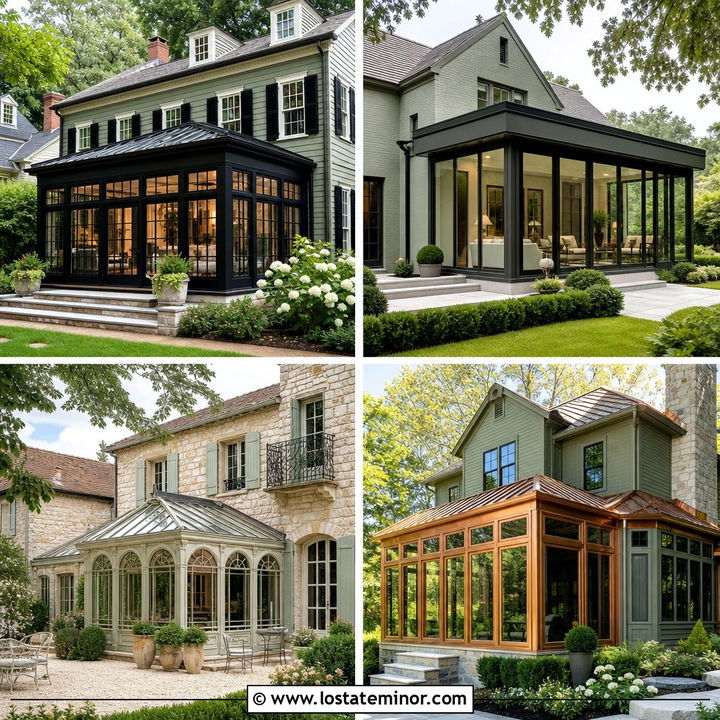
15. Light Grey Scandinavian House With Wood Sunroom
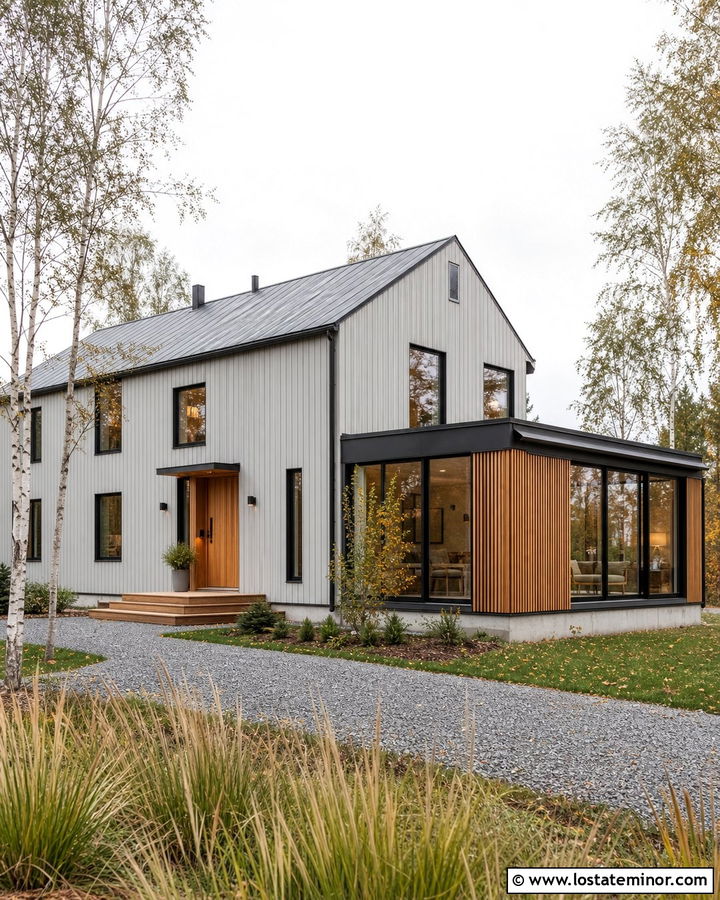
A Scandinavian-inspired exterior benefits from a restrained combination of pale grey, natural wood, and black. Cover the house in simple vertical light grey siding, then wrap part of the sunroom in narrow cedar slats. Use black-framed glass, a slim charcoal metal roof, and minimal fascia details to emphasize clean construction. The front door can match the cedar for a strong visual connection across the facade. Keep the foundation light concrete rather than introducing additional colors or masonry. A gravel walkway, young birch trees, ornamental grasses, and an open lawn suit the uncluttered architecture. The warm wood prevents the exterior from feeling sterile, while the consistent grey siding allows the sunroom’s glass and vertical detailing to become the central design feature.
16. Light Grey Victorian House With Conservatory Sunroom
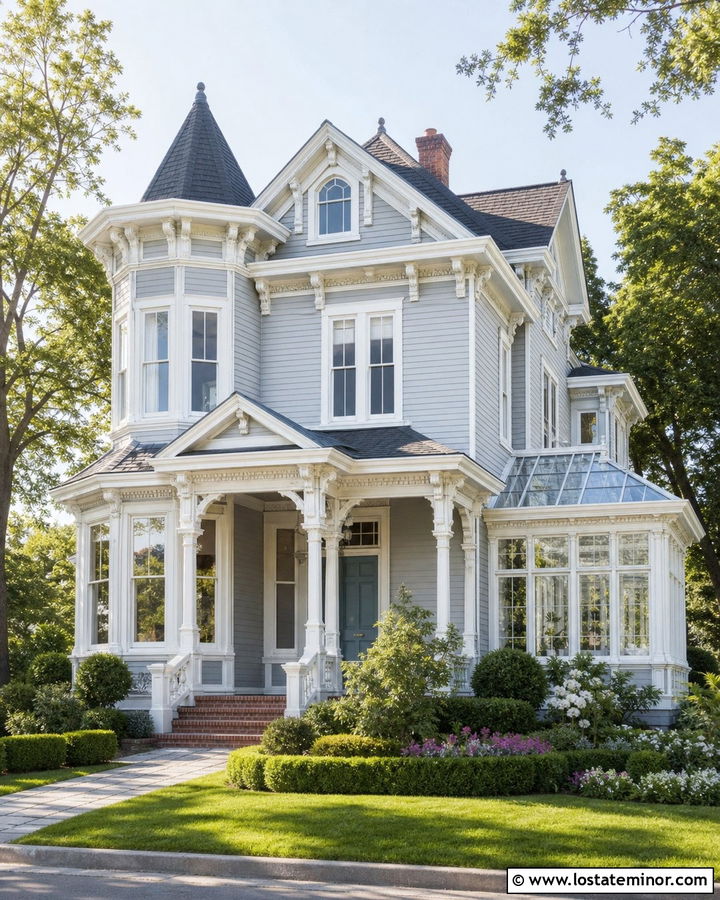
A light grey Victorian can support a more decorative conservatory without looking crowded when the palette is carefully controlled. Paint the main siding a pearl light grey and highlight brackets, cornices, columns, and window surrounds in soft white. Give the conservatory sunroom a white frame, a glass roof, and traditional divided panes that complement the home’s tall windows. Use muted charcoal on the roof and porch floor to anchor the lighter colors. A dusty blue or deep teal front door adds period-friendly contrast without competing with the ornate trim. Brick steps, shaped hedges, and layered flowering borders complete the facade. Repeating the house’s window proportions and white detailing makes the conservatory appear like a deliberate part of the original architecture.
17. Light Grey Rustic House With Stone Sunroom
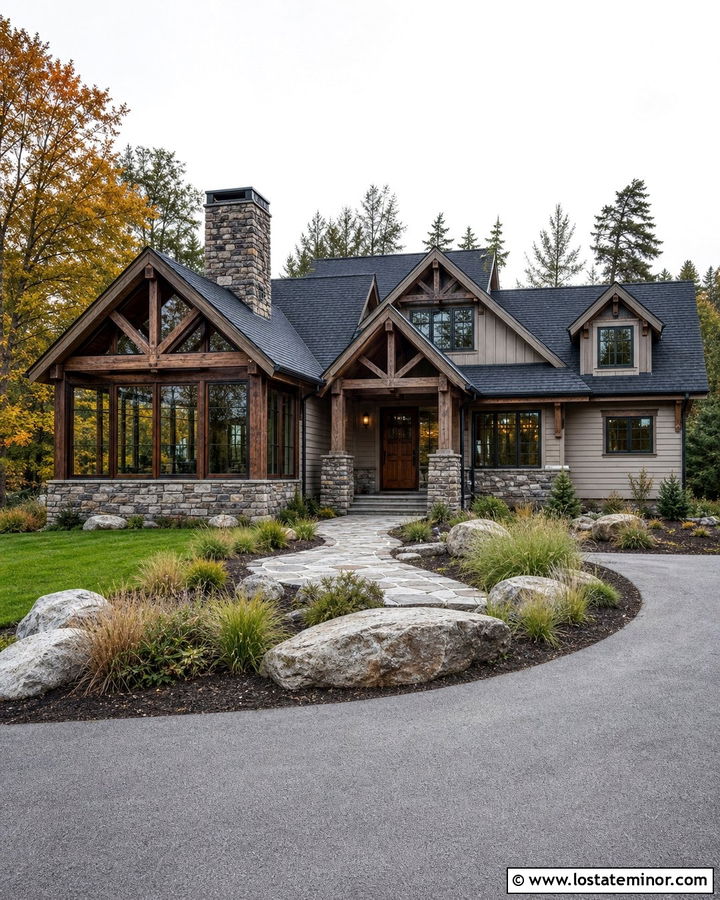
Light grey siding can soften a rustic exterior while allowing stone and timber to retain their natural strength. Choose a slightly warm grey for the main walls, then build the sunroom over a substantial fieldstone base. Dark wood window frames, exposed beams, and a stained tongue-and-groove ceiling bring warmth to the glass-heavy addition. Carry the fieldstone onto the chimney, entry columns, or front steps to link both sides of the home. A dark brown or charcoal roof provides a strong cap for the composition. Keep the landscaping informal with boulders, native grasses, and evergreen trees. This material-rich exterior feels grounded and welcoming, and the sunroom gains enough architectural weight to balance a larger lodge or mountain-inspired house.
18. Light Grey Mid-Century House With Corner Sunroom
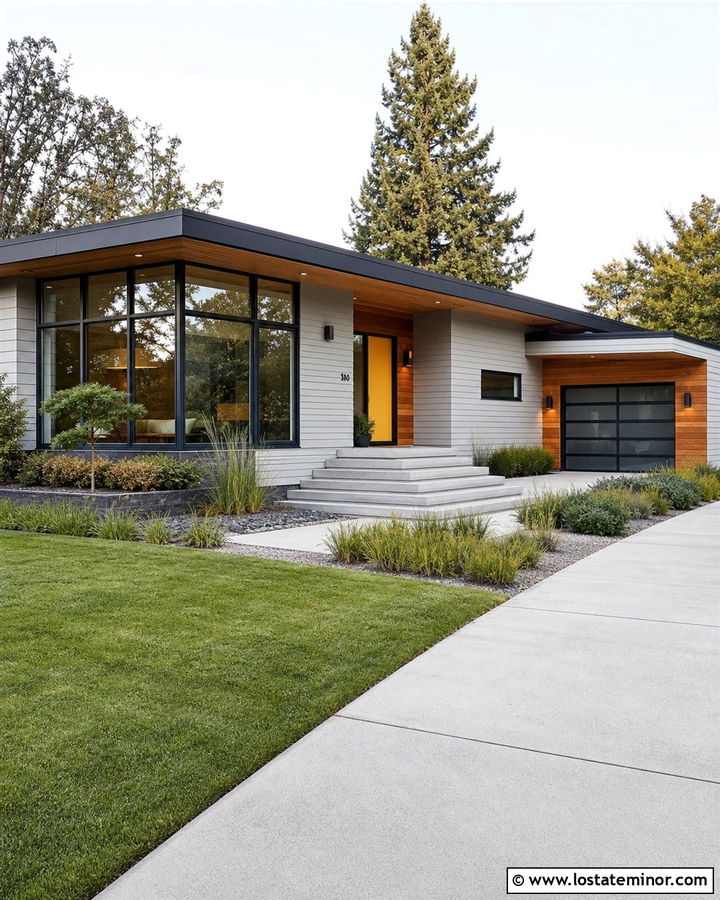
A glass corner sunroom can revive a mid-century home while respecting its low roofline and open connection to the landscape. Use pale light grey horizontal siding across the solid walls and charcoal frames around the windows. Extend the roof over the sunroom with a slim fascia and a deep overhang, creating shade without interrupting the house’s long lines. Add warm cedar panels around the entry and garage for a classic mid-century contrast. A mustard yellow or muted orange front door can supply one controlled period accent. Broad concrete steps, geometric planting beds, and sculptural shrubs reinforce the architecture. The completed scheme feels light and current while preserving the home’s characteristic mix of glass, wood, and horizontal forms.
19. Light Grey Transitional House With Arched Sunroom
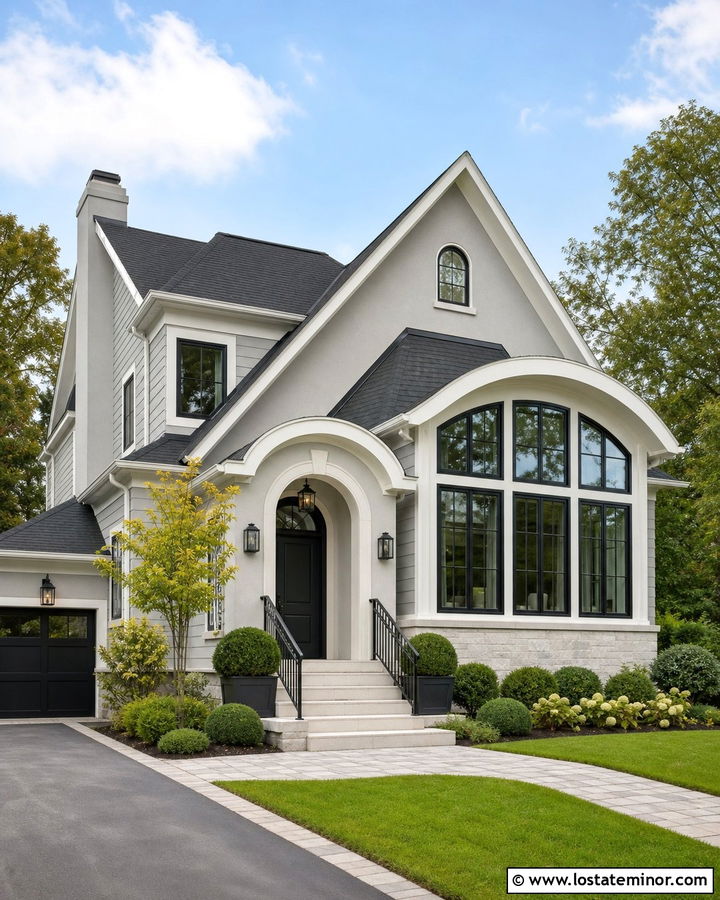
For a transitional exterior, an arched sunroom can introduce softness without pushing the house into an overly formal direction. Choose neutral light grey siding or stucco with clean white trim and black-framed windows. Use a gently arched central window or a shallow curved roof on the sunroom, then repeat the shape above the front entrance. A charcoal roof, black front door, and simple metal railings create modern contrast. Add smooth limestone around the foundation and entry steps for subtle texture. Balanced landscaping with rounded shrubs, small ornamental trees, and a straight paver walkway keeps the overall look polished. The result blends traditional symmetry with contemporary finishes, making the sunroom noticeable but fully connected to the rest of the facade.
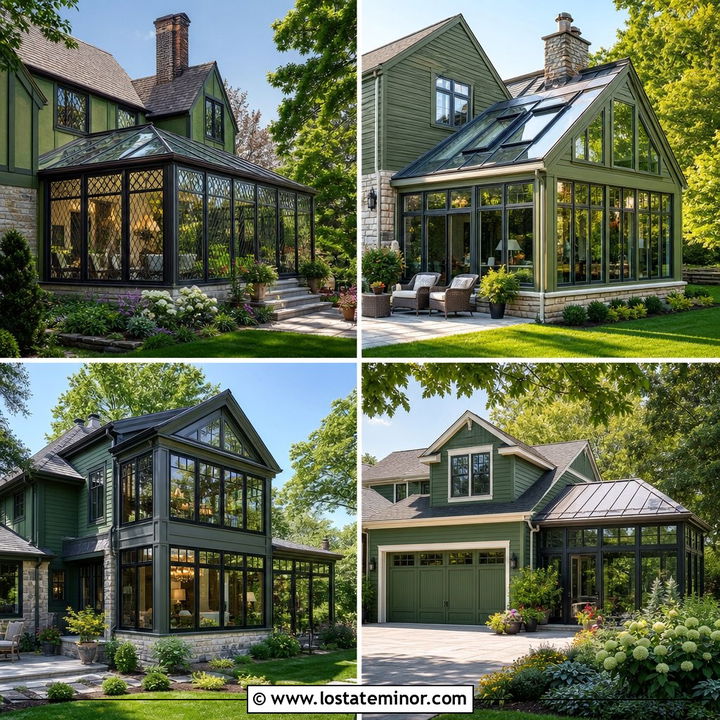
20. Light Grey Two-Story House With Rear Sunroom
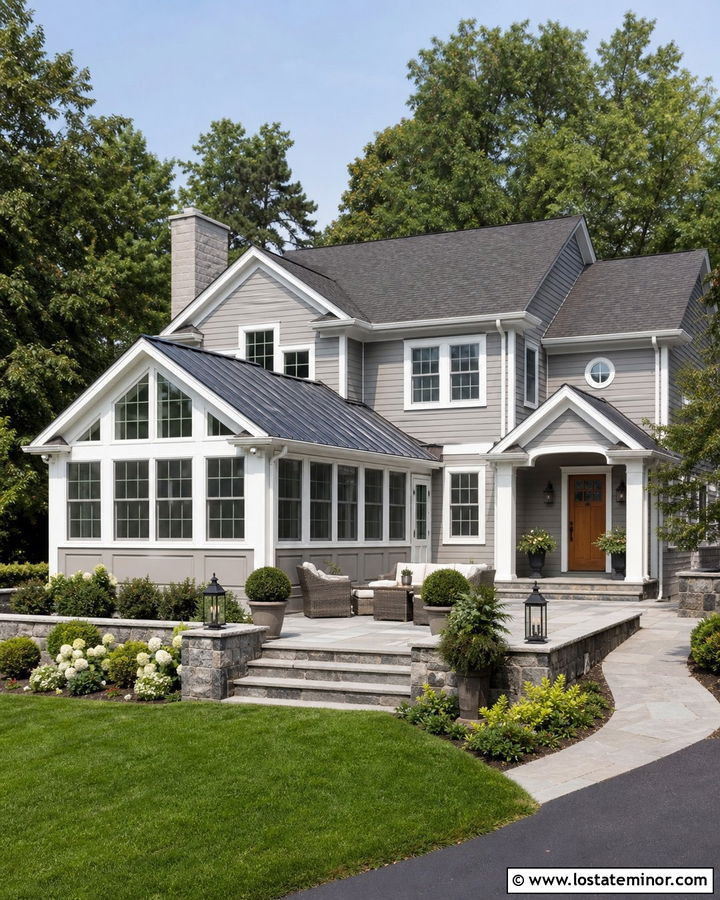
A two-story house can easily overwhelm a one-story addition, so the sunroom needs strong proportions and thoughtful material repetition. Paint the full exterior a medium-light grey and use bright white trim to emphasize windows, corners, and roof edges. Give the rear sunroom a tall vaulted ceiling or raised transom windows so it relates to the height of the main structure. A dark grey standing-seam roof helps define its shape from the yard. Repeat the home’s white window grids and add a matching grey base below the glass. A broad stone patio, layered shrubs, and symmetrical planters create a finished transition outdoors. The coordinated colors ensure the lower sunroom looks substantial rather than small beside the two-story elevation.
21. Small Light Grey House With Lean-To Sunroom
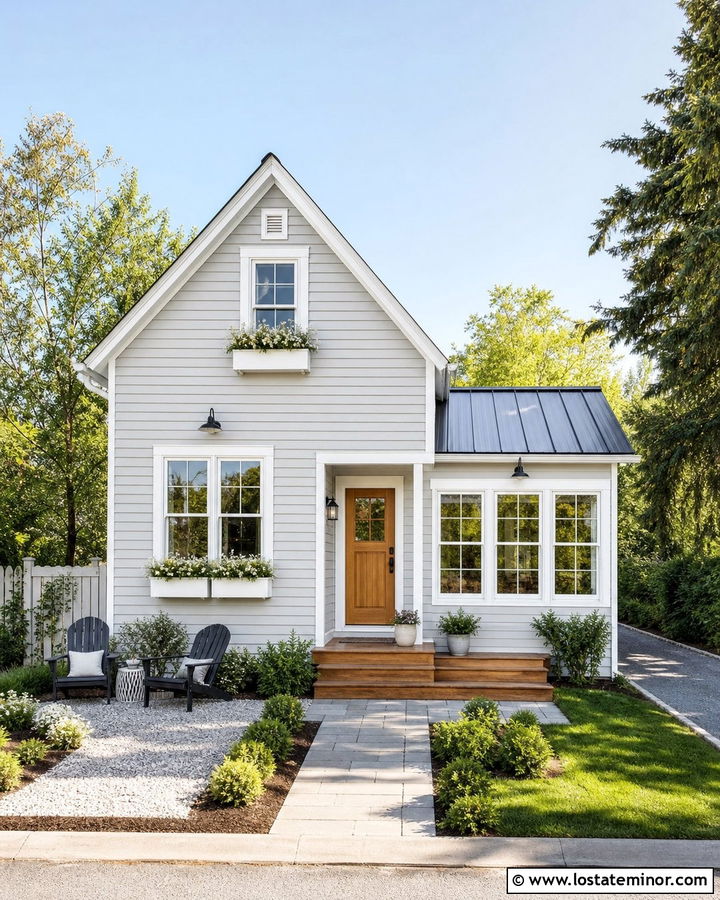
Limited square footage does not prevent a small house from supporting a bright, attractive sunroom. A lean-to design can fit neatly against one wall without competing with the main roof. Use very light grey lap siding on both structures, then select white window frames and trim to make the exterior appear open and spacious. A narrow charcoal metal roof gives the sunroom clear definition and sheds water efficiently. Add a natural wood front door and matching sunroom steps for warmth. Keep the hardscape simple with a compact paver path and a small gravel sitting area. Low shrubs and window boxes add character without hiding the facade. This economical approach creates useful space while keeping the house visually tidy and well proportioned.
22. Light Grey L-Shaped House With Courtyard Sunroom
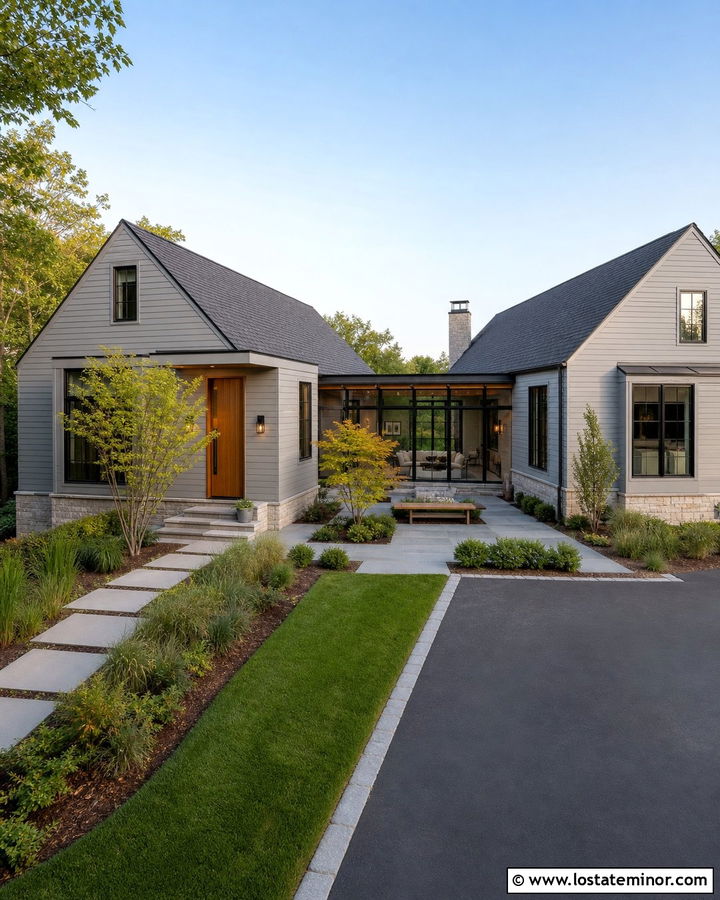
An L-shaped home creates a sheltered area that can become a private courtyard beside a glass sunroom. Paint both wings in warm light grey siding and use dark bronze windows for consistent contrast. Position the sunroom where the two sections meet, allowing it to become a visual bridge between the rooflines. A low charcoal roof and natural stone base give the glass structure a grounded appearance. Repeat cedar on the front door, courtyard bench, and sunroom ceiling to warm the palette. Large pavers, small trees, grasses, and a central planting bed can define the protected outdoor space. The complete design turns an awkward inside corner into a purposeful destination while improving the relationship between the home, sunroom, and surrounding yard.
23. Light Grey House With Garage-Side Sunroom
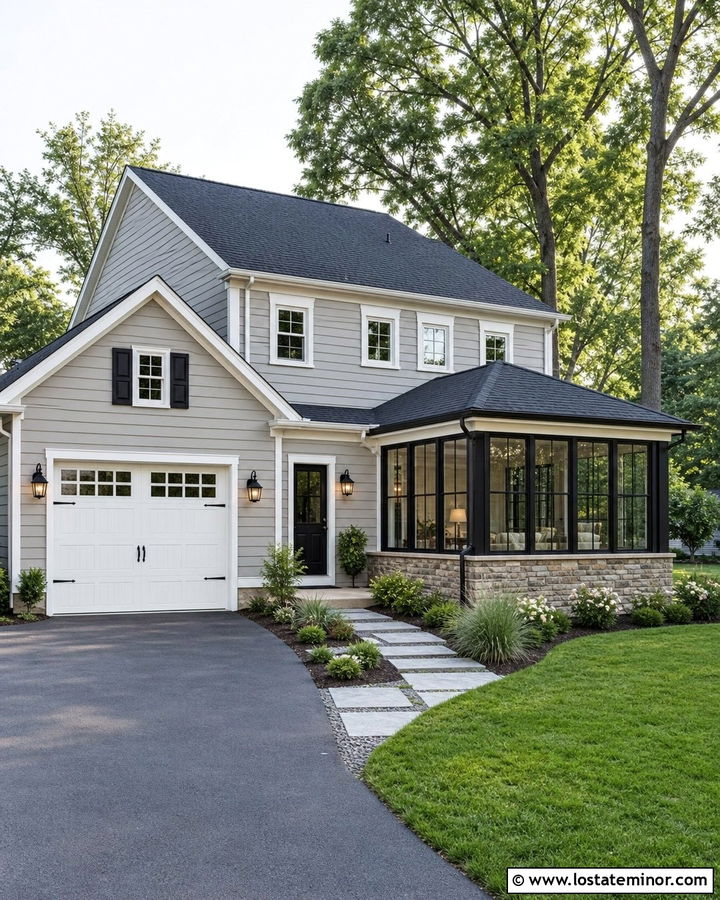
A sunroom beside the garage can improve an otherwise utility-heavy elevation. Cover the main house and garage in soft light grey siding, then place a glass sunroom between the garage and backyard. Use white trim and a white garage door to keep the broad facade bright. Black-framed sunroom windows provide a refined focal point, especially when paired with a black side entry door and matching lights. Add a low stone base that continues beneath the garage for visual continuity. A charcoal roof can span the complete structure, helping the addition feel permanent. Finish the design with a clear driveway edge, a stepping-stone path to the sunroom, and layered foundation shrubs that soften the garage without blocking the glass.
24. Light Grey House With Skylight Sunroom
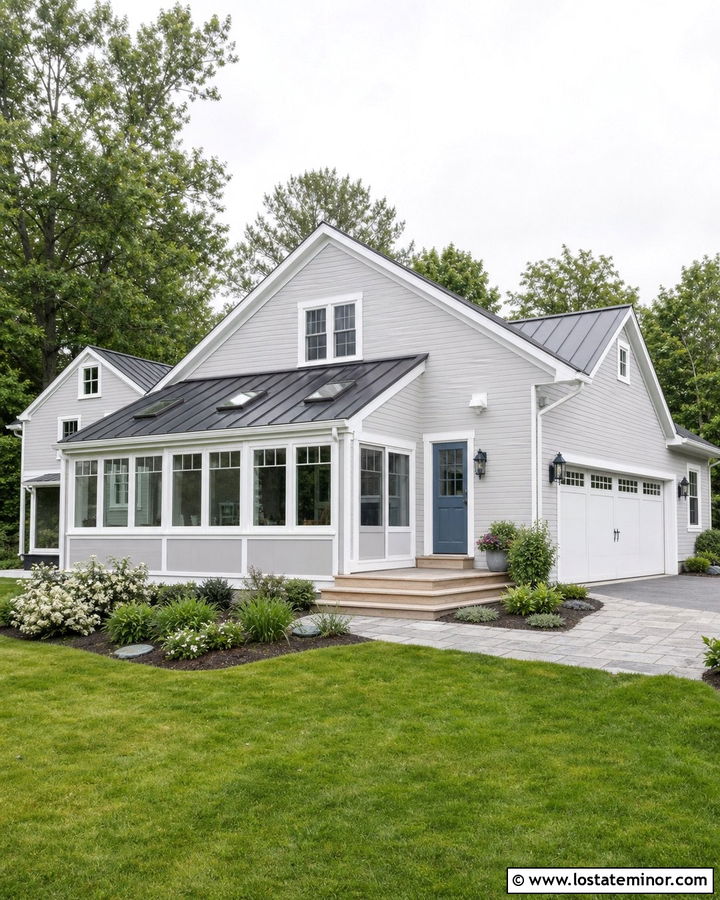
A skylight sunroom brings additional daylight into the structure while giving the exterior roof a distinctive but practical feature. Choose pale light grey siding for the house and repeat it on the sunroom’s solid lower walls. White window frames and roof trim create a clean transition between the siding and glass. Install several evenly spaced skylights in a medium-grey shingle or charcoal metal roof, keeping their alignment simple and orderly. A soft blue front door and white garage door maintain the airy palette. Stone pavers and a low deck can connect the sunroom to the garden. From the curb, the coordinated roof pitch, matching materials, and carefully placed skylights make the addition look integrated rather than excessively transparent or visually complicated.
25. Light Grey House With Fireplace Sunroom
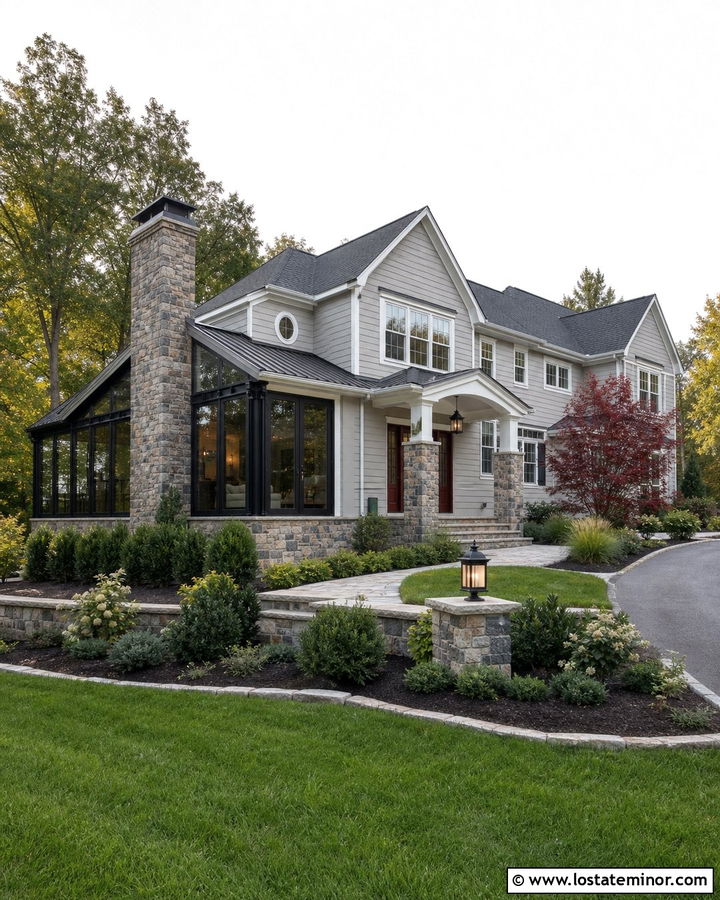
A masonry fireplace gives a glass sunroom a strong architectural anchor that can also improve the exterior composition. Paint the house warm light grey and build the sunroom with black-framed windows above a low grey stone base. Position a full-height stone chimney on the outer sunroom wall, using the same masonry around the home’s entry or front columns. Cream trim prevents the grey-on-grey palette from feeling cold. Choose a dark charcoal roof and a stained mahogany front door for richer contrast. A generous terrace, curved planting beds, and evergreen shrubs can frame the addition. The chimney adds height and texture, helping the sunroom feel substantial enough to belong beside a large traditional, craftsman, or transitional residence.
26. Light Grey House With Enclosed Porch Sunroom
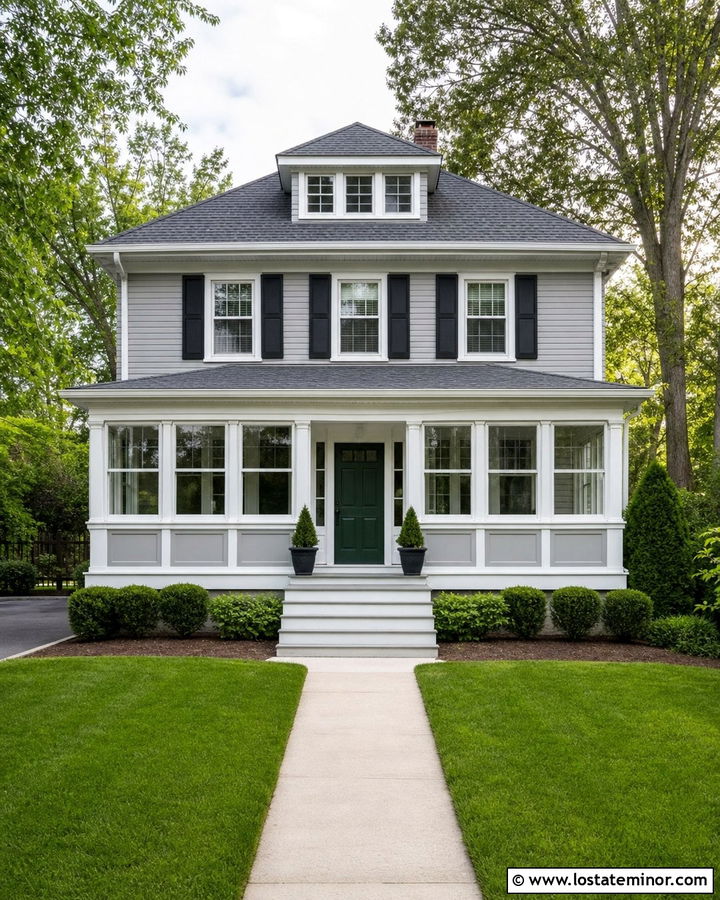
Converting a porch into a sunroom works best when the new windows follow the rhythm of the original columns and openings. Use light grey siding across the house, then paint the preserved porch columns and sunroom frames bright white. A medium-grey shingle roof can remain unchanged if it already extends over the porch. Add solid grey panels below the windows so the enclosure appears connected to the main walls instead of resembling a separate glass box. Black shutters and a red, navy, or dark green front door provide classic contrast. Retain wide front steps and add symmetrical planters to emphasize the entry. This approach preserves the home’s welcoming porch character while providing a more protected, useful room behind the coordinated facade.
27. Light Grey House With Sunroom And Deck
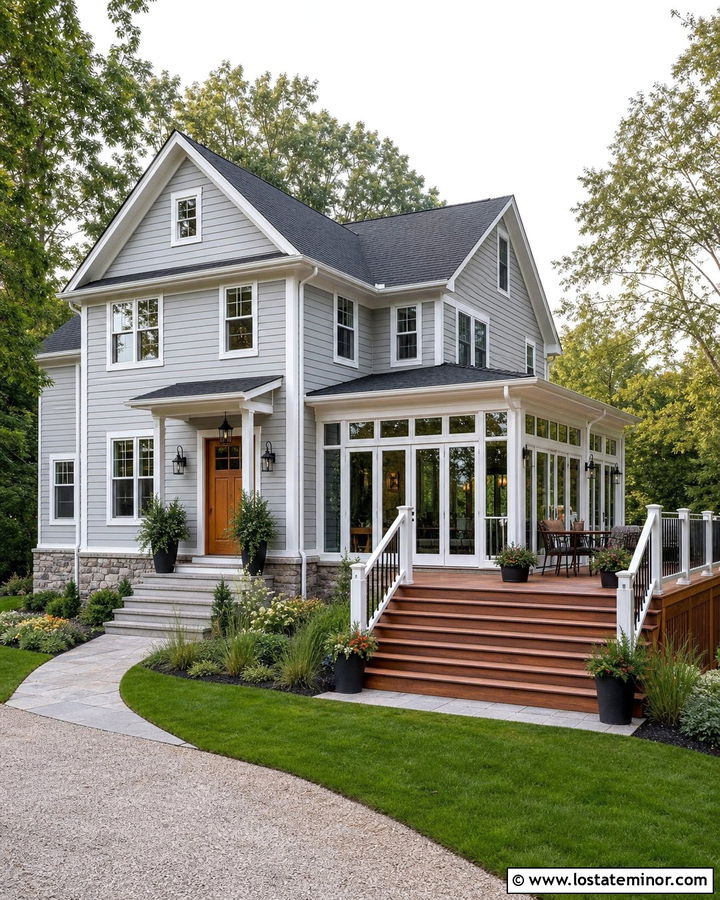
Combining a sunroom with an adjoining deck creates a gradual transition from indoor living to the open yard. Paint the house soft light grey and use white frames around the sunroom’s generous windows. Build the deck in warm cedar or a medium-brown composite material that contrasts gently with the cool siding. White railings can connect the deck to the trim, while black balusters introduce definition without blocking views. A charcoal roof and black exterior lights tie the larger scheme together. Position wide stairs toward the lawn and frame them with planters or ornamental grasses. Repeating the deck wood on the front door or porch ceiling makes the whole exterior feel coordinated, even when the sunroom and outdoor platform occupy different parts of the house.
28. Light Grey House With Sunroom And Pergola
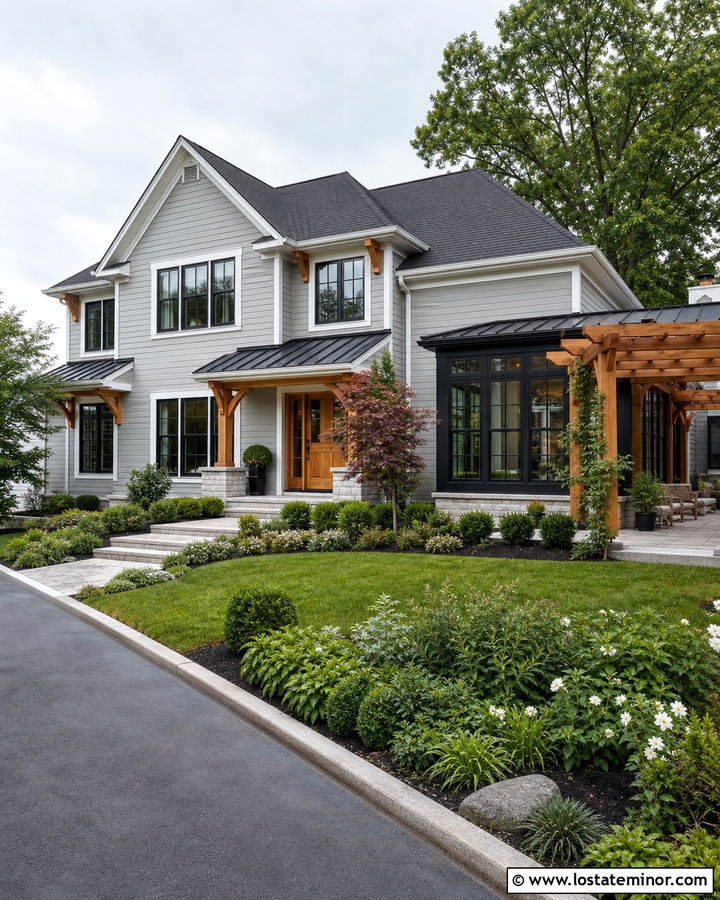
A pergola can extend the visual width of a sunroom and create a partially shaded outdoor area beside the glass enclosure. Choose light grey horizontal siding, crisp white trim, and black-framed sunroom windows for a clean base palette. Construct the pergola from natural cedar, then repeat that wood on the front door and small porch brackets. A charcoal sunroom roof and matching house shingles provide stronger contrast above. Beneath the pergola, use pale stone pavers that continue around the sunroom foundation. Climbing greenery, structured shrubs, and simple garden beds soften the geometric framework. The combination of solid siding, reflective glass, warm timber, and filtered shade produces a layered exterior that feels finished from both the curb and backyard.
29. Light Grey House With Metal-Roof Sunroom
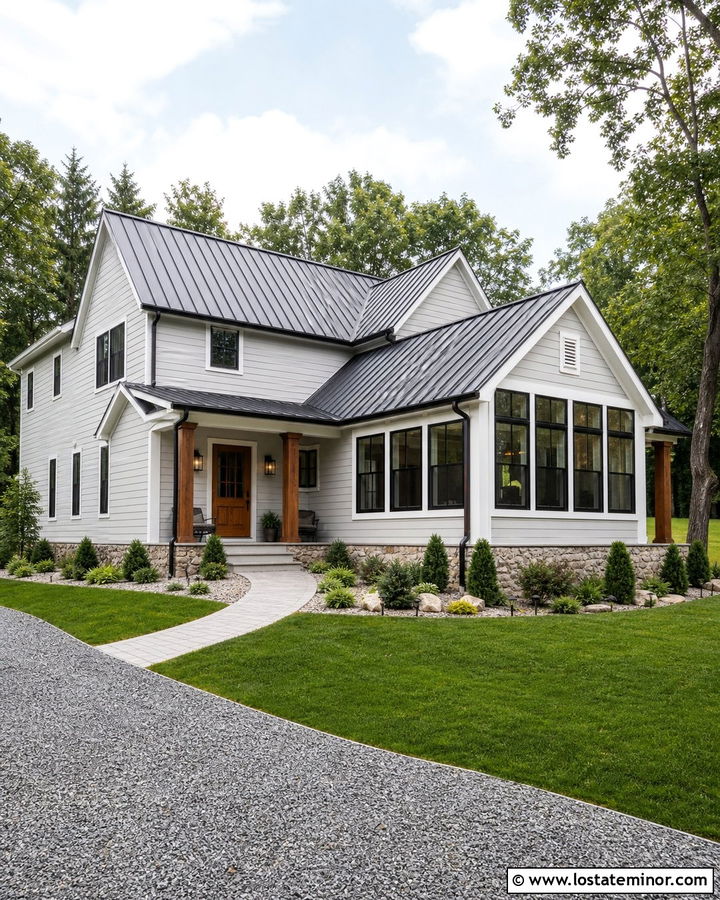
A standing-seam metal roof gives a sunroom a crisp profile and creates attractive contrast against light grey siding. Select a dark charcoal or matte black roof, then repeat the finish on gutters, downspouts, lights, and window frames. Keep the main house trim soft white to separate the dark details from the pale exterior. The sunroom can feature a simple shed roof for a ranch or modern house, while a steeper gable suits a farmhouse or cottage. Add warm wood through the front door, porch posts, or a small landing. Gravel borders and low evergreen plantings provide neat transitions around the foundation. The completed exterior feels polished and durable, with the metal roof clearly defining the sunroom without making it appear disconnected.
30. Light Grey House With Vaulted Gable Sunroom
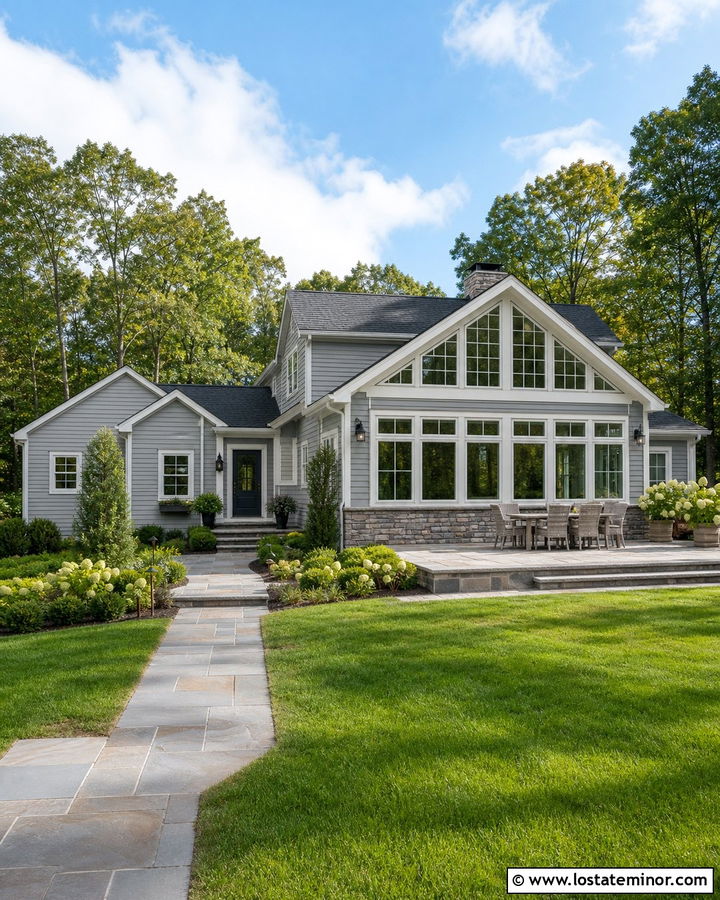
A vaulted gable sunroom creates an impressive view from the yard and introduces height to a long or low exterior. Cover the house in warm light grey siding and frame the sunroom with large white-trimmed windows. Extend glass or transom windows into the gable so the shape feels open rather than top-heavy. Use a charcoal shingle roof and repeat matching charcoal details on the front door, lighting, or shutters. Natural stone along the sunroom base can balance the tall glass walls and provide texture. A wide paver terrace, central walkway, and layered landscaping establish a strong outdoor setting. By matching the main home’s roof pitch and exterior colors, the vaulted addition becomes a confident architectural centerpiece rather than a competing structure.
Conclusion:
The most successful sunroom additions share colors, roof details, window proportions, and materials with the original home. Light grey provides a flexible starting point because it works with crisp white, charcoal, natural wood, blue, stone, brick, and many other finishes. Before choosing a scheme, compare paint samples in direct sunlight and shade, and consider how the sunroom will look from both the street and backyard. Matching one or two existing exterior details can make even a simple addition feel intentional. Whether you prefer a traditional conservatory, a modern glass room, or a screened retreat, these 30 Light Grey House Design With Sunroom Ideas offer practical ways to create a bright, unified, and welcoming home.

Related posts: