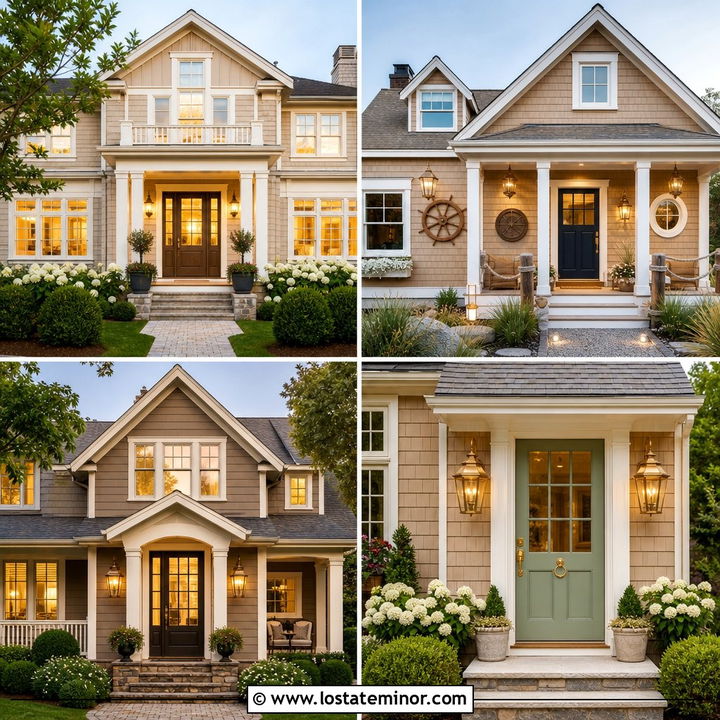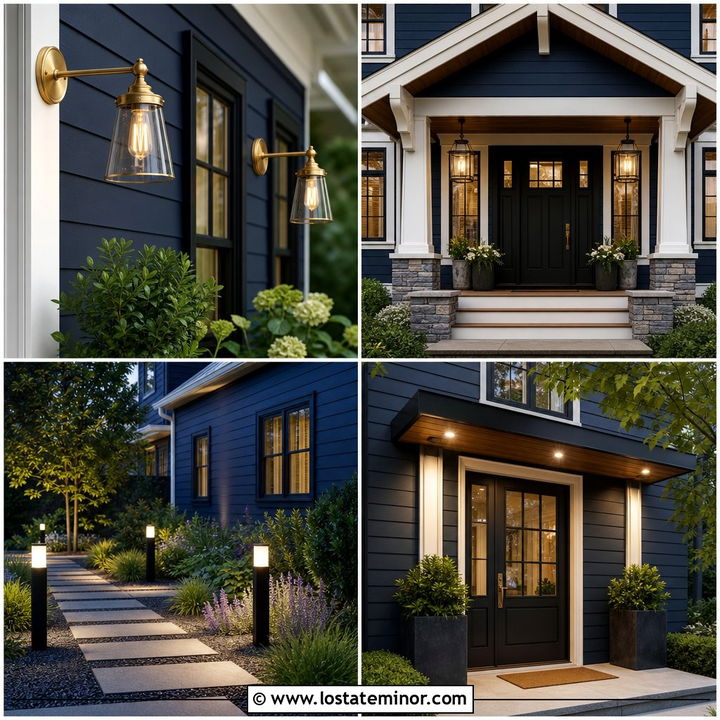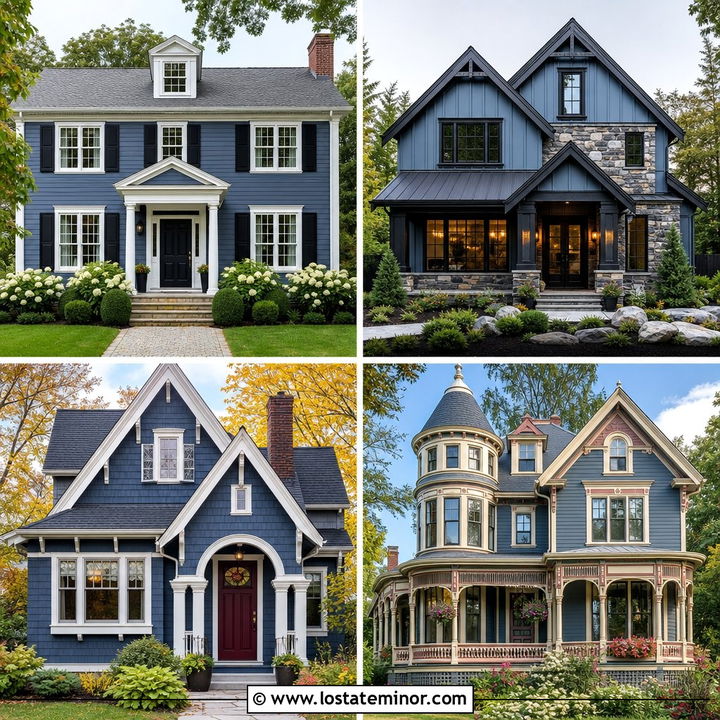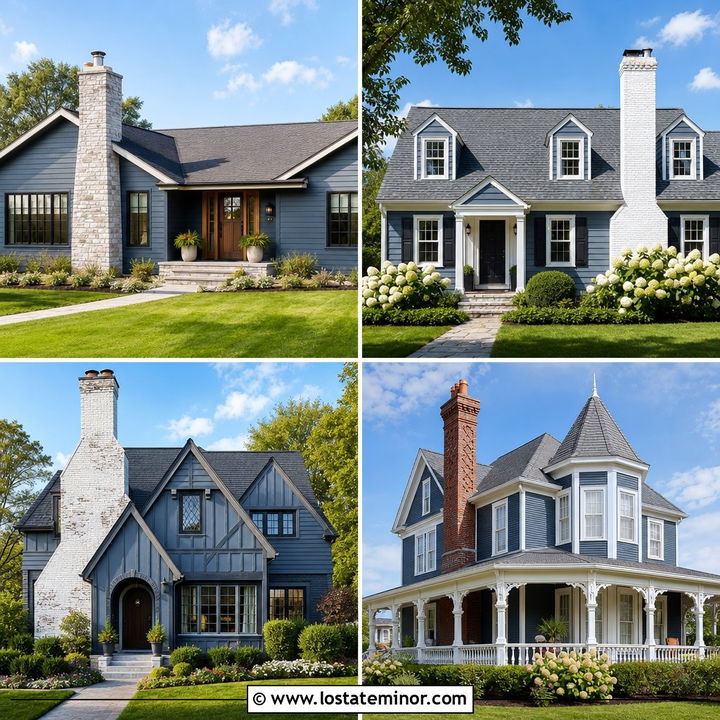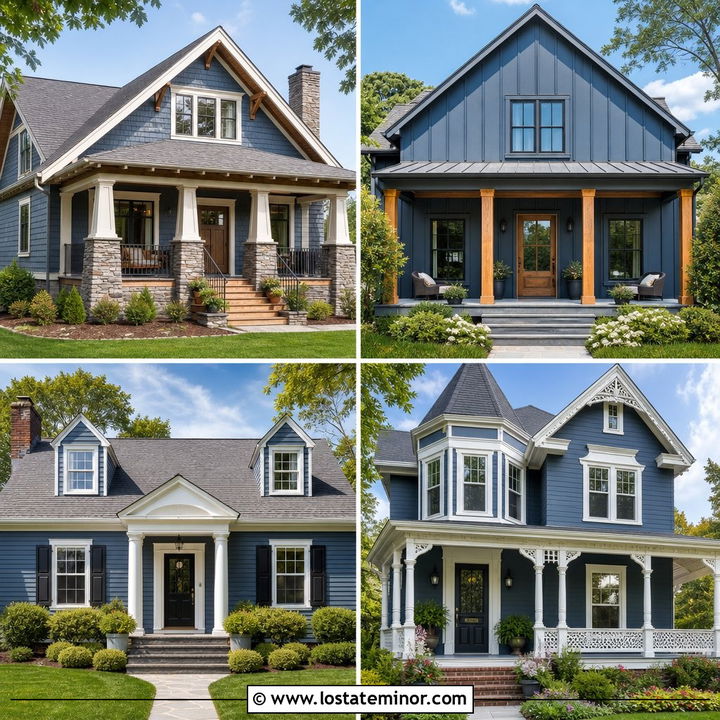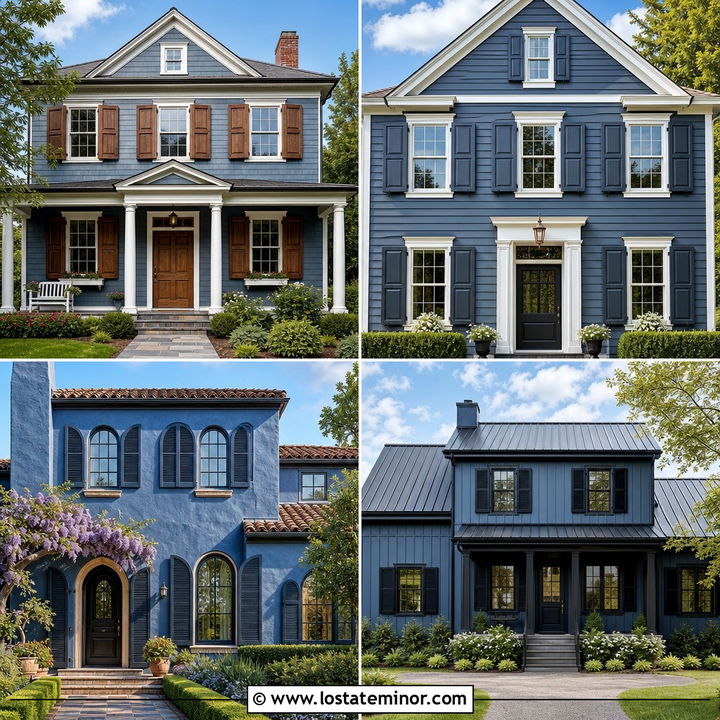
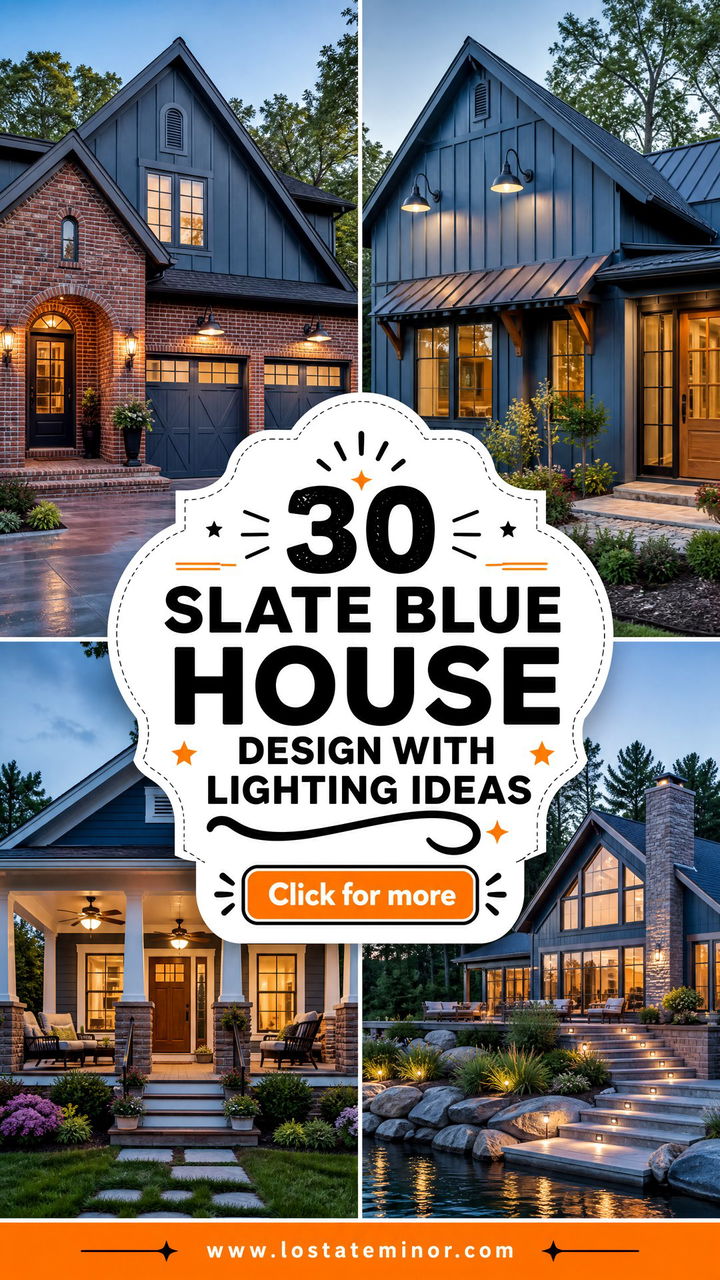
Slate blue brings a calm, polished character to an exterior while remaining more distinctive than standard gray or beige. Its muted blue-gray undertone works especially well with crisp white trim, natural wood, dark metal, brick, and stone. The right exterior lighting makes those pairings feel intentional by emphasizing the entrance, roofline, siding texture, and landscaping. Black lanterns create traditional contrast, brass adds warmth, and streamlined LEDs give slate blue siding a cleaner modern edge. Current exterior inspiration also favors combining varied siding profiles, warm wood details, neutral masonry, and coordinated light fixtures for layered curb appeal. () The complete looks below offer practical inspiration for **30 Slate Blue House Design With Lighting Ideas**.
1. Slate Blue House With White Trim And Black Lanterns
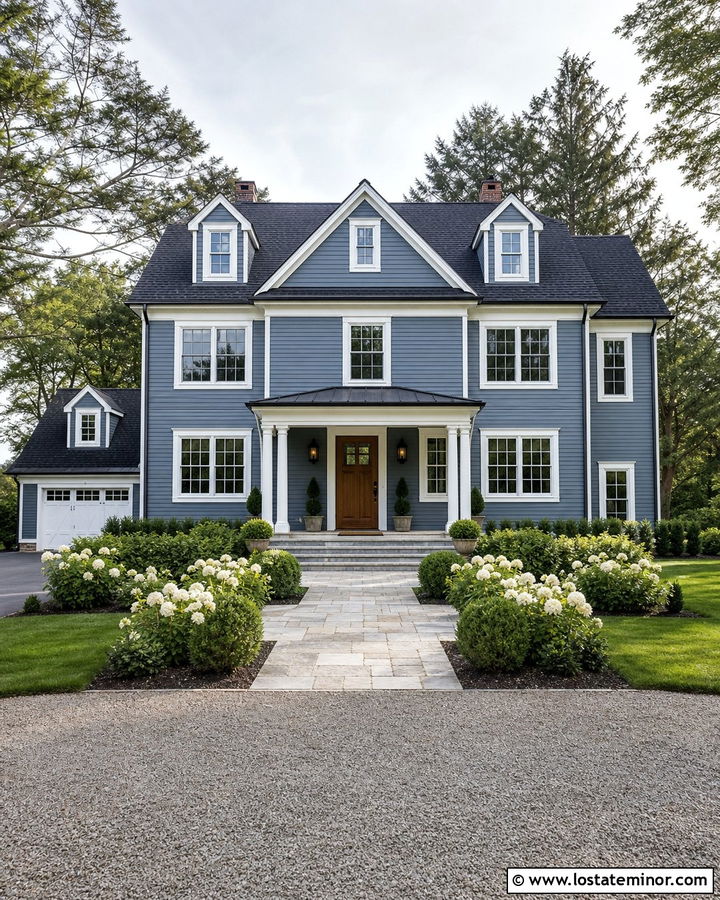
Crisp white trim gives slate blue siding a fresh, defined appearance that suits many American home styles. Use white around the windows, fascia, porch columns, and garage door to outline the architecture without making the facade feel busy. Traditional black lanterns beside the front door introduce contrast and connect naturally with a charcoal roof. Choose clear glass fixtures with simple rectangular frames so the lighting feels classic but not overly ornate. A medium-stained wood door can soften the cool palette, while gray porch flooring keeps everything balanced. Complete the exterior with clipped boxwoods, white hydrangeas, and a straight stone walkway. This combination is especially effective on a colonial, Cape Cod, or traditional two-story house.
2. Slate Blue House With Wood Door And Brass Sconces
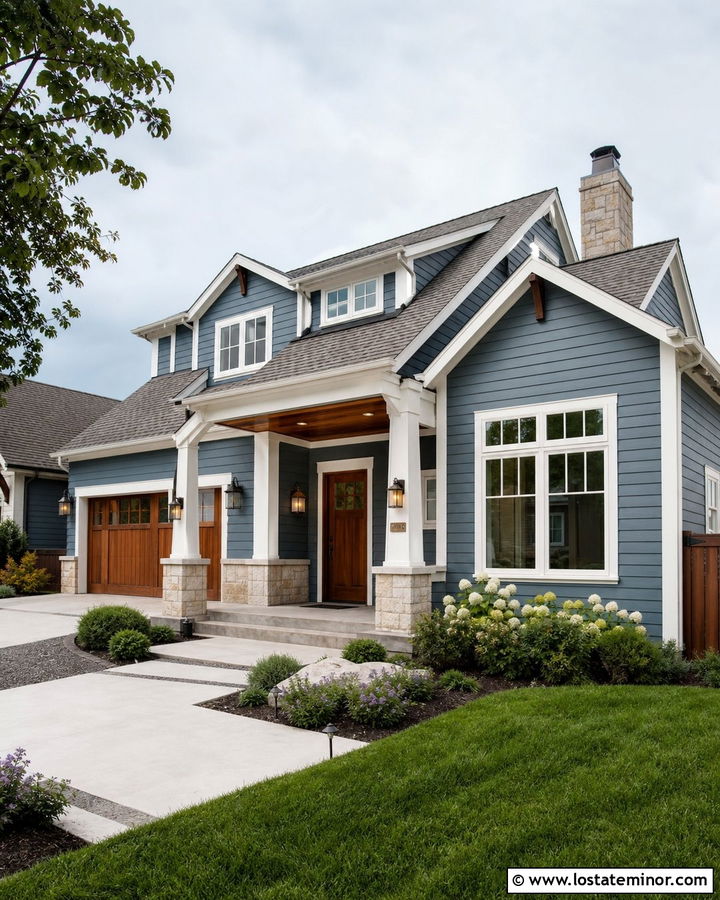
Warm wood creates an inviting focal point against the cooler character of slate blue siding. Select a front door in cedar, walnut, or medium oak, allowing the visible grain to add texture and depth. A pair of aged-brass sconces can repeat those golden tones without looking too shiny. Keep the window trim soft white and use a weathered gray roof to maintain an easy, natural palette. If the house includes a porch, carry the door stain onto the ceiling, beams, or rail cap for continuity. Cream-colored stone around the foundation can add another warm layer. This complete exterior scheme works beautifully on craftsman homes, transitional houses, and updated suburban properties with a prominent covered entrance.
3. Slate Blue House With Black Trim And Modern Lighting
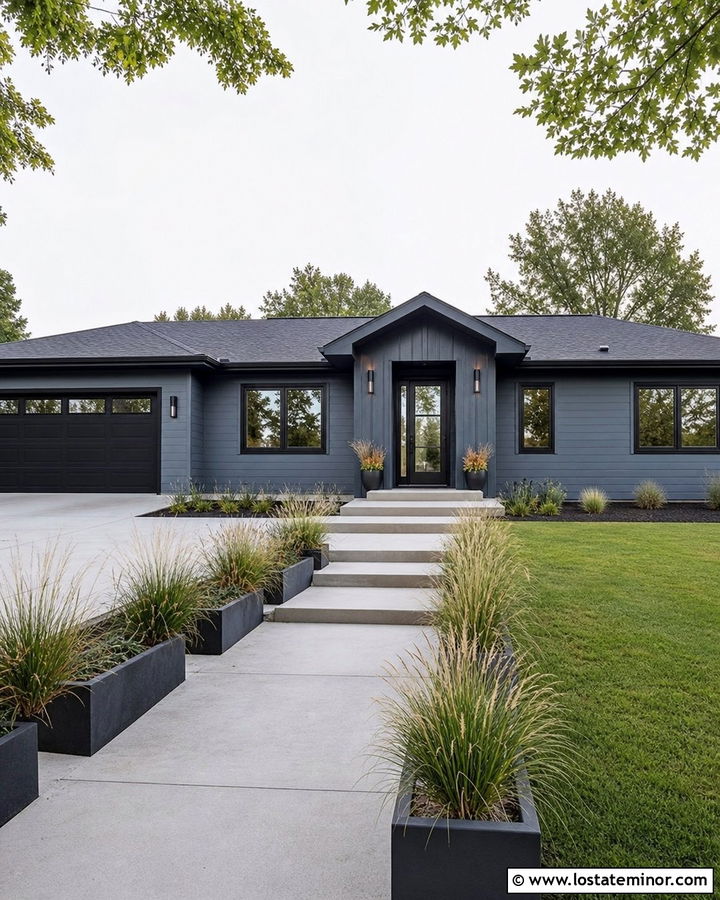
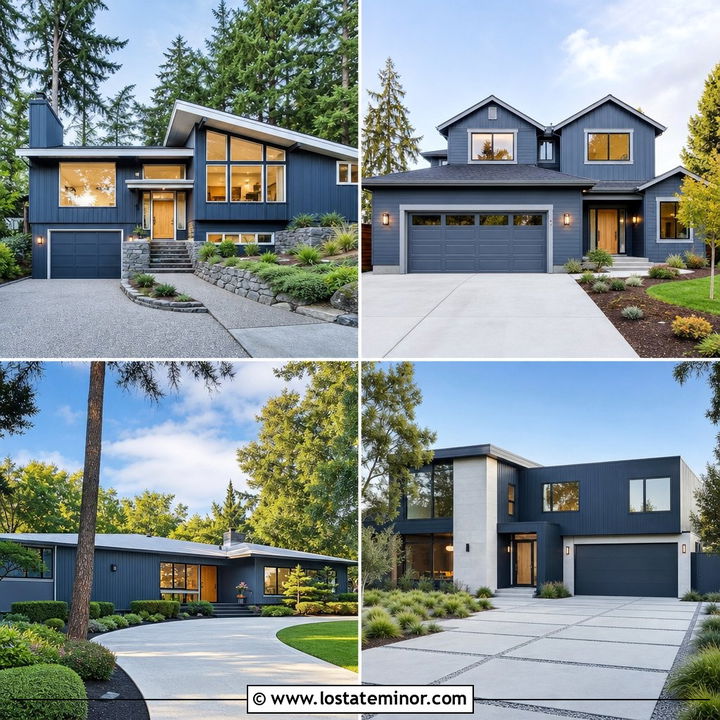
Does your slate blue exterior need a stronger architectural outline? Matte black window frames, fascia, railings, and garage details create a sharp modern contrast without competing with the main color. Install tall black cylinder sconces beside the front door and garage to repeat the trim in a functional way. A black-framed glass door can continue the clean look, while light concrete steps prevent the facade from becoming too dark. Use horizontal slate blue lap siding on the main walls and vertical panels around the entrance for subtle dimension. Low ornamental grasses, rectangular planters, and a wide concrete walkway reinforce the streamlined design. This scheme is best suited to contemporary houses, modern ranch homes, and simple geometric facades.
4. Slate Blue House With Cream Trim And Copper Lanterns
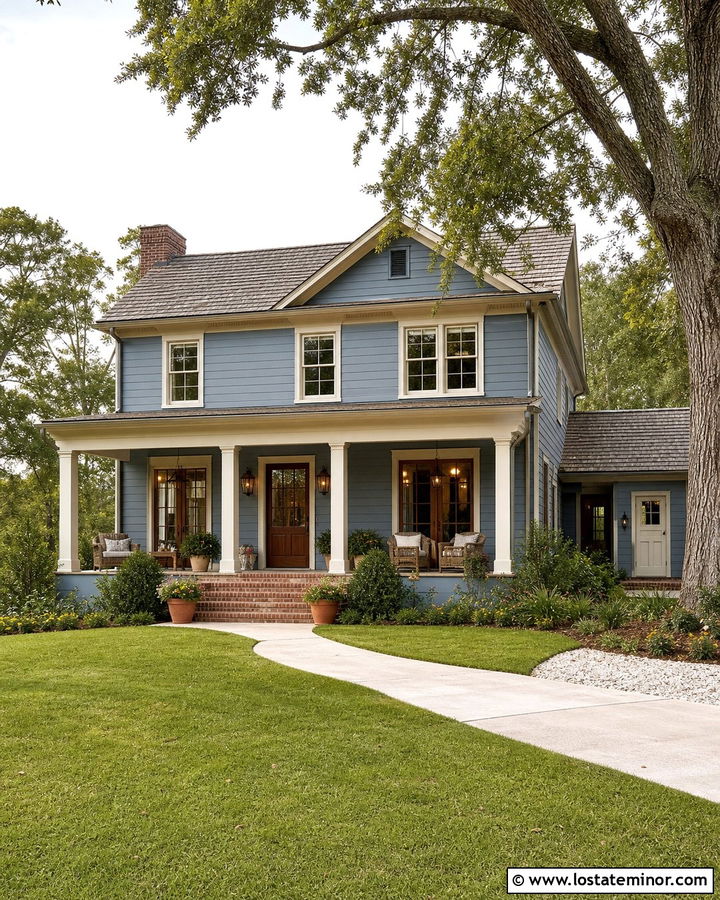
Cream trim offers a softer alternative to bright white and brings out the slightly gray quality of slate blue. Apply it to the window casings, porch posts, eaves, and garage door for a warm, unified frame. Copper lanterns are a natural partner because their rich finish stands out gently against blue siding. Choose substantial wall lanterns with clear glass beside a stained front door, then add a coordinating pendant beneath the porch ceiling. A brown or weathered-wood roof helps connect the copper and cream accents. Finish the facade with brick steps, terracotta planters, and relaxed foundation greenery. This approachable palette feels right on traditional farmhouses, country cottages, and homes surrounded by mature trees or natural landscapes.
5. Slate Blue House With Stone Porch And Bronze Sconces
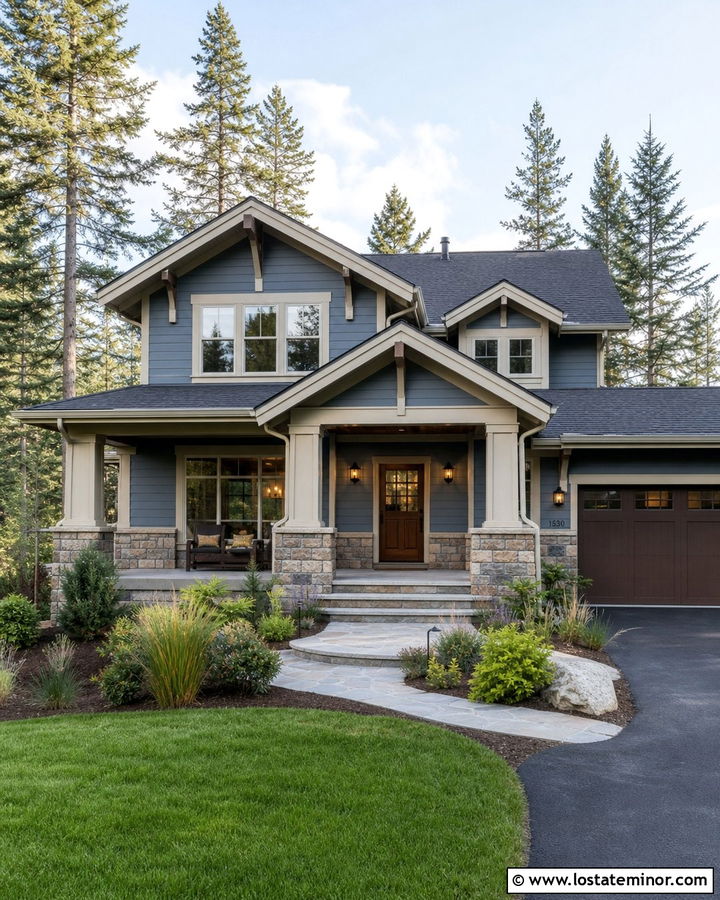
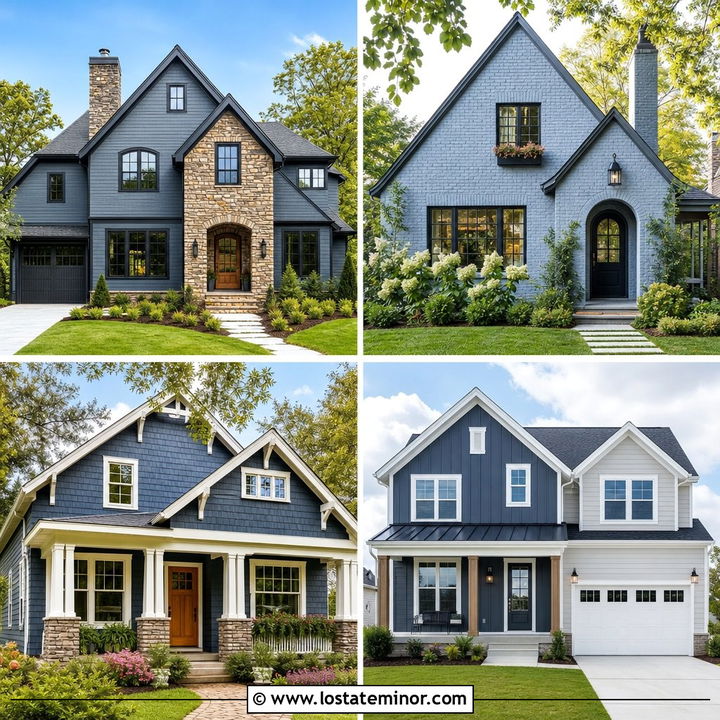
Natural stone can ground a slate blue house and make the exterior feel established. Use gray and warm beige fieldstone around the porch base, lower facade, or chimney. Dark bronze sconces blend easily with the earthy material while providing enough contrast against the blue siding. Select fixtures with simple metal frames and seeded glass for a relaxed transitional finish. Creamy white trim will brighten the windows and porch columns, while a medium-brown wood door can bridge the blue and stone colors. Extend the masonry into wide porch steps or low landscape walls to create a complete composition. Layer evergreen shrubs with ornamental grasses along the walkway. The result works especially well on craftsman, mountain, and modern rustic homes.
6. Slate Blue House With Red Brick And Carriage Lights
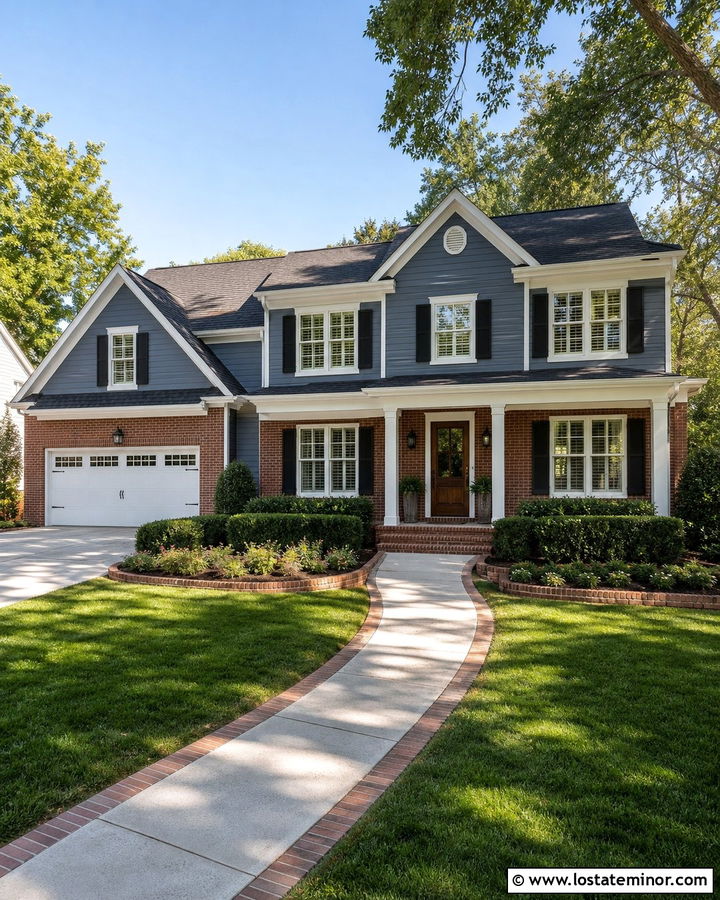
Existing red brick does not prevent you from choosing slate blue siding. The key is selecting a muted blue-gray that complements the brick rather than a bright, highly saturated blue. Use slate blue across the upper story or siding-covered sections, leaving the brick visible around the lower facade. Warm white trim creates separation between the two materials. Black carriage lights beside the door and garage bring structure to the palette and relate easily to a dark roof. Consider a stained wood door that reflects the brick’s warm undertones. Black shutters can be added sparingly if the facade needs greater contrast. Simple hedges, brick-edged planting beds, and a curved walkway help unite this traditional, welcoming exterior.
7. Slate Blue Board And Batten With Gooseneck Lights
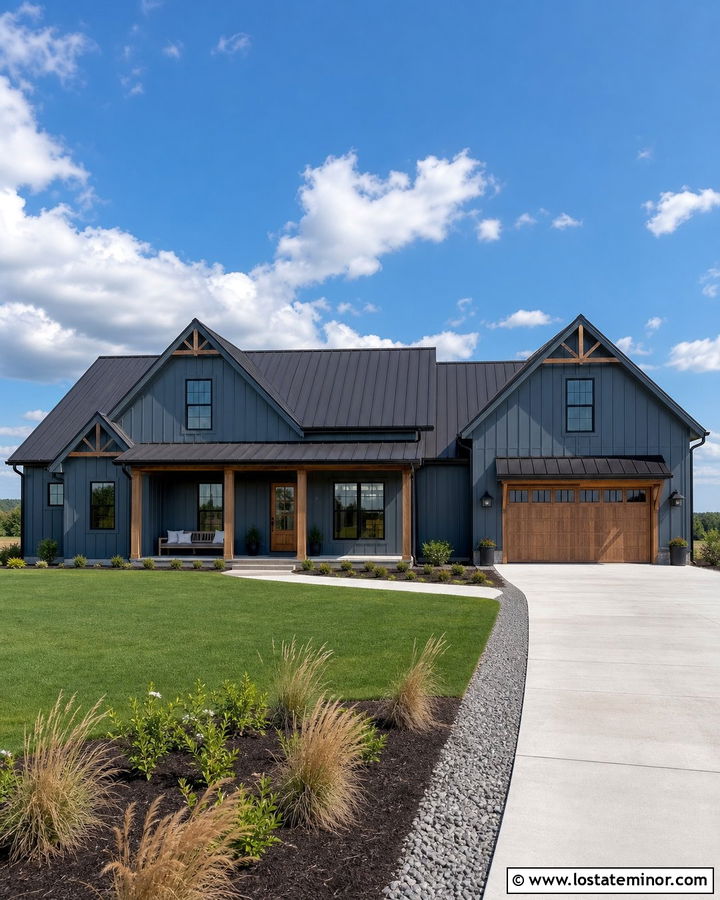
Vertical board-and-batten siding can make slate blue appear tailored and architectural. It is particularly useful around gables, garage bays, and tall entry sections where the vertical lines emphasize height. Black gooseneck lights mounted above the garage add farmhouse character and cast attention across the textured siding. Repeat black on the window frames, gutters, and roof for a cohesive exterior. To keep the scheme from feeling cold, include a natural wood front door and timber porch posts. White soffits can reflect daylight beneath the eaves and provide a clean transition. Use gravel beds, low grasses, and a broad concrete driveway around the house. This combination suits modern farmhouses, barndominiums, and updated rural properties.
8. Slate Blue Coastal House With Hanging Lanterns
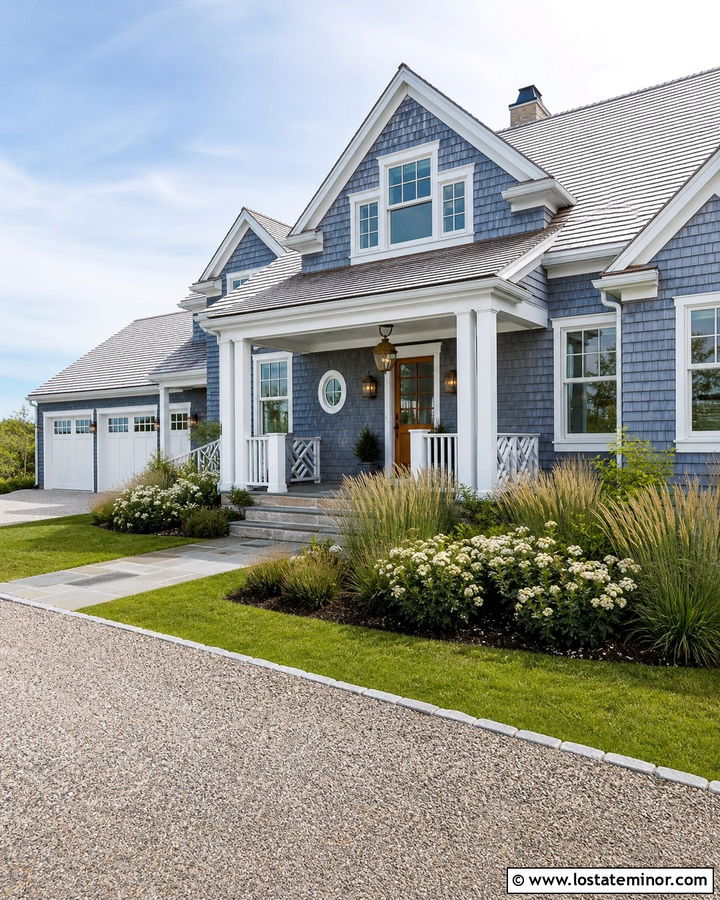
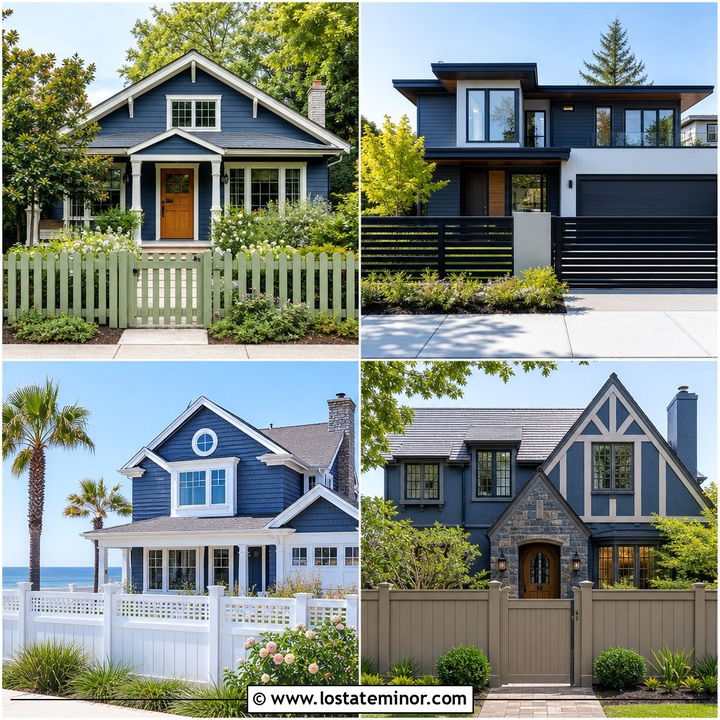
Slate blue is a natural fit for coastal architecture because it echoes ocean colors without looking overly themed. Pair shingle-style slate blue siding with bright white railings, window trim, columns, and decorative brackets. Hang a large black or weathered-brass lantern over the covered entrance, positioning it where it can be seen clearly from the street. Smaller matching wall lights can frame the garage or side doors. A pale gray roof and natural cedar front door keep the exterior relaxed. Add a light bluestone walkway, white flowering shrubs, and wispy beach grasses around the foundation. On a raised coastal house, repeat the white trim around the lower supports. The completed scheme feels airy, polished, and appropriate for waterfront neighborhoods.
9. Slate Blue Craftsman With Mission Lighting
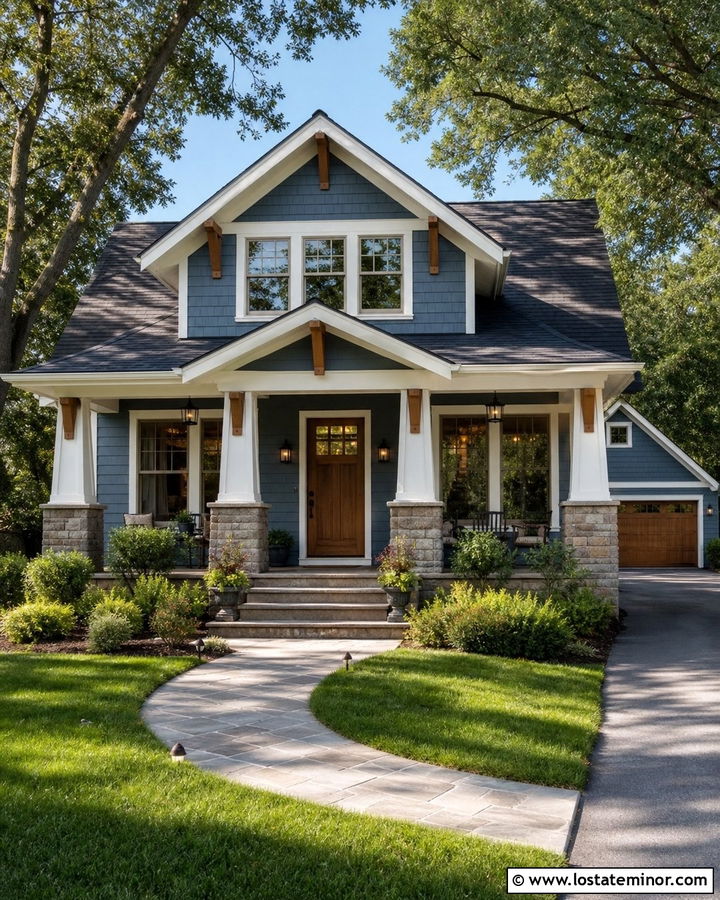
A craftsman exterior benefits from materials and fixtures that look sturdy rather than delicate. Cover the main facade in slate blue lap siding, then introduce cedar brackets, porch beams, and a paneled wood front door. Mission-style sconces with dark bronze frames and amber-toned glass complement the strong horizontal lines of the architecture. Cream trim can outline divided-light windows while remaining softer than pure white. Build porch columns on broad stone bases using a mix of gray, tan, and brown masonry. A deep charcoal roof will anchor the upper portion of the house. Complete the setting with stone steps, layered shrubs, and a gently curving walkway. Every element should reinforce the craftsman home’s warm, substantial character.
10. Slate Blue Colonial With Brass Lantern Lighting
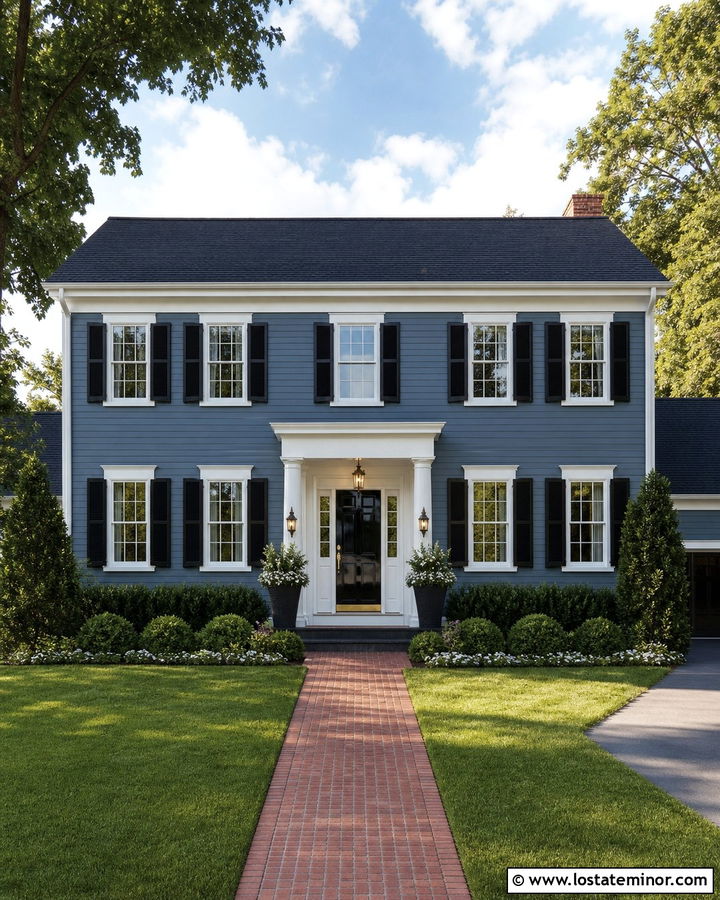
Symmetry is the main strength of a colonial facade, so the exterior lighting should follow the same balanced arrangement. Paint the clapboard siding slate blue and use clean white trim around evenly spaced windows, corner boards, and the central doorway. Mount matching brass lanterns on both sides of a glossy black or rich wood front door. A small brass pendant can be centered beneath a portico when ceiling height allows. Black shutters and a dark shingle roof give the composition a traditional foundation. Keep the landscaping equally balanced with paired shrubs, matching planters, and a straight brick walkway. This combination respects classic architecture while the slate blue body color introduces a slightly softer, more current alternative to dark navy.
11. Slate Blue Ranch House With Garage Lighting
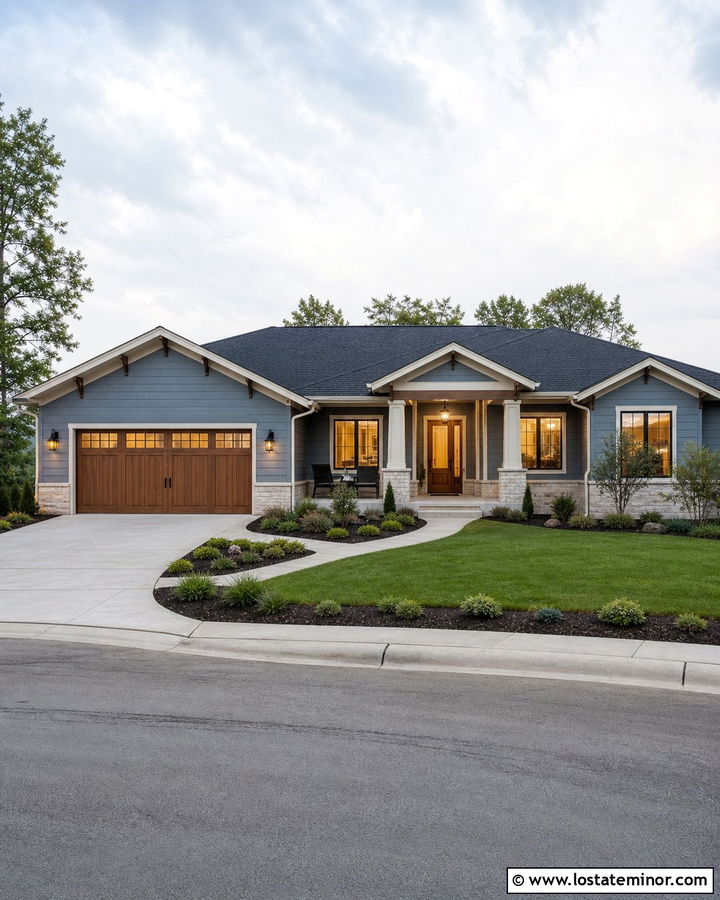
A long ranch facade needs lighting that distributes attention across the entire elevation rather than concentrating only on the front door. Use slate blue horizontal siding with warm white trim to visually organize the low roofline. Install matching black sconces beside each garage bay and another pair around the entrance. Subtle lights beneath deep eaves can brighten shadowed sections without cluttering the siding. Choose a wood-look garage door and coordinate it with the front door to add warmth. A charcoal roof keeps the house grounded, while pale stone around the foundation adds texture. Wide planting beds, low shrubs, and a gently curved walkway complement the horizontal architecture. The complete look feels balanced from one end of the house to the other.
12. Slate Blue Farmhouse With Barn Lights
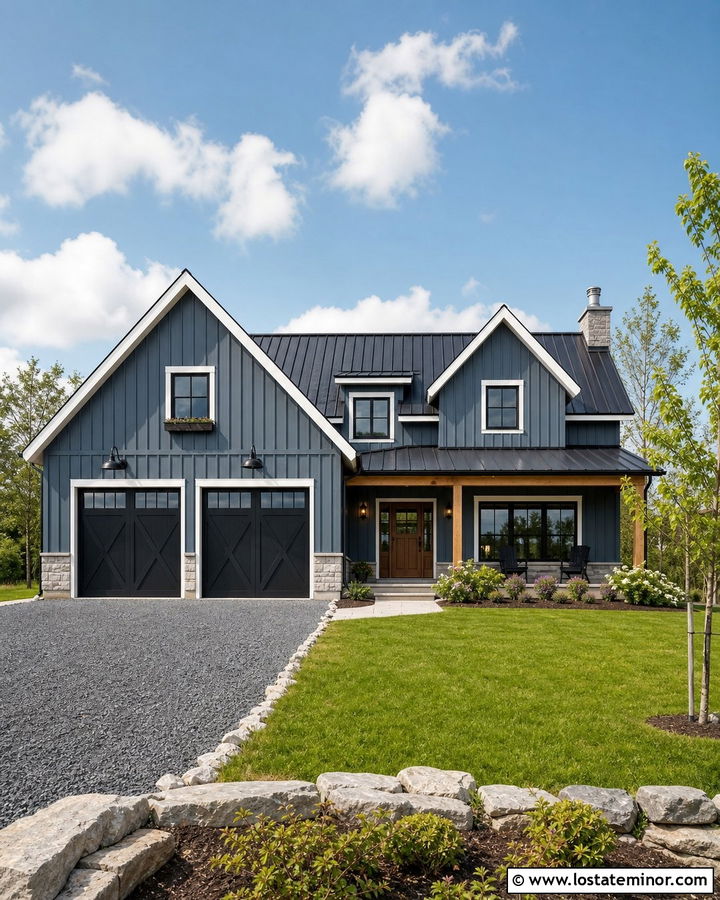
Classic barn lights introduce a practical, recognizable detail to a slate blue farmhouse. Use downward-facing black fixtures above the garage doors, side entrance, and covered porch. Their curved shades look especially appropriate with vertical board-and-batten siding. Bright white trim around the windows, gables, and porch columns creates a clean contrast, while a black metal roof repeats the fixtures. Add a warm wood front door and matching porch ceiling so the exterior does not feel overly cool. A stone foundation in mixed gray and tan can provide a strong visual base. Frame the house with a gravel driveway, simple lawn, and structured foundation plants. This scheme combines familiar farmhouse materials without relying on an all-white exterior.
13. Slate Blue Cape Cod With Entry Lantern
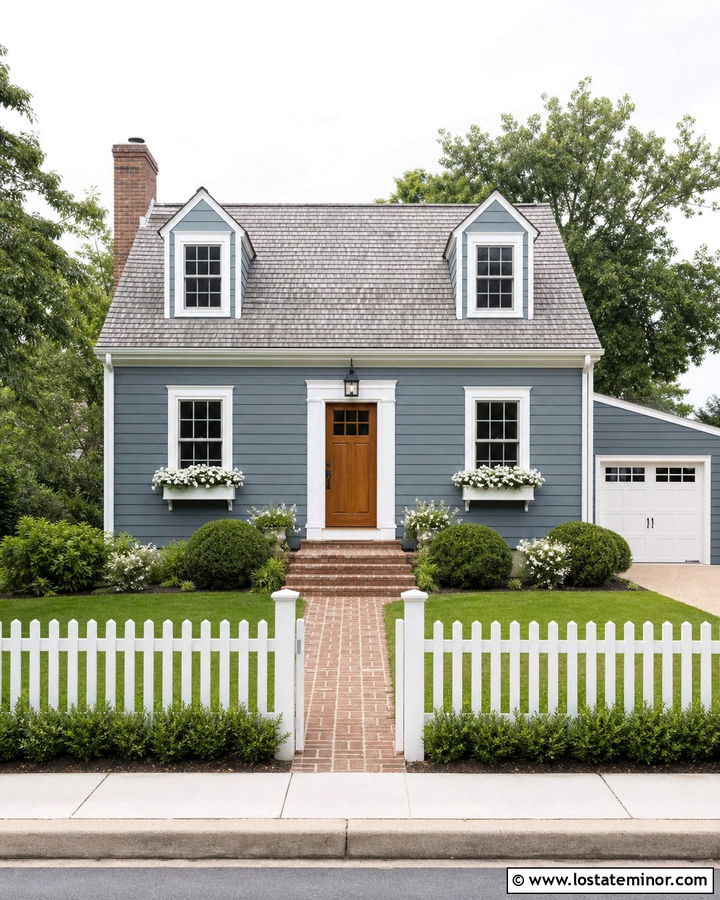
A compact Cape Cod house can make a strong impression with one properly scaled hanging lantern. Center it above the front door beneath a small covered entry, ensuring it becomes part of the symmetrical facade. Slate blue clapboard or shingle siding provides a calm background for white dormers, window trim, and corner boards. Paint the door deep red, black, or use natural wood for a clear focal point. A weathered gray roof supports the coastal character, while brick steps introduce warmth near the ground. Add window boxes with white flowers and low rounded shrubs beneath the front windows. The lantern, central walkway, and balanced landscaping should all guide attention toward the entrance without overwhelming the modest size of the home.
14. Slate Blue Bungalow With Porch Fan Lighting
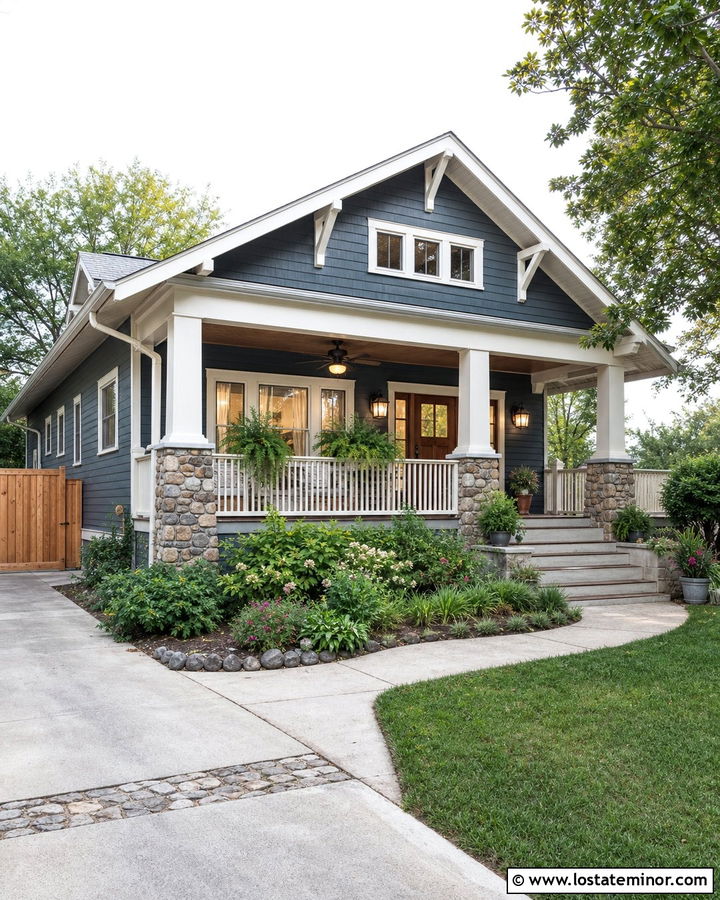
A deep front porch is often the most important feature of a bungalow, so its lighting should support both appearance and everyday use. Cover the house in muted slate blue siding, then highlight the porch with creamy white columns, rafters, and railings. A dark bronze ceiling fan with an integrated light can illuminate the seating area while complementing craftsman-style wall sconces beside the door. Use warm-stained wood for the front door, porch floor, and exposed beam details. Tapered columns on stone bases will give the lower facade additional weight. Surround the steps with ferns, flowering shrubs, and informal planting beds. This layered approach turns the entire porch into a welcoming focal point instead of treating lighting as an afterthought.
15. Slate Blue Split-Level With Pathway Lighting
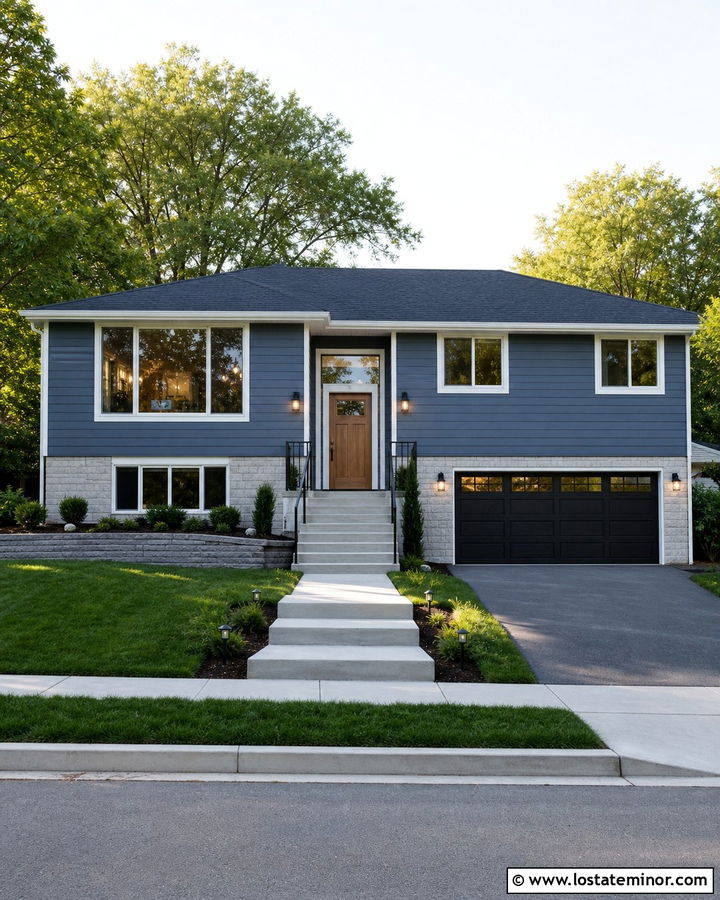
Split-level homes often have entrances that feel visually disconnected from the driveway or main living level. A thoughtful lighting plan can clarify the route. Paint the siding slate blue and use soft white trim around the windows and garage. Install simple black sconces beside the entrance, then continue the same finish through low pathway lights along the steps and front walk. A natural wood door adds warmth where visitors arrive. Use light gray stone on the lower level to connect the house with concrete stairs and retaining walls. Keep shrubs low enough that they do not hide the entrance or fixtures. With the pathway, door, and facade treated as one composition, the home gains a more welcoming and deliberate street presence.
16. Slate Blue Modern House With Linear LED Lighting
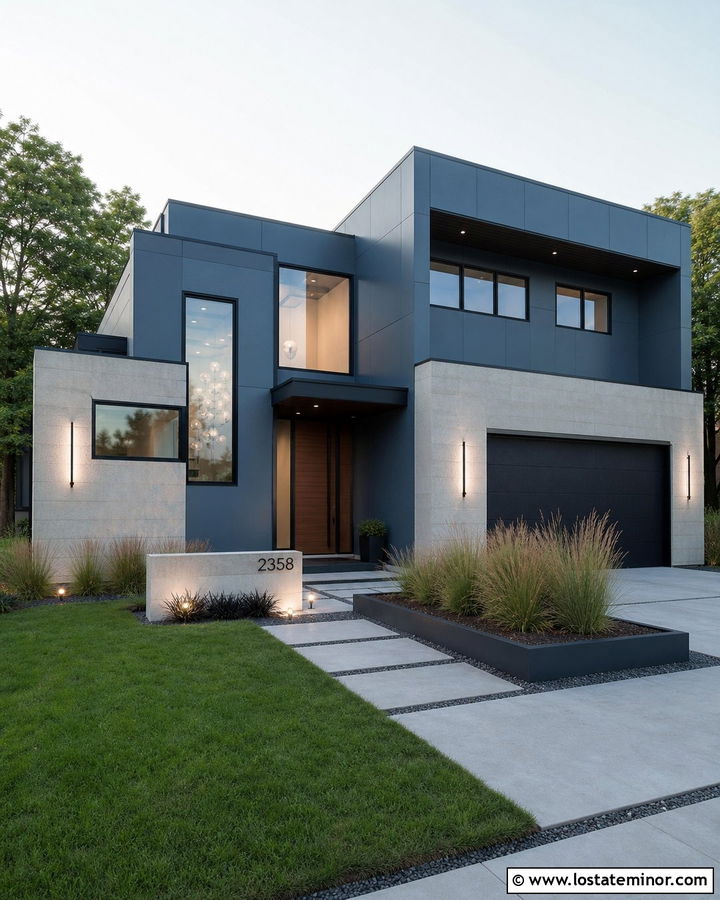
Linear lighting complements a modern house by following its strong horizontal and vertical forms. Apply slate blue panel siding to the primary volumes, pairing it with black window frames and pale concrete or white stucco sections. Slim architectural sconces can frame a large pivot door, while concealed linear lights beneath the canopy define the entrance. Use dark wood cladding around the doorway to warm the blue-gray palette. The garage door should match either the black trim or wood accent rather than introduce another color. Continue the clean approach with rectangular planting beds, ornamental grasses, and oversized concrete pavers. The lighting should remain integrated with the architecture, allowing the slate blue surfaces and contrasting materials to create the main visual impact.
17. Slate Blue Cottage With Arched Door Lanterns
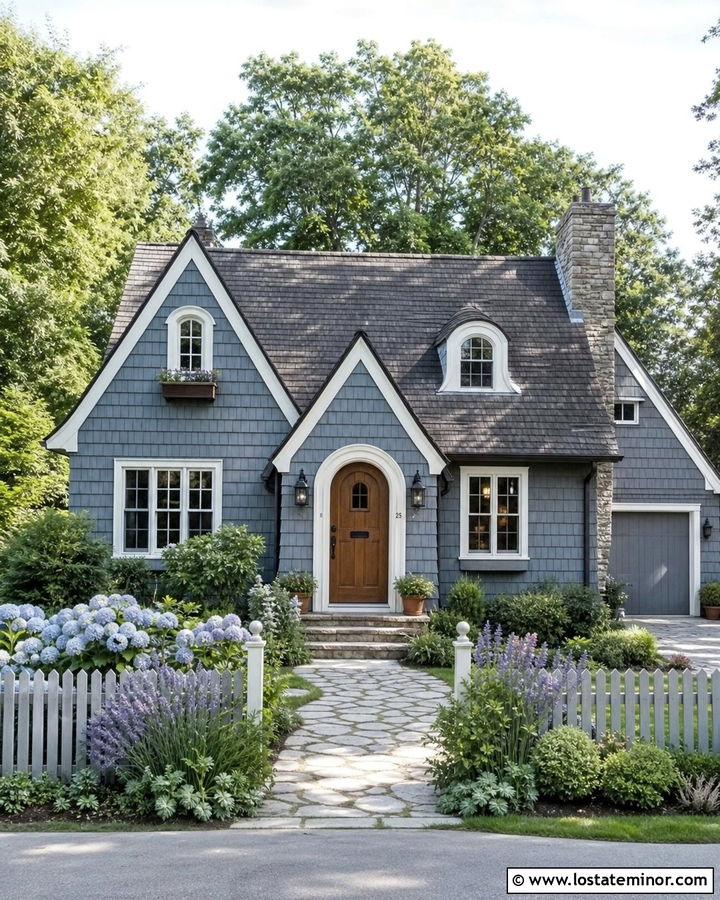
An arched front door gives a slate blue cottage an instantly recognizable focal point. Surround the opening with creamy white trim or pale natural stone, then mount compact lanterns on both sides to reinforce the shape. Choose aged brass, black iron, or dark bronze fixtures with clear glass and gentle traditional detailing. Slate blue shingle siding will add texture without making the small facade feel crowded. A medium-stained oak door can introduce warmth, while a steep charcoal roof gives the cottage a grounded silhouette. Complete the look with a stone path, low picket fence, lavender, hydrangeas, and informal greenery. Keeping the fixtures proportional ensures that the entrance looks charming and welcoming rather than heavy or overdecorated.
18. Slate Blue Tudor House With Iron Lighting
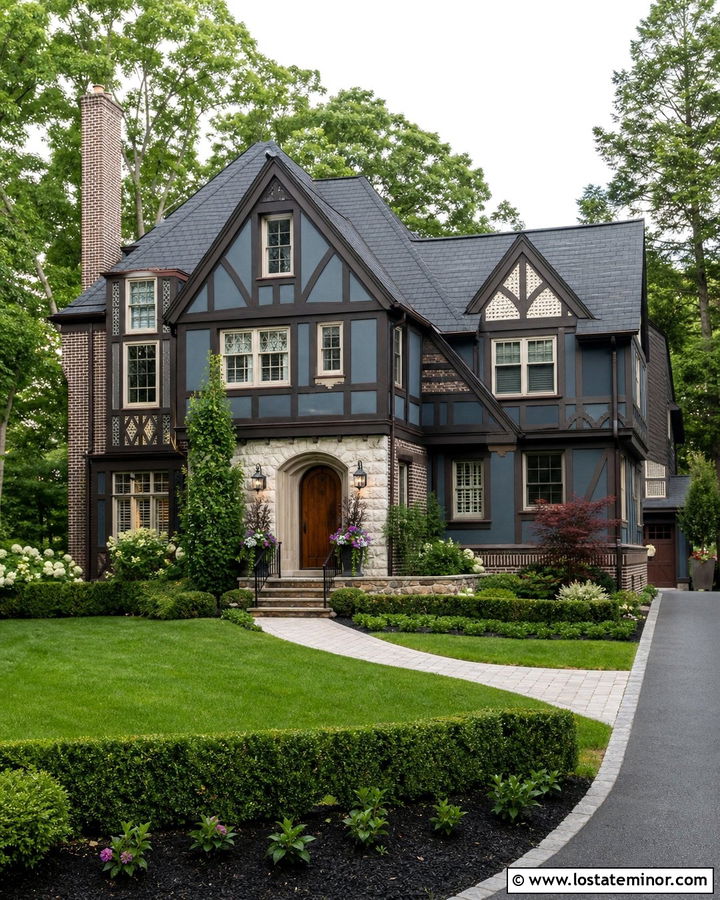
Tudor architecture can support a deeper, more dramatic version of slate blue. Use the color on stucco panels or siding between dark brown timber details. Cream trim around leaded or divided-light windows will maintain contrast without appearing stark. Wrought-iron lanterns beside an arched wood door connect naturally with the dark timbers and steep roofline. If the entrance is recessed, include a coordinating pendant beneath the arch to make the doorway feel visible and intentional. Brick or rough stone at the foundation adds the weight expected from this house type. A curved paver walkway, clipped hedges, and a few flowering plants soften the exterior. The result respects Tudor character while replacing predictable beige with a sophisticated blue-gray body color.
19. Slate Blue Victorian House With Globe Lighting
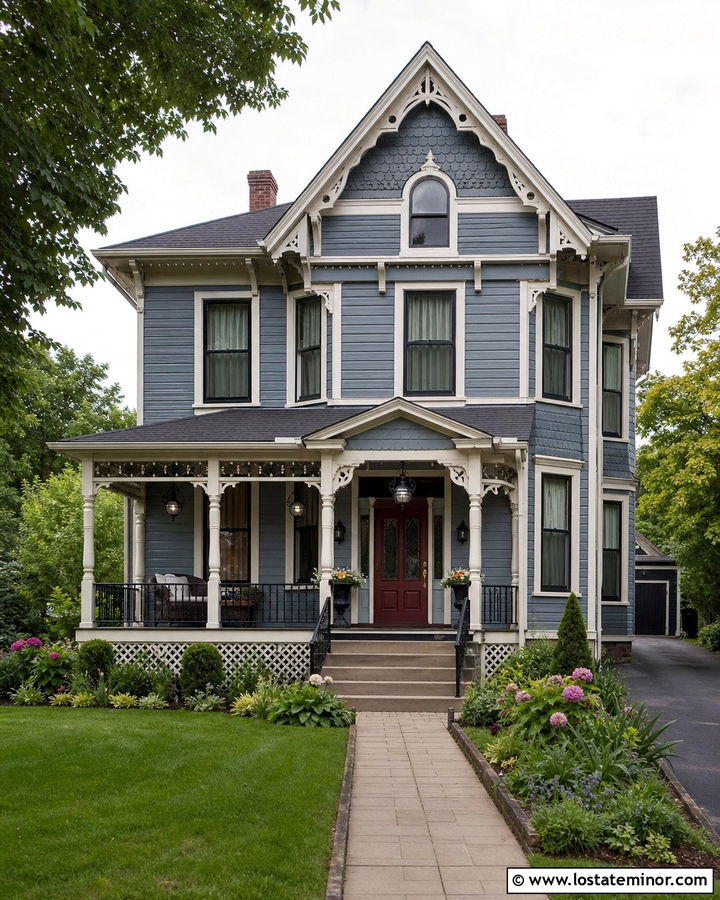
Victorian homes contain many architectural details, so the color and lighting plan should create order rather than add visual noise. Use slate blue as the primary siding color, warm white for the trim, and a deeper blue-gray for selected shingles or decorative panels. Black globe lights or compact traditional lanterns can illuminate the porch without competing with brackets, spindlework, and turned columns. A burgundy or natural wood door supplies a controlled accent. Keep the roof charcoal and repeat black on railings or small metal details. If the porch wraps around the house, space fixtures evenly along the ceiling. Structured foundation shrubs and a simple walkway will balance the ornate facade, allowing the slate blue color to unify its many individual features.
20. Slate Blue Stucco House With Wall Wash Lighting
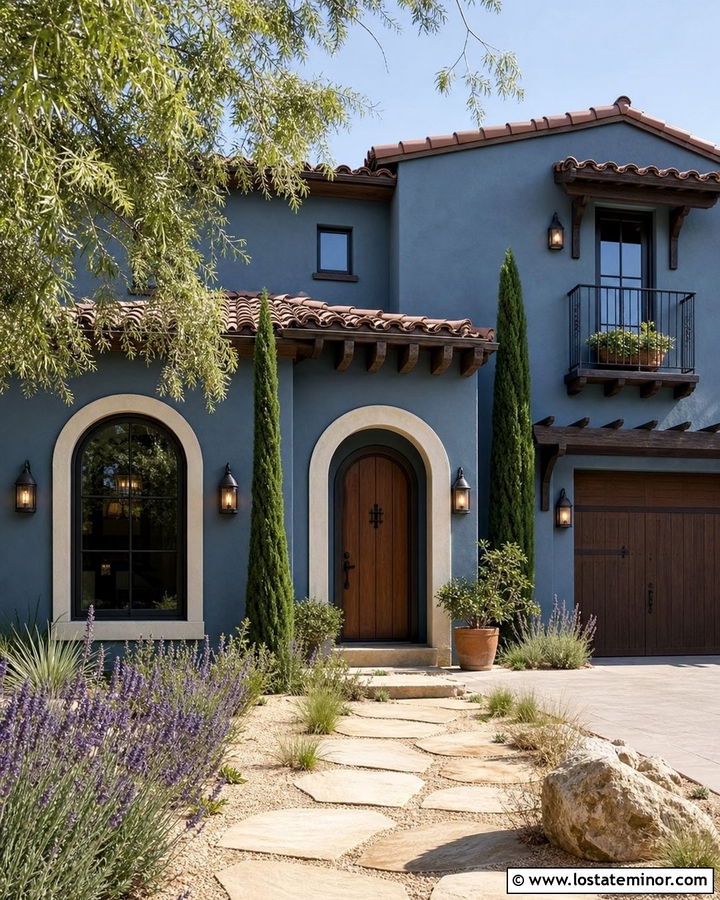
Slate blue stucco creates a smooth, understated background for Mediterranean and Southwestern architectural details. Pair it with warm ivory trim around arched windows, roof edges, and the entrance. Dark bronze wall washers can direct light across the stucco surface, making its gentle texture more noticeable without adding bulky decoration. Choose a medium-brown wood door with iron hardware, then repeat the brown in pergola beams or garage doors. A muted terracotta or brown tile roof adds warmth above the blue-gray walls. Use pale gravel, drought-tolerant grasses, lavender, and stone pavers in the landscape. The finished palette feels cool and composed, while the wood, roof, and bronze fixtures prevent the exterior from becoming flat or overly gray.
21. Slate Blue Mountain House With Timber Lighting
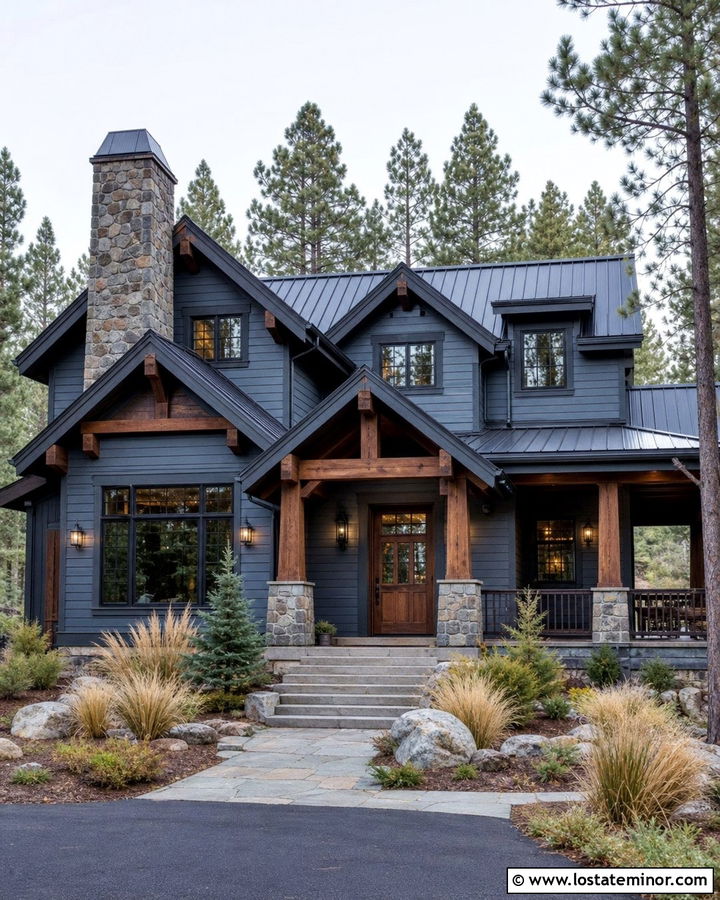
Against a wooded or mountainous setting, slate blue can connect the house to the distant landscape while warm timber keeps it inviting. Combine slate blue lap siding with heavy cedar porch posts, exposed beams, and a natural wood front door. Large dark bronze sconces should be scaled to the substantial architecture and positioned beside the entry and garage. A stone chimney and lower facade in mixed gray-brown masonry will anchor the house. Choose a charcoal metal roof to complement both the siding and fixtures. Wide steps, native grasses, evergreen shrubs, and a stone walkway complete the setting. This palette works best when every material appears durable and natural, allowing the lighting to support the structure instead of becoming a decorative distraction.
22. Slate Blue Lake House With Step Lighting
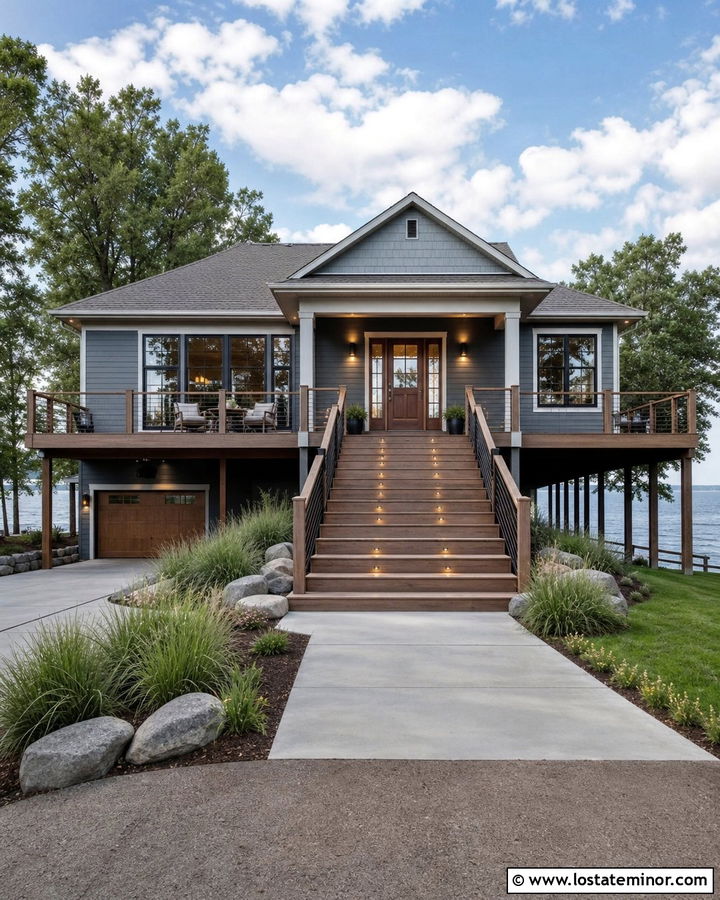
A lake house often includes elevated porches, broad stairs, and outdoor gathering spaces that deserve attention within the exterior scheme. Use slate blue shingle or lap siding with bright white trim for a clean waterside appearance. Natural wood decking and a matching front door bring warmth to the facade. Black cable railings provide a modern outline, while small integrated step lights make the stair design look finished. Add simple black wall sconces near the doors to connect with the railing. A light gray metal or shingle roof keeps the upper facade relaxed. Frame the home with native grasses, smooth stone, and an open lawn. The complete design should feel casual, durable, and visually connected to its outdoor surroundings.
23. Slate Blue Two-Story House With Garage Sconces
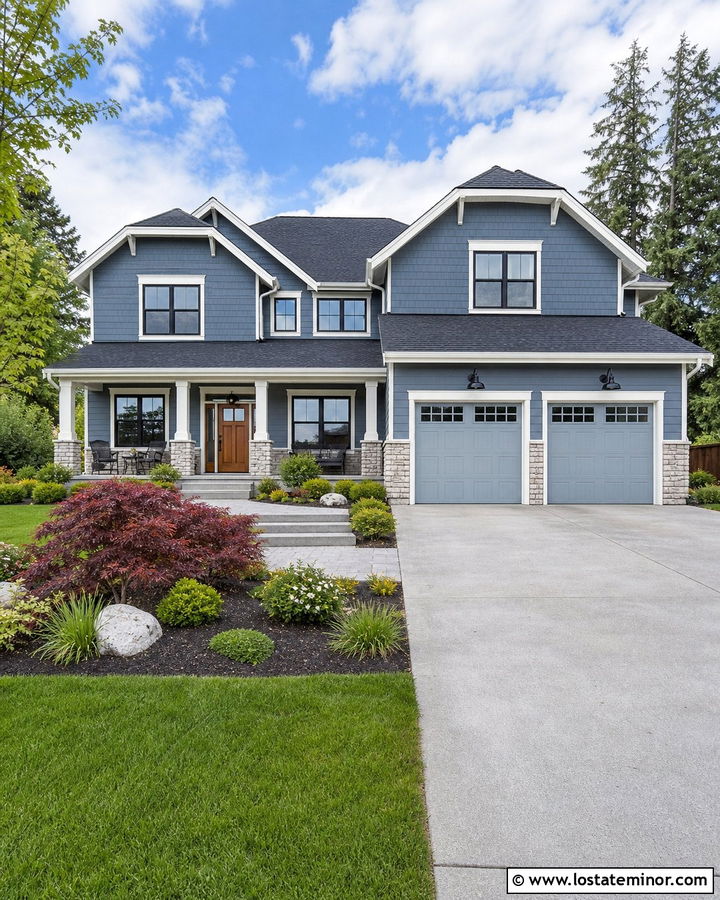
On a large two-story suburban house, the garage frequently occupies much of the visible facade. Treating it as part of the color and lighting plan creates better curb appeal. Cover the main walls in slate blue siding, then use white trim to define windows, gables, and roof edges. Install generous black sconces between or beside the garage doors rather than relying on undersized fixtures. Paint the garage doors a slightly lighter blue-gray or warm white so they blend with the architecture. A stained front door can draw attention back toward the entrance. Add pale stone around the lower story and porch columns. Repeating the lighting finish across the garage and doorway helps the wide exterior appear connected and carefully planned.
24. Slate Blue Midcentury House With Globe Sconces
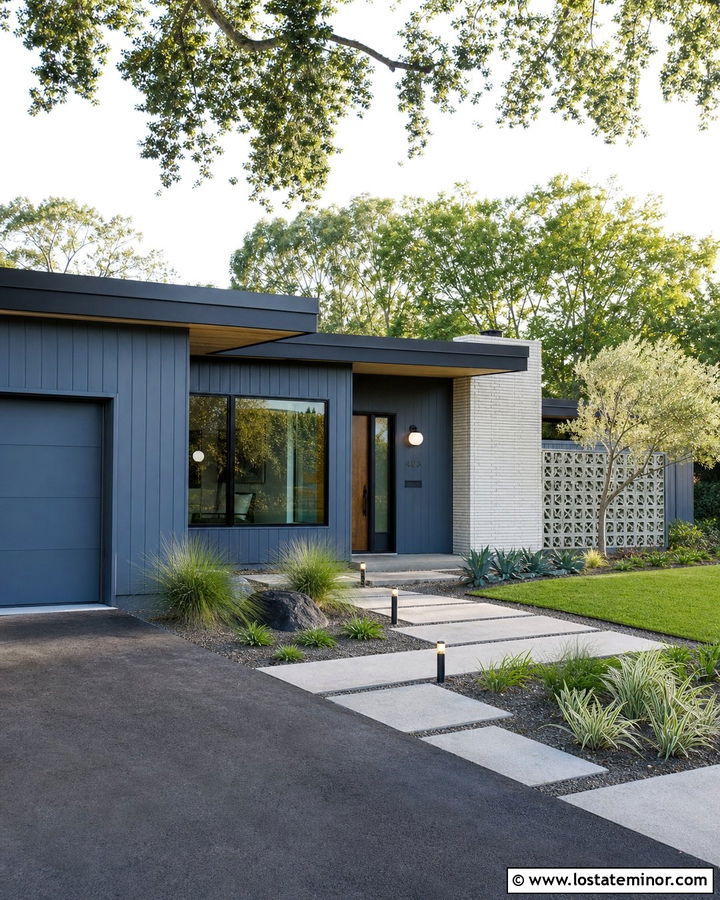
Midcentury homes look best when exterior lighting has a simple geometric form. A round globe sconce beside the entrance creates a pleasing contrast with a low roofline and rectangular windows. Use slate blue vertical siding across the main facade, charcoal or black trim, and a warm walnut door. A section of pale brick or breeze block can add period-appropriate texture without distracting from the color. Keep the roof dark and minimally detailed. Near the walkway, use low lighting with similarly simple shapes so the design feels consistent. Asymmetrical planting beds, sculptural grasses, and large concrete pavers reinforce the architecture. This complete palette updates the house while preserving the clean, approachable qualities associated with midcentury design.
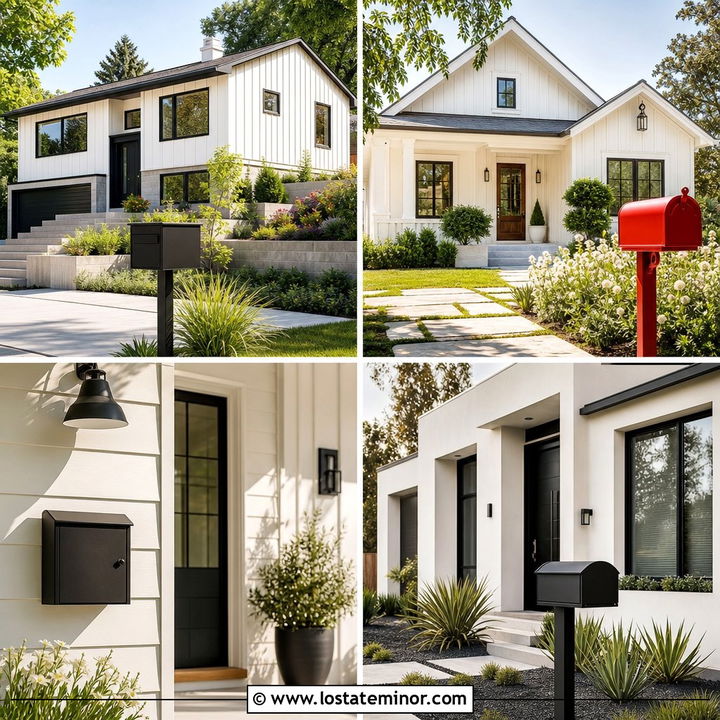
25. Slate Blue Duplex With Matching Entry Lights
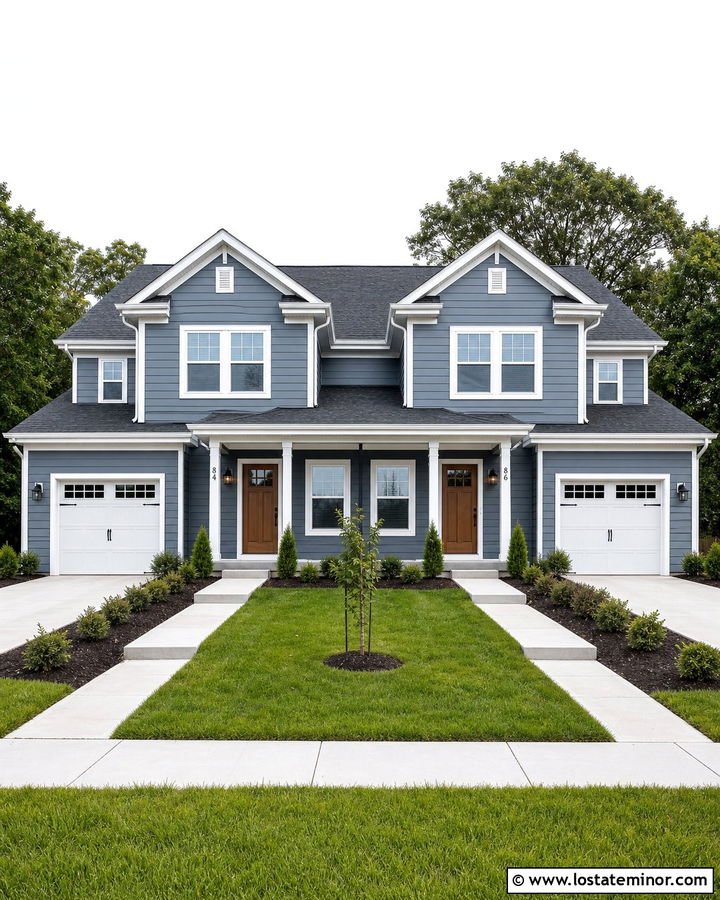
A duplex needs enough repetition to look unified, but each entrance should remain easy to identify. Paint the entire building slate blue and use warm white trim around both sets of windows, doors, and porch columns. Install identical black or bronze sconces beside each entry to create visual rhythm. The front doors can use two related wood stains or complementary muted colors for subtle individuality. If the property includes separate garages, match their doors to the trim so they remain quiet in the composition. A charcoal roof and light gray foundation provide neutral support. Divide the landscaping with balanced walkways, small ornamental trees, and repeated shrubs. Coordinated lighting makes the shared facade feel orderly, attractive, and intentionally designed.
26. Small Slate Blue House With Solar Path Lighting
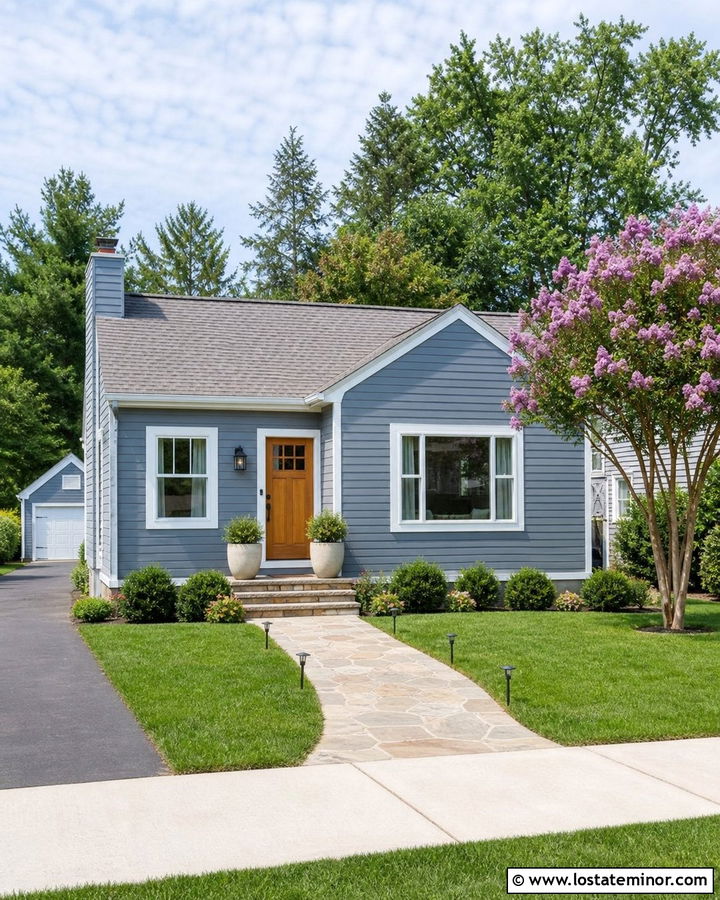
A small slate blue house does not need an elaborate lighting plan to gain curb appeal. Begin with one well-scaled lantern beside the entrance and add discreet solar path lights along the walkway. Choose fixtures in the same black or dark bronze finish for a coordinated result. White trim around the windows and roofline will keep the compact facade bright, while a honey-toned wood door provides warmth. Use slate blue lap siding to visually widen the house and a medium-gray roof to avoid heavy contrast. Simple foundation plants, two large planters, and a clear stone path are enough to frame the exterior. Keeping every element proportional prevents the house from feeling cluttered while still creating a complete, welcoming design.
27. Slate Blue House With Recessed Porch Lighting
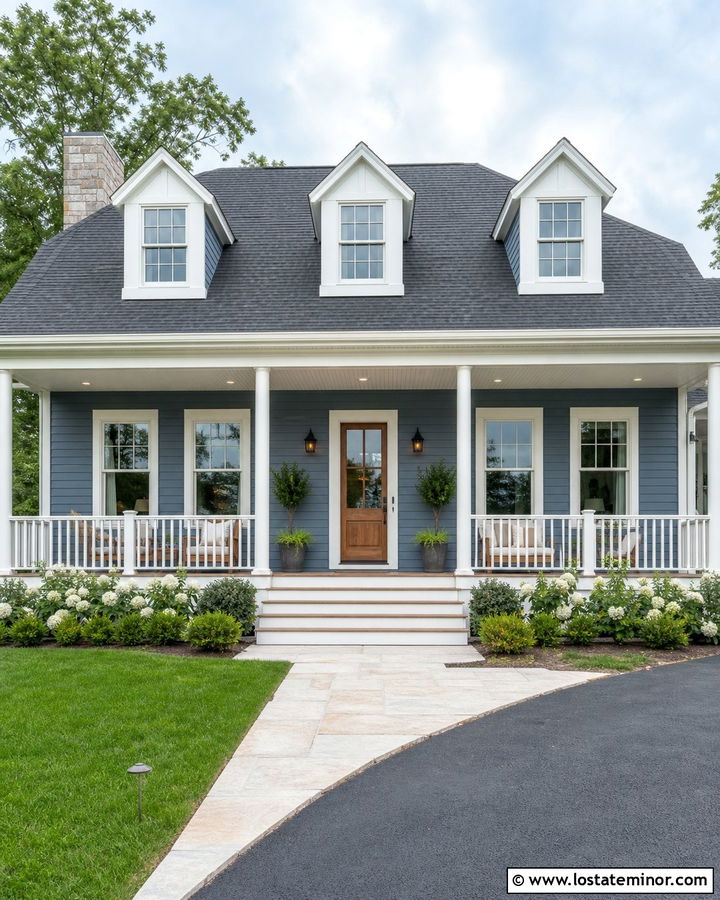
Recessed lighting is useful when a porch already contains strong architectural features that should remain the focus. Paint the house slate blue, then use white columns, ceiling boards, railings, and window trim to brighten the covered space. Small recessed fixtures can be aligned evenly across the porch ceiling for a clean appearance. Add one pair of black sconces at the door to provide contrast and connect with a dark roof. A natural wood porch floor and matching front door will soften the blue-and-white palette. Use comfortable outdoor seating, large planters, and layered greenery without blocking the facade. This scheme works especially well on broad traditional porches, updated ranch houses, and transitional homes where simple detailing is preferred.
28. Slate Blue House With Pergola Lighting
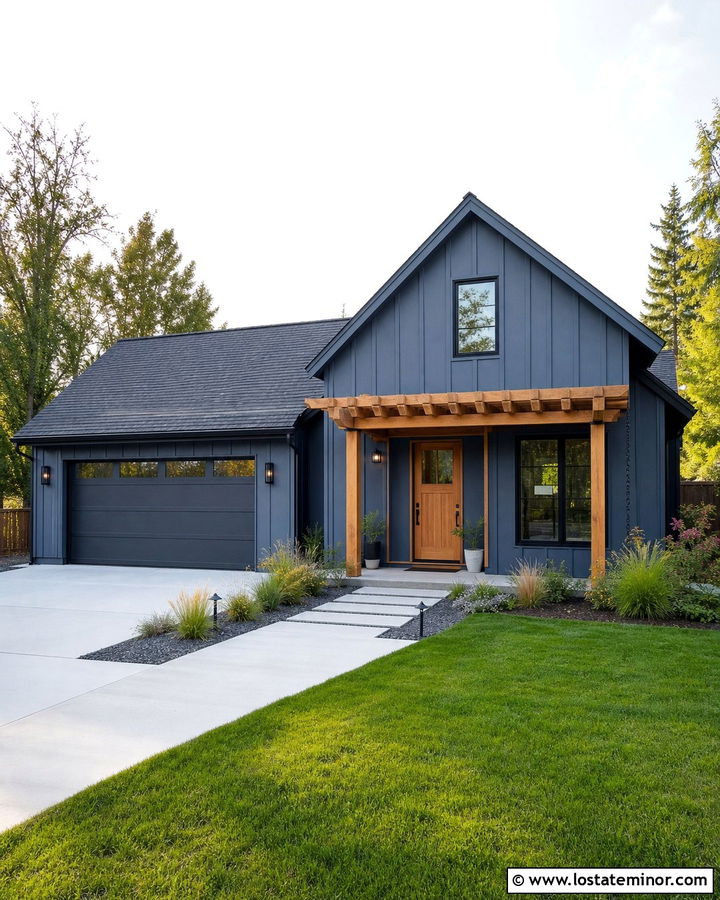
A wood pergola can turn a plain slate blue entrance into a more substantial architectural feature. Build it above the front door or across a small patio using cedar or another warm-toned wood. Compact downlights attached to the beams can highlight the doorway while keeping the pergola itself visually clean. Slate blue vertical siding provides a tailored background, and black window frames add definition. Choose a wood door that matches the pergola and use black hardware to connect with the trim. Pale concrete pavers, gravel planting beds, ornamental grasses, and low shrubs support the modern natural palette. The repeated wood tones create warmth, while focused lighting makes the entrance feel like an integrated part of the complete facade.
29. Slate Blue House With Landscape Uplighting
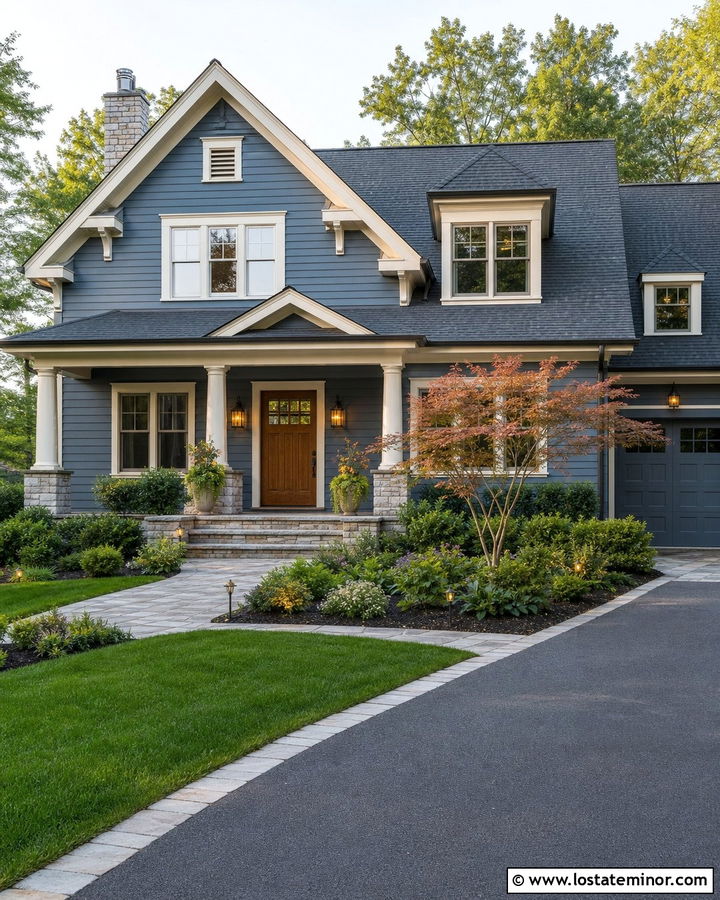
Exterior lighting does not need to be mounted only on the house. Carefully positioned landscape uplights can emphasize trees, porch columns, and stonework while supporting the overall facade. Use slate blue siding with cream trim, a dark charcoal roof, and a warm wood front door. Bronze sconces beside the entrance can coordinate with low-profile fixtures placed within the planting beds. Direct the landscape lighting toward architectural or natural focal points rather than across every wall. A stone porch, curved walkway, ornamental tree, and layered shrubs give the lights meaningful features to highlight. During the day, the materials still create a complete curb-appeal scheme. The approach is especially effective for homes with deep yards or mature landscaping.
30. Slate Blue House With Layered Exterior Lighting
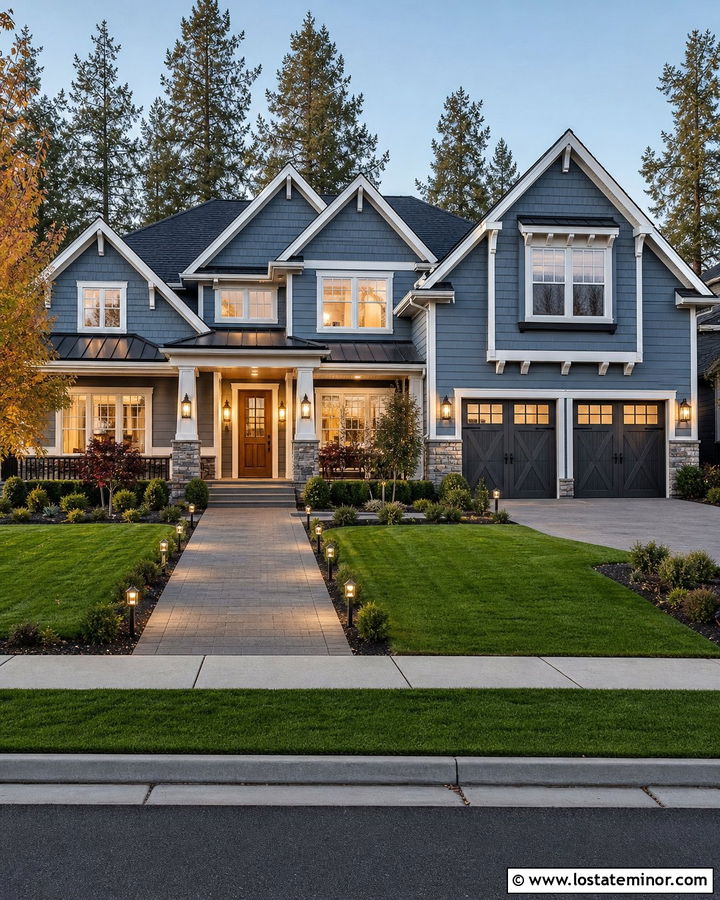
A layered lighting plan brings the strongest features of a slate blue exterior together. Begin with large lanterns flanking the front door, then add coordinated garage sconces, subtle porch ceiling lights, pathway fixtures, and restrained landscape lighting. Keep every fixture within one metal family, such as matte black or aged bronze, to prevent visual clutter. Pair slate blue siding with white trim, a medium wood door, charcoal roofing, and gray-beige stone around the foundation. Use different siding profiles in the gables and entrance area to add depth. A broad walkway, balanced shrubs, and a well-defined lawn complete the facade. This comprehensive approach works on larger homes where one or two fixtures would not adequately support the building’s scale.
Conclusion:
Slate blue is flexible enough to complement traditional lanterns, streamlined LEDs, farmhouse barn lights, and understated landscape fixtures. The strongest exterior schemes treat lighting, siding, trim, doors, roofing, masonry, and landscaping as parts of one composition. Start by considering the house style and the facade’s largest features. Then repeat a limited selection of colors and finishes from the entrance to the garage and walkway. Warm wood and brass can soften slate blue, while white or black details create clearer contrast. Whether you are updating a small bungalow or designing a large modern home, these **30 Slate Blue House Design With Lighting Ideas** provide a practical foundation for balanced, memorable curb appeal.

Related posts: