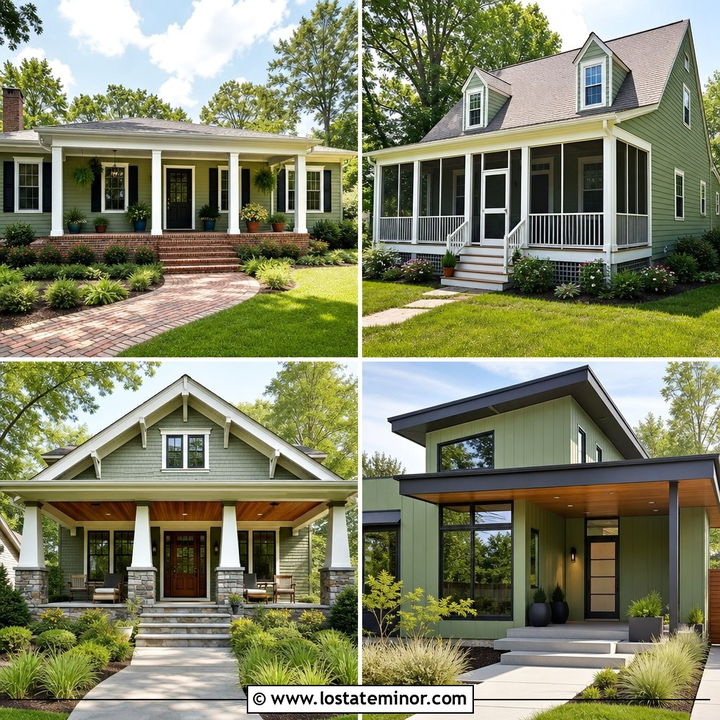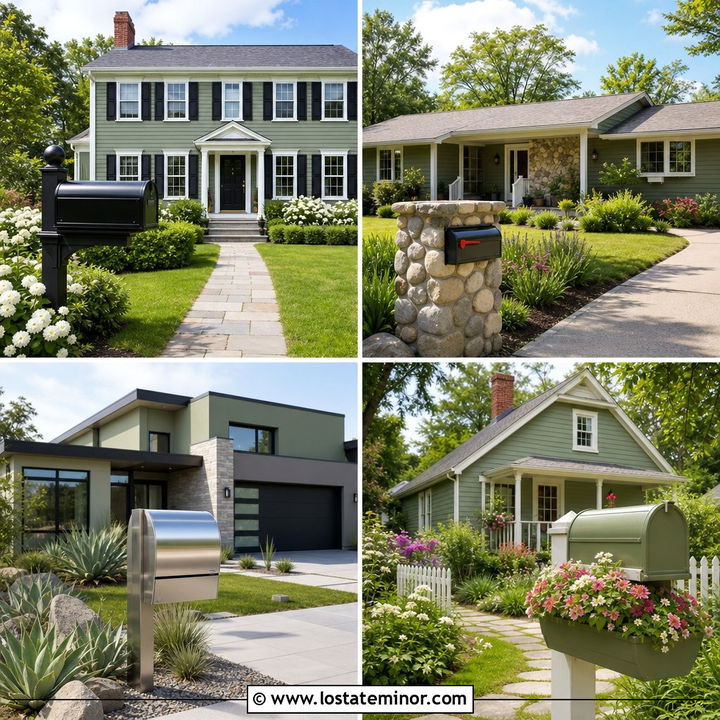
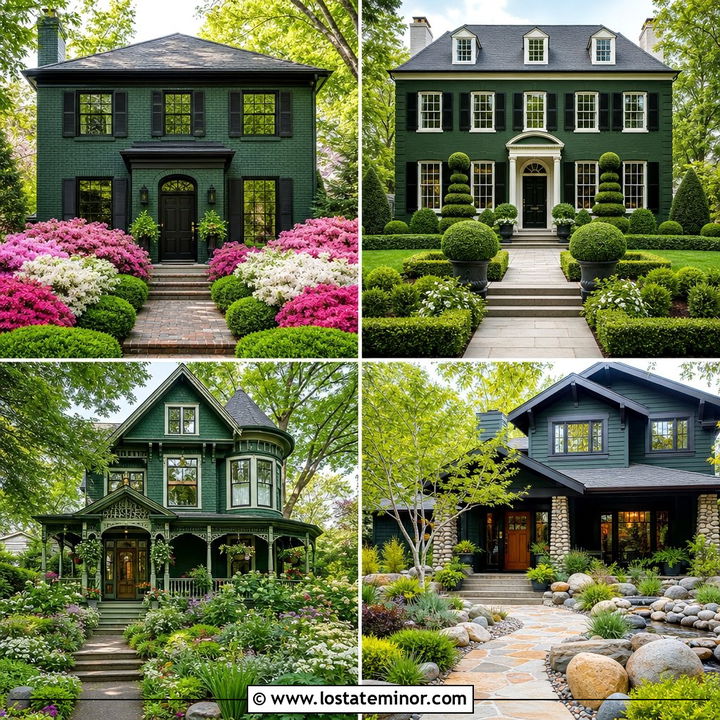
Sage green creates a calm bridge between a home and its surroundings. It can soften new construction, refresh dated siding, and complement everything from structured hedges to loose native gardens. Current exterior trends also favor nature-connected colors that help homes settle more comfortably into their landscapes. () The most successful schemes consider the entire property. Trim, roofing, masonry, walkways, and plants should support the siding rather than compete with it. Before painting, test large samples in sun and shade, then compare them with permanent materials such as brick and stone. Whether your yard is compact, wooded, coastal, or drought-prone, the following **30 Sage Green House Design With Landscaping Ideas** provide complete, practical looks for improving curb appeal.

1. Sage Green House With White Trim And Hydrangeas
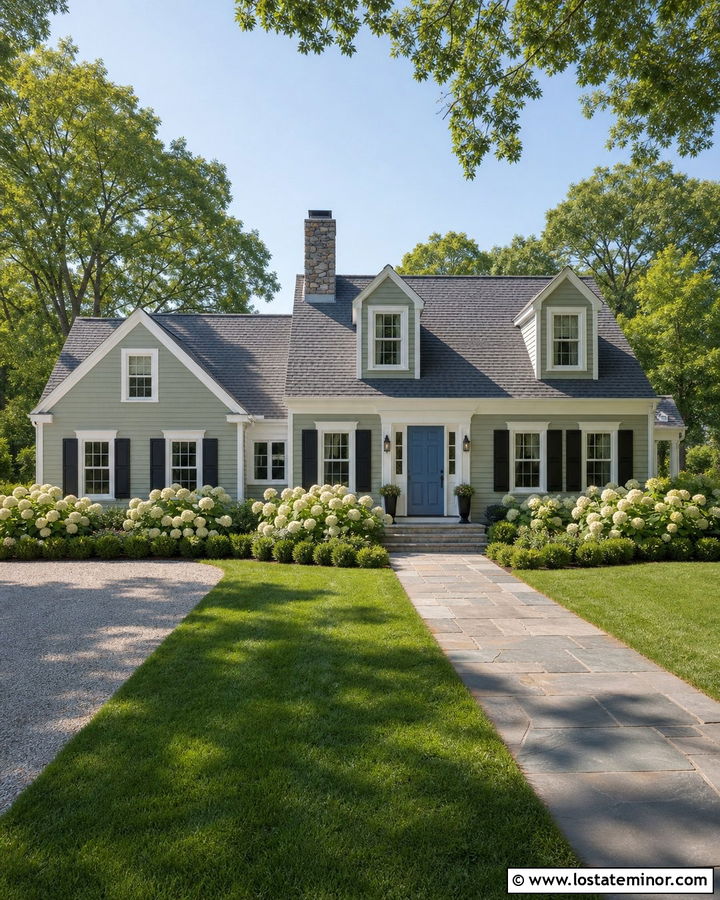
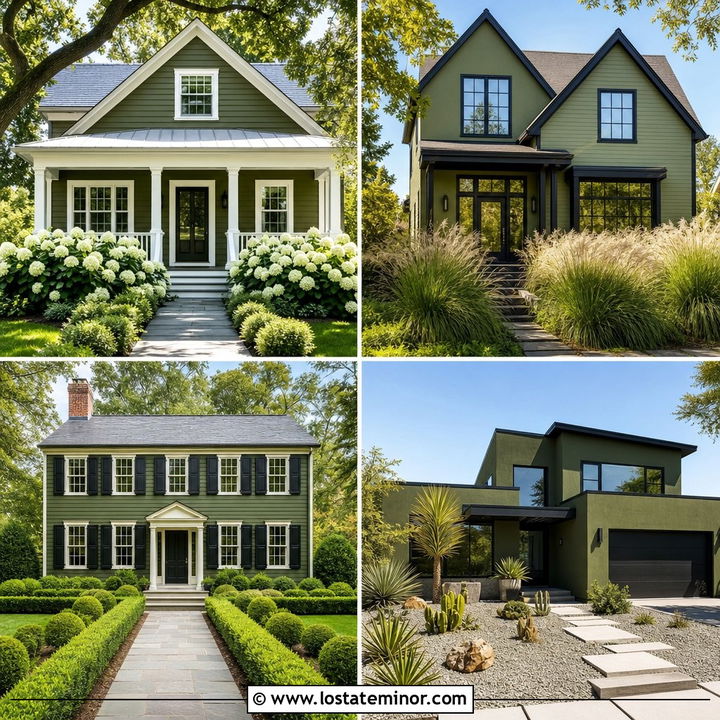
Crisp white trim gives a sage green exterior clean definition without taking away from its natural character. Use white around the windows, eaves, porch columns, and railings to create a balanced traditional scheme. A medium-gray roof will connect the cool undertones while keeping the facade light. Along the foundation, plant white hydrangeas in wide beds edged with low evergreen shrubs. Their large blooms repeat the brightness of the trim and create a polished summer display. Add a straight stone walkway and matching planters beside a soft blue-gray front door. This complete look works especially well on Cape Cod, Colonial, and two-story suburban homes. Leave enough space between mature shrubs and the siding for airflow and easier maintenance.
2. Sage Green House With Black Trim And Ornamental Grass
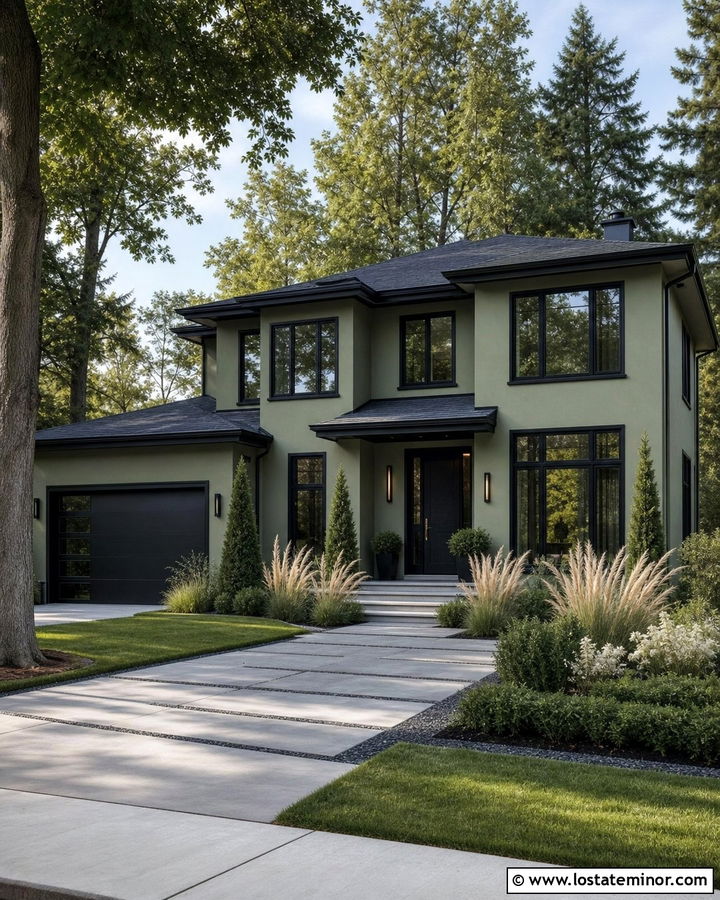
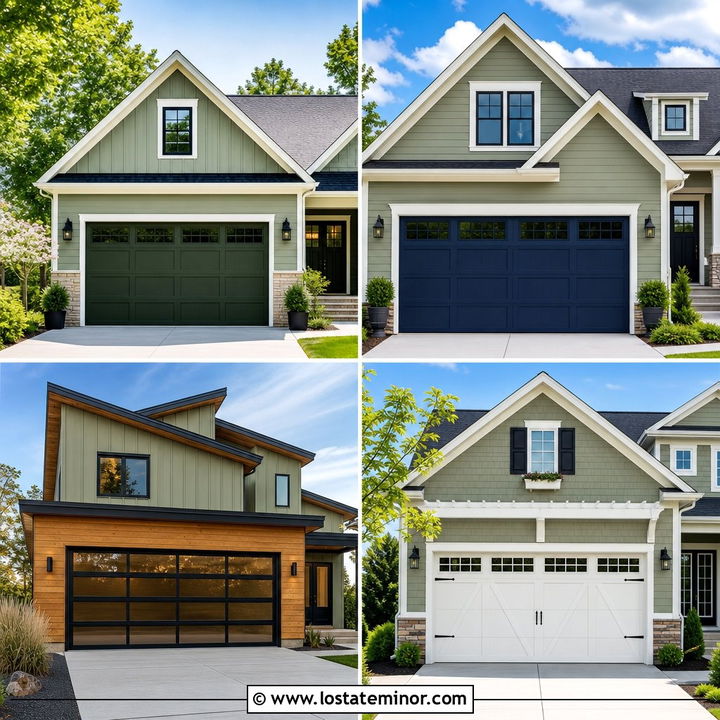
Black trim brings a sharper, more contemporary edge to muted sage green siding. Keep the black accents focused on window frames, gutters, porch lights, and a simple front door so the house does not appear overly dark. A charcoal roof will complete the strong upper outline. Below, use sweeping groups of fountain grass, feather reed grass, and compact evergreen shrubs to soften the contrast. Pale gravel or light concrete pavers can brighten the planting beds and highlight each plant’s shape. This combination suits contemporary homes, modern farmhouses, and updated split-level designs. Select grasses suited to your region and place taller varieties away from windows. The finished exterior feels modern and structured, yet the moving foliage keeps the landscaping relaxed and inviting.
3. Sage Green House With Cream Trim And Cottage Garden
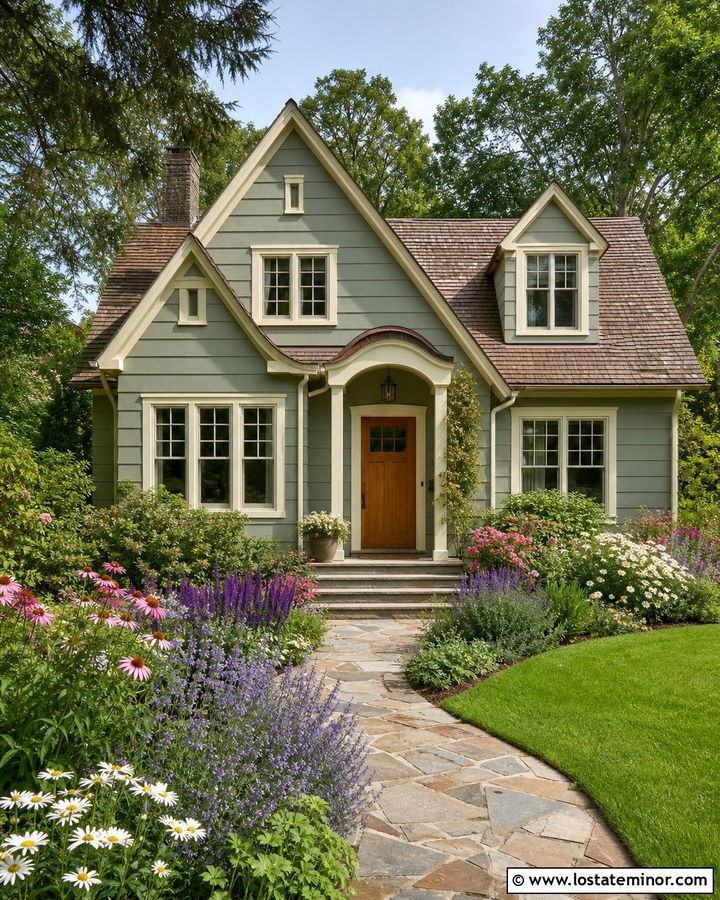
Cream trim creates a warmer transition than bright white, making sage green siding feel especially comfortable on cottages and older homes. Carry the cream color across the window surrounds, fascia, porch railing, and front steps. A stained oak door and weathered brown roof add another layer of warmth. Complete the setting with a cottage garden filled with salvia, catmint, coneflowers, daisies, and compact flowering shrubs. Let the planting beds curve naturally along the facade rather than following rigid lines. A flagstone walkway with creeping ground cover between the joints reinforces the informal mood. Limit flowers to a coordinated palette of purple, white, pink, and soft yellow. This prevents the garden from competing with the house while still providing abundant seasonal color.
4. Sage Green House With Cedar Accents And Native Plants
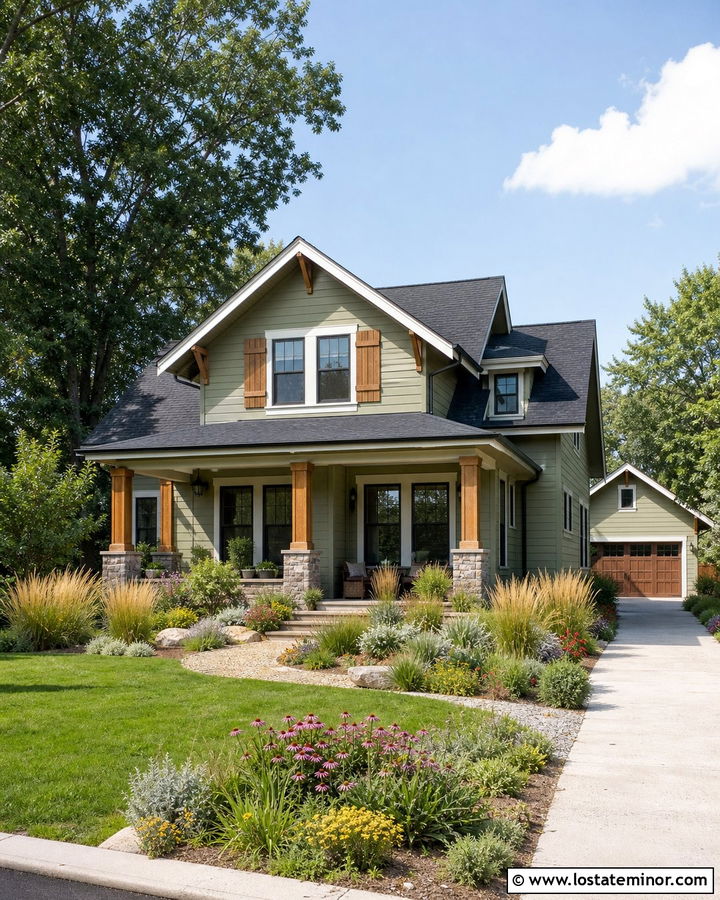
Natural cedar is an ideal companion for sage green because both colors feel grounded and organic. Introduce cedar through porch posts, shutters, gable details, or a slatted garage feature rather than covering every surface. Warm white trim can separate the wood from the green siding and prevent the facade from looking visually heavy. Use locally appropriate native grasses, flowering perennials, and small shrubs throughout the front yard. Repeating a limited selection of plants in broad groups creates a more intentional landscape than scattering many unrelated varieties. A gravel path and flat natural-stone steps continue the material palette. This scheme is particularly effective on Craftsman, prairie, and modern rustic homes. Seal or stain the cedar consistently so its changing color remains coordinated across the exterior.
5. Sage Green House With Stone And Evergreen Landscaping
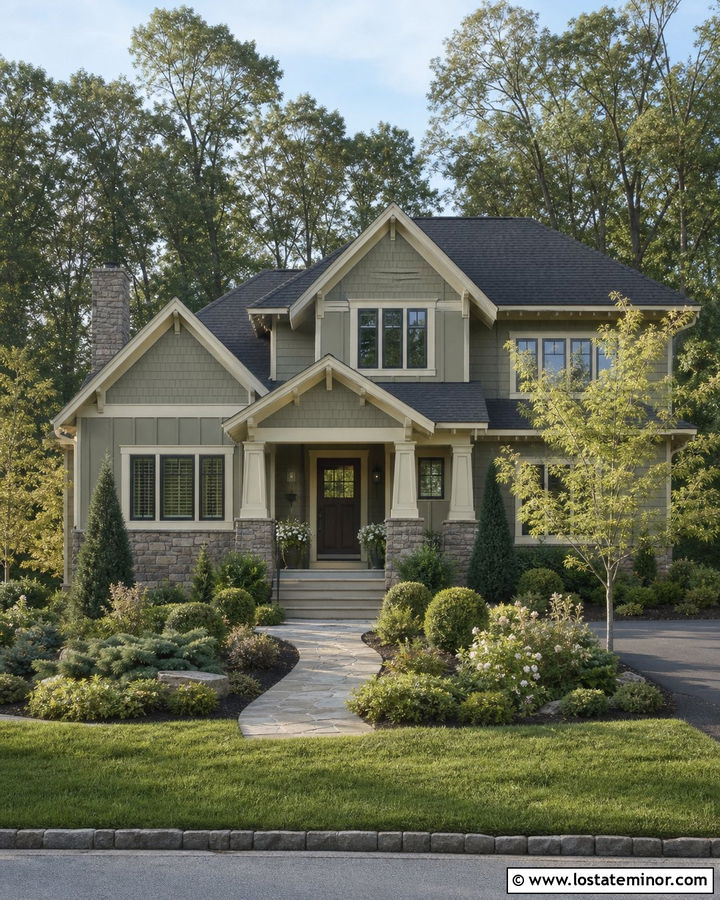
A stone foundation gives a sage green house visual weight and helps connect the structure to the ground. Choose stone containing soft gray, taupe, and muted brown rather than strong orange tones. Repeat the masonry on porch columns or a low garden wall for a unified result. Cream trim, a dark bronze door, and a charcoal roof will support the stone’s natural variation. Use layered evergreen landscaping with spreading junipers, rounded boxwoods, upright hollies, and one small ornamental tree. The mix of forms prevents an all-green landscape from feeling flat. Add pale flowering perennials in front for seasonal contrast. This exterior works beautifully on Craftsman and mountain-inspired homes. Keep shrubs below windows and vary their mature heights to preserve clear architectural lines.
6. Sage Green House With Brick Accents And Rose Beds
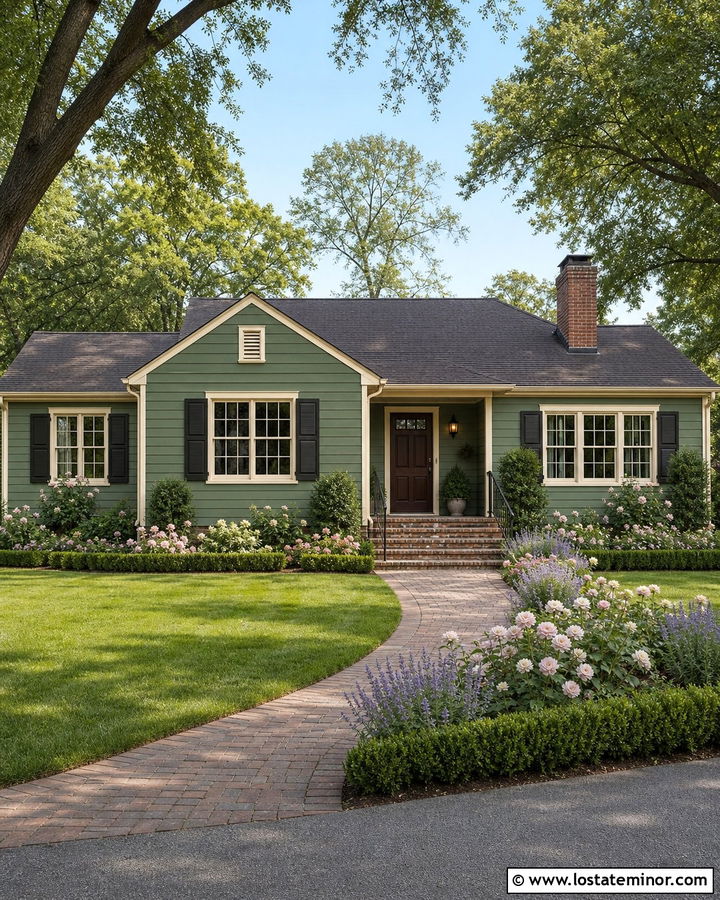
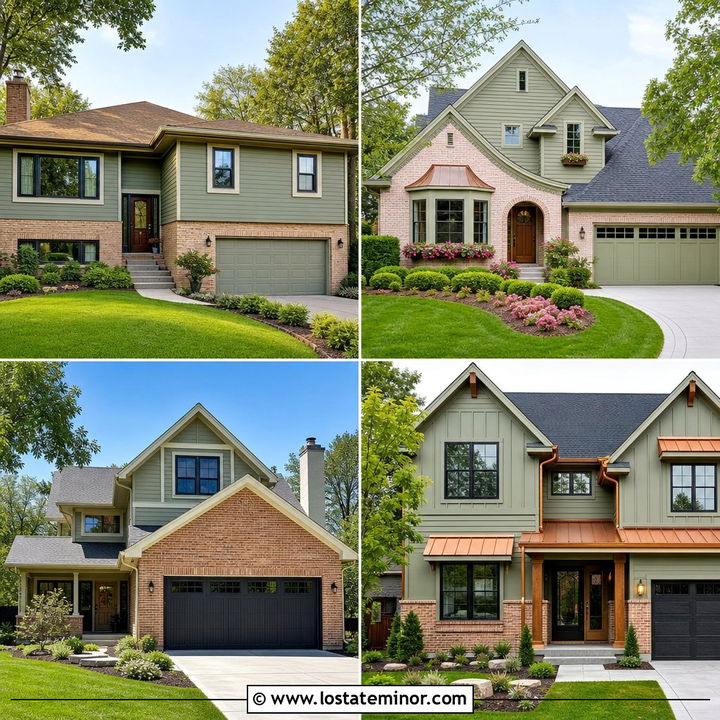
Existing red or brown brick can work with sage green when the paint has warm, slightly gray undertones. Use the brick on the chimney, porch floor, foundation, or entry steps as a permanent accent. Creamy off-white trim will create a smoother transition than stark white, while a deep brown front door will echo the darkest tones in the masonry. Build wide rose beds along the walkway using white, blush, or pale apricot varieties. Low lavender, catmint, or neatly clipped evergreen edging can fill gaps and cover bare stems. This complete palette feels established and welcoming on ranch, Tudor, and traditional homes. Before selecting the sage paint, compare samples directly against the brick throughout the day, since masonry undertones can become more noticeable in strong sunlight.
7. Sage Green House With Charcoal Roof And Lavender Border
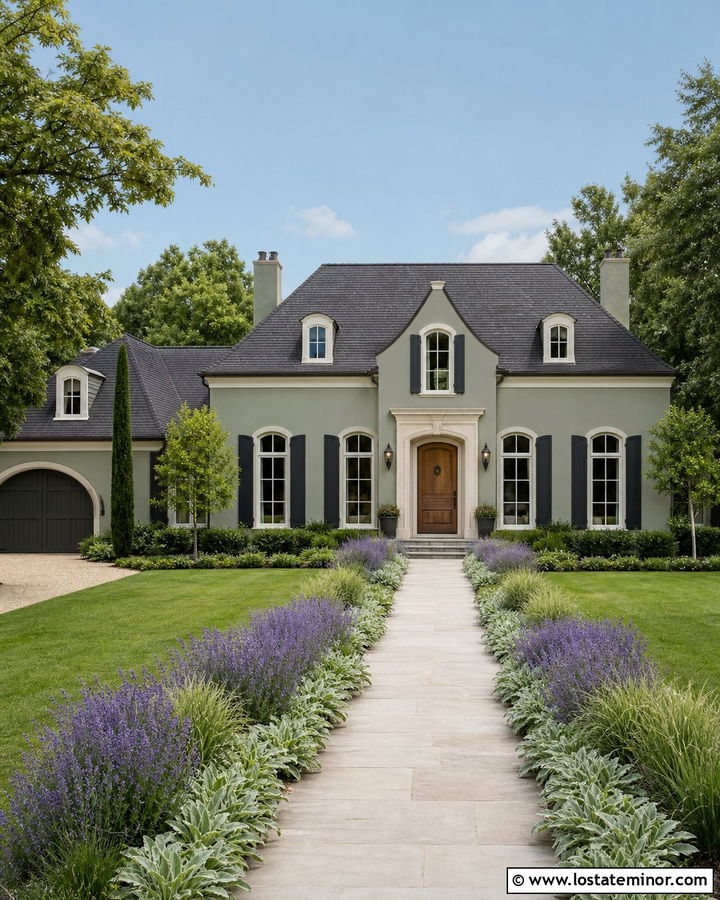
A charcoal roof gives pale sage green siding a strong frame and prevents the exterior from appearing washed out. Repeat charcoal on the shutters, gutters, or garage hardware, but use soft white for the trim to maintain brightness. A medium-tone natural wood door can warm the entry and create a clear focal point. Along the front walkway, establish a generous lavender border mixed with silvery lamb’s ear and compact ornamental grasses. The dusty purple and gray foliage complement sage without blending into it. This combination works well on French country houses, cottages, and symmetrical suburban homes. Place the lavender in the sunniest, best-drained area available. If lavender is unsuitable for the local climate, choose a regionally appropriate purple-flowering perennial with a similarly airy shape.
8. Sage Green House With Brown Roof And Woodland Garden
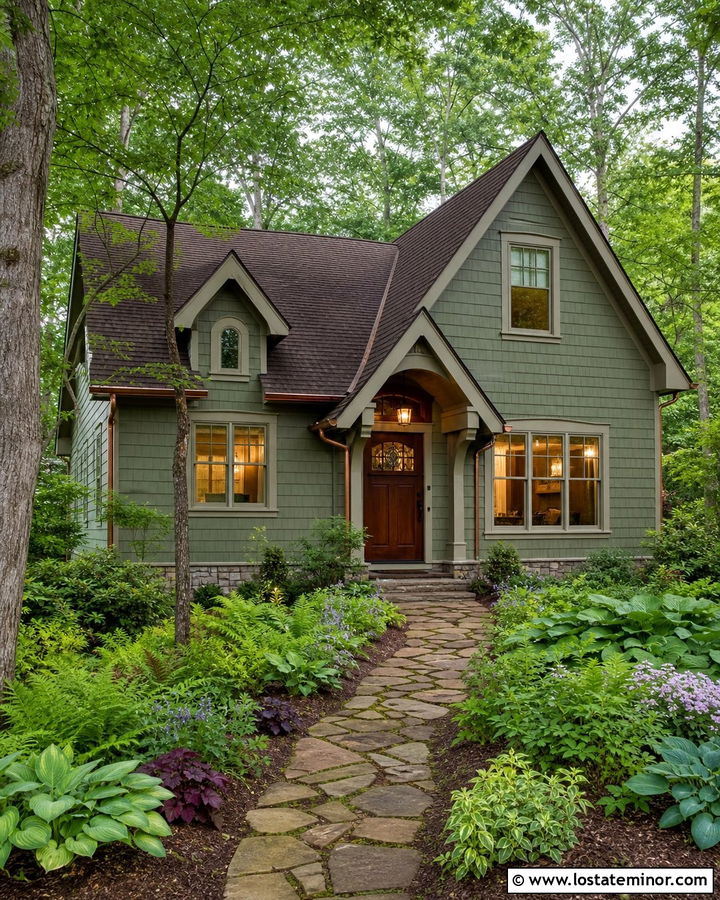
Warm sage green siding looks especially settled beneath a medium or dark brown roof. Add taupe trim, copper-toned gutters, and a rich walnut front door for a soft, low-contrast exterior. This scheme is ideal for a house surrounded by mature trees, where bright white details might feel disconnected from the setting. Create a woodland garden using ferns, hostas, heuchera, woodland phlox, and shade-tolerant shrubs. Curved beds covered with dark natural mulch can follow the tree line and lead toward the entrance. Use irregular flagstone for the walkway and place low path lights between plant groups. The varied foliage will add texture even when few plants are blooming. Keep branches pruned away from the roof and maintain an open view of the front door.
9. Sage Green House With Black Door And Boxwood Hedges
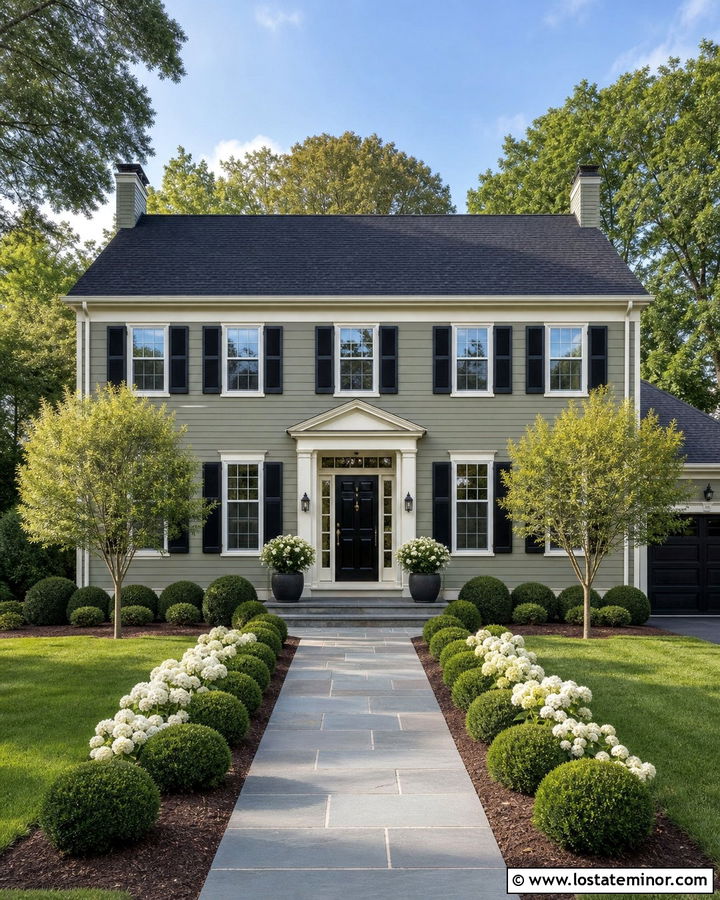
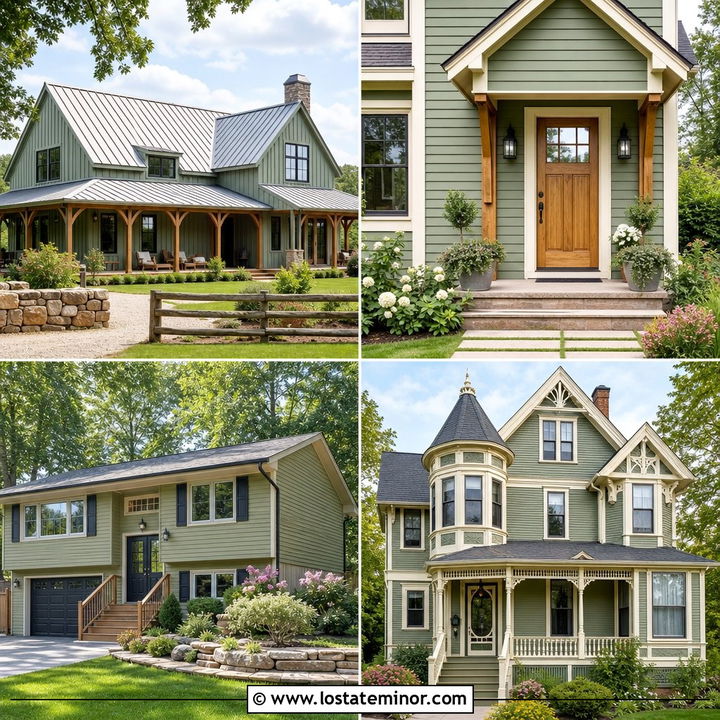
A black front door can provide the visual anchor a light sage green house needs. Repeat the black in thin window frames, porch lanterns, and metal handrails while keeping the main trim warm white. This measured approach creates contrast without turning the exterior into a harsh black-and-green composition. Frame the entrance with rounded boxwoods or a suitable regional evergreen alternative. Continue the shrubs in short, symmetrical rows rather than enclosing the entire foundation with one continuous hedge. White flowering plants and a small ornamental tree can soften the formality. A straight brick or bluestone walkway will reinforce the orderly design. This look suits Colonial, Georgian, and traditional two-story homes. Keep the hedges carefully scaled so they support the windows instead of covering them.
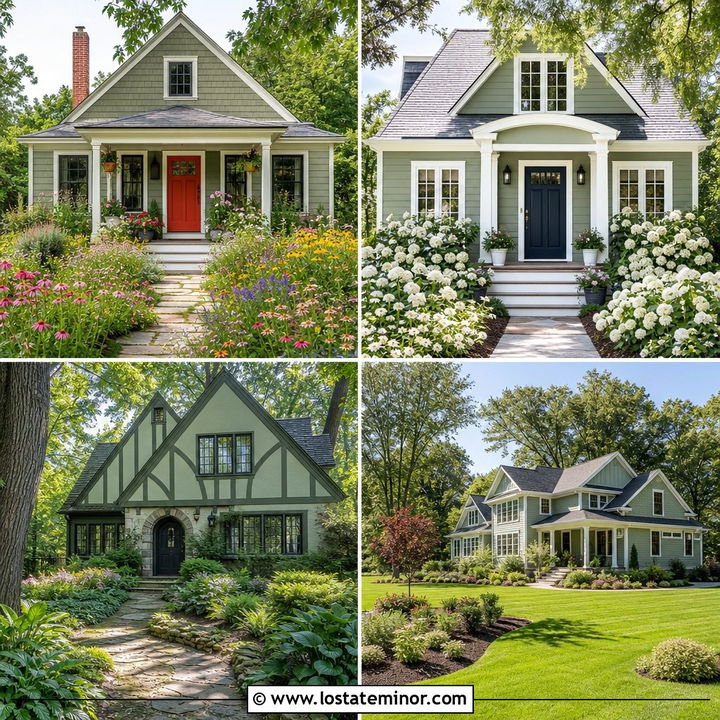
10. Sage Green House With Wood Door And Fern Landscaping
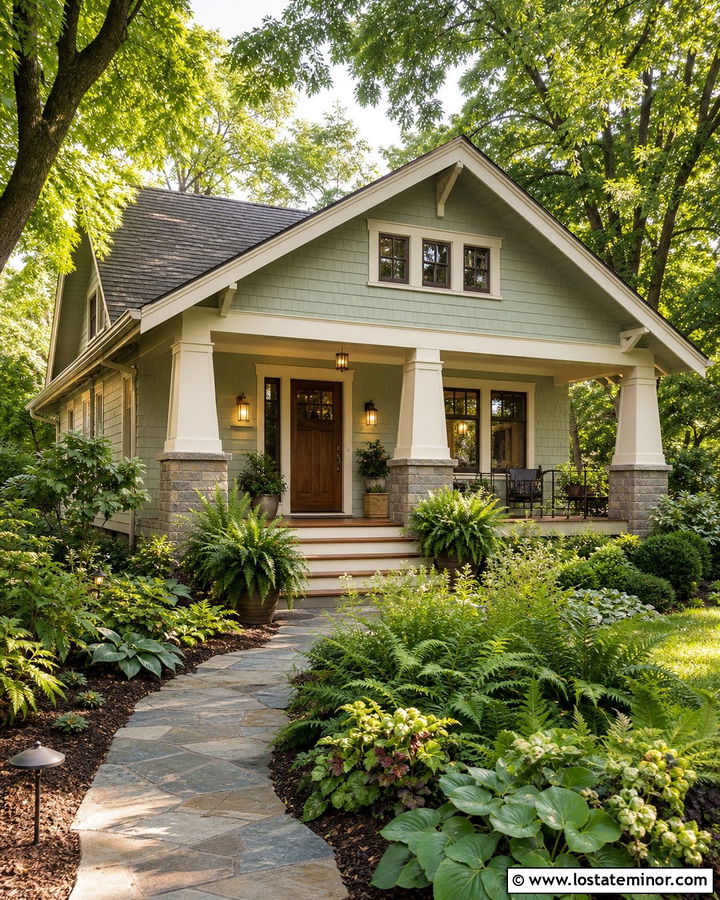
A natural wood front door instantly warms cool sage green siding and introduces an inviting handcrafted detail. Choose a stain that relates to nearby porch flooring, beams, or cedar shutters. Use ivory trim around the entrance and windows, then add dark bronze lights and hardware for definition. Ferns are a natural landscaping partner, particularly on shaded lots with mature trees. Combine several fern forms with hostas, hellebores, coral bells, and a few evergreen shrubs for year-round structure. A woodland-style stone path can curve gently through the planting toward the entry. This complete scheme feels comfortable on Craftsman homes, bungalows, and wooded cabins. Avoid placing moisture-loving plants directly against wood siding, and provide enough spacing for mature foliage to remain airy rather than crowded.
11. Sage Green House With Navy Door And White Flowers
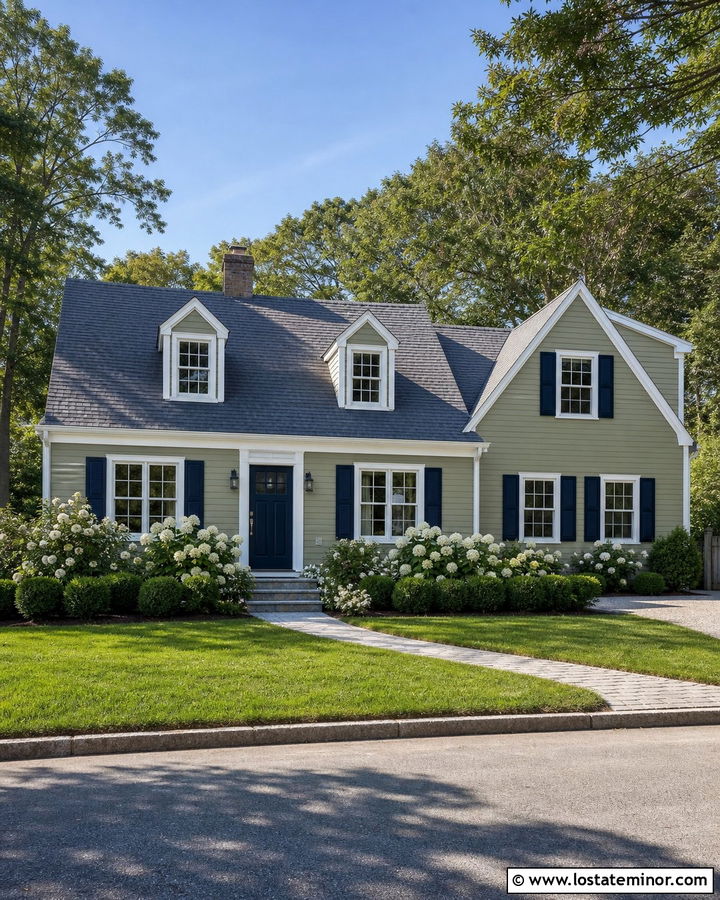
Navy blue adds color to a sage green exterior while remaining quieter than black. Paint the front door a deep, slightly muted navy and repeat it sparingly on shutters or porch furniture. White trim will keep the green and blue from blending together, while a medium-gray roof supports the cool palette. Fill the entrance beds with white hydrangeas, roses, salvia, alyssum, or other climate-appropriate flowers. Dark green evergreen shrubs can provide a steady background behind the blooms. Finish the approach with a light gray paver walkway and navy planters near the steps. This scheme feels fresh on Cape Cod, coastal, and traditional suburban homes. Select one dominant white flower rather than mixing too many bloom shapes, which helps the landscape look cohesive from the street.
12. Sage Green House With Terracotta Door And Drought-Tolerant Plants
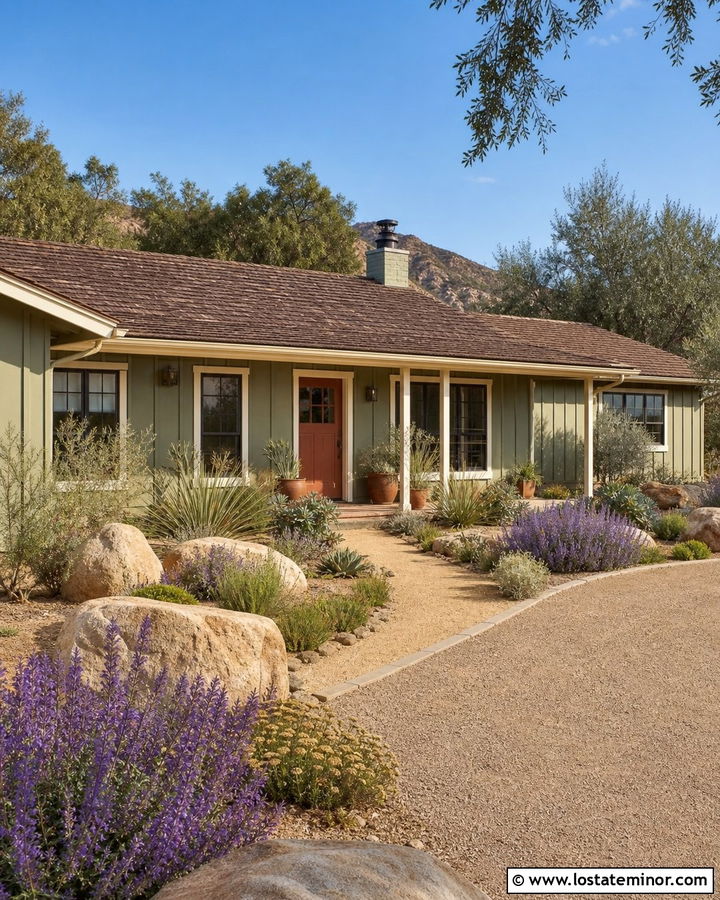
A muted terracotta front door creates an earthy counterpoint to sage green siding. Keep the shade clay-based rather than bright orange, then repeat it subtly in walkway pavers or ceramic planters. Warm cream trim and a weathered brown roof will complete the sun-friendly palette. For landscaping, combine drought-tolerant plants such as ornamental grasses, yarrow, sedum, salvia, and regionally suitable succulents. Use gravel mulch and strategically placed boulders to reduce the visual importance of bare soil. A simple concrete or decomposed-granite path can lead to the door. This combination suits Southwestern ranches, stucco cottages, and sunny contemporary homes. Group plants by water requirements, and select species appropriate for the local climate rather than assuming every low-water plant will thrive in every region.
13. Sage Green House With Wraparound Porch And Flowering Shrubs
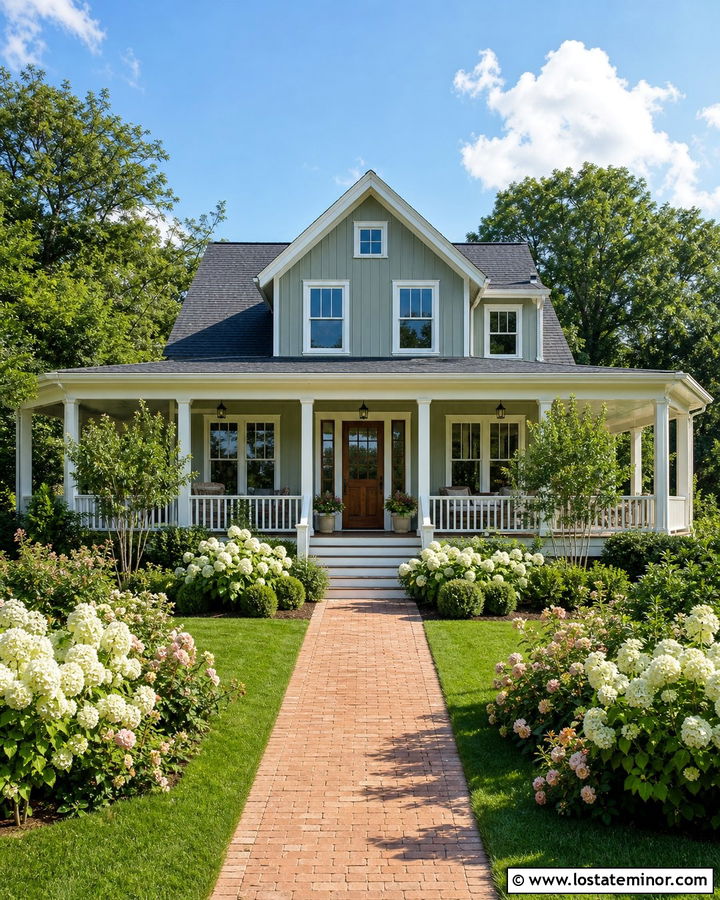
A wraparound porch becomes the defining feature of a sage green farmhouse when every detail is coordinated. Paint the siding a medium sage, then use creamy white on the columns, railing, ceiling trim, and window frames. Natural wood porch flooring and a stained front door will introduce warmth beneath the broad roofline. Around the porch, plant flowering shrubs in generous groups, leaving open sections near the steps. Hydrangeas, viburnums, spirea, and compact roses can create layers without hiding the railing. Connect the driveway and porch with a wide gravel or brick walkway. A pair of small ornamental trees can frame the outer corners. This complete exterior feels welcoming and established while preserving open views between the porch, front yard, and street.
14. Sage Green Ranch House With Curved Garden Beds
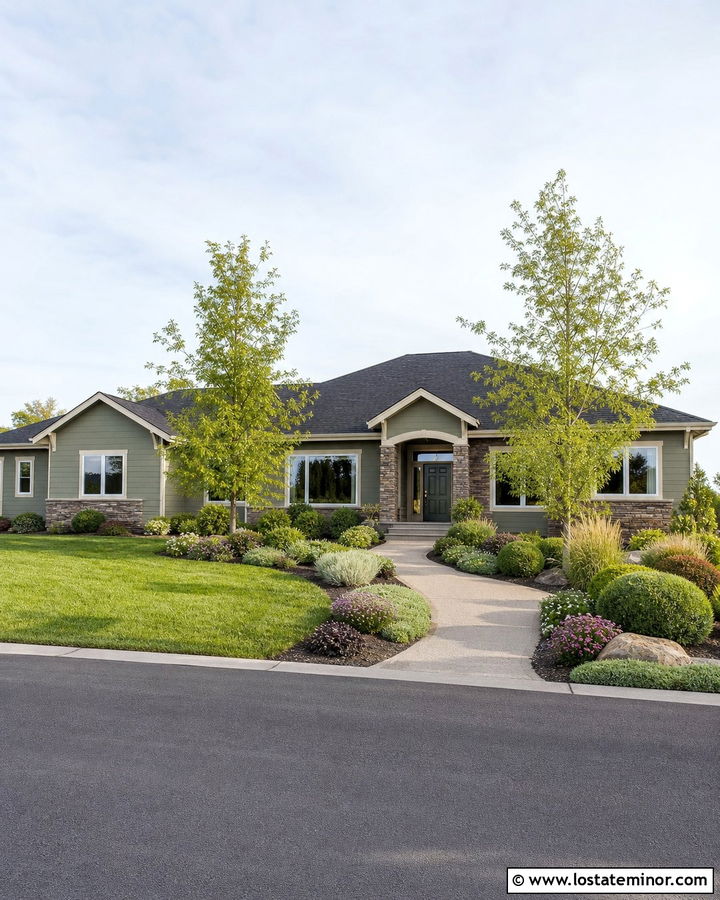
The long horizontal facade of a ranch house benefits from landscaping that breaks up straight lines. Use a balanced midtone sage green across the siding, with cream trim and a darker olive or charcoal front door. Stone along the lower facade can add texture and make the one-story structure feel more substantial. Design broad, curved beds that extend beyond the corners of the house rather than hugging the foundation. Layer low ground covers, rounded shrubs, ornamental grasses, and one or two small flowering trees. A gently curved walkway can connect the driveway to the entrance and make the yard feel deeper. Keep plants low beneath picture windows. Repeating the same shrubs across several beds will unify the wide property and prevent the landscaping from appearing fragmented.
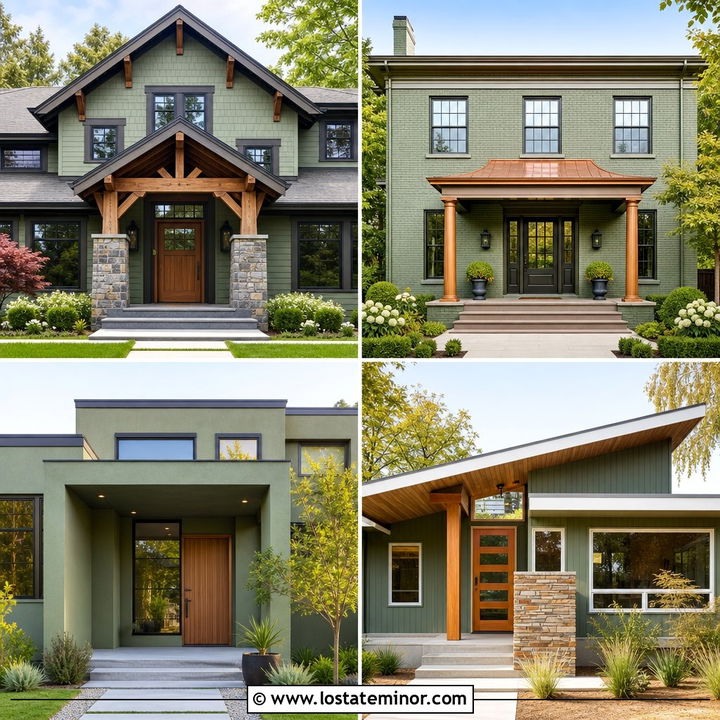
15. Sage Green Modern Farmhouse With Structured Landscaping
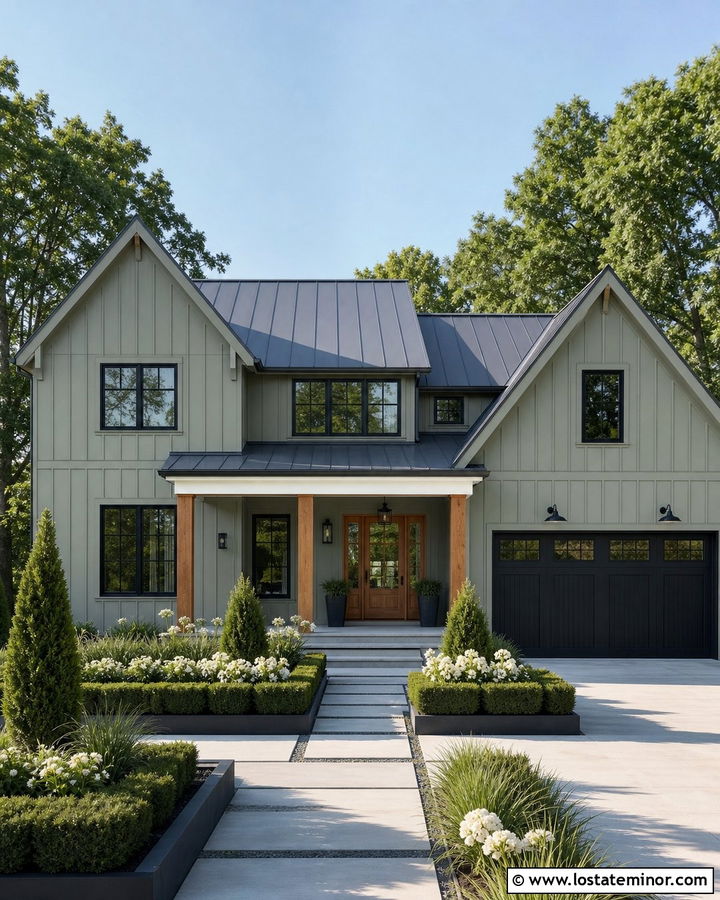
Sage green offers a softer alternative to white for a modern farmhouse exterior. Apply it to vertical board-and-batten siding, then define the roofline and windows with matte black accents. Warm white trim can outline the porch, while cedar columns and a natural wood door prevent the high-contrast details from feeling cold. Match the clean architecture with structured landscaping. Use rectangular beds, clipped evergreen shrubs, upright grasses, and evenly spaced flowering perennials. Large concrete pavers set into gravel or lawn can form a direct path to the porch. Limit the planting palette to four or five varieties and repeat them across the facade. The result feels neat but not sterile. A charcoal metal roof completes the look and adds a durable visual cap to the tall gables.
16. Sage Green Craftsman House With Native Landscaping
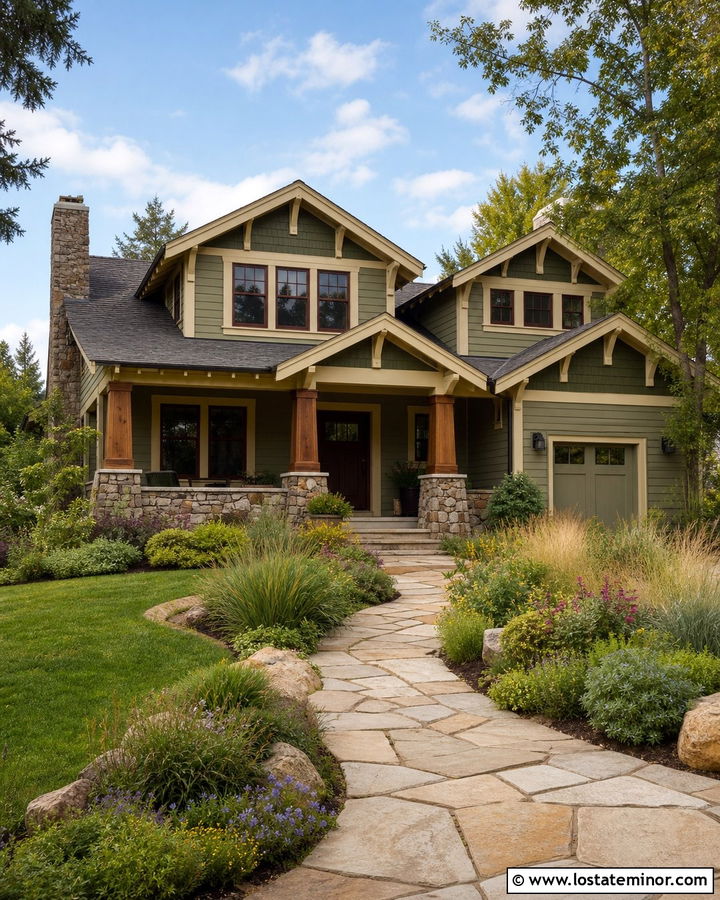
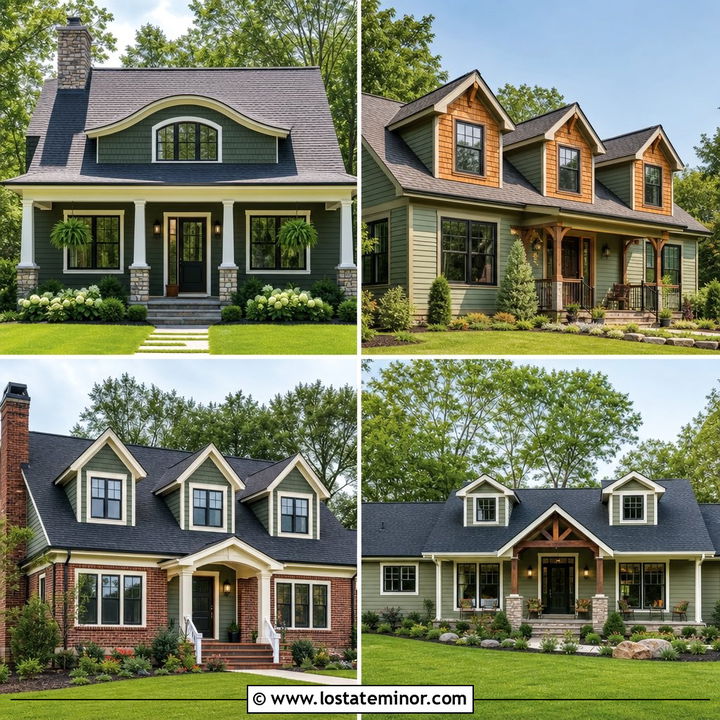
A Craftsman facade already contains rich architectural detail, so the landscaping should support its layered materials. Use sage green lap siding with deep olive gables, warm cream trim, and stained wood porch columns. A fieldstone base can connect the porch visually to the garden. Fill the yard with regional native plants arranged in distinct masses. Place taller grasses and flowering shrubs near the corners, medium perennials beside the porch, and low ground covers along the path. This arrangement keeps the windows visible while creating a gradual transition from house to lawn. A broad flagstone walkway and wood-edged steps reinforce the handcrafted character. Choose plants with different flowering periods so the front garden changes through the seasons without losing the strong structure provided by shrubs and grasses.
17. Sage Green Cape Cod House With Coastal Grass
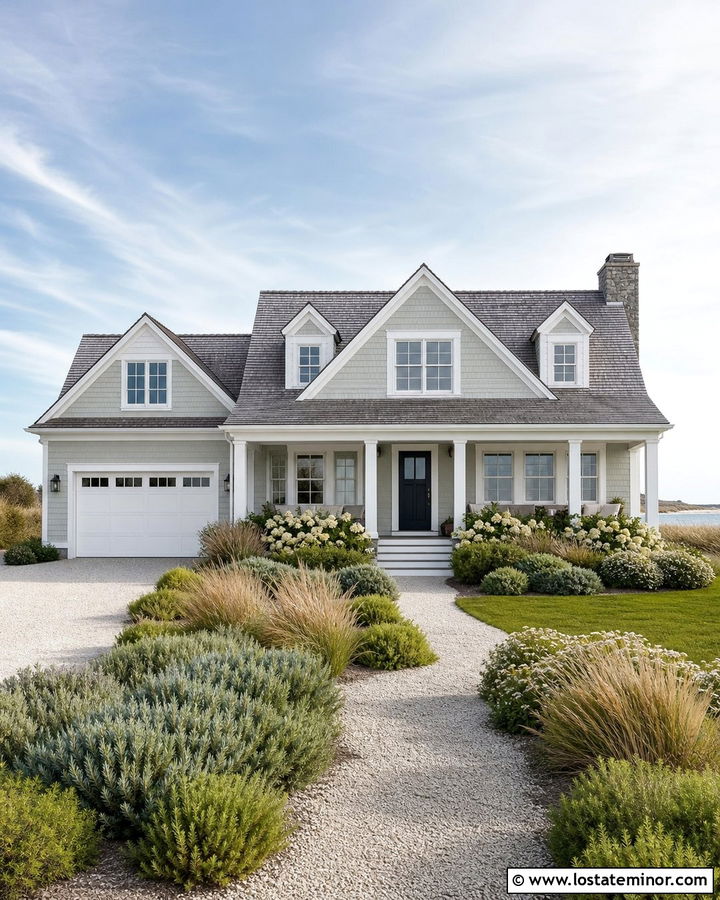
A sage green Cape Cod house can feel coastal without relying on obvious nautical decoration. Use a light, gray-based sage on the shingles or lap siding, crisp white around the windows and dormers, and muted navy on the front door. Weathered gray roof shingles will reinforce the relaxed palette. Landscape the front with salt-tolerant ornamental grasses, low junipers, white flowering shrubs, and rounded drifts of hardy perennials. A shell-colored gravel or pale stone walkway can run between the soft planting beds. Keep the garden open and windswept rather than densely clipped. This scheme is equally useful for inland properties seeking a casual coastal effect. Choose plants based on actual exposure, soil, and winter conditions, especially when the property is near saltwater or receives strong wind.
18. Sage Green Colonial House With Symmetrical Hedges
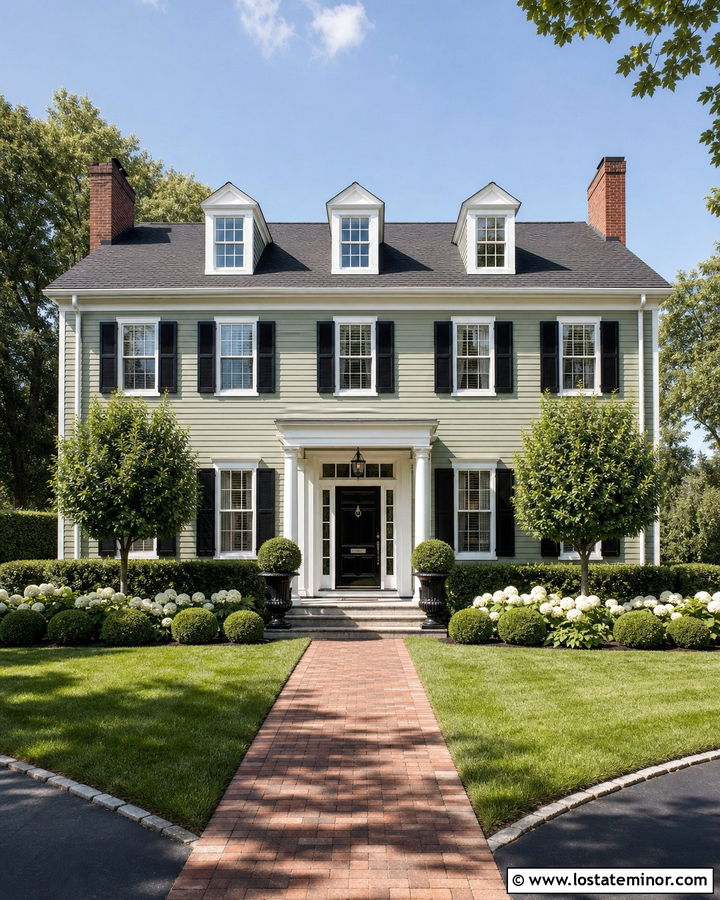
Symmetry strengthens the formal architecture of a Colonial house. Cover the main siding in an understated sage green, then use bright white trim to emphasize the centered door, evenly spaced windows, and classical entry surround. Black shutters and a glossy black door add traditional contrast. Mirror that balance in the landscape with matching evergreen shrubs, identical planters, and two small ornamental trees placed on either side of the walkway. Low hedges can outline the beds without blocking the lower windows. Include white tulips, hydrangeas, or seasonal annuals to repeat the trim color. A straight brick path leads the eye naturally to the entrance. Keep plant heights and spacing consistent across both sides, but introduce slight variation within the beds so the overall effect does not become overly rigid.
19. Sage Green Bungalow With Pollinator Garden
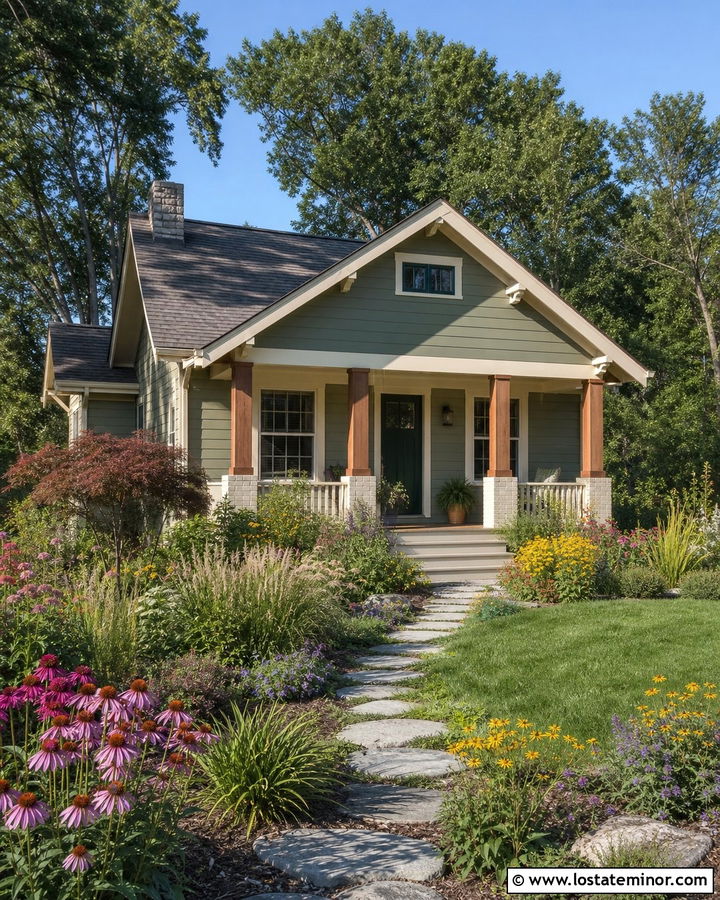
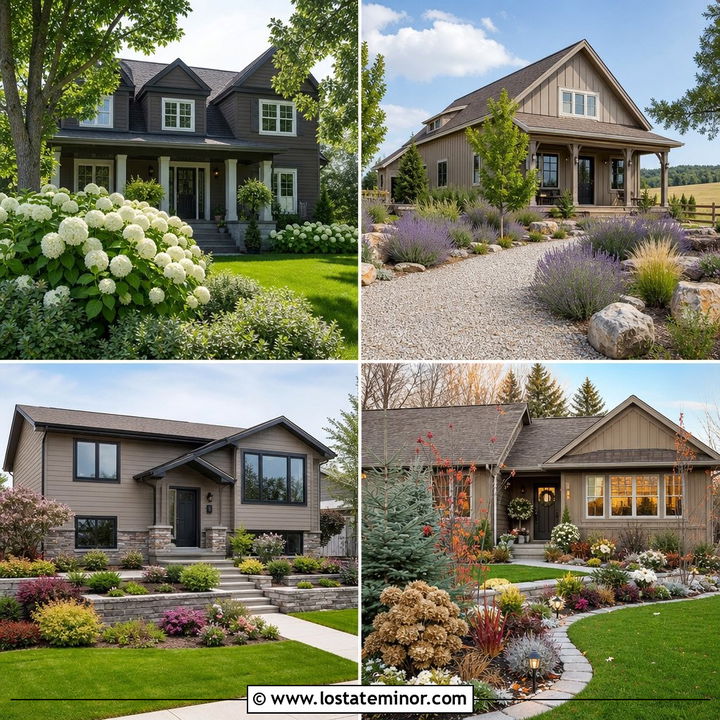
A sage green bungalow feels especially welcoming when surrounded by an informal pollinator garden. Use warm sage siding, ivory trim, cedar porch posts, and a deep green front door to create a layered natural palette. Plant coneflowers, bee balm, asters, coreopsis, milkweed, and other regionally suitable flowering species in broad groups around the porch. Include native grasses and compact shrubs to provide structure when the perennials are dormant. A stepping-stone path can move through the garden while preserving access for maintenance. Keep taller plants away from porch stairs and front windows. This complete exterior works best when the planting looks abundant but intentional. Defined bed edges, repeated colors, and visible pathways prevent the garden from appearing neglected while still supporting a loose, meadow-like character.
20. Sage Green Split-Level House With Retaining Walls
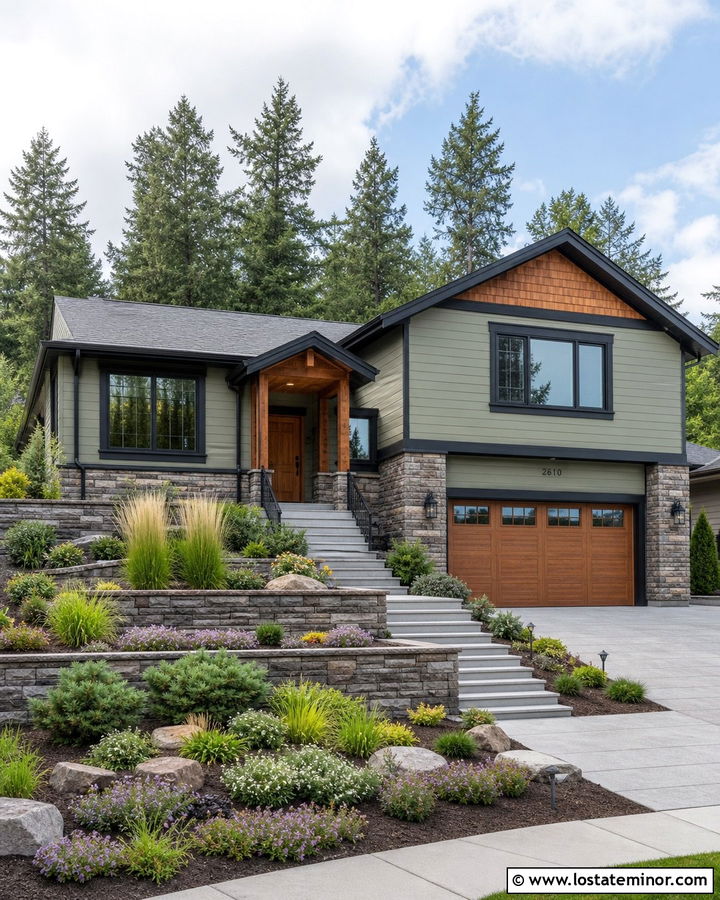
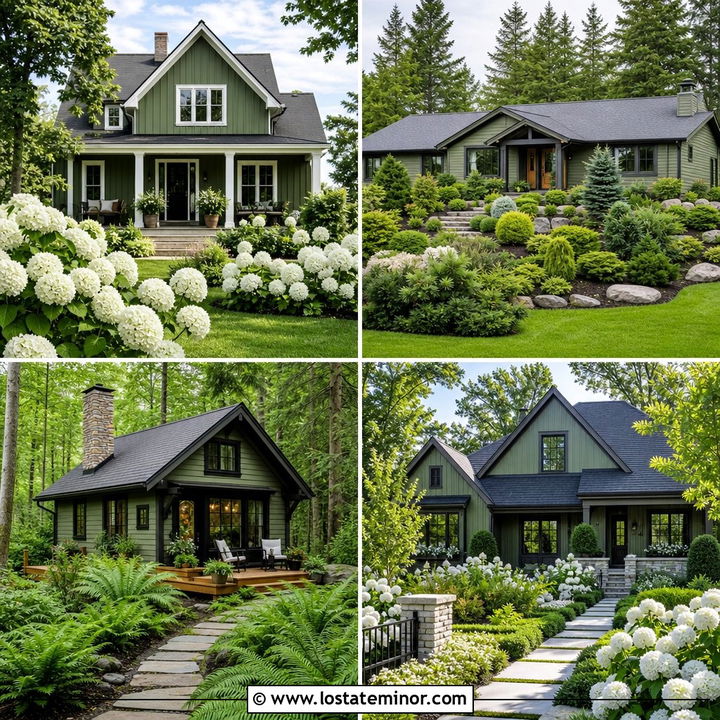
A split-level home often has an uneven approach, exposed foundation, or sloped front yard. Sage green siding can unify the different levels, especially when paired with charcoal trim and warm stone accents. Use the same stone for low retaining walls that shape the slope into manageable planting terraces. Fill the upper beds with compact evergreens and flowering shrubs, then use ground covers and ornamental grasses on lower levels. Wide steps and a clearly visible walkway should connect the driveway to the front door. Add a wood-toned garage door or cedar entry detail to warm the composition. This design turns a difficult grade into a layered curb-appeal feature. Ensure retaining walls, drainage, and stairs are properly planned before selecting decorative plants or finishing materials.
21. Sage Green Contemporary House With Minimal Landscaping
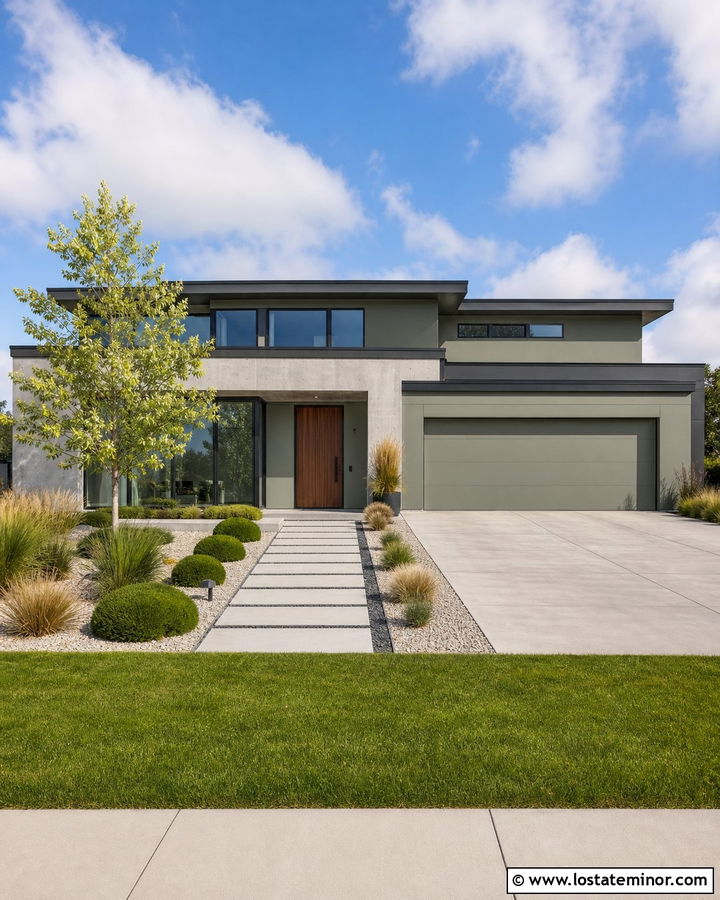
Clean architecture benefits from a restrained landscape with strong forms. Paint the exterior a gray-toned sage green, then add charcoal window frames, a flat-panel wood door, and light concrete accents. Keep the garage door close to the siding color so it does not dominate the facade. In the yard, use geometric beds containing sculptural grasses, low evergreen mounds, and one carefully placed specimen tree. Gravel, large-format pavers, and dark metal edging will reinforce the home’s straight lines. Leave deliberate open space between plants rather than filling every section of soil. This approach makes each texture easier to appreciate from the street. A limited palette also simplifies maintenance. Finish with discreet architectural lighting and a direct walkway that clearly guides visitors from the sidewalk or driveway to the entrance.
22. Sage Green Cottage With Picket Fence Garden
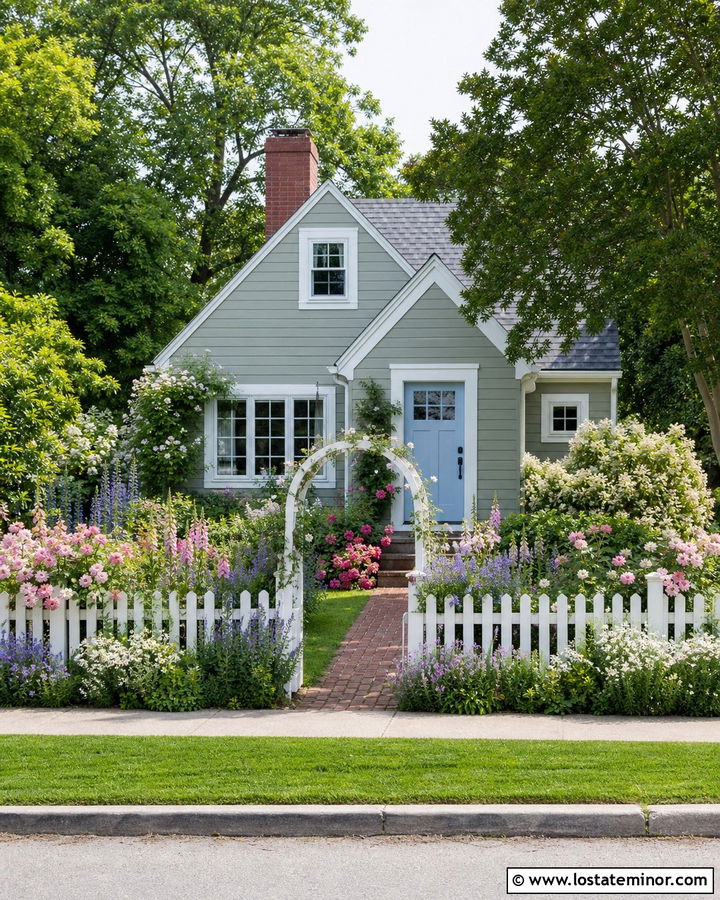
A white picket fence can frame a sage green cottage without making the property feel overly formal. Paint the siding a soft, warm sage and repeat the fence’s white color on window trim, porch railing, and fascia. A pale blue or natural wood door provides a gentle focal point. Inside the fence, create layered beds with roses, daisies, foxgloves, catmint, and compact flowering shrubs. Let some plants soften the walkway edges, but maintain enough clear width for comfortable access. A brick path and small arbor can make the entrance feel more substantial. Keep the fence low so the house remains visible from the street. This complete scheme is charming on small lots because it creates a defined garden setting without requiring a large lawn or oversized architectural additions.
23. Sage Green Mountain House With Boulders And Conifers
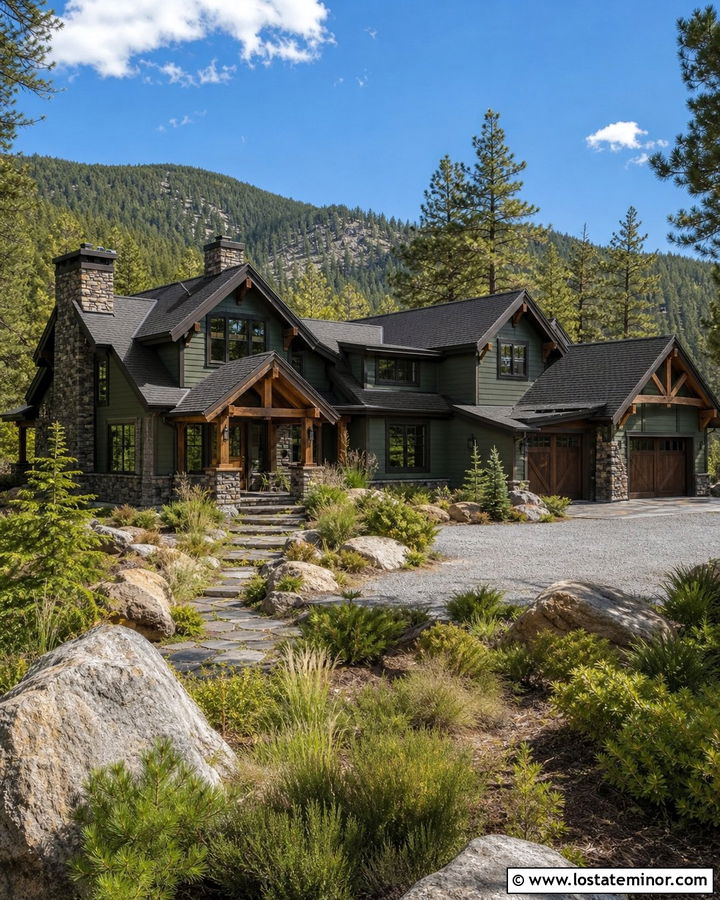
Deep sage green helps a mountain house feel connected to forested or rocky surroundings. Pair the siding with dark brown trim, charcoal roofing, and natural timber beams. Use rugged stone around the foundation and chimney, selecting colors already visible in the site. Continue that connection outdoors with large boulders placed naturally within broad beds of conifers, native grasses, and low spreading shrubs. A gravel driveway and irregular stone walkway will feel more appropriate than highly polished paving. Preserve important views of the entrance by keeping dense evergreen growth near the outer corners. This palette works for cabins, lodges, and mountain contemporary homes. Use restrained quantities of stone and timber so the materials appear structural rather than decorative, and repeat each finish in at least two areas.
24. Sage Green House With Desert Xeriscaping
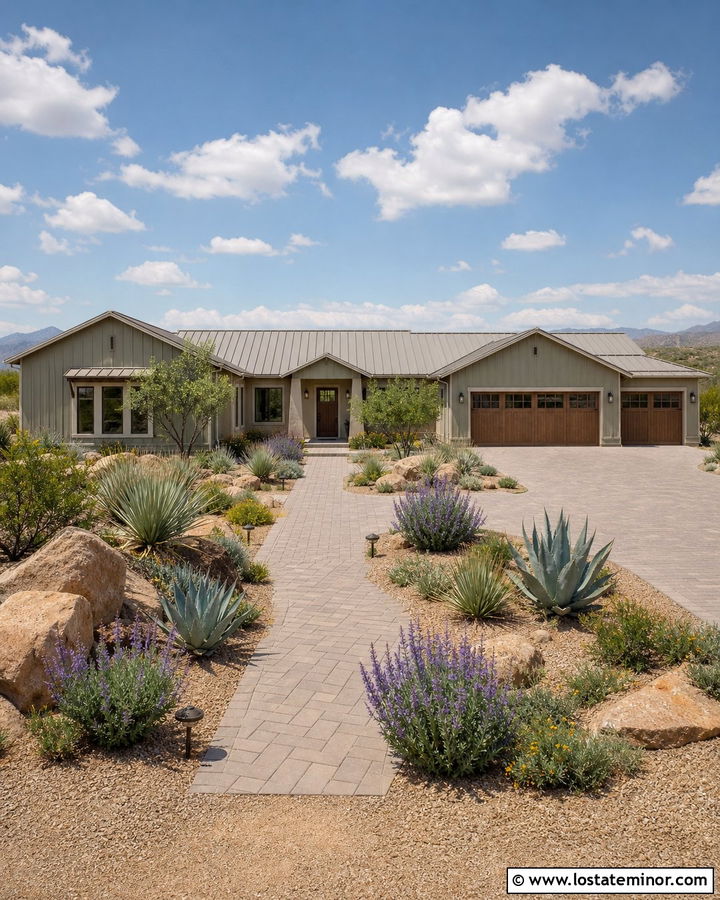
Sage green siding can fit a desert landscape when it carries warm gray undertones. Combine it with sand-colored stucco, cream trim, a clay-toned front door, and a light brown or weathered metal roof. Build the landscaping around gravel, decomposed granite, sculptural boulders, and drought-adapted regional plants. Agaves, yuccas, desert grasses, flowering sages, and low shrubs can create bold shapes without requiring a traditional lawn. Arrange plants in uneven groups rather than placing one specimen at regular intervals. A wide paver path will provide a clean route through the textured yard. This scheme suits Southwestern, ranch, and modern desert architecture. Confirm mature plant size before installation and keep sharp or spiny varieties safely away from sidewalks, driveways, play spaces, and the front entrance.
25. Sage Green House With Rain Garden Landscaping
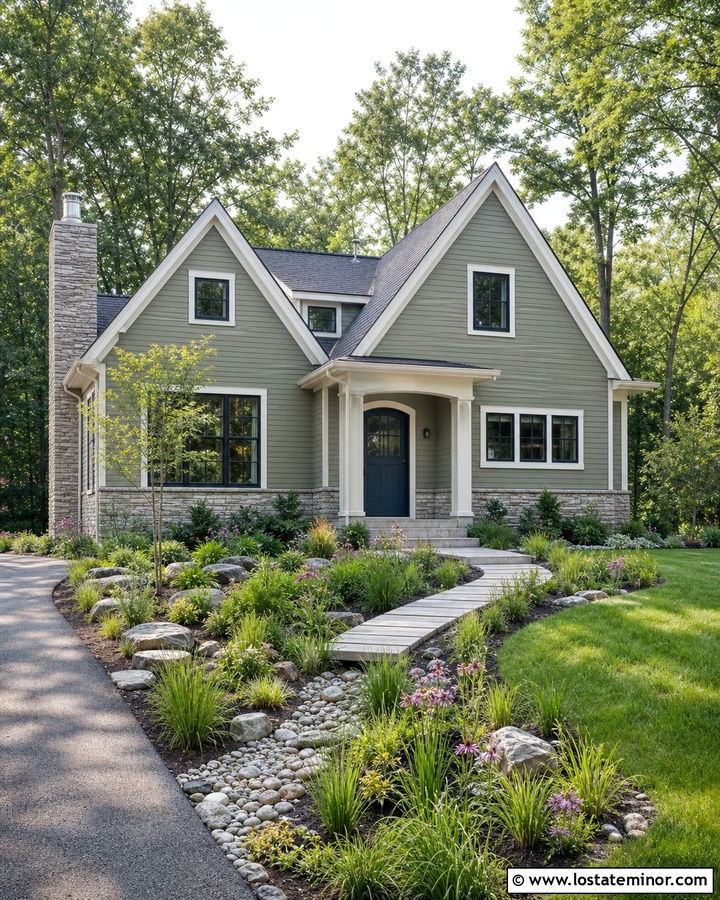
A rain garden can become a visible curb-appeal feature instead of looking like a drainage solution. Use medium sage green siding, soft white trim, a dark blue-green door, and gray stone accents to establish a cool, water-inspired palette. Position the rain garden in an appropriate low area away from the foundation, then shape it with gentle curves. Fill it with regionally suitable plants that tolerate temporary wet conditions as well as drier periods. Decorative stone, sedges, flowering perennials, and moisture-tolerant shrubs can add structure. Connect the area visually to the house by repeating several plants near the entry. A raised or well-drained walkway ensures reliable access. Obtain local guidance before redirecting runoff, changing grades, or installing a garden near utilities or neighboring properties.
26. Sage Green House With Small Front Yard Landscaping
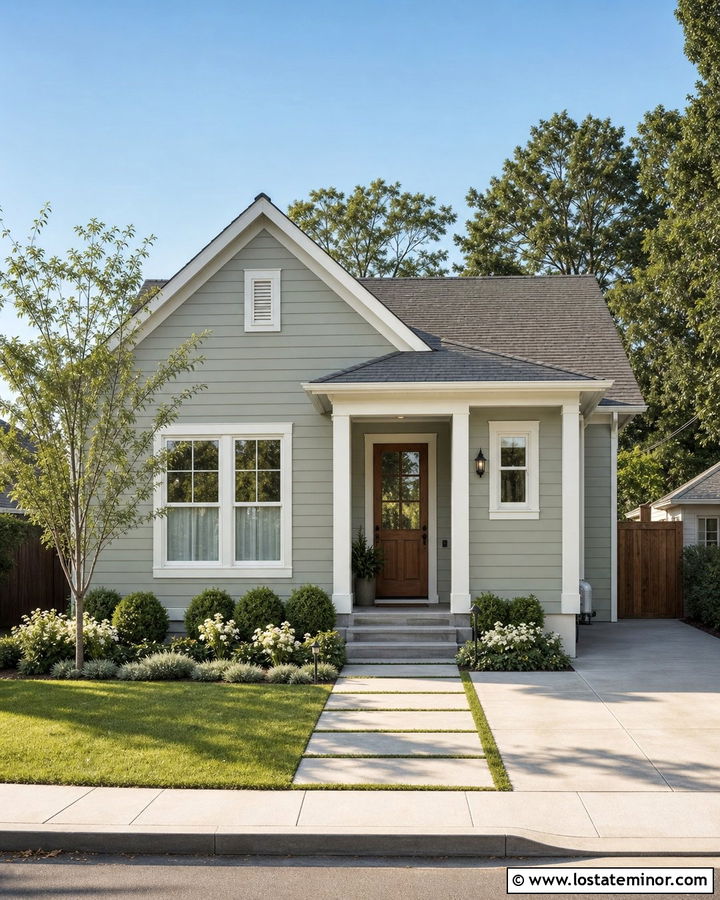
A small front yard looks more spacious when the exterior and landscaping share a controlled palette. Choose light sage green siding with warm white trim and a compact black or stained wood door. Use one continuous planting bed rather than several tiny patches. A narrow ornamental tree, rounded evergreen shrubs, low ground cover, and two repeated flowering perennials may provide enough variety. Run a simple straight or gently angled path from the sidewalk to the entrance. Large pavers can make the route feel wider than small, busy materials. Avoid oversized foundation plants that will quickly cover windows or crowd the steps. Vertical elements such as a porch trellis can add greenery without consuming lawn space. The finished design should frame the home while preserving open, uncluttered sightlines.
27. Sage Green House With Large Front Yard Landscaping
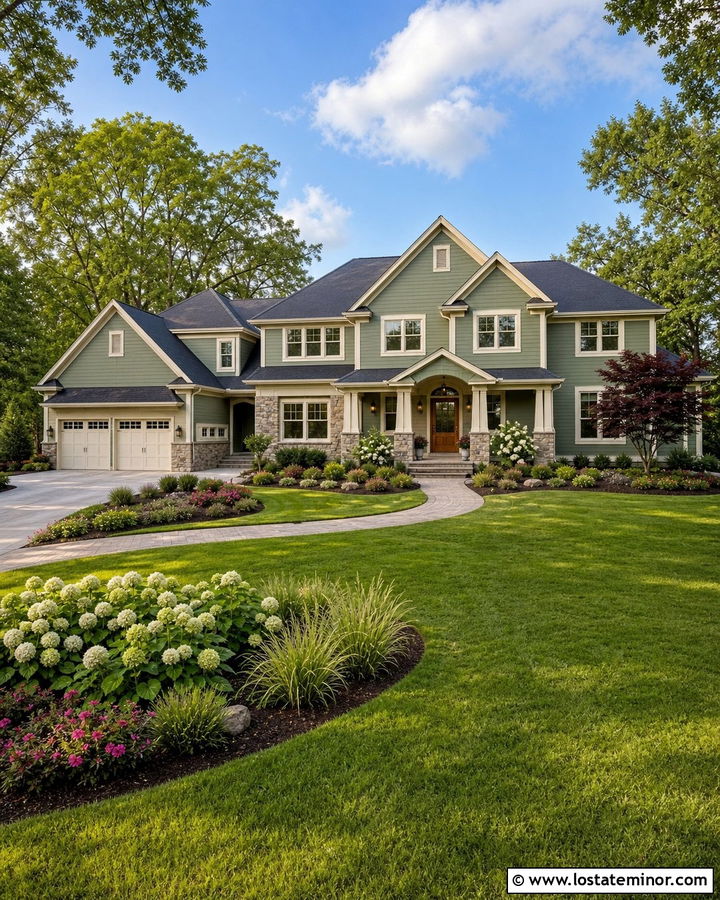
A broad front yard needs larger landscape gestures to prevent a sage green house from appearing distant or disconnected. Use a medium sage exterior with cream trim, a warm wood door, and stone around the porch. Create sweeping foundation beds that extend beyond the house corners, then add one or two island beds closer to the street. Repeat the same ornamental trees, flowering shrubs, and grasses across these areas to visually link the property. A generous curved walkway can lead visitors through the yard without becoming unnecessarily complicated. Preserve an open section of lawn to balance the planted areas and maintain useful outdoor space. Large beds require fewer tiny plants and more substantial groupings. Plan irrigation, edging, and mature canopy sizes before installing the final layers of flowers and ground cover.
28. Sage Green House With Shaded Woodland Landscaping
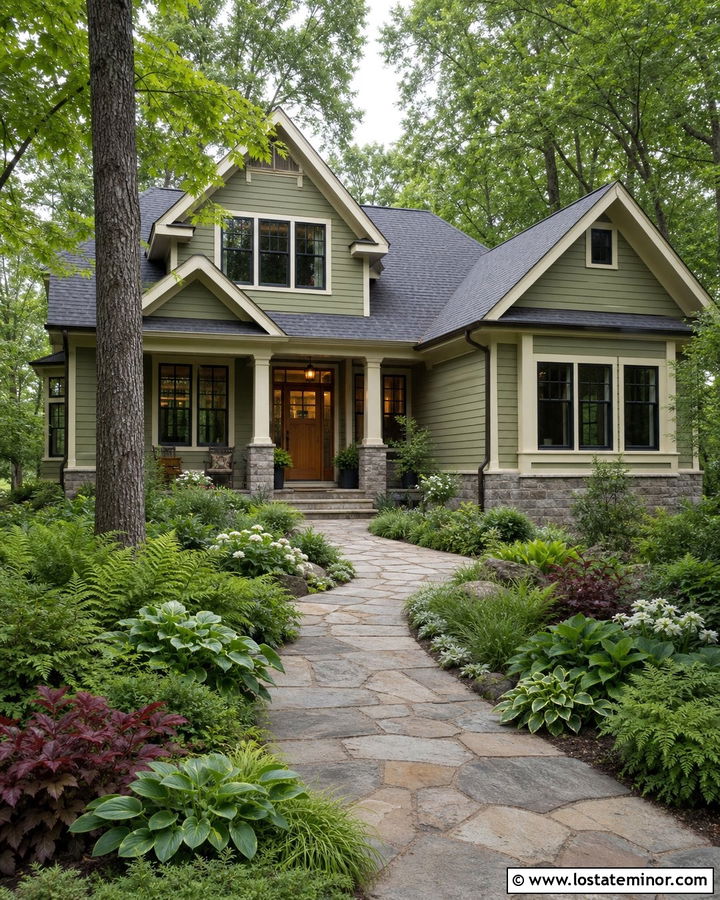
On a heavily shaded lot, a lighter sage green keeps the house visible while still blending with mature trees. Add cream trim, a warm oak door, and soft gray stone to brighten the facade. Avoid using very dark green on every accent, since it may cause the architecture to disappear in deep shade. Landscape with layered foliage rather than relying only on flowers. Ferns, hostas, coral bells, woodland sedges, and shade-tolerant shrubs can supply varied leaf colors and forms. Pale gravel or flagstone paths will reflect more light around the entrance. Remove or prune plants that block windows and create damp, crowded conditions against the siding. A few white flowering plants near the porch can act as visual highlights and guide attention toward the front door.
29. Sage Green House With Colorful Perennial Borders
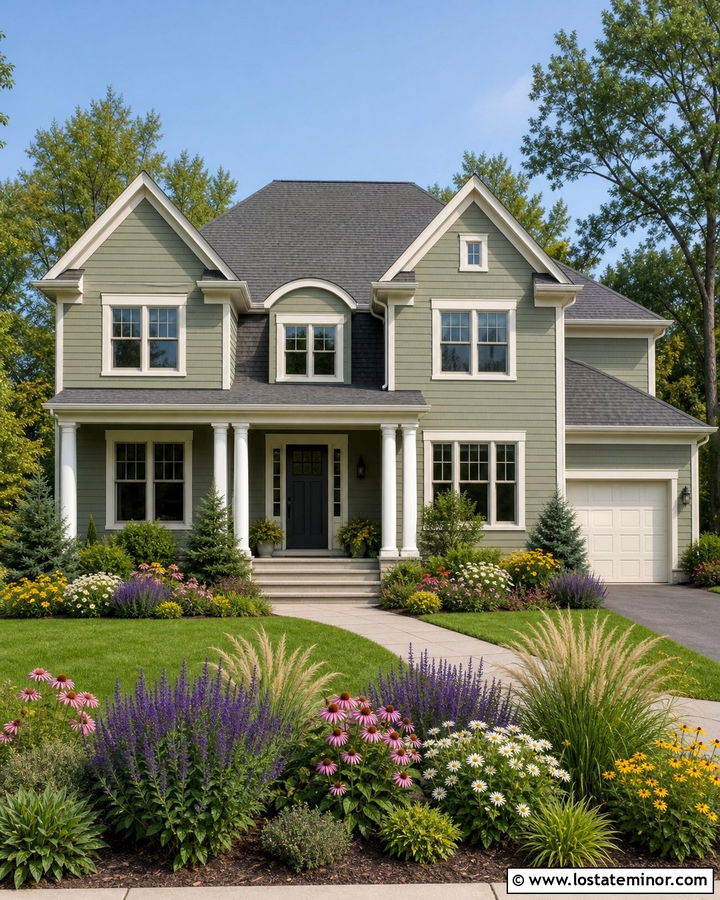
Colorful perennial borders can energize a sage green exterior without overwhelming its quiet character. Begin with a muted sage body color, white or cream trim, and a simple charcoal door. Select a focused flower palette such as purple, pink, white, and soft yellow. Plant each variety in repeated groups instead of mixing single plants throughout the bed. Taller perennials belong near blank walls or outer corners, while lower flowers should line the path and sit beneath windows. Evergreen shrubs and ornamental grasses will hold the design together outside the main blooming season. Use mulch or low ground cover to create a clean background for the flowers. This scheme works on many house types, including ranches, cottages, and suburban two-story homes with sunny front yards.
30. Sage Green House With Low-Maintenance Landscaping
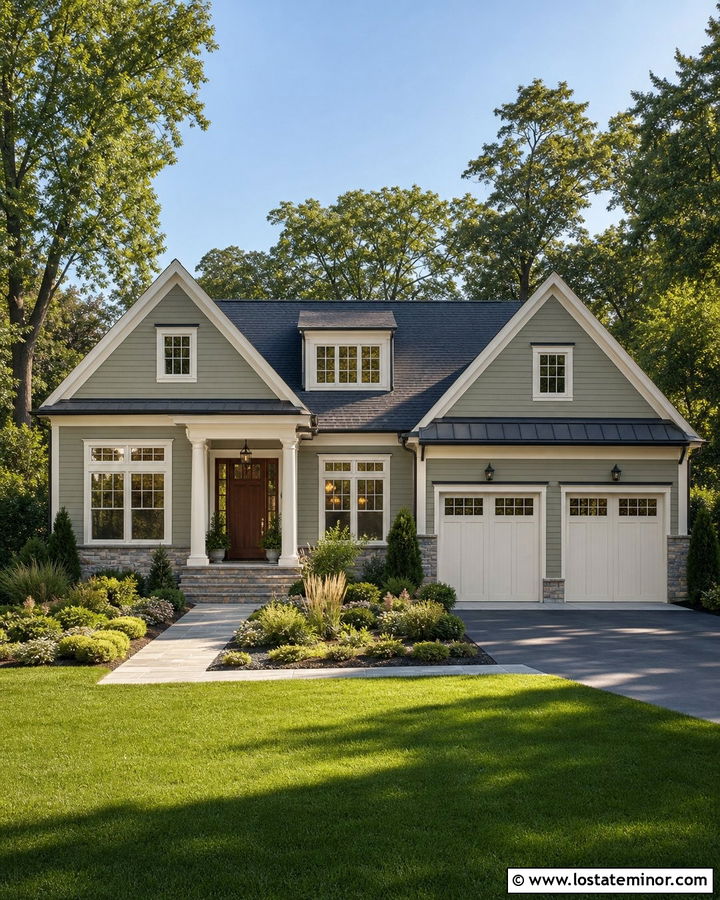
Low-maintenance curb appeal starts with a simple exterior palette and plants chosen for their mature size. Use midtone sage green siding, creamy white trim, a walnut-colored door, and a charcoal roof. Build wide, well-defined beds containing compact evergreens, durable ornamental grasses, and a limited number of long-flowering perennials. Repeat each plant in groups for stronger visual impact and easier care. Ground cover or mulch can reduce exposed soil, while stone edging keeps the boundary neat. Choose a straightforward walkway and avoid complicated bed shapes that are difficult to mow around. Drip irrigation may simplify watering where appropriate. This full-house scheme remains attractive because its structure comes from foliage, repetition, and clean lines rather than a constant supply of short-lived seasonal flowers.
Conclusion:
The strongest **30 Sage Green House Design With Landscaping Ideas** treat paint and planting as parts of one connected plan. Sage siding can look crisp with white trim, warm with cedar, dramatic with black, or grounded beside brick and stone. Landscaping should then reinforce that mood through coordinated flower colors, repeated foliage, practical pathways, and shrubs that fit the home’s scale. Consider sunlight, climate, drainage, maintenance, and mature plant size before making final choices. Test the exterior color beside the roof and masonry, and build the landscape in manageable phases. With thoughtful repetition and clear sightlines, a sage green house can feel settled, welcoming, and naturally connected to its property.

Related posts: